Validating High-Throughput Computational Screening Workflows: A Framework for Accelerating Drug Discovery
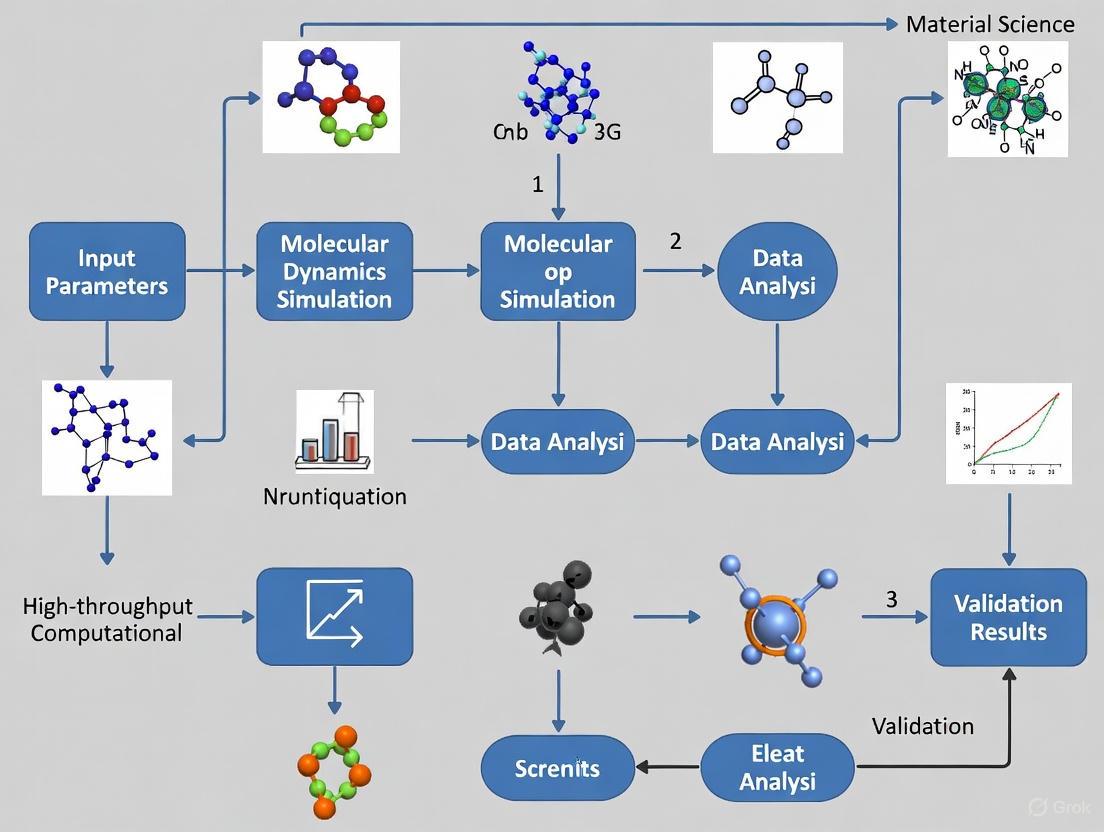
This article provides a comprehensive guide for researchers and drug development professionals on validating high-throughput computational screening (HTCS) workflows.
Validating High-Throughput Computational Screening Workflows: A Framework for Accelerating Drug Discovery
Abstract
This article provides a comprehensive guide for researchers and drug development professionals on validating high-throughput computational screening (HTCS) workflows. It covers the foundational principles of HTCS and its role in revolutionizing pharmaceutical R&D by overcoming the cost, time, and high failure rates of traditional methods. The scope extends to methodological advances, including the integration of AI and machine learning for virtual screening and de novo molecule design. It also addresses critical troubleshooting and optimization strategies to enhance data reliability and decision-making, and concludes with rigorous validation frameworks and comparative analysis of HTCS approaches, using real-world case studies from recent literature to illustrate the path from in silico prediction to confirmed biological activity.
Laying the Groundwork: Core Principles and the Rise of Computational Screening in Modern Biology
Defining High-Throughput Computational Screening (HTCS) and Its Strategic Value
High-throughput computational screening (HTCS) is a paradigm in materials science and molecular discovery that uses automated, multi-stage computational workflows to rapidly evaluate vast libraries of candidates for targeted properties. [1] This approach integrates physics-based models, surrogate predictors, machine learning, and robust database infrastructure to triage, prioritize, and rank candidates with substantially reduced labor and computational cost compared to traditional one-at-a-time simulations. [1] Within the context of workflow validation research, HTCS provides a formal, quantifiable framework for maximizing the yield of high-performing candidates—or "hits"—while adhering to strict computational budgets. [1]
Table of Contents
- Principles and Mathematical Foundations of HTCS
- The Multi-Fidelity Screening Pipeline
- Domain-Specific Workflows and Validation
- Implementation and Workflow Validation
- Quantitative Benchmarks and Limitations
- Conclusions and Outlook
Principles and Mathematical Foundations of HTCS
The formal structure of an HTCS pipeline is a sequential, multi-stage process. A candidate library ( \mathbb{X} ), which can contain from ( 10^4 ) to over ( 10^8 ) distinct entities (molecules, crystals, defects, etc.), is filtered through a series of ( N ) surrogate models of increasing fidelity and cost: ( S1 \to S2 \to \dots \to S_N ). [1]
Each stage ( Si ) is defined by a triplet ( (fi, \lambdai, ci) ), where:
- ( fi ) is a predictive model that assigns a score ( yi = f_i(x) ) to candidate ( x ).
- ( \lambda_i ) is a threshold value that the score must meet or exceed for the candidate to proceed.
- ( ci ) is the computational cost of applying ( fi ) to a single candidate. [1]
The final set of validated "positives" or "hits" is defined as ( \mathbb{Y} = {x \in \mathbb{X}N : fN(x) \geq \lambda_N} ). [1]
The central optimization problem in HTCS pipeline design is to maximize the Return on Computational Investment (ROCI). The objective is to find the threshold values ( \psi^* = [\lambda1, ..., \lambda{N-1}] ) that maximize the expected yield ( r(\lambda) ) while ensuring the total computational cost ( h(\lambda) ) does not exceed a budget constraint ( C ). [1]
[ \psi^* = \mathrm{argmax}{\psi = [\lambda1,...,\lambda{N-1}]} r([\psi, \lambdaN]) \quad \text{subject to} \quad h([\psi, \lambda_N]) \leq C ]
These thresholds are tuned via grid or gradient-based search, often using numerically estimated joint score distributions ( p(y1,...,yN) ) learned through methods like Expectation-Maximization (EM) algorithms. [1]
The Multi-Fidelity Screening Pipeline
HTCS strategically exploits models of differing accuracy and cost, known as multi-fidelity models. The general principle is to apply rapid, low-fidelity surrogates in the initial stages to prune the search space, reserving expensive, high-fidelity methods for a smaller subset of promising candidates. [1]
Figure 1: A generalized multi-stage HTCS pipeline. Candidates are filtered through successive stages of increasing computational cost and fidelity. Thresholds (λ) at each stage are optimized to maximize return on investment.
Adaptive sampling strategies allow for dynamic adjustment of thresholds (( \lambda_i )) in response to real-time monitoring of pass rates and budget consumption. Empirically, high inter-stage score correlation (e.g., ( \rho \sim 0.8-0.9 )) yields near-maximal cost savings. Even moderate correlation (( \rho \sim 0.5 )) provides substantial gains over single-fidelity approaches. In one documented deployment screening ~50,000 molecules, an adaptive four-stage pipeline achieved over 44% cost savings while maintaining accuracy greater than 96%. [1]
Domain-Specific Workflows and Validation
HTCS methodologies are highly adaptable and have been successfully tailored to a range of material properties and discovery goals. The table below summarizes several validated domain-specific workflows.
Table 1: Domain-Specific HTCS Workflows and Their Experimental Validation
| Application Domain | Screening Descriptor/Method | High-Fidelity Validation | Performance and Validation Metrics |
|---|---|---|---|
| Thermal Conductivity [1] | Quasi-harmonic Debye (AGL) models computing Debye temperature (ΘD) and lattice conductivity (κl) from DFT energy/volume curves. | Full Boltzmann Transport Equation (BTE) phonon calculations. | Throughput: 1-2 orders faster than BTE. Pearson r ≈ 0.88, Spearman ρ ≈ 0.80 to experiment. |
| Thermoelectrics [1] | Descriptor χ (effective mass, deformation potential) for power factor; descriptor γ (elastic constants) for anharmonicity. | Full electron-phonon BTE calculations. | Enables rapid ranking, bypassing computationally prohibitive BTE. |
| Ion Conductors [1] | "Pinball model" using frozen-host electrostatic potential energy surface (PES) for automated molecular dynamics. | On-the-fly DFT molecular dynamics (DFT-MD). | Drastically accelerates Li-diffusion screening. Led to discovery of Li10Ge2P4S24 and Li5ClO3. |
| Catalysis [1] | Density of states (DOS)-based pattern similarity metrics for bimetallic catalysts. | Full slab DFT calculations of productivity/selectivity. | Identified Ni61Pt39, achieving 9.5-fold cost-normalized productivity increase over Pd. |
| Porous Materials (MOFs) [1] | Geometric descriptors (PLD, LCD, void fraction), Henry coefficient (K_H), followed by GCMC or ML-predicted selectivity. | Grand Canonical Monte Carlo (GCMC) simulations; ML-potentials (e.g., PFP) for flexibility. | Identified MOFs with six-membered aromatic rings and N-rich linkers for high iodine capture. |
Implementation and Workflow Validation
Robust automation and data management frameworks are critical for the success and reproducibility of HTCS campaigns. Best practices have been established to ensure workflow validity and reliability. [1]
Essential Software Infrastructure and Research Toolkit
HTCS relies on specialized software for workflow orchestration, data management, and atomic-scale simulation. The table below catalogues key tools that form the modern HTCS researcher's toolkit.
Table 2: Essential Research Toolkit for HTCS Workflow Implementation
| Tool Category | Representative Solutions | Primary Function in HTCS Workflow |
|---|---|---|
| Workflow Orchestration [1] | FireWorks, AiiDA, MAPTLAB, Custodian | Manages complex job dependencies, schedules calculations on HPC systems, and automates error recovery. |
| Data Management & Analysis [1] [2] | pymatgen, ASE, JSON/HDF5 checkpointing | Provides structural analysis, input file generation, and standardized data storage for computational materials data. |
| Atomic-Scale Simulation [1] | VASP, VASPsol, Quantum ESPRESSO | Performs high-fidelity ab initio calculations (e.g., DFT) for energy and property evaluation. |
| Machine Learning Integration [1] [3] | Graph Neural Networks, Active Learning Loops | Accelerates property prediction and guides iterative candidate selection for complex systems like MOFs and perovskites. |
Best Practices for Workflow Validation
To ensure robustness and reproducibility, HTCS workflows should incorporate several key practices, which also serve as focal points for validation research: [1]
- Systematic Parameterization: Carefully define structural and computational parameters, such as
max_area,max_mismatchfor interfaces, slab thickness, and vacuum size for surfaces. - Automated Failure Recovery: Implement protocols to handle common simulation failures, such as electronic convergence issues in DFT or ionic instability, allowing the workflow to proceed gracefully.
- Provenance Tracking and Checkpointing: Use versioned storage and detailed record-keeping for all calculations. Checkpointing allows workflows to be restarted from intermediate points, which is essential for large-scale campaigns on HPC systems.
- Multi-Fidelity Calibration: Conduct preliminary exploratory runs with low-fidelity models to calibrate the workflow and establish appropriate thresholds before committing to full-scale, high-fidelity screening.
Quantitative Benchmarks and Limitations
HTCS frameworks have led to pivotal discoveries across multiple domains, demonstrating their tangible strategic value. Key achievements include the identification of novel solid electrolytes like Li_10Ge_2P_4S_24 and Li_5ClO_3, the discovery of high-performance catalytic alloys such as Ni_61Pt_39, and the finding of iodine-capture MOFs with specific structural motifs. [1]
The performance of these workflows can be quantified. For instance, in the screening of porous materials for iodine capture, machine learning-driven HTCS can achieve a top-k recall exceeding 90% against full simulation, while screening hundreds of thousands to millions of candidates. [1] Adaptive multi-stage pipelines have demonstrated the ability to reduce computational costs by over 44% while maintaining accuracy levels above 96%. [1]
Despite these successes, several limitations must be acknowledged and addressed in validation research:
- Model Accuracy: The accuracy of force fields or surrogate models can be insufficient for certain properties, such as host-guest energetics in flexible metal-organic frameworks (MOFs) or non-linear mixing enthalpies in complex alloys. [1]
- Database Biases: The libraries screened are often constructed from existing databases, which may contain biases and not fully represent the entire chemical space of interest. [1]
- Synthetic Feasibility: A primary limitation is the gap between in silico predictions and the actual synthetic accessibility of the proposed materials. [1]
- Accuracy vs. Ranking Trade-off: Descriptor-driven pipelines necessarily sacrifice some physical detail for scale. Consequently, predictions of absolute property magnitudes may differ from experimental measurements, though the ordinal ranking of candidates (hit identification) is generally robust. [1]
Figure 2: The HTCS pipeline optimization framework. The goal is to find pipeline parameters that maximize a performance objective (like ROCI) within defined computational constraints.
High-Throughput Computational Screening represents a fundamental shift in the paradigm for materials and molecule discovery. By formalizing the process into a multi-stage, multi-fidelity pipeline optimized for return on computational investment, HTCS enables the efficient navigation of vast chemical spaces that are intractable with traditional methods. Its strategic value is proven by its successful application across diverse domains—from thermoelectrics and ion conductors to catalysis and porous materials—leading to the discovery of novel, high-performing compounds.
For workflow validation research, the future of HTCS lies in addressing its current limitations. Key focus areas will be the development of more accurate and transferable machine learning potentials, the creation of better and less biased chemical libraries, and the increasing integration of AI and active learning to create closed-loop, self-improving discovery systems. [1] [3] As these tools and methodologies mature, HTCS is poised to become an even more powerful and indispensable engine for innovation across the chemical and materials sciences.
The Evolution from Manual Screening to Automated and AI-Driven Workflows
The pursuit of scientific discovery has always been constrained by the scale and speed at which researchers can explore complex experimental spaces. Traditional manual screening methods, while valuable for detailed investigation, are fundamentally limited by human bandwidth, inherent variability, and temporal constraints. The emergence of automated and AI-driven workflows represents a paradigm shift in scientific research, enabling the rapid evaluation of thousands to millions of candidates through integrated computational and experimental pipelines. This evolution is particularly critical for high throughput computational screening workflow validation research, where the accuracy, reproducibility, and predictive power of these accelerated methods must be rigorously established. As the volume of data generation increases exponentially, robust validation frameworks ensure that discoveries made through high-throughput methods are translatable to real-world applications across materials science, drug discovery, and biotechnology.
The transition from manual to automated screening is not merely a change in velocity but a fundamental restructuring of the scientific process itself. Manual screening typically involves researchers proposing, synthesizing, and testing one material or compound at a time, a process that can take months or even years per material [4]. In contrast, high-throughput (HT) methods involve setups or techniques designed for fully synthesizing, characterizing, screening, or analyzing multiple samples in a significantly shorter time than traditional benchtop approaches [4]. This acceleration is made possible through the integration of robotic automation, advanced computational modeling, and machine learning algorithms that can identify patterns and relationships beyond human perception capacity.
Theoretical Foundations: From Manual Execution to Computational Intelligence
The Limitations of Traditional Manual Screening
Traditional manual screening methodologies have served as the backbone of scientific discovery for centuries, but their limitations become increasingly apparent when addressing complex, multi-parameter research questions. Manual approaches typically involve researchers conducting individual experiments through sequential processes including literature review, hypothesis formation, experimental design, manual execution, data collection, and analysis. While this method allows for deep investigation of specific phenomena, it suffers from several critical constraints:
- Low throughput: The serial nature of manual experimentation severely limits the number of candidates that can be evaluated within practical timeframes [4]
- Operator dependency: Results are often influenced by individual technique, experience level, and subjective interpretation [5]
- Experimental variability: Inconsistent execution across experiments and research groups challenges reproducibility
- High resource consumption: Significant requirements for materials, time, and specialized personnel [5]
- Limited exploration space: Practical constraints restrict investigation to narrow, predetermined chemical or biological spaces
These limitations become particularly problematic in fields like drug discovery, where the potential chemical space is estimated to contain >10^60 compounds, or materials science, where compositional variations create virtually infinite possibilities.
Computational Foundations of Automated Screening
The theoretical underpinnings of automated screening rest on advances in computational power, algorithmic sophistication, and data integration. Density Functional Theory (DFT) has emerged as a cornerstone computational method due to its relatively low computational cost and semiquantitative accuracy in predicting material properties based on electronic structure [6] [4]. DFT enables researchers to explore and screen materials in the order of 10^6 in a single project, providing deep insight into materials' electronic structure and enabling prediction of properties such as bandgaps, adsorption energies, and catalytic activity [4].
The development of effective descriptors—quantifiable representations of specific properties that connect complex electronic structure calculations to macroscopic properties—has been crucial for large-scale material screening. In electrocatalyst research, for example, the reactivity descriptor quantifying catalyst activity is often represented by the Gibbs free energy (ΔG) associated with the rate-limiting step of a reaction [4]. Similar descriptor-based approaches have been successfully applied to biological systems, such as screening natural compounds that enhance butyrate production by targeting specific bacterial enzymes [7].
Table 1: Key Computational Methods in High-Throughput Screening
| Method | Theoretical Basis | Applications | Throughput Capacity |
|---|---|---|---|
| Density Functional Theory (DFT) | Quantum mechanics, electronic structure analysis | Prediction of material properties, catalytic activity, piezoelectric coefficients | 10^3-10^6 compounds [6] [4] |
| Molecular Docking | Molecular recognition, binding affinity prediction | Drug discovery, enzyme-ligand interactions, virtual screening | 10^4-10^5 compounds/day [7] |
| Machine Learning | Pattern recognition, predictive modeling | Quantitative Structure-Activity Relationships (QSAR), material property prediction | 10^6+ compounds with trained models [4] |
| Computer Vision | Image segmentation, classification | Crystal morphology analysis, cellular imaging, phenotypic screening | 10^3-10^4 images/experiment [5] |
Experimental Design and Protocol Development
Computational Screening Workflows
Modern computational screening employs structured, hierarchical workflows that combine multiple computational techniques to efficiently explore vast chemical spaces. A representative protocol for virtual screening of compound libraries demonstrates this integrated approach [7] [8]:
Library Preparation
- Compile comprehensive compound libraries from databases like FooDB, PubChem, or ZINC (typically 25,000-1,000,000+ compounds) [7]
- Convert 2D chemical structures to 3D conformers using software like Open Babel
- Perform energy minimization and convert to appropriate formats (PDBQT) with defined rotatable bonds
Target Preparation
- Retrieve protein structures from PDB or generate 3D models via homology modeling (SWISS-MODEL)
- Prepare active site through identification of binding cavities (ProteinsPlus server)
- Define grid boxes around predicted active sites for docking simulations
Docking Execution
- Perform virtual screening using AutoDock Vina v1.2 with exhaustiveness levels of 8-12 [7]
- Set binding energy thresholds for hit selection (typically ≤ -10 kcal/mol)
- Analyze top-ranking binding poses using Discovery Studio or similar software to evaluate hydrogen bond networks, hydrophobic interactions, and key contact residues
This protocol can be automated through sequential scripting, significantly reducing human intervention and enabling continuous operation [6] [8].
Integrated Computational-Experimental Validation
Validating computational predictions through experimental confirmation represents a critical phase in workflow validation research. The following protocol outlines a robust approach for experimental validation of computationally screened hits:
Experimental Validation Phase
- Culture target biological systems (bacteria, cells) under controlled conditions
- Treat with top-ranked computational hits across concentration gradients (0-48 hours)
- Measure response outcomes (butyrate production, cell viability, etc.) using analytical methods like gas chromatography, HPLC, or spectrophotometry [7]
- Assess gene expression changes via qRT-PCR for relevant pathway genes
- Evaluate protein-level changes through Western blotting or immunofluorescence
Data Integration and Model Refinement
- Compare experimental results with computational predictions
- Calculate correlation metrics to validate screening accuracy
- Refine computational models based on experimental discrepancies
- Iterate screening with refined parameters for improved hit rates
This integrated approach demonstrated remarkable success in identifying natural compounds that enhance butyrate production, with computational predictions strongly correlating with experimental measurements (e.g., hypericin showing 2.5-fold upregulation for BCD enzyme and 0.58 mM butyrate production) [7].
Computational-Experimental Validation Workflow
Quantitative Comparison: Manual vs. Automated Screening Performance
The performance differential between manual and automated screening approaches can be quantified across multiple dimensions, providing compelling evidence for the adoption of accelerated workflows. The data reveal not merely incremental improvements but order-of-magnitude enhancements in research efficiency.
Table 2: Performance Metrics - Manual vs. Automated Screening
| Performance Metric | Manual Screening | Automated/AI-Driven Screening | Improvement Factor |
|---|---|---|---|
| Screening Throughput | 1 material/compound per months-years [4] | 10^3-10^6 compounds via DFT [4] | 1000x-1,000,000x |
| Screening Time | 20+ hours/hire for resume screening [9] | 3x faster candidate screening with 87% accuracy [10] | 70% reduction in time [10] |
| Experimental Consistency | High variability between operators [5] | Standardized evaluation criteria [9] | Qualitative improvement |
| Bias Reduction | Unconscious human bias in evaluation [9] | Structured assessment minimizes bias [9] | Qualitative improvement |
| Resource Requirements | High material consumption [5] | Miniaturized approaches (e.g., computer vision) [5] | 50-90% reduction in materials |
| Data Generation Volume | Limited by manual processing capacity | Massive datasets from HT experiments [5] | 10-1000x increase |
The performance advantages extend beyond simple velocity metrics to include qualitative improvements in research outcomes. For example, in piezoelectric materials discovery, high-throughput DFT screening of ~600 noncentrosymmetric organic structures identified numerous crystals with promising piezoelectric properties, some exceeding the performance of well-known inorganic materials [6]. The validation of these computational predictions against experimental data demonstrated strong correlations, with γ-glycine showing experimental strain coefficients of 5.33 pC/N (d16) and 11.33 pC/N (d33) compared to DFT-predicted values of 5.15 pC/N and 10.72 pC/N, respectively [6].
Similarly, in recruitment screening—a parallel application of screening methodologies—AI-powered platforms reduced time-to-hire by up to 63% with automated workflows while delivering 3x faster candidate screening at 87% accuracy compared to manual reviews [10]. These consistent findings across disparate fields suggest fundamental advantages to automated approaches that transcend specific application domains.
Research Reagent Solutions for Screening Workflows
The implementation of robust automated screening workflows requires specialized computational tools, experimental platforms, and data analysis resources. These components form an integrated technological ecosystem that supports the end-to-end screening process from initial candidate generation to validated hits.
Table 3: Essential Research Reagents and Platforms for Screening Workflows
| Resource Category | Specific Tools/Platforms | Function in Workflow | Application Examples |
|---|---|---|---|
| Compound Libraries | FooDB, PubChem, ZINC, ChEMBL | Source of screening candidates | Natural compound screening [7] |
| Computational Docking | AutoDock Vina, SWISS-MODEL | Structure-based virtual screening | Molecular docking against enzyme targets [7] |
| Materials Databases | Crystallographic Open Database (COD) | Source of material structures | Piezoelectric materials discovery [6] |
| Property Prediction | DFT codes (VASP, Quantum ESPRESSO) | Prediction of material properties | Piezoelectric coefficient calculation [6] |
| High-Throughput Experimentation | Computer Vision-Assisted HTPS [5] | Automated experimental screening | Crystal morphology regulation [5] |
| Data Analysis | Machine Learning (scikit-learn, TensorFlow) | Pattern recognition, model building | Structure-property relationships [4] |
Workflow Automation and Integration Platforms
Beyond individual tools, integrated platforms provide end-to-end solutions for automating the entire screening workflow. In recruitment screening—which offers a analogous case study for research screening—platforms like MokaHR, HireVue, and TestGorilla demonstrate the power of integrated automation [10]. These systems combine AI-powered resume analysis, skills assessments, video interviews, and automated communication to create seamless workflows that reduce manual intervention while improving selection quality [10].
Similar integration paradigms are emerging in scientific screening, with platforms that combine computational prediction, experimental design, automated execution, and data analysis. For example, the computer vision-assisted high-throughput additive screening system (CV-HTPASS) integrates high-throughput screening devices, in situ imaging equipment, and AI-assisted image-analysis algorithms to regulate crystal properties [5]. This system generated thousands of crystal images with diverse morphologies, with AI algorithms successfully segmenting, classifying, and extracting valuable crystal information from massive datasets [5].
Validation Frameworks and Quality Control Measures
Computational Validation Protocols
Establishing the validity of computational predictions is fundamental to high-throughput screening workflow validation research. Several systematic approaches have emerged as standards for computational method validation:
Benchmarking Against Experimental Data
- Compile historical data with known outcomes for validation sets
- Calculate correlation metrics between predicted and observed values
- Establish confidence intervals for prediction accuracy
- For piezoelectric materials discovery, comparison of DFT-predicted values with experimental measurements demonstrated strong correlations across 16 single-crystal systems and 30 distinct components of the piezoelectric strain tensor [6]
Cross-Validation Techniques
- Implement k-fold cross-validation to assess model robustness
- Utilize hold-out validation sets untouched during model development
- Apply statistical measures (R², RMSE) to quantify predictive performance
Protocol Validation
- Replicate published studies using established protocols
- Confirm ability to reproduce previously reported results
- The automated virtual screening protocol described by [8] provides a validated workflow for library generation and docking evaluation that can be implemented and verified across research groups
Experimental Validation Standards
Experimental validation of computational predictions requires rigorous standards to ensure reliability and reproducibility:
Multi-level Validation Hierarchy
- Primary validation: Direct measurement of target properties/activities
- Secondary validation: Assessment of related properties/pathway effects
- Tertiary validation: Functional outcomes in relevant systems/environments
Quantitative Assessment Metrics
- Statistical significance testing between experimental conditions
- Dose-response relationships for bioactive compounds
- Consistency across technical and biological replicates
- In butyrate enhancement studies, researchers implemented comprehensive validation including bacterial growth (OD600), butyrate production (gas chromatography), gene expression (qRT-PCR), and signaling pathway analysis (Western blot) [7]
Cross-platform Verification
- Correlation of results across different measurement technologies
- Orthogonal validation methods to eliminate technique-specific artifacts
- Independent replication across research laboratories
The evolution from manual screening to automated and AI-driven workflows represents a fundamental transformation in scientific methodology that transcends specific disciplines. This paradigm shift enables researchers to navigate exponentially larger exploration spaces while extracting deeper insights from complex data relationships. The validated workflows discussed herein demonstrate consistent performance advantages across multiple domains, from materials science to drug discovery to biotechnology.
The future trajectory of screening methodologies points toward increasingly integrated and autonomous systems. Closed-loop discovery platforms that combine computational prediction, automated experimentation, and machine learning analysis are emerging as the next frontier [4]. These systems minimize human intervention while maximizing learning efficiency through iterative design-test-learn cycles. The development of autonomous laboratories represents the ultimate expression of this trend, with systems capable of self-directed hypothesis generation, experimental execution, and knowledge extraction [4].
For researchers engaged in high throughput computational screening workflow validation, several critical challenges remain. These include improving the accuracy of predictive models for complex multi-parameter systems, developing standardized validation frameworks across domains, addressing data quality and standardization issues, and creating more efficient integration between computational and experimental components. Additionally, consideration of practical implementation factors such as cost, safety, and scalability must be embedded earlier in the screening process [4].
As these methodologies continue to mature, their impact will extend beyond acceleration of discovery to enabling entirely new research modalities. The ability to systematically explore vast experimental spaces will uncover phenomena and relationships that would remain inaccessible through traditional approaches. This represents not merely an improvement in efficiency but a fundamental expansion of human capacity to understand and manipulate the natural world.
High-Throughput Computational Screening (HTCS) has become a cornerstone of modern drug discovery, enabling the rapid identification of hit compounds by seamlessly integrating advanced computational simulations with experimental validation. This guide details the core components and workflows essential for a robust HTCS campaign, framed within the critical context of validation research to ensure predictive accuracy and experimental reproducibility.
Compound Libraries: The Foundation of Screening
The screening library is the foundational element of any HTCS workflow. Its quality, diversity, and drug-likeness directly influence the probability of identifying viable hit compounds.
Library Composition and Curation
A well-curated library provides a broad coverage of biologically relevant chemical space while maintaining lead-like properties. Key characteristics of high-quality libraries from leading providers are summarized in the table below.
Table 1: Composition of Representative High-Throughput Screening Compound Libraries
| Library / Provider | Total Compounds | Key Characteristics | Quality Control |
|---|---|---|---|
| HTS Compound Collection (Life Chemicals) [11] | >575,000 stock compounds | Drug-like compounds, optimal physicochemical properties, broad chemical space | >90% purity confirmed by 400MHz NMR and/or LCMS |
| LeadFinder Diversity Library (Sygnature) [12] | 150,000 compounds | Low Molecular Weight, lead-like, high diversity, strict similarity control | Vetted by senior medicinal chemists; fresh solids sourced |
| Screening Library (Evotec) [13] | >850,000 compounds | Includes diverse compounds, fragments, natural products, macrocycles, and covalent libraries | Continual reinvestment and curation for purity and solubility |
Key Considerations for Library Selection and Validation
From a validation perspective, several factors are paramount:
- Chemical Diversity and Novelty: Libraries should encompass a wide range of scaffolds and structures to maximize the chances of discovering novel hit series. Computational methods like Extended-Connectivity Fingerprints (ECFPs) and Tanimoto coefficients are often used to quantify diversity [11].
- Drug-Likeness and Lead-Likeness: Compounds should adhere to rules such as Lipinski's Rule of Five and possess optimal physicochemical properties (e.g., molecular weight, lipophilicity) to enhance their potential for successful optimization [11] [13].
- Quality Assurance: Rigorous quality control, typically via LCMS and NMR to confirm identity and purity (often >90%), is non-negotiable for generating reliable screening data [11] [12].
The Integrated HTCS Workflow
A validated HTCS protocol is not a linear path but an iterative cycle of computational prediction and experimental testing. The following workflow diagram encapsulates the key stages.
High-Throughput Computational Screening
The initial phase involves using computational power to prioritize a manageable number of candidates from vast virtual or tangible libraries.
- Diversity-Based High-Throughput Virtual Screening (D-HTVS): This efficient method first screens a diverse set of molecular scaffolds from a large database (e.g., the ChemBridge library). Based on docking scores, the top scaffolds are selected, and all structurally related molecules (e.g., with a Tanimoto score >0.6) are retrieved for a more thorough secondary docking analysis [14]. This two-stage process balances broad exploration with focused assessment.
- Descriptor-Based Screening: An alternative or complementary approach uses physically relevant descriptors to predict catalytic or binding properties. For instance, in bimetallic catalyst discovery, the similarity of electronic Density of States (DOS) patterns to a known catalyst (like Palladium) has been successfully used as a screening descriptor. The similarity can be quantified using a root-mean-square difference metric, weighted by a Gaussian function near the Fermi energy to emphasize the most relevant electronic states [15].
- Molecular Docking and Dynamics: Docking algorithms (e.g., AutoDock Vina) predict the binding pose and affinity of a compound to the target protein [14]. For higher-fidelity validation, atomistic Molecular Dynamics (MD) simulations (e.g., using GROMACS with OPLS/AA forcefield) are employed to understand the stability and dynamics of protein-ligand complexes in a solvated, physiological environment. Subsequent binding free energy calculations using methods like MM-PBSA (Molecular Mechanics Poisson-Boltzmann Surface Area) provide a more accurate estimate of binding affinity [14].
Experimental Screening and Hit Identification
Computational predictions must be rigorously tested experimentally. This phase is designed to confirm activity and eliminate false positives.
- Primary Screen: The computationally selected compounds are tested in a single concentration ("single shot") against the biological target using a robust, miniaturized, and automated assay [12] [13]. This high-throughput step identifies initial "actives."
- Hit Confirmation: Active compounds from the primary screen are re-tested using the same assay conditions to confirm the activity is reproducible [13].
- Dose-Response and Potency Assessment: Confirmed hits are tested over a range of concentrations to generate concentration-response curves and determine half-maximal inhibitory/effective concentrations (IC50/EC50), providing a quantitative measure of potency [12] [13].
- Counter-Screening and Orthogonal Assays: To eliminate compounds that interfere with the assay technology (e.g., fluorescent compounds in a fluorescence-based assay), counter-screens are essential [13]. Orthogonal assays, which use a different technology or readout, provide further confirmation of the target engagement and biological effect [12] [13].
- Secondary Functional Assays: These assays evaluate the functional consequences of target engagement in a more physiologically relevant context, such as a cell-based model, confirming the desired biological outcome [13] [14].
Essential Research Reagents and Materials
The execution of a validated HTCS campaign relies on a suite of specialized reagents, software, and materials.
Table 2: Essential Research Reagent Solutions for HTCS
| Item / Resource | Function / Application | Example Specifications / Notes |
|---|---|---|
| Kinase Assay Kit | Biochemical screening for enzyme activity and inhibition. | Commercial kits available (e.g., BPS Bioscience EGFR/HER2 Kinase Assay Kits) [14]. |
| Cell Lines | Secondary and phenotypic screening in a physiological context. | Cancer cell lines such as KATO III and SNU-5 for gastric cancer research [14]. |
| Protein Structures | Foundation for computational docking and simulations. | Retrieved from PDB (e.g., 4HJO for EGFR, 3RCD for HER2); processed by removing water and adding hydrogens [14]. |
| Automation & Dispensing | Enables rapid, precise, and reproducible assay execution. | Platforms like HighRes Biosolutions with Echo acoustic dispensing technology [12]. |
| Data Analysis Software | Manages and analyzes large, complex HTS datasets. | Genedata Screener for data processing and analysis [12]. |
| Simulation Software | Performs molecular dynamics and free energy calculations. | GROMACS simulation package with OPLS/AA forcefield and MM-PBSA analysis [14]. |
Advanced Data Analytics and Hit Prioritization
The volume of data generated in HTCS necessitates sophisticated data analysis and management. Integrated informatics platforms, such as Titian Mosaic SampleBank, are used for precise compound tracking, while data processing tools like Genedata Screener handle the complex dataset analysis [12]. Furthermore, Artificial Intelligence and Machine Learning (AI/ML) are increasingly deployed for hit expansion and prioritization. AI/ML models can be trained on primary screening data to identify additional active compounds from virtual libraries and to prioritize confirmed hits based on predicted activity, off-target effects, and drug-likeness [13].
A Case Study in Validation: Discovery of a Dual EGFR/HER2 Inhibitor
A published study on discovering a dual EGFR/HER2 inhibitor for gastric cancer provides a concrete example of a validated HTCS workflow [14].
- Computational Screening: Diversity-based high-throughput virtual screening (D-HTVS) of the ChemBridge library was performed against EGFR and HER2 kinase structures. Top scaffolds were identified, and related compounds were subjected to standard docking.
- Validation through Dynamics: The top candidate, compound C3, underwent rigorous validation via 100 ns molecular dynamics simulations. The stability of the protein-ligand complexes was analyzed, and the binding free energy was calculated using MM-PBSA, confirming a strong affinity for both kinases.
- Experimental Confirmation:
- Biochemical Assays: C3 inhibited EGFR and HER2 kinases with IC50 values of 37.24 nM and 45.83 nM, respectively.
- Cellular Efficacy: The compound demonstrated potent anti-proliferative effects in gastric cancer cell lines (KATOIII and Snu-5) with GI50 values of 84.76 and 48.26 nM.
- Dual Inhibition: The study successfully identified a novel lead-like molecule with plausible dual inhibitory activity, showcasing the power of the integrated HTCS protocol for tackling complex therapeutic targets.
This end-to-end process, from computational prediction to experimental validation across multiple assay types, exemplifies the rigorous approach required for validating a HTCS workflow and generating high-quality, translatable hit compounds.
The pharmaceutical industry operates at the nexus of profound scientific innovation and immense financial risk, facing a development process that is a decade-plus marathon fraught with staggering costs, high attrition rates, and significant timeline uncertainty [16]. The journey of a new drug from laboratory concept to patient bedside is governed by a rigorous, multi-stage process designed to ensure safety and efficacy but consequently establishes a long and complex path to market [16]. Multiple industry analyses consistently place the average time to develop a single new medicine at 10 to 15 years from initial discovery through regulatory approval [16]. This protracted timeline, coupled with staggering failure rates, creates a high-stakes environment where any improvement in predictability or efficiency can yield substantial returns. Within this context, high-throughput computational screening represents a paradigm shift, transforming intellectual property from a reactive legal necessity into a proactive, predictive tool for structuring and de-risking multi-billion-dollar research and development timelines [16].
Table 1: The Drug Development Lifecycle by the Numbers
| Development Stage | Average Duration (Years) | Probability of Transition to Next Stage | Primary Reason for Failure |
|---|---|---|---|
| Discovery & Preclinical | 2-4 | ~0.01% (to approval) | Toxicity, lack of effectiveness |
| Phase I | 2.3 | ~52% | Unmanageable toxicity/safety |
| Phase II | 3.6 | ~29% | Lack of clinical efficacy |
| Phase III | 3.3 | ~58% | Insufficient efficacy, safety |
| FDA Review | 1.3 | ~91% | Safety/efficacy concerns |
Quantifying the Bottlenecks: Economic and Attrition Challenges
The true cost of drug development is not merely the sum of direct, out-of-pocket expenses for research, materials, and trials but must account for the capitalized cost, which includes the time value of money and the opportunity cost of investing vast sums of capital for over a decade with no guarantee of return [16]. This distinction explains why cost estimates vary widely, with one study estimating average out-of-pocket costs at $172.7 million per drug, ballooning to $879.3 million when accounting for failures and capital costs; other widely cited estimates place the average capitalized cost even higher, at $2.6 billion per approved drug [16]. The clinical trial process represents the most significant financial burden, accounting for approximately 68-69% of total out-of-pocket R&D expenditures [16].
The immense cost of drug development is a direct consequence of incredibly low probability of success. For every 10,000 compounds that begin in preclinical research, only one will ultimately receive FDA approval and reach the market [16]. The overall likelihood of approval for a drug candidate entering Phase I clinical trials is a mere 7.9%, meaning that more than nine out of every ten drugs that begin human testing will fail [16]. Phase II represents the single largest hurdle in drug development, with a success rate of only 29% to 40% [16]. Between 40% and 50% of all clinical failures are due to a lack of clinical efficacy discovered at this stage, positioning Phase II as the epicenter of value destruction and the most crucial leverage point for intervention [16].
High-Throughput Computational Screening: A Paradigm Shift
High-throughput computational screening offers a transformative approach to these challenges by enabling the rapid evaluation of massive parametric spaces that would be impossible to investigate through traditional laboratory work alone [17]. This methodology, combined with artificial intelligence and machine learning, represents a new research paradigm that combines data science with chemistry, proving to be an efficient tool for analyzing computational data, revealing structure-property relationships, identifying promising candidates, and guiding molecular design [18]. The convergence of artificial intelligence and comprehensive data transforms intellectual property into a proactive, predictive tool for building dynamic, probabilistic timelines that allow for forecasting competitor milestones, predicting litigation and regulatory risks, and strategically identifying low-competition innovation pathways [16].
Core Methodological Framework
The implementation of high-throughput computational screening follows a systematic workflow that integrates multiple computational disciplines. As demonstrated in research on metal-organic frameworks for iodine capture—a relevant case study for computational material discovery—the process begins with establishing a large-scale database of candidate structures [18]. In this study, researchers selected 1,816 I2-accessible MOF materials from the well-established CoRE MOF 2014 database, employing Grand Canonical Monte Carlo simulations to study their adsorption performance [18]. This computational approach enables the investigation of relationships between structural characteristics and adsorption properties to identify optimal parameters [18].
Following initial screening, researchers extract multiple classes of descriptors, including structural features (pore limiting diameter, largest cavity diameter, void fraction, pore volume, surface area, density), molecular features (types of metal and ligand atoms, bonding modes), and chemical features (heat of adsorption, Henry's coefficient) [18]. These comprehensive descriptor sets are then used to train machine learning algorithms—such as Random Forest and CatBoost—to predict performance properties and assess feature importance to determine the relative influence of various factors [18]. Finally, molecular fingerprint techniques can be introduced to provide comprehensive and detailed structural information, revealing key structural motifs that enhance target properties [18].
Experimental Protocols and Implementation
High-Throughput Screening Protocol
The implementation of high-throughput computational screening requires meticulous protocol design to ensure robust and reproducible results. Based on established methodologies in the field, the screening process typically follows this detailed protocol [18]:
Database Curation: Begin with a well-established database of potential candidates (e.g., CoRE MOF 2014 database for materials research). Apply initial accessibility filters based on physical constraints (e.g., pore limiting diameter > 3.34 Å for iodine molecules) to generate a refined candidate set [18].
Molecular Simulations: Employ Grand Canonical Monte Carlo simulations using specialized software (e.g., RASPA) to evaluate target properties under specific environmental conditions. For gas adsorption studies, simulate conditions replicating operational environments (e.g., humid air conditions for iodine capture) [18].
Descriptor Calculation: Compute comprehensive descriptor sets encompassing structural parameters (pore limiting diameter, largest cavity diameter, void fraction, pore volume, surface area, density), molecular features (elemental types, hybridization states, bonding modes), and chemical properties (heat of adsorption, Henry's coefficient) [18].
Performance Metrics: Calculate relevant performance metrics based on simulation results. For adsorption applications, this includes adsorption capacity and selectivity. Establish optimal value ranges for each structural parameter through relationship analysis between structure and performance [18].
Machine Learning Integration Protocol
The integration of machine learning with high-throughput screening follows a structured approach to maximize predictive accuracy and interpretability [18]:
Feature Set Construction: Gradually incorporate feature sets of increasing complexity, beginning with basic structural descriptors, then adding molecular descriptors, and finally incorporating chemical descriptors to enhance prediction accuracy [18].
Model Training and Validation: Employ multiple machine learning algorithms (e.g., Random Forest, CatBoost) to train regression models for predicting target properties. Utilize appropriate validation techniques to assess model performance and prevent overfitting [18].
Feature Importance Analysis: Use built-in feature importance metrics from machine learning algorithms to determine the relative influence of various descriptors on target properties. Identify the most crucial factors governing performance [18].
Molecular Fingerprint Analysis: Introduce molecular fingerprint techniques (e.g., Molecular ACCess Systems - MACCS keys) to provide comprehensive structural information. Identify specific structural features that correlate with enhanced performance [18].
Table 2: Research Reagent Solutions for High-Throughput Computational Screening
| Research Tool | Function | Application Example |
|---|---|---|
| CoRE MOF Database | Curated database of metal-organic frameworks | Provides initial candidate structures for screening [18] |
| RASPA Software | Molecular simulation package for adsorption/diffusion | Performs Grand Canonical Monte Carlo simulations [18] |
| Molecular Fingerprints | Structural representation using bit strings | Identifies key structural features enhancing performance [18] |
| Random Forest Algorithm | Ensemble machine learning method | Predicts target properties from descriptor sets [18] |
| CatBoost Algorithm | Gradient boosting on decision trees | Handles categorical features in predictive modeling [18] |
Workflow Validation and Structure-Performance Relationships
Validating the high-throughput computational screening workflow requires establishing robust structure-performance relationships that provide actionable insights for candidate selection and design. Research on metal-organic frameworks for iodine capture demonstrates how these relationships can be quantified and visualized [18]. For instance, analysis of 1,816 MOF structures revealed that the largest cavity diameter optimal for iodine capture falls between 4 and 7.8 Å, with steric hindrance limiting adsorption below 4 Å and diminished molecule-framework interaction reducing performance above 7.8 Å [18]. Similarly, void fraction optimal values were identified between 0 and 0.17, with an initial increase in performance up to 0.09 followed by a decrease as void fraction expanded to 0.6 [18].
The integration of machine learning enhances these insights by quantifying feature importance across descriptor categories. In the referenced study, Henry's coefficient and heat of adsorption were identified as the two most crucial chemical factors governing iodine adsorption performance [18]. Molecular fingerprint analysis further revealed that the presence of six-membered ring structures and nitrogen atoms in the MOF framework were key structural factors that enhanced iodine adsorption, followed by the presence of oxygen atoms [18]. These insights establish a robust guideline framework for accelerating the screening and targeted design of high-performance materials, demonstrating how computational approaches can systematically elucidate the multifaceted factors governing performance.
The implementation of high-throughput computational screening represents a fundamental shift in addressing the traditional bottlenecks of drug discovery: cost, time, and high failure rates. By leveraging automated workflows, high-throughput technologies, and AI-driven data analysis, researchers can access optimization spaces not possible using the throughput allowed by traditional laboratory work [17]. These approaches generate robust data for artificial intelligence and machine learning approaches, creating a virtuous cycle of improved prediction and design [17]. Despite considerable breakthroughs, implementation in biological domains still has hurdles that need to be overcome, but the direction of travel is clear [17].
In an era where R&D productivity is paramount, the integration of AI-driven intelligence is not merely an operational enhancement; it is a strategic imperative for securing a competitive advantage and ensuring long-term viability [16]. The ability to move beyond deterministic project plans to build dynamic, probabilistic timelines allows for forecasting competitor milestones, predicting litigation and regulatory risks, and strategically identifying low-competition innovation pathways [16]. The ultimate goal is to compress the lengthy development cycle, thereby maximizing the commercially valuable period of patent exclusivity and delivering innovative therapies to patients more efficiently [16]. As these computational methodologies continue to mature and validate against experimental results, they establish a new paradigm for accelerating discovery while managing the profound risks inherent in pharmaceutical development.
The Expanding Role of HTCS in Precision Medicine and Personalized Therapeutic Development
The advent of high-throughput computational screening (HTCS) has fundamentally transformed the paradigm of therapeutic development for precision medicine. This computational approach enables the rapid evaluation of vast chemical and biological spaces to identify candidate compounds with specific therapeutic properties, effectively bridging the gap between large-scale data generation and personalized treatment strategies. The evolution of HTCS technologies has allowed researchers to move beyond traditional one-size-fits-all drug development toward tailored therapeutic solutions that account for individual genetic, proteomic, and metabolic variations [19]. In quantitative HTS (qHTS), concentration–response data can be generated simultaneously for thousands of different compounds and mixtures, creating rich datasets for identifying personalized treatment options [19].
The integration of HTCS within precision medicine frameworks addresses several critical challenges in modern therapeutics. First, it enables the systematic identification of compound candidates that target specific molecular pathways altered in individual patients or patient subpopulations. Second, it facilitates the prediction of adverse drug reactions and toxicity profiles based on personal genomic information, thereby enhancing treatment safety. Third, HTCS allows for the repurposing of existing drugs for new indications by systematically screening established compounds against novel cellular models or genetic profiles. This approach is particularly valuable for rare diseases and oncology applications, where traditional drug development pipelines are often economically challenging or temporally impractical [20].
Core Computational Workflows in HTCS for Precision Medicine
Integrated HTCS Workflow for Personalized Therapeutic Development
The implementation of robust computational workflows is essential for reliable HTCS in precision medicine applications. These workflows typically follow a structured pathway that begins with data curation and proceeds through multiple analytical stages to identify and validate candidate therapeutics. A well-designed computational workflow for HTCS incorporates several critical components: (1) comprehensive data curation and preparation; (2) ADME/T (absorption, distribution, metabolism, excretion, and toxicity) profiling; (3) assessment of promiscuous binders or frequent HTS hitters; (4) evaluation of chemical diversity; (5) similarity assessment to known active compounds; and (6) comparison to existing compound collections [20]. Such workflows have been successfully deployed across multiple screening projects targeting rare diseases such as Leukoencephalopathy with vanishing white matter (VWM disease), amyotrophic lateral sclerosis (ALS), and cystic fibrosis (CF) [20].
The critical path for HTCS workflow implementation can be visualized as follows:
Data Curation and Preparation
The foundation of any successful HTCS campaign lies in rigorous data curation and preparation. This initial phase involves collecting, cleaning, and standardizing chemical and biological data from diverse sources to ensure consistency and reliability in subsequent analyses. Data curation addresses several critical challenges: (1) identification and correction of erroneous chemical structures that may be present in available databases (reported to be up to 10% in some public repositories); (2) standardization of chemical representations and descriptors; and (3) normalization of biological activity measurements across different experimental systems and platforms [20]. For precision medicine applications, this stage must also incorporate comprehensive patient-specific data, including genomic variants, protein expression profiles, and clinical parameters, all of which require careful harmonization to enable meaningful computational screening.
Effective data curation employs multiple computational techniques to ensure data quality. Structure validation checks identify chemically improbable or impossible structures, while standardization routines normalize tautomeric representations, charge states, and stereochemistry. For biological data, outlier detection methods identify potentially erroneous measurements, and normalization procedures account for systematic biases across different experimental batches. Additionally, cheminformatics tools perform chemical structure unification to ensure consistent representation of compounds across different databases. This meticulous approach to data preparation is essential for building reliable predictive models that can accurately identify personalized therapeutic options [20].
Screening Library Design Strategies
The design of screening libraries represents a critical strategic decision in HTCS for precision medicine, significantly influencing the probability of success in identifying effective personalized therapeutics. Library design strategies generally fall into two main categories: focused (biased) libraries and diverse (unbiased) libraries. Focused libraries are employed when prior knowledge about the biological target or disease mechanism exists, allowing researchers to enrich the screening collection with compounds likely to exhibit activity. In contrast, diverse libraries are preferable when targeting novel pathways or when the precise disease mechanism is incompletely understood, as they maximize the exploration of chemical space and increase the probability of identifying novel chemotypes [20].
Several key factors inform screening library selection and design for precision medicine applications. Chemical diversity ensures broad coverage of chemical space and is typically assessed using pairwise distances between library members in a predefined descriptor space, with two-dimensional fingerprints coupled with the Tanimoto coefficient serving as effective metrics for diversity assessment [20]. ADME/T properties (absorption, distribution, metabolism, excretion, and toxicity) must be considered early in the screening process to prioritize compounds with favorable pharmacokinetic and safety profiles; this includes adherence to Lipinski's "rule of five," Veber's rules, and specific toxicophore filters [20]. Additionally, libraries should be evaluated for the presence of promiscuous binders or frequent HTS hitters that often produce false-positive results, using substructure filters to identify and potentially exclude such compounds [20].
Table 1: Key Considerations for Screening Library Design in Precision Medicine
| Consideration | Description | Application in Precision Medicine |
|---|---|---|
| Library Type Selection | Choice between focused or diverse libraries based on available knowledge | Focused libraries for known targets; diverse libraries for novel mechanisms |
| Chemical Diversity | Assessment of structural variety using molecular descriptors and fingerprints | Ensures broad coverage of chemical space for identifying personalized therapeutics |
| ADME/T Profiling | Evaluation of absorption, distribution, metabolism, excretion, and toxicity properties | Prioritizes compounds with favorable pharmacokinetic and safety profiles |
| Promiscuous Binder Filtering | Identification and potential exclusion of compounds prone to nonspecific binding | Reduces false positives and identifies more specific therapeutic candidates |
| Similarity to Known Actives | Assessment of chemical similarity to established therapeutic compounds | Enables targeted exploration around known successful chemotypes |
Data Analysis and Hit Identification
The analysis of HTCS data and identification of promising hits constitute a crucial phase in the personalized therapeutic development pipeline. This process involves applying statistical models and machine learning algorithms to extract meaningful patterns from large-scale screening data and prioritize compounds for further investigation. The Hill equation (HEQN) serves as the fundamental model for analyzing concentration-response relationships in qHTS data, providing parameters that characterize compound potency and efficacy [19]. The logistic form of the Hill equation is expressed as:
[ Ri = E0 + \frac{(E\infty - E0)}{1 + \exp{-h[\log Ci - \log AC{50}]}} ]
where (Ri) represents the measured response at concentration (Ci), (E0) is the baseline response, (E\infty) is the maximal response, (AC_{50}) is the concentration for half-maximal response, and (h) is the shape parameter [19].
Despite its widespread use, fitting data to the Hill equation presents significant statistical challenges, particularly in the context of HTCS. Parameter estimates can be highly variable when the tested concentration range fails to include at least one of the two asymptotes, when responses exhibit heteroscedasticity, or when concentration spacing is suboptimal [19]. This variability can lead to both false negatives (truly active compounds misclassified as inactive) and false positives (inactive compounds misclassified as active), potentially derailing personalized therapeutic development efforts. The implementation of robust statistical approaches that account for parameter estimate uncertainty is therefore essential for reliable hit identification in precision medicine applications [19].
Table 2: Key Parameters in HTS Data Analysis Using the Hill Equation
| Parameter | Symbol | Interpretation | Impact on Therapeutic Development |
|---|---|---|---|
| Baseline Response | (E_0) | Response in absence of compound | Establishes baseline activity for patient-specific models |
| Maximal Response | (E_\infty) | Maximum achievable response | Indicates compound efficacy for personalized treatment |
| Half-Maximal Activity Concentration | (AC_{50}) | Concentration producing 50% of maximal response | Measures compound potency; informs dosing considerations |
| Hill Coefficient | (h) | Steepness of concentration-response curve | Suggests cooperative binding mechanisms; informs mechanism of action |
Validation Frameworks for HTCS Workflows in Regulatory Environments
Standards for Computational Workflow Communication
As HTCS becomes increasingly integral to therapeutic development, establishing robust validation frameworks and communication standards has emerged as a critical requirement, particularly in regulatory contexts. The complexity of modern computational analyses, especially in precision medicine applications, creates significant challenges in effectively communicating methodological details, parameters, and results to stakeholders including regulatory agencies. The BioCompute Objects (BCOs) standard (IEEE 2791-2020) addresses this challenge by providing a formal framework for documenting and sharing computational workflows, ensuring transparency, reproducibility, and regulatory compliance [21]. This standard establishes a structured mechanism for reporting computational analyses in sufficient detail to enable informed decisions and experimental repeats, which is particularly crucial for applications in regulatory submissions [21].
The implementation of standardized computational workflow documentation offers several significant advantages for precision medicine. First, it enhances reproducibility across different research groups and institutions, facilitating collaboration and verification of findings. Second, it provides regulatory agencies with clear insight into analytical methods and parameters, streamlining the review process for personalized therapeutics. Third, it enables more effective knowledge transfer between research and development teams, particularly important in the complex landscape of precision medicine where multiple specialized analyses must be integrated. The adoption of such standards is especially valuable for complex computational pipelines such as those used in viral contaminant detection in biological manufacturing, which share methodological similarities with precision medicine applications [21].
Benchmarking and Performance Assessment
The validation of HTCS workflows requires rigorous benchmarking against established reference datasets and performance metrics to ensure reliability and predictive accuracy. The development of specialized benchmark datasets, such as the HTSC-2025 dataset for superconducting materials, illustrates the importance of standardized evaluation in computational screening methodologies [22]. Although focused on superconductors rather than therapeutic compounds, the HTSC-2025 benchmark demonstrates key principles relevant to precision medicine: comprehensive compilation of reference data, systematic categorization of materials, and standardized performance metrics including mean absolute error (MAE) and prediction success rates across different value intervals [22]. Similar benchmarking approaches can be adapted for therapeutic screening by establishing well-characterized compound collections with thoroughly validated activity profiles against specific therapeutic targets.
Performance assessment in HTCS for precision medicine should incorporate multiple complementary metrics to comprehensively evaluate workflow effectiveness. Predictive accuracy measures how well computational models forecast experimental results, typically quantified using metrics such as MAE, root mean square error (RMSE), or area under the receiver operating characteristic curve (AUC-ROC). Reproducibility assesses the consistency of results across repeated experiments or different implementations of the same workflow. Robustness evaluates performance stability in the presence of noisy or incomplete data, reflecting real-world screening conditions. Computational efficiency measures the resource requirements of the screening workflow, particularly important for large-scale personalized therapeutic screening. Together, these metrics provide a comprehensive framework for validating HTCS workflows in precision medicine applications [22] [19].
Essential Research Reagents and Computational Tools for HTCS
The successful implementation of HTCS in precision medicine relies on a comprehensive toolkit of research reagents and computational resources that enable large-scale screening and analysis. These essential components form the foundation for robust, reproducible screening campaigns aimed at identifying personalized therapeutic options.
Table 3: Essential Research Reagent Solutions for HTCS in Precision Medicine
| Reagent/Tool Category | Specific Examples | Function in HTCS Workflow |
|---|---|---|
| Compound Libraries | Commercial libraries (e.g., ChemDiv, Enamine), focused libraries, diversity sets | Source of chemical matter for screening against patient-specific targets |
| Cell-Based Assay Systems | Patient-derived primary cells, iPSC-derived models, engineered cell lines | Provide biologically relevant systems for evaluating compound effects |
| Assay Reagents | Fluorescent dyes, luminescent substrates, antibody conjugates | Enable detection and quantification of biological responses in HTS formats |
| Bioinformatics Databases | PubChem, ChEMBL, DrugBank, COSMIC, TCGA | Provide reference data on compound properties, targets, and disease associations |
| Cheminformatics Tools | Molecular fingerprints, descriptor packages, similarity search algorithms | Enable computational representation and analysis of chemical compounds |
| ADME/T Prediction Tools | QSAR models, PBPK modeling software, toxicity predictors | Forecast compound pharmacokinetics and safety profiles |
The computational infrastructure supporting HTCS continues to evolve, incorporating increasingly sophisticated algorithms and modeling approaches. Graph neural networks have demonstrated remarkable performance in predicting material properties, with models such as the atomistic line graph neural network (ALIGNN) achieving mean absolute errors of less than 2K in predicting superconducting transition temperatures [22]. Similar approaches can be adapted for therapeutic compound screening by representing molecules as graphs and using neural network architectures to learn structure-activity relationships. Additional advanced modeling techniques include bootstrapped ensemble methods, 3D vision transformer architectures, and equivariant graph neural networks, all of which contribute to more accurate prediction of compound properties and activities [22]. The integration of these advanced computational methods with comprehensive experimental reagent systems creates a powerful platform for identifying personalized therapeutics through HTCS.
The field of HTCS in precision medicine continues to evolve rapidly, driven by advances in computational methods, screening technologies, and biological understanding. Several emerging trends are poised to further expand the role of HTCS in personalized therapeutic development. The integration of artificial intelligence and machine learning approaches with HTCS data is enabling more accurate prediction of compound efficacy and toxicity, potentially reducing the need for extensive experimental screening [22]. The development of more sophisticated patient-derived cellular models, including complex organoid systems and microphysiological devices, is providing more clinically relevant screening platforms that better recapitulate patient-specific biology. Additionally, the increasing availability of multi-omics data from individual patients is creating opportunities for truly personalized screening approaches that account for the unique genomic, proteomic, and metabolic features of each individual.
The expanding role of HTCS in precision medicine represents a paradigm shift in therapeutic development, moving away from population-based approaches toward truly personalized strategies. The structured computational workflows, validation frameworks, and research tools described in this article provide a foundation for implementing effective HTCS campaigns aimed at identifying personalized therapeutic options. As these technologies continue to mature and integrate with clinical care, HTCS promises to accelerate the development of tailored treatments for individual patients, particularly those with rare diseases or specific genetic profiles that are not adequately addressed by conventional therapeutics. The ongoing standardization of computational workflows and enhanced collaboration between computational scientists, screening specialists, and clinical researchers will be essential for realizing the full potential of HTCS in precision medicine.
Executing the Screen: Advanced Methodologies and Cross-Disciplinary Applications
High-throughput computational screening (HTCS) has revolutionized the early stages of drug discovery by enabling the rapid identification and optimization of potential lead compounds [23]. This paradigm leverages advanced algorithms, molecular simulations, and increasing computational power to efficiently explore vast chemical spaces that are experimentally intractable. The core pillars of this structure-based approach include molecular docking, molecular dynamics (MD), and binding free energy calculations, each providing distinct and complementary insights into molecular recognition events [24] [23]. Within the context of workflow validation research, understanding the capabilities, limitations, and appropriate application of these tools is paramount. This guide provides an in-depth technical examination of these computational methodologies, detailing their theoretical foundations, practical implementation, and role in a validated high-throughput screening pipeline.
Molecular Docking in Virtual Screening
Theoretical Foundations and Methodological Classification
Molecular docking is a computational process that predicts the preferred orientation and binding mode of a small molecule (ligand) when bound to a target macromolecule (receptor) [24]. The primary goal is to predict the binding affinity and geometry of the resulting complex. The underlying possibility of receptor-ligand binding and the strength of their interaction depend on the change in free energy (ΔG_binding) that occurs during the binding process, as described by the equation:
ΔGbinding = -RTlnKi = ΔHbinding - TΔSbinding
where Ki is the binding constant, ΔHbinding represents the enthalpy change, and ΔSbinding represents the entropy change [24]. In practice, most docking scoring functions approximate the interaction energy (Einteraction) using simplified terms:
Einteraction = EVDW + Eelectrostatic + EH-bond
These functions often ignore entropic effects and more complex enthalpy contributions to maintain computational efficiency, which is a key limitation affecting accuracy [24].
Docking methods are broadly classified into three categories based on their treatment of molecular flexibility:
- Rigid Docking: Neither the receptor nor the ligand conformation changes during docking. This method is often used for examining large systems like protein-protein interactions [24].
- Flexible Docking: Both ligand and target structures are free to change during the docking process. This provides more accurate recognition modeling but demands significantly more computational resources [24].
- Semi-flexible Docking: The ligand is allowed to be flexible while the receptor structure remains rigid. This approach offers a practical balance between accuracy and computational cost and is most commonly used for virtual screening in drug discovery [24].
Common Docking Software and Algorithms
The number of software applications for molecular docking exceeds 100, each with distinct algorithmic approaches and scoring functions [24]. The table below summarizes key features of commonly used docking software.
Table 1: Commonly Used Molecular Docking Software and Their Algorithmic Features
| Software | License | Algorithm Features | Scoring Function |
|---|---|---|---|
| AutoDock Vina [24] | Free | Iterated local search global optimizer with gradient optimization | Knowledge-based and empirical combination |
| AutoDock [24] | Free | Lamarckian Genetic Algorithm | Empirical binding free energy function |
| rDock [24] | Free | Stochastic/deterministic search techniques | Fast intermolecular scoring + pseudo-energy terms |
| DOCK 6 [24] | Free | Anchor-and-grow search algorithm | Footprint similarity scoring |
| LeDock [24] | Free | Simulated annealing & genetic algorithm | Based on AutoDock 4 with hydrogen bonding penalty |
| Glide [24] | Commercial | Complete systematic search | Emodel (ChemScore, force-field terms, solvation) |
| GOLD [24] | Commercial | Genetic algorithm | Hydrogen bonding, dispersion potentials, MM terms |
| FlexX [24] | Commercial | Fragment growth method | Empirical scoring function |
Experimental Docking Protocol
A standardized molecular docking protocol involves several critical steps to ensure reproducible and reliable results:
Protein Preparation: Obtain the three-dimensional structure of the target from databases like the Protein Data Bank (PDB). Using MOE (Molecular Operating Environment) or similar software, prepare the protein by adding hydrogen atoms, assigning protonation states of titratable residues (e.g., using the Protonate-3D tool at pH 7.4), and removing water molecules and original ligands [25]. Energy minimization may be performed to relieve steric clashes.
Ligand Library Preparation: Collect small molecules from chemical databases (e.g., ZINC, CHEMBL). Generate 3D structures for each ligand and optimize their geometry using force fields like MMFF94× until the root mean square (RMS) gradient falls below 0.05 kcal mol⁻¹ Å⁻¹ [25]. Define rotatable bonds and generate possible tautomers and stereoisomers.
Binding Site Definition: The binding site on the protein target must be clearly defined. This can be done by using the known location of a co-crystallized native ligand or by using computational methods to predict potential binding pockets.
Docking Execution: Perform the docking calculation using the chosen software (e.g., Vina, LeDock). For virtual screening, ensure consistent parameters across all ligands in the library. The software will generate multiple putative binding poses for each ligand.
Pose Scoring and Ranking: The scoring function ranks the generated poses based on predicted binding affinity. It is standard practice to output multiple top-scoring poses (e.g., 5-20) per ligand for subsequent analysis. Post-docking analysis often involves visual inspection of top-ranked complexes and clustering of similar binding modes.
Molecular Dynamics in Binding Validation
The Role of MD in Refining Docking Results
Molecular docking often fails to reliably discriminate real binders from non-binders because its scoring functions frequently overlook critical aspects of molecular recognition, such as full flexibility, solvation effects, and the entropic contributions to binding [26]. High-throughput molecular dynamics (MD) simulations serve as a powerful complementary filtering method to improve docking results. By simulating the physical movements of atoms and molecules over time, MD accounts for full flexibility and explicit solvation, providing a more dynamic and realistic view of the protein-ligand interaction [26]. Studies have demonstrated that applying high-throughput MD to evaluate protein-ligand structures can lead to significant improvements, such as a 22% increase in the area under the curve (AUC) for discriminating active compounds from decoys [26].
Advanced High-Throughput MD Protocols
HT-SuMD Protocol: High-Throughput Supervised Molecular Dynamics (HT-SuMD) is a specialized protocol designed to accelerate the sampling of binding events [25]. Unlike conventional unbiased MD, where binding is a rare event requiring long simulation times, SuMD uses a tabu-like algorithm that monitors the protein-ligand distance. It accepts and continues productive simulation steps where the ligand approaches the target, while it rejects and re-simulates steps where the ligand diffuses away. This allows SuMD to explore the ligand-receptor recognition pathway from the unbound to the bound state on a nanosecond timescale, without introducing an energetic bias [25]. The HT-SuMD platform automates this process for thousands of fragments, making it a valuable resource for prioritizing hits in fragment-based lead discovery (FBLD) campaigns.
CHARMM-GUI HTS Workflow: The CHARMM-GUI High-Throughput Simulator (HTS) is a web-based platform that automates the setup of MD simulation systems for multiple protein-ligand complexes [26]. The workflow is as follows:
- Input: Users upload multiple protein-ligand structures (e.g., from flexible docking).
- System Building: For each complex, HTS automatically parameterizes the ligands using force fields like CGenFF, GAFF2, or OpenFF, and then solvates the system in a water box, adding ions for neutrality.
- Simulation Setup: The platform generates input files for various MD simulation programs (NAMD, GROMACS, AMBER, OpenMM, GENESIS, DESMOND, LAMMPS, and Tinker), including both equilibration and production steps [26].
- Execution and Analysis: Users download the input files to run simulations on their own computational resources and subsequently analyze the trajectories to assess binding stability and interactions.
Table 2: Key Research Reagent Solutions for Computational Screening
| Reagent Category | Specific Tool / Platform | Primary Function in Workflow |
|---|---|---|
| MD Automation | CHARMM-GUI HTS [26] | Automated preparation of MD systems for multiple protein-ligand complexes. |
| Specialized MD | HT-SuMD [25] | Accelerated sampling of binding events for high-throughput fragment screening. |
| Ligand Force Fields | CGenFF, GAFF2, OpenFF [26] | Provide parameters for simulating small molecule ligands within MD simulations. |
| Fragment Library | Commercial Libraries (LifeChemicals, etc.) [25] | Curated sets of fragment-sized compounds for FBLD, with confirmed solubility. |
Binding Free Energy Calculations
Absolute and Relative Binding Free Energy Methods
Binding free energy calculations provide a more rigorous and potentially more accurate quantification of protein-ligand affinity than docking scores. These methods can be classified into absolute (ABFE) and relative (RBFE) binding free energy calculations.
Absolute Binding Free Energy (ABFE): ABFE calculations directly compute the binding free energy for a single ligand. The traditional double-decoupling method is computationally expensive. A newly introduced formally exact method for high-throughput ABFE enhances efficiency by using a thermodynamic cycle that minimizes protein-ligand relative motion, thereby reducing system perturbations [27]. This approach, combined with double-wide sampling and hydrogen-mass repartitioning, achieves an eightfold gain in efficiency. When applied to 34 validated protein-ligand complexes, this method demonstrated an average unsigned error of less than 1 kcal mol⁻¹ and hysteresis below 0.5 kcal mol⁻¹, showcasing exceptional reliability and nearing chemical accuracy [27].
Relative Binding Free Energy (RBFE): RBFE calculations compute the difference in binding free energy between two similar ligands. This is particularly useful in lead optimization during drug discovery. Traditional methods like Free Energy Perturbation (FEP) and Thermodynamic Integration (TI) simulate an alchemical transformation from one compound to another through a series of intermediate steps, each requiring thermodynamic equilibrium [28].
Emerging Efficient Method: Nonequilibrium Switching (NES)
Nonequilibrium Switching (NES) is an emerging alternative for RBFE calculations that offers significantly higher throughput [28]. Instead of a slow equilibrium pathway, NES uses many short, bidirectional, and independent transformations that directly connect the two molecules. The collective statistics from these rapid, out-of-equilibrium switches still yield an accurate free energy difference. Key advantages include:
- High Throughput: NES can achieve 5-10 times higher throughput than FEP/TI methods, allowing more compounds to be evaluated within the same compute budget [28].
- Fast Feedback and Scalability: The short switching processes (picoseconds) provide partial results quickly, enabling adaptive workflows. Its highly parallel nature makes it ideal for modern cloud computing frameworks [28].
- Resilience: Since each switching process is independent, the failure of a few runs does not invalidate the overall calculation.
Integrated Workflows and Visualization
Validating a high-throughput computational screening workflow requires the intelligent integration of the aforementioned tools into a cohesive pipeline. The diagram below illustrates a robust, validated workflow that leverages the strengths of each method.
Diagram 1: Validated High-Throughput Computational Screening Workflow.
The workflow for binding free energy calculations, particularly the advanced NES method, can be detailed as follows:
Diagram 2: NES for Relative Binding Free Energy Calculations.
Molecular docking, molecular dynamics, and binding free energy calculations form a powerful, multi-tiered toolkit for high-throughput computational screening. Docking provides initial rapid screening, MD refines results by assessing dynamic stability, and advanced free energy methods deliver quantitative affinity predictions. The ongoing development of more accurate and efficient algorithms, including machine learning-accelerated screening and novel thermodynamic methods like NES, continues to push the boundaries of what is computationally feasible [29] [28]. For researchers validating HTCS workflows, a critical understanding of the theoretical underpinnings, practical protocols, and relative strengths of each tool is essential for designing robust pipelines that can successfully bridge the gap between in silico prediction and experimental reality, ultimately accelerating the discovery of new therapeutic agents.
Integrating Artificial Intelligence and Machine Learning for Predictive Modeling
The integration of artificial intelligence and machine learning has fundamentally transformed predictive modeling within high-throughput computational screening workflows. This paradigm shift enables researchers to explore vast chemical and biological spaces with unprecedented speed and precision, significantly accelerating early-stage drug discovery while reducing reliance on costly experimental approaches. By leveraging advanced algorithms for molecular modeling, virtual screening, and predictive analytics, AI-enhanced workflows now facilitate the identification and optimization of novel therapeutic compounds with enhanced efficiency. This technical guide examines core methodologies, validation frameworks, and implementation protocols that underpin robust AI-driven predictive modeling in pharmaceutical research and development, with particular emphasis on workflow validation within high-throughput computational screening environments.
High-throughput computational screening has emerged as a cornerstone technology in modern drug discovery, enabling the rapid evaluation of millions of compounds through computational means before physical testing. The integration of artificial intelligence and machine learning has amplified this capability by introducing predictive modeling that learns from complex molecular data to forecast biological activity, binding affinity, and pharmacological properties. This convergence addresses critical bottlenecks in traditional drug discovery, where the exhaustive experimental screening of compound libraries remains prohibitively time-consuming and expensive [23].
The fundamental shift brought by AI/ML lies in its ability to extract meaningful patterns from high-dimensional biological data, transforming screening from a brute-force computational exercise to an intelligent, predictive process. Modern implementations leverage deep learning architectures, generative models, and ensemble methods to navigate chemical space more efficiently, prioritizing compounds with the highest probability of therapeutic success [30]. This approach has proven particularly valuable for addressing historically challenging targets, including so-called "undruggable" disease pathways where conventional screening methods have shown limited efficacy [31].
Within validation research frameworks, AI-enhanced predictive modeling must demonstrate not only predictive accuracy but also robustness, interpretability, and generalizability across diverse biological contexts. The following sections detail the technical foundations, methodological considerations, and validation protocols essential for implementing AI/ML-driven predictive modeling in high-throughput computational screening workflows.
Core AI/ML Methodologies for Predictive Modeling
Molecular Representation and Feature Engineering
Effective predictive modeling begins with optimal molecular representation, which directly influences model performance and generalizability. Traditional molecular descriptors including topological indices, physicochemical properties, and fingerprint-based representations have been augmented with learned representations through deep learning approaches.
Graph Neural Networks have emerged as particularly powerful for molecular representation, naturally capturing atomic interactions and molecular topology. These networks represent molecules as graphs with atoms as nodes and bonds as edges, enabling the model to learn hierarchical features directly from molecular structure without manual feature engineering [30]. Alternative approaches include SMILES-based representations processed through recurrent neural networks or transformers, and 3D structural representations that incorporate spatial molecular geometry for structure-based screening applications.
Core Algorithmic Approaches
Table 1: Core Machine Learning Algorithms for Predictive Modeling in Drug Discovery
| Algorithm Category | Specific Methods | Primary Applications | Key Advantages |
|---|---|---|---|
| Supervised Learning | Random Forests, Support Vector Machines, Gradient Boosting | QSAR modeling, ADMET prediction, Activity classification | Handle diverse data types, Provide feature importance, Moderate computational requirements |
| Deep Learning | Graph Neural Networks, Convolutional Neural Networks, Recurrent Neural Networks | Molecular property prediction, Structure-activity modeling, De novo design | Automatic feature extraction, High predictive accuracy, Handle raw molecular structures |
| Generative Models | Variational Autoencoders, Generative Adversarial Networks, Diffusion Models | De novo molecular design, Scaffold hopping, Chemical space exploration | Create novel molecular structures, Multi-parameter optimization, Explore beyond known chemical space |
| Ensemble Methods | Stacking, Bagging, Bayesian Model Averaging | Consensus scoring, Uncertainty quantification, Model robustness | Improved predictive performance, Reliability estimates, Reduce overfitting |
Integration with Physics-Based Methods
Hybrid approaches that combine data-driven ML with physics-based simulations have shown remarkable success in predictive modeling for drug discovery. AI algorithms enhance traditional molecular docking through improved scoring functions that more accurately predict binding affinities [23]. Similarly, machine learning potentials approximate quantum mechanical calculations at a fraction of the computational cost, enabling more accurate molecular dynamics simulations over relevant biological timescales [30].
The BoltzGen model exemplifies this integration, unifying protein structure prediction with generative binder design while incorporating physical constraints to ensure generated molecules adhere to chemical plausibility rules [31]. This fusion of data-driven learning with fundamental physical principles represents the cutting edge of predictive modeling in computational screening.
Quantitative Performance of AI/ML in Screening
The implementation of AI and machine learning in high-throughput screening workflows has yielded measurable improvements across key performance metrics. The following table synthesizes quantitative data from industry implementations and research studies.
Table 2: Performance Metrics of AI/ML in High-Throughput Screening Workflows
| Performance Metric | Traditional HTS | AI/ML-Enhanced HTS | Improvement Factor | Primary Drivers |
|---|---|---|---|---|
| Hit Identification Timeline | 24-36 months | 12-18 months [32] | 50% reduction | AI-powered discovery shortcuts [32] |
| Wet-Lab Library Size | Full compound libraries | Focused subsets | Up to 80% reduction [32] | AI in-silico triage [32] |
| Binding Affinity Prediction Accuracy | Docking scores (R² ~0.3-0.5) | ML-enhanced scoring (R² ~0.6-0.8) [30] | 40-60% improvement | Graph neural networks, Transformer models [30] |
| Novel Compound Generation | Limited to known chemical space | Expands to novel chemotypes | Significant expansion | Generative AI models [23] [31] |
| Experimental Variability | Manual processes: High variability | Automated workflows: 85% reduction [32] | Substantial improvement | Robotic liquid handling with AI guidance [32] |
Market analysis further confirms the growing impact of these technologies, with the high-throughput screening market valued at $25.02 billion in 2025 and projected to reach $49.63 billion by 2033, representing a compound annual growth rate of 8.94% [33]. This growth is substantially driven by the integration of AI and machine learning, which improves efficiency and reduces costs throughout the screening pipeline.
Experimental Protocols for AI/ML Workflow Validation
Validation Framework for Predictive Models
Robust validation of AI/ML models requires a multi-faceted approach assessing both statistical performance and practical utility:
Data Partitioning Strategy:
- Employ rigorous train-validation-test splits with temporal holdouts or structurally dissimilar compounds in the test set
- Implement scaffold-based splitting to assess model performance on novel chemotypes
- Utilize cluster-based approaches to evaluate generalizability across chemical space
Performance Metrics:
- Calculate standard regression metrics (RMSE, MAE, R²) for continuous outcomes
- Employ classification metrics (ROC-AUC, precision-recall, F1-score) for binary endpoints
- Include early enrichment metrics (EF₁, EF₁₀) for virtual screening applications
- Assess calibration metrics for reliability of probabilistic predictions
Experimental Validation Protocol:
- Computational Hit Identification: Apply trained model to virtual compound library
- Compound Prioritization: Rank candidates by predicted activity and diversity
- Experimental Testing: Validate top candidates in relevant biological assays
- Iterative Refinement: Use experimental results to retrain and improve model
The BoltzGen validation approach exemplifies this framework, with testing across 26 targets specifically chosen for their dissimilarity to training data and therapeutic relevance, followed by wet-lab experimental confirmation across eight independent laboratories [31].
Cross-disciplinary Workflow Integration
Successful implementation requires tight integration between computational and experimental teams:
Assay Development Collaboration:
- Computational scientists must understand assay limitations and experimental noise
- Experimentalists should provide input on relevant biological endpoints and feasibility constraints
- Joint establishment of success criteria before model development begins
Iterative Feedback Loops:
- Establish rapid experimental validation cycles for computational predictions
- Use discrepant analysis to identify model weaknesses and edge cases
- Implement continuous learning frameworks where experimental data automatically retrains models
This integrated approach ensures that predictive models remain grounded in experimental reality and deliver tangible improvements to the screening workflow.
Workflow Visualization and Implementation
The integration of AI and ML into high-throughput computational screening follows a structured workflow that combines computational prediction with experimental validation. The following diagram illustrates this integrated pipeline:
AI-Driven Screening Workflow - Integrated computational and experimental pipeline for lead identification.
AI-Enhanced Screening Process
The workflow initiates with comprehensive data preparation and curation, integrating diverse data sources including chemical structures, biological assay results, and omics data. Molecular representations are generated using appropriate featurization methods for the specific AI approach employed.
During the virtual screening phase, multiple AI models operate in parallel to assess different compound properties. This typically includes: (1) primary activity prediction against the target of interest, (2) ADMET property forecasting, and (3) synthetic accessibility assessment. The integration of these predictive models enables multi-parameter optimization during compound selection [30].
The experimental validation phase tests computationally prioritized compounds in biologically relevant assays, with increasing physiological complexity from initial binding assays to cell-based systems. The critical feedback loop ensures that experimental results continuously refine the AI models, creating a self-improving screening system that becomes increasingly effective with each iteration [23].
Essential Research Reagents and Computational Tools
Successful implementation of AI/ML-enhanced screening workflows requires both computational resources and experimental reagents. The following table details key components of the researcher's toolkit.
Table 3: Essential Research Reagents and Computational Tools for AI-Enhanced Screening
| Category | Specific Tools/Reagents | Function in Workflow | Implementation Considerations |
|---|---|---|---|
| Computational Platforms | BoltzGen [31], Deep-PK, DeepTox [30] | Protein binder generation, PK/toxicity prediction | Open-source models available; require specialization |
| Screening Instruments | EnVision Nexus (PerkinElmer) [33], CellInsight CX7 LZR (Thermo Fisher) [33] | Automated plate reading, High-content screening | Integration with AI analytics enhances throughput |
| Cell-Based Assay Systems | 3D organoids, Organ-on-chip devices [32] | Physiologically relevant screening | Improve predictive accuracy for human efficacy |
| Specialized Reagents | HTRF/AlphaLISA reagents (PerkinElmer) [33], CRISPR-Cas9 systems [33] | Signal detection, Target validation | Enable specific assay configurations |
| Automation Systems | Robotic liquid handling (Hamilton) [33], Automated plate handlers | Assay miniaturization and automation | Reduce variability by 85% versus manual [32] |
The selection of appropriate tools and reagents must align with the specific screening objectives and available infrastructure. For early-stage discovery, computational tools like BoltzGen provide open-access capabilities for generating novel protein binders, while established commercial platforms offer validated, supported solutions for standardized workflows [31] [33].
Instrument selection should prioritize systems with AI integration capabilities, as these demonstrate significantly improved throughput and data quality. Similarly, reagent choices should emphasize compatibility with automated systems and miniaturized formats to maximize screening efficiency while controlling costs.
Future Directions and Challenges
Despite significant advances, several challenges remain in the full integration of AI/ML for predictive modeling in high-throughput screening. Data quality and standardization issues persist across laboratories, necessitating improved benchmarking datasets and validation protocols [23]. Model interpretability continues to present obstacles for regulatory acceptance and scientific understanding, though emerging explainable AI techniques show promise in addressing this limitation [30].
The field is advancing toward hybrid AI-quantum computing frameworks that may further accelerate molecular simulations and complex system modeling [23]. Additionally, multi-omics integration represents a frontier where AI can correlate screening data with genomic, proteomic, and metabolomic profiles to enable truly personalized therapeutic discovery [23].
As these technologies mature, the distinction between computational prediction and experimental validation will continue to blur, creating fully integrated discovery environments where AI not only predicts but also proposes and optimizes therapeutic candidates based on continuous learning from both computational and experimental data streams.
Leveraging Multi-Omics Data for Enhanced Target Identification and Candidate Prioritization
The advent of high-throughput technologies has generated a storm of molecular data across various biological layers, shifting translational research towards multi-omics study designs [34]. Multi-omics integration combines data from genomics, transcriptomics, proteomics, metabolomics, epigenomics, and other molecular levels to create a comprehensive profile of biological systems [34]. This approach is fundamentally transforming target identification and candidate prioritization in therapeutic development by enabling researchers to move beyond single-layer analysis to a systemic, network-based understanding of disease pathogenesis [35] [34].
In the context of high throughput computational screening workflow validation, multi-omics integration provides a robust framework for verifying potential targets across multiple biological layers simultaneously. This systematic validation is crucial given that drug targets with genetic support exhibit higher success rates in clinical trials [36]. The integration of heterogeneous molecular data creates unprecedented opportunities to prioritize novel therapeutic targets and drug repositioning candidates with stronger evidence, ultimately addressing the lengthy and costly challenges of traditional drug development pipelines [35] [37] [36].
Scientific Rationale and Key Objectives
Multi-omics integration operates on the principle that combining several omics measurements from patient samples generates a more comprehensive molecular profile than any single omic layer can provide [34]. This holistic view is anticipated to act as a stepping stone for several ambitious objectives in translational medicine and therapeutic development [34].
Primary Scientific Objectives
- Detect Disease-Associated Molecular Patterns: Identify complex molecular signatures and dysregulated pathways across multiple biological layers that are associated with disease pathogenesis [34].
- Subtype Identification: Discover novel disease subtypes with distinct molecular profiles that may correlate with different clinical outcomes or treatment responses [34] [38].
- Target and Biomarker Prioritization: Rank molecular markers and disease modules for their potential as therapeutic targets or diagnostic biomarkers using network-based metrics [35].
- Drug Response Prediction: Predict patient responses to therapeutic interventions by integrating multi-omics profiles with drug sensitivity data [34].
- Understand Regulatory Processes: Elucidate complex regulatory mechanisms and causal relationships between different molecular layers during disease progression [34].
Validation Framework for High-Throughput Screening
In workflow validation research, multi-omics data provides a robust evidence framework for confirming targets identified through high-throughput computational screening. The convergence of evidence across multiple omics layers significantly increases confidence in target validity [36]. For instance, genes showing significant associations at both transcriptomic and proteomic levels through TWAS and PWAS analyses represent higher-confidence candidates than those identified through single-omic approaches [36]. This multi-layered validation approach is particularly valuable for prioritizing targets before committing to expensive experimental validation studies.
Multi-Omics Data Integration Methodologies
Computational Integration Strategies
The complexity of integrating multi-omics datasets has triggered the development of diverse computational methods, each with distinct strengths and applications [34] [38]. Understanding these methodologies is essential for designing appropriate analytical workflows for target identification and validation.
Table 1: Multi-Omics Data Integration Approaches
| Integration Type | Description | Best For | Key Tools |
|---|---|---|---|
| Vertical (Matched) | Integration of different omics from the same single cell or sample | Analyzing direct molecular relationships within individual cells | Seurat v4, MOFA+, totalVI, SCENIC+ |
| Diagonal (Unmatched) | Integration of different omics from different cells of the same tissue or sample | Leveraging existing datasets where different omics were profiled separately | GLUE, Seurat v5, Pamona, UnionCom |
| Mosaic | Integration when each experiment has various combinations of omics creating sufficient overlap | Combining diverse datasets with partial overlap in omics measurements | Cobolt, MultiVI, StabMap |
| Horizontal | Merging the same omic across multiple datasets | Meta-analysis and increasing statistical power | Standard single-omics tools |
Specific Methodologies for Target Identification
Several specialized computational methods have been developed specifically for target identification and prioritization using multi-omics data:
Transcriptome-Wide Association Studies (TWAS): Integrates GWAS and gene expression data to identify specific genes or genetic variants that contribute to observed traits or diseases [36]. TWAS uses functional summary-based imputation (FUSION) with reference expression weights from resources like GTEx to test associations between predicted gene expression and disease risk [36].
Proteome-Wide Association Studies (PWAS): Applies the same FUSION workflow to proteomic data, analyzing circulating proteins to identify potential therapeutic targets at the protein level [36].
Summary-data-based Mendelian Randomization (SMR): Tests whether the effect of SNPs on diseases is mediated through gene expression, helping prioritize causal genes responsible for disease pathogenesis [36]. The heterogeneity in dependent instruments (HEIDI) test further determines whether identified associations are attributable to linkage [36].
Bayesian Colocalization: Tests whether genetic associations with both identified genes and diseases share single causal variants, with posterior probability of H4 (PP.H4) > 0.8 indicating strong colocalization [36].
Experimental Protocols and Workflows
Comprehensive Multi-Omics Target Prioritization Protocol
This protocol outlines a systematic approach for target identification and prioritization using integrative multi-omics analysis, adapted from established methodologies [36] with enhancements for high-throughput workflow validation.
Phase 1: Data Collection and Preprocessing
Step 1: Multi-omics Data Acquisition
- Obtain GWAS summary statistics for the disease of interest from large-scale biobanks (e.g., FinnGen, UK Biobank)
- Acquire reference transcriptomic data from Genotype-Tissue Expression Project (GTEx) or similar resources
- Collect proteomic data from plasma proteome studies (e.g., ARIC study) with protein quantitative trait loci (pQTLs)
- Gather metabolomic pathway data from resources like Dutch Microbiome Project
- Secure druggable genome annotations defining targetable proteins [36]
Step 2: Data Harmonization
- Implement stringent quality control for each omic dataset separately
- Perform LD score regression to assess potential confounding
- Apply cross-omics sample matching using genetic anchors where possible
- Normalize data using appropriate variance stabilization transformations
Phase 2: Multi-Omics Association Analysis
Step 3: Transcriptomic Association Studies
- Conduct TWAS using FUSION with Bonferroni-corrected threshold (P < 0.05/number of features)
- Perform SMR analysis with HEIDI test (P < 0.01 indicates linkage)
- Execute Bayesian colocalization (PP.H4 > 0.8 indicates strong colocalization)
- Define transcriptomic high-confidence genes (HCG) as TWAS-significant, SMR-significant with PP.H4 > 0.8 [36]
Step 4: Proteomic Association Studies
- Implement PWAS using FUSION workflow with circulating protein reference panels
- Conduct two-sample MR using pQTLs as instrumental variables
- Apply inverse variance weighted (IVW) method when multiple genetic instruments available
- Define proteomic HCG as PWAS-significant, MR-significant with PP.H4 > 0.8 [36]
Step 5: Druggable Genome Analysis
- Extract cis-eQTLs from eQTLGen Consortium for druggable genes
- Select common (MAF > 1%) cis-eQTLs with significant association (P < 5.0 × 10⁻⁸)
- Perform druggable SMR with HEIDI test and colocalization
- Define druggable HCG as SMR-significant with PP.H4 > 0.8 [36]
Phase 3: Validation and Prioritization
Step 6: Multi-Layer Evidence Integration
- Create integrated scores combining evidence across omics layers
- Apply network-based metrics to score omics entities for disease relevance
- Assess functional neighborhoods in multi-omics networks
- Rank candidates by convergence of evidence across omics layers
Step 7: Experimental Validation
- Perform differential expression analysis in relevant disease datasets (TCGA, GTEx)
- Conduct phenotype scanning across multiple health-related endpoints
- Implement enrichment analysis in Metascape database (P < 0.01, min overlap 3)
- Validate top candidates using experimental models
Advanced Computational Integration Workflow
For researchers implementing sophisticated multi-omics integration, the following workflow leverages state-of-the-art computational tools:
Essential Research Reagents and Computational Tools
Successful implementation of multi-omics integration for target identification requires access to specific data resources, computational tools, and analytical frameworks. The table below catalogs essential components of the multi-omics research toolkit.
Table 2: Research Reagent Solutions for Multi-Omics Integration
| Category | Resource/Tool | Function | Application in Target ID |
|---|---|---|---|
| Data Resources | The Cancer Genome Atlas (TCGA) | Provides genomics, epigenomics, transcriptomics, proteomics data for various cancers | Differential expression validation in tumor vs. normal tissue [34] [36] |
| GTEx (Genotype-Tissue Expression) | Reference transcriptomic data across multiple human tissues | TWAS reference panel for gene expression imputation [36] | |
| Answer ALS | Repository with whole-genome sequencing, RNA transcriptomics, ATAC-sequencing, proteomics | Multi-omics data source for neurodegenerative disease target ID [34] | |
| jMorp | Database with genomics, methylomics, transcriptomics, metabolomics | Integrated multi-omics resource for association studies [34] | |
| Computational Tools | Seurat v4/v5 | Weighted nearest-neighbor integration for single-cell multi-omics | Matched and unmatched integration of mRNA, chromatin accessibility, protein [38] |
| MOFA+ | Factor analysis for multi-omics integration | Identify latent factors driving variation across omics layers [38] | |
| GLUE (Graph-Linked Unified Embedding) | Graph variational autoencoder using prior biological knowledge | Triple-omic integration for unmatched data [38] | |
| FUSION | Functional Summary-based Imputation for TWAS/PWAS | Identify gene-proteins associations with diseases [36] | |
| SMR | Summary-data-based Mendelian Randomization | Test for causal mediation through gene expression [36] | |
| Analytical Frameworks | AD Atlas | Network-based multi-omics data integration platform | Target prioritization using network-based metrics and disease relevance scoring [35] |
| Metascape | Gene annotation and enrichment analysis resource | Pathway enrichment for prioritized target genes [36] | |
| Fibromine | Database with transcriptomics and proteomics data | Disease-specific multi-omics resource for fibrosis research [34] |
Validation and Clinical Translation
Validation in High-Throughput Workflow Research
The validation of multi-omics-derived targets requires rigorous assessment within high-throughput computational screening workflows. Several approaches have demonstrated effectiveness:
Cross-Omics Convergence: Targets showing significant associations across multiple omics layers (e.g., transcriptomic, proteomic, and druggable genetic evidence) represent higher-confidence candidates. Research shows that genes identified through multiple methods are mainly enriched in specific disease-relevant pathways, such as the NRF2 pathway in cancer [36].
Network-Based Prioritization: Using integrated scores that aggregate evidence across omics layers enables ranking of molecular markers and disease modules by disease relevance. The AD Atlas demonstrates that this approach yields significantly higher relevance scores for genes nominated as promising targets by established consortia like AMP-AD [35].
Enrichment in Clinical Trials: Validated multi-omics prioritization approaches show significant enrichment for compounds that were or are being tested in clinical trials, demonstrating real-world predictive value for therapeutic development [35].
Clinical Validation Frameworks
The transition from computational target identification to clinical application requires rigorous validation frameworks:
Prospective Evaluation: Essential for assessing how AI and multi-omics systems perform when making forward-looking predictions rather than identifying patterns in historical data [37]. Prospective validation addresses potential issues of data leakage or overfitting that may occur in retrospective analyses.
Randomized Controlled Trials: The evidence standard for therapeutic interventions should be applied to targets identified through multi-omics approaches [37]. Adaptive trial designs that allow for continuous model updates while preserving statistical rigor represent viable approaches for evaluating multi-omics-derived targets.
Real-World Performance Assessment: Evaluation under conditions that reflect the true deployment environment, including diverse patient populations and evolving standards of care [37]. This assesses integration challenges that may not be apparent in controlled settings and measures impact on clinical decision-making.
Future Directions and Challenges
Despite significant advances, several challenges remain in the full implementation of multi-omics integration for target identification. The field continues to evolve rapidly with several promising directions emerging.
Technical and Analytical Challenges
Data Heterogeneity: The disconnect between different molecular modalities makes integration difficult, as the most abundant protein may not correlate with high gene expression [38].
Missing Data: Current technologies capture omics with different breadth - scRNA-seq can profile thousands of genes, while proteomic methods typically measure only ~100 proteins, creating inherent limitations in cross-modality integration [38].
Computational Complexity: The massive parametric space of multi-omics data requires sophisticated computational tools and methodologies that can handle the scale and complexity of modern datasets [17] [38].
Promising Technological Developments
Automation and High-Throughput Technologies: Automated workflows are enabling access to optimization space not possible using traditional laboratory work throughput, while also generating robust data for AI and machine learning approaches [17].
Artificial Intelligence Integration: Deep learning approaches are enabling high-dimensional representations of disease and treatment response, promising more precise therapeutic development [37] [17].
Regulatory Innovation: Initiatives like FDA's INFORMED represent novel approaches to driving regulatory innovation for complex biomedical data and AI-enabled technologies [37].
As multi-omics technologies continue to evolve and computational methods become more sophisticated, the integration of diverse molecular datasets will increasingly enable the prioritization of high-confidence therapeutic targets with strong genetic support, ultimately accelerating the development of novel treatments for complex diseases.
Gastric cancer, particularly in its advanced stages, remains a malignancy with a poor prognosis, underscored by a five-year survival rate of merely 5% to 10% [39] [40]. The identification of new therapeutic agents is therefore a pressing need in oncology. The human epidermal growth factor receptor 2 (HER2) is a well-established therapeutic target, present in approximately 5% to 17% of gastric and gastroesophageal junction (GEJ) adenocarcinomas [39] [40]. While HER2-targeted therapies like trastuzumab have improved outcomes, resistance often develops, necessitating more effective treatment options [39] [41].
This case study frames the application of Diversity-Based High-Throughput Virtual Screening (D-HTVS) within a broader thesis on validating computational workflows for drug discovery. We explore how D-HTVS can be utilized to identify novel, structurally diverse scaffolds that inhibit HER2 signaling, using the recent success of the antibody-drug conjugate (ADC) trastuzumab deruxtecan as a clinical validation anchor. The DESTINY-Gastric04 phase III trial established trastuzumab deruxtecan as a superior second-line therapy, demonstrating a median overall survival of 14.7 months compared to 11.4 months with standard chemotherapy, reducing the risk of death by 30% [39] [40] [41]. This clinical result provides a robust benchmark against which the potential hits from our in silico D-HTVS workflow can be evaluated for their therapeutic potential.
Key Clinical Data and Target Rationale
The DESTINY-Gastric04 trial provides contemporary, high-quality clinical data that validates HER2 as a critical target in gastric cancer and offers key quantitative endpoints for assessing the potential success of new therapeutics. The trial compared trastuzumab deruxtecan (T-DXd) against the previous standard of care, paclitaxel with ramucirumab, in 494 patients with metastatic or unresectable HER2-positive gastric or GEJ adenocarcinoma whose disease had progressed on first-line therapy [39] [41].
Table 1: Key Efficacy Outcomes from the DESTINY-Gastric04 Phase III Trial [39] [40] [41]
| Efficacy Endpoint | Trastuzumab Deruxtecan | Paclitaxel + Ramucirumab | Treatment Effect |
|---|---|---|---|
| Median Overall Survival (OS) | 14.7 months | 11.4 months | 3.3-month improvement |
| Hazard Ratio (HR) for Death | - | - | 0.70 (30% risk reduction) |
| Median Progression-Free Survival (PFS) | 6.7 months | 5.6 months | 1.1-month improvement |
| HR for Disease Progression | - | - | 0.74 (26% risk reduction) |
| Objective Response Rate (ORR) | 44.3% | 29.1% | - |
| Disease Control Rate (DCR) | 91.9% | 75.9% | - |
Table 2: Common Adverse Events (All Grades) with Trastuzumab Deruxtecan [39] [40]
| Adverse Event | Incidence |
|---|---|
| Fatigue | 48% |
| Neutropenia | 48% |
| Nausea | 44.3% |
| Anemia | 31.1% |
These results underscore the significant clinical benefit of potent HER2 targeting. From a drug discovery perspective, they set a high bar for efficacy. The rationale for applying D-HTVS is to identify novel chemical entities that can similarly and effectively engage the HER2 target, potentially leading to new therapeutic modalities with improved efficacy or safety profiles.
D-HTVS Experimental Protocol
The following section details a comprehensive computational workflow designed to identify novel HER2 inhibitors.
The D-HTVS process is engineered to efficiently explore a vast chemical space while maximizing structural diversity among candidate hits. The workflow is sequential and involves several critical decision points.
Detailed Methodology
Step 1: Virtual Compound Library Preparation
- Source: Compile a library of 5-10 million purchasable compounds from databases such as ZINC20, eMolecules, or ChemDiv.
- Curation: Standardize structures using tools like Open Babel or RDKit. This includes neutralizing charges, generating canonical tautomers, and removing duplicates.
- Preparation for Docking: Convert compounds to 3D structures, perform energy minimization, and generate multiple conformational states for each molecule to ensure flexibility is accounted for during docking.
Step 2: High-Throughput Docking
- Target Preparation: Obtain the crystal structure of the HER2 kinase domain (e.g., PDB ID 3PP0). Prepare the protein by adding hydrogen atoms, assigning correct protonation states, and removing water molecules.
- Grid Generation: Define the docking grid box centered on the ATP-binding site of HER2. The box dimensions should be sufficient to accommodate diverse ligand sizes.
- Docking Execution: Perform docking simulations using software such as AutoDock Vina or Glide. The output is a predicted binding pose and a docking score for every compound in the library.
Step 3: Diversity-Based Selection and Filtering
- Primary Scoring Rank: The top 50,000 compounds ranked by docking score are selected for further analysis.
- Structural Clustering: These top-ranked compounds are partitioned into 1,000 clusters based on molecular fingerprints (e.g., ECFP4) and a clustering algorithm like Butina clustering.
- Diverse Hit Selection: From each cluster, the top 2 scoring compounds are selected, resulting in a diverse set of 2,000 candidate hits.
- ADMET Filtering: Apply predictive filters for Absorption, Distribution, Metabolism, Excretion, and Toxicity (ADMET). This includes evaluating properties like Pan-Assay Interference Compounds (PAINS), medicinal chemistry friendliness (e.g., Lipinski's Rule of Five), and predicted cardiotoxicity.
Step 4: Final Hit Identification The final stage involves clustering the remaining filtered compounds to ensure structural diversity and selecting the most promising candidates for in vitro validation.
HER2 Signaling and Inhibitor Mechanism
Understanding the biological context of the target is crucial for rational drug design. HER2 is a receptor tyrosine kinase that functions as a master regulator of pro-growth and survival signaling pathways.
The primary mechanism for small-molecule inhibitors identified via D-HTVS is the competitive inhibition of ATP binding within the kinase domain, thereby preventing autophosphorylation and subsequent downstream signaling [39] [41]. This pathway inhibition leads to cell cycle arrest and apoptosis, which translates to the clinical outcomes of progression-free and overall survival observed in Table 1.
The Scientist's Toolkit: Research Reagent Solutions
Table 3: Essential Research Reagents and Materials for HER2-Targeted Gastric Cancer Research
| Item / Reagent | Function / Application |
|---|---|
| Trastuzumab Deruxtecan (T-DXd) | Antibody-drug conjugate (ADC) targeting HER2; used as a positive control and benchmark for in vitro and in vivo efficacy studies [39] [41]. |
| Paclitaxel + Ramucirumab | Combination chemotherapy/anti-angiogenic therapy; represents the previous standard of care for second-line treatment and is used for comparative studies [39] [40]. |
| HER2 Kinase Domain Protein | Purified recombinant protein (e.g., from PDB 3PP0); essential for biochemical assays, including kinase activity assays and surface plasmon resonance (SPR) binding studies. |
| HER2-Positive Gastric Cancer Cell Lines | In vitro model systems (e.g., NCI-N87) used to validate the anti-proliferative activity and mechanism of action of D-HTVS-identified hits. |
| Phospho-HER2 & Downstream Pathway Antibodies | Antibodies for Western Blot and immunohistochemistry to confirm target engagement and inhibition of downstream signaling pathways (PI3K/Akt, MAPK). |
The integration of Diversity-Based High-Throughput Virtual Screening represents a powerful strategy for expanding the therapeutic arsenal against HER2-positive gastric cancer. By leveraging a computational workflow that prioritizes both binding affinity and structural diversity, this D-HTVS protocol efficiently navigates vast chemical space to identify promising novel inhibitors. The clinical success of trastuzumab deruxtecan, with its significant improvement in overall survival, not only validates HER2 as a high-value target but also provides a rigorous clinical benchmark. The hits generated by this D-HTVS workflow serve as validated starting points for lead optimization campaigns, with the ultimate goal of discovering new targeted therapies that can build upon recent clinical successes and address the ongoing challenge of advanced gastric cancer.
The expansion of nuclear energy underscores the urgent need for effective management of radioactive waste, particularly the capture of volatile radioactive iodine isotopes (^{129}I and ^{131}I) from used nuclear fuel [18]. These isotopes, especially ^{129}I with its 15.7-million-year half-life, pose a severe long-term threat to ecosystems and human health due to their volatility and tendency to bioaccumulate [18]. A significant challenge in this field is achieving high iodine capture performance under the high-humidity conditions typical of real-world nuclear fuel reprocessing [18].
Metal-organic frameworks (MOFs) have emerged as promising porous adsorbents due to their highly tunable structures, extensive surface areas, and rich porosity [18]. However, the vast chemical and structural space of possible MOFs makes traditional experimental discovery methods inefficient. This case study details how high-throughput computational screening (HTCS) integrated with interpretable machine learning (ML) was employed to rapidly identify optimal MOF materials for iodine capture in humid environments, thereby validating a powerful workflow for accelerated materials discovery within a broader thesis on computational screening validation [18] [42].
High-Throughput Computational Screening Methodology
Material Database and Initial Filtering
The study began with the well-established Computation-Ready, Experimental (CoRE) MOF 2014 database [18]. An initial geometric filter was applied to select structures accessible to iodine molecules: only MOFs with a Pore Limiting Diameter (PLD) greater than 3.34 Å (the kinetic diameter of an I_2 molecule) were considered [18]. This process yielded 1,816 candidate MOFs for subsequent analysis [18] [42].
Simulation of Adsorption Performance
Grand Canonical Monte Carlo (GCMC) simulations were performed using the RASPA software to evaluate the iodine and water adsorption performance of each MOF under humid air conditions [18]. This method is particularly effective for simulating gas adsorption in porous materials at a constant chemical potential.
Key Simulation Details:
- Target Adsorbates: Iodine (I
_2) and water (H_2O) molecules. - Condition: Humid air environment, accounting for competitive adsorption.
- Software: RASPA software package for GCMC simulations [18].
- Output Metrics: The primary outputs were the I
_2adsorption capacity and selectivity, which were used as the target properties for evaluating MOF performance and training machine learning models.
The workflow below illustrates the key stages of this process:
Key Findings from Computational Screening
The GCMC simulation data for the 1,816 MOFs revealed clear structure-performance relationships, identifying optimal ranges for key structural parameters to guide material design [18].
Table 1: Optimal Structural Parameters for Iodine Capture in Humid Conditions
| Structural Parameter | Optimal Range for I₂ Capture | Performance Relationship |
|---|---|---|
| Largest Cavity Diameter (LCD) | 4.0 – 7.8 Å | Below 4 Å, steric hindrance prevents uptake; above 5.5 Å, host-guest interactions weaken, reducing capacity and selectivity [18]. |
| Pore Limiting Diameter (PLD) | 3.34 – 7.0 Å | Defines I_2 accessibility; larger PLDs within this range facilitate diffusion [18]. |
| Void Fraction (φ) | 0.00 – 0.17 | Maximizes adsorption sites at lower porosity while minimizing direct H_2O competition seen in larger pores [18]. |
| Density | ~0.9 g/cm³ | Lower densities increase gravimetric capacity, but an optimal balance exists with volumetric capacity and adsorption site density [18]. |
| Surface Area | 0 – 540 m²/g | Smaller surface areas correlated with better performance, indicating confinement in smaller pores is more favorable than vast surfaces in large pores for humid environments [18]. |
A critical finding was that MOFs optimal for iodine capture under humid conditions possess relatively small pore sizes and surface areas compared to those optimal for water adsorption. This is because smaller pores enhance the interaction energy between the MOF framework and the iodine molecule, providing a competitive advantage against water adsorption [18].
Machine Learning for Prediction and Interpretation
Feature Engineering and Model Training
To extend beyond the screened database and gain deeper insights, machine learning models were trained to predict iodine adsorption performance. The study employed a comprehensive set of 39 features across three categories to describe each MOF [18]:
- 6 Structural Features: PLD, LCD, void fraction, pore volume, surface area, and density.
- 25 Molecular Features: Atom types (C, N, O, H, F, Cl, Br, P, S) with specified hybridization and bonding modes (e.g., C1, C2, C3, CR, NR, O2_z), metal atom properties (atomic number, radius, polarizability, electronegativity), and metal ratio [18].
- 8 Chemical Features: Thermodynamic and chemical properties including heat of adsorption and Henry's coefficient for I
_2[18].
Two ensemble-based ML algorithms were implemented and compared: Random Forest and CatBoost [18]. The models were trained using the GCMC simulation data as ground truth.
Model Interpretation and Key Descriptor Identification
Interpretation of the trained models provided atomic-level insights into the chemical and structural features governing iodine capture.
Table 2: Critical Molecular and Chemical Features for Iodine Adsorption
| Feature Category | Key Finding | Interpretation |
|---|---|---|
| Chemical Features | Henry's coefficient and heat of adsorption for I_2 were the two most crucial chemical factors [18]. |
These directly quantify the strength of the interaction between the MOF framework and the iodine molecule. |
| Molecular Fingerprints (MACCS) | Presence of six-membered rings and nitrogen atoms were the most significant structural keys [18] [42]. | Six-membered rings offer optimal geometry for I···π interactions. Nitrogen atoms, often in ring structures like imidazoles, provide strong binding sites. |
| Molecular Fingerprints (MACCS) | Presence of oxygen atoms was the next most significant key [18] [42]. | Oxygen atoms can engage in Lewis acid-base or halogen-bonding interactions with iodine. |
The following diagram summarizes the machine learning workflow and the insights derived from model interpretation:
The Scientist's Toolkit: Essential Research Reagents and Solutions
This research relied on a suite of computational tools and data resources that form a "toolkit" for conducting similar high-throughput screening and machine learning studies.
Table 3: Essential Research Reagents & Solutions for HTCS/ML Workflow
| Tool / Resource | Type | Function in the Workflow |
|---|---|---|
| CoRE MOF 2014 Database | Data Resource | Provides a curated, computation-ready collection of experimental MOF structures for screening [18]. |
| RASPA Software | Simulation Software | Performs Grand Canonical Monte Carlo (GCMC) molecular simulations to calculate gas adsorption properties [18]. |
| Random Forest / CatBoost | Machine Learning Algorithm | Ensemble learning methods used to build accurate regression models for predicting adsorption capacity based on material features [18]. |
| Molecular Fingerprints (e.g., MACCS) | Computational Descriptor | Encodes molecular structures into binary bit strings, enabling the machine learning model to identify key sub-structural features [18] [42]. |
| Density Functional Theory (DFT) | Computational Method | Used in related high-throughput studies (e.g., for piezoelectric materials) to calculate accurate electronic and physicochemical properties for database generation [6] [43]. |
This case study demonstrates a validated and powerful workflow that integrates high-throughput computational screening with interpretable machine learning to address a complex materials discovery challenge. By moving from initial database filtering and molecular simulation to machine learning prediction and model interpretation, the research successfully identified the optimal structural parameters and key chemical features—such as the presence of six-membered rings and nitrogen atoms—that enhance iodine capture in MOFs under humid conditions [18] [42]. This methodology provides a robust, data-driven framework for the accelerated discovery and rational design of high-performance materials, with significant implications for nuclear waste management and beyond.
Enhancing Performance: Strategies for Troubleshooting and Optimizing Screening Pipelines
High-Throughput Screening (HTS) represents a foundational approach in modern drug discovery and biological research, enabling the rapid testing of thousands to hundreds of thousands of compounds against biological targets. The integration of computational methods, leading to High-Throughput Computational Screening (HTCS), has further accelerated this process. However, these approaches are stymied by the pervasive presence of false positives, data noise, and assay interference, which can significantly waste resources and derail research pipelines. Assay interference occurs when compounds produce a signal that mimics a desired biological response without genuinely interacting with the target of interest [44]. Effectively identifying and eliminating these false positives is thus a crucial component of triaging HTS hits [44]. This guide provides a comprehensive technical examination of these pitfalls, framed within the essential context of workflow validation research, and offers detailed strategies for their mitigation.
Understanding the Mechanisms of Assay Interference
Assay interference mechanisms are diverse and can persist into hit-to-lead optimization, resulting in significant resource waste [44]. A systematic understanding of these mechanisms is the first step toward developing robust countermeasures.
Primary Mechanisms of Interference
The following table summarizes the key interference mechanisms and their impact on HTS campaigns:
Table 1: Key Mechanisms of Assay Interference in HTS
| Interference Mechanism | Description | Common Assays Affected | Impact on Screening |
|---|---|---|---|
| Chemical Reactivity | Compounds undergo nonspecific chemical reactions with assay components or target biomolecules [44]. | Fluorescence-based thiol-reactive assays (e.g., MSTI), redox activity assays [44]. | High false positive rates; target degradation. |
| Luciferase Reporter Inhibition | Compounds directly inhibit the luciferase reporter enzyme, suppressing the luminescent signal [44]. | Luciferase firefly and nano assays [44]. | Masks true activation; false negatives or positives. |
| Colloidal Aggregation | Compounds form aggregates that nonspecifically adsorb and perturb proteins [44]. | AmpC β-lactamase inhibition, cruzain inhibition [44]. | Most common cause of artifacts; nonspecific inhibition. |
| Fluorescence/Absorbance Interference | Compounds are inherently fluorescent or colored, interfering with optical detection [44]. | Fluorescence polarization (FP), TR-FRET, Differential Scanning Fluorimetry (DSF) [44]. | Signal quenching or auto-fluorescence. |
| Compound-Mediated Proximity Assay Interference | Compounds disrupt affinity capture components like antibodies or affinity tags [44]. | ALPHA, FRET/TR-FRET, HTRF, BRET, Scintillation Proximity Assays (SPA) [44]. | Signal attenuation or enhancement. |
The Inadequacy of Structural Alerts and the Rise of QSIR Models
Computational filters, most notably Pan-Assay INterference compoundS (PAINS), were developed to flag compounds with substructures associated with interference [44]. However, these substructural alerts have proven to be oversensitive and unreliable. They disproportionately flag compounds as interferers while failing to identify a majority of truly problematic molecules because chemical fragments do not act independently from their structural surroundings [44].
In response, Quantitative Structure-Interference Relationship (QSIR) models have been developed. These machine learning models are trained on curated experimental HTS data and provide a more reliable prediction of nuisance behaviors. For example, the "Liability Predictor" webtool, which incorporates QSIR models for thiol reactivity, redox activity, and luciferase inhibition, demonstrated 58–78% external balanced accuracy for 256 external compounds per assay, outperforming traditional PAINS filters [44].
Experimental Design and Quality Control to Mitigate Noise
A robust experimental design is the cornerstone of reliable HTS data. Careful planning of controls, replicates, and validation criteria is essential for minimizing noise and false discoveries.
Controls and Replicates
- Controls: The inclusion of both positive and negative controls is mandatory. Positive controls should ideally be of the same type as the screening reagents and should reflect the intensity of expected hits, not just the strongest possible effect, to provide a realistic sense of the assay's dynamic range [45]. To mitigate spatial bias like edge effects, controls should be alternated spatially across the available wells on a plate [45].
- Replicates: Most large screens are performed in duplicate. While increasing replicates reduces false negatives, the associated cost often makes higher replication impractical for primary screens. The confirmation assays on cherry-picked hits provide a more feasible stage for increasing replicate numbers and performing dose-response studies [45].
Assay Quality and Validation Metrics
A critical step in workflow validation is establishing stringent quality metrics for the assay itself.
- Z'-factor: This is the most widely used metric for assessing assay robustness. It is defined as: Z' = 1 - [3(σp + σn) / |μp - μn|] where μp and σp are the mean and standard deviation of the positive control, and μn and σn are those of the negative control [45]. While a Z' > 0.5 is a common cutoff for excellent assays, complex phenotypic HCS assays may still yield valuable hits with a Z' in the 0 – 0.5 range, and screeners should apply good judgment accordingly [45].
- Validation for Genetic Detection: For qRT-PCR-based screenings, validation must include establishing sensitivity, specificity, accuracy, and precision. This involves determining the Limit of Detection (LOD), such as 5.09 copies/reaction at a 95% confidence interval, and the dynamic range of the assay [46].
Table 2: Key Validation Parameters for Quantitative-Qualitative Genetic Detection Assays (e.g., qRT-PCR) [46]
| Parameter | Definition | Consideration in Validation |
|---|---|---|
| Sensitivity | The ability to correctly identify positive cases, especially at low concentrations. | Establishing the technical LOD with a 95% confidence interval. |
| Specificity | The ability to distinguish true negatives from false positives. | Ensuring the assay does not cross-react with non-target sequences. |
| Accuracy/Trueness | The closeness of a test result to an accepted reference value. | Comparison of results to certified reference materials. |
| Precision | The degree of agreement between independent measurements under the same conditions. | Measured through repeatability (same lab) and reproducibility (different labs). |
| Dynamic Range | The range of concentrations the assay can accurately and precisely measure. | Determined from a standard curve (e.g., R² coefficient). |
Computational and Practical Tools for Triage
The Scientist's Toolkit: Key Research Reagent Solutions
A suite of computational and experimental tools is available to help researchers identify and filter out interference compounds.
Table 3: Essential Tools for Identifying and Mitigating HTS Interference
| Tool/Reagent | Type | Primary Function | Key Feature |
|---|---|---|---|
| Liability Predictor | Computational Webtool | Predicts HTS artifacts (thiol reactivity, redox activity, luciferase inhibition) via QSIR models [44]. | Publicly available; more reliable than PAINS filters [44]. |
| Luciferase Advisor | Computational Model | Predicts luciferase inhibitors in luciferase-based assays [44]. | Targets a specific, common interference mechanism. |
| SCAM Detective | Computational Tool | Predicts colloidal aggregators, the most common source of false positives [44]. | Addresses the predominant aggregation liability. |
| InterPred | Computational Tool | Predicts compounds that exhibit autofluorescence and luminescence interference [44]. | Mitigates optical interference issues. |
| MagMAX Viral/Pathogen II Nucleic Acid Isolation Kit | Wet-bench Reagent | Automated nucleic acid extraction for molecular screens [46]. | Ensures consistent, high-quality template preparation. |
| LightMix Modular SARS kit | Wet-bench Reagent | qRT-PCR reagent mix for detecting specific genetic targets [46]. | Validated for specific, sensitive target detection. |
An Integrated Workflow for Validated HTCS
The following diagram illustrates a systematic workflow integrating experimental and computational triage steps to minimize false positives and validate hits, crucial for a robust HTCS pipeline.
Detailed Experimental Protocols for Validation
Protocol: Validating a qRT-PCR-Based Screening Assay
This protocol, adapted from an integrated methodological framework, ensures reliability in genetic material detection [46].
Sample Preparation and Viral Inactivation:
- Add 5 μL of Proteinase K to 200 μL of sample for viral inactivation.
- Pre-mix 10 μL of an extraction control (e.g., a 70 bp EAV fragment) with the sample as an internal PCR control [46].
Automated Nucleic Acid Extraction:
- Use an automated system (e.g., Kingfisher Flex System) with a dedicated kit (e.g., MagMAX Viral/Pathogen II Nucleic Acid Isolation Kit).
- Prepare plates as specified: Wash Plate 1 (Wash Solution), Wash Plate 2 (80% Ethanol), Elution Plate (Elution Buffer), and a Tip Comb Plate [46].
- Mix the sample with a binding beads mix (265 μL binding buffer + 10 μL microbeads) and vortex to ensure homogeneity. Include negative controls in all runs [46].
qRT-PCR Setup and Execution:
- Prepare a 20 μL reaction mixture containing ultrapure water, Master Mix (e.g., LightCycler Multiplex RNA Virus Master), reagent mix, and RT enzyme.
- Add 10 μL of the extracted template.
- Perform qRT-PCR on a suitable instrument (e.g., LightCycler 96). Use the thermal cycling protocol: 55°C for 10 min (RT), 95°C for 3 min, followed by 45 cycles of 95°C for 15 s and 58°C for 30 s [46].
Data Analysis and Validation:
- Determine the LOD through serial dilution of a standard of known concentration, establishing the lowest concentration detectable at a 95% confidence interval.
- Calculate the dynamic range, amplification efficiency, and R² from the standard curve.
- Assess precision (repeatability and reproducibility), specificity, and accuracy against reference materials [46].
Protocol: Assessing Thiol Reactivity and Redox Activity
This protocol outlines the process for generating data on chemical liabilities, which can also be used to train QSIR models [44].
Compound Library Curation:
- Select a diverse library of compounds (e.g., the NCATS Pharmacologically Active Chemical Toolbox - NPACT).
- Subject all compounds to quality control (LC/UV, LC/MS, or Hi-res MS) to ensure >90% purity [44].
Fluorescence-Based Thiol-Reactive Assay:
- Screen compounds using a fluorescence-based assay that detects thiol reactivity, such as the (E)-2-(4-mercaptostyryl)-1,3,3-trimethyl-3H-indol-1-ium (MSTI) fluorescence reactivity assay [44].
- Perform a quantitative HTS (qHTS) campaign to generate concentration-response data.
Redox Activity Assay:
- Screen the same compound library through a separate qHTS campaign designed to detect redox cycling compounds [44].
Data Integration and Model Building:
- Curate and integrate the interference data from all assays.
- Use the resulting datasets to develop and validate QSIR models for predicting thiol reactivity and redox activity [44].
Navigating the pitfalls of HTCS requires a multifaceted strategy that intertwines rigorous experimental design, robust quality control metrics, and sophisticated computational triage. Moving beyond oversimplified structural alerts to QSIR models, practicing prudent experimental design with appropriate controls and replicates, and employing orthogonal assay methods for confirmation are all critical components of a validated workflow. By systematically implementing these practices, researchers can enhance the reliability of their screening data, accelerate the discovery of genuine leads, and ultimately advance drug development and biological inquiry with greater confidence and efficiency.
Optimal Decision-Making Frameworks to Maximize Return on Computational Investment (ROCI)
The need for efficient computational screening of molecular candidates with desired properties is a fundamental challenge in various scientific and engineering domains, most notably in drug discovery and materials design. The enormous search space containing potential candidates, coupled with the substantial computational cost of high-fidelity property prediction models, makes comprehensive screening practically challenging. The concept of Return on Computational Investment (ROCI) has emerged as a critical metric for evaluating the efficiency of these computational campaigns. An optimal ROCI framework aims to maximize the number of true positives identified per unit of computational resources expended, rather than simply maximizing raw screening throughput [47].
High-Throughput Virtual Screening (HTVS) pipelines typically employ multi-fidelity models, where computational cost increases significantly with model accuracy. The central challenge in ROCI optimization lies in optimally allocating computational resources across models with varying costs and accuracy to maximize the overall discovery yield. This systematic approach represents a paradigm shift from traditional HTVS, which often relies on expert intuition and can result in suboptimal performance. By formalizing the screening process mathematically, researchers can develop adaptive operational strategies that enable trading accuracy for efficiency when appropriate, thereby significantly accelerating scientific discovery [47].
Mathematical Formalization of Optimal Screening
The problem of optimal virtual screening can be mathematically formalized as a resource allocation challenge across a multi-stage computational pipeline. The fundamental objective is to maximize the expected number of true positives identified, subject to constraints on total computational budget. This involves strategically sequencing computational models so that inexpensive, low-fidelity filters eliminate obvious negatives early in the pipeline, reserving costly, high-fidelity evaluations only for promising candidates [47].
Core Mathematical Framework
Let the screening pipeline consist of n ordered models {M₁, M₂, ..., Mₙ} with increasing computational cost {C₁, C₂, ..., Cₙ} and increasing accuracy {A₁, A₂, ..., Aₙ}. The probability of a compound being advanced from stage i to stage i+1 is given by Pᵢ(θᵢ), where θᵢ represents the decision threshold at that stage. The total computational budget B imposes the constraint:
[ \sum{i=1}^{n} N \cdot \prod{j=1}^{i-1} P{j}(θj) \cdot C_i \leq B ]
where N is the initial library size. The optimization problem becomes finding the threshold values θ₁, θ₂, ..., θₙ that maximize the expected number of true positives:
[ \max N \cdot \prod{i=1}^{n} TPi(θ_i) ]
where TPᵢ(θᵢ) represents the true positive rate at stage i with threshold θᵢ [47].
This framework enables researchers to move beyond heuristic approaches to a principled methodology for pipeline design. By explicitly modeling the trade-offs between cost and accuracy at each stage, one can compute the optimal decision thresholds that maximize overall screening efficiency. The implementation typically involves estimating performance characteristics of each model (cost, accuracy, discrimination power) and then solving the constrained optimization problem to determine optimal operating parameters [47].
Experimental Protocols for ROCI Validation
Multi-fidelity Pipeline Construction Protocol
Objective: To construct and validate a multi-stage HTVS pipeline optimized for ROCI [47].
Detailed Methodology:
- Model Selection and Characterization: Select 3-5 computational models of varying fidelities (e.g., 2D fingerprints, molecular descriptors, force field-based methods, machine learning predictors). For each model, empirically determine:
- Computational cost per compound (CPU-hours)
- Discriminatory power (AUC-ROC, enrichment factors)
- True/False positive rates across decision thresholds
Threshold Optimization: Using historical screening data or a representative subset, compute the optimal decision thresholds for each stage by solving the ROCI optimization problem. This can be implemented using constrained optimization algorithms such as sequential quadratic programming.
Pipeline Implementation: Implement the multi-stage screening pipeline with the optimized thresholds. Ensure automatic tracking of compounds progressing through each stage and computational resources consumed.
Validation Framework: Validate pipeline performance using a holdout test set not used during optimization. Compare ROCI against single-model screening and intuition-based multi-stage approaches.
Expected Outcomes: The optimal HTVS pipeline should demonstrate significantly higher compound discovery rates per unit computational time compared to traditional approaches, without degradation in overall accuracy [47].
Automated Virtual Screening Protocol
Objective: To establish a fully automated virtual screening pipeline for structure-based drug discovery [8].
Detailed Methodology:
- Compound Library Preparation:
- Compile compounds from databases such as FooDB and PubChem (approximately 25,000 compounds) [7].
- Convert 2D structures to 3D conformers using Open Babel.
- Perform energy minimization and convert to PDBQT format with defined rotatable bonds.
Receptor Preparation:
- Retrieve or generate high-resolution 3D structures of target proteins.
- For proteins without experimental structures, use homology modeling via SWISS-MODEL server.
- Identify binding sites using ProteinsPlus web server.
- Prepare receptor files in PDBQT format with appropriate partial charges.
Molecular Docking Execution:
- Perform virtual screening using AutoDock Vina v1.2 with grid boxes defined around predicted active sites.
- Set exhaustiveness levels between 8-12 to balance accuracy and computational cost.
- Select compounds demonstrating binding energy ≤ -10 kcal/mol for further validation.
Results Ranking and Analysis:
- Rank compounds by binding affinity and cluster results by structural similarity.
- Analyze top-ranking binding poses using Discovery Studio software to evaluate hydrogen bond networks, hydrophobic interactions, and key contact residues.
Validation Measures: The protocol should successfully identify known ligands and provide chemically diverse hit compounds for experimental validation [7] [8].
Case Study: Enhancing Butyrate Production via ROCI-Optimized Screening
A recent study exemplifies the application of ROCI principles in identifying natural compounds that enhance butyrate production, demonstrating the practical utility of this framework [7].
Experimental Design and Workflow
The research employed a hierarchical screening approach targeting three key bacterial enzymes involved in butyrate biosynthesis: butyryl-CoA dehydrogenase (BCD), β-hydroxybutyryl-CoA dehydrogenase (BHBD), and butyryl-CoA:acetate CoA-transferase (BCoAT). The study screened approximately 25,000 natural compounds from FooDB and PubChem databases, utilizing molecular docking with AutoDock Vina as the primary computational filter [7].
Table 1: Key Enzymes Targeted in Butyrate Production Case Study
| Enzyme | Function | Structure Preparation Method |
|---|---|---|
| Butyryl-CoA dehydrogenase (BCD) | Catalyzes the final step in butyrate formation | Homology modeling via SWISS-MODEL |
| β-hydroxybutyryl-CoA dehydrogenase (BHBD) | Involved in fatty acid oxidation pathway | Crystal structure (PDB: 9JHY) modified to wild-type |
| Butyryl-CoA:acetate CoA-transferase (BCoAT) | Transfers CoA from butyryl-CoA to acetate | Homology modeling via SWISS-MODEL |
The optimized workflow prioritized computational resources by focusing high-fidelity experimental validation only on the top 109 compounds (0.4% of the initial library) that demonstrated high binding affinity (≤−10 kcal/mol) in the docking screen. This selective approach conserved resources while successfully identifying bioactive compounds [7].
Quantitative Results and ROCI Analysis
The ROCI-optimized screening approach yielded significant experimental validation outcomes. Key performance metrics are summarized in Table 2.
Table 2: Experimental Validation Results for Top Identified Compounds
| Natural Compound | Butyrate Production (mM) | Key Gene Upregulation (fold) | Muscle Cell Viability Increase (fold) |
|---|---|---|---|
| Hypericin | 0.58 | BCD: 2.5; BCoAT: 1.8; BHBD: 1.6 | 2.5 |
| Piperitoside | 0.54 | Not specified | 1.6 |
| Luteolin 7-glucoside | 0.39 | Not specified | Not specified |
| Khelmarin D | 0.41 | Not specified | Not specified |
The study demonstrated that coculture systems produced more butyrate (0.31–0.58 mM) than monocultures. Furthermore, C2C12 myocytes treated with bacterial supernatants from compound-treated cultures showed enhanced viability (1.6–2.5-fold increase), upregulated myogenic genes, improved insulin sensitivity related genes, and reduced inflammatory markers. These results validate the computational predictions and demonstrate the biological efficacy of the identified compounds [7].
The ROCI advantage in this case study is evident in the efficient resource allocation: by employing molecular docking as an inexpensive filter, the researchers reduced the number of compounds requiring experimental validation by 99.6%, while still successfully identifying biologically active compounds that enhanced butyrate production and positively influenced muscle cell growth through the gut-muscle axis [7].
Figure 1: ROCI-optimized workflow for identifying butyrate-enhancing natural compounds. The pipeline efficiently filters a large compound library to a minimal set for experimental validation [7].
The Scientist's Toolkit: Essential Research Reagents and Computational Tools
Successful implementation of ROCI-optimized screening requires specific computational tools and experimental reagents. Table 3 details essential components for establishing an effective screening pipeline.
Table 3: Essential Research Reagents and Computational Tools
| Tool/Reagent | Function | Application in Screening |
|---|---|---|
| AutoDock Vina | Molecular docking software | Predicts binding affinity between compounds and target proteins [7] [8] |
| FooDB & PubChem | Chemical compound databases | Sources of natural compounds and FDA-approved drugs for screening libraries [7] [8] |
| Open Babel | Chemical toolbox | Converts 2D structures to 3D conformers and performs format conversion [7] |
| SWISS-MODEL | Protein structure modeling | Generates homology models when experimental structures are unavailable [7] |
| ProteinsPlus | Binding site prediction | Identifies active sites and functional pockets in target proteins [7] |
| C2C12 Myocytes | Mouse myoblast cell line | Evaluates effects on muscle cell growth and metabolism [7] |
| Faecalibacterium prausnitzii | Butyrate-producing bacterium | Bacterial culture system for validating butyrate production [7] |
Emerging Trends and Future Directions
The field of computational screening is rapidly evolving with several emerging technologies poised to further enhance ROCI. Foundation models are transforming decision-making capabilities by unifying diverse input modalities into cohesive decision processes. These large-scale, pretrained models can be adapted to specific screening applications through fine-tuning, potentially revolutionizing how we approach molecular screening campaigns [48].
Artificial Intelligence and Machine Learning are increasingly augmenting traditional screening methods, providing more precise prediction accuracy and revealing rich patterns embedded in molecular data. AI-driven approaches are particularly valuable in de novo drug design, where computational tools generate novel chemical entities with optimal fit to the target [23]. The integration of automated and high-throughput workflows generates robust data for AI-ML approaches, enabling access to optimization space not possible using traditional laboratory work [17].
As these technologies mature, we anticipate increased development of adaptive screening systems that continuously refine their decision parameters based on incoming results, further optimizing ROCI throughout the screening campaign. The convergence of multi-fidelity modeling, AI-driven prioritization, and automated experimentation represents the future of optimal computational screening [47] [17] [23].
Figure 2: Future HTVS pipeline integrating multi-fidelity screening with AI and foundation models for enhanced ROCI [47] [48] [23].
Data Mining and Multivariate Analysis for Improved Hit Selection and Triage
In modern drug discovery, high-throughput screening (HTS) generates vast amounts of complex biological data, creating a critical need for sophisticated computational approaches to identify genuine hits efficiently. The integration of data mining and multivariate analysis has revolutionized hit selection and triage processes, enabling researchers to distinguish promising compounds from artifacts and false positives with greater accuracy. Within the context of high-throughput computational screening workflow validation, these methodologies provide the statistical rigor and interpretability necessary for robust decision-making. As noted in screening literature, hit rates in typical HTS campaigns are usually low and below 1%, making effective triage essential for resource optimization [49]. This technical guide examines current methodologies, experimental protocols, and analytical frameworks that enhance hit selection quality and efficiency, providing researchers with practical tools for implementing these approaches within validated screening workflows.
The transformation of raw HTS data into confidently selected hits requires a structured, multi-stage analytical process. The following diagram illustrates the integrated workflow of data mining and multivariate analysis for improved hit selection and triage.
Figure 1: Integrated workflow for hit selection and triage using data mining and multivariate analysis.
This workflow represents an iterative validation framework where each stage informs and refines subsequent analyses. The process begins with raw HTS data collection from various screening technologies, progresses through multiple computational stages for pattern recognition and model building, and culminates in experimentally validated hits. The feedback loops ensure continuous improvement of selection criteria based on validation results, which is particularly crucial for academic and extra-pharma efforts where resources may be limited compared to large pharmaceutical companies [49].
Data Presentation and Statistical Summaries
Effective hit selection requires systematic organization and presentation of quantitative data to enable meaningful comparisons across compounds, assays, and experimental conditions.
Quantitative Data Presentation Standards
Proper presentation of quantitative data begins with appropriate tabulation, which should follow established statistical principles. Tables should be numbered consecutively and include clear, concise titles that make them self-explanatory without reference to the main text [50]. Headings for columns and rows should be unambiguous, with units of measurement explicitly stated. Data should be organized logically—by size, importance, chronological sequence, or geographical arrangement—to facilitate interpretation [50]. For comparative analyses of percentages or averages, these values should be positioned adjacently to enable direct comparison.
When dealing with quantitative variables like potency measurements or physicochemical properties, data should be divided into class intervals with corresponding frequencies. The optimal number of classes typically falls between 6-16 intervals, with equal interval sizes maintained throughout the distribution [50]. This approach facilitates the creation of frequency distribution tables that form the basis for further statistical analysis and visualization.
Table 1: Performance metrics of data mining algorithms for hit selection in high-throughput screening
| Algorithm | Sensitivity Range | Specificity Range | Application in HTS | Advantages | Limitations |
|---|---|---|---|---|---|
| Logistic Regression | 70-89% | 65-92% | Readmission prediction, Initial hit classification [51] | Highly interpretable, Provides probability estimates, Less prone to overfitting | Limited complex pattern detection, Requires linear separation |
| Boosted Decision Trees (BDTs) | 75-91% | 78-94% | Early readmission prediction, Compound classification [51] | High accuracy, Handles mixed data types, Feature importance ranking | Computationally intensive, Can overfit without proper tuning |
| Support Vector Machine (SVM) | 72-87% | 71-90% | Reporter gene assays, Toxicity prediction [49] | Effective in high-dimensional spaces, Memory efficient | Black box nature, Parameter sensitivity |
| Random Forest | 78-93% | 81-95% | Iodine capture prediction in MOFs [18] | Robust to outliers, Handles missing data, Parallelizable | Less interpretable, Memory intensive for large datasets |
| Bayesian Models | 68-85% | 73-89% | Frequent hitter identification, ADME/Tox prediction [49] | Natural probability framework, Incorporates prior knowledge | Prior selection influence, Computationally expensive for large datasets |
| Two-Class Neural Network | 76-90% | 77-92% | Early readmission prediction [51] | High performance with sufficient data, Automatic feature learning | Extensive data requirements, Black box nature |
Multivariate Analysis Results
Table 2: Key molecular descriptors and their importance in predicting adsorption performance
| Descriptor Category | Specific Descriptors | Relative Influence | Impact on Adsorption Performance | Optimal Range |
|---|---|---|---|---|
| Structural Features | Pore Limiting Diameter (PLD) | Medium | Steric hindrance with I₂ molecules | 3.34-7.0 Å [18] |
| Largest Cavity Diameter (LCD) | High | Optimal interaction space | 4.0-7.8 Å [18] | |
| Void Fraction (φ) | High | Balance between sites and confinement | 0.09-0.17 [18] | |
| Density | Medium | Availability of adsorption sites | ~0.9 g/cm³ [18] | |
| Chemical Features | Henry's Coefficient | Very High | Uptake capacity at low concentrations | Higher values preferred [18] |
| Heat of Adsorption | Very High | Strength of host-guest interactions | Optimal mid-range values [18] | |
| Molecular Features | Presence of N atoms | High | Polar interactions with iodine | Higher density beneficial [18] |
| Presence of O atoms | Medium | Moderate polar interactions | Moderate density optimal [18] | |
| Six-membered ring structures | High | Molecular recognition sites | Structural presence beneficial [18] |
Experimental Protocols and Methodologies
High-Throughput Computational Screening Protocol
The following methodology outlines a comprehensive approach for high-throughput screening of metal-organic frameworks (MOFs) for iodine capture, demonstrating principles applicable to various hit selection scenarios.
Materials and Computational Setup
- Source Database: 1816 I₂-accessible MOF materials from CoRE MOF 2014 database [18]
- Selection Criterion: Pore limiting diameter > 3.34 Å (kinetic diameter of I₂)
- Simulation Software: RASPA software for Grand Canonical Monte Carlo (GCMC) simulations [18]
- Environmental Conditions: Humid air conditions to mimic real nuclear industry environments
Procedure
- Structure Preparation: Retrieve MOF structures from database and apply geometric optimization
- Adsorption Simulation: Perform GCMC simulations with I₂ molecules under humid conditions
- Data Collection: Record adsorption capacities, selectivity coefficients, and structural parameters
- Feature Calculation: Compute structural descriptors (PLD, LCD, void fraction), chemical descriptors (Henry's coefficient, heat of adsorption), and molecular descriptors (atom types, bonding patterns)
- Validation: Compare computational results with experimental data where available
Quality Control Measures
- Apply consistency checks across all simulations
- Verify molecular force field parameters
- Implement convergence criteria for Monte Carlo simulations
- Cross-validate with subset of experimentally characterized MOFs
This protocol exemplifies the rigorous approach required for validated high-throughput screening workflows, with particular attention to environmental conditions that reflect real-world applications [18].
Machine Learning Model Development Protocol
Data Preprocessing and Feature Engineering
- Data Cleaning: Handle missing values through appropriate imputation methods
- Feature Selection: Apply correlation analysis and domain knowledge to eliminate redundant variables [51]
- Data Transformation: Normalize numerical features to standard scales
- Class Balancing: Address active/inactive imbalance in HTS datasets using techniques like DRAMOTE [49]
Model Training and Validation
- Algorithm Selection: Choose appropriate algorithms based on dataset characteristics (see Table 1)
- Data Splitting: Divide data into training (70%), validation (15%), and test (15%) sets
- Hyperparameter Tuning: Optimize model parameters using grid search or Bayesian optimization
- Cross-Validation: Implement k-fold cross-validation (typically k=5 or k=10) to assess model stability
- Performance Assessment: Evaluate models using AUC-ROC, precision-recall curves, and specificity-sensitivity metrics
Feature Importance Analysis
- Ranking: Apply built-in feature importance metrics (e.g., Gini importance for Random Forest)
- Validation: Use permutation importance to confirm feature relevance
- Interpretation: Relate important features to domain knowledge and mechanistic understanding
This methodology highlights the critical importance of appropriate feature selection, as incorporation of inconsequential characteristics may result in poor prediction execution [51].
Visualization and Data Mining Techniques
Effective visualization is essential for interpreting complex HTS data and identifying meaningful patterns. The following diagram illustrates the relationship between key structural features and adsorption performance in MOF materials.
Figure 2: Multivariate relationships between MOF characteristics and iodine adsorption performance.
Data Mining and Pattern Recognition
Advanced data mining techniques enable researchers to extract meaningful patterns from complex HTS datasets. Clustering analysis helps identify groups of compounds with similar response profiles, potentially revealing common mechanisms or structural features. Frequent pattern mining approaches, such as Basic Active Structures (BAS) identification, extract substructures indicative of biological activity from large compound databases [49]. These methods must address the significant imbalance in HTS datasets, where active compounds are vastly outnumbered by inactive ones.
Scatterplot matrices and parallel coordinate plots enable visualization of high-dimensional data, revealing relationships between multiple compound properties and biological activities. Modern visualization platforms, such as CDD Vault, implement these techniques using WebGL and SVG technologies to allow real-time manipulation of hundreds of thousands of data points across multiple dimensions [49]. These tools provide linked highlighting and filtering capabilities, enabling researchers to identify patterns and outliers efficiently.
Histograms and Frequency Distributions
Histograms provide effective visualization of quantitative data distributions, with class intervals represented along the horizontal axis and frequencies shown on the vertical axis [52] [50]. Unlike bar charts, histogram columns touch without gaps, emphasizing the continuous nature of the underlying data. For HTS data, histograms can reveal distribution patterns of compound activities, helping to establish hit selection thresholds.
Frequency polygons offer an alternative representation by connecting the midpoints of histogram bars, particularly useful for comparing multiple distributions on the same axes [52]. When data volume is large and class intervals are reduced, frequency polygons smooth into frequency curves, with the normal distribution being the most recognized example [50]. These visualizations help researchers assess data normality and identify subpopulations within screening results.
Table 3: Essential research reagents and computational tools for HTS data mining
| Tool Category | Specific Tools/Platforms | Function | Application in Hit Selection |
|---|---|---|---|
| Database Platforms | CDD Vault [49] | Centralized data repository for HTS data | Secure storage, mining, and selective sharing of screening data |
| ChEMBL [49] | Public database of bioactive molecules | Reference data for model training and validation | |
| PubChem [49] | Public repository of chemical substances | Access to compound structures and bioactivity data | |
| Modeling Software | AZURE Machine Learning [51] | Cloud-based machine learning platform | Implementation of classification algorithms for readmission prediction |
| Collaborative Drug Discovery Models [49] | Model sharing and prediction platform | Creating models from distributed, heterogeneous data | |
| Screening Assistant 2 [49] | Open source Java software for HTS analysis | Storage and analysis of very large HTS libraries | |
| Computational Algorithms | Random Forest [18] | Ensemble learning method for classification/regression | Predicting iodine adsorption capabilities of MOF materials |
| CatBoost [18] | Gradient boosting on decision trees | Handling categorical features in molecular data | |
| Bayesian Models [49] | Probabilistic classification methods | Identifying frequent hitters and false positives in reporter gene assays | |
| Visualization Tools | CDD Visualization Module [49] | Web-based data visualization | Real-time manipulation and visualization of high-dimensional HTS data |
| Leadscope Fingerprints [49] | Chemical structure representation | Hierarchical clustering and scaffold analysis |
Performance Metrics and Validation Frameworks
Rigorous validation is essential for establishing confidence in hit selection methodologies. The performance of various algorithms must be assessed using multiple metrics to provide a comprehensive view of their strengths and limitations.
Diagnostic Accuracy Assessment
In triage applications, sensitivity and specificity represent crucial performance indicators. Recent systematic reviews of triage tools for traumatic brain injury identification reported sensitivity values ranging from 19.8% to 87.9% and specificity values from 41.4% to 94.4% across different tools [53]. The Field Triage Decision Scheme demonstrated sensitivity of 19.8-64.5% and specificity of 77.4-93.1% across four validation studies, while HITS-NS showed sensitivity of 28.3-32.6% and specificity of 89.1-94.4% across two studies [53]. These ranges highlight the context-dependent nature of algorithm performance and the importance of validation within specific application domains.
Model Interpretation and Explainability
The trade-off between model accuracy and interpretability represents a significant consideration in hit selection applications. Models such as boosted decision trees, random forests, and neural networks typically offer higher accuracy but are less intelligible, while intelligible models like logistic regression and single decision trees often have reduced accuracy [51]. This balance must be carefully evaluated based on the specific application requirements, with consideration for regulatory constraints and the need for mechanistic understanding.
Feature importance analysis provides crucial insights into model behavior and helps validate findings against domain knowledge. In MOF screening applications, analysis revealed that Henry's coefficient and heat of adsorption represented the most critical chemical factors influencing iodine capture performance [18]. At the molecular level, the presence of six-membered ring structures and nitrogen atoms in the MOF framework were identified as key structural factors enhancing iodine adsorption [18]. These interpretable insights bridge the gap between predictive modeling and scientific understanding, supporting more informed decision-making in hit selection and triage.
The Critical Role of Visualization Tools in Interpreting Complex, Multidimensional Screening Data
In high-throughput computational screening (HTCS) workflows, multidimensional data refers to complex datasets where each data point is characterized by multiple distinct attributes or dimensions. In the context of drug discovery and materials science, these dimensions can include structural properties, experimental conditions, time-series measurements, and biological activities. The critical challenge researchers face is extracting meaningful patterns and relationships from these high-dimensional spaces, where traditional two-dimensional representations fall short. Effective visualization tools serve as a bridge between raw computational output and biological or materials insight, enabling researchers to validate screening workflows, identify false positives/negatives, and prioritize candidates for further experimental validation [54].
The integration of data science as a core discipline within drug discovery has elevated the importance of sophisticated visualization approaches. As noted in "Ten simple rules to power drug discovery with data science," data scientists must be engaged from the initial experimental design phase through data analysis to ensure that the resulting multidimensional data can be effectively visualized and interpreted [54]. This forward-looking approach to data visualization is particularly crucial for HTCS workflow validation, where the reproducibility and reliability of screening results directly impact downstream research decisions and resource allocation.
Fundamentals of Multidimensional Data Representation
Core Concepts and Terminology
Understanding multidimensional data requires familiarity with several key concepts that form the foundation of effective visualization:
- Dimensions: These are the perspectives or categorical attributes used to classify and observe data. In HTCS, common dimensions include chemical structure, assay conditions, temporal parameters, and cellular localization [55]. Each dimension provides context for analysis and enables filtering of information based on specific criteria.
- Measures/Indicators: These quantitative values represent the business or scientific metrics being analyzed. In screening contexts, typical measures include inhibition values, binding affinities, toxicity readings, and expression levels [56] [55]. These numerical measurements form the basis for candidate selection and prioritization.
- Dimension Hierarchies: These represent natural drill-down paths within dimensions, such as Year → Quarter → Month → Day in temporal dimensions or Organ → Tissue → Cell Type → Organelle in biological dimensions [55]. Hierarchies enable researchers to navigate data at different levels of granularity during analysis.
- Data Cubes: Multidimensional arrays that organize measures across multiple dimensions, allowing for complex analytical operations including slicing, dicing, drill-down, and roll-up [56]. These structures form the mathematical foundation for advanced visualization interfaces.
Comparison of Data Representation Models
| Representation Model | Key Characteristics | Screening Applications | Limitations |
|---|---|---|---|
| Multi-Dimensional Tables | Organizes data into rows/columns based on multiple categorical variables; each cell represents intersection of different categories [57] | Cross-tabulation analysis of screening results; contingency analysis of structure-activity relationships | Becomes visually cumbersome with >4 dimensions; limited interactive exploration |
| Pivot Tables | Data summarization tool that reorganizes and aggregates data from larger datasets; user-defined rows, columns, and values [57] | Initial data exploration; summary statistics of screening hits; rapid aggregation by key dimensions | Limited capacity for complex visual encoding; primarily tabular representation |
| Data Cubes | Multidimensional structures linking facts and dimensions; enables slicing, dicing, aggregation [56] | OLAP operations on large screening repositories; complex analytical queries across multiple dimensions | Requires specialized database structures; steeper learning curve for implementation |
| Graph Representations | Nodes connected by edges representing relationships; captures topological features [58] | Chromosome structure networks; protein interaction maps; chemical relationship mapping | Abstract representation may obscure original data structure; requires domain translation |
Visualization Approaches for Multidimensional Screening Data
Specialized Visualization Techniques
The complexity of HTCS data demands visualization strategies that can simultaneously represent multiple dimensions while maintaining interpretability:
Heatmaps: Using color intensity to represent magnitude across a matrix, heatmaps are particularly effective for visualizing gene expression patterns, chemical screening results, and correlation matrices [59]. Clustered heatmaps add dendrograms to group similar rows and columns, revealing patterns in multidimensional data through dual clustering. In chromosome structure analysis, heatmaps effectively represent contact frequency matrices derived from Hi-C data, with color intensity indicating interaction strength between genomic regions [58].
UpSet Plots: As an advanced alternative to Venn diagrams, UpSet plots quantitatively visualize intersections between multiple sets [59]. For HTCS validation, they effectively display overlapping hit lists from different screening assays, helping researchers identify consensus candidates while avoiding false positives from single-assay artifacts.
Interactive Dashboards: Combining multiple visualization techniques into linked interfaces enables researchers to explore data from different perspectives simultaneously [59]. Selection filters applied to one visualization automatically update all others, maintaining context across dimensions. This approach is particularly valuable for clinical data integration and temporal trend analysis in longitudinal screening studies.
Multi-dimensional Tables: Implementing cross-tabulation displays with nested row and column headers allows for the incorporation of multiple dimensions in both axes [55]. Tools like VTable provide functionality for totals and subtotals across dimension hierarchies, custom sorting, and filtering rules that enhance the interpretability of complex screening data.
Visualization Workflow for High-Throughput Screening
The following diagram illustrates a generalized workflow for visualizing and interpreting multidimensional screening data, incorporating validation checkpoints throughout the process:
Visualization Workflow for Multidimensional Screening Data
Experimental Protocol: Chromosome Structure Network Analysis
The following methodology details the experimental workflow for analyzing chromosome conformation data using network visualization approaches, as demonstrated in studies of chromosome structural features [58]:
Objective: To characterize 3D genome structural features from bulk Hi-C data using graph representation and network analysis to differentiate biological scenarios such as haploid vs. diploid cells, inverted nuclei, and cell development stages.
Materials and Reagents:
- Hi-C data from biological samples of interest
- Computational environment with Python/R and necessary libraries
- Network analysis toolkit (e.g., NetworkX, igraph)
- Visualization libraries (Matplotlib, Seaborn, ggplot2)
Procedure:
- Network Construction from Hi-C Data:
- Represent bulk Hi-C data as contact matrix A, where ajk indicates contact frequency between genomic regions j and k
- Discretize contact matrix using threshold a* (typically median of non-zero contact strengths) to create binary adjacency matrix
- Define network nodes as chromosome regions (genomic bins of size 50 kb)
- Establish edges between nodes where ajk ≥ a*
Calculation of Node-Based Network Properties:
- Compute local network metrics (degree centrality, local clustering coefficients)
- Calculate semi-local features (square clustering coefficient)
- Determine global network properties (betweenness centrality, eigenvector centrality)
- Generate node feature vectors for each genomic region
Integration with Biological Annotations:
- Map network properties to linear genomic annotations
- Compare network features across biological conditions
- Identify network properties with strong classification power for biological domains
Visualization and Interpretation:
- Create heatmaps of node features across genomic positions
- Generate scatter plots comparing different network properties
- Visualize network communities and hierarchical organization
Validation: Network properties should differentiate known biological scenarios (e.g., stronger classification of lamina-associated domains using square clustering coefficient) and reveal structural changes missed by conventional A/B compartment analysis [58].
Essential Tools and Technologies
The Researcher's Toolkit for Multidimensional Visualization
Successful interpretation of complex screening data requires appropriate tool selection based on the specific analytical challenge and researcher expertise:
| Tool/Technology | Type | Key Features | Screening Applications |
|---|---|---|---|
| Ottava | No-code GUI | Specialized in visualizing multi-dimensional tables; user-friendly interface for complex datasets [57] | Exploratory analysis of structure-activity relationships; hit selection visualization |
| Python (Pandas, Scikit-learn) | Programming library | Robust data manipulation; advanced analysis capabilities; pandas for data wrangling [57] [54] | High-throughput screening data preprocessing; machine learning model implementation |
| R (ggplot2) | Programming library | Publication-quality plots; strong statistical capabilities; bioinformatics community support [54] | Statistical analysis of screening results; generating reproducible research visualizations |
| MPInterfaces | Domain-specific Python tool | High-throughput computational screening of interfacial systems; integrates with Materials Project [60] | Materials discovery; interface system screening; structure-property relationship analysis |
| HiTSEE | Visualization tool | Exploration of large chemical spaces; structure-activity relationship analysis [61] | Chemical screening data exploration; navigation of chemical libraries |
| Tableau | GUI-based | Interactive dashboards; drag-and-drop functionality [59] | Clinical data integration; stakeholder reporting; interactive data exploration |
| VTable | Library | Multi-dimensional table implementation; custom dimension trees; aggregation rules [55] | Business intelligence-style analysis of screening metrics; customized reporting views |
Implementation Framework for Visualization Tools
The effective deployment of visualization tools within HTCS workflows requires systematic integration with data management practices:
FAIR Data Principles: Implementing Findable, Accessible, Interoperable, and Reusable data practices ensures that visualization tools have access to well-structured, high-quality input data [54]. This includes rich metadata capture, standardized data formats, and clear access policies that facilitate tool interoperability.
Unified Data Storage: Building analytics and visualization on top of an integrated data store enables researchers to efficiently query across datasets and overcome historical data silos [54]. This architecture supports both programmatic access for data scientists and graphical interfaces for experimental scientists.
Tool Selection Criteria: Choosing appropriate visualization tools depends on multiple factors including data complexity, required interactivity, researcher expertise, and integration with existing analytical pipelines. No single tool addresses all multidimensional visualization needs, requiring strategic selection of complementary technologies.
Best Practices for Effective Visual Encoding
Design Principles for Multidimensional Representation
Creating effective visualizations for complex screening data requires adherence to established design principles that enhance interpretation while minimizing cognitive load:
Purpose-Driven Chart Selection: Match visualization techniques to specific analytical questions rather than defaulting to familiar chart types [59]. For category comparisons, use bar charts or box plots; for distributions, employ histograms or violin plots; for correlations, implement scatter plots; and for matrix-style data, utilize heatmaps.
Color and Contrast Optimization: Ensure sufficient color contrast (minimum 3:1 ratio for large elements) to accommodate users with low vision or color vision deficiencies [62] [63]. Avoid misleading color schemes and instead use perceptually uniform colormaps like Viridis. Explicitly set text color to maintain high contrast against node background colors in diagrams.
Multidimensional Data Modeling: Implement appropriate data structures such as star or snowflake schemas that efficiently link fact tables containing measures with dimension tables providing context [56]. This foundation enables efficient slicing, dicing, and aggregation operations essential for screening data analysis.
Interactive Exploration Capabilities: Enable drill-down operations to navigate dimension hierarchies, from summary-level information to increasingly detailed views [56]. Implement linked brushing where selections in one visualization automatically update complementary views, maintaining context across multiple dimensions.
Validation Framework for Visualization Effectiveness
Establishing reliability in HTCS visualization requires systematic validation approaches:
Technical Validation: Verify that visualizations accurately represent underlying data without distortion or artifacts. This includes appropriate axis scaling, correct color mapping to data values, and maintenance of statistical integrity throughout visual encoding operations.
Biological Validation: Confirm that patterns identified through visualization correspond to biologically meaningful phenomena rather than computational artifacts. This requires integration with orthogonal experimental data and domain expertise throughout the interpretation process.
Workflow Integration: Embed visualization checkpoints throughout the screening pipeline, from initial data quality assessment through final hit selection, ensuring that visual tools directly support validation decisions at each stage [54].
The critical role of visualization tools in interpreting complex, multidimensional screening data continues to expand as HTCS technologies generate increasingly intricate datasets. By implementing appropriate visual encoding strategies, selecting purpose-driven tools, and adhering to validation frameworks, researchers can transform raw data into biologically actionable insights, ultimately accelerating discovery while maintaining rigorous standards of evidence.
In high-throughput computational screening (HTCS) for drug discovery and materials science, researchers constantly navigate the speed-accuracy tradeoff (SAT), a fundamental principle where increasing decision speed typically reduces accuracy and vice versa. This tradeoff is particularly critical in campaign design where computational resources are finite and research timelines are constrained. The SAT phenomenon is well-documented in both neuroscience and computational fields, where decision-making processes balance the urgency of response against the quality of outcome [64]. In the context of HTCS workflow validation, this translates to strategic choices between rapid, resource-efficient screening methods and computationally intensive, high-fidelity simulations.
Understanding SAT mechanisms provides valuable insights for optimizing computational workflows. Neurophysiological research has conceptualized SAT through two primary hypotheses: the threshold hypothesis, which postulates that SAT results from adjustments to decision thresholds, and the gain modulation hypothesis, which suggests changes in the dynamics of the choice circuit affect baseline firing rates and integration speed [64]. Similarly, in computational screening, researchers must choose between setting more stringent (but slower) evaluation criteria versus faster, less discriminative thresholds. Effective campaign design requires strategic balancing of these competing demands to maximize research output and resource utilization while maintaining scientific rigor.
Computational Frameworks for Speed-Accuracy Optimization
Theoretical Foundations of SAT in Decision-Making
The drift-diffusion model (DDM) provides a robust mathematical framework for understanding speed-accuracy tradeoffs in decision processes. This model conceptualizes decision-making as a noisy accumulation of evidence toward one of two response boundaries, with the distance between boundaries representing the decision threshold [64] [65]. In DDM, SAT is typically controlled by adjusting the boundary separation: higher boundaries lead to more accurate but slower decisions, while lower boundaries enable faster but less accurate choices [64]. This framework has been successfully applied to both human decision-making and computational optimization problems.
Recent research has revealed that optimal SAT adjustment can maximize reward rate – the number of correct decisions per unit time [66]. In computational terms, this translates to maximizing meaningful results per computational cycle. Studies have demonstrated that well-trained systems can adjust their SAT on a trial-by-trial basis according to the complexity and modality of the decision task [66]. For multisource information processing, this flexibility yields higher reward rates compared to unisensory processing, suggesting that adaptive SAT strategies can significantly enhance computational efficiency in complex screening environments.
SAT Mechanisms and Their Computational Analogues
Table 1: Neurophysiological SAT Mechanisms and Their Computational Correlates
| Neurophysiological Mechanism | Computational Analog | Impact on SAT |
|---|---|---|
| Threshold Adjustment | Decision boundary settings in classification algorithms | Higher thresholds increase accuracy but slow processing; lower thresholds have opposite effect |
| Gain Modulation | Circuit excitability through input weighting | Increased gain raises baseline activity and integration speed, affecting both speed and accuracy |
| Alpha Oscillation Interference | Stochastic noise parameters in models | Higher oscillation amplitudes increase discriminatory power but slow decisions; suppression has opposite effect |
| Evidence Encoding Modulation | Feature extraction and preprocessing intensity | More intensive encoding improves quality but increases computational overhead |
The threshold hypothesis aligns with system-level computational models where SAT results from adjustments to the decision threshold [64]. In computational screening, this translates to setting classification boundaries or significance thresholds in virtual screening pipelines. The gain modulation hypothesis offers an alternative perspective, proposing that SAT is controlled through changes in neuronal excitability manifested as increased baseline firing rates and accelerated integration speeds [64]. Computationally, this resembles adjusting learning rates or batch sizes in machine learning algorithms.
Research on alpha oscillations reveals another dimension of SAT control. Studies suggest that alpha oscillations interfere with decision processes, increasing discriminatory power while slowing the decision system [64]. The amplitude of these oscillations varies with SAT conditions, with lower amplitudes associated with speed-priority settings. In computational terms, this resembles intentional noise injection or regularization techniques that affect both processing speed and model accuracy.
High-Throughput Computational Screening Workflows
Workflow Design Principles
Table 2: High-Throughput Screening Workflow Components and SAT Considerations
| Workflow Stage | Speed-Optimized Approach | Accuracy-Optimized Approach | Balanced Strategy |
|---|---|---|---|
| Initial Compound Library Preparation | Pre-filtered libraries based on simple descriptors | Comprehensive libraries with diverse chemical space | Tiered libraries with progressive complexity |
| Molecular Descriptor Calculation | Fast 2D descriptors and fingerprints | Comprehensive 2D/3D descriptors including quantum chemical | Hybrid approach with initial fast screens followed by detailed characterization |
| Virtual Screening | Rapid ligand-based similarity searches | Structure-based docking with flexible side chains | Multi-stage screening with increasing complexity |
| Hit Confirmation | Single method validation | Consensus scoring with multiple algorithms | Tiered validation with orthogonal methods |
| Data Analysis | Standard statistical measures | Advanced machine learning with feature importance | Progressive analytics with simple to complex models |
Effective high-throughput computational screening requires carefully orchestrated workflows that balance computational expense against predictive accuracy. Modern HTCS workflows typically incorporate multiple stages with varying computational intensity, allowing for strategic allocation of resources [18] [49]. For example, in materials science applications such as screening metal-organic frameworks (MOFs) for iodine capture, researchers first identify optimal structural parameters (pore limiting diameter, largest cavity diameter, void fraction) that define the candidate space before proceeding to more computationally intensive simulations [18].
The data mining and visualization capabilities of platforms like CDD Vault exemplify how modern informatics tools address SAT challenges in HTCS [49]. These systems enable researchers to manipulate and visualize thousands of molecules in real time, providing immediate feedback that guides subsequent screening intensity. By implementing reactive design principles, such systems allow rapid initial assessment followed by deeper investigation of promising candidates, effectively implementing an adaptive SAT strategy across the screening campaign.
Workflow Visualization
High-Throughput Screening Workflow - This diagram illustrates a tiered computational screening workflow with key SAT decision points where speed and accuracy considerations must be balanced.
Machine Learning Approaches for SAT Optimization
Predictive Modeling in HTCS
Machine learning algorithms have become indispensable tools for optimizing the speed-accuracy tradeoff in computational screening. Studies on metal-organic framework screening demonstrate how algorithms like Random Forest and CatBoost can predict material properties with varying levels of computational investment [18]. By incorporating diverse feature sets – including structural characteristics (pore size, surface area), molecular features (atom types, bonding modes), and chemical properties (adsorption heat, Henry's coefficient) – these models achieve accurate predictions while bypassing more computationally intensive simulations.
The feature importance assessment inherent in these machine learning approaches provides valuable guidance for SAT optimization. In MOF screening, researchers determined that Henry's coefficient and heat of adsorption were the most crucial chemical factors for iodine capture performance [18]. This insight enables strategic resource allocation: by prioritizing accurate measurement of these key predictors while using faster approximations for less critical features, researchers can optimize the overall speed-accuracy profile of their screening campaigns.
Molecular Fingerprints and Feature Selection
Molecular fingerprints such as Molecular ACCess System (MACCS) bits provide structural representations that balance discriminative power with computational efficiency [18]. Research has identified specific structural features that significantly impact performance – for MOF iodine capture, the presence of six-membered ring structures and nitrogen atoms in the framework were key enhancing factors [18]. By focusing computational resources on accurately characterizing these critical features while using faster approximations for less influential characteristics, researchers can strategically optimize the SAT balance.
The integration of high-throughput computation, machine learning, and molecular fingerprints creates a comprehensive framework for elucidating multifactorial relationships while managing computational costs [18]. This integrated approach establishes guidelines for accelerating the screening and targeted design of high-performance materials, demonstrating how strategic SAT management can enhance both the efficiency and effectiveness of computational discovery pipelines.
Experimental Protocols and Methodologies
Protocol Design for SAT-Optimized Screening
Well-designed experimental protocols are essential for reproducible, effective computational screening campaigns. Protocol development should follow a "recipe" approach that thoroughly documents each step from setup to data saving, enabling consistent execution across research teams and time [67]. A comprehensive protocol includes several critical sections: (1) setup procedures including computational environment configuration; (2) data preparation and preprocessing steps; (3) execution instructions for screening algorithms; (4) monitoring procedures for ongoing computations; and (5) data saving and analysis specifications [67].
Protocol testing is particularly important for SAT-optimized workflows. Researchers should conduct complete run-throughs of computational protocols to identify bottlenecks and accuracy tradeoffs [67]. Ideally, another team member should execute the protocol based solely on the written instructions to identify ambiguities or omissions. This validation process ensures that the chosen speed-accuracy balance is correctly implemented throughout the workflow.
SAT-Specific Protocol Considerations
For computational campaigns specifically addressing speed-accuracy tradeoffs, protocols should explicitly document:
- Decision thresholds for classification steps and the rationale for their selection
- Early termination criteria for iterative processes
- Quality control checkpoints throughout the workflow
- Fallback procedures when results are ambiguous
- Validation requirements for different confidence levels
Protocols should implement a progressive disclosure of computational intensity, beginning with rapid screening methods and progressing to more resource-intensive validation for promising candidates [18] [49]. This approach mirrors the psychological finding that humans adjust their SAT on a trial-by-trial basis according to task demands [66], and provides an effective strategy for managing computational resources across large screening campaigns.
Visualization and Data Analysis Strategies
Visualization for SAT Optimization
Effective visualization enables researchers to monitor and adjust the speed-accuracy balance throughout computational campaigns. Modern platforms like CDD Visualization provide tools for manipulating and visualizing thousands of data points in real time across multiple dimensions [49]. These systems employ a variety of plot types – including scatterplots, histograms, and specialized comparative visualizations – to reveal patterns in high-dimensional data that might indicate opportunities for SAT optimization.
Comparative charts are particularly valuable for SAT decision-making. Different chart types serve distinct purposes in analyzing speed-accuracy relationships [68]:
- Bar charts effectively compare categorical data across different screening methods or parameter settings
- Line charts illustrate trends in performance metrics as computational intensity varies
- Histograms show distributions of results, helping to identify optimal threshold settings
- Boxplots facilitate comparison of result distributions across different algorithm configurations
Data Analysis Frameworks
Robust statistical analysis is essential for quantifying speed-accuracy tradeoffs in computational screening. When comparing quantitative results between different methodological approaches, researchers should compute both measures of central tendency (mean, median) and variability (standard deviation, interquartile range) for each method [69]. The difference between means or medians provides the primary effect size measure for comparing approaches with different speed-accuracy profiles.
Data analysis should employ appropriate visualization methods for the specific comparison task [69]:
- Back-to-back stemplots for small datasets and two-group comparisons
- 2-D dot charts for small to moderate amounts of data across multiple groups
- Boxplots for larger datasets and detailed distributional comparisons
These visualizations help researchers identify not just central tendencies but also variability and potential outliers in performance metrics, enabling more nuanced SAT decisions.
The Scientist's Toolkit: Essential Research Reagents
Computational Tools and Platforms
Table 3: Essential Computational Tools for SAT-Optimized Screening
| Tool/Category | Function | SAT Relevance |
|---|---|---|
| CDD Vault | Collaborative data management for drug discovery | Enables tiered screening approaches with progressive data depth [49] |
| Random Forest Algorithm | Ensemble machine learning method | Balances predictive accuracy with computational efficiency [18] |
| CatBoost | Gradient boosting on decision trees | Handles categorical features effectively, reducing preprocessing needs [18] |
| Molecular Fingerprints (MACCS) | Structural representation of molecules | Enables rapid similarity assessment with configurable resolution [18] |
| GCMC Simulations | Molecular simulation for adsorption properties | Provides high-accuracy reference data but computationally intensive [18] |
| High-Performance Computing Clusters | Parallel computation infrastructure | Enables higher accuracy methods through distributed computation |
Experimental Design Considerations
Effective management of speed-accuracy tradeoffs requires careful selection of computational methods and parameters based on campaign objectives. Research indicates that different structural parameters become rate-limiting depending on the specific application [18]. For example, in MOF screening for iodine capture, the largest cavity diameter (LCD) shows a clear optimal range between 4-7.8Å, with performance declining outside this range due to steric effects or reduced adsorption interactions [18]. Identifying such nonlinear relationships enables more intelligent screening protocols that focus computational resources on promising parameter spaces.
The reward rate optimization framework from decision neuroscience provides a valuable model for computational campaign design [66]. This approach maximizes correct decisions per unit time, which translates directly to maximizing meaningful results per computational cycle in screening workflows. By modeling computational campaigns as a series of decisions with associated costs and benefits, researchers can apply similar optimization principles to balance speed and accuracy strategically across the entire research pipeline.
SAT Optimization Framework
Integrated Workflow Strategy
SAT Optimization Framework - This diagram illustrates the continuous process of balancing computational speed and accuracy through tiered screening and adaptive mechanism adjustment.
Implementation Guidelines
Successful implementation of SAT-optimized computational campaigns requires attention to several key principles:
Define Clear Success Criteria: Establish quantitative metrics for both speed (throughput, time-to-solution) and accuracy (predictive performance, validation results) aligned with research objectives.
Implement Progressive Screening: Adopt a multi-stage approach where rapid methods reduce the candidate pool before applying more computationally intensive techniques [18] [49].
Leverage Domain Knowledge: Incorporate prior structural knowledge (e.g., optimal pore sizes for specific applications) to focus computational resources on promising regions of the search space [18].
Monitor and Adapt: Continuously evaluate the speed-accuracy balance and adjust strategies based on interim results, similar to trial-by-trial SAT adjustment observed in human decision-making [66].
Validate Strategically: Employ tiered validation protocols where initial candidates receive rapid validation with progressively more rigorous testing as the candidate pool narrows.
This framework enables researchers to maximize the efficiency and effectiveness of computational screening campaigns by strategically balancing the competing demands of speed and accuracy throughout the research process.
From In Silico to In Vitro: Rigorous Validation and Benchmarking of Workflows
In the realm of accelerated scientific discovery, high-throughput computational screening (HTCS) has emerged as a transformative paradigm for rapidly evaluating vast libraries of molecular candidates. These automated, multi-stage pipelines integrate physics-based models and machine learning (ML) to triage and prioritize candidates with dramatically reduced computational cost compared to traditional one-at-a-time simulations [1]. The ultimate objective is to efficiently identify "positives"—candidates meeting user-defined performance criteria—while operating within hard resource constraints. However, the sheer scale and automated nature of HTCS necessitate the establishment of robust validation frameworks to ensure that predicted outcomes are reliable, reproducible, and translatable to real-world applications.
Within a broader research thesis on HTCS workflow validation, this guide provides an in-depth technical overview of the key metrics and success criteria essential for benchmarking these powerful discovery engines. For researchers, scientists, and drug development professionals, a rigorous validation framework is not merely a supplementary exercise but a core component of credible computational research. It bridges the critical gap between in silico predictions and experimental reality, fostering confidence in the accelerated discovery process [4] [70]. This guide will detail the multi-faceted approach to validation, encompassing quantitative performance metrics, structured experimental protocols, and the essential toolkit required for implementation.
Core Components of a Validation Framework
A comprehensive validation framework for HTCS must address several interconnected components, from foundational principles to practical metrics.
Foundational Principles
The validation philosophy for HTCS is built on two key principles: multi-stage filtering and a multi-fidelity approach. The formal structure of an HTCS pipeline is a sequential process where a vast candidate library is filtered through a series of surrogate models of increasing fidelity and computational cost [1]. Each stage is defined by a predictive model, a scoring threshold, and a per-candidate cost. The central optimization metric is the Return on Computational Investment (ROCI), which balances the final yield of promising candidates against the total computational budget expended [1]. This structured approach ensures resources are allocated efficiently, with rapid, low-cost filters eliminating obvious negatives before more expensive, high-fidelity methods are applied.
A multi-fidelity approach is therefore essential. Early stages typically employ rapid surrogates like empirical force fields or machine-learning-generated scores, while later stages use expensive, high-fidelity ab initio methods such as Density Functional Theory (DFT) or high-level quantum chemistry [1]. The robustness of this strategy depends on the correlation between the scores at different stages; even moderate correlation can provide substantial gains over single-fidelity strategies. This layered methodology ensures that the validation framework is not only rigorous but also computationally sustainable.
Defining Success: Hard and Soft Criteria
Project success criteria, adapted from project management to scientific workflows, establish clear, measurable benchmarks that determine whether a project has met its intended goals [71]. For HTCS validation, these criteria can be categorized into "hard" (quantitative) and "soft" (qualitative) metrics.
Hard Criteria provide objective, numbers-based indicators of success. In HTCS, these include:
- Accuracy Metrics: Comparison of computational predictions against experimental results or trusted benchmark data, using statistical measures like Pearson correlation coefficient, root-mean-square error (RMSE), and mean absolute error [1] [18].
- Performance Metrics: Measures of the workflow's efficiency, such as the number of candidates screened per unit time, computational cost per candidate, and the final yield of validated "hit" candidates [1].
- Financial Metrics: Adherence to computational budgets and the demonstration of return on investment, for instance, by reducing the need for costly wet-lab experiments during early discovery phases.
Soft Criteria evaluate less tangible but equally important outcomes, such as:
- Stakeholder Satisfaction: The confidence of experimental collaborators, project leads, or funding bodies in the computational predictions.
- Team Development: The enhancement of team capabilities and cross-disciplinary knowledge through the development and execution of the HTCS workflow.
- Sustainability and Reproducibility: The long-term viability of the workflow and the ease with which its results can be reproduced by other researchers, facilitated by robust data management and provenance tracking [1].
A balanced validation plan must incorporate both types of criteria to ensure that the HTCS workflow is not only scientifically accurate but also efficient, credible, and aligned with broader research objectives.
Key Validation Metrics and Quantitative Tables
The efficacy of an HTCS workflow is quantified through a set of carefully chosen metrics that evaluate its predictive accuracy, computational efficiency, and ultimate success in identifying promising candidates.
Table of Core Validation Metrics
Table 1: Key quantitative metrics for validating high-throughput computational screening workflows.
| Metric Category | Specific Metric | Definition and Calculation | Interpretation and Target |
|---|---|---|---|
| Predictive Accuracy | Pearson Correlation Coefficient (r) | Measures linear correlation between predicted and experimental values. | Value of +1 perfect positive correlation; >0.8 is typically excellent [1]. |
| Spearman's Rank Correlation (ρ) | Measures monotonic relationship (rank-order correlation). | Less sensitive to outliers; >0.8 indicates strong ranking ability [1]. | |
| Root-Mean-Square Error (RMSE) | $\text{RMSE} = \sqrt{\frac{1}{n}\sum{i=1}^{n}(y{pred,i} - y_{exp,i})^2}$ | Quantifies average error magnitude; lower values indicate better accuracy. | |
| Computational Efficiency | Return on Computational Investment (ROCI) | $r(\lambda) = \mid\mathbb{X}\mid \cdot P(f1 \geq \lambda1, \dots, fN \geq \lambdaN)$ | Optimizes yield of positives per unit computational cost [1]. |
| Computational Speedup | $\frac{\text{Time}{\text{traditional method}}}{\text{Time}{\text{HTCS}}}$ | Measures time saved; orders of magnitude improvement is common [1]. | |
| Screening Performance | Enrichment Factor (EF) | $\text{EF} = \frac{\text{Hit rate}{\text{top X\%}}}{\text{Hit rate}{\text{total population}}}$ | Evaluates the enrichment of true positives in a selected subset; higher is better. |
| Recall/Sensitivity | $\frac{\text{True Positives}}{\text{True Positives + False Negatives}}$ | Measures the ability to identify all true positives; target depends on project goals. |
Application in Materials Science and Drug Discovery
These metrics are applied across diverse domains. In materials science, for instance, a screening workflow for thermal conductivity might use AGL models to compute the Debye temperature and lattice conductivity, achieving a Pearson correlation of r ≈ 0.88 and Spearman correlation of ρ ≈ 0.80 with experimental data [1]. In drug discovery, validation often involves assessing the performance of a virtual screening pipeline in recalling known active compounds from a large decoy library, with top-k recall rates often exceeding 90% against full simulation [1].
The selection of metrics should be guided by the primary goal of the HTCS campaign. If the aim is to correctly rank candidates, rank correlation metrics are most relevant. If the focus is on identifying a handful of top candidates with high confidence, the enrichment factor and recall at a early cutoff are more critical.
Experimental Protocols for Validation
Validation is not a single step but an ongoing process integrated throughout the HTCS workflow. The following protocols provide a structured approach.
Workflow Diagram: Multi-Stage Validation
The following diagram illustrates the integrated validation process within a typical multi-stage HTCS workflow.
Multi-Stage HTCS Workflow with Validation Checkpoints
Protocol 1: Retrospective Validation
Objective: To benchmark and calibrate the HTCS workflow using known data before applying it to novel chemical space.
Methodology:
- Curate a Benchmark Dataset: Compile a set of molecules or materials with known structures and reliably measured target properties. This set should contain both active/inactive or high-performance/low-performance compounds [72] [18].
- Run Full HTCS Workflow: Execute the entire multi-stage screening pipeline on the benchmark dataset, treating the known answers as hidden.
- Compute Performance Metrics: Calculate key metrics from Table 1, such as enrichment factor, recall, and correlation coefficients, by comparing the workflow's predictions against the known data.
- Iterate and Refine: Use the results to adjust the scoring thresholds (λ) at each stage or to improve the surrogate models to maximize ROCI and predictive accuracy [1].
Protocol 2: Prospective Experimental Validation
Objective: To provide the most robust confirmation of HTCS predictions by testing top-ranked candidates through real-world experiments.
Methodology:
- Select Candidates for Validation: Choose a subset of top-ranked hits from the HTCS output, optionally including a few mid-ranked candidates as controls.
- Synthesis and Characterization: Synthesize or procure the selected candidates. In materials science, this may involve synthesizing novel Metal-Organic Frameworks (MOFs) [73] or forming multicomponent drug crystals [70]. In drug discovery, this involves compound synthesis or purchase.
- Functional Testing: Measure the key properties of interest using experimental techniques. Examples include:
- Gas Adsorption: Using volumetric or gravimetric analyzers to measure CO₂ uptake in porous materials, as performed in MOF screening [73].
- Solubility/Dissolution Testing: Using techniques like powder dissolution or HPLC to measure the improved solubility of a pharmaceutical cocrystal [70].
- Catalytic Activity Testing: Using electrochemical methods or reactor systems to measure reaction rates and selectivity [4].
- Data Analysis and Correlation: Compare experimental results with computational predictions. A strong, significant correlation validates the workflow. Discrepancies provide valuable feedback for refining the computational models [4] [70].
Protocol 3: Literature and Database Corroboration
Objective: To quickly assess the plausibility of predictions by leveraging existing scientific knowledge, especially when experimental resources are limited.
Methodology:
- Interrogate Scientific Literature: Manually search databases like PubMed for published evidence linking the predicted drug candidate to a new disease indication [72].
- Mine Structured Databases: Search chemical and clinical databases (e.g., CSD, Materials Project, ClinicalTrials.gov) for supporting information. The presence of an existing clinical trial for a predicted drug-disease connection is a strong form of validation [72].
- Analyze Feature Importance: Use machine learning interpretability tools (e.g., SHAP analysis) to identify the key features driving predictions. Validation occurs if these features align with established chemical intuition or domain knowledge [1] [18]. For instance, a model predicting iodine capture in MOFs might correctly identify the presence of nitrogen atoms and six-membered rings as critical structural features [18].
Implementing a validation framework requires a suite of computational and experimental tools. The following table details key resources.
Table of Essential Research Tools
Table 2: Key software, databases, and experimental resources for HTCS validation.
| Tool Category | Specific Tool / Resource | Function and Role in Validation |
|---|---|---|
| Workflow & Automation | AiiDA, FireWorks [1] | Workflow management systems that automate multi-stage simulations, ensure provenance tracking, and enhance reproducibility. |
| Data Management | JSON/HDF5 Checkpointing [1] | File formats and protocols for saving calculation progress and results, enabling failure recovery and data integrity. |
| Simulation & Coding | DFT Codes (VASP, Quantum ESPRESSO), RASPA [18], pymatgen [1] | High-fidelity simulation engines and analysis toolkits for property prediction and structure manipulation. |
| Machine Learning | Scikit-learn, CatBoost [18] | ML libraries for building regression/classification models to act as surrogate screens and for analyzing results. |
| Benchmark Databases | Cambridge Structural Database (CSD) [70], Materials Project [1], CoRE MOF 2014 [18] | Curated repositories of known crystal structures and properties used for retrospective validation and model training. |
| Experimental Validation | Powder X-ray Diffraction (PXRD) [70] | Technique for characterizing the crystalline structure and phase purity of synthesized materials (e.g., MOFs, cocrystals). |
| Thermal Analysis (TGA/DSC) [70] | Techniques for determining the thermal stability and decomposition profile of discovered materials. | |
| Gas Sorption Analyzer [73] | Instrument for experimentally measuring gas adsorption capacity and selectivity of porous materials. |
Establishing a robust validation framework is a critical success factor for any high-throughput computational screening research initiative. By integrating the core components—multi-fidelity screening principles, a balanced set of hard and soft success criteria, rigorous quantitative metrics, and structured experimental protocols—researchers can transform HTCS from a black-box generator of predictions into a reliable engine for scientific discovery. The presented guidelines, metrics, and toolkits provide a foundational blueprint for building such a framework. As HTCS methodologies continue to evolve, driven by advances in machine learning and computing power, the principles of rigorous validation will remain paramount in ensuring that accelerated discovery translates into validated, real-world impact.
The field of drug discovery has been fundamentally transformed by the advent of high-throughput computational screening methods. Artificial intelligence, machine learning, and sophisticated in silico models now enable researchers to process massive chemical libraries and predict biological activity with unprecedented speed [74]. However, these computational predictions remain hypothetical until confirmed through experimental validation. In vitro assays serve as the essential bridge between digital predictions and biological reality, providing the foundational data that transforms computational hits into viable lead compounds. This integration is not merely complementary; it is a critical dependency for building trustworthy and reproducible computational models [75]. The synergy between in silico and in vitro approaches creates a powerful iterative cycle: computational models prioritize candidates for experimental testing, while experimental results refine and retrain computational algorithms, leading to progressively more accurate predictions [74] [75]. Within high-throughput computational screening workflow validation research, this integrated approach ensures that predictions are grounded in biological reality, ultimately accelerating the entire drug discovery pipeline while reducing costly late-stage failures.
The Validation Imperative: From Computational Hits to Biochemical Confirmation
The Perils of Computational False Positives
High-throughput computational screening, while powerful, generates numerous apparent "hits" that may not represent true biological activity. Common artefacts include compound aggregation, interference with detection reagents, promiscuous binding behavior, and nonspecific interactions [75]. Without rigorous experimental confirmation, these false positives can misdirect entire research programs, wasting computational and medicinal chemistry resources on chemically intractable or biologically irrelevant compounds. The hit-to-lead (H2L) stage specifically addresses this vulnerability by transforming initial screening hits—often micromolar binders—into validated lead compounds suitable for optimization [75]. This process requires orthogonal biochemical assays that can distinguish true enzymatic inhibition from experimental artefacts, ensuring that only mechanistically validated compounds advance in the discovery pipeline.
Foundational Assay Types for Validation
Different target classes require specific detection strategies to ensure mechanistically appropriate validation. The table below summarizes core assay types used for experimental confirmation in computational workflow validation:
Table 1: Foundational Biochemical Assay Types for Experimental Confirmation
| Target Class | Detection Method | Measured Output | Key Applications |
|---|---|---|---|
| Kinases & ATPases | ADP/GDP Detection (e.g., Transcreener) | ADP/GDP formation via fluorescence polarization | Direct measurement of enzymatic activity without coupling enzymes [75] |
| Methyltransferases | SAH Detection (e.g., AptaFluor) | S-adenosyl-L-homocysteine (SAH) formation | Epigenetic target validation, mechanism studies [75] |
| GPCRs & Ion Channels | Cell-based functional assays | Second messengers, calcium flux, impedance | Functional efficacy, allosteric modulation [76] |
| Proteases | Fluorogenic/Chromogenic substrates | Cleavage product formation | Enzyme kinetics, inhibitor potency [74] |
Well-designed validation assays share critical characteristics: they provide direct measurement of enzymatic products rather than relying on coupled reactions, maintain robust performance metrics (typically Z′ > 0.7), and demonstrate minimal well-to-well variability to ensure data quality [75]. This technical rigor is essential for generating reliable data that can effectively validate computational predictions.
Quantitative Assay Performance Standards
For in vitro assays to serve as effective validation tools, they must meet stringent quantitative performance standards. These metrics ensure that observed effects represent true biological signals rather than experimental noise, providing confidence in both positive and negative results used to refine computational models.
Table 2: Key Performance Metrics for Validation Assays
| Performance Metric | Target Value | Interpretation and Impact |
|---|---|---|
| Z′-Factor | > 0.7 | Excellent assay quality with high separation between positive and negative controls [75] |
| Signal-to-Background Ratio | > 3:1 | Sufficient dynamic range for reliable hit detection [75] |
| Coefficient of Variation (CV) | < 10% | Low well-to-well variability ensuring reproducible results [75] |
| IC₅₀ Consistency | ± 2-fold across replicates | Essential for accurate potency ranking and SAR modeling [75] |
These quantitative standards are particularly crucial when assay data feeds into machine learning algorithms. Even minor inconsistencies or systematic biases can significantly mislead predictive models, resulting in inefficient compound prioritization and wasted synthetic efforts [75]. For example, an error of just two-fold in IC₅₀ determination can derail structure-activity relationship (SAR) models, highlighting why assay quality directly impacts computational model performance.
Experimental Protocols for Core Validation Activities
Hit Confirmation Protocol
The initial confirmation of computational hits requires orthogonal approaches to eliminate false positives. A robust protocol includes:
Primary Confirmatory Screening: Retest putative hits from computational screens in a dose-response format (e.g., 10-point dilution series) using the original assay conditions [75].
Orthogonal Assay Format: Employ a different detection technology or assay principle to validate activity. For example, follow a fluorescence polarization assay with a luminescence-based format or mass spectrometric detection of products [75].
Counter-Screening for Interference: Test compounds in assays designed to detect common artefacts, such as fluorescence quenching, reactivity with assay components, or aggregation-based inhibition.
Selectivity Profiling: Evaluate confirmed hits against related enzymes or protein families to establish preliminary selectivity profiles and identify potential off-target effects [75].
This multi-tiered approach ensures that only genuine hits advance to more resource-intensive stages of development, effectively de-risking the computational predictions.
IC₅₀ Determination and Potency Assessment
Accurate potency measurement is fundamental for establishing structure-activity relationships and prioritizing chemical series:
Compound Dilution Series: Prepare 3-fold or half-log serial dilutions of test compounds, typically spanning a concentration range from 10 μM to 0.1 nM, with DMSO concentrations normalized across all wells [75].
Assay Execution: Conduct reactions under linear kinetic conditions with substrate concentrations at or below Km values to maximize sensitivity to competitive inhibitors.
Data Analysis: Fit dose-response data to a four-parameter logistic equation to determine IC₅₀ values, with statistical weighting based on replicate variability.
Quality Control: Include reference inhibitors with known potency in each plate to monitor assay performance and enable inter-experiment normalization.
Consistent IC₅₀ determination provides the quantitative foundation for comparing compound potency across different chemical series and building reliable SAR models that inform subsequent computational predictions [75].
Mechanism of Action Studies
Understanding a compound's mechanism of action provides critical insights for lead optimization and computational model refinement:
Reversibility Testing: Dilute compound-enzyme pre-incubation mixtures and measure recovery of enzymatic activity to distinguish reversible from irreversible inhibitors.
Competition Experiments: Determine inhibition modality (competitive, non-competitive, uncompetitive) by measuring compound potency at varying substrate concentrations and analyzing data using Lineweaver-Burk or Dixon plots.
Time-Dependence Studies: Pre-incubate compounds with enzyme for varying durations before initiating reactions to identify slow-binding or time-dependent inhibitors.
These mechanistic studies not only validate the computational predictions but also provide additional parameters that can be incorporated into more sophisticated computational models for future screening campaigns.
The Research Toolkit: Essential Reagents and Platforms
Successful experimental confirmation relies on specialized reagents and platforms designed for robust, high-quality data generation. The table below details key solutions used in validation workflows:
Table 3: Essential Research Reagent Solutions for Experimental Confirmation
| Reagent/Platform | Core Function | Application in Validation |
|---|---|---|
| Transcreener ADP/GDP Assays | Homogeneous immunofluorescence detection of nucleotide products | Universal readout for kinase, ATPase, and GTPase targets; enables direct activity measurement without coupled systems [75] |
| AptaFluor SAH Assays | Fluorescence-based detection of S-adenosyl-L-homocysteine | Methyltransferase inhibition profiling; direct measurement avoids signal interference from test compounds [75] |
| Cell-based Reporter Systems | Engineered cells with luminescent or fluorescent response elements | Functional validation of target engagement in physiological environments; confirms cellular permeability [76] |
| High-Content Screening Platforms | Automated microscopy with multiparameter image analysis | Morphological profiling and subcellular localization; validates phenotypic predictions from computational models [76] |
| Microfluidic Array Systems | Miniaturized platforms for high-density cellular assays | 3D cell culture and organoid-based screening; bridges gap between traditional in vitro and in vivo models [76] |
These tools form the technological foundation for establishing robust validation workflows that can keep pace with computational screening throughput while maintaining the data quality necessary for model refinement.
Integrated Workflows: Case Studies and Applications
AI-Driven Hit Expansion with Experimental Feedback
A powerful application of integrated validation appears in AI-driven hit expansion cycles, where computational predictions and experimental confirmation form a closed-loop system:
Initial Computational Prediction: Machine learning models prioritize compounds from virtual libraries based on trained algorithms.
Experimental Validation: Biochemical assays test predicted compounds to generate potency data (IC₅₀ values).
Model Retraining: Experimental results refine the computational models, improving prediction accuracy for subsequent rounds.
Analogue Design and Testing: Medicinal chemistry designs new analogues based on updated models, which are then synthesized and tested.
This iterative cycle—measure → model → make → test → learn—significantly accelerates the hit-to-lead process by rapidly converging on high-quality leads with reduced synthetic effort [75]. The experimental confirmation at each stage ensures that computational models remain grounded in empirical reality, preventing model drift and maintaining predictive relevance.
Validation in Drug Repurposing Pipelines
Experimental confirmation plays an equally critical role in computational drug repurposing, where established drugs are evaluated for new therapeutic indications:
Computational Prediction Phase: Network-based algorithms or signature matching identify potential drug-disease relationships [72].
Experimental Validation Phase: Cell-based models (including 3D organoids and disease-relevant assays) test predicted repurposing candidates [72].
Clinical Corroboration: Retrospective analysis of electronic health records or existing clinical trial data provides additional validation [72].
This multi-layered validation approach is particularly valuable in repurposing, where the goal is to rapidly advance candidates into clinical testing by leveraging existing safety profiles. Experimental confirmation bridges the gap between computational predictions and clinical application, providing the necessary biological rationale for pursuing new indications.
Future Perspectives: Emerging Technologies and Paradigms
The integration of in vitro assays with computational screening continues to evolve with emerging technologies that promise to enhance both throughput and biological relevance. Several key trends are shaping the future of experimental confirmation in computational workflows:
Advanced Cellular Models: The development of more physiologically relevant screening platforms, including three-dimensional (3D) organoids and organ-on-a-chip systems, narrows the gap between traditional in vitro models and in vivo physiology [76]. These systems provide more predictive data for validating computational predictions, particularly for complex disease phenotypes.
Automated and Miniaturized Platforms: Continued miniaturization of assay formats to nanoliter volumes and 1536-well plates increases screening throughput while reducing reagent costs [76]. Coupled with laboratory automation, these platforms enable rapid experimental validation of larger compound sets generated by computational methods.
Real-Time Data Integration: The emergence of real-time data streaming from plate readers directly to computational models facilitates closed-loop optimization systems where experimental results immediately inform subsequent predictions [75]. This reduces iteration cycles and accelerates the overall discovery process.
Federated Learning Frameworks: These approaches enable decentralized training of machine learning models across multiple institutions while preserving data privacy [74]. This allows researchers to leverage larger datasets for model development while maintaining confidentiality of proprietary information.
As these technologies mature, the bridge between computational prediction and experimental confirmation will become increasingly seamless, enabling more efficient and reliable validation of computational screening results across the drug discovery pipeline.
Comparative Analysis of HTCS Strategies and Algorithm Performance
High-Throughput Computational Screening (HTCS) has emerged as a transformative paradigm in scientific discovery, enabling the rapid evaluation of vast material and compound libraries to identify candidates with desired properties. This methodology has revolutionized fields ranging from drug discovery to materials science by significantly accelerating the early stages of research and development [23]. By leveraging advanced algorithms, machine learning, and molecular simulations, HTCS facilitates the efficient exploration of extensive chemical spaces that would be impractical to investigate through purely experimental approaches [23]. The core value proposition of HTCS lies in its ability to reduce the time, cost, and labor associated with traditional methods while providing unprecedented insights into structure-property relationships [23]. This technical analysis provides a comprehensive comparison of HTCS strategies and algorithm performance across multiple scientific domains, with particular emphasis on workflow validation within modern research pipelines.
Core HTCS Strategies Across Disciplines
Hierarchical Screening Strategies
A prominent strategy in HTCS involves implementing sequential filtering protocols to manage computational resources efficiently. This approach typically begins with coarse-grained selection criteria that rapidly eliminate unsuitable candidates, followed by progressively more detailed and computationally expensive analyses on the remaining subset.
In metal-organic framework (MOF) research for gas separation applications, researchers have implemented a sophisticated two-step screening strategy [77]. The initial phase involves structural pre-screening based on geometric descriptors such as pore-limiting diameter (PLD), largest cavity diameter (LCD), and surface area, which efficiently reduces the candidate pool from 12,020 to 7,328 MOFs by excluding materials with inadequate pore characteristics for target gas molecules [77]. The subsequent stage employs structure-property correlations to further narrow the field to 4,083 promising candidates before executing resource-intensive Grand Canonical Monte Carlo (GCMC) simulations [77]. This hierarchical approach achieves a remarkable reduction in computational burden while maintaining high confidence in identifying top-performing materials.
Diversity-Driven Screening
Complementary to hierarchical filtering, diversity-driven strategies emphasize broad exploration of chemical space to uncover novel materials with exceptional properties. This approach deliberately samples structurally and chemically diverse candidates to avoid biases inherent in existing experimental databases.
The development of hypothetical material databases exemplifies this strategy. For nanoporous materials, researchers have generated millions of hypothetical structures using algorithms such as topology-based crystal construction (ToBaCCo) and graph-theoretical approaches [78]. One significant database contains approximately 300,000 hypothetical MOFs based on 46 different network topologies, while another effort generated nearly 2.6 million hypothetical zeolite structures [78]. These expansive datasets enable the discovery of materials with performance characteristics beyond those found in existing experimental collections, effectively pushing the theoretical boundaries of material capabilities.
Table 1: HTCS Strategy Comparison
| Screening Strategy | Key Characteristics | Advantages | Limitations | Primary Applications |
|---|---|---|---|---|
| Hierarchical Filtering | Sequential application of filters with increasing computational cost | Optimized resource allocation; Scalable to large databases | Risk of premature elimination of promising candidates | MOF screening [77]; Drug candidate prioritization [23] |
| Diversity-Driven Exploration | Emphasis on structural and chemical diversity; Broad sampling | Discovers novel materials with exceptional properties; Expands known performance boundaries | Higher computational cost per candidate; May include unstable structures | Hypothetical material discovery [78]; De novo drug design [23] |
| AI-Augmented Screening | Integration of ML models for property prediction | Rapid pre-screening; Identification of non-intuitive candidates | Dependent on training data quality; Black box predictions | Critical temperature prediction [22]; Material stability assessment [78] |
Algorithm Performance and Benchmarking
Performance Metrics in Superconductivity Prediction
The critical importance of standardized benchmarking is particularly evident in superconductivity research, where numerous artificial intelligence algorithms have been developed to predict critical temperature (T_c). The HTSC-2025 benchmark dataset has been established specifically to enable fair comparison between different AI algorithms, addressing a significant gap in the field [22]. This comprehensive compilation encompasses theoretically predicted superconducting materials discovered from 2023 to 2025 based on BCS superconductivity theory, including renowned systems such as X₂YH₆, perovskite MXH₃, M₃XH₈, and two-dimensional honeycomb-structured systems [22].
Performance evaluation within this standardized framework reveals substantial variation in algorithm capabilities. The Atomistic Line Graph Neural Network (ALIGNN) achieves a mean absolute error (MAE) of less than 2K for Tc prediction, while the Bootstrapped Ensemble of Tempered Equivariant Graph Neural Networks (BETE-NET) reduces the MAE to 2.1K by predicting Tc using three moments (λ, ⟨ω⟩, and ω²) of the spectral function α²F(ω) [22]. For high-T_c superconductors, the BANS model, which incorporates a 3D vision transformer architecture and attention mechanisms, maintains prediction errors below 25K, though this represents significantly lower accuracy compared to conventional superconductors [22].
Performance Considerations in Drug Discovery
In pharmaceutical applications, algorithm performance extends beyond simple accuracy metrics to encompass broader considerations of chemical space exploration and synthetic accessibility. Core methods such as molecular docking, quantitative structure-activity relationship (QSAR) models, and pharmacophore modeling form the foundation of HTCS in drug discovery [23]. Machine learning and artificial intelligence augment these tools with improved prediction accuracy and pattern recognition capabilities embedded in molecular data [23].
The performance of these algorithms is critically dependent on data quality and model validation practices. As HTCS increasingly incorporates de novo drug design—where computational tools generate novel chemical entities with optimal fit to targets—validation against multiple criteria becomes essential to ensure both predictive accuracy and practical feasibility [23].
Table 2: Algorithm Performance Benchmarking
| Algorithm | Application Domain | Performance Metrics | Key Features | Limitations |
|---|---|---|---|---|
| ALIGNN [22] | Superconductor T_c prediction | MAE < 2K | Atomistic line graph neural network | Performance dependent on training data diversity |
| BETE-NET [22] | Superconductor T_c prediction | MAE = 2.1K | Bootstrapped ensemble; Equivariant GNN | Computationally intensive |
| BANS [22] | High-T_c superconductor prediction | Error < 25K for high-T_c materials | 3D vision transformer; Attention mechanisms | Reduced accuracy for high-T_c materials |
| Molecular Docking [23] | Drug discovery | Binding affinity prediction | Molecular interaction modeling | Limited accuracy for flexible targets |
| QSAR Models [23] | Drug discovery | Activity prediction | Structure-activity relationships | Dependent on training dataset quality |
| InvDesFlow [22] | Material discovery | Identified Li₂AuH₆ (T_c = 140K) | Crystal generative model | Synthetic accessibility uncertain |
Experimental Protocols and Methodologies
High-Throughput Screening Protocol for MOF-Based Gas Separation
Objective: To identify high-performance Metal-Organic Framework (MOF) adsorbents for separating argon from air using a two-step hierarchical screening strategy [77].
Materials and Database:
- Source: CoRE MOF 2019 database containing 12,020 experimentally derived MOF structures [77]
- Pre-screening Criteria: Kinetic diameter of adsorbed gases (Ar: 3.4Å, O₂: 3.47Å, N₂: 3.64Å) [77]
- Structural Descriptors: Largest cavity diameter (LCD), pore-limiting diameter (PLD), geometric surface area (GSA), volume surface area (VSA), porosity (Φ), density (ρ) [77]
- Software Tools: Zeo++ 0.3 for geometric descriptor calculation, RASPA 2.0 for porosity estimation and GCMC simulations [77]
Procedure:
- Database Curation: Remove structures with incomplete atomic coordinates or connectivity errors, reducing the dataset from 12,020 to 7,328 MOFs [77]
- Structural Descriptor Calculation: Compute key geometric descriptors (LCD, PLD, GSA, VSA, Φ, ρ) for all curated structures using Zeo++ software [77]
- Structure-Property Correlation: Establish relationships between geometric descriptors and adsorption performance through sampling and preliminary simulations [77]
- Grand Canonical Monte Carlo (GCMC) Simulations:
- Conditions: Temperature = 298K, adsorption pressure = 1 bar, desorption pressure = 0.1 bar [77]
- Framework Treatment: MOF frameworks treated as rigid with fixed atomic positions [77]
- Forcefield: Lennard-Jones potentials with Lorentz-Berthelot mixing rules for van der Waals interactions [77]
- Electrostatics: Ewald summation method for long-range electrostatic interactions [77]
- Performance Metrics: Selectivity, working capacity, adsorbent performance score, regenerability [77]
Validation:
- Comparison: Benchmark simulation results against experimental data for known reference materials [77]
- Sensitivity Analysis: Evaluate performance under varying temperature, pressure, and real gas conditions [77]
Validation Protocol for AI-Discovered Superconductors
Objective: To validate candidate superconductors identified through AI-driven prediction algorithms using first-principles computational methods [22].
Computational Framework:
- Theory Basis: BCS theory of superconductivity focusing on phonon-mediated Cooper pair formation [22]
- Software Tools: VASP (Vienna Ab initio Simulation Package) and Quantum Espresso for first-principles calculations [22]
Procedure:
- Crystal Structure Optimization: Geometry relaxation to determine ground-state atomic configuration [22]
- Phonon Spectrum Analysis: Calculation of lattice dynamics to identify structural instabilities [22]
- Electron-Phonon Coupling Calculations:
- Electron-Phonon Coupling Constant (λ): Measure of interaction strength between electrons and phonons [22]
- Spectral Function α²F(ω): Detailed characterization of coupling strength across frequency range [22]
- Coulomb Pseudopotential (μ*): Empirical parameter representing screened Coulomb repulsion [22]
- Critical Temperature Estimation:
Validation Metrics:
- Dynamic Stability: Absence of imaginary frequencies in phonon dispersion [22]
- Metallic Character: Finite electronic density of states at Fermi level [22]
- Performance Benchmarking: Comparison against HTSC-2025 dataset materials [22]
Visualization of HTCS Workflows
HTCS Strategy Decision Framework
Two-Step MOF Screening Workflow
AI-Driven Superconductor Discovery Pipeline
Research Reagent Solutions
Table 3: Essential Computational Tools and Databases for HTCS
| Resource Category | Specific Tool/Database | Function | Application Examples |
|---|---|---|---|
| Material Databases | CoRE MOF 2019 [77] | Provides computation-ready metal-organic framework structures | Gas separation screening [77] |
| HTSC-2025 [22] | Benchmark dataset for high-temperature superconductors | AI algorithm training and validation [22] | |
| Hypothetical Zeolite Database [78] | 2.6 million theoretically possible zeolite structures | Novel material discovery [78] | |
| Simulation Software | Zeo++ [77] | Calculates geometric descriptors of porous materials | Pore size analysis; Structural characterization [77] |
| RASPA [77] | Performs molecular simulations of adsorption/diffusion | GCMC simulations for gas separation [77] | |
| VASP/Quantum Espresso [22] | First-principles electronic structure calculations | Superconductor validation [22] | |
| AI/ML Frameworks | ALIGNN [22] | Atomistic line graph neural network for material properties | Superconducting T_c prediction [22] |
| InvDesFlow [22] | Crystal generative model for inverse design | Novel superconductor discovery [22] | |
| Analysis Tools | ToBaCCo [78] | Topology-based crystal constructor algorithm | Hypothetical MOF generation [78] |
This comparative analysis demonstrates that effective HTCS strategy selection is highly dependent on research objectives, database characteristics, and available computational resources. Hierarchical screening approaches provide exceptional efficiency for large-scale database screening, while diversity-driven strategies offer superior potential for novel discovery at increased computational cost. The critical importance of standardized benchmarking, as exemplified by the HTSC-2025 dataset, enables meaningful comparison of algorithm performance across different research initiatives [22]. As HTCS methodologies continue to evolve, the integration of artificial intelligence, machine learning, and quantum computing promises to further enhance screening capabilities, ultimately enabling smarter, more personalized therapeutic strategies and advanced material solutions to address complex scientific challenges with unprecedented precision and efficiency [23]. The validation of these computational workflows through robust experimental protocols remains essential for translating in silico predictions into practical scientific advancements.
Gastric cancer remains a significant global health challenge, with the overexpression and amplification of the EGFR and HER2 tyrosine kinase receptors playing a central role in tumor development, progression, and proliferation [14]. These receptors share a high degree of structural and functional homology and promote tumorigenesis through cell proliferation, survival, migration, adhesion, angiogenesis, invasion, and metastasis [14]. Conventional therapies often prove ineffective due to intra-tumoral heterogeneity and concomitant genetic mutations, creating an urgent need for more effective treatment strategies [14].
Dual inhibition strategies targeting both EGFR and HER2 have emerged as promising approaches to increase therapeutic potency while reducing cytotoxicity [14]. This case study explores the comprehensive validation of a novel dual inhibitor, providing an in-depth examination of the high-throughput computational screening workflow and experimental validation process. The integrated methodology described herein exemplifies a modern approach to oncotherapeutic discovery, combining computational efficiency with rigorous laboratory confirmation to identify plausible lead-like molecules for treating gastric cancers with potentially minimal side effects [14].
Computational Discovery of a Dual Inhibitor
High-Throughput Virtual Screening
The identification of the novel dual inhibitor began with Diversity-based High-throughput Virtual Screening (D-HTVS) of the entire ChemBridge small molecule library against EGFR and HER2 kinase domains [14]. This innovative approach first screens diverse molecular scaffolds from the database rather than every individual compound. The top 10 scoring scaffolds were selected, after which all structurally related molecules with a Tanimoto score of >0.6 were retrieved for secondary docking [14]. The screening focused on compounds with a molecular weight between 350 and 750 Daltons, optimizing for drug-like properties [14].
For the virtual screening, researchers retrieved three-dimensional structures of EGFR (PDB-IDs 4HJO and 4I23) and HER2 (PDB-ID 3RCD) from the Protein Data Bank [14]. These structures were selected based on maximum sequence coverage with minimum gaps, X-ray resolution quality, and the presence of bound complexes with standard known ligands [14]. Prior to docking, target protein structures were processed by removing crystal waters and adding polar hydrogens using BIOVIA Discovery Studio Visualizer [14]. The Autodock-vina algorithm was employed for all docking calculations, with exhaustive mode used for confirmation studies [14].
Molecular Dynamics and Binding Confirmation
Following initial screening, atomistic molecular dynamic simulations were conducted to understand the dynamics and stability of the protein-ligand complexes [14]. Simulations were performed using the GROMACS package with the all-atom OPLS/AA forcefield [14]. The protocol included immersing the protein-ligand complex in a triclinic box containing SPC water model, adding NaCl as counter-ions and 0.15 M NaCl to mimic physiological conditions, energy minimization for 5000 steps using the Steepest Descent method, and system equilibration using NVT/NPT ensembles [14]. The production MD run was conducted for 100 ns using a leap-frog integrator [14].
Binding free energy calculations were performed using the Molecular Mechanics Poisson-Boltzmann Surface Area method, with trajectory frames from the last 30 ns of the 100 ns simulation used to compute ΔG binding [14]. This comprehensive computational approach identified compound C3 (5-(4-oxo-4H-3,1-benzoxazin-2-yl)-2-[3-(4-oxo-4H-3,1-benzoxazin-2-yl) phenyl]-1H-isoindole-1,3(2H)-dione) as having good affinity for both EGFR and HER2, with promising binding energy, optimal binding pose, and favorable interactions with key residues in both kinases [14].
Table 1: Key Characteristics of the Identified Dual Inhibitor Compound C3
| Property | Description |
|---|---|
| Chemical Name | 5-(4-oxo-4H-3,1-benzoxazin-2-yl)-2-[3-(4-oxo-4H-3,1-benzoxazin-2-yl) phenyl]-1H-isoindole-1,3(2H)-dione |
| Target 1 | EGFR Kinase |
| Target 2 | HER2 Kinase |
| Computational Binding Affinity | Good affinity for both EGFR and HER2 |
| Key Structural Features | Benzoxazinone cores, isoindole-dione linker |
EGFR/HER2 Signaling Pathway and Inhibition Mechanism
The diagram below illustrates the EGFR/HER2 signaling pathway and the mechanism of action for dual inhibitors like compound C3.
Experimental Validation
In Vitro Kinase Inhibition Assays
The computational predictions for compound C3 required rigorous experimental validation. Kinase inhibition assays were performed using standardized EGFR (T790M/L858R) Kinase Assay Kit and HER2 Kinase Assay Kit [14]. These assays quantitatively measured the half-maximal inhibitory concentration (IC50) of compound C3 against both kinase targets.
The results demonstrated that C3 effectively inhibited EGFR and HER2 kinases with IC50 values of 37.24 and 45.83 nM, respectively [14]. These values indicate potent inhibition of both target kinases, confirming the dual inhibitory activity predicted by computational methods. The comparable IC50 values for both kinases suggest balanced targeting rather than preferential inhibition of one kinase over the other.
Cell-Based Viability Assessments
Beyond enzymatic assays, the inhibitory activity of compound C3 was evaluated in cellular contexts using gastric cancer cell lines KATOIII and Snu-5 [14]. These cell lines represent clinically relevant models for studying gastric cancer therapeutics. Cell viability was assessed following treatment with compound C3 to determine the half-maximal growth inhibitory concentration (GI50).
The results revealed GI50 values of 84.76 nM for KATOIII cells and 48.26 nM for Snu-5 cells [14]. The differential sensitivity between cell lines may reflect variations in EGFR/HER2 expression levels or downstream pathway dependencies. These findings demonstrate that the dual kinase inhibition observed in enzymatic assays translates to effective suppression of cancer cell proliferation.
Table 2: Experimental Inhibition Profile of Compound C3
| Assay Type | Target/Cell Line | Result | Measurement |
|---|---|---|---|
| Kinase Inhibition | EGFR | 37.24 nM | IC50 |
| Kinase Inhibition | HER2 | 45.83 nM | IC50 |
| Cell Viability | KATOIII | 84.76 nM | GI50 |
| Cell Viability | Snu-5 | 48.26 nM | GI50 |
Research Reagent Solutions
The following table catalogues essential research reagents and methodologies utilized in the validation of novel EGFR/HER2 dual inhibitors, providing a valuable resource for researchers pursuing similar investigations.
Table 3: Essential Research Reagents and Resources for EGFR/HER2 Inhibitor Validation
| Reagent/Resource | Specification | Research Application |
|---|---|---|
| EGFR Kinase Assay Kit | T790M/L858R mutant (BPS Bioscience #40322) | In vitro kinase inhibition assays [14] |
| HER2 Kinase Assay Kit | (BPS Bioscience #40721) | In vitro kinase inhibition assays [14] |
| Gastric Cancer Cell Lines | KATOIII, SNU-5 (ATCC) | Cellular efficacy validation [14] |
| Molecular Dynamics Software | GROMACS/WebGRO | Protein-ligand simulation & stability [14] |
| Virtual Screening Library | ChemBridge diverse compound library | Initial inhibitor identification [14] |
| Docking Software | AutoDock Vina (SiBioLead) | Protein-ligand binding pose prediction [14] |
| Binding Free Energy Calculation | MM-PBSA method | Thermodynamic profiling of binding [14] |
High-Throughput Screening Workflow
The comprehensive workflow for identifying and validating the dual inhibitor combined computational and experimental approaches in a sequential, integrated manner, as illustrated below.
This case study demonstrates a robust integrated workflow for discovering and validating novel dual EGFR/HER2 inhibitors for gastric cancer treatment. The comprehensive approach, combining diversity-based high-throughput virtual screening, atomistic molecular dynamics simulations, and rigorous in vitro validation, successfully identified compound C3 as a promising lead molecule with potent dual inhibitory activity [14].
The quantitative inhibitory profile of compound C3, with IC50 values of 37.24 nM (EGFR) and 45.83 nM (HER2) in kinase assays and GI50 values of 84.76 nM (KATOIII) and 48.26 nM (Snu-5) in cellular assays, confirms its potential as a therapeutic candidate [14]. This case study provides a validated template for future drug discovery efforts targeting multiple kinase receptors in oncology, particularly for heterogeneous cancers like gastric cancer where single-target approaches often show limited efficacy.
While these results are promising, further investigation in more complex model systems, including pharmacokinetic studies in animal models, is necessary to fully evaluate the therapeutic potential of compound C3 [14]. The successful application of this workflow also suggests its potential utility for discovering dual inhibitors against other clinically relevant kinase pairs in oncology.
Benchmarking Against Established Experimental Methods and Industry Standards
High-Throughput Screening (HTS) and its quantitative counterpart, qHTS, have become indispensable engines of discovery in modern pharmaceutical research and toxicology. These technologies enable the rapid testing of thousands of chemical compounds to identify potential drug candidates or assess chemical toxicity [79] [80]. The global HTS market, projected to grow from USD 26.12 billion in 2025 to USD 53.21 billion by 2032 at a CAGR of 10.7%, reflects the critical importance of these methodologies in the drug discovery pipeline [79]. However, this accelerating adoption brings increasing responsibility for ensuring data quality and reproducibility. Recent analyses of high-profile pharmacological studies have revealed troubling inconsistencies, raising questions about the effectiveness of qHTS to establish reliable predictors of drug response [19]. In this context, rigorous benchmarking against established experimental methods and industry standards is not merely beneficial—it is fundamental to the scientific integrity and translational success of any high-throughput computational screening workflow.
Established Experimental Methods in HTS
Core HTS Methodological Approaches
High-Throughput Screening methodologies can be broadly categorized into several distinct approaches, each with specific advantages, limitations, and appropriate application contexts.
Table 1: Core Experimental Methods in High-Throughput Screening
| Method Type | Description | Advantages | Limitations | Primary Applications |
|---|---|---|---|---|
| Biochemical Assays | Utilize purified proteins, substrates, and compounds in buffered solutions to measure enzymatic activity or binding [81]. | Very high throughput, reduced reagent costs, simple readouts, defined inhibition target [81]. | Compounds may lack membrane permeability or cellular activity; may not reflect cellular context [81]. | Target-based drug discovery, enzyme inhibition studies. |
| Cell-Based Assays | Employ whole cells plated in microtiter formats to quantify phenotypic changes or reporter gene activity [81]. | Assesses compound permeability, toxicity, and activity in physiological context; identifies phenotypic effects [81]. | Lower throughput, technically challenging, longer duration, target often unknown [81]. | Phenotypic screening, functional genomics, toxicity assessment. |
| Cell-Based Assays (Uniform Well Readouts) | Measure bulk signal across entire well (e.g., viability assays, reporter genes) [81]. | High throughput, compatible with automated plate readers [81]. | Lacks single-cell resolution, limited contextual information [81]. | Viability screening, reporter gene assays, metabolic studies. |
| High-Content Imaging Screens | Use specialized imagers to capture and analyze detailed cellular phenotypes (morphology, protein localization) [81]. | Data-rich, multi-parametric, enables single-cell analysis, reusable image data [81]. | Data-intensive, complex analysis, lower throughput [81]. | Subcellular localization, morphological changes, multiplexed analysis. |
| Quantitative HTS (qHTS) | Tests compounds across multiple concentrations simultaneously, generating concentration-response curves [19]. | Lower false positive/negative rates, provides potency data, broad dynamic range [19]. | Complex data analysis, requires sophisticated statistical modeling [19]. | Lead optimization, toxicological assessment, structure-activity relationships. |
Industry Standards for HTS Assay Validation
The validation of HTS assays follows rigorous standardized protocols to ensure reliability and reproducibility across laboratories. The Assay Guidance Manual, developed by Eli Lilly & Company and the National Center for Advancing Translational Sciences, provides comprehensive guidelines that have been widely adopted throughout the industry [82].
A typical assay validation process involves multiple components conducted over several days to establish assay robustness. The process includes repeating the assay on multiple days with proper experimental controls, verifying optimum assay conditions using high-throughput instruments, and evaluating overall assay quality with statistical metrics and visualization tools [83].
Table 2: Key Statistical Parameters for HTS Assay Validation
| Parameter | Calculation | Interpretation | Acceptance Criteria | ||
|---|---|---|---|---|---|
| Z'-Factor | Z' = 1 - [3(σₚ + σₙ) / | μₚ - μₙ | ] where σₚ, σₙ = standard deviations of positive and negative controls; μₚ, μₙ = means of positive and negative controls [83] | Dimensionless parameter measuring assay signal separation [83]. | > 0.4 = Excellent assay 0.5 - 0.4 = Good assay < 0 = Marginal or poor separation [83] |
| Signal Window (SW) | SW = (μₚ - μₙ) / √(σₚ² + σₙ²) [83] | Measures the assay dynamic range relative to variability [83]. | > 2 = Acceptable for HTS [83] | ||
| Coefficient of Variation (CV) | CV = (σ/μ) × 100% [83] | Measures relative variability of controls [83]. | < 20% for all control signals [83] |
The following workflow diagram illustrates the comprehensive validation process for HTS assays:
Figure 1: HTS Assay Validation Workflow. This diagram outlines the sequential stages for validating high-throughput screening assays according to industry standards [82] [81].
Benchmarking Frameworks and Experimental Protocols
Plate Uniformity and Signal Variability Assessment
The plate uniformity study is a fundamental component of HTS validation, designed to assess signal consistency across plates and identify potential spatial artifacts. According to established guidelines, new assays should undergo a 3-day plate uniformity assessment, while transferred assays require a 2-day study [82].
The validation process utilizes three critical control signals:
- "Max" signal: Represents the maximum assay response, typically using positive controls that fully activate the target pathway.
- "Min" signal: Represents the background or baseline signal, using negative controls that produce minimal response.
- "Mid" signal: Represents an intermediate response level, typically generated using EC₅₀ concentrations of reference compounds [82].
These signals are arranged in interleaved patterns across multiple plates to systematically evaluate positional effects. The standard layout for a 384-well plate follows a repeating "H-M-L" (High-Medium-Low) pattern across columns, with this pattern shifted between plates to identify systematic biases [82].
Quantitative HTS (qHTS) Data Analysis and Quality Control
In qHTS, where concentration-response relationships are generated for thousands of compounds, the Hill equation (HEQN) serves as the primary model for curve fitting and parameter estimation:
Where Ri is the measured response at concentration Ci, E₀ is the baseline response, E_∞ is the maximal response, AC₅₀ is the concentration for half-maximal response, and h is the shape parameter [19].
However, parameter estimation from the Hill equation presents significant challenges. As demonstrated in simulation studies, AC₅₀ estimates can show extremely poor repeatability when the concentration range fails to establish both asymptotes of the curve, with confidence intervals spanning several orders of magnitude in some cases [19].
To address quality control challenges in qHTS, novel computational approaches like Cluster Analysis by Subgroups using ANOVA (CASANOVA) have been developed. This automated procedure identifies and filters out compounds with multiple cluster response patterns, significantly improving the reliability of potency estimation. Applied to 43 publicly available qHTS datasets, CASANOVA demonstrated that only approximately 20% of compounds with response values outside the noise band exhibited single cluster responses, highlighting the prevalence of inconsistent response patterns in screening data [80].
Integration of Artificial Intelligence and Automation
The HTS landscape is being transformed by the integration of artificial intelligence (AI) and machine learning (ML), which enhance efficiency, lower costs, and drive automation in drug discovery. AI enables predictive analytics and advanced pattern recognition, allowing researchers to analyze massive datasets generated from HTS platforms with unprecedented speed and accuracy [79].
Companies like Schrödinger, Insilico Medicine, and Thermo Fisher Scientific are actively leveraging AI-driven screening to optimize compound libraries, predict molecular interactions, and streamline assay design. This integration supports process automation—minimizing manual intervention in repetitive lab tasks—which not only accelerates workflows but also reduces human error and operational costs [79].
The following diagram illustrates how computational and experimental methods are integrated in modern HTS workflows:
Figure 2: Integrated Computational and Experimental HTS Workflow. Modern approaches combine computational and experimental methods in a closed-loop discovery process with validation as a critical component [84].
The Scientist's Toolkit: Essential Research Reagent Solutions
Successful implementation and benchmarking of HTS workflows requires access to specialized instruments, reagents, and computational tools. The following table details key components of the HTS research toolkit:
Table 3: Essential Research Reagent Solutions for HTS Workflows
| Tool Category | Specific Examples | Function in HTS Workflow |
|---|---|---|
| Liquid Handling Systems | Beckman Coulter Cydem VT System, SPT Labtech firefly platform, PerkinElmer Janus Workstation [79] [81] | Automated precise dispensing and mixing of small sample volumes; essential for assay miniaturization and reproducibility. |
| Detection & Reading Instruments | PerkinElmer EnVision Nexus system, Sartorius iQue 5 High-Throughput Screening Cytometer, BD COR PX/GX System [79] [85] | High-speed signal detection across multiple modalities (fluorescence, luminescence, absorbance); enables high-content analysis. |
| Specialized Assay Technologies | INDIGO Melanocortin Receptor Reporter Assays, CRISPR-based CIBER platform, Lab-on-a-chip systems [79] [85] | Targeted biological pathway interrogation; genome-wide screening capabilities; miniaturization and efficiency. |
| Cell Culture & Model Systems | Primary cells, engineered cell lines, 3D culture systems, stem cell-derived models [79] [81] | Provide physiologically relevant screening contexts; essential for phenotypic and toxicity screening. |
| Data Analysis Software | Hill equation modeling tools, CASANOVA algorithm, AI/ML platforms [79] [19] [80] | Concentration-response curve fitting, quality control, hit identification, and pattern recognition. |
Benchmarking against established experimental methods and industry standards represents a critical foundation for validating high-throughput computational screening workflows. As the HTS field continues to evolve with advancements in automation, miniaturization, and artificial intelligence, the maintenance of rigorous validation protocols becomes increasingly important. The integration of comprehensive assay validation frameworks, standardized statistical quality metrics, and robust data analysis methodologies ensures the generation of reliable, reproducible screening data. Furthermore, the development of advanced quality control procedures like CASANOVA addresses the challenges of inconsistent response patterns in large-scale screening efforts. By adhering to these established benchmarking practices, researchers can enhance the translational potential of their HTS findings, ultimately accelerating the discovery of novel therapeutic agents and toxicological insights.
Conclusion
The validation of high-throughput computational screening workflows is paramount for their successful integration into the drug discovery pipeline. This synthesis of foundational principles, advanced methodologies, optimization strategies, and rigorous validation frameworks demonstrates that HTCS is a transformative force, significantly accelerating timelines and reducing costs. The integration of AI and machine learning is continuously enhancing the predictive power and efficiency of these workflows. Future directions will involve greater reliance on human-relevant models, advanced digital twins for simulation, and more sophisticated multi-omics integration. As computational power and algorithms evolve, validated HTCS workflows will become increasingly central to delivering personalized, effective therapeutics for unmet medical needs, solidifying their role as an indispensable component of modern biomedical research.
References
- 1. High-Throughput Computational Screening [https://www.emergentmind.com/topics/high-throughput-computational-screening]
- 2. A User Guide for High-Throughput Workflows - PMC [https://pmc.ncbi.nlm.nih.gov/articles/PMC10722570/]
- 3. Computational approaches streamlining drug discovery [https://www.nature.com/articles/s41586-023-05905-z]
- 4. High throughput computational and experimental methods for ... [https://pubs.rsc.org/en/content/articlehtml/2025/ta/d5ta00331h]
- 5. Computer Vision-Assisted High-Throughput Screening of ... [https://www.sciencedirect.com/science/article/pii/S2095809925004461]
- 6. High‐Throughput Computational Screening of Small ... [https://pmc.ncbi.nlm.nih.gov/articles/PMC12036818/]
- 7. Computational Screening and Experimental Validation of ... [https://pmc.ncbi.nlm.nih.gov/articles/PMC12613125/]
- 8. Protocol for an automated virtual screening pipeline ... [https://www.sciencedirect.com/science/article/pii/S2666166725005672]
- 9. Recruitment Automation Vs. Manual Hiring: Which Is Right in ... [https://jusrecruit.com/blogs/recruitment-automation-vs-manual-hiring/]
- 10. The Best Recruitment Screening Software of 2025 [https://www.mokahr.io/articles/en/the-best-recruitment-screening-software]
- 11. HTS Compound Collection - Screening Libraries [https://lifechemicals.com/screening-libraries/hts-compound-collection]
- 12. High Throughput Screening (HTS) [https://www.sygnaturediscovery.com/drug-discovery/bioscience/screening/medium-high-throughput-screening-mts-hts-2/]
- 13. High Throughput Screening (HTS) Services [https://www.evotec.com/solutions/drug-discovery-preclinical-development/discovery/hit-identification-services/high-throughput-screening-hts-services]
- 14. High-throughput computational screening and in vitro ... [https://pmc.ncbi.nlm.nih.gov/articles/PMC10765126/]
- 15. High-throughput computational-experimental screening ... [https://www.nature.com/articles/s41524-021-00605-6]
- 16. The Predictive Pipeline: Structuring Drug Development ... [https://www.drugpatentwatch.com/blog/the-predictive-pipeline-structuring-drug-development-timelines-with-ai-driven-patent-intelligence/?srsltid=AfmBOor-B2UL2HwElNG72ARdszYJxNr0v-UUrQ-P4GVNWSgikbtk7afK]
- 17. high-throughput technologies and automated workflows to ... [https://www.sciencedirect.com/science/article/pii/S0958166925000643]
- 18. High throughput computational screening and interpretable ... [https://www.nature.com/articles/s41524-025-01617-2]
- 19. Quantitative high-throughput screening data analysis [https://pmc.ncbi.nlm.nih.gov/articles/PMC4375054/]
- 20. A reliable computational workflow for the selection of optimal ... [https://pmc.ncbi.nlm.nih.gov/articles/PMC4676138/]
- 21. Communicating computational workflows in a regulatory ... [https://www.sciencedirect.com/science/article/pii/S1359644624000096]
- 22. HTSC-2025: A Benchmark Dataset of Ambient-Pressure ... [https://arxiv.org/html/2506.03837v1]
- 23. High-throughput computational screening for lead ... [https://pubmed.ncbi.nlm.nih.gov/40175041/]
- 24. Molecular docking-based computational platform for high- ... [https://pmc.ncbi.nlm.nih.gov/articles/PMC8754542/]
- 25. HT-SuMD: making molecular dynamics simulations ... [https://pmc.ncbi.nlm.nih.gov/articles/PMC7598995/]
- 26. High-Throughput Simulator: Solution Systems [https://www.charmm-gui.org/demo/hts]
- 27. A formally exact method for high-throughput absolute ... [https://pubmed.ncbi.nlm.nih.gov/40533510/]
- 28. Fast, scalable free energy prediction with nonequilibrium ... [https://www.drugtargetreview.com/article/190846/fast-scalable-free-energy-prediction-with-nonequilibrium-switching/]
- 29. Emerging structure-based computational methods to ... [https://www.sciencedirect.com/science/article/pii/S0959440X24000393]
- 30. Revolutionizing pharmacology: AI-powered approaches in ... [https://www.sciencedirect.com/science/article/pii/S259009862500020X]
- 31. MIT scientists debut a generative AI model that could ... [https://news.mit.edu/2025/mit-scientists-debut-generative-ai-model-that-could-create-molecules-addressing-hard-to-treat-diseases-1125]
- 32. High-throughput Screening Market Size & Share Analysis [https://www.mordorintelligence.com/industry-reports/high-throughput-screening-market]
- 33. High Throughput Screening Market: Growth, Size, Share, ... [https://www.futurewiseresearch.com/healthcare-market-research/High-Throughput-Screening/8921]
- 34. A guide to multi-omics data collection and integration for ... [https://pmc.ncbi.nlm.nih.gov/articles/PMC9747357/]
- 35. Integrating multi‐omics data for target and biomarker ... [https://pmc.ncbi.nlm.nih.gov/articles/PMC11710108/]
- 36. Prioritization of therapeutic targets for cancers using ... [https://humgenomics.biomedcentral.com/articles/10.1186/s40246-024-00571-2]
- 37. AI in Drug Development: Clinical Validation and ... [https://globalforum.diaglobal.org/issue/june-2025/ai-in-drug-development-clinical-validation-and-regulatory-innovation-are-dual-imperatives/]
- 38. A Guide to Multi-omics Integration Strategies [https://frontlinegenomics.com/a-guide-to-multi-omics-integration-strategies/]
- 39. Trastuzumab Deruxtecan Can Help Some People With ... [https://www.asco.org/about-asco/press-center/news-releases/trastuzumab-deruxtecan-can-help-some-people-with-advanced-gastric-cancers-live-about-3-months-longer]
- 40. ASCO 2025: Trastuzumab deruxtecan can help ... - ecancer [https://ecancer.org/en/news/26545-asco-2025-trastuzumab-deruxtecan-can-help-some-people-with-advanced-gastric-cancers-live-about-3-months-longer]
- 41. Trastuzumab Deruxtecan Improves Survival Outcomes in ... [https://ascopost.com/news/may-2025/trastuzumab-deruxtecan-improves-survival-outcomes-in-patients-with-her2-positive-gastric-gej-cancer/]
- 42. Computer Science > Machine Learning [https://arxiv.org/abs/2502.15764]
- 43. High-throughput electronic property prediction of cyclic ... [https://pubs.rsc.org/en/content/articlehtml/2025/sc/d5sc04079e]
- 44. Lies and Liabilities: Computational Assessment of High- ... [https://pmc.ncbi.nlm.nih.gov/articles/PMC11724736/]
- 45. Advanced Assay Development Guidelines for Image-Based ... [https://www.ncbi.nlm.nih.gov/books/NBK126174/]
- 46. An integrated methodological framework for the validation ... [https://pmc.ncbi.nlm.nih.gov/articles/PMC11721250/]
- 47. Optimal decision-making in high-throughput virtual ... [https://www.sciencedirect.com/science/article/pii/S2666389923002672]
- 48. Foundation models and intelligent decision-making [https://pmc.ncbi.nlm.nih.gov/articles/PMC12169281/]
- 49. Data Mining and Computational Modeling of High ... [https://pmc.ncbi.nlm.nih.gov/articles/PMC6181121/]
- 50. Presentation of Quantitative Data [https://ihatepsm.com/blog/presentation-quantitative-data]
- 51. Analysing repeated hospital readmissions using data mining ... [https://pmc.ncbi.nlm.nih.gov/articles/PMC6452839/]
- 52. Presenting Quantitative Data Graphically [https://courses.lumenlearning.com/waymakermath4libarts/chapter/presenting-quantitative-data-graphically/]
- 53. The diagnostic accuracy of prehospital triage tools in ... [https://www.sciencedirect.com/science/article/pii/S0020138322001231]
- 54. Ten simple rules to power drug discovery with data science [https://pmc.ncbi.nlm.nih.gov/articles/PMC7451597/]
- 55. Principle and Practice of Multidimensional Data ... [https://medium.com/@xuanhun9/principle-and-practice-of-multidimensional-data-presentation-based-on-vtable-f60b405b7b86]
- 56. MultiDimensional Data Model [https://www.geeksforgeeks.org/software-engineering/multidimensional-data-model/]
- 57. A Comprehensive Guide to Multi-Dimensional Tables [https://blog.ottava.io/p/multi-dimensional-table.html]
- 58. Node features of chromosome structure networks and their ... [https://pmc.ncbi.nlm.nih.gov/articles/PMC11140560/]
- 59. Effective Data Visualization in Life Sciences: Tools, charts ... [https://lifesciences.enago.com/blogs/effective-data-visualization-in-life-sciences-tools-charts-and-best-practices]
- 60. [1602.07784] MPInterfaces: A Materials Project based Python Tool for... [https://arxiv.org/abs/1602.07784]
- 61. HiTSEE KNIME: a visualization for hit selection and analysis in... tool [https://pubmed.ncbi.nlm.nih.gov/22607449/]
- 62. Understanding Success Criterion 1.4.11: Non-text Contrast [https://www.w3.org/WAI/WCAG21/Understanding/non-text-contrast.html]
- 63. Elements must meet minimum color contrast ratio thresholds [https://dequeuniversity.com/rules/axe/4.8/color-contrast]
- 64. Computational analysis of speed-accuracy tradeoff [https://www.nature.com/articles/s41598-022-26120-2]
- 65. Computational modelling of the speed–accuracy tradeoff [https://www.sciencedirect.com/science/article/abs/pii/S0022395621007688]
- 66. Tuning the speed-accuracy trade-off to maximize reward rate ... [https://pmc.ncbi.nlm.nih.gov/articles/PMC4487075/]
- 67. Chapter 15 Experimental protocols | Lab Handbook [https://ccmorey.github.io/labHandbook/experimental-protocols.html]
- 68. 7 Best Comparison Charts for Effective Data Visualization [https://ninjatables.com/types-of-comparison-charts/?srsltid=AfmBOoqFOUMtJaJmPt58JwvifjNl9tiLgNyowjyceDCpdxXE0607qkIh]
- 69. 14 Comparing quantitative data between individuals [https://bookdown.org/pkaldunn/SRM-Textbook/BetweenQuantData.html]
- 70. Computational Screening and Experimental Validation on ... [https://www.mdpi.com/2073-4352/12/12/1722]
- 71. The Guide to Project Success Criteria: Definition, Examples ... [https://www.6sigma.us/project-management/project-success-criteria/]
- 72. Validation approaches for computational drug repurposing [https://pmc.ncbi.nlm.nih.gov/articles/PMC10785886/]
- 73. High-throughput computational screening of functionalized ... [https://www.sciencedirect.com/science/article/abs/pii/S209549562500837X]
- 74. opportunities for innovation in drug discovery - PubMed Central [https://pmc.ncbi.nlm.nih.gov/articles/PMC12641420/]
- 75. The Critical Role of Hit-to-Lead Services [https://bellbrooklabs.com/the-critical-role-of-hit-to-lead-services/?srsltid=AfmBOorGJJobpBgltIgcvKBwx2FbBzkUtrhLyUBn1ZbAGPUsXdopZuzq]
- 76. Application and prospects of high-throughput screening for in ... [https://pmc.ncbi.nlm.nih.gov/articles/PMC9244953/]
- 77. A Facile Two-Step High-Throughput Screening Strategy of ... [https://www.mdpi.com/2079-4991/15/6/412]
- 78. - High of nanoporous materials... throughput computational screening [https://pubs.rsc.org/en/content/articlehtml/2022/dd/d2dd00018k]
- 79. High Throughput Screening Market Forecast, 2025-2032 [https://www.coherentmarketinsights.com/industry-reports/high-throughput-screening-market]
- 80. Quality Control of Quantitative High Throughput Screening ... [https://www.frontiersin.org/journals/genetics/articles/10.3389/fgene.2019.00387/full]
- 81. Small Compound Screening Overview [https://www.tdi.ox.ac.uk/research/research/cellular-high-throughput-screening-hts/cellular-hts/small-compound-screening-overview]
- 82. HTS Assay Validation - NCBI [https://www.ncbi.nlm.nih.gov/books/NBK83783/]
- 83. Assay Validation in High Throughput Screening [https://www.intechopen.com/chapters/48130]
- 84. High throughput computational and experimental methods ... [https://pubs.rsc.org/en/content/articlelanding/2025/ta/d5ta00331h]
- 85. 2025 High Throughput Screening (HTS) Industry Trends ... [https://www.openpr.com/news/4125058/2025-high-throughput-screening-hts-industry-trends-report]