Unlocking Microbial Function: A Comprehensive Guide to Shotgun Metagenomic Sequencing for Biomedical Research
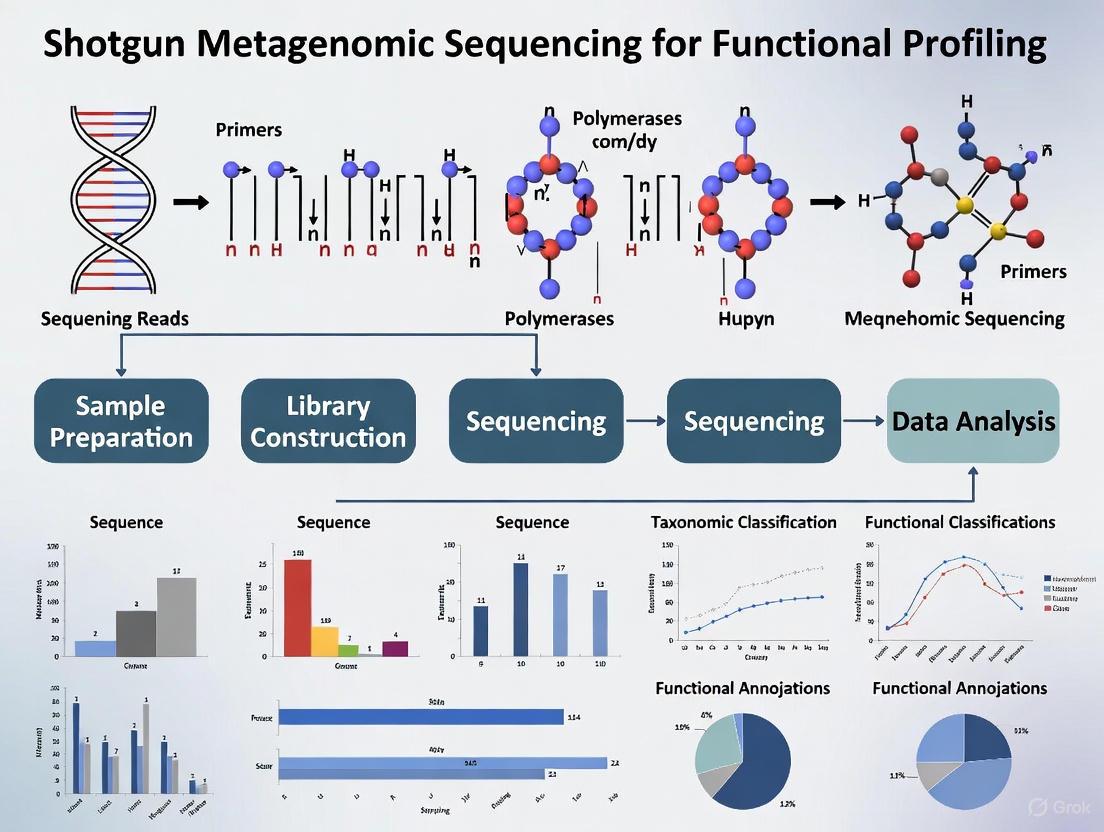
Shotgun metagenomic sequencing has emerged as a powerful, culture-independent method for comprehensively profiling the genetic and functional potential of complex microbial communities.
Unlocking Microbial Function: A Comprehensive Guide to Shotgun Metagenomic Sequencing for Biomedical Research
Abstract
Shotgun metagenomic sequencing has emerged as a powerful, culture-independent method for comprehensively profiling the genetic and functional potential of complex microbial communities. This article provides researchers, scientists, and drug development professionals with a detailed exploration of its foundational principles, methodological workflows, and diverse applications—from tracking antimicrobial resistance to discovering novel therapeutics. We address key challenges such as host DNA contamination and data analysis complexity, offering optimization strategies and comparing its performance against 16S rRNA sequencing. By synthesizing current methodologies and validating its utility through case studies and benchmark data, this guide serves as an essential resource for leveraging functional metagenomic insights to advance biomedical and clinical research.
Beyond Taxonomy: Core Principles and Advantages of Functional Shotgun Metagenomics
Defining Shotgun Metagenomic Sequencing and Its Core Principle of Unbiased Sequencing
Shotgun metagenomic sequencing represents a transformative approach in microbial ecology and functional genomics, enabling comprehensive analysis of complex microbial communities without prior cultivation. This technique operates on the core principle of unbiased sequencing, whereby all DNA fragments from a heterogeneous sample are randomly sequenced, thereby circumventing the amplification biases inherent in targeted approaches. By providing direct access to the collective genetic material of all organisms present in a sample, shotgun metagenomics facilitates simultaneous taxonomic profiling at high resolution and functional characterization of metabolic potential. This application note delineates the foundational methodologies, analytical frameworks, and practical implementations of shotgun metagenomics, with particular emphasis on its application in functional profiling research for pharmaceutical and therapeutic development.
Shotgun metagenomic sequencing is a high-throughput, culture-independent method that involves the random fragmentation and sequencing of all DNA extracted from an environmental or clinical sample [1] [2]. The term "shotgun" derives from the methodical fragmentation of total community DNA into numerous small pieces, analogous to the scatter pattern of a shotgun blast [3]. Unlike targeted amplification techniques such as 16S rRNA gene sequencing, which focus on specific phylogenetic markers, shotgun metagenomics employs an untargeted approach that sequences all genomic content without preference for specific taxonomic groups or genetic elements [4]. This fundamental characteristic enables researchers to reconstruct the genomic composition of microbial communities comprehensively, including bacteria, archaea, viruses, fungi, and eukaryotic microbes, while simultaneously elucidating their functional capabilities through analysis of protein-coding sequences [2] [4].
The core principle of unbiased sequencing establishes shotgun metagenomics as a hypothesis-free discovery tool that makes no a priori assumptions about community composition [5]. By avoiding targeted amplification with universal primers, this method eliminates the primer bias that can skew community representation in amplicon-based studies [6] [4]. The resultant data provides a more accurate quantitative representation of microbial abundances and enables detection of novel microorganisms that lack conserved primer binding sites or established phylogenetic markers [6]. Furthermore, the random sampling of genomic regions permits identification and characterization of biosynthetic gene clusters (BGCs) encoding specialized metabolites with pharmaceutical potential, including antibiotics, immunosuppressants, and anticancer agents [7] [8].
Core Principle: Unbiased Sequencing
The foundational principle of shotgun metagenomic sequencing is its comprehensive and unbiased nature, which differentiates it fundamentally from targeted molecular approaches. This unbiased methodology manifests through several key characteristics:
Random Fragmentation and Sequencing
In shotgun metagenomics, the total DNA extracted from a sample is randomly sheared into small fragments using mechanical (e.g., sonication) or enzymatic methods [3]. These fragments are sequenced independently without selective amplification, ensuring that all genomic regions have an approximately equal probability of being sequenced [6] [2]. This process stands in direct contrast to amplicon sequencing, which relies on conserved primer binding sites and preferentially amplifies specific genomic regions, thereby introducing amplification biases that distort true microbial abundances [6] [4].
Hypothesis-Free Community Profiling
The unbiased nature of shotgun metagenomics makes it particularly valuable for exploratory studies of complex microbial communities where the composition is unknown or poorly characterized [5]. By sequencing all DNA content without predetermined targets, researchers can detect unexpected organisms, including novel microbial taxa that would be missed by targeted approaches due to sequence divergence in conserved marker genes [6]. This capability was demonstrated in a recent study of natural farmland soils, where shotgun metagenomics revealed substantial proportions of unassigned bacteria at the phylum level, indicating the presence of potentially novel microbial lineages [7].
Equal Access to All Genomic Niches
Unlike targeted approaches that focus exclusively on specific phylogenetic markers (e.g., 16S rRNA for bacteria/archaea, ITS for fungi), shotgun metagenomics provides equivalent access to all genomic components across all domains of life within a single assay [2] [4]. This comprehensive coverage enables researchers to study cross-domain interactions and community dynamics between bacteria, archaea, viruses, and eukaryotic microbes without requiring separate experimental procedures for each microbial group [4].
Table 1: Comparison of Shotgun Metagenomic Sequencing vs. Targeted Amplicon Sequencing
| Feature | Shotgun Metagenomics | Amplicon Sequencing (16S/ITS) |
|---|---|---|
| Sequencing Approach | Untargeted; sequences all DNA | Targeted; amplifies specific gene regions |
| Taxonomic Resolution | Strain-level identification | Typically genus/species level |
| Functional Data | Yes (genes, pathways, AMR markers) | No, requires inference |
| Organisms Detected | Bacteria, viruses, fungi, archaea | Bacteria (16S) or fungi/yeasts (ITS) only |
| Primer Bias | None | High (affected by primer choice) |
| Cost per Sample | Higher | Lower |
| Computational Requirements | High (complex bioinformatics) | Moderate |
| Best Applications | Functional potential, novel discoveries | Taxonomic profiling, large sample numbers |
The following diagram illustrates the core conceptual difference between the unbiased nature of shotgun metagenomics and targeted amplicon sequencing:
Experimental Workflow and Protocols
The successful implementation of shotgun metagenomic sequencing requires meticulous execution of a multi-stage experimental workflow, from sample collection through data analysis. Each step introduces potential biases that must be carefully managed to preserve the unbiased nature of the approach.
Sample Collection and Preservation
Sample collection represents the first critical step in maintaining community representation. Protocols must be optimized for specific sample types:
- Human-derived samples (stool, saliva, skin swabs): Collect using sterile containers, freeze immediately at -20°C or -80°C, and avoid freeze-thaw cycles [2]. For fecal samples, preservation buffers may be used if immediate freezing is not possible.
- Environmental samples (soil, water): Process immediately or flash-freeze in liquid nitrogen. Soil samples may require homogenization and sieving to remove debris [7].
- Clinical samples (tissue, blood, CSF): Adhere to sterile collection procedures and consider host DNA depletion methods due to high human-to-microbial DNA ratios [5].
Proper documentation of metadata, including sampling time, location, and environmental parameters (e.g., pH, temperature), is essential for contextual interpretation of results [2] [7].
DNA Extraction and Quality Control
DNA extraction represents a significant source of bias in metagenomic studies. The protocol must efficiently lyse diverse microbial cell types while minimizing DNA shearing:
- Cell Lysis: Employ a combination of mechanical (bead beating), chemical (detergents), and enzymatic (lysozyme, proteinase K) methods to ensure comprehensive lysis of Gram-positive bacteria, fungi, and spores [2].
- DNA Purification: Use commercial kits or phenol-chloroform extraction to remove inhibitors (e.g., humic acids in soil samples, bile salts in fecal samples) [2] [7].
- Quality Assessment: Verify DNA integrity via agarose gel electrophoresis, quantify using fluorometric methods (e.g., Qubit), and assess purity via spectrophotometric ratios (A260/280 ~1.8-2.0, A260/230 >2.0) [2].
The selection of DNA extraction method significantly influences the observed microbial community structure and must be consistent across all samples within a study [2].
Library Preparation and Sequencing
Library preparation converts purified DNA into a format compatible with high-throughput sequencing platforms:
- DNA Fragmentation: Fragment 1-100 ng of DNA to 200-800 bp fragments using acoustic shearing (Covaris) or enzymatic fragmentation (tagmentation) [2] [3].
- Size Selection: Perform solid-phase reversible immobilization (SPRI) bead-based clean-up to remove very short fragments and select the desired size distribution.
- Adapter Ligation: Ligate platform-specific sequencing adapters containing unique dual indices (UDIs) to enable sample multiplexing [2].
- Library Amplification: Perform limited-cycle PCR (typically 4-8 cycles) to amplify the library while minimizing amplification biases.
- Library Quantification: Quantify using qPCR (for absolute molecule counting) and qualify via bioanalyzer or tape station analysis.
For Illumina platforms, sequence with 2×150 bp or 2×250 bp paired-end reads to facilitate accurate assembly and downstream analysis. The required sequencing depth varies by application: 5-10 million reads per sample for taxonomic profiling, 20-50 million reads for functional analysis, and >50 million reads for genome assembly from complex communities [1] [2].
The following diagram illustrates the complete experimental workflow:
Bioinformatic Analysis Framework
The analysis of shotgun metagenomic data involves multiple computational steps to transform raw sequencing reads into biological insights. The following protocols outline the primary analytical pathways for taxonomic and functional profiling.
Quality Control and Preprocessing
- Adapter Trimming: Remove sequencing adapters and indices using tools such as Cutadapt or Trimmomatic.
- Quality Filtering: Discard low-quality reads using predetermined thresholds (e.g., Phred score >20, read length >50 bp).
- Host DNA Removal: Align reads to reference genomes of host organisms (e.g., human, mouse, plant) using BWA or Bowtie2 and remove aligning reads [5] [7].
- Quality Assessment: Generate quality reports using FastQC before and after preprocessing.
Taxonomic Profiling
Two primary approaches exist for determining microbial community composition:
Read-Based Taxonomy Assignment:
- Align quality-filtered reads to reference databases (NCBI nt, RefSeq) using alignment tools (BWA, Bowtie2) or k-mer based classifiers (Kraken2, Kaiju) [2].
- Estimate taxonomic abundances from alignment counts, normalizing for genome size and read length.
- MetaPhlAn4 utilizes clade-specific marker genes for efficient and accurate taxonomic profiling [9].
Assembly-Based Taxonomy Assignment:
- Perform de novo co-assembly of all reads using metaSPAdes or MEGAHIT to reconstruct longer contiguous sequences (contigs) [7].
- Bin contigs into metagenome-assembled genomes (MAGs) based on sequence composition and abundance profiles.
- Classify MAGs taxonomically using tools like GTDB-Tk against the Genome Taxonomy Database [9].
Functional Profiling
Functional characterization identifies metabolic pathways and biological processes encoded in the metagenome:
Gene Prediction and Annotation:
Pathway Reconstruction:
- Map annotated genes to metabolic pathways using HUMAnN3 or KEGG Mapper.
- Reconstruct metabolic modules to identify complete pathways present in the community [9].
Biosynthetic Gene Cluster Identification:
- Scan contigs for BGCs encoding secondary metabolites (polyketide synthases, non-ribosomal peptide synthetases) using antiSMASH [7].
- Analyze domain architecture of identified BGCs to predict novel bioactive compounds.
Table 2: Performance Metrics of Modern Metagenomic Profiling Tools
| Tool | Primary Function | Processing Time (10M reads) | Memory Usage | Key Advantage |
|---|---|---|---|---|
| Meteor2 | Taxonomic, functional, and strain-level profiling | 2.3 min (taxonomic), 10 min (strain) | 5 GB RAM | Integrated TFSP using environment-specific gene catalogues |
| MetaPhlAn4 | Taxonomic profiling | ~15-30 minutes | 8-16 GB RAM | Species-level resolution using marker genes |
| HUMAnN3 | Functional profiling | 1-2 hours | 16-32 GB RAM | Comprehensive pathway coverage |
| Kraken2 | Taxonomic classification | ~30 minutes | 16-64 GB RAM | Rapid k-mer based assignment |
| antiSMASH | BGC identification | Hours to days | 8-32 GB RAM | Specialized in secondary metabolite discovery |
Applications in Functional Profiling Research
Shotgun metagenomics provides unparalleled insights into the functional potential of microbial communities, with significant applications across pharmaceutical development and clinical research.
Drug Discovery and Biosynthetic Potential
The unbiased nature of shotgun metagenomics enables comprehensive mining of microbial communities for novel biosynthetic gene clusters (BGCs) encoding pharmaceutically relevant compounds:
- Novel Antibiotic Discovery: Analysis of soil metagenomes from natural farmland in Ethiopia revealed numerous known and novel BGCs responsible for secondary metabolites, including polyketide synthases (PKS), non-ribosomal peptide synthetases (NRPS), and ribosomally synthesized and post-translationally modified peptides (RiPPs) [7]. These BGCs represent promising candidates for developing new antibiotics to combat multidrug-resistant pathogens.
- Bioactive Compound Identification: Shotgun metagenomics facilitates identification of diverse chemical classes, including polyethers, terpenoids, alkaloids, and macrolides from unculturable microbial species [8]. For example, analysis of marine sponge microbiomes revealed seven bacterial species producing biologically active compounds with therapeutic potential [8].
Antimicrobial Resistance Monitoring
Shotgun metagenomics enables comprehensive surveillance of antimicrobial resistance (AMR) genes within complex microbial communities:
- Resistome Profiling: Global analysis of 4,728 metagenomic samples from 60 cities created detailed profiles of microbial strains and their AMR markers, revealing distinct geographical patterns of resistance gene distribution [8].
- Resistance Mechanism Elucidation: The technique identifies not only known resistance genes but also novel mechanisms by detecting genetic rearrangements and horizontal gene transfer events that contribute to the spread of AMR [8].
Microbiome-Drug Interactions
The unbiased sequencing approach reveals complex interactions between administered pharmaceuticals and the human microbiome:
- Drug Metabolism by Microbes: Shotgun metagenomics identified Eggerthella lenta as capable of inactivating the cardiac drug digoxin, explaining treatment failure in some patients [8].
- Therapeutic Efficacy Modulation: Analysis of cancer patients undergoing PD-1 immunotherapy revealed that treatment response correlates with specific gut microbiome compositions, particularly the abundance of Akkermansia muciniphila [8].
- Drug-Drug Interactions: Metagenomic approaches elucidated how amoxicillin reduces intestinal microbial diversity and slows aspirin metabolism by altering the gut community responsible for its processing [8].
The Scientist's Toolkit: Essential Research Reagents and Materials
Successful implementation of shotgun metagenomic sequencing requires carefully selected reagents, materials, and computational resources. The following table details essential components for conducting comprehensive metagenomic studies:
Table 3: Essential Research Reagents and Materials for Shotgun Metagenomic Sequencing
| Category | Specific Items | Function/Purpose | Examples/Alternatives |
|---|---|---|---|
| Sample Collection & Storage | Sterile containers, DNA/RNA shield buffer, cryovials, liquid nitrogen | Maintain sample integrity, prevent degradation, inhibit microbial growth | Zymo DNA/RNA Shield, Streck Cell-Free DNA Tube |
| DNA Extraction | Bead beating tubes, lysis buffers, proteinase K, lysozyme, commercial extraction kits | Comprehensive cell lysis, inhibitor removal, high-quality DNA extraction | DNeasy PowerSoil Pro Kit (QIAGEN), MagAttract PowerSoil DNA Kit |
| Library Preparation | Fragmentation enzymes/beads, end-repair mix, A-tailing enzyme, ligation mix, unique dual indices, size selection beads | Convert DNA to sequencing-compatible libraries, enable multiplexing | Illumina DNA Prep Kit, Nextera XT DNA Library Prep Kit |
| Sequencing Reagents | Flow cells, sequencing primers, buffer solutions, polymerase | Generate sequence data from prepared libraries | Illumina NovaSeq S4 Reagent Kit, MiSeq Reagent Kit v3 |
| Bioinformatics Tools | Quality control tools, aligners, assemblers, taxonomic classifiers, functional annotators | Process raw data, perform taxonomic and functional analysis | FastQC, Trimmomatic, metaSPAdes, Kraken2, HUMAnN3, antiSMASH |
| Reference Databases | Genomic, taxonomic, and functional databases | Provide reference for sequence identification and annotation | NCBI RefSeq, GTDB, KEGG, eggNOG, CARD, ResFinder |
Shotgun metagenomic sequencing represents a paradigm shift in microbial community analysis, offering an unbiased, comprehensive approach to exploring taxonomic composition and functional potential without cultivation. The core principle of random, unbiased sequencing of all DNA content enables researchers to overcome the limitations of targeted methods and access the full genetic diversity of complex microbial ecosystems. As sequencing technologies continue to advance and analytical tools become more sophisticated, shotgun metagenomics will play an increasingly central role in functional profiling research, particularly in pharmaceutical development where understanding microbial communities' metabolic capabilities is essential for drug discovery, antimicrobial resistance monitoring, and elucidating microbiome-drug interactions. The protocols and applications detailed in this document provide a foundation for researchers to implement this powerful technology in their functional profiling investigations, contributing to the advancement of this rapidly evolving field.
Within modern microbiome research, the selection of a sequencing strategy is a foundational decision that directly determines the breadth and depth of actionable biological insights. For years, 16S rRNA amplicon sequencing has served as the workhorse for microbial census studies, providing a cost-effective snapshot of bacterial and archaeal composition. However, the increasing focus on the functional roles of microbial communities in health, disease, and biotechnological applications demands a more comprehensive approach. Shotgun metagenomic sequencing addresses this need by moving beyond taxonomic census to enable functional profiling. This Application Note delineates the key technical and analytical differences between these two methods, providing a framework for researchers to align their sequencing strategy with their scientific objectives.
Core Methodological Principles
16S rRNA Amplicon Sequencing: A Targeted Approach
16S rRNA gene sequencing is a form of amplicon sequencing that targets and reads specific hypervariable regions (V1-V9) of the 16S rRNA gene, a genetic marker present in all Bacteria and Archaea [10] [11]. Its methodology is PCR-dependent, involving the amplification of a single, selected gene region, which inherently limits its scope to the taxonomy encoded within that fragment [10] [12].
Shotgun Metagenomic Sequencing: An Untargeted Approach
In contrast, shotgun metagenomic sequencing adopts an untargeted, whole-genome strategy. DNA is randomly fragmented into small pieces, and all fragments are sequenced, generating reads from across all genomic DNA present in a sample—whether from bacteria, archaea, viruses, fungi, or other microorganisms [10] [12]. This method is PCR-free in its core sequencing step, avoiding the amplification biases associated with primer selection and allowing for the reconstruction of complete metabolic pathways and the identification of microbial genes [10].
The fundamental difference in library preparation and data output is illustrated below.
Head-to-Head Comparative Analysis
A direct comparison of 16S and shotgun metagenomic sequencing reveals critical trade-offs in cost, resolution, and information output, which should guide experimental design.
Table 1: Key comparison between 16S rRNA and shotgun metagenomic sequencing
| Factor | 16S rRNA Sequencing | Shotgun Metagenomic Sequencing |
|---|---|---|
| Approximate Cost per Sample | ~$50 USD [10] | Starting at ~$150 USD [10] |
| Taxonomic Resolution | Genus-level (sometimes species) [10] | Species-level and strain-level [10] [12] |
| Taxonomic Coverage | Bacteria and Archaea only [10] | All taxa: Bacteria, Archaea, Fungi, Viruses, Protists [10] [12] |
| Functional Profiling | No direct profiling; requires prediction (e.g., PICRUSt) [10] | Yes, direct profiling of microbial genes and pathways [10] |
| Bioinformatics Complexity | Beginner to Intermediate [10] | Intermediate to Advanced [10] |
| Sensitivity to Host DNA | Low (due to targeted PCR) [10] [12] | High (can be mitigated with enrichment or depth) [10] [12] |
| Primary Bias | Medium to High (primer and region selection) [10] | Lower (untargeted, though analytical biases exist) [10] |
Interpreting Comparative Data
Empirical studies consistently validate the distinctions outlined in Table 1. A 2024 study comparing 156 human stool samples demonstrated that shotgun sequencing provides a more detailed snapshot in both depth and breadth, revealing a significant portion of the community that 16S sequencing misses [13]. Conversely, 16S sequencing tends to over-represent dominant bacteria, showing sparser data and lower alpha diversity [13] [14]. While abundance estimates for shared taxa are often positively correlated, the agreement between the two methods decreases substantially at the species level due to the limited resolution of short 16S reads and discrepancies between reference databases [13] [15].
Detailed Experimental Protocols
Protocol: 16S rRNA Gene Sequencing Workflow
1. DNA Extraction: Isolate genomic DNA from the sample using a commercial kit (e.g., DNeasy PowerLyzer PowerSoil Kit [13]). The integrity and concentration of the DNA should be quantified via fluorometry.
2. PCR Amplification: Amplify the target hypervariable region(s) (e.g., V3-V4) using locus-specific primers that include Illumina adapter overhangs and sample-specific barcodes to enable multiplexing [10] [13].
- Primer Example (V3-V4): Forward: 5´-CCTACGGGNGGCWGCAG-3´; Reverse: 5´-GGACTACNVGGGTWTCTAAT-3´ [16].
3. Library Preparation: Clean up the amplified PCR products to remove primers, enzymes, and impurities. This often involves bead-based size selection to retain the expected amplicon size [10].
4. Pooling and Quantification: Combine the barcoded libraries in equimolar proportions into a single pool. Quantify the final pooled library accurately using qPCR to ensure optimal cluster density on the sequencer [10].
5. Sequencing: Sequence the pooled library on an Illumina MiSeq, NextSeq 1000/2000, or similar platform, typically generating 150 bp or 250 bp paired-end reads [10] [11].
Protocol: Shotgun Metagenomic Sequencing Workflow
1. DNA Extraction & QC: Extract high-quality, high-molecular-weight DNA. For samples with high host contamination, consider implementing an enrichment protocol, such as centrifugation-based size separation to enrich for microbial cells [17].
2. Library Preparation (Tagmentation): This typically involves a tagmentation step, which simultaneously fragments the DNA and adds adapter sequences using an enzyme like Th5 (e.g., Illumina DNA Prep kit) [10]. This step replaces traditional restriction enzyme digestion and ligation.
3. PCR Amplification and Indexing: Perform a limited-cycle PCR to amplify the tagmented DNA and add unique dual indices (UDIs) to each sample [10].
4. Size Selection and Clean-up: Purify the final library to remove leftover PCR reagents and perform size selection to remove very short or long fragments, ensuring a uniform library [10].
5. Pooling, Quantification, and Sequencing: Pool the indexed libraries, quantify precisely, and sequence on an Illumina NovaSeq or similar high-output platform. Sequencing depth is critical; for human gut samples, 10-20 million paired-end reads per sample is a common starting point, though "shallow shotgun" at lower depths (e.g., 2-5 million reads) is a cost-effective alternative for large cohort studies [10] [12] [18].
The following diagram summarizes the two experimental workflows.
Bioinformatic Analysis Pathways
The analytical pathways for 16S and shotgun data diverge significantly, reflecting the complexity and information content of the underlying data.
16S rRNA Data Analysis
The primary goal is taxonomic classification.
- Quality Filtering & Denoising: Tools like DADA2 or QIIME 2 are used to filter low-quality reads, remove chimeras, and infer exact Amplicon Sequence Variants (ASVs) [13].
- Taxonomic Assignment: ASVs are classified by comparing them to reference databases (e.g., SILVA, Greengenes) [10] [13]. Resolution is typically reliable to the genus level, with species-level assignment often being tentative [10] [16].
- Functional Prediction: Tools like PICRUSt predict functional potential based on the identified taxonomy and known genomic content, but this is an inference, not a direct measurement [10].
Shotgun Metagenomic Data Analysis
This allows for a multi-layered, comprehensive analysis.
- Quality Control & Host Removal: Tools like FastQC and KneadData are used for quality trimming and to remove host-derived reads.
- Taxonomic Profiling: Reads can be aligned to comprehensive genome databases (e.g., GTDB) using tools like MetaPhlAn4 or Meteor2 for accurate species and strain-level profiling [18] [13].
- Functional Profiling: Reads are mapped to functional databases (e.g., KEGG, CAZy) using tools like HUMAnN3 or Meteor2 to quantify the abundance of specific genes and metabolic pathways directly from the community [10] [18].
- Strain-Level Analysis: Tools like StrainPhlAn can track strain-level single nucleotide variants (SNVs) across samples, enabling high-resolution studies of microbial transmission and evolution [18].
Table 2: Essential bioinformatics tools for shotgun metagenomic analysis
| Analysis Type | Tool | Function |
|---|---|---|
| Taxonomic Profiling | MetaPhlAn4 [18] | Uses clade-specific marker genes for efficient taxonomy assignment. |
| Taxonomic, Functional &\nStrain Profiling | Meteor2 [18] | An all-in-one tool for Taxonomic, Functional, and Strain-level Profiling (TFSP) using ecosystem-specific gene catalogues. |
| Functional Profiling | HUMAnN3 [10] [18] | Quantifies the abundance of microbial metabolic pathways in a community. |
| Strain-Level Analysis | StrainPhlAn [18] | Infers strain-level population genetics from metagenomic data. |
The Scientist's Toolkit: Research Reagent Solutions
Table 3: Key reagents and kits for metagenomic sequencing
| Item | Function | Example Product |
|---|---|---|
| High-Yield DNA\nExtraction Kit | To efficiently lyse diverse microbial cells (gram-positive, gram-negative, fungal) and recover high-quality, inhibitor-free DNA. | NucleoSpin Soil Kit (Macherey-Nagel) [13] |
| 16S Amplicon\nLibrary Prep Kit | Provides optimized primers and master mix for specific amplification of 16S variable regions with minimal bias. | Illumina 16S Metagenomic Sequencing Library Prep [11] |
| Shotgun Metagenomic\nLibrary Prep Kit | Enables efficient fragmentation (tagmentation) and preparation of sequencing-ready libraries from whole genomic DNA. | Illumina DNA Prep [11] |
| Metagenomic\nStandard | A defined, mock microbial community used as a positive control to assess sequencing accuracy, pipeline performance, and cross-batch variability. | ZymoBIOMICS Microbial Community Standard |
The choice between 16S rRNA amplicon sequencing and shotgun metagenomics is not a matter of one being universally superior, but rather of selecting the right tool for the research question. 16S sequencing remains a powerful, cost-effective tool for large-scale, hypothesis-generating studies focused specifically on bacterial and archaeal composition at the genus level. It is particularly suited for sample types with high host DNA contamination where targeted amplification is advantageous [10] [12].
In contrast, shotgun metagenomic sequencing is the unequivocal method of choice for studies demanding resolution, breadth, and functional insight. When the research objectives require species- or strain-level discrimination, profiling of non-bacterial kingdoms (viruses, fungi), or direct assessment of the functional potential encoded in the metagenome, shotgun sequencing is indispensable [10] [13] [17]. As sequencing costs continue to fall and analytical tools like Meteor2 mature, shotgun metagenomics is poised to become the new gold standard for holistic functional profiling of complex microbial ecosystems [18].
Shotgun metagenomic sequencing represents a paradigm shift in microbial ecology, enabling unparalleled comprehensive analysis of complex microbial communities. Unlike targeted approaches, this method involves randomly fragmenting the total DNA extracted from an environmental, clinical, or experimental sample into numerous small pieces, which are sequenced and subsequently reconstructed bioinformatically [10] [19]. This culture-independent technique facilitates a holistic view of the microbiome's taxonomic composition and functional potential, providing insights that are critical for advanced research and therapeutic development [18].
The principal advantage driving its adoption is its capacity to simultaneously identify and characterize all domains of life—Bacteria, Archaea, Fungi, and Viruses—from a single sequencing experiment, and to link this taxonomic information to specific metabolic functions, resistance genes, and community dynamics [10] [20]. This application note details the protocols and quantitative advantages that make shotgun metagenomics an indispensable tool for scientists and drug development professionals.
Quantitative Advantages Over Targeted Sequencing
The selection of a sequencing methodology is a critical first step in experimental design. While 16S rRNA gene sequencing has been widely used for bacterial community analysis, shotgun metagenomics provides a far more extensive and functionally informative dataset. The table below summarizes a direct, head-to-head comparison of the two methods, highlighting the key metrics that are vital for research and development.
Table 1: Comparative Analysis of 16S rRNA Gene Sequencing vs. Shotgun Metagenomic Sequencing
| Factor | 16S rRNA Gene Sequencing | Shotgun Metagenomic Sequencing |
|---|---|---|
| Cost (per sample) | ~$50 USD [10] | Starting at ~$150 USD; price depends on sequencing depth [10] |
| Taxonomic Resolution | Bacterial genus (sometimes species) [10] | Bacterial species and often strains [10] |
| Taxonomic Coverage | Bacteria and Archaea only [10] [19] | All domains: Bacteria, Archaea, Fungi, and Viruses [10] [19] |
| Functional Profiling | No (only predicted via tools like PICRUSt) [10] | Yes, direct profiling of microbial genes and pathways [10] |
| Bioinformatics Requirements | Beginner to Intermediate [10] | Intermediate to Advanced [10] |
| Sensitivity to Host DNA | Low [10] | High; requires mitigation via sequencing depth or enrichment [10] |
Beyond the comparative advantages listed in Table 1, the performance of modern shotgun metagenomics tools is exceptional. For instance, the Meteor2 pipeline, which leverages environment-specific microbial gene catalogues, has demonstrated a ≥45% improvement in species detection sensitivity in shallow-sequenced datasets compared to other established tools like MetaPhlAn4. Furthermore, it improves functional abundance estimation accuracy by at least 35% compared to HUMAnN3 and can track more strain pairs, capturing an additional 9.8-19.4% in model datasets [18] [21]. In its fast configuration, Meteor2 can complete taxonomic analysis in approximately 2.3 minutes and strain-level analysis in 10 minutes for 10 million paired reads, using a modest 5 GB RAM footprint [18].
Experimental Protocol: A Standard Workflow for Shotgun Metagenomics
The following section outlines a standard end-to-end protocol for shotgun metagenomic sequencing, from sample preparation to data analysis. This workflow is designed to ensure comprehensive profiling of all microbial domains present in a sample.
Sample Preparation and DNA Extraction
Principle: The goal is to extract high-quality, high-molecular-weight DNA that accurately represents the entire microbial community. The choice of extraction method can significantly impact the recovery of DNA from different microbial taxa, especially those with tough cell walls like Gram-positive bacteria or fungi [10] [19].
Protocol:
- Sample Collection: Collect samples (e.g., stool, soil, water) in sterile containers and immediately freeze at -80°C to preserve nucleic acid integrity.
- Cell Lysis: Employ a combination of mechanical (e.g., bead beating), chemical (e.g., detergents), and enzymatic (e.g., lysozyme, proteinase K) lysis methods to ensure the rupture of a wide variety of microbial cell walls.
- DNA Purification: Purify the total DNA using spin-column-based kits or magnetic beads to remove contaminants, inhibitors, and humic substances.
- Quality Control: Assess DNA concentration using fluorometric methods (e.g., Qubit) and purity/integrity using spectrophotometry (e.g., Nanodrop) and gel electrophoresis.
Library Preparation and Sequencing
Principle: The extracted DNA is fragmented and prepared for sequencing by adding platform-specific adapters. The fragmentation can be achieved via mechanical shearing or enzymatic tagmentation [10].
Protocol:
- DNA Fragmentation: Fragment the purified DNA to a uniform size (typically 300-800 bp) using acoustic shearing or enzymatic tagmentation.
- Adapter Ligation: Repair the ends of the DNA fragments and ligate sequencing adapters containing unique molecular barcodes (indexes) to allow for multiplexing of samples.
- Library Amplification: Perform a limited-cycle PCR to amplify the adapter-ligated fragments. Clean up the final library to remove PCR reagents and size-select for the desired fragment range.
- Library QC and Pooling: Quantify the final libraries using qPCR and pool them in equimolar ratios.
- Sequencing: Sequence the pooled libraries on a high-throughput platform such as Illumina, PacBio, or MGI, aiming for a minimum of 10-20 million reads per sample for complex communities, though deeper sequencing is required for low-abundance members or strain-level resolution [10].
Specialized Protocol: Fungal Enrichment for Mycobiome Analysis
Principle: Fungi often constitute a minor fraction of the total microbial biomass in communities like the gut, making their detection challenging with standard shotgun sequencing. An enrichment protocol based on the differential centrifugation of fungal and bacterial cells can significantly improve fungal sequence recovery [20].
Protocol:
- Sample Homogenization: Resuspend the sample (e.g., 0.5 g of feces) in phosphate-buffered saline (PBS) and homogenize thoroughly.
- Differential Centrifugation:
- Perform an initial low-speed centrifugation (e.g., 500 × g for 5 minutes) to pellet large debris and some fungal cells.
- Transfer the supernatant to a new tube and perform a series of higher-speed centrifugations (e.g., 2,000-4,000 × g for 10-20 minutes) to pellet the larger fungal cells while leaving many bacterial cells in suspension.
- The pellet is enriched for fungal cells, while the supernatant is enriched for bacterial cells.
- DNA Extraction: Extract DNA separately from the fungal-enriched pellet and the bacterial-enriched supernatant using a robust lysis method.
- Sequencing and Analysis: Proceed with library preparation and sequencing as described in Section 3.2. This enrichment protocol, combined with comprehensive fungal databases, provides a cost-effective and reliable approach for integrated bacteria-fungi (mycobiome) analysis at the species level [20].
The following diagram illustrates the logical workflow and decision points in a standard shotgun metagenomics experiment.
Bioinformatic Analysis for Comprehensive Profiling
The raw sequencing data (reads) must be processed through a bioinformatic pipeline to generate biological insights. A robust pipeline integrates taxonomic, functional, and strain-level profiling (TFSP) [18].
Core Steps:
- Quality Control & Preprocessing: Use tools like FastQC and Trimmomatic to assess read quality and remove low-quality sequences, adapters, and host-derived reads (e.g., human DNA) [20].
- Taxonomic Profiling: This can be achieved via:
- Read-based Alignment: Directly align reads to comprehensive reference databases (e.g., RefSeq, GTDB) using tools like Kraken [21] or Meteor2 [18].
- De novo Assembly: Assemble reads into longer contiguous sequences (contigs) using tools like MEGAHIT. Contigs can then be binned into Metagenome-Assembled Genomes (MAGs) for higher-resolution analysis [10].
- Functional Profiling: Align reads or assembled genes against functional databases to determine the abundance of:
- Strain-Level Profiling: Track single nucleotide variants (SNVs) in core genes to distinguish between closely related strains, which can have divergent functional roles, using tools like StrainPhlAn or Meteor2 [18].
Table 2: Key Research Reagent Solutions for Shotgun Metagenomics
| Item | Function/Description | Example Use Case |
|---|---|---|
| DNA Extraction Kits | Robust lysis and purification for diverse sample types; critical for unbiased representation. | Extraction from soil, stool, or swab samples with complex matrices. |
| Library Prep Kits | Enzymatic (e.g., Tagmentation) or mechanical fragmentation and adapter ligation. | Preparing sequencing-ready libraries from purified genomic DNA. |
| Functional Databases (e.g., KEGG, CARD, dbCAN) | Curated collections of genes and pathways for functional annotation. | Annotating metabolic pathways, antibiotic resistance, and CAZymes. |
| Taxonomic Databases (e.g., GTDB, RefSeq) | Reference genomes for classifying sequencing reads. | Determining the relative abundance of microbial species. |
| Analysis Pipelines (e.g., Meteor2, bioBakery) | Integrated software suites for end-to-end analysis. | Performing unified taxonomic, functional, and strain-level profiling (TFSP) [18]. |
Shotgun metagenomic sequencing is a powerful and now accessible technology that provides a definitive advantage for the comprehensive profiling of Bacteria, Archaea, Fungi, and Viruses. Its ability to move beyond mere cataloging of species to deliver deep functional insights and strain-level resolution makes it an essential methodology for researchers aiming to understand the complex role of microbial communities in health, disease, and the environment. The continued development of sophisticated computational tools like Meteor2 and expanding reference databases are further enhancing its accuracy, speed, and accessibility, solidifying its position as the cornerstone of modern microbiome research.
Direct Access to Microbial Gene Content for Functional Interpretation
Shotgun metagenomic sequencing has revolutionized microbial ecology by enabling researchers to decode the genetic potential of entire microbial communities without the need for cultivation. A primary goal of this approach is the direct access and functional interpretation of microbial gene content, moving beyond taxonomic census to understand the biochemical capabilities of a microbiome [23]. This direct linkage between genetic content and ecosystem function is crucial for applications ranging from human health diagnostics to environmental monitoring.
However, a significant portion of genes in any microbial community are uncharacterized, creating a substantial "functional dark matter" problem [24]. Overcoming this challenge requires robust bioinformatic tools and well-validated experimental protocols that together enable accurate gene-centric profiling. This Application Note details the methodologies for directly accessing and interpreting microbial gene content, providing researchers with a structured framework for functional metagenomics.
Quantitative Profiling Tools for Gene-Centric Analysis
Specialized bioinformatics tools are essential for transforming raw sequencing data into quantitative profiles of gene abundance and function. The table below summarizes key tools for direct gene content analysis.
Table 1: Bioinformatics Tools for Direct Microbial Gene Content Analysis
| Tool | Primary Function | Type of Analysis | Key Features |
|---|---|---|---|
| Meteor2 [18] | Taxonomic, Functional, & Strain-level Profiling (TFSP) | Integrated TFSP using microbial gene catalogs | - Supports 10 ecosystems; 63+ million genes- Annotates KO, CAZymes, ARGs- Fast mode: ~12.3 min for 10M reads |
| MIDAS v3 & StrainPGC [25] | Strain-level gene content estimation | Pangenome profiling & strain-specific gene content | - Resolves intraspecific gene content variation- Uses UHGG reference collection- Integrates data across multiple samples |
| FUGAsseM [24] | Protein function prediction | Assigns functions to uncharacterized proteins | - Leverages metatranscriptomic coexpression- Uses two-layer random forest classifier- Predicts Gene Ontology (GO) terms |
These tools address different aspects of the functional interpretation pipeline. Meteor2 provides a comprehensive solution for quantitative profiling, leveraging environment-specific microbial gene catalogs to deliver integrated taxonomic, functional, and strain-level insights [18]. Its benchmark performance shows a 45% improvement in species detection sensitivity for shallow-sequenced datasets compared to alternatives, with a 35% improvement in functional abundance estimation accuracy [18].
For investigating strain-level functional variation, MIDAS v3 with the StrainPGC method enables precise estimation of gene content in individual strains by combining pangenome profiling with strain tracking across multiple samples [25]. This approach is particularly valuable for identifying strain-specific traits such as antibiotic resistance or virulence factors that may be missed in community-level analyses.
To address the challenge of uncharacterized genes, FUGAsseM employs a novel machine learning approach that integrates multiple data types, including metatranscriptomic coexpression patterns, genomic proximity, and sequence similarity, to assign putative functions to previously unannotated protein families [24]. This method has successfully provided high-confidence functional predictions for over 443,000 protein families, many of which had weak or no homology to previously characterized proteins [24].
Experimental Protocol for Shotgun Metagenomic Sequencing
This section details a standardized protocol for generating high-quality metagenomic data suitable for gene-centric functional analysis, with specific examples from digestive microbiota studies.
Materials and Equipment
Table 2: Essential Research Reagents and Solutions
| Category | Item | Function/Application |
|---|---|---|
| Sample Collection | Sterile swabs (for rectal/vaginal/penile sampling) | Microbial biomass collection with minimal contamination [26] [27] |
| Storage tubes (sterile) | Sample integrity maintenance during transport | |
| DNA Extraction | MP-soil FastDNA Spin Kit for Soil [27] | Comprehensive cell lysis and DNA purification from complex samples |
| Inhibitor removal reagents | Elimination of PCR inhibitors (e.g., humic acids) | |
| Library Prep & Sequencing | Illumina DNA Prep kits | Illumina-compatible library construction |
| PacBio SMRTbell libraries | HiFi long-read library preparation [28] | |
| Bioinformatics | MIMIC2 murine gene catalog [26] | Reference for mouse gut microbiome studies |
| UHGG collection [25] | Comprehensive human gastrointestinal genome reference |
Step-by-Step Procedure
Step 1: Sample Collection and Preservation For human gut microbiome studies, collect fecal samples or rectal swabs. For rectal swabs, clean the perianal area with soap, water, and 70% alcohol. Insert a sterile saline-moistened swab 4-5 cm into the anal canal, rotate gently, and place immediately into a sterile tube [27]. Flash-freeze samples in liquid nitrogen or store at -80°C until DNA extraction. For other body sites or environmental samples, use appropriate collection methods to minimize contamination.
Step 2: DNA Extraction and Quality Control Extract genomic DNA using a standardized kit such as the MP-soil FastDNA Spin Kit for Soil, following manufacturer instructions with bead-beating for comprehensive cell lysis [27]. Assess DNA concentration using fluorometric methods (e.g., Qubit), purity via spectrophotometry (A260/280 ratio ~1.8-2.0), and integrity through gel electrophoresis or bioanalyzer. High-molecular-weight DNA is particularly critical for long-read sequencing approaches [28].
Step 3: Library Preparation and Sequencing For short-read sequencing: Fragment DNA by sonication or enzymatic digestion, then perform end-repair, adapter ligation, and size selection. For Illumina platforms, use platform-specific kits [27]. For long-read sequencing: For PacBio HiFi metagenomics, prepare SMRTbell libraries without fragmentation and sequence on Revio or Sequel II/IIe systems to generate highly accurate long reads that enable improved metagenome-assembled genomes (MAGs) and strain resolution [28]. The required sequencing depth depends on the application, but 10-20 Gb per sample is typical for deep functional profiling [27].
Step 4: Bioinformatic Processing and Quality Control
- Read QC and Adapter Trimming: Use tools like Fastp (v0.23.0) to remove adapters and low-quality reads (average quality score <20, length <50 bp after trimming) [27].
- Host DNA Depletion: Map reads to host genome (e.g., human, mouse) using BWA (v0.7.17) or Bowtie2 (v2.5.4) and remove matching reads [18] [26].
- Gene Abundance Profiling: Map quality-controlled reads to an appropriate reference gene catalog using SOAPaligner (v2.21) or Bowtie2 with stringent identity thresholds (typically ≥95%) [18] [27].
The following diagram illustrates the complete workflow from sample to functional interpretation:
Advanced Computational Methods for Functional Interpretation
Integrated Taxonomic and Functional Profiling
Meteor2 exemplifies the modern approach to integrated analysis by using microbial gene catalogs organized into Metagenomic Species Pan-genomes (MSPs) as its fundamental analytical unit. The tool identifies "signature genes" within each MSP as reliable indicators for detecting, quantifying, and characterizing species [18]. For functional annotation, Meteor2 integrates three complementary approaches: KEGG Orthology (KO) terms for general metabolic pathways, carbohydrate-active enzymes (CAZymes) for carbohydrate metabolism, and antibiotic resistance genes (ARGs) using multiple databases including ResFinder and ResFinderFG [18].
The functional abundance of a specific pathway or category is computed by aggregating the normalized abundances of all genes associated with that function. This approach enables researchers to link community composition directly to functional potential, revealing how taxonomic shifts influence ecosystem capabilities.
Novel Function Prediction Using Natural Language Processing
For the substantial portion of microbial genes lacking functional annotations, novel computational approaches show significant promise. Natural Language Processing (NLP) algorithms, repurposed for genomic analysis, can model "gene semantics" by treating gene families as "words" and their genomic neighborhoods as "sentences" [29].
In this approach, researchers compile a genomic corpus from publicly available genomes and metagenomes, cluster genes into families based on sequence similarity, and train word embedding models (e.g., word2vec) to create a "gene annotation space" where genes with similar contexts are adjacent [29]. These embeddings then serve as input to deep neural network classifiers that can assign functional categories to uncharacterized genes with high accuracy, even across large evolutionary distances [29].
The following diagram illustrates this NLP-based function prediction workflow:
Multi-Omics Integration for Enhanced Functional Insights
Integrating metagenomic data with metatranscriptomic information provides a powerful approach for distinguishing carried genes from actively expressed functions. The FUGAsseM method exemplifies this by leveraging community-wide coexpression patterns from metatranscriptomes alongside genomic context and sequence similarity [24].
This method employs a two-layered random forest classifier system where the first layer trains individual classifiers for each type of association evidence (coexpression, genomic proximity, etc.), and the second layer integrates these predictions using an ensemble classifier to produce final functional assignments with confidence scores [24]. This approach is particularly valuable for characterizing protein families with weak or no homology to known proteins, expanding the functional landscape of well-studied microbiomes like the human gut.
Application to Disease-Associated Microbial Communities
Direct access to microbial gene content has proven particularly valuable in clinical research, where functional potential often provides more insight than taxonomic composition alone. In a study of acute pancreatitis (AP) patients, researchers used shotgun metagenomic sequencing to investigate gut microbiome changes during disease recovery [27].
Rectal swab samples from 12 AP patients across severity levels were sequenced during both acute and recovery phases. Functional profiling revealed opposing trends in key signaling pathways during recovery from mild versus severe AP, providing potential mechanistic insights into disease resolution [27]. The study demonstrated that microbial gene content and functional potential recovery lag behind clinical symptom improvement, suggesting extended microbiome-targeted interventions might benefit patient outcomes.
This application highlights how direct functional analysis can reveal clinically relevant insights that would be missed by taxonomic profiling alone, particularly for complex diseases where microbial metabolism interacts with host physiology.
Resolving Microbial Communities to the Strain Level for Precision Insights
The human microbiome, a complex ecosystem of microorganisms, plays a fundamental role in host physiology, immunity, and metabolic processes [30]. While early microbiome research focused on genus- or species-level classification, it has become increasingly clear that substantial functional heterogeneity exists within bacterial species. Different strains of the same species can exhibit dramatically different biological properties, including variations in virulence, antibiotic resistance, metabolic capabilities, and immunomodulatory effects [31] [32]. For example, certain strains of Escherichia coli are harmless commensals that aid digestion, while others such as E. coli O157:H7 are pathogenic and can cause serious illness [33]. This functional diversity stems from the fact that microbial strains can differ by as much as 30% of their gene content despite high sequence similarity in conserved regions [32].
The transition from species-level to strain-level analysis represents a paradigm shift in microbiome research, enabling unprecedented precision in understanding microbial influences on health and disease. Strain-level variations have been linked to diverse conditions including inflammatory bowel disease, cancer treatment response, mental health disorders, and metabolic diseases [34]. Consequently, strain-level resolution has become indispensable for identifying mechanistic links between microbes and host physiology, discovering biomarkers, and developing targeted therapeutic interventions [33] [31].
Shotgun metagenomic sequencing has emerged as the primary tool for achieving strain-level resolution, as it provides access to the complete genetic content of microbial communities without the limitations of amplification-based approaches [30] [35]. This application note outlines current methodologies, computational tools, and practical protocols for resolving microbial communities to the strain level, with emphasis on applications in precision medicine and drug development.
Methodological Approaches: From 16S to Shotgun Metagenomics
Technology Comparison for Varied Resolution Needs
Different sequencing technologies offer varying capabilities for strain-level analysis, with the choice depending on research goals, budget, and desired resolution [30].
Table 1: Comparison of Microbiome Sequencing Technologies
| Feature | 16S rRNA Amplicon Sequencing | Shotgun Metagenomic Sequencing |
|---|---|---|
| Primer Design Required | Yes (targeting specific hypervariable regions) | No |
| Taxonomic Resolution | Limited (genus/species level) | High (species/strain level) |
| Functional Gene Analysis | No | Yes (full genetic content) |
| Novel Species Detection | Limited | Yes |
| Microbial Coverage | Mostly bacteria and archaea | All microbes (bacteria, viruses, fungi, archaea) |
| Strain-Level Discrimination | Limited capability | High capability |
| Cost & Data Volume | Lower cost, smaller datasets | Higher cost, large datasets |
| Bioinformatics Complexity | Low | High |
While 16S rRNA sequencing targets conserved regions and provides limited strain discrimination, shotgun metagenomics sequences all DNA in a sample, enabling comprehensive strain-level analysis [35]. The full-length 16S rRNA gene sequencing with long-read technologies offers improved taxonomic resolution but still lacks the comprehensive functional insights provided by whole-genome shotgun approaches [33].
Advanced Strain-Resolved Bioinformatic Tools
Several specialized computational tools have been developed specifically for strain-level analysis from metagenomic data. These tools employ different algorithms and reference databases to achieve high-resolution microbial profiling.
Table 2: Strain-Level Metagenomic Analysis Tools
| Tool | Methodology | Key Features | Performance |
|---|---|---|---|
| Meteor2 [18] | Environment-specific microbial gene catalogs | Taxonomic, functional, and strain-level profiling (TFSP); 10 ecosystem databases | 45% improved species detection sensitivity; 35% better functional abundance estimation vs. HUMAnN3 |
| StrainScan [31] | Hierarchical k-mer indexing with Cluster Search Tree (CST) | Distinguishes highly similar strains (>99.9% ANI) in complex mixtures | 20% higher F1 score for multi-strain identification vs. state-of-the-art tools |
| StrainPhlAn [18] | Species-specific marker genes | Strain tracking and identification; part of bioBakery suite | Meteor2 tracked 9.8-19.4% more strain pairs in validation |
| StrainGE [31] | K-mer based representation | Identifies representative strains in clusters (90% Jaccard similarity) | Limited resolution for highly similar strains |
| Pathoscope2 [31] [36] | Bayesian read reassignment | Maps reads to custom strain databases for identification | Used successfully in airway microbiome strain analysis |
These tools address the significant computational challenges in strain-level analysis, particularly the need to distinguish between highly similar strains (with Average Nucleotide Identity >99.9%) that may coexist in complex communities [31].
Experimental Protocols for Strain-Level Metagenomics
Sample Collection, DNA Extraction, and Library Preparation
Proper sample handling is critical for successful strain-resolved metagenomic studies. The following protocol outlines key steps for sample processing:
Sample Collection and Preservation
- Collect samples using sterile techniques to minimize contamination [36]
- For clinical samples (e.g., airway, gut), collect with appropriate swabs or containers
- Immediately place samples on dry ice or store at -80°C to preserve DNA integrity [36]
- Document patient metadata, including comorbidities, medications, and antibiotic use [36]
DNA Extraction and Host DNA Depletion
- Extract DNA using kits specifically designed for microbial DNA (e.g., QIAamp DNA Microbiome Kit) [36]
- Implement host DNA depletion strategies to increase microbial sequencing depth
- Quantity DNA concentration using fluorometric methods
- Assess DNA purity (OD260/280 ratio of 1.8-2.0) and integrity [35]
Library Preparation and Sequencing
- Use library preparation kits compatible with metagenomic sequencing (e.g., NEBNext Ultra II FS DNA Library Prep Kit) [36]
- For Illumina platforms: aim for 2×150 bp or 2×300 bp read lengths [35]
- Sequence to sufficient depth: minimum ~25 million reads/sample for complex communities [36]
- Higher sequencing depth improves detection of low-abundance strains
Computational Analysis Pipeline for Strain Resolution
Quality Control and Preprocessing
- Perform quality checks and trim low-quality reads using Trimmomatic or similar tools [36]
- Remove host-derived sequences using alignment to host genome (e.g., with Bowtie2) [36]
- Use Kneaddata for integrated quality control and contaminant removal [36]
Taxonomic and Strain-Level Profiling
- For initial community assessment, use MetaPhlAn4 for species-level profiling [18] [36]
- For strain-level resolution, apply specialized tools:
- For custom strain tracking:
Functional Profiling and Strain Characterization
- Annotate genes for KEGG orthology, carbohydrate-active enzymes (CAZymes), and antibiotic resistance genes (ARGs) [18]
- Identify functional modules: Gut Brain Modules (GBMs), Gut Metabolic Modules (GMMs), and KEGG modules [18]
- Track single nucleotide variants (SNVs) in signature genes for strain-level dynamics [18]
Key Applications in Precision Medicine and Therapeutics
Therapeutic Areas Transformed by Strain-Level Insights
Strain-level microbiome analysis is opening new frontiers in therapeutic development across multiple disease areas:
Targeted Live Biotherapeutics
- Strain-level resolution enables development of precise microbial consortia for therapeutic restoration of microbiome function [33]
- Example: FDA-approved SER-109 for recurrent C. difficile infection represents a new class of live biotherapeutic products [33]
- Knowing exact strain composition ensures safety and prevents unintended disruption of microbial ecosystems [33]
Cancer Therapy Personalization
- Specific bacterial strains modulate responses to cancer immunotherapy [33] [34]
- Bifidobacterium longum subsp. longum strains potentiate PD-L1 blockade through IL-12 induction [34]
- Faecalibacterium prausnitzii strains demonstrate anti-tumoral effects through IL-12 and NK cell stimulation [34]
- Strain-level profiling could identify patients likely to respond to specific immunotherapies
Antibiotic Resistance Management
- Strain-level tracking enables monitoring of antibiotic resistance gene dissemination [33]
- Understanding strain-specific responses to antibiotics informs smarter antibiotic stewardship [33]
- Meteor2 provides specialized annotation for antibiotic-resistant genes (ARGs) using multiple databases [18]
Gut-Brain Axis Modulation
- Early research links specific bacterial strains to mental health conditions [33]
- Example: Alistipes strains associated with anxiety disorders can be modulated through targeted interventions [33]
- Strain-level insights may lead to novel interventions for neuropsychiatric conditions
Drug-Microbiome Interaction Prediction
Computational approaches now enable prediction of how pharmaceuticals impact specific microbial strains:
- Machine learning models integrate drug chemical properties and microbial genomic features to predict growth inhibition [37]
- Random forest models demonstrate high accuracy (ROC AUC 0.972) in predicting drug-microbe interactions [37]
- These models facilitate drug safety evaluation and personalized treatment planning based on individual microbiome composition [37]
The Scientist's Toolkit: Essential Research Reagents and Solutions
Successful strain-level metagenomic research requires specialized reagents and computational resources. The following table outlines essential components of the strain-level analysis toolkit:
Table 3: Research Reagent Solutions for Strain-Level Metagenomics
| Category | Specific Product/Resource | Function and Application |
|---|---|---|
| DNA Extraction | QIAamp DNA Microbiome Kit (Qiagen) | Enriches for microbial DNA while minimizing host DNA contamination [36] |
| Library Prep | NEBNext Ultra II FS DNA Library Prep Kit (NEB) | Prepares high-quality sequencing libraries from metagenomic DNA [36] |
| Sequencing Platforms | Illumina NextSeq 2000, PacBio HiFi, Oxford Nanopore | Generate short or long reads for strain discrimination; choice depends on resolution needs [33] [36] |
| Reference Databases | Custom species-specific RefSeq databases, Meteor2 catalogs | Enable precise strain identification through comprehensive reference collections [18] [36] |
| Quality Control | Kneaddata, Trimmomatic | Perform read quality control, adapter trimming, and host sequence removal [36] |
| Taxonomic Profiling | MetaPhlAn4, Meteor2 | Provide species-level community profiling as foundation for strain-level analysis [18] [36] |
| Strain-Level Analysis | StrainScan, Meteor2, Pathoscope2 | Specialized tools for discriminating closely related strains in complex communities [18] [31] [36] |
| Functional Annotation | KEGG, dbCAN3, ResFinder | Decode functional capabilities of identified strains (metabolism, CAZymes, ARGs) [18] |
Strain-level resolution of microbial communities represents a transformative advance in microbiome research, enabling unprecedented precision in understanding host-microbe interactions. The integration of sophisticated sequencing technologies, specialized computational tools, and standardized experimental protocols provides researchers with a powerful framework for uncovering strain-specific effects on health and disease. As these methodologies continue to mature and become more accessible, strain-level microbiome analysis is poised to become a fundamental component of precision medicine, therapeutic development, and personalized health interventions.
From Sample to Insight: Workflow, Tools, and Real-World Applications in Biomedicine
Shotgun metagenomic sequencing has revolutionized the study of microbial communities by enabling comprehensive analysis of genetic material directly from environmental or host-associated samples. Unlike amplicon sequencing, which targets specific genomic markers, this approach sequences all DNA in a sample, allowing researchers to simultaneously answer "who is there?" and "what are they capable of doing?" [6]. This culture-independent method provides deep insights into the diversity, functional potential, and dynamics of microbial ecosystems, making it indispensable for modern microbiome research and drug development [18] [6]. The power of shotgun metagenomics lies in its ability to support Taxonomic, Functional, and Strain-level Profiling (TFSP), which is crucial for a complete understanding of microbial community structures and their roles in various environments, from the human gut to environmental biomes [18].
The reliability of this powerful analytical tool, however, is entirely dependent on the pre-analytical phases of the workflow. The end-to-end process, from sample collection to library preparation, introduces multiple critical points where suboptimal practices can compromise data quality, leading to biased or erroneous conclusions. This document provides a detailed guide to these foundational steps, framed within the context of functional profiling research, to ensure the generation of high-integrity, actionable metagenomic data.
Sample Collection and Preservation
The first and often most critical phase of the metagenomic workflow is the proper collection and stabilization of samples. The integrity of the entire project hinges on decisions made at this initial stage.
Sample-Type Specific Considerations
- Whole Blood: Collect using EDTA tubes to preserve DNA integrity better than heparin or citrate. For short-term storage, keep samples at 4°C. For long-term storage, freeze at -80°C and strictly avoid repeated freeze-thaw cycles to prevent DNA degradation [38]. For mammalian blood, a volume of 200 μL is typically sufficient for DNA extraction, targeting white blood cells [39].
- Saliva and Buccal Swabs: Use sterile, DNA-free containers or specialized commercial saliva collection kits like Oragene devices, which stabilize samples at room temperature [39] [38].
- Stool and Complex Biological Samples: These represent highly complex microbial communities. Ensure rapid processing or immediate freezing at -80°C to preserve the native microbial composition and prevent overgrowth of certain taxa.
- Tough and Fibrous Samples (e.g., plant matter, insect exoskeletons, bone): These require specialized lysis strategies. For insects, chitin in the exoskeleton makes DNA extraction tricky; only 30 mg of body mass is needed with modern kits [39]. For bone, a combination of chemical agents like EDTA for demineralization and powerful mechanical homogenization is often necessary [40].
Universal Preservation Principles
The overarching goal of sample preservation is to halt all biological activity, including microbial growth and enzymatic degradation of DNA. Flash-freezing in liquid nitrogen, followed by storage at -80°C, is considered the gold standard for most sample types [40]. When freezing is not logistically feasible, chemical preservatives designed to stabilize nucleic acids are an effective alternative. The choice of preservation method must be tailored to the sample type, intended storage duration, and planned downstream analysis.
DNA Extraction and Quality Control
DNA extraction is the cornerstone of the metagenomic workflow. The objective is to obtain high-quality, high-molecular-weight (HMW) DNA that accurately represents the entire microbial community present in the sample, without introducing Gram-positive or Gram-negative bias.
Critical Considerations for DNA Extraction
- Lysis Method: The choice between mechanical and enzymatic lysis significantly impacts community representation.
- Mechanical Lysis (e.g., bead beating) is highly effective for disrupting tough cell walls, particularly of Gram-positive bacteria, and is often essential for complete community profiling [41] [40].
- Enzymatic Lysis is gentler but may be insufficient for robust Gram-positive species, potentially leading to their under-representation [41].
- For comprehensive coverage, a combination of chemical, mechanical, and enzymatic lysis is recommended for complex samples [41].
- Input Quantity: Respect the input requirements of your extraction kit. Excessive input can overwhelm the system chemistry, leading to suboptimal enzymatic reactions and lower DNA quality [39].
- Inhibitor Removal: Samples like blood, stool, and soil contain compounds that can inhibit downstream enzymatic reactions (e.g., PCR). Use kits with robust inhibitor removal technology to ensure clean DNA extracts [41].
Evaluation of DNA Extraction Methods
A 2024 study systematically evaluated DNA extraction kits for long-read metagenomics, highlighting the performance of different lysis and purification strategies [41]. The findings are summarized in the table below.
Table 1: Performance Comparison of DNA Extraction Methods for Metagenomics [41]
| Extraction Kit | Lysis Method | Purification Method | Key Findings |
|---|---|---|---|
| QIAamp PowerFecal Pro DNA | Chemical & Mechanical (Bead Beating) | Spin-Column | Identified all bacterial species (8/8 and 6/6) in mock communities; best overall taxonomy and AMR identification. |
| Maxwell RSC Cultured Cells | Enzymatic (Lysozyme) | Magnetic Beads | Retrieved fewer aligned bases for Gram-positive species compared to mechanical lysis. |
| QIAamp DNA Mini | Enzymatic (Lysozyme & Proteinase K) | Spin-Column | Performance dependent on sample type and community composition. |
| Maxwell RSC Buccal Swab | Enzymatic (Proteinase K) | Magnetic Beads | Performance dependent on sample type and community composition. |
For long-read sequencing, which requires HMW DNA, a 2025 interlaboratory study compared HMW DNA extraction methods, with results relevant to metagenomic studies involving complex communities or host DNA depletion [42].
Table 2: Comparison of HMW DNA Extraction Kits for Long-Read Sequencing [42]
| Extraction Kit | Average Read Length (N50) | Proportion of Ultra-Long Reads (>100 kb) | Key Characteristic |
|---|---|---|---|
| Fire Monkey | Highest N50 values | Moderate | Excellent for achieving long read lengths. |
| Nanobind | High | Highest | Consistent yield; prominent HMW DNA profile. |
| Genomic-tip | High Sequencing Yield | Lower | High throughput sequencing yield. |
| Puregene | Moderate | Moderate | Variable performance between laboratories. |
DNA Quality Control (QC)
Rigorous QC is non-negotiable. The following metrics should be assessed:
- Quantity: Use fluorometric methods (e.g., Qubit) for accurate DNA concentration measurement, as spectrophotometry can be influenced by contaminants.
- Purity: Assess via spectrophotometry (A260/280 ratio ~1.8, A260/230 ratio ~2.0) to detect protein or organic compound contamination [42].
- Integrity and Fragment Size: For long-read sequencing, confirm DNA is HMW.
- Pulsed-Field Gel Electrophoresis (PFGE) can visualize fragment size distribution [42].
- Digital PCR (dPCR) linkage assays provide a quantitative measure of DNA integrity, reporting the percentage of linked molecules over specific distances (e.g., 100 kb, 150 kb), which is predictive of ultra-long read sequencing performance [42].
The following workflow diagram outlines the key decision points and steps in the sample collection and DNA extraction process.
Library Preparation for Next-Generation Sequencing
Library preparation is the process of converting the purified, fragmented DNA into a format compatible with the sequencing platform. This step is a known source of bias and must be optimized for metagenomic applications.
Standard Workflow and Innovations
The standard NGS library preparation workflow consists of four main steps [43]:
- DNA Fragmentation or Target Selection: For shotgun metagenomics, DNA is randomly sheared to a desired size. For long-read sequencing, this step focuses on preserving HMW DNA and potentially removing short fragments.
- Adapter Ligation: The addition of platform-specific adapter sequences to the ends of the DNA fragments.
- Size Selection: Critical for long-read sequencing. Methods like the Short Read Eliminator (SRE) kit use size-selective precipitation to remove DNA fragments below 10 kb, enriching for HMW DNA and improving sequencing efficiency [39].
- Library Quantification and QC: Accurate quantification of the final library is essential for pooling multiple samples and loading the sequencer at optimal density.
Innovations in library preparation are focused on reducing bias and improving efficiency. A significant advancement is the move away from traditional fixed-cycle PCR amplification. Over-amplification creates PCR duplicates, chimeric sequences, and artifacts that consume expensive sequencing reads without providing useful data. Under-amplification results in insufficient library yield and sample dropouts [44]. New technologies, such as iconPCR, now provide per-sample real-time fluorescence monitoring and dynamically adjust cycle numbers for each individual well, normalizing output and preventing the biases associated with fixed-cycle PCR [44]. This results in reduced duplicates, fewer chimeras, and improved data quality, while also saving significant time and reagents by integrating quantification and normalization into a single step [44].
The Scientist's Toolkit: Essential Reagents and Solutions
Table 3: Key Research Reagent Solutions for Metagenomic Workflows
| Item | Function | Example Products / Notes |
|---|---|---|
| HMW DNA Extraction Kits | Extract long, intact DNA molecules, crucial for long-read sequencing and detecting large SVs. | Nanobind kits [39], QIAamp PowerFecal Pro DNA [41], Fire Monkey [42]. |
| Short Fragment Removal Kits | Size-selects HMW DNA by removing fragments below a threshold (e.g., 10 kb). | Short Read Eliminator (SRE) [39]. |
| Intelligent PCR Systems | Automates and optimizes amplification, reducing over-/under-amplification bias and improving data quality. | iconPCR with AutoNorm technology [44]. |
| Bead-Free NA Extraction | Automatable nucleic acid extraction without risk of magnetic bead carryover, which can inhibit downstream reactions. | DPX NiXTips [38]. |
| Specialized Collection Kits | Stabilize specific sample types (e.g., saliva) at room temperature, preserving DNA integrity. | Oragene devices [39]. |
| Bioinformatics Tools | Analyze sequencing data for integrated taxonomic, functional, and strain-level profiling (TFSP). | Meteor2 [18]. |
Integrated Experimental Protocol: From Swab to Sequence
The following protocol provides a detailed methodology for a rapid shotgun metagenomic workflow, adapted from a 2024 clinical study for taxonomic and Antimicrobial Resistance (AMR) gene detection [41].
Materials
- Samples: Microbial mock communities (e.g., ZymoBIOMICS Standard) or clinical swab samples.
- DNA Extraction Kit: QIAamp PowerFecal Pro DNA Kit (Qiagen), or other kits validated for HMW DNA [41] [42].
- Library Prep Kit: Oxford Nanopore Rapid Barcoding Kit (RBK004) or equivalent for PacBio HiFi sequencing.
- Equipment: TissueLyser II (Qiagen) or Bead Ruptor Elite (Omni) for mechanical lysis, thermocycler, fluorometer (Qubit), Nanodrop, GridION/PromethION (ONT) or Revio/Sequel IIe (PacBio) sequencer.
Procedure
Sample Processing:
- For swab samples, centrifuge eSwab solution at 5000 g for 15 minutes. Discard supernatant and use the pellet for extraction [41].
- For mock communities, use 75 μL of thawed standard directly.
DNA Extraction (QIAamp PowerFecal Pro DNA Kit):
- Add samples to PowerBead Pro Tubes.
- Add CD1 and CD2 solutions to lyse cells and remove inhibitors.
- Perform mechanical lysis on the TissueLyser II at 25 Hz for 5 minutes [41].
- Centrifuge and transfer supernatant to a new tube.
- Complete the extraction per manufacturer's instructions, including washing and elution steps.
- Elute DNA in a low-EDTA TE buffer or nuclease-free water.
DNA Quality Control:
- Quantity: Measure DNA concentration using the Qubit dsDNA HS Assay.
- Purity: Check A260/280 and A260/230 ratios with Nanodrop. Ideal ranges are ~1.8 and ~2.0, respectively [42].
- Integrity: Assess fragment size. For long-read sequencing, use PFGE or a dPCR linkage assay to confirm the presence of HMW DNA (>20 kb) [42].
Library Preparation and Sequencing (ONT Rapid Barcoding):
- For HMW DNA, perform size selection using a Short Read Eliminator (SRE) kit, inputting > 2 μg DNA [39] [42].
- Use the Rapid Barcoding Kit (RBK004) for library construction, following the standard protocol.
- Load the library onto a FLO-MIN106D (R9.4.1) flow cell.
- Sequence on a GridION or PromethION instrument. For rapid AMR detection, sequencing can be stopped after ~2 hours, as a median time of 1.9 hours has been shown to be sufficient for reliable gene detection [41].
Bioinformatic Analysis:
- Perform basecalling (e.g., using Guppy in High Accuracy mode).
- Remove host reads (if any) by aligning to the host genome (e.g., Hg38) using Minimap2.
- For taxonomic and functional profiling, analyze data with a tool like Meteor2, which leverages environment-specific gene catalogs for integrated TFSP [18].
A robust, end-to-end workflow for shotgun metagenomics is built upon meticulous attention to detail at every stage. Sample collection and preservation set the foundation by capturing a snapshot of the microbial community in its native state. The DNA extraction process must be chosen to minimize bias and maximize the recovery of high-molecular-weight DNA, with rigorous QC to confirm success. Finally, library preparation methods that reduce amplification artifacts and efficiently select for long fragments are critical for generating high-quality sequencing data, especially for long-read platforms. By integrating these best practices—from sample collection through library preparation—researchers can ensure that their data is of the highest integrity, providing a reliable foundation for groundbreaking discoveries in functional metagenomic research.
Shotgun metagenomic sequencing has revolutionized the study of microbial communities by enabling comprehensive analysis of genetic material directly from environmental samples, bypassing the limitations of traditional culturing techniques [18] [6]. This approach provides deep insights into the diversity, functional potential, and dynamics of entire microbial ecosystems. A critical challenge in analyzing this data lies in choosing the optimal computational strategy, primarily divided into two paradigms: read-based analysis and metagenome assembly [6] [45].
Read-based analysis involves directly comparing sequenced reads to reference databases to identify organisms and functions, while metagenome assembly reconstructs longer genomic sequences (contigs) from short reads before analysis [6]. The choice between these approaches significantly impacts the biological insights gained, influencing the detection of novel organisms, understanding of strain-level variation, and characterization of community functional potential. This guide examines both methodologies within the context of functional profiling research, providing a structured comparison and detailed protocols to inform researchers, scientists, and drug development professionals.
Core Analytical Paradigms: A Comparative Framework
Read-Based Analysis: Principles and Applications
Read-based analysis operates by directly processing sequencing reads against curated reference databases without prior assembly. This approach quantifies taxonomic abundance and functional potential by aligning or mapping reads to genomic or protein sequences of known origin [18] [46]. Tools designed for this purpose can be broadly categorized into kmer-based, mapping-based, and protein database-based classifiers [46].
A key advantage of read-based analysis is its computational efficiency and reduced rate of false positives when databases are comprehensive [47]. Modern implementations like Meteor2 leverage environment-specific microbial gene catalogs to deliver integrated taxonomic, functional, and strain-level profiling (TFSP) [18]. Meteor2 supports 10 different ecosystems and contains over 63 million microbial genes clustered into metagenomic species pangenomes (MSPs), extensively annotated for KEGG orthology, carbohydrate-active enzymes (CAZymes), and antibiotic-resistant genes (ARGs) [18]. Benchmark tests demonstrate that Meteor2 improves species detection sensitivity by at least 45% compared to MetaPhlAn4 or sylph in shallow-sequenced datasets and enhances functional abundance estimation accuracy by at least 35% compared to HUMAnN3 [18].
Metagenome Assembly: Principles and Applications
Metagenome assembly reconstructs longer contiguous sequences (contigs) from short sequencing reads, attempting to reconstruct genomic fragments from community members [48] [45]. This approach is particularly valuable for discovering novel organisms and genes not present in reference databases and for resolving complex genomic regions that are difficult to characterize through read-based methods alone [48].
Advanced assemblers like metaMDBG use innovative algorithms combining de Bruijn graph assembly in minimizer space with iterative assembly and abundance-based filtering to address variations in genome coverage depth and strain complexity [45]. This approach has demonstrated remarkable success, recovering up to twice as many high-quality circularized prokaryotic metagenome-assembled genomes (MAGs) as existing methods in complex communities, with better recovery of viruses and plasmids [45]. Assembly-based approaches are particularly crucial for studying mobile genetic elements, such as viruses and plasmids, which often have repeat-heavy genomes and higher strain heterogeneity that challenge read-based methods [48].
Table 1: Comparative Analysis of Read-Based and Assembly-Based Approaches
| Feature | Read-Based Analysis | Metagenome Assembly |
|---|---|---|
| Primary Strength | Computational efficiency; well-suited for reference-based characterization [18] [46] | Discovery of novel organisms and genomic elements [48] [45] |
| Taxonomic Resolution | Strain-level with appropriate tools [18] [47] | Enables reconstruction of complete genomes [45] |
| Functional Profiling | Direct functional annotation from references [18] | Enables discovery of novel genes and pathways [48] |
| Database Dependency | High dependency on reference database completeness [46] | Lower dependency; effective for uncharacterized organisms [6] |
| Computational Demand | Moderate; fastest tools process 10M reads in ~2.3 minutes [18] | High; may require days and >500GB RAM for complex communities [45] |
| Ideal Use Cases | Community profiling, comparative studies, clinical diagnostics [18] [46] | Genome discovery, structural variant analysis, complex microbiome studies [48] [45] |
Methodological Protocols
Protocol 1: Read-Based Analysis with Meteor2
System Requirements and Setup
- Hardware: Standard computational server (5 GB RAM for 10 million reads)
- Software: Meteor2 installed from official repository
- Database: Download appropriate environment-specific gene catalog
Step-by-Step Procedure
Quality Control and Read Preprocessing
- Perform quality checking with FastQC
- Trim adapters and low-quality bases using Trimmomatic or Trim Galore
- Remove host-derived reads if applicable (critical for host-associated samples)
Taxonomic Profiling
- Map reads to Meteor2 database using bowtie2 with default parameters (95% identity threshold)
- Calculate gene counts using shared counting mode (default)
- Normalize counts using depth coverage normalization
- Generate species abundance profiles by averaging signature gene abundances
Functional Profiling
- Extract KO (KEGG Orthology) annotations from mapping results
- Quantify carbohydrate-active enzymes (CAZymes) and antibiotic resistance genes (ARGs)
- Calculate functional module abundance (Gut Brain Modules, Gut Metabolic Modules)
Strain-Level Analysis
- Track single nucleotide variants (SNVs) in signature genes
- Identify strain sharing across samples using variant profiles
Performance Notes
- In fast mode, Meteor2 requires approximately 2.3 minutes for taxonomic analysis and 10 minutes for strain-level analysis of 10 million paired reads [18]
- For human gut microbiota, Meteor2 detects at least 45% more low-abundance species compared to MetaPhlAn4 or sylph [18]
Protocol 2: Metagenome Assembly with metaMDBG
System Requirements and Setup
- Hardware: High-performance computing infrastructure (significant RAM requirements)
- Software: metaMDBG installed from official repository
- Dependencies: CheckM for quality assessment, Racon for polishing
Step-by-Step Procedure
Read Processing and Quality Control
- Perform quality assessment with FastQC
- Adapter trimming and quality filtering
- Remove host contamination if applicable
Metagenome Assembly
- Run metaMDBG with default parameters
- Implement iterative assembly with increasing k-mer values
- Apply local progressive abundance filter to remove strain variability
- Execute graph simplification (tip clipping, bubble popping)
Contig Polishing and Refinement
- Polish contigs using reimplementation of Racon strategy
- Purge strain duplicates using abundance information
- Assess contig quality and completeness
Metagenome-Assembled Genome (MAG) Construction
- Bin contigs into MAGs using composition and coverage information
- Assess MAG quality with CheckM2 (completeness >50%, contamination <10%)
- Dereplicate MAGs across samples if multiple samples available
Performance Notes
- MetaMDBG generates up to twice as many high-quality circularized prokaryotic MAGs compared to existing methods [45]
- For the human gut microbiome dataset, metaMDBG assembled 75 circularized MAGs, 13 more than hifiasm-meta [45]
Table 2: Key Research Reagent Solutions and Computational Tools
| Item | Function/Application | Implementation Notes |
|---|---|---|
| DNA Extraction Kits | Unbiased microbial DNA isolation | Critical for accurate community representation; Qiagen DNeasy PowerSoil Pro recommended for environmental samples [49] |
| Library Preparation Kits | Sequencing library construction | Ligation Sequencing Kit (SQK-LSK114) for ONT; unique dual indexing to prevent index hopping [49] [47] |
| Metagenomic Standards | Process quality control | ZymoBIOMICS standards included in runs to control for technical variation [47] |
| Meteor2 Pipeline | Read-based taxonomic/functional profiling | Uses environment-specific gene catalogs; integrated TFSP in single tool [18] |
| metaMDBG Assembler | Metagenome assembly from long reads | Minimizer-space assembly; handles coverage variation and strain complexity [45] |
| Kraken2 | Taxonomic classification | kmer-based approach; fast processing suitable for initial assessments [46] [49] |
| CheckM2 | MAG quality assessment | Evaluates completeness and contamination of assembled genomes [49] [45] |
| SemiBin2 | Metagenomic binning | Bins contigs into MAGs using machine learning; supports long-read data [49] |
Integrated Analysis Workflow and Decision Framework
The choice between read-based analysis and metagenome assembly depends on research objectives, sample complexity, and computational resources. For many research scenarios, a hybrid approach that leverages both methodologies provides the most comprehensive insights.
Diagram 1: Analytical workflow decision framework for selecting between read-based and assembly-based approaches.
Impact of Sequencing Technology on Analytical Choices
The choice between read-based analysis and assembly is significantly influenced by sequencing technology. Long-read technologies (Oxford Nanopore, PacBio) particularly benefit assembly approaches by enabling more complete genome reconstruction [48] [49] [45]. Comparative analyses show that long-read sequencing improves assembly contiguity and recovery of variable genomic regions, such as integrated viruses or defense system islands, which are often missed by short-read approaches [48].
For short-read data (Illumina), read-based analysis often provides more consistent taxonomic profiling, as short-read assemblers struggle with complex genomic regions and may underestimate the diversity of variable genome regions [48]. However, benchmarking studies demonstrate that general-purpose long-read mappers like Minimap2 achieve similar or better accuracy than specialized classification tools, though they are significantly slower than kmer-based approaches [46].
Special Considerations for Complex Samples
Environmental samples with high diversity (e.g., soil) present unique challenges for both approaches. In these communities, assembly-based methods may recover more novel biological insights, but require substantial sequencing depth and computational resources [48] [49]. Automated library preparation using liquid handling robotics can enhance throughput and reproducibility for large-scale studies of complex samples without significantly impacting community composition results [49].
For samples dominated by host DNA (e.g., clinical specimens), both approaches benefit from effective host DNA removal. Read-based analysis generally performs better with high host DNA contamination, as assembly algorithms may struggle with the extreme coverage variation [46].
Read-based analysis and metagenome assembly offer complementary approaches for extracting biological insights from shotgun metagenomic data. Read-based methods provide computational efficiency and robust profiling of characterized community members, while assembly approaches enable novel discovery and more complete genomic reconstruction. The optimal choice depends on research objectives, reference database completeness, and available computational resources.
For comprehensive functional profiling research, a hybrid approach that leverages both methodologies typically provides the most complete picture of microbial community structure and function. As sequencing technologies continue evolving toward longer reads and computational methods become more efficient, the integration of these approaches will increasingly empower researchers to unravel the functional potential of complex microbial communities.
Shotgun metagenomic sequencing has revolutionized our ability to study complex microbial communities, moving beyond taxonomic identification to reveal the vast functional potential encoded within microbial genomes. This functional profiling is pivotal for understanding the roles of microorganisms in ecosystems, human health, and disease. The accuracy and depth of this profiling depend critically on robust bioinformatic tools and databases that can annotate metagenomic sequences with known functional elements. Among the most critical functional domains are KEGG (Kyoto Encyclopedia of Genes and Genomes) pathways, which provide a comprehensive framework for understanding metabolic and other biological processes; CAZy (Carbohydrate-Active enZymes), which categorize enzymes involved in the synthesis and degradation of carbohydrates; and Antibiotic Resistance Genes (ARGs), which are essential for tracking the global spread of antimicrobial resistance. This application note, framed within the context of advanced shotgun metagenomic sequencing research, provides a detailed overview of current tools and standardized protocols for annotating genes within these critical databases, enabling researchers to generate comprehensive and actionable metagenomic insights.
Current Tools for Functional Annotation
The field of functional annotation offers a variety of tools, from specialized single-purpose algorithms to integrated platforms that provide a unified analysis workflow. The choice of tool depends on the specific research goals, the scale of data, and the required depth of analysis.
Integrated Profiling Platforms
Meteor2 is a contemporary tool designed for comprehensive Taxonomic, Functional, and Strain-level Profiling (TFSP) from shotgun metagenomic samples [18] [21]. It leverages compact, environment-specific microbial gene catalogues to deliver insights. Meteor2 currently supports 10 different ecosystems and integrates extensive functional annotations for KEGG orthology (KO), CAZymes, and Antibiotic-Resistant Genes (ARGs) [18]. Its pipeline involves mapping metagenomic reads against a microbial gene catalogue using bowtie2, followed by abundance estimation for genes, species, and functions [18]. A key feature is its "fast mode," which uses a subset of signature genes for rapid taxonomic and strain-level analysis, requiring only modest computational resources (e.g., 2.3 minutes for taxonomic analysis of 10 million paired reads) [18].
Specialized Annotation Tools
For researchers requiring focused analyses, several specialized tools offer optimized performance for specific databases.
- KEGG Annotation: KEGGaNOG is a lightweight Python tool specifically designed for pathway-level profiling [50]. It accepts orthology-based annotations from tools like
eggNOG-mapperand translates them into KEGG module completeness scores, which are intuitive metrics for assessing the functional potential of a microbiome [50]. It supports both individual genome and multi-sample analyses and provides a suite of visualization options. - CAZy Annotation: The ez-CAZy database addresses a critical gap in the annotation of Glycoside Hydrolases (GHs) and other CAZy families [51]. It provides a custom reference database that links CAZy sequences to their specific enzymatic activities, moving beyond the often-misleading "majority rule" assumption. By re-annotating over 7,000 biochemically characterized GHs, ez-CAZy facilitates more precise functional predictions for newly identified sequences based on sequence similarity and domain architecture [51].
- Antibiotic Resistance Gene (ARG) Annotation: A wide array of tools exists for ARG annotation, each with supported databases and specific strengths. As highlighted in a comparative assessment, the choice of tool significantly impacts the completeness of annotations [52]. Commonly used tools include:
- AMRFinderPlus: Annotations against a comprehensive database that includes both genes and species-specific point mutations [52].
- Kleborate: A species-specific tool for Klebsiella pneumoniae that catalogues resistance and virulence genes [52].
- DeepARG: A tool that uses deep learning to identify ARGs, including variants predicted with high confidence [52].
- ResFinder/PointFinder: Specializes in identifying acquired resistance genes and chromosomal mutations [52] [53].
- Abricate/RGI (Resistance Gene Identifier): Often used with the CARD (Comprehensive Antibiotic Resistance Database), which employs stringent validation for its entries [52].
Table 1: Key Tools for Functional Profiling in Metagenomics
| Tool Name | Primary Function | Supported Databases | Key Features / Strengths |
|---|---|---|---|
| Meteor2 [18] [21] | Integrated TFSP | KEGG, CAZy, ARGs | Unified workflow; environment-specific gene catalogues; fast mode for rapid analysis. |
| KEGGaNOG [50] | KEGG Module Profiling | KEGG | Lightweight; calculates module completeness scores from eggNOG annotations; multiple visualization options. |
| ez-CAZy [51] | CAZy Activity Prediction | CAZy (focus on GHs) | Links sequences to specific enzymatic activities; addresses "majority rule" annotation issues. |
| AMRFinderPlus [52] | ARG Annotation | Comprehensive in-house DB | Detects both genes and point mutations; widely used and benchmarked. |
| Kleborate [52] | ARG & Virulence Profiling | Species-specific DB for K. pneumoniae | Provides concise, species-specific annotations for a key pathogen. |
| DeepARG [52] | ARG Annotation | DeepARG DB | Uses deep learning models to identify ARGs and novel variants. |
| Abricate [52] | Gene Annotation | CARD, ResFinder, etc. | Fast and modular tool for screening genomes against multiple DBs. |
Standardized Protocols for Metagenomic Analysis
A robust and reproducible protocol is fundamental for reliable functional profiling. The following workflow, adapted from a detailed protocol for studying mice digestive microbiota, outlines the key steps from DNA extraction to functional annotation [26].
The diagram below illustrates the complete pathway from sample to biological insight, integrating the various tools described in this note.
Detailed Experimental Protocol
Protocol for Shotgun Metagenomic Sequencing and Functional Profiling of Digestive Microbiota [26]
This protocol describes the procedures for whole DNA extraction, high-throughput sequencing, and bioinformatic analysis to determine the microbial composition and functional potential.
I. DNA Extraction and Sequencing
- Sample Preservation: Ensure proper sampling and storage of specimens (e.g., fecal material) at -80°C prior to DNA extraction.
- Whole DNA Extraction: Perform DNA extraction using a dedicated kit or protocol designed for microbial samples to ensure lysis of both Gram-positive and Gram-negative bacteria. The use of bead-beating is recommended for efficient cell disruption.
- Library Preparation and Sequencing: Prepare sequencing libraries from the extracted DNA using a standard shotgun metagenomic protocol. Sequencing is performed on a high-throughput platform (e.g., Illumina for short-reads; PacBio HiFi for long-reads, as noted in grant-winning proposals for improved assembly and profiling) [28].
II. Read Pre-processing and Mapping
- Quality Control and Trimming: Process raw sequencing reads (FASTQ files) to remove low-quality sequences and adapter contamination. Tools like
AlienTrimmercan be used for this purpose [26]. - Host DNA Depletion (If applicable): Map reads to the host genome (e.g., mouse GRCm39) and remove aligning reads to eliminate host contamination.
- Read Mapping for Profiling: Map the quality-filtered reads to a relevant reference database. For a targeted analysis like the mouse gut, the MIMIC2 murine gene catalogue is appropriate [26]. A typical command using
bowtie2might be:
III. Functional Profiling and Annotation
This stage leverages the tools listed in Table 1.
Integrated Profiling with Meteor2:
- Run Meteor2 in default mode for comprehensive TFSP or in fast mode for a quicker analysis [18].
- The output will include abundance tables for KEGG Orthologs, CAZymes, and ARGs at the Metagenomic Species Pan-genomes (MSP) level.
Specialized Annotation:
- For KEGG Pathway Analysis: Use the KO annotations from Meteor2 or from a tool like
eggNOG-mapperas input forKEGGaNOGto calculate KEGG module completeness scores and generate visualizations [50]. - For CAZy Activity Refinement: To gain more precise functional predictions for glycoside hydrolases, use the identified CAZy sequences as input for the
ez-CAZydatabase to link them to specific enzymatic activities [51]. - For ARG Annotation: Annotate assembled contigs or the metagenome with a tool like
AMRFinderPlusorDeepARGto comprehensively identify known resistance genes and mutations [52].
- For KEGG Pathway Analysis: Use the KO annotations from Meteor2 or from a tool like
The Scientist's Toolkit: Essential Research Reagents and Materials
Successful execution of a metagenomic study relies on a combination of wet-lab reagents, reference databases, and bioinformatic software.
Table 2: Key Research Reagent Solutions for Metagenomic Functional Profiling
| Item Name | Type | Function / Application |
|---|---|---|
| MIMIC2 Catalogue [26] | Reference Database | A Murine Intestinal Microbiota Integrated Catalog; a species-specific gene catalogue used as a reference for mapping and quantifying genes in mouse gut studies. |
| GTDB (r220) [18] | Reference Database | The Genome Taxonomy Database; provides a standardized bacterial taxonomy based on genome phylogeny, used for taxonomic annotation of metagenomic assemblies. |
| KEGG Database [54] | Reference Database | The Kyoto Encyclopedia of Genes and genomes; the core resource for pathway annotation, containing manually drawn pathway maps and associated KO terms. |
| CAZy Database [51] | Reference Database | The Carbohydrate-Active enZymes database; classifies enzymes that build and break down complex carbohydrates into families based on amino acid sequence similarity. |
| CARD [52] | Reference Database | The Comprehensive Antibiotic Resistance Database; a rigorously curated resource of ARGs and their associated antibiotics, used as a reference for tools like RGI and Abricate. |
| PacBio HiFi Sequencing [28] | Sequencing Technology | A long-read sequencing technology that produces highly accurate reads; ideal for resolving complex microbial communities, strain-level analysis, and improving metagenome-assembled genomes (MAGs). |
| Bowtie2 [26] | Software Tool | A fast and memory-efficient tool for aligning sequencing reads to long reference sequences, used in pipelines like Meteor2 for the read-mapping step. |
| dbCAN3 [18] | Software Tool | A tool for annotating CAZymes in genomic and metagenomic data, often used to build CAZy annotations within larger pipelines like Meteor2. |
Critical Considerations and Best Practices
To ensure accurate and meaningful functional profiling, researchers should be aware of several critical factors.
- Database and Tool Selection Matters: The performance of minimal machine learning models for predicting phenotypes like antibiotic resistance is highly dependent on the choice of annotation tool and database [52]. It is crucial to select tools that are updated regularly and are appropriate for the target organism and resistance mechanisms of interest.
- Avoid KEGG Annotation Pitfalls: A common mistake in KEGG pathway analysis is using incorrect gene ID formats. Ensure you use Ensembl or KO IDs rather than gene symbols. Furthermore, always verify that the selected species matches your gene list to avoid erroneous pathway mappings [54].
- Go Beyond "Majority Rule" for CAZy: The common practice of assigning the dominant activity of a CAZy family to a newly identified sequence (the "majority rule") can be misleading, as many families are polyspecific. Tools like
ez-CAZy, which link function to specific sequence features, are essential for accurate prediction [51]. - Embrace Long-Read Sequencing for Complex Questions: While short-read sequencing is cost-effective, long-read HiFi metagenomic sequencing is increasingly vital for applications requiring high-resolution taxonomic and functional profiling, strain-level tracking, and the reconstruction of high-quality MAGs [28].
- Monitor Mobile Genetic Elements in AMR: For a comprehensive understanding of AMR transmission, metagenomic analysis should include tools capable of identifying ARGs located on Mobile Genetic Elements (MGEs) like plasmids, integrons, and transposons, which facilitate the horizontal spread of resistance [53].
Tracking the Spread of Antimicrobial Resistance (AMR) Genes
The escalating global health crisis of antimicrobial resistance (AMR) demands advanced surveillance strategies. Traditional, culture-based methods for tracking antibiotic resistance genes (ARGs) are limited in speed, scope, and scalability, often focusing on a narrow spectrum of cultivable pathogens [53]. Shotgun metagenomic sequencing has emerged as a transformative tool, enabling the comprehensive, culture-free analysis of all genetic material within a sample. This allows for the detailed profiling of entire microbial communities and their collective resistome—the full complement of ARGs—across human, animal, and environmental niches [53] [55]. This approach is integral to the One Health framework, which recognizes the interconnectedness of human, animal, and environmental health in the spread of AMR [56] [55]. By moving beyond targeted detection to an untargeted, hypothesis-free strategy, shotgun metagenomics provides unparalleled insights into the diversity, abundance, and dissemination pathways of resistance determinants, thereby informing critical public health interventions [53].
Table 1: Comparison of AMR Surveillance Methodologies
| Feature | Traditional Culture & AST | Targeted Molecular Methods (e.g., PCR) | Shotgun Metagenomics |
|---|---|---|---|
| Turnaround Time | Days to weeks | Hours to a day | 1-3 days |
| Pathogen Spectrum | Narrow (cultivable) | Narrow (pre-defined targets) | Broad (all organisms) |
| Detection of Novel ARGs | No | No | Yes |
| Linkage of ARG to Host | Yes (via isolate) | No | Possible with long-reads/genome-resolving |
| Functional & Taxonomic Data | Limited | No | Yes (comprehensive) |
| Insight into HGT & MGEs | Limited | Limited | Yes |
| Primary Limitation | Cultivation bias | Primer/probe bias | Computational complexity, host DNA background |
Key Experimental Workflows and Protocols
The application of shotgun metagenomics for AMR surveillance follows a structured pipeline, from sample collection to bioinformatic interpretation. The workflow can be adapted for both short-read and long-read sequencing platforms, with the latter offering enhanced ability to link ARGs to their microbial hosts.
Sample Collection and DNA Extraction from Diverse One Health Niches
The first critical step is the collection of samples representative of the One Health continuum. Detailed protocols from recent studies illustrate this process:
- Human & Animal Fecal Samples: Fecal samples or rectal swabs are collected in sterile containers. For rectal swabs, the area is cleaned, and a sterile swab is inserted to a depth of 4–5 cm, rotated gently, and then stored in a sterile tube at -80°C until DNA extraction. DNA is typically extracted using commercial kits, such as the QIAamp Fast DNA Stool Mini Kit or the MP-soil FastDNA Spin Kit for Soil [55] [27].
- Wastewater Samples: For wastewater-based epidemiology, domestic sewage is collected from inlet works of treatment plants. Grab samples or 24-hour composite samples can be used. Samples are often subjected to centrifugation to pellet solid material, from which DNA is extracted using kits like the PowerSoil DNA Isolation Kit [57].
- Clinical Samples (e.g., Periprosthetic Tissue): Tissue samples are homogenized and often inoculated into blood culture bottles to enrich for bacterial biomass, which increases the relative abundance of microbial DNA compared to host DNA. DNA is then extracted from the positive blood cultures [58].
Metagenomic Sequencing and Bioinformatics Analysis
After extraction, DNA undergoes library preparation and sequencing. A standard protocol for Illumina platforms involves using 1 ng of genomic DNA with a kit like the Illumina Nextera XT DNA Library Preparation Kit to construct paired-end libraries, followed by sequencing on a platform such as the Illumina HiSeq or MiSeq [55] [58]. For functional insights, sequencing depths of 10-14 Gb per sample are often targeted [27].
The subsequent bioinformatic analysis involves multiple steps:
- Quality Control & Host Depletion: Raw sequencing reads are processed with tools like
fastpto remove adapters and low-quality sequences. Reads mapping to the host genome (e.g., human) are removed using aligners like BWA [27]. - Taxonomic Profiling: Reads are classified to determine microbial community composition using tools such as MetaPhlAn, Kraken, or KMA [55] [58] [59].
- ARG Detection & Quantification: Quality-controlled reads are aligned against ARG databases (e.g., CARD, ResFinder) using tools like KMA, DeepARG, or the Resistance Gene Identifier (RGI). Quantification is often expressed as Fragments Per Kilobase per Million fragments (FPKM) or similar normalized metrics [57] [60] [59].
- Advanced Analyses (Genome-Resolved Metagenomics): For a higher-resolution view, reads can be assembled into contigs and binned into Metagenome-Assembled Genomes (MAGs). This allows for the precise identification of which microbial species carry specific ARGs, providing direct evidence of ARG-host associations [56].
Diagram 1: Shotgun Metagenomics AMR Workflow. This outlines the core steps from sample collection to data integration for tracking AMR genes.
Analysis of Resistome Profiling and Data Interpretation
Quantitative and Comparative Resistome Analysis
Metagenomic data enables quantitative and comparative analysis of resistomes across samples. A landmark global study analyzing urban sewage from 60 countries used the FPKM (Fragments Per Kilobase per Million fragments) metric to quantify and compare ARG abundance. This study found that the total AMR gene abundance varied significantly, with the highest levels observed in African countries (average: 2,034.3 FPKM) and the lowest in Oceania (average: 529.5 FPKM) [57]. Beyond abundance, the diversity and composition of the resistome are critical metrics. Studies often use alpha diversity indices (e.g., Shannon index) to measure within-sample diversity and beta diversity measures (e.g., Bray-Curtis dissimilarity) with Principal Coordinates Analysis (PCoA) to visualize between-sample differences. A global sewage analysis revealed a clear geographical separation, with resistomes from Europe/North-America/Oceania clustering separately from those in Africa/Asia/South-America, with regional groupings explaining 27% of the resistome dissimilarity [57].
Table 2: Key Bioinformatics Tools and Databases for AMR Gene Detection
| Tool / Database | Type | Key Features | Best Used For |
|---|---|---|---|
| CARD [60] | Manually curated database | Uses Antibiotic Resistance Ontology (ARO); includes RGI tool | Comprehensive, high-quality reference for known ARGs |
| ResFinder/PointFinder [60] | Database & Tool | Detects acquired genes (ResFinder) and chromosomal mutations (PointFinder) | Predicting resistance phenotypes from genomic data |
| DeepARG [60] | Computational tool (AI) | Uses machine learning models to predict ARGs | Identifying novel or divergent ARG sequences |
| KMA [59] | Read-mapping tool | Fast k-mer based alignment; works with long and short reads | Rapid and accurate screening of metagenomic reads |
| Meteor2 [18] | Integrated profiling platform | Provides taxonomic, functional, and strain-level profiling (TFSP) | Ecosystem-specific analysis with curated gene catalogs |
Confidence Thresholds for Accurate Detection
To ensure reliable detection and minimize false positives, implementing confidence thresholds during bioinformatic analysis is essential. Research on long-read metagenomic data suggests using a two-step confidence level system for data analyzed with the KMA tool [59]:
- Confidence Level 1 (High Confidence): Assign when the read provides a long, high-identity alignment to a reference sequence. This indicates a high probability of true detection and should be the primary basis for reporting.
- Confidence Level 2 (Putative Detection): Assign when the alignment is shorter or of lower identity. These hits require confirmation through complementary analyses, such as checking for the presence of the identified species in the taxonomic profile or verifying the ARG detection with an alternative tool or database.
Linking ARGs to Hosts and Mobile Genetic Elements
A major advantage of shotgun metagenomics, particularly with genome-resolved approaches, is the ability to link ARGs to their bacterial hosts. This involves assembling sequencing reads into longer contigs and grouping them into MAGs. A study on hospital and municipal wastewater recovered 3,978 MAGs, finding that 13.6% carried one or more ARGs, thus accurately identifying ARG carriers across a complex environment [56]. Furthermore, long-read sequencing technologies (e.g., PacBio HiFi, ONT) allow for the phasing of ARGs and taxonomic markers on a single read, enabling direct and unambiguous linkage of an ARG to its host chromosome [28] [59]. This is crucial for understanding the role of Mobile Genetic Elements (MGEs) like plasmids, integrons, and transposons in Horizontal Gene Transfer (HGT). Metagenomics allows for the monitoring of these MGEs, revealing their critical function in facilitating the dissemination of ARGs between bacteria in diverse settings [53] [55].
Diagram 2: Resistome Data Analysis Pipeline. This shows the logical flow from raw data to integrated One Health interpretation.
The Scientist's Toolkit: Essential Research Reagents and Materials
Table 3: Key Research Reagent Solutions for Metagenomic AMR Studies
| Item | Function / Application | Example Product / Resource |
|---|---|---|
| DNA Extraction Kit (Stool/Soil) | Isolates high-quality microbial DNA from complex samples | QIAamp Fast DNA Stool Mini Kit, PowerSoil DNA Isolation Kit, MP-soil FastDNA Spin Kit for Soil [55] [27] |
| Defined Microbial Community | Serves as a positive control for validating sequencing and bioinformatics workflows | ZymoBIOMICS Gut Microbiome Standard (D6331) [59] |
| ARG Reference Database | Curated collection of known ARG sequences for read alignment and annotation | CARD, ResFinder, MEGARes [60] [59] |
| Bioinformatic Tool for Read Mapping | Aligns metagenomic reads to reference databases for ARG detection and quantification | KMA, RGI, DeepARG [60] [59] |
| Integrated Profiling Software | Provides simultaneous taxonomic, functional, and strain-level analysis from metagenomic data | Meteor2 (leveraging environment-specific gene catalogues) [18] |
The challenge of antimicrobial resistance has far outpaced the discovery of new antibiotics, creating a pressing need to explore untapped reservoirs of microbial diversity [61]. Historically, antibiotic discovery efforts focused on screening the small fraction (less than 1%) of environmental microbes that are readily cultivable in laboratory settings [62]. The vast majority (over 99%) of environmental microorganisms are deemed "uncultivable" using standard techniques, representing an immense and largely unexplored trove of genetic and metabolic diversity for therapeutic discovery [61] [63]. Shotgun metagenomic sequencing bypasses the need for cultivation by enabling the direct extraction, sequencing, and functional analysis of genetic material from complex environmental samples [6]. This application note details how this powerful approach is revolutionizing the discovery of novel therapeutic compounds, such as antibiotics, by providing researchers with a comprehensive set of protocols for functional profiling and gene cluster identification.
Methodological Approaches
The exploration of unculturable microbes relies on a combination of advanced culturing techniques and direct genetic analysis. The following table summarizes the primary strategies employed.
Table 1: Core Methodologies for Accessing Unculturable Microbes
| Methodology | Core Principle | Key Application in Drug Discovery |
|---|---|---|
| Advanced Culturing [61] | Using diffusion chambers (e.g., ichip) to simulate a microbe's natural environment and grow previously unculturable species. | Enabled the cultivation of Eleftheria terrae, the source of the potent antibiotic teixobactin. |
| Functional Metagenomics [62] | Extracting total DNA from an environment, cloning large fragments into a cultivable host (e.g., E. coli), and screening for desired activities. | Directly identifies novel bioactive compounds based on functional expression, without prior sequence knowledge. |
| Shotgun Metagenomic Sequencing [6] | Directly sequencing all DNA from an environmental sample and using bioinformatics for taxonomic and functional profiling. | Allows for the identification of novel Biosynthetic Gene Clusters (BGCs) and metabolic pathways from uncultured communities. |
Detailed Experimental Protocols
Protocol 1: Shotgun Metagenomic Sequencing for Biosynthetic Gene Cluster (BGC) Discovery
This protocol outlines the steps for processing environmental samples to identify novel BGCs, which are genomic loci encoding the production of secondary metabolites like antibiotics.
Workflow Overview:
Step-by-Step Procedures:
Sample Collection and DNA Extraction:
- Collect environmental samples (e.g., soil, marine sediments) using sterile techniques.
- Extract high-molecular-weight DNA using kits designed for complex samples (e.g., MoBio PowerSoil DNA Isolation Kit). Assess DNA purity and integrity via spectrophotometry (A260/A280) and gel electrophoresis [62].
Library Preparation and Sequencing:
- Prepare a shotgun sequencing library from the extracted DNA using a standard kit (e.g., Illumina TruSeq DNA PCR-Free). This involves DNA shearing, end-repair, adapter ligation, and size selection.
- Sequence the library on an appropriate platform (e.g., Illumina NovaSeq for high-depth short-read data; PacBio HiFi for long-read data to improve BGC assembly) [28].
Bioinformatic Analysis:
- Quality Control and Host Removal: Use FastQC (v0.11.9) for read quality assessment. Trim adapters and low-quality bases with Trimmomatic (v0.39) or similar. Remove host-derived contaminant sequences using Bowtie2 (v2.5.4) against the host genome [64].
- Assembly and Profiling: For BGC discovery, perform de novo assembly using metaSPAdes (v3.15.5). Alternatively, for community functional profiling, map quality-controlled reads directly to reference databases using tools like Meteor2 [18] or HUMAnN3 [18].
- BGC Identification: Identify contigs containing BGCs using specialized tools like antiSMASH (v7.0). Annotate the predicted BGCs by comparing them to databases such as MIBiG to assess novelty [62].
Protocol 2: Functional Metagenomic Screening for Antimicrobial Activity
This protocol describes the construction and screening of a metagenomic library to directly discover genes conferring antibiotic resistance or production.
Workflow Overview:
Step-by-Step Procedures:
Library Construction:
- Partially digest the metagenomic DNA with a restriction enzyme (e.g., Sau3AI) to create large fragments (30-50 kb).
- Ligate the size-fractionated DNA into a fosmid, cosmid, or Bacterial Artificial Chromosome (BAC) vector. These vectors are capable of maintaining large DNA inserts in a surrogate host [62].
- Package the ligated DNA (if using cosmids) and transform it into an amenable E. coli strain. Plate the transformants on selective media to create a library of clones, each carrying a unique fragment of environmental DNA.
Functional Screening for Antimicrobial Activity:
- Agar-Based Overlay Assay: Grow the library clones on agar plates. After colony formation, overlay the plates with soft agar seeded with a susceptible bacterial pathogen (e.g., Staphylococcus aureus). Incubate and look for clones surrounded by a clear zone of inhibition, indicating the production of a diffusible antimicrobial compound [61].
- Alternative High-Throughput Methods: For liquid assays, cultures of metagenomic clones can be spotted onto lawns of the pathogen or the culture supernatants can be tested for activity in microtiter plates.
Hit Validation and Sequencing:
- Isolate the fosmid/BAC DNA from any clone showing antimicrobial activity.
- Sequence the insert DNA using primers flanking the cloning site.
- Analyze the resulting sequence to identify the open reading frames responsible for the observed activity, which may constitute a novel BGC.
Performance and Benchmarking
The effectiveness of different bioinformatic tools for profiling metagenomic data can be quantitatively compared. The following table benchmarks leading software, highlighting the performance of Meteor2 in integrated analysis.
Table 2: Benchmarking of Metagenomic Profiling Tools
| Tool | Primary Purpose | Reported Performance Advantage | Resource Usage (on 10M reads) |
|---|---|---|---|
| Meteor2 [18] | Integrated TFSP | Improved species detection sensitivity by ≥45% and abundance estimation accuracy by ≥35% compared to MetaPhlAn4 and HUMAnN3, respectively. | ~12.3 min (TFSP); 5 GB RAM |
| MetaPhlAn4 [18] | Taxonomic Profiling | Baseline for taxonomic comparison. | N/A |
| HUMAnN3 [18] | Functional Profiling | Baseline for functional comparison. | N/A |
| StrainPhlAn [18] | Strain-Level Profiling | Meteor2 tracked an additional 9.8-19.4% more strain pairs. | N/A |
Key: TFSP (Taxonomic, Functional, and Strain-level Profiling), N/A (Data not explicitly provided in the benchmark).
The Scientist's Toolkit: Essential Reagents and Materials
Successful implementation of the protocols requires specific reagents and computational tools.
Table 3: Key Research Reagent Solutions for Metagenomic Drug Discovery
| Item/Category | Function/Description | Example Product/Software |
|---|---|---|
| DNA Extraction Kit | Isolates high-quality, high-molecular-weight DNA from complex environmental samples. | MoBio PowerSoil DNA Isolation Kit |
| Cloning Vector | Carries large inserts of foreign DNA for propagation and expression in a surrogate host. | CopyControl Fosmid Library Production Kit |
| Surrogate Host | A tractable laboratory strain used to express metagenomic DNA. | Escherichia coli EPI300 |
| Bioinformatic Tool | Provides integrated taxonomic, functional, and strain-level profiling from raw reads. | Meteor2 [18] |
| BGC Prediction Tool | Identifies and annotates biosynthetic gene clusters in genomic or metagenomic data. | antiSMASH |
| Long-Read Sequencer | Generates highly accurate long reads, improving the assembly of complete BGCs. | PacBio Sequel IIe System [28] |
The human gut microbiome is now recognized as a key factor contributing to inter-individual variation in drug response. It functions as a bioreactor that directly metabolizes pharmaceuticals, indirectly modulates host metabolic pathways, and can be significantly altered by drug exposure itself [65] [66] [67]. Understanding these complex interactions is critical for drug development and the implementation of personalized medicine. Shotgun metagenomic sequencing enables functional profiling of this microbial community by sequencing all genetic material in a sample, allowing researchers to move beyond taxonomic census to predict the metabolic potential of the gut ecosystem. This application note details how this powerful technology can be systematically applied to elucidate microbiome-drug interactions.
Key Mechanisms of Microbiome-Drug Interaction
The gut microbiota influences drug pharmacokinetics and pharmacodynamics through several direct and indirect mechanisms, which can be probed via metagenomic analysis.
Direct Microbial Biotransformation of Drugs
Gut microbes encode a vast repertoire of enzymes that can directly modify drug structures, leading to activation, inactivation, or toxification [66]. Table 1 summarizes key enzymatic reactions and representative drugs affected.
Table 1: Direct Microbial Biotransformation Reactions and Drug Substrates
| Reaction Type | Example Enzyme(s) | Drug Substrate | Metabolic Consequence |
|---|---|---|---|
| Reduction | Azo-reductases [66], Nitro-reductases [66], Cardiac glycoside reductase (cgr) [65] | Prontosil, Sulfasalazine [66], Nitrazepam, Clonazepam [66], Digoxin [65] | Prodrug activation [66], Inactivation [65], Altered efficacy/toxicity [66] |
| Hydrolysis | β-Glucuronidases [65], Sulfatases [65] | SN-38 (Irinotecan metabolite), Steroid conjugates [65] | Reactivation, Increased toxicity (e.g., diarrhea) [65] |
| Decarboxylation | Tyrosine decarboxylase [65] | Levodopa [65] | Inactivation prior to CNS penetration [65] |
| Dealkylation | Microbial CYP-like enzymes | (Theoretical, under investigation) | Altered drug activity |
| Dehydroxylation | Bacterial hydroxysteroid dehydrogenases | Bile acids, potentially bile acid sequestrants | Altered host metabolism [65] |
Indirect Modulation of Host Drug Metabolism
The gut microbiome indirectly influences drug metabolism by regulating host pathways. Key interactions are mapped in Diagram 1, which illustrates the primary signaling pathways and microbial metabolites involved.
Diagram 1: Indirect Microbiome Modulation of Host Drug Metabolism.
For instance, microbial metabolites like short-chain fatty acids and secondary bile acids can modulate the expression and activity of host hepatic cytochrome P450 enzymes and phase II conjugation enzymes [65]. Furthermore, microbiome-derived metabolites can compete with drugs for host metabolism pathways, as seen with the microbial product (E)-5-(2-bromovinyl) uracil, which increases the toxicity of the drug sorivudine [65].
Drug-Induced Alterations of the Microbiome
Many non-antibiotic drugs have been shown to significantly impact the composition and function of the gut microbiota, a phenomenon with implications for drug side effects and efficacy [67]. Table 2 summarizes the effects of commonly used drugs, as identified through clinical metagenomic studies.
Table 2: Impact of Commonly Used Drugs on Gut Microbiota Composition and Function
| Drug Category | Key Taxonomical Shifts | Key Functional/Pathway Shifts |
|---|---|---|
| Proton-Pump Inhibitors (PPIs) | Increased: Typically oral bacteria (e.g., Streptococcus salivarius), Bifidobacterium dentium [67] | Increased: Glucose utilization (glycolysis) [67] |
| Metformin | Increased: Akkermansia muciniphila, Escherichia spp. [65] [67]; Decreased: Intestinibacter [65] | Increased: Short-chain fatty acid production; Altered phenylalanine/tryptophan metabolism [65] [67] |
| Antibiotics | Decreased: Genus Bifidobacterium [67]; General reduction in diversity [65] | Decreased: Amino acid biosynthesis [67] |
| Laxatives | Increased: Alistipes and Bacteroides species [67] | Increased: Glycolysis; Decreased: Starch degradation [67] |
| SSRI Antidepressants | Increased: Eubacterium ramulus [67] | Under investigation |
Experimental Protocols for Functional Profiling
This section outlines a core protocol for employing shotgun metagenomics to investigate microbiome-drug interactions, from sample collection to data integration.
Sample Collection and Metagenomic Sequencing
Protocol Title: Fecal Sample Collection and Shotgun Metagenomic Library Preparation for Drug-Microbiome Studies.
- Sample Collection and Stabilization:
- Collect fresh fecal samples from subjects (e.g., clinical trial participants) before, during, and after drug administration.
- Immediately stabilize samples using a commercial stabilization solution (e.g., DNA/RNA Shield) to preserve microbial community structure and nucleic acid integrity.
- Store samples at -80°C until processing.
- DNA Extraction:
- Use a kit designed for maximum microbial DNA yield and purity, capable of lysing both Gram-positive and Gram-negative bacteria (e.g., QIAamp PowerFecal Pro DNA Kit).
- Include bead-beating steps for efficient cell lysis.
- Quantify DNA using a fluorescence-based assay (e.g., Qubit dsDNA HS Assay).
- Library Preparation and Sequencing:
- Fragment extracted DNA via acoustic shearing to a target size of 300-500 bp.
- Prepare sequencing libraries using a kit compatible with Illumina platforms (e.g., Illumina DNA Prep Kit), incorporating dual-index barcodes for sample multiplexing.
- Perform quality control on the final libraries using capillary electrophoresis (e.g., Agilent Bioanalyzer/TapeStation).
- Sequence the libraries on an Illumina NovaSeq or NextSeq platform to a target depth of 5-10 million 150bp paired-end reads per sample to ensure sufficient coverage for functional analysis [68].
The overall workflow is depicted in Diagram 2.
Diagram 2: Shotgun Metagenomics Workflow for Drug-Microbiome Studies.
Bioinformatic and Functional Analysis Pipeline
Protocol Title: Computational Analysis of Metagenomic Data for Functional Profiling.
- Pre-processing and Quality Control:
- Use Trimmomatic or fastp to remove adapter sequences and low-quality bases.
- Assess read quality using FastQC.
- Metagenome Assembly and Gene Prediction:
- Perform de novo co-assembly of quality-filtered reads from all samples using MEGAHIT or metaSPAdes.
- Identify contigs longer than 500 bp.
- Predict open reading frames (ORFs) on contigs using Prodigal.
- Taxonomic and Functional Profiling:
- Taxonomy: Align reads to a curated reference genome database (e.g., MGnify) using Kraken2 and Bracken for accurate taxonomic abundance estimation.
- Function: Align reads to functional databases like:
- KEGG Orthology (KO): For mapping to metabolic pathways [37].
- MetaCyc: For detailed biochemical pathways.
- GO Terms: For gene ontology.
- Use tools like HUMAnN3, which leverages ChocoPhlAn for pangenome analysis, to generate pathway abundance tables.
- Advanced Analyses:
- Resistome Profiling: Align reads to the Comprehensive Antibiotic Resistance Database (CARD) to profile antimicrobial resistance genes [68].
- Strain-Tracking: Use tools like StrainPhlAn to track the engraftment of specific bacterial strains in intervention studies like Fecal Microbiota Transplantation (FMT) [68].
The Scientist's Toolkit: Essential Research Reagents and Materials
Table 3: Key Reagents and Computational Tools for Microbiome-Drug Research
| Item Name | Type | Function/Application |
|---|---|---|
| DNA/RNA Shield (Zymo Research) | Reagent | Preserves microbial community structure and nucleic acids at ambient temperature for transport and storage. |
| QIAamp PowerFecal Pro DNA Kit (Qiagen) | Kit | Islands high-molecular-weight, inhibitor-free genomic DNA from complex fecal samples. |
| Illumina DNA Prep Kit | Kit | Used for preparing Illumina-compatible sequencing libraries from fragmented DNA. |
| KEGG Database | Database | A key resource for linking genetic features from metagenomes to metabolic pathways [37]. |
| HUMAnN3 | Software Pipeline | Quantifies the abundance of microbial metabolic pathways and gene families from metagenomic sequencing data. |
| CARD | Database | Provides a curated resource of antibiotic resistance genes and their ontologies for resistome profiling [68]. |
Data Integration and Predictive Modeling
To move from correlation to causation and prediction, functional metagenomic data must be integrated with other data types and modeled computationally.
Multi-omics Integration
Integrating metagenomic data with other 'omics' layers provides a systems-level view. For example, correlating metagenomic pathway abundance with host serum metabolomics data has successfully identified microbial metabolites associated with Type 2 Diabetes (T2D) and distinguished Inflammatory Bowel Disease (IBD) patients from controls with high accuracy (AUROC 0.92–0.98) [68]. This approach can pinpoint specific microbial functions that influence host physiology and drug pharmacokinetics.
Machine Learning for Predicting Drug-Microbiome Interactions
Machine learning models can predict novel drug-microbiome interactions by learning from high-throughput screens. As demonstrated in a 2023 Nature Communications study, a random forest model was trained using microbial genomic features (e.g., KEGG pathways) and drug chemical properties to predict growth inhibition outcomes [37]. This model achieved high predictive accuracy (ROC AUC of 0.972 in cross-validation and 0.913 in leave-one-drug-out validation) [37]. The workflow for this predictive framework is shown in Diagram 3.
Diagram 3: Machine Learning Framework for Predicting Drug-Microbe Interactions.
Navigating Challenges: Strategies for Optimizing Sensitivity, Cost, and Data Quality
Shotgun metagenomic sequencing has revolutionized functional profiling research by enabling comprehensive analysis of microbial communities directly from clinical and environmental samples. A significant technical challenge in this field is the overwhelming abundance of host DNA, which can constitute over 99% of the genetic material in many sample types, thereby drastically reducing sequencing efficiency and microbial detection sensitivity [69] [70]. The high host DNA background consumes valuable sequencing resources, obscures microbial signals, and compromises the depth of functional analysis achievable in metagenomic studies. This application note examines advanced depletion techniques and filtration technologies designed to overcome this limitation, providing researchers with standardized protocols and comparative data to enhance their shotgun metagenomic workflows for more accurate taxonomic and functional profiling.
Technical Approaches and Comparative Performance
Host DNA depletion strategies can be broadly categorized into wet-lab (pre-analytical) and dry-lab (computational) methods. Wet-lab techniques physically separate or degrade host DNA before sequencing, while dry-lab approaches computationally filter out host reads after sequencing. The optimal choice depends on sample type, research objectives, and available resources.
Table 1: Comparison of Wet-Lab Host DNA Depletion Techniques
| Method | Mechanism | Best Suited Sample Types | Host Depletion Efficiency | Key Advantages | Key Limitations |
|---|---|---|---|---|---|
| ZISC-based Filtration | Physical retention of host cells via zwitterionic interface coating | Whole blood, bodily fluids | >99% WBC removal [69] | Preserves microbial composition; suitable for various blood volumes [69] | Not applicable to cell-free DNA |
| Differential Lysis (QIAamp DNA Microbiome Kit) | Selective lysis of human cells followed by enzymatic degradation | Urine, respiratory samples [71] [70] | Varies by sample type; effective microbial diversity recovery [71] | Maximizes MAG recovery in urine [71] | May not effectively remove all host DNA in high-burden samples [70] |
| Methylation-Based Enrichment (NEBNext Microbiome DNA Enrichment Kit) | Selective binding of CpG-methylated host DNA | Various sample types | Inconsistent performance across sample types [70] | Post-extraction method; no specialized sample prep required | Less effective for respiratory samples [70] |
| Saponin Lysis + Nuclease (S_ase) | Lysis of human cells with saponin followed by nuclease digestion | Respiratory samples (BALF, OP) [70] | Highest host DNA removal efficiency in respiratory samples [70] | 55.8-fold increase in microbial reads in BALF [70] | May diminish certain commensals and pathogens [70] |
| Filtration + Nuclease (F_ase) | Size-based filtration followed by nuclease digestion | Respiratory samples [70] | 65.6-fold increase in microbial reads in BALF [70] | Balanced performance; minimal taxonomic bias [70] | Requires optimization for different sample types |
Table 2: Comparison of Dry-Lab Computational De-Hosting Methods
| Method | Algorithm Type | Compatible Classifiers | Performance Characteristics | Considerations |
|---|---|---|---|---|
| Bowtie2 | Alignment-based | Kraken2, DRAGEN | Superior recovery of established bacterial associations in skin microbiome [72] | Requires high-quality reference genome; computationally intensive |
| BWA | Alignment-based | Kraken2, DRAGEN | Varied performance depending on sample type [72] | Balance of sensitivity and specificity required |
| Rsubread | Alignment-based | Kraken2, DRAGEN | Consistent host read removal [72] | R package implementation |
| DRAGEN Built-in | Proprietary | DRAGEN | Integrated workflow [72] | Limited customization; cloud dependency [72] |
Application Notes and Protocols
ZISC-Based Filtration Protocol for Whole Blood Samples
Principle: The Zwitterionic Interface Ultra-Self-assemble Coating (ZISC) filter selectively binds and retains host leukocytes and other nucleated cells while allowing unimpeded passage of bacteria and viruses, thereby depleting host DNA before extraction [69].
Materials:
- ZISC-based fractionation filter (e.g., Devin from Micronbrane)
- Whole blood sample (3-13 mL volume)
- Syringe (appropriate for blood volume)
- 15 mL Falcon tubes
- Low-speed centrifuge
- High-speed centrifuge
- ZISC-based Microbial DNA Enrichment Kit
Procedure:
- Sample Preparation: Transfer 4 mL of fresh whole blood to a syringe. For larger volumes, process sequentially.
- Filtration: Connect the syringe securely to the ZISC-based filter. Gently depress the plunger to push the blood sample through the filter into a 15 mL Falcon tube.
- Plasma Separation: Centrifuge the filtered blood at 400g for 15 minutes at room temperature to separate plasma.
- Microbial Pellet Collection: Transfer the plasma to a new tube and centrifuge at 16,000g to pellet microbial cells.
- DNA Extraction: Use the ZISC-based Microbial DNA Enrichment Kit or other appropriate DNA extraction method to isolate microbial DNA from the pellet.
- Quality Control: Quantify DNA and assess host DNA contamination levels using qPCR or bioanalyzer profiling.
Validation: Spiked blood samples with known concentrations of Escherichia coli, Staphylococcus aureus, or Klebsiella pneumoniae showed unimpeded microbial passage through the filter with >99% white blood cell removal efficiency [69].
Computational De-Hosting Protocol for Shotgun Metagenomic Data
Principle: Alignment-based tools map sequencing reads to the host reference genome, identifying and removing host-derived sequences before downstream microbial analysis [72].
Materials:
- Quality-controlled FASTQ files from metagenomic sequencing
- High-performance computing environment
- Human reference genome (GRCh38 recommended)
- Bowtie2, BWA, or Rsubread software
- Kraken2 or DRAGEN for taxonomic classification
Procedure:
- Quality Control: Assess sequence quality using FastQC. Trim low-quality reads (
- De-Hosting with Bowtie2:
- Build reference index:
bowtie2-build GRCh38.fa host_index - Align and filter:
bowtie2 -x host_index -1 sample_R1.fastq -2 sample_R2.fastq --un-conc-gz non_host > aligned.sam - The
--un-conc-gzparameter outputs uncompressed non-host reads
- Build reference index:
- Taxonomic Profiling:
- Classify non-host reads using Kraken2 with a standardized database:
kraken2 --db minikraken2_v2 --paired non_host.1.fastq non_host.2.fastq --output output.kraken2
- Classify non-host reads using Kraken2 with a standardized database:
- Functional Profiling:
- Analyze metabolic pathways with HUMAnN 3.0:
humann --input non_host.1.fastq --output humann_output
- Analyze metabolic pathways with HUMAnN 3.0:
Validation: In dermatological samples, Bowtie2 de-hosting combined with Kraken2 classification efficiently recovered established sex- and age-related bacterial associations in healthy skin that were missed by other methods [72].
Figure 1: Integrated Workflow for Host DNA Depletion in Shotgun Metagenomics
The Scientist's Toolkit: Essential Research Reagents and Materials
Table 3: Key Research Reagent Solutions for Host DNA Depletion
| Category | Product/Kit | Manufacturer | Primary Function | Application Notes |
|---|---|---|---|---|
| Filtration Technologies | ZISC-based Fractionation Filter | Micronbrane | Physical retention of host leukocytes | >99% WBC removal; preserves microbial integrity [69] |
| DNA Extraction Kits | QIAamp DNA Microbiome Kit | Qiagen | Differential lysis of human cells | Effective for urine and respiratory samples; maximizes MAG recovery [71] |
| DNA Extraction Kits | HostZERO Microbial DNA Kit | Zymo Research | Selective host cell lysis | High host DNA removal efficiency in respiratory samples [70] |
| Enzymatic Depletion | NEBNext Microbiome DNA Enrichment Kit | New England Biolabs | CpG-methylated host DNA removal | Post-extraction method; variable performance by sample type [69] [70] |
| Bioinformatics Tools | Bowtie2 | Open source | Alignment-based de-hosting | Superior for skin microbiome; customizable parameters [72] |
| Bioinformatics Tools | Kraken2 | Open source | Taxonomic classification | Effective alternative to proprietary DRAGEN platform [72] |
| Bioinformatics Tools | Meteor2 | Open source | Taxonomic/functional profiling | Uses environment-specific gene catalogues; improved low-abundance species detection [18] |
Effective host DNA depletion is essential for maximizing the analytical sensitivity of shotgun metagenomic sequencing in functional profiling research. The integration of advanced filtration technologies like ZISC-based filters with computational de-hosting methods creates a powerful framework for enhancing microbial detection and functional characterization across diverse sample types. As the field advances, the development of sample-specific optimized workflows that combine both wet-lab and dry-lab approaches will be crucial for unlocking the full potential of metagenomic studies in clinical diagnostics, drug development, and fundamental microbiome research. Researchers should select depletion strategies based on their specific sample characteristics and analytical goals, considering both the technical performance and practical implementation requirements of each method.
Shallow shotgun metagenomic sequencing (SSMS) has emerged as a powerful methodological compromise in microbiome research, bridging the gap between cost-effective 16S rRNA amplicon sequencing and comprehensive but expensive deep shotgun metagenomics. This approach involves sequencing DNA samples at a shallower depth—typically between 0.5 to 5 million reads per sample—while maintaining the ability to resolve microbial communities at the species level and profile their functional potential [73] [74]. The fundamental innovation of SSMS lies in its strategic allocation of sequencing resources: by combining many more samples into a single sequencing run and using modified protocols that require lower volumes of reagents, researchers can achieve taxonomic and functional profiles comparable to deep shotgun sequencing at a cost approaching that of 16S sequencing [10] [73].
The adoption of SSMS represents a paradigm shift for large-scale microbiome studies where statistical power and cost-efficiency are paramount. Whereas deep shotgun sequencing remains the gold standard for strain-level characterization and genome assembly, SSMS provides sufficient resolution for most biomarker discovery and population-level studies [75] [73]. This balance is particularly valuable for longitudinal studies, biobanking initiatives, and clinical trials where processing hundreds or thousands of samples necessitates a cost-effective yet information-rich approach [76] [77]. The technique has demonstrated particular utility for well-characterized environments like the human gut microbiome, where reference databases are comprehensive and microbial biomass is high [10] [74].
Technical Comparison of Microbiome Sequencing Methods
Methodological Fundamentals and Information Content
The landscape of microbiome sequencing encompasses three primary approaches: 16S rRNA amplicon sequencing, shallow shotgun metagenomic sequencing, and deep shotgun metagenomic sequencing. Each method possesses distinct technical characteristics, information content, and cost structures that determine their appropriate application contexts. 16S rRNA gene sequencing employs polymerase chain reaction (PCR) to amplify specific hypervariable regions (V1-V9) of the bacterial and archaeal 16S rRNA gene, followed by sequencing of these amplified fragments [10]. This targeted approach provides information primarily about the composition of bacterial and archaeal communities, typically resolving taxa to the genus level with limited functional inference capability [10] [75]. In contrast, shotgun metagenomic sequencing (both shallow and deep) fragments all DNA in a sample without target-specific amplification, sequencing these fragments randomly and subsequently reconstructing taxonomic and functional profiles through bioinformatic alignment to reference databases [10]. This untargeted approach enables identification of bacteria, archaea, fungi, viruses, and other microorganisms simultaneously while providing direct assessment of functional gene content [10].
The distinction between shallow and deep shotgun sequencing primarily concerns sequencing depth and resolution. Deep shotgun sequencing typically involves generating >10 million reads per sample, enabling strain-level taxonomic discrimination, detection of rare microbial species, identification of single nucleotide variants, and comprehensive functional profiling [76] [77]. Shallow shotgun sequencing operates at significantly lower depths (0.5-5 million reads) but maintains the ability to resolve species-level taxonomy and core functional pathways with accuracy comparable to deep sequencing for most abundant microorganisms [75] [73]. The key divergence is that SSMS sacrifices resolution of rare taxa and strain-level variation for dramatically improved cost-efficiency, making large-scale studies feasible [78] [75].
Quantitative Performance and Cost Analysis
Table 1: Comparative Analysis of Microbiome Sequencing Methods
| Parameter | 16S rRNA Sequencing | Shallow Shotgun Sequencing | Deep Shotgun Sequencing |
|---|---|---|---|
| Cost per Sample (USD) | ~$50 [10] | Starting at ~$150 [10], similar to 16S [73] | Several times higher than 16S [75] |
| Taxonomic Resolution | Genus level (sometimes species) [10] | Species level [10] [73] | Species to strain level [10] [76] |
| Taxonomic Coverage | Bacteria and Archaea only [10] | All domains [10] | All domains [10] |
| Functional Profiling | Predicted (e.g., PICRUSt) [10] | Direct measurement of genes [10] [73] | Comprehensive gene cataloging [77] |
| Ideal Sequencing Depth | Varies by hypervariable region | 0.5-5 million reads [75] [74] | 20-80+ million reads [77] |
| Technical Variation | Higher [78] | Lower technical variation [78] | Variable depending on depth |
| Bioinformatics Complexity | Beginner to intermediate [10] | Intermediate [10] | Advanced [10] |
| Sensitivity to Host DNA | Low [10] | High [10] | High, but mitigated by depth [10] |
Table 2: Shallow Shotgun Sequencing Performance Metrics Across Sample Types
| Sample Type | Recommended Depth | Host DNA % | Species-Level Resolution | Key Considerations |
|---|---|---|---|---|
| Stool/Gut | 2-3 million reads [76] [74] | Low (high microbial density) | Excellent [75] | Ideal for SSMS [76] |
| Vaginal | 2-5 million reads [79] | Moderate | High concordance with 16S for CST classification [79] | Nanopore SMS shows promise [79] |
| Skin/Oral | Not recommended for SSMS [10] [74] | High (30-90%) [74] | Poor due to host DNA | 16S more suitable [10] |
| Biopsies | Not recommended for SSMS [74] | High (30-90%) [74] | Poor due to host DNA | 16S more suitable [10] |
Empirical studies demonstrate that SSMS recovers a substantial proportion of the information content obtained through deep sequencing. Research by Hillmann et al. showed that as few as 0.5 million shallow shotgun reads can recover 97% of the species identified with ultra-deep sequencing (2.5 billion reads) while maintaining functional profile correlations of 0.99 compared to ultra-deep data [73]. Similarly, a 2023 study in Scientific Reports found that SSMS produced lower technical variation and higher taxonomic resolution than 16S sequencing, with significantly improved species-level classification (62.5% of reads assigned to species/strain level with SSMS versus 36% with 16S) [78]. This enhanced precision comes at a cost comparable to 16S sequencing, positioning SSMS as an optimal choice for large-scale studies where both budgetary constraints and data resolution are important considerations [75] [73].
Experimental Design and Implementation
Sample Preparation and DNA Extraction
Proper sample preparation is critical for successful SSMS, particularly due to its sensitivity to host DNA contamination and requirements for minimal inhibitor presence. The DNA extraction process must be optimized to maximize microbial DNA yield while maintaining integrity for library preparation. For most sample types, including human stool, the Qiagen MagAttract PowerSoil DNA KF Kit (formerly MO BIO PowerSoil DNA Kit) has demonstrated an optimal balance of DNA yield and quality when processed using automated systems like the Thermofisher KingFisher robot [74]. This kit utilizes magnetic beads to selectively capture DNA while excluding organic inhibitors that could interfere with downstream processes. The extraction protocol typically includes a bead-beating step (e.g., 40 minutes at maximal speed on a vortex genie) to ensure thorough cell lysis across diverse microbial taxa [74]. For samples with potentially low microbial biomass, such as vaginal swabs, the ZymoBIOMICS DNA/RNA Miniprep Kit has been successfully employed with modifications including extended bead-beating and additional purification steps [79].
Quality control of extracted DNA represents a crucial checkpoint before proceeding to library preparation. Quantitative PCR (qPCR) assays using a two-target approach involving the bacterial 16S rRNA gene and human beta-actin (ACTB) gene can accurately predict host-to-microbe ratios, enabling researchers to identify samples that may be suboptimal for SSMS [80]. This pre-sequencing assessment is particularly valuable for sample types with variable microbial density, as it allows for customizing sequencing strategies based on sample composition. The qPCR-based model enables prediction of sample composition in a range between 4% and 98% nonhuman reads, with observed proportions varying between -18.8% and +19.2% from expected values [80]. For samples falling outside the optimal range for SSMS (generally those with less than 50% microbial DNA), either 16S sequencing or deep shotgun sequencing should be considered depending on research objectives and available resources.
Library Preparation and Sequencing
The library preparation process for SSMS leverages low-volume reagent protocols to maintain cost-effectiveness while producing high-quality sequencing libraries. The Illumina Nextera Flex DNA library prep kit is widely used for SSMS applications, utilizing a tagmentation-based approach that simultaneously fragments DNA and adds adapter sequences in a single reaction [74]. This method minimizes hands-on time and reduces reagent consumption compared to traditional library preparation methods. Following tagmentation, samples undergo limited-cycle PCR to amplify tagmented DNA while incorporating unique molecular barcodes that enable sample multiplexing [10] [74]. Size selection and cleanup steps remove adapter dimers and other impurities that could compromise sequencing quality.
Sequencing is typically performed on Illumina NextSeq platforms using 1×150bp or 2×150bp read configurations to generate approximately 2-5 million reads per sample [76] [74]. The specific sequencing depth should be tailored to the sample type and research objectives, with 3 million reads representing a common standard for gut microbiome samples [76]. For projects utilizing Oxford Nanopore Technology, the ligation sequencing kit SQK-LSK109 with barcoding via the EXP-NBD196 expansion kit has been successfully implemented for vaginal microbiome studies, offering advantages in terms of rapid data generation and flexible multiplexing [79]. The use of short fragment buffer (SFB) during adapter ligation ensures equal purification of both short and long DNA fragments, maintaining representation across fragment sizes in the final library [79].
Bioinformatics Analysis Pipeline
Data Processing and Taxonomic Profiling
The bioinformatic analysis of SSMS data requires specialized approaches to maximize information recovery from relatively low sequencing depths. Initial quality control typically involves removing adapter sequences, low-quality reads, and contaminant host DNA (particularly important for samples with human DNA content) [74]. Following quality filtering, reads are aligned against reference databases for taxonomic assignment. Multiple bioinformatic strategies exist for this purpose, including k-mer indexing + RefSeq which offers a balance of sensitivity and specificity for species-level classification [74]. For researchers seeking comprehensive taxonomic, functional, and strain-level profiling (TFSP) from a single tool, Meteor2 has emerged as a robust solution that leverages compact, environment-specific microbial gene catalogs [18]. Meteor2 currently supports 10 ecosystems with 63,494,365 microbial genes clustered into 11,653 metagenomic species pangenomes (MSPs), using signature genes as reliable indicators for detecting, quantifying, and characterizing species [18].
A key consideration in SSMS data analysis is the selection of appropriate reference databases tailored to the specific microbial environment being studied. Well-characterized environments like the human gut benefit from comprehensive reference databases that enable high species-level classification rates, whereas less-studied environments may require customized databases to achieve similar resolution [73]. Benchmark tests demonstrate that Meteor2 significantly improves species detection sensitivity in shallow-sequenced datasets, enhancing detection by at least 45% for both human and mouse gut microbiota compared to alternative tools like MetaPhlAn4 or sylph [18]. This enhanced performance is particularly valuable for SSMS applications where maximizing information yield from limited sequencing depth is paramount.
Functional and Strain-Level Analysis
Beyond taxonomic classification, SSMS enables direct assessment of functional potential through analysis of microbial genes present in the metagenome. Functional profiling typically involves mapping reads to databases of annotated genes, with KEGG Orthology (KO) groups, Carbohydrate-Active Enzymes (CAZymes), and Antibiotic Resistance Genes (ARGs) representing commonly profiled functional categories [18] [74]. Meteor2 provides unified annotation across these functional repertoires, achieving at least 35% improvement in abundance estimation accuracy compared to HUMAnN3 based on Bray-Curtis dissimilarity metrics [18]. Additionally, the tool identifies functional modules including Gut Brain Modules (GBMs), Gut Metabolic Modules (GMMs), and KEGG modules, enabling higher-order functional interpretation beyond individual gene abundances [18].
While SSMS is not ideally suited for comprehensive strain-level analysis, recent methodological advances have enabled limited strain tracking even at lower sequencing depths. Meteor2 incorporates strain-level analysis by tracking single nucleotide variants (SNVs) in the signature genes of metagenomic species pangenomes (MSPs), demonstrating the ability to track more strain pairs than specialized tools like StrainPhlAn (capturing an additional 9.8% on human datasets and 19.4% on mouse datasets) [18]. This capability is particularly valuable for applications requiring strain-level resolution, such as tracking microbial transmission in fecal microbiota transplantation (FMT) studies or investigating strain-specific functional differences in microbial communities [18]. For computational efficiency, Meteor2 offers a "fast mode" that uses a lightweight version of catalogs containing only signature genes, enabling rapid taxonomic and strain profiling within modest computational resources (approximately 2.3 minutes for taxonomic analysis and 10 minutes for strain-level analysis of 10 million paired reads using 5 GB RAM) [18].
Research Reagent Solutions and Materials
Table 3: Essential Research Reagents and Materials for Shallow Shotgun Sequencing
| Category | Specific Product/Kit | Application Context | Key Features |
|---|---|---|---|
| DNA Extraction | Qiagen MagAttract PowerSoil DNA KF Kit [74] | Environmental samples, stool | Magnetic bead-based capture; removes inhibitors; optimized for automation |
| DNA Extraction | ZymoBIOMICS DNA/RNA Miniprep Kit [79] | Low-biomass samples, swabs | Simultaneous DNA/RNA extraction; compatible with DNA/RNA Shield collection tubes |
| Library Preparation | Illumina Nextera Flex DNA Library Prep Kit [74] | Standard SSMS library prep | Tagmentation-based; low reagent volumes; efficient for multiplexing |
| Library Preparation | Oxford Nanopore Ligation Sequencing Kit SQK-LSK109 [79] | Nanopore-based SSMS | Real-time sequencing; flexible multiplexing; long-read capabilities |
| Quantitative QC | Qubit dsDNA HS Assay Kit [79] | DNA quantification | Accurate quantification of low-concentration samples; specific for double-stranded DNA |
| Host/Microbe QC | qPCR assays (16S + ACTB targets) [80] | Pre-sequencing quality assessment | Predicts host-to-microbe ratio; determines SSMS suitability |
| Sequencing Platform | Illumina NextSeq [74] | High-throughput SSMS | 2-5 million reads/sample; cost-effective for large studies |
| Sequencing Platform | Oxford Nanopore GridION [79] | Flexible SSMS applications | Real-time data generation; Flongle flow cells for low-plex runs |
| Bioinformatics | Meteor2 Software [18] | Taxonomic, functional, and strain-level profiling | Environment-specific gene catalogs; fast mode for efficient analysis |
Applications and Validation in Research Settings
Practical Implementation Across Sample Types
SSMS has been successfully implemented across diverse research contexts, demonstrating particular utility in large-scale human microbiome studies. In gut microbiome research, SSMS at 3 million reads per sample provides consistent species and strain-level resolution of bacteria, making it well-suited for biobanking, large cohort studies, and population-level research where statistical significance is paramount [76]. The cost-effectiveness of SSMS enables researchers to process hundreds or thousands of samples while maintaining resolution superior to 16S sequencing, as demonstrated in longitudinal studies tracking daily fluctuations in human gut microbiomes in response to dietary interventions [73]. These studies revealed individual-specific compositional and functional changes that would have been obscured by the lower resolution of 16S sequencing alone.
For vaginal microbiome characterization, SSMS has shown remarkable concordance with traditional 16S-based approaches while providing additional insights. A 2025 study comparing Nanopore-based SSMS with Illumina 16S sequencing demonstrated 92% concordance in community state type (CST) classification, with SSMS showing potentially increased sensitivity to dysbiotic states through higher detection of Gardnerella vaginalis [79]. Additionally, Nanopore-based SSMS enabled methylation-based quantification of human cell types and detection of non-prokaryotic species including Lactobacillus phage and Candida albicans, expanding the analytical scope beyond prokaryotic taxonomy [79]. However, the study noted marked variation in sequencing yields as a potential limitation, highlighting the importance of rigorous quality control for SSMS applications.
Validation and Quality Assurance
Robust validation studies have established the technical performance characteristics of SSMS across different experimental conditions. A comprehensive 2023 study in Scientific Reports employed a nested sampling design with technical replication at both DNA extraction and library preparation/sequencing steps to quantify sources of variation in SSMS compared to 16S sequencing [78]. The findings demonstrated that SSMS produced significantly lower technical variation than 16S sequencing for both library preparation and DNA extraction replicates, while simultaneously providing higher taxonomic resolution [78]. Specifically, SSMS classified 62.5% of reads to the species or strain level compared to only 36% with 16S sequencing, despite attempts at species-level assignment using exact amplicon-sequence-variant (ASV) matching for 16S data [78].
The validation of SSMS extends beyond technical reproducibility to functional profiling accuracy. Studies comparing SSMS functional profiles (KEGG Orthology groups) with those derived from ultra-deep sequencing (2.5 billion reads per sample) found correlations of 0.971 (Spearman correlation, n = 4,394, P < 2 × 10⁻¹⁶), indicating that SSMS faithfully captures functional information despite substantially lower sequencing depth [75]. This high concordance extends to beta diversity analyses, where Procrustes tests confirmed significant similarity between beta diversity matrices based on shallow and deep data (P value = 0.001) [75]. These validation studies collectively support SSMS as a rigorously vetted alternative to both 16S and deep shotgun sequencing for appropriate research contexts.
Shallow shotgun metagenomic sequencing represents a strategically balanced approach that maintains the superior taxonomic and functional resolution of shotgun metagenomics while approaching the cost-efficiency of 16S amplicon sequencing. The method's ability to provide species-level taxonomic classification and direct functional profiling at a cost comparable to 16S sequencing makes it particularly valuable for large-scale studies requiring both statistical power and resolution, including longitudinal cohorts, population studies, and clinical trials [78] [76] [75]. As reference databases continue to expand and bioinformatic tools become more efficient, the applicability of SSMS is likely to extend to increasingly diverse microbial environments.
Future developments in SSMS methodology will likely focus on expanding its utility to sample types currently considered suboptimal due to high host DNA content, such as skin and biopsy samples. Advances in host DNA depletion techniques and targeted enrichment strategies may overcome current limitations, while computational methods for extracting maximum information from limited sequencing depth will further enhance the value proposition of SSMS [80] [74]. The integration of SSMS with other omics technologies, particularly metabolomics, provides a powerful multi-omics framework for understanding microbiome function and host-microbe interactions [77]. As the field moves toward more quantitative and functional assessments of microbial communities, SSMS stands positioned to serve as a cornerstone technology enabling robust, large-scale microbiome research across diverse scientific and clinical applications.
Shotgun metagenomic sequencing has revolutionized microbiology by enabling comprehensive analysis of all genes within complex microbial communities, bypassing the need for laboratory cultivation [81] [1]. However, this approach generates vast amounts of data, presenting significant computational challenges that can hinder analysis and interpretation. The complexity of metagenomic data stems from the need to determine the genome of origin for each sequenced fragment from potentially thousands of microorganisms, many of which may lack reference genomes in databases [6]. Furthermore, most communities are so diverse that complete genome coverage is rarely achieved, complicating sequence assembly and comparative analysis [6]. These challenges are compounded by the substantial computational resources required for processing, storage, and analysis, creating bottlenecks that can limit the accessibility and scalability of metagenomic studies, particularly for research groups with limited bioinformatics infrastructure.
Quantitative Profiling of Computational Workflows
Performance Metrics of Contemporary Profiling Tools
The selection of appropriate bioinformatics tools is critical for efficient metagenomic analysis. Recent advancements have focused on optimizing computational efficiency while maintaining analytical accuracy. The following table summarizes the performance characteristics of selected metagenomic profiling tools as benchmarked on a standard dataset of 10 million paired-end reads.
Table 1: Computational Performance of Metagenomic Profiling Tools [18]
| Tool | Analysis Type | Processing Time | RAM Footprint | Key Strengths |
|---|---|---|---|---|
| Meteor2 (Fast Mode) | Taxonomic Profiling | 2.3 minutes | 5 GB | Rapid analysis using signature genes |
| Meteor2 (Fast Mode) | Strain-Level Analysis | 10 minutes | 5 GB | Efficient strain tracking |
| Meteor2 (Full Mode) | Full TFSP* | ~1-2 hours (estimated) | Higher (not specified) | Comprehensive functional insights |
| MetaPhlAn4 | Taxonomic Profiling | Benchmarked slower | Not specified | Standard marker-based approach |
| HUMAnN3 | Functional Profiling | Benchmarked slower | Not specified | Established functional profiler |
*TFSP: Taxonomic, Functional, and Strain-level Profiling
Impact of Bioinformatics Optimization on Output Quality
Pipeline optimization can dramatically increase data utilization without additional sequencing. Recent demonstrations with HiFi long-read data show that updated bioinformatics pipelines can increase species detection by 162-808% and yield 18% more high-quality metagenome-assembled genomes (MAGs) from the same underlying data [82]. This highlights that computational efficiency is not merely about speed, but also about maximizing scientific return on investment in sequencing.
Experimental Protocols for Computational Metagenomics
Protocol A: Efficient Taxonomic and Functional Profiling with Meteor2
Principle: This protocol uses environment-specific microbial gene catalogs for integrated Taxonomic, Functional, and Strain-level Profiling (TFSP), balancing computational efficiency with comprehensive analysis [18].
Materials & Reagents:
- Computing Infrastructure: Workstation or server with minimum 5 GB RAM (recommended 16+ GB for full mode)
- Reference Database: Meteor2 microbial gene catalog (e.g., human gut, skin, oral; 10 ecosystems available)
- Software: Meteor2 (open-source), Bowtie2 aligner
Procedure:
- Data Input: Provide trimmed metagenomic reads (FASTQ format). For optimal results in fast mode, trim reads to 80nt [18].
- Read Mapping: Map reads against the selected Meteor2 catalog using Bowtie2. The default parameters require >95% identity for alignments [18].
- Gene Quantification: Calculate gene abundances using the default 'shared' counting mode. This mode distributes multi-mapping reads proportionally based on unique counts, improving accuracy for paralogous genes [18].
- Taxonomic Profiling: Normalize signature gene counts using depth coverage (reads per gene length) and average the abundance of the 100 most central signature genes per Metagenomic Species Pan-genome (MSP). An MSP is reported if >10% of its signature genes are detected [18].
- Functional Profiling: Aggregate gene abundances into functional categories (KEGG Orthology, CAZymes, Antibiotic Resistance Genes) to determine pathway and module abundances [18].
- Strain-Level Analysis: Track single nucleotide variants (SNVs) in signature genes to monitor strain dissemination across samples [18].
Troubleshooting:
- Low Abundance Detection: If sensitivity is low, switch from 'fast' to 'full' mode, which uses the complete gene catalog rather than just signature genes [18].
- High Memory Usage: For complex samples, allocate more RAM or use the 'fast' mode for initial exploratory analysis [18].
Protocol B: Shallow Shotgun Sequencing for Large Cohort Studies
Principle: This approach uses reduced sequencing depth per sample to lower costs and computational demands, enabling the analysis of larger cohorts while maintaining higher discriminatory power than 16S sequencing [1].
Materials & Reagents:
- Sequencing Platform: Illumina NovaSeq or similar high-throughput sequencer
- Bioinformatics Pipeline: DRAGEN Metagenomics pipeline or equivalent
Procedure:
- Library Preparation: Use standardized library prep kits to minimize batch effects. The volume of input DNA should be consistent across samples [83].
- Sequencing: Sequence to a depth of 2-5 million reads per sample instead of the conventional 20-50 million for full shotgun sequencing [1].
- Quality Control: Process raw reads to remove host DNA (if applicable) and low-quality sequences using tools like Trimmomatic or FastP [6].
- Taxonomic Profiling: Use optimized classification pipelines (e.g., DRAGEN Metagenomics) that are validated for lower-depth data [1].
- Data Analysis: Apply compositional data analysis methods to account for the sparse nature of shallow sequencing data.
Troubleshooting:
- Low Statistical Power: If functional analysis is compromised, consider sequencing a subset of samples at greater depth or employing imputation techniques [1].
- Insufficient Classification: Apply ultra-sensitive settings in taxonomic profilers, which can detect hundreds of additional species from the same data, though with increased computational time [82].
Visualizing Computational Workflows
Figure 1: A simplified workflow for shotgun metagenomic data analysis, highlighting two main computational strategies: read-based profiling and assembly-based approaches.
Table 2: Key Research Reagent Solutions for Computational Metagenomics
| Resource Category | Specific Tool/Database | Function in Analysis |
|---|---|---|
| Integrated Analysis Suites | Meteor2 | All-in-one platform for taxonomic, functional, and strain-level profiling using environment-specific gene catalogs [18]. |
| BioBakery Suite | MetaPhlAn4, HUMAnN3, StrainPhlAn | A comprehensive set of tools for microbiome analysis that was the previous standard for integrated TFSP [18]. |
| Reference Databases | Microbial Gene Catalogs (e.g., Meteor2 DB) | Environment-specific collections of microbial genes (e.g., 63 million genes in Meteor2) used for read mapping and annotation [18]. |
| Genome Taxonomy Database (GTDB) | Curated taxonomic framework used for standardizing taxonomic assignments of metagenomic species pan-genomes (MSPs) [18]. | |
| Functional Annotation DBs | KEGG, CAZy, ResFinder | Databases for annotating genes into functional categories like metabolic pathways (KEGG), carbohydrate-active enzymes (CAZy), and antibiotic resistance genes (ResFinder) [18]. |
| Specialized Pipelines | DRAGEN Metagenomics | Optimized pipeline for efficient taxonomic classification of reads, suitable for shallow and full-depth sequencing data [1]. |
| PacBio HiFi Pipelines | Circular-aware assembly pipelines for long-read data that produce high-quality, single-contig metagenome-assembled genomes [82]. |
Addressing the computational hurdles in shotgun metagenomics requires a multifaceted approach that combines efficient algorithms, optimized workflows, and appropriate resource allocation. The protocols and tools outlined here demonstrate that strategic choices in data processing—such as selecting between fast and comprehensive analysis modes, leveraging environment-specific databases, and considering shallow sequencing for large studies—can significantly enhance research productivity without compromising scientific rigor. As the field continues to evolve, further development of computationally efficient methods will be essential for unlocking the full potential of metagenomic sequencing in both basic research and therapeutic development.
Shotgun metagenomic sequencing has revolutionized functional profiling research by enabling comprehensive analysis of microbial communities directly from their environment. This powerful technique allows researchers to simultaneously answer "who is there?" and "what are they doing?" by sequencing all genomic DNA in a sample without targeting specific genes [6]. Unlike 16S amplicon sequencing, which is limited by primer bias and poor functional resolution, shotgun metagenomics provides species to strain-level taxonomic classification and direct characterization of metabolic potential [2]. However, the complexity of metagenomic data introduces significant challenges, including technical variation from multiple processing steps and contamination risks that can compromise reproducibility [6]. This application note establishes rigorous protocols for sample collection, processing, and experimental design to ensure reliable and reproducible metagenomic research for drug development and scientific discovery.
Methodologies
Sample Collection and Preservation Protocols
Proper sample handling begins immediately after collection, as microbiome composition can be significantly altered by improper storage conditions. The integrity of microbial community DNA depends on stabilizing the sample at the point of collection.
Table 1: Sample Collection and Preservation Guidelines by Sample Type
| Sample Type | Collection Method | Immediate Preservation | Storage Temperature | Special Considerations |
|---|---|---|---|---|
| Fecal | Sterile collection tube | Freeze at -20°C or -80°C | -80°C long-term | Aliquot to avoid freeze-thaw cycles [2] |
| Soil | Sterile corer | Snap-freeze in liquid nitrogen | -80°C | Pre-clean tools between samples [2] |
| Skin/Swab | Sterile swab | Place in stabilization buffer | -80°C | High host DNA contamination risk [2] |
| Water | Sterile filtration | Preserve filter in buffer | -80°C | Concentrate via filtration [2] |
Three critical factors dominate sample preservation: sterility of containers to prevent contamination, immediate freezing at appropriate temperatures (-20°C or -80°C), and minimal time between collection and preservation [2]. When immediate freezing is impossible, temporary storage at 4°C or preservation buffers maintain sample integrity for hours to days before freezing.
DNA Extraction and Quality Control
DNA extraction represents a significant source of technical variation in metagenomic studies. Consistent use of validated extraction methods and comprehensive quality control are essential for reproducibility.
Protocol: Standardized DNA Extraction for Metagenomics
The following protocol is adapted from established methods for mice digestive microbiota, applicable to various sample types with appropriate modifications [26]:
Lysis Optimization:
Contaminant Removal:
DNA Purification and Quality Assessment:
Library Preparation and Sequencing Strategies
Library preparation converts extracted DNA into sequencer-compatible formats while introducing sample-specific barcodes for multiplexing.
Workflow: Library Preparation for Shotgun Metagenomics
Critical considerations for library preparation:
- Fragmentation: Mechanical or enzymatic methods break DNA into optimal fragment sizes (200-800bp) for sequencing [2].
- Barcoding: Unique molecular barcodes (index adapters) enable sample multiplexing and post-sequencing identification [2].
- Cleanup: Size selection and purification remove adapter dimers and ensure library quality [2].
Sequencing Depth Considerations:
- Shallow shotgun (2-5 million reads): Cost-effective for large studies, lower technical variation than 16S sequencing [78].
- Deep shotgun (>10 million reads): Essential for novel genome assembly, strain-level analysis, and low-abundance taxa [78].
Experimental Design with Comprehensive Controls
Incorporating appropriate controls throughout the experimental workflow is essential for distinguishing technical artifacts from biological signals.
Table 2: Essential Controls for Metagenomic Experiments
| Control Type | Purpose | Implementation | Interpretation |
|---|---|---|---|
| Negative Extraction | Detect contamination in reagents | Process blank sample through extraction | Identifies kitome contaminants |
| Positive Control | Assess technical variation | Use mock community with known composition | Quantifies accuracy and precision |
| Sample Replication | Measure technical variability | Multiple extractions from same sample | Determines extraction-induced variance |
| Library Replication | Assess library prep variability | Split extracted DNA for multiple libraries | Quantifies library preparation effects |
| Host DNA Depletion | Improve microbial signal | Enrich microbial DNA or filter host reads | Increases microbial sequencing depth [6] |
Recent research demonstrates that technical variation from both DNA extraction and library preparation is significantly lower in shallow shotgun sequencing compared to 16S amplicon sequencing (Student's t-test: p = 0.0003 for library prep, p = 0.0351 for extraction) [78]. Implementing the full complement of controls shown in Table 2 enables researchers to quantify and account for these technical variation sources.
The Scientist's Toolkit
Table 3: Essential Research Reagent Solutions for Shotgun Metagenomics
| Category | Specific Product/Kit | Function | Application Notes |
|---|---|---|---|
| DNA Extraction | QIAamp PowerFecal Pro Kit | Comprehensive cell lysis & DNA purification | Effective for difficult-to-lyse organisms |
| Inhibition Removal | OneStep PCR Inhibitor Removal | Removes humic acids, heme, pigments | Critical for environmental samples |
| Library Preparation | Illumina DNA Prep | Tagmentation-based library prep | Efficient fragmentation and barcoding |
| Host DNA Depletion | NEBNext Microbiome DNA Enrichment | Selective removal of mammalian DNA | Improves microbial sequencing depth [6] |
| Quality Assessment | Agilent 4200 TapeStation | DNA integrity assessment | Essential for input quality control |
| Quantification | Qubit dsDNA HS Assay | Accurate DNA quantification | Fluorometric method preferred over UV |
Data Analysis Considerations
Bioinformatics Pipelines for Reproducible Analysis
Selection of appropriate bioinformatics tools directly impacts the reproducibility of metagenomic findings. Two primary analytical approaches dominate the field:
- Read-based profiling: Direct comparison of sequencing reads to reference databases of microbial marker genes using tools like Meteor2, which provides integrated taxonomic, functional, and strain-level profiling (TFSP) using environment-specific microbial gene catalogs [18].
- Assembly-based approaches: De novo assembly of sequencing reads into partial or complete microbial genomes, enabling discovery of novel species and genes [2].
The Meteor2 pipeline exemplifies modern analysis approaches, leveraging curated databases spanning 10 ecosystems with 63+ million microbial genes clustered into 11,653 metagenomic species pangenomes (MSPs) [18]. This tool demonstrates strong performance in detecting low-abundance species and improves functional abundance estimation accuracy by at least 35% compared to HUMAnN3 [18].
Functional Annotation and Interpretation
Comprehensive functional annotation is essential for connecting taxonomic composition to community function. Meteor2 and similar tools provide extensive annotations for:
- KEGG Orthology (KO): Metabolic pathway reconstruction [18]
- Carbohydrate-active enzymes (CAZymes): Carbon metabolism capabilities [18]
- Antibiotic resistance genes (ARGs): Resistome profiling [18]
Reproducible shotgun metagenomic sequencing requires integrated rigor across the entire workflow, from experimental design through data analysis. Strategic implementation of controlled sample collection, standardized DNA extraction, appropriate sequencing depth, and validated bioinformatics pipelines collectively reduce technical variation and enhance data reliability. Shallow shotgun sequencing emerges as a particularly robust approach, offering lower technical variation compared to 16S sequencing at a comparable cost [78]. As metagenomic applications expand in drug development and clinical research, adherence to these protocols will ensure the generation of valid, reproducible insights into microbial community structure and function.
Shotgun metagenomic sequencing has revolutionized the study of microbial communities by enabling comprehensive analysis of genetic material directly from environmental samples. A complete understanding of microbial ecosystems requires an integrated approach that combines taxonomic profiling (identifying which microorganisms are present), functional profiling (determining their metabolic capabilities), and strain-level profiling (tracking specific genetic variants). This multifaceted approach, known as Taxonomic, Functional, and Strain-Level Profiling (TFSP), is essential for uncovering the intricate relationships between microorganisms and their environments, with significant implications for human health, disease, and drug development [18].
Despite its importance, TFSP presents substantial analytical challenges. Traditional tools often struggle with detecting low-abundance species, maintaining consistency between taxonomic and functional data, and providing strain-level resolution without excessive computational demands. Meteor2 represents a significant advancement in addressing these challenges through its novel use of environment-specific microbial gene catalogues and signature genes for comprehensive community profiling [18] [84].
Meteor2: Core Architecture and Analytical Approach
Foundation in Microbial Gene Catalogues
Meteor2 employs a fundamentally different approach from traditional phylogenetic marker-based tools by leveraging compact, environment-specific microbial gene catalogues organized into Metagenomic Species Pangenomes (MSPs). The current Meteor2 database supports 10 different ecosystems, gathering 63,494,365 microbial genes clustered into 11,653 MSPs [18] [21]. This architecture allows for specialized analysis tailored to specific environments such as human gut, oral, skin, and various animal intestinal microbiomes, significantly improving profiling accuracy compared to one-size-fits-all approaches [18].
The analytical power of Meteor2 stems from its use of signature genes—defined as the most highly connected and reliable indicators for detecting, quantifying, and characterizing a species. These genes exhibit stable copy numbers across metagenomes, with single-copy genes clustering more readily than those with variable copy numbers, providing robust markers for taxonomic assignment and abundance quantification [18].
Integrated Functional Annotation
A key innovation in Meteor2 is the direct integration of comprehensive functional annotations within its database structure. Each gene in the catalogues is extensively annotated using three complementary approaches [18]:
- KEGG Orthology (KO) for general metabolic functional assignment
- Carbohydrate-active enzymes (CAZymes) for specialized carbohydrate metabolism
- Antibiotic-resistant genes (ARGs) using multiple databases including Resfinder and ResfinderFG
This integrated annotation system enables direct functional profiling from the same data used for taxonomic classification, eliminating discrepancies that often arise when using separate tools for different profiling types.
Computational Implementation and Counting Modes
Meteor2 implements a streamlined workflow where metagenomic reads are mapped against microbial gene catalogues using bowtie2, with default alignments requiring 95% identity for trimmed-to-80nt reads [18]. The tool offers three distinct counting modes for gene abundance estimation:
Table: Meteor2 Gene Counting Modes
| Counting Mode | Methodology | Best Use Cases |
|---|---|---|
| Unique | Counts only reads with a single alignment | High-specificity applications |
| Total | Sums all reads aligning to each gene | Maximum sensitivity |
| Shared (Default) | Distributes multi-mapping reads proportionally | Balanced accuracy for complex communities |
The shared counting mode, which distributes reads with multiple alignments based on proportion weights, represents the optimal balance for most applications and serves as the default configuration [18].
Performance Benchmarks and Comparative Advantages
Enhanced Sensitivity and Specificity
Meteor2 demonstrates remarkable performance improvements over established metagenomic profiling tools across multiple metrics. In benchmark tests using simulated human and mouse gut microbiota, Meteor2 improved species detection sensitivity by at least 45% compared to MetaPhlAn4 or sylph, particularly excelling in detecting low-abundance species that often represent functionally important community members [18] [85].
For functional profiling, Meteor2 achieved at least 35% improvement in abundance estimation accuracy compared to HUMAnN3, as measured by Bray-Curtis dissimilarity [18]. This significant enhancement demonstrates the advantage of integrated TFSP over approaches that require separate tools for different profiling types.
Table: Comparative Performance Metrics of Meteor2 vs. Established Tools
| Profiling Type | Comparison Tool | Performance Improvement | Key Advantage |
|---|---|---|---|
| Taxonomic Profiling | MetaPhlAn4, sylph | ≥45% increased species detection sensitivity | Superior low-abundance species detection |
| Functional Profiling | HUMAnN3 | ≥35% improved abundance estimation | More accurate functional assignment |
| Strain-Level Profiling | StrainPhlAn | 9.8-19.4% more strain pairs tracked | Enhanced strain discrimination |
Computational Efficiency and Resource Optimization
Meteor2 offers a "fast mode" that utilizes a lightweight version of the catalogues containing only signature genes, enabling rapid analysis without compromising essential profiling features. In this configuration, Meteor2 requires only 2.3 minutes for taxonomic analysis and 10 minutes for strain-level analysis when processing 10 million paired reads against the human microbial gene catalogue, while operating within a modest 5 GB RAM footprint [18].
This computational efficiency makes Meteor2 particularly valuable for large-scale studies, such as the Le French Gut project aiming to analyze 100,000 fecal samples, where processing speed and resource management are critical considerations [86].
Experimental Protocols for Meteor2 Implementation
Database Selection and Configuration
The initial step in implementing Meteor2 involves selecting the appropriate environment-specific gene catalogue. Researchers should:
- Choose from 10 supported ecosystems (human oral, intestinal, skin; chicken caecal; and intestinal catalogues for dog, cat, rabbit, mouse, pig, and rat) based on their sample type [18]
- Determine analysis mode (standard vs. fast) based on research goals and computational resources
- Download and configure the selected catalogue, ensuring proper pathway annotations for KO, CAZymes, and ARGs
For most applications, the standard mode is recommended for comprehensive analysis, while the fast mode (using only 100 signature genes per MSP) is suitable for rapid screening or resource-constrained environments [18].
Taxonomic Profiling Workflow
The core taxonomic profiling protocol involves these key steps:
- Read Quality Control: Trim reads to 80nt and apply quality filters
- Host Read Removal: Eliminate host genetic material contamination
- Read Mapping: Map against selected catalogue using bowtie2 with 95% identity threshold (98% for fast mode)
- Gene Abundance Calculation: Employ shared counting mode for optimal performance
- Normalization: Apply depth coverage normalization (default) or FPKM
- MSP Reduction: Average abundance of signature genes within each MSP, requiring detection of at least 10% of signature genes (20% for fast mode) for MSP inclusion
This workflow generates comprehensive taxonomic profiles that accurately represent both dominant and low-abundance community members [18].
Functional Profiling Protocol
Functional profiling builds upon the taxonomic analysis through these methodological steps:
- Gene-Centric Functional Annotation: Leverage pre-computed annotations for KO, CAZymes, and ARGs
- Abundance Aggregation: Compute function abundance by summing normalized counts of genes annotated with specific functions
- Module Identification: Identify Gut Brain Modules (GBMs), Gut Metabolic Modules (GMMs), and KEGG modules through annotation searches
- Pathway Completion Analysis: Assess presence/absence of complete metabolic pathways
The direct integration of functional annotations within the same framework used for taxonomic profiling ensures consistency between different data types [18].
Strain-Level Analysis Methodology
Meteor2 enables strain-level resolution through the following protocol:
- SNP Calling: Identify single nucleotide variants in signature genes of MSPs from mapped reads
- Coverage Filtering: Select MSPs with sufficient gene coverage for reliable variant calling
- Phylogenetic Reconstruction: Build sample-specific phylogenetic trees based on SNP profiles
- Strain Tracking: Monitor strain dissemination across samples or time points
This approach allows Meteor2 to track more strain pairs than specialized tools like StrainPhlAn, capturing an additional 9.8% on human datasets and 19.4% on mouse datasets [18].
Visualization of Meteor2 Workflow and Signature Gene Concept
Meteor2 Integrated Analysis Workflow
Signature Gene Selection and MSP Construction
Signature Gene Selection for MSP Profiling
Research Reagent Solutions for Metagenomic Profiling
Table: Essential Research Reagents and Computational Resources for Meteor2 Implementation
| Resource Type | Specific Solution | Function in Metagenomic Profiling |
|---|---|---|
| Reference Database | Meteor2 Microbial Gene Catalogues (10 ecosystems) | Environment-specific reference for mapping and annotation |
| Functional Annotations | KEGG Orthology, CAZyme db, Resfinder/ResfinderFG | Functional assignment of microbial genes |
| Taxonomic Standard | Genome Taxonomy Database (GTDB r220) | Consistent taxonomic classification |
| Alignment Tool | bowtie2 (v2.5.4) | High-accuracy read mapping to reference catalogues |
| Analysis Pipeline | Meteor2 (open-source) | Integrated TFSP from raw reads to interpreted results |
| Validation Dataset | Fecal Microbiota Transplantation (FMT) samples | Benchmarking and validation of profiling accuracy |
Applications in Biomedical Research and Drug Development
The advanced profiling capabilities of Meteor2 have significant implications for drug development and biomedical research. The strain-level resolution enables tracking of specific bacterial strains in clinical settings, as demonstrated in studies of Klebsiella pneumoniae transmission in hospitals, where strain-specific genetic determinants of multidrug resistance and high pathogenicity are critical for surveillance and treatment [87].
Furthermore, the gene-level analysis facilitated by Meteor2 allows identification of precise microbial genetic elements associated with diseases. Research has revealed that coronary artery disease, inflammatory bowel diseases, and liver cirrhosis share gene-level signatures ascribed to the Streptococcus genus, while type 2 diabetes displays a distinct metagenomic signature not linked to any specific species or genus [88]. This granular understanding of host-microbiome interactions at the genetic level opens new avenues for targeted therapeutic interventions and microbiome-based diagnostics.
Large-scale population studies like "Le French Gut" leverage tools such as Meteor2 to build comprehensive reference databases linking gut microbiota composition with health, dietary habits, and disease states [86]. These resources are invaluable for identifying microbial signatures associated with disease risk and progression, ultimately contributing to the development of innovative preventive strategies and personalized medicine approaches.
Meteor2 represents a significant advancement in shotgun metagenomic analysis by providing an integrated solution for taxonomic, functional, and strain-level profiling. Through its innovative use of environment-specific gene catalogues and signature genes, Meteor2 addresses critical limitations in sensitivity, specificity, and computational efficiency that have constrained previous approaches. The structured protocols, performance benchmarks, and analytical workflows outlined in this application note provide researchers with a comprehensive framework for implementing this powerful tool in diverse research contexts, from basic microbial ecology to clinical diagnostics and therapeutic development.
Validating Performance: Benchmarking, Comparative Analysis, and Clinical Utility
Shotgun metagenomic sequencing has revolutionized microbial ecology by enabling comprehensive analysis of the taxonomic composition and functional potential of complex microbial communities directly from environmental samples [6]. A critical step in this analysis is metagenomic profiling, the process of determining which microorganisms are present in a sample and in what relative abundances [89]. The accuracy of this profiling fundamentally impacts all downstream biological interpretations, making the choice of computational tools paramount.
Numerous profiling tools have been developed, each employing distinct algorithms and reference databases, leading to variations in their performance [89] [90]. This application note provides a structured comparison of the sensitivity and accuracy of current metagenomic profiling tools. We frame this discussion within the context of functional profiling research, where accurate species detection is crucial for linking microbial taxa to metabolic pathways, biosynthetic gene clusters, and other community functions [91] [18]. We summarize quantitative benchmarking data, provide protocols for tool evaluation, and outline essential computational reagents to guide researchers in selecting and validating the most appropriate methods for their specific research goals.
Metagenomic classifiers can be broadly categorized by their underlying methodology, which directly influences their performance characteristics [89].
- DNA-to-DNA Alignment: These tools (e.g., Kraken2) classify sequencing reads by comparing them to comprehensive databases of microbial DNA sequences. They are generally fast but can be confounded by conserved genomic regions [89].
- DNA-to-Protein Alignment: Tools in this category (e.g., FAMLI) translate DNA reads into amino acid sequences before searching against protein databases. This approach can be more sensitive for detecting divergent sequences but is computationally more intensive and typically misses non-coding regions [89] [90].
- Marker-Based Methods: These tools (e.g., MetaPhlAn4) use a curated set of unique, clade-specific marker genes for classification. They are highly efficient and require less memory but may miss species not represented in the marker database and can be biased if marker genes are not uniformly distributed across genomes [89] [18].
The selection of a profiling tool often involves a trade-off between sensitivity (the ability to correctly identify true positive species) and positive predictive value (PPV), or precision (the proportion of correctly identified species among all species reported) [90]. Furthermore, the composition and size of the reference database used by a tool are critical confounders that significantly impact performance, as a species cannot be detected if it is not represented in the database [89].
Benchmarking Performance and Sensitivity
Independent benchmarking studies using simulated and experimental datasets have revealed clear performance differences among popular profiling tools. The table below summarizes key quantitative findings on the sensitivity and accuracy of various tools for species-level detection.
Table 1: Comparative Performance of Metagenomic Profiling Tools
| Tool | Methodology | Reported Sensitivity | Reported Precision/PPV | Key Strengths | Noted Limitations |
|---|---|---|---|---|---|
| Kraken2/Bracken [92] | DNA-to-DNA (k-mer based) | High (detects pathogens at 0.01% abundance) | High (top F1-score) | Broad detection range, accurate abundance estimation [92] | Performance can vary with database completeness [89] |
| Meteor2 [18] | Gene catalogue-based (MSP) | Improved sensitivity (45% better for low-abundance species) | High accuracy (35% better functional abundance estimation) | Integrated taxonomic, functional, and strain-level profiling; fast mode available [18] | Database currently limited to 10 specific ecosystems [18] |
| FAMLI [90] | DNA-to-Protein (Alignment) | High, particularly at low coverage | Improved via iterative algorithm | Effectively handles multi-mapping reads; good for coding sequences [90] | Limited to protein-coding regions [90] |
| MetaPhlAn4 [92] | Marker-based | Lower for low-abundance species (<0.01%) | High when targets are present | Fast, low memory footprint, good for well-characterized communities [89] [92] | Higher limit of detection; dependent on marker gene distribution [92] |
| Assembly-Based (e.g., metaSPAdes) [90] | De novo assembly | Poor for CDS at <5x coverage | Excellent (near-perfect PPV) | High accuracy for assembled sequences; enables novel gene discovery [90] | Computationally intensive; sensitivity limited by coverage depth [90] |
Key insights from benchmark comparisons indicate that Kraken2/Bracken consistently achieves high accuracy and sensitivity across diverse samples, making it a robust default choice [92]. Meteor2 represents a powerful new approach for projects within its supported ecosystems, offering exceptional integrated profiling [18]. While marker-based methods like MetaPhlAn4 are efficient, their sensitivity is limited for rare species, a critical consideration for detecting low-abundance pathogens [92]. Finally, the benchmarking reveals a fundamental trade-off: assembly-based methods achieve excellent precision but suffer from poor sensitivity at lower sequencing depths, whereas mapping-based techniques offer better sensitivity but may struggle with PPV without specialized algorithms [90].
Experimental Protocols for Tool Benchmarking
To ensure reliable and reproducible benchmarking of metagenomic tools, researchers should adopt a structured experimental workflow. The following protocol outlines the key steps, from data preparation to performance evaluation.
Protocol: In silico Benchmarking of Profiling Tools
Objective: To quantitatively compare the sensitivity and precision of metagenomic profiling tools using simulated metagenomic datasets of known composition.
I. Data Simulation and Preparation
- Genome Selection: Randomly select a set of microbial genomes from reference databases (e.g., NCBI RefSeq) to represent a synthetic community. The number and diversity of genomes should reflect the research context [90].
- Define "Ground Truth": Generate a file containing all protein-coding sequences (CDS) from the selected genomes. This list represents the true CDS content of the synthetic community [90].
- Assign Sequencing Depth: Assign a sequencing depth to each genome from a log-normal distribution (e.g., mean = 5x, maximum = 100x) to mimic the uneven abundance found in real communities [90].
- In silico Sequencing: Use a read simulator (e.g., ART) to generate shotgun sequencing reads from the synthetic community. Parameters such as read length (e.g., 250 bp paired-end) and fragment size should be specified to match common sequencing platforms [90].
II. Tool Execution and Analysis
- Run Profiling Tools: Execute the metagenomic profiling tools to be benchmarked on the simulated sequencing data.
- Result Extraction: For each tool, compile a list of detected species or genes and their abundances.
III. Performance Evaluation
- Alignment and Classification: Align the FASTA sequences of all detected CDS records (or species lists) against the "ground truth" list from Step I.2. Cluster sequences at a defined identity threshold (e.g., 90% amino acid identity) to account for homology [90].
- Categorize Detections: For each detected CDS or species, assign it to one of the following categories:
- True Positive (TP): The detection is the mutual best hit for a truly present CDS/species.
- False Positive (FP): The detection does not align to any truly present CDS/species.
- Duplicate: Multiple detections align to a single true CDS/species (only relevant for gene-level analysis) [90].
- Calculate Metrics:
Diagram 1: Workflow for benchmarking metagenomic tools
The Scientist's Computational Toolkit
Successful metagenomic profiling relies on a suite of computational reagents and tools. The following table details essential resources for conducting profiling analyses and benchmarkings.
Table 2: Essential Research Reagents and Computational Tools
| Resource Name | Type | Function in Profiling | Relevant Context |
|---|---|---|---|
| Kraken2/Bracken [92] | Profiling Tool | Taxonomic classification and abundance estimation from WGS reads. | Demonstrated high sensitivity and F1-score in pathogen detection benchmarks [92]. |
| Meteor2 [18] | Profiling Tool | Integrated taxonomic, functional, and strain-level profiling using microbial gene catalogues. | Excels in detecting low-abundance species and provides unified TFSP [18]. |
| MetaPhlAn4 [92] | Profiling Tool | Taxonomic profiling using unique clade-specific marker genes. | A fast, efficient alternative, though with lower sensitivity for very rare species [92]. |
| FAMLI [90] | Profiling Algorithm | Improves PPV in DNA-to-protein mapping by resolving multi-mapping reads. | Used for accurate detection of protein-coding sequences (CDS) [90]. |
| GTDB-Tk [93] | Taxonomic Tool | Assigns taxonomy to metagenome-assembled genomes (MAGs) based on the Genome Taxonomy Database. | Used for standardizing taxonomic classification of assembled bins [93]. |
| RefSeq/GTDB [89] [18] | Reference Database | Curated collections of microbial genomes and taxonomic information used for read classification. | Database quality and completeness are critical for profiling accuracy [89]. |
| CheckM [93] | Quality Assessment | Assesses the completeness and contamination of metagenome-assembled genomes (MAGs). | Critical for evaluating the quality of genomes derived from assembly-based profiling [93]. |
| Microbial Gene Catalogues [18] | Reference Database | Environment-specific collections of genes used for mapping-based profiling (e.g., in Meteor2). | Enables sensitive and ecosystem-focused analysis [18]. |
Benchmarking studies consistently show that the choice of metagenomic profiling tool has a direct and significant impact on the biological conclusions drawn from a dataset. Kraken2/Bracken emerges as a highly robust and sensitive option for general-purpose taxonomic profiling, particularly in contexts like pathogen surveillance where detecting low-abundance taxa is critical [92]. For researchers focused on specific ecosystems like the mammalian gut, Meteor2 offers a powerful, integrated solution for concurrent taxonomic, functional, and strain-level analysis [18].
The trade-off between sensitivity and precision is a central consideration. Mapping-based tools like Kraken2 and FAMLI provide greater sensitivity, especially at low coverage, while assembly-based methods offer superior precision for sequences that can be assembled [90]. Therefore, the optimal tool choice is application-dependent. Studies aiming for comprehensive community overviews may prioritize sensitivity, while those focused on specific functional genes may prioritize the high PPV of assembly.
Future directions in metagenomic profiling will likely involve the continued development of integrated pipelines like Meteor2 that seamlessly combine multiple analysis levels. Furthermore, as long-read sequencing technologies from PacBio and Oxford Nanopore mature, new benchmarking efforts will be required to evaluate profiling tools optimized for these platforms, which promise to overcome challenges in resolving complex genomic regions [91]. By adhering to rigorous benchmarking protocols and understanding the strengths of each tool, researchers can confidently select profiling strategies that ensure the accuracy and reliability of their metagenomic research.
Shotgun metagenomic sequencing has emerged as a powerful tool for functional profiling research, yet its relationship with the established standard of 16S rRNA gene sequencing requires careful examination. Understanding the consistency and divergence between these methods is paramount for researchers investigating microbial communities in drug development and clinical diagnostics. While 16S sequencing provides a cost-effective approach for taxonomic profiling, shotgun sequencing offers unparalleled resolution for identifying microbial species, strains, and functional genetic elements [10]. This application note synthesizes recent comparative studies to guide scientists in selecting appropriate methodologies and interpreting results within the context of functional metagenomics research. The integration of both techniques can provide complementary insights, but recognizing their limitations and strengths is essential for robust experimental design and data interpretation in pharmaceutical and clinical settings.
Quantitative Comparison of Microbial Profiling Techniques
Taxonomic Coverage and Detection Sensitivity
Table 1: Comparative Performance of 16S vs. Shotgun Sequencing for Taxonomic Profiling
| Parameter | 16S rRNA Sequencing | Shotgun Metagenomic Sequencing |
|---|---|---|
| Taxonomic Resolution | Genus-level (sometimes species) [10] | Species-level (sometimes strains) [10] |
| Microbial Groups Detected | Bacteria and Archaea only [10] | Bacteria, Archaea, Viruses, Fungi, Eukaryotes [10] |
| Detection Sensitivity | Identifies only part of community, misses less abundant taxa [13] [14] | Higher power to identify less abundant taxa [14] |
| Alpha Diversity | Lower values reported [13] | Higher values reported [13] [94] |
| Data Sparsity | Higher sparsity [13] | Lower sparsity [13] |
| Differential Abundance Detection | 108 significant genera (caeca vs. crop) [14] | 256 significant genera (caeca vs. crop) [14] |
| Cost per Sample | ~$50-80 USD [10] [95] | ~$150-200 USD (standard), ~$120 (shallow) [10] [95] |
Comparative analyses across multiple studies consistently demonstrate that 16S rRNA sequencing detects only a subset of the microbial community revealed by shotgun sequencing. In a chicken gut microbiome study, shotgun sequencing identified a statistically significant higher number of taxa, particularly among less abundant genera [14]. This enhanced detection power translates to practical research outcomes; when comparing gastrointestinal compartments, shotgun sequencing identified 256 statistically significant genus-level abundance differences, while 16S sequencing detected only 108 differences from the same set of common genera [14].
The divergence in detection sensitivity between the methods is further illustrated in clinical samples. In a study of 50 patients with suspected bacterial infections but negative cultures, clinical metagenomics (shotgun sequencing) identified clinically relevant bacteria in 19% of samples that were negative by 16S rDNA Sanger sequencing [96]. However, this sensitivity advantage was not absolute, as shotgun sequencing failed to detect some pathogens identified by 16S sequencing, suggesting potential complementary value rather than outright replacement [96].
Diversity Metrics and Community Representation
Table 2: Diversity and Community Representation Metrics
| Metric | 16S rRNA Sequencing | Shotgun Metagenomic Sequencing |
|---|---|---|
| Alpha Diversity (within-sample) | Consistently lower values [13] | Higher values, more comprehensive [13] [94] |
| Beta Diversity (between-sample) | Shows similar patterns but less discrimination [97] | Enhanced discrimination between conditions [14] |
| RSA Distribution Skewness | Higher skewness at genus level [14] | More symmetrical distribution [14] |
| Impact of Sequencing Depth | ~50,000 reads/sample often sufficient [98] | >500,000 reads/sample recommended [14] |
| Disease Classification Accuracy | AUROC ~0.90 for pediatric UC [97] | AUROC ~0.90 for pediatric UC [97] |
Alpha diversity measures consistently demonstrate lower values in 16S sequencing compared to shotgun approaches across various sample types. In a colorectal cancer study, 16S data exhibited significantly lower alpha diversity than shotgun sequencing [13]. This pattern holds true even in museum specimens, where shotgun sequencing revealed dramatically higher predicted diversity compared to 16S rRNA gene sequencing [94].
The distribution of relative species abundance (RSA) also differs substantially between methods. At the genus level, 16S sequencing produces more skewed RSA distributions, while shotgun sequencing generates more symmetrical distributions [14]. This difference diminishes in shotgun samples with higher sequencing depth (>500,000 reads), suggesting that insufficient sampling depth contributes to distribution truncation in 16S sequencing [14].
Despite these differences, both techniques can effectively distinguish clinical conditions. In pediatric ulcerative colitis, both sequencing methods demonstrated similar predictive accuracy with area under the receiver operating characteristic curve (AUROC) values approaching 0.90 [97]. This suggests that for binary classification tasks in clinical diagnostics, the choice of method may not critically impact performance, though the underlying biological insights gained would differ substantially.
Experimental Protocols for Comparative Studies
Sample Processing and DNA Extraction
For robust comparative analyses, consistent sample handling and DNA extraction protocols are essential. In paired studies, fecal samples should be collected using standardized protocols and stored immediately at -80°C until processing [13] [97]. Different DNA extraction kits may be required for each method; for example, one colorectal cancer study used the NucleoSpin Soil Kit for shotgun analysis and the Dneasy PowerLyzer Powersoil kit for 16S sequencing [13]. Mechanical lysis using vortex adapters ensures comprehensive cell disruption [97].
For samples with high host DNA contamination (e.g., tissue, skin swabs), host DNA depletion strategies may be necessary for shotgun sequencing [10] [95]. The minimum DNA input differs significantly between methods: 16S sequencing can work with as little as 10 copies of the 16S rRNA gene, while shotgun sequencing typically requires at least 1ng of input DNA [95].
Library Preparation and Sequencing
16S rRNA Gene Sequencing Protocol:
- Amplify the V3-V4 hypervariable region using primers 515FB (5'-GTG YCA GCM GCC GCG GTA A-3') and 806RB (5'-GGA CTA CNV GGG TWT CTA AT-3') [97]
- Clean up amplified DNA to remove impurities
- Size select amplified DNA
- Add molecular barcodes to multiplex samples
- Pool samples in equal proportions
- Quantify library
- Sequence on Illumina MiSeq System using 2×150bp paired-end protocol [97]
Shotgun Metagenomic Sequencing Protocol:
- Fragment DNA using tagmentation (cleaves and tags DNA with adapter sequences)
- Clean up fragmented DNA
- Perform PCR to amplify tagmented DNA
- Add molecular barcodes during amplification
- Size select and clean up DNA after PCR
- Pool samples in equal proportions
- Quantify pooled library
- Sequence on Illumina NextSeq500 using 2×150bp paired-end protocol [97]
For shotgun sequencing, the removal of host-derived reads is critical and can be accomplished using tools like KneadData after quality filtering with Trim_Galore [97].
Bioinformatics Analysis Pipelines
16S Data Processing:
- Process data through DADA2 (v1.22.0) pipeline [13]
- Filter and trim low-quality reads (truncating forward reads below 290bp and reverse reads below 230bp)
- Use maximum expected error value of 2
- Remove first 10 nucleotides of each read
- Merge paired reads with pool=True argument for sample inference
- Remove chimeric sequences using removeBimeraDenovo function
- Assign taxonomy using SILVA 16S rRNA database (v138.1)
- Perform additional taxonomic classification using custom BLASTN database and k-mer based classification (Kraken2 and Bracken2) with NCBI RefSeq Targeted Loci Project database [13]
Shotgun Data Processing:
- Quality control using FastQC
- Remove host sequence reads using human genome GRCh38 with Bowtie2 [13]
- Taxonomic profiling using reference genome databases (NCBI refseq, GTDB, UHGG) or marker gene approaches (MetaPhlAn) [13] [10]
- Functional profiling using HUMAnN3 for pathway analysis [99]
Diagram 1: Comparative workflow for 16S rRNA and shotgun metagenomic sequencing. While both methods share initial sample collection steps, they diverge in library preparation, sequencing depth requirements, and analytical approaches, ultimately enabling comparative assessment of consistency and divergence in microbial profiles.
Functional Profiling Capabilities
Direct Measurement vs. Computational Prediction
A fundamental distinction between these methods lies in functional profiling capabilities. Shotgun metagenomic sequencing directly measures functional genes, enabling comprehensive analysis of metabolic pathways, antibiotic resistance genes, and other functional elements [10]. In contrast, 16S sequencing relies on computational tools like PICRUSt2, Tax4Fun2, PanFP, and MetGEM to infer functional profiles from taxonomic data [99].
Recent systematic evaluation reveals significant limitations in functional inference tools. When assessing health-related functional changes in type 2 diabetes, obesity, and colorectal cancer, 16S-inferred functional profiles generally lacked the sensitivity to delineate disease-related functional alterations observed in metagenome-derived profiles [99]. Even with 16S copy number normalization using databases like rrnDB, the concordance between predicted and measured functional profiles remained suboptimal for detecting subtle health-related functional changes [99].
Database Dependencies and Biases
Both methods depend heavily on reference databases, but are affected differently. 16S sequencing databases (SILVA, Greengenes, RDP) are well-established and extensively curated, while shotgun reference databases (NCBI refseq, GTDB, UHGG) are relatively newer and still growing [13] [10]. This database maturity difference impacts false positive rates; 16S sequencing demonstrates lower false positive risk, while shotgun sequencing has higher false positive risk, particularly for organisms without close reference genomes [95].
For accurately identifying novel microbes in environmental samples, 16S sequencing may outperform shotgun sequencing when reference genomes are unavailable. In one demonstration, when spiking unfamiliar microbes (Imtechella halotolerans and Allobacillus halotolerans) into fecal samples, shotgun bioinformatics pipelines missed them completely unless manually added to the reference database, while 16S sequencing correctly identified them due to their 16S sequences being present in reference databases [95].
The Scientist's Toolkit: Essential Research Reagents and Materials
Table 3: Essential Research Reagents and Materials for Comparative Microbiome Studies
| Category | Specific Product/Kit | Application | Key Features |
|---|---|---|---|
| DNA Extraction | NucleoSpin Soil Kit (Macherey-Nagel) [13] | Shotgun sequencing from fecal samples | Optimized for complex samples |
| Dneasy PowerLyzer Powersoil Kit (Qiagen) [13] | 16S sequencing from fecal samples | Mechanical lysis protocol | |
| QIAamp Powerfecal DNA Kit (Qiagen) [97] | Dual applications | Standardized for stool samples | |
| Library Preparation | Nextera XT DNA Library Prep Kit (Illumina) [97] | Shotgun metagenomic sequencing | Tagmentation-based fragmentation |
| NEBNext Ultra II DNA Library Prep Kit [94] | Shotgun metagenomic sequencing | Compatible with degraded DNA | |
| Host DNA Depletion | HostZERO Microbial DNA Kit [95] | Samples with high host DNA | Critical for tissue samples |
| Reference Standards | ZymoBIOMICS Microbial Community Standard [95] | Method validation | Known composition controls |
| 16S Amplification | 515FB/806RB Primers [97] | V3-V4 region amplification | Targets 16S rRNA hypervariable regions |
| Bioinformatics Tools | DADA2 [13] | 16S data processing | Amplicon Sequence Variant calling |
| MetaPhlAn [10] | Shotgun taxonomic profiling | Marker gene-based analysis | |
| HUMAnN3 [99] | Shotgun functional profiling | Pathway abundance quantification | |
| PICRUSt2 [99] | 16S functional prediction | Infers metagenome from 16S data |
Diagram 2: Decision framework for selecting appropriate microbial profiling methods. The choice between 16S and shotgun sequencing depends on multiple research parameters including budget, required resolution, functional profiling needs, sample type, and reference database coverage for target organisms.
The head-to-head comparison between 16S rRNA and shotgun metagenomic sequencing reveals a complex landscape of consistency and divergence in microbial profiles. While 16S sequencing provides a cost-effective method for basic taxonomic profiling and can effectively discriminate between clinical conditions in disease classification tasks, shotgun sequencing offers superior resolution, greater detection sensitivity for low-abundance taxa, and direct functional profiling capabilities. For functional metagenomics research, shotgun sequencing remains indispensable for direct measurement of metabolic potential, though careful attention must be paid to sequencing depth, host DNA depletion, and reference database limitations. A hybrid approach—using 16S sequencing for large-scale screening studies followed by targeted shotgun sequencing of select samples—represents a strategically balanced design for comprehensive microbial profiling in drug development and clinical research.
Shotgun metagenomic sequencing (SMS) has emerged as a powerful diagnostic strategy for infectious diseases, enabling comprehensive pathogen identification and functional characterization of microbial communities directly from clinical samples. Unlike targeted methods such as polymerase chain reaction (PCR) or multiplex panels, SMS provides universal pathogen detection alongside critical insights into functional gene content, including antibiotic resistance genes (ARGs) and metabolic pathways, without requiring prior knowledge of potential pathogens [100] [101]. This capability is particularly valuable for diagnosing complex infections where conventional methods fail to identify causative agents.
The transition from research to clinical application requires robust validation of the functional insights provided by SMS. This application note details a structured framework for validating these functional findings, using a case study approach to demonstrate how functional profiling can be confirmed through orthogonal methods and correlated with patient outcomes. The strategies outlined herein are designed to bolster confidence in SMS-derived data, ultimately supporting its integration into diagnostic pipelines and therapeutic decision-making for researchers, scientists, and drug development professionals.
Experimental Validation of SMS Functional Profiling
Case Study Design and Sample Selection
To demonstrate the validation of functional insights, we designed a retrospective case study using bronchoalveolar lavage (BAL) fluid samples from patients with confirmed lower respiratory tract infections (LRTIs). Sixteen samples with positive results from conventional diagnostic methods (CDMs), including bacterial/fungal cultures and semiquantitative PCR (e.g., BioFire FilmArray Pneumonia Panel), were selected for analysis [101]. This design enables direct comparison of SMS findings against established clinical benchmarks.
Samples were rigorously screened to minimize contamination. Exclusion criteria comprised:
- Clinical diagnosis of non-infectious pneumonia
- High abundance of oropharyngeal normal flora (e.g., Streptococcus mitis, Streptococcus sanguinis)
- Presence of cutaneous normal flora (e.g., Staphylococcus epidermidis, Cutibacterium acnes)
- Detection of only RNA viruses, as DNA-based SMS was employed [101]
This stringent selection ensures that subsequent functional analyses focus on genuine pathogens rather than contaminants, providing a solid foundation for validation.
Shotgun Metagenomic Sequencing and Analysis
DNA extraction was performed using the QIAamp DNA Mini Kit (Qiagen, Hilden, Germany) following the manufacturer's protocol [101]. Libraries were prepared and sequenced on an Illumina NovaSeq 6000 platform to a depth of 10 Gb per sample [101], ensuring sufficient coverage for detecting low-abundance pathogens and functional elements.
The bioinformatic analysis pipeline incorporated:
- Quality control and host read removal using KneadData (v0.10.0) to filter human sequences [102]
- Taxonomic profiling with MetaPhlAn (v3.0) against the ChocoPhlAn database [102]
- Functional profiling via HUMAnN (v3.0.1) to quantify gene families and metabolic pathways from the MetaCyc database [102]
- Antibiotic resistance gene annotation using the Comprehensive Antibiotic Resistance Database (CARD) with strict criteria (perfect match in coverage and identity) [101]
Table 1: Key Bioinformatics Tools for Functional Profiling
| Tool Name | Version | Primary Function | Database Used |
|---|---|---|---|
| KneadData | v0.10.0 | Quality control & host read removal | Human genome reference |
| MetaPhlAn | v3.0 | Taxonomic profiling | ChocoPhlAn (mpav31CHOCOPhlAn_2010901) |
| HUMAnN | v3.0.1 | Functional profiling of metabolic pathways | MetaCyc (v24) |
| CARD | N/A | Antibiotic resistance gene annotation | Comprehensive Antibiotic Resistance Database |
Orthogonal Validation of Functional Predictions
To validate SMS-derived functional insights, we implemented a multi-faceted orthogonal approach:
Antibiotic Resistance Validation: ARGs detected via SMS were confirmed through conventional antimicrobial susceptibility testing (AST). Isolates from positive cultures underwent AST using the MicroScan WalkAway 96 plus system (Beckman Coulter) with NM44, PM28, and MSTRP+1 panels to determine minimum inhibitory concentrations (MICs) [101]. Concordance between ARG predictions and phenotypic resistance profiles was assessed.
Functional Pathway Correlation: SMS-based functional annotations from the KEGG database were compared with culturomics and metabolomic profiles where available. For instance, in a parallel study on gut microbiota during acute pancreatitis recovery, functional predictions from metagenomics were correlated with clinical parameters including serum lipase, amylase levels, and APACHE II scores [27].
Cross-Method Verification: Findings were compared with results from syndromic PCR panels to confirm pathogen detection while highlighting the additional functional insights provided by SMS. This included comparing the detection of ARGs by SMS versus the resistance profiles inferred from cultured isolates [101].
Results and Data Interpretation
Diagnostic Performance of SMS
In the LRTI case study, SMS demonstrated strong diagnostic performance when benchmarked against conventional methods. Microbial reads accounted for 0.00002–0.04971% of total reads per sample, reflecting the low microbial biomass typical of BAL specimens [101]. SMS detected corresponding bacteria in 63% of cases (10/16), increasing to 69% (11/16) when subdominant taxa were included [101].
Compared to a prospective study on SMS for various infectious syndromes, these results align with findings that SMS can confirm the cause of infection in approximately 30.9% of complex cases, with 9.8% diagnosed exclusively by SMS [103]. This highlights the value of SMS as a complementary diagnostic tool, particularly for cases where conventional methods yield negative results despite high clinical suspicion of infection.
Table 2: Comparative Diagnostic Performance of SMS vs. Conventional Methods
| Sample Type | SMS Detection Rate | Conventional Method Detection Rate | Exclusive SMS Diagnoses | Study |
|---|---|---|---|---|
| BAL Fluid (LRTI) | 69% (with subdominant taxa) | 100% (by selection criteria) | N/A | [101] |
| Various Syndromes | 30.9% | 21.1% | 9.8% | [103] |
| Infectious Gastroenteritis | Lower sensitivity vs. PCR | 100% (by selection criteria) | Additional potential pathogens | [100] |
Validation of Functional Insights
Antibiotic Resistance Correlation: ARGs meeting perfect match criteria were detected in two cases by SMS [101]. In one case, SMS identified a β-lactam resistance gene (blaCTX-M) in a BAL sample. This finding was subsequently confirmed by phenotypic AST of the cultured Klebsiella pneumoniae isolate, which demonstrated resistance to third-generation cephalosporins. This correlation between genotypic prediction and phenotypic resistance underscores the utility of SMS for guiding antimicrobial therapy.
Functional Pathway Insights: In the gut microbiome study of acute pancreatitis patients, functional profiling revealed altered metabolic pathways during recovery. Specifically, KEGG pathway analysis showed differential abundance of pathways related to short-chain fatty acid (SCFA) production and inflammation modulation [27]. These functional changes correlated with clinical improvement, as measured by decreasing APACHE II scores and normalization of serum biomarkers, providing orthogonal validation of the functional predictions.
Complementary Diagnostic Value: In cases where SMS and conventional methods concurred on pathogen identification, SMS provided additional functional information that informed treatment decisions. For example, in one patient with PCR-confirmed Pseudomonas aeruginosa infection, SMS detected an aminoglycoside resistance gene not targeted by the routine PCR panel, prompting adjustment of the empirical antibiotic regimen [101].
Experimental Protocols
Sample Preparation and DNA Extraction
Critical Considerations: Low microbial biomass samples like BAL fluid require meticulous technique to avoid contamination. Implement strict negative controls throughout the process [101].
Protocol:
- Sample Collection: Collect BAL fluid in sterile containers. For fecal samples, use rectal swabs soaked in normal saline, inserted 4-5 cm, and rotated gently [27].
- Storage: Immediately freeze samples at -80°C in DNA/RNA Shield solution to preserve nucleic acid integrity [102].
- DNA Extraction: Use the MP-soil FastDNA Spin Kit for Soil (MP Biomedicals) for fecal samples [27] or QIAamp DNA Mini Kit (Qiagen) for BAL fluid [101], following manufacturer's instructions with modifications:
- DNA Quality Control: Assess concentration using Qubit Fluorometer, purity with NanoDrop (A260/A280 ≈1.8-2.0), and integrity via agarose gel electrophoresis [27].
Library Preparation and Sequencing
Protocol:
- Library Construction: Use Illumina-compatible kits following manufacturer's protocols. For low-biomass samples, incorporate whole-genome amplification if needed.
- Sequencing: Perform paired-end sequencing (2×150 bp) on Illumina NovaSeq 6000 platform. Minimum recommended depth: 10 Gb per sample for adequate microbial coverage [101].
- Quality Assessment: Verify library quality with Bioanalyzer or TapeStation before sequencing.
Bioinformatic Analysis Pipeline
The following workflow diagram illustrates the complete bioinformatic process for taxonomic and functional profiling from raw sequencing data:
Validation Methods
Protocol for Antimicrobial Resistance Validation:
- Culture Isolation: Streak positive clinical samples on appropriate agar media (e.g., MacConkey, blood agar).
- Antimicrobial Susceptibility Testing: Use commercial systems like MicroScan WalkAway with appropriate panels or perform broth microdilution following CLSI guidelines.
- Concordance Analysis: Compare phenotypic resistance profiles with genotypic predictions from SMS.
Protocol for Functional Pathway Validation:
- Metabolite Profiling: Perform liquid chromatography-mass spectrometry (LC-MS) on sample supernatants to detect metabolites (e.g., SCFAs) associated with predicted pathways.
- Statistical Correlation: Use Spearman correlation to assess relationships between pathway abundance and metabolite concentrations or clinical parameters.
The Scientist's Toolkit
Table 3: Essential Research Reagent Solutions for SMS-based Functional Profiling
| Item | Manufacturer/Catalog Number | Function in Protocol |
|---|---|---|
| MP-soil FastDNA Spin Kit for Soil | MP Biomedicals / #6560-200 | DNA extraction from difficult samples (fecal, tissue) |
| QIAamp DNA Mini Kit | Qiagen / 51304 | DNA extraction from fluid samples (BAL, CSF) |
| Zymo DNA/RNA Shield Collection Tubes w-Swabs | Zymo Research / R1100 | Sample collection & nucleic acid preservation |
| Illumina DNA Prep Kit | Illumina / 20018705 | Library preparation for Illumina sequencing |
| NovaSeq 6000 Reagent Kits | Illumina / 20012850 | High-output sequencing (10Gb+ recommended) |
| DNeasy 96 Powersoil Pro QIAcube HT Kit | Qiagen / 47014 | High-throughput DNA extraction for large batches |
| MicroScan Panels (NM44, PM28) | Beckman Coulter / Various | Antimicrobial susceptibility testing for validation |
Discussion
Interpreting Functional Data in Clinical Context
The validation of functional insights from SMS requires careful interpretation within the clinical context. While SMS can detect a broad array of ARGs and virulence factors, their clinical relevance must be assessed based on bacterial abundance, gene location (chromosomal vs. plasmid), and expression potential. Low-abundance ARGs in commensal bacteria may have different implications than high-abundance ARGs in primary pathogens [101].
Functional profiling also extends beyond resistance detection to include metabolic pathways that influence host-microbe interactions and disease progression. In acute pancreatitis, for example, the recovery phase was associated with functional shifts in the gut microbiome, including changes in SCFA production pathways that correlated with clinical improvement [27]. Such findings highlight the potential for functional metagenomics to inform not only antimicrobial therapy but also probiotic or microbiome-modulating interventions.
Technical Considerations and Limitations
Several technical factors must be addressed when validating functional insights:
Sensitivity Constraints: SMS has lower sensitivity compared to targeted PCR, particularly for low-abundance pathogens in high-host background samples [100] [101]. This limitation can impact functional profiling, as genes from rare microbes may fall below detection thresholds. Enrichment strategies or higher sequencing depths may be necessary for comprehensive functional characterization.
Background Contamination: The low microbial biomass of many clinical samples (e.g., BAL, CSF) makes them susceptible to contamination from reagents or the laboratory environment [101]. Rigorous negative controls and bioinformatic filtering are essential to distinguish genuine signals from contamination.
Analytical Validation: Functional annotation depends heavily on reference databases, which remain incomplete for many microbial functions and less-characterized pathogens. Complementary methods like metatranscriptomics or metaproteomics can validate active functional pathways but add complexity and cost [27].
Future Directions
The field of functional metagenomics in infectious disease diagnostics is rapidly evolving. Promising directions include:
- Strain-level profiling to track transmission and microevolution within hosts, enabled by tools like Meteor2 which can track more strain pairs than previous methods [18]
- Integration of host response data through parallel RNA sequencing to contextualize microbial functional findings
- Point-of-care applications as sequencing technologies become faster and more portable
- Standardized validation frameworks establishing guidelines for confirming SMS-derived functional insights across different sample types and infectious syndromes
As these advancements mature, validated functional insights from SMS are poised to transform infectious disease diagnostics, enabling more personalized, predictive approaches to patient management.
Faecal microbiota transplantation (FMT) has emerged as a highly effective therapeutic intervention for recurrent Clostridioides difficile infection (rCDI) and is increasingly explored for other microbiome-related disorders [104] [105]. Despite clinical success, the underlying mechanisms driving microbial engraftment and the determinants of treatment efficacy remain poorly understood. This application note explores how advanced shotgun metagenomic sequencing and strain-level analysis are revolutionizing our understanding of FMT dynamics, moving beyond species-level resolution to uncover the critical role of strain-level colonization patterns in therapeutic outcomes. Within the broader context of functional profiling research, these methodologies provide unprecedented insights into the ecological principles governing microbial community assembly after therapeutic perturbation.
The complexity of FMT, often viewed as a challenge, is actually a fundamental feature of this live biotherapeutic product class [104]. Unlike traditional small-molecule drugs, FMT comprises entire microbial communities with intricate ecological relationships that enable adaptation and resilience. Understanding FMT pharmacology requires a novel framework that incorporates microbial ecology, strain dynamics, and functional potential—all of which can be elucidated through modern metagenomic approaches [104].
Key Findings in Strain-Level FMT Dynamics
Recent large-scale meta-analyses have revealed crucial insights into microbial engraftment patterns following FMT across multiple disease indications. These studies leverage advanced sequencing technologies and computational tools to track the fate of donor and recipient strains with unprecedented resolution.
Strain Engraftment Patterns and Clinical Outcomes
Table 1: Strain-Level Outcomes Following FMT Across Multiple Disease Indications
| Outcome Type | Average Frequency (%) | Association with Clinical Success | Variation Across Indications |
|---|---|---|---|
| Donor Strain Colonization | 18.0 ± 16.0% | Not consistently correlated with remission across diseases | Higher in rCDI and UC |
| Recipient Strain Persistence | 11.3 ± 9.1% | Independent of clinical outcome | Lower in rCDI |
| Strain Coexistence | 19.0 ± 11.8% | No direct association with remission | Characteristic of MetS |
| Novel Strain Influx | 41.5 ± 21.0% | Significance remains unclear | Similar patterns in autologous FMT |
Analysis of 1,089 microbial species across 316 FMTs revealed that donor strain colonization and recipient strain resilience were mostly independent of clinical outcomes [105]. This surprising finding suggests that clinical improvement may not necessarily depend on extensive donor engraftment or recipient displacement, but rather on more subtle ecological or functional shifts in the microbial community.
The meta-analysis further demonstrated that clinical response was not associated with strain-level dynamics for any indication, with patient remission not significantly linked to donor strain colonization or recipient strain displacement—either for individual species or across all tracked species [105]. This challenges the simplistic donor-centric view of FMT efficacy and highlights the need for more nuanced understanding of the ecological processes involved.
Determinants of Engraftment Success
Table 2: Predictive Factors for Microbial Engraftment After FMT
| Predictor Category | Impact on Engraftment | Predictive Strength (R²) | Key Influential Factors |
|---|---|---|---|
| Recipient Factors | Primary determinant of strain outcomes | 0.58-0.49 for coexistence and persistence | Baseline microbiome state, disease type |
| Donor-Recipient Complementarity | Significant driver at community and strain levels | Varies by species | Phylogenetic distance, functional redundancy |
| Procedural Factors | Moderate influence | Not quantified in models | Multiple administration routes, antibiotic pretreatment |
| Species Characteristics | Strong phylogenetic pattern | 0.77 AUROC for species presence | Bacteroidetes and Actinobacteria show higher engraftment |
Cross-validated LASSO-regularized regression models analyzing over 400 variables identified recipient factors and donor-recipient complementarity as the main determinants of strain population dynamics, rather than donor factors alone [105]. This fundamental insight shifts the focus from donor selection to recipient preparation and ecological matching between donor and recipient microbiomes.
Notably, Bacteroidetes and Actinobacteria species (including Bifidobacteria) displayed significantly higher engraftment than Firmicutes, with the exception of six under-characterized Firmicutes species [106]. This phylogenetic pattern in engraftment efficiency provides valuable guidance for designing targeted microbial consortia and predicting colonization success.
Experimental Protocols and Methodologies
Sample Processing and Metagenomic Sequencing
The foundation of robust strain-level analysis lies in consistent sample processing and high-quality sequencing. The following protocol outlines the key steps for generating reproducible metagenomic data from FMT triads (donor, pre-FMT recipient, and post-FMT recipient):
Sample Collection and Storage: Collect stool samples in anaerobic conditions and immediately freeze at -80°C. For FMT triads, collect donor sample, recipient baseline (pre-FMT), and multiple post-FMT time points (preferably including 1-month post-FMT).
DNA Extraction: Use mechanical lysis combined with chemical disruption to ensure comprehensive cell wall breakdown across diverse bacterial taxa. Validate extraction efficiency using internal standards.
Library Preparation and Sequencing: Prepare shotgun metagenomic libraries using PCR-free protocols to minimize amplification bias. Sequence on Illumina platforms to achieve minimum depth of 1 Gbp per sample. Higher sequencing depths (5-10 Gbp) enable better strain resolution [106].
Quality Control: Remove samples with insufficient sequencing depth (<1 Gbp) or evidence of mislabeling. Check for potential contaminants using negative controls.
Metagenomic Assembly and Strain Profiling
The computational workflow for strain-level analysis involves multiple steps to reconstruct microbial genomes and track strains across FMT triads:
Read Processing: Remove low-quality reads and adapter sequences using tools like Trimmomatic or FastP. Remove human reads by alignment to the human reference genome.
Co-assembly: Co-assemble metagenomes from donor and recipient samples to create a unified set of contigs for each FMT triad. This improves assembly completeness and facilitates strain tracking [107].
Metagenome-Assembled Genome (MAG) Reconstruction: Bin contigs into MAGs using composition and coverage information. Refine bins through manual inspection with tools like anvi'o [107]. The study by Watson et al. reconstructed 128 MAGs from a single FMT donor using this approach [107].
Strain Profiling: Identify strain-specific markers and single-nucleotide variants (SNVs) to distinguish conspecific strains from donor and recipient. Tools like StrainPhlAn 4 and MAGEnTa enable sensitive strain tracking without reliance on external databases [104] [106].
Engraftment Quantification: Calculate strain-sharing rates as the number of identical strains between samples divided by the number of species with available strain profiles present in both samples [106].
Functional Profiling and Metabolic Analysis
Beyond taxonomic composition, understanding the functional capacity of engrafted microbes provides insights into the mechanisms of FMT success:
Gene Annotation: Annotate genes against functional databases including KEGG, CAZymes, and antibiotic resistance genes (ARGs). Tools like Meteor2 provide comprehensive taxonomic, functional, and strain-level profiling (TFSP) using environment-specific microbial gene catalogs [21].
Metabolic Pathway Analysis: Identify enriched metabolic pathways in high-fitness versus low-fitness colonizers. The study by Watson et al. linked superior metabolic competence to bacterial expansion in inflammatory bowel disease [107].
Antibiotic Resistance and Virulence Factor Tracking: Monitor the fate of antibiotic resistance genes and virulence factors from both donor and recipient strains to assess potential safety concerns [104].
Visualization of Analytical Workflows
Strain Tracking in FMT Analysis
Strain Tracking in FMT Analysis - This workflow outlines the comprehensive process from sample collection to predictive modeling in FMT studies, highlighting the integration of strain-level and functional data.
Microbial Engraftment Outcomes
Microbial Engraftment Outcomes - This diagram illustrates the four primary strain-level outcomes following FMT, with percentages indicating average frequency across multiple studies [105].
The Scientist's Toolkit
Table 3: Essential Research Tools for FMT Strain-Level Analysis
| Tool/Resource | Category | Primary Function | Application in FMT Research |
|---|---|---|---|
| Meteor2 | Bioinformatics | Taxonomic, functional, and strain-level profiling (TFSP) | Comprehensive analysis using environment-specific gene catalogs [21] |
| StrainPhlAn 4 | Strain Tracking | Strain-level profiling from metagenomic data | Tracking donor and recipient strain dynamics with species-specific cutoffs [106] |
| MAGEnTa | Strain Analysis | Strain tracking using metagenome-assembled genomes | Database-free strain engraftment analysis [104] |
| anvi'o | Metagenomics | Interactive analysis and visualization | MAG reconstruction and refinement [107] |
| LASSO-Regularized Regression | Statistical Modeling | Predicting engraftment outcomes | Identifying determinants of strain persistence and colonization [105] |
Discussion and Future Perspectives
The integration of shotgun metagenomic sequencing with advanced computational tools has fundamentally transformed our understanding of FMT mechanics, revealing that strain-level dynamics follow predictable ecological principles rather than random colonization events. The finding that recipient factors and donor-recipient complementarity are more important than donor characteristics alone has significant implications for clinical practice and therapeutic development [105]. This suggests that personalized FMT protocols, which consider the recipient's baseline microbiome state and ecological context, may yield superior outcomes compared to universal donor approaches.
The development of live biotherapeutic products (LBPs) stands to benefit enormously from these insights. Rather than attempting to force compositional uniformity—which contradicts the inherent ecological flexibility of fecal microbiota—the field should embrace defined microbial consortia that incorporate high-fitness taxa with superior colonization potential [104]. The pharmacological framework for FMT, encompassing novel pharmacokinetic parameters of Engraftment, Metagenome, Distribution, and Adaptation (EMDA), provides a structured approach to understanding these complex therapeutics [104].
Future research directions should focus on validating predictive models in prospective clinical trials, elucidating the molecular mechanisms underlying metabolic competence and its role in colonization success, and developing strategies to enhance engraftment of therapeutic strains through recipient preconditioning or ecological engineering. As strain-level profiling technologies continue to advance and become more accessible, they will undoubtedly uncover deeper insights into the intricate ecological processes that shape the post-FMT microbiome, ultimately enabling more effective and targeted microbiome therapies across a spectrum of diseases.
Assessing the Impact of Reference Databases on Taxonomic and Functional Assignment Accuracy
Shotgun metagenomic sequencing has revolutionized the study of microbial communities by enabling comprehensive analysis of their taxonomic composition and functional potential directly from environmental samples. Within this field, the selection of reference databases is a critical, yet often underappreciated, parameter that directly impacts the accuracy and biological relevance of results. The quality of taxonomic and functional assignments is inherently limited by the completeness and quality of the databases used for comparison. This application note examines how different database strategies influence annotation accuracy, provides protocols for database selection and validation, and offers practical solutions for researchers conducting metagenomic analyses within drug development and human microbiome research contexts.
The fundamental challenge stems from the vast diversity of microbial life, much of which remains uncultured and uncharacterized. Database completeness—the representation of diverse organisms in reference collections—has been identified as the primary factor affecting the performance of methods that assign taxonomy and function directly to raw sequencing reads [108]. Without comprehensive representation, novel species and genes remain undetected, leading to incomplete biological interpretations. This limitation is particularly acute for non-bacterial community members such as fungi, where specialized software and databases are notably lacking [109].
Impact of Database Selection on Annotation Accuracy
Database Completeness Dictates Assignment Performance
The performance of metagenomic analysis tools is inextricably linked to the reference databases they utilize. Methods that rely on direct read assignment through homology searches, k-mer analysis, or marker gene detection are particularly susceptible to database completeness issues [108]. When databases lack representative sequences for specific taxa or functions, these methods inevitably fail to detect corresponding elements in metagenomic samples, leading to false negatives and systematically biased community profiles.
Comparative analyses reveal that database strategy significantly influences error profiles. Methods employing assembly-based approaches show greater resilience to some database limitations by allowing for more complete gene prediction and annotation, though this advantage grows with metagenome size and sequencing depth [108]. However, even advanced assembly techniques cannot compensate for fundamental gaps in reference knowledge, particularly for highly divergent or novel biological elements.
Taxonomic vs. Functional Annotation Dependencies
The relationship between database selection and annotation accuracy manifests differently for taxonomic versus functional profiling:
Taxonomic profiling: Database-dependent methods generally produce more consistent taxonomic profiles across different approaches, with raw read assignment and assembly-based methods showing the highest agreement [108]. However, k-mer-based classifiers and marker gene methods can produce markedly different results, with the latter sometimes failing to detect entire phyla present in mock communities [108].
Functional profiling: Analysis of raw reads typically retrieves more putative functions but with a substantially higher rate of over-prediction compared to assembly-based approaches [108]. The accuracy of functional annotation is further complicated by the fact that short reads often lack sufficient discriminative power to distinguish between similar protein domains shared across different functions [108].
Table 1: Performance Characteristics of Different Database and Analysis Strategies
| Strategy | Taxonomic Accuracy | Functional Accuracy | Key Limitations | Optimal Use Case |
|---|---|---|---|---|
| Raw Read Assignment | Moderate to High | Moderate (high over-prediction) | Database completeness critical | Large-scale screening studies |
| Assembly-Based | High | High | Dependent on sequencing depth | Deeply sequenced communities |
| k-mer Based Classification | Variable | Not applicable | High false positives for novel taxa | Rapid profiling of well-characterized systems |
| Marker Gene | Low to Moderate | Not applicable | May miss entire lineages | Targeted taxonomic analysis |
| Specialized Gene Catalogs | High for specific environments | High for annotated functions | Limited to specific ecosystems | Human gut, oral, skin microbiomes |
Quantitative Performance Metrics Across Database Types
Recent benchmarking studies provide quantitative evidence of how database selection impacts profiling accuracy:
Table 2: Performance Metrics of Profiling Tools Using Different Database Strategies
| Tool | Database Strategy | Sensitivity (%) | Precision (%) | Bray-Curtis Dissimilarity | Computational Demand |
|---|---|---|---|---|---|
| Meteor2 | Environment-specific gene catalog | >45% improvement for low-abundance species | High | 35% improvement vs. HUMAnN3 | Moderate (5GB RAM) |
| Sylph | Whole genome + ANI estimation | High | 92% | Lowest L1 distance | Low (16GB RAM, fastest) |
| Kraken2 | k-mer + standard database | Variable | <50% in undercharacterized communities | Moderate | Moderate |
| MetaPhlAn4 | Marker gene + MAGs | Moderate | High | Low | Low |
| EukDetect | Eukaryotic marker database | High for fungi | High | Low | Moderate |
On the CAMI II Marine dataset, sylph demonstrated superior accuracy compared to six other profilers, achieving 92% precision and 82% F1 score for species-level classification in synthetic communities, significantly outperforming other tools like Bracken and KMCP which showed mean precision below 50% [110]. This performance advantage stems from sylph's use of average nucleotide identity (ANI) thresholds rather than heuristic approximations of genomic divergence [110].
Experimental Protocols for Database Evaluation
Protocol: Mock Community Validation of Database Completeness
Purpose: To empirically assess the coverage and accuracy of selected reference databases using microbial communities of known composition.
Materials:
- Mock Community Genomes: 35+ complete genomes representing target environment [108]
- Sequencing Platform: Illumina HiSeq 2500 or equivalent (150 bp paired-end) [109]
- Read Simulator: ART Illumina package v2.5.8 [109]
- Analysis Tools: Multiple profilers (Kraken2, MetaPhlAn4, sylph, Meteor2) [111] [110]
- Reference Databases: Target databases to be evaluated
Procedure:
- Community Design: Select genomes representing the taxonomic diversity expected in experimental samples, including common and rare species [109].
- Read Simulation: Generate 1 million paired-end reads per genome using ART with parameters: read length 150 bp, mean fragment size 300±50 bp, quality range 30-40 [109].
- Abundance Profile Generation:
- For equal read communities: Assign 100,000 reads per genome regardless of genome size
- For equal coverage communities: Calculate reads as n = (genome size × 2) / read length [109]
- Profile with Test Databases: Process simulated communities through each profiling tool with different reference databases.
- Accuracy Assessment:
Expected Outcomes: This protocol quantifies database-specific false negative rates and abundance estimation biases, enabling informed database selection for specific research contexts.
Protocol: Cross-Database Functional Annotation Comparison
Purpose: To evaluate the impact of database selection on functional profiling results.
Materials:
- Test Metagenomes: Real or simulated metagenomic datasets
- Functional Profilers: HUMAnN3, Meteor2, FMH-FunProfiler, REBEAN [18] [112] [113]
- Reference Databases: KEGG, eggNOG, CAZy, ResFinder, custom gene catalogs [18]
Procedure:
- Data Preparation: Select metagenomic samples with varying complexity (e.g., human gut, soil, marine).
- Parallel Annotation: Process each sample through multiple functional profilers using their respective database strategies:
- Result Integration: Normalize output to a common functional ontology (e.g., KEGG Orthology).
- Comparative Analysis:
- Quantify the number of unique functions identified by each approach
- Assess consistency of pathway abundance estimates
- Evaluate computational requirements (time, memory)
Expected Outcomes: Identification of database-specific functional annotation biases and practical guidance for database selection based on target environment and research questions.
Visualization of Database Selection Impact
Database Selection Workflow and Impact on Metagenomic Analysis
The Scientist's Toolkit: Research Reagent Solutions
Table 3: Essential Databases and Tools for Metagenomic Analysis
| Resource | Type | Primary Application | Key Features | Performance Considerations |
|---|---|---|---|---|
| GTDB (Genome Taxonomy Database) | Taxonomic Database | Taxonomic classification | Standardized microbial taxonomy | Improved consistency over NCBI taxonomy |
| Meteor2 Gene Catalogs | Specialized Gene Catalog | TFSP for specific ecosystems | 10 ecosystems, 63M genes | 45% better sensitivity for low-abundance species [18] |
| KEGG (Kyoto Encyclopedia of Genes and Genomes) | Functional Database | Functional annotation | Curated pathways and orthologs | Well-annotated but limited novelty detection |
| REBEAN | Language Model | Enzyme function prediction | Assembly-free, discovers novel enzymes | Reference-free approach [112] |
| FMH-FunProfiler | Sketching-based Tool | Functional profiling | 39-99× faster than DIAMOND | Uses FracMinHash for efficiency [113] |
| Sylph | Profiling Tool | Taxonomic profiling | ANI estimation, low memory footprint | 30× more viral sequence detection [110] |
| FunOMIC | Specialized Database | Fungal taxonomy | Fungal-specific markers | Recognizes most species in mock communities [109] |
| MetaPhlAn4 | Profiling Tool | Taxonomic profiling | Marker gene + MAG database | Good precision but may miss novel organisms [111] |
Reference database selection fundamentally constrains the accuracy and scope of metagenomic analysis, influencing both taxonomic and functional assignment quality. Environment-specific gene catalogs like those used by Meteor2 provide superior accuracy for well-characterized ecosystems, while emerging technologies like language models (REBEAN) and sketching approaches (sylph, FMH-FunProfiler) offer promising avenues for discovering novel biological elements. Researchers must strategically match database selection to their specific biological questions and environmental contexts, employing mock community validation to quantify database-specific limitations. As database technologies evolve toward more comprehensive and efficient designs, the field moves closer to realizing the full potential of shotgun metagenomics for revealing the functional capacity of microbial communities.
Conclusion
Shotgun metagenomic sequencing represents a paradigm shift in microbial ecology, moving beyond mere taxonomic listing to provide a deep, functional understanding of microbial communities. Its unparalleled ability to simultaneously identify 'who is there' and 'what they are doing' makes it indispensable for modern biomedical research, from diagnosing complex infections and tracking antimicrobial resistance to personalizing cancer therapies and discovering novel drugs. While challenges related to cost, computational resources, and host DNA contamination persist, ongoing innovations in host-depletion methods, bioinformatics tools like Meteor2, and optimized shallow sequencing protocols are making this powerful technology more accessible and robust than ever. The future of functional metagenomics lies in its integration into large-scale cohort studies, the development of strain-level therapeutic interventions, and its ultimate translation into routine clinical diagnostics, paving the way for a new era of microbiome-based medicine.
References
- 1. Shotgun Metagenomic Sequencing [https://www.illumina.com/areas-of-interest/microbiology/microbial-sequencing-methods/shotgun-metagenomic-sequencing.html]
- 2. Shotgun Metagenomic Sequencing Guide [https://blog.microbiomeinsights.com/shotgun-metagenomic-sequencing-guide]
- 3. Shotgun Sequencing: Principle, Types, Process, Uses ... [https://microbenotes.com/shotgun-sequencing/]
- 4. What Is Shotgun Metagenomic Sequencing [https://athenomics.com/blog/science-communication/what-is-shotgun-metagenomic-sequencing]
- 5. Metagenomic Next Generation Sequencing: How Does It ... [https://asm.org/articles/2019/november/metagenomic-next-generation-sequencing-how-does-it]
- 6. An introduction to the analysis of shotgun metagenomic data [https://pmc.ncbi.nlm.nih.gov/articles/PMC4059276/]
- 7. Shotgun metagenomic insights into secondary metabolite ... [https://www.nature.com/articles/s41598-024-63254-x]
- 8. Uses of Metagenomics in Pharmaceutical Development [https://www.psomagen.com/blog/metagenomics-pharmaceutical-development]
- 9. Accurate profiling of microbial communities for shotgun ... [https://pmc.ncbi.nlm.nih.gov/articles/PMC12590682/]
- 10. 16S rRNA Gene Sequencing vs. Shotgun Metagenomic ... [https://blog.microbiomeinsights.com/16s-rrna-sequencing-vs-shotgun-metagenomic-sequencing]
- 11. 16S and ITS rRNA Sequencing | Identify bacteria & fungi ... [https://www.illumina.com/areas-of-interest/microbiology/microbial-sequencing-methods/16s-rrna-sequencing.html]
- 12. 16S vs Metagenomics: What's the Difference? [https://www.cosmosid.com/blog/16s-vs-metagenomics-whats-the-difference/]
- 13. Comparison between 16S rRNA and shotgun sequencing in ... [https://bmcgenomics.biomedcentral.com/articles/10.1186/s12864-024-10621-7]
- 14. Comparison between 16S rRNA and shotgun sequencing ... [https://www.nature.com/articles/s41598-021-82726-y]
- 15. enhancing species-level profiling accuracy of 16S amplicon data [https://bmcbioinformatics.biomedcentral.com/articles/10.1186/s12859-025-06156-7]
- 16. Comprehensive Assessment of 16S rRNA Gene Amplicon ... [https://pmc.ncbi.nlm.nih.gov/articles/PMC10269731/]
- 17. Shotgun metagenomics reveals interkingdom association ... [https://pmc.ncbi.nlm.nih.gov/articles/PMC10720197/]
- 18. Accurate profiling of microbial communities for shotgun ... [https://microbiomejournal.biomedcentral.com/articles/10.1186/s40168-025-02249-w]
- 19. Unravel Your Metagenomic Sample - Shotgun Sequencing ... [https://cegat.com/unravel-your-metagenomic-sample-shotgun-sequencing-vs-16s-sequencing/]
- 20. Shotgun metagenomics reveals interkingdom ... - Microbiome [https://microbiomejournal.biomedcentral.com/articles/10.1186/s40168-023-01693-w]
- 21. Accurate profiling of microbial communities for shotgun ... [https://pubmed.ncbi.nlm.nih.gov/41199348/]
- 22. Shotgun Metagenomics Reveals Antibiotic Resistome ... [https://www.frontiersin.org/journals/microbiology/articles/10.3389/fmicb.2025.1626799/full]
- 23. Inferring microbiota functions from taxonomic genes: a review [https://pmc.ncbi.nlm.nih.gov/articles/PMC8756179/]
- 24. Predicting functions of uncharacterized gene products from ... [https://www.nature.com/articles/s41587-025-02813-7]
- 25. Accurate estimation of intraspecific microbial gene content ... [https://pmc.ncbi.nlm.nih.gov/articles/PMC12047655/]
- 26. Protocol for DNA extraction and shotgun metagenomic ... [https://www.protocols.io/view/protocol-for-dna-extraction-and-shotgun-metagenomi-c8wqzxdw.html]
- 27. Metagenomics reveals functional profiles of gut microbiota ... [https://www.nature.com/articles/s41598-025-05127-5]
- 28. 2025 Microbiome SMRT Grant Awardees [https://www.pacb.com/blog/2025-microbiome-smrt-grant-awardees/]
- 29. Deciphering microbial gene function using natural ... [https://www.nature.com/articles/s41467-022-33397-4]
- 30. Computational Metagenomics: State of the Art - PMC [https://pmc.ncbi.nlm.nih.gov/articles/PMC12470432/]
- 31. High-resolution strain-level microbiome composition analysis ... [https://microbiomejournal.biomedcentral.com/articles/10.1186/s40168-023-01615-w]
- 32. Strain-level epidemiology of microbial communities and the ... [https://pmc.ncbi.nlm.nih.gov/articles/PMC7427293/]
- 33. Four therapeutic frontiers opened up by strain-level ... [https://www.ddw-online.com/four-therapeutic-frontiers-opened-up-by-strain-level-microbiome-sequencing-37596-202510/]
- 34. Exploring the importance of strain-level variations in ... [https://www.perseusbiomics.com/blog/the-importance-of-strain-level-variations]
- 35. Shotgun Metagenomic Sequencing [https://www.cd-genomics.com/metagenomic-shotgun-sequencing.html]
- 36. Metagenomic whole genome shotgun analysis of the ... [https://www.nature.com/articles/s41598-025-11468-y]
- 37. A data-driven approach for predicting the impact of drugs ... [https://www.nature.com/articles/s41467-023-39264-0]
- 38. Optimizing Sample Preparation for DNA Extraction [https://dpxtechnologies.com/optimizing-sample-preparation-for-dna-extraction/]
- 39. DNA extraction tips and best practices for HiFi sequencing [https://www.pacb.com/blog/dna-extraction-tips-and-best-practices-for-hifi-sequencing/]
- 40. How to Work with Challenging or Limited Genomic ... [https://blog.omni-inc.com/blog/how-to-work-with-challenging-or-limited-genomic-samples-updated-for-2025]
- 41. Evaluation of DNA extraction kits for long-read shotgun ... [https://www.nature.com/articles/s41598-024-80660-3]
- 42. Interlaboratory evaluation of high molecular weight DNA ... [https://bmcgenomics.biomedcentral.com/articles/10.1186/s12864-025-11792-7]
- 43. U.S. Next-generation Sequencing Library Preparation ... [https://www.biospace.com/press-releases/u-s-next-generation-sequencing-library-preparation-market-size-to-surpass-usd-2-237-13-million-by-2034]
- 44. The real cost of NGS failure: Throwing away a car and how ... [https://www.n6tec.com/blog/the-real-cost-of-ngs-failure-throwing-away-a-car-and-how-n6-is-finally-fixing-it]
- 45. High-quality metagenome assembly from long accurate ... [https://www.nature.com/articles/s41587-023-01983-6]
- 46. Comparative analysis of metagenomic classifiers for long-read ... [https://bmcbioinformatics.biomedcentral.com/articles/10.1186/s12859-024-05634-8]
- 47. Shotgun Metagenomic Sequencing Service [https://www.zymoresearch.com/pages/shotgun-metagenomic-sequencing-service?srsltid=AfmBOooWZunX9kZvPoOZZrulJ-9Zk-37LUGTW9eYTEcOuA6IFxf6r8oD]
- 48. Comparison of short-read and long-read metagenome ... [https://pmc.ncbi.nlm.nih.gov/articles/PMC12634412/]
- 49. Automated environmental metagenomics using Oxford ... [https://pmc.ncbi.nlm.nih.gov/articles/PMC12465296/]
- 50. KEGGaNOG: A Lightweight Tool for KEGG Module Profiling ... [https://pubmed.ncbi.nlm.nih.gov/40968530/]
- 51. ez-CAZy a reference annotation database for linking ... [https://www.nature.com/articles/s41598-025-08859-6]
- 52. Comparative assessment of annotation tools reveals ... [https://www.nature.com/articles/s41598-025-24333-9]
- 53. Metagenomics as a Transformative Tool for Antibiotic ... [https://pmc.ncbi.nlm.nih.gov/articles/PMC11939754/]
- 54. Beginner for KEGG Pathway Analysis: The Complete Guide [https://www.metwarebio.com/kegg-pathway-analysis-complete-guide/]
- 55. Metagenomic analysis of human, animal, and ... [https://www.nature.com/articles/s41598-025-90777-8]
- 56. Genome-resolved metagenomics uncovers antimicrobial ... [https://www.sciencedirect.com/science/article/pii/S0048969725022478]
- 57. Global monitoring of antimicrobial resistance based on ... [https://www.nature.com/articles/s41467-019-08853-3]
- 58. Shotgun-metagenomics based prediction of antibiotic ... [https://www.nature.com/articles/s41598-021-00383-7]
- 59. Towards facilitated interpretation of shotgun metagenomics ... [https://www.frontiersin.org/journals/microbiology/articles/10.3389/fmicb.2024.1336532/full]
- 60. Identification of antibiotic resistance genes from whole ... [https://onehealthadv.biomedcentral.com/articles/10.1186/s44280-025-00079-x]
- 61. Hunting for Antibiotics in Unusual and Unculturable Microbes [https://asm.org/articles/2023/june/hunting-for-antibiotics-in-unusual-and-unculturabl]
- 62. Drug discovery from uncultivable microorganisms [https://www.sciencedirect.com/science/article/abs/pii/S1359644610002515]
- 63. Darkness to Discovery: A Comprehensive Mini-Review on ... [https://pmc.ncbi.nlm.nih.gov/articles/PMC12274225/]
- 64. Sydney-Informatics-Hub/Shotgun-Metagenomics-Analysis [https://github.com/Sydney-Informatics-Hub/Shotgun-Metagenomics-Analysis]
- 65. Complex influences of gut microbiome metabolism on ... [https://pmc.ncbi.nlm.nih.gov/articles/PMC7136083/]
- 66. Gut Microbiome Interactions with Drug Metabolism, Efficacy ... [https://pmc.ncbi.nlm.nih.gov/articles/PMC5718288/]
- 67. Impact of commonly used drugs on the composition and ... [https://www.nature.com/articles/s41467-019-14177-z]
- 68. Gut microbiome metagenomics in clinical practice [https://pmc.ncbi.nlm.nih.gov/articles/PMC12562794/]
- 69. Optimization of Metagenomic Next-Generation Sequencing ... [https://pmc.ncbi.nlm.nih.gov/articles/PMC12436562/]
- 70. Benefits and challenges of host depletion methods in ... [https://www.nature.com/articles/s41522-025-00762-2]
- 71. Evaluating urine volume and host depletion methods to ... [https://microbiomejournal.biomedcentral.com/articles/10.1186/s40168-025-02191-x]
- 72. Dermatological implications of alignment-based de-hosting ... [https://pmc.ncbi.nlm.nih.gov/articles/PMC12613601/]
- 73. Shallow Shotgun Sequencing: A Primer [https://blog.microbiomeinsights.com/shallow-shotgun-sequencing-a-primer]
- 74. Shallow Shotgun Sequencing [https://microbiomeinsights.com/shallow-shotgun-sequencing/]
- 75. Evaluating the Information Content of Shallow Shotgun ... [https://pmc.ncbi.nlm.nih.gov/articles/PMC6234283/]
- 76. Shallow Shotgun Sequencing Services [https://www.cosmosid.com/shallow-shotgun-sequencing/]
- 77. Metagenomic Sequencing [https://www.metabolon.com/services/metagenomic-sequencing/]
- 78. Shallow shotgun sequencing reduces technical variation in ... [https://www.nature.com/articles/s41598-023-33489-1]
- 79. Shallow shotgun metagenomic sequencing of vaginal ... [https://bmcmicrobiol.biomedcentral.com/articles/10.1186/s12866-025-04236-5]
- 80. Two-Target Quantitative PCR To Predict Library Composition ... [https://pmc.ncbi.nlm.nih.gov/articles/PMC8409737/]
- 81. Shotgun Metagenomic Sequencing [https://www.news-medical.net/life-sciences/Shotgun-Metagenomic-Sequencing.aspx]
- 82. Obtain more species and MAGs from HiFi shotgun ... [https://www.pacb.com/blog/obtain-more-species-and-mags-from-hifi-shotgun-metagenomics-data-with-updated-pipelines/]
- 83. , from sampling to... | Nature Biotechnology Shotgun metagenomics [https://www.nature.com/articles/nbt.3935?error=cookies_not_supported]
- 84. Accurate profiling of microbial communities for shotgun ... [https://research.pasteur.fr/en/software/accurate-profiling-of-microbial-communities-for-shotgun-metagenomic-sequencing-with-meteor2/]
- 85. Accurate profiling of microbial communities for shotgun ... [https://sciety.org/articles/activity/10.21203/rs.3.rs-6122276/v1]
- 86. Protocol for the Le French Gut – Le Microbiote Français Study [https://pmc.ncbi.nlm.nih.gov/articles/PMC12117270/]
- 87. Metagenomic Approaches Reveal Strain Profiling and ... [https://pubmed.ncbi.nlm.nih.gov/35319275/]
- 88. Gene-level metagenomic architectures across diseases ... [https://www.nature.com/articles/s41467-021-23029-8]
- 89. Benchmarking Metagenomics Tools for Taxonomic ... [https://pmc.ncbi.nlm.nih.gov/articles/PMC6716367/]
- 90. In silico benchmarking of metagenomic tools for coding ... [https://bmcbioinformatics.biomedcentral.com/articles/10.1186/s12859-020-03802-0]
- 91. Computational Tools and Resources for Long-read ... [https://pmc.ncbi.nlm.nih.gov/articles/PMC12631790/]
- 92. Benchmarking Metagenomic Pipelines for the Detection of ... [https://www.sciencedirect.com/science/article/pii/S0362028X25001358]
- 93. Analysis Report (Illumina) Metagenomic [http://www3.biotech.wisc.edu/brc/analysis-showcases/Microbiome/2024_update/sample_metagenome_report2.html]
- 94. Shotgun metagenomics captures more microbial diversity ... [https://pmc.ncbi.nlm.nih.gov/articles/PMC10508626/]
- 95. 16S Sequencing vs Shotgun Metagenomic Sequencing [https://www.zymoresearch.com/blogs/blog/16s-sequencing-vs-shotgun-metagenomic-sequencing?srsltid=AfmBOooxo3sCTzRtuhmcCLFMunD8Ed9FCpAYRlZLhVSxVMBO6XL6ATAJ]
- 96. Comparison of clinical metagenomics with 16S rDNA ... [https://www.sciencedirect.com/science/article/pii/S1438422125000062]
- 97. 16S rRNA and metagenomic shotgun sequencing data ... [https://www.nature.com/articles/s41598-022-07995-7]
- 98. Comparative Analysis of 16S rRNA Gene and ... [https://pmc.ncbi.nlm.nih.gov/articles/PMC8320171/]
- 99. On the limits of 16S rRNA gene-based metagenome ... [https://pmc.ncbi.nlm.nih.gov/articles/PMC10926695/]
- 100. Evaluation of shotgun metagenomics as a diagnostic tool for ... [https://pmc.ncbi.nlm.nih.gov/articles/PMC12404398/]
- 101. Shotgun Metagenomic Sequencing Analysis as a ... [https://www.mdpi.com/2076-2607/13/6/1338]
- 102. Taxonomic and functional profiling of the vulvar ... [https://www.frontiersin.org/journals/microbiology/articles/10.3389/fmicb.2025.1633147/full]
- 103. Shotgun metagenomics for the diagnosis of infections [https://www.sciencedirect.com/science/article/pii/S0163445325002191]
- 104. The challenges and opportunities in the expanding horizons ... [https://pmc.ncbi.nlm.nih.gov/articles/PMC12584655/]
- 105. Drivers and determinants of strain dynamics following fecal ... [https://www.nature.com/articles/s41591-022-01913-0]
- 106. Variability of strain engraftment and predictability ... [https://www.nature.com/articles/s41591-022-01964-3]
- 107. The Fecal Microbiota Transplantation study – [https://merenlab.org/data/fmt-gut-colonization/]
- 108. Assessing the performance of different approaches for ... [https://bmcgenomics.biomedcentral.com/articles/10.1186/s12864-019-6289-6]
- 109. Challenges in capturing the mycobiome from shotgun ... [https://microbiomejournal.biomedcentral.com/articles/10.1186/s40168-025-02048-3]
- 110. Rapid species-level metagenome profiling and ... [https://www.nature.com/articles/s41587-024-02412-y]
- 111. Mock community taxonomic classification performance of ... [https://www.nature.com/articles/s41597-023-02877-7]
- 112. Deciphering enzymatic potential in metagenomic reads ... [https://pmc.ncbi.nlm.nih.gov/articles/PMC12407101/]
- 113. Metagenomic functional profiling: to sketch or not to sketch? [https://pmc.ncbi.nlm.nih.gov/articles/PMC11373326/]