Unlocking Microbial Function: A Comprehensive Guide to RNA Sequencing for Microbiome Transcriptome Analysis
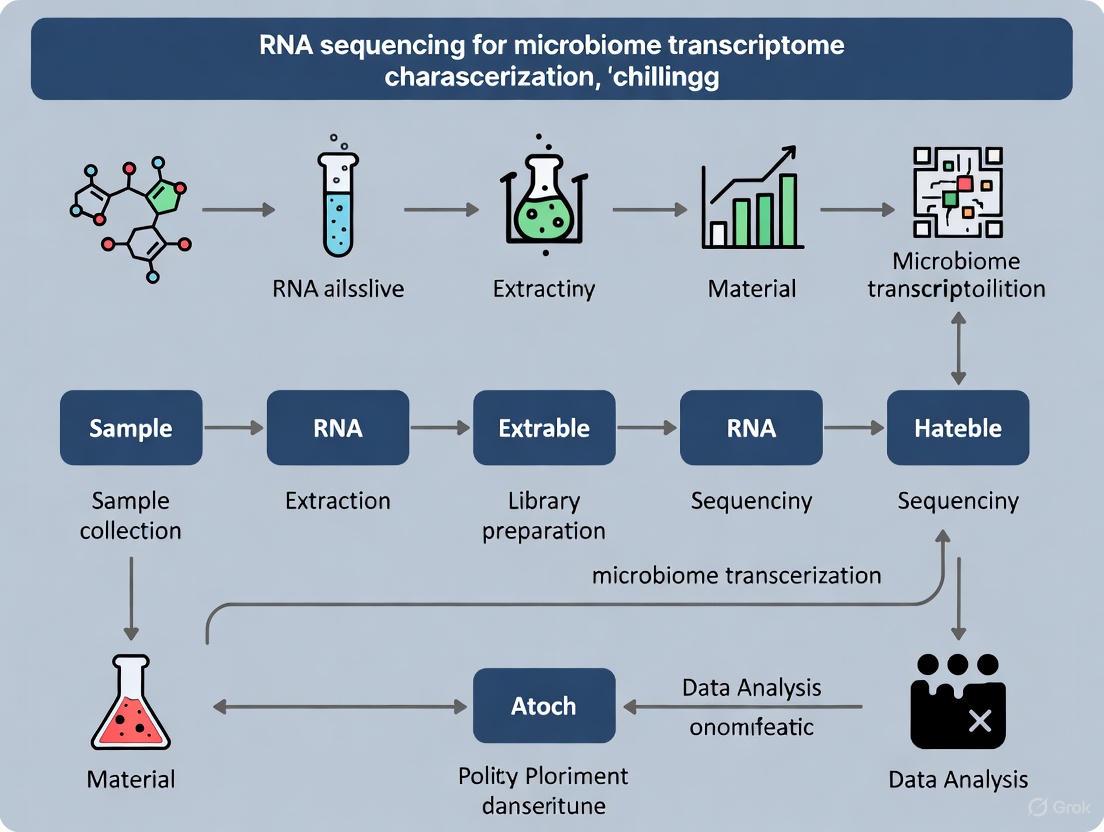
This article provides a comprehensive overview of RNA sequencing for characterizing the microbiome transcriptome, tailored for researchers and drug development professionals.
Unlocking Microbial Function: A Comprehensive Guide to RNA Sequencing for Microbiome Transcriptome Analysis
Abstract
This article provides a comprehensive overview of RNA sequencing for characterizing the microbiome transcriptome, tailored for researchers and drug development professionals. It explores the foundational principles of microbial transcriptomics, details cutting-edge methodologies from bulk to single-microbe sequencing, addresses critical technical challenges and optimization strategies, and reviews rigorous validation frameworks. By integrating the most recent research and protocols, this guide serves as a vital resource for leveraging functional microbial insights to advance drug discovery, biomarker identification, and the development of live biotherapeutic products.
From Composition to Function: Uncovering Active Microbial Communities with RNA-seq
The microbiome transcriptome is defined as the complete collection of messenger RNA (mRNA) transcripts present in a microbial community from a specific environment at a particular point in time [1]. Unlike the relatively stable genome, which represents the total genetic potential of a microbial community, the transcriptome is highly dynamic, actively changing in response to factors such as stage of development, environmental conditions, and external stimuli [2]. This functional component of the microbiome provides invaluable insights into the active transcriptional processes and metabolic activities occurring within complex microbial ecosystems [1].
The transition from studying genomic content to transcriptional activity represents a paradigm shift in microbiome science. While genomic censuses via 16S rRNA sequencing or metagenomics reveal "who is there" and what they are genetically capable of doing, transcriptomic analyses reveal "what they are actually doing" functionally under specific conditions [1] [3]. This distinction is crucial for understanding the functional interactions between microorganisms and their hosts, particularly in contexts such as human health, disease pathogenesis, and industrial applications including food fermentation and drug development [1] [4] [3].
Table 1: Comparison of Microbiome Analysis Approaches
| Feature | 16S rRNA Sequencing | Metagenomics | Metatranscriptomics |
|---|---|---|---|
| Target Molecule | 16S rRNA gene | Total DNA | Total RNA (primarily mRNA) |
| Primary Information | Taxonomic composition | Genetic potential | Active gene expression |
| Temporal Resolution | Static census | Static potential | Dynamic activity |
| Functional Insights | Indirect inference | Potential functions | Active functions |
| Key Limitation | Limited resolution, functional inference | Does not distinguish active genes | Technical challenges in RNA stability |
Methodological Framework for Microbiome Transcriptome Analysis
Experimental Workflow and Technical Considerations
The standard workflow for metatranscriptomic analysis involves multiple critical steps, each with specific technical requirements and potential pitfalls that researchers must carefully navigate [1]. The process begins with proper sample collection and preservation, as RNA is significantly less stable than DNA and requires immediate stabilization to prevent degradation. Subsequent steps include total RNA extraction, mRNA enrichment, cDNA synthesis, library preparation, high-throughput sequencing, and sophisticated bioinformatic analysis [1].
A major technical challenge in metatranscriptomics is the low abundance of mRNA in total cellular RNA, which typically constitutes only 1–5% of total RNA, with the remainder being predominantly ribosomal RNA (rRNA) and transfer RNA (tRNA) [1]. Effective depletion of rRNA is therefore essential for maximizing meaningful sequencing coverage. For prokaryotic mRNA, which lacks poly-A tails unlike eukaryotic mRNA, subtractive hybridization methods using kits such as MICROBExpress or riboPOOLs have proven more effective than poly-A-based enrichment for yielding quantitative data [1]. Additional challenges include host RNA contamination, particularly in clinical samples, which can be addressed using hybridization capture technologies to remove mammalian RNA [1].
Table 2: Essential Research Reagent Solutions for Metatranscriptomics
| Reagent Category | Specific Examples | Function | Technical Considerations |
|---|---|---|---|
| RNA Stabilization | RNAlater, PAXgene Blood RNA Kit | Preserves RNA integrity during sample collection | Critical for clinical/longitudinal studies |
| rRNA Depletion | MICROBExpress, riboPOOLs, RiboMinus | Enriches mRNA by removing abundant rRNA | Subtraction hybridization preferred for prokaryotes |
| Library Preparation | SMARTer Stranded RNA-Seq Kit | Converts RNA to sequencing-ready library | Handles low-input RNA efficiently |
| Host RNA Depletion | MICROBEnrich Kit | Removes host RNA contamination | Essential for host-associated microbiome studies |
| RNA Quality Assessment | RNA Integrity Number (RIN) | Evaluates RNA quality pre-library prep | 28S/18S ratio critical for integrity |
Bioinformatics Pipelines and Computational Requirements
The analysis of metatranscriptomic data requires specialized bioinformatics pipelines to process the vast amounts of sequencing data generated. Several established pipelines are available, each with specific strengths and applications [1]. Common tools include SAMSA2, MetaTrans, HUMAnN2, and the Human Small Intestine Microbiota Metatranscriptome Pipeline, which typically include steps for quality control (FastQC, Trimmomatic), rRNA sequence filtering (SortMeRNA), assembly (MEGAHIT, IDBA-MT), taxonomic classification (Kraken2, MetaPhlan2), functional annotation (DIAMOND against databases like KEGG, COG), and differential expression analysis (EdgeR, DESeq2) [1].
The computational resources required for metatranscriptomic analyses are substantial, necessitating access to high-performance computing infrastructure. The unique features of microbial transcripts, including their non-polyadenylated nature and the complexity of microbial communities, often require specialized metatranscriptomics assemblers such as IDBA-MT, which may offer better resolution than generic metagenomic assemblers [1]. Additionally, the integration of metatranscriptomic data with other omics datasets (metagenomics, metaproteomics) requires additional computational approaches but provides a more comprehensive understanding of microbial community function [1].
Advanced Applications in Research and Drug Development
Disease Mechanism Elucidation and Diagnostic Biomarker Discovery
Metatranscriptomics has revealed significant insights into disease pathogenesis by uncovering active microbial functions and their interactions with host systems. In colorectal cancer (CRC), integrated analysis of gut microbiome and host transcriptome has identified significant correlations between specific bacterial taxa and host gene expression patterns [4]. For instance, TIMP1 and BCAT1 genes showed strong positive correlations (r > 0.76) with pathogenic bacteria including Fusobacterium nucleatum and Peptostreptococcus stomatis, suggesting potential mechanistic relationships in tumor development and progression [4].
Similar approaches in endometrial cancer have identified Pelomonas and Prevotella as enriched in patients with high tumor burden, with integrated analysis revealing associations between Prevotella and fibrin degradation-related genes [5]. The combination of microbial markers with clinical hematological indicators demonstrated high predictive potential for disease onset (AUC = 0.86) [5]. In peri-implantitis, metatranscriptomics has identified enzymatic activities and metabolic pathways associated with disease, including health-associated Streptococcus and Rothia species and peri-implantitis-associated enzymes such as urocanate hydratase and tripeptide aminopeptidase [3]. The integration of taxonomic and functional data significantly enhanced predictive accuracy (AUC = 0.85), providing a foundation for novel diagnostic approaches [3].
Drug Development and Therapeutic Target Identification
The application of metatranscriptomics in drug development is increasingly valuable for identifying novel therapeutic targets and understanding mechanisms of drug efficacy. In autoimmune disorders such as Hashimoto's thyroiditis (HT), integrative analysis of gut metagenome and host transcriptome has revealed novel molecular signatures linking gut microbiome and host gene expression [6]. Characteristic microbial species including Salaquimonas sp002400845, Clostridium AI sp002297865, and Enterocloster citroniae were identified as most relevant to HT pathogenesis, while characteristic RNAs (hsa-miR-548aq-3p, hsa-miR-374a-5p, GADD45A, IRS2, SMAD6, WWTR1) provided insights into pathways related to immune response, inflammation, and metabolism [6]. The combination of these signatures significantly improved HT classification accuracy (AUC = 0.95, ACC = 0.85), suggesting potential targets for therapeutic intervention [6].
In hepatocellular carcinoma (HCC), integrated analysis of gut microbiome and liver tumor transcriptome has identified Bacteroides, Lachnospiracea incertae sedis, and Clostridium XIVa as enriched in patients with high tumor burden [7]. Correlation analysis revealed 31 robust associations between these genera and well-characterized genes, indicating possible mechanistic relationships in the tumor immune microenvironment [7]. Clinical analysis suggested that serum bile acids may be important communication mediators between gut microbes and host transcriptome, with six microbial markers showing potential to predict clinical outcome (AUC = 81%) [7].
Cutting-Edge Technical Protocols
Standard Metatranscriptomics Workflow
The foundational protocol for metatranscriptome analysis involves comprehensive processing from sample collection to data interpretation, typically requiring 3-5 days for wet laboratory procedures plus additional time for bioinformatic analysis [1]. The workflow begins with meticulous sample collection and immediate RNA stabilization to preserve transcript representation. Subsequent steps include total RNA extraction using commercial kits optimized for microbial communities, followed by mRNA enrichment through rRNA depletion. Library preparation then involves RNA fragmentation, cDNA synthesis with random hexamers (due to the lack of poly-A tails in prokaryotic mRNA), adapter ligation, and PCR amplification. Sequencing is performed on platforms such as Illumina, with subsequent bioinformatic processing including quality control, read assembly, taxonomic and functional annotation, and differential expression analysis [1].
Single-Microorganism RNA Sequencing (smRandom-Seq)
For investigating microbial heterogeneity at unprecedented resolution, single-microorganism RNA sequencing (smRandom-seq) represents a cutting-edge protocol that enables transcriptomic analysis of individual bacterial cells within complex communities [8] [9]. This droplet-based, high-throughput method offers highly species-specific and sensitive gene detection, overcoming the limitations of population-level measurements that only provide average behaviors and often overlook heterogeneity within bacterial communities [8].
The smRandom-seq protocol involves microbial sample preprocessing, in situ preindexed cDNA synthesis using random primers, in situ poly(dA) tailing, droplet barcoding, ribosomal RNA depletion, and library preparation, with the main workflow requiring approximately 2 days [8]. This method features enhanced RNA coverage, reduced doublet rates, and minimized ribosomal RNA contamination, enabling in-depth analysis of microbial heterogeneity. The technique is compatible with microorganisms from both laboratory cultures and complex microbial community samples, making it particularly valuable for constructing single-microorganism transcriptomic atlases of bacterial strains and diverse microbial communities, with promising applications for researchers investigating bacterial resistance, microbiome heterogeneity, and host-microorganism interactions [8] [9].
Integrated Data Analysis and Interpretation Strategies
The true power of microbiome transcriptome analysis emerges when transcriptional data is integrated with complementary datasets to form a comprehensive understanding of microbial community function. Correlation analysis between microbial transcriptional activity and host gene expression patterns has proven particularly valuable for identifying potential mechanistic relationships in various disease contexts [4] [5] [6]. The standard analytical approach involves calculating Pearson correlation coefficients between OTU abundance or microbial gene expression and host differential gene expression across multiple patients, with statistical significance determined using adjusted p-value thresholds [4] [7].
Functional interpretation of metatranscriptomic data typically involves pathway enrichment analysis using databases such as KEGG and GO, which helps identify biological processes and metabolic pathways that are actively upregulated or downregulated in specific conditions [6]. For instance, in peri-implantitis, metatranscriptomics has revealed complex biofilm ecology related to amino acid metabolism, with microbial amino acid catabolism contributing to pathogenesis through production of pro-inflammatory and cytotoxic metabolites including ammonia, hydrogen sulfide, acids, and amines [3]. Similarly, in food fermentation ecosystems, metatranscriptomics has identified active microbial processes involved in flavor formation, with transcriptional shifts in species such as Acetobacter and Gluconobacter correlating with changes in metabolite production throughout the fermentation process [1].
Table 3: Key Microbial Functions Identified via Metatranscriptomics in Various Environments
| Environment/Context | Key Active Functions Identified | Technical Approach | Reference |
|---|---|---|---|
| Food Fermentation | Carbohydrate-active enzymes, amino acid metabolism for flavor formation | RNA-seq with functional annotation | [1] |
| Colorectal Cancer | Virulence factors, host immune modulation genes | Integration with host transcriptome | [4] |
| Peri-implantitis | Amino acid catabolism enzymes, biofilm formation genes | Full-16S + metatranscriptomics | [3] |
| Hashimoto's Thyroiditis | Immune response modulation, metabolic pathways | Gut metagenome + host transcriptome | [6] |
| Hepatocellular Carcinoma | Bile acid metabolism, immune microenvironment modulation | 16S + liver transcriptome | [7] |
The microbiome transcriptome represents a dynamic and functional dimension of microbial communities that extends far beyond the static genomic census. Through techniques ranging from standard metatranscriptomics to cutting-edge single-microorganism sequencing, researchers can now interrogate the active functional processes within complex microbial ecosystems, revealing insights crucial for understanding host-microbe interactions in health and disease, optimizing industrial processes such as food fermentation, and identifying novel therapeutic targets for drug development.
The integration of metatranscriptomic data with complementary omics approaches and clinical metadata significantly enhances the biological insights gained from these analyses, providing a systems-level understanding of microbial community function and its impact on host physiology. As technical challenges related to RNA stability, rRNA depletion, and host RNA contamination continue to be addressed, and as bioinformatic tools become more sophisticated and accessible, microbiome transcriptome analysis is poised to become an increasingly standard approach in both basic research and translational applications, ultimately contributing to advanced diagnostics, therapeutics, and microbiome-based interventions.
Microbial communities play a critical role in environments ranging from the human gut to natural ecosystems, and understanding their behavior and responses to stimuli is fundamental to advancements in health, disease treatment, and drug development. While 16S rRNA gene amplicon sequencing has been widely used to profile microbial taxonomy, it cannot describe the functional activity or dynamic responses of these communities. RNA sequencing (RNA-Seq) technologies for microbiome transcriptome characterization overcome this limitation by capturing the expressed genetic repertoire of a microbial community, providing direct insight into its functional state. This Application Note details how metatranscriptomics and related single-microbe RNA-seq methods enable researchers to move beyond census-taking to understand the real-time metabolic activities, regulatory networks, and stress responses within complex microbiomes. We present key advantages, structured protocols, and essential reagent solutions to empower robust experimental design in this rapidly advancing field.
Key Advantages of RNA-Seq in Microbiome Research
RNA sequencing technologies transform our ability to interpret microbial community behavior by moving from static taxonomic composition to dynamic functional characterization.
Table 1: Key Advantages of RNA-Seq for Microbiome Transcriptome Analysis
| Advantage | Description | Application Example |
|---|---|---|
| Functional Activity Insight | Captures the community's expressed genes and metabolic pathways, moving beyond taxonomic identity to functional capability [10]. | Identifying upregulation of cobalamin (vitamin B12) and porphyrin biosynthesis pathways in the subgingival microbiome during periodontitis progression [10]. |
| Host-Microbe Interplay | Enables simultaneous profiling of both host and microbial transcriptomes from a single sample (Dual-RNA Seq) to dissect complex interactions [10]. | Revealing a positive feedback loop in periodontitis where host immune activation leads to increased microbial potassium transport and cobalamin biosynthesis, which further induces host immune response [10]. |
| Response Dynamics | Allows for longitudinal tracking of transcriptomic shifts in response to environmental stimuli, drugs, or disease progression over time [10]. | Longitudinal study identifying a significant clinical and metabolic "change point" at 6 months associated with disease progression, with 1722 host and 111,705 microbial genes differentially expressed [10]. |
| Single-Microbe Resolution | Resolves transcriptional heterogeneity within microbial populations, identifying distinct subpopulations and rare cell states [11]. | Discovering antibiotic-resistant subpopulations in E. coli with distinct SOS response and metabolic pathway gene expression upon antibiotic stress [11]. |
| Discovery of Mechanistic Pathways | Identifies specific upregulated genes and pathways driving community behavior and host outcomes, enabling mechanistic hypothesis generation. | Cell type-specific transcriptional shifts in glial cells and dopaminergic neurons in response to the gut microbiome, with enrichment in mitochondrial and energy metabolism pathways [12]. |
Experimental Protocols
Metatranscriptomic Workflow for Host-Microbe Dynamics
This protocol is designed for the simultaneous recovery of host and microbial RNA from a single sample, such as tissue or biofilm, for longitudinal studies of interaction and dynamics [10].
Procedure:
- Sample Collection and Stabilization: Aseptically collect the sample (e.g., subgingival plaque with a curette, tissue biopsy, or fecal material). Immediately place the sample in a DNA/RNA Shield or similar RNase-inactivating solution and flash-freeze in liquid nitrogen. Store at -80°C.
- Nucleic Acid Co-Extraction: Extract total RNA using a kit designed for complex samples (e.g., ZymoBIOMICS DNA/RNA Miniprep Kit). The protocol must include a robust mechanical lysis step (e.g., bead beating with 0.1mm glass beads) to lyse all microbial cell types. Include on-column DNase I treatment to remove genomic DNA.
- RNA Quality Assessment and Quantification: Assess RNA integrity using an Agilent Bioanalyzer (RIN > 7.0 for host RNA is ideal). Quantify RNA using a fluorescence-based assay (e.g., Qubit RNA HS Assay).
- rRNA Depletion: Treat total RNA with a pan-bacterial/archaeal rRNA depletion kit (e.g., Illumina Ribo-Zero Plus). For host-associated samples, simultaneously deplete host (e.g., human) rRNA using specific probes.
- Stranded RNA-Seq Library Preparation: Convert the rRNA-depleted RNA to a sequencing library using a stranded kit (e.g., Illumina Stranded Total RNA Prep). Fragment RNA, synthesize cDNA, and add dual-indexed adapters. Perform 12-15 cycles of PCR amplification.
- Library QC and Sequencing: Validate the final library size distribution using a Bioanalyzer or Tapestation and quantify by qPCR. Pool libraries and sequence on an Illumina platform (e.g., NovaSeq 6000) to a minimum depth of 20-50 million paired-end (2x150 bp) reads per sample.
High-Throughput Single-Microbe RNA-Seq (smRandom-seq)
This protocol details a droplet-based method for transcriptome profiling of individual bacterial cells, enabling the study of population heterogeneity [11].
Procedure:
- Fixation and Permeabilization: Fix bacteria overnight in ice-cold 4% Paraformaldehyde (PFA) to crosslink cellular components. Pellet cells and permeabilize using a solution containing lysozyme (10 mg/mL) and Triton X-100 (0.1%) for 30 minutes at 37°C.
- In-situ cDNA Synthesis with Random Primers: Incubate permeabilized bacteria with random primers containing a defined 5' PCR handle. Perform multiple temperature cycles to maximize primer binding. Follow with in-situ reverse transcription to generate cDNA. Add a poly(dA) tail to the 3' end of cDNAs using Terminal Transferase (TdT).
- Single-Microbe Barcoding in Droplets: Co-encapsulate single bacteria with a uniquely barcoded poly(T) bead in a microfluidic droplet (~100 μm). Within the droplet, release the barcoded primers from the bead via USER enzyme digestion and release cDNA from bacteria using RNase H. The poly(T) primers hybridize to the poly(dA) tail, and a barcoding extension reaction links a unique cell barcode and Unique Molecular Identifier (UMI) to each cDNA molecule.
- Library Amplification and rRNA Depletion: Break the droplets, pool the barcoded cDNAs, and amplify the library by PCR. Perform CRISPR-based rRNA depletion (e.g., using Cas9 and guide RNAs targeting conserved rRNA sequences) to enrich for mRNA.
- Sequencing and Data Analysis: Sequence the library (e.g., 2x150 bp on Illumina platforms). Process the data using a pipeline that demultiplexes reads by cell barcode, corrects UMIs, and aligns sequences to a reference genome to generate a gene-by-cell count matrix.
sq Workflow: Single-Microbe RNA-seq
Data Analysis and Normalization
Robust bioinformatic processing is critical for accurate interpretation of microbiome transcriptome data. The choice of normalization and differential abundance testing strategies must be tailored to the data characteristics [13].
Table 2: Data Analysis Strategies for Microbiome Transcriptomics
| Analysis Step | Key Consideration | Recommended Tool/Method |
|---|---|---|
| Normalization | Accounts for uneven library sizes and compositional nature of the data. | For count-based data (e.g., from metatranscriptomics), rarefying can help control false discovery rates with highly uneven library sizes. For downstream analyses like differential expression, methods implemented in the microeco R package or other scaling factors are recommended [14] [13]. |
| Differential Abundance/Expression Testing | Controls for false positives arising from compositionality and sparsity. | For inference on taxon abundance, ANCOM (Analysis of Composition of Microbiomes) provides good FDR control. For gene-level expression, tools like DESeq2 (used with caution for data with strong compositionality) or MAST for single-cell data are applicable [13] [12]. |
| Visualization | Intuitively displays patterns in high-dimensional data. | Heatmaps are powerful for showing relative abundance of microbial taxa or gene expression across samples. Use R packages like pheatmap or ComplexHeatmap for generation, including clustering and significance markers [15]. |
| Longitudinal & Correlation Analysis | Models time-series data and infers interactions. | Correlation delay analysis and linear mixed models (LMM) can identify temporal relationships and feedback loops between host and microbiome genes [10]. |
| Cell Type Annotation (Host scRNA-seq) | Assigns identity to clustered cells from host tissue. | For host single-cell RNA-seq, integrate data with curated reference databases and use Leiden clustering algorithm with optimized parameters (e.g., 45 PCs, resolution 8.0) for fine-grained cell type identification [12]. |
The Scientist's Toolkit: Essential Research Reagents
Successful microbiome transcriptome studies rely on a suite of specialized reagents and materials designed to preserve RNA integrity, handle diverse sample types, and ensure analytical precision.
Table 3: Essential Reagent Solutions for Microbiome Transcriptomics
| Research Reagent | Function & Application |
|---|---|
| DNA/RNA Shield | Instantaneous nuclease inactivation and microbial stabilization at the point of collection, preserving the in-situ transcriptome profile. |
| Bead Beating Tubes (0.1mm glass/zirconia beads) | Mechanical disruption of tough microbial cell walls (e.g., Gram-positive bacteria) during nucleic acid extraction for unbiased representation. |
| Ribo-Zero Plus rRNA Depletion Kit | Removal of abundant ribosomal RNA from both host and microbial total RNA to dramatically increase informational mRNA sequencing depth. |
| Dual-Indexed UMI Adapters | Unique molecular identifiers and sample barcodes enable accurate sample multiplexing and removal of PCR duplicates in downstream analysis. |
| Poly(dT) & Random Primers | Poly(dT) primers target eukaryotic mRNA poly-A tails; Random primers are essential for capturing prokaryotic mRNAs and bacterial single-cell RNA-seq [11]. |
| Validated Mock Communities | Defined mixes of microbial cells or DNA/RNA with known composition, used as process controls to benchmark technical bias and analytical sensitivity [16]. |
| CRISPR-based rRNA Depletion Reagents | Cas9 enzyme and target-specific gRNAs for highly specific cleavage and depletion of rRNA sequences from cDNA libraries prior to sequencing [11]. |
Integrated Analysis and Visualization
Effective data interpretation requires integrating multiple analysis types. Heatmaps are a fundamental tool for visualizing the relative abundance of microbial taxa or gene expression across different samples or conditions. They allow researchers to quickly identify patterns, such as clusters of samples with similar community structures or groups of co-expressed genes, providing essential clues for further ecological or functional analysis [15]. For complex, multi-modal data, such as integrating transcriptomics with microbiome features and histopathology, frameworks like HMTsurv demonstrate that a combined approach can achieve superior prognostic stratification, revealing intricate biological interactions that single-modality analyses miss [17].
A key insight from transcriptomic studies is that microbial communities influence host physiology in a highly cell type-specific manner. For example, a single-cell transcriptomic atlas of Drosophila brains revealed that glial cells and dopaminergic neurons are among the most responsive to the gut microbiome, with significant age-dependent effects [12]. The following diagram summarizes a core signaling axis discovered in host-microbiome studies.
sq Host-Microbiome Feedback Loop
Integrating Host and Microbe Transcriptomics to Decipher Cross-Kingdom Dialogue
Application Notes: The Value of Integrated Transcriptomics
Integrated host and microbe transcriptomics is a powerful approach for elucidating the molecular dialogue between host organisms and associated microorganisms. By simultaneously analyzing gene expression from both kingdoms, researchers can move beyond correlation to identify potential mechanistic relationships within the meta-transcriptome, providing unprecedented insights into health, disease, and ecological interactions.
Key Applications and Biological Insights
Table 1: Documented Applications of Integrated Host-Microbe Transcriptomics
| Application Area | Key Findings | Reference |
|---|---|---|
| Inflammatory Bowel Disease (IBD) | Multi-omics integration stratifies IBD patients into subgroups for targeted therapy; Gut dysbiosis alters metabolite profiles and compromises epithelial barrier integrity. | [18] |
| Papillary Thyroid Carcinoma (PTC) | Tumor tissue harbors distinct microbial communities; Identified 5 significant microbe-gene and 1 microbe-immune cell association linked to tumor progression via inflammation. | [19] |
| Hepatocellular Carcinoma (HCC) | Correlated enrichment of Bacteroides and Clostridium with a high tumor burden; Identified 31 associations between gut microbes and tumor transcriptome related to the immune microenvironment. | [20] |
| Colorectal Adenoma | Identified 847 host-microbiome interactions; Fusobacterium nucleatum enrichment correlated with inflammatory signaling (NFKB1) and stem cell proliferation (LGR5). | [21] |
| Plant-Microbe Interactions | Plants deliver gene-silencing sRNAs into bacteria; Extracellular vesicular and non-vesicular RNAs are biologically active in cross-kingdom communication. | [22] [23] |
Analytical and Technical Challenges
The integration of host and microbial transcriptomic data presents several challenges that require careful consideration in experimental design:
- Data Standardization: Differences in nucleic acid isolation protocols, sequencing depths, and bioinformatic pipelines for host and microbial RNA can complicate integration [18] [24].
- Computational Complexity: Managing, processing, and interpreting large, multi-omics datasets demands significant computational resources and bioinformatic expertise [18] [21].
- RNA Origin Discrimination: Robust bioinformatic protocols are required to accurately distinguish between host and microbial RNA sequences in complex samples, especially with metatranscriptomic data [24].
Experimental Protocols
This section provides a detailed methodology for a typical integrated analysis of host and microbial transcriptomes from a single tissue sample, applicable to both biomedical and plant research contexts.
Sample Collection and Nucleic Acid Extraction
Principle: To simultaneously preserve the integrity of host and microbial RNA from a single tissue specimen, minimizing biases.
Materials:
- RNase-free conditions and consumables.
- Liquid nitrogen or specialized RNA stabilization reagents (e.g., RNAlater).
- OMEGA Soil DNA Kit (or equivalent for robust microbial lysis) [19].
- Standard total RNA extraction kit (e.g., miRNeasy, TriZol).
Procedure:
- Sample Acquisition: Immediately upon resection, place tissue sample (e.g., ~100 mg) into a cryovial and flash-freeze in liquid nitrogen or submerge in 5-10 volumes of RNAlater. Store at -80°C.
- Homogenization: Under liquid nitrogen, pulverize the frozen tissue using a sterile mortar and pestle. Divide the powder into two aliquots for parallel DNA and total RNA extraction.
- Co-extraction of Nucleic Acids:
- For Microbiome Analysis (DNA): Use the OMEGA Soil DNA Kit or a similar mechanical lysis-based protocol on one aliquot to ensure efficient breakage of microbial cell walls. Follow the manufacturer's instructions [19].
- For Transcriptomics (RNA): Use a standard total RNA extraction kit on the second aliquot. Include a DNase I digestion step to remove genomic DNA contamination.
- Quality Control (QC):
- DNA QC: Quantify DNA using a NanoDrop spectrophotometer and assess quality via agarose gel electrophoresis. A 260/280 ratio of ~1.8 and intact genomic DNA bands are acceptable [19].
- RNA QC: Quantify RNA and assess integrity using an Agilent Bioanalyzer. RNA Integrity Number (RIN) >7.0 is generally required for RNA-Seq.
Library Preparation and Sequencing
Principle: To generate high-quality sequencing libraries that comprehensively capture both host and microbial transcriptomes and genomes.
Materials:
- Library prep kits for RNA-Seq (e.g., Illumina Stranded Total RNA Prep) and 16S rRNA amplicon sequencing.
- Primers for the 16S rRNA V3-V4 region (e.g., 338F: 5'-ACTCCTACGGGAGGCAGCA-3', 806R: 5'-GGACTACHVGGGTWTCTAAT-3') [19].
- Illumina or other next-generation sequencing platforms.
Procedure:
- Microbial Community Profiling (16S rRNA Amplicon Sequencing):
- Amplify the hypervariable V3-V4 region of the 16S rRNA gene from the extracted DNA using the specified primers that include sample barcodes.
- Purify the PCR products and normalize equimolar amounts of each sample to construct the sequencing library.
- Sequence on an Illumina MiSeq or similar platform using a 2x300 bp paired-end kit [19].
- Host and Microbial Transcriptome Profiling (RNA-Seq):
- Use the Illumina Stranded Total RNA Prep to construct RNA-Seq libraries from total RNA. This method captures both polyadenylated and non-polyadenylated transcripts, which is crucial for bacterial RNA [25].
- For samples with high host RNA background, consider ribosomal RNA depletion instead of poly-A selection to better capture microbial mRNA.
- Sequence on an appropriate Illumina platform (e.g., NextSeq 1000/2000, NovaSeq) to achieve sufficient depth, typically 20-50 million reads per sample for host studies and additional depth for microbiome resolution [25].
- Microbial Community Profiling (16S rRNA Amplicon Sequencing):
Bioinformatics and Data Integration Pipeline
Principle: To process sequencing data individually and then integrate them to find statistically significant associations.
Software & Tools: QIIME2, MaAsLin2, Seurat/Harmony, Partek Flow, IMSA+A [21] [24].
Procedure:
- Microbiome Data Analysis (16S data):
- Process raw FASTQ files in QIIME2. Use DADA2 to denoise, dereplicate, and infer Amplicon Sequence Variants (ASVs).
- Assign taxonomy to ASVs using a reference database (e.g., SILVA or Greengenes). Generate taxonomic abundance tables and alpha/beta diversity metrics.
- Host Transcriptome Data Analysis (RNA-Seq data):
- Perform quality control (FastQC), align reads to the host reference genome (STAR or HISAT2), and quantify gene-level counts (featureCounts).
- Conduct differential expression analysis (e.g., using DESeq2 or edgeR) to identify genes significantly altered between sample groups (e.g., tumor vs. normal) [19].
- Metatranscriptomic Taxonomy (optional):
- For RNA-Seq data, the IMSA+A protocol can be applied to unmapped reads to glean taxonomic information about the active microbiota without additional DNA sequencing [24].
- Integrated Statistical Analysis:
- Use multivariate association models like MaAsLin2 to find robust correlations between microbial abundances (from 16S or IMSA+A) and host gene expression levels, while controlling for clinical covariates [21].
- As performed in colorectal adenoma research, identify RNA-targetable candidates (e.g., mRNA restoration targets like MUC2, or siRNA suppression targets like NFKB1) from the significant host-microbe interaction networks [21].
- Microbiome Data Analysis (16S data):
Pathway and Workflow Visualization
Integrated Host-Microbe Transcriptomics Workflow
Cross-Kingdom Molecular Dialogue Mechanisms
The Scientist's Toolkit: Research Reagent Solutions
Table 2: Essential Reagents and Tools for Integrated Transcriptomics Studies
| Item | Function/Application | Example/Specification |
|---|---|---|
| OMEGA Soil DNA Kit | Efficient lysis of hardy microbial cells (e.g., Gram-positive bacteria) in complex tissue samples for DNA extraction. | M5635-02 [19] |
| Illumina Stranded Total RNA Prep | Library preparation for RNA-Seq; captures total RNA (including non-polyadenylated bacterial transcripts). | Compatible with Illumina sequencers [25] |
| 16S rRNA V3-V4 Primers | Amplification of the bacterial 16S rRNA gene for community profiling via amplicon sequencing. | 338F (ACTCCTACGGGAGGCAGCA) / 806R (GGACTACHVGGGTWTCTAAT) [19] |
| Partek Flow Software | User-friendly bioinformatics platform for integrated visualization and statistical analysis of RNA-Seq data. | Enables analysis without extensive command-line expertise [25] |
| IMSA+A Protocol | Metataxonomic analysis from RNA-Seq data; identifies active microbiota from the same data as host transcripts. | https://github.com/JeremyCoxBMI/IMSA-A [24] |
| MaAsLin2 (Microbiome Multivariable Association) | Identifies multivariable associations between microbial features and host metadata (e.g., gene expression). | Linear model accounting for clinical confounders [21] |
| Seurat & Harmony | Computational toolkits for single-cell RNA-seq analysis, including integration, clustering, and cell-type identification. | Enables host cell-type specific correlation with microbiota [21] |
Application Note: Integrative Omics for Biomarker Discovery in Peri-Implantitis
Rationale and Background
Peri-implantitis is a severe biofilm-associated infection affecting millions worldwide, characterized by inflammation of the peri-implant mucosa and progressive loss of supporting bone surrounding dental implants [3]. With reported prevalence rates of 22–43% within 5–10 years of implantation, this condition represents a significant clinical challenge in dental medicine [3]. Traditional diagnosis relies on clinical signs such as bleeding on probing, increased probing depth, and radiographic bone loss, but these parameters often only become detectable after irreversible tissue damage has occurred [3]. The resistance of pathogenic biofilms to antibiotics and lack of tissue regeneration at late disease stages compels the need for early, molecular-based diagnostic biomarkers that can classify microbial dysbiosis before irreversible damage occurs [3].
The integration of microbiome and metatranscriptome analyses provides a powerful approach for identifying both taxonomic and functional biomarkers in complex biofilm-associated diseases [3]. This application note details how paired full-length 16S rRNA gene amplicon sequencing (full-16S) and metatranscriptomics (RNAseq) can reveal diagnostic signatures for peri-implantitis, offering insights into potential therapeutic targets and personalized treatment approaches [3].
Key Experimental Findings
A cross-sectional investigation of 48 biofilm samples from 32 patients utilized paired full-16S and RNAseq analyses to identify reliable diagnostic biomarkers for peri-implantitis [3]. The study revealed significant differences in microbial community composition and function between healthy and diseased states, with a marked shift toward anaerobic Gram-negative bacteria in peri-implantitis [3]. Metatranscriptomic profiling identified specific enzymatic activities and metabolic pathways associated with disease pathogenesis, particularly uncovering complex peri-implant biofilm ecology related to amino acid metabolism [3].
Table 1: Key Taxonomic Biomarkers Identified in Peri-Implantitis Study
| Biomarker Type | Specific Taxa/Enzymes | Association | Potential Functional Role |
|---|---|---|---|
| Health-associated | Streptococcus species | Health | Possibly commensal colonization |
| Health-associated | Rothia species | Health | Possibly commensal colonization |
| Disease-associated | Prevotella | Peri-implantitis | Potential pathogen |
| Disease-associated | Porphyromonas | Peri-implantitis | Potential pathogen |
| Disease-associated | Treponema | Peri-implantitis | Potential pathogen |
| Disease-associated | Fusobacteria | Peri-implantitis | Potential pathogen |
| Functional biomarker | Urocanate hydratase | Peri-implantitis | Amino acid metabolism |
| Functional biomarker | Tripeptide aminopeptidase | Peri-implantitis | Peptide processing |
| Functional biomarker | NADH:ubiquinone reductase | Peri-implantitis | Energy metabolism |
| Functional biomarker | Phosphoenolpyruvate carboxykinase | Peri-implantitis | Gluconeogenesis |
| Functional biomarker | Polyribonucleotide nucleotidyltransferase | Peri-implantitis | RNA processing |
The integration of taxonomic and functional biomarker data significantly enhanced predictive accuracy, achieving an area under the curve (AUC) of 0.85 in machine learning models [3]. This integrated approach demonstrates the power of combining multiple data types for robust biomarker identification.
Analytical and Computational Approaches
The analysis of microbiome and transcriptome data requires specialized bioinformatics pipelines and statistical approaches. For RNA sequencing data, standard processing typically involves five key steps: (1) quality control of raw reads, (2) read alignment to a reference genome, (3) summarization of aligned reads, (4) differential expression analysis, and (5) functional enrichment analysis [26].
Machine learning algorithms have demonstrated particular utility in analyzing complex microbiome data for biomarker discovery. Random forests and gradient-boosting decision trees have shown promising results due to their ability to handle high-dimensional data and capture complex interactions between microbial features, typically achieving AUROC scores of 0.7–0.9 across various diseases [27]. More recently, deep learning approaches using neural networks with multiple layers have been employed to model complex patterns from input data, potentially identifying biomarkers more accurately by integrating large datasets [27].
Table 2: Bioinformatics Tools for Microbiome and Transcriptome Analysis
| Analysis Step | Common Tools | Primary Function |
|---|---|---|
| Read quality control | FastQC, MultiQC | Assess sequence quality metrics |
| Read alignment | Bowtie, Subread, STAR | Map reads to reference genomes |
| Read summarization | featureCounts, HTSeq-count | Count reads mapped to genomic features |
| Differential expression | DESeq2, ALDEx2 | Identify significantly different features |
| Functional analysis | LEfSe, NetMoss | Discover biologically meaningful patterns |
Protocol: Integrated Microbiome and Host Transcriptome Analysis
Sample Collection and Processing
Principle: Proper sample collection and processing are critical for obtaining high-quality microbiome and transcriptome data. Variations in collection methods, time-to-processing, and storage conditions can significantly impact downstream results.
Materials:
- Sterile collection containers (sample type-specific)
- Cryovials for aliquot storage
- Liquid nitrogen or -80°C freezer for preservation
- Centrifuge capable of two-step centrifugation
- DNA/RNA extraction kits (e.g., Norgen, Qiagen miRNeasy)
- Quality control instruments (e.g., Bioanalyzer, spectrophotometer)
Procedure:
- Sample Collection:
- For microbiome analysis: Collect fecal samples, biofilm samples, or other relevant specimens in sterile containers.
- For transcriptome analysis: Collect tissue specimens (e.g., tumor tissue, normal mucosa) and immediately flash-freeze in liquid nitrogen.
Sample Processing:
- Process plasma/serum samples within 2 hours of collection to prevent cell-free RNA contamination from lysed cells.
- Perform two-step centrifugation to remove debris and apoptotic bodies before exosome isolation if applicable.
- Aliquot samples to avoid freeze-thaw degradation cycles.
- Store all samples at -80°C until nucleic acid extraction.
Quality Assessment:
- Assess DNA/RNA concentration and purity using spectrophotometry (OD260/280 between 1.8–2.2; OD260/230 ≥2.0).
- Evaluate RNA integrity using Bioanalyzer (target RIN ≥6.5 for total RNA applications).
16S rRNA Microbiome Sequencing
Principle: 16S rRNA gene sequencing enables characterization of microbial community composition by targeting hypervariable regions of the bacterial 16S ribosomal RNA gene.
Materials:
- NEBNext Ultra DNA Library Prep Kit for Illumina
- Primers targeting appropriate hypervariable regions (e.g., V3-V4)
- Illumina MiSeq or comparable sequencing platform
- QIIME2, DADA2, or VSEARCH for bioinformatics analysis
Procedure:
- DNA Extraction:
- Extract genomic DNA using the CTAB/SDS protocol or commercial kits.
- Verify DNA quality using 1% agarose gel electrophoresis.
Library Preparation:
- Amplify V3-V4 hypervariable regions of the 16S rRNA gene using region-specific primers.
- Incorporate unique index codes for sample multiplexing.
- Purify amplified products and normalize concentrations.
Sequencing:
- Perform high-throughput sequencing on Illumina MiSeq platform (250 bp paired-end reads recommended).
- Target minimum of 16,000 reads per sample for adequate coverage.
Bioinformatics Analysis:
- Perform quality filtering using Trimmomatic or similar tools.
- Cluster sequences into operational taxonomic units (OTUs) at 97% similarity threshold using VSEARCH clustering algorithm.
- Perform taxonomic classification using QIIME2 with Silva database.
- Conduct diversity analysis (alpha and beta diversity) and differential abundance testing.
Transcriptome Sequencing and Analysis
Principle: RNA sequencing enables comprehensive profiling of host gene expression patterns, revealing pathways and processes affected in disease states.
Materials:
- AHTS Universal V8 RNA-seq Library Prep Kit or equivalent
- SURFSeq 5000 platform or comparable sequencing system
- Reference genome (e.g., GRCh38/hg38 for human studies)
- DESeq2, edgeR, or similar differential expression tools
Procedure:
- RNA Extraction:
- Extract total RNA from tissue samples using appropriate isolation methods.
- Assess RNA quality and integrity as described in section 2.1.
Library Preparation:
- Prepare RNA-seq libraries using manufacturer's protocols.
- For total RNA sequencing, include ribosomal RNA depletion step.
- For small RNA analysis, use specific adapter ligation protocols.
Sequencing:
- Sequence libraries on appropriate platform (150-cycle paired-end recommended).
- Target minimum of 20 million reads per sample for transcriptome analysis.
Bioinformatics Analysis:
- Filter raw reads to remove adapters and low-quality sequences.
- Align cleaned reads to appropriate reference genome.
- Perform differential expression analysis using DESeq2 or similar tools (significance threshold: |log2FC| ≥1, adjusted p-value ≤0.05).
- Conduct functional enrichment analysis (Gene Ontology, KEGG pathways).
Integrative Analysis
Principle: Integration of microbiome and transcriptome data reveals relationships between microbial communities and host response, identifying potential mechanistic links.
Procedure:
- Data Integration:
- Create correlation matrices between OTU abundance and host gene expression.
- Use Pearson correlation analysis to identify significant OTU-gene pairs.
- Apply statistical correction for multiple testing (e.g., Benjamini-Hochberg procedure).
Network Analysis:
- Construct co-occurrence networks to identify microbial community modules.
- Apply network-based algorithms (e.g., NetMoss) to identify potential biomarkers.
- Visualize networks and relationships using Cytoscape or similar tools.
Machine Learning Modeling:
- Implement feature selection algorithms (e.g., Recursive Ensemble Feature Selection) to identify optimal biomarker combinations.
- Train classification models (e.g., random forest, support vector machines) using selected features.
- Validate model performance using independent datasets when available.
The Scientist's Toolkit: Essential Research Reagents and Materials
Table 3: Key Research Reagent Solutions for Integrated Microbiome-Transcriptome Studies
| Reagent/Material | Manufacturer/Example | Function | Application Notes |
|---|---|---|---|
| NEBNext Ultra DNA Library Prep Kit | New England Biolabs | 16S rRNA library preparation | Optimized for amplicon sequencing |
| AHTS Universal V8 RNA-seq Library Prep Kit | Vazyme | RNA sequencing library prep | Compatible with low-input samples |
| miRNeasy Kit | Qiagen | RNA extraction from exosomes | Retains small RNA species |
| CTAB/SDS protocol | - | Genomic DNA extraction | Effective for diverse sample types |
| Illumina MiSeq platform | Illumina | High-throughput sequencing | Ideal for 16S and transcriptome sequencing |
| SURFSeq 5000 platform | GeneMind | RNA sequencing | Alternative to Illumina platforms |
| Silva database | - | Taxonomic classification | Comprehensive 16S rRNA reference |
| DESeq2 package | Bioconductor | Differential expression analysis | Handles RNA-seq count data |
| DADA2 pipeline | - | 16S sequence processing | Generates amplicon sequence variants |
| Trimmomatic | - | Read quality control | Removes adapters and low-quality bases |
Workflow Visualization: Integrated Analysis Pipeline
The integration of microbiome and transcriptome data represents a powerful approach for identifying novel therapeutic targets and biomarkers in drug discovery. The protocols outlined in this document provide a framework for conducting such integrated analyses, with applications spanning from infectious diseases to cancer and neurodegenerative disorders. As sequencing technologies continue to advance and computational methods become more sophisticated, we anticipate that multi-omics approaches will play an increasingly central role in personalized medicine and therapeutic development.
Future directions in this field include the application of artificial intelligence and large language models to integrate complex multi-omics data with scientific literature, the development of single-cell RNA sequencing methods for microbiomes to assess microbial heterogeneity, and the implementation of long-read sequencing technologies to improve strain-level resolution and transcript isoform detection [27] [9]. These technological advances, combined with standardized protocols and reproducible analytical workflows, will accelerate the discovery and validation of novel therapeutic targets and biomarkers for diverse human diseases.
Methodological Toolkit: From Bulk RNA-seq to Single-Microbe Transcriptomics
In microbial transcriptome characterization, the effective isolation of messenger RNA (mRNA) is a critical first step that fundamentally determines all subsequent findings. Ribosomal RNA (rRNA) typically constitutes 80–90% of total RNA in bacterial cells, presenting a substantial challenge for sequencing efficiency [28] [29]. Without effective rRNA removal, the vast majority of sequencing reads and resources are wasted on uninformative ribosomal transcripts, severely limiting coverage of meaningful mRNA targets. For microbiome researchers, the choice between poly(A) enrichment and rRNA depletion is not merely technical but strategic, with profound implications for data quality, experimental cost, and biological interpretation [30] [31]. This decision is particularly crucial in host-microbe interaction studies where capturing transcripts from both eukaryotic hosts and prokaryotic microbiota is essential for understanding cross-kingdom dynamics. Unlike eukaryotic systems where poly(A) tails provide a convenient handle for mRNA isolation, microbial mRNA capture demands specialized approaches due to fundamental biological differences in RNA processing and stability [31] [32]. This application note provides a comprehensive framework for selecting and implementing the optimal mRNA capture method for microbial transcriptome studies, supported by experimental data and detailed protocols.
Fundamental Biological Distinctions: Why Microbial mRNA Capture Demands Specialized Approaches
The core challenge in microbial mRNA sequencing stems from fundamental molecular differences between eukaryotic and prokaryotic RNA biology. In eukaryotic cells, mature mRNA transcripts undergo extensive post-transcriptional modification, including the addition of a 3' poly(A) tail that serves as both a stability marker and a convenient molecular handle for purification [32] [33]. This polyadenylation mechanism is exploited by poly(A) enrichment methods using oligo(dT) primers or beads to selectively capture mRNA while excluding rRNA and other non-polyadenylated RNAs [30].
In contrast, most bacterial mRNAs lack these stable poly(A) tails. While prokaryotes do possess a polyadenylation mechanism, it primarily serves as a signal for RNA degradation rather than stabilization [31] [32]. Furthermore, the majority of bacterial mRNA molecules are functionally active immediately upon transcription, without the extensive processing that characterizes eukaryotic mRNA maturation. This fundamental biological distinction renders standard poly(A) enrichment methods completely ineffective for prokaryotic mRNA capture [31].
The taxonomic composition of microbiome samples introduces additional complexity. A typical host-associated microbiome may contain dozens to thousands of diverse bacterial species, each with slightly different rRNA sequences [31]. This diversity complicates rRNA depletion strategies, as probes must be designed to target conserved regions across multiple taxa while avoiding unintended capture of informative mRNA transcripts.
Table 1: Fundamental Differences in mRNA Biology Between Eukaryotes and Prokaryotes
| Characteristic | Eukaryotic mRNA | Prokaryotic mRNA |
|---|---|---|
| Poly(A) tails | Stable, added post-transcriptionally | Transient, often marks degradation |
| 5' cap | Present (7-methylguanosine) | Absent |
| Introns | Often present (require splicing) | Very rare |
| Transcription & translation | Spatially separated | Coupled in same compartment |
| Half-life | Generally longer (hours) | Generally shorter (minutes) |
| Suitable enrichment method | Poly(A) enrichment or rRNA depletion | rRNA depletion only |
Comparative Method Analysis: Poly(A) Enrichment vs. rRNA Depletion
Technical Mechanisms and Workflows
Poly(A) Enrichment employs oligo(dT)-coated magnetic beads or columns that selectively bind to the polyadenylated 3' ends of mature eukaryotic mRNAs. After binding, non-polyadenylated RNAs (including rRNA, tRNA, and non-polyadenylated non-coding RNAs) are washed away, and the purified mRNA is eluted for library preparation [30] [33]. This process is highly efficient for intact eukaryotic RNA but fails completely for bacterial transcripts due to their lack of stable poly(A) tails [31].
rRNA Depletion utilizes sequence-specific probes complementary to ribosomal RNA sequences. These probes hybridize to target rRNA molecules, which are then removed from the sample through one of two primary mechanisms:
- Biotin-streptavidin magnetic separation: Biotinylated DNA probes hybridize to rRNA, and streptavidin-coated magnetic beads capture the probe-rRNA complexes for removal [28] [29].
- RNase H-mediated degradation: DNA-RNA hybrids formed between probes and rRNA are selectively digested by RNase H enzyme, preserving the non-hybridized RNA population [28].
Unlike poly(A) enrichment, rRNA depletion preserves both polyadenylated and non-polyadenylated transcripts, making it suitable for comprehensive transcriptome profiling that includes non-coding RNAs, pre-mRNAs, and bacterial transcripts [30].
Performance Metrics and Practical Considerations
Multiple studies have quantitatively compared the performance of these two enrichment strategies, revealing significant differences in efficiency, bias, and application suitability.
Table 2: Quantitative Performance Comparison of RNA Enrichment Methods
| Performance Metric | Poly(A) Enrichment | rRNA Depletion |
|---|---|---|
| Usable exonic reads (blood) | 71% | 22% |
| Usable exonic reads (colon) | 70% | 46% |
| Extra reads needed for same exonic coverage | Baseline | +220% (blood), +50% (colon) |
| Sequencing depth for microarray-equivalent detection | ~14 million reads | 45-65 million reads |
| 3' bias | Pronounced | More uniform coverage |
| Effect of RNA degradation | Severe performance loss | Maintains performance |
| Non-polyA transcript capture | None | Comprehensive |
The data clearly demonstrates that poly(A) enrichment provides superior efficiency for eukaryotic mRNA sequencing, with approximately 70% of reads mapping to exonic regions compared to 22-46% for rRNA depletion [30]. This efficiency translates directly to sequencing costs – achieving equivalent exonic coverage with rRNA depletion requires 50-220% more sequencing reads depending on tissue type [30]. Similarly, Zhao et al. (2014) found that only 14 million poly(A)-selected reads were needed to detect as many genes as a typical microarray, compared to 45-65 million reads with rRNA depletion methods [30] [34].
However, this efficiency advantage comes with significant limitations. Poly(A) enrichment introduces substantial 3' bias in coverage, potentially misrepresenting transcript abundance and complicating isoform-level analysis [30] [32]. Additionally, performance degrades severely with RNA integrity – samples with RIN (RNA Integrity Number) below 7, including most FFPE (Formalin-Fixed Paraffin-Embedded) specimens, show dramatically reduced yield and increased bias [32] [34].
Most critically for microbial studies, poly(A) enrichment completely fails to capture prokaryotic transcripts. Research demonstrates that using poly(A)-enriched RNA-seq data for microbial abundance profiling significantly underestimates bacterial presence compared to rRNA-depleted protocols or whole-genome sequencing [31]. In one analysis of matched samples, 92.3% of WGS samples showed high microbial abundance, compared to only 12.8% of poly(A)-selected RNA-seq samples from the same sources [31].
Diagram: Method Selection Workflow for Microbial mRNA Capture. rRNA depletion is required for microbial studies, degraded samples, and non-coding RNA analysis.
rRNA Depletion Protocol for Microbial mRNA Sequencing
Commercial Kits and Reagent Solutions
Table 3: Research Reagent Solutions for Microbial rRNA Depletion
| Product/Technology | Type | Mechanism | Applications | Considerations |
|---|---|---|---|---|
| riboPOOLs (siTOOLs) | Commercial kit | Biotinylated DNA probes + streptavidin magnetic beads | Species-specific or pan-prokaryotic depletion | High efficiency; custom designs available |
| RiboMinus (Thermo Fisher) | Commercial kit | Biotinylated probes + magnetic capture | Pan-prokaryotic depletion | May require optimization for non-model organisms |
| MICROBExpress (Invitrogen) | Commercial kit | PolyA-tailed probes + poly-dT magnetic beads | Bacterial mRNA enrichment | Does not target 5S rRNA |
| QIAseq FastSelect-rRNA (Qiagen) | Commercial kit | Probe hybridization + inhibition of rRNA reverse transcription | Species-specific depletion | Fly-specific kit available; limited prokaryotic range |
| Custom biotinylated probes | In-house method | Biotinylated DNA probes + streptavidin magnetic beads | Tailored to specific organisms | Cost-effective; requires probe design and validation |
| RNase H-based method | In-house method | DNA probes + RNase H enzymatic digestion | Organisms with fragmented rRNA (e.g., Drosophila) | Protocol available for Drosophila; adaptable |
Detailed Protocol: Custom Biotinylated Probe rRNA Depletion
Based on the method successfully implemented for Escherichia coli [29], this protocol can be adapted for various prokaryotic species.
Materials Required:
- Total RNA sample (0.5-1 μg minimum)
- Species-specific biotinylated DNA probes (designed against 5S, 16S, and 23S rRNA)
- Streptavidin-coated magnetic beads
- Hybridization buffer (e.g., 5× SSC, 0.1% Tween-20)
- Wash buffer (e.g., 0.5× SSC, 0.1% Tween-20)
- Magnetic separation rack
- Nuclease-free water and consumables
Probe Design Protocol:
- Identify target sequences: Extract 5S, 16S, and 23S rRNA sequences from the target organism's genome database. For studies involving multiple microbial species, identify conserved regions across taxa.
- Design oligonucleotides: Design 20-30 nt DNA probes complementary to full-length rRNA sequences. For large rRNA genes (e.g., 23S), design probes targeting both 5' and 3' regions separately.
- Add biotin labels: Incorporate biotin modifications at either the 5' end, 3' end, or internally using biotin-labeled nucleotides.
- Validate specificity: In silico validation against the target genome to minimize off-target hybridization to mRNA sequences.
rRNA Depletion Workflow:
- Hybridization:
- Combine 1 μg total RNA with 2 pmol biotinylated probes in hybridization buffer.
- Denature at 95°C for 2 minutes, then incubate at 55-65°C for 30 minutes to allow probe-rRNA hybridization.
Capture and Removal:
- Add pre-washed streptavidin magnetic beads to the hybridization mixture.
- Incubate at room temperature for 15 minutes with gentle agitation to allow bead-probe binding.
- Place tube in magnetic rack for 2 minutes, then carefully transfer supernatant containing enriched mRNA to a new tube.
Cleanup:
- Optionally, perform a second round of depletion with fresh beads to maximize rRNA removal.
- Purify the enriched RNA using standard ethanol precipitation or commercial cleanup kits.
- Quantify yield using fluorometric methods (e.g., Qubit RNA HS Assay).
Quality Control:
- Assess depletion efficiency using capillary electrophoresis (e.g., Bioanalyzer RNA 6000 Nano Kit).
- Verify rRNA removal by qPCR with rRNA-specific primers compared to untreated controls.
- Expected efficiency: >97% rRNA removal for well-optimized protocols [28] [29].
Diagram: rRNA Depletion Workflow Using Biotinylated Probes and Magnetic Bead Capture.
Applications and Best Practices in Microbiome Research
Host-Microbe Interaction Studies
Dual RNA-seq, which simultaneously captures transcripts from host and microbial organisms, requires careful method selection. Poly(A) enrichment alone is inadequate for such studies as it systematically excludes bacterial transcripts [31]. Research comparing microbial abundance profiles from poly(A)-selected versus rRNA-depleted datasets reveals significant underestimation of bacterial presence in poly(A)-enriched data [31]. In one analysis of matched samples, genera including Brevundimonas and Enterobacter were detected by whole-genome sequencing but completely missed in poly(A)-selected RNA-seq from the same samples [31].
For host-microbe interaction studies, the recommended approach is rRNA depletion using pan-prokaryotic probes that target conserved ribosomal regions across multiple bacterial taxa, combined with host-specific rRNA depletion if needed. This strategy preserves both host and microbial transcripts without bias toward either component of the system.
Special Considerations for Unique Microorganisms
Certain microorganisms present unique challenges for rRNA depletion due to unusual ribosomal structure or processing. For example, Drosophila melanogaster exhibits a fragmented 28S rRNA structure, with the rRNA cleaved into α and β fragments during processing [28]. Standard vertebrate rRNA depletion kits show reduced efficiency with such organisms, necessitating specialized approaches.
A recent study developed a cost-effective enzyme-based rRNA depletion method specifically tailored for Drosophila, employing single-stranded DNA probes complementary to Drosophila rRNA that form DNA-RNA hybrids subsequently degraded by RNase H [28]. This approach achieved ~97% rRNA removal efficiency and successfully enriched the non-coding transcriptome [28]. Similar organism-specific optimization may be required for unusual bacterial species with divergent rRNA sequences.
Implementation Guidelines and Troubleshooting
Method Selection Checklist:
- Confirm research focus includes prokaryotic transcripts
- Assess RNA quality (RIN >7 preferred for optimal results)
- Identify target microbial species for probe selection
- Determine required sequencing depth based on expected efficiency
- Plan for increased bioinformatics complexity with rRNA-depleted data
Common Pitfalls and Solutions:
- High residual rRNA: Optimize probe concentration and hybridization conditions; consider secondary depletion round.
- Low mRNA yield: Verify RNA integrity; increase starting material for degraded samples.
- Reduced library complexity: Fragment RNA after enrichment rather than before.
- Species-specific failure: Validate probe coverage against target organism rRNA sequences.
Sequencing Depth Recommendations: For typical microbial mRNA sequencing using rRNA depletion, aim for 20-60 million reads per sample depending on the application [29]. Gene-level expression analysis may require 20 million reads, while detection of weakly expressed genes or novel transcripts benefits from deeper sequencing (40-60 million reads).
The selection between poly(A) enrichment and rRNA depletion for microbial mRNA capture is unequivocal – only rRNA depletion methods effectively capture prokaryotic transcripts. While poly(A) enrichment offers superior efficiency for pure eukaryotic applications, its complete failure to capture bacterial mRNA makes it unsuitable for microbiome transcriptome studies. The methodological framework presented here enables researchers to implement robust rRNA depletion protocols tailored to their specific microbial systems, ensuring comprehensive capture of both host and microbial transcripts in interaction studies. As microbiome research continues to evolve, further refinement of probe design strategies and depletion efficiency will enhance our ability to interrogate complex microbial communities at the transcriptional level.
In microbiome research, the choice of molecular target is critical for accurately characterizing microbial communities. While DNA-based 16S rRNA gene sequencing has been the conventional approach for taxonomic profiling, it fundamentally detects all bacteria present in a sample—including dead, dormant, or inactive cells—which can lead to misinterpretations of community structure and function [35]. In contrast, 16S rRNA transcript sequencing (RNA-based) targets the ribosomal RNA itself, providing a snapshot of the metabolically active bacterial populations at the time of sampling, as RNA degrades rapidly upon cell death [35] [36]. This application note delineates the theoretical and practical distinctions between these two approaches, providing experimental protocols and contextualizing their application within advanced microbiome transcriptome research for drug development and therapeutic discovery.
Fundamental Principles and Key Differences
The 16S ribosomal RNA is an essential component of the prokaryotic ribosome, and its gene contains nine hypervariable regions (V1-V9) that provide taxonomic signatures for bacterial identification and classification [37]. Despite targeting the same genetic marker, DNA- and RNA-based methods answer fundamentally different biological questions.
DNA-based sequencing targets the 16S rRNA gene sequence within the bacterial genome. This gene is universally present in bacteria, with copy numbers ranging from 1 to 21 per genome, varying by phyla [38]. Its stability allows for consistent amplification but means it persists in the environment after cell death, potentially leading to false positive signals from non-viable bacteria [35].
RNA-based sequencing targets the 16S rRNA transcript, a direct component of the ribosome. Actively growing bacterial cells may contain thousands of ribosomes, dramatically increasing the number of target molecules per cell compared to DNA-based methods [38]. As RNA has a short half-life—approximately 5 minutes in E. coli—its detection strongly indicates metabolically active cells at the sampling moment [35].
Table 1: Core Differences Between DNA-based and RNA-based 16S Sequencing Approaches
| Feature | DNA-based 16S Sequencing | RNA-based 16S Sequencing |
|---|---|---|
| Molecular Target | 16S rRNA gene (DNA) | 16S rRNA transcript (RNA) |
| What It Detects | Total bacterial community (live, dead, dormant) | Metabolically active bacterial community |
| Sensitivity | Limited by gene copy number (1-21/genome) | Enhanced by high ribosome content (thousands/cell) |
| Temporal Relevance | Historical presence (DNA persists after death) | Snapshot of current activity (RNA degrades rapidly) |
| Technical Bias | Affected by rRNA gene copy number variation | Affected by ribosome number per cell (growth rate) |
| Best Applications | Total microbial census, presence/absence studies | Functional activity profiling, response to stimuli, biomarker discovery |
Comparative Experimental Evidence
Enhanced Sensitivity and Diversity Detection
Recent studies across diverse sample types consistently demonstrate the superior sensitivity of RNA-based approaches for detecting active community members. In equine uterine microbiome research, RNA-based 16S sequencing demonstrated at least a 10-fold higher sensitivity compared to DNA-based approaches, enabling detection of low-abundance active taxa that were missed by DNA analysis [38]. The RNA-based method revealed a significantly higher number of Amplicon Sequence Variants (ASVs) and taxonomic units across samples, leading to different conclusions about alpha and beta diversity [38].
In environmental microbiology, studies of bulk and rhizosphere soils revealed that DNA-based community analysis disproportionately represented certain phyla (e.g., Saccharibacteria and Gemmatimonadetes), while underestimating known root-associated active genera (e.g., Comamonadaceae, Rhizobacter, and Variovorax) that showed elevated protein synthesis potential in RNA-based profiles [36].
Discrimination Between Live and Dead Bacteria
A critical application for RNA-based sequencing is differentiating between intact, potentially active microbes and background DNA signal. In controlled water samples spiked with known combinations of live and dead bacteria, RNA-based sequencing significantly reduced detection of dead cells compared to DNA-based methods, while PMA-based approaches (another viability method) showed inconsistent efficiency, particularly with high microbial biomass [35]. The RNA-based approach proved superior for specifically detecting live bacterial cells, though some signal from dead cells persisted, possibly due to incomplete inactivation of robust species like Mycobacterium smegmatis with rigid cell walls [35].
Clinical and Environmental Applications
The functional relevance of RNA-based profiling is evident across research domains. In peri-implantitis research, integrated full-length 16S sequencing and metatranscriptomics identified distinct taxonomic and functional biomarkers between healthy and diseased sites, with RNA-level data providing insights into metabolic pathway activities driving disease pathogenesis [3]. Similarly, in papillary thyroid carcinoma, 16S rRNA sequencing of tumor tissues revealed microbial communities significantly associated with clinical factors and host gene expression, suggesting potential roles in tumor microenvironments [19].
Table 2: Comparative Performance in Experimental Studies
| Study System | DNA-based Findings | RNA-based Enhancements | Citation |
|---|---|---|---|
| Equine Uterine Microbiome | Lower sensitivity (38 bacterial copy detection limit); Fewer ASVs | 10x higher sensitivity; Higher ASV and taxonomic diversity; Different alpha/beta diversity | [38] |
| Water Microbiology | Detected both live and dead cells without discrimination | Superior live cell detection; Reduced dead cell signal | [35] |
| Soil Rhizosphere | Overrepresented dormant phyla; Missed active root associates | Revealed elevated protein synthesis potential in root-associated bacteria | [36] |
| Human Peri-implantitis | Identified taxonomic shifts in disease | Revealed expressed enzymatic activities and metabolic pathways in disease state | [3] |
Experimental Protocols
Integrated DNA/RNA Co-Extraction Protocol
For comparative studies, simultaneous extraction of nucleic acids ensures identical starting material. The following protocol is adapted from uterine microbiome research [38]:
Sample Preparation:
- Collect samples using appropriate methods (e.g., cytobrush for uterine samples, filtration for water, soil cores).
- Immediately preserve in appropriate stabilization buffer (e.g., RLT Plus buffer with DTT for tissue samples; RNA stabilization reagents for environmental samples).
- Flash-freeze in liquid nitrogen and store at -80°C until extraction.
Simultaneous DNA/RNA Extraction:
- Add 250 μL additional RLT Plus buffer to 350 μL sample lysate.
- Shake at 1500 rpm for 10 minutes at room temperature.
- Process according to the AllPrep DNA/RNA/miRNA Universal Kit (Qiagen) protocol.
- Elute RNA with 2 × 30 μL RNase-free water.
- Elute DNA with 2 × 50 μL elution buffer.
- Quantify concentration and purity using Nanodrop spectrophotometry.
- Assess RNA quality using Agilent 2100 Bioanalyzer RNA 6000 Nano assay.
RNA-Specific 16S Library Preparation
Reverse Transcription and Amplicon Generation:
- Treat extracted RNA with DNase I to remove contaminating DNA.
- Convert to cDNA using reverse transcriptase with random hexamers or specific 16S rRNA-targeted primers.
- Amplify the 16S V3-V4 region using primers Pro341F and Pro805R [38]:
- Pro341F: 5'-CCTACGGGNBGCASCAG-3'
- Pro805R: 5'-GACTACNVGGGTATCTAATCC-3'
- Include appropriate blocking oligonucleotides or PNA clamps to inhibit amplification of host organellar rRNA (e.g., mitochondrial 12S rRNA) [38].
- Perform PCR with the following conditions:
- Initial denaturation: 95°C for 3 min
- 25-30 cycles of: 95°C for 30s, 55°C for 30s, 72°C for 30s
- Final extension: 72°C for 5 min
Library Construction and Sequencing:
- Purify PCR products using bead-based cleanups.
- Quantify libraries using fluorometric methods.
- Pool libraries at equimolar concentrations.
- Sequence on Illumina platforms (MiSeq, MiniSeq, or NextSeq 1000/2000) using 2×250bp or 2×300bp kits [39] [40].
Bioinformatic Analysis Workflow
Data Processing:
- Quality control (FastQC) and adapter trimming (Cutadapt).
- Denoising and ASV calling (DADA2, Deblur).
- Taxonomic classification against curated databases (Silva, Greengenes) using QIIME2 or mothur.
- Diversity analysis (alpha and beta diversity metrics).
- Differential abundance testing (DESeq2, LEfSe).
Specialized RNA-seq Considerations:
- Normalize by copy number variation carefully.
- Account for potential differences in rRNA extraction efficiency across taxa.
- Integrate with metatranscriptomic data when available.
The Scientist's Toolkit: Essential Research Reagents
Table 3: Key Reagent Solutions for 16S rRNA Transcript Sequencing
| Reagent/Kit | Function | Application Notes |
|---|---|---|
| AllPrep DNA/RNA/miRNA Universal Kit (Qiagen) | Simultaneous co-extraction of DNA and RNA | Maintains paired samples from identical biological material; essential for direct comparison [38] |
| RNase-free DNase Set (Qiagen) | DNA removal from RNA preparations | Critical step to prevent DNA contamination in RNA-seq libraries |
| SuperScript IV Reverse Transcriptase (ThermoFisher) | cDNA synthesis from rRNA | High efficiency reverse transcription needed for low biomass samples |
| Pro341F/Pro805R Primers | V3-V4 16S region amplification | Optimized for bacterial diversity coverage; includes anti-mitochondrial blocking [38] |
| PNA Clamps (PNA Bio) | Block host DNA amplification | Specifically inhibits amplification of host mitochondrial or chloroplast rRNA genes [38] |
| RiboZero rRNA Depletion Kit (Illumina) | Ribosomal RNA depletion | Alternative approach for metatranscriptomic studies to focus on mRNA |
| Nextera XT Library Prep Kit (Illumina) | Library preparation | Compatible with 16S amplicons; enables dual indexing for sample multiplexing [40] |
Technical Considerations and Limitations
Method-Specific Biases
Both approaches introduce distinct technical biases that researchers must consider during experimental design and data interpretation. DNA-based methods are biased by the variation in 16S rRNA gene copy numbers across bacterial taxa (1-21 copies), potentially overrepresenting species with higher copy numbers [38] [41]. RNA-based methods are biased by the variation in ribosome content per cell, which correlates with bacterial growth rates and metabolic activity [38]. This can overrepresent rapidly dividing taxa while underrepresenting slow-growing but metabolically active community members.
Implementation Challenges
RNA Integrity: RNA is notoriously labile, requiring rapid sample processing or immediate stabilization at collection. RNA quality must be rigorously assessed (e.g., RIN >7) before library preparation [38].
Low Biomass Samples: Both approaches struggle with low microbial biomass environments, but RNA-based methods may have advantages due to higher target abundance. However, these samples are particularly vulnerable to contamination, necessitating rigorous controls [38] [19].
Data Interpretation: RNA-based results reflect metabolic activity at a single timepoint, which may miss important temporal dynamics in microbial communities. Integration with DNA-based data provides complementary information about both presence and activity.
DNA-based and RNA-based 16S sequencing provide complementary insights into microbial community structure and function. While DNA-based sequencing offers a comprehensive census of all bacteria present, RNA-based sequencing reveals the metabolically active fraction driving community interactions and functions at the time of sampling. The enhanced sensitivity of RNA-based approaches, coupled with their ability to distinguish active from dormant community members, makes them particularly valuable for therapeutic development, biomarker discovery, and understanding host-microbe interactions in disease contexts. For robust microbiome characterization, an integrated approach combining both methods provides the most comprehensive understanding of microbial community dynamics, composition, and function, ultimately strengthening conclusions in microbiome transcriptome research.
smRandom-seq is a droplet-based, high-throughput method for single-microorganism RNA sequencing that addresses a critical limitation in microbiome research: the inability to resolve transcriptional heterogeneity in complex microbial communities. Traditional population-level transcriptomics measurements provide only average population behaviors, obscuring the remarkable diversity and functional heterogeneity within bacterial communities [8]. This protocol enables highly species-specific and sensitive gene detection at the level of individual microorganisms, making it particularly valuable for investigating bacterial resistance, persistence, and host-microorganism interactions [8] [11].
The fundamental innovation of smRandom-seq lies in its combination of in situ cDNA synthesis using random primers with microfluidic droplet barcoding, overcoming the historical challenge of applying single-cell RNA sequencing to bacteria. Unlike eukaryotic mRNAs, bacterial mRNAs lack 3'-end poly(A) tails, rendering standard poly(T)-based capture methods ineffective [11]. smRandom-seq circumvents this limitation through an elegant molecular strategy that enables comprehensive transcriptome profiling of individual microbes from both laboratory cultures and complex microbial communities [8].
The table below outlines the major stages of the smRandom-seq protocol, with the entire process requiring approximately two days to complete [8].
Table 1: Overview of smRandom-seq Workflow Timeline
| Stage | Duration | Key Steps |
|---|---|---|
| Sample Preprocessing | ~4 hours | Microbial fixation and permeabilization |
| In Situ Reactions | ~3 hours | cDNA synthesis with random primers and poly(dA) tailing |
| Droplet Barcoding | ~4-6 hours | Microfluidic encapsulation and barcode labeling |
| Library Preparation | ~6-8 hours | cDNA amplification, rRNA depletion, and sequencing library generation |
| Total Estimated Time | ~2 days |
The following diagram illustrates the complete experimental workflow from sample preparation to sequencing.
Equipment and Reagents
Research Reagent Solutions
Table 2: Essential Reagents and Their Functions in smRandom-seq
| Reagent/Kit | Function | Specifications |
|---|---|---|
| Paraformaldehyde (PFA) | Microbial fixation | 4% ice-cold, for crosslinking RNAs, DNAs, and proteins [11] |
| Permeabilization Reagent | Cell wall permeabilization | Enables in situ molecular reactions; composition varies by bacterial type [11] |
| Random Primers with GAT Handle | cDNA synthesis initiation | Contains 3-letter PCR handle for subsequent amplification [11] |
| Terminal Transferase (TdT) | Poly(dA) tailing | Adds poly(dA) tails to 3' hydroxyl terminus of cDNAs [11] |
| Poly(T) Barcoded Beads | Single-microbe barcoding | ~40μm beads with barcoded poly(T) primers for droplet-based indexing [11] |
| USER Enzyme | Primer release | Cleaves primers from barcoded beads in droplets [11] |
| RNase H | cDNA release | Liberates cDNAs from bacteria within droplets [11] |
| CRISPR-based rRNA Depletion Kit | mRNA enrichment | Reduces ribosomal RNA contamination (83% to 32%) [11] |
Specialized Equipment
- Microfluidic Device (modified inDrop platform): For droplet generation and single-microbe encapsulation [11]
- Barcode Beads: Diversity of 442,368 barcodes (96 × 96 × 48) [11]
- Next-Generation Sequencer: Compatible with Illumina platforms [8]
Step-by-Step Procedure
Sample Preparation and Fixation
- Harvest microbial samples from either laboratory cultures or complex microbial communities (e.g., human feces, bovine rumen fluid) [42].
- Fix bacteria overnight with ice-cold 4% paraformaldehyde (PFA) to crosslink RNAs, DNAs, and proteins inside the bacteria [11].
- Permeabilize fixed bacteria using appropriate permeabilization reagents to facilitate subsequent in situ reactions. Optimization may be required for different bacterial species based on cell wall composition [11].
In Situ cDNA Synthesis and Tailing
- Add random primers with GAT 3-letter PCR handle to capture total RNAs through multiple temperature cycling to enable maximum binding of primers on each transcript inside bacteria [11].
- Perform in situ reverse transcription to convert RNAs to cDNAs while maintaining spatial information within individual microbes.
- Add poly(dA) tails to the 3' hydroxyl terminus of the cDNAs in situ using terminal transferase (TdT) [11].
- Wash away excess reagents including primers, primer dimers, and leftover enzymes by centrifugal washing after each in situ reaction step [11].
Note: The in situ reactions can be completed in approximately 3 hours [11].
Droplet Encapsulation and Barcoding
- Image bacteria to confirm single bacterial morphology and manually count under a microscope before microfluidic encapsulation [11].
- Encapsulate individual bacteria into ~100-μm droplets with poly(T) barcoded beads using a modified microfluidic device [11].
- Initiate barcoding reaction in droplets by:
- Releasing poly(T) primers from barcoded beads using USER enzyme
- Releasing cDNAs from bacteria using RNase H enzyme
- Extending poly(T) primers that bind with poly(A) tails on cDNAs, adding specific barcodes and unique molecular identifiers (UMIs) to each cDNA molecule [11]
Note: Throughput is estimated from Poisson distribution with approximately 10,000 cells processed per experiment [11].
Library Preparation and Sequencing
- Break droplets and amplify barcoded cDNAs using PCR.
- Perform CRISPR-based rRNA depletion on the cDNA library to dramatically reduce ribosomal RNA contamination (from 83% to 32%) and enrich mRNA reads (4-fold increase from 16% to 63%) [11].
- Prepare sequencing libraries with optimal size distribution (200-500 bp) requiring no additional fragmentation for next-generation sequencing platforms [11].
- Sequence libraries using appropriate Illumina platforms with sufficient depth for single-microbe transcriptome profiling.
Performance and Validation
Quantitative Performance Metrics
smRandom-seq has been rigorously validated across multiple bacterial species, demonstrating consistently high performance as summarized in the table below.
Table 3: Performance Metrics of smRandom-seq Across Bacterial Species
| Metric | E. coli | B. subtilis | A. baumannii | S. aureus |
|---|---|---|---|---|
| Median Genes Detected per Cell | ~1000 [11] | 1249 [11] | 204 [11] | Not specified |
| Median UMI Counts per Cell | ~1000 [11] | 6564 [11] | 307 [11] | Not specified |
| Species Specificity | 98.4% [11] | 99.6% [11] | Not specified | Not specified |
| Inter-species Doublet Rate | 1.6% (two-species mix) [11] | 2.8% (three-species mix) [11] | Not specified | Not specified |
| rRNA Percentage | 32% (after depletion) [11] | Not specified | Not specified | Not specified |
Method Validation
Species Specificity Testing:
- Perform two-species mixing experiments (e.g., E. coli and B. subtilis) to assess purity and cross-contamination
- Calculate species specificity (typically >98%) and doublet rates (<3%) from alignment results [11]
Multi-Species Community Analysis:
- Validate with three-species mixtures (A. baumannii, K. pneumoniae, and E. coli)
- Confirm separate clustering in UMAP dimensional reduction [11]
Applicability Testing:
- Test across Gram-negative (E. coli, A. baumannii, K. pneumoniae, P. aeruginosa) and Gram-positive bacteria (B. subtilis, S. aureus)
- Account for variations due to bacterial size, RNA content, and cell wall composition [11]
Data Analysis Pipeline
The computational analysis of smRandom-seq data involves a multi-step process for processing raw sequencing data into meaningful biological insights. The following diagram illustrates the key stages of the analysis workflow.
Computational Processing Steps
Data Preprocessing:
Taxonomic Annotation (MIC-Anno):
- Assign taxonomic information to each cell barcode
- Utilize conservative reference databases for accurate classification [43]
Clustering and Heterogeneity Analysis (MIC-Bac):
- Perform dimensionality reduction (UMAP) and clustering
- Identify subpopulations with distinct transcriptional states [43]
- Analyze functional heterogeneity across identified subpopulations
Host-Phage Association Analysis (MIC-Phage):
- Map phage sequences to bacterial genomes
- Identify novel host-phage transcriptional activity associations [43]
Applications and Case Studies
smRandom-seq has enabled several groundbreaking applications in microbiome research:
- Antibiotic Resistance Heterogeneity: Discovery of antibiotic-resistant subpopulations in E. coli displaying distinct gene expression patterns of SOS response and metabolic pathways under antibiotic stress [11]
- Intra-population Functional Heterogeneity: Identification of three major subpopulations in Phascolarctobacterium succinatutens with distinct transcriptional states, including differential expression of genes related to mobile genetic elements and succinate metabolism [43]
- Host-Phage Interactions: Mapping of hundreds of novel host-phage transcriptional activity associations in the human gut microbiome, revealing specific interactions between bacteria and their associated phages [43]
- Adaptive State Analysis: Characterization of distinct adaptive response states among species in the Prevotella and Roseburia genera, revealing significant differences in gene expression related to adaptive cellular responses [43]
Troubleshooting and Optimization
- Low Gene Detection Sensitivity: Optimize permeabilization conditions for specific bacterial species and ensure proper temperature cycling during random primer binding [11]
- High rRNA Contamination: Verify efficiency of CRISPR-based rRNA depletion and consider adjusting guide RNA concentrations [11]
- Low Barcoding Efficiency: Check droplet size uniformity and USER enzyme activity for primer release from barcoded beads [11]
- Species Bias in Mixed Communities: Account for natural variations in bacterial size, RNA content, and cell wall composition when interpreting results from complex samples [11]
The interplay between microbial communities and host gene expression represents a critical frontier in molecular biology and therapeutic development. Transcriptome sequencing, the comprehensive analysis of a cell's complete set of RNA transcripts, enables researchers to capture this dynamic interface [44]. Traditional approaches that separately analyze microbial composition and host transcriptional responses provide limited insights into their functional relationships. The integration of high-throughput RNA sequencing (RNA-seq) technologies with advanced bioinformatics pipelines now allows researchers to simultaneously characterize microbial taxa and host gene expression patterns from complex samples, revealing mechanistic insights into host-microbe interactions in health and disease [45].
This application note outlines established protocols for conducting integrated analyses of microbial taxa and host gene expression, with particular emphasis on experimental design considerations, computational methodologies, and visualization techniques. We further demonstrate how these approaches can reveal biologically significant correlations that may inform drug discovery and diagnostic development.
Background
Transcriptome Fundamentals
The transcriptome encompasses the complete set of RNA transcripts produced by the genome under specific conditions, including messenger RNA (mRNA), long non-coding RNA (lncRNA), microRNA (miRNA), and circular RNA (circRNA) [44]. Unlike the static genome, the transcriptome dynamically responds to both internal and external stimuli, including changes in the microbial environment. RNA-seq using Next-Generation Sequencing (NGS) technologies has become the predominant method for transcriptome characterization due to its high sensitivity, wide dynamic range, and ability to profile non-model organisms without prior sequence knowledge [44].
Microbial Transcriptomics Challenges
Microbial transcriptome analysis presents unique technical challenges, including the efficient capture of often labile and low-abundance bacterial mRNA against a background of dominant host RNA. Recent methodological advances, such as the smRandom-seq2 technique, have enabled high-throughput single-microbe RNA sequencing by optimizing random primer design and reaction systems to improve reverse transcription efficiency and bacterial capture rates while reducing cross-contamination [45]. This technology has successfully revealed adaptive state heterogeneity and host-phage activity associations in the human gut microbiome, demonstrating its utility for exploring functionally distinct microbial subpopulations within complex communities [45].
Experimental Workflows
Sample Preparation and RNA Isolation
The initial phase of any integrated analysis requires careful sample preparation with preservation of both host and microbial RNA. The selection of RNA extraction method must be optimized for the specific sample type (e.g., stool, mucosal biopsy, or tissue sample) to ensure representative recovery of both eukaryotic and prokaryotic RNA. For samples with limited starting material, such as mucosal biopsies or single-cell analyses, specialized kits like the QIAseq UPXome RNA Library Kit enable library preparation from as little as 500 pg of total RNA [46].
Table 1: Comparison of RNA-seq Library Preparation Approaches
| Method | Optimal Input | Key Applications | rRNA Removal | Workflow Time |
|---|---|---|---|---|
| Standard mRNA-seq | 100 ng - 1 μg total RNA | mRNA expression, differential splicing | Poly-A selection | 2-3 days |
| smRandom-seq2 | Single microbial cells | Microbial heterogeneity, host-phage interactions | Not required | Not specified |
| QIAseq UPXome | 500 pg - 100 ng total RNA | Low input studies, degraded samples | Integrated FastSelect | 6 hours |
| 3' RNA-seq | <10 ng total RNA | Single-cell, cell lysates | Not included | Longer workflow |
Library Preparation and Sequencing Strategies
Library preparation protocols must be selected based on research objectives. For comprehensive host transcriptome analysis, standard mRNA-seq protocols typically involve RNA fragmentation, cDNA synthesis, adapter ligation, and PCR amplification [44]. For microbial-focused studies, ribosomal RNA (rRNA) depletion strategies are essential since bacterial mRNA lacks poly-A tails. Specialized protocols exist for specific RNA subtypes, including small RNA-seq for miRNA analysis and circRNA-seq for circular RNA characterization [44].
The QIAseq UPXome platform offers flexibility for both 3' RNA-seq and whole transcriptome RNA-seq from a single kit, featuring unique molecular identifiers (UMIs) for accurate quantification and reduced batch effects [46]. Ultra-multiplexing capabilities allow pooling of 768-18,432 samples per flow cell, dramatically reducing consumable waste and per-sample costs [46].
Computational Integration Pipelines
Integrated analysis requires harmonizing two primary data streams: host gene expression counts and microbial abundance or activity metrics. The computational workflow typically involves:
- Quality Control and Preprocessing: Raw sequencing reads (in FASTQ format) undergo quality assessment using tools like FastQC and adapter trimming with utilities like Trim Galore [47].
- Host Transcript Quantification: Quality-controlled reads are aligned to the host reference genome using splice-aware aligners like HISAT2, followed by gene-level quantification with HTSeq-count [47].
- Microbial Taxonomic Profiling: Non-host reads are classified against microbial databases using specialized tools, with methods like smRandom-seq2 providing strain-level resolution [45].
- Integrated Statistical Analysis: Multivariate techniques, including distance-based redundancy analysis (dbRDA), test associations between microbial community structure and host gene expression patterns [48].
Data Analysis and Integration Methods
Host Transcriptome Processing
Following sequencing, raw count matrices are generated and processed to identify differentially expressed genes (DEGs) between experimental conditions. The Dr. Tom RNA analysis platform facilitates this process through multi-database integration (including TCGA and ARCHS4), enabling external data validation and hypothesis generation [49]. For studies utilizing public datasets, the GEO database provides access to thousands of curated transcriptomic datasets, which can be programmatically retrieved and processed using R packages like GEOquery and tidyverse [50].
A critical step in host transcriptome analysis involves proper annotation of gene identifiers. As demonstrated in the GSE154414 dataset analysis, this typically involves mapping unstable GeneID identifiers to stable gene symbols through reference annotation files, followed by removal of duplicate entries by averaging expression values [50]. For studies focusing on specific gene classes, preliminary filtering by gene type (e.g., retaining only protein-coding genes) can reduce multiple testing burdens.
Microbial Community Analysis
Microbial diversity analysis incorporates both alpha-diversity (within-sample richness and evenness) and beta-diversity (between-sample composition differences) metrics. Visualization approaches include:
- Alpha Diversity: Boxplots or bar charts comparing diversity indices (Shannon, Simpson, Chao1) across experimental groups [51]
- Beta Diversity: Principal Coordinates Analysis (PCoA) plots illustrating sample clustering based on distance matrices (Bray-Curtis, Jaccard) [51]
- Heatmaps: Displaying abundance patterns of microbial taxa across samples, often with hierarchical clustering [51]
Advanced tools like the microeco R package provide integrated implementations of these visualization techniques alongside statistical testing capabilities [48].
Correlation and Association Testing
The core integrative analysis employs statistical methods to identify significant associations between microbial features and host gene expression patterns. Distance-based Redundancy Analysis (dbRDA) has emerged as a particularly powerful approach for modeling relationships between multivariate distance matrices (e.g., microbial beta-diversity) and predictor variables (e.g., host gene expression) [48].
The dbRDA implementation in the microeco package follows a standardized workflow:
- Data Preparation: Creating a microtable object containing OTU/ASV tables, sample metadata, and environmental variables (including host gene expression data) [48]
- Model Calculation: Fitting the dbRDA model using specified distance metrics (e.g., Bray-Curtis) with optional forward selection of significant predictors [48]
- Significance Testing: Permutation-based ANOVA (e.g., 999 permutations) to identify statistically significant associations [48]
- Result Visualization: Generating publication-quality ordination plots with environmental vector overlays [48]
Table 2: Key Statistical Methods for Host-Microbe Integration
| Method | Data Types | Null Hypothesis | Interpretation | Implementation |
|---|---|---|---|---|
| dbRDA | Distance matrix + Continuous predictors | No relationship between community structure and predictors | Constrained variance percentage indicates explanatory power | vegan::dbrda() |
| Mantel Test | Two distance matrices | No correlation between distance matrices | Significance indicates matrix association | vegan::mantel() |
| Procrustes Analysis | Two ordination configurations | No concordance between configurations | M² statistic with significance test | vegan::procrustes() |
| Spearman Correlation | Taxon abundance vs. Gene expression | No monotonic relationship | Correlation coefficient with p-value | stats::cor.test() |
Visualization Strategies
Effective visualization is essential for interpreting complex host-microbe interactions. The following diagrams illustrate key workflows and analytical relationships in integrated analysis.
Integrated Analysis Workflow
Diagram 1: Integrated host-microbe transcriptomic analysis workflow showing parallel processing of host and microbial data streams followed by statistical integration.
dbRDA Conceptual Framework
Diagram 2: Distance-based Redundancy Analysis (dbRDA) conceptual framework for testing associations between microbial community structure and host gene expression patterns.
Essential Research Reagents and Tools
Successful implementation of integrated host-microbe transcriptomic studies requires specialized reagents, kits, and computational tools. The following table summarizes key solutions referenced in this application note.
Table 3: Essential Research Reagent Solutions for Integrated Host-Microbe Studies
| Product/Resource | Provider | Primary Application | Key Features |
|---|---|---|---|
| Hieff NGS MaxUp II mRNA Library Prep Kit | Yeasen | Illumina platform mRNA library prep | Streamlined workflow, mRNA fragmentation control, high-temperature reverse transcriptase [44] |
| QIAseq UPXome RNA Library Kit | QIAGEN | Low-input RNA studies (500 pg - 100 ng) | Integrated rRNA removal, ultra-multiplexing (768+ samples), flexible 3' or whole transcriptome [46] |
| smRandom-seq2 | M20 Genomics | Single-microbe RNA sequencing | Random primer-based, high bacterial capture efficiency, low cross-contamination [45] |
| Dr. Tom RNA Platform | BGI Tech | Integrated RNA-seq data analysis | Multi-database integration (TCGA, ARCHS4), automated literature mining, interactive visualization [49] |
| microeco R Package | CRAN | Microbial community statistics | Integrated dbRDA implementation, ANOVA testing, publication-ready visualization [48] |
Troubleshooting and Optimization
Common Technical Challenges
Integrated host-microbe transcriptomic analyses frequently encounter several technical challenges:
- RNA Quality and Integrity: Degraded samples disproportionately affect host transcript detection due to the typically longer transcript lengths. Implementation of RNA Integrity Number (RIN) thresholds (>7 for standard analyses, >5 for degraded sample protocols) ensures data quality.
- Host Sequence Contamination: Microbial RNA preparations from host-associated samples often contain substantial host-derived RNA. Probe-based depletion methods (e.g., FastSelect) can improve microbial target enrichment [46].
- Batch Effects: Technical variability introduced during sample processing can confound biological signals. Randomized processing orders, UMI incorporation, and statistical batch correction methods mitigate these effects.
Analytical Validation
Robust statistical validation is essential for distinguishing biological relationships from technical artifacts. Recommended practices include:
- Permutation Testing: Non-parametric significance assessment through data permutation (typically 999 permutations) provides robust p-value estimates for dbRDA models [48].
- Multiple Testing Correction: Benjamini-Hochberg false discovery rate (FDR) control for correlated host gene expression features.
- Independent Validation: Experimental confirmation of key findings through orthogonal methods (e.g., qPCR, fluorescent in situ hybridization) or replication in independent cohorts.
Integrated analysis pipelines that connect microbial taxa to host gene expression represent a powerful approach for unraveling the complex dialogues between hosts and their associated microbial communities. The protocols and methodologies outlined in this application note provide a framework for designing, executing, and interpreting these sophisticated analyses. As sequencing technologies continue to advance and analytical methods become more refined, these integrated approaches will undoubtedly yield novel insights into host-microbe interactions, potentially identifying new therapeutic targets and diagnostic biomarkers for a wide range of diseases.
The field continues to evolve rapidly, with emerging single-cell technologies promising even greater resolution of host-microbe interactions at the cellular level. Future methodological developments will likely focus on spatial transcriptomics integration, multi-omic data fusion, and computational methods capable of inferring causal relationships from correlative patterns.
The efficacy of immune checkpoint inhibitor (ICI)-based immunotherapy is crucially regulated by the gut microbiota, though the underlying mechanisms have remained unclear at the single-cell resolution. Single-cell RNA sequencing (scRNA-seq) has emerged as a transformative technology for dissecting complex biological systems, enabling researchers to deconvolute the tumor microenvironment (TME) at cellular resolution and investigate how gut microbiota influences therapeutic responses [52] [53]. This case study illustrates how scRNA-seq technologies, coupled with functional validations, can unravel the sophisticated cellular interactions and mechanisms underlying microbiota-ICI synergy, providing a high-resolution roadmap for developing novel therapeutic strategies in oncology.
Background
Gut Microbiota as a Regulator of Immunotherapy Efficacy
A paradigm-shifting discovery in immuno-oncology has been the recognition of gut microbiota as a systemic modulator of ICI efficacy, bridging intestinal ecology with systemic antitumor immunity [52]. Clinical and preclinical studies demonstrate that antibiotic-mediated depletion of gut bacteria diminishes ICI responses, while fecal microbiota transplantation (FMT) from ICI responders can enhance response rates and therapeutic efficacy [52]. This suggests a potential synergistic role between ICIs and gut microbiota in cancer immunotherapy, though the precise cellular and molecular mechanisms have remained elusive.
Single-Cell RNA Sequencing in Drug Discovery and Development
Single-cell RNA sequencing technologies have advanced substantially since the first demonstration of whole-transcriptome profiling from a single cell in 2009, reaching the point where they are now being applied in pharmaceutical research to investigate key questions in drug discovery and development [53]. ScRNA-seq enables identification of novel cell types and subtypes, refinement of cell differentiation trajectories, and dissection of heterogeneously manifested human traits or constituent cell types that compose multicellular organs or tumors [53]. For ICI-treated patients, scRNA-seq has identified clonally expanded CD8+ T cell subsets with stem-like properties predictive of response, as well as immunosuppressive tumor-associated macrophage (TAM) populations enriched in non-responders [52].
Experimental Design and Methodologies
Study Design and Animal Models
To investigate the interplay between gut microbiota and anti-PD-1 therapy, researchers established a robust experimental system using mouse models [52]:
- Tumor Models: MC38 or CT26 cells were implanted subcutaneously to establish tumor models.
- Experimental Groups: Mice maintained under specific pathogen-free (SPF) conditions were divided into four treatment groups using a 2 × 2 factorial design:
- IA Group: IgG + broad-spectrum antibiotics (ATBs)
- IW Group: IgG + water
- PA Group: PD-1 inhibitor + ATBs
- PW Group: PD-1 inhibitor + water
- Microbiota Depletion: Broad-spectrum antibiotics treatment effectively depleted gut microbiota, confirmed through microbial diversity assessment.
- Therapeutic Assessment: Tumor volume was significantly controlled by PD-1 inhibitor treatment in the PW group but only slightly reduced in the PA group compared to IA and IW groups, supporting the crucial role of gut microbiota in ICI-based immunotherapy.
Single-Cell RNA Sequencing Workflow
The scRNA-seq analysis followed established best practices in the field [53]:
Library Generation and Sequencing
- Sample Preparation: Fresh tumor samples were processed with mechanical or enzymatic dissociation to create single-cell suspensions.
- Cell Barcoding: Cells were loaded on the 10X Chromium platform, which combines an aqueous flow of cells, barcoded primers carried in beads, lysis buffer, and reverse transcription enzymes with oil to create microdroplet reaction chambers.
- mRNA Capture: Individual cells were trapped within droplets where RNA transcripts were tagged with a barcoded unique molecular identifier (UMI).
- cDNA Library Preparation: Reverse transcription created cDNA libraries that were amplified, fragmented, and indexed for sequencing.
Sequence Data Pre-processing
- Read Alignment: The Cell Ranger pipeline based on the STAR method was used for RNA-seq alignment.
- Cell Counting and QC: Quality control summary reporting distinguished cells from empty droplets.
- Matrix Generation: A cell-by-gene matrix was generated after filtering ambient RNA and doublets.
- Normalization: The matrix was normalized to account for discrepancies in RNA capture for each cell.
Sequence Data Post-processing
- Unsupervised Clustering: Cells were grouped based on similar expression profiles.
- Dimensionality Reduction: t-SNE or UMAP enabled visualization of cell clustering in 2D/3D space.
- Marker Identification: Differential expression analysis identified marker genes for each cluster.
- Cell-Type Annotation: Canonical markers and inferCNV-based copy number analysis annotated cell types.
Validation Methods
To confirm scRNA-seq findings, researchers employed multiple validation approaches:
- Flow Cytometry: Quantified immune cell populations and validated subset proportions.
- Multiplex Immunofluorescence (mIF): Spatially resolved protein expression in tissue context.
- Immunohistochemistry: Additional validation of key cellular findings.
- Functional Experiments: Included fecal microbiota transplantation and conditional knockout models (e.g., Spp1 conditional knockout mice).
Key Findings: Cellular Mechanisms of Microbiota-ICI Synergy
Single-Cell Landscape of the Tumor Microenvironment
The scRNA-seq analysis provided unprecedented resolution of the TME under different treatment conditions [52]:
- Cell Type Diversity: A total of 27,289 cells passed quality control and were divided into nine major cell types through unsupervised clustering, annotated as immune cells, stromal cells, and tumor cells based on canonical markers and inferCNV-based copy number analysis.
- Dynamic TME Composition: The proportion of different TME cell components varied across the four treatment groups, with increased T cells observed in mice treated with the PD-1 inhibitor, regardless of gut microbiota depletion.
- Subset-Specific Changes: CD8+ T cells followed the same trend as total T cells, whereas CD4+ T cells were only significantly increased in the PW group, which responded well to the PD-1 inhibitor.
Table 1: Impact of Gut Microbiota and PD-1 Inhibitor on TME Cellular Composition
| Cell Type | IA Group | IW Group | PA Group | PW Group | Key Observations |
|---|---|---|---|---|---|
| CD8+ T Cells | Baseline | Slight Increase | Moderate Increase | Significant Increase | Increased across all PD-1 inhibitor groups |
| CD4+ T Cells | Baseline | No Significant Change | No Significant Change | Significant Increase | Only increased in PW group |
| γδ T Cells | Baseline | No Significant Change | Slight Increase | Significant Increase | Synergistic increase with microbiota + ICI |
| SPP1+ TAMs | High | Moderate | Moderate | Low | Protumoral, reduced with microbiota + ICI |
| CD74+ TAMs | Low | Moderate | Moderate | High | Antigen-presenting, increased with microbiota + ICI |
T Cell Reinvigoration and Phenotypic Switching
Comprehensive analysis of T cell subtypes revealed profound changes in the immune landscape [52]:
- T Cell Classification: T cells were classified into 10 subsets based on canonical markers, including seven CD8+, two CD4+, and one double-negative (CD4-CD8-) T cell subtypes.
- Memory/Effector Cell Expansion: The synergistic combination of intact gut microbiota and ICIs increased the proportions of CD8+, CD4+, and γδ T cells, and reversed exhausted CD8+ T cells into memory/effector CD8+ T cells.
- Metabolic Reprogramming: The treatment combination reduced glycolysis metabolism in T cells, potentially contributing to enhanced antitumor responses.
- Exhaustion Reversal: Critical reversal of exhausted CD8+ T cells into memory/effector CD8+ T cells was observed specifically in the PW group, highlighting the importance of gut microbiota in sustaining T cell functionality.
Macrophage Reprogramming in the TME
One of the most significant findings was the identification of macrophage reprogramming as a key mechanism of microbiota-ICI synergy [52]:
- SPP1+ TAM Depletion: The synergistic effect induced macrophage reprogramming from M2 protumor Spp1+ tumor-associated macrophages (TAMs) to Cd74+ TAMs, which function as antigen-presenting cells (APCs).
- Negative Correlation: These macrophage subtypes showed a negative correlation within tumors, particularly during fecal microbiota transplantation.
- Functional Validation: Depleting Spp1+ TAMs in Spp1 conditional knockout mice boosted ICI efficacy and T cell infiltration, regardless of gut microbiota status, suggesting a potential upstream role of the gut microbiota and highlighting the crucial negative impact of Spp1+ TAMs during macrophage reprogramming on immunotherapy outcomes.
Table 2: Characteristics of Key Macrophage Subpopulations in Microbiota-ICI Synergy
| Feature | SPP1+ TAMs (Protumoral) | CD74+ TAMs (Antigen-Presenting) |
|---|---|---|
| Polarization State | M2-like | M1-like/Activated |
| Key Marker Genes | SPP1, CD206, ARG1 | CD74, MHC-II, CD86 |
| Primary Function | Immunosuppression, Angiogenesis | Antigen Presentation, T Cell Activation |
| Response to Microbiota+ICI | Decreased | Increased |
| Correlation with Outcome | Negative | Positive |
| Metabolic Profile | Glycolytic | Oxidative Phosphorylation |
The γδ T Cell-APC-CD8+ T Cell Axis
The scRNA-seq data revealed a novel cellular communication axis essential for microbiota-ICI synergy [52]:
- Mechanistic Pathway: Researchers proposed a γδ T cell-APC-CD8+ T cell axis where gut microbiota and ICIs enhance Cd40lg expression on γδ T cells.
- Signaling Cascade: This activates Cd40 overexpressing APCs (e.g., Cd74+ TAMs) through CD40-CD40L-related NF-κB signaling.
- T Cell Activation: The activated APCs subsequently boost CD8+ T cell responses via CD86-CD28 interactions.
- Central Role: These findings highlight the potential importance of γδ T cells and SPP1-related macrophage reprogramming in activating CD8+ T cells, as well as the synergistic effect of gut microbiota and ICIs in immunotherapy through modulating the TME.
Technical Protocols
Comprehensive scRNA-seq Protocol for Tumor Microenvironment Analysis
Sample Preparation and Single-Cell Suspension
- Tissue Collection: Fresh tumor tissues collected immediately after sacrifice.
- Dissociation Protocol: Mechanical disruption followed by enzymatic digestion with collagenase IV (1-2 mg/mL) and DNase I (0.1 mg/mL) at 37°C for 30-45 minutes.
- Cell Viability Assessment: Use of trypan blue or automated cell counters to ensure >90% viability.
- Cell Sorting: Optional FACS sorting to remove dead cells (using DAPI or propidium iodide) and enrich for live cells.
Single-Cell Library Preparation
- Cell Encapsulation: Load cells onto 10X Chromium Chip to target 5,000-10,000 cells per sample.
- Barcoding and RT: GEM generation and barcoding following 10X Genomics Single Cell 3' Protocol.
- cDNA Amplification: PCR amplification with 12 cycles to generate sufficient cDNA.
- Library Construction: Fragmentation, end-repair, A-tailing, and index adapter ligation.
- Quality Control: Assess library quality using Bioanalyzer or TapeStation.
Sequencing Parameters
- Platform: Illumina NovaSeq or HiSeq.
- Read Length: 28 bp Read1 (cell barcode and UMI), 91 bp Read2 (transcript).
- Sequencing Depth: Target 50,000 reads per cell minimum.
Computational Analysis Pipeline
Pre-processing and Alignment
- Demultiplexing: Cell Ranger mkfastq to generate FASTQ files.
- Alignment: Cell Ranger count with reference transcriptome.
- Filtering: Remove low-quality cells (<200 genes/cell, >10% mitochondrial genes).
Downstream Analysis
- Normalization: SCTransform for normalization and variance stabilization.
- Integration: Harmony or Seurat CCA integration for batch correction.
- Clustering: Louvain algorithm at multiple resolutions.
- Differential Expression: Wilcoxon rank-sum test for marker identification.
- Trajectory Analysis: Monocle3 or Slingshot for pseudotime ordering.
- Cell-Cell Communication: CellChat or NicheNet for ligand-receptor analysis.
Functional Validation Protocols
Flow Cytometry Validation
- Antibody Panels: Design comprehensive panels for immune cell profiling.
- Intracellular Staining: Fixation/permeabilization for transcription factors and cytokines.
- Data Acquisition: Use of 3-laser or 5-laser flow cytometers.
- Analysis: FlowJo with appropriate gating strategies and fluorescence minus one (FMO) controls.
Multiplex Immunofluorescence
- Tissue Preparation: FFPE sections at 4-5μm thickness.
- Antibody Optimization: Titration and validation for each marker.
- Multiplexing: Opal Polaris 7-color kit or similar.
- Image Acquisition: Vectra or similar multispectral imaging systems.
- Image Analysis: InForm or QuPath for cell segmentation and phenotyping.
The Scientist's Toolkit: Essential Research Reagents and Materials
Table 3: Key Research Reagent Solutions for Microbiota-Immunotherapy Studies
| Reagent/Material | Function/Application | Examples/Specifications |
|---|---|---|
| 10X Genomics Chromium | Single-cell partitioning and barcoding | Single Cell 3' Reagent Kits v3.1 |
| Collagenase/Dispase Enzymes | Tissue dissociation for single-cell suspension | Collagenase IV (1-2 mg/mL) with DNase I |
| Antibiotic Cocktail | Gut microbiota depletion | Broad-spectrum antibiotics in drinking water |
| Immune Checkpoint Inhibitors | PD-1/PD-L1 blockade therapy | Anti-PD-1 antibodies (e.g., clone RMP1-14) |
| Flow Cytometry Antibodies | Immune cell phenotyping and validation | CD45, CD3, CD4, CD8, CD69, PD-1, TIM-3, LAG-3 |
| Macrophage Markers | TAM subpopulation identification | SPP1, CD74, CD206, ARG1, MHC-II |
| Single-Cell Analysis Software | Computational data analysis | Cell Ranger, Seurat, Scanpy, Monocle3 |
| CRISPR-Based Depletion | rRNA removal for bacterial transcriptomics | Cas9 enzymes with specific guide RNAs |
Visualizing the Experimental Workflow
Discussion and Future Perspectives
The application of scRNA-seq to investigate gut microbiota-ICI synergy represents a significant advancement in immuno-oncology. The findings from this case study demonstrate how high-resolution transcriptional profiling can uncover novel cellular mechanisms and interactions that would remain obscured in bulk analyses. The identification of the γδ T cell-APC-CD8+ T cell axis and the crucial role of macrophage reprogramming provide not only mechanistic insights but also potential therapeutic targets for improving ICI efficacy.
Future research directions emerging from this work include:
- Spatial Transcriptomics: Integration of spatial context to understand geographical relationships between immune cells in the TME.
- Microbial Single-Cell RNA-seq: Application of emerging technologies like smRandom-seq to simultaneously profile host and microbial transcriptomes [11].
- Multi-omics Integration: Combination of scRNA-seq with epigenomic, proteomic, and metabolomic data for comprehensive understanding.
- Therapeutic Targeting: Development of strategies to modulate SPP1+ TAMs or enhance the γδ T cell-APC-CD8+ T cell axis for clinical benefit.
This case study exemplifies how single-cell transcriptomics is transforming our understanding of complex biological systems and enabling the development of more effective cancer immunotherapies through precise mechanistic insights.
Navigating Technical Pitfalls and Optimizing RNA-seq Data Quality
Poly(A) selection, a cornerstone of eukaryotic transcriptomics, introduces significant and often overlooked biases that critically compromise data integrity in microbiome transcriptome characterization. This bias stems from a fundamental molecular difference: while most mature host eukaryotic mRNAs possess a 3' poly(A) tail, the majority of bacterial mRNAs lack this modification [31]. The use of oligo(dT)-based enrichment in standard RNA-seq protocols therefore systematically selects for host transcripts while simultaneously excluding the prokaryotic component of the microbiome [31]. This technical artifact creates a distorted view of the host-microbe landscape, potentially leading to flawed biological interpretations and misleading conclusions in microbial abundance and function analyses. As research into intratumoral microbiota and other host-associated microbial communities intensifies, recognizing and mitigating this methodological limitation becomes paramount for generating accurate and biologically meaningful data.
Quantitative Evidence of Bias and Its Impact
Direct comparative analyses reveal the extent and nature of the biases introduced by poly(A) selection. These artifacts manifest primarily in two key areas: skewed representation of microbial communities and altered perception of host transcriptome dynamics.
Table 1: Impact of Poly(A) Selection on Microbiome Profiling Accuracy
| Analysis Metric | WGS vs. WGS (Ground Truth) | RNA-seq vs. WGS (PolyA-Selected) |
|---|---|---|
| Sample Correlation | High correlation between technical replicates [31] | Significantly lower correlation, indicating platform-specific disparity [31] |
| PCA Clustering | Samples show high similarity in microbial profiles [31] | Distinct, platform-dependent clustering patterns [31] |
| Genus Detection | 92.3% (36/39) of WGS samples in high-abundance cluster for top discordant genera [31] | Only 12.8% (5/39) of RNA-seq samples in high-abundance cluster, indicating underestimation [31] |
| Specific Example: Brevundimonas | Detected as enriched in sample TCGA-14-1034-01A by WGS [31] | Reported as absent in the same sample by poly(A)-selected RNA-seq [31] |
The bias extends beyond simple presence/absence calls to quantitative measurements of the host transcriptome itself. Poly(A) selection preferentially captures mRNA species with longer tails, artificially skewing transcriptome representation [54] [55]. In Direct RNA-Seq, >10% of genes' mRNAs are inconsistently captured across replicates due to natural variation in their poly(A) tail lengths, introducing undue noise [54] [55]. Furthermore, genes with highly variable tail lengths are preferentially lost during selection, creating apparent but artifactual "changes" in mRNA expression levels [54] [55]. This is particularly critical when studying biological processes where tail length is dynamic, such as the somatic cell cycle, where oligo-dT capture can lead to biased quantification of deadenylated mRNAs [56].
Visualizing the Bias and Alternative Workflows
The following diagram illustrates the core issue of poly(A) selection bias and a recommended solution for microbiome studies.
PolyA Selection Bias in Microbiome Studies
For researchers using Oxford Nanopore Direct RNA Sequencing, an alternative workflow exists that omits poly(A) selection entirely, leveraging the inherent specificity of the sequencing adapter ligation which requires only a short 3' terminal adenosine tract [54] [55].
Unbiased Direct RNA-Seq Workflow
Methodological Solutions and Best Practices
Recommended Experimental Protocols
Protocol 1: rRNA Depletion for Total RNA-Seq (Microbiome Studies)
- Input: 500 ng - 1 µg total RNA (RIN ≥ 7 recommended) [57]
- rRNA Removal: Use commercial kits (e.g., NEBNext rRNA Depletion Kit) designed to remove both eukaryotic and prokaryotic ribosomal RNA. Follow manufacturer's instructions for probe hybridization and removal.
- Library Construction: Proceed with standard RNA-seq library preparation following rRNA depletion, using random primed reverse transcription to ensure capture of all RNA species, including non-polyadenylated transcripts [57].
- Sequencing Parameters: Paired-end sequencing (2x75 bp or 2x100 bp) with a minimum depth of 30 million reads per sample is recommended for adequate coverage of both host and microbial transcripts [57].
Protocol 2: Direct RNA-Seq Without Poly(A) Selection (Oxford Nanopore)
- Input: 5 µg total RNA (protocol updates now allow as low as 500 ng) [54] [55]
- Poly(A) Selection: Omit entirely. The inherent requirement for a short sequence of 3'-terminal adenosines during the oligo(dT) splint-based ligation in ONT dRNA-seq provides sufficient specificity for mRNA without additional selection bias [54] [55].
- Library Preparation: Follow the standard ONT direct RNA-seq protocol (SQK-RNA002) starting from total RNA. Use oligo(dT) primers for reverse transcription during library prep.
- Quality Control: Libraries should exhibit similar read lengths (~985 nt mean) and mapping rates compared to poly(A)-selected libraries, with only a marginal reduction in transcriptome complexity attributable to lower input [54] [55].
The Scientist's Toolkit: Essential Reagents and Tools
Table 2: Research Reagent Solutions for Unbiased RNA Sequencing
| Reagent/Tool | Function | Application Context |
|---|---|---|
| rRNA Depletion Kits (e.g., NEBNext) | Removes eukaryotic and prokaryotic ribosomal RNA via probe hybridization | Essential for total RNA-seq from mixed host-microbe samples; captures poly(A)+ and poly(A)- RNA [57] |
| Direct RNA Sequencing Kit (ONT SQK-RNA002) | Prepares RNA libraries for nanopore sequencing without amplification | Enables sequencing of native RNA, avoids reverse transcription and PCR biases; compatible with total RNA input [54] [55] |
| DNase I, RNase-free | Degrades contaminating genomic DNA | Critical pre-treatment step for all RNA-seq protocols to prevent DNA contamination [57] |
| RNA Integrity Assay (e.g., Agilent Bioanalyzer) | Assesses RNA quality via RIN (RNA Integrity Number) | Quality control step; essential for reliable results (aim for RIN ≥ 7) [57] |
| TAILcaller R Package | Analyzes poly(A) tail length differences from nanopore data | Bioinformatic tool for investigating poly(A) tail dynamics from Direct RNA-seq BAM files [58] |
Addressing poly(A) tail bias is not merely a technical refinement but a fundamental requirement for valid host-microbiome transcriptomic studies. The evidence demonstrates conclusively that poly(A) selection introduces systematic distortions in microbial community representation and host transcriptome measurements. Researchers must align RNA capture methods with biological questions: while poly(A) enrichment remains appropriate for focused studies of host polyadenylated mRNA, rRNA depletion or direct RNA sequencing without selection are essential for comprehensive host-microbe profiling. As the field progresses toward multi-kingdom transcriptomic integration, protocol selection must evolve beyond eukaryotic-centric defaults to embrace methods that capture the true complexity of host-associated microbial communities.
Implementation Checklist:
- Select rRNA depletion for dual host-microbe transcriptome studies
- Consider direct RNA-seq without poly(A) selection for nanopore platforms
- Verify RNA quality (RIN ≥ 7) before library preparation
- Include appropriate controls and technical replicates
- Apply bioinformatic tools designed for the specific protocol used
In the field of microbiome transcriptome characterization research, the integrity of RNA sequencing data is paramount. Two significant challenges that can compromise this integrity are environmental contamination during sample processing and the overwhelming presence of host-derived nucleic acids. Effective environmental control ensures that the microbial signals being detected are truly representative of the sample and not external contaminants. Concurrently, host depletion is a critical pre-sequencing step, particularly for samples sourced from tissues or bodily sites with high host cell content, as it enriches for microbial transcripts, thereby increasing the effective sequencing depth and enabling a more accurate characterization of the microbial community's gene expression profile. This article outlines integrated best practices within a comprehensive contamination control framework, providing detailed application notes and protocols tailored for researchers, scientists, and drug development professionals engaged in microbiome studies.
Comprehensive Contamination Control Strategy (CCS)
A Contamination Control Strategy (CCS) is a formal, documented framework that establishes a holistic approach for managing risks to product quality and data integrity from all forms of contamination—particulate, microbial, and chemical [59]. For microbiome research, this philosophy extends beyond facility management to the entire sample journey, from collection to sequencing.
Key Elements of a CCS for Microbiome Research
Facility and Equipment Design: The physical foundation of contamination control involves justifying cleanroom design based on risk assessment [59]. This includes implementing unidirectional flows for personnel, materials, and waste to prevent cross-contamination. The rationale for pressure cascades between rooms (e.g., positive pressure in processing areas relative to corridors) must be scientifically justified and continuously monitored via a Building Management System (BMS). Equipment selection should be based on sanitary design features (e.g., crevice-free surfaces, stainless steel) to prevent microbial colonization and facilitate cleaning.
Personnel Management: As the primary source of microbial contamination, personnel require stringent controls [59]. A CCS details the entire gowning system, including garment material science, sterilization validation, and gowned personnel qualification through objective data (e.g., contact plates). Training must extend beyond standard operating procedures (SOPs) to include a formal qualification program where staff demonstrate proficiency in aseptic techniques, often through simulations. Implementing "human factors" studies can proactively identify and rectify ergonomic or procedural flaws that increase contamination risk during critical manipulations.
Utility and Process Controls: Utilities that contact samples (e.g., water, gases) are direct contamination pathways [59]. The CCS must overview the design, validation, and ongoing monitoring of these systems. Process design should minimize sample exposure. Strict controls for material transfer, including validated wiping techniques using sterile, low-lint wipes and sporicidal disinfectants with mandated contact times, are critical for maintaining integrity when introducing items into controlled environments.
Host Depletion Methods and Protocols
Host depletion is a crucial preparatory step for metagenomic and transcriptomic sequencing of high-host-content samples, as it selectively reduces host nucleic acids, thereby increasing the effective sequencing depth for microbial targets.
Comparative Efficiency of Host Depletion Methods
A head-to-head evaluation of five host depletion methods on frozen human respiratory samples provides critical quantitative data for method selection [60]. The following table summarizes the performance of these methods across different sample types, highlighting changes in host DNA proportion and final microbial reads.
Table 1: Performance of Host Depletion Methods on Various Respiratory Samples
| Method | Sample Type | Change in Host DNA (%) | Fold-Increase in Final Microbial Reads | Impact on Microbial Richness |
|---|---|---|---|---|
| HostZERO | Bronchoalveolar Lavage (BAL) | ↓ 18.3 [5.6–30.9] | ~10x | Not Significant |
| MolYsis | BAL | ↓ 17.7 [5.1–30.3] | ~10x | Significant Increase (19 species) |
| QIAamp | Nasal Swab | ↓ 75.4 [54.0–96.9] | ~13x | Significant Increase |
| HostZERO | Nasal Swab | ↓ 73.6 [52.1–94.9] | ~8x | Significant Increase |
| MolYsis | Sputum | ↓ 69.6 [58.0–81.3] | ~100x | Information Missing |
| HostZERO | Sputum | ↓ 45.5 [33.8–57.1] | ~50x | Information Missing |
| Benzonase | Nasal Swab | Not Significant | Not Significant | Not Significant |
| lyPMA | BAL | Not Significant | Not Significant | Not Significant |
Data adapted from [60]. Values represent median effect sizes with interquartile ranges where provided. ↓ indicates decrease.
Untreated samples typically have extremely high host DNA content, often exceeding 99% in BAL and sputum, leading to very few sequencing reads dedicated to microbes [60]. As shown in Table 1, most depletion methods significantly increase the number of microbial reads, which in turn enhances the detection of microbial species (richness). The efficacy of each method is highly dependent on the sample type and matrix.
Detailed Protocol: Host Depletion for RNA Sequencing of Microbiome Samples
This protocol is adapted for frozen tissue samples, such as those used in papillary thyroid carcinoma (PTC) research [19], and leverages insights from comparative studies [60].
I. Principle To selectively deplete host (human) RNA from a total RNA extract of a tissue sample, thereby enriching microbial (bacterial, archaeal, fungal) mRNA for subsequent transcriptome sequencing (RNA-Seq). This enrichment allows for a greater effective sequencing depth of the microbiome.
II. Sample Requirements
- Input: 100 ng - 1 µg of total RNA extracted from tissue (e.g., tumor or para-cancerous tissue).
- Quality: RNA Integrity Number (RIN) > 7.0, confirmed by bioanalyzer or tape station.
- Storage: RNA eluted in nuclease-free water and kept at -80°C until use.
III. Reagents and Equipment
- Commercial Kits: Select a kit designed for host rRNA/probe depletion (e.g., QIAseq FastSelect –rRNA HMR, NEBNext Microbiome DNA Enrichment Kit for cross-kingdom capture).
- Magnetic Stand: Suitable for 1.5 mL or 2.0 mL microcentrifuge tubes.
- Thermal Cycler.
- Nuclease-free Water and RNase-free tubes and tips.
IV. Step-by-Step Procedure Note: The following is a generalized workflow. Always refer to the manufacturer's instructions for the specific kit.
- RNA Integrity Check: Verify RNA quantity and quality using a fluorometric method and bioanalyzer.
- Probe Hybridization:
- Prepare a master mix containing ~100 ng of total RNA and sequence-specific biotinylated DNA probes targeting human rRNA transcripts (e.g., 18S, 28S) and abundant human housekeeping genes.
- Incubate at 65-70°C for 5-10 minutes, then at 37°C for 15-30 minutes to allow probes to hybridize to their target host RNA sequences.
- Removal of Probe:Target Complexes:
- Add streptavidin-coated magnetic beads to the hybridization reaction.
- Incubate at room temperature for 15 minutes to allow the biotinylated probe:RNA complexes to bind to the beads.
- Place the tube on a magnetic stand until the solution clears. Carefully transfer the supernatant, which contains the enriched microbial RNA, to a new RNase-free tube.
- Cleanup and Concentration: Purify the depleted RNA supernatant using a standard RNA clean-up kit (e.g., Zymo RNA Clean & Concentrator). Elute in a small volume (e.g., 12-15 µL) of nuclease-free water.
- Quality Control:
- Quantify the depleted RNA using a fluorescence assay sensitive to low concentrations (e.g., Qubit RNA HS Assay).
- Assess depletion efficiency by running an aliquot on a bioanalyzer; the peaks for target rRNA should be substantially reduced. Optionally, use qPCR to quantify the remaining levels of a human gene (e.g., GAPDH) compared to a microbial 16S rRNA gene.
V. Application Notes
- Negative Controls: Include a "no-probe" control to assess non-specific binding and a "no-template" control to monitor reagent contamination.
- Downstream Application: The resulting host-depleted RNA is suitable for library preparation using standard RNA-Seq kits, though methods designed for low-input RNA are recommended.
- Bias Consideration: Be aware that any depletion method may introduce biases. The choice of probes and the efficiency of removal can affect the relative abundance of remaining transcripts.
The Scientist's Toolkit: Essential Reagents and Materials
Successful implementation of environmental control and host depletion relies on a suite of specialized reagents and tools. The following table details key solutions for this field.
Table 2: Research Reagent Solutions for Contamination Control and Host Depletion
| Item | Function / Application | Key Characteristics |
|---|---|---|
| Validated Disinfectants | Surface decontamination in cleanrooms and BSCs [59]. | Sporicidal activity; validated for efficacy and contact time against in-house microbial isolates. |
| Sterile, Low-Lint Wipes | Applying disinfectants and cleaning critical surfaces [59]. | Non-shedding material to avoid introducing particulate contamination. |
| Host Depletion Kits (e.g., MolYsis, HostZERO) | Selective removal of host DNA/RNA from samples [60]. | Enzymatic or probe-based depletion; optimized for specific sample types (tissue, sputum). |
| DNA/RNA Cleanup Kits | Purification and concentration of nucleic acids post-depletion. | High recovery efficiency for low-concentration samples; nuclease-free. |
| Nuclease-Free Water | Diluent and reagent for molecular biology reactions. | Free of RNases and DNases to prevent degradation of samples and reagents. |
| Biotinylated DNA Probes | Targeted hybridization and removal of host rRNA sequences. | Specific to human rRNA and mRNA targets; high-affinity binding. |
| Streptavidin Magnetic Beads | Capture and removal of biotinylated probe:host RNA complexes. | High binding capacity; uniform size for consistent magnetic separation. |
Integrated Workflow and Data Analysis
To achieve robust results in microbiome transcriptomics, the practices of contamination control and host depletion must be integrated into a seamless workflow. The following diagram illustrates the critical steps from sample collection to data analysis.
Workflow Description: The process begins with Sample Collection under strict Environmental Control to minimize the introduction of contaminants [59]. Following total nucleic acid extraction, the sample undergoes a critical Host Depletion module, where host transcripts are targeted and removed, enriching the sample for microbial RNA [60]. The enriched RNA is then used for Library Preparation and Sequencing. The final Bioinformatic Analysis must include a step to bioinformatically filter any residual host reads, followed by taxonomic and functional profiling of the microbiome to generate the final Microbiome Transcriptome Data [19]. This integrated approach ensures that the resulting data accurately reflects the in-situ microbial community.
In microbiome research, it is a common and often perplexing observation that DNA and RNA profiles derived from the very same biological sample can show significant divergence. This discrepancy challenges the assumption that DNA-based surveys comprehensively represent the functionally active community. The distinction arises from a fundamental difference in what each molecule represents: DNA signals can originate from both active and dormant, damaged, or dead cells, while RNA signals, particularly rRNA transcripts, are more closely tied to metabolically active microorganisms [38] [61]. For researchers characterizing the microbiome transcriptome, understanding the sources and implications of this divergence is not merely a technical nuance but is critical for accurate biological interpretation. This article explores the mechanistic bases for these differences, provides protocols for parallel analysis, and offers a framework for reconciling the data to gain a deeper understanding of microbial community function.
Core Mechanisms Behind DNA-RNA Profile Discrepancies
The divergence between DNA and RNA profiles in microbiome studies is not random error but stems from predictable biological and technical factors. Understanding these mechanisms is essential for designing robust experiments and interpreting results correctly.
Fundamental Biological Distinctions
The primary source of discrepancy lies in the inherent biological difference between the molecules being sequenced.
- Total Community vs. Active Community: DNA-based 16S rRNA gene sequencing (rDNA) captures the entire genetic potential of a sample, including sequences from dead, dormant, or transient cells. In contrast, RNA-based 16S rRNA transcript sequencing (rRNA) targets the ribosomal RNA that is actively transcribed, serving as a proxy for the metabolically active fraction of the community [38] [62]. This is particularly relevant in environments with high turnover or stress, such as the built environment [61] or industrial systems following biocide treatment [62].
- Biomolecule Stability: DNA is a highly stable molecule that can persist in the environment long after cell death. RNA, especially messenger RNA, has a short half-life and degrades rapidly, providing a snapshot of recent metabolic activity [61]. The relative stability of rRNA, however, can be a complicating factor, as it may persist after metabolic activity has ceased [61].
Technical and Analytical Biases
Beyond biology, methodological choices introduce specific biases that can amplify the differences between DNA and RNA profiles.
- Sensitivity and Biomass: In low microbial biomass samples, the RNA-based approach can demonstrate a 10-fold higher sensitivity compared to DNA-based methods [38]. This is due to the high cellular abundance of ribosomes; a single active bacterial cell can contain thousands of rRNA copies, whereas it harbors only one or a few copies of the 16S rRNA gene [38]. This enhanced sensitivity allows RNA sequencing to detect rare, active taxa that are undetectable in DNA surveys.
- Gene and Ribosome Copy Number Variation: In DNA-based analysis, the number of 16S rRNA gene copies in a genome (which can vary from 1 to 21) biases abundance estimates [38]. Taxa with high copy numbers are over-represented. RNA-based analysis is biased by the number of ribosomes per cell, which is influenced by factors like growth rate and cell size [38]. These differing bias sources inevitably lead to divergent community composition profiles.
Table 1: Core Mechanisms Driving DNA-RNA Profile Divergence in Microbiome Studies
| Category | Factor | Impact on DNA Profile | Impact on RNA Profile |
|---|---|---|---|
| Biological | Metabolic Activity | Includes active, dormant, and dead cells | Primarily reflects metabolically active cells |
| Biomolecule Longevity | Stable, persists after cell death | Labile, reflects current activity | |
| Microbial Load | Measures total genetic load | More sensitive in low biomass; reflects active load | |
| Technical | Template Abundance | 1-21 gene copies per cell | Hundreds to thousands of transcripts per active cell |
| Bias Source | rRNA gene copy number variation | Ribosome number per cell (growth rate, cell size) | |
| Community View | Total community potential | Active community & functional insight |
Experimental Protocols for Parallel DNA/RNA-Based Profiling
To systematically investigate the active microbiome, a standardized protocol for parallel nucleic acid extraction and sequencing is required. The following workflow, adapted from studies of the uterine and oil facility microbiomes [38] [62], provides a robust framework.
Sample Collection and Simultaneous Nucleic Acid Extraction
- Sample Collection: Collect biomass using an appropriate method (e.g., cytobrush, swab, filtration). Immediately preserve the sample in a lysis buffer containing a denaturant (e.g., RLT Plus buffer with DTT) and freeze at -80°C until processing [38].
- Co-extraction of DNA and RNA: Use a commercial kit designed for the simultaneous isolation of genomic DNA and total RNA (including small RNAs) from a single sample aliquot, such as the AllPrep DNA/RNA/miRNA Universal Kit (Qiagen) [38].
- Add additional lysis buffer to the sample and homogenize thoroughly by vortexing.
- Process the lysate according to the manufacturer's instructions, which typically involve passing the lysate through a DNA-binding column, followed by a separate RNA-binding column.
- Elute DNA and RNA in separate, nuclease-free buffers.
- Quality and Quantity Assessment:
- Measure the concentration and purity of DNA and RNA using spectrophotometry (e.g., NanoDrop).
- Assess RNA integrity using an automated system (e.g., Agilent Bioanalyzer). High-quality RNA (RIN > 7) is recommended for downstream sequencing.
16S rRNA Gene and Transcript Amplicon Sequencing
- RNA Reverse Transcription: For the RNA-derived sample, first treat with DNase to remove any contaminating genomic DNA. Then, synthesize cDNA using a reverse transcriptase enzyme and random hexamers or gene-specific primers.
- 16S Amplicon PCR:
- Target Region: Amplify the hypervariable V3-V4 region of the 16S rRNA gene using primers such as Pro341F and Pro805R [38].
- Blocking Host Contamination: For samples with high host DNA background (e.g., uterine, tissue), include a Peptide Nucleic Acid (PNA) clamp or blocking oligonucleotides designed against the host's mitochondrial 12S rRNA gene during PCR to suppress amplification of host sequences [38].
- PCR Setup: Perform reactions in triplicate for each sample using a high-fidelity DNA polymerase. Pool replicates post-amplification to minimize PCR drift.
- Controls: Include a positive control (e.g., a defined mock microbial community) and a negative control (DNA-free water) in every PCR batch.
- Library Preparation and Sequencing: Purify the pooled amplicons, attach dual-indexed Illumina sequencing adapters, and perform paired-end sequencing (e.g., 2x300 bp) on a platform such as the MiSeq or NovaSeq.
The Scientist's Toolkit: Essential Research Reagents
Successful parallel profiling relies on a set of key reagents and controls to ensure data quality and interpretability.
Table 2: Key Research Reagents for DNA/RNA Microbiome Profiling
| Reagent / Material | Function / Purpose | Example Product / Note |
|---|---|---|
| AllPrep DNA/RNA/miRNA Kit | Simultaneous co-extraction of gDNA and total RNA from a single sample | Qiagen Cat. No. 80204; minimizes sample-to-sample variation |
| PNA Clamp / Blocking Oligos | Suppresses amplification of host organellar (mitochondrial/chloroplast) 16S rDNA | Custom-designed against 12S/18S rRNA; critical for host-associated samples [38] |
| DNase I, RNase-free | Removal of contaminating genomic DNA from RNA samples prior to cDNA synthesis | Essential step to prevent false-positive rRNA signals from DNA |
| Mock Microbial Community | Positive control for amplification & sequencing; evaluates sensitivity/specificity | ZymoBIOMICS Microbial Community Standard; defines "ground truth" [63] |
| Spike-in Whole Cells | Controls for extraction efficiency & enables absolute abundance estimation | Exogenous species (e.g., S. ruber, R. radiobacter) not found in native samples [64] |
| High-Fidelity PCR Polymerase | Reduces errors during amplicon generation | Critical for generating accurate ASVs |
Interpreting and Reconciling Divergent Profiles
When DNA and RNA data diverge, the analysis phase is where meaningful biological insights are extracted. A multi-faceted approach to data interpretation is required.
Statistical Diversity Analysis:
- Alpha Diversity: Calculate indices like Chao1 (richness) and Simpson (diversity) for both DNA and RNA libraries. The RNA profile will often show higher richness in low-biomass environments due to its greater sensitivity [38].
- Beta Diversity: Use Bray-Curtis dissimilarity and UniFrac distance to visualize overall community differences. Ordination plots (e.g., PCoA) will typically show separate clustering of DNA and RNA samples, confirming a significant effect of the template molecule on the perceived community structure [38] [65].
Differential Abundance Testing: Identify taxa that are significantly enriched or depleted in one profile versus the other. For example, in an oil production facility, RNA-based profiling revealed the enrichment of sulfate-reducing bacteria and methanogens compared to DNA, highlighting the active corrosive community [62].
Functional Inference: While 16S data does not directly reveal function, predictive tools (e.g., PICRUSt2) can infer metabolic potential from DNA data. Contrasting this with the RNA-based active community profile can suggest which predicted pathways are likely being expressed [62]. For instance, a study showed that methane metabolism pathways were enriched in RNA-based predictions [62].
The observed discrepancies between DNA and RNA profiles in microbiome studies are not a technical failure but a valuable source of biological information. DNA gives a census of all microbial "residents," while RNA reveals the "active workforce." By implementing a complementary DNA/RNA approach—using standardized protocols, appropriate controls, and multidimensional data analysis—researchers can move beyond mere community lists toward a dynamic understanding of microbial function. This powerful strategy is essential for elucidating the true roles of microbiomes in health, disease, and industrial processes, ultimately leading to more informed interventions and applications.
Enhancing Sensitivity and Reducing Doublets in Single-Microbe Sequencing Workflows
Single-microbe RNA sequencing represents a revolutionary advancement in microbial transcriptomics, moving beyond population-level averages to reveal the profound heterogeneity within bacterial communities [9] [11]. Traditional bulk RNA sequencing methods obscure cellular differences, limiting our understanding of crucial biological phenomena such as antibiotic resistance, persistence, and host-microbe interactions [11]. The development of high-throughput single-microbe sequencing has been hampered by significant technical challenges, including low RNA content in bacterial cells (approximately two orders of magnitude lower than mammalian cells), the absence of poly(A) tails on bacterial mRNA, and overwhelming ribosomal RNA (rRNA) contamination (>80% of total bacterial RNA) [11]. This application note details the smRandom-seq protocol, a droplet-based high-throughput method that specifically addresses these challenges through innovative biochemical and microfluidic strategies to enhance sensitivity while minimizing doublet rates [9] [66] [11].
Technical Challenges in Single-Microbe RNA Sequencing
Key Limitations of Conventional Approaches
Current bacterial scRNA-seq methods face several interconnected limitations that impact data quality and experimental utility. Low detection sensitivity stems from the minimal RNA content of individual microbes, while high doublet rates compromise data integrity by assigning transcripts from multiple cells to a single barcode [11]. Furthermore, rRNA contamination consumes substantial sequencing depth, with traditional methods typically mapping >80% of reads to ribosomal RNA rather than mRNA transcripts [11]. Early plate-based methods like those requiring single bacterium isolation via cell manipulators or FACS offer limited throughput and scalability, while split-pool barcoding strategies (e.g., PETRI-seq and microSPLiT) often demonstrate suboptimal sensitivity and continue to struggle with rRNA depletion [11].
Performance Comparison of Single-Microbe RNA Sequencing Methods
Table 1: Comparative analysis of single-microbe RNA sequencing methodologies
| Method | Throughput | Key Features | rRNA Percentage | Doublet Rate | Gene Detection per Cell |
|---|---|---|---|---|---|
| smRandom-seq | High (~10,000 cells/experiment) | Random primer RT, droplet barcoding, CRISPR-based rRNA depletion | 32% (reduced from 83%) | 1.6% | ~1000 genes in E. coli |
| Plate-based methods | Low (96-384 wells) | Single bacterium isolation into multi-well plates | >80% | N/A | Limited data available |
| PETRI-seq | Medium (thousands of cells) | Split-pool barcoding, random RT primers | Majority of mapped reads | N/A | Lower than smRandom-seq |
| microSPLiT | Medium (thousands of cells) | Split-pool barcoding, fixed bacteria | Majority of mapped reads | N/A | Lower than smRandom-seq |
The smRandom-seq Protocol: A Comprehensive Workflow
The smRandom-seq protocol integrates several technological innovations to overcome historical limitations in microbial transcriptomics. The method employs random primers for in situ cDNA synthesis to capture non-polyadenylated bacterial mRNA, droplet microfluidics for high-throughput barcoding, and CRISPR-based rRNA depletion for dramatic enrichment of mRNA reads [66] [11]. This combination achieves exceptional species specificity (99%), minimal doublet formation (1.6%), significantly reduced rRNA contamination (83% to 32%), and sensitive gene detection capability (median of ~1000 genes per E. coli cell) [11]. The entire workflow, from sample processing to library construction, requires approximately two days to complete and demands experience in molecular biology and RNA sequencing techniques [9].
Detailed Step-by-Step Protocol
Sample Preparation and In Situ Reactions (Day 1)
Step 1: Microbial Fixation and Permeabilization
- Fix bacteria overnight with ice-cold 4% paraformaldehyde (PFA) to crosslink RNAs, DNAs, and proteins [11]
- Permeabilize fixed bacteria to enable entry of reagents for subsequent in situ reactions [11]
- Critical Note: Confirm single bacterial morphology and manually count bacteria under microscope before encapsulation [11]
Step 2: In Situ cDNA Synthesis with Random Primers
- Add random primers featuring a GAT 3-letter PCR handle to capture total RNAs [11]
- Perform multiple temperature cycling to maximize primer binding to each transcript [11]
- Convert cDNA in situ by reverse transcription reaction [11]
- Technical Tip: Remove excess primers, primer dimers, and leftover reagents by centrifugal washing after this step [11]
Step 3: In Situ Poly(dA) Tailing
- Add poly(dA) tails to the 3' hydroxyl terminus of cDNAs in situ using terminal transferase (TdT) [66] [11]
- This step enables subsequent capture by poly(T) barcoding primers in droplets [11]
- Time Consideration: Complete in situ reactions require approximately 3 hours [11]
Droplet Barcoding and Library Preparation (Day 2)
Step 4: Microfluidic Encapsulation and Barcoding
- Encapsulate individual bacteria into ~100-μm droplets with poly(T) barcoded beads using a modified microfluidic device [66] [11]
- Release poly(T) primers from barcoded beads using USER enzyme cutting strategy [11]
- Simultaneously release cDNAs from bacteria using RNase H enzyme [11]
- Poly(T) primers bind to poly(A) tails on cDNAs and extend to add specific barcodes and unique molecular identifiers (UMIs) [11]
- Optimization Note: System employs smaller barcoded beads (~40 μm) and smaller droplets (~100 μm) than previous platforms to enhance barcoding efficiency [11]
Step 5: Library Processing and rRNA Depletion
- Break droplets and amplify barcoded cDNAs [11]
- Perform CRISPR-based rRNA depletion on cDNA library before sequencing [11]
- The optimized cDNA synthesis produces libraries ranging from 200-500 bp, ideal for sequencing without fragmentation [11]
- Throughput: Current smRandom-seq processes approximately 10,000 cells per experiment [11]
Performance Metrics and Validation
Quantitative Assessment of Method Performance
smRandom-seq has been rigorously validated across multiple bacterial species, demonstrating robust performance characteristics. In a two-species mixing experiment of E. coli (Gram-negative) and B. subtilis (Gram-positive), the method exhibited exceptional species specificity (98.4-99.6%) and minimal inter-species doublet rates (1.6%) [11]. The CRISPR-based rRNA depletion dramatically reduced ribosomal RNA percentage from 83% to 32%, resulting in a 4-fold enrichment of mapped mRNA reads (16% to 63%) [11].
Performance Across Bacterial Species
Table 2: smRandom-seq performance metrics across bacterial species
| Bacterial Species | Cell Type | UMI Count per Cell (Median) | Detected Genes per Cell (Median) | Species Specificity |
|---|---|---|---|---|
| E. coli | Gram-negative | 428 | 225 | 98.4% |
| B. subtilis | Gram-positive | 6,564 | 1,249 | 99.6% |
| A. baumannii | Gram-negative | 307 | 204 | Validated |
| K. pneumoniae | Gram-negative | 610 | 321 | Validated |
| S. aureus | Gram-positive | Validated | Validated | Validated |
Application in Heterogeneity Studies
The power of smRandom-seq to resolve microbial heterogeneity is exemplified in antibiotic stress studies. When applied to E. coli populations under antibiotic stress, the method identified distinct subpopulations with unique gene expression patterns related to SOS response and metabolic pathways [11]. These resistant subpopulations, which would be masked in bulk RNA-seq experiments, represent promising targets for antibiotic resistance research [66] [11].
Essential Reagents and Equipment
Research Reagent Solutions
Table 3: Essential reagents and materials for smRandom-seq protocol
| Reagent/Equipment | Function | Specifications/Alternatives |
|---|---|---|
| Paraformaldehyde (PFA) | Microbial fixation | 4% ice-cold solution |
| Random Primers | cDNA synthesis | GAT 3-letter PCR handle |
| Terminal Transferase (TdT) | Poly(dA) tailing | Adds poly(dA) to 3' cDNA ends |
| USER Enzyme | Primer release | Cleaves primers from barcoded beads |
| RNase H Enzyme | cDNA release | Releases cDNAs from bacteria |
| Poly(T) Barcoded Beads | Single-cell barcoding | ~40 μm beads with diverse barcodes |
| CRISPR System | rRNA depletion | Specifically targets ribosomal RNA |
| Microfluidic Device | Droplet generation | Modified from inDrop platform |
Troubleshooting and Optimization Guidelines
Addressing Common Technical Challenges
Low Gene Detection Sensitivity
- Confirm adequate permeabilization for reagent entry
- Optimize temperature cycling during random primer binding
- Verify cDNA synthesis efficiency through quality control checks [11]
Elevated Doublet Rates
- Adjust bacterial concentration to optimize Poisson distribution for single-cell encapsulation
- Validate droplet size and consistency in microfluidic device
- Monitor inter-species doublet rate in mixed species experiments (should be <2%) [11]
Persistent rRNA Contamination
- Optimize CRISPR guide RNA design for target species
- Validate depletion efficiency through qPCR or Bioanalyzer
- Consider species-specific rRNA sequences when designing depletion strategy [11]
smRandom-seq represents a significant advancement in single-microbe RNA sequencing, effectively addressing the dual challenges of sensitivity and doublet rates that have limited previous methodologies. Through its innovative integration of random primer-based cDNA synthesis, optimized droplet barcoding, and efficient CRISPR-based rRNA depletion, the method enables high-resolution transcriptomic profiling of individual bacteria at unprecedented scale. This technical capability opens new avenues for investigating microbial heterogeneity, antibiotic resistance mechanisms, and host-microbe interactions with applications across basic research, drug development, and clinical diagnostics. The continued refinement of single-microbe sequencing workflows promises to further illuminate the functional diversity within microbial communities and their roles in health and disease.
Bioinformatic Filtering Strategies for Ambient RNA and Ribosomal RNA Contamination
In RNA sequencing for microbiome transcriptome characterization, two significant technical challenges that compromise data integrity are ambient RNA contamination and ribosomal RNA (rRNA) contamination. Ambient RNA, originating from nucleic acid material released by dead or dying cells, becomes co-encapsulated with cells in droplet-based methods, lowering the signal-to-noise ratio and potentially confounding biological interpretation [67]. Meanwhile, rRNA typically constitutes 80-90% of bacterial total RNA, severely limiting sequencing depth available for informative mRNA reads without effective depletion strategies [29]. This Application Note details standardized bioinformatic and experimental protocols to address these contaminants, enabling more accurate microbiome transcriptome analysis.
Quantitative Metrics for Ambient RNA Contamination Assessment
Accurate assessment of ambient RNA contamination requires specialized quantitative metrics applied to unfiltered data, as standard quality control measures often fail to identify this contamination [67]. The following metrics leverage the geometric and statistical properties of cumulative count curves from sequencing data.
Geometric Metrics Based on Cumulative Count Curves
The cumulative count curve plots total gene counts against barcode rankings. High-quality data with minimal contamination resembles a rectangular hyperbola with a sharp inflection point, while contaminated data appears more linear [67].
Table 1: Geometric Metrics for Ambient RNA Contamination Assessment
| Metric Name | Calculation Method | Interpretation |
|---|---|---|
| Maximal Secant Distance | Maximum distance between points on the cumulative count curve and the diagonal linking the origin to the curve's endpoint | Higher values indicate better separation between cells and empty droplets |
| Secant Distance Standard Deviation | Standard deviation of all secant line distances | Greater values suggest sharper inflection and higher data quality |
| AUC Percentage Over Minimal Rectangle | Ratio of area under the cumulative count curve to the area of the minimal rectangle circumscribing the curve | High-quality data occupies more rectangular area |
Statistical Metrics Based on Slope Distribution
Slope distribution analysis transforms the cumulative count curve into a histogram of slopes at each point, then scales this distribution to emphasize contributions from real cells [67].
- Slope Distribution Calculation: Generate a distribution of slopes at each point of the cumulative count curve, displayed as a histogram with bin widths representing slope ranges and bin heights representing data point counts
- Distribution Scaling: Multiply each bin's midpoint value by its height to create a scaled representation weighted toward high-slope data points (real cells)
- Contamination Threshold: Define a cut-off at one standard deviation above the median of all slopes to approximate the "empty droplet" distribution
- Contamination Metric: Sum of scaled slopes below this threshold, with higher values indicating greater contamination
Experimental Optimization to Minimize Ambient RNA
Beyond computational correction, several experimental parameters significantly impact ambient RNA levels in droplet-based scRNA-seq. Controlled experiments demonstrate that optimization of these parameters can minimize contamination at source [67].
Table 2: Experimental Parameters Affecting Ambient RNA Contamination
| Parameter | Impact on Ambient RNA | Optimization Recommendation |
|---|---|---|
| Cell Loading Mechanism | Highest impact factor | Optimize cell loading rates and pressure parameters on microfluidic platforms |
| Cell Fixation | Significantly reduces contamination | Implement appropriate crosslinking protocols before single-cell processing |
| Microfluidic Dilution | Moderate reduction | Incorporate buffer dilution steps in microfluidic circuits |
| Nuclei vs Cell Preparation | Minimal effect on contamination | Choose based on other experimental requirements rather than contamination control |
| Tissue Dissociation Protocol | Variable impact | Use protocols optimized for specific tissue and cell types to maximize viability |
Computational Decontamination Tools and Implementation
The CLEAN Pipeline for Targeted Contaminant Removal
CLEAN is a comprehensive decontamination pipeline for both long- and short-read sequencing data that removes unwanted sequences including spike-ins, host DNA, and rRNA [68].
Key Features:
- Platform-independent execution via Nextflow with Docker, Singularity, or Conda environments
- Handles FASTA, FASTQ (Illumina, ONT, PacBio) input formats
- Provides both k-mer-based (bbduk) and alignment-based (minimap2, BWA MEM) filtering options
- Generates comprehensive QC reports with MultiQC
Implementation Protocol:
- Input Preparation: Prepare single- or paired-end FASTQ files or FASTA files
- Reference Selection: Specify contamination reference FASTA (optional custom references supported)
- Mapping Parameters: For ONT data with DCS control, use
dcs_strictparameter to prevent inadvertent removal of similar phage DNA - Soft-clip Filtering: Apply
min_clipparameter to filter mapped reads by total length of soft-clipped positions - False Positive Mitigation: Use
keepparameter with reference FASTA to protect closely related species from false removal - Output Analysis: Examine separated clean and contaminated sequences, plus BAM files for further analysis
Case Study: rRNA Removal from Illumina RNA-Seq Data
In comparative assessment, CLEAN effectively removed rRNA from Illumina RNA-Seq data, demonstrating performance comparable to specialized tools like SortMeRNA while offering a unified workflow for multiple contamination types [68].
Ribosomal RNA Depletion Methods for Bacterial mRNA Sequencing
Effective rRNA depletion is crucial for prokaryotic transcriptomics. Comparison of commercially available depletion methods reveals significant variation in efficiency and performance.
Table 3: Comparison of rRNA Depletion Methods for Bacterial Transcriptomics
| Method | Technology | Target rRNAs | Efficiency | Notes |
|---|---|---|---|---|
| riboPOOLs | Hybridization with biotinylated DNA probes | 5S, 16S, 23S | High (comparable to former RiboZero) | Species-specific and pan-prokaryotic editions available |
| Biotinylated Probes (Self-made) | Hybridization with custom biotinylated probes | 5S, 16S, 23S | High (comparable to former RiboZero) | Customizable for specific species or other RNA targets |
| RiboMinus | Hybridization with biotinylated DNA probes | 16S, 23S | Moderate | Does not target 5S rRNA |
| MICROBExpress | Hybridization with polyA-tailed probes captured by poly-dT beads | 16S, 23S | Lower efficiency | Does not target 5S rRNA |
| Former RiboZero Gold | Hybridization with biotinylated RNA probes | 5S, 16S, 23S | Gold standard (discontinued) | Covered entire length of rRNAs |
Protocol for Species-Specific rRNA Depletion Using Biotinylated Probes
This protocol follows the principle of the former RiboZero kit, providing high-efficiency rRNA depletion [29].
Probe Design and Synthesis:
- Target Selection: Identify full-length sequences for 5S, 16S, and 23S rRNA genes from target species
- Primer Design: Design primers amplifying the full-length of each rRNA gene; for 23S rRNA (~2,700 bp), design separate primers for 5' and 3' regions
- PCR Amplification: Amplify rRNA gene fragments from genomic DNA using high-fidelity polymerase
- In Vitro Transcription: Incorporate T7 promoter sequences into reverse primers for production of complementary RNA probes
- Biotin Labeling: Incorporate biotin-16-UTP during in vitro transcription using T7 RNA polymerase
Depletion Protocol:
- RNA Input: Use 100-1000 ng total bacterial RNA
- Hybridization: Mix RNA with biotinylated probes in hybridization buffer, denature at 95°C for 2 minutes, and incubate at 70°C for 10 minutes
- Capture: Add streptavidin magnetic beads and incubate at room temperature for 15 minutes with gentle mixing
- Separation: Place tube on magnet stand, allow separation, and transfer supernatant containing enriched mRNA to new tube
- Cleanup: Purify depleted RNA using standard RNA clean-up protocols
Integrated Workflows for Microbiome Transcriptome Analysis
For holobiont systems involving eukaryotic hosts and bacterial symbionts, rRNA depletion outperforms poly(A) capture for comprehensive transcriptome profiling [69]. Empirical comparison demonstrates that while both methods perform equivalently for host eukaryotic mRNA, rRNA depletion substantially outperforms poly(A) capture for bacterial symbiont transcripts due to fundamental differences in RNA processing and stability [69].
Visualization of Workflows
Ambient RNA Contamination Assessment Workflow
rRNA Depletion and Decontamination Workflow
Research Reagent Solutions
Table 4: Essential Research Reagents for RNA Decontamination
| Reagent/Kit | Application | Key Features |
|---|---|---|
| riboPOOLs | rRNA depletion | Species-specific and pan-prokaryotic designs; high efficiency |
| RiboMinus Kit | rRNA depletion | Pan-prokaryotic probes; targets 16S and 23S rRNA |
| MICROBExpress Kit | rRNA depletion | PolyA-tailed probes with poly-dT capture; targets 16S and 23S rRNA |
| CLEAN Pipeline | Multiple contamination types | Handles spike-ins, host DNA, rRNA; reproducible via Nextflow |
| DNA Genotek OMNIgene∙Gut | Sample stabilization | Ambient temperature storage; improves nucleic acid yield |
| Ampure XP/RNAClean XP Beads | Nucleic acid cleanup | SPRI bead-based purification; high-throughput compatible |
| Turbo DNase | DNA removal | Effective DNA digestion for RNA sequencing preparations |
| RNase I | RNA removal from DNA | Efficient RNA degradation; works in standard buffers |
Effective management of ambient RNA and ribosomal RNA contamination requires an integrated approach combining rigorous quality assessment metrics, optimized experimental protocols, and robust bioinformatic filtering. The strategies outlined in this Application Note provide researchers with standardized methods to improve data quality in microbiome transcriptome studies, enabling more accurate biological interpretations and enhancing reproducibility across studies. As sequencing technologies advance, continued refinement of these approaches will remain essential for maximizing the value of transcriptomic data in microbiome research.
Ensuring Rigor: Validation Frameworks and Multi-Omic Integration
Correlating Transcriptomic Findings with Genomic, Metagenomic, and Metaproteomic Data
The functional characterization of host-microbiome interactions represents a frontier in biomedical research, yet it remains constrained by the limitations of single-omics approaches. While genomic techniques like 16S rRNA sequencing and metagenomics have dramatically expanded our catalog of microbial taxonomy, they offer limited insights into functional activity and host response in complex ecosystems [70] [71]. The integration of transcriptomic data with genomic, metagenomic, and metaproteomic datasets enables researchers to move beyond compositional analysis to understand dynamic functional relationships, post-transcriptional regulation, and active host-microbiome dialogues underlying health and disease states. This Application Note provides detailed protocols and frameworks for the systematic correlation of transcriptomic findings with complementary omics data, with particular emphasis on microbiome transcriptome characterization.
Experimental Workflows for Multi-Omics Integration
Single-Microorganism RNA Sequencing for Microbiome Transcriptomics
Traditional population-level transcriptomics measurements provide only average population behaviors, often overlooking the functional heterogeneity within bacterial communities [9]. The smRandom-Seq protocol addresses this limitation through a droplet-based, high-throughput single-microorganism RNA sequencing method that offers highly species-specific and sensitive gene detection [9].
Key Protocol Steps (smRandom-Seq) [9]:
- Day 1: Sample Preparation and In Situ Reactions
- Microbial Sample Preprocessing: Resuspend microbial pellets from laboratory cultures or complex microbial communities in appropriate lysis buffer. For environmental samples, include a filtration step to remove debris.
- In Situ Preindexed cDNA Synthesis: Perform cell lysis followed by immediate reverse transcription with barcoded primers to preserve transcript origin information.
- In Situ Poly(dA) Tailing: Add poly(dA) tails to cDNA molecules to facilitate subsequent amplification steps.
- Day 2: Library Construction
- Droplet Barcoding: Partition preindexed cDNA into water-in-oil emulsion droplets with unique barcodes using a microfluidic device.
- Ribosomal RNA Depletion: Use sequence-specific probes to remove ribosomal RNA sequences from the library.
- Library Preparation and Sequencing: Amplify the cDNA library and prepare for high-throughput sequencing on platforms such as Illumina.
This protocol requires experience in molecular biology and RNA sequencing techniques and is particularly suited for investigating bacterial resistance, microbiome heterogeneity, and host-microorganism interactions [9].
Basic RNA-Seq Data Processing Pipeline
For transcriptomic data derived from host tissues or bulk microbial communities, the following beginner-friendly workflow processes raw sequencing data into analyzable gene counts [72]. The procedure starts with raw FASTQ files and involves analysis in both command line/terminal and R (via RStudio).
Computational Protocol [72]:
- Software Requirements: Conda, FastQC, Trimmomatic, HISAT2, Samtools, Subread (featureCounts), R, R Studio, Bioconductor, pheatmap, ggplot2, ggrepel.
- Terminal-Based Processing (Steps 1-7):
- Step 1: Download and Prepare FASTQ Files: Place raw sequencing files in a dedicated folder. Use
gunzipfor decompression if necessary. - Step 2: Quality Control: Run FastQC to generate quality reports for each FASTQ file.
- Step 3: Trimming: Use Trimmomatic to remove adapter sequences and trim low-quality bases using parameters such as
ILLUMINACLIP:TruSeq3-SE.fa:2:30:10 LEADING:3 TRAILING:3 SLIDINGWINDOW:4:15 MINLEN:36. - Step 4: Alignment: Map quality-filtered reads to a reference genome using HISAT2.
- Step 5: Post-Alignment Processing: Convert SAM files to BAM files, sort, and index them using Samtools.
- Step 6: Gene Quantification: Generate count data for each gene using featureCounts, which assigns aligned reads to genomic features.
- Step 1: Download and Prepare FASTQ Files: Place raw sequencing files in a dedicated folder. Use
- R-Based Differential Expression Analysis (Steps 8-12):
- Step 8: Import Data: Import the gene count matrix and metadata into RStudio.
- Step 9: Differential Expression Analysis: Use DESeq2 to perform normalization and statistical testing to identify differentially expressed genes (DEGs).
- Step 10: Data Visualization: Create ordered lists of DEGs, heatmaps, and volcano plots using packages like pheatmap and ggplot2.
This pipeline yields output files that represent mRNA levels across different samples, enabling the identification of differentially expressed genes and insights into gene expression patterns [72].
Ultra-Sensitive Metaproteomics for Functional Validation
The uMetaP workflow represents a significant advancement for correlating transcriptomic findings with functional protein-level data. This ultra-sensitive metaproteomic workflow combines advanced LC-MS technologies with an FDR-validated de novo sequencing strategy (novoMP) to address the challenge of the "dark metaproteome" – the more than 80% of microbial species detected by genomic methods that remain undetected at the protein level [70].
Key Protocol Steps (uMetaP) [70]:
- Sample Preparation: Extract proteins from complex samples (e.g., mouse fecal pellets). Digest proteins into peptides using trypsin.
- Liquid Chromatography and Mass Spectrometry:
- Utilize Data-Independent Acquisition-Parallel Accumulation-Serial Fragmentation (DIA-PASEF) on timsTOF Ultra mass spectrometers.
- This step enhances sensitivity, enabling the detection of low-abundance microbial and host proteins.
- Data Analysis via NovoMP:
- De Novo Sequencing: Apply a custom version of Novor (BPS-Novor) trained on PASEF data structure to generate peptide sequences without relying solely on reference databases.
- Multi-layered Filtering: Implement a rigorous quality control strategy to select high-confidence de novo peptide-spectrum matches (PSMs).
- FDR Validation: Control for false discoveries using a target-decoy approach.
- Homology Search: Conduct BLAST+ searches against reference databases (e.g., NCBI RefSeq) to assign taxonomic and functional information to novoMP-derived peptides.
- Database Construction: Combine results from classic database searches and novoMP to create a comprehensive metaproteomic database.
This workflow markedly improves the identification and quantification of low-abundance microbial and host proteins, expanding taxonomic and functional coverage. It enables the concept of a druggable metaproteome, mapping functional targets within the host and microbiota with therapeutic relevance [70].
Integrated Analysis of Microbiome and Host Transcriptome
A representative integrated analysis investigated correlations between tissue microbiota and tumor progression in early-stage papillary thyroid carcinoma (PTC) [19]. This study exemplifies a protocol for simultaneously characterizing the tissue microbiome and host gene expression.
Experimental Design [19]:
- Sample Collection: Tumor and para-cancerous tissue samples were collected from 38 patients with early-stage PTC. Negative controls were included using sterile swabs.
- Multi-Omics Profiling:
- 16S rRNA Amplicon Sequencing: The V3-V4 region was amplified using primers 338F and 806R to profile the tissue microbiome.
- Host Total RNA Sequencing: RNA-Seq was performed to characterize the host transcriptome.
- Bioinformatic Analysis:
- Microbial Community Analysis: Assess alpha and beta diversity, identify differential microbial taxa (e.g., Planococcus enriched in tumor tissue).
- Host Transcriptome Analysis: Identify differentially expressed genes (793 were found) and perform functional enrichment analysis (e.g., cell-cell communication, extracellular matrix).
- Immune Cell Deconvolution: Estimate immune cell composition from transcriptomic data to identify differential immune cell types (e.g., myeloid dendritic cell activated).
- Association Analysis: Conduct correlation analysis to identify significant microbe-gene and microbe-immune cell pairs (5 microbe-gene associations and 1 microbe-cell association were identified).
This integrated approach revealed that tissue-specific microbial communities were significantly associated with host gene expression changes and immune responses, providing candidate biomarkers for understanding tumorigenesis [19].
Data Integration Strategies and Computational Frameworks
Correlating findings across omics layers requires sophisticated computational strategies to handle the high dimensionality, sparsity, and compositional nature of the data [71].
Computational Metagenomics and Multi-Omics Integration
Key Methodologies [71]:
- Taxonomic Profiling: Use tools like Kraken2 or MetaPhlAn for classifying sequencing reads from metagenomic or 16S rRNA data.
- Functional Annotation: Predict functional capabilities of microbial communities from metagenomic data using tools like HUMAnN2 or against databases like KEGG and MetaCyc.
- Comparative Analysis: Identify microbial signatures associated with specific host phenotypes or environmental conditions using statistical methods tailored for compositional data (e.g., centered log-ratio transformations).
- Machine Learning and AI: Employ random forests, support vector machines, or deep learning models to identify complex, non-linear relationships between microbial features and host transcriptomic patterns.
- Network Analysis: Construct correlation networks to visualize and analyze interactions between microbial taxa, their predicted functions, and host gene expression modules.
The Druggable Metaproteome Concept
The uMetaP workflow enables the identification of functional protein targets within host and microbial networks that have potential therapeutic relevance [70]. This involves:
- Mapping Functional Targets: Identify differentially abundant host and microbial proteins in disease states.
- Pathway Enrichment Analysis: Link these proteins to biological pathways implicated in disease mechanisms.
- Prioritization: Prioritize targets based on their abundance, fold-change, and known druggability.
Application in Disease Research
Integrated multi-omics approaches have been successfully applied to study host-microbiome interactions in various disease contexts.
- Intestinal Diseases: Application of uMetaP to a mouse model of intestinal injury revealed host-microbiome functional networks underlying tissue damage that extended beyond genomic findings. Key host protein alterations were validated using transcriptomic data from Crohn's disease patients [70].
- Thyroid Cancer: The integrated analysis of microbiome and host transcriptome in PTC revealed significant correlations between specific microbial genera (Planococcus, Xanthobacter, Blastococcus) and host genes (GGCT, LOC102723808, EGFEM1P, PTGER1, MFAP2), which were involved in tumorigenesis and tumor progression via inflammation-related pathways [19].
The Scientist's Toolkit
Table 1: Essential Research Reagent Solutions for Multi-Omics Microbiome Research
| Item Name | Function/Application | Example Use Case |
|---|---|---|
| OMEGA Soil DNA Kit | Extraction of genomic DNA from complex biological samples, including tissues and fecal matter [19]. | 16S rRNA amplicon sequencing for taxonomic profiling of tissue microbiota [19]. |
| smRandom-Seq Reagents | Droplet-based single-microorganism RNA sequencing for assessing microbial heterogeneity [9]. | Investigating bacterial population heterogeneity and single-cell transcriptional responses in microbiomes [9]. |
| BPS-Novor Algorithm | FDR-validated de novo peptide sequencing algorithm trained on PASEF data structure [70]. | Identifying novel peptide sequences in metaproteomic studies not found in reference databases (uMetaP workflow) [70]. |
| TimsTOF Ultra Mass Spectrometer | High-sensitivity LC-MS system utilizing PASEF technology for deep metaproteome coverage [70]. | Ultra-sensitive detection and quantification of low-abundance host and microbial proteins in complex samples [70]. |
| HISAT2, Samtools, featureCounts | Standard bioinformatics software suite for RNA-Seq read alignment, file processing, and gene quantification [72]. | Processing host or bulk microbiome RNA-Seq data from raw FASTQ files into a gene count matrix for differential expression analysis [72]. |
Workflow and Pathway Visualizations
Integrated Multi-Omics Analysis Workflow
Integrated multi-omics analysis workflow for correlating transcriptomic findings with other data types.
smRandom-Seq Protocol for Microbial Transcriptomics
smRandom-Seq workflow for single-microorganism RNA sequencing.
uMetaP Workflow for Dark Metaproteome
uMetaP workflow for ultra-sensitive metaproteomics and dark metaproteome analysis.
The characterization of microbial communities through high-throughput sequencing has become a cornerstone of modern microbiome research. Two primary technologies—Whole Genome Sequencing (WGS) and RNA sequencing (RNA-seq)—are employed to profile microbial abundance, each with distinct advantages and limitations. WGS, or shotgun metagenomics, sequences all genomic DNA in a sample, providing a comprehensive view of the microbial community's taxonomic composition and functional potential. In contrast, RNA-seq captures the transcribed RNA, offering insights into the metabolically active members of the community and their gene expression profiles. The choice between these methods can significantly impact the biological interpretations of a study, making it crucial to understand their performance characteristics [73].
Benchmarking these technologies is essential because they can yield different representations of the same microbial community. These differences arise from technical variations (e.g., sequencing depth, library preparation protocols, and bioinformatics pipelines) and biological factors (e.g., the relationship between microbial cellular abundance and transcriptional activity). Furthermore, the field lacks a gold standard for differential abundance (DA) testing, with numerous statistical methods producing discordant results when applied to the same dataset [74]. This application note provides a structured framework for benchmarking microbial abundance measurements derived from RNA-seq and WGS data, grounded in current research and realistic simulation practices. It aims to equip researchers with the protocols and analytical tools needed to conduct robust cross-method comparisons, ensuring reliable and reproducible microbiome analyses.
Current Status of Method Benchmarking
The Need for Realistic Benchmarks
Traditional benchmarks of bioinformatics methods have often relied on parametric simulations, which generate synthetic data based on statistical assumptions. However, recent evaluations have demonstrated that such simulated data can be easily distinguished from real experimental data by machine learning classifiers, indicating a lack of biological realism [75]. This undermines the validity of benchmarking conclusions, as methods may be optimized for artificial data structures not found in real-world samples. A more robust approach involves signal implantation, where known differential abundance signals are introduced into real baseline datasets. This technique preserves the complex characteristics of real microbiome data, such as feature variance, sparsity, and mean-variance relationships, while creating a defined "ground truth" for performance evaluation [75].
Discordance in Differential Abundance Methods
The choice of differential abundance (DA) method is a major source of variation in microbiome analysis. A comprehensive evaluation of 14 DA methods across 38 real 16S rRNA gene datasets revealed that different tools identify drastically different numbers and sets of significant taxa [74]. For instance, in unfiltered datasets, methods like limma voom (TMMwsp), Wilcoxon test (on CLR-transformed data), and edgeR can identify a high percentage of significant features (means of 40.5%, 30.7%, and 12.4%, respectively), whereas other tools are more conservative [74]. This discordance suggests that biological interpretations can be highly dependent on the analytical method selected. Furthermore, the performance of these methods is influenced by data preprocessing steps, such as rarefaction and prevalence filtering, adding another layer of complexity to benchmarking workflows [74] [76].
Table 1: Common Challenges in Microbial Abundance Benchmarking
| Challenge | Description | Potential Impact |
|---|---|---|
| Compositional Effects | Sequencing data provides relative, not absolute, abundance. An increase in one taxon causes an apparent decrease in others [76]. | False positives and incorrect identification of "driver" taxa. |
| Zero Inflation | A high proportion of zero values in microbiome data due to biological absence or undersampling [76]. | Reduced statistical power and biased effect size estimates. |
| Confounding Factors | Technical batch effects or clinical covariates (e.g., medication, diet) that correlate with both the variable of interest and microbiome composition [75]. | Spurious associations and lack of reproducibility. |
| Lack of Gold Standard | No single best method for differential abundance testing, with different tools performing optimally under different conditions [74] [75]. | Difficulty in selecting an appropriate method and validating results. |
Benchmarking Experimental Design and Protocols
Core Experimental Workflow
A rigorous benchmark for comparing microbial abundance from RNA-seq and WGS should be designed to isolate the effect of the sequencing technology from other variables. The following workflow outlines the key stages, from sample preparation to data analysis.
Protocol for a Paired-Sample Benchmarking Study
This protocol is designed to generate comparable microbial community profiles from the same biological sample using both WGS and RNA-seq.
1. Sample Preparation and Nucleic Acid Extraction
- Input: Fresh or frozen biological material (e.g., stool, mucosal biopsy, environmental sample).
- Procedure:
- Homogenize the sample thoroughly in an appropriate buffer to ensure uniformity.
- Divide the homogenate into two equal aliquots for parallel nucleic acid extraction.
- Extract DNA from one aliquot using a dedicated kit (e.g., QIAamp PowerFecal Pro DNA Kit). Include steps for mechanical lysis to ensure efficient breakage of tough microbial cell walls.
- Extract RNA from the other aliquot using a dedicated kit (e.g., RNeasy PowerMicrobiome Kit). Include a DNase digestion step to remove contaminating genomic DNA. Assess RNA integrity using an Agilent Bioanalyzer (RIN > 7 is recommended).
- Output: High-quality DNA and RNA.
2. Library Preparation and Sequencing
- Input: Extracted DNA and RNA.
- Procedure:
- WGS Library Prep: Fragment DNA by sonication or enzymatic digestion. Prepare sequencing libraries using a standard kit (e.g., Illumina DNA Prep). Avoid PCR amplification where possible, or use a low-cycle protocol to minimize bias.
- RNA-seq Library Prep: Deplete ribosomal RNA (rRNA) from the total RNA using a kit like the QIAseq FastSelect –rRNA HMR Kit. Construct sequencing libraries from the enriched mRNA using a kit such as the NEBNext Ultra II RNA Library Prep Kit for Illumina.
- Sequencing: Sequence all libraries on the same sequencing platform (e.g., Illumina NovaSeq) using the same read length and configuration (e.g., 2x150 bp). Sequence libraries to a standardized sequencing depth (e.g., 50 million reads per library) to enable fair comparisons.
- Output: Paired-end sequencing reads in FASTQ format.
3. Bioinformatic Processing and Taxonomic Profiling
- Input: Raw sequencing reads (FASTQ files).
- Procedure:
- Quality Control: Use
FastQC(v0.11.8) to assess read quality. Trim adapters and low-quality bases withTrimmomatic(v0.33) orfastp. - Host Depletion: If working with host-associated samples, align reads to the host genome (e.g., GRCh38) using
Bowtie2(v2.3.5) and retain unmapped reads for downstream analysis. - Taxonomic Profiling:
- For WGS reads: Use a profiler like
MetaPhlAn3(v3.0) to generate a taxonomic abundance table from the metagenomic reads. - For RNA-seq reads: Follow the same profiling workflow as for WGS. Note: The resulting table reflects the transcriptially active community.
- For WGS reads: Use a profiler like
- Generate Abundance Tables: Output tables should contain relative abundances of microbial taxa (from phylum to species level) across all samples.
- Quality Control: Use
- Output: Taxon-by-sample abundance tables for WGS and RNA-seq data.
Benchmarking Data Analysis Framework
Key Performance Metrics and Statistical Comparison
Once taxonomic abundance tables are generated from paired WGS and RNA-seq data, the following analytical steps should be performed to benchmark their performance.
1. Correlation and Concordance Analysis:
- Calculate the Pearson or Spearman correlation of relative abundances for each taxon across matched samples. High correlation suggests the taxon's abundance and activity are tightly coupled.
- Use Procrustes analysis or Mantel tests to assess the overall congruence of the microbial community structures revealed by the two methods [73].
2. Differential Abundance (DA) Method Testing:
- Apply multiple DA methods to a defined case-control contrast within your dataset, using both the WGS and RNA-seq derived abundance tables.
- Evaluate the concordance between the lists of significant taxa identified by each method. The Jaccard index can be used to quantify overlap.
- Given the known discordance between DA tools, a consensus approach is recommended. For example, consider a taxon differentially abundant only if it is identified by a majority of robust methods like
ALDEx2andANCOM, which have been shown to produce more consistent results across studies [74].
3. Signal Detection Benchmarking with Spike-ins:
- For a more controlled assessment, use in silico signal implantation [75]. Select a set of taxa in a real dataset and artificially spike their abundances in a randomly assigned "case" group, mimicking a defined effect size (e.g., 5-fold increase).
- Run the DA analysis pipelines on both the WGS and RNA-seq tables and measure the sensitivity (ability to recover the spiked taxa) and false discovery rate (FDR) of each technology.
Table 2: Performance Metrics for Benchmarking Microbial Abundance Measurements
| Metric | Definition | Interpretation in Benchmarking |
|---|---|---|
| Taxon-level Correlation | Correlation coefficient (e.g., Spearman's ρ) for the abundance of a specific taxon across matched samples. | Measures how consistently a taxon's genomic abundance (WGS) and transcriptional activity (RNA-seq) are captured. |
| Community-level Concordance | Procrustes correlation or Mantel r statistic comparing the overall community beta-diversity structures. | Assesses whether the two technologies tell the same "ecological story" about sample similarities. |
| DA Result Overlap | Jaccard index or percentage overlap between lists of statistically significant taxa from a case-control study. | Indicates agreement in biological conclusions regarding which microbes are associated with a condition. |
| Sensitivity (Recall) | Proportion of implanted "true positive" signals that are successfully detected by the analysis. | Evaluates the power of each technology to identify genuine differential abundance. |
| False Discovery Rate (FDR) | Proportion of significant findings that are, in fact, false positives (when ground truth is known). | Evaluates the specificity and reliability of findings from each technology. |
Visualizing the Benchmarking Analysis Logic
The following diagram outlines the logical flow of the data analysis framework, showing how raw data is transformed into performance metrics.
The Scientist's Toolkit
Essential Research Reagent Solutions
Table 3: Key Reagents and Materials for a Cross-Technology Benchmarking Study
| Item | Function/Description | Example Product(s) |
|---|---|---|
| DNA Extraction Kit | Isolates high-quality, inhibitor-free genomic DNA from complex samples for WGS. | QIAamp PowerFecal Pro DNA Kit, DNeasy PowerSoil Pro Kit |
| RNA Extraction Kit | Isolates intact, high-integrity total RNA, preserving the expression profile for RNA-seq. | RNeasy PowerMicrobiome Kit, ZymoBIOMICS RNA Miniprep Kit |
| rRNA Depletion Kit | Removes abundant ribosomal RNA from total RNA to enrich for messenger RNA, crucial for metatranscriptomics. | QIAseq FastSelect –rRNA HMR Kit, NEBNext rRNA Depletion Kit |
| DNA Library Prep Kit | Prepares sequencing-ready libraries from fragmented genomic DNA for WGS. | Illumina DNA Prep, KAPA HyperPrep Kit |
| RNA Library Prep Kit | Constructs sequencing libraries from mRNA, including cDNA synthesis and adapter ligation. | NEBNext Ultra II RNA Library Prep Kit, Illumina Stranded Total RNA Prep |
| External RNA Controls | Spike-in RNAs (e.g., ERCC) added to the sample to monitor technical variation and quantification accuracy in RNA-seq [77]. | ERCC RNA Spike-In Mix |
| Bioanalyzer / TapeStation | Microfluidic systems for quality control of nucleic acids (e.g., DNA/RNA integrity, library fragment size). | Agilent 2100 Bioanalyzer, Agilent TapeStation |
Recommended Bioinformatics Tools
- Quality Control & Trimming:
FastQC,Trimmomatic,fastp - Host Read Depletion:
Bowtie2,BWA - Taxonomic Profiling (WGS & RNA-seq):
MetaPhlAn3,Kraken2/Bracken - Differential Abundance Analysis:
ALDEx2(compositionally aware),ANCOM/ANCOM-BC(compositionally aware),limma voom(highly sensitive),MaAsLin2(generalized linear models) [74] [76] [75]. - Data Integration & Visualization:
R(withphyloseq,ggplot2,veganpackages),Python(withscikit-bio,matplotlib,seabornpackages).
Benchmarking microbial abundance measurements from RNA-seq and WGS is not a trivial task, as differences arise from both biological reality (genomic presence vs. transcriptional activity) and technical artifacts. A well-designed benchmark, utilizing paired samples, controlled sequencing, and multiple robust DA methods, is critical for interpreting data derived from either technology. Future work should focus on establishing standardized benchmark datasets and developing integrated analysis pipelines that can leverage the complementary strengths of WGS and RNA-seq to provide a more holistic understanding of microbial community function and dynamics.
The complex ecosystem of microorganisms inhabiting the human body engages in continuous molecular dialogue with host cells, influencing physiological processes and disease susceptibility. Understanding these host-microbe interactions is paramount for elucidating disease mechanisms and developing novel therapeutic strategies. This application note details an integrated protocol for linking microbial transcripts to host pathways through correlation analysis, enabling researchers to identify functionally significant microbe-host interactions that associate with clinical phenotypes. The methodology bridges cutting-edge bioinformatics techniques with experimental validation, providing a robust framework for investigating how microbial communities influence host gene expression and contribute to disease pathophysiology across various conditions, including colorectal cancer [4], inflammatory bowel disease [78], and papillary thyroid carcinoma [19].
Background and Significance
The human microbiome, particularly the gut microbiota, plays essential roles in maintaining host immunity, metabolism, and barrier functions [4]. Disruptions in host-microbe interactions at the mucosal level are fundamental to the pathophysiology of numerous diseases [78]. Emerging evidence suggests that microorganisms within the tumor microenvironment significantly influence cancer occurrence and progression, as demonstrated in colorectal cancer [4] and papillary thyroid carcinoma [19]. Traditional approaches that study microbiota and host gene expression in isolation provide limited insights into the complex interplay between these systems. Integrated analysis of microbiome and host transcriptome data offers a powerful alternative, revealing correlations between specific microbial taxa and host gene expression patterns that would otherwise remain undetected.
The protocol described herein leverages domain-motif interaction data to predict host-microbe protein-protein interactions and integrates multi-omic datasets to map downstream effects on host signaling pathways [79]. This approach has revealed clinically significant interactions, such as the positive correlation between TIMP1 and BCAT1 genes with pathogenic bacteria like Fusobacterium nucleatum and Peptostreptococcus stomatis in colorectal cancer [4], and associations between Planococcus, Xanthobacter, and Blastococcus genera with specific genes in papillary thyroid carcinoma [19]. These microbe-gene interactions are frequently involved in tumorigenesis and progression through inflammation-related pathways, offering potential diagnostic biomarkers and therapeutic targets.
The comprehensive workflow for linking microbial transcripts to host pathways spans from sample collection through bioinformatic analysis to biological validation. The integrated process enables researchers to correlate microbial abundance data with host transcriptional profiles to identify clinically relevant interactions.
Experimental Design and Sample Preparation
Sample Collection Considerations
Proper sample collection is crucial for obtaining high-quality data in host-microbe interaction studies. The following table outlines key considerations for different sample types:
Table 1: Sample Collection Guidelines for Host-Microbe Studies
| Sample Type | Collection Method | Storage Conditions | Quality Indicators | Clinical Metadata |
|---|---|---|---|---|
| Intestinal Biopsies | Flash-freeze in liquid nitrogen | -80°C | RIN >7 for RNA, DNA clear on gel | Disease status, location, inflammation |
| Fecal Samples | Sterile collection tubes | -80°C | 260/280 ratio ~1.8 | Diet, medications, BMI |
| Tissue Pairs | Tumor & adjacent normal | -80°C | Histopathological confirmation | TNM stage, histology |
For studies involving human subjects, strict inclusion and exclusion criteria must be established. Representative studies typically exclude participants with recent antibiotic or probiotic use (within 1-3 months), pre-existing conditions that might confound results (e.g., diabetes, other malignancies), and special populations such as pregnant women [4] [19]. Ethical approval and informed consent are mandatory prerequisites.
DNA and RNA Co-Extraction
Simultaneous extraction of nucleic acids from the same sample ensures optimal correlation between microbiome and host transcriptome data. The recommended protocol includes:
- Homogenization: Process tissue samples (typically 20-30 mg) using bead-beating with lysis buffer for complete cell disruption.
- Dual Extraction: Use commercial kits specifically designed for co-extraction of DNA and RNA (e.g., OMEGA Soil DNA Kit [19] combined with TRIzol-based RNA extraction).
- Quality Assessment: Evaluate DNA purity (NanoDrop 260/280 ratio ~1.8-2.0) and RNA integrity (RIN >7 via Bioanalyzer).
- Quantity Normalization: Adjust concentrations to working levels (DNA: 1 ng/μL; RNA: 50-100 ng/μL) using sterile water.
Sequencing and Data Generation
16S rRNA Amplicon Sequencing
Microbial community profiling typically targets hypervariable regions of the 16S rRNA gene:
Table 2: 16S rRNA Sequencing Parameters
| Parameter | Specification | Purpose |
|---|---|---|
| Target Region | V3-V4 | Optimal taxonomic resolution |
| Primers | 338F (5'-ACTCCTACGGGAGGCAGCA-3') and 806R (5'-GGACTACHVGGGTWTCTAAT-3') | Broad bacterial coverage |
| Library Prep Kit | NEBNext Ultra DNA Library Prep Kit | Illumina compatibility |
| Sequencing Platform | Illumina MiSeq | 250bp paired-end reads |
| Sequencing Depth | 50,000-100,000 reads/sample | Sufficient coverage for diversity |
PCR amplification should incorporate sample-specific barcodes for multiplex sequencing. Include negative controls (sterile swabs of sampling tools) to detect and account for potential contamination [19].
Host Transcriptome Sequencing
RNA sequencing provides comprehensive data on host gene expression:
- Library Preparation: Use stranded mRNA-seq protocols (e.g., AHTS Universal V8 RNA-seq Library Prep Kit) to preserve strand information.
- Sequencing Parameters: Sequence on platforms such as Illumina NovaSeq or SURFSeq 5000 to generate 100-150 million paired-end reads (150bp) per sample.
- Quality Control: Remove adapters, poly-N sequences, and low-quality reads using tools like Trimmomatic before downstream analysis.
Bioinformatics Analysis
Microbiome Data Processing
Processing 16S rRNA sequencing data involves multiple steps to derive meaningful biological insights:
- Quality Filtering: Use Trimmomatic to remove low-quality reads and FLASH for sequence assembly [4].
- OTU Clustering: Cluster sequences into operational taxonomic units (OTUs) at 97% similarity threshold using VSEARCH algorithm.
- Taxonomic Assignment: Annotate representative sequences against reference databases (Silva, Greengenes) using QIIME2 with confidence threshold ≥0.7.
- Diversity Analysis: Calculate alpha diversity (Shannon index) and beta diversity (Aitchison distance, NMDS) to compare microbial communities between sample groups.
For differential abundance analysis, apply linear discriminant analysis effect size (LEfSe) with appropriate thresholds (Wilcoxon p-value < 0.05, LDA score > 2.0) to identify taxa associated with specific clinical conditions [4].
Host Transcriptome Analysis
Host gene expression data processing identifies differentially expressed genes relevant to clinical phenotypes:
- Read Alignment: Map quality-filtered reads to the appropriate reference genome (GRCh38/hg38 for human) using splice-aware aligners like STAR or HISAT2.
- Quantification: Generate gene-level counts using featureCounts or similar tools.
- Differential Expression: Identify differentially expressed genes (DEGs) using DESeq2 with thresholds of |log2FC| ≥1 and adjusted p-value ≤0.05 [4].
- Functional Enrichment: Perform pathway analysis on DEGs using Gene Set Enrichment Analysis (GSEA) or over-representation analysis in databases like KEGG and Reactome.
Integrated Correlation Analysis
The core of host-microbe interaction analysis involves calculating associations between microbial features and host gene expression:
- Data Filtering: Retain microbial features (OTUs/ASVs) present in at least 20% of samples to reduce spurious correlations.
- Correlation Calculation: Compute Pearson correlation coefficients between OTU abundance and gene expression values across all sample pairs.
- Multiple Testing Correction: Apply Benjamini-Hochberg false discovery rate (FDR) correction with significance threshold of adjusted p-value ≤0.05.
- Network Construction: Build microbe-gene interaction networks using significant correlations (e.g., |r| > 0.7, p-adjusted < 0.05).
For comprehensive network analysis, tools like MetagenoNets offer specialized functionality for microbial association networks, including various normalization strategies (Total Sum Scaling, Centered-Log Ratio) and correlation algorithms (SparCC, CCLasso) that account for compositional nature of microbiome data [80].
Visualization and Interpretation
Network Visualization with Cytoscape
Cytoscape provides powerful capabilities for visualizing and interpreting host-microbe interaction networks [81]:
- Network Import: Load correlation networks as edge lists or directly from analysis pipelines.
- Visual Style Configuration: Use the Style interface to map node and edge properties [82]:
- Map node color to taxonomic classification or gene function
- Map node size to degree centrality or abundance/expression level
- Map edge color and thickness to correlation strength and direction
- Layout Optimization: Apply force-directed or hierarchical layouts to reveal network structure.
- Functional Annotation: Integrate pathway information using enhancedGraphics or related apps.
Table 3: Essential Cytoscape Style Properties for Host-Microbe Networks
| Property Type | Key Properties | Recommended Mapping |
|---|---|---|
| Node | Fill Color, Shape, Size, Label | Taxonomy, gene type, degree centrality |
| Edge | Width, Color, Line Style, Transparency | Correlation strength, direction, significance |
| Network | Background Color | Clinical phenotype or sample type |
Advanced visualization techniques include using sequential color palettes for gradient data (e.g., correlation strength) and qualitative palettes for categorical data (e.g., taxonomic classification) [83].
Downstream Effect Mapping with MicrobioLink
The MicrobioLink pipeline extends analysis beyond correlation to predict downstream effects on host signaling pathways [79]:
- Domain-Motif Interaction Prediction: Identify potential physical interactions between host and microbial proteins.
- Pathway Enrichment Analysis: Determine which host pathways are enriched for genes correlated with specific microbes.
- Multi-layered Network Construction: Integrate microbe-gene correlations with protein-protein interaction data.
- Key Regulator Identification: Apply network centrality measures to identify hub genes and microbes.
Research Reagent Solutions
Table 4: Essential Research Reagents for Host-Microbe Interaction Studies
| Reagent/Kit | Manufacturer | Specific Function | Application Notes |
|---|---|---|---|
| OMEGA Soil DNA Kit | Omega Bio-Tek | DNA extraction from complex samples | Optimal for tissue microbiome [19] |
| NEBNext Ultra DNA Library Prep Kit | New England Biolabs | 16S rRNA library preparation | Illumina compatibility [4] |
| AHTS Universal V8 RNA-seq Library Prep Kit | Vazyme | RNA-seq library preparation | Strand-specific sequencing [4] |
| DESeq2 | Bioconductor | Differential expression analysis | Handles count data with dispersion estimation [4] |
| MicrobioLink | Open Source | Host-microbe PPI prediction | Domain-motif interactions [79] |
| MetagenoNets | web.rniapps.net | Microbial network inference | Handles multi-omic integration [80] |
| Cytoscape | Open Source | Network visualization and analysis | Extensive app ecosystem [81] |
Case Studies and Applications
Colorectal Cancer Microbiome-Transcriptome Integration
A comprehensive analysis of colorectal cancer (CRC) demonstrated the power of integrated host-microbe analysis [4]. Researchers performed 16S rRNA sequencing of fecal samples from 10 CRC patients and 13 healthy controls, alongside transcriptome sequencing of tumor tissues, normal mucosa, and colorectal polyps from the same CRC patients. The analysis revealed:
- Significant differences in β-diversity between CRC patients and controls (P < 0.01)
- Enrichment of genera including Bacteroides, Peptostreptococcus, and Parabacteroides in CRC patients
- 1,026 differentially expressed genes identified in tumor versus normal tissue comparisons
- Strong positive correlations (r > 0.76, P < 0.01) between TIMP1 and BCAT1 genes with pathogenic bacteria (Fusobacterium nucleatum and Peptostreptococcus stomatis)
- Significant upregulation and microbial correlation of tumor-related genes TRPM4, MYBL2, and CDKN2A
Inflammatory Bowel Disease Mucosal Interactions
A large-scale study of mucosal host-microbe interactions in inflammatory bowel disease (IBD) analyzed 697 intestinal biopsies from 335 patients with IBD and 16 non-IBD controls [78]. The integrated approach revealed:
- Mucosal gene expression patterns determined primarily by tissue location and inflammation status
- Highly personalized mucosal microbiota composition with high inter-individual variability
- Six distinct groups of inflammation-related pathways associated with intestinal microbiota
- Specific associations between Bifidobacterium abundance and fatty acid metabolism genes
- Correlation between Bacteroides and metallothionein signaling
- Context-specific interactions in patients with fibrostenotic CD and those using TNF-α antagonists
Papillary Thyroid Carcinoma Tissue Microbiome
An investigation of tissue microbiome in papillary thyroid carcinoma (PTC) combined 16S rRNA amplicon sequencing with RNA-Seq of tumor and paracancerous tissues [19]. Key findings included:
- Complex microbial communities in tumor tissues with significant differences from para-cancerous tissues
- Identification of differential microbial genera associated with clinical factors (Planococcus enriched in tumor tissue, Limnobacter in T1a stage, Cutibacterium in N1b stage)
- 793 differentially expressed genes enriched in cell-cell communication and extracellular matrix functions
- 8 differential immune cell types indicating significant immune response in PTC
- 5 significant microbe-gene associations and 1 microbe-cell association involved in tumorigenesis via inflammation-related pathways
Troubleshooting and Optimization
Common Analytical Challenges
- Compositional Effects in Microbiome Data: Use compositionally robust correlation methods (SparCC, CCLasso) implemented in platforms like MetagenoNets instead of standard Pearson correlation [80].
- Batch Effects in Multi-omic Integration: Include batch correction in differential expression analysis and validate findings in independent cohorts when possible.
- Sparsity in Microbial Abundance Data: Apply appropriate filtration thresholds (prevalence and occurrence-based) to retain meaningful biological signals without introducing false positives.
Validation Strategies
- Independent Cohort Validation: Utilize public databases (TCGA, GEO, GMrepo) [4] to validate key findings in independent populations.
- Experimental Validation: Employ targeted approaches (qPCR, fluorescent in situ hybridization) to confirm specific microbe-gene interactions.
- Functional Validation: Use cell culture and animal models to test mechanistic hypotheses generated from correlation analyses.
The integrated protocol for linking microbial transcripts to host pathways through correlation analysis provides a robust framework for uncovering functionally significant host-microbe interactions associated with clinical phenotypes. By combining sophisticated bioinformatic approaches with rigorous experimental design and validation, researchers can move beyond correlation to gain mechanistic insights into how microbial communities influence host physiology and disease processes. The continued refinement of these methodologies will accelerate the discovery of novel diagnostic biomarkers and therapeutic targets across a wide spectrum of diseases with microbial involvement.
The integration of host transcriptomic data from platforms like The Cancer Genome Atlas (TCGA) and the Gene Expression Omnibus (GEO) with microbial community data from repositories such as GMrepo represents a transformative approach in microbiome and cancer research [84] [85] [86]. This integrated methodology enables researchers to uncover critical relationships between host gene expression and microbial abundance that drive disease pathogenesis. The convergence of these data domains provides unprecedented opportunities to identify novel diagnostic biomarkers and therapeutic targets through comprehensive bioinformatics analyses.
This application note details standardized protocols for leveraging these powerful public repositories to validate research findings, with a specific focus on RNA sequencing for microbiome transcriptome characterization. We provide detailed experimental workflows, analytical frameworks, and visualization strategies that enable robust validation of host-microbe interactions across multiple cancer types, with particular emphasis on gastrointestinal cancers including colorectal cancer (CRC) and hepatocellular carcinoma (HCC) [87] [7].
Database Fundamentals and Characteristics
Table 1: Core Database Characteristics and Applications in Microbiome Research
| Database | Primary Data Type | Key Features | Microbiome Applications | Sample Size |
|---|---|---|---|---|
| TCGA | Host transcriptome, genomic variants, clinical data | Standardized processing, matched normal samples, clinical outcomes | Correlation of host gene expression with microbial findings [87] | >20,000 primary cancer samples across 33 cancer types [84] |
| GEO | Gene expression profiles from microarray and RNA-seq | Diverse experimental designs, multiple disease states, methodology variations | Identification of differentially expressed genes in diseased versus normal tissues [85] | Thousands of studies across multiple cancer types [85] |
| GMrepo | Curated gut metagenomes (16S rRNA and mNGS) | Phenotype-centric organization, cross-dataset comparison, disease markers | Validation of microbial taxa associated with disease states [86] [88] | 71,642 samples from 353 projects [88] |
Data Integration Framework
The synergistic integration of these repositories enables robust validation of host-microbe interactions through a multi-dimensional approach. TCGA provides comprehensive host transcriptomic profiles with detailed clinical annotations, allowing researchers to correlate specific gene expression patterns with patient outcomes and treatment responses [84] [89]. GEO supplements these findings with diverse experimental conditions and methodological approaches, enabling cross-validation of transcriptional signatures across multiple datasets [85]. GMrepo completes this framework by providing curated microbial abundance data that can be directly correlated with host transcriptional changes, facilitating the identification of consistent microbial markers across multiple patient cohorts [86] [88].
This integrated validation strategy was successfully demonstrated in a colorectal cancer study that correlated host genes (TIMP1, BCAT1) with pathogenic bacteria (Fusobacterium nucleatum, Peptostreptococcus stomatis) by combining original research data with validation from TCGA and GMrepo [87]. Similarly, in hepatocellular carcinoma, the integration of microbiome and host transcriptome data revealed correlations between specific gut microbial genera (Bacteroides, Lachnospiracea incertae sedis, Clostridium XIVa) and tumor immune microenvironment gene signatures [7].
Experimental Protocols and Workflows
Correlative Analysis Between Host Gene Expression and Microbial Abundance
This protocol describes an integrated approach to identify significant correlations between host gene expression and microbial abundance using complementary data from TCGA/GEO and GMrepo.
Materials and Reagents
- RNA extraction kit (e.g., TRIzol)
- Library preparation kit (e.g., NEBNext Ultra DNA Library Prep Kit)
- Illumina sequencing platform
- Computational resources for bioinformatics analysis
Procedure
- Sample Collection and Preparation
- Collect matched tissue and fecal samples from patients and controls
- For tissue samples: Preserve immediately in liquid nitrogen and store at -80°C until RNA extraction
- For fecal samples: Process using CTAB/SDS protocol for DNA extraction [87]
Transcriptomic Sequencing
Microbiome Profiling
Differential Expression Analysis
Microbial Community Analysis
Integration and Correlation Analysis
- Calculate Pearson correlation coefficients between OTU abundance and differential gene expression
- Apply filtering to exclude OTUs present in fewer than 10% of samples to reduce computational load and avoid spurious correlations
- Determine significance with adjusted p-value threshold of ≤ 0.05 [87] [7]
Cross-Database Validation of Microbial Markers
This protocol outlines a systematic approach for validating microbial markers identified in original studies through cross-database comparison using GMrepo.
Procedure
- Identify Candidate Microbial Markers
- Perform differential abundance analysis on original dataset using LEfSe (Linear Discriminant Analysis Effect Size)
- Apply Wilcoxon rank-sum test with p-value threshold of 0.05 and logarithmic LDA score cutoff of 2.0 [87]
GMrepo Query and Comparison
Cross-Project Validation
- Utilize GMrepo's marker-centric view to verify if markers show consistent trends
- Assess marker specificity across different diseases
- Confirm direction of abundance changes (enrichment/depletion) across independent datasets [88]
Host Transcriptome Correlation Validation
Functional Validation
- Perform Gene Set Enrichment Analysis (GSEA) using MSigDB collections
- Identify enriched pathways associated with validated host genes
- Construct protein interaction networks using STRING database [85]
Table 2: Key Research Reagent Solutions for Integrated Microbiome-Transcriptome Studies
| Category | Specific Product/Resource | Application | Key Features |
|---|---|---|---|
| RNA Sequencing | AHTS Universal V8 RNA-seq Library Prep Kit | Transcriptome library preparation | High sensitivity, compatibility with Illumina platforms [87] |
| 16S rRNA Sequencing | NEBNext Ultra DNA Library Prep Kit for Illumina | 16S rRNA amplicon sequencing | Optimized for microbial community analysis [87] |
| Computational Tools | QIIME2 (2019.4) | Microbiome data analysis | DADA2 pipeline, Silva database integration [87] |
| Differential Expression | DESeq2, edgeR | Identification of differentially expressed genes | Handles count data with normalization [87] [7] |
| Correlation Analysis | R packages: psych, corr.test | OTU-gene correlation | Pearson correlation with p-value adjustment [87] |
| Data Repositories | TCGA Data Portal, GEO, GMrepo | Data validation | Curated datasets, standardized processing [84] [86] [88] |
Advanced Integrative Analysis: From Data to Biological Insight
Analytical Framework for Host-Microbe Interactions
Table 3: Key Parameters for Integrated Microbiome-Transcriptome Analysis
| Analysis Type | Statistical Method | Key Parameters | Thresholds | Software/Tools |
|---|---|---|---|---|
| Differential Gene Expression | DESeq2, edgeR | log2 fold change, adjusted p-value | |log2FC| ≥ 1, padj ≤ 0.05 | R/Bioconductor [87] [7] |
| Microbial Diversity | LEfSe, PERMANOVA | LDA score, p-value | LDA > 2.0, p < 0.05 | Python LEfSe, vegan [87] |
| Host-Microbe Correlation | Pearson correlation | Correlation coefficient, p-value | |r| > 0.6, padj ≤ 0.05 | R packages: psych, corr.test [87] [7] |
| Pathway Enrichment | GSEA | Normalized enrichment score, FDR | FDR < 0.25 | GSEA software [85] |
| Survival Analysis | Cox proportional hazards | Hazard ratio, p-value | p < 0.05 | Kaplan-Meier plotter [85] |
Visualization of Analytical Workflow
Case Study: Integrated Analysis in Colorectal Cancer
A recent study exemplifies the power of this integrated approach by investigating transcriptome and microbiome relationships in colorectal cancer patients with synchronous polyps [87]. Researchers performed 16S rRNA sequencing on fecal samples from 10 CRC patients and 13 healthy controls, coupled with transcriptome sequencing of tumor tissues, normal mucosa, and colorectal polyps from the same patients.
Key findings validated through public repositories included:
- Significant differences in β-diversity between CRC patients and controls (P < 0.01)
- Identification of 38 distinct bacterial taxa enriched in CRC patients, including Bacteroides, Peptostreptococcus, and Parabacteroides
- Discovery of 1,026 differentially expressed genes in CRC tissues
- Strong positive correlations (r > 0.76, P < 0.01) between host genes (TIMP1, BCAT1) and pathogenic bacteria (Fusobacterium nucleatum, Peptostreptococcus stomatis)
- Significant upregulation of tumor-related genes (TRPM4, MYBL2, CDKN2A) correlated with specific bacterial taxa
The study validated these findings using TCGA data for gene expression patterns and GMrepo for microbial abundance confirmation, demonstrating the robustness of this integrated validation framework [87].
The strategic integration of TCGA, GEO, and GMrepo databases provides a powerful validation framework for studies investigating host-microbe interactions in cancer biology. The standardized protocols and analytical workflows presented in this application note offer researchers comprehensive guidelines for designing and validating studies that correlate host transcriptome with microbiome data. As these repositories continue to expand, they will undoubtedly yield increasingly sophisticated insights into the complex relationships between host gene expression and microbial communities, ultimately accelerating the discovery of novel diagnostic biomarkers and therapeutic targets for cancer and other complex diseases.
The continuous growth of these databases - with TCGA having molecularly characterized over 20,000 primary cancer samples [84] and GMrepo now containing 71,642 samples from 353 projects [88] - ensures that this integrated approach will remain at the forefront of translational research for the foreseeable future.
Within the broader context of RNA sequencing for microbiome transcriptome characterization, achieving strain-level resolution is paramount for understanding the functional heterogeneity and host-microbe interactions in microbial communities. While traditional short-read 16S rRNA sequencing has been the workhorse for taxonomic profiling, it often fails to distinguish between closely related species and strains due to its limited read length [90]. The emergence of third-generation sequencing (TGS) technologies has revolutionized this field by enabling full-length 16S rRNA and, more recently, the entire 16S-ITS-23S ribosomal RNA operon (RRN) sequencing [91]. This advancement provides the phylogenetic resolution necessary to discriminate between microbial strains, offering unprecedented insights into their functional roles within complex ecosystems. This Application Note details how leveraging these long-read approaches delivers superior functional insights, particularly when integrated with transcriptomic data, and provides detailed protocols for their implementation in microbiome research.
The Technical Shift to Long-Read Sequencing
Comparative Analysis of Sequencing Approaches
The transition from short-read to long-read sequencing represents a fundamental shift in microbiome analysis. Traditional short-read 16S rRNA gene sequencing (e.g., targeting the V3-V4 regions) provides adequate genus-level resolution but is often inadequate for species- or strain-level discrimination [92]. For instance, species with high 16S rRNA sequence homology, such as those within the Streptococcus mitis group or Escherichia coli and Shigella spp., are frequently indistinguishable with short-read methods [93].
Table 1: Comparative Performance of Sequencing Approaches for Microbiome Analysis
| Feature | Short-Read 16S (e.g., V3-V4) | Full-Length 16S | 16S-ITS-23S (RRN) Operon |
|---|---|---|---|
| Approximate Read Length | 300-600 bp [92] | ~1,500 bp [91] | ~4,500 bp [91] |
| Typical Taxonomic Resolution | Genus-level [92] | Species-level [90] [92] | Strain-level [91] |
| Detection Confidence | Lower for specific strains [90] | Higher | Highest [90] |
| Functional Insight | Indirect (via inferred function) | Indirect (via inferred function) | Direct (from ITS and 23S data); Enhanced functional annotation [90] |
| Key Advantage | Cost-effective; standardized workflows | Improved resolution over short-read | Maximum phylogenetic resolution; enables detection of novel taxa [90] [91] |
In contrast, full-length 16S sequencing (~1,500 bp) significantly improves taxonomic resolution, often to the species level [90] [92]. However, the most significant leap comes from sequencing the entire 16S-ITS-23S rRNA operon (RRN), which at ~4,500 bp, provides the discriminatory power needed for strain-level resolution and offers insights into novel taxa [90] [91]. A comparative study demonstrated that while overall community profiles were similar across methods, only long-read RRN profiling consistently provided strain-level resolution, with approximately twice the proportion of long reads being assigned functional annotations compared to short-read metagenomics [90].
Impact on Strain-Level Functional Insights
The ability to resolve microbial communities at the strain level is not merely a taxonomic exercise; it is directly linked to understanding function. Microbial strains, defined as clonal genotypes, can exhibit vast phenotypic and functional heterogeneity [94]. For example, specific strains of Escherichia coli can be benign gut commensals, while others are acute pathogens like enterohemorrhagic E. coli (EHEC) O157:H7, or long-term risk factors, such as colibactin-producing (pks+) E. coli associated with colorectal cancer [94]. Similarly, strains of Akkermansia muciniphila and Bifidobacterium longum show strain-specific effects on host metabolism and nutrient utilization, respectively [94].
Long-read RRN sequencing enables researchers to track these functionally distinct strains within complex communities, moving beyond population-averaged measurements to understand true microbial heterogeneity and its impact on host health and disease [95] [94].
Application Notes: Integrating Sequencing with Transcriptomics
The combination of strain-level microbial profiling with host and microbial transcriptomics represents a powerful multimodal framework for biomedical research.
Uncovering Host-Microbe Interactions in Disease
In colorectal cancer (CRC) research, integrating 16S rRNA sequencing of fecal samples with transcriptome sequencing of host tissues (tumor, normal mucosa, polyps) has revealed significant correlations between specific bacterial taxa and host gene expression. For instance, genera like Bacteroides, Peptostreptococcus, and Parabacteroides are enriched in CRC patients, and host genes such as TIMP1 and BCAT1 show strong positive correlations with pathogenic bacteria like Fusobacterium nucleatum and Peptostreptococcus stomatis [87]. These findings offer potential diagnostic markers and therapeutic targets, highlighting the value of correlating community composition with host response.
A Multimodal Framework for Prognosis
The integration of microbiome data with other data modalities significantly enhances its predictive power. The HMTsurv framework, which integrates digital histopathology, host transcriptomics, and tumor-associated microbiome features, has demonstrated superior prognostic accuracy for survival risk stratification across multiple cancers (colorectal, gastric, hepatocellular, and breast) compared to single-modality models [96]. This approach elucidates distinct histopathological patterns, dysregulated microbial communities, and altered gene-microbiota co-expression networks predictive of adverse outcomes, providing a clinically actionable framework for precision oncology [96].
Advancing Metatranscriptomics with Long Reads
Metatranscriptomics, the sequencing of RNA from microbial communities, directly captures the functional activity of a microbiome. The success of this approach is highly dependent on the RNA extraction protocol, especially for low-biomass samples like those from the respiratory tract. A comparative study found that an RNA extraction protocol combining chemical and mechanical lysis (CML) significantly increased library yields and enhanced the detection of robust microorganisms, such as gram-positive bacteria and fungi, without compromising viral detection, compared to chemical lysis alone [97]. This optimized protocol is crucial for comprehensive metatranscriptomic analyses, allowing for a more accurate characterization of the active microbial community.
Diagram 1: Integrated workflow for combining strain-level microbiome genomics with host and microbial transcriptomics to achieve functional insights.
Detailed Experimental Protocols
Protocol 1: 16S-ITS-23S rRNA Operon (RRN) Sequencing for Strain-Level Resolution
This protocol is adapted from benchmarking studies that evaluated primer pairs, sequencing platforms, and classification methods for RRN sequencing [91].
I. Sample Preparation and Amplicon Generation
- DNA Extraction: Extract genomic DNA using a robust kit suitable for microbial cells (e.g., PowerSoil DNA Isolation Kit or DNeasy Blood and Tissue Kit). Quantify DNA using a fluorometer.
- PCR Amplification:
- Primer Selection: The choice of primer pair is critical. Studies have compared several, including:
- 27F-2428R: Provides the longest operon fragment.
- 27F-2241R: A common alternative.
- 519F-2428R / 519F-2241R: These start within the 16S gene.
- While primer choice did not drastically bias most mock community profiles, 27F-2428R is a well-established choice [91].
- Reaction Setup:
- KOD One PCR Master Mix: 15 µL
- Mixed Primers (e.g., 27F & 2428R, 10 µM each): 3 µL
- Genomic DNA (1-10 ng): 1.5 µL
- Nuclease-free water: 10.5 µL
- Total Volume: 30 µL
- Thermocycling Conditions:
- Initial Denaturation: 95°C for 2 minutes.
- 25-35 cycles of:
- Denaturation: 98°C for 10 seconds.
- Annealing: 55°C for 30 seconds.
- Extension: 72°C for 4-5 minutes (accounting for the long amplicon).
- Final Extension: 72°C for 2 minutes.
- Primer Selection: The choice of primer pair is critical. Studies have compared several, including:
- Purification: Purify PCR products using magnetic beads (e.g., AMPure PB beads) to remove primers and short fragments. Assess DNA fragment size and concentration using an Agilent Bioanalyzer and fluorometry.
II. Library Preparation and Sequencing
- Library Construction: Prepare SMRTbell libraries for PacBio sequencing using the SMRTbell Template Prep Kit, which involves damage repair, end repair, and adapter ligation. For ONT, libraries can be prepared using the Ligation Sequencing Kit (SQK-LSK109) with native barcoding.
- Sequencing: Sequence the library on a long-read platform.
- PacBio Sequel II System: Utilizes HiFi (Circular Consensus Sequencing) for high accuracy.
- Oxford Nanopore MinION Mk1C: Newer Q20+ chemistry has significantly improved accuracy, making it a viable option [91].
III. Data Analysis and Taxonomic Classification
- Basecalling & Quality Control: Generate CCS (Circular Consensus Sequence) reads for PacBio using SMRT Link Analysis software (min passes ≥5, min predicted accuracy ≥0.99). For ONT, use basecallers like Guppy or Dorado. Perform adapter trimming and quality filtering with tools like Cutadapt and fastp.
- Taxonomic Classification: The choice of classifier and database significantly impacts accuracy.
- Recommended Workflow: Direct alignment of reads using Minimap2 in combination with the GROND database has been shown to provide the most consistent and accurate species-level classification across platforms [91].
- Alternative Workflow: OTU clustering with vsearch followed by classification with QIIME2's BLAST classifier can be used but was found to be less accurate than the Minimap2/GROND combination [91].
- Other Databases: MIrROR (specific for Minimap2) and rrnDB are also available but may not perform as consistently as GROND [91].
Table 2: Key Research Reagent Solutions for RRN Sequencing
| Item | Function / Application | Example Products / Kits |
|---|---|---|
| DNA Extraction Kit | Isolates high-quality genomic DNA from complex microbial samples. | PowerSoil DNA Isolation Kit, DNeasy Blood & Tissue Kit, PureLink Genomic DNA Mini Kit [92] [93] |
| Long-Range PCR Mix | Amplifies the long ~4.5 kb 16S-ITS-23S operon fragment. | KOD One PCR Master Mix [92] |
| Magnetic Beads | Purifies PCR amplicons to remove primers and contaminants. | AMPure PB Beads [92] |
| Library Prep Kit | Prepares sequencing libraries for the respective long-read platform. | SMRTbell Template Prep Kit (PacBio), Ligation Sequencing Kit SQK-LSK109 (ONT) [91] [97] |
| Reference Database | Provides curated sequences for accurate taxonomic classification. | GROND Database, MIrROR, rrnDB [91] |
Protocol 2: Optimized RNA Extraction for Metatranscriptomics
This protocol is critical for obtaining high-quality RNA for metatranscriptomic sequencing, particularly from challenging samples like respiratory or low-biomass microbiomes [97].
- Sample Lysis: Use a kit that combines chemical and mechanical lysis (CML), such as the Quick-DNA/RNA Miniprep Plus kit. Bead beating is essential to effectively lyse robust cell walls of gram-positive bacteria and fungi.
- Input Volume: Consider using a higher input volume (e.g., 400 µL) to recover higher RNA yield, especially for low-biomass samples.
- DNase Treatment: Treat the extracted RNA with a robust DNase (e.g., TURBO DNase) to remove contaminating genomic DNA. A second treatment with Baseline-ZERO DNase can ensure complete removal.
- rRNA Depletion: Use a ribosomal RNA depletion kit (e.g., NEBNext rRNA Depletion Kit v2) to enrich for messenger RNA, thereby increasing the sequencing depth of informative transcripts.
- Library Preparation and Sequencing:
- For ONT sequencing, circularize single-stranded RNAs, perform first-strand cDNA synthesis, and conduct whole-transcriptome amplification.
- Prepare the library using a Native Barcoding Kit and the Ligation Sequencing Kit, followed by sequencing on a MinION device with R9.4.1 or newer flow cells.
The adoption of full-length 16S and 16S-ITS-23S operon sequencing is a transformative advancement in microbiome research, providing the strain-level resolution necessary to link microbial identity to function. When this high-resolution taxonomic profiling is integrated with metatranscriptomic and host transcriptomic data—facilitated by optimized wet-lab protocols and robust bioinformatic pipelines—it creates a powerful, multimodal framework. This approach is unlocking new insights into host-microbe interactions in health and disease, from identifying novel diagnostic biomarkers to improving prognostic models in oncology. As long-read technologies continue to become more accessible and accurate, they will undoubtedly form the cornerstone of future functional microbiome research.
Conclusion
RNA sequencing has fundamentally transformed our ability to move beyond a mere census of microbial inhabitants to a dynamic understanding of their functional activity within diverse ecosystems, from the human gut to the tumor microenvironment. By mastering the methodologies outlined—from selecting the appropriate mRNA enrichment strategy to implementing advanced single-microbe techniques—researchers can accurately profile the metabolically active microbiome. Acknowledging and troubleshooting technical challenges, particularly the bias introduced by poly(A)-enriched libraries, is paramount for data integrity. Furthermore, validating findings through multi-omic integration and strain-level resolution provides the rigor necessary for translational applications. The future of biomedical research and drug discovery lies in leveraging these functional insights to identify novel therapeutic targets, develop live biotherapeutics, stratify patients based on their active microbiome, and ultimately modulate host-microbiome interactions to improve human health.
References
- 1. Metatranscriptomics for Understanding the Microbiome in ... [https://pmc.ncbi.nlm.nih.gov/articles/PMC11943699/]
- 2. transcriptome | Learn Science at Scitable [https://www.nature.com/scitable/definition/transcriptome-296/]
- 3. Integrative microbiome- and metatranscriptome-based ... [https://www.nature.com/articles/s41522-025-00807-6]
- 4. Comprehensive analysis of transcriptome and microbiome ... [https://pmc.ncbi.nlm.nih.gov/articles/PMC12043645/]
- 5. Integrated Analysis of Microbiome and Transcriptome Data ... [https://pmc.ncbi.nlm.nih.gov/articles/PMC8490766/]
- 6. Integrative analysis of gut microbiome and host transcriptome ... [https://translational-medicine.biomedcentral.com/articles/10.1186/s12967-024-05876-3]
- 7. Integrated analysis of microbiome and host transcriptome ... [https://genomemedicine.biomedcentral.com/articles/10.1186/s13073-020-00796-5]
- 8. Single microorganism RNA sequencing of microbiomes ... [https://www.nature.com/articles/s41596-025-01181-5]
- 9. Single microorganism RNA sequencing of microbiomes ... [https://pubmed.ncbi.nlm.nih.gov/40404925/]
- 10. Longitudinal host-microbiome dynamics of metatranscription ... [https://microbiomejournal.biomedcentral.com/articles/10.1186/s40168-025-02108-8]
- 11. Droplet-based high-throughput single microbe RNA ... [https://www.nature.com/articles/s41467-023-40137-9]
- 12. Microbiome drives age-dependent shifts in brain ... [https://pmc.ncbi.nlm.nih.gov/articles/PMC12344059/]
- 13. Normalization and microbial differential abundance strategies ... [https://microbiomejournal.biomedcentral.com/articles/10.1186/s40168-017-0237-y]
- 14. A workflow for statistical analysis and visualization of ... [https://pubmed.ncbi.nlm.nih.gov/40770112/]
- 15. Heatmap: A Visualized Tool for Microbial Composition ... [https://www.cd-genomics.com/microbioseq/introduction-to-heatmap-a-visualized-tool-for-microbial-community-composition-analysis.html]
- 16. A blueprint for contemporary studies of microbiomes [https://microbiomejournal.biomedcentral.com/articles/10.1186/s40168-025-02091-0]
- 17. Microbiome-Transcriptome-Histology Triad Enhances ... [https://www.sciencedirect.com/science/article/pii/S1476927125003640]
- 18. Integrating gut microbiome and host transcriptomics for the ... [https://pubmed.ncbi.nlm.nih.gov/41271235/?dopt=abstract]
- 19. Integrated analysis of microbiome and host transcriptome ... [https://www.frontiersin.org/journals/cellular-and-infection-microbiology/articles/10.3389/fcimb.2025.1571341/full]
- 20. Integrated analysis of microbiome and host transcriptome ... [https://pubmed.ncbi.nlm.nih.gov/33225985/]
- 21. Technology-Enabled Integration of Single-Cell ... [https://www.sciencedirect.com/science/article/pii/S2472630325001244]
- 22. Cross-kingdom Interactions In Plants: Understanding The ... [https://www.frontiersin.org/research-topics/71111/cross-kingdom-interactions-in-plants-understanding-the-molecular-dialogue-with-fungi-oomycetes-bacteria-and-beneficial-microbesundefined]
- 23. Cross-kingdom RNA communication in plant–bacterial ... [https://www.sciencedirect.com/science/article/pii/S0168952525001684]
- 24. A fast and robust protocol for metataxonomic analysis ... [https://pmc.ncbi.nlm.nih.gov/articles/PMC5244565/]
- 25. RNA Sequencing | RNA-Seq methods & workflows [https://www.illumina.com/techniques/sequencing/rna-sequencing.html]
- 26. The hitchhikers' guide to RNA sequencing and functional ... [https://pmc.ncbi.nlm.nih.gov/articles/PMC9851315/]
- 27. Exploring the frontier of microbiome biomarker discovery ... [https://pmc.ncbi.nlm.nih.gov/articles/PMC11601805/]
- 28. EFFICIENT RIBOSOMAL RNA DEPLETION FROM ... [https://pmc.ncbi.nlm.nih.gov/articles/PMC12123297/]
- 29. Comparison of rRNA depletion methods for efficient ... [https://www.nature.com/articles/s41598-022-09710-y]
- 30. Poly(A) Enrichment vs. rRNA Depletion Strategy [https://rna.cd-genomics.com/resource/choose-polya-vs-rrna-depletion.html]
- 31. “Misuse” of RNA‐seq data in microbiome studies [https://pmc.ncbi.nlm.nih.gov/articles/PMC12207903/]
- 32. Choosing Poly(A) Selection or rRNA Depletion for RNA-seq [https://www.revvity.com/blog/polya-selection-vs-rrna-depletion-guide-picking-right-upstream-method]
- 33. rRNA depletion [https://eurofinsgenomics.eu/en/eurofins-genomics/product-faqs/next-generation-sequencing/transcriptome-sequencing-rna-seq/rrna-depletion/]
- 34. Comparison of RNA-Seq by poly (A) capture, ribosomal RNA ... [https://bmcgenomics.biomedcentral.com/articles/10.1186/1471-2164-15-419]
- 35. Comparison of DNA-, PMA-, and RNA-based 16S rRNA ... [https://pmc.ncbi.nlm.nih.gov/articles/PMC5515937/]
- 36. A comparison of 16S rRNA-gene and 16S rRNA-transcript ... [https://www.frontiersin.org/journals/microbiology/articles/10.3389/fmicb.2025.1608399/full]
- 37. Introduce to 16S rRNA and 16S rRNA Sequencing [https://www.cd-genomics.com/blog/introduce-to-16s-rrna-and-16s-rrna-sequencing/]
- 38. Comparison of RNA- and DNA-based 16S amplicon ... [https://www.nature.com/articles/s41598-025-00969-5]
- 39. 16S and ITS rRNA Sequencing | Identify bacteria & fungi ... [https://www.illumina.com/areas-of-interest/microbiology/microbial-sequencing-methods/16s-rrna-sequencing.html]
- 40. A 16S rRNA gene sequencing and analysis protocol for the ... [https://pmc.ncbi.nlm.nih.gov/articles/PMC6291791/]
- 41. Performance and Application of 16S rRNA Gene Cycle ... [https://pmc.ncbi.nlm.nih.gov/articles/PMC7484979/]
- 42. smRandom-seq Protocol Analysis Workflow [https://github.com/WangycLab/smRandom-seq-protocol]
- 43. smRandom-seq2 – a high-throughput and high-resolution ... [https://www.rna-seqblog.com/smrandom-seq2-a-high-throughput-and-high-resolution-single-microbe-rna-sequencing-method/]
- 44. 如何利用NGS高通量测序技术研究转录组 [https://yeasen.com/h5/solutiondetail/296]
- 45. 王永成/樊龙江开发微生物组单细胞转录组测序技术 [https://blog.csdn.net/woodcorpse/article/details/139388258]
- 46. 高通量RNA 测序| 3' RNA-seq [https://www.qiagen.com/zh-cn/applications/next-generation-sequencing/rna-sequencing/qiaseq-upx]
- 47. RNA-seq 转录组数据分析处理(上) [https://xiaoqizheng.github.io/biological_data_analysis/RNA-seq1_yating.html]
- 48. 超详细dbRDA分析指南:从环境因子到微生物群落差异可视化 [https://yonghongtech.csdn.net/691eb23b5511483559ec34d0.html]
- 49. 产品服务 [https://www.bgitechsolutions.com/sequencing/258]
- 50. 零基础入门转录组下游分析——数据处理(GEO数据库 [https://blog.csdn.net/weixin_49878699/article/details/143188414]
- 51. 微生物多样性分析数据怎么作图 [https://www.fanruan.com/blog/article/415754/]
- 52. Single-cell transcriptomic analysis reveals gut microbiota- ... [https://www.nature.com/articles/s41392-025-02226-7]
- 53. Applications of single-cell RNA sequencing in drug discovery ... [https://pmc.ncbi.nlm.nih.gov/articles/PMC10141847/]
- 54. Poly(a) selection introduces bias and undue noise in direct ... [https://bmcgenomics.biomedcentral.com/articles/10.1186/s12864-022-08762-8]
- 55. Poly(a) selection introduces bias and undue noise in direct ... [https://pmc.ncbi.nlm.nih.gov/articles/PMC9306060/]
- 56. Regulation of Poly(A) Tail and Translation during the ... [https://www.sciencedirect.com/science/article/pii/S1097276516300570]
- 57. A Practical Workflow Guide for Poly(A) RNA-Seq [https://rna.cd-genomics.com/resource/polya-rna-seq-workflow.html]
- 58. TAILcaller: an R package for analyzing differences in poly ... [https://pmc.ncbi.nlm.nih.gov/articles/PMC12527348/]
- 59. Contamination Control Strategy & Cleanroom 26 Best ... [https://innovation.world/contamination-control-strategy-cleanroom/]
- 60. Host DNA depletion on frozen human respiratory samples ... [https://www.nature.com/articles/s42003-024-07290-3]
- 61. RNA-based amplicon sequencing is ineffective in ... [https://pmc.ncbi.nlm.nih.gov/articles/PMC10262425/]
- 62. Complementary DNA/RNA-Based Profiling [https://www.frontiersin.org/journals/microbiology/articles/10.3389/fmicb.2019.02587/full]
- 63. Developing standards for the microbiome field - BioMed Central [https://microbiomejournal.biomedcentral.com/articles/10.1186/s40168-020-00856-3]
- 64. Adjusting microbiome profiles for differences in microbial load ... [https://microbiomejournal.biomedcentral.com/articles/10.1186/s40168-016-0175-0]
- 65. A guide to human microbiome research: study design ... [https://pmc.ncbi.nlm.nih.gov/articles/PMC7469990/]
- 66. smRandom-seq – droplet-based high-throughput single ... [https://www.rna-seqblog.com/smrandom-seq-droplet-based-high-throughput-single-microbe-rna-sequencing/]
- 67. A contamination focused approach for optimizing the single ... [https://pmc.ncbi.nlm.nih.gov/articles/PMC10366499/]
- 68. Targeted decontamination of sequencing data with CLEAN [https://pmc.ncbi.nlm.nih.gov/articles/PMC12288876/]
- 69. Ribosomal RNA-Depletion Provides an Efficient Method for ... [https://pmc.ncbi.nlm.nih.gov/articles/PMC9385839/]
- 70. Ultra-sensitive metaproteomics redefines the dark ... [https://www.nature.com/articles/s41467-025-61977-7]
- 71. Computational Metagenomics: State of the Art - PMC [https://pmc.ncbi.nlm.nih.gov/articles/PMC12470432/]
- 72. A Guide to Basic RNA Sequencing Data Processing and ... [https://pmc.ncbi.nlm.nih.gov/articles/PMC12067304/]
- 73. Identification of shared and disease-specific host gene ... [https://www.nature.com/articles/s41564-022-01121-z]
- 74. Microbiome differential abundance methods produce ... [https://www.nature.com/articles/s41467-022-28034-z]
- 75. A realistic benchmark for differential abundance testing and... [https://genomebiology.biomedcentral.com/articles/10.1186/s13059-024-03390-9]
- 76. A comprehensive evaluation of microbial differential ... [https://microbiomejournal.biomedcentral.com/articles/10.1186/s40168-022-01320-0]
- 77. A real-world multi-center RNA-seq benchmarking study ... [https://www.nature.com/articles/s41467-024-50420-y]
- 78. Mucosal host-microbe interactions associate with clinical ... [https://www.nature.com/articles/s41467-024-45855-2]
- 79. Protocol for predicting host-microbe interactions and their ... [https://www.sciencedirect.com/science/article/pii/S2666166724007354]
- 80. comprehensive inference and meta-insights for microbial ... [https://pmc.ncbi.nlm.nih.gov/articles/PMC7319469/]
- 81. Cytoscape: An Open Source Platform for Complex Network ... [https://cytoscape.org/]
- 82. 12. Styles — Cytoscape User Manual 3.10.4 documentation [https://manual.cytoscape.org/en/stable/Styles.html]
- 83. Advanced Visualization: Working with Palettes [https://cytoscape.org/cytoscape-tutorials/protocols/advanced-palettes/]
- 84. The Cancer Genome Atlas Program (TCGA) - NCI [https://www.cancer.gov/ccg/research/genome-sequencing/tcga]
- 85. Combining data from TCGA and GEO databases and reverse ... [https://pmc.ncbi.nlm.nih.gov/articles/PMC6345189/]
- 86. GMrepo v2: a curated human gut microbiome database ... [https://pubmed.ncbi.nlm.nih.gov/34788838/]
- 87. Comprehensive analysis of transcriptome and microbiome ... [https://www.frontiersin.org/journals/cellular-and-infection-microbiology/articles/10.3389/fcimb.2025.1547057/full]
- 88. GMrepo v2: a curated human gut microbiome database ... [https://pmc.ncbi.nlm.nih.gov/articles/PMC8728112/]
- 89. Large-scale RNA-Seq Transcriptome Analysis of 4043 ... [https://www.nature.com/articles/srep13413]
- 90. Finding the right fit: evaluation of short-read and long-read sequencing ... [https://pubmed.ncbi.nlm.nih.gov/35302439/]
- 91. Evaluating the efficiency of 16S-ITS-23S operon ... [https://www.nature.com/articles/s41598-024-83410-7]
- 92. Comparison of the full-length sequence and sub-regions ... [https://pmc.ncbi.nlm.nih.gov/articles/PMC11264597/]
- 93. A Comparison of Three Different Bioinformatics Analyses ... [https://www.frontiersin.org/journals/microbiology/articles/10.3389/fmicb.2019.00620/full]
- 94. - Strain epidemiology of microbial communities and the human... level [https://genomemedicine.biomedcentral.com/articles/10.1186/s13073-020-00765-y]
- 95. Single microorganism RNA sequencing of... | Nature Protocols [https://www.nature.com/articles/s41596-025-01181-5?error=cookies_not_supported&code=f5b6f1fc-88a0-4894-af22-c3db823a4814]
- 96. - Microbiome -histology triad enhances survival risk... transcriptome [https://pubmed.ncbi.nlm.nih.gov/41043335/]
- 97. Impact of RNA extraction on respiratory microbiome analysis using... [https://bmcgenomics.biomedcentral.com/articles/10.1186/s12864-025-12028-4]