The Materials Science Research Cycle: A Comprehensive Literature Review for Accelerating Discovery
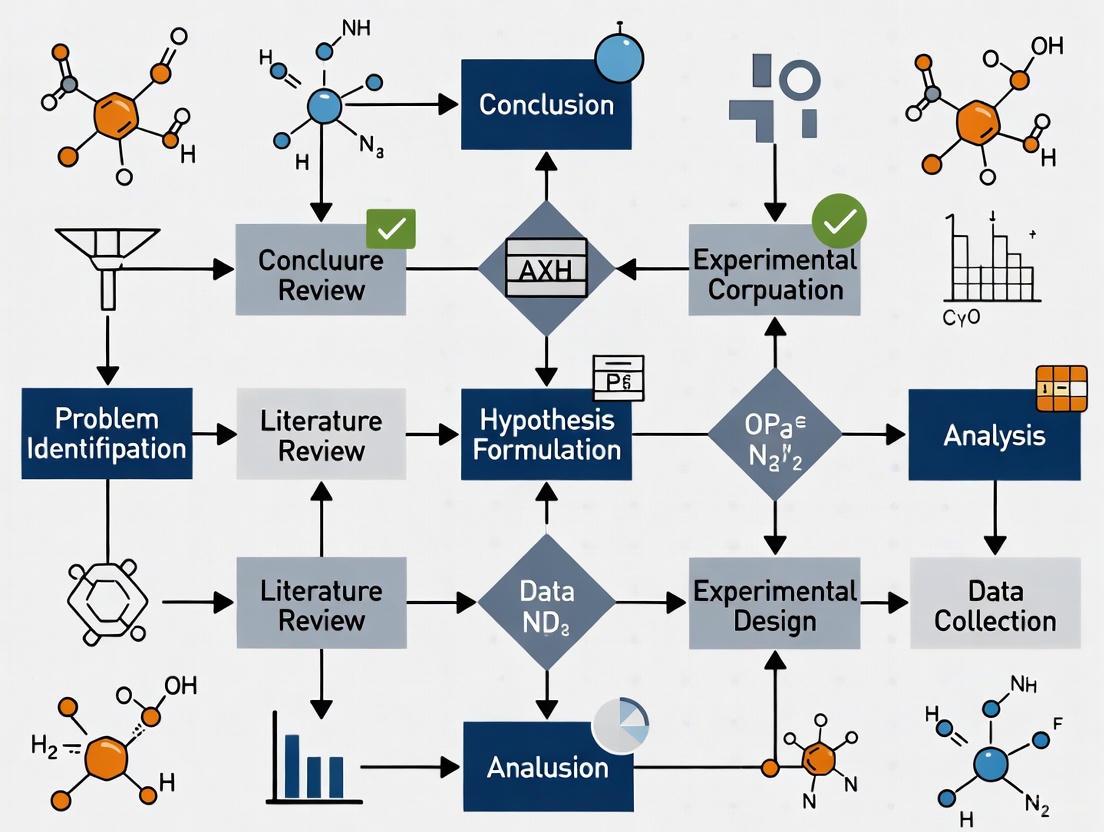
This literature review provides a systematic examination of the materials science research cycle, synthesizing current methodologies, challenges, and innovations to guide researchers and drug development professionals.
The Materials Science Research Cycle: A Comprehensive Literature Review for Accelerating Discovery
Abstract
This literature review provides a systematic examination of the materials science research cycle, synthesizing current methodologies, challenges, and innovations to guide researchers and drug development professionals. It explores the foundational models defining the research process, details the application of AI and data-driven methodologies for accelerated discovery, addresses critical troubleshooting and optimization challenges in data veracity and integration, and evaluates validation frameworks and comparative analyses of traditional versus modern informatics-driven approaches. The review aims to equip scientists with a holistic understanding of the research cycle to enhance efficiency, robustness, and impact in materials development, with specific implications for biomedical and clinical research.
Defining the Core: The Materials Science Research Cycle and Its Theoretical Foundations
Within the field of materials science and engineering, research is defined as the systematic process by which a community of practice expands its collective body of knowledge using established methodologies, requiring the dissemination of this new knowledge [1]. Unlike the singular scientific method, the research cycle encompasses a broader framework that includes identifying community knowledge gaps and communicating findings to stakeholders [1]. This holistic approach is particularly crucial for materials science, a discipline that emerged in the 1950s from the coalescence of metallurgy, polymer science, ceramic engineering, and solid-state physics [1]. The field focuses on building knowledge about the fundamental interrelationships between material processing, structure/microstructure, properties, and performance—relationships often visualized as the "materials tetrahedron" [1].
The absence of an explicit, shared model of the research process has resulted in significantly different lived experiences for researchers, as they may be exposed to different implicit research steps depending on their advisors and institutional backgrounds [1]. Early-career researchers, including those transitioning from other disciplines into materials science at the graduate level, often struggle to identify what constitutes "significant" and "original" knowledge—a common requirement for earning a PhD [1]. This article articulates a comprehensive research cycle heuristic specifically designed for materials science, providing common expectations that can improve researcher experience, increase return-on-investment for research sponsors through robust planning, and enhance the impact of collective research work by encouraging systematic knowledge development [1].
The Materials Science Research Cycle: A Six-Stage Methodology
The research cycle for materials science and engineering can be conceptualized as six iterative stages that transform an initial idea into disseminated knowledge. This heuristic translates and adapts existing research models from other fields to the specific context of materials science, emphasizing literature review throughout the cycle rather than solely at the initiation stage [1]. The cycle also incorporates engineering design principles when planning experimental or computational research studies [1].
Table 1: The Six-Stage Research Cycle in Materials Science
| Stage | Title | Core Activities | Key Outputs |
|---|---|---|---|
| 1 | Identify Knowledge Gaps | Systematic review of archival literature (journal articles, conference proceedings, patents, technical reports); discussion with community of practice | Documented gaps in processing-structure-properties-performance relationships |
| 2 | Formulate Research Questions/Hypotheses | Reflection using frameworks like Heilmeier Catechism; alignment of researcher interests with stakeholder needs | Clearly articulated research questions or hypotheses; defined potential impact |
| 3 | Design Research Methodology | Selection/development of validated laboratory or computational experimental methods; incorporation of engineering design principles | Robust study design; optimized experimental protocols; defined verification methods |
| 4 | Execute Experimental/Computational Work | Application of methodology to candidate materials; data generation | Raw datasets; experimental observations; characterization results |
| 5 | Analyze and Evaluate Results | Data processing; interpretation; validation against hypotheses | Processed data; statistical analyses; preliminary conclusions; refined insights |
| 6 | Communicate Findings | Preparation of publications, presentations, patents, or technical reports | Disseminated knowledge; community feedback; integrated findings into collective knowledge |
The following diagram visualizes this iterative research process, illustrating the connections between each stage and emphasizing the continuous literature review that informs all phases of work:
Experimental Protocols and Data Management Framework
Data Lineage Tracking Protocol
Effective materials science research requires robust data management strategies that track data lineage from origin through analysis. The Materials Experiment and Analysis Database (MEAD) framework addresses this need by dividing the experiment-to-knowledge process into five research phases, each with distinct but compatible data management protocols [2]:
- Synthesis: Documenting deposition and processing of chemicals/elements on chosen substrates, assigning unique identifiers to each library plate.
- Characterization: Measuring desired properties with all metadata and data from each measurement "run" stored in recipe files.
- Association: Grouping different runs into "experiment" files that package raw data for specific analyses.
- Analysis: Processing data via analysis functions tracked in "ana blocks" that record algorithm names, version numbers, and parameters.
- Exploration: Retrieving and visualizing raw and derived data through specialized interfaces [2].
This framework manages millions of materials experiments by maintaining inseparable connections between raw data, metadata, and processing history, enabling reliable re-analysis as algorithms evolve [2].
Heuristic Rule Development for Materials Classification
Machine learning approaches in materials science increasingly include interpretable models that generate simple heuristic rules. For composition-based classification of materials properties, a "full model" can be developed using the following experimental protocol [3]:
The model takes the form: g(M;t) = Σ t_E * f_E(M) where t_E is a parameter for each element E, and f_E(M) is the fraction of atoms in material M that are element E [3]. The classification rule is then: if g(M;t) > 0, predict class 1; otherwise, predict class -1 [3].
Experimental Protocol:
- Data Collection: Curate a dataset of materials with known classifications (e.g., topological/non-topological or metal/non-metal).
- Representation: For each material, compute the element fraction vector
f(M). - Model Training: Learn parameters
tusing an appropriate optimization method to minimize classification error. - Validation: Evaluate heuristic performance on held-out test sets.
- Interpretation: Analyze element parameters to gain chemical intuition [3].
This approach can be enhanced with chemistry-informed inductive bias ("restricted models") that incorporate periodic table structure, potentially reducing required training data [3].
Visualization and Workflow Design Specifications
Data Management Workflow
The experimental data management pipeline involves specific workflows for handling materials research data. The following diagram illustrates the sequential phases and their relationships:
Color and Accessibility Standards
All diagrams and visualizations must adhere to WCAG 2.1 AA contrast ratio thresholds to ensure accessibility for researchers with low vision or color blindness [4] [5]. The required color contrast ratios are:
- Standard text: At least 4.5:1 contrast between text and background colors
- Large-scale text (18pt+ or 14pt+bold): At least 3:1 contrast ratio [5]
Table 2: Approved Color Palette with Contrast Specifications
| Color Name | Hex Code | RGB Values | Use Case | Contrast with White |
|---|---|---|---|---|
| Google Blue | #4285F4 | (66, 133, 244) | Primary elements | 4.5:1 (Pass) |
| Google Red | #EA4335 | (234, 67, 53) | Secondary elements | 4.5:1 (Pass) |
| Google Yellow | #FBBC05 | (251, 188, 5) | Highlight elements | 4.5:1 (Pass) |
| Google Green | #34A853 | (52, 168, 83) | Success states | 4.5:1 (Pass) |
| White | #FFFFFF | (255, 255, 255) | Backgrounds | 21:1 (Pass) |
| Light Gray | #F1F3F4 | (241, 243, 244) | Secondary backgrounds | 16.4:1 (Pass) |
| Dark Gray | #202124 | (32, 33, 36) | Primary text | 21:1 (Pass) |
| Medium Gray | #5F6368 | (95, 99, 104) | Secondary text | 7.3:1 (Pass) |
The Scientist's Toolkit: Essential Research Reagents and Solutions
Table 3: Key Research Reagent Solutions for Materials Science Research
| Reagent/Solution | Function | Application Context |
|---|---|---|
| Elemental Precursors | Source materials for composition libraries | Inkjet printing deposition of diverse material combinations |
| Substrate Materials | Base for material deposition and growth | Platform for synthesizing and testing new material compositions |
| Characterization Standards | Reference materials for instrument calibration | Ensuring measurement accuracy across different characterization techniques |
| Data Management System | Tracking experimental lineage and metadata | Maintaining findable, accessible, interoperable, and reusable (FAIR) data principles |
| Analysis Algorithms | Extracting properties from raw data | Transforming characterization data into meaningful materials properties |
| Heuristic Rule Sets | Simplified classification models | Rapid screening of material properties based on chemical composition [3] |
This toolkit enables researchers to implement the complete research cycle, from materials synthesis through data analysis and knowledge dissemination. The reagents and solutions listed support the creation of composition libraries containing hundreds to thousands of unique materials, facilitating high-throughput exploration of composition spaces [2]. Proper implementation of these tools allows for tracking the lineage of millions of materials experiments, ensuring that conclusions can always be considered in the context of their data origin and processing history [2].
The research cycle heuristic provides materials science researchers with a systematic framework for advancing from initial ideas to disseminated knowledge. By explicitly defining each stage of the research process—from identifying knowledge gaps through literature review to communicating findings—this approach addresses the historical lack of a shared model in the field. The incorporation of robust data management protocols ensures the traceability and reliability of experimental results, while heuristic rule development offers interpretable approaches for materials classification. Implementation of this comprehensive research cycle, supported by appropriate visualization standards and essential research tools, enables more efficient knowledge development and accelerates materials discovery and optimization.
Within the rigorous domain of materials science and engineering, the research cycle is a systematic process for expanding the collective body of knowledge concerning material processing, structure, properties, and performance [1]. A critical, yet often underspecified, component of this cycle is the journey from identifying gaps in existing knowledge to effectively communicating new findings to the scientific community. This guide articulates a structured six-step model to navigate this critical pathway. The model synthesizes established methodologies for literature review and research cycle management, tailoring them specifically for the context of materials science research [1] [6] [7]. By providing a clear, phased protocol—from planning the review to disseminating results—this framework aims to enhance the efficiency, rigor, and impact of research within the field.
The Six-Step Model: A Procedural Framework
The following six-step model offers a systematic approach for moving from a nascent research idea to a communicated contribution, ensuring that new knowledge is both grounded in existing literature and effectively shared with the community of practice.
Table 1: The Six-Step Model for Knowledge Gap Identification and Communication
| Step | Title | Core Objective | Primary Activities |
|---|---|---|---|
| 1 | Plan & Define Scope | Establish the review's purpose, intended uses, and stakeholder relevance [8]. | Define research questions; identify key stakeholders; determine the scope and boundaries of the literature search [8] [7]. |
| 2 | Search the Literature | Execute a comprehensive and reproducible search for relevant literature [7]. | Develop and run search strategies across multiple databases; manage retrieved records [6] [7]. |
| 3 | Screen for Inclusion | Filter the search results to identify the most pertinent studies [7]. | Apply pre-defined inclusion/exclusion criteria; often involves multiple independent reviewers to minimize bias [7]. |
| 4 | Critique & Synthesize | Interpret the selected literature to logically determine current understanding [9]. | Assess the quality and rigor of primary studies; extract relevant data; synthesize findings to identify patterns and gaps [9] [7]. |
| 5 | Write the Review | Articulate the synthesized knowledge and identified gaps in a structured format. | Develop a coherent narrative; present findings using tables and figures; clearly state the concluded research question [9]. |
| 6 | Communicate & Update | Disseminate new knowledge and plan for the framework's ongoing currency [1] [8]. | Publish and present findings; integrate into the broader research cycle; establish a plan for future updates to the review [1] [8]. |
Step 1: Plan & Define Scope
The initial step involves foundational planning to ensure the subsequent work is focused and impactful.
- Formulate Research Questions: Clearly articulated research questions are key ingredients that guide the entire review methodology [7]. They should be specific and complex enough to warrant a systematic investigation.
- Identify Purpose and Stakeholders: Clearly outline the purpose (e.g., to identify competencies for new material development) and intended uses of the review. Identify key stakeholders, which can include other researchers, practitioners, and end-users, considering their role in the development process [8].
- Define Scope: Determine the boundaries of the review, including contexts, underlying principles, and articulated assumptions. This controls for unintended uses and clarifies the transferability of the final output [8].
Step 2: Search the Literature
This step involves gathering the raw material for the synthesis.
- Coverage Strategy: Decide on the comprehensiveness of the search. An exhaustive coverage aims to be as comprehensive as possible, while a representative coverage focuses on top-tier journals, and a pivotal coverage concentrates on works central to the topic [7].
- Systematic Searching: Execute searches across relevant bibliographic databases (e.g., PubMed, Scopus) and other sources, using a pre-defined search strategy tailored to each database [6]. The strategy should be documented for reproducibility.
Step 3: Screen for Inclusion
Screening refines the search results into a final sample of primary studies.
- Apply Inclusion/Exclusion Criteria: Use a set of predetermined rules to screen the titles, abstracts, and full texts of identified records [7]. Criteria can be based on population, intervention, context, or study design.
- Ensure Rigor: To minimize bias, the screening process should typically involve at least two independent reviewers. A procedure for resolving disagreements between reviewers must be in place [7].
Step 4: Critique & Synthesize
This step involves a critical appraisal and interpretation of the selected literature to build a new understanding.
- Assess Study Quality: Appraise the scientific quality and rigor of the selected studies. This formal assessment helps determine if differences in quality affect conclusions and guides the interpretation of findings [7].
- Extract Data: Gather applicable information from each primary study. The type of data extracted depends on the research questions but often includes details on methods, context, and findings [7].
- Synthesize Findings: Collate, summarize, and compare the evidence. The goal is to provide a coherent lens to make sense of extant knowledge, explaining contradictions and identifying the central knowledge gap that the research will address [9] [7]. This synthesis answers the question: "What is the current state of knowledge, and where is it lacking?"
Step 5: Write the Review
The synthesized knowledge and identified gap must be articulated in a clear, structured document.
- Develop a Coherent Narrative: The review should be more than a list of papers; it should tell a story about the development of knowledge in the field and logically lead to the identification of the gap [6] [9].
- Present Data Effectively: Use tables and figures to summarize information efficiently. For example, use tables to compare the properties of different materials studied in the literature or to list research methods and their frequency of use.
- Write the Thesis: The conclusion of the writing process is a well-supported thesis that clearly states the research question or hypothesis arising from the literature critique [9].
Step 6: Communicate & Update
The final step integrates the new knowledge into the broader research cycle and ensures the work remains relevant.
- Disseminate Knowledge: Communicate the findings to the scientific community through publication in journals, presentation at conferences, or deposition in preprint repositories [1]. This step is essential for completing the research cycle and advancing collective knowledge.
- Maintain the Framework: For the specific output of a literature review, this involves creating a plan for future updates. For the broader research project, it means using the identified gap to launch into the next phases of the research cycle: constructing objectives, designing methodologies, and conducting experiments [1] [8].
Workflow and Stakeholder Visualization
The following diagram illustrates the logical flow of the six-step model and the integration of key stakeholders at various stages, ensuring the research remains grounded and relevant.
The Research Reagent Toolkit: Conceptual Tools for the Literature Review
In a materials science context, a laboratory relies on physical reagents and instruments. Similarly, a researcher conducting a literature review employs a set of conceptual "research reagents" – essential tools and protocols that ensure the process is rigorous, reproducible, and effective. The following table details this conceptual toolkit.
Table 2: Research Reagent Solutions for Literature Review and Knowledge Synthesis
| Tool Category | Specific Tool / Protocol | Function in the Research Process |
|---|---|---|
| Framing Reagents | Heilmeier Catechism [1] | A series of questions to evaluate the potential impact, risks, and novelty of a proposed research direction, helping to establish a well-justified research question. |
| Research Question Formulation | The foundational process of defining clear, answerable questions that guide the entire review methodology and subsequent search strategy [7]. | |
| Search & Retrieval Reagents | Bibliographic Databases (e.g., PubMed, Scopus) | Online platforms for executing systematic searches of the scholarly literature using structured query languages [6]. |
| Pre-defined Search Syntax | A documented and reproducible list of keywords, Boolean operators, and filters used to query databases, ensuring transparency and replicability [7]. | |
| Synthesis & Analysis Reagents | Quality Assessment Checklist | A tool (e.g., based on PRISMA, CASP) to appraise the rigor and risk of bias in primary studies, informing the credibility of the synthesis [7]. |
| Data Extraction Framework | A standardized form or spreadsheet for consistently capturing relevant data (e.g., methods, results) from each included study [7]. | |
| Communication Reagents | Standard Paper Format (IMRaD) | A structured format (Introduction, Methods, Results, and Discussion) for writing quantitative research papers, ensuring clarity and comprehensiveness [10]. |
| Data Visualization Charts | Graphs (e.g., bar, line) and tables for presenting quantitative data and comparisons in a clear and concise manner, making complex information digestible [11] [10]. |
Quantitative Data Presentation in Materials Science Research
Effective presentation of quantitative data is crucial for communicating results in materials science. The following table provides a template for summarizing key experimental or characterization data, allowing for easy comparison across different material samples or conditions.
Table 3: Template for Presenting Materials Characterization Data
| Material Sample ID | Synthesis Method | Young's Modulus (GPa) | Tensile Strength (MPa) | XRD Peak Position (2θ) | Electrical Conductivity (S/m) |
|---|---|---|---|---|---|
| MS-001 | Sol-Gel | 120.5 ± 5.2 | 450 ± 20 | 38.5° | 1.5 x 10³ |
| MS-002 | CVD | 185.0 ± 7.1 | 680 ± 35 | 38.3° | 5.8 x 10⁵ |
| MS-003 | Sintering | 95.3 ± 4.8 | 320 ± 15 | 38.7° | 45 |
| MS-004 (Control) | Melt Mixing | 110.0 ± 4.0 | 400 ± 25 | N/A | 1.0 x 10² |
When describing such a table in a research paper, the text should not simply restate the numbers but should interpret them for the reader. For example: "As shown in Table 3, materials synthesized via Chemical Vapor Deposition (CVD Sample MS-002) demonstrated superior mechanical properties and electrical conductivity compared to other methods. The Young's Modulus of 185.0 GPa and tensile strength of 680 MPa for MS-002 were approximately 50% higher than the control sample, while its electrical conductivity was several orders of magnitude greater than that of samples produced by sol-gel or sintering techniques [10]."
This guide has detailed a structured six-step model for navigating the critical pathway from knowledge gap identification to community communication within the materials science research cycle. By adopting this systematic approach—encompassing rigorous planning, comprehensive searching, critical synthesis, and effective dissemination—researchers can enhance the quality and impact of their work. This model provides a shared framework that clarifies the research process, ultimately contributing to the robust and efficient advancement of our collective understanding in materials science and engineering [1].
In the field of materials science, the journey from a novel idea to a validated discovery requires more than just isolated experiments; it demands a structured, iterative cycle of inquiry. While simple experimentation can test a single hypothesis under controlled conditions, comprehensive research constitutes a broader, more systematic endeavor that integrates existing knowledge, generates new insights, and builds upon a cumulative body of evidence. This distinction is critical for researchers, scientists, and drug development professionals who aim to contribute meaningful advancements to their field. True research is characterized by its methodological rigor, its reliance on a foundation of established work, and its commitment to generating reliable, reproducible results. This guide delineates the components of the materials science research cycle, with a particular focus on the role of literature review as a foundational research methodology and the critical importance of detailed experimental protocols in ensuring the validity and repeatability of scientific work [12].
The Research Cycle in Materials Science
The research process in materials science is not linear but cyclical, involving several interconnected phases that feed back into one another. This systematic approach ensures that experimentation is purposeful, data is robust, and findings contribute to the broader scientific discourse.
The following diagram illustrates the core, iterative stages of this process:
This cycle begins with a comprehensive Literature Review, a crucial methodology that synthesizes existing knowledge, identifies gaps, and frames a researchable hypothesis [12]. This foundational step informs the Experimental Protocol Design, where detailed, reproducible procedures are established. The cycle then proceeds through Data Collection, Analysis, and Visualization, before culminating in the Dissemination of findings, which in turn enriches the body of literature for future research endeavors. This self-reinforcing loop distinguishes the comprehensive nature of research from a simple, one-off experiment.
The Literature Review as a Research Methodology
A literature review is far more than a summary of prior publications; it is a systematic research methodology in its own right. In the context of materials science, it provides a structured framework for understanding the current state of knowledge, thus forming the essential first step in the research cycle. A rigorously conducted literature review minimizes redundancy, justifies the significance of the proposed research, and provides a theoretical foundation for experimental design [12]. It moves beyond ad-hoc collection of references to a thorough and evaluative process that can follow specific methodologies such as systematic reviews, which aim to identify, evaluate, and synthesize all relevant studies on a particular question, or integrative reviews, which critique and synthesize the literature to generate new theoretical frameworks. By adopting such a methodological approach, researchers ensure their work is grounded in and contributes coherently to the ongoing scientific conversation, thereby differentiating true research from simple, isolated experimentation.
The Scientist's Toolkit: Essential Research Reagent Solutions
The execution of research in materials science and drug development relies on a suite of essential resources and reagents. The following table details key components of the researcher's toolkit, with a focus on resources that support the research lifecycle.
Table 1: Key Research Reagent Solutions and Essential Resources
| Item/Resource | Function & Explanation |
|---|---|
| Protocols.io Premium Account | A platform for creating, organizing, and sharing detailed, reproducible research protocols. UC Davis researchers, for example, have access to free premium accounts, facilitating open communication and protocol refinement within the research community [13]. |
| Springer Nature Experiments | A comprehensive database aggregating over 95,000 peer-reviewed protocols from sources including Nature Protocols, Nature Methods, and Springer Protocols (e.g., Methods in Molecular Biology). It is a primary resource for finding validated methodologies in the life and biomedical sciences [13] [14]. |
| Current Protocols Series | A subscription-based collection of over 20,000 updated, peer-reviewed laboratory methods. Key series for materials science and related fields include Current Protocols in Protein Science, Current Protocols in Nucleic Acid Chemistry, and Current Protocols in Bioinformatics [13] [14]. |
| Journal of Visualized Experiments (JoVE) | A unique peer-reviewed video journal that publishes visual demonstrations of experimental methods. This format enhances clarity and reproducibility for complex techniques in fields like chemistry, engineering, and the life sciences [13] [14]. |
| Cold Spring Harbor Protocols | An interactive source for authoritative, peer-reviewed protocols across various disciplines, including imaging/microscopy, proteins and proteomics, and nanotechnology. It allows for user submissions and includes features like protocol recipes and cautions [13] [14]. |
Experimental Protocols: The Blueprint for Research
Detailed experimental protocols are the blueprint of rigorous research, providing the step-by-step instructions that ensure an experiment can be replicated and validated by the researcher themselves and others in the scientific community. Unlike simple experimentation, which may lack documentation, formal research relies on protocols that include lists of materials, precise instructions, safety considerations, and reagent preparation details. These protocols are often curated in dedicated, peer-reviewed resources. The following workflow graph outlines the general structure for developing and utilizing such a protocol within a research project.
The process begins by defining a clear experimental aim, often derived from the literature review. Researchers then consult specialized protocol databases to find established methodologies relevant to their question [13] [14]. The next step is to adapt an existing protocol or write a new one, ensuring it includes all necessary details for reproducibility. The experiment is then executed according to this plan, and the results and any protocol modifications are meticulously documented, creating a feedback loop for continuous improvement and iteration. This structured approach is a hallmark of systematic research.
Data Presentation and Visualization in Research
A key differentiator between simple experimentation and formal research is the rigorous approach to data presentation and analysis. Research demands that data is not only collected but also summarized, visualized, and interpreted in a way that is clear, accurate, and accessible to the target audience. The choice of visualization tool depends on the nature of the data and the story it needs to tell.
Choosing Between Charts and Tables
Selecting the appropriate method for presenting data is crucial for effective communication. The table below compares the primary uses of charts and tables to guide this decision.
Table 2: Comparison of Data Presentation Methods: Charts vs. Tables
| Aspect | Charts | Tables |
|---|---|---|
| Primary Function | Show patterns, trends, and relationships visually [15]. | Present detailed, exact values for precise analysis [15]. |
| Best For | Delivering quick visual insights and summarizing large datasets [15]. | When the reader needs to look up specific numerical values [15]. |
| Data Volume | Effective for summarizing large amounts of data [15]. | Can display large volumes of data in a compact form, but may become complex [15]. |
| Audience | More engaging and easier for a general audience to get an overview [15]. | Better suited for technical or analytical users familiar with the dataset [15]. |
Ensuring Accessible Data Visualization
For data visualizations to be effective in a research context, they must be accessible to all readers, including those with low vision or color vision deficiencies. This requires sufficient color contrast between foreground elements (like text and symbols) and their background [4] [5]. The Web Content Accessibility Guidelines (WCAG) specify minimum contrast ratios: at least 4.5:1 for standard text and 3:1 for large-scale text or graphical objects [16]. To comply with these guidelines and the specific requirements of this document, the following color palette has been defined and applied to all diagrams. When creating nodes with text, the fontcolor attribute must be explicitly set to ensure high contrast against the node's fillcolor.
Table 3: Defined Color Palette with Contrast Pairings
| Color | Hex Code | Recommended Use (with contrast-compliant pairings) |
|---|---|---|
| Blue | #4285F4 |
Primary elements, links. Use with white text. |
| Red | #EA4335 |
Highlights, warnings. Use with white text. |
| Yellow | #FBBC05 |
Backgrounds, secondary elements. Use with dark grey text. |
| Green | #34A853 |
Positive indicators, data series. Use with dark grey text. |
| White | #FFFFFF |
Background. Use with dark grey or blue text. |
| Light Grey | #F1F3F4 |
Background. Use with dark grey text. |
| Dark Grey | #202124 |
Primary text, borders. Use with light grey or yellow background. |
| Medium Grey | #5F6368 |
Secondary text, lines. Use with white background. |
The distinction between simple experimentation and true research is fundamental to advancing the field of materials science. Research is a structured, cyclical process that is built upon a foundation of existing knowledge through comprehensive literature reviews, driven by meticulously designed and documented experimental protocols, and validated through clear and accessible data presentation. It is this systematic and iterative nature—constantly moving from questioning, to experimentation, to analysis, and back again—that enables research to generate not just data, but reliable, reproducible, and meaningful knowledge that pushes the boundaries of science and technology.
The Role of Continuous Literature Review Throughout the Research Process
Within the rigorous domain of materials science and engineering, the literature review is traditionally perceived as an initial step in research. However, a paradigm shift is underway, recognizing it as a continuous methodology integral to the entire research cycle. This guide articulates how sustained engagement with literature enhances every phase of materials research—from identifying robust research questions to contextualizing findings and sparking innovation. By adopting a continuous review process, researchers and drug development professionals can increase the return-on-investment for research sponsors, ensure the robustness of their experimental planning, and amplify the impact of their collective research work [1].
In materials science, a field defined by the intricate relationships between processing, structure, properties, and performance, the volume of new knowledge is accelerating at a tremendous speed [12]. An initial literature review alone is insufficient to navigate this rapidly evolving landscape. The established heuristic of the research cycle in materials science and engineering clearly emphasizes that all researchers should review literature throughout a research cycle rather than just once during the initiation steps [1]. This continuous process transforms the literature review from a simple preparatory task into a dynamic, iterative research methodology that rigorously underpins scientific discovery.
The Materials Science Research Cycle and Integrated Literature Review
The research cycle for materials science and engineering can be visualized as a sequence of steps that systematically build new knowledge about the materials tetrahedron (processing-structure-properties-performance). The following diagram illustrates this cycle and highlights the critical points of integration for a continuous literature review.
Figure 1: The Materials Science Research Cycle with Integrated Continuous Literature Review. The process is cyclical, with communication of results leading to the identification of new knowledge gaps. The continuous literature review (yellow ellipse) interacts with and informs every stage of the cycle, rather than being confined to the start [1].
Deconstructing the Research Cycle
The standard research cycle for materials science and engineering involves several key stages [1]:
- Identify Gaps in Knowledge: Systematically searching digital and physical archives (journal articles, conference proceedings, patents) to find voids in the collective community knowledge.
- Establish Research Questions/Hypothesis: Using frameworks like the Heilmeier Catechism to articulate a clear, impactful research objective [1].
- Design and Develop Methodology: Selecting or developing validated laboratory or computational experimental methods.
- Execute Methodology: Applying the chosen methods to candidate materials or processes.
- Evaluate and Analyze Results: Interpreting the data generated from experiments.
- Communicate Results: Disseminating new knowledge to the broader community of practice through publications and presentations.
This cycle is not strictly linear. Researchers often iterate between stages, and serendipitous discoveries ("happy accidents") can redirect the path of inquiry [1]. A continuous literature review provides the navigational tool to adapt effectively within this non-linear process.
Quantitative Frameworks for Literature Review Methodology
To implement a continuous literature review systematically, researchers should employ quantitative and structured approaches to manage and evaluate the vast amount of available information. The table below summarizes key quantitative data points that can be tracked throughout the review process to ensure thoroughness and rigor.
Table 1: Quantitative Metrics for Monitoring a Continuous Literature Review Process
| Metric Category | Specific Metric | Application in Continuous Review |
|---|---|---|
| Descriptive Statistics [17] | Mean, Median, Mode | Track average publication year, most common methodologies, or frequent keywords in found literature. |
| Descriptive Statistics [17] | Standard Deviation, Skewness | Understand the distribution of research focus (e.g., are most studies clustered around one material type, or is the field broad?). |
| Sampling Methods [18] | Stratified Random Sampling | Ensure the reviewed literature corpus represents all relevant sub-fields (e.g., polymers, ceramics, metals) proportionally. |
| Sampling Methods [18] | Systematic Sampling | Apply a consistent, repeatable method for scanning new issues of key journals (e.g., review every 3rd issue or use specific keyword alerts). |
Experimental Protocols for a Continuous Review
Implementing a continuous review requires disciplined, repeatable protocols. The following workflow provides a detailed methodology for integrating this practice into a materials science research project.
Figure 2: Experimental Workflow for Continuous Literature Review. This protocol outlines a repeatable methodology for maintaining engagement with literature throughout a research project, from initial setup to final knowledge synthesis.
Protocol Steps and Reagent Solutions
The experimental workflow for continuous literature review involves specific steps and "research reagents" – the essential tools and resources that enable the process.
Table 2: Research Reagent Solutions for Literature Review
| Research 'Reagent' (Tool/Resource) | Function in the Continuous Review Protocol |
|---|---|
| Reference Management Software (e.g., Zotero, EndNote) | Serves as the central "database" for storing, annotating, and organizing literature; enables sharing across research teams. |
| Automated Alert Systems (e.g., Google Scholar, journal alerts) | Acts as an "automated sensor" for new publications, triggering a review when new relevant literature is published. |
| Structured Annotation Template | Provides a standardized "assay" for critically evaluating each paper, ensuring consistency in notes on methodology, results, and relevance. |
| Keyword Stratification Schema | Functions as a "classification filter" to ensure comprehensive and unbiased coverage of all relevant sub-topics and related fields. |
Step-by-Step Protocol:
- Protocol Setup: Define a core set of keywords related to your material system (e.g., "high-entropy alloys," "solid-state batteries") and properties (e.g., "fracture toughness," "ionic conductivity"). Identify the top 10-15 journals and conference proceedings in your niche. Set up automated alerts using these keywords in databases like Scopus and Web of Science, and in the table of contents for your key journals [18].
- Weekly Scanning: Dedicate a fixed time block (e.g., 1-2 hours weekly) to review automated alerts and the tables of contents of key journals. Screen titles and abstracts for immediate relevance. This is a high-level triage process to identify papers requiring deeper reading.
- Active Phase Integration: Before finalizing any major research phase, conduct a targeted "deep dive":
- Pre-Methodology: Search specifically for recent advancements in characterization techniques (e.g., in-situ TEM, XRD analysis software) to ensure your methods are state-of-the-art [1].
- Pre-Experiment: Review material safety data sheets (MSDS) and published protocols for handling novel precursors or compounds to ensure laboratory safety and procedural correctness.
- Pre-Analysis: Search for studies that have used similar analytical or statistical methods, which can provide benchmarks and help interpret your results [17] [19].
- Knowledge Synthesis: Continuously annotate and summarize key findings in your reference manager. Update a shared literature map or database with your team. Use this synthesized knowledge to refine your research questions and hypotheses, ensuring your work remains aligned with the latest developments and addresses the most critical knowledge gaps [1] [12].
In the fast-paced and interdisciplinary field of materials science, treating the literature review as a one-time initial activity is a critical limitation. By adopting a continuous literature review methodology, researchers embed their work within the ongoing scholarly conversation. This practice transforms literature review from a passive background task into an active, generative research process that directly fuels innovation, ensures methodological rigor, and enhances the significance and impact of research outcomes. For the materials scientist, it is not merely a best practice but an essential component of a robust research cycle dedicated to building reliable and impactful new knowledge.
The discipline of materials science and engineering (MSE) represents a fundamental field of inquiry that has shaped the trajectory of human civilization. The historical development of materials science is characterized by the progressive understanding of the intricate relationships between a material's processing, its internal structure, and its resulting properties and performance. This evolution has transformed the field from an artisanal, empirical practice to a rigorous interdisciplinary science with a defined research paradigm. Framed within the context of a broader thesis on the materials science research cycle, this review examines the historical milestones that have defined the discipline, emphasizing how the systematic investigation of processing-structure-properties-performance relationships has become the cornerstone of materials research. The materials research cycle—comprising the identification of knowledge gaps, hypothesis formulation, methodology design, experimentation, evaluation, and communication of results—provides a critical lens through which to understand this historical progression and its implications for contemporary research methodologies [1] [20].
Historical Periods in Materials Development
The evolution of materials science is marked by distinct eras defined by humanity's mastery over different classes of materials. Each period reflects significant advancements in processing techniques and a deepening understanding of structure-property relationships, laying the groundwork for the systematic research approaches used today.
Table 1: Historical Periods in Materials Development
| Era/Period | Approximate Timespan | Key Materials | Significant Processing Advancements |
|---|---|---|---|
| Stone Age | ~2.6 million years ago to ~3000 BCE | Stone, bone, wood, fibers | Knapping (chipping), firing of clay (ceramics at ~20,000 BP) [21] [22] |
| Bronze Age | ~3000 BCE to ~1200 BCE | Copper, Arsenical Bronze, Tin Bronze | Smelting, casting, alloying [21] |
| Iron Age | ~1200 BCE onward | Wrought Iron, Steel (e.g., Wootz steel) | Bloomery process, crucible steel production [21] |
| Ancient & Medieval Period | ~500 BCE to ~1500 CE | Roman Concrete, Porcelain, Glass | Roman cement (limestone, volcanic ash), tin-glazing, glassblowing [21] |
| Industrial Revolution | 18th-19th Century | Mass-produced Steel, Vulcanized Rubber | Bessemer process (1856), vulcanization [21] [22] |
| Modern Foundations | 19th-20th Century | Aluminum, Semiconductors, Polymers | Electrolysis (Hall-Héroult process, 1886), transistor (1947) [21] [22] |
From Empirical Beginnings to the Enlightenment
The earliest human civilizations relied on empirical discovery and manipulation of natural materials. During the Stone Age, the primary advancement was the thermal processing of clay to create pottery, with the earliest known examples from Xianrendong Cave in China dating to approximately 20,000–18,000 BP, fired at temperatures of 500–600°C [22]. The Bronze Age marked a revolutionary shift with the development of extractive metallurgy, notably the smelting of copper from its ore around 3500 BCE and the subsequent creation of alloys, first with arsenic and later with tin, to produce bronze with superior hardness and castability [21]. The Iron Age introduced the bloomery process around 1200 BCE, which produced malleable wrought iron by reducing iron ore with charcoal at temperatures of 1200–1300°C, below iron's full melting point [22].
The intellectual origins of materials science as a systematic discipline stem from the Age of Enlightenment, when researchers began applying analytical thinking from chemistry, physics, and engineering to understand phenomenological observations in metallurgy and mineralogy [23]. A pivotal scientific foundation was laid in the late 19th century by Josiah Willard Gibbs, who demonstrated that the thermodynamic properties related to atomic structure in various phases are intimately linked to a material's physical properties [23].
The Cold War and the Formal Emergence of a Discipline
The mid-20th century catalyzed the formal establishment of materials science as a distinct interdisciplinary field. The Cold War, particularly the launch of Sputnik in 1957, created a strategic imperative for new materials with exotic structural, thermal, and electronic properties for nuclear weapons, delivery systems, and defensive networks [24]. U.S. policymakers and scientists identified a critical "materials bottleneck"—a lack of coherent theoretical frameworks to guide the development of novel materials [24].
The response was institutional and architectural. In 1960, the U.S. Advanced Research Projects Agency (ARPA) began funding Interdisciplinary Laboratories (IDLs) at universities, including Cornell, Northwestern, and the University of Maryland [24] [25]. The explicit goal was to break down disciplinary barriers by physically colocating physicists, chemists, metallurgists, and engineers to train a new generation of scientists in the "science of materials" [24]. This period also saw the crystallization of the core materials paradigm, often visualized as the materials tetrahedron, which emphasizes the interconnectedness of processing, structure, properties, and performance [1]. The first academic departments explicitly named "Materials Science" or "Materials Engineering" emerged from these initiatives, often evolving from existing metallurgy or ceramics engineering programs [23] [25].
The Materials Science Research Cycle
The historical evolution of the field is codified in the modern materials science research cycle, a systematic methodology for advancing collective knowledge. This cycle extends beyond the simple scientific method by integrating continuous literature review, community discourse, and rigorous dissemination.
Diagram 1: The Materials Science Research Cycle. The central "Understand Existing Knowledge" step is foundational and influences all other stages [1] [20].
The Research+ Cycle and the Centrality of Literature Review
A contemporary model, the Research+ cycle, refines the traditional research steps by placing the continuous understanding of the existing body of knowledge at its core [20]. This model emphasizes that a thorough literature review is not a one-time initial step but a continuous activity foundational to all aspects of being a researcher [1] [20]. The process involves systematically searching digital and physical archives—including journal articles, conference proceedings, and technical reports—and engaging in ongoing discussions with the community of practice to identify meaningful gaps in knowledge [1]. Key steps in this process are detailed in Table 2.
Table 2: Key Steps in a Systematic Literature Review for Materials Science
| Step | Core Action | Methodologies & Tools |
|---|---|---|
| 1. Define Scope | Formulate a precise research question. | Use PICO chart (Problem, Intervention, Comparison, Outcome) to identify concepts [26]. |
| 2. Search Strategy | Create a systematic search plan. | Develop concept charts with synonyms; use Boolean operators (AND/OR); search databases and gray literature [26]. |
| 3. Execute & Document | Run searches and manage findings. | Use citation managers; record subject headings/descriptors; obtain full-text documents [27] [26]. |
| 4. Analyze & Synthesize | Organize information and summarize state of research. | Group references into sub-topics; document findings in a review; refine search iteratively [27]. |
Formulating Research Questions and Incorporating Engineering Design
A well-defined research question or hypothesis aligns individual curiosity with community needs and stakeholder interests. Methodologies like the Heilmeier Catechism can guide this reflection by asking [1]:
- What are you trying to do?
- How is it done today, and what are the limits of current practice?
- What is new in your approach and why do you think it will be successful?
- Who cares? If you are successful, what difference will it make?
Furthermore, the Research+ cycle explicitly integrates engineering design principles into the planning of experimental methodologies. Researchers are encouraged to iteratively refine their methods by considering resolution, sensitivity, time, cost, and availability, thereby developing the tacit knowledge necessary for robust and replicable research [20].
The Scientist's Toolkit: Key Research Reagents and Materials
The advancement of materials science is facilitated by a suite of characterization and processing tools that enable researchers to probe the structure of materials across all length scales, from the atomic to the macroscopic.
Table 3: Essential Toolkit for Materials Characterization and Processing
| Tool/Reagent | Primary Function | Key Applications in Research |
|---|---|---|
| X-ray Diffraction (XRD) | Determines crystal structure and phase composition by measuring diffraction angles and intensities. | Identifying crystalline phases, quantifying phase fractions, determining lattice parameters and strain [23]. |
| Electron Microscopy (SEM/TEM) | Provides high-resolution imaging of microstructure and chemical analysis. | Analyzing grain size, morphology, and defects (SEM); atomic-scale imaging and crystal defect analysis (TEM) [23] [25]. |
| Spectroscopy (Raman, EDS) | Probes chemical bonding and elemental composition. | Identifying molecular vibrations and bonding (Raman); quantifying elemental composition at the micro-scale (EDS) [23]. |
| Thermal Analysis (DSC/TGA) | Measures material properties as a function of temperature. | Studying phase transitions, melting points, and crystallization (DSC); analyzing thermal stability and decomposition (TGA) [23]. |
| Mechanical Testers | Quantifies mechanical properties like strength, toughness, and ductility. | Generating stress-strain curves, measuring hardness, and evaluating fracture toughness [25]. |
Experimental Protocol: Microstructural Analysis of a Metal Alloy
The following detailed protocol exemplifies the application of the research cycle to a classic materials science investigation: establishing the processing-structure-property relationships in a metal alloy.
1. Objective: To determine how different heat treatment temperatures (processing) affect the microstructure (structure) and hardness (property) of a steel sample.
2. Hypothesis: Increasing the austenitizing temperature during heat treatment will result in a larger prior-austenite grain size and a corresponding change in hardness after quenching and tempering.
3. Experimental Methodology:
- Step 1: Sample Preparation. Cut steel samples into standardized cubes (e.g., 20mm x 20mm x 10mm) using a precision abrasive cutter. Grind and polish samples sequentially with SiC paper (from 120 grit to 1200 grit) and diamond suspension (e.g., 6 µm, 3 µm, 1 µm) to create a scratch-free, mirror-like surface for microscopic analysis [23].
- Step 2: Heat Treatment (Processing). Divide samples into groups. Austenitize each group in a controlled-atmosphere furnace at different temperatures (e.g., 800°C, 850°C, 900°C, 950°C) for one hour to achieve full austenitization, followed by rapid quenching in water or oil to form martensite.
- Step 3: Metallographic Etching. Etch the polished surfaces of the heat-treated samples with a 2% Nital solution (2% nitric acid in ethanol) for 5-15 seconds. This chemical reagent selectively attacks grain boundaries, making the microstructure visible under a microscope [23].
- Step 4: Microstructural Characterization (Structure Analysis). Observe the etched samples under an Optical Microscope (OM) or Scanning Electron Microscope (SEM). Capture multiple micrographs at standardized magnifications (e.g., 100x, 500x). Use image analysis software (e.g., ImageJ) to quantitatively measure the prior-austenite grain size according to ASTM standard E112 [23].
- Step 5: Mechanical Property Testing. Perform Vickers microhardness tests on the polished and etched samples. Use a standardized load (e.g., 500 gf) and a dwell time of 15 seconds. Take at least five indentation measurements per sample to obtain a statistically significant average hardness value [25].
4. Evaluation and Analysis: Plot the measured average grain size and average hardness against the austenitizing temperature. Perform statistical analysis (e.g., linear regression) to establish the quantitative relationship between the processing parameter (temperature), the structural feature (grain size), and the material property (hardness).
5. Communication: Report the results in a format that includes the experimental workflow, raw data, analysis plots, and conclusions regarding the Hall-Petch relationship (finer grains generally lead to higher strength/hardness), thereby contributing new, verifiable knowledge to the community [1].
From Theory to Practice: Modern Methodologies and AI-Driven Applications
Within the rigorous context of the materials science research cycle, the systematic literature review (SLR) serves as a foundational methodology for evidence-based advancement. As knowledge production accelerates and remains fragmented across interdisciplinary domains, the SLR provides a structured, comprehensive, and reproducible method for assessing collective evidence [12]. This is particularly critical in fields like drug development and materials science, where research outcomes directly influence innovation and application. Traditional narrative reviews, often conducted in an ad-hoc manner, can lack thoroughness and rigor, potentially compromising their quality and trustworthiness [12]. In contrast, a well-executed systematic review follows a specific, transparent methodology to minimize bias, thereby offering a reliable basis for informing future research directions, policy decisions, and clinical practices [28]. This guide provides an in-depth technical overview of the core SLR process, framed within the materials science research paradigm.
Foundational Concepts: Types of Scholarly Reviews
A clear understanding of different review types is essential for selecting the appropriate methodology. The objectives, search strategies, and synthesis methods vary significantly across reviews, as detailed in Table 1.
Table 1: Types of Literature Reviews and their Methodological Characteristics
| Review Type | Description | Search Process | Quality Appraisal | Synthesis Method |
|---|---|---|---|---|
| Systematic Review | Seeks to systematically search for, appraise, and synthesize research evidence, often adhering to guidelines. | Aims for exhaustive, comprehensive searching. | Quality assessment may determine inclusion/exclusion. | Typically narrative with tabular accompaniment [29]. |
| Meta-Analysis | A technique that statistically combines the results of quantitative studies to provide a more precise effect of the results. | Aims for exhaustive searching; may use funnel plots. | Quality assessment may determine inclusion/exclusion and/or sensitivity analyses. | Graphical and tabular with narrative commentary [29]. |
| Scoping Review | Preliminary assessment of potential size and scope of available research literature. Aims to identify the nature and extent of evidence. | Completeness of searching determined by time/scope constraints; may include ongoing research. | No formal quality assessment. | Typically tabular with some narrative commentary [29]. |
| Integrative Review | Summarizes past empirical or theoretical literature to provide a more comprehensive understanding of a particular phenomenon or healthcare problem. | Purposive sampling may be employed; search is transparent and reproducible. | Limited/varying methods of critical appraisal; can be complex. | Narrative synthesis for qualitative and quantitative studies [29]. |
| Literature (Narrative) Review | Generic term: published materials that provide an examination of recent or current literature. Can cover a wide range of subjects. | May or may not include comprehensive searching. | May or may not include quality assessment. | Typically narrative [29]. |
For the materials science research cycle, the systematic review is paramount when a specific, well-defined research question demands a rigorous, unbiased answer. It is crucial to distinguish between a systematic review and a meta-analysis; a systematic review refers to the comprehensive search and screening process, whereas a meta-analysis is a statistical procedure for combining quantitative data from multiple studies that meet inclusion criteria [28]. A review can be systematic without including a meta-analysis, but a meta-analysis should always be based on a systematic review.
The Systematic Review Workflow: A Step-by-Step Methodology
The conduct of a systematic review is a multi-stage process that requires meticulous planning and execution. The following workflow, generated using the specified color palette and DOT language, outlines the key phases.
Phase 1: Planning and Protocol Development
The initial phase involves defining the review's scope and registering its protocol. A pre-registered protocol, for example with PROSPERO, is a cornerstone of transparency, reducing the risk of reporting bias and duplicative research efforts [28]. The protocol should detail the planned research question, search strategy, eligibility criteria, and synthesis methods.
Phase 2: Formulating the Research Question and Eligibility Criteria
The first active step is to formulate a focused, answerable research question. The PICO framework (Population, Intervention, Comparator, Outcome) is widely used for intervention studies in materials science and drug development [28]. For a materials science context, this could translate to:
- Population: A specific material (e.g., perovskite solar cells, biodegradable polymers).
- Intervention: A novel synthesis method, doping agent, or processing technique.
- Comparator: A standard or traditional method.
- Outcome: Measurable properties (e.g., efficiency, tensile strength, degradation rate).
Once the question is defined, explicit eligibility criteria must be established to guide the study selection process. These criteria should specify the types of studies, participants, interventions, and outcomes that will be included or excluded [28]. For instance, a review might be limited to randomized controlled trials or specific in-vivo models.
Phase 3: Designing and Executing the Search Strategy
A comprehensive search is critical to ensure the review captures all relevant evidence. The strategy should be developed by combining key concepts from the research question using Boolean operators: similar concepts are grouped with "OR," and different concepts are tied together with "AND" [28]. This process involves:
- Selecting Databases: Searching at least three databases is recommended. For materials science, this typically includes PubMed/MEDLINE, Embase, and specialized databases like Compendex or Inspec.
- Using Controlled Vocabulary: Incorporate database-specific subject headings (e.g., MeSH in MEDLINE, Emtree in Embase) alongside keywords.
- Accounting for Variations: Utilize truncation (e.g.,
polym*to find polymer, polymers, polymerize) and account for synonyms and alternate spellings [28]. - Peer Review: Collaboration with a professional librarian is strongly encouraged to refine and validate the search strategy [28].
Phase 4: Screening Studies for Eligibility
Screening is performed in duplicate by independent reviewers to minimize bias and error [28]. This multi-stage process is tracked using a PRISMA flow diagram.
- De-duplication: Remove duplicate records from the search results.
- Title/Abstract Screening: Reviewers assess records against eligibility criteria.
- Full-Text Screening: The full text of potentially relevant studies is retrieved and assessed. Reasons for exclusion at this stage are documented.
- Pilot Screening: A pilot phase with a small subset of studies is recommended to calibrate reviewers and ensure consistent application of criteria [28].
The inter-rater reliability (e.g., Cohen's kappa) should be calculated and reported to quantify the level of agreement between reviewers [28].
Phase 5: Data Extraction
In this step, relevant data is systematically extracted from the included studies into a standardized form. This process should also be conducted in duplicate to ensure accuracy [30]. The data extraction template, created a priori, typically collects:
- Bibliographic Information: Author, year, journal.
- Study Characteristics: Design, setting, sample size, duration.
- Participant/Material Details: Demographics or material specifications.
- Intervention/Exposure: Precise details of the method or material being studied.
- Outcomes: Quantitative and/or qualitative results, including measures of effect and statistical data.
Using systematic review software like Covidence can streamline this process by automatically highlighting discrepancies between extractors for resolution [30].
Phase 6: Risk of Bias and Quality Assessment
The strength of a systematic review is directly tied to the quality of its included studies [28]. Each primary study must be critically appraised for methodological quality and risk of bias using validated tools. The choice of tool depends on the study design:
- Randomized Controlled Trials (RCTs): Cochrane Risk of Bias (RoB 2.0) tool.
- Non-Randomized Studies: ROBINS-I tool.
- Qualitative Studies: CASP checklist.
The results of the quality assessment can be used to inform the synthesis and interpretation of findings, for instance, by conducting sensitivity analyses excluding high-risk studies.
Phase 7: Data Synthesis and Meta-Analysis
Synthesis involves combining the evidence from the included studies. This can be narrative, involving a structured summary and discussion of findings, or quantitative, through a meta-analysis.
- Narrative Synthesis: Themes, patterns, and relationships across studies are summarized textually and in tables.
- Meta-Analysis: When studies are sufficiently homogeneous in their PICO elements, their results can be pooled statistically. This involves calculating a weighted average of effect sizes, typically presented visually in a forest plot. The I² statistic is used to quantify statistical heterogeneity.
The final phases involve transparently reporting the review according to PRISMA (Preferred Reporting Items for Systematic Reviews and Meta-Analyses) guidelines, which include a 27-item checklist and a flow diagram [28]. The discussion should interpret the results in the context of the overall certainty of evidence (e.g., using GRADE methodology), draw conclusions, and identify implications for practice and future research in materials science.
The Researcher's Toolkit for Systematic Reviews
Executing a high-quality systematic review requires a suite of tools for managing the process. The table below details key digital resources, which function as the essential "research reagents" for this methodology.
Table 2: Essential Digital Tools for Conducting a Systematic Review
| Tool Category & Name | Primary Function | Application in the Review Process |
|---|---|---|
| Reference Management (e.g., EndNote, Zotero, Mendeley) | Organizing and deduplicating bibliographic records. | Storing search results, removing duplicates, and formatting citations for the manuscript. |
| Systematic Review Software (e.g., Covidence, Rayyan) | Streamlining screening and data extraction. | Facilitating dual-independent title/abstract and full-text screening, consensus resolution, and data extraction with custom forms [30]. |
| Data Analysis Software (e.g., R, Stata, RevMan) | Statistical analysis for meta-analysis. | Conducting meta-analyses, calculating pooled effect estimates and confidence intervals, generating forest and funnel plots. |
| Protocol Registries (e.g., PROSPERO, Open Science Framework) | Publicly registering review protocols. | Enhancing transparency, reducing duplication, and providing a record of the planned methods [28]. |
Visualization and Data Presentation in Systematic Reviews
Effective data presentation is crucial for communicating the findings of a systematic review. The PRISMA flow diagram is a mandatory visualization for tracking the study selection process. For presenting extracted data, tables and graphs should be self-explanatory [31].
- Categorical Variables: Use tables with absolute and relative frequencies, or visualizations like bar charts or pie charts [31].
- Numerical Variables: Use tables displaying ranges, means, and standard deviations, or visualizations like histograms [31].
A graphical abstract, a single visual summary of the review's key findings, can be a powerful tool for attracting readers. Its design should have a clear central message, a logical reading direction (often left-to-right for linear processes), and a consistent visual style [32].
The field of materials science and engineering is undergoing a profound transformation driven by data-centric approaches. Materials informatics (MI), defined as the application of data-centric approaches for materials science R&D, including machine learning, represents a fundamental shift in how researchers discover, design, and optimize materials [33]. This paradigm leverages advanced data infrastructures and machine learning algorithms to accelerate the traditional research cycle, reducing development cycles from decades to months in some applications [34]. The global market for externally provided materials informatics services is projected to grow at a compound annual growth rate (CAGR) of 9.0% through 2035, reflecting significant investment and adoption across academia and industry [33].
This transformation is occurring within the broader context of the materials science research cycle, which has recently been explicitly modeled to provide clearer guidance for practitioners [1] [20]. The integration of informatics platforms within this research framework enables both the "forward" direction of innovation (discovering properties for a given material) and the more challenging "inverse" direction (designing materials based on desired properties) [33]. As materials researchers increasingly work to advance collective knowledge through structured research cycles, informatics platforms provide the computational tools needed to navigate the complex relationships between processing, structure, properties, and performance more efficiently.
The Materials Science Research Cycle in the Informatics Age
The research process in materials science has traditionally followed an implicit model, creating challenges for early-career researchers. A newly proposed Research+ cycle explicitly outlines the steps materials researchers utilize to advance collective knowledge, emphasizing that literature review should occur throughout the research process rather than仅仅在初始阶段 [1] [20]. This cycle aligns with the materials tetrahedron framework that has long organized the field's fundamental focus on processing-structure-properties-performance relationships.
The canonical research cycle consists of six key stages: (1) identifying knowledge gaps through literature review; (2) establishing research questions/hypotheses; (3) designing methodologies; (4) applying methodologies; (5) evaluating results; and (6) communicating findings [1]. Materials informatics enhances multiple stages of this cycle, particularly through machine learning applications that accelerate screening, reduce required experiments, and uncover novel relationships [33]. The diagram below illustrates how informatics integrates with this research framework.
Figure 1: Integration of informatics platforms within the materials science research cycle. Informatics tools provide critical support throughout the iterative research process, from literature review to communication of findings.
Core Components of Materials Informatics Platforms
Data Repositories and Management
Materials informatics relies on standardized data repositories that follow FAIR principles (Findable, Accessible, Interoperable, Reusable) to ensure data usability across research teams and projects [35]. The unique challenge in materials science stems from working with sparse, high-dimensional, biased, and noisy data, which differs significantly from the data environments in other AI application areas like autonomous vehicles or social media [33]. Effective data management must address the current limitations in data maturity within the sector, where companies often work with fragmented data distributed among legacy systems, spreadsheets, or even paper archives [36].
Machine Learning and AI Methodologies
Machine learning in materials informatics employs diverse algorithmic approaches tailored to the specific challenges of materials data. These include supervised learning for predicting material properties, unsupervised learning for identifying patterns and groupings in unlabeled data, and reinforcement learning for optimization tasks [33]. A critical advancement is the emergence of physics-informed models that integrate fundamental physical principles with data-driven approaches, addressing the limitation that neural networks alone may not capture expected behaviors dictated by relevant physical or chemical laws [36]. Increasingly, researchers are leveraging hybrid models that combine traditional computational methods with AI approaches, offering both speed and interpretability [35].
High-Throughput Screening and Automation
High-throughput virtual screening (HTVS) represents a powerful application of informatics in materials research, enabling rapid computational assessment of thousands of candidate materials before laboratory synthesis [33]. This approach is particularly valuable in fields like energy materials, where researchers combine combinatorial thin-film synthesis and characterization with efficient descriptor filtering simulations to rapidly identify and improve ionic materials for energy technologies [34]. The ultimate expression of this automation is the development of autonomous "self-driving laboratories," though this remains at an early stage with key improvements and success stories demonstrating the potential [33].
Quantitative Analysis of Materials Informatics Impact
The adoption of materials informatics follows distinct geographic and strategic patterns, with different approaches offering varying advantages depending on organizational resources and goals. The table below summarizes key quantitative market data and adoption trends.
Table 1: Materials Informatics Market Forecast and Adoption Patterns
| Metric | Value | Context/Source |
|---|---|---|
| Projected Market CAGR (2025-2035) | 9.0% | Global market for external MI services [33] |
| Leading Adopter Regions | Japan (end-users), USA (service providers) | Geographic distribution of MI activity [33] [36] |
| Primary Adoption Approaches | In-house development, External partnerships, Consortium membership | Strategic models for MI implementation [33] |
| Key Application Areas | Metal-organic frameworks (MOFs), Piezoelectric polymers, 3D printed metamaterials | Focus areas for MI case studies [35] |
| Data Challenges | Sparse, high-dimensional, biased, noisy datasets | Characteristic issues with materials science data [33] |
The quantitative impact of materials informatics extends beyond market metrics to research acceleration outcomes. The table below summarizes common quantitative analysis methods used in materials informatics and their specific applications within materials research.
Table 2: Quantitative Data Analysis Methods in Materials Informatics
| Analysis Method | Materials Science Applications | Key Techniques |
|---|---|---|
| Descriptive Statistics | Summarizing material property distributions, experimental results | Mean, median, mode, standard deviation, variance [37] |
| Inferential Statistics | Predicting material family properties from limited samples | Hypothesis testing, T-tests, ANOVA, confidence intervals [37] [38] |
| Regression Analysis | Modeling structure-property relationships, prediction | Linear regression, multivariate regression, regularization [37] |
| Correlation Analysis | Identifying relationships between processing parameters and properties | Pearson correlation, Spearman rank correlation [37] |
| Dimensionality Reduction | Visualizing high-dimensional materials data in 2D/3D space | Principal Component Analysis (PCA), t-SNE [33] |
Experimental Protocols and Workflows
Standardized Informatics Workflow
A well-defined experimental protocol is essential for effective implementation of materials informatics. The workflow below represents a generalized approach that can be adapted to specific material systems and research objectives, integrating both computational and experimental components:
Problem Definition: Clearly articulate the target properties and performance metrics for the material design challenge, using frameworks like the Heilmeier Catechism to evaluate potential impact and feasibility [1].
Data Collection and Curation: Gather relevant datasets from internal experiments, computational simulations, and external repositories. Implement data standardization using established ontologies and metadata schemas to ensure interoperability [35].
Feature Engineering: Develop appropriate descriptors that represent material structures in machine-readable formats, which may include compositional features, structural descriptors, or process parameters [33].
Model Selection and Training: Choose machine learning algorithms based on dataset size, problem type (classification, regression, optimization), and interpretability requirements. Hybrid approaches that combine physics-based models with machine learning often yield the best results [35].
Validation and Interpretation: Employ rigorous cross-validation techniques and hold-out testing to evaluate model performance. Use explainable AI methods to interpret predictions and build trust with domain experts [36].
Experimental Validation and Iteration: Synthesize and characterize top candidate materials identified through computational screening. Incorporate experimental results back into the dataset to refine models through active learning approaches [33].
Case Study: AI-Enhanced Peptide Conductivity Research
A specific example of this workflow in action comes from research on peptide conductivity, where Professor Charles Schroeder's team combined experimental data with advanced computational techniques to reveal how folded molecular structures enhance electron transport [34]. The methodology included:
- High-Throughput Characterization: Automated measurement of electron transport properties across multiple peptide sequences and folding states.
- Multi-Scale Modeling: Integration of quantum mechanical calculations with molecular dynamics simulations to establish structure-function relationships.
- Machine Learning Analysis: Application of regression models to identify key molecular descriptors governing charge transport efficiency.
- Experimental Validation: Synthesis and testing of predicted optimal sequences to verify model predictions, creating a closed-loop discovery pipeline.
This approach demonstrated how informatics can provide new understanding of electron flow through peptides with complex structures while offering avenues to design more efficient molecular electronic devices [34].
Essential Research Reagent Solutions
The implementation of materials informatics requires both computational tools and experimental resources. The table below details key "research reagent solutions" - essential platforms, tools, and databases that form the infrastructure for data-driven materials research.
Table 3: Essential Research Reagent Solutions for Materials Informatics
| Resource Category | Specific Tools/Platforms | Function and Application |
|---|---|---|
| Data Repositories | Materials Project, NOVA MF, specialized institutional databases | Standardized storage and retrieval of materials data with API access [35] |
| Analysis Software | Python (Pandas, NumPy, SciPy), R Programming, SPSS | Statistical analysis, data manipulation, and machine learning implementation [37] |
| Visualization Tools | ChartExpo, Powerdrill AI, Matplotlib, specialized dashboards | Creating interpretable visualizations of complex materials data [37] [39] |
| Commercial MI Platforms | Matilde (Intellico), Citrine Platform, proprietary systems | End-to-end informatics solutions with user-friendly interfaces [36] |
| Laboratory Integration | ELN/LIMS systems, high-throughput experimentation rigs | Connecting physical experiments with digital data management [33] |
Implementation Challenges and Future Directions
Despite its promise, materials informatics faces significant implementation barriers. The data maturity problem remains primary, with organizations struggling with fragmented, small, and heterogeneous datasets that complicate algorithm training [36]. Unlike data-rich domains like image recognition, materials science often deals with small datasets requiring specialized approaches that incorporate physical principles and domain knowledge [33]. Additionally, cultural and educational gaps can impede adoption, as experimental researchers may lack familiarity with AI frameworks while data scientists may lack domain expertise [35].
The future development of materials informatics points toward several critical advancements. Foundation models specifically trained on materials and chemistry data show potential for simplifying materials informatics applications, similar to how large language models have transformed other fields [33]. Increased development of modular, interoperable AI systems will enable broader adoption, while continued emphasis on standardized FAIR data practices will address current issues with metadata gaps and semantic ontologies [35]. Furthermore, the integration of generative AI components for technical documentation analysis and literature review promises to accelerate research workflows beyond the laboratory experimentation phase [36].
The diagram below illustrates the integrated workflow of a mature materials informatics platform, showing how various components interact to accelerate materials discovery and development.
Figure 2: Integrated workflow of a mature materials informatics platform, showing how diverse data sources feed into analysis tools to generate predictions that guide experimental validation, creating a closed-loop discovery system.
Materials informatics represents a fundamental shift in materials research methodology, creating new pathways for discovery and optimization that complement traditional experimental approaches. By integrating within the established research cycle of materials science and engineering, these data-driven approaches accelerate the advancement of collective knowledge while respecting the domain expertise of researchers. The continued development of standardized data repositories, interoperable platforms, and hybrid modeling approaches that blend physical understanding with machine learning power will determine the pace of adoption and ultimate impact of informatics across the materials field.
As the sector addresses current challenges related to data quality, integration, and interpretation, materials informatics is poised to enable transformative advances in diverse areas from nanocomposites and metal-organic frameworks to adaptive materials and biomimetic systems. For researchers engaged in the systematic advancement of materials knowledge, embracing these tools within the research cycle offers the potential to increase impact, improve return on investment, and accelerate the translation of materials innovations to societal applications.
Bayesian methods have revolutionized predictive modeling in scientific domains characterized by complexity and data scarcity, notably in materials science and drug discovery. These probabilistic approaches provide a formal framework for incorporating prior knowledge and quantifying uncertainty, which is paramount when experimental data are costly or difficult to obtain. The core principle of Bayesian inference—updating prior beliefs with new evidence to form posterior distributions—aligns closely with the scientific method itself, making it exceptionally valuable for the research cycle in experimental sciences. This technical guide examines the integration of Bayesian learning within materials science and drug development, detailing core methodologies, experimental protocols, and practical implementations that enable researchers to accelerate discovery while effectively managing resource constraints.
The adoption of Bayesian machine learning is particularly impactful in fields where high-dimensional parameter spaces, heterogeneous data types, and the need for reliable uncertainty quantification are common. Unlike traditional deterministic models, Bayesian approaches treat model parameters as probability distributions, naturally providing measures of confidence in predictions. This is critical for applications ranging from drug target identification and materials behavior prediction to the optimization of experimental design through active learning protocols. By synthesizing information from diverse sources—including chemical structures, bioassay results, high-throughput screening data, and scientific literature—Bayesian models facilitate more informed decision-making, ultimately compressing development timelines and reducing costs.
Core Bayesian Methodologies and Their Applications
Bayesian Neural Networks for Uncertainty Quantification
Bayesian Neural Networks (BNNs) represent a fundamental shift from conventional neural networks by treating all network weights, (\theta), as probability distributions rather than deterministic point estimates. For a dataset (\mathcal{D} = {(xi, yi)}{i=1}^N), a BNN is defined by a probabilistic model: [ yi | xi, \theta \sim \mathcal{N}(g(xi; \theta), \sigma^2) ] where (g(x_i; \theta)) is the neural network function, and the noise (\sigma) also follows a prior distribution, typically half-normal(0,1) [40]. The posterior predictive distribution for a new input (x^) is given by: [ p(y^ | x^, \mathcal{D}) = \int p(y^ | x^*, \theta) p(\theta | \mathcal{D}) d\theta ] This integral represents an infinite ensemble of networks, with each network's prediction weighted by the posterior probability of its parameters [40]. The practical implementation often relies on sampling methods like Hamiltonian Monte Carlo (HMO) or its extension, the No-U-Turn Sampler (NUTS), to approximate this intractable posterior.
In materials science, BNNs have been successfully applied to predict stress fields and material deformation under various conditions. A key advantage is the ability to quantify both aleatoric uncertainty (inherent noise in the process) and epistemic uncertainty (model uncertainty due to limited data) [41]. For instance, BNNs have demonstrated high predictive accuracy for fiber-reinforced composites and polycrystalline materials, closely matching results from computationally expensive finite element analysis while providing essential uncertainty estimates that highlight regions of potential material failure [41]. This capability is particularly valuable when designing new materials with specific performance characteristics, as it allows engineers to assess risks associated with model predictions.
Bayesian Integration Frameworks for Multi-Modal Data
The integration of heterogeneous data types is a persistent challenge in scientific research, which Bayesian methods elegantly address through probabilistic fusion. The BANDIT (Bayesian ANalysis to determine Drug Interaction Targets) platform exemplifies this approach, integrating over 20 million data points from six distinct types: drug efficacy, post-treatment transcriptional responses, drug structures, reported adverse effects, bioassay results, and known targets [42]. For each data type, similarity scores are calculated for drug pairs, converted into likelihood ratios, and combined into a Total Likelihood Ratio (TLR) proportional to the odds of two drugs sharing a target.
This integrative approach demonstrated a benchmark accuracy of ~90% on 2,000+ small molecules with known targets, significantly outperforming single-data-type methods [42]. The framework successfully identified DRD2 as the target of ONC201, an anti-cancer compound whose mechanism had remained elusive, enabling more precise clinical trial design. Similarly, for drug combination prediction, a weighted Bayesian integration method (WBCP) combines seven drug similarity networks—including chemical structure, target protein sequences, Gene Ontology terms, and side effects—to generate support strength scores for drug pairs [43]. This method achieved superior performance across multiple metrics (AUROC, accuracy, precision, recall) compared to existing approaches, successfully predicting clinically validated combinations like goserelin and letrozole.
Bayesian Optimization for Experimental Design
Bayesian Optimization (BO) is a powerful strategy for optimizing expensive-to-evaluate black-box functions, making it ideal for guiding experimental design in resource-constrained environments. BO operates by building a probabilistic surrogate model of the objective function—typically a Gaussian Process (GP)—and using an acquisition function to select the most promising points to evaluate next [44]. The Gaussian Process is defined as: [ f(x) \sim \mathcal{GP}(m(x), k(x, x')) ] where (m(x)) is the mean function and (k(x, x')) is the covariance kernel function [44]. Common acquisition functions include Expected Improvement (EI): [ EI(x) = \mathbb{E}\left[\max(f(x) - f(x^+), 0)\right] ] and Upper Confidence Bound (UCB): [ UCB(x) = \mu(x) + \kappa \sigma(x) ] which balance exploration of uncertain regions with exploitation of known promising areas [44].
The CRESt (Copilot for Real-world Experimental Scientists) platform demonstrates BO's advanced application in materials science, integrating robotic equipment for high-throughput synthesis and characterization with multimodal data from literature, chemical compositions, and microstructural images [45]. In one application, CRESt explored over 900 chemistries and conducted 3,500 electrochemical tests, discovering a multi-element catalyst that delivered a 9.3-fold improvement in power density per dollar over pure palladium for direct formate fuel cells [45]. Similarly, in vaccine development, BO has been employed to optimize formulation stability by monitoring critical quality attributes like infectious titer loss and glass transition temperature, significantly accelerating development while requiring fewer experimental resources [46].
Experimental Protocols and Methodologies
Protocol: Partially Bayesian Neural Networks for Active Learning
Active learning with partially Bayesian neural networks (PBNNs) offers a computationally efficient approach for iterative experimental design, particularly beneficial when working with limited, complex datasets. The following protocol outlines the implementation process:
- Step 1: Deterministic Pre-training – Train a conventional neural network on the available dataset, incorporating stochastic weight averaging (SWA) at the end of training to enhance robustness against noisy objectives. A maximum a posteriori (MAP) prior, modeled as a Gaussian penalty, can be incorporated into the loss function during this stage to prevent overfitting [40].
- Step 2: Probabilistic Layer Selection – Select a subset of layers to treat probabilistically. Research indicates that making only the final layer probabilistic often provides a favorable balance between uncertainty quantification accuracy and computational cost. The single output neuron is always made probabilistic as it improves training stability [40].
- Step 3: Prior Initialization – Initialize the prior distributions for the selected probabilistic layers using the corresponding pre-trained weights from the deterministic network. Keep all remaining weights frozen as deterministic parameters [40].
- Step 4: Bayesian Inference – Apply HMC/NUTS sampling to derive posterior distributions exclusively for the selected probabilistic layers. This selective sampling significantly reduces computational overhead compared to fully Bayesian inference [40].
- Step 5: Active Learning Loop – Use the PBNN to predict on all unobserved data points in the design space. Select the next point to evaluate by maximizing an acquisition function based on predictive uncertainty: (x{\text{next}} = \arg\max{x \in \mathcal{X}} U_{\text{post}}(x)). Incorporate the new measurement into the training set and repeat from Step 1 [40].
This protocol has been validated on molecular property prediction and materials science tasks, demonstrating performance comparable to fully Bayesian networks at significantly reduced computational cost, enabling more efficient exploration of complex design spaces [40].
Protocol: Dual-Event Bayesian Modeling for Drug Discovery
Dual-event Bayesian modeling addresses the critical need to balance efficacy and safety in early-stage drug discovery, particularly for neglected diseases like tuberculosis:
- Step 1: Data Curation – Compile bioactivity data (e.g., growth inhibition IC({90}) values against *Mycobacterium tuberculosis*) and cytotoxicity data (e.g., CC({50}) values in mammalian Vero cells) from public high-throughput screening campaigns [47].
- Step 2: Compound Classification – Define actives as compounds with IC({90}) < 10 μg/mL and selectivity index (SI = CC({50})/IC({90})) > 10. Inactives comprise compounds with IC({90}) > 20 μg/mL regardless of cytotoxicity [47].
- Step 3: Feature Generation – Calculate molecular fingerprints (e.g., extended-connectivity fingerprints or molecular access system keys) that encode structural features of each compound [47].
- Step 4: Model Training – Build a Bayesian model using the naive Bayes classifier, which calculates the probability of a compound being active based on the presence or absence of structural features: [ \text{Score} = \log\left(\frac{P(\text{Active})}{P(\text{Inactive})}\right) + \sum{i=1}^{N} \log\left(\frac{P(fi|\text{Active})}{P(fi|\text{Inactive})}\right) ] where (fi) represents the presence or absence of a particular molecular feature [47].
- Step 5: Prospective Validation – Virtually screen commercial compound libraries, rank compounds by Bayesian score, and experimentally validate the top-ranked compounds. This approach has achieved hit rates of 14% (14/99 compounds validated), 1-2 orders of magnitude higher than conventional high-throughput screening [47].
This protocol successfully identified a novel pyrazolo[1,5-a]pyrimidine compound with an IC(_{50}) of 1.1 μg/mL (3.2 μM) against M. tuberculosis, demonstrating the power of dual-event modeling for identifying promising leads with desirable efficacy and safety profiles [47].
Protocol: Weighted Bayesian Integration for Drug Combination Prediction
The weighted Bayesian integration method for drug combination prediction (WBCP) enables efficient pre-screening of synergistic drug pairs:
- Step 1: Similarity Network Construction – Calculate seven drug similarity networks using diverse information sources: ATC codes, SMILES chemical structures, target protein sequences, Gene Ontology terms, KEGG pathways, SIDER side effects, and OFFSIDES drug effects [43].
- Step 2: Feature Extraction – For each similarity network and each query drug pair (d(A), d(B)), compute the similarity between the query pair and all known drug combinations. Use the maximum similarity value as the feature for that query pair for each network [43].
- Step 3: Weighted Bayesian Integration – Apply a novel Bayesian model with attribute weighting to integrate the seven features. The method enhances naive Bayes by introducing weights to refine the attribute independence assumption: [ ILR = \log\left(\frac{P(\text{Positive})}{P(\text{Negative})}\right) + \sum{j=1}^{7} wj \log\left(\frac{P(fj|\text{Positive})}{P(fj|\text{Negative})}\right) ] where (w_j) represents the weight for the j-th feature, and ILR is the integrated likelihood ratio [43].
- Step 4: Support Strength Score Calculation – Transform the ILR into a support strength score using a sigmoid-like function to generate a value between 0-1, where higher scores indicate stronger support for the drug pair belonging to the synergistic combination class [43].
- Step 5: Experimental Validation – Prioritize drug combinations with high support strength scores for experimental validation. The WBCP method has successfully predicted clinically validated combinations such as goserelin and letrozole, demonstrating superior performance compared to existing methods across multiple metrics including AUROC, accuracy, precision, and recall [43].
Performance Comparison and Quantitative Analysis
Table 1: Performance Metrics of Bayesian Methods in Drug Discovery
| Method | Application | Dataset Size | Key Metrics | Performance |
|---|---|---|---|---|
| BANDIT [42] | Drug target identification | 2,000+ compounds | Area Under ROC Curve | 0.89 |
| BANDIT [42] | Drug target identification | 2,000+ compounds | Accuracy | ~90% |
| Dual-Event Bayesian Model [47] | Tuberculosis drug discovery | 99 prospective compounds | Hit Rate | 14% |
| WBCP [43] | Drug combination prediction | 7 similarity networks | Area Under ROC Curve | Superior to benchmarks |
| WBCP [43] | Drug combination prediction | 7 similarity networks | Precision & Recall | Superior to benchmarks |
| Bayesian Neural Networks [41] | Material stress prediction | Fiber-reinforced composites | Predictive Accuracy vs FEA | Closely matching |
| CRESt Platform [45] | Fuel cell catalyst discovery | 900+ chemistries | Power Density Improvement | 9.3x per dollar |
Table 2: Comparison of Bayesian Inference Methods for Neural Networks
| Method | Uncertainty Quantification | Computational Cost | Scalability | Best Use Cases |
|---|---|---|---|---|
| Fully Bayesian NNs [40] | High (Epistemic + Aleatoric) | Very High | Moderate | Small datasets, high precision needs |
| Partially Bayesian NNs [40] | High (Epistemic + Aleatoric) | Moderate | Good | Active learning, transfer learning |
| Gaussian Processes [44] | High (Theoretically grounded) | High for large datasets | Poor for high dimensions | Low-dimensional problems |
| Deep Kernel Learning [40] | Moderate | Moderate | Moderate | Combining NN and GP advantages |
| Variational Inference [40] | Moderate (Tends to underestimate) | Low to Moderate | Good | Large-scale applications |
Implementation Tools and Research Reagents
Table 3: Research Reagent Solutions for Bayesian-Driven Experimentation
| Resource Category | Specific Tools/Reagents | Function in Research Cycle |
|---|---|---|
| Computational Tools | NeuroBayes [40], scikit-optimize [44], ChemmineR [43] | Implementation of Bayesian models, similarity calculations, and optimization |
| Data Resources | ChEMBL database [48], DrugBank [43], Uniprot [43] | Sources of chemical, pharmacological, and target information for model training |
| Experimental Platforms | CRESt platform with robotic synthesis [45], High-throughput screening [47] | Automated material synthesis and bioactivity testing for data generation |
| Similarity Metrics | SMILES structure similarity [43], Target sequence similarity [43], Adverse effect similarity [42] [43] | Quantitative comparison of drugs for predictive modeling |
| Validation Assays | Mycobacterial growth inhibition [47], Mammalian cell cytotoxicity [47], Fuel cell power density [45] | Experimental confirmation of model predictions |
Visualized Workflows and Signaling Pathways
Diagram 1: BANDIT Drug Target Identification Workflow
Diagram 2: Active Learning Cycle with PBNNs
Diagram 3: Bayesian Optimization Process
Bayesian learning and predictive modeling have emerged as transformative methodologies within the materials science and drug discovery research cycles, providing principled approaches for integrating diverse data types, quantifying uncertainty, and optimizing experimental design. The techniques detailed in this guide—from Bayesian neural networks that enable reliable prediction of material behavior under uncertainty to integrative platforms like BANDIT that leverage heterogeneous data for drug target identification—represent the cutting edge of data-driven scientific discovery.
Looking forward, several emerging trends promise to further enhance the impact of Bayesian methods in scientific research. The development of increasingly efficient inference algorithms will continue to address computational bottlenecks, making these approaches more accessible for high-dimensional problems. The integration of physical principles and domain knowledge directly into Bayesian models will improve their interpretability and generalizability beyond the training data distribution. Furthermore, the growing adoption of automated experimentation platforms coupled with Bayesian optimization creates exciting opportunities for fully autonomous discovery cycles, potentially accelerating the development of novel materials and therapeutic agents. As these methodologies mature and integrate more deeply with experimental workflows, they will undoubtedly play an increasingly central role in addressing the complex scientific challenges of the coming decades.
High-Throughput Computational and Experimental Methods
The rapid integration of sustainable technologies to combat climate change is heavily dependent on the discovery of cost-competitive, safe, and durable performative materials, particularly for electrochemical systems that generate energy, store energy, and produce chemicals [49]. The vast exploration space for potential materials has necessitated the adoption of high-throughput methods—both computational and experimental—for accelerated screening, synthesis, and testing. These methodologies have transformed materials discovery from a sequential, trial-and-error process to a parallelized, data-rich endeavor. When framed within the broader materials science research cycle, high-throughput approaches represent a powerful implementation of systematic knowledge development, enabling researchers to more efficiently identify knowledge gaps, develop candidate solutions, and validate hypotheses at unprecedented scales [1] [20].
The significance of these methods is particularly evident in fields like catalysis and energy materials, where the search space for optimal compositions and structures is enormous. A recent review of the literature reveals that over 80% of high-throughput materials discovery publications focus on catalytic materials, indicating a significant research opportunity in other areas such as ionomer, membrane, electrolyte, and substrate material research [49]. Furthermore, the global research landscape shows that high-throughput electrochemical material discovery is concentrated in only a handful of countries, presenting a substantial opportunity for international collaboration and data sharing to further accelerate progress [49].
High-Throughput Computational Screening Methods
Computational screening serves as the critical first pass in modern materials discovery pipelines, dramatically reducing the experimental search space through physics-based simulations and machine learning predictions. Density functional theory (DFT) calculations form the backbone of these approaches, providing insights into electronic structure, thermodynamic stability, and catalytic properties at the quantum mechanical level [49] [50].
Descriptor-Based Screening and Electronic Structure Similarity
A powerful paradigm in computational materials discovery involves identifying simple but physically meaningful descriptors that correlate with material performance. The d-band center theory, which links the average energy of d-states to adsorption energies, has been widely successful in metallic catalysis [50]. More recently, researchers have utilized the full density of states (DOS) pattern as a comprehensive descriptor that captures both d-band and sp-band information.
In a landmark study demonstrating this approach, researchers screened 4,350 bimetallic alloy structures to find replacements for palladium (Pd) catalysts. They quantified electronic structure similarity using a mathematical formulation that compares DOS patterns [50]:
where g(E;σ) is a Gaussian distribution function that emphasizes regions near the Fermi energy with high weight (typically σ = 7 eV). This approach successfully identified several Pd-free catalysts, including Ni₆₁Pt₃₉, which exhibited a 9.5-fold enhancement in cost-normalized productivity for H₂O₂ synthesis [50].
Table 1: Key Descriptors for High-Throughput Computational Screening
| Descriptor Type | Physical Significance | Application Examples | Advantages |
|---|---|---|---|
| d-band center | Average energy of surface d-states | Transition metal catalysis | Simple calculation, strong correlation with adsorption energies |
| Full DOS pattern | Complete electronic structure including sp-states | Bimetallic alloy catalyst discovery | More comprehensive information content |
| Formation energy | Thermodynamic stability | Screening synthesizable materials | Filters for experimentally feasible candidates |
| Surface energy | Relative stability of different surfaces | Nanoparticle morphology prediction | Enables shape-controlled catalyst design |
Efficient Computational Protocols and Workflows
The reliability of high-throughput computational screening depends critically on standardized protocols that ensure numerical precision while maintaining computational efficiency. Recent advances have led to the development of standard solid-state protocols (SSSP) that automate parameter selection for DFT calculations, consistently controlling errors related to k-point sampling and smearing across diverse materials systems [51]. These protocols provide optimized parameters based on different tradeoffs between precision and efficiency, available through open-source tools that range from interactive input generators to complete high-throughput workflows [51].
The typical computational screening workflow involves multiple filtering stages: (1) thermodynamic stability assessment using formation energies, (2) electronic structure calculation, (3) descriptor evaluation, and (4) synthetic feasibility analysis. This sequential filtering efficiently narrows thousands of potential candidates to a manageable number for experimental validation.
High-Throughput Experimental Methods and Automation
Experimental high-throughput methodologies transform computational predictions into validated materials through automated synthesis, characterization, and testing platforms. These systems enable rapid parallel evaluation of candidate materials, dramatically accelerating the traditional research cycle.
Quantitative High-Throughput Screening (qHTS)
Quantitative high-throughput screening (qHTS) represents a significant advancement over traditional single-concentration screening by performing multi-concentration experiments in miniature formats (e.g., <10 μL per well in 1536-well plates) [52]. This approach generates complete concentration-response profiles for thousands of compounds, providing rich datasets for structure-activity relationship analysis. However, this method introduces significant statistical challenges in nonlinear parameter estimation, particularly when fitting the widely used Hill equation to concentration-response data [52].
The Hill equation model takes the logistic form [52]:
where Ri is the measured response at concentration Ci, E0 is the baseline response, E∞ is the maximal response, AC_50 is the concentration for half-maximal response, and h is the shape parameter. Parameter estimation reliability depends heavily on experimental design, including concentration range selection and replication strategies [52].
Table 2: Key Parameters in qHTS Data Analysis
| Parameter | Interpretation | Impact on Screening | Estimation Challenges |
|---|---|---|---|
| AC₅₀ | Potency (concentration for half-maximal response) | Primary ranking metric for compound prioritization | Highly variable when concentration range doesn't capture asymptotes |
| E_max | Efficacy (maximal response) | Important for candidate selection, especially with allosteric effects | More reliable than AC₅₀ but still affected by experimental noise |
| Hill slope (h) | Steepness of concentration-response curve | Provides mechanistic insights | Correlated with AC₅₀ estimates, increasing variability |
| Baseline (E₀) | Response in absence of compound | Normalization reference | Generally well-estimated with proper controls |
Data Analysis and Visualization in High-Throughput Experiments
The massive datasets generated by high-throughput experimental platforms require specialized analysis and visualization methods. In quantitative PCR (qPCR), for instance, researchers have developed "dots in boxes" visualization to simultaneously capture multiple assay quality metrics [53]. This method plots PCR efficiency against ΔCq (the difference between no-template control and the lowest template dilution Cq values), with data point size and opacity representing a composite quality score based on MIQE (Minimum Information for Publication of Quantitative Real-Time PCR Experiments) guidelines [53].
Similar approaches have been adapted for materials characterization data, where multiple performance metrics must be evaluated simultaneously. The effectiveness of these visualization methods stems from their ability to represent high-dimensional data in two-dimensional space while maintaining critical information about data quality and reliability.
Integrated Computational-Experimental Screening Protocols
The most powerful implementations of high-throughput methodologies seamlessly integrate computational and experimental approaches within a closed-loop discovery framework. These protocols leverage the complementary strengths of each approach: computational methods for rapid, inexpensive screening of vast chemical spaces, and experimental methods for validation and refinement of predictions.
A Case Study in Bimetallic Catalyst Discovery
A representative integrated protocol for bimetallic catalyst discovery demonstrates the effectiveness of this approach [50]. The process begins with high-throughput DFT calculations covering 435 binary systems with 10 ordered phases each (4,350 total structures). After thermodynamic stability filtering (249 alloys remaining), DOS similarity screening identified 17 promising candidates, from which 8 were selected for experimental validation based on synthetic feasibility. Remarkably, 4 of these 8 candidates exhibited catalytic performance comparable to Pd for H₂O₂ synthesis, with Ni₆₁Pt₃₉ showing particular promise as a previously unreported Pd-free catalyst [50].
This case study highlights several critical success factors for integrated screening: (1) the use of physically meaningful descriptors that bridge computational and experimental domains, (2) consideration of synthetic feasibility early in the computational screening process, and (3) rigorous experimental validation that feeds back into computational model refinement.
The Scientist's Toolkit: Essential Research Reagent Solutions
Implementation of high-throughput methodologies requires specialized materials and computational tools. The table below details key resources referenced in the literature.
Table 3: Essential Research Reagent Solutions for High-Throughput Materials Discovery
| Tool/Category | Specific Examples | Function/Role | Application Context |
|---|---|---|---|
| DFT Codes | VASP, Quantum ESPRESSO | First-principles electronic structure calculations | Computational screening of formation energies, DOS patterns, catalytic properties |
| Standard Solid-State Protocols | SSSP | Automated parameter selection for DFT calculations | Ensuring numerical precision and efficiency in high-throughput computations [51] |
| Bimetallic Alloy Libraries | Ni-Pt, Au-Pd, Pt-Pd, Pd-Ni | Candidate catalyst systems | Experimental validation of computationally predicted materials [50] |
| High-Throughput Screening Plates | 1536-well plates (<10 μL/well) | Miniaturized experimental format | Enabling quantitative HTS with multiple concentration points [52] |
| Data Analysis Frameworks | "Dots in boxes" method (qPCR) | Multi-parameter data visualization | Simultaneous evaluation of efficiency, sensitivity, and specificity [53] |
High-throughput computational and experimental methods have fundamentally transformed the materials discovery landscape, enabling systematic exploration of vast compositional and structural spaces. When contextualized within the materials science research cycle, these methodologies represent a rigorous implementation of knowledge development processes—from gap identification through literature review to hypothesis testing and results communication [1] [20]. The integration of computational prediction with experimental validation creates a virtuous cycle of model refinement and knowledge expansion.
Future advancements in this field will likely focus on several key areas: (1) increased automation through autonomous laboratories that further reduce human intervention in the discovery cycle [49], (2) improved consideration of practical material constraints including cost, availability, and safety in screening criteria [49], and (3) enhanced global collaboration through data sharing initiatives that leverage distributed expertise and resources [49]. As these methodologies mature and become more accessible, they hold tremendous potential for accelerating the development of advanced materials addressing critical societal challenges in energy, sustainability, and healthcare.
Integrating Engineering Design Principles into Research Planning
The contemporary materials science landscape demands a paradigm shift from sequential, discipline-siloed research toward an integrated, systems-oriented approach. Engineering design principles, traditionally applied to product development, provide a robust framework for enhancing the rigor, efficiency, and impact of scientific research planning. This integration is central to modern initiatives like the Materials Genome Initiative (MGI), which advocates for a "closed-loop" research paradigm where theory, computation, and experiment interact iteratively to dramatically accelerate the discovery-to-deployment timeline for new materials [54]. Within the context of a broader thesis on materials science research cycles, this whitepaper establishes a foundational argument: the deliberate incorporation of engineering design methodologies—such as designing for functionality, reliability, and manufacturability—directly into the research planning phase fosters more robust, reproducible, and societally relevant scientific outcomes.
The evolving complexity of materials challenges, from sustainable energy solutions to advanced biomedical devices, necessitates research strategies that are not only scientifically sound but also intrinsically consider performance, scalability, and sustainability from their inception. This document provides researchers, scientists, and drug development professionals with a detailed technical guide and actionable protocols for embedding these critical engineering principles into their research planning processes, thereby bridging the gap between fundamental discovery and practical application.
Core Engineering Design Principles for Research
Integrating engineering design into research planning begins with a clear understanding of core principles. These principles provide a strategic framework for making critical decisions during the experimental design phase.
Table 1: Core Engineering Design Principles and Their Research Applications
| Design Principle | Core Objective | Application in Research Planning |
|---|---|---|
| Design for Functionality [55] | Ensure the system performs its intended function effectively. | Define clear, measurable performance metrics for the material or process under investigation. Align the experimental methodology directly with these metrics. |
| Design for Safety [55] | Identify and mitigate potential hazards to users, operators, and the environment. | Incorporate rigorous risk assessments of materials and procedures. Plan for failsafes, containment, and data integrity safeguards. |
| Design for Reliability [55] | Deliver consistent, dependable performance under defined conditions. | Plan for experimental replication, statistical power analysis, and the investigation of failure modes. Use validated methods to ensure consistent results. |
| Design for Manufacturability [55] | Optimize for efficient, cost-effective, and scalable production. | Consider synthesis scalability and process control from the outset. Design experiments that probe processing-structure-property relationships critical for manufacturing. |
| Design for Sustainability [55] | Minimize environmental impact throughout the lifecycle. | Incorporate life-cycle assessment (LCA) parameters into the research plan. Prioritize the use of abundant, low-toxicity, and recyclable materials. |
The Research+ Cycle: A Framework for Integration
The traditional linear model of research is insufficient for modern materials science. The Research+ cycle, a recently articulated model, explicitly integrates iterative review and engineering design considerations into the research process [20] [56]. This model places the understanding of the existing body of knowledge at its center, emphasizing that literature review is not a one-time initial step but a continuous activity throughout the research cycle [20] [56]. Furthermore, it mandates that research questions be explicitly aligned with societal goals, ensuring the research is responsive to real-world needs [20] [56]. A critical advancement in the Research+ cycle is its emphasis on incorporating engineering design principles during the methodology planning phase, encouraging researchers to refine their approaches iteratively using preliminary data and to explicitly plan for the replication of results [20] [56]. This creates a "closed-loop" process highly aligned with the goals of major funding initiatives like DMREF [54].
The following diagram visualizes this integrated workflow, showing how engineering principles directly influence the iterative research planning stages.
Quantitative and Qualitative Methodologies in an Integrated Framework
The integrated research plan leverages both quantitative and qualitative analysis methods to generate a comprehensive understanding. Quantitative data analysis involves the systematic application of statistical methods to numerical data to discover patterns, test hypotheses, and make predictions [57] [58]. The selection of the appropriate method depends entirely on the research question and the type of data collected, as outlined in the guide below.
Table 2: Quantitative Data Analysis Methods for Materials Research
| Method Category | Specific Techniques | Primary Research Application | Key Considerations |
|---|---|---|---|
| Descriptive Analysis [57] [58] | Mean, Median, Mode, Standard Deviation, Variance, Range. | Initial data exploration and summary. Characterizes central tendency and dispersion of material properties (e.g., tensile strength, conductivity). | Provides a snapshot of data but does not establish causality or relationships. |
| Inferential Statistics [57] | T-tests, ANOVA, Hypothesis Testing (p-values). | Comparing means between two or more sample groups (e.g., comparing strength of two material batches). Determining if observed differences are statistically significant. | Requires meeting test assumptions (e.g., normality). Statistical significance does not always imply practical significance. |
| Relationship & Predictive Modeling [57] [58] | Regression Analysis, Correlation Analysis, Machine Learning (e.g., Random Forests, Neural Networks). | Modeling the relationship between processing parameters and material properties. Predicting material performance based on composition and structure. | Powerful for identifying key drivers and forecasting, but models require validation with experimental data. |
| Diagnostic & Grouping Analysis [58] | Cluster Analysis, Principal Component Analysis (PCA). | Identifying natural groupings or segments in data (e.g., classifying microstructural images). Reducing dimensionality of complex datasets. | Helps in discovering patterns not previously hypothesized. Interpretation of clusters requires domain expertise. |
The Role of Qualitative Analysis
While quantitative methods answer "what" and "how much," qualitative methods are essential for understanding the "why" and "how" [59] [58]. In materials science, this can involve qualitative analysis of microstructural images, failure surfaces, or user feedback on a prototype device. Thematic analysis of interview transcripts from domain experts or content analysis of scientific literature can provide critical context and uncover underlying challenges that pure quantitative data might miss [59] [58]. The most powerful research strategies use mixed methods, allowing quantitative findings to be explained and validated by qualitative insights, and vice-versa [59]. For example, an unexpected statistical outlier in a strength test (quantitative) can be investigated through microscopic analysis of the fracture surface (qualitative) to diagnose the root cause.
Experimental Protocols and Research Reagent Solutions
Translating principles into practice requires detailed, actionable experimental protocols. The following section outlines a generalized methodology for a materials development study, incorporating the engineering design framework.
Detailed Methodology: A "Closed-Loop" Materials Investigation
This protocol is designed to systematically investigate a processing-structure-property relationship, integrating iterative feedback as advocated by the DMREF program [54] and the Research+ cycle [20].
Hypothesis & Goal Definition (Design for Functionality):
- Formulate a clear hypothesis, e.g., "Increasing the annealing temperature (X) from 500°C to 700°C will increase the grain size (Y) of the alloy, leading to a 20% improvement in fracture toughness (Z)."
- Define primary functional property targets (e.g., toughness, conductivity) and secondary targets (e.g., cost, corrosion resistance).
Computational Guidance (Design for Safety & Reliability):
- Perform preliminary thermodynamic (e.g., CALPHAD) or phase-field simulations to identify stable phases and potential processing windows.
- Use finite element analysis (FEA) to model stress distributions and predict potential failure modes in the final component shape [55].
- Output: A refined and safer experimental parameter space.
Material Synthesis & Processing (Design for Manufacturability):
- Procedure: Prepare samples across the designed parameter space (e.g., annealing temperatures: 500°C, 550°C, 600°C, 650°C, 700°C). Use a controlled atmosphere furnace to minimize oxidation. Document all processing parameters meticulously.
- Replication: Plan for a minimum of n=5 samples per condition to allow for statistical analysis of results and ensure reliability [55].
Structure & Property Characterization (Design for Reliability & Sustainability):
- Microstructural Analysis: Use Scanning Electron Microscopy (SEM) or Optical Microscopy to quantify grain size, phase distribution, and presence of voids/inclusions according to ASTM E112.
- Property Measurement: Conduct mechanical testing (e.g., tensile, hardness, fracture toughness) per relevant ASTM standards. Perform compositional analysis via EDS or XPS.
- Sustainability Assessment: Quantify energy input during synthesis and identify any critical or hazardous materials used.
Data Integration & Loop Closure:
- Correlate processing parameters with measured structure and properties using statistical regression or machine learning models.
- Compare experimental results with initial computational predictions.
- Use the insights gained to refine the computational models, generate a new hypothesis, and define the next set of experiments, thus closing the loop.
The Scientist's Toolkit: Essential Research Reagent Solutions
The successful execution of integrated research relies on a suite of essential tools and reagents. The following table details key solutions and their functions in a materials research context.
Table 3: Key Research Reagent Solutions for Materials Science
| Tool/Reagent Category | Specific Examples | Primary Function in Research |
|---|---|---|
| Computational & Modeling Tools [55] [54] | Finite Element Analysis (FEA) Software, Density Functional Theory (DFT) Codes, CALPHAD Software. | Predict material behavior under different conditions, guide experimental design by simulating outcomes, and accelerate discovery by screening candidate materials in silico. |
| Characterization & Analysis Instruments [55] [20] | Scanning Electron Microscope (SEM), X-ray Diffractometer (XRD), Atomic Force Microscope (AFM). | Reveal and quantify material structure, composition, and properties at multiple length scales, linking processing conditions to microstructural outcomes. |
| Synthesis & Processing Equipment | Tube Furnaces, Glove Boxes, Sputtering Systems, Mechanical Alloyers. | Enable the precise synthesis, processing, and modification of materials under controlled environments (temperature, pressure, atmosphere). |
| Data Science & Analytics Platforms [57] [54] | Python/R with data science libraries, Statistical Software (SPSS), Machine Learning Platforms. | Perform statistical analysis, identify patterns in complex datasets, build predictive models, and manage the large data volumes generated by integrated workflows. |
The integration of engineering design principles into research planning is not merely an optimization of process; it is a fundamental re-imagining of the scientific method for the complexities of the 21st century. By adopting a framework that prioritizes functionality, reliability, manufacturability, and sustainability from the outset, researchers can ensure that their work is not only scientifically rigorous but also robust, scalable, and primed for real-world impact. The "closed-loop" paradigm, powered by the seamless integration of computation, experiment, and data science, represents the future of materials science and engineering. As the DMREF program underscores, this approach is key to unifying the materials innovation infrastructure and educating the next-generation workforce [54]. For researchers and drug development professionals, embracing this integrated methodology is the key to accelerating the journey from fundamental discovery to revolutionary application.
Navigating Challenges: Optimization Strategies for Robust Research
Addressing Data Scarcity and Veracity in Novel Materials Systems
The materials science research cycle is fundamentally constrained by the dual challenges of data scarcity and veracity. Data scarcity arises because generating materials data, whether through computation (e.g., Density Functional Theory) or experiment, is often prohibitively expensive and time-consuming [60]. This is particularly true for novel material systems, complex phases (e.g., high-temperature superconductors), and properties like piezoelectric moduli or exfoliation energies [60]. Simultaneously, the challenge of veracity—ensuring data quality and reliability—is paramount, especially when utilizing emerging data sources like mobile phone traces for traffic analysis or automated extractions from scientific literature [61] [62]. This guide synthesizes advanced computational frameworks and rigorous validation methodologies to address these challenges within the context of a modern materials science research cycle.
Overcoming Data Scarcity with Advanced Machine Learning Frameworks
The Synthetic Data Approach: MatWheel
Inspired by successes in fields like computer vision, the MatWheel framework addresses data scarcity by training property prediction models on synthetic data generated by conditional generative models [63].
- Framework Architecture: MatWheel employs a conditional generative model, such as Con-CDVAE, to create synthetic materials data. A property prediction model, like a Crystal Graph Convolutional Neural Network (CGCNN), is then trained on this generated data [63].
- Experimental Performance: Research presented at the ICLR 2025 AI for Accelerated Materials Design workshop demonstrates that in extreme data-scarce scenarios, models trained on synthetic data can achieve performance close to or exceeding that of models trained on real samples [63]. This approach shows significant potential for bootstrapping research in domains where real data is exceptionally rare.
The Mixture of Experts (MoE) Framework
A powerful alternative for leveraging existing data resources is the Mixture of Experts (MoE) framework, which unifies multiple pre-trained models and datasets [60].
- Core Mechanism: The framework utilizes multiple expert feature extractors, each pre-trained on a different data-abundant source task (e.g., predicting formation energy or bandgaps). A trainable gating network intelligently combines these experts' outputs to make predictions for a data-scarce downstream task [60].
Formal Definition: For an input material structure ( x ), the output ( f ) of the MoE layer is a feature vector given by:
[ f=\mathop{\bigoplus }\limits{i=1}^{m}{G}{i}(\theta ,k){E}{{\phi }{i}}(x) ]
where ({E}{{\phi }{i}}) are the expert extractors, ( G ) is the gating function, and ( \bigoplus ) is an aggregation function (e.g., addition or concatenation) [60].
- Advantages over Transfer Learning: This framework automatically learns the most relevant source tasks for a given downstream problem, avoids catastrophic forgetting, and prevents negative transfer. It outperformed pairwise transfer learning on 14 of 19 materials property regression tasks in a benchmark study [60].
Table 1: Comparison of Machine Learning Frameworks for Data-Scarce Materials Property Prediction
| Framework | Core Approach | Key Advantages | Demonstrated Performance |
|---|---|---|---|
| MatWheel [63] | Generates synthetic data using conditional generative models. | Potentially bootstraps research in extreme data scarcity. | Matches or exceeds real-data performance in some data-scarce tasks. |
| Mixture of Experts (MoE) [60] | Combines multiple pre-trained experts via a gating network. | Avoids catastrophic forgetting and negative transfer; interpretable. | Outperformed transfer learning on 14 of 19 regression tasks. |
| Pairwise Transfer Learning [60] | Fine-tunes a model pre-trained on a source task. | Simple implementation; reuses existing models. | Performance highly dependent on source-target task similarity. |
Information Extraction from Scientific Literature
Large Language Models (LLMs) present a new opportunity to overcome data scarcity by automatically curating structured data from the vast published literature [62].
- The Challenge: An estimated 85% of material compositions and associated properties are reported only within tables in scientific papers, making them difficult to access at scale [62].
- Methodologies: Studies on polymer composites have explored different input formats for LLMs:
- Performance: The multimodal approach (GPT-4V) has shown the most promise, achieving an accuracy of 0.910 for composition extraction and an F(_1) score of 0.863 for property name extraction in the polymer composites domain [62].
Ensuring Data Veracity through Rigorous Validation
The Veracity Assessment Process
Veracity, a critical dimension of Big Data, refers to data quality and reliability [61]. Assessing veracity is essential when using non-traditional or automatically curated data.
- Ground Truth Comparison: A rigorous assessment involves an in-depth evaluation process where the dataset under scrutiny (e.g., Cellphone Big Data for traffic analysis) is compared against high-quality ground truth data collected using strict, rigorous methodologies [61].
- Identifying Biases: This process reveals how sensitive the data is to specific variables. For instance, mobile phone traffic data's veracity can be highly sensitive to the vehicle occupancy rate and mobile network characteristics [61].
Protocols for Data Extraction and Curation
To ensure veracity in data extracted from literature, a standardized and transparent protocol is required.
- Data Source and Annotation: Data should be sourced from a curated repository like MaterialsMine. A set of tables must be manually annotated by domain experts (e.g., graduate students) to create a ground truth dataset for validating automated methods [62].
- Multi-Model Cross-Checking: Employ different LLM input strategies (image, OCR, structured) and cross-verify the results. The structured data extraction path (PDF to CSV) provides a basis for validating less-structured methods [62].
- Flexible Evaluation Metrics: Apply evaluation metrics with varying degrees of flexibility. For example, requiring an exact match for all property details might yield an F(_1) score of 0.419, but a more flexible evaluation can increase the score to 0.769, providing a more nuanced view of veracity [62].
Table 2: Key Reagent Solutions for Computational Materials Science Research
| Research Reagent / Tool | Function / Purpose |
|---|---|
| CGCNN (Crystal Graph CNN) [60] | A graph neural network that uses a material's atomic structure as input for property prediction. |
| Conditional Generative Model (e.g., Con-CDVAE) [63] | Generates synthetic crystal structures conditioned on specific properties to augment scarce datasets. |
| Matminer [60] | An open-source Python library that provides tools for retrieving materials data and generating feature descriptors. |
| ExtractTable Tool [62] | Converts tabular data from PDF documents into structured, machine-readable formats like CSV. |
| GPT-4 with Vision (GPT-4V) [62] | A multimodal LLM that extracts information directly from images of tables and their captions. |
Experimental Protocols & Workflows
Protocol for Mixture of Experts Model Training
This protocol details the procedure for leveraging the MoE framework for a data-scarce property prediction task [60].
- Pre-Train Expert Extractors:
- Train multiple CGCNN models, each on a different data-abundant source property (e.g., formation energy, band gap). Each model serves as an expert feature extractor, ( E{\phii} ).
- The extractor comprises the atom embedding and graph convolutional layers of the CGCNN.
- Construct the MoE Layer:
- Freeze the parameters of all pre-trained expert extractors.
- Define a trainable gating network ( G(\theta, k) ) that produces a k-sparse probability vector. The gating function can be input-agnostic for simplicity.
- Choose an aggregation function ( \bigoplus ) (e.g., addition or concatenation) to combine the weighted expert outputs.
- Train the Model on the Downstream Task:
- For the data-scarce target task, initialize a new property prediction head, ( H(\cdot) ), which is a multilayer perceptron.
- Connect the MoE layer's output to this new head.
- During training, only the parameters of the gating network ( \theta ) and the property head ( H(\cdot) ) are updated. The expert extractors remain frozen, preventing catastrophic forgetting.
- Validation and Interpretation:
- Validate the model on a held-out test set for the target property.
- Analyze the gating network's output weights to interpret which source tasks (experts) are most relevant for the downstream prediction.
Protocol for Validating Extracted Data Veracity
This protocol ensures the quality of data extracted from scientific literature using LLMs [62].
- Dataset Preparation:
- Select a representative sample of scientific articles from the domain of interest (e.g., polymer composites).
- Manually annotate tables within these articles to create a ground truth dataset. Annotation should include composition details (matrix name, filler name, fraction) and associated properties.
- Multi-Format Data Extraction:
- Image Path: Provide table screenshots with captions to a multimodal LLM (e.g., GPT-4V) and prompt it to extract sample information.
- OCR Path: Use an OCR tool (e.g., OCRSpace) to convert table images to unstructured text, then feed this text to an LLM for extraction.
- Structured Path: Use a PDF table extraction tool (e.g., ExtractTable) to obtain tables in a structured format like CSV.
- Evaluation and Cross-Checking:
- Compare the outputs from all three paths against the manual ground truth.
- Calculate metrics such as accuracy and F(_1) score for entity recognition (e.g., filler name) and relation extraction (e.g., which property belongs to which sample).
- Implement a consensus mechanism, prioritizing the structured extraction path where possible and using the multimodal path to resolve ambiguities.
Workflow Visualization
Diagram 1: Integrated workflow for addressing data scarcity and veracity.
Diagram 2: Mixture of Experts (MoE) model architecture for data-scarce prediction.
The field of materials science and engineering is undergoing a profound transformation, driven by the convergence of computational and experimental methodologies. The traditional materials research cycle, while systematic, often isolates computational discovery from experimental validation, creating significant integration hurdles that slow the pace of innovation [1]. This division is particularly problematic given the field's fundamental mission to elucidate processing-structure-property-performance relationships—a challenge that inherently requires multi-faceted approaches [1]. The emergence of data-intensive science as a new research paradigm, complemented by artificial intelligence (AI) and machine learning (ML), has accelerated the need for robust frameworks that can seamlessly bridge these domains [64]. Overcoming these integration barriers is not merely a technical convenience but a fundamental requirement for advancing materials discovery, particularly in high-stakes applications such as drug development and therapeutic protein engineering where precision and accelerated timelines are paramount [65].
The core challenges in integrating computational and experimental data are multifaceted. Data management and lineage tracking present significant hurdles, as experimental data originates from distributed instruments with varying metadata standards and formatting, while computational data often resides in structured but incompatible environments [66]. Furthermore, information extraction bottlenecks occur when critical materials data remains locked within scientific publications, requiring sophisticated natural language processing (NLP) and computer vision techniques to make this knowledge machine-actionable [67]. There also exists a workflow integration gap, where the cyclic nature of materials research—hypothesizing, designing experiments, executing, analyzing, and communicating results—is often fragmented between computational and experimental teams [1]. This whitepaper examines these integration hurdles in detail and provides a technical guide to state-of-the-art solutions, with particular emphasis on applications relevant to researchers, scientists, and drug development professionals working at the computational-experimental interface.
Core Integration Challenges and Emerging Solutions
Data Management and Provenance Tracking
The foundation of any successful integration effort lies in robust data management. In materials science, the Materials Experiment and Analysis Database (MEAD) framework addresses this challenge by implementing a lightweight, generalizable system for tracking data lineage across the entire research lifecycle [2]. This system explicitly recognizes five critical research phases: synthesis, characterization, association, analysis, and exploration. Each phase maintains distinct but compatible data protocols with clear linkages between them, ensuring comprehensive provenance tracking from raw experimental data through derived conclusions [2].
The MEAD framework employs specialized organizational files to maintain data integrity and context. Recipe (rcp) files capture all metadata and data generated from a single measurement initiation, while experiment (exp) files group multiple runs into coherent experimental packages. Analysis (ana) files then track the execution of specific algorithms on experimental data, maintaining version control and parameter records [2]. This meticulous approach enables researchers to establish definitive lineage between conclusions and their underlying data sources—a critical capability for reproducible materials research, especially in regulated applications like drug development.
Information Retrieval and Knowledge Synthesis
A significant integration hurdle involves extracting structured knowledge from the vast, unstructured corpus of existing scientific literature. Automated workflows that combine natural language processing (NLP) and vision transformer (ViT) models are emerging as powerful solutions to this challenge [67]. These systems can parse multi-modal scientific documents—extracting text, figures, tables, and equations—and transform them into machine-readable data structures that can be queried and integrated with both computational and experimental data [67].
The resulting knowledge synthesis enables unprecedented capabilities for context detection and material property extraction from disparate sources. For drug development professionals, this approach is particularly valuable for accelerating therapeutic protein engineering, where integrating structural biology data with clinical outcomes can inform computational design strategies [65]. When combined with Retrieval-Augmented Generation (RAG) based Large Language Models (LLMs), these systems create efficient question-answering interfaces that provide researchers with immediate access to integrated knowledge spanning computational predictions and experimental validations [67].
Table 1: Quantitative Data Standards for Integrated Materials Research
| Data Type | Standard Format | Metadata Requirements | Access Protocol |
|---|---|---|---|
| Synthesis & Processing | Custom RCP files with instrument metadata | Processing parameters, precursor chemistries, environmental conditions | Unique plate_id identifiers with version control |
| Characterization Data | Instrument-native formats with RCP metadata | Measurement conditions, calibration data, software versions | Run-based organization with experimental packaging |
| Computational Simulations | Structured HDF5 or database entries | Force fields, convergence parameters, software versions | Project-based access with hierarchical data management |
| Literature-Derived Knowledge | JSON-LD or similar semantic formats | Source DOI, extraction confidence scores, property descriptors | API endpoints with structured query capabilities |
Workflow Integration Platforms
Truly integrated research requires platforms that can orchestrate both computational and experimental workflows within a unified environment. The pyiron framework exemplifies this approach, providing an integrated development environment (IDE) originally designed for computational materials science that now directly interfaces with experimental measurement devices [66]. This platform combines job management for automation with hierarchical data management, creating a unified environment where simulation data, experimental results, and literature-derived knowledge can coexist and inform one another.
A demonstrator implementation using pyiron showcases how an Active Learning loop with Gaussian process regression (GPR) can directly control experimental measurements, using prior knowledge from density functional theory (DFT) simulations and literature mining to accelerate materials characterization [66]. In this workflow, the system intelligently selects the most informative measurement points based on existing knowledge, dramatically reducing the number of experimental measurements required to characterize composition-property relationships. This approach represents a fundamental shift from human-guided sequential experimentation to algorithm-driven autonomous materials discovery, with profound implications for accelerating development timelines in fields like pharmaceutical sciences.
Implementation Frameworks and Methodologies
Integrated Computational-Experimental Workflow
The following diagram illustrates a comprehensive framework for integrating computational and experimental data within a unified materials discovery platform:
This workflow creates a closed-loop system where prior knowledge (from literature and computations) directly informs experimental design through an active learning controller. Experimental results then feed back into the computational models, creating a continuous refinement cycle that accelerates materials discovery and optimization.
Data Lineage Tracking Framework
Maintaining provenance across computational and experimental domains requires a structured approach to data lineage:
This lineage framework ensures that every data element—from raw measurements to derived properties—maintains connections to its origins and processing history. The implementation uses specific file types (RCP, EXP, ANA) to maintain this provenance while allowing flexible packaging and repackaging of data for different analyses [2].
Table 2: Essential Research Tools for Integrated Materials Science
| Tool Category | Specific Solutions | Primary Function | Integration Capability |
|---|---|---|---|
| Workflow Platforms | pyiron, AiiDA, BluesKy | Orchestrate computational and experimental workflows | High (Direct device interfaces, data management) |
| Data Management | MEAD Framework, HTEM Database | Track data lineage across experiments and analyses | Medium (Requires standardization effort) |
| Knowledge Extraction | NLP pipelines, Vision Transformers | Extract structured data from scientific literature | Medium (Domain-specific training needed) |
| Active Learning | Gaussian Process Regression, Bayesian Optimization | Guide experimental design using computational priors | High (Direct integration with platforms) |
| Protein Design Tools | Rosetta, AlphaFold, RFdiffusion | Computational prediction and design of protein structures | Medium (Experimental validation required) |
Applications in Drug Development and Therapeutic Protein Engineering
The integration of computational and experimental approaches has yielded particularly dramatic benefits in therapeutic protein engineering, where the complexity of biological systems demands sophisticated multi-scale approaches. Computational methods like structure-based design have been revolutionized by machine learning integration, with tools such as AlphaFold and RoseTTAFold achieving unprecedented accuracy in predicting protein structures from amino acid sequences [65]. These computational advances, when integrated with high-throughput experimental techniques like phage display and yeast surface display, have created powerful workflows for engineering improved protein therapeutics.
For drug development professionals, several key applications demonstrate the power of integrated computational-experimental approaches. Antibody engineering benefits from computational affinity maturation combined with experimental validation, enabling development of antibodies with enhanced specificity and reduced immunogenicity [65]. Enzyme replacement therapies utilize computational design to enhance stability and catalytic efficiency, with experimental assays confirming in vivo performance. Conditionally active cytokines represent a cutting-edge application where computational design creates proteins that are active only in specific disease microenvironments, with experimental validation confirming the therapeutic window [65].
The implementation of these integrated approaches follows a systematic methodology: First, computational screening identifies promising protein variants using structure-based design and machine learning models. Second, focused library design creates experimental constructs targeting the most promising computational hits. Third, high-throughput experimentation expresses and characterizes the selected variants using automated platforms. Finally, iterative optimization employs active learning to refine computational models based on experimental results, creating a continuous improvement cycle. This methodology dramatically accelerates the discovery and optimization of therapeutic proteins while reducing experimental costs.
Implementation Roadmap and Best Practices
Strategic Implementation Framework
Successful integration of computational and experimental data requires a phased approach that builds capability progressively while delivering incremental value. The following roadmap provides a structured implementation path:
Foundation Phase (Months 1-6): Establish core data infrastructure with standardized metadata schemas for key experimental and computational data types. Implement basic data management following the MEAD framework principles, focusing on consistent plate_id tracking for experimental samples and version control for computational models [2].
Integration Phase (Months 7-18): Develop automated data ingestion pipelines for high-priority instruments and computational tools. Implement active learning controllers for at least one high-value characterization technique, using Gaussian process regression to optimize experimental design based on computational priors [66].
Advanced Capabilities Phase (Months 19-36): Deploy NLP-based literature mining to extract structured knowledge from scientific publications, integrating this knowledge with experimental and computational data [67]. Implement cross-domain optimization algorithms that can autonomously decide whether to run simulations or experiments based on cost, time, and uncertainty criteria [66].
Critical Success Factors
Several factors emerge as critical determinants of success in bridging computational and experimental domains. Cross-training personnel is essential—computational scientists need fundamental understanding of experimental constraints, while experimentalists benefit from literacy in data science and computational methods. Metadata standardization must be prioritized from the outset, as retrospective cleanup is notoriously difficult and expensive. Implementing the Heilmeier Catechism throughout the research cycle helps maintain focus on impactful questions: What are you trying to do? How is it done today? What is new in your approach? Who cares? What are the risks and costs? [1].
Additionally, investment in data engineering is crucial—successful integration requires dedicated resources for developing and maintaining data pipelines, APIs, and visualization tools. Finally, cultivating a culture of data sharing between computational and experimental teams breaks down traditional silos and accelerates the discovery process. These factors collectively create an environment where integrated computational-experimental approaches can flourish and deliver transformative scientific insights.
The integration of computational and experimental data represents a paradigm shift in materials science and drug development, moving beyond sequential workflows to create truly synergistic research ecosystems. By implementing the frameworks, tools, and methodologies described in this technical guide, research organizations can overcome traditional integration hurdles and accelerate their discovery pipelines. The solutions outlined—from robust data lineage tracking and automated knowledge extraction to active learning-driven experimental design—provide a comprehensive toolkit for bridging the computational-experimental divide.
As the field advances, key challenges remain in cross-scale modeling, AI generalization in data-scarce domains, and further automation of hypothesis generation [64]. However, the foundation is now established for a future where computational and experimental approaches are seamlessly integrated, enabling unprecedented acceleration of materials discovery and therapeutic development. For researchers, scientists, and drug development professionals, embracing these integrated approaches is not merely an optimization but a strategic imperative for maintaining competitive advantage and solving increasingly complex scientific challenges.
Uncertainty Quantification and Robust Optimization Under Model Uncertainty
In the materials science research cycle, the pursuit of new knowledge is defined by the systematic investigation of the processing-structure-properties-performance relationships [1]. However, this research is inherently conducted under model uncertainty, where the mathematical and computational models used to predict material behavior are inevitably imperfect representations of reality. Uncertainty Quantification (UQ) provides a structured framework to identify, quantify, and manage these uncertainties, thereby improving the reliability and robustness of research outcomes [68]. When integrated with Robust Optimization, UQ enables the design of materials and processes that are less sensitive to these uncertainties, ensuring performance is maintained despite variations in model parameters, operating conditions, or underlying physical assumptions. This guide provides a technical foundation for applying UQ and robust optimization within the materials science research paradigm, offering detailed methodologies tailored for researchers and development professionals.
Fundamental Concepts of Uncertainty
In computational materials science, particularly with the rise of machine-learned interatomic potentials (MLIAPs), understanding and classifying uncertainty is paramount [69]. The total uncertainty in any model-based prediction can be decomposed into three primary types, as defined in recent literature on misspecification-aware UQ [69].
Table 1: Types of Uncertainty in Computational Materials Science
| Uncertainty Type | Source | Reducible? | Common Manifestation in Materials Science |
|---|---|---|---|
| Aleatoric | Inherent randomness in the system or data-generating process. | No (Irreducible) | Stochastic atomic vibrations; noise in experimental measurements. |
| Epistemic | Incomplete knowledge or finite data. | Yes | Predictions for atomic configurations not represented in the training dataset; small dataset size. |
| Misspecification | Inability of the chosen model to perfectly represent the true system, even with infinite data. | Yes (by changing model) | Systematic errors in MLIAPs due to functional form limitations (e.g., finite cutoff, body-order). |
For deterministic data, such as that from ab initio calculations with fixed hyperparameters, aleatoric uncertainty is negligible [69]. In the underparametrized regime, where the number of training data points far exceeds the number of model parameters, epistemic uncertainty also becomes negligible. In such cases, which are common in practical MLIAP applications constrained by computational performance, misspecification emerges as the dominant source of error and must be explicitly quantified [69].
Uncertainty Quantification Techniques
A variety of UQ techniques can be applied to deterministic and stochastic models. The choice of method depends on the model architecture, the nature of the uncertainty, and computational constraints [68].
Techniques for Deterministic Models
For models that produce single-point estimates, post hoc methods are required to quantify predictive uncertainty.
- Ensemble Modeling (Query-by-Committee): This approach involves training multiple models (an ensemble) with different initial conditions, hyperparameters, or subsets of the training data [69]. The variance in the predictions across the ensemble members serves as a proxy for uncertainty. This method is widely used for neural network-based MLIAPs, where it provides an effective sample of plausible parameter values [69].
- Prior Networks (PNs): These are neural networks explicitly designed to output a distribution over predictive distributions, allowing them to discern between data they are confident about and out-of-distribution examples [68].
Techniques for Stochastic and Probabilistic Models
These models natively provide probabilistic outputs, making them naturally compatible with UQ.
- Bayesian Neural Networks (BNNs): In BNNs, a prior distribution is placed over the network weights. Upon observing data, Bayes' theorem is used to infer the posterior distribution over these weights. Prediction involves marginalizing over this posterior, naturally capturing model uncertainty [68].
- Markov Chain Monte Carlo (MCMC): A class of algorithms used to sample from complex probability distributions, such as the posterior distribution in Bayesian inference. It is often used for UQ in models where direct calculation of the posterior is intractable [68].
- Gaussian Processes (GPs): A non-parametric Bayesian modeling technique where the prior is placed directly over the space of functions. The posterior predictive distribution provided by a GP offers a natural and principled measure of uncertainty, making GPs particularly useful for active learning schemes [69].
- Variational Inference (VI) & Bayes by Backprop (BBB): These are approximate Bayesian methods that turn the problem of computing the posterior into an optimization problem, making Bayesian UQ more scalable to large models and datasets [68].
Table 2: Comparison of UQ Techniques for ML-based Modeling
| UQ Technique | Model Type | Scalability | Key Strengths | Key Limitations |
|---|---|---|---|---|
| Ensemble Modeling | Deterministic | Medium | Simple to implement; architecture-agnostic | Computationally expensive (multiple models) |
| Bayesian Neural Networks | Stochastic | Low | Principled uncertainty decomposition | Computationally intensive; complex implementation |
| Gaussian Processes | Stochastic | Low (for large N) | Exact uncertainty estimates for small N | Poor scalability to very large datasets |
| Variational Inference | Stochastic | High | Good scalability; faster than MCMC | Relies on approximation of the true posterior |
| Dropout Networks | Deterministic | High | Easy to implement; requires no retraining | Approximate; can underestimate uncertainty |
A UQ-Aware Research Cycle for Materials Science
Integrating UQ throughout the materials science research cycle transforms it from a deterministic sequence into a robust, knowledge-building process that explicitly accounts for model limitations. The following workflow diagrams this UQ-aware research cycle and the specific process for misspecification-aware UQ.
UQ Research Cycle
Misspecification UQ Workflow
Uncertainty Propagation and Robust Optimization
Quantifying uncertainty in model parameters is only the first step; the ultimate goal is to understand how this uncertainty propagates to predictions of critical material properties and to optimize designs against it.
Uncertainty Propagation Methods
- Brute-Force Resampling: This involves running the simulation of interest (e.g., calculating a defect formation energy) multiple times, each time with a different set of model parameters sampled from their posterior distribution (e.g., from an ensemble or a misspecification-aware distribution) [69]. The resulting distribution of simulation outputs directly reflects the propagated uncertainty. While highly accurate, this method can be computationally prohibitive.
- Implicit Taylor Expansion: A more efficient, local method that estimates the variance of a simulation output by leveraging its gradient with respect to the model parameters [69]. This approach is suitable when gradients are available or can be efficiently approximated, avoiding the cost of numerous full simulations.
Formulating Robust Optimization
Robust optimization seeks to find design variables that optimize performance while remaining insensitive to uncertainties. A general formulation for a robust optimization problem in materials design is:
Objective: Find processing parameters x that:
Where:
- x are the design variables (e.g., heat treatment temperature, composition).
- f(x) is the primary objective function (e.g., minimize cost, maximize strength).
- g(x) are the constraint functions (e.g., phase stability, ductility requirements).
- μ and σ represent the mean and standard deviation of the functions, computed through uncertainty propagation.
- k is a risk factor that controls the conservatism of the design (a higher k leads to a more robust, but potentially less optimal, solution).
This formulation ensures that the chosen design x is not only optimal on average but also has low sensitivity to the underlying model uncertainties, leading to more reliable and reproducible material performance.
The Scientist's Toolkit: Research Reagents & Computational Solutions
Table 3: Essential Computational Tools for UQ in Materials Science
| Tool / "Reagent" | Function | Role in UQ and Robust Optimization |
|---|---|---|
| Ab Initio Data (DFT) | Gold-standard reference data for training and validation. | Provides the deterministic "ground truth" on which MLIAPs are trained and against which UQ bounds are validated [69]. |
| Machine-Learned Interatomic Potentials (MLIAPs) | High-dimensional regression models for atomic interactions. | Flexible functional forms that achieve quantitative accuracy but introduce misspecification uncertainty, necessitating UQ [69]. |
| Ensemble of Models | Multiple instances of a model trained under varying conditions. | Serves as a practical "reagent" for sampling parameter uncertainty and propagating it to material properties [69]. |
| Misspecification-Aware Regression Framework | A UQ technique that accounts for model imperfection. | Quantifies parameter uncertainty directly from finite training errors, providing robust error bounds on predictions [69]. |
| UQ Propagation Code (Resampling/Gradient) | Custom software for uncertainty analysis. | The "reaction vessel" where parameter uncertainties are transformed into uncertainties on simulation outcomes of interest [69]. |
The integration of rigorous Uncertainty Quantification and Robust Optimization represents a paradigm shift in the materials science research cycle. By moving beyond point estimates and explicitly acknowledging model misspecification, epistemic uncertainty, and aleatoric noise, researchers can build more trustworthy predictive models. The methodologies outlined—from misspecification-aware regression and ensemble techniques to robust optimization formulations—provide a pathway to develop materials whose performance is not only predicted to be superior but is also guaranteed to be reliable under real-world variations. This approach ultimately accelerates the discovery and deployment of new materials by increasing the confidence in computational predictions and guiding experimental efforts toward the most promising and robust regions of the design space.
Optimal Experimental Design for Efficient Materials Space Exploration
Efficient materials space exploration represents a paradigm shift from traditional, serendipitous discovery to systematic, predictive design. In the context of the broader materials science research cycle, optimal experimental design serves as the critical bridge between computational prediction and experimental validation, enabling researchers to navigate the vast combinatorial possibilities of elements, processing conditions, and microstructures with unprecedented efficiency. The materials science research cycle provides a structured framework for knowledge advancement, beginning with identifying gaps in existing community knowledge, establishing research questions, designing methodologies, applying these methodologies, evaluating results, and communicating findings [1]. Within this cycle, experimental design specifically occupies the crucial position of translating research questions into actionable, validated knowledge while maximizing return on investment for research sponsors [1].
The challenge of materials exploration is fundamentally one of scale and complexity. Traditional trial-and-error approaches have proven impractical for comprehensively searching the virtually infinite space of possible material compositions, structures, and processing parameters [70]. This article provides a technical framework for designing efficient experimentation strategies that leverage computational guidance, active learning methodologies, and systematic validation protocols to accelerate the discovery and development of novel materials across application domains from space exploration to energy storage and beyond.
Theoretical Foundations: Integrating Experimental Design into the Research Cycle
The Research+ Cycle for Materials Science
A comprehensive understanding of the materials research cycle provides essential context for optimal experimental design. The recently proposed Research+ cycle emphasizes three critical aspects often overlooked in simplified research models [20]:
Continuous engagement with existing knowledge: Rather than treating literature review as a preliminary step, researchers must maintain ongoing dialogue with existing knowledge throughout the experimental process, enabling adaptation to new insights and unexpected results.
Explicit alignment with societal goals: Research questions and experimental designs should consciously connect to broader societal needs and applications, ensuring relevance and impact.
Methodological refinement and replication: Tacit knowledge gained through experimental experience should be systematically incorporated into methodological improvements, with replication serving as a validation mechanism rather than mere repetition.
This cyclical process of knowledge development positions experimental design not as a linear sequence but as an iterative learning system where each experiment informs subsequent investigations through carefully planned design choices [1].
The Materials Tetrahedron as a Framework for Exploration
The fundamental principle governing materials science—the processing-structure-properties-performance relationships encapsulated in the materials tetrahedron—provides a systematic framework for experimental design [1]. Efficient materials space exploration requires conscious navigation of these interrelationships through experimental strategies that maximize information gain while minimizing resource expenditure. This necessitates moving beyond one-factor-at-a-time approaches toward multivariate experimental designs that can capture interaction effects and nonlinear responses across this complex relationship space.
Table 1: Key Considerations for Experimental Design Across the Materials Tetrahedron
| Tetrahedron Element | Experimental Design Considerations | Primary Characterization Methods |
|---|---|---|
| Processing | Control of parameters, sequences, and environments | In-situ monitoring, process parameter recording |
| Structure | Multi-scale characterization (atomic to macroscopic) | XRD, SEM/TEM, spectroscopy, tomography |
| Properties | Standardized measurement protocols, environmental controls | Mechanical testing, electrical measurements, thermal analysis |
| Performance | Application-relevant testing conditions, accelerated aging | Lifetime testing, environmental exposure, prototype validation |
Computational Guidance for Experimental Efficiency
Active Learning Frameworks
The integration of computational guidance with physical experimentation represents the most significant advancement in efficient materials exploration. Active learning frameworks, particularly those employing graph neural networks (GNNs), have demonstrated order-of-magnitude improvements in discovery efficiency [70]. These systems function through an iterative cycle of prediction, experimentation, and model refinement:
- Initial model training on existing materials data (e.g., crystal structures, composition-property relationships)
- Candidate generation through computational methods such as symmetry-aware partial substitutions (SAPS) and random structure search
- Prediction-driven filtering to identify the most promising candidates for experimental validation
- Experimental verification of selected candidates using high-throughput or targeted approaches
- Model refinement incorporating new experimental data to improve predictive accuracy
This approach has enabled the discovery of 2.2 million potentially stable crystal structures—an order-of-magnitude expansion from previously known materials—with experimental hit rates improving from less than 6% to over 80% through successive active learning cycles [70].
Scaling Laws and Emergent Generalization
A crucial insight for experimental design is the observed power-law relationship between data volume and model performance in materials informatics. As with other deep learning domains, materials prediction models exhibit improved generalization with increased training data [70]. This relationship has profound implications for experimental strategy:
- Prioritize data quality and consistency: Experimental data collected with standardized protocols has greater value for model improvement
- Balance exploration and exploitation: Allocate experimental resources between verifying high-confidence predictions and investigating uncertain regions of materials space
- Embrace emergent capabilities: Models trained at sufficient scale develop unexpected generalization abilities, such as accurate prediction of five-element systems despite limited training examples in this domain
Table 2: Performance Metrics for Computational-Guided Materials Discovery
| Metric | Initial Performance | After Active Learning | Improvement Factor |
|---|---|---|---|
| Structure Prediction Hit Rate | <6% | >80% | >13x |
| Composition Prediction Hit Rate | <3% | 33% | >11x |
| Energy Prediction Error | 21 meV/atom | 11 meV/atom | 1.9x reduction |
| Stable Materials Discovered | 48,000 (baseline) | 421,000 | 8.8x expansion |
Experimental Methodologies and Protocols
Structural Discovery and Validation Protocols
For structural materials discovery guided by computational predictions, the following experimental protocol provides a robust framework for validation:
Sample Generation:
- Employ combinatorial deposition techniques for thin-film materials
- Utilize solid-state reaction protocols with controlled atmospheres for bulk samples
- Implement solution-based synthesis for nanostructured materials
- Apply additive manufacturing for complex geometries and composition gradients
Structural Characterization:
- X-ray diffraction (XRD) for phase identification and crystal structure determination
- Electron backscatter diffraction (EBSD) for microstructural analysis
- Transmission electron microscopy (TEM) for atomic-scale structure determination
- Spectroscopy techniques (EDS, WDS) for composition verification
Stability Assessment:
- Thermal treatment at application-relevant temperatures
- Environmental exposure testing (humidity, oxidation, corrosion)
- Long-term aging studies under operational conditions
- Accelerated degradation testing for lifetime prediction
This methodology enabled experimental validation of 736 GNoME-predicted structures that had already been independently realized, confirming the predictive accuracy of computationally guided approaches [70].
High-Throughput Experimental Techniques
For efficient exploration of compositional spaces, high-throughput experimental methodologies significantly accelerate data generation:
Combinatorial Libraries:
- Fabricate composition-spread samples using co-sputtering, inkjet printing, or other gradient techniques
- Implement rapid thermal processing for phase exploration
- Develop automated characterization workflows for efficient property mapping
Multi-modal Characterization:
- Correlative microscopy combining structural, chemical, and property mapping
- In-situ and operando measurements capturing dynamic materials behavior
- Automated data processing pipelines for high-volume experimental data
Accelerated Property Measurement:
- Microscale mechanical testing using nanoindentation and micropillar compression
- Miniaturized electrochemical characterization for battery and fuel cell materials
- High-throughput thermal analysis using array-based measurements
Domain-Specific Applications and Case Studies
Space Materials Science
Materials exploration for space applications presents extreme requirements that benefit greatly from efficient experimental design. The James Webb Space Telescope, operating near absolute zero temperatures, and the Dream Chaser vehicle, surviving Mach 25 re-entry conditions, demonstrate the range of extreme environments that must be addressed through targeted materials development [71].
Space materials research has leveraged microgravity environments aboard the China Space Station to investigate fundamental materials phenomena without gravitational interference, leading to advances in:
- Undercooling of refractory alloys beyond terrestrial limits
- Eutectic growth kinetics under diffusion-dominated conditions
- Decoupled dendrite growth revealing fundamental solidification mechanisms
- Interface migration and stability in multiphase systems [72]
These investigations demonstrate how targeted experimental design in specialized environments can elucidate fundamental materials principles with broad application.
Energy Materials Discovery
The discovery of novel energy storage and conversion materials has particularly benefited from efficient exploration strategies. Graph network-based approaches have identified numerous solid-electrolyte candidates with potential for improved safety and performance in battery applications [70]. The experimental validation pipeline for these materials includes:
Ionic Conductivity Measurement:
- Electrochemical impedance spectroscopy across relevant temperature ranges
- DC polarization measurements for transference number determination
- Blocking and non-blocking cell configurations for property separation
Phase Stability Assessment:
- X-ray diffraction during thermal cycling for phase transition identification
- Accelerated aging at elevated temperatures
- Interface stability testing against electrode materials
Electrochemical Performance:
- Galvanostatic cycling in symmetric and full-cell configurations
- Rate capability assessment across application-relevant current densities
- Long-term cycling stability under realistic operating conditions
Visualization of Experimental Workflows
The following diagram illustrates the integrated computational-experimental workflow for efficient materials exploration:
Integrated Materials Exploration Workflow
The workflow demonstrates the iterative nature of modern materials exploration, with experimental results continuously refining computational models through active learning cycles, and new knowledge feeding back into the research ecosystem.
Table 3: Essential Computational and Experimental Resources for Efficient Materials Exploration
| Tool Category | Specific Resources | Primary Function | Application in Experimental Design |
|---|---|---|---|
| Computational Prediction | GNoME, Materials Project, OQMD | Stability prediction, property estimation | Candidate prioritization, experimental resource allocation |
| Structure Generation | SAPS, AIRSS, prototype enumeration | Diverse candidate structure generation | Expanding exploration beyond chemical intuition |
| Characterization Techniques | XRD, SEM/TEM, spectroscopy | Structural and compositional analysis | Experimental validation of predictions |
| Property Measurement | Thermal analysis, mechanical testing, electrochemical characterization | Performance assessment under application conditions | Structure-property relationship establishment |
| Data Management | Materials data platforms, computational notebooks | Experimental tracking, data standardization | Ensuring reproducibility and data reuse |
Optimal experimental design for efficient materials space exploration represents a transformative approach to materials discovery that integrates computational guidance with physical validation in a continuous learning cycle. By embedding experimental efforts within the broader research cycle and leveraging active learning frameworks, researchers can achieve order-of-magnitude improvements in discovery efficiency while developing robust structure-property-performance relationships.
The future of materials exploration will likely involve even tighter integration of computational and experimental approaches, with autonomous laboratories enabling rapid experimental cycles and machine learning algorithms extracting maximal information from each experiment. As these methodologies mature, they will accelerate the development of materials solutions to critical challenges in energy, transportation, space exploration, and beyond, demonstrating the power of systematic, knowledge-driven experimental design in advancing materials innovation.
Mitigating Biases and Gaps in Literature-Based Research
In materials science, the research cycle depends heavily on robust literature reviews to inform experimental design and interpret findings. However, this literature-based approach remains vulnerable to systematic biases that can distort scientific outcomes and hinder progress. Researcher degrees of freedom—the numerous decisions made throughout the research process—create multiple pathways for bias to influence scientific conclusions, potentially undermining the integrity of the materials science research cycle [73]. These biases range from cognitive predispositions affecting interpretation to methodological flaws in how literature is selected and analyzed.
The field of materials science presents a particularly interesting case for studying bias, as it focuses on connecting material structure and properties resulting from processing to performance through characterization [73]. This complex interconnection creates multiple decision points where bias can influence research direction. Furthermore, the recent paradigm shift toward materials informatics introduces new dimensions for potential bias in computational approaches and data interpretation [73]. Understanding and mitigating these biases is thus essential for maintaining the robustness of materials science research, especially in high-stakes applications like drug development where material properties directly impact therapeutic efficacy and safety.
Cognitive and Interpretive Biases
Researchers bring inherent cognitive frameworks that systematically influence how literature is interpreted and evaluated. Three heuristics identified by Tversky and Kahneman frequently manifest in literature-based research [73]:
- Representativeness heuristic: Assuming that if one thing resembles another, they are likely connected, potentially leading to oversimplified analogies between material systems
- Availability heuristic: Overweighting literature that comes to mind most easily, often favoring recent or highly-cited studies over potentially more relevant but less prominent work
- Adjustment heuristic: Being insufficiently adaptive in literature evaluation, where initial impressions heavily influence subsequent interpretation regardless of contradictory evidence
These cognitive biases are compounded by confirmation bias—the tendency to favor literature that supports pre-existing beliefs—and hindsight bias, which causes researchers to view reported findings as having been predictable [74]. In materials science, these biases may manifest as preferential attention to studies supporting a favored hypothesis about material behavior or processing-structure-property relationships.
Methodological and Selection Biases
The process of locating, selecting, and synthesizing literature introduces additional systematic biases:
- Publication bias: The tendency for statistically significant, novel, or "clean" results to be published more frequently, creating a distorted evidence base [74]
- Selective reporting: Emphasis on studies reporting extreme effect sizes or dramatic material performance metrics
- Database retrieval bias: Incomplete searching or overreliance on specific databases leading to systematic gaps in literature coverage
- Citation bias: Preferential citation of positive or high-impact results, reinforcing certain narratives in materials science
These biases are particularly problematic in materials science due to the field's reliance on cumulative knowledge building. When literature reviews are based on a biased subset of available evidence, subsequent experimental designs and theoretical frameworks built upon these reviews inherit and potentially amplify these distortions.
Table 1: Classification of Major Biases in Literature-Based Materials Science Research
| Bias Category | Specific Bias Types | Impact on Materials Science Research |
|---|---|---|
| Cognitive Biases | Representativeness heuristic [73] | Oversimplified material analogies |
| Availability heuristic [73] | Overemphasis on recent/high-impact studies | |
| Confirmation bias [74] | Selective attention to supporting evidence for material behavior hypotheses | |
| Methodological Biases | Publication bias [74] | Distorted evidence base for material properties |
| Selective reporting [74] | Emphasis on extreme material performance metrics | |
| HARKing (Hypothesizing After Results are Known) [74] | Misrepresentation of exploratory findings as confirmatory |
Quantitative Assessment of Literature Quality and Robustness
Statistical Framework for Literature Evaluation
Establishing quantitative measures for assessing literature quality enables more objective evaluation of evidence in materials science. Secondary data analysis protocols provide valuable frameworks for such assessment, emphasizing transparency in analytical choices and robustness of findings [74]. Key statistical considerations include:
- p-hacking: Exploiting analytic flexibility to obtain statistically significant results, particularly problematic in high-dimensional materials data [74]
- Effect size estimation: Focusing on the magnitude and precision of effects rather than binary significance testing
- Multiple testing correction: Accounting for the increased false positive risk when evaluating multiple material properties or conditions simultaneously
The comparison of methods experiment framework, while developed for experimental validation, provides a useful analogy for comparing findings across literature sources [75]. This approach emphasizes estimating systematic errors between methodologies and identifying when differences represent true methodological discrepancies versus random variation.
Materials-Specific Assessment Metrics
For materials science literature, specialized assessment frameworks should evaluate both methodological quality and domain-specific relevance:
Table 2: Quantitative Assessment Framework for Materials Science Literature
| Assessment Dimension | Metric | Application in Materials Science |
|---|---|---|
| Methodological Quality | Reporting completeness | Adequate description of material synthesis/processing parameters |
| Characterization rigor | Appropriate use of complementary characterization techniques | |
| Statistical power | Sufficient sample size for material property measurements | |
| Domain Relevance | Material system similarity | Comparability of composition, processing history, and microstructure |
| Testing condition relevance | Appropriateness of environmental conditions for application context | |
| Data accessibility | Availability of underlying datasets for re-analysis |
Experimental Protocols for Bias Mitigation
Pre-Registration and Registered Reports
Pre-registration of research plans—specifying rationale, hypotheses, methods, and analysis plans before conducting the research—represents a powerful tool for mitigating bias in secondary research [74]. For literature-based research in materials science, this involves:
- Systematic review protocol registration with repositories such as the Open Science Framework (OSF) before beginning literature searches
- Explicit hypothesis formulation regarding expected relationships between material properties, processing parameters, and performance metrics
- Pre-specified inclusion/exclusion criteria for literature selection based on material characteristics, experimental methodologies, and characterization techniques
- Pre-defined analysis plans for synthesizing findings across studies, including planned subgroup analyses based on material classes or processing routes
Challenges specific to materials science literature reviews include the heterogeneous nature of material systems and the frequent absence of standardized reporting protocols for material processing and characterization. These challenges can be addressed through adaptive registration approaches that allow for methodological refinement while maintaining transparency about all changes [74].
Implementation Guidelines for Pre-Registration
Successful implementation of pre-registration for literature-based research requires:
Visualization Standards for Objective Data Communication
Perceptually Uniform Color Maps in Materials Visualization
The misuse of color in scientific communication represents a subtle but significant form of bias that can distort data interpretation [76]. In materials science, where visual representations of material microstructure, property mappings, and computational simulations abound, inappropriate color choices can:
- Artificially highlight certain features while obscuring others through uneven color gradients
- Create visual boundaries in data where no physical boundaries exist
- Render visualizations unreadable for individuals with color vision deficiencies (affecting approximately 8% of men) [76]
Rainbow-like color maps are particularly problematic despite their prevalence, as they introduce non-perceptual ordering and uneven luminance gradients that distort quantitative data [76]. Similarly, red-green color maps create accessibility barriers for color vision deficiencies and should be avoided.
Scientifically Derived Color Map Implementation
Scientifically derived color maps maintain perceptual uniformity, ensuring that equal steps in data correspond to equal steps in perceptual distance [76]. These color maps can be categorized based on their application context:
Table 3: Scientific Color Map Selection Guide for Materials Science Visualization
| Color Map Type | Best Use Cases | Accessibility Considerations |
|---|---|---|
| Perceptually uniform sequential | Representing ordered data from low to high values (e.g., concentration gradients, property variations) | Maintain readability under various lighting conditions; suitable for grayscale reproduction |
| Perceptually uniform divergent | Highlighting deviations from a critical value (e.g., phase transitions, property thresholds) | Ensure symmetry in luminance progression from center; avoid red-green transitions |
| Perceptually uniform cyclic | Representing periodic data (e.g., crystallographic orientation, phase angles) | Maintain distinctiveness at critical wrap-around points |
Implementation of accessible color practices requires both appropriate color map selection and verification of sufficient contrast ratios. The WCAG (Web Content Accessibility Guidelines) recommend a minimum contrast ratio of 4.5:1 for normal text and 3:1 for large text and graphical elements [4] [77]. For critical material property information, the enhanced contrast requirement of 7:1 for normal text provides greater accessibility [4].
Implementing robust, bias-aware literature research requires both conceptual frameworks and practical tools. The following resources constitute essential components of the materials scientist's toolkit for mitigating bias in literature-based research:
Table 4: Research Reagent Solutions for Bias Mitigation in Literature-Based Research
| Tool Category | Specific Resources | Function in Bias Mitigation |
|---|---|---|
| Pre-registration Platforms | Open Science Framework (OSF) | Documenting research plans before literature analysis to reduce confirmation bias and HARKing |
| Systematic Review Tools | PRISMA Guidelines | Standardizing literature search and reporting protocols to minimize selection biases |
| Color Accessibility Tools | ColorBrewer, Viridis, Cividis | Providing perceptually uniform, CVD-accessible color maps for objective data visualization [76] |
| Statistical Robustness Checkers | R packages (e.g., metafor, robumeta) | Quantifying and correcting for publication bias and effect size heterogeneity |
| Data Synthesis Platforms | Materials data repositories (e.g., Materials Data Facility, NOMAD) | Enabling validation of literature findings against primary datasets |
Mitigating biases in literature-based research requires a systematic, multi-faceted approach that addresses cognitive, methodological, and communicative dimensions of the research process. For materials science researchers, this entails adopting rigorous pre-registration practices, implementing quantitative literature assessment frameworks, utilizing perceptually accurate visualization standards, and leveraging emerging tools specifically designed for bias-aware research synthesis. As the field continues to evolve toward more data-intensive and computational approaches, these bias mitigation strategies will become increasingly critical for ensuring the robustness and reproducibility of materials science research, particularly in high-stakes applications like pharmaceutical development where material properties directly impact product safety and efficacy.
Ensuring Impact: Validation Frameworks and Comparative Analysis of Approaches
Validation Methodologies for AI-Generated Materials Predictions
The integration of artificial intelligence (AI) into materials science has created a paradigm shift, accelerating the discovery and design of novel materials. However, the integration of these predictions into the broader materials research cycle necessitates robust and transparent validation methodologies [1] [78]. AI models, particularly those based on machine learning (ML), can identify complex patterns within high-dimensional data to predict material properties, suggest new syntheses, and identify promising candidates for targeted applications [78] [79]. Yet, the inherent "black box" nature of many advanced models poses a significant challenge for scientific adoption. Without rigorous validation, AI-generated predictions remain as hypotheses, untested and unintegrated into the collective knowledge of the materials science community [1].
This guide outlines a comprehensive framework for validating AI-generated materials predictions. It emphasizes that validation is not a single step but a continuous process embedded within the materials science research cycle, which includes steps from identifying knowledge gaps to communicating results [1]. We detail methodologies spanning computational checks, physical experimentation, and the emerging role of autonomous laboratories, providing researchers with a structured approach to bridge the gap between computational promise and scientific discovery.
The Validation Imperative in the Research Cycle
The classical materials science research cycle involves a continuous process of reviewing literature, establishing research questions, designing methodologies, applying them, evaluating results, and communicating findings [1]. AI has the potential to augment and accelerate nearly every stage of this cycle, but its predictions must be contextualized within this framework. Validation serves as the critical feedback mechanism that connects AI-driven hypotheses with empirical reality, ensuring that new knowledge is both novel and reliable.
A significant challenge in the field is that many AI models are trained on data from ab initio calculations, which can sometimes diverge from experimental results [79]. Furthermore, models trained solely on computational data may not capture the full complexity of real-world synthesis conditions and material behaviors. Therefore, a multi-faceted validation strategy is essential. It moves a prediction from being a mere statistical output to a validated piece of evidence that can advance the field, whether it leads to a successful discovery or an informative "negative" result that refines the next cycle of research [78].
Computational and In Silico Validation
Before committing resources to physical experiments, a suite of computational checks can assess the robustness and plausibility of an AI's predictions.
Model Performance and Statistical Validation
The first line of validation involves standard statistical measures performed on held-out data that was not used during the model's training.
- Cross-Validation: Techniques like k-fold cross-validation help ensure that the model's performance is consistent across different subsets of the available data, reducing the risk of overfitting.
- Performance Metrics: Metrics such as Mean Absolute Error (MAE) and Root Mean Squared Error (RMSE) are used for regression tasks (e.g., predicting a property like bandgap or formation energy). For classification tasks (e.g., identifying topological materials), metrics like precision, recall, and F1-score are more appropriate [79].
Table 1: Key Statistical Metrics for Model Validation
| Metric | Formula | Interpretation in Materials Context |
|---|---|---|
| Mean Absolute Error (MAE) | |yi - ŷi| | Average magnitude of error in prediction (e.g., error in eV for a formation energy). |
| Root Mean Squared Error (RMSE) | (yi - ŷi)² | Punishes larger errors more heavily than MAE. |
| Precision | Of all materials predicted to have a target property, what fraction actually do? | |
| Recall | Of all materials that actually have a target property, what fraction did the model correctly identify? |
Domain-Informed and Physical Validity Checks
A model with good statistical scores can still make physically impossible predictions. Integration of domain knowledge is crucial.
- Structural and Chemical Plausibility: Predicted crystal structures should be checked for reasonable bond lengths, coordination numbers, and symmetry. Tools like the Inorganic Crystal Structure Database (ICSD) can be used for cross-referencing [79].
- Stability Analysis: Predicting the thermodynamic stability of a new material is a fundamental check. This is often done by verifying that the predicted compound's energy is lower than that of all other competing phases in the relevant chemical space, typically using tools like the Materials Project's phase diagrams.
- Explainable AI (XAI) for Insight: Techniques like SHAP (SHapley Additive exPlanations) and LIME (Local Interpretable Model-agnostic Explanations) can help interpret model predictions [78]. For instance, the ME-AI framework successfully identified hypervalency as a decisive chemical lever in predicting topological semimetals, aligning the model's decision with established chemical concepts [79]. This builds trust and can lead to new scientific insights.
Diagram 1: A multi-stage workflow for validating AI-generated materials predictions, integrating computational checks and physical experimentation.
Experimental Validation Protocols
The ultimate test of an AI prediction is its correspondence with empirical observation. Experimental validation transforms a computational hypothesis into confirmed knowledge.
Synthesis and Structural Characterization
The initial phase focuses on creating the predicted material and confirming its structure.
- High-Throughput Synthesis: Robotic systems, such as liquid-handling robots and carbothermal shock systems, enable the rapid synthesis of hundreds of candidate compositions, as demonstrated by platforms like MIT's CRESt [45].
- Structural Confirmation: Techniques like X-ray Diffraction (XRD) are used to confirm the crystal structure and phase purity of the synthesized material by comparing the measured diffraction pattern with the predicted one.
- Microstructural Imaging: Scanning Electron Microscopy (SEM) and Transmission Electron Microscopy (TEM) provide visual confirmation of the material's morphology, grain structure, and elemental distribution.
Property Measurement and Performance Testing
Once the structure is confirmed, the predicted properties must be measured.
- Functional Testing: This involves designing experiments to measure the specific property of interest. For example, an AI-predicted catalyst would be tested in an electrochemical cell to measure its activity (e.g., current density) and stability (e.g., over multiple cycles) [45].
- Multi-Modal Data Integration: Advanced validation platforms like CRESt go beyond single measurements. They integrate data from various sources, including literature knowledge, chemical composition, microstructural images, and real-time performance data, providing a holistic view of the material's behavior [45].
Table 2: Key Research Reagents and Equipment for Experimental Validation
| Category | Item/Solution | Function in Validation |
|---|---|---|
| Synthesis | Liquid-Handling Robot | Precisely dispenses precursor solutions for high-throughput synthesis of candidate compositions [45]. |
| Carbothermal Shock System | Enables rapid, high-temperature synthesis and processing of materials, such as nanoparticles [45]. | |
| Structural Characterization | X-ray Diffractometer (XRD) | Determines the crystal structure and phase purity of the synthesized material. |
| Scanning Electron Microscope (SEM) | Provides high-resolution images of material morphology and microstructure [45]. | |
| Property Testing | Automated Electrochemical Workstation | Conducts high-throughput measurements of functional properties like catalytic activity and conductivity [45]. |
| Glove Box (Inert Atmosphere) | Allows for the safe handling and preparation of air-sensitive materials, such as certain battery electrodes. |
Case Study: Autonomous Discovery with CRESt
The CRESt (Copilot for Real-world Experimental Scientists) platform developed at MIT provides a compelling case study in integrated AI validation [45]. CRESt was tasked with discovering a high-performance, low-cost catalyst for a direct formate fuel cell.
The system incorporated diverse information sources, including scientific literature and human feedback, to guide its active learning process. Its robotic equipment then autonomously synthesized and tested over 900 different chemical compositions, performing more than 3,500 electrochemical tests. Throughout the process, cameras and visual language models monitored experiments for reproducibility issues.
The outcome was the discovery of a multi-element catalyst that achieved a 9.3-fold improvement in power density per dollar compared to a pure palladium benchmark. This material was successfully integrated into a working fuel cell that delivered record power density with only one-fourth the precious metals of previous devices. This case demonstrates a complete validation loop: an AI-generated search of chemical space guided robotic experimentation, which provided definitive performance data, leading to a scientifically and practically validated discovery [45].
Diagram 2: The autonomous research cycle of the CRESt platform, showing how AI and robotics form a closed loop for material discovery and validation [45].
The validation of AI-generated materials predictions is a multi-dimensional challenge that requires a systematic approach deeply integrated into the scientific research cycle. It begins with rigorous computational checks and culminates in targeted experimental synthesis and characterization. The emergence of autonomous laboratories represents a paradigm shift, creating closed-loop systems where AI not only generates hypotheses but also designs and executes the experiments to validate them, with the results directly informing the next cycle of learning [45] [78].
For the field to mature, the community must prioritize the development of standardized data formats, the sharing of "negative" experimental data to improve model robustness, and the adoption of explainable AI techniques to build trust and uncover new physical insights [78] [79]. By adhering to comprehensive validation methodologies, researchers can confidently translate the promise of AI into tangible, scientifically validated advances in materials science.
The field of materials science and engineering is undergoing a profound paradigm shift, moving from traditional, experience-based research methods towards data-driven informatics approaches [80] [81]. This transformation is fundamentally altering how researchers discover, develop, and deploy new materials. Where traditional methods often relied on iterative experimentation guided by researcher intuition and domain expertise, informatics-driven approaches leverage advanced computational techniques, machine learning algorithms, and statistical models to accelerate every phase of the research cycle [80] [82].
This comparative analysis examines both research paradigms within the context of a broader thesis on materials science research cycle literature. For researchers, scientists, and drug development professionals, understanding these contrasting approaches is crucial for navigating the evolving landscape of materials research. The traditional research cycle, while systematic and proven, often faces challenges in efficiency and scalability [1]. Conversely, materials informatics offers the potential to dramatically reduce development timelines but requires new infrastructure, expertise, and workflows [80] [83].
The Traditional Materials Research Cycle
The conventional materials research cycle represents a systematic, often linear approach to knowledge creation that has formed the backbone of materials science for decades. This paradigm is deeply rooted in the scientific method and emphasizes rigorous experimental validation and theoretical grounding.
Defining Characteristics and Process Flow
Traditional materials research typically follows a defined sequence of stages, as conceptualized in recent literature [1]. This cycle begins with identifying gaps in existing community knowledge through comprehensive literature review, proceeds to establishing research questions or hypotheses, then moves to designing and developing methodologies, applying these methodologies through experimentation, evaluating results, and finally communicating findings to the broader scientific community. This process is inherently iterative, with findings from one cycle often informing subsequent research questions.
A key aspect of traditional research is its reliance on established domain expertise and chemical intuition [84]. Researchers draw upon deep knowledge of processing-structure-property-performance relationships—often visualized as the "materials tetrahedron"—to guide their investigations [1]. This expertise-driven approach has yielded significant successes throughout history, from ancient alloy development to the establishment of empirical relationships like the Hall-Petch equation linking grain size to mechanical strength [84].
Figure 1: The Traditional Materials Research Cycle emphasizes sequential stages with ongoing literature review throughout the process [1].
Experimental Protocols and Methodologies
The experimental approach in traditional materials research typically involves carefully controlled, hypothesis-driven investigations. A researcher might begin by synthesizing a material with specific processing parameters, characterizing its microstructure using techniques like scanning electron microscopy or X-ray diffraction, measuring relevant properties through mechanical testing or electrical characterization, and finally correlating these observations to develop structure-property relationships [1].
This process often requires significant manual intervention and expertise at each stage. For example, in developing a new alloy, a researcher would typically prepare a limited number of compositions based on phase diagram knowledge, process them under controlled conditions, conduct thorough microstructural characterization, and perform property measurements. The resulting data would then be analyzed to refine the next set of experimental conditions—a process that can be time-consuming and resource-intensive [80].
The Informatics-Driven Research Cycle
Materials informatics represents a fundamental shift from traditional methods, positioning data as the central resource for materials discovery and development. This approach leverages the growing availability of materials data, advanced computational infrastructure, and sophisticated machine learning algorithms to accelerate and transform the research process [80] [84].
Core Principles and Data-Centric Workflow
Informatics-driven research is characterized by its systematic, data-centric approach to knowledge extraction. Rather than relying primarily on domain intuition, this paradigm uses data-driven models to identify patterns and relationships within complex materials datasets [84]. The core applications of materials informatics can be divided into two primary categories: "prediction" and "exploration" [80].
The prediction approach involves training machine learning models on existing materials data, where input features (chemical structures, processing conditions) are mapped to target properties (hardness, conductivity, biological activity). Once trained, these models can rapidly predict properties for new materials without physical experimentation. The exploration approach, often implemented through Bayesian optimization, actively selects the most informative experiments to perform by balancing exploitation of known promising regions with exploration of uncertain territory [80].
Figure 2: Informatics-Driven Research Cycle emphasizes data-centric iterative learning and high-throughput methods [80] [82].
Key Methodologies and Implementation
The informatics-driven research workflow typically begins with data acquisition from diverse sources, including experiments, computational simulations (e.g., density functional theory), and literature mining using natural language processing and language models [82] [67]. This is followed by feature engineering, where materials are converted into numerical representations (descriptors or fingerprints) that capture chemically relevant information [84].
Advanced machine learning techniques are then applied, ranging from traditional regression models to sophisticated deep learning approaches like graph neural networks (GNNs) that automatically learn features from molecular structures [80]. For materials discovery, Bayesian optimization guides the experimental sequence by using acquisition functions (Probability of Improvement, Expected Improvement, Upper Confidence Bound) to balance exploration and exploitation [80]. Recent innovations like machine learning interatomic potentials (MLIPs) accelerate molecular dynamics simulations by orders of magnitude while maintaining quantum-mechanical accuracy, creating powerful synergies between computation and informatics [80].
Comparative Analysis: Quantitative and Qualitative Assessment
The differences between traditional and informatics-driven research approaches manifest across multiple dimensions, including efficiency, resource allocation, knowledge generation, and applicability. The table below provides a systematic comparison of these two paradigms.
Table 1: Comprehensive Comparison of Traditional and Informatics-Driven Research Approaches
| Aspect | Traditional Research Cycle | Informatics-Driven Research Cycle |
|---|---|---|
| Primary Driver | Domain expertise, chemical intuition [84] | Data, algorithms, computational power [80] [84] |
| Experimental Approach | Sequential, hypothesis-driven testing [1] | High-throughput, Bayesian optimization-guided [80] [82] |
| Data Utilization | Limited to current study; manual analysis [1] | Integrates diverse sources (experimental, computational, literature); automated mining [82] [67] |
| Development Timeline | Typically 10-20 years for new materials [85] | Potentially reduced by significant factors through accelerated discovery [80] [81] |
| Resource Requirements | Specialized equipment, researcher expertise [1] | Computational infrastructure, data management systems, ML expertise [80] [83] |
| Knowledge Generation | Deep but narrow domain insights [1] | Broad patterns across materials classes; quantitative structure-property relationships [84] [85] |
| Uncertainty Handling | Qualitative assessment based on experience | Quantitative uncertainty quantification (e.g., Gaussian Process Regression) [80] |
| Scalability | Limited by experimental throughput | Highly scalable with computational resources and automation [80] [82] |
| Key Strengths | Proven reliability, deep mechanistic understanding [1] | Speed, ability to find non-intuitive patterns, reduced experimental burden [80] [84] |
| Key Limitations | Time-consuming, costly, person-dependent [80] | Data quality dependency, "black box" concerns, initial setup complexity [84] [83] |
Integration Challenges and Hybrid Approaches
While the comparison highlights distinct differences, the most effective materials research often combines elements of both approaches. A significant challenge in purely informatics-driven research is data scarcity, which can be addressed through integration with computational chemistry and high-throughput simulations [80]. Furthermore, the interpretability of machine learning models remains a concern, where traditional domain expertise is crucial for validating and contextualizing data-driven findings [84].
Hybrid approaches that leverage the strengths of both paradigms are increasingly emerging. For instance, researchers might use informatics methods to rapidly screen large compositional spaces and identify promising candidates, then apply traditional experimental techniques to deeply characterize selected materials and understand underlying mechanisms [80] [82]. This synergistic approach balances efficiency with fundamental understanding.
Implementing informatics-driven research requires a new set of tools and resources that complement traditional experimental capabilities. The table below outlines key components of the modern materials informatics toolkit.
Table 2: Essential Research Reagent Solutions for Informatics-Driven Materials Science
| Tool/Resource | Function/Purpose | Examples/Implementation |
|---|---|---|
| Materials Databases | Provide structured data for training ML models | Materials Project, AFLOW, OQMD, NOMAD [84] [85] |
| Descriptor Libraries | Convert chemical structures to numerical representations | Matminer, custom feature sets (atomic radii, electronegativity) [80] [84] |
| Machine Learning Algorithms | Establish structure-property relationships | Linear models, Random Forest, GNNs, Gaussian Process Regression [80] [84] |
| Bayesian Optimization | Guide experimental design for efficient exploration | Acquisition functions (EI, PI, UCB) for balance exploration/exploitation [80] |
| High-Throughput Screening | Rapidly generate training data | Automated experimentation, computational screening [82] [83] |
| Natural Language Processing | Extract knowledge from scientific literature | Text mining, entity recognition, conversion to structured data [82] [67] |
| MLIPs | Accelerate atomic-scale simulations | Machine-learned interatomic potentials for faster MD simulations [80] |
| Automation & Robotics | Enable high-throughput experimental validation | Automated synthesis and characterization systems [80] |
The comparative analysis reveals that traditional and informatics-driven research cycles represent complementary rather than mutually exclusive approaches to materials science. The traditional cycle excels in developing deep, mechanistic understanding through hypothesis-driven investigation, while the informatics-driven approach offers unprecedented speed and efficiency in materials discovery and optimization [80] [1].
For the materials science community, the integration of these paradigms presents both challenges and opportunities. Key challenges include data standardization, the development of robust uncertainty quantification methods, and the creation of interdisciplinary training programs that equip researchers with both domain expertise and data science skills [85] [83]. However, the potential benefits are substantial, including dramatically reduced development timelines, the discovery of materials with novel properties, and enhanced ability to address complex, multiscale materials problems [80] [81].
As the field evolves, the most successful research strategies will likely leverage the strengths of both approaches, using informatics methods to navigate complex design spaces efficiently while applying traditional experimental and theoretical techniques to validate findings and develop fundamental understanding. This integrated approach has the potential to accelerate materials innovation significantly, supporting advances across diverse applications from energy storage to pharmaceutical development [82] [81].
Benchmarking Materials Discovery Platforms and Their Efficacy
The acceleration of materials discovery is a critical endeavor in addressing global challenges in energy, healthcare, and sustainability. Traditional empirical research, reliant on trial-and-error experimentation, is often a lengthy and resource-intensive process, with timelines from concept to validated product frequently exceeding a decade [86]. The emergence of artificial intelligence (AI) and automated experimentation has promised a paradigm shift, yet the proliferation of these new methodologies creates a pressing need for rigorous benchmarking. Establishing standardized benchmarks is essential for validating computational predictions, guiding experimental efforts, and ensuring that scientific progress is both reproducible and efficient [87]. This review examines the current landscape of benchmarking platforms and methodologies, evaluating their efficacy in integrating AI, high-throughput experimentation, and expert knowledge to create a more predictive and accelerated materials research cycle.
The Imperative for Benchmarking in Materials Science
The materials science research cycle encompasses computational design, synthesis, characterization, and data analysis. Without standardized benchmarks, each stage is susceptible to reproducibility issues and methodological biases. A study by the JARVIS-Leaderboard team notes that more than 70% of research works in some scientific fields are non-reproducible, a figure that could be even higher in materials science due to the complexity of experimental and computational methods [87].
Benchmarking addresses several critical challenges:
- Reproducibility Crisis: Ensures that computational and experimental results can be independently verified.
- Method Validation: Provides a transparent framework for comparing the performance of different algorithms, force fields, and synthesis protocols.
- Efficient Resource Allocation: Guides researchers toward the most effective methods, reducing wasted effort on suboptimal techniques.
- Identification of Knowledge Gaps: Highlights material spaces or properties where predictive models fail, directing future research.
Frameworks for Large-Scale Benchmarking
Integrated Benchmarking Platforms
Comprehensive platforms have been developed to facilitate community-wide benchmarking across multiple computational and experimental domains.
Table 1: Overview of Major Materials Benchmarking Platforms
| Platform Name | Primary Focus | Key Metrics | Scope & Scale |
|---|---|---|---|
| JARVIS-Leaderboard [87] | AI, Electronic Structure, Force-fields, Quantum Computation, Experiments | Accuracy (MAE, RMSE), Computational Cost, Reproducibility | 1281 contributions to 274 benchmarks, 152 methods, >8 million data points |
| MatBench [87] | Supervised ML for inorganic materials | Performance on 13 predefined learning tasks | Focused on datasets from sources like the Materials Project |
| MoleculeNet [87] | Molecular properties | Performance on quantum chemistry, physiology, etc. | Diverse set of molecular datasets |
The JARVIS-Leaderboard stands out for its breadth, integrating several categories of materials design methods [87]:
- Artificial Intelligence (AI): Benchmarks models using diverse input data like atomic structures, images, and spectra.
- Electronic Structure (ES): Compares different density functional theory (DFT) approaches, software, and pseudopotentials.
- Force-fields (FF): Evaluates classical and machine-learning force fields on property predictions.
- Quantum Computation (QC): Benchmarks Hamiltonian simulations on quantum algorithms.
- Experiments (EXP): Employs inter-laboratory studies to establish experimental benchmarks.
Benchmarking AI and Foundation Models
Foundation models, particularly large language models (LLMs), are showing increasing promise in materials science. Their efficacy is benchmarked across several core tasks [88]:
- Property Prediction: AI models are benchmarked on their ability to predict mechanical, thermal, electrical, and optical properties from a material's structure. Encoder-only models based on architectures like BERT are commonly used, often trained on 2D representations like SMILES or SELFIES strings [88] [89].
- Inverse Design: Generative models, including Generative Adversarial Networks (GANs) and Variational Autoencoders (VAEs), are benchmarked on their ability to propose novel chemical structures that meet specific property criteria [89]. This reverses the traditional discovery process.
- Synthesis Planning: Models are evaluated on their capability to suggest viable synthesis pathways and parameters for target materials, a complex task involving reaction optimization [78].
- Data Extraction: A critical benchmark is the model's performance in extracting structured materials information (e.g., compositions, properties) from unstructured text, tables, and images in scientific literature and patents [88].
Quantitative Benchmarking of Materials Discovery Methods
Benchmarking AI Model Performance
Quantitative benchmarks are vital for tracking progress in AI-driven property prediction and materials generation.
Table 2: Benchmarking Machine Learning Models for Property Prediction (Illustrative Examples)
| Material System | Property | Model Type | Benchmark Metric (MAE) | Reference Dataset |
|---|---|---|---|---|
| Square-net Compounds | Topological State | Dirichlet-based Gaussian Process | Classification Accuracy | Curated experimental data (879 compounds) [79] |
| Inorganic Crystals | Formation Energy | Graph Neural Networks (GNNs) | ~0.05 eV/atom | Materials Project [87] |
| Molecules | Quantum Properties | Message Passing Neural Networks | Varies by property (e.g., HOMO-LUMO gap) | QM9 [87] |
| Battery Materials | Capacity Fade | Gradient Descent / Bayesian Optimization | Curve-fitting error | Differential Voltage Analysis [90] |
Benchmarking Optimization Algorithms in Experimental Workflows
The choice of optimization algorithm can significantly impact the efficiency and cost of experimental research. A benchmark study on lithium-ion battery aging diagnostics compared Gradient Descent and Bayesian Optimization for parameter estimation in differential voltage analysis (DVA) [90].
Table 3: Benchmarking Gradient Descent vs. Bayesian Optimization
| Parameter | Gradient Descent | Bayesian Optimization |
|---|---|---|
| Speed | Fast convergence | Higher computational cost |
| Stability | Unstable, sensitive to initialization | Stable, robust results |
| Result Quality | High quality when stable, requires multiple runs | Consistently high quality |
| Best Use Case | Initial rapid analysis | Final verification and high-precision tasks |
The study concluded that a hybrid approach is often optimal: using gradient descent for rapid initial analysis and employing more stable optimization techniques like Bayesian optimization for verification [90].
Experimental Protocols for Benchmarking
Protocol: Benchmarking Optimization Algorithms for Battery Diagnostics
This protocol is derived from a study benchmarking gradient descent and Bayesian optimization for analyzing battery aging through Differential Voltage Analysis (DVA) [90].
- Data Collection: Cycle a lithium-ion cell (e.g., NMC532-Graphite). At periodic intervals (e.g., every 50 cycles), perform a low-rate discharge (e.g., C/25) to collect precise voltage (V) and capacity (Q) data.
- Data Processing: Calculate the differential voltage (dV/dQ) from the V-Q data to generate DVA curves.
- Optimization Task Definition: The objective is to fit the full-cell DVA curve by shifting and scaling reference half-cell curves for the anode and cathode. The parameters to optimize are the shifts in capacity (ΔQ) and scaling factors for the half-cell curves.
- Algorithm Configuration:
- Gradient Descent: Implement with automatic differentiation to compute the gradient of the loss function (e.g., mean squared error between experimental and fitted curve). Multiple runs with different random initializations are required to mitigate instability.
- Bayesian Optimization: Configure a surrogate model (e.g., Gaussian Process) and an acquisition function (e.g., Expected Improvement) to explore the parameter space and minimize the same loss function.
- Benchmarking Execution: Run both algorithms on the same set of DVA curves from different cycle numbers. Record the final loss value (goodness-of-fit), computational time, and number of iterations/function evaluations for each run.
- Analysis: Compare the evolution of fitted parameters (e.g., loss of active material) with cycle number for both algorithms and assess their consistency with known battery degradation modes.
Protocol: Benchmarking Expert-Informed AI (ME-AI) Models
The Materials Expert-AI (ME-AI) framework benchmarks the ability of AI to learn and generalize from expert-curated experimental data [79].
- Data Curation: An expert compiles a dataset of materials from a specific class (e.g., 879 square-net compounds). For each material, primary features (PFs) are recorded, including atomistic (electronegativity, electron affinity) and structural parameters (square-net distance
d_sq, out-of-plane distanced_nn). - Expert Labeling: The expert labels each material with a target property (e.g., topological semimetal: yes/no) based on experimental band structure data or chemical logic for related compounds.
- Model Training: Train a machine learning model (e.g., a Dirichlet-based Gaussian Process with a chemistry-aware kernel) on the curated dataset to predict the expert-labeled property from the PFs.
- Benchmarking and Descriptor Discovery:
- Primary Benchmark: Evaluate the model's predictive accuracy on a held-out test set of labeled compounds.
- Secondary Benchmark (Transferability): Test the trained model on a different but related material family (e.g., apply a model trained on square-net topological semimetals to predict topological insulators in rocksalt structures) to assess generalization.
- Interpretation: Analyze the trained model to discover emergent, quantitative descriptors that the AI has derived from the primary features, validating them against known chemical principles (e.g., hypervalency).
Workflow Visualization of Benchmarking Processes
The following diagram illustrates the integrated human-AI benchmarking workflow for materials discovery, as exemplified by platforms like JARVIS-Leaderboard and the ME-AI framework.
Table 4: Essential "Reagent Solutions" for Materials Discovery Research
| Resource / Tool | Type | Function in Research Cycle |
|---|---|---|
| JARVIS-Leaderboard [87] | Benchmarking Platform | Provides a community-driven platform for comparing and validating AI, electronic structure, force-field, and experimental methods. |
| ME-AI Framework [79] | AI Methodology | A machine-learning framework that incorporates expert intuition to discover quantitative descriptors for material properties. |
| High-Throughput Experimentation (HTE) [86] | Experimental Setup | Robotics and automation that run dozens to hundreds of reactions in parallel, generating structured, reproducible data for AI training and validation. |
| Generative Models (GANs, VAEs) [89] | AI Model | Used for inverse design, generating novel chemical structures with targeted properties. |
| Gradient Descent & Bayesian Optimization [90] | Optimization Algorithm | Used for parameter estimation in data analysis (e.g., battery diagnostics) and optimizing synthesis conditions. |
| Density Functional Theory (DFT) | Computational Method | Provides high-accuracy quantum-level data for training AI models and validating predictions, though at high computational cost. |
Benchmarking is the cornerstone of a robust, reproducible, and accelerated materials discovery ecosystem. Integrated platforms like JARVIS-Leaderboard provide the necessary infrastructure for the community to validate and rank diverse methodologies, from AI and quantum computation to experimental protocols. The efficacy of these platforms is demonstrated by their ability to guide researchers toward optimal methods, uncover novel chemical descriptors through frameworks like ME-AI, and create a virtuous cycle of improvement where data from high-throughput and autonomous experiments continuously refines computational models. As the field progresses, the focus must remain on developing benchmarks that not only measure accuracy but also assess computational cost, transferability, and real-world applicability. This disciplined approach to benchmarking is essential for translating the promise of AI and automation into tangible materials solutions for the most pressing global challenges.
The Role of Community Verification and Reproducibility in Validation
In the contemporary landscape of materials science and drug development, the validation of research findings has evolved from an individual responsibility to a community-driven imperative. The research cycle in materials science is not complete until new knowledge is communicated, critically examined, and validated by the broader community of practice [1]. This process of community verification and reproducibility testing serves as the critical foundation upon which reliable scientific knowledge is built. Within the context of the materials science research cycle—from identifying knowledge gaps through literature review to communicating results—reproducibility acts as a crucial checkpoint that ensures the robustness and reliability of findings before they enter the collective knowledge base [20].
The significance of reproducibility extends beyond academic integrity; it directly impacts the translation of basic research into practical applications, including drug development. When research findings cannot be reproduced, the consequences include wasted resources, delayed scientific progress, and eroded trust in scientific institutions [91]. This whitepaper provides a comprehensive technical examination of the methodologies, protocols, and frameworks that support effective community verification and reproducibility, with specific applications for researchers, scientists, and drug development professionals working within materials science and related fields.
Defining the Reproducibility Landscape
Terminology and Conceptual Framework
The terminology surrounding reproducibility varies across disciplines, creating confusion that impedes clear communication about verification processes. The National Academies of Sciences, Engineering, and Medicine has identified multiple categories of usage for these terms across scientific disciplines [92]. Table 1 summarizes the key definitions essential for understanding the reproducibility landscape.
Table 1: Definitions of Reproducibility and Related Concepts
| Term | Definition | Context |
|---|---|---|
| Reproducibility | "The ability to recreate identical computational results using the same data, code, and analysis conditions as an original study." [93] [92] | Computational verification; often called "direct replication" |
| Replicability | "The confirmation of scientific findings through new data collection, often under different conditions or using different methods." [92] [91] | Substantive confirmation of findings; may involve different experimental conditions |
| Analytic Replication | "Reproduction of a series of scientific findings through reanalysis of the original dataset." [91] | Verification of analytical methods and interpretation |
| Robustness Analysis | "Testing whether results hold under alternative methodological assumptions or specifications." [93] | Methodological sensitivity testing |
| Third-Party Verification | "Independent reproduction conducted by entities without connection to the original research team." [93] | Objective validation, often for pre-publication certification |
In materials science and preclinical research, these concepts manifest throughout the research cycle. The reproducibility of computational analyses (reproducibility) must be established before proceeding to experimental validation (replicability) of processing-structure-property relationships [1]. Community verification encompasses all these aspects, engaging the broader research community in validating findings through multiple approaches.
The Scope of the Reproducibility Challenge
The reproducibility problem represents a significant challenge across scientific disciplines. Quantitative evidence demonstrates the extent of this issue:
Table 2: Evidence of Reproducibility Challenges Across Disciplines
| Field | Reproducibility Rate | Key Findings | Source |
|---|---|---|---|
| Biology | ~30% | Over 70% of researchers could not reproduce others' findings; 60% could not reproduce their own | [91] |
| Economics & Finance | 14-52% | Success rates in reproducibility studies vary widely, mainly due to missing code/data and bugs | [93] |
| Preclinical Research | Estimated <50% | Growing number of studies fail to replicate across laboratories, undermining translational potential | [94] |
| Overall Preclinical | $28B/year | Estimated cost of non-reproducible preclinical research annually | [91] |
The materials science field faces particular reproducibility challenges related to the complexity of material systems, sensitivity of measurements to experimental conditions, and the multi-scale nature of processing-structure-property relationships [1]. Factors contributing to non-reproducibility include insufficient methodological details, inaccessibility of raw data, use of unauthenticated research materials, poor experimental design, and cognitive biases [91].
Community Verification Methodologies
Third-Party Verification Protocols
Third-party verification agencies provide structured methodologies for validating research reproducibility before publication. The certification agency cascad has developed a rigorous verification protocol that exemplifies best practices in the field [93]:
Figure 1: Third-party verification workflow implemented by agencies like cascad for independent reproducibility assessment [93].
The verification process begins with a comprehensive compliance check, ensuring all submitted materials (code, data, documentation) adhere to journal or institutional guidelines. Verification engineers then recreate the original computing environment, including specific software versions, libraries, and operating systems. The code is executed on the provided data, and all regenerated results—including numerical values in tables and visual elements in figures—are systematically compared against those in the manuscript [93]. The final verification report documents all steps, actions, and problems encountered during the process, providing the journal's data editor with evidence for deciding whether the paper meets reproducibility standards for publication.
Community Science Validation Frameworks
Community science projects have developed innovative post-validation criteria that can be adapted for materials science research. These frameworks are particularly valuable for distributed verification efforts across multiple institutions:
Table 3: Community Science Validation Criteria for Data Reliability [95]
| Validation Category | Specific Criteria | Application to Materials Science |
|---|---|---|
| Data Collection Protocols | Use of standardized data collection methods; Training provided to participants; Clear documentation of procedures | Standardized materials characterization protocols; Training on instrument use |
| Expert Verification | Taxonomic identification by experts; Data quality assessment by domain specialists; Peer review of observations | Phase identification by experienced researchers; Microstructural interpretation validation |
| Technological Validation | Automated data quality checks; Use of reference materials; Instrument calibration records | Standard reference materials for instrument calibration; Automated data integrity checks |
| Methodological Validation | Statistical outlier detection; Cross-validation with independent methods; Reproducibility assessment | Statistical analysis of measurement outliers; Confirmation of results with multiple characterization techniques |
The application of these validation criteria in community science has demonstrated that structured validation protocols significantly enhance data reliability. However, a scoping review revealed that such validation techniques are applied in only 15.8% of cases, indicating substantial opportunity for improvement through more systematic implementation of validation checklists [95].
Implementing Reproducibility in the Research Cycle
The Research+ Cycle for Materials Science
The materials science research cycle explicitly incorporates verification and validation as essential components. The Research+ cycle, recently proposed by Carter and Kennedy, emphasizes three critical steps often overlooked in traditional research models [20]:
Figure 2: The Research+ cycle for materials science, integrating verification and reproducibility as essential components throughout the research process [1] [20].
This enhanced research model positions understanding of the existing knowledge base as the central activity that informs all research stages. It explicitly connects research questions to societal goals and emphasizes the iterative refinement of methodologies based on replication studies. The model acknowledges that research methodology design often involves tacit knowledge that must be made explicit through verification processes, and it positions community verification as the critical bridge between individual research projects and the collective advancement of knowledge [20].
Experimental Design for Enhanced Reproducibility
Research in preclinical sciences demonstrates that strategic experimental design significantly enhances reproducibility. Digital home cage monitoring in animal studies provides a compelling case study. Traditional behavioral studies conducted during researcher work hours (light phase for nocturnal animals) showed poor replicability across sites due to interference with natural behavioral rhythms. However, continuous digital monitoring revealed that genetic effects were most detectable during early dark periods when animals are naturally active [94].
The implementation of long-duration digital monitoring (10+ days) substantially improved reproducibility while reducing animal requirements. This approach reduced experimental noise and decreased the number of animals needed to detect replicable effects by enabling continuous, unbiased data collection aligned with natural biological rhythms [94]. These principles translate directly to materials science research, where continuous monitoring of processes and consideration of temporal factors in material behavior can enhance reproducibility.
Essential Research Reagents and Materials
The integrity of research materials is fundamental to reproducibility. The use of authenticated, well-characterized research materials prevents contamination and misidentification issues that compromise research validity:
Table 4: Essential Research Reagent Solutions for Reproducible Materials Science
| Reagent/Material Category | Specific Examples | Reproducibility Function | Authentication Methods |
|---|---|---|---|
| Reference Materials | Certified reference materials for calibration; Standard samples with known properties; Pure chemical compounds with certificates of analysis | Instrument calibration; Method validation; Inter-laboratory comparison | Supplier certification; Independent validation; Traceability documentation |
| Characterized Cell Lines & Biological Materials | Authenticated cell banks; Genetically verified animal models; Microbiome-defined experimental models | Biological consistency; Genetic standardization; Reduced experimental variability | STR profiling; Genetic sequencing; Phenotypic characterization |
| Software & Computational Tools | Version-controlled code repositories; Containerized computing environments; Standardized data processing pipelines | Computational reproducibility; Environment consistency; Transparent analysis | Version documentation; Dependency management; Container verification |
| Laboratory Consumables | High-purity solvents; Consistently sourced raw materials; Batch-verified substrates | Experimental consistency; Reduced lot-to-lot variation; Process standardization | Supplier qualification; Batch testing; Material characterization |
The implementation of rigorous material authentication protocols addresses one of the six major factors affecting reproducibility in life science research—the use of misidentified, cross-contaminated, or over-passaged biological materials [91]. Similar principles apply to materials science, where batch-to-batch variation in raw materials and reference samples can significantly impact research outcomes.
Statistical Framework for Reproducibility
Data Management and Analysis Protocols
Robust data management forms the foundation for reproducible research. The process of transforming raw research data into interpretable findings involves three consecutive stages: data management, analysis, and interpretation [96]. Each stage requires specific protocols to ensure reproducibility:
Data Management Phase:
- Carefully check all entered data for errors and missing values
- Define and code variables systematically
- Implement version control for datasets
- Document all data transformations and manipulations
Data Analysis Phase:
- Apply appropriate descriptive statistics (measures of central tendency, spread, and parameter estimation)
- Utilize inferential statistical tests to evaluate hypotheses
- Calculate both P-values and effect sizes for complete interpretation
- Document all analytical choices and justifications
Data Interpretation Phase:
- Contextualize statistical findings within the research domain
- Consider effect sizes for practical significance beyond statistical significance
- Evaluate results in relation to existing knowledge
- Explicitly acknowledge limitations and potential biases
This structured approach to quantitative data processing enhances the transparency and reproducibility of research findings, enabling more effective community verification [96].
Power Analysis and Sample Size Considerations
Inadequate statistical power represents a major contributor to irreproducible research. The case study from digital home cage monitoring demonstrates how experimental design decisions impact reproducibility. Short-duration studies conducted during standard work hours required significantly larger sample sizes to achieve the same level of confidence as long-duration studies that captured natural biological rhythms [94]. This principle extends to materials science research, where sufficient replication and appropriate sampling across processing variables are essential for reproducible results.
Power analysis should be conducted during the experimental design phase, with explicit consideration of:
- Expected effect sizes based on preliminary data or literature review
- Measurement variability inherent in materials characterization techniques
- The number of experimental factors and their interactions
- Practical constraints that may limit sample size
Documentation of power calculations and sample size justifications should be included in research methods to enable community evaluation of statistical rigor.
Future Directions and Implementation Strategies
Emerging Technologies for Enhanced Reproducibility
Digital transformation offers promising approaches to address reproducibility challenges. The Digital In Vivo Alliance (DIVA) initiative exemplifies how technology can enhance reproducibility through continuous, automated monitoring that minimizes human intervention and bias [94]. Similar approaches are emerging in materials science, including:
- High-throughput experimental platforms with automated data collection
- Machine learning-assisted data analysis with documented workflows
- Blockchain-based research documentation for immutable audit trails
- Standardized data formats for materials characterization data
These technologies operationalize reproducibility frameworks such as the PREPARE (Planning Research and Experimental Procedures on Animals: Recommendations for Excellence) and ARRIVE (Animal Research: Reporting of In Vivo Experiments) guidelines, providing practical implementation pathways for rigorous and reproducible research practices [94].
Institutional Implementation Framework
Successful implementation of community verification and reproducibility practices requires coordinated action across multiple stakeholders:
For Individual Researchers:
- Conduct pre-submission verification using third-party services like cascad to identify errors early [93]
- Implement robust data management practices throughout the research cycle [96]
- Use authenticated research materials and document all procedures thoroughly [91]
- Publish negative results and detailed methodologies to contribute to collective knowledge
For Academic Institutions:
- Develop training programs on reproducible research practices and statistical methods
- Recognize and reward reproducible research in hiring and promotion criteria
- Establish core facilities for research material authentication and verification services
- Support publication venues for replication studies and negative results
For Journals and Professional Societies:
- Implement mandatory pre-publication verification for computational results
- Develop specialized verification services for restricted data access scenarios [93]
- Establish clear guidelines for methodological reporting and data sharing
- Create publication pathways for replication studies and methodological contributions
For Funding Agencies:
- Require detailed reproducibility plans in grant applications
- Support infrastructure for data sharing and verification services
- Fund replication studies and methodological research
- Develop review criteria that value reproducibility and robust design
This coordinated approach addresses the systemic factors that contribute to irreproducibility, including the competitive culture that rewards novel findings over robust verification and the insufficient emphasis on statistical training and experimental design [91].
Community verification and reproducibility are not peripheral concerns but fundamental components of the research cycle that validate and strengthen scientific knowledge. The materials science research community, along with drug development professionals, stands to benefit significantly from implementing structured verification protocols, robust experimental design, and comprehensive reporting standards. By integrating reproducibility throughout the Research+ cycle—from initial literature review to final community verification—researchers can enhance the reliability and impact of their work, accelerating the translation of materials research into practical applications. The frameworks, methodologies, and tools outlined in this technical guide provide a pathway toward more reproducible, robust, and reliable scientific advancement in materials science and beyond.
The field of Materials Science and Engineering (MSE) is built upon the foundational principle of understanding the interrelationships between material processing, structure/microstructure, properties, and performance—a concept often visualized as the "materials tetrahedron" [1]. However, the discipline has historically lacked an explicit, shared model of the research process itself. Without such a model, the lived experience of individual researchers can differ significantly from their peers, as each may be exposed to a different set of implicit research steps [1]. A structured research cycle translates heuristic knowledge from experienced researchers into a clear, systematic process that aligns individual curiosity with community needs, ultimately enabling more robust data, refined insights, and greater collective impact [1]. This article delineates this research cycle and illustrates its successful application through case studies of transformative materials innovations.
The Proposed Materials Science and Engineering Research Cycle
The MSE research cycle is an iterative process comprising six key stages, which extend beyond the traditional scientific method to include the pursuit of knowledge that is new to the community of practice and its dissemination [1]. The following diagram models this continuous process.
Figure 1: The iterative Materials Science and Engineering Research Cycle. Note that literature review is not confined to the first step but should be conducted throughout the cycle to inform each stage [1].
Elaboration of Cycle Stages
Step 1: Identify Gaps in the Existing Community of Knowledge: This initial step involves a methodical search and review of digital and physical archives—including journal articles, conference proceedings, technical reports, and patent filings—to identify unmet needs or unresolved questions within the community [1]. This literature review is a continuous activity that provides valuable insights throughout the entire research cycle, not just at its inception [1].
Step 2: Establish the Research Questions or Hypothesis through Inductive Theorizing: A clearly articulated research question aligns the researcher's interests with those of other stakeholders. Tools like the Heilmeier Catechism can guide this reflection by asking: What are you trying to do? How is it done today? What is new in your approach? Who cares? What are the risks and costs? [1].
Step 3: Design and Develop a Methodology Based on Validated Methods: This stage involves planning the experimental or computational approach. Incorporating engineering design principles—such as selecting, designing, and verifying methods—during this planning phase optimizes the methodology and increases the return-on-investment for research sponsors by encouraging robust planning [1].
Step 4: Apply the Methodology to the Candidate Solution: This is the execution phase, where the planned experiments are conducted or computational models are run.
Step 5: Evaluate Testing Results: The data generated is analyzed to draw conclusions about the initial hypothesis or research question.
Step 6: Communicate the Results to the Greater Community of Practice: Disseminating findings through publications, presentations, or patents is the final, critical step that closes the loop, contributes to the collective body of knowledge, and enables the identification of new gaps, thus initiating a new cycle [1].
Case Studies of Successful Structured Research
Case Study 1: Development of the Three-Dimensional Atom Probe
The development of the Local Electrode Atom Probe (LEAP) exemplifies the successful application of the structured research cycle, leading to a transformative analytical tool.
Research Cycle Application:
- Knowledge Gap: The need for atomic-scale chemical information to design new commercial alloys and support safety cases for nuclear power plant life extension [97].
- Hypothesis: That major advances in Atom Probe Tomography, including 3D atom-by-atom visualization, were possible [97].
- Methodology & Execution: The research team at the University of Oxford pioneered the concept of position-sensitive detectors, built the first prototype instruments, and generated the first 3D data [97].
- Communication & Impact: A series of patented advances and the formation of a spin-off company (later incorporated into Ametek) facilitated technology transfer. This research led directly to the sale of 45 LEAP instruments since 2008, valued at over $102 million, providing vital data for alloy design and nuclear safety [97].
Table 1: Quantitative Impact of the Three-Dimensional Atom Probe Innovation
| Metric | Impact Data |
|---|---|
| Technology | Local Electrode Atom Probe (LEAP) |
| Key Innovation | Position-sensitive detectors for 3D Atom Probe Tomography [97] |
| Commercial Outcome | Incorporation into a major corporation (Ametek) [97] |
| Units Sold (Since 2008) | 45 [97] |
| Total Sales Value | $102 million [97] |
| Primary Applications | New commercial alloys; Safety cases for nuclear power plant life extension [97] |
Case Study 2: Forensic Trace Evidence Analysis for Orchid Cellmark
A structured approach to materials characterization service delivery significantly impacted the UK forensic science sector.
Research Cycle Application:
- Knowledge Gap: The need for highly reliable and accredited forensic material characterization services for police evidence.
- Hypothesis: That rigorous material characterisation research could be applied to standardize and validate forensic analysis techniques like glass and gunshot residue analysis [97].
- Methodology & Execution: The Oxford Materials Characterisation Service developed and applied standardized protocols for forensic glass and gunshot residue analysis [97].
- Communication & Impact: The work was accredited by the UK Accreditation Service. The partnership helped Orchid Cellmark secure contracts with 85% of police forces in England and Wales, double their market share, and provide evidence securing convictions for serious gun crime [97].
Table 2: Impact of Forensic Materials Characterization Research
| Metric | Impact Data |
|---|---|
| Industrial Partner | Orchid Cellmark Europe Ltd [97] |
| Service Coverage | 85% of police forces in England and Wales [97] |
| Market Outcome | Doubled market share for the partner [97] |
| Annual Analysis Volume | 360 forensic glass analyses; 60 gunshot residue analyses [97] |
| Key Outcome | Convictions for perpetrators of serious gun crime [97] |
Experimental Protocols and Methodologies
A clear scientific protocol—a set of detailed instructions for a specific experimental method—is a valuable resource that ensures reproducibility and accountability [98]. The following workflow generalizes the process for developing and validating a new materials characterization technique, as exemplified in the case studies.
Figure 2: A generalized workflow for developing and validating a new materials characterization methodology, highlighting the critical iterative validation phase.
Detailed Protocol: Forensic Glass Analysis
Based on the successful collaboration with Orchid Cellmark, the following outlines a generalized, detailed methodology for forensic glass analysis [97].
1. Sample Collection and Preparation:
- Function: Evidence recovery and preparation for analysis.
- Procedure: Collect glass fragments from a substrate using clean tweezers and place them in a sterile, sealed container. For analysis, fragments are mounted on a stable substrate and may be coated with a thin conductive layer (e.g., carbon) if required by the characterization technique.
2. Material Characterization:
- Function: Determine the physical and chemical properties of the glass sample.
- Techniques:
- Scanning Electron Microscopy (SEM) with Energy-Dispersive X-ray Spectroscopy (EDS): Provides high-resolution imaging of surface morphology and semi-quantitative elemental composition.
- Refractive Index Measurement: Determines the refractive index using glass refractive index measurement systems (GRIM), a key discriminating property for glass evidence.
3. Data Analysis and Comparison:
- Function: Compare the sample's properties with control samples and database values.
- Procedure: Statistically compare the elemental composition and refractive index of the evidence sample with control samples from the crime scene and known glass databases. Use statistical tests (e.g., t-test) to determine the significance of any match.
4. Quality Control and Accreditation:
- Function: Ensure the reliability and admissibility of results in court.
- Procedure: Follow a documented Standard Operating Procedure (SOP). The entire process, from sample reception to reporting, should be under the scope of an independent accreditation, such as from the UK Accreditation Service (UKAS), as demonstrated in the case study [97].
The Scientist's Toolkit: Essential Research Reagent Solutions
Table 3: Key Reagents and Materials for Advanced Materials Research
| Reagent/Material | Function in Research |
|---|---|
| Local Electrode Atom Probe (LEAP) | Provides 3D atomic-scale chemical mapping of materials, vital for understanding structure-property relationships in alloys and other engineered materials [97]. |
| Position-Sensitive Detector | A key component enabling 3D spatial resolution in atom probe tomography and other analytical instruments [97]. |
| Scanning Electron Microscope (SEM) | Provides high-resolution surface imaging of materials, essential for microstructural analysis [99]. |
| Energy-Dispersive X-ray Spectrometer (EDS) | Attached to an SEM, it provides elemental analysis of a sample, crucial for forensic trace evidence and materials characterization [99]. |
| Graphite Fiber Reinforced Epoxy | A high-performance composite material studied for applications requiring high strength-to-weight ratios, such as bicycle frames and aerospace components [99]. |
| Near-Zero Thermal Expansion (NZP) Ceramics | Polymer-ceramic composites used in applications requiring high dimensional stability under thermal fluctuations, such as in space systems [99]. |
| Diamond Thin Films | Engineered materials with extreme hardness, high thermal conductivity, and chemical inertness, with applications in cutting tools, electronics, and optics [99]. |
| Intermetallic Compounds (e.g., Ni₃Al, Ti₃Al) | Serve as the basis for high-temperature structural materials and composites, offering good strength and oxidation resistance at elevated temperatures [99]. |
Conclusion
This review synthesizes the materials science research cycle as a dynamic, iterative process that integrates foundational principles with cutting-edge computational and data-driven methodologies. The key takeaways highlight the necessity of a structured research framework, the transformative potential of AI and machine learning in accelerating discovery, the critical importance of addressing data quality and integration challenges, and the need for robust validation frameworks. For biomedical and clinical research, these advancements promise accelerated development of novel biomaterials, drug delivery systems, and medical implants. Future directions should focus on bridging the gap between benchtop research and clinical application through improved funding mechanisms for pilot projects, development of specialized biomedical materials databases, and enhanced collaboration between materials scientists and clinical researchers to translate laboratory breakthroughs into life-saving medical innovations.
References
- 1. Conceptualizing the research cycle for the field of materials ... [https://link.springer.com/article/10.1557/s43577-025-00931-w]
- 2. Tracking materials science data lineage to manage ... [https://www.nature.com/articles/s41524-019-0216-x]
- 3. Learning simple heuristic rules for classifying materials ... [https://arxiv.org/html/2505.02361v2]
- 4. Text has enhanced contrast | ACT Rule | WAI [https://www.w3.org/WAI/standards-guidelines/act/rules/09o5cg/]
- 5. Elements must meet minimum color contrast ratio thresholds [https://dequeuniversity.com/rules/axe/4.8/color-contrast]
- 6. State-of-the-art literature review methodology: A six-step ... [https://link.springer.com/article/10.1007/s40037-022-00725-9]
- 7. Chapter 9 Methods for Literature Reviews - NCBI - NIH [https://www.ncbi.nlm.nih.gov/books/NBK481583/]
- 8. A Six-Step Model for Developing Competency Frameworks ... [https://www.frontiersin.org/journals/medicine/articles/10.3389/fmed.2021.789828/full]
- 9. The Literature Review: Six Steps to ... - Sage Research Methods [https://methods.sagepub.com/book/mono/the-literature-review-3e/chpt/5-step-five-critique-literature-interpreting-research]
- 10. Presenting the Results of Quantitative Analysis [https://pressbooks.ric.edu/socialdataanalysis/chapter/writing-about-quantitative-data/]
- 11. 7 Best Comparison Charts for Effective Data Visualization [https://ninjatables.com/types-of-comparison-charts/?srsltid=AfmBOoq8EE7P6-kvUiyYK7GhtkKut-TfP52HWEcGIVskjhVOW1zNIQHG]
- 12. Literature review as a research methodology: An overview ... [https://www.sciencedirect.com/science/article/pii/S0148296319304564]
- 13. Protocols and Methods - Materials Science - Research Guides [https://guides.library.ucdavis.edu/materials-science/protocols-methods]
- 14. Materials Science & Engineering: Protocols / Methods [https://ucsd.libguides.com/c.php?g=1371135&p=10980332]
- 15. Charts vs. Tables: When to Use One Over the Other? [https://wpdatatables.com/charts-vs-tables/]
- 16. Contrast Checker [https://webaim.org/resources/contrastchecker/]
- 17. Quantitative Data Analysis Methods & Techniques 101 [https://gradcoach.com/quantitative-data-analysis-methods/]
- 18. 5 Methods of Data Collection for Quantitative Research [https://www.quantilope.com/resources/glossary-data-collection-methods-quantitative-research]
- 19. Mastering Metrics: A Guide to Quantitative Data Collection ... [https://research-rebels.com/blogs/how-to-write-thesis/mastering-metrics-a-guide-to-quantitative-data-collection-methods]
- 20. New model explicitly outlines each step of the materials ... [https://ceramics.org/ceramic-tech-today/model-outlines-materials-science-research-process/]
- 21. History of materials science [https://en.wikipedia.org/wiki/History_of_materials_science]
- 22. History of materials science [https://grokipedia.com/page/History_of_materials_science]
- 23. Materials science [https://en.wikipedia.org/wiki/Materials_science]
- 24. Materials Science | Mody, Martin [https://ethos.lps.library.cmu.edu/article/id/40/]
- 25. MSE History | Department of Materials Science and Engineering [https://mse.umd.edu/MSE-history]
- 26. Materials Science Engineering: Literature Review Process [https://libguides.libraries.wsu.edu/c.php?g=294379&p=10168247]
- 27. Materials Science & Engineering: Literature Reviews [https://lib.guides.umd.edu/materialsscience/tips-tools/lit-rev]
- 28. Writing a Systematic Review and Meta-analysis: A Step-by ... [https://pmc.ncbi.nlm.nih.gov/articles/PMC12402582/]
- 29. Systematic Reviews: Types of Reviews Chart Page [https://libguides.uky.edu/systematicreview/reviewtypes]
- 30. Systematic Reviews: Step 7: Extract Data from Included Studies [https://guides.lib.unc.edu/systematic-reviews/extract-data]
- 31. Presenting data in tables and charts - PMC [https://pmc.ncbi.nlm.nih.gov/articles/PMC4008059/]
- 32. Ten simple rules for designing graphical abstracts - PMC [https://pmc.ncbi.nlm.nih.gov/articles/PMC10833524/]
- 33. Materials Informatics 2025-2035: Markets, Strategies, Players [https://www.idtechex.com/en/research-report/materials-informatics-2025/1096]
- 34. Data-Driven Materials Discovery [https://matse.illinois.edu/research/data-driven-materials-discovery]
- 35. Materials informatics: A review of AI and machine learning ... [https://www.sciencedirect.com/science/article/pii/S2352492825020379]
- 36. Materials Informatics: The Emerging Field Combining ... [https://intellico.ai/blog/materials-informatics-the-emerging-field-combining-ai-and-materials-science/]
- 37. Top 6 Visualizations for Quantitative Data Analysis Methods [https://chartexpo.com/blog/quantitative-data-analysis-methods]
- 38. Data Analysis and Visualization - Research ... [https://guides.library.txstate.edu/research-data/analysis-visualization]
- 39. Visualizing Quantitative Data: Best Experience [https://powerdrill.ai/blog/visualizing-quantitative-data-best-experience]
- 40. Active and transfer learning with partially Bayesian neural networks... [https://pubs.rsc.org/en/content/articlehtml/2025/dd/d5dd00027k]
- 41. Advancing Material Predictions with Bayesian Neural Networks [https://scisimple.com/en/articles/2025-07-12-advancing-material-predictions-with-bayesian-neural-networks--a3dr0lq]
- 42. A Bayesian machine learning approach for drug target ... [https://www.nature.com/articles/s41467-019-12928-6]
- 43. A weighted Bayesian integration method for predicting drug ... [https://translational-medicine.biomedcentral.com/articles/10.1186/s12967-024-05660-3]
- 44. Optimization in Machine Bayesian - GeeksforGeeks Learning [https://www.geeksforgeeks.org/artificial-intelligence/bayesian-optimization-in-machine-learning/]
- 45. AI system learns from many types of scientific information and runs... [https://news.mit.edu/2025/ai-system-learns-many-types-scientific-information-and-runs-experiments-discovering-new-materials-0925]
- 46. Bayesian optimization and machine learning for vaccine ... [https://journals.plos.org/plosone/article?id=10.1371/journal.pone.0324205]
- 47. Bayesian Models Leveraging Bioactivity and Cytotoxicity ... [https://pmc.ncbi.nlm.nih.gov/articles/PMC3607962/]
- 48. Enhancing drug discovery with AI: Predictive modeling of ... [https://www.sciencedirect.com/science/article/pii/S2949866X24001187]
- 49. High throughput computational and experimental methods ... [https://pubs.rsc.org/en/content/articlelanding/2025/ta/d5ta00331h]
- 50. High-throughput computational-experimental screening ... [https://www.nature.com/articles/s41524-021-00605-6]
- 51. Accurate and efficient protocols for high-throughput first ... [https://arxiv.org/abs/2504.03962]
- 52. Quantitative high-throughput screening data analysis [https://pmc.ncbi.nlm.nih.gov/articles/PMC4375054/]
- 53. High-Throughput Data Analysis for qPCR [https://www.neb.com/en-us/tools-and-resources/feature-articles/development-of-a-high-throughput-data-analysis-method-for-quantitative-real-time-pcr?srsltid=AfmBOorsoSgKrPr5XX3iPDfVU2nPnZD9xlr7GUsGYfhdXlWveevETFlp]
- 54. NSF 25-508: Designing Materials to Revolutionize and ... [https://www.nsf.gov/funding/opportunities/dmref-designing-materials-revolutionize-engineer-our-future/nsf25-508/solicitation]
- 55. Engineering Design Principles & Methodology [https://www.cambridge-dt.com/a-deep-dive-into-engineering-design-principles-and-methodology/]
- 56. Conceptualizing the research cycle for the field of materials ... [https://ui.adsabs.harvard.edu/abs/2025MRSBu..50..886C/abstract]
- 57. Quantitative Data Analysis. A Complete Guide [2025] [https://www.6sigma.us/six-sigma-in-focus/quantitative-data-analysis/]
- 58. A Practical Guide to Quantitative Data Analysis Methods ... [https://www.looppanel.com/blog/quantitative-data-analysis-methods]
- 59. Types of Research Methods: Quantitative & Qualitative ... [https://paperguide.ai/blog/types-of-research-methods/]
- 60. Towards overcoming data scarcity in materials science [https://www.nature.com/articles/s41524-022-00929-x]
- 61. Assessing veracity of big data: An in-depth evaluation ... [https://www.sciencedirect.com/science/article/pii/S096669232400139X]
- 62. How Well Do Large Language Models Understand Tables ... [https://link.springer.com/article/10.1007/s40192-024-00362-6]
- 63. MatWheel: Addressing Data Scarcity in Materials Science ... [https://arxiv.org/abs/2504.09152]
- 64. AI for Science 2025 [https://www.nature.com/articles/d42473-025-00161-3]
- 65. Integrating Computational Design and Experimental ... [https://www.mdpi.com/2218-273X/14/9/1073]
- 66. Computationally accelerated experimental materials ... [https://arxiv.org/html/2212.04804v2]
- 67. Towards an automated workflow in materials science for ... [https://www.sciencedirect.com/science/article/pii/S2352492825006981]
- 68. Systematic review on uncertainty quantification in machine ... [https://www.sciencedirect.com/science/article/abs/pii/S1364032125004903]
- 69. Uncertainty quantification for misspecified machine learned ... [https://www.nature.com/articles/s41524-025-01758-4]
- 70. Scaling deep learning for materials discovery [https://www.nature.com/articles/s41586-023-06735-9]
- 71. Materials Engineering Enabling Space Exploration In The ... [https://connext.sampe.org/materials-engineering-enabling-space-exploration-in-the-most-extreme-environments/]
- 72. Recent advances and future prospects of Space Materials ... [https://www.sciencedirect.com/science/article/pii/S3050913025000658]
- 73. Biased decision making in materials science: Where does ... [https://link.springer.com/article/10.1557/s43577-021-00104-5]
- 74. Protecting against researcher bias in secondary data analysis [https://pmc.ncbi.nlm.nih.gov/articles/PMC8791887/]
- 75. The Comparison of Methods Experiment [https://www.westgard.com/lessons/basic-method-validation/lesson23.html]
- 76. The misuse of colour in science communication [https://www.nature.com/articles/s41467-020-19160-7]
- 77. Text has enhanced contrast - Rules - Siteimprove [https://alfa.siteimprove.com/rules/sia-r66]
- 78. Advancing materials discovery through artificial intelligence [https://www.sciencedirect.com/science/article/pii/S2352940725003981]
- 79. Materials Expert-Artificial Intelligence for materials discovery [https://www.nature.com/articles/s43246-025-00928-7]
- 80. An Introduction to Materials Informatics: From Fundamental ... [https://matlantis.com/en/resources/blog/what-is-materials-informatics/]
- 81. Exploring Materials Informatics: Unveiling a New Era in ... [https://www.materials.zone/blog/exploring-materials-informatics-unveiling-a-new-era-in-materials-science]
- 82. Integrating Informatics into Materials Science Research [https://www.azom.com/article.aspx?ArticleID=23494]
- 83. Data‐Driven Materials Science: Status, Challenges, and ... [https://pmc.ncbi.nlm.nih.gov/articles/PMC6839624/]
- 84. Machine learning in materials informatics: recent ... [https://www.nature.com/articles/s41524-017-0056-5]
- 85. Materials informatics [https://en.wikipedia.org/wiki/Materials_informatics]
- 86. Going beyond manual experiments to scale materials ... [https://entalpic.ai/hte-to-scale-materials-discovery/]
- 87. JARVIS-Leaderboard: a large scale benchmark of ... [https://www.nature.com/articles/s41524-024-01259-w]
- 88. Foundation models for materials discovery – current state ... [https://www.nature.com/articles/s41524-025-01538-0]
- 89. Machine Learning-Driven Materials Discovery [https://www.sciencedirect.com/science/article/abs/pii/S235221432500139X]
- 90. Benchmarking optimization methods for materials research [https://www.sciencedirect.com/science/article/abs/pii/S0378775325018853]
- 91. Six factors affecting reproducibility in life science research ... [https://www.nature.com/articles/d42473-019-00004-y]
- 92. Understanding Reproducibility and Replicability - NCBI - NIH [https://www.ncbi.nlm.nih.gov/books/NBK547546/]
- 93. The Role of Third-Party Verification in Research ... [https://hdsr.mitpress.mit.edu/pub/nqwl2udq]
- 94. Fostering Replicability in Preclinical Research [https://www.jax.org/news-and-insights/jax-blog/2025/may/replicability-in-preclinical-research]
- 95. Improving data reliability in community science projects ... [https://www.sciencedirect.com/science/article/pii/S1617138125001785]
- 96. An Overview of the Fundamentals of Data Management ... [https://www.sciencedirect.com/science/article/pii/S0749208123000293]
- 97. Impact Case Studies | Department of Materials [https://www.materials.ox.ac.uk/impact/impact-case-studies.html]
- 98. Share methods through visual and digital protocols [https://www.nature.com/articles/d41586-021-02015-6]
- 99. MSE 590 Case Study Topics [https://www.eng.utah.edu/~ma5090/topic.htm]