Systematic Review vs Narrative Review in Materials Science: A Practical Guide for Researchers and Developers
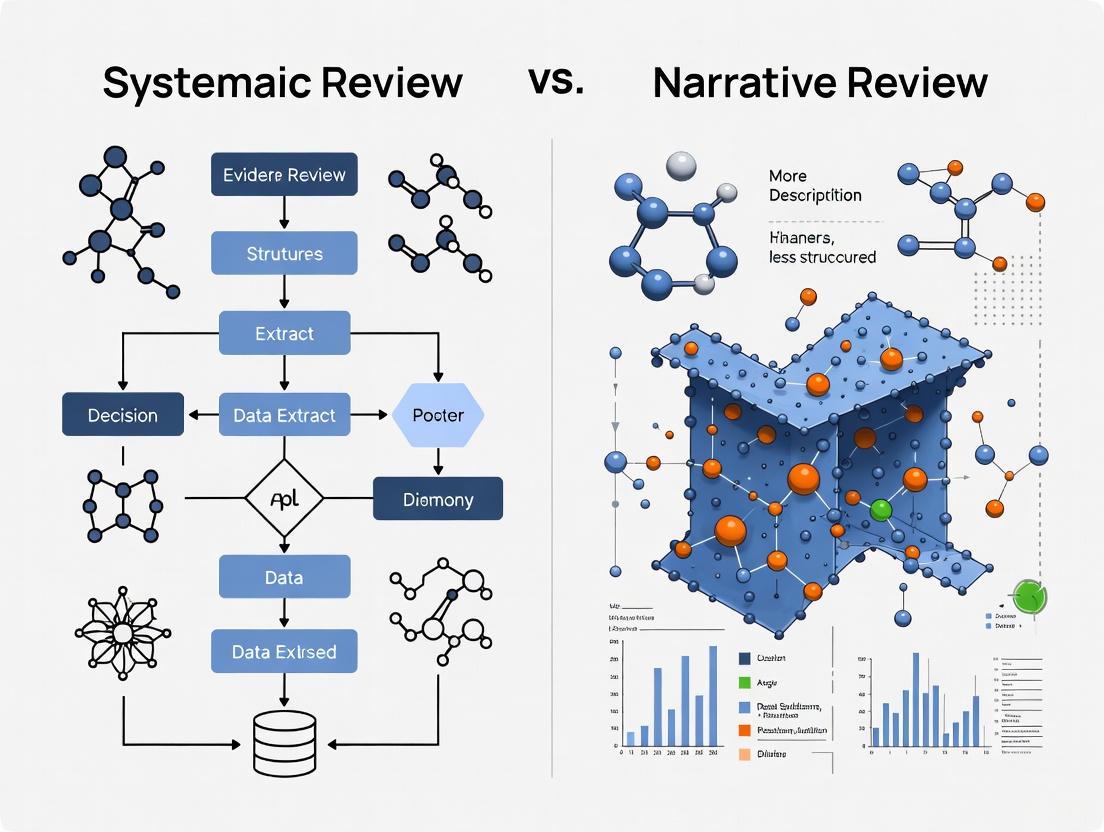
This article provides a comprehensive guide for researchers, scientists, and drug development professionals on the critical distinctions between systematic and narrative literature reviews within materials science.
Systematic Review vs Narrative Review in Materials Science: A Practical Guide for Researchers and Developers
Abstract
This article provides a comprehensive guide for researchers, scientists, and drug development professionals on the critical distinctions between systematic and narrative literature reviews within materials science. It explores the foundational principles of both review types, detailing their specific methodological approaches and application areas, from exploring novel nanomaterials to assessing the efficacy of clinical materials. The content offers practical solutions for common challenges, including resource constraints and avoiding AI-generated bias, and provides a direct comparative analysis to validate review findings. By synthesizing evidence-based guidance with field-specific examples, this article empowers scientists to select the optimal review methodology to robustly support research, inform policy, and accelerate innovation in biomedicine and materials development.
Systematic and Narrative Reviews: Defining Your Research Path in Materials Science
What is a Narrative Review? Understanding its Broad Exploratory Role
In the realm of scientific research, particularly within fields as dynamic as materials science and drug development, the ability to synthesize existing knowledge is as crucial as generating new data. Among the various synthesis methods, the narrative review holds a distinct and vital position. Unlike its more structured counterpart, the systematic review, a narrative review provides a flexible, interpretive synthesis of literature on a broad topic, allowing authors to describe and critically evaluate an entire body of knowledge [1]. It is a form of knowledge synthesis grounded in interpretivist paradigms, emphasizing that reality is subjective and dynamic, and it harnesses the unique perspectives of the review team to shape the analysis [1]. For researchers in materials science navigating a complex landscape of new polymers, composites, and characterization techniques, or for drug development professionals assessing the theoretical foundations of a novel therapeutic approach, the narrative review offers a practical tool to map the territory, identify trends and gaps, and provide a comprehensive, readable summary. This article frames the narrative review within the broader context of evidence synthesis, clarifying its exploratory role and defining its place alongside the more prescriptive systematic review.
Defining Narrative and Systematic Reviews
At its core, a narrative review is a type of literature review that summarizes, interprets, and critiques a body of literature on a broad topic without being confined to the rigid protocols mandatory for systematic reviews [2]. It is also referred to as a traditional or literature review and is characterized by its flexible and exploratory nature [3] [4]. The primary aim is to provide a broad, overall summary of the existing research, often organized thematically or chronologically, to deepen the understanding of a specific research area [3] [5].
In direct contrast, a systematic review is designed to answer a specific, focused research question by systematically searching, appraising, and synthesizing all available evidence using explicit, pre-specified methods [3] [6]. Its methodology is robust, reproducible, and transparent, aiming to minimize bias at every stage [3]. Systematic reviews are considered the gold standard in evidence-based medicine for answering focused questions on, for example, the efficacy of a specific intervention [3] [7].
The table below summarizes the key differences between these two review types, highlighting their distinct objectives, methodologies, and outputs.
Table 1: Key Differences Between Narrative and Systematic Reviews
| Feature | Narrative Review | Systematic Review |
|---|---|---|
| Research Question | Broad in scope, often exploratory [3] [1] | Narrow, focused, and specific [3] |
| Search Strategy | May not be comprehensive; often iterative; not necessarily reproducible [6] [5] | Aims for exhaustive, comprehensive searching; documented and reproducible [8] [6] |
| Study Selection | No strict inclusion/exclusion criteria; selection can be subjective [3] [1] | Pre-specified, strict inclusion/exclusion criteria applied systematically [3] [7] |
| Quality Assessment | No formal quality assessment typically required [8] [5] | Formal critical appraisal of included studies is mandatory [8] [7] |
| Synthesis | Typically narrative, summarizing and interpreting literature [8] [6] | Often involves quantitative synthesis (meta-analysis) or structured qualitative synthesis [3] [7] |
| Primary Application | Providing context, exploring debates, identifying gaps, speculating on future research [3] [1] | Providing definitive evidence to guide clinical decisions and inform policy [3] [7] |
The following workflow diagram illustrates the divergent paths taken by these two review methodologies, from initial conception through to final output.
The Methodology of a Narrative Review
While a narrative review does not follow a rigid, standardized protocol like a systematic review, conducting a high-quality narrative review requires a deliberate and rigorous approach. The process is often iterative, involving multiple cycles of searching, analysis, and interpretation [1]. The following section outlines a recommended methodology, providing a practical guide for researchers.
Step-by-Step Guide
- Define Your Topic and Scope: The first step is to narrow your focus and craft a clear, purposeful research question [2]. Unlike a systematic review question, this question should be broad enough to allow for exploration but specific enough to provide direction. For example, instead of "What are the properties of hydrogels?", a more focused narrative review question might be, "How have smart hydrogel scaffolds advanced tissue engineering in the last decade?".
- Search the Literature: A narrative review does not require an exhaustive search of all possible databases, but the search must be strategic and well-documented to ensure the inclusion of pivotal and relevant literature [1] [2]. This involves:
- Selecting Databases: Use relevant academic databases (e.g., PubMed/MEDLINE, Scopus, Web of Science, and subject-specific databases like those for materials science or chemistry) [7] [2].
- Using Grey Literature: Include conference proceedings, dissertations, and reports to access cutting-edge developments and avoid publication bias [2].
- Employing Citation Tracking: Use backward tracking (reviewing reference lists of key papers) and forward tracking (finding newer papers that cite key works) to build a robust literature set [2].
- Select and Analyze Key Studies: The goal is to prioritize high-impact, relevant studies that directly contribute to the research question [2]. This involves evaluating the credibility of sources (prioritizing peer-reviewed journals), assessing methodological soundness, and identifying patterns, consensus, and contradictions within the literature [2]. During this phase, it is crucial to take strategic notes, summarizing key points, recording strengths and weaknesses of studies, and highlighting gaps.
- Structure and Write the Review: A strong structure is key to a readable and influential narrative review. A standard outline includes:
- Introduction: Define the topic, state its importance, and present the research question and objectives [2].
- Background: Provide necessary context, including historical development and definitions of key terms [2].
- Thematic Sections: Organize the body of the review by themes, debates, or methodologies, not just as a series of study summaries. Use subheadings to guide the reader and compare and contrast different studies [2].
- Discussion and Conclusion: Synthesize the major insights, address inconsistencies, propose directions for future research, and provide a clear summary of the key takeaways [2].
Ensuring Rigor and Quality
Despite its flexibility, a narrative review must be conducted with rigor. The Scale for the Assessment of Narrative Review Articles (SANRA) is a validated tool developed to help critique and improve the quality of narrative reviews [9]. Its six items, rated from 0 (low standard) to 2 (high standard), provide a framework for assessing key areas of quality:
Table 2: The SANRA Scale for Quality Assessment of Narrative Reviews
| SANRA Item | Description | High Standard (Score of 2) |
|---|---|---|
| 1. Importance of Review | Explains the importance and rationale for the review | Clearly states why the review is needed and important for the field [9]. |
| 2. Aims of the Review | Clearly states the aims or objectives | Explicitly lists the goals of the review article [9]. |
| 3. Literature Search | Describes the methods used for the literature search | Provides a description of search sources and key terms, making the process transparent [9]. |
| 4. Referencing | Provides appropriate and current references | Cites key and up-to-date works; references are accurate and relevant [9]. |
| 5. Scientific Reasoning | Addresses the level of evidence of the cited literature | Acknowledges and discusses the quality of the evidence presented (e.g., RCTs vs. preclinical studies) [9]. |
| 6. Relevant Data Presentation | Presents appropriate endpoint data | Includes relevant and concrete data to support statements, not just general summaries [9]. |
Furthermore, authors should practice reflexivity—that is, clearly specify any factors that may have shaped their interpretations and analysis, such as their own expertise or theoretical preferences [1]. Finally, authors should justify how they determined that their analysis was sufficient and acknowledge the boundaries and limitations of their review, including potential selection bias [1] [2].
The Researcher's Toolkit for Narrative Reviews
Successfully navigating and synthesifying a broad body of literature requires a specific set of conceptual and practical tools. This toolkit is essential for ensuring the review is comprehensive, well-organized, and insightful.
Table 3: Essential Tools for Conducting a Narrative Review
| Tool Category | Specific Tool/Resource | Function in Narrative Review |
|---|---|---|
| Conceptual Framework | Thematic Analysis | To identify, analyze, and report patterns (themes) within the literature, moving beyond simple summary to interpretation [8]. |
| Chronological Mapping | To track the development of a concept, material, or technique over time, highlighting pivotal advances [8] [6]. | |
| Gap Analysis | To identify under-researched areas or contradictions in the existing literature, suggesting future research directions [5]. | |
| Literature Search & Management | Academic Databases (e.g., Scopus, Web of Science, PubMed, subject-specific databases) | To locate peer-reviewed, high-impact literature relevant to the field (e.g., materials science, pharmacology) [7] [2]. |
| Citation Tracking Software (e.g., Litmaps, Research Rabbit) | To visually map relationships between articles and identify seminal and emerging papers efficiently [2]. | |
| Reference Management Software (e.g., EndNote, Zotero, Mendeley) | To store, organize, and annotate retrieved literature and generate citations and bibliographies [7]. | |
| Quality Assurance | SANRA (Scale for the Assessment of Narrative Review Articles) | A checklist to ensure methodological rigor, transparency, and overall quality during writing and revision [9]. |
| Peer Debriefing | To get feedback from colleagues or supervisors on the review's structure, clarity, and argument, reducing interpretive bias [2]. |
The following diagram maps the logical relationship between the different stages of the narrative review process and the primary tools used at each stage to ensure a successful outcome.
Within the evidence synthesis ecosystem, the narrative review and systematic review serve complementary rather than competing roles. The choice between them is not a matter of hierarchy but is wholly dependent on the research question at hand [8]. Systematic reviews are unparalleled for answering focused questions on specific interventions, providing the highest level of evidence for clinical and policy decisions [3] [7]. In contrast, narrative reviews are ideally suited for exploring broad, complex, or evolving topics where a flexible, interpretive synthesis is more valuable than a rigid, quantitative summary [1] [2].
For materials scientists and drug development professionals, this distinction is critical. A narrative review is the superior tool for tracking the historical development of a class of biomaterials, for critiquing the application of various characterization techniques across a field, or for building a new theoretical framework from disparate interdisciplinary studies. Its ability to provide a wide-ranging, critical, and readable overview makes it an indispensable mechanism for advancing understanding, stimulating innovation, and guiding future research trajectories in fast-paced scientific domains. When conducted with the rigor and transparency outlined in this article, a narrative review is not merely a summary but a significant scholarly contribution in its own right.
What is a Systematic Review? The Gold Standard for Evidence-Based Answers
A systematic review is a rigorous research methodology that uses systematic and explicit methods to identify, select, and critically appraise all relevant studies on a specific research question, and to collect and analyze data from the included studies [3]. It represents the pinnacle of the evidence hierarchy, designed to minimize bias and provide reliable findings that can inform clinical decision-making, policy development, and guide future research [10]. This in-depth guide details the core principles, protocols, and applications of systematic reviews, contextualizing their value against traditional narrative reviews, particularly for researchers in fields like materials science and drug development.
In an era of rapidly expanding scientific literature, the ability to synthesize high-quality research findings is paramount for evidence-based practice. Systematic reviews have emerged as an essential component of secondary research to meet this need [10].
Unlike a narrative review—which provides a broad, often thematic summary of the literature without a strict protocol—a systematic review is characterized by its robust, reproducible, and transparent methodology [3]. The primary distinction lies in their objectives and application; while narrative reviews are excellent for exploring historical developments and broad concepts, systematic reviews are structured to answer a specific, focused research question with a pre-specified plan that leaves no room for ad hoc decisions [3] [5]. This methodological rigor is what establishes systematic reviews as the gold standard for evidence-based answers, especially in applied and clinical fields [3].
Core Principles: Systematic vs. Narrative Review
The choice between a systematic and narrative review is fundamental and should be guided by the research aim. The table below summarizes the key distinctions.
Table 1: Key Differences Between Systematic and Narrative Reviews
| Aspect | Systematic Review | Narrative (Traditional) Review |
|---|---|---|
| Objective | Answers a specific, focused research question using qualitative/quantitative methods [3]. | Explores one or more questions with a broader scope; tracks the development of a concept or field [3]. |
| Research Question | Well-defined, often using frameworks like PICO [10]. | Can be broad and flexible, not necessarily predefined [5]. |
| Protocol | Requires a pre-specified, explicit, and transparent protocol [3]. | No strict protocol; design depends on author preference and journal conventions [3]. |
| Search Strategy | Comprehensive, systematic search across multiple databases to identify all relevant studies [10]. | May or may not include comprehensive searching; often not explicitly stated [8]. |
| Study Selection | Uses strict, pre-defined inclusion/exclusion criteria to minimize selection bias [3]. | Study selection is often not systematic and can be subjective [5]. |
| Quality Assessment | Critical appraisal of included studies is a mandatory step using standardized tools [10]. | No formal quality assessment; evaluation may be based on contribution to the topic [8]. |
| Synthesis | Data synthesis can be qualitative, quantitative (meta-analysis), or both [10]. | Typically narrative, can be conceptual, thematic, or chronological [5]. |
| Output | Valid evidence to guide clinical decisions and inform policy [3]. | Deepens understanding, identifies gaps, and sets the context for new research [5]. |
| Limitations | Can be time and resource-intensive; rigid framework may limit exploratory analysis [3]. | Author's perspective can introduce bias; harder to replicate due to less transparency [5]. |
For materials scientists, this distinction is critical. A narrative review is invaluable for understanding the evolution of a material class (e.g., high-entropy alloys) and identifying overarching challenges. In contrast, a systematic review is the appropriate tool to definitively answer a specific question, such as, "In pre-clinical in vivo studies, does coating titanium-based orthopedic implants with hydroxyapatite (I) compared to uncoated titanium (C) improve bone-implant integration (O)?"
The Systematic Review Workflow: A Detailed Experimental Protocol
Conducting a systematic review is a multi-stage process that demands meticulous planning and execution. The following workflow, adapted from established guidelines, provides a detailed protocol [3] [10].
Diagram: Systematic Review Workflow. The process flows from defining the question to reporting, with key stages for screening, appraisal, and synthesis.
Formulating the Research Question
The process begins with a well-defined research question. A structured framework ensures the question is focused and actionable. The most commonly used framework is PICO, which stands for [10]:
- Population/Patient/Problem: The specific group, material, or condition being studied.
- Intervention or Exposure: The experimental therapy, material, or process being investigated.
- Comparator: The control group or standard against which the intervention is compared.
- Outcome: The measured result or endpoint of interest.
For non-intervention questions, alternative frameworks like CoCoPop (Condition, Context, Population) for prevalence questions or PICo (Population, Interest, Context) for qualitative reviews may be used [10].
Developing a Protocol
A mandatory step is developing a detailed research protocol. This pre-specified plan minimizes bias and ensures transparency and reproducibility. The protocol should define [3]:
- The research question and PICO/other framework elements.
- Predefined inclusion and exclusion criteria for studies.
- The detailed search strategy for each database.
- Plans for quality assessment (risk of bias) and data extraction.
- The planned method for data synthesis.
Registering the protocol on platforms like PROSPERO is considered best practice.
Comprehensive Literature Search
A systematic search aims to identify all published and unpublished studies relevant to the question. This involves [10]:
- Searching multiple bibliographic databases (e.g., PubMed/MEDLINE, Embase, Cochrane Central, Web of Science, Scopus, and field-specific databases like Compendex for engineering).
- Supplementing with searches of grey literature (e.g., clinical trial registries, conference proceedings, theses, and government reports) to mitigate publication bias.
- Using a search strategy crafted with controlled vocabulary (e.g., MeSH terms) and keywords, often with the assistance of a research librarian.
Study Selection, Appraisal, and Data Extraction
This phase involves applying the protocol's criteria to the search results in a multi-stage process, often visualized using a PRISMA (Preferred Reporting Items for Systematic reviews and Meta-Analyses) flowchart [11].
Table 2: Key Stages in the Screening and Appraisal Process
| Stage | Process Description | Tools & Methodologies |
|---|---|---|
| De-duplication | Removing duplicate records from multiple database searches. | Reference managers (EndNote, Zotero, Mendeley) or specialized software (Covidence, Rayyan) [10]. |
| Screening (Title/Abstract) | Initial screening of records against inclusion/exclusion criteria. | Typically performed by two or more independent reviewers to reduce bias [10]. |
| Eligibility (Full-Text) | Retrieving and assessing the full text of potentially relevant studies. | Reasons for excluding studies at this stage are recorded and reported [11]. |
| Critical Appraisal | Assessing the methodological quality and risk of bias of included studies. | Standardized tools (e.g., Cochrane Risk of Bias Tool for RCTs, Newcastle-Ottawa Scale for cohort studies) [10]. |
| Data Extraction | Systematically extracting relevant data from included studies. | Using pre-piloted, standardized data extraction forms to ensure consistency [10]. |
Data Synthesis and Analysis
The extracted data is then synthesized. This can be performed qualitatively, where findings are summarized narratively and often tabulated, or quantitatively via meta-analysis [10].
A meta-analysis is a statistical technique that combines the numerical results of multiple independent studies that are sufficiently similar. It uses specialized software (e.g., R, RevMan) to compute pooled effect estimates, confidence intervals, and assess heterogeneity (the degree of variability between studies) using statistics like I² [10]. Results are typically displayed visually using forest plots. When a meta-analysis is not appropriate, other synthesis methods, such as qualitative synthesis or Synthesis Without Meta-analysis (SWiM), are employed [10].
The Scientist's Toolkit: Essential Reagents for a Systematic Review
In the context of a systematic review, "research reagents" refer to the essential digital tools, databases, and resources required to conduct the review efficiently and accurately.
Table 3: Essential Research Reagent Solutions for Systematic Reviews
| Tool / Resource | Category | Function & Application |
|---|---|---|
| Covidence | Review Management | A web-based platform that streamlines title/abstract screening, full-text review, risk-of-bias assessment, and data extraction, enabling collaboration among reviewers [10]. |
| Rayyan | Review Management | A tool that assists in the screening phase by allowing collaborative work and suggesting inclusion/exclusion criteria [10]. |
| PubMed / MEDLINE | Bibliographic Database | A free primary life sciences and biomedical database maintained by the U.S. National Library of Medicine, essential for any biomedical review [10]. |
| Embase | Bibliographic Database | A comprehensive biomedical and pharmacological database, known for its extensive coverage of drug and conference literature [10]. |
| Cochrane Library | Bibliographic Database | A collection of databases that includes published systematic reviews and trial registries, fundamental for evidence-based healthcare [10]. |
| EndNote / Zotero | Reference Manager | Software for collecting search results, removing duplicate records, and managing citations throughout the review process [10]. |
| Cochrane Risk of Bias Tool (RoB 2) | Quality Assessment | A standardized tool for assessing the risk of bias in randomized controlled trials (RCTs) [10]. |
| Newcastle-Ottawa Scale (NOS) | Quality Assessment | A tool for assessing the quality of non-randomized studies, such as case-control and cohort studies [10]. |
| R / RevMan | Data Analysis | Statistical software (R) and the Cochrane's Review Manager (RevMan) used for performing meta-analysis and generating forest and funnel plots [10]. |
| PRISMA Statement | Reporting Guideline | An evidence-based minimum set of items (including a flowchart) for reporting systematic reviews and meta-analyses, ensuring transparency and completeness [11]. |
For researchers and professionals in materials science and drug development, mastering the systematic review methodology is no longer optional but essential. It provides a powerful mechanism to consolidate pre-clinical and clinical data, assess the true strength of evidence for a new material or drug delivery system, and make informed decisions for future research trajectories and regulatory submissions. By rigorously adhering to its structured protocol, scientists can produce the most reliable and unbiased syntheses of existing evidence, truly earning the designation as the gold standard for evidence-based answers.
In the rigorous field of materials science research, particularly for drug development professionals and scientists, the selection of an appropriate literature review methodology is a critical first step that shapes the entire research trajectory. The core objective of a research project—whether a broad exploration of a nascent field or a focused clinical question about a specific intervention—dictates whether a narrative review or a systematic review is the more appropriate tool [3]. These two methodologies represent fundamentally different approaches to evidence synthesis. Narrative reviews offer a flexible, conceptual overview, ideal for mapping the theoretical landscape and identifying emerging trends. In contrast, systematic reviews provide a structured, protocol-driven process designed to minimize bias and deliver reliable, reproducible answers to precisely defined questions [12] [13]. This guide provides an in-depth technical comparison of these methodologies, enabling researchers to make an informed choice aligned with their core research objectives.
Defining the Core Objectives and Methodologies
Narrative Reviews: Objective of Broad Exploration
A narrative literature review, often termed a traditional or qualitative review, aims to provide a comprehensive summary and interpretation of the existing literature on a topic [5] [13]. Its primary strength lies in its flexibility, allowing the author to explore a wide range of studies and synthesize them conceptually, thematically, or chronologically. This methodology is not designed to be exhaustive but rather to provide a contextual backdrop, identify overarching trends and theories, and pinpoint gaps in the current knowledge base [3] [14]. Consequently, narrative reviews are exceptionally valuable for exploring new or interdisciplinary topics, formulating new hypotheses, and providing the foundational understanding necessary for more focused research [5].
Systematic Reviews: Objective of Answering Focused Clinical Questions
A systematic review is a structured and comprehensive research methodology designed to answer a specific, focused research question by identifying, appraising, and synthesizing all relevant empirical evidence that meets pre-specified eligibility criteria [3] [15]. Its core objective is to provide a definitive summary of the evidence, minimizing bias through a transparent and reproducible process. This rigor makes systematic reviews the gold standard for informing evidence-based practice, clinical guideline development, and policy decisions [3] [12]. They often employ quantitative synthesis (meta-analysis) to provide a statistical summary of results, offering the most valid evidence on the efficacy of interventions or the accuracy of diagnostic tools [8] [15].
Table 1: Core Objectives and Methodological Characteristics
| Feature | Narrative Review | Systematic Review |
|---|---|---|
| Primary Objective | Broad exploration; contextual understanding; hypothesis generation [3] [5] | Answering a focused question; informing practice and policy with robust evidence [3] [15] |
| Research Question | Can be broad or consist of multiple questions [3] | Narrow, specific, and defined using frameworks like PICO [3] |
| Protocol | No pre-specified protocol; methodology can be adaptive [3] | Mandatory pre-published protocol with pre-defined plans [3] [12] |
| Search Strategy | May not be comprehensive; often not fully reported; can use diverse sources [5] [14] | Comprehensive, systematic search across multiple databases; fully reported for reproducibility [12] [13] |
| Study Selection | No formal inclusion/exclusion criteria; potentially susceptible to selection bias [3] [12] | Strict, pre-defined inclusion/exclusion criteria applied systematically to minimize bias [3] |
| Quality Appraisal | Typically no formal critical appraisal of individual studies [8] | Rigorous critical appraisal of included studies (e.g., risk of bias assessment) [8] [13] |
| Evidence Synthesis | Qualitative, narrative summary; often thematic or conceptual [8] | Structured synthesis (narrative, tabular); may include quantitative meta-analysis [3] [8] |
Detailed Experimental Protocols for Conducting Reviews
Protocol for a Narrative Review
While narrative reviews are more flexible, a methodical approach enhances their credibility and usefulness.
- Define the Topic and Scope: Establish a clear research problem or topic. Determine the review's purpose—for example, to explore historical development, discuss a controversy, or summarize a complex field [14].
- Develop a Search Strategy: Identify key concepts and relevant keywords. Select appropriate databases and resources (e.g., PubMed, Scopus, specialized materials science databases). The search may be iterative, expanding as new relevant terms and sources are identified [5].
- Literature Search and Selection: Execute the search. Selection of literature is often based on the researcher's expertise and judgment, aiming to capture seminal works and representative perspectives rather than an exhaustive list [13].
- Critical Analysis and Data Extraction: Read selected papers critically. Extract information thematically, such as key findings, methodologies, strengths, weaknesses, and conceptual contributions. This step involves interpreting and integrating ideas across studies [8] [5].
- Structuring and Writing the Review: Organize the synthesized information logically. Common structures include chronological (tracking development over time), thematic (grouping by concept or theory), or methodological (grouping by research approach) [5]. The writing should tell a coherent "story" about the state of knowledge on the topic.
Protocol for a Systematic Review
Systematic reviews follow a strict, pre-defined protocol to ensure rigor and transparency. Key guidelines include PRISMA (Preferred Reporting Items for Systematic Reviews and Meta-Analyses) and the Cochrane Handbook [3] [15].
- Formulate a Precise Research Question: Define the question using the PICO framework (Population, Intervention, Comparison, Outcome) or its variants to ensure specificity [3].
- Develop and Register a Protocol: Create a detailed protocol that outlines the rationale, objectives, and specific methods for the review. This includes search strategy, inclusion/exclusion criteria, data extraction items, and synthesis plans. Register the protocol in a platform like PROSPERO [12].
- Systematic Search for Evidence: Design a comprehensive search strategy with a librarian or information specialist. Search multiple electronic databases (e.g., MEDLINE, Embase, Cochrane Central), clinical trial registries, and grey literature. The search strategy should be documented in full [12] [15].
- Study Selection Based on Criteria: Screen records (titles/abstracts, then full-text) against the pre-defined inclusion/exclusion criteria. This process is typically performed by two reviewers independently to minimize error and bias, with disagreements resolved through consensus or a third reviewer [3].
- Data Extraction and Critical Appraisal: Extract relevant data from included studies using a standardized data extraction form. Simultaneously, critically appraise the methodological quality or risk of bias of each study using validated tools (e.g., Cochrane Risk of Bias tool for randomized trials) [3] [12].
- Synthesis of Extracted Evidence: Synthesize the findings from the included studies. This can be a narrative synthesis with tabular accompaniment or a quantitative meta-analysis if the studies are sufficiently homogeneous. Meta-analysis statistically combines results to produce an overall effect size [8] [15].
- Report and Disseminate Findings: Write the final review following PRISMA reporting guidelines, transparently presenting the methods, results, and conclusions, including limitations and implications for practice and research [3].
Visualization of Review Workflows and Logical Relationships
Diagram 1: Review methodology selection and workflow.
Conducting a high-quality review requires a suite of conceptual and practical "research reagents." The following table details essential tools and resources for researchers undertaking either a narrative or systematic review.
Table 2: Key Research Reagent Solutions for Literature Reviews
| Tool/Resource | Function | Primary Application |
|---|---|---|
| PICO Framework | Structures a research question into key components: Population, Intervention, Comparison, Outcome. Ensures focus and specificity [3]. | Systematic Review |
| PRISMA Guidelines | An evidence-based minimum set of items for reporting systematic reviews and meta-analyses. Ensures transparency and completeness of reporting [3]. | Systematic Review |
| Cochrane Handbook | The official guide to the conduct of systematic reviews of interventions in healthcare. Provides detailed methodology [15]. | Systematic Review |
| Bibliographic Database | Platforms (e.g., MEDLINE/PubMed, Embase, Scopus, specialized materials science DBs) for identifying published scientific literature. Used in all reviews, but search comprehensiveness varies [5] [15]. | Both |
| Reference Management SW | Software (e.g., EndNote, Zotero, Mendeley) to store, organize, and cite references. Essential for managing the volume of literature in any review [15]. | Both |
| Critical Appraisal Tool | Standardized checklists (e.g., Cochrane RoB 2, ROBINS-I, CASP) to evaluate the methodological quality and risk of bias in primary studies [12] [13]. | Systematic Review |
| Data Extraction Form | A standardized, pre-piloted form (often in Excel or specialized software) to consistently capture key data from each included study [3]. | Systematic Review |
| Thematic Analysis Framework | A qualitative method for identifying, analyzing, and reporting patterns (themes) within data. Provides structure for narrative synthesis [8] [5]. | Narrative Review |
| Systematic Review Software | Specialized platforms (e.g., DistillerSR, Rayyan, Covidence) to manage the screening, selection, and data extraction phases of a systematic review [3]. | Systematic Review |
The choice between a narrative and a systematic review is not a matter of hierarchy but of strategic alignment with the core research objective. For materials scientists and drug development professionals, this decision is paramount. When the goal is to explore a broad, complex field, generate novel hypotheses, or understand the theoretical landscape, a narrative review provides the necessary flexibility and conceptual depth. Conversely, when a precise, clinically relevant question demands an unbiased, definitive answer to inform a critical decision or practice guideline, a systematic review is the unequivocal methodology of choice due to its rigor, transparency, and reliability [3] [12]. By understanding the distinct purposes, methodologies, and tools associated with each approach, researchers can effectively select and execute the review type that will most robustly advance their scientific and clinical inquiries.
In materials science research, the synthesis and evaluation of knowledge are foundational to progress. Two predominant methodological frameworks govern this process: the rigorous, pre-specified protocols of systematic reviews and the flexible narration of traditional narrative reviews. Systematic reviews aim to minimize bias via a predefined, structured protocol, offering a comprehensive and reproducible summary of evidence relevant to a focused research question [3]. Conversely, narrative reviews provide a broader, more descriptive overview of a topic, often organized thematically or chronologically, and are valued for contextualizing a field, identifying trends, and discussing theoretical perspectives in a more flexible manner [5]. This guide delineates the typical workflows, experimental protocols, and practical applications of each approach, providing researchers with the tools to select and execute the appropriate methodology for their investigative goals.
Core Methodological Comparison
The fundamental differences between these review types are rooted in their objectives, methodologies, and final applications. The table below provides a structured comparison of their core characteristics.
Table 1: Fundamental comparison between narrative and systematic reviews
| Aspect | Narrative Review | Systematic Review |
|---|---|---|
| Primary Objective | To provide a broad overview, explore existing debates, and identify gaps or new research directions [5]. | To answer a specific, well-defined research question by analyzing all available evidence using explicit, pre-specified methods [3]. |
| Research Question | Can address one or more questions; often broad in scope [3]. | Focused, typically formulated using frameworks like PICO (Population, Intervention, Comparison, Outcome) [3]. |
| Protocol & Methodology | No strict, pre-specified protocol; methodology is flexible and depends on author choices and journal conventions [3] [5]. | Rigorous, explicit, and transparent pre-specified protocol with strict inclusion/exclusion criteria [3]. |
| Literature Search | Often less systematic; may use a range of databases and tools without full reporting of sources or search strategy [5]. | Comprehensive, broad search across multiple databases with a documented strategy to identify all eligible studies [3]. |
| Study Selection & Appraisal | No formal critical appraisal requirement; selection can be subjective, potentially introducing author bias [5]. | Mandatory critical appraisal of selected studies; study selection and data extraction are typically performed by multiple reviewers to reduce bias [3]. |
| Data Synthesis | Qualitative, narrative summary and synthesis of findings [5]. | Qualitative and/or quantitative synthesis (e.g., meta-analysis) of data extracted from primary studies [3]. |
| Key Applications | Tracking development of a field, demonstrating the need for new research, assessing research methods [5]. | Informing evidence-based guidelines, clinical decision-making, policy development, and regulatory submissions [3]. |
Workflow Visualization and Breakdown
The distinct methodologies of narrative and systematic reviews can be visualized as two separate workflows, each with defined stages and decision points, as shown in the diagram below.
Diagram: Comparative workflows for narrative and systematic reviews
Workflow A: Flexible Narration (Narrative Review)
The narrative review workflow is characterized by its iterative and non-linear nature, allowing for refinement and discovery throughout the process.
- Define Broad Research Scope: The process begins by establishing a wide-ranging area of interest, such as "recent advances in biodegradable polymers for drug delivery," without the constraints of a highly focused question [5].
- Conduct Exploratory Literature Search: The researcher performs searches using academic databases, often starting with a few key terms and expanding based on discovered references. The search strategy may evolve and is not necessarily documented in full [5].
- Identify Key Themes and Theories Subjectively: The reviewer immerses themselves in the literature, identifying prevailing concepts, debates, and trends through a qualitative and subjective analysis. This stage relies heavily on the reviewer's expertise and perspective [5].
- Write Descriptive Synthesis: Findings are organized thematically or chronologically to provide a narrative summary of the field. This synthesis explores different viewpoints and charts the evolution of ideas without a formal quantitative analysis [5].
- Identify Gaps and Suggest Future Research: The review concludes by highlighting areas where knowledge is lacking or conflicting, using this as a basis to propose directions for future scientific inquiry [5].
Workflow B: Rigorous, Pre-Specified Protocols (Systematic Review)
In stark contrast, the systematic review workflow is a linear, strictly planned process designed to minimize bias at every stage.
- Formulate Precise Research Question (PICO): The review is initiated by defining a narrow, focused question. The PICO framework (Population, Intervention, Comparison, Outcome) is commonly used to structure this question, for example: "In metastatic breast cancer (P), do nanoparticle-based chemotherapeutics (I) compared to traditional solvent-based chemotherapeutics (C) improve progression-free survival (O)?" [3].
- Develop and Register Detailed Protocol: A comprehensive protocol is written a priori, specifying the study selection criteria, search strategy, data extraction methods, and approach to quality assessment and synthesis. This protocol is often registered in a platform like PROSPERO to prevent duplication and reduce reporting bias [3].
- Execute Comprehensive Systematic Search: A librarian or information specialist is often consulted to design a search strategy that spans multiple electronic databases (e.g., Scopus, MEDLINE, Web of Science) with precise, complex Boolean queries. The search is documented in full to ensure reproducibility [3].
- Screen Studies Against Pre-defined Criteria: The identified records are screened, first by title and abstract, then by full text, against the pre-specified eligibility criteria. This process is typically performed by two or more independent reviewers to minimize error and bias, with a method for resolving disagreements [3].
- Critically Appraise Studies and Extract Data: The methodological quality and risk of bias of the included studies are assessed using standardized tools (e.g., Cochrane Risk of Bias tool, QUADAS-2). Data relevant to the research question and outcomes are extracted from each study, again often in duplicate [3].
- Synthesize Data (Qualitative/Quantitative): The extracted data are synthesized. This may be a qualitative summary (tabulating and describing findings) or a quantitative meta-analysis, which uses statistical methods to combine numerical results from multiple studies to produce a single summary estimate [3].
- Report Findings and Assess Certainty: The results are reported, including the strength of the evidence (e.g., using GRADE methodology) and the limitations of the review. Reporting follows guidelines such as PRISMA (Preferred Reporting Items for Systematic Reviews and Meta-Analyses) to ensure transparency and completeness [3].
Experimental Protocols in Practice: A Blinded Comparison Study
To illustrate the application of a rigorous protocol, consider a prospective, blinded study comparing two laryngoscopy techniques, which serves as an analogue for the level of methodological rigor required in systematic reviews.
Table 2: Key research reagents and materials for a comparative laryngoscopy study
| Item Name | Function/Description |
|---|---|
| Rigid 70° Telescope (RTL) | High-resolution optical instrument for laryngeal examination. Provides superior image quality for anatomical detail [16]. |
| Flexible Distal-Chip Laryngoscope (FDL) | A flexible scope passed through the nasal passage, allowing for examination during natural speech and in patients with a strong gag reflex [17] [16]. |
| Laryngeal Stroboscope Light Source | Provides intermittent light pulses that create a slow-motion illusion of vocal fold vibration, essential for assessing vocal fold function [17]. |
| Video Recording System | Used to capture and store examination videos for subsequent blinded and randomized review by multiple raters, ensuring objective comparison [16]. |
Detailed Experimental Methodology
The following protocol is adapted from a study comparing image quality between flexible and rigid laryngoscopy [16].
- Study Design: Prospective cohort study; blinded comparison.
- Subject Recruitment: Eighteen normal adult subjects were recruited. Written informed consent was obtained prior to enrollment.
- Intervention/Comparison: Each subject underwent two examination procedures:
- Rigid Telescopic Laryngoscopy (RTL): Performed using a 70° rigid scope with an outer diameter of 10 mm.
- Flexible Distal-Chip Laryngoscopy (FDL): Performed using a flexible distal-chip endoscope.
- Video Processing and Randomization: Recorded videos from both modalities were normalized and then randomized to blind the raters to the technique used for each video.
- Outcome Measurement: Three blinded, experienced laryngologists rated the randomized videos independently. They assessed the following image quality parameters, indicating superiority for RTL, FDL, or no difference:
- Color fidelity
- Illumination
- Resolution
- Tissue vascularity
- Visualization of abnormalities
- Data Analysis: Differences in responses were analyzed using non-parametric tests (Mann-Whitney U). Inter-rater reliability was assessed using Fleiss' kappa, and intra-rater reliability was assessed via percent agreement.
Quantitative Results from the Protocol
The rigorous application of this protocol yielded clear, quantifiable results.
Table 3: Summary of quantitative findings from the laryngoscopy comparison study [16]
| Assessment Category | RTL Superior | FDL Superior | No Difference | P-value |
|---|---|---|---|---|
| Color Fidelity | 47 | 5 | 8 | < 0.01 |
| Illumination | 47 | 7 | 6 | < 0.01 |
| Resolution | 51 | 5 | 4 | < 0.01 |
| Tissue Vascularity | 44 | 9 | 7 | < 0.01 |
| Visualization of Abnormalities | 29 | 4 | - | < 0.01 |
The data synthesis showed a significant superiority of RTL in all assessed categories of image quality. Furthermore, when abnormalities were visualized by both methods, they were significantly better seen with RTL [16]. This demonstrates how a pre-specified, blinded protocol produces objective, high-quality evidence for comparing two techniques.
The choice between a flexible narrative review and a rigorous systematic review is not a matter of which is universally better, but which is the correct tool for the specific research objective at hand. Narrative reviews, with their flexible workflow, are invaluable for mapping a vast and complex field, providing context, and generating novel hypotheses. They are the starting point for deep exploration. In contrast, systematic reviews, governed by their rigorous, pre-specified protocols, are the definitive tool for answering focused questions, validating efficacy, and generating evidence that can reliably inform clinical practice and policy in materials science and drug development. By understanding and correctly implementing these distinct workflows, researchers can ensure their contributions are both meaningful and methodologically sound.
This technical guide explores two advanced domains within materials science—multifunctional nanoparticles and the mechanical analysis of fibrous networks—to illustrate the distinct applications of narrative and systematic review methodologies. The field of materials science is characterized by rapid innovation in areas such as nanotechnology and biomaterials, which present unique challenges and opportunities for evidence synthesis [18] [19]. Through detailed experimental protocols, data quantification, and visual workflows, this whitepaper demonstrates how the complementary strengths of systematic and narrative reviews address different research questions within materials science. The comparative analysis provides researchers, scientists, and drug development professionals with a framework for selecting appropriate review methodologies based on research objectives, scope, and required evidentiary standards.
Materials science represents an interdisciplinary field that investigates the relationships between structure, processing, properties, and performance of materials [19]. The relentless march of progress across industries—from aerospace and healthcare to renewable energy and consumer electronics—is underpinned by profound revolutions in materials science [19]. As the discipline evolves toward increasingly complex material systems, researchers face challenges in synthesizing evidence from diverse experimental and computational approaches.
The selection of an appropriate literature review methodology is pivotal for advancing materials science research. Systematic reviews and narrative reviews offer complementary approaches for evidence synthesis, each with distinct philosophical underpinnings and methodological frameworks [3] [20]. Systematic reviews employ explicit, reproducible methods to minimize bias, making them ideal for clinical questions about material effectiveness or safety [20]. In contrast, narrative reviews provide flexible, thematic syntheses that contextualize broad research landscapes, making them valuable for exploring emerging fields or theoretical frameworks [2].
This whitepaper examines how these review methodologies apply to materials science through two illustrative examples: multifunctional nanoparticle applications and fibrous network biomechanics. These domains exemplify the diverse character of materials science research, from applied nanotechnology to fundamental mechanical analysis.
Methodological Foundations: Systematic vs. Narrative Reviews
Defining Characteristics and Applications
The fundamental distinction between review methodologies lies in their approach to evidence synthesis. Systematic reviews follow prespecified protocols with explicit, replicable methods to minimize bias, while narrative reviews employ thematic organization to provide conceptual clarity and theoretical frameworks [3] [20] [2].
Table 1: Core Methodological Differences Between Systematic and Narrative Reviews
| Characteristic | Systematic Review | Narrative Review |
|---|---|---|
| Primary Objective | Answer specific clinical/research questions through evidence synthesis | Provide contextual overview, identify gaps, develop theoretical foundations |
| Methodology | Strict protocol, predefined inclusion/exclusion criteria, comprehensive search | Flexible approach, thematic organization, selective literature use |
| Bias Management | Explicit quality assessment, attempts to minimize bias | Potential for selection and interpretation bias |
| Evidence Synthesis | Quantitative (meta-analysis) or qualitative systematic integration | Critical interpretation, thematic synthesis |
| Applications in Materials Science | Efficacy of biomaterials, safety assessments, comparative performance | Emerging material trends, historical perspectives, interdisciplinary connections |
Methodological Workflows
The conducted methodologies follow distinct processes tailored to their respective objectives. Systematic reviews employ a linear, predefined protocol, whereas narrative reviews follow an iterative, thematic approach.
Illustrative Example 1: Multifunctional Nanoparticle Applications
Research Context and Appropriate Review Methodology
Nanoparticles exhibit distinctive physicochemical characteristics that facilitate progress across domains including biomedicine, energy, environment, and electronics [21]. The multifunctionality of nanoparticles stems from their unique physical properties—mechanical, thermal, electrical, and optical—which enable diverse applications from targeted drug delivery to environmental remediation [21].
For this rapidly evolving, interdisciplinary field, a narrative review methodology is particularly appropriate. The breadth of applications, diversity of synthesis methods, and emerging character of the evidence base make a rigid systematic review impractical for exploring the full scope of nanoparticle multifunctionality [2]. A narrative approach allows researchers to trace conceptual developments, identify emerging trends, and synthesize knowledge across disciplinary boundaries.
Quantitative Analysis of Nanoparticle Applications
The diverse applications of nanoparticles leverage different physical properties and synthesis approaches, creating a complex landscape of functionality.
Table 2: Multifunctional Applications of Nanoparticles by Domain and Key Characteristics
| Application Domain | Key Nanoparticle Types | Primary Physical Properties Leveraged | Current Status |
|---|---|---|---|
| Drug Delivery Systems | Polymeric NPs, Liposomes, Dendrimers | Size, surface functionality, release kinetics | Clinical trials for targeted therapies |
| Medical Imaging | Quantum dots, Iron oxide NPs, Gold NPs | Optical, magnetic, plasmonic properties | Preclinical and clinical development |
| Energy Storage | Metal oxide NPs, Carbon NPs | High surface area, electrical conductivity | Commercialization in batteries and supercapacitors |
| Environmental Remediation | Iron NPs, Titanium dioxide NPs | Catalytic activity, reactivity, surface area | Field testing for groundwater treatment |
| Electronics | Semiconductor NPs, Metallic NPs | Quantum confinement, electrical properties | Commercial use in displays, R&D in computing |
Experimental Protocol: Hybrid Nanoparticle Synthesis and Characterization
The development of multifunctional nanoparticles increasingly employs hybrid approaches that combine organic and inorganic components to enhance stability, functionality, and reduce negative impacts [21].
Objective: To synthesize and characterize hybrid nanoparticles for targeted drug delivery applications.
Materials and Equipment:
- Precursors: Biodegradable polymer (e.g., PLGA), therapeutic agent, targeting ligand
- Solvents: Dichloromethane, aqueous surfactant solution
- Equipment: Sonicator, centrifuge, freeze-dryer, dynamic light scattering (DLS) instrument, transmission electron microscope (TEM)
Procedure:
- Nanoparticle Synthesis:
- Dissolve polymer and drug in organic solvent
- Emulsify using probe sonication in aqueous surfactant solution
- Evaporate organic solvent under reduced pressure
- Purify nanoparticles by centrifugation
- Lyophilize with cryoprotectant for storage
Physicochemical Characterization:
- Size and Distribution: Analyze by DLS and TEM
- Surface Charge: Determine zeta potential using electrophoretic light scattering
- Drug Loading: Quantify using HPLC or UV-Vis spectroscopy
- Surface Functionality: Confirm using FTIR or X-ray photoelectron spectroscopy
In Vitro Evaluation:
- Drug Release: Use dialysis method with sink conditions
- Cellular Uptake: Employ flow cytometry and confocal microscopy
- Cytotoxicity: Assess using MTT or similar assays
The hybrid synthesis approach improves stability and functionality while reducing negative impacts, addressing key challenges in nanoparticle implementation [21].
Research Reagent Solutions for Nanoparticle Development
Table 3: Essential Research Reagents for Nanoparticle Synthesis and Characterization
| Reagent/Category | Specific Examples | Function/Purpose |
|---|---|---|
| Polymer Matrix Materials | PLGA, Chitosan, PEG, PCL | Biodegradable backbone for nanoparticle structure, controlled release |
| Surface Modifiers | PEG derivatives, PVA, Poloxamers | Stabilize nanoparticles, reduce opsonization, enhance circulation time |
| Characterization Kits | Zeta potential standards, Size calibration beads | Instrument calibration, measurement standardization |
| Cell Culture Reagents | Cell lines (HeLa, HEK293), FBS, culture media | In vitro assessment of biocompatibility and efficacy |
| Analytical Standards | HPLC standards, Reference materials | Quantification of drug loading and release kinetics |
Illustrative Example 2: Fibrous Network Analysis - Fibrin Clots
Research Context and Appropriate Review Methodology
Fibrous networks constitute a fundamental structural motif in biological systems and engineered materials. Fibrin clots, the mechanical scaffold of blood clots, represent an important model system for understanding the rupture mechanisms that underlie embolization of intravascular thrombi—a major cause of ischemic stroke and pulmonary embolism [22].
For this focused, mechanistic research domain, a systematic review methodology is most appropriate. The well-defined research question ("What are the mechanisms of fibrin rupture and how does fracture toughness predict embolization risk?") and the availability of quantitative experimental data make this domain suitable for systematic synthesis [22]. The systematic approach enables rigorous comparison of mechanical properties across studies and statistical analysis of structure-function relationships.
Quantitative Analysis of Fibrin Clot Mechanics
Multiscale mechanical testing reveals fundamental relationships between fibrous network structure and failure mechanisms.
Table 4: Mechanical Properties of Fibrin Clots Under Various Conditions
| Mechanical Parameter | Testing Method | Representative Values | Significance/Interpretation |
|---|---|---|---|
| Fracture Toughness | Crack propagation experiments | 2.5-7.7 J/m² at physiological volume fraction | Determines rupture resistance with defects |
| Critical Strain | Tensile testing | >50% strain for damage initiation | Point at which network damage begins |
| Failure Threshold | Combined experimental and computational | ~5% of fibers and branch points break | Minimal structural failure leading to rupture |
| Rupture Zone Size | In silico modeling | ~150 µm opening in rupture zone | Spatial scale of catastrophic failure |
| Volume Reduction | Uniform tensile stressing | ~90% decrease in volume | Dramatic densification under stress |
Experimental Protocol: Multiscale Mechanical Analysis
A multiscale approach combining discrete particle-based simulations and large-deformation continuum mechanics has been developed to explore the mechanobiology, damage, and fracture of fibrous materials [22].
Objective: To characterize the strength, deformability, damage progression, and fracture toughness of fibrin networks through integrated computational and experimental approaches.
Materials and Equipment:
- Biological: Purified fibrinogen, thrombin, calcium chloride buffer
- Experimental: Rheometer with custom fixtures, confocal microscope, traction force microscopy
- Computational: Molecular dynamics software, finite element analysis platform, custom MATLAB/Python scripts
Procedure:
- Sample Preparation:
- Form fibrin networks at physiological concentration (2-5 mg/mL)
- Control polymerization conditions (thrombin concentration, ionic strength) to modulate network structure
- Allow complete polymerization before testing
Mechanical Testing:
- Rheometry: Perform strain sweeps (0.1-100% strain) to determine linear viscoelastic region
- Confocal Rheometry: Image network deformation during shear using fluorescent fibrinogen
- Tensile Testing: Measure stress-strain response to failure using microtensile fixtures
Computational Modeling:
- Discrete Network Simulation: Implement mesoscale model with individual fibers and crosslinks
- Damage Incorporation: Introduce stochastic failure rules for fibers and branch points
- Continuum Model Development: Construct constitutive model from discrete simulations
- Fracture Prediction: Compute fracture toughness using continuum model
Data Integration:
- Correlate experimental stress-strain data with computational predictions
- Map damage progression from simulation to experimental observations
- Validate fracture toughness predictions against experimental measurements
This protocol's multiscale approach is applicable to a wide range of fibrous network-based biomaterials, enabling prediction of fracture toughness and damage evolution [22].
Research Reagent Solutions for Fibrous Network Analysis
Table 5: Essential Research Reagents for Fibrin Clot and Fibrous Network Studies
| Reagent/Category | Specific Examples | Function/Purpose |
|---|---|---|
| Clotting Components | Purified fibrinogen, Thrombin, Factor XIII | Controlled formation of fibrin networks with defined structure |
| Fluorescent Labels | FITC-fibrinogen, Alexa Fluor conjugates | Visualization of network structure and deformation during mechanical testing |
| Protease Inhibitors | Aprotinin, Leupeptin, PMSF | Prevent clot degradation during extended experiments |
| Computational Tools | Custom MATLAB scripts, LAMMPS, Abaqus | Multiscale modeling from discrete networks to continuum mechanics |
| Calibration Standards | Rheometer calibration fluids, Microsphere size standards | Instrument validation and measurement accuracy |
Workflow Visualization: Multiscale Analysis of Fibrous Networks
The integrated experimental-computational approach enables comprehensive characterization of fibrous network mechanics across length scales.
Comparative Analysis: Methodology Selection in Materials Science
Decision Framework for Review Methodology Selection
The selection between systematic and narrative review methodologies depends on multiple factors related to the research question, evidence base, and intended application.
Table 6: Decision Framework for Selecting Review Methodologies in Materials Science
| Consideration | Favor Systematic Review | Favor Narrative Review |
|---|---|---|
| Research Question | Focused, specific (e.g., efficacy comparison) | Broad, exploratory (e.g., emerging trends) |
| Evidence Base | Substantial existing studies, potential for statistical synthesis | Limited or heterogeneous studies, qualitative insights needed |
| Time/Resources | Sufficient for comprehensive search and appraisal | Limited timeframe, need for rapid overview |
| Methodological Context | Established protocols exist (e.g., PRISMA, Cochrane) | Emerging field with diverse methodologies |
| Intended Application | Clinical guidance, policy decisions, regulatory submissions | Hypothesis generation, theoretical development, educational purposes |
Comparative Strengths and Limitations in Materials Science Context
Each review methodology offers distinct advantages and faces particular challenges when applied to materials science research questions.
Systematic Review Strengths:
- Minimizes bias in evaluating material efficacy or safety
- Supports evidence-based decision making in regulatory contexts
- Enables statistical synthesis through meta-analysis when appropriate
- Provides definitive answers to focused research questions
Systematic Review Limitations:
- May exclude emerging or preliminary evidence
- Resource-intensive process requiring specialized skills
- Less suitable for highly interdisciplinary or exploratory topics
- Potential for "empty reviews" when evidence is limited
Narrative Review Strengths:
- Accommodates diverse evidence types and quality
- Identifies conceptual connections across disciplines
- Provides historical context and traces theoretical developments
- Adaptable to emerging research trends and innovations
Narrative Review Limitations:
- Vulnerable to selection and interpretation bias
- Limited reproducibility of search and selection methods
- Challenges in comprehensively covering rapidly expanding fields
- Difficult to assess thoroughness of literature coverage
The illustrative examples presented in this whitepaper demonstrate how systematic and narrative review methodologies serve complementary roles in advancing materials science research. The multifunctional applications of nanoparticles benefit from narrative review approaches that can synthesize knowledge across disciplinary boundaries and identify emerging trends [21] [2]. In contrast, the mechanical analysis of fibrin clots exemplifies how systematic review methodologies provide rigorous evidence synthesis for focused research questions with established experimental paradigms [22].
Materials science continues to evolve toward increasingly complex material systems, with emerging areas such as metamaterials, aerogels, smart materials, and sustainable composites presenting new challenges for evidence synthesis [18] [19]. The ongoing integration of computational methodologies, including machine learning and multiscale modeling, further expands the methodological toolkit available to materials researchers [22] [19]. By strategically applying systematic and narrative review methodologies to appropriate research contexts, materials scientists and drug development professionals can effectively navigate this complex landscape, accelerating the translation of material innovations to practical applications that address global challenges in healthcare, sustainability, and technology.
Executing Your Review: A Step-by-Step Methodological Guide for Materials Scientists
A systematic review is a comprehensive literature search that attempts to answer a focused research question using existing research as evidence [23]. Unlike narrative reviews, which provide descriptive summaries with more flexibility in methodology, systematic reviews employ robust, reproducible, and transparent methods to collate and critically appraise all eligible literature on a specific topic [3]. The primary aims of systematic reviews are to recommend best practices, support regulatory submissions, inform reimbursement decisions, and guide policy development, establishing them as the gold standard in evidence-based medicine [3].
The critical importance of the systematic review protocol lies in its role as the foundational blueprint for the entire review process. A well-developed protocol outlines the study methodology before the review begins, minimizing the risk of selective reporting and reducing arbitrary decision-making by the review team [23] [24]. Protocol registration through platforms like PROSPERO, INPLASY, or Open Science Framework helps avoid research duplication, increases transparency, and enhances the credibility of the final review by demonstrating that methods were established a priori [23] [24].
Table: Comparison of Systematic and Narrative Reviews
| Characteristic | Systematic Review | Narrative Review |
|---|---|---|
| Objective | Answers specific clinical/research question | Broad exploration of topic, identifies gaps |
| Methodology | Explicit, pre-specified, reproducible protocol (e.g., PICO) | Flexible structure, often IMRAD format |
| Search Strategy | Comprehensive, multiple databases, documented | Often unspecified, potentially non-reproducible |
| Study Selection | Pre-defined inclusion/exclusion criteria | Subjective selection by author |
| Bias Management | Rigorous critical appraisal, risk of bias assessment | Variable quality assessment |
| Application | Evidence-based guidelines, policy, regulatory decisions | Background, context, theory development |
The PICO Framework: Formulating the Research Question
Framework Components and Application
The PICO framework is the most commonly used structure for formulating research questions in health-related systematic reviews [25] [24]. A well-formulated question guides all aspects of the review process, including determining eligibility criteria, searching for studies, collecting data, and presenting findings [25]. PICO specifies the type of:
- P (Patient, Population, or Problem): The disease, condition, or patient group under investigation, including relevant characteristics like age, gender, or other demographic factors when appropriate [25] [24].
- I (Intervention, Prognostic Factor, or Exposure): The main therapy, diagnostic test, exposure, or other intervention being considered [25] [24].
- C (Comparison): The alternative against which the intervention is compared, which may include placebo, standard care, no treatment, or a different active intervention [25] [24].
- O (Outcome): The measurable outcomes of interest, including clinical endpoints, quality of life measures, or other relevant effects [25] [24].
Table: PICO Framework in Practice: An Intervention Example
| PICO Element | Description | Example from a Therapeutic Question |
|---|---|---|
| Population | Women who have experienced domestic violence | |
| Intervention | Advocacy programs | |
| Comparison | General practice or routine treatment | |
| Outcome | Quality of Life (measured by the SF-36 scale) | |
| Research Question | "For women who have experienced domestic violence, how effective are advocacy programmes as compared with routine general practice treatment for improving women's quality of life (as measured by the SF-36 scale)?" |
Alternative Frameworks for Different Research Questions
While PICO is most common for intervention questions, other frameworks may be more suitable depending on the review topic and discipline [24]:
- PECO: Population | Environment | Comparison | Outcome – for questions about exposure effects
- SPICE: Setting | Population | Intervention | Comparison | Evaluation – adds contextual setting
- SPIDER: Sample | Phenomenon of Interest | Design | Evaluation | Research Type – better suited for qualitative and mixed-methods research
The type of question being asked directly influences the study designs to be included in the review [25]. For therapeutic questions, Randomized Controlled Trials (RCTs) provide the highest level of evidence, while other study designs may be more appropriate for diagnostic, prognostic, or qualitative questions [25].
Developing the Systematic Search Strategy
Building Search Concepts and Vocabulary
A systematic review requires a search strategy that is comprehensive, explicit, and sufficiently detailed to be reproducible [26]. The search strategy should be informed by the main concepts from the PICO framework, though not every PICO element may be needed in the search [26]. A thorough approach involves:
Identifying Synonyms and Alternative Terms: Authors may use different words to describe the same concept, so comprehensive synonym development is essential [26]. Consider:
- Different spellings (e.g., paediatric/pediatric)
- Different terminology (e.g., physiotherapy/physical therapy)
- Medical terminology versus natural language (e.g., hypertension/high blood pressure)
- Brand names versus generic names for medications
- Acronyms and abbreviations
- Plural and singular word forms
- Hyphenated words [26]
Incorporating Subject Headings: Databases use controlled vocabularies (e.g., MeSH for MEDLINE, APA Thesaurus for PsycINFO, CINAHL Headings for CINAHL) that are consistently applied to articles on the same topic [26]. Combining subject headings with free-text terms ensures a comprehensive search [26].
Applying Search Techniques: Use Boolean operators (OR within concepts, AND between concepts), truncation for word variants, phrase searching with quotation marks, and field codes to restrict searches to title/abstract fields when appropriate [26].
Structuring and Executing the Search
There are three main approaches to structuring systematic search strategies:
- Line by line: Each search term on its own line
- Block by block: Each search concept (PICO element) on its own line
- Single line: All search terms and concepts combined into one line [26]
The block-by-block approach is often preferred, with each PICO concept structured as: (Concept1[tiab] OR synonym1[tiab] OR synonym2[tiab] OR "subject heading"[MeSH]) [26]. The search strategy should be translated and adapted for each database, accounting for differences in subject headings and search syntax [26].
Systematic Search Strategy Development Workflow
Search Documentation and Reporting
Thorough documentation of the search process is essential for transparency and reproducibility. For each database search, record [25] [26]:
- Date the search was run
- Database name and platform used
- Complete search strategy (copied and pasted exactly as run)
- Any limits applied (date, language, study design)
- Number of studies identified
- Any published search filters used
The PRISMA (Preferred Reporting Items for Systematic Reviews and Meta-Analyses) flow diagram provides a standardized way to depict the flow of information through the different phases of a systematic review, mapping the number of records identified, included, and excluded, with reasons for exclusions [25]. The PRISMA-S extension offers specific guidance for reporting search strategies [26].
Defining Eligibility Criteria and Study Selection
Developing Inclusion and Exclusion Criteria
Well-defined eligibility criteria form the backbone of a systematic review, specifying attributes studies must have (inclusion criteria) or must not have (exclusion criteria) to be selected [23] [24]. These criteria should be sufficiently clear and detailed to enable accurate assessment of each study's relevance and are typically structured using the PICO framework [25]. The criteria should explicitly define:
- Population characteristics: Specific diagnoses, age ranges, demographic factors, disease stages, or other relevant population attributes
- Intervention specifics: Dosage, delivery method, duration, intensity, and implementation details
- Comparator specifications: Standard care, placebo, active comparator, or other control conditions
- Outcome measures: Primary and secondary outcomes, measurement tools, timing of assessment
- Study designs: Accepted methodologies (RCTs, observational studies, etc.) based on the question type
- Other practical considerations: Publication date ranges, language restrictions, publication status [25] [23] [24]
Study Selection Process
The study selection process typically involves multiple screening phases [25]:
- Title/Abstract Screening: Initial assessment of search results against eligibility criteria
- Full-Text Review: Detailed evaluation of potentially relevant studies
- Final Inclusion Decision: Application of all criteria to determine included studies
Using a review management tool such as Covidence or Rayyan can streamline this process, particularly for large reviews. At least two reviewers should independently assess studies, with procedures established for resolving disagreements [23]. The reasons for excluding studies at the full-text stage should be recorded and reported in the PRISMA flow diagram [25].
Table: Essential Materials for Systematic Review Execution
| Research Tool Category | Specific Tools/Resources | Primary Function in Systematic Review |
|---|---|---|
| Protocol Registration | PROSPERO, INPLASY, Open Science Framework, Research Registry | Public protocol registration to avoid duplication and reduce bias [23] [24] |
| Search Platforms | MEDLINE (PubMed/Ovid), EMBASE, Cochrane Library, PsycINFO, CINAHL, Web of Science, Scopus | Comprehensive literature searching across multiple databases [26] |
| Reference Management | EndNote, Zotero, Mendeley | Storage, organization, and duplicate removal of search results [26] |
| Review Management | Covidence, Rayyan, RevMan (Cochrane) | Screening, data extraction, and quality assessment workflow management [24] |
| Reporting Guidelines | PRISMA, PRISMA-P, PRISMA-S | Standardized reporting of methods and findings [25] [23] |
| Quality Assessment | Cochrane Risk of Bias Tool, ROBINS-I, GRADE | Critical appraisal of included studies [23] |
The systematic review protocol, encompassing the PICO framework, comprehensive search strategy, and explicit eligibility criteria, represents the critical foundation for a methodologically sound evidence synthesis. By investing substantial effort in developing and registering a detailed protocol before commencing the review, researchers ensure their work meets the highest standards of transparency, reproducibility, and methodological rigor. This structured approach differentiates systematic reviews from traditional narrative reviews and provides the reliable, bias-minimized evidence needed to inform clinical decision-making, policy development, and regulatory standards across scientific disciplines, including materials science and drug development.
In the realm of materials science research, the exponential growth of scientific literature presents significant challenges for evidence integration. Systematic reviews have emerged as the cornerstone of evidence-based research methodology, offering a structured, transparent, and reproducible alternative to traditional narrative reviews. Unlike narrative reviews, which may be susceptible to selection bias and subjective interpretation, systematic reviews employ explicit, pre-specified methods to identify, select, critically appraise, and synthesize relevant studies [27]. This methodological rigor is particularly crucial in materials science and drug development, where research findings directly influence material selection, manufacturing processes, and therapeutic efficacy.
The reliability of any systematic review, however, is fundamentally dependent on two interrelated components: complete reporting and robust methodology. Incomplete reporting obscures the review process, preventing readers from assessing potential biases, while methodological flaws directly threaten the validity of the review's conclusions [27] [28]. To address these challenges, the scientific community has developed standardized tools—primarily the Preferred Reporting Items for Systematic Reviews and Meta-Analyses (PRISMA) and A MeaSurement Tool to Assess Systematic Reviews (AMSTAR 2). These tools provide researchers with structured frameworks to ensure both transparent reporting and methodological soundness, thereby elevating the trustworthiness of synthesized evidence in fields ranging from biomaterials to pharmaceutical sciences [29] [30].
Understanding the Tools: PRISMA and AMSTAR 2
PRISMA (Preferred Reporting Items for Systematic Reviews and Meta-Analyses)
The PRISMA 2020 statement is an evidence-based minimum set of items for reporting systematic reviews and meta-analyses. Originally focused on reviews evaluating randomized trials, it now serves as a basis for reporting systematic reviews of other types of research, particularly evaluations of interventions [29] [31]. PRISMA functions primarily as a reporting guideline, designed to help authors completely document why the review was done, what methods were used, and what results were found. Its core component is a 27-item checklist addressing aspects of reporting from title and abstract through discussion and funding [32]. By standardizing reporting, PRISMA enables readers to critically appraise the review's validity and assess the strength of its conclusions.
AMSTAR 2 (A MeaSurement Tool to Assess Systematic Reviews 2)
AMSTAR 2 is a critical appraisal tool specifically developed to evaluate the methodological quality of systematic reviews, including those that incorporate randomized or non-randomized studies of healthcare interventions, or both [30]. Unlike PRISMA, which assesses reporting completeness, AMSTAR 2 evaluates the methodological rigor of the review process itself. It consists of 16 items, seven of which are considered critical domains that can significantly influence the validity of the review's conclusions and its applicability to practice [33] [30]. The tool produces an overall confidence rating (high, moderate, low, or critically low) based on weaknesses in critical domains, providing users with a clear indicator of the review's reliability [33].
Table 1: Core Characteristics of PRISMA and AMSTAR 2
| Feature | PRISMA | AMSTAR 2 |
|---|---|---|
| Primary Purpose | Reporting guideline | Methodological quality appraisal tool |
| Focus | Completeness and transparency of reporting | Methodological rigor and conduct of the review |
| Item Structure | 27-item checklist | 16-item tool with 7 critical domains |
| Output | Compliance with reporting standards | Overall confidence rating (High, Moderate, Low, Critically low) |
| Ideal Application | Guiding reporting during manuscript preparation; critical reading | Evaluating methodological quality during evidence synthesis; peer review |
| Development | International consensus process | International consensus process, building upon original AMSTAR |
Systematic Reviews vs. Narrative Reviews in Materials Science Research
The distinction between systematic and narrative reviews is profound, with significant implications for research integrity and evidence reliability in materials science. Narrative reviews traditionally provide a broad overview of a topic, often selecting literature based on the author's perspective, expertise, or particular viewpoint, without explicit methods for literature search, study selection, or critical appraisal. While valuable for providing context or theoretical frameworks, they are susceptible to selection bias and may not represent the complete evidence base.
In contrast, systematic reviews employ explicit, pre-specified methods to minimize bias in the identification, selection, synthesis, and appraisal of all relevant studies on a specific topic [27]. This methodological approach is particularly valuable in materials science research for several reasons. First, it provides objective synthesis of evidence on material properties, performance characteristics, or processing methods. Second, it helps resolve conflicting results across primary studies through transparent methodology. Third, it identifies gaps in the current research landscape, guiding future investigations in areas such as polymer science, metallurgy, or nanomaterial applications.
The integration of PRISMA and AMSTAR 2 elevates this systematic approach by providing frameworks to ensure both comprehensive reporting (PRISMA) and methodological rigor (AMSTAR 2). For example, a systematic review on "Biodegradable Polymer Scaffolds for Bone Tissue Engineering" would benefit from PRISMA to transparently report its search strategy across multiple databases and AMSTAR 2 to ensure proper assessment of risk of bias in included studies and appropriate statistical synthesis of material property data [34].
The PRISMA 2020 Framework: Detailed Reporting Guidelines
Key Components and Checklist Structure
The PRISMA 2020 statement comprises a 27-item checklist organized into several thematic sections: Title and Abstract, Introduction, Methods, Results, Discussion, and Other Information [32] [31]. Each item specifies essential reporting elements that should be clearly documented in the systematic review manuscript. Particularly critical for materials science research are the requirements for comprehensive methodology description, including:
- Eligibility criteria: Precise specification of materials, experimental designs, comparators, and outcomes relevant to materials research (e.g., material composition, processing parameters, characterization methods, performance metrics).
- Information sources: Detailed documentation of databases searched (e.g., Materials Science & Engineering Database, IEEE Xplore, ACS Publications), trial registries, and other resources, with dates of coverage and last search date.
- Search strategy: Complete presentation of at least one full search strategy, including all filters and limits used, to enable replication [32].
The PRISMA flow diagram provides a standardized visualization of the study selection process, documenting the numbers of records identified, included, and excluded at each stage of screening. This transparency is particularly valuable for readers assessing potential selection biases in reviews of materials science literature, where terminology may vary across subdisciplines.
Application to Materials Science Research
Adapting PRISMA to materials science systematic reviews requires careful consideration of field-specific requirements. While PRISMA was originally developed for healthcare interventions, its principles of transparent reporting are universally applicable. However, materials scientists should pay particular attention to:
- Precise outcome definitions: Clearly defining material properties (e.g., tensile strength, conductivity, biocompatibility) and measurement methods.
- Specialized databases: Including field-specific databases beyond MEDLINE/PubMed such as those focused on materials science, engineering, or chemistry.
- Technical specifications: Comprehensive reporting of material characteristics, processing conditions, and testing environments that may influence results.
Table 2: Selected PRISMA 2020 Items Particularly Relevant to Materials Science
| PRISMA Item | Application to Materials Science | Reporting Considerations |
|---|---|---|
| Protocol and registration | Pre-specification of review questions and methods for material-focused reviews | Registration in PROSPERO or other relevant repositories |
| Search strategy | Comprehensive search across materials science databases | Documentation of specialized terminology and search filters |
| Data collection process | Systematic extraction of material specifications and testing parameters | Use of standardized data extraction forms for technical details |
| Synthesis methods | Description of meta-analysis or alternative synthesis approaches for material property data | Justification of statistical models for materials data synthesis |
| Risk of bias assessment | Application of appropriate tools for experimental materials research | Use of domain-specific risk of bias tools rather than clinical tools |
The AMSTAR 2 Framework: Comprehensive Methodological Quality Assessment
Critical and Non-Critical Domains
AMSTAR 2 evaluates systematic reviews through 16 domains, with particular emphasis on seven critical domains that directly impact the validity of the review's conclusions [33] [30]. These critical domains include:
- Protocol registration prior to commencement of the review (item 2)
- Adequacy of the literature search (item 4)
- Justification for excluding individual studies (item 7)
- Risk of bias assessment of included studies (item 9)
- Appropriateness of meta-analytical methods (item 11)
- Consideration of risk of bias when interpreting results (item 13)
- Assessment of presence and impact of publication bias (item 15)
Weaknesses in these critical domains fundamentally undermine the reliability of a systematic review's conclusions. For example, in a review of "Carbon Nanotube Reinforced Composites," failure to adequately assess risk of bias in the included studies (item 9) or improper statistical combination of results (item 11) could lead to erroneous conclusions about mechanical properties or performance characteristics [30].
Unlike its predecessor, AMSTAR 2 does not generate a numerical score. Instead, it guides users to determine an overall rating of confidence in the review results based on weaknesses in critical and non-critical items [33]. The rating system includes:
- High confidence: No or one non-critical weakness? The systematic review provides an accurate and comprehensive summary of available evidence.
- Moderate confidence: More than one non-critical weakness? The review has more than one weakness but no critical flaws.
- Low confidence: One critical flaw with or without non-critical weaknesses? The review has one critical flaw and may not provide an accurate and comprehensive evidence summary.
- Critically low confidence: More than one critical flaw? The review has multiple critical flaws and should not be relied on to provide an accurate evidence summary.
This categorical approach emphasizes that deficiencies in certain critical domains cannot be compensated by strength in other areas—a crucial consideration when appraising systematic reviews for materials science applications where methodological rigor directly impacts material selection decisions or safety assessments.
Practical Application: Methodological Protocols
Implementing PRISMA in Systematic Review Conduct
The effective implementation of PRISMA begins before literature searching commences, with the development and registration of a detailed protocol. This protocol should specify:
- Research question formulation using PICO (Population, Intervention, Comparator, Outcome) or modified frameworks for materials science (e.g., Material, Process, Characterization, Property).
- Eligibility criteria defining material types, experimental study designs, comparators, and outcome measures relevant to materials research.
- Search strategy developed in collaboration with subject experts and information specialists, including specific databases, search terms, and any restrictions.
- Data extraction methodology specifying the variables to be extracted (e.g., material composition, processing parameters, testing conditions, results) and processes for resolving discrepancies.
Throughout the review process, researchers should meticulously document each step to facilitate complete reporting according to PRISMA 2020 standards. The resulting manuscript should explicitly address each PRISMA item, with the completed checklist often submitted as a supplementary document during peer review.
Applying AMSTAR 2 for Critical Appraisal
Using AMSTAR 2 to appraise a systematic review involves methodical assessment of each domain based on the published report. Appraisers should:
- Familiarize themselves with both the AMSTAR 2 tool and the detailed guidance document to understand rating criteria.
- Establish decision rules for ambiguous assessments before beginning independent appraisal, then compare ratings with co-appraisers to ensure consistency [35].
- Pay particular attention to critical domains, recognizing that weaknesses here may fundamentally undermine the review's conclusions.
- Derive the overall confidence rating based on the pattern of weaknesses across domains, particularly focusing on critical flaws.
For systematic reviewers, proactively addressing AMSTAR 2 domains during review conduct significantly enhances methodological quality. This includes prospective protocol registration, comprehensive searching including grey literature, duplicate study selection and data extraction, appropriate risk of bias assessment using domain-specific tools, and careful consideration of publication bias.
Integration of PRISMA and AMSTAR 2 in Materials Science Reviews
The most robust systematic reviews in materials science intentionally integrate both PRISMA and AMSTAR 2 principles throughout the review process. This integrated approach involves:
- Protocol development informed by both PRISMA-P (PRISMA for Protocols) and critical AMSTAR 2 domains.
- Ongoing documentation during review conduct to simultaneously satisfy PRISMA reporting requirements and AMSTAR 2 methodological standards.
- Manuscript preparation using the PRISMA 2020 checklist while self-assessing with AMSTAR 2 to identify methodological weaknesses before submission.
- Critical appraisal of existing reviews using AMSTAR 2 to inform the interpretation and application of their findings.
This integration is particularly valuable in materials science, where systematic methodology applied to experimental literature can generate more reliable evidence syntheses to guide material selection, processing optimization, and research prioritization.
Research Reagent Solutions: Essential Methodological Tools
Table 3: Essential Methodological Resources for Systematic Reviews
| Tool/Resource | Primary Function | Application in Review Process |
|---|---|---|
| PRISMA 2020 Checklist | Reporting guideline | Ensuring complete transparent reporting of all review stages |
| PRISMA Flow Diagram | Visual study selection documentation | Tracking and reporting study inclusion/exclusion process |
| AMSTAR 2 Tool | Methodological quality assessment | Appraising or ensuring methodological rigor of reviews |
| Systematic Review Protocol Templates | Protocol development | Pre-specifying methods to reduce bias |
| Risk of Bias Tools | Methodological quality assessment of primary studies | Evaluating quality of included studies (domain-specific) |
| GRADE Approach | Certainty of evidence assessment | Rating confidence in synthesized evidence |
| Reference Management Software | Citation organization | Managing identified records throughout review process |
| Data Extraction Tools | Systematic data collection | Standardizing information extraction from included studies |
In the evidence-driven fields of materials science and drug development, the distinction between systematic and narrative reviews represents more than a methodological preference—it signifies a fundamental commitment to rigor, transparency, and reliability in evidence synthesis. The PRISMA 2020 and AMSTAR 2 frameworks provide complementary, indispensable tools for this endeavor. PRISMA ensures that systematic reviews are completely and transparently reported, allowing readers to understand what was done and why. AMSTAR 2 ensures that these reviews are methodologically sound, providing confidence in their conclusions and implications for practice and policy.
For researchers undertaking systematic reviews in materials science, the intentional integration of both frameworks throughout the review process—from protocol development through manuscript preparation—represents best practice in evidence synthesis. Similarly, for research consumers, the use of these tools to critically appraise published reviews enables informed judgment about the reliability and applicability of synthesized evidence. As materials science continues to evolve with increasingly complex materials and applications, these methodological standards will play an increasingly vital role in ensuring that research synthesis keeps pace with research innovation, providing trustworthy evidence foundations for scientific advancement and practical application.
In the context of evidence synthesis for materials science and drug development, the choice between a systematic review and a narrative review is fundamentally determined by the research question. While systematic reviews are considered the gold standard for answering focused questions about specific interventions or outcomes through rigorous, protocol-driven methodologies, narrative reviews serve a different, equally vital purpose [3]. Narrative reviews, often called literature reviews, provide a flexible yet structured approach to summarizing and interpreting a body of research [2]. They are particularly valuable for exploring broad or evolving topics, establishing theoretical frameworks, and summarizing historical or interdisciplinary research, which is often the case in cutting-edge materials science fields [2].
The primary aim of a narrative review is not merely to report findings but to critically engage with them, connecting disparate studies to track the development of a scientific principle, explore existing debates, identify knowledge gaps, and speculate on new interventions [3] [2]. This ability to provide a wider exploration and deeper conceptual understanding can be lost in the more restrictive framework of a systematic review [3]. For researchers and drug development professionals, a well-executed narrative review can resolve conflicting findings, highlight emerging trends, and inspire future research directions, making it an indispensable tool for navigating complex and rapidly advancing scientific landscapes.
Core Structural Formats for Narrative Reviews
Unlike systematic reviews, which follow strict, pre-specified protocols (e.g., from Cochrane or PRISMA), narrative reviews do not have a single, consensus-driven standard structure [3] [36]. This flexibility allows the author to tailor the review's design to its specific objectives and the conventions of the field. However, this does not equate to a lack of rigor; a strong, intentional structure is crucial for transforming a summary of scattered studies into a coherent and persuasive narrative [2]. The three predominant formats for structuring a narrative review are Thematic, Chronological, and IMRAD.
Table 1: Comparison of Narrative Review Structural Formats
| Format | Primary Objective | Best Used When | Key Advantage | Potential Challenge |
|---|---|---|---|---|
| Thematic | To synthesize literature around central topics, concepts, or debates [36] [2]. | The research question explores multiple facets or perspectives on a subject [2]. | Provides deep conceptual clarity and reveals connections across studies [2]. | Requires deep immersion in literature to identify genuine, meaningful themes. |
| Chronological | To track the evolution and development of a field or concept over time [8]. | The goal is to understand historical trends, milestones, and paradigm shifts [3]. | Creates a clear, logical storyline that is easy for readers to follow. | Can devolve into a simple list of studies without critical synthesis. |
| IMRAD | To present the review in a familiar, standardized scientific report format [3]. | Broad exploration is needed, but a formal, widely recognized structure is preferred [3]. | Familiar to most scientific audiences and aligns with standard journal conventions. | Can be less flexible for exploring non-linear or highly complex topics. |
The Thematic Structure
Structuring a review thematically involves grouping existing literature by recurring topics, methodologies, or theoretical frameworks [36] [2]. This approach is highly effective for organizing a large and diverse body of literature, as it moves beyond merely describing individual studies to synthesizing ideas and identifying the core conceptual pillars of a field.
The process for building a thematic structure begins during the literature analysis phase. As you review sources, you should note recurring themes, relationships between studies, and emerging trends [36]. Creating a synthesis matrix can be a helpful tool, allowing you to track how different studies relate to key themes, their methodologies, findings, and limitations [36]. For example, a narrative review on "Digital Humans in Healthcare" could be structured around themes such as user trust and perception, clinical applications and outcomes, and design and communication approaches [2]. The goal is to compare and contrast studies within each theme, pointing out agreements, contradictions, and unique perspectives to build a rich, analytical narrative [2].
The Chronological Structure
A chronological structure organizes literature based on its publication timeline, tracing the historical development of a research area [8]. This format is ideal for reviews that aim to demonstrate how understanding of a particular material, drug, or scientific principle has evolved, highlighting key breakthroughs and paradigm shifts [3].
The critical requirement for a successful chronological review is to avoid simply listing studies in order of publication. Instead, the author must synthesize the literature to explain why and how the field evolved. This involves grouping studies from similar time periods that represent a particular school of thought or technological approach and explicitly connecting one period to the next. For instance, a chronological review of polymer-based drug delivery systems might chart a path from early diffusion-controlled systems in the 1960s, to the development of biodegradable polymers in the 1980s, and finally to the era of smart, stimulus-responsive hydrogels in the 21st century. The narrative should focus on the drivers of change, such as the introduction of a new characterization technique or a pivotal clinical finding.
The IMRAD Structure
The IMRAD (Introduction, Methods, Results, and Discussion) structure is a widely accepted format for scientific reporting and is a common and effective organizational model for narrative reviews [3] [36]. Its strength lies in its familiarity to researchers and its alignment with the conventions of most scientific journals.
In the context of a narrative review, the IMRAD sections serve specific purposes. Some authors opt for a variant like IAMRDC, which includes a separate "Aim" section to state the research question and objectives with even greater clarity [36].
Table 2: Applying the IMRAD Structure to a Narrative Review
| Section | Purpose in a Narrative Review | Key Content Components |
|---|---|---|
| Introduction | Establish the context, significance, and focus of the review. | Define the topic and its importance; state the research question and objectives; preview the review's structure [2]. |
| Methods | Explain how the literature was identified and selected. | Describe search strategies (databases, keywords), selection criteria, and data extraction/synthesis methods [2]. |
| Results | Present the findings from the literature. | Organize and report the synthesized literature, typically using themes, debates, or chronological trends. This is the core body of the review [2]. |
| Discussion | Interpret the findings and articulate their broader meaning. | Summarize major insights; address conflicts and gaps; suggest future research directions [2]. |
| Conclusion | Provide a final, overarching takeaway. | Concisely restate the main conclusions and their implications for the field [2]. |
Methodological Protocol for Conducting a Narrative Review
While flexible, a robust narrative review requires a systematic and transparent approach to ensure comprehensiveness and minimize bias. The following protocol outlines a detailed methodology, from planning to publication.
Phase 1: Planning and Scoping
1. Define Purpose and Scope: Clearly articulate the review's goals. Are you summarizing recent developments, resolving conflicting findings, or highlighting research gaps? [36] Define the boundaries of your review, including the time frame, material classes (e.g., biomaterials, ceramics), and research methodologies you will include [36].
2. Craft a Focused Research Question: A clear, specific, and relevant research question is the cornerstone of a focused review [36] [2]. Avoid yes/no questions. Instead, ask open-ended questions that allow for exploration and synthesis. Frameworks like PICO (Population, Intervention, Comparison, Outcome) or its variants can be adapted for materials science (e.g., Material, Processing Method, Property, Application) [36].
3. Develop a Protocol: Although not as rigid as a systematic review protocol, document your planned approach. This should include your research question, primary objectives, and your intended search strategy (e.g., databases to use, initial keywords). This document serves as a roadmap and enhances the transparency of your work.
Phase 2: Literature Search and Selection
1. Systematic Literature Search: Conduct a strategic search to find the most relevant and credible sources [2].
- Databases: Search major academic databases relevant to materials science and drug development (e.g., PubMed, Scopus, Web of Science, Google Scholar, ACS Publications, Materials Science & Engineering databases) [2].
- Search Strategy: Use Boolean operators (AND, OR, NOT) to combine keywords and subject headings. Apply filters for publication date, language, etc. [2]
- Supplementary Search: Employ backward and forward citation tracking and search for grey literature (e.g., conference proceedings, theses, technical reports) to ensure comprehensive coverage [36] [2].
2. Selection and Evaluation of Studies: Critically appraise and select studies based on relevance and quality.
- Selection Criteria: Apply pre-defined inclusion/exclusion criteria to titles and abstracts, followed by a full-text review.
- Quality Assessment: Evaluate the credibility of sources (prioritizing peer-reviewed literature) and assess the methodological rigor of each study [2].
Phase 3: Analysis, Synthesis, and Writing
1. Data Extraction and Analysis: Systematically extract key information from included studies into a standardized form or synthesis matrix [36]. Note the study's aim, methodology, key findings, and limitations. Analyze the literature for patterns, relationships, and gaps.
2. Structure and Write the Review: Choose the most appropriate structural format (Thematic, Chronological, or IMRAD) and begin writing.
- Write with Authority: Maintain a critical tone, comparing and contrasting studies rather than simply describing them. Use transitions to guide the reader through your logic [2].
- Cite Strategically: Support all claims with high-quality, relevant sources [2].
3. Revise and Acknowledge Limitations: Revise the manuscript for clarity, logic, and flow. Seek feedback from peers or mentors. Crucially, acknowledge the limitations of your review, such as potential selection bias or publication bias, to enhance credibility [2].
Table 3: Research Reagent Solutions for Narrative Reviews
| Tool / Resource | Function | Application in Narrative Review |
|---|---|---|
| Academic Databases (e.g., Scopus, Web of Science) [2] | Provide access to peer-reviewed journal articles, conference proceedings, and patents. | Foundational sources for identifying relevant scientific literature. |
| Boolean Operators (AND, OR, NOT) [2] | Logic-based commands used to refine database search results. | Broadens or narrows literature searches to improve relevance and coverage. |
| Citation Tracking Tools (e.g., in Scopus, WoS) [36] | Identifies references in an article's bibliography (backward) and newer articles citing it (forward). | Uncovers foundational and cutting-edge research related to key papers. |
| Synthesis Matrix (e.g., in Excel) [36] | A table for organizing key themes, methodologies, and findings across studies. | Enables visual comparison of studies and identification of patterns and gaps. |
| Reference Management Software (e.g., EndNote, Zotero) [36] | Software for collecting, organizing, and formatting citations and bibliographies. | Manages large volumes of references and ensures accurate citation formatting. |
| AI-Powered Research Tools (e.g., Sourcely, Litmaps) [36] [2] | Platforms that use AI to suggest relevant literature based on text input or seed articles. | Accelerates source discovery and helps visualize connections between research areas. |
The selection of a narrative review structure is a strategic decision that directly shapes the clarity, impact, and persuasive power of the final work. The Thematic, Chronological, and IMRAD formats each offer distinct advantages for synthesizing and presenting literature to researchers and professionals in materials science and drug development. By adhering to a rigorous methodological protocol and leveraging modern research tools, authors can produce authoritative narrative reviews that not only summarize existing knowledge but also critically engage with it to resolve conflicts, identify gaps, and guide future scientific inquiry. In the broader ecosystem of evidence synthesis, the narrative review remains an indispensable vehicle for providing context, building theory, and mapping the dynamic landscapes of scientific progress.
In the rigorous field of materials science research, the synthesis of existing knowledge is not merely a preliminary step but a critical research activity in its own right. The choice of review methodology directly shapes the validity, scope, and ultimate impact of the research findings. Within the context of a broader examination of systematic versus narrative review methodologies, this guide provides a definitive framework for researchers, scientists, and drug development professionals to select the appropriate review type based on their specific research question and objectives. The principles of evidence-based medicine are now being adapted to other fields, including biomaterials research, underscoring the need for rigorous, validated scientific evidence [37]. A misguided choice can lead to biased conclusions, overlooked evidence, or research that fails to address the needs of the scientific community and industry. This paper delineates the application scenarios for different review types, with a particular focus on the core dichotomy between systematic and narrative reviews, to empower researchers to make informed methodological decisions.
Core Concepts and Definitions
Narrative Literature Review
A narrative literature review, often termed a traditional or qualitative review, provides a broad, descriptive summary of existing literature on a specific topic [5] [13]. It is characterized by its flexibility, allowing the author to summarize and synthesize a wide range of studies without following a strict, pre-specified methodology [3] [13]. This type of review is typically organized thematically or chronologically and is ideal for exploring general trends, providing background context, and identifying overarching themes or theoretical frameworks [5]. However, its lack of a systematic search and selection process makes it susceptible to author bias and limits its reproducibility [13].
Systematic Literature Review
A systematic literature review is a structured and comprehensive method that aims to collate all empirical evidence that fits pre-specified eligibility criteria to answer a specific, often narrow, research question [3] [4]. Its hallmark is the use of explicit, systematic methods to minimize bias and ensure reliability and reproducibility [13]. The process is rigorous, involving a predefined protocol, a comprehensive search strategy, critical appraisal of included studies, and a systematic synthesis of the evidence, which may include a meta-analysis [3]. It is considered the gold standard for providing evidence to guide clinical decision-making and policy development [3].
Other Notable Review Types
- Scoping Review: A knowledge synthesis that follows a systematic approach to map the key concepts, sources of evidence, and gaps in a research area [4]. It is particularly useful for exploratory research questions and clarifying concepts [5].
- Rapid Review: A streamlined form of a systematic review that accelerates the process to produce evidence in a resource-efficient manner, often by omitting or simplifying certain steps, but at the potential cost of comprehensiveness and depth [5].
- Umbrella Review: A review of systematic reviews and/or meta-analyses on a broad topic, synthesizing the highest level of evidence available [38] [4].
- Meta-narrative Review: A systematic approach designed to make sense of complex, heterogeneous topic areas that have been researched by diverse groups using different methodologies and paradigms [39] [40]. It seeks to uncover the overarching "storylines" or narratives within different research traditions.
Comparative Analysis of Review Types
The following table provides a direct comparison of the core characteristics of narrative and systematic reviews, the two primary approaches considered in this guide.
Table 1: Key Differences Between Narrative and Systematic Reviews
| Feature | Narrative Review | Systematic Review |
|---|---|---|
| Objective | Broad overview, explore trends, provide context, identify gaps [3] [13] | Answer a specific research question, summarize all relevant evidence [3] [13] |
| Research Question | Can be broad or consist of multiple questions [3] | Focused and well-defined (e.g., using PICO) [3] |
| Search Strategy | Flexible, not necessarily comprehensive or pre-specified; may use a variety of engines [5] | Comprehensive, systematic, and documented; searches multiple databases [3] [13] |
| Study Selection | No formal inclusion/exclusion criteria; subjective [3] | Predefined, explicit inclusion/exclusion criteria; transparent process [3] |
| Quality Assessment | Not typically performed [13] | Critical appraisal of included studies is standard [3] [13] |
| Data Synthesis | Qualitative, narrative summary [5] | Qualitative and/or quantitative (meta-analysis) [3] |
| Bias Risk | Susceptible to selection and interpretation bias [3] [13] | Aims to minimize bias through rigorous methodology [3] [13] |
| Output | Conceptual analysis, hypotheses, state-of-knowledge summary [13] | Evidence-based conclusions, often for informing practice/policy [3] |
| Reproducibility | Low, due to flexible and subjective methods [13] | High, due to explicit and documented methods [13] |
To further aid in selection, the diagram below illustrates the decision-making workflow for choosing an appropriate review methodology based on the research goal.
Diagram 1: Decision Workflow for Review Type Selection
When to Use a Narrative Review
Narrative reviews are the instrument of choice for several specific research scenarios where breadth and synthesis are prioritized over exhaustive, bias-minimized aggregation.
- Establishing Context and Background: At the outset of a new research project, a narrative review is invaluable for developing a foundational understanding of the field. It helps researchers "get up to speed" on the history, key developments, and major players in a particular area of materials science [13].
- Exploring Emerging or Interdisciplinary Topics: For nascent fields or topics that span multiple disciplines, the literature is often sparse, heterogeneous, or conceptually diverse. A narrative review's flexibility allows researchers to integrate different types of literature (e.g., theoretical, empirical, clinical) to form a coherent picture and identify how different disciplines contribute to understanding the topic [13].
- Formulating Hypotheses and Theoretical Development: By synthesizing existing knowledge and identifying patterns and contradictions, narrative reviews are excellent for generating novel research questions and hypotheses [5] [13]. They can also be used to develop new theoretical frameworks or conceptual models by integrating and critiquing existing theories [13].
- Addressing Broad, Non-Specific Questions: When the research aim is to provide a general overview of a topic—such as "the role of biodegradable polymers in drug delivery"—rather than to answer a specific efficacy question, a narrative review is appropriate. Its purpose is to deepen understanding within a research area rather than to produce a definitive, actionable answer [3].
When to Use a Systematic Review
Systematic reviews are employed when the research demand is for a definitive, unbiased summary of all existing evidence on a focused question.
- Informing Evidence-Based Practice and Policy: This is the primary application of systematic reviews. In biomaterials and drug development, they are used to determine the efficacy and safety of a specific material, intervention, or manufacturing process [3] [37]. The findings directly guide clinical practice, regulatory submissions, and reimbursement decisions [3].
- Answering Focused, Specific Research Questions: Systematic reviews are designed to address precisely formulated questions, often using frameworks like PICO (Population, Intervention, Comparison, Outcome) [3]. An example in materials science could be: "In patients with osteoporotic fractures (P), does the application of a hydroxyapatite-coated titanium alloy (I) compared to uncoated titanium alloy (C) improve osseointegration at 12 weeks (O) as measured by bone-implant contact?"
- Quantifying Effects and Exploring Consistency: When a meta-analysis is incorporated, a systematic review can provide a quantitative summary of the effect size across multiple studies. This helps in determining not just if an intervention works, but how well it works, and allows for the exploration of heterogeneity and inconsistencies in the research findings [13].
- Identifying and Validating Knowledge Gaps: While narrative reviews can identify gaps anecdotally, systematic reviews do so authoritatively. By systematically collating all available evidence, they can precisely pinpoint where sufficient evidence is lacking or where the evidence is of poor quality, thereby setting a validated agenda for future primary research [13].
Essential Protocols for Conducting a Systematic Review
The credibility of a systematic review hinges on the meticulous planning and execution of its protocol. The following workflow and table detail the critical stages.
Diagram 2: Systematic Review Workflow
Table 2: Detailed Methodology for Key Systematic Review Stages
| Stage | Protocol & Methodology | Key Tools & Standards |
|---|---|---|
| Protocol Development | Create a roadmap before starting. The protocol should include: rationale, objectives, predefined inclusion/exclusion criteria (PICO), search strategy, and plans for data collection, risk of bias analysis, and data synthesis [41]. | PRISMA-P (Preferred Reporting Items for Systematic Review and Meta-Analysis Protocols) provides a evidence-based minimum set of items [41]. |
| Registration | Register the protocol in a public repository to improve transparency, reduce duplication of effort, and minimize reporting bias [41]. | PROSPERO (for health/social care), Open Science Framework (OSF) (multidisciplinary), Cochrane (healthcare) [41]. |
| Literature Search | Perform a comprehensive search across multiple electronic databases. The strategy must be documented, including concepts, keywords, limits (date, language), and the exact search string for at least one database [41]. Search grey literature to mitigate publication bias. | Databases: MEDLINE, Web of Science, EMBASE, CINAHL, etc. Guidelines: Cochrane Handbook [3]. |
| Study Selection & Data Extraction | Screen studies (title/abstract, then full-text) against inclusion/exclusion criteria, typically by two independent reviewers to reduce error and bias [3]. Systematically extract data using a standardized form. | |
| Quality/Risk of Bias Assessment | Critically appraise the methodological quality and risk of bias of each included study. This is essential for interpreting the findings. | Tools: Cochrane Risk of Bias tool (for RCTs), JBI (Joanna Briggs Institute) critical appraisal tools for various study types [41]. |
| Data Synthesis | Synthesize results qualitatively (descriptive summary) and, if appropriate, quantitatively via meta-analysis to combine study results. | Guidelines: PRISMA for reporting; Software: RevMan, Stata, R for meta-analysis [3]. |
The Scientist's Toolkit: Essential Reagents for Review Production
Table 3: Key Research "Reagents" for Conducting Reviews
| Tool / Resource | Function | Example / Note |
|---|---|---|
| Reference Manager | To store, manage, and deduplicate search results; format citations. | EndNote, Zotero, Mendeley. |
| Screening Software | To streamline the title/abstract and full-text screening process with multiple reviewers. | Rayyan, Covidence. |
| Data Extraction Form | A standardized form (digital or in software) to systematically capture data from each study. | Custom-built in Excel or specialized systematic review software. |
| Critical Appraisal Tool | A checklist to assess the methodological quality and risk of bias in individual studies. | Cochrane RoB 2, JBI Checklists, QUADAS-2. |
| Statistical Software | To perform meta-analysis and generate forest plots and other statistical summaries. | R (metafor package), Stata, RevMan. |
| Reporting Guideline | A checklist to ensure the final review report is complete and transparent. | PRISMA for Systematic Reviews, RAMESES for Meta-narrative/Realist Reviews [40]. |
The strategic selection of a review methodology is a critical determinant of the impact and integrity of research synthesis in materials science and drug development. Narrative reviews offer an indispensable, flexible approach for mapping the intellectual landscape, generating novel ideas, and providing broad context. In contrast, systematic reviews provide a rigorous, unbiased, and authoritative evidence base capable of directly informing high-stakes decisions in the laboratory and the clinic. As the field of biomaterials continues to mature, the adoption of an evidence-based approach, exemplified by the meticulous methodology of systematic reviews, is paramount for translating research data into validated scientific evidence [37]. Researchers must therefore be methodological connoisseurs, aligning their choice of review not with convenience, but with a precise understanding of their research question, objectives, and the intended contribution to the advancement of science.
In materials science research, the choice between a systematic review and a narrative review fundamentally shapes the methodology, validity, and application of the findings. This case study employs a systematic review methodology to synthesize evidence on automated tools for fibrous network quantification, a field with significant implications for biomaterials development, drug delivery systems, and tissue engineering.
A systematic review is characterized by its rigorous, protocol-driven approach aimed at minimizing bias. It involves formulating a specific research question, conducting a comprehensive literature search, applying pre-specified eligibility criteria, critically appraising studies, and synthesizing evidence [3]. This methodology provides the most valid evidence to guide clinical decision-making and inform policy development, having become the gold standard in evidence-based medicine [3]. In contrast, a narrative review (or traditional literature review) offers a broader, more descriptive summary of existing research, typically organized thematically or chronologically without a standardized methodology [5]. While narrative reviews are valuable for exploring existing debates, identifying knowledge gaps, and tracking the historical development of concepts, they lack the rigorous methodology of systematic reviews, which affects their reliability and validity [5].
For this specific domain—automated quantification of fibrous networks—the systematic review approach is particularly warranted due to the rapid proliferation of computational tools, varied methodological approaches, and the need for evidence-based tool selection by researchers and pharmaceutical developers.
Methodology of the Present Systematic Review
This systematic review was conducted according to the established principles of systematic evidence synthesis [3]. The process, summarized in Figure 1 below, ensured a comprehensive, transparent, and reproducible assessment of the available literature.
Research Question and Search Strategy
The research question was structured to address key elements of the PICO framework (Population, Intervention, Comparison, Outcome), adapted for methodological studies:
- Population: Imaging data of fibrous networks from biological tissues or engineered scaffolds.
- Intervention: Automated image analysis tools for network quantification.
- Comparison: Different tools and methodologies compared against each other or against manual quantification.
- Outcomes: Metrics related to algorithmic performance, including accuracy, speed, and measurable network features (orientation, diameter, connectivity).
A systematic search was performed across multiple electronic databases, including PubMed, Semantic Scholar, and specialized repositories for pre-prints and software tools. Search terms included combinations of: "automated quantification," "fibrous networks," "fiber analysis," "image analysis," "collagen," "fibrin," "software," and "tool."
Eligibility Criteria and Study Selection
Studies were included if they met the following pre-defined criteria:
- Publication Status: Peer-reviewed articles, pre-prints, and documented software tools.
- Topic: Primary focus on the development, validation, or comparison of automated tools for quantifying fibrous structures in microscope images.
- Data Type: Applicable to standard imaging modalities such as Scanning Electron Microscopy (SEM), confocal microscopy, or Second Harmonic Generation (SHG) microscopy.
The study selection process involved screening titles and abstracts, followed by a full-text review of potentially eligible studies. This process was performed by multiple independent reviewers to minimize selection bias.
Figure 1. Systematic Review Workflow. The review process followed a defined protocol from question formulation to evidence synthesis.
Experimental Protocols in Automated Fiber Analysis
A critical finding of this review is that most automated fiber analysis tools, despite their different algorithms, share a common underlying workflow for extracting quantitative data from images. The general experimental protocol, derived from the methodologies of the reviewed tools, is detailed below and visualized in Figure 2.
Standardized Image Processing Workflow
1. Image Acquisition: Fibrous networks are first imaged using an appropriate microscopy technique. Common modalities include:
- Scanning Electron Microscopy (SEM): Provides high-resolution, detailed surface images of synthetic or biological fibers [42] [43].
- Second Harmonic Generation (SHG) Microscopy: Ideal for visualizing collagen and other non-centrosymmetric structures in biological tissues without staining [44].
- Confocal Microscopy: Used for 3D imaging of fluorescently labeled fibrous structures [45].
2. Image Pre-processing: Raw images are processed to enhance contrast and reduce noise, which is crucial for accurate fiber detection. This typically involves:
- Histogram equalization to improve contrast [42].
- Median filtering (e.g., 3x3 pixel kernel) to reduce high-frequency noise while preserving edges [42].
- Local thresholding to separate fibers from the background, overcoming uneven illumination in SEM images. The Otsu method is frequently employed for optimal threshold selection [42].
3. Fiber Detection and Skeletonization: This is the core step where fibers are identified and reduced to a single-pixel-wide representation (their "skeleton").
- Binarization converts the pre-processed image into a black-and-white image where fibers are white and the background is black [43].
- Morphological operations (erosion, dilation, cleaning) refine the binary image, highlight fiber edges, and eliminate isolated pixel areas not associated with fibers [42].
- Skeletonization processes the binary image so that every fiber is represented by its central axis, which is one pixel thick. This simplifies the subsequent analysis of fiber orientation and length [42].
4. Quantitative Feature Extraction: The skeletonized image is analyzed to compute key metrics describing the network topology.
- Fiber Orientation: Determined for each pixel in the skeleton, often summarized as a distribution histogram for the entire image. Methods include morphological openings [44], Fourier transforms [44], or analyzing the local directionality of skeleton segments [42].
- Fiber Diameter: Calculated from the original grayscale image using the binary image as a mask. A distance map can be created to simulate fiber topography, from which diameter is derived [43].
- Network Connectivity: Fiber intersections are detected by analyzing the local pixel neighborhood in the skeletonized image. Pixels with more than two connecting fibers are classified as intersection zones [42]. The spatial density of these intersections is a key parameter.
- Fiber Organization: Advanced tools like FiberO go beyond orientation to assess the continuity and grouping of aligned fibers, quantifying the organized surface area within a tissue [44].
Figure 2. Universal Fiber Analysis Workflow. Most automated tools follow this general sequence from image acquisition to quantitative output.
The Scientist's Toolkit: Research Reagent Solutions
The experimental protocols for fibrous network quantification rely on a suite of software tools and computational resources. The following table details the essential "research reagents" for this field.
Table 1: Essential Research Reagents and Software for Automated Fiber Analysis
| Tool/Resource Name | Primary Function | Key Application in Analysis |
|---|---|---|
| MATLAB [42] | Numerical computing environment | Platform for developing custom algorithms for fiber skeletonization, intersection detection, and feature quantification. |
| ImageJ/Fiji [44] | Open-source image processing | Ecosystem with plugins (Directionality, OrientationJ) for basic orientation analysis; often used for initial image inspection and pre-processing. |
| FiberO [44] | Dedicated fiber analysis software | Quantifies fiber orientation via morphological openings and uniquely assesses fiber organization/continuity in biological tissues. |
| Mountains SEM [43] | Commercial image analysis suite | Provides a dedicated Fiber Analysis module for automated, one-click quantification of diameter, orientation, and interstices from SEM images. |
| CT-FIRE [45] | Standalone fiber quantification | Employs curvelet transforms for individual fiber extraction and analysis from 2D images, often used in biological contexts. |
| SOAX [45] | 3D network analysis software | Specialized in extracting and quantifying the 3D morphology of biopolymer networks from confocal microscopy data. |
Systematic Comparison of Automated Tools
The systematic review identified several prominent tools, each with distinct methodological approaches, strengths, and limitations. A qualitative synthesis of these findings is presented below.
Table 2: Systematic Comparison of Automated Fibrous Network Quantification Tools
| Tool Name | Methodology | Measured Features | Typical Input | Performance & Advantages |
|---|---|---|---|---|
| Custom MATLAB Algorithm [42] | Local thresholding, skeletonization, Delaunay triangulation. | Fiber orientation, connectivity, intersection density, diameter. | SEM images | Validated against manual detection (correlation 0.86-0.93). Objective and reduces analysis time. |
| FiberO [44] | Morphological openings, 8-neighbor connectivity analysis. | Fiber orientation, continuity, and organized surface area. | SHG microscopy images (e.g., bone, tendon) | Outperformed Directionality & OrientationJ in reference tests; only tool to track fiber continuity. |
| Mountains Fiber Analysis [43] | Dedicated detection algorithms for SEM modes, distance map for diameter. | Fiber diameter, orientation, interstice diameter. | SEM, optical microscopy images | Automated, interactive linking of results table with image segments; good for industrial QA. |
| CT-FIRE [45] | Curvelet transform for fiber tracking and extraction. | Individual fiber length, width, orientation, and curvature. | 2D confocal, STED, or SEM images | Effective for analyzing individual fibers in complex biological networks like collagen. |
| SOAX [45] | 3D Steger structuring for filament extraction. | 3D filament position, orientation, and topology. | 3D confocal microscopy stacks | Specialized for 3D network quantification, important for understanding cell-scaffold interactions. |
This systematic review demonstrates that automated tools for fibrous network quantification have matured significantly, moving from basic orientation analysis to comprehensive topological characterization. The evidence synthesized confirms that tools like FiberO and custom MATLAB algorithms can achieve high correlation with manual analyses while offering superior objectivity, reproducibility, and speed [42] [44].
For researchers in materials science and drug development, the choice of tool should be guided by the specific research question. For biomaterials scaffold characterization, where fiber diameter and connectivity are critical for predicting mechanical behavior, tools like the MATLAB-based algorithm or Mountains SEM are highly applicable [42] [43]. For assessment of pathological tissues in disease models, where fiber disorganization is a key marker, FiberO's ability to quantify continuity provides a distinct advantage [44]. The evolution of these tools from qualitative to quantitative supports a more mechanistic understanding of the link between fabrication, structure, and function in fibrous materials.
Future development should focus on standardizing outputs to enable cross-study comparisons, improving the accessibility and usability of validated algorithms, and expanding capabilities for robust 3D network analysis. The integration of machine learning may further enhance the segmentation and analysis of complex, overlapping fiber networks.
The integration of metal and metal oxide nanoparticles represents a paradigm shift in modern dental research and clinical practice. These nanomaterials, typically ranging from 1 to 100 nanometers in size, exhibit distinct physicochemical and biological characteristics that are not found in their bulk counterparts [46]. Their high surface-to-volume ratio, enhanced reactivity, and unique mechanical properties make them ideal candidates for addressing long-standing challenges in dentistry [47] [46]. This narrative review explores the application of these innovative materials within dental science, framing this examination within the critical methodological context of review typologies—specifically, the structured, protocol-driven systematic review versus the more flexible, exploratory narrative review [3] [5].
The primary aim of this article is to provide a comprehensive overview of the development and application of key metal and metal oxide nanoparticles—including silver, zinc oxide, zirconium oxide, magnesium oxide, and titanium dioxide—in various dental therapeutic procedures [48] [49]. In contrast to a systematic review, which would employ stringent, pre-specified criteria to minimize bias and provide definitive answers to narrowly focused clinical questions, this narrative review offers a broader, more descriptive synthesis of the existing literature [3]. This approach is particularly suited to tracking the development of a scientific concept, exploring existing debates, and identifying knowledge gaps across a diverse and rapidly evolving field [3] [5].
Methodological Context: Systematic vs. Narrative Reviews
Understanding the methodological framework of different review types is essential for both conducting and interpreting scientific research. The table below contrasts the fundamental characteristics of systematic and narrative reviews, highlighting their distinct objectives, methodologies, and applications.
Table 1: Comparison between Systematic and Narrative Reviews
| Feature | Systematic Review | Narrative (Literature) Review |
|---|---|---|
| Primary Objective | Formulate a well-defined research question and analyze all available evidence to answer it [3]. | Provide a descriptive summary and broad overview of a topic, identifying themes and gaps [5]. |
| Research Question | Specific and focused, often using frameworks like PICO [3]. | Can be broader, exploring one or more questions with wider scope [3]. |
| Search Strategy | Exhaustive, comprehensive, and reproducible search across multiple databases [3] [8]. | May not be comprehensive; can use varied resources with more flexibility [5]. |
| Study Selection | Strict, pre-specified inclusion/exclusion criteria with transparent reporting [3]. | No formal protocol; selection depends on author's objectives and perspective [3]. |
| Quality Assessment | Rigorous critical appraisal of included studies is mandatory [3] [8]. | No formal quality assessment; evaluation may be based on contribution to the topic [8]. |
| Synthesis | Qualitative or quantitative (meta-analysis) data synthesis [3]. | Typically narrative, often conceptual or chronological [8]. |
| Analysis | Conclusions based on findings from the synthesized data; recommends practice [3]. | Analysis may be thematic, conceptual, or chronological; may derive new theory [8]. |
| Bias Potential | Aims to minimize bias through rigorous methodology [3]. | Author's perspective can introduce bias in selection and interpretation [5]. |
| Main Application | Gold standard for evidence-based medicine; guides clinical policy [3]. | Provides context, tracks scientific development, and identifies gaps for future research [3] [5]. |
This narrative review consciously adopts the latter methodology. This choice is justified by the exploratory nature of the topic, which seeks to map the vast and interdisciplinary landscape of nanoparticle applications in dentistry rather than to answer a single, focused clinical question [3]. The flexible structure allows for the integration of diverse study types and the speculation on future applications and trends, which is invaluable for understanding a rapidly advancing field like nanomaterials science [5].
Key Metal and Metal Oxide Nanoparticles in Dentistry: Applications and Mechanisms
The application of nanoparticles in dentistry spans multiple specialties, leveraging their unique properties to enhance material performance, prevent disease, and enable novel therapies.
Antibacterial and Biofilm-Disrupting Nanoparticles
Secondary caries and biofilm-associated infections are leading causes of dental restoration failure [50]. Metal nanoparticles offer potent solutions through multiple antimicrobial mechanisms.
Table 2: Key Antibacterial Metal/Metal Oxide Nanoparticles and Their Mechanisms
| Nanoparticle | Primary Mechanism of Action | Key Dental Applications |
|---|---|---|
| Silver (AgNPs) | Release of Ag⁺ ions that damage bacterial cell membranes, inhibit protein synthesis, and prevent DNA replication [51]. | Endodontic irrigants [51], coatings for root canal sealers [51], incorporation into composite resins and adhesives [50]. |
| Zinc Oxide (ZnO-NPs) | Generation of Reactive Oxygen Species (ROS) causing oxidative stress and cell death; release of Zn²⁺ ions [51]. | Dental adhesives, composites, and cements for caries prevention [52] [46]. |
| Titanium Dioxide (TiO₂-NPs) | Photocatalytic production of ROS under light exposure, damaging microbial cells [51]. | Coatings for dental implants and prosthetics to reduce microbial accumulation [51]. |
| Copper Oxide (CuO-NPs) | Similar ROS-mediated oxidative stress and ion release [51]. | Implant coatings, incorporation into bone grafts to reduce bacterial load [51]. |
The following diagram illustrates the primary antibacterial mechanisms shared by many metal and metal oxide nanoparticles:
A significant trend in this area is the move toward green synthesis of nanoparticles. This method uses biological agents like plant extracts, fungi, or bacteria instead of toxic chemicals, resulting in more sustainable and often more biocompatible nanoparticles [52]. These plant-derived phytochemicals can act as natural capping agents, enhancing the stability and bioactivity of the resulting nanoparticles against oral pathogens like Streptococcus mutans and Enterococcus faecalis [52].
Therapeutic and Bioactive Nanoparticles
Beyond direct antimicrobial action, nanoparticles are engineered to provide therapeutic benefits, including remineralization, drug delivery, and anti-inflammatory effects.
Table 3: Nanoparticles with Therapeutic and Bioactive Functions in Dentistry
| Nanoparticle | Function | Mechanism and Application |
|---|---|---|
| Hydroxyapatite (HAp) | Remineralization, Bioactivity | Natural component of tooth enamel; nano-HAp in toothpaste and composites can deposit a mineral layer on demineralized enamel, reducing sensitivity and reversing early caries [47] [46]. |
| Calcium Phosphate Compounds (e.g., NACP) | Remineralization, Acid-Neutralization | Release calcium (Ca) and phosphate (P) ions when pH drops; neutralize acids and promote remineralization of tooth lesions [50]. |
| Gold (AuNPs) | Drug Delivery, Photothermal Therapy | Act as carriers for targeted drug delivery; can be used in photothermal therapy for oral cancer lesions due to their unique optical properties [47]. |
| Zirconia (ZrO₂-NPs) | Anti-inflammatory | Exhibits anti-inflammatory mechanisms, useful in periodontal therapies and coatings for implants to reduce inflammatory responses [49]. |
Nanoparticles for Enhancing Material Properties
The incorporation of nanoparticles into dental materials significantly improves their physical and mechanical properties, addressing common causes of failure such as fracture and wear.
- Reinforcement of Composites and Adhesives: Nanoparticles like zirconium oxide (ZrO₂) and titanium dioxide (TiO₂) are incorporated into dental composites and adhesives to enhance their compressive strength, durability, and fracture resistance [47] [46]. This reinforcement helps extend the functional lifespan of restorations.
- Improving Osseointegration: In implant dentistry, coatings containing nano-hydroxyapatite (nHAp) and titania nanotubes (TNTs) on implant surfaces enhance bone regeneration and osseointegration—the direct structural and functional connection between living bone and the surface of the implant [47]. These nanostructured surfaces promote better protein adsorption and cell adhesion.
The Scientist's Toolkit: Essential Reagents and Materials
The experimental development and evaluation of nanoparticle-enhanced dental materials involve a suite of specialized reagents and analytical techniques.
Table 4: Essential Research Reagents and Materials for Experimental Work in Dental Nanotechnology
| Reagent/Material | Function/Description | Experimental Application |
|---|---|---|
| Silver Nitrate (AgNO₃) | Precursor salt for the synthesis of silver nanoparticles (AgNPs) [52]. | A standard starting material in both chemical and green synthesis protocols for creating antimicrobial AgNPs. |
| Zinc Acetate/ Nitrate | Precursor salts for the synthesis of zinc oxide nanoparticles (ZnO-NPs) [52]. | Used in sol-gel and precipitation methods to create ZnO-NPs for composites and adhesives. |
| Plant Extracts (e.g., Lamiaceae, Fabaceae) | Biological reducing and capping agents in green synthesis [52]. | Replace toxic chemical reductants. Rich in polyphenols, they facilitate the eco-friendly production of stable, bioactive metal nanoparticles. |
| Graphene Oxide (GO) | A two-dimensional carbon nanomaterial with a high surface area [51]. | Used as a matrix to support and stabilize nanoparticles (e.g., Ag-GO composites) for enhanced antimicrobial activity in endodontic irrigants. |
| Quaternary Ammonium Methacrylates (QAMs) | Organic antimicrobial monomers [50]. | Copolymerized with resin-based materials (composites, adhesives) to impart contact-killing antibacterial properties without leaching. |
| Samarium-Cobalt (SmCo) Targets | Permanent magnet materials [51]. | Used in advanced synthesis methods like Pulsed Laser Ablation in Liquid (PLAL) to generate magnetic antimicrobial nanoparticles. |
Experimental Workflow for Developing an Antibacterial Dental Composite
The following diagram outlines a generalized experimental protocol for formulating, fabricating, and testing a dental composite resin incorporated with metal nanoparticles, illustrating a common research pathway in this field.
Step-by-Step Protocol:
Nanoparticle Synthesis: Synthesize the chosen metal nanoparticles (e.g., AgNPs, ZnO-NPs). For green synthesis, this involves reacting a precursor salt (e.g., AgNO₃) with a plant extract (e.g., from Ocimum sanctum), incubating the mixture, and then purifying the nanoparticles via centrifugation [52]. Chemical synthesis might involve the reduction of the salt using chemical agents like sodium borohydride.
NP Characterization: Characterize the synthesized nanoparticles to confirm their size, shape, and surface chemistry. Key techniques include:
- Dynamic Light Scattering (DLS): Determines the hydrodynamic size distribution and stability of nanoparticles in suspension [52].
- Scanning Electron Microscopy (SEM): Provides high-resolution images of nanoparticle morphology [51].
- X-ray Diffraction (XRD): Analyzes the crystallographic structure of the nanoparticles [52].
- Fourier-Transform Infrared Spectroscopy (FTIR): Identifies functional groups from capping agents on the nanoparticle surface, crucial for verifying green synthesis [52].
Composite Formulation: Incorporate the characterized nanoparticles into a standard dental resin matrix (typically based on Bis-GMA, UDMA, or TEGDMA monomers). The nanoparticles must be dispersed homogeneously, often requiring sonication and the use of coupling agents like silanes to ensure strong bonding with the resin [50] [51].
Specimen Fabrication: Pour the nanoparticle-composite mixture into standardized molds (e.g., disc-shaped for antibacterial tests, bar-shaped for mechanical tests) and cure using a dental light-curing unit to polymerize the resin [51].
Mechanical Testing: Evaluate the effect of nanoparticles on the composite's mechanical properties. Key tests include:
Biological Testing: Assess the antibacterial efficacy of the composite.
- Antibacterial Assay: Use direct contact tests or agar diffusion tests against common oral pathogens like Streptococcus mutans and Enterococcus faecalis [50] [51].
- Biofilm Assay: Grow biofilms on the composite surface and quantify the viable biomass using colony-forming unit (CFU) counts or confocal laser scanning microscopy [50].
Cytotoxicity Assessment: Ensure the safety of the new material. This involves exposing oral cell lines (e.g., human gingival fibroblasts) to eluents from the composite or directly to the material and assessing cell viability using assays like MTT [52] [51].
This narrative review has synthesized the current state of knowledge regarding the application of metal and metal oxide nanoparticles in dentistry, highlighting their diverse roles as antimicrobial agents, therapeutic delivery systems, and property-enhancing additives in dental materials. The exploratory and broad nature of this narrative review is a strength, allowing for the mapping of a complex and interdisciplinary field that spans materials science, microbiology, and clinical dentistry. It successfully identifies key trends, such as the move toward green synthesis and the development of multi-functional materials, while also acknowledging inherent challenges like potential cytotoxicity and the need for long-term clinical validation [52] [51].
The choice of a narrative review methodology, as opposed to a systematic one, was appropriate for achieving this objective. It provided the necessary flexibility to explore the breadth of the topic, track its development, and identify promising avenues for future research. The ultimate translation of these novel nanomaterial approaches from laboratory research to routine clinical practice will depend on the outcomes of rigorous, systematic investigations and randomized controlled trials, which constitute the next essential step in the evidence-based development of nano-dentistry.
Overcoming Common Pitfalls and Optimizing the Review Process
In the fast-paced fields of materials science and drug development, the traditional systematic review—while robust—often cannot meet the urgent evidence needs of researchers and policymakers. The rigorous methodology of a systematic review, which involves exhaustive literature searching, rigorous quality assessment, and comprehensive synthesis, is exceptionally time-consuming and resource-intensive [3] [53]. This creates a significant gap where timely scientific decisions are required. Rapid reviews have emerged as a pragmatic form of knowledge synthesis to bridge this gap, accelerating the process of a traditional systematic review by streamlining or omitting various methods to produce evidence in a resource-efficient manner [53]. This whitepaper explores the role of rapid reviews, framing them within the broader context of review methodologies and detailing their application for researchers and scientists operating under resource constraints.
Review Typologies: Systematic, Narrative, and Rapid Reviews
To understand the value of a rapid review, it is essential to differentiate it from other common types of literature reviews. The selection of review type is wholly dependent on the research question, and each serves a distinct purpose [8].
Systematic Reviews
A systematic review is a high-level evidence synthesis that seeks to systematically search for, appraise, and synthesize research evidence, often adhering to strict guidelines [3] [8]. Its primary objective is to formulate a well-defined research question and use explicit, pre-specified methods to analyze all available evidence, minimizing bias [3]. The methodology is rigorous and transparent, typically involving:
- An a priori protocol development.
- A comprehensive and exhaustive literature search.
- A formal quality assessment of included studies.
- A systematic synthesis of findings, which may be narrative, tabular, or include meta-analysis [3] [8].
Systematic reviews are considered the gold standard for evidence-based medicine and policy, but the process is often very time-consuming, sometimes taking a year or more to complete [3] [53].
Narrative Reviews
A narrative review (or traditional literature review) provides an examination of recent or current literature, which can cover a wide range of subjects [3] [8]. In contrast to a systematic review, its main objective is to provide a summary or overview of a broad topic, often tracking the development of a scientific principle or identifying overarching debates and gaps in the literature [3]. The methodology is not strict or standardized; it depends heavily on the author's preferences and does not typically involve a comprehensive search or formal quality assessment of the literature [3]. The synthesis is typically narrative and may be chronological, conceptual, or thematic [8]. While highly valuable for deepening understanding in a new research area, it is not designed to answer a specific, focused question with minimal bias.
A rapid review is a form of knowledge synthesis that accelerates the process of conducting a traditional systematic review through streamlining or omitting a variety of methods to produce evidence in a resource-efficient manner [53]. It is specifically driven by the need for timely evidence for decision-making [53]. While there is a lack of formal consensus on its methodology, key differentiators include streamlined searches, simplified study selection, and a focus on most important outcomes, all completed within shorter timeframes (e.g., a few weeks to 6 months) [53].
Table 1: Comparison of Key Review Typologies
| Feature | Systematic Review | Narrative Review | Rapid Review |
|---|---|---|---|
| Primary Objective | Answer a specific question with minimal bias; inform policy and practice [3]. | Provide a broad overview or summary of a topic; identify gaps and debates [3]. | Provide timely evidence for decision-making using resource-efficient methods [53]. |
| Research Question | Narrow, focused, and specific [3]. | Broad, can be multiple questions [3]. | Focused, often structured to be neutral; may limit interventions/comparators [53]. |
| Search Strategy | Exhaustive and comprehensive, aiming to find all relevant studies [3] [8]. | May or may not be comprehensive; often not specified [3] [8]. | Targeted and efficient; may involve limiting databases, dates, or languages [53]. |
| Study Selection & Appraisal | Rigorous, with pre-specified inclusion/exclusion criteria and formal quality assessment [3]. | No formal quality assessment; selection based on author's discretion [3] [8]. | Simplified and accelerated process; quality assessment may be streamlined or omitted [53]. |
| Synthesis | Narrative with tabular accompaniment; may include meta-analysis [8]. | Typically narrative, perhaps chronological or conceptual [3] [8]. | Typically narrative and tabular; focuses on key outcomes [8] [53]. |
| Timeframe | Long (can be 12+ months) [53]. | Variable, generally shorter than systematic reviews. | Short (usually 12 weeks or less) [53]. |
Methodological Framework for Rapid Reviews
While specific methodologies for rapid reviews can vary, several guidelines outline a general framework that maintains transparency and minimizes bias while increasing speed [53]. The core process is illustrated in the following workflow.
Diagram 1: Rapid Review Workflow.
Pre-Review Steps: Planning for Efficiency
- Stakeholder Involvement and Question Formulation: The process should begin by involving key stakeholders (review users) to set and refine the review question and outcomes [53]. The research question is best structured in a neutral way and should be focused, potentially limiting the number of interventions, comparators, and outcomes to those most critical for decision-making [53].
- Protocol Development: A search protocol should be developed, outlining the simplified review steps, including selected keywords, a list of data sources, precise inclusion/exclusion criteria, and a plan for data extraction and synthesis [53]. Registering the protocol with PROSPERO is encouraged though not always done [53].
Conducting the Review: Streamlining Core Processes
- Targeted Literature Searching: Instead of an exhaustive search, the strategy prioritizes efficiency. This may involve searching a limited number of core databases (e.g., Medline, EMBASE), using a focused set of keywords, restricting the search by date or language, and/or utilizing automated search tools [53].
- Simplified Study Selection and Data Extraction: The process of screening titles/abstracts and full-text articles is often accelerated by using a single reviewer for initial screening, with a second reviewer verifying excluded studies, or by using a parallelized process where multiple analysts work on different tasks simultaneously [53]. Data extraction is typically focused on key data points needed to answer the primary research question.
- Quality Assessment and Synthesis: The critical appraisal of included studies may be streamlined or omitted, depending on the scope and timeline of the review [53]. The synthesis is typically narrative, supported by summary tables that characterize the quantity and quality of the literature, and focuses on presenting the findings most relevant to the decision-making context [8] [53].
Table 2: Methodological Choices in a Rapid Review
| Review Component | Standard Systematic Review Approach | Potential Rapid Review Simplification |
|---|---|---|
| Search Strategy | Comprehensive search across multiple databases, grey literature, no date restrictions [3]. | Search 2-3 major databases, limit to recent publications (e.g., 5 years), exclude grey literature [53]. |
| Study Selection | Dual, independent review of titles/abstracts and full-text articles [3]. | Single reviewer screening with verification by a second reviewer; or dual review on a subset [53]. |
| Data Extraction | Dual, independent data extraction into a standardized form. | Single reviewer extraction with a second reviewer checking for accuracy and completeness [53]. |
| Quality Assessment | Formal assessment using standardized tools (e.g., Cochrane Risk of Bias) [3]. | Use of a simplified checklist; assessment may be focused on key outcomes or omitted [53]. |
| Synthesis | Detailed narrative synthesis; meta-analysis if appropriate. | Focused narrative synthesis of key findings with summary tables; meta-analysis rarely performed [53]. |
Application in Materials Science and Drug Development
The accelerated nature of rapid reviews makes them particularly valuable in dynamic and applied scientific fields.
Hypothesis Generation in Materials Discovery
In materials science, traditional discovery methods are time-intensive and resource-heavy. Recent advances have explored using Large Language Models (LLMs) to generate viable hypotheses for materials discovery and design [54]. A rapid review can be an essential first step in this process, providing a timely summary of the current state of knowledge on a specific material or property. For instance, a research team could conduct a rapid review to quickly identify the most recent and promising synthesis methods for a class of materials, such as core-shell nanofibers for self-healing coatings, as a foundational step before employing an LLM agent to generate novel, testable hypotheses based on this synthesized information [54]. This approach efficiently combines human-curated evidence with computational power.
Informing Drug Development Decisions
For drug development professionals, rapid evidence assessments are crucial for informing early-stage research decisions, portfolio prioritization, and understanding the competitive landscape. A rapid review can be conducted to summarize pre-clinical data on a novel drug target's efficacy or to quickly assess the safety profile of a repurposed compound. This allows research and development teams to make evidence-based decisions without waiting for a full systematic review, which might be outdated by the time of its completion given the rapid pace of scientific publication.
Table 3: Research Reagent Solutions for Review Methodology
| Tool or Resource | Function | Relevance to Rapid Reviews |
|---|---|---|
| PRISMA Statement | A set of evidence-based minimum items for reporting in systematic reviews and meta-analyses. | Can be adapted as a reporting checklist to ensure transparency in rapid reviews. |
| Cochrane Handbook | The official guide to the methodology of systematic reviews of interventions. | Provides the foundational methodology from which rapid review shortcuts are derived [3]. |
| PROSPERO Register | An international prospective register of systematic reviews. | Considered for protocol registration to prevent duplication, though not always used for RLRs [53]. |
| BioRender Graphic Protocols | A tool for creating clearly documented, step-by-step graphic protocols [55]. | Ideal for visualizing and communicating the streamlined workflow of a rapid review, ensuring consistency and easy onboarding of team members [55]. |
| DistillerSR | A software platform designed to automate every stage of the literature review process [3]. | Can significantly accelerate the study selection and data extraction phases of a rapid review [3]. |
Rapid reviews represent a critical methodological adaptation for researchers and scientists navigating significant resource constraints. By thoughtfully streamlining the processes of a full systematic review, they provide a means to access timely and relevant evidence to guide decision-making in fields like materials science and drug development. While they do not replace the comprehensive evidence base of a systematic review, their strategic application allows for agile and informed scientific progress. As methodologies continue to be refined and standardized, rapid reviews will undoubtedly solidify their role as an indispensable tool in the researcher's toolkit.
Within materials science and drug development, the exponential growth of primary literature necessitates robust methods for evidence synthesis. Literature reviews are indispensable tools for researchers aiming to navigate this complexity. This technical guide delineates the core challenges and methodological solutions for the two predominant review types: the traditional narrative review and the systematic review. We provide a comprehensive examination of strategies to minimize subjectivity and bias in narrative reviews and to ensure exhaustive, reproducible search methodologies in systematic reviews. Adherence to the protocols and checklists detailed herein will empower scientists to produce higher-quality, more reliable syntheses that effectively support research and development decisions.
The Critical Dichotomy: Narrative vs. Systematic Reviews
In scientific research, review articles synthesize existing literature to provide overviews, identify trends, and highlight knowledge gaps [56]. The two primary forms are the narrative review and the systematic review, which differ fundamentally in objectives, methodology, and application [13] [3].
Narrative reviews offer a broad, qualitative overview of a topic, characterized by their flexible and exploratory nature. They are ideal for providing context, discussing historical developments, and formulating theoretical frameworks [13] [56]. However, their traditional lack of a strict, pre-specified protocol makes them susceptible to author bias and subjective interpretation [13] [57].
Systematic reviews, in contrast, employ a structured and rigorous protocol to minimize bias and produce reproducible, evidence-based conclusions. They are designed to answer a specific, focused research question by systematically identifying, appraising, and synthesizing all relevant available evidence [13] [58]. The following table summarizes their key distinctions.
Table 1: Fundamental Differences Between Narrative and Systematic Reviews
| Feature | Narrative Review | Systematic Review |
|---|---|---|
| Primary Objective | To provide a comprehensive background, identify trends, and generate hypotheses [13] [56]. | To answer a specific, focused research question with minimal bias [20] [3]. |
| Research Question | Can be broad; often evolves during the review process. | Narrow, well-defined, and specified a priori using frameworks like PICO [10] [58]. |
| Methodology & Protocol | Flexible, non-standardized; rarely uses a pre-published protocol. Methods are often not described in detail [13] [3]. | Rigid, pre-specified, and transparent protocol following guidelines (e.g., PRISMA, Cochrane) [58] [59]. |
| Literature Search | Not necessarily comprehensive; may not be reproducible. Can be subject to selection bias [13] [57]. | Aims for exhaustiveness; uses a comprehensive, documented search across multiple databases to ensure reproducibility [13] [60]. |
| Study Selection & Quality Assessment | Inclusion/exclusion criteria are often not explicit; formal quality assessment of primary studies is uncommon [57]. | Uses explicit, pre-defined inclusion/exclusion criteria applied by multiple independent reviewers. Includes critical quality appraisal [56] [58]. |
| Data Synthesis | Typically narrative and qualitative, often organized thematically [13]. | Can be narrative, but often includes quantitative synthesis (meta-analysis) [10]. |
| Applicability | Best for exploratory research, foundational understanding, and interdisciplinary topics in materials science [13]. | Gold standard for evidence-based practice; informs clinical decision-making and policy in drug development [58] [3]. |
Minimizing Subjectivity in Narrative Reviews
The principal critique of narrative reviews is their potential for subjectivity, leading to selection and interpretation bias [13]. The following protocols and checks are adapted from systematic review methodologies to enhance the rigour and reliability of narrative reviews.
Experimental Protocol for a Rigorous Narrative Review
Step 1: Justification and Scope Definition
- Define the Rationale: Justify the need for the review. Identify if it is updating a previous review, combining literature from adjacent fields, or addressing a newly emerging topic in materials science (e.g., solid-state batteries, biodegradable polymers) [57].
- Articulate Scope and Objectives: Clearly define the review's boundaries, objectives, and key concepts to be explored. This acts as a guardrail against scope creep and unfocused synthesis [57].
Step 2: Transparent Literature Sourcing
- Pre-define Search Strategy: While not requiring the exhaustiveness of a systematic review, document the databases searched (e.g., Scopus, Web of Science, Materials Science & Engineering Database), the keywords and controlled vocabulary used, and the date range covered [57].
- Ensure Citation Balance: Actively seek out and cite a comprehensive range of literature, including studies that may contradict the author's perspective. This demonstrates scholarly objectivity and reduces confirmation bias [57].
Step 3: Critical Evaluation and Data Verification
- Verify Source Accuracy: Cross-reference key statements and findings with the original cited articles to prevent the propagation of citation errors [57].
- Implement Critical Appraisal: Move beyond summary to include a critical evaluation of the included studies. Discuss the methodological strengths and weaknesses of key papers and explain how conflicting findings among studies were interpreted [57].
Step 4: Structured Reporting and Accessibility
- Use Supporting Tables/Figures: Incorporate tables to summarize key studies, methodologies, or material properties. Use original diagrams to synthesize concepts and make the review more accessible to non-experts [57].
- Discuss Knowledge Gaps: Explicitly identify gaps in the current literature and propose concrete directions for future research, thereby adding novel value to the body of knowledge [57].
The workflow for this protocol is designed to introduce systematic rigor into the narrative review process, as illustrated below.
The Scientist's Toolkit: Reagents for a Robust Narrative Review
Table 2: Essential Tools for Enhancing Narrative Review Rigor
| Tool / Reagent | Function / Application |
|---|---|
| Pre-defined Search Strategy | A documented plan of databases and search terms to increase transparency and reduce selection bias [57]. |
| Citation Management Software (e.g., Zotero, Mendeley, EndNote) | Tools to collect, manage, and deduplicate literature references, and to format citations [10]. |
| Critical Appraisal Framework | A set of questions to evaluate the methodology, results, and conclusions of primary studies, moving beyond mere summary [57]. |
| Structured Summary Tables | Tables that systematically present key data from included studies (e.g., material composition, synthesis method, key findings) for easier comparison and verification [57]. |
| Conceptual Synthesis Diagrams | Original figures that map the relationships between different concepts, theories, or findings, clarifying the review's intellectual contribution [57]. |
Ensuring Comprehensive Searches in Systematic Reviews
The validity of a systematic review is contingent upon a search strategy that is designed to locate all potentially relevant studies, thereby minimizing the risk of publication and selection bias [60] [58].
Experimental Protocol for Comprehensive Literature Sampling
The following step-by-step guide, adapted from state-of-the-art recommendations, details the process for achieving a comprehensive and reproducible literature search [60] [61].
Step 1: Scoping
- Formulate a Focused Question: Use the PICO framework (Population, Intervention, Comparison, Outcome) or its variants (e.g., PICOS for Study design) to define a clear, answerable research question [10] [58]. For materials science, this could be: "In perovskite solar cells (P), how does the addition of polymer X (I) compared to a standard composition (C) affect long-term stability (O)?".
- Develop a Protocol: Register the review protocol (e.g., in PROSPERO) to detail the planned methodology, including inclusion/exclusion criteria and analysis plans [58] [59].
Step 2: Searching
- Select Multiple Databases: Search at least two to three subject-specific and multidisciplinary databases to cover the literature broadly. For materials science and drug development, this typically includes Scopus, Web of Science, PubMed/MEDLINE, and Embase [10] [61].
- Develop the Search Strategy:
- Identify Key Concepts: Break down the PICO question into core search concepts.
- Generate Synonyms: List comprehensive synonyms, related terms, acronyms, and variant spellings for each concept.
- Use Controlled Vocabulary: Incorporate database-specific thesauri terms (e.g., MeSH in PubMed, EMTREE in Embase).
- Apply Boolean Operators and Syntax: Combine terms within concepts with "OR" and combine different concepts with "AND". Use field tags (e.g., [tiab]) and adjacency operators to focus the search [61].
- Search Grey Literature: Include trial registries, dissertations, and conference proceedings to mitigate publication bias [10] [60].
Step 3: Screening
- Implement a Two-Phase Screen: Use tools like Rayyan or Covidence to manage the screening process. First, screen titles and abstracts against the inclusion/exclusion criteria. Second, screen the full text of potentially eligible studies [10] [61].
- Ensure Independent Review: Have at least two reviewers screen studies independently, with a procedure for resolving disagreements [56] [58].
Step 4: Reporting
- Document the Search Completely: Use the PRISMA-S checklist to report the search [60] [59]. Provide the full, reproducible search strategy for each database as an appendix.
- Create a PRISMA Flow Diagram: Document the flow of studies through the different phases of the review, reporting the numbers of identified, screened, eligible, and included studies [59].
The comprehensive and iterative nature of this protocol is captured in the following workflow diagram.
The Scientist's Toolkit: Reagents for Systematic Search
Table 3: Essential Databases and Tools for Systematic Review Searches
| Tool / Database | Function and Scope |
|---|---|
| Bibliographic Databases (Scopus, Web of Science, Embase) | Multidisciplinary and biomedical databases providing comprehensive coverage of peer-reviewed literature, essential for a thorough search [10] [61]. |
| PubMed/MEDLINE | A freely available database comprising over 30 million citations for biomedical literature, crucial for drug development topics [10] [61]. |
| Cochrane Central Register of Controlled Trials (CENTRAL) | A database of randomized and quasi-randomized controlled trials, vital for interventional systematic reviews [10]. |
| Grey Literature Sources (ClinicalTrials.gov, ProQuest Dissertations) | Sources for locating unpublished or hard-to-find studies, reducing publication bias [10] [60]. |
| Collaborative Screening Tools (Covidence, Rayyan) | Web-based tools that facilitate independent screening, selection, and data extraction by review teams, improving efficiency and reducing error [10] [20]. |
| Reference Management Software (EndNote, Zotero, Mendeley) | Critical for managing large volumes of search results, deduplication, and citation [10]. |
The choice between a narrative and systematic review is dictated by the research objective. A narrative review provides a foundational, contextual understanding of a broad field within materials science, while a systematic review delivers a definitive, evidence-based answer to a specific intervention or comparison question in drug development.
By adopting the rigorous protocols outlined for narrative reviews—justifying scope, documenting searches, and critically appraising literature—researchers can significantly mitigate subjectivity and bias. Conversely, adhering to the comprehensive, multi-step sampling guide for systematic reviews—from scoping with PICO to transparent reporting with PRISMA—ensures that the resulting synthesis is both reproducible and reliable. Mastery of these distinct yet complementary methodologies equips scientists and drug development professionals with the tools necessary to produce high-integrity reviews that robustly support scientific advancement and evidence-based decision-making.
In materials science research, the choice between a systematic review and a narrative review fundamentally impacts the reliability and reproducibility of scientific findings. Systematic reviews are characterized by their structured, transparent, and reproducible methodology, which minimizes bias and provides robust, evidence-based conclusions [62]. In contrast, narrative reviews often lack this rigorous structure, potentially leading to subjective interpretations and conclusions that are difficult to verify or replicate. The ability to independently reproduce research processes and results forms the cornerstone of scientific integrity, particularly in fields like materials science and drug development where findings inform critical decisions.
Recent evidence underscores a concerning reproducibility crisis in scientific literature. A 2025 study found that when systematic review processes—including database searches, full-text screening, data extraction, and meta-analysis—were independently replicated, results were frequently inconsistent with the original reviews [63]. Similarly, a cross-sectional metaresearch study revealed that only one out of 100 examined systematic reviews provided sufficient search details to be fully reproducible, with merely 10.4% of database searches being reproducible within a 10% margin of the original results [64]. These findings highlight an urgent need for enhanced methodological transparency and detailed reporting across scientific disciplines.
Fundamental Principles of Reproducible Research Methodology
Defining Reproducibility in the Research Context
Reproducibility refers to the ability of independent researchers to achieve consistent results using the same methodology, data, and experimental conditions as the original study. This concept encompasses multiple dimensions:
- Methodological Reproducibility: The capacity to exactly replicate research procedures, including literature search strategies, study selection criteria, and data analysis methods.
- Computational Reproducibility: The ability to reproduce analytical results using the same data and computational approaches.
- Results Reproducibility: The consistency of findings when the same research question is addressed using identical methodological approaches.
For systematic reviews in materials science, methodological reproducibility is particularly crucial, as it ensures that the evidence synthesis process is transparent, unbiased, and verifiable.
Systematic Reviews vs. Narrative Reviews: A Reproducibility Perspective
Table 1: Key methodological differences between systematic and narrative reviews impacting reproducibility.
| Aspect | Systematic Review | Narrative Review |
|---|---|---|
| Research Question | Pre-specified, focused | Broad, often non-specific |
| Search Strategy | Comprehensive, pre-planned, documented | Selective, not necessarily documented |
| Study Selection | Explicit, pre-defined criteria | Subjective, often unspecified |
| Quality Assessment | Rigorous critical appraisal | Variable, often not performed |
| Data Synthesis | Systematic, reproducible | Selective, narrative |
| Reproducibility Potential | High | Low to very low |
Systematic reviews employ explicit, systematic methods to minimize bias in the identification, selection, and synthesis of relevant research, making them inherently more reproducible than narrative reviews [62]. The predefined protocol governing each step of the review process ensures transparency and facilitates independent verification. Conversely, narrative reviews typically lack this structured approach, with methodologies often poorly documented and susceptible to author bias, significantly compromising their reproducibility and evidential reliability [62].
Current Evidence on Reproducibility Challenges
Empirical Findings on Systematic Review Reproducibility
Recent metaresearch has quantified specific challenges in reproducing systematic reviews:
- A 2025 replication study of ten systematic reviews of health interventions found that 58% of database searches conducted by the first independent replicator retrieved more than 10% fewer or more records than the original searches [63].
- The same study initially classified 80% of meta-analyses as not fully replicable, though this decreased to 50% after addressing screening and data discrepancies [63].
- A cross-sectional study of 100 systematic reviews found that only 4.9% of database searches reported all six key PRISMA-S reporting guideline items necessary for reproducibility [64].
- Across 453 database searches examined, only 10.4% could be reproduced within 10% of the number of results from the original search, with some searches differing by more than 1,000% [64].
Methodological Quality and Reporting Deficiencies
Assessment of systematic reviews using standardized tools reveals significant methodological weaknesses:
- An evaluation of nutrition systematic reviews using the AMSTAR 2 tool identified critical methodological weaknesses, with all included reviews judged to be of critically low quality [65].
- Reporting transparency assessments found that only 74% of PRISMA 2020 checklist items and 63% of PRISMA-S checklist items were satisfactorily fulfilled in these reviews [65].
- Common deficiencies included incomplete reporting of search strategies, insufficient detail on literature search execution, and lack of transparency in narrative data synthesis [65].
Table 2: Common reproducibility challenges in systematic reviews and their impact.
| Reproducibility Challenge | Frequency | Impact on Reproducibility |
|---|---|---|
| Incomplete search strategy reporting | 95.1% of searches [64] | Prevents exact replication of literature identification |
| Variable search results | 58% of searches [63] | Leads to different primary study pools |
| Unclear study eligibility criteria | Common weakness [63] | Results in inconsistent study selection |
| Data extraction errors | Identified in replication [63] | Affects analytical results and conclusions |
| Insufficient methodological detail | 26% of PRISMA items unmet [65] | Hinders overall process replication |
Detailed Methodological Framework for Reproducible Systematic Reviews
Protocol Development and Registration
The foundation of a reproducible systematic review is a comprehensively documented and publicly registered protocol. This protocol should explicitly define:
- Pre-specified research questions with clearly defined Population, Intervention, Comparison, Outcome (PICO) elements or relevant frameworks.
- Eligibility criteria detailing inclusion and exclusion criteria for studies.
- Systematic search strategy outlining databases, search terms, and filters to be used.
- Data extraction methodology specifying variables, formats, and processes.
- Synthesis methods predefining analytical approaches, including statistical methods for meta-analysis if applicable.
Protocol registration on platforms like PROSPERO or Open Science Framework establishes transparency, reduces selective reporting bias, and enables peer feedback before the review commences.
Comprehensive Literature Search and Reporting Standards
A reproducible literature search requires meticulous planning, execution, and documentation:
Systematic Search Workflow
Essential documentation elements for reproducible searches include:
- Database names and platforms (e.g., MEDLINE via Ovid, Scopus via Elsevier)
- Complete search strategies for each database, including all search terms and syntax
- Search dates and time periods covered
- Limits and restrictions applied (e.g., language, publication type, date ranges)
- Total records identified from each database and after deduplication
Following the PRISMA-S (Preferred Reporting Items for Systematic reviews and Meta-Analyses literature search extension) checklist ensures comprehensive reporting of search methodologies [64]. The use of peer-reviewed search strategies, ideally using the Peer Review of Electronic Search Strategies (PRESS) checklist, further enhances search quality and reproducibility [65].
Transparent Study Selection and Data Extraction Processes
Study Selection and Data Extraction
Reproducible study selection and data extraction require:
- Dual independent screening of titles/abstracts and full-text articles with conflict resolution procedures
- Documentation of excluded studies with reasons for exclusion, particularly at the full-text stage
- Pilot testing of screening forms and data extraction tools to ensure consistency
- Dual independent data extraction with measures of inter-rater reliability
- Comprehensive data extraction covering study characteristics, methodology, participants, interventions, comparisons, outcomes, and results
The Synthesis Without Meta-Analysis (SWiM) guideline provides reporting standards for narrative synthesis in systematic reviews, enhancing transparency when quantitative pooling is not appropriate [65].
Quality Assessment and Data Synthesis
Reproducible systematic reviews incorporate:
- Dual independent quality assessment of included studies using validated tools appropriate to the study designs
- Explicit methodology for synthesis whether employing meta-analytical techniques or narrative synthesis
- Detailed reporting of statistical methods including models (fixed vs. random effects), heterogeneity measures, and software used
- Sensitivity analyses to test the robustness of findings to methodological decisions
- Assessment of potential biases including publication bias and selective reporting within studies
Essential Tools and Materials for Reproducible Research
Research Reagent Solutions for Reproducible Systematic Reviews
Table 3: Essential tools and materials for ensuring reproducibility in systematic reviews.
| Tool Category | Specific Examples | Function in Ensuring Reproducibility |
|---|---|---|
| Protocol Registries | PROSPERO, Open Science Framework | Document pre-specified methods, prevent selective reporting |
| Reference Management | EndNote, Zotero, Mendeley | Manage citations, deduplicate records, track search results |
| Screening Tools | Covidence, Rayyan | Facilitate blinded duplicate screening, document decisions |
| Data Extraction Tools | Systematic Review Data Repository (SRDR) | Standardize data collection, maintain audit trails |
| Quality Assessment | ROB-2, ROBINS-I, Newcastle-Ottawa Scale | Standardize bias assessment across studies |
| Synthesis Software | R, RevMan, Stata | Document analytical procedures, enable code sharing |
Reporting Guidelines and Standards
Adherence to established reporting guidelines is essential for reproducible systematic reviews:
- PRISMA 2020 Statement: Comprehensive reporting guideline for systematic reviews and meta-analyses [65]
- PRISMA-S Extension: Specific guidance for reporting literature search strategies [64]
- SWiM Guideline: Reporting items for synthesis without meta-analysis [65]
- AMSTAR 2 Tool: Critical appraisal tool for measuring methodological quality of systematic reviews [65]
Practical Implementation: Step-by-Step Experimental Protocols
Protocol for Reproducible Database Searching
Materials: Bibliographic databases (e.g., MEDLINE, Scopus, Web of Science), reference management software, PRISMA-S checklist
Procedure:
- Develop core search strategy using appropriate subject headings and keywords
- Translate search syntax for each database platform while preserving semantic meaning
- Execute searches across multiple databases on the same day to minimize temporal biases
- Document exact search date for each database
- Export results to reference management software
- Perform deduplication using standardized methods
- Record number of records at each stage (identification, screening, eligibility, inclusion)
- Report complete search strategies following PRISMA-S guidelines
Quality Control: Peer review of search strategy using PRESS checklist, documentation of database platforms and vendors, preservation of original search logs
Protocol for Reproducible Study Selection and Data Extraction
Materials: Screening software/platform, pre-tested screening forms, data extraction templates
Procedure:
- Develop and pilot screening criteria using a sample of records
- Conduct dual independent title/abstract screening with blinding
- Resolve conflicts through consensus or third-party adjudication
- Retrieve full-text articles for potentially eligible studies
- Conduct dual independent full-text screening with documented exclusion reasons
- Develop and pilot data extraction forms
- Perform dual independent data extraction with measures of inter-rater reliability
- Resolve data discrepancies through consensus or additional verification
- Maintain comprehensive audit trail of all decisions
Quality Control: Calculation of inter-rater agreement statistics (e.g., kappa), documentation of exclusion reasons at full-text stage, pilot testing of extraction forms
Ensuring reproducibility in materials science research requires unwavering commitment to transparent methodology and detailed reporting throughout the systematic review process. The empirical evidence clearly demonstrates that significant improvements are needed in current practices, particularly in literature search reporting, methodological transparency, and data synthesis documentation.
By implementing the frameworks, tools, and protocols outlined in this technical guide, researchers can enhance the reproducibility, reliability, and utility of their systematic reviews. This commitment to methodological rigor is especially critical in materials science and drug development, where research findings inform technological innovations, regulatory decisions, and clinical applications with significant societal implications.
As the scientific community continues to address reproducibility challenges, adoption of standardized reporting guidelines, protocol registration, open science practices, and detailed methodology documentation will be essential for advancing evidence-based materials science research and development.
The accelerating volume of scientific literature, particularly in fast-moving fields like materials science and drug development, presents both an unprecedented opportunity and a significant challenge for researchers. Traditional narrative reviews, which provide a broad, thematic overview of a field, are increasingly supplemented by systematic reviews that employ rigorous, protocol-driven methodologies to minimize bias and provide comprehensive evidence synthesis [3]. The integration of Artificial Intelligence (AI) and text-mining tools is revolutionizing this landscape, enabling the efficient processing of vast datasets and literature corpora. However, this powerful new paradigm introduces its own set of challenges, most notably the risk of "hot-material" bias—a form of distortion where the sheer volume of publications on trending topics can skew research synthesis and overshadow less prominent but equally valuable work. This technical guide provides a framework for leveraging AI and text-mining tools responsibly within the context of materials science research, with a specific focus on mitigating inherent biases to ensure robust and reliable scientific outcomes.
Foundational Concepts: Review Types and AI Context
Systematic Review vs. Narrative Review: A Methodological Comparison
Understanding the fundamental differences between systematic and narrative reviews is crucial for selecting the appropriate approach and applying technology effectively. The table below summarizes their key distinctions.
Table 1: Key Differences Between Systematic and Narrative Reviews
| Feature | Systematic Review | Narrative (Traditional) Review |
|---|---|---|
| Objective | Answers a specific, focused research question using qualitative/quantitative methods [3]. | Provides a broad, thematic overview or tracks the development of a concept [3]. |
| Methodology | Follows a strict, pre-specified protocol (e.g., PRISMA). Uses explicit, transparent search & selection criteria [3]. | No strict protocol; structure is flexible and often based on author's perspective [3]. |
| Bias Risk | Aims to minimize bias via systematic search and critical appraisal of all evidence [3]. | Higher risk of selection and interpretation bias due to less formalized methodology [3]. |
| Application | Gold standard for evidence-based medicine; informs clinical policy & decision-making [3]. | Explores existing debates, identifies knowledge gaps, and provides background context [3]. |
AI in Scientific Research: Definitions and Current Landscape
In the context of drug development and materials science, the U.S. Food and Drug Administration (FDA) defines Artificial Intelligence (AI) as a "machine-based system that can, for a given set of human-defined objectives, make predictions, recommendations, or decisions influencing real or virtual environments" [66]. A critical subset of AI is Machine Learning (ML), which uses data to train algorithms and improve performance on specific tasks [66]. The use of AI in drug development is rapidly expanding, with the FDA's Center for Drug Evaluation and Research (CDER) noting a significant increase in drug application submissions incorporating AI components, spanning nonclinical, clinical, and manufacturing phases [66].
Recent surveys highlight a notable divergence in perspectives on AI: while 56% of AI experts believe AI will have a positive impact on the U.S. over the next 20 years, only 17% of the U.S. public shares this view [67]. This gap underscores the importance of responsible and transparent implementation to build trust.
The Challenge of 'Hot-Material' Bias in AI-Driven Research
Defining 'Hot-Material' Bias
'Hot-material' bias is a specific form of algorithmic and research bias that occurs when the scientific literature available for analysis is itself unbalanced. In fields like materials science, certain materials (e.g., perovskites for photovoltaics, graphene, MOFs) experience explosive growth in publications, often driven by promising initial results and funding trends. AI and text-mining models trained on this skewed corpus can perpetuate and even amplify this imbalance by:
- Over-representing popular materials in search results and literature syntheses.
- Under-representing or completely overlooking less-studied but potentially superior materials.
- Creating a feedback loop where "hot" materials receive more attention, funding, and research effort, further widening the gap.
This bias is not merely a theoretical concern; it has practical consequences for research direction, resource allocation, and the ultimate pace of innovation.
The Inevitability of Bias in AI Models
It is critical to recognize that bias is not a bug in AI systems but a feature deeply embedded in their design. As one academic paper title aptly states, "Large Language Models Are Biased Because They Are Large Language Models" [68]. These models learn statistical patterns from their training data—the scientific literature itself. If the literature is biased, the model's outputs will be too. Studies have demonstrated that LLMs exhibit measurable political and ideological biases, responding differently to the same prompt based on their underlying training data and tuning [68]. Therefore, the goal is not to eliminate bias entirely, which may be impossible with current LLM architectures, but to manage, mitigate, and account for it transparently throughout the research process [68].
Responsible Workflows: Integrating AI with Mitigation Strategies
A responsible research workflow integrates AI tools not as infallible oracles, but as powerful assistants within a framework designed to identify and correct for bias at every stage. The following diagram and subsequent sections outline this process for a systematic review in materials science.
Diagram 1: Responsible AI-Assisted Systematic Review Workflow with Bias Checkpoints
Protocol Development and Question Formulation (Steps 1-2)
The first and most crucial defense against bias is a robust, pre-registered protocol.
- Pre-registration: Register your systematic review protocol in a public repository (e.g., PROSPERO, Open Science Framework) before beginning the research. This commits you to a plan and reduces post-hoc decisions that could introduce bias.
- Explicit Criteria: Use the PICO framework (Population, Intervention, Comparison, Outcome) to define a focused research question [3]. In materials science, this could be adapted to "Material, Characterization Method, Property, Performance."
- Inclusion/Exclusion: Pre-define explicit, justified inclusion and exclusion criteria for studies. This should consider not just scientific relevance but also publication types (e.g., how to handle pre-prints, patents, or conference proceedings) and date ranges to prevent over-representation of recent "hot" trends.
AI-Augmented Literature Search and Screening (Steps 3-6)
This phase leverages the speed of AI while implementing safeguards.
- Comprehensive Search Strategy: Use AI-powered semantic search tools (e.g., via APIs from PubMed, IEEE Xplore) to go beyond simple keywords. These tools can identify conceptually similar papers that may study analogous but less common materials. However, do not rely on a single AI tool or database. Supplement with traditional Boolean searches and scanning reference lists of key articles.
- Active Mitigation via Search Terms: Deliberately include search terms for less-studied or older material classes to counter the model's inherent tendency toward "hot" topics. For example, when reviewing "perovskite solar cells," also include specific searches for "organic photovoltaics" or "dye-sensitized solar cells" to ensure breadth.
- Deduplication and Screening: Use AI tools to rapidly deduplicate records and perform initial abstract screening based on your pre-defined criteria. Crucially, human oversight is mandatory. A human researcher should review a significant sample of the AI's "excluded" pile to check for false negatives and assess the potential for bias in the AI's selection process.
Data Extraction, Synthesis, and Reporting (Steps 7-9)
- Quantitative Assessment of Bias: Before synthesis, analyze the final corpus of included studies. Create a table summarizing the distribution of materials studied, publication years, and research groups. This visualization makes any over-reliance on "hot" materials explicit and quantifiable.
- Transparent Reporting: Adhere to reporting standards like the PRISMA (Preferred Reporting Items for Systematic Reviews and Meta-Analyses) statement [3]. In the methods section, document all AI tools used, their versions, and the specific steps they were used for (e.g., "GPT-4 was used to generate potential synonym lists for search terms"). In the limitations section, explicitly discuss the potential impact of "hot-material" bias and the steps taken to mitigate it.
- Human-Centric Interpretation: The final synthesis, discussion, and conclusions must be driven by researcher expertise. AI can highlight patterns and correlations, but causal inference and the contextualization of findings within the broader scientific landscape remain a human responsibility.
The Scientist's Toolkit: Key Reagents and Digital Solutions
The following table details key digital "research reagents"—software and tools—essential for conducting a responsible, AI-assisted review.
Table 2: Essential Digital Tools for AI-Assisted Literature Review
| Tool Category / 'Reagent' | Function & Purpose | Considerations for Mitigating Bias |
|---|---|---|
| Systematic Review Software (e.g., DistillerSR) | Automates and manages the entire review process, from literature import to data extraction [3]. | Enforces protocol adherence, provides an audit trail, and ensures consistency, reducing human-driven selection bias. |
| AI-Powered Semantic Search (e.g., via PubMed API, Semantic Scholar) | Finds literature based on conceptual meaning, not just keywords, uncovering relevant but peripherally related studies. | Can help find studies on less-common materials that are functionally analogous to "hot" materials. Requires careful validation. |
| Large Language Models (LLMs) (e.g., GPT-4, Claude, Gemini) | Assists in brainstorming search terms, summarizing articles, and drafting sections of the review. | High Bias Risk: Treat as a junior research assistant. Never use for final synthesis. Verify all facts and references against original sources. [68] |
| Text-Mining & NLP Libraries (e.g., spaCy, Scikit-learn) | Used for custom analysis, such as tracking the frequency of material mentions over time or mapping co-occurrence networks. | Allows for quantitative measurement of "hot-material" bias within the literature corpus itself. |
| Data Visualization Platforms (e.g., JMP, Tableau) | Creates clear visualizations of complex data, trends, and the literature landscape [69]. | Essential for creating diagrams that reveal bias, such as publication timelines and material prevalence charts. |
Regulatory and Ethical Considerations
The integration of AI into research that may inform regulatory decisions, especially in drug development, is an area of active policy formation. Regulatory bodies are emphasizing a risk-based approach.
- FDA's Draft Guidance: The FDA's 2025 draft guidance, "Considerations for the Use of Artificial Intelligence to Support Regulatory Decision-Making for Drug and Biological Products," recommends a risk-based credibility assessment framework [70] [66]. This means the level of evidence required for an AI model's output depends on the context of its use and the potential risk to patients.
- Key Principles: Regulatory frameworks from the FDA and European Medicines Agency (EMA) stress the importance of transparency, data integrity, and human oversight throughout the AI lifecycle [70]. This aligns directly with the need to document and mitigate bias in research synthesis.
- Algorithmic Fairness: In fields like materials science and medicine, the principle of algorithmic fairness must be extended to ensure that research synthesis and subsequent development decisions are not unfairly focused on a narrow set of materials, potentially missing better solutions for specific applications and thereby "biasing" technological progress itself [70].
The confluence of AI and scientific research holds immense promise for accelerating discovery in materials science and drug development. By understanding the fundamental differences between systematic and narrative reviews and by acknowledging the inherent biases present in both the scientific literature and the AI tools designed to navigate it, researchers can harness this power responsibly. A rigorous, protocol-driven approach, augmented by AI but guided by human expertise and critical oversight, is the most effective defense against "hot-material" bias. The future of efficient and reliable research synthesis lies not in replacing the scientist, but in equipping them with intelligent tools and a robust ethical framework to ask better questions and uncover deeper, more meaningful truths.
In the rigorous world of materials science and drug development research, the choice of an appropriate evidence synthesis methodology is paramount. Situated between the broad, non-systematic exploration of a narrative review and the highly specific, answer-focused approach of a systematic review, the scoping review emerges as a critical methodological tool for navigating nascent, complex, or sprawling evidence fields [71] [72]. Unlike a narrative review, which provides a qualitative summary but is often prone to selection bias and lacks reproducible methods, a scoping review employs a structured, transparent, and iterative process to map the landscape of available literature [73]. Its primary purpose is not to answer a narrow, efficacy-focused question—a task for which a systematic review is ideally suited—but rather to chart the extent, range, and nature of existing evidence, clarify key concepts, and identify gaps in the research landscape [74] [71]. For researchers confronting a vast, heterogeneous, or poorly understood body of literature, particularly in fast-evolving domains of materials science, the scoping review provides a systematic alternative to a traditional narrative review and a vital precursor to a full systematic review.
Scoping Reviews vs. Other Review Methodologies: A Comparative Analysis
Selecting the correct type of review is fundamental to the success of an evidence synthesis project. The decision should be driven primarily by the research objective [71]. The following table provides a clear comparison of scoping reviews against other common review types, with a particular focus on their application in scientific fields.
Table 1: Comparative Analysis of Key Evidence Synthesis Methodologies
| Review Type | Primary Purpose & Indications | Typical Research Question Format | Critical Appraisal | Key Outputs for Researchers |
|---|---|---|---|---|
| Scoping Review | To map the extent, range, and nature of available evidence; identify gaps; clarify concepts [73] [71]. | Broad, e.g., "What is the scope of research on graphene-based drug delivery systems?" [71] | Not mandatory [72] | A map of the evidence landscape; identification of key concepts and gaps; informs future research priorities [74]. |
| Systematic Review | To answer a specific question about the feasibility, appropriateness, meaningfulness, or effectiveness of an intervention [71]. | Focused, using PICO (Population, Intervention, Comparator, Outcome) [75] [73]. | Mandatory (Risk of Bias assessment) [73] | A synthesized answer to a clinical/practical question; evidence to inform practice and policy [71]. |
| Mapping Review / Evidence Map | To identify the quantity and distribution of existing evidence, often focusing on effectiveness questions [75]. | Often uses PICO format; broader and more high-level than a systematic review [75]. | Limited to coding study characteristics [75] | A visual representation (matrix) of evidence; informs research funding and priorities [75] [73]. |
| Narrative Review | To provide a general overview or background summary of a topic [73]. | Broad, with no systematic process. | Not performed [73] | A qualitative summary of literature; useful as an introduction to a field but prone to bias [73]. |
This comparative analysis underscores that a scoping review is the most appropriate methodology when the research aim is exploratory rather than confirmatory. It is the tool of choice for investigating emerging fields where it is unclear what specific, practice-informing questions might be posed, or for mapping how research on a particular topic has been conducted [71] [72].
Methodological Framework: A Step-by-Step Protocol for Scoping Reviews
The conduct of a rigorous scoping review requires adherence to a structured, pre-defined protocol. This ensures the process is transparent, reproducible, and minimizes bias. The following workflow diagram and subsequent detailed explanation outline the core steps based on established methodological guidance [74].
Diagram 1: Scoping Review Methodological Workflow
Detailed Experimental Protocol for Scoping Reviews
Step 1: Identifying the Research Question The foundation of a successful scoping review is a well-constructed research question. The question should be broad enough to capture the scope of the topic but sufficiently focused to make the review feasible [74]. A preliminary search is recommended to refine the question and ensure it has not already been answered. Scoping reviews typically use the PCC mnemonic (Population, Concept, Context) to frame their questions, which is distinct from the PICO format used in many systematic reviews [75].
Step 2: Identifying a Team Scoping reviews are a team effort and should not be conducted by a single individual. The ideal team includes a content expert, a methodology expert with experience in scoping reviews, and a librarian. The librarian is crucial for developing a comprehensive, unbiased search strategy [74].
Step 3: Developing and Registering a Protocol Before beginning the review, it is best practice to develop and publicly register a protocol. The protocol describes the rationale, hypothesis, and planned methods. This enhances transparency, reduces risk of bias, and allows others to identify any deviations from the planned approach [76]. Protocols can be registered in repositories like the Open Science Framework (OSF) or published in journals [76].
Step 4 & 5: Identifying and Selecting Studies A systematic search is developed and executed across multiple relevant databases and sources. The search results are then screened against pre-defined inclusion and exclusion criteria in a two-stage process: first by title and abstract, then by full text. To ensure consistency, the team must conduct a calibration exercise where all reviewers independently screen a subset of papers (e.g., 5-10%) and discuss disagreements until a high level of agreement (e.g., >90%) is achieved [74]. Tools like Covidence or Rayyan can greatly streamline the screening and selection process [74].
Step 6: Charting the Data Instead of a traditional meta-analysis, scoping reviews "chart" the data. The team collaboratively develops a data charting form to extract relevant information from each included source. Common categories include author, year, study population, location, methodology, and key findings relevant to the review question [74]. This form should also be pilot-tested on a small number of studies and refined iteratively.
Step 7: Collating, Summarizing, and Reporting Results The results are presented using both numerical and thematic analysis. The numerical analysis (e.g., counts of study types, years, countries) is often presented in tables and charts. A thematic analysis can be conducted to identify and report key concepts, themes, and patterns in the data [74]. The reporting should follow the PRISMA-ScR (Preferred Reporting Items for Systematic Reviews and Meta-Analyses extension for Scoping Reviews) guidelines to ensure completeness and clarity [72].
Step 8: Consulting Stakeholders (Optional) While optional, consulting with knowledge users (e.g., other researchers, policymakers, industry professionals) can provide valuable insights throughout the review process, from refining the question to interpreting the findings [74].
The Scientist's Toolkit: Essential Reagents for Scoping Reviews
Unlike wet-lab experiments, the "research reagents" for a scoping review are primarily methodological tools and software platforms that facilitate the rigorous execution of the protocol. The following table details these essential resources.
Table 2: Key Research Reagent Solutions for Scoping Reviews
| Tool / Resource Name | Function / Application | Explanation of Role in the Scoping Review Process |
|---|---|---|
| PRISMA-ScR Checklist | Reporting Guideline | Provides a standardized framework for reporting the methods and findings of a scoping review, ensuring transparency and completeness [72]. |
| JBI Manual for Scoping Reviews | Methodological Guidance | Offers detailed, authoritative instructions on how to conduct a scoping review, from planning to execution [75] [72]. |
| Systematic Review Software (Covidence, Rayyan) | Screening & Data Extraction Platform | Web-based tools that manage the process of importing search results, deduplication, and collaborative title/abstract and full-text screening by multiple reviewers [74]. |
| Reference Management Software (EndNote) | Citation Management | Used to store, organize, and deduplicate bibliographic records retrieved from database searches, and to format citations for the final manuscript [74]. |
| Open Science Framework (OSF) | Protocol Registry | A free, open-source platform for publicly registering the review protocol before commencing, which guards against duplication and outcome reporting bias [76]. |
For researchers in materials science and drug development facing a broad, heterogeneous, or emerging evidence field, the scoping review presents a powerful and systematic alternative to a traditional narrative review. By following a rigorous methodological protocol—involving a clearly defined team, a registered protocol, a comprehensive search, and systematic charting of the evidence—this approach generates a crucial map of the research landscape. It serves to clarify concepts, identify the scope and nature of existing evidence, and pinpoint critical knowledge gaps, thereby effectively laying the groundwork for future, more specific systematic reviews and primary research initiatives. In doing so, the scoping review proves itself to be an indispensable component of a robust and strategic research program.
Side-by-Side Comparison: Validating Evidence and Making the Right Choice
Within the rigorous field of materials science and drug development, the synthesis of existing research is paramount for guiding future innovation and investment. The choice of review methodology directly shapes the validity, reliability, and applicability of the synthesized evidence. Two predominant approaches for consolidating scientific literature are the systematic review and the narrative review. These methodologies serve distinct purposes and adhere to different principles of evidence synthesis. A systematic review is characterized by its robust, reproducible, and transparent methodology, often considered the gold standard for informing clinical decision-making and policy development [3] [73]. In contrast, a narrative (or traditional literature) review offers a qualitative summary and critical analysis of a broad field of research, providing flexibility and conceptual innovation [3] [2]. This guide provides an in-depth technical comparison of these two approaches, contextualized for researchers, scientists, and professionals in materials science and pharmaceutical development.
Core Definitions and Conceptual Frameworks
Systematic Review
A systematic review follows a structured, predefined protocol to identify, appraise, and synthesize all empirical evidence that meets pre-specified eligibility criteria to answer a focused research question [73] [13]. Its primary aim is to minimize bias and provide reliable findings that can inform decision-making in policy, practice, and future research. The methodology is transparent and reproducible, often adhering to guidelines such as PRISMA (Preferred Reporting Items for Systematic Reviews and Meta-Analyses) [73]. In evidence-based medicine and increasingly in materials science, systematic reviews are considered the highest level of evidence, as they aim to aggregate findings from multiple studies in a rigorous, systematic way [3].
Narrative Review
A narrative review, also referred to as a traditional or literature review, is a qualitative summary of research on a particular topic [73]. It does not follow a strict, systematic protocol and allows for a more flexible and interpretive synthesis of the literature. The primary purpose is to provide a comprehensive overview of a topic, often integrating theoretical perspectives, exploring historical developments, and identifying general trends and gaps in a field [3] [2]. Narrative reviews are highly valuable for providing background context, forming hypotheses, and exploring emerging or broad topics where the literature is too heterogeneous for quantitative synthesis [73] [13].
Visual Workflow Comparison
The fundamental differences in the processes of systematic and narrative reviews are illustrated in the workflow below. This diagram highlights the linear, protocol-driven nature of a systematic review versus the iterative, question-evolving nature of a narrative review.
Direct Comparative Analysis: Objectives, Methodology, and Outputs
The following table provides a detailed, side-by-side comparison of the core components of systematic and narrative reviews, highlighting their divergent approaches to research synthesis.
Table 1: Comprehensive Comparison of Systematic and Narrative Reviews
| Component | Systematic Review | Narrative Review |
|---|---|---|
| Primary Objective | To answer a specific, focused research question by synthesizing all available evidence; aims to minimize bias and provide reliable conclusions to inform practice and policy [3] [13]. | To provide a broad, comprehensive overview of a topic; explores existing debates, identifies gaps, and tracks developments in a field, often for background context or hypothesis generation [3] [2]. |
| Research Question | Highly focused, often structured using frameworks like PICO (Population, Intervention, Comparator, Outcome) [3] [73]. | Broad and flexible, often evolving during the review process; may address multiple aspects of a topic [3]. |
| Methodology & Protocol | Strict and Predefined: Follows a pre-specified, publicly registered protocol. Adheres to standardized guidelines (e.g., Cochrane Handbook, PRISMA) [3] [73]. | Flexible and Non-Standardized: No mandatory protocol or consensus on methodology. Structure is often based on author's judgment and journal conventions (e.g., IMRAD) [3] [5]. |
| Search Strategy | Comprehensive and Exhaustive: Aims to locate all published and unpublished studies. Uses predefined search strings across multiple databases. The process is documented for full transparency and reproducibility [73] [77]. | Selective and Exploratory: Search is not necessarily systematic or exhaustive. May use a limited number of sources, with potential for selection bias. Documentation is often not detailed [73] [5]. |
| Study Selection | Uses explicit, pre-defined inclusion and exclusion criteria. Conducted in phases (title/abstract, then full-text) by multiple reviewers to minimize bias [73]. | Inclusion and exclusion of studies are often subjective, based on the author's expertise and the review's objectives, with no formal criteria [5]. |
| Critical Appraisal | Mandatory: Includes a formal quality assessment and risk-of-bias evaluation of individual studies, which may influence synthesis or conclusions [73] [78]. | Variable and Informal: Typically lacks a formal quality assessment. Evaluation of studies is based on narrative critique and conceptual contribution [73] [78]. |
| Data Synthesis | Can be qualitative (narrative summary of findings) or quantitative (meta-analysis), which statistically combines results from multiple studies to produce an overall effect size [73] [78]. | Qualitative and Narrative: Synthesis is thematic, conceptual, or chronological. Involves summarizing and interpreting studies to identify trends, patterns, and gaps [3] [2]. |
| Key Outputs | - Quantitative summary of effects (if meta-analysis).- Evidence-based recommendations for practice/policy.- Identification of certainty of evidence and research gaps [3] [73]. | - Conceptual frameworks or new hypotheses.- Thematic overview of the field.- Identification of theoretical gaps and future research directions [3] [2]. |
| Applicability in Materials Science | Ideal for conclusively determining the efficacy of a specific material synthesis method, drug delivery system, or mechanical treatment by aggregating all experimental evidence [3]. | Ideal for mapping the evolution of a class of materials (e.g., perovskites), exploring applications of a technology, or critiquing methodological approaches across the field [2]. |
Detailed Methodological Protocols
Systematic Review Experimental Protocol
The conduct of a systematic review is a multi-stage, collaborative process that demands meticulous planning and execution to ensure its validity and reliability.
Step 1: Protocol Development and Registration Before commencing the review, a detailed protocol must be developed. This protocol defines the research question (using PICO or other frameworks), outlines the search strategy, specifies inclusion/exclusion criteria, and describes the planned methods for data extraction, quality appraisal, and synthesis. This protocol should be registered on platforms like PROSPERO to enhance transparency and reduce duplication of effort [3] [73].
Step 2: Comprehensive Literature Search A systematic search is designed and executed to identify all relevant studies, published and unpublished. The strategy involves:
- Database Selection: Searching multiple electronic databases (e.g., PubMed, Scopus, Web of Science, materials science-specific databases).
- Search Strategy: Using a structured search syntax with controlled vocabulary (e.g., MeSH terms) and keywords, developed with an information specialist [77].
- Supplementary Search: Scanning reference lists of included studies, citing articles, and trial registries to minimize publication bias [73].
Step 3: Study Selection and Data Extraction Studies are selected through a rigorous, multi-phase screening process:
- Screening: Titles/abstracts and subsequently full texts are screened against the pre-defined eligibility criteria by at least two independent reviewers to minimize selection bias [73].
- Data Extraction: A standardized data extraction form is used to collect details from each included study (e.g., study design, sample characteristics, methodology, outcomes). This is also performed in duplicate to ensure accuracy [3].
Step 4: Quality Assessment and Data Synthesis
- Critical Appraisal: The methodological quality and risk of bias of each included study are assessed using standardized tools (e.g., Cochrane Risk of Bias tool for RCTs) [73].
- Data Synthesis: Extracted data are synthesized. If studies are sufficiently homogeneous, a meta-analysis is conducted using statistical software to calculate a pooled effect estimate. Heterogeneity is assessed using statistics like I² [73] [78]. If a meta-analysis is not appropriate, a qualitative (narrative) synthesis is performed, often following a structured approach.
Narrative Review Experimental Protocol
While more flexible, a rigorous narrative review also follows a structured, albeit less standardized, process to ensure a comprehensive and critical analysis.
Step 1: Topic Scoping and Question Formulation The reviewer defines a broad topic of interest. The research question(s) may be refined iteratively as familiarity with the literature deepens. The objective is to establish the scope and boundaries of the review [2].
Step 2: Strategic Literature Search A strategic, but not necessarily exhaustive, search is conducted. This involves:
- Exploratory Search: Using academic databases and search engines with broad keywords to map the literature.
- Purposive Selection: Identifying and retrieving key, seminal, and highly-cited papers in the field.
- Citation Tracking: Employing "pearl growing" techniques, including backward chaining (reviewing references of key papers) and forward chaining (identifying papers that cite key works) to find relevant literature [2].
Step 3: Critical Analysis and Thematic Synthesis The selected literature is analyzed and synthesized conceptually.
- Critical Engagement: The reviewer does not merely summarize but engages critically with each source, evaluating its contribution, methodology, and findings within the broader context [78] [2].
- Thematic Organization: Findings are organized thematically, chronologically, or conceptually, rather than by study. The goal is to identify overarching themes, dominant theories, contradictions, and gaps in the existing research [2].
Step 4: Interpretation and Conceptual Framework Development The final stage involves interpreting the synthesized information to develop new perspectives, theoretical models, or hypotheses. The narrative is constructed to tell a cohesive "story" about the state of knowledge on the topic, leading to a conclusion that highlights implications and future research directions [2].
The Scientist's Toolkit: Essential Reagents for Research Synthesis
Table 2: Key Resources for Conducting and Reporting Literature Reviews
| Tool / Resource | Function / Purpose | Applicability |
|---|---|---|
| Cochrane Handbook | Provides detailed methodological guidance for conducting systematic reviews of healthcare interventions [3]. | Systematic Reviews |
| PRISMA (Preferred Reporting Items for Systematic Reviews and Meta-Analyses) | An evidence-based minimum set of items for reporting in systematic reviews and meta-analyses. PRISMA-ScR is used for scoping reviews [73] [78]. | Systematic Reviews, Scoping Reviews |
| PICO Framework | A structured format to define a focused clinical/research question by breaking it into Population, Intervention, Comparator, and Outcome [3] [73]. | Systematic Reviews |
| DistillerSR, Covidence | Software platforms designed to streamline the systematic review process, including reference management, study selection, data extraction, and quality appraisal [3]. | Systematic Reviews |
| Litmaps, Research Rabbit | Visual and smart search platforms that help map relationships between articles and identify influential papers and emerging themes through citation networks [2]. | Narrative Reviews, Exploratory Searches |
| Boolean Operators | Search logic (AND, OR, NOT) used to combine keywords to effectively narrow or broaden database search results [2]. | All Review Types |
In materials science and drug development, the choice between a systematic and narrative review is not a matter of which is superior, but which is the most appropriate tool for the research objective at hand. The systematic review is the instrument of choice for obtaining a definitive, evidence-based answer to a specific, focused question, such as the efficacy of a novel biomaterial. Its rigorous, transparent, and reproducible nature makes its conclusions highly reliable for informing policy and practice. Conversely, the narrative review excels in providing a broad, integrative, and critical overview of a complex or emerging field, such as the historical development and future potential of graphene-based nanomaterials. Its flexibility allows for conceptual innovation and the identification of overarching trends and theoretical gaps. A discerning researcher must therefore align their methodology with their fundamental purpose: to confirm with precision or to explore with breadth.
In the rapidly evolving field of materials science research, the exponential growth of scientific literature presents both unprecedented opportunities and significant challenges for evidence synthesis. The methodological rigor applied in reviewing this literature directly determines the validity and reliability of the conclusions drawn, ultimately influencing future research directions, resource allocation, and technological applications. This technical whitepaper examines the fundamental distinction between systematic and narrative review methodologies, framing this analysis within a broader thesis on how methodological choices impact scientific conclusions in materials science. The critical differentiation between these approaches lies not merely in their procedures but in their foundational philosophy toward bias minimization, transparency, and reproducibility. Whereas narrative reviews traditionally offer flexible overviews of broad topics, systematic reviews employ structured, protocol-driven methodologies to minimize bias and provide more definitive answers to focused research questions [3] [73]. As materials science increasingly embraces data-driven approaches and computational methods, the field stands to benefit substantially from the rigorous, transparent evidence synthesis that systematic methodologies provide [79] [80]. This paper provides researchers with a comprehensive technical guide to implementing methodologically rigorous review processes, complete with experimental protocols, quality assessment tools, and specialized adaptations for materials science contexts.
Fundamental Distinctions: Systematic vs. Narrative Review Methodologies
The choice between systematic and narrative review methodologies represents a fundamental decision point that shapes every aspect of the evidence synthesis process, from initial question formulation to final conclusions. These approaches differ significantly in their objectives, methodologies, and applications, with direct implications for the validity and reliability of their findings. A detailed comparative analysis reveals critical distinctions that researchers must consider when designing review studies.
Table 1: Methodological Comparison Between Systematic and Narrative Reviews
| Characteristic | Systematic Review | Narrative (Literature) Review |
|---|---|---|
| Primary Objective | Answer specific, focused research questions using pre-specified protocols [3] | Provide broad overview of topic, identify trends/gaps, establish theoretical framework [81] [5] |
| Research Question | Clearly defined, specific; often uses PICO/PICOS framework [82] | Can be general topic or specific question; often broader in scope [3] [81] |
| Search Strategy | Comprehensive, systematic search across multiple databases; documented and reproducible [3] [81] | Often not systematic or exhaustive; may not be specified or reproducible [81] [73] |
| Study Selection | Pre-defined inclusion/exclusion criteria; minimized selection bias [3] | Selection criteria often not specified; potential for author selection bias [73] [5] |
| Quality Assessment | Critical appraisal of included studies required [81] | Generally no formal quality assessment [81] [73] |
| Synthesis Approach | Narrative/tabular; may include meta-analysis [81] | Narrative summary of studies [5] |
| Bias Management | Explicit methods to minimize bias via protocol, comprehensive search [3] | Significant potential for bias in study selection/interpretation [5] |
| Protocol Registration | Can register on PROSPERO or publish protocol [81] | Not applicable [81] |
| Reporting Guidelines | PRISMA, Cochrane, etc. [82] [81] | No standardized guidelines [3] |
| Reproducibility | High when methods rigorously followed [3] | Low due to lack of systematic methods [73] [5] |
The critical weaknesses in narrative reviews primarily stem from their lack of structured methodology. Without predefined search strategies, explicit inclusion criteria, or quality assessment, narrative reviews are "prone to selection bias" and generally "lack formal quality assessment of included studies" [73]. This methodological flexibility introduces significant limitations regarding validity and reliability, as the absence of systematic procedures makes it difficult to determine whether all relevant evidence has been considered or whether the conclusions reflect the full body of literature rather than a curated selection [5].
Conversely, systematic reviews employ rigorous methodology specifically designed to minimize bias and enhance reliability. Through "comprehensive search strategies," "predefined inclusion and exclusion criteria," and "critical appraisal of selected studies," systematic reviews aim to produce more valid and reproducible conclusions [3]. The structured approach ensures transparency, allowing readers to understand exactly how conclusions were derived and enabling replication of the methods [82]. This methodological rigor explains why systematic reviews are increasingly considered the gold standard for evidence synthesis, particularly for informing policy and practice decisions where reliability is paramount [3] [82].
The Systematic Review Protocol: A Framework for Methodological Rigor
Implementing a rigorous systematic review requires adherence to a structured, pre-specified protocol that minimizes bias at every stage. The following experimental workflow outlines the key phases in the systematic review process, with particular attention to steps that enhance validity and reliability.
Figure 1: Systematic Review Workflow Protocol. This diagram illustrates the sequential stages of a rigorous systematic review process, highlighting critical methodological steps that enhance validity and reliability.
Phase 1: Protocol Development and Research Question Formulation
The foundation of a methodologically rigorous systematic review is a comprehensively developed and registered protocol. This pre-specified plan serves as a safeguard against researcher bias by establishing methodology before commencing the review and ensuring transparency in the process [82]. Protocol registration on platforms like PROSPERO or the Open Science Framework creates a public record of intended methods, reducing opportunities for post-hoc decisions that might bias results [83].
Research question formulation represents perhaps the most critical step in ensuring review validity. Well-structured questions using established frameworks provide the necessary focus for all subsequent methodological decisions. In materials science, the PICOS framework (Population, Intervention, Comparator, Outcome, Study Design) has proven particularly valuable for creating precise, answerable research questions [82]. For example, a materials science systematic review might structure its question as follows:
- Population: Degraded tropical forest ecosystems, defined as forests with >50% canopy loss
- Intervention: Reforestation with native tree species
- Comparator: Natural recovery without intervention
- Outcome: Change in species richness and abundance of native fauna
- Study Design: Observational studies with longitudinal monitoring [82]
Alternative frameworks like SPIDER (Sample, Phenomenon of Interest, Design, Evaluation, Research Type) may be more appropriate for qualitative or mixed-methods reviews [82]. The key principle is that sufficiently focused questions enable the development of precise search strategies, appropriate inclusion criteria, and meaningful synthesis methods—all essential components of methodological rigor.
Phase 2: Comprehensive Search Strategy and Study Selection
A systematic and exhaustive literature search is fundamental to review validity, as incomplete retrieval of relevant studies introduces selection bias and threatens the reliability of conclusions [82]. The search strategy should incorporate multiple databases (both discipline-specific and multidisciplinary), grey literature sources, and supplementary methods such as reference list scanning and citation tracking [81]. This comprehensive approach ensures that the review captures the full breadth of available evidence rather than a convenience sample.
Documenting the search strategy in sufficient detail is crucial for reproducibility. The PRISMA-S extension provides specific reporting guidelines for search methods, including exact search strings, databases used, date ranges, and any restrictions applied [83]. For example, a rigorous materials science review might search specialized databases like Kadi4Mat alongside broader scientific databases to ensure comprehensive coverage [84]. The study selection process similarly requires rigorous methodology, with at least two independent reviewers applying pre-specified inclusion/exclusion criteria to minimize selection bias [82]. Disagreements should be resolved through consensus or third-party adjudication, with reasons for exclusion documented at each stage, typically presented using a PRISMA flow diagram [82].
Phase 3: Data Extraction, Critical Appraisal, and Quality Assessment
Standardized data extraction forms ensure consistent capture of relevant information from included studies, while dual independent extraction with verification enhances accuracy [82]. The extracted data should include not only results but also methodological characteristics that might influence findings, such as study design, sample characteristics, and measurement approaches.
Critical appraisal of included studies represents a cornerstone of methodological rigor in systematic reviews. Unlike narrative reviews, which typically omit quality assessment, systematic reviews employ validated tools to evaluate the methodological quality and risk of bias in primary studies [82] [85]. The choice of appraisal tool should align with the types of studies included in the review. For materials science reviews incorporating real-world evidence, emerging tools like the Quality Assessment Tool for Systematic Reviews and Meta-Analyses Involving Real-World Studies (QATSM-RWS) offer domain-specific criteria [85]. This specialized tool demonstrates "moderate to perfect agreement" between independent assessors (κ = 0.44-0.82), indicating reliability in evaluating study quality [85].
Table 2: Quality Assessment Tools for Different Study Types
| Study Type | Assessment Tool | Key Quality Domains Assessed | Interrater Reliability |
|---|---|---|---|
| Randomized Controlled Trials | Cochrane Risk of Bias | Sequence generation, allocation concealment, blinding, incomplete outcome data, selective reporting | Varies by domain [82] |
| Observational Studies | Newcastle-Ottawa Scale (NOS) | Selection, comparability, exposure/outcome | 0.759 (95% CI: 0.274, 0.919) [85] |
| Real-World Evidence Studies | QATSM-RWS | Data sources, study design, sample size, follow-up, analytical methods | 0.781 (95% CI: 0.328, 0.927) [85] |
| Qualitative Studies | CASP Qualitative Checklist | Aims, methodology, research design, recruitment, data collection, reflexivity, ethics, analysis, findings, value | Varies by domain [73] |
Phase 4: Data Synthesis and Evidence Quality Assessment
The synthesis phase transforms individual study findings into collective insights through either quantitative meta-analysis or qualitative narrative synthesis. Quantitative synthesis statistically combines results from methodologically similar studies to produce overall effect estimates with enhanced statistical power [82]. When studies are too heterogeneous for statistical pooling, narrative synthesis provides a structured approach to qualitatively summarizing and explaining patterns in the evidence [83]. The Synthesis Without Meta-Analysis (SWiM) guidelines offer reporting standards for such qualitative syntheses to maintain methodological rigor [83].
Finally, assessing the overall certainty of evidence using frameworks like GRADE (Grading of Recommendations, Assessment, Development and Evaluations) enhances the reliability of conclusions [82]. This structured approach evaluates the collective body of evidence based on risk of bias, consistency, directness, precision, and publication bias, producing transparent ratings (high, moderate, low, or very low) that help users understand how much confidence to place in the review's findings [82].
Impact of Methodological Rigor: Evidence from Comparative Studies
Empirical evidence demonstrates that methodological rigor directly impacts the validity and reliability of review conclusions. A pilot study evaluating systematic reviews informing the 2020-2025 Dietary Guidelines for Americans revealed concerning methodological weaknesses [83]. Using the AMSTAR 2 critical appraisal tool, researchers found that all included systematic reviews were judged to be of "critically low quality" due to failures in addressing critical methodological domains [83]. Additionally, the study identified significant reproducibility issues, as they "could not reproduce searches within a 10% margin of the original results" due to errors and inconsistencies in search strategy reporting [83].
These methodological shortcomings directly threatened the reliability of the reviews' conclusions. The assessment identified concerns "regarding the reporting transparency of the narrative data synthesis," which could affect how users interpret and apply the findings [83]. Importantly, this case exemplifies how even reviews conducted by expert teams for high-stakes guidelines can suffer from methodological limitations that compromise their utility. Conversely, rigorous methodology enhances reliability, as demonstrated by validation studies of quality assessment tools like QATSM-RWS, which show that structured approaches enable consistent evaluations across different raters [85].
The relationship between methodology and conclusions extends beyond individual reviews to affect entire fields. In ecology and evolutionary biology, methodological analyses revealed that only approximately 16% of systematic reviews referenced any reporting guideline, and those that did "scored significantly higher on reporting quality metrics" [82]. This finding underscores how adherence to methodological standards directly enhances the transparency and reliability of evidence synthesis, ultimately supporting more informed decision-making in both research and policy contexts.
Materials Science Context: Applications and Emerging Approaches
The materials science research domain presents unique challenges and opportunities for implementing methodologically rigorous review methodologies. The field's collaborative nature, frequently involving multiple partners from academic and industrial sectors, creates complex data sharing dynamics that can impact review comprehensiveness [84]. Additionally, the rapid expansion of materials science literature necessitates efficient approaches to evidence synthesis that maintain methodological rigor while accommodating the field's distinctive characteristics.
Research Reagent Solutions for Materials Science Reviews
Table 3: Essential Methodological Tools for Rigorous Materials Science Reviews
| Tool/Resource | Function | Application in Materials Science |
|---|---|---|
| PICOS Framework | Structures research questions | Defines material systems, processing conditions, characterization methods, properties [82] |
| Kadi4Mat | Research data infrastructure | Enables data sharing, management, and reproducibility in collaborative projects [84] |
| KnowMat Pipeline | Extracts structured data from literature | Transforms unstructured text into machine-readable datasets for analysis [80] |
| PRISMA 2020 Guidelines | Reporting framework | Ensures transparent reporting of search, selection, and synthesis methods [82] |
| QATSM-RWS Tool | Quality assessment for real-world studies | Appraises methodological quality of studies using real-world materials data [85] |
| AI4Materials Framework | Integrates AI into materials research | Supports data infrastructure, machine learning, autonomous experiments [79] |
Emerging computational approaches are transforming how materials scientists conduct evidence syntheses. The KnowMat pipeline, for instance, "transforms unstructured texts into structured, machine-readable datasets" using large language models, significantly reducing barriers to data-driven materials research [80]. Such tools address the field's particular challenge of efficiently extracting and analyzing experimental data from the rapidly expanding literature, enabling more comprehensive and reproducible reviews.
Collaborative materials research also benefits from specialized research data infrastructures like Kadi4Mat, which facilitates "data sharing in collaborative material science and engineering projects" through automated release processes that maintain compliance with intellectual property protections [84]. These domain-specific solutions enhance methodological rigor by enabling more comprehensive data inclusion while respecting the practical constraints of industrial-academic collaborations.
Implementing Rigorous Reviews in Materials Science: A Conceptual Workflow
The distinctive nature of materials science research necessitates adaptations to traditional review methodologies. The following workflow integrates domain-specific considerations with established systematic review principles to optimize validity and reliability in materials-focused evidence syntheses.
Figure 2: Adapted Systematic Review Workflow for Materials Science. This domain-specific protocol incorporates specialized databases, AI-assisted data extraction, and materials-focused quality assessment to enhance methodological rigor.
This adapted workflow acknowledges several materials-specific considerations. First, research questions must be structured to capture key materials science concepts, including composition, processing conditions, characterization methods, and performance properties [80]. Second, search strategies should incorporate specialized materials databases alongside broader scientific resources to ensure comprehensive coverage. Third, emerging AI tools like KnowMat can enhance data extraction by automatically identifying and categorizing key experimental details from diverse literature sources [80]. Finally, quality assessment must address materials-specific methodological considerations, such as sample characterization completeness, measurement precision, and experimental controls.
The methodological rigor applied in evidence synthesis directly determines the validity and reliability of scientific conclusions, with profound implications for research direction and resource allocation in materials science. Systematic reviews, with their structured protocols, comprehensive search strategies, critical appraisal, and transparent reporting, offer far greater methodological rigor than traditional narrative approaches, substantially enhancing the reliability of conclusions derived from the primary literature. As materials science continues its rapid expansion, embracing these rigorous review methodologies will be essential for accurately synthesizing existing knowledge, identifying genuine research gaps, and guiding efficient research investment.
The field stands to benefit considerably from adapting systematic review methodologies to its specific context, incorporating specialized data infrastructures, computational extraction tools, and materials-focused quality assessment criteria. By implementing the detailed protocols, quality assessment tools, and domain-specific adaptations outlined in this technical guide, materials science researchers can produce evidence syntheses that not only withstand critical scrutiny but also provide reliable foundations for future scientific and technological advancement. Ultimately, methodological rigor in review processes represents not merely an academic exercise but a fundamental requirement for valid, reliable, and impactful materials science research.
In materials science research, the integrity of synthesized evidence is paramount, particularly in fast-evolving fields like drug development and nanotechnology. The choice between a systematic review and a narrative review methodology directly shapes a study's conclusions by introducing distinct forms of methodological bias [3]. A systematic review employs a rigorous, protocol-driven approach designed to minimize bias through exhaustive searches, pre-defined criteria, and critical appraisal of all available evidence [3] [73]. In contrast, a narrative review offers a flexible, qualitative synthesis, valuable for providing broad background context but inherently more susceptible to author bias and selective literature use [13] [5]. This guide provides researchers and drug development professionals with a technical framework for understanding, assessing, and mitigating bias within these review methodologies, ensuring that findings presented in a materials science context are robust, reliable, and actionable.
Comparative Analysis of Review Methodologies
Defining Characteristics and Bias Risks
Table 1: Fundamental differences between narrative and systematic reviews and their associated bias risks.
| Characteristic | Narrative Review | Systematic Review |
|---|---|---|
| Primary Objective | Broad overview, identify trends, provide context [3] [13] | Answer a specific research question with a summary of all evidence [3] [73] |
| Research Question | Can be broad or consist of multiple questions [3] | Focused and well-defined (e.g., using PICO) [3] [10] |
| Protocol & Methodology | No strict protocol; methodology is flexible and subjective [3] [5] | Explicit, transparent, and pre-specified protocol (e.g., PRISMA guidelines) [3] [86] |
| Search Strategy | Not necessarily systematic or comprehensive; can be selective [73] [5] | Comprehensive search across multiple databases to find all relevant studies [87] [13] |
| Study Selection | No formal inclusion/exclusion criteria; prone to selection bias [73] | Pre-defined inclusion/exclusion criteria; minimizes selection bias [3] [86] |
| Quality Assessment | No formal quality or risk-of-bias appraisal of included studies [73] | Critical appraisal and risk-of-bias assessment are mandatory (e.g., Cochrane RoB tool) [87] [10] |
| Data Synthesis | Qualitative, narrative summary [3] | Qualitative and/or quantitative synthesis (e.g., meta-analysis) [3] [10] |
| Key Bias Risks | Selection bias, interpretation bias, lack of reproducibility [13] [5] | Bias minimized through structure, but risks include publication bias if search is not comprehensive [10] |
The following diagrams illustrate the distinct workflows for narrative and systematic reviews, highlighting critical points where bias is most likely to be introduced or mitigated.
Diagram 1: Narrative review workflow with high-bias risk steps.
Diagram 2: Systematic review workflow with bias-mitigation steps.
Experimental Protocols for Bias Assessment
Protocol for a Systematic Review with Integrated Bias Assessment
Adhering to a standardized protocol is the primary defense against bias in evidence synthesis. The following steps provide a detailed methodology suitable for a materials science research question [87] [10].
Step 1: Formulate a Focused Research Question Define the research question using a structured framework like PICO (Population, Intervention, Comparator, Outcome) [10]. In materials science, this could translate to: P (e.g., a specific polymer matrix), I (e.g., incorporation of graphene nanoparticles), C (e.g., the pure polymer matrix), and O (e.g., tensile strength, electrical conductivity) [10]. A well-defined question prevents scope creep and subsequent selection bias.
Step 2: Develop and Register a Protocol Create a detailed protocol specifying the study's objectives, methodology, and analysis plan. This protocol should be registered on a platform like PROSPERO or the Open Science Framework (OSF) before the review begins [87] [86]. Registration locks in the methodology, preventing biased post-hoc changes and mitigating reporting bias.
Step 3: Execute a Comprehensive Search Strategy Conduct systematic searches across multiple relevant databases (e.g., PubMed, Embase, Web of Science, Scopus, and materials science-specific databases) [87] [10]. The search strategy should use a combination of controlled vocabularies (e.g., MeSH terms) and keywords, tailored for each database. This exhaustive approach mitigates publication bias and database bias [10]. Document the search strategy transparently for reproducibility.
Step 4: Screen Studies Using Pre-defined Criteria Screen retrieved studies in two phases: first by title and abstract, then by full text. All screening should be performed independently by at least two reviewers based on the pre-specified inclusion/exclusion criteria [87] [86]. Disagreements are resolved through consensus or a third reviewer. This dual-reviewer process minimizes selection bias.
Step 5: Assess the Risk of Bias in Included Studies Critically appraise the methodological quality and risk of bias of each included study using appropriate, validated tools. For randomized controlled trials in pre-clinical drug development, the Cochrane Risk of Bias Tool is applicable [87] [10]. For non-randomized studies, tools like the Newcastle-Ottawa Scale may be used [10]. This assessment informs the interpretation of findings and helps identify performance bias, detection bias, and attrition bias within the primary literature.
Step 6: Extract and Synthesize Data Extract relevant data from included studies using a pre-piloted, standardized data extraction form [87]. Data synthesis can be qualitative (descriptive summary, often tabulated) or quantitative (meta-analysis). A meta-analysis statistically combines results from multiple studies to produce a single summary estimate, which increases statistical power but must be conducted only when studies are sufficiently homogeneous [73] [10].
Protocol for a Critical Narrative Review
While less structured, a narrative review can be conducted with rigor to reduce inherent biases.
Step 1: Define the Scope and Purpose Clearly articulate the review's aim, whether it is to trace the historical development of a material, explore an emerging field, or provide a comprehensive background for a new research project [5].
Step 2: Conduct a Purposeful Literature Search Instead of an exhaustive search, employ a purposive sampling strategy to capture a representative and diverse range of perspectives and key landmark studies on the topic [5]. This should still be documented to enhance transparency.
Step 3: Analyze and Synthesize Thematically Organize the literature conceptually, thematically, or chronologically. The synthesis should involve critical evaluation and interpretation, moving beyond description to identify patterns, contradictions, and theoretical gaps in the existing knowledge [73] [8]. Acknowledging conflicting evidence helps mitigate interpretation bias.
Step 4: Explicitly Address Limitations A rigorous narrative review must explicitly discuss its methodological limitations, including the potential for selective inclusion and subjective interpretation of the literature [5].
Table 2: Key research reagent solutions for conducting rigorous, low-bias evidence synthesis.
| Tool/Resource | Function | Relevance to Bias Mitigation |
|---|---|---|
| PRISMA Checklist [87] | A reporting guideline for systematic reviews and meta-analyses. | Ensures transparent and complete reporting, reducing reporting bias. |
| Cochrane Risk of Bias Tool (RoB 2) [87] [10] | A tool for assessing the risk of bias in randomized trials. | Quantifies and documents methodological limitations of primary studies. |
| PROSPERO Registry [87] | International prospective register of systematic review protocols. | Prevents duplication and guards against outcome switching, mitigating reporting bias. |
| PICO Framework [10] | A method for framing a focused clinical/research question. | Creates a specific and answerable question, preventing biased, post-hoc framing. |
| Rayyan / Covidence [87] [10] | Web applications for managing screening and data extraction. | Streamlines and documents the study selection process with dual-reviewer functions. |
| EndNote / Zotero / Mendeley [87] [10] | Reference management software. | Manages large volumes of search results, facilitates de-duplication, and organizes citations. |
The methodological chasm between narrative and systematic reviews directly dictates the validity and applicability of their findings in materials science. Systematic reviews, through their structured, transparent, and reproducible protocols, provide a robust defense against the myriad of biases that can distort evidence, making their findings essential for informing high-stakes decisions in drug development and policy [3] [73]. Narrative reviews, while valuable for conceptual innovation and mapping emerging fields, must be interpreted with caution due to their inherent vulnerability to selection and interpretation bias [13] [5]. A critical understanding of these methodologies empowers scientists to not only conduct more rigorous syntheses but also to be more discerning consumers of the vast scientific literature, ultimately strengthening the foundation of evidence-based materials science.
Evidence-based medicine (EBM) is fundamentally about finding the best available evidence and applying it to clinical decision-making [88]. A cornerstone of EBM is the hierarchical system for classifying evidence, which allows clinicians and policymakers to identify the most trustworthy findings to answer clinical questions [88]. This hierarchy ranks study designs according to the probability of bias, with designs that are more rigorous and less prone to systematic error positioned higher up [88] [89]. The principle for the user is straightforward: when seeking the best evidence, one should look for the highest level of evidence available that appropriately addresses the specific research question at hand [88] [89].
The concept of levels of evidence was first introduced in 1979 by the Canadian Task Force on the Periodic Health Examination [88]. This task force developed a system for rating evidence to guide recommendations on preventive health exams. The system was later expanded by Sackett in 1989, and both original models placed randomized controlled trials (RCTs) at the highest level and case series or expert opinions at the lowest [88]. Since then, numerous organizations and medical specialties have developed their own variations of the evidence hierarchy, often tailoring them to different types of research questions, such as those concerning treatment, prognosis, diagnosis, and economic analysis [88].
Systematic Reviews vs. Narrative Reviews
Within the hierarchy of evidence, systematic reviews occupy the highest position. It is crucial to distinguish them from traditional narrative reviews, as they represent fundamentally different approaches to synthesizing literature [3] [89] [13].
Key Methodological Differences
Table 1: Comparison of Systematic and Narrative Reviews
| Feature | Systematic Review | Narrative (Literature) Review |
|---|---|---|
| Objective | Answers a specific, focused research question [3] | Provides a broad overview of a topic; identifies trends and gaps [8] [13] |
| Methodology | Follows a pre-specified, explicit, and reproducible protocol [3] [13] | No standardized process; methodology is flexible and subjective [3] [89] |
| Search Strategy | Aims for exhaustive, comprehensive searching to identify all relevant studies [3] [8] | Searching may not be comprehensive; scope is often determined by time or topic constraints [8] |
| Quality Appraisal | Critical appraisal of included studies is a mandatory step [3] | Quality assessment is not always performed [8] |
| Synthesis | Narrative and/or quantitative (meta-analysis) [3] [90] | Typically narrative, potentially conceptual or chronological [8] |
| Bias Susceptibility | Designed to minimize bias through rigorous methodology [13] | Susceptible to selection and interpretation bias [13] |
| Applicability | Used to inform evidence-based practice and policy [3] [13] | Ideal for background information, generating hypotheses, and theoretical discussions [13] |
The Systematic Review Process
A systematic review is characterized by its structured and transparent methodology, which often follows established guidelines like PRISMA (Preferred Reporting Items for Systematic Reviews and Meta-Analyses) [13]. The process generally includes the steps outlined in the diagram below, which ensures comprehensiveness and reduces the potential for bias.
In contrast, a narrative review does not follow a strict protocol. Its design is often guided by the author's perspective and objectives, and it typically employs a narrative analysis to synthesize literature without the systematic approaches to searching, selection, and appraisal that define a systematic review [3] [13].
The Hierarchy of Evidence and Study Designs
The hierarchy of evidence provides a framework for ranking study types based on the strength and precision of their research methods [89]. It is essential to recognize that the "best" evidence depends on the specific research question being asked [88] [89].
Detailed Levels of Evidence for Different Question Types
Different clinical questions require different optimal study designs. The table below expands on the hierarchy, incorporating specific grading systems from authoritative bodies to illustrate how evidence is categorized in practice.
Table 2: Detailed Hierarchy of Evidence and Study Designs for Different Questions
| Level | Therapy / Treatment | Prognosis | Diagnosis | Grading of Recommendations |
|---|---|---|---|---|
| Level 1(Highest) | Systematic Review of RCTs [88] [89]Individual RCT with narrow confidence intervals [88] | High-quality prospective cohort study with adequate power or systematic review of such studies [88] | Systematic Review of Level II diagnostic studies | Grade A (Strong): Level I evidence or consistent findings from multiple studies of Levels II, III, or IV [88] |
| Level 2 | Systematic Review of cohort studies [88]Individual Cohort Study (including low-quality RCT) [88] | Lesser quality prospective cohort, retrospective cohort, or systematic review of these studies [88] | Retrospective cohort or Case-Control study | Grade B (Recommendation): Levels II, III, or IV evidence with generally consistent findings [88] |
| Level 3 | Systematic Review of case-control studies [88]Individual Case-Control Study [88] | Case-Control Study or systematic review of these studies [88] | Non-consecutive study or without consistently applied reference standard | Grade C (Option): Levels II, III, or IV evidence, but findings are inconsistent [88] |
| Level 4 | Case Series [88] | Case Series [88] | Case-control study, poor reference standard | Grade D (Option): Level V evidence; little or no systematic empirical evidence [88] |
| Level 5(Lowest) | Expert opinion without critical appraisal, or based on physiology or bench research [88] | Expert opinion; case report; or evidence based on physiology or bench research [88] | Expert opinion |
The Evidence Pyramid
The following diagram visualizes the classic evidence hierarchy, positioning the least biased and most reliable forms of evidence at the apex. This pyramid illustrates why a systematic review of multiple well-conducted RCTs is generally considered the gold standard for answering questions about treatment effectiveness [89].
Advanced Evidence Synthesis Methodologies
Quantitative Synthesis (Meta-Analysis)
Meta-analysis is a statistical technique used in many systematic reviews to quantitatively combine the results of independent studies that have investigated the same question [90] [8]. By pooling data from multiple studies, meta-analysis can provide a more precise estimate of an intervention's effect than any single study alone [90]. This approach follows a rigorous process: after data from individual studies are extracted, an effect size is constructed for each study. These effect sizes are then combined, using a statistical model (e.g., fixed-effect or random-effects), to produce an overall summary estimate [90]. The results are typically displayed graphically using forest plots, which show the effect size and confidence interval for each study as well as the pooled result.
Network Meta-Analysis
Network meta-analysis (NMA), also known as mixed treatment comparisons, is an advanced extension of standard meta-analysis [90]. It allows for the simultaneous comparison of multiple interventions, even when they have not been directly compared head-to-head in individual trials. NMA uses indirect evidence to make these comparisons, creating a network of all relevant interventions. For example, if Drug A has been compared to Placebo, and Drug B has been compared to Placebo, but A and B have never been directly compared, an NMA can use the common comparator (Placebo) to estimate the relative efficacy of A versus B. This methodology is particularly valuable in comparative effectiveness reviews, where clinicians and policymakers need to choose between several available treatment options [90].
Practical Tools for Researchers
Essential Methodological Reagents and Frameworks
To conduct a high-quality evidence synthesis, researchers rely on a suite of methodological tools and frameworks. The table below details key "research reagents" for the field of systematic reviewing.
Table 3: Key Methodological Tools for Evidence Synthesis
| Tool / Framework | Category | Primary Function | Example Use Case |
|---|---|---|---|
| PRISMA Checklist [13] | Reporting Guideline | Ensures transparent and complete reporting of systematic reviews. | Used as a checklist when writing the manuscript to ensure all critical elements of the review are reported. |
| Cochrane Risk of Bias Tool (RoB 2) | Quality Assessment | Assesses the methodological quality and risk of bias in randomized trials. | Applied to each included RCT in a review; results inform the strength of conclusions. |
| GRADE (Grading of Recommendations, Assessment, Development, and Evaluations) | Evidence Grading | Systematically rates the quality of evidence and strength of recommendations. | Used to judge whether the evidence for a particular outcome is high, moderate, low, or very quality. |
| PICO Framework [3] | Question Formulation | Structures a clinical question into Population, Intervention, Comparison, Outcome. | Defining the scope and eligibility criteria at the protocol stage of a systematic review. |
| CFIR (Consolidated Framework for Implementation Research) [91] | Qualitative Analysis Framework | Provides a taxonomy of constructs that influence implementation of evidence-based interventions. | Used to code interview transcripts to understand barriers and facilitators to implementation in health systems. |
Data Visualization for Implementation Science
Advanced data visualization techniques are increasingly used to handle complex data from multi-site implementation studies. Two such techniques are:
- Process Mapping: A diagram or flow chart that visually represents a sequence of actions, such as a clinical workflow [91]. It helps stakeholders visualize processes, identify gaps and inefficiencies, and compare protocols across different sites. In implementation research, this can help define and quantify the degree of program optimization [91].
- Matrix Heat Mapping: A technique that uses color-coding within data matrices to visualize complex qualitative data [91]. By organizing data—such as coded interview transcripts—into a spreadsheet and using color to represent different values or themes, researchers can more easily consolidate information and identify patterns across multiple organizations or stakeholders [91].
Application in Clinical and Policy Decision-Making
The ultimate purpose of the evidence hierarchy is to inform sound clinical and policy decisions. Organizations like the U.S. Preventive Services Task Force (USPSTF) rely on rigorous systematic reviews of the available evidence to develop their recommendations on preventive services [92]. A strong recommendation (e.g., USPSTF Grade A or B) is typically based on high- or moderate-quality evidence that the net benefit of a service is substantial [88] [92].
When interpreting evidence, it is critical to remember that a study's designated level of evidence does not automatically guarantee its quality [88]. A poorly conducted and biased RCT (Level I) may be less reliable than a well-designed and meticulously executed cohort study (Level II) [88] [89]. Therefore, users of evidence must critically appraise all studies, regardless of their position in the hierarchy, paying close attention to factors like appropriate randomization and blinding, completeness of follow-up, and the precision of the estimates (confidence intervals) [88]. By combining the best available evidence with clinical expertise and patient values, healthcare professionals can truly embody the principles of evidence-based practice.
In the rigorous field of materials science research, where advancements in areas such as additive manufacturing and sustainable material design progress rapidly, effectively synthesizing existing knowledge is paramount [93]. The type of literature review a researcher chooses to conduct—systematic or narrative—forms the foundational framework that shapes the entire research endeavor. This decision directly influences the methodological rigor, transparency, and ultimate validity of the findings, guiding everything from initial experimental design to final policy recommendations in fields like drug development and high-performance material innovation. Within the context of a broader thesis, understanding this distinction is not merely academic; it determines the pathway for validating evidence, particularly when assessing new material performance or evaluating the efficacy of novel compounds.
While both approaches aim to synthesize existing literature, they represent fundamentally different philosophies of evidence aggregation. Systematic reviews employ a structured, protocol-driven methodology to minimize bias, making them the gold standard for evidence-based practice [3]. Conversely, narrative reviews offer a more flexible, qualitative synthesis, ideal for exploring broad concepts, tracing theoretical developments, and providing a comprehensive overview of a rapidly evolving field [13]. This guide provides a definitive decision framework to help researchers, scientists, and drug development professionals select the optimal review type for their specific project requirements.
Core Differences Between Systematic and Narrative Reviews
Understanding the fundamental distinctions between systematic and narrative reviews is essential before applying the decision framework. These differences span objectives, methodology, and application, each with significant implications for research outcomes in materials science and drug development.
The methodologies followed by each review type are distinctly different. A systematic review follows a pre-specified, rigorous protocol with clearly defined stages, including formulating a research question (often using the PICO framework—Population, Intervention, Comparison, Outcome), developing a protocol with strict inclusion/exclusion criteria, performing a comprehensive literature search, critical appraisal of selected studies, data extraction, and data synthesis using qualitative or quantitative methods [3]. This process is designed to be reproducible and transparent, with guidelines provided by organizations like Cochrane and reporting standards such as PRISMA (Preferred Reporting Items for Systematic Reviews and Meta-Analyses) [3] [87].
In contrast, a narrative review does not follow a strict protocol and its design is largely dependent on the author's perspective and the review's objectives [3]. There is no consensus on a standard structure for narrative reviews, though they often adopt the IMRAD (Introduction, Methods, Results, and Discussion) format [3]. The lack of a systematic approach makes narrative reviews more susceptible to selection and interpretation bias, but also allows for greater flexibility in exploring diverse literature and providing a more holistic, theoretical analysis [13].
Table 1: Comparative Analysis of Systematic vs. Narrative Reviews
| Feature | Systematic Review | Narrative Review |
|---|---|---|
| Primary Objective | Answer specific, focused research questions using explicit methods [3] | Provide broad overview, explore concepts, identify trends/gaps [13] |
| Methodology | Pre-specified protocol, comprehensive search, critical appraisal, data synthesis [3] | Flexible, no standardized process, often subjective interpretation [3] [13] |
| Bias Susceptibility | Low (aims to minimize through systematic processes) [3] | High (susceptible to selection/interpretation bias) [3] [13] |
| Application | Evidence-based practice, policy development, clinical decision-making [3] | Background context, hypothesis generation, theoretical development [13] |
| Typical Output | Definitive conclusions on efficacy/effectiveness; informs guidelines [3] | State-of-knowledge summary; conceptual frameworks; future research directions [13] |
The Decision Framework: Key Questions to Guide Your Choice
Navigating the choice between a systematic and narrative review requires a structured approach. The following decision tree provides a visual pathway, with subsequent sections detailing the key questions at each juncture.
Decision Tree for Optimal Review Type Selection
Question 1: What is the Nature and Scope of Your Research Question?
The specificity of your research question is the primary determinant in selecting the appropriate review type.
Choose a Systematic Review if your research question is highly specific and focused. This approach is ideal for questions that can be structured using frameworks like PICO and require a definitive, evidence-based answer. For example, in materials science, a systematic review would be appropriate for a question like: "What is the efficacy of graphene-based composites versus carbon fiber composites in improving the tensile strength of aerospace components?" Similarly, in drug development: "What is the comparative effectiveness of monoclonal antibody X versus standard care for treating condition Y in adult populations?" [3] [87]. These questions are narrow enough to be answered comprehensively through a systematic aggregation of existing evidence.
Choose a Narrative Review if your goal is to explore a broad topic, provide general background, or understand the landscape of a research area. This is suitable for questions such as: "What are the emerging trends and historical developments in the use of biodegradable polymers for medical implants?" or "How have multi-criteria decision-making (MCDM) frameworks been applied to material selection problems in engineering?" [94] [13]. These questions require a wide-ranging exploration of literature from potentially multiple disciplines to synthesize diverse perspectives and ideas, rather than aiming for a single, definitive answer.
Question 2: What are Your Project Objectives and Output Requirements?
The intended application of your review's findings will further guide your decision, particularly in industrial and clinical contexts where outcomes directly influence decisions.
Choose a Systematic Review when the objective is to inform evidence-based practice, clinical guidelines, or policy development. Its rigorous methodology provides the most valid evidence for critical decision-making [3]. If your project requires a definitive conclusion on the effectiveness of an intervention, material, or drug, or if it will be used to support regulatory submissions, a systematic review is necessary. For instance, a systematic review is essential for determining the optimal material for a power transformer component based on a synthesis of all available experimental data [93].
Choose a Narrative Review when the aim is to develop theoretical frameworks, generate new hypotheses, or provide an educational summary of a field for a broader audience [13]. This approach is also valuable in the early stages of research to map out a complex, multidisciplinary field. For example, a narrative review can be excellent for speculating on the potential of various novel material systems for future high-performance applications or for discussing the conceptual evolution of "Material Design-for-eXcellence" methodologies [93].
Question 3: What are Your Practical Project Constraints?
Finally, the resources available to your research team—including time, personnel, and access to literature—will significantly impact the feasibility of a systematic review.
Choose a Systematic Review only if you have sufficient time, a team of reviewers, and support from a research librarian. The systematic process is resource-intensive. Key requirements include:
- Time: A full systematic review can take 12 to 24 months to complete.
- Team: At least two independent reviewers are needed for study screening, quality assessment, and data extraction to minimize bias [87].
- Expertise: Statistical support for meta-analysis and comprehensive literature search skills are often necessary.
Choose a Narrative Review when working with limited time, a single researcher, or without the need for exhaustive literature retrieval. Its flexible nature allows it to be conducted more quickly and with fewer resources, making it a practical choice for projects with tight deadlines or for researchers seeking to establish a foundational understanding before committing to a more extensive systematic review [13].
Table 2: Project Constraints and Resource Alignment
| Resource | Systematic Review | Narrative Review |
|---|---|---|
| Timeline | Long (12-24 months) | Short (a few weeks/months) |
| Team Size | Multiple reviewers (≥2) recommended [87] | Feasible for a single researcher |
| Methodological Expertise | High (statistics, rigorous methodology) | Variable (subject matter expertise key) |
| Bibliographic Support | Crucial for comprehensive searches [87] | Beneficial but not always essential |
Developing the Research Protocol: A Guide for Systematic Reviews
Once the decision is made to pursue a systematic review, a robust protocol is the critical next step. The protocol acts as a detailed roadmap, ensuring transparency, reducing arbitrary decision-making, and minimizing bias [41] [95].
Core Components of a Systematic Review Protocol
A well-constructed protocol should include the following elements, often following PRISMA-P (Preferred Reporting Items for Systematic Review and Meta-Analysis Protocols) standards [95]:
- Introduction and Rationale: Provide the scientific background and rationale for the review, clearly stating the research question and objectives [41].
- Eligibility Criteria: Define the inclusion and exclusion criteria using frameworks like PICOS (Population, Intervention, Comparison, Outcomes, Study types) [87] [41]. In materials science, this could involve specifying the material classes, manufacturing processes, and performance metrics of interest.
- Information Sources and Search Strategy: Identify all databases to be searched (e.g., Scopus, Web of Science, specialized repositories) and describe the planned search strategy, including keywords and Boolean operators. The strategy should be developed in consultation with a librarian [87].
- Study Selection Process: Outline the process for screening titles/abstracts and full-text articles, including how disagreements between reviewers will be resolved [87].
- Data Extraction and Management: Specify the data to be extracted from each study (e.g., study characteristics, results) and the tool or form that will be used [87].
- Risk of Bias Assessment: State the standardized tool that will be used to critically appraise the quality of included studies (e.g., Cochrane Risk of Bias Tool) [87].
- Data Synthesis Plan: Describe the methods for synthesizing data, stating whether a meta-analysis is planned and which statistical methods will be used [87].
Protocol Registration and the Scientist's Toolkit
Protocol Registration is a cornerstone of rigorous systematic reviews. Registering your protocol on a publicly accessible platform reduces duplication of effort, promotes transparency, and helps minimize reporting bias [41] [95]. Key registries include:
- PROSPERO: An international database for registering systematic review protocols, particularly in health-related fields [87] [95].
- Open Science Framework (OSF): A multidisciplinary, open-source platform for registering review protocols and sharing research materials [87] [95].
- Cochrane Collaboration: For systematic reviews of healthcare interventions [41].
Table 3: Essential Toolkit for a Systematic Review
| Tool/Resource Category | Examples | Function in the Review Process |
|---|---|---|
| Protocol Development & Reporting | PRISMA-P Checklist [95], Cochrane Handbook [87] | Guides the structuring and reporting of the review protocol to meet international standards. |
| Reference Management | EndNote, Zotero, Mendeley [87] | Manages retrieved citations, removes duplicates, and organizes literature. |
| Study Screening | Rayyan [87], Covidence [95] | Facilitates blinded screening of titles/abstracts and full-text articles by multiple reviewers. |
| Data Extraction & Management | Custom spreadsheets, systematic review software [87] | Standardizes and organizes data extracted from included studies. |
| Quality/Bias Assessment | Cochrane RoB Tool [87] | Critically appraises the methodological quality and risk of bias in included studies. |
| Protocol Registration | PROSPERO [95], OSF [95] | Publicly registers the review plan to prevent duplication and ensure transparency. |
The workflow for a systematic review is methodically sequenced, with the protocol serving as the foundational first step.
Systematic Review Workflow
Selecting between a systematic and narrative review is a strategic decision with profound implications for the credibility and impact of materials science and drug development research. This framework provides a clear pathway for researchers to align their review methodology with their project's core questions, objectives, and constraints. By asking the key questions outlined—regarding the research question's scope, the intended output, and available resources—scientists can confidently choose the most appropriate and rigorous approach. In an era of evidence-based innovation, a meticulously planned and executed review is the essential foundation for advancing knowledge, guiding discovery, and informing critical decisions in both laboratory research and clinical application.
Conclusion
The choice between a systematic and narrative review is not a matter of superiority but of strategic alignment with the research question, available resources, and intended application. Systematic reviews provide the highest level of evidence to answer specific, clinically oriented questions, making them indispensable for validating material efficacy and informing regulatory and policy decisions in biomedicine. In contrast, narrative reviews offer unparalleled value for exploring the breadth of a field, tracing conceptual developments, and providing context for new research directions, such as the exploration of novel green-synthesized nanomaterials. For the future of materials science and drug development, embracing the rigorous, transparent methods of systematic reviews will strengthen the evidence base for clinical translation, while adept use of narrative reviews will continue to foster innovation and identify emerging trends. Researchers are encouraged to leverage the distinct strengths of each methodology to robustly advance scientific knowledge and clinical practice.
References
- 1. Narrative Reviews: Flexible, Rigorous, and Practical - PMC [https://pmc.ncbi.nlm.nih.gov/articles/PMC9380636/]
- 2. How to Write a Powerful Narrative Review: A Step-by- ... [https://www.litmaps.com/articles/write-narrative-review]
- 3. The Difference Between Narrative Review and Systematic ... [https://www.distillersr.com/resources/systematic-literature-reviews/the-difference-between-narrative-review-and-systematic-review]
- 4. Common Types of Reviews [https://laneguides.stanford.edu/types-of-reviews]
- 5. Systematic & Narrative: Which type of review do I need? [https://libraryguides.waikato.ac.nz/literaturereviews]
- 6. Types of Reviews - Systematic Reviews - Research Guides [https://guides.libraries.emory.edu/SRs/types]
- 7. How to Write a Systematic Review: A Narrative Review - PMC [https://pmc.ncbi.nlm.nih.gov/articles/PMC8218799/]
- 8. Types of Reviews - Systematic Reviews - Guides [https://guides.mclibrary.duke.edu/sysreview/types]
- 9. SANRA—a scale for the quality assessment of narrative ... [https://researchintegrityjournal.biomedcentral.com/articles/10.1186/s41073-019-0064-8]
- 10. A comprehensive guide to conduct a systematic review and ... [https://pmc.ncbi.nlm.nih.gov/articles/PMC12366998/]
- 11. How to Do a PRISMA Flowchart - DistillerSR [https://www.distillersr.com/resources/systematic-literature-reviews/how-to-do-a-prisma-flowchart]
- 12. Why Systematic Review rather than Narrative Review? - PMC [https://pmc.ncbi.nlm.nih.gov/articles/PMC4504929/]
- 13. Narrative vs. Systematic Literature Review: Understanding ... [https://www.sourcely.net/post/narrative-vs-systematic-literature-review]
- 14. Knowledge Synthesis & Systematic Reviews: Narrative Reviews [https://libguides.lib.umanitoba.ca/RFHS-KSsupport/NarrativeReview]
- 15. Review Types - Systematic Reviews [https://libguides.unthsc.edu/systematic-reviews/review-types]
- 16. Flexible Versus Rigid Laryngoscopy: A Prospective, ... [https://www.sciencedirect.com/science/article/abs/pii/S0892199721000722]
- 17. Comparison between rigid telescopic and flexible fiberoptic ... [https://pmc.ncbi.nlm.nih.gov/articles/PMC12008635/]
- 18. Materials science breakthroughs 2025: Trends to watch [https://www.cas.org/resources/cas-insights/materials-science-trends-2025]
- 19. The Future of Materials Science: Pioneering Innovation for ... [https://www.labmanager.com/the-future-of-materials-science-pioneering-innovation-for-a-sustainable-world-34217]
- 20. The difference between a systematic and... - Covidence review [https://www.covidence.org/blog/the-difference-between-a-systematic-review-and-a-literature-review/]
- 21. A review on multifunctional applications of nanoparticles [https://www.sciencedirect.com/science/article/pii/S2666845925002223]
- 22. Strength, deformability, damage and fracture toughness of ... [https://www.sciencedirect.com/science/article/pii/S1742706125003836]
- 23. Review Protocol - Systematic Reviews - HMSOM Library [https://library.hmsom.edu/SystematicReviews/Protocol]
- 24. Doing a systematic review: Step 1: creating a protocol ... [https://libguides.reading.ac.uk/systematic-review/protocol]
- 25. Formulate Research Question Using PICO [https://libguides.lb.polyu.edu.hk/syst_review/PICO]
- 26. Developing your search strategy - Systematic Reviews [https://libguides.murdoch.edu.au/systematic/strategy]
- 27. Use of AMSTAR-2 in the methodological assessment ... [https://pmc.ncbi.nlm.nih.gov/articles/PMC7290613/]
- 28. Guidance to best tools and practices for systematic reviews [https://systematicreviewsjournal.biomedcentral.com/articles/10.1186/s13643-023-02255-9]
- 29. PRISMA statement [https://www.prisma-statement.org/]
- 30. : a AMSTAR tool for 2 that... critical appraisal systematic reviews [https://pubmed.ncbi.nlm.nih.gov/28935701/]
- 31. An updated guideline for reporting systematic reviews [https://www.equator-network.org/reporting-guidelines/prisma/]
- 32. PRISMA 2020 checklist [https://www.prisma-statement.org/prisma-2020-checklist]
- 33. Assessing the Methodological Quality of Systematic [https://amstar.ca/Amstar_Checklist.php]
- 34. Assessment of quality of reporting and methodology in ... [https://www.sciencedirect.com/science/article/pii/S0965229925000688]
- 35. User experience of applying AMSTAR 2 to appraise ... [https://bmcmedresmethodol.biomedcentral.com/articles/10.1186/s12874-023-01879-8]
- 36. How to Write a Compelling Narrative Review [https://www.sourcely.net/resources/how-to-write-a-compelling-narrative-review-a-comprehensive-guide]
- 37. Evidence-based biomaterials research [https://www.sciencedirect.com/science/article/pii/S2452199X22001840]
- 38. Comparison of Reporting and Transparency in Published ... [https://pmc.ncbi.nlm.nih.gov/articles/PMC10433027/]
- 39. Protocol for a meta-narrative review on research paradigms ... [https://systematicreviewsjournal.biomedcentral.com/articles/10.1186/s13643-021-01848-6]
- 40. Protocol - realist and meta-narrative evidence synthesis [https://pmc.ncbi.nlm.nih.gov/articles/PMC3173389/]
- 41. Systematic Reviews: Creating a Protocol - Research Guides [https://guides.lib.lsu.edu/c.php?g=872965&p=7854737]
- 42. CHARACTERIZATION OF THE COMPLETE FIBER ... [https://pmc.ncbi.nlm.nih.gov/articles/PMC2910094/]
- 43. Welcome to the fascinating world of fiber analysis [https://www.digitalsurf.com/news/welcome-to-the-fascinating-world-of-fiber-analysis/]
- 44. FiberO for an automated quantitative analysis of fibers ... [https://www.frontiersin.org/journals/bioengineering-and-biotechnology/articles/10.3389/fbioe.2024.1497837/full]
- 45. A systematic review and comparison of automated tools for ... [https://www.semanticscholar.org/paper/6da2f8e065705c56a696c96933063b1b012240fa]
- 46. Exploring the Role of Nanoparticles in Dental Materials [https://www.mdpi.com/2079-6412/15/1/33]
- 47. Nanoparticles used in dentistry: A review - PMC [https://pmc.ncbi.nlm.nih.gov/articles/PMC5854556/]
- 48. A narrative review on application of metal and metal oxide ... [https://www.sciencedirect.com/science/article/pii/S2405844024107049]
- 49. A narrative review on application of metal and metal oxide ... [https://pubmed.ncbi.nlm.nih.gov/39145007/]
- 50. Metal Oxide Nanoparticles and Nanotubes [https://pmc.ncbi.nlm.nih.gov/articles/PMC8533246/]
- 51. Nanoparticles in Dentistry—Current Literature Review [https://www.mdpi.com/2079-6412/13/1/102]
- 52. application of metallic nanoparticles obtained by green ... [https://pmc.ncbi.nlm.nih.gov/articles/PMC12557432/]
- 53. Rapid literature review: definition and methodology - PMC [https://pmc.ncbi.nlm.nih.gov/articles/PMC10392303/]
- 54. Hypothesis Generation for Materials Discovery and Design Using... [https://arxiv.org/html/2501.13299v2]
- 55. Graphic Protocols [https://www.biorender.com/features/graphic-protocols]
- 56. Chapter 9 Methods for Literature Reviews - NCBI - NIH [https://www.ncbi.nlm.nih.gov/books/NBK481583/]
- 57. Improving the peer review of narrative literature reviews [https://researchintegrityjournal.biomedcentral.com/articles/10.1186/s41073-016-0019-2]
- 58. Appraising systematic reviews: a comprehensive guide to ... [https://pmc.ncbi.nlm.nih.gov/articles/PMC10764628/]
- 59. Systematic Reviews: Best Practices - MUSC Library - LibGuides [https://musc.libguides.com/systematicreviews/bestpractices]
- 60. How to search for literature in systematic reviews and meta ... [https://www.sciencedirect.com/science/article/pii/S0040162524006310]
- 61. Systematic Reviews: Step 3: Conduct Literature Searches [https://guides.lib.unc.edu/systematic-reviews/search]
- 62. Utilizing tables, figures, charts and graphs to enhance the ... [https://pmc.ncbi.nlm.nih.gov/articles/PMC10394528/]
- 63. Evaluation of the replicability of systematic reviews with ... [https://www.medrxiv.org/content/10.1101/2025.07.17.25331623v1]
- 64. Systematic review search strategies are poorly reported ... [https://www.sciencedirect.com/science/article/pii/S0895435623003190]
- 65. Reliability and reproducibility of systematic reviews ... [https://pmc.ncbi.nlm.nih.gov/articles/PMC11747194/]
- 66. Artificial Intelligence for Drug Development [https://www.fda.gov/about-fda/center-drug-evaluation-and-research-cder/artificial-intelligence-drug-development]
- 67. How the US Public and AI Experts View Artificial Intelligence [https://www.pewresearch.org/internet/2025/04/03/how-the-us-public-and-ai-experts-view-artificial-intelligence/]
- 68. AI chatbots carry hidden biases baked into their design [https://www.theregister.com/2025/10/23/ai_model_bias_inevitable/]
- 69. A Short Course on Data Visualization with Applications ... [https://stat.missouri.edu/news/short-course-data-visualization-applications-life-sciences]
- 70. Regulating the Use of AI in Drug Development: Legal ... [https://www.fdli.org/2025/07/regulating-the-use-of-ai-in-drug-development-legal-challenges-and-compliance-strategies/]
- 71. Systematic review or scoping review? Guidance for authors ... [https://bmcmedresmethodol.biomedcentral.com/articles/10.1186/s12874-018-0611-x]
- 72. Scoping reviews: reinforcing and advancing the methodology ... [https://systematicreviewsjournal.biomedcentral.com/articles/10.1186/s13643-021-01821-3]
- 73. Understanding different types of review articles: A primer for ... [https://pmc.ncbi.nlm.nih.gov/articles/PMC12118787/]
- 74. Steps for Conducting a Scoping Review - PMC [https://pmc.ncbi.nlm.nih.gov/articles/PMC9580325/]
- 75. Differentiating between mapping reviews and scoping ... [https://www.sciencedirect.com/science/article/abs/pii/S0895435622001342]
- 76. Scoping Reviews: Step 2: Develop a Protocol [https://guides.lib.unc.edu/scoping-reviews/protocol]
- 77. Defining the process to literature searching in systematic ... [https://bmcmedresmethodol.biomedcentral.com/articles/10.1186/s12874-018-0545-3]
- 78. Which review is that? A guide to review types - Library Guides [https://unimelb.libguides.com/whichreview/reviewcomparison]
- 79. AI4Materials: Transforming the landscape of materials ... [https://www.sciencedirect.com/science/article/pii/S3050913025000105]
- 80. KnowMat: Transforming Unstructured Material Science ... [https://chemrxiv.org/engage/chemrxiv/article-details/6852e5ecc1cb1ecda0ad8c7b]
- 81. Systematic Review Process: Types of Reviews - AAH Library [https://library.aah.org/guides/systematicreview/types]
- 82. Methodological Standards for Conducting High-Quality ... [https://pmc.ncbi.nlm.nih.gov/articles/PMC12383630/]
- 83. Reliability and reproducibility of systematic reviews ... [https://www.sciencedirect.com/science/article/pii/S0002916524008207]
- 84. Sharing Research Data in Collaborative Material Science ... [https://www.mdpi.com/2306-5729/10/4/53]
- 85. Validation of the Quality Assessment Tool for Systematic ... [https://pmc.ncbi.nlm.nih.gov/articles/PMC12203881/]
- 86. Research protocol for a systematic review and meta-analysis ... [https://journals.plos.org/plosone/article?id=10.1371/journal.pone.0313833]
- 87. Steps of a Systematic Review - Research Guides [https://lib.guides.umd.edu/SR/steps]
- 88. The Levels of Evidence and their role in Evidence-Based ... [https://pmc.ncbi.nlm.nih.gov/articles/PMC3124652/]
- 89. Hierarchy of Evidence - Evidence-Based Practice in Health [https://canberra.libguides.com/c.php?g=599346&p=4149721]
- 90. Quantitative Synthesis—An Update - NCBI [https://www.ncbi.nlm.nih.gov/books/NBK519365/]
- 91. advancing the use of visualization tools in implementation ... [https://pmc.ncbi.nlm.nih.gov/articles/PMC10127322/]
- 92. Clinical Guidelines and Recommendations [https://www.ahrq.gov/prevention/guidelines/index.html]
- 93. Material design-for-X: A decision-making tool applied for ... [https://www.sciencedirect.com/science/article/pii/S2352492824030149]
- 94. A decision analysis model for material selection using ... [https://www.nature.com/articles/s41598-023-35405-z]
- 95. LibGuides: Systematic Reviews: Step 2: Develop a Protocol [https://guides.lib.unc.edu/systematic-reviews/protocol]