Primer Selection for 16S rRNA Gene Sequencing: A Foundational Guide to Optimizing Microbiome Data Quality and Accuracy
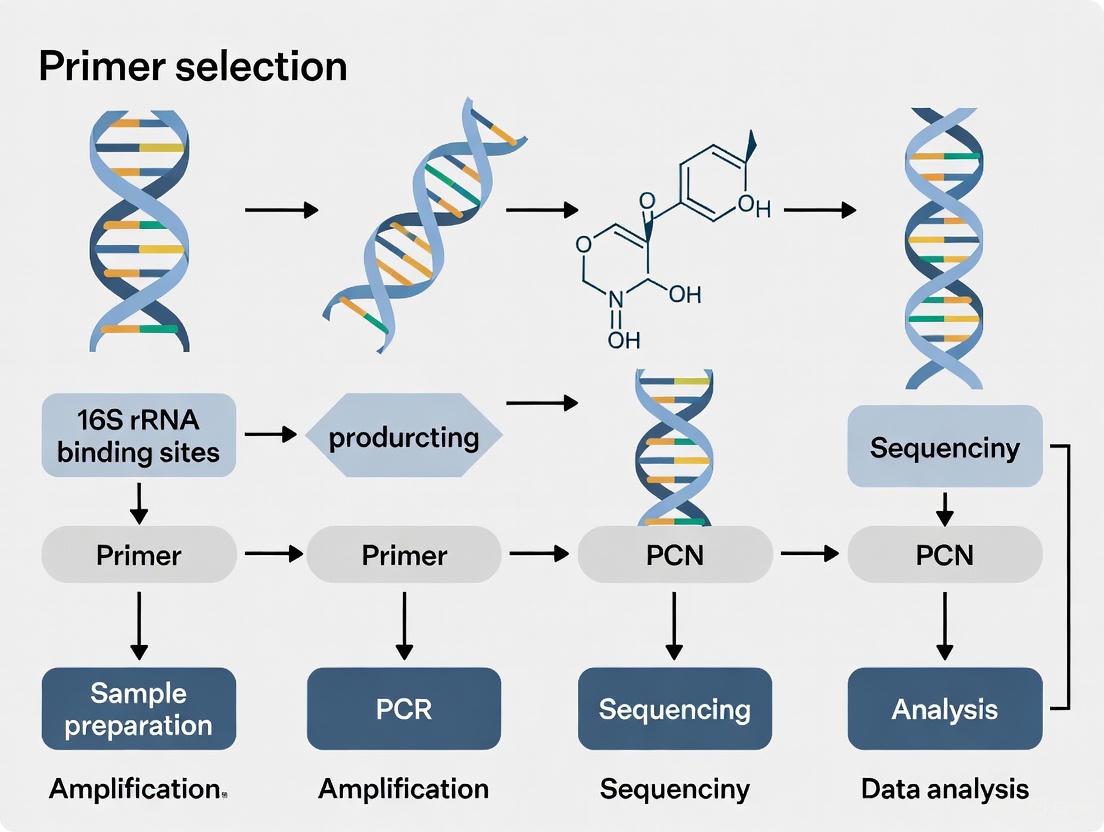
Accurate profiling of microbial communities via 16S rRNA gene sequencing is fundamentally dependent on primer selection, a choice that introduces significant bias and influences all downstream conclusions.
Primer Selection for 16S rRNA Gene Sequencing: A Foundational Guide to Optimizing Microbiome Data Quality and Accuracy
Abstract
Accurate profiling of microbial communities via 16S rRNA gene sequencing is fundamentally dependent on primer selection, a choice that introduces significant bias and influences all downstream conclusions. This article provides a comprehensive guide for researchers and drug development professionals, covering the foundational principles of primer design, methodological application across different sample types and sequencing platforms, troubleshooting for common issues, and rigorous validation strategies. By synthesizing current evidence and comparative studies, we offer actionable recommendations to enhance the reproducibility, accuracy, and biological relevance of microbiome data in biomedical research.
The Core Principles: How Primer Design Shapes Your Microbiome Data
The 16S ribosomal RNA (rRNA) gene is a cornerstone of molecular microbial analysis, serving as an essential tool for phylogenetic studies, microbial community profiling, and clinical diagnostics. This gene, which is approximately 1,500 base pairs long and found in the genomes of all bacteria, possesses a unique structure comprising highly conserved regions interspersed with nine hypervariable segments (V1-V9). The conserved regions enable the design of universal PCR primers, while the hypervariable regions provide species-specific signature sequences necessary for taxonomic classification. Within the context of primer selection for 16S rRNA gene sequencing research, understanding the precise structure and discriminatory power of each hypervariable region is paramount for designing specific probes and primers for molecular assays to detect and identify bacteria accurately [1] [2]. The strategic selection of these target regions directly influences the resolution, accuracy, and efficiency of microbial studies, forming the foundational step in any sequencing-based experimental design.
Structural Organization of the 16S rRNA Gene
The 16S rRNA gene is a component of the 30S small subunit of the prokaryotic ribosome. The "S" in 16S denotes a Svedberg unit, which reflects the molecule's sedimentation rate [2]. Its coding gene possesses a characteristic architecture that makes it ideal for phylogenetic analysis: it is of sufficient length (~1500 bp), contains multiple copies per bacterial genome (typically 5-10 copies), and exhibits a pattern of sequence conservation that is both stable over evolutionary time and variable enough to distinguish between taxa [3].
The gene's structure consists of nine hypervariable regions (V1 through V9), which range from approximately 30 to 100 base pairs in length. These variable regions are flanked by, and interspersed with, highly conserved sequences [1] [2]. The conserved stretches are shared across a wide range of bacteria and provide reliable binding sites for universal PCR primers. In contrast, the hypervariable regions accumulate mutations at a higher rate, and their sequences are unique to different genera or species, providing the specific signatures required for taxonomic classification and identification [4] [3]. This structure is not merely linear; the 16S rRNA molecule folds into a complex secondary and three-dimensional structure that is critical for its function in protein synthesis, where it acts as a scaffold for ribosomal proteins, helps integrate the two ribosomal subunits, and participates in the initiation of translation by binding to the Shine-Dalgarno sequence on mRNA [2] [3].
Comparative Analysis of Hypervariable Regions (V1-V9)
Although all nine hypervariable regions contribute to the overall sequence diversity of the 16S rRNA gene, they demonstrate considerably different degrees of sequence diversity and provide varying levels of taxonomic resolution. No single hypervariable region can differentiate among all bacterial species; therefore, the choice of target region must be aligned with the specific diagnostic or phylogenetic goal of the study [1]. The table below summarizes the primary characteristics and recommended applications for each hypervariable region based on empirical findings.
Table 1: Characteristics and applications of 16S rRNA hypervariable regions
| Hypervariable Region | Approximate Length (bp) | Key Characteristics and Taxonomic Utility |
|---|---|---|
| V1 | ~50 | Demonstrates considerable sequence diversity; best for differentiating Staphylococcus aureus and coagulase-negative Staphylococcus species [1]. |
| V2 | ~50 | Suitable for distinguishing most bacteria to the genus level, except for closely related Enterobacteriaceae. Best for distinguishing among Mycobacterium species [1]. |
| V3 | ~50 | Among the most suitable for genus-level differentiation for most species. Best for distinguishing among Haemophilus species [1]. |
| V4 | ~70 | A widely used, semi-conserved region. Provides resolution at the phylum level as accurately as the full-length gene but is less useful for genus or species-specific probes [1] [2]. |
| V5 | ~50 | Less useful as a target for genus or species-specific probes [1]. |
| V6 | ~58 | Can distinguish among most bacterial species except Enterobacteriaceae. Noteworthy for differentiating all CDC-defined select agents, including Bacillus anthracis from B. cereus by a single polymorphism [1]. |
| V7 | ~50 | Less useful as a target for genus or species-specific probes [1]. |
| V8 | ~50 | Less useful for genus or species-specific probes; one of the least reliable regions for representing full-length phylogeny [1] [5]. |
| V9 | ~30 | Often incomplete in sequences; its short length can limit phylogenetic information [5]. |
Beyond individual region performance, bioinformatic studies have quantitatively evaluated the ability of different sub-regions to reproduce phylogenetic trees generated from full-length 16S rRNA sequences. This analysis, based on geodesic distance (a metric for comparing tree topology), found that the V4, V5, and V6 regions are the most reliable for representing the full-length 16S rRNA gene in phylogenetic analysis for most bacterial phyla [5]. Conversely, the V2 and V8 regions were identified as the least reliable in this regard [5]. Furthermore, different regions can exhibit bias; for instance, the V1-V2 region performs poorly in classifying Proteobacteria, while the V3-V5 region is less effective for Actinobacteria [6]. Therefore, a one-size-fits-all approach is not feasible, and primer selection must be tailored to the specific microbial taxa under investigation and the desired level of taxonomic resolution.
Experimental Methodologies for Evaluating Hypervariable Regions
The characterization of hypervariable regions and the design of specific primers require systematic and validated experimental protocols. The following section details key methodologies cited in the literature for evaluating 16S rRNA segments and designing targeted assays.
Phylogenetic Sensitivity Analysis via Geodesic Distance
This in silico pipeline is designed to quantitatively evaluate the phylogenetic resolution of different hypervariable regions by comparing them to full-length 16S rRNA sequences [5].
- Data Source and Pre-treatment: The protocol begins by downloading a curated, pre-aligned dataset of nearly full-length bacterial 16S rRNA sequences (e.g., the SILVA Ref NR99 dataset). Sequences are filtered for length (e.g., >1400 bp) and accurate taxonomic annotation.
- Definition and Extraction of Sub-regions: Using defined breakpoints within conserved flanking sequences, the full-length aligned sequences are computationally divided into the V1-V9 sub-regions.
- Selection of Representative Taxa: A rigorous selection process is used to create multiple taxonomic lists. Each list contains sequences randomly selected from a diverse set of bacterial phyla to ensure broad phylogenetic representation.
- Phylogenetic Tree Construction: For each taxonomic list and each sub-region (e.g., V2-V8), a separate phylogenetic tree is constructed using a Bayesian algorithm (e.g., BEAST software) with appropriate evolutionary models.
- Geodesic Distance Calculation and Clustering: The topological similarity between the tree generated from a sub-region and the tree generated from the full-length sequence (VT) is quantified by calculating the geodesic distance. Agglomerative hierarchical clustering of these distances then reveals which sub-regions most closely replicate the full-length phylogeny [5].
Systematic Characterization for Pathogen Identification
This experimental methodology aims to identify the best hypervariable regions for developing specific probes and primers to detect common pathogens and select agents [1].
- Sequence Retrieval and Alignment: 16S rRNA gene sequences from a target group of bacteria (e.g., 110 species including bloodborne pathogens and select agents) are retrieved from GenBank or the TIGR CMR database. The complete sequences are aligned using software such as MEGALIGN.
- Identification and Separate Analysis of Regions: The hypervariable regions (V1-V8) are identified based on the initial alignment. Each region is then separately re-aligned across all species in the dataset.
- Dendrogram Generation and Analysis: Sequence similarity dendrograms are created for each individual hypervariable region using the neighbor-joining method. The dendrograms are analyzed to determine which region provides the best differentiation for specific taxonomic groups (e.g., Staphylococci, Mycobacteria) or for broad genus-level identification [1].
Targeted Primer Design from Meta-Transcriptomic Data
This method addresses the limitation of universal primers by designing targeted primers to identify novel microbial taxa that might otherwise be missed [7].
- Primer Binding Evaluation: Meta-transcriptomic datasets are analyzed to identify SSU rRNA sequences. The binding regions of universal primers (e.g., 8F and Arch21F) are evaluated to find sequences with mismatches, indicating they would not be amplified by standard primers.
- Identification of Novel Sequences and Primer Design: The mismatched sequences, particularly those unclassified at the phylum level, are clustered into operational taxonomic units (OTUs). Specific forward primers are designed to target these novel sequences.
- Amplification and Phylogenetic Confirmation: The newly designed forward primers are used in conjunction with a universal reverse primer (e.g., 1492R) to amplify nearly full-length SSU rRNA genes from environmental samples. The amplified sequences are then sequenced and subjected to phylogenetic analysis to confirm their novel taxonomic status [7].
The following workflow diagram illustrates the key methodological approaches for evaluating 16S rRNA hypervariable regions:
Diagram 1: Methodologies for evaluating 16S rRNA hypervariable regions. Three primary methodological pathways (In-silico Phylogenetic Analysis, Experimental Pathogen ID, and Novel Taxon Discovery) are used to determine the most appropriate hypervariable regions for specific research goals, ultimately informing primer selection.
Successful 16S rRNA gene sequencing research relies on a suite of specific reagents, databases, and analytical tools. The following table catalogs key resources essential for experiments in this field.
Table 2: Essential research reagents and resources for 16S rRNA gene sequencing
| Category | Item | Function and Application |
|---|---|---|
| Primers | Bac8f (AGAGTTTGATCMTGGCTCAG) / 1492R (CGGTTACCTTGTTACGACTT) | Classic universal primer pair for amplifying nearly the full-length 16S rRNA gene [2]. |
| Bac1f (AAATTGAAGAGTTTGATC) / UN1542r (TAAGGAGGTGATCCA) | Newly designed primer set to avoid introducing mismatches at critical sites (e.g., position 19), beneficial for functional studies [8]. | |
| 27F (AGAGTTTGATCMTGGCTCAG) / 534R (ATTACCGCGGCTGCTGG) | Common primer pair for generating amplicons covering the V1-V3 hypervariable regions, suitable for Illumina MiSeq sequencing [2] [3]. | |
| Databases | SILVA | A comprehensive, quality-checked resource for aligned ribosomal RNA sequences (16S/18S, SSU) for all three domains of life [2] [5]. |
| EzBioCloud | A database providing a complete hierarchical taxonomic system with curated 16S rRNA sequences for bacteria and archaea [2]. | |
| Greengenes | A quality-controlled 16S rRNA gene reference database and taxonomy based on a de novo phylogeny [2] [6]. | |
| Software & Algorithms | MEGALIGN | Sequence analysis software used for multiple sequence alignment and creating sequence similarity dendrograms for phylogenetic comparison [1]. |
| BEAST (Bayesian Evolutionary Analysis Sampling Trees) | A software package for Bayesian phylogenetic analysis, used for constructing phylogenetic trees from molecular sequences under various evolutionary models [5]. | |
| Geodesic Distance Algorithm (GTP) | A computational method used to quantitatively compare the topology of different phylogenetic trees and assess their similarity [5]. |
Implications for Primer Selection in Research
The structural characteristics of the 16S rRNA gene directly dictate strategic decisions in primer selection. The primary consideration is the trade-off between taxonomic resolution and sequencing technology constraints.
For species- or strain-level discrimination, sequencing the full-length (~1500 bp) 16S rRNA gene is superior. The use of universal primers like 27F and 1492R with long-read sequencing technologies (e.g., PacBio) provides the complete sequence information from V1 to V9, enabling the highest possible phylogenetic resolution and the ability to detect intragenomic variation between 16S gene copies within a single organism [6]. This approach is critical for applications requiring precise identification, such as distinguishing between closely related pathogens like Bacillus anthracis and B. cereus [1].
When using short-read sequencing platforms (e.g., Illumina), which are more cost-effective and higher throughput, the researcher must select a specific hypervariable region to target. The choice should be guided by the experimental question:
- For broad phylogenetic analysis and community composition overview, the V4 region is a popular and reasonably effective choice, providing good resolution at the phylum level [2] [6].
- For differentiating specific pathogens, a targeted approach is necessary. For example, the V3 region is highly suitable for identifying Haemophilus species, while the V2 region is best for Mycobacterium species, and the V6 region can distinguish between CDC-defined select agents [1].
- To overcome the inherent coverage bias of universal primers, which can miss novel taxa, researchers can design targeted primers based on mismatches identified in meta-transcriptomic datasets, enabling the discovery of novel microbial lineages [7].
Ultimately, there is no single "best" primer or target region. The selection must be optimized based on the target microorganisms, the required level of taxonomic discrimination, the chosen sequencing technology, and the specific goals of the research study.
In 16S ribosomal RNA (rRNA) gene sequencing, primer choice serves as the first and perhaps most critical determinant of experimental outcomes. The foundational premise of this method relies on "universal" primers that target conserved regions of the 16S rRNA gene to amplify variable regions for taxonomic classification. However, the notion of truly universal primers is a misconception—primer binding sites exhibit sequence variation across the bacterial kingdom, leading to differential amplification efficiency across taxa [9]. This phenomenon, known as primer bias, systematically distorts microbial community representation by causing taxonomic dropout (failure to detect certain taxa) and overrepresentation of other taxa [10]. Within the context of a broader thesis on primer selection, understanding these biases becomes paramount for generating accurate, reproducible microbiome data that can reliably inform drug development and clinical diagnostics.
The 16S rRNA gene spans approximately 1,500 base pairs and contains nine hypervariable regions (V1-V9) flanked by conserved regions [9]. While second-generation sequencers typically target one to three of these variable regions, the genetic variation in primer binding sites means that no single primer pair perfectly captures the full spectrum of bacterial diversity present in complex samples [9] [10]. The consequences of this bias extend beyond academic concerns—in clinical research, missed detections can obscure pathogen identification or alter microbial signatures associated with disease states [10].
Core Mechanisms of Primer Bias
Primer-Template Mismatches
The primary mechanism underlying primer bias stems from sequence mismatches between primers and their target templates. Even minor mismatches, particularly those near the 3' end of primers where polymerase extension initiates, can significantly reduce amplification efficiency [11]. A comprehensive analysis of 18 frequently used primers against the SILVA SSURef_NR99 database revealed that all primers exhibited some degree of mismatch, with percentages ranging from 0.79% to 51.99% of bacterial sequences [11].
Certain bacterial families with clinical relevance show particularly high mismatch rates. For example, Lachnospiraceae, a core component of gut microbiota associated with various intra- and extra-intestinal diseases, demonstrated mismatches with multiple commonly used primers including U341F, 515F, 517F, 338R, U529R, 533R, and 907R [11]. Other health-associated families like Propionibacteriaceae (linked to skin conditions), Bacillaceae, Burkholderiaceae, Staphylococcaceae, and Veillonellaceae also showed high mismatch rates with various primers [11].
Table 1: Percentage of Mismatched 16S rRNA Gene Sequences for Commonly Used Primers
| Primer Direction | Primer Name | Total Mismatched Sequences (%) | Key Affected Taxa (Families) |
|---|---|---|---|
| Forward | 515F | 1.08% | Lachnospiraceae (0.06%), Bacillaceae (0.06%), Burkholderiaceae (0.05%) |
| Forward | 27F | 27.16% | Not Available |
| Forward | 967F | 36.90% | Burkholderiaceae (5.38%), Rhodobacteraceae (2.11%), Rhizobiaceae (1.59%) |
| Reverse | U529R | 0.79% | Staphylococcaceae (0.04%), Bacillaceae (0.04%), Lachnospiraceae (0.04%) |
| Reverse | 806R | 7.35% | Propionibacteriaceae (0.60%), SAR11-Clade I (0.49%), Microbacteriaceae (0.40%) |
| Reverse | 1492R | 51.99% | Not Available |
Amplicon Length Variations and Fragmentation Effects
Beyond sequence mismatches, natural variation in amplicon length across different bacterial taxa represents another significant source of bias. Different variable regions of the 16S rRNA gene exhibit substantial length polymorphisms, meaning that the same primer pair can generate amplicons of different lengths from different taxa [12]. This variation particularly impacts studies working with degraded or fragmented DNA, such as ancient microbiome samples or clinical specimens with low-quality DNA [12].
In ancient DNA studies, where DNA is rarely longer than 200bp, longer amplicons will be systematically underrepresented, creating a perceived shift in community composition [12]. This effect was demonstrated in archaeological dental calculus specimens, where extensive length polymorphisms in the V3 region caused major differential amplification and taxonomic bias [12]. Although this effect is most pronounced in ancient DNA, similar principles apply to any sample with partially degraded DNA or where amplification efficiency varies with product size.
Off-Target Amplification
A particularly problematic form of bias occurs when primers amplify non-target DNA, such as host contamination in clinical samples. This issue is especially prevalent in human biopsy samples where host DNA vastly outweighs bacterial DNA [10]. One study evaluating human gastrointestinal biopsies found that primers targeting the V4 region (515F-806R) produced alarming rates of off-target amplification, with an average of 70% of amplicon sequence variants (ASVs) mapping to the human genome—in some cases reaching 98% [10]. The primary culprit was amplification of the Homo sapiens mitochondrion, which contained significant alignment to the 515F-806R primer pair [10].
This off-target amplification effectively wastes sequencing depth, reduces detection sensitivity for low-abundance bacteria, and can completely obscure true biological signals in microbiome profiles [10]. The solution lies in careful primer selection—the same study found that switching to optimized V1-V2 primers practically eliminated human DNA amplification while providing higher taxonomic richness [10].
Quantitative Impact of Primer Choice on Taxonomic Representation
Region-Specific Performance Variations
Different variable regions capture distinct facets of microbial diversity, making primer choice instrumental in determining which taxa will be detected. One systematic evaluation sequenced human stool samples and mock communities using seven different primer pairs targeting various variable regions (V1-V2, V1-V3, V3-V4, V4, V4-V5, V6-V8, and V7-V9) [9]. The results demonstrated that microbial profiles clustered primarily by primer pair rather than by donor source, highlighting the profound effect of primer choice on observed composition [9].
Specific examples of taxonomic bias include:
- Bacteroidetes was missed when using primers 515F-944R (targeting V4-V5) [9]
- Verrucomicrobia was detected only with specific primer pairs in human sample analysis [9]
- Acetatifactor was not detected when using GreenGenes and the genomic-based 16S rRNA Database [9]
- Fusobacteriota required primer redesign due to a two-base mismatch at the 3' terminus [10]
These biases occur because different variable regions have evolved at different rates across bacterial lineages, affecting their discriminatory power for specific taxa [9]. Furthermore, inconsistencies in nomenclature between reference databases (e.g., Enterorhabdus versus Adlercreutzia) compound these primer-induced biases [9].
Table 2: Performance Comparison of Primers Targeting Different Variable Regions
| Target Region | Primer Pair | Key Strengths | Key Limitations |
|---|---|---|---|
| V1-V2 | 27F-338R | Low off-target human amplification [10], High taxonomic richness [10] | May require modification for Fusobacteriota [10] |
| V3-V4 | 341F-785R | Commonly used, good taxonomic discrimination [9] | Susceptible to off-target human amplification [10] |
| V4 | 515F-806R | Standardized protocol (Earth Microbiome Project) [10] | High off-target human amplification (avg. 70% ASVs) [10], Misses some oral taxa [13] |
| V4-V5 | 515F-944R | Covers additional variable region | Misses Bacteroidetes [9] |
| V7-V9 | 1115F-1492R | Targets different phylogenetic signal | Varying precision in classification [9] |
Database-Related Biases
The reference database used for taxonomic classification introduces additional interactive effects with primer choice. Even when primers successfully amplify a target, database incompleteness or nomenclature inconsistencies can prevent proper classification [9]. For example, the same sequencing data classified against different databases (GreenGenes, RDP, Silva, GRD, LTP) can yield different taxonomic profiles due to variations in database coverage, curation methods, and taxonomic frameworks [9].
This effect was demonstrated in oral microbiome research, where database choice significantly influenced bias introduced by different primers [14]. The interaction between primer and database is particularly problematic for cross-study comparisons where different primer-database combinations have been used [9]. Researchers must therefore consider both primer selection and database choice as interconnected decisions in experimental design.
Methodological Approaches for Bias Assessment and Mitigation
Experimental Best Practices
Mock Communities as Validation Tools
The use of mock communities with known composition provides the most robust method for evaluating primer performance and quantifying bias [9] [15]. These defined mixtures of microbial cells or nucleic acids serve as empirical controls against which experimental results can be benchmarked [15]. Studies recommend using mock communities of sufficient complexity that reflect the expected diversity in test samples, as simple mixtures may not reveal all relevant biases [9].
The experimental framework involves:
- Creating or obtaining mock communities with known ratios of target organisms [15]
- Processing mock communities in parallel with test samples using the same DNA extraction, amplification, and sequencing protocols [9]
- Comparing observed community composition to expected composition to quantify bias [15]
- Calculating metrics such as false positive rates, false negative rates, and taxonomic resolution [15]
One study developed a specialized framework using two-sample titration mixtures of human stool DNA to assess bioinformatic pipelines, which could be extended to primer evaluation [15]. Their approach enabled both qualitative assessment (feature presence/absence) and quantitative assessment (relative abundance accuracy) of methodological performance [15].
In Silico Evaluation of Primer Coverage
Computational methods provide a complementary approach to experimental validation for assessing primer performance. In silico evaluation involves aligning candidate primers against comprehensive 16S rRNA databases to predict coverage and potential mismatches [13] [16]. One such method implemented in the mopo16S software uses multi-objective optimization to identify primer pairs that simultaneously maximize efficiency, coverage, and minimize matching bias [16].
A comprehensive in silico evaluation of oral microbiome primers against two specialized databases (one for oral bacteria, one for oral archaea) identified optimal primer pairs that differed from those most commonly used in the literature [13]. The best-performing pairs for detecting oral bacteria targeted regions 3-4, 4-7, and 3-7, with species coverage levels of 98.83-97.14% [13].
The general workflow for in silico primer evaluation includes:
- Selecting appropriate reference databases relevant to the study system [13]
- Identifying candidate primers from literature or designing new ones [16]
- Performing alignment-based evaluation of primer-template matches [16]
- Quantifying coverage at appropriate taxonomic levels (variant, species, genus) [13]
- Optimizing primer selection based on multiple criteria including coverage, specificity, and amplicon length [16]
Computational Correction Strategies
While preventive measures through careful primer selection are preferable, computational methods can partially correct for primer biases in existing datasets. Truncation strategies during bioinformatic processing can mitigate the impact of length polymorphisms, though appropriate truncation parameters must be empirically determined for each study [9]. Additionally, taxonomic normalization approaches attempt to account for variable rRNA copy numbers across taxa, though evidence suggests these corrections may not improve accuracy in real-world scenarios and sometimes introduce additional distortions [17].
One study evaluating 16S rRNA gene copy number (GCN) normalization on eleven mock communities found that GCN failed to improve classification accuracy for most communities [17]. In some cases, normalization actually decreased fidelity to the expected community composition [17]. This suggests that while GCN correction theoretically addresses an important bias, practical implementation faces challenges due to incomplete knowledge of true copy numbers, variation within taxa, and interactions with other bias sources [17].
Table 3: Research Reagent Solutions for Primer Bias Assessment and Mitigation
| Resource Category | Specific Tools | Function and Application |
|---|---|---|
| Reference Databases | SILVA [9], GreenGenes [9], RDP [9], GRD [9], LTP [9], HOMD [12] | Provide comprehensive collections of 16S rRNA sequences for in silico primer evaluation and taxonomic classification |
| Mock Communities | BEI Resources Mock Communities [15], mockrobiota [17] | Defined mixtures of microorganisms with known composition for empirical validation of primer performance |
| In Silico Tools | mopo16S [16], SPYDER [16], DegePrime [16] | Computational tools for designing and evaluating primers based on coverage, efficiency, and matching bias |
| Bioinformatic Pipelines | DADA2 [9] [15], QIIME2 [9], Mothur [9] | Process 16S sequencing data with different clustering approaches (OTUs, zOTUs, ASVs) that interact with primer choice |
| Experimental Controls | Negative extraction controls [12], Positive amplification controls [9] | Monitor contamination and confirm reaction success across different primer sets |
Primer bias in 16S rRNA gene sequencing represents a fundamental challenge that distorts our view of microbial communities through taxonomic dropout and overrepresentation. The evidence presented demonstrates that bias arises through multiple mechanisms including primer-template mismatches, amplicon length variations, and off-target amplification [9] [12] [10]. These effects are substantial enough that microbial profiles cluster primarily by primer choice rather than biological source, complicating cross-study comparisons and potentially leading to erroneous biological conclusions [9].
Moving forward, the field requires increased standardization coupled with appropriate validation practices. Researchers should select primers based on in silico evaluation against relevant databases and empirical validation using mock communities that reflect their study system [13] [15]. The development of optimized primer sets with reduced bias, such as those targeting the V1-V2 region for human biopsy samples [10], represents a promising direction. Ultimately, recognizing and accounting for primer bias is not merely a technical concern but an essential requirement for generating reliable, reproducible microbiome data that can meaningfully inform drug development and clinical practice.
The selection of polymerase chain reaction (PCR) primers for amplifying 16S ribosomal RNA (rRNA) genes is a critical methodological step that profoundly influences the outcomes and interpretations of microbial ecology studies. Universal primers, designed to target conserved regions flanking the variable areas of the 16S rRNA gene, theoretically enable the amplification of sequences from a wide spectrum of bacteria, archaea, and eukaryotes. However, even minor sequence mismatches between primers and target templates can lead to amplification biases, taxonomic dropout, and distorted representations of microbial community structure [18] [19]. This technical challenge is particularly acute in studies aiming to characterize complex microbiomes or detect specific, potentially low-abundance taxa.
Degenerate primers represent a strategic solution to address genetic diversity within microbial communities. These primers are mixtures of oligonucleotides that incorporate carefully designed nucleotide ambiguities (denoted by IUPAC codes such as Y for C/T, or N for A/C/T/G) at variable positions within the primer sequence [18]. This design allows a single primer reaction to tolerate sequence polymorphisms found in different microorganisms, thereby increasing the coverage and inclusivity of amplification. This technical guide explores the role of degenerate primers in enhancing taxonomic coverage, details methodologies for their design and validation, and provides a framework for their application in 16S rRNA gene sequencing research, framed within the broader context of optimal primer selection.
The Fundamental Challenge of Primer Specificity in 16S rRNA Sequencing
The central challenge in 16S rRNA gene sequencing stems from the inherent genetic diversity of microbial communities coupled with the technical requirements of PCR amplification. No "universal" primer pair achieves 100% coverage of all known microbial taxa [18]. In silico evaluations reveal that even widely used primer sets, such as 515F-806R (targeting the V4 region), miss tens of thousands of bacterial and archaeal species [18] [20]. A single nucleotide mismatch, particularly near the 3' end of a primer, can significantly reduce or even prevent amplification, leading to the omission of target microorganisms from downstream analyses [19].
The problem of off-target amplification further complicates microbiome profiling, especially in samples with low bacterial biomass and high host DNA content, such as human biopsy specimens. Studies have demonstrated that primers targeting the V3-V4 and V4 regions of the 16S rRNA gene can inadvertently amplify human DNA, with off-target sequences sometimes comprising up to 70-98% of the generated amplicon sequence variants (ASVs) [10] [21]. This not only wastes sequencing resources but can also obscure true biological signals and lead to false positive bacterial identifications.
The Degenerate Primer Solution: Mechanism and Design Principles
How Degenerate Primers Work
Degenerate primers function by incorporating ambiguity bases at positions where sequence variation is known to occur among target taxa. Rather than being a single sequence, a degenerate primer is a defined mixture of multiple related sequences. During PCR annealing, different components of this mixture can bind perfectly to their complementary template sequences, thereby enabling the amplification of a broader phylogenetic range. For example, the widely used 515F (Parada) primer (GTGYCAGCMGCCGCGGTAA) uses a Y (C/T) degeneracy at its fourth position, which enhances its coverage of archaeal lineages [18] [20].
Key Design Considerations and Workflows
The design of effective degenerate primers involves a trade-off between maximizing coverage and maintaining practical utility.
- Minimizing Terminal Degeneracy: Degenerate positions should generally be avoided at the 3' terminus of the primer, as this region is most critical for elongation initiation. Mismatches here disproportionately reduce amplification efficiency [19] [21].
- Managing Complexity: Excessively high degeneracy (a large number of variable positions) can lead to a complex mixture of primers, potentially reducing the effective concentration of any single specific sequence and compromising amplification efficiency [16].
- Computational Workflows: Modern primer design leverages bioinformatic tools and databases like SILVA [18] [20] and HYDEN [22]. These tools systematically align primer sequences with reference databases to identify mismatches and strategically introduce degeneracies to maximize coverage of target taxa while minimizing impacts on efficiency.
The following diagram illustrates a generalized workflow for designing and validating degenerate primers.
Quantitative Impact on Coverage and Diversity Metrics
Empirical studies consistently demonstrate that optimized degenerate primers significantly improve the detection and characterization of microbial communities. The tables below summarize key experimental findings.
Table 1: In silico Coverage of Improved Primers for Target Microorganisms [18] [20]
| Target Microorganism | Original Primer | Improved Primer | Coverage Increase |
|---|---|---|---|
| Dehalococcoides | 5.3% (Various) | BA-515F-806R-M1 | ~90% (estimated) |
| Archaea (General) | 53% (515F/806R) | 93% (515F-Y/806R) | +40 percentage points |
| SAR11 Bacteria | 2.6% (Caporaso-806R) | 96.7% (Apprill-806R) | +94.1 percentage points |
Table 2: Experimental Impact on Diversity Metrics in Biological Samples [23] [24]
| Sample Type | Primer Set Comparison | Key Metric | Result with Degenerate Primer |
|---|---|---|---|
| Human Oropharyngeal Swabs | 27F-I (Standard) vs. 27F-II (Degenerate) | Shannon Diversity Index | 2.684 vs. 1.850 (p < 0.001) |
| Human Fecal Samples | 27F-I (Standard) vs. 27F-II (Degenerate) | Firmicutes/Bacteroidetes Ratio | Closer to expected population baseline |
| Various Biopsies (Upper GI Tract) | V4 Primers vs. V1-V2M Primers | Off-target Human DNA Amplification | ~70% vs. ~0% of ASVs |
The implementation of a more degenerate 27F primer (27F-II) in full-length 16S rRNA nanopore sequencing of human oropharyngeal swabs resulted in a significantly higher alpha diversity and detected a broader range of taxa across all phyla compared to the standard 27F primer (27F-I) [23]. Furthermore, the taxonomic profiles generated with the degenerate primer showed a much stronger correlation with large-scale reference datasets (Pearson’s r = 0.86) than those from the standard primer (r = 0.49), indicating a more accurate representation of the microbial community [23].
Experimental Protocols for Validation
Protocol: In silico Evaluation of Primer Coverage Using TestPrime
Purpose: To computationally assess the theoretical coverage of a primer sequence against a reference database of SSU rRNA genes [18] [20].
- Access the Tool: Navigate to the TestPrime function on the SILVA SSU rRNA database website (https://www.arb-silva.de/search/testprime/).
- Input Parameters:
- Primer Sequence: Enter your candidate primer sequence, using standard IUPAC ambiguity codes.
- Database: Select the latest SSU Ref dataset (e.g., SSU 138.1).
- Mismatch Tolerance: Often set to 0 to identify only perfect matches, but can be adjusted to evaluate robustness.
- Execution and Analysis:
- Run the TestPrime algorithm.
- The tool will output a coverage percentage, detailing the proportion of sequences in the database that are perfectly matched by the primer for a specified taxonomic group (e.g., Bacteria, Archaea).
Protocol: Wet-Lab Validation via Comparative Amplicon Sequencing
Purpose: To empirically verify the performance of a new degenerate primer against an established primer using the same biological sample [18] [23] [24].
- Sample Selection: Use a well-characterized environmental sample or a mock microbial community with known composition.
- PCR Amplification:
- Split the extracted DNA from the same sample into two aliquots.
- Amplify one aliquot with the original primer set and the other with the improved degenerate primer set.
- Keep all other PCR conditions (polymerase, buffer, cycling parameters, etc.) identical between reactions to isolate the effect of the primer.
- Library Preparation and Sequencing: Process both amplicon libraries in parallel using the same sequencing platform (e.g., Illumina for short-read, Oxford Nanopore for full-length 16S).
- Bioinformatic and Statistical Analysis:
- Process raw sequences through identical bioinformatics pipelines (DADA2, DEBLUR, etc.) to generate Amplicon Sequence Variants (ASVs) or OTUs.
- Compare metrics such as:
- Alpha Diversity: Shannon, Chao1, and Observed Species indices.
- Beta Diversity: PCoA plots to visualize community differences.
- Taxonomic Composition: Relative abundances at various taxonomic levels.
- Detection of Target Taxa: Confirm improved detection of the specific microorganisms the degenerate primer was designed to cover.
Table 3: Key Reagents and Resources for Degenerate Primer Research and Application
| Resource | Type/Example | Function in Research |
|---|---|---|
| Reference Database | SILVA SSU rRNA database [18] [20] | Gold-standard resource for in silico primer evaluation and coverage calculation. |
| Computational Tool | "Degenerate primer 111" script [18] [20], DegePrime [16], HYDEN [22] | Automates the process of aligning primers to target genes and strategically adding degenerate bases. |
| Validated Primer Pairs | 27F-II (S-D-Bact-0008-c-S-20) / 1492R-II (S-D-Bact-1492-a-A-22) [23] [24] | A more degenerate primer set for full-length 16S rRNA sequencing, shown to reduce bias. |
| Validated Primer Pairs | BA-515F-806R-M1 (for Dehalococcoides) [18] | An example of a primer improved for a specific target microorganism. |
| Blocking Reagent | C3 spacer-modified nucleotides [21] | Can be used to suppress off-target amplification from host DNA by blocking primer binding sites. |
The strategic use of degenerate primers is a powerful and often necessary approach for mitigating amplification bias in 16S rRNA gene sequencing studies. By thoughtfully incorporating nucleotide degeneracy based on comprehensive in silico analysis, researchers can significantly enhance the coverage and inclusivity of their primers, leading to more accurate and representative profiles of microbial diversity. This is particularly crucial for studies focusing on under-represented taxa, complex environments, or samples with high host DNA contamination. As microbial ecology continues to evolve, the development and validation of optimized degenerate primers will remain a cornerstone of robust experimental design, ensuring that our molecular tools keep pace with our expanding understanding of microbial life.
The selection of optimal PCR primers is a foundational step in any 16S rRNA gene sequencing study, directly determining the accuracy, breadth, and resolution of microbial community analysis. In silico evaluation serves as a critical first step in primer selection, enabling researchers to computationally predict primer performance against extensive rRNA sequence databases before committing wet-lab resources. This proactive approach identifies potential biases and coverage gaps that could compromise experimental outcomes. Within the broader context of primer selection for 16S rRNA gene sequencing research, in silico analysis provides an essential, cost-effective methodology for justifying primer choices based on empirical data rather than convention alone.
The necessity for rigorous in silico assessment stems from well-documented challenges in 16S rRNA sequencing. Different variable regions (V1-V9) of the 16S rRNA gene exhibit substantial variation in taxonomic resolution across bacterial groups, and so-called "universal" primers often demonstrate significant biases in their ability to amplify diverse taxa [9]. Furthermore, primer choices can lead to practical issues such as off-target amplification of host DNA in human biopsy samples, which can render a significant proportion of sequencing data useless [10]. The emergence of full-length 16S sequencing technologies has further complicated primer decisions, as historical assumptions about primer performance based on short-read technologies require re-evaluation [6]. This technical guide provides researchers, scientists, and drug development professionals with comprehensive methodologies for conducting robust in silico primer evaluations, ensuring that primer selection is driven by systematic analysis rather than historical precedent.
Core Principles: Primer Performance Metrics and 16S rRNA Gene Characteristics
Key Performance Metrics for Primer Evaluation
When evaluating primers in silico, researchers should assess several critical performance metrics that collectively determine experimental success:
- Coverage: The percentage of target sequences in a reference database that contain perfect or near-perfect matches to the primer sequences. Higher coverage ensures broader detection of microbial diversity. Studies often apply a coverage threshold of ≥70% across dominant phyla as a minimum standard [25].
- Specificity: The ability of primers to preferentially target 16S rRNA genes of interest while minimizing amplification of non-target DNA, including host genomic or mitochondrial DNA. This is particularly crucial for samples with low bacterial biomass [10].
- Taxonomic Resolution: The capability of the amplified region to discriminate between closely related taxa at the species or strain level. Full-length 16S gene sequences generally provide superior resolution compared to shorter variable regions [6].
- Amplicon Length: The size of the PCR product must be compatible with the sequencing platform and technology employed (e.g., short-read Illumina vs. long-read Nanopore or PacBio) [26].
The 16S rRNA Gene Structure and Variable Regions
The 16S rRNA gene is approximately 1,500 base pairs long and contains nine hypervariable regions (V1-V9) interspersed with conserved regions. The conserved regions serve as binding sites for PCR primers, while the variable regions provide the sequence diversity necessary for taxonomic classification [9] [25]. Different variable regions offer different levels of discrimination for various bacterial taxa, making the choice of which region(s) to amplify a critical consideration in experimental design [6].
Table 1: Characteristics of Common 16S rRNA Gene Variable Regions
| Target Region | Typical Amplicon Size | Key Strengths | Key Limitations |
|---|---|---|---|
| V1-V2 | ~260-310 bp | High taxonomic richness, minimal human off-target amplification [10] | May miss some taxa (e.g., Fusobacteriota without modified primers) [10] |
| V3-V4 | ~460 bp | Common in human microbiome studies (HMP) | Susceptible to off-target human DNA amplification [10] |
| V4 | ~250 bp | Earth Microbiome Project standard | Lower species-level resolution, misses some phyla [6] [9] |
| V4-V5 | Variable | Good for some communities | May miss Bacteroidetes [9] |
| V1-V9 | ~1500 bp | Maximum taxonomic resolution, species-level discrimination [6] [26] | Requires long-read sequencing technologies |
Experimental Protocols: Methodologies for In Silico Primer Evaluation
Workflow for Comprehensive Primer Assessment
The following workflow outlines the key steps for systematic in silico primer evaluation, from database selection to final primer selection. This process ensures that primers are selected based on comprehensive computational evidence.
Protocol 1: Database Selection and Curation
Purpose: To select and curate appropriate reference databases for in silico primer evaluation.
Materials:
- SILVA SSU Ref NR (release 138.1 or newer): Contains over 500,000 quality-checked rRNA sequences [25]
- Greengenes: Curated 16S rRNA database [9]
- Ribosomal Database Project (RDP): Quality-controlled bacterial 16S rRNA data [9]
- NCBI 16S rRNA RefSeq Targeted Loci Project: Extensive collection of 16S sequences [25]
Methodology:
- Download the most recent database releases in FASTA format
- Filter sequences by length (>1,200 bp for Bacteria/Eukaryota, >900 bp for Archaea) to ensure adequate coverage of target regions [25]
- For specialized studies (e.g., human gut microbiome), extract sequences from target habitats to create study-specific databases
- Validate sequence quality and remove duplicates or poorly annotated entries
Interpretation: Database selection significantly impacts results due to differences in curation methods, taxonomic hierarchies, and nomenclature. Using multiple databases provides more robust validation [25].
Protocol 2: In Silico PCR and Coverage Calculation
Purpose: To simulate PCR amplification and calculate primer coverage across target taxa.
Materials:
- TestPrime (available through the SILVA website) [25]
- Primer3-based custom scripts [27]
- PrimerScore2: Scoring-based primer design tool [28]
Methodology:
- Input degenerate primer sequences in FASTA format
- Set parameters to allow perfect matches within degenerate code positions while requiring exact matches elsewhere [25]
- Run in silico PCR against selected reference databases
- Calculate coverage metrics using the formula: Coverage (%) = (Number of amplified sequences / Total eligible sequences) × 100
- Apply coverage thresholds (e.g., ≥70% across dominant phyla) to identify candidate primers [25]
Interpretation: Primers achieving ≥70% coverage across dominant phyla and ≥90% coverage for key genera of interest generally represent strong candidates for further evaluation [25].
Protocol 3: Taxonomic Resolution and Bias Assessment
Purpose: To evaluate primer-induced taxonomic biases and resolution capabilities.
Materials:
- RDP Classifier or similar taxonomic assignment tool [6]
- Custom scripts for diversity metric calculation
- Shannon entropy analysis tools to evaluate variable region conservation [25]
Methodology:
- Extract in silico amplicons for each primer set
- Perform taxonomic classification using a consistent database and confidence threshold
- Compare observed taxonomic distributions to expected compositions (using mock community data if available)
- Calculate entropy profiles across the 16S gene to identify intergenomic variation in primer binding regions [25]
- Assess species- and strain-level resolution by comparing full-length versus sub-region amplicons [6]
Interpretation: Different variable regions exhibit distinct taxonomic biases. For example, V1-V2 shows better performance for Proteobacteria, while V6-V9 may better resolve Clostridium and Staphylococcus [6].
Data Analysis and Interpretation: From Computational Results to Primer Selection
Quantitative Comparison of Primer Performance
Systematic in silico evaluation of 57 commonly used primer sets revealed significant differences in coverage and specificity. The following table summarizes performance characteristics of selected high-performing primer pairs based on recent studies:
Table 2: Performance Comparison of Selected 16S rRNA Primer Pairs from In Silico Analysis
| Target Region | Primer Pair Name | Bacterial Coverage (%) | Archaeal Coverage (%) | Key Applications | Notable Characteristics |
|---|---|---|---|---|---|
| V3-V4 | KPF051-OPR030 | 97.14 | N/R | Oral microbiome [13] | Broad bacterial detection |
| V4-V5 | 515F-806R (V4) | Variable | N/R | General microbiome | Standard for Earth Microbiome Project; prone to human off-target amplification [10] |
| V1-V2 | 68F-338R (V1-V2M) | High | N/R | Low-biomass human biopsies [10] | Minimal human DNA amplification; high taxonomic richness |
| V1-V9 | Full-length primers | ~100 | ~100 | Species-level resolution [6] [26] | Requires long-read sequencing |
Addressing Common Experimental Challenges
Challenge 1: Off-target Amplification in Human Samples
- Problem: Primers targeting V4 and V3-V4 regions frequently amplify human mitochondrial DNA, with up to 70-98% of sequences mapping to the human genome in biopsy samples [10]
- Solution: Primer sets targeting V1-V2 with modified sequences (V1-V2M) reduce off-target amplification to near zero while maintaining high taxonomic richness [10]
Challenge 2: Intergenomic Variation
- Problem: Significant sequence variation exists in primer binding regions across different bacterial genera, reducing amplification efficiency for certain taxa [25]
- Solution: Shannon entropy analysis of primer binding regions identifies problematic positions; primer redesign or degenerate bases can mitigate these issues [25]
Challenge 3: Database Discrepancies
- Problem: Different reference databases (SILVA, Greengenes, NCBI) yield varying coverage estimates due to differences in curation and taxonomy [9] [25]
- Solution: Perform in silico analysis against multiple databases and focus on consensus results; SILVA generally provides more comprehensive coverage for environmental taxa [25]
Table 3: Essential Resources for In Silico Primer Evaluation
| Resource Name | Type | Primary Function | Key Features |
|---|---|---|---|
| SILVA TestPrime | Web tool | In silico PCR and coverage analysis | Integrated with SILVA database; allows degenerate base matching [25] |
| PrimerScore2 | Standalone software | Primer design and scoring | Uses piecewise logistic model to score primers; avoids design failures [28] |
| SILVA SSU Ref NR | Database | Reference sequences for in silico PCR | Quality-checked aligned ribosomal sequences; regularly updated [25] |
| Greengenes | Database | Reference sequences | Curated 16S rRNA database with taxonomy [9] |
| NCBI RefSeq 16S | Database | Reference sequences | Comprehensive collection from type strains and environmental isolates [25] |
| RDP Classifier | Tool | Taxonomic assignment | Naive Bayes classifier for 16S rRNA-based taxonomy [6] |
In silico primer evaluation represents an indispensable first step in designing robust 16S rRNA gene sequencing studies. By systematically assessing primer coverage, specificity, and potential biases before wet-lab experimentation, researchers can avoid costly pitfalls and generate more reliable, reproducible microbiome data. The methodologies outlined in this guide provide a framework for evidence-based primer selection that accounts for sample type, target organisms, and sequencing technology.
As sequencing technologies evolve toward full-length 16S rRNA gene analysis [6] [26], the principles of in silico evaluation remain constant, though the specific parameters may shift. Future developments in database curation, primer design algorithms, and community standards will further enhance our ability to select optimal primers computationally. By embracing these rigorous in silico approaches, researchers can advance the field of microbiome science through more accurate and comprehensive microbial community profiling.
Applied Primer Strategies for Gut, Oral, and Clinical Microbiomes
The accuracy and reliability of 16S rRNA gene sequencing, a cornerstone of modern microbiome research, are fundamentally dependent on the careful selection of PCR primers. These primers, which target specific variable regions within the 16S rRNA gene, determine which taxa are amplified, detected, and quantified in a sample. Primer bias—the preferential amplification of certain bacterial taxa over others—represents a significant challenge that can distort microbial community profiles and lead to erroneous biological conclusions [25] [29]. This technical guide provides a comprehensive, evidence-based framework for selecting optimal primer sets tailored to three distinct human body sites: the gut, oral cavity, and oropharynx. Within the context of a broader thesis on primer selection, we emphasize that a "one-size-fits-all" approach is inadequate; optimal primer choice must be informed by the specific anatomical niche under investigation, its unique microbial community composition, and the particular research questions being addressed.
The 16S rRNA gene contains nine hypervariable regions (V1-V9) flanked by conserved sequences, and most sequencing protocols target one or several of these regions. However, the degree of sequence variation within these regions differs across bacterial taxa and ecosystems, meaning that a primer set that provides comprehensive coverage in one body site may miss key taxa in another [30] [25]. Furthermore, practical considerations such as off-target amplification of host DNA in biopsy samples and the trade-offs between short-read (e.g., Illumina) and long-read (e.g., PacBio, Oxford Nanopore) sequencing technologies further complicate primer selection [31] [10]. This guide synthesizes recent comparative studies to empower researchers, scientists, and drug development professionals to make informed decisions that enhance the validity and reproducibility of their microbiome research.
Primer Performance Fundamentals and Evaluation Methodologies
Standardized Methods for Primer Evaluation
To ensure fair and interpretable comparisons between different primer sets, researchers employ standardized evaluation methodologies, both computational and experimental.
- In Silico Analysis: This approach involves computationally simulating PCR amplification against curated 16S rRNA sequence databases such as SILVA, Greengenes, or niche-specific databases like the Human Oral Microbiome Database (eHOMD). Tools like TestPrime assess primer coverage—the percentage of eligible sequences that can be successfully amplified—and specificity across target phyla and genera [13] [25]. This method allows for the high-throughput screening of hundreds of primer pairs.
- Mock Community Analysis: Primer sets are validated using defined, artificial communities of known bacterial strains (e.g., ZymoBIOMICS standards). By comparing sequencing results to the expected composition, researchers can quantitatively assess a primer set's amplification bias, sensitivity, and accuracy in quantifying relative abundances [25].
- Analysis of Clinical and Environmental Field Samples: The ultimate test for a primer set is its performance with real-world samples. Studies compare the alpha diversity (richness and evenness within a sample) and beta diversity (differences in community structure between samples) generated by different primer sets to determine which best captures the true biological signal [30] [32].
Key Performance Metrics
When evaluating primers, consider these critical metrics:
- Coverage and Specificity: The ability to amplify a wide range of taxa without off-target amplification.
- Taxonomic Resolution: The level of classification (e.g., genus vs. species) a primer set enables. Full-length 16S sequencing generally provides superior resolution [31].
- Amplicon Length: Dictates compatibility with sequencing platforms (short-read vs. long-read).
- Matching-Bias: Differences in the number of primer combinations matching each 16S sequence, which can distort quantitative abundance measurements [16].
Table 1: Key Hypervariable Regions and Their Trade-offs
| Target Region(s) | Key Characteristics | Considerations for Different Niches |
|---|---|---|
| V1-V2 | High taxonomic resolution for oral microbiome; effective at avoiding human DNA off-target amplification in GI biopsies [30] [10]. | Shorter amplicon suitable for Illumina MiniSeq/iSeq. May require modifications for certain phyla (e.g., Fusobacteriota) [10]. |
| V3-V4 | One of the most widely used regions (e.g., 341F/806R). Good performance in gut and environmental samples [31] [32]. | Susceptible to off-target human DNA amplification in biopsy samples [10]. May not resolve some closely related species. |
| V4 | Standardized for Earth Microbiome Project. Very short amplicon. | Lower taxonomic richness and high off-target amplification in low-biomass/high-host-DNA samples [10]. |
| V5-V7, V6-V8 | Less commonly used. | Can show poor coverage of key phyla in oral and gut environments [30] [25]. |
| Full-Length (V1-V9) | Provides the highest taxonomic resolution, enabling species-level classification. Powered by PacBio and Oxford Nanopore technologies [31] [23]. | Higher cost per sample and more complex data analysis. Primer degeneracy significantly impacts results [23]. |
Diagram 1: Primer evaluation workflow. The process involves computational and experimental validation.
Optimal Primer Sets for the Gut Microbiome
The gut microbiome is a complex ecosystem dominated by phyla such as Bacteroidota, Firmicutes, Actinobacteriota, and Proteobacteria. Primer selection must ensure broad coverage of these groups while minimizing biases.
Comparative Performance of Primer Sets in the Gut
Recent large-scale in silico analyses have revealed significant limitations in many widely used "universal" primer sets. A 2025 systematic evaluation of 57 primer pairs identified several candidates that offer balanced coverage and specificity across 20 key genera of the core gut microbiome [25] [29]. The study highlighted substantial intergenomic variation, even within traditionally conserved regions of the 16S rRNA gene, challenging the assumption that these regions are universally reliable for primer binding.
Critical finding: The widely used V4 primers (515F/806R) demonstrated a severe drawback in clinical gut research—~70% of amplicon sequence variants (ASVs) from upper gastrointestinal tract biopsies were the result of off-target amplification of the human mitochondrial genome [10]. This renders a majority of sequencing data useless and underscores the unsuitability of V4 primers for samples with low bacterial biomass or high host DNA content.
Table 2: Optimal Primer Sets for Gut Microbiome Profiling
| Primer Set Name / Region | Primer Sequences (5' → 3') | Key Findings and Performance Data |
|---|---|---|
| V1–V2M (Modified) | 68F_M: AGAGTTTGATCMTGGCTCAG [10]338R: TGCTGCCTCCCGTAGGAGT [10] | • Nearly eliminated human off-target amplification (0% vs. 70% with V4) [10].• Significantly higher taxonomic richness vs. V4 primers (p < 0.05) [10].• Designed to also cover Fusobacteriota. |
| Full-Length 16S (FL16S) | 27F-II (Degenerate): AGRGTTYGATYMTGGCTCAG [31]1492R: RGYTACCTTGTTACGACTT [31] | • Random forest model AUC for MASLD: 86.98% (FL16S) vs. 70.27% (V3-V4) [31].• Superior species-level taxonomic resolution. |
| High-Performing In Silico Candidates [25] | V3P3, V3P7, V4_P10 (Specific sequences detailed in source) | • Achieved ≥70% coverage across 4 dominant gut phyla.• Also achieved ≥90% coverage for at least 4 out of 20 representative gut genera. |
Optimal Primer Sets for the Oral and Oropharyngeal Microbiome
The oral cavity harbors over 700 bacterial species, with distinct ecological niches. Primer selection here requires high resolution to distinguish closely related species.
The Case for V1-V2 in Oral Microbiome Studies
A comprehensive 2023 in silico evaluation using the Human Oral Microbiome Database (HOMD) concluded that primers targeting the V1-V2 region demonstrated the best overall performance for oral microbiome studies [30]. This region provided a superior combination of high coverage (>90% of original input sequences), low number of unclassified sequences, and excellent resolution for key oral taxa like Streptococcus.
The Impact of Primer Degeneracy in Long-Read Sequencing
With the rise of long-read sequencing (e.g., Oxford Nanopore), full-length 16S analysis is becoming feasible. However, the choice of primer is still critical. A 2025 study on oropharyngeal swabs compared two versions of the 27F primer for full-length sequencing: the standard version (27F-I) and a more degenerate variant (27F-II) [23]. The results were striking: the more degenerate 27F-II primer yielded significantly higher alpha diversity (Shannon index: 2.684 vs. 1.850; p < 0.001) and generated taxonomic profiles that correlated much more strongly with a large-scale reference dataset (Pearson’s r = 0.86 vs. r = 0.49) [23]. This demonstrates that primer degeneracy is a crucial factor for comprehensive profiling of the oropharyngeal microbiome.
Table 3: Optimal Primer Sets for Oral & Oropharyngeal Microbiomes
| Primer Set / Region | Primer Sequences (5' → 3') | Key Findings and Performance Data |
|---|---|---|
| V1-V2 (Short Read) | 27F: AGAGTTTGATCMTGGCTCAG [30]338R: TGCTGCCTCCCGTAGGAGT [30] | • Best overall performance in in silico analysis of oral taxa [30].• Superior resolution for Streptococcus compared to V3-V4 primers. |
| Full-Length (Nanopore, High-Degeneracy) | 27F-II: AGRGTTYGATYMTGGCTCAG [23]1492R: RGYTACCTTGTTACGACTT | • Higher Shannon diversity (2.684 vs. 1.850) vs. standard 27F [23].• Better correlation with reference dataset (r=0.86 vs. r=0.49). |
| Bacteria & Archaea Combo [13] | KPF020/KPR032 (Targeting region 4-5) | • Designed for joint detection of oral bacteria and archaea.• Species coverage of 95.71% for bacteria and 99.48% for archaea. |
Diagram 2: Primer selection logic tree. The optimal choice depends on sample type and research goals.
Experimental Protocols for Key Studies
This protocol was used to demonstrate the superiority of FL16S over V3-V4 sequencing for associating gut microbiota with Metabolic dysfunction-associated steatotic liver disease (MASLD) in obese children.
- Fecal DNA Extraction: Use a QIAamp PowerFecal Pro DNA Kit for extraction. Assess DNA quantity and quality with a NanoPhotometer.
- Full-Length 16S Amplification:
- Primers: Barcoded primers with 16S-specific sequences: Forward (AGRGTTYGATYMTGGCTCAG) and Reverse (RGYTACCTTGTTACGACTT).
- PCR Mix: 2 ng gDNA, KAPA HiFi HotStart ReadyMix.
- Cycling Conditions: 95°C for 3 min; 20-27 cycles of (95°C for 30 s, 57°C for 30 s, 72°C for 60 s); final extension at 72°C for 5 min.
- Library Preparation & Sequencing: Purify PCR products with AMPure PB beads. Prepare SMRTbell library and sequence on a PacBio Sequel IIe instrument in circular consensus sequencing (CCS) mode to generate high-fidelity (HiFi) reads.
This protocol is essential for obtaining meaningful data from biopsy samples where host DNA predominates.
- Sample Collection and DNA Extraction: Collect biopsies from the esophagus, stomach, and duodenum. Extract total DNA using a kit suitable for human tissues.
- 16S rRNA Gene Amplification with V1-V2M Primers:
- Primers: Use a one-step amplification protocol with the modified primer set.
- Forward 68F_M: AGAGTTTGATCMTGGCTCAG
- Reverse 338R: TGCTGCCTCCCGTAGGAGT
- Amplicon Length: ~260 bp (including adapters), optimized for Illumina MiniSeq.
- Primers: Use a one-step amplification protocol with the modified primer set.
- Sequencing and Analysis: Sequence on an Illumina MiniSeq platform. Use a bioinformatic pipeline that includes concatenation of paired-end reads to improve taxonomic classification accuracy.
Table 4: Key Research Reagent Solutions for 16S rRNA Sequencing Studies
| Reagent / Resource | Function / Application | Example Products / Databases |
|---|---|---|
| High-Fidelity DNA Polymerase | Accurate amplification of the 16S rRNA gene with low error rates, critical for ASV inference. | KAPA HiFi HotStart ReadyMix [31] |
| Mock Microbial Communities | Validating primer performance, assessing bias, and benchmarking bioinformatic pipelines. | ZymoBIOMICS Microbial Community Standard [31] [25] |
| Curated 16S rRNA Databases | In silico primer evaluation and taxonomic classification of sequencing reads. | SILVA [25], Greengenes [16], Human Oral Microbiome Database (HOMD) [30] [13] |
| DNA Extraction Kits (Niche-Optimized) | Efficient lysis of diverse bacterial cell walls present in different body sites. | QIAamp PowerFecal Pro DNA Kit (feces) [31], Gram-positive DNA purification kit (oral) [30] |
| Primer Design & Evaluation Tools | Computational assessment of primer coverage, efficiency, and specificity. | TestPrime [25], mopo16S (Multi-Objective Primer Optimization) [16] |
Primer selection is not a mere preliminary step but a fundamental determinant of data quality in 16S rRNA gene sequencing. The evidence is clear: optimal primer sets are niche-specific. For the gut microbiome, full-length 16S and V1-V2M primers offer superior resolution and mitigate off-target amplification, respectively. For the oral and oropharyngeal microbiomes, the V1-V2 region and degenerate full-length primers provide the most comprehensive and accurate profiles.
Future developments in primer design will likely involve multi-primer strategies [32] and multi-objective optimization algorithms [16] that simultaneously maximize coverage, efficiency, and minimize bias. Furthermore, as long-read sequencing technologies become more accessible and affordable, the adoption of full-length 16S rRNA gene sequencing will grow, ultimately setting a new standard for taxonomic resolution in microbiome research. By adopting the tailored, evidence-based approach outlined in this guide, researchers can ensure that their findings are robust, reproducible, and truly reflective of the microbial communities they seek to understand.
The 16S ribosomal RNA (rRNA) gene has served as the cornerstone of microbial ecology and clinical diagnostics for decades, providing a powerful, culture-independent method for profiling bacterial communities. The fundamental technique involves amplifying specific regions of this approximately 1,500-base-pair gene using polymerase chain reaction (PCR) with universal primers, followed by high-throughput sequencing and taxonomic classification. However, the scientific outcome of these studies is profoundly influenced by a critical methodological choice: the selection of sequencing technology and its corresponding primer pairs. This decision creates a fundamental divergence between short-read sequencing of hypervariable regions (typically on Illumina platforms) and full-length sequencing of the entire 16S rRNA gene (enabled by long-read technologies like Oxford Nanopore Technologies (ONT) or PacBio).
The choice between these pathways is not merely a technical detail but a foundational aspect of study design that directly impacts data resolution, accuracy, and biological interpretation. Primer selection determines which variable regions (V1-V9) are sequenced, each possessing different degrees of conservation and discriminatory power. This, in turn, affects the ability to distinguish between closely related bacterial species and strains—a capability crucial in both environmental studies and clinical diagnostics where specific pathogens must be identified. Furthermore, different variable regions exhibit distinct taxonomic biases, meaning that the same microbial community can appear compositionally different based solely on the primer pair and sequencing platform employed [9] [33]. This technical guide examines the core considerations for primer selection within the context of a broader thesis: that optimal 16S rRNA gene sequencing research requires a deliberate, question-driven strategy for choosing between short-read and full-length approaches, as there is no universally superior solution, only the most appropriate one for a specific research objective.
Platform and Primer Technologies: A Comparative Foundation
The two sequencing approaches are enabled by distinct technological platforms, each with characteristic strengths and limitations that directly inform primer design and application.
Illumina: Short-Read Sequencing of Hypervariable Regions
Illumina sequencing, known for its high accuracy (exceeding 99.9%) and immense throughput, generates short reads, typically up to 2x300 base pairs [34]. This length constraint necessitates targeting one to three adjacent hypervariable regions of the 16S rRNA gene.
- Common Target Regions: The V3-V4 and V4 regions are the most frequently targeted for Illumina sequencing [9] [35]. The V4 region, amplified by the well-established 515F-806R primer pair, is a cornerstone of major microbiome initiatives like the Earth Microbiome Project [36].
- Protocol Specifics: Standardized protocols involve amplifying the target region in triplicate PCR reactions, pooling the amplicons, and sequencing on Illumina platforms such as MiSeq or NextSeq [36]. The use of primers with added degeneracy (e.g., 515F-Y and 806R) helps reduce bias against specific taxonomic groups like Crenarchaeota and the SAR11 clade [36].
Nanopore: Full-Length Sequencing with Long Reads
Oxford Nanopore Technologies (ONT) platforms sequence DNA by measuring changes in electrical current as a DNA molecule passes through a nanopore. This technology generates long reads that can easily span the entire ~1,500 bp 16S rRNA gene.
- Common Target Region: Full-length 16S rRNA sequencing typically uses primers 27F and 1492R, which flank the V1-V9 regions and produce an amplicon of approximately 1,500 bp [34] [37].
- Protocol and Evolution: Early ONT sequencing was characterized by high error rates (5-15%), but recent advancements, including Kit 12 chemistry and improved base-calling algorithms (e.g., Dorado), have elevated accuracy to over 99% (Q20) [38] [34]. This has made species-level classification increasingly reliable.
The following workflow diagram illustrates the key procedural differences between the two sequencing approaches, from DNA extraction to data analysis.
Performance and Taxonomic Resolution: A Data-Driven Comparison
The choice between short-read and full-length sequencing has profound implications for the depth and accuracy of taxonomic classification. A growing body of evidence demonstrates that sequencing the entire 16S rRNA gene provides superior taxonomic resolution.
In Silico Evidence for Full-Length Superiority
In silico experiments using public databases have quantitatively demonstrated the advantage of full-length sequencing. One analysis using non-redundant, full-length 16S sequences from the Greengenes database found that different sub-regions varied substantially in their ability to provide species-level classification. The commonly used V4 region performed worst, with 56% of in-silico amplicons failing to confidently match their correct species of origin. In contrast, using the full V1-V9 sequence allowed for correct classification of nearly all sequences at the species level [6]. This is because discriminating polymorphisms are spread across the gene, and no single short region contains sufficient variation to distinguish all closely related taxa.
Empirical Comparisons Across Platforms
Recent empirical studies using mock communities and complex biological samples corroborate these in silico findings. A 2025 comparative study of rabbit gut microbiota reported that ONT, which sequenced the full-length gene, classified 76% of sequences to the species level. This outperformed PacBio HiFi (63%) and substantially exceeded Illumina MiSeq (47%), which targeted only the V3-V4 regions [37]. Another 2023 study concluded that Nanopore was preferable to Illumina for 16S amplicon sequencing when the research objectives required species-level taxonomic classification, accurate estimation of richness, or a focus on rare taxa [34].
The table below summarizes key performance metrics from comparative studies.
Table 1: Comparative Performance of Illumina and Nanopore for 16S rRNA Gene Sequencing
| Metric | Illumina (Short-Amplicon) | Oxford Nanopore (Full-Length) | Key References |
|---|---|---|---|
| Typical Read Length | 300-600 bp (e.g., V4, V3-V4) | ~1,500 bp (V1-V9) | [9] [34] |
| Species-Level Classification | ~47-48% of sequences | ~76% of sequences | [37] |
| Error Rate | < 0.1% (Very Low) | ~1% (Historically higher, now much improved) | [35] [34] |
| Primary Advantage | High accuracy, low cost per sample, high throughput | Species-level resolution, strain-level potential, in-house sequencing | [34] [6] |
| Primary Limitation | Limited taxonomic resolution beyond genus; region-specific bias | Higher single-read error rate; higher host DNA interference in some samples | [9] [35] |
Primer Selection and Region-Specific Bias
The universal primer is a myth in 16S rRNA gene sequencing. Different variable regions evolve at different rates and possess varying degrees of sequence heterogeneity, leading to significant primer-driven biases in the observed microbial composition [9] [33].
Variable Region Performance and Taxonomic Bias
Systematic comparisons using mock communities and human stool samples have shown that the use of different primer pairs leads to primer-specific clustering of samples, not just donor-specific clustering [9]. These biases are more pronounced at finer taxonomic resolutions (e.g., genus level) than at the phylum level. Critically, some primer pairs can completely miss specific taxa; for example, the Bacteroidetes phylum is not detected when using primers 515F-944R (targeting V4-V5) [9].
Furthermore, different variable regions show distinct taxonomic biases. For instance:
- The V1-V2 region performs poorly for classifying Proteobacteria [6].
- The V3-V5 region struggles to classify Actinobacteria effectively [6].
- The V4 region, while popular, generally provides the lowest species-level discrimination among the variable regions [6].
Implications for Cross-Study Comparisons
These region-specific biases make cross-study comparisons highly problematic if different variable regions were sequenced [9]. Conclusions drawn from comparing one data set to another require independent cross-validation using matching variable regions and uniform data processing pipelines. This underscores the critical importance of a thought-out study design that includes appropriate V-region selection for the sample type of interest and the use of well-characterized mock communities to validate performance [9].
Table 2: Characteristics and Biases of Commonly Targeted 16S rRNA Gene Regions
| Target Region | Common Primer Pairs | Typical Platform | Key Characteristics and Taxonomic Biases |
|---|---|---|---|
| V4 | 515F-806R | Illumina | Highly popular; lowest species-level discrimination; misses some Bacteroidetes with 515F-944R [9] [36] [6] |
| V3-V4 | 341F-785R | Illumina | Widely used; better for Klebsiella; poor for Actinobacteria [9] [6] |
| V1-V3 | 27F-534R | Illumina | Reasonable diversity approximation; good for Escherichia/Shigella; poor for Proteobacteria [9] [6] |
| V6-V8 / V7-V9 | 939F-1378R, 1115F-1492R | Illumina | Best for Clostridium and Staphylococcus [6] |
| Full-Length (V1-V9) | 27F-1492R | Nanopore, PacBio | Highest species/strain-level resolution; mitigates regional bias; enables detection of intragenomic variation [34] [6] |
The Scientist's Toolkit: Essential Reagents and Protocols
Successful implementation of 16S rRNA sequencing requires careful selection of reagents and adherence to standardized protocols. The following table details key solutions used in the featured experiments.
Table 3: Research Reagent Solutions for 16S rRNA Gene Sequencing
| Reagent / Kit | Function | Application Notes |
|---|---|---|
| Platinum Hot Start PCR Master Mix (2X) | Amplification of target 16S region | Used in standard Illumina 16S V4 library prep at 0.8x final concentration [36] |
| Oxford Nanopore 16S Barcoding Kit (SQK-16S114) | Library prep and barcoding for full-length 16S sequencing | Allows multiplexing; used with primers 27F/1492R for ~1,500 bp amplicon [35] [38] |
| QIAseq 16S/ITS Region Panel | Targeted library preparation for Illumina | Designed for amplifying V3-V4 hypervariable region on Illumina NextSeq [35] |
| SILVA SSU rRNA Database | Taxonomic classification of sequence reads | Curated database of aligned rRNA sequences; often used as a reference for both Illumina and ONT data [35] [37] |
| MagMAX Microbiome Ultra Nucleic Acid Isolation Kit | DNA extraction from complex samples | Used for simultaneous lysis of Gram-positive and Gram-negative bacteria in fecal samples [34] |
| ZymoBIOMICS Gut Microbiome Standard | Mock community for validation | Contains DNA from 14 bacterial, 1 archaeal, and 2 fungal species; essential for validating sequencing and bioinformatic performance [34] |
Detailed Experimental Protocol: Illumina 16S V4 Library Preparation
The following protocol, adapted from the Earth Microbiome Project, is a benchmark for short-read sequencing [36]:
- PCR Reaction Setup: Assemble 25 µL reactions containing:
- 13.0 µL PCR-grade water
- 10.0 µL Platinum Hot Start PCR Master Mix (2X)
- 0.5 µL Forward Primer (10 µM; e.g., 515F with barcode)
- 0.5 µL Reverse Primer (10 µM; e.g., 806R)
- 1.0 µL Template DNA
- Thermocycling Conditions:
- 94 °C for 3 minutes (initial denaturation)
- 35 cycles of: 94 °C for 45 s, 50 °C for 60 s, 72 °C for 90 s
- 72 °C for 10 minutes (final extension)
- 4 °C hold
- Post-Amplification: Amplify samples in triplicate, pool the triplicate reactions for each sample, and verify amplicon size (~390 bp for V4) by agarose gel electrophoresis. Quantify, pool equimolarly across samples, and clean the final pool before sequencing.
Detailed Experimental Protocol: Nanopore Full-Length 16S Sequencing
For full-length sequencing on the ONT platform, a typical protocol is as follows [34]:
- Primary PCR: Amplify the full-length 16S rRNA gene in a 12.5 µL reaction containing:
- Template DNA (0.05 ng)
- LongAmp Taq Master Mix
- Primers 27F and 1492R (400 nM each) with 5' tails for subsequent barcoding.
- Cycling: 95°C for 4 min; 30 cycles of 95°C for 20 s, 51°C for 30 s, 65°C for 4 min; final extension at 65°C for 5 min.
- Library Preparation: Clean the PCR products. Add barcodes and sequencing adapters in a second PCR using the Nanopore PCR Barcoding Expansion Kit for 12 cycles.
- Sequencing: Purify and quantify the final barcoded library. Load the pooled library onto a MinION flow cell (e.g., R9.4 or R10.4) and sequence for up to 72 hours using MinKNOW software.
The divergence between short-read and full-length 16S rRNA sequencing represents a fundamental methodological crossroads with direct consequences for research outcomes. The evidence is clear: full-length sequencing on platforms like Nanopore provides superior species-level resolution and reduces the taxonomic biases inherent in targeting single variable regions [37] [6]. The ability to detect intragenomic copy variation further enhances its discriminatory power at the strain level [6].
However, Illumina remains a powerful and highly robust platform. Its exceptional read accuracy and high throughput make it ideal for large-scale epidemiological studies or projects where genus-level profiling is sufficient, and cost-efficiency is paramount [35] [34].
Therefore, the choice of platform and primers should be dictated by the primary research question:
- For clinical diagnostics, pathogen tracking, or studies demanding high resolution of rare taxa or strain-level differences, full-length sequencing with Nanopore is the preferred choice.
- For large-scale population studies, ecological surveys focusing on broad community shifts, or projects with budget constraints, Illumina sequencing of a well-chosen variable region (like V3-V4) remains a valid and powerful approach.
Ultimately, there is no one-size-fits-all solution. A thought-out study design that aligns the choice of technology and primers with the specific biological questions, sample types, and required taxonomic resolution is the most critical step toward generating reliable and meaningful microbiome data.
The selection of PCR primers for 16S rRNA gene sequencing is a critical methodological decision that directly impacts the accuracy and reliability of microbiome research. This case study examines a direct comparative analysis of two primer sets with differing degrees of degeneracy for full-length 16S rRNA gene sequencing of human oropharyngeal swabs using Oxford Nanopore Technology (ONT). The findings demonstrate that the more degenerate primer set (27F-II) significantly improved biodiversity estimates and taxonomic resolution compared to the standard ONT 27F primer (27F-I), producing microbial profiles that aligned more closely with population-level reference data. These results underscore the importance of primer selection as a fundamental parameter in study design for both basic research and pharmaceutical development targeting the human microbiome.
16S ribosomal RNA gene sequencing has become the established method for amplicon-based identification of bacterial taxa in complex microbial communities [24]. While next-generation sequencing technologies have revolutionized microbiome research, the accuracy of the resulting microbial profiles depends heavily on several methodological factors, with primer selection representing a particularly significant source of bias [9]. Even minor mismatches between primer sequences and target regions in evolutionarily conserved but polymorphic regions can introduce substantial amplification bias, leading to preferential enrichment of certain taxa while underrepresenting others [23].
The emergence of third-generation sequencing platforms such as Oxford Nanopore Technologies (ONT) has enabled full-length 16S rRNA gene sequencing, providing improved phylogenetic resolution compared to short-read technologies that target only partial hypervariable regions [23] [24]. However, the extent to which primer design influences taxonomic resolution in long-read sequencing of complex microbiomes, particularly in distinct anatomical niches like the oropharynx, remains insufficiently investigated [23]. This case study addresses this knowledge gap by systematically evaluating the performance of primer sets with different degeneracy in profiling the human oropharyngeal microbiome.
Primer Degeneracy: Theoretical Framework and Practical Implications
Understanding Degenerate Primers
Degenerate primers are oligonucleotide mixtures that incorporate nucleotide ambiguity codes at variable positions, thereby increasing coverage across a broader range of bacterial taxa [23]. This strategy improves amplification inclusivity and reduces taxonomic dropout by accounting for natural sequence variations in primer binding sites across different bacterial taxa. The theoretical foundation for degenerate primer design stems from the observation that even universal primers are not truly universal, with studies showing that commonly used primers may miss a significant portion of microbial diversity [18].
Practical Consequences for Microbiome Profiling
The use of degenerate primers presents both advantages and challenges in practical applications. While increasing coverage and reducing amplification bias, highly degenerate primers may also introduce challenges such as reduced amplification efficiency, increased non-specific binding, and the need for optimized PCR conditions [23]. The development of tools like "Degenerate primer 111" demonstrates ongoing efforts to streamline the process of creating degenerate primers tailored to specific research needs [18].
Comparative Study Design: Evaluating Primer Performance in Oropharyngeal Samples
Sample Collection and Processing
The comparative analysis was conducted on 80 human oropharyngeal swab samples collected from German donors with no history of acute systemic or oral inflammation [23]. To ensure systematic sampling, swabs were first applied to the teeth, tongue, and buccal mucosa before being inserted into the pharynx. Samples were immediately transferred into DNA/RNA shielding buffer and processed within three days to preserve nucleic acid integrity. DNA extraction was performed using the Quick-DNA HMW MagBead kit, with purity and concentration measured via spectrophotometry and fluorometry [23].
Primer Sets and Sequencing Methodology
Two sequencing libraries were prepared from each extracted DNA sample, each utilizing a different primer set [23]:
- 27F-I Library: Prepared using ONT's standard 16S barcoding kit primers (27F: 5′-AGA GTT TGA TCM TGG CTC AG-3′ and 1492R: 5′-CGG TTA CCT TGT TAC GAC TT-3′)
- 27F-II Library: Prepared using a more degenerate primer set (S-D-Bact-0008-c-S-20 and S-D-Bact-1492-a-A-21) with the forward primer sequence: 5′-TTT CTG TTG GTG CTG ATA TTG CAG RGT TYG ATY MTG GCT CAG-3′ [24]
Sequencing was performed using ONT's MinION Mk1C platform, leveraging the capability of long-read technology to generate full-length 16S rRNA gene sequences [23]. This approach provides superior taxonomic resolution compared to short-read sequencing that targets only partial variable regions [39].
Bioinformatic and Statistical Analysis
The resulting sequencing data were processed using established bioinformatic pipelines, with alpha diversity metrics (including Shannon index) calculated to assess microbial diversity within samples. Taxonomic profiles generated with each primer set were statistically compared and benchmarked against a large-scale salivary microbiome dataset (n=1,989) from healthy individuals to evaluate their biological relevance [23].
Table 1: Key Experimental Parameters for the Comparative Primer Study
| Parameter | Specification |
|---|---|
| Sample Type | Oropharyngeal swabs |
| Sample Size | 80 human donors |
| Sequencing Technology | Oxford Nanopore MinION Mk1C |
| Target | Full-length 16S rRNA gene |
| Comparison | Standard 27F (27F-I) vs. degenerate 27F (27F-II) |
| Reference Benchmark | Salivary microbiome dataset (n=1,989) |
Results: Quantitative Assessment of Primer Performance
Impact on Alpha Diversity Metrics
The choice of primer significantly impacted microbial diversity measurements. The more degenerate primer set (27F-II) yielded substantially and statistically significantly higher alpha diversity compared to the standard primer [23]:
Table 2: Comparison of Alpha Diversity Metrics Between Primer Sets
| Primer Set | Shannon Index | Statistical Significance |
|---|---|---|
| 27F-I (Standard) | 1.850 | Reference |
| 27F-II (Degenerate) | 2.684 | p < 0.001 |
This notable increase in Shannon diversity with the 27F-II primer set indicates that it captures a broader range of taxonomic diversity within the oropharyngeal microbiome, potentially due to reduced amplification bias against certain bacterial taxa.
Taxonomic Composition and Representation
The taxonomic profiles generated by the two primer sets showed substantial differences across multiple phylogenetic levels [23]:
- Phylum-Level Differences: The standard 27F-I primer overrepresented Proteobacteria while underrepresenting other key phyla
- Genus-Level Detection: The 27F-II primer detected a broader range of taxa across all phyla, with significantly improved representation of key genera including Prevotella, Faecalibacterium, and Porphyromonas
- Reference Correlation: Taxonomic profiles generated with 27F-II strongly correlated with the large-scale reference dataset (Pearson's r = 0.86, p < 0.0001), whereas profiles generated with 27F-I showed only weak correlation (r = 0.49, p = 0.06)
The stronger correlation with population-level reference data suggests that the degenerate primer provides a more biologically accurate representation of the oropharyngeal microbiome composition.
Methodological Validation Against Reference Standards
The performance validation against a large-scale salivary microbiome dataset from healthy individuals provided critical context for evaluating the biological relevance of each primer's results [23]. The superior correlation of the 27F-II primer with this reference standard underscores its enhanced capability to generate taxonomical profiles that reflect established biological patterns rather than methodological artifacts.
Discussion: Implications for Microbiome Research and Diagnostic Development
Technical Considerations for Primer Implementation
The demonstrated superiority of the more degenerate 27F-II primer in oropharyngeal microbiome profiling aligns with previous findings in gut microbiome research [24]. This consistency across different body sites suggests that the benefits of degenerate primers may be broadly applicable in human microbiome research. However, researchers should note that optimal primer selection may vary depending on the specific anatomical niche, as different sites harbor distinct microbial communities with varying sequence conservation in primer binding regions [10].
The implementation of highly degenerate primers requires careful optimization of PCR conditions to address potential challenges such as reduced amplification efficiency and increased non-specific binding [23]. The modified protocol described in the methods section, including adjusted annealing temperatures and cycle numbers, provides a validated starting point for researchers seeking to implement these primers in their own workflows.
Relevance for Pharmaceutical and Diagnostic Development
The improved taxonomic accuracy achieved with degenerate primers has significant implications for drug development and diagnostic applications:
- Biomarker Discovery: More comprehensive microbiome profiling enhances the identification of microbial signatures associated with disease states
- Clinical Trial Stratification: Accurate characterization of patient microbiomes can inform enrollment criteria and subgroup analysis
- Therapeutic Monitoring: Sensitive detection of taxonomic changes enables better assessment of treatment efficacy and safety
The finding that primer choice can determine whether key taxa are detected or missed [9] underscores the risk of false conclusions in clinical studies relying on incomplete microbiome characterization.
Table 3: Key Research Reagents and Resources for Oropharyngeal Microbiome Studies
| Reagent/Resource | Specification | Application/Function |
|---|---|---|
| Primer Set 27F-II | S-D-Bact-0008-c-S-20 / S-D-Bact-1492-a-A-21 | Full-length 16S rRNA gene amplification with enhanced coverage |
| DNA Extraction Kit | Quick-DNA HMW MagBead Kit | High molecular weight DNA extraction preserving integrity |
| Storage Buffer | DNA/RNA Shielding Buffer | Stabilizes nucleic acids during sample transport and storage |
| Sequencing Platform | Oxford Nanopore MinION Mk1C | Long-read sequencing for full-length 16S rRNA gene analysis |
| Reference Database | Extended Human Oral Microbiome Database (eHOMD) | Taxonomy classification optimized for oral/oropharyngeal taxa |
This case study demonstrates that primer degeneracy has a substantial effect on taxonomic resolution and biodiversity estimates in oropharyngeal 16S rRNA gene sequencing. The more degenerate 27F-II primer set captured significantly greater microbial diversity and generated taxonomic profiles that aligned more closely with population-level reference data compared to the standard 27F-I primer. These findings underscore the importance of careful primer selection in microbiome research and support the adoption of degenerate primers as a methodological standard in nanopore-based oral microbiome studies.
Future research directions should include the development of standardized degenerate primer panels optimized for specific anatomical niches, validation of degenerate primers in diverse patient populations, and exploration of bioinformatic methods to further reduce residual amplification biases. As microbiome research continues to evolve toward clinical applications, methodological rigor in primer selection will be paramount for generating reproducible and biologically meaningful results.
The following diagram illustrates the key methodological steps and comparative findings from the case study:
Diagram 1: Experimental workflow comparing standard and degenerate primer performance. The parallel processing of samples highlights the direct comparative nature of the study design.
The reliability of 16S rRNA gene sequencing data is fundamentally dependent on the wet-lab protocols employed during the initial processing stages. Variations in DNA extraction, primer selection for PCR amplification, and library preparation methods can introduce significant biases, impacting microbial community composition, diversity metrics, and the overall validity of research findings. This guide provides a detailed technical overview of these critical steps, framed within the context of primer selection to ensure accurate and reproducible microbiome research for scientists and drug development professionals.
DNA Extraction Methodologies
The DNA extraction process is a primary source of bias in microbiome studies. The efficiency of cell lysis varies considerably between Gram-positive and Gram-negative bacteria due to differences in their cell wall structures. Gram-positive bacteria, with their thick peptidoglycan layer, often require more rigorous lysis conditions, leading to their potential underrepresentation if protocols are not optimized [40] [41].
Comparison of DNA Extraction Methods
A systematic evaluation of different protocols is crucial for selecting an appropriate method. The following table summarizes the performance of several DNA extraction methods based on recent studies:
Table 1: Performance Comparison of DNA Extraction Methods
| Method (Citation) | DNA Yield | DNA Purity (A260/280) | Key Performance Characteristics | Impact on Microbiota Profile |
|---|---|---|---|---|
| S-DQ [40] | High | ~1.8 (Optimal) | High yield, optimal purity, good diversity recovery | Balanced recovery of Gram-positive and Gram-negative bacteria |
| PE-QIA [41] | Moderate | ~2.16 | Includes pre-extraction thermal/mechanical lysis | Balanced recovery of Gram-positive and Gram-negative bacteria; high accuracy in mock communities |
| T180H (Automated) [41] | High | ~2.14 | Automated, stool-specific | Enriched in Gram-negative taxa |
| TAT132H (Automated) [41] | High | ~1.58 (Low) | Automated, enzymatic pre-treatment | Enriched in Gram-positive taxa; lower DNA purity |
| Protocol Z [40] | Low | <1.8 | Standard commercial protocol | Lower DNA yield and purity |
Technical Protocol: Optimized DNA Extraction for Fecal Samples
The following protocol, adapted from studies demonstrating balanced taxonomic recovery, is recommended for fecal samples [40] [41]:
- Sample Homogenization: Weigh 180-220 mg of fecal material. For standardized homogenization, use a Stool Preprocessing Device (SPD) or similar mechanical homogenizer.
- Cell Lysis:
- Thermal Lysis: Incubate the sample in a lysis buffer at 95°C for 5-10 minutes.
- Mechanical Bead-Beating: Transfer the sample to a tube containing a mixture of zirconia/silica beads (0.1 mm and 0.5 mm). Process using a bead beater for 2-3 cycles of 1-minute duration each, with cooling intervals on ice. This step is critical for disrupting Gram-positive bacterial cell walls.
- Enzymatic Lysis: Add Proteinase K (20 mg/mL) and incubate at 56°C for 30-60 minutes.
- DNA Purification: Bind DNA to a silica membrane in the presence of a high-concentration chaotropic salt buffer (e.g., guanidine hydrochloride). Wash with ethanol-based buffers to remove contaminants.
- DNA Elution: Elute the purified DNA in nuclease-free water or TE buffer. Assess concentration using a fluorometer and purity via spectrophotometry (A260/280 ratio of ~1.8 is ideal).
16S rRNA Gene Amplification and Primer Selection
The selection of primer pairs targeting hypervariable regions of the 16S rRNA gene is one of the most critical decisions in amplicon sequencing, profoundly impacting taxonomic classification accuracy and perceived community structure.
Critical Considerations for Primer Selection
- Intergenomic Variation: So-called "universal" primers are often designed based on conserved regions. However, significant sequence variation exists even within these regions across different bacterial taxa, leading to primer binding biases and the underrepresentation of certain organisms [25].
- Primer Degeneracy: The use of degenerate primers (containing nucleotide ambiguity codes like W or R) can improve coverage across diverse bacterial taxa. A recent study on oropharyngeal swabs demonstrated that a more degenerate primer (27F-II) yielded significantly higher alpha diversity and better aligned with reference datasets compared to a less degenerate standard primer (27F-I) [23].
- Target Hypervariable Region: No single variable region can perfectly resolve all bacterial taxa. The choice of region involves a trade-off between taxonomic resolution and technical constraints [42] [6]. Different regions exhibit biases; for example, the V4 region is known to perform poorly in classifying certain Actinobacteria, while the V1-V2 region may struggle with some Proteobacteria [6].
In-depth Primer Set Evaluation
A comprehensive in silico analysis of 57 common primer sets against the SILVA database provides valuable insights for evidence-based primer selection [25]. The following table summarizes key findings for selected high-performing primer sets:
Table 2: Evaluation of 16S rRNA Gene Primer Sets and Targeted Regions
| Primer Set / Region (Citation) | Target Region | Coverage (%) | Notable Taxonomic Biases / Strengths | Recommendation |
|---|---|---|---|---|
| V3P3 & V3P7 [25] | V3 | ≥70% across 4 core phyla | Balanced coverage for core gut genera | Promising for gut microbiome studies |
| V4_P10 [25] | V4 | ≥70% across 4 core phyla | Balanced coverage for core gut genera | Promising for gut microbiome studies |
| 347F/803R [43] | V3-V4 | High (98-99.6% universality) | High classification accuracy for foregut microbiome | Suitable for foregut and other complex microbiomes |
| 27Fmod/338R (V12) [42] | V1-V2 | - | More accurate representation of Akkermansia abundance vs. V34 | Recommended for Japanese gut microbiota |
| 341F/805R (V34) [42] | V3-V4 | - | Over-represents Bifidobacterium and Akkermansia | Standard Illumina protocol; interpret with caution |
| Full-Length 16S [6] | V1-V9 | Highest | Superior species-level discrimination | Gold standard for taxonomic resolution where feasible |
Technical Protocol: PCR Amplification for 16S rRNA Gene
- Reaction Setup:
- DNA Template: 10-20 ng of extracted genomic DNA.
- Primers: 0.5 µM each of forward and reverse primers with appropriate overhang adapters for downstream sequencing.
- PCR Mix: Use a high-fidelity DNA polymerase master mix (e.g., KAPA HiFi HotStart ReadyMix) to minimize amplification errors.
- Total Volume: 25-50 µL.
- Thermocycling Conditions:
- Initial Denaturation: 95°C for 3 minutes.
- Amplification Cycles (25-35 cycles):
- Denature: 95°C for 30 seconds.
- Anneal: 55-60°C (primer-specific) for 30 seconds.
- Extend: 72°C for 30-60 seconds (depending on amplicon length).
- Final Extension: 72°C for 5 minutes.
- Hold: 4°C.
- Post-Amplification Purification: Clean the PCR amplicons using magnetic beads (e.g., AMPure XP) to remove primers, dimers, and non-specific products. Quantify the purified amplicon using a fluorometer.
Library Preparation and Sequencing Strategies
The final wet-lab stage involves preparing the PCR amplicons for high-throughput sequencing, a process that can also influence data quality.
Library Preparation Methods
Two main library strategies are prevalent, each with trade-offs:
- Double-Stranded Library (DSL) Methods: Protocols like the one by Meyer and Kircher (2010) are widely used due to their simplicity and lower cost. However, they can result in higher clonality, where the same original molecule is sequenced multiple times [44].
- Single-Stranded Library (SSL) Methods: Methods such as the Santa Cruz Reaction (SCR) improve the recovery of short, damaged DNA fragments and reduce clonality. This is particularly beneficial for samples with low DNA quality or quantity, though it can be more expensive and time-consuming [44]. The choice between DSL and SSL should consider sample preservation and research goals.
The Case for Full-Length 16S Sequencing
While short-read sequencing of hypervariable regions is common, full-length 16S gene sequencing using long-read technologies (PacBio or Oxford Nanopore) offers superior resolution.
- Enhanced Discrimination: Sequencing the entire ~1500 bp gene allows for discrimination of closely related species that indistinguishable based on single variable regions like V4 [6].
- Strain-Level Analysis: Advanced full-length protocols can resolve subtle intragenomic sequence variations between different 16S gene copies within a single bacterium, providing potential for strain-level analysis [6].
Integrated Workflow and the Scientist's Toolkit
Visualizing the End-to-End Workflow
The following diagram illustrates the complete integrated workflow from sample to sequencing, highlighting critical decision points:
The Scientist's Toolkit: Essential Research Reagents
Table 3: Essential Reagents and Kits for 16S rRNA Gene Sequencing Workflow
| Item | Function / Principle | Examples / Notes |
|---|---|---|
| Stool Preprocessing Device (SPD) | Standardizes homogenization of complex samples, improving reproducibility and DNA yield [40]. | bioMérieux or equivalent. |
| Bead-Beating Tubes | Mechanical cell lysis using ceramic/zirconia beads. Critical for efficient lysis of Gram-positive bacteria [40] [41]. | Tubes with 0.1 mm and 0.5 mm bead mixture. |
| High-Fidelity DNA Polymerase | PCR amplification with low error rates to minimize introduction of sequencing artifacts. | KAPA HiFi HotStart (Roche), Q5 (NEB). |
| Validated 16S Primer Panels | Sets of degenerate primers designed for broad coverage and minimal bias across target taxa [25] [23]. | e.g., 27F-II, 347F/803R, or other sets from Table 2. |
| Magnetic Bead Cleanup Kits | Size-selective purification of PCR amplicons to remove primers, dimers, and other contaminants. | AMPure XP (Beckman Coulter). |
| Mock Microbial Communities | Defined mixtures of bacterial genomes used as positive controls to assess accuracy and bias in the entire workflow [40] [41]. | ZymoBIOMICS Microbial Community Standard. |
| DNA Extraction Kits (Optimized) | Kits incorporating robust mechanical and chemical lysis for balanced Gram-positive/negative recovery. | DNeasy PowerLyzer PowerSoil (QIAGEN) with SPD [40]. |
The path from sample collection to a ready-to-sequence library is paved with technical choices that directly shape research outcomes. There is no universal "best" protocol; the optimal combination of DNA extraction, primer set, and library construction method must be determined by the specific research question, sample type, and desired taxonomic resolution. A rigorous, standardized approach that includes appropriate controls—especially mock communities—is paramount for generating reliable, reproducible, and meaningful 16S rRNA gene sequencing data in both research and drug development contexts.
Troubleshooting Primer-Related Issues and Optimizing Your Protocol
In 16S ribosomal RNA (rRNA) gene sequencing, technical failures such as low yield, adapter dimer formation, and amplification bias are not merely operational inconveniences; they are intrinsically linked to the foundational step of primer selection. The choice of primers targeting different variable regions (V-regions) of the 16S rRNA gene is a primary driver of the resulting microbial composition, influencing which taxa are detected, amplified efficiently, or missed entirely [9] [45]. Comparative studies have demonstrated that microbial profiles generated using different primer pairs cluster primarily by primer choice rather than by biological origin, making independent validation of performance essential [9]. This technical guide delves into the core mechanisms of these common failures, providing a systematic framework for diagnosis and resolution grounded in robust experimental design, with a particular emphasis on the pivotal role of primer selection within a broader research thesis.
Low Sequencing Yield: Causes and Remediation
Low sequencing yield directly compromises data depth and statistical power. This failure is often attributable to issues early in the experimental workflow.
Primary Causes
- Insufficient Template DNA: Template concentration significantly impacts profile variability. Low template concentrations (e.g., 0.1 ng/μL) increase the influence of stochastic PCR effects, leading to inconsistent and biased outcomes [46].
- Sample Biomass: Low biomass specimens (e.g., nasopharyngeal swabs) are particularly susceptible to low yield and increased contamination. Specimens with fewer than 500 16S rRNA gene copies/μL demonstrate reduced sequencing reproducibility and higher alpha diversity due to the disproportionate amplification of contaminating DNA [47].
- Suboptimal DNA Extraction: The DNA extraction method influences yield and purity. Different commercial kits exhibit varying efficiencies in lysing hard-to-lyse bacteria and recovering pure DNA, which directly affects downstream amplification success [47].
Diagnostic and Remediation Strategies
- Accurate DNA Quantification: Use fluorometric-based quantification methods (e.g., Qubit) over spectrophotometry for greater accuracy, especially for low-concentration samples [48] [46].
- Biomass Assessment: Quantify 16S rRNA gene copies per microliter using qPCR before library preparation. For low biomass samples, process technical replicates to assess reproducibility [47].
- Extraction Kit Validation: Test multiple DNA extraction kits using mock communities that mimic your sample type. One study found that a kit optimized for viruses/pathogens (Kit-QS) better represented hard-to-lyse bacteria compared to a general microbiome kit (Kit-ZB) [47].
- PCR Cycle Optimization: Limit the number of PCR cycles to reduce bias. High cycle numbers (e.g., 35 cycles) can distort community representation compared to lower numbers [49].
Table 1: Strategies to Overcome Low Yield
| Cause | Diagnostic Tool | Remedial Action |
|---|---|---|
| Low Template DNA | Fluorometric quantification (Qubit) | Increase input DNA within recommended range; avoid low-end concentrations [48] [46] |
| Low Biomass Specimen | qPCR (16S gene copies/μL) | Incorporate technical replicates; use in silico decontamination (e.g., decontam R package) [47] |
| Inefficient DNA Extraction | Mock community controls | Validate kit performance against a known standard; use kits with bead-beating for tough cell walls [47] |
| Inhibitors in Sample | NanoDrop A260/A280 ratio | Include additional purification steps; use of BSA in PCR mix [46] [47] |
Adapter Dimers: Contamination and Batch Effects
Adapter dimers are short, artifactual products formed when Illumina sequencing adapters ligate to each other without an intervening DNA insert. Their presence can devastate sequencing runs.
Causes and Consequences
Adapter dimers form due to low input RNA/DNA, inefficient size selection, or an excess of adapters during library preparation [48] [50]. Because they contain full-length adapter sequences, they cluster on the flow cell with high efficiency. When present, they consume a significant portion of the sequencing capacity, drastically reducing the read count for the target library and potentially causing runs to fail prematurely [48]. In severe cases, adapter dimer contamination can introduce batch effects, impairing the consistency of replicates and complicating downstream analysis [50].
Prevention and Removal
- Optimize Input Material: Use recommended input amounts quantified by a fluorometric method [48].
- Size Selection: Perform a double-sized selection using solid-phase reversible immobilization (SPRI) beads. A bead-to-sample ratio of 0.8x to 1x is typically sufficient to remove adapter dimers [48].
- Library Quality Control: Always check the final library using capillary electrophoresis (e.g., BioAnalyzer, Fragment Analyzer, or TapeStation) to visualize the adapter dimer peak at ~120-170 bp before sequencing [48] [50].
- Sequencing Limits: Illumina recommends limiting adapter dimers to ≤ 0.5% for patterned flow cells and ≤ 5% for non-patterned flow cells [48].
Figure 1: Adapter Dimer Failure Cascade. Inefficient library preparation leads to adapter dimer formation, which efficiently clusters on the flow cell and depletes sequencing capacity, potentially causing run failure [48] [50].
PCR Amplification Bias: Selection and Drift
Amplification bias is a critical distortion of the true microbial community profile introduced during PCR. It can be categorized as selection bias (systematic differences in amplification efficiency) and drift bias (non-reproducible, stochastic fluctuations) [46].
- Variable Region Selection: The choice of which 16S rRNA variable region (e.g., V1-V2, V3-V4, V4) to amplify has a profound effect on the taxonomic outcome. Specific primer pairs can systematically underrepresent or entirely miss important taxa. For instance, the primer pair 515F-944R was shown to miss Bacteroidetes, and overall, primer choice can lead to significantly different community profiles even from the same sample [9] [45].
- Primer Template Mismatches: Primer binding efficiency varies across taxa due to sequence divergence in the conserved regions targeted by "universal" primers. This leads to the preferential amplification of some species over others [9].
- Interference from Flanking DNA: Genomic DNA segments outside the targeted 16S rRNA template region can inhibit the initial phases of PCR for some species, causing significant bias that is dependent on the position of the primer binding sites [49].
- Template Concentration: Low template concentrations exacerbate drift bias, making replicate amplifications less reproducible [46].
Mitigation Strategies
- Mock Communities: Use commercially available mock communities of known and adequate complexity (e.g., from ZymoBIOMICS) in every sequencing run. These are essential for validating that your entire workflow, from primer selection to bioinformatic processing, accurately represents a known truth [9] [47].
- Primer Validation and Truncation: Test multiple, well-established primer pairs against your mock community and samples of interest. Bioinformatic truncation of amplicons to a consistent length is essential, and different length combinations should be tested for optimal resolution [9] [45].
- Optimized PCR Conditions:
- Cycle Number: Use the minimum number of PCR cycles necessary (often 25-30) to reduce the homogenization of product ratios and the accumulation of errors [46] [49].
- Template Concentration: Use higher template concentrations (e.g., 5-10 ng/μL) to minimize drift bias and improve profile reproducibility [46].
- Polymerase and Additives: Use high-fidelity DNA polymerases. While additives like acetamide, DMSO, or glycerol are sometimes used to reduce bias, their efficacy can be limited against certain types of interference [49].
Table 2: Types of Amplification Bias and Solutions
| Bias Type | Main Cause | Recommended Mitigation |
|---|---|---|
| Selection Bias | Primer mismatch efficiency; Variable region choice | Use multiple primer sets; Validate with mock communities; Test bioinformatic truncation [9] [49] [45] |
| Drift Bias | Stochastic effects in early PCR cycles | Increase template concentration; Pool multiple PCR replicates [46] |
| Inhibition Bias | Genomic DNA flanking the template region | Use a different primer set binding to alternative conserved regions [49] |
Figure 2: Sources of Bias in the 16S rRNA Sequencing Workflow. Bias can be introduced at multiple stages, with primer selection being a primary determinant of selection bias, directly influencing which taxa are detectable [9] [46] [45].
Integrated Experimental Protocol for Failure Diagnosis
The following protocol provides a systematic approach for diagnosing the aforementioned failures.
Pre-Sequencing Quality Control
- DNA Quantification and Purity Check: Quantify DNA using a fluorometric method (Qubit). Check purity via spectrophotometry (NanoDrop A260/A280 ratio ~1.8-2.0) [46] [47].
- Biomass Assessment with qPCR: Perform qPCR targeting the 16S rRNA gene to estimate copy number/μL. This is critical for low biomass samples [47].
- Amplification Test: Run a small-scale PCR with 16S primers and analyze the product on an agarose gel or TapeStation. A clean, single band of the expected size indicates successful amplification, while a low molecular weight smear suggests adapter dimers.
- Library QC: Before sequencing, analyze the final library on a BioAnalyzer or Fragment Analyzer. Confirm the absence of a dominant peak in the 120-170 bp region (adapter dimers) and ensure the library peak is sharp and of the expected size [48] [51].
Essential Experimental Controls
- No-Template Controls (NTCs): Include NTCs (water) from the DNA extraction and PCR steps to identify reagent-derived contaminant DNA [47].
- Mock Community Controls: Process a commercially available mock community (e.g., ZymoBIOMICS Microbial Community Standard) in parallel with your samples. This control directly assesses the accuracy and bias of your entire workflow, from DNA extraction and primer amplification to sequencing and bioinformatic analysis [9] [47].
- Technical Replicates: Process a subset of samples in duplicate or triplicate to assess the reproducibility of your protocol, which is especially important for low biomass samples [47].
In Silico Decontamination and Analysis
Following sequencing, use bioinformatic tools to identify and remove potential contaminants.
- Pre-processing: Use tools like DADA2 or Deblur to correct sequencing errors and generate amplicon sequence variants (ASVs), which provide higher resolution than traditional OTUs [9].
- Contaminant Identification: Employ statistical packages like
decontam(R package) to identify and remove sequences that are prevalent in negative controls or show an inverse correlation to DNA concentration [47]. - Database Selection: Choose an appropriate and updated reference database (e.g., SILVA, Greengenes, RDP) for taxonomic assignment, as outdated databases can lead to misclassification or missing taxa [9] [51].
The Scientist's Toolkit: Research Reagent Solutions
Table 3: Essential Reagents and Controls for Robust 16S rRNA Sequencing
| Reagent / Control | Specific Example | Function & Importance |
|---|---|---|
| DNA Extraction Kit | PowerSoil DNA Isolation Kit (MoBio), ZymoBIOMICS DNA Miniprep Kit, DSP Virus/Pathogen Mini Kit [46] [47] | Standardizes cell lysis efficiency and DNA purity; different kits perform better with different sample types (e.g., soil vs. low biomass). |
| Size Selection Beads | AMPure XP (Beckman Coulter) [48] [51] | Critical for post-PCR cleanup to remove primer dimers and adapter dimers, ensuring a pure library. |
| Mock Community | ZymoBIOMICS Microbial Community Standard, BEI Mock Bacteria [9] [47] | Provides a known truth standard to quantify technical bias, assay sensitivity, and accuracy of the entire workflow. |
| High-Fidelity Polymerase | PrimeSTAR GXL DNA Polymerase [51] [52] | Reduces PCR-induced errors and improves amplification accuracy of complex mixtures. |
| Fluorometric Quant Kit | Qubit dsDNA HS Assay Kit [48] [46] | Provides accurate DNA concentration measurements crucial for optimizing PCR input and avoiding adapter dimers. |
| Bioinformatic Tools | DADA2, decontam (R), KrakenUniq, SILVA database [9] [51] [47] | For denoising, contaminant identification, taxonomic assignment, and ensuring reproducible data analysis. |
Diagnosing and mitigating common failures in 16S rRNA gene sequencing requires a holistic and proactive approach centered on rigorous experimental design. The core thesis is that primer selection is not an isolated variable but a foundational choice that reverberates through every subsequent step, influencing susceptibility to low yield, adapter dimers, and profound amplification biases. Researchers can achieve accurate and reproducible microbial community data by adhering to several key principles: the mandatory use of mock communities and negative controls, careful optimization of template concentration and PCR conditions, rigorous pre- and post-sequencing quality control, and the application of robust bioinformatic denoising and decontamination procedures. Ultimately, cross-study comparisons demand independent validation using matching V-regions and uniform data processing, underscoring the importance of a thoroughly considered and validated protocol from primer to pipeline.
In 16S rRNA gene sequencing, the selection of primer pairs targeting different variable regions (V-regions) is a critical first step that directly influences all subsequent wet-lab procedures [9]. The choice of primer dictates the length of the amplicon, which in turn imposes specific requirements for PCR cycle number, annealing temperature, and cleanup methods to ensure accurate representation of microbial communities [10] [53]. This technical guide provides evidence-based protocols for optimizing these wet-lab parameters within the context of a comprehensive 16S rRNA sequencing workflow, with a particular focus on addressing the challenges posed by low-biomass samples where host DNA contamination can significantly impact results [54] [10].
PCR Cycle Number Optimization
The optimal number of PCR amplification cycles represents a critical balance between achieving sufficient library yield for sequencing and minimizing amplification bias and artifacts. This balance is particularly important when working with low-biomass samples, where microbial DNA represents only a small fraction of the total nucleic acid content [54] [47].
Table 1: Experimental Results of PCR Cycle Number Optimization Across Sample Types
| Sample Type | Low Biomass Definition | Recommended Cycles | Key Findings | Reference |
|---|---|---|---|---|
| Bovine milk, murine pelage and blood | Low microbial biomass with excessive host cell contamination | 35-40 cycles | Higher cycles increased coverage without affecting richness or beta-diversity metrics | [54] |
| Microbial community standard (ZymoBIOMICS) | N/A (mock community) | 35 cycles | Improved sequencing quality and reduced Bray-Curtis dissimilarity to 0.24 compared to 0.28 with initial conditions | [55] |
| Human biopsy samples (esophagus, stomach, duodenum) | High ratio of human to bacterial DNA | 35 cycles with V1-V2M primers | Eliminated off-target human DNA amplification while maintaining taxonomic richness | [10] |
| Nasopharyngeal and induced sputum specimens | < 500 16S rRNA gene copies/μL | Validated with 35 cycles | Biomass correlates with sequencing reproducibility; low biomass specimens require careful contamination control | [47] |
Experimental Protocol: Determining Optimal PCR Cycle Number
Materials:
- Extracted DNA from samples and appropriate controls
- LongAmp Hot Start Taq DNA Polymerase (or equivalent high-fidelity polymerase)
- Primer set targeting desired 16S rRNA variable region
- PCR purification beads (e.g., SPRIselect magnetic beads)
- Fluorometer for DNA quantification (e.g., Qubit with dsDNA BR Assay Kit)
Methodology:
- Prepare PCR reactions containing 100 ng metagenomic DNA, primers (0.2 μM each), dNTPs (200 μM each), and Phusion high-fidelity DNA polymerase (1U) in a 50 μL reaction [54].
- Use the following amplification parameters: 98°C for 3 minutes (initial denaturation) + [98°C for 15 seconds (denaturation) + 50°C for 30 seconds (annealing) + 72°C for 30 seconds (extension)] × 25 to 40 cycles (testing across this range) + 72°C for 7 minutes (final extension) [54].
- For low-biomass samples, include additional cycles (35-40) to ensure sufficient amplification while monitoring for increased background in negative controls [54].
- Purify amplified products using magnetic bead-based cleanup (e.g., Axygen Axyprep MagPCR clean-up beads) at a 1:1 ratio of beads to amplicons, incubate for 15 minutes at room temperature, wash with 80% ethanol, and resuspend in elution buffer [54].
- Quantify the final amplicon pool using fluorometry and evaluate quality using automated electrophoresis (e.g., Fragment Analyzer) [54].
Annealing Temperature Selection
Annealing temperature optimization is essential for maximizing primer specificity and yield. The ideal temperature depends on the primer set selected, the targeted variable region, and the composition of the microbial community being analyzed [56] [57].
Experimental Protocol: Annealing Temperature Gradient Test
Materials:
- Extracted DNA from a mock microbial community (e.g., ZymoBIOMICS Microbial Community Standard)
- Two sets of 16S universal primers:
- Set #1: 27F (5'-AGAGTTTGATCCTGGCTCAG-3') and 1492R (5'-CGGTTACCTTGTTACGACTT-3')
- Set #2: GM3 (5'-AGAGTTTGATCMTGGC-3') and GM4 (5'-TACCTTGTTACGACTT-3') [57]
- Two Taq polymerases: LongAmp Hot Start Taq DNA Polymerase and iQ SYBR Green Supermix (iTaq DNA Polymerase)
- Thermal cycler with gradient functionality
Methodology:
- Prepare PCR reactions combining 2 μL primer mix (400 nM final concentration), 1 ng mock community DNA, and 12.5 μL of selected DNA polymerase in a 25 μL total volume [57].
- Perform amplification with the following settings: 1 minute at 94°C for polymerase activation (1 cycle); 20 seconds at 94°C for denaturation, 30 seconds at 48°C, 50°C, or 52°C (gradient test) for annealing, and 90 seconds at 65°C for extension (25 amplification cycles); final extension of 3 minutes at 65°C [57].
- Include no-template controls amplified for 35 cycles to monitor contamination.
- Compare amplification efficiency and specificity across temperature conditions using capillary electrophoresis or similar quality control methods.
- Select the annealing temperature that provides the highest yield with minimal non-specific amplification.
PCR Cleanup and Library Preparation
Proper cleanup of amplified products is essential for removing primers, primer dimers, and other contaminants that can interfere with sequencing efficiency and accuracy. Magnetic bead-based cleanup methods have become the standard approach due to their efficiency and adaptability to high-throughput workflows [54] [57].
Table 2: Comparison of PCR Cleanup and Library Preparation Methods
| Method Type | Specific Protocol | Key Advantages | Considerations | Reference |
|---|---|---|---|---|
| Magnetic bead cleanup | Axygen Axyprep MagPCR clean-up beads (1:1 ratio), 15 min RT incubation, multiple 80% ethanol washes | Effective removal of primers and primer dimers; adaptable to various throughput needs | Bead-to-sample ratio critical for optimal size selection | [54] |
| Library normalization | Fragment Analyzer quality control, quant-iT HS dsDNA reagent kits, Illumina-standard dilution | Ensures balanced representation of samples in sequencing pool | Requires accurate quantification for optimal cluster density | [54] |
| Nanopore library prep | SQK-LSK109 with PCR barcoding, SPRIselect bead cleanup | Enables full-length 16S rRNA gene sequencing; minimal GC bias | Higher error rate than Illumina; requires length-based filtering (1,400-1,600 bp) | [57] [55] |
Experimental Protocol: Magnetic Bead Cleanup for Illumina Sequencing
Materials:
- PCR amplification products
- SPRIselect magnetic beads (Beckman Coulter)
- Freshly prepared 80% ethanol
- Elution Buffer (EB)
- Magnetic stand
- Qubit dsDNA BR Assay Kit
Methodology:
- Combine amplified pools (5 μL/reaction) and thoroughly mix [54].
- Add an equal volume of magnetic bead suspension (50 μL beads to 50 μL amplicons) and incubate for 15 minutes at room temperature [54].
- Place on magnetic stand for 5 minutes until the solution clears, then carefully remove and discard supernatant.
- Wash beads twice with 80% ethanol while placed on the magnetic stand, incubating for 30 seconds each wash before removing ethanol.
- Air dry pellet for 5-10 minutes, then resuspend in 32.5 μL EB buffer.
- Incubate for 2 minutes at room temperature, then place on magnetic stand for 5 minutes.
- Transfer cleaned eluate to a new tube and quantify using Qubit dsDNA BR Assay Kit.
Integrated Workflow for Wet-Lab Optimization
The optimization of PCR conditions represents an interconnected workflow where each parameter influences the others. The following diagram illustrates the decision-making process for establishing optimal wet-lab conditions based on sample type and research objectives:
The Scientist's Toolkit: Essential Research Reagents
Table 3: Key Research Reagent Solutions for 16S rRNA Gene Sequencing Optimization
| Reagent/Category | Specific Examples | Function & Application Notes | Reference |
|---|---|---|---|
| DNA Extraction Kits | PowerFecal DNA Isolation Kit, DSP Virus/Pathogen Mini Kit, ZymoBIOMICS DNA Miniprep Kit | Microbial DNA isolation; kit choice significantly impacts community representation, especially for hard-to-lyse bacteria | [54] [47] |
| High-Fidelity Polymerases | Phusion high-fidelity DNA polymerase, LongAmp Hot Start Taq, iQ SYBR Green Supermix (iTaq) | PCR amplification with low error rates; different polymerases show varying performance with different primer sets | [54] [57] [55] |
| Cleanup Technologies | Axygen Axyprep MagPCR clean-up beads, SPRIselect magnetic beads | Size selection and purification of amplicons; critical for removing primers and adapter dimers | [54] [57] |
| Quantification Kits | quant-iT Broad Range dsDNA assay, Qubit dsDNA BR Assay Kit | Accurate DNA quantification; essential for proper library normalization and sequencing balance | [54] [57] |
| Mock Communities | ZymoBIOMICS Microbial Community Standard, BEI Mock Bacterial Community DNA | Process controls for extraction, amplification, and sequencing; essential for validating entire workflow | [57] [55] [47] |
| Primer Sets | 27F-1492R (V1-V9), 341F-785R (V3-V4), 515F-806R (V4), 68F-338R (V1-V2M) | Target specific variable regions; primer choice dramatically impacts taxonomic resolution and off-target amplification | [9] [57] [10] |
Optimizing wet-lab conditions for 16S rRNA gene sequencing requires a systematic approach that acknowledges the interconnected nature of PCR cycle number, annealing temperature, and cleanup procedures. The experimental protocols presented here provide a framework for establishing robust, reproducible methods tailored to specific sample types and research questions. By implementing these optimized conditions and utilizing appropriate controls and reagents, researchers can significantly improve the accuracy and reliability of their microbial community analyses, particularly when working with challenging low-biomass samples where optimization is most critical.
In the realm of 16S rRNA gene sequencing, the selection of primers represents merely the initial step in a complex analytical chain. Subsequent bioinformatic decisions, particularly the choice between clustering methods (Operational Taxonomic Units, OTUs, versus Amplicon Sequence Variants, ASVs) and reference databases, critically influence the taxonomic resolution, diversity measures, and ecological interpretations of microbiome data. While primer selection determines which taxa are amplified, bioinformatic pipelines determine how those sequences are translated into biological insights. This technical guide examines the profound effects of these bioinformatic choices within the broader context of 16S rRNA sequencing research, providing researchers and drug development professionals with evidence-based recommendations for optimizing analytical workflows.
Core Concepts: OTUs vs. ASVs
Operational Taxonomic Units (OTUs)
OTUs represent a clustering-based approach where sequences are grouped based on a fixed similarity threshold, traditionally 97% for distinguishing bacterial species [58] [59]. This method operates on the premise that sequencing errors will be minimized by clustering similar sequences together, with erroneous sequences merging with correct ones [58].
- Reference-free (de novo) clustering: Creates OTU clusters entirely from observed sequences without a reference database, computationally expensive but avoids reference bias [60].
- Reference-based clustering: Compares sequences to a reference database of known taxa, computationally efficient but dependent on database completeness and prone to reference bias [60].
- Open-reference clustering: Hybrid approach that first clusters sequences to a reference database, then clusters remaining sequences de novo [60].
Amplicon Sequence Variants (ASVs)
ASVs, also termed Exact Sequence Variants (ESVs) or zero-radius OTUs (zOTUs), employ denoising methods that use statistical models to distinguish biological variation from sequencing errors, producing exact biological sequences without clustering [61] [60]. ASVs differentiate sequences varying by as little as single nucleotides, providing higher taxonomic resolution than OTUs [58] [59].
Comparative Analysis: Methodological Performance
Error Rates and Taxonomic Resolution
Benchmarking studies using mock microbial communities reveal fundamental differences in error profiles between OTU and ASV approaches:
Table 1: Performance Comparison of OTU vs. ASV Methods on Mock Communities
| Performance Metric | OTU Methods | ASV Methods | Research Findings |
|---|---|---|---|
| Error Rate | Lower error rates in some implementations | Variable error profiles across tools | UPARSE (OTU) achieved clusters with lower errors, while DADA2 showed the closest community resemblance [61] |
| Over-splitting | Less prone to splitting single taxa | Suffer from over-splitting of reference sequences | ASV algorithms produced consistent output but over-split biological sequences [61] |
| Over-merging | More prone to merging distinct taxa | Less prone to merging distinct biological variants | OTU algorithms showed more over-merging of distinct sequences into clusters [61] |
| Sensitivity | May miss rare variants due to clustering | Better detection of rare sequences | DADA2 demonstrated highest sensitivity to low-abundance sequences [60] |
Impact on Diversity Metrics
The choice of bioinformatic pipeline significantly influences both alpha and beta diversity measures, potentially altering ecological interpretations:
Table 2: Impact of Clustering Method on Diversity Measures
| Diversity Metric | OTU-Based Results | ASV-Based Results | Comparative Effect |
|---|---|---|---|
| Richness (Alpha Diversity) | Often overestimates bacterial richness | Generally provides more accurate estimates | OTUs overestimate richness compared to ASVs; discrepancy attenuated by rarefaction [58] [59] |
| Beta Diversity | Generally congruent with ASV methods | Generally congruent with OTU methods | Both approaches show similar patterns, especially for presence/absence indices [58] |
| Unweighted Unifrac | Shows significant pipeline dependence | Shows significant pipeline dependence | Stronger pipeline effects observed for presence/absence metrics [58] |
| Taxonomic Composition | Significant discrepancies in major classes and genera | Significant discrepancies in major classes and genera | Identification of major taxa revealed significant discrepancies across pipelines [58] |
Computational Considerations
- Computational Demand: Reference-free OTU clustering is computationally intensive, while ASV methods and reference-based OTU clustering are more efficient [60].
- Reproducibility and Cross-Study Comparison: ASVs provide consistent labels across studies without re-clustering, while OTUs must be re-generated when adding new data [61] [60].
- Reference Database Bias: Closed-reference OTUs risk significant reference bias, particularly for novel environments, while ASVs and de novo OTUs avoid this limitation [60].
The Critical Role of Reference Databases
Database Selection Impacts Taxonomic Classification
The reference database chosen for taxonomic assignment substantially influences results, with different databases exhibiting variable coverage of microbial groups:
- Database-Specific Taxonomic Profiles: Common oral genera (Veillonella, Rothia, Prevotella) are consistently annotated across databases, while less common genera (Bulleidia, Paludibacter) are only annotated by larger databases like Greengenes [62].
- Environment-Specific Coverage: Databases provide different coverage levels for various environments; for instance, hypersaline mat, coral, and grassland soil samples are often underrepresented in reference databases [63].
- Classification Accuracy: Using a previous version of the Greengenes taxonomy lacking comprehensive curation yielded far poorer accuracy compared to filtered, tree-consistent versions [63].
Optimal Primer-Database Combinations
Research indicates that no single combination of primers and read length works optimally across all environments [63]. The most informative sequence region may differ by environment, partly due to variable coverage of different environments in reference databases. However, near-optimal performance in most environments is achievable using specific primer combinations:
- Recommended Primers: Paired-end 80 nt reads from primers such as E517F, U515F, or E341F paired with E1406R or closely related primers provide excellent coverage across diverse environments [63].
- Read Length Considerations: Remarkably, only 96 nt of sequence (as a single read or paired 48 nt reads) can provide 82-100% of the 80% accurate genus classifications available from any read length [63].
Experimental Protocols and Workflows
Standardized OTU Pipeline (Mothur)
The following protocol outlines the standard OTU-based analysis using Mothur software:
- Sequence Processing: Merge forward and reverse reads, then screen sequences to remove those with unusual length or ambiguous bases [59].
- Alignment and Filtering: Align unique sequences to the SILVA 16S rRNA gene database and remove poorly aligned reads [59].
- Taxonomic Classification: Classify sequences using the Wang method to remove non-prokaryotic sequences and those not classified to Kingdom level [59].
- Chimera Removal: Identify and remove chimeras using the chimera.vsearch command with default parameters [59].
- OTU Clustering: Cluster sequences into OTUs based on 97% or 99% identity thresholds and construct OTU tables [59].
- Reference Sequence Selection: Select the most abundant sequence within each OTU as the reference sequence for phylogenetic analyses [59].
ASV Pipeline (DADA2)
The DADA2 workflow implements a fundamentally different approach based on error modeling:
- Error Model Estimation: Generate an error model based on the quality of the sequencing run to distinguish "true" biological variation from sequencing error [58] [59].
- Denoising: Use the error model to correct or remove erroneous sequences, retaining only high-confidence biological variants [60].
- Sequence Variant Calling: Define exact sequence variants (ASVs) differing by as little as single nucleotides [58].
- Chimera Identification: Identify chimeras by detecting exact sequences that appear to be combinations of more prevalent parent sequences in the same sample [60].
Figure 1: Comparative Workflow of OTU Clustering vs. ASV Denoising Pipelines
Table 3: Key Bioinformatics Tools and Databases for 16S rRNA Analysis
| Resource | Type | Primary Function | Applications and Considerations |
|---|---|---|---|
| Mothur | Software Pipeline | OTU-based analysis | Implements multiple clustering algorithms (nearest, furthest, average neighbor); comprehensive workflow from raw sequences to diversity analysis [59] |
| DADA2 | Software Pipeline | ASV-based denoising | Uses error modeling to resolve exact sequence variants; high sensitivity for rare variants [58] [60] |
| QIIME 2 | Software Platform | Modular microbiome analysis | Supports both OTU and ASV approaches; extensive plugin ecosystem for diverse analyses [62] |
| SILVA | Reference Database | Taxonomic classification | Comprehensive quality-checked rRNA database; includes Bacteria, Archaea, and Eukarya [62] |
| Greengenes | Reference Database | Taxonomic classification | Chimera-checked database focusing on Bacteria and Archaea; compatible with QIIME [62] |
| HOMD | Reference Database | Human oral microbiome | Specialized database for human aerodigestive tract taxa; provides superior coverage for oral sites [62] |
| Deblur | Software Tool | ASV-based denoising | Uses error profiles for rapid denoising; efficient for large datasets [61] |
| UPARSE | Software Tool | OTU clustering | Implements greedy clustering algorithm; achieves low error rates in benchmark studies [61] |
Decision Framework and Best Practices
Method Selection Guidelines
Figure 2: Decision Framework for Selecting Between OTU and ASV Approaches
Integrated Recommendations
- Primer-Database-Method Alignment: Select complementary primer sets, reference databases, and bioinformatic methods tailored to your specific study environment and research questions [13] [63].
- Database Selection Strategy: For human microbiome studies, HOMD provides superior oral coverage; for diverse environments, SILVA offers comprehensive taxonomic breadth; and for well-characterized environments, Greengenes delivers reliable classifications [62].
- Method Validation: Employ mock communities and positive controls to validate your specific combination of primers, bioinformatic pipeline, and reference database [61].
- Reporting Standards: Clearly document the specific software versions, reference databases (including version numbers), and analysis parameters to ensure reproducibility [58] [62].
- Multi-Database Approach: When analyzing novel environments or non-model organisms, employ multiple database searches to increase peptide identifications and improve taxonomic classification [64].
The selection of bioinformatic methodologies for 16S rRNA analysis extends far beyond mere technical preference, significantly influencing downstream biological interpretations and conclusions. OTU-based approaches offer computational efficiency and robustness to sequencing errors but sacrifice taxonomic resolution and may obscure biologically relevant fine-scale diversity. ASV methods provide superior resolution and cross-study comparability but require careful parameter optimization and may over-split genuine biological sequences. The optimal choice depends critically on study objectives, sample type, available reference databases, and computational resources. By aligning primer selection with appropriate bioinformatic pipelines and reference databases, researchers can maximize the biological insights gained from microbiome studies while maintaining methodological rigor and reproducibility. As the field continues to evolve, the integration of optimized primer design with sophisticated bioinformatic approaches will remain fundamental to advancing our understanding of microbial communities in health, disease, and biotechnological applications.
Targeted 16S ribosomal RNA (rRNA) gene sequencing remains a cornerstone technique for microbial community profiling in both research and clinical diagnostics. This method relies on so-called 'universal' primers that bind to conserved regions of the 16S rRNA gene to amplify variable regions that provide taxonomic discrimination [65]. However, a growing body of evidence demonstrates that this 'universality' is largely illusory. Significant variability exists even within traditionally conserved primer-binding sites, leading to systematic amplification biases that distort microbial community representations [29]. These biases affect critical applications ranging from human microbiome studies to environmental microbiology and drug development research.
The limitations of single-primer approaches manifest in several critical ways. Primer binding efficiency varies substantially across bacterial taxa, causing under-representation or complete omission of specific organisms in the resulting community profile [9]. Furthermore, different variable regions of the 16S rRNA gene offer differing taxonomic resolution, with none capturing the full discriminatory power of the complete gene [6]. These technical artifacts can lead to erroneous biological conclusions, particularly when comparing microbial communities across studies utilizing different primer sets. This technical guide examines the evidence for these limitations and presents a multi-primer approach as a robust strategy to overcome them, providing researchers with a framework for implementing this method in their experimental designs.
The Problem: Systematic Biases in Single-Primer Approaches
Experimental Evidence of Primer-Dependent Compositional Bias
Empirical studies consistently demonstrate that primer choice fundamentally influences observed microbial compositions. A systematic comparison of seven commonly used primer pairs targeting different variable regions (V1-V2, V1-V3, V3-V4, V4, V4-V5, V6-V8, and V7-V9) revealed that samples from the same human donor clustered primarily by primer pair rather than by donor origin when analyzed using multidimensional scaling plots [9]. This indicates that the technical artifact of primer selection can outweigh biological signals in shaping results.
Certain bacterial taxa show particularly pronounced primer-dependent detection patterns. For instance, Verrucomicrobia was detected only when using specific primer pairs in human stool samples, while Bacteroidetes was missed entirely with the 515F-944R primer combination [9]. Similarly, analyses of genital tract microbiota found that characterization of key Lactobacillus species is highly dependent on the variable region targeted, with different regions providing conflicting taxonomic profiles [66]. These findings challenge the validity of cross-study comparisons that utilize different primer systems and highlight how reliance on a single primer pair can render entire bacterial groups invisible to detection.
Database and Bioinformatic Considerations
The limitations of single-primer approaches extend beyond experimental wet-lab procedures to bioinformatic analysis. Taxonomic classification accuracy varies substantially depending on both the variable region sequenced and the reference database used [9]. Discrepancies in nomenclature between databases (e.g., Enterorhabdus versus Adlercreutzia) and varying precision in classification down to genus level further complicate data interpretation [9]. Even the same primer pair can yield different taxonomic profiles depending on the bioinformatic processing parameters applied, particularly regarding quality filtering, truncation settings, and clustering methods [9].
Table 1: Factors Contributing to Bias in 16S rRNA Gene Sequencing
| Factor Category | Specific Source of Bias | Impact on Results |
|---|---|---|
| Primer Selection | Variable region targeted | Determines which taxa are amplified efficiently |
| Primer sequence degeneracy | Affects binding efficiency across diverse taxa | |
| Amplicon length | Influences sequencing platform choice and error rate | |
| Wet-Lab Procedures | DNA extraction method | Enriches for different bacterial groups |
| PCR conditions | May favor specific templates | |
| Library preparation | Introduces variability in representation | |
| Bioinformatic Analysis | Reference database choice | Affects taxonomic assignment accuracy |
| Clustering method (OTU vs. ASV) | Changes resolution of community members | |
| Quality filtering parameters | Removes genuine biological signals |
The Solution: Implementing a Multi-Primer Approach
Theoretical Foundation and Principles
The multi-primer approach operates on the principle that combining data from multiple, carefully selected primer pairs provides more comprehensive coverage of microbial diversity than any single primer set can achieve. This strategy compensates for the individual limitations of each primer by capturing complementary aspects of the community structure. The theoretical foundation rests on several key principles:
- Compensatory Coverage: Primers that under-represent certain taxa are balanced by alternative primers that capture those groups more effectively [29].
- Enhanced Resolution: Different variable regions provide superior discrimination for different bacterial groups; combining regions maximizes taxonomic resolution across the entire community [6].
- Error Mitigation: Technical artifacts specific to particular primer systems can be identified and corrected when multiple primer sets yield concordant results.
Recent computational advances have enabled more systematic primer selection. Tools like mopo16S (Multi-Objective Primer Optimization for 16S experiments) use multi-objective optimization to simultaneously maximize efficiency, specificity, and coverage while minimizing primer matching-bias [16]. This represents a significant advancement over traditional primer design approaches that relied heavily on multiple sequence alignment of often-limited datasets.
Practical Implementation Framework
Implementing a successful multi-primer strategy requires careful experimental planning and execution. The following workflow provides a methodological framework:
- Primer Selection: Begin with in silico evaluation of candidate primer sets against comprehensive databases such as SILVA or GreenGenes. Prioritize primer pairs with complementary coverage patterns rather than maximal individual coverage [29].
- Experimental Validation: Test selected primer pairs on well-characterized mock communities of known composition to verify their performance under laboratory conditions [9].
- Sample Processing: Amplify each sample with multiple primer sets in parallel reactions, maintaining separate barcoding for each primer-sample combination.
- Sequencing and Data Generation: Pool all libraries while ensuring balanced representation, then sequence on an appropriate platform.
- Bioinformatic Integration: Process each primer set separately through quality control and initial taxonomy assignment, then integrate results using statistical methods that account for primer-specific biases.
Table 2: Promising Primer Combinations for a Multi-Primer Approach
| Target Region | Primer Sequences | Strengths | Recommended Complementary Pair |
|---|---|---|---|
| V3-V4 | 341F: CCTACGGGNGGCWGCAG805R: GACTACHVGGGTATCTAATCC | Balanced taxonomic resolution; widely used | V1-V3 or V4-V5 |
| V1-V3 | 27F: AGAGTTTGATCMTGGCTCAG534R: ATTACCGCGGCTGCTGG | Good for Proteobacteria | V4 or V6-V8 |
| V4-V5 | 515F: GTGYCAGCMGCCGCGGTAA944R: CGACARCCATGCASCACCT | Captures additional taxa missed by V4 primers | V3-V4 or V1-V2 |
| V6-V8 | 939F: TTGTACACACCGCCC1378R: CGGTGTGTACAAGGCCC | Alternative coverage pattern for Firmicutes | V3-V4 or V4 |
Technical Protocols and Methodologies
In Silico Primer Evaluation and Selection
Computational assessment of primer performance represents a critical first step in designing a multi-primer study. The following protocol enables systematic primer evaluation:
Procedure:
- Database Acquisition: Download a current, high-quality 16S rRNA gene sequence database (SILVA, GreenGenes, or RDP) that encompasses the phylogenetic diversity expected in your samples.
- Primer Matching: Use tools like TestPrime or in-house scripts to perform in silico PCR with exact matching requirements, allowing degeneracies in primer sequences but no mismatches outside these positions [29].
- Coverage Calculation: For each primer pair, calculate coverage as the percentage of database sequences that produce an in silico amplicon. Evaluate coverage separately for different taxonomic groups of interest.
- Specificity Assessment: Determine the proportion of matched sequences that belong to target domains (Bacteria/Archaea) versus non-target domains.
- Complementarity Analysis: Identify primer pairs with complementary coverage patterns that together provide more comprehensive representation than any single pair.
Analysis: Primer pairs achieving ≥70% coverage across major phyla and ≥90% coverage for at least four out of twenty representative genera should be considered candidate primers [29]. The goal is to select a combination of 2-3 primer pairs that maximize collective coverage while minimizing overlap in their blind spots.
Laboratory Validation Using Mock Communities
Before applying multi-primer approaches to precious clinical or environmental samples, rigorous validation using mock communities of known composition is essential.
Materials:
- Commercially available mock communities (e.g., ZymoBIOMICS Gut Microbiome Standard) or custom-designed mixtures encompassing expected diversity
- Selected primer pairs from in silico analysis
- Appropriate DNA extraction kits
- High-fidelity PCR enzymes
- Library preparation reagents compatible with your sequencing platform
Procedure:
- Extract DNA from mock communities using the same protocol intended for experimental samples.
- Amplify with each selected primer pair in separate reactions, using the same PCR conditions that will be applied to actual samples.
- Prepare sequencing libraries with dual-indexing approaches that incorporate heterogeneity spacers to mitigate low-diversity issues on Illumina platforms [67].
- Sequence libraries across multiple runs to assess technical variability.
- Process sequencing data through your standard bioinformatic pipeline.
Evaluation Metrics:
- Recall: Proportion of expected taxa detected by each primer set
- Precision: Accuracy of relative abundance estimates compared to expected composition
- Bias: Systematic over- or under-representation of specific taxa
- Complementarity: Degree to which different primer sets recover different members of the community
Data Integration and Analysis Strategies
Bioinformatic Processing of Multi-Primer Data
The analysis of data derived from multiple primer sets requires specialized bioinformatic approaches. The fundamental principle is to process reads from each primer set separately through initial quality control and Amplicon Sequence Variant (ASV) calling, then integrate the results at the taxonomic assignment or ecological analysis stage.
Quality Control and ASV Calling:
- Process each primer set separately through quality filtering, denoising, and ASV calling using established pipelines (DADA2, QIIME2, or mothur).
- Apply primer-specific parameter optimization, particularly regarding trim length and expected error rates.
- Perform chimera removal independently for each dataset.
Taxonomic Assignment:
- Assign taxonomy to ASVs from each primer set using a consistent reference database and classification algorithm.
- For full-length primers, account for intragenomic variation between 16S gene copies, which can provide additional strain-level resolution [6].
Data Integration:
- Create a combined feature table that retains primer provenance for each ASV.
- Address technical variability between primer sets using normalization methods that account for differences in amplification efficiency and read count.
- Apply batch correction if samples were processed in different sequencing runs.
Statistical Framework for Combined Analysis
Statistical analysis of integrated multi-primer data requires careful consideration of the hierarchical nature of the data (multiple observations per sample). The following approaches have shown promise:
- Concordance Analysis: Identify taxa consistently detected across multiple primer sets as high-confidence observations.
- Hierarchical Modeling: Use mixed-effects models that treat primer identity as a random effect while testing for biological fixed effects of interest.
- Consensus Community Profiling: Generate a consensus community profile by taking the maximum observed abundance across primer sets for each taxon.
- Multivariate Statistics: Apply primer-aware transformations before conducting ordination or differential abundance testing.
Table 3: Key Research Reagents and Computational Tools for Multi-Primer Studies
| Category | Resource | Specification/Purpose | Application Notes |
|---|---|---|---|
| Reference Materials | ZymoBIOMICS Gut Microbiome Standard | Defined mixture of 19 bacterial and archaeal strains | Validation of primer performance and bioinformatic pipelines |
| Mock communities of increasing complexity | Custom-designed mixtures targeting specific taxa | Assessment of detection limits and quantitative accuracy | |
| Primer Resources | SILVA database | Curated collection of 16S rRNA sequences | In silico evaluation of primer coverage and specificity |
| ProbeMatch tool (RDP) | Rapid assessment of primer coverage against database | Complementary validation of in silico results | |
| mopo16S software | Multi-objective primer optimization algorithm | Computational design of optimal primer combinations | |
| Laboratory Reagents | High-fidelity DNA polymerase | Reduced amplification bias in PCR | Critical for accurate representation of community composition |
| Dual-indexed primers with heterogeneity spacers | 0-7 bp inserts to mitigate low-diversity sequencing issues | Essential for Illumina sequencing of 16S amplicons [67] | |
| AMPure XP beads | Size selection and purification | Cleanup of amplicon libraries before sequencing | |
| Bioinformatic Tools | DADA2, QIIME2 | Denoising and pipeline analysis | Preferred over OTU clustering for higher resolution |
| USEARCH, VSEARCH | Chimera detection and sequence analysis | Efficient processing of large datasets | |
| PANDAseq, FLASH | Paired-end read assembly | Crucial for 300PE MiSeq protocols [67] |
The implementation of a multi-primer approach represents a paradigm shift in 16S rRNA gene sequencing, moving from the quest for a perfect 'universal' primer to a more nuanced understanding that comprehensive microbial community profiling requires multiple complementary perspectives. This approach acknowledges and systematically addresses the inherent limitations of individual primer sets, providing a more robust foundation for scientific conclusions in microbiome research.
As sequencing technologies continue to evolve, particularly with the increasing accessibility of full-length 16S sequencing through third-generation platforms, the multi-primer approach may adapt to target not just different variable regions but also to integrate different read lengths and sequencing depths [6]. Furthermore, as databases grow and improve, computational primer evaluation will become increasingly accurate, enabling more sophisticated primer selection strategies. For the present, however, the multi-primer framework outlined in this technical guide offers researchers a practical and immediately implementable strategy to overcome the limitations of single-primer approaches, ultimately leading to more accurate, reproducible, and comprehensive characterization of microbial communities across diverse research and clinical applications.
Benchmarking and Validation: Ensuring Your Primers Capture True Biology
In the field of microbiome research, 16S rRNA gene sequencing has become an indispensable method for profiling microbial communities. However, this analysis is not error-free and remains prone to various biases and errors introduced at multiple stages, from DNA extraction and primer selection to PCR amplification and bioinformatic processing [68]. The use of mock microbial communities—artificial consortia of known bacterial strains with defined compositions—has emerged as the gold standard for validating and benchmarking experimental workflows. These controlled standards provide an essential ground truth that enables researchers to objectively evaluate the accuracy and reliability of their methods, particularly when assessing the performance of different primer sets and bioinformatic pipelines [68] [69].
As next-generation sequencing technologies advance and new variable regions are targeted for amplification, the need for rigorous validation using mock communities becomes increasingly critical [6]. Different primer pairs targeting various hypervariable regions (V-regions) of the 16S rRNA gene can produce significantly different taxonomic profiles from the same sample [9] [10]. Without a known standard for comparison, these technical biases can be misinterpreted as biological variation, potentially leading to flawed scientific conclusions. This technical guide explores the implementation of mock communities as validation tools, with particular emphasis on their application in primer selection for 16S rRNA gene sequencing research.
Understanding Mock Communities
Composition and Design Principles
A well-designed mock community typically consists of multiple bacterial strains representing a range of phylogenetic diversity and taxonomic groups relevant to the sample environment being studied [68]. These communities can be created using genomic DNA (gDNA) from individual strains mixed either before or after PCR amplification, with each approach offering distinct advantages for different validation purposes [69]. Pre-PCR pooling of gDNA better reflects the actual experimental conditions where all templates are amplified together, potentially revealing primer biases and amplification artifacts that might otherwise be missed [69].
The complexity of mock communities can vary significantly, from simple mixtures containing a handful of strains to highly complex consortia comprising hundreds of distinct species. For instance, one benchmarking study utilized a validated mock community containing 235 bacterial strains representing 197 distinct species, providing a robust framework for evaluating bioinformatic algorithms and laboratory protocols [68]. Similarly, the ZymoBIOMICS Microbial Community DNA Standard includes eight phylogenetically diverse bacterial strains, while the HMP mock community (Mock Community B) consists of 20 bacterial strains with varying rRNA gene copy numbers [70].
Importance in Method Validation
Mock communities serve as critical controls that enable researchers to quantify the error rates, sensitivity, and specificity of their entire 16S rRNA sequencing workflow [68]. By comparing sequencing results to the expected composition, researchers can identify and quantify various issues, including:
- Amplification biases introduced by primer selection [9] [10]
- Differential detection of taxonomic groups based on GC content or other sequence features [6]
- Bioinformatic errors in clustering, chimera removal, or taxonomic assignment [68] [69]
- Spurious sequence variants resulting from PCR or sequencing errors [70] [69]
The use of mock communities has revealed substantial variability in the performance of different laboratory and computational methods. One comprehensive benchmarking analysis demonstrated that algorithm choice significantly impacts error rates and taxonomic accuracy, with ASV (Amplicon Sequence Variant) methods like DADA2 tending to over-split sequences while OTU (Operational Taxonomic Unit) methods like UPARSE often over-merge clusters [68].
Mock Communities in Primer Selection and Evaluation
The Critical Impact of Primer Choice
Primer selection represents one of the most significant sources of bias in 16S rRNA gene sequencing studies [9]. Different variable regions exhibit varying degrees of sequence conservation and discriminatory power across bacterial taxa, making primer choice a critical determinant of downstream results [6]. When different primer pairs are used to analyze the same mock community, they frequently produce dramatically different taxonomic profiles, highlighting the essential role of mock communities in validating primer performance [9] [10].
Recent studies have demonstrated that certain primer pairs can miss specific bacterial taxa entirely or produce substantial off-target amplification. For example, one investigation revealed that the widely used 515F-806R primer pair targeting the V4 region resulted in approximately 70% of amplicon sequence variants (ASVs) mapping to the human genome rather than bacterial targets when used with gastrointestinal biopsy samples [10]. This off-target amplification essentially wasted most of the sequencing data and dramatically altered the perceived microbial composition. In contrast, a modified V1-V2 primer set (V1-V2M) virtually eliminated this off-target amplification while providing significantly higher taxonomic richness [10].
Regional Bias in Taxonomic Resolution
The variable regions targeted by primers exhibit substantial differences in their ability to resolve various bacterial taxa. In silico experiments comparing different sub-regions have demonstrated that the full-length 16S rRNA gene provides superior taxonomic resolution compared to any single variable region or combination of two to three variable regions [6]. When sub-regions were evaluated individually, the V4 region performed particularly poorly, with 56% of in-silico amplicons failing to confidently match their correct species of origin [6].
Different variable regions also show distinct taxonomic biases. For instance, the V1-V2 region performs poorly for classifying sequences belonging to the phylum Proteobacteria, while the V3-V5 region shows limited resolution for Actinobacteria [6]. These biases have direct implications for primer selection depending on the research question and expected microbial community composition.
Table 1: Performance Comparison of Commonly Used Primer Pairs Targeting Different Variable Regions
| Target Region | Primer Pair | Key Strengths | Key Limitations | Recommended Applications |
|---|---|---|---|---|
| V1-V2 | 27F-338R | Good for Clostridium, Staphylococcus; low human off-target amplification [6] [10] | Poor for Proteobacteria; may require modified versions for specific taxa [6] [10] | Human biopsy samples; gut microbiome studies [10] |
| V3-V4 | 341F-785R | Good for Klebsiella; widely used protocol [9] [6] | Poor for Actinobacteria; susceptible to human off-target amplification [6] [10] | General microbiota profiling (with validation) |
| V4 | 515F-806R | Standardized Earth Microbiome Project protocol [10] | Lowest species-level resolution; high human off-target amplification [6] [10] | Environmental samples (with caution for host-associated samples) |
| V4-V5 | 515F-944R | Broad coverage for some environments | Misses Bacteroidetes entirely [9] | Specific environmental applications only |
| V6-V8 | 939F-1378R | Best for Clostridium and Staphylococcus [6] | Limited comparative data available | Targeted studies of specific taxa |
| Full-length 16S | 27F-1492R | Highest taxonomic resolution; enables strain-level discrimination [70] [6] | Higher cost; requires long-read sequencing platforms [70] | Studies requiring highest possible resolution |
Experimental Framework for Primer Validation Using Mock Communities
A robust protocol for validating primer performance using mock communities involves multiple critical steps that ensure comprehensive assessment of primer characteristics.
Community Selection and Preparation
When designing a primer validation experiment, researchers should select mock communities that contain bacterial taxa relevant to their study system. The complexity should be sufficient to challenge the discriminatory power of the primers being evaluated. Both commercially available mock communities (e.g., ZymoBIOMICS, BEI Resources) and custom-designed mixtures can be used [70].
For comprehensive primer evaluation, it is advisable to use multiple mock communities with varying compositions and complexities. This approach provides a more complete assessment of primer performance across different taxonomic groups and abundance distributions. The mock community should include strains with varying 16S rRNA gene copy numbers, as this natural variation can significantly impact amplification efficiency and quantitative assessments [70].
Experimental Design and Sequencing
The experimental workflow for primer validation involves extracting DNA from the mock community (or using pre-extracted DNA mixtures), performing PCR amplification with the primer pairs being evaluated, and conducting high-throughput sequencing. To ensure meaningful comparisons, all technical variables except the primer pair should be kept constant across conditions, including DNA polymerase, PCR cycling conditions, sequencing platform, and sequencing depth [9] [69].
It is critical to include multiple replicates for each primer pair to assess technical variability. Additionally, negative controls (no-template PCR reactions) should be included to identify any contamination issues. Sequencing should be performed with sufficient depth to detect low-abundance community members that might be present due to minor cross-contamination or index hopping [69].
Data Analysis and Interpretation
Following sequencing, data should be processed using standardized bioinformatic pipelines to enable fair comparisons between primer sets. Key metrics to evaluate include:
- Taxonomic resolution: The ability to correctly identify species and strains present in the mock community [6]
- Taxonomic accuracy: The percentage of sequences that are correctly assigned to their source organism [68]
- Quantitative accuracy: The correlation between observed and expected abundances of community members [69]
- Error rates: The frequency of spurious sequence variants not present in the authentic strains [68] [69]
- Off-target amplification: Detection of non-target sequences, including host DNA or contaminants [10]
Advanced Considerations in Mock Community Applications
Accounting for Intragenomic Variation
Many bacterial species contain multiple copies of the 16S rRNA gene with slight sequence variations between copies [6]. This intragenomic heterogeneity presents both challenges and opportunities for 16S rRNA sequencing studies. Traditional short-read approaches typically cannot distinguish between genuine intragenomic variation and sequencing errors, often leading to overestimation of microbial diversity [6].
Full-length 16S rRNA sequencing combined with advanced error-correction algorithms now enables researchers to resolve these intragenomic variants accurately [70] [6]. When evaluating primer performance using mock communities, it is essential to consider this intragenomic variation, as different variable regions may capture different aspects of this heterogeneity. The ability to distinguish genuine intragenomic variants from artifacts can significantly enhance strain-level discrimination [6].
Integration with Bioinformatic Pipeline Evaluation
Mock communities provide an invaluable resource for validating not only wet-lab procedures like primer selection but also bioinformatic processing pipelines [68] [69]. The same sequencing data from mock communities can be used to compare different clustering methods (OTUs vs. ASVs), taxonomic assignment algorithms, and reference databases [69].
Studies have demonstrated that the combination of DADA2 and the Greengenes database consistently produces more accurate representations of mock community composition compared to other bioinformatic approaches [69]. Furthermore, the use of mock communities has revealed that different truncated-length combinations in sequence processing can significantly impact results, emphasizing the need for appropriate parameter optimization in bioinformatic pipelines [9].
Table 2: Essential Research Reagent Solutions for Mock Community Experiments
| Reagent/Category | Specific Examples | Function and Importance | Technical Considerations |
|---|---|---|---|
| Mock Community Standards | ZymoBIOMICS Microbial Community DNA Standard, BEI Resources HMP Mock Community B | Provides ground truth with known composition for validation [70] | Select communities with relevant taxa and appropriate complexity |
| DNA Polymerase for Amplification | KAPA HiFi HotStart Ready Mix | High-fidelity amplification with minimal bias [70] | Reduces PCR errors and chimera formation |
| Sequencing Platforms | PacBio Sequel (full-length), Illumina MiSeq (short-read) | Enables targeting of different variable regions with appropriate read lengths [70] [6] | Platform choice depends on target region length and required accuracy |
| Bioinformatic Tools | DADA2, QIIME2, MOTHUR | Processing, denoising, and taxonomic assignment of sequence data [70] [69] | DADA2 shows superior performance for ASV inference [69] |
| Reference Databases | Greengenes, SILVA, RDP | Taxonomic classification of sequence variants [9] [69] | Greengenes often provides most accurate classification [69] |
The use of mock communities with known composition represents an essential practice for validating 16S rRNA gene sequencing methods, particularly in the critical step of primer selection. As research continues to reveal the substantial impact of technical choices on experimental outcomes, the implementation of rigorous validation using mock communities becomes increasingly important for generating reliable, reproducible results in microbiome research.
Based on current evidence, the following best practices are recommended:
- Incorporate mock communities as routine controls in every 16S rRNA sequencing study to monitor technical performance and identify potential biases [68] [69].
- Select primer pairs based on their demonstrated performance with mock communities relevant to the sample type being studied, rather than simply adopting commonly used primers [9] [10].
- Validate full experimental workflows rather than individual components in isolation, as interactions between wet-lab and computational steps can significantly impact overall accuracy [68] [69].
- Utilize multiple mock communities with varying compositions and complexities to thoroughly challenge the analytical pipeline and identify potential weaknesses [68] [70].
- Publicly share mock community data to enhance reproducibility and enable cross-study comparisons, contributing to community standards development [68].
As sequencing technologies continue to evolve and new primers are developed, the role of mock communities as gold standards for validation remains indispensable. By providing an objective ground truth for assessment, these powerful tools enable researchers to optimize their methods and generate more accurate, reliable data that advances our understanding of microbial communities across diverse environments.
The selection of appropriate primer sets for 16S ribosomal RNA (rRNA) gene sequencing represents a critical methodological decision that directly determines the accuracy, resolution, and reproducibility of microbiome research. Despite being widely considered a standardized approach, significant limitations exist in commonly used "universal" primers, which often fail to capture the full spectrum of microbial diversity due to unexpected variability in traditionally conserved regions [25]. The intergenomic variation within the 16S rRNA gene, even across conserved regions, challenges fundamental assumptions about gene conservation and necessitates a more sophisticated approach to primer selection [25]. This technical guide provides an in-depth comparative analysis of popular 16S rRNA primer sets, evaluating their coverage, specificity, and sensitivity to inform robust experimental design in microbial ecology and clinical diagnostics.
The 16S rRNA gene, approximately 1,500 nucleotides in length, contains nine hypervariable regions (V1-V9) interspersed with conserved regions [25]. While the conserved regions enable primer binding, the variable regions provide the phylogenetic resolution for taxonomic classification [9]. Different primer pairs target different combinations of these variable regions, with each combination offering distinct advantages and limitations in coverage, taxonomic resolution, and bias [9] [71]. Understanding these trade-offs is essential for generating reliable, reproducible data that can withstand cross-study comparisons.
Critical Factors in Primer Performance
Coverage and Specificity
Primer coverage refers to the proportion of target sequences successfully amplified from a complex microbial community, while specificity describes the primer's ability to preferentially amplify bacterial 16S rRNA sequences over non-target DNA [25] [16]. The ideal primer pair should achieve balanced coverage across the dominant phyla present in the sample type of interest. Studies have demonstrated that widely used primers show substantial variability in their coverage of key bacterial phyla, with some primer sets failing to detect entire taxonomic groups present in a sample [9].
The computational assessment of primer performance involves evaluating efficiency through multiple parameters, including melting temperature (Tm), GC-content, self-complementarity, and 3'-end stability [16]. These parameters can be integrated into a multi-objective optimization score that simultaneously maximizes efficiency, coverage, and minimizes primer matching-bias [16]. This approach avoids the traditional method of filtering primers based on fixed parameters, which often results in design failures and necessitates parameter loosening and redesign.
Taxonomic Resolution and Bias
Different variable regions provide varying levels of taxonomic resolution for distinct bacterial groups. For instance, the V1-V2 regions have demonstrated high resolving power for identifying respiratory bacterial taxa, showing superior sensitivity and specificity compared to other region combinations in sputum samples [71]. Similarly, the V4 region, while highly conserved, may lack the resolution to distinguish between closely related species [72].
Amplification bias occurs when primers preferentially amplify certain taxa over others, leading to distorted microbial community profiles [25] [9]. This bias stems from sequence mismatches between primer binding sites and target sequences across different taxa. Studies have shown that primer choice can significantly impact the observed ratios of dominant phyla, such as the Firmicutes/Bacteroidetes ratio, a commonly used marker in gut microbiome research [73]. In some cases, different primer sets can provide opposing ecological interpretations from the same sample [73].
Impact of Experimental Conditions
Multiple experimental factors beyond primer sequence influence overall performance. DNA extraction methods can bias the representation of taxa with difficult-to-lyse cell walls, such as Gram-positive organisms [72] [74]. The choice of sequencing platform (e.g., Illumina vs. Oxford Nanopore Technologies) also affects error rates and read lengths, with full-length 16S sequencing enabled by long-read technologies providing improved species-level classification [26].
Additionally, database selection for taxonomic classification (e.g., SILVA, Greengenes, RDP) introduces another layer of variability due to differences in sequence curation, taxonomic hierarchies, and nomenclature [25] [9]. These database differences can lead to discrepancies in species identification and hinder consistency across studies [25].
Comparative Performance of Primer Sets
Analysis by Target Region
Table 1: Performance Characteristics of Common 16S rRNA Primer Sets by Target Region
| Target Region | Example Primer Pairs | Coverage Strengths | Taxonomic Limitations | Recommended Applications |
|---|---|---|---|---|
| V1-V2 | 27F-338R | High sensitivity/specificity for respiratory taxa [71] | Lower diversity estimates in some gut samples [9] | Respiratory microbiome studies [71] |
| V3-V4 | 341F-785R | Widely used with established protocols [9] | May miss specific Bacteroidetes species [9] | General gut microbiome profiling |
| V4 | 515F-806R | Broad coverage across common phyla [9] | Can miss Verrucomicrobia and other less abundant taxa [9] | Large-scale microbiome studies |
| V4-V5 | 515F-944R | Good for certain environmental samples | May miss Bacteroidetes entirely [9] | Specific taxonomic groups |
| V6-V8 | 939F-1378R | Captures additional diversity | Variable performance across sample types | Complementary analysis |
| V7-V9 | 1115F-1492R | Useful for specific taxonomic groups | Significantly lower alpha diversity [71] | Targeted studies |
Quantitative Coverage Assessments
Table 2: In Silico Coverage Assessment of Selected Primer Sets Across Major Bacterial Phyla
| Primer Set | Actinobacteriota | Bacteroidota | Firmicutes | Proteobacteria | Overall Assessment |
|---|---|---|---|---|---|
| V3_P3 | >85% | >80% | >85% | >75% | Balanced coverage [25] |
| V3_P7 | >80% | >85% | >80% | >80% | Balanced coverage [25] |
| V4_P10 | >85% | >85% | >85% | >75% | High for gut microbiome [25] |
| 515F-806R (V4) | >80% | >80% | >80% | >70% | Moderate broad coverage [9] |
| 341F-785R (V3-V4) | >75% | >75% | >75% | >70% | Moderate broad coverage [9] |
Recent systematic evaluations of 57 commonly used 16S rRNA primer sets identified three promising candidates (V3P3, V3P7, and V4_P10) that offer balanced coverage and specificity across 20 key genera of the core gut microbiome [25]. These primer sets achieved ≥70% coverage across four dominant gut phyla (Actinobacteriota, Bacteroidota, Firmicutes, and Proteobacteria) and ≥90% coverage for at least four out of 20 representative genera [25].
Experimental Validation
The performance of primer sets must be validated using mock microbial communities with known compositions. These controlled samples allow researchers to assess accuracy, sensitivity, and bias in taxonomic classification [25] [9]. Studies utilizing mock communities have revealed that specific bacterial genera may be underrepresented or completely missing in taxonomic profiles when using suboptimal primer combinations [9].
For example, one study found that Verrucomicrobia was detected only when using certain primer pairs, highlighting how primer choice can dramatically impact the observed community structure [9]. Another investigation reported significantly different abundances of Bacteroides and Firmicutes when using primer set 515F/806R compared to 27F/1492R and 27F*/1495R primers [73].
Methodological Considerations
Experimental Workflow for Primer Evaluation
The following diagram illustrates a systematic approach for evaluating and selecting 16S rRNA primer sets:
In Silico Evaluation Tools
Computational tools provide valuable preliminary assessment of primer performance before costly experimental validation:
- TestPrime (implemented in the SILVA database) allows in silico PCR simulation against comprehensive rRNA databases to predict coverage and specificity [25].
- mopo16S employs multi-objective optimization to simultaneously maximize efficiency, coverage, and minimize primer matching-bias [16].
- PrimerScore2 uses a piecewise logistic model to score primers based on multiple parameters and avoids design failures by selecting highest-scoring candidates [28].
These tools help researchers identify primer sets with optimal theoretical performance characteristics for their specific research questions and sample types.
Wet-Lab Validation Protocols
Comprehensive primer evaluation requires experimental validation using well-established protocols:
DNA Extraction and Quality Control
- Use standardized DNA extraction kits suitable for the sample type (e.g., QIAamp DNA Stool Mini Kit for fecal samples) [73].
- Assess DNA quality and quantity using spectrophotometry (NanoDrop) and fluorometry (Qubit) [75].
- Verify DNA integrity using fragment analyzers when appropriate [75].
PCR Amplification Conditions
- Typical 20-25 μL reactions contain 3-50 ng template DNA, 0.2-0.4 μM of each primer, and appropriate master mix [73].
- Thermal cycling conditions: initial denaturation at 95°C for 15 min, followed by 25-40 cycles of denaturation (95°C for 20-30 s), annealing (60-62°C for 30-45 s), and extension (72°C for 30 s-2 min), with final extension at 72°C for 5-10 min [73].
- Include negative controls to detect contamination and positive controls (mock communities) to assess performance [9].
Library Preparation and Sequencing
- Purify PCR products using validated cleanup kits (e.g., DNA Clean & Concentrator) [73].
- For Illumina platforms, use appropriate library preparation kits (e.g., Nextera XT) with dual indexing to enable multiplexing [73].
- Sequence on appropriate platforms (Illumina for short-read, Nanopore or PacBio for full-length 16S) based on research needs [26].
Advanced Strategies and Emerging Approaches
Multi-Primer Approach
Given the limitations of individual primer sets, researchers are increasingly adopting multi-primer strategies that combine data from multiple primer pairs targeting different variable regions [25]. This approach provides more comprehensive coverage of microbial diversity and helps mitigate the biases inherent in any single primer set. While computationally more complex, this method offers a more complete representation of complex microbial communities, particularly in environments with high phylogenetic diversity.
Full-Length 16S Sequencing
Third-generation sequencing technologies from Oxford Nanopore and PacBio enable full-length 16S rRNA gene sequencing (approximately 1,500 bp covering V1-V9), which provides superior taxonomic resolution compared to short-read approaches targeting limited variable regions [26]. Studies have demonstrated that full-length 16S sequencing identifies more specific bacterial biomarkers for conditions like colorectal cancer compared to V3-V4 sequencing alone [26].
The improved resolution comes from accessing the complete phylogenetic information content of the 16S gene, though researchers must consider the higher error rates of long-read technologies and implement appropriate bioinformatic correction methods [26].
Database Selection and Management
The choice of reference database significantly impacts taxonomic classification accuracy. Different databases (SILVA, Greengenes, RDP) employ distinct curation methods, taxonomic hierarchies, and nomenclature systems that can lead to conflicting classifications [25] [9]. For example, the same sequence might be classified as Enterorhabdus in one database and Adlercreutzia in another, complicating cross-study comparisons [9].
Researchers should select databases that are actively maintained, comprehensively curated, and appropriate for their specific sample types. Additionally, using multiple databases can provide a more robust classification framework and help identify database-specific anomalies.
The Scientist's Toolkit
Table 3: Essential Research Reagents and Resources for 16S rRNA Primer Evaluation
| Resource Category | Specific Examples | Function and Application |
|---|---|---|
| Reference Databases | SILVA [25], GreenGenes [9], RDP [9], GRD [9] | Taxonomic classification and in silico primer evaluation |
| Mock Communities | ZymoBIOMICS Gut Microbiome Standard [25] [73] | Validation of primer performance against known compositions |
| Evaluation Tools | TestPrime [25], mopo16S [16], PrimerScore2 [28] | Computational assessment of primer coverage and specificity |
| Laboratory Reagents | HOT FIREPol Blend Master Mix [73], QIAamp DNA Stool Mini Kit [73] | Experimental validation through PCR amplification and DNA extraction |
| Sequencing Platforms | Illumina (short-read) [72], Oxford Nanopore (long-read) [26] | Generation of 16S rRNA sequence data for analysis |
The selection of 16S rRNA primer sets represents a fundamental decision that significantly influences the outcomes and interpretations of microbiome studies. No single primer pair provides perfect coverage across all bacterial taxa and sample types, necessitating careful consideration of trade-offs between coverage, specificity, and taxonomic resolution. The promising primer sets identified through systematic evaluations (V3P3, V3P7, and V4_P10) offer excellent starting points for gut microbiome studies, while other region combinations may be more appropriate for specific environments like the respiratory tract [25] [71].
Researchers should adopt a rigorous validation workflow incorporating both in silico analyses and experimental testing with mock communities before embarking on large-scale studies. Emerging approaches, including multi-primer strategies and full-length 16S sequencing, promise to enhance the accuracy and resolution of microbial community profiling. As sequencing technologies continue to evolve and our understanding of 16S rRNA gene variability expands, primer selection will remain a critical component of robust experimental design in microbiome research.
In 16S rRNA gene sequencing, the ability to correlate study-specific findings with large-scale population reference datasets is not merely a best practice but a fundamental requirement for generating biologically meaningful and universally comparable results. The inherent technical biases introduced at every stage of the workflow—from primer selection to bioinformatic processing—can significantly distort microbial community profiles, potentially leading to erroneous biological conclusions [9] [76]. This technical guide outlines a systematic framework for aligning experimental data with population-level references, addressing a core challenge within the broader context of primer selection for 16S rRNA gene sequencing research.
The comparative analysis of microbiome data across studies is notoriously challenging due to methodological heterogeneity. As demonstrated in a systematic evaluation, microbial profiles generated using different primer pairs cluster primarily by technical methodology rather than biological origin, necessitating independent validation for any cross-protocol comparisons [9]. Furthermore, the use of different reference databases introduces additional variability due to inconsistencies in nomenclature and taxonomic classification precision [9]. This guide provides researchers, scientists, and drug development professionals with standardized protocols and analytical frameworks to overcome these barriers, thereby enhancing the reliability, reproducibility, and translational value of microbiome research.
Primer Selection: The Foundation of Data Comparability
The Impact of Variable Region Selection
The choice of which variable region(s) of the 16S rRNA gene to amplify represents the primary determinant of downstream taxonomic resolution and cross-study alignment potential. Different variable regions exhibit substantial variation in their ability to accurately classify bacterial taxa to the species level [6].
Table 1: Performance Characteristics of Commonly Targeted 16S rRNA Gene Variable Regions
| Target Region | Species-Level Classification Accuracy | Notable Taxonomic Biases | Suitability for Population Data Alignment |
|---|---|---|---|
| V1-V3 | Moderate to High | Poor for Proteobacteria [6] | Good (commonly used in large-scale studies) |
| V3-V4 | Moderate | Poor for Actinobacteria [6] | Good (used in Human Microbiome Project) |
| V4 | Low (56% failure rate) [6] | Generally poor discriminatory power | Limited (despite widespread use) |
| V6-V8 | Variable | Good for Clostridium, Staphylococcus [6] | Moderate |
| Full-Length (V1-V9) | Highest (near-complete classification) [6] | Minimal bias across major phyla | Excellent (emerging gold standard) |
Addressing Primer-Derived Biases Through Design and Selection
The assumption of perfect primer universality is a persistent misconception in microbiome research. Even primers targeting conserved regions can exhibit significant amplification biases due to unexpected variability in these supposedly stable binding sites [29]. Several strategies can mitigate these effects:
- Employ Degenerate Primers: Incorporate nucleotide ambiguity codes at variable positions to increase taxonomic coverage. A comparative study of oropharyngeal swabs demonstrated that a more degenerate primer (27F-II) yielded significantly higher alpha diversity (Shannon index: 2.684 vs. 1.850) and stronger correlation with population-level reference data (Pearson's r = 0.86 vs. r = 0.49) compared to a standard primer [23].
- Validate Experimentally: Conduct in silico PCR analysis against comprehensive databases like SILVA to predict primer coverage across target taxa before wet-lab implementation [29]. Primer pairs should achieve ≥70% coverage across dominant phyla and ≥90% coverage for key genera of interest [29].
- Mitigate Off-Target Amplification: In samples with high host DNA contamination (e.g., biopsies), primers targeting the V1-V2 region demonstrate significantly reduced off-target human DNA amplification compared to V4-targeted primers (0% vs. 70% human reads) [10].
- Consider Multi-Primer Approaches: For critical applications, implement a dual-primer strategy targeting complementary variable regions to maximize community representation and improve alignment with diverse reference datasets [29].
Figure 1: Integrated workflow for primer selection and population data alignment
Experimental Protocols for Methodological Alignment
Standardized Wet-Lab Procedures for Population Data Correlation
Protocol 1: Comprehensive DNA Extraction and Library Preparation
- Sample Preservation: Preserve samples immediately in DNA/RNA shielding buffer and process within 72 hours to maintain nucleic acid integrity [23].
- Nucleic Acid Extraction: Use bead-beating mechanical lysis protocols (e.g., Quick-DNA HMW MagBead kit) to ensure equitable extraction across diverse bacterial cell wall types [23].
- PCR Amplification: Implement a one-step amplification protocol with carefully selected degenerate primers. For the V1-V2 region targeting human gastrointestinal samples, the modified primer set 68F_M/338R has demonstrated exceptional performance by eliminating human off-target amplification while maintaining high taxonomic richness [10].
- Sequencing Platform Selection: Choose sequencing technology based on required resolution. While Illumina short-read platforms suffice for genus-level classification, PacBio circular consensus sequencing (CCS) or Oxford Nanopore Technologies (ONT) long-read platforms are necessary for full-length 16S sequencing and superior species-level discrimination [6] [23].
Protocol 2: Mock Community Validation for Technical Performance Assessment
- Community Selection: Utilize commercially available mock communities (e.g., ZymoBIOMICS Gut Microbiome Standard) or create custom mixes of known composition that reflect the expected sample complexity [9] [29].
- Experimental Integration: Process mock communities alongside experimental samples throughout the entire workflow—from extraction through sequencing—to control for batch effects and technical variability.
- Performance Metrics Calculation: Quantify accuracy via taxa detection sensitivity, false discovery rates, and abundance correlation with expected compositions. This validation is particularly crucial when establishing new protocols intended for population-level comparisons [9].
Bioinformatic Processing for Optimal Reference Alignment
Protocol 3: Taxonomy-Aware Sequence Processing and Classification
- Clustering Method Selection: Choose appropriate clustering approaches based on resolution requirements. Amplicon Sequence Variants (ASVs) provide superior resolution for strain-level discrimination compared to traditional Operational Taxonomic Units (OTUs) [9].
- Reference Database Curation: Select ecosystem-specific databases when available. Resources like MiDAS 4 for wastewater treatment plants or MultiTax-human for human microbiome studies provide significantly improved classification rates compared to universal databases [77] [78].
- Taxonomic Assignment Parameters: Apply appropriate identity thresholds for each taxonomic level: 94.5% for genus-level and 98.7% for species-level classification [77]. These thresholds should be consistently applied across all samples to maintain comparability.
- Cross-Database Nomenclature Reconciliation: Address inconsistent taxonomic naming across databases (e.g., Enterorhabdus versus Adlercreutzia) by implementing a translation table to harmonize classifications before population-level comparisons [9].
Table 2: Recommended Reference Databases for Population-Level Alignment
| Database | Primary Application | Key Features | Taxonomic Resolution |
|---|---|---|---|
| MultiTax-human [77] | Human Microbiome | Integrates multiple public databases with GTDB taxonomy | High (species-level) |
| MiDAS 4 [78] | Wastewater Treatment Ecosystems | Ecosystem-specific, 90,164 full-length ASVs | High (species-level) |
| SILVA [9] | General Purpose | Comprehensive curation of Bacteria, Archaea, Eukaryota | Moderate to High |
| GTDB [77] | Genome-Resolved Taxonomy | Phylogenetically consistent taxonomy | High (genome-based) |
| Greengenes [9] | General Purpose | Legacy database, widely used | Moderate (often genus-level) |
Implementing Population-Level Correlation Analysis
Statistical Framework for Reference Dataset Alignment
Correlating study data with population-level references requires both computational and statistical approaches:
- Data Transformation: Apply consistent data normalization (e.g., CSS, TSS, or Hellinger transformation) to both study and reference datasets before comparative analysis [77].
- Dimensionality Reduction: Conduct Principal Coordinates Analysis (PCoA) using appropriate distance metrics (e.g., Bray-Curtis, UniFrac) to visualize the placement of study samples within the broader population context.
- Correlation Assessment: Calculate similarity metrics (e.g., Pearson correlation, Procrustes analysis) between study samples and their corresponding population subsets based on relevant metadata (e.g., body site, geographic location, clinical status) [23].
- Differential Abundance Testing: Employ statistical models (e.g., ANCOM-BC, DESeq2, MaAsLin2) that account for compositionality and technical confounding when identifying biologically significant features.
Table 3: Critical Experimental Resources for Population-Aligned 16S rRNA Gene Studies
| Resource Category | Specific Examples | Function in Population Alignment |
|---|---|---|
| Reference Standards | ZymoBIOMICS Gut Microbiome Standard [29], ATCC Mock Microbial Communities | Technical performance validation across batches and laboratories |
| DNA Extraction Kits | Quick-DNA HMW MagBead Kit [23], DNeasy PowerSoil Pro Kit | Standardized nucleic acid isolation with broad taxonomic coverage |
| PCR Enzymes | High-Fidelity DNA Polymerases (Q5, Phusion) | Reduced amplification bias during library preparation |
| Primer Sets | 27F-II/1492R (degenerate) [23], 68F_M/338R (V1-V2) [10] | Optimized amplification of target microbial communities |
| Reference Databases | MultiTax-human [77], MiDAS 4 [78], SILVA [29] | Consistent taxonomic classification across studies |
| Bioinformatic Tools | DADA2 [9], QIIME2 [9], AutoTax [78] | Standardized processing from raw sequences to taxonomic tables |
Figure 2: End-to-end workflow for population-aligned 16S rRNA gene sequencing studies
Aligning 16S rRNA gene sequencing results with large-scale population datasets requires meticulous attention to methodological standardization at every experimental and computational stage. The selection of appropriate primer sets targeting variable regions with sufficient discriminatory power forms the foundational step in this process, directly influencing all downstream analytical possibilities. Through the implementation of standardized wet-lab protocols, ecosystem-specific reference databases, and consistent bioinformatic processing, researchers can significantly enhance the comparability of their findings across the expanding landscape of microbiome research.
The field continues to evolve toward full-length 16S rRNA gene sequencing as technological barriers diminish, promising improved taxonomic resolution and stronger alignment with population references [6]. Meanwhile, the strategic implementation of the frameworks presented in this guide—including degenerate primer designs, mock community validation, and nomenclature harmonization—will immediately enhance the quality and translational potential of 16S-based microbiome studies. As population-level datasets continue to expand in size and complexity, these methodological standards will prove increasingly vital for extracting biologically meaningful insights from comparative microbiome analyses.
The selection of PCR primers for 16S rRNA gene sequencing represents a critical methodological determinant in microbiome research, directly influencing the accuracy and biological relevance of study outcomes. This relationship is particularly consequential in disease-specific contexts such as colorectal cancer (CRC), where precise taxonomic discrimination can reveal essential biomarker species. Next-generation sequencing technologies have enabled comprehensive characterization of CRC-associated microbiome architectures, yet discrepancies in results across studies frequently arise from variations in primer selection, targeted hypervariable regions, and analytical approaches [79]. The 16S rRNA gene contains nine hypervariable regions (V1-V9) flanked by conserved sequences, with different primer sets targeting specific regions or combinations thereof to achieve taxonomic classification [80]. Understanding how primer selection influences detection efficacy for disease-relevant taxa is therefore fundamental to advancing CRC biomarker discovery and developing clinically applicable screening tools.
This technical guide examines primer performance within CRC biomarker research, synthesizing evidence from comparative sequencing studies to establish optimized methodological frameworks. We evaluate the resolving power of different hypervariable regions for identifying established CRC-associated pathogens, assess emerging full-length 16S sequencing approaches, and provide standardized protocols for maximizing taxonomic resolution in disease-focused investigations.
Primer Selection Fundamentals in 16S rRNA Gene Sequencing
Structural Considerations for Primer Design
The prokaryotic 16S rRNA gene spans approximately 1,500 nucleotides and contains mosaics of sequence that range from highly conserved to hypervariable regions [80]. The conserved regions (C1-C10) typically serve as primer binding sites, while the nine intervening hypervariable regions (V1-V9) provide species-specific signature sequences essential for taxonomic discrimination [29]. The primer binding efficiency varies substantially across bacterial taxa due to naturally occurring polymorphisms within traditionally conserved regions, potentially introducing significant amplification bias [29].
Table 1: Characteristics of 16S rRNA Gene Hypervariable Regions
| Hypervariable Region | Approximate Position | Key Characteristics | Primer Design Considerations |
|---|---|---|---|
| V1-V2 | 69-252 | High sequence variation; effective for distinguishing closely related species [71] | High resolution for respiratory pathogens; effective for Streptococcus and Staphylococcus discrimination |
| V3-V4 | 341-534 | Most commonly targeted region; balanced diversity representation [81] | Broad coverage across phyla; standard for Illumina MiSeq platforms |
| V4 | 498-812 | Highly conserved with limited variability [6] | Lower taxonomic resolution; unsuitable for species-level discrimination |
| V5-V7 | 642-997 | Moderate variability [71] | Complementary to other regions; rarely used alone |
| V6-V9 | 986-1501 | Structural regions with little ribosomal functionality [71] | Effective for Clostridium and Staphylococcus classification |
| V1-V9 (Full-length) | 69-1501 | Complete gene sequence; maximum taxonomic information [26] | Requires third-generation sequencing; enables species- and strain-level resolution |
Impact of Primer Selection on Taxonomic Resolution
Primer selection directly dictates taxonomic resolution by determining which variable regions are sequenced and analyzed. Comparative analyses demonstrate that targeting different hypervariable regions produces significantly divergent taxonomic profiles from identical samples [71]. The V4 region, despite its historical popularity, performs poorest for species-level discrimination, failing to confidently classify 56% of in-silico amplicons at the species level [6]. In contrast, full-length 16S sequencing (V1-V9) achieves nearly complete species-level classification, capturing subtle nucleotide substitutions that exist between intragenomic copies of the 16S gene [6].
Regional biases further complicate primer selection, as certain hypervariable regions show taxon-specific performance variations. For instance, the V1-V2 region performs poorly for classifying Proteobacteria, while V3-V5 shows limited resolution for Actinobacteria [6]. These biases directly impact CRC biomarker detection, as differentially enriched taxa in colorectal cancer span multiple phyla with distinct primer affinity profiles.
Figure 1: Decision pathway illustrating the relationship between primer selection choices and ultimate colorectal cancer biomarker detection capability.
Comparative Performance of Sequencing Approaches in CRC Studies
Short-Read vs. Full-Length 16S Sequencing
Third-generation sequencing platforms now enable full-length 16S rRNA gene sequencing, overcoming historical limitations associated with short-read technologies. PacBio circular consensus sequencing (CCS) and Oxford Nanopore Technologies (ONT) with R10.4.1 chemistry allow sequencing of the complete ~1,500 bp 16S gene, dramatically improving species-level resolution compared to partial gene sequencing approaches [26] [82].
When comparing Illumina (V3-V4) and PacBio (V1-V9) sequencing of identical human microbiome samples, both platforms assigned similar percentages of reads to genus level (94.79% vs. 95.06%), but PacBio assigned significantly more reads to species level (74.14% vs. 55.23%) [82]. This enhanced resolution is particularly valuable for discriminating between closely related species with potentially divergent disease associations, such as members of the Streptococcus or Escherichia/Shigella groups [82].
Table 2: Comparison of Short-Read vs. Full-Length 16S Sequencing Technologies
| Parameter | Illumina (Short-Read) | PacBio (Full-Length) | Oxford Nanopore (Full-Length) |
|---|---|---|---|
| Target Region | Typically V3-V4 (~460 bp) | V1-V9 (~1500 bp) | V1-V9 (~1500 bp) |
| Read Accuracy | High (Q30+) | High-fidelity HiFi reads (Q20+) | Variable (Q15-Q25+) |
| Species-Level Assignment | 55.23% [82] | 74.14% [82] | Comparable to PacBio with R10.4.1 chemistry [26] |
| Cost per Sample | Lower | Higher (approximately 2-3× Illumina) | Moderate (decreasing with new chemistries) |
| CRC Biomarker Advantage | Genus-level profiling | Species-level discrimination | Real-time sequencing; species-level resolution |
| Limitations | Limited species resolution; primer bias | Higher DNA input requirements | Higher error rates requiring specialized bioinformatics |
16S rRNA vs. Shotgun Metagenomic Sequencing
While 16S rRNA sequencing remains the dominant approach for taxonomic profiling, shotgun metagenomics provides complementary advantages for comprehensive microbiome characterization. In comparative studies using identical stool samples from CRC patients, advanced lesions, and healthy controls, 16S sequencing detected only a subset of the microbial community revealed by shotgun sequencing, with significantly sparser abundance data and lower alpha diversity metrics [81].
However, 16S sequencing maintains practical advantages for certain research contexts, including lower cost, reduced computational demands, and efficacy with lower bacterial biomass samples [83]. When predicting CRC status using microbial signatures, models trained on shotgun data retained predictive power when applied to 16S data, though with reduced performance [83]. This demonstrates that while shotgun sequencing provides superior resolution, 16S sequencing remains capable of capturing biologically meaningful patterns relevant to CRC detection.
Experimental Protocols for CRC Microbiome Analysis
Standardized DNA Extraction and Library Preparation
Consistent DNA extraction methodologies are fundamental for reproducible CRC microbiome studies. The following protocol has been optimized for fecal samples from CRC screening studies:
Sample Collection and Storage: Participants collect fecal samples at home, storing them at -20°C before transfer to -80°C within 24 hours of collection [81]. This preservation method maintains DNA integrity while minimizing microbial community shifts.
DNA Extraction: For 16S sequencing, use the DNeasy PowerLyzer Powersoil kit (Qiagen, ref. QIA12855) following manufacturer's instructions with additional bead-beating step (5 min at 30 Hz) to maximize lysis of Gram-positive bacteria [81]. For shotgun sequencing, the NucleoSpin Soil Kit (Macherey-Nagel) demonstrates superior performance with higher DNA yields [81].
PCR Amplification: For Illumina V3-V4 sequencing, amplify using primers 341F (5'-CCTACGGGNGGCWGCAG-3') and 805R (5'-GACTACHVGGGTATCTAATCC-3') [81]. For full-length 16S sequencing with PacBio, use primers 27F (5'-AGAGTTTGATCMTGGCTCAG-3') and 1492R (5'-GGTTACCTTGTTACGACTT-3') [82].
Library Preparation and Sequencing: For Illumina: normalize PCR products, pool equimolar amounts, and sequence on MiSeq platform with 2×300 bp chemistry. For PacBio: prepare SMRTbell libraries and sequence on Sequel II system with circular consensus sequencing (CCS) to generate high-fidelity reads [82].
Bioinformatic Analysis Pipelines
16S rRNA Gene Sequence Processing:
Quality Filtering: Use DADA2 for Illumina data to filter and trim reads based on quality profiles (truncate forward reads at 290 bp, reverse reads at 230 bp) [81]. For Nanopore data, apply specific basecalling models (Dorado sup, hac, or fast) followed by quality filtering [26].
Sequence Variant Inference: Apply DADA2 sample inference algorithm to resolve amplicon sequence variants (ASVs) for Illumina data [81]. For Nanopore full-length 16S, use Emu or NanoClust for taxonomic profiling [26].
Taxonomic Assignment: Assign taxonomy using SILVA database (v138.1) with DADA2's native implementation. For enhanced species-level classification, perform additional BLASTN against a custom database derived from SILVA [81].
Shotgun Metagenomic Processing:
Host DNA Depletion: Remove human sequence reads by alignment to GRCh38 reference genome using Bowtie2 [81].
Taxonomic Profiling: Classify reads using reference databases (e.g., NCBI refseq, GTDB, UHGG) with tools like Kraken2 or MetaPhlAn [81].
Functional Analysis: Annotate genes and pathways using HUMAnN2 or similar pipelines to identify CRC-associated functional profiles [84].
Figure 2: Comprehensive workflow for CRC microbiome studies from sample collection through bioinformatic analysis, highlighting critical decision points at each stage.
Primer Performance in CRC Biomarker Discovery
Established CRC-Associated Microbial Signatures
Colorectal cancer exhibits consistent associations with specific bacterial taxa across diverse populations and sequencing methodologies. Meta-analyses of CRC microbiome studies have identified reproducible enrichment of oral pathogens and specific commensal bacteria in tumor tissues [84]. The most robustly associated species include Fusobacterium nucleatum, Parvimonas micra, Peptostreptococcus stomatis, Bacteroides fragilis, and Gemella morbillorum [26] [84].
The detection sensitivity for these CRC-associated biomarkers varies significantly based on primer selection and sequencing approach. Nanopore full-length 16S sequencing demonstrates enhanced capability to identify specific bacterial biomarkers compared to Illumina V3-V4 sequencing, with improved resolution of species such as Parvimonas micra, Fusobacterium nucleatum, and Peptostreptococcus anaerobius [26]. This increased resolution directly impacts predictive model performance, with manually selected species features from full-length 16S data achieving AUC values of 0.87 for CRC prediction compared to 0.82 with only four key species [26].
Optimal Primer Sets for CRC Biomarker Detection
Systematic evaluation of 57 commonly used 16S rRNA primer sets through in silico PCR simulations against the SILVA database has identified three primer sets with balanced coverage and specificity for core gut microbiome genera: V3P3, V3P7, and V4_P10 [29]. These primers achieve ≥70% coverage across dominant gut phyla (Actinobacteriota, Bacteroidota, Firmicutes, and Proteobacteria) and ≥90% coverage for at least four out of twenty representative gut genera [29].
The V1-V2 region demonstrates particularly high sensitivity and specificity for respiratory bacterial taxa, with an AUC of 0.736 compared to non-significant AUC values for V3-V4, V5-V7, and V7-V9 regions in respiratory samples [71]. While this finding originates from respiratory microbiome research, it highlights the principle that optimal primer selection is habitat-specific, with implications for CRC studies focusing on different sample types (stool vs. mucosal tissue).
Table 3: Performance of Hypervariable Regions for Detecting Established CRC Biomarkers
| CRC-Associated Bacterium | V1-V2 | V3-V4 | V4 | V5-V7 | V6-V9 | Full-Length (V1-V9) |
|---|---|---|---|---|---|---|
| Fusobacterium nucleatum | ++ | +++ | + | ++ | +++ | ++++ |
| Parvimonas micra | +++ | +++ | + | ++ | +++ | ++++ |
| Peptostreptococcus stomatis | ++ | +++ | + | ++ | +++ | ++++ |
| Bacteroides fragilis | +++ | +++ | ++ | +++ | ++ | ++++ |
| Gemella morbillorum | ++ | ++ | + | + | +++ | ++++ |
| Clostridium perfringens | + | ++ | + | ++ | ++++ | ++++ |
| Overall Taxonomic Resolution | Genus-level | Genus-level | Genus-level | Genus-level | Species-level | Species- and strain-level |
Performance ratings: + = limited detection; ++ = moderate detection; +++ = good detection; ++++ = optimal detection
Table 4: Essential Research Reagents and Databases for CRC Microbiome Studies
| Resource | Type | Application in CRC Research | Key Features |
|---|---|---|---|
| DNeasy PowerLyzer Powersoil Kit (Qiagen) | DNA extraction kit | Optimal DNA yield for 16S sequencing from stool samples [81] | Bead-beating step enhances lysis of Gram-positive bacteria |
| NucleoSpin Soil Kit (Macherey-Nagel) | DNA extraction kit | Superior performance for shotgun metagenomic sequencing [81] | Higher DNA yields suitable for whole-genome sequencing |
| SILVA Database (v138.1) | Reference database | Taxonomic assignment for 16S rRNA sequences [81] | Curated alignment of small subunit rRNAs from Bacteria, Archaea, and Eukaryota |
| Greengenes Database | Reference database | Taxonomic classification and phylogenetic analysis [6] | Quality-controlled 16S rRNA gene database |
| ZymoBIOMICS Gut Microbiome Standard | Mock community | Validation of primer performance and sequencing accuracy [29] | Defined composition of bacterial strains for quality control |
| Human Oral Microbiome Database (HOMD) | Curated database | Identification of oral pathogens enriched in CRC [84] | Specialized reference for oral-origin bacteria detected in gut |
| Resphera Insight | Analysis tool | High-resolution species-level characterization from 16S data [84] | Specialized algorithm for precise taxonomic assignment |
Primer selection represents a fundamental methodological consideration with direct implications for detection sensitivity and biological interpretation in colorectal cancer microbiome research. The expanding technical landscape, particularly the emergence of full-length 16S sequencing platforms, offers unprecedented opportunities for species- and strain-level discrimination of CRC-associated microbiota. Evidence from comparative studies indicates that while short-read sequencing of variable regions like V3-V4 provides cost-effective genus-level profiling, full-length 16S sequencing significantly enhances resolution of established CRC biomarkers including Fusobacterium nucleatum, Parvimonas micra, and Peptostreptococcus stomatis.
Optimized primer selection must balance practical constraints with biological questions, considering the specific CRC sample type (stool vs. tissue), target taxonomic groups, and required resolution level. As the field progresses toward clinical application of microbiome-based CRC screening, standardized protocols incorporating multi-primer strategies or full-length 16S approaches will be essential for generating comparable, reproducible data across studies. The continued refinement of primer design and sequencing methodologies will undoubtedly enhance our understanding of microbial contributions to colorectal carcinogenesis and advance the development of effective microbiome-based diagnostics.
Conclusion
Primer selection is not merely a technical step but a foundational decision that directly determines the fidelity of microbial community analysis. A well-considered strategy—incorporating degenerate primers for broader coverage, validated against mock communities and population-level data, and tailored to the specific anatomical niche and sequencing technology—is paramount for generating accurate and biologically meaningful results. Future directions must focus on the development of standardized, validated primer protocols and the adoption of multi-primer strategies. This will be crucial for advancing reproducible biomarker discovery, enabling reliable cross-study comparisons, and ultimately translating microbiome research into clinical diagnostics and therapeutics.
References
- 1. A detailed analysis of 16S ribosomal RNA gene segments ... [https://pmc.ncbi.nlm.nih.gov/articles/PMC2562909/]
- 2. 16S ribosomal RNA [https://en.wikipedia.org/wiki/16S_ribosomal_RNA]
- 3. Introduce to 16S rRNA and 16S rRNA Sequencing [https://www.cd-genomics.com/blog/introduce-to-16s-rrna-and-16s-rrna-sequencing/]
- 4. Applications of 16S rRNA Sequencing [https://www.cd-genomics.com/applications-of-16s-rrna-sequencing.html]
- 5. Sensitivity and correlation of hypervariable regions in 16S ... [https://bmcbioinformatics.biomedcentral.com/articles/10.1186/s12859-016-0992-y]
- 6. Evaluation of 16S rRNA gene sequencing for species and ... [https://www.nature.com/articles/s41467-019-13036-1]
- 7. Design of targeted primers based on 16S rRNA sequences in ... [https://bmcmicrobiol.biomedcentral.com/articles/10.1186/s12866-020-1707-0]
- 8. PCR Primer Design for 16S rRNAs for Experimental ... [https://pmc.ncbi.nlm.nih.gov/articles/PMC5329695/]
- 9. Primer, Pipelines, Parameters: Issues in 16S rRNA Gene ... [https://pmc.ncbi.nlm.nih.gov/articles/PMC8544895/]
- 10. 16S rRNA gene primer choice impacts off-target ... [https://www.nature.com/articles/s41598-023-39575-8]
- 11. Mismatches in 16S rRNA Gene Primers: An Area Worth ... [https://pmc.ncbi.nlm.nih.gov/articles/PMC9234566/]
- 12. Intrinsic challenges in ancient microbiome reconstruction ... [https://www.nature.com/articles/srep16498]
- 13. In silico evaluation and selection of the best 16S rRNA ... [https://pubmed.ncbi.nlm.nih.gov/36949474/]
- 14. (PDF) Optimal 16 gene amplicon S for oral... rRNA sequencing analysis [https://www.academia.edu/144468939/Optimal_16S_rRNA_gene_amplicon_sequencing_analysis_for_oral_microbiota_to_avoid_the_potential_bias_introduced_by_trimming_length_primer_and_database]
- 15. A framework for assessing 16S rRNA marker-gene survey ... [https://microbiomejournal.biomedcentral.com/articles/10.1186/s40168-020-00812-1]
- 16. Optimizing PCR primers targeting the bacterial 16 ribosomal RNA gene S [https://bmcbioinformatics.biomedcentral.com/articles/10.1186/s12859-018-2360-6]
- 17. Gene Copy Number 16 Does Not Provide More... S rRNA Normalization [https://link.springer.com/article/10.1007/s00248-020-01586-7]
- 18. Developing the script “degenerate primer 111” to enhance ... [https://pmc.ncbi.nlm.nih.gov/articles/PMC11409422/]
- 19. Newly designed 16S rRNA metabarcoding primers amplify ... [https://pmc.ncbi.nlm.nih.gov/articles/PMC6618113/]
- 20. Developing the script “degenerate primer 111” to enhance ... [https://www.frontiersin.org/journals/microbiology/articles/10.3389/fmicb.2024.1394303/full]
- 21. Human DNA hijacking microbiota surveys: causes and ... [https://pmc.ncbi.nlm.nih.gov/articles/PMC12455517/]
- 22. Development of a highly degenerate primer-based molecular ... [https://microbialcellfactories.biomedcentral.com/articles/10.1186/s12934-025-02831-9]
- 23. Comparative analysis of full-length 16s ribosomal RNA ... [https://www.frontiersin.org/journals/cellular-and-infection-microbiology/articles/10.3389/fcimb.2025.1658615/full]
- 24. Comparative analysis of full-length 16s ribosomal RNA ... [https://pmc.ncbi.nlm.nih.gov/articles/PMC10411958/]
- 25. Unveiling the impact of 16S rRNA gene intergenomic ... [https://pmc.ncbi.nlm.nih.gov/articles/PMC12081361/]
- 26. Nanopore full length 16S rRNA gene sequencing ... [https://www.nature.com/articles/s41598-025-10999-8]
- 27. Primer design for PCR and sequencing in high-throughput ... [https://pubmed.ncbi.nlm.nih.gov/12083394/]
- 28. High-throughput primer design by scoring in piecewise ... [https://www.nature.com/articles/s41598-022-25561-z]
- 29. Unveiling the impact of 16S rRNA gene intergenomic ... [https://www.frontiersin.org/journals/microbiology/articles/10.3389/fmicb.2025.1573920/full]
- 30. Comparative Analysis of Primers Used for 16S rRNA Gene ... [https://pmc.ncbi.nlm.nih.gov/articles/PMC10460062/]
- 31. Full-length 16S rRNA Sequencing Reveals Gut ... [https://pmc.ncbi.nlm.nih.gov/articles/PMC11912586/]
- 32. Comparative analyses of eight primer sets commonly used ... [https://www.frontiersin.org/journals/marine-science/articles/10.3389/fmars.2023.1199116/full]
- 33. The Effect of Primer Choice and Short Read Sequences on ... [https://journals.plos.org/plosone/article?id=10.1371/journal.pone.0071360]
- 34. Nanopore Is Preferable over Illumina for 16S Amplicon ... [https://www.mdpi.com/2076-2607/11/3/804]
- 35. Comparative analysis of illumina and oxford nanopore ... [https://www.nature.com/articles/s41598-025-18768-3]
- 36. 16S Illumina Amplicon Protocol [https://earthmicrobiome.ucsd.edu/protocols-and-standards/16s/]
- 37. Comparative analysis of Illumina, PacBio, and nanopore ... [https://www.frontiersin.org/journals/microbiomes/articles/10.3389/frmbi.2025.1587712/full]
- 38. Standardization of 16S rRNA gene sequencing using ... [https://www.frontiersin.org/journals/cellular-and-infection-microbiology/articles/10.3389/fcimb.2025.1517208/full]
- 39. Saliva microbiome profiling by full-gene 16S rRNA Oxford ... [https://pmc.ncbi.nlm.nih.gov/articles/PMC11655651/]
- 40. Comparison of DNA extraction methods for 16S rRNA gene ... [https://www.nature.com/articles/s41598-023-33959-6]
- 41. Impact of DNA Extraction and 16S rRNA Gene ... [https://www.mdpi.com/1422-0067/26/11/5226]
- 42. Benchmark of 16S rRNA gene amplicon sequencing using ... [https://bmcgenomics.biomedcentral.com/articles/10.1186/s12864-021-07746-4]
- 43. Design of 16S rRNA gene primers for 454 pyrosequencing ... [https://pmc.ncbi.nlm.nih.gov/articles/PMC2932916/]
- 44. Wet Lab Protocols Matter: Choice of DNA Extraction and ... [https://pmc.ncbi.nlm.nih.gov/articles/PMC12550470/]
- 45. Primer, Pipelines, Parameters: Issues in 16S rRNA Gene ... [https://www.sciencedirect.com/org/science/article/pii/S2379504221002046]
- 46. Evaluating Bias of Illumina-Based Bacterial 16S rRNA ... [https://pmc.ncbi.nlm.nih.gov/articles/PMC4178620/]
- 47. Optimizing 16S rRNA gene profile analysis from low biomass ... [https://bmcmicrobiol.biomedcentral.com/articles/10.1186/s12866-020-01795-7]
- 48. Adapter dimers causes, effects, and how to remove them [https://knowledge.illumina.com/library-preparation/general/library-preparation-general-troubleshooting-list/000001911]
- 49. Biased 16S rDNA PCR amplification caused by ... [https://www.sciencedirect.com/science/article/abs/pii/S0168649698000312]
- 50. Adapter dimer contamination in sRNA‐sequencing ... [https://pmc.ncbi.nlm.nih.gov/articles/PMC11080836/]
- 51. Optimization of 16S RNA Sequencing and Evaluation ... [https://pmc.ncbi.nlm.nih.gov/articles/PMC12428380/]
- 52. A systematic algorithm using 16S ribosomal RNA for ... [https://www.nature.com/articles/s41598-025-14841-z]
- 53. 16S and ITS rRNA Sequencing | Identify bacteria & fungi ... [https://www.illumina.com/areas-of-interest/microbiology/microbial-sequencing-methods/16s-rrna-sequencing.html]
- 54. Influence of PCR cycle number on 16S rRNA gene ... [https://pmc.ncbi.nlm.nih.gov/articles/PMC7454008/]
- 55. Evaluation of PCR conditions for characterizing bacterial ... [https://www.nature.com/articles/s41598-020-69450-9]
- 56. High-throughput sequencing of 16S rRNA gene amplicons [https://pubmed.ncbi.nlm.nih.gov/22666455/]
- 57. Optimized bacterial community characterization through full ... [https://bmcmicrobiol.biomedcentral.com/articles/10.1186/s12866-024-03208-5]
- 58. The choice of OTUs vs. ASVs in 16S rRNA amplicon data ... [https://journals.plos.org/plosone/article?id=10.1371/journal.pone.0264443]
- 59. Ranking the biases: The choice of OTUs vs. ASVs in 16S ... [https://pmc.ncbi.nlm.nih.gov/articles/PMC8870492/]
- 60. Microbiome Informatics: OTU vs. ASV [https://www.zymoresearch.com/blogs/blog/microbiome-informatics-otu-vs-asv?srsltid=AfmBOoqH9HJDZR1lYGTQICSRIeSvjRbjxcCUK8ZWvkjuTgsG_F4aTFDs]
- 61. The unresolved struggle of 16S rRNA amplicon sequencing [https://environmentalmicrobiome.biomedcentral.com/articles/10.1186/s40793-025-00705-6]
- 62. The Influences of Bioinformatics Tools and Reference ... [https://pmc.ncbi.nlm.nih.gov/articles/PMC7465726/]
- 63. Selection of primers for optimal taxonomic classification of ... [https://www.nature.com/articles/ismej2011208]
- 64. The impact of sequence database choice on metaproteomic ... [https://microbiomejournal.biomedcentral.com/articles/10.1186/s40168-016-0196-8]
- 65. Advantages and Limitations of 16S rRNA Next-Generation ... [https://pmc.ncbi.nlm.nih.gov/articles/PMC7602188/]
- 66. Limitations of 16S rRNA Gene Sequencing to Characterize ... [https://www.frontiersin.org/journals/cell-and-developmental-biology/articles/10.3389/fcell.2021.641921/full]
- 67. An improved dual-indexing approach for multiplexed 16S ... [https://microbiomejournal.biomedcentral.com/articles/10.1186/2049-2618-2-6]
- 68. Unlocking Reliable 16S rRNA Analysis: A Benchmarking Gold ... [https://communities.springernature.com/posts/unlocking-reliable-16s-rrna-analysis-a-benchmarking-gold-standard-ground-truth]
- 69. Impact of DNA Sequencing and Analysis Methods on 16S ... [https://pmc.ncbi.nlm.nih.gov/articles/PMC6193606/]
- 70. High-throughput amplicon sequencing of the full-length ... [https://pmc.ncbi.nlm.nih.gov/articles/PMC6765137/]
- 71. Determining the most accurate 16S rRNA hypervariable ... [https://www.nature.com/articles/s41598-023-30764-z]
- 72. Comparative evaluation of sequencing technologies and ... [https://pmc.ncbi.nlm.nih.gov/articles/PMC12130029/]
- 73. Evaluation of 16S rRNA primer sets for characterisation ... [https://www.nature.com/articles/s41598-021-86378-w]
- 74. Comparative evaluation of sequencing technologies and ... [https://www.frontiersin.org/journals/microbiology/articles/10.3389/fmicb.2025.1584359/full]
- 75. High-Throughput Sequencing Methods for the Detection of ... [https://pmc.ncbi.nlm.nih.gov/articles/PMC11512301/]
- 76. Taxonomic classification and abundance estimation using ... [https://www.sciencedirect.com/science/article/pii/S1872497320300284]
- 77. MultiTax-human: an extensive and high-resolution human ... [https://pmc.ncbi.nlm.nih.gov/articles/PMC11792508/]
- 78. MiDAS 4: A global catalogue of full-length 16S rRNA gene ... [https://www.nature.com/articles/s41467-022-29438-7]
- 79. 16S rRNA Gene Sequencing for Deciphering the Colorectal ... [https://pmc.ncbi.nlm.nih.gov/articles/PMC5934490/]
- 80. Performance and Application of 16S rRNA Gene Cycle ... [https://pmc.ncbi.nlm.nih.gov/articles/PMC7484979/]
- 81. Comparison between 16S rRNA and shotgun sequencing in ... [https://bmcgenomics.biomedcentral.com/articles/10.1186/s12864-024-10621-7]
- 82. Full-length 16S rRNA gene sequencing by PacBio improves ... [https://bmcgenomics.biomedcentral.com/articles/10.1186/s12864-024-10213-5]
- 83. Performance of a Shotgun Prediction Model for Colorectal ... [https://www.mdpi.com/1422-0067/25/2/1181]
- 84. High-resolution bacterial 16S rRNA gene profile meta- ... [https://pmc.ncbi.nlm.nih.gov/articles/PMC5707393/]