Predicting Material Properties: A Machine Learning Roadmap for Accelerated Discovery
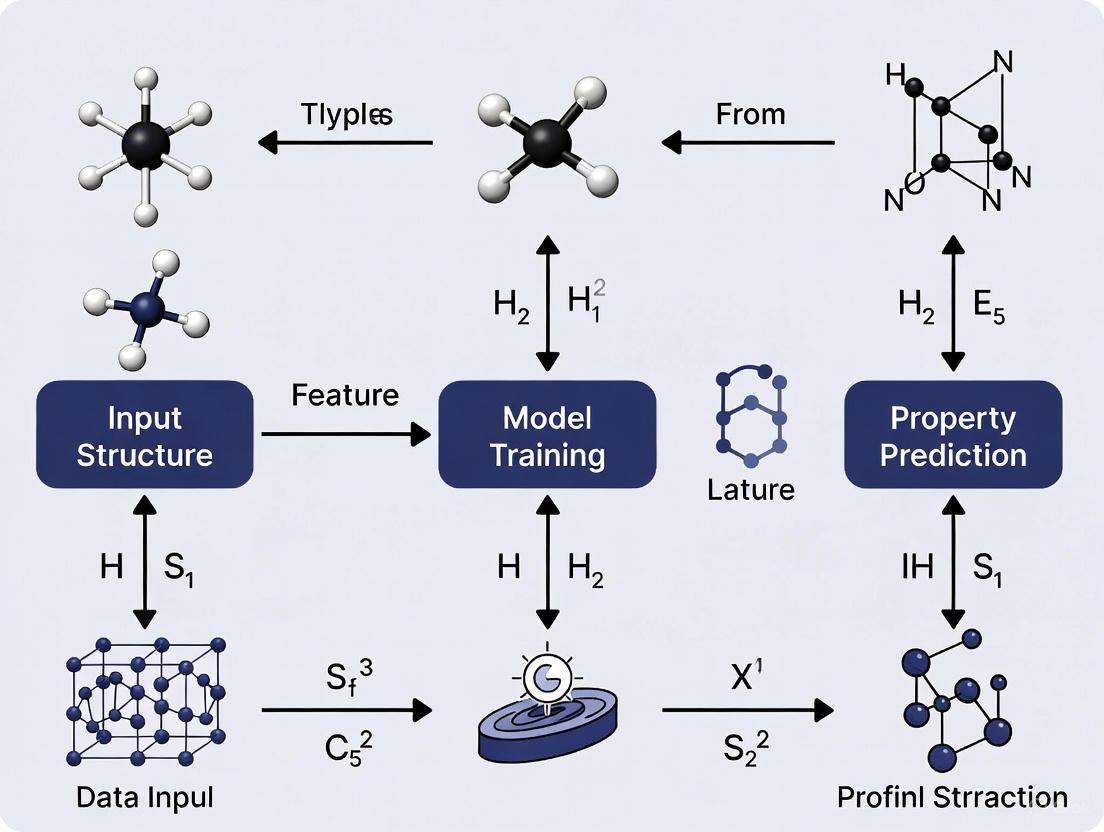
This article provides a comprehensive overview of machine learning (ML) applications for predicting material properties from structural data, tailored for researchers and drug development professionals.
Predicting Material Properties: A Machine Learning Roadmap for Accelerated Discovery
Abstract
This article provides a comprehensive overview of machine learning (ML) applications for predicting material properties from structural data, tailored for researchers and drug development professionals. It explores the foundational principles of ML in materials science, delves into advanced methodologies like graph neural networks and image-based learning, and addresses key challenges such as data scarcity and model interpretability. The content also covers rigorous validation techniques and comparative analyses of model performance across different material classes, including emerging modalities like targeted protein degraders. By synthesizing the latest research, this guide aims to equip scientists with the knowledge to leverage ML for accelerating the design and discovery of new materials and therapeutics.
The Foundation: Why Machine Learning is Revolutionizing Materials Science
The field of materials science is undergoing a profound paradigm shift, moving from traditional empirical methods toward sophisticated, data-driven discovery. This transition is critical for addressing society's pressing demands for advanced materials in areas ranging from clean energy to healthcare, where development cycles have historically spanned decades [1]. The core of this transformation lies in the ability to predict material properties from their structure using machine learning (ML), thereby accelerating the discovery and design of novel materials with tailored characteristics.
Traditional materials development relied heavily on experimental trial-and-error or high-throughput computational screening, which are often time-consuming and resource-intensive [2] [3]. The emergence of materials informatics has created new pathways to overcome these limitations by leveraging large-scale data analysis and machine learning algorithms to establish crucial relationships between material compositions, structures, and properties [4] [1]. This approach is particularly powerful for identifying materials with exceptional properties that fall outside known distributions—a capability essential for groundbreaking discoveries [2].
The Data-Driven Revolution in Materials Science
Historical Context and Paradigm Shift
The evolution of materials science reflects a journey through different scientific eras, culminating in the current fourth paradigm of data-driven science. This new era builds upon the previous three—experimental, theoretical, and computational science—by systematically extracting knowledge from large, complex datasets [5]. The dramatic uptake of ML in materials science is evidenced by bibliometric analyses; one assessment noted that titles with ML focus in a leading computational materials journal rose from approximately 16% in 2017 to about 42% in recent years [6].
This shift has been facilitated by several key developments, including the open science movement, substantial national funding initiatives, and remarkable progress in information technology [5]. The proliferation of open materials databases such as the Materials Project, AFLOW, NOMAD, and JARVIS has provided the foundational data resources necessary for training ML models [2] [6]. Concurrently, the development of high-quality open-source software packages including scikit-learn, PyTorch, and JAX has democratized access to advanced ML tools [6].
Key Challenges in Traditional Approaches
Traditional materials development faces significant hurdles that data-driven approaches aim to overcome:
Multiple Length Scale Challenge: Material properties emerge from hierarchical structures forming over multiple time and length scales, from atomic interactions to macroscopic morphology. Understanding these complex process-structure-property (PSP) linkages represents a fundamental challenge in materials design [1].
Computational Limitations: Conventional crystal structure prediction methods based on density functional theory (DFT) provide high accuracy but are computationally expensive, restricting their application to relatively small systems [4].
Temporal and Resource Constraints: The average time for novel materials to reach commercial maturity remains approximately 20 years, creating an urgent need for accelerated discovery approaches [1].
Machine Learning Frameworks for Materials Property Prediction
Core Machine Learning Approaches
Machine learning applications in materials property prediction primarily utilize supervised learning frameworks, where models are trained on labeled datasets to establish mappings between material representations (inputs) and target properties (outputs). These approaches generally fall into classification tasks, such as distinguishing between crystalline and amorphous phases, and regression tasks for predicting continuous properties like formation energy or band gap [4].
The predictive modeling process involves several key steps: selecting appropriate material representations or "fingerprints," choosing suitable algorithm architectures, training models on available data, and validating predictions against unseen data [1]. The material fingerprint acts as a DNA code composed of individual "genes" (descriptors) that connect fundamental material characteristics to macroscopic properties [1].
Table 1: Key Machine Learning Algorithms for Materials Property Prediction
| Algorithm Category | Specific Methods | Typical Applications | Key Advantages |
|---|---|---|---|
| Traditional ML | Ridge Regression, Random Forest, Support Vector Machines | Composition-based property prediction, Small to medium datasets | Interpretability, Lower computational requirements |
| Deep Learning | Convolutional Neural Networks (CNNs), Fully Connected Neural Networks, Graph Neural Networks | Crystal property prediction, Image-based classification, Complex structure-property mappings | Automatic feature extraction, Handling complex nonlinear relationships |
| Specialized Architectures | Bilinear Transduction, Ensemble of Experts, CrabNet | Out-of-distribution prediction, Data-scarcity scenarios, Transfer learning | Improved extrapolation, Knowledge transfer between properties |
Addressing Data Scarcity Through Advanced Architectures
Data scarcity poses a significant challenge in materials science, particularly for predicting complex material properties where experimental data is limited. Recent innovations have addressed this limitation through specialized ML architectures:
Ensemble of Experts (EE) Approach: This methodology leverages pre-trained models ("experts") on datasets of different but physically meaningful properties. The knowledge encoded by these experts is then transferred to make accurate predictions on more complex systems, even with very limited training data [7]. The EE framework has demonstrated superior performance over standard artificial neural networks, particularly under severe data scarcity conditions for predicting properties like glass transition temperature (Tg) and the Flory-Huggins interaction parameter (χ) [7].
Bilinear Transduction for OOD Prediction: For discovering high-performance materials, extrapolation to out-of-distribution (OOD) property values is critical. Bilinear Transduction reparameterizes the prediction problem by learning how property values change as a function of material differences rather than predicting these values directly from new materials [2]. This approach has shown 1.8× improvement in extrapolative precision for materials and 1.5× for molecules, boosting recall of high-performing candidates by up to 3× [2].
Table 2: Performance Comparison of ML Methods for OOD Property Prediction
| Method | Bulk Modulus MAE | Shear Modulus MAE | Debye Temperature MAE | Extrapolative Precision | Recall of Top Candidates |
|---|---|---|---|---|---|
| Ridge Regression | Baseline | Baseline | Baseline | Baseline | Baseline |
| MODNet | -6.2% | -4.8% | -5.7% | +22% | +45% |
| CrabNet | -8.1% | -6.3% | -7.2% | +31% | +62% |
| Bilinear Transduction | -14.5% | -12.7% | -13.9% | +80% | +200% |
Experimental Protocols and Application Notes
Protocol: Bilinear Transduction for OOD Property Prediction
Objective: To train predictor models that extrapolate zero-shot to higher property value ranges than present in training data, given chemical compositions of solids or molecular graphs and their property values.
Materials and Data Requirements:
- Solid-state materials datasets (AFLOW, Matbench, Materials Project) or molecular datasets (MoleculeNet)
- Stoichiometry-based representations for solids or graph representations for molecules
- Property values spanning a defined range for training, with OOD test sets covering extended ranges
Procedure:
- Data Preparation: Curate datasets containing material compositions and corresponding property values. For solids, focus on compositionally driven variation in properties using stoichiometry-based representations.
- Training-Test Split: Partition data into in-distribution (ID) training and validation sets, and OOD test sets with property values outside the training distribution.
- Model Training: Implement Bilinear Transduction by reparameterizing the prediction problem to learn how property values change as a function of material differences.
- Inference: During prediction, base estimates on known training examples and the difference in representation space between them and new samples.
- Validation: Evaluate using mean absolute error (MAE) for OOD predictions and compute extrapolative precision to measure identification of top OOD candidates.
Validation Metrics:
- Mean Absolute Error (MAE) for OOD predictions
- Extrapolative precision: Fraction of true top OOD candidates correctly identified
- Recall of high-performing candidates: Percentage of materials with exceptional properties successfully identified
Protocol: Ensemble of Experts for Data-Scarce Scenarios
Objective: To predict complex material properties under severe data scarcity conditions by leveraging knowledge transfer from pre-trained models on related physical properties.
Materials:
- Tokenized SMILES strings for molecular representation
- Pre-trained "expert" models on related physical properties
- Limited target property data (Tg for molecular glass formers, χ for polymer-solvent systems)
Procedure:
- Expert Model Preparation: Pre-train multiple expert models on large, high-quality datasets for different but physically meaningful properties.
- Fingerprint Generation: Use these experts to generate molecular fingerprints that encapsulate essential chemical information.
- Target Model Training: Train models on limited target property data using the generated fingerprints as input features.
- Ensemble Integration: Combine predictions from multiple expert-informed models to enhance accuracy and generalization.
- Performance Validation: Compare against standard ANN models trained solely on the limited target data.
Validation Metrics:
- Predictive accuracy (R², MAE) under varying data scarcity conditions (using 10%, 30%, 50% of available data)
- Generalization capability across diverse molecular structures and interactions
- Comparison with standard ANN performance benchmarks
Visualization of Key Workflows
Data-Driven Materials Discovery Workflow
Ensemble of Experts Architecture
Table 3: Key Research Reagent Solutions for Data-Driven Materials Science
| Resource Category | Specific Tools | Function | Application Examples |
|---|---|---|---|
| Materials Databases | Materials Project, AFLOW, NOMAD, JARVIS, OQMD | Provide curated datasets of material structures and properties | Training data for ML models, High-throughput screening |
| Representation Methods | Stoichiometry-based descriptors, Graph representations, SMILES strings, Material fingerprints | Encode material structures in machine-readable formats | Input features for property prediction models |
| ML Frameworks | scikit-learn, PyTorch, JAX, TensorFlow | Implement and train machine learning models | Developing custom prediction pipelines |
| Specialized ML Models | Bilinear Transduction, Ensemble of Experts, CrabNet, MODNet | Address specific challenges like OOD prediction and data scarcity | Extrapolative prediction, Knowledge transfer |
| Validation Tools | Matbench, Various ML reproducibility checklists | Benchmark model performance and ensure research rigor | Comparative analysis, Method standardization |
Future Perspectives and Challenges
The field of data-driven materials discovery continues to evolve rapidly, with several emerging trends and persistent challenges shaping its development. Key among these is the need for improved model interpretability, as understanding the physical basis for ML predictions remains crucial for scientific acceptance and fundamental insight [6]. The development of standardized validation protocols and reproducibility checklists represents an important step toward establishing community-wide best practices [6].
Future advancements will likely focus on enhancing generalization capabilities across diverse materials classes, integrating multi-fidelity data from computational and experimental sources, and developing more sophisticated approaches for uncertainty quantification [2] [7]. As these technical challenges are addressed, data-driven methodologies are poised to become increasingly integral to materials research and development, potentially reducing discovery timelines from decades to months and unlocking new regions of materials property space [8] [1].
The integration of physical knowledge through hybrid modeling approaches, combining ML with domain-inspired constraints and first-principles understanding, represents a particularly promising direction for future research [7]. Such approaches may ultimately fulfill the vision of a "Materials Ultimate Search Engine" (MUSE) that can rapidly identify optimal materials for specific applications, dramatically accelerating innovation across numerous technology sectors [5].
In materials property prediction, the exceptional accuracy of complex Machine Learning (ML) models often comes at the cost of understanding. The most accurate models, such as deep neural networks (DNNs), frequently operate as "black boxes," making it challenging to trust their predictions or gain scientific insights from them [9]. This opacity is particularly problematic in scientific fields like materials science and drug discovery, where understanding the "why" behind a prediction is as crucial as the prediction itself [10] [11]. Two concepts central to addressing this challenge are transparency and explainability. Though sometimes used interchangeably, they represent distinct aspects of understanding AI systems [12] [13]. For researchers and scientists, mastering these concepts is essential for building trustworthy, reliable, and scientifically useful predictive models.
Core Conceptual Definitions
Understanding the precise meaning of key terms is the first step toward their practical implementation. The table below defines the core concepts as they apply to materials and drug discovery research.
Table 1: Core Concepts in ML Model Understanding
| Concept | Core Definition | Primary Focus | Key Question | Example in Materials Science |
|---|---|---|---|---|
| Transparency [12] [13] | Openness about the AI system's design, development, and deployment processes. | The entire system's architecture and data. | "How is the model built and what data was used?" | An open-source ML project on GitHub providing full source code, training dataset, and documentation for a model predicting formation energy [12]. |
| Explainability [12] [13] | The ability to describe, in understandable terms, the reasoning behind a specific decision or output. | The logic behind an individual prediction. | "Why did the model make this specific prediction?" | A model predicting a low bandgap for a perovskite highlights the specific elemental interactions and structural features that led to that prediction [12] [9]. |
| Interpretability [12] [14] | A deeper, often technical, understanding of the model's internal decision-making processes and mechanics. | The inner workings of the algorithm itself. | "How do the model's internal mechanisms lead to its decisions?" | Using a decision tree for a polymer stability prediction where each node represents a clear decision based on a molecular descriptor, allowing the entire path to be traced [12]. |
A crucial technical distinction lies in how explainability and interpretability are achieved. Interpretable models are often inherently transparent, designed from the ground up to be understood by humans (e.g., linear models with non-linear basis functions or short decision trees) [15] [14]. In contrast, explainability is often achieved through post-hoc techniques—external methods applied after a complex "black-box" model has made a prediction to provide a plausible rationale for it [14]. Common techniques include SHAP (SHapley Additive exPlanations) and LIME (Local Interpretable Model-agnostic Explanations) [16] [14].
Experimental Protocols for XAI in Materials Science
Implementing Explainable AI (XAI) requires a structured methodology. The following protocol provides a workflow for integrating explainability into a materials property prediction project, from data preparation to insight generation.
Diagram 1: XAI Experimental Workflow
Phase 1: Data Preparation and Feature Engineering
Objective: To curate a dataset with human-interpretable features that represent material structures. Detailed Steps:
- Data Collection: Assemble a dataset of materials structures and their corresponding target properties (e.g., bandgap, tensile strength, formation energy). Sources can include computational databases (e.g., DFT calculations) or historical experimental data [17].
- Feature Engineering: Transform raw structural data (e.g., composition, crystal structure) into a set of numerical descriptors. The interpretability of the final model depends heavily on this step.
- Examples: Calculate compositional features (e.g., atomic radii, electronegativity), structural features (e.g., symmetry, coordination numbers), or domain-specific descriptors (e.g., porosity, build direction for additively manufactured materials) [17].
- Tool: Use libraries like
pymatgenormatminerto automate feature generation.
Phase 2: Model Development and Training
Objective: To train both a high-accuracy (potentially black-box) model and an inherently interpretable model for comparison. Detailed Steps:
- Baseline Interpretable Model: Train a simple, transparent model such as Linear Regression or a shallow Decision Tree. This provides a benchmark for both performance and explainability.
- Advanced Model Training: Train a high-performance model such as:
- Model Evaluation: Compare models using standard metrics (e.g., Mean Absolute Error, R² score) on a held-out test set.
Phase 3: XAI Analysis and Explanation
Objective: To generate explanations for the model's predictions, both globally and locally. Detailed Steps:
- Global Explanation (Model-Level):
- Technique: Apply SHAP to calculate the mean absolute impact of each feature on the model's output across the entire dataset [16].
- Output: A bar plot of mean(|SHAP value|) reveals the most important features globally.
- Local Explanation (Prediction-Level):
- Technique: For a single material's prediction, use SHAP or LIME to explain which features were most influential for that specific outcome [16].
- Output: A force plot or a list of weighted features showing their contribution to pushing the prediction higher or lower.
Phase 4: Explanation and Model Validation
Objective: To ensure the explanations are faithful and the model's behavior aligns with physical principles. Detailed Steps:
- Physical Consistency Check: Analyze if the important features identified by XAI align with known domain knowledge. For example, a model predicting formation energy for elpasolite crystals should assign coefficients that reflect trends across the periodic table [15].
- Sensitivity Analysis: Perturb input features and observe changes in the prediction to verify the causal relationships suggested by the XAI output.
Phase 5: Scientific Insight and Hypothesis Generation
Objective: To translate model explanations into actionable scientific knowledge. Detailed Steps:
- Hypothesis Formulation: Use the feature-property relationships uncovered by XAI to form new hypotheses. For instance, if a specific structural motif is consistently identified as crucial for high ionic conductivity, hypothesize that synthesizing new materials with enhanced versions of this motif will improve performance.
- Inverse Design: Leverage the interpretable model to guide the search for new materials by identifying the combination of features that leads to a desired property [15].
The Scientist's Toolkit: Key Reagents and Computational Solutions
The successful application of XAI in materials informatics relies on a suite of computational tools and methodologies.
Table 2: Essential Research Reagents for XAI in Materials Science
| Tool / Solution | Category | Primary Function | Application Example |
|---|---|---|---|
| SHAP (SHapley Additive exPlanations) [16] | Post-hoc Explainability | Unifies several explanation methods to quantify the contribution of each feature to a single prediction. | Explaining why a specific (AlxGayInz)2O3 compound was predicted to have a high formation energy [15]. |
| LIME (Local Interpretable Model-agnostic Explanations) [16] | Post-hoc Explainability | Approximates a complex model locally with an interpretable one (e.g., linear model) to explain individual predictions. | Creating a local, interpretable model to explain a DNN's prediction of toxicity for a specific small molecule [16]. |
| Inherently Interpretable Models (e.g., SISSO, Linear Models with nonlinear basis) [15] | Interpretable ML | Provides a directly understandable functional form for the structure-property relationship, avoiding the black box. | Creating a predictive, simple bilinear model for TCO formation energy that offers direct insight into cluster-cluster interactions [15]. |
| XpertAI Framework [16] | Advanced XAI Framework | Integrates XAI methods with Large Language Models (LLMs) to generate natural language explanations of structure-property relationships from raw data. | Automatically generating a scientific summary of why certain molecular descriptors correlate with a target property, backed by literature evidence [16]. |
Quantitative Comparison of Model Performance and Explainability
The choice of model often involves a trade-off between predictive accuracy and explainability. The following table summarizes performance data from real-world materials science applications, highlighting that simpler, interpretable models can sometimes achieve accuracy comparable to black-box approaches.
Table 3: Performance Comparison of ML Models in Materials Property Prediction
| Material System | Target Property | Model Type | Performance Metric | Explainability / Insights Gained |
|---|---|---|---|---|
| Ti-6Al-4V Alloy (SLM) [17] | Tensile Strength | Gaussian Process Regression (GPR) | MAE: 23.9 MPa | High explainability against human-centric understanding levels. |
| Neural Network (NN) | MAE: 28.24 MPa | Slightly worse explainability compared to GPR [17]. | ||
| Transparent Conducting Oxides (TCOs) [15] | Formation Energy | Kernel Ridge Regression (KRR) | Performance comparable to linear models. | Low; model is a black box. |
| Bilinear Model (proposed interpretable) | Accuracy on par with KRR [15]. | High; provides a clear functional form and reveals cluster-cluster interactions [15]. | ||
| Elpasolite Crystals [15] | Formation Energy | Kernel Ridge Regression (KRR) | Performance comparable to linear models. | Low; model is a black box. |
| Linear Model (proposed interpretable) | Accuracy on par with KRR [15]. | High; coefficients reflect known periodic table trends, enabling validation and guiding new material searches [15]. |
In high-stakes scientific research, such as materials property prediction and drug discovery, a model's accuracy is necessary but not sufficient. Transparency in its construction and explainability in its predictions are critical for building trust, ensuring reliability, and—most importantly—deriving new scientific knowledge [9] [11]. As the field progresses, the integration of frameworks like XpertAI, which combine XAI with literature knowledge, promises to further bridge the gap between data-driven predictions and human scientific reasoning [16]. By adopting the protocols and tools outlined in this document, researchers can move beyond black-box predictions toward a more profound, interpretable understanding of material behavior.
The discovery of next-generation materials and molecules is fundamentally limited by the human capacity to comprehend complex, high-dimensional structure-property relationships. Traditional experimental methods and computational simulations are often resource-intensive and struggle to navigate vast chemical spaces. Machine learning (ML) has emerged as a transformative tool, overcoming these human limits by identifying subtle patterns within complex datasets that are intractable for manual analysis [2] [7]. This is particularly critical for predicting material properties, where the goal is often to discover extremes—materials with property values that fall outside known distributions, thereby unlocking new technological capabilities [2]. This document provides application notes and detailed protocols for applying advanced ML techniques to the challenge of materials property prediction, with a focus on overcoming data scarcity and achieving extrapolation.
Key Methodological Approaches and Protocols
Two advanced ML paradigms addressing core challenges in materials science are detailed below: one for Out-of-Distribution (OOD) property prediction and another for data-scarcity scenarios.
Protocol 1: Bilinear Transduction for OOD Property Prediction
The objective of this protocol is to train predictor models that extrapolate zero-shot to property value ranges higher than those present in the training data, given chemical compositions or molecular graphs [2].
Application Notes
Bilinear Transduction reparameterizes the prediction problem. Instead of predicting a property value from a new candidate material directly, it learns how property values change as a function of material differences. Predictions are made based on a known training example and the difference in representation space between that example and the new sample [2]. This method has been shown to improve extrapolative precision by 1.8× for materials and 1.5× for molecules, and can boost the recall of high-performing candidates by up to 3× [2].
Step-by-Step Experimental Protocol
- Data Preparation: Curate a dataset of material compositions (e.g., as stoichiometry) or molecular graphs (e.g., as SMILES strings) with corresponding property values. The training set should intentionally exclude the high-value region of the target property to simulate an OOD scenario.
- Representation: Convert the material inputs into a numerical representation. For solids, use stoichiometry-based representations; for molecules, use graph-based representations or tokenized SMILES strings [2] [7].
- Model Training (Transductive Learning):
- For a test candidate material, select a analogous training example.
- Compute the difference vector between the test candidate's representation and the training example's representation.
- The model is trained to predict the property value for the test candidate based on the chosen training example's property and the calculated representation difference.
- Inference: During inference, property values for new samples are predicted using the same logic—based on a selected training example and the difference between it and the new sample.
- Validation: Evaluate the model on a held-out test set containing property values outside the training distribution. Key metrics include Mean Absolute Error (MAE) for OOD samples and extrapolative precision, defined as the fraction of true top OOD candidates correctly identified among the model's top predictions [2].
Protocol 2: Ensemble of Experts for Data-Scarcity Scenarios
The objective of this protocol is to accurately predict complex material properties, such as glass transition temperature (Tg) or the Flory-Huggins interaction parameter (χ), when labeled training data for the target property is severely limited [7].
Application Notes
The Ensemble of Experts (EE) approach overcomes data scarcity by leveraging knowledge from pre-trained models ("experts") on large, high-quality datasets for different but physically related properties. The knowledge encoded in these experts is transferred to the new prediction task with limited data, significantly outperforming standard artificial neural networks (ANNs) trained from scratch on the small dataset [7].
Step-by-Step Experimental Protocol
- Expert Pre-training: Train multiple independent models (e.g., ANNs) on large, available datasets for foundational material properties (e.g., formation energy, band gap). These properties should be physically relevant to the target property.
- Fingerprint Generation: For each data point in the small target dataset (e.g., Tg), pass the molecular representation (e.g., a tokenized SMILES string) through each pre-trained expert. Extract a feature vector (the "fingerprint") from an intermediate layer of each network.
- Fingerprint Aggregation: Concatenate or otherwise combine the fingerprints generated by all experts to create a comprehensive, knowledge-rich input vector for the target property predictor.
- Target Model Training: Train a final predictor model (e.g., a shallow ANN) on the small target dataset, using the aggregated fingerprints as input features and the target property values (e.g., Tg) as labels.
- Validation: Compare the performance of the EE system against a standard ANN trained directly on the limited target data using metrics like predictive accuracy and generalization across diverse molecular structures [7].
Experimental Workflow and Logical Diagrams
The following diagrams illustrate the logical workflows for the two primary protocols described in this document.
OOD Prediction via Bilinear Transduction
Ensemble of Experts for Data Scarcity
Performance Metrics and Data
The following tables summarize quantitative performance data for the ML methods discussed.
Table 1: OOD Prediction Performance on Solid-State Materials
Table showing Mean Absolute Error (MAE) for OOD predictions on benchmark datasets (AFLOW, Matbench, Materials Project) across various material properties. Bilinear Transduction is compared against baseline methods. [2]
| Material Property | Ridge Regression | MODNet | CrabNet | Bilinear Transduction |
|---|---|---|---|---|
| Band Gap | 0.41 | 0.39 | 0.38 | 0.35 |
| Bulk Modulus | 0.081 | 0.079 | 0.078 | 0.075 |
| Debye Temperature | 0.061 | 0.060 | 0.059 | 0.056 |
| Shear Modulus | 0.098 | 0.095 | 0.093 | 0.090 |
| Thermal Conductivity | 0.121 | 0.118 | 0.116 | 0.112 |
Table 2: Performance under Data Scarcity
Table comparing the performance of a standard ANN versus the Ensemble of Experts approach when predicting the glass transition temperature (Tg) of molecular glass formers with limited data. [7]
| Training Set Size | Standard ANN (MAE in K) | Ensemble of Experts (MAE in K) |
|---|---|---|
| 50 samples | 12.5 | 8.2 |
| 100 samples | 9.1 | 6.0 |
| 200 samples | 7.2 | 4.8 |
The Scientist's Toolkit: Research Reagent Solutions
This section details key computational "reagents" essential for conducting experiments in ML-driven materials property prediction.
| Resource Name / Type | Function / Application | Reference / Source |
|---|---|---|
| Tokenized SMILES Strings | A representation for molecular structures that enhances a model's capacity to interpret chemical information compared to traditional one-hot encoding. | [7] |
| Morgan Fingerprints | Encodes chemical substructures as bit vectors; a widely used strategy for featurizing molecules for machine learning models. | [7] |
| MatEx (Materials Extrapolation) | An open-source implementation of the Bilinear Transduction method for OOD property prediction, available for use and validation. | https://github.com/learningmatter-mit/matex |
| Pre-trained Expert Models | Models previously trained on large datasets of related physical properties (e.g., formation energy), used to generate knowledge-rich fingerprints for new tasks. | [7] |
| Coblis / Color Oracle | Color blindness simulators used to preview and ensure that data visualizations and charts are accessible to all researchers. | [18] |
In modern drug development, the journey from a molecular structure to a safe and effective therapeutic is governed by a series of key properties spanning multiple scales. Traditionally, optimizing these properties has been a sequential, resource-intensive process. The integration of machine learning (ML) from materials informatics is revolutionizing this pipeline by enabling the simultaneous prediction of properties from the atomic scale, such as formation energy and crystal structure, to the macroscopic, system-level scale of absorption, distribution, metabolism, and excretion (ADME) profiles [19] [20]. This paradigm shift allows researchers to pre-emptively screen for desirable drug-like behavior, de-risking the development process and accelerating the discovery of advanced lead compounds directed toward specific therapeutic indications [19].
Key Property Targets Across Scales
Effective drug discovery requires the optimization of a hierarchy of properties. The table below summarizes the critical property targets from the atomic level to the full organism-level profile.
Table 1: Key Property Targets in Drug Development
| Scale | Property Target | Description | Impact on Development | Common Prediction Methods |
|---|---|---|---|---|
| Atomic / Molecular | Formation Energy / Stability | The energy of a molecule relative to its constituent atoms; indicates stability [21]. | Determines synthetic feasibility and stability of the solid form (e.g., crystal, salt) [4]. | DFT, Graph Neural Networks (GNNs), Roost [21] [22] |
| Crystal Structure (CSP) | The three-dimensional arrangement of atoms in a solid [4]. | Critical for bioavailability, solubility, and manufacturability (polymorph control) [4]. | Genetic Algorithms, Particle Swarm Optimization, ML Potentials [4] | |
| Solubility (logS) | Logarithm of aqueous solubility (mol/L) [19]. | Directly impacts drug absorption; a prerequisite for oral bioavailability. | QSPR models, Random Forests, ANNs [19] [23] | |
| Physicochemical & In Vitro | ADME Properties (e.g., HIA, PPB) | Absorption, Distribution, Metabolism, Excretion parameters (e.g., % Human Intestinal Absorption, Plasma Protein Binding) [19]. | Predicts in vivo pharmacokinetic behavior and appropriate dosing regimens [19]. | Machine Learning models on curated experimental data [19] |
| Drug-Target Affinity (DTA) | The strength of interaction between a drug molecule and its protein target [24]. | Defines therapeutic potency and selectivity; crucial for efficacy and avoiding side effects. | Deep Learning, Graph Neural Networks, Transformer models [24] | |
| Macroscopic / Clinical | Toxicity & Side Effect Profile | The adverse effects of a compound on biological systems. | Ultimate determinant of clinical safety and patient quality of life. | Multitask Learning, Knowledge Graphs [24] |
Experimental Protocols for Property Prediction
This section details standardized methodologies for building predictive models for key properties, leveraging insights from both materials science and cheminformatics.
Protocol: Predicting Formation Energy for Molecular Stability
Objective: To build a deep transfer learning model for predicting the formation energy of a drug-like molecule from its composition and structure, achieving accuracy that surpasses traditional Density Functional Theory (DFT) computations [21].
Workflow:
Data Acquisition:
- Source Domain Data: Obtain a large dataset (>100,000 data points) of DFT-computed formation energies and structures from databases like the Open Quantum Materials Database (OQMD), Materials Project (MP), or Joint Automated Repository for Various Integrated Simulations (JARVIS) [21].
- Target Domain Data: Collect a smaller, high-quality experimental dataset of formation energies for pharmaceutically relevant compounds (e.g., from the "exp-formation-enthalpy" database) [21].
Model Pre-training:
- Train a deep neural network (e.g., IRNet) on the large DFT-computed source dataset. The input is the material's composition and crystal structure, and the output is the DFT-predicted formation energy [21].
- This step allows the model to learn a rich set of domain-specific features from the structural data.
Model Fine-tuning:
- Use the smaller experimental dataset to fine-tune the parameters of the pre-trained model. This transfers the knowledge from the DFT domain to the more accurate experimental domain [21].
Model Validation:
- Evaluate the model on a hold-out experimental test set. The target performance is a Mean Absolute Error (MAE) lower than the known discrepancy between DFT computations and experiments (e.g., < 0.076 eV/atom) [21].
Protocol: Building a QSPR Model for ADME Properties
Objective: To create a robust Quantitative Structure-Property Relationship (QSPR) model for predicting human intestinal absorption (HIA) using an open-source toolkit [23].
Workflow:
Data Curation:
- Collect a dataset of compounds with experimentally measured HIA values (e.g., from scholarly literature or databases like e-Drug3D) [19].
- Standardize molecular structures from SMILES strings using a tool like RDKit, ensuring consistent representation (e.g., neutralizing charges, removing duplicates) [23].
Featurization:
- Convert the standardized molecules into numerical descriptors. Use the QSPRpred toolkit to generate a combination of features, which can include:
Model Training and Benchmarking:
Model Serialization and Deployment:
- Serialize the final model using QSPRpred's automated system, which saves the model with all required data pre-processing steps. This allows for direct prediction on new compounds from their SMILES strings, ensuring reproducibility and transferability into practice [23].
Visualization of Workflows
The following diagrams illustrate the core computational workflows for the protocols described above.
Deep Transfer Learning for Formation Energy
QSPR Model Development for ADME Properties
Successful implementation of property prediction models relies on a suite of computational tools and data resources.
Table 2: Essential Computational Tools for Property Prediction
| Tool / Resource | Type | Primary Function | Application Example |
|---|---|---|---|
| RDKit | Cheminformatics Library | Molecule standardization, descriptor calculation, and fingerprint generation [19]. | Calculating topological polar surface area (PSA) and AlogP for QSPR models [19]. |
| QSPRpred | QSPR Modelling Toolkit | End-to-end workflow for data analysis, model building, benchmarking, and deployment [23]. | Building a serialized model for Human Intestinal Absorption (HIA) prediction that can be deployed directly from SMILES. |
| Roost | Structure-Agnostic ML Model | Predicts material properties from stoichiometry alone, without requiring a 3D crystal structure [22]. | Rapid screening of formation energy for novel molecular compositions when structural data is unavailable. |
| Materials Project / OQMD | Computational Database | Databases of DFT-calculated properties for inorganic materials and molecules [21] [22]. | Source of large-scale data for pre-training deep learning models on properties like formation energy. |
| Tokenized SMILES | Data Representation | Represents molecular structures as tokenized arrays, improving chemical interpretation for ML models [7]. | Used as input to neural networks for predicting properties like glass transition temperature (Tg) in polymer-drug systems. |
| Magpie Fingerprint | Fixed-Length Descriptor | A hand-engineered feature vector encoding elemental properties of a material's composition [22]. | Used as a baseline feature set or a pre-training target for structure-agnostic property prediction. |
ML in Action: Advanced Architectures and Real-World Applications
Molecular Representation Learning (MRL) is a foundational discipline in modern computational chemistry and materials science, concerned with translating molecular structures into mathematical formats that machine learning algorithms can process. This translation is crucial for modeling, analyzing, and predicting molecular behavior and properties, thereby accelerating drug design and materials discovery [25]. The primary challenge lies in capturing the complex relationships between molecular structure and key characteristics such as biological activity, physicochemical properties, and multi-scale functionality.
Effective molecular representation must not only encode chemical structure but also enable efficient exploration of the vast, nearly infinite chemical space to identify compounds with desired biological or physical properties [25]. The evolution of representation methods has progressed from traditional, rule-based descriptors to advanced, data-driven artificial intelligence (AI) approaches. These AI-driven strategies extend beyond traditional structural data, facilitating exploration of broader chemical spaces and accelerating critical tasks like scaffold hopping—the discovery of new core structures while retaining biological activity [25].
This document provides Application Notes and Protocols for three dominant molecular representation paradigms—molecular graphs, SMILES strings, and molecular images—framed within the context of machine learning for materials property prediction. It is structured to equip researchers with both the theoretical understanding and practical methodologies needed to implement these representations in predictive modeling workflows.
Molecular Representation Modalities: A Comparative Analysis
Molecular Graphs
Principles and Applications: Molecular graphs represent molecules as mathematical graphs where atoms correspond to nodes and bonds to edges. This representation intuitively captures the topological structure of molecules, making it particularly powerful for predicting properties intrinsically linked to connectivity and atomic environment [25] [26]. Graph Neural Networks (GNNs) are the primary deep learning architecture designed to process this data structure. They operate by passing messages between connected nodes, iteratively updating node embeddings to capture both local atomic environments and global molecular structure [25].
Advantages and Limitations:
- Advantages: Intuitively captures topological structure; naturally models local and global molecular information; particularly powerful for predicting properties related to molecular connectivity and geometry [25] [26].
- Limitations: Can be computationally intensive; performance on small datasets may require transfer learning strategies to mitigate overfitting [27].
SMILES Strings
Principles and Applications: The Simplified Molecular-Input Line-Entry System (SMILES) provides a compact string-based representation of molecular structures, using a grammar of atomic symbols and rules to denote branching, cycles, and bond types [25]. Inspired by advances in Natural Language Processing (NLP), models such as Transformers and BERT have been adapted to process SMILES strings by tokenizing them at the atomic or substructure level [25].
Advantages and Limitations:
- Advantages: Compact and human-readable; vast existing infrastructure for generation and parsing; benefits from direct application of powerful NLP architectures [25].
- Limitations: Inherently sequential nature can obscure spatial relationships; different SMILES strings can represent the same molecule (lack of canonicalization); small syntactic changes can lead to invalid or vastly different chemical structures [25].
Molecular Images
Principles and Applications: Molecular images represent chemical structures as 2D raster images, typically depicting structural formulas with atoms and bonds. This approach offers a model-agnostic featurization that can leverage powerful, pre-trained computer vision models [26]. A significant advantage is the ability to utilize vision foundation models, such as OpenAI's CLIP, as a backbone for molecular encoders, a strategy employed by the MoleCLIP framework [26].
Advantages and Limitations:
- Advantages: Model-agnostic featurization; enables use of powerful, pre-trained computer vision models; less explicit bias introduced compared to engineered descriptors [26].
- Limitations: Images are less explicit and compact than graphs or strings; representation can be sparse (many pixels are empty); may not be the most efficient encoding of structural information [26].
Table 1: Comparative Analysis of Molecular Representation Modalities
| Feature | Molecular Graphs | SMILES Strings | Molecular Images |
|---|---|---|---|
| Primary Data Structure | Graph (Nodes, Edges) | Sequential String | 2D Pixel Grid |
| Key Strengths | Captures topology & geometry | Compact, vast tooling | Leverages vision foundation models |
| Common ML Architectures | GNNs, GCNs, Message-Passing Networks | Transformers, RNNs, LSTMs | CNNs, Vision Transformers (ViTs) |
| Sample Use Cases | Quantum property prediction, formation energy | Large-scale generative chemistry, QSAR | Property prediction, few-shot learning |
| Notable Frameworks | CGCNN, ALIGNN | SMILES-BERT, ChemBERTa | MoleCLIP, ImageMol |
Experimental Protocols for Representation-Specific Model Training
Protocol 1: Fine-Tuning a Graph Neural Network for Property Prediction
Objective: To adapt a pre-trained GNN to predict a specific material property (e.g., formation energy) using a limited target dataset.
Materials:
- Pre-trained GNN model (e.g., on a large source dataset like the Materials Project).
- Curated target dataset with known property values.
- Deep learning framework (e.g., PyTorch, TensorFlow).
- Access to GPU computing resources.
Procedure:
- Model Selection and Initialization: Select a pre-trained GNN architecture such as ALIGNN or CGCNN. Initialize the model weights from those pre-trained on a large, diverse dataset like the OQMD or Materials Project [27].
- Data Preparation: Format your target dataset (e.g., 100-800 data points for fine-tuning) into crystal graph or molecular graph structures. Split the data into training, validation, and test sets (e.g., 80/10/10).
- Strategy Selection: Choose a fine-tuning strategy based on target dataset size and similarity to the pre-training data [27]:
- Strategy 1 (Full Fine-Tuning): Re-train all layers of the model on the target dataset. Use a low learning rate (e.g., 1e-5 to 1e-4) to avoid catastrophic forgetting.
- Strategy 2 (Feature Extraction): Freeze the weights of the pre-trained graph encoder layers. Only train the newly initialized property prediction head (regressor). This is suitable for very small datasets (<100 samples).
- Model Training:
- Use a Mean Absolute Error (MAE) or Mean Squared Error (MSE) loss function.
- Employ the Adam optimizer with a reduced learning rate.
- Monitor performance on the validation set to implement early stopping and prevent overfitting.
- Model Evaluation: Evaluate the final fine-tuned model on the held-out test set. Report standard metrics: MAE, R² score, and RMSE. Compare performance against a model trained from scratch on the same target data.
Protocol 2: Implementing a Molecular Image Representation Learner (MoleCLIP)
Objective: To leverage a vision foundation model for molecular property prediction using image representations.
Materials:
- RDKit software for generating molecular images from SMILES.
- Pre-trained MoleCLIP model or OpenAI's CLIP model weights.
- Dataset of molecular SMILES and corresponding property labels.
- Computational environment for deep learning.
Procedure:
- Molecular Image Generation: Use RDKit to convert SMILES strings from your dataset into 2D structure images. Standardize image dimensions (e.g., 224x224 pixels) and formatting [26].
- Model Initialization: Initialize the image encoder using the pre-trained weights from a vision foundation model like CLIP. This model has been trained on hundreds of millions of general image-text pairs, providing a robust starting point [26].
- Molecular Pre-training (Optional but Recommended): Further pre-train the encoder on a large, unlabeled molecular dataset (e.g., ChEMBL-25 with 1.9M molecules). Employ two simultaneous self-supervised tasks [26]:
- Structural Classification: Assign pseudo-labels via clustering of molecular fingerprints and train the model to classify structures.
- Contrastive Learning (SimCLR): Generate augmented versions of each molecular image and train the model to minimize the distance between augmented pairs in the latent space.
- Fine-Tuning for Property Prediction: Add a task-specific prediction head (a lightweight Multi-Layer Perceptron). Fine-tune the entire model on the labeled target property dataset. Use a standard regression or classification loss function.
- Validation: Benchmark the performance of MoleCLIP against state-of-the-art graph and string-based models on standard benchmarks like MoleculeNet to validate its efficacy, especially in low-data regimes [26].
Protocol 3: Multi-Modal Pre-Training for Enhanced Generalization
Objective: To create a general-purpose molecular encoder by pre-training on multiple data modalities and properties simultaneously.
Materials:
- Multi-modal datasets (e.g., combining structural, compositional, and image data).
- A flexible model architecture (e.g., a transformer-based encoder for each modality).
- High-performance computing cluster for large-scale training.
Procedure:
- Data Curation: Assemble a large and diverse dataset encompassing multiple modalities (e.g., graphs, SMILES, images) and various material properties (e.g., formation energy, band gap, shear modulus) from databases like the Materials Project [28].
- Model Architecture Design: Implement a framework like MultiMat, which uses separate encoders for each input modality. The encoders project different modalities into a shared latent space [28].
- Self-Supervised Pre-Training: Train the model using self-supervised objectives such as:
- Masked Modeling: Randomly mask portions of the input (atoms in a graph, tokens in a SMILES string) and train the model to reconstruct them.
- Cross-Modal Contrastive Learning: Maximize the similarity between embeddings of the same molecule represented in different modalities (e.g., its graph and its image) while minimizing similarity with embeddings from different molecules [28].
- Fine-Tuning: For a downstream task, take the pre-trained multi-modal encoder and fine-tune it on the labeled target data, potentially using only one of the input modalities. This approach has been shown to improve performance on tasks with limited data and enhance robustness to distribution shifts [28].
- Evaluation: Test the model's performance on out-of-domain datasets and its ability to extrapolate to property values outside the training distribution to validate its generalization capability [2].
Table 2: Key Software and Data Resources for Molecular Representation Learning
| Resource Name | Type | Primary Function | Relevance to Representation |
|---|---|---|---|
| RDKit | Software | Cheminformatics and ML | Generates molecular descriptors, fingerprints, and images from SMILES/Graphs [26]. |
| ALIGNN | Model | Graph Neural Network | Processes atomic graphs and bond angles for accurate material property prediction [27]. |
| CLIP (OpenAI) | Model | Vision Foundation Model | Serves as a backbone for molecular image encoders (e.g., in MoleCLIP) [26]. |
| ChemBERTa | Model | Language Model | Pre-trained transformer for SMILES strings, usable for feature extraction or fine-tuning. |
| Materials Project | Database | Crystalline Materials Data | Primary source of data for pre-training and benchmarking models on solid-state materials [27] [28]. |
| ChEMBL | Database | Bioactive Molecules | Large-scale dataset of drug-like molecules for pre-training molecular encoders [26]. |
| MoleculeNet | Benchmark | Standardized Tasks | Suite of molecular datasets for fair comparison of ML model performance [26]. |
Advanced Applications & Future Directions
Scaffold Hopping and Inverse Design
AI-driven molecular generation methods have emerged as a transformative approach for scaffold hopping. Techniques such as Variational Autoencoders (VAEs) and Generative Adversarial Networks (GANs) are increasingly utilized to design entirely new scaffolds absent from existing chemical libraries, while simultaneously tailoring molecules to possess desired properties [25]. These models often use graph or SMILES representations to generate novel molecular structures, enabling efficient exploration of chemical space for novel lead compounds [25] [29].
Predicting Out-of-Distribution Properties
A significant challenge in materials informatics is developing models that can extrapolate to predict property values outside the distribution of the training data (OOD). Recent work has proposed transductive approaches, such as the Bilinear Transduction method, which learns how property values change as a function of material differences rather than predicting values from new materials directly [2]. This method reparameterizes the prediction problem, showing improved extrapolative precision for both molecules and solid-state materials [2].
Multi-Task and Transfer Learning
The framework of transfer learning is critical for overcoming data scarcity in materials science. Systematic exploration of pre-training and fine-tuning strategies has shown that models pre-trained on large source datasets (even across different properties) consistently outperform models trained from scratch on small target datasets [27]. Furthermore, Multi-Property Pre-Training (MPT), where a model is pre-trained on several different material properties simultaneously, has been shown to outperform pair-wise pre-training on several datasets and fine-tune effectively on completely out-of-domain datasets, such as 2D material band gaps [27].
Workflow and Architecture Diagrams
Molecular Representation Learning Workflow
Multi-Modal Foundation Model Architecture
The rapid prediction of material properties from atomic structure represents a cornerstone of modern materials informatics, accelerating the discovery of new functional materials for applications ranging from energy storage to drug development. Traditional methods, such as density functional theory (DFT) calculations, provide high accuracy but are computationally intensive and slow, particularly for complex multicomponent systems [30] [29]. Machine learning (ML) surrogates have emerged as powerful tools that overcome these limitations by analyzing large datasets to reveal complex relationships between chemical composition, microstructure, and material properties [29]. Among ML models, Graph Neural Networks (GNNs), Convolutional Neural Networks (CNNs), and Transformers have demonstrated particular success. GNNs incorporate a natural inductive bias for atomic structures, treating atoms as nodes and bonds as edges in a graph representation, which provides a physically intuitive framework for materials science [31] [32]. This architectural deep dive explores the application of these advanced neural network architectures in predicting materials properties, providing detailed protocols, comparative analyses, and implementation frameworks for researchers and scientists.
Architectural Fundamentals and Comparative Analysis
Graph Neural Networks (GNNs) for Structure-Property Relationships
GNNs have gained significant traction in materials property prediction due to their ability to operate directly on graph-structured representations of molecules and crystals. The fundamental principle involves representing a material's structure as a graph ( G = (V, E) ) where atoms comprise the vertex set ( V ) and chemical bonds form the edge set ( E ) [32]. Most GNNs designed for materials science follow the Message Passing Neural Network (MPNN) framework, which involves iterative steps of message passing, node updating, and graph-level readout [32]. During message passing, node information is propagated through edges to neighboring nodes, with each node updating its embedding based on incoming messages. After ( K ) message passing steps, a graph-level embedding is obtained through a permutation-invariant readout function, which is then used for property prediction [32]. This architecture enables GNNs to capture both local atomic environments and global structural information, making them particularly suited for predicting properties governed by atomic interactions and bonding patterns.
Advanced GNN architectures have evolved beyond basic MPNNs to incorporate more sophisticated physical principles. For instance, the Atomistic Line Graph Neural Network (ALIGNN) extends representation to inter-bond relationships by creating edges of a line graph, enabling the model to capture higher-order interactions [33]. Other architectures like MEGNet (MatErials Graph Network) incorporate global state attributes to handle multifidelity data and provide greater expressive power [31]. Equivariant GNNs, such as Equiformer and MACE, ensure that predictions of tensorial properties transform correctly under rotations, making them suitable for predicting directional properties like forces and dipole moments [31].
Convolutional Neural Networks (CNNs) for Spatial and Image-Based Data
CNNs excel at processing data with spatial correlations, making them valuable for materials science applications involving image data or spatially distributed properties. While traditionally applied to 2D image data, 3D CNNs have emerged for molecular property prediction by representing molecular structures as voxelized 3D grids, preserving crucial geometric information about atomic arrangements [34]. However, molecular 3D data often exhibits high sparsity, leading to computational inefficiencies from redundant operations on empty voxels [34].
Innovative approaches like the Prop3D model address these challenges through kernel decomposition strategies that reduce computational cost while maintaining predictive accuracy [34]. For microstructural analysis, multi-input CNNs can simultaneously process multiple views of materials, such as upper surface, lower surface, and cross-sectional images of particleboards, merging information from different perspectives to enhance prediction accuracy for mechanical properties like modulus of elasticity (MOE) and modulus of rupture (MOR) [35]. These architectures typically employ channel and spatial attention mechanisms (e.g., CBAM) to focus on salient features, improving model generalization and interpretability [34] [35].
Transformer Architectures for Compositional and Sequential Data
Transformers, with their self-attention mechanisms, have shown remarkable success in processing sequential and compositional data in materials science. Originally developed for natural language processing, Transformers effectively capture long-range dependencies and relationships in data sequences [30] [33]. In materials informatics, Transformer architectures process composition-based features and human-extracted physical properties, leveraging attention mechanisms to weigh the importance of different elements and features in property prediction [30].
The SMILES Transformer has demonstrated effectiveness on limited databases by processing Simplified Molecular-Input Line-Entry System (SMILES) strings representing molecular structures [36]. More recently, Large Language Models (LLMs) like MatBERT—a materials-specific BERT model pre-trained on scientific literature—have been fine-tuned for property prediction tasks, capturing latent knowledge embedded within domain texts [33]. The exceptional ability of these models to understand semantic relationships and syntactic structures in text representations of materials provides complementary insights to structure-focused models [33].
Comparative Architecture Analysis
Table 1: Comparative Analysis of Neural Network Architectures for Materials Property Prediction
| Architecture | Primary Data Representation | Key Strengths | Common Applications | Notable Models |
|---|---|---|---|---|
| Graph Neural Networks (GNNs) | Graph (nodes=atoms, edges=bonds) | Natural representation of atomic structures; captures topological relationships [31] [32] | Formation energy prediction [37] [30]; band gap prediction [37] [30]; mechanical properties [30] | MEGNet [31]; M3GNet [31]; ALIGNN [33]; CGCNN [36] |
| Convolutional Neural Networks (CNNs) | Grid-based (2D/3D images, voxels) | Effective spatial feature extraction; strong performance on image data [34] [35] | Microstructure-property relationships [35]; 3D molecular property prediction [34] | Prop3D [34]; 3D-DenseNet [34]; Multi-input CNN [35] |
| Transformers | Sequences (compositions, SMILES, text) | Captures long-range dependencies; effective for textual and compositional data [36] [30] [33] | Composition-based prediction [30]; literature-based knowledge extraction [33] | CrabNet [30]; MatBERT [33]; SMILES Transformer [36] |
Advanced Hybrid and Integrated Frameworks
Hybrid Architecture Design Principles
Leading research in materials informatics increasingly focuses on hybrid architectures that combine the strengths of multiple neural network paradigms to overcome individual limitations and enhance predictive performance. These integrated frameworks address fundamental challenges in materials property prediction, including data scarcity, limited model interpretability, and the need to capture both local atomic environments and global structural characteristics [36] [30] [33]. The core design principle involves creating complementary information pathways that process different material representations simultaneously, with fusion mechanisms that integrate these diverse perspectives into a unified predictive model.
The CrysCo framework exemplifies this approach by combining a crystal structure-based GNN (CrysGNN) with a composition-based Transformer network (CoTAN) [30]. The GNN branch processes crystal structures using edge-gated attention graph neural networks that capture up to four-body interactions (atom type, bond lengths, bond angles, dihedral angles), while the Transformer branch analyzes compositional features and human-extracted physical properties [30]. This hybrid design enables the model to leverage both detailed structural information and compositional characteristics, resulting in superior performance for energy-related properties including formation energy and energy above the convex hull [30]. The framework particularly addresses the challenge of capturing global crystal structure and periodicity information, which is often limited in conventional GNNs [30].
Dual-Stream Spatial-Topological Models
For molecular property prediction, the TSGNN architecture introduces a dual-stream approach comprising topological and spatial streams [36]. The topological stream employs a GNN that initializes atom representations using a two-dimensional matrix based on the periodic table of elements, providing a comprehensive depiction of atomic characteristics compared to alternative methods [36]. The spatial stream utilizes a CNN to process spatial information of molecules, capturing three-dimensional geometric arrangements that significantly influence molecular properties [36]. This approach addresses a critical limitation of GNNs that focus primarily on topological relationships while overlooking spatial configurations, which can lead to inaccurate predictions for molecules with identical topologies but distinct spatial arrangements [36].
LLM-GNN Integration Frameworks
The Hybrid-LLM-GNN framework represents a cutting-edge approach that integrates large language models with graph neural networks to enhance both prediction accuracy and model interpretability [33]. This architecture extracts structure-aware embeddings from GNNs and contextual word embeddings from pre-trained LLMs, then concatenates these representations for property prediction [33]. The LLM embeddings provide deep understanding of text sequences, including nuanced semantic relationships, syntactic structures, and commonsense reasoning, while GNN embeddings capture geometric information in atomic connections [33]. This integration has demonstrated up to 25% improvement in accuracy compared to GNN-only approaches, particularly for small datasets [33]. Additionally, by leveraging human-readable text inputs, the framework enables direct mapping between model predictions and string representations, facilitating interpretability by tracing the impact of specific text elements on outputs [33].
Experimental Protocols and Methodologies
Protocol 1: Transfer Learning with GNNs for Data-Scarce Properties
Application Context: Predicting material properties with limited available data (e.g., piezoelectric modulus, mechanical properties) using transfer learning from data-rich source properties [37] [30].
Data Preparation and Preprocessing:
- Source Dataset Selection: Identify a data-rich property for pre-training (e.g., DFT Formation Energy with ~132,752 materials from Materials Project) [37].
- Target Dataset Preparation: Curate target property dataset (e.g., Piezoelectric Modulus with ~941 structures) [37].
- Data Standardization: Apply standardization and normalization to ensure uniformity across datasets. Adjust scales so each dataset can be compared easily [37].
- Graph Representation: Convert crystal structures to graph representations using tools like MatGL's graph converter [31]. Use a consistent cutoff radius (typically 5-8 Å) to define bonds between atoms [31].
Model Architecture and Training:
- Pre-training Phase:
- Transfer Learning Strategy Selection:
- Fine-tuning Implementation:
- Strategy Selection: Choose from four fine-tuning strategies based on target dataset size and similarity to source [37]:
- Unfreezing All Layers: Allows entire model to adapt during fine-tuning.
- Adding a New Prediction Head: Introduces new layer while keeping existing layers frozen.
- Unfreezing Only the Last Layer: Re-trains only the final layer.
- Unfreezing Selective Layers: Allows only specific layers to update.
- Hyperparameter Tuning: Carefully select learning rate (typically lower than pre-training), number of frozen layers, and dataset size used for both pre-training and fine-tuning [37].
- Strategy Selection: Choose from four fine-tuning strategies based on target dataset size and similarity to source [37]:
Performance Evaluation:
- Use appropriate metrics (MAE, RMSE, R²) on held-out test set not used during training [37].
- Compare against baseline models trained from scratch on target dataset [37].
- Evaluate generalization on completely different datasets (e.g., 2D material band gap dataset) to assess out-of-distribution performance [37].
Protocol 2: Multi-Input CNN for Microstructure-Property Prediction
Application Context: Predicting mechanical properties from microstructural images of materials (e.g., particleboard MOE/MOR from surface and cross-section images) [35].
Data Preparation and Preprocessing:
- Image Acquisition: Collect images of material from multiple perspectives (upper surface, lower surface, cross-section) under standardized lighting and magnification conditions [35].
- Image Preprocessing: Apply normalization, resizing to consistent dimensions, and data augmentation (rotation, flipping) to increase dataset size [35].
- Density Integration: Optionally include density information as additional input channel alongside images, as density significantly influences mechanical properties [35].
Model Architecture and Training:
- Single-Input Baseline Models:
- Develop separate CNN models for each image type (upper surface, lower surface, cross-section).
- Use standard CNN architecture with convolutional blocks (convolution, activation, pooling) followed by fully connected layers [35].
- Multi-Input CNN Architecture:
- Early Fusion (Type #1): Merge information from different images after first convolutional block, minimizing parameters and adapting better to relatively small datasets [35].
- Intermediate Fusion (Type #2): Process each image stream through multiple convolutional blocks before merging, allowing specialized feature extraction from each view [35].
- Late Fusion (Type #3): Process each image through complete CNN backbone before merging features, maximizing specialized processing but requiring more data [35].
- Attention Mechanisms: Incorporate channel and spatial attention modules (e.g., CBAM) after convolutional blocks to focus on salient features [34] [35].
- Training Procedure: Use regression loss function, appropriate optimizer (Adam), and learning rate scheduling. Apply regularization techniques (dropout, weight decay) to prevent overfitting [35].
Interpretation and Analysis:
- Regression Activation Maps: Visualize image features strongly correlated with predictions using gradient-based methods [35].
- Feature Importance Analysis: Identify critical morphological factors (e.g., resin distribution, particle alignment, interface characteristics) influencing mechanical properties [35].
Protocol 3: Hybrid LLM-GNN Framework for Enhanced Prediction
Application Context: Enhancing property prediction accuracy and interpretability by combining structural information from GNNs with textual knowledge from LLMs [33].
Data Preparation and Preprocessing:
- Structure Representation: Convert crystal structures to graph representations for GNN processing [33].
- Text Representation Generation: Generate textual descriptions of materials using domain-specific tools (Robocrystallographer, ChemNLP) [33].
- Data Splitting: Use standard splits (80:10:10) with random shuffling for training, validation, and testing [33].
Model Architecture and Training:
- GNN Embedding Extraction:
- Employ pre-trained GNN model (e.g., ALIGNN trained on formation energy) as knowledge model [33].
- Extract structure-aware embeddings from intermediate layers.
- LLM Embedding Extraction:
- Utilize pre-trained LLM (BERT or domain-specific MatBERT) [33].
- Process generated text descriptions through LLM.
- Extract embeddings from final hidden layer by averaging token representations.
- Feature Integration:
- Concatenate GNN and LLM embeddings to create hybrid representations [33].
- Pass combined features through fully-connected deep neural network for prediction.
- Training Strategy: For small datasets, freeze feature extractors and train only the final prediction head. For larger datasets, fine-tune entire architecture end-to-end [33].
Interpretation and Analysis:
- Ablation Studies: Evaluate contributions of GNN-only, LLM-only, and hybrid approaches [33].
- Text Erasure Analysis: Examine model predictions by systematically removing parts of text representation to identify critical descriptive elements [33].
- Domain Adaptation Assessment: Compare performance of general-purpose (BERT) versus domain-specific (MatBERT) language models [33].
Visualization of Architectural Workflows
Diagram 1: Experimental protocols for materials property prediction, showing three distinct methodologies with their data flows and decision points.
Table 2: Essential Research Resources for Materials Property Prediction Experiments
| Resource Category | Specific Tools/Libraries | Function and Application | Key Features |
|---|---|---|---|
| Graph Deep Learning Libraries | Materials Graph Library (MatGL) [31] | "Batteries-included" library for developing GNN models and interatomic potentials | Built on DGL and Pymatgen; implements M3GNet, MEGNet, CHGNet; pre-trained foundation potentials [31] |
| Benchmark Datasets | Materials Project (MP) [37] [30] | Source of DFT-computed material structures and properties | ~146K material entries; formation energies, band gaps, elastic tensors [30] |
| JARVIS-DFT [37] [33] | Repository of DFT-computed properties for diverse materials | 75,993 materials; formation energies, band gaps, spectroscopic properties [33] | |
| Text Representation Tools | Robocrystallographer [33] | Generates textual descriptions of crystal structures from atomic coordinates | Automates creation of domain-knowledge descriptions for LLM processing [33] |
| ChemNLP [33] | Natural language processing library for chemical and materials science text | Domain-specific text processing capabilities [33] | |
| Pre-trained Models | ALIGNN [33] | Graph neural network incorporating bond-angle information | State-of-art performance; enables transfer learning [33] |
| MatBERT [33] | Domain-specific BERT model pre-trained on materials science literature | Captures materials science terminology and scientific reasoning [33] | |
| Simulation Interfaces | Atomic Simulation Environment (ASE) [31] | Python library for working with atoms | Interface for atomistic simulations; compatible with MatGL [31] |
| LAMMPS [31] | Classical molecular dynamics simulator | Integration with machine learning potentials [31] |
The architectural landscape for materials property prediction continues to evolve toward increasingly sophisticated and integrated frameworks. The comparative analysis of GNNs, CNNs, and Transformers reveals distinct strengths and applications, with GNNs excelling in structure-property relationships, CNNs in spatial and image-based data, and Transformers in compositional and sequential data [37] [34] [30]. The emergence of hybrid architectures such as dual-stream GNN-CNN models [36], transformer-GNN frameworks [30], and LLM-GNN integrations [33] demonstrates the field's trajectory toward leveraging complementary representations and knowledge sources.
Future advancements will likely focus on several key areas: improving data efficiency through advanced transfer learning and few-shot learning techniques [37] [33], enhancing model interpretability to build trust and provide scientific insights [33], developing more sophisticated physics-informed architectures that respect fundamental constraints [38], and creating unified foundation models capable of handling diverse materials classes and properties [31]. The continued development of comprehensive libraries like MatGL [31] will lower barriers to entry and standardize implementation practices across the research community. As these architectural innovations mature, they promise to further accelerate the discovery and design of novel materials with tailored properties for specific applications across energy, electronics, medicine, and beyond.
The accurate prediction of material properties from atomic structure is a cornerstone of accelerated materials discovery and drug development. Traditional machine learning models, particularly Graph Neural Networks (GNNs), have demonstrated remarkable success by representing materials as topological graphs, where atoms are nodes and chemical bonds are edges [36]. However, a significant limitation of these topology-only models is their neglect of spatial atomic arrangements and global structural context [36] [30]. Molecules or crystals with identical bond topology but distinct spatial conformations can exhibit vastly different properties [36]. This gap necessitates a paradigm shift towards architectures that explicitly integrate spatial information. Dual-stream models, which process topological and spatial features in parallel, have emerged as a powerful framework to address this limitation, enabling more robust and accurate property prediction across diverse chemical spaces [36] [30] [39].
Conceptual Framework and Key Innovations
Dual-stream models are founded on the principle of feature decoupling, where separate dedicated network streams learn complementary representations of a material's structure.
- The Topological Stream: This component is typically a GNN that operates on the molecular or crystal graph. Its strength lies in learning from the local connectivity and bonding environment of each atom. Innovations in this stream include using advanced GNN architectures like edge-gated attention networks [30] and enriching initial node embeddings with comprehensive atomic features, such as representations derived from the periodic table [36].
- The Spatial Stream: This component is designed to capture global structural information that is inherently missing from the graph topology. Implementations vary, including:
- Convolutional Neural Networks (CNNs) that process molecular representations in 2D or 3D Euclidean space [36].
- Geometric Learning techniques that explicitly model higher-order interactions, such as bond angles and dihedral angles (four-body interactions), to encode 3D periodicity and structural characteristics [30].
- Spectral Methods that leverage frequency-domain transformations to reveal features not easily accessible in the original spatial domain [40].
- Information Fusion: The representations from both streams are fused into a unified descriptor for the final property prediction. Fusion strategies range from simple concatenation to more sophisticated, attention-driven mechanisms that dynamically weigh the contribution of each stream [41] [40].
Table 1: Core Components of Dual-Stream Models in Materials Science
| Component | Primary Function | Common Technical Implementations | Information Captured |
|---|---|---|---|
| Topological Stream | Models atomic connectivity & local bonding | Graph Neural Networks (GNNs), Message Passing Frameworks [36] [39] | Bond types, molecular substructures, atomic neighbors |
| Spatial Stream | Encodes 3D geometry & global structure | 3D CNNs, Geometric Deep Learning (Angle/Dihedral) [36] [30], Spectral Networks [40] | Atomic coordinates, stereochemistry, crystal periodicity, global shape |
| Fusion Mechanism | Integrates features from both streams | Concatenation, Attention Modules [41], Fully Connected Layers [36] | A holistic structure-property representation |
Recent research has introduced several novel dual-stream architectures. The TSGNN model employs a topological stream with periodic table-informed node embeddings and a spatial stream using a CNN, demonstrating superior performance on formation energy prediction [36]. The CrysCo framework utilizes a hybrid of a crystal-based GNN (CrysGNN) that captures up to four-body interactions and a composition-based transformer network (CoTAN) [30]. Another innovation is the KA-GNN, which integrates Kolmogorov-Arnold Networks (KANs) with GNNs, using Fourier-series-based functions to enhance the learning of node embeddings, message passing, and readout functions, thereby improving both accuracy and interpretability [39].
Quantitative Performance and Benchmarking
Empirical evaluations consistently demonstrate that dual-stream models outperform single-stream topology-based models across a wide range of material property prediction tasks. The integration of spatial information provides a significant boost in predictive accuracy and generalization.
Table 2: Performance Comparison of Representative Models on Material Property Prediction Tasks
| Model | Architecture Type | Key Properties Predicted | Reported Performance (vs. Baselines) |
|---|---|---|---|
| TSGNN [36] | Dual-Stream (GNN + CNN) | Formation Energy | Superior performance on Material Project database; outperformed state-of-the-art GNNs. |
| CrysCo (CrysGNN) [30] | Hybrid (GNN + Transformer) | Formation Energy, Band Gap, Energy Above Convex Hull, Elastic Moduli | Outperformed state-of-the-art models (CGCNN, SchNet, MEGNet, ALIGNN) on 8 regression tasks. |
| KA-GNN [39] | GNN with KAN modules | Molecular properties from 7 benchmarks | Consistently outperformed conventional GNNs in prediction accuracy and computational efficiency. |
| Ensemble CGCNN [42] | Ensemble of GNNs | Formation Energy, Band Gap, Density | Ensemble techniques (prediction averaging) substantially improved precision over single models. |
The performance advantages of dual-stream models are particularly evident in challenging prediction scenarios. These include distinguishing between structural isomers (molecules with identical topology but different 3D structures) [36] and predicting properties like EHull (energy above the convex hull), which requires an accurate assessment of thermodynamic stability relative to competing phases [30]. Furthermore, the CrysCoT variant, which employs transfer learning from data-rich properties like formation energy to data-scarce tasks like mechanical property prediction, effectively overcomes the limitation of small datasets [30].
Experimental Protocols and Application Notes
Protocol: Implementing and Training a TSGNN-like Model
Objective: To predict the formation energy of a crystalline material from its Crystallographic Information File (CIF).
Workflow Overview:
Materials and Data Sources:
- Primary Data: The Materials Project (MP) database [36] [30] [42].
- Data Preprocessing: A curated subset of ~46,000 inorganic crystals from MP is used. Structures are filtered for convergence, and target values (formation energies) are sourced from DFT calculations [36].
Step-by-Step Procedure:
- Input Representation Generation:
- Topological Input: Parse the CIF file to create a crystal graph. Each atom is a node, initialized with a feature vector derived from its position in the periodic table (e.g., group and period as a 2D tensor) [36]. Edges represent bonds within a specified cutoff distance.
- Spatial Input: Convert the crystal structure into a 2D/3D grid representation, such as a Coulomb matrix or a voxelized electron density map, which serves as input to the CNN [36].
Model Architecture Configuration:
- Topological Stream: Implement a message-passing GNN (e.g., a variant of CGCNN [42] or an edge-gated GNN [30]). This network updates node and edge features through several layers to capture the topological environment.
- Spatial Stream: Implement a CNN (e.g., a standard 2D/3D CNN or ResNet) to process the spatial grid. The CNN learns to identify salient global structural features.
- Fusion and Regression Head: Concatenate the graph-level embedding (from a global pooling operation on the GNN's node outputs) with the flattened feature map from the final layer of the CNN. Pass this fused vector through a series of fully connected layers to produce the final scalar prediction for formation energy [36].
Training and Validation:
- Partition the dataset into training, validation, and test sets (e.g., 80/10/10 split).
- Use a mean squared error (MSE) loss function and the Adam optimizer.
- Perform hyperparameter tuning (learning rate, graph cutoff radius, CNN kernel sizes) on the validation set. Early stopping should be employed to prevent overfitting.
- Evaluate the final model on the held-out test set and report standard metrics like Mean Absolute Error (MAE).
Protocol: Transfer Learning for Data-Scarce Properties
Objective: To adapt a pre-trained dual-stream model to predict mechanical properties (e.g., bulk modulus) where data is scarce.
Workflow Overview:
Step-by-Step Procedure:
- Pre-training: Train a dual-stream model (e.g., CrysCo [30]) on a large, data-rich source task, such as formation energy prediction, using the entire MP dataset. This allows the model to learn general-purpose, transferable features of atomic structures.
- Model Adaptation: For the target task with limited data (e.g., a small dataset of materials with computed bulk moduli), load the pre-trained weights from the source model.
- Transfer Learning Strategy:
- Keep the weights of the topological and spatial streams frozen to preserve the learned feature representations.
- Remove the final regression layer of the pre-trained model and replace it with a new, randomly initialized regression head (one or more fully connected layers).
- Fine-tuning: Train only the newly replaced regression head on the small dataset of the target property. This approach leverages the powerful features from the pre-trained model while avoiding overfitting on the small target dataset [30].
Table 3: Essential Resources for Dual-Stream Model Development
| Resource Name | Type | Function/Application | Example/Reference |
|---|---|---|---|
| Materials Project (MP) | Database | Primary source of crystal structures and DFT-calculated properties for training and benchmarking [36] [30]. | https://materialsproject.org |
| CGCNN & MT-CGCNN | Benchmark Model | Established GNN architectures serving as foundational baselines and backbone networks for topological streams [42]. | [42] |
| CrysCo Framework | Modeling Framework | A reference hybrid architecture combining crystal GNN and composition transformer, with transfer learning protocols [30]. | [30] |
| ALIGNN | Advanced Model | Incorporates bond angles via line graphs, representing a step beyond basic topological GNNs [30]. | [30] |
| Kolmogorov-Arnold Networks (KANs) | Novel Component | Learnable activation functions on edges for enhanced expressivity and interpretability in GNNs [39]. | [39] |
| Fourier-Series Basis | Mathematical Tool | Used in KANs to capture low and high-frequency structural patterns in molecular graphs [39]. | [39] |
| Ensemble Averaging | Training Strategy | Combining predictions from multiple models to improve accuracy and generalizability [42]. | [42] |
The integration of spatial information with topological graphs through dual-stream models represents a significant leap forward for in silico materials and molecular property prediction. By moving beyond topology to a more holistic structural representation, these models achieve superior accuracy and robustness, accelerating the discovery of new materials and therapeutic compounds. Future directions will likely involve more seamless and efficient fusion mechanisms, the application of these principles to dynamic structures, and a stronger emphasis on model interpretability to guide scientific insight [39].
The integration of machine learning (ML) into materials science and pharmaceutical development is revolutionizing the pace and precision of research. This document presents a collection of Application Notes and Protocols detailing successful implementations of ML for predicting critical properties, including Absorption, Distribution, Metabolism, and Excretion (ADME) in drug candidates, drug release profiles from nanoparticle systems, and crystal stability in solid-state materials. Framed within the broader context of materials property prediction from structure, these cases highlight how graph-based representations and robust validation frameworks are enabling a paradigm shift from traditional trial-and-error approaches to data-driven, predictive science.
Application Note 1: Predicting ADME Properties in Small Molecule Lead Optimization
Optimization of ADME properties is a critical, yet often bottlenecked, activity in medicinal chemistry campaigns. The objective of this work was to leverage machine learning models to guide the design of small molecules with improved permeability and metabolic stability, thereby reducing the number of costly and time-consuming "design-make-test" cycles [43].
Key Success Story: Resolving Permeability and Metabolic Stability Issues
In a collaboration between Nested Therapeutics and Inductive Bio, ML ADME models were integrated into an ongoing lead optimization program. The program's initial goal was to improve in vivo target engagement by addressing high in vivo clearance in dog and rat models. The team started with a compound (Compound 1) that had moderate cellular activity but required significant improvement in its metabolic stability profile [43]. Key performance indicators for the ML models, such as Mean Absolute Error (MAE) and Spearman Rank Correlation, were tracked to ensure reliability.
Table 1: Key Compounds and Their Experimental Properties from the Case Study Campaign [43]
| Compound # | Target Engagement (nM) | HLM T₁/₂ (min) | RLM T₁/₂ (min) | Dog LM T₁/₂ (min) | MDCK Papp (ER) | Projected Human Dose |
|---|---|---|---|---|---|---|
| 1 | 752 | 83 | 37 | 2 | 13.8 (0.8) | - |
| 2 | 100 | 82 | 44 | 22 | 3.6 (2.6) | - |
| 4 | 137 | 65 | 65 | 57 | 8.1 (0.9) | 4× higher than desired |
| 5 | 124 | 83 | 72 | 60 | 7.4 (0.8) | Desired |
Experimental Protocol
Protocol 1.1: Implementing ML ADME Models for Lead Optimization
Principle: Deploy trustworthy, fine-tuned ML models that are integrated into the medicinal chemist's decision-making workflow to predict key ADME endpoints like metabolic stability (e.g., Human/Rat Liver Microsomal stability) and permeability (e.g., MDCK) [43] [44].
Materials and Computational Tools:
- Software: Access to ML prediction platforms (e.g., Inductive Bio's platform) integrated with molecular design tools [43].
- Data Sources: Curated global (proprietary or public) ADME datasets and local program-specific experimental data [43] [44].
- Model Architecture: Graph Neural Networks (GNNs) are effective for representing molecular structures [43].
Procedure:
- Model Initialization and Trust-Building:
- Train initial models on a large, curated global dataset of ADME properties [43].
- Perform a time-based evaluation split on historical program data to simulate real-world use and establish baseline performance metrics (e.g., MAE, Spearman R) [43].
- Stratify performance by chemical series to inform the project team on model applicability [43].
Model Fine-Tuning:
- Fine-tune the global model by incorporating early experimental data from the specific program. This balances general knowledge with program-specific structure-activity relationships (SAR) [43].
Prospective Deployment and Iteration:
- Weekly Model Retraining: Update the models weekly with new experimental data to rapidly capture local SAR and adjust to activity cliffs [43].
- Interactive Prediction: Use the models in an interactive tool where medicinal chemists can sketch proposed compounds and receive real-time predictions for ADME properties [43].
- Interpretability: Provide atom-level visualizations to highlight molecular regions influencing the predicted property, guiding rational design [43].
Decision-Making:
- Use the model predictions to prioritize which synthetic targets to pursue. For example, select compounds predicted to have high metabolic stability and acceptable permeability for synthesis and testing [43].
Troubleshooting:
- Poor Model Performance on a New Series: Re-evaluate model performance metrics stratified by the new chemical series. If performance is low, rely more heavily on experimental data until sufficient local data is generated for the model to learn [43].
- Encountering an Activity Cliff: Weekly retraining ensures the model rapidly incorporates surprising experimental results, like a several-fold jump in clearance from a minor structural change, allowing it to make accurate predictions for subsequent related compounds [43].
The Scientist's Toolkit: ADME Prediction
Table 2: Essential Research Reagents and Tools for ML-Driven ADME Prediction
| Item | Function / Explanation |
|---|---|
| Curated Global ADME Datasets | Large, high-quality datasets from public (e.g., ChEMBL) or proprietary sources used to pre-train models for general chemical knowledge [43] [44]. |
| Graph Neural Networks (GNNs) | A class of ML models that operate directly on molecular graphs, where atoms are nodes and bonds are edges, enabling accurate structure-property prediction [43]. |
| Molecular Descriptors & Fingerprints | Numerical representations of molecular structure (e.g., Morgan fingerprints) used as input for some models or for chemical similarity analysis [43] [44]. |
| Interactive Prediction Tool | Software integrated into chemists' workflow that provides real-time ADME predictions and interpretability visualizations for proposed molecules [43]. |
Workflow Visualization
Application Note 2: Predicting Drug Release from Chitosan Nanoparticles
The development of novel drug delivery systems like nanoparticles requires optimization of critical quality attributes, such as the drug release profile. Traditional experimental optimization is resource-intensive. This application note demonstrates the use of ML models to predict the cumulative drug release profile from chitosan nanoparticles based on formulation and process parameters [45].
Key Success Story: Random Forest Regression for Release Profiling
A study aimed to predict the cumulative drug release profile at multiple time points using data extracted from 115 research articles, resulting in 190 curated data points. The physicochemical parameters included in the initial model were drug-polymer ratio, molecular weight of chitosan, concentration of cross-linker, and release medium temperature, among others. The Random Forest Regression (RFR) model consistently outperformed the XGBoost model across most time points. Furthermore, feature importance analysis revealed that release medium temperature and drug solubility contributed minimally to the model's accuracy. Removing these variables resulted in refined models with improved prediction performance, demonstrating the value of feature selection in building robust ML models for pharmaceutical formulation [45].
Table 3: Machine Learning Model Performance for Drug Release Prediction [45]
| Model | Key Performance Metrics (Reported) | Key Findings |
|---|---|---|
| Random Forest Regression (RFR) | R² and Mean Squared Error (MSE) | Consistently outperformed XGBoost at most time points. |
| XGBoost | R² and Mean Squared Error (MSE) | Showed good performance but was generally inferior to RFR. |
| Refined RFR (after feature selection) | Improved R² and MSE | Feature importance analysis led to a simpler, more accurate model. |
Experimental Protocol
Protocol 2.1: Building an ML Model for Drug Release Prediction
Principle: Use supervised ML regression models to predict the cumulative drug release profile from a nanocarrier system based on a curated dataset of formulation parameters and experimental results [45].
Materials and Computational Tools:
- Data Source: A curated dataset from literature or experimental work. The cited study used 190 datapoints from 115 articles on chitosan nanoparticles prepared by ionic gelation [45].
- Software: Python with libraries such as scikit-learn for RFR and XGBoost, and pandas for data handling [45].
- Input Features (Examples): Drug-polymer ratio, chitosan molecular weight, cross-linker concentration, etc. [45].
Procedure:
- Data Curation:
- Extract experimental data from literature or internal records. Key data includes formulation parameters and the resulting cumulative drug release at various time points.
- Clean the data, handling missing values and outliers. Ensure consistency in units and measurements.
Feature Engineering and Selection:
- Compile a wide range of potential input features (physicochemical parameters).
- Train an initial model and perform feature importance analysis.
- Remove features with minimal contribution to model accuracy to create a refined, more robust model [45].
Model Training and Evaluation:
- Split the curated dataset into training and testing sets (e.g., 80/20 split).
- Train multiple supervised ML algorithms, such as Random Forest Regression and XGBoost.
- Evaluate model performance using regression metrics like R-squared (R²) and Mean Squared Error (MSE) [45].
Prediction and Optimization:
- Use the trained model to predict the drug release profile for new, untested combinations of formulation parameters.
- Guide the experimental design to optimize the formulation for a desired release profile.
Troubleshooting:
- Poor Model Performance: This is often due to data quality or quantity. Ensure the dataset is large enough (e.g., >500 entries is considered beneficial) and covers a diverse formulation space. Re-evaluate the feature set [46].
- Overfitting: If the model performs well on training data but poorly on test data, use techniques like cross-validation and simplify the model by reducing the number of features or tuning hyperparameters.
Application Note 3: Accelerating Materials Discovery with Crystal Stability Prediction
The discovery of new, thermodynamically stable crystalline materials is fundamental to technological progress in areas like batteries and photovoltaics. Density Functional Theory (DFT) calculations are accurate but computationally prohibitive for screening vast chemical spaces. This note outlines the success of the Graph Networks for Materials Exploration (GNoME) framework in using scaled deep learning to predict crystal stability and discover new materials at an unprecedented scale [47] [48].
Key Success Story: The GNoME Project and Its Outputs
The GNoME framework utilized graph neural networks trained at scale through active learning. The process involved generating diverse candidate structures, filtering them with GNoME models, and verifying stability with DFT. The DFT results were then fed back to retrain and improve the models. This iterative process led to the discovery of 2.2 million new crystal structures predicted to be stable, expanding the number of known stable materials by an order of magnitude. Of these, 381,000 crystals reside on the updated convex hull of thermodynamically stable materials. The final GNoME models achieved a remarkable energy prediction error of 11 meV/atom and a hit rate of over 80% for predicting stable structures, demonstrating a massive improvement over previous methods [48].
Table 4: GNoME Model Performance and Discovery Metrics [48]
| Metric | Performance / Output |
|---|---|
| Total New Stable Structures Discovered | 2.2 million |
| New Structures on the Convex Hull | 381,000 |
| Final Model Energy Prediction MAE | 11 meV/atom |
| Final Model Hit Rate (Structure) | >80% |
| Number of New Prototypes Uncovered | >45,500 (a 5.6x increase) |
Experimental Protocol
Protocol 3.1: ML-Accelerated Discovery of Stable Crystals
Principle: Employ large-scale graph neural networks in an active learning loop to efficiently screen millions of candidate crystal structures and identify thermodynamically stable ones with high precision, drastically accelerating the materials discovery pipeline [47] [48].
Materials and Computational Tools:
- Model Architecture: Graph Neural Networks (GNNs) that take crystal structures as input (nodes=atoms, edges=bonds) and predict total energy [48].
- Data Sources: Initial training on existing materials databases (e.g., Materials Project, OQMD). The GNoME project started with ~69,000 materials [48].
- Generation Methods: Symmetry-Aware Partial Substitutions (SAPS) and random structure search (AIRSS) to create diverse candidate structures [48].
- Validation Tool: Density Functional Theory (DFT) for final energy calculation and stability verification [47] [48].
Procedure:
- Initial Model Training: Train a GNN to predict the formation energy of a crystal using a large database of known materials and their DFT-computed energies [48].
- Candidate Generation: Generate a massive pool of candidate crystal structures using substitution-based methods (SAPS) and composition-based random search (AIRSS) [48].
- ML Filtration: Use the trained GNoME model to predict the energy and stability (distance to the convex hull) of all candidates. Filter out the vast majority predicted to be unstable.
- DFT Verification: Perform more accurate, but computationally expensive, DFT calculations on the top-ranked candidates from the ML filter to verify their stability.
- Active Learning Loop: Add the newly verified stable crystals and their energies to the training dataset. Retrain the GNoME model on this expanded dataset. This iterative flywheel improves the model's accuracy and generalization with each round [48].
- Prospective Analysis: Cluster the newly discovered stable structures by prototype and analyze their properties for specific technological applications (e.g., solid electrolytes) [48].
Troubleshooting:
- High False Positive Rate: Evaluate models using classification metrics (e.g., precision) relevant to the discovery task, not just regression metrics like MAE. A model with low MAE can still have high false positives if predictions near the stability boundary are wrong [47].
- Lack of Generalization to New Compositions: Ensure the training data is chemically diverse. Scaling laws show that model generalization improves as a power law with the amount and diversity of training data [48].
The Scientist's Toolkit: Crystal Stability Prediction
Table 5: Essential Research Reagents and Tools for ML-Driven Crystal Discovery
| Item | Function / Explanation |
|---|---|
| Graph Neural Networks (GNNs) | The core ML architecture that represents crystal structures as graphs and learns to predict energies and other properties [48]. |
| High-Throughput DFT Codes | Software (e.g., VASP) used to compute accurate formation energies and validate ML predictions, serving as the ground truth in active learning [47] [48]. |
| Materials Databases (MP, OQMD) | Public repositories providing initial structured data (crystals and properties) for training ML models [47] [48]. |
| Evaluation Framework (e.g., Matbench Discovery) | A benchmark and leaderboard to standardize the evaluation of ML models for materials discovery, enabling fair comparison [47]. |
Workflow Visualization
Navigating Challenges: Data Scarcity, Interpretability, and Model Optimization
In the field of materials property prediction, the reliance on high-quality, extensive datasets is a significant bottleneck. The pharmaceutical industry, in particular, still strongly depends on traditional trial-and-error experiments, which are time-consuming, cost-inefficient, and unpredictable [49] [50]. Researchers often encounter two fundamental data challenges: small sample sizes and class imbalance. These issues can lead to model overfitting, where a model memorizes training data details instead of learning generalizable patterns, resulting in poor performance on new, unseen data [51].
This Application Note addresses these challenges by presenting two powerful computational strategies: Principal Component Analysis (PCA) for dimensionality reduction and Wasserstein Generative Adversarial Networks (WGAN) for data augmentation. We frame these solutions within the context of pharmaceutical formulation prediction, providing detailed protocols and quantitative results to guide researchers in implementing these techniques for robust materials property prediction.
Technical Background & Core Concepts
The Small Data Problem in Materials Science
Experimental data for material or drug formulations is often limited due to the high cost, time, and complex logistics involved in its acquisition. For instance, typical datasets in pharmaceutical formulation may contain only about 100-150 samples [49] [50]. Such small datasets provide insufficient information for complex machine learning models to learn meaningful patterns, leading to poor generalization.
The Data Imbalance Challenge
Imbalanced datasets occur when one class of data (e.g., a specific material property) is over-represented compared to others. This skews the learning process, making models biased toward the majority class and reducing their predictive accuracy for minority classes [52]. In metabolomics, for example, class imbalance is particularly common in clinical studies and can make statistical models less generalizable [52].
Theoretical Foundations of PCA and WGAN
Principal Component Analysis (PCA) is a dimensionality reduction technique that transforms correlated variables into a set of uncorrelated principal components, ordered by their ability to explain variance in the data [49]. This process removes redundant features and reduces noise, which is particularly beneficial for small datasets.
Wasserstein Generative Adversarial Networks (WGAN) represent an advanced generative model that creates synthetic samples with the same statistical properties as the original data [49] [53]. Unlike classical GANs, WGANs use the Wasserstein distance as a loss function, which provides more stable training and avoids problems like mode collapse (where the generator produces limited varieties of samples) [49] [54].
Application Protocols
This section provides detailed methodologies for implementing PCA and WGAN to enhance materials property prediction models, using pharmaceutical formulation prediction as a case study.
Protocol 1: Dimensionality Reduction with PCA for Oral Fast Disintegrating Films (OFDF)
Objective: To predict disintegration time of OFDF using a deep learning model with PCA for dimensionality reduction.
Materials & Dataset:
- Dataset: 131 formulations with 24 feature variables and 1 target variable (disintegration time) [49] [50]
- Training/Validation/Test Split: 91/20/20 samples using the MD-FIS algorithm [49] [50]
- Feature Variables: 9 molecular descriptors (molecular weight, XlogP3, hydrogen bond donor count, etc.) and process parameters (weight, thickness, tensile strength, etc.) [49] [50]
Procedure:
Data Preprocessing:
- Normalize all feature values to a common scale
- Normalize target values (disintegration time) to a 0-1 range representing 0-100 seconds [49]
PCA Implementation:
- Apply PCA to transform the 24 feature variables into principal components
- Select components that cumulatively explain >95% of variance [49]
Neural Network Architecture:
- Implement a deep neural network with three hidden layers and one output layer [49] [50]
- Layer configuration: 50, 25, 16, and 1 neurons in successive layers [49] [50]
- Apply dropout regularization at a rate of 0.05 in the first hidden layer [49] [50]
- Use ReLU activation functions for hidden layers and sigmoid for the output layer [49] [50]
- Initialize weights with He uniform distribution and biases to zeros [49] [50]
Model Training:
- Train the model using the PCA-transformed training data
- Use validation set for hyperparameter tuning and early stopping
- Evaluate final performance on the held-out test set
The workflow for this protocol is visualized below:
Protocol 2: Data Augmentation with WGAN for Sustained-Release Matrix Tablets (SRMT)
Objective: To predict cumulative dissolution profiles at 2, 4, 6, and 8 hours for SRMT using a deep learning model enhanced with WGAN-generated synthetic data.
Materials & Dataset:
- Dataset: 145 formulations with 21 feature variables and 4 target variables (cumulative dissolution at 4 time points) [49] [50]
- Training/Validation/Test Split: 105/20/20 samples using the MD-FIS algorithm [49] [50]
- Feature Variables: 9 molecular descriptors and process parameters (granulation process, diameter, hardness) [49] [50]
Procedure:
Data Preprocessing:
- Normalize all feature values and target values (0-1 range representing 0-100%) [49]
- Prepare training data for WGAN training
WGAN-GP Architecture & Training:
- Generator Network: 6 hidden layers with 500, 250, 200, 150, 100, and 50 nodes with batch normalization [49] [50]
- Critic Network: 4 hidden layers with 150, 120, 100, and 50 nodes with dropout rate of 0.1 in first two layers [49] [50]
- Training Parameters: Gradient penalty coefficient (λgp) of 10, learning rate of 5×10⁻⁵, 5 critic updates per generator update [53]
- Train for 10,000 epochs using Adam optimizer [53]
Synthetic Data Generation:
- Use trained generator to create synthetic samples
- Combine synthetic data with original training data
Prediction Model Architecture:
- Implement a deep neural network with five hidden layers and one output layer [49] [50]
- Layer configuration: 150, 130, 100, 50, 30, and 4 neurons in successive layers [49] [50]
- Apply dropout regularization at a rate of 0.1 in the first two hidden layers [49] [50]
- Use ReLU activation functions for hidden layers and sigmoid for the output layer [49] [50]
Model Training & Evaluation:
- Train the model on the augmented dataset (original + synthetic data)
- Use validation set for hyperparameter tuning
- Evaluate final performance on the held-out test set
The workflow for this protocol is visualized below:
Results & Performance Analysis
Quantitative Performance Comparison
Table 1: Performance Comparison of Traditional Methods vs. PCA/WGAN Approaches in Pharmaceutical Formulation Prediction
| Formulation Type | Method | Key Performance Metrics | Training Data Size |
|---|---|---|---|
| Oral Fast Disintegrating Films (OFDF) | Traditional Machine Learning [50] | Lower performance on test data | 91 samples |
| Oral Fast Disintegrating Films (OFDF) | PCA + Deep Learning [49] [50] | Superior performance on all metrics, reduced training time | 91 samples |
| Sustained-Release Matrix Tablets (SRMT) | Traditional Machine Learning [50] | High training accuracy, poor test performance | 105 samples |
| Sustained-Release Matrix Tablets (SRMT) | WGAN + Deep Learning [49] [50] | Significant performance improvement on all metrics | 105 samples + synthetic data |
Table 2: Performance Improvement with WGAN-GP Augmentation in Body Fat Prediction
| Model | Augmentation Method | R² Score (Baseline) | R² Score (With Augmentation) |
|---|---|---|---|
| XGBoost | None | 0.67 | - |
| XGBoost | WGAN-GP | - | 0.77 |
| XGBoost | Random Noise Injection | - | <0.77 |
| XGBoost | Mixup | - | <0.77 |
Key Findings and Interpretation
The experimental results demonstrate that both PCA and WGAN significantly improve prediction performance for small and imbalanced datasets:
PCA Enhancement: For OFDF prediction, PCA preprocessing improved model performance while simultaneously reducing training time [49]. This is attributed to the removal of correlated variables and noise reduction in the feature set.
WGAN Superiority: For SRMT prediction, WGAN-based data augmentation substantially outperformed traditional machine learning approaches [49]. The generated synthetic data preserved the statistical distribution of the original data while expanding the effective training set size.
Comparative Performance: As shown in Table 2, WGAN-GP generated synthetic data with higher fidelity compared to simpler augmentation techniques like random noise injection and mixup, leading to greater improvement in predictive performance [53].
Table 3: Essential Tools and Resources for Implementing PCA and WGAN Solutions
| Resource | Type | Function/Purpose | Example Tools/Libraries |
|---|---|---|---|
| Dimensionality Reduction Tools | Software Library | Reduces feature space while preserving variance | Scikit-learn PCA, SVD algorithms [55] |
| Generative Modeling Frameworks | Software Library | Creates synthetic samples from original data | TensorFlow, PyTorch with GAN implementations [51] [56] |
| Deep Learning Architectures | Software Library | Builds and trains predictive models | TensorFlow, Keras, PyTorch [49] [50] |
| Data Visualization Tools | Software Library | Evaluates data distribution and model performance | Matplotlib, Seaborn, Plotly [53] |
| Hyperparameter Optimization | Software Library | Automates model configuration search | AutoML, Grid Search, Random Search [57] |
Implementation Considerations
Integration with Existing Workflows
Integrating PCA and WGAN into existing materials property prediction workflows requires careful planning:
Data Compatibility: Ensure data formats are compatible with preprocessing requirements for PCA and WGAN.
Computational Resources: WGAN training requires significant computational resources, especially for large datasets [51].
Pipeline Automation: Use automated data loaders to feed augmented images directly into the training process [56].
Limitations and Mitigation Strategies
While powerful, both techniques have limitations that require consideration:
PCA Limitations:
- Linear assumptions may not capture complex nonlinear relationships
- Interpretability of features may be reduced in transformed space
WGAN Limitations:
Mitigation Strategies:
The integration of PCA for dimensionality reduction and WGAN for data augmentation presents a powerful framework for addressing the critical data challenges in materials property prediction. As demonstrated in pharmaceutical formulation prediction, these techniques can significantly enhance model performance even with limited experimental data.
The protocols and implementations detailed in this Application Note provide researchers with practical roadmap for applying these advanced data science techniques to overcome the pervasive "data dilemma" in materials informatics. By adopting these methodologies, researchers can accelerate materials discovery and development while reducing reliance on costly and time-consuming experimental approaches.
The application of artificial intelligence (AI) and machine learning (ML) in materials science and drug development has dramatically accelerated the discovery and optimization of novel compounds and materials [58] [10]. However, the superior predictive performance of many ML models often comes at a cost: interpretability. These so-called "black-box" models, such as complex neural networks, provide little insight into the rationale behind their predictions, which is a significant barrier to trust, validation, and scientific discovery [17] [10]. In high-stakes fields like pharmaceutical development and materials design, where decisions have profound implications for safety and cost, understanding the "why" behind a prediction is as crucial as the prediction itself [10].
Explainable AI (XAI) has emerged as a critical field dedicated to making the outputs of AI models understandable to human experts [17]. By peering into the black box, XAI provides actionable insights that can guide experimental design, validate model behavior, and uncover novel structure-property relationships that might otherwise remain hidden [59]. This Application Note frames the principles and tools of XAI within the context of materials property prediction, providing researchers with structured protocols to integrate explainability into their ML workflows, thereby transforming opaque predictions into credible, actionable scientific knowledge.
XAI in Practice: Property Prediction Case Studies
Case Study 1: Mechanical Properties of Additively Manufactured Alloys
A seminal application of XAI in materials science involves predicting the mechanical properties of Ti-6Al-4V alloy manufactured via Selective Laser Melting (SLM). In this study, researchers built robust models using Gaussian Process Regression (GPR) and Neural Networks (NN) trained on a dataset incorporating primary SLM process parameters, sample porosity, and build direction [17].
- Quantitative Performance: The optimized GPR model demonstrated high accuracy, with mean absolute errors of 23.9 MPa for ultimate tensile strength and 0.58% for elongation on test data. The NN model performed slightly worse, with errors of 28.24 MPa and 0.97%, respectively [17].
- The Explainability-Accuracy Trade-off: A key finding was that achieving a higher degree of model explainability sometimes came at the cost of predictive accuracy, highlighting a practical consideration for researchers when designing their AI systems [17].
Case Study 2: Formation Energy and Elastic Constants of Carbon Allotropes
To address the computational cost of density functional theory (DFT) and the inaccuracy of classical interatomic potentials, an interpretable ensemble learning approach was developed for carbon allotropes [60]. This method used properties calculated from nine classical molecular dynamics potentials as input features, with DFT values as targets.
- Model Selection and Performance: The study evaluated several ensemble methods, including RandomForest (RF), AdaBoost (AB), GradientBoosting (GB), and XGBoost (XGB). These models outperformed the best individual classical potential (LCBOP) and a standard Gaussian Process model, demonstrating the efficacy of ensemble trees for small-size, highly non-linear data [60].
- Inherent Interpretability: A primary advantage of using regression-tree-based ensembles is their status as "white-box" models, making their outputs inherently easier to understand and interpret compared to neural networks [60].
Table 1: Performance Comparison of Ensemble Learning Models for Formation Energy Prediction of Carbon Allotropes (MAE: Mean Absolute Error; MAD: Median Absolute Deviation)
| Model | MAE | MAD | Key Characteristic |
|---|---|---|---|
| RandomForest (RF) | Lowest | Lowest | High robustness and accuracy |
| XGBoost (XGB) | Low | Low | High performance, scalable |
| GradientBoosting (GB) | Low | Low | Sequential tree building |
| AdaBoost (AB) | Moderate | Moderate | Adaptive boosting |
| Voting Regressor (VR) | Low | Low | Averages predictions of RF, AB, GB |
| Gaussian Process (GP) | Higher | Higher | Generic supervised learning |
Case Study 3: Mechanical Properties of ABX3 Perovskites
Research into ABX3 perovskites has successfully utilized interpretable ensemble learning models like CatBoost, Random Forest, and XGBoost to predict bulk, shear, and Young's moduli [61]. The study expanded the feature space using first-principles density functional theory calculations to generate inputs such as elastic constants, density, and ground state energy.
- Relative Model Performance: XGBoost outperformed other models in predicting shear and Young's modulus, achieving a coefficient of determination (R²) of 0.97 in the testing phase. However, for bulk modulus prediction, CatBoost and Random Forest were superior, indicating that the optimal model can be property-specific [61].
- Feature Importance via SHAP: The study employed SHapley Additive exPlanations (SHAP) to decode model decisions. The analysis consistently identified elastic constants as the most critical input features influencing the predictive outcomes for all models, providing a clear, quantitative insight into the underlying physics [61].
Table 2: Key XAI Techniques and Their Applications in Materials Science
| XAI Technique | Category | Primary Function | Application Example |
|---|---|---|---|
| SHAP (Shapley Additive Explanations) | Post-hoc | Explains individual predictions by quantifying feature contribution. | Identifying elastic constants as top features for perovskite property prediction [61]. |
| LIME (Local Interpretable Model-agnostic Explanations) | Post-hoc | Approximates black-box model locally with an interpretable one. | Not explicitly mentioned in results, but is a core technique in XAI for drug research [10]. |
| Feature Importance | Intrinsic | Ranks features based on their contribution to model predictions. | Ensemble learning models identifying the most accurate inputs from classical potentials [60]. |
| White-Box Models (e.g., Regression Trees) | Intrinsic | Uses inherently interpretable models for full transparency. | Using RandomForest for formation energy prediction, allowing direct tracing of decision paths [60]. |
Experimental Protocols
Protocol 1: Implementing an Interpretable Ensemble Learning Workflow for Material Properties
This protocol outlines the steps for building an interpretable ML model to predict material properties, based on the methodology used for carbon allotropes [60].
- Data Collection and Feature Generation:
- Input Features: Extract material structures from a database (e.g., Materials Project). Calculate target properties using multiple simulation methods (e.g., nine different classical interatomic potentials via LAMMPS) to use as input features [60].
- Target Values: Obtain corresponding reference values from high-fidelity methods (e.g., DFT) from a reliable database [60].
- Data Preprocessing and Model Selection:
- Assemble a dataset where each data point consists of feature vectors (xi) from the simulation methods and target vectors (yi) from reference data [60].
- Select interpretable, tree-based ensemble models such as RandomForest, XGBoost, or CatBoost, which perform well with small-size data and non-linear relationships [60].
- Model Training and Hyperparameter Tuning:
- Employ a technique like Grid Search in combination with 10-fold cross-validation to optimize model hyperparameters [60].
- Train the model using the optimized parameters on the training dataset.
- Model Evaluation:
- Evaluate model performance on a held-out test set using metrics like Mean Absolute Error (MAE) and Median Absolute Deviation (MAD) against the reference values [60].
- Explanation and Insight Generation:
- Feature Importance: Use the model's intrinsic feature importance capability to rank which input simulation methods contributed most to accurate predictions [60].
- SHAP Analysis: Apply the SHAP library to explain individual predictions and understand the global directionality (positive/negative impact) of each feature [61].
Protocol 2: Applying SHAP for Model Interpretation in Drug Discovery
This protocol details the use of SHAP for interpreting machine learning models in pharmaceutical research, a common practice highlighted in bibliometric analysis of the field [10].
- Model Training:
- SHAP Explainer Initialization:
- Select an appropriate SHAP explainer (e.g.,
TreeExplainerfor tree-based models,KernelExplainerfor model-agnostic explanations) compatible with your trained model.
- Select an appropriate SHAP explainer (e.g.,
- Calculation of SHAP Values:
- Compute the SHAP values for a set of instances (either the entire training/test set or a representative sample). These values quantify the contribution of each feature to the prediction for each individual instance [61].
- Visualization and Interpretation:
- Global Interpretation: Create a SHAP summary plot that aggregates the SHAP values across all instances. This plot shows the global feature importance and the distribution of each feature's impact on model output [61].
- Local Interpretation: For a specific prediction (e.g., a single molecule with high predicted activity), use a SHAP force plot or waterfall plot to visualize how each feature pushed the model's prediction from the base value to the final output [10].
- Actionable Insight Extraction: Identify which molecular descriptors or structural features the model consistently uses to predict high activity or favorable ADMET properties. Use these insights to prioritize compounds for synthesis or to guide molecular optimization [10].
The Scientist's Toolkit: Essential Research Reagents & Software
Table 3: Key Resources for XAI Research in Materials and Drug Discovery
| Resource Name | Category | Function/Brief Explanation | Example Use Case |
|---|---|---|---|
| SHAP (Shapley Additive Explanations) | Software Library | Explains the output of any ML model by quantifying feature contribution. | Interpreting ensemble model predictions for perovskite properties [61]. |
| LIME (Local Interpretable Model-agnostic Explanations) | Software Library | Creates local, interpretable approximations of a black-box model. | Cited as a core XAI technique in drug research [10]. |
| Scikit-learn | Software Library | Provides implementations of interpretable ML models (e.g., RandomForest) and utilities. | Building and tuning ensemble learning models [60]. |
| Classical Interatomic Potentials (e.g., LCBOP, Tersoff) | Computational Tool | Generates input features for ML models by calculating approximate material properties. | Creating features for ensemble learning of carbon allotrope formation energy [60]. |
| Density Functional Theory (DFT) | Computational Method | Generates high-fidelity reference data for training and testing ML models. | Providing target values for formation energy and elastic constants [60]. |
| LAMMPS (Large-scale Atomic/Molecular Massively Parallel Simulator) | Software Library | Performs molecular dynamics simulations to calculate material properties. | Used with classical potentials to generate input features for ML [60]. |
| VOSviewer / CiteSpace | Software Tool | Performs bibliometric analysis to map research trends and collaborations. | Analyzing the development and hotspots in XAI for drug research [10]. |
In the field of materials property prediction, the accuracy and generalizability of machine learning (ML) models are paramount for accelerating the discovery and design of new materials. Two of the most significant challenges that threaten model utility are overfitting and underfitting. Overfitting occurs when a model learns not only the underlying patterns in the training data but also the noise and irrelevant fluctuations, resulting in poor performance on new, unseen data [62]. Conversely, underfitting happens when a model is too simplistic to capture the fundamental relationships between a material's descriptors and its properties, leading to inadequate performance on both training and test sets [62] [63]. Within materials science, where datasets are often characterized by high dimensionality and limited samples, these pitfalls are particularly pronounced [63]. The reliance on randomly split datasets that contain highly similar or redundant materials can further lead to an overestimation of model performance and a failure in predicting out-of-distribution samples, a phenomenon well-documented in recent literature [64]. This article outlines practical protocols and techniques to diagnose, prevent, and mitigate these issues, ensuring the development of robust and reliable ML models for materials research.
Understanding the balance between model complexity and data size is crucial. The table below summarizes the key characteristics and diagnostic signatures of overfit and underfit models in a materials property prediction context.
Table 1: Diagnosing Overfitting and Underfitting in Materials Property Prediction
| Aspect | Overfitting | Underfitting | Well-Fit Model |
|---|---|---|---|
| Model Complexity | Excessively high; more complex than required for the problem [62]. | Excessively low; too simplistic for the problem [62]. | Balanced; appropriately captures the true data structure. |
| Training Error | Very low (e.g., near-zero MAE/RMSE) [62]. | High [62]. | Low. |
| Test/Validation Error | Significantly higher than training error [62]. | High, and similar to training error [62]. | Low and close to the training error. |
| Primary Cause | Learning noise and dataset-specific artifacts as if they were true patterns [62]. | Failure to capture the fundamental relationship between descriptors and target property [62]. | Appropriate model capacity and sufficient, high-quality data. |
| Common in Materials Science When | Using high-capacity models (e.g., deep neural networks) on small datasets [63]; presence of dataset redundancy [64]. | Using simple linear models for complex, non-linear property-structure relationships [65]. | Rigorous validation and redundancy control are employed. |
The following table compares the performance of various ML algorithms, which have different inherent tendencies towards over- or underfitting, on typical materials property prediction tasks.
Table 2: Performance Comparison of Selected ML Models in Materials Property Prediction
| Model | Typical Use Case | Reported Performance (Example) | Strengths & Weaknesses Regarding Fit |
|---|---|---|---|
| XGBoost | Predicting compressive strength of eco-concrete [66]. | R² of 0.935 for compressive strength testing [66]. | High accuracy, robust; can overfit without proper hyperparameter tuning. |
| Support Vector Machine (SVM) | Predicting bulk modulus of materials [67]. | Effective for bulk modulus prediction [67]. | Can be sensitive to kernel choice and hyperparameters; may underfit with linear kernels on complex problems. |
| Random Forest | Predicting slump and compressive strength of eco-friendly mortars [68]. | High predictive accuracy for compressive strength; R² up to 0.99 reported in similar studies [68]. | Generally robust to overfitting due to ensemble nature, but can still occur with noisy data. |
| Graph Neural Networks (GNN) | Structure-based prediction of formation energy and band gap [64] [30]. | Outperforms descriptor-based methods but suffers from performance degradation on OOD samples [64] [30]. | High capacity to learn complex structure-property relationships; highly prone to overfitting on small, redundant datasets [64] [30]. |
| Hybrid Transformer-Graph Model | Predicting energy-related and mechanical properties [30]. | Outperforms state-of-the-art models in 8 property regression tasks [30]. | Leverages transfer learning to mitigate overfitting on data-scarce properties. |
Experimental Protocols for Robust Model Development
Protocol 1: Rigorous Dataset Curation and Splitting with MD-HIT
Objective: To create training and test sets that minimize data redundancy, thereby providing a realistic evaluation of a model's generalization capability to novel, out-of-distribution materials [64].
Materials/Reagents:
- Primary Dataset: A materials dataset (e.g., from Materials Project, OQMD) containing compositional or structural information and target properties.
- Software: MD-HIT algorithm for redundancy control [64].
- Computational Environment: Standard computing resources capable of running the similarity clustering algorithm.
Procedure:
- Data Compilation: Assemble your initial dataset, ensuring feature engineering (e.g., descriptor generation, normalization) is complete.
- Similarity Threshold Selection: Define a similarity threshold (e.g., 90% or 95%). This threshold determines the minimum allowable dissimilarity between any two materials in the processed dataset [64].
- Redundancy Reduction: Apply the MD-HIT algorithm to the entire dataset. The algorithm clusters highly similar materials based on composition or structure and selects a single representative from each cluster, ensuring no two selected materials exceed the predefined similarity threshold [64].
- Stratified Splitting: Split the resulting non-redundant dataset into training and test sets. If the property distribution is skewed, use stratified splitting to maintain the proportion of different property value ranges in both sets.
- Validation: The model is trained on the training set and its performance is evaluated on the distinct, non-redundant test set. This performance is a better indicator of true predictive capability [64].
Protocol 2: Hyperparameter Tuning with Advanced Optimization Frameworks
Objective: To systematically identify the optimal set of hyperparameters that maximize model performance on validation data, thereby balancing the bias-variance trade-off and preventing over- and underfitting.
Materials/Reagents:
- Software: Python-based optimization frameworks like Optuna, Scikit-Optimize, or traditional methods (GridSearchCV, RandomizedSearchCV) [69].
- Computational Resources: Sufficient processing power for multiple parallel training runs.
Procedure:
- Define Model and Hyperparameter Space: Select the ML algorithm (e.g., XGBoost, GNN). Define a search space for its key hyperparameters (e.g.,
learning_rate,max_depthfor XGBoost;learning_rate,hidden_channelsfor GNN). - Partition Data: Split the training set from Protocol 1 into a smaller training subset and a validation set.
- Configure Optimizer:
- Execute Optimization: Run the optimizer for a fixed number of trials or until performance plateaus. Studies show Optuna can find better parameters 6.77 to 108.92 times faster than Grid Search or Random Search [69].
- Final Evaluation: Train a final model on the full training set using the best-found hyperparameters and evaluate it on the held-out test set.
Protocol 3: Mitigating Data Scarcity with Transfer Learning
Objective: To improve model performance and training stability for a data-scarce target property by leveraging knowledge from a model pre-trained on a data-rich source property.
Materials/Reagents:
- Source Model: A pre-trained model on a large, related dataset (e.g., a GNN pre-trained on formation energies from the Materials Project) [30] [63].
- Target Dataset: A smaller dataset for the property of interest (e.g., bulk modulus).
Procedure:
- Source Model Pre-training: Train a model on the large, data-rich source task (e.g., formation energy prediction) until convergence. This model learns general-purpose features of materials [30].
- Model Adaptation: Replace the final output layer of the pre-trained model with a new layer suited to the target task (e.g., a single neuron for modulus regression).
- Fine-Tuning:
- Option A (Feature Extractor): Freeze the weights of all layers except the new final layer. Train only the final layer on the small target dataset.
- Option B (Full Fine-Tuning): Unfreeze all layers and train the entire model on the target dataset with a very low learning rate to avoid catastrophic forgetting [30].
- Evaluation: Evaluate the fine-tuned model on the test set for the target property. This approach has been shown to outperform models trained from scratch on data-scarce properties [30].
Workflow Visualization
The following diagram illustrates a recommended machine learning workflow for materials property prediction, integrating the protocols above to systematically prevent overfitting and underfitting.
The Scientist's Toolkit: Essential Research Reagents and Software
Table 3: Key Resources for Preventing Overfitting and Underfitting
| Tool / Resource | Type | Function in Model Development |
|---|---|---|
| MD-HIT | Algorithm | Controls dataset redundancy by ensuring no two samples in the final set are overly similar, providing a realistic performance benchmark [64]. |
| Optuna | Software Framework | Advanced hyperparameter optimization framework that uses Bayesian optimization to find the best model parameters efficiently, preventing poor fit [69]. |
| Pre-trained GNN Models (e.g., on Materials Project) | Model / Data | Enables transfer learning for data-scarce properties, improving performance and reducing overfitting by leveraging pre-learned features [30] [63]. |
| SHAP (SHapley Additive exPlanations) | Interpretation Library | Provides model interpretability, helping to diagnose if a model is relying on spurious correlations (a sign of overfitting) or meaningful physical descriptors [68]. |
| Scikit-learn | Software Library | Provides standard implementations for data preprocessing, simple model training, and cross-validation, which are foundational for all protocols. |
The discovery and development of Beyond Rule of 5 (bRo5) molecules represent a frontier in modern therapeutics, enabling targeting of complex biological pathways previously considered "undruggable" [70]. This chemical space includes innovative modalities such as PROTACs, macrocyclic peptides, covalent inhibitors, and bifunctional compounds that often exhibit molecular weights >500 Da, more than 5 hydrogen bond donors, more than 10 hydrogen bond acceptors, and calculated log P values >5 [70]. While these molecules offer unprecedented therapeutic potential, they present significant challenges for traditional property prediction models trained primarily on small, lipophilic compounds, creating a critical need for robust strategies to expand the applicability domain of predictive algorithms in materials property prediction from structure machine learning research.
The bRo5 Landscape and Prediction Challenges
Defining the bRo5 Chemical Space
The bRo5 chemical space encompasses compounds that systematically violate at least two of Lipinski's Rule of 5 criteria while maintaining oral bioavailability and therapeutic potential [70]. Key categories include:
- Protein Degraders: PROTACs (proteolysis-targeting chimeras) and molecular glues that facilitate targeted protein degradation
- Macrocyclic Compounds: Constrained peptides with improved metabolic stability and target specificity
- Bifunctional Molecules: Conjugated compounds designed for multifunctional activity
- Covalent Inhibitors: Compounds capable of modulating previously "undruggable" proteins
Core Prediction Challenges in bRo5 Space
Machine learning models for property prediction face fundamental challenges when applied to bRo5 molecules:
- Out-of-Distribution (OOD) Prediction: bRo5 compounds typically fall outside the training data distribution of models parameterized for traditional small molecules [2]
- Structural Complexity: Increased molecular weight, flexibility, and polarity complicate descriptor selection and feature representation
- Data Scarcity: Limited experimental data for novel bRo5 scaffolds restricts model training and validation
- Multidimensional Optimization: Balancing conflicting property requirements such as solubility versus permeability
Table 1: Key Differences Between Traditional and bRo5 Compound Property Prediction
| Aspect | Traditional Small Molecules | bRo5 Compounds |
|---|---|---|
| Molecular Weight | Typically <500 Da | Often >500 Da, can exceed 1000 Da |
| Structural Complexity | Lower flexibility, fewer rotatable bonds | Higher flexibility, more rotatable bonds |
| Polarity | Moderate hydrogen bonding | Extensive hydrogen bond donors/acceptors |
| Training Data Availability | Extensive public and proprietary datasets | Limited, project-specific data |
| Prediction Paradigm | Primarily interpolation | Requires extrapolation capabilities |
Machine Learning Strategies for bRo5 Property Prediction
Advanced Algorithms for Extrapolation
Overcoming OOD prediction limitations requires specialized machine learning approaches:
Bilinear Transduction Method: This approach reparameterizes the prediction problem by learning how property values change as a function of material differences rather than predicting these values directly from new materials [2]. The method demonstrates 1.5× improvement in extrapolative precision for molecular property prediction and boosts recall of high-performing candidates by up to 3× compared to conventional models [2].
Extrapolative Episodic Training (E2T): A meta-learning approach where models are trained using artificially generated extrapolative tasks derived from available datasets [71]. The E2T algorithm enables predictive accuracy for materials with elemental and structural features not present in the training data, demonstrating rapid adaptation to new extrapolative tasks with limited additional data [71].
Electronic Charge Density Descriptors: Utilizing electronic charge density as a fundamental descriptor enables more universal property prediction across diverse molecular classes [72]. This physically grounded approach has demonstrated capability in predicting eight different material properties with R² values up to 0.94 in multi-task learning scenarios [72].
Universal Descriptor Framework
The electronic charge density framework provides a theoretically rigorous foundation for bRo5 property prediction:
- Physical Foundation: Based on Hohenberg-Kohn theorem establishing one-to-one correspondence between ground-state wavefunction and electronic charge density [72]
- Multi-Scale Feature Extraction: Employing Multi-Scale Attention-Based 3D Convolutional Neural Networks (MSA-3DCNN) to extract features from 3D electronic density data [72]
- Multi-Task Advantage: Demonstration that prediction accuracy improves when more target properties are incorporated into single training processes [72]
Figure 1: Machine learning workflow for bRo5 molecule property prediction incorporating electronic density descriptors and meta-learning strategies
Experimental Protocols for bRo5 Property Prediction
Protocol: Implementing Bilinear Transduction for OOD Prediction
Purpose: To predict material properties for bRo5 compounds falling outside training data distributions using bilinear transduction.
Materials and Computational Environment:
- High-performance computing cluster with GPU acceleration
- Python 3.8+ with PyTorch or TensorFlow
- RDKit for molecular descriptor calculation
- MatEx library (github.com/learningmatter-mit/matex) [2]
Procedure:
- Data Preparation:
- Curate dataset of bRo5 molecules with experimental property values
- Split data into training (in-distribution) and extrapolation (OOD) sets
- Ensure OOD set contains property values beyond range of training data
Feature Representation:
- Generate stoichiometry-based representations for solid-state materials
- Calculate graph-based representations for molecular systems
- Alternative: Compute electronic charge density descriptors [72]
Model Training:
- Implement bilinear transduction with reparameterized prediction problem
- Train model to predict property differences between material pairs
- Optimize hyperparameters using cross-validation on extrapolative tasks
Validation:
- Evaluate model on held-out OOD test set
- Calculate extrapolative precision metric
- Compare against baseline methods (Ridge Regression, MODNet, CrabNet)
Expected Outcomes: The protocol should achieve 1.5× improvement in extrapolative precision and significantly higher recall of high-performing OOD candidates compared to conventional regression models [2].
Protocol: Meta-Learning with E2T for Rapid Adaptation
Purpose: To enable rapid adaptation of property prediction models to novel bRo5 chemical spaces with limited data.
Materials:
- Diverse dataset of bRo5 compounds and their properties
- E2T implementation (as described in Communications Materials, 2025) [71]
- Meta-learning framework with attention mechanism
Procedure:
- Episode Generation:
- Sample training dataset Dtrain and input-output pair (xt, yt) extrapolatively related to Dtrain
- Combine into "episode" for meta-training
- Generate large number of artificial episodes (≥10,000 recommended)
Meta-Learner Training:
- Train neural network with attention mechanism as meta-learner
- Objective: Predict yt from xt given D_train
- Batch process multiple episodes to learn extrapolative prediction strategies
Fine-Tuning:
- Apply pre-trained meta-learner to new bRo5 property prediction tasks
- Fine-tune with limited additional data (10-100 samples)
- Evaluate extrapolative performance on novel chemical scaffolds
Validation Metrics:
- Mean Absolute Error (MAE) on OOD test sets
- Extrapolative precision for top candidate identification
- Data efficiency compared to training from scratch
Table 2: Performance Metrics for Advanced bRo5 Prediction Algorithms
| Algorithm | Extrapolative Precision Gain | Data Efficiency | Applicable Properties |
|---|---|---|---|
| Bilinear Transduction | 1.5× for molecules, 1.8× for materials [2] | Moderate | Formation energy, band gap, elastic properties |
| E2T (Extrapolative Episodic Training) | Consistent improvement across 40+ property tasks [71] | High (rapid adaptation) | Polymer and inorganic material properties |
| Electronic Density MSA-3DCNN | R² up to 0.94 in multi-task learning [72] | Requires initial DFT calculation | Multiple ground-state properties simultaneously |
Practical Applications and Case Studies
Predictive Tools for bRo5 Drug Discovery
Specialized software platforms have emerged to address bRo5 property prediction challenges:
ACD/Percepta Platform: Incorporates customized "Lead-like" category with adjustable thresholds for bRo5 compounds, specifically parameterized for modalities like PROTACs [70]. The platform enables researchers to:
- Test structural hypotheses before synthesis
- Explore alternative analogs based on property goals
- Prioritize candidates using tailored drug-likeness criteria
pKa Prediction Enhancement: Through collaboration with AstraZeneca, incorporation of over 2,500 experimental pKa values from 1,100 compounds improved prediction accuracy from 72% to 98.7% within ±1.0 log units for complex bRo5 molecules [70].
Integrated Workflow for bRo5 Candidate Optimization
Figure 2: Integrated optimization workflow for bRo5 drug candidates combining computational prediction and experimental validation
The Scientist's Toolkit: Essential Research Reagents and Computational Solutions
Table 3: Key Research Reagent Solutions for bRo5 Property Prediction and Experimental Validation
| Tool/Category | Specific Examples | Function in bRo5 Research |
|---|---|---|
| Predictive Software | ACD/Percepta Platform, Structure Design Engine [70] | Customizable property prediction for bRo5 chemical space |
| Descriptor Packages | Electronic charge density calculators, Graph neural networks [72] | Advanced molecular representation for ML models |
| Meta-Learning Frameworks | E2T implementation, Bilinear Transduction code [2] [71] | Enabling extrapolative predictions beyond training data |
| Synthetic Tools | Triple click chemistry platforms [73] | Efficient synthesis of complex bRo5 scaffolds |
| Experimental Validation | Modified in vitro assays for permeability, solubility [74] [75] | Experimental verification of predicted bRo5 properties |
| Data Curation Tools | Automated data extraction from CHGCAR files, Materials Project APIs [72] | Building specialized bRo5 training datasets |
Expanding the applicability domain of property prediction models to encompass bRo5 molecules requires fundamentally new approaches that move beyond interpolation-based learning. Strategies such as bilinear transduction, extrapolative episodic training, and electronic density-based descriptors demonstrate significant improvements in predicting properties for these challenging compounds. The integration of these advanced computational methods with innovative synthetic approaches like click chemistry and molecular editing creates a powerful framework for accelerating the discovery and optimization of bRo5 therapeutics. As these technologies mature, they promise to unlock previously inaccessible chemical space for targeting complex disease mechanisms, ultimately expanding the toolbox available to drug discovery scientists addressing unmet medical needs.
Proving Value: Rigorous Validation and Cross-Model Performance Analysis
Within the field of materials informatics, the accurate prediction of properties from a material's composition or crystal structure is paramount for accelerating the discovery of new functional materials. The construction of a robust machine learning (ML) model, however, is only part of the solution; a critical, and often more challenging, step is the objective evaluation of its performance. The selection of appropriate benchmarking metrics is not a mere formality but a fundamental aspect of research that determines the reliability and practical utility of predictive models. This document provides detailed application notes and protocols for key evaluation metrics, framed specifically within the context of supervised learning for materials property prediction. It aims to equip researchers and scientists with the knowledge to critically assess and compare the performance of both classification and regression models, thereby fostering reproducible and advanced materials informatics research.
Core Evaluation Metrics for Classification Models
Classification models in materials science are often employed for tasks such as predicting whether a material is thermodynamically stable or metallic, or classifying crystal structure types. For these discrete-output models, a suite of metrics beyond simple accuracy is essential to gain a complete picture of model performance, especially when dealing with imbalanced datasets [76].
The Confusion Matrix and Derived Metrics
The confusion matrix is a foundational tool for evaluating classification models, providing a detailed breakdown of correct and incorrect predictions [77]. It is an N x N matrix, where N is the number of classes, that categorizes predictions into four key outcomes for binary classification problems [77] [76]:
- True Positive (TP): The model correctly predicts the positive class (e.g., correctly identifies a stable material).
- True Negative (TN): The model correctly predicts the negative class (e.g., correctly identifies an unstable material).
- False Positive (FP): The model incorrectly predicts the positive class (Type I Error).
- False Negative (FN): The model incorrectly predicts the negative class (Type II Error).
From these four outcomes, several critical metrics are derived, each offering a different perspective on model performance [77] [76]. The formulas and descriptions for these core metrics are summarized in the table below.
Table 1: Key performance metrics for classification models derived from the confusion matrix.
| Metric | Formula | Description and Focus |
|---|---|---|
| Accuracy | (TP + TN) / (TP + TN + FP + FN) | The overall proportion of correct predictions. Can be misleading for imbalanced classes [76]. |
| Precision | TP / (TP + FP) | Measures the reliability of positive predictions. Penalizes False Positives. Crucial when the cost of false alarms is high [77] [76]. |
| Recall (Sensitivity) | TP / (TP + FN) | Measures the model's ability to identify all relevant positive cases. Penalizes False Negatives. Vital in medical diagnosis or fault detection where missing a positive case is costly [77] [76]. |
| F1 Score | 2 * (Precision * Recall) / (Precision + Recall) | The harmonic mean of precision and recall. Provides a single, balanced metric that is useful when seeking a compromise between precision and recall [77] [76]. |
The AUC-ROC Curve
The Receiver Operating Characteristic (ROC) curve is a graphical plot that illustrates the diagnostic ability of a binary classifier by plotting the True Positive Rate (Recall) against the False Positive Rate (FPR = FP / (FP + TN)) at various classification thresholds [77] [76]. The Area Under the ROC Curve (AUC) summarizes this plot into a single value. An AUC of 1.0 represents a perfect model, while an AUC of 0.5 represents a model with no discriminative power, equivalent to random guessing. A key advantage of the AUC-ROC is its independence from the change in the proportion of responders, making it excellent for comparing models across different datasets [77].
Core Evaluation Metrics for Regression Models
Regression models predict continuous numerical values, which in materials property prediction could include formation energy, band gap, or tensile strength. The metrics for these models focus on quantifying the magnitude of the difference between the predicted and actual values, known as the error or residual [76].
Table 2: Key performance metrics for regression models used in predicting continuous properties.
| Metric | Formula | Description and Interpretation | ||
|---|---|---|---|---|
| Mean Absolute Error (MAE) | ( \frac{1}{n}\sum_{i=1}^{n} | yi - \hat{y}i | ) | The average of absolute errors. Robust to outliers and in the original units of the target variable [76]. |
| Mean Squared Error (MSE) | ( \frac{1}{n}\sum{i=1}^{n} (yi - \hat{y}_i)^2 ) | The average of squared errors. Heavily penalizes larger errors due to the squaring function [76]. | ||
| Root Mean Squared Error (RMSE) | ( \sqrt{\frac{1}{n}\sum{i=1}^{n} (yi - \hat{y}_i)^2} ) | The square root of MSE. Restores the error unit to the original unit of the target variable, making it more interpretable than MSE [76]. | ||
| R-squared (R²) | ( 1 - \frac{\sum{i=1}^{n} (yi - \hat{y}i)^2}{\sum{i=1}^{n} (y_i - \bar{y})^2} ) | The proportion of variance in the dependent variable that is predictable from the independent variables. Ranges from 0 (no fit) to 1 (perfect fit) [76]. | ||
| Adjusted R-squared | ( 1 - [\frac{(1 - R^2)(n - 1)}{n - k - 1}] ) | Adjusts R² for the number of predictors in the model. Prevents inflation from adding irrelevant features and encourages leaner models [76]. |
Experimental Protocols for Model Benchmarking
A standardized and rigorous protocol for evaluating models is as important as the metrics themselves. This ensures that performance comparisons are fair and that reported results are reliable estimates of how a model will perform on unseen data.
The Nested Cross-Validation Protocol
For robust error estimation and to mitigate model selection bias, a nested cross-validation (NCV) procedure is recommended [78]. This protocol involves two layers of cross-validation.
The workflow, illustrated above, can be broken down into the following steps:
- Outer Loop (Performance Estimation): Split the entire dataset into K-folds (e.g., K=5 or 10). For each iteration:
- Hold out one fold as the test set.
- Use the remaining K-1 folds as the development set for the inner loop.
- Inner Loop (Model Selection & Tuning): On the development set, perform a second cross-validation (e.g., 5-fold) to tune the model's hyperparameters. The inner loop finds the best hyperparameter configuration.
- Final Training and Testing: Train a final model on the entire development set using the best hyperparameters from the inner loop. Evaluate this model on the held-out test set from the outer loop to obtain an unbiased performance score.
- Aggregation: Repeat the process for each of the K outer folds. The final reported performance is the average of the K test scores, providing a robust estimate of generalization error [78].
Protocol for Out-of-Distribution (OOD) Evaluation
In real-world materials discovery, models often need to predict properties for chemistries or structures not seen during training. Benchmarking performance under distribution shifts is critical. A robust OOD protocol involves:
- Data Splitting Strategy: Move beyond random splits. Use structure-aware splitting strategies such as SOAP-LOCO (Local Environment Leave-One-Cluster-Out), which groups materials by the similarity of their local atomic environments [79].
- Uncertainty Quantification (UQ): Implement UQ methods like Monte Carlo Dropout or Deep Evidential Regression during model training. This allows the model to provide a confidence estimate alongside its predictions [79].
- Evaluation on OOD Tasks: Construct specific OOD prediction tasks, for example, by holding out all materials containing a specific element or crystal prototype. Evaluate both prediction accuracy (using metrics from Table 2) and uncertainty quality using metrics like D-EviU, which correlates well with prediction errors under distribution shifts [79].
The Materials Informatics Benchmarking Toolkit
This section details the essential "research reagents" and computational tools required to implement the benchmarking protocols described in this document.
Table 3: Essential tools and resources for benchmarking materials property prediction models.
| Tool/Resource | Type | Function in Benchmarking |
|---|---|---|
| Matbench | Benchmark Test Suite | A standardized set of 13 supervised ML tasks for inorganic materials, covering optical, thermal, electronic, and mechanical properties. It provides a consistent NCV framework for fair model comparison [78]. |
| Automatminer | Reference Algorithm | A fully automated ML pipeline that serves as a performance baseline. It featurizes compositions and structures, performs model selection, and is benchmarked on Matbench [78]. |
| Matminer | Featurization Library | An extensive Python library containing published featurization methods for transforming material primitives (composition, structure) into numerical descriptors for ML [78]. |
| MatUQ | OOD & UQ Benchmark | A benchmark framework specifically designed for evaluating Graph Neural Networks on Out-of-Distribution materials prediction with Uncertainty Quantification [79]. |
| Crystal Graph Neural Networks | Model Architecture | A class of models (e.g., CGCNN, ALIGNN, SchNet) that operate directly on the crystal structure graph. They have shown superior performance, particularly on larger datasets (>10^4 samples) [78] [79]. |
| SOAP Descriptors | Structural Descriptor | A representation of a material's local atomic environment, useful for creating structure-aware data splits for OOD evaluation [79]. |
The accurate prediction of molecular and material properties from structural data represents a cornerstone of modern computational chemistry and materials science. The fundamental challenge lies in identifying a molecular representation that most effectively encodes the structural and chemical features governing a target property. Current methodologies have coalesced around four dominant paradigms: fingerprint-based, sequence-based, graph-based, and image-based representations. Fingerprint-based methods, particularly circular fingerprints like Extended Connectivity Fingerprints (ECFP), employ hashing algorithms to encode molecular substructures into fixed-length bit vectors [80] [81]. Sequence-based approaches, inspired by natural language processing, treat Simplified Molecular Input Line Entry System (SMILES) strings as textual data to be processed by models like Transformers and BERT [82] [81]. Graph-based representations explicitly model molecular topology by representing atoms as nodes and bonds as edges, leveraging graph neural networks (GNNs) for property prediction [83] [39]. Finally, image-based methods convert molecular structures into 2D or 3D pixel arrays, enabling the application of convolutional neural networks (CNNs) to extract spatially-localized structural features [84]. This application note provides a systematic, experimentalist-focused comparison of these four representation paradigms, offering structured performance data and implementable protocols to guide researcher selection for specific property prediction tasks.
Performance Benchmarking: A Quantitative Comparison
Table 1: Performance Comparison of Molecular Representation Models Across Various Prediction Tasks
| Representation Type | Model Example | Target Property | Performance Metric | Result | Key Advantage |
|---|---|---|---|---|---|
| Fingerprint-based (Morgan) | XGBoost [85] | Odor Descriptors | AUROC | 0.828 | Superior representational capacity for olfactory cues |
| Graph-based | FH-GNN [83] | Various Molecular Properties | --- | Outperformed baselines on 8 datasets | Integrates hierarchical structures and chemical knowledge |
| Multimodal | DLF-MFF [84] | Various Molecular Properties | --- | State-of-the-art on 6 benchmark datasets | Information complementarity from multiple representations |
| Sequence-based (SMILES) | ChemBERTa [82] | Polymer Density & Glass Transition | R² (Tg) | ~0.9 (Best among single-modality) | Effective for specific polymer properties |
| 3D Geometric | Uni-mol [82] | Polymer Electrical Resistivity | R² | Best among single-modality | Captures spatial geometric information |
| Image-based | Chemception [84] | Molecular Property Prediction | --- | Applicable for various properties | Learns structural features from 2D representations |
Table 2: Model Performance Under Data-Scarce Conditions
| Model Approach | Training Data Scenario | Target System | Performance vs. Standard ANN | Key Innovation |
|---|---|---|---|---|
| Ensemble of Experts (EE) [7] | Severe data scarcity | Molecular glass formers, polymer-solvent systems | Significantly outperforms | Uses tokenized SMILES and pre-trained experts on related properties |
| Standard ANN [7] | Severe data scarcity | Molecular glass formers, polymer-solvent systems | Baseline | Struggles with generalization |
Experimental Protocols for Model Implementation
Protocol 1: Implementing a Fingerprint-Based Prediction Pipeline
Objective: Predict molecular properties using Morgan fingerprints and tree-based algorithms.
Materials: RDKit, Scikit-learn, XGBoost, dataset of SMILES strings and corresponding properties.
Procedure:
- Data Preprocessing: Input SMILES strings and convert to molecular objects using RDKit.
- Fingerprint Generation: Generate Morgan fingerprints (radius 2, 2048 bits) using RDKit's GetMorganFingerprintAsBitVect() function.
- Feature Preparation: Convert fingerprint bits into feature vectors for machine learning.
- Model Training: Implement XGBoost classifier/regressor using 5-fold stratified cross-validation.
- Hyperparameter Tuning: Optimize learning rate (0.01-0.3), max depth (3-10), and number of estimators (100-1000) via grid search.
- Validation: Evaluate using AUROC, AUPRC, specificity, precision, and recall metrics [85].
Technical Notes: Morgan fingerprints with radius 2 effectively capture local atomic environments and have demonstrated superior performance in odor prediction tasks compared to functional group fingerprints and molecular descriptors [85].
Protocol 2: Building a Multimodal Molecular Representation
Objective: Integrate multiple molecular representations for enhanced property prediction.
Materials: RDKit, PyTorch, PyTorch Geometric, molecular dataset with SMILES strings.
Procedure:
- Multi-type Feature Extraction:
- Fingerprints: Generate ECFP fingerprints as expert-knowledge features.
- 2D Graph: Create graph representations with atom features (element type, charge) and bond features (type, conjugation).
- 3D Graph: Optimize molecular geometry using universal force field, extract 3D coordinates.
- Molecular Image: Convert structure to 2D image using RDKit's MolToImage() function.
- Feature Encoding:
- Fingerprints: Process with Fully Connected Neural Network (FCNN).
- 2D Graph: Process with Graph Convolutional Network (GCN).
- 3D Graph: Process with Equivariant Graph Neural Network (EGNN) to preserve rotational and translational invariance.
- Molecular Image: Process with Convolutional Neural Network (CNN).
- Feature Fusion: Concatenate the four final feature vectors from individual encoders.
- Property Prediction: Feed concatenated vector into fully connected layers for final prediction [84].
Technical Notes: The DLF-MFF framework demonstrates that integrating multiple representation types creates complementary information, achieving state-of-the-art performance across multiple molecular property benchmarks [84].
Protocol 3: Knowledge-Enhanced Hierarchical Graph Neural Networks
Objective: Implement a hierarchical GNN that incorporates chemical motif information.
Materials: Molecular structures, motif libraries, PyTorch, D-MPNN architecture.
Procedure:
- Hierarchical Graph Construction:
- Atomic-level: Represent individual atoms and bonds as nodes and edges.
- Motif-level: Identify recurrent chemical motifs (functional groups, rings) within the molecular structure.
- Graph-level: Establish connections between atomic and motif-level entities.
- Message Passing: Implement Directed Message Passing Neural Network (D-MPNN) across the hierarchical graph to capture complex molecular interactions.
- Fingerprint Integration: Incorporate molecular fingerprint vectors as complementary domain knowledge.
- Adaptive Attention: Employ attention mechanisms to balance contributions from hierarchical graphs and fingerprint features.
- Property Prediction: Generate final molecular embedding for downstream prediction tasks [83].
Technical Notes: The FH-GNN model addresses limitations of conventional graph-based methods that often overlook chemically meaningful motifs, demonstrating superior performance on both classification and regression tasks across eight MoleculeNet datasets [83].
Workflow Visualization: Molecular Representation Selection Framework
Table 3: Essential Computational Tools for Molecular Representation Learning
| Tool Name | Type/Category | Primary Function | Application Context |
|---|---|---|---|
| RDKit [85] [81] | Cheminformatics Library | SMILES parsing, fingerprint generation, molecular descriptor calculation | Fundamental preprocessing for all representation types |
| PyTorch Geometric [84] | Deep Learning Library | Graph neural network implementation | Graph-based molecular representations |
| XGBoost [85] | Machine Learning Library | Gradient boosting on structured data | Fingerprint-based model training |
| Transformers (Hugging Face) [81] | NLP Library | BERT-based model implementation | Sequence-based molecular representations |
| Open Babel | File Format Conversion | Molecular format interconversion | Data preprocessing pipeline |
| CUDA-enabled GPU | Hardware | Accelerated deep learning training | Essential for 3D graphs and multimodal models |
The comparative analysis reveals that no single molecular representation universally dominates all property prediction scenarios. Fingerprint-based methods like Morgan fingerprints coupled with XGBoost demonstrate remarkable effectiveness for specific applications such as odor prediction, offering strong performance with relatively low computational requirements [85]. Graph-based representations excel at capturing topological relationships and hierarchical structures, with FH-GNN showing particular promise for general molecular property prediction [83]. Sequence-based approaches leverage powerful NLP-inspired architectures but may benefit from substring-level tokenization strategies to better capture chemical substructures [81]. For the most challenging prediction tasks, multimodal frameworks like DLF-MFF and Uni-Poly demonstrate that integrating complementary representations achieves state-of-the-art performance by overcoming limitations of individual modalities [82] [84].
In data-scarce scenarios common in materials science, the Ensemble of Experts approach provides a robust framework by transferring knowledge from related properties [7]. As the field advances, the strategic selection and integration of molecular representations will continue to drive progress in computational materials design and drug discovery.
Temporal validation is a critical methodology for assessing the robustness and real-world applicability of machine learning (ML) models in materials property prediction. This approach involves testing models on data collected from a different time period than the training data, simulating the realistic scenario of predicting future, unseen materials. The fundamental principle of temporal validation is to evaluate a model's ability to maintain performance amid temporal data drift, which occurs as experimental techniques, computational methods, and scientific focus evolve over time. In materials science research, where validation through experimental synthesis and characterization is both time-intensive and costly, temporal validation provides crucial insights into model generalizability before committing resources to laboratory validation.
The importance of temporal validation is particularly evident in materials discovery pipelines, where models are increasingly used to screen candidate materials with exceptional target properties that often lie outside the distribution of existing training data. Research demonstrates that standard random train-test splits can create significant overoptimism regarding model performance, with studies showing that model error for inference can vary by factors of 2–3 depending on the splitting criteria used. Temporal validation helps mitigate this overoptimism by providing a more realistic assessment of how models will perform when predicting genuinely novel materials, thereby enabling more reliable screening of high-performing candidates and accelerating the discovery of new functional materials.
Temporal Validation Frameworks and Protocols
Core Methodological Framework
Temporal validation in materials informatics employs several specialized protocols to simulate real-world deployment scenarios. The most direct approach involves time-split validation, where models are trained on data available up to a certain date and tested on materials data added after that date. This mirrors the practical situation where a model deployed today would be used to predict materials discovered or characterized in the future. The time-split approach effectively captures dataset evolution factors including changes in measurement techniques, shifts in scientific focus toward certain material classes, and improvements in computational accuracy over time.
A more sophisticated approach utilizes leave-one-cluster-out cross-validation (LOCO-CV), which creates temporally relevant splits by grouping materials with similar chemical or structural characteristics. In this protocol, entire clusters of related materials are held out for testing, preventing the model from leveraging similarities between training and test specimens. Studies applying LOCO-CV to materials property prediction have revealed how generalizability and expected accuracy are drastically overestimated due to data leakage in random train/test splits. For predicting superconducting transition temperatures, LOCO-CV demonstrated that random splitting overestimates model performance compared to temporal and cluster-based validation approaches.
A third protocol employs target-property-sorted splits, where test sets are constructed to contain materials with property values outside the range present in the training data. This approach specifically tests a model's ability to extrapolate to exceptional materials, which is often the primary goal of materials discovery campaigns. Research shows that this method facilitates the identification of materials with extraordinary target properties that would otherwise be missed with standard random splitting approaches.
Standardized Splitting Protocols
The MatFold framework provides a standardized, featurization-agnostic toolkit for implementing temporal and other OOD validation protocols in materials science. As illustrated in the workflow below, MatFold enables automated generation of increasingly difficult validation splits to systematically probe model limitations:
Table 1: MatFold Splitting Criteria for Temporal Validation
| Split Type | Description | Use Case | Advantages |
|---|---|---|---|
| Time-Split | Split based on date added to database | Simulating real deployment | Captures temporal drift in data collection |
| LOCO-CV | Leave-one-cluster-out cross-validation | Testing chemical/structural generalization | Prevents data leakage between similar materials |
| Property-Sorted | Test set contains extreme property values | Discovering high-performance materials | Specifically tests extrapolation capability |
| Nested CV | Hyperparameter tuning on temporal splits | Robust model selection | Prevents overfitting to temporal patterns |
The MatFold framework enables reproducible construction of these CV splits through a pip-installable Python package that creates JSON files to exactly recreate dataset splits, promoting consistent benchmarking across different research groups. This standardized approach allows systematic assessment of how model performance degrades with increasingly strict temporal and compositional hold-out criteria, providing crucial information about where and when models will fail in practical discovery settings.
Experimental Protocols and Performance Assessment
Implementation Workflow
Implementing temporal validation requires careful experimental design and execution. The following workflow details the step-by-step protocol for conducting temporal validation studies in materials property prediction:
Step 2: Temporal Split Definition Establish a temporal boundary that allocates earlier data for training and later data for testing. Typical splits use 70-80% of earlier data for training and 20-30% of more recent data for testing. For materials datasets exhibiting rapid growth, consider time-based forward chaining where models are trained on progressively expanding time windows and tested on subsequent periods.
Step 3: Model Training on Historical Data Train machine learning models using only the pre-cutoff data. For composition-based models, use stoichiometric representations (e.g., Magpie fingerprints, Roost embeddings). For structure-based models, employ graph neural networks or geometry-aware representations. Implement appropriate cross-validation on the training period only to tune hyperparameters without leaking information from the test period.
Step 4: Model Testing on Future Data Evaluate trained models on the held-out post-cutoff data. Ensure no information from the test period contaminates the training process, including feature scaling parameters that should be derived exclusively from training data. Record predictions for all test-set materials for subsequent error analysis.
Step 5: Performance Metrics Calculation Calculate relevant error metrics comparing predictions to ground truth values. For regression tasks, focus on Mean Absolute Error (MAE), Root Mean Square Error (RMSE), and Coefficient of Determination (R²). For classification tasks, compute precision, recall, F1-score, and AUC-ROC. Compare these temporal validation metrics to performance from traditional random splits to quantify the overoptimism effect.
Step 6: Generalizability Analysis Analyze performance variation across different material classes and property ranges. Identify specific regions of materials space where models perform poorly on temporal splits. Calculate the performance degradation factor between random and temporal splits as an indicator of model robustness.
Quantitative Performance Assessment
Rigorous assessment of model performance under temporal validation protocols reveals significant insights about true generalizability. The following table summarizes key performance metrics from recent studies implementing temporal and OOD validation in materials property prediction:
Table 2: Performance Comparison of Models Under Different Validation Protocols
| Material Property | Dataset | Random Split MAE | Temporal/OOD Split MAE | Performance Degradation |
|---|---|---|---|---|
| Bulk Modulus | MatBench | 0.12 (log GPa) | 0.23 (log GPa) | 1.9× |
| Shear Modulus | MatBench | 0.09 (log GPa) | 0.21 (log GPa) | 2.3× |
| Formation Energy | Materials Project | 0.08 (eV/atom) | 0.17 (eV/atom) | 2.1× |
| Band Gap | AFLOW | 0.31 (eV) | 0.58 (eV) | 1.9× |
| Debye Temperature | AFLOW | 48.2 (K) | 92.5 (K) | 1.9× |
Research demonstrates that bilinear transduction methods can improve OOD prediction precision by 1.8× for materials and 1.5× for molecules, while boosting recall of high-performing candidates by up to 3× compared to conventional regression approaches. These improvements highlight the importance of specialized architectures for temporal and OOD generalization in materials science applications.
Performance assessment should also include metrics specifically designed for discovery applications, such as extrapolative precision, which measures the fraction of true top-performing candidates correctly identified in the OOD regime. This metric penalizes incorrect classification of in-distribution samples as OOD by a factor reflecting the natural imbalance in materials datasets (typically 19:1 ratio of ID to OOD samples).
The Scientist's Toolkit: Essential Research Reagents
Implementation of temporal validation requires both computational tools and curated data resources. The following table details essential components of the temporal validation toolkit for materials informatics researchers:
Table 3: Essential Research Reagents for Temporal Validation Studies
| Resource | Type | Function | Access |
|---|---|---|---|
| MatFold | Software Toolkit | Automated generation of temporal and OOD validation splits | Python Package |
| Bilinear Transduction | Algorithm | Improved extrapolation to OOD property values | Custom Implementation |
| Materials Project | Database | Curated materials properties with temporal metadata | Public API |
| AFLOW | Database | High-throughput computational materials data | Public REST API |
| Jarvis-DFT | Database | DFT-computed materials properties | Public Download |
| Roost | Model | Structure-agnostic composition-based property prediction | GitHub Repository |
| CrabNet | Model | Composition-based property prediction with attention | GitHub Repository |
| MODNet | Model | Materials property prediction with descriptor optimization | GitHub Repository |
| Magpie | Descriptors | Compositional features for machine learning | Python Package |
| PDD | Representation | Generically complete isometry invariants for crystals | Custom Implementation |
These resources collectively enable the implementation of robust temporal validation protocols, from data sourcing and featurization to model training and evaluation. The MatFold toolkit specifically addresses the need for standardized, reproducible splitting strategies that facilitate fair comparison between different modeling approaches and provide realistic estimates of performance in materials discovery contexts.
Temporal validation represents a paradigm shift in how the materials informatics community assesses model performance, moving from optimistic in-distribution assessments to realistic evaluations of how models will perform when predicting future, unseen materials. The protocols and frameworks outlined in this document provide a standardized approach for implementing temporal validation across diverse materials classes and prediction tasks. By adopting these methodologies, researchers can develop more robust models for materials property prediction, ultimately accelerating the discovery of novel materials with exceptional properties. The growing availability of temporally-stamped materials data and specialized validation toolkits will continue to advance the field toward more reliable and deployment-ready predictive models.
Targeted protein degraders (TPDs), including heterobifunctional PROTACs and molecular glues, represent a paradigm shift in therapeutic development, moving beyond the occupancy-driven model of traditional small molecule inhibitors (SMIs) to an event-driven model of protein elimination [86] [87]. This shift challenges established computational chemistry paradigms. Machine learning (ML) models for property prediction have been predominantly trained and validated on traditional SMIs, raising critical questions about their applicability domain and predictive accuracy when applied to the distinct chemical space of TPDs [88]. This application note quantitatively evaluates the performance of ML-based quantitative structure-property relationship (QSPR) models across these modalities and provides detailed protocols for their application in a drug discovery setting.
Comparative Performance of ML Models Across Modalities
Global QSPR models predict Absorption, Distribution, Metabolism, and Excretion (ADME) and physicochemical properties by learning from all available assay data across chemical space [88]. Their performance on TPDs was evaluated using a temporal validation approach, ensuring a realistic assessment of predictive power on new chemical entities.
Table 1: Mean Absolute Error (MAE) of Global QSPR Models for Key ADME Properties [88]
| Property | All Modalities (MAE) | Heterobifunctional TPDs (MAE) | Molecular Glues (MAE) |
|---|---|---|---|
| Passive Permeability (LE-MDCK Papp) | 0.18 | 0.22 | 0.16 |
| Human Microsomal CLint | 0.28 | 0.39 | 0.27 |
| CYP3A4 Inhibition (IC50) | 0.20 | 0.25 | 0.19 |
| Lipophilicity (LogD) | 0.33 | 0.36 | 0.29 |
| Plasma Protein Binding (Human) | 0.16 | 0.19 | 0.15 |
The data indicates that while prediction errors for molecular glues are comparable to those for traditional SMIs, errors for heterobifunctional degraders are consistently higher [88]. This performance gap correlates with the more significant deviation of heterobifunctional PROTACs from Lipinski's Rule of Five, as they often exhibit higher molecular weight, greater rotatable bond count, and increased lipophilicity [88].
Beyond simple prediction error, classification accuracy for early risk assessment is crucial. The following table shows misclassification rates for key properties, where a compound's predicted risk category (e.g., high or low) is incorrect.
Table 2: Misclassification Error Rates for Risk Assessment [88]
| Property and Risk Categories | All Modalities Error Rate | Heterobifunctional TPDs Error Rate | Molecular Glues Error Rate |
|---|---|---|---|
| Permeability (Low vs. High Papp) | 3.8% | 8.5% | 2.1% |
| CYP3A4 Inhibition (Inhibitor vs. Non-Inhibitor) | 8.1% | 14.9% | 3.9% |
| Human Microsomal CLint (Stable vs. Unstable) | 4.5% | 11.3% | 2.0% |
Despite higher quantitative errors, classification into high/low risk categories remains robust for molecular glues. For heterobifunctional degraders, misclassification rates, though higher, may still be acceptable for early-stage triaging, particularly when using a higher threshold for the "high-risk" flag [88].
Experimental Protocols for Model Application and Evaluation
Protocol: Temporal Validation of QSPR Models for TPDs
Purpose: To realistically evaluate a pre-trained global QSPR model's ability to predict properties for novel TPD chemotypes.
Principles: Temporal validation assesses a model's performance on data generated after the model was built, simulating a real-world scenario for predicting new, previously unseen compounds [88].
Procedure:
- Model Sourcing: Obtain a pre-trained global QSPR model. For example, an ensemble Message Passing Neural Network (MPNN) coupled with a Deep Neural Network (DNN) trained on data up to a specific cutoff date (e.g., end of 2021) [88].
- Test Set Curation: Compile a hold-out test set comprising TPD molecules (both heterobifunctional and molecular glues) with experimentally determined property data that were generated after the model's training cutoff date.
- Prediction Generation: Use the model to generate predictions for all compounds in the test set.
- Performance Calculation:
- Calculate the Mean Absolute Error (MAE) for continuous properties (e.g., LogD, CLint).
- Calculate the Misclassification Rate for categorical properties (e.g., permeable vs. impermeable). Define thresholds a priori based on project needs (e.g., Papp < 5 × 10⁻⁶ cm/s for low permeability).
- Modality-Specific Analysis: Stratify performance results by molecular modality: traditional SMIs, molecular glues, and heterobifunctional TPDs. This highlights the model's strengths and weaknesses for each chemotype.
Protocol: Transfer Learning to Refine Predictions for Heterobifunctional TPDs
Purpose: To improve the predictive accuracy of global models for heterobifunctional TPDs, which often fall outside the optimal applicability domain of SMI-trained models.
Principles: Transfer learning leverages knowledge from a large, general dataset (traditional SMIs) and fine-tunes the model on a smaller, specific dataset (heterobifunctional TPDs) [88].
Procedure:
- Base Model Selection: Start with a robust, pre-trained global QSPR model as the base.
- Specialized Dataset Curation: Assemble a high-quality dataset of heterobifunctional TPDs with experimentally measured properties for the endpoint of interest. A minimum of 50-100 unique compounds is recommended to achieve meaningful learning.
- Model Fine-Tuning:
- Remove the final output layer of the base model.
- Replace it with a new, randomly initialized output layer.
- Retrain the entire model on the specialized TPD dataset using a very low learning rate (e.g., 10-100x lower than the original training rate) to avoid catastrophic forgetting of general features learned from the broader chemical space.
- Validation: Validate the fine-tuned model on a held-out test set of heterobifunctional TPDs not used in the fine-tuning process. Compare MAE and misclassification rates against the base model to quantify improvement.
Visualization of Workflows and Molecular Characteristics
The following diagram illustrates the logical workflow for evaluating and applying ML models in a TPD project, integrating the protocols described above.
The difference in ML model performance is rooted in the distinct physicochemical characteristics of the modalities, as summarized below.
The Scientist's Toolkit: Key Research Reagent Solutions
Table 3: Essential Research Reagents and Assays for TPD ADME Profiling
| Reagent/Assay | Function in TPD Development | Protocol Application Notes |
|---|---|---|
| Caco-2 / LE-MDCK Cell Lines | Measures passive permeability and active efflux, critical for predicting oral bioavailability of larger degraders [88]. | Data from these assays is a primary input for training and validating the permeability QSPR model. Use efflux ratio to flag potential transporter issues. |
| Liver Microsomes (Human/Rat) | Provides an in vitro estimate of metabolic clearance (CLint) [88]. | Key endpoint for the Clearance MT model. Human and rat data are essential for cross-species translation. |
| Recombinant CYP Enzymes (3A4, 2C9, 2D6) | Assesses the potential for cytochrome P450 inhibition, a major source of drug-drug interactions [88]. | Used to generate data for the CYP inhibition MT model. Time-dependent inhibition of CYP3A4 is a particularly important endpoint. |
| DNA-Encoded Library (DEL) Technology | Facilitates the screening of billions of compounds to identify novel ligands for E3 ligases, expanding the TPD toolbox [89]. | Platforms like Nurix's DELigase use this to discover new E3 ligase binders, generating data that can inform future ML models. |
| Photocaged PROTAC Probes (e.g., DMNB-group modified) | Tools for spatiotemporal control of PROTAC activity; the caging group blocks E3 ligase binding until removed by light [90]. | Useful as a controlled experimental tool to validate the on-target effects of degradation without confounding pharmacokinetics. |
Conclusion
Machine learning for material property prediction has matured into an indispensable tool, capable of delivering highly accurate predictions that accelerate discovery across materials science and drug development. The journey from foundational models to sophisticated, explainable architectures demonstrates a field rapidly addressing its initial limitations, such as data scarcity and 'black box' skepticism. The successful application of these models to complex and emerging modalities, including heterobifunctional degraders, confirms their expanding applicability domain. Future progress will hinge on generating more systematic, high-quality datasets and further advancing explainable AI to build trust and generate novel scientific hypotheses. As these technologies continue to evolve, they promise to fundamentally reshape the research and development landscape, enabling the faster and more cost-effective creation of next-generation materials and life-saving therapeutics.
References
- 1. Data-driven approaches to materials and process challenges [https://bulletin.ceramics.org/article/data-driven-approaches-to-materials-and-process-challenges-a-new-tool-for-the-materials-science-field/]
- 2. Out-of-Distribution Property Prediction in Materials and ... [https://www.nature.com/articles/s41524-025-01808-x]
- 3. Big Data Creates New Opportunities for Materials Research [https://www.sciencedirect.com/science/article/pii/S2095809918313559]
- 4. A Comprehensive Review of Machine-Learning ... [https://www.mdpi.com/2073-4352/15/11/925]
- 5. Data‐Driven Materials Science: Status, Challenges, and ... [https://pmc.ncbi.nlm.nih.gov/articles/PMC6839624/]
- 6. Setting standards for data driven materials science [https://www.nature.com/articles/s41524-024-01411-6]
- 7. Machine learning-driven property prediction for materials in ... [https://www.sciencedirect.com/science/article/abs/pii/S0927025625004355]
- 8. Data-Driven Materials Discovery [https://matse.illinois.edu/research/data-driven-materials-discovery]
- 9. Explainable machine learning in materials science [https://www.nature.com/articles/s41524-022-00884-7]
- 10. Explainable Artificial Intelligence in the Field of Drug Research [https://pmc.ncbi.nlm.nih.gov/articles/PMC12129466/]
- 11. Explainable Artificial Intelligence: A Perspective on Drug ... [https://www.mdpi.com/1999-4923/17/9/1119]
- 12. Transparency, Explainability, and Interpretability of AI [https://www.cimplifi.com/resources/transparency-explainability-and-interpretability-of-ai/]
- 13. Crucial Concepts in AI: Transparency and Explainability [https://www.f5.com/company/blog/crucial-concepts-in-ai-transparency-and-explainability]
- 14. Transparency, Explainability, and Interpretability in AI/ML ... [https://innovation.consumerreports.org/transparency-explainability-and-interpretability-in-ai-ml-credit-underwriting-models/]
- 15. Predictive and interpretable multilinear models - PMC [https://pmc.ncbi.nlm.nih.gov/articles/PMC9075804/]
- 16. Human interpretable structure-property relationships in ... [https://www.nature.com/articles/s42004-024-01393-y]
- 17. Introducing explainable artificial intelligence to property ... [https://www.sciencedirect.com/science/article/pii/S2213846324002013]
- 18. A Guide To Creating Data Charts For Color Blindness | Sigma [https://www.sigmacomputing.com/blog/data-charts-color-blindness]
- 19. Refined ADME Profiles for ATC Drug Classes - PMC [https://pmc.ncbi.nlm.nih.gov/articles/PMC11944659/]
- 20. Recent advances and applications of deep learning ... [https://www.nature.com/articles/s41524-022-00734-6]
- 21. Moving closer to experimental level materials property ... [https://www.nature.com/articles/s41598-022-15816-0]
- 22. Pretraining Strategies for Structure Agnostic Material Property ... [https://pmc.ncbi.nlm.nih.gov/articles/PMC10865364/]
- 23. QSPRpred: a Flexible Open-Source Quantitative Structure ... [https://jcheminf.biomedcentral.com/articles/10.1186/s13321-024-00908-y]
- 24. Application of Artificial Intelligence In Drug-target ... [https://www.nature.com/articles/s44385-024-00003-9]
- 25. Recent advances in molecular representation methods and ... [https://www.nature.com/articles/s44386-025-00017-2]
- 26. Data efficient molecular image representation learning using ... [https://pubs.rsc.org/en/content/articlehtml/2025/sc/d5sc00907c]
- 27. Optimal pre-train/fine-tune strategies for accurate material ... [https://www.nature.com/articles/s41524-024-01486-1]
- 28. Article Multimodal foundation models for material property ... [https://www.sciencedirect.com/science/article/pii/S2950636025000088]
- 29. Machine Learning-Driven Materials Discovery [https://www.sciencedirect.com/science/article/abs/pii/S235221432500139X]
- 30. Accelerating materials property prediction via a hybrid ... [https://www.nature.com/articles/s41524-024-01472-7]
- 31. Materials Graph Library (MatGL), an open-source ... [https://www.nature.com/articles/s41524-025-01742-y]
- 32. for Graph science and chemistry neural networks materials [https://www.nature.com/articles/s43246-022-00315-6?error=cookies_not_supported&code=51e61184-a65b-4cc3-9469-a0c5b542ee27]
- 33. Hybrid-LLM-GNN: integrating large language models and ... [https://pubs.rsc.org/en/content/articlehtml/2025/dd/d4dd00199k]
- 34. Geometry-aware lightweight convolutional network for ... [https://www.nature.com/articles/s41598-025-22049-4]
- 35. Investigation of multi-input convolutional neural networks ... [https://www.nature.com/articles/s41598-025-88301-z]
- 36. Enhancing material property prediction via a dual stream ... [https://www.sciencedirect.com/science/article/abs/pii/S0927025625000369]
- 37. Advancements in Material Using Machine Learning Property Prediction [https://scisimple.com/en/articles/2025-07-20-advancements-in-material-property-prediction-using-machine-learning--a9pg0gz]
- 38. OAE Publishing Inc. - Gold Open Access Journal Publisher [https://www.oaepublish.com/pre_onlines/jmi.2025.42]
- 39. Kolmogorov–Arnold graph neural networks for molecular ... [https://www.nature.com/articles/s42256-025-01087-7]
- 40. Combined spatial and frequency dual stream network for ... [https://pmc.ncbi.nlm.nih.gov/articles/PMC11042011/]
- 41. From Pixels to Precision—A Dual-Stream Deep Network for ... [https://pmc.ncbi.nlm.nih.gov/articles/PMC12384021/]
- 42. Enhancing material property prediction with ensemble ... [https://www.frontiersin.org/journals/materials/articles/10.3389/fmats.2024.1474609/full]
- 43. Machine Learning ADME Models in Practice [https://pmc.ncbi.nlm.nih.gov/articles/PMC11318014/]
- 44. Leveraging machine learning models in evaluating ADMET ... [https://pmc.ncbi.nlm.nih.gov/articles/PMC12205928/]
- 45. Prediction drug release profile from chitosan nanoparticles [https://pubmed.ncbi.nlm.nih.gov/41030028/]
- 46. Artificial intelligence for drug delivery: Yesterday, today and ... [https://www.sciencedirect.com/science/article/pii/S2211383525006227]
- 47. A framework to evaluate machine learning crystal stability ... [https://www.nature.com/articles/s42256-025-01055-1]
- 48. Scaling deep learning for materials discovery [https://www.nature.com/articles/s41586-023-06735-9]
- 49. Drug Properties Prediction Based on Deep Learning - PMC [https://pmc.ncbi.nlm.nih.gov/articles/PMC8880629/]
- 50. Drug Properties Prediction Based on Deep Learning [https://www.mdpi.com/1999-4923/14/2/467]
- 51. Data Augmentation: The Ultimate Guide for 2025 [https://www.ultralytics.com/blog/the-ultimate-guide-to-data-augmentation-in-2025]
- 52. Enhancing supervised analysis of imbalanced untargeted ... [https://www.sciencedirect.com/science/article/pii/S0010482524014999]
- 53. Enhancing body fat prediction with WGAN-GP data ... [https://pmc.ncbi.nlm.nih.gov/articles/PMC12332371/]
- 54. WGAN-CL: A Wasserstein GAN with confidence loss for ... [https://www.sciencedirect.com/science/article/abs/pii/S0957417423014458]
- 55. pandas - PCA and errors using sklearn - Stack Overflow prediction [https://stackoverflow.com/questions/51294394/pca-prediction-and-errors-using-sklearn]
- 56. Steps to Build a Data Augmentation Pipeline in 2025 [https://www.unitxlabs.com/resources/data-augmentation-pipeline-2025/]
- 57. Data augmentation with automated machine learning [https://arxiv.org/html/2403.08352v3]
- 58. Advancing materials discovery through artificial intelligence [https://www.sciencedirect.com/science/article/pii/S2352940725003981]
- 59. Explainable AI for chemistry and material science [https://xaiworldconference.com/2025/explainable-ai-for-chemistry-and-material-science/]
- 60. Interpretable ensemble learning for materials property ... [https://www.nature.com/articles/s41524-024-01468-3]
- 61. Interpretable machine learning methods to predict the ... [https://www.sciencedirect.com/science/article/pii/S2211379724006636]
- 62. Overfitting, Underfitting and General Model Overconfidence ... [https://link.springer.com/chapter/10.1007/978-3-031-39355-6_10]
- 63. Small data machine learning in materials science [https://www.nature.com/articles/s41524-023-01000-z]
- 64. MD-HIT: Machine learning for material property prediction ... [https://www.nature.com/articles/s41524-024-01426-z]
- 65. Review of machine learning approaches for predicting ... [https://link.springer.com/article/10.1007/s42452-025-07616-8]
- 66. Advanced machine learning techniques for predicting ... [https://www.sciencedirect.com/science/article/pii/S2097049825000198]
- 67. Predicting Material Properties with Machine Learning [https://www.linkedin.com/pulse/predicting-material-properties-machine-learning-insights-chandni-nair-vmx3f]
- 68. Machine learning models with SHAP for performance ... [https://pmc.ncbi.nlm.nih.gov/articles/PMC12635191/]
- 69. Optimizing Machine Learning Models for Urban Sciences [https://www.mdpi.com/2413-8851/9/9/348]
- 70. Navigating Drug Design in 'Beyond the Rule of 5' Landscape [https://www.acdlabs.com/blog/navigating-drug-design-in-beyond-the-rule-of-5-landscape/]
- 71. AI that masters predictions beyond existing data [https://www.eurekalert.org/news-releases/1080705]
- 72. Towards Universal Material Property Prediction with Deep ... [https://arxiv.org/html/2510.13207v1]
- 73. Breakthrough in click chemistry: Innovative method revolutionizes drug ... [https://www.sciencedaily.com/releases/2025/02/250211134624.htm]
- 74. Drug Discovery Beyond Rule of Five: ECCS Class 3 and 4 ... [https://www.x-chemrx.com/projects/drug-discovery-beyond-rule-of-five-eccs-class-3-and-4-strategies/]
- 75. Drug Discovery Beyond Rule of Five: ECCS Class 3 and 4 ... [https://xtalks.com/webinars/drug-discovery-beyond-rule-of-five-eccs-class-3-and-4-strategies/]
- 76. Comprehensive Performance Metrics Analysis for ... [https://medium.com/@elifnr.yilmz/comprehensive-performance-metrics-analysis-for-regression-and-classification-models-f5677197eab9]
- 77. 12 Important Model Evaluation Metrics for Machine ... [https://www.analyticsvidhya.com/blog/2019/08/11-important-model-evaluation-error-metrics/]
- 78. the Matbench test set and Automatminer reference algorithm [https://www.nature.com/articles/s41524-020-00406-3]
- 79. Benchmarking GNNs for OOD Materials Property ... [https://www.arxiv.org/abs/2511.11697]
- 80. Benchmarking Pretrained Molecular Embedding Models ... [https://arxiv.org/html/2508.06199v2]
- 81. A fingerprints based molecular property prediction method ... [https://jcheminf.biomedcentral.com/articles/10.1186/s13321-022-00650-3]
- 82. Unified multimodal multidomain polymer representation for ... [https://www.nature.com/articles/s41524-025-01652-z]
- 83. Fingerprint-enhanced hierarchical molecular graph neural ... [https://www.sciencedirect.com/science/article/pii/S2095177925000590]
- 84. A deep learning framework for predicting molecular ... [https://www.sciencedirect.com/science/article/abs/pii/S0010482523013768]
- 85. A comparative study of machine learning models on ... [https://www.nature.com/articles/s42004-025-01651-7]
- 86. Targeted protein degradation: advances in drug discovery ... [https://www.nature.com/articles/s41392-024-02004-x]
- 87. PROTAC: a revolutionary technology propelling small ... [https://www.frontiersin.org/journals/oncology/articles/10.3389/fonc.2025.1676414/full]
- 88. Application of machine learning models for property ... [https://www.nature.com/articles/s41467-024-49979-3]
- 89. Five Small Biotechs to Watch: June 2025 [https://www.pharmasalmanac.com/articles/five-small-biotechs-to-watch-june-2025]
- 90. Recent Advances in the Development of Pro-PROTAC for ... [https://pmc.ncbi.nlm.nih.gov/articles/PMC12473374/]