PAM Sequences in CRISPR: The Essential Gatekeeper of Genome Targeting and Therapeutic Development
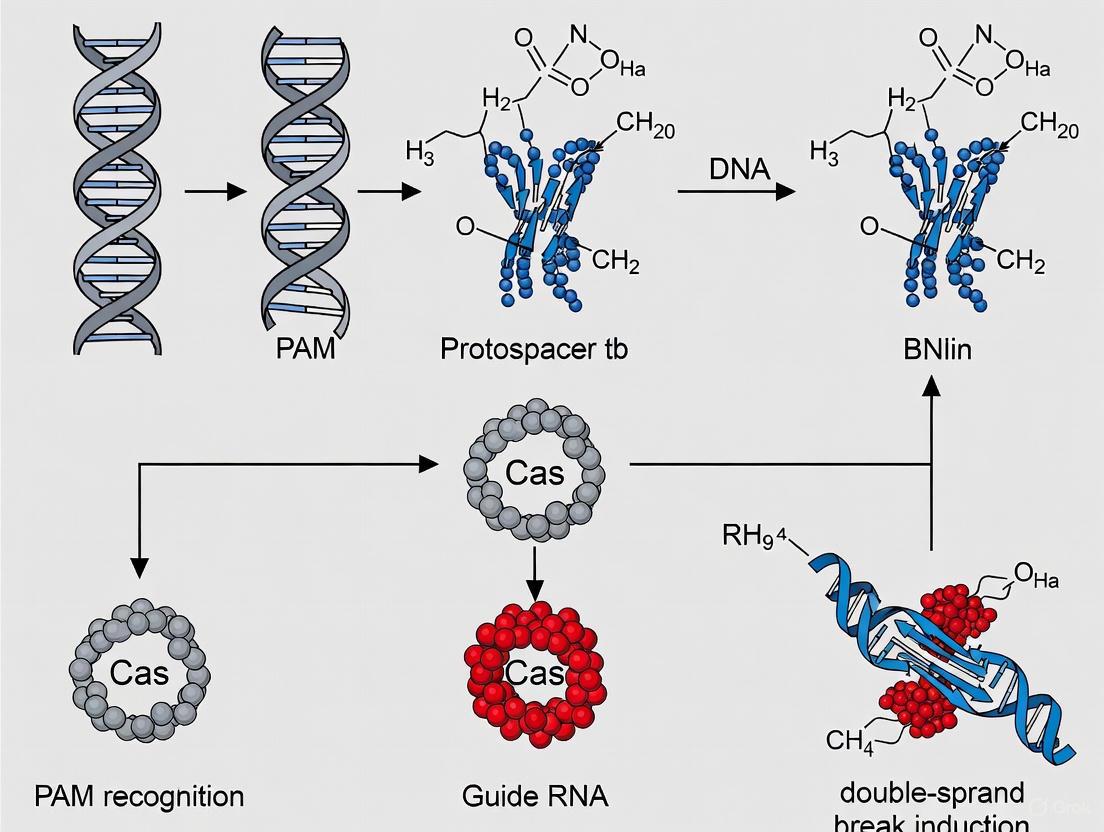
This article provides a comprehensive exploration of the Protospacer Adjacent Motif (PAM) and its pivotal role in CRISPR-Cas systems.
PAM Sequences in CRISPR: The Essential Gatekeeper of Genome Targeting and Therapeutic Development
Abstract
This article provides a comprehensive exploration of the Protospacer Adjacent Motif (PAM) and its pivotal role in CRISPR-Cas systems. Tailored for researchers and drug development professionals, we detail the PAM's fundamental biology as a targeting gatekeeper, methodologies for its characterization and application, strategies to overcome its limitations through nuclease engineering, and advanced techniques for validating targeting specificity. By synthesizing foundational knowledge with the latest advances in PAM profiling and engineered nucleases, this guide serves as a critical resource for optimizing CRISPR experimental design and accelerating the development of precise genetic therapies.
The PAM Sequence: Unlocking the Fundamental Mechanism of CRISPR Targeting
The Protospacer Adjacent Motif (PAM) represents a critical sequence-specific requirement for CRISPR-Cas systems, serving as the fundamental molecular gatekeeper that licenses Cas nuclease activity. This short, defined DNA sequence, typically 2-6 base pairs in length, flanks the DNA region targeted for cleavage and enables CRISPR systems to discriminate between self and non-self genetic material [1] [2]. From an evolutionary perspective, PAM recognition prevents autoimmunity by ensuring that Cas nucleases do not target the host's own CRISPR arrays, which contain spacer sequences identical to viral protospacers but lack the adjacent PAM sequence [1] [3]. The PAM is not merely a passive marker; it plays an active role in the mechanism of Cas nuclease function. When a Cas nuclease encounters DNA, it first scans for the appropriate PAM sequence [3]. Recognition of a compatible PAM induces conformational changes in the Cas protein that destabilize the adjacent DNA, facilitating DNA unwinding and subsequent interrogation by the guide RNA [2] [3]. This PAM-dependent licensing mechanism ensures that cleavage occurs only when both sequence complementarity (provided by RNA-DNA base pairing) and context recognition (provided by PAM binding) are satisfied, creating a two-factor authentication system for target recognition that balances adaptability with specificity in prokaryotic adaptive immunity.
PAM Diversity Across CRISPR-Cas Systems
The sequence requirements and structural positioning of PAM elements exhibit remarkable diversity across different CRISPR-Cas systems, reflecting the evolutionary adaptation of various Cas nucleases to different microbial environments and viral challenges. This diversity has profound implications for CRISPR-based applications, as the PAM sequence essentially defines the targetable genomic space for any given Cas enzyme.
Table 1: PAM Sequences for Commonly Used CRISPR-Cas Nucleases
| CRISPR Nucleases | Organism Isolated From | PAM Sequence (5' to 3') |
|---|---|---|
| SpCas9 | Streptococcus pyogenes | NGG |
| SaCas9 | Staphylococcus aureus | NNGRRT or NNGRRN |
| Nme1Cas9 | Neisseria meningitidis | NNNNGATT |
| CjCas9 | Campylobacter jejuni | NNNNRYAC |
| AsCas12a | Acidaminococcus sp. | TTTV |
| LbCas12a | Lachnospiraceae bacterium | TTTV |
| hfCas12Max | Engineered from Cas12i | TN and/or TNN |
| AacCas12b | Alicyclobacillus acidiphilus | TTN |
This table synthesizes data from multiple sources demonstrating the variety of PAM requirements [4] [1]. The structural basis for this diversity lies in the evolution of specialized PAM-interacting domains within different Cas proteins [3]. For example, Cas9 proteins typically recognize PAM sequences on the 3' end of the protospacer, while Cas12a (Cpf1) systems recognize PAM sequences on the 5' end [5]. This fundamental difference in recognition orientation stems from variations in the architectural arrangement of PAM-binding domains across Cas protein families. The PAM recognition mechanism is not merely a binary switch but exists along a spectrum of stringency, with some nucleases exhibiting strong preference for specific sequences while others tolerate degeneracy at certain positions [5]. This functional diversity provides researchers with an expanded toolkit for genome engineering, allowing selection of appropriate nucleases based on the specific sequence context of their target of interest.
Methodologies for PAM Determination
The comprehensive characterization of PAM preferences requires specialized experimental approaches that can efficiently survey the sequence space adjacent to potential target sites. Several high-throughput methods have been developed to elucidate functional PAM sequences, each with distinct advantages and limitations.
PAM-SCANR: An In Vivo Positive Selection System
PAM-SCANR (PAM screen achieved by NOT-gate repression) represents an innovative in vivo screening approach that utilizes a positive, tunable genetic circuit to identify functional PAMs [5]. This method employs a NOT gate logic wherein functional PAM sequences lead to repression of LacI, which in turn derepresses GFP expression. The system is constructed by placing a library of randomized PAM sequences upstream of the -35 element in the lacI promoter, with the CRISPR-Cas system configured to target this promoter region. When a functional PAM is present, the catalytically dead Cas (dCas) complex binds and represses lacI transcription, resulting in GFP expression that can be quantified using fluorescence-activated cell sorting (FACS) [5]. A key advantage of PAM-SCANR is its tunability through IPTG titration, which allows researchers to adjust system stringency and detect weak functional PAMs that might be missed by other methods. The screen can be performed comprehensively through next-generation sequencing of pre-sorted and post-sorted PAM libraries, or through individual screening of sorted fluorescent clones [5].
PAM-SCANR Workflow: This diagram illustrates the logical flow of the PAM-SCANR method, from library construction through to sequencing of functional PAMs.
PAM-readID: A Mammalian Cell-Based Determination Method
Recent advancements in PAM determination include the development of PAM-readID (PAM REcognition-profile-determining Achieved by Double-stranded oligodeoxynucleotides Integration in DNA double-stranded breaks), a method specifically optimized for mammalian cellular environments [4]. This approach addresses a critical limitation of previous methods, as PAM profiles often show intrinsic differences between in vitro, bacterial, and mammalian cell contexts due to variations in cellular environment, DNA topology, and modification states. The PAM-readID protocol involves: (1) constructing a plasmid bearing a target sequence flanked by randomized PAMs; (2) co-transfecting mammalian cells with this library, Cas nuclease/sgRNA expression plasmids, and double-stranded oligodeoxynucleotides (dsODN); (3) extracting genomic DNA after 72 hours to allow for Cas cleavage and NHEJ repair-mediated dsODN integration; (4) amplifying the recognized PAM sequences using a primer specific to the integrated dsODN tag and a second primer specific to the target plasmid; and (5) performing high-throughput sequencing and analysis to generate the PAM recognition profile [4]. A significant advantage of PAM-readID is its sensitivity—accurate PAM preferences for SpCas9 can be identified with extremely low sequence depth (as few as 500 reads). The method has successfully characterized PAM profiles for SaCas9, SaHyCas9, Nme1Cas9, SpCas9, SpG, SpRY, and AsCas12a in mammalian cells, revealing non-canonical PAMs such as 5'-NNAAGT-3' and 5'-NNAGGT-3' for SaCas9 and 5'-NGT-3' and 5'-NTG-3' for SpCas9 [4].
Table 2: Comparison of PAM Determination Methods
| Method | Principle | Cellular Context | Key Advantages | Limitations |
|---|---|---|---|---|
| PAM-SCANR [5] | NOT-gate repression & positive selection | Bacterial cells | Tunable stringency, broad applicability across CRISPR types | Requires genetic circuit construction |
| PAM-readID [4] | dsODN integration & NHEJ tagging | Mammalian cells | Mammalian context, works with low sequencing depth, no FACS needed | Complex workflow requiring multiple transfection steps |
| Plasmid Depletion [3] | Negative selection based on plasmid survival | Bacterial cells | Simple concept, does not require engineered Cas variants | Requires high library coverage, identifies depleted sequences |
| In Vitro Cleavage [3] | Sequencing of enriched cleavage products | Cell-free system | Controlled reaction conditions, input of large libraries | Requires purified protein complexes, may not reflect in vivo activity |
The Scientist's Toolkit: Essential Research Reagents
Table 3: Key Research Reagent Solutions for PAM Studies
| Reagent / Tool | Function in PAM Research | Example Applications |
|---|---|---|
| dsODN (double-stranded oligodeoxynucleotides) | Tags cleaved DNA ends for amplification and sequencing | PAM-readID method for capturing functional PAM sequences [4] |
| dCas9/dCas12 (catalytically dead variants) | DNA binding without cleavage for repression-based screens | PAM-SCANR and other reporter-based PAM determination systems [5] |
| PAM Library Plasmids | Contains randomized nucleotide regions for PAM screening | Provides diverse sequence space to identify functional PAM motifs [4] [5] |
| Fluorescent Reporters (GFP, etc.) | Enables positive selection of functional PAM sequences | FACS-based isolation of cells with active CRISPR targeting [5] |
| CRISPR Design Tools (Benchling, CRISPOR) | Bioinformatics assistance for gRNA design considering PAM constraints | Identifies targetable sites based on known PAM requirements [6] |
Clinical Applications and Therapeutic Implications
The precise understanding of PAM requirements has direct implications for therapeutic genome editing applications, where target site selection is often constrained by the necessity of a compatible PAM sequence adjacent to the pathogenic mutation. The clinical translation of CRISPR technology highlights this critical relationship between PAM recognition and therapeutic efficacy. For example, Casgevy (exagamglogene autotemcel), recently approved for severe sickle cell disease, utilizes the SpCas9 system with its characteristic NGG PAM requirement [7]. Similarly, Intellia Therapeutics' NTLA-2002, currently in Phase 3 trials for hereditary angioedema, employs a CRISPR-Cas therapy that inactivates the KLKB1 gene, with target site selection fundamentally constrained by PAM availability [7]. The importance of PAM specificity is further highlighted by recent advances in patient-specific therapies, such as the successful treatment of severe carbamoyl-phosphate synthetase 1 (CPS1) deficiency using a customized CRISPR base editing therapy delivered via lipid nanoparticles [7]. In this case, the development of a personalized therapeutic required careful consideration of PAM positioning relative to the pathogenic mutation. Emerging approaches to overcome PAM limitations include the development of engineered Cas variants with altered PAM specificities, such as SpG and SpRY, which recognize non-canonical PAM sequences and thereby expand the targetable genomic space [4] [1]. These advances demonstrate how fundamental research into PAM biology directly enables new therapeutic paradigms.
The Protospacer Adjacent Motif stands as an essential molecular gatekeeper in CRISPR-Cas systems, governing the fundamental processes of DNA recognition and cleavage through sophisticated mechanisms that balance specificity and adaptability. The comprehensive characterization of PAM requirements across diverse CRISPR systems, enabled by advanced determination methods like PAM-SCANR and PAM-readID, has dramatically expanded our understanding of Cas nuclease function and expanded the toolbox available for precision genome engineering. As CRISPR technology continues to transition from basic research to clinical applications, the strategic selection and engineering of Cas proteins with specific PAM preferences will remain crucial for targeting therapeutically relevant genomic loci. Ongoing efforts to characterize novel Cas nucleases, engineer expanded PAM specificities, and develop more sophisticated delivery systems promise to further overcome the limitations imposed by PAM requirements, ultimately enabling broader application of CRISPR-based therapies for genetic diseases. The continued elucidation of PAM diversity and function represents a critical frontier at the intersection of basic microbial immunity and applied therapeutic genome editing.
CRISPR-Cas systems provide adaptive immunity in bacteria and archaea, defending against invading viruses and mobile genetic elements. The protospacer adjacent motif (PAM) serves as the fundamental molecular signature that enables these systems to distinguish between invasive DNA ("non-self") and the host's own genetic material ("self"). This short, conserved DNA sequence adjacent to the target protospacer is indispensable for initiating the immune response while preventing autoimmune destruction of the host's CRISPR arrays. The PAM requirement solves a critical self/non-self discrimination problem: although spacer sequences within the host CRISPR locus are derived from foreign DNA, the host must ensure these stored memories do not trigger immune activation against its own genome. This review examines the molecular mechanisms of PAM-dependent discrimination, quantitative aspects of PAM diversity, experimental methodologies for PAM identification, and the broader implications for CRISPR-based technologies.
Molecular Mechanisms of PAM Recognition
PAM-Dependent Target Activation
CRISPR-Cas systems employ a sophisticated surveillance mechanism where Cas effector proteins continuously scan foreign DNA for PAM sequences. When Cas proteins identify a canonical PAM, they initiate local DNA melting, enabling the guide RNA to probe adjacent sequences for complementarity. This two-step verification process—first PAM recognition, then target interrogation—ensures that only bona fide foreign DNA triggers immune activation [1] [3].
The PAM's strategic positioning immediately adjacent to the target sequence provides the spatial cue that directs Cas nucleases exclusively to foreign DNA. In natural Type II systems, the Cas9 protein recognizes a 5'-NGG-3' PAM sequence (where N is any nucleotide) through specific interactions between the PAM-interacting domain of Cas9 and the minor groove of the DNA duplex. This binding induces conformational changes that facilitate DNA unwinding and R-loop formation, enabling the crRNA to hybridize with the target DNA strand [3].
Self-Avoidance Mechanisms
The host organism's CRISPR arrays inherently lack PAM sequences adjacent to stored spacers, creating a fundamental safeguard against self-targeting. During spacer acquisition, the Cas1-Cas2 integration complex selectively captures protospacer fragments from foreign DNA while excluding the adjacent PAM sequence. Consequently, when the spacer is integrated into the host CRISPR locus and transcribed into crRNA, the resulting guide RNA complexes cannot direct Cas proteins to the host's own DNA because the necessary PAM recognition signal is absent from the chromosomal location [1] [3].
This elegant solution ensures immunological memory while preventing autoimmune destruction. The molecular basis of this discrimination has been elucidated through structural studies of Cas1-Cas2 complexes, which show specific recognition of three PAM nucleotides (5'-CTT-3' in the target strand) positioned in base-specific pockets within the C-terminal domains of Cas1 proteins during spacer acquisition [3].
Diversity of PAM Recognition Across CRISPR Systems
Natural PAM Diversity
CRISPR-Cas systems exhibit remarkable diversity in PAM requirements across different types and subtypes, reflecting evolutionary adaptation to various viral defense scenarios. The table below summarizes characterized PAM sequences for selected Cas effectors.
Table 1: PAM Specificity of Characterized CRISPR-Cas Systems
| Cas Protein | Source Organism | PAM Sequence (5' to 3') | System Type |
|---|---|---|---|
| SpCas9 | Streptococcus pyogenes | NGG | Type II-A |
| SaCas9 | Staphylococcus aureus | NNGRRT | Type II-A |
| NmeCas9 | Neisseria meningitidis | NNNNGATT | Type II-C |
| CjCas9 | Campylobacter jejuni | NNNNRYAC | Type II-C |
| LbCas12a | Lachnospiraceae bacterium | TTTV | Type V-A |
| AsCas12a | Acidaminococcus sp. | TTTV | Type V-A |
| AacCas12b | Alicyclobacillus acidiphilus | TTN | Type V-B |
| Cas12f1 | Engineered | T-rich | Type V-F |
| Cas12i3 | Engineered | TN and/or TNN | Type V-I |
| Cas14 | Uncultivated archaea | TTTA (dsDNA) | Type V-U |
This diversity reflects evolutionary arms races between bacteria and viruses, where PAM recognition strategies have diversified to counter viral anti-CRISPR measures that alter PAM sequences or their accessibility. The varying stringency of PAM requirements represents different evolutionary trade-offs between immune efficiency and evasion of viral countermeasures [3].
Engineered PAM Variants
Protein engineering has generated Cas variants with altered PAM specificities to expand targeting ranges for genome editing applications. Notable examples include:
SpRY: An engineered near-PAMless Cas9 variant containing ten substitutions in the PAM-interacting domain (L1111R, D1135L, S1136W, G1218K, E1219Q, A1322R, R1333P, R1335Q, and T1337R) that reduces specificity from canonical 5'-NGG-3' to more flexible 5'-NRN-3' (where R is A or G) with weaker 5'-NYN-3' (where Y is C or T) targeting [9].
Sc++: An engineered Cas9 variant employing a positive-charged loop-like structure that relaxes the base requirement at the second PAM position, enabling 5'-NNG-3' preference rather than canonical 5'-NGG-3' [9].
SpRYc: A chimeric enzyme combining the PAM-interacting domain of SpRY with the N-terminus of Sc++, demonstrating highly flexible PAM preference capable of editing diverse PAMs including therapeutic targets with 5'-NCN-3' or 5'-NTN-3' PAMs [9].
OpenCRISPR-1: An artificial-intelligence-generated gene editor designed using large language models trained on biological diversity, exhibiting comparable or improved activity and specificity relative to SpCas9 while being 400 mutations away in sequence [10].
Table 2: Experimentally Determined Editing Efficiencies of PAM-Flexible Editors
| Editor | PAM Preference | Editing Efficiency Range | Notable Characteristics |
|---|---|---|---|
| SpCas9 | NGG | 40-60% (varies by locus) | Canonical reference editor |
| SpRY | NRN > NYN | 15-45% at NYN sites | Near-PAMless capability |
| SpRYc | NNN (highly flexible) | 10-50% across diverse PAMs | Chimeric design combining SpRY PID with Sc++ N-terminus |
| SpRYc-ABE8e | NNN (base editing) | Up to 21.9% A-to-G conversion at NTT PAMs | Adenine base editor fusion |
| OpenCRISPR-1 | Variable (AI-designed) | Comparable or improved vs SpCas9 | 400 mutations from natural sequences |
Experimental Methods for PAM Identification
PAM-SCANR (PAM Screen Achieved by NOT-Gate Repression)
The PAM-SCANR method provides an in vivo approach for comprehensive PAM identification using a bacterial positive selection system [9] [3].
Protocol:
- Clone a randomized PAM library (typically 5'-NNNNNN-3') adjacent to a fixed protospacer sequence in a reporter plasmid.
- Co-transform the PAM library with two additional plasmids: one expressing a single guide RNA targeting the fixed protospacer, and another expressing a nuclease-deficient dCas9 variant.
- Culture transformed bacteria under conditions where GFP expression is conditioned on successful PAM binding and dCas9 recruitment.
- Use fluorescence-activated cell sorting (FACS) to isolate GFP-positive cells where functional PAM recognition occurred.
- Isolate and sequence plasmids from sorted cells to identify enriched PAM sequences.
- Analyze sequencing data to determine PAM consensus motifs and relative binding strengths.
This method was utilized to characterize SpRYc, revealing its ability to bind sequences with adenine bases at position 2 without bias against any specific base, unlike SpRY which preferentially binds PAM sequences with A or G at position 2 [9].
HT-PAMDA (High-Throughput PAM Determination Assay)
HT-PAMDA measures cleavage kinetics rather than endpoint binding, providing quantitative data on Cas enzyme activity across diverse PAM sequences [9].
Protocol:
- Prepare a DNA library containing a randomized PAM region adjacent to a target sequence recognized by the guide RNA.
- Incubate the library with purified Cas enzyme-guide RNA complexes under defined reaction conditions.
- Withdraw aliquots at multiple time points to monitor cleavage progression.
- Isemble and sequence cleaved products to determine cleavage rates for each PAM variant.
- Calculate cleavage kinetics and generate sequence logos representing PAM preference.
Application of HT-PAMDA to SpRYc demonstrated slower cleavage rates than SpRY but access to a comparably broad set of PAMs, suggesting its optimal utility in "dead" or nickase variants rather than as a nuclease [9].
Computational PAM Prediction
Bioinformatic approaches identify PAM sequences through alignment of protospacers from viral genomes to identify consensus motifs [3].
Workflow:
- Extract spacer sequences from bacterial CRISPR arrays using tools like CRISPRFinder.
- Identify matching protospacers in viral or plasmid sequences using BLAST or specialized tools like CRISPRTarget.
- Align flanking regions of identified protospacers to detect conserved motifs.
- Generate sequence logos and probability matrices representing PAM preferences.
While computational approaches provide rapid identification, they cannot distinguish between spacer acquisition motifs (SAMs) and target interference motifs (TIMs), and require experimental validation [3].
Research Reagent Solutions
Table 3: Essential Research Tools for PAM Characterization Studies
| Reagent/Tool | Function | Example Application |
|---|---|---|
| PAM-SCANR Plasmid System | In vivo PAM profiling | Identification of functional PAM motifs through bacterial selection [3] |
| HT-PAMDA Library | In vitro cleavage profiling | Quantitative measurement of Cas cleavage kinetics across PAM variants [9] |
| dCas9 Variants | PAM binding without cleavage | PAM recognition studies without inducing DNA damage [3] |
| Randomized PAM Libraries | Comprehensive PAM sampling | Evaluation of PAM preference without sequence bias [9] [3] |
| CRISPRTarget Software | Bioinformatics PAM prediction | In silico identification of potential PAM sequences from genomic data [3] |
| GUIDE-Seq | Genome-wide off-target detection | Comprehensive identification of off-target editing events [9] |
| Digenome-Seq | In vitro off-target detection | Genome-wide mapping of Cas cleavage sites [8] |
| BLESS | In situ breaks labeling | Direct detection of double-strand breaks in fixed cells [8] |
Visualization of PAM Discrimination Mechanism
Diagram 1: PAM-Mediated Self vs Non-Self Discrimination Mechanism. The presence of a PAM sequence in foreign DNA enables Cas protein binding and immune activation, while its absence in host CRISPR arrays prevents autoimmune targeting.
Diagram 2: Experimental Workflows for PAM Characterization. In vivo (PAM-SCANR) and in vitro (HT-PAMDA) methods for comprehensive PAM identification and characterization.
The PAM sequence represents a cornerstone of CRISPR-based immunity, enabling precise self versus non-self discrimination through molecular recognition mechanisms that prevent autoimmune targeting while facilitating efficient defense against genetic parasites. Understanding PAM recognition has profound implications for both basic bacterial immunology and applied genome editing technologies. Recent advances in PAM-flexible editors like SpRYc and AI-designed systems like OpenCRISPR-1 demonstrate how fundamental knowledge of natural PAM recognition mechanisms can be leveraged to expand the targeting scope of CRISPR tools. However, these engineered systems must be carefully evaluated for off-target effects, as reduced PAM stringency may compromise specificity. Future research will continue to elucidate the structural basis of PAM recognition and develop increasingly sophisticated editors that balance targeting flexibility with precision for therapeutic applications.
The Protospacer Adjacent Motif (PAM) presents a fundamental component of CRISPR-Cas systems, serving as the initial DNA recognition signal and a critical determinant of target specificity. Despite its central role in genome editing, inconsistent reporting of PAM sequences and their orientation has created confusion within the research community, impeding direct comparison between CRISPR systems and therapeutics development. This technical guide proposes the universal adoption of a guide-centric framework for standardizing PAM communication. We delineate the biochemical rationale for this orientation, provide comprehensive quantitative data on PAM sequences for major CRISPR systems, and detail experimental methodologies for PAM characterization in mammalian cells. Within the broader thesis of CRISPR targeting research, standardized PAM communication establishes the foundational lexicon necessary for advancing basic research, therapeutic development, and clinical applications.
CRISPR-Cas systems have revolutionized genetic engineering by providing programmable nucleic acid recognition capabilities. These systems universally rely on the presence of a protospacer adjacent motif (PAM)—a short, specific DNA sequence flanking the target site—to initiate target recognition and cleavage [11]. The PAM serves two essential biological functions: it licenses the Cas nuclease for target cleavage and enables self/non-self discrimination by preventing the CRISPR system from targeting the bacterial genome itself, as the PAM sequence is absent from the CRISPR array in the host genome [1] [11].
The PAM requirement represents both a practical constraint and a safety feature in CRISPR applications. From a practical perspective, the PAM restricts the genomic targeting space available for editing, as Cas nucleases can only bind to and cleave DNA sequences flanked by their specific PAM [12]. Therapeutically, this limitation has driven the discovery of novel Cas nucleases with diverse PAM requirements and the engineering of variants with altered PAM specificities to broaden targetable sequences for treating genetic diseases [12] [13].
The Orientation Problem: Inconsistencies in PAM Reporting
Historically, PAM sequences have been reported using different reference strands, creating significant confusion in the literature. Two primary orientations have emerged:
- Target-centric orientation: The PAM is located on the same strand that base pairs with the guide RNA.
- Guide-centric orientation: The PAM is located on the strand that matches the sequence of the guide RNA [11].
These differing conventions have been inconsistently applied across CRISPR system types, with Type I systems typically using the target-centric orientation and Type II and V systems often employing the guide-centric orientation [11]. This lack of standardization complicates the comparison of PAM requirements between different Cas proteins and creates unnecessary barriers to the broad adoption of novel CRISPR systems.
The Guide-Centric Framework: A Proposed Standard
We advocate for the universal adoption of the guide-centric orientation as the standard for PAM communication. This framework offers several significant advantages for both basic research and therapeutic development.
Rationale for Guide-Centric Standardization
The guide-centric orientation aligns directly with guide RNA design, the primary step in any CRISPR experiment. When designing guide RNAs, researchers identify the target sequence based on complementarity to the guide RNA, making the guide-centric PAM the most intuitive reference point [11]. This orientation simplifies experimental design by directly indicating the sequence context in which the guide RNA will function.
Furthermore, the guide-centric approach provides consistency across diverse CRISPR systems. For example, Type II systems (e.g., Cas9) typically have PAMs located 3' of the protospacer on the non-target strand, while Type V systems (e.g., Cas12a) generally have PAMs located 5' of the protospacer [14]. Using a consistent guide-centric framework allows researchers to communicate about these different systems without confusion regarding PAM location and sequence.
Visualizing the Guide-Centric Framework
The following diagram illustrates the guide-centric framework for PAM orientation across major CRISPR system types:
Diagram Title: Guide-Centric PAM Orientation Across CRISPR Systems
PAM Sequences of Major CRISPR Systems in Guide-Centric Orientation
Table 1: PAM Sequences of Commonly Used CRISPR Nucleases in Guide-Centric Orientation
| CRISPR Nuclease | Organism Source | PAM Sequence (5'→3') | PAM Location | Notes |
|---|---|---|---|---|
| SpCas9 | Streptococcus pyogenes | NGG | 3' downstream | Canonical Cas9; most widely used [1] |
| SaCas9 | Staphylococcus aureus | NNGRRT or NNGRRN | 3' downstream | Compact size advantageous for viral delivery [14] [4] |
| NmeCas9 | Neisseria meningitidis | NNNNGATT | 3' downstream | High specificity with lower off-target effects [12] |
| CjCas9 | Campylobacter jejuni | NNNNRYAC | 3' downstream | Compact ortholog with extended PAM [14] |
| SpRY | Engineered SpCas9 | NRN > NYN | 3' downstream | Near-PAMless variant [14] [4] |
| LbCas12a | Lachnospiraceae bacterium | TTTV | 5' upstream | Creates staggered cuts; T-rich PAM [1] |
| AsCas12a | Acidaminococcus sp. | TTTV | 5' upstream | Creates staggered cuts [4] |
| AacCas12b | Alicyclobacillus acidiphilus | TTN | 5' upstream | Thermostable variant [1] |
| Cas12f | Uncultivated archaea | T-rich (e.g., TTTA) | 5' upstream | Ultra-small size [1] |
Advanced Methodologies for PAM Characterization in Mammalian Cells
Accurately determining PAM preferences is crucial for developing CRISPR tools. Recent methodological advances enable comprehensive PAM characterization directly in mammalian cells, providing more physiologically relevant data compared to in vitro or bacterial systems.
GenomePAM: Leveraging Genomic Repeats for PAM Identification
The GenomePAM method, published in 2025, represents a significant advancement by utilizing naturally occurring repetitive sequences in the mammalian genome as built-in target libraries [14].
Experimental Protocol for GenomePAM
Identification of Suitable Genomic Repeats: Identify highly repetitive sequences (e.g., Alu elements) with nearly random flanking sequences. The sequence 5′-GTGAGCCACTGTGCCTGGCC-3′ (Rep-1) occurs approximately 16,942 times in human diploid cells with diverse flanking sequences, making it ideal for PAM characterization [14].
Vector Construction: Clone the Rep-1 protospacer sequence (or its reverse complement for 5' PAM nucleases like Cas12a) into a guide RNA expression cassette.
Cell Transfection: Co-transfect the gRNA plasmid with a candidate Cas nuclease expression plasmid into mammalian cells (e.g., HEK293T).
Cleavage Site Capture: Adapt the GUIDE-seq method to capture cleaved genomic sites using double-stranded oligodeoxynucleotides (dsODN) integration and anchor multiplex PCR sequencing (AMP-seq) [14].
Bioinformatic Analysis:
- Identify cleavage sites across the genome
- Extract flanking sequences as candidate PAMs
- Generate sequence logos and PAM conservation tables
- Implement iterative "seed-extension" method to identify statistically significant enriched motifs [14].
Table 2: Key Research Reagents for GenomePAM
| Reagent / Resource | Function / Specification | Experimental Role |
|---|---|---|
| Rep-1 Protospacer | 5′-GTGAGCCACTGTGCCTGGCC-3′ | High-frequency genomic target (~16,942 copies/diploid cell) |
| HEK293T Cells | Human embryonic kidney cell line | Mammalian cellular context for PAM determination |
| dsODN | Double-stranded oligodeoxynucleotides | Tags double-strand breaks for GUIDE-seq detection |
| AMP-seq | Anchor Multiplex PCR sequencing | Enriches and sequences dsODN-integrated fragments |
| SeqLogo Plotting | Bioinformatics visualization | Graphical representation of PAM sequence preferences |
PAM-readID: A Simplified Method for PAM Determination
PAM-readID offers a more accessible approach for determining PAM recognition profiles in mammalian cells without requiring fluorescence-activated cell sorting (FACS) [4].
Experimental Protocol for PAM-readID
Library Construction: Generate a plasmid library containing target sequences flanked by randomized PAM regions.
Cell Transfection: Co-transfect the PAM library plasmid with Cas nuclease and sgRNA expression plasmids, along with dsODN, into mammalian cells.
Genomic DNA Extraction: Harvest cells after 72 hours to allow for cleavage and non-homologous end joining (NHEJ)-mediated dsODN integration.
PCR Amplification: Amplify integrated fragments using a primer specific to the dsODN tag and a primer specific to the target plasmid.
Sequencing and Analysis:
- Sequence amplicons via high-throughput sequencing (HTS) or Sanger sequencing
- Analyze indel profiles to verify PAM integrity
- Generate PAM recognition profiles from sequenced fragments [4].
The following diagram illustrates the comparative workflows of these advanced PAM determination methods:
Diagram Title: Comparative Workflows for Mammalian Cell PAM Determination
PAM Engineering and Expansion Strategies
Overcoming the natural limitations of PAM recognition represents a major focus in CRISPR research, with significant implications for therapeutic development.
Molecular Principles of PAM Engineering
Recent research combining molecular dynamics simulations with graph theory has revealed that efficient PAM recognition involves not only direct contacts between PAM-interacting residues and DNA but also a distal network that stabilizes the PAM-binding domain and preserves long-range communication [13]. Key findings include:
- The D1135V/E substitution in Cas9 variants enables stable DNA binding by K1107 and preserves key DNA phosphate locking interactions via S1109 [13].
- PAM recognition requires local stabilization, distal coupling, and entropic tuning, rather than being a simple consequence of base-specific contacts [13].
- Variants carrying only R-to-Q substitutions at PAM-contacting residues, though predicted to enhance adenine recognition, often destabilize the PAM-binding cleft and disrupt allosteric coupling to the HNH nuclease domain [13].
Bioinformatics Tools for PAM Comparison and Application
The growing diversity of Cas nucleases with different PAM requirements has created a need for specialized bioinformatics tools. CATS (Comparing Cas9 Activities by Target Superimposition) automates the detection of overlapping PAM sequences across different Cas9 nucleases and identifies allele-specific targets, particularly those arising from pathogenic mutations [12].
Table 3: Bioinformatics Tools for PAM Analysis and Application
| Tool Name | Primary Function | Key Features | Application Context |
|---|---|---|---|
| CATS | Comparing Cas9 Activities by Target Superimposition | Detects overlapping PAM sequences; integrates ClinVar data for pathogenic mutations | Allele-specific targeting for autosomal dominant disorders [12] |
| CRISPOR | Guide RNA design and off-target prediction | Provides PAM-specific guide RNA recommendations | General CRISPR experiment design |
| CHOPCHOP | Target selection for CRISPR editing | Includes PAM requirements in target identification | General CRISPR experiment design |
| Cas-designer | Guide RNA design tool | Accounts for PAM constraints in guide design | General CRISPR experiment design |
Clinical Implications and Therapeutic Applications
Standardized PAM communication and expanded PAM compatibility directly impact the development of CRISPR-based therapeutics, with several approaches already advancing to clinical trials.
PAM Considerations in Approved Therapies
Casgevy, the first FDA-approved CRISPR-based therapy for sickle cell disease and beta thalassemia, utilizes ex vivo editing of patients' hematopoietic stem cells [15] [16]. The PAM requirement directly influences which specific genomic sequences can be targeted for therapeutic gene modification.
Emerging Approaches for PAM-Independent Detection
For diagnostic applications, the TRACER (mutant target-recognized PAM-independent CRISPR-Cas12a enzyme reporting system) platform enables PAM-independent nucleic acid detection by converting double-stranded DNA to single-stranded DNA, which Cas12a can recognize without PAM requirements [17]. This approach significantly expands the applicability of CRISPR diagnostics for detecting single nucleotide variants (SNVs) in cancer and other genetic disorders.
The guide-centric framework for standardizing PAM communication establishes a consistent lexicon for describing PAM sequences and their locations relative to target sites. This standardization enables more accurate comparison between CRISPR systems, facilitates the development of novel nucleases with expanded targeting capabilities, and supports the advancement of CRISPR-based therapeutics. As the CRISPR field continues to evolve, adopting universal standards for reporting fundamental parameters like PAM orientation will be essential for translating basic research into clinical applications that address unmet medical needs.
The Protospacer Adjacent Motif (PAM) represents a critical sequence requirement for CRISPR-Cas systems, serving as the primary determinant of target recognition and DNA cleavage capability. This technical guide comprehensively explores the diverse PAM requirements across natural and engineered Cas nucleases, detailing the experimental methodologies for PAM characterization and the computational tools enabling nuclease selection. Within the broader thesis of CRISPR targeting research, PAM diversity emerges not as a limitation but as a foundational feature that can be harnessed and engineered to expand the targeting landscape of genome editing technologies. The expanding repertoire of Cas proteins with unique PAM specificities, including AI-designed editors like OpenCRISPR-1, provides researchers with an unprecedented toolkit for precise genetic interventions in both basic research and therapeutic development.
The CRISPR-Cas system functions as an adaptive immune system in prokaryotes, providing defense against invading genetic elements such as viruses and plasmids [1] [18]. This system has been repurposed as a revolutionary genome engineering technology that relies on two fundamental components: a Cas nuclease and a guide RNA (gRNA) that directs the nuclease to a specific DNA target sequence [19]. However, successful target recognition and cleavage requires more than just gRNA-DNA complementarity; it necessitates the presence of a short, specific DNA sequence adjacent to the target site known as the Protospacer Adjacent Motif (PAM) [11].
The PAM serves a crucial biological function in self versus non-self discrimination, preventing the CRISPR system from targeting the bacterium's own genome [11]. From a practical standpoint, the PAM requirement represents both a constraint and a defining feature for CRISPR-based applications, as it fundamentally determines which genomic locations can be targeted [1] [20]. The sequence, length, and position of the PAM vary significantly across different Cas nucleases, creating a diverse targeting landscape that researchers must navigate for experimental success.
PAM Characteristics and Recognition Mechanisms
Molecular Basis of PAM Recognition
PAM recognition occurs through direct protein-DNA interactions, where specific domains within the Cas nuclease bind to short DNA sequences flanking the target site [11] [3]. Upon PAM binding, Cas proteins undergo conformational changes that enable DNA unwinding and subsequent interrogation of the adjacent sequence by the gRNA [3]. Sufficient complementarity between the gRNA spacer and target DNA then triggers cleavage by the nuclease domains. The absence of a compatible PAM prevents target recognition entirely, even with perfect gRNA complementarity [11].
The location of the PAM relative to the target sequence varies by CRISPR system type. For Type II systems (including Cas9), the PAM is typically located 3' downstream of the target sequence, while for Type V systems (including Cas12a), it is generally found 5' upstream [11]. The PAM is not included in the gRNA sequence but must be present in the genomic DNA being targeted [2].
PAM Diversity Across CRISPR Systems
The compelling need to target specific genomic regions, especially for therapeutic applications where precise editing is crucial, has driven the exploration and engineering of Cas nucleases with diverse PAM requirements [20]. This diversity manifests in several dimensions:
- Sequence Specificity: PAMs range from permissive sequences like SpRY's NRN (where R is A or G) to highly specific sequences such as NmeCas9's NNNNGATT [20] [19].
- Length Variation: PAM sequences vary from 2-6 nucleotides, with longer PAMs generally conferring higher specificity but reducing targetable sites [11].
- Positional Requirements: The location of the PAM relative to the protospacer differs between Cas protein families, influencing gRNA design parameters [11].
Comprehensive Landscape of Cas Nuclease PAM Requirements
Natural Cas Nucleases and Their PAM Sequences
Table 1: Natural Cas Nucleases and Their PAM Requirements
| Cas Nuclease | Source Organism | PAM Sequence (5' to 3') | Size (aa) | Key Characteristics |
|---|---|---|---|---|
| SpCas9 | Streptococcus pyogenes | NGG | 1368 | Gold standard; high activity [1] [19] |
| SaCas9 | Staphylococcus aureus | NNGRRT (R=G/A) | 1053 | Compact size; AAV compatible [20] |
| NmeCas9 | Neisseria meningitidis | NNNNGATT | 1082 | Longer PAM; increased specificity [12] [20] |
| CjCas9 | Campylobacter jejuni | NNNNRYAC (R=G/A, Y=C/T) | 984 | Very compact; AAV compatible [12] [20] |
| StCas9 | Streptococcus thermophilus | NNAGAAW (W=A/T) | 1121 | Alternative specificity [20] |
| ScCas9 | Streptococcus canis | NNG | ~1368 | Reduced stringency vs SpCas9 [20] |
| LbCas12a | Lachnospiraceae bacterium | TTTV (V=G/A/C) | 1228 | Creates staggered ends; minimal tracrRNA [20] |
| AsCas12a | Acidaminococcus sp. | TTTV | ~1300 | Creates staggered ends [20] |
| AacCas12b | Alicyclobacillus acidiphilus | TTN | 1109 | Thermostable; compact [20] |
Engineered and AI-Designed Cas Variants
Table 2: Engineered and AI-Designed Cas Variants with Altered PAM Preferences
| Cas Variant | Parent Nuclease | PAM Sequence (5' to 3') | Key Characteristics | Applications |
|---|---|---|---|---|
| xCas9 | SpCas9 | NG, GAA, GAT | Expanded PAM range; increased fidelity [19] | Gene knockouts; therapeutic editing |
| SpCas9-NG | SpCas9 | NG | Reduced PAM stringency [19] | Targeting gene-rich regions |
| SpRY | SpCas9 | NRN (preferred), NYN | Near-PAMless [12] [19] | Maximum targeting flexibility |
| eSpCas9(1.1) | SpCas9 | NGG | High-fidelity; reduced off-targets [19] | Therapeutic applications |
| SpCas9-HF1 | SpCas9 | NGG | High-fidelity; disrupted backbone interactions [19] | Therapeutic applications |
| hfCas12Max | Cas12i (engineered) | TN, TNN | High-fidelity; compact size; staggered ends [20] | In vivo therapeutics (e.g., HG302 for DMD) |
| eSpOT-ON (ePsCas9) | Parasutterella secunda (engineered) | Not specified | High-fidelity; retained on-target activity [20] | Clinical therapeutic development |
| OpenCRISPR-1 | AI-generated | Not specified (compatible with base editing) | 400 mutations from natural sequences; comparable or improved activity/specificity vs SpCas9 [10] | Broad ethical use across research and commercial applications |
Recent breakthroughs in artificial intelligence have enabled the design of novel genome editors that substantially expand functional sequence space. By training large language models on 1.24 million CRISPR operons from 26 terabases of genomic and metagenomic data, researchers have generated Cas9-like effectors with 4.8× the protein cluster diversity found in nature [10]. These AI-designed editors, such as OpenCRISPR-1, maintain functionality despite being approximately 400 mutations away from any natural sequence, demonstrating comparable or improved activity and specificity relative to SpCas9 while offering compatibility with base editing applications [10].
Experimental Methodologies for PAM Characterization
GenomePAM: Direct PAM Characterization in Mammalian Cells
The GenomePAM method represents a significant advancement for characterizing PAM requirements directly in mammalian cells, overcoming limitations of in silico predictions and in vitro assays that may not accurately reflect cellular conditions [14].
Principle: GenomePAM leverages highly repetitive sequences in the mammalian genome that are flanked by diverse sequences. These repeats serve as naturally occurring target site libraries, with the constant repeat sequence functioning as the protospacer and the variable flanking sequences enabling PAM identification [14].
Protocol:
- Target Identification: Identify repetitive sequences (e.g., Rep-1: 5'-GTGAGCCACTGTGCCTGGCC-3') with highly diverse flanking regions occurring thousands of times in the genome.
- gRNA Construction: Clone the repeat sequence (Rep-1 for 3' PAMs, Rep-1RC for 5' PAMs) into a gRNA expression cassette.
- Cell Transfection: Co-transfect mammalian cells (e.g., HEK293T) with plasmids encoding the candidate Cas nuclease and the repeat-targeting gRNA.
- DSB Capture: Adapt the GUIDE-seq method to capture cleaved genomic sites using double-stranded oligodeoxynucleotides (dsODNs) that integrate into DSBs.
- Sequencing and Analysis: Sequence integrated fragments using anchor multiplex PCR sequencing (AMP-seq), then extract and analyze PAM sequences flanking the target sites.
- Motif Identification: Use iterative "seed-extension" methods to identify statistically significant enriched motifs, reporting percentages of edited genomic sites at each iteration [14].
Advantages:
- No requirement for protein purification or synthetic oligo libraries
- Direct assessment in relevant cellular contexts
- Simultaneous evaluation of on-target efficiency and off-target specificity
- Captures impact of chromatin accessibility on nuclease activity [14]
Figure 1: GenomePAM Workflow for PAM Characterization in Mammalian Cells
Traditional PAM Identification Methods
Several established methods continue to provide valuable PAM characterization data:
In Vitro Cleavage Selection: A randomized DNA library containing potential PAM sequences is incubated with purified Cas nuclease. Cleaved products are selectively amplified and sequenced to identify functional PAMs [18] [3]. While this approach allows exploration of large sequence spaces (>10¹² molecules), it may not reflect cellular conditions where chromatin structure and protein concentrations differ [18].
Bacterial-Based Screening (PAM-SCANR): This method uses a catalytically dead Cas variant (dCas9) coupled to a repression system in bacteria. When dCas9 binds to a functional PAM site, it represses GFP expression, enabling sorting of cells by FACS and subsequent sequencing of functional PAMs [3].
In Silico Analysis: Bioinformatic analysis of protospacers from phage genomes and matching spacers from bacterial CRISPR arrays can identify conserved PAM motifs. While rapid, this method relies on available sequence data and cannot distinguish between acquisition and interference PAMs [3].
Table 3: Research Reagent Solutions for PAM Research
| Reagent/Resource | Function | Examples/Specifications |
|---|---|---|
| Cas Expression Plasmids | Delivery of Cas nuclease to cells | Codon-optimized versions for target organisms; various promoters (EF1α, Cbh, U6) |
| gRNA Cloning Vectors | gRNA expression and delivery | Multiplex capabilities; various RNA Polymerase III promoters |
| PAM Characterization Kits | Experimental PAM determination | GenomePAM components; GUIDE-seq kits; in vitro cleavage assay reagents |
| Bioinformatics Tools | PAM prediction and nuclease selection | CATS, CRISPRTarget, Cas-Designer, CRISPOR |
| AI-Based Design Platforms | Novel nuclease generation | ProGen2 models trained on CRISPR-Cas Atlas; family-specific fine-tuned LMs |
| Delivery Vehicles | Cellular delivery of editing components | AAVs (for small Cas variants), LNPs, electroporation systems |
Computational Tools for PAM Analysis and Nuclease Selection
CATS (Comparing Cas9 Activities by Target Superimposition): This bioinformatic tool automates detection of overlapping PAM sequences across different Cas9 nucleases, enabling fair comparison by identifying common target sites not biased by natural genetic landscapes [12]. CATS integrates ClinVar data to facilitate targeting of disease-causing mutations and supports allele-specific targeting approaches for autosomal dominant disorders [12].
CRISPRTarget: Web tool that identifies potential targets in sequenced genomes using spacer sequences, helping to determine natural PAM sequences through bioinformatic analysis [3].
PAM Wheel Visualization: A specialized visualization method using Krona plots to depict all individual PAM sequences with enrichment scores, providing comprehensive overview of PAM diversity for promiscuous nucleases [3].
Discussion: Implications for Research and Therapeutic Development
The expanding landscape of PAM diversity has profound implications for CRISPR research and therapeutic development. The fundamental thesis that PAM requirements define targeting capability has driven both the discovery of natural variants and the engineering of novel nucleases with expanded targeting ranges.
Strategic Nuclease Selection
Researchers can now select nucleases based on specific experimental needs:
- Therapeutic Applications: Compact, high-fidelity nucleases like SaCas9, hfCas12Max, and eSpOT-ON enable AAV delivery with reduced immunogenicity and improved safety profiles [20].
- High-Specificity Requirements: Nucleases with longer PAMs (e.g., NmeCas9) or high-fidelity engineered variants offer reduced off-target effects crucial for clinical applications [19].
- Maximum Targeting Flexibility: Near-PAMless variants like SpRY and AI-designed editors provide access to previously inaccessible genomic regions [10] [19].
- Multiplexed Editing: Cas12 variants with minimal direct repeat requirements facilitate efficient multiplexing for complex engineering applications [19].
Future Directions
The integration of artificial intelligence in nuclease design represents a paradigm shift from mining natural diversity to generating optimized editors de novo. The successful deployment of OpenCRISPR-1 demonstrates that machine learning models trained on CRISPR sequence diversity can produce functional editors that bypass evolutionary constraints [10]. This approach promises to rapidly expand the available toolkit with nucleases tailored for specific properties such as size, specificity, temperature stability, and PAM preferences.
Ongoing challenges include comprehensive characterization of newly discovered and engineered nucleases, understanding the relationship between PAM stringency and off-target effects, and developing delivery strategies for the most promising variants. As the PAM landscape continues to diversify, researchers will gain increasingly precise control over genomic targeting, accelerating both basic research and therapeutic development.
From Theory to Bench: PAM Characterization and Experimental Design Strategies
The Protospacer Adjacent Motif (PAM) is a short, specific DNA sequence (typically 2-6 base pairs) that follows the target DNA region recognized by the CRISPR-Cas system. This motif is absolutely required for a Cas nuclease to cleave its target and is generally found 3-4 nucleotides downstream from the cut site [1]. The fundamental biological purpose of the PAM sequence is to enable the CRISPR system to distinguish between "self" and "non-self" genetic material. In bacterial adaptive immunity, this discrimination prevents the Cas nuclease from attacking the bacterium's own genome, which contains matching spacer sequences but lacks the required adjacent PAM sequence [1] [3]. From an application perspective, the PAM sequence represents a significant constraint on CRISPR genome engineering, as it limits the genomic locations that can be targeted for editing. Consequently, characterizing and engineering PAM requirements has become a central focus in expanding the targeting capabilities of CRISPR systems for research and therapeutic applications [1] [21].
Table 1: Common CRISPR Nucleases and Their PAM Sequences
| CRISPR Nucleases | Organism Isolated From | PAM Sequence (5' to 3') |
|---|---|---|
| SpCas9 | Streptococcus pyogenes | NGG |
| hfCas12Max | Engineered from Cas12i | TN and/or TNN |
| SaCas9 | Staphylococcus aureus | NNGRRT or NNGRRN |
| NmeCas9 | Neisseria meningitidis | NNNNGATT |
| CjCas9 | Campylobacter jejuni | NNNNRYAC |
| LbCas12a (Cas12a) | Lachnospiraceae bacterium | TTTV |
| AacCas12b | Alicyclobacillus acidiphilus | TTN |
| Cas3 | in silico analysis of various prokaryotic genomes | No PAM sequence requirement |
Traditional PAM Identification Methods and Their Limitations
Early methods for PAM identification employed various approaches, each with distinct advantages and limitations. In silico methods involved computational alignments of protospacers to identify consensus PAM elements through tools like CRISPRFinder and CRISPRTarget [3]. While fast and accessible, these methods rely on the availability of sequenced phage genomes and cannot distinguish between spacer acquisition motifs (SAMs) and target interference motifs (TIMs) [3]. Plasmid depletion assays represented an early experimental approach, where a randomized DNA stretch was inserted adjacent to a target sequence within a plasmid transformed into a host with an active CRISPR-Cas system. Plasmids with "inactive" PAM sequences that were not cleaved would be retained and identified via sequencing [3]. The PAM-SCANR (PAM screen achieved by NOT-gate repression) method utilized a catalytically dead Cas9 variant (dCas9) coupled to a GFP reporter – when dCas9 bound to a functional PAM, GFP expression was diminished, enabling identification of functional PAM motifs through FACS sorting and sequencing [3]. In vitro cleavage assays involved incubating purified Cas effector complexes with DNA libraries containing randomized PAM sequences, followed by sequencing of cleaved products [3]. While offering control over reaction conditions, these methods require laborious protein purification and may not reflect in vivo conditions [14]. A significant limitation across these traditional approaches has been their limited translatability to mammalian cell contexts, where chromatin structure, DNA modifications, and cellular environment can significantly influence PAM recognition and cleavage efficiency [14] [4].
GenomePAM: A Revolutionary Method for Direct PAM Characterization in Mammalian Cells
Principle and Design of GenomePAM
The GenomePAM method represents a significant advancement by leveraging naturally occurring repetitive sequences in the mammalian genome for direct PAM characterization in mammalian cells [14]. This innovative approach identifies genomic repeats flanked by highly diverse sequences where the constant sequence serves as the protospacer for CRISPR-Cas editing experiments. The key insight was that certain repetitive elements in the human genome occur thousands of times with nearly random flanking sequences, creating a natural library of PAM candidates [14] [22]. Specifically, the researchers identified a 20-nt sequence (5′-GTGAGCCACTGTGCCTGGCC-3′, part of an Alu repeat termed 'Rep-1') that occurs approximately 8,471 times in the human haploid genome (~16,942 occurrences in a human diploid cell) with nearly random flanking sequences of 10-nt length at its 3' end [14]. This makes it an ideal candidate protospacer sequence for PAM identification. For type II Cas nucleases with 3' PAMs (such as SpCas9 and SaCas9), Rep-1 is used directly, while for type V Cas nucleases with 5' PAMs (such as FnCas12a), the reverse complementary sequence (Rep-1RC) serves as the protospacer [14].
Diagram 1: GenomePAM Workflow for PAM Characterization
Experimental Protocol for GenomePAM
The GenomePAM protocol begins with cloning the Rep-1 spacer sequence into a guide RNA (gRNA) expression cassette to be used alongside a plasmid encoding the candidate Cas nuclease [14]. These constructs are transfected into mammalian cells (e.g., HEK293T cells), where the Cas nuclease cleaves Rep-1 sites containing functional PAM sequences. To identify which repeats within the genome were cleaved, the method adapts the GUIDE-seq (genome-wide unbiased identification of double strand breaks enabled by sequencing) technique, which captures cleaved genomic sites by enriching double strand oligodeoxynucleotide (dsODN)-integrated fragments through anchor multiplex PCR sequencing (AMP-seq) [14]. The resulting sequencing data is analyzed with the candidate PAM initially set as unknown ('NNNNNNNNNN'), and cleaved sites are identified throughout the genome. An iterative 'seed-extension' method then identifies statistically significant enriched motifs and reports the percentages of edited genomic sites at each iteration step, generating comprehensive PAM preference profiles [14].
Validation and Applications of GenomePAM
GenomePAM has been successfully validated using Cas nucleases with well-established PAM requirements. For SpCas9, GenomePAM accurately identified the canonical NGG PAM at the 3' end [14]. For SaCas9, it confirmed the NNGRRT (where R is G or A) PAM, and for FnCas12a, it correctly identified the YYN (where Y is T or C) PAM at the 5' side of the spacer [14]. Beyond characterizing known nucleases, GenomePAM enables simultaneous comparison of activities and fidelities among different Cas nucleases on thousands of match and mismatch sites across the genome using a single gRNA [14] [22]. The method also provides insight into genome-wide chromatin accessibility profiles in different cell types, as chromatin state influences which target sites are effectively cleaved [14]. A significant advantage of GenomePAM is that it does not require protein purification or synthetic oligos, making PAM characterization more accessible and scalable while providing data directly relevant to mammalian cellular environments [14] [23].
Other Contemporary PAM Discovery Platforms
PAM-readID: A Rapid, Simple Alternative
PAM-readID (PAM REcognition-profile-determining Achieved by Double-stranded oligodeoxynucleotides Integration in DNA double-stranded breaks) represents another recent method developed to address the need for mammalian cell-based PAM characterization [4]. This approach involves transfecting mammalian cells with three components: (1) a plasmid bearing a target sequence flanked by randomized PAMs, (2) a plasmid expressing the Cas nuclease and sgRNA, and (3) double-stranded oligodeoxynucleotides (dsODNs) [4]. After Cas cleavage and NHEJ repair-mediated dsODN integration (72 hours post-transfection), genomic DNA is extracted, and fragments containing recognized PAMs are amplified using one primer binding to the integrated dsODN and another binding to the target plasmid. These amplicons are then sequenced via high-throughput sequencing or analyzed by Sanger sequencing to generate PAM recognition profiles [4]. A notable advantage of PAM-readID is its sensitivity – an accurate PAM preference for SpCas9 can be identified with extremely low sequence depth (as few as 500 reads) – and its compatibility with Sanger sequencing, which significantly reduces time and cost requirements compared to other methods [4].
Diagram 2: PAM-readID Workflow for PAM Determination
High-Throughput PAM Determination Assay (HT-PAMDA)
The High-Throughput PAM Determination Assay (HT-PAMDA) is another method developed for scalable characterization of PAM preferences [14]. This approach utilizes a human cell expression system followed by an in vitro cleavage reaction, creating a hybrid method that combines cellular expression with controlled biochemical conditions [14]. While comprehensive in its profiling capabilities, HT-PAMDA requires protein purification steps, which can be technically demanding and time-consuming compared to more direct cellular methods like GenomePAM and PAM-readID [14].
AI-Driven and Directed Evolution Approaches
Beyond experimental PAM characterization methods, innovative approaches are being employed to engineer novel Cas nucleases with altered PAM specificities. Directed evolution combined with rational engineering has successfully generated Cas12a variants with expanded PAM recognition [21]. In one study, researchers used error-prone PCR to generate random mutations in the PAM-interacting (PI) and wedge (WED) domains of Lachnospiraceae bacterium Cas12a (LbCas12a), followed by selection using a dual-bacterial system with crRNAs designed to direct cleavage at target sequences adjacent to noncanonical PAMs [21]. This approach yielded Flex-Cas12a, a variant carrying six mutations (G146R, R182V, D535G, S551F, D665N, and E795Q) that recognizes 5'-NYHV-3' PAMs, expanding potential genome accessibility from ~1% to over 25% while retaining efficient cleavage at canonical 5'-TTTV-3' sites [21]. Artificial intelligence has also emerged as a powerful tool for designing novel genome editors. Large language models trained on biological diversity at scale have successfully generated functional CRISPR-Cas proteins, with some AI-designed editors exhibiting comparable or improved activity and specificity relative to SpCas9 while being 400 mutations away in sequence [10].
Table 2: Comparison of Modern PAM Discovery Methods
| Method | Principle | Cellular Context | Key Advantages | Limitations |
|---|---|---|---|---|
| GenomePAM | Uses genomic repetitive sequences as natural PAM library | Mammalian cells | No protein purification or synthetic oligos needed; assesses thousands of sites simultaneously | Limited to available repetitive sequences |
| PAM-readID | dsODN integration at Cas cleavage sites | Mammalian cells | Works with low sequencing depth; compatible with Sanger sequencing | Requires dsODN design and integration |
| HT-PAMDA | Cell expression followed by in vitro cleavage | Hybrid (cellular + in vitro) | Controlled biochemical conditions | Requires protein purification steps |
| Directed Evolution | Random mutagenesis + selection for desired PAM recognition | Bacterial cells | Can dramatically expand PAM recognition | Multiple selection rounds needed; potential tradeoffs in activity |
Essential Research Reagents and Tools for PAM Discovery
Implementing contemporary PAM discovery methods requires specific research reagents and tools. The following table summarizes key components essential for conducting these experiments.
Table 3: Essential Research Reagents for PAM Discovery Experiments
| Research Reagent | Function in PAM Discovery | Examples/Specifications |
|---|---|---|
| Repetitive Genomic Sequences | Serve as natural protospacer libraries | Rep-1 (5′-GTGAGCCACTGTGCCTGGCC-3′); ~16,942 copies in human diploid cells |
| Guide RNA Expression Vectors | Express gRNAs targeting repetitive sequences | Plasmid-based systems with appropriate promoters (U6) |
| Cas Nuclease Expression Constructs | Provide Cas protein for cleavage assays | Codon-optimized for mammalian cells with nuclear localization signals |
| Double-Stranded Oligodeoxynucleotides (dsODNs) | Tag cleaved genomic sites for detection | 5'-phosphorylated, 3'-blocked dsODNs for GUIDE-seq and PAM-readID |
| High-Throughput Sequencing Platforms | Sequence captured PAM fragments | Illumina, PacBio, or other NGS platforms |
| Cell Lines | Provide cellular context for PAM characterization | HEK293T, HepG2, or other relevant mammalian cell lines |
| Bioinformatics Tools | Analyze sequencing data and identify PAM motifs | CRISPResso2, custom scripts for seed-extension analysis |
Implications for Therapeutic Development and Research Applications
The advancement of PAM discovery methods has profound implications for therapeutic development and research applications. For genetic therapies, expanded PAM compatibility enables targeting of a wider range of disease-causing mutations, including those in genetically "hard-to-reach" regions [21] [4]. High-throughput CRISPR screens leveraging these improved targeting capabilities are transforming medical research by identifying potential drug targets for both infectious and non-infectious diseases, revealing mechanisms involved in antibiotic resistance, host-pathogen interactions, cancer progression, and drug response [24]. In agricultural biotechnology, CRISPR-based massively parallel genome editing has enabled increases in crop yield and tolerance to abiotic/biotic stresses, with consequent improvements in fitness and adaptability [24]. The integration of CRISPR with other high-throughput techniques continues to open new opportunities for research and development across diverse areas, presenting innovative solutions to long-standing challenges in health, agriculture, and biotechnology [24].
The evolution of PAM discovery methods from traditional computational alignments and plasmid depletion assays to innovative approaches like GenomePAM and PAM-readID represents significant progress in CRISPR technology. These contemporary methods enable more accurate characterization of PAM requirements directly in mammalian cells, providing data more relevant to therapeutic applications. Combined with AI-driven protein design and directed evolution approaches, these PAM discovery platforms are expanding the targeting range and specificity of CRISPR systems, opening new possibilities for basic research and clinical applications. As these technologies continue to mature, they will further accelerate the development of novel genome editing tools with enhanced capabilities, ultimately advancing both fundamental biological understanding and translational applications across medicine and biotechnology.
Bioinformatic Tools for PAM Prediction and Guide RNA Design
The Protospacer Adjacent Motif (PAM) is a critical short DNA sequence (typically 2-6 base pairs) that follows the DNA region targeted for cleavage by the CRISPR system [1] [25]. This sequence serves as the essential recognition signal for Cas effector proteins, enabling them to identify and bind to foreign DNA while avoiding self-genome targeting [1] [11]. The PAM's location is typically 3-4 nucleotides downstream from the Cas nuclease cut site, and its presence is absolutely required for successful CRISPR-mediated genome editing [1] [25].
In bacterial adaptive immunity, the PAM provides the fundamental mechanism for self versus non-self discrimination [1] [3]. When a virus attacks bacteria, surviving cells incorporate a fragment of viral DNA (protospacer) into their CRISPR array, but notably exclude the PAM sequence [1]. This ensures that when the Cas nuclease complexes with guide RNA to scan for future infections, it will only cleave sequences containing both the complementary target AND the adjacent PAM, thus preventing autoimmunity against the bacterial genome [1] [11]. This biological mechanism has profound implications for CRISPR experiment design, as target sites without appropriate PAM sequences will not be edited regardless of guide RNA complementarity [1] [25].
The recent development of artificial-intelligence-enabled design represents a paradigm shift in CRISPR tool development. Large language models trained on biological diversity at scale have successfully generated programmable gene editors with optimal properties, including novel PAM specificities [10]. One such AI-generated editor, OpenCRISPR-1, exhibits compatibility with base editing while being 400 mutations away in sequence from the prototypical SpCas9 [10]. This demonstrates how computational approaches are bypassing evolutionary constraints to expand CRISPR targeting capabilities.
Bioinformatics Tools for PAM Prediction and Guide RNA Design
The complexity of CRISPR experiments has driven the development of numerous bioinformatics tools specifically designed for PAM prediction and guide RNA design. These tools address critical parameters including PAM identification, on-target efficiency prediction, and off-target effect minimization [26] [27].
Table 1: Major Bioinformatics Tools for CRISPR Experiment Design
| Tool Name | Primary Function | Key Features | Applications |
|---|---|---|---|
| CATS | Compares Cas9 nucleases with different PAM requirements | Detects overlapping PAM sequences; Integrates ClinVar data for allele-specific targeting [28] | Nuclease selection for clinical applications; Targeting disease-causing mutations [28] |
| CRISPOR | Guide RNA design and selection | Implements Doench rules for on-target activity prediction; Off-target effect scoring [26] [27] | Knockout experiments; Optimizing guide RNA efficiency [26] |
| CHOPCHOP | Target site selection and guide design | Provides predicted indel frequency; User-friendly interface [26] [28] | Gene knockout studies; Multiplexed editing [26] |
| CRISPResso | Analysis of editing outcomes | Quantifies editing efficiency; Detects insertion-deletion patterns [26] [4] | Validation of editing experiments; Quality control [26] |
| Synthego Design Tool | Guide RNA design for knockouts | Supports 120,000 genomes and 9,000 species; Reduces design time to minutes [27] | High-throughput knockout screening [27] |
| Benchling CRISPR Tool | Integrated guide and template design | Latest scoring algorithms; 100X faster than competitors [27] | Knock-in experiments; Homology-directed repair [27] |
These tools employ sophisticated algorithms to predict guide RNA efficacy based on factors such as sequence composition, genomic context, and epigenetic features [26]. The "Doench rules," developed through analysis of thousands of guide RNAs, are implemented in several platforms to predict on-target activity and minimize off-target effects [27]. When selecting tools, researchers should consider whether their experimental goal involves gene knockout, knock-in, activation (CRISPRa), or inhibition (CRISPRi), as each application has distinct design requirements [27].
For knockout experiments, tools typically prioritize target sites in exons crucial for protein function, avoiding regions too close to N- or C-termini where edits might not completely disrupt gene function [27]. In contrast, knock-in experiments require more precise positioning relative to the donor template, with efficiency dramatically dropping when the cut site is not close to the repair template [27]. CRISPRa and CRISPRi applications targeting promoter regions have particularly narrow location requirements, necessitating careful balance between sequence complementarity and optimized positioning [27].
Experimental Protocols for PAM Characterization
Understanding the experimental methods for PAM determination is essential for researchers developing novel CRISPR nucleases or applying established systems in new contexts. Several well-established protocols exist for characterizing PAM requirements across different experimental environments.
PAM-ReadID: Mammalian Cell-Based PAM Determination
The PAM-readID (PAM REcognition-profile-determining Achieved by DsODN Integration in DNA double-stranded breaks) method provides a rapid, simple approach for determining PAM recognition profiles directly in mammalian cells [4]. This protocol addresses the critical need for cell-based characterization, as PAM preferences can show intrinsic differences between in vitro and cellular environments due to variations in DNA topology and modification [4].
Protocol Steps:
- Construct plasmids for the cleavage reaction: (I) plasmid bearing target sequence flanked by randomized PAMs, (II) plasmid expressing Cas nuclease and sgRNA [4]
- Transfect mammalian cells with the plasmids and double-stranded oligodeoxynucleotides (dsODN)
- Extract genomic DNA after 72 hours to allow for Cas9 cleavage and NHEJ repair-mediated dsODN integration
- Amplify target fragments using one upstream primer for dsODN and one downstream primer for the target plasmid
- Sequence amplicons via high-throughput sequencing (HTS) or Sanger sequencing
- Analyze sequences to produce the PAM recognition profile [4]
This method successfully characterized PAM preferences for SaCas9, SaHyCas9, Nme1Cas9, SpCas9, SpG, SpRY, and AsCas12a in mammalian cells, identifying both canonical and non-canonical PAM sequences [4]. The technique can generate accurate PAM profiles with as few as 500 sequencing reads, making it accessible for laboratories without extensive sequencing capabilities [4].
In Vitro PAM Determination Assay
For initial characterization of novel Cas nucleases, in vitro approaches provide a controlled environment for PAM identification [3]. This method involves:
Protocol Steps:
- Prepare target DNA library containing randomized PAM sequences
- Incubate library with purified Cas effector complexes
- Isolate cleaved products through gel extraction or size selection
- Amplify and sequence cleaved fragments
- Bioinformatic analysis to identify enriched PAM sequences in cleaved products [3]
This approach allows for testing of large initial libraries under controlled conditions but requires purified, stable effector complexes and may not fully recapitulate in vivo activity [3].
Plasmid Depletion Assay (Bacterial Systems)
For bacterial CRISPR systems, plasmid depletion assays provide a reliable method for PAM identification:
Protocol Steps:
- Construct plasmid library with randomized DNA adjacent to target sequence
- Transform library into host with active CRISPR-Cas system
- Recover plasmids after selection period
- Sequence plasmids to identify depleted PAM sequences (functional PAMs lead to plasmid cleavage and loss) [3]
This method identifies functional PAMs through negative selection and has been widely used for characterizing Type I and II systems in bacterial contexts [3].
Decision Framework for PAM Determination Methods
PAM Sequences Across CRISPR Systems
Different Cas nucleases recognize distinct PAM sequences, which directly impacts their targeting range and applications. The table below summarizes PAM requirements for commonly used and emerging CRISPR systems.
Table 2: PAM Sequences for Various CRISPR-Cas Systems
| CRISPR Nucleases | Organism Isolated From | PAM Sequence (5' to 3') | Targeting Considerations |
|---|---|---|---|
| SpCas9 | Streptococcus pyogenes | NGG [1] [25] | Most widely used; requires G-rich PAM |
| SpCas9 D10A | Engineered (SpCas9 variant) | NGG [29] | Nickase; reduced off-target effects |
| SaCas9 | Staphylococcus aureus | NNGRRT or NNGRRN [1] [4] | Compact size for viral delivery |
| NmeCas9 | Neisseria meningitidis | NNNNGATT [1] | Longer PAM; high specificity |
| Cas12a (Cpf1) | Lachnospiraceae bacterium | TTTV [1] [29] | T-rich region targeting; staggered cuts |
| AacCas12b | Alicyclobacillus acidiphilus | TTN [1] | Thermostable; diagnostic applications |
| hfCas12Max | Engineered (Cas12 variant) | TN and/or TNN [1] | Engineered PAM flexibility |
| SpRY | Engineered (SpCas9 variant) | NRN > NYN [28] [4] | Near-PAMless; greatly expanded targeting |
| OpenCRISPR-1 | AI-generated | Customizable [10] | Designed for optimal properties |
The PAM sequence directly influences the targetable genomic space. For example, SpCas9's NGG PAM occurs approximately once every 8 base pairs in random DNA, while Cas12a's TTTV PAM provides better targeting in AT-rich regions [1] [29]. Emerging technologies like SpRY and AI-designed nucleases are significantly expanding targeting capabilities by relaxing PAM requirements [10] [28] [4].
Engineering efforts have focused on modifying PAM specificities through directed evolution and structure-guided mutagenesis [1] [11]. For instance, SpCas9 variants like SpG and SpRY recognize increasingly relaxed PAM sequences, with SpRY effectively functioning as a near-PAMless editor [4]. These advances are particularly valuable for therapeutic applications where targeting specific sequences is essential but natural PAMs may be unavailable.
Research Reagent Solutions for CRISPR Experiments
Successful CRISPR experimentation requires carefully selected reagents and materials. The following table outlines essential components and their functions in typical genome editing workflows.
Table 3: Essential Research Reagents for CRISPR Experiments
| Reagent/Material | Function | Application Notes |
|---|---|---|
| Cas Nuclease | RNA-guided DNA endonuclease | Choice depends on PAM requirements, size constraints, and specificity [1] [29] |
| Guide RNA | Target recognition molecule | Chemically modified versions improve stability and reduce toxicity [29] [27] |
| HDR Donor Template | Repair template for precise edits | ssODN templates with 30-40 nt homology arms optimize HDR efficiency [29] |
| Delivery Vehicle | Introduces editing components | RNP delivery enables faster editing, reduced off-target effects vs. plasmid [29] |
| PAM Library | Randomized sequences for PAM determination | Essential for characterizing novel nucleases [3] [4] |
| dsODN Tag | Tags cleavage sites for sequencing | Critical for PAM-readID method; integrated via NHEJ [4] |
| NHEJ Inhibitors | Enhances HDR efficiency | Chemical compounds that suppress competing repair pathway [29] |
| Next-Generation Sequencing Platform | Outcomes assessment and PAM characterization | Essential for quantifying editing efficiency and profiling PAM preferences [29] [4] |
Ribonucleoprotein (RNP) delivery of pre-complexed Cas protein and guide RNA has emerged as a preferred method for many applications, offering faster onset of action, reduced off-target effects, and elimination of random plasmid integration risks compared to plasmid-based delivery [29]. For homology-directed repair, single-stranded oligodeoxynucleotide (ssODN) donors with phosphorothioate modifications demonstrate improved HDR efficiency, with optimal performance achieved with 30-40 nucleotide homology arms and strategic blocking mutations to prevent re-cleavage [29].
CRISPR Experimental Workflow Based on Application Goal
The landscape of PAM prediction and guide RNA design continues to evolve rapidly, driven by both biological discovery and computational innovation. The development of bioinformatics tools that integrate multiple functionalities—from PAM prediction and guide design to outcome analysis—represents a significant advancement for the CRISPR research community [26]. However, challenges remain in standardizing comparison metrics across tools and improving the accuracy of efficiency predictions [26].
Future directions in the field include the continued mining of novel Cas effectors from microbial diversity [10] [11], the application of artificial intelligence for protein design [10], and the development of integrated platforms that streamline the entire CRISPR workflow [26] [28]. Tools like CATS that enable direct comparison of nucleases with different PAM requirements will become increasingly valuable as the CRISPR toolkit expands [28]. Similarly, methods like PAM-readID that simplify PAM characterization in relevant cellular environments will accelerate the translation of novel editors to therapeutic applications [4].
As CRISPR technology progresses toward clinical applications, precise PAM prediction and optimal guide RNA design will remain foundational to achieving efficient, specific genome editing while minimizing off-target effects. The integration of computational tools with experimental validation provides a powerful framework for advancing both basic research and therapeutic development in the genome editing field.
Leveraging PAM Requirements for Allele-Specific Targeting in Dominant Disorders
The Protospacer Adjacent Motif (PAM) represents a fundamental component of CRISPR-Cas systems that has historically been viewed as a limitation for genome editing targetability. However, this requirement has emerged as a powerful asset for developing precise therapeutic interventions for autosomal dominant disorders. By exploiting the PAM's role in self versus non-self discrimination, researchers can design allele-specific CRISPR systems that selectively target disease-causing mutant alleles while sparing healthy counterparts. This technical guide examines the mechanistic basis of PAM-dependent allele discrimination, surveys emerging Cas nucleases with diverse PAM preferences, details experimental methodologies for validation, and explores computational tools that accelerate therapeutic design. Strategic manipulation of PAM recognition enables highly specific targeting of pathogenic single nucleotide variants (SNVs) through either de novo PAM generation or seed sequence modification, offering a promising avenue for treating dominant-negative conditions where haploinsufficiency is tolerated.
The Protospacer Adjacent Motif (PAM) is a short, specific DNA sequence (typically 2-6 base pairs) adjacent to the target DNA region (protospacer) cleaved by CRISPR-Cas systems [1] [30]. This motif serves as a critical "self versus non-self" discrimination mechanism in bacterial adaptive immunity, preventing autoimmunity by ensuring Cas nucleases only target foreign DNA sequences containing the PAM while sparing the bacterial genome where integrated spacers lack adjacent PAM sequences [1] [3].
From a structural perspective, PAM recognition occurs through specific protein domains within Cas effectors. In Cas9, the PAM-interacting domain (PID) facilitates this recognition, initiating DNA unwinding and R-loop formation that enables guide RNA hybridization with target DNA [31] [3]. The PAM's position is consistently found 3-4 nucleotides downstream from the Cas9 cleavage site, though its exact sequence requirements vary substantially across different Cas nucleases [1].
The functional significance of PAM recognition extends beyond target identification. PAM binding induces conformational changes in Cas proteins that activate their nuclease domains, serving as a critical regulatory checkpoint that prevents non-specific DNA cleavage [3]. This inherent specificity mechanism has been strategically repurposed for allele-specific genome editing, particularly for addressing autosomal dominant disorders where selective disruption of mutant alleles can ameliorate disease phenotypes while preserving normal gene function from the wild-type allele.
PAM-Mediated Allele Discrimination: Mechanistic Principles
Fundamental Mechanisms for Allele Discrimination
Table 1: Mechanisms for PAM-Dependent Allele-Specific Targeting
| Mechanism | Principle | Application Context | Key Considerations |
|---|---|---|---|
| De Novo PAM Generation | Pathogenic SNV creates a novel PAM sequence exclusively on mutant allele | Single nucleotide variants that generate functional PAM sequences | Requires specific nucleotide change that produces valid PAM; enables highly selective targeting |
| Seed Sequence Mutation | Pathogenic SNV occurs within seed region (first 10 nt proximal to PAM) | Variants located near existing PAM sites | Mismatches in seed region dramatically reduce cleavage efficiency on wild-type allele |
| PAM Disruption | Pathogenic SNV ablates existing PAM on wild-type allele | Less common approach; requires specific variant location | Naturally limits targeting to mutant allele where PAM remains intact |
The foundational principle underlying PAM-mediated allele discrimination leverages the inherent stringency of PAM recognition combined with sequence differences between mutant and wild-type alleles. When a pathogenic single nucleotide variant (SNV) either creates a novel PAM sequence (de novo PAM) or occurs within the seed sequence immediately proximal to an existing PAM, it creates a biochemical difference that CRISPR-Cas systems can exploit for discriminatory targeting [28] [12].
In the de novo PAM generation approach, the disease-causing mutation coincidentally creates a functional PAM sequence that is absent from the wild-type allele. For example, a single nucleotide change that generates an "NGG" PAM for Streptococcus pyogenes Cas9 (SpCas9) where no such sequence previously existed enables highly specific targeting of the mutant allele [12]. This approach has been successfully demonstrated in multiple disease contexts, including Hyper-IgE Syndrome, Huntington's disease, Retinitis Pigmentosa, and Epidermolysis Bullosa [12].
Alternatively, when the pathogenic variant occurs within the seed region (typically the first 10 nucleotides upstream of the PAM), it creates a mismatch that profoundly reduces Cas nuclease activity on the wild-type allele while maintaining efficient cleavage of the perfectly-matched mutant allele [12] [32]. This approach was successfully employed for targeting a dominant-negative mutation in COL6A1 (c.868G>A; G290R) associated with collagen VI muscular dystrophy, where introduction of additional deliberate mismatches in the guide RNA further enhanced allele selectivity [32].
Figure 1: Decision Framework for PAM-Based Allele-Specific Targeting. This workflow outlines the systematic approach for determining whether a pathogenic single nucleotide variant (SNV) is amenable to PAM-mediated allele discrimination and selecting appropriate targeting strategies.
Cas Nuclease Diversity and PAM Requirements
Table 2: PAM Sequences for Wild-Type and Engineered Cas Nucleases
| Cas Nuclease | Organism/Source | PAM Sequence (5'→3') | Targeting Flexibility |
|---|---|---|---|
| SpCas9 | Streptococcus pyogenes | NGG | Standard, high specificity |
| SpG | Engineered SpCas9 variant | NGN | Expanded targeting range |
| SpRY | Engineered SpCas9 variant | NRN > NYN | Near-PAMless capability |
| SaCas9 | Staphylococcus aureus | NNGRRT | More restrictive, compact size |
| NmeCas9 | Neisseria meningitidis | NNNNGATT | Long PAM, specific |
| CjCas9 | Campylobacter jejuni | NNNNRYAC | Intermediate flexibility |
| AsCas12a | Acidaminococcus sp. | TTTV | T-rich, different cleavage pattern |
| LbCas12a | Lachnospiraceae bacterium | TTTV | Similar to AsCas12a |
| AacCas12b | Alicyclobacillus acidiphilus | TTN | Compact PAM requirement |
| Cas12f1 | Engineered | NTTR | Ultra-compact system |
The expanding repertoire of Cas nucleases with diverse PAM specificities significantly enhances opportunities for allele-specific targeting [1] [33]. While SpCas9 (recognizing 5'-NGG-3' PAMs) remains widely used, numerous natural alternatives offer different PAM constraints. For instance, SaCas9 recognizes 5'-NNGRRT-3', making it particularly useful for targeting T-rich genomic regions, while its smaller size offers advantages for viral packaging [1].
Protein engineering approaches have substantially broadened the PAM recognition landscape. Engineered variants like SpG (recognizing 5'-NGN-3') and SpRY (recognizing 5'-NRN-3' and to a lesser extent 5'-NYN-3') dramatically expand targetable sequences [28] [31]. These near-PAMless Cas9 enzymes enable targeting of most genomic sites, thereby increasing the probability of identifying allele-discriminating target sequences for any given pathogenic variant [28] [30].
Recent advances in machine learning-assisted protein engineering further accelerate this expansion. The Protein2PAM platform uses deep learning models trained on over 45,000 naturally occurring CRISPR-Cas PAMs to predict PAM specificity directly from protein sequences and engineer novel variants with customized PAM recognition [31]. This approach has successfully generated Nme1Cas9 variants with broadened PAM recognition and up to 50-fold increased cleavage activity compared to wild-type enzymes [31].
Experimental Approaches for PAM Determination and Validation
PAM Identification Methodologies
Table 3: Experimental Methods for PAM Determination
| Method | Principle | Work Environment | Key Advantages | Technical Limitations |
|---|---|---|---|---|
| PAM-readID | dsODN integration tags cleaved sites; sequenced to identify functional PAMs | Mammalian cells | Simple workflow; no FACS required; works with low sequencing depth | Requires dsODN integration efficiency |
| GFP Reporter Assay | Functional PAM restores GFP via frameshift correction after cleavage | Mammalian cells | Clear phenotypic readout; enables FACS enrichment | Complex plasmid construction; requires FACS |
| PAM-DOSE | tdTomato cassette excision enables GFP expression upon cleavage | Mammalian cells | Effective for comprehensive profiling | Technically complex construction |
| Plasmid Depletion | Cleavage eliminates functional PAM-containing plasmids from library | Bacterial cells | Well-established; high throughput | Limited to bacterial systems |
| In Vitro Cleavage | Direct sequencing of cleaved products from randomized libraries | In vitro | Controlled environment; no cellular variables | May not reflect cellular activity |
Determining the functional PAM recognition profile of Cas nucleases represents a critical step in developing allele-specific editors. While early methods relied primarily on bioinformatic analysis of spacer-protospacer alignments, contemporary approaches employ sophisticated experimental systems [3]. The PAM-readID method exemplifies recent advances, offering a rapid, simple, and accurate approach for determining PAM recognition profiles directly in mammalian cells [4].
This method leverages double-stranded oligodeoxynucleotides (dsODN) integration to tag DNA double-strand breaks generated by Cas nucleases. Cells are transfected with a plasmid library containing randomized PAM sequences alongside Cas nuclease and guide RNA expression constructs. After cleavage and non-homologous end joining (NHEJ)-mediated repair incorporating the dsODN tags, targeted PCR amplification using a dsODN-specific primer and a target-plasmid-specific primer enables sequencing and identification of functional PAMs [4]. This approach successfully defined PAM preferences for SaCas9, SaHyCas9, Nme1Cas9, SpCas9, SpG, SpRY, and AsCas12a in mammalian environments, revealing non-canonical PAMs including 5'-NNAAGT-3' and 5'-NNAGGT-3' for SaCas9 and 5'-NGT-3' and 5'-NTG-3' for SpCas9 [4].
Alternative approaches include GFP reporter systems, where functional PAM recognition leads to frameshift correction and GFP expression, enabling fluorescence-activated cell sorting (FACS) enrichment of functional PAM sequences [4]. Similarly, the PAM-DOSE system employs a tdTomato-to-GFP switch activated by successful PAM recognition and cleavage [4]. While effective, these fluorescence-based methods require complex construct assembly and specialized instrumentation, limiting their accessibility.
Figure 2: PAM-readID Workflow for Determining PAM Specificity in Mammalian Cells. This method identifies functional PAM sequences through dsODN integration at Cas nuclease cleavage sites, followed by amplification and sequencing, providing a robust platform for characterizing PAM preferences in relevant cellular environments.
Validation of Allele-Specific Editing
Validating the specificity and efficiency of allele-targeting CRISPR systems requires meticulous experimental design. Primary patient fibroblasts represent a biologically relevant model system, as demonstrated in studies targeting the COL6A1 G290R mutation associated with collagen VI muscular dystrophy [32]. In this approach, SpCas9 and allele-specific guide RNAs are introduced without repair templates, aiming to generate inactivating frameshifting indels selectively at the mutant allele.
Amplicon deep sequencing provides quantitative assessment of editing efficiency and specificity, typically revealing single-nucleotide deletions as the predominant indel type [32]. When initial gRNAs demonstrate insufficient allele selectivity, strategic introduction of additional deliberate mismatches can enhance discrimination by further reducing activity at the wild-type allele while preserving editing at the mutant target [32].
Functional rescue represents the ultimate validation step. For collagen VI dystrophies, this involves demonstrating improved collagen VI matrix assembly in edited patient fibroblasts through immunocytochemistry or Western blot analysis [32]. Similar functional assessments should be tailored to the specific pathophysiology of each targeted disorder.
The design of allele-specific CRISPR editors benefits substantially from computational tools that streamline the identification of appropriate target sites and minimize experimental trial-and-error. The CATS (Comparing Cas9 Activities by Target Superimposition) bioinformatic tool specifically addresses the challenge of comparing Cas9 nucleases with different PAM requirements by automating detection of overlapping PAM sequences across different nucleases [28] [12].
CATS integrates ClinVar database annotations to identify pathogenic mutations that generate de novo PAM sequences or occur within seed regions, enabling researchers to rapidly assess whether specific disease-causing variants are amenable to PAM-based allele discrimination strategies [28] [12]. The tool scans user-defined genomic regions and reports pathogenic mutations within 25 nucleotides up- and down-stream of overlapping PAM sequences, significantly reducing the time and effort required for CRISPR/Cas9 experimental design [12].
Machine learning approaches are increasingly applied to predict nuclease activity and specificity. Protein2PAM exemplifies this trend, using deep learning models trained on natural CRISPR-Cas systems to predict PAM specificity directly from protein sequences and engineer variants with customized PAM recognition [31]. This model architecture employs a pre-trained 650-million-parameter transformer encoder followed by a multi-layer perceptron head that predicts nucleotide probabilities at each PAM position, achieving accuracies of 0.949 for Type I, 0.868 for Type II, and 0.955 for Type V CRISPR systems [31].
The Scientist's Toolkit: Essential Research Reagents
Table 4: Essential Research Reagents for PAM-Based Allele-Specific Editing
| Reagent/Category | Specific Examples | Function and Application Notes |
|---|---|---|
| Cas Nucleases | SpCas9, SaCas9, NmeCas9, CjCas9, AsCas12a, LbCas12a | Engineered variants (SpG, SpRY) offer expanded PAM recognition |
| Cas Engineering Platforms | Protein2PAM, PACE | Machine learning and evolution systems for custom PAM specificity |
| PAM Determination Systems | PAM-readID, PAM-DOSE, GFP Reporter Assays | Define functional PAM preferences in relevant cellular contexts |
| Bioinformatic Tools | CATS, Cas-designer, CHOPCHOP, CRISPOR | Identify target sites and compare nuclease options |
| Delivery Vectors | AAV, Lentivirus, Nanoparticles | SaCas9 and other compact nucleases preferred for AAV packaging |
| Specificity Enhancement | HiFi Cas9, Mismatched gRNAs | Reduce off-target editing while maintaining on-target activity |
| Validation Reagents | Amplicon sequencing assays, Antibodies for functional assessment | Confirm allele-specific editing and functional correction |
The strategic exploitation of PAM requirements represents a powerful approach for developing allele-specific CRISPR therapies for autosomal dominant disorders. As our understanding of PAM recognition mechanisms deepens and the toolbox of Cas nucleases with diverse PAM specificities expands, the potential for targeting previously intractable pathogenic variants grows substantially.
Future advances will likely emerge from several complementary directions. Machine learning-assisted protein engineering promises to generate Cas variants with truly customized PAM recognition, potentially enabling targeting of any sequence context [31]. Enhanced delivery systems, particularly those accommodating compact Cas nucleases with flexible PAM requirements, will improve in vivo therapeutic applications. Finally, refined computational prediction tools that more accurately model the complex interplay between gRNA sequence, genomic context, and cellular environment will increase the success rate of first-round experimental designs.
The inherent PAM requirement of CRISPR-Cas systems, once considered a limitation, has thus emerged as a powerful feature enabling unprecedented precision in genome editing. By leveraging this natural discrimination mechanism, researchers can develop highly specific therapeutic approaches that target the genetic root of dominant disorders while preserving normal cellular function.
The Protospacer Adjacent Motif (PAM) is a short, specific DNA sequence that flanks a target site and serves as an essential binding signal for CRISPR-associated (Cas) effector proteins [1] [11]. This motif, typically 2-6 base pairs in length, represents the most fundamental constraint on CRISPR targeting capability, as Cas nucleases will not interrogate or cleave target sequences without an adjacent PAM [1] [11]. The critical biological function of the PAM is to enable self versus non-self discrimination in bacterial adaptive immunity; by distinguishing viral protospacers (which contain the PAM) from bacterial CRISPR arrays (which lack it), the system avoids autoimmunity [1]. From a biotechnology perspective, the PAM serves as the initial recognition point that triggers DNA unwinding and subsequent guide RNA hybridization to the target DNA [34] [13].
The PAM requirement varies considerably among different CRISPR systems. Using the non-target strand of the protospacer as a reference, the PAM is located on the 5' end for Type I and V systems and on the 3' end for Type II systems [11]. This variation, combined with sequence differences, means that PAM compatibility fundamentally determines which genomic loci can be targeted for any given CRISPR application [1]. While this requirement initially constrained CRISPR targeting scope, extensive research has revealed remarkable PAM diversity across natural CRISPR systems and has developed engineering strategies to overcome PAM limitations, thereby unlocking new applications in epigenetic editing and chromatin imaging [34] [13] [35].
PAM Diversity and Engineering Strategies
Natural PAM Diversity Across CRISPR Systems
The diversity of naturally occurring Cas nucleases provides researchers with a toolkit of enzymes exhibiting distinct PAM specificities. This natural variation enables targeting of different genomic regions without protein engineering. The table below summarizes the PAM requirements for several commonly used and engineered Cas nucleases.
Table 1: PAM Sequences of Selected Natural and Engineered Cas Nucleases
| Nuclease | Organism/Source | PAM Sequence (5' to 3') | Notes | Reference |
|---|---|---|---|---|
| SpCas9 | Streptococcus pyogenes | NGG | Most commonly used nuclease | [1] [19] |
| SaCas9 | Staphylococcus aureus | NNGRRT (or NNGRRN) | Smaller size for viral packaging | [1] [36] |
| CjCas9 | Campylobacter jejuni | NNNNRYAC | Compact size | [1] |
| NmeCas9 | Neisseria meningitidis | NNNNGATT | [1] | |
| AsCas12a (Cpf1) | Acidaminococcus sp. | TTTV | Type V nuclease; 5' PAM | [1] [36] |
| LbCas12a | Lachnospiraceae bacterium | TTTV | Type V nuclease; 5' PAM | [1] [36] |
| AacCas12b | Alicyclobacillus acidiphilus | TTN | [1] | |
| Cas12f1 | Engineered | NTTR | Ultra-small size | [36] |
| SpRY | Engineered from SpCas9 | NRN > NYN | Near-PAMless | [34] [19] |
| SpG | Engineered from SpCas9 | NGN | Broadened PAM recognition | [19] |
| xCas9 | Engineered from SpCas9 | NG, GAA, GAT | Broadened PAM recognition | [19] |
Molecular Engineering of PAM Compatibility
Protein engineering approaches have significantly expanded PAM recognition beyond natural sequences, primarily through rational design and directed evolution. These strategies have yielded Cas variants with dramatically altered PAM specificities:
PAM-Interacting Domain (PID) Engineering: The PID is the region of the Cas protein that directly contacts the PAM sequence. Targeted mutations in this domain can alter PAM specificity. For example, the SpRY variant, which contains ten substitutions in the PID of SpCas9 (including L1111R, D1135L, S1136W, G1218K, E1219Q, A1322R, R1333P, R1335Q, and T1337R), exhibits a near-PAMless phenotype with preference for NRN and tolerance for NYN (where R is A/G and Y is C/T) [34] [19].
Chimeric Protein Design: Creating hybrid proteins by combining functional domains from different Cas variants can yield novel PAM specificities. The SpRYc chimera was created by grafting the PID of SpRY to the N-terminus of Sc++ (a Cas9 with NNG editing capabilities), resulting in a chimeric enzyme with highly flexible PAM preference that leverages properties of both parent enzymes [34].
Allosteric Network Engineering: Recent research indicates that efficient PAM recognition requires not only direct contacts between PAM-interacting residues and DNA but also a distal network that stabilizes the PAM-binding domain and preserves long-range communication [13]. For instance, the D1135V substitution in variants like VQR and VRER enables stable DNA binding by K1107 and preserves key DNA phosphate locking interactions via S1109, despite being located distal to the PAM interaction site [13].
Table 2: Engineered Cas Variants with Altered PAM Specificities
| Variant | Parent Nuclease | Key Mutations | Resulting PAM | Applications |
|---|---|---|---|---|
| VQR | SpCas9 | D1135V, R1335Q, T1337R | NGA | Broadened targeting scope |
| VRER | SpCas9 | D1135V, G1218R, R1335E, T1337R | NGCG | Broadened targeting scope |
| EQR | SpCas9 | D1135E, R1335Q, T1337R | NGAG | Broadened targeting scope |
| SpCas9-NG | SpCas9 | Multiple | NG | Reduced PAM constraint |
| SpG | SpCas9 | Multiple | NGN | Reduced PAM constraint |
| SpRYc | SpRY + Sc++ | Chimeric fusion | NRN > NYN | Near-PAMless editing |
The following diagram illustrates the strategic approach and outcomes of engineering PAM-compatible Cas variants:
Experimental Methods for PAM Characterization
Accurately determining PAM requirements is essential for both characterizing novel Cas nucleases and optimizing engineered variants. Several high-throughput methods have been developed for comprehensive PAM analysis:
PAM-SCANR (PAM Screen Achieved by NOT-Gate Repression)
PAM-SCANR is an in vivo, positive-selection bacterial screen that identifies functional PAMs based on gene repression [5]. The method employs a genetic NOT gate where functional PAMs lead to repression of LacI and consequent expression of a green fluorescent protein (GFP) reporter.
Protocol:
- Circuit Design: Construct a genetic circuit where dCas9 binding to a target site represses LacI transcription, leading to GFP expression [5].
- Library Transformation: Introduce a plasmid library containing random PAM sequences into E. coli expressing dCas9 and a fixed guide RNA [5].
- Fluorescence Sorting: Use fluorescence-activated cell sorting (FACS) to isolate GFP-positive cells, which indicate functional PAM activity [5].
- Sequencing & Analysis: Sequence the PAM regions from sorted cells and analyze for enriched sequences using specialized visualization tools like PAM wheels [5].
The key advantage of PAM-SCANR is its tunability through IPTG titration, enabling detection of weak functional PAMs that might be missed by other methods [5].
GenomePAM: Utilizing Genomic Repeats for PAM Identification
GenomePAM represents a significant advance by enabling direct PAM characterization in mammalian cells, providing more physiologically relevant data [14]. This method leverages naturally occurring repetitive sequences in the mammalian genome as built-in target libraries.
Protocol:
- Target Identification: Identify highly repetitive genomic sequences (e.g., the 20-nt "Rep-1" sequence 5'-GTGAGCCACTGTGCCTGGCC-3', which occurs ~8,471 times per human haploid genome) flanked by diverse sequences that serve as natural PAM libraries [14].
- CRISPR Delivery: Transfect cells with plasmids expressing the candidate Cas nuclease and a guide RNA targeting the repetitive sequence [14].
- Break Capture: Adapt the GUIDE-seq method to capture and sequence genomic double-strand break sites, which only occur at repeats with functional PAMs [14].
- Bioinformatic Analysis: Extract PAM sequences from cleaved sites and determine enrichment statistics using specialized algorithms and sequence logos [14].
GenomePAM offers the distinct advantage of characterizing PAM requirements in the native chromatin context of mammalian cells, while simultaneously assessing on-target efficiency and off-target propensity across thousands of genomic sites [14].
HT-PAMDA (High-Throughput PAM Determination Assay)
HT-PAMDA is an in vitro method that measures cleavage kinetics of Cas nucleases on a library of DNA substrates containing different PAM sequences [34]. Unlike endpoint assays, HT-PAMDA provides quantitative data on cleavage rates across diverse PAMs.
PAM-Flexible Tools for Epigenetic Editing
The development of PAM-flexible Cas variants has dramatically expanded the scope of epigenetic editing applications. By fusing catalytically inactive Cas proteins (dCas9) with epigenetic effector domains, researchers can precisely target epigenetic modifications to specific genomic loci.
dCas9-Epieffector Systems
The core architecture of epigenetic editing tools centers on dCas9 fused to various epigenetic modifier domains:
Table 3: Epigenetic Editing Tools Based on dCas9-Effector Fusions
| dCas9-Effector | Epigenetic Modification | Biological Effect | Key Applications | Reference |
|---|---|---|---|---|
| dCas9-KRAB | H3K9me3 (histone methylation) | Gene silencing | Silencing of globin genes in K562 cells | [35] |
| dCas9-LSD1 | H3K27ac (histone demethylation) | Enhancer silencing | Pluripotency regulation in stem cells | [35] |
| dCas9-p300 | H3K27ac (histone acetylation) | Gene activation | Activation of Myod, Oct4, and hemoglobin genes | [35] |
| dCas9-DNMT3A | DNA methylation | Gene silencing | Targeted promoter methylation | [35] |
| dCas9-TET1 | DNA demethylation | Gene activation | Reactivation of silenced genes | [35] |
| dCas9-VPR | Transcriptional activation | Gene activation | Neuronal differentiation of iPSCs | [35] |
Enhanced Epigenetic Editing Systems
To improve the efficiency of epigenetic modifications, several enhanced systems have been developed:
- SunTag Systems: Utilizing a repeating peptide array that recruits multiple copies of effector proteins to a single dCas9, significantly amplifying editing efficiency. For example, the dCas9-SunTag-TET1 complex achieves up to 90% demethylation efficiency at certain loci [35].
- CRISPR-SAM (Synergistic Activation Mediator): Incorporates specialized RNA aptamers that recruit additional activation domains to the target site, enhancing transcriptional activation [35].
- Cell-Type Specific Applications: In primary mouse T cells, the dCas9-p300 complex successfully sustained Foxp3 expression under inflammatory conditions by inducing acetylation at the targeted promoter region, demonstrating the therapeutic potential of these systems [35].
The following diagram illustrates how PAM flexibility enables diverse epigenetic editing applications:
Advanced Imaging Applications Enabled by PAM Flexibility
PAM-flexible Cas variants have significantly advanced live-cell imaging capabilities by expanding the number of targetable genomic loci. The fundamental approach utilizes dCas9 fused to fluorescent proteins (e.g., dCas9-GFP) to visualize specific genomic loci in living cells.
Chromatin Imaging Methodologies
- Multiplexed Imaging: Using PAM-flexible Cas variants such as SpRY or SpG enables simultaneous targeting of multiple genomic loci with different fluorescent tags, as their reduced PAM constraints provide more available target sites within constrained genomic regions [19].
- High-Resolution Tracking: The expanded targeting capacity of PAM-relaxed variants allows researchers to select optimal target sites that minimize off-target binding while maximizing signal specificity for tracking genomic elements in real time [14].
- Chromatin Dynamics Studies: By targeting repetitive regions with PAM-flexible systems, researchers can monitor chromatin movement and spatial organization during cellular processes like differentiation and mitosis [14] [35].
Technical Considerations for Imaging Applications
- Guide RNA Design: Target sites should be selected to maximize specificity and signal strength, with particular attention to PAM compatibility when using engineered Cas variants [14].
- Signal Amplification: Strategies such as SunTag or tandem guide RNA approaches can enhance signal detection for low-copy-number targets [35].
- Background Reduction: Engineered high-fidelity Cas variants with reduced non-specific binding are particularly valuable for imaging applications where background fluorescence can obscure specific signals [19].
The Scientist's Toolkit: Essential Reagents and Methods
Table 4: Key Research Reagents and Methods for PAM-Flexible CRISPR Applications
| Tool Category | Specific Examples | Function/Application | Key Characteristics |
|---|---|---|---|
| PAM-Flexible Nucleases | SpRY, SpG, xCas9, SpRYc | Broadening targetable genomic space | NRN/NYN, NGN, NG PAM recognition respectively |
| PAM Characterization Methods | PAM-SCANR, GenomePAM, HT-PAMDA | Determining PAM requirements of novel nucleases | In vivo and in vitro approaches |
| Epigenetic Effector Domains | KRAB, p300, TET1, DNMT3A, VPR | Targeted epigenetic modification | Gene activation/silencing via DNA/histone modification |
| Imaging Systems | dCas9-EGFP, SunTag systems | Live-cell chromatin imaging | Signal amplification for tracking genomic loci |
| High-Fidelity Variants | eSpCas9(1.1), SpCas9-HF1, HypaCas9 | Reducing off-target effects | Enhanced specificity for therapeutic applications |
| Delivery Systems | Lentiviral vectors, AAV, nanoparticles | Introducing CRISPR components into cells | Varying capacity for Cas9 and gRNA expression |
The strategic exploitation of PAM diversity and engineering represents a cornerstone of modern CRISPR technology development. By understanding and manipulating PAM requirements, researchers have dramatically expanded the targeting scope of CRISPR systems, enabling sophisticated applications in epigenetic editing and chromatin imaging that were previously constrained by PAM limitations. The continued development of PAM-flexible Cas variants, coupled with advanced delivery and effector systems, promises to further revolutionize our ability to precisely manipulate and visualize the epigenome. As these technologies mature, they hold tremendous potential for therapeutic intervention in epigenetic disorders and advanced studies of nuclear organization and gene regulation. The ongoing characterization of novel CRISPR systems from diverse prokaryotic sources will likely yield additional PAM specificities and further expand the CRISPR toolkit for research and therapeutic applications.
Overcoming PAM Limitations: A Guide to Enhancing Targeting Scope and Specificity
The Protospacer Adjacent Motif (PAM) represents a fundamental constraint in CRISPR-Cas genome editing, serving as the critical gatekeeper that determines targetable genomic space. This technical guide examines the PAM bottleneck within the broader context of CRISPR targeting research, exploring how this requirement evolved as a self/nonself discrimination mechanism in prokaryotic immunity and now presents both a challenge and opportunity for therapeutic development. We comprehensively review strategic approaches to overcome PAM limitations, including mining natural Cas nuclease diversity, engineering enhanced PAM compatibility, employing novel screening methodologies, and addressing associated safety implications. For researchers and drug development professionals, this whitepaper provides both theoretical framework and practical experimental protocols to navigate PAM constraints in advanced genome editing applications.
The Protospacer Adjacent Motif (PAM) is a short, specific DNA sequence (typically 2-6 base pairs) adjacent to the target DNA region that must be recognized for successful Cas nuclease activity [1]. This requirement originated in prokaryotic immune systems as a vital self/nonself discrimination mechanism, preventing CRISPR-Cas systems from targeting the bacterium's own genome where spacer sequences within CRISPR arrays lack adjacent PAM sequences [3] [37]. In nature, when a virus attacks bacteria, Cas1 and Cas2 proteins identify invading viral DNA and incorporate segments as spacers into the CRISPR array, excluding the PAM sequence during this process to ensure future immune responses only target foreign DNA containing both the spacer-matching sequence and the adjacent PAM [1].
From a mechanistic perspective, PAM recognition initiates the DNA targeting process. Cas surveillance complexes first scan genomic DNA for PAM sequences before probing for guide RNA complementarity [3] [37]. This ordered recognition process means that even sequences with perfect complementarity to the guide RNA will be ignored if they lack an adjacent PAM, establishing the PAM as the primary gatekeeper for CRISPR targeting [37]. The structural basis for this recognition varies across Cas nucleases, with many employing specialized PAM-interacting domains containing arginine residues that form specific contacts with PAM nucleotides [38].
In therapeutic genome editing, the PAM requirement constrains targetable sites, creating a significant bottleneck for clinical applications that require precise editing at specific nucleotides, such as base editing and prime editing [37]. This limitation has launched extensive efforts to develop nucleases with relaxed or altered PAM requirements while maintaining editing efficiency and specificity.
Understanding PAM Diversity and Recognition Mechanisms
Structural Basis of PAM Recognition
PAM recognition occurs through diverse structural mechanisms across different CRISPR-Cas systems. In the well-characterized Streptococcus pyogenes Cas9 (SpCas9), recognition of the 5'-NGG-3' PAM is mediated by an arginine dyad (R1333 and R1335) within the PAM-interacting domain that forms specific contacts with the guanine bases [38]. Molecular dynamics simulations reveal that in wild-type SpCas9, these arginine residues maintain remarkable rigidity, enforcing strict guanine selection through specific hydrogen bonding patterns [38]. This structural constraint explains SpCas9's strong preference for NGG PAMs while allowing minimal recognition of suboptimal NAG and NGA PAMs under certain conditions [39] [37].
The PAM recognition mechanism is not universal across Cas nucleases. Type II systems (using Cas9) typically recognize PAM sequences on the 3' end of the protospacer, while Type I, V, and VI systems generally recognize PAMs on the 5' end [5]. Furthermore, different Cas orthologs have evolved distinct PAM-interacting domains with varied architectures, contributing to the enormous diversity of recognized PAM sequences in nature [3]. This structural diversity provides a natural foundation for expanding targetable sequences through ortholog mining and engineering.
Quantitative Analysis of PAM Affinity and Editing Efficiency
Significant differences exist in the affinities of various Cas nucleases for their cognate PAM sequences, which directly influences genome editing efficiency. Competitive binding assays using "Cas9 beacons" have demonstrated that SaCas9 exhibits higher affinity for its cognate PAM compared to SpCas9 and FnCas9 [39]. Furthermore, the relative affinities of engineered SpCas9 variants for canonical and suboptimal PAMs correlate strongly with their editing efficiencies in cellular environments [39].
Table 1: Affinity and Efficiency Relationships for Cas9 Variants
| Cas Nuclease | Canonical PAM | Relative PAM Affinity | Genome Editing Efficiency |
|---|---|---|---|
| SpCas9 | 5'-NGG-3' | High | High |
| SaCas9 | 5'-NNGRRT-3' | Highest | High |
| FnCas9 | 5'-NGG-3' | Moderate | Moderate |
| Cas9-VQR | 5'-NGAN-3' | High for NGAG | Moderate to High |
| xCas9 | 5'-NG/AN-3' | Broad | High for multiple PAMs |
| Cas9-NG | 5'-NG-3' | Broad | Moderate to High |
This correlation between PAM binding affinity and editing efficiency suggests that strengthening interactions with alternative PAM sequences represents a viable strategy for developing enhanced editors [39]. However, this approach must be balanced against potential increases in off-target effects, as excessively high affinity might reduce discrimination between optimal and suboptimal PAM sequences.
Strategic Approaches to Overcome PAM Limitations
Mining Natural Cas Nuclease Diversity
The natural diversity of Cas nucleases provides a rich resource for overcoming PAM restrictions. Over 900 distinct Cas9 homologs have been identified in sequenced genomes and metagenomes, exhibiting remarkable variation in PAM specificities, protein sizes, and optimal activity temperatures [37]. Systematic screening of phylogenetically diverse Cas9 orthologs has uncovered variants recognizing C-rich (RspCas9), T-rich (Cca1/PspCas9), and A-rich (OrhCas9) PAMs, significantly expanding the targetable sequence space [37].
Table 2: Natural Cas Nuclease Diversity and PAM Preferences
| Cas Nuclease | Source Organism | Recognized PAM Sequence | Notable Features |
|---|---|---|---|
| SpCas9 | Streptococcus pyogenes | 5'-NGG-3' | Most widely used, high efficiency |
| SaCas9 | Staphylococcus aureus | 5'-NNGRRT-3' | Smaller size (1053 aa) |
| NmeCas9 | Neisseria meningitidis | 5'-NNNNGATT-3' | Long PAM, high specificity |
| CjCas9 | Campylobacter jejuni | 5'-NNNNRYAC-3' | Moderate size, specific |
| ScCas9 | Streptococcus canis | 5'-NNG-3' | Relaxed PAM recognition |
| Cas12a (Cpf1) | Lachnospiraceae bacterium | 5'-TTTV-3' | Creates staggered cuts |
| Cas12b | Alicyclobacillus acidiphilus | 5'-TTN-3' | Thermostable |
| Cas12i (engineered) | Engineered from Cas12i | 5'-TN-3' and/or 5'-TNN-3' | Very relaxed PAM |
Notably, the Streptococcus canis Cas9 (ScCas9) shares extensive homology with SpCas9 but recognizes an NNG PAM with slight preference for adenine at the second position, representing one of the most relaxed PAM profiles observed in nature [37]. This natural diversity enables researchers to select appropriate nucleases based on target sequence constraints, particularly for therapeutic applications requiring precise editing at defined genomic positions.
Protein Engineering for Expanded PAM Compatibility
Protein engineering approaches have successfully generated Cas variants with substantially altered PAM specificities. Directed evolution of SpCas9 produced the xCas9 variant, which incorporates seven amino acid substitutions that collectively enable recognition of a broader range of PAM sequences including GAT, AAG, and CCT while maintaining high editing efficiency [38]. Structural and computational analyses reveal that xCas9 achieves this expanded compatibility through increased flexibility in the R1335 residue, allowing it to accommodate alternative PAM sequences while maintaining productive interactions [38].
Other engineered SpCas9 variants include:
- Cas9-VQR: Recognizes NGAN sequences with preference for NGAG
- Cas9-NG: Recognizes simplified NG PAMs
- SpG: Further expanded NG recognition capability
- SpRY: Nearly PAM-less behavior, recognizing NRN and to some extent NYN PAMs (where R = A/G and Y = C/T) [4]
These engineered variants employ diverse mechanisms including altering direct base contacts, modifying DNA distortion capabilities, and adjusting protein flexibility to accommodate non-canonical PAM sequences [37] [38]. The successful engineering of these variants demonstrates that PAM specificity can be rationally manipulated while preserving catalytic function, providing powerful tools for targeting previously inaccessible genomic loci.
Experimental Methods for PAM Determination
Comparative Analysis of PAM Screening Methodologies
Determining the functional PAM preferences of novel or engineered Cas nucleases requires specialized screening approaches. Several methods have been developed with varying advantages and limitations based on their experimental environment and detection principles.
Table 3: PAM Determination Methods and Their Applications
| Method | Principle | Environment | Advantages | Limitations |
|---|---|---|---|---|
| PAM-SCANR [5] | NOT-gate repression coupled with FACS | In vivo (Bacterial) | Positive selection, tunable stringency | Limited to cultivable cells |
| Plasmid Depletion [3] | Survival selection based on plasmid clearance | In vivo (Bacterial) | Simple setup, high throughput | Measures escape rather than functional PAMs |
| In Vitro Cleavage [3] | Sequencing of cleaved products | In vitro | Controlled conditions, applicable to any nuclease | Requires purified components, may not reflect cellular activity |
| PAM-DOSE [4] | Fluorescent reporter activation after dual cleavage | In vivo (Mammalian) | Mammalian environment, high specificity | Complex vector construction |
| PAM-readID [4] | dsODN integration at cleavage sites | In vivo (Mammalian) | Simple, works with low sequencing depth, cost-effective | Requires careful controls for integration efficiency |
Detailed Protocol: PAM-readID for Mammalian Cells
The PAM-readID method represents a recent advancement for determining PAM recognition profiles in mammalian cells, addressing the critical need for characterization in therapeutically relevant environments [4].
Experimental Workflow:
Step-by-Step Protocol:
Library Construction: Generate a plasmid library containing your target protospacer sequence followed by a fully randomized PAM region (typically 4-8 nucleotides). The library diversity should exceed 10^6 variants to ensure adequate coverage of all possible PAM sequences.
Cell Transfection: Co-transfect mammalian cells (HEK293T recommended) with three components:
- PAM library plasmid (500 ng)
- Cas nuclease and sgRNA expression plasmid (500 ng)
- Double-stranded oligodeoxynucleotide (dsODN) tag (100 pmol)
Incubation and DNA Extraction: Allow 72 hours for Cas cleavage, non-homologous end joining (NHEJ) repair, and dsODN integration to occur. Extract genomic DNA using standard silica-column methods.
Amplification of Integrated Fragments: Perform PCR amplification using:
- Forward primer: Complementary to the dsODN tag sequence
- Reverse primer: Complementary to the plasmid backbone adjacent to the integrated fragment
- Cycle conditions: 98°C for 30s; 25 cycles of 98°C for 10s, 60°C for 15s, 72°C for 30s; final extension 72°C for 2 minutes
Sequencing and Analysis:
- For high-throughput analysis: Sequence amplicons using Illumina platforms (minimum 50,000 reads recommended)
- For low-cost analysis: Use Sanger sequencing and analyze chromatogram peak heights
- Process data using CRISPResso2 or custom scripts to generate PAM sequence logos
Validation: The PAM-readID method has successfully characterized PAM preferences for SaCas9, SaHyCas9, Nme1Cas9, SpCas9, SpG, SpRY, and AsCas12a in mammalian cells, identifying both canonical and non-canonical PAM sequences with as few as 500 sequencing reads [4].
The Scientist's Toolkit: Essential Research Reagents
Successful investigation of PAM requirements and development of novel targeting strategies depends on specialized research reagents and tools.
Table 4: Essential Research Reagents for PAM Investigation
| Reagent/Tool | Function | Examples/Specifications |
|---|---|---|
| Cas Nuclease Toolkit | Provides diverse PAM recognition capabilities | SpCas9 (NGG), SaCas9 (NNGRRT), NmeCas9 (NNNNGATT), CjCas9 (NNNNRYAC), LbCas12a (TTTV) |
| Engineered Cas Variants | Expanded PAM compatibility | xCas9 (NG/AN), SpG (NG), SpRY (NRN/NYN), Cas9-NG (NG) |
| PAM Screening Systems | Determining functional PAM profiles | PAM-SCANR, PAM-DOSE, PAM-readID, Plasmid Depletion Assay |
| gRNA Design Tools | Predicting on-target efficiency and off-target effects | CHOPCHOP, Benchling, CRISPOR, Cas-Designer |
| Delivery Vectors | Introducing components into cells | AAV (for small Cas variants), Lentivirus, Lipid Nanoparticles |
| Analysis Software | Processing sequencing data and evaluating edits | CRISPResso2, EditR, ICE Analysis Tool |
Safety Implications and Off-Target Considerations
Expanding PAM compatibility introduces important safety considerations for therapeutic applications. Engineered Cas variants with relaxed PAM requirements may exhibit increased off-target effects, as the reduced stringency in PAM recognition potentially permits cleavage at genomic sites with partial guide RNA complementarity [40] [37]. Comprehensive off-target assessment using methods such as GUIDE-seq, CIRCLE-seq, or targeted deep sequencing is essential when employing broad-PAM nucleases [40].
However, proper engineering can mitigate these risks. Some evolved variants like xCas9 demonstrate both expanded PAM compatibility and reduced off-target effects compared to wild-type SpCas9, achieved through mutations that enhance specificity while maintaining flexibility in PAM recognition [38]. Additionally, the use of high-fidelity Cas variants with improved specificity, coupled with careful gRNA design that minimizes similarity to off-target sites, can substantially reduce genotoxicity concerns [40].
For therapeutic development, a balanced approach that considers both the necessity for expanded targeting and potential safety implications is crucial. This includes rigorous pre-clinical assessment of off-target activity across diverse genomic contexts and implementation of safety switches or controlled delivery systems to limit exposure [41] [40].
The PAM bottleneck represents both a challenge and opportunity in CRISPR-based genome editing. While the PAM requirement fundamentally constrains targetable sequences, ongoing advances in nuclease mining and protein engineering are rapidly expanding the targeting landscape. The strategic approaches outlined in this technical guide provide researchers with multiple pathways to overcome PAM limitations, from selecting appropriate natural orthologs to implementing engineered variants with relaxed specificity.
Future directions in PAM research include developing more sophisticated screening methods that better recapitulate therapeutic environments, engineering next-generation nucleases with programmable PAM specificities, and establishing comprehensive safety profiles for broad-PAM editors. As these technologies advance, the balance between targeting flexibility and editing specificity will remain paramount, particularly for clinical applications where unintended genomic alterations present significant risks. Through continued innovation and rigorous characterization, the scientific community moves closer to realizing the full potential of CRISPR-based technologies for addressing diverse genetic challenges.
Harnessing Natural and Engineered Cas Variants to Access New Genomic Territories
The protospacer adjacent motif (PAM) represents a fundamental constraint in CRISPR-based genome editing, defining the genomic target space accessible to Cas nucleases. This technical guide comprehensively examines contemporary strategies to overcome PAM limitations through the discovery of natural CRISPR-Cas variants and the engineering of enhanced editors. We explore the expanding diversity of CRISPR systems revealed through genomic mining and artificial intelligence, detail experimental methodologies for PAM characterization, and present a scientific toolkit for implementing these advances in research and therapeutic contexts. Within the broader thesis of PAM sequence role in CRISPR targeting research, this review synthesizes how ongoing diversification of the CRISPR toolbox is progressively unlocking new genomic territories for precision manipulation.
The protospacer adjacent motif (PAM) is a short, specific DNA sequence adjacent to the target site that must be recognized by the CRISPR-Cas nuclease to license cleavage of the target DNA [1] [2]. This requirement, initially characterized in bacterial immune systems, serves the crucial biological function of distinguishing between foreign DNA (which contains PAM sequences) and the bacterial CRISPR locus (which lacks them), thereby preventing autoimmunity [1] [3]. From a practical standpoint, the PAM requirement represents the primary constraint determining the targetable genomic space for any given CRISPR system [1].
The PAM sequence varies significantly among different CRISPR-Cas systems. For the commonly used Streptococcus pyogenes Cas9 (SpCas9), the PAM is a 5'-NGG-3' sequence (where N is any nucleotide) located directly downstream of the target sequence in the genomic DNA [1] [2]. Other Cas nucleases recognize distinct PAM sequences; for instance, Staphylococcus aureus Cas9 (SaCas9) recognizes NNGRR(N) [4] [1], while Cas12a enzymes typically recognize T-rich PAMs (TTTV) [1]. This diversity provides researchers with alternative targeting options, though the PAM requirement remains an inescapable feature of most known CRISPR systems.
As CRISPR technologies transition toward therapeutic applications, the limitations imposed by PAM sequences have become increasingly significant. Many disease-relevant genomic loci lack PAM sequences for commonly used Cas nucleases, precluding their targeting for therapeutic intervention. Consequently, substantial research efforts have focused on both discovering natural Cas variants with novel PAM specificities and engineering enhanced editors with relaxed or altered PAM requirements.
The Expanding Universe of Natural CRISPR-Cas Diversity
The natural diversity of CRISPR-Cas systems continues to expand through systematic mining of genomic and metagenomic databases. Recent classifications now recognize 2 classes, 7 types, and 46 subtypes of CRISPR-Cas systems, representing a significant expansion from the 6 types and 33 subtypes identified just five years ago [42] [43]. This expanding diversity represents a rich source of novel Cas effectors with potentially useful PAM specificities.
Class 1 systems (types I, III, IV, and VII) utilize multi-subunit effector complexes, while Class 2 systems (types II, V, and VI) employ single-protein effectors such as Cas9, Cas12, and Cas13 [42]. The recently characterized type VII systems, found predominantly in diverse archaeal genomes, employ a Cas14 effector with a β-CASP nuclease domain that targets RNA in a crRNA-dependent manner [42]. These newly discovered systems, while comparatively rare, comprise the "long tail" of CRISPR-Cas diversity in prokaryotes and their viruses, offering a vast resource for biotechnological exploitation [42] [43].
Large-scale mining initiatives have dramatically expanded the catalog of known CRISPR systems. One recent effort curated a dataset of over 1 million CRISPR operons through systematic analysis of 26 terabases of assembled genomes and metagenomes, resulting in the CRISPR-Cas Atlas resource [10]. This resource demonstrated a 4.1-fold expansion in Cas9 protein clusters, a 6.7-fold expansion for Cas12a, and a 7.1-fold expansion for Cas13 compared to previously available databases [10]. The natural diversity revealed through such efforts provides the fundamental raw material for harnessing novel PAM specificities.
Table 1: Natural Cas Nuclease PAM Specificities
| CRISPR Nuclease | Organism Isolated From | PAM Sequence (5' to 3') | Class/Type |
|---|---|---|---|
| SpCas9 | Streptococcus pyogenes | NGG | II-D |
| SaCas9 | Staphylococcus aureus | NNGRR(T) | II-C |
| Nme1Cas9 | Neisseria meningitidis | NNNNGATT | II-C |
| CjCas9 | Campylobacter jejuni | NNNNRYAC | II-C |
| AsCas12a | Acidaminococcus sp. | TTTV | V-A |
| LbCas12a | Lachnospiraceae bacterium | TTTV | V-A |
| AacCas12b | Alicyclobacillus acidiphilus | TTN | V-B |
| BhCas12b v4 | Bacillus hisashii | ATTN, TTTN, GTTN | V-B |
| Cas14 | Uncultivated archaea | T-rich (e.g., TTTA) for dsDNA cleavage | VII |
| Cas3 | Various prokaryotes | No PAM requirement | I |
Experimentally Determining PAM Requirements
Accurate determination of PAM preferences is essential for characterizing both natural and engineered Cas variants. Several methodological approaches have been developed for this purpose, each with distinct advantages and limitations.
PAM-ReadID: A Mammalian Cell-Based Determination Method
The PAM-readID (PAM REcognition-profile-determining Achieved by Double-stranded oligodeoxynucleotides Integration in DNA double-stranded breaks) method represents a recent advance for determining PAM recognition profiles in mammalian cells [4]. This approach addresses the critical limitation that PAM profiles show intrinsic differences between in vitro, bacterial, and mammalian cellular environments due to differences in DNA topology, modifications, and cellular context [4].
The experimental workflow comprises five key steps:
- Library Construction: A plasmid bearing a target sequence flanked by randomized PAMs is constructed
- Transfection: Mammalian cells are transfected with the PAM library plasmid, Cas nuclease/sgRNA expression plasmid, and double-stranded oligodeoxynucleotides (dsODN)
- Cleavage and Integration: After 72 hours, Cas cleavage followed by non-homologous end joining (NHEJ) mediates integration of dsODN into cleavage sites
- Amplification: Genomic DNA is extracted, and fragments containing recognized PAMs are amplified using a primer specific to the integrated dsODN and a target-plasmid-specific primer
- Analysis: High-throughput sequencing (HTS) of amplicons identifies functional PAM sequences [4]
A notable advantage of PAM-readID is its compatibility with Sanger sequencing as a lower-cost alternative to HTS for Cas9 PAM determination. The method successfully defined PAM profiles for SaCas9, SaHyCas9, Nme1Cas9, SpCas9, SpG, SpRY, and AsCas12a in mammalian cells, revealing non-canonical PAMs such as 5'-NNAAGT-3' and 5'-NNAGGT-3' for SaCas9 [4].
Figure 1: PAM-ReadID Workflow for Determining PAM Profiles in Mammalian Cells
Alternative PAM Determination Methods
Several additional methods exist for PAM determination, each suited to different experimental contexts:
In Silico Analysis: Computational alignment of protospacers from phage genomes to identify consensus PAM elements using tools like CRISPRTarget [3]. This approach is rapid but limited by available sequence data and cannot distinguish between spacer acquisition motifs (SAMs) and target interference motifs (TIMs) [3].
Plasmid Depletion Assays: A randomized DNA library is inserted adjacent to a target sequence within a plasmid transformed into host cells with an active CRISPR-Cas system. Plasmids with non-functional PAMs are retained and identified via sequencing [3]. This in vivo approach in bacterial cells requires extensive library coverage.
PAM-SCANR (PAM Screen Achieved by NOT-gate Repression): Utilizes catalytically dead Cas9 (dCas9) coupled to a GFP reporter system. Functional PAM binding diminishes GFP expression, enabling identification via fluorescence-activated cell sorting (FACS) and sequencing [3].
In Vitro Cleavage Assays: Purified Cas effector complexes cleave target DNA libraries with randomized PAM sequences, followed by sequencing of cleavage products. This approach allows larger library sizes and controlled reaction conditions but requires purified, active effector complexes [3].
Table 2: Comparison of PAM Determination Methods
| Method | Cellular Context | Throughput | Key Advantage | Key Limitation |
|---|---|---|---|---|
| PAM-readID | Mammalian cells | High | Relevant physiological context | Requires NHEJ components |
| Plasmid Depletion | Bacterial cells | High | Simple implementation | Identifies non-functional PAMs only |
| PAM-SCANR | Bacterial cells | High | Sensitive, quantitative | Requires reporter construction |
| In Vitro Cleavage | Cell-free | Very High | Controlled reaction conditions | May not reflect cellular environment |
| In Silico Analysis | Computational | Very High | Rapid, no experiments needed | Limited by available sequence data |
Engineering Cas Variants with Novel PAM Specificities
Protein engineering approaches have dramatically expanded the targeting range of CRISPR systems beyond their natural PAM preferences, leveraging both structure-guided mutagenesis and directed evolution.
Structure-Guided Engineering
Rational engineering of Cas nucleases focuses on modifying PAM-interaction domains to alter specificity. The structural basis of PAM recognition has been elucidated for multiple Cas effectors, revealing diverse mechanisms and domain architectures [3]. For SpCas9, the PAM-interacting domain recognizes the 5'-NGG-3' motif through specific amino acid-DNA interactions. Systematic mutagenesis of these contact residues has yielded variants with altered PAM specificities:
- SpCas9-NG: Engineered to recognize NG PAMs, significantly expanding targetable sites [4]
- SpG: Recognizes NGN PAMs, further relaxing targeting constraints [4]
- SpRY: Nearly PAM-less variant recognizing NRN and to some extent NYN PAMs (where R is purine and Y is pyrimidine) [4]
Similar engineering approaches have been applied to other Cas nucleases. For Cas12a, engineered variants like hfCas12Max recognize simplified 5'-TN and/or 5'-TNN PAMs compared to the natural TTTV PAM [1].
AI-Driven Cas Protein Design
Artificial intelligence has emerged as a powerful approach for generating functional Cas proteins with novel sequences and potential PAM specificities. Large language models (LMs) trained on biological diversity can design CRISPR effectors that diverge significantly from natural proteins while maintaining function [10].
In one landmark study, researchers constructed the CRISPR-Cas Atlas through mining 26.2 terabases of genomic and metagenomic data, identifying 1,246,088 CRISPR-Cas operons [10]. Fine-tuning the ProGen2-base LM on this resource enabled generation of 4 million CRISPR-Cas sequences, representing a 4.8-fold expansion of diversity compared to natural proteins [10]. For Cas9-like effectors specifically, the AI model generated 542,042 viable sequences that were on average only 56.8% identical to any natural Cas9 [10].
The AI-designed editor OpenCRISPR-1 exemplifies this approach, exhibiting comparable or improved activity and specificity relative to SpCas9 despite being 400 mutations away in sequence [10]. This demonstrates that LMs can capture the functional constraints of Cas proteins while exploring novel sequence space inaccessible through natural evolution or traditional protein engineering.
Figure 2: AI-Driven Pipeline for Designing Novel Cas Effectors
The Scientist's Toolkit: Research Reagent Solutions
Implementing novel Cas variants in research requires specific reagents and methodologies. The following toolkit summarizes essential materials for working with natural and engineered Cas nucleases.
Table 3: Research Reagent Solutions for Cas Variant Implementation
| Reagent/Method | Function | Example Applications |
|---|---|---|
| PAM-readID System | Determines PAM recognition profiles in mammalian cells | Characterizing novel Cas variants in physiologically relevant contexts [4] |
| dsODN Integration Tags | Tags cleaved DNA ends for amplification and sequencing | Capturing Cas cleavage sites with recognized PAMs [4] |
| Lipid Nanoparticles (LNPs) | In vivo delivery of CRISPR components to liver cells | Therapeutic gene editing in clinical trials [15] |
| Hybrid Guide RNAs | DNA nucleotide substitutions in gRNAs to reduce off-target editing | Improving safety of base editing therapies [44] |
| CLEAR-time dPCR | Tracks DNA repair processes following CRISPR editing | Quantifying unresolved double-strand breaks [44] |
| CRISPRa/i Screening Libraries | Genome-scale functional genomics using activation/interference | Identifying disease-relevant pathways and targets [44] |
| Prime Editing Systems | Precise genome editing without double-strand breaks | Generating precise genomic deletions and corrections [44] |
Clinical Applications and Therapeutic Implementation
The expansion of targetable genomic space through novel Cas variants has accelerated the development of CRISPR-based therapies. Recent clinical advances demonstrate the therapeutic potential of these technologies.
Approved CRISPR Therapies
Casgevy, the first FDA-approved CRISPR-based medicine, treats sickle cell disease (SCD) and transfusion-dependent beta thalassemia (TBT) [15]. This ex vivo therapy modifies hematopoietic stem cells to reactivate fetal hemoglobin production, demonstrating the clinical viability of CRISPR technology.
In Vivo Therapeutic Applications
Novel delivery approaches have enabled direct in vivo genome editing. Lipid nanoparticles (LNPs) efficiently deliver CRISPR components to liver cells, enabling treatment of genetic disorders through systemic administration [15]. Notable examples include:
- hATTR Amyloidosis: Intellia Therapeutics' LNP-delivered CRISPR therapy targets the TTR gene in the liver, achieving ~90% reduction in disease-related protein levels sustained over two years [15]
- Hereditary Angioedema (HAE): CRISPR-mediated reduction of kallikrein protein resulted in an 86% reduction in target protein and freedom from attacks in 8 of 11 high-dose participants [15]
- Personalized Therapy: The first bespoke in vivo CRISPR treatment was developed for an infant with CPS1 deficiency in just six months, demonstrating the potential for rapid customization [15]
LNP delivery enables redosing, as demonstrated by multiple administrations in both the hATTR trial and the infant CPS1 deficiency case [15]. This represents a significant advantage over viral vector delivery, which typically triggers immune responses preventing repeated administration.
Emerging Therapeutic Platforms
Novel CRISPR platforms continue to expand therapeutic possibilities:
- Phage Therapy: CRISPR-enhanced bacteriophages treat bacterial infections, showing promise in clinical trials for dangerous and chronic infections [15]
- In Vivo CAR-T: Dual-vector systems deliver CRISPR-Cas9 and promoterless templates to generate CAR-T cells directly in the body, eliminating ex vivo manufacturing [44]
- Base and Prime Editing: Advanced editors enable precise nucleotide changes without double-strand breaks, addressing a broader range of genetic mutations [44]
The systematic exploration of natural CRISPR diversity coupled with protein engineering and AI-driven design has dramatically expanded the targetable genomic landscape. PAM requirements, once a fundamental constraint, are becoming increasingly malleable through these complementary approaches. The ongoing characterization of rare CRISPR variants from the "long tail" of microbial diversity promises to yield additional tools with novel properties [42] [43].
Future advances will likely focus on enhancing the precision and specificity of these expanded targeting systems, particularly for therapeutic applications. The integration of AI throughout the design process—from Cas effector generation to guide RNA optimization—will accelerate the development of next-generation editors with customized properties [10]. As delivery technologies mature, particularly LNP formulations targeting tissues beyond the liver, the full potential of these expanded targeting capabilities will be realized.
The systematic dismantling of PAM restrictions represents a cornerstone in the ongoing evolution of CRISPR technology, progressively transforming it from a system constrained by bacterial immunity to a versatile platform for precise genomic manipulation across basic research and therapeutic applications.
The Protospacer Adjacent Motif (PAM) serves as the essential molecular gatekeeper in CRISPR-Cas systems, enabling the distinction between self and non-self DNA by requiring a short, specific nucleotide sequence adjacent to the target site [1] [3]. This requirement is biologically crucial for avoiding autoimmunity in bacterial defense systems, but in genome engineering applications, it creates a significant constraint: the PAM sequence fundamentally limits the genomic territories accessible for editing [1] [45]. The field has responded to this limitation with two complementary approaches—discovering natural Cas variants with diverse PAM requirements and engineering existing nucleases to relax PAM constraints. However, this drive toward PAM relaxation has unleashed a critical specificity problem: engineered nucleases with relaxed PAM requirements often demonstrate increased off-target editing, creating a substantial safety concern for therapeutic applications [46] [47].
This technical guide examines the molecular basis of this central conflict in CRISPR research and provides researchers with frameworks for balancing targeting range with specificity. We explore the mechanistic underpinnings of PAM recognition, experimental characterization methods for novel nucleases, and strategic approaches to mitigate off-target effects while maintaining broad targeting accessibility.
Molecular Mechanisms: The Structural Basis of PAM Recognition and Specificity
PAM-Dependent Target Discrimination
CRISPR-Cas systems rely on PAM sequences for fundamental immune discrimination. In native bacterial immunity, the PAM enables distinction between invasive DNA (which contains PAM sequences) and the bacterial genome's CRISPR array (which lacks these motifs) [1] [3]. This self versus non-self discrimination occurs because when spacers are acquired from invading DNA and incorporated into the bacterial CRISPR locus, the PAM sequence is not included, ensuring the host genome remains unprotected [1]. During interference, the Cas nuclease first scans DNA for appropriate PAM sequences; only upon PAM recognition does it unwind the adjacent DNA to allow guide RNA hybridization and subsequent cleavage [3].
Structural Biology of PAM Recognition
The molecular machinery for PAM recognition varies substantially across CRISPR systems, employing diverse PAM-interacting domains and structural mechanisms:
- Class 2 Systems (Single-subunit Effectors): In Cas9, a dedicated PAM-interaction domain recognizes specific DNA motifs through extensive protein-DNA contacts [3]. For Streptococcus pyogenes Cas9 (SpCas9), this involves recognition of a 5'-NGG-3' motif through a combination of phosphate backbone contacts and specific base interactions [3].
- Class 1 Systems (Multi-subunit Effectors): Systems like Type I and Type III employ complex protein assemblies where PAM recognition is distributed among multiple subunits [42]. Recent structural analyses reveal that Type VII systems, despite their relatively simple gene composition, form large effector complexes with up to 12 subunits that collaborate in PAM recognition [42].
- Adaptation Complex PAM Recognition: During spacer acquisition, the Cas1-Cas2 integration complex exhibits its own PAM specificity, ensuring incorporation of spacers from DNA fragments with appropriate adjacent motifs [3]. In some systems, the nuclease Cas4 assists in PAM-dependent spacer precursor processing [3].
Figure 1: PAM-Dependent Target Recognition and Off-Target Risk. Relaxed PAM requirements can permit recognition and cleavage at sites with incomplete guide RNA complementarity.
The Engineering Paradox: Expanded Targeting Range Versus Reduced Specificity
The Drive for PAM Relaxation
The limited targeting range of wild-type SpCas9 (requiring 5'-NGG-3' PAMs) restricts potential editing sites to approximately 1-in-16 random genomic loci, creating a substantial barrier for therapeutic applications that require precise editing at specific sequences [45]. This limitation has driven extensive protein engineering campaigns using both structure-guided rational design and directed evolution approaches [1] [47].
Notable successes in PAM relaxation include:
- SpCas9 variants: SpG (NGN PAMs) and SpRY (NRN>NYN PAMs) significantly expand targeting range [45]
- Engineered Cas12 variants: hfCas12Max recognizes TN and/or TNN PAMs [1]
- Ortholog mining: Natural variants like SaCas9 (NNGRRT), NmeCas9 (NNNNGATT), and CjCas9 (NNNNRYAC) provide diverse PAM options [1]
The Specificity Cost of PAM Relaxation
The fundamental paradox of PAM relaxation emerges from the structural interdependence of PAM recognition and catalytic specificity. Engineering efforts to broaden PAM acceptance frequently destabilize precise molecular contacts that normally enforce stringent target discrimination [47]. Recent studies demonstrate that overly permissive PAM recognition enables cleavage at sites with suboptimal guide RNA complementarity, as the energy barrier for DNA unwinding and R-loop formation is reduced [46] [47].
Table 1: Cas Nuclease PAM Requirements and Specificity Profiles
| Nuclease | Source Organism | PAM Sequence (5' to 3') | Targeting Range | Reported Specificity |
|---|---|---|---|---|
| SpCas9 (WT) | Streptococcus pyogenes | NGG | ~1/16 sites | Moderate, predictable off-targets |
| SpG | Engineered SpCas9 | NGN | ~1/4 sites | Reduced specificity |
| SpRY | Engineered SpCas9 | NRN>NYN | ~1/2 sites | Significant off-target concerns |
| SaCas9 | Staphylococcus aureus | NNGRRT | ~1/32 sites | High specificity |
| NmeCas9 | Neisseria meningitidis | NNNNGATT | ~1/256 sites | High specificity |
| hfCas12Max | Engineered Cas12i | TN and/or TNN | ~1/8 sites | Improved fidelity |
| Cas14 | Uncultivated archaea | T-rich (TTTA) for dsDNA | Variable | Emerging characterization |
Experimental Characterization: Assessing PAM Requirements and Off-Target Effects
High-Throughput PAM Determination
Comprehensive characterization of novel nuclease PAM requirements is essential for understanding their targeting capabilities and potential specificity concerns. The High-Throughput PAM Determination Assay (HT-PAMDA) enables scalable profiling of PAM preferences by employing cell lysates containing normalized Cas nuclease concentrations to cleave plasmid libraries with randomized PAM sequences [45]. The method quantifies cleavage kinetics through time-course sampling and next-generation sequencing, generating depletion rate constants for each PAM variant [45].
Table 2: PAM Characterization Methods Comparison
| Method | Principle | Throughput | Biological Relevance | Key Limitations |
|---|---|---|---|---|
| HT-PAMDA | In vitro cleavage of plasmid libraries with normalized lysates | High (100+ enzymes) | Moderate (mammalian cell expression) | Requires tuning to match in vivo conditions |
| GenomePAM | Uses endogenous genomic repeats as natural PAM libraries | Medium | High (direct mammalian cell context) | Limited to repetitive genomic elements |
| PAM-SCANR | Bacterial selection with dCas9-linked GFP repression | High | Low (bacterial context) | May not translate to eukaryotic cells |
| In Silico Prediction | Bioinformatics analysis of spacer-protospacer pairs | Very High | Variable | Limited to naturally occurring systems |
Genome-Wide Off-Target Detection
Comprehensive off-target profiling requires sensitive, unbiased methods that capture editing events across the entire genome. No single method perfectly addresses all requirements, prompting the FDA to recommend multiple orthogonal approaches [48].
Biochemical Methods (e.g., CIRCLE-seq, CHANGE-seq) offer ultra-sensitive detection using purified genomic DNA exposed to Cas nucleases in controlled conditions [48]. While these methods provide comprehensive cleavage mapping, they may overestimate biologically relevant off-target activity due to the absence of cellular context like chromatin structure [48].
Cellular Methods (e.g., GUIDE-seq, DISCOVER-seq) profile nuclease activity in living cells, capturing the influences of chromatin organization, DNA repair pathways, and nuclear organization [14] [48]. These methods typically show lower sensitivity than biochemical approaches but provide greater biological relevance for therapeutic development [48].
Figure 2: HT-PAMDA Workflow for Scalable PAM Characterization. This method enables parallel profiling of hundreds of enzyme variants using normalized cell lysates and kinetic measurements.
Strategic Solutions: Balancing Range and Fidelity
Machine Learning-Guided Protein Engineering
Traditional directed evolution approaches for PAM relaxation have increasingly been supplemented with machine learning frameworks that enable more predictive protein engineering. The PAM Machine Learning Algorithm (PAMmla) exemplifies this approach, training neural networks on characterized SpCas9 variants to predict the PAM specificities of 64 million enzyme sequences [47]. This in silico-directed evolution enables design of bespoke Cas9 variants with user-defined PAM preferences optimized for specific therapeutic targets while minimizing off-target potential [47].
High-Fidelity Variants and Delivery Optimization
Beyond PAM engineering, multiple strategies can mitigate the specificity costs of relaxed PAM requirements:
- High-fidelity Mutations: Incorporating specificity-enhancing mutations (e.g., SpCas9-HF1, eSpCas9) into PAM-relaxed variants can partially restore discrimination against mismatched targets [46].
- Guide RNA Modifications: Chemical modifications (2'-O-methyl analogs, 3' phosphorothioate bonds) and optimized lengths (17-19 nt) can reduce off-target editing while maintaining on-target activity [46].
- Delivery Format Optimization: Transient delivery formats (RNA, ribonucleoprotein complexes) limit nuclease exposure time, reducing off-target events compared to plasmid DNA delivery [46].
- Dual-Guide Systems: Using Cas9 nickase with paired guide RNAs requires simultaneous recognition at adjacent sites, dramatically increasing specificity [46].
The Scientist's Toolkit: Essential Reagents and Methods
Table 3: Research Reagent Solutions for PAM and Off-Target Characterization
| Reagent/Method | Function | Application Context |
|---|---|---|
| HT-PAMDA Component Libraries | Plasmid substrates with randomized PAM sequences | Scalable in vitro PAM profiling |
| GenomePAM Repeats | Endogenous genomic repetitive elements (e.g., Rep-1) | Mammalian cell-based PAM characterization |
| GUIDE-seq Oligos | Double-stranded oligodeoxynucleotides for DSB tagging | Genome-wide off-target mapping in cells |
| CIRCLE-seq/CHANGE-seq Kits | In vitro cleavage and sequencing workflows | Ultra-sensitive biochemical off-target detection |
| PAMmla Algorithm | Machine learning prediction of PAM specificity | In silico Cas variant design and optimization |
| Synthego Modified gRNAs | Chemically modified synthetic guide RNAs | Enhanced stability and reduced off-target editing |
The fundamental tension between PAM relaxation and off-target control represents a central challenge in CRISPR technology development. While PAM-relaxed variants dramatically expand the therapeutic targeting landscape, their clinical translation requires careful attention to specificity profiles. The evolving toolkit of characterization methods (HT-PAMDA, GenomePAM), detection technologies (GUIDE-seq, CIRCLE-seq), and design approaches (machine learning, protein engineering) provides researchers with increasingly sophisticated strategies to balance these competing priorities.
As CRISPR medicine advances—witnessed by the recent approval of Casgevy for sickle cell disease and the development of personalized in vivo therapies—the imperative for precise, predictable editing grows increasingly critical [15]. The successful integration of comprehensive PAM characterization with rigorous off-target assessment will enable the development of next-generation editors that combine expansive targeting range with the specificity demanded for safe therapeutic applications.
The CRISPR-Cas9 system has revolutionized genome engineering by providing researchers with a simple, programmable tool for precise DNA editing. At the heart of this technology lies a critical balance between on-target efficiency and off-target avoidance, a balance governed by the nuanced rules of mismatch tolerance between the guide RNA (gRNA) and target DNA. While the requirement for a Protospacer Adjacent Motif (PAM) serves as the initial gatekeeper for target recognition—with Cas nucleases like Streptococcus pyogenes Cas9 (SpCas9) requiring a 5'-NGG-3' PAM sequence immediately following the target site—the subsequent step of DNA interrogation and cleavage is governed by more complex principles [1] [11]. The PAM sequence, typically 2-6 base pairs in length, is absolutely essential for cleavage by Cas nuclease, as it triggers the DNA unwinding that allows the gRNA to interrogate the potential target sequence [1]. Understanding how the CRISPR system tolerates mismatches between the gRNA and DNA target is crucial for designing specific guide RNAs that minimize off-target effects while maintaining robust on-target activity, particularly in therapeutic contexts where precision is paramount.
This technical guide examines the structural and functional principles governing mismatch tolerance in CRISPR-Cas9 systems, with particular focus on the identified 'seed' and 'core' regions that dictate targeting specificity. We present systematic experimental data and methodologies that enable researchers to make informed decisions in gRNA design for applications ranging from basic research to clinical drug development.
Structural Basis for Target Recognition and Cleavage
The CRISPR-Cas9 complex employs a sophisticated mechanism for DNA target recognition that proceeds through distinct stages. Structural analyses reveal that Cas9 endonuclease possesses a bilobed architecture consisting of a target recognition lobe and a nuclease lobe [49]. The recognition lobe is essential for sgRNA and DNA binding, while the nuclease lobe contains two nuclease domains (HNH and RuvC) and a PAM-interacting domain [49].
The target recognition process initiates with PAM identification, where the Cas9-sgRNA binary complex scans DNA for appropriate PAM sequences [1] [11]. Upon encountering a valid PAM, the complex undergoes significant conformational rearrangement, unwinding the adjacent DNA to allow formation of an RNA-DNA hybrid between the guide sequence and target DNA [49] [11]. Successful hybridization leads to activation of the HNH and RuvC nuclease domains, which cleave the target and non-target DNA strands, respectively [49].
The crystal structure of the Cas9-sgRNA-target DNA ternary complex reveals that the 20-nucleotide guide region engages in an A-form helical interaction with the target DNA strand [49]. This configuration positions the DNA strand for cleavage by the nuclease domains. Notably, the spatial arrangement within the complex creates distinct regions of varying sensitivity to mismatches, with nucleotides positioned +3 to +7 relative to the PAM being shielded from solvent by helical protein domains, creating a sterically restricted zone that exhibits heightened sensitivity to mismatches [49].
Figure 1: CRISPR-Cas9 Target Recognition Pathway. The process initiates with PAM scanning, followed by DNA unwinding, RNA-DNA hybridization, and culminating in nuclease activation and DNA cleavage.
Defining the 'Seed' and 'Core' Regions in Mismatch Tolerance
Extensive research has revealed that mismatch tolerance is not uniform across the 20-nucleotide target sequence but is instead concentrated in specific regions. While early studies proposed the existence of a "seed" sequence—an uninterrupted 12-nucleotide region at the 3′ end of the spacer segment—more recent investigations have identified a shorter, more critical "core" sequence that dictates sensitivity to mismatches [49].
The PAM-Proximal 'Seed' Region
The seed region, typically spanning positions +1 to +12 upstream of the PAM, represents the segment where mismatches are least tolerated and most likely to abolish cleavage activity [49]. This region threads through a narrow nucleic acid-binding channel formed between the two Cas9 lobes, creating a sterically restricted environment that demands precise complementarity for stable binding [49]. The terminal nucleotides (+1, +2, and +8 to +10) within this channel remain exposed to bulk solvent, while the internal nucleotides (+3 to +7) are shielded from solvent by helical protein domains, creating differential sensitivity to mismatches even within the seed region itself [49].
The Mismatch-Sensitive 'Core' Sequence
A comprehensive profiling of sgRNA specificity using a luciferase activation assay to systematically test single nucleotide-mismatched targets revealed a particularly sensitive core sequence spanning positions +4 to +7 upstream of the PAM [49]. This 4-nucleotide segment exhibits exceptional sensitivity to mismatches, with most single-nucleotide substitutions at these positions sufficient to abolish off-target cleavage mediated by active sgRNAs [49]. The profound compromising effects observed within this core sequence suggest a strict requirement for maintaining an intact A-form architecture in this region, likely attributable to its spatial restriction within the steric confines of the Cas9 protein [49].
Table 1: Functional Regions in CRISPR-Cas9 Target Recognition
| Region | Position Relative to PAM | Sensitivity to Mismatches | Structural Context |
|---|---|---|---|
| PAM Sequence | -3 to -1 (downstream) | Absolute requirement | Direct protein recognition |
| Core Sequence | +4 to +7 | Highest sensitivity | Sterically restricted channel |
| Seed Region | +1 to +12 | High sensitivity | Nucleic acid-binding channel |
| PAM-Distal Region | +13 to +20 | Moderate to low sensitivity | Solvent-exposed area |
Quantitative Analysis of Mismatch Tolerance
Systematic Mismatch Profiling
A comprehensive study employing a sensitive luciferase activation assay quantitatively evaluated the effects of single-nucleotide mismatches across the entire target site [49]. This robust system utilized three plasmids: a pCas9 plasmid encoding Cas9 endonuclease, a psgRNA plasmid encoding the sgRNA sequence, and a pTarget plasmid encoding an inactive form of firefly luciferase reporter gene [49]. The assay measured the gain of luciferase signals following Cas9-mediated cleavage and homologous recombination, enabling detection of subtle changes in cleavage activity [49].
For each of six effective sgRNAs, researchers systematically tested all possible single-nucleotide mutated target sites, creating 73 synthetic DNA fragments bearing original or mutated target sites [49]. The resulting plasmids were transfected into HEK293 cells alongside pCas9 plasmid, psgRNA plasmid, and a reference Renilla luciferase plasmid. Cleavage efficacy was quantified through dual-luciferase assays, with perfectly matched target cleavage set as 100% reference [49].
Position-Dependent Effects on Cleavage Efficiency
The study revealed profound positional effects on cleavage efficacy. While PAM-distal mismatches (positions +13 to +20) showed modest effects on cleavage efficacy, PAM-proximal mismatches (positions +1 to +12) demonstrated significantly greater compromising effects [49]. Most notably, the core sequence at positions +4 to +7 displayed exceptional sensitivity, where single mismatches typically reduced cleavage activity to near-background levels [49].
Table 2: Effects of Single-Nucleotide Mismatches on Cleavage Efficiency
| Position Relative to PAM | Average Cleavage Efficiency | Tolerance to Mismatches | Impact on Off-Target Effects |
|---|---|---|---|
| -3 (PAM) | 0-5% | Not tolerated | Absolute requirement |
| -2 (PAM) | 10-60% | Variable by nucleotide | NAG sometimes functional |
| -1 (PAM) | 70-100% | Generally tolerated | Minimal impact |
| +1 to +3 | 10-40% | Low tolerance | High impact |
| +4 to +7 (Core) | 5-20% | Minimal tolerance | Very high impact |
| +8 to +12 | 15-50% | Moderate tolerance | Moderate impact |
| +13 to +20 | 50-90% | High tolerance | Lower impact |
The data further indicated that mismatch tolerance varied with both position and the specific nucleotide identity, though positional effects dominated over nucleotide identity in determining cleavage outcomes [49]. This finding underscores the importance of considering the location of potential mismatches when evaluating off-target risks.
Figure 2: Mismatch Tolerance Landscape Across Target Regions. The PAM region and core sequence exhibit highest sensitivity to mismatches, while the PAM-distal region shows greater tolerance.
Experimental Approaches for Determining Mismatch Tolerance
Luciferase Activation Assay Protocol
The luciferase activation assay provides a sensitive method for quantifying CRISPR-Cas9 cleavage activity and specificity [49]. Below is a detailed protocol for implementing this approach:
Materials Required:
- pCas9 plasmid encoding Cas9 endonuclease
- psgRNA plasmid with cloning site for guide RNA insertion
- pTarget plasmid with inactive firefly luciferase reporter
- Renilla luciferase plasmid for normalization
- HEK293 cells (or other relevant cell line)
- Lipofectamine or similar transfection reagent
- Dual-luciferase reporter assay system
Procedure:
- Clone desired sgRNA sequence into psgRNA plasmid using appropriate restriction sites or cloning method.
- Generate target plasmids with perfectly matched and mismatched target sites through site-directed mutagenesis. Systematically mutate each position across the 20-nt target site, PAM region, and 1-nt downstream of PAM [49].
- Culture HEK293 cells in appropriate medium and plate cells in 24-well plates at 70-80% confluence one day before transfection.
- For each transfection, prepare DNA mixture containing:
- 100 ng pCas9 plasmid
- 100 ng psgRNA plasmid
- 100 ng pTarget plasmid (with matched or mismatched target)
- 10 ng Renilla luciferase plasmid
- Transfect cells according to manufacturer's protocol.
- Incubate cells for 48-72 hours to allow for Cas9 expression, cleavage, and homologous recombination.
- Harvest cells and measure both firefly and Renilla luciferase activities using dual-luciferase reporter assay system.
- Calculate relative luciferase activity by normalizing firefly luciferase values to Renilla luciferase values.
- Express results as percentage of cleavage activity relative to perfectly matched target (set as 100%).
Data Interpretation and Analysis
In this assay system, background luciferase activities measured with scrambled target sites typically range from 8-23% of the perfectly matched reference target, depending on the specific sgRNA [49]. Significant reduction in relative luciferase activity indicates compromised cleavage efficacy due to target mismatches.
The resulting data should be aligned according to the position and identity of mismatched nucleotides to identify regions of heightened sensitivity. The core sequence (+4 to +7) typically shows the most dramatic reductions, with single mismatches often decreasing activity to near-background levels [49].
The Scientist's Toolkit: Essential Research Reagents
Table 3: Essential Reagents for Mismatch Tolerance Studies
| Reagent/Category | Specific Examples | Function and Application |
|---|---|---|
| Cas9 Nucleases | SpCas9 (NGG PAM), SaCas9 (NNGRRT PAM), CjCas9 (NNNNACAC PAM) | Engineered variants with different PAM specificities to expand targetable genomic space [1] [36] |
| CRISPR Screening Systems | PAM-SCANR (PAM screen achieved by NOT-gate repression) | In vivo, positive, tunable screen for functional PAMs and mismatch tolerance [5] |
| Specialized Cas9 Variants | Alt-R S.p. HiFi Cas9, Alt-R Cas12a Ultra | Engineered nucleases with reduced off-target effects while maintaining on-target activity [36] |
| Reporter Assay Systems | Dual-luciferase activation assay, GFP-based recombination reporters | Quantitative measurement of cleavage efficiency and specificity [49] |
| Analysis Tools | PAM wheel visualization, Next-generation sequencing platforms | Data interpretation and visualization of complex sequence-activity landscapes [5] |
Practical Guidelines for gRNA Design and Optimization
Strategic gRNA Selection
Based on the empirical data of mismatch tolerance profiles, the following guidelines are recommended for optimal gRNA design:
Prioritize target sites with minimal off-target potential by performing comprehensive genome-wide searches for similar sequences, paying particular attention to the core region (+4 to +7).
Avoid target sites with single-nucleotide polymorphisms (SNPs) in the seed region (+1 to +12), especially within the core sequence, as these can significantly reduce on-target efficiency.
Select gRNAs with central positioning of GC-rich stretches rather than concentration at either terminus, as this distribution promotes stable binding while allowing discrimination against off-targets.
Utilize the core sequence principle for gene-specific targeting by ensuring that at least 2-3 nucleotides within the +4 to +7 region are unique to your intended target compared to potential off-target sites.
Consider engineered Cas9 variants with enhanced specificity (e.g., Alt-R S.p. HiFi Cas9) for applications requiring maximal precision, as these variants have been shown to dramatically reduce off-target editing effects while maintaining robust on-target activity [36].
Experimental Validation Framework
Robust validation of gRNA specificity should include:
Comprehensive off-target prediction using multiple algorithms that incorporate both seed and core region priorities.
Empirical assessment of top predicted off-target sites through targeted sequencing or mis-match cleavage assays.
Dose-response analysis to identify concentration thresholds where off-target effects emerge.
Comparison of cleavage efficiency between intended targets and closest off-target candidates using luciferase activation or similar quantitative assays.
The strategic navigation of seed and core regions in CRISPR guide RNA design represents a critical advancement in our ability to harness this powerful technology with precision. The identification of a mismatch-sensitive core sequence at positions +4 to +7 upstream of the PAM provides researchers with a fundamental principle for enhancing targeting specificity [49]. By incorporating these insights into gRNA selection and validation protocols, scientists can significantly reduce off-target effects while maintaining efficient on-target activity.
As CRISPR technology continues to evolve toward therapeutic applications, the precise understanding and application of mismatch tolerance rules will become increasingly vital. Future developments in Cas protein engineering, guided by these principles, will further expand the targeting landscape while enhancing specificity, ultimately unlocking the full potential of CRISPR-based genome editing in both basic research and clinical applications.
Ensuring Precision: Validating PAM-Dependent Targeting and Comparing Nuclease Performance
The Protospacer Adjacent Motif (PAM) serves as the fundamental recognition signal that enables CRISPR-Cas systems to distinguish between self and non-self DNA, playing an indispensable role in target identification [1] [3]. This short, conserved DNA sequence (typically 2-6 base pairs in length) adjacent to the target protospacer is absolutely required for Cas nuclease cleavage activity [1] [3]. In bacterial immunity, the PAM's critical function is to prevent autoimmunity by ensuring that the CRISPR-Cas system does not target the host's own CRISPR arrays, which lack PAM sequences [3]. When CRISPR-Cas9 is harnessed for genome engineering, the PAM requirement constrains targetable genomic loci to those containing the specific motif recognized by the Cas nuclease being used [1].
The PAM recognition mechanism directly influences off-target potential. Cas proteins first scan DNA for PAM sequences before unwinding the adjacent DNA to allow guide RNA hybridization [3]. However, the CRISPR-Cas system can tolerate mismatches and DNA/RNA bulges at target sites, particularly in the PAM-distal region, leading to unintended off-target effects that pose significant challenges for therapeutic development [50]. The specificity of PAM recognition varies considerably among different Cas nucleases and engineered variants, with some demonstrating more stringent PAM requirements that consequently reduce off-target activity [1]. Understanding PAM interactions is therefore foundational to both predicting and mitigating off-target effects in CRISPR applications.
Methodological Approaches for Off-Target Assessment
The evolving landscape of off-target detection methodologies reflects a continuum from predictive computational tools to experimental validation across increasingly complex biological contexts. The following sections provide a technical overview of these approaches, with detailed methodologies for key experiments.
In silico Prediction Tools
In silico prediction represents the initial phase of off-target assessment, leveraging computational algorithms to identify potential off-target sites based on sequence similarity to the intended target. CCLMoff exemplifies recent advances in this domain, employing a deep learning framework that incorporates a pretrained RNA language model from RNAcentral to capture mutual sequence information between sgRNAs and target sites [50]. This tool demonstrates strong generalization across diverse NGS-based detection datasets by training on a comprehensive dataset encompassing 13 genome-wide off-target detection technologies [50]. Other established tools include Cas-OFFinder, an alignment-based approach that incorporates mismatch patterns in off-target prediction, and formula-based methods like CCTop and MIT CRISPR tool that assign different weights to mismatches in PAM-distal versus PAM-proximal regions [50] [48].
Table 1: Comparison of Major Off-Target Prediction Tools
| Tool Name | Underlying Approach | Key Features | Limitations |
|---|---|---|---|
| CCLMoff | Deep learning with RNA language model | Captures seed region importance; strong cross-dataset generalization | Limited by training data comprehensiveness |
| Cas-OFFinder | Alignment-based | Genome-wide scanning efficiency; considers mismatch patterns | Does not capture chromatin context or repair dynamics |
| CCTop | Formula-based | Assigns weights to mismatches in different positions | Relies on pre-defined rules rather than learning from data |
| CRISPOR | Combination of multiple algorithms | Integrates multiple scoring schemes; user-friendly interface | Performance varies across different genomic contexts |
Biochemical, NGS-Based Off-Target Assays
Biochemical methods employ in vitro strategies to map nuclease cleavage sites using purified genomic DNA, offering high sensitivity unconstrained by cellular contexts. CIRCLE-seq (Circularization for In vitro Reporting of Cleavage Effects by Sequencing) utilizes circularized genomic DNA and exonuclease digestion to enrich for nuclease-induced breaks, achieving high sensitivity with nanogram DNA inputs [48]. CHANGE-seq (Circularization for High-throughput Analysis of Nuclease Genome-wide Effects by Sequencing) represents an improved version with tagmentation-based library preparation for higher sensitivity and reduced bias [48]. DIGENOME-seq (DIGested GENOME Sequencing) involves treating purified genomic DNA with nuclease followed by whole-genome sequencing to detect cleavage sites, requiring microgram DNA inputs and deeper sequencing [48]. SITE-seq (Selective enrichment and Identification of Tagged genomic DNA Ends by Sequencing) uses biotinylated Cas9 ribonucleoprotein (RNP) to capture cleavage sites on genomic DNA, providing strong enrichment of true cleavage sites [48].
Protocol for CIRCLE-seq:
- DNA Preparation: Extract and purify genomic DNA from appropriate cell types.
- DNA Circularization: Use splint oligonucleotides and DNA ligase to circularize genomic DNA fragments.
- Cas9 Treatment: Incubate circularized DNA with preassembled Cas9-gRNA RNP complexes.
- Exonuclease Digestion: Treat with exonuclease to degrade linear DNA, enriching cleaved circles.
- Library Preparation: Linearize remaining circles and add sequencing adapters.
- High-Throughput Sequencing: Sequence libraries and analyze data for cleavage sites.
Cellular NGS-Based Off-Target Assays
Cellular methods assess nuclease activity within living or fixed cells, capturing the influences of chromatin structure, DNA repair pathways, and cellular context on editing outcomes. GUIDE-seq (Genome-wide, Unbiased Identification of DSBs Enabled by Sequencing) incorporates a double-stranded oligonucleotide tag into DSBs in edited cells, followed by amplification and sequencing to identify off-target sites [48]. DISCOVER-seq (Discovery of In Situ Cas Off-Targets and Verification by Sequencing) exploits the recruitment of the DNA repair protein MRE11 to cleavage sites, which is captured via chromatin immunoprecipitation and sequencing [48]. HTGTS (High-Throughput Genome-wide Translocation Sequencing) identifies translocations originating from programmed DSBs to map nuclease activity genome-wide [48]. UDiTaS (Uni-Directional Targeted Sequencing) is an amplicon-based NGS method that quantifies indels, translocations, and vector integration at targeted loci [48].
Table 2: Comparison of Cellular Off-Target Detection Methods
| Method | Detection Principle | Sensitivity | Key Advantages | Limitations |
|---|---|---|---|---|
| GUIDE-seq | Oligonucleotide tag integration at DSBs | High sensitivity for off-target DSB detection | Comprehensive genome-wide profiling; does not require protein tags | Requires efficient delivery of double-stranded oligo tag |
| DISCOVER-seq | MRE11 recruitment to DSBs (ChIP-seq) | High; captures real nuclease activity | Utilizes endogenous repair machinery; works in primary cells | May miss transient breaks or those not engaging MRE11 |
| HTGTS | Captures translocations from DSBs | Moderate; dependent on translocation frequency | Identifies functional translocations resulting from editing | Does not directly detect indels |
| UDiTaS | Amplicon sequencing of target loci | High for indels and rearrangements at targeted loci | Quantitative; detects diverse mutation types | Limited to predefined genomic regions |
Protocol for GUIDE-seq:
- Cell Transfection: Co-deliver Cas9-sgRNA RNP with double-stranded GUIDE-seq oligonucleotide into susceptible cells.
- Genomic DNA Extraction: Harvest cells 48-72 hours post-transfection and extract genomic DNA.
- Library Preparation: Fragment DNA, enrich for tagged fragments, and prepare sequencing libraries.
- Sequencing and Analysis: Perform high-throughput sequencing and computationally identify off-target integration sites.
Quantitative Evaluation Methods
qEva-CRISPR represents a ligation-based dosage-sensitive method that enables parallel quantitative analysis of editing efficiency at both on-target and off-target sites [51]. This method adapts the principles of Multiplex Ligation-dependent Probe Amplification (MLPA) to detect all mutation types, including point mutations and large deletions, with sensitivity independent of mutation type [51]. Unlike mismatch cleavage assays that can overlook single-nucleotide changes and larger deletions, qEva-CRISPR successfully analyzes targets located in 'difficult' genomic regions, such as those flanking low-complexity sequences [51]. The method can distinguish between NHEJ and HDR outcomes and demonstrates particular utility for multiplex analysis of several different targets or corresponding off-targets simultaneously [51].
Analytical Framework: Integrating PAM Recognition with Off-Target Risk Assessment
The relationship between PAM recognition and off-target effects forms a complex interplay that can be visualized through the following workflow:
Emerging Risks: Structural Variations and Complex Genomic Rearrangements
Beyond simple indel mutations, CRISPR editing can induce large structural variations (SVs) including kilobase- to megabase-scale deletions, chromosomal truncations, and translocations [52]. These undervalued genomic alterations raise substantial safety concerns for clinical translation, particularly as they may be underestimated by conventional short-read sequencing approaches that fail to detect extensive deletions removing primer-binding sites [52]. Chromosomal translocations between heterologous chromosomes can occur upon simultaneous cleavage of the target site and an off-target site, with frequencies dramatically increased by certain HDR-enhancing strategies like DNA-PKcs inhibitors [52]. Recent findings indicate that use of the DNA-PKcs inhibitor AZD7648, employed to promote HDR by suppressing NHEJ, significantly increased frequencies of large deletions and chromosomal arm losses while qualitatively raising both the number and frequency (up to thousand-fold) of translocation events [52].
Table 3: Research Reagent Solutions for Off-Target Assessment
| Resource Category | Specific Tools/Reagents | Function & Application |
|---|---|---|
| Prediction Algorithms | CCLMoff, Cas-OFFinder, CRISPOR | Computational off-target prediction and sgRNA design optimization |
| Detection Kits | GUIDE-seq, CIRCLE-seq, DISCOVER-seq | Experimental genome-wide identification of off-target editing sites |
| CRISPR Screening Databases | BioGRID ORCS (Open Repository of CRISPR Screens) | Access to curated CRISPR screen data from published studies |
| Quantitative Analysis | qEva-CRISPR, TIDE, CRISPR-GA | Quantification of editing efficiency and mutation spectrum analysis |
| Reference Materials | NIST Genome Editing Consortium Resources | Standardized assays and reference materials for method validation |
Comprehensive assessment of CRISPR off-target effects requires a multi-faceted approach that integrates in silico prediction with biochemical and cellular validation methods, all within the conceptual framework of PAM-mediated target recognition. As CRISPR-based therapies advance clinically, emerging concerns about large structural variations and chromosomal rearrangements necessitate more sophisticated analysis methods capable of detecting these complex genomic alterations. The evolving regulatory landscape, exemplified by FDA guidance recommending multiple off-target assessment methods including genome-wide analysis, underscores the critical importance of rigorous, multi-layered off-target evaluation throughout therapeutic development [48]. Future directions will likely involve continued refinement of predictive algorithms, standardization of detection methodologies, and enhanced integration of PAM engineering strategies to minimize off-target risks while maintaining therapeutic efficacy.
In prokaryotic adaptive immunity, the Protospacer Adjacent Motif (PAM) serves as the fundamental recognition signal that enables CRISPR-Cas systems to distinguish between self and non-self DNA, thus preventing autoimmunity [1] [11] [3]. This short, conserved DNA sequence (typically 2-6 base pairs) adjacent to the target protospacer is essential for Cas nuclease binding and activation [1]. From a biotechnology perspective, the PAM sequence represents the primary constraint determining where in a genome a CRISPR system can be targeted, as each Cas nuclease or variant requires a specific PAM sequence for successful DNA recognition and cleavage [12] [1].
The growing portfolio of available Cas9 nucleases, each with distinct PAM requirements, presents researchers with a significant selection challenge [12] [1]. While bioinformatic tools like Cas-designer, CHOPCHOP, and CRISPOR excel at identifying optimal guide RNAs for a single specified nuclease, they lack the capability for direct, unbiased comparison between different Cas enzymes [12]. This limitation is particularly problematic when evaluating newly discovered or engineered nucleases against established standards, as nuclease activity is highly dependent on both guide RNA sequence and genomic context [12]. The need for robust comparison methodologies forms the foundational rationale for developing specialized frameworks like CATS.
The CATS Bioinformatic Tool: Automated Cas9 Comparison
Comparing Cas9 Activities by Target Superimposition (CATS) is a novel bioinformatic tool specifically designed to automate the detection of overlapping PAM sequences across different Cas9 nucleases, enabling direct performance comparisons in identical genomic contexts [12]. The tool addresses a fundamental complication in nuclease comparison: the differing PAM sequence requirements of each Cas9 variant make fair comparisons difficult without accounting for the natural genetic landscape of chosen targets [12].
CATS operates by scanning genomic sequences to identify regions where PAM sequences for two different nucleases of interest appear in proximity or directly overlap [12]. A key parameter in its analysis is the proximity of PAM sites, which helps minimize sequence composition bias that could skew activity comparisons [12]. The tool uses standard IUPAC notation for PAM sequence input, providing flexibility to work with both natural and engineered Cas9 variants beyond a predefined set [12].
Key Technical Features and Capabilities
Table 1: Core Capabilities of the CATS Bioinformatics Tool
| Feature | Technical Specification | Research Application |
|---|---|---|
| PAM Comparison | Automates detection of overlapping PAM sequences for two nucleases | Enables direct nuclease performance comparison in identical genomic contexts |
| Allele-Specific Targeting | Identifies pathogenic mutations creating de novo PAMs or affecting seed sequences | Supports therapeutic approaches for autosomal dominant disorders |
| Genome Annotation | Integrates ClinVar data for human genome; GENCODE annotations for human and mouse | Links PAM analysis to clinically relevant mutations and functional genomic elements |
| Flexible Input | Accepts any PAM sequence in IUPAC notation; works with custom genomes via FASTA/GTF files | Adaptable to novel Cas enzymes and non-model organisms |
The algorithm performs a transcript-agnostic search for PAM motifs across selected genomic regions, with optional pathogenic mutation screening that restricts analysis to principal transcripts defined by ClinVar for clinical relevance [12]. This dual functionality makes CATS particularly valuable for both basic research and therapeutic development applications.
Workflow Visualization
Methodologies for PAM Characterization and Nuclease Evaluation
Experimental PAM Determination Methods
Understanding PAM recognition profiles is prerequisite for meaningful nuclease comparisons. Multiple high-throughput methods have been developed to characterize the PAM preferences of CRISPR nucleases under different experimental conditions.
Table 2: Experimental Methods for PAM Determination
| Method | Working Environment | Core Principle | Applications |
|---|---|---|---|
| PAM-readID [4] | Mammalian cells | dsODN integration at Cas cleavage sites followed by sequencing | Determines functional PAM profiles in physiologically relevant environments |
| Plasmid Depletion Assay [3] | Bacterial cells | Negative selection based on survival of plasmids with non-functional PAMs | High-throughput PAM screening in prokaryotic systems |
| PAM-SCANR [3] | Bacterial cells | dCas9-based repression of GFP reporter with FACS sorting | In vivo PAM identification in living bacterial cells |
| In Vitro Cleavage Selection [3] | Cell-free systems | Sequencing of enriched cleavage products from randomized PAM libraries | Biochemical characterization without cellular context constraints |
The recent development of PAM-readID addresses a critical methodological gap by enabling rapid, simple, and accurate PAM determination directly in mammalian cells [4]. This approach is particularly valuable because PAM preference profiles show intrinsic differences between assay environments (e.g., in vitro vs. bacterial vs. mammalian cells), and mammalian cellular environments most closely resemble therapeutic applications [4].
Directed Evolution for PAM Engineering
Beyond natural PAM characterization, directed evolution approaches have successfully expanded the targeting range of existing CRISPR nucleases. For example, Flex-Cas12a was engineered through bacterial-based directed evolution combined with rational engineering, resulting in variants that recognize non-canonical PAM sequences (5'-NYHV-3') while retaining recognition of canonical PAMs (5'-TTTV-3') [21]. This expansion increased potential DNA recognition sites from approximately 1% to over 25% of the human genome [21].
The directed evolution process involves creating libraries of nuclease variants with random mutations in PAM-interacting domains, followed by selection for relaxed PAM specificity using a dual-bacterial selection system with lethal gene reporters [21]. This methodology demonstrates how empirical approaches can complement bioinformatic tools like CATS by creating novel nucleases with expanded targeting capabilities.
Advanced Applications: Allele-Specific Targeting
CATS incorporates specialized functionality for allele-specific targeting, which represents one of the most promising therapeutic applications for CRISPR technology [12]. The tool automatically highlights pathogenic mutations that either create de novo PAM sequences or occur in the seed sequence (typically first 10 nucleotides before the PAM), both of which can be leveraged to discriminate between healthy and disease alleles [12].
This capability is particularly valuable for addressing autosomal dominant disorders caused by detrimental gain-of-function mutations, where selective disruption of the mutated allele can potentially ameliorate disease symptoms while sparing the healthy allele [12]. Examples include Hyper-IgE Syndrome, Huntington's disease, Retinitis Pigmentosa, and Epidermolysis Bullosa [12]. By integrating ClinVar annotations and automatically identifying these targeting opportunities, CATS significantly accelerates the design of allele-specific therapeutic approaches.
Table 3: Essential Research Reagents and Resources for Nuclease Comparison Studies
| Reagent/Resource | Function | Application in Nuclease Evaluation |
|---|---|---|
| CATS Bioinformatic Tool [12] | Automated detection of overlapping PAM sequences | Identifies comparable target sites for direct nuclease performance evaluation |
| PAM-readID System [4] | Determines PAM recognition profiles in mammalian cells | Characterizes nuclease PAM preferences in physiologically relevant environments |
| Flex-Cas12a Variant [21] | Engineered nuclease with expanded PAM recognition | Provides expanded targeting capability for difficult-to-reach genomic loci |
| ClinVar Database [12] | Repository of human genetic variants and phenotypes | Links PAM analysis to clinically relevant mutations for therapeutic development |
| dsODN Tags [4] | Double-stranded oligodeoxynucleotides for marking cleavage sites | Tags Cas-cleaved DNA fragments for sequencing-based PAM identification |
Future Directions: AI-Engineered Nucleases and Comparative Frameworks
The field is rapidly advancing beyond natural nuclease characterization toward computational protein design. Recent breakthroughs demonstrate that large language models trained on biological diversity can generate artificial CRISPR-Cas effectors with novel properties [10]. The CRISPR-Cas Atlas, a curated dataset of over 1 million CRISPR operons mined from 26 terabases of assembled genomes and metagenomes, has enabled the generation of Cas9-like proteins that are 400 mutations away from natural sequences yet maintain comparable or improved activity and specificity relative to SpCas9 [10].
These AI-generated nucleases, such as OpenCRISPR-1, represent a paradigm shift in CRISPR tool development and will necessitate robust comparative frameworks like CATS for proper evaluation [10]. As the CRISPR nuclease landscape expands through both natural discovery and computational design, bioinformatic tools that enable systematic comparison will become increasingly essential for selecting optimal nucleases for specific research and therapeutic applications.
Comparative frameworks like CATS address a critical bottleneck in the CRISPR tool selection pipeline by enabling direct, unbiased comparison of Cas nuclease performance across identical genomic contexts. By automating the detection of overlapping PAM sequences and integrating functional annotations, these tools significantly reduce the time and effort required for experimental design while providing insights into allele-specific targeting opportunities. When combined with emerging PAM determination methods like PAM-readID and AI-driven nuclease design platforms, bioinformatic comparison tools form an essential component of the modern genome engineering toolkit, accelerating both basic research and therapeutic development.
The CRISPR-Cas system has revolutionized genome editing by providing researchers with an unprecedented ability to precisely modify genetic sequences. At the core of this technology lies a critical recognition element: the protospacer adjacent motif (PAM). This short, specific DNA sequence adjacent to the target site serves as the "gatekeeper" for CRISPR-Cas activity, dictating where in the genome the Cas nuclease can bind and initiate cleavage [1]. The PAM requirement is fundamental to the native biological function of CRISPR-Cas systems in bacterial immunity, where it enables the distinction between self and non-self DNA, thus preventing autoimmunity [1] [53]. For researchers and therapeutic developers, this requirement presents both a constraint and an opportunity—while the PAM limits targetable sites, engineering its specificity can optimize editing efficiency and safety.
The PAM sequence, typically 2-6 base pairs in length, is positioned directly adjacent to the DNA region targeted for cleavage. For the commonly used Streptococcus pyogenes Cas9 (SpCas9), the PAM sequence is 5'-NGG-3', where "N" can be any nucleotide base [1]. The Cas nuclease cuts approximately 3-4 nucleotides upstream of this PAM sequence [1]. This precise spatial relationship is maintained across different Cas enzymes, though the exact PAM sequence varies considerably between orthologs. The very basis of bacterial evasion of their own endonucleases hinges on the PAM sequence—when fragments of viral genome are stored in CRISPR arrays for future immunity, the PAM sequence is excluded, ensuring the bacterial genome is not recognized as a target [1].
The Rise of Generalist CRISPR Enzymes: Convenience vs. Compromise
Engineering Strategies and Limitations
To overcome the targeting limitations imposed by natural PAM sequences, researchers have developed two primary engineering approaches for Cas enzymes. Altered PAM enzymes shift PAM preference away from the canonical sequence (e.g., from NGG to NGCG), while relaxed PAM enzymes expand editing capability to new PAMs while retaining activity against the original PAM [54]. The relaxation of PAM requirements has emerged as the most common engineering trajectory, leading to the creation of "generalist" enzymes such as SpCas9-NG and SpRY that recognize a broad spectrum of PAM sequences [54]. These generalist enzymes offer significant convenience—a single enzyme can be deployed across diverse applications without requiring customized protein design for each target.
However, this convenience comes with substantial trade-offs. The expanded genomic access of generalist enzymes results in poorer specificity compared to wild-type SpCas9, with an increased risk of off-target editing at unintended genomic locations [47] [54]. This occurs because relaxed PAM requirements exponentially increase the number of potential off-target sites across the genome. Furthermore, the extended genome searching required by these enzymes can result in slower cleavage kinetics, potentially reducing editing efficiency [54]. These limitations pose particular challenges for therapeutic applications where precision is paramount.
Table 1: Comparison of Generalist vs. Bespoke CRISPR Enzyme Approaches
| Feature | Generalist Enzymes | Bespoke Enzymes |
|---|---|---|
| PAM Recognition | Broad, relaxed specificity | Narrow, tailored specificity |
| Development Approach | Directed evolution, rational design | Machine learning, scalable engineering |
| Primary Advantage | Convenience for diverse targets | Optimized specificity and efficiency |
| Key Limitations | Increased off-target effects, slower kinetics | Requires custom design for each target |
| Therapeutic Suitability | Limited by safety concerns | Enhanced safety profile |
| Targetable Sites | Maximum coverage with single enzyme | Selective coverage with enzyme collections |
The Bespoke Paradigm: Machine Learning-Enabled Enzyme Design
Scalable Protein Engineering and PAMmla Framework
A transformative approach to overcoming the limitations of generalist enzymes combines high-throughput protein engineering with machine learning to create bespoke editors optimized for specific targets [47] [55] [54]. This methodology was showcased in a landmark study where researchers performed structure-function-informed saturation mutagenesis of six key amino acid residues within the SpCas9 PAM-interacting (PI) domain, creating a theoretical library of 64 million engineered SpCas9 enzymes [54]. Through bacterial selection systems and high-throughput PAM determination assays (HT-PAMDA), they characterized nearly 1,000 novel SpCas9 variants, quantifying their cleavage kinetics across all possible PAM sequences [47] [54].
This extensive experimental dataset served as training material for a neural network that learned the complex relationship between amino acid sequence and PAM specificity. The resulting PAM machine learning algorithm (PAMmla) can predict the PAM preferences of all 64 million theoretical SpCas9(6AA) enzymes, enabling the identification of variants with optimal properties for specific applications [47] [55] [54]. This approach represents a fundamental shift from labor-intensive, sequential protein engineering to a predictive, computational framework that leverages deep mutational scanning and machine learning.
Experimental Validation and Performance Advantages
The bespoke enzymes identified through PAMmla demonstrate remarkable performance advantages. When tested as nucleases and base editors in human cells, these custom enzymes outperformed evolution-based and engineered SpCas9 variants while simultaneously reducing off-target effects [47] [54]. In one compelling demonstration, researchers used this approach to develop enzymes capable of allele-selective targeting of the RHO P23H mutation associated with autosomal dominant retinitis pigmentosa, achieving precise editing in both human cells and mouse models [55] [54]. This proof-of-concept illustrates the potential of bespoke enzymes to address genetic disorders requiring exceptional specificity.
The performance advantages stem from the tailored nature of these enzymes. Unlike generalist variants that maintain activity across diverse PAMs, bespoke enzymes are optimized for specific PAM sequences relevant to particular therapeutic targets. This focused optimization enables enhanced on-target efficiency while minimizing off-target activity through reduced genomic searching [54]. Furthermore, some bespoke enzymes exhibit preferences for extended PAM sequences (specifying 3 bases instead of 2), which naturally constrains their potential off-target sites and enhances specificity [54].
Methodologies for PAM Characterization: From In Vitro to Mammalian Systems
Accurate characterization of PAM requirements is essential for both understanding and engineering Cas enzymes. Multiple methods have been developed, each with distinct advantages and limitations for specific applications.
Table 2: Comparison of PAM Determination Methods in Mammalian Cells
| Method | Principle | Key Advantages | Limitations |
|---|---|---|---|
| PAM-DOSE [53] [4] | Fluorescence-based reporter excision and restoration | Direct functional readout, visual tracking | Technically complex, requires FACS |
| GenomePAM [14] | Leverages endogenous genomic repeats as natural PAM libraries | No synthetic libraries needed, captures native chromatin context | Limited by endogenous sequence diversity |
| PAM-readID [4] | dsODN integration at cleavage sites followed by sequencing | Simplicity, works with low sequencing depth, no FACS needed | May miss subtle preferences with low expression |
| HT-PAMDA [54] | Cell-based expression combined with in vitro cleavage kinetics | Provides quantitative kinetic data, highly scalable | Requires specialized expertise and resources |
Emerging Approaches: GenomePAM and PAM-readID
Recent innovations in PAM characterization have focused on improving physiological relevance and accessibility. GenomePAM represents a significant advancement by leveraging highly repetitive sequences naturally present in the mammalian genome as built-in PAM libraries [14]. For example, the sequence 5'-GTGAGCCACTGTGCCTGGCC-3' (Rep-1) occurs approximately 16,942 times in a human diploid cell, with nearly random flanking sequences that enable comprehensive PAM profiling without introducing artificial libraries [14]. This approach directly captures editing activity in the native genomic context, including the effects of chromatin accessibility and DNA methylation.
The PAM-readID method offers a streamlined alternative based on double-stranded oligodeoxynucleotide (dsODN) integration at CRISPR-induced cleavage sites [4]. This technique provides several practical advantages: it eliminates the need for fluorescent reporters or fluorescence-activated cell sorting (FACS), functions effectively with very low sequencing depth (as few as 500 reads for basic profiling), and can even generate preliminary PAM profiles using Sanger sequencing rather than more expensive high-throughput methods [4]. This accessibility makes PAM-readID particularly valuable for laboratories seeking to characterize novel Cas enzymes without specialized equipment.
The Scientist's Toolkit: Essential Research Reagents and Solutions
Implementing bespoke enzyme approaches requires specific experimental tools and resources. The following table summarizes key reagents developed in recent studies that enable researchers to pursue tailored CRISPR enzyme strategies.
Table 3: Research Reagent Solutions for Bespoke Enzyme Development
| Reagent / Resource | Function | Application in Bespoke Enzyme Workflow |
|---|---|---|
| PAMmla Webtool [47] | Online interface for predicting PAM specificity of engineered Cas9 variants | Enables custom enzyme selection without computational expertise |
| SpCas9(6AA) Library [54] | Saturation mutagenesis library targeting six PAM-interacting residues | Provides starting diversity for engineered enzyme discovery |
| HT-PAMDA [54] | High-throughput PAM determination assay measuring cleavage kinetics | Generates quantitative training data for machine learning models |
| GenomePAM Repeat Sequences [14] | Endogenous genomic repeats with diverse flanking sequences | Enables PAM characterization in native chromosomal context |
| PAM-readID dsODN Tags [4] | Double-stranded oligodeoxynucleotides for marking cleavage sites | Simplifies PAM profiling in mammalian cells without FACS |
The transition from generalist to bespoke CRISPR enzymes represents a paradigm shift in genome engineering, mirroring broader trends in precision medicine. While generalist enzymes will continue to serve valuable roles in research applications where maximal targetability is prioritized, bespoke enzymes offer a superior path forward for therapeutic applications demanding exceptional specificity and safety. The integration of machine learning with high-throughput experimental characterization creates a powerful framework for designing editors with customized properties that address the fundamental limitations of earlier technologies.
Future developments will likely expand this approach beyond PAM specificity to optimize other crucial properties, including target site specificity, on-target activity, and compatibility with emerging editing modalities such as base editing, prime editing, and gene integration systems [56]. As machine learning models become increasingly sophisticated and training datasets more comprehensive, the design of bespoke enzymes will accelerate, potentially enabling researchers to rapidly generate optimized editors for virtually any genomic target. This capability will be invaluable for addressing the vast diversity of genetic mutations underlying human disease, bringing us closer to the promise of truly personalized genomic medicine.
Visualizing Experimental Workflows
The Protospacer Adjacent Motif (PAM) is a critical short DNA sequence (typically 2-6 base pairs) adjacent to the DNA region targeted for cleavage by CRISPR systems. This motif serves as an essential "recognition signal" that enables Cas nucleases to identify and bind to target sequences, initiating the process of DNA interrogation and cleavage [1] [11]. In nature, PAM sequences provide a vital self versus non-self discrimination mechanism, ensuring that bacterial CRISPR systems target invading viral DNA while avoiding autoimmunity against their own CRISPR arrays [1] [11].
The sequence requirements of the PAM represent a fundamental constraint in CRISPR genome editing applications. For the commonly used Streptococcus pyogenes Cas9 (SpCas9), the requirement for a 5'-NGG-3' PAM sequence immediately downstream of the target site restricts targetable genomic positions to only those sequences followed by this specific motif [1] [56] [54]. This limitation becomes particularly problematic for therapeutic applications that require precise positioning of the editor, such as allele-specific editing, base editing, or modifying specific regulatory elements [54]. Consequently, engineering Cas enzymes with altered PAM specificities has emerged as a crucial frontier in expanding the utility of CRISPR technologies for both research and clinical applications.
The PAM Engineering Landscape: From Generalist to Bespoke Editors
Early engineering efforts focused primarily on creating "generalist" enzymes with relaxed PAM requirements. These variants, such as SpCas9-NG and near-PAMless SpRY, significantly expanded the range of targetable sites by recognizing multiple PAM sequences, including non-canonical ones [57] [54]. While these generalists provided broad accessibility, they introduced significant drawbacks, including increased off-target editing, slower cleavage kinetics, and reduced overall efficiency due to more extensive genome searching [57] [56] [54].
This understanding has prompted a paradigm shift from generalist enzymes toward "bespoke" or "custom" nucleases—engineered proteins tailored with specific PAM preferences optimized for particular applications [57] [56] [54]. This new generation of editors aims to balance targeting flexibility with high specificity and efficiency, enabling precise genome editing while minimizing off-target effects [56].
Table 1: Comparison of CRISPR Nuclease Engineering Strategies
| Engineering Approach | Key Characteristics | Representative Examples | Advantages | Limitations |
|---|---|---|---|---|
| Generalist Relaxed-PAM | Expanded PAM recognition while retaining NGG activity | SpRY, SpG [54] | Broad genomic access with single enzyme | Increased off-target effects; slower cleavage kinetics [54] |
| Altered-PAM | Shifted PAM preference away from NGG | SpCas9-VRER, SpCas9-VQR [54] | Reduced off-target potential at NGG sites | Limited to specific non-NGG PAMs [54] |
| Bespoke/Selective PAM | Custom-designed for specific PAM sequences | PAMmla-predicted variants [57] [56] | Optimized for specific targets; high specificity | Requires prediction/selection for each PAM [57] |
Machine Learning-Driven PAM Engineering
The PAMmla Framework: Integrating High-Throughput Data and Neural Networks
A groundbreaking approach to PAM engineering emerged in 2025 with the development of the PAM Machine Learning Algorithm (PAMmla) by Silverstein and colleagues [57] [56] [54]. This framework represents a significant advancement over traditional protein engineering methods by combining high-throughput experimental data with neural network-based predictions.
The PAMmla workflow begins with the creation of a comprehensive saturation mutagenesis library targeting key residues in the SpCas9 PAM-interacting (PI) domain. Specifically, researchers simultaneously mutated six amino acid positions (D1135, S1136, G1218, E1219, R1335, and T1337) that structurally contact the 3rd and 4th nucleotides of the PAM sequence, generating a theoretical diversity of 64 million protein variants [54]. This library was then subjected to bacterial selection assays to identify variants capable of cleaving target sites bearing each of the 16 possible NGNN PAMs [54].
The critical innovation of PAMmla was using high-throughput PAM determination assay (HT-PAMDA) to comprehensively characterize the cleavage kinetics and PAM preferences of nearly 1,000 engineered SpCas9 enzymes [54]. This extensive dataset, mapping amino acid sequences to functional PAM specificities, served as training data for a neural network that learned the complex relationship between protein sequence and PAM recognition [57] [56]. The trained model could then predict the PAM specificities of all 64 million possible SpCas9(6AA) variants, enabling the identification of optimized enzymes without laborious experimental screening [57].
Experimental Validation and Therapeutic Applications
The PAMmla approach successfully identified bespoke Cas9 variants with exceptional editing efficiency and specificity. These enzymes demonstrated superior performance as both nucleases and base editors in human cells compared to previous evolution-based Cas9 variants, while simultaneously reducing off-target effects [57] [56]. In one notable therapeutic application, researchers utilized PAMmla to design Cas9 enzymes capable of selectively targeting the P23H mutation in the RHO gene, a common cause of autosomal dominant retinitis pigmentosa, achieving allele-specific editing in both human cells and mouse models [57] [56].
Directed Evolution Strategies for PAM Engineering
Phage-Assisted Continuous Evolution (PACE) Platforms
While machine learning approaches represent the cutting edge of PAM engineering, directed evolution methods continue to provide powerful alternatives for engineering Cas proteins with novel PAM specificities. The Sequence-Agnostic Cas Phage-Assisted Continuous Evolution (SAC-PACE) platform exemplifies this approach, linking PAM binding and subsequent base editing activity to the propagation of bacteriophage [58]. This system enables continuous evolution of Cas9 variants under selective pressure for desired PAM recognition capabilities.
In practice, SAC-PACE has been integrated with an automated continuous culture platform (eVOLVER) to increase experimental throughput, an approach termed ePACE [58]. This combination allows for parallel evolution of multiple Cas9 variants under different selective conditions, significantly accelerating the engineering timeline. The evolved variants can then be rapidly profiled using Base Editing-Dependent PAM-Profiling Assays (BE-PPA), which quantitatively measure PAM specificities in base editor form [58].
Application to Cas12a and Other CRISPR Systems
Directed evolution approaches have successfully expanded PAM compatibility for CRISPR systems beyond Cas9. Recent work on Lachnospiraceae bacterium Cas12a (LbCas12a) employed directed evolution of the PAM-interacting (PI) and wedge (WED) domains to generate variants with relaxed PAM requirements [21]. Through iterative rounds of selection, researchers identified Flex-Cas12a, a variant featuring six mutations (G146R, R182V, D535G, S551F, D665N, and E795Q) that recognizes 5'-NYHV-3' PAMs instead of the wild-type 5'-TTTV-3' [21].
This engineered Flex-Cas12a variant significantly expanded potential genome accessibility from approximately 1% to over 25% of genomic sites while maintaining robust cleavage activity [21]. The ability to target previously inaccessible loci with Cas12a's distinct cleavage properties (which generate staggered ends rather than blunt cuts) provides valuable new options for multiplexed genome editing and agricultural biotechnology applications [21].
Table 2: Key Reagents and Resources for PAM Engineering Studies
| Reagent/Resource | Specifications | Application in PAM Engineering |
|---|---|---|
| SpCas9(6AA) Library | Saturation mutagenesis at 6 PI domain residues | Generation of diverse variant library for ML training [54] |
| HT-PAMDA | In vitro cleavage kinetics across all possible PAMs | Comprehensive PAM specificity profiling [54] |
| Bacterial Selection System | Positive selection based on ccdB counter-selection | Isolation of functional PAM variants [54] |
| PAMmla Webtool | Online interface for SpCas9 variant prediction | Accessible platform for custom enzyme design [57] [56] |
| SAC-PACE Platform | Phage-assisted continuous evolution | Directed evolution of novel PAM specificities [58] |
| BE-PPA | Base editing-dependent PAM profiling | Rapid characterization of evolved variants [58] |
| GenomePAM | Uses genomic repetitive elements for PAM characterization | PAM determination in mammalian cellular context [14] |
Advanced Methodologies for PAM Characterization
Accurate characterization of PAM requirements is essential for both understanding and engineering CRISPR nucleases. Traditional methods for PAM identification, including in silico analysis, in vitro cleavage assays, and bacterial-based selection systems, each present limitations in translation to mammalian cellular contexts [14]. To address these challenges, researchers have developed innovative approaches that enable more physiologically relevant PAM characterization.
The recently described GenomePAM method leverages naturally occurring repetitive sequences in the mammalian genome as built-in libraries for PAM determination [14]. This approach identifies genomic repeats flanked by highly diverse sequences where the constant region serves as the protospacer for CRISPR targeting. For example, the sequence 5′-GTGAGCCACTGTGCCTGGCC-3′ (Rep-1) occurs approximately 16,942 times in a human diploid cell, with nearly random flanking sequences at its 3' end [14]. By programming a guide RNA to target this repetitive element and analyzing cleavage patterns across the genome, researchers can determine functional PAM requirements directly in mammalian cells without introducing artificial libraries or requiring protein purification [14].
GenomePAM has successfully characterized PAM preferences for multiple Type II and Type V nucleases, including the minimal PAM requirement of near-PAMless SpRY and extended PAM preferences for CjCas9 [14]. This method provides the additional advantage of simultaneously assessing both on-target efficiency and off-target specificity across thousands of genomic sites, offering a more comprehensive view of nuclease performance in relevant cellular environments [14].
Future Perspectives and Applications
The integration of machine learning with high-throughput protein engineering represents a transformative advancement in CRISPR tool development. The PAMmla framework demonstrates how scalable biochemical characterization coupled with neural network predictions can explore vast mutational spaces that were previously inaccessible through conventional methods [57] [56] [54]. This approach enables a fundamental shift from one-size-fits-all generalist nucleases toward application-specific editors optimized for particular therapeutic or research contexts.
Future applications of these technologies will likely extend beyond PAM engineering to optimize other crucial properties of genome editing systems, including target site specificity, on-target activity, and compatibility with various delivery platforms [56]. The engineering framework established for Cas9 nucleases could be applied to deaminase domains for base editors, reverse transcriptase domains for prime editors, and DNA polymerases for newer editing modalities like "click editing" [56]. As these bespoke editors mature, they promise to expand the therapeutic reach of CRISPR technologies to previously intractable genetic variants and enable more precise genomic manipulations with enhanced safety profiles.
The development of web-accessible tools like the PAMmla interface [56] and continued refinement of directed evolution platforms [21] [58] will democratize access to these advanced engineering capabilities, potentially accelerating the development of customized genome editing solutions for both basic research and clinical applications. As the field progresses, the synergy between machine learning predictions and experimental validation will likely become the standard paradigm for optimizing the next generation of CRISPR-based technologies.
Conclusion
The PAM sequence is far more than a simple targeting constraint; it is a central determinant of success, specificity, and safety in CRISPR-based applications. Mastery of PAM biology—from its foundational role in discrimination to the latest engineered variants—empowers researchers to strategically select and deploy the optimal CRISPR system for any given target. Future directions point toward an expanding toolkit of bespoke, high-specificity nucleases, designed in silico and validated in vivo, which will minimize off-target effects and maximize therapeutic efficacy. For drug development, this progression is critical, paving the way for next-generation allele-specific therapies and robust clinical applications that fulfill the promise of precise genome editing.
References
- 1. Importance of the PAM Sequence in CRISPR Experiments [https://www.synthego.com/guide/how-to-use-crispr/pam-sequence/]
- 2. What Is the PAM Sequence for CRISPR and Where Is It? | IDT [https://www.idtdna.com/pages/support/faqs/what-is-a-pam-sequence-and-where-is-it-located]
- 3. PAM identification by CRISPR-Cas effector complexes [https://pmc.ncbi.nlm.nih.gov/articles/PMC6546366/]
- 4. PAM-readID is a rapid, simple, and accurate ... [https://www.nature.com/articles/s42003-025-08984-y]
- 5. Identifying and visualizing functional PAM diversity across ... [https://pmc.ncbi.nlm.nih.gov/articles/PMC4826307/]
- 6. CRISPR Design Tools [https://www.synthego.com/crispr-design-tools/]
- 7. The CRISPR therapeutics landscape in 2025 [https://www.kilburnstrode.com/knowledge/european-ip/the-crispr-therapeutics-landscape-in-2025]
- 8. Methods for detecting off-target effects of CRISPR/Cas9 [https://www.sciencedirect.com/science/article/abs/pii/S0734975025002368]
- 9. PAM-flexible genome editing with an engineered chimeric ... [https://www.nature.com/articles/s41467-023-41829-y]
- 10. Design of highly functional genome editors by modelling ... [https://www.nature.com/articles/s41586-025-09298-z]
- 11. Deciphering, communicating, and engineering the CRISPR PAM - PMC [https://pmc.ncbi.nlm.nih.gov/articles/PMC5235977/]
- 12. CATS: a bioinformatic tool for automated Cas9 nucleases ... [https://pmc.ncbi.nlm.nih.gov/articles/PMC12328375/]
- 13. Design Rules for Expanding PAM Compatibility in CRISPR ... [https://pmc.ncbi.nlm.nih.gov/articles/PMC12424760/]
- 14. GenomePAM directs PAM characterization and engineering of CRISPR-Cas nucleases using mammalian genome repeats | Nature Biomedical Engineering [https://www.nature.com/articles/s41551-025-01464-y]
- 15. Clinical Trials: A CRISPR Update - Innovative Genomics Institute... 2025 [https://innovativegenomics.org/news/crispr-clinical-trials-2025/]
- 16. A Visual Guide to Genome Editors [https://press.asimov.com/articles/crispr-guide]
- 17. -Independent PAM -Cas12a System for Specific Assays of... CRISPR [https://pmc.ncbi.nlm.nih.gov/articles/PMC11938009/]
- 18. Target specificity of the CRISPR-Cas9 system - PMC [https://pmc.ncbi.nlm.nih.gov/articles/PMC4338555/]
- 19. CRISPR Guide [https://www.addgene.org/guides/crispr/]
- 20. How to Choose the Right Cas Variant for Every CRISPR ... [https://www.synthego.com/guide/how-to-use-crispr/cas-nuclease-variants/]
- 21. Directed evolution expands CRISPR–Cas12a genome- ... [https://pmc.ncbi.nlm.nih.gov/articles/PMC12266133/]
- 22. GenomePAM directs PAM characterization and engineering of ... [https://sciety-discovery.elifesciences.org/articles/by?article_doi=10.21203/rs.3.rs-4552906/v1]
- 23. GenomePAM directs PAM characterization and engineering of ... [https://pubmed.ncbi.nlm.nih.gov/40804123/]
- 24. High-throughput CRISPR approaches: New solutions for ... [https://www.sciencedirect.com/science/article/abs/pii/S016599362500113X]
- 25. PAM sequences and considerations for CRISPR | IDT [https://www.idtdna.com/page/support-and-education/decoded-plus/importance-of-the-pam-sequences-in-crispr-cas9-gene-editing/]
- 26. CRISPR-Cas9 and Its Bioinformatics Tools: A Systematic ... [https://pmc.ncbi.nlm.nih.gov/articles/PMC12109910/]
- 27. How To Design Guide RNA for CRISPR [https://www.synthego.com/guide/how-to-use-crispr/design-grna-crispr/]
- 28. CATS: a bioinformatic tool for automated Cas9 nucleases ... [https://www.frontiersin.org/journals/genome-editing/articles/10.3389/fgeed.2025.1571023/full]
- 29. Optimized design parameters for CRISPR Cas9 and ... [https://www.nature.com/articles/s41598-021-98965-y]
- 30. Importance of PAM (Protospacer Adjacent Motif) in Sequence ... CRISPR [https://geneticeducation.co.in/importance-of-pam-sequence-protospacer-adjacent-motif-in-crispr-system/]
- 31. Engineering of CRISPR-Cas PAM recognition using deep ... [https://pmc.ncbi.nlm.nih.gov/articles/PMC11741284]
- 32. Allele-specific CRISPR-Cas9 editing inactivates a single ... [https://www.sciencedirect.com/science/article/pii/S2162253124001562]
- 33. Unlock CRISPR Gene Editing Potential: PAM | IDT sequences [https://login.idtdna.com/page/support-and-education/decoded-plus/crispr-cas-nucleases-understanding-pam-requirements-and-cas-diversification-strategies/]
- 34. PAM-flexible genome editing with an engineered chimeric ... [https://pmc.ncbi.nlm.nih.gov/articles/PMC10550912/]
- 35. Novel Epigenetic Techniques Provided by the CRISPR/Cas9 ... [https://pmc.ncbi.nlm.nih.gov/articles/PMC6079388/]
- 36. Unlock CRISPR Gene Editing Potential: PAM sequences [https://www.idtdna.com/page/support-and-education/decoded-plus/crispr-cas-nucleases-understanding-pam-requirements-and-cas-diversification-strategies/]
- 37. technologies and the search for the CRISPR -free nuclease PAM [https://www.nature.com/articles/s41467-020-20633-y?error=cookies_not_supported&code=c4d770bb-9be0-4172-8c06-f780d1369cb1]
- 38. Flexibility in PAM recognition expands DNA targeting ... [https://elifesciences.org/articles/102538]
- 39. Quantification of the affinities of CRISPR–Cas9 nucleases ... [https://pmc.ncbi.nlm.nih.gov/articles/PMC7212624/]
- 40. Off-target effects in CRISPR-Cas genome editing for ... [https://pmc.ncbi.nlm.nih.gov/articles/PMC12329535/]
- 41. Off-target effects in CRISPR-Cas genome editing for ... [https://www.sciencedirect.com/science/article/pii/S2162253125001908]
- 42. An updated evolutionary classification of CRISPR–Cas ... [https://www.nature.com/articles/s41564-025-02180-8]
- 43. An updated evolutionary classification of CRISPR-Cas ... [https://pubmed.ncbi.nlm.nih.gov/41198952/]
- 44. CMN Weekly (7 November 2025) [https://crisprmedicinenews.com/news/cmn-weekly-7-november-2025-your-weekly-crispr-medicine-news/]
- 45. Scalable Characterization of the PAM Requirements ... [https://pmc.ncbi.nlm.nih.gov/articles/PMC8063866/]
- 46. CRISPR Off-Target Editing: Prediction, Analysis, and More [https://www.synthego.com/blog/crispr-off-target-editing/]
- 47. Custom CRISPR—Cas9 PAM variants via scalable ... [https://www.nature.com/articles/s41586-025-09021-y_reference.pdf]
- 48. BLOG: Selecting the Right Gene Editing Off-Target Assay [https://seqwell.com/guide-to-selecting-right-gene-editing-off-target-assay/]
- 49. Profiling single-guide RNA specificity reveals a mismatch ... [https://www.nature.com/articles/srep40638]
- 50. A versatile CRISPR/Cas9 system off-target prediction tool ... [https://pmc.ncbi.nlm.nih.gov/articles/PMC12144082/]
- 51. qEva-CRISPR: a method for quantitative evaluation of ... [https://pmc.ncbi.nlm.nih.gov/articles/PMC6158505/]
- 52. The hidden risks of CRISPR/Cas: structural variations and ... [https://www.nature.com/articles/s41467-025-62606-z]
- 53. Efficient cleavage resolves PAM preferences of CRISPR- ... [https://pmc.ncbi.nlm.nih.gov/articles/PMC6833347/]
- 54. Custom CRISPR—Cas9 PAM variants via scalable ... [https://pmc.ncbi.nlm.nih.gov/articles/PMC12449813/]
- 55. Researchers Use Machine Learning to Engineer 'Bespoke ... [https://www.massgeneralbrigham.org/en/about/newsroom/press-releases/machine-learning-bespoke-enzymes-for-gene-editing]
- 56. Machine Learning Engineers Bespoke Cas9 Enzymes for ... [https://www.genengnews.com/topics/genome-editing/machine-learning-engineers-bespoke-cas9-enzymes-for-gene-editing/]
- 57. Custom CRISPR-Cas9 PAM variants via scalable engineering ... [https://pubmed.ncbi.nlm.nih.gov/40262634/]
- 58. Directed evolution of Cas9 broadens PAM sequence ... [https://www.trilinkbiotech.com/directed-evolution-of-cas9-broadens-pam-sequence-compatibility]