Overcoming Key Limitations in Material Property Prediction: From Data Scarcity to Robust AI Models
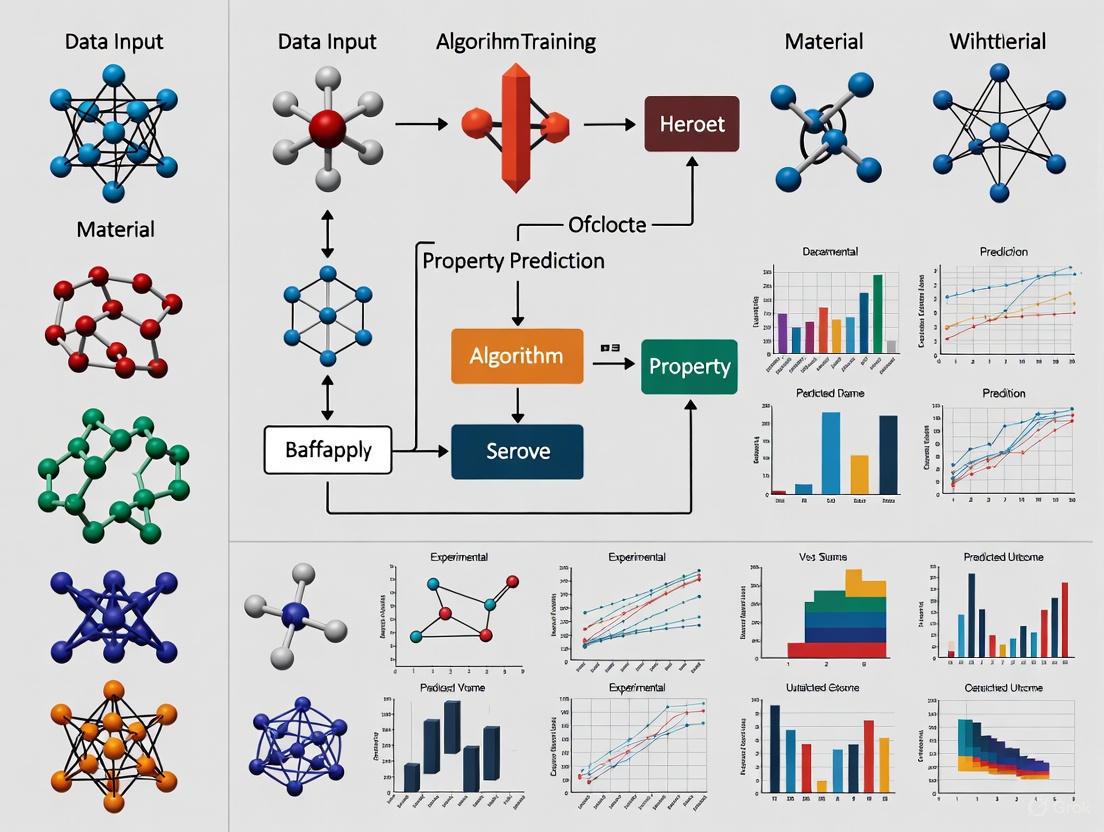
Accurately predicting material properties is crucial for accelerating the discovery of new materials and drugs, yet researchers face significant challenges including data scarcity, an inability to extrapolate beyond training data,...
Overcoming Key Limitations in Material Property Prediction: From Data Scarcity to Robust AI Models
Abstract
Accurately predicting material properties is crucial for accelerating the discovery of new materials and drugs, yet researchers face significant challenges including data scarcity, an inability to extrapolate beyond training data, and poor model generalizability. This article explores the current landscape of machine learning for property prediction, detailing foundational challenges and innovative solutions. It provides a comprehensive overview of advanced methodologies like transductive learning, ensemble models, and novel descriptors that enhance extrapolation and data efficiency. The article also offers practical troubleshooting strategies for imbalanced datasets and model optimization, and concludes with a rigorous validation framework comparing the performance and robustness of various state-of-the-art models. Tailored for researchers, scientists, and drug development professionals, this review serves as a strategic guide for navigating and overcoming the most pressing limitations in the field.
The Core Hurdles: Understanding Fundamental Challenges in Material Property Prediction
The Critical Problem of Data Scarcity in Materials Science and Drug Discovery
Technical Support Center: Troubleshooting Guides and FAQs
Troubleshooting Common Experimental Roadblocks
This section addresses frequent challenges researchers face when building predictive models with limited data.
FAQ 1: My predictive model is overfitting on a small dataset. What regularization strategies are most effective?
| Strategy | Description | Best Used When | Key Performance Metric |
|---|---|---|---|
| Multi-task Learning (MTL) [1] | A single model learns several related tasks simultaneously, sharing representations to improve generalization. | Multiple, related property datasets are available, even if some are small. | Mean Absolute Error (MAE) improvement across all tasks. |
| Transfer Learning (TL) [1] [2] | A model pre-trained on a large, data-rich "source" task is fine-tuned on the data-scarce "target" task. | A large source dataset exists, and its property is related to your target property. | MAE on the target task vs. training from scratch. |
| Mixture of Experts (MoE) [2] [3] | Combines multiple pre-trained models ("experts") via a gating network that weights their contributions for each prediction. | You have access to multiple models pre-trained on different, complementary tasks or data types. | Outperforms pairwise Transfer Learning on data-scarce tasks [2]. |
Experimental Protocol: Implementing a Mixture of Experts (MoE) Framework
- Objective: To accurately predict a data-scarce material property (e.g., piezoelectric modulus) by leveraging knowledge from multiple pre-trained models.
- Materials:
- Pre-trained Expert Models: Multiple Crystal Graph Convolutional Neural Networks (CGCNNs), each trained on a different data-abundant property (e.g., formation energy, band gap) [2].
- Downstream Dataset: Your small, target property dataset (e.g., < 1000 samples).
- Method:
- Feature Extraction: For each material in your target dataset, obtain feature vectors from all pre-trained expert models.
- Aggregation: The MoE framework uses a trainable gating network to compute a weighted sum of these feature vectors. The gating network learns which experts are most relevant for the target task [2].
- Prediction: The aggregated feature vector is passed through a property-specific head network to make the final prediction.
- Training: Only the gating network and the final head network are trained on the target task, preventing overfitting and catastrophic forgetting in the expert models [2].
Diagram 1: Mixture of Experts (MoE) workflow for materials property prediction.
FAQ 2: For drug-target affinity (DTA) prediction, how can I leverage unlabeled data and multiple data types?
| Strategy | Description | Application Context |
|---|---|---|
| Semi-Supervised Multi-task Training [4] | Combines DTA prediction with masked language modeling on paired data and uses large-scale unpaired molecules/proteins for representation learning. | Labeled DTA data is scarce, but large libraries of unlabeled molecular and protein sequences are available. |
| Mixture of Synergistic Experts [5] | Uses separate experts for intrinsic (e.g., molecular structure) and extrinsic (e.g., biological network) data, fusing them adaptively and using mutual supervision. | Input data is incomplete or scarce for some drugs/targets, and/or interaction labels are limited. |
Experimental Protocol: Semi-Supervised Multi-task Training for DTA
- Objective: Improve DTA prediction accuracy by learning better drug and target representations.
- Materials:
- Labeled Data: A small benchmark dataset like BindingDB or DAVIS.
- Unlabeled Data: Large-scale molecular (e.g., ZINC) and protein sequence databases.
- Method:
- Pre-training: Train a model on large corpora of unpaired molecules and proteins using masked language modeling. This step helps the model learn fundamental biochemical "grammar" [4].
- Multi-task Fine-tuning: Further train the model on your labeled DTA data, but simultaneously have it perform auxiliary tasks like predicting masked tokens in the drug and target sequences. This acts as a regularizer [4].
- Interaction Modeling: Use a lightweight cross-attention module to model the interaction between the encoded drug and target representations, leading to the final affinity prediction [4].
Diagram 2: Semi-supervised multi-task training for drug-target affinity prediction.
Comparative Analysis of Low-Data Handling Methods
The table below provides a high-level comparison of common techniques to guide your strategy selection [1].
| Method | Mechanism | Advantages | Limitations & Technical Considerations |
|---|---|---|---|
| Transfer Learning (TL) | Transfers knowledge from a data-rich source task to a data-scarce target task. | Reduces data needs; leverages existing models. | Risk of negative transfer if source and target are dissimilar; requires careful layer freezing[fragment] [1]. |
| Multi-task Learning (MTL) | Jointly learns multiple related tasks in a single model. | Improved generalization via shared representations; data efficiency. | Difficult training due to task interference; sensitive to hyperparameters; hard to find optimal task groupings [1] [2]. |
| Active Learning (AL) | Iteratively selects the most informative data points to be labeled. | Optimizes labeling costs; focuses resources. | Requires an oracle/experiment to label points; initial model may be poor [1]. |
| Data Augmentation (DA) | Creates new training examples via label-preserving transformations. | Artificially expands dataset size; improves robustness. | Confidence in transformations is crucial; less established for molecular data vs. images [1]. |
| Data Synthesis (DS) | Generates entirely new synthetic data using generative models. | Can create data for rare scenarios or where real data is hard to acquire. | Quality and fidelity of synthetic data must be rigorously validated [1]. |
| Federated Learning (FL) | Trains a model across decentralized data sources without sharing the data itself. | Solves data privacy and silo issues; enables collaboration. | Emerging in drug discovery; computational overhead; model aggregation challenges [1]. |
The Scientist's Toolkit: Research Reagent Solutions
This table details key computational "reagents" and their functions for building robust models in low-data regimes.
| Research Reagent | Function & Application |
|---|---|
| Pre-trained Expert Models [2] [3] | Models pre-trained on large, public datasets (e.g., formation energy). They serve as feature extractors or base models for transfer learning, providing a strong prior of chemical or physical rules. |
| Tokenized SMILES Strings [3] | A representation of molecular structure that enhances a model's capacity to interpret chemical information compared to traditional one-hot encoding, improving learning on small datasets. |
| Molecular Fingerprints (e.g., Circular/Morgan) [6] | Fixed-length vector representations of molecules that capture key substructures. Often yield competitive performance with simple models (e.g., Random Forest) in low-data scenarios. |
| Graph Neural Networks (GNNs) [2] | Neural networks that operate directly on the graph structure of a molecule or crystal, learning representations from atomic connections. Powerful but typically require more data. |
| Multi-task Benchmark Datasets [6] | Curated datasets (e.g., from MoleculeNet) containing multiple properties for the same set of molecules, essential for developing and evaluating MTL and TL methods. |
In materials property prediction, a model performs Out-of-Distribution (OOD) extrapolation when it makes predictions for materials that are significantly different from those in its training data. This is distinct from the easier task of interpolation, where test samples fall within the training data distribution [7]. Traditional evaluation methods, which randomly split datasets into training and test sets, often lead to over-optimistic performance estimates due to high redundancy and similarity in standard materials databases [7]. In real-world discovery, scientists actively search for novel, high-performing materials that are, by definition, OOD. This makes overcoming extrapolation failures a critical frontier for accelerating the discovery of new materials and molecules [8].
Frequently Asked Questions (FAQs)
Q1: Why does my model perform well during validation but fails in real-world material discovery? This common issue often stems from the standard practice of random train-test splits. When a dataset contains many highly similar materials, a random split will create test sets that are very similar to the training set, a scenario known as Independent and Identically Distributed (i.i.d.) testing. Your model excels here because it is essentially performing interpolation. However, real-world discovery targets novel materials that are OOD. Studies have shown that state-of-the-art Graph Neural Networks (GNNs) can experience significant performance degradation when evaluated on properly constructed OOD test sets, revealing a substantial generalization gap [7].
Q2: What is the difference between OOD generalization in the input space versus the output space? This is a crucial distinction for materials informatics [8] [9]:
- Input Space (Materials/Chemical Space): This refers to the model's ability to generalize to new types of materials, such as predicting properties for ceramics when it was only trained on metals. The core challenge is that the model encounters new compositions or crystal structures.
- Output Space (Property Value Range): This refers to extrapolating to property values that are outside the range seen during training. The primary challenge is identifying materials with exceptionally high or low values for a target property, which is essential for finding high-performance candidates [8].
Q3: My goal is to discover materials with exceptional, record-breaking properties. What is my biggest challenge? Your primary challenge is output-space extrapolation. Classical machine learning regression models are inherently poor at predicting property values that fall outside the distribution of the training data [8] [9]. This is why some approaches reframe the problem as a classification task, setting a high threshold to identify "top-performing" candidates, though this is a workaround for the fundamental difficulty of regression-based extrapolation [8].
Q4: What data splitting strategies should I use to realistically evaluate my model's OOD performance? Avoid random splits. Instead, use splitting strategies that deliberately place dissimilar materials in the test set. The table below summarizes several rigorous methods.
Table 1: Data Splitting Strategies for Realistic OOD Evaluation
| Strategy Name | Core Principle | Best For |
|---|---|---|
| Leave-One-Cluster-Out (LOCO) [10] | Clusters the entire dataset (e.g., by composition/structure) and uses entire clusters as test sets. | General-purpose OOD evaluation. |
| SparseX [10] | Selects test samples from low-density regions of the material descriptor space (e.g., using Magpie features). | Testing on chemically novel or unique materials. |
| SparseY [10] | Selects test samples with property values from the extremes (tails) of the overall property distribution. | Testing output-value extrapolation for high-performance screening. |
| SOAP-LOCO [11] | Uses Smooth Overlap of Atomic Positions (SOAP) descriptors to cluster materials by local atomic environment, then applies LOCO. | Structure-based models; provides a fine-grained, challenging OOD test. |
Troubleshooting Guides
Issue 1: Poor Performance on Structurally Novel Materials
Problem: Your model fails to accurately predict properties for materials with crystal structures or chemical compositions not represented in the training data.
Solution: Implement structure-aware models and domain adaptation.
- Upgrade to Advanced Graph Neural Networks (GNNs): Move beyond simple composition-based models to structure-based GNNs that can capture local atomic interactions. Models like ALIGNN (which incorporates bond angles) and CGCNN have demonstrated more robust OOD performance in benchmarks [7].
- Fuse Spatial and Topological Information: Consider dual-stream models like TSGNN. One stream processes the topological graph of the crystal, while the other processes spatial information using a CNN, overcoming the limitation that molecules with the same topology but different spatial configurations can have different properties [12].
- Apply Domain Adaptation (DA): If you know the characteristics of your target OOD materials, use DA techniques. DA incorporates information from the target test set (compositions/structures only, not labels) during training to guide the model to adapt to the new distribution [10].
Table 2: Research Reagent Solutions for Structurally Aware Modeling
| Reagent / Method | Function | Key Implementation Note |
|---|---|---|
| SOAP Descriptors [11] | Atomic-scale descriptor that captures the local chemical environment around each atom. | Used for creating rigorous OOD splits (SOAP-LOCO) or as model input features. |
| ALIGNN Model [7] | A GNN that explicitly incorporates bond angle information in addition to atom and bond features. | Captures more detailed geometric information, leading to better OOD generalization. |
| Domain Adaptation (DA) [10] | A set of techniques that adapts a model trained on a source domain to perform well on a different (but related) target domain. | Requires access to the unlabeled target OOD materials during training. |
Experimental Protocol: Evaluating with SOAP-LOCO Split
- Descriptor Generation: Compute averaged SOAP descriptors for all crystal structures in your dataset.
- Clustering: Use a clustering algorithm like K-means on the SOAP descriptors to group materials with similar local atomic environments.
- Splitting: For a rigorous OOD test, leave out one entire cluster for testing and use the remaining clusters for training. Repeat this process for all clusters (leave-one-cluster-out cross-validation) [11].
- Evaluation: Train your model on the training clusters and evaluate its performance on the held-out test cluster. The average performance across all folds provides a realistic measure of OOD generalization.
SOAP-LOCO Evaluation Workflow
Issue 2: Failure in Extrapolating to Extreme Property Values
Problem: Your model cannot identify materials with property values outside the range present in the training data, which is crucial for finding high-performance candidates.
Solution: Reframe the prediction problem and use transductive or matching-based methods.
- Adopt a Transductive Approach: Instead of learning a direct mapping from material to property, use a method like Bilinear Transduction. This approach learns how property values change as a function of the difference between two materials in representation space. During inference, it predicts a new material's property based on a known training example and their representational difference, which can improve extrapolation [8] [9].
- Use a Matching-based Framework: The MEX (Matching-based EXtrapolation) framework reframes property regression as a material-property matching problem, which can alleviate the complexity of direct regression and has shown state-of-the-art performance on extrapolation benchmarks [13].
- Leverage Generative Models for Data Imputation: Deep generative models can "imagine" missing data in incomplete databases. They learn the joint distribution of all data (descriptors and properties), which can improve prediction accuracy for extrapolation tasks, especially when working with small datasets (<100 records) [14].
Experimental Protocol: Implementing a Bilinear Transduction Workflow
- Representation: Convert all material compositions or structures into a fixed-length descriptor vector (e.g., using Magpie, SOAP, or a pre-trained GNN).
- Model Training: Train the bilinear model on pairs of training samples. The model learns to predict the difference in their target property values based on the difference in their descriptor vectors.
- Inference:
- For a new test material, select a base material from the training set.
- Compute the difference vector between the test material and the base material.
- The model uses this difference vector to predict the property difference, which is then added to the base material's known property to get the final prediction for the test material [8] [9].
Bilinear Transduction Workflow
Issue 3: Overconfident and Unreliable Predictions on OOD Data
Problem: Your model makes incorrect predictions on OOD materials but assigns high confidence to these wrong answers, which is dangerous for guiding experiments.
Solution: Integrate Uncertainty Quantification (UQ) into your training and evaluation pipeline.
- Implement Uncertainty-Aware Training: Use techniques like Monte Carlo Dropout (MCD) or Deep Evidential Regression (DER). These methods allow the model to estimate both the predicted value and its associated uncertainty. Combining MCD and DER in a unified protocol has been shown to reduce prediction errors by an average of 70.6% on challenging OOD tasks [11].
- Benchmark with a Unified UQ Framework: Use frameworks like MatUQ to benchmark your model's predictive accuracy and uncertainty quality. MatUQ introduces metrics like D-EviU, which combines stochastic forward passes with evidential parameters and shows a strong correlation with prediction errors, helping you identify when the model is uncertain [11].
- Calibrate Your Expectations: Understand that no single model is universally best. The MatUQ benchmark, which includes over 1,300 OOD tasks, reveals that different GNN architectures (e.g., SchNet, ALIGNN, CrystalFramer) excel at different types of OOD problems. Task-specific model selection is critical [11].
Table 3: Key Uncertainty Quantification (UQ) Techniques
| Technique | Mechanism | Advantage |
|---|---|---|
| Monte Carlo Dropout (MCD) [11] | Performs multiple forward passes with dropout enabled at inference time. The variance across predictions estimates model (epistemic) uncertainty. | Simple to implement; requires no change to model architecture. |
| Deep Evidential Regression (DER) [11] | Model directly learns parameters of a higher-order evidential distribution (e.g., a Normal Inverse-Gamma). | Provides a single-forward-pass estimate of both aleatoric and epistemic uncertainty. |
| Model Ensembles [11] | Trains multiple models independently and aggregates their predictions. | A robust and powerful method, but computationally expensive. |
Limitations of Traditional Descriptors and Black-Box Models
Frequently Asked Questions (FAQs)
1. What are the main limitations of traditional molecular descriptors in property prediction? Traditional molecular descriptors often require significant manual feature engineering and expert knowledge to select and calculate. They can be time-consuming to compute for large datasets, and their applicability domain is often limited, meaning models may not perform well on compounds that are structurally different from the training set [15].
2. Why are "black-box" models problematic in scientific research? Black-box models, such as complex deep neural networks, lack transparency because their internal decision-making process is not easily interpretable. This makes it difficult to trust their predictions, debug errors, or extract scientifically meaningful insights from the model, which is critical in fields like drug development and materials science where understanding structure-property relationships is key [16] [17].
3. What are "activity cliffs" and why do they challenge machine learning models? Activity cliffs occur when two molecules are structurally very similar but exhibit a large difference in their biological activity or potency. These edge cases are particularly challenging for ML models, which operate on the principle that similar structures have similar properties. Consequently, models often make significant prediction errors on these compounds [18].
4. How can I assess if my model will fail on new, unseen data? Performance degradation often occurs due to data distribution shifts. Techniques to foresee this issue include:
- Using Uniform Manifold Approximation and Projection (UMAP) to visualize whether your test data lies outside the feature space of your training data.
- Analyzing the disagreement (e.g., high variance) between predictions from multiple models on the test data, which can illuminate out-of-distribution samples [19].
5. What can be done to improve model interpretability? Several methods exist to shed light on black-box models:
- SHapley Additive exPlanations (SHAP): This method quantifies the contribution of each input feature (e.g., a molecular substructure) to a specific prediction, helping to explain the model's reasoning [15] [17].
- Using interpretable models by design: Simpler models like regression trees or ensemble methods based on them are inherently more interpretable than deep neural networks [20].
- Text-based representations: Using human-readable text descriptions of materials as input to transformer models can provide more transparent reasoning, as the explanations can be traced back to known chemical terms [21].
Troubleshooting Guides
Issue 1: Poor Model Performance on Structurally Similar Molecules with Divergent Properties
Problem: Your model performs well overall but makes significant errors on pairs or groups of molecules that are highly similar yet have very different target property values (i.e., activity cliffs).
Diagnosis Steps:
- Identify Activity Cliffs: Calculate the pairwise structural similarity (e.g., using Tanimoto coefficient on ECFP fingerprints) and potency difference for all compounds in your dataset [18].
- Benchmark Performance: Use a dedicated benchmark like MoleculeACE (Activity Cliff Estimation) to evaluate your model's performance specifically on these challenging cliff compounds [18].
Solutions:
- Model Selection: Consider using machine learning approaches based on molecular descriptors, which have been shown to outperform more complex deep learning methods on activity cliff compounds in some benchmarks [18].
- Data-Centric Approach: Actively seek out or synthesize data for known activity cliffs to include in your training set, ensuring the model is exposed to these edge cases.
Issue 2: Model Fails to Generalize to New Data or Different Material Classes
Problem: A model trained on one version of a database (e.g., Materials Project 2018) shows severely degraded performance when predicting properties for new compounds in an updated database (e.g., Materials Project 2021) [19].
Diagnosis Steps:
- Visualize Data Distribution: Use UMAP to project the training and new test data into a 2D or 3D space. If the test data forms clusters well outside the training data distribution, your model is extrapolating and likely to be unreliable [19].
- Query by Committee: Train multiple different models on your data. High disagreement (variance) in their predictions on the new data is a strong indicator of out-of-distribution samples [19].
Solutions:
- Active Learning: Implement an acquisition strategy like UMAP-guided or query-by-committee sampling. By adding a small amount (e.g., 1%) of the new, challenging data to your training set, you can significantly improve the model's robustness and accuracy [19].
- Universal Descriptors: Explore the use of more fundamental, physics-grounded descriptors. For materials, the electronic charge density is a universal descriptor that is uniquely determined by the material's structure and composition and contains the information needed to predict a wide range of properties, potentially improving transferability [22].
Issue 3: Lack of Trust in Model Predictions Due to "Black-Box" Nature
Problem: You cannot understand or explain why your model made a specific prediction, making it difficult to trust and act upon the results, especially in a regulatory or high-stakes R&D environment [16] [23].
Diagnosis Steps:
- Audit Model Explanations: Use interpretability tools like SHAP on a few key predictions. Check if the model's reasoning aligns with established domain knowledge or if it is relying on spurious, non-meaningful features [15] [17].
- Simplify the Model: If possible, try a simpler, more interpretable model (e.g., a regression tree) on the same task. If its performance is comparable, it may be a more suitable and trustworthy choice [20].
Solutions:
- Implement Explainable AI (XAI) Techniques: Integrate methods like SHAP directly into your prediction workflow. This provides post-hoc explanations for individual predictions, revealing which functional groups or structural features the model deemed most important [15] [17].
- Adopt Interpretable Architectures: Consider using models that offer a balance between performance and interpretability. For example, text-based transformer models that use human-readable crystal descriptions can provide explanations consistent with expert rationales [21]. Similarly, ensemble models based on regression trees are more transparent than deep neural networks [20].
Experimental Protocols & Data
Protocol: Benchmarking Model Performance on Activity Cliffs
Objective: To quantitatively evaluate a machine learning model's susceptibility to errors when predicting the properties of activity cliff compounds.
Methodology:
- Data Curation: Obtain a bioactivity dataset (e.g., from ChEMBL). Curate it by removing duplicates, standardizing structures, and checking for consistency in experimental values [18].
- Cliff Identification: For all molecular pairs in the dataset:
- Calculate structural similarity using the Tanimoto coefficient with Extended Connectivity Fingerprints (ECFPs).
- Calculate the absolute difference in potency (e.g., pIC50, pKi).
- Define activity cliffs using a threshold (e.g., similarity > 0.85 and potency difference > 100-fold or 2 log units) [18].
- Model Evaluation: Train your model on a standard training set. Evaluate its performance not just on a random test set, but specifically on the subset of molecules identified as part of activity cliff pairs. Use metrics like Mean Absolute Error (MAE).
Expected Outcome: A clear measure of model performance (e.g., MAE) on activity cliffs, which is often significantly worse than the overall test set performance, highlighting a key model weakness [18].
Protocol: Assessing Model Generalizability with Data Distribution Shift
Objective: To test whether a model trained on an existing database will perform reliably on new, previously unseen types of materials or compounds.
Methodology:
- Temporal Data Split: Instead of a random train-test split, split your data temporally. For example, train your model on data from an older version of a database (e.g., Materials Project 2018) and test it on entries added in a newer version (e.g., Materials Project 2021) [19].
- Feature Space Analysis:
- Reduce the dimensionality of both the training and test set features using UMAP.
- Plot the UMAP projections to visually inspect if the test data falls within the distribution of the training data [19].
- Committee Disagreement:
- Train three or more different model architectures (e.g., a graph neural network, a descriptor-based model, and a boosting model) on the training set.
- Calculate the standard deviation of their predictions for each point in the test set. High standard deviation indicates high model uncertainty and potential extrapolation [19].
Expected Outcome: Identification of a potential performance drop on new data. Visualization of the distribution shift and quantification of model uncertainty, guiding the need for model retraining or active learning.
Table 1: Benchmark Performance of ML Models on Activity Cliff Compounds across 30 Macromolecular Targets [18]
| Model Category | Specific Method | Key Finding on Activity Cliffs |
|---|---|---|
| Machine Learning (Descriptor-Based) | Random Forest, SVM, etc. | Outperformed more complex deep learning methods, though all methods struggled. |
| Deep Learning (Graph-Based) | Graph Neural Networks, etc. | Generally showed poorer performance on activity cliff compounds compared to descriptor-based methods. |
| Overall Conclusion | 24 methods tested | All models struggled in the presence of activity cliffs, highlighting a pressing limitation of molecular ML. |
Table 2: Performance Degradation of a State-of-the-Art Model on New Data [19]
| Dataset (Formation Energy Prediction) | Mean Absolute Error (MAE) (eV/atom) | Coefficient of Determination (R²) |
|---|---|---|
| Training Set (MP18 - Alloys of Interest) | 0.013 | High (Not specified) |
| Test Set (MP21 - New Alloys of Interest) | 0.297 | 0.194 |
| Observation | Error increased by ~22x, with severe underestimation for high-formation-energy alloys. | Model failed to make even qualitatively correct predictions. |
The Scientist's Toolkit: Research Reagent Solutions
Table 3: Key Computational Tools and Datasets for Material Property Prediction
| Tool / Resource | Type | Function & Application |
|---|---|---|
| MoleculeACE [18] | Software Benchmark | A dedicated platform for benchmarking ML model performance on activity cliff compounds. |
| SHAP (SHapley Additive exPlanations) [15] [17] | Interpretation Library | Explains the output of any ML model by quantifying the contribution of each input feature to a single prediction. |
| UMAP (Uniform Manifold Approximation and Projection) [19] | Dimensionality Reduction Tool | Visualizes high-dimensional data to assess the overlap between training and test datasets and identify distribution shifts. |
| Electronic Charge Density [22] | Universal Descriptor | A fundamental, physics-grounded input for ML models that can predict multiple material properties, improving transferability. |
| MatBERT / Text-based Transformers [21] | Language Model | Uses human-readable text descriptions of materials for property prediction, often yielding more interpretable results. |
| Ensemble Learning (RF, XGBoost) [20] | Modeling Technique | Combines multiple simple models (e.g., regression trees) to create a robust and more interpretable predictor. |
Workflow Diagrams
Frequently Asked Questions
Q1: Why do my machine learning models fail to generalize on new molecular datasets, even when using standard fingerprints? The failure often stems from a topological mismatch between the molecular representation you've chosen and the underlying property landscape of your data. If the feature space of your representation is topologically "rough" – meaning it contains many discontinuities like Activity Cliffs (ACs) – standard machine learning models will struggle to learn a smooth, generalizable function [24]. Structurally similar molecules with large property differences break the fundamental principle that "similar molecules have similar properties" [24].
Q2: My high-throughput DFT screening suggests many topological materials, but experimental validation finds far fewer. What is the cause of this discrepancy? This is a classic electronic structure representation bottleneck. High-throughput screenings have often relied on semi-local DFT functionals (like PBE) due to computational cost. However, these can underestimate electronic interactions, leading to an over-prediction of topological states [25]. Using more advanced hybrid functionals (like HSE), which incorporate exact Hartree-Fock exchange, provides a more accurate electronic structure. Studies show this can reduce the identified fraction of topological materials from ~30% to ~15%, bringing computational predictions in line with experimental reality [25].
Q3: How can I predict material properties accurately when I only have a very small amount of experimental data? In severe data scarcity scenarios, avoid training standard models from scratch. Instead, use an Ensemble of Experts (EE) approach [3]. This method uses pre-trained models ("experts") on large datasets of related physical properties. The knowledge from these experts is combined to create informative molecular fingerprints, which are then used to make accurate predictions for your complex target property, even with very limited data [3].
Q4: Is there a single best molecular representation for all drug discovery tasks? No. Systematic benchmarking studies reveal that no single representation is universally superior [24]. The performance of a representation is highly task-dependent. While traditional fingerprints (like ECFP) are often favored for their interpretability and efficiency, modern learned representations (from GNNs or Transformers) can capture more complex patterns but may underperform with small datasets [24] [26]. The choice depends on your specific data and task.
Troubleshooting Guides
Problem: Inaccurate Topological Classification of Materials
Issue: Computational workflows misclassify a material's topological state (e.g., trivial vs. topological insulator), often due to an inadequate approximation of the electronic exchange-correlation functional [25].
Diagnosis and Solution: Adopt a high-fidelity DFT workflow that integrates both atomic structure optimization and hybrid functional calculations.
- Step 1: Structure Optimization. Begin with an experimental crystal structure (e.g., from the Materials Project Database). Perform a DFT-based geometry optimization to find the theoretical ground-state atomic configuration, as experimental structures may not be optimized for DFT calculations [25].
- Step 2: Charge Density Calculation. Using the optimized structure, run a non-self-consistent field calculation with a semi-local functional (e.g., PBE) to compute the charge density [25].
- Step 3: High-Fidelity Electronic Structure. Calculate the wavefunctions at high-symmetry points in the Brillouin zone using both PBE and the HSE hybrid functional. This comparative step is critical to assess the sensitivity of your results to the exchange-correlation approximation [25].
- Step 4: Topological Analysis. Process the wavefunctions (e.g., using
VASP2Trace) to compute symmetry operators and plane-wave coefficients. Finally, feed this data to a classification tool likeCheckTopologicalMaton the Bilbao Crystallographic Server, which uses symmetry indicators and elementary band representations to determine the topological class [25].
Problem: Handling Rough and Discontinuous Molecular Property Landscapes
Issue: Model performance is poor due to Activity Cliffs—pairs of structurally similar molecules with large property differences that create a complex, "rough" property landscape [24].
Diagnosis and Solution: Quantify the landscape's roughness and select a representation whose feature space topology is compatible with it.
- Step 1: Quantify Landscape Roughness. Before model training, calculate topological and roughness indices for your dataset and representation.
- SALI (Structure-Activity Landscape Index): Identifies individual Activity Cliffs by measuring the ratio of property difference to structural dissimilarity for molecule pairs [24].
- ROGI (Roughness Index): Measures global surface roughness by observing how property dispersion changes as the dataset is progressively coarse-grained. A higher ROGI value predicts a higher potential model error [24].
- Step 2: Select an Optimal Representation. Use a predictive model like TopoLearn, which correlates the topological descriptors of a representation's feature space with expected machine learning generalization error. This provides a data-driven method to select the most effective representation for your specific dataset, avoiding exhaustive empirical testing [24].
- Step 3: Consider a Universal Descriptor. For a fundamentally different approach, use the real-space electronic charge density as your descriptor. According to the Hohenberg-Kohn theorem, this single object uniquely determines all ground-state molecular properties and has shown promise as a highly transferable input for multi-task property prediction [22].
Experimental Data & Protocols
| Functional Type | Total Materials Calculated | Topological Insulators (NLC & SEBR) | Topological Semimetals (ES & ESFD) | Total Topological Materials |
|---|---|---|---|---|
| PBE (Semi-local) | 12,035 | 1,350 (11.2%) | 2,070 (17.2%) | 28.4% |
| HSE (Hybrid) | 9,757 | 705 (7.2%) | 749 (7.7%) | ~15.0% |
Protocol for Topological Classification (as in Table 1):
- Workflow: Follow the detailed hybrid DFT workflow outlined in the troubleshooting guide above.
- Classification Logic: The
CheckTopologicalMattool classifies materials based on band structure analysis [25]:- Trivial Insulator: Band structure matches a sum of elementary band representations (EBRs).
- Topological Insulator (SEBR/NLC): Band structure involves split EBRs or cannot be expressed as a linear combination of EBRs.
- Topological Semimetal (ES/ESFD): Band crossings are enforced by symmetry, either at (ESFD) or not necessarily at (ES) the Fermi level.
Table 2: A Researcher's Toolkit for Molecular Representation
| Representation | Type | Key Function | Best Use Case |
|---|---|---|---|
| ECFP Fingerprints [26] [24] | Traditional | Encodes molecular substructures as a fixed-length binary vector, capturing local atomic environments. | Similarity searching, virtual screening, and models where interpretability and speed are key [24]. |
| SMILES/SELFIES [27] [3] | Language-Based | Represents molecular structure as a string of characters, enabling use of NLP models (Transformers). | Generative tasks and property prediction using large pre-trained chemical language models [27]. |
| Graph Neural Networks [26] [24] | Learned (AI) | Learns representations directly from the molecular graph (atoms as nodes, bonds as edges). | Capturing complex structure-property relationships when sufficient data is available [24]. |
| Electronic Charge Density [22] | Physical | Uses the 3D electron density distribution as a universal descriptor of the material. | Multi-task learning and predicting diverse properties from a single, physically rigorous input [22]. |
| TopoLearn Model [24] | Meta-Model | Predicts the optimal molecular representation for a given dataset based on the topology of its feature space. | Guiding representation selection to improve model generalizability, especially on challenging landscapes [24]. |
Essential Research Reagent Solutions
The following computational "reagents" are essential for designing experiments to overcome representation bottlenecks.
- Hybrid DFT Functionals (e.g., HSE): Used for high-fidelity electronic structure calculation. Their function is to mix exact Hartree-Fock exchange with DFT exchange, providing a more accurate description of band gaps and electronic states, which is critical for identifying topological materials [25].
- Symmetry Indicator Tools (e.g., CheckTopologicalMat): A software tool available on the Bilbao Crystallographic Server. Its function is to automate the topological classification of materials by analyzing band representations and symmetry data derived from DFT calculations [25].
- Topological Data Analysis (TDA) Descriptors: Mathematical tools (e.g., persistent homology) that quantify the shape and connectivity (topology) of a high-dimensional data cloud. Their function is to characterize the "roughness" of a molecular property landscape and correlate it with expected machine learning performance [24].
- Ensemble of Experts (EE) Framework: A machine learning architecture. Its function is to leverage knowledge from models pre-trained on large, related datasets to make accurate predictions for complex properties, effectively overcoming severe data scarcity [3].
Next-Generation Solutions: Advanced Methods for Accurate and Generalizable Prediction
Leveraging Transductive Learning for Improved OOD Extrapolation
Frequently Asked Questions
Q1: What is the primary advantage of using transductive learning for Out-of-Distribution (OOD) property prediction?
Transductive learning methods, such as Bilinear Transduction, significantly improve extrapolation capabilities by reparameterizing the prediction problem. Instead of predicting property values directly from new materials, these methods predict based on a known training example and the difference in representation space between the known and new material. This approach learns how property values change as a function of material differences, leading to more accurate OOD predictions. For solid-state materials and molecules, this method has been shown to improve extrapolative precision by 1.8× and 1.5× respectively, and boost recall of high-performing candidates by up to 3× [8] [9].
Q2: My model performs well during validation but fails to identify promising OOD candidates during screening. What could be wrong?
This common issue often stems from using conventional random cross-validation, which tends to overestimate performance on OOD data. Standard cross-validation assesses models primarily on interpolative tasks, where test samples fall within the training distribution. For true OOD extrapolation, consider implementing leave-one-group-out validation, where the model is explicitly trained to predict properties for entirely unseen chemical families [28]. This approach provides a more realistic assessment of extrapolation capability and has been shown to improve accuracy when predicting novel material classes.
Q3: How does Multi-Anchor Latent Transduction (MALT) improve upon single-anchor approaches?
MALT overcomes limitations of fixed descriptors and single-anchor comparisons by operating directly within a learned latent space and leveraging multiple relevant analogues of query molecules. By selecting multiple anchors and integrating their embeddings with the query embedding, MALT provides more robust predictions that consistently improve OOD generalization over standard inductive baselines while matching or surpassing their in-distribution performance [29].
Q4: What are the most common failure modes when applying transductive learning to molecular property prediction?
The primary failure modes include: (1) Inadequate anchor selection, where chosen training examples don't sufficiently represent the query's chemical space; (2) Representation mismatch, where the embedding space doesn't capture meaningful chemical relationships; and (3) Property-specific challenges, where certain molecular properties exhibit discontinuous behavior across chemical space. Rigorous validation using scaffold splits or time splits can help identify these issues early [28].
Troubleshooting Guides
Issue: Poor OOD Performance Despite High In-Distribution Accuracy
Symptoms: Model achieves low MAE on validation data but fails to identify true high-performance candidates during virtual screening.
Diagnosis: This indicates overfitting to the training distribution and poor extrapolation capability.
Solution:
- Implement Bilinear Transduction by reparameterizing predictions to use analogical reasoning
- Apply leave-one-cluster-out cross-validation during development
- Utilize multi-anchor approaches like MALT to leverage multiple relevant analogues
- Verify that the representation space captures chemically meaningful relationships
Verification: Check if the method improves recall of true top candidates in the OOD set. Successful implementation should yield at least 2× improvement in identifying high-performing OOD materials [8] [9].
Issue: Inconsistent Performance Across Different Material Classes
Symptoms: Model performs well on some material families but poorly on others, particularly novel chemical scaffolds.
Diagnosis: The model likely relies too heavily on specific chemical features present in the training data.
Solution:
- Apply stratified sampling based on chemical families during training
- Use domain adaptation techniques to improve transfer across families
- Implement multi-anchor latent transduction to leverage diverse analogues
- Incorporate additional descriptors that capture broader chemical relationships
Verification: Evaluate performance separately for each material family in the test set. The performance gap between seen and unseen families should decrease significantly with proper implementation [28].
Issue: High Variance in OOD Predictions
Symptoms: Predictions for similar OOD candidates show unexpected large variations.
Diagnosis: Instability in the transduction process, potentially from poor anchor selection or representation inconsistencies.
Solution:
- Increase the number of anchors used in multi-anchor approaches
- Implement anchor selection criteria based on both structural similarity and property space
- Regularize the bilinear transformation to prevent overfitting to specific anchor-query pairs
- Use ensemble methods combining multiple transduction instances
Verification: Monitor prediction stability for similar query molecules and reduce coefficient of variation in predictions.
Performance Comparison of OOD Methods
Table 1: Comparative Performance of Transductive vs. Baseline Methods on Materials Property Prediction
| Dataset | Property | Ridge Regression | CrabNet | Bilinear Transduction |
|---|---|---|---|---|
| AFLOW | Bulk Modulus (GPa) | 74.0 ± 3.8 | 59.25 ± 3.2 | 47.4 ± 3.4 |
| AFLOW | Debye Temperature (K) | 0.45 ± 0.03 | 0.38 ± 0.02 | 0.31 ± 0.02 |
| AFLOW | Shear Modulus (GPa) | 0.69 ± 0.03 | 0.55 ± 0.02 | 0.42 ± 0.02 |
| Matbench | Yield Strength (MPa) | 972 ± 34 | 740 ± 49 | 591 ± 62 |
| Materials Project | Bulk Modulus (GPa) | 151 ± 14 | 57.8 ± 4.2 | 45.8 ± 3.9 |
Table 2: Extrapolative Precision Improvement for Top 30% OOD Candidates
| Domain | Baseline Precision | Transductive Precision | Improvement Factor |
|---|---|---|---|
| Solid-State Materials | 22% | 40% | 1.8× |
| Molecules | 17% | 26% | 1.5× |
Experimental Protocols
Protocol 1: Implementing Bilinear Transduction for Materials Property Prediction
Purpose: To accurately predict material properties for out-of-distribution values using analogical reasoning.
Materials and Representations:
- Input: Chemical compositions (stoichiometry) for solids or molecular graphs/SMILES for molecules
- Representations: Stoichiometry-based descriptors or learned molecular representations
- Property values: Electronic, mechanical, thermal properties from standard databases
Procedure:
- Data Preparation: Split data into training and OOD test sets, ensuring test set contains property values outside training range
- Representation Learning: Generate material representations using appropriate encoders
- Anchor Selection: For each test sample, identify the most similar training examples based on representation similarity
- Bilinear Transformation: Learn how property differences relate to representation differences using bilinear model
- Prediction: For test sample ( x{test} ), predict property as: ( y{test} = y{anchor} + f(x{test} - x_{anchor}) )
- Validation: Use leave-one-cluster-out validation to assess OOD performance
Expected Outcomes: Significant improvement in OOD MAE and recall of high-performing candidates compared to standard regression approaches [8] [9].
Protocol 2: Multi-Anchor Latent Transduction (MALT) for Molecular Property Prediction
Purpose: To improve OOD generalization for molecular properties using multiple analogues in latent space.
Materials:
- Molecular encoders: Pre-trained models for molecular representation
- Property datasets: ESOL, FreeSolv, Lipophilicity, BACE from MoleculeNet
- Implementation: MALT framework operating in learned latent space
Procedure:
- Latent Space Construction: Generate molecular embeddings using pre-trained encoder
- Multi-Anchor Selection: Identify k-most relevant training analogues for each query molecule
- Feature Integration: Combine query and anchor embeddings through attention mechanism
- Property Prediction: Generate final prediction through integrated representation
- Evaluation: Assess on rigorous OOD benchmarks targeting shifts in property values and chemical features
Validation Metrics: OOD MAE, precision-recall for high-value candidates, and comparison to standard inductive baselines [29].
Workflow Diagrams
Multi-Anchor Latent Transduction Workflow
OOD Validation Strategy
Research Reagent Solutions
Table 3: Essential Computational Resources for Transductive OOD Prediction
| Resource | Function | Implementation Examples |
|---|---|---|
| Molecular Encoders | Generate latent representations for molecules | Pre-trained GNNs, Transformer models |
| Material Descriptors | Represent solid-state materials | Stoichiometry-based features, composition embeddings |
| Similarity Metrics | Measure distance in representation space | Cosine similarity, Euclidean distance, learned metrics |
| Anchor Selection | Identify relevant training analogues | k-NN, similarity thresholding, diversity sampling |
| Bilinear Models | Learn property difference relationships | Matrix factorization, regularized regression |
| Benchmark Datasets | Evaluate OOD performance | AFLOW, Matbench, Materials Project, MoleculeNet |
Frequently Asked Questions (FAQs)
Q1: What is an Ensemble of Experts (EE) model and how does it help with small datasets? An Ensemble of Experts (EE) is a machine learning framework that combines knowledge from multiple pre-trained models, or "experts." These experts are first trained on large, high-quality datasets for physical or chemical properties that are related to your target property. When you need to predict a complex property (like glass transition temperature) but have very little training data, the EE system uses the knowledge already encoded in these experts to make accurate predictions, significantly outperforming standard models trained from scratch on your small dataset [3].
Q2: My dataset has less than 100 data points. Can the EE approach work for me? Yes. Research has demonstrated that the EE framework is particularly effective under "severe data scarcity conditions," where it maintains higher predictive accuracy and better generalization compared to standard artificial neural networks (ANNs). Its ability to leverage pre-existing knowledge makes it suitable for scenarios where collecting large datasets is impractical [3].
Q3: What is the minimum data required to start using an EE system? While the EE is designed for data-scarce environments, a related guideline for AI in drug delivery, the "Rule of Five" (Ro5), suggests that a robust formulation dataset should contain at least 500 entries and cover a minimum of 10 drugs and all significant excipients [30]. For the EE, the focus is less on a fixed minimum and more on leveraging the pre-trained experts; however, ensuring your small dataset is high-quality and representative is critical.
Q4: How should I represent molecular structures for the best results in an EE model? Using tokenized SMILES (Simplified Molecular Input Line Entry System) strings is recommended. This approach enhances the model's capacity to interpret complex chemical information and relationships compared to traditional one-hot encoding methods, leading to more accurate predictions of material properties [3].
Q5: What are common reasons for poor EE model performance even with the correct architecture?
- Low-Quality Expert Pre-Training: The experts were not trained on sufficiently large or physically relevant datasets.
- Irrelevant Expert Knowledge: The properties on which the experts were trained are not meaningfully related to your target property.
- Data Imbalance: Your small target dataset does not adequately represent the chemical space you are trying to predict.
- Incorrect Gating Function: The mechanism that routes inputs to the most relevant expert(s) may not be functioning optimally, leading to poor model specialization [3] [31].
Troubleshooting Guides
Issue: Model Fails to Generalize to New Types of Molecules
Problem: Your EE model performs well on molecules similar to those in your small training set but fails on new molecular structures or polymer-solvent systems.
| Possible Cause | Diagnostic Steps | Solution |
|---|---|---|
| Experts lack diverse knowledge. | Check the diversity of chemicals in the experts' original training datasets. | Incorporate additional experts that were pre-trained on more diverse chemical databases, or retrain experts on a broader set of compounds [3]. |
| Gating function is not learning meaningful routes. | Analyze the gating patterns to see if similar molecules are consistently routed to the same expert. | Adjust the gating function's design, for example, by ensuring it promotes a balanced use of experts to prevent model collapse and encourage specialization [31]. |
Issue: Model Performance is Highly Variable Across Different Training Runs
Problem: When you retrain the EE model on the same small dataset, you get significantly different performance metrics each time.
| Possible Cause | Diagnostic Steps | Solution |
|---|---|---|
| High variance from small dataset. | Perform multiple training runs with different random seeds and calculate the standard deviation of key metrics. | Employ bootstrap aggregation (bagging). Train multiple EE models on different bootstrap samples of your small dataset and average their predictions. This has been shown to enhance reliability and provide uncertainty quantification [32]. |
| Unstable training dynamics. | Monitor the loss landscape and router behavior during training for large fluctuations. | Implement training stabilization techniques specific to MoE models, such as a router z-loss penalty, which helps ensure training stability in complex architectures [31]. |
Experimental Protocol for an Ensemble of Experts Workflow
The following workflow outlines the key steps for developing and training an Ensemble of Experts model for material property prediction, based on established methodologies [3] [32].
Detailed Methodology
Step 1: Assemble Expert Datasets
- Action: Gather large, high-quality datasets for properties that are physically related to your target property. For example, if predicting the Flory-Huggins parameter (χ), relevant expert properties might include solubility parameters or other interaction energies.
- Data Sources: Utilize public material databases such as the Materials Project [32], Supercon Material Database [32], or other experimental compilations [32].
- Key Consideration: The size and quality of these datasets directly determine the knowledge base of your experts. Aim for datasets with thousands to tens of thousands of entries where possible [33].
Step 2: Pre-train Expert Models
- Action: Train individual neural network models (the "experts") on each of the datasets assembled in Step 1.
- Model Architecture: Standard Artificial Neural Networks (ANNs) or Graph Neural Networks (GNNs) are commonly used. For molecular data, GNNs that use tokenized SMILES strings or element graphs as input are effective [3] [32].
- Output: The goal is to have fully trained models that can accurately predict their respective expert properties.
Step 3: Prepare Target Dataset
- Action: Compile your small, target dataset for the complex property you wish to predict (e.g., glass transition temperature Tg).
- Representation: Represent each molecule in this dataset using its tokenized SMILES string [3].
Step 4: Generate Molecular Fingerprints
- Action: Pass the tokenized SMILES strings from your target dataset through the pre-trained expert models.
- Output: The activations from an intermediate layer of each expert model are extracted. These activations serve as a "fingerprint" that encapsulates the chemical knowledge of each expert. These fingerprints are then used as the input features for the final EE model [3].
Step 5: Build and Train the EE Model
- Action: Construct a final model (e.g., a linear model or a shallow neural network) that takes the combined expert fingerprints as input and predicts the target property.
- Training: This final model is trained only on your small target dataset. Because the inputs are rich, knowledge-dense fingerprints, the model can learn effectively even with limited data.
Step 6: Evaluate and Deploy
- Action: Rigorously evaluate the EE model's performance using hold-out test sets or cross-validation. Compare its performance against a standard ANN trained directly on your small dataset to quantify the improvement.
- Deployment: Use the trained EE model to screen new candidate materials and predict their properties.
The Scientist's Toolkit: Research Reagent Solutions
The following table details key computational tools and data resources essential for building an Ensemble of Experts framework.
| Item Name | Function / Role in the EE Workflow | Key Characteristics |
|---|---|---|
| Tokenized SMILES Strings | Represents molecular structure as a sequence of tokens for model input. | Enhances chemical interpretation compared to one-hot encoding; captures complex structural relationships [3]. |
| Graph Neural Networks (GNNs) | Serves as the architecture for expert models, especially for crystalline or molecular data. | Naturally represents materials as graphs (atoms=nodes, bonds=edges); automatically learns relevant features [33] [32]. |
| Bootstrap Aggregation (Bagging) | A resampling technique used to improve model stability and quantify uncertainty. | Trains multiple models on different subsets of data; combined outputs reduce variance and highlight outliers [32]. |
| Public Material Databases | Provides the large, high-quality datasets needed to pre-train the expert models. | Examples: Materials Project (DFT data), Supercon (superconductivity), NIST (experimental data) [32]. |
| Gating Function / Router | The mechanism within the EE that dynamically selects the most relevant expert(s) for a given input. | Critical for model efficiency and performance; often a linear function with softmax; must balance expert specialization with load balancing [31]. |
Accurate material property prediction is crucial for accelerating the discovery of new materials for applications in energy, catalysis, and drug development. Traditional methods, like Density Functional Theory (DFT), are computationally expensive, limiting large-scale screening [34]. While machine learning models, particularly Graph Neural Networks (GNNs), offer a faster alternative by representing materials as graphs (atoms as nodes, bonds as edges), they face significant challenges [34]. Data scarcity for specific properties (e.g., mechanical properties like elastic modulus) and difficulties in capturing complex global crystal structure and periodicity often lead to model overfitting and restricted performance [34]. Dual-stream GNN architectures represent a promising advancement by integrating multiple, complementary data processing pathways to create a more comprehensive and powerful representation of materials, thereby overcoming these fundamental limitations.
Frequently Asked Questions (FAQs)
Q1: My dual-stream model is overfitting on a data-scarce mechanical property dataset. What strategies can I use?
A1: For data-scarce properties like bulk or shear modulus, consider these approaches:
- Leverage Transfer Learning (TL): Pre-train your model on a data-rich "source task" (e.g., predicting formation energy or total energy) before fine-tuning it on your data-scarce "downstream task." This leverages learned features and acts as a regularizer to reduce overfitting [34].
- Employ a Modular Framework: Use a framework like MoMa, which centralizes specialized modules trained on diverse high-resource tasks. For a new, data-scarce task, an adaptive composition algorithm selects and combines the most synergistic modules, effectively transferring knowledge without retraining a full model from scratch [35].
- Utilize a Hybrid Architecture: Implement a model like CrysCo, which combines a structure-based GNN stream with a composition-based Transformer network. This allows the model to learn from both atomic structure and human-extracted compositional/physical properties, enriching the feature set even when structural data is limited [34].
Q2: How can I ensure my GNN captures both local atomic environments and global structural features of a crystal?
A2: Relying on a single, shallow GNN often fails to capture global context. To address this:
- Implement a Deeper GNN Architecture: Use a deep GNN model (e.g., with 10 layers) that explicitly incorporates higher-order interactions. The CrysGNN model, for instance, uses an Edge-Gated Attention Graph Neural Network (EGAT) to update representations based on up to four-body interactions (atom type, bond lengths, bond angles, and dihedral angles), capturing more complex structural patterns [34].
- Adopt a Dual-Stream Approach: A parallel architecture is highly effective. One stream (e.g., a GNN) can focus on the local topological structure and motion representations, while the other (e.g., a Transformer) captures global inter-joint relationships and long-range dependencies beyond immediate neighbors [36]. A late fusion strategy then combines these complementary perspectives [36].
Q3: My model's predictions lack interpretability. How can I understand which atomic structures or compositions drive the results?
A3: For Text-Attributed Graphs (TAGs), you can use post-hoc explanation frameworks.
- Use an LLM-based Explainer: Frameworks like Logic project GNN node embeddings into the embedding space of a Large Language Model (LLM). The LLM then reasons over the GNN's internal representations to generate natural language explanations and concise explanation subgraphs, making the model's decision-making process more human-interpretable [37].
- Analyze Elemental Contributions: Some hybrid models, like the Transformer and Attention Network (TAN) in CoTAN, offer built-in interpretability by highlighting the importance of different elemental contributions from the composition, providing physical insights into the model's predictions [34].
Troubleshooting Common Experimental Issues
Problem: Poor Performance on Heterophilous Graphs
- Symptoms: Model performance is worse than a simple Multi-Layer Perceptron (MLP) that ignores graph structure.
- Background: GNNs were traditionally believed to work best on homophilous graphs, where connected nodes share similar features and labels. However, in material graphs, nodes (atoms) with different properties (e.g., different elements) can be connected (heterophily) [38].
- Solution: Do not assume GNNs are unsuitable for heterophily. GNNs can still achieve discriminative representations if nodes from the same class share a similar neighborhood distribution, even if the immediate neighbors are from a different class. The key is the consistency of the connection pattern [38]. Empirically validate your graph's properties rather than relying on assumptions.
Problem: Ineffective Fusion of Dual Streams
- Symptoms: The combined model performs no better, or even worse, than the individual streams run independently.
- Background: Simply running two streams in parallel does not guarantee beneficial interaction. Poorly designed fusion can introduce noise or fail to leverage complementary information [36] [34].
- Solution:
- Refine Fusion Strategy: Implement and test different fusion strategies, such as a weighted late fusion of the prediction scores (logits) from each stream, rather than simply averaging intermediate features [36].
- Systematic Evaluation: Conduct an ablation study to rigorously test the contribution of each stream and the fusion mechanism. The table below shows a template for such an analysis.
Table: Template for Ablation Study on Fusion Strategy Performance
| Model Configuration | Test MAE (Formation Energy) | Test Accuracy (Band Gap Classification) |
|---|---|---|
| GNN Stream Only | ||
| Transformer Stream Only | ||
| Early Feature Fusion | ||
| Late Prediction Fusion |
Experimental Protocols & Methodologies
Protocol 1: Implementing a Hybrid Transformer-Graph (CrysCo) Framework This protocol is designed for predicting energy-related properties (e.g., formation energy, energy above convex hull) and data-scarce mechanical properties [34].
Data Preparation:
- Source: Use computational data from public databases like the Materials Project (MP).
- Inputs:
- Crystal Structure Graph: Represent the crystal structure as a graph. The CrysGNN stream uses three distinct graphs: the original graph (Gδ), its line graph L(Gδ), and the line graph of the deltahedral graph L(Gδd) to capture four-body interactions [34].
- Compositional Features: For the CoTAN stream, input compositional features and human-extracted physical properties [34].
Model Architecture:
- Stream A (CrysGNN): A 10-layer Edge-Gated Attention GNN (EGAT) that performs message-passing on the three graph representations to update node (atom) and edge (bond) features, capturing complex local and multi-body interactions [34].
- Stream B (CoTAN): A Transformer and Attention network inspired by CrabNet that processes compositional data and learns from elemental relationships [34].
- Fusion: Train the two streams in a single, hybrid manner, allowing the model to simultaneously learn from structure and composition [34].
Training with Transfer Learning (for data-scarce tasks):
- Pre-train the entire CrysCo model on a large dataset of primary properties (e.g., formation energy).
- Use this pre-trained model as the initialization for fine-tuning on the smaller, target dataset (e.g., shear modulus) [34].
Dual-Stream Architecture for Material Property Prediction
Protocol 2: Adaptive Module Composition with MoMa This protocol is for scenarios where you need to adapt quickly to multiple, disparate material property prediction tasks with varying data availability [35].
Module Training & Centralization:
- Train a multitude of specialized modules (e.g., for thermal, electronic, mechanical properties) on high-resource datasets. Each module can be a fully fine-tuned model or a parameter-efficient adapter.
- Centralize these trained modules in a repository called MoMa Hub [35].
Adaptive Module Composition (AMC):
- For a new downstream task, the AMC algorithm estimates the performance of each module in the hub on the target data in a training-free manner.
- It then heuristically optimizes a weighted combination of the most synergistic modules.
- The final step is to fine-tune this composed module on the target task for optimal adaptation [35].
The Scientist's Toolkit: Research Reagent Solutions
Table: Essential Components for Dual-Stream GNN Experiments
| Research Reagent | Function & Explanation |
|---|---|
| Crystallographic Data (e.g., from Materials Project) | Provides the foundational graph structure. Atomic coordinates and species define the nodes, while interatomic distances and bond types define the edges in the topological stream [34]. |
| Compositional Descriptors | These are the input features for the compositional stream. They can include stoichiometry, elemental properties (e.g., electronegativity, atomic radius), and other human-engineered features that describe the material's chemical makeup [34]. |
| Pre-trained Model Checkpoints (for Transfer Learning) | Models pre-trained on large, generic material datasets (e.g., formation energies). They act as a form of "pre-trained knowledge," providing a strong starting point to improve performance and convergence on data-scarce tasks [34] [35]. |
| Modular Framework (e.g., MoMa Hub) | A centralized repository of specialized, pre-trained modules. This allows researchers to "mix and match" expert modules without retraining from scratch, facilitating rapid adaptation to new prediction tasks and mitigating data scarcity [35]. |
| LLM Explanation Framework (e.g., Logic) | A tool for model interpretability. It translates the complex, internal representations of the GNN into natural language narratives and key subgraphs, helping researchers understand and trust the model's predictions on text-attributed graphs [37]. |
Fundamental Concepts & Data Acquisition
What is electronic charge density and why is it a physically-grounded descriptor?
Answer: Electronic charge density, denoted as ρ(r), is a fundamental quantum mechanical observable that describes the probability per unit volume of finding any electron at a specific point in space, expressed in units of eÅ⁻³ or atomic units [39] [40]. For an N-electron system, it is defined by ρ(r) = N ∫ ψ*ψ dτ, where ψ is the stationary state wavefunction and τ denotes the spin and spatial coordinates of all electrons but one [39].
Its role as a physically-grounded descriptor is anchored by the Hohenberg-Kohn theorem of Density Functional Theory (DFT), which establishes that the ground-state electron density uniquely determines all properties of a quantum system, including its total energy and wavefunction [22] [41]. This one-to-one correspondence makes it an excellent universal descriptor for machine learning models, as it inherently encodes information about atomic species, structural symmetry, chemical bonding, and valence electron states without requiring ad-hoc feature engineering [22].
How can I obtain the electronic charge density for a material?
Answer: You can acquire electronic charge density through both theoretical computation and experimental measurement.
| Method | Brief Description | Key Outputs/Analyses |
|---|---|---|
| Theoretical Calculation (DFT) | Uses quantum mechanical codes (e.g., VASP) to solve Kohn-Sham equations iteratively until self-consistency (SCF) is reached [42] [41]. | CHGCAR files (VASP); Cube files; Total energy, band structure, bonding analysis [22] [41] [43]. |
| Experimental Measurement (X-ray Diffraction) | Measures intensities of Bragg reflections. Electron density is reconstructed via Fourier summation and refined using multipolar models [39] [40]. | Deformation density maps; Topological analysis of bonds; Experimental structure factors [39] [40]. |
Experimental Protocol for X-ray Diffraction:
- Data Collection: Collect high-resolution, high-redundancy X-ray diffraction data on a single crystal at low temperature to minimize thermal vibrations [40].
- Structural Refinement: Perform a preliminary refinement of the crystal structure in the spherical atom approximation using software like Shelx [39].
- Multipolar Model Refinement: Refine a multipolar expansion model (e.g., Hansen & Coppens model) against the measured structure factors using dedicated software such as XD or MoPro to obtain the static experimental electron density [39] [40].
What software can I use to visualize charge density and related fields?
Answer: Multiple software packages offer visualization capabilities, often directly reading output files from standard DFT codes.
- AMSview: This module from the Amsterdam Modeling Suite can visualize isosurfaces of the SCF density, color them by the electrostatic potential, and create difference density maps. It allows you to adjust grids for smoothness and use various colormaps [43].
- chemtoools: A Python package that can calculate and visualize the Electron Localization Function (ELF) and electron density from Gaussian cube files. It can also interpolate values to arbitrary points [44].
- VESTA, VMD, and Jmol are other widely used programs for visualizing volumetric data like charge density.
Technical Issues & Troubleshooting
My DFT calculations are slow to converge or fail to converge. How can charge density help?
Answer: Slow SCF convergence is a common bottleneck. Machine-learning models can predict a highly accurate initial charge density, which can serve as an excellent starting point for the DFT calculation, significantly reducing the number of SCF iterations required.
Experimental Evidence: A model called ChargE3Net, when trained on over 100K materials from the Materials Project, was used to initialize DFT calculations on unseen materials. This led to a median reduction of 26.7% in SCF steps compared to standard initialization methods, dramatically accelerating computational workflows [42].
I work with large systems; can I use machine learning to predict charge density efficiently?
Answer: Yes, this is an active and promising research area. The key is to use models with linear time complexity with respect to system size. For example, the ChargE3Net architecture has demonstrated the capability to predict charge density for systems containing over 10,000 atoms, a scale that is computationally prohibitive for standard DFT calculations due to its O(N³) scaling [42].
My charge density data has different grid dimensions for different materials, which is problematic for my ML model. How can I standardize this?
Answer: This is a major challenge when using 3D grid-based data for machine learning. The solution is to use a representation-independent approach.
Standardization Protocol:
- Fourier Interpolation: Leverage the periodicity of the crystal. Take the discrete Fourier transform of your real-space charge density grid, augment it with zero-valued high-frequency components, and then apply the reverse transform to obtain a consistently up-sampled grid [41].
- Resampling to a Common Grid: Use the up-sampled data to resample the charge density onto a common, material-agnostic grid using linear interpolation, ensuring all data inputs have a unified dimension for the ML model [22] [41].
- Image Representation: Some modern frameworks convert the 3D charge density matrix into a series of 2D image snapshots along specific crystal directions, which can then be processed by standard convolutional neural networks (CNNs) [22].
Diagram 1: Data standardization workflow for machine learning.
Data Handling & Modeling Challenges
How can I ensure my ML-predicted charge density is physically meaningful?
Answer: To ensure physical meaningfulness, your machine learning model must respect the inherent symmetries of the system. This is achieved by building E(3)-equivariance into the model architecture. E(3)-equivariance means that a rotation or translation of the input atomic system results in an identical rotation or translation of the output charge density field.
Implementation with Higher-Order Tensors: Modern architectures like ChargE3Net go beyond simple scalar and vector features. They use higher-order equivariant features in the form of irreducible representations (irreps) of the SO(3) rotation group. These features are operated on using equivariant functions like the tensor product (governed by Clebsch-Gordan coefficients), which guarantees that the model's predictions transform correctly under symmetry operations, leading to more accurate and physically credible results [42].
What is the typical accuracy of ML-predicted charge densities?
Answer: The accuracy is quantitatively measured by how well the ML-predicted density reproduces the DFT-calculated ground truth. Performance varies by model and dataset, but current state-of-the-art models show high fidelity. The table below summarizes key quantitative findings from recent research.
Table 2: Performance Metrics of ML Models for Charge Density Prediction
| Model / Study | Dataset | Key Performance Metric | Result |
|---|---|---|---|
| Universal MSA-3DCNN [22] | Materials Project | Average Coefficient of Determination (R²) | R² = 0.66 (Single-Task), R² = 0.78 (Multi-Task) |
| ChargE3Net [42] | Diverse Molecules & Materials | Reduction in SCF Iterations | 26.7% median reduction on unseen materials |
| ChargE3Net [42] | Materials Project | Property Prediction from Non-SCF DFT | Near-DFT accuracy for electronic/thermodynamic properties |
Advanced Applications & Property Prediction
Can I bypass expensive DFT calculations entirely for property prediction?
Answer: Yes, a promising approach is to perform non-self-consistent (non-SCF) DFT calculations using the ML-predicted charge density. In this workflow, the ML model provides the final, converged charge density, which is then used in a single, final DFT step to compute the Hamiltonian and related properties, completely bypassing the iterative SCF cycle.
Experimental Protocol for Non-SCF Property Prediction:
- Input: Atomic structure (species and positions) of a material.
- ML Prediction: Use a trained model (e.g., ChargE3Net) to predict the converged electron charge density, ρ_ML(r).
- Single-Shot DFT Calculation: Perform a single non-SCF DFT calculation using ρ_ML(r) as the fixed input charge density.
- Output: Compute desired electronic (e.g., band structure, density of states) and thermodynamic properties from the resulting Hamiltonian. This approach has been shown to achieve "near-DFT performance at a fraction of the computational cost" [42].
Diagram 2: Non-SCF property prediction workflow.
What material properties have been successfully predicted using charge density as a descriptor?
Answer: Electronic charge density has been used as a universal descriptor to predict a wide range of ground-state material properties within a unified machine-learning framework. A single model trained on charge density has demonstrated success in predicting the following eight properties with high accuracy (R² up to 0.94) [22]:
- Electronic Properties: Band gap, Fermi energy.
- Thermodynamic Properties: Formation energy, cohesive energy.
- Mechanical Properties: Bulk modulus, shear modulus.
- Vibrational Properties: Phonon dispersion, thermal conductivity.
Furthermore, multi-task learning—where the model is trained to predict multiple properties simultaneously—has been shown to improve prediction accuracy for individual properties, demonstrating excellent transferability and moving closer to the goal of a universal property predictor [22].
Table 3: Essential Software, Databases, and Codes
| Tool Name | Type | Primary Function | Relevance to Charge Density |
|---|---|---|---|
| VASP [41] | Software | Ab-initio DFT Simulation | Industry-standard code for computing charge density (CHGCAR files). |
| Materials Project DB [41] | Database | Repository of Material Properties | Source of a large, representation-independent charge density database. |
| ChargE3Net [42] | ML Model | Higher-Order Equivariant Neural Network | State-of-the-art model for accurate charge density prediction. |
| XD / MoPro [39] | Software | Experimental Charge Density Refinement | Refines multipolar models against X-ray diffraction data. |
| AMSview / chemtools [43] [44] | Software | Visualization & Analysis | Visualizes isosurfaces, difference densities, and ELF. |
| e3nn [42] | Code Library | Equivariant Neural Networks | PyTorch extension for building E(3)-equivariant models. |
Data Augmentation and Synthetic Data Generation with WGAN for Small Datasets
For researchers in material science and drug development, predicting material properties or biological activity often hinges on the availability of high-quality, extensive datasets. In practice, however, such data can be scarce, expensive to produce, or inherently imbalanced, where data for rare but critical events (like specific material failures or drug interactions) is vastly outnumbered by routine data. This data imbalance can severely compromise the performance of machine learning models, leading to high false negative rates and missed discoveries. Generative Adversarial Networks (GANs), and specifically Wasserstein GANs (WGANs), present a powerful computational approach to overcome these limitations by generating high-fidelity synthetic data. This technical support guide provides troubleshooting and best practices for implementing WGANs to augment small datasets, enabling more robust and reliable predictive modeling in your research.
WGAN Fundamentals: A Stable Foundation for Data Generation
What is a WGAN and why is it preferred for small datasets?
The Wasserstein Generative Adversarial Network (WGAN) is an advanced variant of the standard GAN. Its key improvement lies in using the Wasserstein distance (also known as the Earth Mover's distance) to measure the difference between the distribution of real data and the distribution of synthetic data generated by the model [45]. This fundamental change addresses two critical failures of traditional GANs:
- Elimination of Mode Collapse: In standard GANs, the generator often "collapses" to produce a limited variety of outputs, failing to capture the full diversity of the training data.
- Stable Training Dynamics: The training process of a WGAN is more stable and less sensitive to model architecture and hyperparameter choices. The loss value of the WGAN correlates with the quality of the generated samples, providing a meaningful metric to track training progress [45].
For small datasets, where every data point is precious, this stability and reliability are paramount. The WGAN's ability to provide meaningful feedback during training makes it significantly more likely to converge to a good solution with limited data compared to a standard GAN.
What is WGAN-GP and how does it further improve training?
The initial WGAN formulation enforced a Lipschitz constraint (a mathematical condition on the model) through weight clipping. This could sometimes lead to undesired behavior, such as capacity underuse or explosive gradients. WGAN with Gradient Penalty (WGAN-GP) is now the de facto standard [46] [45] [47].
WGAN-GP replaces weight clipping by adding a gradient penalty term directly to the loss function. This term penalizes the model if the gradient norm of the critic deviates from 1, thereby enforcing the Lipschitz constraint in a more robust and effective manner. The result is even greater training stability and often higher quality generated samples [45].
Troubleshooting Common WGAN Implementation Issues
The generated samples are low quality or meaningless.
Potential Causes and Solutions:
- Cause 1: Inadequate Feature Preprocessing. High-dimensional data like gene expression or material spectra often contain irrelevant or low-variance features that can dominate the learning process.
- Solution: Implement a rigorous feature selection protocol. As done in gene expression studies, remove features with zero values in a high percentage of samples (e.g., >70%) and those with very low variance (e.g., less than 16% of total variance) [46]. This reduces noise and helps the WGAN focus on the most informative features.
- Cause 2: Simple Model Architecture. A generator or critic that is too simple may lack the capacity to learn the complex distribution of your data.
- Solution: Adopt a progressive or convolutional architecture. For image-like data (e.g., micrographs, spectral images), use a Deep Convolutional WGAN-GP. For non-image data, ensure the generator and critic are deep enough. Studies on medical image synthesis have successfully used progressively growing networks that start with low-resolution images and gradually increase resolution, which stabilizes training [48].
- Cause 3: Poor Quality or Excessively Small Training Set.
- Solution: If your dataset is extremely small (e.g., a few hundred samples), consider preliminary data enrichment. One bioinformatics study used a Linear Graph Convolutional Network (GCN) to enrich gene expression training samples before WGAN-GP training, which helped prevent over-fitting and mode collapse [47].
Model training is unstable, or losses are oscillating/vanish.
Potential Causes and Solutions:
- Cause 1: Incorrect Training Ratio of Critic and Generator. An under-trained critic provides poor feedback to the generator, while an over-trained critic can lead to oscillating losses.
- Solution: Use the
n_critichyperparameter. A common practice is to train the critic (discriminator) 5 times for every single training step of the generator [45]. This ensures the critic provides a well-trained, reliable gradient for the generator to learn from.
- Solution: Use the
- Cause 2: Inappropriate Optimizer or Learning Rate. Standard momentum-based optimizers like Adam can sometimes cause instability in GAN training.
- Solution: As recommended in the original WGAN-GP paper, use an Adam optimizer with modified hyperparameters. A typical setup is a learning rate of
2e-4,beta_1 = 0.5, andbeta_2 = 0.9[45]. Avoid using a high momentum term.
- Solution: As recommended in the original WGAN-GP paper, use an Adam optimizer with modified hyperparameters. A typical setup is a learning rate of
- Cause 3: Forgetting the Gradient Penalty.
- Solution: Double-check your loss function implementation. The loss function for WGAN-GP must include the gradient penalty term, typically with a coefficient (λ) of 10 [45]. The penalty is calculated on interpolated samples between real and generated data.
The generator produces samples with low diversity (mode collapse).
Potential Causes and Solutions:
- Cause: Single Critic Feedback.
- Solution: Implement a Multiple Discriminator (MDWGAN-GP) approach. A recent method proposed using multiple discriminators to provide more diverse feedback signals to the generator. This has been shown to effectively prevent mode collapse and produce higher quality synthetic gene expression data, a scenario common with small, high-dimensional datasets [47].
How can I quantitatively evaluate the quality of my synthetic data?
Evaluating synthetic data is crucial. Beyond visualizing the loss curve, you should use task-specific and statistical metrics.
- Classifier Two-Sample Test (CTST): This is a powerful method where a classifier is trained to distinguish between real and synthetic data. If the synthetic data is realistic, the classifier's accuracy should be close to 50% (i.e., random guessing). This method was successfully used to control the quality of synthetic gene samples [46].
- Downstream Task Performance: The most relevant test for your research is to use the augmented dataset (real + synthetic) for your intended prediction task (e.g., predicting material strength or drug efficacy). If the augmented model shows improved performance over the model trained on real data alone, the synthetic data is valuable. For example, a WGAN-GP framework for IIoT anomaly detection demonstrated a significant increase in accuracy, precision, and recall after adding synthetic minority-class samples [49].
- Statistical Similarity: Measure the similarity between the distributions of real and synthetic data using metrics like Maximum Mean Discrepancy (MMD) or by comparing summary statistics (mean, variance, correlation).
Table 1: Summary of Common WGAN Issues and Solutions
| Problem | Primary Cause | Recommended Solution |
|---|---|---|
| Low-quality output | High-dimensional noise, simple model | Feature selection, use deeper/convolutional architectures [46] [48] |
| Unstable training | Unbalanced critic/generator training, wrong optimizer | Train critic more (n_critic=5), use Adam with lr=2e-4, beta1=0.5 [45] |
| Mode collapse | Limited feedback from a single critic | Use Multiple Discriminator (MDWGAN-GP) approach [47] |
| Overfitting on small data | Dataset is too small to learn distribution | Pre-enrich data using methods like GCN [47] |
Experimental Protocols for Reliable Results
Protocol: Data Augmentation for a Highly Imbalanced Dataset
This protocol is adapted from successful applications in bioinformatics [46] and IIoT anomaly detection [49].
- Data Preprocessing:
- Handle Missing Values: Impute or remove features with excessive null values.
- Feature Selection: Filter out low-variance and constant features to reduce dimensionality.
- Normalize: Standardize or normalize the data to a consistent range (e.g., [0,1] or [-1,1]).
- Model Setup:
- Architecture: Define generator and critic networks using fully connected or convolutional layers. The critic should not use batch normalization, while the generator can.
- Loss Function: Implement the WGAN-GP loss with the gradient penalty term (λ=10).
- Training with Data Blocks (for severe imbalance):
- Split the minority class (positive samples) and the majority class (negative samples) of the training set.
- Create multiple data "blocks." Each block contains all the minority samples but a different, random subset of the majority samples. This creates several smaller, manageable imbalanced datasets.
- Train the WGAN-GP model only on the minority class samples from these blocks.
- Synthesis and Validation:
- Use the trained generator to create synthetic minority samples.
- Evaluate quality using CTST [46].
- Combine the high-quality synthetic samples with the original training data to create a balanced dataset.
- Downstream Validation:
- Train your target predictive model (e.g., a classifier) on the augmented, balanced dataset.
- Evaluate performance on a held-out test set that contains only real data. Improved metrics (F1-score, recall) validate the augmentation.
Protocol: Two-Stage Augmentation (SMOTE + WGAN-GP)
For complex data distributions, a two-stage approach can yield superior results, as demonstrated in IIoT research [49].
- Stage 1 - Rough Balancing with SMOTE: Apply the Synthetic Minority Over-sampling Technique (SMOTE) to the minority class. This creates an initial set of interpolated synthetic samples to roughly balance the class distribution.
- Stage 2 - Refinement with WGAN-GP: Train a WGAN-GP model on the augmented dataset from Stage 1 (which now has a better balance). The WGAN learns the refined, non-linear feature distributions and generates higher-fidelity synthetic samples that are more representative of the true minority class distribution.
- Final Dataset Construction: Use the synthetic data generated by the WGAN in the final training set for your predictive model.
Workflow Visualization
The following diagram illustrates the logical workflow for a robust WGAN-based data augmentation system, incorporating best practices like the data block structure and two-stage augmentation.
The Scientist's Toolkit: Essential Research Reagents
Table 2: Key Computational Tools and Concepts for WGAN-based Augmentation
| Tool / Concept | Function / Purpose | Application Note |
|---|---|---|
| WGAN-GP Loss Function | Measures the Wasserstein distance between real and synthetic data distributions with a gradient penalty for stable training. | The core of the model. Replaces standard GAN loss to prevent mode collapse and provide meaningful loss metrics [45]. |
| Classifier Two-Sample Test (CTST) | A quantitative method to evaluate the realism of synthetic data by training a classifier to distinguish it from real data. | A crucial validation step. A resulting accuracy near 50% indicates highly realistic synthetic data [46]. |
| Data Block Structure | A strategy to handle severe class imbalance by splitting the majority class into subsets combined with all minority samples. | Mitigates overfitting and information loss when dealing with a very small number of minority samples [46]. |
| Multiple Discriminator (MDWGAN-GP) | An architecture that uses several critic networks to provide more diverse feedback to the generator. | Effectively prevents mode collapse, especially beneficial for small and high-dimensional datasets [47]. |
| Graph Convolutional Network (GCN) | A network that operates on graph-structured data, capable of capturing relationships between features. | Can be used as a pre-processing step to enrich and add relational context to a small dataset before WGAN training [47]. |
| Progressive Growing | A training technique that starts with low-resolution images/data and gradually increases the resolution. | Greatly stabilizes GAN training for complex data like medical images and can be adapted for material science data [48]. |
The Role of Large Language Models (LLMs) and Tokenization in Property Prediction
Frequently Asked Questions (FAQs)
FAQ 1: What makes a domain-specific LLM like MatBERT better for material property prediction than a general-purpose model? Domain-specific LLMs are pre-trained on scientific text and datasets, allowing them to understand the unique vocabulary and complex relationships in materials science. For example, MatBERT significantly outperforms general-purpose models in extracting implicit knowledge from compound names and material properties because its tokenizer is designed to preserve complete compound names, avoiding their erroneous splitting into meaningless sub-units [50].
FAQ 2: I keep getting poor prediction results. Could the issue be with how my material names are being tokenized? Yes, this is a common issue known as the "tokenizer effect." If the tokenizer splits a chemical name like "Al–Si–Cu–Mg–Ni" into incoherent pieces, the model loses the semantic meaning of the compound. To resolve this, ensure you use a model with a domain-specific tokenizer. Information-dense embeddings from the middle layers (e.g., the third layer) of a model like MatBERT, combined with a context-averaging approach, have proven most effective for capturing material-property relationships [50].
FAQ 3: What is the difference between a model like MatBERT and ILBERT? Both are domain-specific LLMs but are optimized for different sub-fields. MatBERT is a general-purpose materials science model trained on a broad corpus of scientific literature. In contrast, ILBERT is specialized for ionic liquids (ILs), pre-trained on over 31 million unlabeled IL-like molecules, and is designed to predict twelve key physicochemical and thermodynamic properties of ILs with high accuracy [50] [51].
FAQ 4: Are there user-friendly tools that can help me apply ML to property prediction without deep coding expertise? Yes, platforms like MatSci-ML Studio are designed for this exact purpose. It is an interactive toolkit with a graphical user interface that encapsulates an end-to-end ML workflow, including data management, preprocessing, feature selection, hyperparameter optimization, and model training. This eliminates the steep learning curve associated with Python programming and democratizes advanced analysis for domain experts [52].
FAQ 5: How can I improve the trustworthiness and explainability of predictions made by an LLM? Leverage interpretability modules built into tools like MatSci-ML Studio, which use SHapley Additive exPlanations (SHAP) to explain model predictions. This helps you understand which features (e.g., specific elements or processing parameters) the model is relying on most heavily for its predictions, moving from a "black box" to an interpretable result [52].
Troubleshooting Guides
Problem: Model performs well on common compounds but poorly on novel or complex material names.
- Possible Cause: The tokenizer is failing to correctly segment the novel compound string, leading to a loss of chemical meaning.
- Solution: Investigate the tokenizer's vocabulary to see how it is splitting your input strings. Consider using or fine-tuning a tokenizer on a corpus that includes a wider variety of chemical nomenclature. The "tokenizer effect" highlights that specialized text processing is critical [50].
Problem: The LLM generates plausible-looking but scientifically incorrect property values (hallucinations).
- Possible Cause: This is a known property of generative models. The model may be relying on incomplete or biased patterns in its training data.
- Solution:
- Implement verification workflows: Always verify model outputs against known experimental data or physics-based simulations [53].
- Use ensemble methods: Combine predictions from multiple models or with traditional ML approaches to improve accuracy. For instance, the AdaBoost algorithm has been shown to achieve high prediction accuracy (R² = 0.94) for material properties [52].
- Apply post-training refinement: Techniques like Reinforcement Learning from Human Feedback (RLHF) can be used to better align the model with accurate and reliable outputs [54].
Problem: Difficulty managing the entire ML workflow, from data preprocessing to model interpretation.
- Possible Cause: The process involves multiple, disconnected steps and tools, which is inefficient and prone to error.
- Solution: Adopt an integrated workflow platform. For example, MatSci-ML Studio provides a unified graphical interface that seamlessly guides users through data management, advanced preprocessing, feature selection, automated hyperparameter optimization, and model interpretation, all while maintaining project version control [52].
Quantitative Performance Data
The table below summarizes the performance of selected LLMs and traditional ML methods in property prediction, as reported in the literature.
Table 1: Performance Comparison of Models for Property Prediction
| Model Name | Domain / Specialty | Key Performance Metric | Comparative Advantage |
|---|---|---|---|
| MatBERT [50] | General Materials Science | Significantly outperforms general-purpose models (BERT, GPT) | Domain-specific tokenization and embeddings; optimal knowledge extraction from scientific literature. |
| ILBERT [51] | Ionic Liquids | Superior performance vs. existing ML methods across 12 properties | Pre-trained on 31M+ IL-like molecules; computationally efficient for high-throughput screening. |
| AdaBoost (Al-Alloy Study) [52] | Al-Si-Cu-Mg-Ni Alloys | R² = 0.94, Mean Deviation 7.75% for UTS | Outperformed single models like Random Forest (R²=0.84) in predicting Ultimate Tensile Strength. |
| Automatminer / Magpie [52] | Materials Informatics | High performance in automated featurization & benchmarking | Powerful Python libraries for computational experts requiring high-throughput model benchmarking. |
Detailed Experimental Protocol: Leveraging Domain-Specific LLMs for Property Prediction
This protocol outlines the methodology for using a domain-specific LLM, such as MatBERT or ILBERT, to predict material properties, based on published approaches [50] [51].
Objective: To accurately predict a target material property (e.g., tensile strength, ionic conductivity) from a compound's name or representation using a pre-trained domain-specific LLM.
Workflow Overview: The following diagram illustrates the end-to-end experimental workflow, from data preparation to model deployment.
Materials and Reagents: Research Reagent Solutions This table lists the key software and data "reagents" required for the experiment.
Table 2: Essential Research Reagents for LLM-Based Property Prediction
| Item Name | Type | Function / Description |
|---|---|---|
| MatBERT / ILBERT | Pre-trained Language Model | Provides the core architecture and pre-trained weights for understanding materials science language and generating meaningful embeddings [50] [51]. |
| Domain-Specific Tokenizer | Software Component | Converts raw text of material names into tokens (meaningful sub-strings) that the LLM can process, ensuring chemical names are not split erroneously [50]. |
| MatSci-ML Studio | Software Toolkit | An interactive, code-free platform for managing the end-to-end ML workflow, from data preprocessing and feature selection to model training and SHAP-based interpretation [52]. |
| Structured Tabular Dataset | Data | A curated dataset containing material identifiers (e.g., names, formulas) and their corresponding measured or computed properties for model training and validation [52]. |
| Scikit-learn / XGBoost | ML Library | Provides the final regression or classification algorithms that use the LLM-generated embeddings as input features to predict the target property [52]. |
Step-by-Step Procedure:
Data Preparation and Curation:
- Compile a structured dataset where each entry contains a material identifier (e.g., chemical name, SMILES string) and the corresponding target property value.
- Perform a standard train/validation/test split (e.g., 70/15/15) to ensure robust evaluation. Tools like MatSci-ML Studio can assist in initial data quality assessment and cleaning [52].
Model and Tokenizer Selection:
- Select a pre-trained domain-specific LLM that aligns with your research domain (e.g., MatBERT for general materials, ILBERT for ionic liquids).
- Load the model and its corresponding tokenizer. This is a critical step, as the tokenizer must be the one the model was trained with to ensure vocabulary alignment [50].
Feature Extraction via Embedding Generation:
- Tokenization: Pass each material name in your dataset through the domain-specific tokenizer. Verify that compound names remain intact as single tokens or meaningful chunks.
- Embedding Generation: Feed the tokenized sequences into the LLM. Extract the hidden state embeddings from one of the middle layers (e.g., the third layer of MatBERT, as suggested by research).
- Context-Averaging: Apply a context-averaging strategy to the selected embeddings to create a fixed-dimensional feature vector for each material in your dataset. These vectors encapsulate the semantic information of the compounds [50].
Predictive Model Building and Training:
- Use the generated embedding vectors as the input features (X) and the target property as the output (y).
- Train a supervised machine learning model, such as a Gradient Boosting Machine (e.g., XGBoost, LightGBM) or a neural network, on the training set. Utilize automated hyperparameter optimization libraries like Optuna to find the best model configuration [52].
Validation, Interpretation, and Deployment:
- Performance Evaluation: Evaluate the trained model on the held-out test set using relevant metrics (e.g., R², Mean Absolute Error).
- Model Interpretation: Use explainability tools like SHAP analysis to interpret the model's predictions. This helps validate that the model is relying on chemically relevant features and builds trust in its outputs [52].
- High-Throughput Screening: For discovery, the validated model can be deployed to screen large databases of candidate materials (e.g., millions of ionic liquids) to identify promising candidates for further experimental investigation [51].
Practical Strategies: Optimizing Models and Tackling Real-World Data Issues
Addressing Imbalanced and Small Datasets with PCA and Data Augmentation
Frequently Asked Questions (FAQs)
1. What are the primary data challenges in material property prediction, and why do they matter? In material property prediction, researchers often work with small datasets, which can lead to overfitting—where models memorize training data noise instead of learning generalizable patterns [55]. Furthermore, class imbalance is common, where critical but rare material classes (e.g., specific crystal structures) are underrepresented. This causes models to be biased toward the majority class, reducing predictive accuracy for the minority classes that are often of greatest scientific interest [56]. These issues are prevalent in realistic discovery scenarios, such as predicting properties for out-of-distribution materials, and can hinder the development of reliable models [57].
2. How can Data Augmentation help with small datasets in this field? Data Augmentation (DA) artificially expands the size and diversity of a training dataset by creating modified versions of existing data points [58] [59]. For small datasets, this technique is vital as it helps prevent overfitting by forcing the model to learn more robust and generalizable features rather than latching onto spurious patterns in the limited data [55] [59]. While commonly associated with images (via flipping, rotating, cropping), the core principle can be adapted for material science, for instance, by generating synthetic data to create a more balanced and representative dataset [58] [59].
3. Can PCA be used to handle class imbalance? Yes, PCA can be part of a strategy to handle class imbalance, particularly when combined with oversampling techniques. When used alone for dimensionality reduction, PCA seeks to preserve the greatest variance in the data, which may not align with the goal of maximizing separation between imbalanced classes [60]. However, a more effective approach is to use PCA as a preprocessing step after generating synthetic data for the minority class (e.g., with SMOTE). PCA transforms the synthetic data into a lower-dimensional space with better separability, which in turn helps subsequent clustering algorithms like HDBSCAN to identify and remove noisy synthetic samples more effectively. This leads to a cleaner, more balanced dataset [61].
4. What is an advanced method for combining these techniques? A novel and robust framework is SMOTE-PCA-HDBSCAN [61]. This method first uses SMOTE to generate synthetic samples for minority classes. Then, PCA is applied to the synthetic data to enhance separability and reduce redundancy. Finally, the HDBSCAN clustering algorithm identifies and removes noisy synthetic samples based on density. The cleaned synthetic data is merged with the original dataset to form a balanced, high-quality training set. This method has shown significant improvements in sensitivity for minority classes in domains like water quality classification and can be adapted for material informatics [61].
5. Are there alternative strategies if Data Augmentation is not feasible? Yes, when data augmentation is not suitable, alternative regularization strategies can be highly effective. For small image datasets, one can focus on rigorous model and training configuration. This includes scaling model size and training schedules appropriately and employing a heuristic to select optimal couples of learning rate and weight decay by monitoring the norm of model parameters [62]. Additionally, ensemble techniques can significantly improve performance. By combining predictions from multiple models (e.g., Graph Neural Networks) trained under different conditions, ensemble methods enhance generalizability and robustness, which is particularly valuable for small or imbalanced data scenarios in material property prediction [33].
Troubleshooting Guides
Problem: Model Performance is Poor on Minority Classes
Diagnosis: This is a classic symptom of class imbalance. Your model is likely biased toward predicting the majority class.
Solution: Implement a resampling strategy. The table below compares several common techniques.
Table 1: Comparison of Resampling Strategies for Imbalanced Data
| Strategy | Description | Best For | Potential Drawbacks |
|---|---|---|---|
| Random Oversampling [56] | Duplicates existing minority class examples. | Quickly balancing datasets with a moderate imbalance. | Can lead to overfitting, as it creates exact copies. |
| Random Undersampling [56] | Removes examples from the majority class at random. | Large datasets where data loss is acceptable. | Loss of potentially useful information from the majority class. |
| SMOTE [56] [61] | Generates synthetic minority class samples by interpolating between nearest neighbors. | Creating a more robust and generalized representation of the minority class. | May generate noisy samples in regions of class overlap. |
| SMOTE-Tomek Links [56] | Combines SMOTE with Tomek Links (a data cleaning method) to remove noisy samples. | Improving SMOTE's output by cleaning the class boundaries. | Adds complexity with an extra cleaning step. |
| SMOTE-PCA-HDBSCAN [61] | Uses SMOTE, then PCA for separability, and HDBSCAN for advanced noise reduction. | Complex, multi-class imbalanced datasets where high-quality synthetic data is critical. | Most complex method to implement and tune. |
Experimental Protocol for SMOTE-PCA-HDBSCAN [61]:
- Preprocessing: Handle missing values (e.g., with KNN imputation) and scale numerical features (e.g., Min-Max normalization).
- Synthetic Generation: Apply SMOTE only to the training set to generate synthetic samples for the minority class(es). A common starting point is to set
k_neighbors=5. - Dimensionality Reduction: Apply PCA to the synthetic data (excluding the original data) to reduce dimensions and improve cluster separability.
- Noise Removal: Use HDBSCAN on the PCA-transformed synthetic data to identify and remove noise (outliers). HDBSCAN's key advantage is that it automatically determines the number of clusters.
- Final Training Set: Combine the cleaned synthetic data with the original training data.
- Model Training: Train your classifier (e.g., Random Forest, SVM) on this new balanced, noise-reduced dataset.
The workflow for this advanced method is outlined below.
Problem: Model is Overfitting on a Small Dataset
Diagnosis: Your model achieves high accuracy on the training data but performs poorly on the validation/test set. This is common when the dataset is too small for the model to learn general patterns.
Solution A: Leverage Domain-Specific Data Augmentation
- Action: Artificially expand your dataset with plausible variations. While the specific transformations depend on your data type, the principle is to create modified copies of existing data points [58] [59].
- Example Protocol for Non-Image Data:
- Identify invariant properties. In material science, these could be certain physical or chemical relationships that should hold true.
- Apply simple transformations like adding small random noise to numerical features or using domain knowledge to generate similar virtual samples.
- Ensure the augmented data is physically and chemically plausible.
Solution B: Tune Hyperparameters as a Regularization Strategy
- Action: Systematically scale the model and select key hyperparameters. Research shows that for small datasets, careful tuning of the learning rate and weight decay based on the norm of the model parameters can be an effective alternative to augmentation [62].
- Protocol:
- Perform a grid or random search over learning rate and weight decay values.
- For each (learning rate, weight decay) couple, train a model and record the final parameter norm.
- Select the couple that corresponds to a well-performing region in the parameter norm space, not just the lowest validation loss.
Solution C: Employ Ensemble Models
- Action: Combine predictions from multiple models to average out errors and improve robustness. Ensemble techniques like prediction averaging have been shown to substantially improve prediction precision in material property prediction tasks [33].
- Protocol:
- Train multiple instances of your base model (e.g., Crystal Graph Convolutional Neural Network (CGCNN)) from different random initializations or with slightly different training data (bootstrapping).
- At inference time, average the predictions (for regression) or take a majority vote (for classification) from all models in the ensemble.
The Scientist's Toolkit: Research Reagent Solutions
Table 2: Essential Tools for Data Handling in Material Informatics
| Item / Technique | Function | Application Context |
|---|---|---|
| Imbalanced-learn Library [56] | A Python library providing a wide array of resampling techniques (SMOTE, Tomek Links, etc.). | The go-to tool for implementing oversampling and undersampling strategies in a Python workflow. |
| Principal Component Analysis (PCA) | A dimensionality reduction technique that transforms data to a new coordinate system of orthogonal principal components. | Used to reduce feature redundancy, improve data separability, and aid in noise removal and visualization [56] [61]. |
| HDBSCAN Algorithm [61] | A clustering algorithm that identifies clusters based on varying densities and automatically handles noise. | Superior to DBSCAN for complex datasets; used to filter out noisy synthetic samples after SMOTE and PCA. |
| Graph Neural Networks (GNNs) | Deep learning models that operate on graph-structured data, ideal for representing crystal structures [33]. | The state-of-the-art for predicting material properties from atomic and bond information. |
| Ensemble Methods (Averaging) [33] | A technique that combines predictions from multiple models to improve accuracy and generalizability. | Used to enhance the robustness and precision of GNNs and other models, especially in challenging prediction tasks. |
Mitigating Model Collapse and Performance Drops in Few-Shot Learning
Troubleshooting Guides
This section addresses common technical challenges encountered when applying Few-Shot Learning (FSL) to material property prediction, providing specific diagnostic steps and mitigation strategies.
Problem 1: Degrading Model Performance Over Generations
Scenario: You are using a generative model to create synthetic molecular data to augment your small dataset. Over successive training cycles, the model's predictions become less accurate and more uniform, eventually converging to incorrect property estimates.
Diagnosis: This is a classic symptom of Model Collapse [63] [64]. It occurs when a model is trained recursively on its own generated data, causing a progressive deviation from the true underlying data distribution. The errors compound over generations, with the model first losing information about the tails (low-probability events) of the distribution and eventually converging to a point estimate with little resemblance to the original reality [63].
Solution:
- Preserve Clean Data: Always maintain a curated, human-generated dataset of molecular structures and properties. Retrain your models periodically on a mix of this clean data and newly generated synthetic data. Theoretical analyses show that a sufficiently high proportion of clean data in the mix is essential for the generator to retain the capability to learn the true distribution [63] [64].
- Implement Adaptive Regularization: In kernel regression settings, a modified, adaptive ridge regularization parameter has been proposed to counteract the effect of fake data. Using the classical optimal regularization for clean data can lead to catastrophic failure when fake data is introduced [64].
- Monitor Distribution Shifts: Actively track the variance and entropy of your model's outputs and the generated data. A steady decrease in these metrics is an early warning sign of collapse [63].
Problem 2: Performance Drops with Too Many Examples
Scenario: To improve your material property classifier, you add more in-context examples to the prompt of your large language model (LLM). Contrary to expectations, performance gets worse instead of better.
Diagnosis: This phenomenon is known as Over-prompting or the Few-shot Dilemma [65]. It contradicts the conventional wisdom that more examples are always beneficial and is particularly observed in certain LLMs when excessive domain-specific examples are provided.
Solution:
- Find the Optimal Example Count: Systematically experiment to find the "sweet spot" for each specific LLM. Performance peaks at an optimal number of examples and then gradually declines [65]. The table below summarizes optimal few-shot strategies for different model types:
| Model / Approach | Recommended Few-Shot Strategy | Key Rationale |
|---|---|---|
| General LLMs (e.g., GPT-3.5, LLaMA) [65] | Use TF-IDF to select a limited number of highly relevant examples (find model-specific optimum). | Avoids over-prompting; too many domain-specific examples can degrade performance. |
| Vision-Language Models (e.g., CLIP) [66] | Apply "Representativeness" (REPRE) or "Gaussian Monte Carlo" selection methods. | Systematically selects examples that are most emblematic of the dataset or that bridge knowledge gaps. |
| Molecular Property Prediction (CFS-HML) [67] | Leverage a heterogeneous meta-learning framework. | Optimizes separately for property-shared and property-specific knowledge, improving accuracy with fewer samples. |
| Requirement Classification [65] | Use stratified sampling to ensure balanced class representation in the few-shot dataset. | Prevents over-emphasis on common classes and ensures learning from rare but important cases. |
- Improve Example Quality, Not Just Quantity: Use strategic selection methods like TF-IDF vectors or semantic embedding to choose the most informative and representative examples, rather than randomly selecting or including all available data [65] [66].
Problem 3: Poor Generalization to New Material Classes
Scenario: Your FSL model, trained to predict the solubility of a set of organic molecules, fails to generalize to a new class of polymers.
Diagnosis: This is a fundamental limitation of FSL: it struggles with significant domain shifts [68]. If the new task (polymers) differs substantially from the model's pre-training domain or the few-shot examples provided (organic molecules), performance will drop sharply.
Solution:
- Employ Meta-Learning: Use optimization-based meta-learning algorithms like Model-Agnostic Meta-Learning (MAML). These algorithms train models on a wide variety of tasks during a meta-training phase, equipping them with a general initialization that can be rapidly adapted to new, unseen tasks with only a few examples [69] [70]. This is highly relevant for predicting properties across diverse molecular families.
- Utilize Hybrid Knowledge Integration: For molecular property prediction, consider frameworks that explicitly extract and integrate both property-shared knowledge (common features across many properties) and property-specific knowledge (contextual features for a particular task) [67]. This approach has shown significant improvement in predictive accuracy with fewer samples.
Frequently Asked Questions (FAQs)
Q1: What is the core difference between model collapse and overfitting? A1: While both lead to poor performance, their mechanisms differ. Overfitting happens when a model learns the noise and specific details of a limited static training dataset, failing to generalize to unseen test data from the same distribution. Model collapse is a degenerative process across generations or time, where a model trained on data produced by previous models progressively misperceives and forgets the true underlying data distribution [63].
Q2: Why is data selection so critical in few-shot learning for material science? A2: With only a few examples, each data point carries immense weight. Poorly chosen examples can bias the model or provide an incomplete picture of the complex structure-property relationships in materials. Strategic selection ensures that these precious few examples are maximally informative and representative of the problem space [65] [66].
Q3: My model is computationally expensive. How can I apply FSL without massive resources? A3: You can leverage pre-trained models and adapt them to your specific material property task via prompt engineering or fine-tuning with your small dataset. This bypasses the need to train a large model from scratch [68] [69]. Furthermore, techniques like prototypical networks that use efficient metric-based learning can be less computationally intensive than some other meta-learning approaches [69].
Experimental Protocols for Key Mitigation Strategies
This protocol is designed to capture both general and context-specific knowledge for improved few-shot accuracy.
Workflow Overview:
Detailed Steps:
- Feature Extraction:
- Property-Specific Knowledge: Use Graph Isomorphism Networks (GIN) or Pre-GNN encoders to process molecular graphs. These capture contextual information and diverse substructures relevant to specific properties (e.g., solubility, toxicity).
- Property-Shared Knowledge: Use a self-attention encoder to extract generic knowledge and fundamental commonalities shared across different molecular properties.
- Relational Inference: Feed the property-shared embeddings into an adaptive relational learning module to infer molecular relations.
- Heterogeneous Meta-Training:
- Inner Loop: For each individual few-shot prediction task, update the parameters of the property-specific feature encoders.
- Outer Loop: Jointly update all model parameters across tasks to learn a robust generalizable model.
- Prediction and Alignment: The final molecular embedding is refined by aligning it with the property label in a property-specific classifier to produce the prediction.
This protocol outlines a method to prevent over-prompting by systematically selecting the most effective examples.
Workflow Overview:
Detailed Steps:
- Few-Shot Dataset Stratification:
- Begin with your raw dataset, which may have an imbalanced class distribution (e.g., more non-functional requirements than functional ones in software datasets, or more soluble compounds than insoluble in material datasets).
- Iterate through all classes and sequentially select one example for each class. Repeat for multiple rounds until you have a stratified few-shot dataset that adequately represents all classes, including rare ones.
- Example Selection:
- For a given input sample that needs classification, choose a selection method:
- TF-IDF Vectors (Recommended): Convert the input sentence and all candidates in the stratified dataset into TF-IDF vectors. Select the
knearest examples based on cosine similarity. This method focuses on keyword frequency and has been shown to outperform others in domain-specific tasks [65]. - Semantic Embedding: Use a sentence encoder (e.g., SimCSE) to transform sentences into embedding vectors. Select the
kexamples with the highest cosine similarity to the input. - Random Sampling: As a baseline, randomly draw examples from the stratified dataset.
- TF-IDF Vectors (Recommended): Convert the input sentence and all candidates in the stratified dataset into TF-IDF vectors. Select the
- For a given input sample that needs classification, choose a selection method:
- Identify Optimal Quantity:
- Gradually increase the number of selected examples (
k) and evaluate the LLM's performance on a validation set. - Identify the point where performance peaks before starting to decline. This is the optimal number of examples to use for that specific LLM and task.
- Gradually increase the number of selected examples (
- Prompt Construction and Inference: Construct the final prompt using the optimally selected and quantified examples, then run the LLM for inference.
The Scientist's Toolkit: Research Reagent Solutions
The following table details key computational and data resources essential for implementing robust few-shot learning pipelines in material informatics.
| Item / Resource | Function / Purpose | Application Note |
|---|---|---|
| Stratified Few-Shot Dataset | A small, balanced dataset where all classes (e.g., material properties) are represented equally. | Mitigates bias in model training caused by class imbalance, which is critical when data is scarce [65]. |
| TF-IDF Vector Selector | An algorithm to select the most relevant few-shot examples based on term frequency, not just semantics. | Particularly effective for domain-specific tasks (e.g., identifying key functional groups in molecules) and helps prevent over-prompting [65]. |
| Pre-trained Graph Encoder (e.g., GIN, Pre-GNN) | A neural network pre-trained on molecular graphs to extract meaningful structural features. | Provides a strong foundation of property-specific knowledge, which can be fine-tuned for new few-shot prediction tasks [67]. |
| Meta-Learning Algorithm (e.g., MAML) | An optimization framework that trains a model on a distribution of tasks to enable fast adaptation. | Prepares models for few-shot scenarios by learning "how to learn," which is ideal for predicting properties of novel material classes [69] [70]. |
| Clean, Human-Generated Data Repository | A curated, high-quality dataset of real material structures and properties, kept separate from generated data. | Serves as an anchor to the true data distribution and is crucial for periodic model retraining to prevent irreversible model collapse [63] [64]. |
Hyperparameter Tuning and Architecture Selection for Enhanced Robustness
Frequently Asked Questions (FAQs)
Data and Generalization
Q1: How can I improve my model's performance when labeled data for my target property is scarce? Data scarcity is a common challenge in materials science. Two advanced strategies have proven effective:
- Transfer Learning (TL): This involves using a model pre-trained on a large, data-rich "source task" (e.g., predicting formation energy) and fine-tuning it on your data-scarce "target task" (e.g., predicting elastic modulus) [34]. A hybrid Transformer-Graph framework demonstrated that this approach can successfully leverage information from source tasks to enhance performance on data-scarce property predictions [34].
- Ensemble of Experts (EE): This method uses multiple pre-trained models ("experts"), each trained on a different but physically related property. The knowledge of these experts is combined to make accurate predictions on a more complex target property, even with very limited training data. This approach has been shown to significantly outperform standard artificial neural networks (ANNs) under severe data scarcity [3].
Q2: My model performs well on its training data but fails on new, unseen data. What strategies can improve generalizability? Poor generalization often stems from overfitting. Key strategies to address this include:
- Regularization Techniques: Methods like L1/L2 regularization, Dropout, and Early Stopping introduce constraints during training to prevent the model from over-relying on specific features or noise in the training data [71].
- Data Augmentation: Artificially expanding your training dataset by applying controlled transformations (e.g., adding noise, adjusting contrast) can help the model learn to be invariant to irrelevant variations and improve its performance on real-world data [71].
- Ensemble Learning: Combining predictions from multiple models (e.g., via bagging or boosting) reduces variance and leads to more robust and generalizable predictions [71].
Model Architecture and Hyperparameters
Q3: What is the impact of the number of hidden layers and neurons on model performance and robustness? The architecture's depth and width are critical hyperparameters. A systematic study on ANNs for predicting hardness in cold-rolled brass provides clear insights [72]:
- Increasing Depth: Enhancing the network from one to two hidden layers consistently improved predictive performance, convergence speed, and result stability.
- Diminishing Returns: Adding a third hidden layer did not yield meaningful improvements in performance metrics and increased computational cost due to higher complexity [72]. The optimal configuration is problem-dependent, but starting with two hidden layers and tuning the neuron count is a recommended heuristic.
Q4: Are there architectural frameworks designed specifically for the diverse challenges in materials property prediction? Yes, modular frameworks are emerging to address the diversity and disparity of material tasks. MoMa is one such framework that trains specialized, independent modules on a wide range of material tasks and then adaptively composes them for a specific downstream task [35]. This approach prevents knowledge conflicts that can occur when training a single model on many disparate tasks and has shown substantial performance improvements (average 14% improvement over strong baselines) across diverse property prediction tasks [35].
Performance and Optimization
Q5: How can I enhance my model's robustness against noisy or deliberately manipulated data?
- Adversarial Training (AT): This technique involves training the model on adversarial examples—inputs with small, carefully crafted perturbations designed to mislead the model. A study on construction safety models used the TRADES method to achieve high accuracy (over 92%) on clean data and maintain robust accuracy (over 90%) under adversarial attack, demonstrating significantly improved resilience [73].
- Choosing Appropriate Architectures: For tabular data with complex, non-linear relationships, modern deep learning architectures like regularized Fully Dense Networks (FDN-R) and Disjunctive Normal Form Networks (DNF-Net) have shown better generalization on highly skewed targets compared to traditional tree-based models like XGBoost [74].
Q6: What are the key optimization techniques for stabilizing training and improving convergence?
- Adaptive Optimizers: Algorithms like Adam dynamically adjust the learning rate for each parameter, which helps stabilize the training process, especially with noisy or incomplete data [71].
- Loss Function Selection: Choosing a task-appropriate loss function is crucial. For example, Dice loss is excellent for segmentation tasks as it directly maximizes the overlap between prediction and ground truth, while weighted cross-entropy is beneficial for handling imbalanced datasets in classification [71].
- Batch Normalization: This technique normalizes the inputs to each layer, which stabilizes and accelerates the training of deep networks [71].
Troubleshooting Guides
Problem: Poor Performance on Small Datasets
Symptoms:
- High training accuracy but low validation/test accuracy (overfitting).
- The model fails to converge or shows high variance in performance across different training runs.
Solution Protocol:
- Implement Transfer Learning [34]:
- Step 1: Identify a large, public dataset with a related property (e.g., formation energy from the Materials Project).
- Step 2: Pre-train your model architecture on this source task until convergence.
- Step 3: Replace the final output layer to match your target property.
- Step 4: Fine-tune the entire model (or just the final layers) on your small, target dataset using a low learning rate.
Apply Rigorous Regularization [71]:
- Step 1: Introduce L2 regularization (weight decay) to your loss function.
- Step 2: Use Dropout layers within your network. A rate of 0.2-0.5 is a common starting point.
- Step 3: Implement Early Stopping by monitoring the validation loss and halting training when it stops improving.
Utilize an Ensemble of Experts [3]:
- Step 1: Obtain or train several "expert" models on large datasets of related physical properties.
- Step 2: Use these experts to generate fingerprint representations of your data.
- Step 3: Train a final meta-model on your small dataset using these fingerprints as input features.
Problem: Model is Not Robust to Data Variations or Adversarial Attacks
Symptoms:
- Model performance degrades significantly when input data contains slight noise or artifacts.
- The model is easily fooled by small, imperceptible perturbations in the input, leading to incorrect predictions.
Solution Protocol:
- Employ Adversarial Training [73]:
- Step 1: Choose an adversarial attack method for data perturbation, such as Projected Gradient Descent (PGD).
- Step 2: During training, for each batch of clean data, generate a corresponding batch of adversarial examples.
- Step 3: Update the model's weights by evaluating the loss on both the clean and adversarial examples. The TRADES method is a recommended framework for this [73].
- Implement Data Augmentation [71]:
- Step 1: Analyze the potential variations in your real-world data (e.g., different scanner protocols, sensor noise).
- Step 2: Define a pipeline of transformations. For image data, this can include rotation, flipping, brightness/contrast adjustment, and noise injection. For numerical data, consider adding Gaussian noise.
- Step 3: Apply these transformations randomly to your training data in each epoch.
Problem: Selecting Model Architecture and Hyperparameters
Symptoms:
- Uncertainty about the optimal network depth or width for a given problem.
- Suboptimal performance despite trying different learning rates.
Solution Protocol:
- Systematic Architecture Search [72]:
- Step 1: Define a search space. For a fully connected network, start with 1 to 3 hidden layers and 4 to 12 neurons per layer.
- Step 2: Train and evaluate every possible configuration in this search space. For reliable results, run each configuration multiple times (e.g., 50 runs) with different random seeds to account for initialization variance.
- Step 3: Compare performance metrics (e.g., Mean Absolute Error, R²) and convergence speed to select the best architecture.
- Leverage a Modular Framework (MoMa) [35]:
- Step 1: Access a centralized hub of pre-trained modules (like MoMa Hub) covering diverse material properties.
- Step 2: Use the framework's Adaptive Module Composition (AMC) algorithm to automatically select and weight the most synergistic modules for your specific task.
- Step 3: Fine-tune the composed module on your target dataset.
Table 1: Impact of Network Architecture on Model Performance (based on [72])
| Number of Hidden Layers | Number of Neurons per Layer | Key Findings on Performance and Robustness |
|---|---|---|
| 1 | 4-12 | Baseline performance. Higher variation across runs. |
| 2 | 4-12 | Improved predictive performance, faster convergence, and lower variation than single-layer networks. |
| 3 | 4-12 | No meaningful improvement over 2-layer networks. Increased computational time and complexity. |
Table 2: Comparison of Robustness Strategies for Material Property Prediction
| Strategy | Core Methodology | Key Advantage | Demonstrated Outcome / Use Case |
|---|---|---|---|
| Transfer Learning [34] | Pre-train on data-rich source task, then fine-tune on target task. | Mitigates data scarcity for secondary properties. | Predicting elastic moduli using formation energy as a source task. |
| Ensemble of Experts [3] | Combine predictions from models trained on related properties. | Superior generalization under extreme data scarcity. | Predicting glass transition temperature (Tg) and Flory-Huggins parameter (χ). |
| Adversarial Training [73] | Train model on adversarially perturbed examples. | Enhances resilience to noisy or manipulated inputs. | Maintained ~90% robust accuracy on safety models under L₂ attacks. |
| Modular Frameworks (MoMa) [35] | Adaptively compose specialized, pre-trained modules. | Addresses task diversity and prevents knowledge conflict. | 14% average performance gain across 17 diverse material property datasets. |
Experimental Protocols
Protocol 1: Systematic Hyperparameter Tuning for ANN Architecture
Objective: To empirically determine the optimal number of hidden layers and neurons for a feedforward ANN predicting a target material property [72].
Materials:
- Dataset of input-output pairs (e.g., material compositions/processing parameters and resulting properties).
- Computational environment capable of running multiple ANN training sessions (e.g., Python with PyTorch/TensorFlow).
Methodology:
- Define Search Space: Limit the initial search to 1, 2, or 3 hidden layers. For each layer, test neuron counts from 4 to 12.
- Configure Training: Use a consistent training algorithm (e.g., Resilient Backpropagation - Rprop) and transfer function (e.g., logsig) for all architectures. Split data into training and validation sets (e.g., 80/20).
- Execute Runs: Train each unique architecture configuration (e.g., 9 one-layer + 81 two-layer + 729 three-layer = 819 total). To ensure statistical significance, run each configuration 50 times with random weight initializations.
- Evaluate Performance: For each run, record key metrics: Mean Absolute Error (MAE) on the validation set, convergence speed (number of epochs), and computational time.
- Analyze Results: Identify the architecture that delivers the best balance of high accuracy (low MAE), fast convergence, and low performance variation across the 50 runs.
Protocol 2: Implementing Adversarial Training for Model Robustness
Objective: To improve model resilience against input perturbations using the TRADES adversarial training framework [73].
Materials:
- A labeled dataset for a classification or regression task.
- A deep neural network architecture (e.g., ResNet-18 for image-based tasks).
- Libraries for generating adversarial attacks (e.g., PGD).
Methodology:
- Model and Data Setup: Initialize your model with pre-trained or random weights. Prepare your standard data loaders.
- Adversarial Example Generation: In each training iteration, for every batch of natural data
(x, y), generate a corresponding batch of adversarial examplesx'using an attack method like PGD. The attack is constrained by a normε(e.g., L₂ norm withε=4.0) to ensure perturbations are small. - Loss Calculation: Compute the combined loss. The TRADES method uses a loss function that balances performance on natural data and robustness on adversarial data:
Loss = L(natural data) + β * L(adversarial data, natural labels), whereβis a hyperparameter that controls the trade-off. - Model Update: Perform backpropagation using this combined loss to update the model's weights.
- Validation: Evaluate the final model's performance on a held-out test set of both clean (benign) and adversarially perturbed data to report its benign accuracy and robust accuracy.
Workflow and Strategy Visualization
Adversarial Training with TRADES
Modular Framework for Material Learning
The Scientist's Toolkit: Research Reagent Solutions
Table 3: Essential Computational Tools and Frameworks
| Tool / Framework | Function | Application Context |
|---|---|---|
| Modular Framework (MoMa) [35] | A platform that trains, centralizes, and adaptively composes specialized modules for material property prediction. | Overcoming task diversity and disparity in multi-property prediction scenarios. |
| Electronic Charge Density [22] | A universal, physically-grounded descriptor used as input for predicting diverse material properties. | Building a unified ML framework for predicting 8+ different properties with high transferability. |
| Tokenized SMILES Strings [3] | A method for representing molecular structures that enhances a model's capacity to interpret chemical information. | Predicting properties of polymers and molecular systems, especially in data-scarce conditions. |
| Adversarial Training (TRADES) [73] | A defense algorithm that trains models to be robust against adversarial input perturbations. | Enhancing the reliability of safety-critical models deployed in dynamic, real-world environments. |
| Graph Neural Networks (GNNs) [34] | Neural networks that operate on graph-structured data, directly representing atomic structures and bonds. | Accurately predicting energy-related and mechanical properties of crystalline materials. |
Frequently Asked Questions (FAQs)
FAQ 1: What are the main types of interpretable machine learning models I can use for materials property prediction? Several model types balance performance with interpretability. Decision Trees provide a flowchart-like structure where each node represents a decision based on a specific feature, making the decision-making process transparent and easy to follow [75]. Ensemble Models like Random Forests or Gradient Boosting combine multiple simple models (like decision trees) to improve accuracy while offering insights through feature importance scores [20]. Symbolic Regression uses genetic programming to find a mathematical function that expresses the relationship between variables from a set of operators, resulting in an explicit, interpretable equation [20].
FAQ 2: How can I explain a complex "black-box" model after it has been trained? Post-hoc (after-training) explainability techniques can shed light on any model's predictions. SHAP (SHapley Additive exPlanations) values help you understand the contribution of each input feature to a specific prediction [76]. LIME (Local Interpretable Model-agnostic Explanations) approximates the complex model locally around a specific prediction with a simpler, interpretable model to explain the output [76]. Partial Dependence Plots show the relationship between a feature and the predicted outcome while marginalizing the effects of all other features [76].
FAQ 3: My dataset is very small. Which interpretable models are most effective? For small-size datasets, regression-trees-based ensemble learning models have demonstrated better performance than deep learning models, which typically require large amounts of data [20]. Studies have shown that methods like Random Forest, AdaBoost, and Gradient Boosting can achieve high prediction accuracy even with datasets containing only tens to hundreds of samples, as they are non-linear models that can handle highly non-linear features effectively without overfitting [20].
FAQ 4: What is the difference between a "white-box" and a "glass-box" model? While sometimes used interchangeably, a key distinction exists. A White-Box model is inherently interpretable by design, such as a linear regression or a single decision tree, where the entire logic is fully transparent [20]. A Glass-Box model refers to a complex model (like a deep neural network) where external tools are used to make its internal reasoning understandable, providing a view into the "black box" [21].
FAQ 5: How can text-based representations improve interpretability in materials science? Using human-readable text descriptions of materials (e.g., chemical composition, crystal symmetry) as input to transformer language models is an emerging approach [21]. This method not only can achieve state-of-the-art prediction performance but also provides transparency. The explanations generated by these models, using techniques like attention mechanisms, are often consistent with rationales provided by domain experts, making the AI's reasoning more accessible and trustworthy [21].
Troubleshooting Guides
Problem 1: Poor Model Performance on New, Unseen Data (Overfitting)
- Symptoms: The model performs excellently on training data but poorly on validation or test data.
- Diagnosis: The model has likely overfit the training data and has poor generalizability (transferability).
- Solutions:
- Simplify the Model: For decision trees, reduce the maximum depth. For ensembles, reduce the number of base models (e.g.,
n_estimatorsin Random Forest). - Use Ensemble Methods: Implement ensemble learning techniques like bagging (e.g., Random Forest) which combine multiple models to mitigate locally optimal decisions of a single tree and improve robustness [20].
- Employ Multi-Task Learning: Train a single model to predict multiple related properties simultaneously. This can significantly enhance prediction accuracy and transferability across different properties, as the model learns a more generalized representation [22].
- Gather More Data: If possible, increase the size and diversity of your training dataset.
- Simplify the Model: For decision trees, reduce the maximum depth. For ensembles, reduce the number of base models (e.g.,
Problem 2: The Model is a "Black Box" and Its Predictions Cannot Be Understood
- Symptoms: You have a high-performing model (e.g., a deep neural network), but you cannot explain why it makes specific predictions.
- Diagnosis: The model's internal machinery is too complex for direct human interpretation.
- Solutions:
- Apply Explainable AI (XAI) Techniques: Use post-hoc methods like SHAP or LIME to generate explanations for individual predictions [76].
- Adopt a Glass-Box Framework: Use models that are inherently interpretable or provide better insights. For example, fine-tuned transformer language models can provide explanations of their internal machinery using local interpretability techniques that are faithful to domain expert rationales [21].
- Use Physically Grounded Descriptors: Instead of using abstract descriptors, represent your materials with physically meaningful inputs like electronic charge density. This creates a direct, theoretically rigorous link between the input and the predicted property, making the model's reasoning more transparent [22].
Problem 3: Long and Computationally Expensive Training Times
- Symptoms: Model training takes an impractically long time, hindering research progress.
- Diagnosis: The model architecture or dataset might be too complex.
- Solutions:
- Choose Efficient Models: For small to medium-sized datasets, ensemble methods based on regression trees are often faster to train than deep learning models like graph convolutional neural networks, which are time-consuming due to high data requirements and numerous parameters [20].
- Optimize Feature Sets: Use feature importance analysis to identify and use only the most critical features, reducing the dimensionality of the input data and speeding up training [76].
- Leverage Pre-trained Models: Start with a model that has already been pre-trained on a large corpus of scientific text or data, and then fine-tune it on your specific, smaller dataset. This can drastically reduce the required training time and data [21].
The table below summarizes the performance of various interpretable models reported in recent literature for materials property prediction.
Table 1: Performance Comparison of Interpretable ML Models for Material Property Prediction
| Model Type | Dataset Size | Target Property | Key Performance Metric | Reported Value | Key Interpretability Feature |
|---|---|---|---|---|---|
| Ensemble Learning (RF, AB, GB, XGB) [20] | 58 carbon structures | Formation Energy | Mean Absolute Error (MAE) | Lower than most accurate classical potential (LCBOP) | Feature importance, white-box model structure |
| Transformer Language Model [21] | Varies by property | 5 material properties | Classification Accuracy | Outperformed graph neural networks in 4 out of 5 properties | Explanations consistent with human rationales |
| Universal Framework (MSA-3DCNN) [22] | Curated from Materials Project | 8 material properties | Average R² (Single-Task) | 0.66 | Uses physically grounded electronic charge density descriptor |
| Universal Framework (MSA-3DCNN) [22] | Curated from Materials Project | 8 material properties | Average R² (Multi-Task) | 0.78 | Improved accuracy shows enhanced transferability |
Experimental Protocols
Protocol 1: Implementing a Regression-Tree Ensemble for Property Prediction
This protocol outlines the steps for using ensemble learning to predict material properties with high interpretability [20].
- Data Collection & Feature Calculation: Extract material structures from a database like the Materials Project. For each structure, calculate the target property (e.g., formation energy) using multiple classical simulation methods (e.g., ABOP, Tersoff, ReaxFF). These calculated values become your input features.
- Dataset Construction: Assemble your dataset where the feature vector (xi) for each sample contains the properties calculated by the different simulation methods. The target vector (yi) is the high-fidelity reference value (e.g., from DFT calculations).
- Model Selection & Training: Choose one or more ensemble methods (e.g., RandomForest, AdaBoost, GradientBoosting). Split your data into training and testing sets. Use techniques like Grid Search with 10-fold cross-validation on the training set to find the optimal hyperparameters for each model.
- Performance Evaluation: Train the model with the optimized hyperparameters and evaluate its performance on the held-out test set using metrics like Mean Absolute Error (MAE) and Median Absolute Deviation (MAD).
- Interpretation & Analysis: Use the trained model's built-in
feature_importance_attribute to identify which classical simulation method (feature) most influenced the predictions. This provides insight into which physical models are most relevant for the target property.
Protocol 2: Utilizing Text-Based Representations with Language Models
This protocol describes using human-readable text to represent materials for interpretable property prediction [21].
- Generate Text Descriptions: Automatically create human-readable text descriptions for each material in your dataset. These should include well-known terms such as chemical composition, crystal symmetry, and site geometry. This can be done using open-source tool suites.
- Leverage a Pre-trained Model: Obtain a transformer-based language model that has been pre-trained on a large corpus of scientific text (e.g., millions of peer-reviewed articles).
- Fine-Tune the Model: Fine-tune the pre-trained language model on your specific dataset of material descriptions and their associated properties. This adapts the model's general knowledge to your specific prediction task.
- Generate Predictions & Explanations: Use the fine-tuned model to predict properties for new materials based on their text descriptions. To explain the predictions, apply local interpretability techniques (e.g., analyzing attention mechanisms) to see which words or phrases in the description the model focused on to make its decision.
Model Workflow and Signaling Pathways
The Scientist's Toolkit: Research Reagent Solutions
Table 2: Essential Components for Interpretable Material Property Prediction Experiments
| Item / Solution | Function / Purpose | Example Tools / Libraries |
|---|---|---|
| Classical Interatomic Potentials | To generate input features by calculating properties via MD simulations for ensemble learning [20]. | ABOP, AIREBO, Tersoff, ReaxFF (e.g., via LAMMPS [20]) |
| Electronic Charge Density Data | Serves as a universal, physically grounded descriptor for predicting diverse material properties [22]. | VASP CHGCAR files (from Materials Project [22]) |
| Pre-trained Language Models | Provides a foundation for text-based property prediction, reducing data needs and improving explainability [21]. | MatBERT (Hugging Face [21]) |
| Ensemble Learning Algorithms | Combines multiple simple models to achieve robust and accurate predictions with feature importance analysis [20]. | Scikit-learn (RandomForest, AdaBoost, GradientBoosting [20]) |
| Model Explainability Toolkits | Generates post-hoc explanations for any ML model, illuminating the reasoning behind specific predictions [76]. | SHAP, LIME |
| Data & Visualization Libraries | For data preprocessing, model performance evaluation, and creating interpretability visualizations [76]. | Pandas, Matplotlib, Seaborn, Plotly |
Strategies for Effective Multi-Task Learning and Model Transferability
Frequently Asked Questions (FAQs)
FAQ 1: What are the primary advantages of using Multi-Task Learning (MTL) over Single-Task Learning (STL) for predicting molecular and material properties?
MTL offers two key advantages, especially in data-scarce scenarios common in scientific research. First, it enhances predictive accuracy for tasks with limited data by leveraging information from related tasks. A model predicting absorption, distribution, metabolism, excretion, and toxicity (ADMET) properties demonstrated that MTL could achieve performance metrics such as an AUC of 0.981 for Human Intestinal Absorption (HIA), outperforming single-task models [77]. Second, MTL is more computationally efficient. It allows researchers to simultaneously learn different but related properties by sharing representations and leveraging inter-task relationships, which reduces the need to train and maintain multiple separate models [78] [79].
FAQ 2: How can I select which tasks to combine in a Multi-Task Learning model?
Selecting the right auxiliary tasks is critical to preventing "negative transfer," where unhelpful tasks degrade performance. An effective strategy is the "one primary, multiple auxiliaries" paradigm [77]. This involves:
- Building a task association network by training models on individual and pairwise tasks.
- Using status theory and maximum flow algorithms from network science to adaptively identify "friendly" auxiliary tasks for a given primary task and estimate the potential performance gain [77]. This method ensures that the selected auxiliary tasks have a synergistic relationship with your primary task of interest.
FAQ 3: My multi-task model performs well on some tasks but poorly on others. How can I balance the learning process?
Imbalanced performance is a common challenge in MTL. To address this:
- Employ advanced loss weighting methods: These methods automatically adjust the contribution of each task's loss to the overall optimization process, helping the model achieve a more balanced learning across all tasks [79].
- Use a primary-task-centric gating module: As implemented in the MTGL-ADMET framework, a gating mechanism can help control the flow of information from shared representations to task-specific predictors, ensuring that the learning of one task does not dominate others [77].
FAQ 4: What strategies can improve my model's transferability to novel, unseen data, such as newly discovered drugs or materials?
Improving transferability, especially for novel entities, requires strategies that force the model to learn robust and generalizable features.
- Leverage Pre-trained Language Models (PLMs): Utilizing PLMs pre-trained on vast unlabeled molecular data or protein sequences provides a strong, general-purpose foundation that can be fine-tuned for specific tasks with limited labeled data [80].
- Incorporate Contrastive Pre-training: Use modules like Contrastive Compound-Protein Pre-training (2C2P) to align features across different modalities (e.g., drug structures and protein sequences). This enhances the model's ability to generalize to real-world scenarios where interactions between unseen drugs and targets must be predicted [80].
- Utilize Multi-Modal Fusion: Integrate complementary information from various data types (e.g., molecular graphs, protein sequences, and protein pocket information) using cross-modal attention mechanisms. This creates a more complete representation, making the model more resilient to data it hasn't encountered during training [80].
Troubleshooting Guides
Problem: The multi-task model's performance is worse than single-task models for the primary task. This is often a sign of negative transfer, where poorly selected or conflicting auxiliary tasks interfere with learning the primary task.
| Step | Action | Diagnostic Check |
|---|---|---|
| 1 | Audit Auxiliary Tasks | Re-run your single-task baseline. Verify that the performance drop is consistent across multiple data splits. |
| 2 | Analyze Task Relationships | Re-evaluate the relationships between your primary and auxiliary tasks. Use the task association network and status theory method to ensure auxiliary tasks are truly synergistic [77]. |
| 3 | Refine Task Selection | Remove auxiliary tasks that are weakly correlated or potentially in conflict with the primary task. Start with a single, highly related auxiliary task and gradually add others while monitoring primary task performance. |
| 4 | Adjust Loss Weighting | If using a static loss weighting scheme, switch to a dynamic method that can minimize the influence of noisy or conflicting tasks during training [79]. |
Problem: The model demonstrates poor transferability, performing well on benchmark datasets but failing on novel compounds or proteins. This indicates the model has learned patterns that are too specific to the training data and lacks generalizability.
| Step | Action | Diagnostic Check |
|---|---|---|
| 1 | Enhance Feature Robustness | Incorporate pre-trained models (e.g., for molecules or proteins) that have been exposed to a much broader chemical or biological space [80]. |
| 2 | Implement Multi-Modal Inputs | Move beyond single-modality inputs. Fuse multiple data types, such as using a pocket-guided co-attention (PGCA) module that uses 3D protein pocket information to guide the analysis of 2D drug features [80]. |
| 3 | Apply Contrastive Learning | Introduce a contrastive learning objective during pre-training or model training. This technique, like the 2C2P module, explicitly trains the model to align related drug-target pairs and separate unrelated ones, building a feature space that generalizes better to unseen entities [80]. |
Problem: The model performance is hindered by a small or sparse dataset for the primary task. This is a classic scenario where MTL should be most beneficial, but it requires careful implementation.
| Step | Action | Diagnostic Check |
|---|---|---|
| 1 | Identify Auxiliary Data | Gather even sparse or weakly related data for other molecular properties. Controlled experiments have shown that multi-task models can outperform single-task models even when the auxiliary data is not perfectly complete [78]. |
| 2 | Adopt a "One Primary, Multiple Auxiliaries" Framework | Use the adaptive task selection algorithm to find the best auxiliary tasks that can compensate for the scarcity of primary task labels [77]. |
| 3 | Utilize a Shared Embedding Architecture | Implement a model with a task-shared atom embedding module, followed by task-specific molecular embedding modules. This allows the model to learn fundamental, transferable features from the limited data [77]. |
Experimental Protocols & Data
Key Multi-Task Learning Performance Comparison
The following table summarizes quantitative results from a study comparing Single-Task and Multi-Task Learning models on various ADMET prediction endpoints [77].
| Endpoint | Metric | ST-GCN | ST-MGA | MT-GCN | MT-GCNAtt | MGA | MTGL-ADMET |
|---|---|---|---|---|---|---|---|
| HIA | AUC | 0.916 ± 0.054 | 0.972 ± 0.014 | 0.899 ± 0.057 | 0.953 ± 0.019 | 0.911 ± 0.034 | 0.981 ± 0.011 |
| OB | AUC | 0.716 ± 0.035 | 0.710 ± 0.035 | 0.728 ± 0.031 | 0.726 ± 0.027 | 0.745 ± 0.029 | 0.749 ± 0.022 |
| P-gp inhibitors | AUC | 0.916 ± 0.012 | 0.917 ± 0.006 | 0.895 ± 0.014 | 0.907 ± 0.009 | 0.901 ± 0.010 | 0.928 ± 0.008 |
Detailed Methodology for Multi-Task Graph Learning (MTGL-ADMET)
This protocol outlines the procedure for implementing the MTGL-ADMET framework, which is designed for predicting multiple ADMET properties [77].
1. Data Preparation and Splitting
- Data Collection: Assemble datasets for the primary ADMET task and potential auxiliary tasks from public sources or experimental data.
- Data Splitting: For each experiment, randomly split each dataset into a training set (80%), a validation set (10%), and a testing set (10%). Repeat this process over multiple independent runs (e.g., 10 runs) with different random seeds to ensure statistical robustness.
2. Adaptive Auxiliary Task Selection
- Task Association Network: Train single-task models (STL) and pairwise-task models for all possible task combinations. Use the performance metrics (e.g., AUC for classification, R² for regression) to quantify the relationship between tasks.
- Status Theory and Maximum Flow: Model the tasks as nodes in a network. Use status theory to identify tasks that have a high "status" or influence relative to the primary task. Then, apply a maximum flow algorithm to this network to estimate the potential performance gain from transferring knowledge and to select the optimal set of auxiliary tasks for the primary task.
3. Model Training and Configuration
- Architecture:
- Input: Represent molecules as graphs, where nodes are atoms and edges are bonds.
- Task-Shared Atom Embedding: Use a Graph Neural Network (GNN) to generate initial atom embeddings that are shared across all tasks.
- Task-Specific Molecular Embedding: Aggregate the shared atom embeddings into task-specific molecular embeddings using an attention mechanism. This allows the model to focus on different molecular substructures for different tasks.
- Primary-Task-Centric Gating: Employ a gating module to control the information flow from the shared encoder, prioritizing features relevant to the primary task.
- Multi-Task Predictor: Use separate output layers for each task.
- Training: Train the model on the combined data from the primary and selected auxiliary tasks. Use dynamic loss weighting to balance the learning process.
4. Model Evaluation and Interpretation
- Performance Evaluation: Evaluate the final model on the held-out test set. Compare its performance against strong single-task and multi-task baselines using the appropriate metrics.
- Model Interpretation: Use the attention weights from the task-specific molecular embedding module to identify which atom substructures the model deemed important for each prediction task, providing valuable interpretability.
Workflow and Architecture Diagrams
MTGL Model Architecture for Multi-Task Learning
Adaptive Auxiliary Task Selection Workflow
The Scientist's Toolkit: Essential Research Reagents & Frameworks
| Item Name | Type | Function / Application |
|---|---|---|
| DrugLAMP Framework | Software Framework | A PLM-based multi-modal framework that integrates molecular graph and protein sequence features for accurate and transferable drug-target interaction prediction. It uses novel fusion modules like Pocket-Guided Co-Attention [80]. |
| MAPP Framework | Software Framework | The Materials Properties Prediction framework uses Graph Neural Networks to predict a diverse array of material properties (e.g., bulk modulus, melting temperature) using only the chemical formula as input [32]. |
| MTGL-ADMET Framework | Software Framework | A multi-task graph learning framework specifically designed for ADMET property prediction. It implements the "one primary, multiple auxiliaries" paradigm and includes adaptive task selection [77]. |
| Element Graph | Data Representation | Represents a material's chemical formula as a fully connected graph, where nodes are elements. This permutation-invariant representation is a robust input for GNNs in material property prediction [32]. |
| Contrastive Compound-Protein Pre-training (2C2P) | Algorithmic Module | A pre-training module used to align features across drug and protein modalities. It enhances the model's generalization capability to unseen drugs and targets by learning a shared, meaningful representation space [80]. |
| Pocket-Guided Co-Attention (PGCA) | Algorithmic Module | A multi-modal fusion module that uses protein pocket information to guide the attention mechanism on drug features, helping to capture complex, physically meaningful drug-protein interactions [80]. |
Benchmarking Performance: Rigorous Validation and Comparative Analysis of Predictive Models
Frequently Asked Questions (FAQs)
1. What is the fundamental difference between In-Distribution (ID) and Out-of-Distribution (OOD) performance? ID performance measures how well a model performs on data that comes from the same distribution as its training data, reflecting its mastery of learned patterns. OOD performance, or robustness, evaluates the model on data from a different distribution, which can include semantic shifts (new categories) or covariate shifts (changes in data features) [81] [82]. A robust model maintains high performance on both ID and OOD data.
2. Why do models with high ID accuracy often fail on OOD data? Deep learning models often make overconfident predictions on OOD data due to the "closed-world" training assumption [83]. They can rely on spurious correlations in the training set that do not hold in broader, real-world environments. This is why high ID accuracy does not guarantee real-world reliability [84].
3. My model uses a pre-trained Vision-Language Model (VLM). Do I still need to worry about OOD detection? Yes. While large pre-trained models have improved generalization, recent benchmarks show that CLIP-based OOD detection methods struggle to varying degrees across different challenging conditions, and no single method consistently outperforms others [81]. Evaluating them on your specific data is crucial.
4. What are the most critical metrics for a robustness benchmark? A robust benchmark should evaluate both detection capability and classification integrity. Key metrics are detailed in the table below, but primarily include Area Under the Receiver Operating Characteristic Curve (AUROC) and False Positive Rate at 95% True Positive Rate (FPR95) for OOD detection, alongside standard ID classification accuracy [82] [83].
5. How can I simulate real-world conditions in my benchmark? Incorporate a spectrum of distribution shifts. This includes:
- Near-OOD: Data that is semantically close to ID data (e.g., a different brand of medical scanner for the same anatomy) [85].
- Far-OOD: Data that is semantically different (e.g., natural images vs. medical images) [85].
- Corruptions and Artifacts: Simulating realistic image corruptions, noise, and artifacts specific to your domain, such as in MRI [86].
Troubleshooting Guides
Problem: High OOD False Positive Rate
Your model is flagging too many ID samples as OOD.
| Possible Cause | Diagnostic Steps | Recommended Solution |
|---|---|---|
| Overconfident Predictions | Check if the model’s maximum softmax probability (MSP) is high for both ID and OOD data [83]. | Implement post-hoc detection methods like ReAct (truncating high activations) [83] or use an Energy-based score instead of MSP [83]. |
| Poor Feature Separation | Use dimensionality reduction (e.g., PCA, t-SNE) to visualize features; ID and OOD features may be entangled. | Employ methods that enhance feature discrimination, such as activation sparsification or leveraging feature subspaces to separate ID and OOD representations [83]. |
| Insufficient Data Diversity | Audit your training data for coverage of possible variations. | Apply data augmentation strategies specifically designed to simulate distribution shifts relevant to your deployment environment [86]. |
Problem: Significant ID Accuracy Drop After Modifications for OOD
Modifications made to improve OOD detection have degraded performance on the original task.
| Possible Cause | Diagnostic Steps | Recommended Solution |
|---|---|---|
| Overly Aggressive Regularization | Ablation studies show that certain components of your OOD method (e.g., sparsification threshold) are damaging useful features for ID task [83]. | Tune the hyperparameters of your OOD method (e.g., the threshold in ReAct or the weight sparsity in DICE) to find a balance that preserves ID accuracy while improving OOD detection [83]. |
| Architectural Bottleneck | The model capacity may be insufficient to encode both the original task and robust OOD features. | Consider using a larger backbone model or a model pre-trained on a more diverse dataset. The quality of features is critical for post-hoc methods [83]. |
Problem: Poor Generalization on Real-World Data Despite Good Benchmark Performance
Your model performs well on standard OOD benchmarks but fails when deployed.
| Possible Cause | Diagnostic Steps | Recommended Solution |
|---|---|---|
| Benchmark-Specific Overfitting | The benchmark may not reflect the actual distribution shifts in your application. | Create or use a domain-specific benchmark that includes realistic near-OOD, far-OOD, and corruptions. Frameworks like OpenMIBOOD (for medical imaging) provide a blueprint [85]. |
| Unaccounted For Feature Correlations | In materials data, highly correlated input features can lead to overfitting and non-robust models [84]. | Perform a factor analysis or similar statistical procedure to identify and select truly significant features before model training to improve generalizability [84]. |
Key Metrics for OOD and ID Performance Evaluation
The following table summarizes the core metrics for establishing a robust benchmark.
| Metric | Category | Formula/Description | Interpretation |
|---|---|---|---|
| AUROC | OOD Detection | Area Under the Receiver Operating Characteristic curve. Plots TPR vs. FPR at various thresholds. | A perfect score of 1.0 means perfect separation. A score of 0.5 is no better than random chance. Preferred for class imbalance. |
| FPR95 | OOD Detection | The False Positive Rate (FPR) when the True Positive Rate (TPR) is 95%. | A lower FPR95 is better. It measures how often OOD data is mistaken for ID when the model is highly sensitive. |
| AUPR | OOD Detection | Area Under the Precision-Recall curve. Can be reported for either the ID or OOD class. | More informative than AUROC when there is a strong class imbalance between ID and OOD samples. |
| ID Accuracy | ID Performance | Standard classification accuracy on a held-out in-distribution test set. | A good model should maintain high ID accuracy while improving OOD detection. A significant drop indicates the OOD method is harming core task performance. |
Experimental Protocols for Robustness Evaluation
Protocol 1: Evaluating with Controlled Distribution Shifts This protocol is ideal for object detection and multimodal models under shifting conditions [87].
- Dataset Selection: Use a benchmark like COUNTS, which contains 14 natural distributional shifts and over 1.1 million labeled bounding boxes [87].
- Training Setup: Train your model on the clean, in-distribution dataset (e.g., COCO).
- Testing: Evaluate the model's performance (e.g., mAP for detection, accuracy for grounding) on the curated OOD test sets that feature shifts in weather, context, or image style [87].
- Analysis: Compare the performance gap between ID and OOD results. A smaller gap indicates a more robust model.
Protocol 2: A Monte Carlo Framework for Robustness to Feature-Level Perturbations This method is highly applicable to tabular data, such as metabolomics in drug development or material properties [84].
- Baseline Model: Start with your already-trained classifier.
- Data Perturbation: Introduce increasing levels of noise (e.g., replacement noise, Gaussian noise) to the input features of your test set. This simulates measurement errors or natural variations.
- Monte Carlo Simulation: For each noise level, run a large number of trials (e.g., 1000) where the test data is perturbed.
- Metric Calculation: For each trial, record the classifier's performance (accuracy) and parameter values (e.g., feature importance). Calculate the average and variance of these outputs across all trials [84].
- Robustness Assessment: A robust classifier will show low variance in its performance and parameters in response to these perturbations. You can estimate the maximum noise level the classifier can tolerate while meeting accuracy goals [84].
Protocol 3: Benchmarking on Medical Imaging Data This protocol uses the ROOD-MRI platform as a model for evaluating segmentation tasks [86].
- Platform and Data: Use the ROOD-MRI platform and a provided dataset (e.g., the public hippocampus dataset) [86].
- Transform Application: Apply the platform's built-in transforms to your test data. These simulate real-world MRI distribution shifts, such as:
- Ghosting: Motion artifacts.
- Spiking: RF interference.
- Bias Field: Inhomogeneity in the magnetic field.
- Low Resolution: Simulating different scanner capabilities [86].
- Robustness Metric Calculation: Use the platform's metrics, which include novel overlap- and distance-based measures, to compute a robustness score for your model.
- Comparison: Compare the robustness scores of different model architectures (e.g., U-Net vs. Vision Transformer) to guide the selection of a more reliable model [86].
The Scientist's Toolkit: Research Reagent Solutions
| Item | Function in Experiment |
|---|---|
| Pre-trained Vision-Language Models (e.g., CLIP) | Provides a powerful feature backbone for OOD detection. Enables zero-shot or few-shot learning capabilities, which can be leveraged for detecting semantic shifts [81] [82]. |
| Post-hoc OOD Detection Methods (e.g., ReAct, DICE, ASSL) | Algorithms applied to a fixed, pre-trained model to improve its OOD detection without retraining. They are computationally efficient and practical for deployment [83]. |
| Factor Analysis & Feature Selection Tools | Statistical methods to identify the most significant and non-redundant input features from high-dimensional data (e.g., omics data). This reduces overfitting and builds more robust classifiers [84]. |
| Monte Carlo Simulation Software | Used to repeatedly perturb input data with noise to quantify the sensitivity and variance of a model's performance and parameters, providing a measure of its robustness [84]. |
| Domain-Specific Benchmarking Platforms (e.g., OpenMIBOOD, ROOD-MRI) | Provide standardized datasets and evaluation frameworks tailored to specific fields like medical imaging, ensuring that models are tested against realistic and relevant distribution shifts [85] [86]. |
Workflow: Building a Robustness Benchmark
This diagram outlines the logical process for establishing a comprehensive robustness benchmark for a machine learning model.
OOD Detection Method Decision Guide
This flowchart helps researchers select an appropriate OOD detection strategy based on their access to the model and data.
Performance Comparison Tables
The following tables summarize the quantitative performance of different machine learning approaches on material property prediction tasks, as reported in recent literature.
Table 1: Performance on Crystalline Material Properties (LLM-Prop vs. GNNs) [88]
| Property | Best Model | Performance | Comparative Advantage |
|---|---|---|---|
| Band Gap Prediction | LLM-Prop | ~8% improvement over GNNs | Outperforms state-of-the-art GNNs |
| Direct/Indirect Band Gap Classification | LLM-Prop | ~3% improvement over GNNs | Superior classification accuracy |
| Unit Cell Volume Prediction | LLM-Prop | ~65% improvement over GNNs | Significantly higher accuracy |
| Formation Energy per Atom | LLM-Prop | Comparable performance | Matches GNN performance with fewer parameters |
| Energy per Atom | LLM-Prop | Comparable performance | Matches GNN performance |
| Energy Above Hull | LLM-Prop | Comparable performance | Matches GNN performance |
Table 2: Hybrid Model Performance on JARVIS-DFT Properties (ALIGNN + MatBERT) [89]
| Target Property | ALIGNN Scratch | ALIGNN Embedding Only | Hybrid ALIGNN-MatBERT |
|---|---|---|---|
| General Performance | Baseline | Intermediate | Superior in 5/7 cases |
| Accuracy Improvement | - | - | Up to 25% improvement |
Table 3: LLM Fine-Tuning Performance on Transition Metal Sulfides [90]
| Metric | Initial Fine-Tune (Iteration 1) | Final Fine-Tune (Iteration 9) |
|---|---|---|
| Band Gap Prediction R² | 0.7564 | 0.9989 |
| Stability Classification F1 | Not specified | > 0.7751 |
Table 4: Polymer Property Prediction (LLMs vs. Traditional Methods) [91]
| Method | Predictive Accuracy | Data Efficiency | Advantage |
|---|---|---|---|
| Traditional ML (e.g., Polymer Genome) | High | Requires careful feature engineering | Best absolute accuracy |
| Fine-tuned LLMs (e.g., LLaMA-3-8B) | Close to traditional | Eliminates need for feature engineering | Good balance of accuracy and simplicity |
| Single-Task LLMs | Higher than Multi-Task | - | More effective for LLMs |
| Multi-Task LLMs | Lower than Single-Task | Struggles with cross-property correlations | Less effective for polymers |
Experimental Protocols
Objective: Reproduce the LLM-Prop methodology to predict crystal properties from text descriptions.
Step-by-Step Guide:
- Data Acquisition: Use the publicly available
TextEdgebenchmark dataset containing crystal text descriptions and their properties. - Input Preprocessing:
- Remove common English stopwords, but retain digits and signs critical for crystal information.
- Replace all bond distances and their units with a special
[NUM]token. - Replace all bond angles and their units with a special
[ANG]token. - Add these new tokens to the model's vocabulary.
- Prepend a
[CLS]token to the beginning of each input sequence.
- Model Selection & Modification:
- Select a pre-trained T5 model (encoder-decoder architecture).
- Discard the decoder component to reduce parameter count and computational overhead.
- Model Architecture:
- Use the T5 encoder to process the preprocessed token sequences.
- Add a linear layer on top of the encoder's
[CLS]token output for regression tasks. - For classification, compose this linear layer with a softmax or sigmoid activation function.
- Training: Fine-tune the model (encoder + prediction head) on the
TextEdgedataset using standard regression/classification loss functions.
Objective: Integrate structural and textual embeddings to improve prediction accuracy on small datasets.
Step-by-Step Guide:
- Feature Extraction - GNN Path:
- Source Model: Obtain a pre-trained ALIGNN model (e.g., trained on formation energy from the Materials Project database).
- Input: Pass your crystal structure files (e.g., CIF files) through the pre-trained ALIGNN model.
- Output: Extract the graph-level embeddings (structure-aware feature vectors).
- Feature Extraction - LLM Path:
- Text Generation: Convert the same crystal structures into text descriptions using an automated tool like
Robocrystallographer. - LLM Processing: Feed the generated text into a pre-trained language model (BERT or the domain-specific
MatBERT). - Output: Extract the contextual embeddings from the last hidden layer of the LLM. Average the embeddings of all tokens to get a single document-level vector.
- Text Generation: Convert the same crystal structures into text descriptions using an automated tool like
- Feature Fusion: Concatenate the GNN embedding vector and the LLM document vector into a single, combined feature vector.
- Prediction: Feed the concatenated feature vector into a downstream predictor (e.g., a fully-connected neural network or a XGBoost model) to predict the target material property.
Objective: Adapt a general-purpose LLM for high-accuracy prediction on a specialized class of materials (e.g., transition metal sulfides) with limited data.
Step-by-Step Guide:
- Curate a High-Quality Dataset:
- Use the Materials Project API to gather initial data with specific filters (e.g., formation energy thresholds).
- Apply rigorous cleaning: remove entries with unconverged calculations, disordered structures, or inconsistent property data.
- Generate Textual Descriptions: Use
Robocrystallographerto convert the crystal structures of the final curated dataset into standardized textual descriptions. - Format for Fine-Tuning:
- Structure the data into prompt-completion pairs suitable for the LLM.
- Example:
"User: If the crystal structure is [text description], what is its band gap? Assistant: The band gap is [value] eV."
- Iterative Fine-Tuning:
- Use the API of the target LLM (e.g., OpenAI's GPT-3.5-turbo) for fine-tuning.
- Train the model for multiple iterations, tracking loss on validation data.
- Between iterations, analyze high-loss data points to identify potential misdiagnosed samples or areas for model improvement.
Frequently Asked Questions (FAQs)
Q1: When should I choose a GNN over an LLM for my material property prediction task? A: The choice depends on your data and task. GNNs (like ALIGNN and CGCNN) are a strong choice when you have accurate and well-defined crystal structures (e.g., from DFT) and sufficient data, as they inherently model atomic interactions [92] [12]. LLMs (like LLM-Prop) are advantageous when working with text-based descriptions, when you need to incorporate rich contextual knowledge, or when working with smaller datasets, as they can leverage pre-trained knowledge and avoid complex structural modeling [88] [90]. For the highest accuracy on novel compositions where crystal structure is unknown, traditional ML models that use only chemical formulas can be highly effective [32].
Q2: My hybrid model is underperforming compared to the individual GNN or LLM models. What could be wrong? A: This is a common troubleshooting issue. Consider the following:
- Embedding Misalignment: The GNN and LLM embeddings may exist in different feature spaces. Try applying a normalization technique to each set of embeddings before concatenation.
- Redundant Information: The two models might be capturing highly correlated information. Analyze the embeddings using PCA to check for overlap. If redundancy is high, the hybrid approach may not add value.
- Data Size: The benefits of hybrid models are most pronounced on small to medium-sized datasets [89]. If your dataset is very large, the GNN might already be capturing most of the necessary information.
- Model Capacity: Ensure your downstream predictor (e.g., the fully-connected network after concatenation) has sufficient capacity to learn from the combined, high-dimensional feature vector.
Q3: I have a small dataset for a specific type of polymer. Can I still use LLMs? A: Yes, but with a specific strategy. Fine-tuning a large general-purpose LLM like GPT-3.5 or LLaMA on a very small polymer dataset can lead to overfitting. The recommended approach is to use Parameter-Efficient Fine-Tuning (PEFT) methods, such as LoRA (Low-Rank Adaptation), which fine-tune only a small subset of parameters [91]. Furthermore, ensure your SMILES strings are canonicalized and your prompts are optimized. For very small datasets, single-task learning has been shown to be more effective than multi-task learning for LLMs [91].
Q4: How can I assess my model's reliability for out-of-distribution (OOD) materials? A: Evaluating on a random train/test split overestimates real-world performance. To benchmark OOD robustness:
- Use Structure-Based Splits: Implement splitting strategies like LOCO (Leave-One-Cluster-Out) or the more advanced SOAP-LOCO, which creates test sets based on structural or compositional dissimilarity to the training data [11].
- Implement Uncertainty Quantification (UQ): Integrate UQ methods like Monte Carlo Dropout or Deep Evidential Regression into your GNN training. The MatUQ benchmark recommends a combined UQ strategy and a metric called D-EviU to gauge how well the model's predicted uncertainty correlates with its actual error on OOD samples [11].
The Scientist's Toolkit: Essential Research Reagents
Table 5: Key Software and Datasets for Material Property Prediction
| Name | Type | Primary Function | Reference/Link |
|---|---|---|---|
| Matbench | Benchmark Suite | Provides 13 standardized ML tasks for inorganic materials to ensure fair model comparison. | [93] |
| TextEdge | Dataset | A public benchmark dataset containing crystal text descriptions paired with properties for LLM training. | [88] |
| Robocrystallographer | Software Library | Automatically generates text descriptions of crystal structures, which serve as input for LLMs. | [88] [90] |
| ALIGNN | GNN Model | A state-of-the-art GNN that incorporates bond angles via line graphs for accurate property prediction. | [88] [89] |
| MatBERT | LLM Model | A domain-specific BERT model pre-trained on materials science literature, enhancing text understanding. | [89] |
| Automatminer | Automated ML Pipeline | A fully automated pipeline that performs featurization, preprocessing, and model selection for materials. | [93] |
| MAPP Framework | Prediction Tool | A framework using GNNs to predict material properties from chemical formulas alone. | [32] |
Workflow Visualization
Evaluating Model Robustness Against Adversarial and Noisy Inputs
Frequently Asked Questions
Q1: What are the most common types of adversarial attacks I should test my model against? The most common gradient-based white-box attacks are Projected Gradient Descent (PGD), its variant Auto-PGD (APGD), and the Carlini & Wagner (CW) attack [94]. These attacks add small, imperceptible perturbations to input data to mislead model predictions. Testing should cover both "Normal" and "Strong" attack configurations, which differ in perturbation size and number of iterative steps [94].
Q2: My model's performance drops significantly with slight input noise. What strategies can improve robustness? A multi-faceted approach is recommended. Adversarial Training augments training data with adversarial examples to improve resistance [95]. For material graphs, use augmentation techniques like Global Neighbor Distance Noising (GNDN) that inject noise without deforming the core graph structure [96]. Incorporating Wasserstein-Distance-Guided feature Representations (WDGR) can also improve noise tolerance by operating on perturbed feature spaces rather than raw input [97].
Q3: How can I reliably quantify my model's uncertainty on adversarial examples? The committee approach is a widely applicable method where you train multiple models and use the variance in their predictions as an uncertainty estimate [98]. For more reliable estimates, perform uncertainty calibration using methods like power law calibration to unify the estimated uncertainty with real prediction errors [98]. For material property prediction, Heteroscedastic Gaussian Process Regression (HGPR) effectively captures input-dependent noise and provides interpretable uncertainty estimates [99].
Q4: What is a practical active learning framework to iteratively improve model robustness? Integrate adversarial attacks directly into the active learning loop. The Calibrated Adversarial Geometry Optimization (CAGO) algorithm discovers adversarial structures with user-assigned force errors, which are then added to the training set [98]. This systematic approach helps the model learn from challenging examples, converging stable properties with fewer training structures.
Experimental Protocols for Robustness Evaluation
Protocol 1: Conducting White-Box Adversarial Attacks
This methodology details the steps for executing gradient-based white-box attacks to assess model vulnerability [94].
- Step 1: Attack Selection – Choose at least one attack from each category: PGD/APGD (bounded
L∞norm) and CW (boundedL2norm). - Step 2: Parameter Configuration – Set attack strength parameters. The table below summarizes two standard configurations [94]:
| Attack Type | Configuration | Steps | Step Size | ϵ (Epsilon) | Constraint (c) | Norm |
|---|---|---|---|---|---|---|
| PGD / APGD | Normal | 20 | 2/255 | 8/255 | - | L∞ |
| PGD / APGD | Strong | 40 | 2/255 | 0.2 | - | L∞ |
| CW | Normal | 50 | 0.01 | - | 20 | L2 |
| CW | Strong | 75 | 0.05 | - | 100 | L2 |
| * Step 3: Loss Maximization – For PGD/APGD, maximize the Cross-Entropy loss between model logits and the ground-truth label. For CW, minimize the objective function `| | δ | _p + c * g(x + δ), whereg()` is a function ensuring misclassification [94]. |
- Step 4: Evaluation – Measure model performance metrics (e.g., accuracy, MAE) on the generated adversarial examples and compare them to performance on clean data.
Protocol 2: Supervised Pretraining with Surrogate Labels (SPMat Framework)
This protocol uses a pretraining strategy to learn robust material representations, improving performance on downstream property prediction tasks [96] [100].
- Step 1: Data Preparation – Gather a large set of material crystals (e.g., from CIF files). Assign surrogate labels based on general material attributes (e.g., metal/non-metal, magnetic/non-magnetic), even if unrelated to the final downstream task.
- Step 2: Graph Augmentation – For each material, create two augmented views by applying:
- Atom Masking: Randomly mask out features of a subset of atoms.
- Edge Masking: Randomly remove a subset of edges in the crystal graph.
- Global Neighbor Distance Noising (GNDN): Inject uniform random noise to all neighbor distances in the graph, preserving structural integrity [96].
- Step 3: Pretext Task Training – Train an encoder (e.g., a Graph Neural Network) using a supervised contrastive loss. The objective is to pull together embeddings of augmented views from the same surrogate class and push apart embeddings from different classes [96].
- Step 4: Downstream Fine-tuning – Use the pretrained encoder as a foundation model and fine-tune it on a smaller, labeled dataset for a specific material property prediction task.
The Scientist's Toolkit: Research Reagent Solutions
| Item | Function / Explanation |
|---|---|
| Electronic Charge Density | A universal, physically-grounded descriptor derived from DFT. Serves as a powerful input for predicting diverse material properties, offering excellent transferability in multi-task learning [22]. |
| Crystal Graph Convolutional Neural Network (CGCNN) | A GNN architecture designed to encode local and global chemical information from crystal structures, capturing features like atomic interactions and bond angles [96]. |
| Heteroscedastic Gaussian Process Regression (HGPR) | A probabilistic model that captures input-dependent noise (heteroscedasticity), providing more reliable uncertainty estimates for material property predictions than homoscedastic models [99]. |
| Wasserstein-Distance-Guided feature Representations (WDGR) | An adversarial training algorithm that perturbs the feature space to create challenging examples, improving model robustness without generating full adversarial passages [97]. |
| Calibrated Adversarial Geometry Optimization (CAGO) | An algorithm that discovers adversarial atomic structures with user-assigned target errors for active learning, enabling controlled improvement of model robustness [98]. |
Adversarial Robustness Evaluation Workflow
The diagram below outlines a comprehensive workflow for evaluating and improving model robustness.
Adversarial Active Learning Cycle
For material property prediction, integrating adversarial discovery into active learning creates a robust cycle for model improvement.
The accurate prediction of molecular properties such as solubility and toxicity represents a critical bottleneck in accelerating drug discovery. Traditional methods, reliant on high-throughput experiments or computationally intensive simulations, are often resource-prohibitive and time-consuming. This case study examines the performance of modern artificial intelligence (AI) frameworks in overcoming these limitations, with a focus on their extrapolative capabilities, robustness, and integration into practical research workflows. The core challenge lies in developing models that not only interpolate within known data but also generalize reliably to novel chemical spaces—a fundamental hurdle in material property prediction research. By evaluating cutting-edge approaches, this analysis provides a roadmap for leveraging AI to achieve more efficient and accurate predictive toxicology and pharmacokinetic profiling.
The performance of AI models in predicting drug-relevant properties is quantitatively assessed using standardized benchmarks and datasets, such as those from MoleculeNet. The following table summarizes key performance metrics for various properties and models.
Table 1: Performance Benchmarks for AI Models on Drug-Relevant Properties
| Property | Dataset | Model | Key Metric | Performance | Key Finding |
|---|---|---|---|---|---|
| Aqueous Solubility | ESOL (MoleculeNet) | Bilinear Transduction [8] | Comparative MAE | Outperformed classical ML baselines | Improved extrapolation for OOD candidates |
| ESOL (MoleculeNet) | MetaGIN [101] | MAE | High accuracy on large-scale benchmarks | Demonstrates competitive accuracy with high efficiency | |
| Hydration Free Energy | FreeSolv (MoleculeNet) | Bilinear Transduction [8] | Comparative MAE | Performance comparable or superior to baselines | Effective in OOD prediction tasks |
| Lipophilicity | Lipophilicity (MoleculeNet) | Bilinear Transduction [8] | Comparative MAE | Performance comparable or superior to baselines | Effective in OOD prediction tasks |
| Toxicity (General) | N/A | AI-Powered Models [102] | Early Identification Accuracy | Identifies toxicity risks early in development | Reduces reliance on animal testing via omics data integration |
| Binding Affinity | BACE (MoleculeNet) | Bilinear Transduction [8] | Comparative MAE | Performance comparable or superior to baselines | Effective in OOD prediction tasks |
The data indicates that AI frameworks consistently achieve strong performance across diverse molecular properties. Models like Bilinear Transduction show particular promise for their improved handling of out-of-distribution (OOD) samples, which is critical for discovering truly novel compounds [8]. Furthermore, frameworks like MetaGIN demonstrate that high accuracy can be achieved without prohibitive computational costs, making advanced prediction accessible to a broader range of researchers [101].
Troubleshooting Common Experimental Issues
Implementing AI models for property prediction can present several challenges. Below is a troubleshooting guide addressing common issues.
FAQ 1: My model performs well on validation data but fails to generalize to novel compound series. How can I improve its extrapolative power?
- Problem: The model is likely overfitting to the training distribution and lacks the ability to extrapolate to Out-of-Distribution (OOD) data.
- Solution:
- Leverage Transductive Methods: Implement approaches like Bilinear Transduction, which reparameterizes the prediction problem. Instead of predicting a property from a new material directly, it learns to predict based on a known training example and the difference in representation space between the two materials. This method has been shown to improve extrapolative precision by 1.5x for molecules and boost the recall of high-performing candidates by up to 3x [8].
- Incorporate Physics-Informed Descriptors: Move beyond simple molecular graphs or fingerprints. Using a physically grounded descriptor like the electronic charge density can enhance transferability. This single descriptor has been used to predict eight different material properties accurately within a unified framework, demonstrating excellent multi-task learning capability [22].
- Algorithm Selection: For classical ML tasks, Ridge Regression has been identified as a strong baseline for OOD property prediction and can be a good starting point [8].
FAQ 2: I have limited computational resources. Are there accurate models that don't require a supercomputer?
- Problem: High computational demands for training or inference create a barrier to entry.
- Solution: Utilize lightweight, efficient architectures.
- The MetaGIN framework is designed specifically to address this. It uses a "3-hop convolution" technique on 2D molecular graphs to capture deeper structural features without needing 3D structural data. It can generate reliable property forecasts in seconds on a single GPU, making cutting-edge molecular screening accessible beyond high-end research centers [101].
FAQ 3: How can I trust my model's predictions for critical decisions in drug safety?
- Problem: AI models can be "black boxes," leading to a lack of trust and interpretability, which is crucial for predictive toxicology.
- Solution:
- Robust Validation: Employ rigorous validation techniques, including cross-validation and, most importantly, external validation on completely independent datasets to ensure model robustness and generalizability [102].
- Integrate Domain Knowledge: Use physics-informed machine learning approaches. These methods integrate domain-specific priors and physical principles into the deep learning framework, significantly improving prediction accuracy while maintaining physical interpretability [103].
- Uncertainty Quantification: Implement frameworks that incorporate uncertainty quantification techniques. This enhances the reliability of predictions by providing a measure of confidence, leading to more successful experimental validation and safer real-world applications [103].
FAQ 4: My model's performance is highly sensitive to small changes in the input prompt or description. How can I improve robustness?
- Problem: A lack of robustness, especially when using language model-based approaches, where minor, innocuous changes in input phrasing can lead to different predictions.
- Solution:
- This is a known challenge with LLMs in scientific domains [104]. To mitigate it:
- Standardize Inputs: Create a strict template or schema for inputting molecular information (e.g., always using SMILES strings and standardized textual descriptions).
- Prompt Engineering: Use advanced prompting strategies like expert prompting or few-shot in-context learning to stabilize outputs [104].
- Consider Fine-Tuning: For critical applications, fine-tune a model on a specific, high-quality dataset rather than relying on general-purpose, zero-shot prompting.
- This is a known challenge with LLMs in scientific domains [104]. To mitigate it:
Experimental Protocols for Key Methodologies
Protocol: Implementing a Transductive Model for OOD Prediction
This protocol is based on the Bilinear Transduction method, which has shown significant improvements in extrapolative prediction for molecules [8].
Data Preparation:
- Curate a dataset of molecular graphs (e.g., SMILES representations) and their corresponding property values (e.g., solubility from ESOL, hydration free energy from FreeSolv).
- Split the data into training, in-distribution (ID) validation, and out-of-distribution (OOD) test sets. The OOD test set should contain property values outside the range of the training data.
Model Training:
- Reparameterize the prediction task. Instead of learning a function
f(X) -> Y, the model is trained to learn how property values change as a function of molecular differences. - The model learns to predict a property value for a target molecule based on a chosen training example and the representation space difference between the training example and the target molecule.
- Reparameterize the prediction task. Instead of learning a function
Inference:
- For a new candidate molecule, select a reference molecule from the training set.
- The model makes a prediction based on this reference molecule and the calculated difference in their molecular representations.
Performance Evaluation:
- Evaluate the model using Mean Absolute Error (MAE) on the OOD test set.
- Calculate extrapolative precision: the fraction of true top OOD candidates (e.g., the 30% of test samples with the highest property values) correctly identified by the model [8].
Protocol: Utilizing Electronic Charge Density as a Universal Descriptor
This protocol outlines the workflow for using electronic charge density for multi-task property prediction [22].
Data Acquisition:
- Source electronic charge density data from high-throughput computational databases like the Materials Project. The data is typically stored as 3D matrices in CHGCAR files from VASP simulations.
Data Standardization and Preprocessing:
- Address Dimensional Variance: The dimensions of the 3D matrix are material-dependent. Convert the 3D data into a standardized image representation.
- Normalization: Normalize the 3D charge density data along a specific crystallographic direction (e.g., the z-direction) to create a series of 2D image snapshots.
- Interpolation: Apply a well-designed interpolation scheme to ensure all image data has a unified dimension for model input.
Model Training with MSA-3DCNN:
- Employ a Multi-Scale Attention-Based 3D Convolutional Neural Network (MSA-3DCNN) to extract rich, hierarchical features from the processed charge density images.
- Adopt a multi-task learning approach. Train a single model to predict multiple properties simultaneously (e.g., solubility, toxicity, formation energy). This has been shown to enhance prediction accuracy for individual properties compared to single-task models [22].
Validation:
- Validate the model using k-fold cross-validation and report the R² value and MAE for each target property to demonstrate its universal predictive capability.
Transductive OOD Prediction Workflow
This section details key computational tools, datasets, and algorithms that form the essential "reagent solutions" for modern AI-driven molecular property prediction.
Table 2: Key Research Reagent Solutions for AI-Driven Property Prediction
| Tool/Resource Name | Type | Primary Function | Relevance to Solubility/Toxicity |
|---|---|---|---|
| MoleculeNet [8] [105] | Benchmark Datasets | A standardized benchmark suite for molecular ML. | Provides key datasets like ESOL (solubility), FreeSolv (hydration), Lipophilicity, BACE (binding). |
| Bilinear Transduction [8] | Machine Learning Algorithm | A transductive method for OOD property prediction. | Improves extrapolation to novel molecules with high solubility or toxicity. |
| MetaGIN [101] | Lightweight AI Framework | Fast, accurate molecular property prediction from 2D graphs. | Enables rapid screening of large compound libraries on a single GPU. |
| Electronic Charge Density [22] | Physically-Grounded Descriptor | A universal descriptor for multi-task property prediction. | Serves as a single, powerful input for predicting a wide array of properties. |
| Matbench [8] [104] | Benchmarking Platform | An automated leaderboard for benchmarking ML algorithms on material properties. | Contains relevant sub-datasets (e.g., matbench_steels) for testing model generalizability. |
| Physics-Informed ML [103] | Modeling Approach | Integrates physical laws/constraints into ML models. | Enhances model interpretability and ensures predictions are physically realistic. |
| Multi-Task Learning [22] | Training Strategy | Simultaneously trains a model on multiple related properties. | Improves accuracy and generalization for individual tasks like solubility and toxicity. |
Lightweight Molecular Screening Architecture
FAQs: Core Challenges in Computational Prediction
FAQ 1.1: Why do my machine learning models show excellent performance during evaluation but fail to guide the discovery of new, high-performing materials or molecules?
This common issue often stems from dataset redundancy and improper evaluation methods. Materials datasets frequently contain many highly similar samples (e.g., perovskite structures similar to SrTiO₃) due to historical tinkering in material design [106]. When datasets are split randomly into training and test sets, highly similar samples can end up in both, leading to information leakage and over-optimistic performance estimates [106]. Your model may be excelling at interpolation (predicting properties for materials very similar to those in the training set) but failing at extrapolation (predicting for genuinely novel materials) [8]. This gives a misleading impression of the model's true predictive capability for discovering new materials [106].
FAQ 1.2: What does "Out-of-Distribution (OOD) Property Prediction" mean, and why is it crucial for material discovery?
Out-of-Distribution (OOD) Property Prediction refers to a model's ability to make accurate predictions for materials or molecules whose property values fall outside the range of the training data [8]. This is distinct from generalizing to new types of material structures.
Discovery of high-performance materials requires identifying extremes with property values outside the known distribution [8]. If your model is only accurate for in-distribution samples, it will likely miss the most promising candidates during virtual screening. A model might perform well when predicting the formation energy of common crystals but fail dramatically when asked to identify candidates with exceptionally high conductivity or strength, which are often the primary goals of materials discovery campaigns [8].
FAQ 1.3: My computational predictions and experimental results for drug targets don't match. What could be wrong?
This discrepancy can arise from several limitations in property prediction, especially in the low-data regimes common to drug discovery [107].
- Data Scarcity and Distribution Shifts: Deep learning models are often "data-hungry," but high-quality experimental data for drug targets is typically scarce. Furthermore, as a project progresses, the chemical scaffolds being tested may change, creating a distribution shift. A model trained on one chemical series may not generalize well to another [107].
- Inappropriate Molecular Representations and Metrics: No single molecular representation (e.g., circular fingerprints, graph descriptors) works best for all predictive tasks [107]. Also, using the wrong performance metrics (e.g., Area Under the ROC Curve for datasets with imbalanced label distribution) can give an over-optimistic view of model performance [107].
- Experimental Uncertainty: Experimental noise and variability are often unaccounted for in machine learning models, directly impacting the quality of the training data and the reliability of predictions [107].
FAQ 1.4: Can I predict material properties accurately without knowing the crystal structure?
Yes, but with caveats. Structure-agnostic methods that use only the chemical stoichiometry have been developed to circumvent the crystal structure bottleneck [108]. For example, the Roost (Representation Learning from Stoichiometry) method represents a material's composition as a dense weighted graph between its elements and uses a message-passing neural network to learn material descriptors directly from data [108].
The advantage of this approach is its applicability to novel, unsynthesized compounds. The trade-off is that it cannot distinguish between polymorphs (different crystal structures of the same composition). The predictive performance of such methods, while powerful, may not always match that of structure-based models, but they are highly valuable for high-throughput screening of compositional space [108].
Troubleshooting Guides
Troubleshooting Overestimated ML Performance
Problem: Your ML model's reported accuracy is high, but its performance in real-world material discovery is poor.
| Step | Action | Expected Outcome |
|---|---|---|
| 1. Diagnose Redundancy | Apply a redundancy control algorithm like MD-HIT to your dataset before splitting. This ensures no highly similar pairs exist across training and test sets [106]. | A less optimistic, but more realistic, performance evaluation that better reflects the model's true predictive power [106]. |
| 2. Evaluate OOD | Use leave-one-cluster-out cross-validation (LOCO CV) or forward cross-validation instead of random splits. This tests the model's ability to predict for entirely new material families [106]. | A clearer picture of your model's extrapolation capability and its utility for genuine discovery. |
| 3. Apply Transductive Methods | For intentional OOD prediction, use methods like Bilinear Transduction. This approach learns how property values change as a function of material differences [8]. | Improved precision in identifying high-performing candidates with property values beyond the training range [8]. |
Troubleshooting the Validation of Novel Genomic Elements
Problem: You need to experimentally validate a computationally predicted functional element (e.g., a non-coding RNA or gene) but are concerned about false positives from background transcription.
Experimental Protocol (Adapted from Genomics Workflows) [109]:
- Priority Scoring: Use a fuzzy-logic algorithm or similar to prioritize predictions most likely to be real based on features like homology and gene structure [109].
- Primer Design: Design two PCR primers to a pair of flanking exons to ensure amplification spans an intron and requires proper splicing [109].
- RT-PCR & Sequencing: Perform RT-PCR on poly(A)+ RNA. It is critical to sequence the resulting PCR products to confirm the spliced transcript structure and rule out amplification of genomic DNA or unprocessed RNA [109].
- Phenotypic Rescue: For functional validation, a strong assay involves knocking out the element in one species (e.g., human cells) and testing if the putative homolog from another species (e.g., zebrafish) can rescue the phenotypic defect, and vice versa [110].
Troubleshooting TR-FRET Assays in Drug Discovery
Problem: Your Time-Resolved Förster Resonance Energy Transfer (TR-FRET) assay shows no signal or a poor assay window.
| Issue | Solution | Explanation |
|---|---|---|
| No Assay Window | Verify instrument setup and ensure the exact recommended emission filters are used [111]. | TR-FRET is highly sensitive to filter selection. Incorrect filters can completely eliminate the signal [111]. |
| High Variability | Use ratiometric data analysis. Calculate the emission ratio (Acceptor RFU / Donor RFU) [111]. | The donor signal acts as an internal reference, normalizing for pipetting errors and reagent lot-to-lot variability [111]. |
| Poor Z'-factor | Ensure the assay has a sufficient window and low noise. Calculate the Z'-factor to assess robustness [111]. | A Z'-factor > 0.5 is considered suitable for screening. It considers both the assay window and the data variability [111]. |
Key Experimental Workflows
Workflow for Validating Computational Predictions
This diagram outlines a robust, iterative pipeline for moving from computational prediction to experimental verification.
Strategy for Identifying Functionally Conserved lncRNAs
This workflow visualizes a computational and experimental strategy for identifying functionally conserved long non-coding RNAs (lncRNAs) based on patterns of RBP-binding sites rather than primary sequence [110].
Performance Data & Reagent Solutions
Quantitative Comparison of OOD Prediction Methods for Solids
The following table compares the Mean Absolute Error (MAE) of different methods for predicting out-of-distribution property values on benchmark datasets (e.g., AFLOW, Matbench). Lower MAE is better. Data adapted from [8].
| Prediction Method | Bulk Modulus (MAE) | Debye Temperature (MAE) | Shear Modulus (MAE) | Key Principle |
|---|---|---|---|---|
| Ridge Regression | Baseline | Baseline | Baseline | Standard linear model |
| CrabNet | Higher than Bilinear | Higher than Bilinear | Higher than Bilinear | Learned representations from composition |
| Bilinear Transduction | Lowest | Lowest | Lowest | Predicts based on material differences |
Research Reagent Solutions
| Reagent / Tool | Function | Example Use-Case |
|---|---|---|
| MD-HIT Algorithm | Controls redundancy in materials datasets by ensuring no highly similar samples are in both training and test sets [106]. | Preprocessing datasets for a more realistic evaluation of ML model performance for material property prediction [106]. |
| lncHOME Pipeline | Identifies functionally conserved long non-coding RNAs (lncRNAs) based on conserved genomic location and patterns of RBP-binding sites (coPARSE-lncRNAs) [110]. | Discovering and validating lncRNA homologs with conserved function between distant species (e.g., human and zebrafish) [110]. |
| TR-FRET Assay Kits | Enable homogeneous, ratiometric assays for measuring biomolecular interactions (e.g., kinase activity, protein-protein interactions) in high-throughput screening [111]. | Characterizing compound potency and selectivity in drug discovery campaigns [111]. |
| Roost (Representation Learning) | Generates improved material descriptors directly from stoichiometric data without requiring crystal structure information [108]. | High-throughput screening of novel material compositions for target properties before crystal structure is known [108]. |
Conclusion
The field of material property prediction is rapidly evolving, with innovative strategies like transductive learning, ensemble models, and physically-grounded descriptors demonstrating significant promise in overcoming long-standing challenges of data scarcity and poor extrapolation. The integration of spatial and topological information, along with the use of electronic charge density as a universal descriptor, points toward a future of more robust and transferable models. For biomedical and clinical research, these advancements will drastically accelerate the in-silico screening of drug candidates and biomaterials, reducing reliance on costly experimental cycles. Future efforts must focus on enhancing model interpretability, developing standardized robustness benchmarks, and fostering tighter integration between AI prediction and automated experimental validation to fully realize the potential of AI-driven discovery in creating the next generation of therapeutics and materials.
References
- 1. Current strategies to address data scarcity in artificial ... [https://www.sciencedirect.com/science/article/pii/S0010482524008199]
- 2. Towards overcoming data scarcity in materials science [https://www.nature.com/articles/s41524-022-00929-x]
- 3. Machine learning-driven property prediction for materials in ... [https://www.sciencedirect.com/science/article/abs/pii/S0927025625004355]
- 4. Breaking the barriers of data scarcity in drug-target affinity ... [https://pubmed.ncbi.nlm.nih.gov/37903413/]
- 5. Mixture of Synergistic Experts for Data-Scarcity Drug ... [https://arxiv.org/abs/2503.15796]
- 6. Limitations of representation learning in small molecule ... [https://www.nature.com/articles/s41467-023-41967-3]
- 7. Structure-based out-of-distribution (OOD) materials ... [https://www.nature.com/articles/s41524-024-01316-4]
- 8. Out-of-Distribution Property Prediction in Materials and ... [https://www.nature.com/articles/s41524-025-01808-x]
- 9. Out-of-Distribution Property Prediction in Materials and ... [https://arxiv.org/html/2502.05970v1]
- 10. Realistic material property prediction using domain adaptation ... [https://pubs.rsc.org/en/content/articlehtml/2024/dd/d3dd00162h]
- 11. Benchmarking GNNs for OOD Materials Property ... [https://arxiv.org/html/2511.11697v1]
- 12. Enhancing material property prediction via a dual stream ... [https://www.sciencedirect.com/science/article/abs/pii/S0927025625000369]
- 13. ON EXTRAPOLATION IN MATERIAL PROPERTY ... [https://openreview.net/forum?id=czVzzXPCkw]
- 14. Generative Models for Extrapolation Prediction in Materials ... [https://pmc.ncbi.nlm.nih.gov/articles/PMC8190893/]
- 15. Shedding light on “Black Box” machine learning models for ... [https://www.sciencedirect.com/science/article/abs/pii/S1385894720327558]
- 16. A pesticide perspective for regulatory toxicologists with a ... [https://www.sciencedirect.com/science/article/pii/S0273230022001982]
- 17. Interpreting Black-Box Models: A Review on Explainable ... [https://link.springer.com/article/10.1007/s12559-023-10179-8]
- 18. Exposing the Limitations of Molecular Machine Learning ... [https://pmc.ncbi.nlm.nih.gov/articles/PMC9749029/]
- 19. A critical examination of robustness and generalizability ... [https://www.nature.com/articles/s41524-023-01012-9]
- 20. Interpretable ensemble learning for materials property ... [https://www.nature.com/articles/s41524-024-01468-3]
- 21. Accurate, interpretable predictions of materials properties ... [https://www.sciencedirect.com/science/article/pii/S2666389923001587]
- 22. Towards Universal Material Property Prediction with Deep ... [https://arxiv.org/html/2510.13207v1]
- 23. Top 10 Challenges in Artificial Intelligence for Materials ... [https://citrine.io/top-10-challenges-in-artificial-intelligence-for-materials-and-chemicals/]
- 24. The topology of molecular representations and its influence on ... [https://jcheminf.biomedcentral.com/articles/10.1186/s13321-025-01045-w]
- 25. Revisiting the Abundance of Topological Materials [https://arxiv.org/html/2507.10736v1]
- 26. Recent advances in molecular representation methods and ... [https://www.nature.com/articles/s44386-025-00017-2]
- 27. Foundation models for materials discovery – current state ... [https://www.nature.com/articles/s41524-025-01538-0]
- 28. Limitations of machine learning models when predicting ... [https://pmc.ncbi.nlm.nih.gov/articles/PMC9189862/]
- 29. Transductive Learning for Out-of-Distribution Molecular ... [https://openreview.net/forum?id=rmvO5WRb58]
- 30. Artificial intelligence for drug delivery: Yesterday, today and ... [https://www.sciencedirect.com/science/article/pii/S2211383525006227]
- 31. A Comprehensive Survey of Mixture-of-Experts: Algorithms ... [https://arxiv.org/html/2503.07137v1]
- 32. Materials Properties Prediction (MAPP): Empowering the ... [https://pmc.ncbi.nlm.nih.gov/articles/PMC11396529/]
- 33. Enhancing material property prediction with ensemble ... [https://www.frontiersin.org/journals/materials/articles/10.3389/fmats.2024.1474609/full]
- 34. Accelerating materials property prediction via a hybrid ... [https://www.nature.com/articles/s41524-024-01472-7]
- 35. MoMa: A Modular Deep Learning Framework for Material ... [https://arxiv.org/html/2502.15483v1]
- 36. Two-stream spatio-temporal GCN-transformer networks for ... [https://www.nature.com/articles/s41598-025-87752-8]
- 37. Explaining Graph Neural Networks with LLMs and ... [https://arxiv.org/html/2508.07117v1]
- 38. When do GNNs work and when not in Node Classification [https://medium.com/@haitaoma_12693/when-do-gnns-work-and-when-not-in-node-classification-f8c76bfd4b99]
- 39. Experimental and theoretical electronic charge densities in ... [https://www.sciencedirect.com/science/article/abs/pii/S0166128000004322]
- 40. Modelling the experimental electron density [https://pmc.ncbi.nlm.nih.gov/articles/PMC4491316/]
- 41. A representation-independent electronic charge density ... [https://www.nature.com/articles/s41597-022-01746-z]
- 42. Higher-order equivariant neural networks for charge ... [https://www.nature.com/articles/s41524-024-01343-1]
- 43. Visualization of densities, orbitals potentials, … - SCM [https://www.scm.com/doc/Tutorials/Analysis/VisualizationOfDensitiesEtc.html]
- 44. density functional theory - Is there any free software that ... [https://mattermodeling.stackexchange.com/questions/10050/is-there-any-free-software-that-helps-to-know-specific-charge-densities-or-elfs]
- 45. WGAN: A Guide to Wasserstein Generative Adversarial ... [https://www.digitalocean.com/community/tutorials/wgans]
- 46. Data augmentation based on the WGAN-GP with ... [https://www.nature.com/articles/s41598-024-77107-0]
- 47. Mdwgan-gp: data augmentation for gene expression data ... [https://bmcbioinformatics.biomedcentral.com/articles/10.1186/s12859-023-05558-9]
- 48. Enhanced Magnetic Resonance Image Synthesis with ... [https://pmc.ncbi.nlm.nih.gov/articles/PMC8404922/]
- 49. A novel ensemble Wasserstein GAN framework for ... [https://www.nature.com/articles/s41598-025-07533-1]
- 50. From Tokens to Materials: Leveraging Language Models ... [https://arxiv.org/abs/2410.16165]
- 51. Large chemical language models for property prediction ... [https://pubs.rsc.org/en/content/articlelanding/2025/dd/d5dd00035a]
- 52. MatSci-ML Studio: an interactive workflow toolkit for ... [https://www.oaepublish.com/articles/jmi.2025.45]
- 53. Why LLM hallucinations won't be eliminated by 2025 [https://www.linkedin.com/posts/davidvillalonpardo_remember-the-2023-prediction-that-llm-hallucinations-activity-7379493375651164160-6iS1]
- 54. LLM-Generated Code in 2025: Trends and Predictions - Revelo [https://www.revelo.com/blog/llm-code-generation-2025-trends-predictions-human-data]
- 55. What is data augmentation, and why is it useful when ... [https://zilliz.com/ai-faq/what-is-data-augmentation-and-why-is-it-useful-when-training-models-on-small-datasets]
- 56. Class Imbalance Strategies — A Visual Guide with Code [https://medium.com/data-science/class-imbalance-strategies-a-visual-guide-with-code-8bc8fae71e1a]
- 57. Realistic material property prediction using domain ... [https://pubs.rsc.org/en/content/articlelanding/2024/dd/d3dd00162h]
- 58. A Complete Guide to Data Augmentation [https://www.datacamp.com/tutorial/complete-guide-data-augmentation]
- 59. What is Data Augmentation? [https://www.moveworks.com/us/en/resources/ai-terms-glossary/data-augmentation]
- 60. pca - How to handle data imbalance in Principal Component ... [https://stats.stackexchange.com/questions/31832/how-to-handle-data-imbalance-in-principal-component-analysis]
- 61. A SMOTE PCA HDBSCAN approach for enhancing water ... [https://www.nature.com/articles/s41598-025-97248-0]
- 62. No Data Augmentation? Alternative Regularizations for ... [https://arxiv.org/abs/2309.01694]
- 63. AI models collapse when trained on recursively generated ... [https://www.nature.com/articles/s41586-024-07566-y]
- 64. Model Collapse Demystified: The Case of Regression [https://arxiv.org/html/2402.07712v1]
- 65. The Few-shot Dilemma: Over-prompting Large Language ... [https://arxiv.org/html/2509.13196v1]
- 66. What Makes Good Few-shot Examples for Vision ... [https://arxiv.org/html/2405.13532v1]
- 67. Context-informed few-shot molecular property prediction ... [https://www.sciencedirect.com/science/article/pii/S2001037025003381]
- 68. What are the limitations of few-shot learning? [https://milvus.io/ai-quick-reference/what-are-the-limitations-of-fewshot-learning]
- 69. Few-Shot Learning: Methods & Applications [https://research.aimultiple.com/few-shot-learning/]
- 70. A survey on few-shot learning for remaining useful life ... [https://www.sciencedirect.com/science/article/abs/pii/S0951832025000535]
- 71. Strategies to Improve the Robustness and Generalizability ... [https://pmc.ncbi.nlm.nih.gov/articles/PMC12014193/]
- 72. Hyperparameter Tuning of Artificial Neural Network-Based ... [https://www.mdpi.com/2504-4494/9/8/260]
- 73. Enhancing robustness of deep learning models against ... [https://www.sciencedirect.com/science/article/abs/pii/S092658052500487X]
- 74. Decoding non-linearity and complexity: deep tabular learning ... [https://pubs.rsc.org/en/content/articlehtml/2025/dd/d5dd00166h]
- 75. How to Do Model Visualization in Machine Learning? [https://neptune.ai/blog/visualization-in-machine-learning]
- 76. Complete Guide for Data Visualization in Machine Learning [https://medium.com/@sweety.tripathi13/complete-guide-for-data-visualization-in-machine-learning-2d622ebe2cba]
- 77. ADMET property prediction via multi-task graph learning ... [https://pmc.ncbi.nlm.nih.gov/articles/PMC10654589/]
- 78. Multi-task methods for molecular property prediction [https://www.sciencedirect.com/science/article/pii/S0098135425002571]
- 79. Comparison of Multi-task Approaches on Molecular ... [https://cjcp.ustc.edu.cn/hxwlxb/article/doi/10.1063/1674-0068/cjcp2203055]
- 80. Accurate and transferable drug–target interaction ... [https://pmc.ncbi.nlm.nih.gov/articles/PMC11629708/]
- 81. A Benchmark and Evaluation for Real-World Out-of- ... [https://arxiv.org/abs/2501.18463]
- 82. Out-of-Distribution Detection: A Task-Oriented Survey ... [https://arxiv.org/html/2409.11884v4]
- 83. Out-of-Distribution Detection: Sparsification Meets Subspace [https://www.sciencedirect.com/science/article/abs/pii/S0925231225019125]
- 84. Framework for Testing Robustness of Machine Learning ... [https://pmc.ncbi.nlm.nih.gov/articles/PMC9409965/]
- 85. OpenMIBOOD: Open Medical Imaging Benchmarks for Out-Of ... [https://cvpr.thecvf.com/virtual/2025/poster/33159]
- 86. ROOD-MRI: Benchmarking the robustness of deep ... [https://www.sciencedirect.com/science/article/pii/S1053811923004408]
- 87. COUNTS: Benchmarking Object Detectors and Multimodal ... [https://arxiv.org/abs/2504.10158]
- 88. LLM-Prop: predicting the properties of crystalline materials ... [https://www.nature.com/articles/s41524-025-01536-2]
- 89. Hybrid-LLM-GNN: integrating large language models and ... [https://pubs.rsc.org/en/content/articlehtml/2025/dd/d4dd00199k]
- 90. Fine-Tuned Large Language Models for High-Accuracy ... [https://pmc.ncbi.nlm.nih.gov/articles/PMC12387436/]
- 91. Benchmarking Large Language Models for Polymer ... [https://arxiv.org/html/2506.02129v1]
- 92. Graph neural networks for materials science and chemistry [https://www.nature.com/articles/s43246-022-00315-6]
- 93. the Matbench test set and Automatminer reference algorithm [https://www.nature.com/articles/s41524-020-00406-3]
- 94. On Evaluating the Adversarial Robustness of Foundation ... [https://arxiv.org/html/2508.15481v1]
- 95. AI Robustness: Evaluating ML Models Under Real-World ... [https://brimlabs.ai/blog/ai-robustness-evaluating-ml-models-under-real-world-uncertainty/]
- 96. Supervised pretraining for material property prediction [https://www.nature.com/articles/s43246-025-00999-6]
- 97. Improving model adversarial robustness in Extractive ... [https://www.sciencedirect.com/science/article/pii/S1110016825006155]
- 98. Learning atomic forces from uncertainty-calibrated ... [https://www.nature.com/articles/s41524-025-01703-5]
- 99. Heteroscedastic Gaussian Process Regression for material ... [https://www.sciencedirect.com/science/article/abs/pii/S0045782524005814]
- 100. Supervised Pretraining for Material Property Prediction [https://arxiv.org/abs/2504.20112]
- 101. AI speeds up accurate prediction of molecular properties ... [https://www.eurekalert.org/news-releases/1089520]
- 102. The role of machine learning in predictive toxicology [https://www.sciencedirect.com/science/article/pii/S0024320525004564]
- 103. Digitized material design and performance prediction ... [https://www.frontiersin.org/journals/materials/articles/10.3389/fmats.2025.1599439/full]
- 104. Evaluating the performance and robustness of LLMs in ... [https://pubs.rsc.org/en/content/articlehtml/2025/dd/d5dd00090d]
- 105. Progress of AI-Driven Drug–Target Interaction Prediction and ... [https://pmc.ncbi.nlm.nih.gov/articles/PMC12563295/]
- 106. MD-HIT: Machine learning for material property prediction ... [https://www.nature.com/articles/s41524-024-01426-z]
- 107. Limitations of representation learning in small molecule ... [https://pmc.ncbi.nlm.nih.gov/articles/PMC10575963/]
- 108. Predicting materials properties without crystal structure [https://www.nature.com/articles/s41467-020-19964-7]
- 109. A computational and experimental approach to validating ... [https://pmc.ncbi.nlm.nih.gov/articles/PMC545494/]
- 110. Computational prediction and experimental validation ... [https://www.nature.com/articles/s41588-023-01620-7]
- 111. Drug Discovery Assays Support—Troubleshooting [https://www.thermofisher.com/us/en/home/technical-resources/technical-reference-library/drug-discovery-development-support-center/drug-discovery-assays-support/drug-discovery-assays-support-troubleshooting.html]