Optimized E. coli Protein Expression: A Complete Protocol Guide for High-Yield Recombinant Protein Production
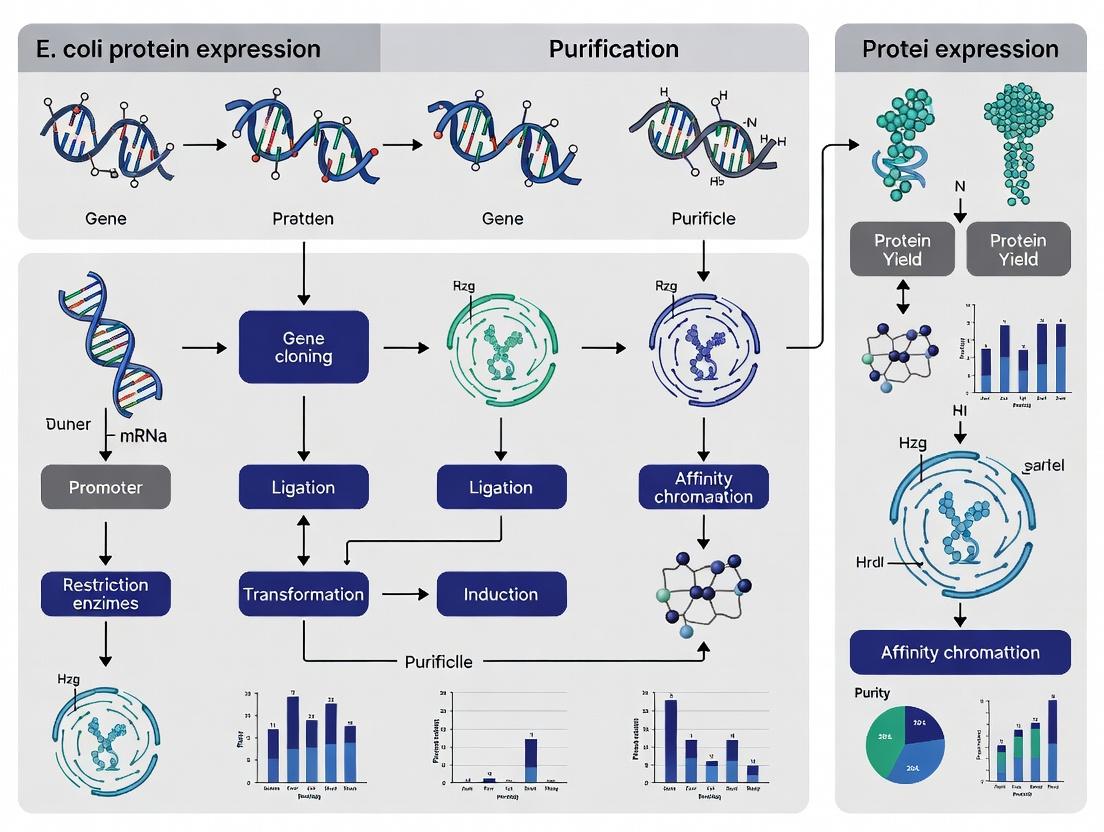
This comprehensive guide provides researchers, scientists, and drug development professionals with a complete workflow for successful recombinant protein expression in E.
Optimized E. coli Protein Expression: A Complete Protocol Guide for High-Yield Recombinant Protein Production
Abstract
This comprehensive guide provides researchers, scientists, and drug development professionals with a complete workflow for successful recombinant protein expression in E. coli. Covering everything from foundational vector design to advanced validation techniques, the article explores key host strains, induction strategies, and critical purification methods. It delivers actionable protocols for maximizing soluble yield, troubleshooting common expression failures, and confirming protein integrity for downstream applications in structural biology, therapeutics, and functional assays.
E. coli Expression Essentials: Core Concepts and System Selection for Your Protein
Within the broader thesis of E. coli protein expression protocol research, this document delineates the core advantages that establish E. coli as the predominant host for recombinant protein production. The focus is on quantifiable benefits—speed, cost, and scalability—which are critical for accelerating research and development timelines in academic and industrial settings, particularly for therapeutic protein and vaccine development.
Quantitative Advantages ofE. coliExpression
The following table summarizes key performance metrics compared to other common expression systems, based on current industry data and research.
Table 1: Comparative Analysis of Protein Expression Systems
| Parameter | E. coli (BL21(DE3)) | Mammalian (HEK293) | Insect (Sf9) | Yeast (P. pastoris) |
|---|---|---|---|---|
| Time to Milligram Yield | 1-3 days | 2-6 weeks | 2-3 weeks | 3-7 days |
| Cost per Gram of Protein (USD) | $50 - $500 | $10,000 - $100,000+ | $5,000 - $50,000 | $500 - $5,000 |
| Typical Scalability (Fermentation) | Up to 10,000 L | Up to 2,000 L | Up to 1,000 L | Up to 5,000 L |
| Titer Range | 0.1 - 5 g/L | 0.1 - 1 g/L | 0.1 - 0.5 g/L | 0.1 - 10 g/L |
| Protocol Complexity | Low | High | Medium | Medium |
Application Notes & Protocols
Protocol 1: High-Throughput Screening for Soluble Expression
Objective: Rapid identification of optimal constructs and conditions for soluble protein expression in E. coli.
Detailed Methodology:
- Clone Generation: Clone gene of interest into a suite of expression vectors (e.g., pET, pBAD series) with varying fusion tags (His-tag, MBP, SUMO) using Golden Gate or standard restriction-ligation.
- Transformation: Chemically transform E. coli BL21(DE3) or derivative strains (e.g., C41, C43, SHuffle for disulfide bonds) with each construct.
- Micro-scale Expression: Inoculate 2 mL deep-well blocks with TB auto-induction medium. Grow at 37°C, 220 rpm to an OD600 of ~0.6. Induce (with IPTG for T7 systems or auto-induction) and shift to appropriate temperature (16°C, 25°C, or 30°C) for 18-24 hours.
- Harvest & Lysis: Pellet cells by centrifugation (4000 x g, 15 min). Lyse pellets using chemical lysis (BugBuster Master Mix) or mechanical lysis (sonication in plate format).
- Analysis: Clarify lysates by centrifugation. Analyze supernatant (soluble fraction) and pellet (insoluble fraction) by SDS-PAGE. Quantify soluble yield using a Bradford assay against a BSA standard.
- Data Decision Point: Select the construct and condition yielding the highest proportion of soluble protein for scale-up.
Protocol 2: Cost-Effective Fermentation Scale-Up
Objective: Transition from shake flask to bioreactor for gram-scale production while minimizing resource use.
Detailed Methodology:
- Seed Train: Inoculate a single colony from the selected construct into 50 mL LB with antibiotic. Grow overnight at 37°C, 220 rpm. Use this to inoculate a 1 L shake flask of defined medium (e.g., Modified M9 or TB) at a 1:100 dilution.
- Bioreactor Inoculation: Grow the 1 L culture to mid-log phase (OD600 ~2-3). Aseptically transfer to a 10 L bioreactor containing 9 L of pre-warmed, sterilized defined medium.
- Fed-Batch Process: Maintain temperature at 37°C for growth. Control pH at 6.8 using ammonium hydroxide and phosphoric acid. Maintain dissolved oxygen (DO) >30% by cascading agitation and aeration with pure oxygen. Allow batch phase to proceed until carbon source is depleted (marked by a DO spike).
- Induction & Harvest: Initiate a controlled feed of concentrated glucose or glycerol solution. Induce protein expression at high cell density (OD600 ~50-100) by adding IPTG to 0.1-1.0 mM or switching to auto-induction feed. Continue fermentation for 4-6 hours post-induction. Harvest by continuous centrifugation; pellet can be stored at -80°C.
- Yield Calculation: Determine wet cell weight (WCW). Perform small-scale purification from a known WCW to calculate yield per gram of cells, then extrapolate to total batch yield.
Visualizations
High-Throughput Screening Workflow
Induction in a T7 Expression System
The Scientist's Toolkit: Research Reagent Solutions
Table 2: Essential Materials for E. coli Protein Expression
| Item | Function & Rationale |
|---|---|
| pET Expression Vectors | High-copy number plasmids with strong, T7 lac promoter for tightly regulated, high-level expression. |
| BL21(DE3) Competent Cells | The workhorse strain; carries chromosomal T7 RNA polymerase gene under lacUV5 control for induction. |
| Terrific Broth (TB) / Auto-induction Media | Rich, defined media formulations that support very high cell densities, crucial for yield. |
| Isopropyl β-D-1-thiogalactopyranoside (IPTG) | Non-metabolizable lactose analog that inactivates the Lac repressor, inducing T7 polymerase expression. |
| BugBuster Master Mix | Ready-to-use, non-denaturing detergent formulation for gentle, efficient chemical lysis of E. coli. |
| Protease Inhibitor Cocktail (EDTA-free) | Prevents proteolytic degradation of recombinant protein during cell lysis and purification. |
| Ni-NTA Agarose Resin | Affinity resin for rapid, one-step purification of polyhistidine-tagged recombinant proteins. |
| ÄKTA start / FPLC System | Bench-top chromatography system for reproducible, automated purification and buffer optimization. |
Application Notes
Within the broader thesis on E. coli protein expression protocol research, selecting the optimal expression vector is the critical first step determining experimental success. The choice must align with the target protein's properties, the desired yield and purity, and downstream application requirements. This document outlines the function and selection criteria for four core vector elements: Promoter, Ribosome Binding Site (RBS), Affinity Tags, and Origin of Replication.
Promoter
The promoter controls the initiation and rate of transcription. Inducible promoters are standard for expressing proteins that may be toxic to E. coli.
Key Quantitative Data: Common E. coli Promoters
| Promoter | Induction Agent & Typical Concentration | Strength (Relative Units) | Leakiness | Key Application |
|---|---|---|---|---|
| T7/lac | IPTG (0.1 - 1.0 mM) | Very High (~100) | Low with repressor | High-yield expression in DE3 lysogen strains. |
| araBAD (pBAD) | L-Arabinose (0.0002% - 0.2%) | Tunable, High | Very Low | Tight regulation for toxic proteins; dose-dependent expression. |
| trc / tac | IPTG (0.1 - 0.5 mM) | High (~50-70) | Moderate | Strong, hybrid promoter; often used with lacIq repressor. |
| T5/lac | IPTG (0.1 - 1.0 mM) | High | Low | Strong, IPTG-inducible; recognized by E. coli RNA polymerase. |
Ribosome Binding Site (RBS)
The RBS sequence controls translational initiation efficiency, directly impacting protein yield. Optimal sequence is context-dependent.
Key Quantitative Data: RBS Strength Variables
| Variable | Impact on Translation Initiation Rate | Design Consideration |
|---|---|---|
| Shine-Dalgarno Sequence | Free energy (ΔG) of pairing with 16S rRNA. Optimal: -7 to -12 kcal/mol. | Consensus (AGGAGG) is strong but may need tuning. |
| Spacer Length | Distance between SD and start codon (5-9 bp optimal). | 7 bp is often a default starting point. |
| Start Codon | AUG > GUG > UUG in efficiency. | AUG is standard for highest yield. |
| mRNA Secondary Structure | Can occlude RBS, reducing access. | Use tools (RBS Calculator) to predict and minimize structure. |
Affinity Tags
Tags facilitate purification, detection, and sometimes solubility. Removal may be necessary for functional studies.
Key Quantitative Data: Common Affinity Tags
| Tag | Typical Size (aa) | Binding Ligand | Elution Condition | Cleavage Site (Common) |
|---|---|---|---|---|
| His-tag | 6-10 | Ni²⁺/Co²⁺ NTA | Imidazole (150-300 mM) | Thrombin, TEV, Factor Xa |
| GST | ~220 | Glutathione | Reduced Glutathione (10-40 mM) | Thrombin, PreScission |
| MBP | ~396 | Amylose | Maltose (10-20 mM) | Factor Xa, TEV |
| Strep-tag II | 8 | Strep-Tactin | Desthiobiotin (2.5 mM) | TEV, if engineered |
Origin of Replication (ori)
The ori determines plasmid copy number per cell, influencing gene dosage and plasmid stability.
Key Quantitative Data: Common Origins in E. coli Vectors
| Origin | Copy Number (per cell) | Incompatibility Group | Key Feature |
|---|---|---|---|
| pUC | 500-700 | ColE1 | Very high copy; high DNA yield. |
| ColE1 | 15-60 | ColE1 | Medium-high copy; common base. |
| p15A | 10-12 | p15A | Medium-low copy; used for dual-plasmid systems. |
| SC101 | ~5 | SC101 | Very low copy; good for toxic genes. |
Protocols
Protocol 1: Evaluating Promoter Strength and Leakiness Using a Reporter Assay
Objective: Quantify the basal (uninduced) and induced expression levels from different promoter constructs to inform selection.
Materials:
- E. coli strains (e.g., MG1655 for native promoters, BL21(DE3) for T7).
- Test plasmids with different promoters controlling a reporter gene (e.g., gfp, lacZ).
- Induction agents (IPTG, L-Arabinose).
- LB broth and agar plates with appropriate antibiotics.
- Microplate reader or spectrophotometer.
- Reporter assay reagents (e.g., ONPG for β-galactosidase).
Method:
- Transform each test plasmid into the appropriate E. coli strain. Plate on selective agar. Incubate overnight at 37°C.
- Inoculate 3-5 mL of selective LB broth with single colonies. Grow overnight at 37°C with shaking (220 rpm).
- Dilute overnight cultures 1:100 into fresh, pre-warmed selective LB (in triplicate for each sample). Grow at 37°C with shaking until mid-log phase (OD600 ~0.5).
- Induction: For each culture, split into two aliquots: an uninduced control and an induced sample. Add the appropriate inducer at the standard concentration (e.g., 1 mM IPTG).
- Continue incubation for 4-6 hours post-induction, monitoring OD600 and reporter signal (e.g., fluorescence for GFP, take samples for ONPG assay).
- Quantification: For β-galactosidase, use Miller Assay. Measure OD600 and OD420 of the reaction mixture. Calculate units: Miller Units = 1000 * (OD420) / (time [min] * culture volume [mL] * OD600 of culture).
- Analysis: Plot induced vs. uninduced activity for each promoter. Leakiness is defined as the percentage of induced activity observed in the uninduced control.
Protocol 2: Testing Tag Impact on Protein Solubility and Purification Yield
Objective: Compare the yield and fraction of soluble protein for a target protein fused to different N- or C-terminal tags.
Materials:
- Expression vectors with identical backbone (promoter, ori) but different tags (e.g., His, MBP, GST, untagged control).
- E. coli expression strain (e.g., BL21(DE3)).
- Lysis Buffer (e.g., 50 mM Tris-HCl pH 8.0, 300 mM NaCl, 10 mM imidazole, 1 mg/mL lysozyme, protease inhibitors).
- Affinity purification resins (Ni-NTA, Glutathione, Amylose) appropriate for the tags.
- SDS-PAGE equipment.
Method:
- Clone the same target gene into the different tag vectors. Transform into the expression strain.
- For each construct, inoculate 50 mL of selective LB. Grow and induce as per Protocol 1, using optimal conditions for the target.
- Harvest: Pellet cells (4,000 x g, 20 min, 4°C). Resuspend pellet in 5 mL Lysis Buffer per gram of cells.
- Lysis: Lyse by sonication or French press. Centrifuge lysate at 15,000 x g for 30 min at 4°C to separate soluble (supernatant) and insoluble (pellet) fractions.
- Analysis of Solubility: Analyze equal proportions of total lysate, soluble fraction, and insoluble fraction by SDS-PAGE. Estimate the percentage of target protein in the soluble fraction via gel densitometry.
- Purification: Incubate the soluble fraction with the appropriate pre-equilibrated resin (e.g., 1 mL settled resin) for 1 hour at 4°C with gentle mixing.
- Wash resin with 10-20 column volumes of Wash Buffer (e.g., Lysis Buffer with 20-50 mM imidazole for His-tag).
- Elute protein with 3-5 column volumes of Elution Buffer (e.g., high-concentration imidazole, maltose, glutathione).
- Quantification: Measure protein concentration of eluates (Bradford assay), analyze purity via SDS-PAGE, and calculate total yield (mg/L culture).
Visualizations
Title: Promoter Selection Decision Tree
Title: Vector Element Functional Map
The Scientist's Toolkit: Key Research Reagent Solutions
| Item | Function & Rationale |
|---|---|
| BL21(DE3) Competent Cells | E. coli B strain deficient in proteases (lon/ompT), with λ DE3 lysogen carrying T7 RNA polymerase gene for use with T7/lac promoters. |
| Rosetta 2 Competent Cells | BL21 derivative designed to enhance expression of eukaryotic proteins by supplying tRNAs for rare codons (AUA, AGG, AGA, CUA, CCC, GGA). |
| pET Series Vectors | Most common vector family for T7-driven high-level expression in E. coli. Offers multiple tag configurations (His, GST, MBP) and cleavage sites. |
| pBAD Vectors | Utilize the tightly regulated araBAD promoter for fine-tuned, low-leakage expression, ideal for toxic proteins. |
| Ni-NTA Superflow Resin | Immobilized metal-affinity chromatography (IMAC) resin for rapid, one-step purification of polyhistidine (His)-tagged proteins. |
| PreScission Protease | Human rhinovirus 3C protease with high specificity (cleaves LEVLFQ/GP site). Used for tag removal while protein is bound to glutathione resin. |
| BugBuster Protein Extraction Reagent | Ready-to-use, non-ionic detergent solution for gentle cell lysis and extraction of soluble proteins from E. coli, reducing sonication steps. |
| Pierce BCA Protein Assay Kit | Colorimetric, detergent-compatible method for accurate total protein concentration determination, essential for yield quantification. |
Within the broader thesis on optimizing E. coli protein expression protocols, selecting the appropriate host strain is a foundational, critical decision. This application note details the current landscape of BL21(DE3) variants and specialty strains, providing protocols and comparative data to guide researchers and drug development professionals toward reproducible, high-yield protein production.
BL21(DE3) Core Strain and Common Variants
The BL21(DE3) strain is lysogenized with λDE3, which carries the T7 RNA polymerase gene under control of the lacUV5 promoter, enabling IPTG-induced expression of target genes cloned in plasmids with a T7 promoter.
Quantitative Comparison of Key BL21(DE3) Derivatives
Table 1: Characteristics and Applications of Common BL21(DE3) Variants
| Strain Name | Key Genotype Modifications | Primary Application/Advantage | Typical Yield Impact* | Optimal Growth Temp. |
|---|---|---|---|---|
| BL21(DE3) | ompT hsdSB(rB- mB-) gal dcm (DE3) | Standard expression; robust growth | Baseline | 37°C |
| BL21(DE3) pLysS/pLysE | DE3 + pLysS or pLysE (constitutive T7 lysozyme) | Tight repression of basal expression; toxic proteins | -10% to +∞ (for toxic targets) | 30-37°C |
| BL21(DE3) Star | DE3 + rne131 (RNAse E deficiency) | Enhanced mRNA stability; higher yield for some proteins | +10% to 300% | 30-37°C |
| BL21-CodonPlus(DE3) | DE3 + plasmid encoding rare tRNAs (e.g., argU, ileY, leuW) | Expression of genes with mammalian codon bias | +50% to 500% (codon-dependent) | 30°C |
| BL21(DE3) Rosetta | DE3 + plasmid encoding AUA, AGG, AGA, CUA, GGA codons | Alternative for eukaryotic codon bias | +50% to 400% (codon-dependent) | 30°C |
| BL21(DE3) Tuner | DE3 + lacY1 deletion | Uniform IPTG permeation; titratable expression | Tunable (dose-dependent) | 30-37°C |
| BL21(DE3) Origami | DE3 + trxB gor mutations (enhanced disulfide bonds) | Cytoplasmic disulfide bond formation | Variable (essential for disulfide-rich proteins) | 25-30°C |
| BL21(DE3) SHuffle | DE3 + trxB gor + dsbC expression in cytoplasm | Enhanced soluble yield of disulfide-bonded proteins | +100% to 1000% for challenging targets | 30°C |
| BL21(DE3) AI | DE3 + lacIq + T7 RNAP under P |
Auto-induction in defined media | High-density, hands-off expression | 25-37°C |
*Yield impact is relative to baseline BL21(DE3) for the same construct and conditions. Actual results are highly protein-dependent.
Protocols for Strain Evaluation and Protein Expression
Protocol 1: Small-Scale Comparative Expression Screen
Objective: Rapidly compare expression levels and solubility of a target protein across 3-4 selected host strains.
Research Reagent Solutions:
- LB or TB Media: Rich media for robust cell growth.
- Antibiotics (e.g., Kanamycin, Chloramphenicol, Ampicillin): For selection of expression plasmid and/or host-strain auxillary plasmids.
- IPTG (Isopropyl β-d-1-thiogalactopyranoside): Inducer for the lacUV5/T7 system.
- Lysis Buffer (e.g., BugBuster Master Mix or 50 mM Tris, 150 mM NaCl, 1 mg/mL Lysozyme, 1% Triton X-100, pH 8.0): For cell disruption and soluble protein extraction.
- Protease Inhibitor Cocktail: Prevents protein degradation during lysis.
- SDS-PAGE Loading Dye & Gel: For analyzing total and soluble protein fractions.
Methodology:
- Transform your T7-driven expression plasmid into each candidate E. coli strain.
- Inoculate 5 mL of LB (+ antibiotics) with a single colony for each strain. Grow overnight at 37°C, 220 rpm.
- Dilute overnight cultures 1:100 into 10 mL of fresh, pre-warmed media (+ antibiotics) in baffled flasks. Grow at 37°C to an OD600 of ~0.6.
- Induce expression by adding IPTG to a predetermined concentration (e.g., 0.1-1 mM). Shift temperature if required (e.g., to 25°C for solubility).
- Harvest cells 4-16 hours post-induction by centrifugation (4,000 x g, 10 min).
- Resuspend cell pellets in 1 mL lysis buffer + protease inhibitors. Incubate on ice for 30 min.
- Lysate Clarification: Centrifuge at 15,000 x g for 20 min at 4°C. Retain the supernatant (soluble fraction).
- Analyze: Mix samples of total lysate (pre-centrifugation) and soluble fraction with SDS-PAGE loading dye. Boil, load equal volumes, and run gel. Stain with Coomassie Blue to compare expression levels and solubility across strains.
Protocol 2: Tunable Expression in BL21(DE3) Tuner Strain
Objective: Optimize protein yield and solubility by fine-tuning inducer concentration to minimize inclusion body formation.
Methodology:
- Follow Protocol 1, steps 1-3, using the BL21(DE3) Tuner strain.
- At OD600 ~0.6, prepare flasks with varying IPTG concentrations (e.g., 0, 0.01, 0.05, 0.1, 0.5, 1.0 mM).
- Induce cultures and continue growth for the desired time.
- Process samples as in Protocol 1, steps 5-8. Analyze gels to identify the lowest IPTG concentration yielding maximal soluble protein.
Protocol 3: Auto-Induction in BL21(DE3) AI
Objective: Achieve high-density expression without monitoring OD or adding inducer manually.
Research Reagent Solutions:
- ZYP-5052 Auto-induction Media: Contains glucose, lactose, and glycerol. Glucose represses expression until depleted, allowing lactose to auto-induce.
- Trace Elements Solution (Optional): For further enhancing cell density in defined auto-induction media.
Methodology:
- Transform plasmid into BL21(DE3) AI.
- Inoculate 5 mL of LB (+ antibiotics) with a colony. Grow overnight at 37°C.
- Dilute culture 1:100 into ZYP-5052 auto-induction media (+ antibiotics).
- Grow at desired temperature (25-37°C) for 18-24 hours with vigorous shaking (220 rpm). Expression induces automatically as cells enter stationary phase.
- Harvest cells and analyze as in Protocol 1.
Logical Decision Pathway for Strain Selection
Title: Decision Tree for E. coli Strain Selection
T7 Expression Pathway in BL21(DE3) Strains
Title: T7 Expression System Mechanism in BL21(DE3)
The Scientist's Toolkit: Essential Reagents for Strain Evaluation
Table 2: Key Research Reagent Solutions for Host Strain Studies
| Reagent/Solution | Primary Function in Strain Selection Protocols |
|---|---|
| LB & Terrific Broth (TB) Media | Standard rich media for cell growth; TB supports higher cell densities. |
| Chemically Defined Auto-induction Media (e.g., ZYP-5052) | Allows automatic induction of protein expression without manual IPTG addition, ideal for high-throughput or overnight expression in strains like BL21(DE3) AI. |
| IPTG (Isopropyl β-d-1-thiogalactopyranoside) | Non-hydrolyzable inducer of the lac/T7 system. Concentration optimization is critical for tunable strains. |
| BugBuster or PopCulture Reagent | Ready-to-use, non-denaturing lysis buffers for efficient extraction of soluble protein from E. coli in small-scale screens. |
| Lysozyme | Enzyme that degrades the bacterial cell wall, used in traditional lysis buffers to enhance disruption. |
| Protease Inhibitor Cocktail (EDTA-free) | Prevents proteolytic degradation of the recombinant target during cell lysis and purification, especially important in lysogenic strains. |
| DNase I | Degrades viscous genomic DNA post-lysis, simplifying lysate handling. |
| Appropriate Antibiotics (Amp, Kan, Cm, Tet) | Selective pressure to maintain expression plasmid and any auxiliary plasmids (e.g., pLysS, tRNA plasmids). Concentrations are strain-specific. |
| SDS-PAGE Reagents (Gels, Laemmli Buffer, Coomassie Stain) | Essential for analyzing and comparing total expression levels and solubility fractions across different host strains. |
| Compatible Detergents (e.g., Triton X-100, CHAPS) | Added to lysis buffers to aid in membrane solubilization and extraction of membrane-associated proteins. |
Within the broader thesis on developing robust, high-yield E. coli protein expression protocols, a comprehensive pre-expression analysis is the critical determinant of success. This phase mitigates costly experimental failures by computationally and empirically characterizing the target protein, optimizing its genetic sequence for the host, and predicting its intracellular fate. This document provides application notes and detailed protocols for these foundational steps, aimed at ensuring soluble, functional protein production.
Application Notes & Protocols
Protein Property Analysis
Objective: To predict physicochemical and structural characteristics that influence expression solubility, stability, and purification.
Key Quantitative Parameters & Tools: Table 1: Core Protein Properties for Pre-Expression Analysis
| Property | Optimal Range for E. coli Solubility | Prediction Tool (Current) | Impact on Expression |
|---|---|---|---|
| Molecular Weight | < 60 kDa (higher risk of inclusion bodies) | ProtParam (ExPASy) | Affects translocation, folding kinetics, and purification. |
| Isoelectric Point (pI) | pI ~4.5-7.0 (differs from host cytoplasmic pH ~7.2) | ProtParam (ExPASy) | Influences solubility and interaction with host proteins. |
| Aliphatic Index | Higher index correlates with thermostability. | ProtParam (ExPASy) | Indicator of protein stability. |
| Grand Average of Hydropathicity (GRAVY) | Negative value (hydrophilic) preferred for solubility. | ProtParam (ExPASy) | Positive value indicates high hydrophobicity, risk of aggregation. |
| Disorder Prediction | Low disordered region content preferred. | IUPred3, AlphaFold3 | Disordered regions can promote proteolysis or aggregation. |
| Aggregation Propensity | Low "hot spot" scores. | TANGO, AGGRESCAN | Predicts regions prone to amyloid-like aggregation. |
Protocol 2.1.1: In Silico Property Analysis Workflow
- Obtain the target protein's amino acid sequence in FASTA format.
- Submit the sequence to ExPASy ProtParam. Record MW, pI, aliphatic index, and GRAVY.
- Submit the sequence to IUPred3 for disorder prediction. Regions with scores >0.5 are considered disordered.
- Submit the sequence to AGGRESCAN. Analyze the "hot spot" plot; residues with positive values indicate aggregation-prone regions.
- Decision Point: If analysis reveals a large (>80 kDa), hydrophobic (GRAVY >0), aggregation-prone protein, consider strategies like truncation, fusion tags (e.g., MBP, SUMO), or alternative hosts at the thesis planning stage.
Codon Optimization forE. coli
Objective: To enhance translational efficiency and accuracy by adapting the gene's codon usage to that of the expression host.
Key Parameters & Strategies: Table 2: Codon Optimization Parameters and Their Rationale
| Parameter | Recommended Setting for E. coli | Rationale |
|---|---|---|
| Codon Adaptation Index (CAI) | Target >0.8 (1.0 is ideal). | Measures similarity to host's preferred codons. High CAI improves elongation rate. |
| GC Content | Adjust to ~50-55%. | Extremely high (>70%) or low (<30%) GC can cause mRNA secondary structures, impeding translation. |
| Avoid/Remove | Restriction enzyme sites (for cloning), cryptic splice sites, ribosomal binding sites. | Prevents interference with downstream molecular biology steps. |
| Minimize mRNA Secondary Structure | Around the Ribosome Binding Site (RBS) and start codon. | Ensures ribosomal accessibility for efficient initiation. |
| Harmonization vs. Maximization | Consider "codon harmonization" for complex proteins. | Mimics the codon usage pattern of the source organism, potentially aiding co-translational folding. |
Protocol 2.2.1: Codon Optimization and Gene Synthesis Specification
- Input the native nucleotide/protein sequence into a commercial optimization algorithm (e.g., IDT Codon Optimization Tool, Twist Bioscience Optimizer, Genscript's OptimumGene).
- Set the host organism to Escherichia coli (e.g., K-12 or BL21 strains).
- Select the following options:
- Maximize CAI.
- Normalize GC content to 52%.
- Remove specific restriction sites relevant to your cloning vector.
- Enable mRNA structure minimization around the RBS/AUG.
- Compare 2-3 different optimized sequences from different providers for consistency. Select the final sequence.
- Output: Order the optimized gene as a cloned gene fragment (e.g., in a pCR-Blunt vector) for seamless downstream cloning, rather than as an oligonucleotide for difficult assembly.
Subcellular Localization Prediction
Objective: To predict where in the E. coli cell the recombinant protein will localize, informing lysis, purification, and tag selection strategies.
Key Prediction Classes & Signals: Table 3: Predicted Localization and Experimental Implications
| Predicted Localization | Key Signal Sequence | Suggested Vector/Tag Strategy | Purification Implication |
|---|---|---|---|
| Cytoplasmic | Absence of secretory signal. | N- or C-terminal His-tag for IMAC. | Simple lysis via sonication or homogenization. |
| Periplasmic | N-terminal Sec or Tat signal peptide. | PelB, DsbA, MalE signal sequences. | Osmotic shock or periplasmic preparation required. |
| Inner/Outer Membrane | Transmembrane helices (TMHs). | Inclusion of a solubilizing tag (e.g., MBP). | Requires detergent for solubilization. |
| Extracellular | Efficient secretory signal. | Use of specialized secretion systems (e.g., YebF). | Culture supernatant harvest. |
Protocol 2.3.1: Localization Signal Analysis
- Submit the amino acid sequence to SignalP 6.0 to predict the presence and cleavage site of Sec/Tat signal peptides for periplasmic export.
- Submit the sequence to DeepLoc 2.0 for a comprehensive subcellular localization prediction (cytoplasm, periplasm, inner/outer membrane, extracellular).
- Submit the sequence to TMHMM 2.0 to predict transmembrane helices, indicating membrane association.
- Decision Point:
- For cytoplasmic targets, proceed with standard vectors (e.g., pET series).
- For periplasmic targets, clone behind a validated signal peptide (e.g., PelB) and plan for osmotic shock protocols.
- For proteins with >1 TMHMM-predicted helix, consider truncating transmembrane domains or using a specialized membrane protein expression system (e.g., pET-19b with a C-terminal tag).
The Scientist's Toolkit: Research Reagent Solutions
Table 4: Essential Materials for Pre-Expression Analysis and Validation
| Item | Supplier Examples | Function in Pre-Expression Analysis |
|---|---|---|
| Codon-Optimized Gene Fragment | Twist Bioscience, IDT, Genscript | Delivers the optimized gene cloned for direct vector assembly, bypassing PCR. |
| High-Fidelity DNA Assembly Master Mix | NEB Gibson Assembly, In-Fusion Snap Assembly | Enables seamless, error-free cloning of the optimized gene into the expression vector. |
| pET Series Expression Vectors | Novagen (Merck Millipore), Addgene | Standard, tunable T7-promoter based vectors for cytoplasmic expression. |
| Vectors with Signal Peptides (e.g., pET-22b(+), pMAL-p5X) | Novagen, NEB | Designed for periplasmic targeting and secretion. |
| Chemically Competent E. coli BL21(DE3) | NEB, Thermo Fisher, homemade | Standard expression host with T7 RNA polymerase integrated for pET vector induction. |
| Bioinformatics Software Suite | Geneious, SnapGene | For sequence analysis, restriction site mapping, and overall project management. |
Visualization of the Integrated Pre-Expression Workflow
Diagram 1: Integrated pre-expression analysis workflow (84 chars)
Diagram 2: Protein localization pathways in E. coli (52 chars)
1. Application Notes
This document details the critical materials required for successful recombinant protein expression in E. coli, framed within a comprehensive thesis on optimizing E. coli protein expression protocols. The choice of each component directly impacts yield, solubility, and functionality of the target protein.
1.1 Competent Cells: The selection of an appropriate E. coli strain is the foundational step. Strains are engineered to address specific challenges in protein expression, such as disulfide bond formation, codon bias, or toxicity.
1.2 Growth Media: Media provides the nutritional backbone for biomass generation and protein production. The choice between rich and defined media balances growth speed, cost, and the need for precise metabolic control (e.g., for isotope labeling).
1.3 Selection Antibiotics: Antibiotics maintain plasmid stability by applying selective pressure. The antibiotic must match the plasmid's resistance gene, and its concentration must be optimized to prevent loss of the expression construct without unduly stressing the cells.
1.4 Induction Agents: These chemicals trigger the transcription of the target gene from inducible promoters. The timing, concentration, and duration of induction are critical parameters for maximizing soluble protein yield.
2. Quantitative Data Summary
Table 1: Common E. coli Expression Strains and Their Applications
| Strain | Key Genotype Features | Primary Application | Optimal Growth Temp. Post-Induction |
|---|---|---|---|
| BL21(DE3) | ompT hsdSB(rB- mB-) gal dcm (DE3) | Robust, general-purpose protein expression. | 37°C, 30°C, or 18°C |
| BL21(DE3)pLysS | BL21(DE3) with pLysS (T7 Lysozyme) | Expression of toxic proteins; reduces basal expression. | 30°C or lower |
| Rosetta(DE3) | BL21 derivative with tRNA genes for rare codons (AUA, AGG, AGA, CUA, CCC, GGA) | Expression of eukaryotic proteins with codon bias. | 30°C or lower |
| Origami(DE3) | trxB gor mutations enhancing disulfide bond formation in cytoplasm. | Cytoplasmic expression of disulfide-bonded proteins. | 30°C or lower |
| SHuffle | trxB gor sulA with disulfide bond isomerase (DsbC) exported to cytoplasm. | High-yield expression of in vivo folded disulfide-bonded proteins. | 30°C or lower |
Table 2: Media, Antibiotics, and Induction Agents
| Component | Common Types/Agents | Typical Working Concentration | Key Considerations |
|---|---|---|---|
| Media | LB (Luria-Bertani), TB (Terrific Broth), M9 Minimal | N/A | TB yields higher cell density; M9 allows labeling & precise control. |
| Antibiotics | Ampicillin (Amp), Kanamycin (Kan), Chloramphenicol (Cam) | Amp: 100 µg/mL, Kan: 50 µg/mL, Cam: 34 µg/mL | Sterilize by filtration (Cam). Carbenicillin is more stable than Amp. |
| Induction Agents | Isopropyl β-d-1-thiogalactopyranoside (IPTG), Arabinose, Anhydrotetracycline (aTc) | IPTG: 0.1 - 1.0 mM, Arabinose: 0.01% - 0.2% (w/v), aTc: 10 - 200 ng/mL | Lower IPTG conc. (0.1-0.4 mM) often improves solubility. |
3. Experimental Protocols
3.1 Protocol: Small-Scale Expression Test and Optimization
Objective: To screen multiple constructs/conditions for soluble protein expression.
Materials:
- Selected competent cells (e.g., BL21(DE3), Rosetta(DE3))
- Expression plasmid
- LB agar plates with appropriate antibiotic
- LB broth with antibiotic
- 1M IPTG stock (filter sterilized)
- 50 mL culture tubes or deep-well plates
- Shaking incubator
- Centrifuge
- Lysis buffer (e.g., PBS with lysozyme, benzonase, protease inhibitors)
- SDS-PAGE equipment
Methodology:
- Transformation: Transform 50 µL competent cells with 10-100 ng plasmid. Heat shock at 42°C for 30-45 seconds. Recover in 500 µL LB for 1 hour at 37°C. Plate on selective agar.
- Inoculum Preparation: Pick a single colony into 5 mL LB + antibiotic. Incubate overnight (12-16 hrs) at 37°C, 200 rpm.
- Expression Culture: Dilute overnight culture 1:100 into 10 mL fresh LB + antibiotic in a 50 mL tube. Grow at 37°C, 200 rpm to an OD600 of 0.6-0.8.
- Induction: Split culture into two 5 mL aliquots: Uninduced (control) and Induced. Add IPTG to final concentration (e.g., 0.1 mM, 0.5 mM, 1.0 mM for testing). For solubility screening, induce one set at 37°C for 3-4 hours and another at 18°C for 16-20 hours.
- Harvesting: Pellet cells at 4,000 x g for 15 minutes at 4°C. Discard supernatant. Pellets can be stored at -80°C.
- Analysis: Resuspend pellet in 500 µL lysis buffer. Lyse by sonication or chemical lysis. Centrifuge at >12,000 x g for 20 min to separate soluble (supernatant) and insoluble (pellet) fractions. Analyze total, soluble, and insoluble fractions by SDS-PAGE.
3.2 Protocol: Large-Scale Induction for Protein Purification
Objective: To produce milligram quantities of recombinant protein from an optimized small-scale condition.
Materials:
- Optimized expression strain glycerol stock
- 1 L TB or LB with antibiotic
- 2.8 L Fernbach flask or bioreactor
- 1M IPTG stock
- Refrigerated centrifuge with large-capacity rotor
Methodology:
- Starter Culture: Inoculate 50 mL LB + antibiotic with a single colony or scrape from glycerol stock. Grow overnight at 37°C, 200 rpm.
- Large-Scale Culture: Dilute starter culture 1:100 into 1 L TB + antibiotic in a 2.8 L flask. Grow at 37°C, 200 rpm until OD600 reaches 0.6-0.8. Ensure adequate aeration.
- Induction: Reduce temperature to optimal pre-determined temperature (e.g., 18°C). Add IPTG to the optimized concentration (e.g., 0.2 mM). Continue incubation for 16-20 hours at 18°C, 200 rpm.
- Harvest: Centrifuge culture at 6,000 x g for 20 minutes at 4°C. Discard supernatant. Cell pellet can be processed immediately or stored at -80°C.
4. Diagrams
Diagram Title: E. coli Protein Expression and Screening Workflow
Diagram Title: T7 Expression System Induction by IPTG
5. The Scientist's Toolkit: Research Reagent Solutions
| Item | Function in E. coli Expression |
|---|---|
| BL21(DE3) Competent Cells | General-purpose host lacking proteases, with chromosomal T7 RNA polymerase gene for high-level expression from T7 promoters. |
| pET Series Plasmid | High-copy number expression vector containing a T7 promoter/lac operator for tight regulation and high-yield protein production. |
| Terrific Broth (TB) Powder | Nutrient-rich growth media yielding very high cell densities, ideal for large-scale protein production. |
| Isopropyl β-D-1-thiogalactopyranoside (IPTG) | Non-metabolizable lactose analog that inactivates the LacI repressor, inducing expression in T7/lac-based systems. |
| Lysozyme | Enzyme that degrades the bacterial cell wall, a critical first step in mechanical or chemical lysis protocols. |
| Protease Inhibitor Cocktail (EDTA-free) | A mixture of inhibitors added to lysis buffers to prevent degradation of the recombinant protein by endogenous proteases. |
| Benzonase Nuclease | Degrades genomic DNA and RNA in lysates, reducing viscosity and facilitating downstream purification steps. |
| Imidazole | Used in buffers for purification of His-tagged proteins via Immobilized Metal Affinity Chromatography (IMAC). |
Step-by-Step E. coli Expression Protocol: From Transformation to Lysis
Within the broader thesis investigating systematic optimization of E. coli protein expression protocols, this initial protocol is foundational. It establishes a standardized, high-efficiency method for transforming expression vectors into suitable host strains and conducting parallel, small-scale expression tests. This enables rapid screening of constructs, induction conditions, and host compatibility before committing resources to large-scale production, a critical step in recombinant protein workflows for structural biology and early-stage therapeutic development.
Materials and Reagent Solutions
Research Reagent Solutions
| Item | Function / Rationale |
|---|---|
| Chemically Competent E. coli (e.g., BL21(DE3), Rosetta 2) | Genetically engineered hosts with high transformation efficiency and features like T7 RNA polymerase expression (DE3) or rare tRNA supplementation. |
| Expression Vector (e.g., pET series with N-/C-terminal tags) | Plasmid containing gene of interest under control of inducible promoter (e.g., T7lac). |
| SOC Outgrowth Medium | Nutrient-rich recovery medium (SOB + glucose) enhancing post-transformation cell viability. |
| LB Agar & Broth (with selective antibiotic) | Standard culture media; antibiotic maintains plasmid selection pressure. |
| Inducing Agent (e.g., 1M IPTG, 20% Arabinose) | Small molecule inducer that triggers expression from specific promoters. |
| Lysozyme/Lysis Reagents (for cell disruption) | Enzymatic or chemical agents to release expressed protein for initial analysis. |
| 4X Laemmli Sample Buffer | Denaturing buffer for preparing protein samples for SDS-PAGE analysis. |
Detailed Protocol
Transformation
- Thaw Competent Cells: Remove 50 µL aliquots of chemically competent E. coli cells from -80°C and thaw on ice for 10 minutes.
- Add DNA: Gently add 1-10 ng (≤ 1 µL volume) of plasmid DNA to cells. Mix by tapping tube. Do not vortex.
- Incubate on Ice: Incubate mixture on ice for 20-30 minutes.
- Heat Shock: Transfer tube to a pre-heated 42°C water bath for exactly 30 seconds. Do not shake.
- Recovery: Immediately place tube on ice for 2 minutes. Add 950 µL of pre-warmed (37°C) SOC medium.
- Outgrowth: Shake horizontally (220 rpm) at 37°C for 60 minutes.
- Plate: Spread 100-200 µL onto pre-warmed LB agar plates containing the appropriate antibiotic. Incubate overnight at 37°C.
Small-Scale Expression Test
- Inoculation: Pick 3-5 individual transformant colonies into 5 mL of LB broth with antibiotic. Incubate overnight (37°C, 220 rpm).
- Dilution: Sub-culture overnight cultures 1:100 into fresh, pre-warmed selective medium (e.g., 2 mL in a 24-deep well block).
- Growth Monitoring: Grow cultures at 37°C, 220 rpm, monitoring OD600 until mid-log phase (OD600 ≈ 0.6-0.8). Record growth data.
- Induction: For each culture, take a 1 mL pre-induction sample. Add inducing agent (e.g., 0.1-1.0 mM IPTG final concentration). For uninduced controls, add equivalent volume of sterile water or buffer.
- Post-Induction Incubation: Incubate under optimal conditions (temperature, shaking) for a defined period (typically 3-6 hours). Common test temperatures: 37°C, 25°C, 18°C.
- Harvesting: Pellet 1 mL of induced culture (≥12,000 x g, 2 min). Discard supernatant. Store pellet at -20°C or process immediately for analysis.
Sample Preparation for SDS-PAGE
- Lysis: Resuspend cell pellet in 100 µL of Lysis Buffer (e.g., with lysozyme) or directly in 100 µL of 1X Laemmli buffer.
- Denaturation: If using lysis buffer, incubate, then mix lysate 1:1 with 2X Laemmli buffer. Boil all samples at 95-100°C for 5-10 minutes.
- Analysis: Centrifuge boiled samples briefly. Load 10-20 µL per well on an SDS-PAGE gel alongside a protein ladder. Run gel, stain (e.g., Coomassie), and image to assess expression level and solubility (via comparison of whole cell vs. soluble fraction).
Data Presentation
Table 1: Typical Transformation Efficiency for Common E. coli Expression Strains
| Host Strain | Genotype Features | Typical Efficiency (cfu/µg pUC19) | Recommended Expression Use |
|---|---|---|---|
| BL21(DE3) | ompT gal dcm lon hsdSB(rB- mB-) λ(DE3) | 1 x 10⁹ | Standard expression, non-toxic proteins. |
| BL21(DE3) pLysS | BL21(DE3) with pLysS (T7 lysozyme) | 5 x 10⁸ | Tight basal repression; toxic protein expression. |
| Rosetta 2 (DE3) | BL21 + rare tRNA plasmid (CamR) | 5 x 10⁸ | Proteins with codons rare in E. coli. |
| Origami 2 (DE3) | trxB gor mutations for disulfide bonds | 1 x 10⁸ | Cytoplasmic disulfide-bonded proteins. |
Table 2: Small-Scale Test: Induction Parameter Matrix
| Test Variable | Common Test Range | Typical Optimal Outcome |
|---|---|---|
| Induction OD600 | 0.4, 0.6, 0.8, 1.0 | Prevents saturation stress; maximizes yield. |
| IPTG Concentration (mM) | 0.1, 0.5, 1.0 | Minimizes metabolic burden while giving full induction. |
| Post-Induction Temperature (°C) | 37, 25, 18, 16 | Lower temps often improve soluble yield for difficult proteins. |
| Induction Duration (hr) | 3, 4, 6, 16 (o/n) | Balances protein yield against degradation/aggregation. |
Visualizations
Title: Transformation Protocol Workflow
Title: Small-Scale Test Logic within Thesis Framework
This protocol, part of a broader thesis on E. coli protein expression optimization, details a systematic approach to refining induction parameters—Isopropyl β-D-1-thiogalactopyranoside (IPTG) concentration, post-induction temperature, and induction timing—to maximize soluble yield and biological activity of recombinant proteins. Optimization is critical for producing proteins for structural studies, enzymology, and therapeutic development.
IPTG induction of lac-based expression systems in E. coli remains a cornerstone of recombinant protein production. However, non-optimized induction often leads to low yields, misfolding, and inclusion body formation. This application note provides a data-driven, sequential framework for parameter screening, balancing protein yield, solubility, and cell viability.
Experimental Protocols
Protocol 2.1: IPTG Concentration Gradient Screen
Objective: Determine the minimal effective IPTG concentration for optimal expression.
Methodology:
- Culture Preparation: Inoculate 5 mL LB with appropriate antibiotic with a single colony of the expression strain (e.g., BL21(DE3)) harboring the target plasmid. Grow overnight (37°C, 220 rpm).
- Dilution: Dilute the overnight culture 1:100 into fresh, pre-warmed LB medium (50 mL in 250 mL baffled flasks). Grow at 37°C, 220 rpm.
- Induction: When cultures reach mid-log phase (OD600 ~0.6-0.8), divide into 6 equal aliquots. Induce each with a different concentration of filter-sterilized IPTG (0, 0.1, 0.25, 0.5, 0.75, 1.0 mM).
- Harvest: Continue incubation for 4 hours post-induction at 37°C. Harvest cells by centrifugation (4,000 x g, 10 min, 4°C).
- Analysis: Resuspend pellets in lysis buffer. Analyze total protein expression via SDS-PAGE and quantify soluble vs. insoluble fractions.
Protocol 2.2: Post-Induction Temperature Screen
Objective: Identify the temperature that maximizes soluble protein yield.
Methodology:
- Culture & Induction: Prepare cultures as in 2.1. Induce all flasks at the optimal IPTG concentration determined in 2.1 at OD600 ~0.6-0.8.
- Temperature Shift: Immediately after induction, place flasks into pre-equilibrated incubator shakers set to different temperatures (e.g., 16°C, 25°C, 30°C, 37°C).
- Extended Expression: Express protein for 16-18 hours for temperatures ≤25°C, or 4-6 hours for temperatures ≥30°C.
- Harvest & Analysis: Harvest cells as in 2.1. Perform cell lysis and fractionation. Assess yield and solubility via SDS-PAGE and specific activity assays if applicable.
Protocol 2.3: Induction Timing (Cell Density) Screen
Objective: Establish the optimal cell density (OD600) at induction for peak protein production.
Methodology:
- Culture Growth: Prepare a large volume of culture (200 mL) in a 1 L flask. Monitor OD600 closely.
- Sequential Induction: As the culture grows, remove 25 mL aliquots at specific OD600 points (e.g., 0.4, 0.6, 0.8, 1.0, 1.5, 2.0). Immediately induce each aliquot with the optimized IPTG concentration.
- Consistent Expression: Transfer all induced aliquots to the optimized post-induction temperature (from 2.2) for the optimized duration.
- Harvest & Analysis: Harvest all samples simultaneously. Process and analyze as above to correlate induction OD600 with final yield and solubility.
Table 1: Representative Data from IPTG Concentration Screen (Model Protein: GST-Tag, 37°C, 4h expression)
| IPTG Concentration (mM) | Total Yield (mg/L culture) | Soluble Fraction (%) | Notes |
|---|---|---|---|
| 0.0 (Uninduced) | 0.0 | - | Baseline control |
| 0.1 | 45.2 | 85 | High solubility |
| 0.25 | 68.7 | 80 | Optimal balance |
| 0.5 | 72.1 | 65 | Increased inclusion bodies |
| 0.75 | 70.5 | 60 | Slight toxicity observed |
| 1.0 | 69.8 | 55 | Reduced cell growth |
Table 2: Representative Data from Post-Induction Temperature Screen (0.25 mM IPTG)
| Temperature (°C) | Expression Time (h) | Total Yield (mg/L) | Soluble Fraction (%) | Activity (U/mg) |
|---|---|---|---|---|
| 37 | 4 | 68.7 | 80 | 150 |
| 30 | 6 | 75.3 | 88 | 175 |
| 25 | 16 | 82.5 | 95 | 210 |
| 16 | 20 | 58.2 | 98 | 205 |
Table 3: Key Research Reagent Solutions
| Reagent/Solution | Function/Description |
|---|---|
| IPTG (1M Stock) | Inducer molecule; binds to lac repressor to de-repress T7/lac promoter. |
| LB (Luria-Bertani) Broth | Standard rich medium for robust E. coli growth pre-induction. |
| Autoinduction Media (e.g., ZYP-5052) | Contains glucose, lactose, and glycerol; allows high-density growth with automated induction. |
| Lysis Buffer (e.g., Tris-HCl, Lysozyme, Protease Inhibitors) | Breaks cell wall, releases cellular contents for protein purification. |
| BugBuster HT Protein Extraction Reagent | Commercial detergent-based reagent for efficient cell lysis and soluble protein extraction. |
| Protease Inhibitor Cocktail (e.g., EDTA-free) | Prevents proteolytic degradation of the recombinant target during extraction. |
| DNase I | Degrades viscous genomic DNA post-lysis to improve sample handling. |
Diagrams
Title: Optimization Workflow for Induction Parameters
Title: IPTG Induction Mechanism in T7/lac Systems
Application Notes
Within a thesis investigating E. coli protein expression, Protocol 3 is a critical determinant of downstream success. The choice of lysis method directly impacts protein yield, quality, and functionality by influencing the efficiency of cellular disruption, the local heat generation, and the shear forces applied to the target protein. Sonication is optimal for small-scale, high-throughput processing but risks overheating and free radical formation. The French Press is the gold standard for lab-scale shear-based lysis, offering excellent reproducibility and control for shear-sensitive proteins. Enzymatic lysis (e.g., lysozyme) is gentle and specific, ideal for periplasmic extraction or preserving protein complexes but is cost-prohibitive at large scale. Subsequent clarification via centrifugation or filtration must be tailored to the lysate viscosity and particulate load generated by each method to maximize recovery of soluble target protein for purification.
Detailed Protocols
A. Cell Harvest via Centrifugation
- Transfer the induced E. coli culture from the bioreactor/flask to pre-chilled centrifuge tubes.
- Pellet cells by centrifugation at (4,000 \times g) for 20 minutes at (4^\circ\text{C}).
- Decant the supernatant completely.
- Resuspend the cell pellet in an appropriate lysis buffer (e.g., 50 mM Tris-HCl, 150 mM NaCl, pH 8.0, plus protease inhibitors). Use 5-10 mL buffer per gram of wet cell paste.
- Cells can be processed immediately, flash-frozen in liquid (N_2) for storage at (-80^\circ\text{C}), or used in the following lysis protocols.
B. Cell Lysis Strategies
1. Sonication (Probe-Based)
- Equipment: Ultrasonic homogenizer with probe, ice bath, timer.
- Method: a. Keep the resuspended cell slurry on ice at all times. b. Insert the probe into the sample, ensuring it is submerged but not touching the tube walls. c. Set the amplitude to 40-60% of the maximum output. d. Apply pulses: 15 seconds ON, 45 seconds OFF. Total ON time typically ranges from 2-5 minutes, depending on sample volume and density. e. Monitor temperature; do not let it exceed (10^\circ\text{C}). f. Proceed to clarification.
2. French Press
- Equipment: French Pressure Cell Press, hydraulic press, cooling apparatus.
- Method: a. Ensure the pressure cell and collection vessel are pre-chilled. b. Load the resuspended cell slurry into the cylinder, avoiding air bubbles. c. Assemble the cell according to the manufacturer's instructions. d. Apply pressure slowly via the hydraulic press to achieve a constant operating pressure of (15,000-20,000 \ \text{psi}). e. Collect the lysate dropwise into a chilled tube as it exits the orifice. f. A single pass is often sufficient; a second pass may be performed for complete lysis. g. Proceed to clarification.
3. Enzymatic Lysis (Lysozyme)
- Equipment: Incubator or water bath with orbital shaking.
- Method: a. To the resuspended cells, add lysozyme to a final concentration of (0.2-1.0 \ \text{mg/mL}). b. Add EDTA to (1-5 \ \text{mM}) if working with Gram-negative bacteria like E. coli to chelate Mg(^{2+}) and destabilize the outer membrane. c. Incubate the mixture with gentle agitation for (30-60) minutes at (30^\circ\text{C}) or (20-30) minutes at room temperature. d. For complete lysis, follow with osmotic shock (dilution in low-ionic-strength buffer) or a single, gentle freeze-thaw cycle. e. Proceed to clarification.
C. Lysate Clarification
- Centrifugation: Transfer the lysate to centrifuge tubes. Clarify by high-speed centrifugation at (16,000 \times g) for (30) minutes at (4^\circ\text{C}) to pellet cellular debris and unbroken cells.
- Filtration (Optional): Pass the supernatant through a (0.45 \mu\text{m}) syringe filter (or (0.8/0.2 \mu\text{m}) pre-filter combo for viscous lysates) to remove residual particulates before chromatography.
- The resulting clarified lysate (supernatant) is ready for subsequent purification steps.
Data Presentation
Table 1: Quantitative Comparison of E. coli Lysis Methods
| Parameter | Sonication | French Press | Enzymatic (Lysozyme+EDTA) |
|---|---|---|---|
| Typical Scale | 1 mL - 500 mL | 10 mL - 500 mL | 1 mL - 1 L |
| Processing Time | 10-20 min | 15-30 min | 45-90 min |
| Operating Pressure/Energy | High (Cavitation) | Very High (15,000-20,000 psi) | N/A (Atmospheric) |
| Heat Generation | High (Requires careful cooling) | Low (Adequate cooling) | Negligible |
| Shear Stress | High (Can denature proteins) | High (Controllable) | Very Low |
| Cost (Capital/Consumable) | Moderate/Low | High/Low | Low/High |
| Best For | Small-scale, robust proteins | Lab-scale, shear-sensitive proteins, reproducibility | Periplasmic extracts, membrane prep, delicate complexes |
Visualization
Diagram 1: Protocol 3 Decision Workflow
The Scientist's Toolkit: Essential Reagents & Materials
| Item | Function in Protocol 3 |
|---|---|
| Lysis Buffer (Tris-NaCl base) | Provides isotonic, pH-stable environment for cell resuspension and target protein stability. |
| Protease Inhibitor Cocktail | Prevents degradation of the target protein by endogenous proteases released during lysis. |
| Lysozyme | Enzyme that catalyzes the hydrolysis of 1,4-beta-linkages in peptidoglycan, degrading the bacterial cell wall. |
| EDTA (Ethylenediaminetetraacetic acid) | Chelating agent that binds divalent cations (Mg²⁺), destabilizing the outer membrane of Gram-negative bacteria. |
| DNase I | Enzyme that degrades genomic DNA, reducing lysate viscosity and improving clarification. |
| PMSF (Phenylmethylsulfonyl fluoride) | Serine protease inhibitor; a common, cost-effective addition to inhibitor cocktails. |
| French Pressure Cell | Mechanical device that subjects cells to extreme shear force via a small orifice under high pressure. |
| Ultrasonic Homogenizer with Probe | Generates high-frequency sound waves causing cavitation, which disrupts cell membranes. |
| High-Speed Refrigerated Centrifuge | Essential for harvesting cells and clarifying lysates at controlled, low temperatures. |
| 0.45 µm Syringe Filters | For sterile filtration of clarified lysate to remove remaining particulates prior to chromatography. |
This document, framed within a broader thesis investigating optimized E. coli protein expression protocols, details the critical downstream purification strategies employed for recombinant proteins. Following successful expression in E. coli host systems, efficient and selective purification is paramount for obtaining protein suitable for structural, biophysical, and functional assays in drug development. This application note focuses on two ubiquitous affinity chromatography methods—Immobilized Metal Ion Affinity Chromatography (IMAC) for His-tagged proteins and Glutathione S-Transferase (GST) affinity chromatography—and the essential initial clean-up steps that precede them.
Initial Cell Lysis and Clean-up
Before affinity chromatography, harvested cell pellets must be lysed, and the crude lysate clarified to protect the chromatography resin.
Protocol: Cell Lysis and Lysate Clarification
Materials:
- Lysis Buffer (e.g., 50 mM Tris-HCl pH 8.0, 150 mM NaCl, 1 mM PMSF, 1 mg/mL Lysozyme, optional: protease inhibitor cocktail, 1% Triton X-100 for membrane proteins).
- Benzonase Nuclease (optional, for reducing viscosity from nucleic acids).
- Refrigerated centrifuge capable of ≥15,000 x g.
- Sonicator or high-pressure homogenizer (e.g., French Press).
- 0.45 µm or 0.22 µm syringe filter (optional, for small-scale pre-filtration).
Method:
- Resuspension: Thaw cell pellet on ice. Resuspend thoroughly in ice-cold Lysis Buffer (typically 5-10 mL buffer per gram of wet cell pellet).
- Lysis: Incubate on ice for 30 minutes with gentle agitation after lysozyme addition. For mechanical lysis, perform sonication on ice (e.g., 3-5 cycles of 30-second pulses at 40% amplitude, with 30-second cooling intervals) or use a French Press according to manufacturer instructions.
- Nuclease Treatment (Optional): Add Benzonase (∼25 U/mL) and incubate for 15 minutes on ice to digest DNA/RNA.
- Clarification: Centrifuge the lysate at 15,000 x g for 30-45 minutes at 4°C to pellet insoluble cellular debris and inclusion bodies (if protein is soluble).
- Filtration: Carefully decant or pipette the supernatant (soluble fraction). For column loading, filter through a 0.45 µm filter to remove any remaining particulates. The clarified supernatant now contains the soluble recombinant protein and is ready for affinity chromatography.
His-Tag Purification via IMAC
IMAC exploits the high-affinity interaction between polyhistidine tags (typically 6xHis) and immobilized divalent cations (Ni²⁺, Co²⁺).
Protocol: IMAC Purification of 6xHis-Tagged Proteins
Research Reagent Solutions:
| Reagent/Material | Function & Brief Explanation |
|---|---|
| Ni-NTA Agarose/Sepharose | Resin with Ni²⁺ ions chelated to nitrilotriacetic acid (NTA). Binds 6xHis-tagged proteins. |
| Binding/Wash Buffer (e.g., 50 mM Tris-HCl pH 8.0, 300 mM NaCl, 10-20 mM Imidazole) | Provides optimal ionic strength/pH for binding. Low [imidazole] reduces weak, non-specific binding of host proteins. |
| Elution Buffer (e.g., 50 mM Tris-HCl pH 8.0, 300 mM NaCl, 250-500 mM Imidazole) | High [imidazole] competes with the His-tag for binding to Ni²⁺, eluting the target protein. |
| EDTA or Stripping Buffer (100 mM EDTA) | Chelates and removes Ni²⁺ ions from resin for cleaning or storage. |
| Desalting/Gel Filtration Column | For buffer exchange into a final storage or assay buffer, removing imidazole and salts. |
Method:
- Column Preparation: Equilibrate 1-5 mL of Ni-NTA resin in a suitable column with 5-10 column volumes (CV) of Binding Buffer.
- Loading: Load the clarified lysate onto the column at a slow flow rate (e.g., 0.5-1 mL/min for gravity flow). Collect the flow-through for analysis.
- Washing: Wash with 10-20 CV of Wash Buffer until the UV absorbance (A280) baseline stabilizes. A second wash with a slightly higher imidazole concentration (e.g., 40-50 mM) can increase purity.
- Elution: Elute the bound protein with 5-10 CV of Elution Buffer. Collect fractions (e.g., 1 CV each).
- Regeneration & Storage: Strip the column with 5 CV of 100 mM EDTA, followed by water and 20% ethanol. Store at 4°C.
- Desalting/Buffer Exchange: Pool fractions containing the target protein (confirmed by SDS-PAGE) and desalt into an appropriate storage buffer (e.g., 50 mM Tris, 150 mM NaCl, pH 8.0, 10% glycerol).
GST-Tag Purification
This method uses the high-affinity binding of GST to immobilized glutathione.
Protocol: GST-Tag Purification
Research Reagent Solutions:
| Reagent/Material | Function & Brief Explanation |
|---|---|
| Glutathione Agarose/Sepharose | Beads with reduced glutathione covalently coupled. Binds GST-tagged proteins. |
| PBS (1X) | Standard binding/wash buffer (137 mM NaCl, 2.7 mM KCl, 10 mM Na₂HPO₄, 1.8 mM KH₂PO₄, pH 7.4). |
| Reduced Glutathione (10-50 mM in 50 mM Tris-HCl, pH 8.0-9.0) | Competitive eluent. Reduced form is required for efficient elution. |
| PreScission Protease, Thrombin, or Factor Xa | Site-specific proteases to cleave off the GST tag after purification, if required. |
| Reduction Agent (e.g., 1-10 mM DTT) | Often added to buffers to keep glutathione reduced and prevent GST dimer oxidation. |
Method:
- Equilibration: Equilibrate 1-5 mL Glutathione resin with 10 CV of cold 1X PBS.
- Loading & Washing: Load the clarified lysate. Wash with 10-20 CV of PBS until A280 baseline is stable.
- Elution: Elute with 5-10 CV of reduced Glutathione Elution Buffer. Collect 1 CV fractions.
- Cleavage (On- or Off-Column): For tag removal, incubate the bead-bound protein or eluted protein with the appropriate protease (e.g., PreScission Protease) according to the enzyme's specification (typically 4°C overnight or at room temperature for 2-4 hours).
- Tag Separation: If cleavage was performed on-bead, the target protein will be in the flow-through. Pass the cleavage reaction over fresh glutathione resin to capture the free GST and cleaved protease, while the target protein flows through.
Data Comparison and Considerations
Table 1: Comparison of His-tag and GST-tag Affinity Purification Strategies
| Parameter | His-Tag / IMAC | GST-Tag / Glutathione |
|---|---|---|
| Tag Size | Small (∼0.8 kDa for 6xHis). Minimal impact on structure/function. | Larger (∼26 kDa). May affect protein folding, solubility, or activity. |
| Binding Capacity | High (5-40 mg protein per mL resin). | Moderate (∼8 mg GST-protein per mL resin). |
| Elution Mechanism | Competitive (Imidazole), Non-denaturing. | Competitive (Reduced Glutathione), Non-denaturing. |
| Common Purity | Moderate to High. Can co-purify E. coli proteins with surface histidines. | Generally High. Few endogenous E. coli proteins bind. |
| Special Advantage | Works under denaturing conditions (8M Urea/6M GuHCl). | Can act as a solubility enhancer. Facilitates pull-down assays. |
| Tag Removal Cost | Requires enterokinase, TEV, etc. Adds cost and step. | Can use inexpensive, specific thrombin or PreScission Protease. |
| Typical Yield | 1-10 mg per liter E. coli culture, depending on expression. | 1-20 mg per liter E. coli culture, depending on expression. |
| Resin Cost | Moderate. | Moderate to High. |
Table 2: Troubleshooting Common Issues in Affinity Purification
| Problem | Possible Cause (His-tag) | Possible Cause (GST-tag) | Suggested Remedy |
|---|---|---|---|
| Low Binding | Tag not accessible, Low pH, Chelators in buffer, Insufficient Ni²⁺. | Tag not folded, Oxidized glutathione on beads, Reducing agents absent. | Add mild detergent, Ensure pH ≥7.4, Remove EDTA/EGTA, Check resin charge. Include 1-5 mM DTT in buffers. |
| Low Purity | Host proteins with histidine clusters, Metal leaching. | Proteolytic degradation, Non-specific binding. | Increase imidazole in wash (20-40 mM), Use a different metal (Co²⁺), Add protease inhibitors. Increase salt (150-500 mM NaCl) in wash. |
| Protein Not Eluting | Too few column volumes, Imidazole concentration too low. | Glutathione concentration too low, pH suboptimal. | Increase elution volume, Titrate imidazole (up to 500 mM). Increase glutathione (up to 50 mM), Elute at pH 8.0-9.0. |
| Low Yield | Incomplete lysis, Protein instability, Tag cleavage. | Incomplete lysis, Poor solubility, Aggregation. | Optimize lysis, Work quickly at 4°C, Add stabilizing agents (glycerol). Consider using solubilizing agents, Test cleavage conditions. |
Visualization of Workflows
Diagram 1: His-Tag IMAC Purification Workflow (76 chars)
Diagram 2: GST-Tag Purification & Cleavage Workflow (79 chars)
Diagram 3: Strategic Choice Between His and GST Tags (75 chars)
Within a comprehensive E. coli protein expression protocol research thesis, the step following protein purification is critical for downstream success. Isolated recombinant proteins are often in buffers incompatible with analytical techniques (e.g., mass spectrometry, crystallization) or long-term storage. Buffer exchange and concentration address this by transferring the protein into a desired, stable buffer while increasing its concentration to usable levels. This step ensures protein integrity, removes contaminants like imidazole or salts, and prepares samples for functional assays, biophysical characterization, or formulation.
Core Principles & Quantitative Data
Comparison of Common Buffer Exchange & Concentration Methods
The choice of method depends on sample volume, protein stability, required speed, and final concentration goals.
Table 1: Quantitative Comparison of Key Techniques
| Method | Typical Sample Volume Range | Time Required (approx.) | Concentration Factor (Typical) | Target MW Cut-off (kDa) | Key Recovery Metric |
|---|---|---|---|---|---|
| Ultrafiltration (Spin Concentrators) | 50 µL – 15 mL | 15-60 min | 10- to 100-fold | 3, 10, 30, 50, 100 | >90% (if optimized) |
| Diafiltration (Tangential Flow) | 10 mL – 10+ L | 30 min – several hours | High; to >10 mg/mL | 3, 10, 30, 50, 100 | >95% (for scalable processes) |
| Dialysis | 100 µL – 10+ mL | 2 hours – overnight (12-24h) | Minimal (may dilute) | 1-14 kDa (MWCO tubing) | >80% (risk of adsorption) |
| Size Exclusion Chromatography (Desalting Columns) | 50 µL – 5 mL (per run) | 5-30 min | None (may dilute) | N/A (separation by size) | >95% (if elution is optimized) |
| Precipitation/Resuspension | Any volume | 30 min – 2 hours | High (10- to 100-fold) | N/A | Variable (50-90%; risk of aggregation) |
Table 2: Recommended Storage Buffer Components for E. coli-Expressed Proteins
| Buffer Component | Typical Concentration | Function & Rationale |
|---|---|---|
| Tris-HCl or HEPES | 20-50 mM | Maintains physiological pH (7.4-8.0); HEPES is preferred for freezing. |
| NaCl | 100-300 mM | Provides ionic strength to reduce non-specific adsorption and aggregation. |
| Glycerol | 10-25% (v/v) | Cryoprotectant; stabilizes protein structure during freezing at -80°C. |
| DTT or TCEP | 0.5-5 mM | Reduces disulfide bonds, prevents cysteine oxidation. TCEP is more stable. |
| EDTA | 0.1-1 mM | Chelates metal ions, inhibiting metalloprotease activity. |
| Lysozyme/Protease Inhibitors | As per manufacturer | Essential for protease-sensitive proteins; cocktail recommended. |
Detailed Experimental Protocols
Protocol A: Buffer Exchange & Concentration via Ultrafiltration
This is the most common lab-scale method for typical E. coli protein preparations.
Materials:
- Purified protein sample.
- Appropriate ultrafiltration spin concentrator (choose MWCO 3-10x smaller than protein MW).
- Desired final exchange/storage buffer (e.g., 20 mM Tris, 150 mM NaCl, 10% glycerol, pH 7.5).
- Refrigerated centrifuge with fixed-angle rotor.
Method:
- Equilibration: Rinse the spin concentrator membrane by adding 500 µL of final buffer and centrifuging at the manufacturer's recommended g-force for 2-5 minutes. Discard the flow-through. Repeat once.
- Loading: Apply the protein sample to the device's sample reservoir. Do not exceed the maximum volume.
- Concentration: Centrifuge at 4°C using the recommended g-force. Periodically check the retentate volume. Stop centrifugation when the volume is reduced to 10-20% of the original.
- Buffer Exchange (Diafiltration): Add fresh buffer to the retentate to bring the volume back to the initial load volume. Gently pipette mix without damaging the membrane. Centrifuge again to the desired final volume. Repeat this step 3-5 times to achieve >99% buffer exchange.
- Recovery: Invert the device into a fresh collection tube. Centrifuge at 1000 x g for 2 minutes to recover the concentrated protein. Alternatively, pipette the retentate from the reservoir.
- Determine Concentration: Use a spectrophotometer (A280) or a Bradford assay to determine the final protein concentration.
Protocol B: Rapid Desalting via Gravity-Flow Size Exclusion Chromatography
Ideal for exchanging into a volatile buffer for lyophilization or removing small molecules quickly.
Materials:
- Purified protein sample (<5% of column bed volume).
- Desalting column (e.g., PD-10, Zeba Spin).
- Final exchange buffer.
Method:
- Column Equilibration: Remove the column's top cap, pour off the storage liquid, and remove the bottom cap. Equilibrate the column with 2-3 column volumes (CV) of final buffer. Allow the buffer to flow through completely.
- Sample Application: Apply the protein sample carefully to the top of the resin bed. Allow it to fully enter the resin.
- Elution: Immediately add final buffer (typically ~1.5x the sample volume). Begin collecting eluate as the buffer flows into the resin. The protein will elute in the first colored/UV-active fraction (typically at ~1 CV).
- Concentration: The protein is now in the new buffer but is diluted. Follow with Protocol A (Ultrafiltration) to concentrate as needed.
The Scientist's Toolkit: Research Reagent Solutions
Table 3: Essential Materials for Buffer Exchange & Concentration
| Item | Function & Key Consideration |
|---|---|
| Ultrafiltration Spin Concentrators (e.g., Amicon Ultra) | Centrifugal devices with MWCO membranes for simultaneous concentration and buffer exchange. Choose material (regenerated cellulose low binding) and MWCO carefully. |
| Tangential Flow Filtration (TFF) Cassettes | For larger volumes (>20 mL); minimizes membrane fouling and is scalable for process development. |
| Dialysis Tubing (SnakeSkin) | Semi-permeable membrane for slow, gentle buffer exchange via diffusion. Requires large buffer volumes and time. |
| Desalting / Spin Desalting Columns | Pre-packed size exclusion columns for rapid (<5 min) removal of salts, imidazole, or other small molecules. |
| High-Purity Buffer Components (Tris, HEPES) | Essential for creating reproducible, low-absorbance storage buffers. Use molecular biology grade. |
| Reducing Agents (TCEP, DTT) | TCEP is preferred for long-term storage stability as it does not reduce disulfide bridges and is more stable. |
| Protease Inhibitor Cocktails (cOmplete, EDTA-free) | Crucial for preventing proteolytic degradation during concentration, especially for sensitive proteins. |
| Spectrophotometer & Cuvettes | For accurate concentration determination via A280 measurement (requires protein's extinction coefficient). |
Workflow & Relationship Diagrams
Buffer Exchange and Concentration Decision Workflow
Ultrafiltration Mechanism: Separation Process
Solving E. coli Expression Problems: Troubleshooting Low Yield, Solubility, and Purity
This application note forms part of a comprehensive thesis on E. coli recombinant protein expression optimization. A systematic diagnostic approach is critical when facing no or low protein yield. The three primary pillars of investigation are plasmid integrity, induction process failure, and host metabolic burden. This guide provides current protocols and analytical frameworks to identify and resolve these issues.
Diagnostic Workflow & Key Checkpoints
The following diagram outlines the logical, step-by-step diagnostic process.
Diagram 1: Diagnostic pathway for low protein expression.
Table 1: Common Causes and Diagnostic Indicators of Low Expression
| Diagnostic Category | Specific Test | Expected Result (Positive Control) | Problematic Result | Typical Threshold/Value |
|---|---|---|---|---|
| Plasmid Integrity | Restriction Fragment Analysis | Correct band pattern on gel | Missing/incorrect band sizes | Match to virtual digest >95% |
| Sanger Sequencing (Key Regions) | No mutations in CDS, promoter, RBS | Nonsense/missense mutations, promoter/RBS changes | 100% identity to reference | |
| Induction Failure | Pre-Induction Growth (OD600) | Robust logarithmic growth | Stunted growth, extended lag phase | OD600 ~0.6-0.8 for mid-log |
| Post-Induction Growth Curve | Continued growth (e.g., 1.5-2x increase) | Growth arrest or lysis post-induction | ΔOD600 >0.5 post-induction | |
| Inducer Concentration (IPTG) | Soluble protein production | No protein or inclusion bodies | Common range: 0.1 - 1.0 mM | |
| Metabolic Burden | Plasmid Retention Rate (%) | >95% retention without selection | <70% retention | Measured by plating +/- antibiotic |
| Cell Viability Post-Induction | >80% viable cells | <50% viable cells | Via propidium iodide stain | |
| Specific Substrate Uptake Rate | Stable glucose/oxygen consumption | Drastic reduction in uptake | >50% drop indicates burden |
Detailed Experimental Protocols
Protocol 4.1: Comprehensive Plasmid Integrity Verification
Objective: Confirm the sequence and structural correctness of the expression plasmid. Reagents: Miniprep kit, restriction enzymes, agarose, TAE buffer, DNA ladder, sequencing primers.
- Isolation: Purify plasmid from expression culture after induction using a commercial miniprep kit.
- Restriction Analysis:
- Perform a double digest with enzymes that flank the insert and one internal to the vector backbone.
- Run digest and uncut plasmid on a 1% agarose gel at 100V for 45 minutes.
- Compare band sizes to the expected pattern from sequence analysis software.
- Sequencing:
- Design primers to sequence the promoter (e.g., T7, lac), ribosome binding site (RBS), the full coding sequence (CDS), and the terminator.
- Submit purified plasmid for Sanger sequencing. Align results to the reference sequence. Interpretation: Any mutation in promoter/RBS or frameshift/nonsense in CDS necessitates plasmid reconstruction.
Protocol 4.2: Induction Process Optimization & Validation
Objective: Ensure the induction trigger is working correctly and monitor cellular response. Reagents: LB broth, appropriate antibiotics, IPTG (or alternative inducer), spectrophotometer.
- Growth Profile Analysis:
- Inoculate 50 mL cultures in triplicate. Monitor OD600 every 30 min.
- Induce one culture at OD600 ~0.6 with optimal IPTG concentration (e.g., 0.5 mM).
- Leave one culture uninduced as a control. Continue monitoring OD600 for 3-4 hours post-induction.
- Inducer Titration:
- Set up parallel cultures. At OD600 ~0.6, induce with IPTG concentrations ranging from 0.01 mM to 1.0 mM.
- Harvest cells 4 hours post-induction and analyze total protein yield via SDS-PAGE and target band intensity via Western blot or activity assay. Interpretation: The optimal inducer concentration maximizes target protein yield without causing complete growth arrest.
Protocol 4.3: Assessing Metabolic Burden and Plasmid Stability
Objective: Quantify the fitness cost imposed by protein expression. Reagents: Selective (antibiotic) and non-selective agar plates, PBS, viability stain (e.g., propidium iodide).
- Plasmid Stability Assay:
- Grow transformed E. coli for ~15 generations without antibiotic selection.
- Plate serial dilutions on agar with and without antibiotic.
- Calculate percentage of plasmid-retaining cells: (CFU on selective / CFU on non-selective) * 100.
- Viability and Burden Assessment:
- Pre- and post-induction, stain cells with a viability dye (e.g., propidium iodide).
- Analyze by fluorescence microscopy or flow cytometry to determine % dead cells.
- Correlate with expression levels (e.g., via GFP fusion or Western blot densitometry). Interpretation: High plasmid loss (>30%) or low viability (<50%) indicates severe metabolic burden, requiring strategies like lower copy number vectors, tailored growth media, or lower induction levels.
The Scientist's Toolkit: Research Reagent Solutions
Table 2: Essential Reagents for Expression Diagnostics
| Reagent / Material | Function / Purpose | Example Product / Note |
|---|---|---|
| High-Fidelity DNA Polymerase | Error-free PCR for gene/plasmid reconstruction. | Q5 Hot Start (NEB), Phusion (Thermo). |
| T7 Promoter-Specific Primers | Sequencing verification of critical regulatory regions. | Forward: TAATACGACTCACTATAGGG. |
| Precision Restriction Enzymes | Diagnostic digests for plasmid structural analysis. | FastDigest enzymes (Thermo). |
| IPTG (Isopropyl β-D-1-thiogalactopyranoside) | Standard inducer for lac/T7-based expression systems. | Molecular biology grade, prepared fresh. |
| Protease Inhibitor Cocktail | Prevents target protein degradation during cell lysis. | EDTA-free for metal-dependent assays. |
| His-Tag Purification Resin | Rapid small-scale purification to detect soluble expression. | Ni-NTA agarose (Qiagen) or magnetic beads. |
| SYPRO Ruby Protein Gel Stain | Highly sensitive total protein stain for SDS-PAGE. | Detects low abundance proteins. |
| Anti-His Tag Western Blot Antibody | Specific detection of His-tagged recombinant protein. | Both primary and HRP-conjugated available. |
| Live/Dead Bacterial Viability Kit | Quantifies metabolic burden via cell death. | Uses SYTO9 & propidium iodide (Invitrogen). |
| Tunable Copy Number Vectors | Adjusts gene dosage to manage metabolic load. | pBAD (low), pET (medium-high copy after induction). |
Within the broader thesis on optimizing E. coli expression systems, a central challenge is the frequent formation of insoluble protein aggregates, known as inclusion bodies. While offering protection from proteolysis and ease of initial recovery, these aggregates necessitate often inefficient and protein-specific refolding procedures. This application note details current strategies to prevent insolubility and provides robust, detailed protocols for recovering active protein from inclusion bodies.
The table below summarizes the efficacy and typical yield improvements of common solubility-enhancing strategies, as reported in recent literature (2022-2024).
Table 1: Efficacy of Solubility-Enhancing Strategies in E. coli
| Strategy Category | Specific Method/Reagent | Typical Reported Increase in Soluble Yield | Key Considerations |
|---|---|---|---|
| Expression Condition Modulation | Lowered Growth Temperature (18-25°C) | 30-70% | Slows protein synthesis, favors folding. |
| Reduced Inducer Concentration (e.g., 0.1-0.5 mM IPTG) | 20-50% | Decreases transcription/translation rate. | |
| Auto-induction Media | 25-60% | Gradual induction during stationary phase. | |
| Genetic Fusion Partners | Maltose-Binding Protein (MBP) | 50-80% | Large tag, may require removal. |
| Small Ubiquitin-like Modifier (SUMO) | 40-75% | Enhances solubility, efficient cleavage. | |
| Thioredoxin (Trx) | 30-60% | Moderate-sized, stabilizing tag. | |
| Co-expression & Chaperones | GroEL/GroES (chaperonin) | 20-45% | Requires optimization of chaperone gene plasmid. |
| Trigger Factor (TF) | 15-40% | Co-translational folding assistance. | |
| DnaK/DnaJ/GrpE (KJE) | 25-50% | Prevents aggregation. | |
| Cytoplasmic Environment | Molecular Crowding Agents (Betaine, Sorbitol) | 10-30% | Stabilizes native state, osmoprotectant. |
| Solubility-Enhancing Strains (e.g., Origami, SHuffle) | Varies by protein | Alters redox environment for disulfides. |
Detailed Experimental Protocols
Protocol 3.1: Small-Scale Screening for Soluble Expression
Purpose: To rapidly identify conditions favoring soluble protein expression. Materials:
- LB or TB media with appropriate antibiotics.
- 1 M Isopropyl β-d-1-thiogalactopyranoside (IPTG) stock.
- 24-well or 96-well deep-well blocks.
- Lysis buffer: 50 mM Tris-HCl (pH 8.0), 150 mM NaCl, 1 mg/mL lysozyme, 1x protease inhibitor, 0.1% Triton X-100.
- Benchtop centrifuge for blocks.
- SDS-PAGE equipment.
Procedure:
- Inoculate 2 mL cultures per condition in a deep-well block.
- Grow at 37°C to OD600 ~0.6-0.8.
- Induce with varying concentrations of IPTG (0.01, 0.1, 0.5, 1.0 mM).
- Incubate post-induction at different temperatures (18°C, 25°C, 30°C, 37°C) for 4-16 hours.
- Harvest cells by centrifugation (4000 x g, 10 min, 4°C).
- Resuspend pellets in 300 µL lysis buffer. Incubate on ice for 30 min.
- Centrifuge lysates (13,000 x g, 20 min, 4°C) to separate soluble (supernatant) and insoluble (pellet) fractions.
- Resuspend pellet fractions in an equal volume of buffer.
- Analyze equal proportions of total, soluble, and insoluble fractions by SDS-PAGE to identify conditions maximizing soluble protein.
Protocol 3.2: Inclusion Body Isolation and Washing
Purpose: To obtain purified, washed inclusion bodies free from membrane and soluble contaminants. Materials:
- Cell pellet from 1 L induced culture.
- Buffer A (Lysis): 50 mM Tris-HCl (pH 8.0), 100 mM NaCl, 1 mM EDTA, 1 mg/mL lysozyme, 1 mM PMSF.
- Buffer B (Wash 1): 50 mM Tris-HCl (pH 8.0), 0.5% Triton X-100, 200 mM NaCl, 1 mM EDTA, 1 mM DTT.
- Buffer C (Wash 2): 50 mM Tris-HCl (pH 8.0), 1 M Urea (or 2 M GuHCl), 1 mM DTT.
- Sonicator or high-pressure homogenizer.
- Centrifuge and fixed-angle rotor.
Procedure:
- Resuspend cell pellet in 40 mL ice-cold Buffer A. Incubate on ice for 30 min.
- Lyse cells by sonication (5 x 1 min pulses, 50% duty cycle) or homogenization. Keep samples on ice.
- Centrifuge lysate (12,000 x g, 20 min, 4°C). Discard supernatant.
- Resuspend the pellet (crude inclusion bodies) in 40 mL Buffer B using a glass homogenizer. Incubate with gentle stirring for 15 min at room temperature.
- Centrifuge (12,000 x g, 15 min, 4°C). Discard supernatant.
- Repeat Buffer B wash if pellet is not white/off-white.
- Wash once with 40 mL Buffer C to remove loosely associated proteins.
- Perform a final wash with 40 mL of sterile, deionized water or a low-salt buffer (e.g., 20 mM Tris, pH 8.0).
- Store the purified inclusion body pellet at -80°C or proceed to solubilization.
Protocol 3.3: Solubilization and On-Column Refolding
Purpose: To solubilize denatured protein and refold it during immobilized metal affinity chromatography (IMAC). Materials:
- Purified inclusion body pellet.
- Solubilization Buffer: 6 M GuHCl (or 8 M Urea), 100 mM NaH2PO4, 10 mM Tris-HCl, pH 8.0, 10 mM β-mercaptoethanol (BME) or 20 mM DTT.
- IMAC column (Ni-NTA resin).
- Denaturing Binding Buffer: 6 M GuHCl, 100 mM NaH2PO4, 10 mM Tris-HCl, pH 8.0, 10 mM Imidazole.
- Denaturing Wash Buffer: As above, but with 20 mM Imidazole.
- Refolding Buffer: 50 mM Tris-HCl, pH 8.0, 150 mM NaCl, 0.5 M L-Arginine, 2 mM Reduced Glutathione (GSH), 0.2 mM Oxidized Glutathione (GSSG), 10% Glycerol.
- Dialysis or desalting columns.
Procedure:
- Solubilize the inclusion body pellet in Solubilization Buffer (use ~10 mL per gram wet weight). Stir at room temperature for 1-2 hours.
- Centrifuge (20,000 x g, 30 min, 15°C) to remove any residual insolubles.
- Load the clarified supernatant onto a pre-equilibrated Ni-NTA column with Denaturing Binding Buffer at a slow flow rate (0.5-1 mL/min).
- Wash with 10-20 column volumes (CV) of Denaturing Wash Buffer.
- Initiate Refolding On-Column: Gradually apply a linear or step gradient from Denaturing Wash Buffer to Refolding Buffer over 10-15 CV. Alternatively, perform a slow, stepwise buffer exchange (e.g., 10 steps of 1 CV each with increasing ratios of Refolding Buffer).
- Wash with 10 CV of Refolding Buffer.
- Elute the bound, refolded protein with an imidazole gradient (e.g., 0-500 mM) in a nondenaturing buffer (e.g., 50 mM Tris, 150 mM NaCl, pH 8.0).
- Analyze fractions by SDS-PAGE (non-reducing and reducing) and activity assays.
- Dialyze or desalt the pooled fractions into a final storage buffer to remove imidazole and refolding additives.
Visualized Workflows and Pathways
Diagram Title: Decision Workflow for Soluble vs. Insoluble Protein Recovery
Diagram Title: Core Refolding Pathway Strategies After Solubilization
The Scientist's Toolkit: Key Reagents & Materials
Table 2: Essential Research Reagent Solutions for Refolding Studies
| Item | Function & Rationale |
|---|---|
| Urea & Guanidine Hydrochloride (GuHCl) | Chaotropic agents used at high concentrations (6-8 M) to solubilize inclusion bodies by disrupting non-covalent interactions. GuHCl is generally more effective but more costly. |
| Dithiothreitol (DTT) / β-Mercaptoethanol (BME) | Reducing agents used during solubilization to break aberrant disulfide bonds formed within inclusion bodies, ensuring fully unfolded polypeptide. |
| L-Arginine | Common refolding additive (0.5-1 M). Reduces aggregation by suppressing non-specific hydrophobic interactions between partially folded intermediates. |
| Reduced/Oxidized Glutathione (GSH/GSSG) | A redox buffering system (typical ratio 10:1 to 5:1 GSH:GSSG) used to promote correct, intramolecular disulfide bond formation during refolding. |
| Non-detergent sulfobetaines (NDSBs) | Chemical chaperones that stabilize proteins and enhance refolding yields without interfering with most downstream assays. |
| Cycloamyloses (e.g., Cyclodextrins) | Molecular scaffolds that can mimic chaperone function, sequestering hydrophobic patches on folding intermediates to prevent aggregation. |
| Pre-packed IMAC Columns (Ni-NTA) | Essential for on-column refolding protocols. Allows protein capture in a denatured state, followed by controlled renaturation during washing steps. |
| Size Exclusion Chromatography (SEC) Columns | Critical for analyzing the oligomeric state of refolded protein (monomer vs. aggregate) and for final polishing purification. |
| Protease Inhibitor Cocktails (EDTA-free) | Used during cell lysis and initial IB washes to prevent proteolytic degradation, especially important for sensitive proteins. |
| Solubility-Enhancing Strains (e.g., SHuffle) | Genetically engineered E. coli strains that enhance disulfide bond formation in the cytoplasm or co-express chaperones, useful for preventive screening. |
Within the broader thesis on optimizing E. coli protein expression protocols, a critical bottleneck is the proteolytic degradation of recombinant target proteins. This degradation diminishes yield, complicates purification, and can generate heterogeneous products unsuitable for structural studies or therapeutic development. The primary strategies to counter this involve a synergistic combination of: 1) The use of chemical or recombinant protease inhibitors, 2) Selection of engineered host strains deficient in key proteases, and 3) Implementation of rapid processing protocols post-induction to minimize exposure to endogenous proteases. This application note details current best practices and protocols.
Key Research Reagent Solutions
Table 1: Essential Toolkit for Mitigating Proteolysis in E. coli Protein Expression
| Reagent / Material | Function & Rationale |
|---|---|
| Protease Inhibitor Cocktails (EDTA-free) | Broad-spectrum inhibition of serine, cysteine, and metalloproteases without chelating metals required for some protein functions. |
| PMSF (Phenylmethylsulfonyl fluoride) | Irreversible serine protease inhibitor. Must be used fresh in solution (short half-life in aqueous buffers). |
| AEBSF (4-(2-Aminoethyl)benzenesulfonyl fluoride) | A safer, more stable, water-soluble alternative to PMSF with similar inhibitory profile. |
| Pepstatin A | Inhibits aspartic proteases (e.g., PepA). Often used in cocktails. |
| E-64 | Irreversible, specific inhibitor of cysteine proteases. |
| BL21(DE3) Derivative Strains | BL21(DE3): Deficient in Lon and OmpT proteases. BL21(DE3) pLysS/E: Also expresses T7 lysozyme to inhibit basal T7 RNA polymerase, reducing target protein expression pre-induction. |
| Origami B(DE3) | Enhances disulfide bond formation (thioredoxin reductase & glutathione reductase mutants) and is lon and ompT deficient. |
| ArcticExpress (DE3) | Features chaperonins from a psychrophilic bacterium for folding assistance and is lon and ompT deficient. |
| Cytiva HisTrap FF column | For rapid immobilized metal affinity chromatography (IMAC) to quickly isolate His-tagged proteins from crude lysate. |
| Fast-Flow Chromatography Resins | Enable rapid purification at 4°C to maintain protein stability and reduce degradation window. |
| Lysis buffer with high ionic strength | Disrupts ionic interactions and can reduce protease binding to the target protein. |
| Benzonase Nuclease | Degrades nucleic acids, reducing lysate viscosity for faster processing and purification. |
Experimental Protocols
Protocol 3.1: Small-Scale Expression Test with Protease Inhibitors
Objective: To empirically determine the optimal protease inhibitor cocktail for a specific target protein. Materials: Test protein expression culture, LB/Amp media, IPTG, protease inhibitor stock solutions (see Table 1), lysis buffer (50 mM Tris-HCl, pH 8.0, 150 mM NaCl).
- Induce 50 mL cultures (in duplicate) as per standard protocol.
- At harvest (3-4 hours post-induction), pellet cells by centrifugation (4,000 x g, 10 min, 4°C).
- Resuspend each pellet in 5 mL of cold lysis buffer.
- To individual tubes, add one of the following:
- Tube A: No inhibitor (control)
- Tube B: 1 mM PMSF or AEBSF
- Tube C: Commercial EDTA-free protease inhibitor cocktail (1X)
- Tube D: Custom cocktail (e.g., 1 mM AEBSF, 1 µM Pepstatin A, 10 µM E-64)
- Lyse cells by sonication on ice.
- Centrifuge lysates (15,000 x g, 20 min, 4°C).
- Analyze supernatant (soluble fraction) and pellet (insoluble fraction) by SDS-PAGE. Compare band intensity and integrity of the target protein.
Protocol 3.2: Host Strain Comparison for Degradation-Prone Proteins
Objective: To identify the most suitable protease-deficient host strain. Materials: Target gene in a T7-expression vector (e.g., pET), chemically competent cells of BL21(DE3), BL21(DE3) pLysS, Origami B(DE3), and Rosetta(DE3) (lon, ompT deficient).
- Transform each host strain with the target plasmid. Plate on selective media.
- Inoculate 5 mL starter cultures from single colonies for each strain.
- Dilute starters 1:100 into 50 mL of main culture (in duplicate). Grow at 37°C to OD600 ~0.6.
- Induce one set with 0.5 mM IPTG and continue shaking at 30°C for 4 hours. Keep the other set as an uninduced control.
- Harvest cells by centrifugation.
- Lyse pellets in a standardized buffer without protease inhibitors using sonication.
- Analyze total lysate by SDS-PAGE and Western blot (if available) to assess target protein yield and degradation products.
Protocol 3.3: Rapid Processing & Cold Purification Workflow
Objective: To purify a His-tagged protein with minimal degradation via fast, cold processing. Materials: Induced cell pellet (from a protease-deficient host), Lysis Buffer (50 mM HEPES, pH 7.5, 500 mM NaCl, 10 mM Imidazole, 10% Glycerol, 1 mg/mL Lysozyme), Wash Buffer (Lysis Buffer with 25 mM Imidazole), Elution Buffer (Lysis Buffer with 250 mM Imidazole), Pre-chilled centrifuge and chromatography system, HisTrap FF 1mL column.
- Keep everything at 4°C. Resuspend cell pellet in cold Lysis Buffer (5 mL per gram of cells). Incubate on ice for 30 min.
- Add Benzonase (25 U/mL) and MgCl2 (1 mM final). Incubate on ice for 15 min.
- Clarify lysate by centrifugation (30,000 x g, 30 min, 4°C). Immediately load supernatant onto the pre-equilibrated HisTrap column at 4°C.
- Wash with 10-15 column volumes (CV) of Wash Buffer until UV baseline stabilizes.
- Elute with 5 CV of Elution Buffer. Collect 1 mL fractions.
- Immediately analyze fractions by SDS-PAGE. Pool clean fractions and dialyze or desalt into storage buffer.
Data Presentation
Table 2: Comparison of Host Strain Performance for a Model Degradation-Prone Protein (Hypothetical Data)
| Host Strain | Relevant Genotype | Relative Yield (%)* | Degradation Products Observed? | Recommended Use Case |
|---|---|---|---|---|
| BL21(DE3) | lon, ompT | 100 (Baseline) | Moderate | Standard proteins, baseline control. |
| BL21(DE3) pLysS | lon, ompT, T7 lysozyme | 120 | Low | Proteins with basal expression toxicity. |
| Origami B(DE3) | lon, ompT, trxB, gor | 85 | Very Low | Proteins requiring cytoplasmic disulfide bonds. |
| ArcticExpress (DE3) | lon, ompT, Chaperonins | 150 | Minimal | Proteins requiring folding assistance at low temps (12°C). |
| HMS174(DE3) | lon+, ompT, RecA- | 95 | Low | For proteins on unstable or high-copy plasmids. |
*Yield based on densitometry of full-length target band from total cell lysate SDS-PAGE.
Table 3: Efficacy of Common Protease Inhibitors Against E. coli Proteases
| Inhibitor | Target Protease Class | Effective Conc. in Lysate | Stability in Buffer | Key Consideration |
|---|---|---|---|---|
| AEBSF | Serine proteases (Lon, DegP) | 0.1 - 1.0 mM | Hours (stable) | Non-toxic, PMSF alternative. |
| PMSF | Serine proteases | 0.1 - 1.0 mM | <30 min | Toxic, hydrolyzes rapidly. |
| EDTA/EGTA | Metalloproteases (e.g., PepA) | 1 - 10 mM | Days | Chelates metals; avoid if target is metalloprotein. |
| Pepstatin A | Aspartic proteases | 1 - 10 µM | Days (in DMSO) | Requires DMSO stock. |
| E-64 | Cysteine proteases | 1 - 10 µM | Days | Highly specific. |
| Bestatin | Aminopeptidases | 1 - 10 µM | Days | Inhibits N-terminal degradation. |
Visualizations
Diagram 1: Core Strategies to Prevent Protein Degradation
Diagram 2: Rapid Cold Processing Workflow for Labile Proteins
Application Notes
Within a comprehensive thesis on E. coli protein expression protocol research, the synergistic optimization of protein yield and solubility represents a critical methodological pillar. Challenges in producing recombinant proteins often stem from misfolding, aggregation, and inclusion body formation. This document integrates three foundational strategies to address these issues: (1) the co-expression of molecular chaperones to assist in in vivo folding, (2) empirical and systematic media optimization to enhance cellular health and protein production, and (3) the implementation of auto-induction protocols for high-density, tuned expression.
Recent data underscores the efficacy of this multi-pronged approach. For instance, co-expression of the chaperone pair GroEL/GroES (Hsp60/Hsp10) with aggregation-prone eukaryotic kinases has been shown to increase soluble yield by up to 70% compared to expression in standard chaperone-deficient strains like BL21(DE3). Media optimization, shifting from standard Lysogeny Broth (LB) to enriched or defined formulations like Terrific Broth (TB) or Studier’s Autoinduction Media, routinely results in a 3- to 5-fold increase in final cell density and total protein yield. Auto-induction itself simplifies the production of membrane proteins and toxic proteins by allowing cultures to reach high density before induction commences via carbon source catabolite repression logic.
Table 1: Quantitative Impact of Combined Optimization Strategies on Model Protein Production
| Target Protein Class | Base Yield (LB, No Chaperones) | + Chaperone Co-expression | + Optimized Media (e.g., TB) | + Auto-induction Protocol | Final Fold Improvement |
|---|---|---|---|---|---|
| Human Kinase Domain | 5 mg/L (10% soluble) | 8.5 mg/L (70% soluble) | 25 mg/L (70% soluble) | 30 mg/L (70% soluble) | 6x Yield, 7x Solubility |
| Viral Polymerase | 15 mg/L (Inclusion Bodies) | 20 mg/L (40% soluble) | 60 mg/L (40% soluble) | 75 mg/L (45% soluble) | 5x Yield, >40% Soluble |
| Bacterial Membrane Protein | 2 mg/L (Insoluble) | N/A | 5 mg/L (Partially Soluble) | 8 mg/L (Partially Soluble) | 4x Yield |
Detailed Experimental Protocols
Protocol 1: High-Throughput Media & Chaperone Screening in 96-Well Format
Objective: To empirically identify the optimal chaperone plasmid and growth media combination for a new target protein.
- Transformations: Co-transform E. coli BL21(DE3) with two plasmids: (a) the target protein expression plasmid (e.g., pET series), and (b) a compatible chaperone plasmid (e.g., pGro7 (GroEL/ES), pKJE7 (DnaK/DnaJ/GrpE), pTf16 (Trigger Factor), or an empty vector control).
- Inoculation: Pick 3 colonies per construct into 150 µL of 4 different test media (LB, TB, 2xYT, M9 minimal + glucose) in a 96-deep-well plate. Include 50 µg/mL of appropriate antibiotics and 0.5 mg/mL L-arabinose (for pGro7/pKJE7) if required for chaperone induction.
- Growth & Expression: Seal plate with a breathable membrane. Grow at 37°C, 900 rpm in a shaking incubator to an OD600 of ~0.6. Induce target protein with 0.5 mM IPTG. Reduce temperature to 25°C and express for 16-20 hours.
- Analysis: Harvest cells by centrifugation. Lyse via chemical (BugBuster) or enzymatic (lysozyme) method. Fractionate soluble and insoluble proteins by centrifugation. Analyze fractions by SDS-PAGE and dot-blot or His-tag ELISA for quantification.
Protocol 2: Standardized Auto-induction for High-Density Culture
Objective: To produce target protein in a high-cell-density culture without manual monitoring or induction timing.
- Media Preparation: Prepare Studier’s “ZYM-5052” auto-induction media per published recipe: 1% N-Z-amine, 0.5% yeast extract, 25 mM Na2HPO4, 25 mM KH2PO4, 50 mM NH4Cl, 5 mM Na2SO4, 2 mM MgSO4. Add 0.5% glycerol, 0.05% glucose, and 0.2% lactose as carbon sources. Adjust pH to 7.2. Sterilize by autoclaving.
- Inoculation: Inoculate a single colony from a fresh transformation into 5 mL of non-inducing “ZYM-5052” base media (contains glycerol and glucose, but no lactose). Grow overnight at 37°C, 220 rpm.
- Dilution & Growth: Dilute the overnight culture 1:1000 into fresh, complete ZYM-5052 auto-induction media (containing lactose) in a baffled flask. Use a flask volume:culture volume ratio of at least 5:1 for proper aeration.
- Expression: Grow culture at 37°C with vigorous shaking until the OD600 reaches ~2.0 (typically 4-6 hours). Do not add IPTG. Growth will continue as cells transition from glucose to lactose/glycerol metabolism, naturally inducing protein expression via the lac operon. Continue incubation at the optimal expression temperature (e.g., 25°C) for 16-24 hours.
- Harvest: Pellet cells by centrifugation. Cell paste can be processed immediately or frozen at -80°C.
Visualizations
Title: Integrated Optimization Workflow for Protein Expression
Title: Key Pathways in Auto-induction and Chaperone Function
The Scientist's Toolkit: Key Research Reagent Solutions
| Item | Function & Rationale |
|---|---|
| Chaperone Plasmid Sets (e.g., Takara pGro7, pKJE7, pTf16) | Compatible, inducible plasmids for co-expressing specific chaperone families (GroEL/ES, DnaK/DnaJ/GrpE, Trigger Factor) to combat aggregation. |
| Commercial Auto-induction Media Blends (e.g., Thermo Fisher MagicMedia, MD Bio Solulys) | Pre-mixed, optimized powders ensuring consistency and reproducibility in high-density auto-induction expressions. |
| Rich Media Components (Yeast Extract, N-Z-amine, Tryptone) | Complex nitrogen sources providing peptides and amino acids that support robust cell growth and high protein yields. |
| Catabolite Repression Sugars (Glucose, Glycerol, Lactose) | Used in specific ratios in auto-induction media to control growth phase and precisely time induction via metabolic exhaustion. |
| BugBuster Master Mix | A ready-to-use, nonionic detergent-based reagent for efficient chemical lysis of E. coli and solubilization of proteins, ideal for high-throughput solubility screening. |
| His-tag Purification & Detection Kits | Enable rapid immobilised metal affinity chromatography (IMAC) purification and quantitative ELISA-based analysis of soluble target protein yield. |
| Tunable Expression Hosts (e.g., BL21(DE3) pLysS, Lemo21(DE3)) | Strains that allow fine control over basal expression levels via T7 lysozyme or tunable repression of T7 RNA polymerase, crucial for toxic proteins. |
Within a broader thesis on E. coli protein expression protocol research, a critical bottleneck is the downstream purification of recombinant proteins. The theoretical yield from expression is often compromised by inefficient capture and elution during affinity purification. This application note details targeted strategies to improve purification efficiency by addressing three interconnected factors: tag accessibility, non-specific binding, and elution optimization.
Key Challenges and Quantitative Data
The following table summarizes common issues and the impact of optimized parameters on final yield and purity, based on current literature and experimental data.
Table 1: Impact of Purification Parameters on Final Yield and Purity
| Parameter | Common Issue | Typical Impact on Yield | Optimized Approach | Expected Improvement |
|---|---|---|---|---|
| Tag Accessibility | Tag buried or sterically hindered by protein/nearby residues. | Up to 60-70% loss of bindable protein. | Use of longer, more flexible linkers (e.g., 15-20aa glycine-serine). | Increase bindable protein by 20-50%. |
| Non-Specific Binding (NSB) | Host cell proteins/contaminants bind resin or target protein. | Purity can drop below 50%, requiring additional polishing steps. | Optimized wash stringency (e.g., 20-50 mM imidazole, 500 mM NaCl, 0.1% Triton X-100). | Increase purity by 30-40% in elution fraction. |
| Elution Efficiency | Incomplete displacement of target protein from resin. | Up to 40% of target protein remains resin-bound. | Optimized elution buffer (e.g., 250-500 mM imidazole for His-tag, low pH/glycine for AB tags, precision protease cleavage). | Recover >95% of bound target protein. |
| Tag Position | C-terminal vs. N-terminal placement. | Varies by protein; can affect folding, activity, and accessibility. | Empirical testing of both constructs. | Can yield 2-3 fold differences in functional output. |
Experimental Protocols
Protocol 1: Assessing Tag Accessibility via Binding Capacity Assay Objective: To determine the fraction of soluble protein that can bind to the affinity resin, indicating tag accessibility. Materials: Clarified E. coli lysate, appropriate affinity resin (e.g., Ni-NTA for His-tag), binding/wash buffer (e.g., 50 mM Tris-HCl, 300 mM NaCl, 10-20 mM imidazole, pH 8.0), microcentrifuge tubes. Method:
- Quantify the total soluble target protein concentration in the lysate via Bradford assay or SDS-PAGE densitometry.
- In a batch binding setup, incubate a fixed, excess volume of lysate with incrementally increasing volumes of pre-equilibrated resin (e.g., 10, 20, 50 µL slurry) for 1 hour at 4°C with gentle mixing.
- Pellet resin (500 x g, 2 min). Retain the unbound flow-through (FT).
- Analyze the FT and initial lysate by SDS-PAGE/Coomassie or quantitative Western blot.
- The point at which the target protein appears in the FT indicates resin saturation. Calculate binding capacity (mg protein/mL resin) and the percentage of total soluble protein that was bindable.
Protocol 2: Systematic Optimization of Wash Stringency to Reduce NSB Objective: To identify wash conditions that maximize contaminant removal without eluting the target protein. Materials: Affinity resin with bound target protein, wash buffer base (e.g., 50 mM Tris-HCl, pH 8.0), stock solutions for additives: Imidazole (1M), NaCl (5M), Triton X-100 (10% v/v), Glycerol (50% v/v), CHAPS (10% w/v). Method:
- Load and bind protein to multiple identical aliquots of resin in a column or batch format.
- Wash each aliquot with 10 column volumes (CV) of the base buffer containing a different combination of additives. Test a matrix, e.g.:
- Wash A: Base + 20 mM Imidazole.
- Wash B: Base + 50 mM Imidazole + 500 mM NaCl.
- Wash C: Base + 20 mM Imidazole + 0.1% Triton X-100.
- Wash D: Base + 20 mM Imidazole + 10% Glycerol.
- After each wash, elute all samples with identical, standard elution buffer (e.g., 250 mM imidazole).
- Analyze all eluates and final wash fractions by SDS-PAGE. Identify the wash condition that yields the purest eluate with minimal target protein loss in the wash fraction.
Protocol 3: Comparative Elution Optimization for His-Tagged Proteins Objective: To determine the minimal imidazole concentration required for complete elution. Materials: Affinity resin with bound target protein, elution buffer base (e.g., 50 mM Tris-HCl, 300 mM NaCl, pH 8.0), 1M Imidazole stock (pH adjusted). Method:
- Pack bound resin into a small column.
- Apply a step gradient of imidazole in elution buffer. Typical steps: 50 mM, 100 mM, 150 mM, 200 mM, 250 mM, 500 mM. Collect 1-2 CV for each step fraction.
- Apply a final "strip" buffer (e.g., 500 mM imidazole + 50 mM EDTA) to elute any remaining protein.
- Analyze all elution fractions and the stripped resin by SDS-PAGE. Determine the concentration at which >95% of the target protein is eluted. This defines the optimal, minimal imidazole concentration.
Visualization of Key Concepts
The Scientist's Toolkit: Research Reagent Solutions
Table 2: Essential Materials for Purification Optimization
| Item | Function & Rationale |
|---|---|
| Ni-NTA Superflow Resin | High-capacity, beaded agarose resin charged with Ni²⁺ for immobilizing His-tagged proteins. Robust for optimization experiments. |
| Cytiva HisTrap HP Columns | Pre-packed columns for FPLC/AKTA systems, enabling precise, reproducible gradient elution and wash optimization. |
| TEV Protease or HRV 3C Protease | High-specificity, tag-cleaving proteases for elution via tag removal, eliminating competitor (e.g., imidazole) carryover. |
| Hexahistidine (His₆) Tag | Standard affinity tag; small size minimizes interference, but accessibility can be an issue. |
| GB1 or SUMO Fusion Tag | Solubility-enhancing fusion partners that can also improve tag accessibility and expression yield in E. coli. |
| Imidazole (High Purity) | Competitive eluant for His-tagged proteins. Used in wash buffers to reduce NSB and in elution buffers for displacement. |
| CHAPS or Triton X-100 Detergent | Mild non-ionic/zwitterionic detergents added to wash buffers to disrupt hydrophobic NSB of contaminants. |
| Glycerol | Additive to wash/elution buffers (5-10%) to stabilize protein structure and prevent aggregation during purification. |
| Precision Columns (Gravity Flow) | Disposable polypropylene columns for small-scale, rapid batch/gravity-flow optimization experiments. |
Confirming Protein Identity and Function: Analytical Methods and Alternative Systems
This application note details three essential validation techniques used in the context of an overarching thesis research project on optimizing recombinant protein expression in E. coli. The successful production of a target protein requires rigorous analytical methods to confirm identity, purity, and structural fidelity. SDS-PAGE provides a rapid assessment of purity and molecular weight. Western Blot (Immunoblot) offers specific immunological confirmation of the target protein. Mass Spectrometry delivers definitive verification of amino acid sequence and any post-translational modifications. Together, these techniques form a critical validation pipeline for downstream applications in structural biology, functional assays, and drug development.
Application Notes & Protocols
SDS-PAGE (Sodium Dodecyl Sulfate-Polyacrylamide Gel Electrophoresis)
Application Note: SDS-PAGE is the primary first-pass analytical tool used in the E. coli expression thesis to assess the success of induction, solubility in fractionation assays, and approximate purity after purification. It separates denatured proteins based on molecular weight.
Detailed Protocol:
- Sample Preparation: Mix purified protein or cell lysate with 2X Laemmli buffer (containing SDS and β-mercaptoethanol). Heat at 95°C for 5 minutes to denature.
- Gel Assembly: Cast or use a commercial 4-20% gradient polyacrylamide gel in a Tris-Glycine buffer system. Insert into electrophoresis chamber.
- Loading & Running: Load 10-20 µL of prepared samples and a pre-stained protein ladder into wells. Run at constant voltage (120-150V) until the dye front reaches the bottom (~1-1.5 hours).
- Visualization: Stain the gel with Coomassie Brilliant Blue R-250 (0.1% in 40% methanol, 10% acetic acid) for 1 hour. Destain with multiple changes of 40% methanol, 10% acetic acid until background is clear and protein bands are visible.
Table 1: Typical SDS-PAGE Results from E. coli Expression Optimization
| Sample Type | Total Protein Load (µg) | Target Band Intensity | Major Contaminants | Estimated Purity |
|---|---|---|---|---|
| Whole Cell Lysate (Uninduced) | 20 | None | Many host proteins | N/A |
| Whole Cell Lysate (Induced) | 20 | Strong | Host proteins, degradation products | ~20-30% |
| Soluble Fraction (Post-Lysis) | 15 | Medium | Chaperones, ribosomal proteins | ~40-50% |
| Elution (Ni-NTA Purification) | 5 | Very Strong | Minor bands near target | >90% |
SDS-PAGE Workflow for E. coli Lysates
Western Blot (Immunoblot)
Application Note: Western Blotting is employed in the thesis work to confirm the immunological identity of the target protein expressed in E. coli, distinguishing it from co-purifying contaminants. It is crucial when analyzing proteins with similar molecular weights.
Detailed Protocol:
- Electrophoretic Transfer: Following SDS-PAGE, proteins are transferred from the gel onto a nitrocellulose or PVDF membrane using a wet or semi-dry transfer apparatus (100V for 1 hour in Towbin buffer).
- Blocking: Incubate membrane in 5% non-fat dry milk in TBST (Tris-Buffered Saline with 0.1% Tween-20) for 1 hour at room temperature to prevent non-specific antibody binding.
- Primary Antibody Incubation: Incubate membrane with a primary antibody specific to the target protein (or an affinity tag like His-tag) diluted in blocking buffer. Incubate overnight at 4°C with gentle agitation.
- Washing & Secondary Antibody: Wash membrane 3x with TBST (5 min each). Incubate with HRP-conjugated secondary antibody (e.g., anti-mouse IgG) diluted in blocking buffer for 1 hour at RT.
- Detection: Wash membrane 3x with TBST. Apply chemiluminescent substrate (e.g., ECL) evenly across the membrane. Image using a chemiluminescence detection system.
Table 2: Common Western Blot Parameters for Recombinant Protein Validation
| Component | Typical Condition / Reagent | Purpose / Rationale |
|---|---|---|
| Membrane | Nitrocellulose (0.45 µm) | Protein binding matrix |
| Blocking Agent | 5% BSA or Non-Fat Dry Milk | Reduces non-specific background |
| Primary Antibody | Anti-His Tag Mouse Monoclonal (1:5000) | Binds to polyhistidine affinity tag |
| Secondary Antibody | Goat Anti-Mouse IgG-HRP (1:10000) | Binds primary Ab for detection |
| Detection Method | Enhanced Chemiluminescence (ECL) | Generates light signal for imaging |
Western Blot Process Flow
Mass Spectrometry (MS) for Protein Validation
Application Note: In the thesis research, Liquid Chromatography-Tandem Mass Spectrometry (LC-MS/MS) provides the definitive confirmation of the recombinant protein's amino acid sequence, verifying cloning fidelity and identifying any unintended modifications (e.g., oxidation, deamidation) or E. coli-specific processing.
Detailed Protocol (In-Gel Digestion & LC-MS/MS):
- Gel Excision & Destaining: Excise the Coomassie-stained band of interest. Destain with 50 mM ammonium bicarbonate in 50% acetonitrile.
- Reduction & Alkylation: Treat gel piece with 10 mM DTT (for reduction) followed by 55 mM iodoacetamide (for alkylation) to modify cysteine residues.
- In-Gel Digestion: Digest proteins in-gel with sequencing-grade trypsin (12.5 ng/µL in 50 mM ammonium bicarbonate) overnight at 37°C.
- Peptide Extraction: Extract peptides from the gel with 50% acetonitrile/5% formic acid, dry in a vacuum concentrator.
- LC-MS/MS Analysis: Reconstitute peptides in 0.1% formic acid. Analyze by nano-LC-MS/MS using a C18 column coupled to a high-resolution tandem mass spectrometer (e.g., Q-Exactive series). Use data-dependent acquisition (DDA) to select top N ions for fragmentation.
- Data Analysis: Search the resulting MS/MS spectra against a custom database containing the target sequence and E. coli proteome using software (e.g., Proteome Discoverer, MaxQuant).
Table 3: Representative MS Data Metrics for Validated E. coli-Expressed Protein
| Parameter | Measured Value | Acceptance Criteria |
|---|---|---|
| Protein Molecular Weight (Observed) | 42,157.8 Da | Within 2 Da of theoretical (42,159.1 Da) |
| Sequence Coverage | 94% | >80% |
| Number of Unique Peptides | 32 | ≥5 |
| Peptide Score Threshold (p<0.01) | >25 | Met for all reported peptides |
| Modifications Identified | N-terminal Methionine Cleavage, 2x Disulfide Bonds | Consistent with expected processing |
LC-MS/MS Protein Identification Workflow
The Scientist's Toolkit: Research Reagent Solutions
Table 4: Essential Materials for Protein Validation
| Item | Supplier Examples | Function / Role in Validation |
|---|---|---|
| Precast Polyacrylamide Gels | Bio-Rad, Thermo Fisher, GenScript | Consistent, time-saving SDS-PAGE separation with minimal batch variation. |
| HRP-Conjugated Secondary Antibodies | Cell Signaling Technology, Abcam, Sigma-Aldrich | Enables sensitive chemiluminescent detection in Western Blotting. |
| Enhanced Chemiluminescence (ECL) Substrate | Bio-Rad (Clarity), Cytiva (Amersham), Thermo (SuperSignal) | Generates light signal upon HRP activation for blot imaging. |
| Trypsin, Sequencing Grade | Promega, Thermo Fisher, Roche | Protease for specific digestion of proteins into peptides for MS analysis. |
| C18 Nano-LC Columns | Thermo Fisher (PepMap), Waters (nanoEase) | High-resolution separation of complex peptide mixtures prior to MS. |
| Mass Spectrometry Grade Solvents | Honeywell, Fisher Chemical | Acetonitrile, water, and formic acid with ultra-low contaminants to prevent MS background noise. |
| Data Analysis Software | Thermo (Proteome Discoverer), MaxQuant, Scaffold | Processes raw MS data, performs database searches, and validates protein identifications. |
Application Notes
Within the broader thesis on optimizing E. coli protein expression protocols, the production of soluble, properly folded protein is merely the first step. The ultimate validation lies in comprehensive functional characterization. This involves assessing enzymatic or biological activity, confirming specific binding interactions, and determining thermal stability—a key proxy for overall structural integrity and shelf-life. These assays are critical for downstream applications in structural biology, diagnostics, and drug development, where functionality is paramount.
1. Activity Assays: For enzymatic proteins, specific activity is the gold standard. Data comparing proteins expressed under different conditions (e.g., induction temperature, lysis buffer) reveal how expression parameters influence not just yield, but functional quality.
Table 1: Specific Activity of Recombinant Alkaline Phosphatase under Various Expression Conditions
| Expression Condition (Induction Temp.) | Total Protein Yield (mg/L) | Specific Activity (U/mg) | Purification Fold |
|---|---|---|---|
| 37°C | 45.2 | 150 | 2.5 |
| 25°C | 22.5 | 480 | 5.8 |
| 18°C | 15.1 | 520 | 6.2 |
2. Binding Studies: Surface Plasmon Resonance (SPR) and Microscale Thermophoresis (MST) quantify binding affinity (KD), kinetics (ka, kd), and specificity. This is crucial for proteins like antibodies, receptors, or drug targets.
Table 2: Binding Kinetics of Purified Recombinant Fab Fragment to Antigen (SPR Data)
| Protein Batch (Purification Tag) | ka (1/Ms) | kd (1/s) | KD (nM) |
|---|---|---|---|
| His-tag (IMAC) | 1.2 x 10^5 | 0.05 | 416 |
| Tag-free (TEV cleavage) | 2.5 x 10^5 | 0.02 | 80 |
3. Thermal Stability Analysis: Differential Scanning Fluorimetry (DSF) and Differential Scanning Calorimetry (DSC) measure the protein's melting temperature (Tm). Higher Tm often correlates with improved stability and proper folding, and is used to screen for optimal buffer conditions or ligand binding.
Table 3: Thermal Stability (Tm) in Various Formulation Buffers (DSF Data)
| Formulation Buffer | Tm (°C) | ΔTm vs. Standard (℃) |
|---|---|---|
| 20mM Tris, 150mM NaCl, pH 7.5 | 52.1 | 0.0 (Reference) |
| PBS, pH 7.4 | 50.5 | -1.6 |
| 20mM HEPES, 100mM NaCl, pH 7.0 | 54.3 | +2.2 |
| Buffer + 10% Glycerol | 56.8 | +4.7 |
Experimental Protocols
Protocol 1: Continuous Coupled Enzymatic Assay for Kinase Activity Objective: Measure the specific activity of a purified recombinant kinase. Materials: Purified kinase, substrate peptide, ATP, NADH, phosphoenolpyruvate, lactate dehydrogenase, pyruvate kinase, spectrophotometer/plate reader.
- Prepare Reaction Master Mix (per reaction): 50mM HEPES pH 7.5, 10mM MgCl2, 1mM DTT, 0.2mM NADH, 1mM phosphoenolpyruvate, 5 U/ml pyruvate kinase, 5 U/ml lactate dehydrogenase.
- In a 96-well plate, add 90 µL Master Mix, 5 µL substrate peptide (final 200 µM), and 5 µL of purified kinase (diluted in assay buffer). Use buffer alone for blank.
- Initiate reaction by adding 10 µL ATP (final concentration 100 µM) to all wells. Mix immediately.
- Immediately monitor the decrease in absorbance at 340 nm (NADH consumption) for 10 minutes at 30°C.
- Calculate initial velocity (V0) using the extinction coefficient for NADH (ε340 = 6220 M⁻¹cm⁻¹). One unit of activity is defined as the amount of enzyme that catalyzes the conversion of 1 µmol of substrate per minute. Specific Activity = (V0 * total volume) / (pathlength * ε340 * enzyme mass in well).
Protocol 2: Binding Affinity Determination via Microscale Thermophoresis (MST) Objective: Determine the dissociation constant (KD) of a protein-ligand interaction. Materials: Monolith series instrument, premium coated capillaries, purified target protein, fluorescent dye (e.g., NT-647 NHS), unlabeled ligand.
- Label the purified target protein according to the dye manufacturer's protocol. Remove excess dye using a desalting column.
- Prepare a 16-step, 1:1 serial dilution of the unlabeled ligand in assay buffer in PCR strips.
- Mix a constant concentration of labeled protein (typically at or below expected KD) with each ligand dilution. Use a final volume of 10-20 µL. Include a "protein only" control.
- Load samples into premium capillaries and place in the instrument.
- Run the MST experiment using appropriate instrument settings (e.g., 20-40% LED power, medium MST power).
- Analyze data using the instrument's software (e.g., MO.Affinity Analysis). The KD is derived from fitting the dose-response curve of normalized fluorescence vs. ligand concentration.
Protocol 3: Thermal Stability Screening via Differential Scanning Fluorimetry (DSF) Objective: Determine the melting temperature (Tm) of a protein under various buffer conditions. Materials: Real-Time PCR system, white 96-well PCR plate, SYPRO Orange dye (5000X stock), purified protein.
- Dilute SYPRO Orange dye to 50X in assay buffer (e.g., from the screen in Table 3).
- In each well of the PCR plate, mix 18 µL of protein solution (0.2 - 0.5 mg/mL in the test buffer) with 2 µL of the 50X SYPRO Orange dye. Final dye concentration is 5X.
- Seal the plate, centrifuge briefly.
- Run the melt curve program on the RT-PCR instrument: Ramp temperature from 25°C to 95°C with a gradual increase (e.g., 1°C/min) while continuously monitoring fluorescence (ROX/FAM channel).
- Export raw fluorescence (F) vs. temperature (T) data. Plot -d(F)/dT vs. T. The peak of this derivative curve is the Tm.
Visualizations
Title: Functional Assay Workflow for E. coli Proteins
Title: Coupled Enzyme Assay for Kinase Activity
The Scientist's Toolkit: Research Reagent Solutions
| Item | Function in Functional Assessment |
|---|---|
| SYPRO Orange Dye | Environment-sensitive fluorescent dye used in DSF. Binds to hydrophobic patches exposed during protein unfolding, causing a fluorescence increase. |
| NT-647 NHS Fluorescent Dye | A hydrophilic, red-emitting dye used for covalent labeling of proteins for MST. Minimizes labeling-induced aggregation. |
| Premium Coated Capillaries (for MST) | Capillaries with a hydrophilic polymer coating prevent protein adsorption to surfaces, ensuring accurate MST measurements. |
| HisTrap HP Column | Standard immobilized metal affinity chromatography (IMAC) column for rapid purification of His-tagged proteins from E. coli lysates prior to assays. |
| HRV 3C or TEV Protease | Highly specific proteases used to remove affinity tags (like His-tags) that may interfere with protein activity or binding studies. |
| Protease Inhibitor Cocktail (EDTA-free) | Added during lysis and purification to prevent proteolytic degradation of the target protein, preserving native structure and function. |
| Phosphoenolpyruvate (PEP) / Pyruvate Kinase / LDH System | Enzymatic coupling system used in continuous activity assays to link product formation (ADP) to the oxidation of NADH, enabling spectrophotometric tracking. |
Within the context of a broader thesis on E. coli protein expression protocol research, validating the success of a purification goes beyond assessing yield and purity by SDS-PAGE. Determining the absolute molecular weight, oligomeric state, and homogeneity of the recombinant protein in solution is critical for downstream functional assays, structural studies, and therapeutic development. This application note details three complementary techniques: Size Exclusion Chromatography with Multi-Angle Light Scattering (SEC-MALS), Analytical Size Exclusion Chromatography (Analytical SEC), and Native Polyacrylamide Gel Electrophoresis (Native PAGE).
The table below summarizes the key characteristics, outputs, and requirements of each method.
Table 1: Comparison of Techniques for Evaluating Purity and Oligomeric State
| Parameter | SEC-MALS | Analytical SEC | Native PAGE |
|---|---|---|---|
| Primary Output | Absolute molecular weight (MW), oligomeric state, aggregation level. | Apparent molecular weight, purity assessment, qualitative oligomeric state. | Charge-to-mass ratio separation, visual oligomeric states, purity. |
| Sample Consumption | Moderate (50-100 µg typical). | Low (10-50 µg typical). | Low (5-20 µg per lane). |
| Throughput | Low to moderate. | Moderate to high. | High. |
| Quantitative Rigor | High (model-independent MW). | Moderate (relies on standards). | Low (qualitative/semi-quantitative). |
| Key Advantage | Direct, absolute MW determination in solution. | High-resolution purity profile under non-denaturing conditions. | Rapid, low-cost, simultaneous multiple samples. |
| Main Limitation | Requires specialized instrumentation. | MW is relative to globular standards. | Buffer conditions (pH, charge) affect migration. |
| Common Use in Thesis Workflow | Definitive characterization of final purified protein. | Routine purity/aggregation check during optimization. | Quick screen of fractions or different purification conditions. |
Detailed Protocols
Protocol 1: Analytical SEC for Purity and Apparent Size
Objective: To assess the homogeneity and approximate molecular size of a purified E. coli-expressed protein under non-denaturing conditions.
Materials:
- Purified protein sample (>0.5 mg/mL, in SEC-compatible buffer).
- Analytical SEC column (e.g., Superdex 200 Increase 3.2/300, Superose 6 Increase 5/150 GL).
- HPLC or FPLC system with UV detector.
- SEC running buffer (e.g., 20 mM HEPES, 150 mM NaCl, pH 7.4). Filter (0.22 µm) and degas.
- Molecular weight standard kit (e.g., Gel Filtration Markers Kit for Protein Molecular Weights 12,000-200,000 Da).
Procedure:
- System Equilibration: Connect the appropriate column to the system. Flush with at least 2 column volumes (CV) of running buffer at the recommended flow rate (typically 0.2-0.5 mL/min) until a stable baseline is achieved.
- Standard Calibration: Inject 25-50 µL of the MW standard mix. Record the chromatogram (UV signal vs. time). Calculate the partition coefficient (Kav) for each standard and generate a calibration curve of log(MW) vs. Kav.
- Sample Analysis: Centrifuge the protein sample at 16,000 x g for 10 min at 4°C to remove particulates. Inject an identical volume of sample (25-100 µL). Record the chromatogram at 280 nm (or appropriate wavelength).
- Data Analysis: Identify peak retention volumes. Use the calibration curve to estimate the apparent molecular weight of the main peak(s). Assess purity by peak symmetry and the presence of additional peaks (aggregates or fragments). Integrate peak areas to quantify the percentage of monomer.
Protocol 2: SEC-MALS for Absolute Molecular Weight Determination
Objective: To determine the absolute molecular weight and oligomeric state of the protein in solution without reliance on column calibration.
Materials:
- Purified protein sample (0.5-2 mg/mL in a volatile-free buffer).
- SEC-MALS system comprising: HPLC/FPLC, SEC column (as in Protocol 1), MALS detector, and differential refractometer (dRI).
- 0.22 µm syringe filter (PES or PVDF membrane).
- Bovine serum albumin (BSA) monomer standard for system verification.
Procedure:
- System Setup & Normalization: Follow the manufacturer's instructions to install and normalize the MALS detector using a pure, monodisperse standard like BSA. Ensure the dRI is stabilized.
- Buffer Subtraction: Perform an injection of running buffer to establish a baseline for light scattering and refractive index signals.
- Sample Analysis: Filter the protein sample. Inject 50-100 µL onto the equilibrated SEC column. The eluent passes sequentially through the UV detector, MALS detector (measuring light scattering at multiple angles), and the dRI detector (measuring concentration).
- Data Analysis: Use dedicated software (e.g., ASTRA, OMNISEC) to analyze data. The software calculates the absolute molecular weight at each time slice across the eluting peak using the relationship between light scattering intensity (proportional to MW*c) and concentration (from dRI). The weight-average molar mass (Mw) of the peak is reported. A monodisperse sample will show a flat MW across the peak.
Protocol 3: Native PAGE for Oligomeric State Screening
Objective: To rapidly screen the oligomeric state and purity of multiple protein samples or fractions under non-denaturing conditions.
Materials:
- Native PAGE gel (4-20% gradient polyacrylamide, Tris-Glycine buffer).
- Native running buffer (25 mM Tris, 192 mM glycine, pH 8.3).
- Native sample buffer (2-4x concentration, containing glycerol and tracking dye, without SDS or reducing agents).
- Protein standards for native electrophoresis.
- Coomassie Blue or compatible stain.
Procedure:
- Gel Setup: Assemble the gel electrophoresis unit. Fill the inner (cathode, top) and outer (anode, bottom) chambers with cold running buffer.
- Sample Preparation: Mix the purified protein sample with an equal volume of native sample buffer. Do not heat the samples. Centrifuge briefly.
- Electrophoresis: Load samples and standards. Run the gel at constant voltage (e.g., 100-150 V) at 4°C to minimize heating artifacts. Stop when the tracking dye front reaches the bottom.
- Staining & Analysis: Disassemble the gel and stain with Coomassie Blue. The migration distance is inversely proportional to the protein's charge-to-mass ratio. Compare migration to native markers to infer oligomeric state. A single, sharp band suggests homogeneity.
Experimental Workflow Diagram
Title: Decision Workflow for Oligomeric State Analysis
The Scientist's Toolkit: Key Reagents & Materials
Table 2: Essential Research Reagent Solutions
| Item | Function & Importance |
|---|---|
| High-Resolution SEC Columns (e.g., Superdex, Superose series) | Provide separation of proteins based on hydrodynamic radius. Critical for resolving monomers from oligomers and aggregates. |
| SEC-MALS-Compatible Buffers (PBS, HEPES, Tris with non-volatile salts) | Must be free of particles, fluorophores, and refractive index mismatches. Essential for accurate light scattering and dRI signals. |
| Native PAGE Gels & Buffers | Maintain protein in a non-denatured state during electrophoresis, allowing separation based on native charge and size. |
| Molecular Weight Standards (for SEC and Native PAGE) | Calibrate separation matrices to estimate apparent molecular weight. BSA monomer is crucial for SEC-MALS system verification. |
| MALS Detector & Analysis Software | Measures light scattering at multiple angles to calculate absolute molecular weight independent of elution volume. |
| Differential Refractometer (dRI) | Precisely measures protein concentration in real-time as it elutes from the column, a required input for SEC-MALS calculations. |
| Concentrators (e.g., centrifugal filters with appropriate MWCO) | To concentrate dilute E. coli protein preparations to the required mg/mL levels for SEC and SEC-MALS analysis. |
| 0.22 µm Filters (PES or PVDF) | Removes dust and micro-aggregates that cause excessive light scattering noise, mandatory for SEC-MALS sample preparation. |
Application Notes Within the broader thesis on optimizing E. coli protein expression protocols, it is crucial to recognize when this workhorse system is inadequate. E. coli often fails to produce functional eukaryotic proteins requiring complex post-translational modifications (PTMs), proper folding of multi-domain proteins, or when the expressed protein is cytotoxic. This document compares alternative expression platforms—Baculovirus/Insect (BEVS), Mammalian, and Cell-Free systems—detailing their applications, quantitative performance, and protocols.
Quantitative System Comparison
Table 1: Key Performance Indicators of Protein Expression Systems
| Parameter | E. coli | Baculovirus/Insect (BEVS) | Mammalian (HEK293/CHO) | Cell-Free (Wheat Germ/E. coli lysate) |
|---|---|---|---|---|
| Typical Yield | 1-1000 mg/L | 1-500 mg/L | 0.1-100 mg/L | 0.1-5 mg/mL reaction |
| Time to Protein | 1-3 days | 2-3 weeks (incl. virus) | 1-2 weeks (transient) | 1-2 days |
| Cost | Very Low | Moderate | High | Moderate to High |
| PTM Capability | None (prokaryotic) | N-/O-glycosylation (simple), phosphorylation, folding chaperones | Complex human-like PTMs (e.g., complex N-glycans) | Limited, system-dependent |
| Membrane Protein Solubility | Often forms inclusion bodies; requires optimization | Good; proper membrane insertion | Excellent; native-like lipid environment | Good for rapid screening; requires additives |
| Throughput & Scalability | High, easily scalable | Moderate, scalable in bioreactors | Lower for transient; high for stable lines | Very high for screening; linear scale-up challenging |
| Cytotoxic Protein Expression | Problematic | Tolerated well | Tolerated | Highly suitable |
Table 2: Recommended System Selection Based on Protein Class
| Protein Class | Preferred System(s) | Key Rationale |
|---|---|---|
| Secreted/Antibodies | Mammalian, BEVS | Required disulfide bonds, essential glycosylation for effector function. |
| Multi-Domain Eukaryotic Enzymes | BEVS, Mammalian | Proper folding of large, complex eukaryotic architecture. |
| G-Protein Coupled Receptors (GPCRs) | Mammalian, BEVS, Cell-Free | Need for native lipid bilayer (mammalian) or high-throughput screening (cell-free). |
| Viral Antigens (Vaccines) | BEVS, Mammalian | Authentic glycosylation and folding for immunogenicity. |
| Rapid Screening/Toxic Proteins | Cell-Free | Bypasses cell viability constraints; reaction complete in hours. |
| Unmodified Cytosolic Proteins | E. coli | Cost-effective, high-yield production of simple proteins. |
Experimental Protocols
Protocol 1: Baculovirus Generation and Protein Expression in Sf9 Cells
Objective: Produce a recombinant glycoprotein using the Baculovirus Expression Vector System (BEVS). Principle: A gene of interest is cloned into a bacmid, which is then used to generate recombinant baculovirus for infection of insect cells.
Methodology:
- Gene Cloning into Transfer Vector: Clone target gene into a donor plasmid (e.g., pFastBac1) downstream of a strong baculovirus promoter (e.g., polyhedrin).
- Bacmid Generation in E. coli: Transform the recombinant donor plasmid into DH10Bac competent cells containing the bacmid and a helper plasmid. Perform blue-white screening to identify colonies where transposition occurred. Isolate the recombinant bacmid DNA.
- Virus Generation (P0): Transfect 2 µg of recombinant bacmid DNA into Sf9 cells (cultured in ESF 921 or Sf-900 II serum-free medium at 27°C) using a lipid-based transfection reagent. Harvest the supernatant (P0 virus stock) at 96-120 hours post-transfection.
- Virus Amplification (P1): Infect fresh Sf9 cells (at ~2.0x10^6 cells/mL) with P0 stock at a low multiplicity of infection (MOI ~0.1). Harvest supernatant at 48-72 hours post-infection (hpi) to generate P1 stock. Titer using plaque assay or endpoint dilution.
- Protein Expression: For large-scale protein production, infect Sf9 or Hi5 cells at an MOI of 2-5 during mid-log phase (2.0x10^6 cells/mL). Harvest cells 48-72 hpi by centrifugation (500 x g, 10 min). Pellet can be lysed for intracellular protein, while secreted proteins are purified from the supernatant.
Protocol 2: Transient Protein Expression in HEK293F Cells
Objective: Express a secreted human protein with complex glycosylation. Principle: Polyethylenimine (PEI)-mediated transfection of plasmid DNA into suspension HEK293F cells.
Methodology:
- Cell Preparation: Maintain HEK293F cells in FreeStyle 293 or similar expression medium in a shaking incubator (37°C, 8% CO2, 125 rpm). On day of transfection, dilute cells to 0.8-1.0 x 10^6 viable cells/mL in fresh medium.
- DNA-PEI Complex Formation: For 1 L culture, dilute 1 mg of plasmid DNA (e.g., containing CMV promoter and secretion signal) in 50 mL of Opti-MEM. In a separate tube, dilute 3 mg of linear 25kDa PEI in 50 mL Opti-MEM. Mix the PEI solution with the DNA solution immediately by vortexing. Incubate at room temperature for 15-20 minutes.
- Transfection: Add the 100 mL DNA-PEI mixture dropwise to the 1L cell culture with gentle swirling. Return culture to incubator.
- Enhancement: At 24 h post-transfection, add valproic acid (to a final concentration of 2-4 mM) and feed with 10% (v/v) of 50% glucose and 10% (v/v) of 10X TC yeastolate hydrolysate/lipid mixture to boost production.
- Harvest: Harvest cells 5-7 days post-transfection by centrifugation (2000 x g, 20 min). Filter the supernatant through a 0.22 µm filter prior to purification.
Protocol 3: Cell-Free Protein Synthesis Using Wheat Germ Lysate
Objective: Rapid, high-throughput expression of a cytotoxic protein. Principle: A coupled transcription/translation reaction using exogenous lysate, energy sources, and amino acids.
Methodology:
- Template Preparation: Prepare a plasmid vector with a T7 or SP6 promoter or generate a PCR product with the same promoter and a 5' untranslated region (UTR) optimized for wheat germ systems. Purify template to high quality.
- Reaction Assembly (50 µL scale): On ice, combine in order:
- Wheat Germ Lysate: 20 µL (commercial source).
- Reaction Mixture: 20 µL containing 1 mM ATP, 0.2 mM GTP, 0.2 mM CTP, 0.2 mM UTP, 10 mM creatine phosphate, 0.25 mM each amino acid.
- Creatine Kinase: 2 µL (80 µg/mL).
- Template DNA: 2 µL (10-20 µg/mL).
- Nuclease-Free Water: to 50 µL final volume.
- Optional: Add canine microsomal membranes (1-2 µL) for co-translational translocation/processing.
- Incubation: Incubate the reaction at 25°C for 18-24 hours.
- Product Analysis: Stop reaction on ice. Analyze protein yield by SDS-PAGE, western blot, or functional assay. For purification, pool multiple reactions and proceed with appropriate chromatography.
Visualizations
Decision tree for protein expression system
Baculovirus (BEVS) protein expression workflow
The Scientist's Toolkit: Research Reagent Solutions
Table 3: Essential Materials for Alternative Expression Systems
| System | Key Reagent | Function & Explanation |
|---|---|---|
| Baculovirus/Insect (BEVS) | Sf-900 II SFM / ESF 921 Medium | Serum-free, optimized medium for growth of Sf9 and Hi5 insect cells, supporting high-density culture and protein expression. |
| Bac-to-Bac or FlashBAC System | Commercial kits for simplified bacmid generation, reducing time and increasing efficiency of recombinant virus production. | |
| Linear 25kDa Polyethylenimine (PEI) | Low-cost, effective transfection reagent for delivering bacmid DNA into Sf9 cells during virus generation. | |
| Mammalian (Transient) | FreeStyle 293 Expression Medium | Specially formulated, animal component-free medium for high-density suspension culture of HEK293F cells. |
| Polyethylenimine MAX (PEI MAX) | High-potency, linear PEI derivative optimized for high-efficiency transient transfection of suspension cells with minimal toxicity. | |
| Valproic Acid | Histone deacetylase inhibitor that enhances recombinant protein yields in transient transfection by increasing plasmid transcription. | |
| Cell-Free | Wheat Germ Extract (Coupled) | Pre-treated lysate containing ribosomes, translation factors, and tRNA for efficient eukaryotic cell-free protein synthesis without endogenous DNA/RNA. |
| Creatine Phosphate / Creatine Kinase | Energy regeneration system; kinase phosphorylates creatine to maintain ATP levels throughout the prolonged reaction. | |
| Canine Pancreatic Microsomal Membranes | Provides endoplasmic reticulum-derived vesicles for co-translational translocation, signal peptide cleavage, and basic glycosylation in wheat germ systems. | |
| General | Protease Inhibitor Cocktails (e.g., EDTA-free) | Essential for stabilizing proteins during lysis and purification from more complex eukaryotic lysates which contain abundant proteases. |
| Affinity Chromatography Resins | Ni-NTA/His-tag: Universal first step. Strep-Tactin: High purity. Protein A/G: Antibodies from mammalian/BEVS. |
This document presents application notes and protocols as part of a comprehensive thesis research project aimed at developing a unified, high-efficiency platform for recombinant protein expression in E. coli. The overarching goal is to systematize strategies for overcoming the most persistent obstacles in microbial expression systems. Here, we detail successful case studies for three challenging protein classes: membrane proteins, toxic proteins, and multi-subunit complexes, providing quantitative data and replicable protocols.
Case Study 1: Expression of a Human GPCR (Membrane Protein)
Protein: Beta-2 Adrenergic Receptor (β2AR), a 7-transmembrane G protein-coupled receptor. Challenge: Hydrophobic nature leads to aggregation and inclusion body formation; poor stability in detergents. Solution Strategy: Use of fusion tags for solubility and a tuned expression host.
Key Experimental Protocol:
- Vector & Construct: Clone the ADRB2 gene into a pET vector downstream of a TrxA (thioredoxin) solubility tag and a TEV protease cleavage site.
- Expression Host: Use E. coli C43(DE3), a derivative evolved for membrane protein tolerance.
- Culture Conditions:
- Inoculate 50 mL LB with antibiotic and grow overnight at 37°C, 220 rpm.
- Dilute 1:100 into 1 L of TB autoinduction medium (Formedium) supplemented with 0.5% glycerol.
- Grow at 37°C to OD600 ~0.6, then reduce temperature to 20°C.
- Induce via autoinduction and express for 18 hours at 20°C, 180 rpm.
- Membrane Preparation:
- Harvest cells by centrifugation (4,000 x g, 20 min, 4°C).
- Resuspend pellet in Lysis Buffer (50 mM Tris pH 8.0, 300 mM NaCl, 1 mM PMSF, 1 mg/mL lysozyme).
- Disrupt cells by sonication on ice (5 cycles of 30 sec on/45 sec off).
- Centrifuge lysate at 12,000 x g for 20 min to remove insoluble debris.
- Ultracentrifuge the supernatant at 150,000 x g for 1 hour at 4°C to pellet membrane fraction.
- Solubilize membrane pellet in Solubilization Buffer (50 mM HEPES pH 7.5, 300 mM NaCl, 1% n-dodecyl-β-D-maltopyranoside (DDM), 10% glycerol) for 2 hours at 4°C with gentle agitation.
- Clarify by ultracentrifugation at 150,000 x g for 30 min; the supernatant contains solubilized β2AR.
Quantitative Yield Data:
| Metric | Result with Standard BL21(DE3) | Result with C43(DE3) & Fusion Tag |
|---|---|---|
| Solubility | <5% in supernatant | ~40% in membrane fraction |
| Total Yield (purified protein/L culture) | 0.1 - 0.3 mg | 1.5 - 2.0 mg |
| Ligand Binding (Bmax) | Not detectable | >80% functional |
Diagram Title: GPCR Expression & Solubilization Workflow
Case Study 2: Expression of a Cytotoxic Protein (Ribonuclease)
Protein: Onconase (Ranpirnase), an RNase from Rana pipiens. Challenge: Degrades host E. coli RNA, halting cell growth and causing low yields. Solution Strategy: Tight repression and fusion tag for both solubility and inhibition.
Key Experimental Protocol:
- Vector & Construct: Clone the onconase gene into a pET vector in-frame with an N-terminal SUMO tag, which acts as a solubility enhancer and potential inhibitor. Use T7 promoter/lac operator system.
- Expression Host: E. coli BL21(DE3) pLysS, providing T7 lysozyme for basal repression of T7 RNA polymerase.
- Culture Conditions:
- Inoculate 50 mL LB with chloramphenicol (pLysS) and appropriate vector antibiotic. Grow overnight at 30°C, 220 rpm.
- Dilute 1:50 into 1 L of terrific broth (TB) with antibiotics.
- Grow at 37°C to OD600 ~0.8. Ensure full repression (add 0.5% glucose if needed).
- Induce with a low concentration of IPTG (0.1 mM final). Immediately reduce temperature to 25°C.
- Express for 4 hours only.
- Rapid Purification & Cleavage:
- Harvest cells by centrifugation (4,000 x g, 20 min, 4°C).
- Lyse via sonication in Lysis/Wash Buffer (50 mM Sodium Phosphate pH 7.5, 300 mM NaCl, 20 mM Imidazole, 1 mM PMSF, 0.1% Triton X-100).
- Clarify lysate by centrifugation (18,000 x g, 30 min, 4°C).
- Pass supernatant over Ni-NTA resin, wash extensively (20 column volumes).
- Elute with Elution Buffer (Lysis buffer with 250 mM imidazole).
- Add SUMO protease (1:100 w/w) and dialyze overnight at 4°C to cleave tag.
- Pass cleaved sample back over fresh Ni-NTA. The toxic onconase flows through; the SUMO tag and protease bind.
Quantitative Yield Data:
| Metric | Result with Standard Induction | Result with pLysS & Low-Temp Pulse |
|---|---|---|
| Pre-induction OD600 | 0.8 | 0.8 |
| Post-induction Growth | Arrest within 60 min | Continued to OD600 ~1.5 |
| Cell Pellet Mass (wet weight) | ~5 g/L | ~15 g/L |
| Total Soluble Yield (purified protein/L) | <0.5 mg | 8-10 mg |
Diagram Title: Strategy for Expressing Toxic Proteins
Case Study 3: Expression of a Multi-Subunit Complex (CRISPR-Cas9)
Protein: Streptococcus pyogenes Cas9 protein complexed with single-guide RNA (sgRNA). Challenge: Co-expression and proper folding of a large (~160 kDa), multi-domain protein and an RNA component. Solution Strategy: Coordinated expression of protein and RNA from a single vector.
Key Experimental Protocol:
- Vector & Construct: Use a dual-expression plasmid (e.g., pET-Duet-1). Clone the cas9 gene into MCS1 with an N-terminal His-tag. Clone the sgRNA sequence under a T7 promoter into MCS2.
- Expression Host: E. coli BL21(DE3) Star, which has reduced RNase activity and improved RNA yield.
- Culture Conditions:
- Grow cells in 1 L LB at 37°C to OD600 ~0.6.
- Cool to 18°C.
- Induce with 0.2 mM IPTG.
- Express for 20 hours at 18°C, 180 rpm (slow folding/complex assembly).
- Complex Purification:
- Harvest cells and lyse by sonication in Binding Buffer (20 mM HEPES pH 7.5, 500 mM KCl, 5% glycerol, 1 mM DTT, 20 mM Imidazole).
- Clarify lysate by centrifugation (30,000 x g, 45 min, 4°C).
- Load supernatant onto a 5 mL HisTrap HP column.
- Wash with 10 CV of Binding Buffer, then 10 CV of High-Salt Wash Buffer (Binding Buffer with 1 M KCl).
- Elute with a linear gradient of imidazole (20-500 mM over 20 CV).
- Pool Cas9-sgRNA complex fractions and subject to size-exclusion chromatography (HiLoad 16/600 Superdex 200) in Storage Buffer (20 mM HEPES pH 7.5, 200 mM KCl, 5% glycerol, 1 mM DTT).
Quantitative Yield Data:
| Metric | Result for Cas9 Alone | Result for Co-expressed Complex |
|---|---|---|
| Soluble Expression | ~40% of total protein | ~30% of total protein |
| Monomeric Peak (SEC) | ~60% of soluble fraction | >90% of soluble fraction |
| Endonuclease Activity | Low/background | High (≥95% cleavage in vitro) |
| Total Complex Yield | N/A | 3-4 mg per liter culture |
Diagram Title: Co-expression Strategy for Protein-RNA Complex
The Scientist's Toolkit: Key Research Reagent Solutions
| Item | Function & Role in Challenging Protein Expression |
|---|---|
| Specialized E. coli Strains (C43(DE3), BL21 pLysS, BL21 Star) | Engineered for membrane protein tolerance, toxic protein repression, or RNA stability, respectively. |
| Solubility Enhancement Tags (TrxA, MBP, SUMO) | Increase solubility of hydrophobic or aggregation-prone proteins; SUMO also aids in purification and inhibition. |
| Autoinduction Media | Enables high-density growth and timed induction without manual IPTG addition, improving yields for many proteins. |
| Detergents (DDM, LMNG) | Essential for solubilizing and stabilizing membrane proteins in micelles. |
| Affinity Chromatography Resins (Ni-NTA, GST) | Enable rapid, specific capture of tagged proteins from complex lysates. |
| Proteases for Tag Cleavage (TEV, SUMO, 3C) | Highly specific enzymes to remove fusion tags after purification, leaving native or desired protein sequence. |
| Size-Exclusion Chromatography (SEC) | Critical final polishing step to separate properly assembled complexes from aggregates or free subunits. |
Conclusion
Mastering E. coli protein expression requires a systematic approach that integrates thoughtful initial design, meticulous protocol execution, and rigorous analytical validation. This guide has synthesized key principles from strain and vector selection through purification and troubleshooting, emphasizing that optimization is often target-specific. The future of recombinant protein production in E. coli lies in leveraging next-generation engineered strains with enhanced disulfide bond formation, glycosylation capabilities, and improved folding machinery, further bridging the gap between microbial expression systems and complex eukaryotic protein requirements. For drug development and biomedical research, robust, high-yield E. coli protocols remain foundational, enabling the rapid production of antigens, enzymes, and therapeutic candidates essential for advancing preclinical studies.