Optimized CRISPR RNP Transfection Protocol: A Step-by-Step Guide for High-Efficiency Genome Editing
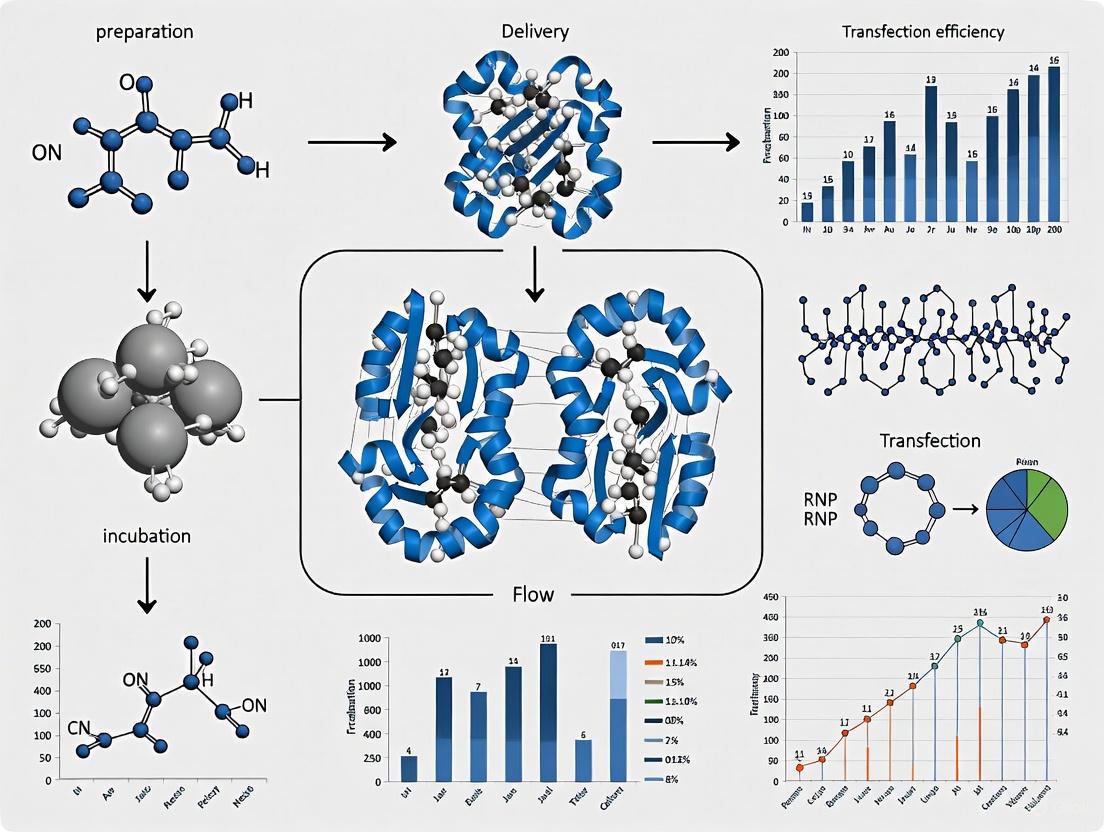
This comprehensive guide details optimized ribonucleoprotein (RNP) transfection protocols for CRISPR genome editing, tailored for researchers and drug development professionals.
Optimized CRISPR RNP Transfection Protocol: A Step-by-Step Guide for High-Efficiency Genome Editing
Abstract
This comprehensive guide details optimized ribonucleoprotein (RNP) transfection protocols for CRISPR genome editing, tailored for researchers and drug development professionals. It covers the foundational advantages of RNP delivery over plasmid DNA, including reduced off-target effects and lower cytotoxicity. The article provides step-by-step methodological instructions for lipofection, electroporation, and specialized techniques for challenging cell types. It further offers troubleshooting strategies for common pitfalls and presents a comparative analysis of delivery methods, reagents, and emerging technologies to enable robust, reproducible, and high-efficiency gene editing in both basic research and therapeutic applications.
Why RNP Transfection? Foundational Principles and Strategic Advantages for CRISPR Editing
CRISPR ribonucleoprotein (RNP) complexes represent a highly efficient and precise method for delivering genome-editing machinery into cells. These complexes consist of a purified Cas nuclease protein pre-assembled with a synthetic guide RNA (gRNA) before delivery into target cells [1]. This RNP format has become the preferred choice for many genome engineering applications due to its rapid activity, high editing efficiency, and reduced off-target effects compared to alternative delivery methods such as plasmid DNA or in vitro transcribed RNA [2] [3]. The transient nature of RNP activity—with quick degradation by cellular proteases after delivery—limits the window for off-target editing while maintaining high on-target efficiency, making it particularly valuable for therapeutic applications and editing sensitive primary cells [4] [2].
The fundamental structure of a CRISPR RNP complex involves the Cas protein, which provides the DNA-cleaving function, and the gRNA molecule, which confers target specificity through complementary base pairing [1]. This binary structure enables precise targeting of genomic loci while minimizing extended exposure to the nuclease, thus balancing efficiency with specificity in genome editing workflows.
Structural Composition of CRISPR RNP Complexes
Cas Protein Components
The Cas (CRISPR-associated) protein serves as the catalytic engine of the RNP complex, responsible for creating double-stranded breaks in DNA upon target recognition. While multiple Cas variants exist, the most extensively characterized is the Cas9 nuclease from Streptococcus pyogenes (SpCas9). This protein comprises two primary structural lobes: the recognition lobe (REC) and the nuclease lobe (NUC) [3]. The recognition lobe interacts with the gRNA:DNA heteroduplex to verify complementarity, while the nuclease lobe contains the HNH and RuvC domains that cleave the target and non-target DNA strands, respectively [3]. Cas9 creates blunt-ended double-strand breaks approximately three bases upstream of the protospacer adjacent motif (PAM) sequence, which for SpCas9 is 5'-NGG-3' [1].
Alternative Cas proteins offer different structural and functional characteristics. Cas12a (formerly Cpf1), for instance, creates staggered DNA cuts with 5' overhangs and recognizes T-rich PAM sequences, providing targeting flexibility [5]. The selection of Cas protein depends on experimental requirements, with considerations including PAM availability, cleavage pattern preferences, and molecular size for delivery efficiency.
Guide RNA Architecture
The guide RNA component provides the addressing system that directs the Cas protein to specific genomic locations. In its simplest form, the gRNA is a chimeric single guide RNA (sgRNA) that combines two essential elements: the CRISPR RNA (crRNA) region, which contains the 17-20 nucleotide spacer sequence complementary to the target DNA, and the trans-activating crRNA (tracrRNA) scaffold, which facilitates Cas protein binding [4]. The tracrRNA serves as a structural scaffold that enables binding to the Cas nuclease, while the crRNA provides the target-specific recognition through Watson-Crick base pairing [4].
Advanced gRNA designs incorporate chemical modifications to enhance stability and editing efficiency. Synthetic sgRNAs with phosphorothioate linkages and 2'-O-methyl analogs at terminal nucleotides improve nuclease resistance and reduce immune responses in mammalian cells [2]. These modifications increase the half-life of the gRNA within cells, thereby improving the overall efficiency of the editing process.
RNP Assembly and Stability
The assembly of functional RNP complexes occurs through incubation of purified Cas protein with synthetic gRNA in stoichiometric ratios. Research indicates that optimal editing efficiency is achieved with a slight molar excess of gRNA relative to Cas protein, typically in a 1.2:1 to 3:1 ratio [1] [2]. This pre-complexing in vitro before delivery allows the components to form stable complexes that remain intact for up to 3 hours at room temperature [1]. The formation of these pre-assembled complexes is critical for immediate activity upon cellular delivery, as no transcription or translation steps are required—unlike DNA-based delivery methods [1].
Table 1: Key Components of CRISPR RNP Complexes
| Component | Function | Key Features |
|---|---|---|
| Cas9 Nuclease | Creates double-stranded DNA breaks | Recognizes 5'-NGG-3' PAM; contains REC and NUC lobes |
| Cas12a Nuclease | Creates staggered DNA cuts | Recognizes T-rich PAM; smaller size than Cas9 |
| crRNA | Target recognition through DNA complementarity | 17-20 nt spacer sequence |
| tracrRNA | Scaffold for Cas protein binding | Invariable structural component |
| sgRNA | Combined crRNA+tracrRNA in single molecule | Simplified delivery; can be chemically modified |
Functional Mechanisms of CRISPR RNP Complexes
Target Recognition and DNA Cleavage
The mechanism of CRISPR RNP action begins with cellular entry, followed by navigation to the nucleus. The RNP complex scans the genome for complementary DNA sequences adjacent to appropriate protospacer adjacent motif (PAM) sequences [1]. Upon encountering a potential target, the gRNA forms a heteroduplex with the target DNA through complementary base pairing, while the Cas protein verifies the PAM sequence. Successful recognition triggers conformational changes in the Cas protein that activate its nuclease domains, resulting in a double-strand break (DSB) in the DNA [3]. This break typically occurs 3 base pairs upstream of the PAM sequence for Cas9, creating blunt ends, while Cas12a creates staggered cuts distal to the PAM recognition site [5].
The precision of this targeting mechanism relies heavily on the specificity of the gRNA-DNA interaction. Mismatches, particularly in the "seed" region proximal to the PAM, can significantly reduce cleavage efficiency, providing a natural checkpoint against off-target activity. The RNP format enhances this specificity as the pre-formed complexes are degraded more quickly than DNA-based expression systems, limiting the time window for non-specific interactions [2].
DNA Repair Pathways and Editing Outcomes
Following DNA cleavage, cellular repair mechanisms determine the ultimate editing outcome. The primary pathways involved are non-homologous end joining (NHEJ) and homology-directed repair (HDR) [1]. NHEJ is an error-prone process that directly ligates broken DNA ends, often resulting in small insertions or deletions (indels) that can disrupt gene function—making it ideal for gene knockout applications [4]. When a donor DNA template with homology arms is provided alongside the RNP, cells may employ the HDR pathway to incorporate specific genetic changes, enabling precise knock-in edits [1].
The RNP delivery format is particularly advantageous for HDR experiments due to the rapid clearance of editing components, which helps balance the competition between the error-prone NHEJ and precise HDR pathways. Studies have demonstrated that RNP delivery can achieve knock-in efficiencies of up to 18% in certain cell types when combined with single-stranded oligonucleotide donor templates [5].
Comparative Analysis of CRISPR RNP Delivery Methods
Efficiency Across Cell Types
CRISPR RNP delivery has demonstrated remarkable efficiency across diverse cell types, particularly in challenging primary cells that are refractory to other transfection methods. In primary human T cells, RNP delivery via electroporation has achieved knockout efficiencies exceeding 90% without requiring T-cell receptor stimulation [2]. Similar high efficiency has been observed in immortalized cell lines like HEK293, where RNP delivery routinely achieves 70-80% editing rates [4]. The consistency of RNP performance across different cell types stems from the direct delivery of pre-formed editing complexes, bypassing cellular transcription and translation bottlenecks that plague DNA-based approaches.
Quantitative Comparison of Delivery Methods
Table 2: Comparison of CRISPR Delivery Formats
| Delivery Format | Editing Efficiency | Off-Target Effects | Time to Activity | Primary Applications |
|---|---|---|---|---|
| RNP (Electroporation) | 70-95% [2] | Lowest [3] | Immediate (hours) | Primary cells, therapeutic applications |
| Plasmid DNA | 10-40% [6] | High [3] | 24-48 hours | Stable cell line generation |
| IVT RNA | 20-50% [6] | Moderate [3] | 12-24 hours | Embryonic editing |
| Viral Vectors | 5-40% [2] | Variable | 24-72 hours | In vivo delivery, hard-to-transfect cells |
The tabular comparison demonstrates the superior efficiency and specificity profile of RNP delivery, particularly through electroporation methods. The immediate activity of RNPs—with detectable editing occurring within hours of delivery—enables rapid experimental outcomes while minimizing cellular stress responses associated with prolonged nuclease expression [2].
Detailed Experimental Protocols
RNP Complex Assembly
The preparation of functional RNP complexes requires precise stoichiometric ratios of Cas protein to gRNA. The following protocol has been optimized for high-efficiency editing in primary cells [2]:
Component Preparation: Resuspend synthetic crRNA and tracrRNA (or synthetic sgRNA) in nuclease-free buffer to a concentration of 160 μM. Dilute purified Cas9 protein to 40 μM in PBS or recommended storage buffer.
Complex Formation:
- For a single reaction, combine 2.5 μL of 160 μM gRNA (400 pmol) with 5 μL of 40 μM Cas9 protein (200 pmol) in a nuclease-free tube.
- This creates a gRNA:Cas9 molar ratio of 2:1, which has been shown to optimize editing efficiency [2].
- Add opti-MEM or similar transfection medium to bring the total volume to 25 μL.
Incubation: Mix thoroughly by pipetting and incubate at room temperature for 10-20 minutes to allow complete RNP complex formation. The complexes remain stable for up to 3 hours at room temperature [1].
Electroporation-Based RNP Delivery
Electroporation represents the gold standard for RNP delivery, particularly in hard-to-transfect primary cells. The following protocol is adapted from optimized methods for primary T cell editing [2]:
Cell Preparation: Harvest and wash 2 × 10^6 cells per condition. For suspension cells, centrifuge at 300 × g for 5 minutes and resuspend in appropriate electroporation buffer (e.g., P3 for Lonza 4D system).
Electroporation Setup:
- Combine the prepared RNP complexes with cell suspension.
- Transfer the cell-RNP mixture to an electroporation cuvette.
- Apply manufacturer-recommended electrical parameters. For primary T cells using the Lonza 4D system, program DN-100 has proven effective [2].
Post-Transfection Recovery:
- Immediately transfer electroporated cells to pre-warmed culture medium.
- Incubate at 37°C with 5% CO₂ for 48-72 hours before assessing editing efficiency.
- For difficult-to-transfect cells, inclusion of small molecules such as Alt-R HDR Enhancer can improve outcomes.
Lipid Nanoparticle-Mediated Transfection
For adherent cells amenable to lipid-based transfection, the following protocol using Lipofectamine CRISPRMAX has demonstrated high efficiency [1]:
Cell Seeding: Plate cells in a 24-well format at 0.4-1.2 × 10^5 cells per well to achieve 30-70% confluency at the time of transfection.
Transfection Mixture Preparation:
- Dilute 1.5 μL Lipofectamine CRISPRMAX reagent in 25 μL Opti-MEM I Reduced Serum Medium.
- In a separate tube, combine 500 ng Cas9 protein (approximately 3 pmol) with 125 ng sgRNA (approximately 10 pmol) in 25 μL Opti-MEM I.
- Add 1 μL Cas9 Plus solution to the RNP mixture.
Complex Formation and Delivery:
- Combine diluted Lipofectamine with RNP mixture and incubate for 10-15 minutes at room temperature.
- Add the 50 μL complex solution dropwise to cells.
- Assay editing efficiency 48-72 hours post-transfection.
Research Reagent Solutions
Table 3: Essential Reagents for CRISPR RNP Experiments
| Reagent Category | Specific Examples | Function | Application Notes |
|---|---|---|---|
| Cas Nuclease Proteins | GeneArt Platinum Cas9 Nuclease, Alt-R S.p. Cas9 Nuclease V3 | DNA cleavage activity | High-purity, nuclear localization signals enhance function |
| Synthetic Guide RNAs | Alt-R CRISPR-Cas9 crRNA, Alt-R CRISPR-Cas12a crRNA | Target recognition | Chemically modified versions reduce immune response |
| Electroporation Systems | Neon NxT Electroporation System, Lonza 4D Nucleofector | Physical delivery method | Optimal for primary cells; requires parameter optimization |
| Lipid-Based Transfection | Lipofectamine CRISPRMAX Cas9 Transfection Reagent | Chemical delivery method | Suitable for adherent cell lines |
| Efficiency Analysis | ICE (Inference of CRISPR Edits), TIDE (Tracking of Indels by Decomposition) | Computational analysis tools | Analyze Sanger sequencing data to quantify editing efficiency |
| Control Components | Fluorescently tagged tracrRNA (e.g., ATTO 550), HPRT positive control gRNA | Transfection monitoring & experimental validation | Enable tracking of delivery efficiency and protocol optimization |
Troubleshooting and Optimization Guidelines
Common Challenges and Solutions
Low editing efficiency represents the most frequent challenge in CRISPR RNP experiments. This issue often stems from suboptimal RNP formation or delivery conditions. To address this, researchers should first verify RNP complex stoichiometry, ensuring a gRNA:Cas9 molar ratio between 1.2:1 and 3:1 [2]. Additionally, testing multiple gRNAs targeting the same gene can identify the most effective sequence, as editing efficiency varies significantly between targets [1]. For delivery optimization, titrating cell density at transfection and adjusting electrical parameters for electroporation can dramatically improve outcomes [2].
High cellular toxicity represents another common challenge, particularly when working with sensitive primary cells. Reducing the total amount of RNP complex delivered while maintaining the optimal gRNA:Cas9 ratio can mitigate toxicity while preserving editing efficiency [2]. Additionally, optimizing recovery conditions post-transfection—including the use of specialized media and appropriate seeding densities—supports cell viability during the critical editing window.
Advanced Optimization Strategies
For applications requiring maximal editing efficiency, such as therapeutic development, several advanced strategies can be employed. The inclusion of small molecule enhancers such as Alt-R HDR Enhancer can improve homology-directed repair efficiency when performing precise edits [1]. For hard-to-transfect cell types, combining optimized electroporation buffers with cell-type specific electrical parameters can significantly improve outcomes. Furthermore, using chemically modified sgRNAs with phosphorothioate bonds and 2'-O-methyl analogs increases stability and reduces immune activation in mammalian cells, particularly in immunologically sensitive cell types [2].
Systematic optimization of each protocol step—from RNP assembly to post-transfection recovery—enables researchers to achieve editing efficiencies exceeding 90% in even the most challenging primary cells, establishing CRISPR RNP as the benchmark for precision genome editing across diverse applications.
The Clustered Regularly Interspaced Short Palindromic Repeats (CRISPR) and CRISPR-associated protein 9 (Cas9) system has revolutionized biomedical research by enabling precise genetic modifications [7]. While this technology can be delivered to cells in various formats—including plasmid DNA (pDNA) and messenger RNA (mRNA)—the direct delivery of pre-assembled Cas9 protein and single guide RNA (sgRNA) as a ribonucleoprotein (RNP) complex has emerged as a powerful method with distinct advantages [8]. RNP delivery bypasses the transcription and translation steps required by pDNA or mRNA systems, enabling rapid and transient genome editing activity that degrades quickly after delivery [7]. This transient nature enhances specificity while minimizing prolonged residual editing activity, off-target mutations, and potential immune responses [8]. Unlike plasmid-based systems, RNPs eliminate the risk of unintended integration of foreign DNA into the host genome, significantly improving safety profiles for therapeutic applications [7]. This application note details the key advantages of RNP delivery, supported by quantitative data and experimental protocols suitable for researchers, scientists, and drug development professionals.
Key Advantages of RNP Delivery
Reduction of Off-Target Effects
The limited intracellular persistence of RNP complexes directly correlates with reduced off-target editing. Unlike plasmid DNA that may persist in cells for weeks, leading to prolonged Cas9 and gRNA expression, RNPs cleave genomic DNA rapidly after transfection and persist in cells for only about a day before being degraded [9]. This shorter shelf-life ensures fewer unintended cuts to the genome and minimizes off-target effects [9].
Table 1: Comparative Analysis of Off-Target Effects Between Plasmid and RNP Delivery
| Delivery Method | Editing Format | Persistence in Cells | Relative Off-Target to On-Target Ratio | Key Findings |
|---|---|---|---|---|
| Plasmid DNA | DNA vector encoding Cas9 and sgRNA | Up to several weeks [9] | Higher (Reference) | Prolonged expression increases opportunities for erroneous editing [9] |
| RNP Complex | Pre-assembled Cas9 protein and sgRNA | Approximately 24 hours [9] | 28-fold lower for gene OT3-18 [9] | Rapid degradation limits time for non-specific activity [9] |
Limited Duration of Editing Activity
The transient nature of RNP activity provides a critical safety mechanism by constraining the editing window. As pre-formed complexes, RNPs are active immediately upon delivery and do not require the transcription and translation steps necessary for plasmid DNA, which can extend experimental timelines by 50% or more [9]. This immediate activity, coupled with rapid degradation, confines the majority of editing to a short, defined period, reducing the risk of continuous, uncontrolled genomic cleavage [7] [8]. This attribute is particularly valuable for therapeutic applications where precise control over editing dynamics is crucial.
Elimination of DNA Integration Risk
RNP delivery completely avoids the introduction of foreign DNA into the target cells, thereby eliminating the risk of random integration of plasmid DNA into the host genome [9]. Such unintended integration events can cause insertional mutagenesis, potentially disrupting essential genes or regulatory elements and leading to detrimental consequences, including oncogenesis [7]. The DNA-free nature of RNP delivery provides a significant safety advantage, especially for clinical applications.
Table 2: Summary of RNP Advantages Across Cell Types and Applications
| Cell Type | Efficiency/Outcome with RNP | Comparison to Alternative Methods | Key Advantage Demonstrated |
|---|---|---|---|
| CHO-K1 Cells | 50% GFP integration efficiency [7] | Outperformed commercial CRISPRMAX (14%) [7] | High Efficiency & Lower Cytotoxicity |
| Primary Human T Cells | >90% KO efficiency, no TCR stimulation required [2] | Superior to viral delivery methods [2] | High Efficiency in Primary Cells |
| Embryonic Stem Cells | ≥2x more viable colonies [9] | Compared to plasmid transfection [9] | Reduced Cytotoxicity |
| Rainbow Trout Cells (RTgutGC) | 39% gene editing efficiency [10] | Effective in notoriously hard-to-transfect cells [10] | Versatility Across Species/Cell Types |
| Mouse Brain (Striatum) | Robust in vivo editing achieved [11] | Via direct injection of self-deliverable RNPs [11] | Applicability for In Vivo Use |
Detailed Experimental Protocols
Protocol 1: RNP Delivery via Electroporation in Primary T Cells
This protocol, adapted from Seki and Rutz [2], achieves highly efficient gene knockout in primary mouse and human T cells without requiring T cell receptor stimulation.
Materials and Reagents
- Biological Material: Primary mouse or human T cells.
- RNP Components:
- Recombinant Cas9 protein.
- Target-specific crRNA (chemically modified synthetic).
- Fluorescently labeled tracrRNA (e.g., ATTO-550).
- Equipment: Lonza 4D Nucleofector System.
- Consumables: Nucleofector Cuvettes.
- Buffers: Buffer P3 (Lonza) or other appropriate cell-specific buffer.
Step-by-Step Procedure
RNP Complex Assembly:
- Complex the crRNA and tracrRNA at a 1:1 molar ratio in a duplex buffer to form the guide RNA (gRNA). Heat at 95°C for 5 minutes and cool to room temperature.
- Pre-complex the gRNA with Cas9 protein at a 3:1 molar ratio (gRNA:Cas9) in a sterile tube. Incubate at room temperature for 10-20 minutes to form the RNP complex.
Cell Preparation:
- Isolate primary T cells from mouse or human source. Do not stimulate the cells.
- Count the cells and centrifuge the required amount (e.g., 2 million cells per condition). Resuspend the cell pellet in the provided Nucleofector Solution.
Electroporation:
- Mix the prepared RNP complexes with the cell suspension.
- Transfer the cell/RNP mixture into a Nucleofector cuvette.
- Select the appropriate pulse code on the 4D Nucleofector. For primary T cells, pulse code DN-100 is recommended [2].
- Insert the cuvette and run the program.
Post-Transfection Recovery:
- Immediately after electroporation, add pre-warmed culture medium to the cuvette.
- Gently transfer the cells to a culture plate pre-filled with warm medium.
- Incubate cells at 37°C, 5% CO₂.
Analysis:
- Transfection efficiency can be monitored after 24 hours via the fluorescent signal from the tracrRNA.
- Assess gene knockout efficiency 72 hours post-transfection by flow cytometry (for surface markers) or other functional/genomic assays.
Protocol 2: PEG-Mediated Transfection in Plant Protoplasts
This protocol outlines RNP delivery for genome editing in pea (Pisum sativum L.) protoplasts, serving as a model for plant systems [12].
Materials and Reagents
- Biological Material: Leaves from 2-4 week-old pea plants.
- RNP Components: Cas9 protein and in vitro transcribed or synthetic sgRNA targeting the gene of interest (e.g., PsPDS).
- Enzyme Solution: Contains MES (20 mM, pH 5.7), KCl (20 mM), CaCl₂ (10 mM), BSA (0.1%), cellulase R-10 (1-2.5%), macerozyme R-10 (0-0.6%), and mannitol (0.3-0.6 M) [12].
- W5 Solution: 2 mM MES, 154 mM NaCl, 125 mM CaCl₂, 5 mM KCl.
- MMg Solution: 0.6 M mannitol, 15 mM MgCl₂, 4 mM MES (pH 5.7).
- PEG Solution: 40% Polyethylene Glycol (PEG-4000).
Step-by-Step Procedure
Protoplast Isolation:
- Remove mid-ribs from leaves and cut into 0.5 mm thin strips.
- Transfer leaf strips to enzyme solution (10 ml) and incubate in the dark for several hours with gentle shaking.
- Stop digestion by adding an equal volume of W5 solution. Filter the mixture through a 40 μm cell strainer.
- Centrifuge the filtrate to pellet protoplasts and carefully remove the supernatant. Resuspend the protoplast pellet in W5 solution and let sit on ice for 30 minutes.
RNP Complex Assembly:
- Assemble RNP complexes by incubating Cas9 protein and sgRNA at optimal molar ratios at room temperature for 10-30 minutes.
PEG-Mediated Transfection:
- Collect ~2x10⁵ purified protoplasts by centrifugation. Remove the W5 solution completely.
- To the protoplast pellet, add the assembled RNP complexes (e.g., 20 µg plasmid DNA equivalent).
- Add an equal volume of 40% PEG solution to the protoplast-RNP mixture, gently mixing by pipetting. Incubate for 15 minutes [12].
- Stop the transfection by diluting the mixture with several volumes of W5 solution.
- Centrifuge to pellet the transfected protoplasts and wash twice with W5 solution.
Culture and Analysis:
- Culture the transfected protoplasts in appropriate medium under low light conditions.
- Extract genomic DNA after 48-72 hours to assess editing efficiency using assays like T7 Endonuclease I (T7EI) or sequencing.
The Scientist's Toolkit: Essential Research Reagents
Table 3: Key Reagent Solutions for RNP-Based Genome Editing
| Reagent / Solution | Function / Purpose | Example / Note |
|---|---|---|
| Recombinant Cas9 Protein | The nuclease component of the RNP complex. | Ensure high purity and activity. Can be wild-type SpCas9 or engineered variants like iCas12a [11]. |
| Synthetic sgRNA (crRNA/tracrRNA) | Guides the Cas9 protein to the specific genomic target. | Chemically modified synthetic RNAs can enhance stability and reduce degradation [2]. |
| Cell-Penetrating Peptides (CPPs) | Engineered to enable self-deliverable RNP capability, improving cellular uptake without additional carriers. | Fusions with peptides like A22p (derived from semaphorin-3a) significantly boost editing in neural cells [11]. |
| Cationic Polymer-Based Nanoparticles | A non-viral delivery vehicle that encapsulates RNPs via electrostatic interaction. | A modified cationic hyper-branched cyclodextrin-based polymer (Ppoly) showed >90% encapsulation efficiency and minimal cytotoxicity [7]. |
| Electroporation System & Buffers | Enables physical delivery of RNPs into hard-to-transfect cells by creating transient pores in the cell membrane. | The Lonza 4D Nucleofector System with cell-type specific buffers (e.g., Buffer P3) is widely used [2] [10]. |
| PEG Solution | A chemical mediator that facilitates the delivery of macromolecules like RNPs into plant protoplasts. | A 40% PEG-4000 solution with a 15-minute incubation is effective for pea protoplasts [12]. |
Conceptual Workflows and Signaling Pathways
RNP Mechanism of Action and Workflow
The following diagram illustrates the core mechanism of RNP action and its primary advantages over alternative delivery methods.
RNP Delivery Workflow Comparison
This workflow compares the critical paths for RNP versus plasmid DNA delivery, highlighting the sources of key RNP advantages.
Within the broader scope of ribonucleoprotein (RNP) transfection protocol research, a clear understanding of the trade-offs between different CRISPR-Cas9 delivery formats is fundamental. While plasmid DNA has been a traditional mainstay for delivering CRISPR components, ribonucleoproteins (RNPs)—pre-assembled complexes of Cas9 protein and guide RNA—have emerged as a powerful alternative for many experimental and therapeutic applications [9] [13] [14]. This application note provides a comparative overview of these two key methodologies, focusing on critical performance metrics: editing efficiency, cellular toxicity, and experimental timelines. The data and protocols herein are designed to assist researchers, scientists, and drug development professionals in selecting the optimal strategy for their genome editing projects, particularly for transient editing applications where safety and precision are paramount.
Comparative Performance Data
Direct comparisons between RNP and plasmid DNA delivery reveal significant differences in performance across multiple cell types. The following tables summarize key quantitative findings from recent studies.
Table 1: Comparison of Editing Efficiency and Cell Viability in MSCs (BMB Reports, 2024)
| Delivery Method | Cas9 Dosage | gRNA Dosage | Indel Frequency (%) | Cell Viability (%) |
|---|---|---|---|---|
| Plasmid DNA | 1 µg | 1 µg | 9.01 | Decreased (dose-dependent) |
| RNP (Ribonucleoprotein) | 10 µg | 5 µg (crRNA+tracrRNA) | 20.21 | >90 (across all doses) |
Data derived from a study optimizing genome editing in primary human Mesenchymal Stem Cells (MSCs) demonstrated that RNP delivery enabled a dose-dependent response in indel frequency while maintaining excellent cell viability. In contrast, plasmid DNA not only showed lower editing efficiency but also significantly reduced cell viability in a dose-dependent manner [15].
Table 2: General Comparative Overview of RNP vs. Plasmid DNA
| Parameter | RNP (Ribonucleoprotein) | Plasmid DNA |
|---|---|---|
| Time to Active Complex | Immediate activity | ~24 hours (requires transcription/translation) [13] |
| Total Experimental Workflow | Up to 50% shorter [9] | Longer and more labor-intensive [9] |
| Typical Editing Efficiency | High (e.g., >70% in various cells) [9] | Variable and often lower [9] [13] |
| Cytotoxicity | Low [9] [15] | Higher, especially in sensitive cells [9] [13] |
| Off-Target Effect Rate | Low [9] [11] | Higher (prolonged expression) [9] [13] |
| Risk of Genomic Integration | Avoids DNA integration [9] | Potential for random plasmid integration [9] [13] |
The superior performance of RNPs is linked to their immediate activity as a pre-formed complex and their transient presence in the cell, which typically degrades within about 24 hours, minimizing off-target activity [9]. Plasmids, however, can persist for days to weeks, leading to prolonged Cas9 and gRNA expression that increases the chance of off-target edits and cellular stress [9] [13].
Experimental Protocols
Protocol A: General CRISPR RNP Transfection via Electroporation/Lipofection
This protocol is adapted from general guidelines and successful applications in MSCs and other cell types [16] [15]. It serves as a starting point for optimizing RNP delivery.
Key Reagent Solutions:
- Recombinant Cas9 Protein: High-purity, nuclear localization signal (NLS)-tagged protein (e.g., TrueCut Cas9 Protein v2, Alt-R Cas9) [16] [13].
- Synthetic guide RNA: Chemically modified sgRNA or crRNA:tracrRNA duplex for enhanced stability (e.g., TrueGuide sgRNA, Alt-R gRNA) [16] [13].
- Transfection Reagent: Lipofectamine CRISPRMAX for lipofection or appropriate buffers for electroporation systems (e.g., Neon, Nucleofector) [16] [6].
Procedure:
- RNP Complex Assembly:
Cell Preparation:
- Harvest and count the target cells. For adherent cells, ensure they are in a log growth phase.
- For electroporation, resuspend cells in an appropriate electroporation buffer at a concentration of 1-10 x 10^6 cells/mL. For lipofection, plate cells to achieve 30-70% confluence at the time of transfection [16] [6].
Transfection:
- Electroporation: Mix the pre-assembled RNP complex with the cell suspension and transfer to an electroporation cuvette. Perform electroporation using an optimized device-specific program (e.g., Neon Transfection System: 1,200 V, 20 ms, 2 pulses for MSCs) [15].
- Lipofection: Dilute the RNP complex in an appropriate diluent. Combine with a transfection reagent such as Lipofectamine CRISPRMAX according to the manufacturer's instructions. Add the complex to the cells [16].
Post-Transfection Culture:
- Immediately transfer electroporated cells to pre-warmed culture medium.
- Culture cells for 48-72 hours before analyzing editing efficiency and cell viability.
Protocol B: DNA-Free Genome Editing in Plant Protoplasts via RNP
This protocol demonstrates the application of RNP technology in plant systems, highlighting its versatility for transgene-free editing [17].
Key Reagent Solutions:
- Cas9 Protein: Commercial Streptococcus pyogenes Cas9 nuclease.
- Guide RNA: Synthetic sgRNA targeting a gene of interest (e.g., Phytoene Desaturase (PDS)).
- Polyethylene Glycol (PEG) Solution: High molecular weight PEG (e.g., 40%) for facilitating protoplast transfection.
Procedure:
- Protoplast Isolation:
- Isolate protoplasts from raspberry stem cultures or other plant tissues via enzymatic digestion of the cell wall using a mixture of cellulases and macerozymes [17].
RNP Complex Assembly:
- Assemble the RNP complex by incubating Cas9 protein with target-specific sgRNA at room temperature for 15-30 minutes.
Protoplast Transfection:
- Mix approximately 2 x 10^4 protoplasts with the pre-assembled RNP complex.
- Add an equal volume of 40% PEG solution to the protoplast-RNP mixture to induce membrane permeabilization and facilitate uptake. Incubate for 15-30 minutes.
Regeneration and Analysis:
- Wash the protoplasts to remove PEG and culture them in an appropriate regeneration medium.
- After regeneration, screen for induced mutations using techniques such as amplicon sequencing, which can detect editing efficiencies as measured in one study at ~19% [17].
Workflow and Mechanism Visualization
The fundamental difference between RNP and plasmid DNA delivery lies in the intracellular journey of the CRISPR components. The following diagram illustrates the more direct and rapid mechanism of RNP action.
The Scientist's Toolkit: Essential Reagent Solutions
Successful implementation of RNP-based CRISPR editing relies on a core set of optimized reagents. The following table details key solutions for designing your experiments.
Table 3: Key Research Reagent Solutions for RNP-Based Genome Editing
| Reagent | Function | Examples & Notes |
|---|---|---|
| Recombinant Cas9 Nuclease | The enzyme that cuts target DNA. Requires high purity and activity for RNP work. | TrueCut Cas9 Protein v2 (Thermo Fisher), Alt-R S.p. Cas9 Nuclease V3 (IDT). Often includes Nuclear Localization Signals (NLS) for nuclear targeting [16] [13]. |
| Synthetic Guide RNA (gRNA) | Programs the Cas9 protein to a specific genomic locus. | TrueGuide Synthetic sgRNA (Thermo Fisher), Alt-R crRNA and tracrRNA (IDT). Chemically modified versions enhance stability and reduce immune responses [16] [13]. |
| Transfection Reagent | Facilitates the delivery of RNPs into cells. | Lipofectamine CRISPRMAX Cas9 Transfection Reagent (Thermo Fisher). Specifically optimized for RNP delivery via lipofection [16]. |
| Electroporation System | Physical delivery method using electrical pulses, ideal for hard-to-transfect cells. | Neon Transfection System (Thermo Fisher), 4D-Nucleofector System (Lonza). Provides high efficiency in primary cells, stem cells, and immune cells [16] [6] [15]. |
| Positive Control gRNA | Validates transfection and editing efficiency in a new system. | TrueGuide Positive Control gRNAs (e.g., targeting human AAVS1, CDK4, HPRT1, or mouse Rosa26) provide a benchmark for performance [16]. |
The collective data from recent studies firmly establishes RNP as the superior delivery format for most transient CRISPR genome editing applications. The advantages are multifold: RNPs significantly reduce experimental timelines by eliminating the need for intracellular transcription and translation [9] [13]. They demonstrate higher editing efficiency and lower cytotoxicity across a diverse range of cell types, including sensitive primary cells and stem cells where plasmids often cause significant cell death [9] [15]. Furthermore, the transient nature of RNPs drastically lowers off-target effects and completely avoids the risk of plasmid DNA integration into the host genome, addressing two major safety concerns for both basic research and therapeutic development [9] [13] [11].
While plasmids remain a low-cost option and may be suitable for experiments requiring stable, long-term expression of Cas9, the benefits of RNPs—enhanced precision, efficiency, and cell health—often outweigh the cost consideration [9]. The ongoing development of novel delivery platforms, such as self-deliverable RNPs [11] and advanced nanoparticle encapsulation like nanogels [18], continues to expand the potential of RNP technology, particularly for in vivo therapeutic applications. Therefore, for researchers aiming for fast, precise, and highly efficient genome editing with minimal unwanted effects, RNP transfection is the recommended methodology.
A critical step in any CRISPR genome editing workflow is the efficient delivery of the Cas nuclease and guide RNA (gRNA) into the nucleus of target cells [6]. These components can be introduced in three primary formats: DNA (e.g., plasmids or viral vectors), RNA (Cas9 mRNA and gRNA), or as a pre-assembled ribonucleoprotein (RNP) complex (purified Cas protein complexed with gRNA) [19]. The choice of format significantly impacts key experimental outcomes, including editing efficiency, specificity, cellular toxicity, and experimental timeline [13] [9]. This application note details these formats within the broader context of ribonucleoprotein transfection protocol research, providing structured data and methodologies to guide researchers and drug development professionals in selecting the optimal strategy for their experimental and therapeutic goals.
Regardless of the delivery format, the final functional unit capable of genome editing is the Cas protein and gRNA bound together as a ribonucleoprotein complex [19]. The fundamental difference between the formats lies in the cellular machinery required to form this active RNP. DNA formats must be transcribed and translated, RNA formats require translation, while pre-complexed RNPs are active immediately upon delivery [6] [19].
Comparative Analysis of CRISPR Delivery Formats
The table below summarizes the core characteristics, advantages, and limitations of the three primary CRISPR component delivery formats.
Table 1: Comparative Analysis of CRISPR Cas9 Delivery Formats
| Feature | DNA (Plasmid/Viral) | RNA (mRNA & gRNA) | Pre-complexed RNP |
|---|---|---|---|
| Molecular Stability | High [19] | Low; susceptible to RNase degradation [19] | Moderate; gRNA is protected by Cas protein [9] |
| Time to Activity | Slow (24+ hours); requires transcription and translation [13] | Moderate; requires translation only [19] | Fast (<1-4 hours); no transcription or translation needed [20] [21] |
| Editing Efficiency | Variable; depends on promoter strength and transfection [9] | Moderate [21] | Consistently High across diverse cell types [20] [9] [21] |
| Off-Target Activity | High; prolonged expression increases chances [9] [21] | Moderate; transient activity helps reduce risk [19] | Low; rapid degradation minimizes off-target effects [9] [21] |
| Cellular Toxicity | High; can trigger immune responses and DNA integration stress [13] [9] | Moderate; can be immunogenic [21] | Low; well-tolerated even in sensitive cells [9] [21] |
| Risk of Genomic Integration | Yes; random integration of plasmid or viral DNA is possible [13] [21] | No [21] | No; DNA-free delivery method [9] [21] |
| Protocol & Production Complexity | Easy to produce plasmid; complex and costly viral production [19] | Complex production of Cas9 mRNA; requires handling unstable RNA [19] [21] | Complex protein purification; simplified gRNA synthesis [19] |
The following workflow diagram illustrates the intracellular journeys of each delivery format, highlighting the key differences that account for their performance characteristics.
Advantages of the RNP Format for Research and Therapeutics
The pre-complexed RNP format offers several distinct advantages that make it particularly suitable for both basic research and therapeutic development.
Rapid and High-Efficiency Editing: Because RNPs require no transcription or translation, they are active immediately upon nuclear delivery. This leads to rapid DNA cleavage, often within hours of transfection, with studies reporting maximum mutation frequencies as early as 24 hours [21]. This rapid activity translates to high editing efficiencies, often exceeding 70-90% in various cell types, including immortalized, primary, and stem cells [20] [9] [22].
Reduced Off-Target Effects: A significant concern with CRISPR technology is unintended editing at off-target sites. Plasmid-based delivery results in persistent Cas9 expression over several days, increasing the window for off-target cleavage [9]. In contrast, the RNP complex has a short intracellular half-life, degrading within about 24-48 hours [21]. This transient activity limits the time for off-target activity and has been shown to result in a significantly lower off-target-to-on-target mutation ratio compared to plasmids [9].
Low Cytotoxicity and Immunogenicity: Transfection of foreign DNA can be stressful to cells and trigger innate immune responses [21]. Furthermore, the transfection reagents used for plasmids can be cytotoxic [13]. RNP delivery avoids the introduction of foreign genetic material, leading to better cell viability. Studies show RNP transfection can result in at least twice as many viable colonies compared to plasmid transfection in sensitive cells like embryonic stem cells [9].
DNA-Free and Footprint-Free Editing: The RNP method eliminates the risk of random integration of plasmid or viral DNA sequences into the host genome, a phenomenon known as "footprinting" [13] [9]. This ensures that the only genetic changes made are the intended edits at the target site, a critical safety consideration for therapeutic applications.
Detailed Experimental Protocol: RNP Transfection via Electroporation
This protocol is adapted from established methods for DNA-free genome editing in mammalian cells, including rainbow trout cell lines and human HEK293T cells [20] [23]. It outlines the steps for achieving gene knockout via non-homologous end joining (NHEJ) using pre-assembled Cas9 RNP complexes delivered by electroporation.
Research Reagent Solutions
Table 2: Essential Reagents for RNP Transfection
| Reagent / Equipment | Function / Application | Example Sources / Notes |
|---|---|---|
| Recombinant Cas9 Nuclease | Core editing protein; ensure it includes Nuclear Localization Signals (NLS) | Alt-R S.p. Cas9 Nuclease V3; SpCas9-NLS [23] |
| Synthetic sgRNA | Guides Cas9 to specific genomic target; chemically modified for stability | Alt-R CRISPR-Cas9 sgRNA; research-grade synthetic sgRNA [13] [9] |
| Electroporation System | Physical delivery method creating pores in cell membrane | Nucleofector Systems (Lonza); other electroporators [6] [13] |
| Cell-Specific Electroporation Kit | Optimized buffer solutions for maximum viability and efficiency | e.g., SF Cell Line Kit, P3 Primary Cell Kit (Lonza) |
| Target Cell Line | Model system for editing; consider transfection efficiency | HEK293T, H1299, primary T cells, mesenchymal stem cells [23] [22] |
Step-by-Step Methodology
Step 1: RNP Complex Assembly
- Resuspend synthetic sgRNA in nuclease-free buffer to a stock concentration of 160 µM.
- Combine the following in a nuclease-free microcentrifuge tube:
- 2.5 µL of 160 µM sgRNA (400 pmol)
- 5.0 µL of 40 µM recombinant Cas9-NLS protein (200 pmol)
- Nuclease-free buffer to a final volume of 20 µL.
- Mix by pipetting gently and incubate the assembly reaction at room temperature for 10-20 minutes to allow the RNP complex to form.
Step 2: Cell Preparation
- Culture the target cells (e.g., HEK293T) under standard conditions until they are 80-90% confluent and in logarithmic growth phase.
- Harvest cells by trypsinization, quench with complete medium, and collect by centrifugation (5 min at 300 x g).
- Wash the cell pellet once with 1X PBS.
- Resuspend the cell pellet in the appropriate electroporation buffer from the commercial kit. Use 20 µL of buffer per transfection reaction. The final cell concentration should be adjusted to achieve the desired density post-electroporation; a typical concentration is 1-5 x 10^6 cells/mL.
Step 3: Electroporation
- Combine 20 µL of cell suspension with the pre-assembled 20 µL RNP complex. Mix gently by pipetting.
- Transfer the entire 40 µL cell-RNP mixture into a certified electroporation cuvette, ensuring the mixture covers the bottom without air bubbles.
- Electroporate using a pre-optimized program for your specific cell type. For many mammalian cell lines, programs such as "CL-120" or "DS-138" on a Nucleofector system are effective starting points.
- Immediately after pulsing, add 500 µL of pre-warmed, antibiotic-free culture medium to the cuvette.
Step 4: Post-Transfection Recovery and Analysis
- Gently transfer the cells from the cuvette to a culture plate containing pre-warmed complete medium.
- Incubate the cells at 37°C and 5% CO₂ for 48-72 hours to allow for expression of the edited genotype.
- Harvest cells and extract genomic DNA from the transfected population.
- Analyze editing efficiency using an appropriate method:
- T7 Endonuclease I (T7EI) Assay or Tracking of Indels by Decomposition (TIDE): For a quick, initial assessment of indel frequency [20].
- Sanger Sequencing with Deconvolution Software: For precise quantification and characterization of specific insertion/deletion (indel) mutations [20].
- Next-Generation Amplicon Sequencing (NGS): For the most sensitive and comprehensive analysis of editing outcomes, including low-frequency events [17].
Critical Considerations for Protocol Implementation
Cell Type Dependence: Transfection efficiency and cell viability post-electroporation are highly cell-type dependent. Primary cells, stem cells, and immune cells (e.g., T cells) are more sensitive than immortalized lines and require optimized protocols [6] [22]. Always refer to manufacturer-specific guidelines for your cell type.
RNP Complex Quality and Specificity: Not all commercially available Cas enzymes function optimally in RNP format [13]. It is essential to use a nuclease that has been validated for RNP delivery. Furthermore, the use of chemically modified sgRNAs can enhance stability and editing efficiency while potentially reducing immunogenicity [9].
Alternative Delivery Methods: While electroporation is highly effective for RNP delivery, especially in hard-to-transfect cells, other methods can be employed. These include lipofection (using lipid nanoparticles), vapor nanobubble photoporation, and PEG-mediated transfection for plant protoplasts [24] [17] [22]. The choice of method depends on the cell type, throughput needs, and available equipment.
The choice of CRISPR delivery format is a fundamental decision that directly impacts the success, reliability, and safety of genome editing experiments. While plasmid DNA is straightforward to produce, its limitations in terms of cytotoxicity, off-target effects, and unpredictable expression make it suboptimal for many applications, particularly those involving therapeutically relevant primary cells. The RNA format offers a more transient alternative but introduces challenges with molecular instability.
The pre-complexed RNP format emerges as a superior strategy for most transient transfection needs, offering a compelling combination of high editing efficiency, rapid activity, enhanced specificity, and low cytotoxicity. By following the detailed protocol and considerations outlined in this application note, researchers can effectively leverage RNP technology to advance their genome editing projects, from basic functional genomics to the development of next-generation cell and gene therapies.
Within genome editing workflows, the choice between transient and stable transfection represents a critical juncture that directly influences experimental outcomes, data interpretation, and therapeutic applicability. This decision becomes particularly significant when working with ribonucleoprotein (RNP) complexes for CRISPR/Cas9-mediated editing, where the transient nature of the complex offers distinct advantages. The delivery format itself—whether DNA, RNA, or pre-assembled RNP—inherently influences this transient versus stable paradigm [6]. This application note delineates the core decision factors for selecting between transient and stable transfection approaches, providing structured experimental protocols and analytical frameworks to guide researchers in aligning methodology with specific workflow objectives.
Core Decision Factors: Transient vs. Stable Transfection
The fundamental distinction between transient and stable transfection lies in the persistence of the CRISPR components within the target cells. Transient transfection involves the temporary introduction of CRISPR-Cas9 and guide RNA (gRNA) into cells, with no genomic integration of the encoding DNA [6]. In contrast, stable transfection involves the permanent insertion of DNA encoding one or both CRISPR components into the cell's genome, leading to long-term expression [6].
The table below summarizes the primary characteristics and considerations for each approach.
Table 1: Core Characteristics of Transient and Stable Transfection
| Factor | Transient Transfection | Stable Transfection |
|---|---|---|
| Persistence of Components | Temporary (limited duration) [6] | Permanent, genomic integration [6] |
| Key Advantages | Limits off-target effects; faster editing kinetics; simpler workflow [6] [20] [25] | Long-term expression required for certain studies (e.g., inducible systems) [6] |
| Key Limitations | Limited editing window | More laborious; risk of insertional mutagenesis; prolonged off-target activity [6] [20] |
| Ideal Workflow Objectives | Knock-out studies; rapid screening; therapeutic applications where short-term activity is desirable [25] | Creation of stable Cas9-expressing cell lines for repeated gRNA testing; studies requiring inducible or prolonged expression [6] |
| Common Delivery Formats | RNP complexes; CRISPR RNA; plasmid DNA (non-integrating) [6] [26] | Viral vectors; plasmid DNA with integration/selection [6] |
The RNP Advantage in Transient Transfection
The delivery of CRISPR as a pre-assembled Ribonucleoprotein complex is inherently transient and offers several key benefits that align with the goals of precise and efficient genome editing:
- High Editing Efficiency & Rapid Action: The pre-formed complex is immediately active upon delivery and does not require transcription or translation, leading to faster editing onset [6] [25]. Studies report high mutation rates, often exceeding 90% in some cell lines [20] [25].
- Reduced Off-Target Effects: The short intracellular lifetime of the RNP complex minimizes the window for off-target cleavage events, enhancing specificity [20] [25] [26].
- DNA-Free & Non-Integrating: This approach eliminates the risk of transgene integration into the host genome, a crucial consideration for therapeutic development [20] [27]. It also simplifies regulatory pathways and can improve public acceptance [27].
Quantitative Data Comparison
The following tables consolidate quantitative data from published research to illustrate the performance of RNP-based transfection across different cell types and delivery methods.
Table 2: Gene Editing Efficiency of RNP Delivery in Various Cell Types
| Cell Type | Species/Cell Line | Delivery Method | Editing Efficiency | Citation |
|---|---|---|---|---|
| Intestinal Cell Line | Rainbow trout (RTgutGC) | Electroporation | 39% | [20] |
| Salmonid Cell Lines | Atlantic salmon (SHK-1, ASK), Chinook salmon (CHSE-214) | Not Specified | >90% | [20] |
| Immortalized & Primary Cells | Adherent and suspension cell lines; Human T-cells and CD34+ cells | Various (Comparative Study) | Data pending (Study protocol defined) | [25] |
| Plant Protoplasts | Chicory ("Orchies 37") | Transient RNP Transfection | High (No specific value) | [27] |
Table 3: Optimized RNP Transfection Conditions for Mammalian Cells [16]
| Parameter | Recommended Guideline |
|---|---|
| Molar Ratio (gRNA:Cas9) | 1:1 |
| Cas9 Protein Amount (24-well) | Up to 2 μg |
| gRNA Amount (24-well) | Up to 400 ng |
| Cell Confluence (Lipid-based) | 30–70% |
| Cell Confluence (Electroporation) | 70–90% |
Detailed Experimental Protocols
Protocol 1: CRISPR RNP Delivery via Electroporation
This protocol is adapted from methods used to successfully edit fish cell lines, demonstrating its applicability in difficult-to-transfect systems [20].
I. RNP Complex Assembly
- Prepare sgRNA: Synthesize sgRNA in vitro using a kit (e.g., HiScribe T7 Quick High Yield RNA Synthesis Kit, NEB). Purify the RNA via precipitation or column purification and quantify accurately [26].
- Reconstitute RNP: Combine recombinant Cas9 protein and sgRNA at a 1:1 mass ratio (e.g., 2 μg Cas9 + 2 μg sgRNA) in a nuclease-free buffer.
- Incubate: Incubate the mixture at 37°C for 5-10 minutes to form the active RNP complex [20] [26].
II. Cell Preparation and Transfection
- Harvest Cells: Culture cells to 70-90% confluence. Trypsinize adherent cells and quench with media. Count cells and pellet by centrifugation.
- Wash Cells: Wash cell pellet twice with Hanks balanced salt solution or PBS to remove any residual nucleases from the culture medium [26].
- Resuspend: Resuspend the cell pellet in the appropriate electroporation buffer (e.g., Neon System Resuspension Buffer) at a concentration of 1-10 x 10^7 cells/mL.
- Mix and Electroporate: Combine the cell suspension with the pre-assembled RNP complexes. Transfer the mixture to an electroporation cuvette. Electroporate using an optimized program (e.g., for the Neon Transfection System, program: 1400V, 20ms, 2 pulses for primary T-cells) [16] [20].
- Recover Cells: Immediately transfer electroporated cells to pre-warmed complete culture medium. Culture under standard conditions.
III. Analysis of Editing Efficiency
- Harvest Genomic DNA: 48-72 hours post-transfection, harvest cells and extract genomic DNA.
- Assess Editing: Use the T7 Endonuclease I (T7EI) assay or Sanger sequencing with bioinformatic analysis (e.g., using tools like TIDE or ICE) to quantify insertion/deletion (indel) frequencies at the target locus [20].
Protocol 2: Lipid-Based Transfection of CRISPR RNPs
This protocol utilizes lipid nanoparticles for RNP delivery, suitable for a variety of mammalian cell lines [16].
I. RNP Complex Assembly
- Follow steps in Section 4.1.I to assemble the RNP complex.
II. Lipid:RNP Complex Formation
- Dilute Reagent: Dilute the lipid-based transfection reagent (e.g., Lipofectamine CRISPRMAX Cas9 Transfection Reagent) in Opti-MEM I Reduced Serum Medium.
- Dilute RNP: Dilute the pre-assembled RNP complexes separately in Opti-MEM I.
- Combine: Combine the diluted RNP complexes with the diluted transfection reagent. Mix gently and incubate for 10-15 minutes at room temperature to form lipid:RNP complexes.
III. Cell Transfection and Culture
- Plate Cells: Seed cells at 30-70% confluence in a 24-well plate the day before transfection.
- Add Complexes: Add the lipid:RNP complexes drop-wise to the cells. Gently swirl the plate to ensure even distribution.
- Incubate: Incubate cells at 37°C, 5% CO2. Assay cells 24-96 hours post-transfection.
Workflow Visualization and Decision Pathways
The following diagram outlines the logical decision process for selecting between transient and stable transfection strategies based on core experimental objectives.
Decision Workflow for Transfection Strategy
The Scientist's Toolkit: Essential Research Reagents
Successful implementation of RNP-based transfection requires a suite of specialized reagents and instruments. The following table details key solutions and their functions.
Table 4: Essential Reagents and Tools for RNP Transfection Workflows
| Item | Function/Description | Example Use Case |
|---|---|---|
| Recombinant Cas9 Protein | Purified Cas9 nuclease, often with nuclear localization signals (NLS) for efficient nuclear entry [26]. | The core protein component for assembling RNP complexes. |
| Synthetic Guide RNA (gRNA) | Chemically synthesized crRNA:tracrRNA duplex or single-guide RNA (sgRNA) [16]. | Provides target specificity to the RNP complex. |
| Electroporation System | Instrument that uses electrical pulses to create transient pores in cell membranes for RNP delivery (e.g., Neon Transfection System) [6] [16]. | Essential for transfecting difficult-to-transfect cell types like primary cells and stem cells. |
| Lipid-Based Transfection Reagent | Specialized reagents formulated for complexing with and delivering RNPs (e.g., Lipofectamine CRISPRMAX) [16]. | A user-friendly method for transfecting many immortalized cell lines. |
| TrueGuide Synthetic gRNA & Controls | Pre-designed, validated synthetic gRNAs and non-targeting controls [16]. | Ensures experimental reliability and provides a positive control for optimizing transfection conditions. |
| T7 Endonuclease I Assay Kit | An enzyme-based mismatch detection assay for quantifying indel formation efficiency [20]. | A rapid and accessible method for initial assessment of genome editing efficiency. |
Step-by-Step RNP Transfection Protocols: Lipofection, Electroporation, and Specialized Techniques
Ribonucleoprotein (RNP) transfection represents a pivotal methodology in modern genome editing, offering transient, high-efficiency delivery of the CRISPR/Cas9 system with reduced off-target effects and minimal cellular toxicity compared to DNA-based approaches [6] [8]. Direct delivery of preassembled Cas9 protein and single-guide RNA (sgRNA) complexes enables rapid genome editing by bypassing the need for transcription and translation, making it particularly valuable for primary cells and therapeutic applications [8] [2]. Among delivery methods, lipid-based transfection (lipofection) has emerged as a cornerstone technique due to its cost-effectiveness, high throughput capability, and applicability across diverse cell types [6]. This protocol details the optimized use of the Lipofectamine CRISPRMAX Transfection Reagent, a specialized lipid formulation designed specifically for Cas9 RNP delivery, providing researchers with a standardized method for achieving high-efficiency genome editing in immortalized cell lines.
Principles of RNP Lipofection
The Lipofectamine CRISPRMAX Transfection Reagent employs cationic lipid nanoparticles that form complexes with the negatively charged RNP complexes through electrostatic interactions [28]. These lipid-RNP complexes fuse with the cell membrane and enter cells via endocytosis. Once internalized, the complexes escape the endosomal pathway and release RNPs into the cytoplasm [6] [8]. The pre-assembled RNPs, being functionally active, can then rapidly translocate to the nucleus to perform genome editing without additional processing steps required for DNA or RNA formats [6].
This direct delivery approach offers significant advantages: it minimizes off-target effects due to transient activity, reduces immune activation common with nucleic acid delivery, and enables editing in non-dividing cells [8] [2]. The CRISPRMAX formulation is particularly optimized for the unique physicochemical properties of Cas9 RNPs, balancing complex stability with efficient intracellular release to maximize editing efficiency while maintaining cell viability [16] [29].
Materials and Reagents
Research Reagent Solutions
The following table details the essential materials required for successful RNP transfection:
| Item | Function/Role | Examples/Specifications |
|---|---|---|
| Cas9 Protein | CRISPR nuclease component | TrueCut Cas9 Protein v2; NLS-tagged variants [16] [29] |
| Synthetic Guide RNA | Target specificity | TrueGuide Synthetic gRNA; chemically modified sgRNAs [16] [29] |
| Transfection Reagent | RNP delivery | Lipofectamine CRISPRMAX Cas9 Transfection Reagent [16] [30] |
| Supplement Reagent | Complex enhancement | Lipofectamine Cas9 Plus Reagent [30] [29] |
| Delivery Medium | Complex formation | Opti-MEM I Reduced Serum Medium [29] |
| Cell Culture Media | Cell maintenance | Cell-type specific (e.g., DMEM, RPMI, Essential 8) [30] |
Equipment
- Tissue culture plates (6-well, 24-well, 96-well formats)
- Humidified CO~2~ incubator (37°C, 5% CO~2~)
- Microcentrifuge tubes (nuclease-free)
- Cell counter/hemocytometer
- Centrifuge
Methodology
Experimental Workflow
The diagram below illustrates the complete experimental workflow for CRISPR RNP lipofection:
Pre-lipofection: Cell Seeding
- Cell Preparation: Culture mammalian cells according to standard methods appropriate for the specific cell type.
- Seeding Density: Seed cells into appropriate multi-well plates one day before transfection to achieve optimal confluence on transfection day. Critical seeding densities for common cell lines are provided in Table 1.
- Incubation: Incubate seeded cells overnight in a humidified 37°C, 5% CO~2~ incubator.
RNP Complex Formation
- Component Preparation: Dilute Cas9 protein and sgRNA to working concentrations in nuclease-free water or appropriate buffer. Synthego recommends a 3µM working concentration (3pmol/µL) for both components [29].
- Complex Assembly: Prepare RNP complexes in a microcentrifuge tube (Tube 1) using the following typical composition for a 24-well format:
- Incubation: Incubate the RNP complex for 5-10 minutes at room temperature to allow proper formation.
Lipid-Transfection Solution Preparation
- Lipid Dilution: In a separate microcentrifuge tube (Tube 2), dilute Lipofectamine CRISPRMAX Reagent in Opti-MEM I Reduced Serum Medium. For a 24-well format, use 1.5-2µL CRISPRMAX Reagent per well [30] [29].
- Incubation: Incubate the diluted lipid solution for 5 minutes at room temperature.
Complex Formation and Cell Preparation
- Combination: Add the lipid solution (Tube 2) directly to the RNP complex (Tube 1) and mix gently by pipetting.
- Final Incubation: Incubate the complete RNP-transfection solution for 5-10 minutes at room temperature to allow complex formation. Do not exceed 30 minutes.
- Cell Preparation: For adherent cells, wash with PBS, trypsinize, and resuspend in complete growth medium. Count cells and adjust concentration to 0.42-1.2×10^5^ cells per reaction for a 24-well format [29].
Transfection
- Addition: Add the RNP-transfection solution directly to cells.
- Mixing: Gently mix by rocking the plate or pipetting.
- Incubation: Incubate cells for 48-72 hours in a humidified 37°C, 5% CO~2~ incubator before analysis. Medium change is typically not required post-transfection.
Optimization Parameters
Cell Line-Specific Conditions
Optimal transfection conditions vary significantly by cell type. The table below summarizes validated parameters for common cell lines:
Table 1: Cell line-specific transfection conditions for 24-well format using Lipofectamine CRISPRMAX Reagent [30]
| Cell Type | Source | Media | Cell Seeding Density (×10³) | TrueCut Cas9 Protein v2 (ng) | gRNA (pmol) | CRISPRMAX Reagent (μL) |
|---|---|---|---|---|---|---|
| HEK293 | Human embryonic kidney | DMEM | 90 | 1250 | 7.5 | 2.0 |
| U2OS | Human osteosarcoma | McCoy5A | 50 | 1250 | 7.5 | 1.5 |
| A549 | Human lung epithelium | DMEM | 50 | 1250 | 7.5 | 1.5 |
| THP1 | Human leukemia | RPMI | 50 | 2000 | 12.0 | 1.5 |
| K562 | Human leukemia | RPMI | 50 | 1250 | 7.5 | 1.5 |
| iPSC | Human iPSC | Essential 8 | 40 | 1500 | 10.0 | 1.5 |
| HepG2 | Human liver carcinoma | DMEM | 50 | 1250 | 7.5 | 1.5 |
Format Scaling
The table below provides volume adjustments for different multi-well plate formats:
Table 2: Reagent scaling for different culture vessel formats [30]
| Reagent | 96-well | 24-well | 6-well |
|---|---|---|---|
| Cell Seeding Density | 8-18×10³ | 40-90×10³ | 200-450×10³ |
| TrueCut Cas9 Protein v2 | 250-400ng | 1250-2000ng | 6250-10000ng |
| gRNA | 1.5-2.4pmol | 7.5-12pmol | 37.5-60pmol |
| Cas9 Plus Reagent | 0.5-0.8µL | 2.5-4µL | 12.5-20µL |
| CRISPRMAX Reagent | 0.3-0.4µL | 1.5-2µL | 7.5-10µL |
Critical Optimization Parameters
- Cell Confluence: Maintain 30-70% confluence for adherent cells on transfection day for optimal results [16] [29].
- RNP Ratio: While a 1:1 molar ratio of Cas9:gRNA is standard, some systems benefit from gRNA excess (e.g., 1.3:1 ratio) [29] [2].
- Complexation Time: Maintain 5-10 minute incubation for RNP formation and RNP-lipid complex formation for optimal results.
- Cell Health: Use low-passage cells and maintain optimal culture conditions throughout.
Mechanism of Intracellular Delivery
The following diagram illustrates the cellular uptake and intracellular trafficking of lipid-based RNP delivery systems:
Troubleshooting
| Problem | Potential Cause | Solution |
|---|---|---|
| Low editing efficiency | Suboptimal RNP:lipid ratio | Titrate RNP and lipid components [16] |
| Poor cell viability | Excessive lipid or RNP concentration | Reduce reagent amounts; optimize cell density [29] |
| Inconsistent results | Variable cell confluence | Standardize seeding density and passage number [16] |
| No editing | Improper RNP complex formation | Verify RNP incubation time; check reagent quality [29] |
Lipid-based transfection using CRISPRMAX Reagent provides an efficient, standardized method for delivering Cas9 RNP complexes to immortalized cell lines. This protocol outlines optimized conditions that balance high editing efficiency with maintained cell viability across various cell types. The method's scalability and reproducibility make it suitable for both research and therapeutic development applications. By following this detailed protocol and incorporating appropriate optimization for specific cell types, researchers can achieve robust genome editing outcomes for functional genetic studies and therapeutic development.
The delivery of CRISPR-Cas ribonucleoprotein (RNP) complexes into hard-to-transfect cells represents a critical step in genome editing workflows, directly determining experimental success and therapeutic efficacy [31] [25]. Electroporation and nucleofection have emerged as predominant physical methods for achieving high-efficiency RNP delivery in cell types resistant to conventional transfection, such as primary cells, stem cells, and immune cells [31] [32]. These techniques utilize electrical pulses to transiently permeabilize the cell membrane, allowing direct intracellular access of preassembled RNPs while mitigating risks associated with viral vectors or DNA-based delivery, including prolonged nuclease expression, immune responses, and off-target effects [25]. This protocol details optimized methodologies for both approaches, providing a framework for researchers to achieve maximal editing efficiency and cell viability across diverse, challenging cell models.
Key Concepts and Method Selection
Electroporation and nucleofection both employ electrical fields for delivery but differ in mechanism and application. Standard electroporation creates transient pores in the cell membrane suspended in a conductive buffer. Nucleofection, a specialized form of electroporation, uses a combination of electrical parameters and cell-type-specific solutions to facilitate direct translocation of molecules to the nucleus [32].
The selection between electroporation and nucleofection is guided by the target cell type and the desired outcome. The RNP format is preferred over plasmid DNA or mRNA due to its rapid activity, reduced off-target effects, and minimal immunogenicity [31] [25].
Table 1: Guidance for Method Selection Based on Cell Type and Application
| Cell Type | Recommended Method | Key Advantages | Common Applications |
|---|---|---|---|
| Jurkat (T-cells) | Electroporation [31] | High editing efficiency (>75%) [31] | Immunology, cancer research |
| Primary T-cells | Nucleofection [25] | Enhanced nuclear delivery [32] | CAR-T cell therapy development |
| CD34+ HSPCs | Nucleofection [25] | Efficient delivery to hematopoietic stem cells [32] | Sickle cell disease, gene therapy |
| iPSCs | Nucleofection [25] | High viability and editing in stem cells [25] | Disease modeling, regenerative medicine |
Materials and Reagents
Research Reagent Solutions
Table 2: Essential Reagents and Materials for RNP Delivery
| Item | Function/Description | Example |
|---|---|---|
| Alt-R CRISPR-Cas9 RNPs | Pre-complexed Cas9 nuclease and synthetic guide RNA (crRNA:tracrRNA); chemically modified for enhanced stability and reduced off-target effects [31]. | Alt-R S.p. Cas9 Nuclease 3NLS, Alt-R crRNA and tracrRNA [31] |
| Electroporation System | Instrument for applying controlled electrical pulses to cells. | Neon Transfection System (Thermo Fisher) [31] |
| Nucleofection System | Specialized electroporation device with cell-type-optimized programs and solutions for nuclear delivery. | Nucleofector System (Lonza) [33] |
| Cell-Type-Specific Kits | Optimized buffers and reagents for specific cell types to maximize viability and delivery efficiency. | Neon Transfection System Kits, Nucleofector Kits [31] |
| Carrier DNA | Inert DNA added to the RNP mixture to enhance delivery efficiency during electroporation [31]. | - |
| HPRT Gene Assay Controls | Validated crRNA target and assay for optimizing and assessing editing efficiency [31]. | - |
Experimental Protocol
Electroporation of Jurkat Cells (Clone E6-1)
This protocol, optimized for Jurkat cells, serves as a starting point for other hard-to-transfect suspension cells [31].
Workflow Overview:
Step-by-Step Procedure:
RNP Complex Assembly:
- Complex
Alt-R crRNAandAlt-R tracrRNA(1:1 molar ratio) to a final concentration of 45 µM [31]. - Form the RNP complex by combining
S.p. Cas9 Nuclease 3NLSwith thecrRNA:tracrRNAcomplex at a 1:1.2 molar ratio (final working concentrations of 18 µM and 21.6 µM, respectively) [31]. Incubate at room temperature for 10-20 minutes.
- Complex
Cell Preparation:
- Harvest approximately 2 x 10^5 Jurkat cells (Clone E6-1) [31].
- Wash cells with 1X PBS to remove serum and contaminants.
- Centrifuge and thoroughly aspirate supernatant. Resuspend the cell pellet in 10 µL of Resuspension Buffer R (Neon System).
Electroporation:
- Mix 10 µL of cell suspension with 1 µL of the prepared RNP complex and 1 µL of sequence-optimized carrier DNA (final concentration 1.8 µM) [31].
- Load the mixture into a 10 µL Neon Pipette.
- Electroporate using optimized parameters [31]: 3 pulses, 1600V, 10 ms pulse width.
- Immediately transfer electroporated cells into 175 µL of pre-warmed, antibiotic-free culture media.
Post-Transfection Recovery:
- Plate 50 µL of the diluted cells in triplicate into a 96-well plate containing 100 µL of pre-warmed media [31].
- Incubate cells at 37°C, 5% CO2. Allow 48-72 hours for recovery and gene editing to occur before analysis.
Nucleofection of Primary Cells (CD34+ and T-cells)
Nucleofection is particularly suited for primary cells where nuclear delivery is a major barrier [32] [25].
Workflow Overview:
Step-by-Step Procedure:
RNP Complex Assembly: Follow the same procedure as in Section 4.1.
Cell Preparation:
- Isolate and purify primary CD34+ cells or T-cells using standard density gradient centrifugation or magnetic-activated cell sorting (MACS).
- Count viable cells. For each nucleofection reaction, use 1-2 x 10^5 cells.
- Centrifuge cells and completely remove supernatant.
Nucleofection:
- Resuspend the cell pellet in 100 µL of the appropriate, pre-warmed Nucleofector Solution, specific for the cell type (e.g., Solution for Human CD34+ Cells or Human T-Cells).
- Add the cell suspension to the pre-assembled RNP complex (and donor template if required) in a nucleofection cuvette. Mix gently by pipetting.
- Select the appropriate, manufacturer-recommended program on the Nucleofector device. For many primary cells, programs such as U-014 for CD34+ cells and EO-115 for T-cells are common starting points.
- Initiate the nucleofection program.
Post-Transfection Recovery:
- Immediately after the program finishes, add 500 µL of pre-warmed culture media directly to the cuvette.
- Gently transfer the cells to a culture vessel (e.g., 24-well plate) containing pre-equilibrated media.
- Critical Note: Incubate cells for 4-6 hours before performing any media changes to ensure membrane resealing and minimize cell death.
Results and Data Analysis
Expected Outcomes and Troubleshooting
Successful delivery should result in high editing efficiency, as measured by targeted next-generation sequencing (NGS) or T7 Endonuclease I (T7EI) assay, while maintaining acceptable cell viability (>50-70%) [31].
Table 3: Optimization and Troubleshooting Guide
| Problem | Potential Cause | Suggested Solution |
|---|---|---|
| Low Editing Efficiency | Inefficient RNP delivery or suboptimal crRNA [32]. | Validate crRNA activity in an easy-to-transfect cell line. Titrate RNP concentration. Increase pulse voltage or duration (with viability loss). Use confirmed carrier DNA [31]. |
| Low Cell Viability | Excessive electrical pulse strength or duration. | Optimize electroporation/nucleofection parameters (see Table 4). Ensure reagents and media are pre-warmed. Plate cells at higher density post-transfection. |
| High Background (Off-target effects) | Prolonged nuclease expression (with DNA/mRNA delivery). | Use RNP format. Titrate RNP to the lowest effective concentration to limit cellular exposure time [25]. |
| Poor Nuclear Uptake | Physical barrier of nuclear membrane, especially in non-dividing cells [32]. | Use nucleofection with cell-type-specific programs designed for nuclear delivery. Use Cas9 with a nuclear localization signal (NLS) [25]. |
Quantitative Data from Published Protocols
The following table consolidates key quantitative data from established protocols for different cell types.
Table 4: Summary of Optimized Electroporation/Nucleofection Parameters from Literature
| Cell Type | Method / Device | Key Optimized Parameters | Reported Efficiency | Viability / Notes |
|---|---|---|---|---|
| Jurkat (Clone E6-1) [31] | Electroporation (Neon) | 3 pulses, 1600V, 10 msCarrier DNA: 1.8 µMCell number: 2x10^5RNP: 18 µM Cas9, 21.6 µM RNA | >75% (T7EI assay at HPRT locus) [31] | - |
| Primary T-cells [25] | Nucleofection (Nucleofector) | Cell-specific program (e.g., EO-115)Cell-specific Nucleofector Solution | High (Protocol focused) | Scalable for cell-based therapies [25] |
| CD34+ Cells [32] | Nucleofection / Neon | Protocol dependent; nuclear uptake confirmed with nucleofection but editing not always achieved, highlighting need for stringent optimization [32]. | Variable | High transformation efficiency does not guarantee gene editing activity [32]. |
| HCT116-19 [32] | Electroporation | RNP dosage: 0.5 µM (for significant correction in EGFP assay) | 6-12% (Gene correction) | Gene editing activity correlates with high RNP uptake per cell [32]. |
Ribonucleoprotein (RNP) transfection represents a pinnacle of precision in CRISPR genome engineering. By delivering pre-assembled complexes of Cas9 protein and guide RNA directly into cells, RNP transfection minimizes off-target effects and accelerates editing activity, offering significant advantages over DNA- or RNA-based delivery methods [6] [34]. This application note provides a comprehensive technical resource for researchers working across diverse biological systems, detailing optimized RNP transfection protocols for immortalized cell lines, primary T cells, stem cells, and zygotes. Each protocol has been carefully selected and structured to maximize editing efficiency while preserving cell viability and function, enabling robust experimental outcomes from basic research to therapeutic development.
Comparative Analysis of RNP Transfection Methods
The selection of an appropriate transfection method is critical and depends primarily on the cell type being utilized. The table below summarizes the key quantitative parameters for successful RNP delivery across different biological systems.
Table 1: Cell-Type Specific RNP Transfection Guidelines
| Cell Type | Recommended Method | Key Efficiency Indicators | Optimal CRISPR Format | Technical Considerations |
|---|---|---|---|---|
| Immortalized Lines (e.g., HEK293, HeLa, Jurkat) | Lipofection [35] or Nucleofection [36] | High efficiency with minimal optimization [36] | RNP [35] | Divide frequently, making them generally easy to transfect [6]. |
| Primary T Cells (Resting/Unactivated) | Nucleofection [37] or Mechanoporation (CellPore) [38] | Robust editing with minimal unintended activation [38] | RNP (using glycerol-free Cas9) [38] | Highly condensed chromatin in resting state limits editing access; requires optimized delivery [38]. |
| Stem Cells (iPS Cells) | Nucleofection [39] | High editing efficiencies with minimal optimization [39] | RNP [39] | Pluripotent state requires methods that maintain viability and undifferentiated state. |
| Zygotes | Virus-Like Particle (VLP) Co-culture [34] | Up to 99.9% editing efficiency in embryos with no observable cytotoxicity [34] | RNP packaged in VLPs [34] | Avoids physical damage from microinjection or electroporation; simply requires co-culturing [34]. |
Experimental Protocols
RNP Transfection of Immortalized Cell Lines
Principle: Lipofection delivers RNP complexes by encapsulating them in lipid nanoparticles that fuse with the cell membrane. This cost-effective, high-throughput method is ideal for standard cell lines [35] [6].
Detailed Protocol (Lipofection in 24-well plates):
- RNP Complex Formation: Combine purified Cas9 nuclease with chemically modified synthetic sgRNA at a predetermined optimal ratio in a sterile tube [35].
- Incubation: Allow the complex to form by incubating at room temperature for 10-15 minutes.
- Lipid Complex Preparation: Dilute the appropriate lipofection reagent in a serum-free medium. Then, combine this with the prepared RNP complexes to form lipid nanoparticles.
- Cell Transfection: Add the lipid-RNP complexes directly to immortalized cells (e.g., HEK293, HeLa) plated in a 24-well plate.
- Incubation and Analysis: Incubate the cells for 24-72 hours before assessing editing efficiency via downstream methods like next-generation sequencing or the T7 Endonuclease I assay [35].
RNP Transfection of Human Primary Resting CD4+ T Cells
Principle: Nucleofection technology uses electrical pulses to transiently create pores in the cell membrane, facilitating the direct delivery of RNP complexes into the cell cytoplasm and nucleus. This is particularly effective for hard-to-transfect primary cells [37] [6].
Detailed Protocol (Using Lonza 4D-Nucleofector):
- Cell Isolation: Isolate human primary CD4+ T cells from peripheral blood mononuclear cells (PBMCs) using a negative selection kit [37].
- RNP Complex Formation: Complex a glycerol-free formulation of Cas9 nuclease with synthetic sgRNA to form RNPs [38].
- Cell Preparation: Resuspend the isolated T cells in the appropriate Nucleofector solution.
- Nucleofection: Combine the cell suspension with the RNP complexes and transfer the mixture into a Nucleofector cuvette. Select the cell-type specific program on the 4D-Nucleofector device and run the protocol [37].
- Recovery and Culture: Immediately transfer the transfected cells to pre-warmed culture medium and maintain them under optimal conditions to ensure high viability and editing efficiency [37].
RNP Transfection of Induced Pluripotent Stem (iPS) Cells
Principle: Similar to primary T cells, nucleofection is a preferred method for iPS cells, as it ensures high-efficiency delivery of RNP complexes into these sensitive cells, enabling high editing rates with consistency between replicates [39].
Detailed Protocol:
- Culture Preparation: Maintain iPS cells in a high-quality, feeder-free culture system to ensure they are in an optimal state for transfection.
- RNP Complex Formation: Pre-complexe Cas9 protein with high-purity, synthetic sgRNA to form RNP complexes [39].
- Cell Preparation: Harvest iPS cells to create a single-cell suspension.
- Nucleofection: Resuspend the iPS cells in a specialized nucleofection solution and combine with the RNP complexes. Use a Nucleofector device with a program pre-optimized for iPS or stem cells [39].
- Post-Transfection Handling: Plate the transfected cells in a medium supplemented with a ROCK inhibitor to enhance cell survival and minimize apoptosis.
RNP Delivery to Mouse Zygotes using Virus-Like Particles (VLPs)
Principle: This innovative method involves packaging CRISPR-RNPs into VLPs, which are non-infectious particles that lack viral genetic material. Zygotes are simply co-cultured with these VLPs, which pass through the zona pellucida and deliver the editing machinery without any physical manipulation [34].
Detailed Protocol (CRISPR-VLP-induced targeted mutagenesis - CRISPR-VIM):
- VLP Production: Produce VLPs packaged with SpCas9/sgRNA or base editor RNPs [34].
- Zygote Collection: Collect mouse zygotes at the 1-cell stage.
- Co-culture Delivery: Co-culture the zygotes in a medium containing VLPs at a concentration of 10-20% of the total medium volume for approximately 20 hours [34].
- Embryo Transfer: After confirmation of editing, transplant the VLP-treated embryos into the oviducts of surrogate mothers [34].
- Genotype Analysis: Genotype the resulting offspring to confirm the introduction of the desired mutation and assess germline transmission [34].
Experimental Workflow and Decision Pathway
The following diagrams outline the generalized workflow for RNP-based gene editing and a decision pathway for selecting the appropriate transfection method.
RNP Gene Editing Workflow
Transfection Method Decision Pathway
The Scientist's Toolkit: Essential Research Reagents
Successful RNP transfection relies on a foundation of high-quality, specialized reagents. The following table lists key materials and their functions in a typical CRISPR-RNP workflow.
Table 2: Essential Reagents for RNP Transfection Experiments
| Reagent / Kit | Function / Application | Specific Example(s) |
|---|---|---|
| CRISPR-Cas9 RNP Components | ||
| Glycerol-free Cas9 Nuclease | Core editing enzyme; glycerol-free formulation is critical for optimal performance with systems like CellPore [40] [38]. | |
| Synthetic sgRNA (chemically modified) | Guides Cas9 to specific genomic target; high-purity, chemically modified sgRNAs enhance editing efficiency and consistency [35] [37]. | ArciTect sgRNA [40] [38] |
| Specialized Transfection Systems | ||
| Lipofection Reagents | Form lipid nanoparticles to deliver RNPs into immortalized cells [35] [41]. | Lipofectamine CRISPRMAX Cas9 [41] |
| Nucleofection Systems | Enable efficient RNP delivery into hard-to-transfect cells via optimized electroporation [37] [6]. | Lonza 4D-Nucleofector [37] |
| Mechanoporation Systems | Use gentle mechanical force to deliver RNPs, ideal for sensitive primary cells [40] [38]. | CellPore Transfection System [40] [38] |
| Cell Culture & Isolation | ||
| Cell Isolation Kits | Isate specific primary cell types from complex mixtures like blood [40] [38]. | EasySep Human NK Cell [40] or T Cell [38] Isolation Kits |
| Specialized Culture Media | Support the growth and maintenance of specific cell types post-transfection. | ImmunoCult NK Cell [40] or XF T Cell [38] Expansion Medium |
| Analysis & Validation | ||
| Editing Efficiency Assay | Detect and quantify the presence of targeted insertions/deletions (indels) after editing. | ArciTect T7 Endonuclease I Kit [40] |
Ribonucleoprotein (RNP) complexes, composed of a Cas nuclease pre-assembled with a guide RNA (gRNA), represent a gold standard for CRISPR-based genome editing due to their high specificity, rapid activity, and reduced off-target effects. Their therapeutic application, however, is critically dependent on the efficient formation, stability, and delivery of the RNP complex itself. This application note details optimized protocols for RNP complex formation, providing researchers and drug development professionals with quantitative data on molar ratios, incubation parameters, and essential quality control measures to ensure robust and reproducible genome editing outcomes.
Quantitative Optimization Parameters
The formation of a functional RNP complex is influenced by the specific Cas protein used, the delivery vehicle, and the desired balance between complex stability and cell viability. The following tables summarize key quantitative parameters from recent studies.
Table 1: Optimized Molar Ratios for RNP Complex Formation with Different Delivery Vehicles
| Delivery Vehicle | Cas Protein | RNP:Vehicle Molar Ratio | Theoretical Net Charge of RNP | Key Findings |
|---|---|---|---|---|
| PF14 Peptide [42] | Cas9 | 1:40 | -80 | Fully complexes RNP; forms 50-120 nm particles. |
| PF14 Peptide [42] | Cas12f | 1:80 | -202 | Higher ratio required due to higher negative charge; forms 50-120 nm particles. |
| Lipofectamine 3000/CRISPRMAX [43] | Cas9 | As per mfgr. protocol | N/A | Effective for porcine oocytes; 8-hour co-incubation optimal. |
| Cationic Cyclodextrin Polymer (Ppoly) [44] | Cas9 | N/A (Encapsulation) | N/A | Achieved >90% encapsulation efficiency. |
Table 2: Optimized Incubation Parameters for RNP Complexes
| Process Step | Temperature | Duration | Key Findings |
|---|---|---|---|
| RNP Complex Assembly (Cas9) [42] | 25°C | 10 minutes | Standard for Cas9 stability and function. |
| RNP Complex Assembly (Cas12f) [42] | 45°C | 10 minutes | Higher temperature required for Cas12f stability. |
| RNP/Vehicle Complexation [42] | Room Temperature | 40 minutes | Allows for formation of stable, nanosized complexes. |
| Cell Co-incubation (Lipofection) [43] | 37°C | 8 hours | Optimized for balancing transfection efficiency and embryo viability in porcine oocytes. |
Experimental Protocols
Protocol: RNP Complex Formation with Amphipathic Peptides
This protocol is adapted from studies using PF14 peptide for the delivery of Cas9 and the smaller Cas12f [42].
Materials:
- Recombinant Cas9 or Cas12f protein
- In vitro-transcribed sgRNA
- Nuclease-free duplex buffer (e.g., from IDT)
- PF14 peptide (PepFect14)
- HEPES-buffered glucose solution (20 mM HEPES, 5% glucose, pH 7.2)
Method:
- RNP Assembly: Incubate Cas protein with sgRNA at a 1:1.1 molar ratio in nuclease-free duplex buffer.
- Peptide Complexation: Add PF14 peptide to the pre-assembled RNP at the desired molar ratio (e.g., 1:40 for Cas9, 1:80 for Cas12f) in a total volume of 100 µL HEPES-buffered glucose.
- Vortex and Incubate: Vortex the mixture immediately for 2 seconds and incubate at room temperature for 40 minutes to allow for the formation of RNP/peptide complexes.
- Characterization (Optional): Complexes can be characterized for size and zeta potential using Dynamic Light Scattering (DLS) and for morphology using Transmission Electron Microscopy (TEM) [42].
Protocol: Quality Control for RNP Complexes
Robust quality control (QC) is essential for clinical translation. The following assays are critical for characterizing GMP-grade RNP complexes [45].
Materials:
- Purified RNP complex
- Analytical instruments for gel electrophoresis, HPLC, and cell-based assays
Method:
- Free (Unbound) Cas9 Assay: Quantifies the amount of Cas9 protein not bound to the gRNA. This ensures the majority of the protein is in a functional complex.
- Free gRNA Assay: Measures the amount of uncomplexed gRNA. This confirms efficient complex formation and verifies gRNA integrity.
- RNP Activity Assay: A functional cell-based editing assay that confirms the biological activity and potency of the final RNP complex. This is the ultimate test of functionality [45].
The Scientist's Toolkit: Essential Research Reagents
Table 3: Key Reagents for RNP Complex Formation and Transfection
| Reagent / Solution | Function in the Protocol |
|---|---|
| Recombinant Cas9/Cas12f Protein | The core nuclease component of the RNP complex. |
| Synthetic sgRNA | Guides the Cas nuclease to the specific genomic target sequence. |
| PF14 & LAH5 Peptides [42] [46] | Amphipathic cell-penetrating peptides that form nanocomplexes with RNPs for efficient delivery. |
| Lipofectamine CRISPRMAX [43] [44] | A commercial lipid-based transfection reagent optimized for RNP delivery. |
| HEPES-buffered Glucose Solution | Provides an optimal ionic and pH environment for the formation of stable RNP/vehicle complexes. |
| Nuclease-free Duplex Buffer | Ensures the stability and integrity of RNA during RNP complex assembly. |
| Cationic Cyclodextrin-based Nanosponges (Ppoly) [44] | A novel polymeric nanocarrier for efficient RNP encapsulation and delivery with low cytotoxicity. |
Workflow and Pathway Diagrams
The following diagrams outline the key experimental and quality control workflows for RNP complex formation.
RNP Assembly Workflow
RNP Quality Control Pathway
The data presented herein establishes clear guidelines for optimizing RNP complex formation. The choice of Cas protein directly impacts complexation parameters, as evidenced by the different molar ratios and incubation temperatures required for Cas9 versus the more compact Cas12f [42]. Furthermore, the delivery vehicle is not inert; it actively participates in the complexation process, with optimal ratios needed to fully neutralize the RNP's charge and form nanoparticles of the correct size for cellular uptake [42] [44].
A critical finding for translational research is the necessity of moving beyond simple complex formation to rigorous quality control. The triad of QC assays—measuring free Cas9, free gRNA, and functional activity—is essential for ensuring that the RNP product is pure, properly assembled, and potent [45]. This level of characterization is a prerequisite for clinical application and regulatory approval.
In conclusion, successful RNP-based genome editing relies on a deeply interconnected workflow. The optimization of molar ratios and incubation conditions directly enables the formation of a high-quality complex, which in turn is accurately verified through stringent quality control measures. Adhering to these detailed protocols will provide researchers with a reliable foundation for achieving consistent and high-efficiency editing outcomes in both basic research and therapeutic development.
The transition from a research-scale ribonucleoprotein (RNP) transfection protocol to one suitable for clinical-scale manufacturing represents a critical juncture in the development of cell and gene therapies. Clustered Regularly Interspaced Short Palindromic Repeats (CRISPR)/Cas9 RNP delivery has emerged as a preferred method for genome editing due to its high editing efficiency, reduced off-target effects, and rapid kinetics resulting from immediate nuclease activity upon delivery [2] [47]. Successfully scaling this process requires meticulous attention to two fundamental dimensions: throughput (the number of samples or cells processed effectively) and regulatory compliance (adherence to Current Good Manufacturing Practice or cGMP standards) [6] [48] [49]. This application note delineates a structured pathway for scaling RNP transfection protocols, providing detailed methodologies and analytical frameworks to support researchers and therapy developers in navigating this complex transition.
The imperative for scaling is driven by the clinical success of CRISPR-based therapies, particularly in chimeric antigen receptor (CAR) T-cell applications where non-viral engineering enables precise knock-in of tumor-targeting receptors and knockout of genes responsible for rejection, toxicity, and immunosuppression [50]. RNP complexes, consisting of the Cas9 protein pre-complexed with guide RNA (gRNA), offer distinct advantages for clinical translation, including transient nuclease presence that minimizes off-target activity and eliminates the risk of genomic integration associated with DNA-based delivery methods [2] [10] [47]. This document synthesizes optimized protocols and critical considerations for implementing scalable, cGMP-compliant RNP transfection workflows.
Scaling for Throughput: Method Selection and Optimization
Transfection Method Comparison for Scaling
Selecting an appropriate transfection method constitutes the primary decision in scaling RNP delivery, with significant implications for both efficiency and scalability. Physical transfection methods, particularly electroporation-based technologies, have demonstrated superior performance for clinical-scale applications involving hard-to-transfect primary cells [6] [2] [50]. The table below provides a comparative analysis of major transfection methods based on key scaling parameters:
Table 1: Comparison of RNP Transfection Methods for Scaling Applications
| Method | Principle | Throughput Capability | Cell Viability | Editing Efficiency | Ease of Scale-Up |
|---|---|---|---|---|---|
| Electroporation | Electrical pulses create temporary pores in cell membrane [6] | Medium to High | Variable (optimization required) [47] | High (e.g., 70-94% in immune cells) [2] [51] | High (commercial scalable systems available) [50] |
| Nucleofection | Electroporation optimized for nuclear delivery [6] | Medium to High | Moderate to High (with optimization) | Very High (e.g., >90% in primary T cells) [2] | High (pre-optimized protocols for various cell types) [2] |
| Microfluidic Transfection | Mechanical perturbation induces convective delivery [49] | Medium | High (post-transfection recovery) | High (e.g., in iPSCs) [49] | Medium (requires specialized equipment) |
| Lipofection | Lipid complexes fuse with cell membrane [6] | High | High (in amenable cell lines) | Moderate to High (cell-type dependent) [6] [51] | High (easily scalable) |
| Viral Transduction | Infectious particles introduce genetic material [6] | Low to Medium | High | Low to Moderate (e.g., ~5% in primary T cells) [2] | Low (complex manufacturing, safety concerns) |
Scaling Parameters and Optimization Strategies
Successful scaling requires systematic optimization of critical parameters that directly impact editing efficiency and cell viability. Based on published studies across multiple cell types, the following optimization strategies are recommended:
RNP Complex Formation Parameters: The molar ratio of gRNA to Cas9 protein significantly influences editing efficiency. Studies in primary mouse and human T cells demonstrate that providing gRNA in a 3:1 molar excess over Cas9 (constant at 5μg/30pmol per 2 million cells) dramatically increases knockout efficiency without further improvement at higher ratios [2]. Complexation should occur for 15 minutes at room temperature in a non-adsorbent vessel before transfection [49].
Cell-Specific Optimization: Cell type profoundly influences parameter optimization. For primary human T cells, activated with anti-CD3/anti-CD28, efficient editing (routinely >90% knockout) can be achieved using the Lonza 4D nucleofection system with pulse code DN-100 and buffer P3 [2]. For induced pluripotent stem cells (iPSCs), microfluidic transfection using a Zephyr platform with a 10.4μm gap size at 50-90 PSI inlet pressure successfully corrects disease-causing mutations while maintaining pluripotency and normal karyotype [49].
Throughput Enhancement: For large-scale applications such as genome-wide screens, electroporation of RNPs using the Neon Transfection system has demonstrated 20-94% indel efficiency across diverse cell lines including Jurkat, iPSC, and CD34+ cells [51]. Scaling to clinical volumes is achievable with flow electroporation systems like MaxCyte's ExPERT platform, which enables transfection of over one billion cells per production run with minimal re-optimization across a 400-fold volume range [50].
cGMP Compliance: Quality Control and Regulatory Considerations
Foundations of cGMP Compliance
Current Good Manufacturing Practice (cGMP) regulations, primarily outlined in 21 CFR Parts 210, 211, and 600, establish minimum requirements for methods, facilities, and controls used in manufacturing drug products to ensure safety, identity, strength, quality, and purity [48]. For RNP-based therapies, compliance necessitates rigorous process control throughout the manufacturing workflow, from RNP complex formation to final cell product. The FDA's draft guidance specifically indicates a need to analyze the RNP complex, emphasizing the importance of well-defined, characterized processes for clinical translation [45].
A critical differentiator in cGMP compliance is the transition from research-use-only reagents to clinical-grade materials. This includes using xenofree components, documented raw materials with established supply chain controls, and implementation of comprehensive quality control testing throughout the manufacturing process [49]. Furthermore, all processes must demonstrate robustness, reproducibility, and adequate documentation for regulatory review.
Essential Quality Control Assays
Implementing rigorous quality control assays represents a cornerstone of cGMP compliance for RNP manufacturing. The following quality control measures are essential for characterizing GMP RNPs and ensuring the finished complex meets pre-specified criteria for purity and activity:
Table 2: Essential Quality Control Assays for cGMP-Compliant RNP Manufacturing
| QC Assay | Target Parameter | Methodology Options | Acceptance Criteria |
|---|---|---|---|
| Free (unbound) Cas9 | RNP complex completeness | Size exclusion chromatography, Electrophoretic mobility shift assay | Minimal free Cas9 in final product |
| Free gRNA | RNP complex completeness | Fluorescent quantification, Gel electrophoresis | Minimal free gRNA in final product |
| RNP Activity | Functional potency | In vitro cleavage assay, Cell-based editing efficiency | >80% target cleavage efficiency |
| Sterility | Microbial contamination | BacT/ALERT, Sterility tests per USP <71> | No microbial growth |
| Endotoxin | Pyrogen contamination | Limulus Amebocyte Lysate (LAL) | <5.0 EU/kg body weight |
| Viability & Potency | Post-transfection cell health | Flow cytometry, Expansion assays, Functional assays | Cell-type specific viability thresholds |
Three novel quality control assays have been developed specifically for characterizing GMP RNPs: free (unbound) Cas9, free gRNA, and RNP activity [45]. These assays provide critical data on complexation efficiency and functional potency, serving as key release criteria for clinical-grade RNP batches. Additionally, sensitive detection of chromosomal rearrangements at CRISPR on- and off-target editing loci using methods like SAFER Detection is recommended for comprehensive safety profiling [50].
Integrated Protocols for Scalable cGMP-Compliant RNP Transfection
Protocol 1: Clinical-Scale RNP Transfection of Primary Human T Cells
This protocol outlines a scalable, cGMP-compliant process for engineering CAR-T cells using CRISPR-mediated knockin, achieving >70% CAR expression levels in activated T cells from healthy donors [50].
Materials and Reagents:
- Primary human T cells from leukapheresis
- cGMP-grade Cas9 nuclease (e.g., HiFi Cas9 nuclease V3)
- cGMP-grade single guide RNA (sgRNA) targeting TRAC locus
- HDR template DNA (linear double-stranded DNA, single-stranded DNA, or Nanoplasmid)
- Electroporation system (e.g., MaxCyte ExPERT GTx)
- cGMP-compatible electroporation buffer
- Small molecule HDR enhancers (optional)
- Serum-free cell culture media
Methodology:
- T Cell Activation: Isolate and activate T cells using cGMP-grade anti-CD3/anti-CD28 beads for 48-72 hours.
- RNP Complex Formation: Complex sgRNA with Cas9 protein at a 3:1 molar ratio in a neutral buffer. Incubate for 15 minutes at room temperature [2].
- Electroporation Preparation: Mix RNP complexes with HDR template DNA (40-80μg/mL) and optional HDR enhancers. Combine with 1×10^7 cells/mL in electroporation buffer.
- Electroporation: Transfer cell/RNP mixture to electroporation cuvettes. Apply optimized electrical parameters (cell type-specific).
- Post-Transfection Recovery: Immediately transfer cells to pre-warmed culture media. Culture at 37°C, 5% CO2 for 48-72 hours before assessing editing efficiency.
- Cell Expansion: Expand edited cells in static culture or bioreactors, monitoring viability and CAR expression.
Quality Control Measures:
- Pre-transfection: Verify RNP complexation using QC assays for free Cas9 and free gRNA.
- Post-transfection: Assess viability via flow cytometry with viability dyes.
- Editing assessment: Quantify knockin efficiency via flow cytometry for CAR expression and indel formation via next-generation sequencing.
Protocol 2: cGMP-Compliant RNP Transfection of iPSCs Using Microfluidics
This protocol describes a reagent-free transfection approach for correcting disease-causing mutations in patient-derived iPSCs, maintaining pluripotency and normal karyotype while enabling clinical-scale production [49].
Materials and Reagents:
- Patient-derived iPSCs
- cGMP-grade Cas9 nuclease
- cGMP-grade sgRNA
- HDR template plasmid DNA
- Microfluidic transfection device (e.g., Zephyr platform, CellFE)
- Essential 8 (E8) media (CTS version with FDA drug master file)
- Laminin-521 substrate
- TrypLE dissociation reagent
Methodology:
- iPSC Preparation: Culture iPSCs on Laminin-521 in E8 medium. Passage as single cells using TrypLE and filter through a 40μm cell strainer.
- RNP Complex Formation: Combine sgRNA (15μg/mL) and Cas9 nuclease (25μg/mL) in E8 media. Incubate for 15 minutes at room temperature [49].
- Device Assembly: Prime microfluidic device with appropriate gap size (e.g., 10.4μm) according to manufacturer instructions.
- Transfection Mixture: Combine RNP complexes with iPSCs (1×10^6 cells/mL) and HDR template plasmid (40-80μg/mL) in E8 media.
- Microfluidic Transfection: Load 0.5mL of cell/RNP mixture into each device inlet. Process at optimized pressure (50-90 PSI).
- Recovery and Selection: Collect transfected cells and plate in E8 media on Laminin-521. Apply puromycin selection 48 hours post-transfection if using resistance cassette.
- Clonal Isolation: Pick surviving colonies for expansion and characterization.
Quality Control Measures:
- Karyotype analysis: Perform G-banding chromosomal analysis to confirm genomic integrity.
- Pluripotency validation: Assess retention of pluripotency markers post-transfection.
- Off-target analysis: Evaluate potential off-target editing using GUIDE-seq or similar methods.
- Digital PCR: Confirm mono- versus bi-allelic correction using targeted dPCR assays.
The Scientist's Toolkit: Essential Research Reagent Solutions
Successful implementation of scaled, cGMP-compliant RNP transfection requires access to well-characterized, quality-controlled reagents. The following table outlines essential materials and their functions in the RNP transfection workflow:
Table 3: Essential Research Reagent Solutions for cGMP-Compliant RNP Transfection
| Reagent/Category | Function | cGMP Considerations |
|---|---|---|
| High-Fidelity Cas9 Nuclease | CRISPR nuclease with reduced off-target effects | cGMP-grade, endotoxin-free, comprehensive CoA including sterility and purity data |
| Chemically Modified sgRNA | Enhanced stability and reduced immunogenicity | cGMP-manufactured, full-length purity confirmation, documentation of modifications |
| HDR Template DNA | Homology-directed repair template for precise editing | cGMP-grade, sequence-verified, free of contaminating sequences |
| Electroporation Buffer | Environment for efficient RNP delivery during electroporation | Xenofree, chemically defined, cGMP-compliant formulation |
| Cell Culture Media | Supports cell viability and expansion post-transfection | CTS (Cell Therapy Systems) version with regulatory support files |
| Small Molecule Enhancers | Improve HDR efficiency or cell viability | cGMP-grade if available, otherwise evaluate for toxicity and carryover |
| Quality Control Assays | Characterize RNP complexes and editing outcomes | Validated methods, standardized protocols, defined acceptance criteria |
Workflow Visualization: Scaling RNP Transfection
The following diagram illustrates the integrated workflow for scaling RNP transfection protocols from research to cGMP-compliant clinical manufacturing:
Scaling RNP transfection protocols for clinical applications demands methodical attention to both throughput enhancement and cGMP compliance. Electroporation-based methods, particularly nucleofection and flow electroporation systems, have demonstrated superior performance for scaling to clinical volumes while maintaining high editing efficiencies (>90% in primary cells) and cell viability [2] [50]. Successful implementation requires systematic optimization of RNP complexation parameters, particularly the 3:1 gRNA:Cas9 molar ratio that maximizes editing efficiency in primary cells [2].
The transition to cGMP compliance necessitates rigorous quality control measures, including novel assays for RNP complex purity and activity, comprehensive safety profiling for off-target effects, and implementation of documented processes with clinical-grade reagents [45] [50]. By integrating the protocols, quality control frameworks, and reagent specifications outlined in this application note, researchers can effectively navigate the complex pathway from research-scale RNP transfection to robust, clinically-applicable manufacturing processes capable of supporting the next generation of cell and gene therapies.
Troubleshooting RNP Transfection: Solving Low Efficiency, Cytotoxicity, and Cell-Type Specific Challenges
Achieving high efficiency in CRISPR-Cas9 genome editing using ribonucleoprotein (RNP) complexes is crucial for successful research and therapeutic applications. However, researchers often encounter suboptimal editing outcomes due to failures in three critical areas: guide RNA design, RNP complex quality, and delivery method efficiency. This application note provides a systematic diagnostic framework and optimized protocols to identify and resolve these common failure points, enabling researchers to significantly improve editing outcomes in their RNP transfection experiments.
Troubleshooting Guide RNA Design and Validation
The design and preparation of guide RNA fundamentally dictate CRISPR-Cas9 targeting specificity and efficiency. Suboptimal gRNA is a primary contributor to low editing rates.
Table 1: Key Parameters for Optimal Guide RNA Design and Complex Formation
| Parameter | Optimal Condition | Impact on Editing Efficiency | Validation Method |
|---|---|---|---|
| Cas9:gRNA Stoichiometry | Equimolar ratio (1:1) | Maximizes functional RNP formation; excess gRNA reduces KI efficiency and increases large deletions [52] | nanoDSF [52] |
| gRNA Concentration | 0.4 μM Cas9 with equimolar gRNA | Achieved ~50% GFP to BFP conversion in hiPSCs [52] | Fluorescence conversion assay |
| Donor Template Concentration | 2 μM ssODN | Optimal for knock-in with equimolar RNP [52] | Sequencing analysis |
| gRNA Design Validation | In silico off-target prediction | Reduces off-target effects [15] | Digenome-seq [15] |
Experimental Protocol: Validating RNP Complex Formation Using nanoDSF
Purpose: To quantitatively assess the formation efficiency of CRISPR-Cas9 RNP complexes using nano Differential Scanning Fluorimetry (nanoDSF) [52].
Reagents:
- Purified Cas9 protein (commercial source, e.g., Alt-R S.p. Cas9 Nuclease V3)
- Target-specific sgRNA or crRNA:tracrRNA duplex
- NanoDSF-capillary tubes
- PBS buffer or appropriate protein storage buffer
Procedure:
- Sample Preparation:
- Prepare Cas9 protein at 1 μM concentration in a compatible buffer.
- Complex Cas9 with sgRNA at varying molar ratios (e.g., 1:0.5, 1:1, 1:1.5, 1:2) in separate reactions.
- Incubate complexes for 10-15 minutes at room temperature to allow proper RNP formation.
nanoDSF Measurement:
- Load samples into nanoDSF capillary tubes.
- Program the nanoDSF instrument to perform a thermal ramp (e.g., from 20°C to 95°C with a gradual increase of 1°C/min).
- Monitor tryptophan fluorescence changes at 330 nm and 350 nm throughout the thermal ramp.
Data Analysis:
- Determine the inflection point (Tm) of the fluorescence ratio (F350/F330) for each sample.
- The sample exhibiting the highest Tm value indicates optimal RNP complex stability and proper formation.
- Confirm the equimolar (1:1) ratio as optimal, as excess gRNA has been shown to decrease knock-in efficiency and drastically increase on-target large deletions [52].
Assessing RNP Complex Quality and Stability
The integrity and stability of preassembled RNP complexes directly impact intracellular delivery and functional activity.
Experimental Protocol: RNP Complex Assembly and Quality Control
Purpose: To ensure proper assembly of functional RNP complexes with minimal aggregation or degradation [53] [54].
Reagents:
- Purified Cas9 protein (commercial source or purified in-house)
- Target-specific sgRNA or crRNA:tracrRNA duplex
- Opti-MEM reduced serum medium
- Size exclusion columns (e.g., S200, S400)
- SDS-PAGE equipment
- Dynamic Light Scattering (DLS) instrument
Procedure:
- RNP Complex Assembly:
- Dissolve Cas9 protein in Opti-MEM to a final concentration suitable for transfection (typically 1-5 μg/μL).
- Resolve sgRNA in nuclease-free IDTE buffer or equivalent.
- Combine Cas9 and gRNA at the predetermined optimal molar ratio (typically 1:1) in Opti-MEM.
- Incubate the mixture for 5-20 minutes at room temperature to allow complex formation [53].
Quality Assessment:
- Size Exclusion Chromatography: Pass the assembled RNP complexes through a size exclusion column to separate properly formed complexes from aggregates or incomplete assemblies.
- SDS-PAGE Analysis: Verify the presence of both Cas9 protein and gRNA in the complex fractions via electrophoresis.
- Dynamic Light Scattering (DLS): Measure the hydrodynamic diameter and polydispersity index of the RNP complexes. Properly formed complexes should exhibit a monomodal size distribution with low polydispersity (<0.2) [7].
Stability Enhancement:
- Add stabilizers such as 10% (w/v) sucrose to RNP complexes to improve thermal stability [54].
- Use freshly assembled complexes within a few hours or employ cryopreservation with appropriate cryoprotectants for longer-term storage.
Optimizing Delivery Methods for Different Cell Types
Inefficient cellular delivery remains a significant bottleneck for RNP-based editing. The optimal delivery strategy varies considerably across cell types.
Table 2: Comparison of RNP Delivery Methods Across Cell Types
| Delivery Method | Cell Type | Efficiency | Cell Viability | Key Parameters |
|---|---|---|---|---|
| Cationic Polymer (Ppoly) | CHO-K1 | 50% integration efficiency [7] | >80% [7] | 90% encapsulation efficiency [7] |
| Electroporation (Neon) | Bovine Embryos | 65.2% edited blastocysts [55] | 50% cleavage rate [55] | Voltage, pulse length optimization critical |
| Electroporation (4D-Nucleofector) | Human MSCs | Up to 85.1% B2M knockout [15] | >90% [15] | Protocol-dependent optimization required |
| Lipofection (CRISPRMAX) | Mouse Germline Stem Cells | 22% knockout efficiency [53] | Retained undifferentiated status [53] | Formulated specifically for RNP delivery |
| Lipofection (CRISPRMAX) | Bovine Embryos | 30% edited blastocysts [55] | 93% cleavage rate [55] | Suitable for zona pellucida-intact embryos |
Experimental Protocol: Delivery Method Optimization for Difficult-to-Transfect Cells
Purpose: To establish an efficient RNP delivery protocol for challenging primary cells and stem cells [15].
Reagents:
- Assembled RNP complexes (from Protocol 2)
- Appropriate nucleofection kit or lipofection reagent
- Cell culture medium and supplements
- Electroporation device (e.g., Neon, NEPA21, or 4D-Nucleofector systems)
Procedure for Electroporation:
- Cell Preparation:
- Harvest cells and resuspend in appropriate electroporation buffer at a concentration of 1-5 × 10^6 cells/mL.
- For mesenchymal stem cells, use early passages (P5) for optimal editing efficiency [15].
Electroporation Setup:
- Mix 100 μL cell suspension with preassembled RNP complexes (e.g., 10 μg Cas9 protein, 2.5 μg crRNA, and 2.5 μg tracrRNA for MSCs) [15].
- Transfer the cell-RNP mixture to an electroporation cuvette.
- Apply optimized electrical parameters:
Post-Transfection Recovery:
- Immediately transfer electroporated cells to pre-warmed culture medium.
- Incubate at standard culture conditions for 48-72 hours before assessing editing efficiency.
Procedure for Lipofection:
- Complex Formation:
- Dilute RNP complexes in Opti-MEM reduced serum medium.
- Mix with lipid-based transfection reagent (e.g., Lipofectamine CRISPRMAX) according to manufacturer's instructions.
- Incubate for 10-15 minutes at room temperature to allow lipoplex formation.
- Cell Transfection:
- Add the RNP-lipid complexes dropwise to cells at 50-70% confluency.
- Gently swirl the culture plate to ensure even distribution.
- Incubate for 24-72 hours before analysis, with medium replacement if needed.
The Scientist's Toolkit: Essential Research Reagents
Table 3: Key Reagents for Successful RNP Transfection Experiments
| Reagent/Category | Specific Examples | Function | Application Notes |
|---|---|---|---|
| Cas9 Proteins | Alt-R S.p. Cas9 Nuclease V3 [53] | RNA-guided DNA endonuclease | Commercial sources ensure consistency and purity |
| Delivery Polymers | Cationic hyper-branched cyclodextrin-based polymer (Ppoly) [7] | RNP encapsulation and delivery | 90% encapsulation efficiency, minimal cytotoxicity |
| Lipid-Based Reagents | Lipofectamine CRISPRMAX [55] | RNP complex delivery | Specifically formulated for CRISPR RNPs |
| Electroporation Systems | Neon Transfection System [55] [15] | Physical delivery method | Optimal for hard-to-transfect cells |
| gRNA Components | crRNA:tracrRNA duplex [15] | Target specificity | Alternatively, single-guide RNA (sgRNA) |
| Stability Enhancers | Sucrose (10% w/v) [54] | RNP complex stabilization | Improves thermal stability of RNPs |
| Analytical Tools | nanoDSF [52] | RNP formation quality control | Quantitatively assesses complex formation |
Diagnosing low editing efficiency in RNP-based CRISPR experiments requires systematic investigation of three interconnected components: guide RNA design and stoichiometry, RNP complex quality, and cell-type-specific delivery optimization. The protocols and analytical methods presented here provide researchers with a comprehensive framework to identify failure points and implement validated solutions. By adhering to these optimized parameters—particularly maintaining equimolar Cas9:gRNA ratios, employing appropriate delivery methods for specific cell types, and implementing rigorous quality control—researchers can significantly enhance editing efficiencies to advance both basic research and therapeutic applications.
Ribonucleoprotein (RNP) transfection, involving the direct delivery of pre-assembled Cas9 protein and guide RNA complexes, has become a cornerstone technique for precise CRISPR-Cas9 genome editing. While offering significant advantages over DNA-based approaches, successful implementation requires careful optimization to mitigate cellular toxicity and achieve high editing efficiency. This application note provides a detailed framework for systematically optimizing RNP transfection parameters to maintain excellent cell viability while ensuring robust genome editing outcomes. The protocols and data presented herein are designed specifically for researchers working within the context of advanced RNP transfection protocol development, particularly those addressing challenges in therapeutic cell engineering and drug development.
Poor cell viability following transfection often results from the combined effects of delivery method cytotoxicity, suboptimal RNP complex formulation, and cellular stress responses to genome editing. By methodically addressing these factors through parameter optimization, researchers can significantly improve experimental outcomes. The following sections provide comprehensive experimental workflows, quantitative optimization data, and detailed protocols to guide this process.
Key Optimization Parameters and Experimental Findings
RNP Complex Formulation Parameters
Systematic evaluation of RNP complex composition reveals several critical factors influencing both editing efficiency and cell viability. The data summarized in Table 1 provide quantitative guidance for initial parameter optimization.
Table 1: Optimization Parameters for RNP Transfection
| Parameter | Optimal Range | Impact on Viability | Impact on Efficiency | Key Findings |
|---|---|---|---|---|
| gRNA:Cas9 Molar Ratio | 1:1 to 3:1 | Mild improvement with balanced ratios | Critical - 3:1 shows dramatic increase | 3:1 ratio dramatically increased KO efficiency vs 1:1 in mouse T cells [2] |
| Cas9 Concentration | 3-5 µg (30 pmol) | >80% viability within range | Plateau at higher concentrations | 3 µg Cas9 optimal for HDR in BEL-A cells; higher concentrations reduce viability [56] |
| Delivery Method | Electroporation vs Lipid-based | Method-dependent | Cell-type dependent | Neon System and Lipofectamine CRISPRMAX recommended; CD-based nanosponges showed >80% viability [16] [44] |
| Small Molecule Enhancers | Nedisertib (0.25 µM) | 74% viability maintained | 24% increase in PGE | NU7441 (11% increase) also effective; Alt-R and SCR7 showed negative effects [56] |
| Cell Confluence | 70-90% (electroporation) 30-70% (lipid-based) | Critical for recovery | Ensures sufficient recipient cells | Varies by delivery method and cell proliferation rate [16] |
Additional Optimization Strategies
Beyond the core parameters outlined in Table 1, several secondary strategies can further enhance viability and efficiency:
- Cell cycle synchronization: Nocodazole treatment (18 hours pre-transfection) enriches G2/M populations but significantly reduces viability [56]
- Cold shock treatment: No significant improvement in precise genome editing efficiency observed [56]
- Donor template design: Single-stranded DNA oligonucleotides (100 pmol) with 36-91nt homology arms optimal for HDR [56]
- Complex stability: RNP complexes should be used immediately after formation; pre-complexing time of 10-20 minutes at room temperature recommended
Experimental Protocols
Protocol 1: RNP Complex Assembly and Delivery for Adherent Cells
This protocol outlines the optimized procedure for RNP complex formation and transfection of adherent cell lines, incorporating viability-enhancing parameters.
Materials and Reagents
- TrueCut Cas9 Protein v2 or similar quality recombinant Cas9
- Synthetic guide RNA (crRNA:tracrRNA duplex or sgRNA)
- Lipofectamine CRISPRMAX Transfection Reagent
- Opti-MEM Reduced Serum Medium
- Cell-specific culture medium and supplements
- Nedisertib (optional, for HDR enhancement)
- Phosphate Buffered Saline (PBS)
- Trypsin-EDTA solution
Procedure
Cell Preparation
- Culture cells to 70-90% confluence for electroporation or 30-70% for lipid-based transfection
- For HDR experiments, pre-treat with 0.25 µM Nedisertib 2 hours pre-transfection
- Harvest cells using standard trypsinization procedure
- Count cells and resuspend in appropriate transfection medium
RNP Complex Formation
- Dilute 3-5 µg (30 pmol) Cas9 protein in nuclease-free buffer
- Add gRNA at 3:1 molar ratio (90 pmol for 30 pmol Cas9)
- Incubate 10-20 minutes at room temperature to form RNP complexes
- Complex 2.5 µL Lipofectamine CRISPRMAX with RNP complexes in Opti-MEM
- Incubate 10-15 minutes at room temperature
Transfection
- Add RNP-lipid complexes to cells dropwise with gentle swirling
- Incubate cells at 37°C, 5% CO₂ for 24-72 hours
- For HDR experiments, maintain Nedisertib for 24 hours post-transfection
- Replace medium with fresh culture medium after 24 hours
Analysis
- Assess viability using trypan blue exclusion or MTT assay at 24-48 hours
- Evaluate editing efficiency via T7E1 assay, flow cytometry, or sequencing at 72 hours
Protocol 2: RNP Electroporation of Primary Cells
This protocol specializes in transfecting difficult-to-transfect primary cells, particularly T cells, where viability challenges are most pronounced.
Materials and Reagents
- Recombinant Cas9 protein
- Chemically modified synthetic crRNA and tracrRNA
- Primary cell culture medium with appropriate cytokines
- Electroporation buffer (P3 or cell-type specific)
- Neon Transfection System or similar electroporator
- 4D-Nucleofector System (Lonza)
- Cell viability stain (e.g., 7-AAD)
Procedure
Cell Preparation
- Isolate primary T cells using Ficoll gradient or negative selection
- Culture without TCR stimulation to maintain naive state [2]
- Count cells and resuspend at 1-2×10⁶ cells per 100 μL electroporation buffer
RNP Complex Formation
- Complex 5 μg (30 pmol) Cas9 with gRNA at 3:1 molar ratio
- Incubate 10-20 minutes at room temperature
- Add fluorescently-labeled tracrRNA to monitor transfection efficiency
Electroporation
- Use Lonza 4D-Nucleofector System with pulse code DN-100
- Mix cell suspension with RNP complexes
- Electroporate using 100 μL nucleocuvettes
- Immediately transfer cells to pre-warmed culture medium
Post-Transfection Care
- Culture cells in cytokine-supplemented medium
- Assess viability at 24 hours using flow cytometry with viability dyes
- Evaluate editing efficiency at protein level by flow cytometry at 72 hours
DNA Repair Pathway Modulation for Enhanced HDR
The balance between non-homologous end joining (NHEJ) and homology-directed repair (HDR) pathways significantly affects editing outcomes. Strategic inhibition of NHEJ pathway components can enhance HDR efficiency in precision editing applications.
Diagram 1: DNA Repair Pathway Modulation. Strategic inhibition of NHEJ using DNA-PK inhibitors (Nedisertib, NU7441) enhances HDR efficiency for precise genome editing.
Research Reagent Solutions
The selection of appropriate reagents is critical for successful RNP transfection with maintained viability. Table 2 outlines key solutions and their applications.
Table 2: Essential Research Reagents for RNP Transfection Optimization
| Reagent Category | Specific Examples | Function & Application | Viability Considerations |
|---|---|---|---|
| Cas9 Proteins | TrueCut Cas9 Protein v2 | High-purity recombinant Cas9 for RNP assembly | Research-grade proteins reduce immune activation |
| Guide RNAs | TrueGuide Synthetic gRNA | Chemically modified for enhanced stability | Modified RNAs reduce interferon response |
| Lipid-Based Transfection | Lipofectamine CRISPRMAX | Optimized for RNP delivery | Lower cytotoxicity than standard transfection reagents |
| Cationic Polymers | Linear PEI (25kDa, 40kDa) | Cost-effective alternative | Higher cytotoxicity requiring optimization [57] |
| Electroporation Systems | Neon Transfection System | High-efficiency delivery to difficult cells | Pulse optimization critical for viability [16] |
| HDR Enhancers | Nedisertib, NU7441 | DNA-PK inhibitors to boost HDR rates | Concentration-dependent toxicity [56] |
| Cationic Lipids | DOTAP, DOTMA with DOPE | Formulation flexibility for specific cell types | Moderate cytotoxicity; ratio optimization needed [57] |
| Nanoparticle Systems | Cyclodextrin-based Nanosponges | Enhanced biocompatibility delivery | >80% viability demonstrated in CHO-K1 cells [44] |
Workflow Integration and Troubleshooting
Comprehensive Optimization Workflow
A systematic approach to RNP transfection optimization ensures identification of ideal parameters for specific cell types and applications. The workflow progresses from preliminary viability assessment to advanced repair pathway modulation.
Diagram 2: RNP Transfection Optimization Workflow. Systematic approach to parameter optimization, with iterative refinement based on viability and efficiency assessments.
Troubleshooting Common Viability Issues
- Low viability post-electroporation: Reduce pulse voltage/duration; optimize cell density; use specialized recovery media
- High toxicity with lipid-based transfection: Reduce reagent:RNP ratio; shorten exposure time; try alternative lipid formulations
- Poor viability despite parameter optimization: Consider alternative delivery methods (nanoparticles, cyclodextrin-based systems) [44]
- Variable results between replicates: Standardize RNP complex formation time; use master mixes for multiple samples; ensure consistent cell passaging
Optimizing RNP transfection for enhanced cell viability requires systematic evaluation of multiple parameters, including RNP complex stoichiometry, delivery method, and cellular context. The data and protocols presented herein demonstrate that maintaining viability above 80% while achieving high editing efficiency is feasible through evidence-based parameter selection. The integration of small molecule enhancers such as Nedisertib further improves precise editing outcomes without significant toxicity. By implementing these optimized protocols and troubleshooting strategies, researchers can significantly enhance the reliability and reproducibility of RNP-based genome editing across diverse cell types and applications.
Cell-Specific Optimization Strategies for Primary Cells, Stem Cells, and Immune Cells
Ribonucleoprotein (RNP) transfection, the direct delivery of preassembled Cas protein and guide RNA complexes, has become the gold standard for CRISPR-based genome editing in hard-to-transfect cells. Compared to plasmid-based methods, RNP delivery offers transient nuclease activity, reduced off-target effects, lower cytotoxicity, and higher editing efficiency—particularly valuable characteristics when working with sensitive primary cells, stem cells, and immune cells [9]. This application note details cell-specific optimization strategies within the broader context of RNP transfection protocol research, providing quantitative comparisons, detailed methodologies, and visual workflows to guide researchers and therapy developers.
Quantitative Comparison of Editing Efficiencies Across Cell Types
Table 1: Achievable Editing Efficiencies Across Cell Types Using Optimized RNP Delivery
| Cell Type | Specific Cell Line/Model | Editing Efficiency (INDELs/HDR) | Key Optimization Parameters | Citation |
|---|---|---|---|---|
| Pluripotent Stem Cells (hPSCs) | hPSCs-iCas9 (H9, H7) | 82-93% (Single KO), >80% (Double KO), 37.5% (Homozygous large deletion) | Doxycycline-inducible Cas9, chemical sgRNA modification, repeated nucleofection, optimized cell-to-sgRNA ratio [58] | [58] |
| Hematopoietic Stem/Progenitor Cells (HSPCs) | Human CD34+ HSPCs | >75% INDEL (screened gRNA), High HDR with AAV6 template | AAV6 HDR template, high-fidelity Cas9, specific cytokine cocktail (SCF, TPO, FLT3L), hypoxic culture [59] | [59] |
| Immune Cells (Lymphoma Model) | Primary Human B cells, DLBCL lines | Variable; dependent on HDR template design | HDR template strand preference, homology arm length (30-60nt for ssODN, 200-300nt for long donors), cell cycle synchronization [60] | [60] |
| In Vivo Delivery (Therapeutic Model) | ABE/PE RNP in LNPs (rd12 mouse model) | >300-fold enhancement vs. naked RNP | LNP formulation with SM102 lipid, DMG-PEG2000 concentration, RNP stabilization with sucrose [54] | [54] |
Cell-Specific Optimization Strategies and Protocols
Human Pluripotent Stem Cells (hPSCs)
Optimized Protocol for hPSCs-iCas9 Line [58]
Key Reagents:
- Cells: H9 (WA09) or H7 (WA07) hPSCs.
- Culture Medium: PGM1 Medium on Matrigel-coated plates.
- Nucleofection System: 4D-Nucleofector (Lonza) with P3 Primary Cell Kit, program CA-137.
- RNP Complex: Doxycycline-inducible spCas9 with chemically synthesized and modified (CSM) sgRNA (2’-O-methyl-3'-thiophosphonoacetate modifications).
Step-by-Step Procedure:
- Cell Preparation: Culture hPSCs to 80-90% confluency. Dissociate using 0.5 mM EDTA (avoiding enzymatic dissociation to maximize viability).
- RNP Complex Formation: Complex 5 µg of CSM-sgRNA with purified spCas9 protein to form RNP. Incubate at room temperature for 10 minutes.
- Nucleofection: Pellet 8 × 10^5 cells. Resuspend cell pellet in P3 nucleofection buffer containing the pre-complexed RNP. Transfer to a nucleofection cuvette and electroporate using program CA-137.
- Post-Transfection Recovery: Immediately add pre-warmed PGM1 medium and transfer cells to Matrigel-coated plates. Consider using a small molecule cocktail (e.g., ROCK inhibitor) to enhance survival.
- Repeat Nucleofection (Critical for High Efficiency): Three days after the first nucleofection, repeat steps 1-4 using the same parameters. This "double nucleofection" dramatically increases the proportion of edited cells.
- Validation: Harvest cells 48-72 hours post-editing. Analyze INDEL efficiency using TIDE or ICE analysis of Sanger sequencing data. For ineffective sgRNA identification, integrate Western blotting to confirm protein knockout despite high INDEL rates [58].
Hematopoietic Stem and Progenitor Cells (HSPCs)
Protocol for High-Efficiency HDR in HSPCs using CRISPR/AAV [59]
Key Reagents:
- Cells: Human CD34+ HSPCs (from cord blood, bone marrow, or mobilized peripheral blood).
- Culture Medium: SFEM II supplemented with SCF (100 ng/mL), TPO (100 ng/mL), FLT3L (100 ng/mL), IL-3 (20 ng/mL), and IL-6 (20 ng/mL).
- Editing Components: High-fidelity SpCas9 RNP (e.g., from IDT or Aldevron) and AAV serotype 6 (AAV6) containing the HDR template.
Step-by-Step Procedure:
- gRNA Validation: Prior to HDR experiments, validate gRNAs by transferring RNP via electroporation into a small test batch of HSPCs. Aim for a gRNA with >75% INDEL frequency as measured by TIDE analysis [59].
- HSPC Thawing and Culture: Quickly thaw HSPCs and plate in pre-warmed complete medium. For transplant assays, maintain cells in hypoxic conditions (5% O2). Culture for 16-24 hours pre-electroporation.
- RNP Electroporation: Complex 5 µg of synthetic sgRNA with 5 µg of Cas9 protein to form RNP. Incubate 10-30 minutes. Pellet 1-2x10^5 HSPCs, resuspend in RNP solution, and electroporate using a proprietary stem cell electroporation system.
- AAV6 Transduction: Immediately following electroporation, add AAV6 HDR donor (optimal MOI determined empirically, typically ~1x10^5 vg/cell) to the cells.
- Post-Editing Culture: Return cells to culture in complete cytokine medium for 2-3 days before analysis or transplantation.
- Efficiency Quantification: Use digital PCR (dPCR) with a primer/probe set where one primer binds within the inserted sequence and the other binds outside the homology arm to specifically quantify HDR efficiency [59].
Primary B Cells and Lymphoma Cell Lines
Strategies for Enhancing HDR in B Cells [60]
Key Challenge: B cells are often quiescent, favoring the error-prone NHEJ pathway over HDR. The following strategies are critical for successful knock-in.
Optimization Workflow:
Diagram 1: Strategic workflow for enhancing HDR in primary B cells.
Critical Parameters:
- HDR Template Design:
- ssODN vs. dsDNA: Use single-stranded oligodeoxynucleotides (ssODNs) for small insertions (<50 nt). Use double-stranded DNA (e.g., AAV, plasmid) for larger inserts.
- Homology Arm Length: 30-60 nucleotides for ssODNs; 200-300 bp for long double-stranded donors.
- Strand Preference: For edits >10 bp from the cut site, design the template for the non-targeting strand (more effective for PAM-distal edits) [60].
- Cell Cycle Manipulation: Favor HDR by forcing cells into S/G2 phases. Use small molecules or cytokine stimulation (e.g., CD40L/IL-4 for B cells) to promote proliferation.
- NHEJ Suppression: Consider transient inhibition with small molecules (e.g., Scr7, a DNA Ligase IV inhibitor) to tilt the balance toward HDR, though cytotoxicity must be monitored.
The Scientist's Toolkit: Essential Research Reagents
Table 2: Key Reagent Solutions for RNP Transfection Across Cell Types
| Reagent / Solution | Function / Purpose | Cell-Type Specific Notes | Citation |
|---|---|---|---|
| Chemically Modified sgRNA | Enhances sgRNA stability against nucleases, increases editing efficiency. | Critical for sensitive cells like hPSCs; 2’-O-methyl-3’-thiophosphonoacetate modifications at 5' and 3' ends. [58] | [58] |
| 4D-Nucleofector System | Electroporation device for high-efficiency RNP delivery into hard-to-transfect cells. | Use with cell-type specific kits (e.g., P3 for HSPCs/hPSCs) and pre-optimized programs (e.g., CA-137 for hPSCs). | [58] [59] |
| AAV Serotype 6 (AAV6) | Highly efficient delivery vehicle for HDR donor templates. | Gold standard for HDR in HSPCs and primary immune cells; superior transduction efficiency. [59] | [59] |
| Cytokine Cocktails (SCF, TPO, FLT3L) | Maintains stemness and viability of primary cells during ex vivo culture and editing. | Essential for HSPC survival and proliferation post-electroporation. Also used to activate primary B/T cells. [59] [60] | [59] [60] |
| Lipid Nanoparticles (LNPs) | In vivo delivery vehicle for encapsulated RNPs; protects RNPs and enhances cellular uptake. | Optimized formulations (e.g., ionizable lipid SM102, DMG-PEG2000) are crucial for in vivo potency and RNP stability. [54] | [54] |
Visualization of Core CRISPR-Cas9 RNP Mechanism
The following diagram illustrates the fundamental mechanism of CRISPR-Cas9 RNP and the two primary DNA repair pathways that enable genome editing.
Diagram 2: Core mechanism of CRISPR-Cas9 RNP and DNA repair pathways.
The clinical translation of CRISPR genome-editing therapies is often hindered by the inefficient delivery of the CRISPR-Cas ribonucleoprotein (RNP) complex into target cells. The most widely used system, CRISPR-Cas9, poses a significant challenge due to the large size of its nuclease (∼1.4 kDa), which limits cellular penetration efficiency. Recent advances have identified compact Cas proteins, such as Cas12f (552 Da), Cas12k (639 Da), and Cas12m (596 Da), as promising alternatives that facilitate enhanced cellular uptake while maintaining editing capabilities. This Application Note details the practical advantages and methodologies for implementing these miniature nucleases within the context of ribonucleoprotein (RNP) transfection protocol research, providing researchers with actionable strategies to overcome fundamental delivery barriers.
Rationale: The Size Advantage of Compact Cas Systems
The correlation between protein size and delivery efficiency forms the core rationale for adopting compact Cas systems. As highlighted in a 2025 comparative study, the hydrodynamic diameter of Cas12f RNP complexes is approximately 250 nm, which is significantly smaller than Cas9 RNP complexes that measure around 1100 nm [42]. This substantial reduction in physical dimensions directly enhances cellular internalization through various transfection methods.
Furthermore, the compact nature of Cas12f and its variants allows for efficient packaging into delivery vehicles with limited cargo capacity. This is particularly crucial for adeno-associated virus (AAV) vectors, a leading platform for in vivo gene therapy. The small size of these systems enables the construction of a single AAV vector containing both the Cas nuclease and guide RNA, along with regulatory elements, thereby streamlining therapeutic development [61].
Engineered Compact Cas12f Variants and Their Enhanced Performance
While native Cas12f exhibits advantageous delivery properties, its initial gene-editing activity was suboptimal. Recent protein and guide RNA engineering efforts have yielded high-performance variants with significantly improved efficacy. The table below summarizes key engineered Cas12f systems and their performance characteristics.
Table 1: Engineered Compact Cas12f Variants and Performance Metrics
| System Name | Parent Protein | Key Engineering Strategy | Reported Performance Enhancement |
|---|---|---|---|
| eCas12f1 [62] | Un1Cas12f1 | Introduction of five mutations (D143R, T147R, G181R, K330R, S426G) and stable sgRNA_S1b. | Displays robust editing activity comparable to SpCas9 and AsCpf1; efficiently induces apoptosis in cancer cells. |
| hpCasMINI [63] | CasMINI (engineered Un1Cas12f1) | Fusion of an α-helix (Gp41S2) to the N-terminus with a rigid peptide linker. | Boosts gene activation 1.4-3.0-fold and DNA cleavage 1.1-19.5-fold compared to CasMINI; maintains high specificity. |
| Cas12f with cgRNA [64] | Un1Cas12f1-ge4.0 | Implementation of engineered circular guide RNAs (cgRNAs) for increased stability. | Enhances gene activation efficiency by 1.9–19.2-fold; improves adenine base editing efficiency 1.2–2.5-fold. |
Quantitative Comparison of Cellular Uptake and Editing Efficiency
Direct comparisons between Cas12f and Cas9 RNPs reveal a clear uptake advantage for the compact system. The following table consolidates quantitative data from recent studies.
Table 2: Quantitative Comparison of Cas12f and Cas9 RNP Delivery and Performance
| Parameter | Cas9 RNP | Cas12f RNP | Experimental Context |
|---|---|---|---|
| Protein Size [42] | ~1.4 kDa | ~0.55 kDa | HEK293T cells |
| Hydrodynamic Diameter [42] | ~1100 nm | ~250 nm | Complexes with PF14 peptide, measured by DLS. |
| Theoretical Net Charge [42] | -80 | -202 | Calculated for RNP complexes. |
| Cellular Uptake (6h post-transfection) [42] | ~100% (PF14), ~45% (Lipofectamine) | ~100% (PF14), ~45% (Lipofectamine) | HEK293T cells, flow cytometry. However, Cas12f shows higher mean fluorescence intensity, indicating more RNP internalized per cell. |
| Optimal Peptide Binding Ratio [42] | RNP:PF14 = 1:40 | RNP:PF14 = 1:80 | Gel-shift assay for full complexing with PepFect14 (PF14). |
| In vivo Delivery [61] [63] | Challenging in a single AAV | Fits into a single AAV with gRNA and regulatory elements | AAV-mediated delivery to mouse liver demonstrated. |
Detailed Experimental Protocols
This protocol is optimized for the delivery of compact Cas12f RNP into human embryonic kidney (HEK293T) cells using the amphipathic peptide PepFect14 (PF14).
Research Reagent Solutions:
- Cas12f Protein: Recombinantly expressed and purified via Ni-NTA chromatography.
- Guide RNA: Synthesized with target-specific spacer sequence.
- PepFect14 (PF14): Amphipathic cell-penetrating peptide.
- HEPES-buffered Glucose Solution: 20 mM HEPES, 5% glucose, pH 7.2.
- Cell Culture Media: FreeStyle293 medium, supplemented with FBS.
Methodology:
- RNP Complex Formation:
- Incubate purified Cas12f protein with synthesized sgRNA at a molar ratio of 1:1.1.
- Use nuclease-free duplex buffer.
- Incubate at 45°C for 10 minutes to form the functional RNP complex.
RNP-PF14 Complex Formation:
- Add PF14 peptide to 6 pmol of pre-formed RNP at a molar ratio of 1:100 (RNP:PF14) in a total volume of 100 µL HEPES-buffered glucose solution.
- Vortex the mixture immediately for 2 seconds.
- Incubate for 40 minutes at room temperature to allow for stable nanocomplex formation.
Cell Transfection:
- Seed HEK293T cells at a density of 15,000 cells per well in a 96-well plate 24 hours before transfection.
- Add 20 µL of the RNP/PF14 complexes (containing 1.2 pmol RNP) directly to the cells.
- After 4 hours, top up the well with 100 µL of FreeStyle293 media containing 20% FBS.
Analysis:
- Evaluate cellular uptake at 6 and 24 hours post-transfection using flow cytometry if the gRNA is fluorescently labeled (e.g., with ATTO550).
This protocol outlines the strategy for creating a single-AAV vector for Cas12f delivery, a key application where its small size is critical.
Methodology:
- Vector Design:
- Identify efficient guide RNAs for the therapeutic gene target.
- Clone the expression cassette for the compact Cas12f nuclease (e.g., eCas12f1 or hpCasMINI) and the guide RNA into a single AAV plasmid vector. The small size of Cas12f makes this feasible.
Virus Production and Purification:
- Produce recombinant AAV particles using a standard triple-transfection method in HEK293 cells or baculovirus system in Sf9 cells.
- Purify the viral particles using ultracentrifugation or chromatography methods.
In Vitro and In Vivo Delivery:
- Transduce target cell lines (e.g., HEK293T, patient fibroblasts, primary hepatocytes) with the purified AAV to confirm editing efficiency and screen for off-target effects [61].
- For in vivo application, administer the AAV vectors systemically or locally to the target organ (e.g., mouse liver via tail-vein injection) [63].
This protocol describes the use of engineered cgRNAs to boost the stability and efficiency of the Cas12f system.
Methodology:
- cgRNA Design and Construction:
- Design the cgRNA using a Tornado expression system or similar method to create a covalently closed circular RNA.
- Incorporate flexible poly-AC RNA linkers (e.g., AC5 or AC10) between the 5' ribozyme and the gRNA scaffold.
- Use a 23-nucleotide spacer length, which has been shown to be optimal.
- Transfection and Analysis:
- Co-transfect plasmids encoding dCas12f-VPR (or active Cas12f) and the cgRNA expression construct into the target cell line (e.g., HEK293T, MCF7, THP1).
- For enhanced gene activation, consider fusing a phase-separation domain (e.g., FUSIDR) to dCas12f-VPR to form dynamic compartmentalization organelles.
- Assess activation efficiency via RT-PCR or RNA-seq for endogenous genes, or FACS for reporter genes over a time course (1-7 days) to leverage the durability of cgRNAs.
The Scientist's Toolkit: Essential Research Reagent Solutions
Table 3: Key Reagents for Compact Cas Protein Research
| Item | Function/Application | Example Sources / Notes |
|---|---|---|
| PepFect14 (PF14) | Amphipathic peptide for forming nanosized complexes with RNPs and mediating cellular uptake via hydrophobic interactions. | Pepscan; suitable for Cas12f RNP delivery at ~1:100 molar ratio (RNP:Peptide) [42]. |
| Lipofectamine CRISPRMAX | Lipid-based reagent formulated specifically for CRISPR RNP encapsulation and delivery. | Thermo Fisher Scientific; effective for transfecting bovine and porcine zygotes and cell lines [55]. |
| NEPA21 & Neon Electroporators | Electroporation systems for high-efficiency RNP delivery, especially in sensitive cells like zygotes. | For bovine embryos, optimization of voltage and pulse number is critical to balance editing and viability [55]. |
| Codon-Optimized Cas12f Plasmids | Ensures high expression of Cas12f in mammalian cells, directly impacting editing efficiency. | Human-codon optimized sequences showed increased editing efficiency in HEK293T cells [62]. |
| Engineered sgRNA Scaffolds | Modified sgRNA structures (e.g., sgRNAge4.1, sgRNAS1b, cgRNA) that enhance complex stability and editing activity. | Key for achieving robust activity with Cas12f variants [64] [62]. |
| Adeno-Associated Virus (AAV) | Viral vector for in vivo delivery. The small size of Cas12f allows packaging into a single particle. | Various serotypes available for tropism to different organs [61]. |
The adoption of compact Cas proteins, particularly engineered Cas12f variants, represents a significant leap forward in overcoming the primary challenge of delivery in CRISPR-based applications. The documented enhancement in cellular uptake efficiency, combined with recent protein engineering breakthroughs that have drastically improved their editing performance, makes these systems exceptionally powerful tools for both basic research and therapeutic development.
Future work in this field will likely focus on further refining the activity and specificity of these miniature editors, expanding the repertoire of compact base editors, and developing sophisticated, tissue-specific delivery systems that fully leverage their small size. The integration of compact Cas proteins into RNP transfection protocols promises to accelerate the development of safer and more effective gene therapies.
Electroporation is a critical physical method for the transfection of ribonucleoprotein (RNP) complexes in CRISPR/Cas9-mediated genome editing. Achieving high editing efficiency while maintaining optimal cell viability requires precise optimization of electroporation parameters, including electrical conditions and buffer composition. The non-viral delivery of RNPs presents distinct advantages, including reduced off-target effects and the avoidance of viral vector-related complications; however, its success is highly dependent on fine-tuning the transient pore formation in the cell membrane. This application note provides a structured framework and detailed protocols for the systematic optimization of electroporation parameters, contextualized within a broader research thesis on RNP transfection protocols. The data and methodologies presented are designed to assist researchers, scientists, and drug development professionals in establishing robust, reproducible genome editing workflows.
Critical Electroporation Parameters and Optimization Strategies
The efficiency of RNP delivery via electroporation is governed by a complex interplay of electrical parameters and buffer composition. Suboptimal conditions can lead to poor editing efficiency, low cell viability, or unintended cellular responses. The following sections provide a detailed quantitative analysis and structured tables to guide the optimization process.
Voltage, Pulse Duration, and Pattern
The electric field strength (voltage), pulse duration, and pulse pattern are primary determinants of both membrane permeabilization and cell survival. Recent studies highlight the need to balance these parameters carefully.
Table 1: Comparison of Electroporation Protocols for Different Cell Types and Applications
| Cell Type / Application | Voltage | Pulse Duration | Pulse Number & Pattern | Key Outcomes | Source |
|---|---|---|---|---|---|
| Bovine Zygotes (Neon system) | Optimized high voltage | Optimized long pulses | Increased pulses | 65.2% edited blastocysts; but cleavage rate dropped to 50% and blastocyst rate to 10%. | [55] |
| Bovine Zygotes (NEPA21 system) | Optimized high voltage | Optimized long pulses | Increased pulses | 47.6% transfection efficiency; cleavage rate 62%, blastocyst rate 18%. | [55] |
| Primary Human T Cells (Continuous-flow platform) | ~23 V (applied) | 100 µs (bipolar rectangular) | 3 pulses on average (f=100 Hz) | >95% mRNA transfection efficiency; <2% viability loss vs. control. | [65] |
| U-251 MG Cells (Standard system) | Not specified | Not specified | Not specified | Significant gene expression alterations (e.g., downregulated PDGFRA, ERBB2; upregulated KDR, MET). | [66] |
| CHO-K1 and 4T1 Cells (Nanosecond pulses) | Not specified | Nanosecond (ns) range | High-frequency bursts | Equivalent or better transfection efficiency vs. standard µs pulses; reduced adverse effects. | [67] |
The data in Table 1 demonstrates a consistent trade-off between editing efficiency and cell health. In bovine embryos, increasing voltage and pulse number enhanced knockout rates but significantly compromised embryo development [55]. Conversely, a continuous-flow system for primary T cells achieved remarkably high efficiency and viability using a specific bipolar waveform, underscoring the importance of pulse pattern and delivery method [65]. Furthermore, standard electroporation can induce significant and unexpected alterations in gene expression, as observed in glioblastoma cells, which may confound experimental results if not accounted for [66]. Alternative pulse patterns, such as high-frequency nanosecond bursts, show promise in maintaining efficiency while potentially minimizing cellular damage [67].
Buffer Composition and Formulation
The electroporation buffer is not merely a conductive medium; its ionic composition, osmolarity, and additives are critical for stabilizing cells, facilitating macromolecule delivery, and promoting pore resealing.
Table 2: Impact of Buffer Composition on Transfection Efficiency and Viability
| Buffer Component / Property | Impact on Transfection | Experimental Evidence | Source |
|---|---|---|---|
| Divalent Cations (Mg²⁺) | Necessary for DNA-membrane complex formation; can improve cell viability. Higher concentrations may lower GET efficiency. | Low Mg²⁺: Higher GET efficiency. High Mg²⁺: Stronger DNA-membrane binding, higher viability, but potentially lower GET. | [67] |
| Divalent Cations (Ca²⁺) | Role is complex and concentration-dependent; can be inhibitory. | Optimized Ca²⁺ (20–100 mmol/L) achieved peak transgene expression in vivo. Other studies report significant inhibition of transgene expression. | [67] |
| Buffer Conductivity | Lower conductivity allows for higher electric field strength with lower applied voltage, reducing Joule heating and cell damage. | Primary T cells transfected in low-conductivity buffer showed >95% efficiency and high viability. | [65] |
| Proprietary Additives (e.g., "Electroporation Enhancer") | Can significantly boost gene editing efficiency. | Use of a commercial electroporation enhancer with NEPA21 increased PRLR deletion efficiency in bovine embryos to 47.6%. | [55] |
| In-house Formulations (e.g., "Chicabuffers") | Provide a cost-effective alternative to commercial kits with comparable efficiency. | Successfully used for CRISPR-mediated editing in 293T and PBMCs, achieving high transfection rates across 14 cell lines and primary cells. | [68] |
As detailed in Table 2, the presence of Mg²⁺ ions acts as a bridge between negatively charged DNA/RNPs and the cell membrane, which is crucial for complex interaction. However, this binding can be too strong, hindering the final translocation step into the cytoplasm [67]. The conductivity of the buffer is a key engineering parameter; low-conductivity buffers enable the use of lower voltages to achieve the same electric field strength, thereby minimizing heat generation and associated cell damage [65]. Finally, both commercial enhancers and well-designed in-house buffers (like "Chicabuffers") can dramatically improve outcomes, offering flexibility for different budgets and applications [55] [68].
Detailed Experimental Protocols
Protocol: Optimization of Waveform Parameters for Primary T Cell Transfection
This protocol, adapted from a scalable continuous-flow electroporation study [65], is designed for systematic screening of electrical parameters to transfert mRNA into primary human T cells.
- Cell Preparation: Isolate and activate primary human Pan T cells from healthy donors using CD3/CD28 antibodies for 3-4 days prior to electroporation.
- Sample Preparation: On the day of electroporation, wash and resuspend cells at a concentration of 5 x 10^6 cells/mL in a low-conductivity electroporation buffer. Add GFP-encoding mRNA to a final concentration of 40 µg/mL.
- Equipment Setup: Use a continuous-flow electroporation system with a planar flow chip (e.g., 80 µm channel height). Connect a syringe pump, function generator, and robotic autosampler for fraction collection.
- Parameter Screening: Load the cell suspension into a syringe and set a constant flow rate. Program the function generator to apply a series of bipolar rectangular waveforms. Systematically vary the voltage amplitude (e.g., from 50 V to 400 V) and pulse duration (e.g., 50 µs to 200 µs) while keeping the frequency constant (e.g., 100 Hz) to ensure each cell receives multiple pulses.
- Collection and Analysis: Collect transfected cells in a multi-well plate using the autosampler. Incubate cells for 24 hours under standard culture conditions. Analyze transfection efficiency and cell viability using flow cytometry for GFP expression and a viability dye (e.g., propidium iodide).
- Scale-Up: Once optimal parameters are identified, scale the transfection by using a wider flow chip and adjusting the flow rate proportionally to process larger cell volumes for therapeutic manufacturing.
Protocol: Assessing and Mitigating Electroporation-Induced Cellular Stress
This protocol is designed to evaluate the unintended effects of electroporation on gene expression, based on findings that electroporation can alter the expression of key genes like PDGFRA and other RTKs [66].
- Experimental Design: Culture susceptible cell lines (e.g., U-251 MG or U-87 MG glioblastoma cells). Divide into three groups: a) non-electroporated control, b) electroporated with a non-targeting RNP, and c) electroporated with your target RNP.
- Electroporation: Perform electroporation using your standard protocol and the optimized parameters for the cell line.
- Post-Transfection Recovery: Culture the cells for an extended period post-electroporation (e.g., 2, 13, and 21 days). The recovery period is critical, as gene expression may normalize over time.
- Analysis:
- Molecular Analysis: At each time point, harvest cells for RNA and protein extraction. Perform RT-qPCR to monitor the mRNA expression of your target gene and key pathway genes (e.g., RTKs like PDGFRA, ERBB2). Confirm findings at the protein level by Western blot.
- Phenotypic Analysis: Monitor cell proliferation rates post-electroporation compared to controls to assess recovery from transient growth arrest.
- Validation: Consider validating key findings using an alternative transfection method, such as recombinant adeno-associated virus (rAAV), which was shown to induce fewer adverse transcriptional changes [66].
The Scientist's Toolkit: Essential Research Reagents and Materials
Table 3: Key Reagents and Equipment for Electroporation-Based RNP Transfection
| Item | Function/Description | Example Products / Components |
|---|---|---|
| Electroporation Systems | Instruments that generate controlled electrical pulses. Different systems are optimized for different throughputs and cell types. | Neon NxT System, NEPA21 electroporator, CTS Xenon System, Continuous-flow microfluidic platforms [55] [69] [65]. |
| Electroporation Buffers | Chemically defined solutions with specific ion composition and conductivity to maintain cell health during and after pulse delivery. | Low-conductivity buffers, Commercial kits (e.g., Lipofectamine CRISPRMAX for lipofection control [55]), In-house formulations (e.g., Chicabuffers [68]). |
| Electroporation Enhancers | Additives that improve the stability or delivery of macromolecules without significantly increasing toxicity. | Commercial electroporation enhancer reagents [55]. |
| Analytical Tools: Flow Cytometer | Essential for quantifying transfection efficiency (via reporter genes like GFP) and cell viability post-electroporation. | Not Specified |
| Analytical Tools: RT-qPCR & Western Blot | Used to assess functional gene editing outcomes (indel formation) and to monitor unintended changes in endogenous gene expression. | Not Specified |
| Bioorthogonal Assays (e.g., BioLure) | A quantitative method using bioorthogonal luminescent reactions to measure the absolute concentration of molecules successfully delivered into the cytosol. | BioLure assay components (D-cysteine labeled molecules, NCBT, luciferase-expressing cells) [70]. |
Workflow and Decision Pathways
The following diagrams outline the logical workflow for optimizing electroporation parameters and understanding the cellular consequences of the procedure.
Electroporation Optimization and Analysis Workflow
Buffer Composition Optimization Logic
The fine-tuning of electroporation parameters is a critical step in developing a reliable and efficient RNP transfection protocol. As evidenced by the data, there is no universal set of parameters; optimization must be performed in the context of the specific cell type, cargo, and desired outcome. Key to this process is the recognition of the inherent trade-offs, particularly between achieving high editing efficiency and maintaining cell viability and normal physiology. The use of structured optimization protocols, a deep understanding of buffer chemistry, and thorough post-transfection analysis, including assessments of unintended transcriptional changes, will enable researchers to harness the full potential of electroporation for advanced genome editing applications in both basic research and therapeutic development.
Validation and Comparative Analysis: Measuring Success and Choosing the Right RNP Delivery Platform
Within ribonucleoprotein (RNP) transfection protocol research, accurately quantifying CRISPR-Cas9 editing efficiency is a critical step for evaluating guide RNA (gRNA) performance, optimizing delivery parameters, and validating experimental outcomes. The selection of an appropriate analytical method directly impacts the reliability, depth, and interpretability of the results. This application note provides a detailed comparison of three prominent techniques—Next-Generation Sequencing (NGS), T7 Endonuclease I (T7E1) assay, and Flow Cytometry—and offers standardized protocols for their implementation in the context of RNP-mediated genome editing.
Comparative Analysis of Quantification Methods
The table below summarizes the key characteristics of the three primary methods for quantifying genome editing efficiency.
Table 1: Comparison of Methods for Quantifying CRISPR-Cas9 Editing Efficiency
| Method | Principle | Quantitative Rigor | Information Depth | Throughput & Scalability | Key Advantages | Primary Limitations |
|---|---|---|---|---|---|---|
| Next-Generation Sequencing (NGS) [71] [72] | High-throughput sequencing of PCR amplicons from the target locus. | High (Gold standard) [72] [73] | High (Detects all indel types and frequencies, can analyze complexity) [71] [72] | High throughput, scalable for many samples, but requires bioinformatics [73] | Most comprehensive and sensitive data; detects all mutation types [71] | Higher cost, time-consuming, complex data analysis [73] |
| T7 Endonuclease I (T7E1) Assay [71] [72] | Cleavage of heteroduplex DNA formed by re-annealing of wild-type and mutant PCR products. | Semi-quantitative, low dynamic range [71] [72] | Low (Provides an overall efficiency estimate, no sequence detail) [73] | Low to medium throughput, fast turnaround [73] | Rapid, low-cost, and technically simple [71] [73] | Underestimates efficiency, especially at high editing rates (>30%) [72]; sequence-agnostic [71] |
| Flow Cytometry [71] [74] | Detection of fluorescent signals from reporter systems (e.g., fluorescent proteins) that are activated upon editing. | Quantitative for reporter-based systems [71] | Low to Medium (Efficiency and, in some systems, enrichment of edited cells) [71] | Very high throughput, excellent for live-cell tracking and sorting [71] | Fast, quantitative, allows for live-cell analysis and sorting of edited populations [71] | Requires engineered reporter cells; does not reflect endogenous chromatin context [71] |
Detailed Experimental Protocols
Protocol A: Quantification by Targeted Next-Generation Sequencing (NGS)
This protocol is considered the gold standard for accurately determining editing efficiency and characterizing the spectrum of induced mutations [72] [75].
Workflow Diagram: NGS for Editing Efficiency
Materials & Reagents
- DNeasy Blood & Tissue Kit (Qiagen) or similar: For high-quality genomic DNA extraction.
- High-Fidelity PCR Master Mix (e.g., Q5 Hot Start from NEB): To minimize PCR errors during amplicon generation [71].
- NGS Library Prep Kit (e.g., Illumina): For attaching sequencing adapters and barcodes.
- Bioinformatics Tools: CRISPR-specific variant callers (e.g., CRISPResso2) for analyzing sequencing data.
Step-by-Step Procedure
- Genomic DNA Extraction: Harvest cells 48-72 hours post-RNP transfection. Extract genomic DNA using a commercial kit, ensuring final elution in nuclease-free water and quantification via spectrophotometry.
- Target Locus Amplification: Design primers flanking the on-target site to generate amplicons of 300-500 bp. Perform PCR using a high-fidelity polymerase to reduce amplification bias.
- NGS Library Preparation and Sequencing: Purify PCR products. Use a commercial kit to fragment amplicons, attach Illumina sequencing adapters, and index samples with unique barcodes for multiplexing. Pool libraries and sequence on a platform such as Illumina MiSeq (2x250 bp recommended) [72].
- Data Analysis: Process raw sequencing data through a bioinformatics pipeline. Demultiplex reads, align them to the reference genome, and use specialized software to quantify the percentage of reads containing insertions, deletions, or other modifications at the target site.
Protocol B: Quantification by T7 Endonuclease I (T7E1) Assay
This method is a rapid, cost-effective technique for initial screening, though it is only semi-quantitative [72] [73].
Workflow Diagram: T7E1 Assay
Materials & Reagents
- PCR Reagents: As described in Protocol A.
- Gel & PCR Clean-Up Kit: For purifying PCR products.
- T7 Endonuclease I (NEB #M0302): The mismatch-cleavage enzyme [71].
- NEBuffer 2 (1X): Supplied with the enzyme.
- Agarose Gel Electrophoresis System: For visualizing cleavage products.
Step-by-Step Procedure
- PCR Amplification: Amplify the target region from transfected and wild-type control cells as described in Steps A.1 and A.2.
- Purification: Purify the PCR products using a clean-up kit.
- Heteroduplex Formation: Denature and re-anneal the DNA to form heteroduplexes between wild-type and mutant strands.
- Reaction Setup: Use 200-400 ng purified PCR product in a thin-walled PCR tube.
- Thermocycling: 95°C for 5 min, ramp down to 85°C at -2°C/sec, then ramp down to 25°C at -0.1°C/sec [71].
- T7E1 Digestion: Digest the re-annealed DNA with the T7E1 enzyme.
- Reaction Setup: 8 µL re-annealed product, 1 µL NEBuffer 2, 1 µL T7E1 enzyme [71].
- Incubation: 37°C for 30 minutes.
- Analysis by Gel Electrophoresis: Resolve the digestion products on a 1.5-2% agarose gel. Compare the test sample to an undigested control.
- Efficiency Calculation: Use densitometry software to analyze band intensities. Editing frequency can be estimated using the formula: % Indel = 100 × (1 - [1 - (b + c)/(a + b + c)]^{1/2}), where
ais the intensity of the undigested band, andbandcare the intensities of the cleavage products [71].
- Efficiency Calculation: Use densitometry software to analyze band intensities. Editing frequency can be estimated using the formula: % Indel = 100 × (1 - [1 - (b + c)/(a + b + c)]^{1/2}), where
Protocol C: Quantification by Flow Cytometry
This method provides rapid, quantitative data and enables live-cell sorting but requires prior integration of a fluorescent reporter system [71] [74].
Workflow Diagram: Flow Cytometry with Reporter Systems
Materials & Reagents
- Engineered Reporter Cell Line: Cells containing a construct where a successful edit (e.g., NHEJ-mediated frame shift or HDR-mediated knock-in) restores expression of a fluorescent protein (e.g., GFP) [71].
- Flow Cytometer: Equipped with appropriate lasers and filters for the fluorescent protein.
- Cell Dissociation Reagent: Trypsin-EDTA or non-enzymatic alternative.
- Flow Cytometry Buffer: PBS containing 1-2% FBS.
Step-by-Step Procedure
- Reporter System Design: The reporter construct typically contains an out-of-frame fluorescent protein gene. Successful CRISPR-Cas9 cutting and repair by NHEJ can correct the reading frame via indels, leading to fluorescent protein expression.
- RNP Transfection and Culture: Transfert the reporter cells with RNP complexes targeting the reporter construct. Include a non-transfected control to set baseline fluorescence.
- Cell Harvest: 48-72 hours post-transfection, harvest cells by trypsinization, wash with PBS, and resuspend in ice-cold flow cytometry buffer.
- Flow Cytometry Analysis: Analyze at least 10,000 events per sample on the flow cytometer. Use the non-transfected control to set the fluorescence gate for positive cells. The percentage of fluorescent-positive cells in the transfected sample corresponds directly to the editing efficiency within the reporter system [71].
The Scientist's Toolkit: Key Research Reagent Solutions
Table 2: Essential Reagents for RNP Transfection and Efficiency Analysis
| Reagent / Solution | Function / Application | Example Products & Notes |
|---|---|---|
| Recombinant Cas9 Protein | Core component of the RNP complex; the effector nuclease. | Commercial S. pyogenes Cas9 is widely available. Ensure high purity and concentration. |
| Synthetic crRNA & tracrRNA | Guide RNA components that direct Cas9 to the target sequence. | Chemically modified synthetic RNAs can enhance stability and editing efficiency [2]. |
| Electroporation System / Transfection Reagent | Delivery method for RNP complexes into cells. | Lonza 4D-Nucleofector (for primary cells) [2]; Lipid-based nanoparticles for some cell types [25]. |
| High-Fidelity PCR Master Mix | Accurate amplification of the target locus for NGS or T7E1 analysis. | NEB Q5 Hot Start Master Mix minimizes PCR-induced errors [71]. |
| T7 Endonuclease I | Mismatch-cleavage enzyme for the T7E1 assay. | NEB T7E1 (#M0302) is a commonly used formulation [71] [72]. |
| NGS Library Prep Kit | Prepares amplicon libraries for high-throughput sequencing. | Illumina DNA Prep kits are standard for this application. |
| Fluorescent Reporter Cell Line | Enables rapid quantification and sorting of edited cells via flow cytometry. | Must be engineered for the specific target; allows for live-cell tracking [71]. |
The choice of method for quantifying CRISPR-Cas9 editing efficiency following RNP transfection is application-dependent. NGS is indispensable for definitive, high-resolution analysis of editing outcomes. The T7E1 assay serves as a useful tool for initial, low-cost screening despite its quantitative limitations. Flow cytometry with reporter systems offers unparalleled speed and is ideal for applications requiring real-time tracking or enrichment of edited live cells. Integrating these protocols into RNP-based research ensures robust validation and accelerates the development of precise genome editing applications.
The CRISPR-Cas9 system has revolutionized genetic engineering by enabling precise genome modifications, yet its application is accompanied by the significant challenge of off-target effects. These unintended modifications occur when the Cas9 nuclease cleaves DNA at sites other than the intended target sequence, primarily due to partial complementarity between the guide RNA (gRNA) and off-target genomic sites, often accompanied by non-canonical protospacer adjacent motif (PAM) sequences [76]. For ribonucleoprotein (RNP)-based delivery systems, where preassembled complexes of Cas9 protein and gRNA are directly introduced into cells, the editing window is shorter and more controlled. However, comprehensive off-target analysis remains a critical component for validating editing specificity, particularly in therapeutic development where regulatory agencies like the FDA now recommend multiple methods for measuring off-target events, including genome-wide analysis [77].
The risk profile of off-target effects varies significantly by application. In functional genomics research, off-target edits can confound experimental results and reduce reproducibility. In clinical applications, however, the consequences are more severe—unintended mutations in oncogenes or tumor suppressor genes could potentially lead to malignant transformations [78] [76]. As CRISPR-based therapies like Casgevy (exa-cel) advance through clinical trials, the field is increasingly focused on standardized approaches for off-target validation to ensure both efficacy and safety [77] [78].
Approaches for Off-Target Identification and Analysis
Off-target analysis methodologies have evolved into complementary approaches that can be categorized by their underlying principles: computational prediction, biochemical detection, cellular assays, and in situ mapping. Each approach offers distinct advantages and limitations, with selection depending on the required sensitivity, biological relevance, and research context.
Table 1: Comparison of Major Off-Target Analysis Approaches
| Approach | Example Assays | Input Material | Strengths | Limitations |
|---|---|---|---|---|
| In silico | Cas-OFFinder, CRISPOR, CCTop | Genome sequence + computational models | Fast, inexpensive; useful for guide design | Predictions only; lacks biological context [77] |
| Biochemical | CIRCLE-seq, CHANGE-seq, SITE-seq, DIGENOME-seq | Purified genomic DNA | Ultra-sensitive; comprehensive; standardized | May overestimate cleavage; lacks chromatin influence [77] |
| Cellular | GUIDE-seq, DISCOVER-seq, UDiTaS, HTGTS | Living cells (edited) | Reflects true cellular activity; native chromatin context | Requires efficient delivery; may miss rare sites [77] |
| In situ | BLISS, BLESS, END-seq | Fixed/permeabilized cells or nuclei | Preserves genome architecture; captures breaks in situ | Technically complex; lower throughput [77] [76] |
Biochemical Assays for Genome-Wide Screening
Biochemical approaches conduct off-target screening in controlled in vitro environments using purified genomic DNA, offering exceptional sensitivity for potential cleavage site identification. DIGENOME-seq was pioneering in this category, employing Cas9/sgRNA complexes to digest genomic DNA in vitro, followed by whole-genome sequencing to identify cleavage patterns [76]. CIRCLE-seq enhanced this approach through circularization of genomic DNA and exonuclease treatment to enrich cleaved fragments, significantly improving sensitivity while reducing input DNA requirements [77]. The more recent CHANGE-seq incorporates a tagmentation-based library preparation method that further reduces bias and increases throughput, enabling highly sensitive detection of rare off-target events [77].
These biochemical methods are particularly valuable during early gRNA screening and candidate selection, as they can comprehensively map potential off-target sites without cellular constraints. However, this strength also represents their primary limitation—by operating outside cellular environments, they lack the influences of chromatin structure, DNA repair mechanisms, and nuclear localization, potentially identifying sites that would never be cleaved in actual biological systems [77].
Cellular Assays for Biologically Relevant Validation
Cellular methods assess nuclease activity within living systems, capturing the full complexity of physiological environments. GUIDE-seq (Genome-wide, Unbiased Identification of DSBs Enabled by Sequencing) introduces a double-stranded oligonucleotide into DSBs through NHEJ repair, followed by amplification and sequencing to map integration sites [77]. DISCOVER-seq (Discovery of In Situ Cas Off-Targets by Verification and Sequencing) leverages the natural DNA repair process by sequencing DNA bound by MRE11, an early responder in the repair pathway, providing a snapshot of active cleavage sites in their native chromatin context [77] [76].
Alternative cellular approaches include UDiTaS (Uni-Directional Targeted Sequencing), an amplicon-based NGS method that quantifies indels, translocations, and vector integration at targeted loci, and HTGTS (High-Throughput Genome-Wide Translocation Sequencing), which captures translocations from programmed DSBs to map nuclease activity [77]. While cellular assays may have lower sensitivity compared to biochemical methods, they provide essential biological validation by identifying which potential off-target sites are actually edited under physiological conditions, making them particularly valuable for preclinical therapeutic development [77].
Integrated Experimental Protocol for Off-Target Validation
This section provides a detailed workflow for off-target validation specifically tailored to RNP-based editing systems, incorporating both prediction and empirical verification steps.
Pre-Editing Assessment: gRNA Design and In Silico Prediction
Step 1: Computational gRNA Selection
- Begin with comprehensive gRNA design using multiple algorithms (CRISPOR, Cas-OFFinder) to identify candidates with optimal on-target efficiency and minimal off-target potential [77] [79]
- Select 3-5 candidate gRNAs based on highest-ranking off-target scores, prioritizing those with minimal homology to other genomic regions, especially in protein-coding sequences [78]
- Critical Considerations: Evaluate GC content (40-60% ideal), avoid repetitive genomic regions, and verify unique targeting sequence within the genome context [78]
Step 2: RNP Complex Assembly
- Combine synthetic chemically modified gRNA with high-fidelity Cas9 protein in a 3:1 molar ratio (gRNA:Cas9) in a sterile, nuclease-free environment [2]
- Incubate at room temperature for 10-20 minutes to allow proper RNP complex formation before delivery
- Modification Advantage: Utilize gRNAs with 2'-O-methyl analogs (2'-O-Me) and 3' phosphorothioate bond (PS) modifications to reduce off-target effects while maintaining on-target efficiency [78]
Cell Transfection and Editing
Step 3: RNP Delivery via Electroporation
- For primary T cells: Use 2-4 million cells per transfection, resuspend in appropriate electroporation buffer (e.g., P3 for Lonza 4D system) [2]
- Complex 1-2 μg of Cas9 protein with corresponding gRNA (3:1 ratio) and combine with cell suspension
- Electroporate using optimized parameters (e.g., Pulse code DN-100 for primary mouse T cells) [2]
- Immediately transfer cells to pre-warmed culture medium and incubate at appropriate conditions
- Alternative Delivery: For difficult-to-transfect cells, consider lipid nanoparticle-based delivery using transfection reagents specifically formulated for RNP complexes [16] [25]
Step 4: Editing Efficiency Validation
- Harvest cells 72-96 hours post-transfection and extract genomic DNA using standard protocols
- Amplify target region and sequence using Sanger or NGS approaches
- Analyze editing efficiency using tools like ICE (Inference of CRISPR Edits) to quantify indel percentages [78]
- Confirm protein-level knockout via flow cytometry or Western blot when antibodies are available
Post-Editing Off-Target Analysis
Step 5: Empirical Off-Target Assessment
- For comprehensive screening: Apply CHANGE-seq or CIRCLE-seq using purified genomic DNA from edited cells for genome-wide unbiased detection [77]
- For biologically relevant validation: Implement GUIDE-seq or DISCOVER-seq in parallel cell transfections to identify off-target sites in cellular context [77]
- For focused verification: Sequence top 10-20 computational predicted off-target sites through targeted amplicon sequencing
Step 6: Data Integration and Risk Assessment
- Compile all identified off-target sites from multiple detection methods
- Prioritize sites located in exonic regions, regulatory elements, or known functional genomic domains
- Quantify editing frequencies at confirmed off-target loci and compare to background mutation rates
- Evaluate potential biological impact through pathway analysis and functional annotation
Diagram 1: Off-target validation workflow for RNP-based editing. This comprehensive workflow integrates computational prediction with empirical validation to ensure thorough assessment of editing specificity.
Advanced Detection Methods and Emerging Technologies
The field of off-target detection continues to evolve with increasingly sophisticated methodologies. BLESS (Direct in situ Breaks Labeling, Streptavidin Enrichment and Next-generation Sequencing) represents a genome-wide technique that detects nuclease-induced DSBs in fixed cells by labeling unrepaired breaks with biotinylated linkers, capturing these fragments with streptavidin magnetic beads, and sequencing them [76]. This approach provides a snapshot of DSBs at a specific timepoint, capturing the immediate products of nuclease activity without the influence of subsequent repair processes.
Recent advances include deep learning-based prediction tools that demonstrate enhanced capability for identifying potential off-target sites. Models such as CRISPR-Net, R-CRISPR, and Crispr-SGRU can automatically learn complex sequence features and have shown strong performance in off-target prediction, particularly when trained with validated off-target datasets [79]. These computational approaches are increasingly being integrated with empirical methods to create hybrid validation pipelines that leverage both prediction power and experimental confirmation.
For therapeutic applications, the field is moving toward multi-modal assessment strategies that combine different methodological approaches. The FDA's emphasis on multiple validation methods reflects the recognition that each approach has unique strengths, and comprehensive assessment requires both biochemical sensitivity and biological relevance [77]. This is particularly important for accounting for genetic diversity across patient populations, as genetic variations like single nucleotide polymorphisms (SNPs) can create novel off-target sites or eliminate predicted ones [76].
Research Reagent Solutions for Off-Target Analysis
Table 2: Essential Reagents and Tools for Off-Target Analysis
| Reagent/Tool | Function | Examples/Formats |
|---|---|---|
| Cas9 Nuclease | Creates targeted double-strand breaks | Wild-type SpCas9, High-fidelity variants (SpCas9-HF1, eSpCas9) [76] |
| Guide RNA | Targets Cas9 to specific genomic loci | Chemically modified synthetic sgRNA (2'-O-Me, PS modifications) [78] |
| Delivery Reagents | Introduces RNP complexes into cells | Lipofectamine CRISPRMAX, Neon Transfection System [16] |
| Prediction Tools | Computational off-target site identification | CRISPOR, Cas-OFFinder, CRISPR-Net [77] [79] |
| Detection Kits | Experimental off-target verification | CHANGE-seq, GUIDE-seq, DISCOVER-seq reagent kits [77] |
| Analysis Software | Quantifies editing efficiency and specificity | ICE (Inference of CRISPR Edits), CRISPRoffT database [78] [79] |
Strategies for Minimizing Off-Target Effects
Beyond detection, several strategic approaches can significantly reduce the occurrence of off-target effects in RNP-based editing systems. High-fidelity Cas9 variants, such as SpCas9-HF1 and eSpCas9, incorporate mutations that reduce non-specific interactions with the DNA backbone, enforcing stricter adherence to perfect gRNA complementarity [76]. These engineered nucleases can dramatically reduce off-target activity while maintaining robust on-target editing, though some variants may show reduced efficiency that requires optimization.
gRNA optimization represents another powerful strategy. Truncated gRNAs with 17-18 nucleotide targeting domains instead of the standard 20 nucleotides can increase specificity by reducing stabilization of imperfect matches [76]. Chemical modifications like 2'-O-methyl analogs and 3' phosphorothioate bonds can enhance stability and reduce off-target effects without compromising on-target activity [78]. Additionally, careful attention to GC content (optimal 40-60%) and avoidance of homopolymeric sequences contributes to improved specificity.
The RNP delivery format itself offers inherent advantages for reducing off-target effects. Compared to plasmid or viral delivery methods that lead to prolonged Cas9 expression, RNP complexes are rapidly degraded within cells, creating a shorter editing window that limits opportunities for off-target activity [80] [10]. This transient activity is particularly beneficial for therapeutic applications where long-term nuclease expression poses safety concerns. Delivery optimization, including precise RNP concentration titration and the use of chemically modified gRNAs, further enhances the specificity profile of RNP-based editing [2] [80].
Comprehensive off-target analysis is an essential component of responsible CRISPR-based research and therapeutic development. The integrated approach presented here—combining computational prediction with empirical validation through both biochemical and cellular methods—provides a robust framework for assessing editing specificity in RNP-based workflows. As the field advances, emerging technologies like deep learning prediction models and more sensitive detection assays will further enhance our ability to identify and characterize off-target events. For therapeutic applications specifically, regulatory guidance now clearly emphasizes the importance of multifaceted off-target assessment, including genome-wide methods and consideration of genetic diversity across patient populations [77] [78]. By implementing these thorough validation protocols, researchers can confidently progress from RNP transfection to functional assays, ensuring that observed phenotypes truly reflect targeted genetic modifications rather than confounding off-target effects.
{ title }
Head-to-Head Comparison: Electroporation vs. Lipofection vs. Magnetofection
The delivery of CRISPR-Cas9 ribonucleoprotein (RNP) complexes is a pivotal step in genome editing, offering high editing efficiency with reduced off-target effects and transient activity. This application note provides a structured comparison of three non-viral transfection methods—electroporation, lipofection, and magnetofection—for RNP delivery. We summarize critical performance data, outline detailed experimental protocols, and visualize key workflows to guide researchers in selecting and optimizing the ideal transfection strategy for their specific cell types and experimental goals.
The direct delivery of pre-assembled CRISPR-Cas9 ribonucleoprotein (RNP) complexes has emerged as a superior strategy for genome editing. RNPs function immediately upon delivery, minimizing off-target effects associated with prolonged nuclease expression and eliminating the need for transcription and translation [81] [25]. Consequently, RNP delivery is rapidly becoming the gold standard for precise genetic modifications, particularly in therapeutically relevant primary cells [82] [25].
However, the efficacy of CRISPR-Cas9 editing is profoundly limited by the efficiency and cytotoxicity of the delivery method itself [25]. Non-viral physical and chemical methods are preferred to circumvent the immunogenicity and packaging constraints of viral vectors. Among these, electroporation, lipofection, and magnetofection are widely employed, yet a clear understanding of their comparative performance in RNP transfection is essential for protocol success. This application note delivers a head-to-head comparison of these three techniques within the context of RNP transfection protocol research.
The selection of a transfection method involves trade-offs between efficiency, cell viability, and practicality. The table below synthesizes quantitative and qualitative data from recent studies to guide initial method selection.
Table 1: Head-to-Head Comparison of Transfection Methods for RNP Delivery
| Criterion | Electroporation / Nucleofection | Lipofection | Magnetofection |
|---|---|---|---|
| Core Principle | Electrical pulses create transient pores in the cell membrane [83] [84] | Lipid-based reagents encapsulate RNPs and fuse with the cell membrane [83] [85] | Magnetic nanoparticles complexed with RNPs are concentrated onto cells via a magnetic field [84] |
| Typical RNP Transfection Efficiency | High (50-60%) in buffalo fibroblasts, significantly higher than lipofection [82] | Moderate (16-20%) in buffalo fibroblasts [82] | Variable; generally lower efficiency for some cell types [84] |
| Cell Viability Post-Transfection | Variable; can be low without optimization [86] | Variable toxicity [84] [87] | Generally higher, less toxic [84] |
| Optimal Cell Types | Excellent for hard-to-transfect cells like primary cells, stem cells, and lymphocytes [6] [25] | Ideal for standard immortalized cell lines (e.g., HEK293, HeLa) [6] | Applied in stem cell transfection and gene therapy [84] |
| Throughput & Ease of Use | Fast; requires specialized equipment [6] | Simple, cost-effective, high-throughput [83] [6] | Simple procedure, easy to implement [84] |
| Cost & Accessibility | Requires capital investment in equipment [6] | Low cost, reagents widely accessible [83] | Cost can be high due to magnetic nanoparticles [84] |
| Key Advantage | High efficiency in difficult cells; direct delivery to cytoplasm/nucleus | Simplicity and high throughput for amenable cell lines | Low cytotoxicity and gentle delivery process |
| Key Limitation | Can require extensive optimization to balance efficiency and viability [86] | Lower efficiency in sensitive and primary cells [82] | Efficiency can be lower than other methods [84] |
Experimental Protocols for RNP Transfection
Below are detailed methodologies for delivering CRISPR-Cas9 RNP complexes using each of the three featured methods, adapted from recent literature.
Electroporation/Nucleofection Protocol for Fibroblasts
This protocol is adapted from a 2024 study that successfully generated MSTN-edited buffalo fibroblasts, achieving 50-60% transfection efficiency with high cell viability [82].
The Scientist's Toolkit: Key Reagents and Equipment
| Item Name | Function/Description |
|---|---|
| Cas9 Nuclease | The core protein of the RNP complex. |
| sgRNA | Target-specific guide RNA. |
| Nucleofector Device | Specialized electroporation system for nuclear delivery. |
| Cell Line-Specific Nucleofection Kit | Pre-optimized solutions and cuvettes for specific cell types. |
| Electroporation Cuvettes | Cuvettes with specific gap widths (e.g., 4-mm) for electrical pulse delivery. |
Step-by-Step Workflow:
- RNP Complex Formation: Pre-complex the Cas9 protein and sgRNA at a optimal ratio (e.g., 100:100 ng/µL Cas9-to-sgRNA) and incubate at room temperature for 10-15 minutes [82].
- Cell Preparation: Harvest and count the target fibroblasts. Centrifuge and resuspend the cell pellet in the appropriate Nucleofector Solution to a density of 5 × 10⁶ cells/mL [82].
- Mix and Transfer: Combine the cell suspension with the pre-formed RNP complexes. Transfer the entire mixture into a certified electroporation cuvette.
- Electroporation: Place the cuvette in the Nucleofector device and run the pre-programmed, cell-type-specific electrical pulse program (e.g., for primary fibroblasts).
- Post-Transfection Recovery: Immediately after the pulse, add pre-warmed culture medium to the cuvette. Gently transfer the cells to a culture plate and incubate at 37°C with 5% CO₂ [82].
Lipofection Protocol for Adherent Cell Lines
This protocol outlines a general approach for transfecting RNP complexes into adherent cell lines using cationic lipid reagents.
Step-by-Step Workflow:
- RNP Complex Formation: Pre-complex Cas9 and sgRNA to form the RNP as described in section 3.1.
- Lipid-RNP Complex Formation: Dilute the RNP complex in a serum-free medium (e.g., Opti-MEM). In a separate tube, dilute the lipofection reagent (e.g., Lipofectamine CRISPRMAX) in the same serum-free medium. Combine the two dilutions and incubate for 10-20 minutes at room temperature to form lipid-RNP complexes [81] [6].
- Cell Seeding: Seed the adherent cells (e.g., Vero, HEK293) to reach 60-80% confluency at the time of transfection.
- Transfection: Add the lipid-RNP complexes dropwise onto the cells in the culture medium. Gently swirl the plate to ensure even distribution.
- Incubation and Analysis: Incubate the cells for 24-72 hours. Monitor transfection efficiency and cell viability using microscopy, flow cytometry, or functional genomic assays.
Magnetofection Protocol
This protocol utilizes magnetic force to drive the delivery of RNP complexes associated with magnetic nanoparticles.
Step-by-Step Workflow:
- Magnetic Complex Formation: Complex the CRISPR-Cas9 RNP with magnetic nanoparticles according to the manufacturer's instructions to form magnetic RNP complexes [84].
- Application to Cells: Add the magnetic complexes directly to the culture medium of the target cells.
- Magnetic Field Application: Place a magnetic plate underneath the culture vessel for a specified period (e.g., 15-30 minutes). The magnetic field attracts and concentrates the complexes onto the cell surface [84].
- Incubation and Removal: Remove the magnetic field and the culture medium containing the non-associated complexes. Add fresh medium and continue culturing the cells before analysis.
Mechanism of Action and Strategic Workflow
Understanding the fundamental mechanisms of each method is key to troubleshooting and rational protocol design. The following diagram illustrates the distinct pathways from RNP complex preparation to intracellular delivery and genomic editing.
Discussion and Concluding Remarks
The choice between electroporation, lipofection, and magnetofection is not one-size-fits-all but depends heavily on the experimental context. For transfecting challenging primary cells, stem cells, or lymphocytes where high efficiency is critical, electroporation (particularly nucleofection) is often the leading choice, despite its potential impact on viability [82] [25]. Conversely, for standard, easy-to-transfect immortalized cell lines, lipofection offers a simple, high-throughput, and cost-effective alternative, though with potentially lower efficiency for RNP formats [82]. Magnetofection presents a compelling option when minimizing cytotoxicity is the highest priority, such as with very sensitive cell types, though this may come at the cost of transfection efficiency [84].
A critical trend in the field is the move towards format-aware transfection. The RNP format, with its rapid activity and transient presence, often benefits from methods like nucleofection that deliver the complex directly to the nucleus, enabling editing to begin immediately without additional biological steps [6]. Ultimately, researchers must balance the factors of efficiency, viability, cell type, and cost to select the optimal tool for unlocking the full potential of CRISPR-Cas9 RNP genome editing in their research and therapeutic development pipelines.
The therapeutic application of CRISPR-Cas ribonucleoproteins (RNPs) represents a paradigm shift in genome engineering, offering precise editing with reduced off-target effects and transient activity compared to DNA-based approaches. However, the efficient intracellular delivery of these large, charged macromolecules remains a significant translational challenge. This application note synthesizes recent advances in three emerging non-viral delivery platforms—Lipid Nanoparticles (LNPs), peptide-based vectors, and Superparamagnetic Iron Oxide Nanoparticles (SPIONs)—framed within the context of RNP transfection protocol research. We provide a quantitative comparison of these technologies, detailed experimental methodologies, and visual workflow guides to facilitate their implementation in preclinical research and therapeutic development.
Quantitative Performance Metrics
The following table summarizes key performance characteristics of the three primary delivery platforms based on recent experimental findings.
Table 1: Comparative Analysis of Emerging RNP Delivery Platforms
| Delivery Platform | Reported Editing Efficiency | Target Cells/Tissues | Key Advantages | Primary Limitations |
|---|---|---|---|---|
| Cationic LNPs (DDAB/DOTAP formulations) | ~14.3% (in vitro HEK-Ai9); >2-fold improvement over commercial reagents [88] | Spleen-tropic T cells, HEK293 [88] | High-throughput screening compatibility, modular composition, in vivo applicability | Requires optimization for different protein cargos, potential cytotoxicity with cationic lipids |
| Lipopeptides (Oleic acid-modified LAH5) | ~10% (muscle, CAG-tdTomato); ~7% (muscle, Ccr5) in vivo [46] | Skeletal muscle, intramuscular delivery [46] | Serum stability, protease protection, effective intramuscular delivery | Limited data on other tissue types, potential batch-to-batch variability |
| Self-deliverable RNPs (A22p-Cas9 fusion) | >3-fold improvement over NLS-only reference standard [11] | Neural progenitor cells, mouse striatum (in vivo) [11] | No helper materials required, direct cellular uptake, robust in vivo brain editing | Genetic fusion engineering required, variable performance across peptide types |
| SPIONs (ZDS-coated SNIOs) | Not quantified for gene editing; superior T1 relaxivity for MRI [89] [90] | Stem cells (tracking), liver fibrosis detection [91] [89] | Dual imaging/therapy (theranostics), excellent biocompatibility, efficient renal clearance | Primarily explored for imaging, limited data on RNP delivery efficiency |
Technology Selection Guidelines
The optimal delivery strategy depends on the specific research application. Cationic LNPs demonstrate particular promise for systemic delivery and immune cell engineering, with recent screening platforms identifying formulations that achieve over twofold improvement in editing efficiency compared to commercial reagents [88]. Lipopeptide systems offer advantages for localized delivery, with demonstrated efficacy in skeletal muscle and enhanced serum stability [46]. Self-deliverable RNPs represent a minimalist approach for challenging targets like the central nervous system, eliminating formulation complexity through genetic fusion of cell-penetrating peptides [11]. While SPIONs show tremendous potential for theranostic applications, their current application in RNP delivery remains underexplored compared to their established role in cell tracking and imaging [91] [89].
Experimental Protocols and Methodologies
High-Efficiency RNP Transfection in Sensitive Cell Types
Table 2: Essential Research Reagent Solutions for RNP Transfection
| Reagent Category | Specific Product/Composition | Function | Application Context |
|---|---|---|---|
| Nuclease | Alt-R S.p. HiFi Cas9 Nuclease V3 [92] | High-fidelity genome editing | Reduced off-target effects in iPSCs |
| Pro-survival Supplements | CloneR [92] | Enhances single-cell survival post-transfection | Critical for clonal expansion after editing |
| HDR Enhancers | Alt-R HDR Enhancer [56] | Promotes homology-directed repair | Precision genome editing with ssODN templates |
| p53 Inhibitors | pCXLE-hOCT3/4-shp53-F plasmid [92] | Knocks down p53 to reduce apoptosis | Significantly improves HDR efficiency in iPSCs |
| Electroporation Enhancer | Alt-R Electroporation Enhancer [56] | Improves RNP delivery during electroporation | Increased editing efficiency in blood cells |
| Cell Synchronization | Nocodazole [56] | Arrests cell cycle at G2/M phase | Enriches cells in HDR-prone cell cycle stage |
Protocol: High-Efficiency RNP Transfection in iPSCs
This protocol achieves >90% homologous recombination efficiency in human induced pluripotent stem cells through combined p53 inhibition and pro-survival supplementation [92].
Cell Preparation: Culture iPSCs in StemFlex or mTeSR Plus medium on Matrigel-coated plates until 80-90% confluent. Change to cloning media (StemFlex with 1% RevitaCell and 10% CloneR) one hour pre-transfection.
RNP Complex Assembly:
- Combine 0.6 µM guide RNA (IDT) with 0.85 µg/µL Alt-R S.p. HiFi Cas9 Nuclease V3
- Incubate at room temperature for 20-30 minutes
- Add 0.5 µg pmaxGFP, 5 µM single-stranded oligonucleotide donor (ssODN), and 50 ng/µL pCXLE-hOCT3/4-shp53-F plasmid
Nucleofection:
- Dissociate cells with Accutase (4-5 minutes)
- Use Amaxa 4D-Nucleofector with program DZ-100
- Resuspend 5×10^4 cells in RNP complex mixture
- Transfer to nucleocuvette strips and run program
Post-Transfection Recovery:
- Plate transfected cells in cloning media
- Maintain in cloning media for 48-72 hours
- Transition to standard culture medium for expansion
Validation:
- Assess editing efficiency by ICE analysis or sequencing
- Confirm karyotypic normality by G-banding
LNP Formulation Screening for RNP Delivery
Protocol: Multistep LNP Screening Platform for RNP Delivery
This platform enables identification of optimal LNP formulations for in vivo RNP delivery, particularly for T cell targeting [88].
LNP Library Design:
- Systematically vary helper lipids: DOTAP, DDAB, DOPE, DSPC, 14PA, 18PG
- Maintain constant cholesterol, DMG-PEG-2000, and DLin-MC3-DMA (ionizable lipid)
- Generate 486 unique formulations for comprehensive screening
RNP Encapsulation Optimization:
- Use aqueous-to-ethanol volume ratio of 9:1 during LNP assembly
- Confirm ethanol percentage doesn't compromise protein activity
- Assemble LNPs via microfluidic mixing
In Vitro Screening:
- Transfer HEK Ai9 reporter cells with RNP-loaded LNPs
- Quantify editing efficiency via tdTomato fluorescence using flow cytometry
- Compare against commercial benchmarks (e.g., CRISPR-Max)
In Vivo Validation:
- Administer top-performing formulations to Ai9 mice
- Analyze biodistribution and cell-type specificity
- Evaluate functional knockouts (e.g., CCR5, PD-1) in splenic T cells
Machine Learning Analysis:
- Train models on formulation data to predict editing efficiency
- Identify key design principles using SHAP value analysis
- Optimize lipid ratios, unsaturation, and charge characteristics
Mechanism of Action and Workflow Visualization
Mechanism of Enhanced Delivery Technologies
The emerging delivery platforms detailed in this application note represent significant advances in the therapeutic application of CRISPR RNP technology. Cationic LNP formulations demonstrate remarkable potential for systemic delivery and immune cell engineering, with screening platforms enabling rapid optimization of formulations tailored to specific protein cargos. Lipopeptide systems offer enhanced stability for localized administration, while self-deliverable RNPs provide a minimalist approach for challenging targets like the central nervous system.
Future development will likely focus on expanding the tissue tropism of these platforms, enhancing their biodegradability and safety profiles, and developing more sophisticated targeting strategies. The integration of machine learning approaches, as demonstrated in LNP screening platforms, will accelerate the rational design of next-generation delivery systems. As these technologies mature, they will undoubtedly play a pivotal role in translating CRISPR-based therapeutics from research tools to clinical reality.
Application Note: Enhancing Therapeutic T Cell Function via RNP-Mediated Knockout
Background and Objective
T cells engineered with Chimeric Antigen Receptors (CARs) or T Cell Receptors (TCRs) have revolutionized cancer treatment. However, their efficacy is often limited by immune checkpoints and alloreactivity. This study aimed to utilize CRISPR-Cas9 Ribonucleoprotein (RNP) complexes to perform multiplex gene editing in human T cells, thereby enhancing their antitumor function and suitability for allogeneic therapy [93].
Experimental Protocol: T Cell RNP Electroporation
Key Research Reagent Solutions:
| Reagent/Equipment | Function in Protocol |
|---|---|
| Cas9 Nuclease | Purified protein for complexing with sgRNA [93] |
| synthetic sgRNA | Chemically synthesized guide RNA for target specificity [93] |
| Electroporation System | Device for delivering RNPs into cells via electrical pulses [93] |
| Lymphocyte Media | Optimized culture medium for T cell viability and expansion [93] |
Methodology:
- Isolation and Activation: Isolate primary human T cells from donor blood and activate them using anti-CD3/CD28 beads.
- RNP Complex Formation: Complex purified Cas9 protein with synthetic sgRNA (e.g., targeting TRAC, TRBC, PDCD1, or B2M) at a predetermined molar ratio. Incubate for 10-20 minutes at room temperature to allow RNP assembly [93].
- Electroporation: Wash and resuspend activated T cells in an electroporation buffer. Mix the cell suspension with the pre-formed RNP complexes and transfer to an electroporation cuvette. Perform electroporation using optimized electrical parameters [93].
- Post-Transfection Culture: Immediately transfer electroporated cells to pre-warmed culture medium. Remove activation beads 24-48 hours post-transfection and expand the cells for functional assays [93].
Key Results and Data Analysis
The RNP-based delivery achieved highly efficient gene knockout, enabling the creation of T cells with multiple edits to overcome therapeutic challenges [93].
Table: Functional Outcomes of RNP-Edited Therapeutic T Cells
| Target Gene(s) | Editing Efficiency | Functional Outcome in Edited T Cells | Therapeutic Rationale |
|---|---|---|---|
| TRAC / TRBC | >90% knockout [93] | Prevention of Graft-versus-Host Disease (GvHD) in allogeneic settings; enhanced expression of transgenic TCRs [93]. | Safety & Efficacy |
| B2M | High efficiency knockout [93] | Reduced surface MHC class I expression, decreasing immunogenicity of allogeneic cells [93]. | Immune Evasion |
| PDCD1 (PD-1) | Efficient knockout [93] | Improved resistance to exhaustion and sustained antitumor activity in immunosuppressive microenvironments [93]. | Persistence |
| CISH | Disrupted in TILs [93] | Improved antitumor activity in metastatic colorectal cancer clinical trials, with a favorable safety profile [93]. | Enhanced Function |
The RNP delivery method was critical to this success, as it minimizes cytotoxicity—a crucial factor for sensitive primary T cells—and reduces the risk of off-target effects compared to plasmid-based methods [93] [9].
Application Note: Optimizing Livestock Traits via RNP Editing in Bovine Embryos
Background and Objective
Generating genome-edited large animal models via zygote editing is more efficient than somatic cell nuclear transfer but requires a highly efficient and low-toxicity delivery method. This study aimed to establish a streamlined workflow for producing gene-edited bovine embryos by comparing three RNP delivery methods: lipofection and two electroporation systems [94] [55].
Experimental Protocol: Bovine Zygote RNP Transfection
Key Research Reagent Solutions:
| Reagent/Equipment | Function in Protocol |
|---|---|
| Cas9-sgRNA RNP | Pre-complexed ribonucleoprotein targeting the Bos taurus PRLR gene [94] |
| Lipofectamine CRISPRMAX | Lipid-based reagent for non-invasive RNP delivery [55] |
| Neon & NEPA21 Electroporators | Systems for electrical delivery of RNPs into zona pellucida-intact zygotes [94] [55] |
| Electroporation Enhancer | Chemical reagent to improve editing efficiency in electroporation [94] |
Methodology:
- Zygote Collection: Collect bovine zygotes following in vitro fertilization (IVF) [94].
- RNP Preparation: Complex Cas9 protein with sgRNA targeting the prolactin receptor (PRLR) gene to form RNPs [94].
- Transfection:
- Lipofection: Incubate zygotes with RNPs complexed with Lipofectamine CRISPRMAX reagent [55].
- Electroporation: Place groups of zygotes in RNP-containing solution and electroporate using either the Neon or NEPA21 system. Parameters such as voltage, pulse length, and number are optimized and varied [94].
- Embryo Culture and Genotyping: Culture transfected embryos for 8 days. Monitor cleavage and blastocyst development rates. Analyze individual blastocysts for editing at the PRLR locus via PCR genotyping and Sanger sequencing [94].
Key Results and Data Analysis
The study successfully edited bovine embryos with all methods, revealing a critical trade-off between editing efficiency and embryo viability [94].
Table: Performance Comparison of RNP Delivery Methods in Bovine Embryos
| Delivery Method | Editing Efficiency (Blastocysts) | Homozygous Editing Rate | Blastocyst Rate | Key Finding |
|---|---|---|---|---|
| Lipofection (CRISPRMAX) | 30% [94] | 8% [94] | 39% (Unaffected) [94] | Minimal impact on embryo development. |
| NEPA21 Electroporation | 47.6% [94] | Not Specified | 18% (Decreased) [94] | Higher editing but compromised viability. |
| Neon Electroporation | 65.2% [94] | 21% [94] | 10% (Decreased) [94] | Highest efficiency, lowest viability. |
The data indicates that while electroporation (particularly with the Neon system) achieves the highest editing rates, lipofection offers the best balance, maintaining normal embryo development rates, which is crucial for productive embryo transfer [94] [55].
Discussion and Concluding Remarks
These case studies demonstrate the versatility and efficacy of RNP-based transfection across vastly different cell types. The core advantages of RNPs—including reduced cytotoxicity, minimal off-target effects, and rapid degradation—make them the delivery vehicle of choice for sensitive applications like primary cell and embryo engineering [9] [15]. The choice of the optimal physical delivery method (electroporation) versus chemical delivery (lipofection) depends on the specific requirements of the experiment, weighing the need for maximum editing efficiency against the imperative of maintaining high cell or embryo viability [6] [94]. As CRISPR applications expand, RNP protocols continue to be refined, paving the way for more reliable and impactful genome engineering in both therapeutic and biotechnological fields.
Conclusion
CRISPR RNP transfection represents a superior methodology for transient genome editing, offering a compelling combination of high on-target efficiency, minimized off-target effects, and reduced cellular toxicity compared to plasmid-based delivery. Success hinges on selecting the appropriate delivery method—be it lipofection for standard cell lines or electroporation/nucleofection for challenging primary and stem cells—and meticulously optimizing protocols for specific cell types. The future of RNP technology is bright, with emerging trends pointing toward the use of compact Cas proteins for enhanced delivery, the refinement of non-viral vectors like LNPs for in vivo applications, and the continued development of cGMP-compliant processes for next-generation cell and gene therapies. By adopting these optimized RNP protocols, researchers can significantly advance both basic functional genomics and the development of transformative clinical treatments.
References
- 1. -Cas9 Protein for Genome... | Thermo Fisher Scientific - UK CRISPR [https://www.thermofisher.com/uk/en/home/life-science/genome-editing/genome-editing-learning-center/genome-editing-resource-library/genome-editing-application-notes/crispr-cas9-protein-genome-editing-getting-started-guide.html]
- 2. Optimized RNP transfection for highly efficient CRISPR ... [https://pmc.ncbi.nlm.nih.gov/articles/PMC5839763/]
- 3. RNAi vs. CRISPR: Guide to Selecting the Best Gene ... [https://www.synthego.com/blog/rnai-vs-crispr-guide/]
- 4. Get Started with CRISPR Gene Editing: Mechanisms and Considerations [https://bitesizebio.com/47239/crispr-gene-editing-getting-started/]
- 5. Comparison of Cas9 and Cas12a CRISPR editing methods ... [https://www.sciencedirect.com/science/article/pii/S1569199321001673]
- 6. CRISPR Transfection Protocols Guide: How To Select The ... [https://www.synthego.com/guide/how-to-use-crispr/transfection-protocols/]
- 7. Efficient Delivery of CRISPR-Cas9 RNP Complexes with ... [https://pmc.ncbi.nlm.nih.gov/articles/PMC12608112/]
- 8. Strategies in the delivery of Cas9 ribonucleoprotein for ... [https://pmc.ncbi.nlm.nih.gov/articles/PMC7738854/]
- 9. 5 Reasons Why Ribonucleoproteins Are a Better ... [https://www.synthego.com/blog/crispr-plasmid-pitfalls/]
- 10. A ribonucleoprotein transfection strategy for CRISPR/Cas9 ... [https://cellandbioscience.biomedcentral.com/articles/10.1186/s13578-021-00618-0]
- 11. Engineering self-deliverable ribonucleoproteins for ... [https://www.nature.com/articles/s41467-024-45998-2]
- 12. Efficient protoplast isolation and transfection for CRISPR ... [https://link.springer.com/article/10.1007/s11240-025-03198-w]
- 13. Ribonucleoprotein: Maximize Genome Editing Success | IDT [https://www.idtdna.com/page/support-and-education/decoded-plus/are-you-still-using-crispr-plasmids-consider-ribonucleoprotein-rnp-instead/]
- 14. New Frontiers in CRISPR Genome Editing [https://www.aldevron.com/blog/new-frontiers-crispr-genome-editing]
- 15. Highly efficient genome editing via CRISPR-Cas9 ... [https://www.bmbreports.org/view.html?uid=1944&vmd=Full]
- 16. General CRISPR RNP Transfection Guidelines [https://www.thermofisher.com/us/en/home/life-science/genome-editing/genome-editing-learning-center/genome-editing-resource-library/crispr-validated-protocols/general-crispr-rnp-transfection-guidelines.html]
- 17. DNA-free CRISPR genome editing in raspberry (Rubus ... [https://www.frontiersin.org/journals/genome-editing/articles/10.3389/fgeed.2025.1589431/full]
- 18. Efficient encapsulation of CRISPR-Cas9 RNP in ... [https://pmc.ncbi.nlm.nih.gov/articles/PMC12297123/]
- 19. Explainer: DNA, RNA or Protein: Which Format Is Best for ... [https://crisprmedicinenews.com/news/explainer-dna-rna-or-protein-which-format-is-best-for-your-crispr-edit/]
- 20. A ribonucleoprotein transfection strategy for CRISPR/Cas9 ... [https://pmc.ncbi.nlm.nih.gov/articles/PMC8176604/]
- 21. CRISPR/Cas9 Ribonucleoprotein-Mediated Genome and ... [https://pmc.ncbi.nlm.nih.gov/articles/PMC8844242/]
- 22. Cas9 RNP transfection by vapor nanobubble ... [https://www.sciencedirect.com/science/article/pii/S2162253121002080]
- 23. Protocol to rapidly screen CRISPR-Cas9 gene editing ... [https://pmc.ncbi.nlm.nih.gov/articles/PMC12282252/]
- 24. Advancements and challenges in mRNA ... [https://pmc.ncbi.nlm.nih.gov/articles/PMC11402252/]
- 25. Protocol for assessment of the efficiency of CRISPR/Cas RNP ... [https://journals.plos.org/plosone/article?id=10.1371/journal.pone.0259812]
- 26. Delivery of CRISPR Components as DNA, RNA, and ... [https://pmc.ncbi.nlm.nih.gov/articles/PMC4931306/]
- 27. A comparison of three different delivery methods for ... [https://www.frontiersin.org/journals/plant-science/articles/10.3389/fpls.2023.1111110/full]
- 28. Liposome Lipid-Based Formulation Has the Least Influence ... [https://pmc.ncbi.nlm.nih.gov/articles/PMC6054704/]
- 29. CRISPR Editing of Immortalized Cells with RNPs using ... [https://www.protocols.io/view/crispr-editing-of-immortalized-cells-with-rnps-usi-uibeuan.html]
- 30. Cell-Line Specific CRISPR RNP Transfection Conditions ... [https://www.thermofisher.com/es/en/home/life-science/genome-editing/genome-editing-learning-center/genome-editing-resource-library/crispr-validated-protocols/cell-line-specific-crispr-rnp-transfection-conditions-lipofectamine-crisprmax-reagent.html]
- 31. Successful CRISPR genome editing in hard-to-transfect ... [https://www.idtdna.com/page/support-and-education/decoded-plus/successful-crispr-genome-editing-in-hard-to-transfect-cells/]
- 32. Efficient Delivery and Nuclear Uptake Is Not Sufficient to ... [https://pmc.ncbi.nlm.nih.gov/articles/PMC5992347/]
- 33. Electroporation and Nucleofector® Technology [https://bioscience.lonza.com/lonza_bs/US/en/nucleofector-technology]
- 34. An innovative approach using CRISPR-ribonucleoprotein ... [https://pmc.ncbi.nlm.nih.gov/articles/PMC11992299/]
- 35. Immortalized Cell Lipofection Protocol [https://www.synthego.com/resources/immortalized-cell-lipofection-protocol/]
- 36. Immortalized Cell Nucleofection Protocol [https://www.synthego.com/resources/immortalized-cell-nucleofection-protocol/]
- 37. CRISPR Editing Human Primary Resting CD4+ T Cells with ... [https://www.synthego.com/resources/cd4-resting-tcell-nucleofection-protocol/]
- 38. Gene Editing Human Unactivated T Cells with the CellPore ... [https://www.stemcell.com/gene-editing-human-unactivated-t-cells-with-the-cellpore-transfection-system.html]
- 39. iPS Cell Nucleofection Protocol [https://www.synthego.com/resources/ips-cell-nucleofection-protocol/]
- 40. Gene Editing Human Peripheral Blood Natural Killer (NK) ... [https://www.stemcell.com/gene-editing-human-peripheral-blood-natural-killer-cells-using-the-cellpore-transfection-system.html]
- 41. CRISPR Transfection | Thermo Fisher Scientific - DE [https://www.thermofisher.com/de/en/home/life-science/genome-editing/crispr-transfection.html]
- 42. A Comparative Study of Cas12f and Cas9 in Human Cells [https://pmc.ncbi.nlm.nih.gov/articles/PMC12464724/]
- 43. Optimization of lipofection protocols for CRISPR/Cas9 ... [https://www.sciencedirect.com/science/article/pii/S0093691X24003832]
- 44. Efficient Delivery of CRISPR-Cas9 RNP Complexes with ... [https://www.mdpi.com/1422-0067/26/21/10682]
- 45. Enhancing Process Rigor and Quality in RNP Manufacturing [https://www.aldevron.com/blog/enhancing-process-rigor-and-quality-in-rnp-manufacturing]
- 46. Lipopeptide-mediated delivery of CRISPR/Cas9 ... [https://www.sciencedirect.com/science/article/pii/S0168365925004742]
- 47. Protocol for assessment of the efficiency of CRISPR/Cas RNP ... [https://pmc.ncbi.nlm.nih.gov/articles/PMC8577758/]
- 48. Current Good Manufacturing Practice (CGMP) Regulations [https://www.fda.gov/drugs/pharmaceutical-quality-resources/current-good-manufacturing-practice-cgmp-regulations]
- 49. CGMP Compliant Microfluidic Transfection of Induced ... [https://pmc.ncbi.nlm.nih.gov/articles/PMC10631803/]
- 50. ASGCT Annual Meeting 2025 [https://maxcyte.com/events/asgct-annual-meeting-2025/]
- 51. Rapid and Highly Efficient Cell Engineering with Cas9 ... [https://www.thermofisher.com/us/en/home/life-science/genome-editing/genome-editing-learning-center/genome-editing-resource-library/genome-editing-application-notes/rapid-highly-efficient-cell-engineering-cas9-ribonucleoproteins-lentiviral-crispr-systems-poster.html]
- 52. Excess of guide RNA reduces knockin efficiency and ... [https://www.sciencedirect.com/science/article/pii/S2589004223004765]
- 53. Lipofection of Non-integrative CRISPR/Cas9 ... [https://www.frontiersin.org/journals/cell-and-developmental-biology/articles/10.3389/fcell.2022.891173/full]
- 54. Safer and efficient base editing and prime editing via ... [https://www.nature.com/articles/s41551-024-01296-2]
- 55. Optimizing the delivery of CRISPR/Cas9 ... [https://www.sciencedirect.com/science/article/abs/pii/S0378111925005049]
- 56. Optimizing CRISPR methodology for precise gene editing ... [https://pmc.ncbi.nlm.nih.gov/articles/PMC12580712/]
- 57. A systematic comparison of in-house prepared transfection ... [https://pmc.ncbi.nlm.nih.gov/articles/PMC12603952/]
- 58. Optimization of gene knockout approaches and sgRNA ... [https://www.nature.com/articles/s41598-025-24184-4]
- 59. Protocol for efficient CRISPR/AAV-mediated genome ... [https://pmc.ncbi.nlm.nih.gov/articles/PMC12348250/]
- 60. Strategies for CRISPR-based knock-ins in primary human ... [https://www.frontiersin.org/journals/immunology/articles/10.3389/fimmu.2025.1589729/full]
- 61. Viral Delivery of Compact CRISPR-Cas12f for Gene Editing ... [https://pubmed.ncbi.nlm.nih.gov/38695159/]
- 62. Robust genome editing activity and the applications of ... [https://www.nature.com/articles/s41467-025-56048-w]
- 63. hpCasMINI: An engineered hypercompact CRISPR-Cas12f ... [https://www.nature.com/articles/s41467-025-60124-6]
- 64. Engineered circular guide RNAs enhance miniature ... [https://www.nature.com/articles/s41467-025-58367-4]
- 65. Scalable continuous-flow electroporation platform enabling ... [https://www.nature.com/articles/s41598-023-33941-2]
- 66. Electroporation Induces Unexpected Alterations in Gene ... [https://pmc.ncbi.nlm.nih.gov/articles/PMC11854308/]
- 67. Effects of buffer composition and plasmid toxicity on ... [https://www.frontiersin.org/journals/bioengineering-and-biotechnology/articles/10.3389/fbioe.2024.1430637/full]
- 68. Frontiers | An Efficient Electroporation for the Genetic... Protocol [https://www.frontiersin.org/journals/bioengineering-and-biotechnology/articles/10.3389/fbioe.2016.00099/full]
- 69. Electroporation | Thermo Fisher Scientific - US [https://www.thermofisher.com/us/en/home/references/gibco-cell-culture-basics/transfection-basics/methods/electroporation.html]
- 70. of Quantitative -mediated intracellular... analysis electroporation [https://www.nature.com/articles/s42004-024-01266-4?error=cookies_not_supported]
- 71. Comparative Analysis of Methods for Assessing On-Target ... [https://pmc.ncbi.nlm.nih.gov/articles/PMC11932317/]
- 72. A Survey of Validation Strategies for CRISPR-Cas9 Editing [https://www.nature.com/articles/s41598-018-19441-8]
- 73. How to Pick the Best CRISPR Data Analysis Method for ... [https://www.synthego.com/guide/how-to-use-crispr/analysis-methods/]
- 74. Efficient in vivo labeling of endogenous proteins with ... [https://www.nature.com/articles/s41467-025-58945-6]
- 75. Comprehensive benchmarking of genome editing ... [http://www.sciencedirect.com/science/article/pii/S258900422500611X]
- 76. Methods for detecting off-target effects of CRISPR/Cas9 [https://www.sciencedirect.com/science/article/abs/pii/S0734975025002368]
- 77. BLOG: Selecting the Right Gene Editing Off-Target Assay [https://seqwell.com/guide-to-selecting-right-gene-editing-off-target-assay/]
- 78. CRISPR Off-Target Editing: Prediction, Analysis, and More [https://www.synthego.com/blog/crispr-off-target-editing/]
- 79. Deep Learning Based Models for CRISPR/Cas Off-Target ... [https://pubmed.ncbi.nlm.nih.gov/40468633/]
- 80. Ribonucleoprotein (RNP) Protocols Using Synthetic ... [https://www.sigmaaldrich.com/US/en/technical-documents/protocol/genomics/advanced-gene-editing/ribonucleoprotein-based-geneome-editing?srsltid=AfmBOopLX1hw5nxSy7H1M4ODrgZSzQKmUgAjq7aObU9WbpDE0FLKpqJZ]
- 81. A review of emerging physical transfection methods for ... [https://pmc.ncbi.nlm.nih.gov/articles/PMC7196308/]
- 82. Establishment of CRISPR-Cas9 ribonucleoprotein ... [https://www.sciencedirect.com/science/article/abs/pii/S0093691X24003558]
- 83. Transfection & Gene Editing: Unlocking the Cell's Blueprint [https://cellculturecompany.com/transfection-gene-editing-unlocking-the-cells-blueprint/]
- 84. Latest Advances in Transfection and Magnetofection [https://ozbiosciences.com/blog/latest-advances-in-transfection-and-magnetofection-n49]
- 85. 3 Transfection Methods - A Basic Overview [https://www.goldbio.com/blogs/articles/3-transfection-methods-a-basic-overview?srsltid=AfmBOoov6UOIbPh8jeYa9qI7bLe6bEJiC05z2arZ7rrz79Z8SVYVsEq2]
- 86. Electroporation vs Lipofection: Efficiency And Viability ... [https://eureka.patsnap.com/report-efficiency-and-viability-benchmarks-for-electroporation-vs-lipofection]
- 87. Comparing chemical transfection, electroporation, and ... [https://bmcmolcellbiol.biomedcentral.com/articles/10.1186/s12860-024-00511-x]
- 88. A multistep platform identifies spleen-tropic lipid nanoparticles ... [https://pmc.ncbi.nlm.nih.gov/articles/PMC12542943/]
- 89. Superparamagnetic iron oxide nanoparticles [https://pubmed.ncbi.nlm.nih.gov/40929848/]
- 90. Ultrasmall Superparamagnetic Iron Oxide Nanoparticles as ... [https://www.sciopen.com/article/10.1002/ird3.70035]
- 91. Superparamagnetic Iron Oxide Nanoparticles as MRI ... [https://pmc.ncbi.nlm.nih.gov/articles/PMC3741608/]
- 92. A high efficiency precision genome editing method with ... [https://www.nature.com/articles/s41598-024-60766-4]
- 93. CRISPR Tools for T cells: Targeting the Genome, Epigenome ... [https://pmc.ncbi.nlm.nih.gov/articles/PMC12397615/]
- 94. Optimizing the delivery of CRISPR/Cas9 ... [https://pubmed.ncbi.nlm.nih.gov/40780629/]