Navigating the Chemical Universe: AI and Computational Strategies for Accelerated Materials Discovery
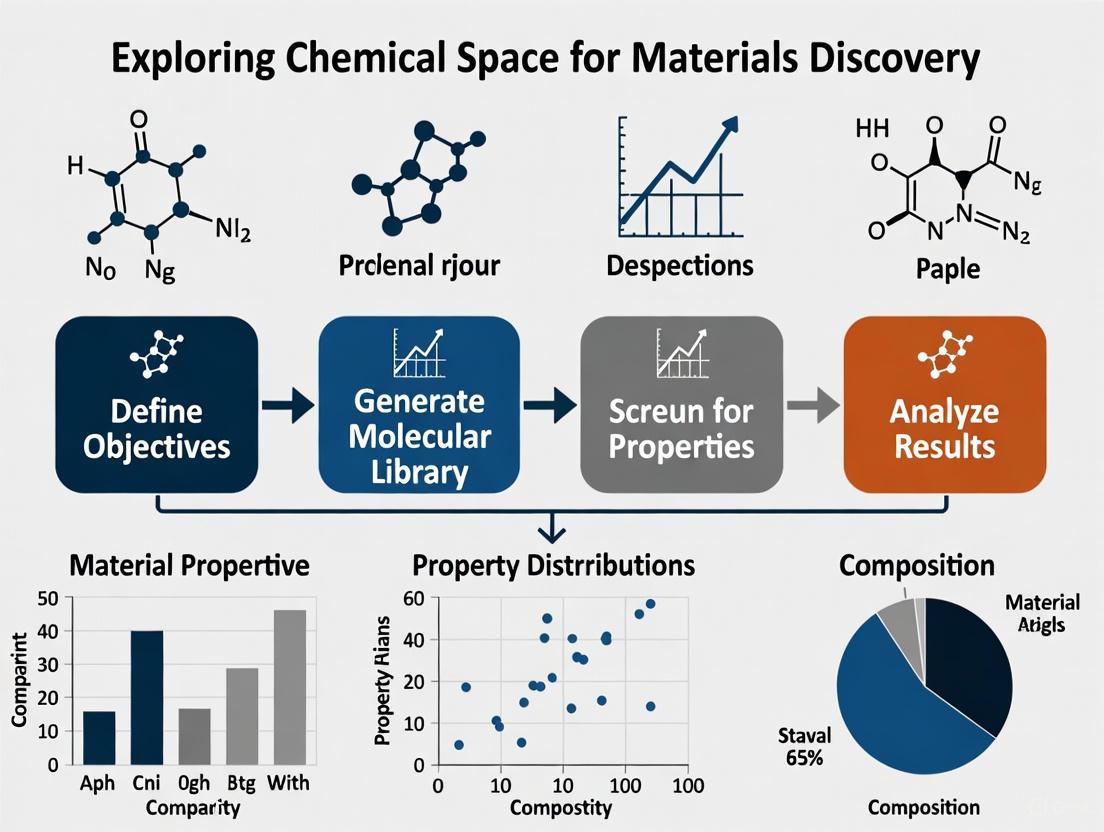
This article provides a comprehensive overview of the computational methods and artificial intelligence (AI) tools revolutionizing the exploration of chemical space for materials discovery.
Navigating the Chemical Universe: AI and Computational Strategies for Accelerated Materials Discovery
Abstract
This article provides a comprehensive overview of the computational methods and artificial intelligence (AI) tools revolutionizing the exploration of chemical space for materials discovery. Aimed at researchers and drug development professionals, it covers the foundational concepts of chemical space, including the biologically relevant chemical space (BioReCS) and underexplored regions. It delves into advanced methodological approaches such as generative AI, foundation models, virtual screening, and global optimization algorithms. The content also addresses key challenges like synthetic accessibility and the confined nature of known chemical space, offering troubleshooting and optimization strategies. Finally, it presents a comparative analysis of validation frameworks and performance metrics, synthesizing how these integrated computational workflows are streamlining the path to novel material and drug development.
Mapping the Vastness of Chemical Space: From BioReCS to Underexplored Frontiers
The concept of the chemical universe, or chemical space, provides a foundational framework for modern computational drug discovery and materials science. It can be defined as the vast, theoretically infinite universe of all possible chemical compounds, encompassing both known and hypothetical molecules [1]. This space includes all conceivable combinations of atoms and bonds, forming a multi-dimensional universe where each dimension represents a distinct molecular property or structural feature [2] [1]. For practical applications, researchers often focus on subsets of this space, such as the synthetically accessible chemical space estimated to contain between 10²³ to 10⁶⁰ molecules based on constraints like molecular size, stability, and lead-like properties [1]. The sheer scale of this universe presents both an extraordinary opportunity for discovery and a significant challenge for efficient exploration [3]. Technological advances and practical applications of the chemical space concept have attracted substantial scientific interest, particularly in drug discovery, natural product research, and materials science, where researchers must develop sophisticated methods to navigate this vast terrain effectively [2].
Theoretical Foundations: Defining Chemical Space and Multiverse
Evolving Definitions of Chemical Space
The conceptualization of chemical space has evolved through several refined definitions, as summarized in Table 1. Dobson's early definition encompassed "all possible small organic molecules, including those present in biological systems," while Lipinski and Hopkins drew an analogy to the cosmological universe, noting its vastness with "chemical compounds populating space instead of stars" [2]. Reymond and colleagues expanded this to the "ensemble of all known and possible molecules described by their chemical properties," emphasizing the inclusion of both existing and potential compounds [2]. A more mathematical perspective was introduced by Varnek and Baskin, who defined it as an "ensemble of graphs or descriptor vectors" that must contain defined relations between objects [2].
Table 1: Key Definitions of Chemical Space
| Author(s) | Chemical Space Definition | Key Emphasis |
|---|---|---|
| Dobson | "All possible small organic molecules, including those present in biological systems" [2] | Inclusivity of biological molecules |
| Lipinski and Hopkins | "Chemical space can be viewed as being analogous to cosmological universe in its vastness..." [2] | Vast scale and stellar analogy |
| Reymond et al. | "Ensemble of all known and possible molecules described by their chemical properties" [2] | Known and hypothetical molecules |
| Varnek and Baskin | "Ensemble of graphs or descriptor vectors forms a chemical space..." [2] | Mathematical representation |
| von Lilienfeld et al. | "Combinatorial set of all compounds from possible combinations of N1 atoms and Ne electrons..." [2] | Atomic and electronic combinations |
The Chemical Multiverse: A Multi-Descriptor Paradigm
Building upon these foundational definitions, a crucial advancement is the concept of the chemical multiverse [2]. Unlike physical space, chemical space is not unique; each ensemble of molecular graphs and descriptors defines its own distinct chemical space [2]. The chemical multiverse refers to the comprehensive analysis of compound datasets through several chemical spaces, each defined by a different set of chemical representations [2]. This concept acknowledges that molecules with fundamentally different chemical natures—such as small organic molecules, peptides, metal-containing compounds, and biologics—require divergent chemical spaces and descriptors for meaningful representation [2]. This multi-descriptor approach stands in contrast to the related idea of a consensus chemical space, offering a more nuanced framework for understanding molecular relationships across different representation systems.
Methodological Approaches: Navigating the Chemical Multiverse
Dimensionality Reduction and Visualization Techniques
The high-dimensional nature of chemical space, often containing hundreds or thousands of descriptors, necessitates the implementation of dimensionality reduction techniques to generate interpretable visual representations [2]. These methods transform complex multi-dimensional data into two-dimensional (2D) or three-dimensional (3D) maps that researchers can visually analyze. Several powerful techniques have been developed for this purpose, including t-distributed Stochastic Neighbor Embedding (t-SNE), which is particularly effective for preserving local structure; Principal Component Analysis (PCA), which identifies the directions of maximum variance in the dataset; Self-Organizing Maps (SOMs), which use neural networks to produce low-dimensional representations; and Generative Topographic Mapping (GTM), which provides a probabilistic alternative to SOMs [2]. Additionally, Chemical Space Networks offer alternative visualization approaches that represent molecules as nodes and their relationships as edges in a network graph [2]. The choice of technique depends on the specific analysis goals, dataset characteristics, and the aspects of chemical space (global vs. local structure) that researchers wish to emphasize.
Crystal Structure Prediction-Informed Evolutionary Optimization
Recent methodological advances have addressed a critical limitation in materials discovery: traditional searches of chemical space have largely focused on molecular properties while ignoring the significant effects of crystal packing on material properties [3]. To overcome this, researchers have developed an evolutionary algorithm (EA) that incorporates crystal structure prediction (CSP) into the evaluation of candidate molecules [3]. This CSP-informed EA allows fitness evaluation based on predicted materials properties rather than molecular properties alone, leading to more effective identification of promising candidates for functional materials [3].
Table 2: Crystal Structure Prediction Sampling Schemes
| Sampling Scheme | Space Groups | Structures per Group | Global Minima Found | Low-Energy Structures Recovered |
|---|---|---|---|---|
| SG14-500 | 1 (P2₁/c) | 500 | 12/20 | 25.7% |
| SG14-2000 | 1 (P2₁/c) | 2000 | 15/20 | 33.9% |
| Sampling A | 5 (biased) | 2000 | 18/20 | 73.4% |
| Top10-2000 | 10 (most common) | 2000 | 19/20 | 77.1% |
The experimental protocol for CSP-informed evolutionary optimization involves several key steps. First, researchers must select an appropriate CSP sampling scheme that balances computational cost with prediction accuracy (Table 2) [3]. For molecular semiconductors, the algorithm then proceeds through generations of candidate evaluation, starting with fully automated CSP calculations that generate and optimize trial crystal structures from a line notation description of the molecule [3]. The lattice energy surface is explored to identify low-energy crystal structures, typically defined as those within 7.2 kJ mol⁻¹ of the global minimum based on polymorph energy difference studies [3]. For each candidate molecule, charge carrier mobility is calculated from the predicted crystal structures, serving as the primary fitness criterion for selection [3]. The fittest candidates are selected as parents to generate new molecular designs through evolutionary operations, carrying forward favorable characteristics to subsequent generations [3]. This process iterates until convergence, successfully identifying molecules with high predicted electron mobilities that would be missed by searches based solely on molecular properties [3].
Diagram 1: CSP-Informed Evolutionary Algorithm Workflow. This process integrates crystal structure prediction with evolutionary optimization to identify materials with enhanced properties.
Computational Tools for Chemical Space Navigation
The exploration of chemical space relies on sophisticated computational tools that enable researchers to analyze, visualize, and navigate molecular diversity. Key platforms include ChemGPS, which acts as a global positioning system for chemical space, providing stable coordinates and visual representations of chemical diversity [1]; the ZINC Database, a comprehensive collection of commercially available compounds that covers a substantial portion of known chemical space and is widely used for virtual screening [1]; PubChem, a public repository containing millions of chemical molecules and their biological activities, serving as a valuable resource for exploring biologically relevant chemical space [1]; and RDKit, an open-source cheminformatics toolkit that provides fundamental capabilities for molecular representation, analysis, and chemical space visualization [1]. These tools form the foundation for most chemical space exploration initiatives, providing both data and analytical capabilities necessary for effective navigation.
Research Reagent Solutions for Chemical Space Exploration
Table 3: Essential Research Reagents and Tools for Chemical Space Exploration
| Tool/Resource | Type | Primary Function | Application in Research |
|---|---|---|---|
| ZINC Database | Compound Library | Curated collection of commercially available compounds | Virtual screening against biological targets; accessing diverse chemical structures [1] |
| PubChem | Database | Repository of chemical molecules and their bioactivities | Exploring structure-activity relationships; benchmarking compound collections [1] |
| RDKit | Software Toolkit | Cheminformatics and machine learning algorithms | Calculating molecular descriptors; similarity searching; chemical space visualization [1] |
| CSP Algorithms | Computational Method | Crystal structure prediction | Evaluating solid-state properties of candidate molecules for materials design [3] |
| Evolutionary Algorithm | Optimization Method | Guided search through chemical space | Generating and optimizing molecular structures with desired properties [3] |
Advanced Applications in Materials Discovery and Drug Development
Materials Discovery Through Chemical Space Exploration
The application of chemical space exploration to materials discovery represents a frontier in computational materials science. Organic molecular crystals offer diverse potential applications across pharmaceuticals, organic electronics, optical materials, and porous materials for gas storage and separation [3]. The challenge lies in the prohibitive expense of exhaustively searching chemical space to find novel molecules with promising solid-state properties [3]. The CSP-informed evolutionary algorithm described in Section 3.2 has demonstrated significant success in identifying organic molecular semiconductors with high predicted electron mobilities, outperforming approaches based solely on molecular properties [3]. This methodology is particularly valuable because charge carrier mobilities in organic semiconductors are highly sensitive to crystal packing, making the incorporation of CSP essential for accurate property prediction [3]. By enabling crystal structure-aware searches, this approach opens new possibilities for the computational design of functional organic materials with tailored electronic, optical, and mechanical properties.
Drug Discovery Applications
In pharmaceutical research, chemical space exploration enables several critical applications that accelerate drug discovery. It facilitates molecular diversity analysis, allowing researchers to identify diverse structural motifs that increase the chances of finding novel drug candidates with unique properties [1]. Through virtual screening, computational tools can efficiently evaluate large libraries of compounds within chemical space to identify potential ligands for biological targets [1]. The approach also supports lead identification by helping researchers pinpoint promising regions of chemical space for specific biological targets [1]. Once initial leads are identified, chemical space exploration aids in lead optimization by examining analogs and derivatives that may possess enhanced potency, selectivity, or improved ADMET (absorption, distribution, metabolism, excretion, and toxicity) properties [1]. Finally, de novo drug design directly explores chemical space to generate novel drug-like molecules with desired properties by building molecules computationally without screening pre-existing libraries [1]. These applications demonstrate how chemical space concepts directly contribute to reducing the time and cost associated with traditional drug discovery approaches.
Future Directions and Challenges in Chemical Space Exploration
The field of chemical space exploration continues to evolve rapidly, facing several significant challenges and opportunities. The ongoing growth of chemical libraries to millions of compounds creates substantial demands for efficient visualization methods capable of handling this scale while remaining interpretable to human researchers [4]. Deep generative modeling represents a promising direction, potentially enabling interactive exploration of chemical space through human-in-the-loop approaches that combine computational efficiency with human intuition [4]. As chemical space visualization extends beyond simple compounds to include reactions and entire chemical libraries, new analytical frameworks will be needed to represent these more complex relationships [4]. Additionally, chemical space maps are finding unconventional applications, including visual validation of quantitative structure-activity relationship (QSAR) and quantitative structure-property relationship (QSPR) models, and even emerging as a form of digital art that communicates scientific complexity through aesthetic representation [4]. These developments highlight the dynamic nature of chemical space research and its expanding role across scientific disciplines.
The concept of the chemical multiverse continues to gain importance as researchers recognize the limitations of single-representation approaches [2]. Different molecular descriptors emphasize different aspects of chemical structure and properties, making the comprehensive analysis of compound datasets through multiple complementary chemical spaces essential for thorough understanding [2]. This multi-faceted perspective enables more robust diversity analysis, virtual screening, and structure-activity relationship studies that account for the complex, multi-dimensional nature of molecular similarity and difference [2]. As chemical space exploration continues to mature, the integration of multiple representation systems, combined with advanced optimization algorithms like CSP-informed evolutionary approaches, will likely become standard methodology for tackling the fundamental challenge of finding novel functional molecules within the vastness of possible chemical structures.
The Biologically Relevant Chemical Space (BioReCS) represents the vast collection of molecules exhibiting biological activity, encompassing both beneficial and detrimental effects [5]. This space includes not only therapeutic agents but also compounds relevant to agrochemistry, sensory chemistry, food science, and natural product research [5]. For materials discovery research, charting BioReCS provides an essential framework for identifying functional molecules with tailored biological properties. The concept of "chemical space" (CS) is fundamentally multidimensional, with molecular properties defining coordinates and relationships between compounds [5]. Within this framework, BioReCS can be viewed as a critical subspace distinguished by shared biological functionality, offering an organizing principle for exploring nature's chemical diversity and guiding the design of novel bioactive materials [6].
Computational Frameworks for BioReCS Navigation
Molecular Descriptors and Representations
The systematic study of BioReCS requires molecular descriptors that define the dimensionality of the space. The choice of descriptors depends on project goals, compound classes, and dataset characteristics [5]. For large chemical libraries used in modern discovery projects, descriptors must balance computational efficiency with chemical relevance [5]. Several descriptor types have been developed for this purpose:
- Structural Fingerprints: Morgan circular fingerprints encode the presence and frequency of substructures within a molecule by capturing atomic environments up to a certain radius, while MACCS keys provide a fixed-length binary representation based on predefined structural features [7].
- Neural Network Embeddings: ChemDist embeddings are obtained from graph neural networks trained using deep metric learning, generating continuous vector representations that quantify molecular similarity based on distances in the embedding space [7].
- Universal Descriptors: Ongoing efforts aim to develop structure-inclusive, general-purpose descriptors like molecular quantum numbers and the MAP4 fingerprint, which can accommodate entities ranging from small molecules to biomolecules [5]. Neural network embeddings from chemical language models show particular promise in encoding chemically meaningful representations [5].
Dimensionality Reduction for Chemical Space Visualization
Dimensionality reduction (DR) techniques are essential for visualizing high-dimensional chemical data in human-interpretable 2D or 3D maps, a process known as "chemography" [7]. These methods transform feature vectors representing chemical structures into spatial coordinates that preserve chemical relationships.
Table 1: Comparison of Dimensionality Reduction Methods for BioReCS Visualization
| Method | Type | Key Characteristics | Optimal Use Cases | Neighborhood Preservation Performance |
|---|---|---|---|---|
| PCA | Linear | Fast, deterministic, preserves global structure | Initial exploration, large datasets | Lower performance for complex non-linear structures [7] |
| t-SNE | Non-linear | Preserves local structure, clusters similar compounds | Detailed analysis of local relationships | High local neighborhood preservation [7] [8] |
| UMAP | Non-linear | Balances local and global structure, computational efficiency | General-purpose mapping of diverse compound sets | Strong performance in neighborhood preservation [7] |
| GTM | Non-linear | Generative model, produces interpretable landscapes | Property prediction, activity landscape modeling | Supports highly neighborhood-preserving landscapes [7] |
The performance of these DR methods is typically evaluated using neighborhood preservation metrics, including the percentage of preserved nearest neighbors (PNNk), co-k-nearest neighbor size (QNN), and trustworthiness [7]. Non-linear methods generally outperform linear methods in preserving local neighborhoods, though global structure may be better captured by linear techniques [7].
Experimental Protocols for BioReCS Mapping
Workflow for Chemical Space Analysis
The following diagram illustrates the comprehensive workflow for mapping and analyzing BioReCS using dimensionality reduction techniques:
Data Collection and Preprocessing Protocol
Objective: To assemble a representative dataset from BioReCS for analysis [7].
Materials:
- Public compound databases (ChEMBL, PubChem, ZINC, COCONUT)
- Cheminformatics software (RDKit, OpenBabel)
- Computing environment with Python/R capabilities
Procedure:
- Database Selection: Retrieve target-specific subsets from curated databases like ChEMBL, applying quality filters based on experimental confidence and data completeness [7].
- Dataset Criteria: Select subsets containing sufficient compounds (typically >400) covering a range of intrinsic dimensionality values [7].
- Standardization: Apply consistent molecular standardization including neutralization of charges, removal of duplicates, and normalization of specific functional groups.
- Curate Inactive Compounds: Include confirmed inactive compounds from sources like InertDB, which contains 3,205 curated inactive compounds and 64,368 putative inactive molecules [5].
Dimensionality Reduction Implementation Protocol
Objective: To project high-dimensional chemical descriptors into 2D/3D visualizations [7].
Materials:
- Python/R with DR libraries (scikit-learn, OpenTSNE, umap-learn)
- High-performance computing resources for large datasets
- Visualization frameworks (Matplotlib, Plotly, MolCompass)
Procedure:
- Descriptor Calculation:
Data Preprocessing:
- Remove all zero-variance features to reduce dimensionality.
- Standardize remaining features to zero mean and unit variance.
Model Optimization:
Model Validation:
Table 2: Essential Research Reagents and Computational Tools for BioReCS Exploration
| Category | Resource/Tool | Key Function | Application in BioReCS |
|---|---|---|---|
| Compound Databases | ChEMBL [5] | Annotated bioactive molecules | Source of poly-active compounds and promiscuous structures |
| PubChem [5] | Large-scale screening data | Access to massive compound collections with activity data | |
| InertDB [5] | Curated inactive compounds | Definition of non-biologically relevant chemical space | |
| Computational Tools | RDKit [7] | Cheminformatics toolkit | Molecular descriptor calculation and fingerprint generation |
| MolCompass [8] | Chemical space visualization | Parametric t-SNE implementation for deterministic mapping | |
| TMAP [8] | Large-scale visualization | Tree-based mapping for datasets exceeding 10^7 compounds | |
| DR Algorithms | Parametric t-SNE [8] | Neural network-based DR | Deterministic projection enabling consistent coordinate system |
| UMAP [7] | Manifold learning | Efficient handling of large datasets with global structure preservation | |
| GTM [7] | Generative mapping | Creation of interpretable property landscapes with probability basis |
Advanced Applications in Materials Discovery
Visual Validation of QSAR/QSPR Models
Chemical space visualization enables critical assessment of quantitative structure-activity/property relationship (QSAR/QSPR) models through visual validation [8]. This approach addresses the "black-box" nature of complex models by mapping prediction errors across chemical space, helping researchers identify regions where models perform poorly and refine their applicability domains [8]. Tools like MolCompass implement this by coloring chemical space maps according to prediction errors, revealing model cliffs analogous to activity cliffs in traditional QSAR [8].
Navigating Underexplored Regions of BioReCS
Significant portions of BioReCS remain underexplored due to computational challenges [5]. These include:
- Metal-containing molecules: Often excluded from standard analyses due to limitations in descriptor systems and modeling tools [5].
- Beyond Rule of 5 (bRo5) compounds: Including macrocycles, peptides, and protein-protein interaction modulators with complex structural features [5].
- Dark regions: Compounds with undesirable biological effects, such as toxic chemicals, which are crucial for understanding the boundaries between beneficial and harmful bioactivity [5].
Recent efforts have developed specialized approaches for these regions, including tailored descriptors for metallodrugs and analysis frameworks for macrocycles and PPIs [5].
Future Directions and Integrative Approaches
The field of BioReCS exploration is evolving toward more integrated and automated approaches. Parametric t-SNE represents a significant advancement, enabling deterministic projection of new compounds into predefined regions of chemical space [8]. This creates a consistent coordinate system for chemical space, allowing researchers to reference specific regions in a manner analogous to geographical coordinates [8]. Additionally, the integration of deep generative models with chemical space visualization enables interactive exploration and targeted generation of compounds with desired properties [4] [8]. As these tools mature, they will increasingly support the rational navigation of BioReCS for accelerated discovery of bioactive materials across multiple application domains.
Public Databases and Molecular Descriptors for Systematic Exploration
Systematic exploration of chemical space is a foundational strategy in modern materials discovery and drug development. This whitepaper provides a technical guide to the essential computational infrastructure—public databases and molecular descriptors—that enables researchers to navigate this vast space efficiently. We detail experimentally validated protocols for employing these resources in large-scale virtual screening and optimization campaigns, with a particular focus on crystal structure-aware methods for materials informatics. The integration of these tools, powered by both traditional chemistry and modern artificial intelligence (AI), creates a powerful framework for accelerating the design of novel functional molecules.
The concept of "chemical space" (CS) refers to the multidimensional universe of all possible chemical compounds, where each dimension represents a distinct molecular property or structural feature [5]. Navigating this space is a central challenge in chemistry, with profound implications for materials science and drug discovery. Within this vast universe, the biologically relevant chemical space (BioReCS) encompasses molecules with documented biological activity, while subspaces exist for specific applications like organic electronics [5] [3]. The sheer number of possible organic molecules makes exhaustive experimental screening impossible [3]. Computational methods, therefore, rely on public databases to access known regions of chemical space and molecular descriptors to represent and quantify molecular structures, enabling virtual exploration, pattern recognition, and predictive modeling.
Public Databases for Chemical Space Mapping
Public compound databases are key resources for exploring the CS and are central to chemoinformatics [5]. These repositories vary in size, specialization, and the type of annotations they provide, allowing researchers to target specific regions of chemical space. The table below summarizes representative public databases critical for systematic exploration.
Table 1: Representative Public Databases for Chemical Space Exploration
| Database Name | Primary Focus | Key Features & Content | Relevance to Exploration |
|---|---|---|---|
| ChEMBL [5] | Bioactive molecules | Curated database of drug-like small molecules with binding, functional, and ADMET information. | Major source for poly-active and promiscuous structures; essential for drug discovery. |
| PubChem [5] | Chemical substances | Massive repository of chemical structures and their biological activities, integrating multiple sources. | Provides a broad view of bioactive space; useful for similarity searching and activity prediction. |
| InertDB [5] | Inactive compounds | Collection of curated and AI-generated molecules known or predicted to lack bioactivity. | Defines the non-biologically relevant chemical space, crucial for model accuracy. |
| PHYSPROP [9] | Physicochemical properties | Dataset of experimental physicochemical properties, including log P values. | Foundational for developing and validating Quantitative Structure-Property Relationship (QSPR) models. |
Beyond these, specialized databases exist for underexplored regions, such as metallodrugs, macrocycles, and PROTACs, though these classes are often underrepresented in broader cheminformatics tools [5].
Molecular Descriptors: Quantifying Molecular Structures
Molecular descriptors are numerical representations that translate chemical structures into a quantifiable format for computational analysis. The choice of descriptor is critical and depends on the project's goals, the compound classes involved, and the required balance between computational efficiency and chemical relevance [5].
A Taxonomy of Molecular Descriptors
The following diagram illustrates the major categories of molecular descriptors and their relationships, from classical to AI-driven approaches.
Key Descriptor Types and Their Applications
Table 2: Categories and Examples of Molecular Descriptors
| Descriptor Category | Key Examples | Calculation Basis | Best Use Cases |
|---|---|---|---|
| Empirical Scales | Kamlet-Taft, Abraham, Catalan parameters [10] | Experimentally derived from solvatochromic measurements, chromatography, etc. | Linear Solvation Energy Relationships (LSER); modeling solvation-related properties. |
| Quantum Chemical (QC) | COSMO-Based Descriptors (VCOSMO*, αCOSMO, βCOSMO, δCOSMO) [10] | Low-cost DFT/COSMO computations of screening charge densities. | Predicting acidity, basicity, and charge distribution; theory-independent QSPR. |
| 3D-Structure-Based | Optimized 3D-MoRSE (opt3DM) [9] | Weighted atomic distances within a molecule, optimized with a scale factor (sL). | Machine learning prediction of properties like log P; materials informatics. |
| AI-Driven Embeddings | Graph Neural Networks, Transformer-based Models [11] | Learned from large datasets using deep learning; high-dimensional vectors. | Scaffold hopping; capturing non-linear structure-property relationships. |
Experimental Protocols for Systematic Exploration
This section outlines detailed methodologies for leveraging databases and descriptors in materials discovery workflows.
Protocol 1: QSPR Modeling for log P Prediction
The partition coefficient (log P) is a critical parameter in drug design and materials science. The following protocol, based on the development of the opt3DM descriptor, enables highly accurate log P prediction [9].
Workflow Overview:
Step-by-Step Methodology:
- Dataset Curation: Obtain a high-quality training set of molecules with experimental log P values. The M-dataset (from PHYSPROP), containing 13,952 molecules with SMILES strings and log P values, is a robust starting point [9].
- Descriptor Generation:
- Generate 3D molecular structures from SMILES strings using a toolkit like RDKit.
- Calculate the opt3DM descriptor using a customized code. The core function is:
I(s) = Σᵢⱼ AᵢAⱼ * sin(s × sL × rᵢⱼ) / (s × sL × rᵢⱼ)wheresis a scattering parameter,rᵢⱼis the interatomic distance, andAᵢandAⱼare atomic weights (e.g., mass, electronegativity) [9]. - Optimization: Fine-tune the descriptor by setting the scale factor
sL = 0.5and the descriptor dimensionNs = 500for optimal performance [9].
- Machine Learning Model Building:
- Implement ML algorithms such as Automatic Relevance Determination (ARD) regression, Ridge regression, or Bayesian Ridge regression using the scikit-learn library.
- Use a feature selector (e.g., SelectFromModel) to identify the most relevant opt3DM descriptors before fitting the regressor [9].
- Model Validation:
- Perform standard train-test validation on the M-dataset.
- Use external benchmark challenges like SAMPL6 and SAMPL9 to test the model's predictive power on novel, drug-like molecules. This protocol achieved a root mean square error (RMSE) of 0.31 on the SAMPL6 data, outperforming many quantum chemical and molecular dynamics methods [9].
Protocol 2: Crystal Structure Prediction-Informed Evolutionary Optimization
For materials whose properties depend on solid-state packing, evolutionary algorithms (EAs) guided by crystal structure prediction (CSP) are superior to methods based on molecular properties alone. This protocol is demonstrated for discovering organic semiconductors with high electron mobility [3].
Workflow Overview:
Step-by-Step Methodology:
- Algorithm Initialization: Define a search space (e.g., organic semiconductors based on azapentacenes) and generate an initial population of candidate molecules, represented by InChi strings [3].
- Fitness Evaluation via CSP: For each molecule in the population, perform an automated crystal structure prediction.
- Efficient Sampling: To manage computational cost, use a reduced CSP scheme. A biased sampling of 5-10 of the most common space groups (e.g., P2₁/c, P-1, P2₁2₁2₁), generating 1000-2000 structures per space group, can recover ~75% of the low-energy landscape at a fraction of the cost of a comprehensive search [3].
- Property Calculation: For the lowest-energy predicted crystal structures, calculate the target material property, such as electron mobility derived from the transfer integral and reorganization energy. This property value is assigned as the molecule's fitness [3].
- Evolutionary Operations:
- Selection: Prioritize molecules with higher fitness scores (e.g., higher electron mobility) as "parents."
- Crossover & Mutation: Generate new "child" molecules by combining fragments from parents and introducing random structural changes (e.g., heteroatom substitution, functional group changes) [3].
- Iteration: The new generation of molecules undergoes the same CSP-informed fitness evaluation. This process repeats, guiding the population toward regions of chemical space with superior solid-state properties. This method has been shown to identify molecules with significantly higher predicted charge carrier mobility than EAs optimized for molecular properties like reorganization energy alone [3].
The Scientist's Toolkit: Essential Research Reagents
Table 3: Essential Computational Tools for Chemical Space Exploration
| Tool / Resource | Type | Function in Exploration |
|---|---|---|
| RDKit [9] | Cheminformatics Library | Handles molecule I/O from SMILES, calculates 2D/3D coordinates, and computes fundamental molecular descriptors. |
| scikit-learn [9] | Machine Learning Library | Provides a wide array of ML algorithms (e.g., ARD, Ridge Regression) and feature selectors for building QSPR models. |
| Amsterdam Modeling Suite (with ADF/COSMO-RS) [10] | Quantum Chemistry Software | Performs low-cost DFT/COSMO computations to generate quantum chemical descriptors like σ-profiles and COSMO-based acidity/basicity scales. |
| Crystal Structure Prediction (CSP) Software [3] | Modeling Software | Automatically generates and ranks polymorphs for a given molecule, enabling materials property prediction in evolutionary algorithms. |
| ECFP Fingerprints [11] | Molecular Fingerprint | Encodes molecular substructures as bit strings, widely used for similarity searching and as input for machine learning models. |
| Transformer Models (e.g., FP-BERT) [11] | AI Model | Learns high-dimensional molecular representations from SMILES or fingerprints, enabling advanced tasks like scaffold hopping. |
Emerging Trends and Future Outlook
The field of chemical space exploration is rapidly evolving. Key emerging trends include:
- Universal Descriptors: Efforts are underway to develop descriptors like MAP4 fingerprint and neural network embeddings that work consistently across diverse molecular classes, from small organics to peptides and metallodrugs, enabling integrated analysis of disparate chemical subspaces [5].
- Advanced AI and Foundation Models: Large-scale scientific foundation models like MIST are being trained on vast molecular datasets to predict a wide range of atomistic, thermodynamic, and kinetic properties across multiple domains, promising a more generalized understanding of chemical space [12].
- Sustainable Exploration (SusML): A growing focus on developing Efficient, Accurate, Scalable, and Transferable (EAST) methodologies aims to reduce the computational energy and data storage footprint of large-scale chemical space exploration [13].
The concept of "chemical space" is a foundational theoretical framework in cheminformatics and materials discovery, representing a multidimensional universe where each molecule occupies a unique position defined by its structural and functional properties [5]. This conceptual space is vast; the region of small organic molecules alone is estimated to exceed 10^60 possible compounds, presenting both an extraordinary opportunity and a significant challenge for discovery efforts [14]. Within this nearly infinite expanse, research has naturally concentrated on specific subspaces (ChemSpas) with desired functions, while leaving others relatively untouched. The biologically relevant chemical space (BioReCS) comprises molecules with biological activity—both beneficial and detrimental—spanning applications from drug discovery to agrochemistry and materials science [5]. Navigating this space effectively requires sophisticated computational and experimental approaches that can bridge the gap between molecular design and functional application, particularly for materials discovery research where properties often depend critically on solid-state packing and structural arrangement [3].
This whitepaper provides a technical guide to the heavily explored and underexplored regions of chemical space, focusing on three critical compound classes: small molecules, peptides, and metallodrugs. We synthesize current methodologies, experimental protocols, and research tools to empower researchers in strategically navigating these domains for advanced materials discovery.
Mapping the Chemical Universe: Explored and Underexplored Territories
Table 1: Characteristics of Explored vs. Underexplored Chemical Subspaces
| Chemical Subspace | Exploration Status | Key Databases/Resources | Structural Features | Research Challenges |
|---|---|---|---|---|
| Small Molecule Drug Candidates | Heavily Explored | ChEMBL, PubChem, DrugBank [5] [14] | Rule of 5 compliant, primarily organic, low molecular weight | Limited structural diversity in corporate collections; dark chemical matter prevalent [5] |
| Natural Products | Heavily Explored | Dictionary of Natural Products [14] | Complex stereochemistry, diverse scaffolds | Synthesis complexity, supply limitations |
| Metallodrugs | Underexplored | Limited specialized databases | Metal-carbon covalent bonds, diverse geometries | Modeling challenges; often filtered out in standard cheminformatics [5] [15] |
| Macrocycles & bRo5 Compounds | Underexplored | Emerging specialized collections | Rings of ≥12 atoms, beyond Rule of 5 space | Poor membrane permeability, synthetic complexity [5] |
| Peptide-Based Therapeutics | Moderately Explored | Peptide-specific databases emerging [5] | Mid-sized chains (5-50 amino acids), modified backbones | Metabolic instability, poor oral bioavailability |
| Protein-Protein Interaction Inhibitors | Underexplored | Limited curated datasets | Large surface area binders, unique pharmacophores | Difficulty in identifying druggable hotspots |
The Biologically Relevant Chemical Space (BioReCS)
The BioReCS encompasses all compounds with biological activity, including both therapeutic and detrimental effects. This space is systematically explored through distinct chemical subspaces characterized by shared structural or functional features [5]. Key public databases such as ChEMBL and PubChem serve as major sources for biologically active small molecules, primarily containing organic compounds with extensive biological activity annotations [5]. These repositories have enabled the identification of poly-active and promiscuous structures, but have also revealed significant biases in chemical space coverage.
A critical consideration in BioReCS exploration is the inclusion of negative biological data—compounds known to lack bioactivity—which helps define the non-biologically relevant portions of chemical space [5]. Notable examples include dark chemical matter, comprising small molecules from corporate collections that repeatedly fail to show activity in high-throughput screening assays, and InertDB, a collection of curated inactive compounds from PubChem [5]. These negative datasets provide crucial boundaries for medicinal chemistry efforts.
Quantifying Chemical Space Expansion
The exponential growth of chemical databases raises fundamental questions about whether increased library size translates to greater chemical diversity. Recent research employing innovative cheminformatics methods like the iSIM framework and BitBIRCH clustering algorithm has revealed that simply adding more molecules does not automatically increase diversity [14]. The iSIM framework bypasses the quadratic scaling problem of traditional similarity indices by comparing all molecules simultaneously, enabling efficient diversity assessment of libraries containing millions of compounds [14].
Time-evolution analyses of major databases including ChEMBL, DrugBank, and PubChem show that while cardinality is growing rapidly, diversity metrics do not always follow the same trajectory [14]. This highlights the importance of strategic compound selection rather than exhaustive library expansion for effectively exploring chemical space.
Heavily Explored Regions: Small Molecules and Natural Products
Small Organic Molecules
Small molecule drug candidates represent the most heavily explored region of chemical space, with public databases containing over 2.4 million compounds and 20 million bioactivity measurements in ChEMBL alone [14]. These compounds are predominantly characterized by "drug-like" properties adhering to the Rule of Five, with molecular weights typically under 500 Da and favorable lipophilicity profiles [5]. The extensive exploration of this subspace has enabled the development of robust quantitative structure-activity relationship (QSAR) models and predictive algorithms for property optimization.
The chemical space of small molecules has been systematically mapped using molecular fingerprints and descriptors that encode structural patterns, physicochemical properties, and topological features [14]. These representations enable efficient similarity searching, clustering, and virtual screening—essential tools for navigating such extensively explored territory. However, even within this crowded space, opportunities remain for innovative approaches, particularly in targeting challenging biomacromolecules such as RNA.
Table 2: Experimental Protocol for RNA-Targeted Small Molecule Discovery
| Step | Methodology | Key Parameters | Output |
|---|---|---|---|
| Library Design | Cobalamin (Cbl) hosting of unfavorable RNA-binding ligands [16] | β-axial moiety variation; π-stacking optimization | Diverse Cbl derivative library (e.g., compounds 8-44) |
| Affinity Screening | Fluorescence displacement assay [16] | Competitive titration with CNCbl–5×PEG-ATTO590 probe | KD values (submicromolar range) |
| QSAR Analysis | Multivariate analysis with 347 physiochemical descriptors [16] | Linear discriminant analysis (LDA) of β-axial groups | Identification of tight (29, 7 ± 7 nM), moderate, and weak binders |
| Cell-Based Validation | Regulatory activity assays [16] | Antagonism of riboswitch function | Functional characterization beyond binding affinity |
Evolutionary Algorithms for Small Molecule Optimization
For materials discovery, evolutionary algorithms (EAs) have emerged as powerful tools for navigating small molecule chemical space. Recent advances incorporate crystal structure prediction (CSP) into the fitness evaluation of candidate molecules, enabling optimization based on solid-state properties rather than molecular properties alone [3]. This CSP-informed EA approach has demonstrated superior performance in identifying organic molecular semiconductors with high electron mobilities, addressing the critical challenge that materials properties often depend strongly on crystal packing [3].
The computational efficiency of this approach relies on balanced CSP sampling schemes that capture essential low-energy crystal structures without prohibitive computational cost. Effective sampling of 20 benchmark molecules revealed that schemes focusing on 5-10 space groups with 500-2000 structures per space group can recover 73-77% of low-energy crystal structures at a fraction of the cost of comprehensive sampling [3]. This enables practical CSP-guided exploration of chemical space for materials discovery.
Diagram 1: Crystal structure-informed evolutionary algorithm workflow for small molecule optimization.
Underexplored Regions: Peptides and Metallodrugs
Expanding Peptide Chemical Space
Peptides represent a moderately explored but rapidly expanding region of chemical space, occupying a crucial middle ground between small molecules and biologics. Recent innovations focus on novel methodologies for peptide modification that dramatically expand accessible chemical diversity while improving drug-like properties.
A breakthrough acid-mediated chemoselective method enables targeted modification of arginine residues in peptides, converting guanidinium side chains into amino pyrimidine moieties with near-quantitative conversion across diverse substrates [17]. This transformation significantly enhances cellular permeability—a major limitation for peptide therapeutics—with modified peptides demonstrating 2-fold increases in membrane permeability in cell-based permeability assays (CAPA) [17].
Table 3: Experimental Protocol for Arginine-Directed Peptide Modification
| Step | Reaction Conditions | Quality Control | Downstream Applications |
|---|---|---|---|
| Peptide Synthesis | Standard solid-phase peptide synthesis | HPLC purity >95% | Base peptide for modification |
| Arginine Modification | 100 equiv malonaldehyde in 12 M HCl, room temperature, 1h [17] | HPLC monitoring at 220 nm | Amino pyrimidine peptides (e.g., 2f-2k) |
| Byproduct Reversal | Butylamine treatment | HPLC confirmation of side product removal | Purified single products |
| Late-Stage Functionalization | Reaction with 2-bromoacetophenone derivatives, catalytic base [17] | HRMS, NMR characterization | Imidazo[1,2-a]pyrimidinium salts (4a-4d, 63-75% yield) |
Another innovative approach to peptide diversification involves disulfuration of azlactones, providing versatile entry to unnatural, disulfide-linked amino acids and peptides specifically functionalized at the α-position [18]. This method employs base-catalyzed disulfuration of azlactones followed by ring-opening functionalization, yielding disulfurated azlactones in excellent yields across diverse N-dithiophthalimides and azlactones derived from various amino acids and peptides [18]. The modular integration of functional molecules and azlactones into SS-linkage in two-step operations significantly expands available peptide chemical space.
Metallodrugs: An Emerging Frontier
Metallodrugs constitute a profoundly underexplored region of chemical space, primarily due to modeling challenges that lead to their systematic exclusion from standard cheminformatics workflows [5]. Most chemoinformatics tools are optimized for small organic compounds, automatically filtering out metal-containing molecules during data curation [5]. However, metallodrugs offer unique therapeutic opportunities distinct from purely organic compounds.
Cyclometalated complexes exemplify the promise of metallodrugs, particularly in oncology applications. These compounds are characterized by a metal-carbon covalent bond and chelate formation with σ M–C bonds and coordination bonds (D–M, where D = N, O, P, S, Se, C) [15]. Their exceptional structural versatility enables geometries ranging from linear to octahedral, with fine-tuning possible through ligand modification and oxidation state adjustment [15]. This versatility translates to superior control over intracellular properties including kinetic stability and lipophilicity.
Compared to platinum-based drugs, cyclometalated complexes containing Fe, Ru, and Os exhibit mechanisms of action distinct from cisplatin, targeting molecular sites other than DNA and activating diverse cell death pathways [15]. Iridium and rhodium complexes demonstrate remarkable photophysical and photochemical properties valuable for photodynamic therapy, while nickel and palladium complexes show more efficient cytotoxic properties with different mechanisms of action compared to cisplatin [15].
Diagram 2: Design workflow for cyclometalated complexes with groups 8, 9, and 10 metals.
The Scientist's Toolkit: Research Reagent Solutions
Table 4: Essential Research Reagents for Chemical Space Exploration
| Reagent/Category | Function/Application | Specific Examples | Key Characteristics |
|---|---|---|---|
| Crystal Structure Prediction (CSP) | Predicting solid-state packing and materials properties [3] | Evolutionary algorithm with CSP fitness evaluation | Automated from InChi string; quasi-random sampling of structural degrees of freedom |
| Molecular Descriptors | Defining chemical space dimensionality and relationships [5] | MAP4 fingerprint, molecular quantum numbers, neural network embeddings | Structure-inclusive, general-purpose for diverse compound classes |
| iSIM Framework | Quantifying intrinsic similarity/diversity of compound libraries [14] | iSIM Tanimoto (iT) value calculation | O(N) complexity for large libraries; identifies central vs. outlier molecules |
| BitBIRCH Algorithm | Clustering ultra-large chemical libraries [14] | Tree structure clustering of binary fingerprints | Enables O(N) scaling for chemical space analysis |
| Cobalamin Hosting System | RNA-targeted small molecule delivery [16] | Cbl derivatives with variable β-axial moieties | Solubilizes unfavorable RNA-binding ligands; enables base displacement |
| Malonaldehyde Reagent | Arginine-specific peptide modification [17] | Conversion of guanidinium to amino pyrimidine | Chemoselective in 12 M HCl; near-quantitative conversion |
| Azlactone Disulfuration | SS-linked amino acid/peptide synthesis [18] | Base-catalyzed disulfuration of azlactones | Modular integration of functional molecules; excellent yields |
| N-Dithiophthalimides | Bilateral disulfurating reagents [18] | Various substituted derivatives | Modular building blocks for disulfide-linked peptides |
The strategic exploration of chemical space requires balanced attention to both heavily explored and underexplored regions. While small molecules continue to yield valuable discoveries through increasingly sophisticated approaches like CSP-informed evolutionary algorithms, significant opportunities exist in underexplored territories including metallodrugs, macrocycles, and modified peptides.
Future progress will depend on developing universal molecular descriptors capable of representing diverse compound classes beyond traditional small organic molecules [5]. Chemical language models and neural network embeddings show particular promise for encoding chemically meaningful representations across disparate regions of chemical space [5]. Additionally, the integration of artificial intelligence throughout the discovery pipeline—from generative molecular design to autonomous synthesis and characterization—will dramatically accelerate exploration of underexplored regions [19].
For metallodrugs specifically, overcoming the historical exclusion of metal-containing compounds from standard cheminformatics workflows requires dedicated tool development and database curation [5] [15]. The rich structural diversity and unique mechanisms of action offered by cyclometalated complexes and other organometallic structures justify this specialized investment, particularly for challenging therapeutic areas like oncology.
The continued expansion of chemical space—both in terms of cardinality and diversity—will rely on synergistic advances in computational prediction, synthetic methodology, and biological evaluation. By strategically targeting underexplored regions while deepening understanding of heavily explored territories, researchers can unlock novel materials and therapeutics with enhanced properties and functions.
The Challenge of Universal Descriptors for Diverse Compound Classes
The exploration of chemical space for materials discovery presents a combinatorial challenge of staggering proportions. Considering only naturally occurring elements and stoichiometric compositions, the potential search space includes roughly 3 × 10¹¹ potential quaternary compounds and 10¹³ quinary combinations, with the total number of theoretical materials estimated to be as large as 10¹⁰⁰ [20]. This vastness makes brute-force exploration entirely impractical, even with high-throughput computational methods. The field of medicinal chemistry faces a similar challenge, with the number of potential organic molecules estimated between 10¹³ and 10¹⁸⁰ [20]. This scale creates fundamental challenges for developing universal descriptors that can accurately represent and predict properties across diverse compound classes, from inorganic crystals to large drug-like molecules.
The core challenge lies in creating descriptor frameworks that transcend specific material families while maintaining predictive accuracy. Traditional quantitative structure-property relationship (QSPR) models have often been limited to single families of materials, with narrow applicability outside their training scope [20]. This limitation significantly hinders materials discovery efforts, as researchers cannot leverage insights from one material class to accelerate discovery in another. This technical guide examines the current state of universal descriptor development, provides detailed methodologies for their implementation, and offers a scientific toolkit for researchers pursuing chemical space exploration for materials discovery.
Current Approaches to Universal Descriptors
Property-Labelled Materials Fragments (PLMF)
A significant advancement in universal descriptors comes from the development of Property-Labelled Materials Fragments (PLMF), which adapt fragment descriptors typically used for organic molecules to serve for materials characterization [20]. The PLMF approach represents materials as 'colored' graphs, with vertices decorated according to the nature of the atoms they represent [20]. This methodology requires only minimal structural input while capturing essential chemical information, allowing straightforward implementation of simple heuristic design rules.
The construction of PLMFs involves a multi-step process beginning with determining atomic connectivity within the crystal structure. This is achieved through a computational geometry approach that partitions the crystal structure into atom-centered Voronoi-Dirichlet polyhedra [20]. Connectivity between atoms is established when they share a Voronoi face and their interatomic distance is shorter than the sum of the Cordero covalent radii to within a 0.25 Å tolerance [20]. This approach models strong interatomic interactions (covalent, ionic, and metallic bonding) while ignoring van der Waals interactions.
Table 1: Atomic Properties Used in PLMF Descriptor Differentiation
| Property Category | Specific Properties Included |
|---|---|
| General Properties | Mendeleev group and period numbers (gP, pP), number of valence electrons (NV) |
| Measured Properties | Atomic mass (matom), electron affinity (EA), thermal conductivity (λ), heat capacity (C), enthalpies of atomization (ΔHat), fusion (ΔHfusion) and vaporization (ΔHvapor), first three ionization potentials (IP1,2,3) |
| Derived Properties | Effective atomic charge (Zeff), molar volume (Vmolar), chemical hardness (η), covalent (rcov), absolute, and van der Waals radii, electronegativity (χ) and polarizability (αP) |
The final descriptor vector incorporates both fragment-based and crystal-wide properties, including lattice parameters, their ratios, angles, density, volume, number of atoms, number of species, lattice type, point group, and space group [20]. After filtering out low variance and highly correlated features, the final feature vector captures 2,494 total descriptors, providing a comprehensive representation of the material's chemical and structural identity.
Quantum-Mechanical Descriptors for Drug-like Molecules
For pharmaceutical applications, the Aquamarine (AQM) dataset represents a significant advancement in addressing the challenge of universal descriptors for large drug-like molecules [21]. This extensive quantum-mechanical dataset contains structural and electronic information of 59,783 conformers of 1,653 molecules with total atoms ranging from 2 to 92, containing up to 54 non-hydrogen atoms [21]. The dataset specifically addresses limitations of previous quantum-mechanical datasets that primarily consisted of molecules considerably smaller than those encountered in modern medicinal chemistry.
The AQM dataset includes over 40 global and local physicochemical properties per conformer computed at the tightly converged PBE0+MBD level of theory for gas-phase molecules, while PBE0+MBD with the modified Poisson-Boltzmann (MPB) model of water was used for solvated molecules [21]. By addressing both molecule-solvent and dispersion interactions, the AQM dataset serves as a challenging benchmark for state-of-the-art machine learning methods for property modeling and de novo generation of large solvated molecules with pharmaceutical relevance.
Quantitative Performance of Universal Descriptors
The performance of universal descriptor approaches has been quantitatively evaluated across multiple material properties. When applied to predicting properties of inorganic crystals, PLMF descriptors combined with machine learning methods have demonstrated remarkable accuracy that compares well with the quality of training data for virtually any stoichiometric inorganic crystalline material [20].
Table 2: Prediction Performance of Universal Descriptor Approaches
| Property Category | Specific Properties Predicted | Performance Metrics |
|---|---|---|
| Electronic Properties | Metal/insulator classification, band gap energy | Accuracy comparable to training data quality |
| Thermomechanical Properties | Bulk and shear moduli, Debye temperature | Reciprocates available thermomechanical experimental data |
| Thermal Properties | Heat capacities at constant pressure and volume, thermal expansion coefficient | Accurate predictions validated via AEL-AGL framework |
The universal applicability of the PLMF approach is particularly valuable for thermomechanical properties, as proper calculation pathways for these properties in the most efficient scenarios still require analysis of multiple density functional theory (DFT) runs, elevating the cost of already expensive calculations [20]. Once trained, models using universal descriptors achieve comparable accuracies without the need for further ab initio data, as all necessary input properties are either tabulated or derived directly from geometrical structures [20].
Experimental Protocols for Descriptor Implementation
Protocol 1: Generating Property-Labelled Materials Fragments
Objective: To construct PLMF descriptors for inorganic crystalline materials [20].
Materials and Software Requirements:
- Crystal structure file (CIF format or similar)
- Atomic property database [20]
- Voronoi tessellation software
- Graph analysis tools
Step-by-Step Procedure:
Structure Input: Begin with a well-defined crystal structure containing atomic coordinates and lattice parameters.
Voronoi Tessellation: Partition the crystal structure into atom-centered Voronoi-Dirichlet polyhedra using a computational geometry approach [20]. This partitioning is invaluable in the topological analysis of crystals.
Connectivity Determination: Establish connectivity between atoms by satisfying two criteria:
- The atoms must share a Voronoi face (perpendicular bisector between neighboring atoms)
- The interatomic distance must be shorter than the sum of the Cordero covalent radii to within a 0.25 Å tolerance [20]
Graph Construction: Construct a three-dimensional graph from the connectivity information and generate the corresponding adjacency matrix. The adjacency matrix A of a simple graph with n vertices (atoms) is a square matrix (n × n) with entries aij=1 if atom i is connected to atom j, and aij=0 otherwise [20].
Graph Partitioning: Partition the full graph into smaller subgraphs corresponding to individual fragments, restricting the length l to a maximum of three, where l is the largest number of consecutive, non-repetitive edges in the subgraph [20]. This restriction serves to curb the complexity of the final descriptor vector.
Property Assignment: Differentiate fragments by local reference properties, including general properties, measured properties, and derived properties as detailed in Table 1.
Descriptor Vector Assembly: Concatenate all fragment-based and crystal-wide descriptors, then filter out low variance (<0.001) and highly correlated (r²>0.95) features to produce the final descriptor vector containing 2,494 total descriptors [20].
Troubleshooting Notes:
- Bond ambiguity: In materials, bond order (single/double/triple bond classification) is not considered due to inherent ambiguity [20].
- Limited context: If models perform poorly with new fragments, consider expanding the training dataset to include more diverse structural motifs.
Protocol 2: Quantum-Mechanical Conformer Analysis for Drug-like Molecules
Objective: To generate quantum-mechanical descriptors for large, flexible drug-like molecules accounting for solvent effects [21].
Materials and Software Requirements:
- Molecular structure files
- CREST code (Conformer-Rotamer Ensemble Sampling Tool) [21]
- Quantum chemistry software with DFTB3 and PBE0+MBD capability
- Implicit solvation model implementation (GBSA, MPB)
Step-by-Step Procedure:
Conformer Generation: Generate molecular conformers using the conformational search workflow implemented in CREST code, which considers semi-empirical GFN2-xTB with GBSA implicit solvent model of water [21].
Geometry Optimization: Optimize a set of representative conformers using the third-order DFTB method (DFTB3) supplemented with a treatment of many-body dispersion (MBD) interactions [21].
Solvent Environment Consideration: Perform calculations in both gas phase and implicit water described by the GBSA model to understand solvent effects [21].
Property Calculation: For each optimized conformer, compute an extensive number (over 40) of global (molecular) and local (atom-in-a-molecule) quantum-mechanical properties at a high level of theory:
Dataset Assembly: Compile the AQM-gas and AQM-sol subsets containing quantum-mechanical structural and property data of molecules in gas phase and implicit water, respectively [21].
Validation Steps:
- Compare calculated properties with experimental values where available
- Validate thermomechanical predictions via the AEL-AGL integrated framework [20]
- Assess convergence of electronic properties with basis set size
Visualization of Descriptor Generation Workflows
Diagram 1: PLMF descriptor generation workflow showing the transformation of crystal structures into quantitative descriptors.
Visualization of Quantum-Mechanical descriptor Generation
Diagram 2: Quantum-mechanical descriptor generation for drug-like molecules, highlighting environment-aware calculations.
Table 3: Essential Computational Tools for Universal Descriptor Research
| Tool/Resource | Type | Function in Research | Access Information |
|---|---|---|---|
| AFLOW Repository | Computational Database | Provides high-throughput ab initio calculation data for training descriptor models | Online access: aflow.org [20] |
| Springer Nature Experiments | Protocols Database | Searchable database of 95,000+ protocols and methods in life and biomedical sciences | Institutional subscription [22] |
| CREST Code | Software Tool | Conformer-Rotamer Ensemble Sampling Tool for generating molecular conformers | Open access [21] |
| JoVE (Journal of Visualized Experiments) | Video Protocols | Peer-reviewed methods in video format, including chemistry and engineering techniques | Institutional subscription [23] |
| protocols.io | Open Access Repository | Platform for creating, organizing, and publishing reproducible research protocols | Open access with premium institutional features [23] |
| Current Protocols | Protocol Series | Collection of over 20,000 updated, peer-reviewed laboratory methods and protocols | Institutional subscription [24] |
The development of universal descriptors for diverse compound classes remains a significant challenge in chemical space exploration, but recent advancements in fragment-based approaches and quantum-mechanical descriptors show considerable promise. The PLMF methodology provides a framework for representing inorganic crystals that transcends traditional material family limitations, while datasets like AQM enable more accurate modeling of drug-like molecules in chemically relevant environments.
Future progress will likely come from improved integration of these approaches, with fragment-based methods incorporating more sophisticated electronic structure information and quantum-mechanical methods becoming efficient enough to handle broader compound classes. As these technologies mature, they will significantly accelerate the discovery of novel materials and pharmaceutical compounds by enabling more effective navigation of the vast chemical space. The experimental protocols and scientific toolkit provided in this guide offer researchers essential methodologies for implementing these approaches in their materials discovery research.
AI-Powered Navigation: Generative Models, Virtual Synthesis, and High-Throughput Screening
Generative AI and Foundation Models for De Novo Molecular Design
The exploration of organic chemical space for functional materials represents one of the most significant challenges and opportunities in modern materials science. The vast number of theoretically possible organic molecules—estimated to be in the range of 10^60—presents both an opportunity for discovery and a prohibitive challenge for exhaustive exploration [3]. Traditional experimental approaches relying on trial-and-error and empirical rules are fundamentally inadequate for systematically navigating this immense design space. Within this context, generative artificial intelligence (AI) and foundation models have emerged as transformative paradigms for de novo molecular design, enabling researchers to algorithmically navigate and construct molecules with tailored properties for specific applications, from pharmaceuticals to organic electronics [25] [19].
This technical review examines the current state of generative AI for molecular design, focusing on the architectural frameworks, methodological considerations, and translational applications that are reshaping materials discovery. By framing these computational advances within the broader thesis of chemical space exploration, we aim to provide researchers with both theoretical understanding and practical protocols for implementing these approaches in their own materials discovery pipelines.
Theoretical Foundations: Generative Architectures for Molecular Representation
Key Algorithmic Architectures
Generative AI for molecular science encompasses several distinct architectural paradigms, each with unique strengths for navigating chemical space [25]:
- Variational Autoencoders (VAEs): These probabilistic models learn a compressed latent representation of molecular structure that enables smooth interpolation and sampling of novel compounds. The encoder network maps molecules to a distribution in latent space, while the decoder reconstructs molecules from points in this space, allowing for gradient-based optimization of desired properties.
- Generative Adversarial Networks (GANs): Through an adversarial training process between generator and discriminator networks, GANs learn to produce highly realistic synthetic molecular structures that are indistinguishable from real experimental compounds in the training data.
- Autoregressive Models: Including transformers, these models generate molecular sequences (SMILES, SELFIES) or structures token-by-token, leveraging attention mechanisms to capture long-range dependencies in molecular representation.
- Denoising Diffusion Probabilistic Models (DDPMs): These models progressively add noise to data in a forward process, then learn to reverse this process to generate novel molecular structures from noise, often producing highly diverse and valid outputs.
Molecular Representation Schemes
The choice of molecular representation fundamentally shapes the generative approach and its effectiveness:
Table: Molecular Representation Schemes in Generative AI
| Representation | Format | Advantages | Limitations |
|---|---|---|---|
| SMILES | Text-based | Simple, compact string representation | Potential invalid structures |
| SELFIES | Text-based | Guaranteed molecular validity | Less human-readable |
| Molecular Graphs | Graph-based | Explicit atom-bond relationships | Complex generation process |
| 3D Coordinates | Spatial | Direct structural information for property prediction | Increased computational complexity |
Methodological Implementation: Workflows and Protocols
Crystal Structure Prediction-Informed Evolutionary Optimization
Recent advances have demonstrated the critical importance of incorporating crystal structure prediction (CSP) into evolutionary algorithms for materials discovery. The CSP-informed evolutionary algorithm (CSP-EA) represents a significant advancement over property-based approaches by embedding automated crystal structure prediction directly within the fitness evaluation of candidate molecules [3].
Table: CSP Sampling Schemes for Evolutionary Algorithms
| Sampling Scheme | Space Groups | Structures per Group | Global Minima Found | Low-Energy Structures Recovered | Computational Cost (Core-Hours) |
|---|---|---|---|---|---|
| SG14-500 | 1 (P2₁/c) | 500 | 12/20 | 25.7% | <5 |
| SG14-2000 | 1 (P2₁/c) | 2000 | 15/20 | 33.9% | <5 |
| Sampling A | 5 (biased) | 2000 | 18/20 | 73.4% | ~70 |
| Top10-2000 | 10 | 2000 | 19/20 | 77.1% | ~169 |
| Comprehensive | 25 | 10,000 | 20/20 | 100% | 2533 |
The workflow for CSP-EA involves fully automated processing from line notation descriptions (e.g., InChi strings) through structure generation, lattice energy minimization, and property assessment [3]. For organic semiconductors, this approach has demonstrated superior performance in identifying molecules with high charge carrier mobilities compared to optimization based solely on molecular properties like reorganization energy.
Diagram 1: CSP-informed evolutionary algorithm workflow for molecular discovery.
Experimental Protocol: CSP-Informed Evolutionary Search
Objective: To identify organic molecular semiconductors with optimized charge carrier mobility through CSP-informed evolutionary algorithms.
Materials and Computational Resources:
- High-performance computing cluster (e.g., 40-core nodes)
- Automated CSP pipeline (handles structure generation, minimization, property calculation)
- Evolutionary algorithm framework with molecular representation and variation operators
Methodology:
- Initialization: Generate initial population of 50-100 molecules using fragment-based assembly or sampling from known chemical spaces.
- Fitness Evaluation:
- Perform automated CSP using balanced sampling scheme (e.g., Sampling A: 5 space groups, 2000 structures/group)
- Calculate charge carrier mobility from predicted crystal structures
- Compute fitness score based on mobility and stability metrics
- Selection: Apply tournament selection to identify parent molecules based on fitness rankings.
- Variation:
- Crossover: Combine molecular fragments from two parent structures
- Mutation: Apply point mutations (atom substitution, bond modification, functional group changes)
- Iteration: Repeat for 20-50 generations or until convergence criteria met.
- Validation: Select top candidates for comprehensive CSP and experimental synthesis validation.
Key Parameters:
- Low-energy crystal structure threshold: 7.2 kJ mol⁻¹ (captures 95% of known polymorph pairs)
- Charge mobility calculation: Use Marcus theory or Boltzmann transport equation
- Population size: 50-100 molecules per generation
- Mutation rate: 0.05-0.15 per molecular position
Advanced Applications: From Small Molecules to Proteins
Drug Discovery and Protein Design
Generative AI has catalyzed a paradigm shift in structure-based drug discovery and protein engineering [25]. For small molecule design, models now optimize multiple pharmacological objectives simultaneously, including target affinity, ADMET profiles (absorption, distribution, metabolism, excretion, toxicity), and synthetic accessibility. In protein engineering, large language models (LLMs) guided by evolutionary sequence data and diffusion-based structural prediction pipelines (e.g., RFdiffusion, FrameDiff) have demonstrated remarkable success in de novo protein design.
Table: Generative AI Applications in Biomedical Domains
| Application Domain | Generative Model | Key Achievement | Limitations |
|---|---|---|---|
| Small Molecule Design | VAE, GAN, Diffusion | Multi-property optimization (affinity, ADMET) | Synthetic accessibility challenges |
| Protein Sequence Design | Transformer, LLM | De novo enzyme design with catalytic activity | Limited training data for specific folds |
| Protein Structure Design | Diffusion (RFdiffusion) | Novel protein scaffolds with specified symmetry | Computational intensity for large proteins |
| Retrosynthesis Planning | Transformer, Monte Carlo Tree Search | Novel synthetic routes for complex molecules | Reaction condition prediction less accurate |
| Clinical Data Augmentation | GAN, Diffusion | Privacy-preserving synthetic EHR data | May overlook rare pathologies |
Clinical Translation and Validation
The translational pathway for AI-generated molecules involves multiple validation stages [26]:
- In silico validation: Binding affinity prediction, molecular dynamics simulations, and ADMET profiling
- In vitro testing: Compound synthesis, target binding assays, and cellular efficacy/toxicity assessments
- In vivo evaluation: Animal models for pharmacokinetics and therapeutic efficacy
- Clinical trials: Phase I-III trials for safety and efficacy in human populations
Several AI-designed small molecules have progressed to preclinical and clinical stages, demonstrating the growing maturity of these approaches. For protein therapeutics, generative models have produced novel enzymes, binders, and structural proteins with functions comparable to naturally occurring counterparts.
Diagram 2: Multi-stage validation pipeline for AI-generated therapeutic candidates.
The Scientist's Toolkit: Research Reagent Solutions
Table: Essential Computational Tools for Generative Molecular Design
| Tool Category | Specific Solutions | Function | Application Context |
|---|---|---|---|
| Generative Modeling Frameworks | PyTorch, TensorFlow, JAX | Deep learning implementation | Model development and training |
| Molecular Representation | RDKit, OpenBabel | Chemical informatics and manipulation | Feature extraction, molecule processing |
| Crystal Structure Prediction | Global Lattice Explorer, Random Structure Search | Crystal packing exploration | Materials property prediction |
| Property Prediction | SchNet, DimeNet++, GemNet | Quantum property estimation | Molecular fitness evaluation |
| Protein Design | RFdiffusion, ESMFold, AlphaFold | Protein structure prediction | De novo protein engineering |
| Drug Discovery Platforms | Atomwise, Insilico Medicine, Recursion | Integrated discovery pipelines | Therapeutic candidate identification |
| High-Performance Computing | SLURM, Kubernetes | Computational resource management | Large-scale parallel CSP and model training |
Challenges and Future Directions
Despite significant progress, generative AI for molecular design faces several persistent challenges [26] [19]:
- Data Quality and Quantity: Biomedical datasets often contain noise, missing values, and biases that can propagate through generative models.
- Interpretability and Explainability: The "black box" nature of many deep generative models complicates scientific interpretation and trust.
- Generalization and Transfer Learning: Models trained on one chemical domain often struggle to generalize to unrelated regions of chemical space.
- Experimental Validation Gap: Promising computational results do not always translate to experimental success due to complex real-world factors.
- Ethical and Regulatory Considerations: Appropriate frameworks for AI-generated molecules in regulated applications remain under development.
Future directions point toward hybrid approaches that combine physical knowledge with data-driven models, improved human-AI collaboration interfaces, and the integration of generative AI with closed-loop automation systems for autonomous molecular design and testing [19]. The convergence of generative AI with quantum computing and laboratory robotics suggests a future where autonomous molecular design ecosystems could dramatically accelerate the discovery of novel functional materials.
Generative AI and foundation models represent a fundamental shift in our approach to molecular design, transforming it from a serendipitous process to an engineered, systematic exploration of chemical space. By integrating crystal structure prediction, multi-property optimization, and automated validation protocols, these approaches offer a powerful framework for addressing the immense complexity of molecular materials discovery. As the field matures, the increasing integration of physical knowledge with data-driven models promises to enhance both the efficiency and reliability of de novo molecular design, opening new frontiers in functional materials for electronics, medicine, and sustainable technologies.
Virtual Synthesis and Fragment-Based Assembly with Tools like CSearch
The exploration of chemical space—the vast ensemble of all possible organic molecules—presents a monumental opportunity and challenge for materials science and drug discovery. The number of potential drug-like molecules is estimated to be in the order of 10^60 to 10^100, making exhaustive experimental screening prohibitively expensive and time-consuming. Computational methods have therefore emerged as crucial tools for navigating this expansive space efficiently. Within this paradigm, virtual synthesis and fragment-based assembly represent foundational strategies for generating novel, synthesizable compounds with optimized properties. These approaches allow researchers to move beyond simple library screening toward de novo molecular design, significantly accelerating the discovery pipeline for new pharmaceuticals and functional materials.
This technical guide examines the core methodologies of virtual synthesis and fragment-based assembly, with a specific focus on the CSearch tool as a state-of-the-art implementation. The content is framed within the broader context of chemical space exploration for materials discovery research, addressing the critical need for methods that are not only computationally efficient but also yield chemically realistic and synthesizable results. We present detailed methodologies, quantitative performance comparisons, and practical implementation frameworks to equip researchers with the knowledge needed to leverage these powerful approaches in their own work.
Theoretical Foundations
The Challenge of Chemical Space
Chemical space exploration faces a fundamental scaling problem: the number of possible organic molecules grows exponentially with molecular size, creating a search space that is intractable for exhaustive approaches. This necessitates the development of intelligent search strategies that can identify promising regions of chemical space without evaluating every possible candidate. The challenge is further compounded by the need to balance multiple, often competing objectives—including target affinity, synthesizability, toxicity, and metabolic stability—while ensuring chemical novelty and diversity.
Two complementary paradigms have emerged to address this challenge: virtual synthesis, which builds molecules through simulated chemical reactions, and fragment-based assembly, which constructs larger compounds from smaller, validated molecular fragments. When properly implemented, these approaches can explore chemical space with 300–400 times greater computational efficiency than traditional virtual screening of large compound libraries [27].
Fragment-Based Drug Discovery (FBDD)
Fragment-Based Drug Discovery (FBDD) represents a paradigm shift from traditional high-throughput screening. Rather than screening large, complex molecules, FBDD begins with low molecular weight fragments (~150 Da) that are subsequently optimized into potent molecules with drug-like properties [28]. This approach offers several distinct advantages:
- Broader Chemical Space Coverage: Screening a limited number of fragments can explore a broader region of chemical space compared to traditional approaches
- Higher Optimization Efficiency: Fragment hits provide more efficient starting points for lead optimization
- Improved Binding Efficiency: Fragments typically make optimal interactions with target binding sites
The rise of FBDD has necessitated computational methods that can efficiently assemble these fragments into viable lead compounds while optimizing their properties for specific therapeutic targets.
Virtual Synthesis and Reaction-Based Generation
Virtual synthesis employs computational representations of chemical reactions to generate novel compounds in silico. Unlike abstract molecular generation methods that may produce chemically inaccessible structures, virtual synthesis ensures chemical validity and synthetic accessibility by respecting the rules of chemical bonding and reaction chemistry [27]. The most common approach utilizes reaction rules such as BRICS (Breaking Retrosynthetically Interesting Chemical Substructures), which defines 16 types of compatible reaction points for fragment connection [27] [28].
When properly implemented, virtual synthesis generates molecules that are not only optimized for target properties but also synthesizable with known chemical methodologies, significantly bridging the gap between computational prediction and experimental realization.
CSearch: A Technical Deep Dive
Architecture and Core Algorithm
CSearch (Chemical Space Search) is a computational method that implements global optimization in chemical space through virtual synthesis. Its architecture extends the Conformational Space Annealing (CSA) algorithm—previously used for molecular structure prediction—to the exploration of chemical space [27]. The core innovation lies in treating molecular discovery as an optimization problem within the space of synthesizable compounds.
The algorithm maintains a bank of diverse chemical structures that evolve over multiple cycles toward optimal solutions for a given objective function. This approach balances exploration (searching broad regions of chemical space) with exploitation (refining promising candidates), effectively navigating the complex, multi-modal landscape of molecular fitness.
Table: Key Parameters in the CSearch Algorithm
| Parameter | Default Value | Description |
|---|---|---|
| Bank size (n) | 60 | Number of molecules maintained in the population bank |
| Initial Rcut | 0.423-0.428 | Initial diversity radius (Tanimoto similarity threshold) |
| Rcut reduction factor | 0.4^0.05 | Rate at which diversity requirement decreases per cycle |
| CSA cycles | 50 | Total optimization iterations |
| Trial chemicals per seed | 120 | Maximum new molecules generated from each seed compound |
Workflow and Implementation
The CSearch workflow operates through a structured process of chemical generation and selection, as illustrated in the following diagram:
The CSearch implementation involves several critical steps:
Initialization: A diverse set of 60 initial molecules is selected from a curated pool of 1,217 drug-like compounds, clustered at a Tanimoto similarity threshold of 0.7 [27].
Fragmentation: Seed chemicals are fragmented according to BRICS rules, generating all possible fragments with more than three atoms and a single reaction point [27].
Virtual Synthesis: Fragments from seed chemicals are combined with partner fragments that satisfy BRICS compatibility rules. Partner fragments are selected from three sources: other fragments from the seed chemical, fragments from initial bank chemicals, and fragments from an external database of 192,498 curated fragments [27].
Evaluation: Newly generated trial chemicals are evaluated using a pre-specified objective function, typically a Graph Neural Network (GNN) approximating binding affinity for target receptors.
Bank Update: The algorithm maintains diversity through a gradually decreasing similarity threshold (Rcut), starting at approximately 0.425 and reduced to 40% of its initial value after 20 cycles [27].
Fragment Selection and Prioritization
A critical aspect of CSearch's performance is its strategy for selecting fragments for virtual synthesis. Rather than uniform random selection, fragments are chosen with probability proportional to the average log frequency of their Morgan Fingerprint in the PubChem database [27]. This approach:
- Improves synthetic accessibility by biasing toward commonly occurring fragments
- Enhances the drug-likeness of generated compounds
- Increases the probability that virtual compounds can be synthesized experimentally
Experimental Protocols and Methodologies
Objective Function Development
To evaluate CSearch's performance, researchers developed objective functions for four protein targets: SARS-CoV-2 main protease (MPro), tyrosine-protein kinase BTK (BTK), anaplastic lymphoma kinase (ALK), and H1N1 neuraminidase (H1N1_NA) [27]. The protocol involves:
Data Collection: Gather a set of 10^6 molecules from the ChEMBL27 database, split into training, validation, and test sets in a 7:1:2 ratio [27].
Docking Calculations: Perform docking calculations using GalaxyDock3 with protein structures from RCSB PDB (IDs: 6m0k, 5p9h, 4mkc, and 3ti5 for the four targets respectively) [27].
GNN Training: Train Graph Neural Networks to regress the docking energies, creating surrogate models that approximate binding affinity with significantly reduced computational cost compared to physical docking simulations.
This approach creates objective functions that balance computational efficiency with biological relevance, enabling rapid evaluation of generated compounds.
Performance Benchmarking
CSearch was rigorously evaluated against two alternative approaches: virtual screening of a 10^6 compound library and REINVENT4, a reinforcement learning-based chemical generation method [27]. The benchmarking protocol includes:
Efficiency Measurement: Compare the computational effort required to identify compounds with similar objective function values.
Synthesizability Assessment: Evaluate Synthetic Accessibility (SA) scores for generated compounds.
Diversity Analysis: Calculate Tanimoto similarity distributions to ensure chemical diversity.
Novelty Assessment: Determine the structural novelty of optimized compounds compared to known binders and library compounds.
Table: Performance Comparison of CSearch Against Alternative Methods
| Metric | CSearch | Virtual Screening | REINVENT4 |
|---|---|---|---|
| Computational efficiency (relative) | 1x | 300-400x more expensive | Intermediate |
| Synthesizability (SA score) | Similar to known binders | Similar to library compounds | Variable |
| Diversity | High (comparable to known binders) | Determined by library composition | Algorithm-dependent |
| Novelty | High novelty vs. library/known ligands | Limited to library content | Potentially high |
Crystal Structure Prediction Integration
For materials discovery applications, particularly for organic molecular crystals, recent advances have integrated Crystal Structure Prediction (CSP) with chemical space exploration [3] [29]. The experimental protocol involves:
Molecular Generation: CSearch or similar methods generate candidate molecules with optimized molecular properties.
Crystal Structure Prediction: For each candidate molecule, perform automated CSP to predict likely crystal packing arrangements.
Property Evaluation: Calculate materials properties (e.g., charge carrier mobility for organic semiconductors) based on predicted crystal structures.
Fitness Integration: Use the predicted materials properties to guide the evolutionary search through chemical space.
This approach has demonstrated superior performance compared to optimization based solely on molecular properties, particularly for applications where solid-state packing significantly influences material performance [3].
Successful implementation of virtual synthesis and fragment-based assembly requires access to specialized computational tools and databases. The following table summarizes key resources for researchers in this field:
Table: Essential Research Reagents and Computational Tools
| Resource | Type | Function | Access |
|---|---|---|---|
| BRICS rules | Fragmentation method | Defines 16 compatible reaction points for virtual synthesis | RDKit implementation |
| RDKit | Cheminformatics library | Provides molecular fragmentation, fingerprint generation, and SA score calculation | Open source |
| Enamine Fragment Collection | Fragment database | Source of 192,498 curated fragments for virtual synthesis | Commercial |
| DrugspaceX | Compound database | Provides initial drug-like molecules for optimization | Commercial |
| ChEMBL27 | Bioactivity database | Source of molecules for training objective functions | Open access |
| GalaxyDock3 | Docking software | Generates training data for GNN surrogate models | Academic license |
| PartNet dataset | 3D assembly benchmark | Evaluates part assembly performance | Open access |
| CSP algorithms | Crystal prediction | Predicts crystal packing for materials properties | Various academic packages |
Advanced Applications and Future Directions
Multi-Objective Optimization
While the described implementations focus on single-objective optimization (typically binding affinity), real-world molecular design requires balancing multiple, often competing objectives. CSearch's architecture is extendable to multi-objective optimization through techniques such as:
- Pareto Front Exploration: Maintaining a bank of non-dominated solutions across multiple objectives
- Weighted Sum Approaches: Combining multiple objectives into a single fitness function
- Constraint Handling: Treating certain properties (e.g., toxicity thresholds) as constraints rather than objectives
Materials Discovery Applications
The integration of virtual synthesis with crystal structure prediction opens new possibilities for functional materials discovery [3]. This approach is particularly valuable for:
- Organic Semiconductors: Where charge carrier mobility depends critically on solid-state packing
- Pharmaceutical Polymorphs: Where crystal form impacts bioavailability and stability
- Energetic Materials: Where packing density influences performance
- Porous Molecular Crystals: Where pore structure determines gas storage and separation capabilities
The following diagram illustrates this integrated approach:
Efficient CSP Sampling Strategies
Given the computational expense of comprehensive CSP, researchers have developed efficient sampling schemes that maintain predictive accuracy while reducing computational cost [3]. These include:
- Space Group Prioritization: Focusing on frequently occurring space groups (e.g., P2₁/c, which hosts ~40% of organic crystal structures)
- Reduced Sampling Density: Generating 500-2000 structures per space group instead of comprehensive sampling
- Early Termination: Stopping sampling once low-energy structures are identified
Table: Performance of CSP Sampling Schemes
| Sampling Scheme | Space Groups | Structures per SG | Global Minima Found | Low-Energy Structures Captured | Computational Cost |
|---|---|---|---|---|---|
| SG14-500 | 1 (P2₁/c) | 500 | 12/20 | 25.7% | <5 core-hours |
| SG14-2000 | 1 (P2₁/c) | 2000 | 15/20 | 33.9% | ~20 core-hours |
| Sampling A | 5 (biased) | 2000 | 18/20 | 73.4% | ~80 core-hours |
| Top10-2000 | 10 | 2000 | 19/20 | 77.1% | ~169 core-hours |
| Comprehensive | 25 | 10,000 | 20/20 | 100% | 2533 core-hours |
Virtual synthesis and fragment-based assembly, as implemented in tools like CSearch, represent a paradigm shift in computational materials discovery and drug design. By combining virtual synthesis with global optimization algorithms, these approaches enable efficient exploration of chemical space while ensuring synthetic accessibility and chemical validity. The integration of crystal structure prediction further extends these methods to materials properties that depend on solid-state organization.
The quantitative results demonstrate that CSearch can identify optimized compounds with 300-400 times greater computational efficiency than traditional virtual screening, while maintaining synthesizability and diversity comparable to known bioactive compounds [27]. As molecular property prediction models continue to improve, their integration with generative approaches like CSearch will further accelerate the discovery of novel functional molecules and materials.
For researchers implementing these methods, success depends on careful selection of objective functions, appropriate fragment databases, and balanced optimization parameters that maintain chemical diversity while driving improvement in target properties. The protocols and resources outlined in this guide provide a foundation for applying these powerful approaches to diverse discovery challenges across pharmaceutical and materials science domains.
Ultra-Large Virtual Screening of Billion-Compound Libraries
The discovery of new functional materials and therapeutic compounds has traditionally been limited by researchers' ability to synthesize and test candidate molecules. The space of possible organic molecules, often referred to as chemical space, is astronomically large, with estimates exceeding 10^60 synthesizable compounds [3]. This vastness represents both an extraordinary opportunity and a significant challenge for materials science and drug discovery. Ultra-large virtual screening has emerged as a transformative computational approach that enables researchers to efficiently explore billion-structure-sized chemical libraries to identify promising candidates for synthesis and experimental validation.
This paradigm shift is particularly valuable for addressing "non-druggable" targets—proteins or domains previously considered inaccessible to small molecule therapeutics. For example, the STAT3 N-terminal domain represents a promising cancer treatment target but lacks deep surface pockets and was long considered undruggable [30]. Through virtual screening of billion-compound libraries, researchers have successfully identified potent and selective inhibitors of this challenging domain, demonstrating how the expansion of accessible chemical space can enable drug development for previously intractable targets [30].
Core Concepts and Technological Foundations
Defining the Scale: From Virtual Libraries to Synthesizable Compounds
The terminology of virtual screening has evolved to reflect the expanding scale of accessible chemical space, as detailed in Table 1.
Table 1: Classification of Virtual Screening Libraries by Scale
| Library Category | Typical Size Range | Key Characteristics | Primary Applications |
|---|---|---|---|
| Traditional HTS | 10^4 - 10^5 compounds | Physically existing compounds; commercially available | Initial hit identification; target validation |
| Large Virtual | 10^6 - 10^8 compounds | Combinatorial enumeration; purchasable compounds | Lead identification; scaffold hopping |
| Ultra-Large Virtual | 10^9 - 10^12 compounds | Make-on-demand compounds; generative AI designs | Targeting difficult proteins; novel chemotype discovery |
Modern ultra-large libraries, such as the Synthetically Accessible Virtual Inventory (SAVI), contain billions of virtual compounds that can be synthesized and delivered within weeks [30] [31]. This represents a fundamental shift from screening only commercially available compounds to exploring virtually accessible chemical space constrained primarily by synthetic feasibility.
Key Technological Enablers
Several computational advances have made billion-compound screening feasible:
- Molecular Representation Standards: Efficient line notation systems like SMILES (Simplified Molecular Input Line Entry System) and InChI (International Chemical Identifier) enable compact storage and rapid processing of chemical structures [3].
- Cheminformatics Infrastructure: Tools like RDKit and the Chemistry Development Kit provide essential capabilities for molecular descriptor calculation, similarity analysis, and chemical space mapping [31].
- Database Management: Cloud-based solutions and distributed databases allow for efficient storage and retrieval of massive chemical datasets, enabling quick substructure searching and similarity analysis across billions of structures [31].
Methodological Framework: Implementing Ultra-Large Screening
Virtual Screening Workflows and Protocols
Ultra-large virtual screening employs a multi-stage filtering approach to manage computational costs while maximizing the probability of identifying promising candidates, as visualized in Figure 1.
Figure 1. Ultra-Large Virtual Screening Workflow: This multi-stage filtering process efficiently reduces billions of virtual compounds to a manageable number of experimental candidates.
Library Preparation and Filtering
The initial phase involves preparing the virtual library through rigorous filtering:
- Drug-likeness Assessment: Application of rules such as Lipinski's Rule of Five to eliminate compounds with unfavorable pharmacokinetic properties [31].
- Physicochemical Property Filters: Removal of compounds with undesirable molecular weight, lipophilicity, or reactivity based on historical data [31].
- Structural Alert Identification: Filtering out compounds containing substructures associated with toxicity or assay interference [31].
For the STAT3 ND inhibitor discovery program, researchers applied these filters to a library of over 1 billion make-on-demand compounds from Enamine's REAL database, reducing the candidate pool to millions of synthetically accessible, drug-like molecules [30].
Structure-Based Virtual Screening (SBVS)
SBVS leverages the three-dimensional structure of the target protein to identify potential binders:
- Molecular Docking: Computational prediction of how small molecules bind to a protein target, typically using programs like AutoDock Vina, Glide, or GOLD [31].
- Pose Prediction: Assessment of the binding geometry and intermolecular interactions between ligand and protein.
- Scoring Function Application: Ranking compounds based on predicted binding affinity using empirical, force field-based, or knowledge-based scoring functions [31].
In challenging targets like the STAT3 ND, which lacks deep binding pockets, docking against billion-compound libraries significantly increases the probability of finding molecules that can bind to shallow surface features [30].
Ligand-Based Virtual Screening (LBVS)
When structural information is limited, LBVS approaches provide an alternative strategy:
- Similarity Searching: Identification of compounds structurally similar to known active molecules using molecular fingerprints or descriptors [31].
- Pharmacophore Modeling: Development of 3D queries representing essential features for biological activity [31].
- Machine Learning Models: Quantitative Structure-Activity Relationship (QSAR) models trained on known active and inactive compounds to predict new actives [31].
Advanced Integration: Evolutionary Algorithms and Crystal Structure Prediction
For materials discovery, particularly organic semiconductors, simply identifying molecules with promising molecular properties is insufficient—their performance depends critically on solid-state packing. Recent advances have integrated crystal structure prediction (CSP) directly into evolutionary algorithms (EAs) to create CSP-informed EAs (CSP-EAs), as depicted in Figure 2 [3].
Figure 2. CSP-Informed Evolutionary Algorithm Workflow: This iterative process optimizes materials properties by evaluating candidate molecules based on their predicted crystal structures.
Efficient CSP Sampling Strategies
Comprehensive CSP for thousands of molecules during evolutionary searches requires balancing computational cost with prediction accuracy. Benchmark studies have evaluated various sampling schemes, with key results summarized in Table 2 [3].
Table 2: Performance of Different Crystal Structure Prediction Sampling Schemes
| Sampling Scheme | Space Groups | Structures per SG | Global Minima Found | Low-Energy Structures Captured | Computational Cost (Core-Hours) |
|---|---|---|---|---|---|
| SG14-500 | 1 (P2₁/c only) | 500 | 12/20 | 25.7% | <5 |
| SG14-2000 | 1 (P2₁/c only) | 2000 | 15/20 | 33.9% | ~15 |
| Sampling A | 5 (biased) | 2000 | 18/20 | 73.4% | ~75 |
| Top10-2000 | 10 (most frequent) | 2000 | 19/20 | 77.1% | ~169 |
| Comprehensive | 25 (most frequent) | 10,000 | 20/20 | 100% | ~2,533 |
The "Sampling A" approach, which biases space group selection based on frequency while maintaining 2000 structures per group, provides an optimal balance—recovering 73.4% of low-energy structures at less than half the computational cost of the most exhaustive scheme [3].
Fitness Evaluation and Property Prediction
Within the CSP-EA framework, candidate molecules are evaluated based on properties calculated from their predicted crystal structures:
- Charge Carrier Mobility: Calculated using electron coupling elements and reorganization energies derived from the crystal packing [3] [32].
- Stability Assessment: Based on the lattice energy of predicted crystal structures.
- Materials Property Optimization: Targeting specific applications such as organic light-emitting diodes (OLEDs), photovoltaics (OPVs), or field-effect transistors (OFETs) [3].
This approach has been successfully demonstrated for aza-substituted pentacenes, where the EA efficiently explored the chemical space while requiring calculations on only ~1% of possible molecules, identifying promising structural motifs with reorganization energies as low as pentacene and high electron affinities [32].
Experimental Validation: From Virtual Hits to Functional Materials
Experimental Protocols for Hit Validation
Protein Expression and Purification (STAT3 ND Case Study)
For the STAT3 N-terminal domain inhibitor project, researchers implemented the following experimental protocol [30]:
- Plasmid Transformation: A plasmid containing STAT3 2-124 sequence with a 6× His tag in pET3a vector was transformed into E. coli BL21(DE3).
- Protein Expression: Cultures were grown in TB medium at 37°C until OD600 reached 2.0, then induced with 0.4 mM IPTG at 17°C overnight.
- Purification: Harvested cells were lysed by sonication, and the protein was purified using Ni-NTA affinity chromatography followed by size exclusion chromatography on a Superdex 75 column.
- Quality Control: Protein identity was confirmed by LC/MS analysis (experimental mass: 15551.3 Da) and trypsin digest LC/MS/MS.
Binding Affinity Measurement via Microscale Thermophoresis (MST)
The binding affinity of identified hits was quantified using MST with the following methodology [30]:
- Sample Preparation: 16 two-fold serial dilutions of compounds starting from 100 μM were prepared. Titration series contained 10 μL of 50 nM His-Tag RED-tris-NTA labeled STAT3 ND and 10 μL of compound solutions.
- Buffer Conditions: Final buffer composition was 1× PBS with 0.05% Tween-20 and 0.5% DMSO.
- Measurement: Analyses were performed in standard treated capillaries on a Monolith NT.115 instrument using 50% IR laser power and LED excitation at λ = 650 nm.
- Data Analysis: NanoTemper Analysis 1.2.20 software was used to determine KD values from the dose-response curves.
Cellular Assays for Functional Validation
Multiple cell-based assays were employed to confirm functional activity [30]:
- Cell Toxicity Assay (MTT): DU145, PC-3, and MDA-MB-231 cells were seeded at 2000 cells/well and treated with compounds at concentrations ranging from 0.25-4 μM for 48 hours. MTT was added (0.35 mg/mL) for 4 hours, followed by stop solution overnight. Absorbance at 570 nm was measured.
- Western Blot Analysis: DU145 cells treated with compounds for 3 hours were fractionated into cytoplasmic and nuclear components. Membranes were probed with c-Fos rabbit monoclonal antibody (1:1000) and reprobed with anti-β-actin mouse monoclonal antibodies (1:1000).
- HEK-BLUE IL-10 Reporter Assay: HEK-BLUE IL-10 reporter cells (70,000 cells/mL) were treated with compounds at concentrations from 6.25-50 μM to assess effects on IL-10 signaling.
Table 3: Key Research Resources for Ultra-Large Virtual Screening
| Resource Category | Specific Tools/Resources | Primary Function | Application Context |
|---|---|---|---|
| Chemical Databases | ZINC15, PubChem, DrugBank, Enamine REAL | Source of commercially available and make-on-demand compounds | Library preparation; compound sourcing |
| Cheminformatics Tools | RDKit, Open Babel, Chemistry Development Kit | Molecular representation; descriptor calculation; similarity searching | Library filtering; chemical space analysis |
| Docking Software | AutoDock Vina, Glide, GOLD, DOCK | Structure-based virtual screening; binding pose prediction | Hit identification; binding mode analysis |
| CSP Software | CrystalPredictor, GRACE, Random Sampling | Crystal structure prediction; polymorph assessment | Materials property prediction |
| Experimental Validation | NanoTemper Monolith, LC/MS, MTT assay | Binding affinity measurement; compound purity; cellular activity | Hit confirmation; functional characterization |
Emerging Trends and Capabilities
The field of ultra-large virtual screening continues to evolve with several promising developments:
- AI-Generated Molecular Libraries: Generative AI models, including transformer architectures and variational autoencoders, can create novel molecular structures beyond existing libraries, further expanding accessible chemical space [31].
- Hybrid AI-Symbolic Reasoning: Combining machine learning with symbolic AI and automated reasoning enables more explainable chemical space exploration based on expert-defined insights rather than purely data-driven inference [33].
- Automated Workflow Integration: Robotic researchers and autonomous experimentation systems can close the loop between computational prediction and experimental validation, accelerating the discovery cycle [33].
- Multi-Objective Optimization: Simultaneous optimization of multiple properties, including synthetic accessibility, toxicity, and materials performance, through advanced evolutionary algorithms [3] [32].
Ultra-large virtual screening of billion-compound libraries represents a paradigm shift in materials discovery and drug development. By leveraging vast, synthetically accessible virtual libraries, advanced docking methodologies, and evolutionary algorithms informed by crystal structure prediction, researchers can now efficiently navigate chemical space to identify functional materials and therapeutic compounds for previously intractable targets. The integration of these computational approaches with automated experimental validation creates a powerful discovery engine that promises to accelerate the development of next-generation materials and therapeutics.
As the STAT3 ND inhibitor case study demonstrates, this approach can successfully address challenging targets once considered "undruggable," while the application to organic semiconductors highlights its versatility across different materials classes. With ongoing advances in computational power, algorithmic sophistication, and automated experimentation, ultra-large virtual screening is poised to become an increasingly central tool in the molecular discovery toolkit.
Physics-Based Simulations and Machine Learning for Property Prediction
The exploration of chemical space for materials discovery represents one of the most significant challenges in modern science, with an estimated (10^{60}) possible small molecules constituting a vast and heterogeneous design space [34]. Navigating this space to identify molecules with tailored properties has traditionally relied on computationally expensive first-principles simulations and capital-intensive wet lab experimentation, approaches that become intractable at scale [3] [34]. The integration of physics-based simulations with machine learning (ML) has emerged as a transformative paradigm that leverages the accuracy of physical models with the speed and scalability of data-driven approaches [35]. This synergistic combination accelerates the entire materials discovery pipeline, from initial design to final characterization, enabling researchers to efficiently identify promising candidate materials for applications ranging from organic electronics to pharmaceutical development [19].
Physics-based modeling techniques, including density functional theory (DFT) and molecular dynamics (MD), provide high-accuracy predictions of materials properties based on fundamental physical principles. However, these methods are often computationally prohibitive for screening large chemical spaces [35]. Machine learning models can learn from these accurate simulations to make rapid property predictions, effectively bridging time- and spatial-scale limitations while maintaining predictive fidelity [35]. This technical guide examines current methodologies, experimental protocols, and research tools that combine these approaches to advance materials discovery, with particular emphasis on their application within chemical space exploration research.
Core Integration Paradigms
Crystal Structure Prediction-Informed Evolutionary Algorithms
Evolutionary algorithms (EAs) represent a powerful approach for searching chemical space, inspired by biological evolution to optimize molecular structures for target properties [3]. However, traditional EA implementations have largely focused on molecular properties in isolation, ignoring the critical influence of crystal packing on materials performance [3] [29]. This limitation is particularly significant for organic molecular crystals, where properties such as charge carrier mobility in semiconductors depend strongly on the solid-state arrangement of molecules [3].
The Crystal Structure Prediction-Informed Evolutionary Algorithm (CSP-EA) framework addresses this limitation by embedding automated crystal structure prediction directly within the fitness evaluation of candidate molecules [3]. This integration allows evolutionary optimization to proceed based on predicted materials properties rather than molecular properties alone, leading to more clinically relevant discoveries. In a demonstration targeting organic semiconductors, the CSP-EA approach significantly outperformed searches based solely on molecular properties in identifying molecules with high electron mobilities [3].
Table 1: CSP Sampling Schemes for Evolutionary Algorithms
| Sampling Scheme | Space Groups Sampled | Structures per Space Group | Computational Cost (Core-Hours/Molecule) | Low-Energy Structures Recovered | Global Minima Located |
|---|---|---|---|---|---|
| SG14-500 | 1 (P21/c) | 500 | <5 | 25.7% | 12/20 |
| SG14-2000 | 1 (P21/c) | 2000 | <5 | 33.9% | 15/20 |
| Sampling A | 5 (biased sampling) | 2000 | ~70 | 73.4% | 18/20 |
| Top10-2000 | 10 (most common) | 2000 | ~169 | 77.1% | 19/20 |
| Comprehensive | 25 (most common) | 10,000 | ~2533 | 100% | 20/20 |
Multi-Task Learning for Low-Data Regimes
Data scarcity remains a fundamental challenge in molecular property prediction, particularly for specialized applications where labeled experimental data is limited [36]. Multi-task learning (MTL) addresses this challenge by leveraging correlations among related molecular properties to improve predictive performance. However, conventional MTL approaches often suffer from negative transfer (NT), where performance degradation occurs when updates driven by one task are detrimental to another [36].
Adaptive Checkpointing with Specialization (ACS) represents an advanced training scheme for multi-task graph neural networks that mitigates detrimental inter-task interference while preserving the benefits of MTL [36]. The architecture employs a shared, task-agnostic backbone with task-specific trainable heads, adaptively checkpointing model parameters when negative transfer signals are detected. During training, the backbone is shared across tasks, while after training, a specialized model is obtained for each task [36]. This design promotes inductive transfer among sufficiently correlated tasks while protecting individual tasks from deleterious parameter updates. In practical applications, ACS has demonstrated the ability to learn accurate models with as few as 29 labeled samples, dramatically reducing data requirements for satisfactory performance [36].
Table 2: Performance Comparison of Multi-Task Learning Schemes
| Training Scheme | ClinTox (AUROC) | SIDER (AUROC) | Tox21 (AUROC) | Relative Improvement over STL |
|---|---|---|---|---|
| Single-Task Learning (STL) | 0.793 | 0.635 | 0.801 | Baseline |
| MTL (no checkpointing) | 0.822 | 0.658 | 0.815 | 3.9% |
| MTL with Global Loss Checkpointing | 0.831 | 0.662 | 0.819 | 5.0% |
| ACS (Adaptive Checkpointing with Specialization) | 0.914 | 0.686 | 0.827 | 8.3% |
Foundation Models for Chemical Space Exploration
Scientific foundation models (SciFMs) trained on large unlabeled datasets offer a promising path toward comprehensive navigation of chemical space across application domains [34]. The Molecular Insight SMILES Transformers (MIST) family represents a significant advancement in this area, with models ranging up to 1.8 billion parameters trained on Simplified Molecular Input Line Entry System (SMILES) representations of up to 6 billion molecules [34]. These models employ a novel tokenization scheme called Smirk that comprehensively captures nuclear, electronic, and geometric features, enabling rich representations of molecular structure [34].
MIST models demonstrate exceptional versatility, having been fine-tuned to predict more than 400 structure-property relationships while matching or exceeding state-of-the-art performance across diverse benchmarks from physiology to electrochemistry and quantum chemistry [34]. Mechanistic interpretability studies have revealed that these models learn identifiable patterns and trends not explicitly present in the training data, including Hückel's aromaticity rule and Lipinski's Rule of Five, suggesting that they capture generalizable scientific concepts [34].
Experimental Protocols and Methodologies
CSP-Informed Evolutionary Algorithm Protocol
The CSP-EA methodology represents a significant advancement in materials discovery by incorporating crystal structure prediction directly into evolutionary optimization [3]. The following protocol details the implementation:
Step 1: Population Initialization
- Generate an initial population of candidate molecules using line notation descriptions (e.g., InChi strings)
- Define chemical space constraints based on target application (e.g., conjugated systems for semiconductors)
- Incorporate diverse structural motifs to maintain population diversity [3]
Step 2: Fitness Evaluation with CSP
- For each candidate molecule, perform automated crystal structure prediction using quasi-random sampling of structural degrees of freedom
- Employ reduced sampling schemes balancing computational cost with completeness (see Table 1)
- Generate trial crystal structures within most commonly observed space groups (typically 5-10 space groups)
- Optimize structures using lattice energy minimization [3]
Step 3: Property Calculation
- Calculate target properties (e.g., electron mobility) for low-energy crystal structures
- Evaluate fitness based on either the lowest-energy structure or landscape-averaged property
- Apply fitness function specific to target application (e.g., charge carrier mobility for semiconductors) [3]
Step 4: Evolutionary Operations
- Select parent molecules based on fitness ranking
- Apply genetic operators (crossover, mutation) to generate offspring population
- Introduce chemical mutations including electron-withdrawing/donating groups, heteroatom substitution, and conjugated system extension [3]
Step 5: Iteration and Convergence
- Repeat Steps 2-4 for multiple generations (typically 50-100 generations)
- Implement diversity preservation mechanisms to prevent premature convergence
- Terminate upon convergence criteria (stagnation of fitness improvement) [3]
Adaptive Checkpointing with Specialization Protocol
The ACS training scheme addresses negative transfer in multi-task learning for molecular property prediction [36]. The implementation protocol includes:
Step 1: Model Architecture Configuration
- Implement shared graph neural network backbone based on message passing
- Design task-specific multi-layer perceptron (MLP) heads for each property prediction task
- Configure adaptive checkpointing mechanism for model parameters [36]
Step 2: Training Procedure
- Train shared backbone and task-specific heads simultaneously
- Monitor validation loss for each task independently
- Checkpoint best backbone-head pair when task validation loss reaches new minimum
- Employ loss masking for missing labels to maximize data utilization [36]
Step 3: Negative Transfer Mitigation
- Quantify task imbalance using defined metric: (Ii = 1 - \frac{Li}{\max{j \in \mathcal{D}} Lj})
- Detect gradient conflicts between tasks during training
- Apply adaptive learning rate adjustments for tasks with different convergence characteristics [36]
Step 4: Model Specialization
- Upon training completion, retain specialized backbone-head pairs for each task
- Deploy specialized models for inference on new molecular structures
- Evaluate cross-task performance to verify mitigation of negative transfer [36]
Foundation Model Pretraining and Fine-Tuning
The MIST foundation model framework enables broad exploration of chemical space through large-scale pretraining followed by task-specific fine-tuning [34]:
Step 1: Data Curation and Tokenization
- Collect large-scale molecular datasets (up to 6B molecules) from synthetically accessible compound libraries
- Apply Smirk tokenization to capture nuclear, electronic, and geometric features
- Implement comprehensive data cleaning and standardization pipeline [34]
Step 2: Model Pretraining
- Employ encoder-only transformer architecture with masked language modeling objective
- Scale model parameters up to 1.8 billion parameters
- Utilize hyperparameter-penalized Bayesian neural scaling laws for compute-optimal training
- Train on diverse molecular structures encompassing organic molecules, organometallics, and mixtures [34]
Step 3: Task-Specific Fine-Tuning
- Select downstream property prediction tasks (400+ tasks demonstrated)
- Append task-specific networks (typically 2-layer MLPs) to pretrained encoder
- Fine-tune with task-specific labeled datasets
- Evaluate on out-of-distribution splits to assess generalization [34]
Table 3: Key Research Reagents and Computational Tools
| Tool/Resource | Type | Primary Function | Application Example |
|---|---|---|---|
| CSP-EA | Evolutionary Algorithm | Crystal structure-aware chemical space exploration | Optimization of organic semiconductor charge carrier mobility [3] |
| ACS (Adaptive Checkpointing with Specialization) | Training Scheme | Multi-task learning with negative transfer mitigation | Molecular property prediction with limited labeled data (~29 samples) [36] |
| MIST Foundation Models | Molecular Foundation Model | Large-scale molecular representation learning | Multi-objective electrolyte solvent screening [34] |
| Smirk Tokenization | Molecular Representation | Comprehensive encoding of nuclear, electronic, and geometric features | Unified representation across diverse molecular classes [34] |
| ME-AI (Materials Expert-AI) | Machine Learning Framework | Translation of expert intuition into quantitative descriptors | Identification of topological semimetals in square-net compounds [37] |
| FGBench Dataset | Benchmark Dataset | Functional group-level molecular property reasoning | Evaluation of LLM reasoning capabilities for structure-activity relationships [38] |
| Schrödinger's QRNN | Machine Learning Force Field | Accurate molecular dynamics simulations with quantum accuracy | Modeling bulk properties of inorganic cathode coating materials [35] |
Performance Evaluation and Robustness Assessment
Evaluating the performance and robustness of machine learning models for molecular property prediction requires careful consideration of out-of-distribution (OOD) generalization. Recent comprehensive studies have revealed critical insights into model behavior under different data splitting strategies [39].
Traditional random splitting of datasets often leads to inflated performance estimates due to elevated structural similarity between training and test sets [39]. More rigorous evaluation strategies include scaffold splitting (grouping molecules by their Bemis-Murcko scaffolds) and chemical similarity clustering (using K-means clustering with ECFP4 fingerprints) [39]. While both classical machine learning and graph neural network models maintain reasonable performance under scaffold splitting, cluster-based splitting poses significant challenges, with performance degradation of up to 30% observed in some cases [39].
The relationship between in-distribution (ID) and out-of-distribution (OOD) performance varies significantly based on the splitting strategy [39]. Under scaffold splitting, ID and OOD performance show strong positive correlation (Pearson r ~ 0.9), suggesting that model selection based on ID performance may be effective. However, for cluster-based splitting, this correlation decreases substantially (Pearson r ~ 0.4), indicating that ID performance becomes a less reliable indicator of OOD generalization [39]. These findings underscore the importance of aligning evaluation strategies with intended application domains, particularly for real-world deployment where models frequently encounter structurally novel molecules.
The integration of physics-based simulations with machine learning has created a powerful paradigm for accelerating materials discovery through chemical space exploration. Approaches such as crystal structure prediction-informed evolutionary algorithms, multi-task learning with negative transfer mitigation, and molecular foundation models each address distinct challenges in the property prediction pipeline. The experimental protocols and research tools detailed in this technical guide provide a foundation for implementing these advanced methodologies in practical research settings. As these technologies continue to mature, their synergistic combination promises to transform materials discovery from a largely empirical process to a rational, accelerated engineering discipline, enabling the rapid identification of novel materials with tailored properties for diverse applications across energy, healthcare, and electronics.
The exploration of chemical space represents a paradigm shift in materials discovery, moving from traditional trial-and-error approaches to computationally guided design. This whitepaper details cutting-edge methodologies that leverage evolutionary algorithms, crystal structure prediction, machine learning, and high-throughput experimentation to accelerate the discovery of advanced materials across pharmaceuticals, organic electronics, energy storage, and sustainable technologies. By integrating computational physics with artificial intelligence, researchers can now navigate the vastness of chemical space with unprecedented precision, significantly reducing development timelines from years to months while optimizing for multiple performance criteria simultaneously.
Chemical space, comprising all possible organic molecules and materials, is vast and largely unexplored. Traditional materials discovery has been limited by the prohibitive expense of exhaustively searching this space to identify novel molecules with promising solid-state properties [3]. The core challenge lies in the fact that material properties are determined not only by molecular structure but also by the often complex arrangement of molecules in their crystal structure, which profoundly influences their effectiveness in the final application [3]. Computational methods now direct experimental discovery programs through high-throughput or guided searches of chemical space, enabling a more targeted approach to synthesis and characterization. This whitepaper examines the foundational methodologies and real-world applications of these approaches, providing researchers with a technical framework for implementing chemical space exploration in their own discovery pipelines.
Methodologies and Computational Frameworks
Crystal Structure Prediction-Informed Evolutionary Algorithms
Evolutionary Algorithms (EAs) represent a class of population-based optimisation techniques inspired by biological evolution that efficiently search large chemical spaces for optimal candidates [3]. In a typical EA workflow:
- Initialization: A population of candidate molecules is generated.
- Fitness Evaluation: Each candidate's fitness is evaluated based on the target property.
- Selection: The fittest candidates are selected as parents.
- Variation: Parents undergo mutation and crossover operations to generate children.
- Iteration: Steps 2-4 repeat across multiple generations, propagating desirable traits.
The critical advancement lies in incorporating Crystal Structure Prediction (CSP) into the fitness evaluation, creating a CSP-informed EA (CSP-EA) [3]. This allows fitness to be assessed based on predicted materials properties derived from the crystal structure rather than molecular properties alone. CSP involves sampling structural degrees of freedom defining crystal packing and evaluating relative stabilities of resulting structures on the lattice energy surface.
Table 1: CSP Sampling Schemes and Performance Characteristics
| Sampling Scheme | Space Groups Sampled | Structures per Group | Global Minima Found | Low-Energy Structures Recovered | Computational Cost (core-hours/molecule) |
|---|---|---|---|---|---|
| SG14-500 | 1 (P2₁/c) | 500 | 12/20 | 25.7% | <5 |
| SG14-2000 | 1 (P2₁/c) | 2000 | 15/20 | 33.9% | <5 |
| Sampling A | 5 (biased) | 2000 | 18/20 | 73.4% | ~76 |
| Top10-2000 | 10 (most common) | 2000 | 19/20 | 77.1% | ~169 |
| Comprehensive | 25 | 10,000 | 20/20 | 100% | ~2533 |
Machine Learning with Expert-Curated Descriptors
The Materials Expert-Artificial Intelligence (ME-AI) framework translates experimental intuition into quantitative descriptors extracted from curated, measurement-based data [37]. The workflow involves:
- Expert Curation: Compiling a refined dataset with experimentally accessible primary features based on domain knowledge.
- Feature Selection: Choosing atomistic (electron affinity, electronegativity, valence electron count) and structural features (crystallographic distances).
- Expert Labeling: Annotating materials with desired properties using experimental data and chemical logic.
- Model Training: Employing a Dirichlet-based Gaussian-process model with a chemistry-aware kernel to learn emergent descriptors.
- Validation: Testing descriptor transferability across different material classes.
For topological semimetals (TSMs) in square-net compounds, ME-AI successfully recovered the known structural "tolerance factor" (t = dₛq/dₙₙ) and identified hypervalency as a decisive chemical descriptor [37].
Large Quantitative Models (LQMs) for Molecular Design
Large Quantitative Models (LQMs) incorporate fundamental quantum equations governing physics, chemistry, and biology to understand molecular behavior and interactions [40]. Unlike Large Language Models (LLMs) that process existing text, LQMs are purpose-built for scientific discovery:
- Quantum-Accurate Simulations: Leverage first-principles calculations to predict chemical properties with orders-of-magnitude greater accuracy.
- Generative Chemistry: Search entire known chemical spaces to design molecules with specific desired properties.
- Virtual Testing: Enable researchers to test molecular behavior in various environments billions of times before physical prototyping.
LQMs simultaneously optimize multiple chemical parameters including strength, weight, stability, cost, and sustainability, dramatically accelerating materials discovery [40].
Applications in Organic Electronics and Semiconductors
CSP-EA for Organic Molecular Semiconductors
Organic molecular crystals find diverse applications in organic light-emitting diodes (OLEDs), photovoltaic devices (OPVs), and field-effect transistors (OFETs), where charge carrier mobility is a critical performance determinant [3]. Small modifications to chemical structures can significantly alter optical and electronic properties, with mobilities particularly sensitive to crystal packing variations [3].
In a demonstration study, CSP-EA was applied to a search space of organic molecular semiconductors, with fitness evaluated based on predicted electron mobility derived from crystal structures [3]. The methodology employed efficient CSP sampling schemes (Table 1) to balance computational cost with prediction accuracy.
Table 2: Performance Comparison of Search Methodologies for Organic Semiconductors
| Search Methodology | Basis for Fitness Evaluation | Predicted Electron Mobility | Computational Cost | Key Limitations |
|---|---|---|---|---|
| Molecular Property-Based EA | Single-molecule reorganization energy | Lower | Low | Blind to crystal packing effects |
| Template Packing EA | Property from assumed common packing | Variable, often poor | Moderate | Unrepresentative packing motifs |
| CSP-Informed EA | Property from predicted crystal structures | Significantly higher | High | Computationally intensive |
| Reduced Sampling CSP-EA | Property from efficiently sampled CSP landscapes | High | Moderate | Balanced approach for practical application |
The CSP-EA approach outperformed searches based solely on molecular properties in identifying molecules with high electron mobilities, demonstrating that crystal structure awareness is essential for optimizing materials properties strongly influenced by packing arrangements [3].
Applications in Energy Materials and Sustainability
Battery Materials Development
LQM-Driven Lifespan Prediction: SandboxAQ's LQMs achieved a breakthrough in lithium-ion battery research, reducing end-of-life (EOL) prediction time by 95% while delivering 35x greater accuracy with 50x less data [40]. The models predict EOL with a mean absolute error of just 11 cycles using only 40 cycles of Ultra-High Precision Coulometry data, potentially saving manufacturers millions in R&D and accelerating battery development by up to four years.
Iron-Based Cathode Development: Mitra Chem's platform combines machine learning with lab automation to synthesize and screen thousands of battery materials monthly, rapidly identifying candidates with high potential for manufacturability, safety, and performance [41]. The company focuses on developing iron-based cathode materials as safer, more affordable alternatives to nickel and cobalt-dependent batteries, addressing supply chain constraints and sustainability challenges.
Catalyst Design for Sustainable Chemistry
Ammonia Production Catalysts: Copernic Catalysts addresses ammonia production, which accounts for over 1% of global carbon emissions, by redesigning catalysts for zero-carbon ammonia synthesis [41]. Their platform integrates density functional theory (DFT), machine learning, and AI to understand catalytic behavior at the atomic level, developing materials that dramatically lower the energy requirements of industrial chemical processes. Their first catalyst reduces the temperature and pressure needed for ammonia synthesis, making zero-carbon ammonia economically viable.
Nickel-Based Catalysts: In a collaboration between SandboxAQ, DIC, and AWS, LQMs applied the iFCI method to accurately predict catalytic activity, uncovering superior nickel-based catalysts previously undetectable with conventional methods [40]. A major breakthrough reduced computation time from six months to just five hours, accelerating the discovery of efficient, non-toxic, and cost-effective catalysts for industrial applications.
Sustainable Material Development
Alloy Discovery: SandboxAQ, in collaboration with the U.S. Army Futures Command Ground Vehicle Systems Center, revolutionized alloy development with AI-driven Integrated Computational Materials Engineering [40]. Using machine learning and high-throughput virtual screening, the project identified five top-performing alloys from over 7,000 compositions, achieving 15% weight reduction while maintaining high strength (830-1520 MPa) and elongation (>10%) while minimizing the use of conflict minerals.
Carbon Fiber Recycling: Fairmat addresses the growing waste problem of carbon fiber composites through an AI-driven recycling platform that processes expired, end-of-life, and production scrap [41]. Using robotics and digital twins, the company transforms this waste into engineered chips that are reconstituted into laminates and semi-finished parts, creating recycled materials that rival virgin composites in performance while dramatically reducing environmental impact.
Applications in Pharmaceutical Development
The drug discovery process, from original idea to marketed product, typically takes 12-15 years and costs in excess of $1 billion [42]. Chemical space exploration approaches are transforming early discovery phases:
Target Identification and Validation
Target identification leverages data mining of biomedical information including publications, patent information, gene expression data, proteomics data, transgenic phenotyping, and compound profiling data [42]. Effective targets must be efficacious, safe, meet clinical and commercial needs, and be 'druggable.'
Validation Techniques
- Antisense Technology: Utilizes RNA-like chemically modified oligonucleotides complementary to target mRNA, preventing binding of translational machinery and blocking synthesis of encoded proteins [42].
- Transgenic Animals: Generate animals that lack a given gene's function from conception (knockouts) or contain modified genes (knock-ins) to observe phenotypic endpoints and functional consequences [42].
- Small Interfering RNA (siRNA): Double-stranded RNA specific to the target gene introduced into cells activates the RNAi pathway, cleaving target mRNA and preventing translation [42].
- Monoclonal Antibodies: Provide exquisite specificity for target validation, interacting with larger regions of the target molecule surface for better discrimination between closely related targets [42].
Chemical Genomics
Chemical genomics represents the systemic application of tool molecules to target identification and validation, studying genomic responses to chemical compounds [42]. This approach brings together diversity-oriented chemical libraries and high-information-content cellular assays, with the ultimate goal of providing chemical tools against every protein encoded by the genome to evaluate cellular function prior to full investment in a target.
Experimental Protocols and Research Reagents
Key Research Reagent Solutions
Table 3: Essential Materials and Computational Tools for Chemical Space Exploration
| Research Reagent/Tool | Function | Application Examples |
|---|---|---|
| Crystal Structure Prediction (CSP) | Generates and ranks likely crystal packing possibilities by exploring lattice energy surface | Organic semiconductor design, pharmaceutical polymorphism prediction [3] |
| Evolutionary Algorithms (EA) | Population-based optimization technique inspired by biological evolution | Navigating vast chemical spaces for molecules with optimal properties [3] |
| Large Quantitative Models (LQMs) | AI models incorporating fundamental quantum equations | Battery lifespan prediction, catalyst design, alloy discovery [40] |
| Density Functional Theory (DFT) | Computational quantum mechanical modelling method | Calculating electronic structure of atoms, molecules, and condensed phases [41] |
| High-Throughput Screening | Automated assay of large compound libraries | Rapid identification of hits in drug discovery, materials screening [42] |
| Monoclonal Antibodies | Highly specific binding to target epitopes | Target validation, therapeutic development [42] |
| RNA Interference Tools | Gene silencing through mRNA degradation | Target validation, functional genomics [42] |
| Dirichlet-based Gaussian Process | Machine learning model with chemistry-aware kernel | Discovering emergent material descriptors from expert-curated data [37] |
Crystal Structure Prediction Protocol
The following protocol details the CSP methodology for chemical space exploration:
- Molecular Representation: Input molecule using line notation description (InChi string) [3].
- Space Group Selection: Select target space groups based on frequency of occurrence in organic crystals (e.g., P2₁/c, P-1, P2₁2₁2₁) [3].
- Structure Generation: Apply low-discrepancy, quasi-random sampling of structural degrees of freedom (unit cell parameters, molecular orientation) [3].
- Energy Minimization: Optimize trial crystal structures using force field or DFT methods to locate local minima on the lattice energy surface.
- Structure Ranking: Rank optimized structures by lattice energy, identifying the global minimum and low-energy polymorphs within 7.2 kJ/mol [3].
- Property Calculation: Calculate target properties (charge mobility, band gap, solubility) from predicted crystal structures.
- Landscape Analysis: Assess completeness of sampling by evaluating recovery of low-energy structures and global minimum.
For efficient sampling in EA contexts, reduced schemes (e.g., 5 space groups with 2000 structures each) provide optimal balance between cost and completeness, recovering ~73% of low-energy structures at less than half the cost of comprehensive sampling [3].
Materials Expert-AI Implementation Protocol
Implementation of the ME-AI framework for descriptor discovery:
- Data Curation: Compile experimentally measured database of compounds with known properties (e.g., 879 square-net compounds from ICSD) [37].
- Feature Selection: Choose primary features including atomistic properties (electron affinity, electronegativity, valence electron count) and structural parameters (crystallographic distances) [37].
- Expert Labeling: Annotate materials with target properties using available experimental data, computational band structures, and chemical logic for related compounds [37].
- Model Training: Train Dirichlet-based Gaussian process model with chemistry-aware kernel on curated dataset.
- Descriptor Extraction: Identify emergent descriptors through analysis of model feature importance and correlations.
- Validation: Test model transferability by applying discovered descriptors to related material classes (e.g., applying square-net TSM descriptors to rocksalt topological insulators) [37].
The integration of computational guidance with experimental materials discovery represents a fundamental shift in how researchers navigate chemical space. Approaches combining crystal structure prediction with evolutionary algorithms, expert-curated machine learning, and large quantitative models have demonstrated significant acceleration in identifying high-performance materials across pharmaceuticals, organic electronics, energy storage, and sustainable technologies. As these methodologies continue to mature and computational power increases, the ability to design materials with tailored properties from first principles will become increasingly central to scientific discovery and technological innovation. The protocols and applications detailed in this whitepaper provide researchers with a foundation for implementing these cutting-edge approaches in their own materials discovery pipelines.
Overcoming Roadblocks in Exploration: Synthetic Feasibility, Data Gaps, and Optimization
Tackling the Confined Chemical Space with AI-Driven De Novo Design
The set of all possible small molecules, known as chemical space, is estimated to contain over 10⁶⁰ "drug-like" molecules—a number comparable to the number of atoms in the Milky Way galaxy [43]. Despite this vastness, traditional discovery methods have been confined to narrow, well-explored regions due to technological and practical constraints. This confinement has forced researchers to repeatedly investigate similar molecular structures, limiting innovation and leaving immense territories of chemical potential uncharted. Artificial intelligence, particularly de novo design, is now shattering these constraints by enabling the systematic generation and exploration of novel molecular structures from scratch. This paradigm shift allows researchers to navigate previously inaccessible regions of chemical space with unprecedented speed and precision, opening new frontiers for the discovery of advanced materials and therapeutics [44] [45].
The transition from traditional to AI-driven exploration represents more than just an acceleration of existing processes—it constitutes a fundamental reimagining of molecular discovery. Where human chemists traditionally relied on intuition, experience, and incremental modifications to known structures, AI systems can now propose entirely novel molecular architectures that respect chemical rules while venturing into unexplored territories [46]. This capability is particularly valuable for addressing challenging targets where conventional approaches have struggled, including previously "undruggable" proteins and materials with highly specialized property requirements [47].
Computational Frameworks for Expanding Chemical Space Exploration
Core AI Architectures for Molecular Generation
Several specialized AI architectures have emerged as powerful tools for de novo molecular design, each offering distinct advantages for navigating chemical space. The current landscape is dominated by generative models that can create novel molecular structures either unconditionally or conditioned on specific properties or target structures.
Chemical Language Models (CLMs) process molecular representations as sequences, typically using Simplified Molecular Input Line Entry System (SMILES) strings or other string-based notations. These models, including variational autoencoders (VAEs) and recurrent neural networks (RNNs), learn the underlying "grammar" and "syntax" of chemistry from large datasets of known molecules [48]. Once trained, they can generate novel sequences that correspond to valid molecular structures. The fragment-based variational autoencoder (F-VAE), for instance, starts with a chemical fragment and builds it into a complete molecule by learning patterns of how fragments are commonly modified based on training data [49].
Generative diffusion models have demonstrated remarkable capabilities in creating novel protein binders and complex molecular structures. Tools like RFdiffusion and Chroma can computationally design proteins with tailored architectures and binding specificities, enabling the rapid in silico generation of high-affinity binders to diverse and previously intractable targets [47]. These approaches have dramatically reduced binder development time and resource requirements compared to traditional experimental approaches while improving hit rates and designability.
Graph Neural Networks (GNNs) represent molecules as graphs with atoms as nodes and bonds as edges, preserving structural information that may be lost in string-based representations. The DRAGONFLY framework combines graph transformer neural networks with long-short-term memory (LSTM) networks to create a powerful graph-to-sequence architecture that supports both ligand-based and structure-based molecular design [48]. This integration allows the model to process both 2D molecular graphs for ligands and 3D graphs for protein binding sites, enabling it to capture complex structural relationships critical for molecular interactions.
Table 1: Key AI Architectures for De Novo Molecular Design
| Architecture | Key Features | Typical Applications | Representative Tools |
|---|---|---|---|
| Chemical Language Models (CLMs) | Processes SMILES strings; learns chemical "grammar"; enables sequence-based generation | De novo small molecule design; property optimization | F-VAE, CReM, RNN-based models |
| Generative Diffusion Models | Iterative refinement process; high-dimensional data generation | De novo protein & binder design; complex molecular structures | RFdiffusion, Chroma |
| Graph Neural Networks (GNNs) | Preserves molecular structure; handles 2D/3D graphs | Structure-based drug design; multi-target profiling | DRAGONFLY, Graph Transformers |
| Active Learning Systems | Iterative experimentation; uncertainty sampling; minimal data requirements | Materials optimization; battery electrolyte screening | Custom active learning loops |
Advanced Frameworks for Comprehensive Coverage
Beyond individual architectures, integrated frameworks have been developed to address specific challenges in chemical space exploration. The LEGION (Latent Enumeration, Generation, Integration, Optimization, and Navigation) framework employs a multi-pronged strategy to maximize coverage of chemical space [43]. By maximizing scaffold diversity, handling complex chemistry through simplification tricks, and implementing combinatorial explosion of side-chain combinations, LEGION can generate billions of novel structures. In one proof-of-concept application, it produced over 123 billion new molecular structures in just hours, identifying tens of thousands of promising scaffold cores around the high-value NLRP3 target [43].
Active learning frameworks represent another powerful approach, particularly valuable when experimental data is scarce. In one striking demonstration, researchers built an active learning model that explored a virtual search space of one million potential battery electrolytes starting from just 58 initial data points [50]. The system incorporated actual experiments as outputs, testing suggested battery components and feeding results back into the AI for refinement. Through seven active learning campaigns with about 10 electrolytes tested in each, the team identified four distinct new electrolyte solvents that rivaled state-of-the-art electrolytes in performance [50].
Figure 1: Active Learning Workflow for Material Discovery - This diagram illustrates the iterative process of using minimal initial data to discover novel materials through AI-guided experimentation and feedback [50].
Experimental Validation and Case Studies
AI-Driven Antibiotic Discovery Against Resistant Pathogens
The application of AI-driven de novo design has yielded particularly impressive results in antibiotic discovery, where researchers have successfully generated novel compounds against drug-resistant pathogens. In one groundbreaking study, researchers employed two different generative AI approaches to design novel antibiotics effective against multi-drug-resistant Staphylococcus aureus (MRSA) and drug-resistant Neisseria gonorrhoeae [49].
For the fragment-based approach targeting N. gonorrhoeae, researchers began with a library of approximately 45 million known chemical fragments. Through successive filtering using machine learning models trained to predict antibacterial activity, they narrowed the pool to about 1 million candidates before identifying a promising fragment (F1) [49]. Using two generative algorithms—chemically reasonable mutations (CReM) and fragment-based variational autoencoder (F-VAE)—they generated about 7 million candidates containing F1. After computational screening and synthesis, one compound, named NG1, demonstrated effectiveness against drug-resistant gonorrhea in both lab dishes and mouse models. Mechanistic studies revealed that NG1 interacts with LptA, a novel drug target involved in bacterial outer membrane synthesis [49].
In parallel, an unconstrained design approach against S. aureus used generative AI without fragment constraints, producing more than 29 million compounds. After filtering and synthesis, six of 22 tested molecules showed strong antibacterial activity against multi-drug-resistant S. aureus, with the lead candidate DN1 successfully clearing MRSA skin infections in mouse models [49]. These compounds appear to interfere with bacterial cell membranes through broader effects not limited to single protein targets.
Table 2: Experimental Results from AI-Generated Antimicrobial Candidates
| Compound | Target Pathogen | Design Approach | Efficacy In Vitro | Efficacy In Vivo | Proposed Mechanism |
|---|---|---|---|---|---|
| NG1 | Drug-resistant N. gonorrhoeae | Fragment-based generation | Effective | Effective in mouse model | Binds LptA; disrupts outer membrane synthesis |
| DN1 | Multi-drug-resistant S. aureus (MRSA) | Unconstrained generation | Effective (6/22 compounds) | Cleared skin infection in mice | Disrupts bacterial cell membranes |
| Halicin | Various (previous study) | Deep learning screening | Effective | Effective in mouse models | Alters electrochemical gradient |
| Abaucin | Acinetobacter baumannii (previous study) | Deep learning screening | Effective | Effective in mouse models | Targets membrane transport |
De Novo Design of Artificial Metalloenzymes for Abiological Catalysis
The power of AI-driven de novo design extends beyond small molecules to complex protein systems. Researchers have successfully created an artificial metathase—an artificial metalloenzyme designed for ring-closing metathesis—for whole-cell biocatalysis by integrating a tailored metal cofactor into a hyper-stable, de novo-designed protein [51].
The design process began with the creation of a Hoveyda-Grubbs olefin metathesis catalyst (Ru1) containing a polar sulfamide group to enable hydrogen bonding interactions with the protein scaffold. Using the RifGen/RifDock suite of programs, researchers enumerated interacting amino acid rotamers around the cofactor and docked the ligand with these residues into cavities of de novo-designed proteins [51]. They selected de novo-designed closed alpha-helical toroidal repeat proteins (dnTRP) as scaffolds due to their high thermostability and engineerability.
Through computational design and sequence optimization using Rosetta FastDesign, researchers created 21 designs for experimental testing [51]. Seventeen proteins were successfully expressed and purified, with three (dnTRP10, dnTRP17, and dnTRP18) showing significantly better performance than the free cofactor. The selected dnTRP18 exhibited remarkable stability across pH values (2.6-8.0) and high thermal stability (T50 > 98°C). Through directed evolution, the binding affinity was improved nearly tenfold (KD ≤ 0.2 μM), and the final optimized artificial metathase achieved excellent catalytic performance (turnover number ≥1,000) and biocompatibility [51].
Prospective Validation with Deep Interactome Learning
The DRAGONFLY (Drug-target interActome-based GeneratiON oF noveL biologicallY active molecules) framework represents another significant advance, combining graph neural networks with chemical language models to enable "zero-shot" construction of compound libraries with specific bioactivity, synthesizability, and structural novelty [48].
In a prospective validation study, researchers applied DRAGONFLY to generate potential new ligands targeting the binding site of human peroxisome proliferator-activated receptor (PPAR) subtype gamma. The top-ranking designs were chemically synthesized and comprehensively characterized, revealing potent PPAR partial agonists with favorable activity and desired selectivity profiles [48]. Crystal structure determination of the ligand-receptor complex confirmed the anticipated binding mode, validating the computational predictions.
When compared to standard chemical language models with fine-tuned recurrent neural networks (RNNs), DRAGONFLY demonstrated superior performance across most templates and properties examined, particularly for ligand-based design applications [48]. The framework successfully generated molecules with strong correlations between desired and actual properties, including molecular weight (r = 0.99), rotatable bonds (r = 0.98), hydrogen bond acceptors (r = 0.97), and lipophilicity (r = 0.97).
Implementing successful AI-driven de novo design requires both computational and experimental resources. The following toolkit outlines essential components for establishing an effective workflow.
Table 3: Essential Research Reagents and Computational Tools for AI-Driven De Novo Design
| Resource Category | Specific Tools/Reagents | Function/Purpose |
|---|---|---|
| Generative AI Engines | Chemistry42, CReM, F-VAE, RFdiffusion, Chroma | Generate novel molecular structures based on specified constraints and desired properties |
| Protein Design Suites | Rosetta FastDesign, RifGen/RifDock | Computational protein design and optimization for de novo binder creation |
| Experimental Validation Systems | Cell-free expression systems, Automated synthesizers | Rapid production and testing of AI-designed molecules and proteins |
| Characterization Tools | Native mass spectrometry, Size-exclusion chromatography, Tryptophan fluorescence assays | Verify binding affinity, complex formation, and structural properties |
| Data Resources | ChEMBL, Protein Data Bank, PubChem | Provide training data and structural information for model development |
| Directed Evolution Platforms | High-throughput screening assays, Cell-free extracts with redox buffers | Optimize initial designs through iterative improvement cycles |
AI-driven de novo design has fundamentally transformed our approach to chemical space exploration, moving beyond incremental optimization to genuine creation of novel molecular entities. The integration of generative AI with experimental validation creates a virtuous cycle where computational predictions inform laboratory work, and experimental results refine AI models. This synergy enables researchers to venture beyond the confined regions of chemical space that have traditionally limited discovery, opening vast new territories for exploration.
As these technologies continue to mature, we can anticipate even greater acceleration in the discovery of innovative therapeutics and functional materials. The future of chemical space exploration lies not in random searching or incremental tweaking, but in the intelligent, guided creation of molecular solutions to some of our most pressing scientific challenges.
Ensuring Synthetic Accessibility and Feasibility of Designed Molecules
The exploration of chemical space for materials discovery presents a fundamental challenge: while computational models can generate millions of candidate molecules with targeted properties, a significant proportion are ultimately impractical to synthesize in the laboratory. This synthetic infeasibility creates a critical bottleneck in the discovery pipeline for functional materials and pharmaceutical compounds. The field has responded by developing computational methods to assess synthetic accessibility (SA) and synthetic feasibility, which quantify the ease and practical viability of synthesizing a virtual molecule. For researchers engaged in materials discovery, integrating these assessments directly into the design and screening workflow is essential for bridging the gap between in silico design and real-world laboratory synthesis. This guide provides a comprehensive technical overview of current methodologies, protocols, and tools for ensuring that designed molecules are not only functionally optimal but also synthetically accessible.
Core Concepts and Scoring Methodologies
Synthetic accessibility assessment has evolved from simple, fragment-based heuristics to sophisticated models incorporating economic data and AI-driven synthesis planning. A molecule's synthesizability is influenced by multiple factors, including its structural complexity, the number of synthetic steps required, the commercial availability of precursors, and the projected cost of synthesis.
Traditional and Emerging Scoring Approaches
Structure-Based Scores: These methods, such as the SAScore, estimate synthetic ease based on molecular complexity indicators, including the presence of specific functional groups, chiral centers, macrocycles, and overall molecular size [52]. They operate on the general principle that more complex molecules are typically harder to synthesize, though this correlation does not always hold, particularly for natural products [52].
Retrosynthesis-Based Scores: These approaches, including DRFScore and others, aim to predict specific outputs of Computer-Aided Synthesis Planning (CASP) tools. They may predict the number of reaction steps in a synthesis route or the binary outcome of whether a CASP tool can find any viable synthesis pathway within a given computational budget [52].
Economics-Driven Scores: A novel approach introduced by models like MolPrice uses the market price of a molecule as a proxy for its synthetic accessibility. The underlying intuition is that a higher market price implies a higher synthesis cost, potentially due to expensive reagents, complex procedures, or high energy requirements [52]. MolPrice utilizes self-supervised contrastive learning on a database of purchasable molecules to predict prices, even for synthetically complex molecules outside its training distribution, allowing it to generalize effectively [52].
Table 1: Comparison of Synthetic Accessibility Scoring Methods
| Method Type | Examples | Underlying Principle | Key Advantages | Key Limitations |
|---|---|---|---|---|
| Structure-Based | SAScore [52] | Molecular complexity (fragments, stereocenters, etc.) | Fast computation (milliseconds) | May correlate poorly with actual feasibility for some chemical spaces (e.g., natural products) |
| Retrosynthesis-Based | DRFScore [52] | Prediction of CASP outputs (steps, success) | More directly related to synthesis planning | Dependent on the accuracy of the underlying CASP; slower than structure-based methods |
| Economics-Driven | MolPrice [52], CoPriNet [52] | Market price as a proxy for synthesis cost | Provides an interpretable, cost-aware metric; fast | Relies on the quality and breadth of pricing data |
The Integrated Assessment Strategy
Given the strengths and weaknesses of individual methods, a combined strategy is often most effective. One proposed method involves a predictive synthetic feasibility analysis that integrates a traditional synthetic accessibility score (( \Phi{score} )) with an AI-driven retrosynthesis confidence index (CI) [53]. This two-tiered approach allows for the rapid screening of large molecular libraries using the fast ( \Phi{score} ), followed by a more detailed retrosynthesis analysis for the top candidates using the CI, thereby balancing speed and analytical depth [53]. This ensures that only molecules with a high probability of being synthesizable are subjected to computationally intensive retrosynthesis analysis.
Experimental Protocols and Workflows
Protocol: Implementing a Two-Tiered Synthesizability Screen
This protocol is designed for screening large libraries of candidate molecules, such as those generated by an evolutionary algorithm in a materials discovery project [53].
1. Objective: To efficiently identify synthesizable candidate molecules from a large virtual library. 2. Materials and Input: - A library of candidate molecules (e.g., in SMILES format). - Computational tools: RDKit (for ( \Phi{score} ) calculation) and an AI-based retrosynthesis tool like IBM RXN for Chemistry (for CI calculation) [53]. 3. Procedure: - Step 1: Initial SA Scoring: Calculate the synthetic accessibility score (( \Phi{score} )) for every molecule in the library using RDKit. - Step 2: Retrosynthesis Confidence Assessment: For molecules passing an initial ( \Phi{score} ) threshold, calculate the retrosynthesis confidence index (CI) using the AI-based tool. - Step 3: Predictive Synthesis Feasibility Analysis: Plot the ( \Phi{score} )-CI characteristics for all evaluated molecules. Define thresholds Th1 (for ( \Phi{score} )) and *Th2* (for CI) to identify the most promising candidates. Molecules with ( \Phi{score} ) better than Th1 AND CI higher than Th2 are selected for further analysis [53]. - Step 4: Retrosynthetic Route Analysis: Subject the final shortlist of molecules to a full retrosynthetic analysis to delineate precise synthetic pathways and identify required reagents.
Protocol: Price-Based SA Assessment with MolPrice
This protocol leverages market data to prioritize molecules that are likely to be cost-effective to synthesize [52].
1. Objective: To rank candidate molecules based on predicted synthetic cost. 2. Materials and Input: - A library of candidate molecules. - A trained MolPrice model or similar price-prediction tool. 3. Procedure: - Step 1: Data Preprocessing: Standardize molecular structures and convert them into the appropriate representation for the model (e.g., graph-based, SELFIES, or SMILES). - Step 2: Price Prediction: Use the MolPrice model to predict the natural logarithm of the price in USD per mmol for each molecule. - Step 3: Thresholding and Selection: Filter out molecules with a price below a set threshold (e.g., < 2 USD per mmol), as these often represent salts, metals, or solvents rather than the target compounds of interest. Rank the remaining molecules by ascending predicted price to prioritize synthetically accessible and cost-effective candidates [52].
Workflow Visualization
The following diagram illustrates the logical relationship and workflow between the different SA assessment methods discussed, showing how they can be integrated into a materials discovery pipeline.
Figure 1. Workflow for Synthetic Accessibility Assessment. The diagram shows how different SA scoring methods (structure-based, retrosynthesis-based, and economics-based) feed into an integrated feasibility analysis to select high-priority candidates for detailed Computer-Aided Synthesis Planning (CASP) and eventual laboratory synthesis. Dashed lines indicate optional or parallel assessment paths.
The Scientist's Toolkit: Key Reagents and Materials
The practical execution of a synthesis plan depends on the availability of key reagents and materials. The following table details essential categories of research reagents and their functions in the context of synthesizing novel organic materials and drug molecules.
Table 2: Key Research Reagent Solutions for Organic Synthesis
| Reagent / Material Category | Example Compounds | Function in Synthesis |
|---|---|---|
| Cross-Coupling Reagents & Catalysts | Palladium (e.g., Pd(PPh₃)₄), Butyl boronic acid, Triphenylphosphine (PPh₃) | Catalyze carbon-carbon bond formation in reactions like Suzuki-Miyaura cross-coupling [53]. |
| Bases | Potassium carbonate (K₂CO₃), Triethylamine | Deprotonate reactants to generate more reactive species and facilitate reaction progression [53]. |
| Solvents | 1,4-Dioxane, Tetrahydrofuran (THF), Dichloromethane, Methanol | Provide a medium for chemical reactions, with polarity and properties tailored to specific reaction types [53]. |
| Specialty Reactants & Precursors | Ethyl 2-(3-bromo-4-hydroxyphenyl)acetate, 1-(2-azidoethyl)-4-methoxy-2-methylbenzene, 1-Naphthoyl chloride | Serve as customized building blocks that introduce specific functional groups and structural motifs into the target molecule [53]. |
Integration with Chemical Space Exploration
The challenge of synthetic accessibility is particularly acute in computational searches of chemical space, where algorithms can propose molecules with excellent predicted properties but intractable synthesis. To address this, new methods are embedding SA assessment directly into the search and optimization process.
Crystal Structure Prediction-Informed Evolutionary Algorithms: For materials whose properties depend on crystal packing, such as organic semiconductors, it is critical to evaluate fitness based on the predicted crystal structure. One advanced approach uses an evolutionary algorithm (EA) where the fitness of each candidate molecule is evaluated using properties derived from its automated Crystal Structure Prediction (CSP) landscape. This CSP-informed EA has been shown to outperform searches based on molecular properties alone, successfully identifying molecules with higher predicted charge carrier mobilities by explicitly considering the solid-state form [3].
Derivatization Design for Lead Optimization: Another approach, termed "derivatization design," uses a rule-based, AI-assisted forward-synthesis engine to systematically generate lead analogues. This technique evaluates the accessible reagent and reaction space around a lead molecule, ensuring that all proposed analogues are associated with viable synthetic routes, available reagents, and cost data. This integrates synthetic feasibility directly into the design phase, drastically reducing the cycle time in lead optimization [54].
The following diagram illustrates how synthetic accessibility assessment is embedded within a crystal structure-aware evolutionary algorithm for materials discovery.
Figure 2. CSP-Informed Evolutionary Optimization. This workflow integrates crystal structure prediction and property calculation into the fitness evaluation of an evolutionary algorithm, ensuring that selected molecules are optimized for target properties in their solid state, a crucial consideration for functional materials.
Ensuring the synthetic accessibility and feasibility of designed molecules is no longer a peripheral concern but a central component of modern computational materials and drug discovery. The field is moving beyond isolated scoring functions towards integrated, cost-aware, and AI-driven workflows that embed synthetic consideration directly into the generative and optimization processes. Tools like MolPrice, which incorporate economic reality, and strategies that combine fast scoring with detailed retrosynthesis analysis, represent the cutting edge in making in silico discovery more predictive and practically relevant. As AI-based synthesis planning continues to mature and the integration of these tools into discovery platforms becomes more seamless, the gap between virtual design and tangible, synthesizable molecules will continue to narrow, accelerating the development of novel materials and therapeutics.
Addressing Data Scarcity and the Need for Diverse Benchmark Datasets
The exploration of chemical space for materials discovery represents one of the most significant challenges in modern scientific research. With an estimated (10^{60}) potentially stable inorganic compounds and even more organic molecules, the sheer vastness of this space makes exhaustive experimental investigation impossible. This challenge is compounded by data scarcity in critical regions of chemical space, particularly for complex systems such as battery electrolytes, biomolecular interactions, and catalytic materials. The lack of diverse, high-quality benchmark datasets has historically impeded the development of robust machine learning (ML) and artificial intelligence (AI) models capable of accurately predicting material properties and behaviors.
The emergence of a "Big Data" era in chemistry presents both new opportunities and challenges for analysis. While modern computational resources can store and process millions of molecular structures, the final decisions in materials discovery and medicinal chemistry remain in human hands, creating a critical demand for methods and tools that can effectively visualize and interpret complex chemical data [4]. This whitepaper examines the current state of benchmark datasets in materials research, identifies persistent gaps in chemical coverage, and outlines innovative methodologies for generating and utilizing diverse data resources to accelerate discovery across energy storage, drug development, and beyond.
The Data Scarcity Challenge in Key Applications
Battery Materials and Supply Chain Constraints
Energy storage with batteries has become integral to daily life, from portable electronics to electric vehicles and grid storage. The global lithium-ion battery market was projected to be valued at approximately $60 billion USD in 2024 and reach ~$182 billion in 2030 [55]. However, severe materials challenges persist, including:
- Cost pressures: Approximately 75% of the cost of a lithium-ion battery comes from its materials, with roughly half attributed to the cathode, which relies on costly metals like cobalt and nickel [55].
- Supply chain vulnerabilities: Critical metals like cobalt are largely mined in the Democratic Republic of Congo, presenting ethical concerns, while lithium mining poses environmental hazards [55].
- Performance limitations: Oxide cathodes impose key limits on energy density due to surface instability with liquid organic electrolytes, restricting operating voltage and creating safety concerns [55].
These challenges highlight the urgent need for innovative materials discovery approaches that can reduce reliance on critical elements while maintaining or improving performance characteristics. The development of affordable, supply-chain-friendly battery chemistries represents a paramount objective for the scientific community [55].
Limitations in Medicinal Chemistry and Drug Discovery
In drug discovery, the development of universal machine learning potentials (MLPs) for small organic and drug-like molecules requires extensive, accurate datasets that span diverse chemical spaces. Traditional benchmark datasets have been limited by:
- Narrow chemical diversity insufficient for training universal MLP models [56]
- Computational cost of high-accuracy quantum mechanical calculations [56]
- Redundant information within large datasets without corresponding chemical diversity [56]
The ability of researchers to analyze large chemical data sets is further limited by cognitive constraints, creating demand for methods that can effectively visualize and interpret complex structure-activity relationships [4].
Emerging Solutions: Next-Generation Datasets
Quantitative Comparison of Major Dataset Initiatives
Recent years have witnessed significant advances in the creation of large-scale, diverse datasets for materials discovery. The table below summarizes key characteristics of major contemporary dataset initiatives:
Table 1: Comparative Analysis of Major Chemical Dataset Initiatives
| Dataset | Size (Structures) | Chemical Coverage | Reference Theory | Key Innovations |
|---|---|---|---|---|
| OMol25 [57] [58] | >100 million | Biomolecules, electrolytes, metal complexes (most of periodic table) | ωB97M-V/def2-TZVPD | Unprecedented chemical diversity; 6 billion CPU hours |
| QDπ [56] | 1.6 million | Drug-like molecules, biopolymer fragments (13 elements) | ωB97M-D3(BJ)/def2-TZVPPD | Active learning strategy for maximal diversity |
| ANI-2x [56] | Millions | Organic molecules (H, C, N, O, F, S, Cl) | ωB97X/6-31G* | Broad coverage of organic chemical space |
| SPICE [56] | ~1.1 million | Diverse small molecules | ωB97M-D3(BJ)/def2-TZVPPD | High-accuracy reference data |
The OMol25 Breakthrough
The Open Molecules 2025 (OMol25) dataset represents a quantum leap in dataset scale and diversity. A collaboration between Meta's Fundamental AI Research (FAIR) team and the Department of Energy's Lawrence Berkeley National Laboratory, OMol25 comprises over 100 million 3D molecular snapshots whose properties have been calculated with density functional theory (DFT) [57] [58].
Key innovations of OMol25 include:
- Unprecedented scale: At 6 billion CPU hours, the dataset required over ten times more computational resources than any previous dataset [57].
- Extended chemical coverage: Configurations include up to 350 atoms from across most of the periodic table, including heavy elements and metals that are challenging to simulate accurately [57].
- High-accuracy methodology: All calculations were run at the ωB97M-V level of theory using the def2-TZVPD basis set with a large pruned 99,590 integration grid for accurate modeling of non-covalent interactions and gradients [58].
- Focused domain coverage: The dataset specifically targets biomolecules, electrolytes, and metal complexes—previously underrepresented in chemical datasets [58].
The release of OMol25 has been described as an "AlphaFold moment" for the field of atomistic simulation, with models trained on this dataset demonstrating dramatically improved performance on molecular energy benchmarks [58].
The QDπ Dataset for Drug Discovery
The Quantum Deep Potential Interaction (QDπ) dataset addresses specific gaps in drug discovery applications through several innovative strategies:
- Active learning curation: A query-by-committee active learning strategy identifies and eliminates redundant structures while maximizing chemical diversity [56].
- High-accuracy reference data: All energies and forces are calculated at the ωB97M-D3(BJ)/def2-TZVPPD level, one of the most accurate and robust density functional methods [56].
- Multi-source integration: The dataset incorporates structures from various source datasets including SPICE, ANI, GEOM, FreeSolv, RE, and COMP6 [56].
Statistical analysis demonstrates that the QDπ dataset offers greater chemical coverage than individual source datasets while requiring only 1.6 million structures to express the chemical diversity of 13 elements [56].
Methodological Advances in Data Generation and Utilization
Active Learning for Optimal Data Curation
Active learning strategies have emerged as powerful approaches to address data scarcity while minimizing computational costs. The QDπ dataset employs a sophisticated query-by-committee methodology:
Table 2: Active Learning Strategies for Dataset Curation
| Strategy | Application Context | Methodology | Benefits |
|---|---|---|---|
| Pruning large datasets [56] | Source databases with large numbers of structures | Train multiple MLP models; calculate energy/force standard deviations; exclude structures below threshold | Eliminates redundant information while preserving diversity |
| Extending small datasets [56] | Source databases with few optimized structures | Molecular dynamics sampling with MLP models; select configurations with high model disagreement | Expands configurational space coverage efficiently |
| Direct inclusion [56] | Pre-computed high-quality datasets | Incorporate entire database if reference theory matches | Preserves existing high-quality data |
| Relabeling [56] | Small datasets with incompatible reference theory | Recalculate energies and forces at target theory level | Brings existing data to consistent standard |
The following workflow diagram illustrates the active learning process for dataset extension:
Architectural Innovations for Model Training
The development of the Universal Model for Atoms (UMA) architecture represents a significant advance in leveraging diverse datasets. Key innovations include:
- Mixture of Linear Experts (MoLE): This novel architecture enables a single model to learn from dissimilar datasets computed using different DFT engines, basis set schemes, and levels of theory without significantly increasing inference times [58].
- Two-phase training: Building on the eSEN architecture, UMA implements a conservative fine-tuning approach that reduces training time by 40% while improving model performance [58].
- Cross-dataset knowledge transfer: The MoLE scheme demonstrates that adding complementary datasets to OMol25 improves model performance, indicating effective knowledge transfer across chemical domains [58].
Visualization Techniques for Chemical Space Navigation
As datasets grow to millions of compounds, visualization methods become essential for human interpretation and decision-making. Recent advances include:
- Dimensionality reduction techniques: Methods for projecting high-dimensional chemical descriptor spaces into 2D or 3D representations for intuitive visualization [4].
- Activity landscape modeling: 3D models that combine chemical similarity and compound potency information, enabling intuitive structure-activity relationship analysis [59].
- Web-based graphical interfaces: Tools like the Catalyst Acquisition by Data Science (CADS) platform enable researchers to visualize chemical reaction networks, perform centrality calculations, clustering, and shortest path searches without programming expertise [60].
The following diagram illustrates the chemical space visualization workflow:
Experimental Protocols and Research Reagents
Essential Computational Research Reagents
Table 3: Essential Research Reagents for Chemical Data Generation and Analysis
| Research Reagent | Function | Application Context |
|---|---|---|
| ωB97M-V/def2-TZVPD [58] | Range-separated meta-GGA density functional with large integration grid | High-accuracy reference calculations for diverse molecular systems |
| ωB97M-D3(BJ)/def2-TZVPPD [56] | Density functional with dispersion correction | Accurate reference data for drug-like molecules |
| DP-GEN Software [56] | Active learning workflow implementation | Dataset curation and extension through molecular dynamics sampling |
| D3.js with NetworkX [60] | Network visualization and analysis backend | Chemical reaction network analysis and visualization |
| Universal Model for Atoms (UMA) [58] | Neural network potential architecture | Transfer learning across multiple chemical domains |
| eSEN Architecture [58] | Equivariant transformer-style neural network | High-accuracy force prediction for molecular dynamics |
Protocol for Dataset Extension via Active Learning
The following detailed protocol outlines the process for extending small datasets through active learning, as implemented in the QDπ dataset development [56]:
Initialization: Begin with a source database containing few optimized structures (typically < 1,000 molecules).
Committee Model Training: Train 4 independent machine learning potential (MLP) models against the current dataset with different random seeds.
Molecular Dynamics Sampling: Perform MD simulation for each molecule in the source database using one of the 4 MLP models. Simulation parameters:
- Simulation length: Variable depending on molecular flexibility
- Sampling frequency: Adjusted to capture conformational diversity
- Thermostat: Appropriate for system of interest (e.g., Langevin thermostat)
- Temperature: Relevant to application context (e.g., 300K for biomolecules)
Candidate Identification: For each sampled configuration, calculate the energy and force standard deviations between the 4 committee models.
Selection Criterion: Reject configurations where energy and force standard deviations are below 0.015 eV/atom and 0.20 eV/Å, respectively.
Batch Selection: From the remaining candidate structures, select a random subset of up to 20,000 structures for high-accuracy calculation.
High-Accuracy Calculation: Perform ωB97M-D3(BJ)/def2-TZVPPD calculations for selected structures to obtain reference energies and forces.
Dataset Update: Add the newly calculated structures to the growing dataset.
Convergence Check: Repeat steps 2-8 until the 4 models agree to within specified tolerance for all explored samples.
This protocol has been demonstrated to efficiently expand chemical coverage while minimizing the number of expensive ab initio calculations required [56].
The field of chemical data generation and utilization is rapidly evolving, with several promising directions emerging:
- Multi-fidelity learning: Approaches that integrate data from various levels of theory (from force fields to high-level quantum chemistry) to maximize information extraction from limited computational resources.
- Cross-domain transfer: Architectures like UMA that enable knowledge transfer between disparate chemical domains, from small organic molecules to biomolecular systems and materials interfaces [58].
- Automated experimentation: Integration of computational datasets with self-driving laboratories for closed-loop design-make-test-analyze cycles in materials discovery [61].
- Explainable AI: Methods that not only predict material properties but also provide human-interpretable insights into structure-property relationships [4] [60].
Investment trends indicate growing confidence in computational materials science, with funding for computational modeling rising from $20 million in 2020 to $168 million by mid-2025 [61]. This sustained investment, coupled with methodological innovations in dataset generation and utilization, is paving the way for accelerated discovery of novel materials for energy storage, drug development, and beyond.
In conclusion, while data scarcity remains a significant challenge in chemical space exploration, recent advances in dataset scale, diversity, and utilization methodologies are rapidly transforming the landscape. Initiatives like OMol25 and QDπ, combined with innovative active learning strategies and architectural advances in machine learning potentials, are providing researchers with unprecedented resources to navigate chemical space efficiently. As these tools become more accessible through user-friendly platforms and visualization interfaces, we anticipate a new era of accelerated discovery across materials science and medicinal chemistry.
Global Optimization Algorithms for Efficient Chemical Space Search
The concept of "chemical space" describes the ensemble of all possible organic molecules, a vast domain that is prohibitively large to search exhaustively for new drugs and functional materials. [62] The theoretical number of small, drug-like molecules is estimated to be in the billions, with over 99.9% having never been synthesized, presenting both a challenge and an opportunity for discovery. [62] Computational methods for navigating this space must balance the exploration of diverse molecular structures with the exploitation of promising regions to identify compounds with desired properties efficiently. Global optimization (GO) algorithms play a pivotal role in this process by systematically searching for optimal molecular configurations within this complex, high-dimensional space. [63] These methods are essential for predicting molecular structures, including conformations, crystal polymorphs, and reaction pathways, which are critical for accurately determining properties such as thermodynamic stability, reactivity, and biological activity. [63] In the context of materials discovery research, efficient chemical space exploration enables the identification of novel molecular entities with tailored functionalities, significantly accelerating the development cycle for new therapeutics and advanced materials.
Classification of Global Optimization Methods
Global optimization methods for chemical space search can be broadly classified into two principal categories based on their exploration strategies and underlying theoretical principles: stochastic methods and deterministic methods. [63] This classification provides a framework for understanding the distinct approaches to navigating complex molecular energy landscapes.
Stochastic methods incorporate randomness in the generation and evaluation of structures. These algorithms typically begin with random or probabilistically guided perturbations, followed by local optimization to identify nearby minima. [63] The use of non-deterministic search rules allows these methods to sample the potential energy surface (PES) broadly and avoid premature convergence, making them particularly well-suited for exploring complex, high-dimensional energy landscapes. The number of local minima on a PES scales exponentially with the number of atoms, following a relation of the form ( N_{\text{min}}(N) = \exp(\xi N) ), where ( \xi ) is a system-dependent constant. [63] This exponential complexity makes stochastic approaches essential for larger systems.
Deterministic methods, in contrast, rely on analytical information such as energy gradients or second derivatives to direct the search toward low-energy configurations. These approaches follow a defined trajectory based on physical principles and are often capable of precise convergence. [63] However, their reliance on local information and sequential evaluation can make them computationally expensive and less robust in systems with numerous local minima. In the GO literature, deterministic methods are sometimes characterized as those that can guarantee identification of the global minimum with certainty, but this requires exhaustive coverage of the search space, limiting applicability to relatively small problem instances. [63]
Table 1: Classification of Global Optimization Methods for Chemical Space Search
| Method Type | Key Algorithms | Exploration Strategy | Typical Applications |
|---|---|---|---|
| Stochastic | Genetic Algorithms (GA), Simulated Annealing (SA), Particle Swarm Optimization (PSO), Artificial Bee Colony (ABC) | Incorporates randomness in structure generation and evaluation; broadly samples potential energy surface | Complex, high-dimensional energy landscapes; molecular conformations; drug-like compounds |
| Deterministic | Molecular Dynamics (MD)-based GO, Single-Ended Methods, Basin Hopping (BH) | Relies on analytical information (energy gradients, second derivatives); follows defined physical principles | Smaller molecular systems; reaction pathway exploration; precise convergence required |
| Hybrid | Machine Learning-guided approaches, Threshold-Driven UCB-EI Bayesian Optimization | Combines multiple strategies; uses ML to enhance traditional algorithms; dynamically switches exploration/exploitation | Balanced search efficiency; materials design; accelerated discovery processes |
A third category of hybrid approaches has emerged more recently, combining features from multiple algorithms to leverage their respective strengths. [63] For instance, the integration of machine learning techniques with traditional methods such as genetic algorithms has demonstrated significant potential to enhance search performance, guide exploration, and accelerate convergence in complex optimization landscapes. [64] [63] The selection of an appropriate GO technique involves balancing accuracy, efficiency, and structural diversity in light of the study's specific objectives and the characteristics of the chemical system under investigation.
Key Algorithms and Methodologies
Chemical Space Annealing (CSearch)
Chemical Space Annealing (CSearch) is a global optimization method that extends the conformational space annealing algorithm to explore chemical compound space. [27] This approach efficiently generates synthesizable compounds optimized for a specific objective function, such as binding affinity to a target protein. The method uses a fixed number of diverse initial chemicals (initial bank) and iteratively generates trial compounds through virtual synthesis from seed compounds, initial bank molecules, and an external fragment database. [27]
During the optimization process, each chemical in the bank is regarded as a representative within a radius ( R{\text{cut}} ) in the chemical space, where distance is measured using Tanimoto similarity subtracted from 1. [27] The initial ( R{\text{cut}} ) is set to half of the average distance among the initial bank chemicals, typically ranging between 0.423-0.428 for different receptor targets. This radius is gradually reduced by a factor of 0.4^{0.05} at each cycle, reaching 40% of the initial value after 20 cycles and remaining constant thereafter. [27] This strategy enables broad exploration of chemical space initially, followed by progressively focused search in promising regions.
Fragmentation of chemicals is performed by generating all possible fragments with more than three atoms and a single reaction point based on BRICS rules, which define 16 types of reaction points. [27] Virtual synthesis then matches fragments from seed chemicals with partner fragments that satisfy BRICS synthesis rules. Fragment selection probability is proportional to the average log frequency of each fragment's Morgan Fingerprint in the PubChem database, improving synthetic accessibility scores by accounting for fragment distribution biases in lab-synthesized chemicals. [27]
Crystal Structure Prediction-Informed Evolutionary Algorithm (CSP-EA)
The CSP-EA represents a significant advancement for materials discovery by incorporating crystal structure prediction directly into the evolutionary optimization process. [3] [29] This approach is particularly valuable for organic molecular semiconductors and other functional materials whose properties are strongly influenced by crystal packing. Unlike traditional methods that rely solely on molecular properties, CSP-EA evaluates candidate molecules based on the predicted properties of their most stable crystal structures. [3]
The algorithm employs efficient CSP sampling schemes to balance computational cost with prediction accuracy. These schemes use low-discrepancy, quasi-random sampling of structural degrees of freedom, focusing on the most commonly observed space groups. [3] Benchmark studies demonstrate that sampling 5-10 space groups with 500-2000 structures per space group can recover 73-77% of low-energy crystal structures at a fraction of the computational cost of comprehensive sampling (which requires approximately 2533 core-hours per molecule). [3] The "Sampling A" scheme, which biases sampling toward frequently observed space groups, achieves 73.4% recovery of low-energy structures at less than half the cost of the most exhaustive reduced scheme. [3]
Table 2: Performance of Reduced CSP Sampling Schemes
| Sampling Scheme | Space Groups | Structures per Group | Global Minima Found | Low-Energy Structures Recovered | Computational Cost (Core-Hours) |
|---|---|---|---|---|---|
| SG14-500 | 1 (P2₁/c) | 500 | 12/20 | 25.7% | <5 |
| SG14-2000 | 1 (P2₁/c) | 2000 | 15/20 | 33.9% | <5 |
| Sampling A | 5 (biased) | 2000 | 18/20 | 73.4% | ~80 |
| Top10-2000 | 10 | 2000 | 19/20 | 77.1% | ~169 |
| Comprehensive | 25 | 10,000 | 20/20 | 100% | 2533 |
Bayesian Optimization with Hybrid Acquisition Functions
Bayesian Optimization (BO) has emerged as a powerful machine learning technique for accelerating material discovery by iteratively selecting experiments most likely to yield beneficial results. [64] The Threshold-Driven UCB-EI Bayesian Optimization (TDUE-BO) method dynamically integrates the strengths of Upper Confidence Bound (UCB) and Expected Improvement (EI) acquisition functions to optimize the material discovery process. [64]
Unlike classical BO, TDUE-BO efficiently navigates high-dimensional material design spaces by beginning with an exploration-focused UCB approach to ensure comprehensive initial coverage. As the model gains confidence (indicated by reduced uncertainty), it transitions to the more exploitative EI method, focusing on promising areas identified earlier. [64] The UCB-to-EI switching policy is guided by ongoing monitoring of model uncertainty at each stage of sequential sampling, enabling more efficient navigation while guaranteeing quicker convergence. Applied to material science datasets, TDUE-BO demonstrates significantly better approximation and optimization performance over traditional EI and UCB-based BO methods in terms of RMSE scores and convergence efficiency. [64]
Experimental Protocols and Implementation
CSearch Protocol for Molecular Optimization
The CSearch methodology follows a detailed experimental protocol for optimizing molecules against specific objective functions:
Initial Bank Preparation: Curate a pool of 1,217 non-redundant, drug-like molecules from 2,216 DrugspaceX molecules by clustering with a Tanimoto similarity threshold of 0.7 (calculated from Morgan Fingerprint using RDKit). Select an initial bank of 60 molecules with the best objective function values from this curated pool. [27]
Fragment Database Curation: Compile a fragment database consisting of 192,498 non-redundant fragments from the Enamine Fragment Collection, with a maximum Tanimoto similarity of 0.7 between fragments. [27]
CSA Cycle Execution: For each of 50 CSA cycles, generate trial chemicals from seed chemicals through virtual synthesis. For each of six seed chemicals randomly selected from unused bank members: [27]
- Synthesize up to 60 chemicals from the seed and a randomly selected initial bank chemical
- Synthesize up to 60 more chemicals from the seed and a randomly selected set of 100 fragments from the fragment database
Bank Update Procedure: A trial chemical replaces the nearest bank chemical within ( R{\text{cut}} ) if it has a better objective value, or replaces the bank chemical with the worst objective value if it is further away than ( R{\text{cut}} ) from all bank members. Otherwise, the trial chemical is discarded. [27]
Objective Function Evaluation: Use surrogate graph neural network models trained to approximate GalaxyDock3 docking energies for target protein receptors (e.g., SARS-CoV-2 main protease, tyrosine-protein kinase BTK). These GNNs enable fast evaluation while maintaining correlation with actual docking scores. [27]
CSP-EA Implementation for Materials Discovery
The crystal structure prediction-informed evolutionary algorithm follows this workflow for identifying organic molecular semiconductors with high charge carrier mobility:
Population Initialization: Generate an initial population of candidate molecules using line notation descriptions (InChi strings). [3]
Fitness Evaluation with CSP: For each candidate molecule in the population: [3]
- Perform automated crystal structure prediction using quasi-random sampling of structural degrees of freedom
- Generate and optimize trial crystal structures within selected space groups (typically 5-10 most common space groups)
- Calculate charge carrier mobility based on the predicted crystal structures
- Assign fitness score based on either the lowest-energy structure or landscape-averaged property
Evolutionary Operations: [3]
- Select parents based on fitness scores (higher fitness increases selection probability)
- Apply crossover operations to recombine molecular features from parent molecules
- Introduce mutations through electron-withdrawing/donating groups, heteroatom substitutions, or conjugated system modifications
Generational Advancement: Replace less fit individuals in the population with newly generated offspring, maintaining population diversity through niching techniques or fitness sharing. [3]
Termination and Validation: Continue evolutionary cycles until convergence criteria are met (e.g., no significant fitness improvement over multiple generations). Validate top candidates with more comprehensive CSP calculations. [3]
The Scientist's Toolkit: Essential Research Reagents
Table 3: Key Computational Tools and Databases for Chemical Space Exploration
| Tool/Resource | Type | Function | Access |
|---|---|---|---|
| CSearch | Global Optimization Algorithm | Extends conformational space annealing to chemical space; optimizes synthesizable compounds for specific objective functions | https://github.com/seoklab/CSearch [27] |
| BRICS Rules | Fragmentation Method | Defines 16 types of reaction points for virtual fragmentation and synthesis of molecules | Implemented in RDKit [27] |
| DrugspaceX | Compound Database | Source of 2,216 drug-like molecules for initial bank selection in CSearch | Commercial [27] |
| Enamine Fragment Collection | Fragment Library | Provides 192,498 non-redundant fragments for virtual synthesis | Commercial [27] |
| GNN Surrogate Models | Machine Learning Models | Approximate docking energies for fast evaluation of protein-ligand binding | Custom implementation [27] |
| Crystal Structure Prediction (CSP) | Prediction Method | Generates and ranks likely crystal packing possibilities by exploring lattice energy surface | Various implementations [3] |
| Molecular Quantum Numbers (MQN) | Descriptor System | 42 integer-value descriptors counting elementary molecular features for chemical space mapping | Open access [62] |
| TDUE-BO | Bayesian Optimization | Dynamically integrates UCB and EI acquisition functions for efficient material design space navigation | Custom implementation [64] |
Performance Comparison and Applications
Efficiency Metrics and Benchmarking
Global optimization algorithms for chemical space search demonstrate significant efficiency improvements over traditional virtual screening approaches:
CSearch Performance: When using GNN surrogate models approximating docking energies for four target receptors, CSearch generated highly optimized compounds with 300-400 times less computational effort compared to virtual compound library screening. [27] The optimized compounds exhibited similar synthesizability and diversity to known binders with high potency while demonstrating significant novelty compared to library chemicals or known ligands. [27]
CSP-EA Effectiveness: For organic semiconductor discovery, the CSP-informed evolutionary algorithm outperformed searches based solely on molecular properties (such as reorganization energy) in identifying molecules with high electron mobilities. [3] This demonstrates the critical importance of incorporating crystal packing effects when optimizing materials properties strongly influenced by solid-state arrangement.
Bayesian Optimization Advances: The Threshold-Driven UCB-EI Bayesian Optimization method showed significantly better approximation and optimization performance over traditional EI and UCB-based BO methods across three material science datasets, with improvements in both RMSE scores and convergence efficiency. [64]
Table 4: Quantitative Performance Comparison of Chemical Space Search Methods
| Method | Computational Efficiency | Key Applications | Novelty of Results | Synthesizability |
|---|---|---|---|---|
| CSearch | 300-400x more efficient than library screening | Drug discovery against specific protein targets | High novelty compared to known ligands | Similar to commercial library compounds |
| CSP-EA | Enables CSP on thousands of molecules via efficient sampling | Organic semiconductors, functional materials | Identifies novel molecular cores with optimal packing | Considers synthetic accessibility |
| TDUE-BO | Improved convergence efficiency vs traditional BO | General material design space navigation | Discovers non-intuitive material compositions | Dependent on design constraints |
| Virtual Library Screening | Baseline (1x) | General compound screening | Limited to existing chemical libraries | High (pre-synthesized) |
Applications in Drug Discovery and Materials Science
The applications of global optimization methods span both pharmaceutical and materials science domains:
Drug Discovery: CSearch has been successfully applied to generate optimized compounds for SARS-CoV-2 main protease (MPro), tyrosine-protein kinase BTK, anaplastic lymphoma kinase (ALK), and H1N1 neuraminidase (H1N1_NA). [27] The method produced molecules with predicted binding poses similar to known inhibitors, demonstrating its effectiveness in generating drug-like binders. The approach is particularly valuable for exploring regions of chemical space not covered by existing compound libraries.
Organic Semiconductors: CSP-EA has been applied to optimize charge carrier mobility in organic molecular semiconductors, which is crucial for applications in organic light-emitting diodes (OLEDs), photovoltaic devices (OPVs), and field-effect transistors (OFETs). [3] By directly incorporating crystal structure effects on charge transport properties, this method enables the discovery of molecules with superior solid-state performance.
Multi-objective Optimization: Foundation models like MIST (Molecular Foundation Models) demonstrate the ability to solve real-world problems across chemical space, including multi-objective electrolyte solvent screening, olfactory perception mapping, and mixture property prediction. [12] These approaches represent a significant step toward accelerating materials discovery, design, and optimization using comprehensive molecular representations.
The continued development of global optimization methods for chemical space exploration promises to further accelerate the discovery of novel functional molecules and materials, addressing critical challenges in both healthcare and technology through computationally-driven design strategies.
Balancing Novelty, Diversity, and Drug-Likeness in Generated Compounds
The exploration of chemical space for materials discovery presents a fundamental challenge: the number of theoretically feasible organic molecules is estimated to be as high as 10^60, rendering traditional screening and discovery methods that rely on human expertise completely intractable [65]. In drug discovery specifically, this vast space is further constrained by the need to design compounds that selectively interact with specific biological targets while simultaneously meeting multiple drug-like criteria, including favorable pharmacokinetics, solubility, and synthetic accessibility [66]. This complex optimization problem is characterized by frequent trade-offs, where maximizing one property (e.g., novelty) can come at the expense of others (e.g., drug-likeness or diversity). Generative artificial intelligence (AI) has emerged as a disruptive paradigm that reframes this challenge as an inverse design problem, where algorithms start from a set of desired properties and work backward to uncover molecules satisfying those constraints [25] [65]. This technical guide examines the architectures, methodologies, and evaluation frameworks that enable researchers to navigate these trade-offs effectively, providing a comprehensive roadmap for balancing the critical triumvirate of novelty, diversity, and drug-likeness in computationally generated compounds.
Key AI Architectures and Their Balancing Capabilities
Recent advances in deep generative models have produced several architectural families, each with distinct strengths and limitations for molecular design. The table below summarizes the primary model classes and their performance characteristics relevant to balancing key compound properties.
Table 1: Key Generative AI Architectures for Molecular Design
| Model Architecture | Key Strengths | Novelty-Diversity-Drug-likeness Balance | Representative Models |
|---|---|---|---|
| Decoder-only Transformers | Lightweight, computationally efficient, excels in low-data scenarios, high validity rates [66]. | High novelty (93.6%), robust scaffold diversity, strong drug-likeness from ChEMBL training [66]. | VeGA [66] |
| Reinforcement Learning (RL)-Optimized Transformers | Can be fine-tuned on approved drug-target pairs, directly optimizes binding affinity [67]. | Slightly lower novelty vs. base models, but superior predicted binding affinity and docking scores [67]. | DrugGen, REINVENT 4 [68] [67] |
| Evolutionary Algorithms (CSP-informed) | Incorporates crystal structure prediction for accurate materials property assessment [3] [29]. | Optimizes solid-state properties critical for materials discovery, moves beyond molecular-level design [3]. | CSP-EA [3] [29] |
| State Space Sequence Models (S4) | Efficiently captures long-range dependencies in sequences, strong bioactivity learning [66]. | Effective chemical space exploration for target classes like kinase inhibitors [66]. | S4 Model [66] |
The selection of an appropriate model architecture is highly dependent on the specific goals of the exploration campaign. For projects requiring high novelty and data efficiency, streamlined Transformers like VeGA are advantageous [66]. When optimizing for specific target binding or other complex property profiles, RL-driven frameworks like REINVENT 4 and DrugGen provide a powerful mechanism for steering the generation process [68] [67]. For materials discovery where solid-state behavior is critical, the integration of crystal structure prediction into Evolutionary Algorithms represents a necessary, albeit computationally intensive, approach [3].
Experimental Protocols for Model Training and Optimization
Achieving a optimal balance in compound generation requires meticulous experimental design, from data preparation to advanced optimization techniques. Below are detailed protocols for key stages of the workflow.
Data Curation and Preprocessing
A robust data pipeline is the foundation of effective generative models. A protocol adapted from VeGA's development illustrates critical steps [66]:
- Source Data Retrieval: Curate initial datasets from reputable sources such as ChEMBL, COCONUT, or custom-targeted databases.
- Standardization and Filtering:
- Discard compounds without a valid SMILES notation.
- Remove stereochemistry and neutralize charges.
- Apply desalting and exclude inorganic compounds or those containing unwanted elements.
- Convert all entries to neutralized, canonical SMILES using toolkits like Open Babel or RDKit.
- Remove duplicates and filter SMILES strings based on character length distribution (e.g., excluding bottom and top 5%).
- Tokenization: Employ a chemically informed, atom-wise tokenizer to split SMILES into meaningful chemical substructures (e.g., atoms, bonds, branches). Validate token coverage by successfully parsing and reconstructing >99% of SMILES from their tokenized sequences.
Target-Specific Fine-Tuning Under Data Scarcity
For designing compounds against specific biological targets, fine-tuning pretrained models on limited, high-quality data is a highly effective strategy [66].
- Target Dataset Curation: Extract bioactivity data for a specific target (e.g., Farnesoid X receptor). Filter entries to retain only those with high-affinity measurements (e.g., EC50 < 1 μM), from relevant organisms, and annotated with direct binding assay types.
- Leakage-Safe Splitting: Ensure no data leakage between training and evaluation sets by applying appropriate cluster-based or temporal splits.
- Transfer Learning: Initialize the model with weights from a model pretrained on a large general corpus (e.g., ChEMBL). Fine-tune the model on the small, target-specific dataset. This approach has proven successful even with extremely small datasets (e.g., 77 compounds for mTORC1) [66].
Reinforcement Learning for Multi-Objective Optimization
Reinforcement Learning (RL) allows for the explicit optimization of generated molecules toward complex, multi-property objectives. The following workflow, as implemented in DrugGen and REINVENT 4, outlines this process [68] [67].
Diagram 1: RL Optimization for Molecular Design
The RL process can be broken down into the following steps, corresponding to the diagram above:
- Agent Initialization: Start with a generative model (the "agent"), which can be a model pretrained on a large dataset or one that has undergone supervised fine-tuning on approved drug-target pairs [67].
- Molecule Generation: The agent generates a batch of molecules.
- Reward Calculation: A customized reward function evaluates the generated molecules. This function is critical for balancing objectives and typically combines multiple terms [68] [67]:
- Binding Affinity: Predictions from specialized models (e.g., PLAPT: protein–ligand binding affinity prediction using pre-trained transformers) or molecular docking scores [67].
- Chemical Validity: A penalty for generating invalid SMILES strings.
- Drug-likeness: Scores based on quantitative estimate of drug-likeness (QED) or other filters.
- Novelty/Diversity: Terms to encourage exploration and avoid mode collapse.
- Policy Update: The agent's parameters are updated using a reinforcement learning algorithm, such as Proximal Policy Optimization (PPO), to maximize the expected reward. This reinforces the generation of molecules that better satisfy the combined objectives [67].
The Scientist's Toolkit: Essential Research Reagents and Solutions
Successful implementation of the aforementioned protocols relies on a suite of software tools and computational resources.
Table 2: Essential Computational Tools for Generative Molecular Design
| Tool/Category | Specific Examples | Primary Function |
|---|---|---|
| Core ML Frameworks | TensorFlow, PyTorch | Provides the low-level environment for building and training deep generative models. |
| Cheminformatics Toolkits | RDKit, Open Babel, CDK | Handles critical tasks: SMILES manipulation, canonicalization, descriptor calculation, and substructure analysis. |
| Hyperparameter Optimization | Optuna | Automates the search for optimal model configurations using advanced strategies like Bayesian optimization. |
| Crystal Structure Prediction | CSP-EA Pipeline | Predicts likely crystal packing and associated materials properties for candidate molecules [3]. |
| Molecular Docking & Affinity Prediction | PLAPT, AutoDock Vina, DiffDock | Evaluates the binding mode and strength of generated molecules against a protein target [25] [67]. |
| Benchmarking Platforms | MOSES | Provides standardized benchmarks and metrics to evaluate and compare the performance of different generative models. |
Evaluation Metrics and Validation Strategies
Rigorous, multi-faceted evaluation is paramount to assessing the success of a generative campaign in balancing novelty, diversity, and drug-likeness.
- Quantitative Metrics: Standardized benchmarks like MOSES provide key metrics [66]. Validity measures the percentage of generated SMILES that correspond to chemically plausible molecules (e.g., VeGA achieves 96.6%) [66]. Novelty assesses the fraction of generated molecules not present in the training set (e.g., VeGA achieves 93.6%) [66]. Diversity evaluates the structural variety of the generated set, often measured by the pairwise Tanimoto distance between molecular scaffolds. Drug-likeness can be quantified via the Quantitative Estimate of Drug-likeness (QED) score or adherence to rule-based filters like Lipinski's Rule of Five.
- Advanced and Experimental Validation: Beyond virtual metrics, advanced computational and experimental validations are crucial. Molecular Docking simulates how generated compounds interact with a protein target's binding site, providing insights into potential efficacy and enabling the discovery of novel pharmacophores [67]. Prospective In Silico Case Studies involve applying a trained model to a specific therapeutic target (e.g., Farnesoid X receptor) and validating top candidates through docking, as demonstrated with VeGA [66]. The ultimate validation is wet-lab experimentation, where AI-designed ligands and proteins progress to synthesis, in vitro testing, and preclinical validation [25] [69].
The field of generative molecular design is rapidly evolving. Key future directions that will further enhance the ability to balance design objectives include the development of multi-objective optimization frameworks that can handle numerous, potentially competing properties simultaneously [66], the integration of generative AI with automated synthesis and testing to create closed-loop discovery systems [25], and the rise of unified foundational models capable of both structure prediction and molecular design, as previewed by models like BoltzGen for protein binders [69].
In conclusion, balancing novelty, diversity, and drug-likeness is a complex but manageable challenge at the heart of modern chemical space exploration. By leveraging the appropriate generative architectures—from lightweight Transformers to RL-optimized and CSP-informed models—and adhering to rigorous experimental and evaluation protocols, researchers can efficiently navigate the vast molecular search space. This structured approach enables the systematic discovery of novel, diverse, and drug-like compounds, accelerating the development of new therapeutics and functional materials.
Benchmarking Success: Validating Discoveries and Comparing Chemical Spaces
The concept of "chemical space" refers to the multi-dimensional descriptor space that encompasses all possible molecules, representing their structural and functional properties [2]. In the context of materials discovery research, effectively navigating this space is crucial for identifying novel compounds with desired characteristics, from organic semiconductors to pharmaceutical agents. However, the vastness of chemical space—containing billions of potentially stable organic molecules—presents significant challenges for systematic exploration and comparison. As technological advances enable the enumeration of ultra-large chemical libraries, the need for robust methods to compare different regions of chemical space has become increasingly important [2]. This whitepaper provides an in-depth technical examination of contemporary methodologies for comparing chemical spaces, with a focus on assessing their overlap, coverage, and complementarity. These comparison techniques enable researchers to prioritize synthetic targets, understand structure-property relationships, and efficiently navigate the molecular multiverse toward functional materials discovery.
The Chemical Multiverse: A Framework for Comparison
The term chemical multiverse has been introduced to emphasize the comprehensive analysis of compound datasets through multiple chemical spaces, each defined by different sets of chemical representations [2]. This concept acknowledges that unlike physical space, chemical space is not unique—each ensemble of molecular descriptors defines its own distinct chemical universe. Consequently, comparing chemical spaces requires multiple complementary perspectives to obtain a comprehensive understanding of molecular relationships.
The fundamental challenge in chemical space comparison stems from the high-dimensional nature of molecular descriptors. As depicted in Table 1, chemical spaces can be defined by various descriptor types, each emphasizing different molecular characteristics [2]. The choice of representation significantly influences the perceived relationships between molecules, making multi-faceted comparison essential for robust analysis.
Table 1: Molecular Representation Types for Chemical Space Construction
| Representation Category | Specific Examples | Key Characteristics | Comparative Strengths |
|---|---|---|---|
| Structural Fingerprints | ECFP, MACCS, Morgan | Encodes substructural patterns as binary vectors | Efficient similarity calculation, well-established for QSAR |
| Molecular Descriptors | Molecular weight, logP, topological indices | Quantifies physicochemical properties | Direct property interpretation, often computationally efficient |
| String-Based Representations | SMILES, SELFIES, InChI | Linear notation capturing molecular structure | Human-readable, compatible with NLP approaches |
| AI-Driven Embeddings | Graph neural networks, transformer models | High-dimensional vectors learned from data | Captures complex structure-property relationships |
| 3D Structure-Based | Crystal structure predictions, conformer ensembles | Encodes spatial arrangement of atoms | Critical for properties dependent on molecular packing |
Methodological Approaches for Chemical Space Comparison
Similarity-Based Network Approaches
Chemical Space Networks (CSNs) provide a powerful method for visualizing and comparing relationships within molecular datasets [70]. In a CSN, compounds are represented as nodes connected by edges, where edges represent a defined relationship such as 2D fingerprint similarity exceeding a specific threshold.
The methodological workflow for creating CSNs involves several key steps:
- Data Curation: Standardize molecular structures, remove duplicates, and handle salts or disconnected structures using toolkits like RDKit [70].
- Similarity Calculation: Compute pairwise molecular similarities using selected metrics (e.g., Tanimoto similarity based on RDKit 2D fingerprints).
- Network Construction: Implement threshold-based edge creation in NetworkX, where only similarities above a defined value form connections.
- Visualization and Analysis: Create network visualizations with nodes colored by property values and apply network science metrics (clustering coefficient, modularity) to quantify structural relationships.
Table 2: Key Software Tools for Chemical Space Network Analysis
| Tool | Function | Application in Comparison |
|---|---|---|
| RDKit | Cheminformatics toolkit | Molecular standardization, fingerprint calculation, similarity metrics |
| NetworkX | Python network analysis | Graph construction, network metric calculation, basic visualization |
| Cytoscape | Network visualization and analysis | Advanced network visualization and exploration |
| Matplotlib | Python plotting library | Customizing network visualizations and creating publication-quality figures |
| Pandas | Python data analysis | Data manipulation and curation prior to network construction |
Dimensionality Reduction Techniques
Dimensionality reduction methods enable the visualization of high-dimensional chemical spaces in two or three dimensions, facilitating intuitive comparison of chemical space coverage and overlap. These techniques project molecules from high-dimensional descriptor space into lower dimensions while attempting to preserve meaningful relationships.
Principal Component Analysis (PCA) linearly transforms the original descriptors into a new set of uncorrelated variables (principal components) ordered by variance explained. t-Distributed Stochastic Neighbor Embedding (t-SNE) emphasizes the preservation of local structure, often revealing clusters of similar molecules. Uniform Manifold Approximation and Projection (UMAP) typically preserves more global structure than t-SNE while maintaining local relationships, offering a balanced view of chemical space topology.
When comparing chemical spaces using these methods, it is essential to apply the same projection to all datasets being compared. This enables direct assessment of coverage (how much of the potential space is occupied), overlap (regions containing similar molecules), and complementarity (distinct regions occupied by different datasets).
Crystal Structure Prediction-Informed Comparison
For materials discovery, particularly for organic molecular crystals, comparing chemical spaces based solely on molecular structure is insufficient because material properties depend strongly on molecular packing in the solid state [3]. The innovative approach of incorporating crystal structure prediction (CSP) into chemical space evaluation addresses this limitation.
The CSP-informed methodology involves:
- Automated Crystal Structure Prediction: For each molecule, generate and optimize trial crystal structures across multiple space groups.
- Property Calculation: Compute target properties (e.g., charge carrier mobility for organic semiconductors) from the predicted crystal structures.
- Fitness Evaluation: Assess molecules based on their predicted materials properties rather than molecular properties alone.
This approach has demonstrated superior performance in identifying molecules with high electron mobilities compared to methods based solely on molecular properties [3]. Figure 1 illustrates the workflow for CSP-informed evolutionary optimization, which can be adapted for chemical space comparison.
Figure 1: Workflow for CSP-informed chemical space evaluation and comparison. The process integrates crystal structure prediction to enable materials property-based assessment of molecular fitness, facilitating more meaningful comparison of chemical spaces for materials applications.
AI-Driven Representation Learning
Modern AI-driven approaches leverage deep learning techniques to learn molecular representations directly from data, moving beyond predefined descriptors [11]. These methods include graph neural networks (GNNs) that operate directly on molecular graphs, transformer models that process SMILES strings as a chemical language, and multimodal approaches that integrate multiple representation types.
For chemical space comparison, these learned representations can capture complex structure-property relationships that may be overlooked by traditional descriptors. The comparative workflow involves:
- Representation Learning: Train or utilize pre-trained models to generate molecular embeddings.
- Embedding Projection: Apply dimensionality reduction to visualize the learned chemical space.
- Distance Metric Analysis: Compare molecular sets using appropriate distance metrics in the embedding space.
These approaches are particularly valuable for scaffold hopping—identifying structurally diverse compounds with similar biological activity or material properties—as they can capture non-obvious molecular similarities [11].
Quantitative Framework for Comparison Metrics
Coverage and Diversity Metrics
Assessing the coverage of chemical space requires quantitative metrics that capture how comprehensively a molecular dataset samples the potential area of interest. Diversity metrics quantify the extent to which molecules in a dataset differ from one another, providing insight into the exploration of chemical space.
The following metrics are commonly used:
- Internal Diversity: Mean pairwise similarity between molecules in the dataset, typically calculated using Tanimoto similarity based on molecular fingerprints.
- Coverage Radius: The maximum distance from any molecule in a reference set to its nearest neighbor in the dataset being evaluated.
- Portion of Bins Occupied: When chemical space is divided into bins based on descriptor ranges, this metric measures the percentage of bins containing at least one molecule.
Table 3: Experimental Protocol for Chemical Space Comparison
| Step | Protocol Description | Key Parameters | Output Metrics |
|---|---|---|---|
| Data Curation | Standardize structures, remove duplicates, handle salts | Standardization rules, fragmentation handling | Curated dataset size, molecular property distributions |
| Descriptor Calculation | Compute multiple representation types | Fingerprint type (ECFP, Morgan), descriptor set | High-dimensional molecular representations |
| Similarity/ Distance Calculation | Pairwise similarity matrix construction | Similarity metric (Tanimoto, Cosine), distance cutoff | Similarity distributions, nearest-neighbor distances |
| Dimensionality Reduction | Project into 2D/3D for visualization | Method (PCA, t-SNE, UMAP), perplexity, learning rate | Low-dimensional coordinates, variance explained |
| Network Construction | Create Chemical Space Networks | Similarity threshold, layout algorithm | Network properties, cluster identification |
| Statistical Comparison | Apply quantitative comparison metrics | Statistical tests, diversity measures | p-values, effect sizes, diversity indices |
Overlap and Complementarity Assessment
Quantifying the overlap and complementarity between different regions of chemical space enables informed decisions about library design and acquisition strategies.
- Jaccard Similarity: Measures the overlap between two molecular sets based on their chemical space occupancy, typically calculated using structural fingerprints.
- Jensen-Shannon Divergence: Quantifies the similarity between probability distributions of molecular properties in different datasets.
- Jaccard Distance on K-Nearest Neighbors: Assesses local neighborhood similarity between datasets in the chemical descriptor space.
Complementarity is often calculated as the proportion of molecules in one set that do not have close analogs in another set, typically defined by a similarity threshold. This metric is particularly valuable for identifying gaps in chemical space coverage that could be filled by additional compound acquisition or synthesis.
Experimental Protocols and Case Studies
Protocol for Benchmarking Target Prediction Methods
A systematic comparison of target prediction methods provides a template for rigorous chemical space evaluation [71]. The experimental protocol includes:
Database Preparation:
- Source experimentally validated bioactivity data from ChEMBL (version 34), containing 2,431,025 compounds and 20,772,701 interactions [71].
- Filter interactions to include only those with standard values (IC50, Ki, or EC50) below 10,000 nM.
- Remove entries associated with non-specific or multi-protein targets by filtering out targets with names containing "multiple" or "complex."
- Apply confidence scoring (minimum score of 7) to ensure only well-validated interactions are included.
Benchmark Dataset Creation:
- Collect molecules with FDA approval years to prepare a benchmark dataset of approved drugs.
- Remove these molecules from the main database to prevent overlap and bias in predictions.
- Randomly select 100 samples from the FDA-approved drugs dataset for validation.
Comparison Methodology:
- Evaluate multiple target prediction methods (MolTarPred, PPB2, RF-QSAR, TargetNet) on the shared benchmark dataset.
- Assess performance metrics including recall, precision, and applicability to drug repurposing.
- Optimize model components (fingerprints, similarity metrics) to identify best practices.
This protocol demonstrated that MolTarPred was the most effective method, with Morgan fingerprints and Tanimoto scores outperforming alternatives [71]. The case study on fenofibric acid illustrated the potential for identifying new therapeutic applications through systematic chemical space analysis.
Protocol for CSP-Informed Evolutionary Optimization
The integration of crystal structure prediction with chemical space exploration represents a cutting-edge approach for materials-focused research [3]. The experimental protocol includes:
Efficient CSP Sampling:
- Implement quasi-random sampling of structural degrees of freedom across multiple space groups.
- Balance computational cost with prediction completeness by testing reduced sampling schemes.
- For benchmark molecules, comprehensive CSP generates and optimizes up to 250,000 crystal structures per molecule.
- Evaluate sampling schemes based on ability to locate global lattice energy minima and recover low-energy crystal structures.
Evolutionary Algorithm Implementation:
- Initialize with a population of candidate molecules.
- For each generation, evaluate fitness based on predicted properties of crystal structures.
- Apply selection, crossover, and mutation operations to create new candidate molecules.
- Iterate through multiple generations to optimize target properties.
Performance Assessment:
- Compare molecules identified through CSP-informed search against those optimized for molecular properties alone.
- Evaluate predicted charge carrier mobility for organic semiconductor applications.
- Assess computational efficiency of different CSP sampling schemes.
This approach demonstrated that CSP-informed evaluation outperforms searches based solely on molecular properties in identifying molecules with high electron mobilities [3]. The "Sampling A" scheme, which biases sampling toward frequently observed space groups, recovered 73.4% of low-energy crystal structures at less than half the computational cost of comprehensive sampling.
Research Reagent Solutions
Table 4: Essential Research Reagents and Computational Tools for Chemical Space Comparison
| Resource | Type | Function in Chemical Space Comparison | Example Sources/Implementations |
|---|---|---|---|
| ChEMBL Database | Bioactivity database | Provides curated bioactivity data for benchmarking and validation | ChEMBL 34+: 2.4M+ compounds, 20.7M+ interactions [71] |
| RDKit | Cheminformatics toolkit | Molecular standardization, fingerprint calculation, similarity metrics | Open-source Python library [70] |
| NetworkX | Network analysis library | Construction and analysis of Chemical Space Networks | Python package for complex network analysis [70] |
| CSP Software | Crystal structure prediction | Predicting material properties from molecular structure | Various proprietary and academic packages [3] |
| Molecular Fingerprints | Structural representation | Encoding molecular structure for similarity calculation | ECFP, Morgan, MACCS fingerprints [71] |
| Dimension Reduction Tools | Visualization algorithms | Projecting high-dimensional chemical space to 2D/3D | PCA, t-SNE, UMAP implementations [2] |
| High-Performance Computing | Computational infrastructure | Enabling large-scale CSP and evolutionary algorithms | University clusters, cloud computing resources [3] |
The comparison of vast chemical spaces requires a multifaceted approach that incorporates diverse methodologies ranging from similarity-based networks to AI-driven representations. The concept of the chemical multiverse emphasizes that no single representation can fully capture the complexity of molecular relationships, necessitating complementary perspectives for comprehensive analysis. For materials discovery research, the integration of crystal structure prediction represents a particularly significant advance, enabling property-based assessment that accounts for the critical influence of molecular packing on material behavior. The quantitative framework and experimental protocols outlined in this technical guide provide researchers with robust methodologies for assessing overlap, coverage, and complementarity in chemical space. As chemical libraries continue to expand into the billions of compounds, these comparison methods will play an increasingly vital role in guiding efficient exploration and accelerating the discovery of novel functional materials.
Assessing Chemical Feasibility and Synthesizability with Computational Scores
The exploration of chemical space for materials discovery presents a formidable challenge, with the vast number of possible organic molecules being both an opportunity and a bottleneck [3]. Computational methods have emerged as powerful tools to direct experimental discovery programs, yet their practical utility hinges on the ability to distinguish between theoretically plausible and experimentally accessible compounds [72]. Chemical feasibility and synthesizability assessment has therefore become a critical component of the materials research pipeline, ensuring that computationally designed molecules can be translated into physical reality through viable synthetic pathways.
Current approaches to synthesizability evaluation have evolved beyond simple heuristic metrics to incorporate sophisticated computational models, including retrosynthesis analysis [73], crystal structure prediction [3], and machine learning classifiers [72]. These methods aim to capture the complex thermodynamic, kinetic, and structural factors that determine whether a compound can be synthesized and isolated under laboratory conditions. For materials science applications, where properties are intimately tied to solid-state structure, assessing synthesizability requires special consideration of crystallization behavior and phase stability [3].
This technical guide provides an in-depth examination of contemporary computational scores and methodologies for evaluating chemical feasibility and synthesizability, framed within the context of materials discovery research. It is structured to equip researchers and drug development professionals with both the theoretical foundation and practical protocols needed to implement these assessments in their chemical space exploration workflows.
Core Synthesizability Assessment Methodologies
Retrosynthesis-Based Feasibility Optimization
Recent advances have demonstrated the feasibility of directly integrating retrosynthesis models into generative molecular design optimization loops, moving beyond their traditional role as post hoc filters [73]. This approach anchors molecular generation with "synthetically-feasible" chemical transformations, ensuring that all proposed structures already have predicted synthetic pathways [73]. The implementation requires a sample-efficient generative model capable of operating under constrained computational budgets while satisfying multi-parameter optimization tasks.
Table 1: Retrosynthesis-Based Assessment Approaches
| Method | Core Principle | Application Context | Advantages | Limitations |
|---|---|---|---|---|
| Direct Retrosynthesis Optimization [73] | Integration of retrosynthesis models directly in generative optimization loop | Goal-directed molecular design | Ensures synthetic pathways exist for generated molecules; Reduces post-design filtering | Computationally intensive; Requires sample-efficient generative models |
| SynFormer Framework [74] | Generation of synthetic pathways rather than just molecular structures | Global and local chemical space exploration | High synthesizability guarantee; Utilizes commercially available building blocks | Limited by comprehensiveness of reaction template library |
| Heuristic Synthesizability Scores [73] | Rule-based or ML-based scoring of synthetic accessibility | High-throughput virtual screening | Computational efficiency; Rapid assessment of large chemical libraries | May overlook promising molecules; Correlation with actual synthesizability varies |
For organic molecular materials, the correlation between common synthesizability heuristics and retrosynthesis model solvability is well-established, though this relationship diminishes when moving to functional materials classes, creating an advantage for direct retrosynthesis incorporation [73].
Crystal Structure Prediction-Informed Assessment
For solid-state materials, synthesizability extends beyond molecular construction to encompass crystallization behavior. The CSP-EA (Crystal Structure Prediction-Informed Evolutionary Algorithm) approach incorporates automated crystal structure prediction into molecular fitness evaluation, allowing materials properties to guide chemical space exploration [3]. This methodology is particularly valuable for organic electronic materials, where functional properties are highly dependent on solid-state packing.
Key implementation considerations include balancing computational cost with prediction reliability through optimized sampling schemes [3]:
- Space Group Selection: Bias sampling toward frequently observed space groups (e.g., P21/c accounts for ~40% of organic crystal structures)
- Structure Sampling: 500-2,000 structures per space group provides sufficient landscape coverage
- Cost-Benefit Optimization: Sampling 5-10 space groups with 1,000-2,000 structures each recovers 70-80% of low-energy structures at reasonable computational cost
Table 2: CSP Sampling Scheme Efficiency Comparison
| Sampling Scheme | Space Groups | Structures per S.G. | Global Minima Found | Low-Energy Structures Recovered | Computational Cost (Core-Hours) |
|---|---|---|---|---|---|
| SG14-500 | 1 (P21/c) | 500 | 12/20 | 25.7% | <5 |
| SG14-2000 | 1 (P21/c) | 2,000 | 15/20 | 33.9% | <15 |
| Sampling A | 5 (biased) | 2,000 | 18/20 | 73.4% | ~70 |
| Top10-2000 | 10 (most common) | 2,000 | 19/20 | 77.1% | ~169 |
| Comprehensive | 25 | 10,000 | 20/20 | 100% | ~2,533 |
Unified Compositional and Structural Synthesizability Scoring
For inorganic materials discovery, a combined compositional and structural synthesizability score has demonstrated efficacy in prioritizing experimentally accessible compounds from computational databases [72]. This integrated approach accounts for both elemental chemistry (precursor availability, redox constraints, volatility) and structural factors (coordination environment, motif stability).
The model architecture combines:
- Compositional Encoder: Fine-tuned MTEncoder transformer processing stoichiometric information [72]
- Structural Encoder: Graph neural network (JMP model) analyzing crystal structure graphs [72]
- Rank-Average Ensemble: Borda fusion of compositional and structural predictions for enhanced candidate ranking [72]
This methodology successfully identified synthesizable candidates from over 4.4 million computational structures, with experimental validation confirming 7 of 16 targeted compounds, including one novel and one previously unreported structure [72].
Experimental Protocols and Workflows
Protocol: Retrosynthesis-Informed Molecular Optimization
This protocol details the experimental procedure for direct optimization of synthesizability using retrosynthesis models, as implemented in the SATURN framework [73].
Materials and Data Requirements
- Chemical transformation library (≥115 reaction templates)
- Commercially available building block catalog (≥223,244 compounds)
- Retrosynthesis model (e.g., trained on USPTO or Pistachio datasets)
- Sample-efficient generative model (e.g., SMILES-based VAE, graph-based model)
Procedure
- Initialization:
- Define chemical search space boundaries and property objectives
- Initialize population with known synthesizable molecules or random structures
Generative Step:
- Apply molecular transformations (mutation, crossover) to generate candidate structures
- Filter candidates using rapid heuristic synthesizability scores
Retrosynthesis Analysis:
- For each candidate, predict synthetic pathway using retrosynthesis model
- Evaluate pathway feasibility based on:
- Number of synthetic steps (≤5 recommended)
- Building block commercial availability
- Reaction yield predictions
- Functional group compatibility
Fitness Evaluation:
- Calculate synthesizability score based on retrosynthesis success and pathway quality
- Compute target property predictions (e.g., charge mobility, solubility)
- Combine synthesizability and property scores into multi-objective fitness function
Selection and Iteration:
- Select parents based on Pareto-optimal front of property and synthesizability scores
- Iterate until convergence or computational budget exhaustion
Validation: Experimental synthesis success rates should be tracked for top-ranked candidates to validate model predictions. Under constrained computational budgets, this approach has generated molecules satisfying multi-parameter optimization while maintaining synthesizability [73].
Protocol: Crystal Structure Prediction for Materials Feasibility
This protocol describes the integration of crystal structure prediction into synthesizability assessment for organic molecular materials [3].
Computational Resources
- High-performance computing cluster (40-core nodes recommended)
- Automated CSP workflow (from InChI to property assessment)
- Force field or DFT methods for lattice energy minimization
Procedure
- Molecular Representation:
- Convert molecular structure to InChI string or 3D conformation
- Generate conformational ensemble for flexible molecules
Crystal Structure Sampling:
- Select space groups for sampling (5-10 recommended for balance of cost/completeness)
- Generate 1,000-2,000 trial crystal structures per space group using low-discrepancy sampling
- Perform lattice energy minimization for all generated structures
Crystal Energy Landscape Analysis:
- Identify global lattice energy minimum and low-energy polymorphs (within 7.2 kJ/mol)
- Calculate energy gaps between lowest-energy structures
- Assess landscape roughness and presence of competing polymorphs
Synthesizability Assessment:
- Evaluate crystallization likelihood based on:
- Energy difference between global minimum and other low-energy structures
- Structural similarity between low-energy polymorphs
- Packing density and void analysis
- Calculate material properties for low-energy crystal structures
- Evaluate crystallization likelihood based on:
Evolutionary Algorithm Integration:
- Use CSP-derived properties as fitness measures in evolutionary optimization
- Prioritize molecules with favorable property predictions and clean energy landscapes
Validation: The completeness of CSP sampling should be validated against comprehensive references for benchmark molecules. Reduced sampling schemes recovering >70% of low-energy structures provide acceptable accuracy at feasible computational cost [3].
Protocol: Unified Synthesizability Scoring for Inorganic Materials
This protocol outlines the procedure for implementing a unified compositional and structural synthesizability model for inorganic compounds [72].
Data Preparation
- Training data from Materials Project (49,318 synthesizable, 129,306 unsynthesizable compositions)
- Structural information from ICSD for known compounds
- Feature engineering: formation energy, density, elemental properties, structural descriptors
Model Implementation
- Compositional Model Training:
- Process stoichiometry through MTEncoder transformer architecture
- Incorporate elemental properties (electronegativity, ionic radii, volatility)
- Include precursor availability constraints
Structural Model Training:
- Convert crystal structures to graphs (atoms as nodes, bonds as edges)
- Implement graph neural network (JMP model) for structure encoding
- Capture coordination environments and motif stability
Model Integration:
- Train separate MLP heads for compositional and structural encoders
- Fine-tune end-to-end with binary cross-entropy loss
- Implement rank-average ensemble (Borda fusion) for final scoring
Screening Application:
- Process candidate structures through both compositional and structural encoders
- Generate separate synthesizability probabilities
- Compute rank-average score for candidate prioritization
- Apply threshold (RankAvg > 0.95) for high-priority selection
Experimental Validation: Selected candidates proceed to synthesis planning using precursor-suggestion models (Retro-Rank-In) and condition prediction (SyntMTE), followed by automated synthesis and XRD characterization [72].
Workflow Visualization
Synthesizability Assessment Workflow: This diagram illustrates the integrated workflow for assessing chemical feasibility and synthesizability in materials discovery, incorporating multiple computational approaches.
Methodology Application Map: This diagram illustrates the relationships between different material classes and the most appropriate synthesizability assessment methodologies, along with their primary applications.
Table 3: Essential Resources for Synthesizability Assessment
| Resource Category | Specific Tools/Solutions | Function in Synthesizability Assessment | Access Model |
|---|---|---|---|
| Chemical Databases | Enamine REAL Space, GalaXi, eXplore | Provide building blocks for synthesizable chemical space definition; Verify commercial availability | Commercial / Licensing |
| QSAR Toolboxes | OECD QSAR Toolbox | Support reproducible chemical hazard assessment; Provide profiling for mechanistic analogues | Free |
| Retrosynthesis Software | SATURN, SynFormer | Implement retrosynthesis analysis in generative design; Ensure synthetic pathway existence | Open Source (SATURN) / Commercial |
| Crystal Structure Prediction | CSP-EA workflow | Predict crystal packing possibilities; Assess solid-state stability and properties | Research Code |
| Machine Learning Platforms | DeepAutoQSAR, MS Informatics | Train predictive models for molecular properties; Customize descriptors for materials | Commercial |
| Materials Databases | Materials Project, GNoME, Alexandria | Source of known and predicted structures; Training data for synthesizability classifiers | Open Access |
The computational assessment of chemical feasibility and synthesizability has evolved from simple filtering to an integrated component of the molecular design process. Retrosynthesis models, crystal structure prediction, and unified machine learning approaches now enable researchers to navigate synthesizable chemical space with increasing confidence. The methodologies outlined in this guide provide a framework for implementing these assessments in materials discovery research, with each approach offering distinct advantages for different material classes and application contexts. As these computational strategies continue to mature, their integration into automated discovery pipelines promises to accelerate the identification of novel, synthesizable materials with targeted properties.
Experimental Validation and the Need for Large-Scale Testing
The exploration of the vast, multidimensional "chemical space" is a central challenge in modern materials discovery research. While computational models and artificial intelligence (AI) can rapidly propose candidate materials with desired properties, these predictions remain hypothetical until physically validated. Experimental validation is the critical bridge between in-silico prediction and real-world application, confirming a material's existence, stability, and performance. However, the traditional paradigm of sequential, manual experimentation is prohibitively slow and costly, creating a bottleneck that stifles innovation. This whitepaper examines the indispensable role of large-scale testing in overcoming this bottleneck. It details how the integration of high-throughput experimentation, robotics, and AI is transforming materials research into a data-rich, rapid, and iterative process, thereby accelerating the journey from theoretical concept to functional material.
The Imperative for Large-Scale Testing in Materials Discovery
The transition to large-scale testing is driven by the convergence of several critical factors. The chemical space of potential inorganic materials is astronomically large, rendering exhaustive exploration via traditional methods impossible [37]. Furthermore, computational predictions, while powerful, often rely on approximations that can diverge from experimental reality. For instance, many machine-learning studies are grounded in high-throughput ab initio calculations, which may not fully capture the complexities and defects present in synthesized materials [37]. Large-scale experimental testing serves to ground-truth these predictions, providing the essential feedback required to refine models and improve their accuracy.
The business and regulatory landscape further underscores this need. In climate tech, for example, demand for minerals essential to renewable energy is accelerating, yet investment in new mining projects falls short by an estimated $225 billion, creating a pressing need for innovative material solutions [61]. Large-scale testing platforms are crucial for rapidly identifying and validating these new materials. Quantitative data from such platforms demonstrates their impact; one study exploring over 900 chemistries and conducting 3,500 electrochemical tests over three months led to the discovery of a catalyst with a 9.3-fold improvement in performance per dollar [75]. This data-driven, high-volume approach is no longer optional but a prerequisite for achieving breakthroughs in a timely and cost-effective manner.
Quantitative Frameworks for Testing Scale and Performance
To objectively evaluate and compare large-scale testing methodologies, it is essential to define key quantitative metrics. These metrics capture the scope, efficiency, and success of experimental campaigns, providing a clear framework for assessing their performance.
Table 1: Key Quantitative Metrics for Large-Scale Testing Campaigns
| Metric Category | Specific Metric | Description | Exemplary Data from Literature |
|---|---|---|---|
| Experimental Scale | Number of Chemistries Explored | The breadth of distinct chemical compositions or recipes tested. | >900 chemistries explored [75] |
| Number of Tests Performed | The total volume of individual experiments or characterizations conducted. | 3,500 electrochemical tests performed [75] | |
| Efficiency & Output | Testing Duration | The total time required to complete an experimental campaign. | 3-month discovery campaign [75] |
| Performance Improvement | The fold-increase in a key performance indicator (e.g., power density, efficiency) of the discovered material versus a baseline. | 9.3-fold improvement in power density per dollar [75] | |
| Financial Context | Investment in Computational Science | Funding directed toward computational modeling and data infrastructure, which enables large-scale testing. | $168 million in funding by mid-2025 [61] |
| Investment in Materials Databases | Funding for the data infrastructure that supports AI-driven discovery and testing. | $31 million in funding recorded in 2025 [61] |
Core Methodologies for Large-Scale Experimental Validation
The effectiveness of large-scale testing hinges on the integration of several advanced methodologies into a cohesive workflow.
The Expert-Curated Data Foundation
The initial step involves curating a high-quality, experimentally validated dataset. This process, as exemplified by the Materials Expert-AI (ME-AI) framework, prioritizes data quality over mere volume. It involves a materials expert (ME) selecting a refined dataset using primary features based on chemical intuition and literature. For a study on topological semimetals, this included 12 primary features—both atomistic (e.g., electron affinity, electronegativity) and structural (e.g., square-net distance)—for 879 square-net compounds [37]. A critical component is expert labeling, where materials are classified based on available experimental or computational band structure, or through chemical logic for related compounds, thereby "bottling" expert insight for the AI model [37].
Integrated Human-AI and Robotic Workflows
Modern platforms like the Copilot for Real-world Experimental Scientists (CRESt) integrate human, AI, and robotic agents into a unified workflow. The process is iterative and multimodal [75]:
- AI-Driven Experimental Design: The system uses active learning, guided by a knowledge base of scientific literature and previous results, to propose promising new material recipes. This is not simple Bayesian optimization but a more sophisticated method that creates a "knowledge embedding space" to efficiently narrow the search [75].
- Robotic High-Throughput Synthesis & Testing: The proposed recipes are executed by robotic equipment, which may include liquid-handling robots, carbothermal shock systems for rapid synthesis, and automated electrochemical workstations for testing [75].
- Automated Characterization & Analysis: The synthesized materials are characterized using automated tools like electron microscopy and X-ray diffraction. Computer vision and vision-language models can analyze the results to monitor for issues and suggest corrections, improving reproducibility [75].
- Multimodal Feedback Loop: Results from characterization and performance testing, along with human feedback, are fed back into the AI models to refine the knowledge base and guide the next cycle of experiments [75].
Hierarchical Screening for Vast Chemical Spaces
To manage the exploration of extremely large chemical spaces, a hierarchical screening approach is employed. This method, as demonstrated in the "Materials Funnel 2.0," uses a cascade of progressively more detailed—and computationally expensive—evaluations [76].
- Deep Generative Models: These models are used to initially populate a vast library of candidate materials with a high likelihood of possessing the desired properties, effectively inverting the design paradigm [76].
- Machine-Learned Surrogates: In the next stage, fast, machine-learned surrogate models screen the generated library to prune the set of candidates, eliminating low-probability candidates before costly simulation [76].
- High-Quality Simulation: The final, reduced set of candidates is then evaluated using high-fidelity, physics-based simulations (e.g., quantum-mechanical calculations) to select the most promising leads for experimental validation [76].
Diagram 1: Hierarchical screening workflow for large chemical spaces.
Executing a large-scale testing campaign requires a suite of specialized computational, robotic, and analytical tools.
Table 2: Essential Toolkit for Large-Scale Materials Testing
| Tool Category | Specific Tool/Technology | Function in Validation |
|---|---|---|
| Computational & AI Infrastructure | Gaussian Process Models (e.g., ME-AI) | Discovers quantitative, interpretable descriptors from expert-curated data to guide experimentation [37]. |
| Active Learning & Bayesian Optimization | AI-driven experiment selection, efficiently navigating the parameter space to find optimal materials [75]. | |
| Large Multimodal Models (LMMs) | Integrates diverse data (text, images, experimental results) to optimize recipes and plan experiments [75]. | |
| Deep Generative Models | Autonomously creates large libraries of candidate materials with desired properties [76]. | |
| Robotic & High-Throughput Systems | Liquid-Handling Robots | Automates the precise preparation and mixing of precursor chemicals for synthesis [75]. |
| Carbothermal Shock Systems | Enables rapid, high-temperature synthesis of material samples [75]. | |
| Automated Electrochemical Workstations | Performs high-volume testing of key performance metrics like catalytic activity [75]. | |
| Automated Characterization (e.g., Electron Microscopy) | Provides rapid, automated structural and compositional analysis of synthesized materials [75]. | |
| Data & Analysis Tools | Computer Vision & Vision Language Models | Monitors experiments via camera, detects issues (e.g., sample misplacement), and suggests corrections [75]. |
| Scientific Databases (e.g., ICSD) | Provides curated, experimental data on known materials for model training and validation [37]. |
Integrated Workflow from Prediction to Validation
The synergy of the aforementioned methodologies creates a powerful, integrated pipeline for materials discovery. The following diagram illustrates this continuous, automated loop, which tightly couples computational prediction with physical experimentation.
Diagram 2: Integrated AI-robotics loop for autonomous experimentation.
Large-scale experimental validation represents a paradigm shift in materials discovery, moving from a slow, linear process to a fast, iterative, and data-rich one. By leveraging expert-curated data, hierarchical AI screening, and integrated robotic workflows, researchers can effectively navigate the immense complexity of chemical space. This approach does not replace the scientist but augments their intuition and expertise, as evidenced by systems designed as "copilots" [75]. The resulting acceleration in the development of novel materials—from energy catalysts to pharmaceuticals—is critical for addressing pressing global challenges. As these methodologies mature and become more accessible, they will undoubtedly form the cornerstone of a new era of materials innovation.
Comparative Performance of AI Models, Virtual Libraries, and Search Algorithms
The exploration of chemical space represents one of the most significant challenges in modern materials science and drug development. With an estimated 10^60 possible organic molecules, exhaustive experimental investigation is fundamentally impossible [3]. This limitation has catalyzed the development of sophisticated computational approaches that leverage artificial intelligence (AI), virtual libraries, and advanced search algorithms to navigate this vast complexity efficiently. These technologies have transformed materials discovery from a slow, trial-and-error process to a targeted, predictive science capable of identifying promising candidates with unprecedented speed.
The integration of these technologies creates a powerful synergy: AI models provide predictive capabilities, virtual libraries offer structured knowledge repositories, and search algorithms enable efficient navigation of chemical space. This whitepaper provides a comprehensive technical analysis of these interconnected domains, focusing on their comparative performance, underlying methodologies, and practical applications in chemical space exploration for research scientists and drug development professionals.
AI Models in Chemical Space Exploration
Artificial intelligence models have emerged as transformative tools for predicting material properties, generating novel compounds, and optimizing experimental workflows. Their ability to learn complex patterns from large datasets has significantly accelerated the discovery of materials with tailored functionalities.
Performance Comparison of Leading AI Models
Table 1: Comparative Analysis of AI Models Relevant to Materials Discovery
| AI Model | Developer | Primary Capabilities | Architecture/Special Features | Relevant Applications |
|---|---|---|---|---|
| DeepSeek R1 | DeepSeek AI | Text generation, scientific articles, code generation | Mixture-of-Experts (MoE), open-source, Reinforcement Learning | Solving math problems, learning programming, composing complex texts [77] |
| CRESt Platform | MIT | Multimodal materials optimization, robotic experimentation | Incorporates literature knowledge, chemical compositions, microstructural images, robotic synthesis | Fuel cell catalyst discovery, multielement catalyst optimization [75] |
| Active Learning Model | University of Chicago | Electrolyte solvent screening with minimal data | Active learning with experimental validation, Bayesian optimization | Battery electrolyte discovery from 58 initial data points [78] |
| CSP-Informed EA | University of Southampton | Crystal structure-aware molecular optimization | Evolutionary algorithm integrated with crystal structure prediction | Organic semiconductor design with high electron mobility [3] |
| ME-AI | Multiple Institutions | Descriptor discovery for material properties | Dirichlet-based Gaussian process with chemistry-aware kernel | Topological semimetal identification in square-net compounds [37] |
Specialized AI Architectures for Materials Science
Beyond general-purpose AI models, specialized architectures have emerged to address specific challenges in chemical space exploration. The CRESt (Copilot for Real-world Experimental Scientists) platform developed at MIT represents a significant advancement in integrated AI systems [75]. This platform combines multimodal learning—incorporating literature insights, chemical compositions, and microstructural images—with robotic equipment for high-throughput materials testing. In one demonstration, CRESt explored over 900 chemistries and conducted 3,500 electrochemical tests, discovering a catalyst material that delivered record power density in a formate fuel cell while using only one-fourth the precious metals of previous devices [75].
The CSP-Informed Evolutionary Algorithm addresses the critical challenge of crystal structure prediction in molecular fitness evaluation [3]. By embedding crystal structure prediction within an evolutionary algorithm, this approach allows materials property evaluation based on predicted crystal structures rather than molecular properties alone. This integration has proven particularly valuable for organic semiconductors, where charge carrier mobilities are highly sensitive to crystal packing arrangements [3].
Table 2: AI-Driven Materials Discovery Case Studies
| Research Initiative | Search Scale | Key Findings | Performance Improvement |
|---|---|---|---|
| CRESt Platform (MIT) [75] | 900+ chemistries, 3,500+ tests | Novel multielement fuel cell catalyst | 9.3-fold improvement in power density per dollar over pure palladium |
| Active Learning Electrolyte Screening [78] | 1 million virtual electrolytes from 58 data points | 4 new electrolyte solvents rivaling state-of-the-art | Identified promising candidates with minimal initial data |
| CSP-Informed EA for Organic Semiconductors [3] | Thousands of molecules via evolutionary algorithm | Molecules with high predicted charge carrier mobility | Outperformed molecular property-based optimization |
Search Algorithms and Optimization Techniques
Search algorithms provide the methodological foundation for efficiently navigating high-dimensional chemical spaces. These algorithms range from evolutionary approaches to Bayesian optimization methods, each with distinct strengths for different aspects of materials discovery.
Key Search Algorithm Methodologies
Evolutionary Algorithms have demonstrated particular effectiveness for chemical space exploration. These population-based optimization techniques inspired by biological evolution evaluate molecular fitness across generations, preferentially propagating characteristics of high-performing candidates [3]. The critical advancement has been integrating crystal structure prediction into fitness evaluation, enabling optimization based on predicted materials properties rather than molecular characteristics alone. This approach has proven especially valuable for organic semiconductors, where properties like charge carrier mobility are strongly influenced by crystal packing [3].
Bayesian Optimization represents another powerful approach, particularly for experimental design. As described by MIT researchers, "Bayesian optimization is like Netflix recommending the next movie to watch based on your viewing history, except instead it recommends the next experiment to do" [75]. This framework uses previous experimental results to guide subsequent investigations, maximizing learning efficiency while minimizing experimental effort.
Active Learning methodologies bridge computational prediction and experimental validation. The University of Chicago's approach to electrolyte discovery exemplifies this paradigm, where an AI model identified four promising battery electrolytes from a virtual search space of one million possibilities starting with just 58 data points [78]. This methodology incorporates actual experimental results back into the AI for refinement, creating a continuous learning loop that addresses the "blind extrapolation" problem inherent in limited-data environments.
Algorithm Performance and Efficiency Optimization
Computational efficiency represents a critical consideration in chemical space exploration. Research into crystal structure prediction sampling schemes reveals that strategic sampling can dramatically reduce computational requirements while maintaining predictive accuracy [3]. Sampling schemes focusing on the most frequently observed space groups (particularly P2₁/c, which hosts almost 40% of organic crystal structures) can locate global lattice energy minima for 75% of benchmark molecules while using less than 2% of the computational resources of comprehensive sampling [3].
Table 3: Search Algorithm Performance Characteristics
| Algorithm Type | Optimization Approach | Computational Efficiency | Best-Suited Applications |
|---|---|---|---|
| CSP-Informed Evolutionary Algorithm [3] | Crystal structure-aware fitness evaluation | Moderate to high (thousands of molecules) | Organic semiconductors, properties sensitive to crystal packing |
| Active Learning with Bayesian Optimization [78] [75] | Experimental data-informed iterative search | High (minimal data requirements) | Battery electrolytes, catalyst optimization |
| ME-AI with Gaussian Process [37] | Descriptor discovery from expert-curated data | High (879 compounds in demonstration) | Topological materials, structure-property relationships |
Virtual Libraries and Knowledge Management
Virtual libraries serve as the foundational knowledge repositories that power AI-driven discovery, providing structured access to materials data, chemical information, and research literature.
Library Technologies for Research Optimization
Modern library services platforms (LSPs) have evolved significantly to support research discovery and knowledge management. Systems like Ex Libris Alma and Primo have incorporated AI capabilities specifically designed to enhance research workflows [79] [80]. The Primo Research Assistant uses retrieval-augmented generation—combining knowledge bases with large language models—to provide reliable search results and research summaries [79]. Similarly, the AI Metadata Assistant for Alma streamlines workflows by suggesting metadata, reducing time needed for record creation and research [80].
The implementation of Specto for digital collection management represents another significant advancement, connecting all stages of digital collection management from metadata creation to preservation and exhibition [80]. These AI-enhanced library tools are increasingly built on centralized platforms like the Clarivate AI platform, ensuring consistent approaches to security, privacy, and functionality [80].
Integration with Research Workflows
The transformation from traditional search to AI-optimized discovery has profound implications for research workflows. With AI-powered search engines now handling 60% of online queries and AI Overviews appearing in 57% of Google search results, the discovery paradigm has fundamentally shifted from ranking web pages to being cited within AI-generated responses [81]. This transition necessitates new optimization strategies, including Answer Engine Optimization for featured snippets and voice search, and Generative Engine Optimization for visibility within AI-generated responses across platforms like ChatGPT and Google AI [81].
Experimental Protocols and Methodologies
Reproducible experimental protocols form the critical bridge between computational prediction and practical discovery. This section details standardized methodologies for AI-driven materials exploration.
Active Learning for Electrolyte Discovery
The University of Chicago's protocol for battery electrolyte discovery demonstrates how AI can efficiently explore chemical spaces with minimal initial data [78]:
Initial Data Collection: Begin with a small set of experimental measurements (58 data points in the published study) measuring key performance metrics like discharge capacity and cycle life.
Model Training: Implement an active learning model using Bayesian optimization to explore the chemical space, with uncertainty quantification to prioritize experiments.
Experimental Validation: Synthesize and test battery components suggested by the AI, focusing on the most promising candidates identified through computational screening.
Iterative Refinement: Feed experimental results back into the AI model for further refinement, creating a closed-loop learning system.
Multi-criteria Evaluation: Expand assessment beyond primary performance metrics (e.g., cycle life) to include secondary requirements like safety, cost, and stability.
This protocol identified four distinct new electrolyte solvents rivaling state-of-the-art performance through seven active learning campaigns with approximately 10 electrolytes tested in each [78].
CRESt Platform Workflow for Catalyst Discovery
MIT's CRESt platform protocol integrates robotic experimentation with multimodal AI [75]:
Multimodal Input Integration: Combine information from scientific literature, chemical compositions, microstructural images, and experimental data.
Knowledge Embedding: Create vector representations of each recipe based on the previous knowledge base before experimentation.
Dimensionality Reduction: Perform principal component analysis in the knowledge embedding space to obtain a reduced search space capturing most performance variability.
Bayesian Optimization: Apply Bayesian optimization in the reduced space to design new experiments.
Robotic Synthesis and Testing: Automate material synthesis, characterization, and performance testing using robotic systems.
Computer Vision Monitoring: Implement cameras and visual language models to monitor experiments, detect issues, and suggest corrections.
This protocol enabled the discovery of an eight-element catalyst achieving a 9.3-fold improvement in power density per dollar over pure palladium [75].
Crystal Structure Prediction-Informed Evolutionary Algorithm
The CSP-EA protocol enables crystal structure-aware materials discovery [3]:
Molecular Representation: Encode candidate molecules using line notation (e.g., InChi strings) for computational processing.
Automated CSP Workflow: Execute fully automated crystal structure prediction from molecular description through structure generation, lattice energy minimization, and property assessment.
Efficient Sampling: Implement reduced sampling schemes focusing on most probable space groups (e.g., 5-10 space groups with 500-2000 structures each) to balance computational cost and prediction accuracy.
Fitness Evaluation: Calculate molecular fitness based on predicted properties of the most likely crystal structures, using either the global minimum energy structure or a landscape-averaged property.
Evolutionary Operations: Apply selection, crossover, and mutation to generate new candidate molecules, preferentially propagating characteristics of high-fitness individuals.
Convergence Testing: Monitor algorithm convergence through fitness stability across generations and diversity maintenance within the population.
This protocol has demonstrated superior performance in identifying organic semiconductors with high electron mobility compared to approaches based solely on molecular properties [3].
Research Reagent Solutions
The experimental and computational tools driving modern chemical space exploration comprise both software frameworks and physical systems that enable high-throughput discovery.
Table 4: Essential Research Reagents for AI-Driven Materials Discovery
| Research Reagent | Type | Function | Examples/Characteristics |
|---|---|---|---|
| AI Development Frameworks | Software | Model training, optimization, and deployment | PyTorch, TensorFlow, Hugging Face Transformers [82] |
| LLM Orchestration Frameworks | Software | Connecting AI models, data, and APIs | Langchain, LlamaIndex, Haystack [82] |
| Automated Robotic Laboratories | Physical Systems | High-throughput synthesis and characterization | Liquid-handling robots, carbothermal shock systems, automated electrochemical workstations [75] |
| Crystal Structure Prediction Software | Software | Predicting stable crystal structures | Automated CSP workflows, quasi-random sampling of structural degrees of freedom [3] |
| Materials Databases | Data Resources | Providing training data and benchmark information | Materials Project, OQMD, AFLOW, NOMAD, ICSD [37] [83] |
Integration and Future Directions
The convergence of AI models, virtual libraries, and search algorithms is creating unprecedented opportunities for accelerated materials discovery. The most effective research pipelines integrate these components into cohesive workflows that leverage their complementary strengths.
Future advancements will likely focus on several key areas: improving AI model interpretability to build researcher trust, enhancing data quality and standardization across repositories, developing more efficient search algorithms for high-dimensional spaces, and creating tighter feedback loops between computational prediction and experimental validation [83]. The integration of quantum computing with machine learning represents another promising frontier that could dramatically accelerate electronic structure calculations [83].
As these technologies continue to mature, they will increasingly democratize materials discovery, making sophisticated prediction and optimization capabilities accessible to broader research communities. This democratization, coupled with ongoing algorithmic advances, promises to accelerate the development of novel materials addressing critical challenges in energy storage, healthcare, and sustainable technology.
The exploration of chemical space for materials discovery and drug development is fundamentally limited by the vast number of possible organic molecules. Faced with this challenge, traditional Virtual Screening (VS) methods have served as essential tools for identifying promising candidates. However, many conventional VS approaches function as local optimizers, often entrapping researchers in regions of chemical space with limited potential and causing them to overlook superior compounds [84].
This case study examines the paradigm shift toward global optimization algorithms in virtual screening. We present a direct comparison of their efficiency gains against traditional methods, demonstrating that these advanced techniques consistently outperform established tools in both early enrichment and overall success rates for identifying active compounds. The integration of these methods represents a significant advancement in the holistic integration of computational techniques within the drug discovery process [85].
Defining the Approaches: Key Methodologies and Workflows
Traditional Virtual Screening Methods
Traditional VS methods can be broadly categorized into structure-based and ligand-based approaches.
- Structure-Based Virtual Screening (SBVS): This approach, primarily utilizing molecular docking, requires the 3D structure of a biotarget. Tools like Glide-SP, GOLD, and AutoDock Vina are designed to place small molecules into a protein's binding site and score their complementarity. While powerful, these methods are computationally intensive, a limitation that becomes critical when screening ultra-large libraries [86] [87].
- Ligand-Based Virtual Screening (LBVS): When a protein structure is unavailable, LBVS methods are employed. These include pharmacophore modeling, 3D-QSAR, and similarity search strategies. They rely on known active compounds to derive models for identifying new actives. A common LBVS technique is Shape Similarity Screening, which compares the global molecular shape of a query against a database [86] [87].
A significant drawback of many traditional methods, including some shape similarity algorithms, is their reliance on local optimization. For instance, the WEGA algorithm starts from an initial ligand pose and moves to neighboring poses as long as the objective function improves, but it often struggles to escape local optima, making the final solution highly dependent on the starting conformation [84].
Global Optimization Algorithms
Global optimization algorithms are designed to overcome the limitations of local optimizers by more thoroughly exploring the vast search space of chemical compounds.
- Enrichment Optimization Algorithm (EOA): A ligand-based global optimizer that derives QSAR models in the form of Multiple Linear Regression (MLR) equations. Its key innovation is optimizing an enrichment-based metric within the descriptor space, directly tailoring the model for the specific task of VS, unlike traditional metrics like mean average error. An improved version of EOA better handles active compounds and incorporates information on inactive compounds or decoys [86].
- Evolutionary Algorithms (EA): This class of population-based optimization techniques is inspired by biological evolution. The fitness of candidate molecules in a population is evaluated, and the fittest are selected to "parent" the next generation, carrying forward favorable characteristics. Their effectiveness is greatly enhanced when combined with Crystal Structure Prediction (CSP), moving beyond molecular properties to evaluate predicted materials properties [3].
- Chemical Space Docking: This is a hybrid strategy that avoids the full enumeration of ultra-large libraries. Instead, it performs docking on building block fragments and then combinatorially expands the best-scoring fragments into full products using validated reaction rules. This structure-based approach is multiple orders of magnitude faster than traditional docking of fully enumerated libraries [88].
- OptiPharm: A parameterizable metaheuristic and evolutionary global optimizer for shape similarity calculations. It includes mechanisms to balance exploration and exploitation, enabling it to quickly identify high-quality solution regions while avoiding non-promising areas of the search space [84].
The workflow differences between these approaches are illustrated in Figure 1.
Figure 1. Workflow comparison of global optimization versus traditional virtual screening.
Quantitative Performance Comparison
EOA vs. Molecular Docking
A head-to-head comparison assessed the performance of the improved EOA against three common docking tools (Glide-SP, GOLD, AutoDock Vina) across five molecular targets: acetylcholinesterase, HIV-1 protease, MAP kinase p38 alpha, urokinase-type plasminogen activator, and trypsin I [86].
Performance was evaluated using the Area Under the ROC Curve (AUC), which measures overall success, and EF1% (Enrichment Factor at 1%), which measures early recognition capability crucial for VS. The results, detailed in Table 1, demonstrate that EOA consistently surpassed all docking tools in both overall and initial success metrics. This held true even when docking metrics were calculated using a consensus approach across multiple crystal structures [86].
Table 1: Performance Comparison of EOA vs. Docking Tools [86]
| Molecular Target | Method | AUC (Overall Success) | EF1% (Early Enrichment) |
|---|---|---|---|
| Acetylcholinesterase | EOA | 0.83 - 0.91 | 0.14 - 0.53 |
| Docking (Consensus) | Lower than EOA | Lower than EOA | |
| HIV-1 Protease | EOA | 0.88 - 0.92 | 0.22 - 0.56 |
| Docking (Consensus) | Lower than EOA | Lower than EOA | |
| MAP Kinase p38α | EOA | 0.76 - 0.83 | 0.26 - 0.27 |
| Docking (Consensus) | Lower than EOA | Lower than EOA |
Chemical Space Docking and Iterative Screening
The efficiency of global optimization is further evidenced by its application to billion-compound libraries. In a search for ROCK1 inhibitors from almost one billion commercially available compounds, the Chemical Space Docking approach achieved a remarkable 39% hit rate, with 27 out of 69 purchased compounds showing Ki values below 10 µM. Among these, 13 compounds (19%) had sub-micromolar potencies, and the most potent was 38 nM [88]. This demonstrates an exceptional ability to identify high-quality leads from an astronomically large chemical space.
Similarly, the CSP-informed Evolutionary Algorithm (CSP-EA) was shown to identify molecules with significantly higher predicted charge carrier mobility for organic semiconductor applications compared to searches based on molecular properties (e.g., reorganization energy) alone. This underscores the critical importance of incorporating crystal-level properties during the optimization process [3].
Detailed Experimental Protocols
Protocol: Enrichment Optimization Algorithm (EOA)
The EOA derives target-specific QSAR models optimized for virtual screening performance [86].
- Data Curation: Compile a dataset of known active and (if available) inactive compounds for the target of interest.
- Descriptor Calculation: Calculate easy-to-compute 1D, 2D, or global 3D molecular descriptors for all compounds in their unbound states.
- Model Optimization: In the space of molecular descriptors, evolve Multiple Linear Regression (MLR) equations. The driving objective function is an enrichment-based metric (e.g., optimizing EF1%), not a traditional regression error metric.
- Model Validation: Validate the performance of the derived EOA model on an external test set using VS-specific metrics like AUC and EF1%.
- Virtual Screening: Apply the validated MLR equation to score and rank a large screening library. The top-ranked compounds are selected for experimental testing.
Protocol: Crystal Structure Prediction-Informed EA (CSP-EA)
This protocol integrates materials-level properties into the evolutionary search [3].
- Initialization: Define the search space (e.g., organic semiconductors) and generate an initial population of candidate molecules.
- Fitness Evaluation - CSP: For each candidate molecule in the current generation, perform automated Crystal Structure Prediction.
- Sampling Scheme: Use a reduced, efficient CSP sampling scheme (e.g., searching 5-10 of the most common space groups with 500-2000 structures per group) to balance cost and completeness.
- Landscape Analysis: Generate and lattice-energy minimize trial crystal structures to locate low-energy polymorphs.
- Fitness Calculation: Calculate the fitness of the candidate molecule based on the predicted property (e.g., electron mobility) of its most stable predicted crystal structure or a landscape-averaged value.
- Evolutionary Cycle: Select the fittest candidates as parents. Generate a new population of children through crossover and mutation operations.
- Termination: Repeat steps 2-4 until convergence criteria are met (e.g., a maximum number of generations or no significant improvement in fitness).
Protocol: Chemical Space Docking
This protocol enables structure-based screening of billions of compounds by leveraging combinatorial chemistry [88].
- Fragment Docking: Dock a library of building block fragments (e.g., 136,835 fragments derived from ~72k building blocks) into the target's binding site (e.g., using FlexX). Apply pharmacophore constraints and score poses (e.g., with HYDE).
- Fragment Selection: Select the top ~500 unique fragments based on criteria including:
- Additional hydrogen bonds beyond the pharmacophore.
- High ligand efficiency and favorable cLogP.
- Favorable geometry of the reactive moiety (linker vector).
- Chemical diversity.
- Combinatorial Expansion: For each selected fragment, use reaction rules to enumerate all possible virtual products with complementary building blocks. This generates a large, synthetically feasible library (e.g., ~5.2 million products).
- Product Docking & Scoring: Dock the enumerated products using the parent fragment's pose as a template. Score the resulting poses.
- Strain Filtering & Clustering: Filter out products with high internal strain energy. Cluster the remaining top-scoring compounds and select diverse cluster representatives for purchase and testing.
Table 2: Key Software and Resources for Advanced Virtual Screening
| Category | Tool / Resource | Function & Application |
|---|---|---|
| Global Optimization Algorithms | EOA (Enrichment Optimization Algorithm) | Derives VS-optimized QSAR models by maximizing enrichment metrics [86]. |
| CSP-EA (Crystal Structure Prediction EA) | Evolutionary algorithm guided by predicted materials properties from crystal structures [3]. | |
| OptiPharm | An evolutionary global optimizer for shape similarity calculations, improving prediction accuracy [84]. | |
| Structure-Based Screening | Chemical Space Docking | Enables docking of billion-compound libraries via fragment docking and combinatorial expansion [88]. |
| Glide, GOLD, AutoDock Vina | Industry-standard molecular docking tools for structure-based virtual screening [86] [87]. | |
| FEP+ (Free Energy Perturbation) | Provides high-accuracy binding affinity predictions for rescoring top hits from docking [87]. | |
| Ligand-Based Screening | Phase | A tool for pharmacophore modeling and screening, useful when structural data is limited [87]. |
| Shape Screening | Efficiently screens ultra-large libraries based on 3D shape overlap with a known active ligand [87]. | |
| Chemical Libraries | Enamine REAL Space | An ultra-large, synthesis-on-demand compound library containing billions of molecules for screening [88] [87]. |
| Computational Platforms | Schrödinger Platform | A comprehensive software suite integrating many of the above tools for end-to-end drug discovery [87]. |
Discussion and Future Outlook
The evidence clearly indicates that global optimization techniques represent a superior paradigm for navigating chemical space. Their primary advantage lies in a fundamental shift from local exploitation to global exploration, systematically searching diverse regions for high-quality solutions rather than refining results from a single starting point. This leads to the identification of more potent, diverse, and novel hits, as demonstrated by the high hit rates and enrichment factors [86] [88].
Future progress hinges on deeper integration and hybridization. Combining the strengths of different methods—such as using CSP to inform EAs, or embedding active learning within docking workflows—creates a powerful synergistic effect [3] [87]. Furthermore, the emergence of scientific foundation models like MIST, trained on vast and diverse molecular datasets, promises to provide powerful initial priors for guiding optimization, potentially reducing the number of expensive calculations required [12].
As the field matures, virtual screening is no longer a standalone pre-screening filter but is becoming a fully integrated component of the drug and materials discovery engine. It is used iteratively with experimental feedback and in parallel with HTS to maximize outcomes, marking a significant evolution in the process of chemical innovation [85].
Conclusion
The exploration of chemical space is undergoing a profound transformation, driven by the convergence of AI, powerful computational models, and vast virtual libraries. Foundational mapping of BioReCS, combined with advanced methodological tools like generative AI and global optimization, enables a more systematic and efficient search for novel materials and therapeutics. While persistent challenges in synthetic feasibility and data diversity remain, emerging strategies for troubleshooting and rigorous validation are steadily overcoming these hurdles. The future of materials discovery lies in the deeper integration of these approaches—where foundation models, automated synthesis, and high-throughput experimental validation create a closed-loop system. This will not only democratize drug discovery by dramatically reducing time and cost but also unlock entirely new regions of chemical space, paving the way for groundbreaking innovations in biomedicine and materials science.
References
- 1. Chemical Space - Computational Chemistry Glossary [https://deeporigin.com/glossary/chemical-space]
- 2. Chemical Multiverse: An Expanded View of Chemical Space [https://pmc.ncbi.nlm.nih.gov/articles/PMC9787733/]
- 3. Exploring organic chemical space for materials discovery ... [https://www.nature.com/articles/s41467-025-65564-8]
- 4. Chemical space visual navigation in the era of deep ... [https://www.sciencedirect.com/science/article/pii/S1359644625001059]
- 5. On the biologically relevant chemical space: BioReCS [https://www.frontiersin.org/journals/drug-discovery/articles/10.3389/fddsv.2025.1674289/full]
- 6. Charting biologically relevant chemical space: a structural ... [https://www.semanticscholar.org/paper/Charting-biologically-relevant-chemical-space%3A-a-of-Koch-Schuffenhauer/7acb6768f8b4158863a1c6c64df49a455d9f8c70]
- 7. Exploring Dimensionality Reduction for Chemical Space ... [https://pmc.ncbi.nlm.nih.gov/articles/PMC11733715/]
- 8. MolCompass: multi-tool for the navigation in chemical space ... [https://jcheminf.biomedcentral.com/articles/10.1186/s13321-024-00888-z]
- 9. A new simple and efficient molecular descriptor for the fast ... [https://www.oaepublish.com/articles/jmi.2024.61]
- 10. New QSPR molecular descriptors based on low-cost ... [https://www.sciencedirect.com/science/article/abs/pii/S0167732224013138]
- 11. Recent advances in molecular representation methods and ... [https://www.nature.com/articles/s44386-025-00017-2]
- 12. Foundation Models for Discovery and Exploration in ... [https://arxiv.org/abs/2510.18900]
- 13. SusML: Towards sustainable exploration of chemical spaces ... [https://susml.net/]
- 14. Growth vs. Diversity: A Time-Evolution Analysis of the ... [https://pmc.ncbi.nlm.nih.gov/articles/PMC11870478/]
- 15. promising metallodrugs in the battle against cancer [https://pubs.rsc.org/en/content/articlehtml/2025/md/d5md00178a]
- 16. Designing small molecules targeting a cryptic RNA binding ... [https://www.nature.com/articles/s41589-025-02018-8]
- 17. Expanding Peptide Chemical Space via Acid-Mediated ... [https://pmc.ncbi.nlm.nih.gov/articles/PMC12624831/]
- 18. A versatile entry to unnatural, disulfide-linked amino acids and ... [https://pubs.rsc.org/en/content/articlelanding/2025/sc/d4sc07187e]
- 19. Advancing materials discovery through artificial intelligence [https://www.sciencedirect.com/science/article/pii/S2352940725003981]
- 20. Universal fragment descriptors for predicting properties of ... [https://www.nature.com/articles/ncomms15679]
- 21. Dataset for quantum-mechanical exploration of conformers ... [https://www.nature.com/articles/s41597-024-03521-8]
- 22. Chemistry & Biochemistry: Protocols / Methods [https://ucsd.libguides.com/chemistry/protocols]
- 23. Laboratory protocols and methods - Research Guides [https://guides.lib.vt.edu/find/lab-methods]
- 24. Protocols and Methods - Chemical Engineering [https://guides.library.ucdavis.edu/chemical-engineering/protocols-methods]
- 25. Generative AI for drug discovery and protein design [https://www.sciencedirect.com/science/article/pii/S2590098625000107]
- 26. Generative AI in clinical (2020–2025): a mini-review of ... - PMC [https://pmc.ncbi.nlm.nih.gov/articles/PMC12620437/]
- 27. CSearch: chemical space search via virtual synthesis and ... [https://jcheminf.biomedcentral.com/articles/10.1186/s13321-024-00936-8]
- 28. Molecular fragmentation as a crucial step in the AI-based ... [https://www.nature.com/articles/s42004-024-01109-2]
- 29. Exploring organic chemical space for materials discovery ... [https://chemrxiv.org/engage/chemrxiv/article-details/67eb9d1781d2151a0289d4a4]
- 30. Virtual screening of ultra-large chemical libraries identifies cell ... [https://pmc.ncbi.nlm.nih.gov/articles/PMC10167007/]
- 31. How Cheminformatics is Used in Drug Discovery in 2025? [https://neovarsity.org/blogs/how-cheminformatics-is-used-in-drug-discovery]
- 32. Evolutionary chemical space exploration for functional materials [https://pubs.rsc.org/en/content/articlelanding/2020/sc/d0sc00554a]
- 33. Digital navigation of chemical space for function [https://gtr.ukri.org/projects?ref=EP%2FV026887%2F1]
- 34. Foundation Models for Discovery and Exploration in ... [https://arxiv.org/html/2510.18900v1]
- 35. AI/ML meets physics-based simulations: A new era in complex ... [https://www.schrodinger.com/materials-science/learn/webinar/ai-ml-meets-physics-based-simulations-a-new-era-in-complex-materials-design/]
- 36. Molecular property prediction in the ultra‐low data regime [https://www.nature.com/articles/s42004-025-01592-1]
- 37. Materials Expert-Artificial Intelligence for materials discovery [https://www.nature.com/articles/s43246-025-00928-7]
- 38. FGBench: A Dataset and Benchmark for Molecular ... [https://arxiv.org/html/2508.01055v1]
- 39. Evaluating Machine Learning Models for Molecular ... [https://chemrxiv.org/engage/chemrxiv/article-details/67c8a90bfa469535b9148866]
- 40. Accelerating the Discovery of Next-Gen Materials with ... [https://www.sandboxaq.com/post/accelerating-the-discovery-of-next-gen-materials-with-large-quantitative-models-lqms]
- 41. Five Startups Transforming Materials Discovery for ... [https://netzeroinsights.com/resources/material-discovery-startups/]
- 42. Principles of early drug discovery - PMC - PubMed Central [https://pmc.ncbi.nlm.nih.gov/articles/PMC3058157/]
- 43. Covering Patent Holes: How LEGION Uses AI to Block ... [https://insilico.com/blog/legion]
- 44. How AI is taking over every step of drug discovery - C&EN [https://cen.acs.org/physical-chemistry/computational-chemistry/AI-taking-over-step-drug/103/web/2025/10]
- 45. Generative AI for the Design of Molecules [https://pubmed.ncbi.nlm.nih.gov/41253282/]
- 46. How AI drug discovery is reshaping biopharma [https://www.ddw-online.com/how-ai-drug-discovery-is-reshaping-biopharma-36402-202509/]
- 47. Review Code to complex: AI-driven de novo binder design [https://www.sciencedirect.com/science/article/pii/S0969212625003119]
- 48. Prospective de novo drug design with deep interactome ... [https://www.nature.com/articles/s41467-024-47613-w]
- 49. Using generative AI, researchers design compounds that ... [https://news.mit.edu/2025/using-generative-ai-researchers-design-compounds-kill-drug-resistant-bacteria-0814]
- 50. New AI model explores massive chemical space with minimal ... [https://climate.uchicago.edu/news/new-ai-model-explores-massive-chemical-space-with-minimal-data/]
- 51. De novo design and evolution of an artificial metathase for ... [https://www.nature.com/articles/s41929-025-01436-0]
- 52. MolPrice: assessing synthetic accessibility of molecules based ... [https://jcheminf.biomedcentral.com/articles/10.1186/s13321-025-01076-3]
- 53. Integrating Synthetic Accessibility Scoring and AI-Based ... [https://www.mdpi.com/2813-2998/4/2/26]
- 54. Derivatization Design of Synthetically Accessible Space for ... [https://pmc.ncbi.nlm.nih.gov/articles/PMC7883369/]
- 55. Accelerated Materials Discovery Through the Power ... [https://www.nae.edu/340918/Accelerated-Materials-Discovery-Through-the-Power-of-Artificial-Intelligence-for-Energy-Storage]
- 56. The QDπ dataset, training data for drug-like molecules and ... [https://www.nature.com/articles/s41597-025-04972-3]
- 57. A Record-Breaking Dataset to Train AI Models has Launched [https://newscenter.lbl.gov/2025/05/14/computational-chemistry-unlocked-a-record-breaking-dataset-to-train-ai-models-has-launched/]
- 58. Exploring Meta's Open Molecules 2025 (OMol25) & Universal ... [https://www.rowansci.com/blog/exploring-open-molecules-2025]
- 59. Computational Method for Quantitative Comparison of ... [https://pubmed.ncbi.nlm.nih.gov/32872506/]
- 60. Web-based graphical user interface for visualizing and ... [https://pubs.rsc.org/en/content/articlehtml/2025/re/d5re00170f]
- 61. Material Discovery Investment Trends in 2025 [https://netzeroinsights.com/resources/material-discovery-investment-trends-2025/]
- 62. Exploring Chemical Space for Drug Discovery Using the ... [https://pmc.ncbi.nlm.nih.gov/articles/PMC3447393/]
- 63. A Review of Global Optimization Methods for Molecular ... [https://pmc.ncbi.nlm.nih.gov/articles/PMC12537999/]
- 64. Accelerating material discovery with a threshold-driven ... [https://www.sciencedirect.com/science/article/pii/S2213846324002414]
- 65. Generative molecular design and discovery on the rise [https://www.nature.com/articles/s43588-025-00802-z]
- 66. VeGA: A Versatile Generative Architecture for Bioactive ... [https://pmc.ncbi.nlm.nih.gov/articles/PMC12570142/]
- 67. DrugGen enhances drug discovery with large language ... [https://www.nature.com/articles/s41598-025-98629-1]
- 68. Reinvent 4: Modern AI–driven generative molecule design [https://jcheminf.biomedcentral.com/articles/10.1186/s13321-024-00812-5]
- 69. MIT scientists debut a generative AI model that could ... [https://news.mit.edu/2025/mit-scientists-debut-generative-ai-model-that-could-create-molecules-addressing-hard-to-treat-diseases-1125]
- 70. Visualizing chemical space networks with RDKit and NetworkX [https://jcheminf.biomedcentral.com/articles/10.1186/s13321-022-00664-x]
- 71. A precise comparison of molecular target prediction methods [https://pubs.rsc.org/en/content/articlehtml/2025/dd/d5dd00199d]
- 72. A Synthesizability-Guided Pipeline for Materials Discovery [https://arxiv.org/html/2511.01790v1]
- 73. Directly optimizing for synthesizability in generative molecular ... [https://pubs.rsc.org/en/content/articlelanding/2025/sc/d5sc01476j]
- 74. Generative AI for navigating synthesizable chemical space [https://pmc.ncbi.nlm.nih.gov/articles/PMC12541314/]
- 75. AI system learns from many types of scientific information ... [https://news.mit.edu/2025/ai-system-learns-many-types-scientific-information-and-runs-experiments-discovering-new-materials-0925]
- 76. funnel 2.0 – Materials -driven hierarchical search for data ... exploration [https://orbit.dtu.dk/en/publications/materials-funnel-20-data-driven-hierarchical-search-for-explorati]
- 77. Top AI Models in 2025 – Ranking, Features & Performance ... [https://hostman.com/blog/top-ai-models-in-2025/]
- 78. New AI Model Explores Massive Chemical Space with ... [https://datascience.uchicago.edu/insights/new-ai-model-explores-massive-chemical-space-with-minimal-data/]
- 79. 2025 Library Systems Report [https://americanlibrariesmagazine.org/2025/05/01/2025-library-systems-report/]
- 80. AI Innovations Shaping the Future of Libraries in 2025 [https://exlibrisgroup.com/announcement/ex-libris-showcases-ai-innovations-shaping-the-future-of-libraries-in-2025/]
- 81. The Search Revolution: How AI Optimization is Redefining ... [https://www.directagents.com/seo/the-search-revolution-how-ai-optimization-is-redefining-digital-discovery-in-2025-and-beyond/]
- 82. Top AI Frameworks and LLM Libraries in 2025 [https://www.upsilonit.com/blog/top-ai-frameworks-and-llm-libraries]
- 83. Machine Learning-Driven Materials Discovery [https://www.sciencedirect.com/science/article/abs/pii/S235221432500139X]
- 84. OptiPharm: An evolutionary algorithm to compare shape ... [https://www.nature.com/articles/s41598-018-37908-6]
- 85. The holistic integration of virtual screening in drug discovery [https://www.sciencedirect.com/science/article/abs/pii/S135964461300024X]
- 86. A Comparison between Enrichment Optimization Algorithm ... [https://pmc.ncbi.nlm.nih.gov/articles/PMC8744642/]
- 87. Hit Discovery | Schrödinger [https://www.schrodinger.com/life-science/solutions/hit-discovery/]
- 88. Chemical space docking enables large-scale structure ... [https://pmc.ncbi.nlm.nih.gov/articles/PMC9616902/]