Navigating Ploidy in CRISPR Cell Line Engineering: Strategies for Efficient Editing in Polyploid Models
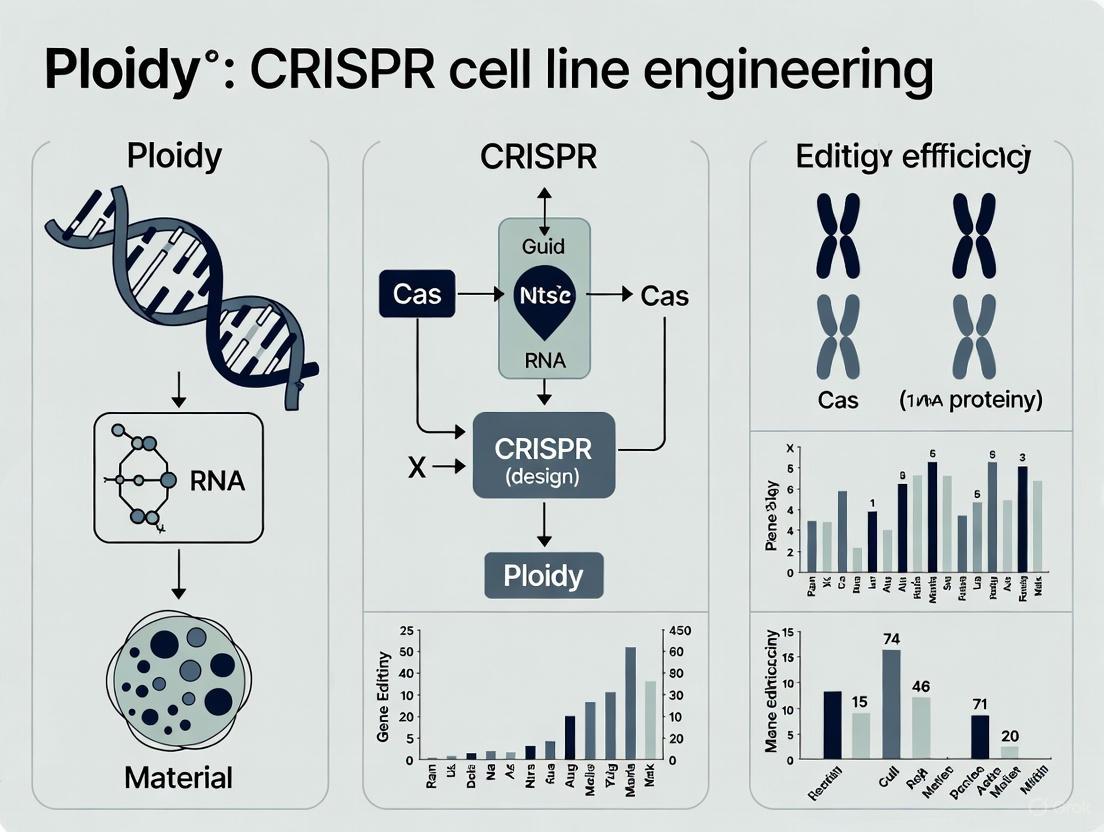
This article provides a comprehensive guide for researchers and drug development professionals on addressing the critical challenge of cellular ploidy in CRISPR-based cell line engineering.
Navigating Ploidy in CRISPR Cell Line Engineering: Strategies for Efficient Editing in Polyploid Models
Abstract
This article provides a comprehensive guide for researchers and drug development professionals on addressing the critical challenge of cellular ploidy in CRISPR-based cell line engineering. It covers the foundational impact of gene copy number on editing outcomes, explores advanced methodological approaches for polyploid systems, details troubleshooting and optimization strategies for complex genomes, and outlines robust validation techniques. By synthesizing current research and practical applications, this resource aims to equip scientists with the knowledge to achieve consistent and complete genetic modifications in diploid, polyploid, and aneuploid cell lines, thereby enhancing the reliability of functional genomics and preclinical drug discovery.
The Ploidy Problem: Why Gene Copy Number is a Critical Variable in CRISPR Editing
Core Concepts: What is Ploidy and Why Does it Matter in CRISPR Research?
What is the basic definition of ploidy? Ploidy refers to the number of complete sets of chromosomes in a cell. This fundamental genetic characteristic determines the number of possible alleles for autosomal and pseudoautosomal genes in an organism [1].
How does ploidy directly impact gene copy number? The ploidy level directly determines the baseline number of copies of each gene in a cell. A haploid cell (1n) contains one copy of each gene, a diploid cell (2n) contains two copies, while polyploid cells (3n or more) contain multiple copies of each gene [1] [2]. This relationship is crucial for CRISPR experimental design, as the number of gene copies needing modification scales with ploidy.
What are the different ploidy classifications? The following table summarizes the major ploidy classifications and their characteristics:
Table 1: Ploidy Classifications and Their Characteristics
| Ploidy Level | Symbol | Chromosome Sets | Gene Copy Number (Baseline) | Common Examples |
|---|---|---|---|---|
| Haploid | 1n | 1 | 1 | Male bees, wasps, ants; HAP1 cell line [1] [3] |
| Diploid | 2n | 2 | 2 | Most mammals, including humans [1] |
| Triploid | 3n | 3 | 3 | Seedless watermelons, some amphibians [4] |
| Tetraploid | 4n | 4 | 4 | Commercial potato, cotton, salmonid fish [5] [4] |
| Polyploid | >2n | >2 | >2 | ~75% of angiosperms, many crops [2] [4] |
The Critical Link: How Ploidy Complicates CRISPR Genome Editing
Why are some genes difficult to CRISPR edit based on ploidy? Higher ploidy levels present a significant challenge for complete gene editing because CRISPR must successfully modify all copies of a target gene to achieve a full knockout. In polyploid cells, the presence of multiple gene copies means that even if several alleles are successfully cut, any remaining wild-type (unmodified) copies can continue to express functional protein, potentially masking the phenotypic effect of the knockout [6]. This is particularly problematic when working with essential genes, where incomplete editing can be the difference between a viable clone and cell death.
How do gene copy number variations (CNVs) further complicate this? Beyond the baseline ploidy, many organisms contain copy number variations (CNVs), where specific DNA segments are duplicated or deleted. In humans, approximately 12% of the genome contains CNVs, with each individual harboring about 12 such variations on average [6]. These CNVs can create a situation where the actual number of copies of your gene of interest is higher than expected from the core ploidy alone, making complete CRISPR editing even more challenging.
What is the specific challenge of editing essential genes in polyploid systems? Essential genes are those that a cell requires for survival. Knocking out all copies of an essential gene in a polyploid cell leads to lethality [6]. In such cases, researchers must employ alternative strategies, such as creating heterozygous knockouts (where at least one wild-type copy remains) or using CRISPR interference (CRISPRi) for knockdown rather than complete knockout, to study gene function without killing the cell [6].
Essential Toolkit: Research Reagents and Solutions
Table 2: Key Research Reagents and Methods for Ploidy and Copy Number Analysis
| Reagent / Method | Primary Function | Key Consideration for Ploidy/CNV Research |
|---|---|---|
| Karyotyping | Visualizes chromosome number and structure to determine ploidy [6] | Fundamental first step to confirm the baseline ploidy of your cell line. |
| Flow Cytometry | Measures DNA content per cell to determine ploidy status [3] | Fast method for screening cell populations; crucial for checking haploid cell line stability [3]. |
| Real-time qPCR | Quantifies DNA copy number of a specific gene [7] | Relatively inexpensive method to check for CNVs of your target gene. |
| Array CGH | Genome-wide profiling of copy number variations [8] | Provides a comprehensive view of all CNVs in your cell line or model organism. |
| DepMap (Database) | Online resource for gene essentiality in human cell lines [6] | Check if your gene is "common essential" before designing a knockout strategy. |
| ICE Analysis | Bioinformatics tool for analyzing CRISPR editing efficiency [6] | Determines the zygosity of edits; critical for assessing success in polyploid cells. |
Experimental Protocols: Determining Ploidy and Gene Copy Number
Protocol 1: Flow Cytometry for Ploidy Determination This protocol is adapted from procedures used to quality control the ploidy of HAP1 cells [3].
- Harvest Cells: Collect and wash the cells in phosphate-buffered saline (PBS).
- Fixation: Fix the cells in 70% ethanol (added dropwise to pellets while vortexing) and incubate at 4°C for at least 30 minutes.
- Staining: Pellet the cells and resuspend in a staining solution containing Propidium Iodide (PI, e.g., 50 µg/mL) and RNase A (e.g., 100 µg/mL) in PBS. Incubate for 30-60 minutes at room temperature, protected from light.
- Analysis: Analyze the cells using a flow cytometer equipped with a 488 nm laser. The DNA content (fluorescence intensity of PI) is proportional to ploidy. Compare the G0/G1 peak of your sample to a known haploid or diploid control to determine ploidy status [3].
Protocol 2: Determining Gene Copy Number by Real-time qPCR This method allows for the determination of a specific gene's copy number without control samples of known copies [7].
- PCR Amplification: Amplify both your target gene and a single-copy internal control gene from the organism using regular PCR.
- Purification and Quantification: Purify the PCR products and quantify them accurately (e.g., using a spectrophotometer).
- Standard Curve Creation: Mix the purified target and control gene amplicons at different, known molar ratios (e.g., 1:1, 2:1, 4:1). Perform real-time PCR on these mixtures to measure the quantification cycle (Cq) for both genes. Construct a standard curve by plotting the difference in Cq values (ΔCq) against the logarithmic ratio of the two genes.
- Experimental Sample Analysis: Perform real-time PCR on your experimental genomic DNA sample to measure the Cq values for both the target and control genes.
- Calculation: Use the ΔCq value from your experimental sample and the standard curve equation to calculate the copy number ratio of the target gene relative to the single-copy control, yielding the absolute copy number [7].
Troubleshooting FAQs: Addressing Common Experimental Challenges
FAQ 1: My haploid HAP1 cell culture is spontaneously becoming diploid. How can I prevent this? Spontaneous diploidization is a well-documented and common trait of haploid cell cultures, including HAP1, often due to a growth advantage of diploid cells or uncoordinated centrosome cycles [3]. To mitigate this:
- Regularly Quality Control Ploidy: Use flow cytometry (as described in Protocol 1) to routinely monitor the ploidy of your cultures, especially before starting critical experiments [3].
- Use Low-Passage Cells: Haploidy is more stable in low-passage cultures. Cultures often become fully diploid around passage 20-30 [3].
- Isolate Subclones: Re-isolate single-cell subclones from your haploid population, as these can be more ploidy-stable [3].
- Size-Based Sorting: If available, use size-based cell sorting to enrich for the smaller haploid cells from a mixed culture [3].
FAQ 2: I am working with a tetraploid plant system. How can I achieve complete knockout of all four alleles? This is a significant challenge that requires careful experimental design.
- Confirm Target Copy Number: First, use karyotyping and qPCR (Protocol 2) to confirm you are indeed targeting a gene with four copies.
- Use Multiple gRNAs: Design and use multiple guide RNAs (gRNAs) that are specific to the different homeologs (the duplicate gene copies derived from polyploidy). A recent study in allotetraploid Tragopogon successfully used this strategy for homeolog-specific editing [5].
- Employ High-Efficiency Delivery: Use a CRISPR delivery system with high transformation efficiency to increase the probability of delivering the editing machinery to all cells.
- Screen Extensively: You will need to screen a large number of regenerated plants or cell lines genotypically (e.g., by sequencing) to identify clones with mutations in all four alleles.
FAQ 3: How can I successfully study an essential gene in a diploid cell line? A full knockout of both copies of an essential gene will be lethal [6]. Consider these alternative strategies:
- Create Heterozygous Knockouts: Use CRISPR to disrupt only one allele. The cell will survive due to the remaining functional wild-type copy, allowing you to study potential haploinsufficiency effects [6].
- Use CRISPRi/Knockdown: Employ CRISPR interference (CRISPRi) to transiently repress transcription, or use RNAi to knock down the mRNA levels of the essential gene without permanently altering the DNA. This allows for the study of acute gene loss without committing to a lethal knockout [6].
- Inducible Systems: Use a conditional or inducible CRISPR system that allows you to control the timing of gene editing, enabling you to study the immediate consequences of gene loss.
Visualizing the Workflow: From Ploidy Analysis to CRISPR Editing
The following diagram illustrates the logical workflow and decision process for incorporating ploidy analysis into a CRISPR experimental design.
Core Concepts and Challenges
What is multi-allelic editing and why is it challenging?
Multi-allelic editing refers to the process of using CRISPR-Cas9 to simultaneously modify all copies of a gene within a cell. The primary challenge lies in the fact that most mammalian somatic cells are diploid, meaning they possess two copies (alleles) of each gene—one inherited from each parent. A successful knockout requires creating disruptive mutations in both alleles. However, the CRISPR editing process is stochastic; when a double-strand break (DSB) is created, the cell repairs it via error-prone non-homologous end joining (NHEJ), which can result in a variety of insertion/deletion mutations (indels). There is no guarantee that both alleles in a diploid cell will be cut and repaired with a knockout mutation in a single experiment. Furthermore, the delivery efficiency of CRISPR components and the accessibility of the target DNA site can vary, making it difficult to achieve 100% editing efficiency across all alleles [9] [6] [10].
How does cell ploidy complicate multi-allelic editing?
Ploidy, the number of complete sets of chromosomes in a cell, directly determines the number of gene copies that must be edited. The challenge escalates significantly with higher ploidy.
| Ploidy Type | Number of Gene Copies | Implication for CRISPR Knockout |
|---|---|---|
| Haploid | One copy | Simplest case; mutation of a single allele is sufficient [3]. |
| Diploid | Two copies | Both alleles require mutation, which is non-trivial and often requires sib-selection or multiple editing rounds [6]. |
| Triploid / Tetraploid | Three / Four copies | Increasingly difficult to edit all copies in a single cell [6]. |
| Polyploid | Many copies | Extremely challenging; nearly impossible to ensure all alleles are knocked out in a single experiment [6]. |
| Hypotriploid / Near-diploid | Variable (e.g., 2-3) | Common in immortalized cell lines (e.g., HEK293T), adding unpredictability and requiring copy number validation [6]. |
Many commonly used human cell lines are not perfect diploids. For instance, HEK293T and hTERT RPE-1 are considered "hypotriploid" or "near-diploid," meaning they have more than two copies of some chromosomes. This variability makes it difficult to predict how many copies of a specific gene need to be edited and can lead to residual wild-type protein expression if not all copies are disrupted [6]. The near-haploid HAP1 cell line is popular for CRISPR screens because it simplifies this problem, but its haploid nature is unstable, and cultures spontaneously become diploid over time, which can confound experiments if not carefully monitored [3].
Troubleshooting Guide: Frequently Asked Questions (FAQs)
FAQ 1: I've transfected my diploid cells with CRISPR-Cas9, but my western blot still shows target protein expression. Why?
This is a classic symptom of incomplete multi-allelic editing. Several factors could be at play:
- Heterozygous Editing: Only one of the two alleles has been successfully knocked out. The remaining wild-type allele continues to produce functional protein [6].
- In-Frame Mutations: The indels created by NHEJ repair may not have caused a frameshift. Approximately one-third of all random indels are "in-frame" and can still produce a partially or fully functional protein [11].
- Polyploidy/Hypotriploidy: Your cell line may have more than two copies of the gene, a common feature in immortalized lines. Standard genotyping might miss these extra copies [6].
Troubleshooting Steps:
- Validate Ploidy and Copy Number: Perform karyotyping or quantitative PCR (qPCR) to determine the true number of gene copies in your cell line [6].
- Deep Sequencing: Use next-generation sequencing (NGS) on the pooled cell population, not just a few clones. This provides a quantitative measure of editing efficiency across all alleles and reveals the spectrum of indels, showing you what percentage are disruptive frameshifts [11].
- Isolate Clones: Single-cell cloning followed by sequencing of both alleles is the most reliable way to identify a clone with biallelic knockout.
FAQ 2: My gene of interest is essential for cell survival. How can I study it without killing my cells?
Knocking out an essential gene leads to cell death, making it impossible to generate a stable knockout line. For essential genes, alternative strategies are required.
Troubleshooting Steps:
- Use Inducible Systems: Employ CRISPR systems where Cas9 or sgRNA expression is controlled by an inducible promoter (e.g., doxycycline). This allows you to trigger the knockout at a specific time and study acute effects [6].
- CRISPR Interference (CRISPRi): Use a catalytically "dead" Cas9 (dCas9) fused to a repressor domain (e.g., KRAB). dCas9 binds to the gene's promoter without cutting the DNA and blocks transcription, resulting in a reversible knockdown rather than a permanent knockout [6].
- RNA Interference (RNAi): As a complementary approach, use siRNA or shRNA to transiently knock down the mRNA of the essential gene [6].
- Create Heterozygous Knockouts: While not a full knockout, generating a cell line with one mutated allele can sometimes provide insights, especially if it leads to haploinsufficiency [6].
The problem likely lies in the local chromatin environment of your target gene.
- Closed Chromatin: DNA in eukaryotic cells is packaged into chromatin. Your target site may be located in heterochromatin, a tightly packed, transcriptionally inactive state that is inaccessible to the CRISPR-Cas9 complex. In contrast, euchromatin is open and accessible [6].
- Sequence Composition: Target sites with very high GC content or repetitive sequences can be difficult for PCR amplification and sequencing, making validation challenging. They can also hinder sgRNA binding [6].
Troubleshooting Steps:
- Check Epigenetic Marks: Consult public databases (e.g., ENCODE, Roadmap Epigenomics) for histone modification marks (e.g., H3K27ac for enhancers, H3K4me3 for promoters) in your cell type. Target sites in regions with marks of open chromatin are more likely to be edited successfully.
- Re-design sgRNAs: Design new sgRNAs that target a different exon but avoid high-GC or repetitive regions.
- Use Chromatin Modulators: Treat cells with small molecules that modulate chromatin state, such as histone deacetylase (HDAC) inhibitors, which can promote a more open chromatin configuration and potentially improve editing efficiency.
Detailed Experimental Protocol: Highly Efficient Multi-Allelic Editing
This protocol is adapted from a study that achieved >90% indel formation in hyperdiploid glioblastoma stem cells (GSCs) and neural stem cells (NSCs) using Cas9:sgRNA ribonucleoprotein (RNP) complexes [11].
Method: RNP Nucleofection for High-Efficiency Editing
Workflow Overview:
Step-by-Step Procedure:
sgRNA Design and Synthesis:
- Design sgRNAs targeting an early exon of your gene of interest.
- Crucial Step: Use chemically synthesized sgRNAs with 2′-O-methyl 3′phosphorothioate modifications at the first and last three nucleotides. These modifications protect the sgRNA from degradation, significantly increasing RNP stability and editing efficiency [11].
RNP Complex Formation:
- Combine purified, nuclear-localized signal (NLS)-tagged Cas9 protein with the modified sgRNA at a molar ratio of 1:2 (Cas9:sgRNA) in a nuclease-free buffer.
- Incubate at room temperature for 10-20 minutes to allow the RNP complex to form.
Cell Preparation and Nucleofection:
- Harvest the target cells (e.g., GSCs, NSCs, or other hard-to-transfect cells) and resuspend them in an appropriate nucleofection solution.
- Mix the cell suspension with the pre-formed RNP complexes. The study used doses ranging from ~2 to 60 pmol of RNP [11].
- Delivery: Transfer the mixture to a nucleofection cuvette and electroporate using a device like the Lonza Nucleofector and a cell-type-specific program. Nucleofection, a specialized form of electroporation, is highly effective for delivering RNPs directly into the cell cytoplasm and nucleus.
Post-Transfection Recovery and Analysis:
- Immediately after nucleofection, transfer the cells to pre-warmed culture media and plate them.
- Allow the cells to recover and express the edited phenotype for 72 hours.
- Efficiency Validation: Harvest a portion of the cells and extract genomic DNA. Amplify the target region by PCR and analyze editing efficiency using Sanger sequencing followed by computational trace decomposition (e.g., with the ICE tool [11]) or, for higher accuracy, next-generation sequencing (NGS). This protocol routinely achieves >90% indel formation in cell pools within 3 days [11].
The Scientist's Toolkit: Essential Reagents for Success
| Research Reagent / Material | Function and Importance in Multi-Allelic Editing |
|---|---|
| Chemically Modified sgRNA (2′-O-methyl 3′phosphorothioate) | Increases nuclease resistance and RNP half-life, leading to dramatically higher editing efficiencies compared to in vitro transcribed sgRNA [11]. |
| Purified Cas9 Protein (NLS-tagged) | The core nuclease enzyme. Using pre-complexed RNP allows for rapid editing, reduces off-target effects, and is ideal for DNA-free editing applications [11] [12]. |
| Nucleofector Device | A specialized electroporation system optimized for difficult-to-transfect cell types (e.g., primary cells, stem cells), enabling highly efficient RNP delivery [11]. |
| ICE (Inference of CRISPR Edits) Tool | A bioinformatics tool that deconvolutes Sanger sequencing traces from edited cell pools to predict indel frequency and distribution, providing a quick and cost-effective efficiency readout [11] [6]. |
| Haploid Cell Lines (e.g., HAP1) | A valuable model system where only a single allele needs to be edited, simplifying initial gene function studies. Requires frequent ploidy monitoring via flow cytometry [3]. |
| Flow Cytometry Reagents (e.g., Propidium Iodide) | Used for cell cycle analysis and, critically, for determining the ploidy status of cell cultures to account for spontaneous diploidization [3]. |
Pathway and Decision Logic
Diagram: DNA Repair Pathways Determining CRISPR Editing Outcomes
The final outcome of a CRISPR-Cas9 experiment is determined by the cellular DNA repair machinery. In dividing cells, several pathways compete to repair the break, with the error-prone NHEJ being the most common and leading to indels. HDR can create precise edits but is inefficient and requires a donor template. MMEJ often results in larger deletions. The balance between these pathways can shift in non-dividing cells, such as neurons, where NHEJ dominates and the timeline for full editing can be much longer [13].
Technical Support Center
FAQs & Troubleshooting
Q1: Why is my CRISPR editing efficiency so low in my HEK-293 cells, despite using a validated guide RNA and high-efficiency transfection reagents?
A: The complex, hypotriploid genome of HEK-293 cells is a primary culprit. Unlike diploid cells with two copies of a gene, HEK-293s often possess three or more copies of a given locus. Your CRISPR-Cas9 system may successfully edit one or two alleles, but the presence of a third, unmodified allele can sustain wild-type protein expression, leading to a false negative or low measured editing efficiency.
- Troubleshooting Steps:
- Confirm Ploidy: Perform karyotyping or fluorescence in situ hybridization (FISH) for your specific gene of interest to determine the exact copy number in your cell stock.
- Design Multi-Targeting gRNAs: Design multiple gRNAs that target different exons or conserved regions to increase the probability of cutting all copies simultaneously.
- Enhance Cutting Efficiency: Use high-fidelity Cas9 variants or Cas12a to minimize off-target effects while maintaining on-target activity. Optimize the delivery method (e.g., nucleofection vs. lipofection).
- Implement a Robust Selection Strategy: Use a double-selection system (e.g., puromycin followed by FACS) to enrich for a highly edited population.
Q2: How can I accurately genotype my edited HEK-293 clone when it has multiple gene copies?
A: Standard PCR and Sanger sequencing are often insufficient as they produce overlapping chromatograms. You require techniques that can resolve individual alleles.
- Troubleshooting Steps:
- Clone-by-Clone Sequencing: After limiting dilution cloning, expand individual clones. Isolate genomic DNA, perform PCR, and subclone the PCR amplicons into a bacterial plasmid vector. Sequence multiple bacterial colonies (10-20) to capture the sequence of each individual allele from the clone.
- Digital PCR (dPCR): Use dPCR for absolute quantification of edited vs. wild-type alleles. This method is highly sensitive and can precisely determine the fraction of edited copies without the need for standard curves.
- Next-Generation Sequencing (NGS): Perform amplicon-based deep NGS. This provides a quantitative readout of the percentage of each allele (wild-type and various indels) present in the population or clone.
Q3: After single-cell cloning, I observe high phenotypic heterogeneity among my supposedly isogenic HEK-293 clones. Why?
A: This is a classic symptom of underlying genomic instability and aneuploidy. When you passage HEK-293 cells, subpopulations with different karyotypes can emerge. Isolating a single cell fixes one specific karyotype, which may differ from its neighbors. This can lead to significant clone-to-clone variation in growth rate, transfectability, and transgene expression, independent of your CRISPR edit.
- Troubleshooting Steps:
- Karyotype Your Parental Line: Establish a baseline understanding of the chromosomal diversity before you begin editing.
- Characterize Multiple Clones: Always phenotype and genotype a larger number of clones (e.g., 10-20) to account for this inherent heterogeneity.
- Use Early Passage Cells: Start CRISPR experiments with low-passage parental stocks to minimize accumulated genomic diversity.
- Include Stringent Controls: Use wild-type clones that have undergone the same single-cell cloning process as your experimental controls.
Data Presentation
Table 1: Reported Karyotypic Variations in Common HEK-293 Lines
| Cell Line | Reported Ploidy | Key Chromosomal Aberrations | Functional Impact |
|---|---|---|---|
| HEK-293 (Standard) | Hypotriploid (~64 chromosomes) | Trisomy of Chr 7, 8, 17, 20; Der(6)t(6;20) | Rapid growth, high transfectability, variable transgene expression. |
| HEK-293T | Hypotriploid | Same as above, plus SV40 Large T antigen | Supports replication of SV40-origin plasmids. |
| HEK-293F | Hypotriploid | Adapted for suspension culture | Used for large-scale protein production. |
| HEK-293FT | Hypotriploid | Combines features of 293T and 293F | Suspension-adapted for high-titer lentiviral production. |
Table 2: Comparison of Genotyping Methods for Aneuploid Cell Lines
| Method | Principle | Advantage for Aneuploid Cells | Disadvantage |
|---|---|---|---|
| Sanger Sequencing | Capillary electrophoresis of PCR product | Low cost, rapid. | Cannot resolve mixed sequences from multiple alleles. |
| Clone-by-Clone Sequencing | Subcloning PCR amplicons for individual sequencing | Gold standard for resolving individual allele sequences. | Labor-intensive, time-consuming, and expensive. |
| Digital PCR (dPCR) | Partitioning and end-point PCR for absolute quantification | No standard curve needed, highly precise for copy number and allele frequency. | Requires specific probe/primer design, lower throughput than NGS. |
| Amplicon NGS | Deep sequencing of target PCR amplicons | Highly quantitative, high-throughput, detects all sequence variants. | Requires bioinformatics expertise, higher cost than Sanger. |
Experimental Protocols
Protocol 1: Karyotype Analysis via Giemsa Banding (G-Banding)
Objective: To determine the chromosomal number and identity major structural abnormalities in a cell population.
- Cell Culture: Grow HEK-293 cells to ~70% confluency.
- Metaphase Arrest: Add colcemid (final concentration 0.1 µg/mL) to the culture medium. Incubate for 2-4 hours to inhibit spindle formation and arrest cells in metaphase.
- Harvesting: a. Trypsinize cells and collect by centrifugation. b. Resuspend cell pellet in a pre-warmed hypotonic solution (0.075 M KCl) and incubate at 37°C for 20 minutes. c. Add fresh, ice-cold Carnoy's fixative (3:1 methanol:glacial acetic acid) drop-wise while gently vortexing. Centrifuge and repeat fixation 2-3 times.
- Slide Preparation: Drop the fixed cell suspension onto clean, wet microscope slides. Allow to air dry.
- G-Banding: a. Age slides at 60°C for 1 hour. b. Treat with trypsin solution for 15-60 seconds. c. Stain with Giemsa stain for 5-10 minutes. d. Rinse gently with distilled water and air dry.
- Analysis: Visualize under a 100x oil immersion objective. Capture images of 20-50 well-spread metaphase spreads. Count chromosomes and analyze banding patterns to identify abnormalities.
Protocol 2: Clone-by-Clone Sequencing for Genotyping Aneuploid Cells
Objective: To determine the exact DNA sequence of each allele in a polyploid cell clone.
- Single-Cell Cloning: Perform limiting dilution of your edited HEK-293 population to isolate single cells in a 96-well plate. Expand clones for 2-3 weeks.
- Genomic DNA Extraction: Harvest a portion of the clonal population and extract genomic DNA using a commercial kit.
- PCR Amplification: Design primers flanking your CRISPR target site. Perform a high-fidelity PCR to amplify the region from the mixed genomic DNA template.
- Subcloning: a. Ligate the purified PCR amplicon into a TA-cloning or blunt-end cloning vector. b. Transform the ligation reaction into competent E. coli cells. c. Plate on LB-agar plates with the appropriate antibiotic (e.g., ampicillin) and incubate overnight.
- Colony PCR & Sequencing: a. Pick 15-20 individual bacterial colonies and culture them in small volumes of LB broth. b. Perform colony PCR with vector-specific primers to confirm insert presence. c. Sanger sequence the positive clones using the same primers.
- Analysis: Align the sequences from the bacterial clones to the reference sequence. Each unique sequence from the bacterial colonies represents one allele from the original HEK-293 clone.
Mandatory Visualization
Title: CRISPR Workflow for Aneuploid Cells
Title: Aneuploidy Causes CRISPR Challenges
The Scientist's Toolkit
Table 3: Essential Research Reagents for CRISPR in Aneuploid Models
| Research Reagent | Function & Application |
|---|---|
| Colcemid | A microtubule depolarizing agent used to arrest cells in metaphase for karyotype analysis. |
| Hypotonic Solution (KCl) | Causes cells to swell, spreading chromosomes apart for clearer visualization during karyotyping. |
| Carnoy's Fixative | A 3:1 methanol:acetic acid solution that preserves chromosome structure for cytogenetic analysis. |
| High-Fidelity PCR Kit | Essential for accurate amplification of the target locus prior to subcloning or NGS, minimizing polymerase-introduced errors. |
| TA-Cloning Kit | Facilitates the easy ligation of PCR products into a plasmid vector for subsequent clone-by-clone Sanger sequencing. |
| Digital PCR Assay | Provides absolute quantification of gene copy number and CRISPR edit frequency without the need for a standard curve. |
| Amplicon-EZ NGS Service | A turn-key solution for high-throughput, quantitative genotyping of mixed alleles in a polyploid cell population. |
| Lipofectamine CRISPRMAX | A lipid-based transfection reagent optimized for the delivery of CRISPR ribonucleoprotein (RNP) complexes. |
Copy Number Variation (CNV) refers to a circumstance in which the number of copies of a specific segment of DNA varies among different individuals' genomes. [14] In the context of CRISPR cell line engineering, CNV presents a significant challenge because the number of copies of a gene can vary, making it difficult to generate complete knockout or uniform editing across all alleles. [6] This is particularly problematic in polyploid cell lines or genes with high copy numbers due to gene amplification, where achieving frameshifts in all alleles can be difficult to generate and detect. [15] The presence of CNVs can lead to persistent wild-type gene expression even after CRISPR editing attempts, complicating phenotypic analysis and experimental outcomes. [6]
FAQs: Understanding CNV in CRISPR Experiments
Q1: Why does gene copy number make CRISPR editing more challenging? A: Higher gene copy numbers require researchers to ensure that all copies of the target gene are successfully edited. If any wild-type copies remain functional, they can continue to express the gene, masking knockout phenotypes and creating editing heterogeneity within cell populations. This is especially problematic in polyploid cells or when copy number variations are present. [6]
Q2: How can I determine if my cell line has polyploidy or CNV issues? A: Karyotyping can identify chromosomal abnormalities in quantity and structure. For CNV detection specifically, real-time quantitative PCR provides a relatively inexpensive and fast method to determine copy number variations. Next-generation sequencing technologies offer comprehensive approaches to detect CNVs alongside other genomic variations. [6] [16]
Q3: What alternative methods exist for essential genes with CNVs? A: For essential genes that cannot be completely knocked out due to lethality concerns, researchers can use CRISPR interference (CRISPRi) or RNAi-based knockdown to suppress gene expression without permanent deletion. Another approach is to create heterozygous knockouts that retain one functional copy while studying partial loss-of-function effects. [6]
Q4: What computational tools are available for CNV analysis? A: Free resources include CopyCaller Software for TaqMan Copy Number Assay data analysis, Dependency Map (DepMap) for gene essentiality information in human cell lines, and Synthego's ICE tool for analyzing CRISPR editing efficiency. [17] [18] [6] For NGS-based CNV detection, tools implementing read-pair, split-read, read-depth, and assembly methods are available. [16]
Troubleshooting Guide: CNV-Related Experimental Issues
Problem: Incomplete Knockout Despite High CRISPR Efficiency
Potential Cause: Unmodified gene copies due to CNV or polyploidy. Solutions:
- Pre-screen cell lines for ploidy and CNV status before designing experiments. [6]
- Use homology-directed insertion methods with selection cassettes that can autocatalytically generate mutations in all alleles. [15]
- Employ alternative nucleases like Cas3 that can induce large-scale deletions to effectively decrease copy number. [19]
Problem: Low Confidence in Copy Number Calls
Potential Cause: Technical issues with copy number detection methods. Solutions:
- Ensure sufficient replicates (at least 4 per sample) in ddPCR or qPCR experiments. [18]
- Check reference assay performance and consider alternative reference genes if necessary. [17]
- Verify sample quality and concentration normalization across all samples. [17]
- For |z-score| >2.75, do not trust the copy number call. [18]
Problem: Cell Lethality After Attempted Gene Knockout
Potential Cause: Editing of essential genes present in multiple copies. Solutions:
- Consult DepMap database to determine if your gene is "common essential." [6]
- Use knockdown approaches (CRISPRi, RNAi) instead of complete knockout. [6]
- Generate heterozygous knockouts while maintaining one functional allele. [6]
Experimental Protocols for CNV Modification
CRISPR-Cas9 Mediated CNV Modification in Rice
Recent research demonstrates successful CNV modification using CRISPR technologies in plant systems, providing a template for similar approaches in mammalian cell lines. [19]
Protocol Overview:
Target Selection: Identify genes with CNVs between cultivars that potentially affect traits of interest. For example, OsGA20ox1 and OsMTD1 were selected in rice for their roles in seedling vigor and plant architecture. [19]
Vector Construction:
Transformation:
Validation:
Homology-Directed Insertion for Polyploid Cell Lines
This protocol addresses the challenge of editing multiple gene copies in polyploid cells through a homology-directed approach. [15]
Key Steps:
Design insertion cassette containing a dominant selectable marker flanked by homology arms targeting the gene of interest.
Transfert polyploid cells (e.g., Drosophila S2R+ cells) with CRISPR components and donor template.
Apply selection pressure to enrich for cells with successful integration events.
Screen by PCR without needing sequencing to identify homozygous mutant cell lines.
Validate knockout through functional assays confirming loss of gene expression.
The entire process takes approximately 2-3 months and can be adapted for various polyploid cell lines or high-copy-number genes. [15]
Quantitative Data on CNV Editing Outcomes
Table 1: CRISPR-Mediated CNV Modification Efficiency in Rice
| Target Gene | CRISPR System | Editing Approach | Key Outcome | Validation Method |
|---|---|---|---|---|
| OsGA20ox1 | Cas9 with modified sgRNA | Frameshift mutation in gene copies | Substantial CNV modification; determinant of seedling vigor | ddPCR, Sanger sequencing [19] |
| OsMTD1 | Cas3 nuclease | Large-scale deletions | Effective decrease in copy number | ddPCR, bioinformatics tools [19] |
Table 2: Troubleshooting CNV Analysis Methods
| Method | Optimal CNV Size Range | Strengths | Limitations |
|---|---|---|---|
| Read-Pair | 100kb to 1Mb | Detects medium-sized insertions/deletions | Insensitive to small events (<100 kb) [16] |
| Split-Read | Up to 1Mb | Single base-pair breakpoint resolution | Limited for large variants (>1Mb) [16] |
| Read-Depth | Hundreds of bases to whole chromosomes | Detects various sizes; smaller events with higher coverage | Resolution depends on depth of coverage [16] |
| Assembly | Various sizes | Identifies structural variation | Computationally intensive [16] |
Research Reagent Solutions
Table 3: Essential Reagents for CNV Research and CRISPR Editing
| Reagent/Tool | Function | Application Notes |
|---|---|---|
| Droplet Digital PCR (ddPCR) | Absolute quantification of copy number | Provides high-precision CNV validation; used at ~20 ng genomic DNA input [19] [18] |
| TaqMan Copy Number Assays | Targeted CNV detection | Must be run in duplex with reference assays; use TaqMan Genotyping Master Mix [18] |
| CRISPR-Cas9 Systems | Gene editing | Use with modified sgRNAs for CNV modification; Cas9 with cytosine extension effective for frameshifts [19] |
| CRISPR-Cas3 Systems | Large-scale deletion induction | Effective for decreasing copy number through large genomic deletions [19] |
| CopyCaller Software | CNV data analysis | Free software specifically for TaqMan Copy Number Assay data; calculates copy numbers with confidence values [18] |
| Homology-Directed Repair Donors | Precise genome editing | Used with ~500 bp homology arms for efficient integration in polyploid cells [15] |
Workflow: Addressing CNV in CRISPR Experiments
The following diagram illustrates the systematic approach to managing CNV challenges in CRISPR cell line engineering:
Advanced Methods: NGS-Based CNV Detection
Next-generation sequencing provides powerful approaches for comprehensive CNV detection alongside CRISPR editing verification. [16]
Whole-Genome Sequencing (WGS) enables detection of CNVs across the entire genome with uniform coverage, ideal for identifying smaller variants and precise breakpoint mapping. WGS requires relatively lower coverage (as low as 40x) for reliable CNV calling compared to exome sequencing. [16]
Whole-Exome Sequencing (WES) offers a cost-effective alternative focusing on protein-coding regions, allowing simultaneous detection of CNVs and single nucleotide variants from the same data. However, WES may miss single exon deletions/duplications and generates more false positives requiring manual review. [16]
Gene Panels provide the most targeted approach for specific genes of interest, offering higher coverage for selected regions while being more affordable for clinical diagnostic applications. [16]
What is the relationship between ploidy and essential genes in CRISPR research? In CRISPR-based functional genomics, a "cell-essential" gene is one required for fundamental cellular processes such as proliferation and survival. The ploidy of your cell model—whether it is haploid (one set of chromosomes), diploid (two sets), or polyploid (multiple sets)—directly determines how a CRISPR-induced mutation manifests and the likelihood of a lethal phenotype. In haploid cells, where only one allele exists, a single CRISPR-mediated knockout can completely disrupt gene function and reveal essentiality. In diploid or polyploid cells, the presence of multiple gene copies (alleles) creates functional redundancy. All copies of a gene must typically be disrupted to observe a fitness cost or lethal effect, which is a less frequent event [20] [21].
Why is this critical for experimental design? Ignoring ploidy can lead to the misinterpretation of CRISPR screening data. A gene may be incorrectly classified as "non-essential" in a polyploid system simply because not all alleles were successfully disrupted, rather than because the gene is truly dispensable. Furthermore, the choice of cell model based on ploidy is fundamental. Near-haploid cell lines, such as HAP1 or KBM7, are powerful tools for uncovering essential genes because their single set of chromosomes means a single edit can unmask a phenotype, simplifying the identification of gene function [20] [21].
Troubleshooting Guides
Problem 1: High False-Negative Rates in Essential Gene Identification
Issue: Your genome-wide CRISPR knockout screen in a diploid/polyploid cell line fails to identify known essential genes.
Possible Causes & Solutions:
- Cause: Insufficient Mutagenesis Depth. In polyploid cells, a high efficiency of biallelic or multi-allelic editing is required to knockout a gene.
- Solution: Optimize your CRISPR delivery system for higher editing efficiency. Using ribonucleoprotein (RNP) complexes (pre-assembled Cas9 and guide RNA) via nucleofection often achieves higher knockout efficiency compared to plasmid-based methods [22].
- Solution: Utilize multiple guide RNAs (gRNAs) per gene target. Designing 3-4 independent gRNAs that target different exons of the same gene increases the probability of disrupting all functional alleles [20].
- Cause: Inadequate Screening Duration. A short screening period may not allow enough time for cells with disruptions in essential genes to be depleted from the population.
- Solution: Extend the duration of your negative selection screen. Conduct cell counts and monitor gRNA depletion over multiple passages (e.g., 14-21 days or ~15 population doublings) to ensure robust identification of essential genes [20].
Problem 2: Low Efficiency of Homology-Directed Repair (HDR) in Polyploid Models
Issue: When trying to introduce a specific point mutation via HDR, the efficiency is extremely low, and the error-prone non-homologous end joining (NHEJ) pathway dominates, creating mostly knockout indels.
Possible Causes & Solutions:
- Cause: Competition from the NHEJ Pathway. The NHEJ DNA repair pathway is active throughout the cell cycle and is typically more efficient than HDR.
- Solution: Use small molecule inhibitors to transiently suppress NHEJ. Adding Nedisertib (a DNA-PKcs inhibitor) or NU7441 during and after transfection has been shown to boost HDR efficiency by over 20% [22].
- Solution: Synchronize the cell cycle to enrich for cells in the S/G2 phases, where HDR is active. Treatments like nocodazole can achieve this, though viability must be monitored closely [22].
- Cause: Suboptimal Delivery of CRISPR Components.
- Solution: Utilize RNP nucleofection with a chemically modified, single-stranded DNA donor template (ssODN). Systematic optimization has shown that parameters like a gRNA:Cas9 ratio of 1:2.5 and 100 pmol of ssODN can achieve HDR efficiencies over 70% in certain cell lines [22].
Frequently Asked Questions (FAQs)
Q1: Are there specific types of genes whose essentiality is more affected by ploidy? Yes. Genes with paralogous copies (genes in the same genome with similar sequences and functions) show a significantly lower degree of essentiality in polyploid systems. This is because paralogs can provide functional redundancy, compensating for the loss of the target gene. In screens, genes involved in fundamental, non-redundant pathways like DNA replication and RNA translation are consistently essential across ploidies, while genes with paralogs are more likely to be conditionally dispensable [20].
Q2: My research requires diploid human cells. How can I reliably identify essential genes? While haploid models are simpler, you can successfully conduct screens in diploid cells. The key is to use a high-quality, genome-wide sgRNA library with deep coverage (e.g., 10+ sgRNAs per gene) and to carefully analyze the data. The CRISPR score (CS), calculated as the average log2 fold-depletion of all sgRNAs targeting a gene, is a robust metric. Genes with significantly negative CS scores are considered essential. Early studies demonstrated that CRISPR screens in diploid cells could identify a similar proportion of essential genes on autosomes as in haploid models, indicating that biallelic inactivation occurs at a high enough frequency for detection [20].
Q3: What are the best practices for validating a lethal phenotype from a screen?
- Use Multiple Guides: Validate the phenotype with at least 2-3 additional, independent sgRNAs targeting the same gene.
- Measure Fitness Directly: Perform a competitive proliferation assay. Mix cells transduced with a non-targeting control sgRNA and cells with your gene-targeting sgRNA, and track their ratios over 1-2 weeks using flow cytometry or sequencing.
- Rescue the Phenotype: For definitive confirmation, perform a "rescue" experiment by reintroducing a CRISPR-resistant, wild-type cDNA of the gene into the knockout cells and demonstrating a restoration of normal growth [20] [23].
Experimental Protocols & Data
Table 1: Quantitative Impact of Ploidy on Gene Essentiality Screening
| Metric | Haploid Model (e.g., KBM7/HAP1) | Diploid/Polyploid Model | Notes & Context |
|---|---|---|---|
| % of Genome Essential | ~9.2% (1,878 genes) [20] | Similar proportion detected on autosomes [20] | Essential genes are enriched in fundamental pathways (DNA rep, translation). |
| Paralogous Gene Essentiality | Less likely to be essential [20] | Significantly less likely to be essential [20] | Functional redundancy from paralogs buffers against knockout. |
| Editing Requirement for Phenotype | Single allele disruption [21] | Biallelic/Multi-allelic disruption [20] | Explains higher false negatives in polyploid screens. |
| Key Screening Metric | CRISPR Score (CS) / Gene-trap Score (GTS) [20] | CRISPR Score (CS) [20] | CS = average log2 fold-depletion of targeting sgRNAs. |
Protocol: Optimized HDR for Precise Editing in Challenging Models
This protocol is adapted from methods used to introduce the E6V sickle cell mutation in erythroid cells [22].
CRISPR Component Preparation:
- Design a sgRNA with high on-target and low off-target scores using online tools.
- Formulate RNP complexes by pre-incubating 3 µg of high-fidelity Cas9 protein with sgRNA at a mass ratio of 1:2.5 (sgRNA:Cas9) for 10-20 minutes at room temperature.
- Include a single-stranded DNA oligonucleotide donor (ssODN) at 100 pmol per reaction. Use homology arms of ~36 nt (PAM-distal) and ~91 nt (PAM-proximal).
Cell Transfection:
- Use 5 x 10^4 cells per nucleofection reaction.
- Nucleofect the RNP/ssODN mixture into cells using an optimized program (e.g., DZ-100 on a 4D-Nucleofector system).
HDR Enhancement:
- Immediately after transfection, add a small molecule NHEJ inhibitor to the recovery media. 0.25 µM Nedisertib is highly effective, boosting HDR efficiency by ~24% while maintaining ~74% cell viability.
Clonal Selection & Validation:
- After 48-72 hours, single-cell sort the transfected population by FACS into 96-well plates.
- Expand clonal lines and screen for the desired HDR edit via Sanger sequencing or next-generation sequencing (NGS) of the target locus.
The Scientist's Toolkit
Table 2: Key Research Reagent Solutions
| Reagent / Tool | Function in Ploidy Research | Example & Notes |
|---|---|---|
| Near-Haploid Cell Lines | Simplifies gene essentiality screening by requiring only one edit per gene. | HAP1 cells: A widely used human near-haploid cell line consolidated as a favorite for functional genetic studies [21]. |
| RNP Complexes | Delivers CRISPR machinery transiently, enabling high-efficiency editing with reduced off-target effects. | Pre-complexed Cas9 protein and sgRNA; optimal for nucleofection [22]. |
| NHEJ Inhibitors | Enhances HDR efficiency by shifting DNA repair balance away from error-prone NHEJ. | Nedisertib (M3814): A DNA-PKcs inhibitor. NU7441: Another DNA-PKcs inhibitor. Both significantly improve precise genome editing rates [22]. |
| sgRNA Libraries | Enables genome-wide pooled screens to identify essential genes systematically. | Optimized libraries with ~10 sgRNAs/gene provide deep coverage and accurate essentiality scores (CS) [20]. |
| Base Editors / Prime Editors | Enables precise single-base changes without requiring DSBs or donor templates, bypassing HDR inefficiencies. | ABE (Adenine Base Editor): A->G conversions. CBE (Cytidine Base Editor): C->T conversions. Prime Editor: Can execute all 12 possible base-to-base conversions [21]. |
Workflow Visualization
Diagram 1: Ploidy Impact on CRISPR Screening
Diagram 2: HDR Optimization Strategy
Advanced Workflows for CRISPR Engineering in Polyploid Cell Lines
FAQs: Core Concepts and Importance
Q1: Why is pre-experimental characterization like karyotyping and CNV analysis critical for CRISPR cell line engineering?
A1: Characterizing your cell line's genome before a CRISPR experiment is fundamental to interpreting editing outcomes accurately. Two key characteristics must be defined:
- Ploidy: The number of chromosome sets (e.g., haploid, diploid, tetraploid). Editing a gene in a diploid cell requires modifying two alleles, while in a tetraploid cell, four alleles must be edited to achieve a complete knockout [24].
- Copy Number Variation (CNV): The number of copies of a specific gene, which can vary between cell lines and even within a population [24].
Failure to account for ploidy and CNVs can lead to misleading results. For instance, in a polyploid cell line, a partial editing outcome where only some gene copies are knocked out might still allow the cell to survive and express functional protein from the wild-type alleles, making a successful knockout appear as a failure [24].
Q2: What is the specific role of karyotyping in this characterization process?
A2: Karyotyping provides a macroscopic view of the entire chromosome complement. Its role is to determine the ploidy and identify large-scale chromosomal abnormalities in your cell line [24].
- Function: It allows you to count the number of chromosomes and assess their structure, revealing if your cell line is a standard diploid or has a more complex genomic configuration (e.g., hypotriploid, tetraploid) [24].
- Outcome: Knowing the ploidy helps you estimate the number of alleles you need to target for a successful knockout and explains why some cell lines are inherently more difficult to edit completely [24] [25].
Q3: How does qPCR for CNV analysis complement the information from a karyotype?
A3: While karyotyping looks at the whole chromosome set, qPCR for CNV analysis zooms in on your specific gene of interest. It quantitatively measures the number of copies of that particular gene present in the genome [24].
- Function: This technique is relatively inexpensive, has a fast turnaround time, and identifies gains or losses of genomic material at the gene level [24].
- Outcome: For CRISPR, it reveals whether you are targeting a single-copy gene or a gene that is amplified. A high copy number makes both knockout and knock-in experiments more challenging, as all copies must be modified for the edit to be effective [24].
Troubleshooting Guides
Problem: Incomplete CRISPR Knockout Despite High Editing Efficiency
Issue: Sequencing confirms that CRISPR cutting occurred at the target site, but functional protein is still detected, or the expected phenotypic change is not observed.
| Potential Cause | Diagnostic Step | Recommended Solution |
|---|---|---|
| Multiple gene copies due to high ploidy [24] | Perform karyotyping to determine the chromosome count and ploidy of the cell line. | Design gRNAs that target all homologous alleles or use a haploid cell model (e.g., HAP1) for simpler genetics [24] [21]. |
| Gene amplification (High CNV) [24] | Use qPCR for CNV analysis to determine the copy number of the target gene. | Use a CRISPR strategy that enriches for fully edited cells (e.g., high-fidelity gRNAs, selective pressure) or switch to a cell line with a lower, defined CNV. |
| Heterogeneous cell population [24] | Perform single-cell cloning and genotype multiple clones to assess the distribution of edits. | Isolate single-cell clones and screen for those with the desired complete edit across all alleles. |
Problem: Difficulty in Isolving a Homozygous Knockout Clone
Issue: After single-cell cloning, you cannot find a clone where all alleles of the target gene carry the intended mutation.
| Potential Cause | Diagnostic Step | Recommended Solution |
|---|---|---|
| Essential gene [24] | Consult resources like the Dependency Map (DepMap) to check if your gene is classified as "common essential." | Use alternative methods like CRISPRi or RNAi for knockdown instead of complete knockout, or create heterozygous clones [24]. |
| Higher ploidy than anticipated [24] [25] | Perform karyotyping on the parent cell line to confirm the actual number of chromosome sets. | The effort required may be proportional to ploidy. Target a cell line with lower ploidy (e.g., diploid instead of tetraploid) if possible. |
| Complex structural variations | Use advanced sequencing (e.g., NGS) to look for large deletions or rearrangements that might be affecting cell viability. | Optimize CRISPR conditions to minimize large structural variations, such as using RNP delivery for shorter nuclease activity [25] [26]. |
Experimental Protocols
Detailed Protocol 1: Karyotyping for Cell Line Ploidy Analysis
Objective: To determine the number and structural integrity of chromosomes in a cell line.
Materials:
- Actively dividing cell culture
- Colecemid or colchicine solution
- Hypotonic solution (e.g., 0.075 M KCl)
- Fixative (3:1 methanol:glacial acetic acid)
- Giemsa stain
- Microscope slides and microscope with 100x objective
Method:
- Cell Culture and Arrest: Grow cells to approximately 60-70% confluence. Add colecemid to the culture medium to a final concentration of 0.1 µg/mL. Incubate for 1-4 hours to arrest cells in metaphase.
- Harvesting: Detach the cells (e.g., with trypsin) and transfer to a centrifuge tube. Pellet the cells by centrifugation.
- Hypotonic Treatment: Carefully resuspend the cell pellet in a pre-warmed hypotonic KCl solution. Incubate for 15-20 minutes at 37°C. This causes the cells to swell, spreading the chromosomes.
- Fixation: Pellet the cells again and carefully remove the hypotonic solution. Gently resuspend the cells in cold fixative. Repeat this fixation step 2-3 times to ensure clean chromosomes.
- Slide Preparation: Drop the fixed cell suspension onto a clean, wet microscope slide from a height of about 30 cm. Allow the slides to air dry.
- Staining and Analysis: Stain the slides with Giemsa stain (G-banding). Examine under an oil immersion microscope (100x objective). Count the chromosomes in at least 20 metaphase spreads to determine the modal chromosome number and identify any structural abnormalities [24].
Detailed Protocol 2: qPCR for Copy Number Variation (CNV) Analysis
Objective: To quantitatively determine the copy number of a specific gene of interest in a genomic DNA sample.
Materials:
- High-quality genomic DNA
- qPCR master mix (e.g., SYBR Green or TaqMan)
- Validated primer pairs for the target gene and a reference gene (known to be diploid, e.g., RNase P)
- qPCR instrument
Method:
- DNA Isolation and Quantification: Extract genomic DNA from your cell line using a standard kit. Precisely quantify the DNA concentration using a fluorometer.
- Primer Design: Design and validate primers that amplify a 50-150 bp region of your target gene. A reference gene assay is required for normalization.
- qPCR Reaction Setup: Prepare reactions in triplicate for each sample. A standard curve using a control DNA sample with a known copy number (e.g., a commercial human genomic DNA standard) is highly recommended for absolute quantification.
- Run qPCR: Perform the qPCR run according to standard cycling conditions for your master mix.
- Data Analysis:
- If using a standard curve: The qPCR software will calculate the concentration (ng/µL) of your target and reference gene in each sample based on the standard curve. The copy number can then be derived from the concentration.
- If using the ∆∆Cq method: Calculate the copy number using the formula: Copy Number = 2 ^ (∆Cq{sample} - ∆Cq{calibrator}), where ∆Cq = Cq{target} - Cq{reference}. The calibrator is a sample with a known diploid (2-copy) status for the target gene.
This method provides a fast and reliable way to determine gene copy number before embarking on CRISPR experiments [24] [27].
Research Reagent Solutions
Table: Essential Materials for Pre-Experimental Characterization
| Reagent / Tool | Function | Example Product / Resource |
|---|---|---|
| Karyotyping Kit | Provides optimized solutions for metaphase arrest, hypotonic treatment, and staining for chromosome analysis. | Gibco KaryoMAX Colecemid Solution |
| gDNA Extraction Kit | Isulates high-quality, PCR-grade genomic DNA from cell cultures. | DNeasy Blood & Tissue Kit (Qiagen) |
| qPCR Master Mix | A ready-to-use mix containing DNA polymerase, dNTPs, buffers, and a fluorescent dye (e.g., SYBR Green) for CNV analysis. | Power SYBR Green PCR Master Mix (Thermo Fisher) |
| Validated CNV Assays | Pre-designed and validated primer/probe sets for specific human genes for accurate copy number quantification. | TaqMan Copy Number Assays (Thermo Fisher) |
| Bioinformatics Tool | Online platforms for guide RNA design and analysis of CRISPR edits, which can help interpret data in the context of ploidy. | Synthego's ICE Tool [24], CHOPCHOP [28] |
Workflow and Conceptual Diagrams
CRISPR Pre-Experimental Characterization Workflow
Impact of Cell Ploidy on CRISPR Editing
For researchers engineering cell lines, a fundamental challenge is achieving complete and intended edits across all copies of a target gene, a task complicated by ploidy and copy number variations [6]. This guide provides a technical comparison of three major CRISPR-based editors—CRISPR-Cas9, Base Editing, and Prime Editing—focusing on their application for multi-copy targets, complete with troubleshooting and experimental protocols.
FAQs: Editor Comparison for Multi-Copy Gene Targeting
Q1: What are the core mechanistic differences between CRISPR-Cas9, Base Editing, and Prime Editing?
The technologies differ fundamentally in how they alter DNA, which directly impacts their use for editing multiple gene copies.
- CRISPR-Cas9 creates a double-strand break (DSB) in the DNA, which is then repaired by the cell's error-prone non-homologous end joining (NHEJ) pathway, often resulting in insertion/deletion mutations (indels) that disrupt the gene [29] [30].
- Base Editing uses a catalytically impaired Cas protein fused to a deaminase enzyme. It does not create a DSB but instead chemically converts one base into another (e.g., C to T or A to G) within a small, defined editing window [31] [32].
- Prime Editing employs a Cas9 nickase fused to a reverse transcriptase and a specialized prime editing guide RNA (pegRNA). This system can directly "write" new genetic information into the target site without creating a DSB, enabling precise substitutions, small insertions, and small deletions [29] [33].
Q2: Which editing technology is most effective for completely knocking out a multi-copy gene?
For complete gene knockout in diploid or polyploid cells, a CRISPR-Cas9 deletion (CRISPR-del) strategy is often the most reliable. This method uses two guide RNAs to target the boundaries of a critical genomic region, resulting in the deletion of the entire segment between the cuts [30].
- Why it works: While single-guide CRISPR can create disruptive indels, cells can sometimes bypass these mutations through mechanisms like alternative splicing or alternative translation initiation, leading to residual gene function or "zombie" proteins [30]. By deleting a large, essential portion of the gene (e.g., an exon), CRISPR-del makes it far more difficult for the cell to produce a functional protein, ensuring a complete knockout [30].
- Considerations: An optimized CRISPR-del pipeline has been shown to efficiently generate bi-allelic knockout clones in human diploid cells, even for genes longer than 500 kb [30].
Q3: How do I choose between a Base Editor and a Prime Editor for correcting a point mutation in all gene copies?
The choice depends on the specific mutation, its genomic context, and the required precision. The table below summarizes key selection criteria.
| Feature | Base Editing | Prime Editing |
|---|---|---|
| Best For | Correcting single-point mutations that lie within its defined activity window [31] [32]. | Highly versatile edits: all 12 base-to-base changes, small insertions, deletions, and combinations thereof [29] [33]. |
| Precision | Lower; can edit multiple bases ("bystander" mutations) within its activity window [31]. | Higher; makes only the specific edit programmed into the pegRNA [33]. |
| PAM Flexibility | Constrained by the Cas protein's PAM requirement and a narrow editing window (~4-5 nucleotides) [31]. | More flexible; can edit at positions farther away from the PAM site [33]. |
| Efficiency | Typically very high for suitable targets [31]. | Can be highly variable and often requires extensive optimization (e.g., using PE2, PE3, epegRNA systems) [29] [33]. |
| Byproducts | Very few indels; main byproducts are bystander edits [31]. | Fewer indels than CRISPR-Cas9+HDR, but some systems (PE3) can increase indel rates [29] [33]. |
Q4: What are the primary challenges when editing multi-copy genes, and how can they be mitigated?
- Challenge 1: Incomplete Editing. Not all gene copies are edited, allowing wild-type function to persist [6].
- Challenge 2: Gene Essentiality. Knocking out all copies of an essential gene causes cell death [6].
- Mitigation: Use knockdown techniques (CRISPRi, RNAi) or create heterozygous knockouts. Consult resources like the Dependency Map (DepMap) to check if your gene is essential in your cell line [6].
- Challenge 3: Low Editing Efficiency. The target site might be in a region of tightly packed, inaccessible chromatin (heterochromatin) [6].
Troubleshooting Guides
Problem: Low Knockout Efficiency in Diploid Cell Line
Potential Causes and Solutions:
- Inefficient guide RNA(s): This is a common failure point.
- Suboptimal delivery of editing components.
- Difficulty in detecting edited clones.
- Solution: Use a robust genotyping strategy. Design PCR primers that flank the target site and sequence the products. For CRISPR-del, design one primer outside the deleted region and one inside to easily distinguish between wild-type and deleted alleles [30].
Problem: High Bystander Editing with Base Editor
Potential Causes and Solutions:
- Multiple target bases within the activity window.
- Solution: If your target base is flanked by other editable bases (e.g., multiple C's in a row for a CBE), bystander editing is likely [31].
- Mitigation: If possible, re-design your guide RNA to position the target base in a context with fewer bystander bases. If this is not feasible, consider switching to Prime Editing, which offers superior precision for such scenarios [33].
Problem: Inconsistent Prime Editing Efficiency
Potential Causes and Solutions:
- Suboptimal pegRNA design.
- Solution: pegRNA design is critical. Systematically vary the length of the primer binding site (PBS) and the reverse transcriptase template (RTT). Use engineered pegRNAs (epegRNAs) that include RNA pseudoknots to stabilize the 3' end and improve editing efficiency [33].
- Degradation of the pegRNA.
- Cellular repair machinery counteracts the edit.
- Solution: Use advanced prime editor systems like PE4 or PE5, which incorporate a dominant-negative mismatch repair protein (MLH1dn). This temporary inhibition of the mismatch repair pathway can significantly boost editing efficiency by favoring the incorporation of the edited strand [33].
Essential Research Reagent Solutions
| Reagent / Tool | Function | Application Notes |
|---|---|---|
| Alt-R Modified gRNA (IDT) | Chemically synthesized guide RNA with enhanced stability and reduced immune response [34]. | Superior to in vitro transcribed (IVT) guides for all editing platforms, especially in sensitive cell types. |
| Cas9 Nickase (H840A) | Cuts only one DNA strand [29]. | Essential core component for Prime Editor systems. |
| pegRNA / epegRNA | Guide RNA that specifies target and templates the edit [29] [33]. | The design of the PBS and RTT regions is the most critical factor for prime editing success. |
| RNP Complex | Pre-assembled complex of Cas protein and guide RNA [30] [34]. | Delivery method of choice for high efficiency, low toxicity, and reduced off-target effects across all platforms. |
| Dominant-Negative MLH1 | Inhibits cellular mismatch repair [33]. | Key component in PE4/PE5 systems to boost prime editing efficiency. |
Visualizing Editor Mechanisms
The following diagrams illustrate the core mechanisms of each editing technology.
CRISPR-Cas9 Double-Strand Break Mechanism
Base Editing Single-Base Conversion Mechanism
Prime Editing Search-and-Replace Mechanism
Engineering polyploid cell lines presents a unique set of challenges for CRISPR-based research. The presence of multiple gene copies necessitates highly efficient and simultaneous editing of all alleles to achieve a desired phenotypic outcome. The choice of delivery method for CRISPR-Cas9 components—be it electroporation, lipid nanoparticles (LNPs), or viral vectors—is therefore a critical determinant of experimental success. Each method offers distinct advantages and drawbacks in terms of efficiency, cytotoxicity, and applicability to different cell types. This technical support center is designed within the broader thesis of addressing ploidy in CRISPR cell line engineering. It provides targeted troubleshooting guides and FAQs to help researchers navigate the specific issues encountered when working with polyploid cells.
Delivery Method Comparison and Selection Guide
Selecting the appropriate delivery method is the first critical step. The table below summarizes the core characteristics of each platform to inform your decision.
Table 1: Comparison of CRISPR Delivery Methods for Polyploid Cell Engineering
| Delivery Method | Mechanism of Action | Best for Polyploid Cells Because... | Key Advantages | Key Limitations |
|---|---|---|---|---|
| Electroporation [36] | Electric pulses create temporary pores in the cell membrane for cargo entry. | Enables high-efficiency delivery of RNPs, allowing simultaneous targeting of multiple gene copies without the need for long-term expression [37]. | Wide compatibility with different cargo types (plasmids, RNAs, RNPs); high throughput for ex vivo work [36]. | High cytotoxicity and low cell viability; limited to ex vivo applications only [36]. |
| Lipid Nanoparticles (LNPs) [36] | Cationic lipids form nanoparticles that encapsulate nucleic acids, facilitating cellular uptake and endosomal escape. | Ideal for high-efficiency, in vivo delivery of mRNA/sgRNA, enabling editing in hard-to-transfect polyploid tissues [38] [39]. | Suitable for in vivo administration; transient expression limits off-target effects; scalable production [36] [38]. | Potential immunogenicity; complex formulation optimization is required for new cell types [38]. |
| Viral Vectors (e.g., Lentivirus, AAV) [36] | Engineered viruses infect cells and deliver genetic material, often integrating into the host genome. | Provides sustained expression for difficult-to-edit cells, but risk of uneven editing across alleles and insertional mutagenesis [36] [39]. | High transduction efficiency and sustained, long-term expression in a wide range of cell types [36]. | Limited cargo capacity; risk of insertional mutagenesis and immunogenicity; difficult to control duration of expression [36] [39]. |
The following workflow diagram outlines the key decision-making process for selecting and optimizing a delivery method for polyploid cells.
Troubleshooting Common Experimental Issues
FAQ 1: Low editing efficiency across all gene copies in a polyploid cell line.
Q: I am using electroporation to deliver CRISPR-Cas9 RNP into a tetraploid cell line, but sequencing shows inconsistent editing across the four alleles. What can I optimize?
A: Low and uneven editing efficiency is a common hurdle in polyploid cells. Focus on these areas:
- CRISPR Component Delivery:
- Switch to RNP Complexes: If using plasmid DNA, switch to pre-assembled Cas9-gRNA Ribonucleoprotein (RNP) complexes. RNPs act faster and degrade quickly, reducing off-target effects but, more importantly, they can lead to higher on-target editing efficiency as all components enter the cell simultaneously [37].
- Optimize RNP Ratio and Amount: Ensure a sufficient molar ratio of gRNA to Cas9 protein (a common starting point is 2:1 to 3:1) and titrate the total amount of RNP delivered to saturate the editing machinery across all alleles without increasing cytotoxicity.
- Electroporation Parameters:
- Program Selection: Use a cell-type-specific electroporation program if available. If not, systematically test different pulse protocols (e.g., square wave vs. exponential decay).
- Cuvette vs. Plate-based Systems: Consider moving to a high-throughput, plate-based system, which can often provide more gentle and reproducible conditions, potentially improving viability and editing uniformity.
FAQ 2: High cytotoxicity observed with LNP treatment in primary polyploid cells.
Q: My primary polyploid cells show significant cell death after treatment with LNPs formulated for CRISPR mRNA delivery. How can I improve cell health?
A: Cytotoxicity in LNP treatments is often linked to the lipid composition and the cell's response to nanoparticle uptake.
- LNP Formulation:
- Ionizable Lipid: The ionizable cationic lipid is a primary driver of both efficacy and toxicity. Screen different ionizable lipids (e.g., LP01, MC3) known for better safety profiles [36] [39]. These lipids are positively charged at low pH during formulation for RNA encapsulation but neutral in the bloodstream, reducing non-specific interactions and toxicity.
- PEG-Lipid Content: The PEG-lipid component stabilizes LNPs and determines their circulation time. Increasing the PEG-lipid molar percentage can reduce aggregation and non-specific interactions, potentially lowering cytotoxicity, but may also slightly reduce uptake. A balance must be found through titration [39].
- Dosing Regimen:
- Dose and Timing: A single, high dose can be overwhelming. Test whether multiple, lower doses achieve the same cumulative editing efficiency with less impact on cell viability.
- Incubation Time: Reduce the incubation time of the cells with the LNP formulation. After 4-6 hours, replace the LNP-containing media with fresh media to remove excess particles.
FAQ 3: Inconsistent editing results with viral transduction in a mixed-ploidy population.
Q: When I use lentivirus to deliver Cas9 and gRNAs, I get a mixed population of edited and unedited cells, and the editing pattern is unpredictable across the polyploid genome.
A: Inconsistency with viral vectors often stems from variable transduction efficiency and prolonged expression.
- Transduction Efficiency:
- Viral Titer and MOI: Precisely determine the functional titer of your viral prep and conduct a Multiplicity of Infection (MOI) series. For polyploid cells, a higher MOI may be required to ensure every cell (and every chromosome) is transduced. Use a fluorescence marker encoded in the vector to assess transduction percentage.
- Transduction Enhancers: Incorporate transduction enhancers like polybrene or protamine sulfate to improve viral entry, but titrate carefully as they can also be toxic.
- Expression Control:
- Switch to a Transient System: Consider using non-integrating viral vectors like Adenovirus (AdV) or Sendai virus to deliver CRISPR components. This provides high transduction efficiency without genomic integration, leading to a transient expression window that is more akin to RNP delivery and can reduce mosaic editing [39].
- Inducible Systems: For integrated systems, use an inducible Cas9 (e.g., doxycycline-inducible). This allows you to control the timing and duration of the nuclease expression, enabling you to pulse the editing activity and minimize heterogeneity.
Essential Research Reagent Solutions
The following table lists key reagents and their functions that are critical for successful delivery and editing in polyploid cells.
Table 2: Key Research Reagent Solutions for CRISPR Delivery
| Reagent / Material | Function / Role in the Experiment |
|---|---|
| Ionizable Cationic Lipids (e.g., LP01, MC3) | The core functional component of LNPs; neutral charge at physiological pH reduces toxicity, but becomes positively charged in acidic endosomes to promote endosomal escape and release of CRISPR payload (mRNA, gRNA) [36] [39]. |
| Pre-complexed Cas9 RNP | The most active form of CRISPR machinery for electroporation. Direct delivery of the complex leads to fast, efficient editing with minimal off-target effects, which is crucial for simultaneously targeting multiple alleles in polyploid cells [37]. |
| PEG-Lipids | A component of LNP formulations that confers stability and controls particle pharmacokinetics by forming a hydrophilic layer on the LNP surface, preventing aggregation and modulating cellular uptake [39]. |
| Chemically Modified gRNA | gRNAs with chemical modifications (e.g., 2'-O-Methyl, 2'-Fluoro) dramatically improve stability against nucleases, increase editing efficiency, and reduce immune responses, which is vital for both LNP and electroporation delivery in sensitive primary cells [38]. |
| Microfluidic Mixer Devices (e.g., NanoGenerator) | Essential equipment for the reproducible and scalable synthesis of LNPs. It ensures the precise mixing of lipid and aqueous phases to form homogeneous, monodisperse nanoparticles with high nucleic acid encapsulation efficiency [36]. |
Advanced Protocol: LNP Formulation for In Vivo Delivery to Polyploid Tissues
This protocol details the formulation of CRISPR-LNPs, optimized for in vivo delivery, based on the QbD (Quality-by-Design) approach highlighted in the literature [38].
Aim: To synthesize LNPs encapsulating Cas9 mRNA and sgRNA for targeted in vivo genome editing.
Reagents:
- Ionizable Lipid (e.g., LP01, pKa ~6.1)
- Phospholipid (e.g., DSPC)
- Cholesterol
- PEG-lipid (e.g., DMG-PEG2000)
- Cas9 mRNA (chemically modified)
- sgRNA (chemically modified)
- Ethanol (100%)
- Sodium Acetate Buffer (10 mM, pH 4.0)
Equipment:
- Microfluidic mixer (e.g., PreciGenome's NanoGenerator)
- Thermostatic bath
- Dialysis cassettes (MWCO 100kDa)
- Dynamic Light Scattering (DLS) instrument
Procedure:
- Prepare Lipid Mixture: Dissolve the ionizable lipid, phospholipid, cholesterol, and PEG-lipid in ethanol at a molar ratio of 50:10:38.5:1.5. Gently heat and vortex to ensure complete dissolution.
- Prepare Aqueous Phase: Dilute the Cas9 mRNA and sgRNA in sodium acetate buffer (pH 4.0).
- Microfluidic Mixing:
- Set the flow rate ratio of the aqueous phase to the lipid phase to 3:1.
- Pump both phases simultaneously into the microfluidic mixer. The rapid mixing at the junction point leads to the instantaneous self-assembly of LNPs as the ethanol diffuses out and the lipids precipitate.
- Collect the formed LNP suspension.
- Dialyze and Characterize:
- Dialyze the LNP suspension against a large volume of PBS (pH 7.4) for at least 18 hours at 4°C to remove ethanol and exchange the buffer.
- Sterile-filter the final LNP product.
- Characterize the LNPs for size (aim for 70-100 nm), polydispersity index (PDI < 0.2), and encapsulation efficiency (typically >90%) using DLS and Ribogreen assays.
The following diagram visualizes the LNP self-assembly process and its in-vivo journey post-administration.
High-Throughput Screening with Whole-Genome CRISPR Knockout (KO) Libraries
Frequently Asked Questions (FAQs)
FAQ 1: How much sequencing depth is required for a CRISPR screen? It is generally recommended that each sample achieves a sequencing depth of at least 200x coverage [40]. The required data volume can be estimated using the formula: Required Data Volume = Sequencing Depth × Library Coverage × Number of sgRNAs / Mapping Rate [40]. For a typical human whole-genome knockout library, this often translates to approximately 10 Gb of sequencing per sample [40].
FAQ 2: Why do different sgRNAs targeting the same gene show variable performance? Gene editing efficiency is highly influenced by the intrinsic properties of each sgRNA sequence [40]. To mitigate the impact of this variability and ensure consistent identification of gene function, it is recommended to design at least 3-4 sgRNAs per gene [40].
FAQ 3: What is the difference between a positive and a negative screen?
| Feature | Negative Screening | Positive Screening |
|---|---|---|
| Selection Pressure | Relatively mild [40] | Strong [40] |
| Cellular Outcome | Death of a small subset of cells [40] | Death of most cells [40] |
| Phenotype Focus | Identifies genes essential for survival under selection pressure (loss-of-function) [41] | Identifies genes whose knockout confers a selective advantage (e.g., resistance) [40] [41] |
| sgRNA Readout | Depletion of sgRNAs in surviving population [40] | Enrichment of sgRNAs in surviving population [40] |
| Recommended NGS Read Depth | Up to ~100 million reads [41] | ~10 million reads [41] |
FAQ 4: How can I determine if my CRISPR screen was successful? The most reliable method is to include well-validated positive-control genes and their corresponding sgRNAs in the library. A successful screen will show these controls significantly enriched or depleted in the expected direction [40]. In the absence of known controls, success can be evaluated by the degree of cellular response (e.g., cell killing) and the distribution of sgRNA abundance changes in the bioinformatics analysis [40].
FAQ 5: What are common reasons for a lack of significant gene enrichment? Often, this is not a statistical error but a result of insufficient selection pressure during the screening process [40]. If the pressure is too low, the experimental group may fail to exhibit a strong phenotype. To address this, consider increasing the selection pressure and/or extending the screening duration [40].
Troubleshooting Common Experimental Issues
Issue 1: Low Mapping Rate in Sequencing Data A low mapping rate itself does not typically compromise result reliability, as downstream analysis focuses only on the successfully mapped reads [40]. The critical factor is to ensure the absolute number of mapped reads is sufficient to maintain the recommended sequencing depth (≥200x). The primary concern should be insufficient data volume, which can introduce variability [40].
Issue 2: Large Loss of sgRNAs from the Library If this occurs in the initial CRISPR library cell pool before screening, it indicates insufficient initial sgRNA representation. The solution is to re-establish the library cell pool with adequate coverage [40]. If the loss happens in the experimental group after screening, it may be a sign of excessive selection pressure [40].
Issue 3: No Significant Gene Enrichment As noted in the FAQs, this is commonly due to insufficient selection pressure [40]. Troubleshoot by optimizing the selection conditions, such as drug concentration or duration of treatment, to ensure a strong phenotypic signal.
Issue 4: Interpreting Results from FACS-Based Screens Fluorescence-activated cell sorting (FACS) is used to enrich cell populations based on high or low expression of a target protein. These screens can have higher rates of false positives and false negatives, often because they allow for only a single round of enrichment [40]. To improve robustness, increase the initial number of cells and perform multiple rounds of sorting where feasible [40].
Key Experimental Protocols and Workflows
General Workflow for a Genome-Wide Knockout Screen
The following diagram outlines the key steps in a typical pooled CRISPR knockout screen.
Detailed Protocol Steps [41]:
- Select Phenotype and Cells: Choose a phenotypic change (e.g., drug resistance, surface marker expression) that allows for enrichment or depletion of edited cells. Select a cell line that is a good surrogate for your experimental system and easy to grow and transduce.
- Generate Cas9-Expressing Cell Line: Stably transduce your target cells with a lentivirus expressing Cas9 and apply selection (e.g., puromycin) to generate a polyclonal Cas9-positive cell population.
- Produce sgRNA Library Lentivirus: Transfert Lenti-X 293T cells (or similar) with the pooled sgRNA library plasmid and packaging plasmids to produce lentiviral particles. Collect virus supernatants at 48 and 72 hours.
- Transduce Cells at Low MOI: Titrate the sgRNA library virus on your Cas9+ cells to determine the amount needed to achieve 30-40% transduction efficiency. This low Multiplicity of Infection (MOI) is critical to ensure most cells receive only a single sgRNA, simplifying the link between genotype and phenotype [41]. Scale up the transduction using the determined viral amount.
- Apply Selective Pressure: Culture the transduced cell pool under the selective conditions defined by your screen (e.g., with a toxin, for a specific duration). Maintain a reference control population without selection.
- Harvest Genomic DNA: After selection, extract genomic DNA from both the treated and control populations. It is essential to harvest enough cells (e.g., ~100-200 million cells) to maintain sgRNA representation, using maxi-prep scale protocols [41].
- NGS Library Prep and Sequencing: Amplify the integrated sgRNA sequences from the genomic DNA using PCR primers that add Illumina adapters and sample barcodes. Pool libraries and sequence to a depth of ~10-100 million reads, depending on the screen type [41].
- Bioinformatic Analysis: Sequence reads are aligned to the sgRNA library reference. Bioinformatics tools like MAGeCK are then used to identify sgRNAs and genes that are significantly enriched or depleted in the selected population compared to the control [40].
- Hit Validation: Candidate genes identified from the primary screen require validation using individual sgRNAs in a secondary, low-throughput assay.
Data Analysis Workflow
The following diagram illustrates the key steps and considerations for analyzing sequencing data from a CRISPR screen.
Key Analysis Considerations:
- Mapping Rate: A low mapping rate is not a primary concern for reliability, provided the absolute number of mapped reads is sufficient to maintain the recommended 200x sequencing depth [40].
- Replicate Analysis: When multiple biological replicates are available and show high reproducibility (Pearson correlation > 0.8), a combined analysis is recommended for increased statistical power. If reproducibility is low, pairwise comparisons with meta-analysis (e.g., Venn diagrams) are more appropriate [40].
- Hit Prioritization: Candidate genes can be selected based on the Robust Rank Aggregation (RRA) score from tools like MAGeCK, which provides a comprehensive ranking. Alternatively, a combination of log-fold change (LFC) and p-value thresholds can be used, though this may yield more false positives. Prioritizing by RRA rank is generally recommended [40].
The Scientist's Toolkit: Essential Research Reagents and Materials
| Item | Function/Description | Example/Specification |
|---|---|---|
| Genome-Wide sgRNA Library | A pooled collection of lentivirally delivered sgRNAs designed to knock out every gene in the genome. | Human Genome-Wide Library (e.g., ~80,000 constructs targeting ~19,660 genes with 4 sgRNAs/gene) [42]. |
| Lentiviral Packaging System | Essential for producing the viral particles used to deliver the sgRNA library into target cells. | Requires packaging plasmids (e.g., psPAX2, pMD2.G) and a producer cell line (e.g., Lenti-X 293T cells) [41]. |
| Cas9-Expressing Cell Line | A stable cell line that provides the Cas9 nuclease, which is required for the sgRNA to create a double-strand break. | Can be generated by lentiviral transduction of the parent cell line followed by antibiotic selection (e.g., with puromycin) [41]. |
| Next-Generation Sequencer | Used to sequence the integrated sgRNAs from genomic DNA of the selected cell population to determine enrichment/depletion. | Platforms like Illumina. Recommended read depth: 10-100 million reads per sample [40] [41]. |
| Bioinformatics Software | Tools for processing sequencing data, normalizing sgRNA counts, and performing statistical analysis to identify hit genes. | MAGeCK is a widely used tool that incorporates RRA (for single-condition) and MLE (for multi-condition) algorithms [40]. |
The CelFi (Cellular Fitness) assay is a functional validation method that tracks the persistence of CRISPR-induced indels over time to quantify the fitness cost of gene knockout in a cell population [43]. By monitoring shifts in out-of-frame (OoF) indel profiles, researchers can determine if disruption of a specific gene confers a fitness defect, thereby validating hits from pooled CRISPR knockout screens [43].
This case study explores its application within the critical context of polyploid genome engineering. In polyploid organisms, which possess multiple sets of chromosomes, the functional analysis of gene knockouts is complicated by gene dosage effects and the presence of homeologs—duplicate gene copies originating from ancestral hybridization and genome duplication events [5]. Understanding these dosage-sensitive genes is essential, as their loss can disrupt the stoichiometry of multi-subunit protein complexes and have pleiotropic effects on downstream pathways [5]. The CelFi assay provides a robust method to measure these subtle fitness consequences in polyploid models, where traditional screening methods may struggle with false positives and negatives.
Key Principles and Workflow
The core principle of the CelFi assay is that a reduction in the frequency of out-of-frame indels over multiple cell generations indicates a fitness disadvantage for cells carrying that knockout [43]. In a polyploid context, this is particularly powerful for assessing the dosage sensitivity of individual homeologs.
Experimental Workflow
The following diagram illustrates the key steps in a standard CelFi assay, from initial cell preparation to final data interpretation.
Diagram Title: CelFi Assay Experimental Workflow
Detailed Protocol Steps:
- sgRNA and Cell Preparation: Design and synthesize multiple sgRNAs targeting your gene of interest. Select an appropriate polyploid cell line, considering its biological origin and tolerance to clonal dilution [44].
- Delivery and Transfection: Transiently transfect the cells with Cas9-sgRNA ribonucleoproteins (RNPs). In polyploid cells, ensure sgRNAs are designed to be homeolog-specific where necessary, leveraging sequence differences between subgenomes [5].
- Time-Series Sampling: Collect cell samples at several time points post-transfection (e.g., Day 3, 7, 14).
- Sequencing and Analysis: Perform targeted deep sequencing of the edited genomic locus for each sample. Calculate the frequency of out-of-frame indels at each time point.
- Fitness Interpretation: A statistically significant decrease in OoF indel frequency over time indicates that the gene knockout impairs cellular fitness (negative selection). A stable frequency suggests the knockout is functionally neutral.
Data Interpretation and Validation
The primary quantitative output of the CelFi assay is the change in out-of-frame indel frequency over time. The table below summarizes how to interpret these results and validate them against external datasets.
Table 1: Interpreting CelFi Assay Results and Validation Metrics
| Observed Trend in OoF Indels | Biological Interpretation | Correlation with DepMap Chronos Score | Example from Original Study [43] |
|---|---|---|---|
| Decreasing Frequency | Gene is essential; knockout confers a fitness defect. | Strong negative correlation (e.g., score < -0.5) | Essential genes like RAN and NUP54 showed this pattern. |
| Stable Frequency | Gene is non-essential; knockout is functionally neutral. | Score near zero | The gene OTOP1 was a false positive from pooled screens; CelFi showed no fitness impact. |
| Not Detected in Pooled Screen | Potential false negative; gene has a subtle but significant fitness defect. | May have a moderate negative score | SLC25A19 exhibited fitness defects not detected in the original screen. |
The Scientist's Toolkit: Essential Reagents and Materials
Success in CelFi and polyploid engineering relies on a specific set of reagents and tools. The following table details these key resources.
Table 2: Research Reagent Solutions for CelFi and Polyploid Engineering
| Item / Resource | Function / Description | Application Notes |
|---|---|---|
| Cas9-sgRNA RNP Complex | Ribonucleoprotein complex for precise and efficient DNA cleavage. | Preferred over plasmid delivery for reduced off-target effects and transient activity. Ideal for transient transfection in the CelFi protocol [43]. |
| Homeolog-Specific sgRNAs | Guide RNAs designed to target one specific subgenome copy (homeolog) in a polyploid. | Critical for dissecting the individual contribution of each homeolog to cellular fitness. Design relies on identifying homeolog-specific sequences [5]. |
| Targeted Deep Sequencing | High-throughput sequencing of the amplified edited locus. | Used to track the spectrum and frequency of indels at multiple time points in the CelFi assay [43]. |
| Polyploid Model Organisms | Organisms with multiple sets of chromosomes, used for evolutionary and functional studies. | Tragopogon mirus (allotetraploid) is an established model for studying recent polyploidy [5]. |
| DepMap (Dependency Map) Portal | A database of gene dependency scores (e.g., Chronos scores) for many cell lines. | Used as a benchmark to validate CelFi results. A strong correlation confirms the assay's accuracy [43]. |
Troubleshooting Common Experimental Issues
Q1: My CelFi assay shows no change in OoF indel frequency for a gene suspected to be essential. What could be wrong?
- Potential Cause: Low sgRNA editing efficiency or poor transfection.
- Solution: Validate sgRNA cutting efficiency using a T7E1 assay or sequencing at an early time point (e.g., 72 hours post-transfection). Optimize transfection protocols for your specific polyploid cell line [44].
- Potential Cause: The cell line has a slow division rate, extending the time needed to observe fitness effects.
- Solution: Extend the duration of the experiment and increase the frequency of sampling.
Q2: I am getting inconsistent fitness results when targeting the same gene in a polyploid cell line.
- Potential Cause: Incomplete knockout of all gene copies (alleles/homeologs).
- Solution: In polyploids, functional redundancy between homeologs can mask fitness effects. Ensure your sgRNA design and sequencing analysis account for all genomic copies. Use multiple sgRNAs per gene and employ methods to detect biallelic or multi-allelic modifications [43] [5].
Q3: How do I confirm that my observed fitness defect is specific to the targeted gene and not an off-target effect?
- Solution: This is a key consideration for any CRISPR experiment. Use multiple, independent sgRNAs targeting the same gene. If all sgRNAs produce the same fitness phenotype, it is likely on-target. Additionally, using computational tools to predict off-target sites and sequencing the top candidate sites can help rule out off-target effects [44].
Q4: The sequencing data from my polyploid cell line is complex and hard to interpret.
- Solution: Ensure you have a high-quality reference genome that distinguishes between subgenomes. Develop a bioinformatics pipeline that can accurately align sequencing reads to the correct homeolog and quantify editing outcomes for each one separately [5].
Advanced Application: Pathway Analysis in Polyploids
The CelFi assay can be integrated with pharmacological treatments to study gene function and mechanism of action within biological pathways. For instance, the original study demonstrated this by applying the drug dihydroartemisinin to B-ALL cells with EIF2AK1 knockout, revealing gene-drug interactions [43]. In polyploids, this approach can unravel complex genetic interactions and dosage compensation between homeologs. The logical relationship between gene knockout, pathway perturbation, and fitness readout can be visualized as follows:
Diagram Title: Pathway Analysis Logic with CelFi
Troubleshooting Incomplete Editing and Optimizing for Multi-Copy Targets
Strategies to Maximize Editing Efficiency Across All Alleles
FAQ: Addressing Ploidy in CRISPR Cell Line Engineering
Why is ploidy a critical factor in CRISPR editing efficiency? Ploidy refers to the number of complete sets of chromosomes in a cell. In CRISPR experiments, this translates to the number of copies (alleles) of a gene you need to edit. Achieving a complete knockout or knock-in requires modifying every allele present in the cell, which becomes exponentially more challenging as ploidy increases [6]. For example, editing a tetraploid cell (four copies) is significantly more difficult than editing a diploid cell (two copies) [6].
What are the primary challenges in editing polyploid cell lines? The main challenge is ensuring that the CRISPR machinery edits all copies of the gene simultaneously. If even one wild-type (unmodified) allele remains, it can continue to produce a functional protein, potentially masking the phenotypic effect you aim to study. This is particularly crucial for functional studies where a complete knockout is necessary [6]. Furthermore, high ploidy can increase the likelihood of mosaicism, where a population of cells contains a mixture of edited and unedited alleles [45].
How can I determine the ploidy of my cell line? It is essential to characterize your cell line before beginning CRISPR engineering. Many common immortalized cell lines are not perfectly diploid. Karyotyping is a standard method to look for chromosomal abnormalities in quantity and structure [6]. For instance, the widely used HEK-293 cell line is considered "hypotriploid," meaning it has more than two sets of chromosomes [6]. Knowing the exact chromosomal landscape is the first step in planning a successful editing strategy.
Besides ploidy, what other genetic factors can create multiple gene copies? Copy Number Variations (CNVs) can also lead to multiple copies of a gene being present in a genome. In humans, roughly 12% of the genome contains CNVs, and each individual has about 12 CNVs on average [6]. Like ploidy, CNVs mean you must target and edit all copies of the gene for a successful experiment. Real-time quantitative PCR (qPCR) is a relatively inexpensive and fast method to understand how many CNVs are present for your gene of interest [6].
Troubleshooting Guide: Low Efficiency in Multi-Allelic Editing
Problem: Incomplete Editing Despite High Transfection Efficiency
You confirm that CRISPR components are entering your cells, but genotyping reveals a mixture of edited and wild-type alleles, indicating failure to edit all copies.
Solutions:
- Optimize sgRNA and Delivery: Use algorithms to design highly specific sgRNAs and consider testing 3-5 different sgRNAs per gene to find the most effective one [46]. Deliver CRISPR components as a ribonucleoprotein (RNP) complex for rapid activity before the cell can repair the DNA, which can significantly boost efficiency [47].
- Modulate DNA Repair Pathways: To favor the desired edit, use small molecule enhancers. For Homology-Directed Repair (HDR), the DNA-PK inhibitor Nedisertib has been shown to increase precise genome editing efficiency by over 20% [47].
- Employ Single-Cell Cloning: After editing, perform fluorescence-activated cell sorting (FACS) to deposit single cells into a 96-well plate. Expand these clones and sequence the target locus to identify clones where all alleles harbor the desired edit [47].
Table 1: Small Molecule Enhancers for Improved Editing Efficiency
| Small Molecule | Target | Effect on Editing | Reported Increase in PGE | Key Consideration |
|---|---|---|---|---|
| Nedisertib | DNA-PK inhibitor | Favors HDR over NHEJ | 21-24% [47] | Optimal concentration balances efficiency and viability [47] |
| NU7441 | DNA-PK inhibitor | Favors HDR over NHEJ | 11% [47] | A viable alternative to Nedisertib [47] |
| SCR-7 | DNA Ligase IV inhibitor | Suppresses NHEJ | Did not increase PGE in one study [47] | Efficacy may be cell-type specific. |
Problem: Cell Toxicity and Low Viability During Editing
Aggressive editing protocols, especially those targeting multiple alleles, can trigger significant cellular stress and death, leaving you with too few cells for analysis.
Solutions:
- Titrate CRISPR Components: Start with lower concentrations of Cas9 and sgRNA and titrate upwards to find a balance between effective editing and cell viability [45]. Using high-fidelity Cas9 variants can also reduce off-target activity and associated stress [48].
- Optimize Transfection Parameters Systematically: Rather than testing a handful of conditions, perform a comprehensive optimization of parameters like voltage, pulse length, and cell number. One automated platform tested 200 conditions in parallel for a hard-to-transfect immune cell line (THP-1), increasing editing efficiency from 7% to over 80% while maintaining viability [49].
- Choose the Right Delivery Method: For sensitive or hard-to-transfect cells, electroporation can be more effective than lipid-based methods [46]. Always optimize the delivery method using your target cell line, not a surrogate [49].
Problem: Difficulty Editing Genes in Tightly Packed Chromatin
Genes located in heterochromatin (tightly packed DNA) are less accessible to the CRISPR machinery, leading to low editing efficiency regardless of ploidy.
Solutions:
- Select sgRNAs Targeting Accessible Regions: Whenever possible, use bioinformatic tools (e.g., ATAC-seq data) to design sgRNAs that bind to regions in open chromatin (euchromatin) [6].
- Utilize Chromatin-Modulating Cas9 Variants: Engineered Cas9 versions, such as eSpCas9 or SpCas9-HF1, are designed to be more efficient in heterochromatic regions and can improve editing efficiency in these challenging areas [48].
Experimental Protocol: A Systematic Workflow for Multi-Allelic Editing
The following diagram outlines a logical workflow for designing and executing a CRISPR experiment aimed at maximizing editing across all alleles.
Systematic Workflow for Multi-Allelic Editing
Detailed Protocol for RNP Nucleofection with Small Molecule Enhancement (Based on [47])
This protocol is designed for introducing a specific point mutation via HDR in a human erythroid cell line (BEL-A) and achieved ~73% precise editing efficiency, with 48% of clones being homozygous for the mutation.
Step 1: Pre-transfection Preparation
- Cell Culture: Maintain BEL-A cells in standard culture conditions.
- Synchronization (Optional): To enrich for cells in the G2/M phase (where HDR is more active), culture cells in the presence of nocodazole (e.g., 100 ng/mL) for 18 hours prior to transfection. Note: This may reduce viability; weigh benefits carefully [47].
- RNP Complex Formation: For a single reaction, complex 3 µg of high-quality Cas9 protein with sgRNA at a mass ratio of 1:2.5 (sgRNA:Cas9). Incubate at room temperature for 10-20 minutes.
- Donor Template: Add 100 pmol of single-stranded oligodeoxynucleotide (ssODN) donor template to the RNP complex immediately before nucleofection.
- Small Molecule Preparation: Prepare a stock solution of Nedisertib and add it to the cell culture medium at a final concentration of 0.25 µM immediately after nucleofection.
Step 2: Nucleofection
- Harvest and count cells. Resuspend 5 x 10⁴ cells in 20 µL of appropriate nucleofection solution.
- Mix the cell suspension with the pre-formed RNP + donor complex.
- Transfer the entire mixture to a nucleofection cuvette and nucleofect using the optimized program (e.g., DZ-100 on a 4D-Nucleofector system was optimal for BEL-A cells [47]).
- Immediately after pulsing, add pre-warmed culture medium containing 0.25 µM Nedisertib to the cuvette and transfer the cells to a culture plate.
Step 3: Post-transfection Culture and Analysis
- Culture the transfected cells in medium with Nedisertib for 48-72 hours.
- After 72 hours, assess editing efficiency in the bulk population using a T7E1 assay, Surveyor assay, or by sequencing.
- To isolate homogeneous clones, perform single-cell sorting via FACS into 96-well plates. Expand clonal lines for 2-3 weeks.
- Genotype expanded clonal lines by PCR and Sanger sequencing to identify those with edits on all alleles.
The Scientist's Toolkit: Essential Reagents for Maximizing Efficiency
Table 2: Key Research Reagent Solutions for CRISPR Editing
| Reagent / Tool | Function | Example & Notes |
|---|---|---|
| High-Fidelity Cas9 | Engineered nuclease with reduced off-target cleavage, crucial for specific editing [48]. | eSpCas9(1.1), SpCas9-HF1 [48] |
| Ribonucleoprotein (RNP) | Pre-complexed Cas9 protein and sgRNA; enables rapid, transient editing with high efficiency and reduced off-target effects [47]. | Synthesized sgRNA with purified Cas9 protein [47] |
| DNA-PK Inhibitors | Small molecules that inhibit the NHEJ DNA repair pathway, thereby enhancing HDR efficiency for precise edits [47]. | Nedisertib, NU7441 [47] |
| PiggyBac Transposon System | Non-viral vector system for stable genomic integration of large cargo (e.g., prime editor components), enabling sustained expression [50]. | Useful for difficult edits requiring prolonged editor expression [50] |
| Positive Control sgRNA | Validated guide RNA targeting a standard locus to optimize transfection and editing conditions before critical experiments [51]. | Targets human genes like TRAC, RELA, or CDC42BPB [51] |
| Lipid Nanoparticles (LNPs) | Delivery vehicle for CRISPR components, particularly effective for in vivo delivery and shows tropism for liver cells [52]. | Used in clinical trials for systemic in vivo therapy [52] |
Frequently Asked Questions (FAQs)
Q1: Why is nuclear import a significant barrier for CRISPR-Cas9 editing, especially in complex cell lines?
For CRISPR-Cas9 to edit a gene, the functional ribonucleoprotein (RNP) complex must ultimately be present in the cell's nucleus [53]. The challenge is twofold. First, the Cas9 protein is a large molecule (~160 kDa) that does not easily cross cellular membranes [53]. Second, in complex cell lines—which are often polyploid or aneuploid—this delivery must occur efficiently across multiple copies of the genome, compounding the difficulty [6]. While adding a Nuclear Localization Signal (NLS) is the standard method to facilitate this import, research shows that even NLS-free Cas9 can enter the nucleus by "hitchhiking" with other nucleus-localized proteins, suggesting alternative, and sometimes inefficient, pathways exist [54].
Q2: How does cellular ploidy affect my CRISPR editing efficiency?
Cellular ploidy is a critical, and often overlooked, factor in CRISPR experimental design [6]. The number of gene copies present in a cell dictates how many mutations are required to achieve a complete knockout [25].
- Haploid (1 copy): Only one edit is needed for a knockout.
- Diploid (2 copies): Two edits are needed, one on each allele.
- Polyploid/Hypotriploid (3+ copies): Common in many immortalized and cancer cell lines (e.g., HEK-293 are hypotriploid), requiring edits on all copies for a full knockout, which is statistically more challenging [6].
In polyploid lines, if not all gene copies are edited, the remaining wild-type alleles can mask the knockout phenotype in your downstream assays [6]. Before starting, it is crucial to determine the ploidy of your cell line and the copy number of your target gene, which can be done via karyotyping or quantitative PCR [6].
Q3: What are the primary delivery methods for getting CRISPR components into difficult-to-transfect cell lines?
The three main formats for delivering Cas9 are plasmid DNA, mRNA, and preassembled Ribonucleoprotein (RNP) complexes [53]. For complex or difficult-to-transfect cells, such as primary T cells, RNP delivery is often the most effective [25]. This method involves electroporating or transfecting preassembled complexes of the Cas9 protein and guide RNA directly into the cells [53] [25]. RNP delivery offers rapid editing action, high knockout efficiency (up to 70-80%), and reduced off-target effects because the complex is degraded quickly, limiting its activity [25]. It also avoids the need for transcription or translation, bypassing challenges related to nuclear import of DNA and the cell's transcriptional machinery [53].
Q4: Besides ploidy, what other factors can make a gene difficult to edit with CRISPR?
Several other factors can impede successful CRISPR editing:
- Essential Genes: Knocking out essential genes can lead to cell death, making it impossible to isolate viable edited clones [6]. Alternative methods like CRISPR interference (CRISPRi) with a catalytically inactive Cas9 (dCas9) can be used to transiently knock down gene expression without permanent deletion [55].
- Chromatin Accessibility: Genes located in tightly packed, closed heterochromatin regions are less accessible to the CRISPR complex than those in open euchromatin [6] [55].
- DNA Sequence Composition: Repetitive sequences or regions with very high GC content can make genotyping and validation of edits challenging and may reduce gRNA binding efficiency [6] [25].
Troubleshooting Guides
Problem: Low Gene Editing Efficiency in Polyploid Cell Lines
Potential Cause: The high number of gene target copies makes it statistically unlikely that all alleles will be edited, especially with transient CRISPR activity.
Solutions:
- Validate Cell Line Ploidy: Use karyotyping or other methods to confirm the chromosome count and gene copy number of your cell line [6].
- Use High-Efficiency Delivery Methods: Opt for RNP delivery via electroporation to achieve the highest possible initial editing rates [25].
- Employ Multiple gRNAs: Design and use two or more gRNAs that target different exons of the same gene. This increases the probability of disrupting all copies simultaneously [25].
- Extend Selection Time: Allow for a longer post-transfection expansion period to enrich for cells that have undergone the desired editing events across all alleles.
Table 1: Strategies for Editing Polyploid Cell Lines
| Strategy | Method | Key Benefit |
|---|---|---|
| RNP Electroporation | Delivery of preassembled Cas9-gRNA complex [25] | High knockout efficiency; rapid action; reduced off-target effects |
| Multiple gRNAs | Co-delivery of gRNAs targeting different sites on the same gene [25] | Increases probability of multi-allelic disruption |
| Extended Selection & Cloning | Prolonged antibiotic selection or FACS followed by single-cell cloning [25] | Enriches for clones with edits on all target alleles |
| Validation via ICE Analysis | Use of tools like Synthego's ICE bioinformatics tool [6] | Determines the zygosity of edits in your polyploid cell population |
Problem: Inefficient Nuclear Import of CRISPR Components
Potential Cause: Large Cas9 complexes are not efficiently trafficked into the nucleus, especially in non-dividing cells where the nuclear membrane is intact.
Solutions:
- Utilize Nuclear Localization Signals (NLS): Ensure your Cas9 construct is fused to a strong NLS, which is essential for active nuclear import [55].
- Leverage Alternative Nuclear Import Pathways: Recent studies show that NLS-free Cas9 can still enter the nucleus by hitchhiking with other nucleus-localized proteins [54]. While this is less controllable, it suggests that using delivery formats like RNP, which exposes the protein to the cellular trafficking machinery, can facilitate these alternative routes.
- Consider Cell Cycle Status: If possible, target dividing cell populations. During mitosis, the nuclear envelope breaks down, providing passive access to the genome, which is a known mechanism for the nuclear entry of some viruses and CRISPR components [56] [54].
Table 2: Comparison of Cas9 Delivery Formats and Nuclear Import
| Delivery Format | Mechanism of Cas9 Production | Nuclear Import Challenge | Advantages |
|---|---|---|---|
| Plasmid DNA | Transcription and translation in the cell [53] | Plasmid must enter nucleus for transcription; prolonged expression can increase off-targets [53] | Stable, inexpensive [53] |
| mRNA | Translation in the cytoplasm [53] | Only the protein needs to enter the nucleus; faster than plasmid [53] | Transient expression; no risk of genomic integration [53] |
| Ribonucleoprotein (RNP) | Pre-formed, active complex delivered directly [53] [25] | Complex must enter nucleus; can be facilitated by hitchhiking [54] | Fastest editing; highest specificity; works in hard-to-transfect cells [25] |
The following diagram illustrates the key pathways and challenges for CRISPR component trafficking and nuclear import.
The Scientist's Toolkit: Key Research Reagents
Table 3: Essential Reagents for Overcoming Nuclear Delivery Barriers
| Reagent / Tool | Function | Example Use Case |
|---|---|---|
| High-Fidelity Cas9 Variants | Engineered Cas9 proteins (e.g., SpCas9-HF1) with reduced off-target effects [55] | Editing in polyploid lines where prolonged expression is needed to target all alleles. |
| NLS-Tagged Cas9 | Cas9 fused to a Nuclear Localization Signal to promote active nuclear import [55] | Standard practice to enhance nuclear entry of Cas9 protein or RNP complexes. |
| RNP Complexes | Pre-assembled complexes of purified Cas9 protein and sgRNA [53] [25] | Gold standard for difficult-to-transfect cells; fast, specific, and can exploit hitchhiking import [54]. |
| Chemical Transfection Reagents | Lipid-based nanoparticles (LNPs) or polymers that encapsulate CRISPR components [10] | Non-viral delivery of plasmids, mRNA, or RNPs; useful for a variety of cell types. |
| Electroporation Systems | Devices that use electrical pulses to create temporary pores in cell membranes [55] | Highly efficient delivery of RNP complexes into sensitive or hard-to-transfect cell types. |
| Genome-Wide CRISPR Libraries | Pooled libraries of thousands of sgRNAs for large-scale genetic screens [57] | Identifying genetic dependencies (e.g., nuclear import factors) in complex in vivo models. |
A fundamental challenge in CRISPR cell line engineering is the manipulation of essential genes—those required for cellular survival. Knocking out such genes completely leads to cell death, confounding functional studies and therapeutic development. This challenge is further complicated by cell ploidy, as the number of gene copies present dictates the editing strategy and number of mutations required for a functional knockout. This guide explores two primary alternative strategies—CRISPR interference (CRISPRi) and heterozygous knockouts—enabling researchers to study essential gene function within the critical context of ploidy.
Why are essential genes problematic for conventional CRISPR-Cas9 knockout?
In a typical CRISPR-Cas9 knockout experiment, the Cas9 nuclease creates a double-strand break in the DNA, which is repaired by the error-prone non-homologous end joining (NHEJ) pathway. This often results in insertions or deletions (indels) that disrupt the gene's open reading frame, leading to a loss-of-function allele. However, when this process targets an essential gene—a gene the cell relies on for survival—the complete loss of function causes lethality, preventing the recovery of edited clones for further study [6]. The problem is exacerbated in diploid or polyploid cells, where multiple wild-type alleles must be simultaneously edited to observe a phenotype, a statistically improbable event.
What is CRISPRi and how does it work as a solution?
CRISPR interference (CRISPRi) is a novel method for specific gene knockdown without cutting the DNA. It is particularly suited for gently repressing essential genes to study their function without causing cell death [58].
The system comprises two components:
- A deactivated Cas9 (dCas9), which lacks endonuclease activity but retains its ability to bind DNA based on guide RNA targeting.
- A proprietary repressor construct (SALL1-SDS3) fused to the dCas9. This complex is recruited to the DNA to block transcription [58].
The following diagram illustrates the CRISPRi mechanism compared to a standard CRISPR knockout:
Key Benefits of CRISPRi:
- Gentle Knockdown: Reduces gene expression without completely eliminating it, avoiding lethality [58].
- Reversible & Tunable: Repression is not permanent, allowing for temporal studies.
- High Specificity: Offers CRISPR-level specificity with minimal off-target transcriptional effects [58].
- Multiplexing: Well-suited for simultaneous knockdown of multiple genes [58].
What are heterozygous knockouts and when are they useful?
A heterozygous knockout occurs when only one allele of a gene is successfully edited in a diploid (or polyploid) cell, while the other allele remains wild-type. This strategy is useful for studying haploinsufficient genes, where a 50% reduction in gene dosage is sufficient to produce a phenotypic change. For essential genes, maintaining one functional copy allows the cell to survive, enabling the study of genes where partial loss-of-function is tolerated [6].
The success of this approach is highly dependent on ploidy. In a diploid cell, a heterozygous knockout requires editing one of two alleles. In a triploid or tetraploid cell, the complexity increases significantly, as a higher percentage of alleles must be edited to observe a phenotype. Therefore, determining the ploidy of your cell line is a critical first step [25] [6].
How do I choose between CRISPRi and a heterozygous knockout?
The choice between these strategies depends on your experimental goals, the nature of the target gene, and the ploidy of your cell model. The following table provides a direct comparison to guide your decision.
| Feature | CRISPRi (Knockdown) | Heterozygous Knockout |
|---|---|---|
| Mechanism | dCas9-based transcriptional repression [58] | Single-allelic disruption via NHEJ [6] |
| Genetic Outcome | Reversible, tunable mRNA reduction | Permanent, mono-allelic frameshift mutation |
| Effect on Protein | Reduced protein levels (knockdown) | Mixture of wild-type and truncated protein from the edited allele |
| Ideal For | Essential genes; time-course studies; validating RNAi hits; multiplexed repression [58] [6] | Studying haploinsufficiency; modeling dominant-negative mutations; when partial LOF is sufficient |
| Ploidy Consideration | Effective regardless of ploidy, as it acts on the transcriptional level | Outcome is dependent on ploidy; phenotype may be masked in polyploid cells [25] |
| Key Advantage | Avoids lethality; gentle and prolonged repression [58] | Creates a stable, genotypically defined cell line |
What is a detailed protocol for implementing CRISPRi?
The following workflow provides a methodology for implementing CRISPRi, based on optimized systems.
Workflow: CRISPRi-Mediated Gene Knockdown
Detailed Methodology:
- sgRNA Design: Design sgRNAs to target a window from 0 to 300 base pairs downstream of the transcriptional start site (TSS) of your target gene. Using algorithms that incorporate chromatin accessibility data can improve success rates. It is highly recommended to use a pool of 3-4 sgRNAs per gene to maximize knockdown efficiency, as pooling can enhance repression beyond individual guides [58].
- Reagent Selection: CRISPRi reagents are available in multiple formats.
- Synthetic sgRNA: Enables rapid experimentation; gene repression is observable within 24 hours and maximal at 48-72 hours post-transfection [58]. Ideal for co-delivery with dCas9-SALL1-SDS3 mRNA via transfection or electroporation.
- Lentiviral sgRNA: Suitable for creating stable, long-term knockdown cell lines.
- Delivery: Deliver both the dCas9-SALL1-SDS3 repressor protein (or mRNA) and the sgRNA(s) into your target cells. For hard-to-transfect cells like iPSCs, nucleofection is an effective method [59] [58].
- Validation:
- Molecular Confirmation: Assess knockdown efficiency at the mRNA level using RT-qPCR 72 hours after delivery. For the ∆∆Cq method, use a non-targeting control sgRNA for normalization [58].
- Phenotypic Confirmation: Confirm functional knockdown at the protein level using Western blotting, especially critical to identify "ineffective sgRNAs" that induce indels but fail to abolish protein expression [59].
What is a detailed protocol for generating heterozygous knockouts?
Creating a heterozygous knockout involves a standard CRISPR-Cas9 workflow with an emphasis on single-cell cloning and genotyping to isolate cells with the desired mono-allelic edit.
Workflow: Generating Heterozygous Knockouts
Detailed Methodology:
- Cell Line Ploidy Analysis: Begin with karyotyping or other methods to confirm the baseline ploidy of your cell line. This is essential for interpreting your genotyping results, as aneuploidy is common in immortalized lines [6].
- CRISPR Delivery: Transfert cells with the CRISPR machinery. Using a ribonucleoprotein (RNP) complex is advantageous as it is highly efficient, acts quickly, and degrades rapidly, reducing off-target effects. One optimized protocol for human pluripotent stem cells (hPSCs) involves nucleofecting 5 µg of sgRNA with 8 x 10^5 cells, achieving high editing efficiencies [25] [59].
- Single-Cell Cloning: After transfection, single cells are sorted or serially diluted into multi-well plates and allowed to expand into clonal populations. This step is necessary to isolate a population derived from a single progenitor cell with a specific genotype.
- Genotypic Analysis:
- Extract genomic DNA from clonal populations.
- Amplify the target region by PCR and subject it to Sanger sequencing.
- Analyze the sequencing chromatograms using a tool like Inference of CRISPR Edits (ICE). ICE can deconvolute the sequencing trace to quantify the editing efficiency and, for mixed populations, infer the presence of a heterozygous edit. A successful heterozygous knockout clone will show a clean, two-peak chromatogram at the edit site or ICE analysis confirming a ~50% indel product [59] [6].
- Phenotypic Validation: For essential genes, survival of the clone is a primary validation. Further confirm by measuring protein levels (e.g., by Western blot) to ensure a partial reduction is achieved, consistent with the heterozygous state [59].
What are common challenges and troubleshooting tips?
| Challenge | Possible Cause | Solution |
|---|---|---|
| No Knockdown (CRISPRi) | sgRNA designed outside effective window; inefficient delivery. | Redesign sgRNAs to target 0-300 bp from TSS; optimize transfection/nucleofection efficiency [58]. |
| Incomplete Knockdown | Single, sub-optimal sgRNA; repressor not potent enough. | Use a pool of 3-4 sgRNAs; ensure use of an effective repressor domain like SALL1-SDS3 [58]. |
| No Viable Clones (Heterozygous KO) | Gene is essential; biallelic editing occurred. | Use lower concentrations of RNP to favor heterozygous edits; confirm essentiality via DepMap [6]. |
| No Phenotype in Heterozygous KO | Ploidy masks the effect; gene is not haploinsufficient. | Revert to CRISPRi for a stronger knockdown; confirm ploidy and target multiple alleles if possible [25] [6]. |
| Ineffective sgRNA | Indels present but protein persists (e.g., in-frame mutations). | Integrate Western blotting into the validation workflow to rapidly detect ineffective guides [59]. |
Research Reagent Solutions
The following table lists key reagents essential for implementing the strategies discussed in this guide.
| Reagent / Tool | Function | Example & Notes |
|---|---|---|
| dCas9-SALL1-SDS3 | CRISPRi repressor complex; blocks transcription without cutting. | Proprietary repressor shown to be more potent than dCas9-KRAB in some systems [58]. |
| Algorithm-Optimized sgRNAs | Predicts highly effective guide RNAs for CRISPRi. | CRISPRi v2.1 algorithm uses machine learning to design guides targeting the TSS [58]. |
| Synthetic sgRNA | Ready-to-use guide RNA for rapid, transient experiments. | Enables co-transfection with dCas9 repressor mRNA; results in 24-96 hours [58]. |
| Ribonucleoprotein (RNP) | Pre-complexed Cas9 protein and sgRNA. | Enables high-efficiency editing (>80%) with reduced off-target effects; ideal for hard-to-transfect cells [25] [59]. |
| Dependency Map (DepMap) | Online database of gene essentiality. | Check if your gene is classified as "common essential" in human cell lines to inform strategy choice [6]. |
| ICE Analysis Tool | Software for analyzing Sanger sequencing of edited cells. | Quantifies editing efficiency and helps infer zygosity (e.g., heterozygous vs homozygous) [6]. |
Frequently Asked Questions
FAQ 1: What are the primary advantages of using LNP-delivered RNPs for sequential editing over viral vectors? LNP-delivered RNP systems offer significant safety benefits for multiple dosing regimens. Unlike viral vectors like AAV, which can cause sustained editor expression, increased immunogenic responses, and potential genomic integration, RNPs have a short intracellular half-life. This transient activity minimizes off-target effects and immunogenic risks, making them more suitable for repeated administration [60] [61].
FAQ 2: How can LNP formulations be optimized to enhance editing efficiency for difficult-to-edit polyploid cells? For polyploid cells, which require high simultaneous editing efficiency, optimizing the LNP lipid composition is critical. Key strategies include using novel ionizable cationic lipids (e.g., MC3) for improved encapsulation and endosomal escape, and fine-tuning the concentration of PEG-lipids (e.g., DMG-PEG 2000) to maximize RNP loading and cellular delivery. Research shows that adjusting cholesterol density within LNPs can significantly impact cellular uptake and endosomal escape, directly influencing the percentage of successfully edited cells [39] [61] [62].
FAQ 3: Why might editing efficiency drop upon redosing, and how can this be troubleshooted? A drop in efficiency can be caused by an immune response to the Cas9 protein or the LNP components themselves. To mitigate this, consider using engineered, thermostable Cas9 variants (e.g., iGeoCas9) with lower immunogenic potential and employing LNP formulations that incorporate biodegradable lipids. Monitoring immune markers after the first dose is recommended to inform the timing and formulation of subsequent doses [60] [63].
Troubleshooting Guides
Problem: Low Editing Efficiency in Initial Dose A low initial editing rate will severely compromise the effectiveness of sequential editing cycles, especially in polyploid cells.
Potential Cause 1: Inefficient RNP Encapsulation or Delivery. The LNP formulation may not be optimal for the RNP cargo.
- Solution: Verify RNP encapsulation efficiency. Optimize the lipid-to-RNP ratio and use ionizable cationic lipids that are effective at neutral pH but become positively charged in acidic environments to complex with RNPs. Consider using evolved, thermostable Cas9 proteins (like iGeoCas9) that better withstand the LNP formulation process [60].
- Experimental Protocol:
- Formulate LNPs using a microfluidic device by mixing lipids in ethanol with RNP in an aqueous buffer.
- Dialyze the formed LNP against a suitable buffer to remove ethanol.
- Measure Encapsulation Efficiency using a Ribogreen assay. Treat an LNP sample with a detergent to expose all RNA and compare the fluorescence to an untreated sample.
Potential Cause 2: Poor Endosomal Escape. The LNPs are internalized but the RNP cargo is degraded in the lysosome.
- Solution: Optimize the ionizable lipid and helper lipid (e.g., DOPE) composition. These lipids are hypothesized to promote the formation of the hexagonal phase structure in the endosome, disrupting the endosomal membrane and releasing the RNP into the cytoplasm [39].
Potential Cause 3: Inadequate sgRNA Design.
- Solution: Utilize bioinformatics tools to design and rank sgRNAs for high on-target activity. Verify sgRNA efficacy in vitro before LNP packaging.
Problem: Loss of Efficacy Upon Redosing The second or subsequent dose fails to produce additional editing, or editing levels are significantly reduced.
Potential Cause 1: Adaptive Immune Response. The initial dose may have induced anti-Cas9 antibodies or Cas9-specific T cells that clear the therapy upon redosing.
- Solution:
- Employ Immunologically Distinct Editors: For sequential cycles targeting different loci, use orthologous Cas proteins from different bacterial species (e.g., Cas12a) to avoid cross-reactive immunity.
- Utilize Transient Immunosuppression: Consider short-term immunosuppressive regimens around the time of LNP administration.
- LNP Surface Functionalization: Coat LNPs with CD47 mimetics to convey a "self" signal and evade immune phagocytosis [63].
- Solution:
Potential Cause 2: Target Cell Depletion. If editing confers a survival or proliferative disadvantage, successfully edited cells may be lost from the population.
- Solution: Monitor cell viability and proliferation post-editing. For in vivo applications, use a dosing schedule that allows for tissue recovery.
Potential Cause 3: LNP-Induced Immune Reactions.
- Solution: Optimize LNP composition to reduce reactogenicity. This includes using purer lipid components and adjusting PEG-lipid content and type, as PEG lipids can influence pharmacokinetics and potential immunogenicity [39].
The following table summarizes key quantitative findings from recent studies on LNP-mediated CRISPR delivery, which are critical for planning sequential editing experiments.
Table 1: Key Metrics from Recent LNP-CRISPR Delivery Studies
| Study System | Editor Delivered | Target Organ/Tissue | Single-Dose Editing Efficiency | Key Metric for Redosing |
|---|---|---|---|---|
| iGeoCas9 RNP-LNPs [60] | iGeoCas9 RNP | Mouse Liver | 37% (avg. whole tissue) | High initial efficiency may reduce need for redosing. |
| iGeoCas9 RNP-LNPs [60] | iGeoCas9 RNP | Mouse Lung | 16% (avg. whole tissue); 19% (SFTPC gene) | Demonstrates potential for effective extra-hepatic editing. |
| Optimized ABE/PE LNPs [61] | ABE8e RNP | Mouse Retina | Approaching normal function | Rescued retinal function, indicating high physiological relevance of editing. |
| Low-Cholesterol BLANs [62] | Cas9 mRNA + sgRNA | Dendritic Cells | Substantial PD-L1 knockout | Led to significant tumor growth suppression in vivo. |
Experimental Protocols
Protocol 1: In Vivo Assessment of Sequential LNP Dosing in a Reporter Mouse Model
This protocol is designed to evaluate the efficacy and immune response of multiple LNP administrations.
- Animal Model: Use Ai9 tdTomato reporter mice. Successful editing excises a stop cassette, resulting in red fluorescent protein (tdTomato) expression.
- LNP Formulation: Prepare LNP encapsulating a validated CRISPR RNP (e.g., iGeoCas9 RNP targeting the Ai9 locus) using a tissue-selective LNP formulation [60].
- Dosing Schedule:
- Group 1: Single intravenous (IV) injection of LNP-RNP.
- Group 2: Two IV injections, with the second dose administered 2-3 weeks after the first.
- Control Group: Injection of PBS or blank LNPs.
- Efficiency Analysis: After a predetermined period (e.g., 1-week post-final dose), harvest target organs (liver, lung). Analyze tdTomato-positive cells via flow cytometry of dissociated tissues or immunohistochemistry on tissue sections to quantify editing efficiency per dose.
- Immune Monitoring: Collect serum samples pre-injection and before each redose. Analyze for anti-Cas9 antibodies using an enzyme-linked immunosorbent assay (ELISA).
Protocol 2: Optimizing LNP Formulations for RNP Delivery
This methodology details the process of creating and testing LNPs for high RNP encapsulation and activity.
- Lipid Mixture Preparation: Combine an ionizable cationic lipid, a phospholipid (e.g., DOPE), cholesterol, and a PEG-lipid (e.g., DMG-PEG 2000) in ethanol. The molar ratio should be optimized (a common starting point is 50:10:38.5:1.5) [39] [61].
- Aqueous Phase Preparation: Dilute the purified RNP complex in a citrate buffer (pH ~4.0).
- LNP Formation: Use a microfluidic device to rapidly mix the ethanol lipid phase with the aqueous RNP phase at a controlled flow rate and ratio. This drives spontaneous nanoparticle formation.
- Buffer Exchange and Characterization: Dialyze or use tangential flow filtration against PBS (pH 7.4) to remove ethanol and adjust the pH. Characterize LNPs for particle size (Dynamic Light Scattering), polydispersity (PDI), and encapsulation efficiency (Ribogreen assay).
- In Vitro Potency Testing: Treat target cells with formulated LNPs and measure editing efficiency via next-generation sequencing (NGS) of the target locus or flow cytometry for a phenotypic change.
Experimental Workflow and Optimization Strategy
The Scientist's Toolkit: Research Reagent Solutions
Table 2: Essential Reagents for LNP-Mediated Sequential CRISPR Editing
| Reagent / Material | Function in the Experiment | Key Considerations |
|---|---|---|
| Ionizable Cationic Lipid (e.g., MC3, ALC-0315) | Drives encapsulation of nucleic acids/RNPs and enables endosomal escape. | Biodegradable lipids (e.g., L319) can reduce long-term toxicity, which is critical for redosing [39] [61]. |
| Thermostable Cas9 RNP (e.g., iGeoCas9) | The core gene-editing machinery. Using RNP format reduces off-target effects and immunogenicity. | iGeoCas9 shows >100x higher efficiency than wild-type GeoCas9 and withstands LNP formulation stresses [60]. |
| PEG-Lipid (e.g., DMG-PEG 2000) | Stabilizes the LNP surface and modulates pharmacokinetics; critical for targeting non-liver tissues. | Its concentration must be finely tuned; high levels can hinder cellular uptake, while low levels reduce particle stability [61]. |
| Cholesterol | Integrates into the LNP bilayer to enhance stability and fluidity. | Density is pivotal. Low cholesterol density in specific LNP formulations (BLANs) can dramatically improve mRNA uptake and endosomal escape in dendritic cells [62]. |
| Tissue-Selective LNP Formulations | Targets editing to specific organs (e.g., lung, liver). | Composition adjustments (e.g., incorporating pH-sensitive or cationic lipids) can alter tropism, enabling editing in extra-hepatic tissues [60]. |
| Ai9 tdTomato Reporter Mice | A robust in vivo model for quantifying editing efficiency via flow cytometry or imaging. | Provides a clear, visual readout of successful editing in a wide range of tissues after LNP delivery [60]. |
Frequently Asked Questions (FAQs)
Q1: Why does my diploid or polyploid cell line show no phenotype after a CRISPR knockout? A common cause is that not all gene copies were successfully edited due to ploidy. In polyploid cells, multiple gene copies (alleles) must be disrupted to observe a phenotype. For instance, hypotriploid human cell lines like HEK-293 possess more than two chromosome sets. If wild-type alleles remain functional, they can compensate for the knocked-out copy, masking the phenotype [6]. Before analysis, determine your cell line's ploidy via karyotyping. Use ICE analysis to confirm the editing efficiency and zygosity of your cell clones, ensuring all copies are disrupted [6].
Q2: How can I use DepMap to check if my gene of interest is essential in a specific cell line? The Dependency Map (DepMap) portal identifies genes essential for cell survival. A "common essential" classification means the cell relies on that gene. Query your gene of interest on the DepMap portal. If it is a common essential gene, a full knockout will likely be lethal. In such cases, consider alternative methods like CRISPR interference (CRISPRi) for knockdown or aim for a heterozygous knockout to maintain cell viability while studying gene function [6].
Q3: I'm getting an "unexpected error" during a custom dependency analysis on the DepMap portal. What should I do? This error can occur when performing statistical comparisons (like t-tests) between cell line groups with insufficient sample size. The analysis requires at least three values per group to compute a standard deviation. Ensure that each group in your comparison contains a sufficient number of cell lines (at least three) for a valid statistical test [64].
Q4: My sgRNA shows high predicted on-target efficiency, but editing results are poor. What factors should I investigate? Editing efficiency is influenced by more than just sgRNA sequence. Genomic accessibility, such as whether the target site is in open (euchromatin) or closed (heterochromatin) DNA regions, is a major factor. Furthermore, a target gene with high copy number variation (CNV) requires editing all copies. To improve success, use multiple sgRNAs (at least 3 per gene) and design them to target regions with open chromatin, such as transcriptional start sites [6] [65].
Q5: How do DNA repair mechanisms differ between cell types, and why does this matter for my experiment? DNA repair is not universal and can vary significantly between dividing cells (like iPSCs) and nondividing cells (like neurons or cardiomyocytes). Dividing cells often use repair pathways like microhomology-mediated end joining (MMEJ), resulting in larger deletions. In contrast, nondividing cells predominantly use nonhomology end joining (NHEJ), leading to smaller indels, and they can take much longer (up to two weeks) to fully resolve CRISPR-induced breaks [13]. Consider your cell model's replication status when designing experiments and interpreting editing outcomes.
Troubleshooting Guides
Issue 1: Accounting for Ploidy and Copy Number in CRISPR Analysis
Problem: Unsuccessful knockout in a polyploid cell line or cell line with copy number variations (CNVs), leading to absent or weak phenotype. Background: The number of gene copies (alleles) in a cell is determined by its ploidy (e.g., diploid has two, polyploid has more) and specific CNVs. A successful knockout requires modifying all functional copies [6].
Step-by-Step Resolution:
- Characterize Your Cell Line: Before editing, determine the ploidy of your cell line using karyotyping. For specific genes, use real-time quantitative PCR (qPCR) to identify CNVs [6].
- Design and Transfect: Design sgRNAs targeting a conserved region across all alleles. Transfert using a highly efficient method (e.g., electroporation) suitable for your cell type [45].
- Validate Editing Efficiency: After transfection, use the Inference of CRISPR Edits (ICE) tool (or similar analysis software). ICE analyzes Sanger sequencing data to determine the spectrum of indels and, crucially, the percentage of edited alleles. This helps assess zygosity (homozygous vs. heterozygous) and confirms whether all copies have been disrupted [6].
- Screen Clones: Isolate single-cell clones and expand them. Re-analyze each clone using ICE to identify clones with biallelic or multi-allelic edits, ensuring no wild-type alleles remain [6].
Table: Impact of Ploidy on CRISPR Experiment Design and Analysis
| Ploidy Type | Typical Gene Copies | CRISPR Challenge | Primary Analysis Tool |
|---|---|---|---|
| Haploid | 1 | Ensuring a single, disruptive edit | ICE for knockout confirmation |
| Diploid | 2 | Disrupting both alleles for a full knockout | ICE to find biallelic knockout clones |
| Polyploid (e.g., Hypotriploid) | 3+ | Disrupting all copies to observe a phenotype | Karyotyping + ICE + CNV analysis |
Issue 2: Interpreting Essentiality Data from DepMap for Experimental Design
Problem: Difficulty in using DepMap data to inform CRISPR screen outcomes and experimental design, particularly for essential genes.
Background: DepMap aggregates CRISPR screening data from hundreds of cancer cell lines to assign a probability of dependency score for each gene. A high score indicates a gene is essential for cell survival in that context [6] [66].
Step-by-Step Resolution:
- Query the Gene: Look up your gene of interest on the DepMap portal. Note its "common essential" status and its dependency scores across various cell lines [6].
- Contextualize the Data: Understand that essentiality is context-dependent. A gene may be essential in one cell line but not another due to genetic background, lineage, or even culture conditions. DepMap can be filtered by these factors [66].
- Design a Control Strategy: If your gene is a common essential, a successful knockout will likely be lethal. Your experimental design must account for this.
- For a Knockout: A lethal outcome can validate the essentiality of your gene. Use a competitive growth assay to measure depletion of sgRNA-positive cells over time.
- For Functional Study: Avoid full knockout. Use CRISPRi to knock down expression or design your experiment to study heterozygous effects [6].
- Cross-Reference with Cell Line Models: If performing a screen, use DepMap to identify positive and negative control cell lines based on known genetic dependencies.
Issue 3: Managing Cell-Type Specific Editing Outcomes
Problem: Variable or inefficient editing outcomes when using the same sgRNA in different cell types, such as dividing cells versus primary or nondividing cells.
Background: DNA repair pathway dominance differs between cell types. Dividing cells efficiently use homology-directed repair (HDR) and MMEJ, while nondividing cells (e.g., neurons, T-cells) rely heavily on NHEJ. Furthermore, delivery efficiency and timelines for achieving maximal editing can vary dramatically [13].
Step-by-Step Resolution:
- Choose the Right Delivery Method: For hard-to-transfect cells like neurons, consider advanced delivery systems such as virus-like particles (VLPs) that can efficiently deliver Cas9 ribonucleoprotein (RNP) [13].
- Adjust Experimental Timelines: In nondividing cells, indel accumulation can continue for up to two weeks post-transduction, unlike in dividing cells where it plateaus in a few days. Plan your genotyping schedule accordingly [13].
- Select Appropriate Repair Mechanisms: If performing precise editing (e.g., HDR) in nondividing cells, be aware that efficiency will be very low. Consider alternative editors like base editors or prime editors that do not rely on HDR [13].
- Validate for Your System: Always run a pilot experiment in your specific cell type to determine the optimal delivery method, dosage, and editing timeline.
Table: Considerations for CRISPR Editing in Different Cell Types
| Cell Type | Dominant Repair Pathway | Key Editing Characteristic | Recommended Delivery |
|---|---|---|---|
| Dividing Cells (e.g., iPSCs, HEK293) | MMEJ, HDR (in S/G2 phase) | Fast editing kinetics; indels plateau quickly [13] | Electroporation, Lipofection |
| Non-dividing Cells (e.g., Neurons, Cardiomyocytes) | NHEJ | Slow editing kinetics; indel accumulation over weeks [13] | Virus-like Particles (VLPs), Electroporation (RNP) |
| Primary T Cells (Resting) | NHEJ | Lower editing efficiency compared to activated T cells [13] | Electroporation (RNP) |
The Scientist's Toolkit
Table: Key Research Reagent Solutions for Ploidy-Aware CRISPR Engineering
| Tool / Reagent | Primary Function | Utility in Addressing Ploidy |
|---|---|---|
| ICE Bioinformatics Tool | Analyzes Sanger sequencing data to quantify CRISPR editing efficiency and zygosity. | Critical for determining if all alleles in a polyploid cell have been successfully modified [6]. |
| DepMap (Dependency Map) | Public resource identifying gene essentiality and genetic dependencies across cancer cell lines. | Informs on whether a gene is essential for survival in a specific genetic context, guiding knockout vs. knockdown strategies [6]. |
| Lipid Nanoparticles (LNPs) | A delivery vehicle for CRISPR components, particularly effective for in vivo liver targeting. | Enables redosing, which can be crucial for achieving high editing percentages in all copies of a target gene [52]. |
| Virus-Like Particles (VLPs) | Engineered particles for transient protein delivery (e.g., Cas9 RNP) to hard-to-transfect cells. | Allows efficient editing of non-dividing cells, whose repair mechanisms differ from standard cell lines [13]. |
| Codon-Optimized Cas9 | A version of the Cas9 protein optimized for high expression in the host organism. | Improves editing efficiency across all alleles, which is especially important in cells with high ploidy [45]. |
| High-Fidelity Cas9 Variants | Engineered Cas9 proteins with reduced off-target activity. | Increases confidence that observed phenotypes are due to on-target editing of the gene of interest, not off-target effects [45]. |
Experimental Workflow Diagrams
Diagram 1: Ploidy-Informed CRISPR Workflow
Diagram 2: DNA Repair in Different Cell Types
Robust Validation and Analytical Methods for Polyploid Cell Line Engineering
Frequently Asked Questions
How does cell ploidy affect the interpretation of editing efficiency? In diploid or more complex cell lines (e.g., triploid), multiple alleles must be modified to achieve a complete knockout. A high editing efficiency from an assay like TIDE or ICE represents the modification rate across all alleles in the population, not necessarily the number of cells with all alleles knocked out. For example, in a diploid cell, even with 90% editing efficiency, a significant number of cells may still have one functional wild-type allele. This makes clonal isolation and validation critical for polyploid cell lines [25].
Which assay is best for detecting homozygous versus heterozygous edits in clonal populations? Droplet digital PCR (ddPCR) is exceptionally powerful for this purpose. It uses two probes—one for a reference sequence and one that drops off if the target site is modified. This allows it to definitively distinguish clones with bi-allelic mutations (homozygous) from those with mono-allelic mutations (heterozygous), a task where mismatch nuclease assays like T7EI fail [67].
My ICE or TIDE analysis shows high editing efficiency, but my protein western blot shows no change. What could be wrong? This is a common issue. First, verify that your guide RNA targets an exon common to all major protein isoforms. If an untargeted isoform exists, it can still produce functional protein [68]. Second, confirm the edits cause frameshifts; in-silico translation of the ICE/TIDE-reported sequences can predict if premature stop codons are introduced. Finally, consider that efficient editing in a polyploid cell line may not result in complete protein knockout if not all alleles are disrupted [25].
Can I use these assays for base editors or prime editors? While T7EI, TIDE, and ICE were designed for indels from NHEJ repair, ICE has some capability to analyze single-nucleotide variants [69]. ddPCR is highly suited for quantifying specific base changes by using allele-specific probes [70] [67]. For the diverse outcomes of prime editing, next-generation sequencing (NGS) is the most comprehensive method [70].
Comparison of CRISPR Editing Efficiency Assays
The table below summarizes the key characteristics of the four major assays.
| Assay | Principle | Information Provided | Quantitative Nature | Sensitivity | Best For | Limitations |
|---|---|---|---|---|---|---|
| T7 Endonuclease I (T7EI) [70] [71] | Cleaves mismatched DNA in heteroduplexes | Overall indel frequency | Semi-quantitative | Low (detection limit ~2-5%) | Quick, low-cost initial screening; low-resolution checks | Does not identify specific edits; prone to false positives from SNPs [67] |
| Tracking of Indels by Decomposition (TIDE) [72] [71] | Decomposes Sanger sequencing traces from edited pools | Indel frequency, spectrum of major indel types | Quantitative | Medium | Cost-effective, detailed analysis of heterogeneous pools | Struggles with complex edits (e.g., large indels, multiple gRNAs) [69] [71] |
| Inference of CRISPR Edits (ICE) [69] [73] | Advanced decomposition algorithm for Sanger data | Indel frequency, detailed profile of all edits, Knockout Score, Knock-in Score | Quantitative (R² value indicates confidence) | High (correlates well with NGS) [71] | Routine, high-quality analysis of knockouts and knock-ins; multi-gRNA edits | As a software tool, requires high-quality Sanger sequencing input data |
| Droplet Digital PCR (ddPCR) [70] [67] | Endpoint PCR partitioned into thousands of droplets | Absolute quantification of edited vs. wild-type alleles; zygosity in clones | Highly quantitative and absolute | Very High (can detect <1% editing) | Sensitive quantification; distinguishing homozygous/heterozygous clones; HDR efficiency [74] | Requires specific probe design; less effective for detailing a full spectrum of unknown indels |
Troubleshooting Common Experimental Issues
Issue: Low or No Apparent Editing in T7EI, TIDE, or ICE
- Potential Cause 1: Inefficient PCR amplification.
- Troubleshooting: Check primer design to ensure they are specific and have appropriate GC content (40-60%). Verify PCR product integrity and specificity on a gel. Re-amplify with a high-fidelity polymerase and optimize Mg²⁺ concentration and annealing temperature if necessary [75].
- Potential Cause 2: Poor-quality Sanger sequencing data for TIDE/ICE.
- Potential Cause 3: Low delivery or activity of CRISPR components.
Issue: Inconsistent Results Between Biological Replicates
- Potential Cause 1: Variable transfection/electroporation efficiency.
- Troubleshooting: Standardize cell passage number and viability before transfection. Consistently use the same transfection reagent and DNA/RNP amounts. Include a fluorescent marker to sort successfully transfected cells to create a more homogeneous population for analysis [25].
- Potential Cause 2: Heterogeneous cell population or genetic instability.
- Troubleshooting: Be aware that the method of generating your cell line (e.g., stable Cas9 expression vs. transient) can introduce variability. Use early-passage cells and perform clonal analysis to understand the diversity of edits, especially in polyploid lines where multiple editing outcomes are possible [25].
Issue: ICE or TIDE Analysis Fails or Gives a Low Model Fit (R²) Score
- Potential Cause: Poor sequence trace quality or misaligned decomposition.
- Troubleshooting: Visually inspect the control and edited sequence traces in the tool's "Traces" tab. Ensure they are well-aligned upstream of the cut site. A low R² score often indicates the model cannot adequately explain the trace decomposition, which can happen with poor sequencing, highly complex editing patterns, or if the wrong gRNA sequence or cut site was provided. Re-upload high-quality data and double-check parameters [69] [73].
Detailed Experimental Protocols
Protocol 1: TIDE Analysis [72] [70]
- Sample Preparation: Isolate genomic DNA from CRISPR-edited and control (wild-type) cell populations.
- PCR Amplification: Perform PCR using primers that flank the CRISPR target site, generating an amplicon of appropriate size for Sanger sequencing (typically 300-800 bp).
- Sanger Sequencing: Purify the PCR products. Set up separate sequencing reactions for the edited and control samples using one of the PCR primers.
- Data Analysis:
- Go to the TIDE web tool (http://shinyapps.datacurators.nl/tide/).
- Upload the control (
.ab1) and edited (.ab1) sequencing files. - Input the 20-nucleotide gRNA target sequence.
- Specify the cut site (usually 3 bp upstream of the PAM for SpCas9).
- Adjust the analysis window if necessary (default parameters often suffice).
- Run the decomposition algorithm. The tool will output the overall indel efficiency, a statistical summary, and a list of the predominant indels with their frequencies.
Protocol 2: ICE Analysis [69] [73]
- Sample Preparation & Sequencing: Follow the same steps as the TIDE protocol to generate Sanger sequencing (
.ab1) files from edited and control samples. - Data Analysis:
- Go to the ICE web tool (from Synthego or EditCo).
- Upload your sequencing files. You can analyze samples individually or in batch mode.
- Enter the gRNA target sequence and select the nuclease used (e.g., SpCas9).
- For knock-in analysis, also provide the donor template sequence.
- The tool automatically processes the data.
- Review the results dashboard, which provides key metrics: Indel Percentage (editing efficiency), Model Fit (R²), Knockout Score (proportion of frameshifting or large indels), and for knock-ins, the Knock-in Score.
- Dive deeper by clicking on individual samples to see detailed visualizations of sequence traces, indel contributions, and alignments.
Protocol 3: ddPCR for HDR Knock-in Efficiency [74] [67]
- Assay Design: Design two probe-based assays. One assay (FAM-labeled) should be specific to the knock-in sequence. A second, reference assay (HEX/VIC-labeled) should target a stable, unmodified genomic region to normalize for DNA copy number.
- Sample Preparation: Isolate genomic DNA from edited and control cells.
- Reaction Setup: Prepare a ddPCR reaction mix containing the DNA sample, primers, and both probes according to the manufacturer's instructions.
- Droplet Generation: Generate thousands of nanoliter-sized droplets from the reaction mix.
- PCR Amplification: Run the droplets through a standard PCR protocol.
- Data Analysis: Load the droplets into a droplet reader. The software counts the number of droplets positive for FAM (knock-in), HEX (reference), and both. The HDR efficiency is calculated as the concentration of the FAM-positive droplets divided by the concentration of the HEX-positive droplets.
The Scientist's Toolkit: Research Reagent Solutions
| Item | Function | Considerations for Ploidy & Editing |
|---|---|---|
| High-Fidelity DNA Polymerase | Amplifies the target genomic locus for sequencing or T7EI with low error rates. | Essential for accurate amplification from polyploid genomes; prevents PCR errors that can be mistaken for edits [75]. |
| T7 Endonuclease I | Detects mismatches in heteroduplex DNA. | A quick check for editing, but cannot distinguish heterozygous from homozygous edits in clones from polyploid lines [70] [67]. |
| ddPCR Supermix & Probes | Enables absolute quantification of DNA targets without a standard curve. | Ideal for precisely measuring the percentage of edited alleles in a pool and for determining the zygosity of clonal lines [67]. |
| Sanger Sequencing Services | Generates the sequence chromatograms required for TIDE and ICE analysis. | High-quality reads are non-negotiable. Ensure the target site is centered in a high-quality portion of the chromatogram [72]. |
| ICE or TIDE Web Tool | Bioinformatics software that deconvolutes complex sequencing traces. | ICE is generally more robust for complex edits and provides a Knockout Score, which is useful for predicting functional impact in polyploid cells [69] [71]. |
| Fluorescent Cell Markers | Integrated into delivery vectors or as part of RNP complexes for FACS sorting. | Critical for enriching transfected cells, which is especially important to achieve high editing rates when working with hard-to-transfect or heterogeneous cell populations [25]. |
Experimental Workflow for CRISPR Analysis
This diagram outlines the decision-making process for selecting and applying the appropriate editing efficiency assay.
CRISPR Assay Selection Workflow
Frequently Asked Questions (FAQs)
1. What is the critical difference between in-frame and out-of-frame indels, and why does it matter for my functional experiments? In-frame and out-of-frame mutations are distinguished by whether they disrupt the triplet reading frame of a gene. An in-frame insertion or deletion involves a number of base pairs that is a multiple of three. This preserves the reading frame, often resulting in a protein that is functional, though potentially with the addition or loss of amino acids [76] [77]. In contrast, an out-of-frame indel involves a number of base pairs not divisible by three, which completely disrupts the downstream reading frame. This typically leads to a premature stop codon and a non-functional, truncated protein [76] [77]. This distinction is critical because it determines the biological outcome of your CRISPR edit—whether you achieve a complete knockout, a partially functional protein, or potentially a dominant-negative effect.
2. My bulk population sequencing shows successful editing, but my protein assay suggests functional protein remains. What could be happening? This is a common challenge with several potential causes, as complete gene knockout is not always guaranteed by the presence of indels. Cells can employ bypass mechanisms such as nonsense-associated altered splicing (skipping the exon containing the premature stop codon) or alternative translation initiation (starting protein synthesis at a downstream codon), both of which can lead to the production of a functional, albeit often altered, protein [30]. To confirm a complete knockout, consider moving beyond single-guRNA strategies. Using a CRISPR-del approach with two guide RNAs to create a large genomic deletion is a more reliable method for complete gene disruption [30].
3. What are the best tools to quantitatively track the spectrum of in-frame and out-of-frame mutations in a bulk edited population? For bulk populations, several bioinformatic tools are designed specifically for this purpose. TIDE (Tracking of Indels by Decomposition) is a widely used method that utilizes Sanger sequencing trace files from your edited population and a wild-type control. It decomposes the complex sequencing chromatogram to quantify the spectrum and frequency of different indel mutations, providing an immediate estimate of editing efficiency and the proportion of frameshifting (out-of-frame) mutations [78]. For more complex edits or when a donor template is involved, TIDER (Tracking of Insertions, Deletions, and Recombination events) is an extension of TIDE that can also quantify precise template-directed repair events [78].
4. How does cellular ploidy complicate the interpretation of indel profiles in bulk populations? In a diploid or polyploid cell line, each allele of a gene can be edited independently. In a bulk population, you are dealing with a mixture of cells that can have homozygous (both alleles edited the same way), heterozygous (one edited and one wild-type allele), or compound heterozygous (two different edits) genotypes [78]. This complexity means that a single "out-of-frame" mutation read does not equate to a cell with a complete knockout; the other allele could be in-frame, wild-type, or differently edited. Proper interpretation requires genotyping at the single-clone level to isolate homogeneous cell lines, or using sophisticated computational decomposition to estimate the distribution of allelic genotypes in the pool [78].
Troubleshooting Guides
Problem: Low Apparent Knockout Efficiency Despite High Editing Rates
Potential Causes and Solutions:
- Cause 1: High Proportion of In-Frame Mutations. The CRISPR-Cas9 system can generate a significant number of in-frame indels (especially ±3 bp, ±6 bp, etc.), which may not disrupt gene function.
- Cause 2: High Ploidy or Multiple Gene Copies. The target gene may be present in more than two copies per cell, making it difficult to disrupt all alleles in a bulk population.
- Solution: Perform limiting dilution cloning to isolate single-cell clones. Genotype each clone to identify those with bi-allelic or multi-allelic out-of-frame mutations. Use PCR followed by sequencing, or size screening for large deletions, to characterize individual clones [78].
- Cause 3: Inefficient Guide RNA.
- Solution: Re-design and test new guide RNAs using validated algorithms (e.g., CRISPOR). Enrich for transfected cells using flow sorting or drug selection to ensure you are analyzing a population that received the editing machinery [78].
Problem: High Background Noise in Interpreting Bulk Sequencing Data
Potential Causes and Solutions:
- Cause 1: PCR Artifacts and Homopolymer Errors. Standard PCR amplification during library prep can introduce errors, particularly in homopolymer regions (stretches of identical bases like "AAAAA"), which are hotspots for false-positive indel calls [79].
- Solution: If using next-generation sequencing (NGS), employ PCR-free library preparation methods where possible. For exome or targeted sequencing, use probe sets designed for uniform coverage and high complexity. Bioinformatically, prioritize assembly-based variant callers like Scalpel, which are more robust for indel detection, especially for variants larger than 5 bp, and apply strict filters for read depth and base quality [79].
- Cause 2: Limitations of Standard Indel Classification.
- Solution: Consider adopting a more advanced indel taxonomy for analysis. Newer classification systems incorporate flanking sequence context and further stratify long homopolymers (e.g., T7, T8, T9) instead of grouping them into a single "T5+" channel. This provides greater resolution to distinguish true biological signatures from background noise and from each other [80].
Key Data and Experimental Protocols
Quantitative Indel Signatures in Repair-Deficient Models
Table 1: Indel Burden and Dominant Signature Patterns in PRRd Models
| Genotype | Approximate InDel Burden (Fold vs Control) | Dominant COSMIC-83 Signature (Simplified) |
|---|---|---|
| Unedited Control | 1x | Background pattern |
| ΔMSH3 | ~2x | 1 bp T deletions at poly-T≥6 |
| POLD1R689W | ~2x | 1 bp T insertions at long homopolymers |
| POLEP286R | ~10x | 1 bp T insertions at poly-T≥5 |
| ΔMLH1 / ΔMSH2 | ~55x | 1 bp T deletions at poly-T≥6 |
| Combined Polymerase/MMRd | ~200-300x | 1 bp T insertions at long homopolymers |
Data derived from analysis of isogenic CRISPR-edited human cellular models, showing distinct mutational footprints associated with different post-replicative repair deficiencies [80].
Experimental Protocol: Validating Edits in a Bulk Population Using TIDE/TIDER
This protocol provides a method to quantify editing efficiency and the distribution of indel types in a bulk cell population without the need for NGS [78].
- PCR Amplification: Isolate genomic DNA from your edited bulk population and an unedited control. Perform PCR to amplify the genomic region surrounding the target site. Ensure the amplicon has at least ~200 base pairs of sequence flanking the edit site on either side.
- Sanger Sequencing: Sanger sequence the PCR products from both the edited and control samples.
- Sequence Analysis:
- For standard knockouts, upload the sequencing trace files (.ab1) from the control and edited samples to the TIDE web tool (https://tide.nki.nl/).
- Provide the tool with the gRNA target sequence.
- For knock-in experiments where a specific sequence is inserted, use the TIDER tool. This requires a third sequencing trace file from the donor DNA template to accurately quantify precise repair.
- Interpret Results: The software will output a decomposition graph showing the spectrum of indels detected and their relative frequencies. It will also calculate the overall editing efficiency and the percentage of out-of-frame mutations, helping you decide if it's worthwhile to proceed to single-clone isolation.
Experimental Protocol: Ensuring Complete Gene Knockout with CRISPR-del
This protocol is for creating a definitive, complete gene knockout by deleting a large genomic segment [30].
- Design gRNA Pairs: Design two sgRNAs that target genomic sites flanking a critical region of the gene (e.g., an essential exon). The feasible deletion length can be very long, covering most human protein-coding genes.
- Deliver RNP Complexes: Synthesize sgRNAs via in vitro transcription and complex them with recombinant Cas9 protein to form ribonucleoproteins (RNPs). Deliver the RNPs into your cells (e.g., RPE1 or HCT116) via electroporation, which offers high efficiency and lower off-target effects.
- Screen for Deletion: After recovery, perform a quick genomic PCR on the cell pool using primers that flank the two cut sites. A successful deletion will produce a smaller PCR product that can be visualized on a gel.
- Isolate and Validate Clones: Isolate single cells from the highest efficiency pool. Expand them into clonal cell lines and perform genotyping PCR to identify clones that show only the deletion band and no wild-type band, indicating bi-allelic deletion. Confirm the deletion by Sanger sequencing and validate knockout via western blot or functional assay.
Research Reagent Solutions
Table 2: Essential Reagents for Indel Analysis
| Reagent / Tool | Function | Example / Note |
|---|---|---|
| TIDE & TIDER Software | Quantifies indel variety and frequency from Sanger traces | Free online tool; ideal for bulk population analysis [78]. |
| Assembly-Based Variant Caller (e.g., Scalpel) | Robust bioinformatics tool for calling indels from NGS data | More sensitive than alignment-based callers for indels >5 bp [79]. |
| CRISPR-del (Dual gRNA) System | Creates large genomic deletions for complete knockout | Increases probability of out-of-frame mutations; simplifies genotyping [30]. |
| PCR-Free Library Prep Kits | Reduces false-positive indel calls from amplification errors | Critical for accurate whole-genome sequencing [79]. |
| xGen Exome Hyb Panel | Exome capture probe set for targeted sequencing | Designed for high coverage uniformity, improving variant detection [81]. |
Workflow and Relationship Diagrams
Bulk Population Indel Analysis Workflow
How Ploidy Affects Phenotypic Expression
The Cellular Fitness (CelFi) assay is a CRISPR-based method developed to functionally validate hits from pooled knockout screens by directly measuring the effect of a genetic perturbation on cell fitness. It serves as a critical secondary validation step, helping researchers confirm true gene dependencies and avoid pursuing false positives from primary screens [82].
The core principle of the CelFi assay is to monitor the dynamics of editing outcomes over time in a population of cells. When Cas9 creates a double-strand break in a target gene, the cell's error-prone repair machinery introduces insertions or deletions (indels). If knocking out the gene confers a growth disadvantage, cells carrying loss-of-function indels (primarily out-of-frame (OoF) indels) will be progressively depleted from the population over time. Conversely, if the gene is non-essential, the proportion of OoF indels remains stable [82] [43].
Detailed Experimental Protocol
Workflow Diagram
Step-by-Step Protocol
- CRISPR Delivery: Transiently transfect your cell line with ribonucleoproteins (RNPs) composed of purified SpCas9 protein complexed with a single guide RNA (sgRNA) targeting your gene of interest. RNP delivery is recommended for its high efficiency and reduced off-target effects [82].
- Time-Series Sampling: Collect genomic DNA from the transfected pool of cells at multiple time points post-transfection. The recommended time points are days 3, 7, 14, and 21 [82].
- Targeted Sequencing: Amplify the target genomic locus from the collected DNA using PCR and subject the amplicons to targeted deep sequencing. This provides a quantitative readout of the different indel types present in the population at each time point [82].
- Bioinformatic Analysis: Analyze the sequencing data using a modified version of the CRIS.py program [82]. This tool categorizes each sequenced read into one of three bins:
- Out-of-frame (OoF) indels: Small insertions or deletions that are not multiples of 3 base pairs, expected to disrupt gene function.
- In-frame indels: Indels that are multiples of 3 base pairs, which may preserve some protein function.
- 0-bp indels (wild-type): Sequences with no modifications or very small changes that do not alter the reading frame [82].
- Data Normalization and Interpretation: Calculate the fitness ratio by normalizing the percentage of OoF indels at day 21 to the percentage at day 3. A fitness ratio significantly less than 1 indicates a growth defect, confirming the gene as essential for cellular fitness [82].
Troubleshooting Common Experimental Issues
Frequently Asked Questions (FAQs)
| Question | Answer & Solution |
|---|---|
| The proportion of OoF indels does not change over time for a known essential gene. | This suggests low editing efficiency. Verify RNP activity and transfection efficiency. Use multiple sgRNAs per target to ensure effective knockout [43]. |
| Unexpected fitness defect is observed for a negative control gene. | This indicates a possible off-target effect. Re-design the sgRNA using tools like CRISPOR or CRISPRitz to minimize off-target potential [78]. |
| The indel profile is difficult to interpret due to complex sequencing data. | Ensure you are using a robust analysis tool like CRIS.py designed for this purpose. For simpler edits, alternatives like TIDE (Tracking of Indels by Decomposition) can be used with Sanger sequencing [82] [78]. |
| How can I adapt the CelFi assay for use with diploid vs. polyploid cell lines? | The assay is robust to ploidy. In polyploid lines, a higher initial number of cells may be needed to ensure sufficient representation of all possible editing combinations. The fundamental principle—tracking the depletion of OoF indels—remains the same [82]. |
| Can CelFi identify false negatives from primary screens? | Yes. A key strength of CelFi is its ability to uncover false negatives. For example, the assay identified SLC25A19 as essential despite it being missed in the original pooled screen [43]. |
Advanced Applications
- Drug-Gene Interaction Studies: The CelFi assay can be combined with drug treatments. For instance, it has been used to demonstrate how knockout of
EIF2AK1sensitizes B-ALL cells to dihydroartemisinin, aiding in mechanism-of-action studies [43]. - Cell Line-Specific Vulnerabilities: The assay is effective for identifying genetic dependencies unique to particular cell lines, which is crucial for targeted cancer therapies [82].
Research Reagent Solutions
Table: Essential Reagents for the CelFi Assay
| Item | Function in the Assay |
|---|---|
| SpCas9 Protein | The CRISPR nuclease that creates double-strand breaks at the target DNA site guided by the sgRNA [82]. |
| Target-specific sgRNA | A single guide RNA that directs Cas9 to the gene of interest. It is recommended to use multiple sgRNAs per gene for robust validation [82] [43]. |
| Cell Lines with Stable Karyotype | Research cells, such as Nalm6, HCT116, or DLD1, which are diploid or near-diploid, help reduce confounding variables from copy number variations [82]. |
| Next-Generation Sequencing (NGS) Kit | Reagents for preparing sequencing libraries from PCR-amplified target loci to enable deep sequencing of indel profiles [82]. |
| CRIS.py Software | A customized bioinformatics tool for analyzing targeted deep sequencing data and categorizing indels into in-frame, out-of-frame, and 0-bp bins [82]. |
Data Interpretation Guide
Key Metrics and Calculations
- Fitness Ratio: This is the primary metric for interpretation. It is calculated as (% OoF indels at Day 21) / (% OoF indels at Day 3).
- Fitness Ratio ≈ 1: The gene is non-essential. Disrupting it does not impact cell growth.
- Fitness Ratio < 1: The gene is essential. Cells with OoF indels are being outcompeted.
- Fitness Ratio > 1: The gene knockout may provide a growth advantage, enriching OoF-containing cells [82].
- Correlation with DepMap Chronos Scores: The CelFi results show strong concordance with gene essentiality scores from the Cancer Dependency Map (DepMap). Genes with more negative Chronos scores (e.g., RAN = -2.66) typically show a more dramatic decrease in OoF indels and a lower fitness ratio [82].
Data Visualization and Relationship Mapping
Quantitative Data Reference
Table: Example CelFi Data Correlated with DepMap Chronos Scores
| Target Gene | Chronos Score in Nalm6 (DepMap 21Q3) | Observed Change in OoF Indels (Day 3 to 21) | Calculated Fitness Ratio | Interpretation |
|---|---|---|---|---|
| AAVS1 (control) | N/A | Stable | ~1.0 | Non-essential |
| MPC1 | Positive | Stable | ~1.0 | Non-essential |
| NUP54 | -0.998 | Moderate Decrease | <1.0 | Essential |
| RAN | -2.66 | Dramatic Decrease | <<1.0 | Highly Essential |
Note: Data adapted from validation experiments in Nalm6 cells [82].
FAQs on Functional Validation and Ploidy Challenges
1. Why is phenotypic confirmation necessary if my genotyping data shows the intended CRISPR edit?
Relying solely on genotyping is risky because cells possess adaptive mechanisms that can compensate for genetic disruptions. Even with a confirmed edit at the DNA level, you may observe unexpected or absent phenotypic changes due to several biological phenomena [83]:
- Genetic Compensation: The cell may upregulate related genes (paralogs) with similar functions, compensating for the loss of the targeted gene. For example, a knockout of the nid1a gene in zebrafish was overcome by the upregulation of other nidogen family genes [83].
- Transcriptional Adaptation: The mutation can inadvertently affect the expression of other, unaffected genes, which may alter or override the expected phenotype [83].
- Alternative Splicing: The cell may employ alternative splicing to bypass the edited exon, producing a partially functional protein. In one case, a CRISPR deletion was bypassed by direct splicing from exon 6 to exon 9, skipping the deletion entirely [83].
2. How does cell ploidy impact the strategy for functional validation in CRISPR experiments?
Cell ploidy directly determines the number of gene copies (alleles) that must be successfully edited to achieve a complete loss-of-function phenotype [6]. This is a critical consideration for both genotyping and phenotypic interpretation.
- Haploid Cells (1 copy): Only one edit is needed for a knockout, simplifying validation.
- Diploid Cells (2 copies): Both alleles require editing to create a homozygous knockout. A mixed population of edited and unedited cells is common.
- Polyploid/Hypotriploid Cells (3+ copies): Common in many immortalized and cancer cell lines (e.g., HEK-293). Editing all copies becomes significantly more challenging. Even if a genotype test confirms an edit, unaltered wild-type copies may remain and sustain protein function, leading to a false negative in phenotypic assays [6] [25]. Therefore, ploidy must be considered when designing your gRNAs and interpreting both genotypic and phenotypic data.
3. What are the primary reasons a CRISPR edit might not produce the expected phenotype, even with confirmed knockout?
Beyond ploidy and cellular compensation, several technical and biological factors can cause a disconnect [83]:
- Incomplete Penetrance: The mutation does not produce the expected phenotype in all cells or organisms within a genetically uniform population [83].
- Variable Expressivity: The severity of the phenotype can vary even among individuals with the same genetic mutation [83].
- gRNA Efficiency and Off-Target Effects: The chosen gRNA may have low cleavage efficiency, or it may cut at unintended sites in the genome (off-target effects), leading to confounding phenotypes [25] [84].
- Essential Genes: If the targeted gene is essential for cell survival, knocking it out completely will result in cell death. You may only recover clones with incomplete editing or where the gene is not fully disrupted [6].
4. What is a comprehensive workflow to ensure robust functional validation?
A robust validation strategy moves from the DNA to the phenotype, with checks at every stage. The workflow below outlines this multi-layered approach:
Troubleshooting Guides
Problem: Unexpected or Absent Phenotype Despite Confirmed Edit
This is a common challenge often rooted in the biological complexities of the cell.
| Possible Cause | Investigation & Experimental Protocol | Resolution |
|---|---|---|
| Genetic Compensation & Transcriptional Adaptation | Protocol: Transcriptome Analysis. 1. Extract total RNA from wild-type and knockout cell pools/clones. 2. Perform RNA-sequencing (RNA-seq) or a targeted RT-qPCR array for genes with related functions (e.g., same gene family, parallel pathways). 3. Analyze for significant upregulation of compensating genes. | If compensation is identified, consider: • Simultaneous knockout of the compensating gene(s). • Using alternative models (e.g., conditional knockouts, CRISPRi knockdown) to avoid triggering adaptive responses. |
| Incomplete Editing Due to High Ploidy | Protocol: Determine Ploidy and Edit Status. 1. Karyotyping: Determine the baseline chromosome number and ploidy of your cell line [6]. 2. ICE Analysis: Use a tool like Synthego's Inference of CRISPR Edits (ICE) on Sanger sequencing data to deconvolute the mixture of edits and estimate the percentage of modified alleles [6]. | • Use a higher concentration of CRISPR reagents. • Re-select clones and screen for those with biallelic or multi-allelic edits. • Design multiple gRNAs to target all copies simultaneously. |
| Essential Gene Lethality | Investigation: Consult the DepMap (Dependency Map) portal to check if your gene is classified as "common essential" in your cell type of interest [6]. | • Isolate and analyze heterozygous knockout clones. • Use inducible knockout systems or CRISPRi/RNAi knockdown to study acute, but not lethal, loss of function [6]. |
Problem: Inconsistent Phenotype Across Clones
| Possible Cause | Investigation & Experimental Protocol | Resolution |
|---|---|---|
| Mixed Population of Edits (Heterogeneity) | Protocol: Single-Cone Isolation and Genotyping. 1. Perform limiting dilution to isolate single-cell clones. 2. Expand individual clones. 3. Sequence the target locus for each clone to determine its specific genotype (e.g., homozygous KO, heterozygous KO, compound heterozygous). | Correlate the specific genotype of each clone with its phenotype. Use clones with clean, uniform edits for final experiments. |
| Loss of Heterozygosity (LOH) in Adjacent Regions | Protocol: Adjacent Region Sequencing. 1. Design primers to sequence ~1-2 kb upstream and downstream of the CRISPR target site. 2. Perform Sanger sequencing and compare the traces from your edited clones to the parental cell line. Look for unplanned homozygosity in previously heterozygous regions [83]. | This can complicate interpretation. If LOH is found, analyze multiple independent clones to ensure the phenotype is consistently linked to your intended edit and not the adjacent LOH event. |
The following tables summarize key quantitative aspects of functional validation.
Table 1: Prevalence of Genotype-Phenotype Discordance in Model Systems This table compiles examples from the literature highlighting that discordance is a documented and recurring challenge [83].
| Organism/System | Gene Targeted | Observed Phenotypic Discordance | Identified Reason |
|---|---|---|---|
| Zebrafish | pxr | No physiological effect after exon deletion | Direct splicing from exon 6 to 9, skipping the edit [83]. |
| Zebrafish | bag3 | No cardiovascular defects | Upregulation of the related gene bag2 [83]. |
| Zebrafish | nid1a | Short body length phenotype compensated | Upregulation of other nidogen family members [83]. |
| Human iPSCs | KCNQ2 | Variable electrophysiological phenotype in corrected clones | Loss of heterozygosity in SNPs flanking the edited locus [83]. |
Table 2: Comparison of Functional Validation Methods A summary of techniques used to move from genotyping to phenotypic confirmation.
| Method | What It Measures | Key Technical Consideration | Throughput |
|---|---|---|---|
| Sanger Sequencing [83] | Exact DNA sequence at the target locus. | Gold standard for confirming the intended edit; requires analysis of individual clones. | Low |
| ICE Analysis [6] | Deconvolutes complex editing outcomes from a mixed population. | Excellent for initial assessment of editing efficiency before single-cell cloning. | Medium |
| RT-qPCR | mRNA expression levels of the target gene. | Does not confirm protein loss; can detect transcriptional adaptation/compensation. | Medium-High |
| Western Blot | Protein expression and size. | Directly confirms loss of protein; critical for validating knockout. | Low-Medium |
| Phenotypic Assay (e.g., proliferation, migration) | Resulting biological function. | Must be directly linked to the known function of the target gene. | Varies |
| Item | Function in Validation | Example/Note |
|---|---|---|
| High-Fidelity Cas9 [84] | Reduces off-target editing, ensuring the observed phenotype is due to the intended on-target edit. | eSpCas9(1.1), SpCas9-HF1, HypaCas9. |
| gRNA Design Tools [25] [85] | Identifies optimal gRNA sequences with high on-target efficiency and minimal off-target sites. | Sigma-Aldrich design tool, Thermo Fisher's online design tool. |
| ICE Software [6] | Bioinformatic tool for analyzing Sanger sequencing data from CRISPR-edited pools to quantify editing efficiency. | Synthego's ICE tool. |
| DepMap Portal [6] | Public database to check if a gene is essential for survival in specific human cell lines. | Helps anticipate lethality issues. |
| RNA-seq Services | Provides an unbiased view of transcriptomic changes, including compensatory gene expression. | Crucial for investigating genetic compensation. |
| Antibodies for Western Blot/Flow Cytometry | Confirms knockout at the protein level, the most direct measure of successful gene disruption. | Must be well-validated for the target protein. |
| Selection Markers [25] | Enriches for successfully transfected/transduced cells. | Fluorescent proteins (for FACS) or antibiotic resistance genes. |
Navigating Ploidy in Experimental Design
Cell ploidy is a fundamental variable that must be defined early in your experimental design. The following decision tree guides the selection of an appropriate validation strategy based on your cell line's ploidy:
FAQs: Addressing Common Challenges in Ploidy-Aware CRISPR Editing
Q1: Why does cell ploidy significantly impact the outcome and reproducibility of my CRISPR knockout experiments?
A1: Ploidy—the number of complete sets of chromosomes in a cell—directly determines how many copies of a gene you need to edit to achieve a complete knockout.
- In haploid cells (single copy), only one successful edit is needed to create a homozygous loss-of-function mutant.
- In diploid cells (two copies), you need to edit both alleles, which is statistically more challenging.
- In polyploid cells (many copies, common in many transformed or cancer cell lines), the task becomes even more complex, as you must disrupt all copies of the gene to ensure a complete knockout [24] [25]. If not all copies are edited, the remaining wild-type versions can continue to be expressed, leading to variable phenotypes and poor experimental reproducibility [24].
Q2: How can I determine the ploidy of my cell line before starting a CRISPR experiment?
A2: Karyotyping is a standard method that allows you to look for chromosomal abnormalities in both quantity and structure to determine how many chromosomes are present in your cell line [24]. It is important to note that many commonly used human immortalized cell lines, such as HEK-293, are not perfect diploids and may be "hypotriploid" or "near-diploid," meaning they have more than two sets of chromosomes on average [24]. Knowing the exact chromosomal configuration is crucial for designing your experiment and interpreting the results correctly.
Q3: What specific quality controls should I implement for ploidy-aware experiments?
A3: Implementing a rigorous set of controls is fundamental for troubleshooting and validating your ploidy-aware CRISPR workflow.
Table 1: Essential Controls for Ploidy-Aware CRISPR Experiments
| Control Type | Purpose | Example & Use Case in Ploidy Context |
|---|---|---|
| Positive Control | To confirm the CRISPR system is functional in your cells. | Use a pre-validated sgRNA known to have high editing efficiency, ideally targeting a gene with a clear phenotype (e.g., a lethal gene like PLK1). This benchmarks your maximum achievable editing efficiency in your specific cell line, providing a baseline for your target gene's performance [86]. |
| Negative/Non-Targeting Control | To distinguish specific gene-editing effects from background noise. | Use an sgRNA that does not target any genomic sequence. In a polyploid line, this is critical for confirming that an observed phenotype is due to your specific knockout and not general cellular stress from the transfection and editing process [86]. |
| Safe Harbor Control | To act as a dual-purpose control for editing validation and phenotypic neutrality. | Target a known "safe harbor" locus like AAVS1. This control confirms that your editing machinery is working (positive control function) without disrupting cellular function (negative control function), helping to establish that phenotypic changes from your target gene edit are specific [86]. |
| Lethal Control | For visual confirmation of editing success and transfection optimization. | Target an essential gene like PLK1. Successful knockout will induce rapid cell death (apoptosis within 48–72 hours), providing a clear, easy-to-detect phenotype to visually confirm your delivery and editing protocols are working [86]. |
Q4: My knockout efficiency is low in a diploid/polyploid cell line. What are the primary troubleshooting steps?
A4: Low knockout efficiency in cells with multiple gene copies is a common challenge. A systematic approach to troubleshooting is required.
Table 2: Troubleshooting Low Knockout Efficiency in Diploid/Polyploid Cell Lines
| Problem Area | Troubleshooting Strategy | Specific Actions & Reagents |
|---|---|---|
| sgRNA Design & Selection | Optimize for high activity and test multiple guides. | - Use bioinformatics tools (e.g., CRISPR Design Tool, Benchling) to design sgRNAs with 40-60% GC content and minimize off-target potential [46] [25].- Test 3-5 different sgRNAs targeting the same gene to identify the most effective one, as performance can vary [46] [87]. |
| Delivery Method | Maximize the delivery of CRISPR components into cells. | - For hard-to-transfect cells, use ribonucleoprotein (RNP) complexes delivered via electroporation. RNPs offer faster editing and reduced off-target effects, with efficiency rates reaching 70-80% [25] [87].- Consider using lipid-based transfection reagents (e.g., DharmaFECT, Lipofectamine) for other cell types [46]. |
| Cell Line Considerations | Account for intrinsic cell properties like strong DNA repair. | - Use stably expressing Cas9 cell lines to ensure consistent nuclease expression and avoid variability from transient transfection [46].- Be aware that some cell lines (e.g., HeLa) have elevated levels of DNA repair machinery, which can reduce knockout success [46]. |
| Validation & Analysis | Ensure you are accurately measuring editing across all alleles. | - Use next-generation sequencing (NGS) for high-sensitivity detection of indels across all gene copies [25].- Perform functional assays like Western blotting to confirm the absence of the target protein, which is the ultimate proof of a successful knockout [46]. |
Experimental Protocols & Workflows
Protocol 1: Workflow for Initiating a Ploidy-Aware CRISPR Experiment
This workflow provides a step-by-step guide for setting up a reproducible CRISPR experiment, integrating ploidy considerations and quality controls at every stage.
Protocol 2: Detailed Methodology for Validating Knockouts in Polyploid Cell Lines
Accurately validating a complete knockout in a cell with multiple gene copies requires a multi-faceted approach.
Genomic DNA Extraction and Multi-Amplification: After allowing sufficient time for editing and repair (typically 72+ hours), extract genomic DNA from a pooled population of transfected cells or from single-cell clones. Design PCR primers that flank the target site(s) for your gene. In a polyploid cell, it is crucial to ensure your PCR and subsequent analysis can detect edits in all homologous chromosomes.
High-Sensitivity Sequencing Analysis:
- For single-cell clones: Use Sanger sequencing of the PCR amplicon. The resulting chromatogram will show a clean sequence if the clone is homozygous (all alleles edited the same way), or overlapping peaks after the cut site if the clone is a heterogenous edit or if not all copies were edited. Analysis tools like Synthego's ICE (Inference of CRISPR Edits) can deconvolute these complex sequences to quantify editing efficiency [24].
- For pooled populations: Next-Generation Sequencing (NGS) is the gold standard. It allows for deep sequencing of the amplified target region, providing a quantitative readout of the different types of indels present and their frequencies across the entire cell population. This is the most reliable way to assess the overall editing efficiency in a polyploid context [25].
Functional Protein Validation:
- Western Blotting: This is a critical step. Even if genomic analysis shows high editing rates, you must confirm the loss of the target protein. The presence of any wild-type protein from an unedited allele will compromise the knockout. Use a well-validated antibody for detection [46] [25].
- Phenotypic Assays: Finally, conduct assays specific to the expected function of your target gene (e.g., proliferation assay, flow cytometry, reporter assay). Compare the phenotype of your edited cells to both negative controls (non-targeting sgRNA) and positive controls (lethal or safe harbor edits) to confirm the biological effect is due to the loss of your gene of interest [46] [86].
The Scientist's Toolkit: Key Research Reagent Solutions
Table 3: Essential Reagents and Tools for Ploidy-Aware CRISPR Workflows
| Item | Function & Importance in Ploidy-Aware Research |
|---|---|
| Validated Positive Control sgRNAs (e.g., targeting PLK1) | Benchmarks the maximum possible editing efficiency in your specific cell line and confirms the entire CRISPR workflow is functional before you use resources on your target gene [86]. |
| Non-Targeting Control sgRNAs | Serves as a critical baseline to distinguish true phenotypic effects of your gene knockout from non-specific effects caused by the cellular stress of transfection and nuclease activity [86]. |
| Stably Expressing Cas9 Cell Lines | Provides consistent Cas9 expression, reducing variability compared to transient transfection. This enhances the reliability and reproducibility of editing attempts, which is crucial when multiple editing events are needed in polyploid lines [46]. |
| Bioinformatics Design Tools (e.g., CRISPR Design Tool, Benchling) | Helps design highly specific and efficient sgRNAs by analyzing factors like GC content, potential off-target sites, and secondary structure, maximizing the chance of successful edits on all target copies [46] [25]. |
| Ribonucleoprotein (RNP) Complexes | Complex of purified Cas9 protein and sgRNA. Delivery of pre-assembled RNPs leads to high editing efficiency with reduced off-target effects and is particularly useful for transfecting challenging cell types [25] [87]. |
| Next-Generation Sequencing (NGS) | Provides the high-resolution, quantitative data needed to accurately measure the spectrum and frequency of indels in a mixed population of cells, which is essential for understanding editing outcomes in polyploid cells [25]. |
Conclusion
Successfully addressing ploidy in CRISPR cell line engineering is not merely a technical hurdle but a fundamental requirement for generating reliable and interpretable data in biomedical research. A methodical approach—beginning with comprehensive cell line characterization, selecting tailored editing tools and delivery methods, and culminating in robust, multi-faceted validation—is essential for overcoming the challenges posed by multiple gene copies. As the field advances, the integration of AI-designed editors, improved delivery platforms like LNPs that allow for redosing, and more sophisticated validation assays like CelFi will further empower researchers. Embracing these ploidy-aware frameworks will significantly enhance the accuracy of functional genomics screens, improve the predictive power of preclinical models in drug development, and accelerate the translation of CRISPR-based therapies to the clinic.
References
- 1. Ploidy [https://en.wikipedia.org/wiki/Ploidy]
- 2. 1.10: Ploidy- Polyploidy, Aneuploidy, and Haploidy [https://bio.libretexts.org/Bookshelves/Agriculture_and_Horticulture/Crop_Genetics_(Suza_and_Lamkey)/01%3A_Chapters/1.10%3A_Ploidy-_Polyploidy_Aneuploidy_and_Haploidy]
- 3. Efficient and crucial quality control of HAP1 cell ploidy status [https://pmc.ncbi.nlm.nih.gov/articles/PMC7673356/]
- 4. Polyploidy | Learn Science at Scitable [https://www.nature.com/scitable/topicpage/polyploidy-1552814/]
- 5. Development of a homeolog-specific gene editing system ... [https://pmc.ncbi.nlm.nih.gov/articles/PMC12426060/]
- 6. Why Are Some Genes Difficult to CRISPR Edit? [https://www.synthego.com/blog/genes-difficult-crispr-edit/]
- 7. A Method for Measuring Gene Copy Number in Biological ... [https://www.sciencedirect.com/science/article/pii/S1525157812000487]
- 8. Methods and strategies for analyzing copy number ... [https://pmc.ncbi.nlm.nih.gov/articles/PMC2697494/]
- 9. Challenges in delivery systems for CRISPR-based genome ... [https://pmc.ncbi.nlm.nih.gov/articles/PMC8316527/]
- 10. Frequently Asked Questions About CRISPR [https://innovativegenomics.org/resources/frequently-asked-questions/]
- 11. A simple and highly efficient method for multi‐allelic ... [https://pmc.ncbi.nlm.nih.gov/articles/PMC7685144/]
- 12. Multiplex CRISPR-Cas9 [https://horizondiscovery.com/en/applications/gene-editing/multiplexed-gene-knockout]
- 13. Characterizing and controlling CRISPR repair outcomes in ... [https://www.nature.com/articles/s41467-025-66058-3]
- 14. Copy Number Variation (CNV) [https://www.genome.gov/genetics-glossary/Copy-Number-Variation-CNV]
- 15. CRISPR-based engineering of gene knockout cells by ... [https://www.nature.com/articles/s41596-020-0383-8]
- 16. Copy Number Variation (CNV) Analysis: A Guide for ... [https://pages.bionano.com/copy-number-variant-cnv-analysis]
- 17. Copy Number Variation (CNV) Support—Troubleshooting [https://www.thermofisher.com/us/en/home/technical-resources/technical-reference-library/real-time-digital-PCR-applications-support-center/copy-number-variation-support/copy-number-variation-support-troubleshooting.html]
- 18. Copy Number Variation (CNV) Support—Getting Started [https://www.thermofisher.com/us/en/home/technical-resources/technical-reference-library/real-time-digital-PCR-applications-support-center/copy-number-variation-support/copy-number-variation-support-getting-started.html]
- 19. CRISPR/Cas9- and Cas3-mediated modification of copy ... [https://www.frontiersin.org/journals/genome-editing/articles/10.3389/fgeed.2025.1652950/full]
- 20. Identification and characterization of essential genes in the ... [https://pmc.ncbi.nlm.nih.gov/articles/PMC4662922/]
- 21. HAP1, a new revolutionary cell model for gene editing ... [https://pmc.ncbi.nlm.nih.gov/articles/PMC10020200/]
- 22. Optimizing CRISPR methodology for precise gene editing ... [https://haematologica.org/article/view/12023]
- 23. CRISPR modified cell lines [https://fgr.hms.harvard.edu/crispr-modified-cell-lines]
- 24. Why Are Some Genes Difficult to CRISPR Edit? [https://www.synthego.com/blog/genes-difficult-crispr-edit]
- 25. Get Started with CRISPR Gene Editing: Mechanisms and Considerations [https://bitesizebio.com/47239/crispr-gene-editing-getting-started/]
- 26. The hidden risks of CRISPR/Cas: structural variations and ... [https://www.nature.com/articles/s41467-025-62606-z]
- 27. A qPCR method for genome editing efficiency ... [https://www.nature.com/articles/s41598-019-55463-6]
- 28. Comprehensive protocols for CRISPR/Cas9-based gene ... [https://pmc.ncbi.nlm.nih.gov/articles/PMC4988528/]
- 29. Prime editing for precise and highly versatile genome ... [https://pmc.ncbi.nlm.nih.gov/articles/PMC10989687/]
- 30. A CRISPR-del-based pipeline for complete gene knockout ... [https://pmc.ncbi.nlm.nih.gov/articles/PMC10038147/]
- 31. Current Status and Challenges of DNA Base Editing Tools [https://pmc.ncbi.nlm.nih.gov/articles/PMC7474268/]
- 32. Back to Basics - Base & Prime Editing [https://frontlinegenomics.com/back-to-basics-base-and-prime-editing/]
- 33. Prime Editing: Adding Precision and Flexibility to CRISPR ... [https://blog.addgene.org/prime-editing-crisp-cas-reverse-transcriptase]
- 34. 5 tips when starting a CRISPR-Cas9 experiment | IDT [https://www.idtdna.com/page/support-and-education/decoded-plus/quick-tips-when-starting-a-crispr-experiment/]
- 35. Troubleshooting CRISPR [https://hms.harvard.edu/news/troubleshooting-crispr]
- 36. Applications in Gene Editing Therapies, CRISPR Lipid Nanoparticle [https://www.precigenome.com/post/lipid-nanoparticle-applications-in-gene-editing-therapies]
- 37. Electroporation And Lipid Nanoparticles As Delivery ... [https://www.cellandgene.com/doc/electroporation-and-lipid-nanoparticles-as-delivery-methods-for-targeted-crispr-cas-gene-editing-in-primary-human-t-cells-0001]
- 38. Navigating the intricate in-vivo journey of lipid tailored... nanoparticles [https://jnanobiotechnology.biomedcentral.com/articles/10.1186/s12951-024-02972-w]
- 39. Lipid-Nanoparticle-Based Delivery of CRISPR/Cas9 Genome ... [https://pmc.ncbi.nlm.nih.gov/articles/PMC9176214/]
- 40. CRISPR Screen Analysis: Expert Troubleshooting Q&A [https://www.ubigene.us/application/crispr-screening-data-analytics-faq.html]
- 41. Everything you need to know about CRISPR library ... [https://www.takarabio.com/learning-centers/gene-function/gene-editing/genome-wide-screening/crispr-library-screening?srsltid=AfmBOor3FzYzXs_vUnNa1iSbgHEc6Q1ChOY_Ix-RkvDQo_XeJCNiD6ko]
- 42. CRISPR Human Genome 80K Knockout Library | Cellecta, Inc [https://cellecta.com/products/crispr-human-genome-80k-knockout-library]
- 43. CelFi Assay Tracks Indels to Validate CRISPR Knockout ... [https://crisprmedicinenews.com/news/celfi-assay-tracks-indels-to-validate-crispr-knockout-screens/]
- 44. Considerations for engineering a successful knockout cell ... [https://www.revvity.com/blog/considerations-engineering-successful-knockout-cell-line-generation]
- 45. Troubleshooting Guide for Common CRISPR-Cas9 Editing ... [https://synapse.patsnap.com/article/troubleshooting-guide-for-common-crispr-cas9-editing-problems]
- 46. Troubleshooting Low Knockout Efficiency in CRISPR ... [https://www.biosynsis.com/blog/troubleshooting-low-knockout-efficiency-in-crispr-experiments/]
- 47. Optimizing CRISPR methodology for precise gene editing ... [https://pmc.ncbi.nlm.nih.gov/articles/PMC12580712/]
- 48. Methods for Optimizing CRISPR-Cas9 Genome Editing ... [https://pmc.ncbi.nlm.nih.gov/articles/PMC4976696/]
- 49. Optimize Your CRISPR Experiments Like a Pro [https://www.synthego.com/blog/crispr-optimization/]
- 50. Systematic optimization of prime editing for enhanced ... [https://www.frontiersin.org/journals/cell-and-developmental-biology/articles/10.3389/fcell.2025.1589034/full]
- 51. Ensure Proper Controls in Your CRISPR Experiments [https://www.synthego.com/blog/controls-crispr-experiments/]
- 52. CRISPR Clinical Trials: A 2025 Update [https://innovativegenomics.org/news/crispr-clinical-trials-2025/]
- 53. Engineering the Delivery System for CRISPR-based ... [https://pmc.ncbi.nlm.nih.gov/articles/PMC5801045/]
- 54. Hitchhiking of Cas9 with nucleus-localized proteins impairs ... [https://www.sciencedirect.com/science/article/pii/S1525001624000777]
- 55. Cas9 Nuclease: Structure, Mechanism & Genome Editing [https://lifesciences.danaher.com/us/en/library/cas9-nuclease.html]
- 56. The nuclear import receptor importin-7 targets HPV from the ... [https://pmc.ncbi.nlm.nih.gov/articles/PMC12542944/]
- 57. CRISPR-StAR enables high-resolution genetic screening ... [https://www.nature.com/articles/s41587-024-02512-9]
- 58. CRISPR interference ( CRISPRi ) is a novel method for specific gene... [https://horizondiscovery.com/en/applications/crisprmod/crispri]
- 59. Optimization of gene knockout approaches and sgRNA ... [https://www.nature.com/articles/s41598-025-24184-4]
- 60. Lung and liver editing by lipid nanoparticle delivery of a ... [https://www.nature.com/articles/s41587-024-02437-3]
- 61. Maximizing Gene Editing Efficiency with Optimized LNP- ... [https://www.genscript.com/learning-center/maxing-base-and-prime-editing-efficiency-with-optimized-lnp-based-delivery.html]
- 62. Optimized lipid nanoparticles enable effective CRISPR ... [https://www.sciencedirect.com/science/article/pii/S2211383524003526]
- 63. CRISPR/Cas9 therapeutics: progress and prospects [https://www.nature.com/articles/s41392-023-01309-7]
- 64. error in custom analysis - Report an Issue [https://forum.depmap.org/t/error-in-custom-analysis/4132]
- 65. CRISPR - what can go wrong and how to deal with it [https://www.sitoolsbiotech.com/blog/crispr-what-can-go-wrong-and-how-to-deal-with-it]
- 66. CRISPR screens in physiologic medium reveal ... [https://pmc.ncbi.nlm.nih.gov/articles/PMC8172426/]
- 67. A Digital PCR-Based Method for Efficient and Highly ... [https://pmc.ncbi.nlm.nih.gov/articles/PMC4835065/]
- 68. Irregular Protein Expression After CRISPR Edits: Troubleshooting Tips [https://www.synthego.com/blog/crispr-irregular-protein-expression]
- 69. How To Use ICE: A Detailed Guide for Analyzing CRISPR ... [https://www.synthego.com/guide/how-to-use-crispr/ice-analysis-guide/]
- 70. Comparative Analysis of Methods for Assessing On-Target ... [https://pmc.ncbi.nlm.nih.gov/articles/PMC11932317/]
- 71. How to Pick the Best CRISPR Data Analysis Method for ... [https://www.synthego.com/guide/how-to-use-crispr/analysis-methods/]
- 72. Easy quantitative assessment of genome editing by ... [https://pmc.ncbi.nlm.nih.gov/articles/PMC4267669/]
- 73. Step-by-Step Guide for Analyzing CRISPR Editing Results ... [https://www.editco.bio/step-by-step-ice-guide]
- 74. Application of CRISPR/Cas9 editing and digital droplet ... [https://www.sciencedirect.com/science/article/pii/S1873506119302867]
- 75. PCR Troubleshooting Guide | Thermo Fisher Scientific - US [https://www.thermofisher.com/us/en/home/life-science/cloning/cloning-learning-center/invitrogen-school-of-molecular-biology/pcr-education/pcr-reagents-enzymes/pcr-troubleshooting.html]
- 76. Types of Genetic Variants [https://www.parentprojectmd.org/about-duchenne/what-is-duchenne/types-of-genetic-variants/]
- 77. Different types & mutations in the dystrophin gene [https://www.worldduchenne.org/duchenne-types-mutations/]
- 78. CRISPR 101: Validating Your Genome Edit [https://blog.addgene.org/crispr-101-validating-your-genome-edit]
- 79. Reducing INDEL calling errors in whole genome and exome ... [https://pmc.ncbi.nlm.nih.gov/articles/PMC4240813/]
- 80. A redefined InDel taxonomy provides insights into ... [https://pmc.ncbi.nlm.nih.gov/articles/PMC12081297/]
- 81. Improve SNV and Indel Detection in Exome NGS Assay | IDT [https://www.idtdna.com/page/support-and-education/decoded-plus/how-to-improve-snv-and-indel-detection-in-an-exome-ngs-assay/]
- 82. Rapid and robust validation of pooled CRISPR knockout ... [https://www.nature.com/articles/s41598-025-96095-3]
- 83. Life Finds a Way - Genotype-Phenotype Discord in ... [https://www.thermofisher.com/blog/behindthebench/life-finds-a-way-genotype-phenotype-discord-in-genome-editing/]
- 84. CRISPR Guide [https://www.addgene.org/guides/crispr/]
- 85. CRISPR-Based Genome Editing Support [https://www.thermofisher.com/us/en/home/technical-resources/technical-reference-library/genome-editing-support-center/crispr-based-genome-editing-support.html]
- 86. CRISPR Confidence: The Power of Controls in Genome ... [https://www.editco.bio/blog/crispr-confidence-the-power-of-controls-in-genome-editing]
- 87. 5 tips when starting a CRISPR -Cas9 experiment | IDT [https://sg.idtdna.com/pages/community/blog/post/quick-tips-when-starting-a-crispr-experiment]