Liquid Handling Robotics for High-Throughput Screening: A Guide for Accelerating Drug Discovery
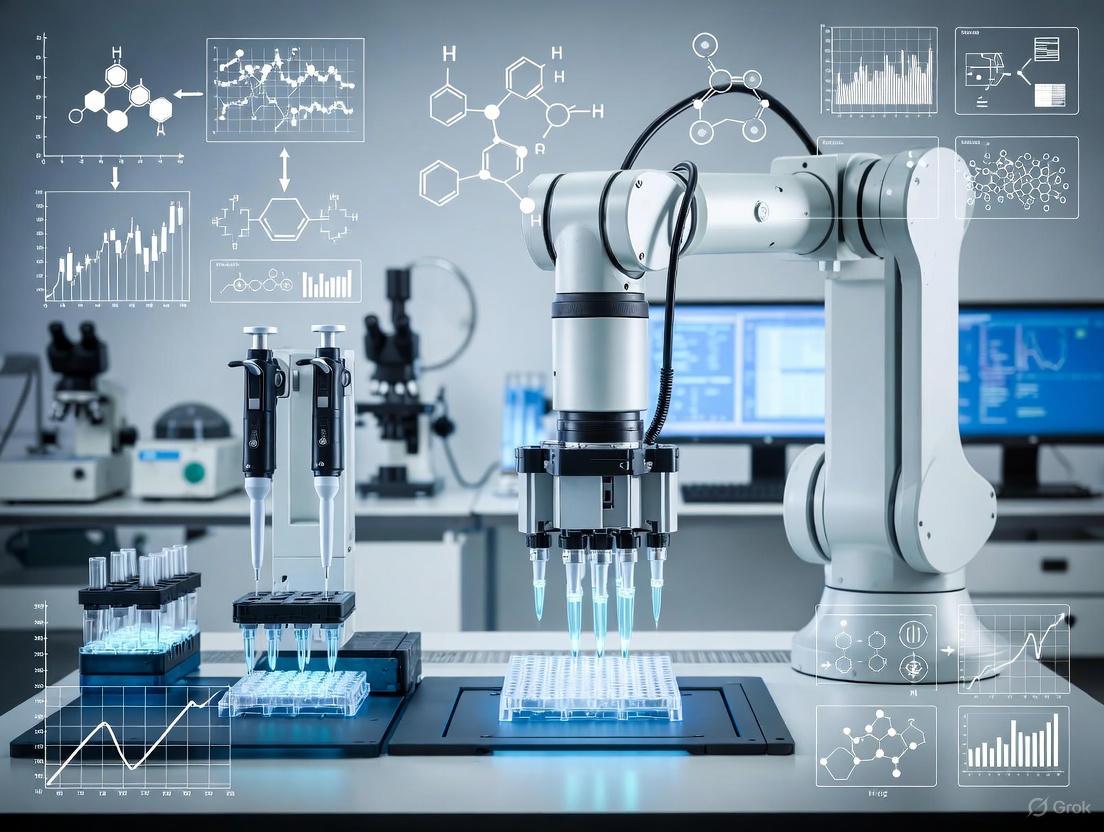
This article provides a comprehensive overview of liquid handling robotics, a cornerstone technology in modern high-throughput screening (HTS) for drug discovery and biomedical research.
Liquid Handling Robotics for High-Throughput Screening: A Guide for Accelerating Drug Discovery
Abstract
This article provides a comprehensive overview of liquid handling robotics, a cornerstone technology in modern high-throughput screening (HTS) for drug discovery and biomedical research. It explores the foundational principles and evolution of these systems, details their critical methodological applications in assays like qHTS, and offers practical troubleshooting and optimization strategies to ensure data integrity. Finally, it examines validation frameworks and future trends, including AI integration and miniaturization, equipping researchers and drug development professionals with the knowledge to enhance their screening operations' efficiency, robustness, and scalability.
The Engine of Discovery: Understanding Liquid Handling Robotics and HTS
The evolution of liquid handling represents a critical trajectory in life sciences research, particularly in high-throughput screening (HTS) for drug discovery. This progression from basic manual tools to sophisticated automated workstations has fundamentally transformed research capabilities, enabling the rapid testing of thousands of compounds [1] [2]. The precision, efficiency, and reproducibility afforded by modern liquid handling systems directly underpin contemporary drug development workflows, facilitating the miniaturization of assays and the reliable identification of biologically active compounds [3] [4]. This application note details the key historical milestones, core methodologies, and essential protocols that have defined this technological evolution, providing researchers with a practical framework for understanding and implementing these critical tools.
Historical Timeline of Key Innovations
The development of liquid handling technology has been marked by several revolutionary innovations, each addressing limitations in precision, safety, and throughput. The following table summarizes these pivotal milestones.
Table 1: Historical Milestones in Liquid Handling
| Time Period | Key Innovation | Inventor/Company | Significance |
|---|---|---|---|
| 1795 | First Buret and Pipet | François Descroizilles [5] | Introduced volumetric analysis to laboratory science. |
| 1889 | Piston-Action Syringe | Martin Overlach [5] [6] | Established the fundamental piston mechanism for modern devices. |
| 1957 | Mechanical Micropipette | Heinrich Schnitger [1] [5] [6] | Spring-loaded piston with disposable plastic tips; ended mouth pipetting. |
| 1960s | Commercial Micropipette | Eppendorf [6] | First industrially manufactured piston-stroke pipette. |
| 1973 | Multi-Channel Pipette | Finnpipette [6] | Enabled parallel processing for microplates (4, 8, 12 channels). |
| 1974 | Adjustable Micropipette | Gilson [5] [6] | Allowed users to mechanically adjust the aspiration volume. |
| Early 1970s | Semi-Automated Digital Dilutor | Hamilton Company [5] | Motorized, syringe-based pipetting with programmable functions. |
| 1980s | First Automated Workstations | Hamilton, Tecan, Zymark [5] | Cartesian robotic platforms with single/multiple washable pipetting channels. |
| 1984 | Electronic Pipette | Rainin [6] | Stepper motor control for improved accuracy and ergonomics. |
| 1990 | 96-Channel Pipettor (QUADRA96) | Tomtec [6] | Ancestor of modern high-throughput liquid handlers. |
| 2000-Present | Robotic Liquid Handlers | Various (e.g., Tecan) [6] | Fully integrated, programmable systems for ultra-high-throughput screening. |
The Scientist's Toolkit: Essential Materials for HTS
Successful High-Throughput Screening relies on a suite of specialized reagents and materials designed for miniaturization, detection, and automation.
Table 2: Essential Research Reagent Solutions for HTS
| Item | Function/Description | Application in HTS |
|---|---|---|
| Microplates | Multi-well plates (96, 384, 1536 wells) that serve as the standardized platform for assays. | The foundational labware for parallel sample processing; enables assay miniaturization [2]. |
| Compound Libraries | Collections of thousands to millions of chemical or biological entities. | The source of "hits" or potential therapeutic candidates in drug discovery screens [4]. |
| Detection Reagents | Reagents that produce a measurable signal (e.g., fluorescent, luminescent, absorbance) upon a biochemical event. | Used to quantify biological activity in assays, such as cell viability or protein-protein interactions [3] [4]. |
| Cell-based Assay Components | Cells, culture media, and additives required for phenotypic or functional whole-cell assays. | Enable screening for compounds that affect cell health, signaling pathways, or gene expression in a more physiologically relevant context [3] [7]. |
| Buffers and Diluents | Aqueous solutions that maintain stable pH and ionic strength. | Essential for reconstituting compounds, diluting samples, and ensuring optimal assay conditions [4]. |
Evolution of Methodologies and Protocols
The shift from manual to automated liquid handling has introduced standardized protocols that ensure reproducibility, precision, and efficiency in HTS workflows.
Manual Pipetting Protocol
While largely superseded by automation for primary screens, manual technique remains crucial for small-scale assays and protocol development.
Detailed Methodology:
- Pre-wetting the Tip: Aspirate the full volume of liquid to be pipetted and dispense it back into the original reservoir. This step humidifies the air inside the tip, ensuring greater volume accuracy [1].
- Forward Pipetting: For aqueous solutions, immerse the tip slightly into the liquid. Slowly and steadily release the plunger to the first stop to aspirate the sample. Dispense the liquid into the target vessel by pressing the plunger to the first stop. A brief pause with the tip against the wall ensures complete drainage. Expel any residual liquid by depressing the plunger to the second, "blow-out" stop [1].
- Reverse Pipetting: For viscous or foamy liquids, depress the plunger to the second stop before aspiration. Dispense the desired volume by pressing only to the first stop. The excess liquid remaining in the tip is then discarded with the tip itself. This method improves accuracy for problematic solutions.
Automated Liquid Handling Protocol for HTS
This protocol outlines a generic workflow for running a cell-based viability screen using a modern robotic liquid handler.
Detailed Methodology:
- System Initialization and Prime:
- Instrument Quality Control (QC):
- Perform a gravimetric or fluorimetric QC test according to the manufacturer's specifications. This verifies the precision and accuracy of the liquid handler's dispensers before the screening run [3].
- Workflow Execution (via Software Scheduler):
- Compound Transfer: Using a 384-channel head, transfer 50 nL of compounds from a source library plate to an assay-ready microplate [2] [7].
- Cell Seeding: Dispense 20 µL of cell suspension into each well of the assay plate using a bulk reagent dispenser.
- Incubation: The robotic arm transfers the plate to an integrated, automated incubator for a set period (e.g., 24 hours) [7].
- Reagent Addition: Post-incubation, the system retrieves the plate and adds 10 µL of a luminescent cell viability reagent (e.g., Cell Titer-Glo).
- Signal Detection: The plate is transferred to an integrated microplate reader to measure luminescence [7].
- Data Acquisition and Analysis:
- The reader software outputs raw data (e.g., Relative Light Units). Data is then processed through an HTS analysis pipeline, normalizing signals to positive and negative controls and calculating compound activity (e.g., % inhibition) [4].
Logical Workflow and Technology Integration
The transition from manual to automated liquid handling is not merely a substitution of tools but a fundamental redesign of the experimental workflow. The following diagram illustrates the logical progression of technologies and their impact on the screening process, highlighting the integration of hardware, software, and data management that defines modern HTS.
Impact on High-Throughput Screening
The advent of automated workstations has fundamentally altered the landscape of HTS. The core benefits are quantified in the following comparison.
Table 3: Quantitative Impact of Liquid Handling Evolution on HTS Parameters
| Parameter | Manual Pipetting | Automated Workstations | Impact on HTS |
|---|---|---|---|
| Throughput (plates/day) | 10-20 [2] | 40-80+ [7] | Enables screening of larger compound libraries, increasing the probability of hit identification. |
| Volume Range | Microliter (µL) [6] | Nanoliter (nL) to Milliliter (mL) [2] | Directly enables assay miniaturization, drastically reducing reagent costs and sample requirements [1]. |
| Precision (CV) | ~5-10% [1] | <5% [1] [2] | Improved data quality and reproducibility, leading to fewer false positives/negatives. |
| Cross-Contamination Risk | Moderate (tip-to-liquid) | Low (disposable tips) to Very Low (non-contact) [2] | Enhances assay reliability and prevents compound carryover. |
| User Intervention | Constant | Minimal ("walk-away" automation) [7] | Frees skilled researchers for data analysis and other complex tasks, optimizing resource use. |
The historical journey from manual pipettes to automated workstations underscores a relentless pursuit of greater precision, efficiency, and reliability in scientific research. This evolution has been a key enabler for high-throughput screening, forming the backbone of modern drug discovery. As technologies like non-contact dispensing, microfluidics, and advanced software integration continue to mature, liquid handling robotics will further propel the frontiers of biological and chemical research, paving the way for more rapid and sophisticated development of novel therapeutics [1] [2].
Within high-throughput screening (HTS) research for drug discovery, the automated liquid handling workstation is fundamental infrastructure [8]. These systems replace manual pipetting to enable the rapid, precise, and reproducible processing of thousands of samples, dramatically accelerating timelines for genomics, proteomics, and pharmaceutical development [9] [10]. This document deconstructs the core components of these workstations, providing detailed application notes and protocols framed within the context of liquid handling robotics for HTS.
Core Components and Technical Specifications
An automated liquid handling workstation integrates several critical subsystems to function as a unified platform for liquid manipulation.
Fluid Dispensing Mechanisms
The dispensing mechanism is the core of the system, dictating its application scope, volume range, and precision.
- Air Displacement Pipetting (ADP): The most common method, using a piston to create air pressure for aspirating and dispensing liquids through disposable tips. It is versatile and suitable for a broad microliter volume range but susceptible to minor inaccuracies from temperature, viscosity, and atmospheric pressure [11].
- Positive Displacement Pumping: Employs a piston in direct contact with the liquid, eliminating air gaps. This method offers superior accuracy for viscous, volatile, or foaming liquids but may have higher consumable costs [11].
- Non-Contact Dispensing: Technologies like acoustic droplet ejection (ADE) use sound waves to transfer nanoliter-picoliter droplets directly from a source plate to a destination plate without physical contact [12] [13]. Peristaltic pumps are another option, using rollers to compress tubing and move fluid, ideal for bulk reagent dispensing with minimal priming [11]. Non-contact methods virtually eliminate cross-contamination and are critical for miniaturized assays [13].
Motility and Deck Architecture
The robotic system provides motility for precise positioning.
- Gantry Systems: Utilize robotic arms or bridges moving in X, Y, and Z axes over a stationary deck. This design offers flexibility for accessing on-deck devices and is common in modular systems [14].
- Cartesian Robots: Employ linear actuators for highly precise and repeatable movement, often found in systems dedicated to specific, high-precision tasks [9].
- Deck Layout: The work surface contains labware nests (positions) for microplates (96-, 384-, 1536-well), reagent reservoirs, tip boxes, and auxiliary modules like washers or heaters [14]. Modern systems feature hybrid decks that can mix dispensing technologies and include dynamic trays for flexible labware movement [12].
Integrated Modules and Accessories
Modern workstations are often hybrid platforms integrating additional automation to create closed-loop workflows.
- Labware Storage Carousels: High-capacity, under-deck storage for microplates and consumables, enabling extended walk-away time [14].
- Collaborative Robotic Arms: Used for off-deck transport of plates and labware, integrating the liquid handler with other instruments like incubators or readers [14].
- On-Deck Modules: Washers, shakers, heater/cooler units, and barcode scanners can be incorporated to perform multi-step assays without manual intervention [14].
Software and Control Systems
The software layer is the "brain" of the operation, transforming the workstation from a siloed robot into a connected data pipeline [12].
- Graphical User Interface (GUI): Allows for intuitive method development through drag-and-drop programming, protocol simulation, and real-time run monitoring [14].
- Scheduling Software: Manages batch processing and resource allocation across multiple instruments, optimizing throughput [14].
- Data Provenance and APIs: Tracks protocol versions, liquid classes, and all run parameters to ensure data integrity and reproducibility. Application Programming Interfaces (APIs) enable seamless communication with Laboratory Information Management Systems (LIMS) and Electronic Lab Notebooks (ELN) [12].
Table 1: Key Technical Specifications of Modern Automated Liquid Handlers
| Component | Specification Options | Key Considerations for HTS |
|---|---|---|
| Dispensing Technology | Air Displacement, Positive Displacement, Acoustic Droplet Ejection, Peristaltic Pump [11] [13] | Volume range, liquid properties (viscosity, volatility), need for miniaturization, contamination risk. |
| Pipetting Channels | 1-, 8-, 96-, 384-, 1536-channel; independent or fixed [9] [14] | Throughput requirements (samples/run), need for variable container formats. |
| Volume Range | Nanoliter (e.g., 4 nL) to Milliliter [13] [14] | Reagent cost, assay miniaturization goals, and compatibility with detection systems. |
| Deck Capacity | Benchtop (e.g., 15 SBS positions) to large stand-alone systems (e.g., 580+ plate storage) [14] | Required walk-away time and integration with other on-deck devices. |
| Software Integration | Proprietary GUI, API for LIMS/ELN, Whole Lab Schedulers (e.g., Cellario) [12] [14] | Need for data traceability, reproducibility, and connection to broader lab automation. |
Experimental Protocols and Quality Control
Robust calibration and validation are non-negotiable for generating reliable HTS data. The following protocol details a standard operating procedure for liquid handler performance verification.
Protocol: Quarterly Performance Verification via Ratiometric Photometry
1. Principle: This method uses a dual-dye photometric system to accurately determine dispensed volumes by measuring the absorbance of two dyes at different wavelengths. One dye serves as the concentration reference, while the other acts as the volume indicator, correcting for path length variations and well-to-well differences in plasticware [15].
2. Applications: Ideal for validating single- and multi-channel pipettes across a wide volume range (1-1000 µL), providing traceable accuracy measurements suitable for regulated environments [15].
3. Research Reagent Solutions Table 2: Essential Reagents for Photometric Calibration
| Item | Function |
|---|---|
| Tartrazine Dye Solution | The active component whose absorbance is measured to correlate with dispensed volume. |
| Blue Reference Dye | Provides an internal reference signal to correct for path length and meniscus effects, improving accuracy. |
| Clear-bottomed Microtiter Plates | Optically clear labware compatible with plate reader absorbance measurements. |
| Calibrated Reference Pipette | A traceably calibrated pipette used to establish the standard curve, traceable to national standards. |
4. Procedure: 1. System Preparation: Power on the liquid handler and plate reader. Allow the photometer to warm up and initialize according to the manufacturer's instructions. 2. Dye and Labware Setup: Place a reservoir of the prepared ratiometric photometry dye solution and a clean, clear-bottomed microtiter plate in their designated nests on the liquid handler deck. 3. Method Programming: On the liquid handler software, program a protocol to aspirate and dispense the target verification volumes (e.g., 1 µL, 10 µL, 100 µL, 200 µL) into designated wells of the microtiter plate. Include enough replicates per volume for statistical significance (n≥8). 4. Dispensing Execution: Run the programmed method. The handler will dispense the dye into the plate. 5. Absorbance Measurement: Transfer the plate to the pre-calibrated photometric plate reader. Measure the absorbance of both the tartrazine and the blue reference dye at their specified wavelengths. 6. Data Analysis: The plate reader software or a dedicated analysis package will use the ratiometric absorbance data to calculate the actual dispensed volume for each well, comparing it to the target volume. It will report key metrics including accuracy (average closeness to target volume) and precision (standard deviation or coefficient of variation of the dispenses) [15].
5. Calibration Technology Comparison Table 3: Comparison of Liquid Handling Calibration Methodologies
| Method | Optimal Volume Range | Measures | Key Advantages | Key Limitations |
|---|---|---|---|---|
| Gravimetry [15] | > 50 µL | Accuracy & Precision | Widely accepted, regulatory recognition (ASTM, ISO), traceable. | Poor resolution at low volumes, sensitive to evaporation & static. |
| Single-Dye Photometry [15] | 1 - 1000 µL | Accuracy & Precision | Good for multichannel devices, less sensitive to environment than gravimetry. | Dye instability, optical quality of plates can affect results. |
| Ratiometric Photometry [15] | 1 - 1000 µL | Accuracy & Precision | High accuracy, corrects for path length, best for multichannel verification. | Higher reagent cost, requires specific dyes and analysis software. |
| Fluorometry [15] | 5 nL - 50 µL | Precision (primarily) | Extreme sensitivity for very low volumes. | Difficult to trace, signal affected by environment, not ideal for accuracy. |
Workflow Integration and Data Management
The true power of an automated workstation is realized when it is integrated into a seamless HTS workflow, from experimental design to data analysis.
The Scientist's Toolkit
Beyond the workstation itself, successful implementation relies on a suite of consumables and reagents.
Table 4: Essential Research Reagent Solutions for HTS Liquid Handling
| Item | Function in HTS Workflow |
|---|---|
| PCR Master Mix | Pre-mixed solution for high-throughput qPCR setup, enabling rapid genomic screening and validation [12]. |
| Assay-Specific Buffers & Substrates | Customized chemical solutions for cell-based, biochemical, or immunoassay (e.g., ELISA) screens to detect target activity [11]. |
| Library Compounds | Collections of thousands to millions of small molecules or biologics stored in plate format, screened against therapeutic targets [8]. |
| Cell Culture Media & Reagents | Solutions for maintaining and preparing cell lines used in phenotypic or cell-based HTS campaigns. |
| High-Purity Water & DMSO | Essential solvents for reconstituting compounds and reagents, where purity is critical to avoid assay interference. |
Defining High-Throughput and Ultra-High-Throughput Screening (HTS/uHTS)
High-Throughput Screening (HTS) is an automated, robotic-based method for scientific discovery, predominantly used in drug discovery and relevant to biology, materials science, and chemistry. It allows researchers to rapidly conduct millions of chemical, genetic, or pharmacological tests to identify active compounds, antibodies, or genes that modulate a specific biomolecular pathway [16] [17]. The results provide starting points for drug design and for understanding the interaction or role of a particular location. Ultra-High-Throughput Screening (uHTS) represents a further advancement in this field, enabling the screening of millions of compounds per day through even greater miniaturization and automation [16] [18]. The adoption of HTS technology is accelerating, with the global market projected to increase at a compound annual growth rate (CAGR) of 10.6% from 2025 to 2029 [19].
The effectiveness of HTS is deeply connected to advancements in liquid handling robotics. These automated systems are critical for sample preparation, reagent addition, and assay setup, enabling the precise, low-volume dispensing necessary for miniaturized assays and ensuring consistent, reproducible data across thousands of samples [20] [21] [18]. Integrated robotic systems transport assay microplates between various stations for sample and reagent addition, mixing, incubation, and final readout [16].
Key Principles and Throughput Comparison
The core principle of HTS is the iterative testing of diverse substances in a common, miniaturized assay format. A screen is typically classified as HTS if it can assay more than 10,000 wells per day [17]. uHTS pushes this boundary significantly, with some systems capable of testing over 100,000, and in some cases up to 100 million, compounds per day [16] [18]. This exponential increase in throughput is largely achieved through advanced microfluidics and the use of high-density microwell plates with volumes as low as 1–2 µL [18].
The table below summarizes the key distinctions between HTS and uHTS:
Table 1: Comparative Analysis of HTS and uHTS Capabilities
| Attribute | HTS | uHTS |
|---|---|---|
| Throughput (assays/day) | 10,000 - 100,000 [17] [18] | >100,000, potentially millions [16] [18] |
| Typical Well Formats | 96, 384, 1536 [16] [22] | 1536, 3456, 6144 [16] [18] |
| Assay Volume | ~5-10 µL [22] | 1-2 µL [18] |
| Complexity & Cost | High | Significantly greater [18] |
| Primary Challenge | Data management, false positives/negatives [18] | Fluid handling, monitoring individual microwells [18] |
A pivotal technique that bridges HTS and uHTS is quantitative HTS (qHTS), a paradigm developed to pharmacologically profile large chemical libraries by generating full concentration-response relationships for each compound. This method yields parameters such as half maximal effective concentration (EC₅₀), maximal response, and Hill coefficient (nH) for the entire library, enabling the assessment of nascent structure-activity relationships (SAR) from the primary screen [16].
Essential Workflows and Protocols
Core HTS Experimental Workflow
The following diagram illustrates the standard end-to-end workflow for an HTS campaign, from initial plate preparation to final hit validation.
Detailed Protocol: Assay Plate Preparation and Screening
This protocol details the critical steps for preparing and running a cell-based HTS assay, a common application in drug discovery [16] [17] [22].
Objective: To identify compounds ("hits") that elicit a desired biological response from a large chemical library using a cell-based assay in a 384-well format.
Materials:
- Liquid Handling Robot: e.g., Agilent Bravo Platform or equivalent [20]
- Stock Compound Plates (library)
- Empty Assay Plates (384-well)
- Cell Line relevant to the biological target (e.g., primary neurons, engineered cell lines) [17] [22]
- Cell Culture Medium and reagents
- Detection Reagents (e.g., fluorescent, luminescent)
- Microplate Reader compatible with the detection method
Procedure:
Assay Plate Replication ("Reformatting"):
- Using the liquid handling robot, transfer a small volume (often nanoliters) of compounds from the stock library plates into the corresponding wells of the empty assay plates [16]. This creates working copies and preserves the original stock.
Cell Seeding:
- Harvest and resuspend the cell line in the appropriate culture medium.
- Program the liquid handler to dispense a uniform volume of cell suspension into every well of the assay plates already containing compounds. The Agilent Bravo platform, for example, is designed for such automated sample preparation for cell-based assays [20].
Incubation:
- Allow the plates to incubate under optimal growth conditions (e.g., 37°C, 5% CO₂) for a predetermined period. This enables the cells to react with the compounds [16].
Signal Detection:
- After incubation, use the integrated robotic system to add detection reagents to the wells [16].
- Transfer the plates to a sensitive detector or microplate reader. The machine will measure the signal (e.g., fluorescence, luminescence) from each well and output a grid of numeric values mapping to the results of each individual test [16].
Data Processing and Hit Identification:
Confirmatory Screening ("Cherrypicking"):
- Based on the primary results, liquid from the source wells identified as "hits" is transferred into new assay plates. The experiment is re-run on this narrowed set of compounds to collect further data, confirming and refining the initial observations [16].
Quality Control and Data Analysis
Key QC Metrics for HTS Assay Validation
Robust quality control is non-negotiable for a successful HTS campaign. The following metrics are used to validate assay performance before initiating a full screen [23].
Table 2: Essential Quality Control Metrics for HTS Assay Validation
| Metric | Definition & Calculation | Acceptance Criteria | Rationale |
|---|---|---|---|
| Z'-Factor | A statistical measure of assay quality that reflects the separation between positive and negative controls. Incorporates both the dynamic range and the data variation [23]. | Z' > 0.5 (Excellent)0.5 - 0.7 (Acceptable)Z' < 0.4 (Requires optimization) [23] | Indicates the assay's robustness and suitability for HTS. A high Z'-factor minimizes the risk of false positives/negatives. |
| Signal-to-Background (S/B) | Ratio of the mean signal of the positive control to the mean signal of the negative control. | A large ratio is desirable, but context-dependent. | Ensures a clear distinction between active and inactive compounds. |
| Coefficient of Variation (CV) | The ratio of the standard deviation to the mean, expressed as a percentage. Measures well-to-well reproducibility. | Typically < 10% [23] | Low CV values indicate consistent assay performance and precise liquid handling across the plate. |
Hit Selection and Data Triage
The process of selecting true "hits" from the massive datasets generated by HTS is critical. For primary screens without replicates, methods like the z-score or Strictly Standardized Mean Difference (SSMD) are used, which capture data variability based on the assumption that every compound has the same variability as a negative reference [16]. However, as outliers are common, robust variants like the z*-score or B-score are often preferred [16]. In confirmatory screens with replicates, SSMD or the t-statistic can be directly applied to estimate variability for each compound [16].
A significant challenge in HTS is the generation of false positives, which can arise from assay interference, chemical reactivity, autofluorescence, or colloidal aggregation [18]. Triage strategies involve cheminformatic filters and machine learning models to rank HTS output and identify compounds with a high probability of being genuine hits [18].
The Scientist's Toolkit: Essential Research Reagents and Materials
The following table details key reagents and materials essential for establishing a robust HTS workflow, particularly for biochemical and cell-based assays.
Table 3: Essential Research Reagent Solutions for HTS
| Item | Function in HTS | Application Notes |
|---|---|---|
| Microtiter Plates | The key labware or testing vessel for HTS assays. Features a grid of small wells to hold reactions [16]. | Available in 96, 384, 1536, 3456, or 6144 wells. Material (e.g., plastic, low-autofluorescence) is chosen based on the detection method [16] [23]. |
| Universal Biochemical Assays | Homogeneous, mix-and-read assays that detect universal enzymatic products (e.g., ADP, AMP, GDP) [23]. | Platforms like the Transcreener assays simplify optimization by applying a single detection technology across diverse enzyme targets (kinases, GTPases, etc.), often achieving Z'-factors > 0.7 [23]. |
| Cell Lines | Biological entities used to conduct experiments in cell-based assays, providing a more physiologically relevant environment [17] [22]. | Includes primary cells (e.g., neurons [17]) and immortalized lines. Stem cell-derived models are increasingly used for toxicity testing [22]. |
| Liquid Handling Tips | Disposable consumables for robotic pipettors for precise transfer of liquid samples and reagents [24]. | A high-consumption item; precision and quality are critical for achieving low CVs. Compatibility with the specific robotic platform is essential [21] [24]. |
| Detection Reagents | Chemicals or kits that generate a measurable signal (e.g., fluorescence, luminescence) in response to a biological event [18]. | Fluorescence-based methods are common due to sensitivity and ease of use. Mass spectrometry is gaining traction for unlabeled biomolecules [18]. |
Decision Pathway for HTS Assay Optimization and Troubleshooting
Even well-designed assays may require optimization. The following decision pathway provides a logical framework for diagnosing and resolving common issues in HTS assay development.
The Critical Role of HTS in Modern Drug Discovery and Chemical Probe Development
High-Throughput Screening (HTS) represents a foundational methodology in modern drug discovery, enabling the rapid experimental testing of hundreds of thousands of chemical or biological compounds against therapeutic targets [22]. This approach has transformed pharmaceutical research by accelerating the identification of lead compounds—those with desired biological activity—while simultaneously providing cell-based alternatives for toxicity testing [25]. The core principle of HTS involves the miniaturization and automation of assays, allowing researchers to conduct millions of biological or chemical tests in significantly reduced timeframes and volumes compared to traditional methods [26].
The implementation of HTS is intrinsically linked to advancements in liquid handling robotics, which provide the precision and reproducibility required for working with microvolumes in high-density plate formats [9]. Modern HTS processes have evolved beyond simple single-concentration screening to Quantitative HTS (qHTS) paradigms, which generate concentration-response data for thousands of compounds simultaneously, offering more robust biological activity assessments and reduced false-positive rates [25]. The ongoing trend toward further miniaturization and automation continues to push the boundaries of screening capabilities, with ultra-high-throughput screening (uHTS) platforms now capable of testing over 100,000 compounds per day [22].
HTS Technological Foundations and Liquid Handling
Evolution of Liquid Handling Systems
The development of HTS has been enabled by sophisticated liquid handling technologies that allow precise manipulation of increasingly smaller fluid volumes. The historical progression began with simple mechanical devices like burettes and pipettes in the late 18th century, evolved through the first micro-volume syringes in the mid-20th century, and culminated in today's fully automated robotic systems [9]. Modern liquid handlers represent a critical component of the HTS infrastructure, with capabilities ranging from benchtop units for smaller laboratories to industrial-scale robots for pharmaceutical screening operations.
Contemporary liquid handling robotics address fundamental challenges in HTS implementation through several key features. These systems provide unmatched precision in fluid transfer, essential for assay reproducibility and reliability [9]. Their capability for high-density parallel processing enables simultaneous transfer of 96, 384, or even 1536 separate microvolumes, dramatically increasing throughput while reducing reagent consumption [9]. The automation of repetitive tasks minimizes human error and frees highly skilled personnel for more complex analytical work, while closed-case environments with HEPA filtration maintain sterile conditions and prevent contamination during extended screening campaigns [9].
Microplate Platforms and Detection Systems
The standardization of microplate formats has been instrumental in HTS evolution. While early screening utilized 96-well plates, current systems predominantly employ 384-well and 1536-well formats, with total assay volumes typically ranging from 5-10 μL [22]. This miniaturization trend continues, with emerging 3456-well platforms requiring only 1-2 μL total volume, though these ultra-high-density formats present technical challenges related to evaporation, meniscus effects, and signal detection [22].
Advanced detection methodologies form another critical technological pillar for HTS. Techniques such as fluorescence resonance energy transfer (FRET) and homogeneous time-resolved fluorescence (HTRF) enable highly sensitive measurement of molecular interactions in miniaturized formats [22]. These detection methods are particularly valuable in cell-based assays, where they can monitor intracellular events and complex phenotypic responses without requiring disruptive processing steps. The integration of these detection technologies with automated liquid handling creates a seamless workflow from compound addition to data acquisition.
Quantitative HTS (qHTS) and Data Analysis
The Hill Equation in Concentration-Response Analysis
Quantitative HTS represents a significant advancement over traditional single-concentration screening by generating complete concentration-response relationships for large compound libraries. The Hill equation (HEQN) serves as the primary model for analyzing these relationships in qHTS applications [25]. The logistic form of this equation is expressed as:
[ Ri = E0 + \frac{(E\infty - E0)}{1 + \exp{-h[\log Ci - \log AC{50}]}} ]
Where:
- ( Ri ) = measured response at concentration ( Ci )
- ( E_0 ) = baseline response
- ( E_\infty ) = maximal response
- ( AC_{50} ) = concentration producing half-maximal response
- ( h ) = shape parameter (Hill slope)
The parameters derived from this model, particularly ( AC{50} ) (potency) and ( E{max} ) (efficacy, calculated as ( E\infty - E0 )), provide critical information for prioritizing compounds in drug discovery pipelines [25].
Statistical Considerations and Quality Assessment
The analysis of qHTS data presents unique statistical challenges, as parameter estimates from nonlinear models like the Hill equation can exhibit substantial variability under certain experimental conditions [25]. Key factors affecting parameter estimation reliability include the range of tested concentrations relative to asymptotes, response variability (heteroscedasticity), and concentration spacing [25]. Research has demonstrated that ( AC_{50} ) estimates show poor repeatability when concentration ranges fail to establish at least one asymptote, with confidence intervals sometimes spanning several orders of magnitude [25].
Table 1: Impact of Experimental Replication on Parameter Estimation Precision in Simulated qHTS Data
| True AC₅₀ (μM) | True Eₘₐₓ (%) | Sample Size (n) | Mean [95% CI] for AC₅₀ Estimates | Mean [95% CI] for Eₘₐₓ Estimates |
|---|---|---|---|---|
| 0.001 | 25 | 1 | 7.92e-05 [4.26e-13, 1.47e+04] | 1.51e+03 [-2.85e+03, 3.1e+03] |
| 0.001 | 25 | 5 | 7.24e-05 [1.13e-09, 4.63] | 26.08 [-16.82, 68.98] |
| 0.001 | 50 | 1 | 6.18e-05 [4.69e-10, 8.14] | 50.21 [45.77, 54.74] |
| 0.001 | 50 | 5 | 2.91e-04 [5.84e-07, 0.15] | 50.05 [47.54, 52.57] |
| 0.1 | 25 | 1 | 0.09 [1.82e-05, 418.28] | 97.14 [-157.31, 223.48] |
| 0.1 | 25 | 5 | 0.10 [0.05, 0.20] | 24.78 [-4.71, 54.26] |
As illustrated in Table 1, increasing replication significantly improves parameter estimation precision, particularly for challenging curve shapes where asymptotes are poorly defined [25]. This highlights the importance of adequate experimental design in qHTS campaigns.
For robust quality assessment in HTS operations, statistical metrics such as the Z'-factor provide standardized measures of assay quality. A protocol established for screening L-rhamnose isomerase variants reported a Z'-factor of 0.449, signal window (SW) of 5.288, and assay variability ratio (AVR) of 0.551, meeting acceptance criteria for high-quality HTS assays [27]. These statistical tools enable objective assessment of screening readiness and ongoing quality control during large-scale screening operations.
Experimental Protocols and Applications
HTS Protocol for Enzyme Engineering: L-Rhamnose Isomerase Case Study
Directed evolution represents a powerful application of HTS in protein engineering, where large mutant libraries require efficient screening for desired functionalities. The following protocol outlines a robust HTS method developed for identifying high-activity L-rhamnose isomerase (L-RI) variants [27]:
Primary Screening Workflow:
Reagent Preparation:
- Prepare L-RI assay buffer (50 mM Tris-HCl, pH 7.5, containing 5 mM MnCl₂)
- Prepare substrate solution: 100 mM D-allulose in assay buffer
- Prepare Seliwanoff's reagent: 0.1% resorcinol in 90% ethanol/10% HCl (v/v)
Procedure:
- Protein Expression: Transform mutant library into expression host and culture in 96-deep well plates for 24-48 hours with appropriate induction.
- Cell Harvest: Centrifuge plates at 3,000 × g for 15 minutes and carefully remove supernatant.
- Cell Lysis: Resuspend cell pellets in lysis buffer (50 mM Tris-HCl, pH 7.5, 1 mg/mL lysozyme) and incubate with shaking for 1 hour at 37°C.
- Clarification: Centrifuge plates at 4,000 × g for 20 minutes to remove cell debris. Transfer supernatant containing soluble enzyme to new plates.
- Enzyme Reaction: Mix 10 μL clarified lysate with 40 μL substrate solution in fresh 96-well plates. Incubate at 60°C for 30 minutes.
- Colorimetric Detection: Add 100 μL Seliwanoff's reagent to each well. Incubate at 80°C for 20 minutes to develop color.
- Signal Measurement: Read absorbance at 560 nm using a plate reader. Higher activity correlates with decreased signal due to D-allulose consumption.
Validation: This protocol demonstrated excellent correlation with HPLC measurements (R² > 0.95), confirming its accuracy for quantifying D-allulose depletion and identifying active variants [27].
Research Reagent Solutions for HTS
Table 2: Essential Research Reagents and Materials for HTS Operations
| Reagent/Material | Function in HTS | Specifications |
|---|---|---|
| Microplates | Reaction vessels for assays | 96-well to 1536-well formats; working volumes of 2.5-10 μL [22] |
| Liquid Handling Robots | Precise reagent dispensing | Automated systems capable of handling 96-1536 volumes simultaneously [9] |
| Detection Reagents | Signal generation for activity readouts | Fluorescent (FRET, HTRF) or colorimetric (Seliwanoff's) reagents [22] [27] |
| Cell Lines | Biological context for phenotypic screening | 2D monolayer cultures in microtiter plates; stem cell-derived models [22] |
| Enzyme Preparations | Targets for biochemical screening | High-purity, optimized enzymes (e.g., tyrosine kinase) free of contaminants [22] |
| Aptamers | Specific binding reagents | Nucleic acids with high affinity for protein targets; compatible with various detection strategies [22] |
| Compound Libraries | Source of chemical diversity for screening | Thousands to millions of small molecules, natural products, or synthetic compounds [22] |
HTS in Toxicology and Safety Assessment
The application of HTS in toxicological screening has created powerful paradigms for early safety assessment in drug development. Traditional animal testing approaches are increasingly supplemented or replaced by high-throughput in vitro models that provide human-relevant toxicity data with greater speed and reduced costs [22]. Modern toxicology HTS utilizes cellular microarrays, human stem cell-derived models (hESC and iPSC), and computational approaches to evaluate compound effects on various toxicity endpoints.
Key applications include:
- Genotoxicity screening for DNA damage potential
- Cytotoxicity assessment across multiple cell types
- Metabolic stability and drug-drug interaction profiling
- Organ-specific toxicity models (hepatotoxicity, cardiotoxicity)
- Pharmacokinetic parameter estimation (ADME properties)
These approaches enable the examination of chemical toxicity with only 1-3 mg of compound, significantly reducing resource requirements compared to traditional toxicology studies [22]. The integration of HTS toxicology data with in silico methods, including quantitative structure-activity relationship (QSAR) modeling and computational toxicology, creates a comprehensive safety assessment framework that informs early drug discovery decisions [22].
High-Throughput Screening has fundamentally transformed modern drug discovery by enabling the systematic evaluation of chemical and biological compound libraries at unprecedented scales. The integration of advanced liquid handling robotics with sophisticated assay technologies and data analysis methods has created a powerful platform for identifying novel therapeutic agents and chemical probes. The evolution from simple single-concentration screening to quantitative HTS approaches has further enhanced the quality and information content of screening data, supporting more informed decision-making in early drug discovery.
Future developments in HTS technology will likely focus on several key areas. The ongoing miniaturization of assay formats will continue to reduce reagent consumption and increase throughput, while artificial intelligence and machine learning applications will enhance data analysis and predictive modeling capabilities [22]. The integration of complex biological models, including 3D tissue cultures and organ-on-a-chip systems, will improve the physiological relevance of screening outcomes [22]. Additionally, the convergence of HTS with synthetic biology and gene editing technologies will enable more sophisticated interrogation of biological systems and therapeutic mechanisms.
As these technological advances mature, HTS will continue to play a critical role in addressing the fundamental challenges of modern drug discovery, providing the foundational data necessary to translate basic biological insights into innovative therapeutic strategies. The continued refinement of HTS methodologies promises to further accelerate this translation while improving the efficiency and success rates of the drug development process.
The global laboratory environment is undergoing a profound transformation, driven by the rapid adoption of automation technologies. In the context of high-throughput screening (HTS) for drug discovery, automation has evolved from a luxury to a critical necessity. The push toward lab automation is fueled by the convergence of several powerful market trends and drivers, including the escalating demand for efficiency in pharmaceutical research, technological advancements in robotics and artificial intelligence (AI), and growing economic pressures to accelerate therapeutic development [28]. This application note examines these core trends and provides a detailed experimental protocol for implementing an automated liquid handling workflow, specifically framed within a thesis on liquid handling robotics for HTS research. The integration of automated systems is redefining the possibilities of screening throughput, data quality, and operational efficiency in modern research laboratories.
The lab automation market is experiencing robust growth, projected to continue on an upward trajectory through the next decade. This expansion is underpinned by significant investments in pharmaceutical and biotechnology R&D, alongside the urgent need for operational efficiency in diagnostics and research.
Table 1: Global Lab Automation Market Size and Growth Projections
| Report Source | Base Year/Value | Projected Year/Value | Compound Annual Growth Rate (CAGR) |
|---|---|---|---|
| Precedence Research [29] | USD 8.36 Billion (2025) | USD 14.78 Billion (2034) | 6.55% (2025-2034) |
| MarketsandMarkets [30] | USD 6.36 Billion (2025) | USD 9.01 Billion (2030) | 7.2% (2025-2030) |
| ResearchAndMarkets.com [31] | USD 6.5 Billion (2025) | USD 16 Billion (2035) | 9.4% (2025-2035) |
Regional analysis reveals that North America currently holds the dominant market share, valued at USD 2.79 billion in 2024 and accounting for approximately 38-40.5% of the global market [29] [30]. This leadership is attributed to a well-established healthcare and pharmaceutical sector, significant R&D expenditures, and early adoption of advanced technologies like AI and robotics. However, the Asia-Pacific region is identified as the fastest-growing market, driven by government initiatives, a flourishing pharmaceutical industry, and increasing investments in healthcare infrastructure [29] [32].
Table 2: Key Market Drivers and Their Impact on High-Throughput Screening
| Market Driver | Description | Impact on HTS and Liquid Handling |
|---|---|---|
| Demand for Efficiency in Drug Discovery | Need to accelerate the identification and validation of drug candidates [30]. | Directly fuels the adoption of high-throughput screening and automated liquid handlers to test thousands of compounds rapidly [9]. |
| Shortage of Skilled Personnel | Growing gap between demand for lab technicians and available supply [30] [32]. | Automation mitigates workforce shortages by handling repetitive tasks, allowing scientists to focus on higher-value analysis [29]. |
| Technological Advancements | Convergence of robotics, AI, IoT, and cloud computing [29] [28]. | Enhances capabilities of liquid handlers; enables predictive analytics, workflow optimization, and real-time decision-making [32]. |
| Focus on Precision and Reproducibility | Need to minimize human error, which accounts for 30-86% of pre-analytical mistakes [31]. | Automated liquid handling provides unparalleled consistency and accuracy in assay setup, which is crucial for reliable screening data [33]. |
| Growth in Biopharmaceutical Sectors | Expansion of biotech and pharma industries in emerging economies [30]. | Creates new, vast opportunities for lab automation companies as these regions scale up their research capabilities. |
Laboratory Protocols: Automated Compound Screening for Drug Discovery
Background and Principle
High-Throughput Screening (HTS) is a foundational technique in modern drug discovery, enabling the rapid testing of thousands of chemical compounds against a biological target to identify potential therapeutic leads [33]. The core principle involves miniaturizing and automating assays to process vast compound libraries efficiently. The success of an HTS campaign is critically dependent on the precision, accuracy, and reproducibility of liquid handling, which is achieved through automated liquid handling instruments [9]. This protocol details a cell-based assay for identifying compounds that modulate a specific protein target's activity, utilizing a 384-well plate format and an automated robotic liquid handler.
Materials and Reagent Solutions
Table 3: Research Reagent Solutions and Essential Materials
| Item | Function/Description |
|---|---|
| Cell Line | Genetically engineered cell line expressing the target of interest and a corresponding reporter gene (e.g., luciferase). |
| Compound Library | A curated collection of thousands of small molecules dissolved in DMSO, stored in 96-well or 384-well source plates. |
| Assay Reagents | Cell culture medium, reporter assay substrate (e.g., luciferin), and lysis buffer. |
| Microplates | 384-well sterile, tissue-culture treated, white-walled plates for optimal luminescence signal detection. |
| Automated Liquid Handler | A robotic system (e.g., from manufacturers like Tecan, Beckman Coulter, or PerkinElmer) capable of handling 384-well plates [30]. |
| Multichannel Pipette (Electronic) | For semi-automated reagent dispensing during intermediary steps, if required. |
| Plate Centrifuge | To remove bubbles and ensure all liquid is at the bottom of the wells post-dispensing. |
| Multimode Microplate Reader | Instrument capable of detecting luminescence or fluorescence to quantify the assay endpoint. |
Experimental Workflow and Procedure
Workflow Preparation:
- Cell Preparation: Harvest and resuspend the engineered cell line in fresh culture medium to a pre-optimized, log-phase density (e.g., 50,000 cells/mL).
- Reagent Preparation: Thaw and prepare all assay reagents according to manufacturer specifications. Ensure the compound library plates are thawed and briefly centrifuged to collect liquid at the bottom of the wells.
- Instrument Setup: Power on the automated liquid handler and microplate reader. Sterilize the robotic deck and any pipetting tips. Load the necessary labware: tip boxes, source compound plates, empty 384-well assay plates, and reagent reservoirs.
Automated Liquid Handling Protocol:
- Step 1: Compound Transfer. Using the robotic liquid handler, transfer a nanoliter-scale volume (e.g., 50 nL) of each compound from the source library plates to the corresponding wells of the 384-well assay plates. Controls must be included: positive control (wells with a known inhibitor/activator) and negative control (wells with DMSO only).
- Diagram 1: Automated HTS Screening Workflow
- Step 2: Cell Seeding. Dispense a uniform volume (e.g., 40 μL) of the prepared cell suspension into all wells of the assay plate using the liquid handler's bulk reagent dispensing function.
- Step 3: Incubation. Carefully transfer the assay plates from the robotic deck to a humidified CO₂ incubator maintained at 37°C. Incubate for the predetermined period (e.g., 24-48 hours) to allow for compound-cell interaction and reporter signal development.
- Step 4: Assay Reagent Addition. Following incubation, return the plates to the liquid handler. Dispense a pre-defined volume (e.g., 10 μL) of the detection reagent mix (e.g., luciferin + lysis buffer) to all wells.
- Step 5: Signal Detection. After a suitable development time, load the plates into the multimode microplate reader to measure the luminescence signal in each well.
Data Analysis:
- Transfer the raw luminescence data to an analysis software package.
- Normalize the data for each plate: Compound activity is typically expressed as percentage inhibition or activation relative to the positive and negative controls on the same plate.
- Calculate the Z'-factor for each plate to confirm the assay's robustness and quality. A Z'-factor > 0.5 is generally indicative of an excellent assay suitable for HTS [34].
- Identify "hits" – compounds that produce a signal statistically significantly above a predefined threshold (e.g., >3 standard deviations from the mean of the negative control).
Technology Integration and Strategic Implementation
The evolution of lab automation is characterized by the deep integration of disparate technologies, creating intelligent and connected laboratory ecosystems. This synergy is a key driver enhancing the capabilities of core instruments like liquid handling robots.
Diagram 2: Technology Integration in Modern Lab Automation
Artificial Intelligence and Machine Learning: AI algorithms are revolutionizing HTS by optimizing liquid handling protocols in real-time, analyzing complex datasets to identify subtle patterns in screening results, and predicting potential false positives caused by compound interference [32] [28]. This transforms the liquid handler from a simple executor of tasks into an intelligent component of the research process.
Internet of Things (IoT) and Cloud Computing: IoT connectivity allows for the remote monitoring of automated liquid handlers, tracking instrument performance, and ensuring environmental conditions are maintained. Cloud platforms facilitate the seamless sharing of large HTS datasets across global research teams and enable the integration of data from liquid handlers, plate readers, and other instruments into a unified digital record [29] [28].
For research institutions seeking to implement or expand automation, a strategic approach is critical. Key considerations include starting with modular automation systems that offer scalability, focusing on specific bottlenecks like sample preparation or assay setup, and investing in training to upskill staff [29] [28]. A thorough evaluation of the total cost of ownership, including maintenance and software updates, is essential for a sustainable automation strategy.
The push towards lab automation is an undeniable and powerful force reshaping the landscape of scientific research, particularly in high-throughput screening. The convergence of market drivers—including the relentless pursuit of efficiency in drug discovery, technological advancements in AI and robotics, and the critical need for precision and reproducibility—guarantees that this trend will continue to accelerate. For researchers and drug development professionals, mastering and implementing automated liquid handling protocols is no longer a specialized skill but a core competency. The integration of these automated systems, supported by robust data analytics and intelligent software, empowers laboratories to unlock new levels of throughput and reliability, ultimately accelerating the pace of scientific discovery and therapeutic development.
From Theory to Practice: Implementing HTS Assays with Liquid Handling Robots
Quantitative High-Throughput Screening (qHTS) represents a significant advancement over traditional HTS by screening complete compound libraries across multiple concentrations to generate full concentration-response profiles for each substance [35]. This approach enables the construction of concentration-response curves directly from primary screens, providing robust potency estimates (such as AC50) and efficacy data for every compound tested [36]. Implemented within initiatives like the NIH Molecular Libraries Program and Tox21, qHTS has become foundational for chemical genomics and toxicological assessment, allowing for more reliable hit identification and reducing the frequency of false negatives common in single-concentration screening [35] [36]. The methodology depends critically on sophisticated compound management and automated liquid handling systems capable of preparing inter-plate titration series in high-density microplate formats [35].
Traditional HTS methods typically test compounds at a single concentration, providing limited activity data that necessitates extensive follow-up testing to obtain potency measures. In contrast, qHTS assays generate full concentration-response curves for each compound during the primary screen, transforming how researchers assess chemical activity and prioritize hits for further development [36]. This paradigm shift has been particularly valuable in toxicological assessment and drug discovery, where potency estimates derived from qHTS play crucial roles in predictive cheminformatics, in vivo activity modeling, and chemical prioritization for targeted testing [36].
The successful implementation of qHTS depends on integrating three critical components: advanced compound management practices to create inter-plate dilution series, automated liquid handling systems to ensure precision and reproducibility across vast compound libraries, and robust statistical methods for quality control and data analysis [35]. These elements collectively address the substantial technical challenges involved in testing thousands of compounds across multiple concentrations while maintaining data quality and reliability.
Key Principles and Methodologies
Core Concept of Inter-Plate Titrations
The fundamental innovation of qHTS involves creating vertically developed plate dilution series where each compound is tested across a range of concentrations distributed across multiple assay plates [35]. This inter-plate titration approach differs fundamentally from traditional methods by:
- Concentration-Response Profiling: Testing each compound at 4-16 concentrations typically spanning 4-5 orders of magnitude to adequately define curve parameters.
- Efficient Plate Design: Organizing dilution series such that concentration gradients are maintained across plate boundaries, enabling efficient screening of large compound collections.
- Data Richness: Generating complete pharmacological profiles (efficacy, potency, curve shape) for every compound directly from the primary screen.
This methodology minimizes the need for follow-up concentration-response testing and provides significantly more information for structure-activity relationship (SAR) analyses early in the screening process [35].
Compound Management for qHTS
Effective compound management forms the foundation of successful qHTS operations, requiring specialized processes for compound storage, replication, and assay plate preparation:
Table 1: Compound Management Specifications for qHTS
| Aspect | Specification | Application in qHTS |
|---|---|---|
| Library Scale | >200,000 compounds [35] | Enables comprehensive screening of diverse chemical space |
| Plate Formats | 384-well and 1536-well plates [35] | Balances assay volume requirements with screening throughput |
| Dilution Scheme | Inter-plate titration series [35] | Creates concentration-response profiles across plate boundaries |
| Storage & Tracking | Automated plate registration and barcoding [35] | Maintains integrity of concentration series and sample history |
The compound management system must remain flexible to accommodate evolving screening paradigms while ensuring reliability for downstream processes [35]. This includes implementing robust quality control measures for compound dissolution, dilution, and plate replication to maintain data integrity throughout the screening workflow.
Essential Research Reagent Solutions
Successful qHTS implementation requires specific materials and instrumentation to manage the complex workflows involved in screening multi-concentration compound libraries.
Table 2: Essential Research Reagent Solutions for qHTS
| Item | Function | Application Notes |
|---|---|---|
| Automated Liquid Handlers | Precision transfer of compounds and reagents [37] | Essential for preparing inter-plate dilution series; utilizes air-displacement or positive-displacement technologies |
| High-Density Microplates | Platform for compound storage and screening [35] | 384-well and 1536-well formats standard; must maintain compound integrity during storage |
| Compound Libraries | Source of chemical diversity for screening [35] | Collections of >200,000 small molecules; require proper solubilization in DMSO and storage at -80°C |
| Assay Reagents | Biological components for target engagement | Cell lines, enzymes, or proteins specific to the target pathway; optimized for miniaturized formats |
| Detection Reagents | Signal generation for activity measurement | Fluorescent, luminescent, or colorimetric probes compatible with high-density formats and automated readers |
Experimental Protocols
Compound Management and Plate Preparation Protocol
The preparation of inter-plate titration series requires meticulous execution of multi-step processes to ensure data quality:
Step 1: Compound Library Reformating
- Transfer compounds from source plates to working stock plates in 384-well format using automated liquid handlers.
- Utilize concentration normalization to ensure consistent starting concentrations across the library.
- Verify liquid handling precision through质量控制 checks using control compounds.
Step 2: Inter-Plate Dilution Series Creation
- Perform serial dilutions across multiple daughter plates to create the concentration gradient.
- Employ pin tools or acoustic dispensers for nanoliter-range transfers in 1536-well formats.
- Implement compression algorithms to map 384-well dilution series into 1536-well assay plates.
Step 3: Assay Plate Quality Control
- Verify proper dilution scheme implementation through control compounds with known response profiles.
- Assess plate uniformity using control wells distributed across each plate.
- Register and barcode all plates in the laboratory information management system (LIMS) to track plate storage location and usage history [35].
This workflow demands specialized equipment capable of automated, reliable, and parallel compound manipulation in both 384- and 1536-well formats to achieve the necessary throughput and precision [35].
qHTS Data Analysis and Quality Control Protocol
The CASANOVA (Cluster Analysis by Subgroups using ANOVA) method provides a systematic approach for quality control of qHTS data:
Step 1: Concentration-Response Modeling
- Fit appropriate nonlinear regression models (e.g., sigmoidal Hill model) to each concentration-response profile.
- Estimate potency parameters (AC50), efficacy (maximal response), and curve characteristics for each replicate.
- Apply robust statistical modeling to account for heteroscedastic responses and outliers [36].
Step 2: Cluster Analysis by Subgroups using ANOVA (CASANOVA)
- Perform ANOVA to identify compounds with multiple cluster response patterns across experimental repeats.
- Calculate F-statistics to determine if response patterns segregate into statistically supported subgroups.
- Flag compounds with inconsistent response patterns where potency estimates (AC50) vary considerably (e.g., from 3.93 × 10^-10 to 19.57 μM as observed in some cases) [36].
Step 3: Potency Estimation for Quality-Controlled Data
- Apply weighted averaging approaches to derive overall potency estimates for compounds with single-cluster responses.
- Exclude or flag compounds with multiple cluster patterns from downstream analyses due to unreliable potency estimates.
- Document quality control metrics including error rates for incorrect cluster separation (<5%) and incorrect cluster clumping (<5%) based on extensive simulation studies [36].
This quality control procedure is essential for identifying compounds with "inconsistent" response patterns, thereby improving the reliability of potency estimates used in downstream applications [36].
Workflow Visualization
Diagram 1: qHTS experimental workflow from compound management to data analysis.
Diagram 2: qHTS data quality control process using CASANOVA method.
Applications and Impact
qHTS has transformed early-stage compound screening and toxicological assessment through its comprehensive data generation capabilities. Key applications include:
- Toxicological Prioritization: The Tox21 consortium, a collaboration between EPA, NCATS, FDA, and NTP, utilizes qHTS to screen thousands of environmental chemicals for potential adverse effects, prioritizing substances for more extensive toxicological evaluation [36].
- Drug Discovery: Pharmaceutical applications leverage qHTS for phenotypic screening, genome-wide association mapping, and prediction modeling to identify novel therapeutic leads with robust potency and efficacy data [36].
- Predictive Modeling: Potency estimates (AC50) derived from qHTS assays form the basis for predictive cheminformatics models, in vivo activity prediction, and in vitro-to-in vivo extrapolation (IVIVE) pharmacokinetic modeling [36].
The implementation of qHTS has addressed fundamental limitations of traditional HTS by minimizing false negative calls and providing rich datasets that support more informed decision-making in chemical prioritization and development [36].
Technical Considerations and Challenges
Liquid Handling Automation Requirements
Automated liquid handlers (ALHs) form the backbone of qHTS operations, requiring specific capabilities to support the demanding workflow:
- Precision and Accuracy: Must handle volumes from nanoliters to milliliters with minimal variance to maintain dilution series integrity [37].
- Throughput Capabilities: Systems like the CyBio Well vario capable of handling up to 1536 channels simultaneously enable processing of large compound libraries within feasible timeframes [37].
- Flexibility and Modularity: Platforms such as the CyBio FeliX series offer modular configurations adaptable to various workflow requirements from basic dilution to complex assay preparation [37].
- Integration Capabilities: Seamless connection with laboratory information management systems (LIMS) and other instrumentation ensures full process traceability and regulatory compliance [37].
Data Quality and Consistency Challenges
The analysis of qHTS data presents unique challenges that require specialized statistical approaches:
- Response Pattern Consistency: Only approximately 20% of compounds with response values outside the noise band demonstrate single cluster responses across replicates, highlighting the importance of rigorous quality control [36].
- Potency Estimate Reliability: The wide variance in AC50 estimates for compounds with multiple cluster patterns (sometimes spanning 8 orders of magnitude) necessitates careful data curation before downstream application [36].
- Experimental Artifacts: Factors including chemical supplier, compound purity, concentration-spacing, and institutional site preparation can systematically influence response trajectories, potentially confounding results [36].
The implementation of systematic quality control procedures like CASANOVA addresses these challenges by identifying compounds with inconsistent response patterns and improving the trustworthiness of potency estimates used in subsequent analyses [36].
Application Notes
High-Throughput Screening (HTS) is an automated, robust process essential for modern drug discovery, enabling the rapid testing of hundreds of thousands of compounds against biological targets in miniaturized formats [38] [39]. The choice between biochemical, cell-based, and profiling assays is fundamental, each offering distinct advantages for interrogating different biological questions. The core principle of HTS involves parallel processing using 96-, 384-, or 1536-well microplates, coupled with robotics, sensitive detectors, and data-processing software to identify active compounds, or "hits," from extensive libraries [38] [40]. Success in these endeavors relies on rigorous assay validation, typically measured by metrics such as the Z'-factor, which should be between 0.5 and 1.0 for an excellent assay [39].
Biochemical Assays
Biochemical assays investigate molecular interactions in a purified, cell-free system. They are designed to measure direct effects on enzymatic activity or receptor binding, providing a controlled environment for probing specific targets like kinases, GTPases, or proteases [39]. A key advantage is their well-defined nature, which simplifies data interpretation and minimizes confounding variables. This makes them ideal for initial, high-volume screening campaigns aimed at finding inhibitors or activators of a particular protein. However, a potential limitation is that they may not fully capture the complexity of a cellular environment, including membrane permeability and metabolic activity [38] [39].
Cell-Based Assays
Cell-based assays conduct screens in a living cellular context, more closely mimicking a physiological state [38]. These assays can range from simple viability readouts to complex reporter gene assays, such as the ATAD5-luciferase assay developed to identify genotoxic compounds by exploiting the stabilization of the ATAD5 protein following DNA damage [38]. Their primary strength is the ability to identify compounds that can permeate cellular membranes and affect a biological pathway or phenotype, thereby providing immediate functional data. They are generally less costly and time-consuming than biochemical assays as they do not require target protein purification. A consideration is that they may require more complex secondary screens to identify the specific cellular target due to the presence of multiple potential targets [38]. Emerging trends in this area include the use of 3D cell cultures and patient-derived organoids, which offer even more physiologically relevant models for studying complex disease mechanisms and drug responses [41].
Profiling Assays
Profiling assays represent a more advanced application of HTS, focusing on the multiparametric characterization of compound effects. This category includes high-content screening (HCS), which uses automated imaging and analysis to capture complex phenotypic changes in cells, such as morphology, protein localization, and biomarker induction [41]. A significant evolution in this field is Quantitative HTS (qHTS), which tests each compound at multiple concentrations to generate full concentration-response curves (CRCs) for a large number of compounds simultaneously. This approach mitigates the high false-positive and false-negative rates of traditional single-concentration HTS and provides a rich dataset for profiling compound potency and efficacy [42] [25]. These assays are crucial for triaging hits, understanding mechanisms of action, and assessing selectivity and potential toxicity early in the discovery process.
Table 1: Key Characteristics of Common HTS Assay Types
| Assay Type | Core Principle | Primary Applications | Key Advantages | Common Readouts |
|---|---|---|---|---|
| Biochemical | Measures activity of purified targets (e.g., enzymes, receptors) [39]. | Target-based drug discovery; enzyme inhibition/activation studies [39]. | High controllability; simple interpretation; high throughput [39]. | Fluorescence Polarization (FP), TR-FRET, Absorbance, Luminescence [39] [42]. |
| Cell-Based | Screens conducted in living cells to measure functional responses [38]. | Phenotypic screening; genotoxicity; pathway analysis; overcoming chemoresistance [38]. | Physiological context; accounts for cell permeability and metabolism [38]. | Reporter gene assays (Luciferase, GFP), cell viability, second messenger signaling [38] [42]. |
| Profiling (qHTS/HCS) | Multiparametric analysis and concentration-response profiling [42] [41]. | Mechanism of action studies; toxicity prediction; lead optimization [41] [25]. | Rich data output; lower false-positive rates; detailed efficacy/potency data [42] [25]. | High-content imaging, multi-concentration CRCs, automated image analysis [42] [41]. |
Experimental Protocols
The following protocols are generalized for execution on an automated liquid handling robotics platform, such as the integrated system described at the NIH's Chemical Genomics Center (NCGC) [42]. These systems typically encompass robotic arms, plate carousels, liquid dispensers, incubators, and plate readers, all controlled by scheduling software for walk-away operation.
Protocol 1: Biochemical Kinase Assay using a Universal Detection Method
This protocol details a homogeneous, "mix-and-read" biochemical assay to identify kinase inhibitors, adaptable for a 1536-well plate format.
I. Research Reagent Solutions
- Kinase Enzyme: Recombinant, purified kinase of interest.
- Substrate: A peptide or protein substrate specific to the kinase.
- ATP Solution: Prepared in assay buffer at a concentration near the KM.
- Test Compound Library: Dissolved in DMSO and pre-dispensed in assay plates.
- Detection Kit Reagents: Such as the Transcreener ADP² Assay kit, which includes a fluorescent tracer and antibody to detect ADP production [39].
- Assay Buffer: Typically a buffered saline solution (e.g., Tris or HEPES-based) with Mg²⁺ and stabilizing agents.
II. Equipment and Automation
- Automated Liquid Handler: For nanoliter-scale compound and reagent dispensing (e.g., solenoid valve-based dispensers or acoustic droplet dispensers) [42] [41].
- Robotic Arm: For plate movement between modules.
- Plate Incubator: Maintained at a constant temperature (e.g., 25°C or 30°C).
- Multi-mode Microplate Reader: Capable of detecting TR-FRET, FP, or FI.
III. Step-by-Step Procedure
- Compound Transfer: Using the liquid handler, transfer a nanoliter-volume aliquot of the test compound library from the source plate to the 1536-well assay plate [42].
- Enzyme/Substrate Addition: Dispense a premixed solution containing the kinase enzyme and its substrate into all wells of the assay plate.
- Reaction Initiation: Initiate the enzymatic reaction by dispensing the ATP solution into all wells. The final reaction volume is typically 5-10 µL [42].
- Incubation: Seal the plate and transfer it via the robotic arm to an incubator for a predetermined time (e.g., 30-120 minutes).
- Reaction Detection: After incubation, transfer the plate to the liquid handler, which will add the detection reagents (e.g., tracer and antibody for the Transcreener assay) [39].
- Signal Measurement: Following a brief incubation for signal development, transfer the plate to the microplate reader to measure the signal (e.g., TR-FRET ratio).
- Data Processing: The raw data is automatically processed by the platform's software, which normalizes signals to controls (low control = 100% inhibition, high control = 0% inhibition) and calculates activity percentages for each compound [40].
IV. Diagram: Biochemical Assay Workflow
Protocol 2: Cell-Based Genotoxicity Reporter Assay (ATAD5-Luciferase)
This protocol describes a cell-based HTS assay designed to identify genotoxic compounds by monitoring the DNA damage response via a luciferase reporter [38].
I. Research Reagent Solutions
- Reporter Cell Line: A stable cell line (e.g., human or chicken DT40) engineered with a luciferase gene under the control of a DNA damage-responsive promoter, such as the ATAD5 promoter [38].
- Cell Culture Medium: Appropriate medium (e.g., RPMI-1640 for DT40 cells) supplemented with serum and selection antibiotics.
- Test Compound Library: As in Protocol 1.
- Luciferase Assay Reagent: A single-addition, "add-mix-measure" luminescent substrate (e.g., One-Glo or Bright-Glo).
- Controls: Genotoxic positive control (e.g., cisplatin), vehicle control (DMSO).
II. Equipment and Automation
- Automated Cell Counter/Seeder: For preparing uniform cell suspensions.
- Liquid Handling Robot: For compound and reagent addition.
- CO₂ Incubators: Integrated into the robotic platform for maintaining cell plates (e.g., 37°C, 5% CO₂) [42].
- Luminometer: A plate-reading module capable of detecting luminescence.
III. Step-by-Step Procedure
- Cell Seeding: The automated system dispenses a suspension of reporter cells into 1536-well assay plates already containing compound or DMSO control.
- Incubation for Compound Exposure: The assay plates are lidded and transferred by the robotic arm to a CO₂ incubator on the platform for a defined period (e.g., 16-24 hours) to allow compound-induced DNA damage and reporter gene expression.
- Luciferase Signal Development: After incubation, the robotic system removes the lids, and the liquid handler adds the luciferase assay reagent to all wells.
- Signal Measurement: Plates are transferred to the luminometer module after a short incubation to measure luminescent signal, which is proportional to the level of DNA damage.
- Data Analysis: The software processes the luminescence data. Compounds that significantly increase luminescence compared to the vehicle control are identified as potential genotoxins. As described, active hits can be further profiled in secondary screens using DNA-repair-deficient cell lines to elucidate the mechanism of genotoxicity [38].
IV. Diagram: Cell-Based Assay Workflow
Protocol 3: Quantitative HTS (qHTS) for Concentration-Response Profiling
qHTS is a paradigm that transforms HTS from a yes/no screening tool into a profiling engine by testing all compounds at multiple concentrations in the primary screen [42] [25].
I. Research Reagent Solutions
- Assay Reagents: Depending on the assay type (biochemical or cell-based, as in Protocols 1 or 2).
- Compound Library: Prepared as a concentration series (e.g., a 7-point, 1:5 serial dilution in DMSO) and stored in separate plates on the robotic system's compound carousels [42].
II. Equipment and Automation
- Integrated Robotic System: With substantial on-deck plate storage capacity (e.g., >1,000 plate positions) and multiple incubators to handle the high throughput of multiple concentration plates [42].
- Precision Liquid Handler: As described previously.
III. Step-by-Step Procedure
- Plate Scheduling: The robotic scheduler is programmed to process the entire compound library as a set of interleaved concentration plates. For a 7-point series, the system will process plates containing all compounds at concentration 1, then all compounds at concentration 2, and so on [42].
- Assay Execution: For each concentration plate, the system executes the steps of the underlying assay (biochemical or cell-based) as detailed in the previous protocols.
- Data Collection and Curve Fitting: The screening data from all concentration plates are aggregated by the informatics system. A concentration-response model, most commonly the 4-parameter Hill equation (Equation 1), is fitted to the data for each compound [25]. Ri = E₀ + (E∞ - E₀) / (1 + exp{-h[logCi - logAC₅₀]}) [25] Where Ri is the response at concentration Ci, E₀ is the baseline, E∞ is the maximal response, h is the Hill slope, and AC₅₀ is the half-maximal activity concentration.
- Activity Classification and Ranking: Compounds are classified based on the quality and shape of their concentration-response curves (CRCs). They are ranked by potency (AC₅₀) and efficacy (Emax = E∞ - E₀) for hit prioritization, providing a rich dataset for downstream decision-making [42] [25].
IV. Diagram: qHTS Data Analysis Workflow
Table 2: Key Performance Metrics for HTS Assay Validation
| Metric | Definition | Interpretation and Ideal Value |
|---|---|---|
| Z'-Factor [39] | A statistical parameter assessing the suitability of an assay for HTS by evaluating the separation between positive and negative controls. | 0.5 - 1.0: Excellent assay. < 0.5: Marginal assay, may not be suitable for HTS. |
| Signal-to-Background (S/B) [40] | The ratio of the mean signal of the positive control to the mean signal of the negative control. | A high ratio is desirable, but a high Z' is more critical. |
| Coefficient of Variation (CV) [40] | The ratio of the standard deviation to the mean, expressed as a percentage. Measures well-to-well variability. | A low CV (<10-20%, depending on assay type) indicates good precision and reproducibility. |
| Signal Window [39] | The dynamic range between the positive and negative control populations. | A large signal window is desirable for distinguishing active compounds from background noise. |
Within high-throughput screening (HTS) laboratories, the integration of sophisticated liquid handling robotics with robust detection technologies forms the cornerstone of modern drug discovery. This application note details four essential detection methodologies—fluorescence, luminescence, absorbance, and Time-Resolved Förster Resonance Energy Transfer (TR-FRET)—framed within the context of automated screening workflows. The drive toward assay miniaturization in 384-well and 1536-well formats creates an imperative dependence on instrumentation that can reliably deliver nanoliter volumes and generate high-quality, reproducible data [43]. This document provides detailed protocols and technical comparisons to enable researchers to select and implement the optimal detection method for their specific HTS applications, ensuring that the data generated meets the stringent demands of contemporary discovery pipelines.
Detection Method Fundamentals
Absorbance
Absorbance, also known as Optical Density (OD), quantifies the amount of light a sample absorbs at a specific wavelength. The fundamental principle is governed by the Beer-Lambert law, which states that absorbance (A) is proportional to the concentration of the absorbing species (c), the path length of light through the sample (p), and the molar absorptivity (ε) of the molecule: A = ε * c * p [44]. Transmittance (T), the fraction of incident light that passes through, is related by A = Log10(I₀/I), where I₀ is incident light intensity and I is transmitted light intensity [44]. This method is widely used for quantifying biomolecules like nucleic acids and proteins, and for monitoring bacterial growth.
A critical technical distinction exists between true absorbance, where photons are absorbed by a homogeneous dye, and turbidimetric scattering, where photons are scattered by solid particles in a heterogeneous solution [45]. Modern microplate spectrophotometers, such as the Thermo Scientific Multiskan SkyHigh, feature distinct modes for these measurements. It is important to note that turbidimetric measurements are significantly influenced by instrument optical design and particle concentration, leading to potential variability in optical density values between different instruments [45].
Fluorescence
Fluorescence is a highly sensitive detection method based on a three-stage photophysical process [46]:
- Excitation: A fluorophore absorbs a photon of energy (hν_EX), elevating it to an excited electronic singlet state (S₁').
- Excited-State Lifetime: The fluorophore undergoes conformational changes and environmental interactions for a finite time (typically 1–10 nanoseconds), relaxing to a lower energy excited state (S₁).
- Emission: A photon of lower energy (hν_EM) is emitted as the fluorophore returns to its ground state (S₀) [46].
The energy difference between excitation and emission photons is known as the Stokes shift, which is fundamental for sensitivity as it allows emission photons to be detected against a low background, isolated from excitation light [46]. A single fluorophore can generate thousands of detectable photons, making fluorescence techniques extremely sensitive. Key parameters governing fluorescence intensity are the extinction coefficient (absorption capacity) and the fluorescence quantum yield (emission efficiency) [46].
TR-FRET
Time-Resolved Förster Resonance Energy Transfer (TR-FRET) is a powerful technique that combines the sensitivity of fluorescence with temporal resolution to eliminate short-lived background fluorescence. It relies on the non-radiative transfer of energy from a donor fluorophore to an acceptor fluorophore when they are in close proximity (typically 10–100 Å). In a typical assay configuration, a terbium cryptate (Tb) donor molecule is excited, and if the acceptor is nearby, energy is transferred, resulting in light emission from the acceptor. If the acceptor is not nearby, the long-lived emission from the Tb donor is detected [47]. The time-resolved measurement, which incorporates a delay between excitation and emission reading, effectively filters out short-lived background fluorescence, leading to a highly robust assay with a large signal-to-noise ratio. This makes TR-FRET ideal for homogeneous assays used in HTS, such as measuring enzyme activity or protein-protein interactions.
Luminescence
Luminescence is the emission of light resulting from a chemical or biochemical reaction, without the initial absorption of light. In chemiluminescence, the reaction directly produces excited states that emit light. In bioluminescence, which is common in HTS, an enzyme (e.g., luciferase) catalyzes a reaction that produces light. The key distinction from fluorescence is the source of the excited state; it is chemical rather than photonic [46]. This absence of an excitation light source virtually eliminates background from light scattering or compound autofluorescence, granting luminescence assays exceptional sensitivity and a wide dynamic range, often several orders of magnitude.
Table 1: Core Principles of Key Detection Methods
| Method | Physical Principle | Key Measured Parameter | Typical Assay Readout |
|---|---|---|---|
| Absorbance | Light absorption by molecules | Optical Density (OD or Abs) [44] | Concentration of nucleic acids, proteins, or cells |
| Fluorescence | Emission of light after photon absorption | Fluorescence Intensity (FI) or Polarization (FP) [46] | Biomolecule interactions, enzyme activity, cell viability |
| TR-FRET | Time-delayed energy transfer between fluorophores | TR-FRET Ratio (e.g., Acceptor/Donor emission) [47] | Protein-protein interactions, post-translational modifications |
| Luminescence | Light emission from a chemical reaction | Relative Light Units (RLU) | Gene expression, cell viability, ATP levels |
Application Protocols for HTS
Protocol: Fluorescent Western Blot Detection
Context and Relevance: Fluorescent Western blotting allows for highly sensitive, multiplexed quantification of proteins, compatible with automated imaging systems in HTS workflows for validating screening hits [48].
Objective: To identify and quantify one or more proteins of interest on a PVDF membrane using species-specific fluorescent antibodies.
Materials & Reagents:
- Pre-cast SDS-PAGE Gel: For protein separation.
- Low-fluorescence PVDF Membrane: Essential for fluorescent detection.
- Fluorescent Blocking Buffer: e.g., Azure Fluorescent Blot Blocking Buffer.
- Primary & Fluorescently-labeled Secondary Antibodies: Raised in different species for multiplexing.
- Imaging System: e.g., Azure 600 Imaging System, capable of fluorescent detection [48].
Experimental Protocol:
- Sample Preparation:
- Homogenize cells in ice-cold lysis buffer with protease inhibitors.
- Centrifuge to collect lysate supernatant.
- Determine protein concentration using a colorimetric assay (e.g., BCA or Bradford) [48].
- Denature samples by heating at 98°C for 5 minutes in sample buffer.
SDS-PAGE Gel Electrophoresis:
- Load denatured samples and molecular weight marker onto the gel.
- Run gel initially at constant 100V, then increase to 200V once the dye front has concentrated [48].
Membrane Transfer:
- Activate PVDF membrane in methanol, then equilibrate in Transfer Buffer.
- Assemble the transfer stack (sponge/filter paper/gel/membrane/filter paper/sponge) in a cassette, ensuring no air bubbles are trapped.
- Perform transfer at 55V for 35 minutes using an ice pack to maintain low temperature [48].
Blocking and Staining:
- Block the membrane in Fluorescent Blocking Buffer for 30-60 minutes with rocking.
- Incubate with primary antibody (diluted 1:1000–1:5000 in Blocking Buffer) for 60 minutes with rocking.
- Wash the membrane three times.
- Incubate with species-specific fluorescent secondary antibodies in the dark.
- Perform final washes [48].
Detection:
- Image the membrane using a compatible fluorescent imager, selecting the appropriate channels for the fluorophores used (e.g., Cy3, Cy5) [48].
Protocol: TR-FRET SIRT Enzyme Activity Assay
Context and Relevance: This biochemical HTS assay measures the activity of NAD-dependent sirtuin (SIRT) deacetylases, which are important therapeutic targets. The homogeneous, "mix-and-read" format is ideal for automated liquid handling systems [47].
Objective: To quantify SIRT enzyme activity by detecting the production of 2''-O-Acetyl-ADP-ribose (OAADPr) via a coupled-enzyme TR-FRET assay.
Materials & Reagents:
- Transcreener OAADPr SIRT TR-FRET Assay Kit (BellBrook Labs) containing:
- AMP2/GMP2 Antibody-Tb (Donor)
- AMP2/GMP2 Hilyte 647 Tracer (Acceptor)
- OAADPr Coupling Enzyme (CE)
- Stop & Detect Buffer
- NAD+, AMP, and Assay Buffers [47]
- Purified SIRT Enzyme & Acetylated Peptide Substrate: e.g., H3K9Ac (1-21).
- White, Non-binding 384-well Assay Plates: e.g., Corning #4513.
- TR-FRET Capable Microplate Reader: e.g., BMG CLARIOstar, PerkinElmer EnVision [47].
Experimental Protocol:
- Reagent Preparation:
- Centrifuge the Antibody-Tb vial at 10,000 x g for 10 minutes before use to remove aggregates.
- Prepare 1X Enzyme Assay Buffer containing 1 mM DTT and 0.5 mM MnCl₂.
- Dilute the primary SIRT enzyme, acetylated peptide substrate, and NAD+ in 1X Assay Buffer [47].
Enzyme Reaction:
- In a 384-well plate, combine the SIRT enzyme with the substrate and NAD+ to initiate the deacetylation reaction, which produces OAADPr.
- Incubate the reaction at room temperature for the desired time (e.g., 60 minutes) [47].
Coupling and Detection:
- Stop & Detect: Add the Stop & Detect Buffer containing the OAADPr Coupling Enzyme (converts OAADPr to AMP), the Hilyte 647 Tracer, and the Antibody-Tb.
- The mixture is briefly mixed. The assay is now in a "mix-and-read" format.
- Incubate the plate in the dark for a minimum of 15 minutes to allow for signal development [47].
Plate Reading:
- Read the plate on a TR-FRET-compatible microplate reader. Standard settings for the terbium/Hilyte 647 pair are:
- Excitation: ~320 nm
- Emission 1 (Donor): ~615 nm
- Emission 2 (Acceptor): ~665 nm
- Delay & Window Times: Use time-resolved settings per instrument guidelines [47].
- The TR-FRET ratio is calculated as (Acceptor Emission / Donor Emission) or as ΔmP (millipolarization).
- Read the plate on a TR-FRET-compatible microplate reader. Standard settings for the terbium/Hilyte 647 pair are:
Quantitative Data Comparison
The selection of a detection method is heavily influenced by its performance characteristics, which directly impact assay robustness in an HTS environment.
Table 2: Performance Characteristics of Detection Methods in HTS
| Method | Approximate Sensitivity | Dynamic Range | HTS Robustness (Z'-factor) | Key Interferences |
|---|---|---|---|---|
| Absorbance | ~0.3 μg/mL for DNA [49] | ~2 Abs units [45] | Moderate (can be affected by bubbles, plate artifacts) | Turbidity, compound color, contaminating absorbors [49] |
| Fluorescence | Sub-nanogram (high sensitivity probes) [46] | >4 log units | Good to Excellent | Compound autofluorescence, photobleaching, inner-filter effect at high concentrations [46] |
| TR-FRET | High (low picomole AMP) [47] | 3-4 log units | Excellent (≥ 0.7) [47] | Compound quenching, specific interference with FRET pair |
| Luminescence | Very High (zeptomole for some assays) | 6-8 log units | Excellent | Compound quenching, luciferase inhibitors, ATP contamination |
The Scientist's Toolkit: Essential Research Reagent Solutions
Successful implementation of these detection methods in an automated HTS environment requires the use of specific, high-quality reagents and materials.
Table 3: Essential Materials for Featured HTS Detection Methods
| Item | Function / Application | Example Product / Note |
|---|---|---|
| Low-fluorescence PVDF Membrane | Membrane for fluorescent Western blotting with minimal background autofluorescence. | Essential for protocols in Section 3.1 [48]. |
| AMP2/GMP2 Antibody-Tb & Hilyte 647 Tracer | Donor and acceptor pair for competitive TR-FRET assays detecting AMP. | Component of Transcreener OAADPr SIRT TR-FRET Assay Kit [47]. |
| OAADPr Coupling Enzyme (CE) | Converts the SIRT product OAADPr into AMP for universal detection in the TR-FRET assay. | Component of Transcreener OAADPr SIRT TR-FRET Assay Kit [47]. |
| Echo-Compatible Source Plates | Labware for acoustic liquid handling to enable nanoliter compound transfers in HTS. | Required for use with Beckman Echo systems in automated workflows [50]. |
| White, Non-binding 384-Well Plates | Microplates for luminescence and fluorescence assays, minimizing cross-talk and analyte binding. | Corning #4513 is recommended for TR-FRET assays [47]. |
| Nuclease-Free Water | Prevents degradation of nucleotide substrates and products in sensitive enzymatic assays. | Critical for maintaining assay performance in TR-FRET and other biochemical assays [47]. |
Integration with Liquid Handling Robotics
The seamless integration of these detection methods with automated liquid handling systems is critical for achieving true high-throughput. Modern HTS cores, such as the one described at Stanford, utilize integrated systems where a robotic arm (e.g., Spinnaker) shuttles microplates between various stations [50]. A typical workflow might involve:
- Compound Dispensing: An acoustic dispenser (e.g., Beckman Echo 655) transfers nanoliter volumes of compounds from source plates to assay plates [50].
- Reagent Addition: Bulk reagents are added via dispensers integrated into the system (e.g., Thermo Multidrop Combi, Gyger Certus Flex, or Agilent Bravo liquid handler) [50].
- Incubation: Plates are shuttled into an automated CO₂ incubator (e.g., Thermo Cytomat) for cell-based assays [50].
- Detection: The robot finally moves the plate to a multimode plate reader (e.g., BMG CLARIOstar Plus) for endpoint or kinetic reading [50].
This end-to-end automation minimizes human error, increases reproducibility, and allows for the uninterrupted processing of thousands of assay points. Adherence to Standard Operating Procedures (SOPs) for liquid handler quality control is paramount to ensure data integrity throughout these complex workflows [43].
The transition to high-density microplates represents a pivotal evolution in high-throughput screening (HTS). Driven by the need for greater efficiency in drug discovery and biomedical research, this shift from 96-well to 384-well, 1536-well, and beyond has enabled researchers to rapidly test thousands to millions of compounds against biological targets. Miniaturization is fundamentally an exercise in precision, allowing substantial economization of reagents, cells, and compounds while increasing throughput. Specialized robotic liquid handlers, microplate readers, and automation systems form the core technological framework that makes this possible, processing thousands of samples simultaneously within drastically reduced assay volumes [51].
The strategic move to higher-density formats is driven by clear, compelling benefits. The most significant advantage is reagent savings and cost-efficiency; smaller well volumes directly translate to reduced consumption of often precious or expensive enzymes, substrates, and detection reagents. When projected across a screening campaign encompassing millions of wells, these per-well savings amount to substantial overall cost reductions [52]. Furthermore, higher throughput is achieved as more data points are collected per plate, expanding screening capacity without a corresponding increase in the laboratory's physical instrumentation footprint [53] [51]. This also leads to better utilization of automation, as modern robotic handlers and dispensers are engineered for high-density formats, enabling faster cycle times and superior laboratory productivity [52].
However, this transition is not a simple plug-and-play process. Assays optimized for 96-well or 384-well plates frequently encounter robustness challenges when directly scaled down. Key technical hurdles include a reduced signal window due to shorter optical path lengths, greater susceptibility to evaporation and edge effects from higher surface-to-volume ratios, and increased well-to-well variability exacerbated by even minor pipetting inaccuracies at low microliter volumes [52]. Additionally, instrumentation and reader settings—such as gain, focal height, and number of flashes per well—often require re-optimization for the new format to maintain data quality [52]. The following sections provide detailed application notes and protocols to successfully navigate these challenges and leverage the full potential of assay miniaturization.
Quantitative Comparison of Microplate Formats
A clear understanding of the physical and operational differences between microplate formats is crucial for successful experimental planning. The following table summarizes key specifications and typical assay parameters for 384-well and 1536-well plates, which represent the most common formats for miniaturized HTS.
Table 1: Standard Specifications and Typical Assay Parameters for High-Density Microplates
| Parameter | 384-Well Plate | 1536-Well Plate |
|---|---|---|
| Standard Dimensions (L × W) | 127.76 mm × 85.48 mm [54] | 127.85 mm × 85.85 mm (varies by manufacturer) |
| Well Spacing (Pitch) | 4.50 mm [55] | 2.25 mm (approximate) |
| Typical Well Capacity | Varies (e.g., >3 µL for low-volume PCR plates [55]) | Varies (e.g., low-volume plates for ~8 µL assays [52]) |
| Standard Assay Volume | 35-50 µL [56] | 5-10 µL [56] [52] |
| Common Plate Material | Polypropylene (PP) [54] | Cyclic Olefin Copolymer (COC) [57] |
| Throughput (Data Points/Plate) | 384 | 1536 |
| Liquid Handling | 384-pin head [56] | 1536-pin head or non-contact dispensers [53] |
This quantitative comparison highlights the dramatic scaling involved. The 1536-well plate crams four times the number of wells into the same footprint as a 384-well plate, necessitating a halving of the well pitch. Consequently, total assay volumes are reduced by approximately 75-80%, offering significant reagent savings [56] [52]. This level of miniaturization demands compatible instrumentation, from pipettes and dispensers capable of handling sub-microliter volumes with high precision to plate readers with optimized optics for small volume detection [53] [52].
Application Note: Gene Transfection in Miniaturized Formats
Background and Objective
In vitro gene transfer assays are vital tools for screening novel non-viral vectors to improve gene delivery efficiency. As chemical libraries generated by combinatorial chemistry have grown, so has the need to miniaturize these transfection assays to manage time, materials, and cost effectively [56]. This application note details the optimization of a luciferase and GFP reporter gene transfer assay in both 384-well and 1536-well formats, validating the approach for high-throughput screening of immortalized cell lines (HepG2, CHO, 3T3) and primary cells (mouse hepatocytes) [56].
Key Experimental Parameters and Optimization Data
Successful miniaturization requires systematic optimization of critical parameters to maintain assay robustness. The key findings from the optimization process are summarized in the table below.
Table 2: Optimized Parameters for Gene Transfection in Miniaturized Formats
| Parameter | Optimized Condition for 384-Well | Optimized Condition for 1536-Well |
|---|---|---|
| Total Assay Volume | 35 µL [56] | 8 µL [56] |
| Cell Seeding Number | 250 - 500 cells/well (Primary Hepatocytes) [56] | Information not specified in search results |
| Cell Seeding Density (HepG2) | Information not specified in search results | 100-400 cells/µL (seeded in 6 µL) [56] |
| DNA Dose | 0.5 - 8 µg in 100 µL mix (PEI polyplex) [56] | 0.5 - 8 µg in 100 µL mix (PEI polyplex) [56] |
| Transfection Reagent | Polyethylenimine (PEI) at N:P 9; CaPO₄ nanoparticles [56] | Polyethylenimine (PEI) at N:P 9 [56] |
| Transfection Time | 30 min (PEI polyplex formation) [56] | 30 min (PEI polyplex formation) [56] |
| Assay Performance (Z' factor) | Z' = 0.53 (Luciferase assay) [56] | Information not specified in search results |
Detailed Protocol for 1536-Well Transfection
Step 1: Plate Selection and Preparation
- Select a black solid wall 1536-well cell culture plate to minimize background and well-to-well crosstalk during optical detection [56].
- Pre-treat plates if necessary (e.g., coating for primary cells).
Step 2: Cell Seeding
- Harvest and count HepG2 cells. Suspend them in phenol-red free culture medium at a concentration of 100-400 cells per µL, determined by hemocytometer [56].
- Use an automated dispenser (e.g., BioTek Multiflo with a 1 µL cassette) to seed cells. Gently stir the cell suspension during plating to prevent sedimentation and ensure uniform distribution [56].
- Dispense 6 µL of cell suspension per well, resulting in a seeding density appropriate for the 1536-well format [56].
- Incubate the plated cells at 37°C in a humidified 5% CO₂ incubator for 24 hours prior to transfection.
Step 3: Polyplex Formation
- Prepare PEI-DNA polyplexes at an N:P (nitrogen to phosphate) ratio of 9.
- In HBM buffer (5 mM HEPES, 2.7 M mannitol, pH 7.5), mix equal volumes of gWiz-Luc plasmid DNA (0.5-8 µg in 100 µL) and PEI (0.6-9.3 µg in 100 µL) [56].
- Vortex the mixture briefly and incubate at room temperature for 30 minutes to allow for stable polyplex formation [56].
Step 4: Transfection
- Following the 30-minute incubation, use an automated liquid handler (e.g., Perkin-Elmer Janus with a 384-pin head) to transfer the polyplex solution to the cells in the 1536-well plate [56].
- The specific volume of polyplexes to add will depend on the final desired assay volume of 8 µL.
Step 5: Post-Transfection Incubation and Readout
- After adding the polyplexes, return the plate to the CO₂ incubator for the desired transfection duration (typically 24-48 hours).
- For luciferase readout, add the ONE-Glo luciferase detection reagent. Centrifuge the plate at 1,000 RPM for 1 minute to collect contents at the well bottom, then incubate at room temperature for 4 minutes [56].
- Measure bioluminescence using a compatible plate reader (e.g., Perkin-Elmer Envision) with an emission filter at 700 nm [56].
Diagram 1: 1536-Well Transfection Workflow
Application Note: Biochemical uHTS with 1536-Well Assays
Background and Objective
Ultra-high-throughput screening (uHTS) in 1536-well format is now standard in modern drug discovery, enabling the rapid screening of compound libraries exceeding millions of molecules. This application note outlines the successful adaptation of the Transcreener ADP² assay, a fluorescence polarization (FP)-based biochemical assay, to a robust 1536-well format. The assay detects ADP produced from ATP conversion, allowing the monitoring of various enzyme activities like kinases and ATPases [52].
Critical Optimization Steps for 1536-Well Format
The transition to 1536-well plates requires careful re-optimization of multiple parameters to maintain a high Z' factor (a statistical measure of assay quality) and a robust signal-to-background ratio.
1. Plate and Volume Selection:
- Use a 1536-well low volume plate, such as the Corning 1536 Well Low Volume Black Flat Bottom PS NBS (Product #3728) [52].
- A typical total reaction volume of 8 µL is effective for this format, ensuring sufficient volume for accurate dispensing while maintaining miniaturization benefits [52].
2. Instrument Calibration and Reader Settings:
- Instrument settings from 384-well formats do not directly translate. For the BMG Labtech PHERAstar Plus, the following optimizations were necessary [52]:
- Gain: Increased to A:2000, B:2100 (from 1550/1695 in 384-well).
- Focal Height: Reduced to 9.5 mm (from 11.2 mm).
- Flashes per Well: Increased to 200 (from 50).
3. Assay Performance Validation:
- Prior to screening, generate standard curves mimicking ATP to ADP conversion (e.g., at 1, 10, and 100 µM ATP).
- The assay demonstrated excellent performance in 1536-well format, with Z' factors of 0.83, 0.78, and 0.87 for 1, 10, and 100 µM ATP concentrations, respectively, at 10% conversion. The signal window (ΔmP) exceeded 95 mP [52].
4. Mitigating Miniaturization Challenges:
- Evaporation: Use appropriate plate seals and humidity-controlled incubators.
- Dispensing Variability: Employ and validate automated liquid dispensers for low µL volumes.
- Edge Effects: Monitor interior vs. edge well performance during pilot screens and use measures like styrofoam enclosures to minimize evaporation gradients [52].
Diagram 2: uHTS 1536-Well Assay Optimization
The Scientist's Toolkit: Essential Materials and Reagents
Successful execution of miniaturized assays depends on the precise selection and use of specialized materials. The following table catalogues key reagents and solutions critical for the protocols described in this note.
Table 3: Essential Research Reagent Solutions for Miniaturized Assays
| Item Name | Function / Application | Specific Example / Note |
|---|---|---|
| gWiz-Luc & gWiz-GFP Plasmids | Reporter genes for quantifying transfection efficiency in cell-based assays. | Driven by CMV promoter; amplified in E. coli and purified endotoxin-free [56]. |
| Polyethylenimine (PEI) | A cationic polymer used to form polyplexes with DNA for non-viral gene delivery. | 25 kDa branched PEI; used at an optimal N:P ratio of 9 [56]. |
| CaPO₄ Nanoparticles | An alternative non-viral gene delivery method, particularly effective for primary cells. | 10x more potent than PEI for transfecting primary hepatocytes [56]. |
| Transcreener ADP² Assay | Homogeneous, fluorescence polarization-based assay to monitor enzyme activity via ADP detection. | Ideal for uHTS; uses far-red tracer to reduce compound autofluorescence [52]. |
| ONE-Glo Luciferase Reagent | Luciferase detection system for cell-based reporter gene assays. | Used in a "add-mix-measure" format for HTS compatibility [56]. |
| Low Volume 1536-Well Plates | Microplates designed for 5-10 µL assay volumes, minimizing dead volume. | Corning 1536 Well Low Volume Black Flat Bottom PS NBS [52]. |
| Phenol Red-Free Culture Medium | Cell culture medium for assays where phenol red could interfere with optical detection. | Used during transfection and ahead of luminescence/fluorescence readouts [56]. |
Advanced Liquid Handling Optimization
The efficiency of liquid handling in miniaturized formats is a major determinant of overall throughput and data quality. Recent research formulates the scheduling of an 8-channel, individually addressable pipette as a Capacitated Vehicle Routing Problem (CVRP). In this analogy, each (source, destination) liquid transfer is a "location" to be visited, and the 8-channel pipette is a "vehicle" with a capacity of 8 deliveries per trip [58].
The goal is to minimize the total execution time by optimizing the order of operations in the work list. Key time costs include tip lowering, aspiration/dispensing (which is volume-dependent), tip withdrawal, and arm movement [58]. The optimization strategy focuses on maximizing the parallelization of tip movements by sequencing tasks such that adjacent tips are used for aspiration or dispensing consecutively, thereby reducing the number of non-productive movement cycles [58]. This approach has demonstrated a reduction in execution time of up to 37% for randomly generated tasks and 61 minutes for a real-world high-throughput materials discovery campaign compared to standard sorting-based methods [58]. This highlights a significant opportunity for accelerating combinatorial screening in drug discovery and materials science without any hardware modifications.
In modern drug discovery, the journey from a stored compound library to a functional assay is a critical pathway that determines the efficiency and success of high-throughput screening (HTS) campaigns. This process represents a complex integration of biotechnology, robotics, and data science aimed at accelerating the identification of promising therapeutic candidates. The global liquid handling systems market, valued at USD 3.99 billion in 2024 and projected to reach USD 6.94 billion by 2034, reflects the growing importance of automated workflows in pharmaceutical research [59].
The transition toward more physiologically relevant screening environments has further intensified the need for integrated systems. Researchers are increasingly moving from traditional 2D cell cultures to 3D models like spheroids and organoids, which behave more like real tissues and provide gradients of oxygen, nutrients, and drug penetration that mirror clinical responses [41]. This biological complexity, combined with escalating pressure on pharmaceutical pipelines, demands workflow solutions that deliver both speed and precision without compromise.
Integrated End-to-End Workflow Automation
The concept of end-to-end laboratory automation represents a paradigm shift in how screening workflows are conceptualized and implemented. This approach combines all relevant subprocesses—whether automated or manually performed—into cohesive processes that include all result dependencies [60]. Beyond classical experiments in synthesis or screening, this encompasses auxiliary processes such as chemical production and storage, cell culturing, maintenance activities, and preparatory analyses.
Modern implementations of this philosophy, such as the Echo FlexCart system, address critical needs in pharmaceutical research by creating assay-ready plates quickly and accurately for downstream analysis [61]. These systems exemplify the balance between automation, flexibility, and throughput required for contemporary compound screening laboratories. Their design centers around acoustic dispensing technology, which enables non-contact liquid transfer with nanoliter precision, reducing cross-contamination risks while maintaining walkaway automation advantages.
The integration of control flow and data flow within the same process model significantly reduces effort for data transfer between involved systems, including necessary data transformations [60]. This holistic approach ensures that laboratories can maintain flexible workflows while achieving consistent, high-quality results essential for advancing research from compound to candidate efficiently.
Experimental Protocols and Workflow Design
Dual-Protocol Methodology for Flexible Screening
Integrated compound screening platforms typically offer two primary workflow options to accommodate different research needs: fixed and variable protocols. The choice between these approaches depends on the required level of standardization versus flexibility in screening campaigns [61].
Fixed Protocol Approach ("Set It and Forget It")
- Purpose: Ideal for laboratories running repetitive dose curves with consistent plate layouts
- Workflow Sequence:
- Compounds transfer from source tubes to intermediate plates
- Compounds transfer from source tubes to assay-ready plates (ARPs)
- Controls are added to ARPs
- Intermediate plate contents transfer to ARPs
- Characteristics: Uses predetermined pick lists that don't require plate barcodes—only well-to-well transfer instructions. Requires just one protocol in scheduling software with multiple pick list files associated with it.
- Advantages: Perfect for standardized screening campaigns where the same transfers execute in the same order for every run.
Variable Protocol Approach (Maximum Customization)
- Purpose: Designed for laboratories requiring enhanced source plate protection and protocol variability
- Workflow Sequence:
- Protocol 1: Source to Intermediate Transfer – Prepares intermediate plates from source materials with minimal handling
- Protocol 2: Intermediate to Destination Assembly – Combines intermediate plates and controls to generate assay-ready plates
- Characteristics: Utilizes two sequential protocols in scheduler software; pick lists include plate barcodes and prescribe complete plate-to-plate transfers.
- Advantages: Provides unmatched flexibility for varied screening campaigns; allows changes to specific plates used and modification of transfer orders and volumes between runs.
Table 1: Comparison of Fixed and Variable Workflow Options for Automated Compound Screening
| Feature | Option 1 - Fixed | Option 2 - Variable |
|---|---|---|
| Use Case | Identical dose curves and plate layout repeatedly | Transfers that vary between runs |
| Protocol Complexity | One scheduler protocol | Two linked scheduler protocols |
| Pick List Management | Files associated with protocol, reusable templates | New lists needed for each order, including barcodes |
| Transfer Patterns | Consistent, predetermined well-to-well transfers | Highly variable plate-to-plate transfers |
| Informatics Support | Minimal requirements | May need informatics support for dynamic list generation |
| Operational Mode | "Set it and forget it" | Requires attention to manage protocol variability |
Solving the Dilution Challenge with Intermediate Plates
A critical technical consideration in any compound screening workflow is achieving correct final concentrations, particularly when dealing with complex dose-response curves. Acoustic dispensing systems typically have a minimum transfer volume of 2.5 nanoliters, which isn't always sufficiently small for certain dilutions [61].
The integrated workflow addresses this challenge through intermediate dilution plates:
- Transfer small volumes of stock solution (as little as 2.5 nL) into larger diluent volumes (typically 30-60 µL)
- Transfer defined amounts from these intermediates to assay-ready plates
- This two-step process ensures accurate final concentrations across a wide range of doses
This approach supports the creation of comprehensive dose-response curves while maintaining the precision essential for reliable screening results. The system's PicoServe storage system, with four stackers of 12 positions each (48-position total capacity), supports complete screening batches: single batches with replicates (4 tube racks, 4 intermediate plates, 12 ARPs) or two batches without replicates (8 tube racks, 8 intermediate plates, 24 ARPs) [61].
The Scientist's Toolkit: Essential Research Reagent Solutions
Table 2: Key Research Reagent Solutions for Integrated Screening Workflows
| Item | Function | Application Notes |
|---|---|---|
| Acoustic Tubes | Sample storage in formats immediately compatible with acoustic transfer | Arrive in racks of 96 tubes; preferred for new compound libraries |
| Echo-Compatible 384-Well Source Plates | Alternative sample storage for existing compound libraries | Cost-effective option; eliminates need for tube decapper module |
| Intermediate Dilution Plates | Enable accurate dilution series for dose-response curves | Critical for achieving correct final concentrations with minimal 2.5 nL transfer volumes |
| Assay-Ready Plates (ARPs) | Final plate format for downstream screening assays | Contain pre-dispensed compounds at desired concentrations |
| 3D Cell Models (Spheroids, Organoids) | Physiologically relevant screening environments | Exhibit different drug uptake/permeability vs. 2D cultures; better clinical predictability [41] |
| Patient-Derived Organoids | Genetically relevant systems for validation | Used post-initial screening to catch variability and resistance early [41] |
Workflow Visualization and System Architecture
The following workflow diagram illustrates the integrated process from compound storage to assay execution, highlighting critical decision points and parallel processes:
Workflow from Storage to Assay
Technical Specifications and System Components
Table 3: Echo FlexCart System Technical Specifications and Components
| Parameter | Specification | Notes |
|---|---|---|
| Throughput Class | Low to medium throughput compound screening | Designed for rapid turnaround times |
| Core Technology | Acoustic dispensing (Echo 650T/655T) | Enables non-contact transfer with nanoliter precision |
| Minimum Transfer Volume | 2.5 nL | May require intermediate plates for certain dilutions |
| Storage Capacity | 48 positions (PicoServe system) | Plates up to 30.64mm height; supports complete screening batches |
| Sample Input Formats | Acoustic tubes (96/rack) or Echo-compatible 384-well plates | Tube format requires decapper module |
| Typical Output | 96 compounds with 32 dose-response curves per plate | 11-point curves with DMSO controls; 3 ARPs per tube rack |
| Integration Mode | Cherry Picking (CP/IC50 operation) | Most common for dose-response workflows |
| Future Expansion | Incubator and plate reader integration | Enables complete assay automation beyond plate prep |
The integrated system incorporates numerous automated components that ensure seamless operation:
- ACell Robot: Handles plate movement throughout workflow with robotic vision capabilities
- Plate Handling: PlateLoc, Plate Peeler, and Certus Flex for sealing/desealing operations
- Sample Processing: MicroSpin for proper sample mixing when needed
- Tracking and Identification: Agilent Labeller, PlateOrient, and Barcode Scanner for full traceability
- Accessory Modules: LVL Acoustic Decapper for tube-based workflows [61]
Future Perspectives in Integrated Screening
The convergence of biological models, automation, and data science continues to reshape the landscape of high-throughput screening. Dr. Tamara Zwain predicts that by 2035, "HTS will be almost unrecognizable compared to today," with organoid-on-chip systems connecting different tissues and barriers, creating miniaturized human-like environments for drug testing [41]. This will be complemented by adaptive screening approaches where AI decides in real-time which compounds or doses to try next.
The integration of artificial intelligence and machine learning is particularly promising for enhancing pattern recognition in complex imaging data and optimizing screening strategies. Laura Turunen notes that "AI to enhance modeling at every stage, from target discovery to virtual compound design" could eventually reduce wet-lab screening requirements through more accurate molecule predictions [41].
These advancements will further emphasize the importance of flexible, integrated workflow solutions that can adapt to evolving screening paradigms while maintaining the precision and reproducibility essential for drug discovery. The modular design of systems like the Echo FlexCart, with available deck space for future integration of incubators and plate readers, provides a pathway for laboratories to scale their capabilities as needs evolve from plate preparation to complete screening workflows [61].
Ensuring Precision and Reliability: Troubleshooting Common Liquid Handler Problems
Identifying and Mitigating Liquid Transfer Errors
In high-throughput screening (HTS) for drug discovery, the generation of reliable, reproducible data is paramount. Automated liquid handling robots have become indispensable in this context, enabling the processing of thousands of samples per day. However, the integrity of these sophisticated assays is fundamentally dependent on the precision and accuracy of the nanoliter to microliter-scale liquid transfers that underpin them. Errors in liquid handling, often unnoticed, can compromise data quality, lead to erroneous conclusions, and waste invaluable resources time, and costly reagents [62] [9]. This application note details the common sources of liquid transfer errors in automated workflows, provides standardized protocols for their identification and quantification, and outlines effective strategies for their mitigation, thereby safeguarding the integrity of HTS research.
Common Liquid Handling Errors and Their Impact on HTS
Errors in automated liquid handling can be systematic or random, and their impact magnifies significantly in miniaturized HTS assays where volumes are small and plates contain hundreds or thousands of wells [9]. The table below categorizes common errors, their origins, and their direct consequences on screening campaigns.
Table 1: Common Liquid Handling Errors in High-Throughput Screening
| Error Category | Specific Error Type | Primary Causes | Impact on HTS Data & Operations |
|---|---|---|---|
| Systematic Errors | Volumetric Inaccuracy | Improper calibration, tip manufacturing tolerance, instrument wear | Incorrect concentrations in assay wells, shifted dose-response curves, invalid IC50/EC50 values [62]. |
| Volumetric Imprecision | Mechanical instability, air bubble formation, poor tip seal | High well-to-well variation, increased coefficient of variation (CV), reduced Z'-factor, compromised assay robustness [62] [43]. | |
| Liquid-Specific Errors | Evaporation | Uncontrolled environmental conditions (temperature, humidity), long processing times for large plates | Systematic volume loss, increased analyte concentration, edge effects in microtiter plates [62]. |
| Adhesion & Surface Tension | Low liquid volumes, specific buffer/reagent properties (e.g., viscosity, DMSO content) | Incomplete sample dispensing, carryover, volume bias with certain liquids [62]. | |
| Process-Related Errors | Sample Carryover | Inadequate tip washing protocols, contaminated wash reservoirs, faulty tip ejection | Cross-contamination between wells, false positives/negatives, corrupted compound libraries [62] [63]. |
| Aspiration/Dispensing Issues | Incorrect liquid level detection, clogged tips, proteinaceous samples | Partial volumes, complete aspiration failure, air displacement, data loss [62]. | |
| Human-Operational Errors | Protocol Programming | Mistakes in labware definition, volume parameters, or liquid class selection | Systematic failure across entire plates, catastrophic reagent waste [64] [43]. |
| Deck Layout & Labware | Incorrect plate positioning, labware height miscalibration | Spillage, crashed instruments, misdirected liquid transfers [63]. |
The quantitative impact of these errors is substantial. Studies have shown that manual, repetitive pipetting is a prime source of error, with automation reducing error rates in clinical testing labs by up to 95% and decreasing opportunities for error in specific bioanalytical tests by 90-98% [64]. This highlights the critical role of automated systems, and by extension, the importance of ensuring their optimal performance.
Quantitative Assessment of Liquid Handler Performance
Regular, systematic performance verification is essential. The following protocol, adapted from standardized procedures, provides a framework for quantifying the accuracy and precision of liquid handlers [43].
Protocol: Gravimetric Analysis for Performance Verification
1. Principle: The mass of dispensed liquid is measured using an analytical balance. Using the density of the liquid, the mass is converted to volume, allowing for the calculation of accuracy (deviation from target volume) and precision (well-to-well variation).
2. Materials & Reagents:
- Liquid handler to be tested.
- High-precision analytical balance (e.g., capable of 0.1 mg resolution).
- Weigh boat or low-evaporation container.
- Test liquid (e.g., distilled water or a buffer matching assay conditions). Note: For water, density is 0.9982 g/mL at 20°C.
- Appropriate pipette tips.
3. Procedure: a. Environmental Stabilization: Allow the balance, test liquid, and labware to equilibrate to the same controlled room temperature for at least 2 hours. b. Balance Preparation: Tare the balance with the weigh boat in place. c. Liquid Dispensing: Program the liquid handler to dispense the target volume into the weigh boat. For a 96-channel head, this test should be performed on a representative selection of channels. d. Mass Measurement: Record the mass displayed on the balance after each dispense. e. Replication: Repeat the dispense-and-weigh process for a minimum of n=12 repetitions per channel/volume combination to achieve statistical significance. f. Data Acquisition: Test a range of volumes relevant to your HTS protocols (e.g., 1 µL, 10 µL, 50 µL, 200 µL).
4. Data Analysis:
a. Convert Mass to Volume: Volume (µL) = (Mass (mg) / Density (g/mL)).
b. Calculate Accuracy (% Bias): % Bias = [(Mean Measured Volume - Target Volume) / Target Volume] * 100.
c. Calculate Precision (% CV): % CV = (Standard Deviation / Mean Measured Volume) * 100.
Acceptable performance thresholds are application-dependent, but for HTS, a common benchmark is ±5% accuracy and <5% CV for volumes ≥10 µL, with higher tolerances for sub-microliter volumes.
Table 2: Example Gravimetric Results for a 10 µL Dispense Test
| Channel | Target Volume (µL) | Mean Measured Volume (µL) | Standard Deviation (µL) | Accuracy (% Bias) | Precision (% CV) |
|---|---|---|---|---|---|
| 1 | 10.00 | 10.12 | 0.25 | +1.20% | 2.47% |
| 2 | 10.00 | 9.75 | 0.18 | -2.50% | 1.85% |
| 15 | 10.00 | 10.45 | 0.55 | +4.50% | 5.26% |
| 16 | 10.00 | 9.91 | 0.21 | -0.90% | 2.12% |
This sample data indicates that Channel 15 falls outside typical precision and accuracy benchmarks and requires investigation.
Protocol: Photometric Analysis for Ultralow Volumes
For volumes below 1 µL where gravimetric analysis loses sensitivity, a dye-based photometric method is preferred.
1. Principle: A concentrated dye solution is dispensed into a known volume of diluent. The absorbance of the resulting solution is measured and compared to a standard curve to determine the actual volume dispensed.
2. Materials & Reagents:
- Liquid handler.
- UV-Visible plate reader.
- Clear, flat-bottom 96-well or 384-well plates.
- Diluent (e.g., PBS, pH 7.4).
- Concentrated dye solution (e.g., 5 mg/mL Orange G or Tartrazine in water).
3. Procedure: a. Diluent Addition: Manually or automatically add a consistent, known volume of diluent to all assay wells (e.g., 50 µL). b. Dye Dispensing: Program the liquid handler to dispense the target volume of concentrated dye into the diluent. c. Mixing & Measurement: Mix the plate thoroughly and measure the absorbance at the dye's peak wavelength (e.g., 430 nm for Tartrazine). d. Standard Curve: Create a standard curve by serially diluting the stock dye solution in diluent at known concentrations/volumes.
4. Data Analysis: Calculate the concentration of dye in each test well from the standard curve. The dispensed volume is derived from this concentration, the known diluent volume, and the stock concentration.
Diagram 1: Performance verification workflow for liquid handlers, outlining the decision path between gravimetric and photometric methods.
A Standardized Operating Procedure for Routine QC
Integrating a daily quality control check ensures continuous instrument reliability. The following SOP is designed for efficiency in a busy HTS environment [43].
Title: Daily Liquid Handler Performance Qualification Scope: All automated liquid handlers used for HTS. Procedure:
- Preparation: Prepare a 1:200 dilution of Tartrazine dye in water. Dispense 100 µL of diluent (e.g., PBS) into all wells of a 96-well plate to be used for testing.
- Execution: Program the liquid handler to transfer 10 µL of the dye solution from a source plate to the corresponding wells of the destination plate containing diluent. Use the same method and tips intended for that day's screening assays.
- Measurement: Read the absorbance of the destination plate at 430 nm on a plate reader.
- Acceptance Criteria: The calculated mean transferred volume must be within ±5% of the target 10 µL, with a % CV of <5% across the plate. Data should be logged in a dedicated instrument logbook or electronic system.
Mitigation Strategies and Best Practices
A proactive approach combining technology, processes, and personnel training is key to minimizing liquid handling errors.
1. Instrumentation and Maintenance:
- Regular Calibration: Establish a strict schedule for calibrating liquid handlers based on manufacturer recommendations and usage frequency [62].
- Preventive Maintenance: Adhere to planned maintenance contracts to replace worn components before they fail [62].
- Tip Quality: Use high-quality, compatible tips. Conduct tip-fit tests to ensure a proper seal, which is critical for volumetric precision [62].
2. Process Optimization and Automation:
- Liquid Class Optimization: Fine-tune instrument parameters like aspiration/dispense speed, blow-out volume, and tip touch for each specific reagent (e.g., aqueous, viscous, or DMSO-containing solutions) [62].
- Tip Washing: Implement robust tip-washing steps when handling different reagents to prevent carryover [63].
- Software Integration: Utilize laboratory orchestration software (e.g., Green Button Go) to standardize protocols, track instrument performance, and automatically record data, reducing human transcription errors [64].
3. Human Factors and Training:
- Comprehensive Training: Ensure all users are thoroughly trained not only on how to operate the instrument but also on the principles of liquid handling and troubleshooting common issues [63].
- Standardized Protocols: Develop and enforce Standard Operating Procedures (SOPs) for all common liquid handling tasks to ensure consistency across different operators [64] [43].
The Scientist's Toolkit: Essential Reagents and Materials
Table 3: Key Research Reagent Solutions for Liquid Handler QC
| Item Name | Specification / Example | Primary Function in Error Mitigation |
|---|---|---|
| Analytical Balance | Resolution: 0.1 mg | Enables gravimetric analysis for high-volume accuracy/precision quantification [43]. |
| UV-Visible Plate Reader | Compatible with 96/384-well plates | Facilitates photometric analysis for low-volume verification and dye-based assays. |
| Colorimetric Dyes | Tartrazine, Orange G | Inert, stable compounds for creating visible or UV-active traces in photometric volume checks. |
| Class A Volumetric Glassware | Certified tolerance | Provides reference standards for preparing accurate stock solutions and calibrants. |
| Low-Binding Tips & Microplates | Polypropylene, non-sticky surface | Minimizes protein and biomolecule adhesion, ensuring complete sample recovery [62]. |
| Software for Data Analysis | e.g., GBG Scheduling, LIMS | Automates data collection and analysis, provides audit trails, and enforces standardized protocols [64]. |
The success of high-throughput screening campaigns in drug development is intrinsically linked to the quality of liquid handling. By understanding common error sources, implementing rigorous and standardized QC protocols like those described here, and adopting a holistic mitigation strategy, research teams can significantly enhance the reliability and reproducibility of their automated workflows. This proactive approach to identifying and mitigating liquid transfer errors protects valuable samples and resources and ensures that critical decisions in the drug discovery pipeline are based on data of the highest integrity.
Within high-throughput screening (HTS) research, the reliability of experimental data is fundamentally dependent on the integrity of liquid handling processes. Automated liquid handling devices (LHDs) render laboratories more efficient, robust, and resilient by performing more experiments per unit of time and making operations resilient against external factors [65]. However, the transition from manual to automated procedures introduces new potential failure points, making rigorous pre-flight checks—the verification of container placement and reagent integrity before a run begins—a critical practice. The precision and accuracy of LHDs are paramount, as inconsistent liquid dispensing or degraded reagents can compromise entire screening campaigns, leading to costly delays and erroneous results [66]. This application note details essential protocols for verifying these parameters, framed within the broader thesis that systematic pre-flight validation is indispensable for achieving robust, reproducible, and efficient bio-based research practices [65].
The Scientist's Toolkit: Key Research Reagent Solutions
The following table details essential materials and reagents used in a typical automated qPCR workflow, a cornerstone application of liquid handling in HTS [66].
Table 1: Essential Reagents and Materials for Automated qPCR Setup
| Item | Function/Explanation |
|---|---|
| Nucleic Acid Sample | The target DNA or RNA to be quantified. RNA samples are reverse-transcribed into cDNA before qPCR [66]. |
| qPCR Master Mix | A pre-mixed solution containing DNA polymerase, dNTPs, buffers, and salts. Essential for consistent, high-quality reactions [66]. |
| Fluorescent Probe/Dye | Provides the fluorescence signal that is monitored in real-time during PCR cycles to quantify the amount of amplified DNA [66]. |
| Primers | Short, specific DNA sequences that flank the target region and initiate the amplification process [66]. |
| Nuclease-Free Water | Used to bring reactions to the desired volume without degrading sensitive nucleic acids or enzymes. |
| Low-Retention Pipette Tips | Minimize liquid retention and are critical for the accurate transfer of viscous reagents and master mixes [66]. |
| Optical Seals/Adhesive Films | High-quality seals are applied to plates to prevent evaporation and contamination during thermal cycling [66]. |
Quantitative Pre-Flight Verification Criteria
Pre-flight checks must include quantitative assessments to ensure the liquid handler is performing within specified tolerances. The following table summarizes key performance metrics to verify.
Table 2: Pre-Flight Verification Criteria and Tolerances
| Parameter | Verification Method | Acceptance Criterion | Corrective Action |
|---|---|---|---|
| Pipetting Accuracy & Precision | Gravimetric analysis or dye-based absorbance measurement of dispensed volumes [66]. | Precision: < 5% CV for 1 µL; < 2% CV for 2-50 µL. Accuracy: < 10% for 1 µL; < 2% for 5-50 µL [67]. | Recalibrate pipetting head; adjust liquid class parameters (aspiration/dispense speed) [66]. |
| Container Placement & Alignment | Use of integrated camera systems or manual verification with alignment jigs [67]. | All labware (plates, tip racks) correctly seated in designated deck positions with no misalignment. | Reseat labware; clean deck sensors; perform deck calibration using the integrated camera [66] [67]. |
| Reagent Integrity | Visual inspection for precipitation or discoloration; consultation of storage logs and expiration dates. | Reagents appear homogeneous and within their validated shelf-life. | Prepare fresh reagent aliquots; use benchtop-stable master mixes to prevent degradation [66]. |
| Tip Engagement | Visual or sensor-based confirmation of successful tip pickup from all positions on a tip rack. | 100% successful tip pickup with no failed engagements. | Reseat tip rack; inspect and replace worn mechanical parts if necessary [66]. |
| Liquid Level Sensing | System self-test or verification with a test plate containing liquids. | Pressure-based or other sensing systems correctly detect liquid presence and absence [67]. | Recalibrate liquid level detection system as per manufacturer's protocol [67]. |
Experimental Protocols for Pre-Flight Verification
Protocol: Verification of Pipetting Accuracy and Precision
This protocol uses a gravimetric method to verify that the liquid handler is dispensing volumes with the required accuracy and precision, a common source of error if uncalibrated [66].
Materials:
- Calibrated analytical balance
- Low-evaporation microtubes
- Nuclease-free water
- Appropriate pipette tips for the liquid handler
Method:
- Tare the weight of a clean, dry microtube on the analytical balance.
- Program the liquid handler to dispense a specific volume of water (e.g., 5 µL) into the tared microtube. Dispense the volume ten times into the same tube for precision calculation, or into ten individual pre-tared tubes for a more robust dataset.
- Record the total mass after all dispenses. For individual tubes, record each mass.
- Convert the mass of water to volume (1 µL = 1 mg, assuming density of water is 1 g/mL).
- Calculate the average volume (accuracy) and the coefficient of variation (CV%) of the ten dispenses (precision).
Analysis:
- Compare the calculated average volume and CV% against the manufacturer's specifications and the tolerances listed in Table 2 [67]. If values fall outside acceptance criteria, proceed with instrument recalibration.
Protocol: Verification of Container Placement and Deck Alignment
This protocol leverages an integrated camera system, a feature on modern LHDs like the Myra, to ensure all labware is correctly positioned, preventing mis-pipetting and run failures [67].
Materials:
- Liquid handler with integrated vision system (e.g., Myra)
- All required labware (microplates, tip racks, reagent reservoirs)
Method:
- Place all labware in their pre-defined positions on the robot deck according to the workflow deck map.
- Initiate the deck calibration routine within the robot's software.
- The system's camera will automatically scan and identify the corners and boundaries of each piece of labware. The user may be prompted to click on the center of tube images for fine calibration [67].
- The software confirms successful calibration and correct positioning.
Analysis:
- If the software flags a misaligned labware item, reseat that item and rerun the calibration. For systems without vision, manually ensure all labware is firmly seated against its deck locators.
Workflow for Systematic Pre-Flight Checks
The logical relationship and sequence of pre-flight checks can be visualized as a workflow, ensuring no critical step is missed before initiating a high-throughput screening run.
In high-throughput screening (HTS) for drug discovery, the precision and reliability of liquid handling are foundational to generating reproducible and biologically relevant data. Automated liquid handling systems have become indispensable for managing the immense scale of modern screening campaigns, which can involve thousands to millions of assays [9] [68]. The choice of dispense technology directly influences critical outcomes including data quality, reagent consumption, and operational efficiency. This application note provides a detailed comparative analysis of the three predominant liquid handling technologies—Air Displacement, Positive Displacement, and Acoustic dispensing. We present standardized experimental protocols and quantitative data to guide researchers in selecting the optimal technology for specific HTS applications, thereby addressing common challenges such as assay miniaturization, handling difficult liquids, and controlling costs.
Liquid handling robots automate the transfer of measured liquid volumes, a process traditionally performed manually with pipettes [69]. They are central to HTS, enabling the rapid testing of thousands of compounds to identify potential therapeutic candidates [68]. The core technologies differ fundamentally in their operating principles, which in turn dictates their performance with different liquid types and volume ranges.
Principles of Operation
- Air Displacement Pipetting: This technology relies on an air cushion between a piston and the liquid. Movement of the piston creates a positive or negative pressure that moves liquid in or out of a disposable tip [69] [70]. The air cushion separates the instrument's mechanical parts from the liquid sample.
- Positive Displacement Pipetting: This method is based on a piston that comes into direct contact with the liquid. The mechanical movement of the piston inside a disposable tip or syringe enables liquid delivery [69] [70]. This liquid-class-agnostic system eliminates the air cushion.
- Acoustic Technology: Acoustic liquid handlers use sound waves to transfer precision droplets of liquid without any physical contact with the sample. The technology uses sound to eject tiny droplets (often less than 1 µL) from a source plate to an inverted destination plate [69].
Quantitative Technology Comparison
The following table summarizes the key characteristics, advantages, and limitations of each dispensing technology to inform selection for specific laboratory applications.
Table 1: Comprehensive Comparison of Liquid Handling Technologies
| Feature | Air Displacement | Positive Displacement | Acoustic Technology |
|---|---|---|---|
| Typical Volume Range | 2 µL to 1000 µL [69] | 25 nL to 10 µL (automated platforms) [69] | 2.5 nL to 5 µL [69] |
| Suitable Liquid Types | Aqueous samples; challenging for viscous, volatile, or particulate-laden liquids [69] [70] | All types, including viscous, volatile, and liquids with particulates [69] [70] | A variety of liquid types, though some can be difficult [69] |
| Key Benefits | Simple, robust mechanism; low risk of cross-contamination with disposable tips [69] | High accuracy and repeatability for diverse liquids; zero cross-contamination risk with disposable tips [69] [70] | Fast, non-contact transfer; minimal waste; transfer can be verified [69] |
| Major Limitations | Less accurate at low volumes; performance affected by liquid temperature, viscosity, and volatility [69] [70] | Higher consumable costs; fewer automated platforms available [69] | Slower with larger volumes; requires specific plate orientation; high technology cost [69] |
| Sample Transfer | Yes [69] | Yes [69] | Yes [69] |
| Mixing Capability | Yes [69] | Yes [69] | No [69] |
| Bulk Dispensing | Possible but limited; may increase contamination risk [69] | Possible but limited; may increase contamination risk [69] | Limited; not its primary design purpose [69] |
Performance Data in the Sub-Microliter Range
Performance in low-volume dispensing is critical for assay miniaturization. Independent studies characterizing non-contact technologies in the 0.05–10 µL range reveal that achieving an accuracy better than 5.0% is generally difficult for target volumes below 1 µL [71]. Performance can be characterized on different levels:
- Intra-Run Precision (CV): Ranges from 0.4% to 7.7% for sub-microliter volumes.
- Inter-Run Precision (CV): Ranges from 0.5% to 10.9%.
- Tip-to-Tip Precision (CV): Ranges from 1.4% to 9.9%, indicating that precision across different dispensing channels is more challenging to achieve than with a single tip over time [71].
Experimental Protocols
Protocol 1: Performance Verification for Low-Volume Dispensing
This protocol outlines a spectrophotometric method for verifying the accuracy and precision of a liquid handler, adapting a NIST-traceable measurement technique [71].
3.1.1 Research Reagent Solutions
Table 2: Essential Materials for Performance Verification
| Item | Function |
|---|---|
| Liquid Handler | The automated system (Air Displacement, Positive Displacement, or Acoustic) being validated. |
| Dye Solution (e.g., Tartrazine) | A spectrophotometrically active compound for concentration and volume measurement. |
| Assay Buffer (e.g., PBS) | A diluent for creating a uniform and compatible liquid matrix. |
| Microplate Reader | Instrument to measure the absorbance of the dye solution in each well. |
| Low-Volume Microplates (384 or 1536-well) | Labware designed to hold small liquid volumes for measurement. |
3.1.2 Workflow Diagram
3.1.3 Step-by-Step Procedure
- Dye Solution Preparation: Prepare a solution of a suitable dye (e.g., Tartrazine) in an assay buffer. The concentration should be chosen to yield an absorbance within the linear range of the plate reader at the selected wavelength [71].
- Liquid Handler Programming: Program the liquid handler to dispense the target volumes into the microplate. The experimental design should include:
- Multiple runs (M): Typically 3-5 separate runs to assess inter-run precision.
- Multiple dispenses per run (N): For example, 3 dispenses per tip per run.
- Tip-to-tip variation: Utilize multiple tips (L) if the instrument is multi-channel.
- A pause (e.g., 30 minutes) between runs to evaluate potential temporal effects [71].
- Dispensing: Execute the programmed method to dispense the dye solution into the microplate.
- Absorbance Measurement: Use a microplate reader to measure the absorbance in each well.
- Data Analysis:
- Calculate the actual dispensed volume in each well based on the absorbance and a pre-established standard curve.
- Accuracy: Calculate as
(Mean Measured Volume - Target Volume) / Target Volume * 100%. - Precision: Calculate the Coefficient of Variation (CV) for Intra-Run, Inter-Run, and Tip-to-Tip contexts [71].
Protocol 2: Assessing Technology Performance with Challenging Reagents
This protocol evaluates the robustness of different technologies when handling non-ideal liquids, such as viscous or volatile solutions.
3.2.1 Research Reagent Solutions
- Viscous Liquid: Glycerol solution (e.g., 50% v/v in water).
- Volatile Liquid: Acetone or ethanol.
- Aqueous Control: PBS buffer.
3.2.2 Workflow Diagram
3.2.3 Step-by-Step Procedure
- Liquid Preparation: Prepare the viscous glycerol solution, volatile solvent, and aqueous PBS buffer.
- Gravimetric Setup: Tare an analytical balance with an empty low-adhesion microtube or microplate.
- Dispensing:
- For each liquid type (aqueous, viscous, volatile), use each liquid handling technology (Air Displacement, Positive Displacement, Acoustic) to dispense the same target volume (e.g., 1 µL) into the tared vessel.
- Perform multiple replicates (n≥5) for each combination of liquid and technology.
- Mass Measurement: After each dispense, record the mass of liquid delivered. Convert mass to volume using the known density of the liquid.
- Data Analysis: Calculate the accuracy and precision (CV) for each condition. Compare the performance of each technology with challenging liquids against its performance with the aqueous control. Positive displacement should show minimal performance degradation with viscous and volatile liquids, whereas air displacement may show significant deviations [69] [70].
Technology Selection Workflow
The following decision tree provides a systematic approach to selecting the most appropriate liquid handling technology based on key application parameters.
Diagram Title: Liquid Handling Technology Selection
Selecting between air displacement, positive displacement, and acoustic dispensing technologies is a critical strategic decision that directly impacts the success and cost-efficiency of high-throughput screening campaigns. Air displacement remains a robust and cost-effective choice for standard aqueous solutions in the microliter range. In contrast, positive displacement technology is indispensable for managing challenging liquids, ensuring accuracy and reproducibility with viscous, volatile, or variable-temperature samples. Acoustic technology offers a unique advantage for ultra-miniaturized assays, enabling non-contact, low-volume dispensing that drastically reduces reagent consumption. By applying the comparative data, experimental protocols, and selection workflow provided in this application note, researchers can make informed, evidence-based decisions to optimize their liquid handling processes, thereby enhancing data quality and accelerating the pace of drug discovery research.
In high-throughput screening (HTS), the precision and efficiency of liquid delivery are paramount for generating reproducible and biologically relevant data. The selection of appropriate dispensing techniques directly impacts screening outcomes, reagent consumption, and operational timelines. This application note provides a systematic comparison of two fundamental dispensing dichotomies: wet versus dry dispense and single versus multi-dispense modes. Within the context of liquid handling robotics, "wet" dispense involves contact between the liquid and the dispensing hardware (e.g., tips, syringes), while "dry" dispense methods, such as acoustic droplet ejection, transfer liquids without physical contact [43] [72]. Similarly, "single-dispense" refers to using a new tip for each aspirate-dispense cycle, whereas "multi-dispense" involves using a single tip to dispense to multiple destinations [73]. Understanding the performance characteristics, limitations, and optimal applications of each method is essential for researchers and drug development professionals aiming to optimize HTS protocols for robustness, cost-effectiveness, and speed.
Technical Comparison: Wet vs. Dry Dispense
The choice between wet and dry dispensing technologies is often dictated by assay requirements, including volume range, liquid properties, and the necessity for cross-contamination avoidance. The following section delineates the core principles, advantages, and limitations of each.
Wet Dispense
Wet dispense encompasses all methods where the liquid is in direct contact with a solid surface during transfer. This category includes traditional air-displacement pipettes (both single- and multi-channel) and positive displacement systems.
- Mechanism: Liquid is aspirated into a disposable tip or a syringe. The dispensing is typically driven by a piston or air pressure [74] [72]. In automated air-displacement pipettes, the instrument must be programmed with liquid handling parameters (e.g., aspiration and dispense rates) to achieve accurate volumes, particularly for liquids whose viscosity differs from that of water [75] [76].
- Volume Range: Wet dispensing covers a very broad volume spectrum. Single-channel pipettes can handle volumes from 0.1 µL to 10,000 µL, while multi-channel pipettes typically range from 0.2 µL to 1,200 µL [74]. Nano-dispensers can accurately deliver volumes as low as 50 nL [72].
- Advantages:
- Versatility: Suitable for a wide array of liquids, including aqueous buffers, proteins, and cells.
- High-Throughput Compatibility: Multi-channel and automated liquid handlers can rapidly process 96-, 384-, or 1,536-well microplates [74] [77].
- Parameter Optimization: Performance with viscous liquids can be significantly improved by systematically optimizing parameters like aspiration and dispense rates using advanced algorithms like Multi-Objective Bayesian Optimization (MOBO) [75] [76].
- Limitations:
- Liquid Retention: Small volumes can be retained on tip surfaces, leading to inaccuracies, especially with sub-microliter transfers.
- Cross-Contamination Risk: Carryover between samples can occur if tips are reused, making single-dispense mode necessary for critical applications.
- Viscosity Dependence: Accuracy diminishes with liquids of high viscosity (>100 cP) unless instrument parameters are meticulously calibrated for the specific liquid class [75] [73].
Dry Dispense
Dry dispense, also known as non-contact dispensing, includes technologies like acoustic droplet ejection (ADE) and solenoid-based dispensing.
- Mechanism: These systems use energy (e.g., sound waves, pressure pulses) to project a droplet from a source well to a destination well without any physical contact with the liquid [43] [72].
- Volume Range: Specialized in ultra-low volumes, typically in the nanoliter to low-microliter range.
- Advantages:
- Minimized Cross-Contamination: The absence of physical probes eliminates a primary source of carryover.
- Consumable Savings: No need for disposable tips, reducing long-term operational costs and plastic waste.
- Precision at Low Volumes: Demonstrates high accuracy and precision for miniaturized assays where liquid conservation is critical [43] [72].
- Limitations:
- Liquid Property Sensitivity: Performance can be affected by the liquid's surface tension, viscosity, and vapor pressure.
- Capital Cost: Instruments often require a higher initial investment.
- Volume Limitation: Not suitable for transferring larger volumes commonly required for reagents or cell culture media.
Table 1: Comparative Analysis of Wet and Dry Dispense Technologies
| Parameter | Wet Dispense | Dry Dispense |
|---|---|---|
| Mechanism | Physical contact with tips/syringes [72] | Non-contact (e.g., acoustic, solenoid) [43] |
| Volume Range | 0.1 µL – 10,000 µL (single-channel) [74] | Nanoliter to low-microliter range [43] |
| Best For | Broad applications, viscous liquids (with optimization) [75] [76] | Miniaturized assays, avoiding cross-contamination [43] |
| Cross-Contamination Risk | Moderate to High (unless tips are changed) | Very Low |
| Consumable Cost | High (disposable tips) | Low |
Technical Comparison: Single vs. Multi-Dispense
This comparison focuses on the pattern of tip usage during an automated liquid transfer workflow, a key factor influencing throughput, cost, and precision.
Single-Dispense Mode
In single-dispense mode, a clean tip is used for each individual aspiration and dispense cycle.
- Workflow: Aspirate from source → Dispense to target → Discard tip. Repeat for the next transfer.
- Performance: This mode offers the highest level of accuracy and precision because each transfer is made with a pristine tip, free from any residue or carryover [73]. It is the recommended mode for validating liquid handler performance and for critical assay steps where volumetric error must be minimized.
- Drawbacks:
- Throughput: The process of picking up and discarding tips for every transfer increases the total protocol time.
- Cost: Consumes the largest number of tips, leading to higher consumable expenses and plastic waste.
Multi-Dispense Mode
In multi-dispense mode, a single tip is used to aspirate a larger volume of liquid, which is then dispensed into multiple target wells.
- Workflow: Aspirate a larger volume (e.g., 3x the target volume) → Dispense target volume to well 1 → Dispense target volume to well 2 → ... → Discard tip [73].
- Efficiency: This mode dramatically improves throughput and reduces consumable use. For example, adding 6 reagents to a 96-well plate requires 576 pipetting steps with a single-channel pipette, but only 72 steps with an 8-channel pipette, and just 48 steps with a 12-channel pipette [74].
- Drawbacks:
- Volumetric Drift: The actual dispensed volume may decrease over the series of dispenses due to liquid retention on the tip interior or pressure changes, leading to lower accuracy for later dispenses [73].
- Cross-Contamination: The risk of contaminating subsequent wells with residue from previous dispenses is significant.
Table 2: Comparative Analysis of Single and Multi-Dispense Modes
| Parameter | Single-Dispense | Multi-Dispense |
|---|---|---|
| Workflow | New tip for every transfer [73] | One tip for multiple dispenses [73] |
| Accuracy/Precision | Highest [73] | Potentially lower for later dispenses [73] |
| Throughput | Lower | Higher [74] |
| Tip Consumption | High | Low |
| Recommended Use | Critical reagent addition, QC/validation [73] | Non-critical reagents, high-throughput steps [74] |
Experimental Protocols for Performance Verification
Establishing in-house verification protocols is essential for ensuring that liquid handlers are performing to specification. The following methods provide cost-effective means to assess both accuracy and precision.
Gravimetric Method for Accuracy (Direct Measurement)
This method is ideal for volumes above 5 µL and provides a direct measure of accuracy [73].
- Materials: Analytical balance (0.1 mg sensitivity), low-evaporation microplate, diluent (e.g., water).
- Procedure:
a. Tare the weight of an empty, dry microplate.
b. Program the liquid handler to dispense the target volume into all wells of the plate.
c. Weigh the filled plate.
d. Calculate the average dispensed volume:
Average Volume (µL) = (Total Weight (mg) / Number of Wells) / Liquid Density (mg/µL). e. Calculate Systematic Error (Accuracy):% Error = [(Target Volume - Average Volume) / Target Volume] * 100. Acceptable errors are typically within 5% [72].
Absorbance/Fluorescence-Based Method for Precision (Indirect Measurement)
For volumes below 5 µL, or for measuring precision (random error), spectrophotometric methods are more reliable [72] [73].
- Materials: Microplate reader, dye solution (e.g., fluorescein sodium salt in buffer), suitable microplate, diluent.
- Procedure:
a. Prepare Standard Curve: Create a serial dilution of the dye in buffer. Dispense these standards into a microplate using a highly calibrated pipette and read the absorbance/fluorescence to generate a standard curve [72].
b. Prepare Test Solution: Dilute the dye in a buffer that matches the viscosity of your assay reagent (e.g., 25% glycerol to mimic a master mix) [73].
c. Dispense Test Plate: Using the liquid handler, dispense the target volume of the test solution into a microplate containing a diluent (e.g., 190 µL of buffer with a surfactant like Tween-20 to reduce meniscus error) [73].
d. Read and Analyze: Centrifuge the plate (to consolidate liquid), mix, and read on the plate reader. Calculate the concentration of dye in each well from the standard curve, then back-calculate the volume dispensed.
e. Calculate Precision: Determine the Coefficient of Variation (CV%) across all wells.
CV% = (Standard Deviation of Volumes / Mean Volume) * 100. For HTS, CVs must be below 10% and preferably within 5% for stringent applications [72].
Workflow for Liquid Handler Verification
The following diagram illustrates the decision pathway for setting up an in-house verification system.
Diagram 1: Liquid handler verification workflow.
The Scientist's Toolkit: Essential Research Reagents and Materials
A successful liquid handling protocol relies on the interplay between instrumentation, methodology, and consumables. The following table details key materials required for the verification and execution of optimized dispensing protocols.
Table 3: Essential Research Reagent Solutions for Liquid Handling QC
| Item | Function & Application |
|---|---|
| Fluorescein Sodium Salt | An inexpensive fluorophore for spectrophotometric volume verification. Used to create standard curves and test solutions [72] [73]. |
| Glycerol Solutions (e.g., 25%) | Used to prepare test solutions that mimic the viscosity of assay reagents (e.g., master mixes), enabling realistic performance validation [73]. |
| Surfactants (Tween-20, TERGITOL) | Added to diluent buffers in spectrophotometric methods to reduce surface tension and minimize meniscus-related readout errors [73]. |
| Low-Evaporation Microplates | Essential for gravimetric analysis of small volumes to prevent loss of liquid through evaporation, which would skew results [73]. |
| SBS/ANSI Standard Microplates | Plates with standardized footprints ensure compatibility with automated liquid handlers, readers, and robotic arms [77]. |
| DMSO-Stable Plates | Critical for compound management and screening where dimethyl sulfoxide is used as a solvent, preventing plate deformation and leaching [77]. |
Optimizing liquid handling protocols is a critical step in ensuring the integrity of high-throughput screening data. The choice between wet and dry dispense, and the decision to use single or multi-dispense modes, should be driven by the specific demands of the assay.
- For maximum accuracy and minimal cross-contamination: Employ wet dispense in single-dispense mode or consider dry dispense for compatible volumes. This is the gold standard for critical reagent addition and for validating instrument performance [73].
- For high-throughput efficiency and cost savings: Multi-dispense mode with multi-channel pipettes is unparalleled for rapid plate replication and non-critical reagent additions. The drastic reduction in pipetting steps from 576 to 48 for a 96-well plate, as shown in [74], also reduces user fatigue and associated errors.
- For challenging liquids: With viscous liquids, wet dispense systems can achieve high accuracy, but require systematic optimization of liquid handling parameters (aspiration/dispense rates) using protocols like Multi-Objective Bayesian Optimization [75] [76].
A robust quality control program, incorporating the gravimetric and spectrophotometric verification protocols outlined herein, provides visibility into the performance of liquid handling platforms and is fundamental to generating trustworthy, reproducible scientific data in drug discovery [72] [73].
The integration of Laboratory Information Management Systems (LIMS) with liquid handling robotics represents a critical advancement in high-throughput screening (HTS) research, enabling unprecedented efficiency, traceability, and data integrity in drug discovery pipelines. This application note details standardized protocols and best practices for achieving seamless integration between these systems, with particular emphasis on the strategic use of driver files for instrument communication and control. Implemented correctly, this integration framework facilitates automated data capture from HTS instruments, eliminates transcription errors, and provides researchers with real-time access to screening data, thereby accelerating the identification of active compounds in pharmaceutical development.
High-throughput screening (HTS) serves as a foundational methodology in modern drug discovery, enabling the rapid assessment of thousands of candidate compounds against biological targets [78]. The efficacy of HTS workflows is heavily dependent on precise liquid handling robotics capable of managing microvolume transfers in automated environments [9]. These robotic systems generate vast datasets that require meticulous management, a challenge effectively addressed through integration with Laboratory Information Management Systems (LIMS).
A LIMS is a software platform that organizes laboratory information and automates data capture, providing comprehensive sample tracking, data management, and workflow automation capabilities [79]. Integration between LIMS and liquid handling robots establishes a bidirectional communication channel wherein the LIMS can transmit worklists and experimental parameters to instruments while automatically capturing resulting screening data. This synergy is particularly vital in HTS environments where data integrity and traceability are paramount for regulatory compliance and scientific validity [80].
Driver files serve as crucial translation layers in this integration architecture, enabling standardized communication between the LIMS and diverse instrument interfaces. These files contain instrument-specific commands and parameters that facilitate the precise control of liquid handling operations while ensuring data is captured in consistent formats compatible with the LIMS database structure.
Integration Architecture and Communication Protocols
System Components and Interfaces
Successful integration requires a clear understanding of the architectural components and their interactions. The core system comprises the LIMS server, liquid handling robotics, and the communication interfaces that connect them.
Table 1: Core Components of LIMS-Liquid Handler Integration
| Component | Function | Integration Requirements |
|---|---|---|
| LIMS Server | Central data repository managing sample metadata, experimental parameters, and results | RESTful API, database connectivity, parser configurations |
| Liquid Handling Robot | Precision dispensing of reagents and compounds into microplates | Communication capabilities (TCP/IP, RS-232, USB), command set documentation |
| Driver Files | Instrument-specific command translation and parameterization | Standardized templates, variable mapping logic, error handling routines |
| Communication Interface | Physical and protocol connection between systems | Network infrastructure, middleware solutions, serial connections |
Liquid handlers in HTS environments range from benchtop units to industrial-scale robots capable of processing hundreds of microplates with 1536 or higher well densities [9]. These systems typically support various communication protocols including TCP/IP, RS-232, or proprietary interfaces that must be accommodated within the integration architecture.
Driver File Structure and Function
Driver files serve as instrument-specific translators that convert generic instructions from the LIMS into native commands executable by the liquid handler. These files typically contain:
- Instrument Control Sequences: Low-level commands for robotic movements, pipetting actions, and deck operations
- Parameter Mapping: Logical relationships between LIMS variables (e.g., sample volume, plate type) and instrument settings
- Error Handling Routines: Predefined responses to common operational exceptions (clogged tips, insufficient volume)
- Data Formatting Specifications: Rules for structuring output data in LIMS-compatible formats
Advanced LIMS platforms like QBench employ configurable file parsers that can scan designated folders for instrument output files and automatically import data without extensive custom coding [79]. This approach significantly reduces the development overhead when integrating multiple instrument types.
Diagram Title: LIMS Integration Data Flow
Implementation Methodology
Assessment and Planning Phase
Initial integration planning requires comprehensive assessment of laboratory requirements and instrument capabilities. Begin by conducting a complete inventory of all liquid handlers, documenting their make, model, communication capabilities, and existing control software [79]. Prioritize integration sequencing based on testing volume, error risk, and potential return on investment, focusing first on high-throughput instruments where manual data entry creates significant bottlenecks.
During this phase, clearly define integration objectives aligned with broader HTS research goals. Common objectives include reducing transcription errors in compound management, decreasing turnaround time between screening rounds, and improving data traceability for regulatory compliance. Document specific success metrics for each objective, such as target reduction in data entry errors (typically 40-60% based on industry reports) or increased daily screening capacity [79].
Technical Configuration
The technical implementation involves establishing communication channels between the LIMS and liquid handlers, followed by driver file development and configuration.
Communication Channel Establishment:
- Determine appropriate integration method (direct interfacing, file transfer, middleware, or API-based connections)
- Configure network settings to enable reliable communication between systems
- Implement security protocols to protect data integrity and system access
Driver File Development:
- Create instrument-specific command sequences for common HTS operations (bulk reagent dispensing, serial dilutions, compound transfers)
- Establish variable mapping between LIMS data fields and instrument parameters
- Develop output parsers to translate instrument data files into LIMS-compatible formats
Table 2: Quantitative Benefits of LIMS Integration in HTS Workflows
| Performance Metric | Pre-Integration Baseline | Post-Integration Result | Improvement |
|---|---|---|---|
| Data Entry Error Rate | 5-10% (manual transcription) | <1% (automated capture) | 80-95% reduction |
| Sample Processing Time | 4-6 hours per 384-well plate | 2-3 hours per plate | 40-60% reduction |
| Data Availability Delay | 2-4 hours (manual processing) | Real-time | Near 100% improvement |
| Investigator Intervention | 30-45 minutes per operation | 5-10 minutes per operation | 75-85% reduction |
For laboratories utilizing QBench LIMS, the platform's no-code file parsers can be configured to automatically scan folders where instruments output data files, importing new results without requiring custom coding [79]. This approach significantly reduces implementation complexity and facilitates future modifications when instrument data outputs change.
Validation and Testing Protocol
Rigorous testing ensures integrated systems function correctly and deliver accurate, reliable results. Implement a structured validation protocol comprising the following phases:
Phase 1: Unit Testing
- Verify individual component functionality
- Validate driver file command execution
- Confirm data parsing accuracy with known test datasets
Phase 2: Integration Testing
- Execute end-to-end workflows from sample registration to result reporting
- Verify data integrity throughout the transfer process
- Stress test system performance under high-volume conditions
Phase 3: User Acceptance Testing
- Validate system usability with actual HTS protocols
- Confirm interface intuitiveness for laboratory staff
- Verify reporting functionality meets researcher needs
Document all testing activities thoroughly, including any deviations from expected results and corresponding corrective actions. In regulated environments, establish and execute a formal validation plan with documented evidence of system performance [79].
Diagram Title: LIMS Integration Lifecycle
Experimental Protocols for HTS Integration
Protocol: Integrated Compound Screening Workflow
This protocol describes a standardized approach for conducting HTS compound screening using integrated LIMS and liquid handling robotics.
Materials:
- Compound library (96, 384, or 1536-well format)
- Target biological reagents (enzymes, cell lines, etc.)
- Appropriate assay detection reagents
- Microplates compatible with liquid handler and detection instrument
- LIMS with integrated liquid handler driver files
Procedure:
Experiment Setup in LIMS:
- Create new screening project in LIMS
- Import compound library metadata and plate maps
- Define assay parameters (reagent concentrations, incubation times, controls)
- Assign samples to specific well locations
Worklist Generation and Transfer:
- LIMS generates instrument-specific worklist using configured driver files
- Worklist automatically transfers to liquid handler via established communication channel
- System confirms successful transfer and readiness for execution
Automated Liquid Handling:
- Liquid handler executes predefined methods for reagent addition, compound transfer, and mixing
- System monitors operation for errors or deviations
- Any exceptions trigger predefined corrective actions or alert laboratory staff
Assay Incubation and Detection:
- Transfer plates to appropriate incubation conditions
- Move incubated plates to detection instrument (plate reader, imager)
- Automated data capture from detection instrument to LIMS
Data Analysis and Reporting:
- LIMS processes raw data using predefined analysis algorithms
- System flags potential hit compounds based on established activity thresholds
- Results available to researchers through LIMS reporting interface
Troubleshooting:
- Failed worklist transfer: Verify network connectivity and instrument status
- Liquid handling errors: Check reagent volumes, tip availability, and instrument calibration
- Data parsing failures: Validate output file format matches parser expectations
Protocol: Quality Control Monitoring for Integrated Systems
Maintaining data quality in HTS workflows requires continuous monitoring of system performance. This protocol establishes quality control procedures for integrated LIMS-liquid handler platforms.
Procedure:
Daily System Verification:
- Execute standardized QC protocol with known control compounds
- Verify liquid handler precision and accuracy using dye-based assays
- Confirm data transfer integrity from instrument to LIMS
- Document system performance in LIMS-controlled QC log
Weekly Performance Review:
- Analyze cumulative QC data for performance trends
- Review system error logs for recurring issues
- Verify backup procedures are functioning correctly
- Assess data integrity through random audit of transferred results
Monthly Comprehensive Review:
- Validate complete integrated workflow with test compounds
- Verify regulatory compliance documentation (if applicable)
- Review and update driver files as needed
- Assess system performance against established KPIs
Research Reagent Solutions for HTS Integration
Table 3: Essential Materials for HTS Integration Experiments
| Reagent/Material | Function | Application Notes |
|---|---|---|
| Precision Volume Verification Dye | Quantifying liquid handler dispensing accuracy | Fluorescent or colored solution for photometric measurement of dispensed volumes |
| Cell Viability Assay Reagents | Assessing compound cytotoxicity in cell-based HTS | MTT, CellTiter-Glo, or similar reagents for viability measurement |
| Enzyme Activity Assay Kits | Validating target engagement in biochemical HTS | Include appropriate substrates, cofactors, and detection reagents |
| Positive/Negative Control Compounds | Establishing assay performance benchmarks | Well-characterized compounds with known activity profiles |
| Barcode Labels and Reagents | Sample tracking and identification | Compatible with both LIMS and automated plate readers |
| Liquid Handler Maintenance Kits | Ensuring instrument reliability | Include tips, tubing, seals, and cleaning solutions specific to instrument model |
The integration of LIMS with liquid handling robotics through strategic implementation of driver files establishes a robust foundation for high-throughput screening research. This structured approach to system integration delivers substantial benefits including automated data capture, reduced transcription errors, improved traceability, and enhanced operational efficiency. The protocols and best practices outlined in this application note provide researchers with a validated framework for implementing and maintaining integrated systems that support the rigorous demands of modern drug discovery pipelines. As HTS methodologies continue to evolve toward increasingly miniaturized and complex screening paradigms, the seamless integration between data management systems and laboratory instrumentation will remain essential for translating screening data into biologically meaningful discoveries.
Benchmarking Performance and Future-Proofing Your Screening Platform
In high-throughput screening (HTS) for drug discovery, the reliability of experimental results is fundamentally dependent on the performance of liquid handling instruments. These systems enable the rapid testing of thousands of compounds by precisely transferring minute liquid volumes into microplates, typically with 96, 384, or 1536 wells [81]. The key performance metrics—accuracy, precision, and throughput—serve as critical indicators of system capability, directly influencing data quality, operational efficiency, and the success of screening campaigns. Accuracy ensures that dispensed volumes match the intended target, precision guarantees consistency across multiple operations, and throughput determines the number of tests that can be processed in a given time. Understanding and quantifying these metrics is therefore essential for researchers, scientists, and drug development professionals to optimize their HTS workflows, reduce costly reagent waste, and generate reproducible, high-quality data.
Defining the Core Metrics
Accuracy
Accuracy refers to the closeness of a measured or dispensed volume to the true or target value. It is a measure of correctness. In liquid handling, inaccuracy can lead to incorrect reagent concentrations, which can directly cause false positives or negatives in screening assays [81]. Accuracy is often expressed as a percentage deviation from the target volume.
Precision
Precision, frequently measured as repeatability, refers to the closeness of agreement between multiple dispenses of the same target volume. It is a measure of consistency and reproducibility, independent of accuracy [82]. High-precision liquid handling is essential for generating reliable data across multiple screening campaigns, as it minimizes operational variability [81]. Precision is typically quantified using the coefficient of variation (CV), which is the standard deviation expressed as a percentage of the mean.
Throughput
Throughput describes the number of liquid transfer operations a system can complete per unit of time, often measured in samples per hour or plates per day. High-throughput screening (HTS) and ultra-high-throughput screening (uHTS) rely on automated systems to rapidly test thousands or millions of samples [81]. Throughput is influenced by factors such as the speed of robotic movements, the number of channels available for parallel processing, and the complexity of the liquid handling protocol.
The Interrelationship of Metrics
These three metrics are deeply interconnected. Often, a trade-off exists where maximizing one can come at the expense of another. For instance, achieving the highest possible throughput might necessitate faster pipetting steps that could marginally reduce accuracy and precision for certain low-volume transfers. Conversely, a protocol designed for ultra-high precision might be slower, reducing overall throughput. The optimal balance is determined by the specific requirements of the assay, with robustness often prioritized in critical HTS steps.
Quantitative Performance Data
The performance of liquid handling systems, particularly regarding accuracy and precision, is highly dependent on the technology employed and the volume being dispensed. The following tables summarize representative data across different system types.
Table 1: Performance Metrics of Liquid Handling Technologies in High-Throughput Screening
| Technology Type | Typical Volume Range | Key Applications in HTS | Impact on Throughput |
|---|---|---|---|
| Automated Pipetting Systems | Microliter (μL) range [81] | Large-scale reagent addition, serial dilutions, plate replication [81] | High throughput, programmable for complex tasks [81] |
| Robotic Liquid Handlers | Microliter (μL) to milliliter (mL) range | Ultra-HTS (uHTS), complete workflow automation [81] | Very high throughput, minimal human intervention [81] |
| Acoustic Liquid Handlers | Nanoliter (nL) range [81] | Low-volume compound transfer, miniaturized assays [81] | Ultra-high throughput for nanoliter transfers, non-contact prevents cross-contamination [81] |
| Microfluidic Devices | Nanoliter (nL) to Picoliter (pL) range [81] | Highly miniaturized assays, integrated lab-on-a-chip systems [81] | High throughput via massive parallelization and extreme miniaturization [81] |
Table 2: Measured Accuracy and Precision of Representative Systems
| System Category | Example System / Setup | Dispensed Volume | Reported Accuracy | Reported Precision (CV) |
|---|---|---|---|---|
| Advanced Liquid Handler | Linear Rail Syringe Drive (25-μL syringe) [83] | 0.15 μL | 8% | 15% |
| Advanced Liquid Handler | Linear Rail Syringe Drive (1-mL syringe) [83] | 2.5 μL | 8% | 25% |
| Basic Educational Robot | Lego-based Pipetting Robot (1-mL syringe) [83] | 7 μL | 20% | 30% |
| Manual Pipette (Reference) | Professional P2 Pipette [83] | 2 μL | Not Specified | Worse than 15% |
Experimental Protocols for Metric Validation
Robust validation of accuracy and precision is a prerequisite for any HTS campaign. The following protocols provide detailed methodologies for establishing these key performance metrics.
Gravimetric Protocol for Accuracy and Precision
This protocol is considered a gold standard for quantifying the performance of liquid handling systems by measuring the mass of dispensed liquid.
Research Reagent Solutions & Essential Materials
| Item Name | Function / Explanation |
|---|---|
| Ultrapure Water | The test liquid. Its density is well-known (~1 g/mL at room temperature), allowing for easy conversion of mass to volume. |
| Analytical Balance | A high-precision instrument capable of microgram (μg) resolution. It is used to measure the mass of the dispensed liquid. |
| Microcentrifuge Tubes or Plate | The destination vessels for liquid dispensing. They must be compatible with the liquid handler and stable for weighing. |
| Humidity Enclosure | A simple chamber placed around the balance to prevent evaporation of the tiny liquid droplets during the measurement process. |
Procedure:
- System Preparation: Ensure the liquid handler and all consumables (tips, tubes) are equilibrated to the same temperature as the testing environment.
- Balance Setup: Place the analytical balance on a stable, vibration-free surface. Calibrate the balance according to the manufacturer's instructions.
- Tare Vessel: Place a clean, empty destination vessel (e.g., a microcentrifuge tube) on the balance and tare it to zero.
- Dispense and Weigh: Program the liquid handler to dispense the target volume into the tared vessel. Record the mass displayed on the balance. Repeat this process for at least n=10 replicates per target volume.
- Data Analysis:
- Calculate Volume: Convert each mass measurement to a volume using the density of water at the recorded temperature.
- Calculate Accuracy (% Deviation):
Accuracy = [(Mean Measured Volume - Target Volume) / Target Volume] * 100 - Calculate Precision (% CV):
Precision (CV) = (Standard Deviation of Measured Volumes / Mean Measured Volume) * 100
Photometric Protocol for Precision (Colorimetric Assay)
This protocol uses a dye-based solution to assess precision in a microplate format, making it suitable for high-throughput validation of multi-channel instruments.
Research Reagent Solutions & Essential Materials
| Item Name | Function / Explanation |
|---|---|
| Colorimetric Dye (e.g., Tartrazine) | A compound with a stable and strong absorbance at a specific wavelength. The absorbance is directly proportional to its concentration. |
| UV-Transparent Microplate | A plate designed for spectrophotometric measurements, compatible with the dye's absorbance wavelength. |
| Plate Reader | An instrument that measures the absorbance of light in each well of the microplate. |
| Dilution Buffer | An appropriate aqueous buffer to prepare serial dilutions of the dye. |
Procedure:
- Dye Solution Preparation: Prepare a concentrated stock solution of a colorimetric dye, such as tartrazine.
- Replicate Dispensing: Program the liquid handler to dispense the same target volume of the dye solution into multiple wells of a UV-transparent microplate (e.g., n=16 replicates for a 96-well plate).
- Dilution and Mixing: Add a consistent volume of dilution buffer to each well and ensure thorough mixing.
- Absorbance Measurement: Place the plate in a plate reader and measure the absorbance at the dye's peak wavelength (e.g., ~405-420 nm for tartrazine).
- Data Analysis:
- Calculate the mean, standard deviation, and CV of the absorbance readings from all replicate wells.
- The CV of the absorbance values is a direct measure of the liquid handler's precision for that specific volume and protocol.
Workflow Protocol for Throughput Assessment
This protocol measures the practical throughput of a complete, representative HTS task.
Procedure:
- Define a Standard Operation: Create a benchmark protocol that represents a common HTS workflow, such as "serial dilution of a compound plate into an assay plate, followed by reagent addition."
- Execute and Time: Run the benchmark protocol on the liquid handler and record the total time from the start of the first liquid transfer to the completion of the last transfer.
- Calculate Throughput: Throughput can be expressed as:
Samples per Hour = (Total Number of Samples Processed / Total Time in Hours)Plates per Day = (Total Number of Plates Processed / Total Time in Days)
Workflow and Strategic Implementation
The integration of performance validation into the HTS workflow is critical for ensuring data integrity. The following diagram illustrates the strategic process from metric validation to operational execution, incorporating the critical decision points for technology selection based on volume requirements.
Impact on High-Throughput Screening Outcomes
In the context of HTS for drug development, these metrics have direct and significant consequences. Accuracy is critical for ensuring correct compound concentrations, thereby reducing false positives and negatives during screening [81]. Precision (repeatability) ensures that results are consistent across thousands of assay wells and multiple screening campaigns, which is essential for reliable hit identification [81]. Furthermore, precision in liquid handling is a key factor in achieving a high Z'-factor, a statistical parameter that reflects the quality and robustness of an HTS assay [84]. Throughput, enabled by automation, directly translates to the speed of the drug discovery pipeline, allowing researchers to screen larger compound libraries more efficiently [82] [81].
The miniaturization of assays, which is central to modern HTS, is entirely dependent on highly accurate and precise liquid handling. The ability to work reliably with nanoliter and even picoliter volumes conserves precious reagents and compounds, dramatically reducing the cost per assay [81]. This highlights that the performance metrics of liquid handling robots are not merely operational details but are fundamental to the success, cost-effectiveness, and pace of contemporary high-throughput screening research.
In the field of high-throughput screening (HTS) for drug discovery, the selection of an appropriate liquid handling system is a critical strategic decision that directly impacts research efficiency, data quality, and operational costs. The global HTS market, projected to grow from USD 26.12 billion in 2025 to USD 53.21 billion by 2032 at a CAGR of 10.7%, underscores the increasing reliance on these technologies across pharmaceutical, biotechnology, and chemical industries [85]. As laboratories strive to process thousands to millions of compounds against biological targets, the configuration of automation workstations—whether standalone, modular, or fully integrated—becomes fundamental to research success.
This application note provides a structured comparison of these three predominant system configurations, offering detailed technical specifications, experimental protocols, and implementation guidelines. The content is specifically framed within the context of liquid handling robotics for HTS research, addressing the needs of researchers, scientists, and drug development professionals who must navigate the complex landscape of laboratory automation options to optimize their screening workflows.
System Configuration Definitions and Key Characteristics
Standalone Workstations
Standalone workstations are self-contained instruments that perform specific liquid handling tasks without external connectivity or automation. These systems typically function as isolated islands of automation, requiring manual intervention for task setup, sample transfer, and operation. Examples include basic pipetting stations and single-function dispensers that excel at specific applications but lack integration capabilities with other laboratory instruments.
Modular Workstations
Modular workstations represent a middle ground in laboratory automation, featuring interchangeable components that can be reconfigured to suit evolving workflow requirements. Much like their office furniture counterparts that offer "building blocks for your office" with interchangeable components [86], modular liquid handling systems provide core platforms that can be adapted through swappable pipetting heads, deck layouts, and accessory modules. This configuration balances flexibility with capability, allowing laboratories to customize systems for specific applications without complete system replacement.
Fully Integrated Workstations
Fully integrated workstations represent the pinnacle of laboratory automation, combining multiple instruments into a unified system with minimal manual intervention. These configurations typically incorporate robotic arms, liquid handlers, plate readers, incubators, and storage modules under the control of sophisticated scheduling software. The innovations showcased at SLAS 2025 highlight the movement toward such fully autonomous labs where "AI-driven lab systems" manage complex workflows from start to finish [87]. These systems enable true walk-away automation for end-to-end processes in high-throughput environments.
Table 1: Comparative Analysis of Liquid Handling Workstation Configurations
| Parameter | Standalone Workstations | Modular Workstations | Fully Integrated Workstations |
|---|---|---|---|
| Definition | Self-contained instruments performing specific tasks | Reconfigurable systems with interchangeable components | Unified systems combining multiple instruments with robotic coordination |
| Typical Price Range | $15,000 - $70,000 [88] | $40,000 - $100,000 [88] | $100,000 - $500,000+ [88] [87] |
| Throughput Capacity | Low to moderate (limited by manual steps) | Moderate to high (adaptable to workflow needs) | High to very high (continuous operation) |
| Key Technical Features | Fixed deck layout, single functionality | Swappable pipetting heads, configurable deck space | Robotic arms, multiple integrated devices, scheduler software |
| Application Scope | Specific, dedicated tasks | Broad, adaptable to changing needs | Comprehensive, end-to-end workflows |
| Implementation Time | Days | Weeks | Months |
| Space Requirements | Benchtop (0.5-1.5m²) | Benchtop to small footprint (1-3m²) | Dedicated floor space (3-10m²) |
| Personnel Skill Requirements | Basic technical training | Intermediate technical expertise | Advanced programming and maintenance skills |
| Representative Systems | Eppendorf epMotion 5075, Opentrons Flex | Beckman Coulter Biomek i7, Hamilton Microlab STAR | Custom configurations with robotic arms integrated with multiple devices |
Technical Comparison and Performance Metrics
Quantitative Performance Analysis
The selection of an appropriate workstation configuration requires careful consideration of performance metrics relative to operational needs and budget constraints. Throughput, precision, and operational efficiency vary significantly across configurations, directly impacting screening campaign timelines and data quality.
Table 2: Performance Metrics Across Workstation Configurations
| Performance Metric | Standalone Workstations | Modular Workstations | Fully Integrated Workstations |
|---|---|---|---|
| Maximum Daily Plate Processing Capacity | 10-50 plates | 50-200 plates | 200-1000+ plates |
| Liquid Handling Precision (CV) | 3-10% | 1-5% | <1-3% |
| Volume Range | 1 μL - 1 mL | 200 nL - 5 mL [88] | 50 nL - 10 mL |
| Error Rate (per 10,000 operations) | 5-15 | 2-8 | 0.5-3 |
| Typical Setup Time (per protocol) | 30-120 minutes | 15-45 minutes | 5-15 minutes (after initial programming) |
| Walk-Away Operation Capability | 30 minutes - 4 hours | 4-12 hours | 24+ hours |
| Data Integration Capability | Limited, manual export | Moderate, semi-automated export | Advanced, real-time LIMS integration |
Application-Specific Configurations
Different research applications benefit from specific workstation configurations based on throughput requirements, protocol complexity, and precision needs:
Genomics and NGS Library Preparation: Modular systems like the SPT Labtech firefly excel in genomics applications by combining "non-contact dispensing for reagents alongside standard pipetting for samples, reducing tip consumption and waste" [88]. This configuration is particularly valuable for miniaturized reactions common in NGS workflows.
High-Throughput Compound Screening: Fully integrated systems demonstrate superior performance in high-throughput screening environments where the "instrument segment (liquid handling systems, detectors and readers) is expected to lead the market with a 49.3% share" in 2025 [85]. The continuous operation capability of integrated systems maximizes screening capacity.
Cell-Based Assays: With cell-based assays projected to account for 33.4% of the HTS market share in 2025 [85], modular systems offer the ideal balance of environmental control and protocol flexibility needed for living systems.
Drug Discovery: The drug discovery segment, expected to capture 45.6% market share in 2025 [85], typically employs fully integrated systems for lead identification and modular systems for secondary assay profiling.
Experimental Protocols for Configuration Assessment
Protocol 1: System Flexibility and Reconfiguration Assessment
Objective: To quantitatively evaluate the flexibility and reconfiguration efficiency of modular workstation systems compared to standalone and fully integrated configurations.
Materials:
- Workstation systems to be evaluated
- Microplates (96-well, 384-well)
- Aqueous dye solution (0.1% w/v)
- Pipette tips appropriate for each system
- Timer
- Configuration change components (where applicable)
Methodology:
- Initial Setup: Configure all systems for a basic 96-well plate replication protocol.
- First Timing Interval: Execute the replication protocol with 100μL transfer volume across all plates.
- System Reconfiguration: Change system configuration to a 384-well plate serial dilution protocol.
- For modular systems: Document time required to swap pipetting heads and deck components.
- For standalone systems: Document manual adjustments and recalibration requirements.
- For integrated systems: Document software reprogramming and hardware validation steps.
- Second Timing Interval: Execute the serial dilution protocol with 50μL starting volume and 1:3 dilution factor across 10 points.
- Data Collection: Record total processing time, setup time, and reconfiguration time for each system.
Data Analysis: Calculate reconfiguration efficiency using the formula: Reconfiguration Efficiency Index = (Protocol Execution Time) / (Reconfiguration Time + Protocol Execution Time)
Higher values indicate more efficient systems for dynamic workflow environments.
Protocol 2: Cross-Platform Precision and Accuracy Comparison
Objective: To assess liquid handling precision and accuracy across different workstation configurations using a standardized dye transfer assay.
Materials:
- Test workstations (standalone, modular, integrated)
- UV-transparent microplates (96-well and 384-well)
- Tartrazine dye solution (0.1% w/v in PBS)
- Multichannel pipettes (for manual reference)
- Plate reader capable of 405nm absorbance measurement
- Precision balance (0.1mg sensitivity)
Methodology:
- Solution Preparation: Precisely prepare tartrazine dye solution and verify concentration by absorbance against standard curve.
- Weight Verification: Dispense dye into tared microplates, record actual dispensed mass for accuracy calculation.
- Plate Setup: Program each workstation to transfer dye solution across volume ranges (1μL, 10μL, 50μL, 100μL) with n=32 replicates per volume.
- Absorbance Measurement: Measure absorbance at 405nm after transfer.
- Data Analysis: Calculate coefficient of variation (CV) for precision and percent deviation from target for accuracy.
Quality Control:
- Maintain constant ambient temperature (20-25°C)
- Use fresh dye solution for each experiment
- Include manual pipetting control group
- Perform three independent experimental replicates
Implementation Workflow and Decision Framework
The following diagram illustrates the decision-making workflow for selecting an appropriate workstation configuration based on key operational parameters:
Essential Research Reagent Solutions for Liquid Handling Workflows
Successful implementation of liquid handling workstations requires appropriate selection of consumables and reagents optimized for automated systems. The following table details essential materials and their functions in HTS research:
Table 3: Essential Research Reagent Solutions for Liquid Handling Workstations
| Reagent/Consumable | Function | Application Notes | Compatibility Considerations |
|---|---|---|---|
| Assay-Ready Plates | Miniaturized reaction vessels for HTS | 1536-well formats maximize throughput; low evaporation lids essential | Plate dimensions critical for robotic handling; must comply with SBS standards |
| Liquid Handling Tips | Sample and reagent transfer | Filter tips prevent aerosol contamination; conductive tips enable liquid level detection | Tip geometry must match specific head requirements; consider refill options for cost management |
| Cell-Based Assay Reagents | Viability, toxicity, and functional assays | Optimized for homogeneous formats to minimize washing steps; stable at room temperature | Compatibility with detection systems; minimal interference with absorbance/fluorescence |
| NGS Library Prep Kits | Next-generation sequencing library construction | Optimized for automated liquid handling with reduced reaction volumes and incubation times | Enzyme stability at variable temperatures; minimal pipetting steps for efficiency |
| QC and Validation Reagents | System performance verification | Dye-based solutions for precision/accuracy testing; stable reference materials | Long-term stability; minimal lot-to-lot variability for consistent monitoring |
| Detection Reagents | Signal generation for readouts | Luminescent, fluorescent, or colorimetric substrates with wide dynamic range | Kinetic stability compatible with automated reading schedules; minimal background signal |
The selection between standalone, modular, and fully integrated workstation configurations represents a strategic decision with significant implications for HTS research productivity and efficiency. Standalone systems offer cost-effective solutions for dedicated, lower-throughput applications, while modular workstations provide adaptable platforms suitable for evolving research needs. Fully integrated systems deliver maximum throughput and walk-away automation for large-scale screening campaigns.
Future directions in liquid handling automation point toward increased AI integration, with systems capable of "predictive maintenance" and "smart sample routing" [87], alongside growing emphasis on sustainability through "automated waste reduction" [87]. The ongoing miniaturization of assays and development of more sophisticated integrated systems will continue to push the boundaries of throughput and efficiency in high-throughput screening research.
By applying the structured comparison framework, experimental protocols, and decision pathways outlined in this application note, research organizations can make informed decisions that align workstation configuration with their specific scientific objectives, operational requirements, and budget constraints.
The Role of AI and Machine Learning in Predictive Maintenance and Protocol Optimization
In the context of high-throughput screening (HTS) research, the reliability of liquid handling robotics is paramount. Unplanned equipment failure can compromise extensive experimental runs, delay critical drug discovery timelines, and result in substantial financial losses. Artificial Intelligence (AI) and Machine Learning (ML) are revolutionizing maintenance strategies by shifting from reactive or preventive approaches to a predictive paradigm [89] [90]. This paradigm leverages data from integrated sensors to forecast equipment failures before they occur, enabling maintenance to be performed precisely when needed [91].
For research laboratories, this translates to enhanced operational efficiency and data integrity. AI-driven predictive maintenance minimizes unplanned downtime of liquid handling robots, ensures the accuracy of nanoliter-scale dispenses, and optimizes the entire HTS workflow, creating a more robust and reproducible research environment [41].
Quantitative Benefits of AI in Predictive Maintenance
The implementation of AI-driven predictive maintenance offers significant, measurable advantages. The following table summarizes key performance indicators documented across industrial and pharmaceutical settings.
Table 1: Documented Benefits of AI-Driven Predictive Maintenance
| Metric | Impact | Source / Context |
|---|---|---|
| Reduction in Unplanned Downtime | 30% - 50% reduction [91] | Manufacturing and industrial operations |
| Maintenance Cost Reduction | 20% - 30% reduction [89] | Broad industrial application |
| Failure Prediction Accuracy | Up to 90% increase in accuracy [92] | AI-driven analytics vs. traditional methods |
| Reduction in False Alarms | 30% reduction [92] | Data centers using neural networks |
| Return on Investment (ROI) | 10-15X ROI within 9 months [93] | Companies implementing advanced platforms |
| Extension of Equipment Lifespan | 20% - 40% increase [91] | Proactive maintenance preventing wear |
These quantitative benefits demonstrate that predictive maintenance is not merely a cost center but a strategic investment that drives financial and operational resilience [89]. In a research context, preserving the functionality of critical instrumentation directly safeguards research investments and accelerates project timelines.
AI and ML Technology Stack for Predictive Maintenance
A robust technology stack is required to implement a functional predictive maintenance system for complex equipment like liquid handling robots.
Table 2: AI Predictive Maintenance Technology Stack
| Component | Function | Examples in a Research Context |
|---|---|---|
| Sensors & IoT | Data acquisition from physical assets [91] [94] | Vibration sensors on robotic arms, temperature sensors in reagent bays, acoustic sensors on pipette heads, pressure monitors in fluidic lines. |
| Data Processing | Handles large-volume, high-velocity sensor data [91] | Edge computing devices for real-time analysis at the instrument, or cloud platforms for centralized data aggregation. |
| Machine Learning Algorithms | Core analytics for failure prediction [91] [94] | Anomaly Detection: Identifying abnormal vibration patterns. Supervised Learning: Predicting failure based on historical data. Neural Networks: Modeling complex, non-linear relationships in sensor data. |
| Explainable AI (XAI) | Makes AI reasoning transparent and actionable [93] | Providing maintenance technicians with a root-cause analysis, correlating an alert to specific sensor readings and historical failure modes. |
| Integration Layer | Connects AI insights to operational systems [94] | Feeding maintenance alerts and work orders directly into a laboratory information management system (LIMS) or electronic lab notebook (ELN). |
Application Note: Predictive Maintenance for a Liquid Handling Robot
Objective
To implement a predictive maintenance protocol for a high-throughput liquid handling robot using AI/ML to monitor mechanical wear in the robotic arm and pipetting system, thereby reducing unplanned downtime and ensuring dispensing accuracy.
Experimental Protocol
Step 1: Sensor Deployment and Data Acquisition
- Install a tri-axial vibration sensor on the robotic arm's central actuator and a high-resolution pressure transducer within the pipetting system's air line [94].
- Configure data streaming at a high frequency (e.g., 1 kHz) to capture detailed operational signatures.
- Collect baseline data during normal operation across a range of routine tasks (e.g., 96-well vs. 384-well plate transfers).
Step 2: Data Labeling and Model Training
- Label the collected sensor data with corresponding operational states: "Normal," "Maintenance Performed," and "Known Fault Conditions" (e.g., clogged tip, worn bearing) [91].
- Extract relevant features from the raw sensor data, such as spectral bands from vibration data and pressure decay rates from the pressure transducer.
- Train a machine learning model, such as a convolutional neural network (CNN) for pattern recognition or a regression model for predicting remaining useful life, using the labeled historical dataset [92].
Step 3: Model Deployment and Real-Time Monitoring
- Deploy the trained model to an edge computing device connected to the liquid handling robot for low-latency, real-time analysis [92].
- Establish alert thresholds that trigger when the model predicts a high probability of impending failure or performance degradation outside of tolerance levels.
Step 4: Prescriptive Action and Continuous Learning
- Integrate the alert system with the laboratory's work order system to automatically generate a maintenance ticket [93].
- Provide the technician with a diagnostic report from the Explainable AI system, indicating the likely root cause (e.g., "85% probability of increased friction in Z-axis guide rail") [93].
- Retrain the ML model periodically with new operational data to continuously improve its predictive accuracy and adapt to new failure modes [91].
The workflow for this protocol is detailed in the diagram below.
Diagram 1: Predictive Maintenance Workflow for a Liquid Handling Robot.
The Scientist's Toolkit: Research Reagent Solutions
This table lists key materials and software essential for implementing the predictive maintenance protocol.
Table 3: Essential Research Reagents and Materials for Predictive Maintenance Implementation
| Item | Function / Application | Specification Notes |
|---|---|---|
| Tri-axial Vibration Sensor | Monitoring mechanical wear in robotic actuators and guide rails [92]. | Must have sufficient frequency response to capture high-speed robotic movements. |
| High-Resolution Pressure Transducer | Detecting anomalies in pipetting accuracy and air displacement system integrity [94]. | Requires compatibility with instrument air lines and sensitivity to micro-pressure changes. |
| Edge Computing Device | Enabling real-time data processing and model inference at the instrument [92]. | Should have adequate processing power (e.g., GPU) for running ML models and I/O ports for sensors. |
| Data Integration Platform | Aggregating sensor data, hosting ML models, and managing alerts [91]. | Must be compatible with laboratory IT infrastructure (e.g., LIMS, ELN) via API. |
| Calibration Standards | Periodically validating sensor readings and pipetting performance. | Traceable standards for volume (e.g., using a spectrophotometer) and vibration. |
AI for Protocol Optimization in High-Throughput Screening
Beyond maintenance, AI plays a crucial role in optimizing the experimental protocols executed by liquid handling robots. AI algorithms can analyze historical experimental outcomes to recommend adjustments in protocol parameters, leading to higher success rates and more efficient resource utilization [41] [95]. For instance, AI can optimize the timing of reagent additions, incubation periods, or the order of operations in a complex assay to maximize signal-to-noise ratios. Furthermore, the integration of self-driving laboratories, where AI controls robotic platforms to plan and execute experiments iteratively, represents the cutting edge of protocol optimization [96]. This closed-loop approach is particularly powerful for multi-step processes like the fabrication of specialized materials [96] and complex assay development in drug discovery.
Application Note: AI-Optimized Assay Protocol
Objective
To utilize an AI-driven approach to optimize a cell-based assay protocol in high-throughput screening, focusing on critical parameters like cell seeding density, compound incubation time, and reagent concentration to maximize assay robustness (Z'-factor).
Experimental Protocol
Step 1: Initial Design of Experiments (DoE)
- Using a liquid handling robot, execute an initial set of experiments based on a fractional factorial DoE to explore the parameter space efficiently [41].
- Parameters: Systematically vary key parameters (e.g., cell density: 5k-50k cells/well; incubation time: 1-24 hours; reagent dilution: 1:100 to 1:1000).
Step 2: Data Acquisition and Feature Analysis
- The robotic system records all protocol parameters and corresponding results (e.g., luminescence intensity, cell viability %).
- The primary outcome metric is the Z'-factor, a statistical measure of assay quality and robustness.
Step 3: AI-Driven Model and Optimization Loop
- An AI model (e.g., a Bayesian optimizer) analyzes the results from the initial DoE [95].
- The model then proposes a new set of protocol parameters predicted to yield an improved Z'-factor.
- The liquid handling robot automatically executes the new proposed protocol.
Step 4: Iteration and Validation
- Steps 2 and 3 are repeated for a set number of cycles or until the Z'-factor meets a pre-defined success criterion (e.g., >0.5).
- The final optimized protocol is validated across multiple independent experimental runs to confirm reliability.
This iterative optimization cycle is illustrated in the following diagram.
Diagram 2: AI-Driven Assay Protocol Optimization Workflow.
The Scientist's Toolkit: Reagents for HTS Optimization
Key materials required for developing and optimizing AI-driven screening protocols.
Table 4: Essential Research Reagents for HTS Protocol Optimization
| Item | Function / Application | Specification Notes |
|---|---|---|
| 3D Cell Culture Models | Providing physiologically relevant assay systems (e.g., spheroids, organoids) [41]. | Patient-derived organoids are increasingly used for translatable results. |
| Multi-parametric Assay Kits | Generating rich, high-content data for AI model training [41]. | Kits measuring multiple endpoints (viability, apoptosis, pathway activation) are ideal. |
| Liquid Handling Quality Control Kits | Ensuring dispensing accuracy is maintained throughout optimization runs. | Fluorescent or spectrophotometric dyes for volume verification. |
| AI/ML Software Platform | Providing the computational engine for DoE analysis and iterative proposal generation [95]. | Platforms with integrated support for Bayesian optimization and compatibility with robotic control software. |
The integration of AI and ML into predictive maintenance and protocol optimization represents a fundamental shift in the operation of high-throughput research laboratories. By adopting these data-driven strategies, research organizations can achieve unprecedented levels of instrument reliability, experimental reproducibility, and operational efficiency. The protocols outlined provide a framework for researchers to begin implementing these advanced capabilities, transforming maintenance from a reactive cost into a strategic asset and turning the experimental process into a self-optimizing engine for discovery.
The global market for automated liquid handling is experiencing significant growth, propelled by the increasing demands of high-throughput screening (HTS) in drug discovery and life sciences research. The market is projected to grow from USD 5.1 billion in 2025 to USD 7.4 billion by 2030, at a compound annual growth rate (CAGR) of 8.0% [97]. Concurrently, the broader HTS market, a major application area for these systems, is estimated to reach USD 26.12 billion in 2025 and is expected to grow to USD 53.21 billion by 2032, exhibiting a CAGR of 10.7% [85]. This expansion is fueled by the need for faster drug development, the rise of personalized medicine, and the integration of artificial intelligence and automation to enhance precision and efficiency [98] [99] [85].
The vendor landscape is characterized by a mix of established multinational corporations and specialized players, offering solutions ranging from benchtop units to fully integrated robotic workstations. The market is moderately consolidated, with the top five players holding an estimated 60-65% of the market share [97]. Key competitive strategies include technological innovation, strategic acquisitions, and a focus on providing flexible, scalable, and user-friendly systems that integrate seamlessly into existing laboratory workflows [100] [99].
Table 1: Key Market Players and Financial Overview
| Company | Headquarters | Notable Liquid Handling Products / Brands | Key Strengths & Focus |
|---|---|---|---|
| Thermo Fisher Scientific [98] [101] | Waltham, Massachusetts, USA | A wide range of automated liquid handlers, microplate technologies [97] | Extensive global portfolio in life sciences, strong service and support network [97] |
| Danaher (Beckman Coulter Life Sciences) [98] [97] | Brea, California, USA | Echo Liquid Handlers (e.g., Echo 525), Biomek systems [98] [101] | Leadership in lab automation, strong R&D investment (32.5% increase in 2023) [97] |
| Agilent Technologies [98] [101] | Santa Clara, California, USA | BioCel Systems, Automated Microplate Washers (e.g., BioTek ELx405) [98] [101] | Robust automation for genomics, pharmaceutical, and chemical industries [97] |
| Tecan Group Ltd. [98] [99] | Männedorf, Switzerland | Fluent Automation Workstation, Freedom EVO [98] | High-precision platforms, flexible and modular system configurations [97] [100] |
| PerkinElmer Inc. [98] [97] | Waltham, Massachusetts, USA | Opera Phenix Plus HCS System, JANUS G3 workstations | AI-driven assay development, strong focus on diagnostics and life sciences [98] |
| Eppendorf [101] [102] | Hamburg, Germany | epMotion series [101] | Wide array of automated pipetting systems, strong brand in laboratory consumables [101] |
| Hamilton Company [101] [102] | Reno, Nevada, USA | Microlab STAR series [101] | Highly flexible and sophisticated systems, strong in customization and complex workflows [101] |
Table 2: Market Size and Growth Projections
| Market Segment | 2024/2025 Market Size | 2030/2032/2033 Projected Size | CAGR (Compound Annual Growth Rate) | Primary Growth Drivers |
|---|---|---|---|---|
| Liquid Handling System Market [97] | USD 5.1 B (2025) | USD 7.4 B (2030) | 8.0% (2025-2030) | Booming pharma & biotech, need for HTS, automation adoption [97] |
| High-Throughput Screening (HTS) Market [85] | USD 26.12 B (2025) | USD 53.21 B (2032) | 10.7% (2025-2032) | Demand for rapid drug discovery, AI integration, personalized medicine [85] |
| Automated Liquid Handlers Market [102] | Information Missing | USD 4.7 B (2033) | 9.9% (Forecast Period) | Adoption of automation in drug development, demand for workstations [102] |
Application Note: Automated Next-Generation Sequencing (NGS) Library Preparation
Next-generation sequencing is a cornerstone of modern genomics research, but its multi-step library preparation workflow is susceptible to errors and contamination when performed manually. Automated liquid handling systems address these challenges by providing high-precision, miniaturized dispensing, which enhances reproducibility, reduces reagent consumption by up to 80% when moving to 384-well formats, and significantly cuts hands-on time [99] [103]. This application note details a protocol for automated NGS library preparation using a non-contact dispenser, a method ideal for minimizing cross-contamination and handling precious samples common in cancer and rare disease research [103].
Experimental Protocol
Objective: To reproducibly prepare Illumina-compatible NGS libraries using an automated, non-contact liquid handling system.
Materials:
- DNA Samples: 100 ng of high-quality, genomic DNA per reaction.
- NGS Library Prep Kit: A commercially available kit (e.g., Illumina DNA Prep).
- Consumables: Source plates (96-well), destination assay plates (384-well), and seal foils compatible with the liquid handler.
- Equipment: Non-contact automated liquid handler (e.g., DISPENDIX I.DOT, Beckman Coulter Echo), thermal cycler, and a microplate centrifuge.
Table 3: The Scientist's Toolkit: Key Reagents for Automated NGS
| Research Reagent / Material | Function in the Workflow |
|---|---|
| Fragmentation Mix | Enzymatically shears genomic DNA into desired fragment sizes for sequencing. |
| Ligation Mix | Attaches unique adapter sequences to DNA fragments, enabling binding to the flow cell and sample multiplexing. |
| SPB (Solid Phase Reversible Beads) | Magnetic beads used to purify nucleic acids between steps, removing enzymes, salts, and unwanted fragments. |
| PCR Master Mix | Amplifies the adapter-ligated DNA fragments to enrich for properly constructed libraries and add full sequencing primer motifs. |
| Unique Dual Indexes (UDIs) | Barcodes added during PCR that allow multiple samples to be pooled and sequenced together, then bioinformatically separated. |
Methodology:
- System Setup and Priming:
- Power on the liquid handler and associated software.
- Prime the fluidic system according to the manufacturer's instructions to ensure optimal performance and dispense accuracy.
- Load the deck with the required labware: source plates for reagents and samples, a clean 384-well destination plate for the reaction, and a tip box if using an air-displacement system.
Reagent and Sample Plate Preparation:
- Dilute genomic DNA samples to a standardized concentration in a 96-well source plate.
- In a separate reagent source plate, aliquot the fragmentation enzyme mix, ligation master mix, and PCR master mix into designated wells. Keep all reagents on a cooled deck during setup to maintain stability.
Automated Fragmentation and End-Repair:
- The liquid handler transfers a predefined volume of the fragmentation mix from the reagent source plate to the 384-well destination plate.
- Following this, the system aspirates and dispenses the diluted DNA samples from the sample source plate into the destination plate, mixing with the fragmentation mix.
- The method file is executed, and upon completion, the destination plate is sealed and transferred to a thermal cycler for the fragmentation and end-repair incubation.
Automated Ligation of Adapters:
- After the thermal cycler run, centrifuge the plate briefly and return it to the liquid handler deck.
- The system dispenses the ligation master mix and unique dual indexes into the destination plate.
- The run is started, and the liquid handler performs the transfer and mixing. Post-dispensing, the plate is sealed and returned to the thermal cycler for the ligation program.
Automated Purification and PCR Amplification:
- Post-ligation, the plate is returned to the deck.
- The liquid handler dispenses a calculated volume of SPB beads to each well for post-ligation clean-up. After a brief incubation, the method pauses for the user to place the plate on a magnetic stand to separate beads from the supernatant.
- After supernatant removal (manual or automated), the system dispenses ethanol for washing and a final resuspension buffer to elute the purified DNA.
- Finally, the PCR master mix is added to the eluted DNA by the liquid handler. The plate is sealed and cycled for final library amplification.
Final Purification and Quality Control:
- Perform a final bead-based purification step (manual or automated) to remove excess primers and salts.
- Quantify the final libraries using a fluorometric method and assess the size distribution using a bioanalyzer or tape station before pooling and sequencing.
Expected Results: Successful automation will yield high-quality NGS libraries with uniform fragment size distribution across all samples in the 384-well plate. Key performance metrics include a significant reduction in inter-sample variability (evidenced by a lower coefficient of variation in library yield compared to manual prep), the absence of adapter dimers, and high library complexity in subsequent sequencing runs.
Application Note: High-Throughput Cell-Based Screening for Drug Discovery
Cell-based assays are vital in drug discovery as they provide physiologically relevant data on compound efficacy and toxicity within a cellular context. They are projected to hold a 33.4% share of the HTS market by 2025 [85]. Automating this screening process with liquid handlers enables the testing of thousands of compounds in microtiter plates, dramatically accelerating hit identification. This application note outlines a protocol for a high-throughput cytotoxicity screen, a common method for identifying potential anti-cancer compounds [103].
Experimental Protocol
Objective: To perform a high-throughput, cell-based screen to identify compounds that inhibit the viability of a cancer cell line.
Materials:
- Cell Line: A relevant cancer cell line (e.g., HeLa, A549).
- Cell Culture Reagents: Complete growth medium, trypsin-EDTA, phosphate-buffered saline (PBS).
- Compound Library: A library of small molecules dissolved in DMSO, formatted in a 96-well or 384-well source plate.
- Viability Assay Reagent: A homogeneous, fluorescent or luminescent cell viability assay kit (e.g., CellTiter-Glo).
- Consumables: 384-well white-walled, clear-bottom assay plates, and reservoir for medium.
- Equipment: Automated liquid handler with multichannel pipetting capability (e.g., Tecan Fluent, Hamilton Microlab STAR), CO2 incubator, plate centrifuge, and a multi-mode microplate reader.
Table 4: The Scientist's Toolkit: Key Reagents for Cell-Based Screening
| Research Reagent / Material | Function in the Workflow |
|---|---|
| Cancer Cell Line | The biological model system used to test the biological activity of chemical compounds. |
| Compound Library | A curated collection of small molecules screened to identify those that cause a desired phenotypic change (e.g., cell death). |
| Cell Viability Assay Reagent | A luminescent or fluorescent probe that quantifies the number of viable cells based on ATP content or metabolic activity. |
| Cell Culture Medium | Provides essential nutrients to maintain cell health and proliferation during the assay incubation period. |
Methodology:
- Cell Seeding (Day 1):
- Harvest and count cells to determine density and viability.
- Program the liquid handler to dispense a uniform cell suspension into all wells of a 384-well assay plate. A typical volume is 40 μL per well, containing a pre-optimized number of cells (e.g., 1,000-5,000 cells/well for a 72-hour assay).
- Once seeded, incubate the plates for 4-24 hours at 37°C and 5% CO2 to allow for cell attachment.
Automated Compound Addition:
- Using the liquid handler, transfer a small, nanoliter-scale volume of compounds from the source library plate to the assay plate. The final concentration of DMSO in the assay should be normalized and kept low (e.g., ≤0.5%) to avoid solvent toxicity.
- Include control wells on every plate: DMSO-only wells (vehicle control, 100% viability) and a reference inhibitor control (e.g., 1-10 μM Staurosporine, 0% viability).
- After compound addition, gently centrifuge the plates to ensure mixing and settlement of contents. Return the plates to the incubator for the desired treatment period (e.g., 48-72 hours).
Viability Endpoint Assay:
- Equilibrate the plate and the CellTiter-Glo reagent to room temperature.
- Program the liquid handler to add an equal volume of CellTiter-Glo reagent to each well of the assay plate (e.g., 40 μL reagent to 40 μL of cell medium).
- The system will mix the contents thoroughly via pipetting or orbital shaking. Following a 10-minute incubation at room temperature to stabilize the luminescent signal, the plate is transferred to a microplate reader for signal acquisition.
Expected Results: The raw luminescence data will be normalized to the vehicle and positive controls on each plate. A successful screen will yield a Z'-factor >0.5, indicating a robust and reproducible assay. Hit compounds will be identified as those that significantly reduce luminescence signal compared to the vehicle control, indicating a loss of cell viability.
The landscape of vendors for automated liquid handling is dynamic and robust, offering a diverse array of solutions tailored to the specific throughput, flexibility, and application needs of high-throughput screening research. The consistent market growth underscores the critical role these systems play in accelerating scientific discovery. As technologies evolve—with a clear trend towards greater integration of AI, miniaturization, and modularity—the capabilities of these platforms will only expand, further solidifying their status as an indispensable tool in the modern research laboratory [99] [59] [85]. Selecting the right vendor and platform requires a careful assessment of current and future workflow requirements, but the investment promises substantial returns in the form of enhanced data quality, operational efficiency, and accelerated research timelines.
Assessing Total Cost of Ownership vs. Return on Investment in HTS Automation
High-Throughput Screening (HTS) automation represents a pivotal technological advancement in modern drug discovery, enabling the rapid testing of thousands to millions of chemical compounds for biological activity. The strategic implementation of automated HTS systems demands rigorous economic analysis beyond simple equipment price comparisons. This application note provides researchers, scientists, and drug development professionals with a structured framework for evaluating the Total Cost of Ownership (TCO) and Return on Investment (ROI) of liquid handling robotics and integrated HTS platforms. Within the broader context of a thesis on liquid handling robotics, this document establishes standardized methodologies for quantifying both direct and indirect costs against the multidimensional returns anticipated from automation investments. The transition from manual processes to automated workflows requires careful consideration of financial metrics, operational parameters, and scientific outcomes to justify capital expenditures and optimize resource allocation in research environments.
Quantitative TCO and ROI Data Analysis
A comprehensive financial assessment forms the foundation for informed decision-making regarding HTS automation. The following tables synthesize current market data on cost components and value drivers.
Table 1: Total Cost of Ownership (TCO) Breakdown for HTS Automation
| Cost Category | Specific Components | Financial Impact & Metrics | Timeline Considerations |
|---|---|---|---|
| Initial Capital Expenditure (CAPEX) | Robotic workcells, liquid handlers, microplate readers, integrated systems [104] [105] | USD 2-5 million per fully automated workcell [104] | One-time investment, technology refresh cycles of 3-5 years |
| Consumables & Reagents | Microplates, tips, reagents, assay kits [104] [106] | Reagents & consumables = 42.19% of market revenue share [104] | Recurring, volume-dependent |
| Maintenance & Support | Service contracts, calibration, parts replacement [105] [107] | 15-20% annual operating budget inflation [104] | Annual recurring cost |
| Personnel & Training | Automation specialists, technical staff, training programs [104] [108] | Shortage of skilled specialists inflates wages by ~20% [104] | Recurring, impacted by staff turnover |
| Facility & Infrastructure | Laboratory space, utilities, computational resources [107] [106] | High-content imaging: USD 59-118 per hour [106] | Recurring, scaling with throughput |
Table 2: Key Return on Investment (ROI) Drivers and Quantifiable Benefits
| ROI Factor | Performance Impact | Quantitative Benefit | Data Source |
|---|---|---|---|
| Throughput Acceleration | Increased screening capacity [104] | Processing of hundreds of plates daily vs. ~20 manually [105] | [105] |
| Operational Efficiency | Labor cost reduction, staff reallocation [109] | Automation reclaims ~5 hours weekly per scientist [110] | [110] |
| Error Reduction | Improved data quality and reproducibility [111] [109] | 85% reduction in experimental variability [104] | [104] |
| Reagent Economy | Reduced consumption through miniaturization [105] | Dead volume reduced to <5 μL vs. 50-100% in manual [105] | [105] |
| Project Timeline Compression | Faster discovery cycles [104] [19] | Drug candidate identification reduced from 6 years to <18 months [104] | [104] |
Experimental Protocols for HTS Economic Validation
Protocol: TCO Calculation Methodology for Automated HTS Workcells
Objective: Systematically quantify the total cost of ownership for an automated HTS workcell over a 5-year operational period.
Materials:
- Financial modeling software (e.g., Excel)
- Vendor quotations for equipment and service contracts
- Laboratory operational budgets
- Staffing and facility cost data
Procedure:
- Capital Costs Documentation: Record all upfront equipment costs, including robotic arms ($300,000 - $500,000), automated liquid handlers ($150,000 - $250,000), microplate dispensers ($50,000 - $100,000), and detection systems ($200,000 - $400,000) [104] [105].
- Implementation Costs Calculation: Factor in installation, validation, and integration expenses, typically representing 10-15% of total equipment costs [111].
- Operational Costs Assessment:
- Calculate annual service contracts and maintenance (15-20% of capital investment) [104].
- Quantify consumable usage based on projected screening volumes (e.g., microplates, tips, reagents).
- Document personnel costs for specialized automation staff, factoring in current market rates inflated by 20% due to skill shortages [104].
- Facility & Infrastructure Allocation: Allocate costs for laboratory space, utilities, and computational resources, including data storage solutions for large datasets [107].
- TCO Modeling: Sum all cost categories over a 5-year period, applying appropriate discount rates for future-year expenditures.
Validation: Compare calculated TCO against industry benchmarks of $2-5 million for fully automated workcells [104].
Protocol: ROI Measurement Framework for HTS Automation
Objective: Quantify the return on investment from HTS automation through standardized metrics and monitoring protocols.
Materials:
- Laboratory Information Management System (LIMS)
- Time-tracking software
- Data quality monitoring tools
- Financial tracking spreadsheets
Procedure:
- Baseline Establishment: Document pre-automation metrics for 3-6 months, including:
- Screening throughput (compounds/plates per day)
- Error rates and data variability
- Personnel time allocation
- Reagent consumption and waste
- Post-Implementation Monitoring: Track the same metrics for 6-12 months after automation implementation.
- Throughput Efficiency Calculation:
- Quality Improvement Assessment:
- Personnel Productivity Analysis:
- Track time reallocation from manual tasks to value-added research
- Quantify capacity creation (target: 20% of team capacity freed) [110]
- ROI Calculation: Compare quantified benefits against documented TCO, calculating payback period and annualized ROI.
Validation: Cross-reference results with industry reports indicating 10-20% ROI increases through automation [110].
HTS Automation Assessment Workflows
HTS Automation Investment Workflow
Automated HTS Experimental Workflow
Essential Research Reagent Solutions for Automated HTS
Table 3: Key Reagents and Materials for Automated HTS Implementation
| Reagent/Material | Function in HTS Workflow | Automation-Specific Considerations |
|---|---|---|
| Cell-Based Assay Reagents [104] [19] | Enable physiologically relevant screening using cell cultures | Compatibility with 3D organoid systems and 1536-well formats for higher throughput [104] |
| Label-Free Detection Reagents [104] [107] | Facilitate detection without fluorescent or luminescent labels | Reduced interference with automated readout systems; ideal for kinetic studies [107] |
| Specialized Microplates [105] | Provide standardized format for automated processing | 1536-well and 3456-well plates minimize reagent use; compatible with robotic handling [105] |
| Bulk Buffer & Media Solutions [105] | Maintain physiological conditions for assays | Peristaltic pump dispensing for high-speed, consistent delivery across plates [105] |
| Low-Dead Volume Reagents [105] | Optimize reagent usage and reduce waste | Formulated for acoustic dispensing systems; minimize loss in fluidic paths [105] |
The comprehensive assessment of Total Cost of Ownership versus Return on Investment provides a critical framework for strategic decision-making in HTS automation implementation. While initial capital requirements are substantial—reaching $2-5 million for fully automated workcells—the quantifiable returns through increased throughput, improved data quality, and operational efficiencies deliver compelling economic value. The integration of advanced technologies including AI-guided screening, lab-on-a-chip systems, and sophisticated data analytics further enhances ROI by accelerating discovery timelines and improving predictive accuracy. Successful implementation requires meticulous planning, cross-functional expertise, and continuous monitoring of performance metrics against established benchmarks. As HTS technologies continue evolving toward greater miniaturization, integration, and intelligence, the economic advantage of strategic automation investments will increasingly become a competitive necessity in advanced drug discovery environments.
Conclusion
Liquid handling robotics have fundamentally transformed high-throughput screening from a bottleneck into a powerful engine for drug discovery and basic research. By understanding the foundational technology, applying robust methodologies, implementing rigorous troubleshooting, and continuously validating system performance, research teams can unlock unprecedented levels of efficiency and data quality. The future of HTS is pointed toward even greater intelligence and miniaturization, with the integration of AI, machine learning, and microfluidics poised to further accelerate the development of new therapeutics and chemical probes, ultimately shaping the next decade of biomedical innovation.
References
- 1. The Evolution of Pipetting with Automation Technology [https://dispendix.com/blog/evolution-of-pipetting-with-automation-technology]
- 2. Liquid-Handling in High-Throughput Screening [https://www.microlit.us/the-crucial-role-of-liquid-handling-instruments-in-high-throughput-screening/?srsltid=AfmBOor39AH43mIOIrEvoUb3vdvpnRlcLdReR40BAbDlVBYXXGXfJ7FJ]
- 3. High Throughput Screening: Methods and Protocols [https://link.springer.com/book/10.1007/978-1-4939-3673-1]
- 4. Overview of high-throughput screening [https://pubmed.ncbi.nlm.nih.gov/22294406/]
- 5. The history of automated liquid handling - LabAutopedia [http://diyhpl.us/~bryan/irc/labautopedia-history-of-automated-liquid-handling.html]
- 6. From innovation to repetition - a history of pipetting [https://www.singerinstruments.com/resource/from-innovation-to-repetition-a-history-of-pipetting/]
- 7. High Throughput Screening [https://highresbio.com/applications/ready-work-cells/high-throughput-automation]
- 8. The Benefits of Automation in High Throughput Screening [https://dispendix.com/blog/benefits-of-automation-in-high-throughput-screening]
- 9. Handling High-Throughput Screening: Liquid Handlers [https://htds.wordpress.ncsu.edu/topics/liquid-handlers/]
- 10. Automated Liquid Handling Market Market 2025 [https://www.linkedin.com/pulse/automated-liquid-handling-market-2025-artificial-mqoef]
- 11. Key Components of Automated Liquid Handling Workstations [https://hudsonlabautomation.com/key-components-of-efficient-automated-liquid-handling-workstations/]
- 12. The Future of Lab Automation: Trends in Liquid Handling ... [https://www.apollotechnical.com/the-future-of-lab-automation/]
- 13. Trends in Lab Automation Liquid Handling [https://dispendix.com/blog/trends-in-lab-automation-liquid-handling]
- 14. Automated Liquid Handling System - Prime [https://highresbio.com/hardware/automated-liquid-handling]
- 15. Comparing Calibration Technologies for Liquid Handling ... [https://www.aicompanies.com/education-training/knowledge-center/comparing-calibration-technologies-for-liquid-handling-quality-assurance/]
- 16. High-throughput screening [https://en.wikipedia.org/wiki/High-throughput_screening]
- 17. High Throughput Screening - an overview [https://www.sciencedirect.com/topics/immunology-and-microbiology/high-throughput-screening]
- 18. High-Throughput Screening - Drug Discovery [https://www.technologynetworks.com/drug-discovery/articles/high-throughput-screening-principles-applications-and-advancements-405121]
- 19. High Throughput Screening (HTS) Market Size 2025-2029 [https://www.technavio.com/report/high-throughput-screening-market-industry-analysis]
- 20. Bravo Automated Liquid Handling Platform [https://www.agilent.com/en/product/automated-liquid-handling/automated-liquid-handling-platforms/bravo-automated-liquid-handling-platform?srsltid=AfmBOoqzj_YvgD33bmWAaKnKzfq43ha-byD78g8TUYNYhewZaSeQ-Lze]
- 21. Liquid Handling Robotics (Automated Systems) [https://www.labcompare.com/General-Laboratory-Equipment/313-Liquid-Handling-Robotics-Automated-Systems/]
- 22. Adaptation of High-Throughput Screening in Drug Discovery ... [https://pmc.ncbi.nlm.nih.gov/articles/PMC3269696/]
- 23. Optimizing Assay Performance for High-Throughput Screens [https://bellbrooklabs.com/optimizing-assay-performance-for-hts/?srsltid=AfmBOopbTwwsKfKUdGQEVh0ElVj2z5drb_-dphi2n_CiIGfASeB7wD8k]
- 24. Liquid Handling for Diagnostics and HTS [https://lvl-technologies.com/en/liquid-handling/]
- 25. Quantitative high-throughput screening data analysis [https://pmc.ncbi.nlm.nih.gov/articles/PMC4375054/]
- 26. High-throughput screening (HTS) [https://www.bmglabtech.com/en/blog/high-throughput-screening/]
- 27. Establishment of High-Throughput Screening Protocol ... [https://pubmed.ncbi.nlm.nih.gov/40877025/]
- 28. Lab Automation: Transforming Modern Laboratories in 2025 [https://www.marketsandmarkets.com/blog/HC/lab-automation-systems-complete-guide]
- 29. Lab Automation Market Size, Share and Trends 2025 to 2034 [https://www.precedenceresearch.com/lab-automation-market]
- 30. Lab Automation Market Growth, Drivers, and Opportunities [https://www.marketsandmarkets.com/Market-Reports/lab-automation-market-1158.html]
- 31. Lab Automation Market Report 2025-2035 [https://www.businesswire.com/news/home/20250929897316/en/Lab-Automation-Market-Report-2025-2035-90-of-Manufacturers-Target-Pre-analytical-Instruments-with-ALHS-AAS-Widely-Adopted-by-Pharma-Biotech---ResearchAndMarkets.com]
- 32. AI-driven Lab Automation Market Growth and Insights [https://www.precedenceresearch.com/press-release/ai-driven-lab-automation-market]
- 33. Liquid-Handling in High-Throughput Screening [https://www.microlit.us/the-crucial-role-of-liquid-handling-instruments-in-high-throughput-screening/?srsltid=AfmBOoqbJSCdDv4ZpJd99rj1KfsOUaONaARZmCg5NZ14_WuxUhwQZl4h]
- 34. Assay Guidance Workshop for High-Throughput Screening ... [http://ncats.nih.gov/research/research-resources/agm/agm-workshops/series-2020]
- 35. Compound Management for Quantitative High-Throughput ... [https://www.sciencedirect.com/science/article/pii/S1535553507003541]
- 36. Quality Control of Quantitative High Throughput Screening ... [https://pmc.ncbi.nlm.nih.gov/articles/PMC6520559/]
- 37. Automated Liquid Handlers (ALH) [https://www.analytik-jena.com/products/liquid-handling-automation/laboratory-equipment/automated-liquid-handlers-alh/]
- 38. Cell-based high-throughput screens for the discovery of ... [https://pmc.ncbi.nlm.nih.gov/articles/PMC3388188/]
- 39. High Throughput Screening Assays for Drug Discovery [https://bellbrooklabs.com/high-throughput-screening-assays-drug-discovery/?srsltid=AfmBOop7D4criO0iNeFBeU8bAO-Z5wlYEDOT4nYMf3K-NbXpeGfDH0BZ]
- 40. High-Throughput Screening Platforms and Robotics [https://www.labmanager.com/high-throughput-screening-platforms-and-robotics-34584]
- 41. High-Throughput Screening Meets AI and 3D Models [https://www.technologynetworks.com/drug-discovery/articles/how-high-throughput-screening-is-transforming-modern-drug-discovery-405922]
- 42. A Robotic Platform for Quantitative High-Throughput Screening [https://pmc.ncbi.nlm.nih.gov/articles/PMC2651822/]
- 43. A Standard Operating Procedure for Assessing Liquid ... [https://www.sciencedirect.com/science/article/pii/S2472630322001558]
- 44. What is Absorbance, Absorbance Measurement and Assays [https://www.moleculardevices.com/technology/absorbance]
- 45. Absorbance and Turbidimetric Scattering Measurements in ... [https://www.thermofisher.com/us/en/home/life-science/cell-analysis/cell-analysis-learning-center/cell-analysis-resource-library/cell-analysis-application-notes/absorbance-turbidimetric-scattering-photometry.html]
- 46. Fluorescence Fundamentals | Thermo Fisher Scientific - US [https://www.thermofisher.com/us/en/home/references/molecular-probes-the-handbook/introduction-to-fluorescence-techniques.html]
- 47. Transcreener® OAADPr SIRT TR-FRET Assay Technical ... [https://www.protocols.io/view/transcreener-oaadpr-sirt-tr-fret-assay-technical-m-hbc2b2iyf.html]
- 48. Fluorescent Western Blot Protocol [https://azurebiosystems.com/support/protocols/fluorescent-western-blot-protocol/]
- 49. UV absorbance DNA quantitation [https://www.bmglabtech.com/en/application-notes/uv-absorbance-dna-quantitation/]
- 50. Liquid Handling at the HTS @ The Nucleus - Stanford Medicine [https://med.stanford.edu/htbc/equipment/liquid.html]
- 51. How High Throughput Screening Works — In One Simple ... [https://www.linkedin.com/pulse/how-high-throughput-screening-works-zzayf/]
- 52. Transitioning to uHTS: Adapting to 1536-well Formats with ... [https://bellbrooklabs.com/transitioning-to-uhts-with-transcreener/?srsltid=AfmBOor63WdGnB-BsII0i2NRqaGOcNMnFlsZ039ZHj7IlD3qEyodFhRs]
- 53. Enabling 1536-Well High-Throughput Cell-Based ... [https://www.sciencedirect.com/science/article/pii/S2472555222069921]
- 54. 384 Well Polypropylene Storage Plate, 10 PCS/Bag - Shop [https://shop.gbo.com/en/usa/products/bioscience/microplates/storage-plates-for-acoustic-liquid-handling/384-well-polypropylene-storage-plates/781201-906.html]
- 55. 384-Well PCR Plates: Slim, Accurate PCR Plate Dimensions [https://3crbio.com/product/384-well-pcr-plates-slim-accurate-dimensions/]
- 56. Miniaturization of Gene Transfection Assays in 384 and ... [https://pmc.ncbi.nlm.nih.gov/articles/PMC4601643/]
- 57. 1536 Well Storage Plates For Acoustic Liquid Handling - Shop [https://shop.gbo.com/en/usa/products/bioscience/microplates/storage-plates-for-acoustic-liquid-handling/1536-well-storage-plates/782865.html]
- 58. Optimization of Robotic Liquid Handling as a Capacitated ... [https://arxiv.org/html/2506.02795v1]
- 59. Liquid Handling Systems Market Size 2025 to 2034 [https://www.precedenceresearch.com/liquid-handling-systems-market]
- 60. Flexible End2End Workflow Automation of Hit-Discovery ... [https://www.sciencedirect.com/science/article/pii/S247263032201559X]
- 61. Automating Compound Screening: The Echo FlexCart ... [https://highresbio.com/blog/automating-compound-screening-the-echo-flexcart-solution-for-modern-drug-discovery]
- 62. Essential Tips for Error-Free Liquid Handling [https://www.labmanager.com/10-common-liquid-handling-errors-how-to-avoid-them-7551]
- 63. How to Reduce Medical Lab Errors [https://biomolecularsystems.com/how-can-errors-be-minimised-in-a-medical-lab/]
- 64. How to reduce laboratory errors with automation [https://biosero.com/blog/how-to-reduce-laboratory-errors-with-automation/]
- 65. Automated liquid-handling operations for robust, resilient ... [https://www.sciencedirect.com/science/article/pii/S1369703X22003825]
- 66. Quantitative Polymerase Chain Reaction (qPCR) on a ... [https://www.bostonind.com/blog/quantitative-polymerase-chain-reaction-qpcr-on-a-liquid-handler?srsltid=AfmBOoq0cT83OnNffRMJ3_xYthRfNWKl9DzGkWYEaN9Pehz2lau0PlsO]
- 67. Myra: Automated Liquid Handler [https://biomolecularsystems.com/myra-liquid-handling-system/]
- 68. Liquid-Handling in High-Throughput Screening [https://www.microlit.us/the-crucial-role-of-liquid-handling-instruments-in-high-throughput-screening/?srsltid=AfmBOoos6V2UGbznWFr1nY_A1szrwmWMvdwBt3zKYbDxBv-wPE8dKumJ]
- 69. Automated Pipetting Systems - Comparison Guide [https://www.sptlabtech.com/automated-pipetting-the-complete-guide]
- 70. Tech Compare: Air vs. Positive Displacement Pipetting [https://www.labcompare.com/10-Featured-Articles/591341-Tech-Compare-Air-vs-Positive-Displacement-Pipetting/]
- 71. Quantitative characterization of non-contact ... [https://www.sciencedirect.com/science/article/abs/pii/S1359644612004059]
- 72. A simple and effective calibration method to determine the ... [https://pmc.ncbi.nlm.nih.gov/articles/PMC3606587/]
- 73. Liquid Handling for Reproducible Science Post 2: Setting ... [https://formulatrix.com/life-science-automation-blog/liquid-handling-for-reproducible-science-post-2-setting-up-an-in-house-verification-system/]
- 74. Single-Channel vs. Multi-Channel Pipettes [https://www.sterilab.co.uk/news/single-channel-vs-multi-channel-pipettes]
- 75. Optimization of liquid handling parameters for viscous ... [https://www.sciencedirect.com/org/science/article/pii/S2635098X24000688]
- 76. Optimization of liquid handling parameters for viscous ... [https://pubs.rsc.org/en/content/articlelanding/2024/dd/d3dd00255a]
- 77. Microplate Selection and Recommended Practices in High ... [https://www.ncbi.nlm.nih.gov/books/NBK558077/]
- 78. High-Throughput Screening [https://hudsonlabautomation.com/applications/high-throughput-screening/]
- 79. How to Integrate Lab Instruments with a LIMS [https://qbench.com/blog/how-to-integrate-lab-instruments-with-a-lims-benefits-best-practices-and-tools]
- 80. High-Throughput Screening Assay Datasets from the ... [https://pmc.ncbi.nlm.nih.gov/articles/PMC5962024/]
- 81. Liquid-Handling in High-Throughput Screening [https://www.microlit.us/the-crucial-role-of-liquid-handling-instruments-in-high-throughput-screening/?srsltid=AfmBOorUJfI6INI-C9hhVlLj3UEhuTtc4eXr-rGlVHowArVdxWE-S8yu]
- 82. The complete overview of liquid handling systems [https://biosistemika.com/blog/complete-overview-of-liquid-handling-systems/]
- 83. Liquid-handling Lego robots and experiments for STEM ... [https://pmc.ncbi.nlm.nih.gov/articles/PMC5360201/]
- 84. A Sample-Oriented Approach to Experiment Automation [https://www.synthace.com/blog/sample-oriented-approach-to-experiment-automation]
- 85. High Throughput Screening Market Forecast, 2025-2032 [https://www.coherentmarketinsights.com/industry-reports/high-throughput-screening-market]
- 86. What is a Modular Workstation & Its Business Benefits? [https://inspaceindia.com/workstation/benefits/]
- 87. Innovations at SLAS 2025: Future of Lab Automation [https://www.lablynx.com/resources/articles/innovations-unveiled-at-slas-2025-the-future-of-lab-automation/]
- 88. The Best Automated Liquid Handling Systems: A Buyer's Review of Price and Features [https://www.labx.com/resources/the-best-automated-liquid-handling-systems-a-buyers-review-of-price-and-features/4816]
- 89. Predictive Maintenance in 2025: How AI Is Making ... [https://stonehelpconsulting.com/article/predictive-maintenance-in-2025-how-ai-is-making-industrial-assets-smarter-safer-and-more-cost-efficient/]
- 90. Integrating AI for Predictive Maintenance in Pharmaceutical ... [https://pipharmaintelligence.com/blog/189]
- 91. How AI in Predictive Maintenance 2025 Saves Costs [https://kanerika.com/blogs/ai-in-predictive-maintenance/]
- 92. 8 Trends Shaping the Future of Predictive Maintenance [https://worktrek.com/blog/predictive-maintenance-trends/]
- 93. Predictive Maintenance Trends & Features 2025 [https://www.uptimeai.com/resources/predictive-maintenance-trends-2025/]
- 94. 2025 Guide to Implementing AI Predictive Maintenance in ... [https://www.linkedin.com/pulse/2025-guide-implementing-ai-predictive-maintenance-qv6ve]
- 95. Artificial intelligence revolution in drug discovery [https://www.sciencedirect.com/science/article/pii/S037851732500626X]
- 96. Developing and validating a high-throughput robotic ... [https://www.sciencedirect.com/science/article/pii/S0376738825011172]
- 97. Liquid Handling System Companies ... [https://www.marketsandmarkets.com/ResearchInsight/liquid-handling-system-market.asp]
- 98. Top Leading Companies in the Global High Throughput ... [https://www.intellectualmarketinsights.com/blogs/top-leading-companies-in-the-global-high-throughput-screening-market-2025]
- 99. Automated Liquid Handlers Market Size & Share Analysis [https://www.mordorintelligence.com/industry-reports/automated-liquid-handlers-market]
- 100. Top High-throughput Screening Technology Companies & ... [https://www.linkedin.com/pulse/top-high-throughput-screening-technology-companies-fxoqf/]
- 101. Top 5 Manufacturers of Automated Liquid Handlers [https://www.rootsanalysis.com/key-insights/top-automated-liquid-handlers-manufacturing-companies.html]
- 102. Global Automated Liquid Handling Systems Market $5.7 ... [https://www.ihealthcareanalyst.com/global-automated-liquid-handling-systems-market/]
- 103. The Ultimate Guide to Automated Liquid Handling in Life ... [https://dispendix.com/blog/the-ultimate-guide-to-automated-liquid-handling-in-life-sciences]
- 104. High-throughput Screening Market Size & Share Analysis [https://www.mordorintelligence.com/industry-reports/high-throughput-screening-market]
- 105. Choosing Between Manual and Automated Microplate ... [https://www.labx.com/resources/choosing-between-manual-and-automated-microplate-dispensers/5574]
- 106. High Throughput Screening Market Size & Trends | 2033 [https://straitsresearch.com/report/high-throughput-screening-market]
- 107. $21.4B to $35.2B: High Throughput Screening (HTS) ... [https://www.strategicmarketresearch.com/market-report/high-throughput-screening-market]
- 108. High Throughput Screening (HTS) Market to Grow by USD ... [https://finance.yahoo.com/news/high-throughput-screening-hts-market-012200321.html]
- 109. The return on investment of lab automation [https://diagnostics.roche.com/global/en/article-listing/lab-leaders/article/roi-of-automation-lab.html]
- 110. 2025 Sales Automation Guide — From Admin Relief to ... [https://www.marketsandmarkets.com/AI-sales/sales-automation-guide-2025]
- 111. Achieving Maximum ROI with Lab Data Automation Solutions [https://www.genedata.com/resources/learn/details/blog/maximize-return-on-your-lab-automation-investment]