Illumina MiSeq vs. Ion Torrent: A Comprehensive Guide for Microbiome Profiling in Biomedical Research
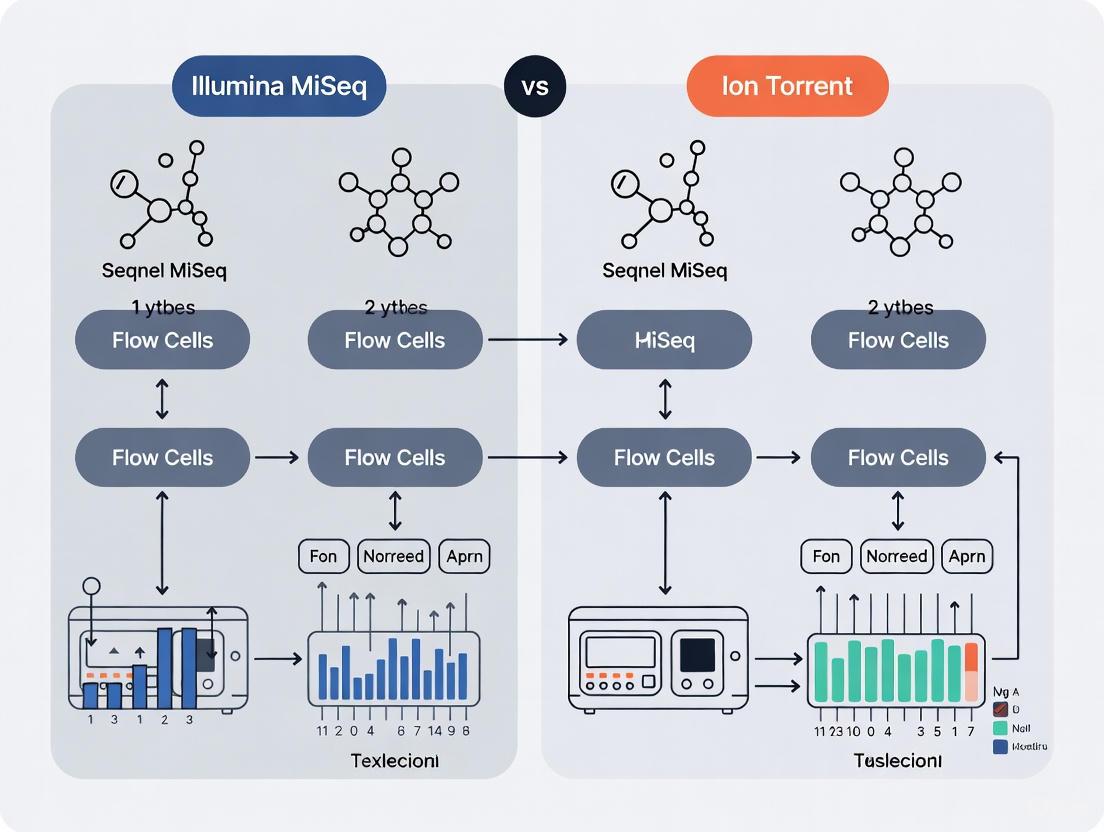
This article provides a systematic comparison of Illumina MiSeq and Ion Torrent sequencing platforms for microbiome analysis, tailored for researchers and drug development professionals.
Illumina MiSeq vs. Ion Torrent: A Comprehensive Guide for Microbiome Profiling in Biomedical Research
Abstract
This article provides a systematic comparison of Illumina MiSeq and Ion Torrent sequencing platforms for microbiome analysis, tailored for researchers and drug development professionals. It covers foundational principles, methodological applications, and troubleshooting based on current literature. The guide explores key performance metrics including error profiles, taxonomic resolution, and bias, offering evidence-based recommendations for platform selection to ensure data quality and reproducibility in diverse research contexts from clinical diagnostics to environmental studies.
Understanding the Core Technologies: Sequencing Chemistries and Their Impact on Microbiome Data
The choice of sequencing platform is a critical decision in microbiome research, directly impacting the resolution and accuracy of microbial community profiling. Two prominent technologies in this field are Illumina's Sequencing-by-Synthesis (SBS) and Ion Torrent's semiconductor sequencing. Both methods fall under the category of next-generation sequencing (NGS) but operate on fundamentally different principles for detecting nucleotide incorporation. This guide provides an objective comparison of these core technologies, particularly within the context of 16S rRNA-based microbiome studies using the popular benchtop sequencers, Illumina MiSeq and Ion Torrent Personal Genome Machine (PGM). Understanding these underlying mechanisms is essential for interpreting platform-specific biases and optimizing experimental outcomes in research and drug development.
Core Technological Principles
How Illumina Sequencing-by-Synthesis Works
Illumina's SBS technology is a widely adopted NGS method that utilizes fluorescently-labeled, reversible terminator nucleotides [1] [2]. The process begins with library preparation where DNA fragments are ligated with adapters and bound to a flow cell. Through a process called bridge amplification, these fragments are clonally amplified into clusters [2]. During the sequencing cycle, all four fluorescently-labeled dNTPs are presented to the flow cell simultaneously. Each nucleotide serves as a reversible terminator, permitting the incorporation of only a single base per cycle. After incorporation, the flow cell is imaged, and the specific fluorescent signal of the incorporated base is recorded. The terminator group and the fluorescent dye are then cleaved off, allowing the next cycle to begin [1]. This base-by-base sequencing approach minimizes errors in homopolymer regions and results in high data accuracy [1].
How Ion Torrent Semiconductor Sequencing Works
Ion Torrent technology employs a fundamentally different detection method, relying on the release of hydrogen ions (H+) during DNA polymerization [3] [4]. After library preparation, DNA fragments are amplified via emulsion PCR on Ion Sphere Particles (ISPs) [4]. These beads are then deposited into microwells on a semiconductor chip. Unlike Illumina, the sequencing process involves the sequential flow of each unmodified nucleotide (A, C, G, T) over the chip. When a nucleotide is incorporated into the growing DNA strand by the polymerase, a hydrogen ion is released as a byproduct. This release causes a localized change in pH, which is detected by an ion-sensitive field-effect transistor (ISFET) sensor beneath each well [3] [4]. The key differentiator is that if multiple identical bases are in a row (a homopolymer), multiple incorporations will occur, leading to a proportionally higher voltage signal [3]. This direct, non-optical detection eliminates the need for cameras and light sources.
Direct Comparison of Principles and Performance
The table below summarizes the fundamental differences between the two sequencing technologies, which lead to distinct performance characteristics in practice.
Table 1: Fundamental comparison of Illumina SBS and Ion Torrent semiconductor technologies
| Feature | Illumina (SBS) | Ion Torrent (Semiconductor) |
|---|---|---|
| Core Principle | Sequencing by synthesis with fluorescent, reversible terminators [1] [2] | Sequencing by synthesis with unmodified nucleotides and pH detection [3] [4] |
| Signal Detection | Optical (fluorescence imaging) [2] | Electronic (pH change measured as voltage) [3] [4] |
| Nucleotide Flow | All four labeled dNTPs added simultaneously per cycle [1] | Each unmodified dNTP added sequentially in a fixed order [3] |
| Key Challenge | Signal decay and dephasing over cycles [2] | Accurate quantification of homopolymer lengths [5] [4] |
| Primary Error Mode | Substitution errors [5] | Insertion/Deletion (Indel) errors, especially in homopolymer regions [5] [4] |
| Typical Read Length | Up to 2x300 bp (MiSeq) [5] | Up to 400 bp (PGM) [5] |
| Speed per Run | Moderate to high | Fast (run time is generally shorter) [4] |
Experimental Performance in Microbiome Profiling
The technological differences translate into measurable performance variations in 16S rRNA amplicon sequencing, a common method for microbiome profiling. The following table synthesizes key findings from comparative studies.
Table 2: Experimental performance data for 16S rRNA bacterial community profiling
| Performance Metric | Illumina MiSeq (V3-V4) | Ion Torrent PGM (V4) | Experimental Context |
|---|---|---|---|
| Error Rate | Lower overall error rate [5] | Higher overall error rate [5] | 20-organism mock community and human specimens [5] |
| Homopolymer Accuracy | High; virtually eliminates homopolymer errors [1] | Lower; struggles with accurate base calling in homopolymers [5] [4] | 20-organism mock community [5] |
| Read Truncation | Not a characteristic issue [5] | Observed, leading to organism-specific bias [5] | 16S rRNA (V1-V2) amplicon sequencing [5] |
| Correlation of Abundances | High correlation for most genera (r=0.89) [6] | High correlation for most genera (r=0.89) [6] | 19 cervical samples; comparison of shared genera [6] |
| Genus-Level Classification | High (95.9% of reads assigned) [6] | Slightly lower (92.2% of reads assigned) [6] | 19 cervical samples [6] |
| Taxonomic Bias | Lower relative abundance of Gardnerella (r=0.35) [6] | Higher relative abundance of Gardnerella [6] | 19 cervical samples [6] |
| Functional Profiling | High concordance in KEGG profiles (r=1.00) with Ion Torrent [6] | High concordance in KEGG profiles (r=1.00) with Illumina [6] | 19 cervical samples; PICRUSt prediction [6] |
Detailed Experimental Protocols
The data in Table 2 is largely derived from two types of comparative studies. The following outlines a typical methodology for a direct platform comparison for 16S rRNA amplicon sequencing, as seen in several cited studies [5] [6].
1. Sample Preparation and Library Construction:
- DNA Source: A validated mock microbial community comprising genomic DNA from 20 known bacterial species is used as a positive control, alongside primary biological specimens (e.g., human cervical or respiratory samples) [5].
- PCR Amplification: The hypervariable regions of the 16S rRNA gene (e.g., V1-V2 or V3-V4) are amplified using platform-specific primers. These primers contain adaptor sequences for binding to the sequencer and sample-specific barcodes to enable multiplexing [5] [6].
- Library Purification: The resulting PCR products are purified using solid-phase reversible immobilization (SPRI) with beads like AMPure XP to remove primers, enzymes, and other contaminants [5].
2. Platform-Specific Sequencing:
- Illumina MiSeq: The purified library is loaded onto a MiSeq flow cell where cluster generation occurs via bridge amplification. Sequencing is performed using a reagent kit (e.g., a 500-cycle v2 kit) with paired-end reads [5].
- Ion Torrent PGM: The library is clonally amplified by emulsion PCR on Ion Sphere Particles (ISPs). The templated ISPs are enriched and loaded onto a semiconductor chip (e.g., a 314 or 318 chip). Sequencing is performed using a 400-base sequencing kit, sometimes with an optimized nucleotide flow order to mitigate homopolymer artifacts [5].
3. Data Analysis and Bioinformatics:
- Base Calling & Demultiplexing: On-instrument software (e.g., Illumina RTA or Torrent Suite) performs real-time base calling and demultiplexes reads by sample barcodes [5].
- Quality Filtering & Trimming: Reads are quality-filtered, and primer sequences are trimmed.
- OTU/ASV Picking: Processed reads are clustered into Operational Taxonomic Units (OTUs) or denoised into Amplicon Sequence Variants (ASVs) using tools like QIIME or UPARSE [5] [6].
- Taxonomic Assignment: Sequences are classified against a reference database (e.g., SILVA or Greengenes) to determine taxonomic composition [6].
- Statistical Comparison: Relative abundances of taxa are compared between platforms using correlation analyses (e.g., Pearson's) and Procrustes analysis to check for consistency in beta-diversity patterns [5] [6].
Workflow and Signaling Pathways
The following diagrams illustrate the core signaling and workflow differences between the two technologies.
Diagram 1: Illumina SBS uses fluorescent imaging.
Diagram 2: Ion Torrent uses pH-based electronic detection.
The Scientist's Toolkit: Key Research Reagents
Successful microbiome sequencing requires a suite of specialized reagents and materials. The following table details essential components for library preparation and sequencing, applicable to both platforms unless specified.
Table 3: Essential reagents and materials for 16S rRNA amplicon sequencing
| Item | Function | Example Use Case |
|---|---|---|
| 16S rRNA Primers | PCR amplification of specific hypervariable regions (e.g., V3-V4, V4) for taxonomic profiling. | Designing primers with platform-specific adapter sequences for Illumina MiSeq or Ion Torrent PGM [5] [6]. |
| DNA Polymerase | Enzyme for amplifying the target 16S rRNA region during library preparation. | Using a high-fidelity polymerase for PCR to minimize amplification errors [5]. |
| SPRI Beads | Magnetic beads for size-selective purification and clean-up of PCR amplicons and final libraries. | Removing primer dimers and contaminants after amplification; normalizing library fragment size [5]. |
| Indexes/Barcodes | Short, unique DNA sequences added to primers to label samples, enabling multiplexing. | Pooling up to hundreds of samples from different individuals or conditions in a single sequencing run [5]. |
| Platform-Specific Kit | A complete set of reagents optimized for a specific sequencer, including enzymes, nucleotides, and buffers. | Illumina MiSeq Reagent Kit v3 or Ion Torrent 400-bp Sequencing Kit for the actual sequencing run [5]. |
| Mock Community | A defined mix of genomic DNA from known organisms, used as a positive control to assess sequencing accuracy and bias. | Benchmarking platform performance, identifying technical artifacts (e.g., homopolymer errors), and validating bioinformatics pipelines [5]. |
Illumina's SBS and Ion Torrent's semiconductor technologies offer distinct paths to the same goal: deciphering genetic code. Illumina provides high accuracy, especially in homopolymer regions, making it a robust choice for applications where precision is paramount. Ion Torrent offers a faster, simpler, and often more cost-effective workflow, though with a noted weakness in accurately sequencing long homopolymers. For 16S rRNA microbiome profiling, both platforms can generate highly correlated data on community structure and predicted function [6]. However, the choice of platform can introduce specific biases, such as read truncation in Ion Torrent or differential abundance of certain genera [5] [6]. The decision ultimately depends on the specific research priorities, whether they favor the highest possible accuracy (Illumina) or the benefits of speed and lower operational costs (Ion Torrent). As both technologies continue to evolve, these performance characteristics are likely to be refined, further empowering microbiome research.
Illumina MiSeq vs Ion Torrent for Microbiome Profiling Research
The emergence of benchtop next-generation sequencing (NGS) platforms revolutionized microbiome research by enabling high-throughput, culture-independent analysis of microbial communities. Among these, Illumina MiSeq and Ion Torrent Personal Genome Machine (PGM) have been widely adopted for 16S rRNA gene amplicon sequencing, providing researchers with powerful tools for exploring bacterial diversity in various environments [5]. While both platforms utilize massively parallel sequencing, they operate on fundamentally different biochemical principles and detection methods, leading to distinct performance characteristics that impact microbiome profiling results [5] [7].
The choice between these platforms involves balancing multiple factors including read length, accuracy, throughput, cost, and operational considerations. Understanding their technical differences and performance characteristics is essential for researchers designing microbiome studies, interpreting results, and comparing findings across different research projects. This comparison guide examines the historical evolution and contemporary performance of both platforms within the context of microbiome research, providing evidence-based insights for researchers, scientists, and drug development professionals.
Technology Comparison: Fundamental Differences
The core technological differences between Illumina MiSeq and Ion Torrent platforms stem from their distinct approaches to DNA amplification, sequencing biochemistry, and detection methods.
Table 1: Fundamental Technological Differences Between Illumina MiSeq and Ion Torrent Platforms
| Feature | Illumina MiSeq | Ion Torrent PGM |
|---|---|---|
| Sequencing Chemistry | Sequencing by synthesis with fluorescently-labeled, reversible terminator nucleotides | Semiconductor sequencing with unmodified nucleotides detecting pH changes |
| Amplification Method | Bridge amplification on solid surface [7] | Emulsion PCR [7] |
| Detection Method | Optical detection (fluorescence) [5] | Electronic detection (pH change) [5] |
| Read Length | Up to 2×300 bp (paired-end) [5] | Up to 400-600 bp (single-end) [5] [7] |
| Error Profile | Low overall error rate (<0.1%), substitution errors [8] | Higher error rate, homopolymer length inaccuracy [5] |
| Library Preparation | Fragmentation and adapter ligation | Fragmentation and adapter ligation |
Figure 1: Comparative Workflow of Illumina MiSeq and Ion Torrent Sequencing Platforms. Both platforms share initial library preparation steps but diverge in amplification and detection methodologies.
Illumina's technology employs bridge amplification on a solid-phase flow cell, where DNA fragments are amplified into clusters. Sequencing occurs through cyclic reversible termination using fluorescently-labeled nucleotides. Each cycle involves incorporation of a single nucleotide, imaging to identify the base, then cleavage of the fluorescent dye to enable subsequent incorporation [5] [7]. This method provides highly accurate base-by-base sequencing but typically produces shorter reads compared to earlier long-read technologies.
Ion Torrent's approach utilizes emulsion PCR to amplify DNA fragments on the surface of microscopic beads. The core innovation is semiconductor sequencing, which detects hydrogen ions released during DNA polymerization. Unlike Illumina, Ion Torrent uses unmodified nucleotides and can incorporate multiple identical nucleotides in a single cycle when encountering homopolymer regions [5]. This fundamental difference in detection methodology contributes to Ion Torrent's characteristic challenge with homopolymer length accuracy.
Performance Metrics for Microbiome Profiling
Direct comparative studies have revealed significant differences in how these platforms perform specifically for 16S rRNA amplicon sequencing, which is crucial for microbiome profiling.
Table 2: Performance Comparison for 16S rRNA Amplicon Sequencing
| Performance Metric | Illumina MiSeq | Ion Torrent PGM | Experimental Evidence |
|---|---|---|---|
| Per-base Accuracy | >99.9% [9] | ~99% [5] | Mock community analysis [5] |
| Homopolymer Errors | Rare | Common (>5 bp regions) [5] | Known template sequencing [5] |
| Read Truncation | Minimal | Significant, species-dependent [5] | Bidirectional sequencing experiments [5] |
| Community Profile Concordance | High with expected composition | Variable, taxon-specific biases [5] | Mock community with 20 bacterial species [5] |
| Sensitivity for Rare Taxa | Higher | Moderate | Spike-in experiments [5] |
| Multiplexing Capacity | High (96+ samples) | Moderate (up to 96 samples) | Manufacturer specifications |
A landmark 2014 study directly compared these platforms for 16S rRNA (V1-V2) amplicon sequencing using a 20-organism mock bacterial community and human-derived specimens [5]. The research identified that Ion Torrent exhibited significantly higher error rates and demonstrated a pattern of premature sequence truncation that was dependent on sequencing direction and target species. This truncation resulted in organism-specific biases that could substantially impact microbial community profiles in complex samples.
For taxonomic classification accuracy, both platforms generally showed good agreement with expected compositions in mock communities, but disparities emerged for specific organisms. These differences were attributed to failure to generate full-length reads for particular organisms on the Ion Torrent platform and organism-dependent differences in sequence error rates affecting classification of certain species [5]. The study concluded that choice of sequencing platform alone could introduce differential bias in bacterial community profiles.
Detailed Experimental Protocols
16S rRNA Amplicon Sequencing Protocol for Platform Comparison
The foundational comparative study employed a standardized experimental approach to enable direct performance comparison [5]:
Sample Preparation:
- Mock Community: Microbial Mock Community B (BEI Resources, HM-782D) containing genomic DNA from 20 bacterial species at equimolar concentrations of 16S rRNA operons (100,000 copies/μL/organism)
- Human Specimens: 18 human-derived microbiological specimens with DNA extraction using High Pure PCR template preparation kit (Roche)
16S rRNA Amplification:
- Target Region: V1-V2 hypervariable regions (~360 bp) of 16S rRNA gene
- Primers: Derivatives of 8F and reverse complement of 337R incorporating deoxyinosine to improve cross-species binding
- PCR Conditions: 1 cycle of 95°C for 10 min; 28 cycles of 95°C for 30 s, 60°C for 30 s, and 72°C for 1 min 15 s; final extension at 72°C for 10 min
- Polymerase: AmpliTaq DNA polymerase (Applied Biosystems) with 3 mM MgCl₂
Library Preparation for Illumina MiSeq:
- Primers incorporating Illumina-compatible adapters
- Reverse primer containing sample-specific 8-bp barcode sequence
- Purification using AMPure beads (0.7 volumes)
- Quantification with Qubit dsDNA HS assay
Library Preparation for Ion Torrent PGM:
- DNA amplified in two separate reactions (bidirectional sequencing)
- Universalionforward + barcoded reverse primer OR Universalionreverse + barcoded forward primer
- Ion Xpress barcodes (10-12 bp) optimized for error correction and flow order
- Templating and enrichment using OneTouch 2 and OneTouch ES systems
Sequencing Parameters:
- Illumina MiSeq: 500-cycle sequencing kit (v2), custom primers, paired-end sequencing
- Ion Torrent PGM: 400-bp sequencing kits, 314 v2 or 318 v2 chips, Torrent Server software v3.6.2
Data Processing and Analysis Pipeline
The comparative analysis employed specialized processing approaches for each platform [5]:
Ion Torrent Data Processing:
- Reads <100 bp discarded
- Run-length encoding to optimize alignments across homopolymer tracts
- Smith-Waterman alignment algorithm with ssearch36 for primer detection
- Removal of proximal primer sequences
Illumina Data Processing:
- Standard quality filtering and demultiplexing using on-instrument software
- Paired-end read merging
Comparative Bioinformatic Analysis:
- Taxonomic assignment against reference databases
- Calculation of error rates by comparison to known mock community sequences
- Assessment of read truncation frequency and directionality
- Community composition analysis using standardized metrics
The Scientist's Toolkit: Essential Research Reagents
Table 3: Essential Research Reagents for 16S rRNA Amplicon Sequencing
| Reagent/Kit | Function | Platform Compatibility |
|---|---|---|
| High Pure PCR Template Preparation Kit (Roche) | DNA extraction from complex samples | Both platforms [5] |
| AmpliTaq DNA Polymerase (Applied Biosystems) | 16S rRNA gene amplification | Both platforms [5] |
| AMPure Beads (Agencourt) | PCR product purification | Both platforms [5] |
| Qubit dsDNA HS Assay (Life Technologies) | DNA quantification | Both platforms [5] |
| Ion Xpress Barcodes (Life Technologies) | Sample multiplexing | Ion Torrent specific [5] |
| OneTouch 2/OneTouch ES System | Template preparation and enrichment | Ion Torrent specific [5] |
| Ion AmpliSeq Technology | Targeted amplification panels | Ion Torrent specific [10] |
| MiSeq Reagent Kits (v2/v3) | Sequencing chemistry | Illumina specific [5] |
Current Market Context and Evolution
The microbiome sequencing market has experienced substantial growth, expected to expand from $1.5 billion in 2024 to $3.7 billion by 2029 at a CAGR of 19.3% [11]. This growth is driven by decreasing sequencing costs, government initiatives and funding, and continued advances in sequencing technology [11].
Within this expanding market, Illumina has maintained a dominant position, while Thermo Fisher Scientific (owner of Ion Torrent technology) captures most of the remaining market share [7]. Both companies have continued to innovate, with Illumina launching platforms like the NovaSeq X Series and Thermo Fisher introducing the Ion GeneStudio S5 Series and Ion Torrent Genexus System [7].
The development of more accessible, benchtop sequencing instruments like Illumina's MiSeq i100 line has placed sequencing technology within reach of smaller research and clinical laboratories [11]. This accessibility has accelerated microbiome research across diverse settings and applications.
The comparative analysis between Illumina MiSeq and Ion Torrent platforms reveals a complex performance landscape for microbiome profiling applications. Illumina MiSeq demonstrates advantages in per-base accuracy, minimal homopolymer errors, and more consistent community profiling across diverse sample types. Conversely, Ion Torrent offers operational simplicity with its semiconductor detection technology and rapid turnaround times.
For researchers designing microbiome studies, the choice between platforms should be guided by specific research objectives and constraints:
For maximal accuracy and reproducibility in complex microbial communities, particularly when detecting rare taxa or subtle variations, Illumina MiSeq is recommended based on its superior performance metrics in comparative studies [5].
For rapid screening applications where absolute accuracy may be secondary to throughput and operational simplicity, Ion Torrent platforms offer viable alternatives, particularly with optimized flow orders and bidirectional sequencing to mitigate read truncation issues [5].
Future developments in both platforms continue to address their respective limitations, with Illumina focusing on throughput and cost reductions, and Ion Torrent working to improve accuracy, particularly in homopolymer regions. Researchers should consider these evolving capabilities when selecting platforms for long-term research programs, and remain attentive to emerging validation studies that assess performance improvements through updated chemistries and analysis pipelines.
The expanding microbiome sequencing market ensures continued competition and innovation, promising enhanced capabilities for both platforms and potentially blurring the current performance distinctions that have characterized these technologies in microbiome research contexts.
Illumina MiSeq vs Ion Torrent for Microbiome Profiling Research
This guide provides an objective comparison of the key technical specifications of Illumina MiSeq and Ion Torrent sequencing platforms, focusing on their application in microbiome profiling research.
Key Platform Specifications at a Glance
The table below summarizes the core technical specifications for representative models from Illumina's MiSeq family and Thermo Fisher's Ion Torrent portfolio, based on manufacturer data. [12] [13] [14]
| Specification | Illumina MiSeq System | Illumina MiSeq i100 Series | Ion GeneStudio S5 Prime System |
|---|---|---|---|
| Maximum Output | 540 Mb – 15 Gb [12] [15] | 1.5 – 30 Gb [14] [16] | Up to 50 Gb (with two Ion 550 Chips) [13] |
| Maximum Read Length | 2 x 300 bp (Paired-end) [12] [15] | 2 x 500 bp (Paired-end) [14] [16] | Up to 600 bp [13] [7] |
| Run Time (at max. throughput) | ~56 hours (for 2x300 bp) [12] | ~4 – 24 hours [14] [16] | 6.5 – 12 hours [13] |
| Reads Per Run | 1 – 25 million (Single) [15] | 10 – 200 million (Paired-end) [14] [16] | 100 – 130 million (Ion 550 Chip) [13] |
| Key Data Quality Metric | >70% bases >Q30 (2x300 bp) [12] | ≥85% bases >Q30 (2x300 bp) [14] | >99% aligned/measured accuracy [13] |
| Primary Error Type | Substitution errors [5] | Substitution errors (inferred from technology) | Insertion-Deletion (Indel), especially in homopolymers [5] [17] |
Performance in 16S rRNA Amplicon Sequencing
A direct, peer-reviewed comparison of the Illumina MiSeq and Ion Torrent PGM for 16S rRNA (V1-V2) amplicon sequencing reveals platform-specific performance characteristics. [5]
Experimental Protocol
- Mock Community: Genomic DNA from 20 bacterial species (BEI Resources, HM-782D) was used as a controlled reference. [5]
- Library Preparation: V1-V2 regions of the 16S rRNA gene were amplified using platform-specific adapters. Ion Torrent libraries were prepared bidirectionally to mitigate sequencing artifacts. [5]
- Sequencing: Illumina sequencing was performed on a MiSeq with a 500-cycle kit. Ion Torrent sequencing was performed on a PGM with 400-base kits and both default and optimized flow orders. [5]
- Data Processing: Reads were processed by run-length encoding to optimize alignment across homopolymer tracts, followed by primer trimming and quality filtering. [5]
Comparative Experimental Findings
| Performance Aspect | Illumina MiSeq | Ion Torrent PGM |
|---|---|---|
| Overall Error Rate | Lower overall error rate [5] | Higher overall error rate [5] |
| Error Profile | Dominated by substitution errors [5] | Dominated by insertions and deletions (Indels), particularly in homopolymer regions [5] |
| Read Truncation | Not reported as a significant issue [5] | Significant, species-specific read truncation observed; mitigated by bidirectional sequencing and optimized flow order [5] |
| Community Profile Agreement | Generally in good agreement with the mock community, with some significant disparities for specific organisms [5] | Generally in good agreement, but disparities were attributed to read truncation and organism-dependent error rates affecting classification [5] |
Technology Workflow Comparison
The fundamental difference in chemistry between the two platforms leads to distinct experimental workflows, which can impact project planning. The following diagram illustrates the key steps where the workflows diverge.
The Scientist's Toolkit: Essential Reagents and Materials
The table below details key consumables and their functions for conducting a typical 16S rRNA amplicon sequencing study on either platform. [5]
| Reagent / Material | Function in the Workflow |
|---|---|
| 16S rRNA Primers with Platform Adaptors | PCR amplification of the target hypervariable region (e.g., V1-V2); contains platform-specific sequences for library incorporation. [5] |
| Platform-Specific Sequencing Kit | Contains enzymes, buffers, and nucleotides required for the sequencing reaction itself (e.g., MiSeq Reagent Kits, Ion 550 Chems). [12] [13] |
| Flow Cell (Illumina) / Chip (Ion Torrent) | The solid surface where clonal amplification and sequencing occur. Throughput is determined by the type of flow cell or chip selected. [12] [13] [5] |
| Sample Indexing (Barcoding) Oligos | Unique DNA sequences added to each sample's library, allowing multiple samples to be pooled and sequenced in a single run (multiplexing) and later bioinformatically separated. [5] |
| PhiX Control Library (Illumina) | A standardized control library spiked into runs to monitor sequencing accuracy, focusing, and matrix calculations, especially for low-diversity libraries like 16S amplicons. [12] [5] |
The divergence in error profiles between Illumina and Ion Torrent sequencing platforms originates from their fundamentally distinct sequencing chemistries. Understanding these technological foundations is critical for interpreting data, especially in sensitive applications like microbiome profiling where accurate base calling is paramount.
Illumina's sequencing-by-synthesis utilizes fluorescently labeled, reversible-terminator nucleotides. During each cycle, a single base is incorporated, its identity determined via optical detection, and the terminator chemically cleaved to enable the next cycle. This process results in highly accurate data but is prone to substitution errors (incorrect base incorporation) due to imperfections in the terminator chemistry and fluorescent signal deconvolution [18].
Conversely, Ion Torrent's semiconductor sequencing detects the hydrogen ions released during nucleotide incorporation. The key distinction is that multiple identical bases can be incorporated in a single cycle when sequencing through a homopolymer (a stretch of identical nucleotides). The platform measures the pH change, with the signal intensity intended to correlate with the number of bases incorporated. This method is susceptible to homopolymer errors, where the length of identical bases is misestimated, leading to insertion or deletion (indel) errors [18] [19].
The table below summarizes the core technological differences that give rise to these characteristic error profiles:
Table 1: Fundamental Technology Comparison
| Feature | Illumina | Ion Torrent |
|---|---|---|
| Detection Method | Optical (fluorescence) | Semiconductor (pH change) |
| Read Structure | Uniform length, paired-end available | Variable length, single-end only |
| Primary Error Type | Substitution | Insertion/Deletion (Indel) |
| Primary Error Cause | Signal deconvolution, terminator inefficiency | Homopolymer length miscalibration |
Quantitative Comparison of Error Profiles
Direct comparisons of the two platforms using standardized samples, such as mock microbial communities, have quantified the practical impact of their underlying error rates. These studies consistently highlight a trade-off between read length, throughput, and sequence accuracy.
16S rRNA Amplicon Sequencing for Microbiome Profiling
A critical study directly compared the Illumina MiSeq and Ion Torrent PGM for bacterial community profiling using 16S rRNA (V1-V2) amplicon sequencing. The researchers employed a 20-organism mock bacterial community and human-derived specimens to benchmark performance [5].
They observed that the Ion Torrent platform exhibited a comparatively higher error rate. A specific and consequential artifact was a pattern of premature sequence truncation directly linked to the semiconductor sequencing process. This truncation was dependent on sequencing direction and the target species, introducing organism-specific biases into the resulting community profiles. The study noted that these issues could be partially mitigated by using bidirectional amplicon sequencing and an optimized nucleotide flow order [5].
Whole-Genome Sequencing and Variant Calling
The error profiles also significantly impact whole-genome sequencing applications, such as variant calling and genotyping. One study sequencing four microbial genomes found that while both platforms displayed robust performance on GC-neutral and moderately biased genomes, Ion Torrent exhibited profound coverage bias when sequencing an extremely AT-rich Plasmodium falciparum genome, leaving approximately 30% of the genome with no coverage [19].
In the context of viral genome sequencing, a comparison of the MiSeq, PGM, and Ion Torrent S5 platforms confirmed that indels in homopolymer regions were observed in Ion Torrent consensus genomes, affecting their accuracy. Despite this, the Ion Torrent S5 generated a high proportion of relevant viral reads, making it a viable option with specific trade-offs [20].
The table below synthesizes key performance metrics from various studies:
Table 2: Empirical Performance and Error Metrics
| Platform | Reported Error Rate | Characteristic Error | Impact on Microbiome Profiling |
|---|---|---|---|
| Illumina MiSeq | ~0.1-0.5% per base [18] | Substitution | Higher base-level accuracy; better for detecting single nucleotide variants. |
| Ion Torrent PGM | ~1.5% (Range: 0.46%-2.4%) [21] | Insertion/Deletion (Homopolymer) | Organism-specific bias due to read truncation; misclassification of species with homopolymer-rich regions [5]. |
| Ion Torrent S5 | Homopolymer indels persist [20] | Insertion/Deletion (Homopolymer) | Consensus genome accuracy impacted; requires careful curation. |
Experimental Protocols for Performance Comparison
To objectively compare the error profiles of Illumina and Ion Torrent platforms, researchers have established robust experimental workflows. The following methodology, adapted from a direct comparison study, outlines a standard approach for benchmarking performance in the context of 16S rRNA-based microbiome analysis [5].
Sample Preparation and Library Construction
- Reference Material: Utilize a well-characterized mock microbial community (e.g., BEI Resources Microbial Mock Community B) containing genomic DNA from 20 bacterial species at equimolar concentrations. This provides a ground truth for evaluating accuracy and bias [5].
- DNA Extraction: Extract genomic DNA from both mock community and primary biological specimens (e.g., human-derived microbiological samples) using a standardized kit such as the High Pure PCR Template Preparation Kit (Roche) [5].
- PCR Amplification:
- Target the 16S rRNA V1-V2 variable region (~360 bp) using primers incorporating platform-specific adapters.
- For Illumina MiSeq: Use a single PCR reaction with a forward primer and a barcoded reverse primer.
- For Ion Torrent PGM: Perform two separate PCR reactions to generate amplicons for bidirectional sequencing (e.g., using
Universal_ion_forward+ barcoded reverse primer ANDUniversal_ion_reverse+ barcoded forward primer). This helps mitigate homopolymer-related truncation artifacts [5].
- Library Purification: Purify all PCR products using a solid-phase reversible immobilization method, such as AMPure beads (Agencourt), and quantify using a fluorescence-based assay (e.g., Qubit dsDNA HS Kit) [5].
Sequencing and Data Processing
- Platform-Specific Sequencing:
- Illumina MiSeq: Perform paired-end sequencing (e.g., 2x250 bp) using a standard sequencing kit. Include a percentage of PhiX control to improve base calling in diverse samples.
- Ion Torrent PGM: Sequence libraries on a 314 or 318 chip using a 400-bp sequencing kit. Test both the default flow order and an optimized flow order (e.g.,
TGCTCAGAGTACATCACTGCGATCTCGAGATG) for improved phase correction [5].
- Bioinformatic Processing:
- Demultiplexing: Assign reads to samples based on their barcodes using the respective software suites (e.g., Torrent Suite for Ion Torrent).
- Quality Control: Trim adapter sequences and apply quality filters.
- Error Analysis: Map sequences to the expected mock community reference genomes. Calculate error rates by identifying discrepancies (substitutions, insertions, deletions). Specifically analyze error rates within homopolymer regions of varying lengths [5] [21].
The following diagram illustrates the core experimental workflow:
Figure 1: Experimental workflow for comparing sequencing platform error profiles.
The Scientist's Toolkit: Key Research Reagents
The following table details essential materials and their functions as utilized in the benchmark experiments cited in this guide [5].
Table 3: Essential Research Reagents and Materials
| Item | Function/Description | Example Product |
|---|---|---|
| Mock Community | Defined mix of genomic DNA for benchmarking accuracy and bias. | BEI Resources Microbial Mock Community B (HM-782D) |
| DNA Extraction Kit | Purification of high-quality genomic DNA from complex samples. | High Pure PCR Template Preparation Kit (Roche) |
| DNA Polymerase | High-fidelity amplification of 16S rRNA target regions. | AmpliTaq DNA Polymerase (Applied Biosystems) |
| Library Purification | Size-selective cleanup of PCR products and libraries. | AMPure XP Beads (Beckman Coulter) |
| DNA Quantitation | Accurate fluorometric measurement of DNA concentration. | Qubit dsDNA HS Assay Kit (Thermo Fisher Scientific) |
| Illumina Sequencing Kit | Reagents for cluster generation and sequencing-by-synthesis. | MiSeq Reagent Kit v2 (500-cycle) |
| Ion Torrent Sequencing Kit | Reagents for template preparation and semiconductor sequencing. | Ion PGM Sequencing 400 Kit |
The distinct error profiles of Illumina and Ion Torrent platforms have direct, measurable consequences for microbiome analysis. The higher substitution error rate of Illumina is generally less impactful for 16S rRNA amplicon sequencing if the analysis relies on clustering reads into operational taxonomic units (OTUs) above a 97% identity threshold, as single substitutions are unlikely to change the cluster assignment. However, for methods requiring higher precision, such as amplicon sequence variant (ASV) analysis, Illumina's base-level accuracy is advantageous.
Conversely, the homopolymer errors from Ion Torrent can cause frameshifts during sequencing. This results in the premature truncation of reads and the generation of spurious, non-biological sequences that can be mistaken for novel taxa or inflate diversity estimates [5]. This bias can be organism-specific, as genomes with higher homopolymer content are more severely affected. In whole-genome sequencing of isolates, these indel errors have been shown to significantly impact core genome multilocus sequence typing (cgMLST), with allele discrepancies between platforms sometimes exceeding standard clustering thresholds used in outbreak investigations [22].
In conclusion, the choice between Illumina and Ion Torrent for microbiome profiling involves a critical consideration of error profile trade-offs. Illumina MiSeq is the preferred platform for applications demanding high base-level accuracy, such as SNV detection or ASV-based analysis. Ion Torrent platforms offer speed and lower initial cost but require researchers to actively manage homopolymer-related artifacts through optimized protocols and bioinformatic correction. The decision should be guided by the specific research question, the required resolution, and the bioinformatic resources available to mitigate the inherent errors of each technology.
The Role of the Human Microbiome Project in Standardizing Sequencing Approaches
The Human Microbiome Project (HMP) established a transformative framework for microbial community analysis that has become foundational to modern microbiome research. Launched by the National Institutes of Health in 2007 with a budget of $170 million, the HMP generated resources and expertise needed to characterize the human microbiome and analyze its role in health and disease [23]. By establishing standardized protocols for creating, processing, and interpreting distinct types of high-throughput metagenomic data, the HMP created a population-scale framework that enables meaningful comparisons across studies and sequencing platforms [24]. This seminal project not only produced vast datasets but also developed the critical quality-controlled resources and methodological standards that continue to guide platform selection and experimental design in microbiome research, including contemporary comparisons between Illumina MiSeq and Ion Torrent sequencing technologies [24].
Experimental Protocols for Sequencing Platform Comparison
Standardized 16S rRNA Amplicon Sequencing
The HMP established rigorous protocols for 16S rRNA gene sequencing to ensure comparability of data across different sequencing centers. The project adopted a standardized approach using the Roche-454 FLX Titanium platform, targeting the V3-V5 hypervariable regions of the 16S rRNA gene [24]. This protocol was extensively validated using synthetic mock communities of 21 known organisms to assess and minimize potential artifacts or bias generated by sequencing platforms [24]. The HMP created both cell mixtures and genomic DNA extracts of these mock communities, generating a substantial body of metagenomic data that continues to serve as a benchmark for evaluating new sequencing platforms and analytical approaches [24].
Whole Genome Shotgun Sequencing Standards
For comprehensive metagenomic characterization, the HMP developed standards for whole genome shotgun (WGS) sequencing using the Illumina GAIIx platform. The project generated an average of 13 Gb (± 4.3) of sequence data per sample from 681 samples, collectively producing 8.8 Tb of data [24]. This depth of coverage was sufficient to detect bacterial genomes present at only 0.8% abundance with 90% probability, setting a benchmark for sensitivity in metagenomic studies [24]. All sequencing data underwent centralized analysis and annotation through the HMP Data Analysis and Coordination Center (DACC), ensuring consistent processing across all samples [24].
Performance Comparison: Illumina MiSeq vs. Ion Torrent Platforms
Technical Specifications and Error Profiles
The fundamental differences in sequencing chemistry between Illumina and Ion Torrent platforms result in distinct performance characteristics that must be considered for microbiome studies.
Table 1: Fundamental Technology Differences Between Sequencing Platforms
| Feature | Illumina MiSeq | Ion Torrent PGM/S5 |
|---|---|---|
| Sequencing Chemistry | Fluorescence-based sequencing-by-synthesis | Semiconductor-based pH detection |
| Read Length | Fixed lengths (e.g., 2×250 bp, 2×300 bp) | Variable read lengths |
| Error Profile | Low overall error rates (<0.1%) | Homopolymer length inaccuracies |
| Read Architecture | Supports paired-end sequencing | Single-end sequencing only |
| Sample Multiplexing | High-plex barcoding available | Moderate-plex barcoding available |
Performance in 16S rRNA Amplicon Sequencing
Direct comparisons between Illumina MiSeq and Ion Torrent platforms for 16S rRNA amplicon sequencing reveal platform-specific strengths and limitations that impact data quality and biological interpretations [5].
Table 2: Performance Comparison for 16S rRNA Amplicon Sequencing
| Performance Metric | Illumina MiSeq | Ion Torrent PGM/S5 |
|---|---|---|
| Overall Error Rate | Lower error rates | Comparatively higher error rates |
| Read Truncation | Minimal issues | Significant premature truncation observed |
| Homopolymer Accuracy | High accuracy in homopolymer regions | Homopolymer length errors common |
| Community Profile Accuracy | Good agreement with mock communities | Organism-specific biases in profiles |
| Technical Variability | Lower technical variation | Higher run-to-run variability |
Studies demonstrate that the Ion Torrent platform exhibits higher error rates and a pattern of premature sequence truncation that is dependent on both sequencing directionality and target species, resulting in organism-specific biases in community profiles [5]. These sequencing artifacts can be minimized using bidirectional amplicon sequencing and optimized flow order, but remain a distinguishing characteristic of the platform [5].
Whole Metagenome Sequencing and Functional Gene Analysis
For whole metagenome sequencing and analysis of functional genes such as antimicrobial resistance (AMR) determinants, both platforms demonstrate comparable performance with minor differences [25].
Table 3: Performance in Metagenomic and Functional Gene Analysis
| Analysis Type | Illumina MiSeq | Ion Torrent S5 Plus |
|---|---|---|
| AMR Gene Detection | Comprehensive detection | Comparable detection with minor differences |
| Gene Abundance Quantification | Reliable quantitative data | Slight variations in specific genes (e.g., tet-40) |
| Data Concordance | High consistency with expected results | Generally good agreement with minor discrepancies |
| Database Performance | Optimal with CARD database | Best results with CARD database |
| Host DNA Ratio | Consistent host-microbe ratios | Variable host DNA percentages |
Comparative studies of antimicrobial resistance gene analysis demonstrate that irrespective of sequencing chemistry and platform used, Illumina MiSeq and Ion Torrent platforms perform almost equally, with closely comparable results and only minor differences [25]. No statistically significant differences were observed for most genes, though the tet-(40) gene showed variation, potentially due to short amplicon length [25].
Cost and Throughput Considerations
The economic aspects of platform selection are crucial for research planning and resource allocation.
Table 4: Throughput and Cost Comparison
| Economic Factor | Illumina MiSeq | Ion Torrent S5 |
|---|---|---|
| Lower Throughput Runs | Lower cost per sample | Higher cost per sample |
| Higher Throughput Runs | Moderate cost per sample | Competitive cost per sample |
| Ion Torrent 510 vs. MiSeq Nano | More cost-effective | Less cost-effective |
| Ion Torrent 530 vs. MiSeq V2 | Similar cost per sample | $5.47-$10.25 more per sample |
| Maximum Output | ~15 Gb per run | ~15 Gb per run (530 chip) |
Evaluations of virome sequencing demonstrate that for lower throughput sequencing runs, the cost per sample was lower on the MiSeq platform, whereas with higher throughput runs there is less difference in cost per sample between the two sequencing platforms [26]. The Ion Torrent S5 510 chip runs produced more reads at a lower cost per sample than the highest output Ion Torrent PGM 318 chip run [26].
Standardized Workflows for Cross-Platform Comparisons
The legacy of the HMP's standardization efforts is evident in contemporary research that follows rigorous methodologies for platform evaluation.
Table 5: Key Research Reagents for Sequencing Platform Validation
| Reagent/Resource | Function | Application in Platform Comparison |
|---|---|---|
| Mock Microbial Communities | Known composition controls | Evaluate accuracy of taxonomic classification |
| NIBSC Gut-Mix-RR | DNA reference reagent | Standardize downstream microbiome analyses |
| NIBSC Gut-HiLo-RR | Staggered composition reagent | Assess quantitative accuracy |
| BEI Resources Mock Community | 20-species genomic DNA mix | Test 16S rRNA amplicon sequencing performance |
| CARD Database | Comprehensive AMR reference | Standardize antimicrobial resistance gene analysis |
The development of reference reagents like the NIBSC Gut-Mix-RR and Gut-HiLo-RR represents a critical advancement in microbiome standardisation, providing DNA reagents to control for biases in library preparation, sequencing, and bioinformatics pipelines [27]. These reagents consist of 20 common gut microbiome strains in both even and staggered compositions, spanning 5 phyla, 13 families, 16 genera, and 19 species [27].
Standardized Bioinformatics and Reporting Frameworks
The HMP established comprehensive data processing pipelines to ensure consistent analysis across sequencing centers. The project implemented multiple complementary analysis approaches using both mothur and QIIME software packages, which resulted in highly comparable views of the human microbiome [24]. Contemporary research has built upon these foundations to develop standardized reporting frameworks that include four key measures for evaluating platform performance:
- Sensitivity: The percentage of correctly identified species in the reference reagent
- False Positive Relative Abundance (FPRA): Total relative abundance of false positive species
- Diversity: Accuracy in estimating the number of species present
- Similarity: Bray-Curtis similarity index comparing predicted and actual composition [27]
The standardization frameworks established by the Human Microbiome Project provide the essential foundation for meaningful comparison of sequencing platforms in microbiome research. The HMP's rigorous approach to protocol development, quality control, and data analysis created benchmarks against which all subsequent sequencing technologies can be evaluated.
For researchers selecting between Illumina MiSeq and Ion Torrent platforms, the evidence suggests that Illumina provides more consistent accuracy, particularly for 16S rRNA amplicon sequencing, while Ion Torrent offers competitive performance for certain applications like antimicrobial resistance gene profiling [5] [25]. The choice between platforms should be guided by specific research questions, required data quality, and economic considerations, with the understanding that both can generate biologically relevant results when applied within appropriate standardized frameworks.
The continued development of international standards and reference materials, building upon the foundation established by the HMP, remains essential for advancing microbiome research and enabling valid cross-study comparisons as sequencing technologies continue to evolve.
Practical Implementation: From Library Preparation to Data Generation Across Sample Types
In the field of microbiome research, the selection of which 16S ribosomal RNA (rRNA) hypervariable region to sequence is a critical first step that directly influences the taxonomic resolution and accuracy of a study's findings. When combined with the choice of sequencing platform—such as Illumina MiSeq or Ion Torrent—this decision forms the technical foundation upon which all subsequent biological interpretations are built. The 16S rRNA gene contains nine hypervariable regions (V1-V9), flanked by conserved sequences, which evolve at different rates and thus offer varying degrees of taxonomic discrimination. While sequencing the full-length gene provides the highest resolution, technical and financial constraints often make short-read sequencing of specific hypervariable regions a practical necessity for large-scale studies [28].
This guide objectively compares the performance of the V1-V2, V3-V4, and V4 regions for microbiome profiling, framing the analysis within the context of a broader thesis on Illumina MiSeq versus Ion Torrent sequencing technologies. We summarize experimental data from multiple studies to provide evidence-based recommendations for researchers, scientists, and drug development professionals seeking to optimize their microbiome study designs.
Performance Comparison of Hypervariable Regions
The table below summarizes key experimental findings from studies that directly compared the performance of different 16S rRNA hypervariable regions across various sample types.
Table 1: Comparative Performance of 16S rRNA Hypervariable Regions Across Studies
| Hypervariable Region | Sample Type | Taxonomic Resolution Strengths | Limitations & Biases | Key Supporting Findings |
|---|---|---|---|---|
| V1-V2 | Respiratory Sputum | Highest accuracy for respiratory taxa; superior sensitivity and specificity [29] | Area under curve (AUC): 0.736 vs. non-significant AUC for other regions [29] | |
| V1-V2 | Human Gut Microbiome | More accurate detection of Akkermansia; closer to qPCR validation data [30] | Lower reported levels of Bifidobacterium and Actinobacteria [30] | Bacterial composition differed from V3-V4; V1-V2 data aligned more closely with qPCR for Akkermansia abundance [30] |
| V1-V3 | Skin Microbiome | Resolution comparable to full-length 16S; good for high-abundance bacteria [28] | Cannot achieve 100% species-level resolution, even with full-length 16S [28] | Recommended as a practical choice for skin microbial research, especially with limited sequencing resources [28] |
| V3-V4 | Human Gut Microbiome | Higher reported richness (Chao1 index) [31] [30] | Overestimation of Akkermansia and Actinobacteria vs. V1-V2 and qPCR [30] | Standardized Illumina protocol; higher alpha diversity measures in gut [31] [30] |
| V3-V4 | Anorexia Nervosa Gut Study | Consistently detected dominant genera (e.g., Bacteroides, Faecalibacterium) [31] | Most statistical findings were sensitive to the chosen region [31] | Beta diversity and downstream statistical results differed from V1-V2 [31] |
| V4 | General (Various Niches) | Highly conserved; cost-effective; adequate resolution for many applications [28] | Reduced diversity capture compared to combined regions [28] | Compatible with universal primers and shorter read lengths [28] |
Experimental Protocols and Methodologies
The comparative findings in the previous section are derived from rigorous experimental workflows. The following section details the key methodologies employed in the cited studies, providing a template for researchers seeking to replicate or design similar comparisons.
Sample Collection and DNA Extraction
The reliability of any 16S rRNA sequencing study begins with robust sample collection and DNA extraction.
- Skin Microbiome (Full-Length 16S Study): Researchers collected 141 skin specimens from multiple anatomical sites (intraaural, circumaural, palmar, nasal, and oral epithelial skin) using sterile polyester fiber swabs pre-moistened in a sterile saline-Tween 20 solution. Genomic DNA was extracted using the PowerSoil DNA Isolation Kit [28].
- Gut Microbiome (V1-V2 vs. V3-V4 Comparison): Fecal samples from 192 Japanese volunteers were collected using brush-type kits containing guanidine thiocyanate solution and transported at ambient temperature. DNA was extracted using the DNeasy PowerSoil Kit (QIAGEN) [30].
- Respiratory Sputum (Multi-Region Comparison): This study used 33 human sputum samples from patients with chronic respiratory diseases. DNA was isolated using a protocol associated with the QIASeq screening panel (Qiagen) [29].
Library Preparation and Sequencing Protocols
The core of the comparison lies in the amplification and sequencing of the targeted regions, often using different kits and platforms.
- Full-Length 16S Sequencing (PacBio Platform): The near-full-length 16S rRNA gene was amplified using primers 27F and 1492R. The PCR products were processed into a sequencing library with the SMRTbell Template Prep Kit and sequenced on the PacBio Sequel II system [28].
- V1-V2 vs. V3-V4 (Illumina MiSeq Platform):
- V1-V2 Region: Amplified using the forward primer
16S_27Fmodand the reverse primer16S_338R. The resulting libraries were sequenced in a 250-bp paired-end run on the Illumina MiSeq [30]. - V3-V4 Region: Amplified using the forward primer
16S_341Fand the reverse primer16S_805R. The libraries were sequenced in a 300-bp paired-end run on the Illumina MiSeq [30].
- V1-V2 Region: Amplified using the forward primer
- Multi-Region Comparison (Illumina): The study on respiratory samples used the QIASeq screening panel to create libraries for the V1–V2, V3–V4, V5–V7, and V7–V9 regions, which were then sequenced on an Illumina platform [29].
Diagram: General Workflow for 16S rRNA Region Comparison Studies
The Scientist's Toolkit: Essential Reagents and Materials
The table below lists key reagents, kits, and platforms frequently used in 16S rRNA comparative studies, as evidenced by the search results.
Table 2: Essential Research Reagent Solutions for 16S rRNA Comparative Studies
| Item Name | Specific Function | Example Use Case |
|---|---|---|
| PowerSoil DNA Isolation Kit (QIAGEN) | Standardized DNA extraction from complex microbial communities, including soil and stool. | Used for gut [30] and skin [28] microbiome DNA extraction. |
| Nextera XT DNA Library Prep Kit (Illumina) | Prepares sequencing libraries from amplicons, incorporating Illumina adapters and barcodes. | Library preparation for amplicon sequencing on the MiSeq platform [30] [26]. |
| KAPA HyperPlus Kit (Roche) | Library preparation kit with enzymatic fragmentation, suitable for various input DNA. | Evaluated for viral RNA genome sequencing on Illumina and Ion Torrent platforms [26]. |
| SMRTbell Template Prep Kit (PacBio) | Prepares DNA templates for long-read sequencing on the PacBio platform. | Used for full-length 16S rRNA gene sequencing [28]. |
| Greengenes Database | A 16S rRNA gene reference database for taxonomic classification of microbial communities. | Used for taxonomic assignment in QIIME-based pipelines [31] [30]. |
| QIIME2 (Bioinformatic Pipeline) | A powerful, extensible, and decentralized microbiome analysis platform. | Used for processing sequence data, denoising, and generating amplicon sequence variants (ASVs) [31]. |
Illumina MiSeq vs. Ion Torrent in the Context of 16S Sequencing
The choice of sequencing platform introduces another layer of technical variation that can interact with the selected hypervariable region.
- Technology Differences: Illumina MiSeq uses sequencing-by-synthesis with fluorescently labeled reversible terminators, while Ion Torrent relies on semiconductor sequencing that detects pH changes from nucleotide incorporation [5] [32].
- Error Profiles: A key difference noted in direct comparisons is the higher error rate and a pattern of premature sequence truncation in Ion Torrent data, particularly in homopolymer regions (stretches of identical consecutive bases) [5]. This can lead to organism-specific biases in community profiles.
- Platform Performance: Despite different chemistries, one study on antimicrobial resistance genes found that Illumina MiSeq and Ion Torrent platforms performed almost equally, with closely comparable results and only minor differences [25]. Another study comparing RNA-Seq platforms concluded that both were effective for detecting biological changes, though the optimal bioinformatic tools differed [32].
Diagram: Decision Workflow for Platform and Region Selection
The selection of a 16S rRNA hypervariable region is not a one-size-fits-all decision but must be tailored to the specific research question, sample type, and available sequencing technology. Experimental data consistently shows that the V1-V2 region offers superior accuracy for specific niches like the respiratory tract and for detecting certain gut genera like Akkermansia. The V3-V4 region, while a robust and standardized choice for general gut microbiome studies, may overestimate the abundance of some taxa. The V1-V3 region presents a strong compromise for skin microbiome research. Furthermore, the choice between Illumina MiSeq and Ion Torrent should consider the former's lower homopolymer error rate, though both platforms can yield biologically congruent results with appropriate bioinformatic processing. Ultimately, researchers must balance the desire for the highest taxonomic resolution—potentially achieved through full-length 16S sequencing—with the practical constraints of cost, DNA quality, and access to sequencing resources.
In microbiome research, the choice of library preparation protocol is a critical determinant of data quality and biological insight. The process of converting extracted genetic material into a sequence-ready library involves multiple steps, each of which can introduce specific biases that affect the representation of microbial communities. For the widely used 16S rRNA gene sequencing approach, these biases can significantly impact the apparent taxonomic composition and diversity of samples [5]. When comparing the two leading benchtop sequencing platforms, Illumina MiSeq and Ion Torrent, understanding their inherent technical differences is essential for experimental design and data interpretation.
Both platforms operate on distinct biochemical principles. Illumina utilizes sequencing-by-synthesis with fluorescently labeled, reversible chain terminators, enabling simultaneous amplification and clustering of DNA fragments on a solid substrate [5]. In contrast, Ion Torrent employs semiconductor sequencing technology, detecting hydrogen ions released during DNA polymerase-mediated nucleotide incorporation [5] [26]. This fundamental difference in chemistry creates platform-specific error profiles and performance characteristics that researchers must navigate to generate reliable microbiome data.
Key Technological Differences in Library Preparation
Fragmentation Methods
The initial fragmentation of DNA is a crucial step where significant methodological divergence occurs, directly impacting library complexity and coverage uniformity.
- Mechanical Shearing: Methods like adaptive focused acoustics (e.g., Covaris) use physical forces to break DNA, providing minimal sequence bias and well-characterized, reproducible fragmentation. This method is particularly advantageous for maintaining uniform coverage across regions with varying GC content, which is crucial for accurate representation of diverse microbial genomes [33] [34].
- Enzymatic Fragmentation/Tagmentation: Many commercial kits, including Illumina's Nextera, use enzyme-based approaches. Tagmentation employs a transposase complex that simultaneously fragments DNA and attaches adapter sequences in a single step, streamlining the workflow and reducing hands-on time [35] [33]. However, these methods can exhibit sequence-specific biases, potentially under-representing high-GC or low-GC regions [34].
Table 1: Comparison of DNA Fragmentation Methods
| Factor | Mechanical Shearing | Enzymatic/Tagmentation |
|---|---|---|
| Sequence Bias | Minimal bias; more random | Potential GC/motif bias |
| Input DNA Requirements | Higher input typically required | Accommodates lower input DNA |
| Throughput & Automation | Less amenable to automation | Highly automation-friendly |
| Hands-on Time | More extensive | Significantly reduced |
| Uniformity of Coverage | Superior uniformity across GC spectrum | More pronounced coverage imbalances |
Ligation and Amplification Strategies
Following fragmentation, library preparation involves end repair, adapter ligation, and potentially amplification, each offering optimization points.
- End Repair & A-Tailing: This process converts heterogeneous fragment ends into a uniform format with blunt, phosphorylated ends, followed by adding a single adenosine (A) base to the 3' end. This A-tailed structure enables specific ligation to thymine (T)-overhang adapters, preventing fragment self-ligation and adapter dimer formation [33].
- Adapter Ligation: Specialized adapters containing platform-specific sequences, sample barcodes (indexes), and sometimes unique molecular identifiers (UMIs) are ligated to fragments. The use of unique dual indexes (UDIs) is critical for accurate sample multiplexing and demultiplexing, effectively reducing index hopping artifacts and improving the reliability of high-throughput studies [35] [36].
- Library Amplification: While PCR amplification is sometimes necessary for low-input samples, it should be minimized. Excessive PCR cycles introduce significant bias, particularly against GC-rich templates, and reduce library diversity. Optimization strategies include using high-efficiency enzymes and increasing starting material where possible [36].
Platform-Specific Performance and Experimental Data
Direct comparisons of Illumina and Ion Torrent platforms reveal distinct performance characteristics in the context of microbiome profiling.
Error Profiles and Sequencing Artifacts
The core sequencing chemistries impart unique error signatures. Ion Torrent sequencing is notably susceptible to homopolymer errors—misinterpreting the length of consecutive identical nucleotides (e.g., AAAAA)—due to its quantitation of pH change from multiple incorporations in a single cycle [5] [26]. This can lead to frameshift errors in sequencing reads, complicating accurate taxonomic assignment. Studies have also reported a pattern of premature sequence truncation specific to Ion Torrent, which creates organism-specific biases in community profiles [5]. Illumina's reversible-terminator chemistry generally delivers lower raw error rates, though its errors are more randomly distributed [5] [32].
Comparative Studies in Microbiome and Metagenomic Applications
Several studies have directly benchmarked these platforms for 16S rRNA and metagenomic sequencing.
- 16S rRNA Gene Sequencing: A 2014 study comparing Illumina MiSeq and Ion Torrent PGM for bacterial community profiling using the V1-V2 hypervariable region found that results were generally in good agreement for a mock community and human-derived specimens. However, significant disparities occurred for specific organisms due to Ion Torrent's failure to generate full-length reads and its organism-dependent error rates [5]. A 2020 study comparing the V4 (Ion Torrent PGM) and V3-V4 (Illumina MiSeq) regions found high correlation for most shared genera (r=0.89) but noted poor correlation for specific taxa like Gardnerella and Clostridium, which were over-represented on one platform or the other [37].
- Functional Gene Analysis: A study on antimicrobial resistance (AMR) genes found that Illumina MiSeq and Ion Torrent platforms performed almost equally, with no statistically significant differences for most genes, suggesting that for presence/absence and abundance estimation of functional genes, both platforms are viable [25].
- RNA Virus Sequencing: A 2020 evaluation noted that the newer Ion Torrent S5 platform produced more reads at a lower cost per sample for enterovirus D68 samples compared to the PGM. However, indels in homopolymer regions continued to impact consensus genome accuracy. For lower-throughput runs, MiSeq had a lower cost per sample, a difference that diminished with higher-throughput chips [26].
Table 2: Experimental Performance Comparison for Microbiome Profiling
| Performance Metric | Illumina MiSeq | Ion Torrent (PGM/S5) |
|---|---|---|
| Representative Error Profile | Random substitution errors | Homopolymer-associated indels |
| 16S rRNA Community Concordance | High (Reference) | Generally high, with specific taxon disparities |
| Read Length Capability | Fixed lengths; supports paired-end | Variable lengths; typically single-end |
| Impact on Functional Profiling | Minimal functional bias | Minimal functional bias (e.g., AMR genes) |
| Cost Consideration (Low throughput) | Lower cost per sample [26] | Higher cost per sample |
| Consensus Genome Accuracy | High accuracy for RNA viruses | Reduced accuracy due to homopolymer errors [26] |
Diagram: Library preparation workflow and platform-specific biases. The universal preparation steps branch into platform-specific processes that generate distinct error profiles impacting microbiome analysis.
Essential Reagents and Research Solutions
Successful library preparation relies on a suite of specialized reagents and kits. The following table details key components used in the experiments cited within this guide, providing a practical resource for researchers.
Table 3: Research Reagent Solutions for NGS Library Preparation
| Reagent / Kit | Function / Application | Key Features / Considerations |
|---|---|---|
| Illumina DNA Prep [35] | PCR-free whole-genome sequencing library prep. | Integrated on-bead tagmentation. Fast workflow (~3.5 hrs). |
| KAPA HyperPlus Kit [26] | Library preparation for Illumina. | Enzymatic shearing; suitable for fragmented DNA. |
| Nextera XT DNA Library Prep Kit [26] | Tagmentation-based library prep for Illumina. | Fast, low-input protocol; used in virome studies. |
| truCOVER PCR-free Library Prep Kit [34] | PCR-free WGS with mechanical fragmentation. | Uses Adaptive Focused Acoustics (AFA) for uniform coverage. |
| SureSeq FFPE DNA Repair Mix [36] | Repair of damaged DNA from FFPE samples. | Enzyme mix to remove crosslinks and damage artifacts. |
| AMPure XP Beads [26] | Magnetic bead-based purification and size selection. | Cleanup after enzymatic reactions; removal of adapter dimers. |
| Unique Dual Index (UDI) Adapters [35] [36] | Sample multiplexing and demultiplexing. | Reduces index hopping; allows accurate sample identification. |
Optimization Strategies for Robust Microbiome Data
To mitigate platform-specific biases and improve data quality, researchers should implement several key optimization strategies.
Minimize PCR Amplification Bias: To reduce the skewing of microbial community representation, minimize the number of PCR cycles during library amplification. This is best achieved by optimizing DNA extraction yields and using library prep kits with high-efficiency enzymatic steps to maximize the conversion of input DNA into adapter-ligated molecules [36]. Consider PCR-free protocols where input material allows, as this provides the most unbiased representation of community structure [34].
Implement Molecular Barcoding: The use of Unique Molecular Identifiers allows for bioinformatic correction of amplification and sequencing errors. By tagging each original molecule with a unique barcode before amplification, PCR duplicates can be accurately identified and errors occurring in later cycles can be corrected, enhancing the detection of true biological variation, including rare taxa [35] [36].
Standardize DNA Fragmentation: For comparative microbiome studies, the fragmentation method should be consistent across all samples. If the highest data uniformity is required, mechanical shearing is recommended over enzymatic methods due to its reduced sequence bias and more uniform genomic coverage, as demonstrated in whole-genome sequencing studies [34].
Platform-Specific Bioinformatics: The choice of alignment software interacts significantly with the sequencing platform. Research indicates that different aligner and platform combinations are better suited for resolving specific genomic features, such as distinguishing expression in gene-pseudogene pairs [32]. For Ion Torrent data, specific strategies like bidirectional amplicon sequencing and optimized nucleotide flow orders can help minimize artifacts like premature read truncation [5].
The selection between Illumina MiSeq and Ion Torrent for microbiome profiling is not a simple matter of one platform being universally superior. Instead, the decision hinges on the specific research priorities. Illumina MiSeq offers lower error rates and is less prone to homopolymer artifacts, making it a robust default choice for applications where high sequence accuracy is paramount, such as distinguishing between closely related bacterial species. Ion Torrent platforms can be a viable alternative, particularly when faster turnaround time or lower initial instrument cost are primary considerations, provided that robust bioinformatic correction for homopolymer errors is implemented.
Ultimately, the most critical factor is consistency. Once a platform and corresponding library preparation protocol are selected, maintaining a standardized, optimized workflow across all samples in a study is essential for generating reliable and interpretable data. By understanding the key differences and implementing these optimization strategies, researchers can effectively leverage both Illumina and Ion Torrent technologies to advance our understanding of complex microbial ecosystems.
High-throughput sequencing platforms, notably Illumina MiSeq and Ion Torrent Personal Genome Machine (PGM), are foundational to modern microbiome research. The choice between these platforms can significantly influence the resolution and accuracy of microbial community profiles across diverse sample types. This guide provides an objective, data-driven comparison of Illumina MiSeq and Ion Torrent PGM performance, drawing on empirical evidence from clinical specimens, environmental samples, and defined mock communities. The focus is on 16S rRNA gene and ITS region sequencing for bacterial and fungal community profiling, critical for research and drug development in human health, agriculture, and environmental sciences.
Experimental Comparisons: Methodologies and Protocols
Direct comparisons of sequencing platforms require standardized, reproducible experimental designs. Key methodologies are summarized below.
16S rRNA Gene Sequencing for Bacterial Community Analysis
A foundational study compared Illumina MiSeq and Ion Torrent PGM for 16S rRNA-based bacterial community profiling using a 20-organism mock community and a collection of primary human specimens [38].
- Library Preparation: The V1-V2 hypervariable region of the 16S rRNA gene was amplified for both platforms. The same amplicons were used for sequencing on both machines to ensure direct comparability [38].
- Sequencing:
- Illumina MiSeq: Utilized paired-end sequencing with 2x250 bp chemistry.
- Ion Torrent PGM: Employed semiconductor sequencing; the study noted that initial analyses were impacted by a pattern of premature sequence truncation. This artifact was subsequently minimized by using an optimized flow order and bidirectional amplicon sequencing [38].
- Bioinformatic Processing: Sequence data were processed to analyze error rates, read lengths, and the accuracy of taxonomic classification against the known composition of the mock community.
nifH Gene Sequencing for Functional Diversity
Another study compared the same platforms for sequencing the nifH gene, a marker for nitrogen-fixing bacteria, using a defined mock community and environmental soil samples [39].
- Platform & Chemistry: The Ion Torrent PGM was tested with the 400-bp kit on 314 and 318 chips, and the 318 chip with the higher-accuracy Hi-Q chemistry. This was compared to 454 pyrosequencing.
- Error Analysis: The Defined Community Analysis Tool in the FunGene pipeline was used to compare sequences from the mock community to reference sequences, quantifying error types (substitutions, insertions, deletions) and rates. Parameters for filtering low-quality reads were optimized based on this mock analysis [39].
- Data Processing: For environmental samples, sequences were trimmed and filtered using the FunGene Pipeline with a minimum Q-score of 22 before downstream ecological analysis [39].
ITS Sequencing for Fungal Community Analysis
While direct MiSeq vs. Ion Torrent comparisons for fungi are less common, Illumina's performance for fungal metabarcoding is well-established. A 2025 study compared Illumina ITS2 sequencing with Oxford Nanopore Technologies (ONT) long-read ITS sequencing for characterizing seed mycobiota [40].
- DNA Extraction: Pooled, surface-sterilized seed halves were used for DNA extraction [40].
- Multi-Method Fungal Assessment:
- Illumina MiSeq: Two separate ITS2 libraries were generated using different primer pairs ('Taylor' and 'Tedersoo').
- ONT MinION: Libraries were prepared to target the full-length ITS region.
- Traditional Culturing: The other half of each seed was used for culturing and Sanger sequencing of isolates [40].
- Bioinformatic Analysis: Reads from both HTS platforms were processed to determine the number and identity of fungal taxa, alpha- and beta-diversity.
Comparative Performance Data
Performance differences between platforms manifest in error profiles, sequencing depth, and their consequent effects on taxonomic resolution.
Table 1: Summary of Platform Performance Metrics
| Performance Metric | Illumina MiSeq | Ion Torrent PGM | Notes and Context |
|---|---|---|---|
| Overall Error Rate | Lower (typically <0.1%) | Higher (0.36%-0.62%) [39] | Ion Torrent error rates are chemistry-dependent; Hi-Q kit reduces errors [39]. |
| Primary Error Type | Substitution errors | Insertion-Deletion (Indel) errors [38] [39] | Ion Torrent indels are linked to homopolymer regions [38]. |
| Read Length | Fixed-length (e.g., 2x300 bp) | Variable-length | Ion Torrent read length variability can be a source of technical variation [32]. |
| Community Profile Concordance | High agreement with expected mock profiles | Generally good agreement, but with specific biases [38] | Disparities can arise from Ion Torrent's premature truncation and higher error rates for certain taxa [38]. |
| Fungal ITS Resolution | High-depth coverage of sub-regions (ITS1 or ITS2) [40] [41] | Information not available in search results | Full-length ITS sequencing via long-read technologies can improve species-level resolution [40]. |
Error Profiles and Data Quality
- Ion Torrent Error Rates: Analyses of the nifH gene revealed overall error rates of 0.62% (314 chip, 400-bp kit), 0.36% (318 chip, 400-bp kit), and 0.39% (318 chip, Hi-Q kit) [39]. The Hi-Q chemistry reduced indel rates by 28-59% compared to the standard 400-bp kit [39].
- Error Type Consequences: The propensity for indel errors in Ion Torrent data can lead to frameshifts in functional gene studies (e.g., nifH), requiring correction with tools like RDP's FrameBot [39]. For 16S rRNA sequencing, this manifests as a specific issue with premature sequence truncation, which is organism-specific and can bias community profiles [38].
Taxonomic Fidelity in Mock Communities
Studies using mock communities of known composition are crucial for assessing accuracy.
- Bacterial Mock Communities: One study found that bacterial community profiling of a mock community and human specimens was "generally in good agreement for both platforms," but noted that in some cases, results differed significantly [38]. These disparities were attributed to Ion Torrent's failure to generate full-length reads for specific organisms and organism-dependent differences in sequence error rates affecting classification [38].
- Fungal Mock Communities: Research on Illumina sequencing for fungal ITS regions shows that classification performance is highly variable, depending on the ITS sub-region (ITS1 vs. ITS2), reference database, and bioinformatics software. One study using 37 defined mock communities found that classification at the species level is challenging, with only 56-100% of species correctly assigned depending on the workflow [41].
Concordance in Biological Studies
Despite technical differences, both platforms can lead to similar high-level biological conclusions.
- Gene Expression: In a differential gene expression study of mouse liver, Illumina HiSeq and Ion Torrent Proton showed strong correlation in gene-level read counts (Spearman correlation ~0.94-0.97) and identified similar, though not identical, sets of differentially expressed genes. However, pathway-level analysis revealed "nearly identical results" [32].
- Antimicrobial Resistance Genes: A comparison for detecting AMR genes found "no statistically significant differences" between Illumina MiSeq and Ion Torrent S5 Plus for most genes, indicating that for presence/absence analysis, the platforms perform almost equally [25].
- Diazotrophic Communities: In soil samples, significant differences in community structure were detected between Ion Torrent and 454 platforms, but diversity indices and overall conclusions based on sampling site remained similar [39].
Performance Across Sample Types
The impact of platform choice can vary depending on the sample origin and complexity.
Table 2: Platform Considerations by Sample Type
| Sample Type | Key Findings | Implications for Platform Choice |
|---|---|---|
| Clinical Specimens | Analysis of primary human specimens showed good agreement between platforms, but with significant disparities for some taxa on Ion Torrent [38]. AMR gene detection is comparable between platforms [25]. | For absolute taxonomic accuracy, especially for specific pathogens, MiSeq may be more reliable. For AMR screening, both are suitable. |
| Environmental Samples (Soil) | Ion Torrent with Hi-Q chemistry effectively revealed significant differences in diazotrophic communities between cropping systems [39]. | Both platforms can discern broad environmental differences. Ion Torrent's higher error rate may be mitigated with improved chemistry and bioinformatics. |
| Mock Communities | Essential for benchmarking. Reveal Ion Torrent's organism-specific truncation and higher error rates [38], and Illumina's challenges with fungal species-level ID [41]. | Mock communities should be used in every study to quantify platform- and protocol-specific biases. |
The Scientist's Toolkit: Essential Reagents and Materials
Table 3: Key Research Reagent Solutions for 16S rRNA Amplicon Sequencing
| Reagent / Kit | Function | Example Use in Cited Studies |
|---|---|---|
| DNeasy PowerPlant Pro Kit (Qiagen) | DNA extraction from tough environmental samples, including plant and seed tissues. | Used for extracting DNA from surface-sterilized tree seeds prior to ITS metabarcoding [40]. |
| Ion PGM Hi-Q Sequencing Kit | Improved sequencing chemistry for Ion Torrent, reducing indel error rates. | Showed a 28-59% reduction in indel rates compared to the standard 400-bp kit [39]. |
| JumpStart REDTaq ReadyMix (Sigma-Aldrich) | Pre-mixed, high-fidelity PCR master mix for robust amplicon generation. | Used in PCR amplification for ITS2 libraries in fungal metabarcoding studies [40]. |
| MiSeq Reagent Kit v3 (600-cycle) | Pre-filled cartridge for Illumina sequencing, enabling 2x300 bp paired-end reads. | The standard for high-depth 16S rRNA sequencing on the MiSeq platform [42]. |
| Universal Human Reference RNA (UHRR) | Reference RNA from multiple cell lines for benchmarking transcriptomics protocols. | Used in earlier platform comparison studies for RNA-Seq [32]. |
| ZymoBIOMICS Microbial Community DNA Standard | Defined mock community of genomic DNA from 8 bacteria and 2 yeasts for QC. | Used as a DNA standard for validating whole-genome metagenomics sequencing [43]. |
Experimental and Analytical Workflows
The following diagram illustrates a generalized experimental workflow for a comparative microbiome study, integrating elements from the cited methodologies.
Interplay of Platform and Analysis
The relationship between sequencing platform capabilities and downstream analytical outcomes is a critical consideration for researchers, as visualized below.
The choice between Illumina MiSeq and Ion Torrent PGM involves trade-offs. The Illumina MiSeq platform offers lower error rates and higher sequencing depth, making it a robust choice for applications requiring high taxonomic fidelity, such as pathogen detection in clinical samples or exploring complex environmental communities. The Ion Torrent PGM provides a rapid, cost-effective alternative; however, researchers must account for its higher indel error rates and potential for organism-specific biases through careful experimental design, the use of improved chemistries like Hi-Q, and appropriate bioinformatic corrections.
For all microbiome studies, the use of mock communities is non-negotiable for quantifying technical bias. The decision should be guided by the specific research question, the required taxonomic resolution, and the bioinformatic resources available to mitigate the inherent strengths and weaknesses of each platform.
Multiplexing Capabilities and Sample Throughput Considerations
In next-generation sequencing (NGS), sample multiplexing refers to the process of pooling multiple individually barcoded libraries together to be sequenced simultaneously during a single instrument run [44]. This powerful strategy allows researchers to process large numbers of samples without proportionally increasing cost or time, making it particularly valuable for targeted sequencing applications and studies involving smaller genomes such as those encountered in microbiome research [44]. The fundamental principle involves adding unique "barcode" sequences (also called indexes) to each DNA fragment during library preparation so that each read can be computationally identified and sorted before final data analysis [44].
The efficiency of multiplexing is influenced by several factors including the sequencing platform, library preparation chemistry, indexing strategy, and the specific application requirements. For microbiome profiling studies, which often involve processing dozens to hundreds of samples, understanding the multiplexing capabilities and sample throughput of competing platforms is essential for experimental design, budget planning, and resource allocation. This guide objectively compares the multiplexing capabilities and throughput considerations between the Illumina MiSeq and Ion Torrent platforms, providing researchers with the experimental data needed to make informed decisions for their specific research contexts.
Platform-Specific Multiplexing Technologies
Illumina MiSeq Multiplexing Approach
The Illumina MiSeq platform employs several indexing strategies to enable sample multiplexing, with unique dual indexes (UDIs) representing the most advanced approach [45]. This technology adds completely unique, unrelated index sequences to both ends of each DNA fragment during library preparation, enabling large numbers of libraries to be pooled and sequenced simultaneously [45]. The key advantage of this system is its ability to mitigate index hopping—a phenomenon where indexes become misassigned during sequencing—by allowing bioinformatic filtering of affected reads [45].
Illumina's indexing solutions support different levels of multiplexing complexity. The standard dual indexes enable sequencing of up to 96 samples simultaneously, while the unique dual indexing system expands this capacity to 384 samples per run [45]. This extensive multiplexing capability makes Illumina platforms particularly suitable for large-scale studies where high sample throughput and cost reduction are primary considerations. The compatibility of these indexing systems with various library preparation kits, including the Nextera XT DNA Library Prep Kit and KAPA HyperPlus Kit, provides flexibility for different experimental needs and sample types [26].
Ion Torrent Multiplexing Approach
Ion Torrent platforms utilize a different multiplexing strategy centered on the Ion AmpliSeq technology, which employs an ultrahigh multiplex polymerase chain reaction (PCR) approach to selectively amplify targeted regions of interest [46]. This targeted amplification reduces sequencing library complexity and improves coverage depth, increasing sensitivity for detecting variants in targeted regions [46]. While Ion Torrent systems also utilize barcode sequences for sample multiplexing, their overall multiplexing capacity is more constrained compared to Illumina platforms.
The practical multiplexing capacity on Ion Torrent systems depends on the specific chip and instrument model. For example, when using an Ion 550 chip, only approximately 16 samples can be multiplexed per run [47]. This limitation can potentially hinder studies with large sample sizes and represents an important consideration for researchers planning microbiome studies that may involve hundreds of samples. The system's reliance on pre-selected target primer panels, while advantageous for focused applications, constrains its flexibility for exploratory studies requiring comprehensive genomic coverage [47].
Comparative Performance and Experimental Data
Throughput and Cost Analysis
Experimental comparisons between the Illumina MiSeq and Ion Torrent platforms provide valuable insights into their relative performance for sequencing applications relevant to microbiome research. A comprehensive study comparing these platforms for viral RNA genome sequencing found notable differences in output and cost efficiency [26] [20].
Table 1: Sequencing Output and Cost Comparison Between Platforms
| Platform/Chip Type | Total Reads Per Run | Cost Per Sample (24-plex) | Key Advantages | Key Limitations |
|---|---|---|---|---|
| Illumina MiSeq (Nano V2) | 1-2 million [12] | Lower for low-throughput runs [20] | >75% bases >Q30 for 250bp reads [12] | Lower total output than high-throughput chips |
| Illumina MiSeq (V2) | 24-30 million [12] | Competitive for high-throughput [20] | >80% bases >Q30 for 150bp reads [12] | Higher initial instrument cost |
| Ion Torrent S5 (510 chip) | Not specified | $5.47-$10.25 more per sample than MiSeq V2 [20] | Higher proportion of viral reads for some targets [26] | Homopolymer indel errors [26] [20] |
| Ion Torrent PGM (318 chip) | Less than S5 510 [26] | Higher than S5 [26] | Earlier benchtop model | Being superseded by S5 series |
The data indicates that for lower throughput sequencing runs, the cost per sample was lower on the MiSeq platform, whereas with higher throughput runs the difference in cost per sample between the two sequencing platforms narrows considerably [20]. Specifically, when multiplexing 24 samples, an Ion Torrent 530 chip run costs approximately $5.47-$10.25 more per sample compared to the Illumina MiSeq V2 platform [20].
Sequence Quality and Error Profiles
Beyond throughput and cost, sequence quality and error characteristics differ significantly between platforms and impact their suitability for various research applications. The Illumina MiSeq platform demonstrates consistently high base quality scores, with >75% of bases achieving Q30 or higher for 250-base pair paired-end reads using the v2 reagent kit, and >80% of bases achieving Q30 or higher for 150-base pair paired-end reads [12]. This accuracy is maintained across various read lengths, making it a reliable platform for applications requiring high base-level precision.
In contrast, Ion Torrent platforms exhibit a distinct error profile characterized by insertion-deletion errors (indels) in homopolymer regions, which are stretches of identical consecutive bases [26] [20]. These errors stem from the underlying semiconductor sequencing technology that detects pH changes rather than directly imaging nucleotides [19]. While these indels can impact the accuracy of consensus genome sequences, the effect may be mitigated for certain applications through optimized bioinformatics processing [26] [20]. The platform comparison studies have found that the Ion Torrent S5 510 chip runs produced more reads at a lower cost per sample than the highest output Ion Torrent PGM 318 chip run, and in some cases generated the highest proportion of reads for specific viral targets [26].
Experimental Design and Methodologies
Representative Experimental Protocol
To objectively compare the performance of Illumina MiSeq and Ion Torrent platforms, researchers have developed standardized experimental protocols that control for variability in sample preparation and processing. The following methodology from a published comparison study illustrates a robust approach for evaluating platform performance [26] [20]:
Sample Preparation:
- Sixteen clinical specimens and culture isolates containing RNA viruses (picornaviruses and caliciviruses) were selected to represent different sample matrices including nasopharyngeal swabs, stool specimens, and cell culture isolates [26].
- Samples underwent nucleic acid extraction using the QIAamp Viral RNA Mini Kit with on-column DNase treatment [26].
- Viral RNA was reverse-transcribed using sequence-independent single-primer amplification (SISPA) to amplify full viral genomes without target-specific primers [26].
Library Preparation:
- Libraries were prepared using three different kits: Nextera XT DNA Library Prep Kit (Illumina) and KAPA HyperPlus Kit (Roche) for Illumina sequencing, and the KAPA DNA Library Preparation Kit for Ion Torrent sequencing [26].
- Individual barcoded libraries were visualized using TapeStation 2200 before AMPure XP bead cleanup [26].
- Purified libraries were quantified using LabChip GX or qPCR before pooling in equimolar ratios [26].
Sequencing and Analysis:
- Pooled libraries were sequenced on Illumina MiSeq (using Nano V2 and standard V2 kits), Ion Torrent PGM (using 316 and 318 chips), and Ion Torrent S5 (using 510 chips) [26] [20].
- Data analysis assessed sequencing yield, breadth of genome coverage, accuracy of consensus sequences, and proportion of duplicate reads [26].
- Cost per sample was calculated based on reagent and consumable costs at the time of the study [26] [20].
Experimental Workflow Visualization
The following diagram illustrates the parallel workflows for the Illumina MiSeq and Ion Torrent platforms as implemented in the comparative studies:
Figure 1: Experimental workflow for comparing sequencing platforms
Key Research Reagent Solutions
Table 2: Essential Research Reagents for Platform Comparison Studies
| Reagent/Material | Function in Experimental Protocol | Example Products |
|---|---|---|
| Nucleic Acid Extraction Kit | Isolates viral RNA from clinical specimens | QIAamp Viral RNA Mini Kit (Qiagen) [26] |
| Reverse Transcriptase | Converts RNA to cDNA for sequencing | Superscript IV (Thermo Fisher Scientific) [26] |
| Library Preparation Kits | Prepares sequencing libraries from DNA | Nextera XT (Illumina), KAPA HyperPlus (Roche), KAPA for Ion Torrent [26] |
| DNA Polymerase | Amplifies cDNA for library construction | AmpliTaq Gold (Thermo Fisher Scientific), Klenow fragment [26] |
| Purification Beads | Cleans up and size-selects DNA fragments | Agencourt AMPure XP beads (Beckman Coulter) [26] |
| Quantification Assays | Measures DNA concentration for pooling | Qubit dsDNA BR Assay (Thermo Fisher Scientific), LabChip GX (PerkinElmer) [26] |
| Quality Control Instrument | Assesses library quality before sequencing | TapeStation 2200 (Agilent Technologies) [26] |
Implications for Microbiome Profiling Research
For researchers conducting microbiome studies, the choice between Illumina MiSeq and Ion Torrent platforms involves careful consideration of experimental goals, sample numbers, and budget constraints. The Illumina MiSeq platform offers advantages for large-scale studies requiring high multiplexing capacity, superior base-level accuracy, and established bioinformatics pipelines. Its ability to sequence up to 384 samples simultaneously using unique dual indexes makes it particularly suitable for comprehensive microbiome analyses involving hundreds of samples [44] [45].
The Ion Torrent platform, particularly the S5 series, provides a compelling alternative for targeted studies where rapid turnaround time and lower initial investment are prioritized. However, its more limited multiplexing capacity (approximately 16 samples per run on a 550 chip) and susceptibility to homopolymer errors may constrain its utility for large-scale microbiome profiling studies [47]. The AmpliSeq technology's reliance on predefined target panels makes it less suitable for discovery-oriented research aiming to identify novel microbial species [47].
Recent technological advancements on both platforms continue to evolve their respective strengths and limitations. Researchers should consider these factors in the context of their specific experimental needs, including required sequencing depth, target genome characteristics, sample numbers, and available bioinformatics resources when selecting the most appropriate platform for microbiome profiling applications.
Sequencing Depth Requirements for Different Research Objectives
The selection of appropriate sequencing depth represents a critical methodological consideration in microbiome profiling studies, directly influencing data quality, taxonomic resolution, and functional insights. Within the context of comparing Illumina MiSeq and Ion Torrent platforms, understanding depth requirements becomes essential for experimental design optimization. This guide examines sequencing depth considerations across research objectives, supported by experimental data comparing these predominant short-read sequencing technologies.
Sequencing Depth Fundamentals
Sequencing depth, or read depth, refers to the average number of times a nucleotide in the genome is sequenced, typically expressed as a multiplication factor (e.g., 30×) [48]. This metric differs from coverage, which describes the percentage of the genome sequenced at least once. Deeper sequencing enhances variant detection sensitivity and improves data accuracy through redundant base calling, but increases costs and computational demands [48].
The relationship between sequencing depth and information recovery follows diminishing returns, with initial depth increases yielding substantial gains in microbial diversity detection that gradually plateau [49]. Optimal depth selection thus requires balancing research objectives, sample complexity, and resource constraints.
Platform-Specific Technical Considerations
Illumina MiSeq Technology
Illumina employs sequencing-by-synthesis with fluorescently labeled, reversibly terminated nucleotides. Clusters are amplified on a flow cell via bridge PCR, followed by cyclic imaging of incorporated bases [18]. This approach generates highly accurate data with typical error rates below 1% (often 0.1%-0.5%) [18]. The platform produces uniform read lengths and supports paired-end sequencing, facilitating improved alignment and structural variant detection [18]. Throughput ranges from millions to billions of reads depending on instrument configuration, with run times extending from several hours to multiple days [18].
Ion Torrent Technology
Ion Torrent utilizes semiconductor sequencing, detecting pH changes from hydrogen ion release during nucleotide incorporation [18]. DNA libraries are amplified via emulsion PCR on microscopic beads deposited into semiconductor chip wells [18]. This method generates variable-length single-end reads without optical detection systems, contributing to faster run times and more compact instrumentation [18]. However, the technology demonstrates heightened error rates in homopolymer regions due to challenges in precisely counting identical consecutive bases [18].
Comparative Platform Performance
Table 1: Technical comparison of Illumina MiSeq and Ion Torrent platforms
| Parameter | Illumina MiSeq | Ion Torrent |
|---|---|---|
| Sequencing Chemistry | Fluorescent sequencing-by-synthesis | Semiconductor pH detection |
| Maximum Read Length | 2×300 bp (paired-end) | ~400-600 bp (single-end) |
| Error Rate | 0.1%-0.5% | ~1% (higher in homopolymers) |
| Read Type | Uniform length, paired-end available | Variable length, single-end only |
| Run Time | ~24-48 hours | Several hours to <24 hours |
| Throughput Range | Millions to billions of reads | 10-100 million reads (varies by chip) |
| Cost Considerations | Higher instrument cost, competitive per-sample | Lower initial instrument investment |
Table 2: Recommended sequencing depths for different microbiome research objectives
| Research Objective | Recommended Depth | Key Considerations |
|---|---|---|
| 16S rRNA Amplicon Sequencing | 50,000-100,000 reads per sample | Depth requirements relatively consistent across platforms; sufficient for most diversity studies |
| Shotgun Metagenomics (Microbial Community Characterization) | 5-10 million reads per sample (D0.5 depth equivalent) | Suitable for describing microbiome and resistome; balances cost and information [49] |
| Shotgun Metagenomics (Rare Species Detection) | 20-30 million reads per sample (D1 depth equivalent) | Enhanced detection of low-abundance taxa and genes [49] |
| Antimicrobial Resistance Gene Profiling | 5-10 million reads per sample | Relative abundance of ARG assignments remains stable across depths [49] |
| Differential Gene Expression | 10-50 million reads per sample | Strong correlation between platforms despite alignment differences [32] |
Experimental Data and Performance Evidence
Microbiome and Resistome Characterization
A systematic evaluation of sequencing depth on bovine fecal microbiomes demonstrated that while relative proportions of taxonomic assignments remained consistent across depths (D1: 117M, D0.5: 59M, D0.25: 26M reads), the absolute number of reads assigned to antimicrobial resistance genes and microbial taxa increased significantly with greater depth [49]. The study determined D0.5 (approximately 59 million reads) as optimal for characterizing both microbiome composition and resistome content, effectively balancing information recovery with cost efficiency [49].
Platform Concordance in Gene Expression
Research comparing Illumina HiSeq and Ion Torrent Proton platforms for differential gene expression analysis revealed strong correlation between platforms (Spearman correlation: 0.938-0.9737) despite differences in alignment performance [32]. Both platforms identified similar biological pathways as significantly altered, suggesting comparable capacity for detecting biologically relevant signals despite technical differences [32].
Taxonomic Classification Performance
Studies evaluating platform performance in viral RNA genome sequencing identified notable differences in genome coverage and consensus sequence accuracy [26]. The choice of library preparation kit and sequencing platform significantly impacted the breadth of genome coverage, with Ion Torrent S5 generating more reads at lower cost per sample but experiencing indels at homopolymer regions that affected consensus accuracy [26].
Experimental Protocols for Platform Comparison
Sample Processing and DNA Extraction
Optimal DNA extraction protocols incorporate bead-beating to enhance lysis of Gram-positive bacteria and denaturants including guanidine isothyocynate and β-mercaptoethanol to protect DNA from nucleases [49]. Sample preservation immediately upon collection (flash-freezing in liquid nitrogen with storage at -80°C) maintains microbial community integrity [49]. Extraction method selection significantly influences community structure representation, particularly for Gram-positive bacteria [49].
Library Preparation and Sequencing
For Illumina platforms, the Nextera XT DNA Library Prep Kit provides standardized library construction with dual-index barcoding for sample multiplexing [26]. Ion Torrent platforms typically employ the KAPA DNA Library Preparation Kit, optimized for semiconductor sequencing [26]. Library quantification approaches vary by platform, with LabChip GX recommended for Nextera XT libraries and qPCR for Ion Torrent libraries [26].
Bioinformatic Processing
Processing workflows differ between platforms, with Illumina data benefiting from paired-end alignment capabilities while Ion Torrent data requires specialized handling of homopolymer errors [32]. Alignment algorithms demonstrate platform-dependent performance, with GSNAP and STAR+Bowtie2 combinations showing superior mapping percentages for Ion Torrent data [32].
Research Reagent Solutions
Table 3: Essential research reagents and their functions in microbiome sequencing
| Reagent/Kits | Function | Application Notes |
|---|---|---|
| Nextera XT DNA Library Prep Kit | Library preparation for Illumina platforms | Facilitates tagmentation-based fragmentation and adapter incorporation |
| KAPA DNA Library Preparation Kit | Library preparation for Ion Torrent platforms | Optimized for semiconductor sequencing chemistry |
| QIAamp Viral RNA Mini Kit | Nucleic acid extraction | Includes on-column DNase treatment; elution in buffer AVE |
| Agencourt AMPure XP beads | Purification of DNA fragments | Used for size selection and cleanup (1.8X ratio) |
| Turbo DNase | Degradation of free nucleic acids | Reduces host and environmental DNA contamination |
Workflow Diagram
Sequencing depth requirements for microbiome research objectives must be evaluated within the context of platform-specific capabilities. Illumina MiSeq provides superior accuracy and paired-end reads advantageous for complex communities and applications requiring high base-level precision. Ion Torrent offers rapid turnaround times and lower initial costs beneficial for targeted studies and diagnostic applications. For most shotgun metagenomic investigations of microbial communities, 5-10 million reads per sample represents an optimal balance between information recovery and cost efficiency, regardless of platform selection. Researchers should align depth requirements with specific research questions, considering that diminishing returns occur with increasing depth and that platform choice interacts with experimental objectives to determine ultimate success.
Illumina MiSeq vs Ion Torrent for Microbiome Profiling Research
Next-generation sequencing (NGS) technologies have revolutionized microbiome research by enabling detailed characterization of microbial communities across diverse habitats, including the respiratory tract, gut, soil, and cervix [50]. For targeted metagenomic studies, such as 16S rRNA gene sequencing, the two most prevalent benchtop sequencing platforms are Illumina MiSeq and Ion Torrent Personal Genome Machine (PGM) and S5 series [5] [26]. These platforms employ fundamentally different sequencing chemistries that can impact microbial community profiling results. Illumina utilizes a sequencing-by-synthesis approach with fluorescently labeled, reversible terminator nucleotides, while Ion Torrent relies on semiconductor technology to detect hydrogen ions released during nucleotide incorporation [18]. Understanding the performance characteristics, advantages, and limitations of each platform is essential for researchers designing microbiome studies and interpreting results across different application domains.
Technology Comparison: Operational Principles and Performance
Fundamental Technological Differences
The core technologies underlying Illumina and Ion Torrent platforms represent different approaches to DNA sequencing. Illumina's methodology involves bridge amplification of DNA fragments on a flow cell surface, creating clusters of identical sequences. Sequencing occurs through cyclic addition of fluorescently labeled nucleotides with reversible terminators. After each cycle, imaging detects the incorporated base, followed by cleavage of the terminator and fluorescent moiety to enable the next cycle [18]. This process allows for paired-end sequencing, where both ends of each DNA fragment are sequenced, effectively doubling the information obtained per fragment and improving alignment accuracy [18].
In contrast, Ion Torrent's semiconductor sequencing begins with emulsion PCR amplification of DNA fragments on microscopic beads. These beads are deposited into nanoscale wells on a semiconductor chip. The sequencing instrument then flows nucleotides sequentially over the chip. When a nucleotide complements the template strand, DNA polymerase incorporates it, releasing a hydrogen ion that triggers a detectable pH change [18]. A key distinction is that Ion Torrent can detect multiple incorporations in a single cycle when homopolymer regions (stretches of identical bases) are present, though this can lead to quantitation errors in these regions [5].
Performance Characteristics and Metrics
Direct comparisons of these platforms for microbiome applications reveal distinct performance characteristics that can influence data interpretation. Research demonstrates that Ion Torrent exhibits higher error rates (~1% per base) compared to Illumina (~0.1-0.5% per base) [18]. This difference is particularly pronounced in homopolymer regions, where Ion Torrent struggles to precisely count identical consecutive bases, leading to insertion-deletion errors [5] [18]. Additionally, studies have identified a pattern of premature sequence truncation specific to Ion Torrent sequencing, which creates organism-specific biases in community profiles [5].
Table 1: Key Technical Specifications Comparison
| Parameter | Illumina MiSeq | Ion Torrent PGM/S5 |
|---|---|---|
| Sequencing Chemistry | Sequencing-by-synthesis with fluorescent detection | Semiconductor pH detection |
| Read Length | Up to 2×300 bp (paired-end) | Up to 400-600 bp (single-end) |
| Error Rate | ~0.1-0.5% (low) | ~1% (higher, especially in homopolymers) |
| Read Type | Paired-end available | Single-end only |
| Run Time | 24-48 hours | Several hours to <1 day |
| Throughput Range | Millions to billions of reads | Thousands to tens of millions of reads |
| Key Advantage | High accuracy, paired-end reads | Fast turnaround, lower instrument cost |
Case Studies Across Microbiome Applications
Respiratory Microbiome Profiling
Respiratory microbiome studies present unique challenges due to low microbial biomass and potential contamination from upper airway passages. A comprehensive study comparing healthy nonsmokers and smokers implemented standardized bronchoscopic sampling with bronchoalveolar lavage (BAL) and oral washes, followed by 16S rRNA gene sequencing using the Roche 454 FLX Titanium platform (a precursor to current technologies) [51]. Researchers applied a neutral community model to distinguish bacteria resulting from dispersal from the mouth versus those potentially colonizing the lungs [51]. They discovered that while most lung bacteria originated from the mouth, specific taxa including Enterobacteriaceae, Haemophilus, Methylobacterium, and Ralstonia appeared in significantly higher abundance than predicted by the neutral model, suggesting selective adaptation to the lung environment [51]. This study highlights the importance of appropriate analytical methods when working with low-biomass microbiome samples.
Gut Microbiome Studies
The gut microbiome represents one of the most complex microbial communities in nature. A targeted metagenomic study investigating the relationship between Blastocystis colonization and gut microbiota utilized Ion Torrent PGM sequencing of the 16S rRNA V3-V5 regions from 96 human fecal samples [52]. The experimental protocol involved: (1) DNA extraction using the QIAamp DNA Stool Mini Kit; (2) library preparation with fusion PCR amplifying the V3-V5 regions; (3) emulsion PCR on Ion Torrent beads; and (4) sequencing with an Ion 318 Chip [52]. Bioinformatic processing included filtering reads shorter than 150 bases, removing sequences with large homopolymers, and aligning against the SILVA 102 bacterial database [52]. This methodology successfully identified increased bacterial diversity in Blastocystis-colonized individuals, demonstrating Ion Torrent's utility for gut microbiome studies despite its homopolymer accuracy limitations.
Cervical Microbiome Applications
Cervical microbiome research has important implications for women's health, particularly in understanding gynecological conditions. A 2022 study examined the cervical microbiome of patients with squamous cell carcinoma of the cervix compared to healthy controls using Ion Torrent PGM technology [53]. Researchers collected cervical swab samples and sequenced the 16S rRNA gene with an Ion 16S Metagenomics Kit, which targets six hypervariable regions (V2, V3, V4, V6-7, V8, and V9) [53]. The bioinformatic workflow included quality filtering (removing sequences <200 or >300 bases, with homopolymers >10, or average quality <20), chimera removal with UCHIME, and classification against the SILVA database [53]. Results revealed significantly higher microbiome diversity in pre-treatment cancer patients compared to healthy controls, with particularly low Lactobacillus abundance in younger cancer cases [53]. These findings illustrate how platform selection influences clinical microbiome applications.
Comparative Platform Performance Studies
Direct comparisons between Illumina and Ion Torrent platforms provide valuable insights for methodological selection. A 2014 benchmark study evaluated both platforms for bacterial community profiling using a 20-organism mock community and human-derived specimens [5]. Researchers sequenced the 16S rRNA V1-V2 regions (~360 bp) on both platforms, with Ion Torrent employing bidirectional amplicon sequencing and an optimized flow order to minimize artifacts [5]. While both platforms generally produced concordant results for the mock community and human specimens, significant disparities emerged for specific organisms due to Ion Torrent's premature sequence truncation and organism-dependent error rates affecting classification accuracy [5].
A 2020 study further compared Illumina MiSeq, Ion Torrent PGM, and Ion Torrent S5 for sequencing picornaviruses and human caliciviruses [26]. This investigation found that library preparation kits and sequencing platforms collectively impacted genome coverage breadth and consensus sequence accuracy [26]. Ion Torrent S5 510 chips produced more reads at lower cost per sample than PGM 318 chips, but indels at homopolymer regions affected consensus accuracy [26]. For lower-throughput runs, MiSeq offered lower cost per sample, whereas higher-throughput runs showed minimal cost differences between platforms [26].
Table 2: Performance Comparison Across Microbiome Applications
| Application Domain | Key Findings | Platform Used | Technical Considerations |
|---|---|---|---|
| Respiratory Microbiome | Lung microbiome distinct from oral community; specific bacteria enriched in lungs | Roche 454 | Low biomass requires careful controls & specialized statistical models |
| Gut Microbiome | Blastocystis colonization associated with higher bacterial diversity | Ion Torrent PGM | Homopolymer errors manageable with appropriate bioinformatic filtering |
| Cervical Microbiome | Cancer patients showed higher diversity and altered composition vs controls | Ion Torrent PGM | Multi-region targeting (V2-V9) improves classification resolution |
| Viral Metagenomics | Platform choice affects coverage breadth and consensus accuracy | Both compared | Ion Torrent homopolymer errors impact viral sequence accuracy |
| Antimicrobial Resistance | Minor differences between platforms for AMR gene analysis | Both compared | Both platforms suitable for functional gene profiling |
Experimental Design and Methodologies
Standardized Workflows for Microbiome Sequencing
Well-validated experimental protocols are essential for generating comparable, high-quality microbiome data across studies. For 16S rRNA gene amplicon sequencing—the most common targeted metagenomics approach—the workflow typically involves: (1) DNA extraction from samples; (2) PCR amplification of target variable regions with platform-specific adapters; (3) library preparation with sample barcoding; (4) sequencing on the chosen platform; and (5) bioinformatic processing of raw data [5] [52]. The selection of variable region (e.g., V1-V2, V3-V4, V3-V5, V4) influences taxonomic resolution and should align with the biological question [5] [52].
For Ion Torrent sequencing, library preparation typically involves emulsion PCR to amplify template DNA on beads, which are then deposited on semiconductor chips [18]. In contrast, Illumina library preparation uses bridge amplification on flow cells to create sequencing clusters [18]. Studies have optimized Ion Torrent protocols by implementing bidirectional amplicon sequencing and modified flow orders to mitigate platform-specific artifacts like premature truncation [5].
Bioinformatic Considerations for Microbiome Data
Microbiome data presents unique computational challenges, including high dimensionality, compositionality, and sparsity [54]. Dimensionality reduction techniques such as Principal Coordinates Analysis (PCoA) based on phylogenetic beta-diversity metrics (e.g., Unifrac distances) are essential for visualizing and interpreting complex microbiome datasets [54] [55]. These methods help researchers identify patterns and clusters in microbial communities across different sample types or experimental conditions.
Data generated from different platforms often requires platform-specific processing steps. For Ion Torrent data, additional quality filtering is typically needed to address homopolymer errors and premature truncation [5] [52]. Run-length encoding techniques can optimize alignments between homopolymer tracts with different lengths, improving detection sensitivity [5]. For both platforms, careful curation of 16S rRNA sequences using standardized pipelines like mothur or QIIME 2 is essential for accurate taxonomic classification and downstream analysis [53] [52].
The Scientist's Toolkit: Essential Research Reagents
Table 3: Key Research Reagents and Kits for Microbiome Sequencing
| Reagent/Kits | Function | Example Application |
|---|---|---|
| QIAamp DNA Stool Mini Kit | DNA extraction from complex samples | Gut microbiome studies from fecal samples [52] |
| PureLink Microbiome DNA Purification Kit | Comprehensive DNA extraction | Cervical swab samples for microbiome analysis [53] |
| Ion 16S Metagenomics Kit | Amplification of multiple 16S regions | Comprehensive taxonomic profiling on Ion Torrent [53] |
| Nextera XT DNA Library Prep Kit | Library preparation for Illumina | Metagenomic sequencing on MiSeq platform [26] |
| Ion Xpress Barcode Adapters | Sample multiplexing for Ion Torrent | High-throughput sequencing of multiple samples [5] |
| Agencourt AMPure XP Beads | PCR purification and size selection | Library cleanup before sequencing [26] |
The choice between Illumina MiSeq and Ion Torrent platforms for microbiome research involves careful consideration of trade-offs between accuracy, throughput, cost, and application-specific requirements. Illumina MiSeq offers higher sequence accuracy, particularly in homopolymer regions, and paired-end sequencing capabilities that benefit read alignment and assembly [18]. These advantages make it preferable for applications requiring high precision in variant calling or dealing with complex microbial communities with repetitive regions.
Conversely, Ion Torrent platforms provide faster turnaround times, lower initial instrument costs, and simplified workflows that may benefit clinical or diagnostic applications where speed is prioritized [18]. With appropriate experimental design, including bidirectional sequencing and optimized flow orders, and bioinformatic processing to address platform-specific errors, Ion Torrent can generate reliable microbiome data suitable for many research questions [5].
Future directions in microbiome sequencing technology will likely focus on improving long-read capabilities, reducing error rates, and developing integrated bioinformatic solutions that account for platform-specific biases. As standardized protocols emerge and computational methods advance, both Illumina and Ion Torrent platforms will continue to contribute valuable insights into diverse microbial ecosystems across human health, environmental, and clinical contexts.
Addressing Technical Challenges and Optimizing Platform Performance
The selection of a next-generation sequencing (NGS) platform is a critical decision in microbiome research, directly impacting the accuracy and reliability of microbial community analyses. Among the available technologies, the Illumina MiSeq and Ion Torrent systems represent two prominent short-read sequencing platforms with distinct technical principles. While both platforms have demonstrated utility in microbial genomics, researchers must be aware of platform-specific limitations and their mitigation strategies. For Ion Torrent platforms, particular challenges include premature sequence truncation in homopolymer regions and the need for flow order optimization to maximize data quality. This guide provides an objective comparison of these platforms, focusing specifically on identifying and addressing Ion Torrent-specific issues through experimental data and optimized protocols.
Platform comparison: Technical specifications and performance characteristics
Fundamental technology differences
The Illumina MiSeq and Ion Torrent platforms employ fundamentally different detection methods. The Illumina MiSeq utilizes sequencing-by-synthesis (SBS) technology with fluorescently labeled nucleotides, capturing optical signals as nucleotides are incorporated into growing DNA strands [7]. In contrast, Ion Torrent platforms (including the GeneStudio S5 and Genexus systems) employ semiconductor sequencing, detecting pH changes when hydrogen ions are released during nucleotide incorporation [7]. This fundamental difference in detection methodology underlies many of the specific error profiles and limitations associated with each platform.
Performance metrics for microbiome profiling
Table 1: Comparative performance metrics of Illumina MiSeq and Ion Torrent platforms
| Performance Metric | Illumina MiSeq | Ion Torrent S5 Plus/XL |
|---|---|---|
| Sequencing Chemistry | Sequencing-by-synthesis with fluorescent detection | Semiconductor sequencing with pH detection |
| Maximum Read Length | 2 × 300 bp (v3 reagents) [56] | Up to 600 bp [7] |
| Maximum Output | 13.2–15 Gb (v3 reagents) [56] | Up to 50 Gb (GeneStudio S5) [7] |
| Error Profile | Low indel error rate (<0.1%) | Higher indel rates in homopolymer regions [57] |
| Run Time | ~24-56 hours (depending on kit) | Faster run times (2.5 hours for S5 models) [57] |
| Amplification Method | Bridge amplification [7] | Emulsion PCR [7] |
Comparative studies in clinical and environmental settings have demonstrated that both platforms can deliver functionally equivalent results despite their technical differences. A 2022 comparative analysis of antimicrobial resistance (AMR) genes found that "Illumina MiSeq and Ion Torrent platforms performed almost equally" with "closely comparable results with minor differences" in a veterinary/public health setting [25]. The study reported no statistically significant differences for most AMR genes, except for the tet-(40) gene, which the authors suggested might be attributable to short amplicon length rather than platform-specific errors.
Ion Torrent-specific challenges and mitigation strategies
Premature sequence truncation in homopolymer regions
The most significant technical challenge specific to Ion Torrent technology involves incorrect base calling in homopolymer regions (stretches of identical consecutive nucleotides). Unlike Illumina's optical detection method, Ion Torrent relies on measuring pH changes proportional to the number of nucleotides incorporated. While this enables faster sequencing without expensive cameras or scanners, it presents challenges for accurately counting bases in homopolymer regions, potentially leading to premature sequence truncation or insertion/deletion (indel) errors [57].
Experimental evidence of homopolymer errors: A 2017 validation study of the Ion Torrent S5 XL for BRCA1/2 testing noted that the platform has "a reputation for higher insertion/deletion (indel) error rates associated with the homopolymer region than the Illumina platform" [57]. This error profile was particularly evident in regions with homopolymer stretches longer than 4-5 base pairs, where the pH signal can plateau, making accurate length determination challenging.
Mitigation strategies:
- Bioinformatics pipeline optimization: The same study demonstrated that using multiple bioinformatics pipelines can significantly improve variant calling accuracy. When comparing Torrent Variant Caller (TVC) and NextGENe software for processing S5 XL data, both achieved high sensitivity (99.85%) and accuracy (99.99%) for single nucleotide variants and small indels [57].
- Enhanced coverage depth: Increasing coverage depth specifically over homopolymer-rich regions can help overcome base-calling inaccuracies. The BRCA validation study achieved 100% target base coverage at 20×, with average depths ranging from 1,944× to 2,151× across batches, providing sufficient redundancy for accurate variant calling [57].
- Primer design optimization: Designing primers to avoid amplification of regions with long homopolymer stretches (>8 bp) can prevent these errors at the source, particularly for amplicon-based sequencing approaches.
Flow order optimization
The "flow order" in Ion Torrent sequencing refers to the specific sequence of nucleotides that are sequentially introduced to the sequencing reaction. Unlike Illumina's simultaneous addition of all four nucleotides with reversible terminators, Ion Torrent uses sequential flows of individual nucleotides, making the flow order a critical parameter for optimization.
Optimal flow order strategies:
- Standard flow order: The default flow order for most Ion Torrent systems is a repeating pattern of four nucleotides (e.g., T-A-C-G). This standard pattern works well for most applications but may be suboptimal for specific genomic regions with biased nucleotide composition.
- Customized flow orders: For microbiome studies focusing on specific bacterial taxa with unusual GC content, custom flow orders can improve base-calling accuracy. Regions with extreme GC content (>70% or <30%) may benefit from flow orders that account for their specific nucleotide composition.
- Empirical optimization: Testing different flow orders with control samples of known composition can identify the optimal pattern for specific research applications. This process involves sequencing a mock microbial community with each candidate flow order and comparing the accuracy of the resulting sequences.
Experimental protocols for platform validation
Protocol for cross-platform validation in microbiome studies
To objectively assess platform performance for specific research applications, the following validation protocol is recommended:
Sample Preparation:
- Select a well-characterized mock microbial community (such as ZymoBIOMICS Gut Microbiome Standard) with known composition [58].
- Extract DNA using a standardized protocol suitable for diverse bacterial species (e.g., Quick-DNA Fecal/Soil Microbe Microprep kit) [59].
- Amplify the 16S rRNA gene region using primers optimized for the specific platform (e.g., ProbioUni/ProbioRev for Ion Torrent) [58].
- Prepare libraries following manufacturer recommendations for both platforms.
Sequencing and Analysis:
- Sequence the same library on both Illumina MiSeq and Ion Torrent platforms using standard reagents.
- Process data through standardized bioinformatics pipelines (e.g., QIIME 2 or mothur) with platform-specific error correction.
- Compare results against the known composition of the mock community to calculate accuracy metrics.
- Analyze specific error types (homopolymer indels, substitution errors) to identify platform-specific patterns.
This protocol was adapted from methodologies used in several comparative studies [25] [59] [58], allowing for direct performance comparison between platforms.
Ion Torrent-specific optimization protocol
Homopolymer Error Reduction:
- Library Preparation Modifications: Incorporate shorter amplicons (<300 bp) when targeting homopolymer-rich regions to reduce complete read failure.
- Template Dilution: Optimize emulsion PCR template concentration to minimize polyclonal sequences that exacerbate homopolymer errors.
- Chip Selection: Use higher-density chips (e.g., 530 chip for GeneStudio S5) to increase coverage depth in problematic regions.
Flow Order Optimization:
- Bioinformatic Simulation: Use tools like Ion Torrent's TMAP to simulate different flow orders and predict their impact on specific target regions.
- Empirical Testing: Sequence control DNA with alternating flow orders to determine optimal patterns for specific GC content ranges.
- Pattern Adjustment: Implement custom flow orders that increase the frequency of nucleotides underrepresented in specific taxonomic groups.
Essential research reagents and materials
Table 2: Key research reagent solutions for Ion Torrent microbiome studies
| Reagent/Kit | Function | Considerations for Ion Torrent |
|---|---|---|
| Oncomine BRCA Research Assay | Target amplification and library prep | Optimized for Ion Torrent; reduces homopolymer errors in GC-rich regions [57] |
| Ion AmpliSeq Microbiome Health Research Kit | 16S rRNA gene amplification | Designed specifically for microbiome analysis on Ion Torrent platforms |
| Ion 530/540 Chips | Sequencing substrate | Higher density chips provide greater coverage for error correction |
| Ion Chef System | Automated library prep and template preparation | Standardizes sample processing to reduce batch effects [60] |
| Torrent Suite with Plug-in Torrent Variant Caller | Primary data analysis | Platform-specific base calling with homopolymer-aware algorithms [57] |
| NextGENe Software | Alternative variant calling | Complementary approach to TVC; different error correction algorithms [57] |
The Illumina MiSeq and Ion Torrent platforms both offer viable solutions for microbiome profiling, with comparable overall performance despite their different technical approaches. For Ion Torrent systems, specific challenges including homopolymer-associated errors and flow order optimization can be effectively mitigated through optimized library preparation, enhanced coverage strategies, and specialized bioinformatics pipelines. When selecting between these platforms, researchers should consider their specific experimental needs, including target regions of interest, available bioinformatics expertise, and required throughput. By implementing the specific mitigation strategies outlined in this guide, researchers can effectively address Ion Torrent-specific issues, particularly premature sequence truncation and flow order optimization, to generate robust, reproducible microbiome data suitable for their research objectives.
Reducing Homopolymer Errors Through Bidirectional Sequencing Approaches
In microbiome profiling research, the choice between Illumina MiSeq and Ion Torrent sequencing platforms involves critical trade-offs in data accuracy, particularly regarding homopolymer errors. Homopolymers—stretches of identical nucleotides—present a significant challenge for semiconductor-based sequencing technologies like Ion Torrent, which measures pH changes to detect nucleotide incorporation [18]. Unlike optical methods, this approach struggles to precisely count the number of bases in longer homopolymer repeats, leading to insertion and deletion (indel) errors that can compromise downstream analyses [61] [62]. For researchers investigating complex microbial communities, these errors can distort taxonomic classification and functional predictions, potentially biasing biological interpretations.
Bidirectional sequencing has emerged as a promising approach to mitigate these technology-specific errors. This methodological refinement sequences each DNA fragment from both directions, providing complementary sequence information that helps resolve ambiguous homopolymer regions. Within the context of comparing Illumina MiSeq and Ion Torrent platforms for microbiome research, understanding how bidirectional strategies can ameliorate inherent limitations provides valuable guidance for experimental design decisions that balance accuracy, throughput, and cost considerations.
Technical Mechanisms: How Bidirectional Sequencing Addresses Homopolymer Errors
The Homopolymer Problem in Semiconductor Sequencing
Ion Torrent sequencing detects nucleotide incorporation through pH changes resulting from proton release during DNA polymerization. While this detection method eliminates the need for complex optical systems, it introduces a specific vulnerability: quantifying identical consecutive bases [18]. The cumulative signal from multiple incorporations during a single nucleotide flow should theoretically correspond to homopolymer length. However, in practice, the relationship becomes non-linear for longer homopolymers, leading to systematic errors where short homopolymers tend to be over-called and long homopolymers under-called [61].
These homopolymer-associated indels represent the predominant error type in Ion Torrent data, with one comprehensive study reporting a raw indel error rate of 2.84% (reducing to 1.38% after quality clipping) using the OneTouch 200 bp kit [61]. Such errors are particularly problematic for 16S rRNA amplicon sequencing in microbiome studies because they can cause frameshifts that alter downstream amino acid sequences or generate spurious taxonomic assignments when occurring in hypervariable regions used for classification.
Bidirectional Sequencing as a Computational Correction Strategy
Bidirectional sequencing addresses homopolymer errors by providing complementary sequence reads from both ends of each DNA fragment. This approach is implemented differently across platforms:
- Ion Torrent: Requires two separate amplification and sequencing reactions—one with forward primers and one with reverse primers—to generate sequence data from both orientations of the 16S rRNA gene [5].
- Illumina: Natively supports paired-end sequencing in a single run, simultaneously generating reads from both ends of each cluster-amplified fragment [63].
The fundamental advantage of bidirectional approaches lies in the statistical power gained from independent sequencing reactions. When homopolymer errors occur randomly, the probability of identical errors appearing in both sequencing directions is low. By comparing forward and reverse reads spanning the same genomic region, bioinformatics pipelines can identify discrepancies and apply correction algorithms, significantly improving consensus accuracy [5]. This strategy proves particularly effective when combined with optimized flow orders on the Ion Torrent platform, which enhance phase correction and mitigate signal degradation throughout sequencing cycles [5].
Experimental Evidence: Comparative Performance Data
Platform-Specific Error Profiles
Rigorous comparisons between Illumina MiSeq and Ion Torrent platforms consistently demonstrate distinct error profiles, with homopolymer errors representing the primary differentiator:
Table 1: Comparative Error Profiles of Illumina MiSeq and Ion Torrent Platforms
| Platform | Primary Error Type | Homopolymer Error Rate | Overall Raw Error Rate | Effective Rate After Quality Control |
|---|---|---|---|---|
| Ion Torrent | Insertions/Deletions (indels) | Significant issue, especially in repeats >4bp [61] | ~1% per base [18] | Varies with kit: 1.38% with OneTouch 200bp kit [61] |
| Illumina MiSeq | Substitution errors | Minimal homopolymer-related errors [5] | ~0.1-0.5% per base [18] | <0.1% with standard filtering [63] |
Impact on Microbiome Profiling Accuracy
Studies specifically evaluating 16S rRNA amplicon sequencing for bacterial community profiling reveal how these technical differences translate to practical consequences for microbiome research:
Table 2: Impact on 16S rRNA Amplicon Sequencing for Microbiome Profiling
| Analysis Metric | Illumina MiSeq Performance | Ion Torrent Performance | Effect of Bidirectional Approach |
|---|---|---|---|
| Taxonomic Classification | High agreement with mock community expectations [5] | Organism-specific biases due to premature truncation [5] | Minimizes truncation artifacts; improves classification accuracy [5] |
| Data Loss | Minimal from quality filtering | Read truncation dependent on sequencing direction and target species [5] | Reduces organism-specific biases in community profiles [5] |
| Community Profile Agreement | Reference standard for mock communities | Generally good but significant differences in some cases [5] | Improves concordance between platforms |
Evidence from Whole-Genome Sequencing Applications
Beyond amplicon sequencing, studies comparing whole-genome sequencing performance further demonstrate the consequences of homopolymer errors:
cgMLST Analysis: A 2025 study comparing Listeria monocytogenes sequencing found that the same-strain allele discrepancy between Illumina and Ion Torrent platforms averaged 14.5 alleles—well above the threshold of 7 alleles used for cluster detection [22]. These discrepancies were primarily attributed to homopolymer-induced frameshifts in Ion Torrent data.
Viral Genome Sequencing: Research comparing platform performance for picornaviruses and caliciviruses confirmed that indels at homopolymer regions impacted the accuracy of consensus genome sequences generated from Ion Torrent data, despite the platform generating a high proportion of viral reads [20].
Methodological Implementation: Protocols for Bidirectional Sequencing
Ion Torrent Bidirectional Amplicon Sequencing Protocol
For 16S rRNA gene sequencing on Ion Torrent platforms, the following protocol has been demonstrated to minimize homopolymer artifacts [5]:
Primer Design: Design primers targeting the V1-V2 region of the 16S rRNA gene (approximately 360bp) incorporating:
- Ion Torrent-compatible sequencing adapters
- Sample-specific barcodes (10-12bp) optimized for error correction
- Deoxyinosine modifications to improve cross-species binding
Library Preparation:
- Perform two separate PCR reactions for each sample:
- Reaction A: Universalionforward + barcoded reverse primer
- Reaction B: Universalionreverse + barcoded forward primer
- Use AmpliTaq DNA polymerase with 3mM MgCl₂
- Cycling conditions: 95°C for 10min; 28 cycles of 95°C/30s, 60°C/30s, 72°C/1min15s; 72°C for 10min
- Perform two separate PCR reactions for each sample:
Post-Amplification Processing:
- Purify products using AMPure beads (0.7 volumes)
- Elute in low TE buffer
- Quantify using Qubit dsDNA HS assay
Sequencing:
- Use Ion PGM with 400bp sequencing kits
- Apply optimized flow order: TGCTCAGAGTACATCACTGCGATCTCGAGATG
- Utilize 314 v2 or 318 v2 chips depending on scale
Illumina Paired-End Sequencing Protocol
For comparative studies using Illumina platforms [5]:
Library Preparation:
- Single PCR reaction using Universal_forward primer with barcoded reverse primer
- Same cycling conditions as above
Sequencing:
- Perform on MiSeq platform with 500-cycle sequencing kit (v2)
- Include bacterial whole-genome shotgun sequence or 7% PhiX control for proper focusing
- Use custom sequencing primers with paired-end approach
Bioinformatics Processing
For Ion Torrent bidirectional data [5]:
- Process forward and reverse reads separately initially
- Discard reads <100bp
- Apply run-length encoding to optimize homopolymer alignment
- Detect and trim primer sequences using Smith-Waterman alignment
- Merge directional reads for final analysis
The Researcher's Toolkit: Essential Reagents and Materials
Table 3: Key Research Reagent Solutions for Bidirectional Sequencing
| Reagent/Equipment | Function | Example Products | Application Notes |
|---|---|---|---|
| Polymerase with Proofreading | DNA amplification with high fidelity | AmpliTaq DNA Polymerase | Use with 3mM MgCl₂ for 16S amplification [5] |
| Barcoded Adapters | Sample multiplexing and identification | Ion Xpress Barcodes | 10-12bp barcodes optimized for nucleotide flow order [5] |
| Magnetic Beads | PCR purification and size selection | AMPure beads | Use 0.7 volumes for cleanup [5] |
| Quantification Kits | Accurate DNA concentration measurement | Qubit dsDNA HS assay | Fluorometric method preferred over spectrophotometry [5] |
| Sequencing Chips | Platform-specific sequencing substrate | Ion 314/316/318 chips | Choice affects read depth and number of samples [5] [61] |
| Library Prep Kits | Template preparation and amplification | Ion OneTouch Template Kit | Automated systems reduce manual steps [61] |
The comparative evidence demonstrates that while Illumina MiSeq generally provides superior accuracy for microbiome profiling due to its minimal homopolymer errors, Ion Torrent platforms remain viable alternatives when implementing bidirectional sequencing approaches. The systematic nature of homopolymer errors in semiconductor sequencing makes them particularly amenable to computational correction when redundant sequence information is available from both directions.
For researchers designing microbiome studies, the decision between these platforms should consider:
- Accuracy requirements (Illumina preferred for critical variant calling)
- Throughput needs (Ion Torrent offers rapid turnaround)
- Budget constraints (Ion Torrent may have lower capital costs)
- Existing infrastructure (compatibility with current workflows)
Bidirectional sequencing represents a crucial methodological refinement that expands the utility of Ion Torrent technology for microbiome applications, particularly when combined with optimized flow orders and specialized bioinformatics pipelines. By understanding and addressing the fundamental technological limitations through sophisticated experimental design, researchers can leverage the respective strengths of both platforms to advance microbial ecology and translation research.
Quality control metrics and thresholds for each platform
Next-generation sequencing (NGS) platforms have revolutionized microbiome profiling, with Illumina MiSeq and Ion Torrent Personal Genome Machine (PGM) being two widely used "benchtop" systems. The analytical performance of microbiome studies, which often rely on 16S rRNA amplicon sequencing, is fundamentally shaped by the underlying sequencing technology. This comparison guide examines the quality control metrics, performance characteristics, and technical considerations for these two platforms to inform researchers making platform selections for microbial community analysis.
Technology comparison and quality metrics
Fundamental technology differences
The Illumina and Ion Torrent platforms operate on distinct biochemical principles that generate characteristic error profiles and quality metrics.
Illumina MiSeq utilizes sequencing-by-synthesis (SBS) technology with fluorescently labeled, reversible chain terminators. Each base is identified through fluorescent imaging during sequential nucleotide additions, enabling highly accurate base calling [5]. This technology provides uniform performance across homopolymer regions but is susceptible to signal decay and phasing/prephasing effects over successive cycles [64].
Ion Torrent PGM employs semiconductor sequencing, detecting hydrogen ions released during DNA polymerase-driven nucleotide incorporation. This approach allows for faster sequencing runs but struggles with accurate quantification of homopolymer stretches, leading to higher indel error rates in repetitive sequences [5].
Table 1: Fundamental technology differences between Illumina MiSeq and Ion Torrent PGM
| Parameter | Illumina MiSeq | Ion Torrent PGM |
|---|---|---|
| Sequencing Chemistry | Fluorescent reversible terminators | Semiconductor pH detection |
| Template Preparation | Bridge amplification on flow cell | Emulsion PCR on beads |
| Read Length Capabilities | Up to 2×300 bp (paired-end) | Up to 400 bp (single-end) |
| Run Time | ~24-55 hours | ~4-7 hours |
| Homopolymer Accuracy | High error resilience | Problematic with homopolymers >4-5 bp |
| Error Profile | Mainly substitution errors | Mainly indel errors |
Core quality control metrics and thresholds
Both platforms share common quality assessment parameters, though their typical values and implications differ substantially.
Quality Scores (Q-scores) are standardized across platforms, representing the probability of an incorrect base call. The score is calculated as Q = -10log₁₀(e), where e is the estimated error probability [65]. Key Q-score benchmarks include:
- Q20: 1% error rate (99% accuracy)
- Q30: 0.1% error rate (99.9% accuracy) - considered a benchmark for high-quality data [65]
Coverage metrics ensure sufficient sampling depth for reliable variant detection and community representation. The Lander/Waterman equation (C = LN/G) calculates expected coverage, where C = coverage, L = read length, N = number of reads, and G = genome size [66]. For 16S rRNA amplicon sequencing, adequate coverage is critical for detecting rare taxa.
Platform-specific quality metrics include:
- Clusters Passing Filter (%): An Illumina-specific metric indicating the percentage of DNA clusters that passed signal purity filters [64]
- Phasing/Prephasing (%): An Illumina metric quantifying signal loss from sequences falling behind or jumping ahead in sequencing cycles [64]
- Read Length (AQ20/AQ30): Ion Torrent reports mean read lengths at specific quality thresholds (1% and 0.1% error rates) [67]
Table 2: Key quality control metrics and typical thresholds for microbiome profiling
| Metric | Illumina MiSeq | Ion Torrent PGM | Application in Microbiome Profiling |
|---|---|---|---|
| Average Q-score | >Q30 typically achievable | Often Q20-Q30 range | Determines base call reliability for taxonomic assignment |
| Error Rate | ~0.1-0.8% (depending on position) | ~1.0-1.7% (study-dependent) | Affects variant calling and OTU clustering |
| Coverage Depth | 50,000-100,000 reads/sample | 50,000-100,000 reads/sample | Determines detection sensitivity for rare taxa |
| Read Truncation | Minimal | Significant, organism-specific | Creates bias in community composition |
| Adapter Content | <5% after trimming | <5% after trimming | Indicates library preparation quality |
Performance comparison in microbiome profiling
Experimental design for platform benchmarking
A direct comparative study of Illumina MiSeq and Ion Torrent PGM for 16S rRNA amplicon sequencing provides the most relevant performance data for microbiome researchers [5]. The experimental methodology is as follows:
Sample Types:
- Mock Community: 20 bacterial species with known composition (BEI Resources, HM-782D)
- Primary Specimens: 18 human-derived microbiological samples
Target Region:
- 16S rRNA variable regions V1-V2 (~360 bp)
- Primers: Derivatives of 8F and 557F with deoxyinosine for improved cross-species binding
Library Preparation:
- Illumina: Single PCR with barcoded reverse primers
- Ion Torrent: Bidirectional amplification (separate forward and reverse barcoding) to mitigate read truncation
Sequencing Parameters:
- Illumina MiSeq: 500-cycle kit (v2), paired-end sequencing, 7% PhiX spike-in
- Ion Torrent PGM: 400-bp sequencing kits, standard and optimized flow orders
Bioinformatic Processing:
- Quality filtering (Ion Torrent: <100 bp reads discarded)
- Primer trimming using Smith-Waterman alignment
- Run-length encoding for homopolymer alignment optimization
- Taxonomic assignment using reference databases
Comparative performance results
The benchmarking study revealed several platform-specific characteristics that directly impact microbiome analysis [5]:
Error Rates and Types:
- Ion Torrent exhibited ~1.7% overall error rate with homopolymer-associated indels predominating
- Illumina showed ~0.8% error rate with more random substitution errors
- Error rates affected taxonomic classification accuracy, particularly for certain bacterial species
Read Truncation:
- Ion Torrent displayed significant, species-specific read truncation dependent on sequencing direction
- Truncation artifacts resulted in underrepresentation of specific taxa in community profiles
- Bidirectional sequencing and optimized flow orders minimized but did not eliminate this bias
Community Profiling Concordance:
- Both platforms generally produced comparable community profiles from human specimens
- Significant disparities emerged for specific organisms affected by platform-specific biases
- Mock community analysis revealed systematic over/underrepresentation of particular taxa
Microbiome Profiling Workflow: Platform-Specific Pathways
The scientist's toolkit
Essential reagents and materials
Table 3: Research reagent solutions for microbiome sequencing
| Reagent/Material | Function | Platform Compatibility |
|---|---|---|
| Microbial Mock Community B (BEI Resources) | Benchmarking control with known composition | Both platforms |
| 16S rRNA V1-V2 Primers (with deoxyinosine) | Amplification of target region with enhanced cross-species binding | Both platforms (different adapter sequences) |
| AMPure XP Beads (Beckman Coulter) | PCR purification and size selection | Both platforms |
| PhiX Control Library | Sequencing run quality control and calibration | Primarily Illumina |
| Ion Xpress Barcodes | Sample multiplexing with flow order optimization | Ion Torrent |
| Qubit dsDNA HS Assay (Life Technologies) | Accurate library quantification | Both platforms |
| Agilent TapeStation | Library size distribution analysis | Both platforms |
Bioinformatic tools for quality assessment
FastQC: Provides comprehensive quality overviews of raw sequencing data, including per-base quality scores, GC content, adapter contamination, and sequence duplication levels [64]. The "per base sequence quality" graph is particularly valuable for identifying systematic quality decline across read lengths.
CutAdapt/Trimmomatic: Perform adapter trimming and quality-based read filtering, removing low-quality bases (typically below Q20) and short reads [64]. This is especially important for Ion Torrent data affected by homopolymer errors.
NanoPlot/PycoQC: Quality assessment tools optimized for long-read technologies, but useful for visualizing Ion Torrent read quality distributions and identifying truncation patterns [64].
Specialized trimming tools: Porechop (adapter removal) and Filtlong (read filtering) available within the NanoGalaxy workflow can be adapted for Ion Torrent data processing [64].
The choice between Illumina MiSeq and Ion Torrent PGM for microbiome profiling involves balancing multiple technical considerations. Illumina MiSeq provides superior sequencing accuracy, particularly in homopolymer-rich regions, and generates more uniform community profiles with minimal organism-specific bias. Ion Torrent PGM offers faster turnaround times and lower instrument costs but requires additional mitigation strategies for homopolymer errors and read truncation artifacts.
For applications demanding high taxonomic resolution, especially in complex communities with GC-rich or repetitive genomic regions, Illumina provides more reliable data. For rapid surveillance studies or when budget constraints are paramount, Ion Torrent represents a viable alternative when complemented by bidirectional sequencing and optimized bioinformatic processing. Researchers should select platforms based on their specific accuracy requirements, throughput needs, and available resources for bioinformatic data correction.
Strategies for Improving Taxonomic Classification Accuracy
Accurate taxonomic classification is a cornerstone of reliable microbiome research, influencing everything from experimental conclusions to clinical applications. The choice of sequencing platform and downstream bioinformatics strategies directly impacts the resolution and confidence of microbial community profiles. Within this framework, the Illumina MiSeq and Ion Torrent platforms represent two prominent short-read sequencing technologies used in laboratories worldwide. This guide provides an objective, data-driven comparison of their performance for microbiome profiling, focusing on practical strategies to maximize classification accuracy at the genus and species levels. By examining direct comparative studies, benchmarking data from mock communities, and the interplay between wet-lab and computational methods, this article aims to equip researchers with the knowledge to optimize their taxonomic workflows.
Performance Comparison: MiSeq vs. Ion Torrent
Direct comparative studies reveal that the Illumina MiSeq and Ion Torrent platforms show comparable performance in many microbiome profiling applications, though with distinct error profiles and technical considerations.
A 2022 study directly compared these platforms for the analysis of antimicrobial resistance (AMR) genes in a veterinary/public health setting. The research found that no statistically significant differences were observed for the majority of genes tested, concluding that "Irrespective of sequencing chemistry and platform used, comparative analysis of AMR genes and candidate host organism suggest that the Illumina MiSeq and Ion Torrent platforms performed almost equally" [25].
However, the fundamental sequencing chemistry differences between platforms lead to distinct error patterns. Ion Torrent technology relies on the detection of pH changes during nucleotide incorporation and is notably prone to insertion and deletion (indel) errors, particularly in homopolymer regions (stretches of identical consecutive bases) [21] [68]. One analysis of Ion Torrent PGM data found that "deletion errors were clearly present at the ends of homopolymer runs" and that these errors correlated with homopolymer length [21]. In contrast, Illumina's reversible terminator-based sequencing by synthesis generally provides higher raw read accuracy [68].
Table 1: Key Platform Characteristics for Microbiome Profiling
| Feature | Illumina MiSeq | Ion Torrent (e.g., S5 Plus, PGM) |
|---|---|---|
| Sequencing Chemistry | Sequencing-by-synthesis (Reversible terminators) | Sequencing-by-synthesis (H+ ion detection) |
| Primary Error Type | Substitution errors | Insertion/Deletion (indel) errors, especially in homopolymers [21] [68] |
| Typical Read Lengths | Up to 2x300 bp (paired-end) [42] | Mid-length reads (varies by model) |
| 16S rRNA Applications | Well-established for V3-V4, V4 regions; 96 samples per run [42] | Suitable for various 16S regions |
| Reported Error Rate | 0.26%–0.8% [68] | ~1.78% [68] |
For 16S rRNA amplicon sequencing, a common application for both platforms, the MiSeq system supports standardized protocols for popular regions like V3-V4 and V4, allowing multiplexing of up to 96 samples per run [42]. The platform's consistency and high throughput have made it a workhorse in microbiome labs.
Experimental Insights from Mock Community Studies
Benchmarking with defined mock communities (DMCs) provides the ground truth critical for evaluating taxonomic classification accuracy. Studies utilizing this approach have yielded key insights into the relative performance of bioinformatics pipelines and reference databases, which are often as important as the choice of sequencing platform.
A comprehensive 2023 study evaluated multiple bioinformatics pipelines using 136 mock community samples. Notably, it found that tools designed for whole-genome metagenomics, PathoScope 2 and Kraken 2, outperformed pipelines specifically designed for 16S data (DADA2, QIIME 2, Mothur) in species-level assignments [69]. This suggests that leveraging more generalist, powerful classification tools can be a viable strategy for improving accuracy.
The same study also highlighted the critical importance of the reference database. It identified the SILVA and RefSeq/Kraken 2 Standard libraries as superior in accuracy compared to the older Greengenes database [69]. The choice of database is not merely technical; an outdated or incomplete database will systematically limit classification accuracy regardless of sequencing quality. For instance, the stagnant Greengenes database lacked essential bacteria like Dolosigranulum species, which plays a protective role in human airways [69].
Table 2: Strategies for Improving Taxonomic Classification Accuracy
| Strategy Category | Specific Recommendation | Impact on Accuracy |
|---|---|---|
| Bioinformatics Pipeline | Use modern metagenomic tools like PathoScope 2 or Kraken 2 for 16S data [69] | Improved species-level identification over 16S-specialized pipelines |
| Reference Database | Use curated, up-to-date databases like SILVA or RefSeq over Greengenes [69] | Higher sensitivity and specificity; avoids missing novel or underrepresented taxa |
| Error Correction | Apply platform-specific error correction algorithms (e.g., Pollux, Fiona for Ion Torrent) [21] | Mitigates inherent platform error rates, especially indel errors |
| Marker Gene Region | For fungi, evaluate both ITS1 and ITS2 regions with curated databases [70] | Region performance is variable; testing both can maximize recovery of true diversity |
For fungal metabarcoding, the choice of genetic marker (ITS1 vs. ITS2) and database significantly influences outcomes. A 2025 study using 37 fungal mock communities found that classification performance was variable, with 56–100% of species correctly assigned depending on the combination of variables. While ITS2 typically resulted in slightly better precision, the key was using a well-curated database like BCCM/IHEM, which performed better than the broader UNITE database for the species tested [70].
Essential Experimental Protocols
Protocol 1: Standardized 16S rRNA Amplicon Sequencing on Illumina MiSeq
The Illumina MiSeq system offers a highly standardized workflow for 16S rRNA sequencing [42].
- Library Preparation: Amplify the target hypervariable region (e.g., V3-V4) from genomic DNA using primer sets tailed with Illumina adapter sequences. For multiplexing, incorporate unique index sequences during a second, limited-cycle PCR step.
- Library Normalization and Pooling: Quantify the final amplicon libraries using a fluorometric method and pool them in equimolar ratios.
- Sequencing: Load the pooled library onto a MiSeq flow cell with a pre-filled, ready-to-use reagent cartridge. A standard run using a v3 600-cycle kit can produce paired-end 2x300 bp reads.
- Data Analysis: Process the raw data through an analysis pipeline. This typically includes demultiplexing, paired-read merging, quality filtering (denoising), and finally, taxonomic classification against a reference database such as SILVA [42] [69].
Protocol 2: Cross-Platform Comparison Using Mock Communities
To objectively benchmark performance, researchers can utilize defined mock communities [69] [70].
- Community Design: Construct or acquire a mock community comprising genomic DNA from known bacterial or fungal strains. The composition should reflect the complexity of typical samples.
- Parallel Processing: Split the mock community sample and subject it to library preparation and sequencing in parallel on both the Illumina MiSeq and Ion Torrent platforms. It is critical to use the same DNA extract and amplify the same 16S or ITS region to ensure a valid comparison.
- Bioinformatics Analysis: Process the resulting datasets from both platforms through identical, or platform-optimized, bioinformatics pipelines. For a fair comparison, use a common, high-quality reference database.
- Accuracy Assessment: Compare the taxonomic classification results to the known composition of the mock community. Calculate metrics such as sensitivity (recall), specificity, and precision at the genus and species levels to quantify accuracy.
The Scientist's Toolkit: Key Research Reagents & Materials
Table 3: Essential Reagents and Materials for Microbiome Sequencing Studies
| Item | Function | Example/Note |
|---|---|---|
| Defined Mock Community | Ground truth for benchmarking pipeline and platform accuracy [69] | ZymoBIOMICS Gut Microbiome Standard; BEI Mock Communities [69] [59] |
| High-Fidelity DNA Polymerase | Accurate amplification of target genes with minimal PCR errors | Reduces introduction of artifactual mutations during library prep |
| Platform-Specific Kit | Library preparation and sequencing | MiSeq Reagent Kits (e.g., v3 600-cycle) [42]; Ion Torrent Chef & Ion S5 Kits |
| Curated Reference Database | Taxonomic classification of sequence reads | SILVA, RefSeq for bacteria [69]; UNITE, BCCM/IHEM for fungi [70] |
| Bioinformatics Software | Data processing, denoising, and classification | DADA2, QIIME 2, Mothur, PathoScope 2, Kraken 2 [69] |
Workflow Diagram for Taxonomic Classification
The following diagram illustrates the core workflow for obtaining accurate taxonomic classifications, integrating critical decision points that influence the final result.
For researchers embarking on microbiome profiling, selecting the appropriate next-generation sequencing (NGS) platform requires a careful balance between technical performance and practical constraints. Two prominent benchtop systems—Illumina MiSeq and Ion Torrent Personal Genome Machine (PGM)—offer distinct approaches to sequencing that can significantly impact research outcomes [5]. This guide provides an objective comparison based on published experimental data to help researchers, scientists, and drug development professionals make informed decisions that align with their project goals and laboratory resources.
Technology comparison: Fundamental differences in sequencing chemistry
The Illumina MiSeq and Ion Torrent platforms employ fundamentally different detection methods that lead to divergent performance characteristics. Understanding these core technological differences is essential for interpreting their respective strengths and limitations in microbiome applications.
Illumina MiSeq utilizes a sequencing-by-synthesis approach with fluorescently labeled, reversible-terminator nucleotides [18]. DNA fragments are amplified on a flow cell through bridge PCR, forming clusters of identical sequences [18]. During sequencing, the instrument cycles through the four nucleotides, and a camera captures fluorescent signals at each cluster as bases are incorporated [18]. This method enables paired-end sequencing, where both ends of each DNA fragment are sequenced, effectively doubling the information per fragment and improving alignment accuracy [18].
Ion Torrent platforms use semiconductor sequencing technology that detects hydrogen ions (pH changes) released during nucleotide incorporation [5] [18]. DNA libraries are amplified via emulsion PCR on microscopic beads, which are then deposited into wells on a semiconductor chip [18]. As nucleotides flow sequentially over the chip, incorporation events trigger pH changes detected by ion-sensitive sensors [18]. This direct translation of chemical information to digital data requires no optical components but presents specific challenges with homopolymer regions [18].
The following diagram illustrates the fundamental workflow differences between these two technologies:
Performance benchmarking: Key metrics for microbiome profiling
Direct experimental comparisons
A critical 2014 study directly compared the performance of Illumina MiSeq and Ion Torrent PGM for bacterial community profiling using 16S rRNA (V1-V2) amplicon sequencing [5]. Researchers employed a 20-organism mock bacterial community and human-derived specimens to benchmark platform performance [5]. The study revealed that Ion Torrent exhibited higher error rates and a specific pattern of premature sequence truncation that was dependent on sequencing direction and target species, resulting in organism-specific biases [5]. These sequencing artifacts could be partially mitigated by using bidirectional amplicon sequencing and an optimized flow order on the Ion Torrent platform [5].
While both platforms generally produced agreeing results for bacterial community profiling, significant differences emerged in some cases [5]. These disparities were attributed to Ion Torrent's failure to generate full-length reads for particular organisms and organism-dependent differences in sequence error rates that affected species classification [5]. This demonstrates the potential for differential bias in bacterial community profiles resulting from the choice of sequencing platform alone [5].
Quantitative performance metrics
Table 1: Direct performance comparison between Illumina MiSeq and Ion Torrent platforms
| Performance Metric | Illumina MiSeq | Ion Torrent PGM |
|---|---|---|
| Raw Error Rate | ~0.1-0.5% per base [18] | ~1% per base (approximately double Illumina) [18] |
| Homopolymer Accuracy | High (single-base incorporation) [18] | Lower accuracy in homopolymer regions [5] [18] |
| Read Type | Paired-end (2 × 300 bp) [15] | Single-end only [18] |
| Maximum Read Length | 2 × 300 bp (paired-end) [15] | ~400-600 bases (single-end) [18] |
| 16S rRNA Amplicon Artifacts | Minimal truncation [5] | Premature sequence truncation observed [5] |
| Run Time | 4-56 hours (varies by kit) [15] | Several hours to approximately one day [18] |
Table 2: Throughput and scalability comparison
| Throughput Metric | Illumina MiSeq | Ion Torrent |
|---|---|---|
| Output Range | 540 Mb-15 Gb [15] | Millions to tens of millions of reads [18] |
| Reads Per Run | 1-25 million [15] | 15-60 million (mid-range system) [18] |
| Sample Multiplexing | High-plex barcoding available | Barcoding available (Ion Xpress) [5] |
| Scalability | Fixed flow cell options | Multiple chip sizes available [18] |
Experimental design for microbiome profiling
16S rRNA amplicon sequencing workflow
The standard approach for microbiome community profiling involves targeting the taxonomically informative 16S rRNA gene, which provides a powerful method for exploring microbial diversity without requiring reference genome sequences [5]. The following diagram illustrates the core experimental workflow, highlighting key decision points where platform choice impacts experimental outcomes:
Key research reagent solutions
Table 3: Essential reagents and materials for 16S rRNA microbiome sequencing
| Reagent/Material | Function | Platform Compatibility |
|---|---|---|
| 16S rRNA Primers (e.g., V1-V2, V4 regions) | Amplify hypervariable regions for taxonomic classification [5] | Both (with platform-specific adapters) |
| DNA Polymerase (e.g., AmpliTaq) | PCR amplification of target regions [5] | Both |
| Library Preparation Kits | Add platform-specific adapters and barcodes [5] | Platform-specific |
| Barcoded Adapters (e.g., Ion Xpress, Illumina indices) | Sample multiplexing [5] | Platform-specific |
| Bead-Based Cleanup (e.g., AMPure beads) | PCR product purification [5] | Both |
| Quantification Kits (e.g., Qubit dsDNA HS) | Library quantification before sequencing [5] | Both |
Cost-benefit decision framework
Platform selection guide
When evaluating sequencing platforms for microbiome research, consider the following application-specific recommendations:
Choose Illumina MiSeq when: Maximum sequence accuracy is critical, especially for complex communities or when detecting single-nucleotide variations; paired-end reads are needed for improved taxonomic resolution; project requires the most established ecosystem with extensive community support and validated workflows [18] [15].
Choose Ion Torrent when: Rapid turnaround time is a priority (some runs complete in hours); budget constraints are significant, particularly for initial instrument acquisition; applications involve targeted sequencing or small genomes; laboratory space is limited (more compact instruments) [18] [71].
Economic considerations
The economic analysis extends beyond initial instrument costs to encompass total cost of ownership:
Initial Investment: Ion Torrent systems historically offered lower acquisition costs (~$80,000 for comparable systems where Illumina cost ~$128,000) [18].
Operational Costs: Consumables, reagents, and maintenance contribute significantly to long-term expenses. Illumina's established supply chain may provide more competitive pricing in some markets.
Personnel Costs: Illumina's user-friendly interface and comprehensive training resources may reduce training time and operational complexity [71].
Bioinformatics Costs: The higher data output of Illumina platforms may require greater computational resources for storage and analysis [18].
Future outlook and alternatives
The microbiome sequencing field continues to evolve with emerging technologies. Long-read sequencing platforms from Pacific Biosciences and Oxford Nanopore Technologies are overcoming limitations of short-read technologies regarding taxonomic resolution, variant detection, and genome assembly contiguity [72]. While not yet as established for routine microbiome profiling, these technologies offer promising alternatives for specific applications requiring longer read lengths [72].
The global microbiome sequencing market is expected to grow significantly from $1.5 billion in 2024 to $3.7 billion by 2029, driven by technological advances, affordable instruments, and AI-driven bioinformatics [73]. This growth underscores the increasing importance of strategic platform selection for research and clinical applications.
The choice between Illumina MiSeq and Ion Torrent for microbiome profiling involves careful consideration of accuracy requirements, throughput needs, and budgetary constraints. Illumina provides superior accuracy and paired-end capabilities at a higher cost, while Ion Torrent offers speed and affordability with some compromises in data quality. By aligning platform capabilities with specific research goals and constraints, scientists can optimize their microbiome study designs for robust and reproducible results.
Bioinformatic Pipeline Adjustments for Platform-Specific Error Correction
Next-generation sequencing (NGS) has revolutionized microbiome research by enabling comprehensive profiling of complex microbial communities. However, the choice of sequencing platform introduces distinct technical artifacts that can significantly impact the interpretation of microbial diversity and composition. For 16S rRNA amplicon sequencing—a cornerstone of microbiome studies—the competing strengths and limitations of Illumina MiSeq and Ion Torrent platforms present researchers with a critical methodological decision. Illumina's dominance in the market is built upon its established accuracy, while Ion Torrent offers a simpler, semiconductor-based approach. Yet beneath these surface-level distinctions lie profound differences in error modes, bias introduction, and bioinformatic processing requirements that directly affect data integrity.
Recognizing that platform-specific errors can distort biological conclusions, this guide provides a structured comparison of Illumina MiSeq and Ion Torrent systems for microbiome profiling. We synthesize experimental data from controlled studies to quantify platform performance and translate these findings into practical bioinformatic correction strategies. By understanding the characteristic error profiles of each platform and implementing tailored computational adjustments, researchers can maximize data quality and ensure more accurate representations of microbial community structure across diverse sample types.
Platform Comparison: Technical Specifications and Performance Metrics
Fundamental Technology Differences
The Illumina MiSeq and Ion Torrent platforms employ fundamentally distinct detection mechanisms that inherently shape their error profiles. Illumina MiSeq utilizes sequencing-by-synthesis (SBS) chemistry with reversible dye-terminators, detecting fluorescently labeled nucleotides as they incorporate into growing DNA strands [7] [12]. This approach enables billions of parallel sequences with high base-level accuracy. In contrast, Ion Torrent employs semiconductor sequencing, detecting pH changes from hydrogen ions released during nucleotide incorporation [19]. This direct electrical detection eliminates the need for optical systems but introduces specific challenges with homopolymer regions, where multiple identical bases occur in sequence [5] [19].
Both platforms require initial amplification steps but differ in their methodologies. MiSeq uses bridge amplification on glass flow cells to create clusters of identical DNA fragments, while Ion Torrent relies on emulsion PCR to amplify fragments on beads before loading into semiconductor wells [5]. These foundational technological differences manifest in distinct error patterns that must be addressed through tailored bioinformatic approaches.
Quantitative Performance Comparison
Table 1: Key Performance Metrics for Illumina MiSeq and Ion Torrent Platforms
| Performance Metric | Illumina MiSeq | Ion Torrent PGM |
|---|---|---|
| Read Length | Up to 2×300 bp [12] | Up to 400 bp [5] |
| Typical 16S rRNA Region | V3-V4 (~460 bp) | V1-V2 (~360 bp) [5] |
| Raw Read Accuracy | >80% bases ≥Q30 at 2×250 bp [12] | Higher error rates, especially in homopolymers [5] |
| Error Type | Mainly substitution errors [74] | Homopolymer-length errors and indels [5] [19] |
| GC Bias | Moderate GC bias [19] | Severe AT-rich genome bias [19] |
| Cost & Throughput | Moderate throughput (15-25 million reads) [12] | Lower equipment cost, faster run times [19] |
Table 2: 16S rRNA Amplicon Sequencing Performance in Microbial Community Profiling
| Analysis Metric | Illumina MiSeq | Ion Torrent PGM | Experimental Context |
|---|---|---|---|
| Error Rate | 0.1-1% [74] | ~1.5% (higher in homopolymers) [5] | 20-organism mock community [5] |
| Community Profile Agreement | High fidelity to expected composition | Organism-specific biases due to read truncation [5] | Mock bacterial community [5] |
| Coverage Uniformity | Good across GC content range | 30% no coverage in AT-rich genomes [19] | Plasmodium falciparum (19.3% GC) [19] |
| Variant Calling | Lower false positive rate | Higher false positive rate for SNPs [19] | Microbial genome analysis [19] |
Experimental Protocols for Platform Performance Benchmarking
Standardized 16S rRNA Amplicon Sequencing Protocol
To generate comparable performance data between platforms, researchers have established standardized experimental protocols using defined microbial communities. The following methodology, adapted from controlled comparative studies, enables systematic evaluation of platform-specific errors:
Mock Community Design: Utilize a synthetic mixture of genomic DNA from 20 bacterial species with known reference sequences (e.g., BEI Resources Microbial Mock Community B) at equimolar concentrations of 16S rRNA operons [5]. This provides a ground truth for evaluating accuracy and bias.
Library Preparation:
- Target Region: Amplify the V1-V2 region (~360 bp) of the 16S rRNA gene using primers incorporating platform-specific adapters [5]
- PCR Conditions: 28 cycles with AmpliTaq DNA polymerase (Applied Biosystems) with 3 mM MgCl₂ under the following conditions: 95°C for 30 s, 60°C for 30 s, and 72°C for 1 min 15 s [5]
- Barcoding: Incorporate sample-specific 8-bp barcodes for Illumina or 10-12 bp Ion Xpress barcodes for Ion Torrent to enable multiplexing [5]
Platform-Specific Adjustments:
- Illumina MiSeq: Use 500-cycle sequencing kit (v2) with custom primers and include 7% PhiX control to improve base calling for low-diversity libraries [5]
- Ion Torrent PGM: Utilize 400-bp sequencing kits with 314/316 chips; consider alternative flow order (TGCTCAGAGTACATCACTGCGATCTCGAGATG) for improved phase correction in AT-rich regions [5]
Sequencing Depth: Normalize coverage to 15× average genome coverage for direct comparison between platforms [19].
Bioinformatic Processing Workflow
Diagram 1: Bioinformatic Pipeline for Platform-Specific Error Correction. The workflow highlights divergent correction strategies for Illumina MiSeq (substitution errors) and Ion Torrent (homopolymer errors and read truncation).
Platform-Specific Error Profiles and Correction Strategies
Illumina MiSeq: Substitution Errors and Quality Control
Illumina MiSeq data is characterized predominantly by substitution errors rather than indels, with error rates typically below 1% [74]. These errors occur more frequently toward the ends of reads and are influenced by sequence context. The platform demonstrates relatively uniform coverage across varying GC content, though some bias persists in extremely GC-rich regions [19].
Recommended Correction Approaches:
- Quality-Based Trimming: Implement adaptive quality trimming using tools like Trimmomatic or Cutadapt, with particular attention to 3'-end quality deterioration
- k-mer Based Correction: Apply spectrum-based error correctors (e.g., Musket, Lighter) that utilize k-mer frequency profiles to identify and correct substitution errors [74]
- Platform-Aware Variant Calling: For single-nucleotide variant detection, use callers that incorporate MiSeq's specific error models, as standard tools may misinterpret systematic substitution patterns
Recent evaluations show that correction algorithms like RECKONER 2 and BLESS effectively address MiSeq error profiles, improving variant calling accuracy, particularly for SNP detection at coverages of 15× [74]. However, researchers should validate correction parameters for their specific library types, as NovaSeq data with different quality score distributions may require adjusted thresholds.
Ion Torrent: Homopolymer Errors and Coverage Gaps
Ion Torrent data exhibits distinctive error patterns characterized by inaccurate determination of homopolymer lengths, with indels occurring predominantly in these regions [5] [19]. Additionally, the platform shows significant sequence-dependent bias, particularly for AT-rich genomes where approximately 30% of regions may receive no coverage [19]. Read truncation represents another platform-specific artifact, resulting in organism-specific biases in community profiling [5].
Recommended Correction Approaches:
- Homopolymer-Aware Alignment: Use alignment tools with explicit homopolymer models (e.g., TMAP, NovoAlign) that account for length uncertainty in repetitive regions
- Flow Space Analysis: Process data in flow space rather than base space when possible, leveraging the platform's inherent signal characteristics to improve accuracy
- Bidirectional Sequencing: Implement amplicon sequencing in both forward and reverse orientations to mitigate read truncation artifacts [5]
- Alternative Flow Orders: Experiment with non-default nucleotide flow orders that provide more aggressive phase correction for challenging templates [5]
Experimental evidence demonstrates that combining bidirectional amplicon sequencing with optimized flow orders significantly reduces Ion Torrent-specific artifacts, improving agreement with expected community structures in mock samples [5]. Additionally, substituting amplification enzymes during library preparation (e.g., using Kapa HiFi instead of Platinum Taq) can substantially reduce coverage bias in AT-rich genomes [19].
The Scientist's Toolkit: Essential Research Reagents and Computational Tools
Table 3: Key Research Reagents and Computational Tools for Platform-Specific Error Correction
| Category | Item | Specification/Function | Platform Application |
|---|---|---|---|
| Reference Materials | Microbial Mock Community B (BEI Resources) | 20 bacterial species with equimolar 16S rRNA operons for accuracy benchmarking | Both platforms [5] |
| Library Prep | Kapa HiFi Polymerase | High-fidelity amplification with reduced GC bias | Ion Torrent (reduces AT-bias) [19] |
| Library Prep | PhiX Control Library | Low-diversity spike-in for improved Illumina base calling | Illumina MiSeq [75] [5] |
| Quality Control | Fragment Analyzer (Agilent) | Size distribution and quality assessment pre-sequencing | Both platforms [76] |
| Computational Tools | RACKJ ESCOSTER | Homopolymer-aware error correction for semiconductor sequencing | Ion Torrent [5] |
| Computational Tools | RECKONER 2 | k-mer based correction for substitution errors | Illumina MiSeq [74] |
| Computational Tools | SMALT | k-mer based mapper for cross-platform comparison | Both platforms [19] |
The comparative analysis of Illumina MiSeq and Ion Torrent platforms reveals significant implications for experimental design in microbiome studies. For research focusing on AT-rich microorganisms or environments, Illumina MiSeq provides more uniform coverage and reliable community representation. Conversely, Ion Torrent's faster turnaround time and lower instrument costs must be balanced against its substantial bioinformatic correction requirements and limitations with certain genomic contexts.
Future methodological developments will likely continue to narrow the performance gap between platforms through both technical improvements and enhanced computational correction. Emerging machine learning approaches, such as hybrid error correction methods that leverage neural machine translation models, show promise for addressing platform-specific errors without prior assumption of error profiles [77]. Additionally, the development of standardized mock communities and benchmarking protocols enables more rigorous validation of correction strategies across diverse sample types.
In conclusion, effective microbiome profiling requires researchers to select sequencing platforms with clear understanding of their inherent limitations and to implement tailored bioinformatic corrections that address platform-specific artifacts. By adopting the experimental protocols and computational strategies outlined in this guide, researchers can significantly improve data quality and ensure more biologically accurate interpretations of microbial community dynamics across diverse study systems.
Evidence-Based Performance Evaluation: Accuracy, Bias, and Reproducibility
Mock microbial communities, which are synthetic samples containing genomic DNA from known bacterial species in defined proportions, serve as essential reference standards for objectively benchmarking the performance of sequencing platforms and bioinformatics pipelines. By providing a ground truth of microbial composition, they enable researchers to quantify the technical biases and accuracy of their methods. Within the context of comparing Illumina MiSeq and Ion Torrent platforms for microbiome profiling, mock community studies reveal systematic differences in error profiles, quantitative accuracy, and detection sensitivity that directly impact biological interpretations [38] [78]. These controlled experiments are particularly valuable for identifying platform-specific artifacts that might otherwise be misinterpreted as biological variation in complex samples.
Platform Performance Comparison Using Mock Communities
Direct comparative studies have systematically evaluated Illumina and Ion Torrent platforms using mock communities to quantify differences in critical performance metrics. The table below summarizes key findings from controlled experiments.
Table 1: Performance comparison between Illumina MiSeq and Ion Torrent PGM based on mock community studies
| Performance Metric | Illumina MiSeq | Ion Torrent PGM | Impact on Microbiome Data |
|---|---|---|---|
| Overall Error Rate | Lower [38] | Higher [38] | More accurate community profiling with Illumina |
| Error Type | Substitution errors [38] | Homopolymer-associated indels [38] [22] | Species misclassification in Ion Torrent |
| Read Truncation | Not reported | Significant, species-dependent [38] | Under-representation of specific taxa |
| Quantitative Correlation | High fidelity to expected abundance [6] | Generally good but organism-specific biases [38] [6] | Distorted relative abundances for certain taxa |
| False Negative Risk | Lower [38] | Higher due to read truncation [38] | Potential missing of key community members |
A foundational 2014 study directly compared both platforms for 16S rRNA (V1-V2) amplicon sequencing of a 20-organism mock community. This research identified that Ion Torrent sequencing exhibited comparatively higher error rates and a concerning pattern of premature sequence truncation that was dependent on both sequencing direction and the specific target species. This truncation resulted in organism-specific biases that distorted the apparent community structure. In some cases, these technical artifacts led to significantly different biological conclusions between the platforms for the same sample [38].
For specific bacterial groups, these technical differences manifest as measurable abundance discrepancies. A 2020 study comparing cervical microbiota characterization found that while overall genus abundance was highly correlated between platforms (r = 0.89, p < 0.0001), specific genera showed poor correlation, notably Gardnerella (r = 0.35) and Clostridium (r = 0.15). The relative abundance of Gardnerella was significantly higher in Ion Torrent data, while Clostridium was higher in Illumina data, highlighting how platform choice can selectively impact the perceived abundance of specific taxa [6].
Experimental Protocols for Mock Community Assessment
Sample Preparation and Sequencing
Standardized mock community experiments follow rigorous protocols to ensure fair platform comparisons:
Reference Material: Studies typically use commercially available mock microbial communities, such as the Microbial Mock Community B (BEI Resources, HM-782D), which contains genomic DNA from 20 bacterial species at equimolar concentrations of 16S rRNA operons [38] [5].
Library Preparation: For 16S rRNA gene sequencing, the V1-V2 or V3-V4 hypervariable regions are typically amplified. PCR conditions generally consist of: 1 cycle of 95°C for 10 min; 28 cycles of 95°C for 30 s, 60°C for 30 s, and 72°C for 1 min 15 s; and a final extension at 72°C for 10 min [38] [5].
Platform-Specific Adaptations:
- Illumina MiSeq: Utilizes paired-end sequencing with custom primers and a 500-cycle sequencing kit. Amplicon sequencing is often performed with added PhiX control (e.g., 7%) to improve base calling [38] [5].
- Ion Torrent PGM: Requires bidirectional amplicon sequencing (separate forward and reverse reactions) to minimize truncation artifacts. Libraries are prepared using the Ion Plus Fragment Library Kit and sequenced with 400-bp sequencing kits, sometimes with an alternative flow order to improve performance [38] [5].
Data Processing and Analysis
Quality Filtering: Both platforms require platform-specific quality control. Ion Torrent data often undergoes additional filtering to remove reads shorter than 150 bases and those containing large homopolymers [52].
Taxonomic Assignment: Processed reads are clustered into Operational Taxonomic Units (OTUs) or amplicon sequence variants (ASVs) and classified against reference databases such as SILVA [52].
Error Correction: For Ion Torrent data, homopolymer errors can be partially addressed computationally using run-length encoding, which optimizes alignments between homopolymer tracts of different lengths [5].
The following workflow diagram illustrates the key experimental and analytical steps in a mock community study:
The Scientist's Toolkit: Essential Research Reagents and Materials
Table 2: Key reagents and materials for mock community experiments
| Item | Function | Example Products/Protocols |
|---|---|---|
| Mock Community | Reference standard with known composition | BEI Resources Microbial Mock Community B [38] |
| DNA Extraction Kit | Isolation of high-quality genomic DNA | QIAamp DNA Stool Mini Kit, High Pure PCR template kit [38] [52] |
| 16S rRNA Primers | Amplification of target variable regions | V1-V2 (8F/557R) or V3-V4 (519F/926R) with platform-specific adapters [38] [52] |
| Library Prep Kit | Preparation of sequencing libraries | Illumina Nextera XT, Ion Plus Fragment Library Kit [22] [52] |
| Sequencing Kits | Platform-specific sequencing chemistry | Illumina MiSeq 500-cycle kit, Ion Torrent 400-bp kit [38] [5] |
| Bioinformatics Pipelines | Data processing and taxonomic classification | QIIME, Mothur, AQUAMIS, custom Galaxy pipelines [22] [52] |
Implications for Microbiome Study Design and Interpretation
The technical differences identified through mock community studies have practical implications for microbiome research:
Cross-Study Comparisons: Caution is warranted when comparing results across studies using different sequencing platforms. A 2025 study on Listeria monocytogenes whole-genome sequencing found that the average allele discrepancy between Illumina and Ion Torrent platforms was 14.5 alleles, well above the threshold of 7 alleles routinely used for cluster detection [22].
Platform Selection Criteria: The choice between platforms involves trade-offs. While Illumina generally provides higher accuracy, Ion Torrent offers advantages in sequencing speed [22] [32]. The optimal choice depends on the specific research questions, target organisms, and analytical requirements.
Data Integration Challenges: Integrating datasets from different platforms requires sophisticated normalization approaches. A 2017 study highlighted that proper normalization strategies must account for compositionality, library size variation, and sparsity to enable valid cross-platform comparisons [79].
The diagram below illustrates the key decision points and considerations for selecting an appropriate sequencing platform:
Mock community studies provide critical empirical evidence for evaluating the quantitative performance of sequencing platforms in microbiome research. The accumulated data demonstrate that while both Illumina MiSeq and Ion Torrent PGM can generate generally comparable microbial community profiles, significant platform-specific biases exist that may impact biological interpretations. Illumina platforms generally offer superior quantitative accuracy with lower error rates and fewer false positives/negatives, while Ion Torrent exhibits specific challenges with homopolymer errors and read truncation that require computational mitigation. Researchers should select sequencing platforms with awareness of these technical characteristics and employ appropriate mock community controls to validate their specific experimental workflows.
In microbiome research, the choice of sequencing platform directly impacts the taxonomic resolution achievable in a study, a critical factor for applications ranging from ecological surveys to clinical diagnostics. Taxonomic resolution refers to the level of classification detail, from phylum down to species and strain, that can be reliably determined from sequencing data. The Illumina MiSeq and Ion Torrent platforms represent two widely used benchtop sequencing technologies that employ fundamentally different chemistries, each with distinct implications for accurately identifying microorganisms at different taxonomic levels. While Illumina utilizes fluorescence-based sequencing-by-synthesis, Ion Torrent relies on semiconductor technology that detects pH changes during nucleotide incorporation [32] [5]. This technical comparison examines how these platform-specific characteristics influence the precision of genus-level versus species-level identification in microbial community profiling, providing researchers with evidence-based guidance for platform selection based on their specific resolution requirements.
Technology Comparison: Sequencing Chemistries and Their Implications
The core technological differences between Illumina MiSeq and Ion Torrent platforms create a fundamental trade-off between sequencing accuracy and operational flexibility that directly impacts taxonomic classification performance.
Illumina MiSeq employs a sequencing-by-synthesis approach using fluorescently-labeled reversible terminator nucleotides. During each cycle, a single base is incorporated and detected through fluorescence imaging before the terminator is cleaved to allow the next incorporation cycle [5]. This process generates highly accurate sequence data with per-base error rates typically below 0.1% [19], providing the reliable base-by-base reading essential for distinguishing between closely related microbial species. The platform supports paired-end sequencing, where DNA fragments are sequenced from both ends, effectively doubling the information content for each fragment and improving alignment accuracy for taxonomic assignment [32].
Ion Torrent platforms utilize semiconductor sequencing technology that detects hydrogen ions released during DNA polymerase-mediated nucleotide incorporation. Unlike Illumina, this approach allows for natural nucleotide incorporation without terminators, potentially enabling longer read lengths from a single sequencing run. However, a well-documented limitation of this chemistry is its difficulty with homopolymer regions (stretches of identical consecutive bases), where the proportional signal increase from multiple incorporations can be challenging to quantify accurately [26] [5]. This results in higher rates of insertion-deletion (indel) errors particularly in homopolymer-rich regions, which can cause frameshifts that substantially impact downstream taxonomic classification, especially at finer taxonomic levels [5] [19].
Table 1: Fundamental Technological Differences Between Platforms
| Feature | Illumina MiSeq | Ion Torrent PGM/S5 |
|---|---|---|
| Sequencing Chemistry | Fluorescent sequencing-by-synthesis | Semiconductor pH detection |
| Read Length | Fixed lengths (up to 2×300 bp paired-end) | Variable lengths (up to 400 bp) |
| Error Profile | Low substitution errors (~0.1%) | Higher indel errors, especially in homopolymers |
| Paired-End | Supported | Not supported on most models |
| Run Time | Longer cycles (∼24-55 hours) | Faster runs (∼4-7 hours) |
Direct Comparisons of Taxonomic Classification Performance
Multiple studies have directly compared the performance of Illumina and Ion Torrent platforms for 16S rRNA amplicon sequencing, revealing distinct patterns in their capacity for genus-level versus species-level classification.
Genus-Level Identification Performance
At the genus level, both platforms demonstrate generally comparable classification performance for most bacterial taxa. A comprehensive comparison using a 20-organism mock bacterial community found that both Illumina MiSeq and Ion Torrent PGM generated similar community profiles at the genus level, with strong correlation in relative abundance measurements across most taxa [5]. The study observed that Ion Torrent data displayed a pattern of premature sequence truncation that was dependent on both sequencing direction and target species, resulting in organism-specific biases. However, these biases could be minimized through bidirectional amplicon sequencing and optimized flow order, making the platforms largely comparable for genus-level taxonomy [5].
Another evaluation of antimicrobial resistance genes found that irrespective of sequencing chemistry and platform used, comparative analysis suggested that Illumina MiSeq and Ion Torrent platforms performed almost equally at the gene-family level, with results closely comparable and only minor differences observed [25]. This indicates that for applications where genus-level classification is sufficient—such as broad ecological surveys or initial community characterization—both platforms provide reliable data, with choice potentially depending on other factors like cost, throughput, or turnaround time.
Species-Level Identification Challenges
The performance gap between platforms widens significantly when attempting species-level identification, where sequencing accuracy becomes increasingly critical. The higher error rates in Ion Torrent data, particularly indels in homopolymer regions, directly impact the accuracy of consensus genome sequences and consequently reduce reliability for distinguishing closely related species [26] [5].
Research comparing the platforms for analysis of picornaviruses and human caliciviruses found that while Ion Torrent S5 generated a high proportion of viral reads, "indels at homopolymer regions impacted the accuracy of consensus genome sequences" [26], potentially leading to misclassification at the species level. This problem is particularly pronounced for microorganisms with homopolymer-rich regions in their 16S rRNA genes or other taxonomic marker regions.
Illumina's lower error rate provides more reliable base-by-base sequencing essential for distinguishing between closely related species that may differ by only a few nucleotides across the sequenced region. The availability of paired-end reads further enhances species-level discrimination by providing overlapping sequence information that improves alignment confidence [32]. For clinical diagnostics or studies requiring precise species identification—such as tracking pathogen transmission or distinguishing between pathogenic and commensal strains—Illumina platforms generally provide superior performance and reliability.
Table 2: Taxonomic Resolution Performance Comparison
| Taxonomic Level | Illumina MiSeq Performance | Ion Torrent Performance | Key Differentiating Factors |
|---|---|---|---|
| Genus Level | Reliable classification for most genera | Generally reliable with some taxon-specific biases | Both platforms adequate; minor differences in bias patterns |
| Species Level | High accuracy for most species | Reduced accuracy due to homopolymer errors | Illumina's lower error rate provides significant advantage |
| Strain Discrimination | Possible with sufficient coverage | Challenging due to error profile | Illumina's consistency enables finer discrimination |
Experimental Protocols for Platform Comparison
To objectively assess the taxonomic resolution capabilities of both platforms, researchers have developed standardized experimental approaches using mock microbial communities and clinical specimens.
Mock Community Experimental Design
The use of synthetic mock communities containing known compositions of bacterial species provides a critical ground truth for evaluating taxonomic classification accuracy at both genus and species levels. The following protocol was adapted from multiple comparative studies [5] [19]:
Sample Preparation:
- Obtain a commercially available microbial mock community (e.g., BEI Resources Microbial Mock Community B, HM-782D) containing genomic DNA from 20 bacterial species with balanced 16S rRNA operon concentrations [5].
- Include species with varying GC content and phylogenetic relationships to test classification across different taxonomic groups.
- For clinical relevance, spike mock community into human-derived specimen matrices (e.g., stool, saliva) to assess background effects.
Library Preparation for Both Platforms:
- Amplify the V1-V2 or V3-V4 hypervariable regions of the 16S rRNA gene using platform-specific adapters.
- For Illumina MiSeq: Use primers incorporating Illumina-compatible sequencing adapters with 8-bp barcode sequences for sample multiplexing [5].
- For Ion Torrent: Prepare libraries in two separate reactions with primers incorporating Ion Torrent adapters and 10-12 bp barcodes optimized for semiconductor sequencing [5].
- Normalize DNA concentrations across libraries using fluorometric methods (e.g., Qubit dsDNA HS Assay).
Sequencing Parameters:
- Sequence Illumina libraries on MiSeq using 500-cycle sequencing kit (2×250 bp paired-end).
- Sequence Ion Torrent libraries on PGM or S5 systems using 400-bp sequencing kits with standard or alternative flow orders to assess homopolymer impact.
Bioinformatics Processing Pipeline
Consistent bioinformatic processing is essential for fair cross-platform comparison. The following workflow was implemented in recent comparative studies [32] [5]:
Quality Control and Processing:
- Process Illumina paired-end reads: merge reads using DADA2 or USEARCH, applying standard quality filtering.
- Process Ion Torrent reads: trim primers and apply homopolymer-aware quality filtering.
- For both platforms: remove chimeric sequences using reference-based and de novo detection.
Taxonomic Assignment:
- Assign taxonomy against standard databases (Silva, Greengenes) using reference-based classifiers (Naive Bayes) as implemented in QIIME 2 or Mothur.
- Use identical classification parameters and database versions for both platforms.
- Assess classification confidence at successive taxonomic levels (phylum to species).
Statistical Comparison:
- Calculate precision, recall, and F-measure for genus and species-level classification against known mock community composition.
- Compute beta-diversity metrics (Bray-Curtis, Weighted Unifrac) to assess community-level differences.
- Perform differential abundance analysis to identify taxon-specific biases.
Figure 1: Experimental workflow for comparing taxonomic resolution between sequencing platforms
Analysis of Supporting Experimental Data
Empirical comparisons reveal how platform-specific technical characteristics translate to practical differences in taxonomic classification performance.
Error Profiles and Their Impact on Classification
The fundamental difference in error profiles between platforms represents the primary factor affecting species-level resolvability. Ion Torrent data exhibits significantly higher rates of insertion-deletion errors, particularly in homopolymer regions, with one study reporting that these indels "impacted the accuracy of consensus viral genome sequences" [26]. These frameshift errors can substantially alter the translated amino acid sequence when coding regions are used for classification, potentially moving sequences across taxonomic boundaries.
Illumina platforms demonstrate primarily substitution errors that occur more randomly and at much lower frequency (typically <0.1% versus ~1% for Ion Torrent) [19]. While substitutions can also affect classification, they generally have less impact than frameshift errors and can be partially corrected through quality weighting and consensus approaches. This fundamental difference becomes critically important when targeting regions with taxonomic signatures that contain homopolymer stretches, which are not uncommon in microbial genomes.
Coverage Uniformity and Taxonomic Bias
Beyond simple error rates, the uniformity of coverage across different genomic regions and taxonomic groups significantly affects classification completeness and accuracy. Research has demonstrated that Ion Torrent sequencing can exhibit "severe bias when sequencing extremely AT-rich genomes," resulting in approximately 30% of the Plasmodium falciparum genome having no coverage whatsoever [19]. Similar effects, though less extreme, likely occur with AT-rich bacterial taxa, potentially creating gaps in species detection.
Illumina platforms generally provide more uniform coverage across diverse GC content ranges, particularly when using PCR-free library preparation methods [19]. This comprehensive coverage ensures that taxonomic classification is not systematically biased against particular groups due to their sequence composition, providing more representative community profiles, especially for complex environmental samples containing taxa with diverse genomic characteristics.
Table 3: Experimental Performance Metrics from Comparative Studies
| Performance Metric | Illumina MiSeq | Ion Torrent PGM/S5 | Impact on Taxonomy |
|---|---|---|---|
| Raw Error Rate | 0.1-0.5% (mainly substitutions) | 1-1.5% (mainly indels) | Ion Torrent indels cause frameshifts affecting species ID |
| Homopolymer Error | Minimal | Significant (>1bp stretches) | Major impact on homopolymer-rich taxa |
| Coverage Bias | Minimal with PCR-free prep | Significant for AT-rich genomes | Under-representation of AT-rich species |
| Species-Level Accuracy | High (≥95% with mock communities) | Moderate (85-90% with corrections) | Illumina superior for precise species identification |
The Scientist's Toolkit: Essential Research Reagents and Materials
Successful comparison of taxonomic resolution requires carefully selected reagents and materials optimized for each platform's specific requirements.
Table 4: Essential Research Reagents for Taxonomic Resolution Studies
| Reagent/Material | Function | Platform Specificity | Considerations for Taxonomic Resolution |
|---|---|---|---|
| Mock Community DNA | Ground truth reference for accuracy assessment | Platform-independent | Should include closely-related species pairs to test resolution limits |
| 16S rRNA Primers | Target amplification of variable regions | Sequence adaptations required | V3-V4 region provides optimal length for both platforms |
| Library Prep Kits | Fragment processing and adapter ligation | Platform-specific | KAPA HyperPlus minimizes bias for Illumina; Ion Xpress for Torrent |
| Quality Control Tools | Verify library quantity and quality | Platform-independent | TapeStation, Qubit, qPCR for accurate quantification |
| Bioinformatics Pipelines | Data processing and taxonomy assignment | Adjustments for error profiles | DADA2 for Illumina; homopolymer-aware filters for Torrent |
The comparative analysis between Illumina MiSeq and Ion Torrent platforms reveals a clear trade-off between operational convenience and taxonomic precision. For research requiring species-level resolution or identification of closely related taxa, Illumina MiSeq provides superior accuracy and reliability due to its lower error rate and minimal homopolymer artifacts. The platform's consistent performance across diverse genomic contexts makes it particularly suitable for clinical diagnostics, pathogen surveillance, and studies demanding high taxonomic precision.
For applications where genus-level classification is sufficient, such as broad ecological surveys or community dynamics studies, Ion Torrent platforms offer a viable alternative with faster turnaround times and lower initial investment. However, researchers must implement additional quality control measures, including bidirectional sequencing and homopolymer-aware bioinformatic filters, to mitigate platform-specific errors that could compromise taxonomic accuracy.
The choice between platforms should be guided by the specific resolution requirements of the research question, with Illumina preferred for maximum taxonomic precision and Ion Torrent representing a cost-effective option for coarser taxonomic profiling. As both technologies continue to evolve, ongoing benchmarking using standardized mock communities and analysis pipelines remains essential for understanding how platform improvements impact taxonomic classification capabilities across the bacterial domain.
The choice of sequencing platform is a critical methodological decision in microbiome studies, with the potential to introduce significant technical variability that can impact biological interpretations. Within the broader thesis comparing Illumina MiSeq and Ion Torrent technologies for microbiome profiling, this assessment focuses specifically on their performance in generating alpha and beta diversity metrics—fundamental measures for characterizing microbial communities. Alpha diversity describes species richness, evenness, or diversity within a sample, while beta diversity measures similarity between two or more communities [80]. Understanding platform-induced variability is essential for cross-study comparisons and ensuring reproducible research findings in microbial ecology, human health studies, and drug development research.
This guide provides an objective comparison of Illumina MiSeq and Ion Torrent platforms, synthesizing experimental data from controlled studies to evaluate their performance characteristics, strengths, and limitations for diversity assessments in microbiome research.
Platform Performance Comparison
Technical Specifications and Performance Characteristics
Table 1: Platform Specifications and Key Performance Metrics
| Parameter | Illumina MiSeq | Ion Torrent PGM | Ion Torrent S5 |
|---|---|---|---|
| Sequencing Chemistry | Sequencing-by-synthesis with fluorescently labeled reversible terminators [81] | Semiconductor sequencing detecting hydrogen ion release [5] | Semiconductor sequencing [26] |
| Read Length | Paired-end 2×300 bp [81] | Up to 400 bp [5] | Varies by chip [26] |
| Error Profile | Low overall error rate [5] | Higher error rates, especially in homopolymer regions [5] [26] | Homopolymer-associated indels [26] |
| 16S rRNA Regions | V3-V4 [6], V1-V2 [5] | V4 [6], V1-V2 [5] | Varies by application |
| Key Artifacts | Minimal sequence truncation [5] | Premature sequence truncation [5] | Homopolymer-related indels [26] |
Impact on Diversity Metrics
Table 2: Comparative Impact on Diversity Assessments
| Diversity Metric | Illumina MiSeq Performance | Ion Torrent Performance | Concordance Between Platforms |
|---|---|---|---|
| Alpha Diversity: Richness | Higher read quality supports reliable estimates [81] | Premature truncation may cause under-representation of some taxa [5] | Generally good agreement in community profiling [5] |
| Alpha Diversity: Evenness | Consistent performance across samples [80] | Organism-specific biases possible due to truncation [5] | May vary for specific taxa [5] |
| Beta Diversity | Reproducible community structure analysis [81] [6] | Community profiles generally comparable with optimization [5] [6] | High similarity in overall community structure [6] |
| Phylogenetic Diversity | Reliable with full-length reads [5] | Truncation may impact phylogenetic resolution [5] | Faith's PD may be affected by platform-specific errors [80] |
Experimental Data and Methodologies
Key Comparative Studies
16S rRNA Amplicon Sequencing of Mock Communities
A direct comparison study evaluated both platforms using a 20-organism mock bacterial community and human-derived specimens through 16S rRNA (V1-V2) amplicon sequencing [5]. The experimental protocol involved:
- Library Preparation: PCR amplification of 16S rRNA V1-V2 regions (~360 bp) using primers incorporating platform-specific adaptors
- Platform-specific Protocols:
- Illumina MiSeq: Paired-end sequencing with 8-bp barcodes
- Ion Torrent PGM: Bidirectional amplicon sequencing with 10-12 bp barcodes and optimized flow order
- Data Processing: Quality filtering, run-length encoding for homopolymer alignment, and Smith-Waterman alignment for primer detection
This study found that Ion Torrent exhibited higher error rates and a pattern of premature sequence truncation that was sequencing direction and target species-dependent [5]. While overall bacterial community profiling showed good agreement between platforms, significant differences occurred for specific organisms due to truncated reads or error rates affecting classification.
Viral Genome Sequencing Comparison
A comprehensive evaluation compared Illumina MiSeq and Ion Torrent S5 for sequencing RNA viruses, employing a panel of sixteen specimens containing picornaviruses and human caliciviruses [26]. The methodology included:
- Sample Preparation: Sequence-independent single-primer amplification (SISPA) after viral RNA extraction
- Library Preparation: Evaluation of three library preparation kits (Nextera XT, KAPA HyperPlus, KAPA for Ion Torrent)
- Analysis Metrics: Genome coverage completeness, consensus sequence accuracy, and cost per sample
This study found that library preparation choice and sequencing platform impacted genome coverage breadth and consensus sequence accuracy [26]. Ion Torrent data showed insertions and deletions (indels) at homopolymer regions affecting consensus accuracy, despite higher read output for certain viruses.
Cervical Microbiota Profiling
A comparison of V4 sequencing on Ion Torrent PGM versus V3-V4 sequencing on Illumina MiSeq for cervical microbiota characterization revealed:
- Sequence Output: Illumina MiSeq generated 2.4-fold more post-processed reads [6]
- Taxonomic Assignment: More Illumina reads were assigned taxonomy at family (99.8% vs 96.1%) and genus (95.9% vs 92.2%) levels [6]
- Concordance: High correlation in relative abundances of shared genera (r=0.89, p<0.0001) despite specific biases for Gardnerella (higher with Ion Torrent) and Clostridium (higher with Illumina) [6]
Experimental Workflow Visualization
Diagram 1: Microbiome Study Workflow with Platform Decision Point. This workflow highlights the sequencing platform selection as a critical decision point that influences downstream diversity metrics through technology-specific artifacts and performance characteristics.
Alpha Diversity Metrics: Platform Effects
Comprehensive Metric Categories
Microbial alpha diversity metrics can be grouped into four categories, each capturing different aspects of microbial communities [80]:
- Richness Metrics: Chao1, ACE, Fisher, Margalef, Menhinick, Observed, and Robbins indices estimate species richness
- Dominance/Evenness Metrics: Berger-Parker, Dominance, Simpson, ENSPIE, Gini, McIntosh, and Strong indices measure abundance distribution
- Phylogenetic Metrics: Faith's Phylogenetic Diversity incorporates evolutionary relationships
- Information Metrics: Shannon, Brillouin, Heip and Pielou indices based on information theory
Platform-Specific Impacts on Alpha Diversity
The sequencing platform choice can specifically impact alpha diversity assessments through several mechanisms:
- Read Quality and Truncation: Ion Torrent's premature sequence truncation can lead to under-representation of certain taxa, affecting richness estimates [5]
- Error Profiles: Homopolymer errors in Ion Torrent data may misrepresent true microbial diversity by creating artificial variants [26]
- Sequencing Depth: Sufficient coverage is essential for accurate diversity estimation, with NovaSeq demonstrating advantages in detecting rare taxa due to higher read counts [81]
Studies comparing oral microbiome analysis found that while both MiSeq and NovaSeq showed similar community diversity patterns, NovaSeq's higher read counts enabled detection of more unique operational taxonomic units (OTUs) [81]. This suggests that platforms with higher output may provide better resolution for low-abundance taxa.
Beta Diversity Metrics: Platform Comparison
Community Profiling Concordance
Comparative analyses generally show good agreement in beta diversity assessments between platforms, despite technical differences:
- Overall Community Structure: Procrustes analysis of cervical microbiota demonstrated statistically consistent taxonomic and functional clustering between Ion Torrent V4 and Illumina V3-V4 methods (M²=0.2-0.3, p<0.0001) [6]
- Differential Abundance: Platform-specific biases may occur for particular taxa, such as higher relative abundance of Gardnerella with Ion Torrent and Clostridium with Illumina in cervical samples [6]
- Functional Predictions: Despite taxonomic differences, predicted functional profiles showed high correlation between platforms (r=1.00, p<0.0001) [6]
Technology-Specific Relationships
Diagram 2: Platform-Technology Impact on Diversity Metrics. This diagram illustrates how specific technological characteristics of each platform directly influence different types of diversity metrics, with Ion Torrent artifacts particularly affecting richness and phylogenetic assessments.
Essential Research Reagent Solutions
Table 3: Key Experimental Reagents and Their Applications
| Reagent/Kit | Primary Function | Platform Application | Considerations |
|---|---|---|---|
| Nextera XT DNA Library Prep Kit | Library preparation for Illumina sequencing [26] | Illumina MiSeq | Compatible with low-input samples |
| KAPA HyperPlus Kit | Library preparation with enzymatic fragmentation [26] | Illumina platforms | Flexible input requirements |
| KAPA DNA Library Preparation Kit | Library preparation for Ion Torrent [26] | Ion Torrent platforms | Optimized for semiconductor sequencing |
| Ion Xpress Barcodes | Sample multiplexing [5] | Ion Torrent PGM/S5 | 10-12 bp barcodes optimized for error correction |
| Comprehensive Antibiotic Resistance Database (CARD) | AMR gene analysis [25] | Both platforms | Most comprehensive gene identification |
| QIIME 2 | Microbiome data analysis pipeline [81] [82] | Both platforms | Standardized diversity metric calculation |
The comparative assessment of Illumina MiSeq and Ion Torrent platforms reveals both platforms are capable of generating valid diversity metrics for microbiome studies, with each exhibiting distinct performance characteristics. Illumina platforms generally provide lower error rates and more consistent read lengths, supporting reliable alpha and beta diversity assessments. Ion Torrent platforms offer competitive performance with appropriate optimization (e.g., bidirectional amplicon sequencing, optimized flow order) but demonstrate technology-specific artifacts including homopolymer errors and sequence truncation that may impact certain diversity metrics.
For researchers designing microbiome studies, platform selection should consider the specific research questions, target microbial community characteristics, and required resolution. When comparing results across studies using different platforms, awareness of these technology-induced variabilities is essential for appropriate biological interpretation. Standardized protocols, consistent bioinformatics pipelines, and validation of key findings can help mitigate platform-specific biases in diversity assessments.
Differential Abundance Analysis Revealing Platform-Specific Biases
This guide provides an objective, data-driven comparison of the Illumina MiSeq and Ion Torrent sequencing platforms for microbiome profiling research. It focuses on performance differences captured through differential abundance analysis, a statistical method used to identify taxa that are significantly more or less abundant between experimental groups or, in this context, between sequencing platforms themselves. Understanding these platform-specific biases is critical for researchers, scientists, and drug development professionals to correctly interpret data, design robust experiments, and select the most appropriate technology for their specific research goals.
High-throughput 16S rRNA gene sequencing has become a foundational tool for characterizing microbial communities. Among the most commonly used platforms are Illumina MiSeq and Ion Torrent (marketed by Thermo Fisher Scientific), which represent different approaches to "next-generation sequencing" (NGS) [72] [7]. While both are considered short-read platforms, they utilize distinct detection chemistries: Illumina relies on fluorescence-based sequencing-by-synthesis, whereas Ion Torrent detects pH changes resulting from nucleotide incorporation [32]. These fundamental technological differences can lead to variations in data output, including differences in read length, error profiles, and ultimately, in the apparent composition of the microbial community being studied. Differential abundance analysis is a powerful approach to detect and quantify these platform-specific biases, revealing which taxa are systematically over- or under-represented by one platform compared to another [8]. This comparison is grounded in a broader thesis that while both platforms are capable of producing high-quality data, the choice between them can influence the biological conclusions drawn, making an understanding of their biases essential for rigorous microbiome science.
Experimental Protocols for Cross-Platform Comparison
To ensure a fair and meaningful comparison between sequencing platforms, studies must follow standardized experimental designs that isolate the effect of the platform from other sources of variation. The following methodology outlines a robust framework for such comparisons.
Sample Collection and DNA Extraction
The foundation of any reliable sequencing comparison is a consistent starting material. Best practices involve using:
- Common Sample Source: The same DNA extracts should be used for library preparation on both platforms. This eliminates variation arising from sample heterogeneity and DNA extraction efficiency [25] [32].
- Standardized DNA Quantification: DNA concentration and quality should be assessed using fluorometric methods (e.g., Qubit Fluorometer) to ensure accurate and reproducible input material for library prep [59] [8].
Library Preparation and Sequencing
Library preparation is a key source of potential bias and must be carefully controlled.
- Platform-Tailored Protocols: Libraries are prepared following the manufacturers' recommended protocols for 16S rRNA amplicon sequencing. For Illumina, this typically targets the V3-V4 hypervariable region using primers such as 341F and 785R [8]. For Ion Torrent, similar variable regions are targeted but using Ion-specific adapters and barcodes [10].
- Normalized Sequencing Depth: To enable direct comparison, sequencing depth (the number of reads per sample) should be normalized across platforms during bioinformatic analysis. Common depths used in comparative studies include 10,000, 20,000, and 35,000 reads per sample [59].
Bioinformatics and Statistical Analysis
A unified bioinformatics pipeline is critical for unbiased data processing.
- Standardized Processing: Raw reads from both platforms are processed through the same bioinformatics workflow. This includes quality filtering (e.g., using PRINSEQ or Trimmomatic), denoising or OTU clustering (e.g., with DADA2 or VSEARCH), and taxonomic assignment against a common reference database (e.g., SILVA or Greengenes) [8] [25].
- Differential Abundance Analysis: This is the core statistical step for identifying bias. Tools like ANCOM-BC2 are specifically designed for microbiome data and can be used to test for taxa whose abundances are significantly different between the Illumina and Ion Torrent datasets after accounting for other factors [8].
The following workflow diagram summarizes the key steps in this comparative experimental design:
Results: Comparative Performance Data
Direct comparisons of Illumina MiSeq and Ion Torrent reveal distinct performance characteristics and specific biases in microbiome profiling. The following tables summarize key quantitative findings from comparative studies.
Table 1: General Sequencing Performance Metrics
| Performance Characteristic | Illumina MiSeq | Ion Torrent | Notes & Context |
|---|---|---|---|
| Read Length | ~300 bp (paired-end) [8] | Up to 600 bp [7] | Longer reads can improve classification. |
| Error Rate | < 0.1% [8] [83] | ~1-2% (pH-based detection) [32] | Higher error rates can affect clustering. |
| Reads Per Sample | High (hundreds of thousands to millions) | Scalable, up to 260 million on GeneStudio S5 [7] | Varies with specific machine and chip. |
| Typical 16S Region | V3-V4, V4 | V4, V3-V5, or similar | Choice of region impacts taxonomic resolution. |
Table 2: Microbiome Profiling Performance and Observed Biases
| Analysis Metric | Illumina MiSeq | Ion Torrent | Implications for Research |
|---|---|---|---|
| Species-Level Resolution | ~47-48% [84] | Information limited; often lower than Illumina [25] | Illumina may provide better resolution for rare taxa. |
| Differential Abundance Findings | Detects a broader range of taxa [8] | Can overrepresent specific taxa (e.g., Enterococcus, Klebsiella) and underrepresent others (e.g., Prevotella, Bacteroides) [8] | Taxonomic abundance can be platform-dependent. |
| Concordance Between Platforms | N/A | ~56% to 100% reported in meta-analyses [83] | Highlights significant variability and context-dependence. |
| Key Strength | High accuracy, superior genome coverage [83] | Faster turnaround time, lower initial cost [7] | Choice depends on priority: accuracy vs. speed/cost. |
The data show that Illumina generally captures greater taxonomic richness and demonstrates higher accuracy, which is why it is often considered the benchmark for microbial community surveys [8] [83]. In contrast, Ion Torrent exhibits specific biases in abundance measurements, a finding consistently revealed by differential abundance analysis. For instance, one study on respiratory microbiomes using ANCOM-BC2 found that Ion Torrent overrepresented genera like Enterococcus and Klebsiella while underrepresenting others like Prevotella and Bacteroides compared to Illumina [8]. Furthermore, a study on antimicrobial resistance (AMR) genes found that while the overall results between Illumina MiSeq and Ion Torrent S5 Plus were closely comparable, there were statistically significant differences in the abundance of specific genes, such as the tet-(40) gene [25]. This underscores that platform-specific bias can extend beyond taxonomic assignment to functional gene content.
The Scientist's Toolkit: Essential Research Reagents and Materials
Successful microbiome sequencing requires a suite of specialized reagents and kits. The following table details key solutions for conducting a cross-platform comparison study.
Table 3: Key Research Reagent Solutions for Microbiome Sequencing
| Item | Function | Example Products & Kits |
|---|---|---|
| DNA Extraction Kit | Isolates high-purity microbial genomic DNA from complex samples. | Quick-DNA Fecal/Soil Microbe Microprep Kit (Zymo Research) [59], DNeasy PowerSoil Kit (QIAGEN) [84] |
| 16S Amplification Primers | PCR primers targeting conserved regions of the 16S rRNA gene to amplify variable regions for sequencing. | Illumina: 341F/785R (V3-V4). Full-length: 27F/1492R [59] [84]. |
| Library Prep Kit | Prepares amplicons for sequencing by adding platform-specific adapters and barcodes. | Illumina: Nextera XT Index Kit [84]. Ion Torrent: Ion Xpress Plus Fragment Library Kit [10]. |
| Sequencing Chip/Flow Cell | The consumable where the sequencing reaction occurs. | Illumina: MiSeq Reagent Kit. Ion Torrent: Ion 520 or 530 Chip [7]. |
| Positive Control | Standardized microbial community used to assess sequencing run performance and technical variation. | ZymoBIOMICS Microbial Community Standard (Zymo Research) [59] |
| Bioinformatics Tools | Software for processing raw sequence data into biological insights. | DADA2, QIIME 2, MOTHUR, CARD database for AMR genes [8] [25] |
Discussion and Research Implications
The observed platform-specific biases have profound implications for microbiome study design and data interpretation. The following diagram illustrates the primary factors contributing to these biases and their consequences, forming a logical framework for understanding the comparison.
The evidence leads to several key conclusions and recommendations for the field:
- Platform Choice is Goal-Dependent: For studies requiring the highest possible accuracy and detection of a broad range of taxa, particularly in complex environments, Illumina MiSeq is the preferred platform [8] [83]. Its high accuracy makes it ideal for detecting rare taxa and for large-scale population studies where reproducibility is paramount.
- Recognize Inherent Biases: It is critical to understand that no sequencing platform is free from bias. The differential abundance of specific taxa should be interpreted with caution, as it may be influenced by the technology itself. For example, if a study run on an Ion Torrent platform shows a dramatic increase in Klebsiella, this finding should be validated with an orthogonal method, as this genus is one that differential analysis has shown can be overrepresented [8].
- Standardization is Critical: Within a single study, all samples should be sequenced using the same platform to avoid introducing technical variation that can be confounded with biological effects. Mixing data from different platforms for a joint differential abundance analysis is not recommended without advanced batch-correction techniques.
- Leverage Positive Controls: The consistent use of mock microbial communities (positive controls) is non-negotiable for quality control and for quantifying the level of platform-specific bias in any given sequencing run [59].
In conclusion, both Illumina MiSeq and Ion Torrent are powerful tools for microbiome profiling, but they are not interchangeable. Differential abundance analysis provides a clear window into the systematic biases inherent to each technology. By understanding these biases, researchers can make more informed choices, design more robust experiments, and draw more reliable biological conclusions from their microbiome data. Future research should continue to explore hybrid approaches and improved bioinformatic methods to correct for these technical variances, allowing the field to leverage the unique strengths of each platform.
Concordance Rates in Clinical vs. Environmental Microbiome Samples
This guide provides a performance comparison between Illumina MiSeq and Ion Torrent sequencing platforms for microbiome profiling. The analysis focuses on concordance rates, highlighting how platform-specific technical biases can significantly influence microbial community characterization in both clinical and environmental research contexts. Key experimental data from direct comparison studies are summarized to inform platform selection based on the specific requirements of accuracy, throughput, and application.
The choice between Illumina MiSeq and Ion Torrent platforms is critical for microbiome studies, as technical differences can impact the apparent composition of microbial communities. Concordance rates—the agreement between platforms in characterizing a microbial sample—are vital for assessing data reliability and cross-study comparability. These rates can vary significantly between clinical samples (e.g., human gut, saliva) and complex environmental samples (e.g., soil, water) due to differences in microbial diversity and biomass.
Benchmarking studies typically use mock communities (samples with known bacterial compositions) to calculate concordance by comparing sequencing results to theoretical abundances. In clinical samples, concordance is often assessed by comparing platform outputs to culture results or established disease markers [85] [38].
Experimental Data and Quantitative Comparison
Key Performance Metrics from Direct Comparisons
The following table summarizes core performance metrics from studies that directly compared Illumina MiSeq and Ion Torrent platforms for 16S rRNA gene amplicon sequencing.
Table 1: Direct Performance Comparison of Illumina MiSeq and Ion Torrent
| Performance Metric | Illumina MiSeq | Ion Torrent PGM | Experimental Context |
|---|---|---|---|
| Sequencing Technology | Fluorescence-based [32] | Semiconductor, pH-based [32] | Fundamental technology difference |
| Typical 16S Region | V3-V4 [6] | V4 [6] | Often platform-dependent |
| Observed Error Rate | Lower [38] | Higher [38] | Mock community analysis |
| Key Technical Issue | Not typically reported | Premature sequence truncation [38] | Species-specific bias in community profiles |
| Correlation of Abundances | High (r=0.89 for shared genera) [6] | High (r=0.89 for shared genera) [6] | Cervical microbiota (19 samples) |
| Genus-Level Bias | Higher relative abundance of Clostridium [6] | Higher relative abundance of Gardnerella [6] | Cervical microbiota |
| Functional Prediction | High concordance in KEGG profiles (r=1.00) [6] | High concordance in KEGG profiles (r=1.00) [6] | PICRUSt prediction on cervical data |
Concordance in Specific Microbial Environments
The consistency of platform performance can depend on the sample type. The table below outlines concordance observations across different sample origins.
Table 2: Concordance Insights by Sample Type
| Sample Type | Observed Concordance & Biases | Key Study Findings |
|---|---|---|
| Mock Communities | Generally high, but with specific biases [38] | Ion Torrent showed higher error rates and organism-specific premature truncation, affecting accuracy [38]. |
| Human Gut Microbiome | Variable based on 16S region analyzed [85] | The V1-V3 and V6-V8 regions showed improved taxonomic resolution with direct joining methods, relevant for both platforms [85]. |
| Cervical Microbiota | High correlation for most genera [6] | Strong overall correlation (r=0.89) for shared genera, but significant specific biases for Gardnerella (Ion Torrent) and Clostridium (Illumina) [6]. |
| Salivary Microbiome | Platform differences can affect disease association studies | Large-scale studies (e.g., n=7,812) using whole-genome sequencing reveal subtle but significant microbiome associations with health status [86]. |
Detailed Experimental Protocols
To ensure the reproducibility of platform comparisons, the following core methodology is commonly employed.
Core Workflow for Platform Benchmarking
The diagram below illustrates the standard experimental design for a cross-platform sequencing comparison study.
Key Methodology Steps
Sample Selection and DNA Extraction:
- Mock Communities: Utilize a defined mix of known bacterial strains (e.g., ZIEL-II mock community with 19 bacteria across 18 genera) to establish a ground truth for evaluating accuracy and error rates [85] [38].
- Clinical/Environmental Samples: Use human-derived specimens (e.g., gut, saliva, cervical samples) or environmental samples to assess performance in real-world scenarios [6] [38]. DNA is extracted using standardized kits.
Library Preparation and 16S rRNA Gene Amplification:
- The same DNA extract is used to generate amplicons for both platforms.
- Illumina MiSeq: Often targets the V3-V4 hypervariable regions of the 16S rRNA gene using primers such as 341F/806R [6].
- Ion Torrent PGM: Often targets the V4 region or other regions like V1-V2, using platform-specific adapters and barcodes [6] [38].
- The final amplified product is split into two aliquots for platform-specific library construction.
Sequencing and Data Processing:
- Sequencing is performed on each platform according to the manufacturer's protocols.
- Raw data is processed through similar bioinformatics pipelines (e.g., QIIME, UPARSE) for quality filtering, chimera removal, and clustering into Operational Taxonomic Units (OTUs) or Amplicon Sequence Variants (ASVs) [6] [38].
- Taxonomic assignment is performed using reference databases such as SILVA, Greengenes, or the RDP database [85].
The Scientist's Toolkit
Table 3: Essential Research Reagents and Resources
| Item Name | Function in Microbiome Profiling |
|---|---|
| ZymoBIOMICS Microbial Community Standards | Defined mock communities used as positive controls to benchmark platform accuracy, error rates, and bias [85]. |
| QIIME 2 / UPARSE | Bioinformatic pipelines for processing raw sequencing reads, including quality control, denoising, and feature table construction [6] [38]. |
| SILVA / Greengenes2 Database | Curated 16S rRNA gene reference databases used for taxonomic classification of sequence variants [85]. |
| PICRUSt2 | A bioinformatics tool used to predict the functional potential of a microbial community based on 16S rRNA gene sequence data [6]. |
| MetaPhlAn | A tool for profiling microbial community composition from whole-metagenome shotgun sequencing data [86]. |
Analysis of Discrepancies and Technical Biases
Understanding the root causes of discordance is key to interpreting data and selecting the appropriate platform.
The following diagram visualizes the primary technical factors that lead to divergent results between the two platforms.
- Sequencing Chemistry: The fundamental technology difference is a major contributor. Ion Torrent's pH-based detection can suffer from homopolymer errors (inaccurate counting of consecutive identical bases) and a specific issue with premature sequence truncation, which is organism-specific and leads to biased community representations [38].
- 16S rRNA Gene Region: The choice of hypervariable region (e.g., V3-V4 for Illumina vs. V4 for Ion Torrent) inherently impacts taxonomic resolution and bias, as different regions have varying discriminatory power across bacterial taxa [85] [6]. This choice is often confounded with the platform selection.
- Bioinformatic Processing: The interaction between the sequencing data and the bioinformatics tools can introduce variation. For example, the performance of read alignment software (e.g., GSNAP, STAR) differs between Illumina and Ion Torrent data, affecting downstream gene quantification and diversity metrics [32].
Both Illumina MiSeq and Ion Torrent PGM are capable of performing bacterial community profiling, and their results are often highly correlated for broad analyses. However, they are not perfectly interchangeable.
- Choose Illumina MiSeq when the highest sequence accuracy is paramount, such as for detecting subtle variations in community structure or for projects requiring the highest cross-study comparability. Its lower error rate makes it a more conservative and widely accepted choice [38].
- Consider Ion Torrent PGM for applications where faster turnaround time or lower initial instrument cost is a primary driver, with the understanding that specific genera might be over- or under-represented due to platform-specific artifacts like read truncation [38].
- For All Studies, especially those investigating specific genera like Gardnerella or Clostridium, it is critical to be aware of platform-specific biases. Reporting the platform, 16S rRNA gene region, and bioinformatics pipeline used is essential for reproducibility and data interpretation [6] [87].
Comparative Performance with Emerging Long-Read Technologies (PacBio, Oxford Nanopore)
The field of microbiome research relies heavily on DNA sequencing to characterize microbial communities. While the context of a broader thesis on Illumina MiSeq versus Ion Torrent focuses on short-read technologies, the emergence of long-read sequencing from Pacific Biosciences (PacBio) and Oxford Nanopore Technologies (ONT) has provided powerful alternatives for overcoming the inherent limitations of short-read approaches. [88] Short-read sequencing (typically 50-600 bases) often struggles with reconstructing entire genomes due to fragmented assemblies, particularly in repetitive genomic regions. [88] Long-read sequencing, producing reads thousands to tens of thousands of bases long, captures entire genomic regions, simplifying genome assembly and improving the detection of structural variations. [89] [88] This guide provides an objective comparison of PacBio and Oxford Nanopore technologies, framing their performance within the evolving needs of microbiome profiling research.
Technology at a Glance: Core Principles and Characteristics
The fundamental difference between these platforms lies in their underlying biochemistry and data acquisition methods.
- Pacific Biosciences (PBio): PacBio's Single Molecule, Real-Time (SMRT) sequencing uses fluorescently labeled nucleotides. As a polymerase enzyme incorporates these nucleotides into a newly synthesized DNA strand within a tiny well called a zero-mode waveguide (ZMW), it emits a flash of light that identifies the base. [89] [90] Its key data product is HiFi reads, which are generated through circular consensus sequencing (CCS). This process involves sequencing the same DNA molecule multiple times to produce a highly accurate (>99.9%) long read. [89] [90]
- Oxford Nanopore Technologies (ONT): ONT's technology is based on nanopore current sensing. A single strand of DNA or RNA is passed through a protein nanopore embedded in a membrane. An applied voltage drives ion flow, creating an electrical current. As different nucleotides pass through the pore, they cause characteristic disruptions in this current, which are decoded into sequence information in real time. [89] [90]
The table below summarizes the core characteristics of these two platforms.
Table 1: Fundamental characteristics of PacBio and Oxford Nanopore sequencing technologies.
| Feature | Pacific Biosciences (PacBio) | Oxford Nanopore Technologies (ONT) |
|---|---|---|
| Sequencing Principle | Fluorescent detection of nucleotide incorporation by polymerase in Zero-Mode Waveguides (ZMWs) [90] | Electrochemical sensing of nucleotides passing through protein nanopores [89] [90] |
| Key Data Product | HiFi Reads (High-Fidelity) [89] | Continuous, ultra-long reads [91] |
| Primary Strength | Very high single-molecule read accuracy [91] [90] | Real-time data streaming, portability, and ultra-long read capability [91] [90] |
| Typical Input | DNA, cDNA [89] | DNA, RNA (native) [89] |
Performance Comparison in Microbiome Research
Recent studies have directly compared these platforms for applications like 16S rRNA amplicon sequencing and metagenomic analysis, providing critical performance data.
Key Performance Metrics
For researchers, metrics such as accuracy, read length, and throughput are paramount in technology selection.
Table 2: Comparative performance metrics for PacBio and Oxford Nanopore sequencing platforms.
| Performance Metric | Pacific Biosciences (PacBio) | Oxford Nanopore Technologies (ONT) |
|---|---|---|
| Read Length | 500 bp to 20+ kb (HiFi reads) [89] | 20 kb to >1 Mb (ultra-long reads) [89] [91] |
| Raw Read Accuracy | ~85% (initial); >99.9% (HiFi consensus) [90] | ~93.8% (R10 chip); consensus can reach ~99.996% [90] |
| Typical Run Time | ~24 hours [89] | Up to 72 hours or real-time options [89] |
| Throughput per Run | 60 - 120 Gb (e.g., Revio system) [89] | 50 Gb - 1.9 Tb (depending on device, e.g., MinION to PromethION) [89] [90] |
| DNA Modification Detection | Direct detection of 5mC, 6mA without bisulfite treatment [89] [90] | Direct detection of a broader range of modifications (e.g., 5mC, 5hmC, 6mA) from native DNA/RNA [89] [90] |
Application-Based Performance
A 2025 study in Frontiers in Microbiology provides an experimental comparison of 16S rRNA gene sequencing for soil microbiome profiling, directly relevant to microbial community analysis. [59] [76]
- Diversity Assessments: The study found that ONT and PacBio provided comparable assessments of bacterial diversity. Despite differences in raw sequencing accuracy, ONT's inherent errors did not significantly impact the interpretation of well-represented microbial taxa. [59] [76]
- Detection of Low-Abundance Taxa: PacBio showed a slightly higher efficiency in detecting low-abundance taxa in the tested soil samples. [59] [76]
- Taxonomic Resolution: Both platforms, by sequencing the full-length 16S rRNA gene, offered finer taxonomic resolution compared to short-read methods that target only hypervariable regions (e.g., V4 or V3-V4). This allows for improved species-level identification. [59] [76]
For metagenomic profiling in infectious disease, a meta-analysis found that Illumina (short-read) and Nanopore (long-read) showed comparable average sensitivity (approximately 71.8% vs. 71.9%, respectively). However, Nanopore demonstrated superior sensitivity for detecting Mycobacterium species and offered much faster turnaround times. [83]
Experimental Protocols for Technology Comparison
To ensure robust and comparable results in benchmarking studies, standardized protocols are essential. The following workflow is adapted from a 2025 comparative evaluation of sequencing platforms for soil microbiome analysis. [59] [76]
Diagram 1: Experimental workflow for comparative sequencing.
Sample Preparation and DNA Extraction
- Sample Collection: Collect biological samples (e.g., soil, human gut microbiome) with multiple independent biological replicates to minimize random variation. For instance, the referenced study used three distinct soil types with three replications each. [59] [76]
- DNA Extraction: Use a standardized DNA extraction kit designed for microbial communities (e.g., Quick-DNA Fecal/Soil Microbe Microprep Kit, Zymo Research). Homogenize samples and follow the manufacturer's protocol. Quantify the extracted DNA using a fluorometer (e.g., Qubit) and assess quality via agarose gel electrophoresis. [59] [76]
PCR Amplification and Library Preparation
This step is critical for amplicon-based sequencing, such as full-length 16S rRNA profiling.
- PacBio Library:
- Primers: Amplify the full-length 16S rRNA gene using universal primers (e.g., 27F: AGRGTTYGATYMTGGCTCAG and 1492R: RGYTACCTTGTTACGACTT). [59]
- Protocol: Perform PCR amplification (e.g., 30 cycles: 95°C for 30s denaturation, 57°C for 30s annealing, 72°C for 60s extension). [59]
- Library Construction: Use the SMRTbell Prep Kit 3.0, following the manufacturer's 16S SMRTbell protocol. Pool equimolar DNA concentrations from each sample after quality check (e.g., with a Fragment Analyzer). [59]
- ONT Library:
- Primers: Use the same universal primers (27F and 1492R) to ensure amplicon identity. [59]
- Protocol: Amplify the 16S rRNA gene via PCR. Purify amplicons using bead-based purification (e.g., KAPA HyperPure Beads). [59]
- Library Construction: Prepare libraries using the Native Barcoding Kit 96 to enable multiplexing of samples. [59]
Sequencing, Data Processing, and Analysis
- Sequencing:
- Data Processing:
- Normalization: To ensure a fair comparison, normalize the sequencing depth across all platforms (e.g., bioinformatically subsample to 10,000, 20,000, 25,000, and 35,000 reads per sample). [59] [76]
- Bioinformatics: Apply standardized, platform-tailored bioinformatics pipelines for tasks like demultiplexing, quality filtering, and amplicon sequence variant (ASV) or operational taxonomic unit (OTU) clustering. Use the same downstream classifier and reference database for taxonomic assignment for all datasets. [59] [76]
- Comparative Analysis:
The Scientist's Toolkit: Essential Reagents and Materials
The table below lists key reagents and materials required for performing a comparative sequencing study as described in the experimental protocol.
Table 3: Essential research reagents and materials for comparative long-read sequencing.
| Item | Function/Brief Explanation | Example Product/Catalog |
|---|---|---|
| DNA Extraction Kit | To isolate high-quality, high-molecular-weight DNA from complex samples; critical for long-read sequencing. | Quick-DNA Fecal/Soil Microbe Microprep Kit (Zymo Research) [59] |
| Universal 16S rRNA Primers | To amplify the target full-length 16S rRNA gene from the extracted microbial DNA. | 27F (AGRGTTYGATYMTGGCTCAG) / 1492R (RGYTACCTTGTTACGACTT) [59] |
| PCR Amplification Kit | To generate sufficient amplicon quantity for library preparation. | Various high-fidelity PCR mixes |
| SMRTbell Prep Kit | For preparing sequencing libraries specifically for the PacBio platform. | SMRTbell Prep Kit 3.0 (PacBio) [59] |
| Native Barcoding Kit | For preparing and multiplexing sequencing libraries for the Oxford Nanopore platform. | Native Barcoding Kit 96 (Oxford Nanopore) [59] |
| Fragment Analyzer | For quality control and accurate sizing of DNA libraries prior to sequencing. | Fragment Analyzer System (Agilent Technologies) [59] |
| Flow Cell | The consumable containing the nanopores or ZMWs where sequencing occurs. | PromethION Flow Cell (ONT), SMRT Cell (PacBio) [89] [59] |
The choice between PacBio and Oxford Nanopore technologies is not a matter of one being universally superior, but rather depends on the specific requirements of the research project. [91]
- Choose PacBio HiFi sequencing when the research question demands the highest possible accuracy for tasks such as reference-grade genome assembly, precise identification of single nucleotide variants (SNVs) and insertions/deletions (indels), and structural variant detection in complex genomic regions. [89] [91] [90] It is ideal for clinical research and applications where data integrity is paramount.
- Choose Oxford Nanopore sequencing when the research priorities include real-time data analysis, portability for field-deployable sequencing, ultra-long reads to span massive repeats, or direct RNA/DNA modification detection without additional processing. [89] [91] [90] It is exceptionally suited for rapid pathogen identification during outbreaks, in-field environmental monitoring, and point-of-care clinical diagnostics. [89] [90]
In the context of microbiome profiling, both platforms successfully overcome the major limitation of short-read technologies by providing long reads that improve genome assembly and taxonomic resolution. [59] [76] [88] The decision ultimately hinges on the specific balance of accuracy, speed, portability, and cost required for the scientific endeavor.
Conclusion
The choice between Illumina MiSeq and Ion Torrent for microbiome profiling involves critical trade-offs between sequence accuracy, read length, cost, and application-specific requirements. Illumina generally provides higher accuracy and is preferable for applications demanding precise variant calling, while Ion Torrent offers flexibility and faster turnaround times. Platform-specific biases significantly impact taxonomic abundance measurements, particularly for genera like Gardnerella and Clostridium. Future directions should focus on standardized protocols, hybrid sequencing approaches, and platform-agnostic bioinformatic tools to enhance reproducibility across studies. As sequencing technologies evolve, researchers must align platform selection with specific research questions, sample types, and analytical requirements to advance microbiome science and its translational applications in drug development and personalized medicine.
References
- 1. Sequencing Technology | Sequencing by synthesis [https://www.illumina.com/science/technology/next-generation-sequencing/sequencing-technology.html]
- 2. Illumina Sequencing: Principle, Steps, Uses, Diagram [https://microbenotes.com/illumina-sequencing/]
- 3. Ion Torrent Next-Generation Sequencing Technology [https://www.thermofisher.com/us/en/home/life-science/sequencing/next-generation-sequencing/ion-torrent-next-generation-sequencing-technology.html]
- 4. Ion Torrent Sequencing: Principle, Steps, Method, Uses, ... [https://microbenotes.com/ion-torrent-sequencing/]
- 5. Performance Comparison of Illumina and Ion Torrent Next ... [https://pmc.ncbi.nlm.nih.gov/articles/PMC4249215/]
- 6. Comparative analyses of Ion Torrent V4 and Illumina V3 ... [https://www.sciencedirect.com/science/article/pii/S2468227620300168]
- 7. DNA Sequencing: How to Choose the Right Technology [https://frontlinegenomics.com/dna-sequencing-how-to-choose-the-right-technology/]
- 8. Comparative analysis of illumina and oxford nanopore ... [https://www.nature.com/articles/s41598-025-18768-3]
- 9. Comparative Meta-Analysis of Long-Read and Short-Read ... [https://pmc.ncbi.nlm.nih.gov/articles/PMC12566492/]
- 10. NGS Solutions for Infectious Disease & Microbiology ... [https://www.thermofisher.com/us/en/home/life-science/sequencing/dna-sequencing/microbial-sequencing/microbial-identification-ion-torrent-next-generation-sequencing.html]
- 11. Microbiome Sequencing Market Outlook 2025-2029 [https://finance.yahoo.com/news/microbiome-sequencing-market-outlook-2025-153800497.html]
- 12. MiSeq Sequencing System specifications [https://www.illumina.com/systems/sequencing-platforms/miseq/specifications.html]
- 13. Ion GeneStudio System Models [https://www.thermofisher.com/us/en/home/life-science/sequencing/next-generation-sequencing/instruments/ion-genestudio-system/models.html]
- 14. MiSeq i100 Series Specifications | Run time, output, and ... [https://www.illumina.com/systems/sequencing-platforms/miseq-i100/specifications.html]
- 15. MiSeq System | Rapid and cost-effective sequencing [https://www.illumina.com/systems/sequencing-platforms/miseq.html]
- 16. MiSeq i100 Series | Benchtop sequencing with speed and ... [https://www.illumina.com/systems/sequencing-platforms/miseq-i100.html]
- 17. Ion Torrent Genexus System [https://genohub.com/ngs-sequencer/33/ion-torrent-genexus-system/]
- 18. Comparing NGS Platforms: Ion Torrent vs. Illumina [https://www.biotechveritas.com/blog/ngs]
- 19. A tale of three next generation sequencing platforms ... [https://bmcgenomics.biomedcentral.com/articles/10.1186/1471-2164-13-341]
- 20. Comparison of Illumina MiSeq and the Ion Torrent PGM ... [https://www.sciencedirect.com/science/article/abs/pii/S0166093420301178]
- 21. Comparison of error correction algorithms for Ion Torrent ... [https://www.nature.com/articles/s41598-017-08139-y]
- 22. Compatibility of whole-genome sequencing data from Illumina ... [https://pmc.ncbi.nlm.nih.gov/articles/PMC12046094/]
- 23. Human Microbiome Project [https://www.bcm.edu/departments/molecular-virology-and-microbiology/research/human-microbiome-project]
- 24. A framework for human microbiome research [https://www.nature.com/articles/nature11209]
- 25. Comparative analysis of two next-generation sequencing ... [https://www.sciencedirect.com/science/article/pii/S2213716522002089]
- 26. Comparison of Illumina MiSeq and the Ion Torrent PGM ... [https://pmc.ncbi.nlm.nih.gov/articles/PMC9119587/]
- 27. Developing standards for the microbiome field - BioMed Central [https://microbiomejournal.biomedcentral.com/articles/10.1186/s40168-020-00856-3]
- 28. Comparison of the full-length sequence and sub-regions ... [https://pmc.ncbi.nlm.nih.gov/articles/PMC11264597/]
- 29. Determining the most accurate 16S rRNA hypervariable ... [https://www.nature.com/articles/s41598-023-30764-z]
- 30. Benchmark of 16S rRNA gene amplicon sequencing using ... [https://bmcgenomics.biomedcentral.com/articles/10.1186/s12864-021-07746-4]
- 31. Comparison of 16S ribosomal RNA hypervariable regions ... [https://www.frontiersin.org/journals/microbiology/articles/10.3389/fmicb.2025.1665847/full]
- 32. A comparison of Illumina and Ion Torrent sequencing ... [https://bmcgenomics.biomedcentral.com/articles/10.1186/s12864-017-4011-0]
- 33. NGS Library Preparation [https://www.cd-genomics.com/resource-library-preparation-for-ngs.html]
- 34. Optimization of DNA Fragmentation Techniques to Maximize ... [https://pmc.ncbi.nlm.nih.gov/articles/PMC12468493/]
- 35. NGS Library Preparation - 3 Key Technologies [https://www.illumina.com/techniques/sequencing/ngs-library-prep.html]
- 36. NGS: Six top tips to improve your sequencing library [https://www.ogt.com/ca/resources/ngs-resources-and-support/ngs-resources/ngs-six-top-tips-to-improve-your-sequencing-library/]
- 37. Comparative analyses of Ion Torrent V4 and Illumina V3 ... [https://ui.adsabs.harvard.edu/abs/2020SciAf...700278O/abstract]
- 38. Performance comparison of Illumina and ion torrent ... - PubMed [https://pubmed.ncbi.nlm.nih.gov/25261520/]
- 39. Evaluation of the Ion Torrent Personal Genome Machine ... [https://pmc.ncbi.nlm.nih.gov/articles/PMC4475867/]
- 40. Metabarcoding with Illumina and Oxford Nanopore ... [https://environmentalmicrobiome.biomedcentral.com/articles/10.1186/s40793-025-00712-7]
- 41. assessment of ITS1 and ITS2 Illumina sequencing using ... [https://pmc.ncbi.nlm.nih.gov/articles/PMC12329927/]
- 42. MiSeq Sequencing System applications and methods [https://www.illumina.com/systems/sequencing-platforms/miseq/applications.html]
- 43. Performance evaluation of whole genome metagenomics ... [https://www.sciencedirect.com/science/article/abs/pii/S0167701223000222]
- 44. Sample Multiplexing | Multiplex sequencing with indexes [https://www.illumina.com/techniques/sequencing/ngs-library-prep/multiplexing.html]
- 45. Illumina UD Indexes | Increase throughput by multiplexing [https://emea.illumina.com/products/by-type/accessory-products/dna-rna-ud-indexes.html]
- 46. Ion AmpliSeq Custom Targeted NGS Testing Panels [https://www.thermofisher.com/us/en/home/life-science/sequencing/next-generation-sequencing/ion-torrent-next-generation-sequencing-workflow/ion-torrent-next-generation-sequencing-select-targets/ampliseq-target-selection.html]
- 47. What is Ion AmpliSeq™ Targeted Sequencing Technology? [https://alitheagenomics.com/blog/what-is-ion-ampliseq-targeted-sequencing-technology]
- 48. Decoding Sequencing Depth and Coverage [https://www.cd-genomics.com/resource-sequencing-depth-and-coverage.html]
- 49. Impact of sequencing depth on the characterization ... [https://www.nature.com/articles/s41598-018-24280-8]
- 50. Lung microbiome: new insights into the pathogenesis of ... [https://www.nature.com/articles/s41392-023-01722-y]
- 51. Comparison of the Respiratory Microbiome in Healthy ... [https://pmc.ncbi.nlm.nih.gov/articles/PMC3734620/]
- 52. Targeted metagenomic sequencing data of human gut ... [https://www.nature.com/articles/sdata201781]
- 53. Increased diversity of a cervical microbiome associates ... [https://pmc.ncbi.nlm.nih.gov/articles/PMC9562559/]
- 54. Applications and Comparison of Dimensionality Reduction ... [https://www.frontiersin.org/journals/bioinformatics/articles/10.3389/fbinf.2022.821861/full]
- 55. Applications and Comparison of Dimensionality Reduction ... [https://pmc.ncbi.nlm.nih.gov/articles/PMC9580878/]
- 56. Ordering the MiSeq System [https://www.illumina.com/systems/sequencing-platforms/miseq/order-miseq.html]
- 57. Validation and optimization of the Ion Torrent S5 XL ... [https://pmc.ncbi.nlm.nih.gov/articles/PMC5471017/]
- 58. An Optimized Ion Torrent 16S rRNA Gene-Based Analysis ... [https://journals.plos.org/plosone/article?id=10.1371/journal.pone.0068739]
- 59. Comparative evaluation of sequencing platforms [https://pmc.ncbi.nlm.nih.gov/articles/PMC12365774/]
- 60. Ion Torrent NGS Instruments - Sequencing [https://www.thermofisher.com/us/en/home/life-science/sequencing/next-generation-sequencing/ion-torrent-next-generation-sequencing-workflow/ion-torrent-next-generation-sequencing-run-sequence.html]
- 61. Characterising Errors in Ion Torrent PGM Data [https://journals.plos.org/ploscompbiol/article?id=10.1371/journal.pcbi.1003031]
- 62. Characterising Errors in Ion Torrent PGM Data - PMC [https://pmc.ncbi.nlm.nih.gov/articles/PMC3623719/]
- 63. Next-Generation Sequencing: A Review of Technologies ... [https://pmc.ncbi.nlm.nih.gov/articles/PMC4281878/]
- 64. How-to: NGS Quality Control [https://frontlinegenomics.com/how-to-ngs-quality-control/]
- 65. Sequencing Quality Scores [https://www.illumina.com/science/technology/next-generation-sequencing/plan-experiments/quality-scores.html]
- 66. Sequencing Coverage for NGS Experiments [https://www.illumina.com/science/technology/next-generation-sequencing/plan-experiments/coverage.html]
- 67. Quality Control (QC) metrics [https://ionreporter.thermofisher.com/ionreporter/help/GUID-E0900C53-875C-4D8F-ADB9-3E01FFB526D3.html]
- 68. Methods to improve the accuracy of next-generation sequencing [https://pmc.ncbi.nlm.nih.gov/articles/PMC9895957/]
- 69. Metagenomic profiling pipelines improve taxonomic ... [https://www.nature.com/articles/s41598-023-40799-x]
- 70. assessment of ITS1 and ITS2 Illumina sequencing using ... [https://bmcgenomics.biomedcentral.com/articles/10.1186/s12864-025-11917-y]
- 71. Which Next-Gen Sequencing Platforms Are Best for Small ... [https://synapse.patsnap.com/article/which-next-gen-sequencing-platforms-are-best-for-small-labs]
- 72. Why Are Long-Read Sequencing Methods Revolutionizing ... [https://pmc.ncbi.nlm.nih.gov/articles/PMC12388134/]
- 73. Microbiome Sequencing Market Outlook 2025-2029 [https://www.globenewswire.com/de/news-release/2025/06/04/3093808/28124/en/Microbiome-Sequencing-Market-Outlook-2025-2029-Affordable-Sequencing-Instruments-Expand-Market-Access-for-Smaller-Labs.html]
- 74. Illumina reads correction: evaluation and improvements [https://www.nature.com/articles/s41598-024-52386-9]
- 75. View Run Metrics | BaseSpace Sequence Hub - Illumina [https://help.basespace.illumina.com/data/view-data/view-runs/run-metrics]
- 76. Frontiers | Comparative evaluation of sequencing platforms: Pacific... [https://www.frontiersin.org/journals/microbiology/articles/10.3389/fmicb.2025.1633360/full]
- 77. NmTHC: a hybrid error correction method based on a ... [https://bmcgenomics.biomedcentral.com/articles/10.1186/s12864-024-10446-4]
- 78. Mock community taxonomic classification performance of ... [https://www.nature.com/articles/s41597-023-02877-7]
- 79. Normalization and microbial differential abundance strategies ... [https://microbiomejournal.biomedcentral.com/articles/10.1186/s40168-017-0237-y]
- 80. Key features and guidelines for the application of microbial ... [https://www.nature.com/articles/s41598-024-77864-y]
- 81. Comparison of the performance of MiSeq and NovaSeq in oral ... [https://pmc.ncbi.nlm.nih.gov/articles/PMC11028001/]
- 82. Alpha and Beta Diversity Explanations and Commands [https://forum.qiime2.org/t/alpha-and-beta-diversity-explanations-and-commands/2282]
- 83. Comparative Meta-Analysis of Long-Read and Short ... [https://www.mdpi.com/2076-2607/13/10/2366]
- 84. Comparative analysis of Illumina, PacBio, and nanopore ... [https://www.frontiersin.org/journals/microbiomes/articles/10.3389/frmbi.2025.1587712/full]
- 85. Refining microbiome diversity analysis by concatenating and ... [https://pmc.ncbi.nlm.nih.gov/articles/PMC11993755/]
- 86. Large-scale metagenomic analysis of oral microbiomes ... [https://www.nature.com/articles/s41467-024-53934-7]
- 87. Breast cancer and microbiome: a systematic review ... [https://pmc.ncbi.nlm.nih.gov/articles/PMC12398099/]
- 88. Long-read vs short-read sequencing in microbiome research [https://blog.microbiomeinsights.com/long-read-vs-short-read-sequencing-in-microbiome-research]
- 89. Comparing long-read sequencing technologies [https://www.pacb.com/blog/sequencing-101-comparing-long-read-sequencing-technologies/]
- 90. PacBio vs Oxford Nanopore: Which Long-Read ... [https://www.cd-genomics.com/resource-pacbio-oxford-nanopore-comparison.html]
- 91. Oxford Nanopore vs PacBio: Long-Read Sequencing ... [https://danteomics.com/2025/05/29/long-read-sequencing-ont-vs-pacbio/]