High-Throughput Screening Assays: Principles, Applications, and Cutting-Edge Advancements
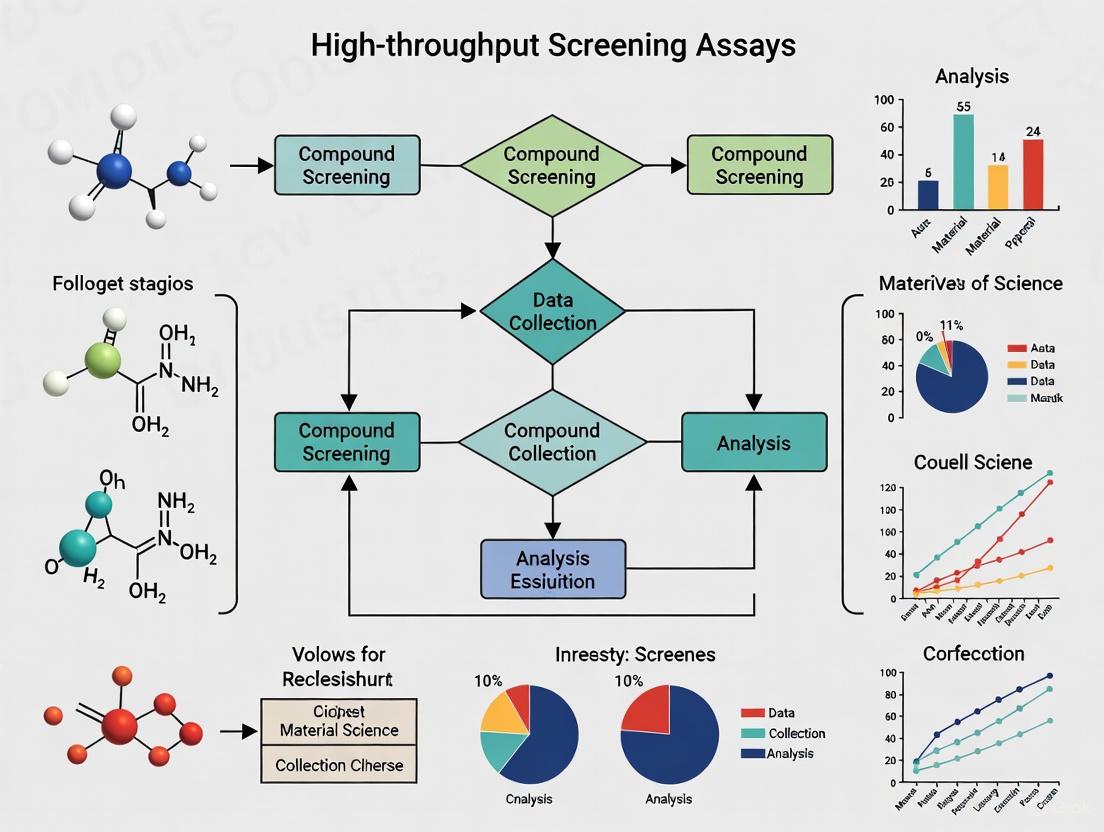
This article provides a comprehensive overview of the principles and applications of High-Throughput Screening (HTS), a cornerstone technology in modern drug discovery and biomedical research.
High-Throughput Screening Assays: Principles, Applications, and Cutting-Edge Advancements
Abstract
This article provides a comprehensive overview of the principles and applications of High-Throughput Screening (HTS), a cornerstone technology in modern drug discovery and biomedical research. Tailored for researchers, scientists, and drug development professionals, it explores the foundational concepts of HTS, including its automated, miniaturized, and parallelized nature. The scope extends to detailed methodological approaches—encompassing biochemical, cell-based, and phenotypic assays—and their specific applications in areas like oncology and antibiotic development. The content further addresses critical challenges such as false positives and data quality, offering robust troubleshooting and optimization strategies. Finally, it covers validation frameworks and comparative analyses with other screening methodologies, synthesizing key takeaways to highlight the transformative impact of integrating AI, 3D models, and advanced data analytics on the future of biomedical research.
What is High-Throughput Screening? Core Principles and Defining Characteristics
Principles of High-Throughput Screening Assays
Definition and Core Objective
High-Throughput Screening (HTS) is an automated, rapid-assessment technique used primarily in drug discovery and biochemical research to quickly test thousands to millions of chemical compounds or genetic materials for biological activity [1]. The core objective of HTS is to accelerate the identification of novel lead compounds or active substances by processing vast libraries against specific biological targets in a massively parallel and miniaturized format [2] [1]. This paradigm significantly reduces the time and resources required for the initial phases of research compared to traditional low-throughput methods, positioning it as a foundational tool in modern pharmaceutical and biotechnology industries [2] [3].
Key Aspects of High-Throughput Screening
The execution of a successful HTS campaign relies on the integration of several automated and miniaturized components [1].
Sample and Library Preparation
HTS requires the preparation of combinatorial libraries containing structurally diverse compounds to test against a specified biological target [1]. These samples are prepared in a standardized, automation-friendly manner, typically using microplates (96-, 384-, and 1536-well formats) [1]. The "split and mix" method is often used to create novel scaffolds on solid supports, which are then reacted with different chemical "building blocks" to maximize chemical variability [1]. The quality of these libraries is paramount, as it directly impacts the relevance of the hits for subsequent clinical development [1].
Assay Development and Validation
Assays used in HTS must be robust, reproducible, and sensitive enough for miniaturization to reduce reagent consumption [1]. They require full process validation according to pre-defined statistical concepts to ensure biological and pharmacological relevance before being deployed in a large-scale screen [1].
Automation and Robotics
Automation is the backbone of HTS. Automated liquid-handling robots are capable of low-volume dispensing of nanoliter aliquots, which minimizes assay setup times and provides accurate, reproducible liquid dispensing essential for screening large compound libraries [1]. Highly automated compound management systems handle storage, retrieval, solubilization, and quality control [1].
Detection Technologies
HTS assays are broadly subdivided into biochemical (e.g., using enzymes) and cell-based methods [1]. Fluorescence-based detection is common due to its sensitivity and adaptability, but mass spectrometry and differential scanning fluorimetry are increasingly used to screen unlabeled biomolecules in both biochemical and cellular settings [1].
Experimental Protocol for a Cell-Based HTS Assay
The following workflow details a standard protocol for a cell-based high-throughput screen, incorporating key reagents and instrumentation.
Detailed Methodology
Day 1: Cell Seeding
- Harvest and Resuspend Cells: Grow adherent or suspension cells to mid-log phase. Harvest using a gentle detachment method (e.g., Trypsin-EDTA for adherent cells), centrifuge, and resuspend in fresh, serum-appropriate culture medium.
- Density Determination: Count cells using an automated cell counter or hemocytometer and dilute to the optimal density determined during assay validation (e.g., 5,000 cells/well in 40 µL for a 384-well plate).
- Automated Dispensing: Use an automated liquid handler to dispense the cell suspension into all wells of sterile, assay-ready microplates.
- Pre-incubation: Incubate plates at 37°C, 5% CO₂ for 4-24 hours to allow cells to adhere and stabilize.
Day 2: Compound Addition and Incubation
- Compound Transfer: Using a pintool or nanoliter liquid handler, transfer compounds from the library stock plates (e.g., 10 mM in DMSO) to the assay plates. The final compound concentration is typically 1-10 µM, with DMSO concentration normalized to ≤0.5%.
- Control Addition: Include controls on each plate: positive control (known agonist/inhibitor), negative control (vehicle only, e.g., 0.5% DMSO), and blank (medium only).
- Assay Incubation: Return plates to the 37°C, 5% CO₂ incubator for the predetermined incubation period (e.g., 24-72 hours).
Day 3: Viability/Apoptosis Measurement
- Reagent Preparation: Thaw and equilibrate the CellTiter-Glo 2.0 Reagent to room temperature.
- Homogeneous Assay: Use a dispenser to add an equal volume of CellTiter-Glo 2.0 Reagent to each well (e.g., 40 µL reagent to 40 µL cell suspension).
- Signal Development: Shake plates on an orbital shaker for 2 minutes to induce cell lysis, then incubate at room temperature for 10 minutes to stabilize the luminescent signal.
- Signal Detection: Read luminescence on a plate reader (e.g., PerkinElmer EnVision) with an integration time of 0.5-1 second/well.
The Scientist's Toolkit: Essential Research Reagent Solutions
Table 1: Key Reagents and Materials for Cell-Based HTS
| Item | Function in HTS Protocol |
|---|---|
| Cell Line (e.g., HeLa, HEK293) | Biologically relevant system expressing the target of interest for phenotypic or target-based screening. |
| Assay-Ready Microplates (384-well) | Miniaturized platform with low well-to-well variability, optimized for cell culture and detection. |
| Compound Library | A curated collection of small molecules, siRNAs, or other perturbagens used to probe biological function. |
| CellTiter-Glo 2.0 Assay | Homogeneous, luminescent assay to quantify viable cells based on ATP content, indicating cytotoxicity or proliferation. |
| Liquid Handling Robot | Automates precise, nanoliter-scale dispensing of cells, compounds, and reagents across hundreds of plates. |
| Multi-mode Microplate Reader | Detects luminescent, fluorescent, or absorbance signals from miniaturized assay formats. |
Data Analysis and Hit Identification
Primary Data Normalization and QC
Raw luminescence data is first normalized to plate-based controls to calculate percent activity [1]. The Z'-factor is a critical statistical parameter for assessing assay quality and robustness, with a value >0.5 indicating an excellent assay suitable for HTS [3].
Table 2: Quantitative HTS (qHTS) Data Output and Key Parameters
| Parameter | Description | Application in Hit Prioritization |
|---|---|---|
| % Activity | Response normalized to controls (Positive control = 100%, Negative control = 0%). | Identifies preliminary "hits" that exceed a predefined threshold (e.g., >50% inhibition). |
| AC~50~ / IC~50~ | Concentration causing a 50% maximal response or inhibition. Derived from the Hill equation fit to concentration-response curves [4]. | Measures compound potency. Lower values indicate higher potency. |
| E~max~ | Maximal efficacy or response of a compound [4]. | Measures compound effectiveness. High E~max~ is typically desirable. |
| Hill Slope (h) | Steepness of the concentration-response curve [4]. | Informs on the cooperativity of binding; can indicate assay artifacts. |
Concentration-Response and the Hill Equation
In Quantitative HTS (qHTS), full concentration-response curves are generated for many compounds simultaneously [4]. The Hill Equation is the standard nonlinear model used to fit this data and derive AC~50~ and E~max~ values used for ranking compounds [4].
Hit Triage and Data Analysis
Following the primary screen, hits undergo a rigorous triage process to eliminate false positives caused by assay interference, chemical reactivity, or colloidal aggregation [1]. This involves cheminformatics analyses, including pan-assay interferent substructure filters and machine learning models trained on historical HTS data [1]. Confirmed hits are then ranked based on potency, efficacy, and drug-like properties for progression into lead optimization.
Applications, Market Landscape, and Future Trends
Primary Applications
- Drug Discovery: The primary application, enabling the identification of starting compounds for small molecule drug design, especially when little is known about the pharmacological target [1] [3].
- Toxicology: Cell-based HTS methodologies are used to predict chemical toxicity, offering a more human-relevant and higher-throughput alternative to traditional animal studies (e.g., the Tox21 program) [1].
- Functional Genomics: Used to identify the biological function of specific genes and metagenes by rapidly analyzing large numbers of genes for their effects on diseases or biological pathways [1].
Market and Technological Trends
The global HTS market is a dynamic field, characterized by significant growth and technological evolution.
Table 3: High-Throughput Screening Market and Technology Trends
| Aspect | Current Trend and Impact |
|---|---|
| Market Growth | The global HTS market is projected to grow from USD 26.12 Bn in 2025 to USD 53.21 Bn by 2032, at a CAGR of 10.7% [2]. |
| Regional Leadership | North America leads the market (39.3% share in 2025), while Asia Pacific is the fastest-growing region, driven by expanding pharmaceutical industries and R&D investments [2]. |
| Automation & AI/ML | Integration of robotics and automation improves efficiency and reproducibility [5]. AI and machine learning are revolutionizing data analysis, enabling pattern recognition and predictive modeling from massive HTS datasets [2] [5]. |
| Ultra-HTS (uHTS) | uHTS pushes throughput to over 300,000 compounds per day, leveraging advancements in microfluidics and high-density microwell plates (1536-well and beyond) [1]. |
High-Throughput Screening (HTS) is a foundational technology in modern drug discovery and biological research, enabling the rapid execution of hundreds of thousands of chemical, genetic, or pharmacological tests. Its strategic relevance is underscored by a robust market growth, projected to appreciate from $21.4 billion in 2024 to approximately $35.2 billion by 2030 [6]. The operational power of HTS rests on three interdependent pillars: automation, miniaturization, and parallel processing. These principles collectively transform the discovery process, facilitating unprecedented scale, speed, and reliability. This guide details the technical execution and integration of these pillars within the context of contemporary HTS assay research.
The Operational Imperative: Core Principles of HTS
The shift from manual processing to HTS represents a fundamental change in the scale and reliability of chemical and biological analyses [7]. This paradigm is essential in modern drug discovery where target validation and compound library exploration require massive parallel experimentation. The core principles guiding HTS implementation include:
- Data Integrity and Reproducibility: Automated, precisely controlled processes drastically lower inter-operator variability, generating robust, reproducible data sets under standardized conditions [7]. Successfully transitioning to HTS requires a deep understanding of assay robustness metrics, particularly the Z-factor, which quantifies the separation band between positive and negative controls. A Z-factor exceeding 0.5 is generally considered the threshold for a reliable HTS assay [7].
- Scalability and Efficiency: HTS dramatically increases the number of samples processed per unit time, moving away from conventional single-sample methods to massively parallel experimentation, thereby accelerating hit-to-lead timelines [7].
- Economic Viability: The miniaturization inherent in HTS conserves expensive reagents and precious biological samples, making large-scale screening campaigns financially feasible [8].
Table 1: Quantitative Impact of HTS Pillars
| Pillar | Key Metric | Traditional Method | HTS Method | Impact |
|---|---|---|---|---|
| Parallel Processing | Assays per day | Dozens to hundreds | Hundreds of thousands [7] | Accelerates hit identification from libraries of millions of compounds [6]. |
| Miniaturization | Assay volume | Microliters (µL) | Nanoliters (nL) [8] | Reduces reagent consumption by up to 50%, enabling the use of rare or costly samples [8]. |
| Automation | Operational Time | Manual, hours-limited | Continuous 24/7 operation [7] | Eliminates human fatigue factor, increases throughput, and ensures procedural consistency. |
Pillar Deep Dive: Automation
Automation provides the precise, repetitive, and continuous movement required to realize the full potential of HTS workflows. It fundamentally changes the role of personnel from manual assay execution to system validation, maintenance, and complex data analysis [7].
Key Technologies and Their Functions
The core of an automated HTS platform is the integration of diverse instrumentation through sophisticated robotics. These systems move microplates between functional modules without human intervention.
Table 2: Core Automated Modules in an HTS Workflow
| Module Type | Primary Function | Technical Requirement |
|---|---|---|
| Liquid Handler | Precise fluid dispensing and aspiration | Sub-microliter accuracy; low dead volume (e.g., 1 µL) [8] [7] |
| Plate Incubator | Temperature and atmospheric control | Uniform heating across microplates [7] |
| Microplate Reader | Signal detection (fluorescence, luminescence) | High sensitivity and rapid data acquisition [7] |
| Plate Washer | Automated washing cycles | Minimal residual volume and cross-contamination control [7] |
Experimental Protocol: Automated Compound Screening
Objective: To identify potential hits from a 100,000-compound library using a cell-based viability assay. Workflow Integration: The following diagram illustrates the automated sequence managed by a central scheduler.
Methodology:
- System Initialization: The central scheduler orchestrates the retrieval of assay-ready microplates (e.g., 384-well) from a hotel stacker [7].
- Liquid Handling: A non-contact liquid handler dispenses cell suspension into all wells, followed by nanoliter-scale compound transfer from a source library plate. Finally, assay reagents are added.
- Critical Parameter: Dispensing precision at nanoliter volumes to ensure consistency and avoid carryover [8].
- Incubation: Robotic arms transfer the plates to an environmentally controlled incubator (e.g., 37°C, 5% CO₂) for a predetermined time.
- Signal Detection: Plates are moved to a microplate reader for kinetic or endpoint measurement (e.g., fluorescence, luminescence).
- Data Acquisition: Raw data intensity values are automatically streamed to a Laboratory Information Management System (LIMS) for tracking, normalization, and hit identification [7].
Pillar Deep Dive: Miniaturization
Miniaturization maximizes the use of precious materials, focusing on reducing reaction volumes from microliters to nanoliters. This has led pharmaceutical environments to focus on assay miniaturization to reduce reagent waste while enhancing throughput, accuracy, and cost-effectiveness [8].
Implementation and Workflow
Assay miniaturization is applied to various experiments, including ELISA, compound screening, and CRISPR workflows [8]. The transition to higher-density microplate formats is a key enabler.
Table 3: Evolution of Microplate Formats in Miniaturization
| Format | Well Number | Typical Working Volume | Primary Use Case | Throughput & Cost Impact |
|---|---|---|---|---|
| 96-Well | 96 | 50-200 µL | Early HTS, simpler assays | Lower well density, higher reagent cost per data point. |
| 384-Well | 384 | 5-50 µL | Current HTS standard [6] | Balanced throughput and assay performance. |
| 1536-Well | 1,536 | 2-10 µL | Ultra-HTS (uHTS) [6] [7] | Compresses cycle time and reagent spend; enables million-well campaigns. |
Experimental Protocol: Miniaturized CRISPR Screening
Objective: To perform a high-throughput CRISPR knockout screen to identify genes essential for cell survival under stress. Workflow Logic: The process relies on miniaturized liquid handling to manage complex reagent mixes in high-density plates.
Methodology:
- Library Dispensing: Using an acoustic liquid handler, nanoliter volumes of lentiviral particles, each encoding a specific sgRNA, are dispensed into individual wells of a 1536-well plate. This conserves valuable library reagents [8].
- Cell Seeding: A suspension of target cells is added to each well. The miniaturized format ensures efficient viral transduction.
- Selection and Outgrowth: Plates are incubated for several days, allowing cells with beneficial knockouts to proliferate.
- Sample Harvesting and Analysis: Cells are lysed in-plate, and genomic DNA is harvested. Next-Generation Sequencing (NGS) libraries are prepared, often using automated clean-up systems [8], to quantify sgRNA abundance and identify essential genes.
Pillar Deep Dive: Parallel Processing
Parallel processing involves the simultaneous testing of thousands of compounds or genetic perturbations across hundreds of conditions, which is the defining feature that separates HTS from low-throughput methods [8] [7].
Applications and Data Management
This pillar allows for the rapid exploration of vast chemical and biological spaces. Key applications include primary drug screening, toxicology testing (e.g., Tox21 program screening ~10,000 compounds) [6], and multiplexed functional genomics. Managing the immense data output requires robust informatics. Each microplate generates thousands of data points, necessitating a LIMS for tracking compound source, plate layouts, and applying correction algorithms [7].
Experimental Protocol: Parallelized Pharmacotranscriptomics Screening
Objective: To simultaneously screen a library of 1,000 drug compounds for their ability to alter gene expression profiles in a cancer cell line. Workflow Overview: This complex protocol leverages parallel processing at every stage, from compound treatment to RNA sequencing.
Methodology:
- Parallelized Treatment: Cells are seeded in multiple 384-well plates. A liquid handler adds a different compound from the library to each well, with controls distributed across plates. This allows all 1,000 treatments to be initiated simultaneously [9].
- Incubation: Plates are incubated in parallel to allow for gene expression changes.
- Parallel RNA Extraction: After incubation, cells in all plates are lysed, and RNA is extracted in a high-throughput format.
- Multiplexed Sequencing: RNA samples are barcoded, and libraries are prepared using automated, miniaturized NGS workflows for simultaneous sequencing on a single flow cell [8].
- Data Analysis: Artificial intelligence and supervised learning algorithms analyze the resulting pharmacotranscriptomic profiles to rank compounds by their ability to reverse a disease-associated gene signature [9].
The Scientist's Toolkit: Essential Research Reagent Solutions
The successful implementation of HTS relies on a suite of specialized reagents and materials. The following table details key components.
Table 4: Essential Reagents and Materials for HTS Workflows
| Item | Function | Application Notes |
|---|---|---|
| siRNA/shRNA/cDNA Libraries | For loss-of-function or gain-of-function genetic screens [10]. | Enables genome-wide interrogation of gene function. Stored in high-density plate formats. |
| Small Molecule Compound Libraries | Collections of chemical compounds (e.g., FDA-approved, diverse synthetic) for phenotypic or target-based screening [10]. | Libraries can contain hundreds of thousands to millions of compounds for primary screening. |
| Cell-Based Assay Kits | Pre-optimized reagents for viability, cytotoxicity, apoptosis, and other cellular responses. | Crucial for ensuring robust, reproducible performance in miniaturized, automated formats. Prioritize kits validated for 384/1536-well formats. |
| Label-Free Detection Reagents | Reagents for assays using Surface Plasmon Resonance (SPR) or Bio-Layer Interferometry (BLI) that do not require fluorescent labels. | Reduces labeling artifacts; valuable for studying direct molecular interactions in high-throughput modes [6]. |
| High-Density Microplates (384, 1536-well) | The physical substrate for miniaturized assays. | Optically clear bottoms for imaging; surface-treated for optimal cell adhesion; low evaporation lids. |
The pillars of automation, miniaturization, and parallel processing are not standalone concepts but are deeply synergistic. Automation enables the precise handling required for miniaturization, while both are prerequisites for effective parallel processing. The future of HTS is characterized by the deeper integration of these pillars with artificial intelligence and more biologically complex models. AI is now being used to guide library selection, predict hit likelihood, and analyze high-content screening data, compressing the false-positive cascade [6]. Furthermore, the transition from 2D cell models to 3D organoids and microphysiological systems in HTS workflows improves clinical signal fidelity, demanding further advancements in miniaturized imaging and automated analysis [11] [6]. This continuous evolution, powered by its core pillars, ensures that HTS will remain a central pillar of the bio-innovation economy, pushing the frontiers of personalized medicine and therapeutic discovery.
The pursuit of new therapeutic agents relies on distinct strategic approaches for identifying and optimizing lead compounds. High-Throughput Screening (HTS) and Rational Drug Design (RDD) represent two fundamentally different philosophies in early drug discovery. HTS is an empirical, systematic approach that involves the rapid experimental testing of hundreds of thousands of diverse compounds against a biological target to identify initial "hits" [1] [12]. In contrast, Rational Drug Design is a knowledge-driven, hypothesis-based approach that utilizes detailed understanding of a target's three-dimensional structure and its biological function to methodically design drug candidates [13] [14]. While HTS leverages scale and diversity to uncover active compounds, RDD employs precision and prediction to create them. This whitepaper provides a comprehensive technical comparison of these divergent strategies, examining their underlying principles, methodological workflows, applications, and relative advantages within modern drug development pipelines.
Core Principles and Theoretical Foundations
High-Throughput Screening (HTS)
HTS operates on the principle of scale and efficiency, using automation and miniaturization to rapidly test vast chemical libraries against biological targets [1]. The core objective is to identify initial "hit" compounds that show desired biological activity through experimental observation rather than theoretical prediction. Key foundational elements include:
- Experimental Throughput: HTS can typically process 10,000–100,000 compounds per day, while Ultra-HTS (uHTS) can screen millions of compounds daily [1].
- Miniaturization and Automation: Assays are conducted in microplate formats (96-, 384-, 1536-well plates) using robotic liquid-handling systems for nanoliter dispensing, significantly reducing reagent consumption and assay setup times [1] [15].
- Diversity-Based Discovery: By screening structurally diverse compound libraries, HTS allows for the serendipitous discovery of novel chemotypes without prerequisite structural knowledge of the target [1].
Rational Drug Design (RDD)
RDD is founded on the principle of structure-based predictability, using detailed structural knowledge of biological targets to design molecules with specific interactions [13] [14]. This approach requires comprehensive understanding of:
- Target Structure: Determination of the three-dimensional structure of the biological target (e.g., proteins, enzymes, nucleic acids) using techniques like X-ray crystallography, NMR spectroscopy, or cryo-electron microscopy [14].
- Molecular Recognition: Analysis of binding sites, active sites, and molecular interactions to design compounds that fit complementarily with the target [13].
- Predictive Modeling: Use of computational tools to simulate drug-target interactions, predict binding affinity, and optimize molecular properties before synthesis [13] [14].
Methodological Comparison: Workflows and Experimental Protocols
High-Throughput Screening Workflow
The HTS process follows a standardized, sequential workflow designed for maximum efficiency and scalability [1] [15]:
Experimental Protocol: Typical HTS Campaign
Assay Development and Validation [1] [15]:
- Objective: Develop robust, reproducible, and sensitive assays appropriate for miniaturization and automation.
- Procedure:
- Optimize assay conditions (buffer composition, pH, ionic strength)
- Determine reagent concentrations and incubation times
- Validate using statistical metrics (Z'-factor > 0.5, signal-to-noise ratio, coefficient of variation)
- Adapt to microplate formats (384- or 1536-well plates)
- Quality Control: Full process validation according to predefined statistical concepts; methods transferred between laboratories require appropriate validation.
Library Preparation and Compound Management [1]:
- Procedure:
- Store compounds in miniaturized microwell plates at standardized concentrations
- Use highly automated systems for compound retrieval, nanoliter liquid dispensing, and sample solubilization
- Implement quality control measures for compound integrity and concentration verification
- Library Types: Diverse combinatorial libraries with varied chemical scaffolds; split-and-mix combinatorial approaches for enhanced diversity.
- Procedure:
Automated Screening Process [1] [12]:
- Automation Systems: Robotic liquid-handling robots for low-volume dispensing of nanoliter aliquots.
- Detection Technologies:
- Biochemical assays: Fluorescence, luminescence, fluorescence polarization (FP), TR-FRET, mass spectrometry
- Cell-based assays: Reporter gene assays, viability assays, high-content imaging
- Protocol Execution:
- Automated dispensing of compounds and reagents into microplates
- Incubation under controlled conditions (temperature, humidity, CO₂)
- Signal detection using plate readers appropriate for detection technology
- Data capture in Laboratory Information Management Systems (LIMS)
Hit Identification and Validation [1] [15]:
- Primary Analysis: Identify compounds that meet predefined activity thresholds (typically >50% inhibition or activation)
- Confirmatory Screening: Retest hits in dose-response format to determine IC₅₀/EC₅₀ values
- Counter-Screening: Eliminate false positives using orthogonal assays with different detection technologies
- Hit Triage: Rank compounds based on potency, selectivity, and chemical attractiveness for lead optimization
Rational Drug Design Workflow
The RDD process follows an iterative, design-focused workflow centered on structural information and predictive modeling [13] [14]:
Experimental Protocol: Structure-Based Drug Design
Target Selection and Structural Characterization [14]:
- Procedure:
- Identify biologically relevant target with validated role in disease pathology
- Express and purify target protein in sufficient quantities for structural studies
- Determine three-dimensional structure using X-ray crystallography, NMR spectroscopy, or cryo-electron microscopy
- Analyze structure to identify binding pockets, active sites, and key interaction residues
- Procedure:
Binding Site Analysis and Characterization [13] [14]:
- Computational Methods:
- Map physicochemical properties of binding site (electrostatics, hydrophobicity, hydrogen-bonding potential)
- Identify key interaction points for molecular design
- Analyze structural waters and their potential roles in ligand binding
- Compare with related structures to determine selectivity determinants
- Computational Methods:
Virtual Screening and Molecular Docking [13]:
- Procedure:
- Prepare compound libraries for virtual screening (structure standardization, tautomer enumeration, conformer generation)
- Perform molecular docking simulations to predict binding poses and affinity
- Score and rank compounds based on predicted binding energy, complementarity, and interaction quality
- Select top-ranking compounds for experimental testing
- Software Tools: AutoDock, SwissDock, Glide, GOLD
- Procedure:
De Novo Ligand Design [13] [16]:
- Methods:
- Generate novel molecular scaffolds that complement the binding site geometry
- Use fragment-based approaches to build molecules from small molecular fragments
- Apply molecular dynamics simulations to assess binding stability and conformational changes
- Optimize designed compounds for synthetic accessibility
- Methods:
Structure-Activity Relationship (SAR) Analysis [14]:
- Iterative Process:
- Synthesize designed compounds and analogs
- Test in biochemical and functional assays
- Analyze results to identify key structural features contributing to activity
- Use insights to design improved compounds in subsequent iterations
- Design-Make-Test-Analyze (DMTA) Cycles: Continuous refinement based on experimental data [17]
- Iterative Process:
Comparative Analysis: Key Parameters and Performance Metrics
Quantitative Comparison of HTS and RDD
Table 1: Direct comparison of key parameters between HTS and Rational Drug Design approaches
| Parameter | High-Throughput Screening (HTS) | Rational Drug Design (RDD) |
|---|---|---|
| Throughput | 10,000-100,000 compounds/day; uHTS: >300,000 compounds/day [1] | Limited by synthesis and computational resources; typically 10-100 compounds per design cycle |
| Timeline | Primary screening: days to weeks; hit validation: additional weeks [1] | Initial design: weeks to months; iterative optimization: months to years [14] |
| Resource Requirements | High initial capital investment ($) in automation and robotics; significant reagent costs [1] | High computational infrastructure costs; specialized expertise in structural biology and modeling [13] |
| Chemical Space Coverage | Broad screening of diverse compound libraries; empirical exploration [1] | Focused exploration around known active sites or pharmacophores; rational exploration [14] |
| Success Rate | Typically 0.01-1% hit rate; potential for false positives/negatives [1] | Highly variable; dependent on target tractability and model accuracy [14] |
| Information Requirements | Minimal prior structural knowledge needed [1] | Detailed 3D structural information of target essential [14] |
| Data Output | Large quantitative datasets of compound activity [1] | Detailed structure-activity relationships and binding models [13] |
| Optimal Application | Targets with unknown ligands; phenotypic screening; early discovery [1] [12] | Targets with known structures; optimizing selectivity and properties [14] |
Advantages and Limitations
- Ability to identify novel chemotypes without prior knowledge of target structure
- Serendipitous discovery of unexpected mechanisms of action
- Broad exploration of chemical space
- Direct experimental measurement of biological activity
HTS Limitations [1]:
- High costs for instrumentation, maintenance, and compound libraries
- Technical complexity requiring specialized expertise
- Potential for false positives due to assay interference (chemical reactivity, autofluorescence, colloidal aggregation)
- Risk of inflated physicochemical properties in hit compounds (high lipophilicity, molecular weight)
- More efficient and targeted approach with rational compound design
- Ability to optimize specific properties (selectivity, pharmacokinetics)
- Reduced chemical synthesis and testing requirements
- Better understanding of structure-activity relationships
RDD Limitations [14]:
- Requirement for high-quality structural information of the target
- Limited by accuracy of computational models and force fields
- Difficulty accounting for protein flexibility and solvation effects
- Potential oversight of novel binding sites or allosteric mechanisms
The Scientist's Toolkit: Essential Research Reagents and Technologies
Core Research Reagent Solutions
Table 2: Essential reagents, technologies, and their applications in HTS and RDD
| Reagent/Technology | Function | Application Context |
|---|---|---|
| Transcreener ADP² Assay [15] | Universal biochemical assay for detecting ADP production; uses FP, FI, or TR-FRET detection | HTS: Enzyme target classes (kinases, ATPases, GTPases, helicases, PARPs, sirtuins, cGAS) |
| CETSA (Cellular Thermal Shift Assay) [17] | Validates direct target engagement in intact cells and native tissue environments | Both HTS & RDD: Confirmation of cellular target engagement for hits or designed compounds |
| Microplates (384-, 1536-well) [1] [15] | Miniaturized assay format for high-density screening | HTS: Enables testing of thousands of compounds with minimal reagent consumption |
| Automated Liquid Handling Systems [1] [12] | Robotic dispensing of nanoliter volumes with high precision and reproducibility | HTS: Critical for assay setup, compound addition, and reagent dispensing in screening campaigns |
| Molecular Docking Software (AutoDock, SwissDock) [17] [13] | Predicts binding poses and affinity of small molecules to protein targets | RDD: Virtual screening of compound libraries and analysis of protein-ligand interactions |
| Gene Expression Profiling (RNA-seq, microarrays) [9] | Measures transcriptome-wide changes in gene expression following drug treatment | Both: Mechanism of action studies; pharmacotranscriptomics-based screening (PTDS) |
| Surface Plasmon Resonance (SPR) [12] | Label-free technology for real-time monitoring of molecular interactions | Both: Determination of binding kinetics (kon, koff) and affinity (KD) for hit validation |
| Fragment Libraries [13] | Collections of low molecular weight compounds for structural screening | RDD: Fragment-based drug design starting points for targets with known structures |
Emerging Trends and Integrated Approaches
Technological Advancements
The boundaries between HTS and RDD are blurring through technological innovations and integrated workflows:
Artificial Intelligence and Machine Learning [17] [16] [12]:
- AI-driven analysis of HTS data to identify patterns and predict compound activity
- Machine learning models trained on historical HTS data to reduce false positives
- Deep learning for molecular design and property prediction in RDD
- "Informacophore" concept combining chemical structure with computed molecular descriptors for biological activity prediction [16]
Virtual Screening and Ultra-Large Libraries [13] [16]:
- Virtual screening of make-on-demand libraries containing billions of compounds
- Cloud-based computing enabling massive docking campaigns
- AI-powered generative models for designing novel chemical entities
- Example: Enamine and OTAVA offer 65 and 55 billion make-on-demand molecules, respectively [16]
Advanced Detection Technologies [1] [9] [12]:
- High-content screening combining imaging with multiparametric analysis
- Mass spectrometry-based methods for unlabeled biomolecules in HTS
- Miniaturized multiplexed sensor systems for continuous monitoring of multiple analytes
- Label-free technologies (SPR) reducing assay artifacts and false positives
Integrated Discovery Frameworks
Modern drug discovery increasingly combines the strengths of both approaches:
- Virtual screening to prioritize compounds for experimental HTS
- HTS results informing computational models for subsequent optimization
- Structural biology validating hits from phenotypic screens
- AI and automation enabling rapid design-make-test-analyze cycles
Target Engagement Validation [17]:
- CETSA confirming direct target binding for hits identified through HTS
- Cellular context validation for compounds designed through RDD
- Mechanistic follow-up for phenotypic screening hits
Pharmacotranscriptomics-Based Screening [9]:
- Integration of gene expression profiling with drug screening
- Pathway-based analysis of drug mechanisms
- Particularly valuable for complex therapeutic areas like traditional Chinese medicine
High-Throughput Screening and Rational Drug Design represent complementary rather than competing strategies in the modern drug discovery arsenal. HTS excels in its ability to empirically explore vast chemical spaces and identify novel starting points without prerequisite structural knowledge, making it invaluable for early discovery against new targets or for phenotypic screening [1] [12]. Conversely, RDD provides a targeted, efficient approach for optimizing lead compounds when structural information is available, enabling precise engineering of drug properties and mechanism-based design [13] [14].
The most successful contemporary drug discovery pipelines strategically integrate both approaches, leveraging the strengths of each while mitigating their respective limitations. This convergence is facilitated by advances in artificial intelligence, structural biology, and automation technologies that bridge the gap between empirical screening and rational design [17] [16] [12]. As these technologies continue to evolve, the distinction between HTS and RDD will likely further blur, giving rise to more efficient, predictive, and integrated drug discovery paradigms that leverage both large-scale experimental data and deep mechanistic understanding to accelerate the development of novel therapeutics.
High-Throughput Screening (HTS) represents a foundational paradigm in contemporary biological research and drug discovery, enabling the rapid experimental analysis of thousands to millions of chemical, genetic, or pharmacological tests. This automated, miniaturized approach has fundamentally transformed early-stage research by shifting the scientific workflow from a linear, hypothesis-driven process to a parallel, data-rich exploration. The core principle of HTS lies in its ability to systematically test vast libraries of compounds or reagents against biological targets using automated, miniaturized assays and sophisticated data analysis [1]. Within the broader thesis of screening assay research principles, HTS exemplifies the critical trade-off between expansive exploratory power and the significant resource investments required for meaningful results. The technology serves as a powerful engine for hypothesis generation, allowing researchers to observe complex biological interactions at a scale that was previously unimaginable, thereby accelerating the transition from basic research to therapeutic applications across pharmaceutical, biotechnology, and academic institutions [2] [18].
Quantitative Landscape of the HTS Market
The adoption and impact of High-Throughput Screening are reflected in its significant and growing market presence. The field is experiencing robust expansion, driven by technological advancements and increasing application across diverse research domains.
Table 1: Global High-Throughput Screening Market Size and Projection
| Metric | 2025 (Estimated) | 2032 (Projected) | Compound Annual Growth Rate (CAGR) |
|---|---|---|---|
| Market Value | USD 26.12 Billion | USD 53.21 Billion | 10.7% [2] |
This growth is geographically diversified, with North America maintaining a dominant position (39.3% share in 2025), while the Asia-Pacific region is anticipated to be the fastest-growing market, reflecting a global expansion of biotechnological capabilities [2]. The product and service landscape is similarly segmented, with instruments (liquid handling systems, detectors, and readers) constituting the largest product segment and drug discovery remaining the primary application, underscoring the technology's central role in therapeutic development [2].
Core Advantages of High-Throughput Screening
Unparalleled Speed and Scale
The most definitive advantage of HTS is its capacity to accelerate the discovery process dramatically. Where traditional methods might test a few dozen compounds per week, HTS platforms can routinely process 10,000–100,000 compounds per day [1]. This speed is further amplified by Ultra-High-Throughput Screening (uHTS), which can process over 300,000 compounds daily, pushing the boundaries of experimental scale [1]. This capability directly translates to compressed research timelines, enabling the identification of hit compounds in weeks or months instead of years. The scale allows researchers to interrogate enormous chemical and biological spaces that would be otherwise intractable, significantly increasing the probability of discovering novel, active compounds.
Functional Relevance and Predictive Power
A significant trend strengthening the value of HTS is the shift toward biologically complex and physiologically relevant assay systems. Cell-based assays constitute a major segment of the market (projected 33.4% share in 2025) because they more accurately replicate the complex environment of a living system compared to simplified biochemical assays [2]. The growing adoption of 3-D cell cultures, organoids, and organ-on-a-chip technologies further enhances this predictive accuracy. These systems model human tissue physiology and drug-metabolism pathways more faithfully, which helps address the high clinical-trial failure rate linked to inadequate preclinical models [19]. This evolution from simple target-based screening to phenotypic and functional screening provides invaluable insights into cellular processes, drug actions, and toxicity profiles early in the discovery pipeline [2] [1].
Integration with Automation and Advanced Data Science
The HTS workflow is inherently tied to automation and sophisticated data analysis, which enhances both reproducibility and insight. Robotic liquid-handling systems are crucial for automating the precise dispensing and mixing of small sample volumes, ensuring consistency across thousands of screening reactions [2]. The integration of Artificial Intelligence (AI) and Machine Learning (ML) is rapidly reshaping the field by enabling predictive analytics and advanced pattern recognition. AI allows researchers to analyze the massive datasets generated by HTS with unprecedented speed, helping to optimize compound libraries, predict molecular interactions, and streamline assay design [2] [19]. This synergy between physical automation and computational power creates a virtuous cycle of increasing efficiency and data quality.
Inherent Disadvantages and Challenges
Pervasive Issue of False Positives and Assay Interference
A major technical challenge that can undermine HTS campaigns is the generation of false positives—compounds that appear active in the primary screen but do not genuinely modulate the target of interest [1] [20]. These artifacts arise from various interference mechanisms that mimic a true biological response.
Table 2: Common Mechanisms of HTS Assay Interference and Detection
| Interference Mechanism | Description | Impact |
|---|---|---|
| Chemical Reactivity | Compounds (e.g., thiol-reactive compounds) covalently modify assay components or protein residues like cysteine. | Leads to nonspecific inhibition and unreliable results [20]. |
| Luciferase Reporter Inhibition | Compounds directly inhibit the luciferase enzyme, a common reporter in gene-based assays, reducing signal. | Creates false negatives or confounds results in reporter assays [20]. |
| Compound Aggregation | Molecules form colloidal aggregates that non-specifically sequester or denature proteins. | The most common cause of assay artifacts; leads to nonspecific perturbation [20]. |
| Autofluorescence & Absorbance | Test compounds are themselves fluorescent or colored, interfering with optical detection methods. | Causes signal interference, leading to false positives or negatives [1] [20]. |
The "Liability Predictor" webtool represents an advanced computational approach to flag these nuisance compounds, using Quantitative Structure-Interference Relationship (QSIR) models that have demonstrated superior reliability compared to older methods like PAINS filters [20].
Significant Financial and Operational Hurdles
The infrastructure required for HTS commands a substantial financial investment. Establishing a fully automated HTS workcell can require an initial capital expenditure nearing USD 5 million, with annual maintenance and licensing adding 15-20% to operating budgets [19]. This high capital intensity creates a significant barrier to entry, particularly for smaller biotech firms and academic labs. Furthermore, the technical complexity of HTS workflows creates a demand for interdisciplinary specialists with expertise in biology, chemistry, robotics, and data science—a talent pool that is currently in short supply, inflating wages and slowing project deployment [19]. These factors collectively contribute to the high cost profile of HTS, which is frequently cited as a primary disadvantage [1].
Data Management and Complexity Challenges
The sheer volume of data produced by HTS platforms presents its own set of challenges. The interpretation of enormous, content-rich datasets requires sophisticated bioinformatics tools and significant computational resources [18] [21]. The complexity is not merely one of volume but also of quality; HTS data is susceptible to variability (both random and systematic), necessitating robust statistical quality control methods for outlier detection [1]. The entire workflow—from sample preparation and nucleic acid extraction to sequencing and bioinformatics analysis—requires meticulous optimization and validation to ensure reliable and reproducible results across different laboratories and facilities [21] [1]. This end-to-end complexity means that establishing a robust HTS pipeline is as much an engineering and informatics challenge as it is a biological one.
Essential Workflows and Protocols
A standardized HTS workflow is critical for generating reliable and reproducible data. The process is a sequence of interdependent steps, each requiring optimization.
Diagram 1: Generalized HTS Experimental Workflow.
Detailed Protocol: A Cell-Based uHTS Campaign
The following protocol outlines a typical cell-based ultra-high-throughput screening (uHTS) campaign, adapted from recent studies [1].
- Assay Development and Miniaturization: The biological assay is first developed and optimized in a 96-well plate format. It is then systematically miniaturized to a 384-well or 1536-well plate format (volumes of 1–2 µL). Key parameters for validation include the Z'-factor (a measure of assay robustness), signal-to-background ratio, and coefficient of variation [1] [21].
- Library and Reagent Preparation: The compound library is prepared in DMSO and pre-dispensed into the assay microplates using acoustic dispensing or pintool transfer. Cell suspensions, expressing the target of interest (e.g., a GPCR with a luciferase reporter), and other assay reagents are similarly dispensed via automated liquid handlers [1] [22].
- Incubation and Automation: The assay plates are incubated under controlled conditions (e.g., 37°C, 5% CO₂) for a predetermined period to allow for biological response. This entire process is managed by robotic arms that transfer plates between incubators, liquid handlers, and detectors [19].
- Signal Detection and Analysis: Following incubation, the assay signal (e.g., luminescence, fluorescence) is measured using a plate reader. For the luciferase reporter example, a luminescence signal is detected, and the raw data is captured [1].
- Hit Identification and Triage: Data analysis software normalizes the raw signals and calculates activity values for each compound well. Putative "hits" are identified based on a predefined activity threshold (e.g., >50% inhibition/activation). These primary hits are then subjected to a rigorous triage process. This includes:
- Confirmatory Assays: Re-testing in a dose-response format (e.g., 10-point concentration series) to verify potency and efficacy.
- Counter-Assays: Testing in assays designed to detect common interference mechanisms (e.g., luciferase inhibitor assay, aggregation detection assay) to eliminate false positives [20] [1].
- Computational Triage: Screening the hit structures against computational filters (e.g., "Liability Predictor") to flag compounds with undesirable properties or potential assay artifacts [20].
The Scientist's Toolkit: Essential Research Reagents and Materials
A successful HTS campaign relies on a suite of specialized reagents, instruments, and computational tools.
Table 3: Key Research Reagent Solutions for HTS
| Tool Category | Specific Examples | Function & Application |
|---|---|---|
| Microplates | 96-, 384-, 1536-well plates | Provide the miniaturized platform for conducting thousands of parallel assays with minimal reagent use [1]. |
| Detection Reagents | Fluorescent dyes (e.g., for FP, TR-FRET), luciferase substrates, absorbance probes | Generate a measurable signal corresponding to the biological activity being probed [1] [18]. |
| Liquid Handling Instruments | Automated pipettors, acoustic dispensers (e.g., Labcyte's firefly) | Precisely dispense nanoliter to microliter volumes of compounds, cells, and reagents with high accuracy and reproducibility [2] [1]. |
| Cell Culture Systems | Immortalized cell lines, primary cells, iPSCs, 3D organoids | Provide the biologically relevant system for cell-based and phenotypic screening [2] [19]. |
| Signal Detectors | Multimode plate readers (e.g., for fluorescence, luminescence, absorbance), high-content imagers | Quantify the assay signal from each well of the microplate rapidly and sensitively [2] [1]. |
| Computational Tools | "Liability Predictor," "SCAM Detective," "Luciferase Advisor" | Identify and triage compounds likely to be assay artifacts or false positives [20]. |
High-Throughput Screening stands as a powerful, double-edged sword in the principles of assay research. Its profound advantages—unmatched speed, expansive scale, and increasingly physiologically relevant data—have cemented its role as an indispensable engine for discovery in the life sciences. Yet, these capabilities come with inherent and significant challenges, including the pervasive risk of false positives, substantial capital and operational costs, and immense data complexity. The future evolution of HTS will likely focus on mitigating these disadvantages through the continued integration of AI and machine learning for better predictive triage, the development of more sophisticated and relevant biological models, and the creation of more accessible and cost-effective platforms. The successful researcher is one who strategically leverages the scale and power of HTS while maintaining a rigorous, critical approach to data validation and hit confirmation, thus truly weighing the balance to maximize scientific and therapeutic output.
Ultra-High-Throughput Screening (uHTS) represents the pinnacle of automation and miniaturization in life sciences screening, enabling the rapid testing of millions of chemical or biological compounds. This guide details the core principles, technologies, and methodologies that define modern uHTS, providing a technical foundation for its application in drug discovery and biological research.
Defining the Scale: uHTS vs. HTS
Ultra-High-Throughput Screening is distinguished from conventional High-Throughput Screening primarily by the immense scale of its operational throughput. While HTS typically processes up to 100,000 assays per day, uHTS can routinely handle over 300,000 compounds daily, with capabilities extending into the millions [1]. This leap is achieved through extreme miniaturization and advanced automation.
The following table summarizes the key distinctions:
| Attribute | High-Throughput Screening (HTS) | Ultra-High-Throughput Screening (uHTS) |
|---|---|---|
| Throughput | Up to 100,000 compounds per day [1] | Over 300,000 compounds per day [1] |
| Common Microplate Format | 96-well, 384-well [23] | 1536-well and higher densities [1] |
| Assay Volume | ~50-100 µL (for 384-well) [23] | 1-2 µL [1] |
| Primary Challenge | Cost and technical complexity [1] | Fluid handling in miniaturized formats and continuous multi-analyte monitoring [1] |
Core Technologies Powering uHTS Workflows
A uHTS platform is an integrated system of specialized devices. The essential components include:
Microplates and Miniaturization
The standard uHTS format is the 1536-well plate, which uses the same footprint as a standard 96-well plate but contains far more wells, drastically reducing reagent consumption and sample volumes to 1-2 µL [1]. Plates are made from materials like polystyrene (PS), cyclic olefin copolymer (COC) which is DMSO-resistant and suitable for acoustic dispensing, and polypropylene (PP) for compound storage due to its durability and thermal stability [23]. Plates are selected based on the assay needs, with opaque white plates for luminescence and opaque black for fluorescence assays [23].
Liquid Handling and Automation
Automated liquid handling is the backbone of uHTS. Liquid handlers automate the precise dispensing and mixing of nanoliter-scale volumes, which is vital for maintaining consistency across thousands of reactions [2]. Non-contact dispensers, such as the firefly liquid handling platform which uses positive displacement, are crucial for avoiding cross-contamination in high-density plates [2]. Acoustic dispensing technology is particularly valued for its ability to transfer tiny, precise volumes of compounds directly from source plates, especially those made of DMSO-resistant COC [23].
Detection and Reading Systems
Multi-mode microplate readers are sophisticated instruments that combine detection technologies like Fluorescence Intensity (FI), Time-Resolved Fluorescence (TRF), Fluorescence Polarization, Luminescence, and Absorbance into a single platform [23]. For uHTS, speed and sensitivity are paramount. Advanced systems like the iQue 5 High-Throughput Screening Cytometer can run continuously for 24 hours and are equipped with automated clog detection to minimize downtime [2]. These readers can be equipped with either monochromators (offering wavelength flexibility) or filter-based systems (offering superior light throughput and sensitivity) [23].
Key UHTS Experimental Protocols
The following workflow describes a typical cell-based uHTS campaign in 1536-well format.
Protocol: Cell-Based uHTS for Inhibitor Discovery
1. Assay Development and Miniaturization
- Objective: Adapt a biochemical or cellular assay to a 1-2 µL volume in a 1536-well plate.
- Methods:
- Cell Seeding: Optimize cell concentration and dispensing parameters for uniform adhesion and viability. Use automated liquid handlers to seed cells in the miniaturized wells [1].
- Reagent Optimization: Use high-concentration, glycerol-free reagents to ensure low viscosity for precise robotic dispensing and to avoid interference with detection [24]. Hot-start enzymes (chemical, antibody, or aptamer-mediated) are often essential to prevent non-specific amplification or reaction during setup, enhancing assay precision [24].
- Signal-to-Noise Validation: Validate the miniaturized assay by calculating the Z'-factor, a statistical measure of assay robustness. A Z'-factor > 0.5 is considered excellent for an HTS/uHTS campaign [1].
2. Compound Library Reformating
- Objective: Transfer the screening library from storage plates to assay-ready plates.
- Methods:
3. Automated Screening Execution
- Objective: Run the uHTS campaign with minimal manual intervention.
- Methods:
- Integrate plate readers, liquid handlers, and incubators into a single automated system using robotic arms [1].
- For cell-based assays, the system will:
4. Data Acquisition and Analysis
- Objective: Rapidly process large datasets to identify "hits."
- Methods:
- Primary Screening: Read plates using a high-speed detector (e.g., a PMT). Raw data is automatically uploaded to an analysis platform [23] [1].
- Hit Identification: Normalize data against positive and negative controls. Apply statistical thresholds (e.g., activity >3 standard deviations from the mean) to identify initial hits.
- False Positive Triage: Use cheminformatic filters and machine learning models to flag and remove compounds known to cause assay interference (e.g., fluorescent compounds, colloidal aggregators) [1].
Diagram 1: The core operational workflow of a typical uHTS campaign.
Advanced Applications and Integrations
uHTS in Functional Genomics
uHTS principles are applied to functional genomics to understand gene function at scale. CRISPR-based screening systems, such as the CIBER platform, use RNA barcodes to enable genome-wide studies of vesicle release regulators in just weeks [2]. These screens involve transducing cells with a pooled CRISPR library, selecting for phenotypes, and using HTS to sequence the barcodes to identify genes essential for the process under study.
The Role of Artificial Intelligence and Automation
Artificial Intelligence (AI) and machine learning (ML) are reshaping uHTS by enhancing efficiency and lowering costs [2]. AI supports uHTS in several ways:
- Predictive Modeling: Analyzing massive uHTS datasets to predict molecular interactions and identify potential drug candidates with unprecedented speed [2].
- Process Automation: Minimizing manual intervention in repetitive tasks, which accelerates workflows and reduces human error [2].
- Hit Triage: ML models trained on historical data can rank HTS output and identify compounds with a high probability of success, filtering out false positives [1].
The Scientist's Toolkit: Essential Reagent Solutions for uHTS
The stringent requirements of uHTS demand specific reagent properties. The following table details key considerations.
| Reagent / Material | Key Function & Rationale in uHTS |
|---|---|
| High-Concentration Enzymes (e.g., 50 U/µL) | Accelerates reaction kinetics, allows for smaller reaction volumes, and provides cost-effective dosing for large-scale screens [24]. |
| Glycerol-Free Reagents | Reduces viscosity for precise automated liquid handling, eliminates potential interference, and is suitable for lyophilization [24]. |
| Hot-Start Enzymes (Antibody/Aptamer-mediated) | Inhibits enzyme activity during room-temperature assay setup, reducing non-specific amplification and primer-dimer artifacts in bulk reactions [24]. |
| Room-Temperature Stable Assays | Simplifies shipping and storage logistics, increases shelf-life, and supports more sustainable laboratory practices [24]. |
| Specialized Buffer Systems | Ready-made master mixes and optimized buffers reduce the need for individual reaction optimization, saving time during assay development [24]. |
Diagram 2: The core concept of multiplexing, where a single sample is simultaneously tested for multiple targets, drastically increasing the information gained per assay.
Executing HTS: From Assay Design to Real-World Applications in Drug Discovery
Selecting the appropriate assay format is a critical decision in drug discovery and basic research, directly impacting the quality, relevance, and success of a screening campaign. Within the principles of high-throughput screening (HTS), the choice often narrows down to two fundamental approaches: biochemical assays and cell-based assays. The former provides a controlled, reductionist system for studying isolated molecular interactions, while the latter offers a more physiologically relevant environment within living cells. This guide provides an in-depth technical comparison of these two formats, detailing their principles, applications, methodologies, and how to select the right one for your research objectives.
Core Principles and Strategic Applications
Biochemical and cell-based assays are built on different philosophies and are strategically deployed at different stages of the research pipeline.
Biochemical Assays: Isolating the Mechanism
Biochemical assays are conducted in a cell-free environment using purified components, such as enzymes, receptors, or nucleic acids. They are designed to study molecular interactions and enzymatic activity directly and without the complexity of a cellular system [25] [26].
- Key Characteristics: They are typically highly controlled, reproducible, and miniaturizable, making them excellent for high-throughput screening (HTS) of large compound libraries [27] [1]. They provide precise data on binding affinity (Kd, Ki) and enzymatic efficiency (IC50) [26].
- Primary Applications: Biochemical assays are predominantly used in the early stages of drug discovery for target validation, primary screening of compound libraries, and mechanistic studies to understand the direct interaction between a compound and its target [25] [26]. They are also crucial for studying enzyme kinetics and structure-activity relationships (SAR) [28].
Cell-Based Assays: Capturing Physiological Context
Cell-based assays utilize live cells to quantify biological processes and evaluate cellular responses to various stimuli, such as drug compounds or genetic modifications [29] [30].
- Key Characteristics: These assays preserve cellular signaling pathways, membrane structures, and other complex cellular functions, offering a more biologically relevant model [25] [30]. They can assess multiple compound characteristics simultaneously, including cellular uptake, metabolism, and toxicity [30].
- Primary Applications: Cell-based assays are used for secondary screening to validate hits from biochemical screens, toxicity testing (e.g., cytotoxicity, genotoxicity), functional studies of complex pathways, and in later stages for potency and stability testing of drug candidates [29] [30]. The shift towards more complex models like 3D cell cultures and co-culture systems is further enhancing their physiological relevance [29].
Table 1: High-Level Comparison of Biochemical and Cell-Based Assays
| Feature | Biochemical Assays | Cell-Based Assays |
|---|---|---|
| System Complexity | Cell-free, simplified system [26] | Living cells, higher complexity [29] |
| Physiological Relevance | Lower; isolates target interaction [25] | Higher; includes cellular context [30] |
| Primary Data Output | Binding affinity (Kd, Ki), enzymatic activity (IC50) [31] [26] | Functional response (EC50), cell viability, phenotypic changes [25] [30] |
| Throughput | Typically very high [27] [1] | Can be high, but often more complex and lower throughput [29] |
| Cost & Technical Demand | Generally lower cost and less technically demanding | Generally higher cost and more technically demanding [29] |
| Key Advantage | Direct mechanism of action, high reproducibility [27] | Predicts compound behavior in a living system [30] |
Bridging the Gap: Understanding Discrepancies in Activity Data
A common challenge in research is the frequent observation that a compound's activity (e.g., IC50 value) measured in a biochemical assay can differ significantly—sometimes by orders of magnitude—from its activity in a cell-based assay [31]. While factors like poor membrane permeability or compound instability are often blamed, the underlying cause is frequently more fundamental: the physicochemical (PCh) conditions of the assay environment [31].
Standard biochemical assay buffers, such as Phosphate-Buffered Saline (PBS), are designed to mimic extracellular fluid, not the intracellular environment [31]. Key differences include:
- Ionic Composition: The cytoplasm has high K+ (~140-150 mM) and low Na+ (~14 mM), the inverse of PBS [31].
- Macromolecular Crowding: The intracellular space is densely packed with proteins and other macromolecules, which increases viscosity and can dramatically alter binding equilibria and enzyme kinetics [31].
- Cosolvents and Lipophilicity: The presence of various metabolites and other molecules affects the solution's properties.
These differences can cause Kd values to shift by up to 20-fold or more compared to standard buffer conditions [31]. Therefore, to better predict cellular activity from biochemical assays, researchers are encouraged to design biochemical assays with buffers that more accurately mimic the intracellular environment, considering factors like crowding agents, viscosity modifiers, and physiologically relevant salt compositions [31].
Experimental Protocols and Workflows
Biochemical Assay Development Workflow
The development of a robust biochemical assay follows a structured sequence of steps to ensure precision and scalability [27].
Diagram 1: Biochemical Assay Development
- Define the Biological Objective: Identify the enzyme or target and the specific functional outcome to be measured (e.g., product formation, substrate consumption) [27].
- Select the Detection Method: Choose a detection chemistry compatible with the enzymatic product. Common techniques include Fluorescence Polarization (FP), Förster Resonance Energy Transfer (FRET), Time-Resolved FRET (TR-FRET), and luminescence. The choice depends on sensitivity, dynamic range, and instrument availability [27] [26].
- Optimize Assay Components: Determine the optimal concentrations of substrate, enzyme, and cofactors, as well as the ideal buffer composition (pH, ionic strength) [27]. For example, a universal kinase assay would be optimized to detect the production of ADP [27].
- Validate Assay Performance: Evaluate key metrics such as signal-to-background ratio and the Z′-factor. A Z′ > 0.5 typically indicates a robust assay suitable for HTS [27].
- Scale and Automate: The validated assay is miniaturized into 384- or 1536-well plates and adapted to automated liquid handlers to support high-throughput screening [27] [1].
Cell-Based Assay Development Workflow
Cell-based assay workflows are inherently more complex and variable, requiring careful maintenance of living cells [29].
Diagram 2: Cell-Based Assay Workflow
- Cell Culture and Expansion: Cells are revived from cryopreservation and grown in nutrient-rich media in dishes or multi-well plates. This step may involve maintaining cells in 2D monolayers or more complex 3D formats like spheroids and organoids [29].
- Assay Development and Optimization: Fine-tuning conditions such as cell density, incubation time with the compound, and media composition is pivotal for reliability and relevance [29] [30]. This often requires design-of-experiment (DoE) approaches to test multiple variables.
- Treatment and Stimulation: Cells are exposed to the test compounds, typically in a dose-response manner, to evaluate their effects.
- Incubation and Signal Generation: After treatment, cells are incubated to allow for a biological response. This may involve the activation of a reporter gene, a change in cell metabolism (measured by tetrazolium salts like WST-8), or the release of a marker like Lactate Dehydrogenase (LDH) for cytotoxicity [25].
- Signal Detection and Readout: The assay signal is measured using a microplate reader. Readouts can be colorimetric, fluorescent, or luminescent [25] [32].
- Data Analysis and Quality Control: Results are analyzed, often using a 4-parameter (sigmoidal) curve fit to determine the half-maximal effective concentration (EC50). For GMP lot-release assays, the relative potency of a test sample compared to a reference standard is calculated [30].
The Scientist's Toolkit: Essential Research Reagents and Materials
The following table details key reagents and materials essential for conducting both biochemical and cell-based assays.
Table 2: Key Research Reagent Solutions and Their Functions
| Reagent/Material | Function in Assays | Example Kits/Technologies |
|---|---|---|
| FLUOR DE LYS HDAC/Sirtuin Substrate | A fluorescent acetylated peptide substrate used to measure the activity of histone deacetylase enzymes in biochemical assays [25]. | FLUOR DE LYS Platform [25] |
| Transcreener ADP Assay | A universal, immuno-based biochemical assay that detects ADP, a common product of kinase, ATPase, and other enzymatic reactions [27]. | Transcreener Platform [27] |
| WST-8 Tetrazolium Salt | A water-soluble salt used in cell proliferation/viability assays. It is reduced by cellular dehydrogenases to an orange formazan dye, with the amount proportional to living cells [25]. | Cell Counting Kit-8 (CCK-8) [25] |
| Lactate Dehydrogenase (LDH) | A cytosolic enzyme released upon cell membrane damage. Measuring LDH activity in the culture medium is a common marker for cytotoxicity [25]. | LDH Cytotoxicity WST Assay [25] |
| Annexin V & Propidium Iodide (PI) | Used in tandem to distinguish between live, early apoptotic (Annexin V positive), and late apoptotic/necrotic (Annexin V and PI positive) cells [25]. | GFP-CERTIFIED Apoptosis/Necrosis Detection Kit [25] |
| Matrigel / Hydrogels | A basement membrane matrix extracted from animal tissue, used as a scaffold for 3D cell culture to support complex tissue architecture and cell differentiation [29]. | GrowDex, PeptiMatrix [29] |
| ORGANELLE-ID-RGB Dyes | A cocktail of fluorescent dyes for live-cell staining of specific organelles (e.g., Golgi, Endoplasmic Reticulum, Nucleus) to monitor morphological changes [25]. | ORGANELLE-ID-RGB III Assay Kit [25] |
Strategic Guidance for Assay Format Selection
Choosing between a biochemical and cell-based assay depends on the specific research question and stage of the project. The following decision framework can help guide this choice:
Opt for a Biochemical Assay if:
- Your goal is to understand the direct mechanism of action of a compound on a purified target [25] [26].
- You are in the early stages of screening a large library of compounds and need the highest possible throughput, reproducibility, and cost-effectiveness [27] [1].
- You need to determine precise binding constants (Kd, Ki) or study enzyme kinetics without the confounding variables of a cellular environment [31] [26].
Opt for a Cell-Based Assay if:
- You need to understand the functional cellular response to a compound, including effects on viability, proliferation, or complex signaling pathways [25] [30].
- You are validating hits from a primary biochemical screen and need to filter out compounds that are inactive due to poor cellular permeability, efflux, or instability [29].
- Your target is a complex process (e.g., phagocytosis, cell migration) or requires the context of an intact pathway or specific organelle function [25] [29].
- You are conducting toxicity studies or need to determine a therapeutic index [29] [30].
In conclusion, both biochemical and cell-based assays are indispensable tools in modern life sciences research and drug discovery. Biochemical assays offer precision and control for dissecting direct molecular interactions, while cell-based assays provide the physiological context necessary to predict biological activity. By understanding their strengths, limitations, and the underlying reasons for discrepancies between them, researchers can make an informed choice, strategically deploying each format to efficiently advance their scientific and therapeutic goals.
The biopharmaceutical industry faces a critical challenge: the immense cost of approximately $2.6 billion and a timeline of 10-15 years to develop a single new medicine, with only about 12% of candidates that enter clinical trials ultimately receiving approval [33]. A significant factor in this high attrition rate is the poor predictive power of conventional two-dimensional (2D) cell culture models, which represent a simplified view of oncogenes and cannot capture the complex physiological characteristics of tissues and tumour microenvironments [34] [35]. There is now growing evidence that the cellular and physiological context in which oncogenic events occur plays a key role in how they drive tumour growth in vivo [35]. Consequently, drugs like cisplatin and fluorouracil show significant toxicity in 2D monolayers but little efficacy in 3D cultures, while other drugs like trastuzumab demonstrate significant activity in 3D cultures with little to no effect in 2D monolayers [35].
This paradigm has catalyzed the shift toward self-organized three-dimensional (3D) cell cultures, collectively termed 3D-oids—including spheroids, organoids, tumouroids, and assembloids—which better mimic in vivo conditions by maintaining tissue structure, cell-cell interactions, and physiological gradients [34]. Systematic evaluation of these models forms a critical new generation of high-content screening (HCS) systems for patient-specific drug analysis and cancer research, offering improved predictivity for drug responses [34] [33]. This technical guide explores the principles, platforms, and methodologies enabling this transformative shift in high-throughput screening.
Core Technologies in 3D High-Content Screening
Integrated 3D High-Content Screening Systems: The HCS-3DX Platform
The HCS-3DX represents a next-generation, AI-driven automated system designed specifically to overcome the standardization challenges in 3D-oid analysis [34]. This integrated system comprises three core technological components that work in concert to enable reliable, single-cell resolution HCS within 3D structures:
- Automated AI-Driven Micromanipulator (SpheroidPicker): This component addresses the critical challenge of morphological variability in 3D-oid generation. The AI-guided system manipulates and selects morphologically homogeneous 3D-oid aggregates, reducing time and ensuring reliability when transferring spheroids to imaging plates [34].
- HCS Foil Multiwell Plate for Optimised Imaging: Constructed from Fluorinated Ethylene Propylene (FEP) foil, this specialized multiwell plate is engineered for optimal light-sheet fluorescence microscopy (LSFM), providing high imaging penetration with minimal phototoxicity and photobleaching [34].
- Image-Based AI Software for Single-Cell Data Analysis: A custom 3D data analysis workflow developed in Biology Image Analysis Software (BIAS) handles the vast, heterogeneous data generated, automating quantitative tasks including segmentation, classification, and feature extraction at single-cell resolution [34].
Validation experiments on 3D tumor models, including tumor-stroma co-cultures, demonstrate that HCS-3DX achieves a resolution that overcomes the limitations of current systems and reliably performs 3D HCS at the single-cell level, thereby enhancing the accuracy and efficiency of drug screening processes [34].
High-Throughput Organ-on-Chip (HT-OoC) Platforms
Organ-on-Chip (OoC) systems have progressed from a theoretical concept to powerful alternatives to conventional models, incorporating human tissues that exhibit physiological structure and function within a precisely controlled microphysiological environment featuring vasculature-like perfusion [33]. For industrial application in early drug discovery, these systems have been adapted for high-throughput experimentation through parallelization:
- Multi-well Plate HT-OoC: Platforms like the OrganoPlate provide a comprehensive solution for in vitro tissue culture applications, available in various formats (two-lane 96, three-lane 40, three-lane 64, and Graft) [33]. Each plate features microfluidic chips containing in-gel culture channels and perfusion channels, enabling the cultivation of tissues within an extracellular matrix (ECM) and perfused tubules without artificial membranes. This design allows compounds and stimuli to be directly applied to both apical and basolateral sides of cultures, supporting various barrier integrity, transport, and migration assays [33].
- Organoid Integration: OoC platforms can incorporate ready-to-use adult stem cell (ASC)-derived organoid models, which preserve donor-specific disease attributes and regenerative potential when cultured ex vivo, making them ideal for studying mechanistic toxicity and the absorption, metabolism, and secretion of molecules [33].
Experimental Validation of 3D Model Performance and Variability
Robust experimental data underscores both the necessity and the challenges of implementing 3D models. A key study quantified tumor model heterogeneity by having three experts generate mono- and co-culture spheroids using the same equipment, environment, and protocol [34]. The results, summarized in Table 1, revealed significant inter-operator variability in the size and shape of the generated spheroids, highlighting the critical need for automated, AI-driven standardization systems like the SpheroidPicker [34].
Table 1: Analysis of Spheroid Model Variability Between Expert Operators
| Spheroid Type | Number of Spheroids Generated | Key Variable Features | Key Stable Features | Inter-Expert Variability |
|---|---|---|---|---|
| Monoculture (HeLa Kyoto) | 223 | Diameter, Area, Volume 2D | Circularity, Sphericity 2D | Expert 1 generated significantly larger spheroids |
| Co-culture (HeLa Kyoto + MRC-5 fibroblasts) | 203 | Diameter, Circularity, Area | Sphericity 2D | Increased variability compared to monocultures |
Further validation involved a comparative study to define ideal pre-selection parameters by imaging the same 50 co-culture spheroids at different magnifications (2.5x, 5x, 10x, and 20x) [34]. The extracted 2D morphological features (Diameter, Perimeter, Area, Volume 2D, Circularity, Sphericity 2D, Convexity) showed that while the 20x objective provided the highest resolution, both 5x and 10x objectives offered an optimal balance, increasing imaging speed by approximately 45% and 20% respectively while maintaining relatively accurate feature extraction for efficient screening [34].
The Scientist's Toolkit: Essential Research Reagents and Materials
Successful implementation of 3D high-throughput screening requires specific materials and reagents. The table below details key solutions used in the featured experiments and technologies.
Table 2: Research Reagent Solutions for 3D High-Throughput Screening
| Item Name | Function / Application | Experimental Context / Example |
|---|---|---|
| 384-well U-bottom Cell-Repellent Plate | Promotes the formation of single, centered spheroids by preventing cell attachment to the well surface. | Used for spheroid generation in HCS-3DX validation studies [34]. |
| Extracellular Matrix (ECM) Hydrogels | Provides a 3D scaffold that supports tissue structure, cell signaling, and physiological function. | Rat-tail collagen I used in OrganoPlate platforms; other ECMs like Matrigel are common [33]. |
| Ready-to-Use Collagen Plates | Pre-seeded with optimized collagen I, these plates eliminate ECM handling, adding speed and robustness to workflows. | Used in OrganoPlate systems to promote optimal tubule formation and barrier integrity [33]. |
| Fluorinated Ethylene Propylene (FEP) Foil Multiwell Plate | A specialized imaging plate that minimizes light scattering and absorption for high-resolution 3D light-sheet microscopy. | A core component of the HCS-3DX system [34]. |
| Stemness-Enhancing Media | Media formulations with low serum and growth factors (e.g., FGF, EGF) to induce and maintain stem cell populations in organoids. | Helps induce formation of spheres enriched for cancer stem cell populations [35]. |
| Multiplexed Assay Reagents | Reagents for endpoint assays that provide complementary data on viability, death, and morphology. | Includes ATP-level assays (CellTiter-Glo) and cell death markers (Propidium Iodide) [35]. |
Visualizing Workflows and System Architectures
HCS-3DX Integrated Experimental Workflow
The following diagram illustrates the end-to-end process of the HCS-3DX system, from spheroid selection to single-cell data analysis:
High-Throughput Organ-on-Chip Technology Landscape
This diagram provides a comparative overview of the primary HT-OoC platform types and their structural configurations:
The shift to advanced 3D cellular models represents a fundamental evolution in high-throughput screening assay research. Integrated systems like HCS-3DX and scalable HT-OoC platforms are overcoming historical challenges in standardization, imaging, and data analysis, enabling reliable single-cell resolution within physiologically relevant environments. The experimental data and technologies outlined in this guide demonstrate that these models provide a critical bridge between conventional 2D in vitro models and in vivo responses, enhancing the predictivity of drug screening. As these platforms continue to mature and become more widely adopted, they hold the significant potential to de-risk drug development, reduce clinical attrition rates, and accelerate the delivery of more effective, personalized therapies to patients.
High-Throughput Screening (HTS) has become an indispensable tool in modern biological research and drug discovery. By using automated, miniaturized assays to rapidly test thousands to millions of samples for biological activity, HTS enables the identification of novel compounds with pharmacological or biological activity at a scale and speed unattainable by manual methods [36] [1]. This technical guide explores the application of HTS through two compelling case studies: the molecular subtyping of glioblastoma in oncology and the search for novel antibacterial agents. These examples illustrate how HTS methodologies are being leveraged to address complex biomedical challenges, framed within the broader context of HTS assay principles and their impact on therapeutic development.
Principles of high-throughput screening
Core concepts and methodologies
High-Throughput Screening (HTS) is defined as the use of automated equipment to rapidly test thousands to millions of samples for biological activity at the model organism, cellular, pathway, or molecular level [36]. The most common form involves screening 10³–10⁶ small molecule compounds of known structure in parallel, though other substances like chemical mixtures, natural product extracts, oligonucleotides, and antibodies may also be screened [36]. To achieve the throughput required to screen 100,000 or more samples per day, HTS relies on simple automation-compatible assay designs, robotic-assisted sample handling, and automated data processing [36].
HTS assays are typically performed in microtiter plates with standardized well formats, most commonly 96-, 384-, or 1536-well plates, enabling miniaturization to reduce reagent consumption [36] [1]. Traditional HTS usually tests each compound in a library at a single concentration (most commonly 10 μM), while quantitative high throughput screening (qHTS) has emerged as a more informative approach that tests compounds at multiple concentrations and generates concentration-response curves for each compound immediately after screening [36].
Key technical components
A robust HTS platform integrates several critical technical components. Sample and library preparation requires efficient preparation of combinatorial libraries tested against specified biological targets in a standardized, automation-friendly manner, typically using microplates [1]. Assay development and validation demands that HTS assays be robust, reproducible, sensitive, and appropriate for miniaturization, with full process validation according to predefined statistical concepts [1]. Automation and robotics employ automated liquid-handling robots capable of low-volume dispensing of nanoliter aliquots to minimize assay setup times while providing accurate and reproducible liquid dispensing [1]. Detection technologies encompass a range of methods including fluorescence, luminescence, nuclear magnetic resonance spectroscopy, mass spectrometry, and differential scanning fluorimetry, with fluorescence-based methods being most common due to their sensitivity and adaptability to HTS formats [1].
HTS in oncology: glioblastoma subtyping
Background and clinical significance
Glioblastoma (GBM) is the most aggressive and lethal primary brain tumor in adults, classified as a World Health Organization (WHO) grade IV glioma [37]. Despite extensive therapy, the prognosis for GBM patients remains poor, with a median survival of only 12–15 months [37]. The morphological hallmark of glioblastoma is its striking heterogeneity, which is an important reason why this aggressive neoplasm is so resistant to therapy [38]. Historically, this heterogeneity was recognized in the term "glioblastoma multiforme" (GBM) itself [38]. This heterogeneity exists not only between different patients' tumors (intertumoral heterogeneity) but also within individual tumors (intratumoral heterogeneity) [38].
The cellular and molecular heterogeneity of GBM comprises differentiated tumor cells, glioma stem-like cells (GSCs), and a dynamic tumor microenvironment (TME) [37]. This complexity presents a major challenge for therapeutic development, as treatments may only eliminate a fraction of the tumor cells while others remain intact and ultimately cause relapse [38]. HTS approaches have been instrumental in characterizing this heterogeneity and identifying molecular subtypes with distinct therapeutic implications.
Experimental approach and HTS methodology
A 2020 study by Frontiers in Oncology exemplifies how HTS methodologies can be applied to dissect GBM heterogeneity [38]. The researchers employed a comprehensive immunohistochemistry and immunofluorescence screening approach using nine different biomarkers on resected GBM specimens (IDH wildtype, WHO grade IV) [38].
Key Experimental Protocols:
- Patient Cohort: Human GBM tissue from 61 patients (30 female; 31 male) diagnosed as glioblastoma, IDH-wildtype, WHO grade IV according to WHO classification [38].
- Immunohistochemistry: Automated immunostaining was performed on formalin-fixed, paraffin-embedded human tumor tissue cut into 2 μm serial sections using a Ventana BenchMark ULTRA automated slide staining system [38].
- Biomarker Panel: Nine biomarkers with relevance to GBM biology were selected: ALDH1, CA-IX, EGFR, FABP7, GFAP, MAP2, Mib1, Nestin, and NeuN [38].
- Image Analysis and Data Quantification: Slides were scanned using a Nano Zoomer 2.0-HAT system and digitized prior to image analysis. Quantification of antigen presentation used object-based image analysis with Definiens Cognition Network Technology. Regions of Interest (RoIs) were manually localized based on prominent antigen expression guided by morphological landmarks, excluding necrosis, vessels, hemorrhages, and artifacts [38].
- Statistical Analysis: All statistical analyses were performed using SPSS Statistics software package, including Spearman correlation analysis to identify linear interrelations between antigen expression [38].
Table 1: Key Biomarkers Used in GBM Subtyping HTS Study
| Biomarker | Biological Significance | Detection Method |
|---|---|---|
| ALDH1 | Cancer stem cell marker | Mouse monoclonal antibody (1:500 dilution for IHC) |
| CA-IX | Hypoxia marker | Rabbit polyclonal antibody (1:250 dilution for IHC) |
| EGFR | Oncogenic driver, frequently amplified in GBM | Mouse monoclonal antibody (1:50 dilution for IHC) |
| FABP7 | Fatty acid binding protein, neural development | Rabbit polyclonal antibody (1:100 dilution for IHC) |
| GFAP | Glial fibrillary acidic protein, astrocytic differentiation | Mouse monoclonal antibody (1:100 dilution for IHC) |
| MAP2 | Neuronal differentiation marker | Mouse monoclonal antibody (1:500 dilution for IHC) |
| Mib1 | Cell proliferation marker (Ki-67) | Mouse monoclonal antibody (1:50 dilution for IHC) |
| Nestin | Neural stem cell marker | Mouse monoclonal antibody (1:100 dilution for IHC) |
| NeuN | Neuronal nuclear antigen, differentiation marker | Mouse monoclonal antibody (1:500 dilution for IHC) |
Key findings and molecular classification
The HTS approach analyzing 186 different RoIs (range 2–7 per individual tumor sample) revealed repetitive expression profiles that could be classified into clusters, which were then assigned to five pathophysiologically relevant groups reflecting previously described GBM subclasses [38]. Correlation analysis identified significant relationships between key markers, including a positive correlation between NeuN and MAP2 (correlation coefficient = 0.533), and both demonstrated a two-dimensional dependence to EGFR (MAP2-EGFR: 0.444; NeuN-EGFR: 0.401) [38].
Advanced molecular classification systems have since refined GBM subtyping beyond histology alone. The Verhaak classification identifies four distinct subtypes with different therapeutic implications [37]:
Table 2: Glioblastoma Molecular Subtypes and Characteristics
| Subtype | Key Genetic Features | Expression Markers | Clinical Implications |
|---|---|---|---|
| Proneural | PDGFR-α expression, IDH1 mutations | Neural cell adhesion molecules (GABR1, SNAP91) | Better survival advantage but therapy resistance |
| Neural | Similar gene expression to normal neurons | SYT1, GABRA1, NEFL | Enhanced sensitivity to radiation and chemotherapy |
| Classical | EGFR amplification, RB pathway alterations | Sonic hedgehog and Notch signaling activation | Responsive to aggressive treatment |
| Mesenchymal | Loss of PTEN and NF1, p53 mutations | VEGF, PECAM1, inflammatory markers | Most invasive, poor prognosis, limited treatment success |
More recently, DNA methylation-based classification has provided even greater granularity, identifying six methylation clusters (M1-M6) with distinct prognostic implications [37]. The G-CIMP subtype (cluster M5), characterized by hypermethylation and frequent IDH1 mutations, correlates with improved survival, while Cluster M6, marked by relative hypomethylation and IDH1 wild-type status, represents a more aggressive phenotype with poorer prognosis [37].
Diagram: Glioblastoma Molecular Subtypes and Clinical Implications
HTS in antibacterial development
The antibacterial discovery challenge
The global threat of antibacterial resistance has reached alarming proportions, with antibiotic-resistant infections directly causing 1.27 million deaths and contributing to a further 4.95 million deaths globally in 2019 [39]. Despite this mounting threat, no novel class of antibiotics has been introduced into the clinic since the discovery of diarylquinolines in 2004, creating a nearly 20-year innovation gap in antibacterial development [39]. The challenges in antibacterial discovery are particularly pronounced for Gram-negative bacteria due to their unique cellular architecture, which includes an outer membrane that creates a formidable hydrophilic barrier against compound penetration [40].
The difficulty of antibacterial discovery was starkly demonstrated in a 2024 study by Blasco et al., which screened 48,015 small molecule compounds selected based on current understanding of physicochemical parameters (including the "eNTRy rules") that suggest compounds would enter and be retained in Gram-negative bacteria [41]. Despite this curated approach and a whole-cell screen against multidrug-resistant Acinetobacter baumannii and Klebsiella pneumoniae, the campaign yielded only two confirmed hits, with none possessing properties suggesting they were viable leads for development [41]. This sobering result highlights the extreme challenge of identifying well-behaved, drug-like molecules that effectively kill resistant bacteria.
HTS approaches in antibacterial screening
Antibacterial HTS assays generally fall into three categories, each with distinct advantages and limitations [39]:
In vitro protein assays directly assess purified bacterial proteins using fluorescence, luminescence, or colorimetric outputs to identify protein binders or modulators of protein activity. These assays are often quickly established and require less time and resources for high-throughput implementation but are disconnected from cellular context, potentially leading to poor translation to whole-cell activity [39].
Reporter fusion read-out assays fuse promoters of genes or biosensors of interest to reporter genes (fluorescent, luminescent, or colorimetric) whose expression can be monitored in live cells. These assays provide information about whether expression of a particular gene is affected within the cellular context but can be more challenging to miniaturize and only provide indirect measures of phenotypic impact [39].
Phenotypic assays screen for impacts on therapeutically relevant phenotypes (e.g., cell death) in live bacterial cultures. These are valuable when the intended target is unspecified or the phenotype only exists in cellular context, but require significant time and resources to develop and validate, and often lack immediate information about the targets of identified molecules [39].
Advanced case study: 3D HTS for intracellular antibacterials
A 2025 study published in npj Antimicrobials and Resistance demonstrates an innovative HTS approach for identifying antibacterial compounds against intracellular Shigella, a Gram-negative pathogen and leading cause of diarrhea among children in low and middle-income countries [40]. The researchers developed a three-dimensional high-throughput screening assay incorporating Shigella invasion into Caco-2 cells on Cytodex 3 beads, scaled into a 384-well platform for screening chemical compound libraries [40].
Key Experimental Protocols:
- 3D Cell Culture Model: Caco-2 intestinal epithelial cells were cultured on Cytodex 3 microcarrier beads in a large-volume spinner flask as a 3D model system, enhancing surface-volume ratio and enabling scale-up for HTS [40].
- Bacterial Strain and Reporter System: S. flexneri serotype 2a 2457T carrying reporter plasmid pMK-RQtac+nanoluc (SFnanoluc strain) enabled sensitive detection of intracellular bacterial replication [40].
- Assay Optimization and Validation: Critical parameters including multiplicity of infection (MOI=150), invasion time (6 hours), and bead concentration (4000 beads/ml) were optimized based on Z' factor (>0.4) and signal-to-background ratio (>2-fold) to ensure robustness for HTS [40].
- Screening Campaign: The optimized assay was used to evaluate >500,000 compounds, identifying 12 chemical hits that inhibited Shigella replication inside cells [40].
- Quality Metrics: Assay quality was validated through intra-assay coefficient of variation (<10%) and inter-assay coefficient of variation, demonstrating high reproducibility and robustness for HTS [40].
Diagram: 3D HTS Workflow for Intracellular Antibacterials
The scientist's toolkit: essential research reagents and materials
Table 3: Essential Research Reagent Solutions for HTS Applications
| Reagent/Material | Application Context | Function and Significance |
|---|---|---|
| Cytodex 3 Microcarrier Beads | 3D Cell Culture for Phenotypic Screening | Provides surface for adherent cell growth in suspension format, enabling scale-up for HTS while maintaining cellular differentiation and functionality [40] |
| Nanoluciferase Reporter System | Bacterial Intracellular Replication Assays | Highly sensitive luminescent reporter for quantifying intracellular bacterial load, enabling high-throughput screening in 384-well formats [40] |
| Automated Liquid Handling Systems | All HTS Applications | Enables nanoliter-scale dispensing with accuracy and reproducibility, essential for miniaturized assay formats and reducing reagent consumption [1] |
| Multi-well Microplates (384-well) | Assay Miniaturization | Standardized platform for HTS assays, allowing simultaneous processing of hundreds to thousands of samples with reduced reagent volumes [1] |
| Antibody Panels for Immunohistochemistry | Glioblastoma Subtyping | Enables multiplexed protein expression analysis for molecular classification and heterogeneity assessment in tissue specimens [38] |
| Definiens Cognition Network Technology | Image Analysis for Tissue-based HTS | Object-based image analysis for quantitative assessment of antigen expression in defined regions of interest, enabling robust data extraction from complex tissues [38] |
The application of High-Throughput Screening in both glioblastoma subtyping and antibacterial development demonstrates the power of this approach to address complex biomedical challenges. In glioblastoma, HTS methodologies have enabled detailed molecular classification of tumor heterogeneity, revealing distinct subtypes with different therapeutic implications and clinical outcomes. In antibacterial discovery, innovative HTS approaches like the 3D intracellular screening platform offer promising paths to identify novel compounds against challenging targets, particularly for intracellular pathogens. While both fields face significant challenges—the remarkable heterogeneity and adaptability of glioblastoma tumors, and the formidable barriers to effective antibacterial compound penetration—continued advances in HTS technologies and assay design provide renewed hope for therapeutic breakthroughs. The integration of more physiologically relevant model systems, improved detection methodologies, and sophisticated data analysis approaches will likely further enhance the impact of HTS in both oncology and infectious disease research, ultimately contributing to improved patient outcomes in these areas of high unmet medical need.
The escalating costs and high failure rates in late-stage drug development have necessitated the evolution of screening technologies towards more informative, phenotypic approaches. For decades, target-based drug discovery has relied heavily on singular readouts, such as reporter gene expression or enzymatic activity, which provide limited context for complex cellular responses [1]. Similarly, rational drug design, while powerful, is often constrained by the initial understanding of a specific biological target [1]. The renewed focus on phenotypic screening has driven interest in more comprehensive and less-biased methods that can capture the multifaceted effects of chemical or genetic perturbations [42]. This shift aims to de-risk drug discovery pipelines by providing a more thorough understanding of on- and off-target activities early in the process, thereby reducing the dreaded late-stage attrition where approximately 79% of phase two failures are attributed to safety and efficacy concerns [43].
In this context, two powerful technologies have come to the forefront: high-content screening (HCS) and advanced transcriptomics. HCS transforms drug discovery through quantitative, image-based approaches that assess the effects of hundreds to tens of thousands of perturbations on cellular phenotypes, often at the single-cell level [43]. Fueled by advances in cellular models, automation, microscopy, and data analysis, HCS provides a body of robust, information-rich data from complex biological systems [43]. In parallel, transcriptomic technologies like RNA sequencing (RNA-seq) offer a powerful tool to investigate drug effects using comprehensive transcriptome changes as a proxy. However, the standard library construction for RNA-seq has been historically too costly and labor-intensive for high-throughput application [42]. The convergence of these fields—morphological phenotyping and genome-wide expression profiling—is creating a new paradigm for comprehensive lead compound identification and validation. This whitepaper explores the roles of HCS and a groundbreaking transcriptomic method, DRUG-seq, in expanding the modern drug hunter's toolbox.
High-Content Screening: A Multidimensional View of Cell Phenotype
Core Components and Workflow of HCS
High-content screening is an integral component of modern drug discovery and development, from target identification and primary compound screening to mechanism-of-action studies and in vitro toxicology [43]. The power of HCS derives from its integrated system of several core components.
- Biological Samples: Researchers use diverse samples representing specific disease models or cellular processes. These can include cancer cell lines, primary patient-derived cells, or induced pluripotent stem cells. While HCS excels with 2D cellular models, there is an increasing shift toward more physiologically relevant 3D spheroid or organoid models to better represent tissue microenvironments and cell-cell interactions [43].
- Staining and Labeling: To visualize cellular structures and processes, fluorescent dyes, molecular probes, antibodies, reporter genes, or genetically tagged proteins are employed. A prominent standardized approach is the Cell Painting assay, which uses six fluorescent dyes to label eight subcellular components, enabling the measurement of hundreds to thousands of morphological features to establish profiles of cellular state [43].
- Imaging and Data Analysis: Automated imaging platforms, often integrated with multiwell plate handling robotics, acquire vast numbers of images. For data analysis, open-source and commercial software like CellProfiler create bespoke algorithms for complex phenotype quantification [43]. Standard pipelines include image quality control, cell segmentation, feature extraction, and batch effect correction.
Table 1: Core Components of a High-Content Screening System
| Component | Description | Examples/Technologies |
|---|---|---|
| Biological Models | Cellular systems used for perturbation testing | Cell lines (e.g., U2OS), primary cells, iPSCs, 3D organoids [43] |
| Labeling | Methods to mark specific cellular structures | Fluorescent dyes, antibodies, reporter genes, Cell Painting panel [43] |
| Imaging | Automated systems for image acquisition | Automated microscopes, plate handlers (384- and 1536-well formats) [43] |
| Image Analysis | Software for extracting quantitative data | CellProfiler, commercial platforms; AI/ML models [43] |
Applications, Strengths, and Challenges of HCS
The impact of HCS on pharmaceutical industry and academia is significant. From 1999 to 2008, most first-in-class drugs approved by the US FDA were discovered through phenotypic screening [43]. HCS is overwhelmingly classified as a current or near-term game-changer, especially for predictive toxicology [43]. For instance, a recent study used HCS of 1,280 bioactive compounds on human iPSC-derived cardiomyocytes, followed by deep learning, to successfully identify compounds with established cardiotoxic profiles early in the drug discovery process [43].
The benefits of HCS are clear. It provides a robust method to reduce late-stage pipeline attrition by detecting toxicological impacts or unforeseen mechanisms of action early. It contributes to "hypothesis-free discovery" and removes user biases inherent in traditional microscopy [43]. However, several challenges remain. There is a significant initial cost for equipment, though this is often offset by preventing late-stage failures [43]. Furthermore, while there is a shift to 3D models, many microscope systems are too slow for high-throughput screening in this setting, and the vast, multidimensional image datasets generated can be challenging and time-consuming to analyze [43].
DRUG-seq: Miniaturized High-Throughput Transcriptome Profiling
The Need for Cost-Effective Transcriptomics in Screening
While transcriptomics can deeply interrogate complex changes induced by perturbations, standard RNA-seq protocols are labor-intensive and cost-prohibitive for high-throughput use [42]. Other transcriptional profiling platforms, such as the Luminex L1000 platform used for the Connectivity Map (CMAP), measure a fixed panel of about 1,000 landmark genes and impute about half of the additional genes, rather than directly measuring the whole transcriptome [42]. There is a clear need for a cost-effective, massively parallelized method to measure all genes in an unbiased manner to fully capture transcriptional diversity in a screening environment.
DRUG-seq Methodology and Key Advantages
Digital RNA with pertUrbation of Genes (DRUG-seq) was developed as a high-throughput platform to address this need. It is a cost-effective method (approximately $2–4 per sample) that enables transcriptional profiling in both 384- and 1536-well formats [42]. DRUG-seq simplifies multi-well processing by forgoing RNA purification and employing a multiplexing strategy, reducing library construction costs to as low as $0.9 per well for a 384-well plate [42].
The core innovations of the DRUG-seq protocol are as follows [42]:
- Direct Lysis and Reverse Transcription: Cells are lysed directly in the well, and reverse transcription is performed using primers containing a Unique Molecular Index (UMI) and a well-specific barcode.
- Template Switching: The template-switching property of the reverse transcriptase adds a universal sequence, allowing for subsequent PCR pre-amplification.
- Pooling and Library Construction: After first-strand synthesis, cDNAs from all wells are pooled, drastically reducing labor. The pool then undergoes tagmentation, amplification, and size selection to create sequencing libraries.
This workflow is highly automatable and minimizes well-to-well cross-contamination, with experiments showing over 98% of wells having >96% species-specific UMIs in mixed-species tests [42]. Despite lower read depth compared to standard RNA-seq, DRUG-seq reliably captures differentially expressed genes and groups compounds into functional clusters by their mechanism of action (MoA) [42].
Table 2: Performance Comparison: DRUG-seq vs. Standard RNA-seq
| Feature | DRUG-seq | Standard RNA-seq |
|---|---|---|
| Cost Per Sample | ~$2–4 [42] | ~100x more than DRUG-seq [42] |
| Throughput Format | 384- and 1536-well plates [42] | Lower throughput (e.g., 96-well) [42] |
| RNA Purification | Not required [42] | Required |
| Genes Detected | ~11,000 - 12,000 genes (at 2-13 million reads) [42] | ~17,000 genes (at 42 million reads) [42] |
| Key Innovation | Direct lysis, UMIs, early pooling | Standard, full-length library prep |
Proof-of-Concept: Clustering Compounds by Mechanism of Action
In a proof-of-concept study, DRUG-seq was used to profile 433 compounds with predominantly known targets across 8 doses in osteosarcoma U2OS cells [42]. The transcriptional signatures successfully grouped compounds with similar MoAs. For example:
- Cluster II contained translation inhibitors like homoharringtonine and cycloheximide. A compound with an unknown target, brusatol, clustered closely with them, correctly suggesting its MoA involved inhibition of the translation machinery, a finding later supported by independent research [42].
- Cluster IV consisted of compounds targeting cell cycle machinery, showing systematic downregulation of genes involved in cell cycle functions [42].
- Cluster III grouped compounds targeting epigenetic regulators like BRD4 and HDACs [42].
This demonstrates the value of DRUG-seq for both understanding common mechanisms and inferring the MoA of uncharacterized compounds.
The Scientist's Toolkit: Essential Research Reagents and Materials
The successful implementation of HCS and DRUG-seq relies on a suite of specialized reagents and materials. The following table details key solutions required for the experiments and fields described in this whitepaper.
Table 3: Research Reagent Solutions for HCS and Transcriptomic Screening
| Reagent/Material | Function | Example Application |
|---|---|---|
| Cell Painting Dyes | A set of 6 fluorescent dyes to label 8 cellular components for morphological profiling [43] | High-content screening to generate phenotypic profiles for MoA analysis [43] |
| IPSC-Derived Cardiomyocytes | Physiologically relevant human cell model for predictive toxicology | HCS with deep learning to identify cardiotoxic compounds early in discovery [43] |
| 3D Organoid Models | Self-organized, multicellular structures for more physiologically relevant screening | HCS to study complex cell-cell interactions and microenvironments [43] |
| DRUG-seq RT Primer Mix | Proprietary primers with well-specific barcodes and UMIs for multiplexed RNA-seq | Enabling miniaturized, cost-effective transcriptome profiling in 384/1536-well plates [42] |
| Template Switching Oligo (TSO) | Oligonucleotide that binds poly(dC) tail added by RTase to enable PCR pre-amplification | A key step in the DRUG-seq library preparation workflow [42] |
| Compound Libraries | Collections of structurally diverse small molecules for perturbation screening | Screening 433 compounds across 8 doses to cluster by MoA using DRUG-seq [42] |
The Multimodal Future: Integrated Approaches in Drug Discovery
The next era of discovery is set to be dominated by multimodal data integration, where imaging technologies from HCS are combined with various omics approaches, including transcriptomics from platforms like DRUG-seq [43]. This convergence is driven by the parallel evolution of HCS and single-cell technologies, enabling image-based phenotypic classification to be immediately followed by single-cell transcriptomics and proteomics on the same samples [43]. Furthermore, the integration of artificial intelligence and machine learning is pivotal. AI models are being used to extract more data from HCS images, especially for live-cell imaging screens, and to generate single-parameter scores that quantify complex outcomes, such as cardiotoxic potential, thereby increasing speed and removing user bias [43]. The early use of microfluidic-based labs-on-chips for HCS and multiomics is also gaining traction as it overcomes throughput bottlenecks imposed by traditional multiwell plates, promising to further boost experimental scale [43].
These integrated, data-rich approaches provide a more comprehensive overview of the cellular effects of drug and genetic perturbations than ever before. By combining the rich morphological context of HCS with the deep molecular profiling of transcriptomics and other omics data, the drug discovery toolbox is expanding into a powerful, unified system. This system holds the potential to significantly de-risk drug discovery and development pipelines, ultimately delivering safer and more effective therapeutics to patients faster.
For decades, chemical safety assessment has relied predominantly on traditional in vivo animal studies, which are characterized by low throughput, high costs, lengthy timelines, and occasional failure to accurately predict human toxicity [44]. The formidable challenge of evaluating thousands of existing environmental chemicals and new drug candidates necessitated a transformative approach. The Tox21 Consortium, established in 2008 as a collaborative partnership among U.S. federal agencies, pioneered this transformation by developing and implementing high-throughput screening (HTS) methods for toxicity assessment [45] [46]. This paradigm shift moves toxicology from a descriptive discipline to a predictive, mechanism-based science that leverages quantitative high-throughput screening (qHTS) to rapidly evaluate chemical effects across vast libraries of compounds [44]. By employing a battery of in vitro cell-based assays, Tox21 aims to identify mechanisms of chemically-induced biological activity, prioritize chemicals for more extensive testing, and develop predictive models of human toxicological responses [46].
The Tox21 Program: Foundations and Implementation
Program Structure and Strategic Goals
The Tox21 consortium represents an innovative collaboration between the National Center for Advancing Translational Sciences (NCATS), the National Toxicology Program (NTP) at the National Institute of Environmental Health Sciences, the U.S. Environmental Protection Agency (EPA), and the U.S. Food and Drug Administration (FDA) [45] [46]. This unique partnership combines expertise from each agency to address the common challenge of efficiently evaluating chemical safety. The program has evolved through three distinct phases:
- Phase I (Proof-of-Concept): Established feasibility of high-throughput toxicology screening using approximately 2,800 chemicals across 75 cell-based and biochemical assays [44].
- Phase II (Production Phase): Expanded screening to a 10,000-compound library (Tox21 10K) focusing on stress response pathways and nuclear receptors, generating over 100 million data points [45] [44].
- Phase III (Current Focus): Shifted from hazard identification to developing more physiologically relevant models that better represent human health and disease, addressing technical limitations in test systems [44].
The Tox21 10K library represents the largest collection of environmental chemicals and related molecules assembled for toxicological screening, including industrial chemicals, pesticides, food additives, and approved pharmaceuticals [44]. Each compound is prepared in a novel 15-point concentration format in triplicate, enabling comprehensive bioactivity profiling [44].
Technical Infrastructure and Screening Workflow
The Tox21 program employs an integrated high-throughput robotic screening system capable of processing thousands of compounds simultaneously [44]. The technical infrastructure includes:
- Compound Management: Automated sample handling systems (SampleStores) manage library inventory, with liquid handlers (Biomek series) preparing compound plates in 1,536-well format [44].
- Robotic Screening System: A high-precision robotic arm transfers plates between workstations including compound plate carousels, assay plate incubators, liquid handlers, and readers [44].
- Detection Systems: Multiple plate readers (ViewLux, EnVision, FDSS 7000EX) measure absorbance, luminescence, and fluorescence, while high-content imaging systems (Operetta CLS) visualize and quantify cellular features [44].
The following diagram illustrates the core screening workflow that enables this large-scale toxicity profiling:
Experimental Methodology for HTS Toxicity Screening
Assay Development and Quality Control
The foundation of reliable HTS toxicity profiling lies in robust assay development and rigorous quality control measures. Tox21 researchers have developed and validated more than 70 in vitro assays covering over 125 critical biological processes [46]. Essential components of assay development include:
Control Strategies: Inclusion of positive and negative controls is mandatory for calculating assay performance metrics. Controls should be selected based on the intensity of expected hits rather than extremely strong effects that may yield misleading Z'-factors [47]. Spatial distribution of controls across plates (alternating in available wells) helps minimize edge effects [47].
Replication Considerations: Most large HCS screens are performed in duplicate to balance cost with reliability. Increasing replicates from 2 to 3 represents a 50% increase in reagent costs, which is often prohibitive at screening scales involving tens of thousands of samples [47]. Confirmation assays on hit compounds employ higher replication (typically 2-4 replicates, up to 7 for subtle phenotypes) [47].
Cell Model Selection: Tox21 utilizes a range of cell models including hepatocytes, neurons, endothelial cells, and cardiomyocytes derived from induced pluripotent stem cells (iPSCs), with increasing implementation of 3D culture methods and multicellular co-culture systems [46] [44].
Key Assay Types and Readout Technologies
Tox21 employs diverse assay formats to evaluate multiple toxicity endpoints simultaneously:
- Cytotoxicity Assays: Measure fundamental cellular health parameters including cell viability, membrane integrity, and apoptosis induction [44].
- Nuclear Receptor Assays: Evaluate potential for endocrine disruption through receptors such as androgen receptor (AR) and estrogen receptor (ER) [44].
- Stress Pathway Assays: Interrogate critical cellular stress response pathways including antioxidant response element/nuclear factor erythroid 2-related factor 2 (ARE/Nrf2), cAMP response element binding (CREB), and hypoxia-inducible factor 1 alpha (HIF-1a) [44].
- High-Content Imaging Assays: Utilize automated microscopy and image analysis to quantify multiple phenotypic features simultaneously at single-cell resolution [47] [44].
Quality Assessment and Validation Metrics
Assay quality and performance are quantified using established statistical metrics, with the Z'-factor being the most widely used measurement [47]. The following table summarizes key quality assessment metrics and their interpretation in HTS toxicity screening:
| Metric | Calculation Formula | Interpretation Range | Application in Tox21 |
|---|---|---|---|
| Z'-factor | 1 - [3(σp + σn) / |μp - μn|] | <0=Unacceptable, 0-0.5=Moderate, >0.5=Excellent [47] | Used for assay quality control; 0-0.5 often acceptable for complex HCS phenotypes [47] |
| One-tailed Z'-factor | Same as Z'-factor but using only samples between population medians | Same as Z'-factor | More robust against skewed population distributions [47] |
| Signal-to-Noise Ratio | (μp - μn)/σn | Higher values indicate better separation | Used for individual assay optimization [47] |
| Signal-to-Background Ratio | μp/μn | Higher values indicate stronger signals | Used for individual assay optimization [47] |
| V-factor | Generalization of Z'-factor | -∞ to 1 | Alternative metric addressing Z'-factor limitations [47] |
For HCS assays with complex phenotypes, the traditional Z'-factor cutoff of >0.5 is often relaxed, as hits with more subtle but biologically meaningful effects may be identified even with 0 < Z' ≤ 0.5 [47]. This approach recognizes that overemphasis on Z'-factor cutoffs may eliminate valuable hits with moderate effects, particularly in RNAi screens where signal-to-background ratios are typically lower than in small-molecule screens [47].
Essential Research Reagents and Tools
Successful implementation of HTS for toxicity profiling requires specialized research reagents and tools. The following table details key components of the Tox21 screening platform:
| Resource Category | Specific Examples | Function in HTS Toxicity Screening |
|---|---|---|
| Compound Libraries | Tox21 10K Library [45] [44] | Standardized collection of ~10,000 environmental chemicals and drugs for screening; each compound in 15 concentrations for concentration-response data |
| Cell Models | iPSC-derived hepatocytes, neurons, endothelial cells, cardiomyocytes [46] | Physiologically relevant human cell types for predicting human-specific toxicities |
| Assay Technologies | Cell-based assays, biochemical assays, high-content imaging assays [45] [44] | Detect specific toxicity endpoints (cytotoxicity, pathway modulation, phenotypic changes) |
| Detection Instruments | ViewLux, EnVision, FDSS 7000EX, Operetta CLS [44] | Measure assay signals (absorbance, fluorescence, luminescence, cellular imaging) |
| Automation Systems | Biomek liquid handlers, BioRAPTR, Pintool station, robotic arms [44] | Enable high-throughput plate processing and screening |
| Data Analysis Tools | RASL-Seq technology, computational modeling pipelines [46] [44] | Process large datasets, identify patterns, predict in vivo toxicity |
Impact and Applications in Safety Assessment
The implementation of HTS approaches for toxicity profiling has generated significant impacts across multiple domains:
- Regulatory Decision-Making: Tox21 data are now utilized by EPA's Endocrine Disruption Screening Program (EDSP) to prioritize chemicals for additional testing [46]. Tox21 data for estrogen receptor activity have been accepted as alternative tests within current EDSP Tier 1 testing requirements [46].
- Chemical Prioritization: The extensive bioactivity data generated enables ranking and prioritization of chemicals based on potential toxicity concerns, guiding targeted follow-up testing [48] [46].
- Drug Development: Identification of toxicity mechanisms early in the drug discovery process helps mitigate late-stage failures [49] [50]. More than 30% of promising pharmaceuticals fail in human clinical trials due to toxicity despite promising pre-clinical animal studies [46] [51].
- Hazard Characterization: Mechanism-based toxicity data supports better understanding of species relevance and translatability to humans [50].
- Scientific Knowledge Base: Tox21 has produced over 120 million data points and 200 peer-reviewed publications, creating an unprecedented public resource for toxicological research [46].
The following diagram illustrates the key biological pathways and processes targeted in HTS toxicity screening:
The field of HTS toxicity profiling continues to evolve with several emerging trends shaping its future development. Phase III of the Tox21 program focuses on developing more physiologically relevant in vitro models including organ-on-chip technologies and complex 3D culture systems that better mimic human physiology [44] [50]. There is increasing emphasis on transcriptomic approaches such as high-throughput gene expression profiling using technologies like RASL-Seq, which enables analysis of hundreds of thousands of samples across 1,400 human genes annually [46]. Integration of computational toxicology and machine learning approaches represents another frontier, leveraging the vast datasets generated by HTS to build predictive models of in vivo toxicity [44] [50].
The adoption of HTS for early toxicity profiling represents a fundamental transformation in safety assessment, enabling more efficient, cost-effective, and human-relevant evaluation of chemical hazards. The Tox21 program has demonstrated that high-throughput in vitro screening combined with computational modeling can successfully prioritize chemicals for further testing, identify mechanisms of toxicity, and ultimately improve prediction of human adverse effects. As these technologies continue to advance and incorporate more sophisticated biological models, they are poised to play an increasingly central role in toxicology and safety assessment across regulatory, academic, and industrial contexts.
Navigating HTS Challenges: Strategies for Robust Assays and Quality Data
High-Throughput Screening (HTS) is a cornerstone of modern drug discovery, enabling the rapid testing of thousands to millions of chemical compounds for biological activity [36]. However, its effectiveness is significantly hampered by the prevalence of false positives and false negatives. False positives are compounds that appear active in the primary screen but do not genuinely modulate the intended target, while false negatives are truly active compounds that are incorrectly classified as inactive [52] [20]. Effectively combating these artifacts is crucial for accelerating research and conserving valuable resources. This guide details the sources of these misleading results and outlines robust in silico and experimental triage methods to enhance the reliability of HTS data.
Assay interference mechanisms are diverse and can inundate HTS hit lists with false positives, hindering drug discovery efforts [20]. The table below summarizes the major categories, their specific mechanisms, and their impact on screening campaigns.
Table 1: Major Sources of False Positives and Negatives in High-Throughput Screening
| Interference Category | Specific Mechanism | Description of Interference | Impact on HTS |
|---|---|---|---|
| Chemical Reactivity | Thiol Reactivity [20] | Compounds covalently modify cysteine residues in proteins, leading to nonspecific inhibition or activation. | High false-positive rate; can cause target inactivation. |
| Redox Activity [20] | Compounds generate hydrogen peroxide (H₂O₂) in assay buffers, which oxidizes amino acid residues on the target protein. | Insidious false positives; particularly problematic for cell-based phenotypic assays. | |
| Assay Technology Interference | Luciferase Inhibition [20] | Compounds directly inhibit the firefly or NanoLuc reporter enzyme, reducing luminescence signal and mimicking antagonist activity. | Very common source of false positives in reporter gene assays. |
| Fluorescence/Absorbance Interference [20] | Compounds are themselves fluorescent or colored, interfering with optical readouts through signal overlap or inner-filter effects. | High false-positive rate in fluorescence- and absorbance-based assays. | |
| Aggregation [20] | Compounds form colloidal aggregates that nonspecifically sequester and inhibit proteins. | The most common cause of assay artifacts in HTS campaigns [20]. | |
| Systematic & Methodological Errors | Single-Point Screening [52] | Testing compounds at a single concentration lacks pharmacological context, making activity highly susceptible to minor sample variations. | High rates of both false positives and false negatives. |
| Sample Preparation Variability [52] | Differences in compound solubility, stability, or concentration between independently sourced samples. | Can turn true actives into false negatives if the sample's potency shifts near the activity threshold. | |
| Edge/Evection Effects [53] | Uneven evaporation of solvent from the outer wells of microplates due to temperature and humidity gradients. | Introduces systematic spatial bias, causing false readings in specific well locations. |
Beyond false positives, traditional HTS is burdened by false negatives. The reliance on single-concentration screening means that a compound with moderate potency might fall below the activity threshold and be missed, especially if there are minor issues with sample preparation or assay conditions [52]. For instance, resveratrol was shown to be identified as active in one sample preparation but inactive in another, purely due to this variability [52].
In Silico Triage Methods
Computational methods are powerful first-line tools for identifying and filtering out compounds with a high probability of causing assay interference. These methods analyze chemical structures to predict nuisance behaviors.
Quantitative Structure-Interference Relationship (QSIR) Models
QSIR models are machine-learning models trained on experimental HTS data to predict specific interference mechanisms [20]. They offer a more reliable and nuanced alternative to simplistic structural alerts.
- Liability Predictor: This is a publicly available webtool that incorporates QSIR models for several key interference mechanisms, including thiol reactivity, redox activity, and inhibition of firefly and nano luciferases [20]. In validation tests, these models showed balanced accuracies of 58–78% for predicting artifacts in external compound sets, outperforming older methods [20].
- Application: Researchers can input chemical structures (e.g., in SMILES format) into the Liability Predictor to score compounds for these specific liabilities. This is useful both for pre-screening a compound library before an HTS campaign and for triaging hit lists afterward [20].
Other Computational Filters and Tools
- Pan-Assay Interference Compounds (PAINS) Filters: PAINS are a set of substructural alerts historically used to flag potential false positives [20]. However, they are now known to be oversensitive and unreliable [20]. They disproportionately flag compounds and fail to identify a majority of truly interfering compounds, so their use is increasingly discouraged in favor of more sophisticated models like QSIR [20].
- SCAM Detective: This computational tool is specifically designed to predict compounds that act as colloidal aggregators, which is the most common source of false positives in HTS [20].
- Luciferase Advisor: A model trained to predict inhibitors of luciferase enzymes, a common reporter system in HTS [20].
Table 2: Comparison of Computational Tools for Triage
| Tool Name | Primary Function | Underlying Method | Key Advantage |
|---|---|---|---|
| Liability Predictor [20] | Predicts thiol reactivity, redox activity, and luciferase inhibition. | QSIR (Machine Learning) | High specificity and reliability; publicly available webtool. |
| SCAM Detective [20] | Predicts colloidal aggregation. | Not Specified | Targets the most common source of HTS artifacts. |
| Luciferase Advisor [20] | Predicts luciferase inhibitors. | Not Specified | Addresses a key vulnerability in reporter gene assays. |
| PAINS Filters [20] | Flags compounds with sub-structures historically linked to interference. | Substructure Alerts | Wide recognition (but use with caution due to high false-positive rate). |
The following workflow illustrates how these in silico tools are integrated into the HTS process to triage hits and prioritize the most promising candidates for experimental validation.
Experimental Protocols for Validation
Computational triage must be followed by rigorous experimental validation to confirm true biological activity. The key principle is to use orthogonal assays—secondary assays that use a different technology or detection method than the primary screen [53].
Protocol: Orthogonal Assay for Hit Confirmation
Purpose: To confirm that a compound's activity is due to a specific interaction with the target and not an artifact of the primary assay's detection technology [53].
Methodology:
- Select an Orthogonal Format: If the primary HTS was a luminescence-based reporter assay (e.g., luciferase), the orthogonal assay could be a fluorescence-based method (e.g., FRET, TR-FRET, or a fluorescence polarization assay) [53]. For an enzymatic assay, a different substrate or detection method (e.g., mass spectrometry) should be used.
- Dose-Response Confirmation: Active compounds from the primary screen are "cherry-picked" and retested in a dose-response format (typically a 10-point, 1:2 or 1:3 serial dilution) in the orthogonal assay [53]. This generates a concentration-response curve and calculates the half-maximal effective/inhibitory concentration (EC₅₀/IC₅₀).
- Data Analysis: The potency (EC₅₀/IC₅₀) and efficacy (maximum response) from the orthogonal assay are compared to the primary screen. Compounds that show a consistent and potent response in both assays are considered confirmed hits.
Protocol: Counter-Screening for Specificity
Purpose: To rule out non-specific compounds or those that act on the assay technology itself (e.g., the reporter enzyme) rather than the biological target [53].
Methodology:
- Design a Counter-Screen: For a target-based assay (e.g., with a specific enzyme), the counter-screen uses an unrelated enzyme of the same class [53]. For a reporter assay, a different target is paired with the same reporter protein (e.g., a different GPCR with a luciferase readout) [53].
- Perform Dose-Response: Test the hit compounds in the counter-screen assay in the same dose-response format.
- Data Analysis: Compounds that are active in the primary screen but inactive in the counter-screen are considered specific. Compounds that show similar activity in both are likely non-specific or are interfering with the reporter system and should be deprioritized [53].
Protocol: Cytotoxicity Screening
Purpose: To ensure that the observed activity in cell-based assays is not due to general cellular toxicity, and to establish a therapeutic window [53].
Methodology:
- Select a Viability Assay: Use a robust cell viability assay (e.g., measuring ATP levels via luminescence, resazurin reduction, or propidium iodide uptake) in a relevant cell line.
- Dose-Response Measurement: Test all hit compounds in a dose-response format in the cytotoxicity assay to determine the concentration that causes 50% toxicity (Tox₅₀).
- Data Analysis: Compare the Tox₅₀ to the primary activity EC₅₀/IC₅₀. A good lead compound should have a therapeutic index (Tox₅₀ / EC₅₀) of at least 10-fold, indicating a clear separation between the desired activity and general cytotoxicity [53].
The following diagram illustrates this multi-stage experimental validation cascade, which refines the primary hit list into a set of validated, specific, and non-toxic leads.
The Scientist's Toolkit: Essential Reagents and Materials
Successful HTS and hit validation rely on a suite of specialized reagents and tools. The following table details key solutions used in the field.
Table 3: Essential Research Reagent Solutions for HTS and Validation
| Item | Function & Application in HTS |
|---|---|
| Quantitative HTS (qHTS) [52] | A paradigm where compounds are screened as a titration series (e.g., 7+ concentrations) from the outset. This generates concentration-response curves for every compound, dramatically reducing false negatives and providing immediate SAR and potency data [52]. |
| Luciferase Reporter Assays [20] | A common HTS technology where the activity of a target (e.g., GPCR, nuclear receptor) is coupled to the production of luciferase, producing a luminescent signal. Susceptible to inhibitors of the luciferase enzyme itself [20]. |
| Orthogonal Assay Reagents(e.g., TR-FRET, FP, MS) [53] | Assay kits and components that use a detection technology fundamentally different from the primary screen (e.g., switching from luminescence to fluorescence or mass spectrometry). Critical for confirming true positives and ruling out technology-specific artifacts [53]. |
| Cell Viability Assay Kits(e.g., ATP-based Luminescence) [53] | Reagents designed to measure cellular health and proliferation. Used in cytotoxicity counter-screens to ensure that the primary activity is not a result of general cell death [53]. |
| Validated Cell Models(e.g., iPSCs, Isogenic Lines) [54] | Well-characterized and physiologically relevant cell lines, such as induced pluripotent stem cells (iPSCs) and CRISPR-engineered isogenic lines. They provide more biologically relevant screening data and are essential for disease-specific modeling [54]. |
| Curated Compound Libraries(e.g., NPACT, ChemDiv) [20] [53] | High-quality collections of small molecules with known structures and purity, designed for screening. The quality and chemical diversity of the library directly impact the success of an HTS campaign [20] [53]. |
The high prevalence of false positives and negatives is a critical challenge in HTS that can lead to wasted resources and missed opportunities. A multi-faceted approach is essential for effective triage. This begins with understanding the chemical and methodological sources of interference, such as compound reactivity, aggregation, and single-concentration screening. Leveraging modern in silico tools like QSIR-based Liability Predictors provides a powerful first pass to flag potential problematic compounds. Finally, this computational assessment must be followed by a rigorous experimental validation cascade employing orthogonal assays, counter-screens, and cytotoxicity testing. By systematically integrating these computational and experimental strategies, researchers can significantly improve the fidelity of their HTS data, ensuring that resources are focused on the most promising and authentic lead compounds.
High-throughput screening (HTS) is a foundational technology in modern biomedical research, enabling the rapid testing of hundreds of thousands to millions of chemical compounds or biological entities against therapeutic targets in drug discovery campaigns [1]. The essence of HTS lies in its ability to automate and miniaturize biological, biochemical, or phenotypic assays, dramatically accelerating the identification of novel drug leads [1]. However, the enormous scale of these experiments, combined with their technical complexity, introduces significant challenges in ensuring data quality and reliability. False positives and false negatives can lead to costly misinterpretations and wasted resources, making robust statistical quality control (QC) procedures not merely beneficial but essential for successful screening outcomes [55] [1].
Within this framework, QC metrics serve as vital tools for researchers to objectively assess whether an assay performs reliably enough to warrant its use in a full-scale screen [56] [57]. These metrics quantitatively evaluate the assay's ability to cleanly distinguish between positive controls (substances known to elicit a response) and negative controls (substances known to produce no response) [47]. A good assay must demonstrate a clear difference between these controls while minimizing variability in the measurements [57]. This article provides an in-depth technical guide to two pivotal statistical metrics used for this purpose: the Z-factor and the Strictly Standardized Mean Difference (SSMD). We will explore their definitions, calculations, interpretations, and practical implementation within the context of HTS assay development and validation.
Core Quality Control Metrics
The Z-Factor
Definition and Calculation
The Z-factor is a widely adopted statistical parameter used to assess the quality and robustness of HTS assays. It was proposed as a simple, single numeric value that incorporates both the dynamic range of the assay signal and the data variation associated with the positive and negative control measurements [56] [58]. The Z-factor is defined by the following formula:
Z-factor = 1 - [3(σp + σn) / |μp - μn|] [56] [47]
In this equation:
- μp and μn are the sample means of the positive and negative controls, respectively.
- σp and σn are the sample standard deviations of the positive and negative controls, respectively [56].
The factor of 3 in the formula corresponds to the number of standard deviations that cover approximately 99.7% of the data in a normal distribution, establishing a "separation band" between the positive and negative control distributions [58]. The result is a dimensionless value that provides a standardized measure of assay quality.
A closely related metric, the Z'-factor, is specifically used when the assessment is based solely on control samples (e.g., without test compounds), making it a characteristic parameter of the assay itself [56].
Interpretation and Guidelines
The Z-factor yields a value between -∞ and 1, which is interpreted according to the following standard guidelines [56] [47]:
Table 1: Interpretation of Z-factor Values
| Z-factor Value | Interpretation |
|---|---|
| 1.0 | An ideal assay (theoretical maximum, not achievable in practice) |
| 0.5 ≤ Z < 1.0 | An excellent assay |
| 0 < Z < 0.5 | A marginal or double assay |
| Z = 0 | A "yes/no" type assay with overlapping distributions |
| Z < 0 | Screening essentially impossible; significant overlap between controls |
The de facto cutoff for initiating a high-quality HTS campaign is often set at Z ≥ 0.5 [47]. However, for more complex assays, such as those in high-content screening (HCS) that measure subtle phenotypic changes, a Z-factor in the range of 0 to 0.5 may still be acceptable if the potential hits are considered biologically valuable [47].
Strictly Standardized Mean Difference (SSMD)
Definition and Rationale
The Strictly Standardized Mean Difference (SSMD) was introduced as a robust alternative to the Z-factor to address some of its perceived limitations [55] [57]. SSMD is a standardized effect size measure that quantifies the difference in means between two groups (positive and negative controls) relative to their variability, while also accounting for the sample size in its estimation [55]. Its robustness comes from being less sensitive to outliers and non-normal distributions compared to the Z-factor [56] [57].
One common estimation method for SSMD is based on the mean and standard deviation, similar to the Z-factor, but with a different structural formula that provides a more direct measure of effect size.
Interpretation and Guidelines
SSMD provides a different scale of values for classifying assay quality, often with more granularity for stronger assays [57].
Table 2: Interpretation of SSMD Values for Assay Quality Assessment
| SSMD Value | Interpretation |
|---|---|
| SSMD ≥ 3 | Very strong separation / Excellent assay |
| 2 ≤ SSMD < 3 | Strong separation |
| 1 ≤ SSMD < 2 | Fair to good separation |
| 0 < SSMD < 1 | Weak separation |
| SSMD ≤ 0 | No effective separation |
Comparative Analysis of QC Metrics
Advantages and Disadvantages
Both Z-factor and SSMD are critical tools, but they have different strengths and weaknesses that make them suitable for different scenarios.
Table 3: Advantages and Disadvantages of Z-factor and SSMD
| Metric | Advantages | Disadvantages |
|---|---|---|
| Z-factor | - Ease of calculation and widespread understanding [47] [57].- Intuitive scale from -∞ to 1 [57].- Accounts for variability in both control groups [57].- Integrated into many commercial and open-source software packages [47]. | - Does not scale linearly with signal strength; strong positive controls can disproportionately inflate it [47] [57].- Assumes a normal distribution of data; non-normal data or outliers can provide misleading values [56] [47].- Sample mean and standard deviation are not robust to outliers [47]. |
| SSMD | - More robust to outliers and non-normal distributions [56] [57].- Provides a standardized effect size that is useful for statistical inference [55].- Does not have an upper bound, making it better for discriminating between high-quality assays [57]. | - Less intuitive and not as widely accepted or implemented in software as Z-factor [57].- Like Z-factor, it is not useful for identifying spatial errors on specific regions of a plate [57]. |
Relationship with Other Metrics: AUROC
The Area Under the Receiver Operating Characteristic Curve (AUROC) is another powerful metric gaining traction in HTS QC. The ROC curve plots the true positive rate against the false positive rate across all possible classification thresholds [55]. The AUROC represents the probability that a randomly selected positive control will have a higher measured value than a randomly selected negative control [55].
There is a strong theoretical relationship between AUROC, SSMD, and the underlying data distributions. For normally distributed data, the relationship is defined by the cumulative standard normal distribution function (Φ): AUROC = Φ(SSMD/√2) [55]. This relationship allows researchers to leverage the threshold-independent assessment of discriminative power from AUROC alongside the standardized effect size of SSMD, providing a more comprehensive evaluation of assay performance, especially under constraints of limited sample sizes [55] [59].
The following diagram illustrates the logical workflow for selecting and applying these primary QC metrics in HTS:
Experimental Protocols for Assay Validation
Rigorous validation is essential before deploying an assay in a full-scale HTS campaign. The following protocols, adapted from the Assay Guidance Manual, provide a structured framework for this process [60].
Plate Uniformity and Signal Variability Assessment
This study evaluates the uniformity of assay signals across a microplate and the robustness of the separation between control signals.
- Objective: To assess intra-plate and inter-plate variability and determine the signal window under screening conditions.
- Procedure:
- Define Control Signals:
- Max Signal: The maximum assay response (e.g., untreated control in an inhibition assay, or full agonist in an activation assay).
- Min Signal: The minimum assay response (e.g., fully inhibited enzyme, or basal signal).
- Mid Signal: An intermediate response (e.g., IC50 or EC50 concentration of a control compound) [60].
- Plate Layout: Utilize an Interleaved-Signal Format on 96- or 384-well plates. In this design, "Max," "Min," and "Mid" signals are systematically distributed across the entire plate to control for spatial bias [60]. A simplified 96-well layout is shown below:
- Define Control Signals:
Replicate-Experiment Study
This study assesses the reproducibility of the assay and its ability to correctly identify active compounds over multiple independent runs.
- Objective: To estimate the hit rate and the reproducibility of hit identification.
- Procedure:
- Sample Selection: A representative subset of compounds (e.g., 1,000-10,000) from the screening library, plus positive and negative controls, are selected.
- Experimental Design: The selected compounds are screened in the final HTS assay format. The experiment is performed in duplicate or triplicate on different days [60].
- Data Analysis:
- Calculate the Z'-factor or SSMD for the controls in each run.
- Normalize the compound data (e.g., to percent inhibition or activation relative to controls).
- Set a hit threshold (e.g., mean ± 3 standard deviations from the sample population, or a specific percentage effect).
- Identify hits in each independent run and analyze the concordance between runs. A high level of reproducibility (e.g., >80% overlap in hit lists) indicates a robust assay [60].
The Scientist's Toolkit: Essential Research Reagents and Materials
The successful implementation of HTS QC relies on a suite of specialized reagents, materials, and instrumentation. The following table details key components essential for conducting these experiments.
Table 4: Essential Research Reagents and Materials for HTS QC
| Item | Function in HTS QC |
|---|---|
| Positive & Negative Controls | Substances that define the maximum and minimum assay response. Critical for calculating Z-factor, SSMD, and normalizing data. They should be physiologically relevant and stable [47]. |
| Reference Compounds (IC50/EC50) | Compounds used to generate the "Mid" signal in plate uniformity studies. They verify the assay's dynamic range and sensitivity [60]. |
| Automated Liquid Handling Systems | Robotics for precise, nanoliter-scale dispensing of reagents and compounds into microplates. Essential for achieving reproducibility and miniaturization [1]. |
| Microplates (96-, 384-, 1536-well) | Standardized platforms that house the assay reactions. Enable high-density, parallel processing of samples [1]. |
| Detection Instrumentation | Plate readers (e.g., fluorescence, luminescence, absorbance) and high-content imagers that quantify the assay signal. Must be sensitive and stable [1]. |
| DMSO (Dimethyl Sulfoxide) | Universal solvent for storing and dispensing small-molecule compound libraries. Its compatibility with the assay biochemistry must be validated, typically at final concentrations < 1% [60]. |
| Cell Lines (for cell-based assays) | Genetically engineered or disease-relevant cells that express the target of interest. Must be consistently passaged and free of contamination to ensure assay stability [47]. |
The implementation of robust statistical quality control metrics is a non-negotiable component of rigorous high-throughput screening. The Z-factor remains a widely used and valuable tool for its simplicity and intuitive scale, providing a quick assessment of an assay's suitability for large-scale screening. Meanwhile, SSMD offers a robust, statistically powerful alternative that is less sensitive to outliers and better suited for discriminating between high-quality assays and for hit selection in genome-scale RNAi research. The emerging practice of integrating SSMD with AUROC promises a more comprehensive framework for QC, leveraging the strengths of both effect size and classification accuracy.
A thorough understanding of these metrics, their calculations, interpretations, and limitations empowers researchers to make informed decisions during assay development and validation. By adhering to systematic experimental protocols and utilizing the appropriate toolkit of reagents and instruments, scientists can ensure the generation of high-quality, reliable HTS data. This rigorous foundation is critical for the successful identification of genuine hits that will advance through the drug discovery pipeline, ultimately contributing to the development of novel therapeutics.
Artificial intelligence (AI) and machine learning (ML) are fundamentally reshaping the landscape of high-throughput screening (HTS) by introducing powerful computational methods for virtual screening and data-driven library optimization. These technologies address critical bottlenecks in traditional drug discovery, enabling the rapid assessment of ultra-large chemical libraries with unprecedented precision and efficiency. This technical guide explores the integration of AI-driven virtual screening platforms and ML-based data analysis techniques within HTS workflows. It provides detailed methodologies for implementing these approaches, supported by quantitative performance data and practical protocols. By framing these advancements within the broader principles of HTS assay research, this review equips scientists with the knowledge to leverage AI and ML for enhanced decision-making, reduced experimental burden, and accelerated lead discovery.
Virtual screening (VS) has emerged as a transformative tool in early drug discovery, serving as a computational counterpart to experimental high-throughput screening [61]. Where traditional HTS faces challenges with cost, technical complexity, and false positive rates [1], AI-accelerated virtual screening enables researchers to prioritize compounds with the highest potential before committing to wet-lab experimentation. The success of virtual screening crucially depends on the accuracy of binding pose and affinity predictions generated by computational docking [62].
AI is rapidly transforming virtual screening in drug discovery by leveraging increasing amounts of experimental data and expanding its scalability [61]. These innovations enhance both ligand-based virtual screening (LBVS) and structure-based virtual screening (SBVS) approaches. LBVS utilizes quantitative structure-activity relationship (QSAR) modeling to predict bioactivity based on compound similarity, while SBVS employs molecular docking and dynamics simulations to predict how small molecules interact with target structures [61] [63]. The integration of AI across these domains addresses key challenges in data curation, rigorous validation of new models, and efficient integration with experimental methods [61].
For library optimization, AI and ML enable a paradigm shift from simple compound selection to intelligent chemical space exploration. By analyzing complex structure-activity relationships and predicting key physicochemical properties, these systems help design focused libraries enriched with compounds possessing favorable drug-like characteristics [17]. This data-driven approach reduces the resource burden on wet-lab validation and increases the probability of identifying viable lead compounds [63].
AI-Accelerated Virtual Screening Platforms and Methodologies
State-of-the-Art Virtual Screening Platforms
Recent advancements have produced highly accurate structure-based virtual screening methods capable of screening multi-billion compound libraries. A notable example is RosettaVS, a physics-based virtual screening method that outperforms other state-of-the-art approaches on standardized benchmarks [62]. This platform incorporates receptor flexibility through modeling of side chains and limited backbone movement, which proves critical for targets requiring induced conformational changes upon ligand binding [62].
The development of open-source virtual screening (OpenVS) platforms integrated with active learning techniques represents another significant advancement. These platforms simultaneously train target-specific neural networks during docking computations to efficiently triage and select the most promising compounds for expensive docking calculations [62]. This approach enables practical screening of ultra-large libraries that would otherwise be prohibitively expensive with conventional methods.
Table 1: Performance Comparison of Virtual Screening Methods on CASF-2016 Benchmark
| Method | Docking Power (RMSD ≤ 2Å) | Screening Power (EF1%) | Ranking Power (Kendall τ) |
|---|---|---|---|
| RosettaGenFF-VS | 81.2% | 16.72 | 0.677 |
| Other Top Physics-Based Methods | 72.1-76.5% | 10.4-11.9 | 0.521-0.603 |
| Deep Learning Methods | Varies significantly | Varies significantly | Varies significantly |
Experimental Protocols for AI-Accelerated Virtual Screening
Basic Protocol 1: Structure-Based Virtual Screening Using RosettaVS
This protocol outlines the procedure for screening compound libraries against a known protein target using the RosettaVS platform [62].
Target Preparation: Obtain a high-resolution 3D structure of the target protein. Remove water molecules and cofactors not essential for binding. Add hydrogen atoms and optimize hydrogen bonding networks.
Binding Site Definition: Define the binding site coordinates based on known ligand interactions or computational prediction tools.
Compound Library Preparation: Curate compounds in SMILES or SDF format. Generate 3D conformers and optimize geometries using molecular mechanics force fields.
Virtual Screening Express (VSX) Mode: Perform rapid initial screening using a simplified scoring function with fixed receptor conformation. This typically processes 100,000-1,000,000 compounds per day.
Virtual Screening High-Precision (VSH) Mode: Apply more accurate scoring with flexible side chains and limited backbone movement to the top 0.1-1% of hits from VSX.
Hit Selection and Analysis: Select top-ranked compounds based on binding energy, cluster analysis to ensure chemical diversity, and visual inspection of predicted binding modes.
Basic Protocol 2: Active Learning-Enhanced Virtual Screening
This protocol utilizes machine learning to iteratively improve screening efficiency [62].
Initial Sampling: Randomly select 0.01-0.1% of the library for docking as a training set.
Model Training: Train a target-specific neural network to predict docking scores from molecular fingerprints or descriptors.
Iterative Screening: Use the model to prioritize compounds likely to have high binding affinity. Periodically retrain the model with newly docked compounds.
Stopping Criterion: Continue until a predetermined number of top candidates is identified or model performance plateaus.
Workflow Visualization: AI-Accelerated Virtual Screening
Machine Learning for Data Analysis in Library Optimization
Key Machine Learning Methodologies
Machine learning provides powerful tools for analyzing complex datasets generated in HTS campaigns and for optimizing compound libraries. For experimental scientists without extensive computational backgrounds, several ML methods are particularly accessible and valuable [64]:
- Hierarchical Clustering: Groups compounds or biological samples based on similarity in their feature profiles, useful for identifying structural classes and chemical diversity.
- Principal Component Analysis (PCA): Reduces dimensionality of high-throughput screening data while preserving variance, enabling visualization of compound distributions in chemical space.
- Partial Least Squares Discriminant Analysis (PLSDA): Classifies compounds into active/inactive categories based on multiple molecular descriptors.
- Partial Least Squares Regression (PLSR): Models continuous relationship between molecular features and biological activity, enabling potency prediction.
These methods excel at elucidating relationships and patterns in large or complex datasets, making them invaluable for library design and hit prioritization [64].
Experimental Protocols for ML-Based Data Analysis
Basic Protocol 3: Hierarchical Clustering for Compound Library Analysis
This protocol uses hierarchical clustering to analyze chemical similarity within screening libraries [64].
Feature Calculation: Compute molecular descriptors (e.g., molecular weight, logP, topological polar surface area) or fingerprints for all compounds.
Data Standardization: Scale all features to zero mean and unit variance to prevent dominance by high-magnitude descriptors.
Distance Matrix Calculation: Compute pairwise distances between compounds using appropriate metrics (e.g., Euclidean distance for continuous descriptors, Tanimoto coefficient for fingerprints).
Clustering: Apply hierarchical clustering using Ward's method or average linkage.
Visualization: Generate dendrogram and heatmap visualizations to interpret compound relationships.
Library Assessment: Evaluate cluster distribution to ensure chemical diversity or select representative compounds from each cluster for targeted screening.
Basic Protocol 4: PCA for Chemical Space Visualization
This protocol applies PCA to visualize and optimize library composition [64].
Data Preparation: Assemble molecular descriptors for all compounds in a matrix format (compounds × descriptors).
Data Scaling: Standardize descriptors to zero mean and unit variance.
PCA Execution: Perform singular value decomposition on the standardized matrix.
Component Selection: Retain principal components explaining >80% cumulative variance.
Interpretation: Examine loading plots to identify descriptors contributing most to each component.
Visualization: Project compounds into 2D or 3D PCA space to assess library coverage and identify sparsely populated regions.
Advanced ML Applications in Library Optimization
More sophisticated ML approaches are revolutionizing library optimization. Deep neural networks (DNNs) can model complex structure-activity relationships, enabling accurate prediction of biological activity, solubility, permeability, and toxicity [65]. For instance, graph neural networks efficiently handle molecular graph representations, capturing important structural patterns associated with desired properties [17].
Recent work demonstrates that integrating pharmacophoric features with protein-ligand interaction data can boost hit enrichment rates by more than 50-fold compared to traditional methods [17]. These approaches not only accelerate lead discovery but improve mechanistic interpretability, which is increasingly important for regulatory confidence and clinical translation.
Table 2: Performance Metrics of ML Models for Nervous System Disease Diagnosis Using Blood Parameters [65]
| Model | AUC | Accuracy | Precision | Recall | Key Features |
|---|---|---|---|---|---|
| XGBoost | 0.9782 | 0.9415 | 0.9228 | 0.8932 | Biochemical parameters (ALT, AST, creatinine) |
| Random Forest | 0.9655 | 0.9268 | 0.9053 | 0.8741 | Blood routine (lymphocyte count, platelet count) |
| Deep Neural Network | 0.9713 | 0.9332 | 0.9147 | 0.8856 | Combined features |
| Support Vector Machine | 0.9521 | 0.9124 | 0.8932 | 0.8615 | Linearly separable features |
| Logistic Regression | 0.9387 | 0.9013 | 0.8825 | 0.8527 | Simplified model for interpretation |
Integrated Workflows and Research Reagents
Integrated AI-Driven Screening Workflow
The true power of AI in HTS emerges when virtual screening and data analysis are integrated into a cohesive workflow that connects computational predictions with experimental validation. This integration enables iterative refinement of both computational models and experimental focus.
Research Reagent Solutions for AI-Enhanced HTS
Table 3: Essential Research Reagents and Platforms for AI-Enhanced Screening
| Reagent/Platform | Type | Function in AI-Enhanced HTS | Example Uses |
|---|---|---|---|
| RosettaVS | Software Platform | Physics-based virtual screening with receptor flexibility | Structure-based screening of ultra-large libraries [62] |
| CETSA | Target Engagement Assay | Validates direct binding in intact cells and tissues | Confirming AI-predicted target engagement [17] |
| AutoDock Vina | Docking Software | Fast molecular docking for initial screening | Preliminary assessment of binding poses [17] |
| MATLAB with ML Toolbox | Analysis Software | Implements clustering, PCA, PLSDA, and PLSR | Analyzing HTS data and building predictive models [64] |
| MO:BOT Platform | Automated 3D Cell Culture | Standardizes organoid production for screening | Biologically relevant validation of AI predictions [66] |
| eProtein Discovery System | Protein Expression | Rapid protein production for structural studies | Generating targets for structure-based screening [66] |
| Firefly+ Platform | Laboratory Automation | Integrates pipetting, dispensing, and thermocycling | Automated validation of AI-predicted hits [66] |
| Labguru/Mosaic | Data Management | Connects instruments and processes for data integration | Providing quality data for AI training [66] |
The integration of AI and machine learning into virtual screening and data analysis represents a paradigm shift in high-throughput screening research. These technologies enable more intelligent library design, more efficient compound prioritization, and more insightful data analysis throughout the drug discovery pipeline. The experimental protocols and methodologies outlined in this technical guide provide researchers with practical frameworks for implementing these advanced approaches in their HTS workflows.
As AI continues to evolve, its applications in HTS will expand further, with emerging areas like foundation models for molecular representation learning and AI-driven design-make-test-analyze cycles offering new opportunities for acceleration [66] [17]. However, successful implementation requires careful attention to data quality, model interpretability, and integration with experimental validation. By embracing these AI-powered approaches while maintaining scientific rigor, researchers can significantly enhance the efficiency and success of their high-throughput screening campaigns.
High-Throughput Screening (HTS) is a foundational methodology in modern drug discovery and biological research, enabling the rapid automated testing of thousands to millions of chemical or biological compounds against therapeutic targets [67]. Despite its transformative role in accelerating early-stage research, the implementation of HTS technologies presents significant technical and operational challenges that can hinder its effectiveness and accessibility. Three interrelated hurdles stand out as particularly impactful: the high capital investment required for automated systems, a persistent shortage of skilled personnel capable of operating and interpreting complex HTS workflows, and fundamental concerns regarding the reproducibility of results across experiments and laboratories [19] [3]. These challenges are not isolated issues but rather form a complex web of constraints that research organizations must navigate strategically. This technical guide examines the principles underlying these hurdles within the broader context of HTS assay research and provides evidence-based frameworks for their mitigation, enabling more robust and accessible screening methodologies.
The Financial Barrier: High Capital Costs
The establishment of a comprehensive HTS facility requires substantial upfront investment in specialized instrumentation, automation infrastructure, and associated software systems. A fully automated HTS workcell represents a capital expenditure of approximately $5 million, with annual maintenance and licensing fees adding 15-20% to the operational budget [19]. This financial barrier disproportionately affects smaller biotechnology firms and academic research centers with limited capital resources, potentially restricting innovation to well-funded organizations.
Cost Distribution and Strategic Alternatives
Table 1: Cost breakdown and mitigation strategies for HTS implementation
| Cost Component | Typical Expense Range | Impact Level | Mitigation Strategies |
|---|---|---|---|
| Automated workcells | $2-5 million | High | Shared facilities, leasing models, CRO partnerships |
| Liquid handling systems | $100,000-$500,000 | Medium | Modular implementation, pre-owned equipment |
| Detection instruments | $150,000-$400,000 | Medium | Core facility access, reagent collaboration programs |
| Maintenance contracts | 15-20% of capital cost annually | Medium | In-house training, multi-vendor service consolidation |
| Software/licenses | $50,000-$200,000 | Medium | Open-source alternatives, institutional site licenses |
The financial challenge extends beyond initial acquisition to the total cost of ownership, which includes ongoing expenses for maintenance, reagent consumption, and specialized consumables. Single-use plastics for 1536-well plates represent a recurring sustainability concern and continuous expense stream, particularly as screening volumes increase [19]. Modern HTS systems achieving throughput of over 100,000 compounds daily generate substantial consumable waste while requiring significant reagent volumes despite miniaturization efforts [68].
Economic Models for HTS Access
Strategic alternatives to outright ownership have emerged to improve financial accessibility:
- Shared facility models: Centralized HTS cores at research institutions distribute costs across multiple users and departments, leveraging economies of scale while providing expert technical support [19].
- Contract Research Organization (CRO) partnerships: Outsourcing to specialized CROs converts fixed costs to variable expenses, with the added benefit of accessing specialized expertise without maintaining in-house capabilities [2] [19].
- Equipment leasing and subscription models: These approaches reduce upfront capital requirements while preserving access to state-of-the-art technologies, though long-term costs may exceed outright purchase [19].
The economic calculus for HTS investment increasingly favors these alternative models, particularly for organizations with intermittent screening needs or limited capital reserves. The growing CRO segment, expanding at a 12.16% CAGR, reflects this strategic shift in industry practice [19].
Technical Expertise Deficit: The Skilled Personnel Shortage
The effective implementation of HTS technologies requires a rare combination of interdisciplinary expertise spanning biology, chemistry, robotics engineering, and data science. This convergence of specialties has created a significant talent gap, with insufficient training pipelines to meet growing demand [19] [3]. The shortage is particularly acute for professionals capable of optimizing assays for automated platforms, troubleshooting complex instrumentation, and interpreting multivariate screening data.
Impact on Screening Quality and Efficiency
The personnel shortage directly impacts operational efficiency and data quality in several measurable ways:
- Extended deployment timelines: Organizations report 30-50% longer implementation periods for new HTS technologies due to staffing constraints [19].
- Increased error rates: Insufficiently trained operators contribute to variability in liquid handling precision, with computer-vision guided systems demonstrating 85% improvement over manual workflows [19].
- Reduced innovation capacity: Teams lacking specialized expertise struggle to implement advanced approaches such as 3D cell culture models or AI-integrated screening platforms, limiting competitive advantage [2].
The problem is particularly pronounced in developing countries, where healthcare systems lack the necessary specialized workforce to effectively implement HTS technology [68]. This geographic disparity creates innovation asymmetries in global drug discovery capabilities.
Strategic Workforce Development
Addressing the expertise gap requires multi-faceted approaches to talent development and knowledge management:
- Cross-training programs: Implementing structured rotations between biology, automation, and informatics teams builds integrated skill sets and fosters collaborative problem-solving capabilities.
- Academic-industry partnerships: Collaborations with universities to develop specialized HTS curricula ensure a pipeline of qualified graduates with relevant technical competencies [19].
- Vendor-facilitated training: Equipment manufacturers increasingly provide comprehensive training programs as part of technology acquisition, though these may lack organization-specific context [3].
- Remote expertise networks: Cloud-connected platforms enable remote diagnostics and troubleshooting, extending the reach of specialized experts across multiple facilities [19].
These strategies collectively enhance organizational capacity while reducing dependency on scarce specialized hires. The integration of AI-assisted troubleshooting and more intuitive user interfaces further reduces the expertise threshold for routine operation [19].
Reproducibility Challenges in HTS
The reproducibility of HTS results represents a fundamental concern for the validation of screening outcomes and their translation to downstream development. Multiple factors contribute to variability in HTS data, including assay design, environmental conditions, instrumentation performance, and analytical methodologies.
Quantitative HTS (qHTS) approaches, which generate concentration-response data for thousands of compounds, face particular challenges in parameter estimation reliability. The widely used Hill equation model for curve fitting demonstrates high variability in parameter estimates when experimental designs fail to adequately define asymptotes or implement suboptimal concentration spacing [4].
Table 2: Common reproducibility issues and statistical mitigation approaches
| Reproducibility Challenge | Impact on Data Quality | Statistical Solutions |
|---|---|---|
| Missing data from underdetection | Selection bias in reproducibility assessment | Latent variable models (e.g., modified CCR) [69] |
| Poor AC50 estimation precision | Misranking of compound potency | Optimal concentration spacing with asymptote definition [4] |
| Heteroscedastic response variance | Inaccurate significance assessment | Weighted regression approaches, variance-stabilizing transformations |
| Plate-position effects | Systematic bias in hit identification | Normalization procedures, spatial correction algorithms |
| Inadequate replication | Unquantifiable variability | Experimental designs with built-in replicates [4] |
The problem of missing data due to underdetection is particularly problematic in applications like single-cell RNA-seq, where conventional reproducibility measures like Pearson correlation or correspondence curve analysis yield contradictory conclusions depending on how missing values are handled [69]. For example, in a study of HCT116 cells, Spearman correlation comparisons between platforms reversed direction depending on whether zero counts were included or excluded from analysis [69].
Experimental Design Principles for Enhanced Reproducibility
Several methodological frameworks can significantly improve the reliability of HTS data:
Correspondence Curve Regression with Missing Data: This extension of traditional reproducibility assessment incorporates candidates with unobserved measurements through a latent variable approach, properly accounting for missingness patterns that would otherwise bias reproducibility estimates [69]. The method evaluates how operational factors affect the probability that a candidate consistently passes selection thresholds across replicates, even when some measurements are missing.
Benchmark Dose (BMD) Modeling: For toxicological screening, BMD approaches provide a standardized framework for comparing compound potencies across different assay systems. Studies demonstrate strong correlation between BMD values derived from high-throughput yeast and nematode assays and traditional mammalian in vivo data (r = 0.95 for yeast assay vs. ToxRefDB) [70], establishing confidence in cross-platform reproducibility.
Quality Control Metrics: Implementation of rigorous QC standards, including Z-factor calculations for assay quality assessment and positive control normalization, ensures consistent performance across screening batches and platforms [3].
Diagram 1: HTS workflow with critical control points for reproducibility. The green nodes represent essential quality control checkpoints that directly impact reproducibility outcomes.
Integrated Solutions and Future Directions
Addressing the interconnected challenges of cost, expertise, and reproducibility requires integrated approaches that leverage technological advancements while implementing sound scientific and operational principles.
Technology-Enabled Mitigation Strategies
Emerging technologies offer promising pathways for simultaneously addressing multiple HTS challenges:
Artificial Intelligence and Machine Learning: AI-powered platforms are reducing wet-lab library sizes by up to 80% through in-silico triage, significantly lowering reagent costs and screening volumes while maintaining discovery potential [19]. These systems can also automate aspects of data analysis that previously required specialized expertise, partially mitigating the personnel shortage.
Microfluidic and Lab-on-a-Chip Platforms: Systems like the "lab-on-a-chip" technology reduce reagent consumption by 90% while increasing throughput capabilities to over 100,000 compounds daily [67] [2]. This miniaturization directly addresses both cost and sustainability concerns while maintaining screening quality.
Integrated AI-HTS Platforms: Systems that combine automated screening with real-time AI analysis create self-optimizing workflows that enhance reproducibility through consistent application of analytical criteria and adaptive experimental design [19].
The Scientist's Toolkit: Essential Research Reagent Solutions
Table 3: Key research reagents and materials for robust HTS implementation
| Reagent/Material | Function in HTS Workflow | Technical Considerations |
|---|---|---|
| 3D cell culture systems | Physiologically relevant screening models | Enhanced predictive validity for in vivo responses [67] [2] |
| Cell-based assay kits | Target engagement and phenotypic assessment | Higher biological relevance than biochemical assays [2] |
| Fluorescent reporters | Quantitative signal detection | Compatibility with detection systems and multiplexing capabilities |
| Specialized consumables | Miniaturized reaction vessels | Surface treatments to prevent compound adsorption [19] |
| Positive controls | Assay performance validation | Z-factor calculation for quality assessment [3] |
| Label-free detection reagents | Minimize assay interference | Critical for sensitive functional assays [68] |
Diagram 2: Strategic framework for addressing HTS challenges through integrated approaches. The framework illustrates how solution strategies simultaneously target multiple challenges to enhance overall HTS value.
The technical hurdles of high capital costs, skilled personnel shortages, and reproducibility concerns represent significant but surmountable challenges in high-throughput screening research. Addressing these constraints requires a multifaceted approach that combines strategic financial models, targeted workforce development, and rigorous methodological standards. The integration of emerging technologies such as artificial intelligence, microfluidics, and advanced data analytics offers promising pathways for simultaneously mitigating multiple constraints while enhancing screening quality and efficiency. By adopting these integrated principles and methodologies, research organizations can maximize the scientific return on HTS investments while advancing robust and reproducible screening outcomes that accelerate therapeutic discovery and development.
Within the framework of high-throughput screening (HTS) assays research, the efficient management and analysis of vast chemical and biological datasets is paramount. High-throughput screening methods provide efficient measurement of the effects of agents or conditions in biological or chemical assays, often requiring robotics, imaging, and computation to increase the scale and speed of assays [71]. Chemoinformatics, defined as the application of informatics methods to solve chemical problems, has emerged as a critical interdisciplinary field that integrates chemistry, computer science, and data analysis to address these challenges [72]. This technical guide explores the core principles and methodologies for handling HTS data and leveraging cheminformatics tools, providing researchers and drug development professionals with practical frameworks for maximizing the value of their screening data.
The evolution of HTS has generated unprecedented volumes of data, exemplified by initiatives like the U.S. Tox21 program, which has produced over 100 million data points from quantitative high-throughput screening (qHTS) using triplicate 15-dose titrations [73]. This data deluge necessitates sophisticated cheminformatics approaches for storage, retrieval, and analysis. The integration of artificial intelligence (AI) and machine learning (ML) has further revolutionized the field, significantly enhancing predictive modeling, automating data analysis, and accelerating the discovery of new compounds and materials [72]. This guide examines current methodologies, protocols, and tools essential for navigating the complexities of HTS data in modern drug discovery pipelines.
Foundations of Cheminformatics in HTS
Historical Context and Core Concepts
Chemoinformatics originated in the pharmaceutical industry, playing a pivotal role in drug discovery and molecular design through quantitative structure-activity relationships (QSAR), molecular docking, and virtual screening [72]. The term "chemoinformatics" was formally introduced by Frank Brown in the late 1990s, though the foundational concepts have existed for over four decades [72]. The field has expanded beyond traditional pharmaceutical applications to encompass materials science, environmental chemistry, and agrochemicals, driven by technological advances in high-throughput screening, automated synthesis, and advanced analytical techniques.
Central to cheminformatics is the representation and manipulation of chemical structures. Molecular notations such as SMILES (Simplified Molecular Input Line Entry System) and InChI (International Chemical Identifier) enable the encoding of molecular information for computational analysis [72]. The accurate representation of complex chemical information, including stereochemistry, metal complexes, and dynamic molecular interactions, remains a critical challenge, necessitating ongoing development of comprehensive and flexible molecular representations to improve data interoperability and predictive modeling performance [72].
Molecular Representation and Data Standards
Effective handling of chemical data requires robust representation standards and file formats. The limitations of current encoding systems present challenges for accurately capturing complex chemical phenomena, including reaction conditions and dynamic molecular interactions. The consistent representation of molecular structures is fundamental to all subsequent cheminformatics analyses, from simple similarity searching to complex machine learning models.
Table 1: Fundamental Chemical Data Representations in Cheminformatics
| Representation Type | Format/Standard | Primary Use Cases | Key Advantages | Limitations |
|---|---|---|---|---|
| Linear Notation | SMILES | Database storage, similarity searching | Compact, human-readable | Variability in canonical forms |
| Standardized Identifier | InChI | Data exchange, provenance tracking | Non-proprietary, standardized | Less intuitive for users |
| Connection Table | MOL file | Structure visualization, docking | Explicit atomic coordinates | Larger file size |
| Molecular Fingerprint | Various (ECFP, etc.) | Similarity searching, machine learning | Encodes molecular features | Information loss |
| 3D Coordinate Format | SDF, PDB | Docking, conformational analysis | Captures spatial arrangement | Computational intensity |
The expansion of open-access chemical databases such as PubChem and ChEMBL has significantly accelerated research progress by providing researchers with easy access to vast amounts of chemical information [72]. These resources, coupled with collaborative platforms, have facilitated global research collaboration and enhanced the reproducibility of chemical research. For HTS data, standardization efforts like the Minimum Information About a Bioactive Entity (MIABE) guidelines provide frameworks for reporting key experimental metadata, enabling more effective data integration and cross-study comparisons.
Cheminformatics Methodologies for HTS Data
Molecular Descriptor Calculation and Analysis
Molecular descriptors are quantitative representations of molecular structures and characteristics that provide valuable insights for chemical analysis, drug discovery, and material science [74]. These numerical features capture essential physicochemical properties, structural characteristics, and electronic features of compounds, enabling the development of predictive models for various biological activities and properties.
Multiple software packages provide comprehensive descriptor calculation capabilities. RDKit offers a versatile cheminformatics toolkit that includes descriptor calculation alongside molecule drawing and manipulation capabilities [74]. PaDEL-Descriptor is another command-line tool that provides a wide range of molecular descriptors, including physicochemical properties and topological descriptors, processing chemical structures in various formats [74]. For researchers working in Python, the PaDELPy wrapper facilitates seamless interaction with PaDEL-Descriptor's command-line interface from within Python scripts and workflows [74].
The selection of appropriate descriptors depends on the specific research question and the nature of the compounds being studied. Common descriptor categories include:
- Physicochemical descriptors: Molecular weight, logP, polar surface area
- Topological descriptors: Encoding molecular connectivity patterns
- Electronic descriptors: Characterizing charge distribution and orbital properties
- Geometric descriptors: Capturing three-dimensional shape characteristics
Machine Learning and AI in Chemical Data Analysis
Machine learning (ML) and artificial intelligence (AI) have dramatically enhanced the capabilities of cheminformatics tools, allowing for more accurate predictions, automated data analysis, and the discovery of new patterns in chemical data [72]. Recent advancements have demonstrated how novel machine learning developments are enhancing structure-based drug discovery, providing better forecasts of molecular properties while improving various elements of chemical reaction prediction [75].
Key ML applications in HTS data analysis include:
- Activity prediction: Models trained on HTS results can predict compound activity for new targets
- Property forecasting: Accurate prediction of ADMET (Absorption, Distribution, Metabolism, Excretion, and Toxicity) properties
- Compound prioritization: Identifying promising candidates from primary screening hits
- Artifact detection: Recognizing assay interference compounds
Graph Neural Networks (GNNs), such as ChemProp, have demonstrated excellent performance in modeling physico-chemical and ADMET properties of compounds [75]. Methods like Attentive FP have achieved high accuracy in benchmarking studies while allowing interpretation of which atoms contribute most to chemical properties [75]. The DeepTGIN architecture predicts binding affinity using Transformers and Graph Isomorphism Networks, efficiently learning and combining features of ligands, pockets, and global protein characteristics [75].
Diagram 1: ML workflow for HTS data analysis
Structure-Based Drug Discovery Approaches
Structure-based methods leverage protein structural information to guide compound discovery and optimization. A critical step in structure-based drug discovery is the identification of binding pockets, which can be used to develop new active molecules [75]. Methods like CLAPE-SMB predict protein-DNA binding sites using only sequence data, demonstrating comparable performance to approaches using 3D information [75].
Once binding sites are identified, molecular docking tools such as AutoDock and Gnina are employed to predict ligand binding poses and affinities [75]. Gnina uses Convolutional Neural Networks to score poses, with recent updates introducing knowledge-distilled CNN scoring to increase inference speed and a new scoring function for covalent docking [75]. The AGL-EAT-Score represents another novel scoring function based on constructing weighted colored subgraphs from the 3D structure of protein-ligand complexes, using eigenvalues and eigenvectors of sub-graphs to generate descriptors for gradient boosting trees [75].
Recent advances in generative modeling have introduced approaches like PoLiGenX, which directly addresses correct pose prediction by conditioning the ligand generation process on reference molecules located within a specific protein pocket [75]. This strategy generates ligands with favorable poses that have reduced steric clashes and lower strain energies compared to those generated with other diffusion models [75].
Experimental Protocols and Data Analysis Pipelines
Quantitative HTS (qHTS) Data Analysis Pipeline
The U.S. Tox21 program has developed a complete analysis pipeline for qHTS data that evaluates technical quality in terms of signal reproducibility [73]. This pipeline integrates signals from repeated assay runs, primary readouts, and counterscreens to produce a final call on on-target compound activity [73]. The protocol employs triplicate 15-dose titrations to generate robust concentration-response data, with counterscreens employed to minimize interferences from non-target-specific assay artifacts, such as compound autofluorescence and cytotoxicity [73].
Table 2: Key Steps in qHTS Data Analysis Pipeline
| Processing Stage | Key Operations | Quality Metrics | Tools & Approaches |
|---|---|---|---|
| Raw Data Processing | Signal normalization, plate effect correction, outlier detection | Z'-factor, signal-to-background, coefficient of variation | Plate-based normalization, robust statistical methods |
| Concentration-Response Modeling | Curve fitting, potency calculation, efficacy estimation | R², confidence intervals, goodness-of-fit | Four-parameter logistic model, Bayesian approaches |
| Activity Classification | Hit identification, artifact detection, promiscuity analysis | False discovery rate, specificity measures | Counterscreen subtraction, machine learning classifiers |
| Data Integration | Cross-assay correlation, pathway analysis, mechanism prediction | Concordance metrics, enrichment statistics | Multivariate analysis, network-based methods |
The protocol emphasizes the importance of counterscreens to identify compounds exhibiting non-specific activity or assay interference. By integrating signals from primary assays and counterscreens, researchers can distinguish true on-target activity from artifacts, significantly improving the quality of hit selection [73]. This approach is particularly valuable in large-scale screening efforts like Tox21, which tests environmental chemicals across multiple in vitro assays to characterize their biological activity profiles [73].
Cheminformatics-Enabled Hit Triage and Prioritization
Following primary screening, cheminformatics approaches play a crucial role in hit triage and prioritization. The integration of structural information with screening data enables the identification of promising chemical series while flagging compounds with undesirable properties. Key methodologies include:
- Structural clustering: Grouping hits based on chemical similarity to identify redundant chemotypes
- Property profiling: Evaluating calculated physicochemical properties against drug-like criteria
- Scaffold analysis: Identifying core structural elements associated with activity
- Analogue searching: Finding structurally similar compounds for preliminary SAR
The integration of human expert knowledge can further refine active learning approaches by using researcher feedback to navigate chemical space and generate chemicals with more favorable properties [75]. This human-in-the-loop approach combines computational efficiency with chemical intuition, leading to more effective decision-making in hit-to-lead optimization.
Diagram 2: Hit triage and prioritization workflow
Advanced Applications: Case Study in Neurodegenerative Disease
Recent research demonstrates the power of integrating HTS with cheminformatics for challenging therapeutic targets. In one study, researchers developed a multiplex neurodegeneration proteotoxicity platform that revealed DNAJB6 as a modulator of condensate maturation and suppressor of ALS/FTD-linked toxicity [71]. This platform enabled high-throughput screening for modulators of protein aggregation and toxicity, key pathological processes in neurodegenerative diseases.
In another study targeting 17β-HSD10 for Alzheimer's disease and cancer, researchers conducted industrial-scale high-throughput screening of nearly 350,000 drug-like molecules [76]. They identified two novel series of potent 17β-HSD10 inhibitors that demonstrate low nanomolar potency against both the enzyme and in vivo cellular assays with minimal cytotoxicity [76]. Further characterization through ligand-protein interaction studies and co-crystallography revealed un-/non-competitive inhibition with respect to the cofactor NADH, differentiating these inhibitors from previously published compounds [76].
Essential Cheminformatics Software and Libraries
The implementation of cheminformatics approaches requires specialized software tools and libraries. A curated collection of essential packages includes both all-purpose toolkits and specialized utilities for specific tasks [74].
Table 3: Essential Cheminformatics Software and Libraries
| Tool Name | Primary Language | Key Features | Application in HTS |
|---|---|---|---|
| RDKit | Python, C++ | Molecule drawing, descriptor calculation, substructure searching | Hit exploration, property calculation, scaffold analysis |
| Chemistry Development Kit (CDK) | Java | Chemical structure representation, descriptor calculation, fingerprint generation | Cross-platform cheminformatics, database mining |
| Open Babel | C++ | Format conversion, structure searching, structure manipulation | Data standardization, file format interconversion |
| PaDEL-Descriptor | Java | Molecular descriptor calculation, fingerprint generation | High-throughput descriptor calculation |
| MayaChemTools | Perl | Command-line utilities for molecular analysis | Automated pipeline development, batch processing |
RDKit has garnered particular acclaim for its multifaceted capabilities, offering a wide spectrum of functions including molecule drawing, descriptor calculation, and more [74]. Its distinguishing features include intuitive molecule drawing, comprehensive descriptor calculation, user-friendly Python API, and active open-source development [74]. These characteristics make it particularly valuable for HTS data analysis and integration into automated screening pipelines.
Database Management and Chemical Information Systems
Efficiently managing chemical databases is essential for cheminformatics researchers and scientists working with HTS data. Specialized tools aid in organizing, searching, and retrieving chemical information from extensive datasets [74].
The RDKit PostgreSQL cartridge is a powerful extension for the PostgreSQL database system that integrates the functionality of the RDKit cheminformatics toolkit directly into the database environment [74]. This enables users to perform various cheminformatics tasks, such as chemical structure searching, molecular similarity searching, and descriptor calculations, directly within the database [74].
ChemDB is another versatile chemical database management system that allows users to store, organize, and query chemical data efficiently [74]. It supports various chemical data types and structures, offering robust searching capabilities including structure-based searching, substructure searching, and similarity searching [74]. Users can filter and retrieve compounds based on structural or property criteria, facilitating rapid identification of compounds with desired characteristics.
The integration of cheminformatics approaches with high-throughput screening data management and analysis has become indispensable in modern drug discovery and chemical biology research. The field has evolved from its origins in pharmaceutical QSAR studies to encompass a wide range of methodologies for extracting meaningful insights from complex chemical and biological datasets. As HTS technologies continue to generate increasingly large and complex datasets, the role of cheminformatics in distilling this information into actionable knowledge will only grow in importance.
Future directions in the field include increased integration of AI and machine learning methods, with developments focused on increasing the accuracy of models via pre-training, estimating the accuracy of predictions, and tuning model hyperparameters while avoiding overfitting [75]. The emergence of quantum computing holds promise for further revolutionizing the field by offering new capabilities for simulating and optimizing chemical processes [72]. Additionally, the expansion of open-access databases and collaborative platforms will continue to facilitate broader access to chemical data and foster global research collaboration [72].
Despite these advancements, challenges remain in areas of data integrity, standardization, and interdisciplinary collaboration. Addressing these challenges will be crucial for the continued growth and effectiveness of cheminformatics in supporting HTS research. By adopting the methodologies, protocols, and tools outlined in this technical guide, researchers can enhance their ability to translate vast screening datasets into meaningful chemical insights and therapeutic advances.
Ensuring Success: From Hit Validation to Comparative Screening Strategies
High-Throughput Screening (HTS) is an automated, rapid-assessment approach central to modern drug discovery, toxicology, and functional genomics, enabling the testing of thousands to millions of compounds for biological activity [1] [36]. The primary objective of a typical HTS campaign is to rapidly identify starting compounds, or "hits," with pharmacological or biological activity against a specific target or pathway from vast chemical libraries [36]. However, the initial output from a primary screen is often populated with false positives resulting from various forms of assay interference, including chemical reactivity, metal impurities, autofluorescence, and colloidal aggregation [1]. Consequently, the hit validation pipeline is a critical, multi-stage process designed to triage this initial output, distinguishing true bioactive compounds from artifactual hits and progressing only the most promising candidates for further development. This pipeline, framed within the broader principles of robust HTS research, ensures that resources are invested in lead compounds with the highest probability of success in subsequent medicinal chemistry optimization and clinical development [1].
The Hit Validation Workflow: A Multi-Stage Process
The journey from a primary screen to a validated hit is a funnel-shaped process designed to efficiently eliminate false positives and characterize true actives. The workflow can be broadly segmented into three core stages: Primary Screening, Hit Confirmation, and Hit Characterization. The following diagram illustrates this sequential pipeline and its key decision points.
Stage 1: Primary Screening and Initial Triage
The process begins with a primary screen of a large compound library, typically testing each compound at a single concentration (e.g., 10 µM) in a miniaturized, automated format (96-, 384-, or 1536-well plates) [36]. The immediate output is a raw list of "hits" that show activity above a predefined threshold. A critical next step is the computational triage of this raw list to flag and deprioritize compounds with features associated with assay interference [1]. This involves:
- Pan-Assay Interference Substructure (PAINS) Filtering: Applying expert rule-based filters to identify compounds with chemical moieties known to cause frequent false positives [1].
- Machine Learning (ML) Models: Utilizing ML models trained on historical HTS data to predict and flag potential interferents [1].
- Hit Ranking: Compounds are ranked into categories (e.g., limited, intermediate, or high probability of success) based on their chemical attractiveness, potency, and lack of interfering substructures [1].
Table 1: Key Assay Performance Metrics in Primary Screening
| Metric | Description | Target Value | Purpose |
|---|---|---|---|
| Z'-Factor | Measure of assay robustness and signal dynamic range [77]. | > 0.5 | Quality control for primary screen reliability. |
| Signal-to-Background (S/B) | Ratio of assay signal in positive vs. negative controls. | > 3-fold [78] | Ensures a sufficient window for hit detection. |
| Coefficient of Variation (CV) | Measure of data variability within control wells. | < 10% | Indicates good assay precision and low noise. |
Stage 2: Hit Confirmation and Counter-Screening
The prioritized hits from the triage stage proceed to confirmation. This stage involves:
- Re-testing: Compounds are re-purchased or re-plated from source plates and tested again in the original primary assay to confirm the initial activity.
- Orthogonal Assays: The activity of the hit compound is assessed using a different assay technology that measures the same biological target but through an alternative readout (e.g., moving from a fluorescence intensity assay to a fluorescence polarization or mass spectrometry-based assay) [1] [78]. This helps rule out technology-specific interferences.
- Counter-Screening and Selectivity Profiling: This crucial step involves testing the confirmed hits against related but undesirable targets to identify selective compounds. For example, in a campaign targeting the Chikungunya virus (CHIKV) nsP2 protease, hits were cross-screened against other proteases like Papain, HCV NS3-4A, and human Furin to assess specificity [78]. Counter-assays are also used to identify compounds that interfere with the assay technology itself (e.g., fluorescent compounds, aggregators) [77].
Stage 3: Hit Characterization and Dose-Response
The final validation stage focuses on a thorough pharmacological characterization of the selective hits, primarily through dose-response analysis.
- Quantitative High-Throughput Screening (qHTS): A more informative approach where compounds are screened at multiple concentrations (typically 7-10 points) from the outset. This generates concentration-response curves (CRCs) directly from the primary screen, providing immediate data on both the potency (e.g., IC50, EC50) and efficacy (maximal response) of every compound [36] [79] [78]. qHTS is recognized for lowering false positive and negative rates [36].
- Potency and Efficacy Determination: The CRCs are fit to a model to calculate key pharmacological parameters. Compounds with robust efficacy and desirable potency advance as validated hits.
- Advanced Characterization: For the most promising validated hits, further analysis may include cellular toxicity assays, preliminary ADME (Absorption, Distribution, Metabolism, Excretion) profiling [77], and more complex phenotypic or high-content analysis.
Table 2: Key Parameters in Hit Characterization via Dose-Response
| Parameter | Definition | Interpretation in Hit Validation |
|---|---|---|
| IC50 / EC50 | Concentration that produces 50% of the maximal inhibitory or effect response. | Measures compound potency. Lower values indicate greater potency. |
| Efficacy (Max Response) | The maximal biological effect a compound can produce. | Distinguishes full agonists/antagonists from partial agonists/antagonists. |
| Hill Coefficient (Slope) | Describes the steepness of the concentration-response curve. | Values significantly different from 1 may suggest complex binding mechanisms or assay artifacts. |
| Minimum Significant Ratio (MSR) | A statistical metric for evaluating the reproducibility of potency results from dose-response assays [77]. | A lower MSR indicates higher assay reproducibility and more reliable potency measurements. |
A Practical Guide: Experimental Protocol for a Biochemical qHTS Campaign
The following protocol outlines a detailed methodology for a quantitative high-throughput screening campaign, exemplified by the development of an inhibitor screen for the CHIKV nsP2 protease [78].
Assay Development and Optimization
- Target and Reagent Preparation: Express and purify the recombinant biological target. For the CHIKV nsP2 protease example, this involved purifying both the truncated protease domain (nsP2pro) and the full-length protein [78].
- Assay Design and Substrate Selection: Choose a physiologically relevant substrate. The CHIKV study utilized a FRET-based assay with a fluorogenic peptide substrate (e.g., DELRLDRAGG/YIFSS) encompassing the natural nsp3/4 cleavage site, using a red-shifted fluorophore/quencher pair (5-TAMRA/QSY7) to minimize compound interference [78].
- Biochemical Optimization: Titrate the enzyme and substrate concentrations to determine steady-state kinetic parameters (Km, Vmax) and establish optimal assay conditions that yield a robust signal-to-background (S/B > 3) and Z'-factor (> 0.5) [78] [77]. Test sensitivity to DMSO (a common compound solvent) to define a tolerated limit (e.g., ≤ 1-2%).
- Miniaturization and Automation: Adapt the optimized assay to the desired microtiter plate format (e.g., 1,536-well) compatible with automated liquid handling systems [78].
qHTS Execution and Data Analysis
- Compound Library Preparation: Format the compound library for the qHTS paradigm. This involves preparing dilution series of each compound (e.g., a 7-point, 1:5 serial dilution) in 1,536-well assay plates.
- Assay Implementation: Using automated dispensers, add assay buffer, followed by the compound library, enzyme, and finally the substrate to initiate the reaction. Incubate for the predetermined time (e.g., 60 minutes for the CHIKV assay).
- Signal Detection: Read the plates using a suitable detector (e.g., a fluorescence plate reader for the FRET assay).
- Concentration-Response Curve Fitting and Hit Identification: Process the raw fluorescence data to calculate percentage inhibition/activation. Fit the data for each compound to a four-parameter logistic model to generate CRC and classify curve quality (e.g., high-quality, partial curve, inactive, or interfering) [79] [78]. Active compounds are selected based on criteria combining potency (IC50/EC50), efficacy (% inhibition), and the quality of the CRC fit.
The Scientist's Toolkit: Essential Reagents and Technologies
A successful hit validation pipeline relies on a suite of specialized reagents, tools, and technologies. The table below details key solutions used throughout the process.
Table 3: Key Research Reagent Solutions for Hit Validation
| Tool / Reagent | Function / Application | Example in Context |
|---|---|---|
| Fluorogenic Peptide Substrates | Peptides labeled with a fluorophore and quencher; cleavage by a protease (e.g., CHIKV nsP2) separates the pair, generating a fluorescent signal [78]. | Used in the primary FRET-based screen for CHIKV nsP2 protease inhibitors [78]. |
| qHTS Compound Libraries | Collections of thousands to millions of small molecules, formatted in dilution series for concentration-response testing directly in the primary screen. | Libraries of anti-infectives or environmental chemicals tested in 7-point titration in a C. elegans phenotypic qHTS [79]. |
| Orthogonal Assay Reagents | Reagents for a secondary, technology-distinct assay to confirm primary hit activity and rule out assay-specific artifacts. | Using a split nanoluciferase reporter cell-based assay to confirm hits from a biochemical FRET screen [78]. |
| Counter-Assay Reagents | Related but distinct biological targets (e.g., enzymes, cell lines) used to assess hit compound selectivity and mechanism. | Papain, HCV NS3-4A, and human Furin proteases used to characterize selectivity of putative CHIKV nsP2 inhibitors [78]. |
| Laser-Scanning Cytometry (LSC) | A microtiter plate-based detection technology for multiparameter, high-speed analysis of fluorescent objects, adaptable to whole-organism screening [79]. | Used in a C. elegans phenotypic qHTS to measure a fluorescent protein-encoded phenotype rapidly across a 384-well plate [79]. |
| Bacterial Ghosts (BGs) | Non-replicating cellular membrane envelopes from Gram-negative bacteria used as a stable nutrient source in whole-organism screening. | E. coli BGs served as a consistent food source for C. elegans in a multi-day qHTS, preventing bacterial overgrowth complications [79]. |
The hit validation pipeline is an indispensable component of rigorous high-throughput screening research. By systematically applying computational triage, orthogonal and counter-assays, and quantitative dose-response analysis, researchers can effectively navigate the complex landscape of primary screening data. The adoption of advanced methodologies like qHTS and the use of robust experimental protocols, as detailed in this guide, significantly enhance the efficiency and success rate of identifying high-quality, chemically tractable starting points for drug discovery and chemical probe development. This disciplined, multi-stage approach ensures that only the most promising and reliable hits progress to the resource-intensive stages of lead optimization, ultimately increasing the likelihood of clinical success.
High-throughput screening (HTS) assays are indispensable in modern biomedical research, enabling rapid evaluation of vast compound libraries in drug discovery and functional genomics. Ensuring data quality and reliable hit selection in these assays is paramount, particularly given the technical variability and small sample sizes typical of control groups. This technical guide explores the integration of two powerful statistical metrics—Strictly Standardized Mean Difference (SSMD) and Area Under the Receiver Operating Characteristic Curve (AUROC)—for quality control (QC) and hit selection in HTS. We examine their mathematical relationships, provide detailed estimation methodologies, and demonstrate through experimental protocols how their combined use offers a more comprehensive framework for assay evaluation. By leveraging the complementary strengths of SSMD's effect size interpretation and AUROC's threshold-independent performance assessment, researchers can achieve more robust and interpretable QC practices, ultimately enhancing the reliability of HTS campaigns.
High-throughput screening has revolutionized early-stage drug discovery and functional genomics by enabling the testing of thousands to millions of chemical compounds or genetic modifiers within short timeframes [11] [80]. The reliability of HTS data, however, is contingent upon robust quality control measures to distinguish true biological effects from technical artifacts [80]. Without stringent QC, technical variability from plate-to-plate differences, reagent inconsistencies, or assay interference can compromise data integrity, leading to erroneous conclusions and wasted resources [55].
Traditional QC metrics like the Z-factor have limitations in handling outliers and varying background distributions [81] [82]. The Strictly Standardized Mean Difference (SSMD), introduced by Zhang in 2007, provides a more robust alternative by quantifying the standardized difference between positive and negative controls while accounting for variability in both groups [83] [81]. Concurrently, the Area Under the Receiver Operating Characteristic Curve (AUROC) offers a threshold-independent assessment of an assay's ability to discriminate between positive and negative controls [84] [55]. While SSMD provides intuitive effect size interpretation with established quality thresholds, AUROC summarizes classification performance across all possible thresholds, representing the probability that a randomly selected positive control scores higher than a randomly selected negative control [55] [85].
This technical guide explores the integration of AUROC and SSMD within HTS workflows, establishing their theoretical relationships, providing practical implementation protocols, and demonstrating their complementary strengths for robust assay quality assessment and hit selection.
Mathematical foundations and relationships
Strictly Standardized Mean Difference (SSMD)
SSMD is a measure of effect size that quantifies the difference between two groups relative to the variability of the difference between them [81]. For two independent groups with means $\mu1$ and $\mu2$, and standard deviations $\sigma1$ and $\sigma2$, the population SSMD is defined as:
$$\beta = \frac{\mu1 - \mu2}{\sqrt{\sigma1^2 + \sigma2^2}}$$
This formulation differs from Cohen's d by preserving separate variances rather than pooling them, making it particularly advantageous when group variabilities differ substantially, as is common in biological HTS data [86]. SSMD has a probabilistic interpretation through its strong link with d+-probability (the probability that the difference between two groups is positive) [83] [81].
In HTS practice, SSMD is estimated from sample data. For two independent groups with sample means $\bar{X}1$, $\bar{X}2$ and sample variances $s1^2$, $s2^2$, the method-of-moments estimate is:
$$\hat{\beta} = \frac{\bar{X}1 - \bar{X}2}{\sqrt{s1^2 + s2^2}}$$
For correlated groups (e.g., paired observations), the estimate incorporates the correlation structure [81]. Robust variants using median and median absolute deviation (MAD) are available for handling outliers common in HTS data [82] [86].
Area Under the ROC Curve (AUROC)
The Receiver Operating Characteristic (ROC) curve graphically represents the performance of a binary classifier across all classification thresholds [84] [85]. It plots the True Positive Rate (TPR or sensitivity) against the False Positive Rate (FPR or 1-specificity) at various threshold settings.
The Area Under the ROC Curve (AUROC) provides a single numeric summary of classifier performance across all thresholds [85]. AUROC represents the probability that a randomly chosen positive instance ranks higher than a randomly chosen negative instance [55]. The metric ranges from 0 to 1, where:
- AUROC = 1.0: Perfect classification
- AUROC = 0.5: Random guessing
- AUROC < 0.5: Performance worse than random [84] [85]
AUROC is typically estimated non-parametrically using the Mann-Whitney U statistic, which compares all possible pairs of positive and negative instances [55].
Mathematical relationships between AUROC and SSMD
The fundamental relationship between AUROC and SSMD arises through their connection to d+-probability. Mathematically, the probability-based AUROC is identical to d+-probability [55]. For normal distributions, this relationship has a precise form:
$$\text{AUROC} = d^+\text{probability} = \Phi\left(\frac{\text{SSMD}}{\sqrt{2}}\right)$$
where $\Phi$ is the cumulative distribution function of the standard normal distribution [55].
For non-normal distributions, inequalities bound this relationship. For symmetric unimodal distributions with finite variance:
$$ \text{AUROC} = d^+\text{probability} \geq \begin{cases} 1 - \frac{2}{9(\text{SSMD})^2}, & \text{when } \text{SSMD} \geq \sqrt{\frac{8}{3}} \ \frac{7}{6} - \frac{2}{3(\text{SSMD})^2}, & \text{when } 1 \leq \text{SSMD} < \sqrt{\frac{8}{3}} \end{cases} $$
For unimodal distributions with finite variance:
$$ \text{AUROC} = d^+\text{probability} \geq \begin{cases} 1 - \frac{4}{9(\text{SSMD})^2}, & \text{when } \text{SSMD} \geq \sqrt{\frac{8}{3}} \ \frac{4}{3} - \frac{2}{3(\text{SSMD})^2}, & \text{when } 1 \leq \text{SSMD} < \sqrt{\frac{8}{3}} \end{cases} $$
These mathematical relationships enable researchers to translate between effect size (SSMD) and classification performance (AUROC) in HTS quality assessment.
Table 1: Relationship between SSMD, AUROC, and Assay Quality Classification
| SSMD | AUROC | Quality Classification | Interpretation |
|---|---|---|---|
| ≤ -2 | ≥ 0.921 | Excellent | Minimal false positives and negatives |
| -2 to -1 | 0.921 - 0.760 | Good | Well-suited for hit selection |
| -1 to -0.5 | 0.760 - 0.638 | Inferior | Marginal for reliable screening |
| > -0.5 | < 0.638 | Poor | Inadequate for hit selection |
Note: SSMD thresholds assume positive controls have lower values than negative references, as common in inhibition assays [81].
The following diagram illustrates the conceptual relationships and workflow integrating SSMD and AUROC in HTS quality control:
Experimental protocols and methodologies
Quality control in HTS using SSMD and AUROC
Sample Size Considerations HTS experiments typically have limited sample sizes for controls (often 2-16 replicates per plate) [55]. This constraint necessitates careful estimation and interpretation of both SSMD and AUROC. For very small samples (n < 5), parametric estimation assuming normality is recommended despite potential distributional violations, as non-parametric methods require larger samples for reliable estimation [55].
SSMD-Based QC Protocol
- Calculate SSMD for each plate using positive and negative controls
- Apply quality thresholds based on positive control strength:
- Moderate control: SSMD ≤ -2 indicates excellent quality
- Strong control: SSMD ≤ -3 indicates excellent quality
- Very strong control: SSMD ≤ -5 indicates excellent quality [81]
- Flag plates with SSMD values above these thresholds for recalibration or exclusion
AUROC-Based QC Protocol
- Compute AUROC using non-parametric methods (Mann-Whitney U statistic)
- Establish quality thresholds:
- AUROC ≥ 0.92 indicates excellent quality (equivalent to |SSMD| ≥ 2)
- AUROC 0.76-0.92 indicates good quality (equivalent to |SSMD| 1-2)
- AUROC < 0.76 indicates marginal to poor quality [55]
- Compare AUROC values across plates to identify inconsistent performance
Integrated QC Decision Framework
- Pass: Both metrics meet excellence criteria
- Conditional Pass: One metric meets excellence, the other meets good criteria
- Fail: Either metric falls below good quality thresholds
Hit selection methods
SSMD provides a robust framework for hit selection in primary HTS experiments by ranking compounds based on effect size rather than mere statistical significance [83]. The method offers better control of both false positive and false negative rates compared to traditional z-score approaches [83].
SSMD-Based Hit Selection Protocol
- Calculate SSMD for each test compound relative to negative controls
- Apply hit selection thresholds:
- |SSMD| > 3 for strong hits
- |SSMD| > 2 for moderate hits
- |SSMD| > 1.5 for weak hits worthy of follow-up [81]
- Account for plate-to-plate variability by plate-wise normalization
- Prioritize compounds based on SSMD magnitude for confirmation screens
Integrated AUROC-SSMD Hit Selection
- First-pass filtering using SSMD thresholds
- Rank remaining compounds by AUROC values derived from SSMD
- Apply confirmation testing to top-ranked candidates
Table 2: Estimation Methods for SSMD and AUROC in HTS
| Method | SSMD Estimation | AUROC Estimation | Advantages | Limitations |
|---|---|---|---|---|
| Parametric | $\hat{\beta} = \frac{\bar{X}1 - \bar{X}2}{\sqrt{s1^2 + s2^2}}$ | $\Phi\left(\frac{\text{SSMD}}{\sqrt{2}}\right)$ (under normality) | Efficient with small samples when assumptions hold; analytical confidence intervals | Sensitive to distributional violations and outliers |
| Non-Parametric | Robust variants with median/MAD | Mann-Whitney U statistic | Robust to outliers and distributional assumptions; minimal assumptions | Less efficient with small samples; requires larger sample sizes |
| Semi-Parametric | Trimmed means with robust standard errors | Smoothed ROC curves | Balance between robustness and efficiency | Implementation complexity |
Experimental validation strategies
Counter Screens Implement target-free assays to identify compounds causing assay interference through autofluorescence, signal quenching, or aggregation [80]. These screens help eliminate false positives identified in primary screening.
Orthogonal Assays Confirm primary hits using different readout technologies:
- Replace fluorescence-based readouts with luminescence or absorbance
- Implement biophysical methods (SPR, ITC, MST) for target-based approaches
- Use high-content imaging to replace bulk-readout assays [80]
Cellular Fitness Assays Exclude generally cytotoxic compounds using:
- Cell viability assays (CellTiter-Glo, MTT)
- Cytotoxicity assays (LDH release, CellTox Green)
- High-content morphological profiling (cell painting) [80]
The scientist's toolkit: Essential research reagents and materials
Table 3: Essential Research Reagent Solutions for HTS QC Validation
| Reagent/Category | Function in HTS QC | Example Applications |
|---|---|---|
| Positive Controls | Benchmark assay performance; QC metric calculation | Known inhibitors/activators for target-based assays; reference siRNAs for RNAi screens [81] |
| Negative Controls | Establish baseline response; normalize plate effects | Vehicle controls (DMSO); non-targeting siRNAs; wild-type cells [81] [80] |
| Viability Assay Kits | Assess cellular fitness; exclude cytotoxic compounds | CellTiter-Glo, MTT, PrestoBlue for ATP content/metabolic activity [80] |
| Cytotoxicity Assay Kits | Identify membrane-disrupting compounds | LDH assay, CytoTox-Glo, CellTox Green [80] |
| High-Content Staining Reagents | Morphological profiling; toxicity assessment | Cell painting dyes (MitoTracker, Phalloidin, Hoechst); viability indicators [80] |
| Biophysical Assay Platforms | Orthogonal confirmation for target-based screens | SPR, MST, ITC, TSA for binding affinity confirmation [80] |
| Robotic Liquid Handling Systems | Ensure assay precision and reproducibility | Automated compound transfer; plate replication [71] |
Implementation workflow
The following diagram illustrates the integrated experimental workflow for HTS quality control and hit selection using SSMD and AUROC:
The integration of AUROC and SSMD represents a significant advancement in HTS quality control methodology. While still emerging, this combined approach addresses critical limitations of single-metric evaluation [55]. Future developments will likely focus on:
- Computational Tools: Development of specialized software packages implementing integrated SSMD-AUROC QC workflows
- Adaptive Thresholds: Dynamic quality thresholds adjusted for specific assay technologies and control strengths
- Machine Learning Integration: Using both metrics as features in predictive models for assay robustness
- High-Throughput Applications: Expanding beyond small molecules to functional genomics (CRISPR, RNAi screens) and novel therapeutic modalities [11]
Recent research has demonstrated the theoretical and empirical relationships between SSMD and AUROC, supporting their joint application for enhanced QC in HTS [55]. By leveraging SSMD's interpretability as an effect size measure and AUROC's comprehensive assessment of discriminative ability, researchers can make more informed decisions about assay quality and hit selection. This integrated framework is particularly valuable given the small sample sizes typical of HTS controls, where robust statistical approaches are essential for reliable results.
The principles outlined in this guide provide a foundation for implementing SSMD-AUROC integrated quality assessment across diverse screening platforms, from traditional target-based assays to complex phenotypic screens. As HTS continues to evolve toward more complex biological systems and personalized medicine applications [11], these robust statistical frameworks will be increasingly critical for ensuring the reliability and reproducibility of screening data in biomedical research.
In the landscape of modern drug discovery, High-Throughput Screening (HTS) and High-Content Screening (HCS) represent two pivotal, yet distinct, methodological paradigms for identifying novel therapeutic compounds. Both technologies enable the rapid analysis of thousands of chemical or biological samples, but they are engineered to answer fundamentally different biological questions. HTS is designed for velocity and scale, prioritizing the rapid assessment of compound libraries against a single biological target or cellular event to identify initial "hits" [87] [88]. In contrast, HCS sacrifices some throughput to achieve informational breadth, utilizing automated microscopy and multi-parameter image analysis to extract rich, contextual data on complex cellular responses from each well [87] [89].
The selection between HTS and HCS is not merely a technical choice but a strategic one, dictated by the stage of the research pipeline and the nature of the biological question. This guide provides a technical comparison of these core technologies, framed within the principles of high-throughput screening assay research, to aid scientists in selecting and optimizing the appropriate approach for their specific applications.
Core technological comparison
The fundamental distinction between HTS and HCS lies in their primary output: HTS yields a single, quantitative data point per well (e.g., enzyme activity, receptor binding), while HCS generates multiparametric data from complex cellular images [88].
HTS functions as a specialized filter, rapidly processing enormous compound libraries to find those that modulate a specific, predefined target. Its assays are typically configured in biochemical formats (e.g., enzyme inhibition) or simple cell-based assays that report on a single pathway or event using fluorescence, luminescence, or absorbance readouts [90] [1]. The key advantage is sheer throughput, with modern systems capable of testing over 100,000 compounds per day, and ultra-HTS (uHTS) pushing into the millions [1].
HCS, also known as high-content analysis (HCA), integrates automated fluorescence microscopy, specialized image processing software, and bioinformatics to become a discovery platform [87] [89]. It treats the cell itself as the detection object, simultaneously quantifying diverse parameters such as cell morphology, protein localization and intensity, cytoskeletal integrity, and nuclear morphology [87] [88]. This allows for a systems-level view of compound effects, making it indispensable for phenotypic screening and understanding complex mechanisms of action.
Table 1: Fundamental Characteristics of HTS and HCS
| Feature | High-Throughput Screening (HTS) | High-Content Screening (HCS) |
|---|---|---|
| Primary Objective | Rapid identification of "hit" compounds from large libraries [90] [88] | Multi-parameter analysis of cellular responses and mechanisms [87] [88] |
| Typical Readout | Single-parameter, target-specific (e.g., fluorescence intensity, enzyme activity) [88] [1] | Multi-parameter, contextual (e.g., cell morphology, protein localization, organelle health) [87] [89] |
| Theoretical Basis | Molecular or cellular-level interaction with a specific target [87] | Systems-level analysis of phenotypic changes in cells [88] |
| Information Depth | Low per experiment, high on a per-target basis | High per experiment, provides contextual data [88] |
| Key Application | Primary screening, target-based screening [88] [91] | Secondary screening, phenotypic screening, toxicology, lead optimization [88] [92] |
Table 2: Throughput, Assay Formats, and Data Output
| Aspect | High-Throughput Screening (HTS) | High-Content Screening (HCS) |
|---|---|---|
| Throughput | Very High (up to 100,000s per day); uHTS >300,000/day [1] | Moderate to High (typically lower than HTS) [87] |
| Common Assay Formats | Biochemical assays (binding, enzymatic), simple cell-based assays (reporter genes) [90] [1] | Complex cell-based assays; can use zebrafish embryos or 3D cell cultures [88] [89] |
| Automation & Detection | Robotic liquid handling, plate readers (fluorometers, luminometers) [90] [1] | Automated fluorescence microscopy, high-resolution imagers [87] [89] |
| Data Management | Focus on hit triaging, false-positive elimination (e.g., PAINS filters) [90] [1] | Complex image analysis, feature extraction, multivariate data analysis [87] [89] |
Experimental protocols and workflows
A representative HTS protocol: Image-based antimalarial drug screening
The following protocol, adapted from a 2025 malaria drug discovery study, exemplifies a phenotypic HTS campaign using an image-based readout to identify active compounds against Plasmodium falciparum [91].
1. Compound Library Preparation:
- Source: An in-house library of 9,547 small molecules, including FDA-approved compounds.
- Format: Stock solutions are prepared in 100% DMSO and stored at -20°C.
- Plate Setup: Compounds are diluted in PBS and transferred via automated liquid handling (e.g., Hummingwell) into 384-well glass plates at a single final test concentration of 10 µM [91].
2. Biological System Preparation:
- Cell Culture: Plasmodium falciparum parasites (e.g., strain 3D7) are maintained in vitro in O+ human red blood cells (RBCs) using complete RPMI 1640 culture medium.
- Synchronization: Parasite cultures are double-synchronized at the ring stage using 5% sorbitol treatment to ensure a homogeneous population.
- Assay Plating: A suspension of 1% schizont-stage parasites at 2% haematocrit is dispensed into the compound-treated 384-well plates [91].
3. Incubation and Staining:
- Incubation: Plates are incubated for 72 hours at 37°C in a specialized malaria culture chamber with a controlled gas mixture (1% O₂, 5% CO₂, balance N₂).
- Post-incubation Staining: After incubation, the assay plate is diluted to 0.02% haematocrit and transferred to a specialized 384-well microplate.
- Staining Solution: A solution containing 1 µg/mL wheat agglutinin–Alexa Fluor 488 (to stain RBC membranes) and 0.625 µg/mL Hoechst 33342 (a nucleic acid stain) in 4% paraformaldehyde is added. This simultaneously fixes the cells and stains the RBCs and parasite DNA. The plate incubates for 20 minutes at room temperature [91].
4. Image Acquisition and Analysis:
- Acquisition: Nine microscopy image fields per well are acquired using a high-content imaging system (e.g., Operetta CLS) with a 40x water immersion lens.
- Image Analysis: Acquired images are transferred to analysis software (e.g., Columbus). The software identifies and counts total RBCs (based on wheat agglutinin signal) and infected RBCs (based on Hoechst-positive parasites) to determine parasite growth inhibition for each compound [91].
5. Hit Identification and Confirmation:
- Primary Hit Selection: Compounds showing high activity (e.g., top 3% of inhibitors) are selected from the single-concentration screen.
- Dose-Response Confirmation: Selected hits are re-tested in a dose-dependent manner (e.g., from 10 µM to 20 nM) to determine half-maximal inhibitory concentration (IC₅₀) values [91].
A generalized HCS workflow for phenotypic analysis
The HCS workflow adds layers of complexity through multi-channel imaging and sophisticated image segmentation to extract quantitative data on multiple cellular features.
1. Cell Culture and Treatment:
- Cells are cultured in microtiter plates (e.g., 96-, 384-, or 1536-well formats) and exposed to different compounds or perturbations. More physiologically relevant models like 3D cell cultures or organoids are increasingly used [89].
2. Staining and Fixation:
- After treatment, cells are fixed and stained with multiple fluorescent probes targeting specific cellular components or processes (e.g., DAPI for nuclei, phalloidin for actin cytoskeleton, antibody conjugates for specific proteins) [88].
3. Automated Image Acquisition:
- An automated fluorescence microscope (confocal or widefield) images each well at multiple wavelengths corresponding to the fluorescent probes used. This step generates vast amounts of high-resolution image data [87] [89].
4. Image Processing and Feature Extraction:
- This is the core of HCS. Specialized software (e.g., PerkinElmer's Harmony) performs critical tasks:
- Cell Segmentation: Identifies and outlines individual cells within the images.
- Feature Measurement: Extracts hundreds of quantitative measurements (features) from each cell, such as size, shape, intensity, and texture for each channel, and the spatial relationships between different cellular components [88] [89].
5. Data Analysis and Multiparametric Profiling:
- The extracted features are analyzed using bioinformatics and statistical methods, often aided by machine learning. The multi-parameter data from each treatment condition is used to create a phenotypic profile, which can be compared to profiles of compounds with known mechanisms to generate hypotheses about a novel compound's mechanism of action [88] [92].
HCS Experimental Workflow
The scientist's toolkit: Essential research reagents and materials
The successful execution of HTS and HCS campaigns relies on a suite of specialized reagents, instruments, and software.
Table 3: Key Research Reagent Solutions and Equipment
| Item | Function | Example Technologies/Assays |
|---|---|---|
| Microplates | Miniaturized assay vessel for high-density screening. | 384-well, 1536-well plates; ULA-coated plates for 3D cultures [91] |
| Fluorescent Dyes & Probes | Label and visualize specific cellular components. | Hoechst 33342 (DNA), Alexa Fluor conjugates (proteins), viability dyes [91] |
| Detection Reagents | Enable measurement of biochemical activities. | HTRF, FP, FRET, AlphaScreen/LISA reagents [90] |
| Automated Liquid Handlers | Precisely dispense nanoliter volumes of compounds and reagents. | Hamilton Robotics, Hummingwell systems [90] [91] |
| High-Content Imagers | Automated microscopes for high-speed image acquisition. | ImageXpress Micro Confocal, Operetta CLS, CellVoyager systems [89] [91] |
| Image Analysis Software | Segment images and extract quantitative cellular data. | Harmony Software, Columbus [89] [91] |
| Cell Culture Systems | Support complex biological models for screening. | Nunclon Sphera plates for 3D cultures; live-cell imaging systems like Incucyte [89] |
Advanced applications and emerging trends
The convergence of HTS/HCS with cutting-edge biological models and computational tools is expanding their applications.
- Advanced Disease Modeling: HCS is increasingly applied to 3D cell cultures and organoids that better mimic human tissue physiology, providing more predictive data for drug efficacy and toxicity [89] [92]. This is particularly valuable in complex fields like oncology and neurodegenerative disease research.
- Functional Genomics: The integration of CRISPR-based screening with HCS enables high-throughput interrogation of gene function. Researchers can knock out thousands of genes and use HCS to read out the resulting phenotypic changes, linking genes to specific cellular processes and diseases [89].
- Artificial Intelligence and Machine Learning: AI and ML are revolutionizing data analysis, especially for HCS. These tools automate image segmentation, enhance image resolution, and identify subtle, complex phenotypic patterns that may be invisible to the human eye, thereby improving hit selection and mechanistic insight [9] [92].
- Pharmacotranscriptomics: An emerging paradigm, Pharmacotranscriptomics-based Drug Screening (PTDS), represents a third class of screening. It uses large-scale gene expression profiling (e.g., RNA-seq) after drug perturbation, combined with AI, to decipher drug mechanisms and identify new therapeutics, showing particular promise for complex mixtures like Traditional Chinese Medicine [9].
Evolution of Screening Paradigms
HTS and HCS are complementary, not competing, technologies in the high-throughput screening assay research arsenal. The choice between them is dictated by the research goal: HTS for breadth in initial hit finding and HCS for depth in mechanistic understanding and phenotypic exploration [88]. The ongoing integration of more complex biological models, such as 3D cultures and organoids, alongside powerful computational tools like AI and machine learning, is blurring the lines between these approaches and creating a more holistic, information-rich discovery pipeline [89] [92]. The future of screening lies in strategically deploying these technologies in tandem and embracing emerging paradigms like PTDS to accelerate the delivery of novel therapeutics.
The modern drug discovery pipeline faces increasing pressure to improve efficiency and output. While high-throughput screening (HTS) and high-content screening (HCS) have historically been viewed as distinct approaches, their integration creates a powerful synergistic workflow that accelerates the identification and optimization of therapeutic candidates. This technical guide examines the complementary strengths of HTS and HCS, detailing how their unified implementation creates an efficient discovery pipeline that leverages the speed of HTS with the contextual richness of HCS. By framing this integration within principles of high-throughput screening assays research, we provide researchers with detailed methodologies, technological requirements, and practical applications for constructing optimized workflows that enhance decision-making throughout the drug discovery process.
In the contemporary drug discovery landscape, the pharmaceutical industry embraces open innovation strategies with academia to maximize research capabilities and feed discovery pipelines [93]. This collaboration has expanded academic research from traditional target identification to probe discovery and compound library screening, facilitated by the emergence of HTS centers in the public domain over the past decade [93]. Within this framework, HTS and HCS have evolved as complementary rather than competing technologies.
High-Throughput Screening (HTS) is a method designed to rapidly evaluate the biological or biochemical activity of a large number of compounds, testing thousands to millions of chemical, genetic, or pharmacological samples against specific biological targets in a relatively short period [88]. The primary objective of HTS is to identify active compounds, or "hits," that show potential therapeutic effects, typically using automated systems and large-scale data analysis [88]. The scale of HTS is substantial, with capabilities to screen at least thousands of samples daily [94].
High-Content Screening (HCS), also known as High-Content Analysis (HCA), is an advanced technique that analyzes the effects of compounds on cells through detailed, multi-parameter analysis of cellular responses [88]. Unlike HTS, which primarily focuses on single-parameter assays, HCS provides a more comprehensive view by integrating cell-based assays, automated fluorescence microscopy, advanced image processing algorithms, and data integration to convert qualitative visual data into quantitative information [88]. HCS is particularly valuable for studying complex biological processes such as cell differentiation, apoptosis, signal transduction pathways, and cytoskeletal dynamics [88].
The fundamental difference between these approaches lies in their depth and extensiveness of analysis. HTS prioritizes speed and throughput for testing large compound libraries against single targets with straightforward readouts, while HCS provides rich, multidimensional data on cellular responses [88]. This inherent complementarity forms the basis for their synergistic integration in unified discovery pipelines.
Core Concepts and Comparative Analysis
Fundamental Principles of HTS
HTS operates as a comprehensive technical system based on experimental methods at the molecular and cellular level, using microplate formats as experimental tool carriers [94]. This system can simultaneously detect numerous samples through automated operations and is supported by corresponding database systems [94]. HTS employs predominantly molecular or cellular level analytical detection methods based on optical detection, including fluorescence detection, chemiluminescence detection, and spectrophotometric detection [94].
The advantages of HTS compared to conventional screening methods are substantial:
- Full utilization of medicinal resources: HTS relies on extensive sample libraries, enabling large-scale drug screening and maximizing the use of medicinal material resources [94].
- Minimal sample requirements: As a micro-screening system, HTS typically requires only microgram-level sample amounts, conserving sample resources and experimental materials while reducing per-screen costs [94].
- Automated operations: Computer-controlled automated processes minimize operational errors while improving screening efficiency and result accuracy [94].
- Multidisciplinary integration: The screening process incorporates theories and technologies from molecular pharmacology, genetic science, computer science, and other disciplines [94].
Fundamental Principles of HCS
HCS represents a technological integration achievement, combining sample preparation, automated analysis equipment, supporting detection reagents, data processing software, and bioinformatics [94]. The main components of an HCS system include a fluorescence microscopy system, automated fluorescence image acquisition system, detection equipment, image processing and analysis software, and result analysis and data management systems [94].
HCS offers distinct advantages over HTS:
- Practical screening volume: Detection volume doesn't increase with additional indicators, and experimental operations remain simple, feasible, and automated [94].
- Diversified screening results: Beyond final well readings, HCS provides cell counts, cell morphology analysis, cell spatial structure analysis, and cell imaging analysis [94].
- Multi-indicator and target interaction: A single HCS screen can yield information on sample effects across multiple targets [94].
- Cellular-level resolution: Researchers obtain information from various reactions within cell populations, moving beyond well-level averaging to single-cell data [94].
Quantitative Comparison of HTS and HCS
Table 1: Comparative analysis of HTS and HCS technologies
| Parameter | High-Throughput Screening (HTS) | High-Content Screening (HCS) |
|---|---|---|
| Primary Screening Scale | Thousands to millions of compounds [88] | Typically hundreds to thousands of compounds [94] |
| Assay Format | 96-well to 1536-well plates [94] | 96-well to 384-well plates (primarily) [95] |
| Data Output | Single parameter or limited parameters [88] | Multiparametric (morphology, intensity, spatial, texture) [88] [96] |
| Cellular Context | Minimal (often biochemical or simple cellular assays) [88] | High (complex cell models, subcellular resolution) [88] [96] |
| Throughput Speed | Very high (thousands of samples/day) [94] | Moderate to high (hundreds of samples/day) [95] |
| Automation Level | Fully automated with robotics [97] | Automated imaging with possible robotic integration [95] |
| Information Depth | Identification of "hits" [88] | Mechanism of action, phenotypic profiling, toxicity [88] [96] |
| Key Applications | Initial hit discovery, target-based screening [88] [94] | Secondary screening, lead optimization, toxicity assessment [88] [98] |
Synergistic Workflow Integration
Unified HTS-HCS Pipeline Architecture
The power of combining HTS and HCS emerges from their complementary strengths in a sequential workflow that efficiently progresses from initial screening to lead optimization. This integrated approach leverages the breadth of HTS with the depth of HCS, creating a more informed and efficient discovery pipeline.
Diagram 1: Unified HTS-HCS workflow
This integrated workflow efficiently transitions from high-volume screening to increasingly detailed characterization, with HCS providing critical mechanistic context that guides compound prioritization and optimization. The NIH Molecular Libraries Probe Production Centers Network (MLPCN) exemplifies this approach, generating small molecule probes against therapeutic targets by executing investigator-developed HTS campaigns followed by secondary and counter screens, cheminformatics, and structure-activity relationship (SAR) studies through directed medicinal chemistry efforts [93].
Technology Integration Framework
Implementing a synergistic HTS-HCS workflow requires seamless integration of specialized instruments and software systems. Modern automated workcells effectively combine these technologies into unified platforms.
Table 2: Integrated HTS-HCS workcell components
| System Component | Function in Workflow | Example Technologies |
|---|---|---|
| Automated Liquid Handling | Compound/reagent transfer, assay miniaturization | Beckman Coulter Biomek i7, Echo 525 Acoustic Liquid Handler [95] [96] |
| Plate Management Robotics | Moves plates between instruments | Precise Automation PreciseFlex 400 robot [95] |
| Environmental Control | Maintains optimal culture conditions | LiCONiC Wave STX44 automated CO2 incubator [95] |
| HTS Detection System | Kinetic or endpoint plate reading | FDSS series kinetic plate imagers [97] |
| HCS Imaging System | High-content image acquisition | ImageXpress HCS.ai High-content Screening System [95] |
| Data Analysis Software | Workflow scheduling and data integration | Biosero Green Button Go, AI-powered analysis software [95] [96] |
Diagram 2: HTS-HCS system integration
This technological framework enables complete walkaway automation, with systems capable of processing 40 microtiter plates (96-well format) in just 2 hours, or 80 plates in 4 hours, with complete hands-off operation [95]. Such integration ensures standardized, reproducible workflows that deliver biologically relevant results at scale.
Experimental Protocols and Methodologies
Primary HTS Protocol for Initial Hit Identification
Objective: Rapid identification of active compounds ("hits") from large chemical libraries against a specific molecular target or cellular phenotype.
Materials and Reagents:
- Compound library (100,000 - 2,000,000 compounds in DMSO)
- Assay reagents (substrates, buffers, detection probes)
- Cell line (engineered or native)
- Microplates (384-well or 1536-well format)
Procedure:
- Plate Preparation: Transfer 10-50 nL of compound solutions to assay plates using acoustic liquid handling [96].
- Cell Seeding: Add cell suspension (1,000-5,000 cells/well in 384-well format) using automated liquid dispensers.
- Incubation: Incubate plates under physiological conditions (37°C, 5% CO₂) for predetermined time.
- Reagent Addition: Add detection reagents (fluorescence, luminescence, or absorbance-based).
- Signal Detection: Read plates using appropriate detectors (plate imagers, fluorometers, luminometers).
- Data Analysis: Normalize data to controls (positive/negative), calculate Z'-factors for quality control, and identify hits based on statistical thresholds (typically >3σ from mean).
Quality Control Measures:
- Include reference controls on every plate
- Maintain Z'-factor >0.5 for assay robustness [93]
- Implement quantitative HTS (qHTS) where possible, testing compounds at multiple concentrations to generate concentration-response curves [93]
Secondary HCS Protocol for Hit Validation
Objective: Validate primary HTS hits and gather preliminary mechanism of action data through multiparametric cellular analysis.
Materials and Reagents:
- Hit compounds from primary HTS (typically 500-2,000 compounds)
- Cell line(s) expressing relevant fluorescent markers or stains
- Fixation and permeabilization reagents (if using fixed endpoints)
- Multiplex fluorescent dyes or antibodies
- 96-well or 384-well imaging-compatible microplates
Procedure:
- Plate Preparation: Transfer hit compounds to imaging plates.
- Cell Seeding: Seed cells at appropriate density for imaging (depends on cell type and application).
- Compound Treatment: Treat cells with hit compounds across multiple concentrations (dose-response).
- Staining: Fix cells (if endpoint assay) and stain with multiplex fluorescent probes targeting:
- Nuclear morphology (Hoechst, DAPI)
- Cytoplasmic markers
- Organelle-specific probes
- Target-specific fluorescent antibodies
- Image Acquisition: Acquire images using automated high-content imager (≥20 sites/well, 20× or 40× objective).
- Image Analysis: Segment cells and subcellular compartments, extract >100 morphological and intensity features.
- Multiparametric Analysis: Cluster compounds based on phenotypic profiles, identify potential mechanisms.
Quality Control Measures:
- Include reference compounds with known mechanisms
- Maintain consistent focus and exposure across plates
- Implement AI-based segmentation validation [96]
Advanced 3D HCS Protocol for Lead Optimization
Objective: Evaluate compound efficacy and toxicity in physiologically relevant 3D models.
Materials and Reagents:
- Lead compounds (typically 50-200)
- 3D cell culture models (spheroids, organoids)
- Matrices for 3D culture (Matrigel, synthetic hydrogels)
- Vital dyes and viability indicators
- Deep-well imaging plates
Procedure:
- 3D Model Establishment: Culture spheroids or organoids in 96-well or 384-well ultra-low attachment plates.
- Compound Treatment: Treat with lead compounds across multiple concentrations and timepoints.
- Viability Staining: Stain with multiplex viability indicators (Calcein-AM for live cells, propidium iodide for dead cells).
- 3D Image Acquisition: Acquire z-stacks through entire 3D structures using confocal HCS systems.
- 3D Image Analysis: Reconstruct 3D volumes, quantify:
- Volume growth inhibition
- Cell viability/death spatial distribution
- Morphological changes
- Invasion/migration metrics
- Therapeutic Index Calculation: Compare efficacy and toxicity parameters.
The Scientist's Toolkit: Essential Research Reagents and Materials
Successful implementation of integrated HTS-HCS workflows requires specialized reagents and materials optimized for automated systems and high-quality data generation.
Table 3: Essential research reagents and materials for HTS-HCS workflows
| Category | Specific Examples | Function in Workflow |
|---|---|---|
| Cell Culture Models | Immortalized lines (HeLa, HEK293), primary cells, iPSCs, 3D organoids, zebrafish embryos [88] [96] | Provide biologically relevant screening contexts ranging from simple to complex systems |
| Detection Reagents | Fluorescent dyes (Hoechst, MitoTracker), luminescent substrates (ATP, caspase), FRET probes, fluorescent antibodies [88] [96] | Enable visualization and quantification of cellular components and activities |
| Assay Kits | Viability/cytotoxicity, apoptosis, cell cycle, ROS, mitochondrial function, GPCR signaling [98] | Provide optimized, validated protocols for specific biological pathways |
| Microplates | 96-well, 384-well, 1536-well; clear bottom, black-walled; ultra-low attachment for 3D cultures [95] [94] | Standardized formats for automated screening with optical compatibility |
| Automation Consumables | Tips, reservoirs, tubing, solution troughs compatible with liquid handlers [95] | Enable reliable, reproducible liquid handling in automated systems |
| Image Analysis Tools | AI/ML algorithms (convolutional neural networks), segmentation software, phenotypic profiling tools [96] | Extract quantitative data from complex cellular images, identify patterns |
Applications in Drug Discovery and Development
Phenotypic Screening and Target Deconvolution
The HTS-HCS synergy is particularly powerful in phenotypic screening, where the goal is to identify compounds that produce desired cellular phenotypes without prespecified molecular targets. In this approach, HTS rapidly identifies compounds that induce relevant phenotypes, while HCS enables detailed characterization of those phenotypes and facilitates subsequent target deconvolution.
HCS applications in phenotypic screening include:
- Multiparametric profiling: Simultaneous measurement of nuclear morphology, cytoskeletal organization, organelle distribution, and cell viability [99]
- Kinetic analyses: Monitoring phenotypic changes over time in live cells [96]
- Mechanistic classification: Using multivariate analysis to cluster compounds by similar phenotypic profiles, suggesting common mechanisms [96]
The integration of artificial intelligence with HCS further enhances these applications by enabling unsupervised identification of subtle phenotypic patterns that might escape human detection [96].
Toxicology and Safety Assessment
HTS-HCS integration has revolutionized early safety assessment through comprehensive toxicity profiling. The combination enables efficient evaluation of multiple toxicity parameters simultaneously, providing early warning of potential safety issues.
Key toxicity applications include:
- High-throughput toxicity screening: Using HTS to rapidly assess compound libraries for general cytotoxicity [98]
- Mechanistic toxicity profiling: Employing HCS to differentiate apoptosis, necrosis, and other cell death mechanisms [98]
- Organ-specific toxicity models: Implementing specialized cell models (hepatocytes, cardiomyocytes) in HCS workflows to predict organ-specific toxicities [96]
- Genotoxicity assessment: Utilizing HCS approaches for high-throughput in vitro micronucleus testing and γH2AX assays [98]
This approach is particularly valuable for nanomaterials safety assessment, where HTS/HCA approaches facilitate the classification of key biological indicators of nanomaterial-cell interactions [98].
Oncology and Targeted Therapies
In oncology drug discovery, HTS-HCS workflows enable identification and optimization of compounds with complex mechanisms of action, including:
- Cell cycle-specific agents: HCS can discriminate cytostatic versus cytotoxic effects and identify cell cycle arrest phenotypes [94]
- * Pathway-specific inhibitors*: Multiplexed HCS assays can monitor simultaneous changes in multiple signaling pathways [96]
- Immuno-oncology therapies: HTS-HCS integration facilitates screening of novel chimeric antigen receptor (CAR) designs, simultaneously investigating hundreds of thousands of CAR domain combinations to expand the CAR toolbox [11]
The synergistic integration of HTS and HCS technologies represents a paradigm shift in modern drug discovery, creating unified workflows that leverage the unique strengths of each approach. This technical guide has detailed how the combination of HTS breadth with HCS depth generates a more efficient and informative discovery pipeline, from initial hit identification through lead optimization. As screening technologies continue to evolve—with advances in AI-driven image analysis, 3D model systems, and automated workcells—the synergy between HTS and HCS will become increasingly central to successful drug discovery programs. By implementing the integrated workflows, experimental protocols, and technological frameworks described herein, researchers can accelerate the identification and development of novel therapeutic agents while making more informed decisions throughout the discovery process.
Core facilities represent a pivotal shift in how cutting-edge scientific research is conducted, offering centralized access to sophisticated instrumentation and specialized technical expertise. In the demanding field of high-throughput screening (HTS) assays for drug discovery, these facilities play an indispensable role in empowering researchers to break new ground. By providing state-of-the-art equipment and unique instrumentation managed by scientist-experts, core facilities dramatically lower the barriers to conducting complex, large-scale validation studies [100]. The shared services model they employ is not merely a cost-saving measure; it is a strategic enabler of innovation, allowing research teams to leverage advanced technological platforms and deep methodological knowledge that would be prohibitively expensive and time-consuming to develop in-house.
Within the framework of HTS research principles, core facilities provide the essential bridge between theoretical assay design and robust, reproducible experimental execution. The transition from assay development to full-scale screening presents numerous challenges in standardization, quality control, and data integrity—challenges that core facilities are uniquely positioned to address through standardized protocols, rigorous validation metrics, and experienced oversight [101]. This technical guide explores the multifaceted role of core facilities in supporting HTS campaigns, with particular emphasis on their contribution to validation workflows that ensure the reliability and translational potential of screening data in drug discovery pipelines.
Typology and Services of Research Core Facilities
Research core facilities generally fall into two distinct organizational models: centrally-managed cores overseen by institutional research offices, and locally-managed cores operated by specific schools, centers, or institutes [100]. This dual structure allows for both institution-wide accessibility and domain-specific specialization. In the context of high-throughput screening and validation, these facilities provide a diverse yet complementary range of services that collectively support the entire drug discovery pipeline.
The service portfolio of a comprehensively equipped research infrastructure core encompasses both technological and analytical capabilities. On the technological front, core facilities typically provide access to major research equipment and specialized laboratories that individual research groups could not economically justify. For HTS specifically, this includes robotic liquid handling systems, high-content screening platforms, and advanced detection instrumentation for various readout modalities [101]. On the analytical side, cores offer expert consultative services for experimental design, technical assistance with complex protocols, and sophisticated data analysis support—particularly valuable for the complex multivariate datasets generated in HTS campaigns [100] [102].
Table 1: Types of Core Facilities and Their Services in HTS Research
| Core Facility Type | Key Resources & Technologies | Primary Applications in HTS |
|---|---|---|
| Biochemical Screening Cores | HTS assays (FP, TR-FRET, luminescence), 96- to 1536-well plates, robotic liquid handling [101] | Enzyme activity assays, receptor binding studies, compound library screening |
| Cell-Based Screening Cores | Phenotypic screening, high-content imaging, viability assays, reporter gene systems [101] | Cellular pathway analysis, toxicity testing, functional compound characterization |
| Proteomics & Mass Spectrometry Cores | Protein identification platforms, quantitative proteomics, structural analysis (H-D exchange) [100] | Target identification, mechanism of action studies, post-translational modification analysis |
| Bioinformatics & Computational Cores | Chemical informatics, data analysis pipelines, computational imaging, systems biology tools [100] | HTS data processing, hit identification, structure-activity relationships, pathway analysis |
| Microscopy & Imaging Cores | Confocal systems, FRAP/FRET capabilities, automated microscopy, image analysis software [100] | High-content screening, subcellular localization, cellular morphology assessment |
The integration of these diverse core facilities creates a powerful ecosystem for HTS research and validation. For instance, a typical drug discovery campaign might initiate in the bioinformatics core with in silico screening, proceed to biochemical cores for primary screening, leverage cell-based cores for secondary validation, and utilize proteomics cores for mechanism of action studies [100] [101]. This seamless workflow, facilitated by shared infrastructure and cross-core collaboration, dramatically accelerates the hit-to-lead process while maintaining rigorous validation standards at each stage.
Core Facilities in the High-Throughput Screening Workflow
High-throughput screening represents a paradigm in modern drug discovery where large compound libraries are rapidly evaluated against biological targets to identify initial hit compounds [101]. Core facilities provide the essential infrastructure and expertise that makes these resource-intensive campaigns feasible. The HTS workflow follows a systematic progression from assay development through primary screening and hit validation, with core facilities contributing critical capabilities at each stage while ensuring rigorous quality control.
In the initial assay development phase, core specialists provide invaluable consultation on assay design principles, including the selection of appropriate detection methods (fluorescence polarization, TR-FRET, luminescence, etc.), optimization of reagent concentrations, and miniaturization of protocols for 384- or 1536-well formats [101]. This expert guidance helps researchers avoid common pitfalls and establishes robust assays before committing significant resources to full-scale screening. The core environment also facilitates rigorous assay validation through statistical quality control metrics, most notably the Z'-factor, which measures the assay signal window and data variability to predict screening robustness [101].
Table 2: Key Performance Metrics for HTS Assay Validation in Core Facilities
| Validation Metric | Target Range | Interpretation in HTS Context | Role in Quality Control |
|---|---|---|---|
| Z'-factor | 0.5 - 1.0 (excellent assay) [101] | Measures separation between positive and negative controls | Predicts assay robustness and screening reliability; determines if assay is HTS-ready |
| Signal-to-Noise Ratio (S/N) | >5:1 (acceptable) [101] | Quantifies assay signal relative to background variation | Indicates ability to distinguish true actives from background; informs hit threshold settings |
| Coefficient of Variation (CV) | <10% (acceptable) [101] | Measures well-to-well reproducibility within plates | Identifies technical issues with liquid handling or reagent dispensing |
| Dynamic Range | Maximum possible separation between controls | Span between minimum and maximum assay signals | Determines capacity to distinguish partial from full agonists/antagonists |
During primary screening execution, core facilities provide not only the physical automation platforms but also the operational expertise to maintain screening quality across thousands of assay wells. This includes monitoring plate-to-plate consistency, identifying and addressing systematic errors (such as edge effects or liquid handling inconsistencies), and implementing appropriate control strategies [101]. The transition from primary screening to hit confirmation represents a critical validation checkpoint where core facilities facilitate counter-screening approaches to eliminate false positives resulting from assay interference compounds, and support concentration-response studies to establish preliminary potency measurements (IC50 values) for confirmed hits [101].
Diagram 1: HTS workflow with core facility support
The role of core facilities extends into the advanced hit-to-lead stage, where they support more detailed characterization of compound activities, including selectivity profiling, residence time measurements, and initial ADMET assessment [101]. This continuity of support ensures that validation standards established during initial screening are maintained throughout the drug discovery pipeline, facilitating the translation of screening hits into viable lead compounds with demonstrated biological activity and drug-like properties.
Experimental Protocols for HTS Validation in Core Facilities
Biochemical HTS Assay Protocol for Kinase Inhibition
The following detailed methodology represents a standardized protocol for biochemical high-throughput screening of kinase inhibitors, as implemented in core facilities with HTS capabilities. This protocol exemplifies the rigorous standardization required for robust screening outcomes and demonstrates how core facilities operationalize validation principles.
Materials and Reagents:
- Transcreener ADP² Assay Kit or equivalent HTS-compatible detection system [101]
- Recombinant kinase target and appropriate substrate
- ATP solution at appropriate concentration (typically Km ATP)
- Test compounds in DMSO solution
- HTS-compatible microplates (384-well or 1536-well format)
- Assay buffer optimized for the specific kinase
- Stopping solution compatible with detection method
Instrumentation:
- Robotic liquid handling system (e.g., Hamilton STAR, Tecan Freedom EVO)
- Plate centrifuge with microplate capability
- Multimode plate reader capable of FP, TR-FRET, or fluorescence intensity detection
- Environmental control system for temperature maintenance
Procedure:
- Assay Plate Preparation: Transfer 50-100 nL of compound solutions (typically 10 mM stock in DMSO) to assay plates using acoustic dispensing or pin tool transfer, maintaining final DMSO concentration ≤1%. Include control wells for maximum signal (DMSO only), minimum signal (reference inhibitor), and background (no enzyme).
Enzyme/Substrate Mixture Preparation: Prepare enzyme/substrate master mix in assay buffer according to predetermined optimal concentrations. For kinase assays, this typically includes kinase, substrate, and ATP at Km concentration.
Reaction Initiation: Dispense enzyme/substrate mixture to assay plates using robotic liquid handler, initiating simultaneous reactions across the entire plate. Final reaction volume is typically 10-20 μL in 384-well plates or 5-8 μL in 1536-well plates.
Incubation: Seal plates and incubate at room temperature or controlled temperature for predetermined optimal time (typically 60-120 minutes).
Reaction Termination: Add detection mixture containing ADP-recognition antibodies and fluorescent tracers according to manufacturer's protocol. For the Transcreener platform, this involves a homogeneous "mix and read" step without washing [101].
Signal Detection: Incubate detection mixture for 30-60 minutes, then read plates using appropriate detection method (FP, TR-FRET, or FI) on compatible plate reader.
Data Collection: Collect raw signal data for all wells, including controls for normalization.
Validation Parameters:
- Calculate Z'-factor using positive and negative controls: Z' = 1 - [3×(σp + σn)] / |μp - μn|, where σp and σn are standard deviations of positive and negative controls, and μp and μn are means [101].
- Determine signal-to-background ratio: S/B = μn / μp.
- Calculate coefficient of variation (CV) for control wells: CV = (σ/μ) × 100%.
- Establish hit threshold based on negative control mean ± 3 standard deviations.
Concentration-Response Protocol for Hit Validation
For confirmed hits from primary screening, core facilities implement rigorous concentration-response studies to determine compound potency (IC50 values). This represents a critical validation step that transitions screening hits to more advanced characterization.
Procedure:
- Compound Dilution Series: Prepare 3-fold or 10-fold serial dilutions of confirmed hits in DMSO, typically spanning 4-5 orders of magnitude (e.g., 10 μM to 0.1 nM final concentration).
Assay Execution: Transfer diluted compounds to assay plates following similar protocol as primary screening, with increased replicates per concentration (n=3-4).
Data Analysis: Fit concentration-response data to four-parameter Hill equation using specialized software (e.g., GraphPad Prism, CDD Vault): Ri = E0 + (E∞ - E0) / (1 + exp{-h[logCi - logAC50]}) [4] where Ri is response at concentration Ci, E0 is baseline response, E∞ is maximal response, h is Hill slope, and AC50 is half-maximal activity concentration.
Quality Assessment: Evaluate curve fit quality through R² values, confidence intervals for parameters, and visual inspection of residual plots.
Essential Research Reagent Solutions for HTS
The successful implementation of HTS campaigns in core facilities relies on a standardized toolkit of research reagents and solutions that ensure reproducibility, sensitivity, and operational efficiency. These specialized materials form the foundation of robust screening operations and represent critical validation assets.
Table 3: Essential Research Reagent Solutions for HTS Validation
| Reagent Category | Specific Examples | Function in HTS Workflow | Validation Role |
|---|---|---|---|
| Universal Detection Platforms | Transcreener ADP²/GDP² Assays, HTRF Kinase Kit [101] | Homogeneous detection of enzymatic products (ADP, GDP) | Enables broad target screening with standardized readout; minimizes assay development time |
| Cell Viability Indicators | CellTiter-Glo, MTS, resazurin reduction assays [101] | Measure metabolic activity as surrogate for cell viability | Counterscreens for cytotoxicity; validates selective versus general toxicity |
| Fluorescent Detection Reagents | Fluorescence polarization tracers, TR-FRET conjugates, fluorescent antibodies [101] | Enable sensitive detection without separation steps | Facilitates homogeneous "mix-and-read" protocols; enhances throughput |
| Enzyme Systems | Recombinant kinases, GTPases, purified enzyme targets [101] | Biological targets for biochemical screening | Provides consistent, well-characterized targets with minimal batch variation |
| Cell-Based Reporter Systems | Luciferase reporter cell lines, β-lactamase reporters, GFP-tagged lines [101] | Enable functional cellular screening | Validates target engagement in physiological environment |
| Compound Management Solutions | DMSO storage systems, plate replication solvents, QC standards [101] | Maintain compound integrity and enable reformatting | Ensures compound quality and identity throughout screening cascade |
The strategic selection and quality control of these reagent solutions directly impacts the success of HTS campaigns. Core facilities typically establish rigorous quality control protocols for critical reagents, including batch testing, concentration verification, and stability monitoring. This systematic approach to reagent management represents a fundamental aspect of validation infrastructure, ensuring that screening results reflect true biological activities rather than technical artifacts or reagent variability [101].
Advanced Applications and Future Directions
The evolution of core facilities continues to expand their role in validation for high-throughput screening, particularly through the integration of emerging technologies and innovative methodologies. Advanced applications are transforming the scope and impact of screening activities supported by these shared resource centers.
One significant advancement is the growing capability for high-content screening (HCS), which combines automated microscopy with multiparametric analysis to capture complex phenotypic responses [101]. Core facilities with HCS platforms enable researchers to move beyond single-parameter readouts to multifaceted characterization of compound effects, providing richer validation data through simultaneous measurement of multiple cellular features. This approach offers stronger mechanistic insights and better prediction of in vivo compound behavior. The implementation of 3D cell cultures and organoid systems in screening cascades represents another frontier, with core facilities developing specialized expertise and instrumentation to support these more physiologically relevant model systems [101].
The integration of artificial intelligence and machine learning with experimental HTS represents perhaps the most transformative direction for core facilities [101]. Modern cores are increasingly developing bioinformatics capabilities that support AI-driven hit identification, pattern recognition in high-dimensional data, and predictive modeling of compound properties. This computational/experimental synergy enables more intelligent screening designs and enhances validation through cross-platform data integration. As these advanced applications mature, core facilities will continue to evolve as innovation hubs that not only provide access to technology but also drive methodological advances in validation science for drug discovery.
Diagram 2: Core facility infrastructure and research impact
Core facilities represent an indispensable component of the modern research ecosystem, particularly in methodologically intensive fields like high-throughput screening. By providing centralized access to sophisticated instrumentation, specialized technical expertise, and standardized validation protocols, these shared resource centers dramatically enhance the quality, efficiency, and impact of drug discovery research. The strategic leverage of core facilities enables research teams to implement rigorous validation standards throughout the screening cascade, from initial assay development through hit confirmation and characterization.
As high-throughput screening methodologies continue to evolve with advances in high-content imaging, 3D model systems, and artificial intelligence, the role of core facilities as innovation hubs and validation anchors will only intensify. Their unique positioning at the intersection of technology, methodology, and collaborative science makes them essential enablers of robust, reproducible research with translational potential. For research organizations committed to excellence in drug discovery and development, strategic investment in and utilization of core facilities represents not merely an operational consideration but a fundamental component of scientific infrastructure and validation capability.
Conclusion
High-Throughput Screening remains an indispensable engine for innovation in biomedical research and drug discovery. Its core principles of automation and miniaturization, when combined with emerging technologies, are continuously expanding its capabilities. The integration of AI and machine learning is not only optimizing wet-lab processes through in-silico triage but is also revolutionizing data analysis. Furthermore, the adoption of more physiologically relevant 3D models and organ-on-chip systems is significantly enhancing the translational predictive power of HTS outcomes. The future of the field lies in the creation of intelligent, integrated workflows that seamlessly combine the sheer scale of HTS with the rich, multi-parametric data from high-content methods like transcriptomics and imaging. This evolution promises to de-risk the drug development pipeline further, accelerate the discovery of novel therapeutics for complex diseases, and solidify the role of HTS as a foundational pillar of precision medicine.
References
- 1. High-Throughput Screening - Drug Discovery [https://www.technologynetworks.com/drug-discovery/articles/high-throughput-screening-principles-applications-and-advancements-405121]
- 2. High Throughput Screening Market Forecast, 2025-2032 [https://www.coherentmarketinsights.com/industry-reports/high-throughput-screening-market]
- 3. High Throughput Screening (HTS) Market Size 2025-2029 [https://www.technavio.com/report/high-throughput-screening-market-industry-analysis]
- 4. Quantitative high-throughput screening data analysis [https://pmc.ncbi.nlm.nih.gov/articles/PMC4375054/]
- 5. High Throughput Screening Market Size & Trends | 2033 [https://straitsresearch.com/report/high-throughput-screening-market]
- 6. $21.4B to $35.2B: High Throughput Screening (HTS) ... [https://www.strategicmarketresearch.com/market-report/high-throughput-screening-market]
- 7. High-Throughput Screening Platforms and Robotics [https://www.labmanager.com/high-throughput-screening-platforms-and-robotics-34584]
- 8. 3 Ways High-Throughput Assay Development Accelerates ... [https://dispendix.com/blog/3-ways-high-throughput-assay-development-accelerates-discovery]
- 9. Advances in high-throughput drug screening based on ... [https://www.sciencedirect.com/science/article/pii/S2090123225006897]
- 10. About the High-throughput Screening Core [https://www.med.upenn.edu/htsc/]
- 11. Expanding the CAR toolbox with high throughput ... [https://pubmed.ncbi.nlm.nih.gov/40210240/]
- 12. The High-Throughput Screening Transformation in Modern ... [https://www.pharmasalmanac.com/articles/the-high-throughput-screening-transformation-in-modern-drug-development]
- 13. Structural bioinformatics for rational drug design [https://www.sciencedirect.com/science/article/pii/S2475037925000159]
- 14. Advancements in Rational Drug Design [https://www.longdom.org/open-access/advancements-in-rational-drug-design-strategies-and-applications-in-therapeutic-development-1102694.html]
- 15. High Throughput Screening Assays for Drug Discovery [https://bellbrooklabs.com/high-throughput-screening-assays-drug-discovery/?srsltid=AfmBOooTFZGJiW3aTUmFlTJYBH4RI4syTS_5llw1b5MIYs6IfEF4reL5]
- 16. From Patterns to Pills: How Informatics Is Shaping Medicinal ... [https://pmc.ncbi.nlm.nih.gov/articles/PMC12114992/]
- 17. Top 5 Drug Discovery Trends 2025 Driving Breakthroughs [https://www.pelagobio.com/cetsa-drug-discovery-resources/blog/drug-discovery-trends-2025/]
- 18. How High-Throughput Screening Services Drive Drug ... [https://www.aragen.com/maximizing-efficiency-how-high-throughput-screening-services-drive-drug-discovery/]
- 19. High-throughput Screening Market Size & Share Analysis [https://www.mordorintelligence.com/industry-reports/high-throughput-screening-market]
- 20. Lies and Liabilities: Computational Assessment of High- ... [https://pmc.ncbi.nlm.nih.gov/articles/PMC11724736/]
- 21. Virus detection by short read high throughput sequencing ... [https://www.nature.com/articles/s41541-025-01104-1]
- 22. Selective Yellow – Chateau Green – White Color scheme [https://icolorpalette.com/4285f4_ea4335_fbbc05_34a853_ffffff]
- 23. Basics of Assay Equipment and Instrumentation for High ... [https://www.ncbi.nlm.nih.gov/books/NBK92014/]
- 24. Unlocking Success: Top Criteria to Consider when ... [https://www.meridianbioscience.com/lifescience-blog/unlocking-success-top-criteria-to-consider-when-choosing-the-best-reagents-for-high-throughput-assays/]
- 25. Cell-Based Assay or Biochemical Assay? Now That's the ... [https://www.enzo.com/note/cell-based-assay-or-biochemical-assaynow-thats-the-question/]
- 26. Biochemical assays in drug discovery and development [https://www.celtarys.com/science-highlights/biochemical-assays-drug-discovery.html]
- 27. Biochemical Assay Development: Strategies to Speed Up ... [https://bellbrooklabs.com/accelerate-biochemical-assay-development/?srsltid=AfmBOoq8boPyuuOwNZgydnTF1BtOYcvI8Wqp1IuGPjJ07cjBErlvctjW]
- 28. What Is a Biochemical Assay? Types and Applications [https://synapse.patsnap.com/article/what-is-a-biochemical-assay-types-and-applications]
- 29. The Complete Guide to Cell-Based Assays [https://www.sptlabtech.com/the-complete-guide-to-cell-based-assays]
- 30. Design and Validate a GMP Cell Based Assay [https://www.marinbio.com/design-and-validate-a-gmp-cell-based-assay/]
- 31. Comparative Analysis of Biochemical and Cellular Assay ... [https://pmc.ncbi.nlm.nih.gov/articles/PMC12429910/]
- 32. Cell-based assays on the rise [https://www.bmglabtech.com/en/blog/cell-based-assays-on-the-rise/]
- 33. State-of-the-art in high throughput organ-on-chip for ... [https://pmc.ncbi.nlm.nih.gov/articles/PMC12149869/]
- 34. HCS-3DX, a next-generation AI-driven automated 3D-oid ... [https://www.nature.com/articles/s41467-025-63955-5]
- 35. High-throughput screening platforms incorporating ... [https://www.drugtargetreview.com/article/36595/high-throughput-screening-platforms-incorporating-physiologically-relevant-3-d-models/]
- 36. High Throughput Screening - an overview [https://www.sciencedirect.com/topics/chemistry/high-throughput-screening]
- 37. Glioblastoma at the crossroads: current understanding and ... [https://www.nature.com/articles/s41392-025-02299-4]
- 38. The Intratumoral Heterogeneity Reflects the Intertumoral ... [https://pmc.ncbi.nlm.nih.gov/articles/PMC7193089/]
- 39. Recent advances in high-throughput screening methods ... [https://www.sciencedirect.com/science/article/abs/pii/S1367593125000031]
- 40. A three-dimensional high throughput assay identifies novel ... [https://www.nature.com/articles/s44259-025-00110-6]
- 41. 48015 → 0: Antibacterial discovery is hard. Really, ... [https://amr.solutions/2024/04/09/48015-0-antibacterial-discovery-is-hard-really-really-hard/]
- 42. DRUG-seq for miniaturized high-throughput transcriptome ... [https://www.nature.com/articles/s41467-018-06500-x]
- 43. High-content screening in drug discovery: A brief guide [https://alitheagenomics.com/blog/high-content-screening-in-drug-discovery-a-brief-guide]
- 44. High-Throughput Screening to Advance In Vitro Toxicology [https://pmc.ncbi.nlm.nih.gov/articles/PMC10822017/]
- 45. Toxicology in the 21st Century (Tox21) [http://ncats.nih.gov/research/research-activities/Tox21]
- 46. About Tox21 [https://tox21.gov/overview/about-tox21/]
- 47. Advanced Assay Development Guidelines for Image-Based ... [https://www.ncbi.nlm.nih.gov/books/NBK126174/]
- 48. High-Throughput Toxicology [https://www.epa.gov/chemical-research/high-throughput-toxicology]
- 49. Principles of early drug discovery - PMC - PubMed Central [https://pmc.ncbi.nlm.nih.gov/articles/PMC3058157/]
- 50. The evolving role of investigative toxicology in ... [https://www.nature.com/articles/s41573-022-00633-x]
- 51. Overview [https://tox21.gov/overview/]
- 52. Quantitative high-throughput screening: A titration-based ... [https://pmc.ncbi.nlm.nih.gov/articles/PMC1518803/]
- 53. ACDD - Our Process - R. Ken Coit College of Pharmacy [https://www.pharmacy.arizona.edu/acdd-our-process]
- 54. High Throughput Screening (HTS) [https://www.atcc.org/the-science/drug-discovery/high-throughput-screening]
- 55. Integrating AUROC and SSMD for quality control in ... - PMC [https://pmc.ncbi.nlm.nih.gov/articles/PMC12629507/]
- 56. Z-factor [https://en.wikipedia.org/wiki/Z-factor]
- 57. What Metrics Are Used to Assess Assay Quality? [https://htds.wordpress.ncsu.edu/topics/what-metrics-are-used-to-assess-assay-quality/]
- 58. Calculating a Z-factor to assess the quality of a screening ... [https://www.graphpad.com/support/faq/calculating-a-z-factor-to-assess-the-quality-of-a-screening-assay/]
- 59. Integrating AUROC and SSMD for Quality Control in High- ... [https://www.sciencedirect.com/science/article/pii/S2472555225000620]
- 60. HTS Assay Validation - NCBI [https://www.ncbi.nlm.nih.gov/books/NBK83783/]
- 61. On the application of artificial intelligence in virtual screening [https://pubmed.ncbi.nlm.nih.gov/40388244/]
- 62. An artificial intelligence accelerated virtual screening ... [https://www.nature.com/articles/s41467-024-52061-7]
- 63. Transformative Role of Artificial Intelligence in Drug ... [https://pmc.ncbi.nlm.nih.gov/articles/PMC12406033/]
- 64. Getting Started with Machine Learning for Experimental ... [https://pubmed.ncbi.nlm.nih.gov/40256943/]
- 65. Machine learning models based on routine blood and ... [https://www.nature.com/articles/s41598-025-09439-4]
- 66. Inside ELRIG's Drug Discovery 2025 [https://www.drugtargetreview.com/article/190237/inside-elrigs-drug-discovery-2025/]
- 67. Global High-Throughput Screening Market Revenue ... [https://www.zionmarketresearch.com/news/high-throughput-screening-market]
- 68. High Throughput Screening (HTS) Market to Grow by USD ... [https://www.prnewswire.com/news-releases/high-throughput-screening-hts-market-to-grow-by-usd-19-9-billion-2024-2028-boosted-by-rising-rd-investments-with-ai-redefining-market-landscape---technavio-302364447.html]
- 69. Assessing Reproducibility of High-throughput Experiments ... [https://pmc.ncbi.nlm.nih.gov/articles/PMC9039958/]
- 70. Analyzing high-throughput assay data to advance the rapid ... [https://www.sciencedirect.com/science/article/pii/S0890623824001928]
- 71. High-throughput screening - Latest research and news [https://www.nature.com/subjects/high-throughput-screening]
- 72. the emerging impact of chemoinformatics in chemistry [https://jcheminf.biomedcentral.com/articles/10.1186/s13321-025-00978-6]
- 73. A Quantitative High-Throughput Screening Data Analysis ... [https://pubmed.ncbi.nlm.nih.gov/35294762/]
- 74. A Curated List of Cheminformatics Software and Libraries [https://neovarsity.org/blogs/curated-list-cheminformatics-software-libraries]
- 75. Advanced machine learning for innovative drug discovery [https://jcheminf.biomedcentral.com/articles/10.1186/s13321-025-01061-w]
- 76. High-Throughput Screening of Potent Drug-like Molecules ... [https://pubmed.ncbi.nlm.nih.gov/40530895/]
- 77. Assay Guidance Workshop for High-Throughput Screening ... [http://ncats.nih.gov/research/research-resources/agm/agm-workshops/series-2020]
- 78. A quantitative high-throughput screening pipeline to ... [https://www.nature.com/articles/s41598-025-14697-3]
- 79. In vivo quantitative high-throughput screening for drug ... [https://pmc.ncbi.nlm.nih.gov/articles/PMC10067442/]
- 80. Brief Guide: Experimental Strategies for High-Quality Hit ... [https://pmc.ncbi.nlm.nih.gov/articles/PMC8293735/]
- 81. Strictly standardized mean difference [https://en.wikipedia.org/wiki/Strictly_standardized_mean_difference]
- 82. [2001.06384] GSSMD: New metric for robust and interpretable assay quality assessment and hit selection [https://arxiv.org/abs/2001.06384]
- 83. The use of strictly standardized mean difference for hit selection in primary RNA interference high-throughput screening experiments - PubMed [https://pubmed.ncbi.nlm.nih.gov/17435171/]
- 84. Classification: ROC and AUC | Machine Learning [https://developers.google.com/machine-learning/crash-course/classification/roc-and-auc]
- 85. How to explain the ROC curve and ROC AUC score? [https://www.evidentlyai.com/classification-metrics/explain-roc-curve]
- 86. Strictly standardized mean difference [https://grokipedia.com/page/Strictly_standardized_mean_difference]
- 87. High-Content vs. High-Throughput Screening Technologies [https://www.azolifesciences.com/article/High-Content-vs-High-Throughput-Screening-Technologies.aspx]
- 88. High-Content Screening (HCS) and High-Throughput ... [https://biobide.com/difference-between-hcs-and-hts]
- 89. 10 Key Technologies Driving the High Content Screening ... [https://blog.bccresearch.com/10-key-technologies-driving-the-high-content-screening-hcs-market]
- 90. High-Throughput Screening (HTS) [https://selvita.com/drug-discovery/small-molecules/expertise-areas/in-vitro-and-ex-vivo-pharmacology/high-throughput-screening-hts]
- 91. High-throughput screening and meta-analysis for lead ... [https://malariajournal.biomedcentral.com/articles/10.1186/s12936-025-05587-0]
- 92. High Content Screening Market Forecast 2025 to 2034 ... [https://www.towardshealthcare.com/insights/high-content-screening-market-sizing]
- 93. Open Access High Throughput Drug Discovery in the Public ... [https://pmc.ncbi.nlm.nih.gov/articles/PMC3716285/]
- 94. High-throughput Screening and High-content Screening [https://www.solutions.bocsci.com/resources/high-throughput-screening-and-high-content-screening.html]
- 95. Lab Automation for High Content Screening (HCS) [https://www.moleculardevices.com/service-support/lab-automation-solutions/lab-automation-for-high-content-screening]
- 96. AI for High-Content Screening in Drug Discovery [https://lifesciences.danaher.com/us/en/library/ai-high-content-screening-drug-discovery]
- 97. High-throughput screening/ High-content screening [https://www.hamamatsu.com/us/en/applications/life-sciences/high-throughput-screening-high-content-screening.html]
- 98. High throughput toxicity screening and intracellular ... [https://pmc.ncbi.nlm.nih.gov/articles/PMC5215403/]
- 99. High-Content Screening: A New Approach to Easing Key ... [https://www.sciencedirect.com/science/article/pii/S2472555222087901]
- 100. Core Facilities [https://research.rutgers.edu/core-facilities]
- 101. High Throughput Screening Assays for Drug Discovery [https://bellbrooklabs.com/high-throughput-screening-assays-drug-discovery/?srsltid=AfmBOoq5e0NB4BVvKNRmBZa2tD5krLjAeYssiozNYjsHFmgZppe6w7Sv]
- 102. Research Infrastructure Core Facilities at Research Centers in ... [https://pmc.ncbi.nlm.nih.gov/articles/PMC9779820/]