High-Throughput Combinatorial Methodologies: Accelerating the Discovery of Next-Generation Electronic and Magnetic Materials
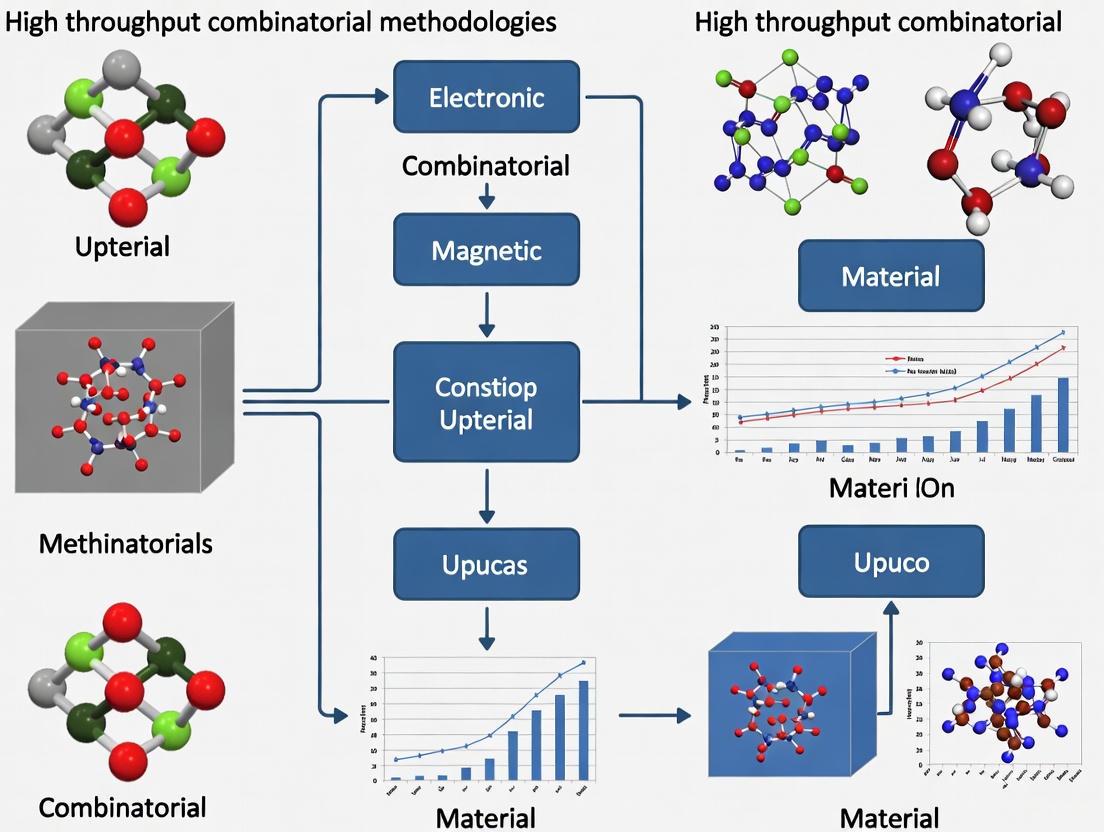
This article comprehensively reviews the high-throughput combinatorial research paradigm, a transformative approach for the rapid screening, optimization, and discovery of advanced electronic and magnetic materials.
High-Throughput Combinatorial Methodologies: Accelerating the Discovery of Next-Generation Electronic and Magnetic Materials
Abstract
This article comprehensively reviews the high-throughput combinatorial research paradigm, a transformative approach for the rapid screening, optimization, and discovery of advanced electronic and magnetic materials. Tailored for researchers and scientists, we explore the foundational principles of combinatorial materials science, from its origins in pharmaceuticals to its critical role in modern materials development. We detail cutting-edge methodological applications, including computational screening with density functional theory and innovative experimental systems for measuring properties like the anomalous Hall effect. The content further addresses key challenges in data management and experimental optimization, and provides a critical analysis of validation techniques. By synthesizing insights from foundational, methodological, troubleshooting, and comparative perspectives, this article serves as a strategic guide for leveraging high-throughput methodologies to overcome traditional R&D bottlenecks and expedite the commercialization of novel materials, with significant implications for spintronics, data storage, and energy technologies.
The Combinatorial Paradigm: Foundations and Evolution in Materials Science
Defining High-Throughput and Combinatorial Methodologies
High-Throughput and Combinatorial Methodologies represent a research paradigm that utilizes parallelized synthesis and rapid measurement techniques to accelerate materials discovery, optimization, and development [1]. Unlike traditional sequential experimentation, this approach involves creating "materials libraries"—single samples containing numerous composition or processing variations—which are then characterized efficiently to generate massive, uniform datasets [1] [2]. Originally developed in the pharmaceutical industry, these methodologies have been widely adopted to address the challenge of combinatorial explosion in multielement material systems, where the number of possible combinations becomes too vast for conventional one-by-one approaches [3] [2]. Within electronic and magnetic materials research, these techniques are particularly valuable for rapidly identifying materials with specialized properties, such as large anomalous Hall effects for spintronic devices or improved redox-active materials for energy storage [4] [3].
Key Principles and Definitions
Core Concepts
- High-Throughput Experimentation (HTE): Characterization methods designed for rapid serial or parallel measurement of multiple samples in a materials library [5] [6]. The emphasis is on dramatically increasing the speed of data acquisition.
- Combinatorial Materials Science (CMS): Integrated research strategies that combine the efficient fabrication of materials libraries with high-throughput characterization [2]. The goal is to explore vast compositional and processing spaces systematically.
- Materials Library (ML): A systematically designed set of materials, typically in thin-film format, containing intentional gradients or arrays of composition, structure, or processing parameters, fabricated as a single sample for efficient screening [2].
- Virtual Screening: Computational approaches that leverage high-throughput calculations, often with machine learning models, to predict material properties and prioritize candidates for experimental synthesis [7] [4].
The Combinatorial Workflow
The combinatorial methodology creates a discovery cycle that contrasts sharply with traditional linear research. Figure 1 illustrates the integrated nature of this workflow.
Experimental Protocols: Electronic and Magnetic Materials
Case Study: High-Throughput Exploration of the Anomalous Hall Effect
The following protocol details a validated methodology for discovering Fe-based magnetic alloys with enhanced anomalous Hall effect (AHE), a critical property for spintronic devices [3].
Library Fabrication via Combinatorial Sputtering
Objective: Create a continuous composition-spread film of Fe-X binary systems (where X = various heavy metals) on a single substrate.
Materials and Equipment:
- Combinatorial sputtering system with DC/RF magnetron sources
- High-purity Fe target (99.95%) and heavy metal targets (e.g., Ir, Pt, W)
- Linear moving mask assembly and substrate rotation system
- SiO₂/Si substrate (10 mm × 10 mm)
- Ultrasonic cleaner and substrate holders
Procedure:
- Substrate Preparation: Clean SiO₂/Si substrate ultrasonically in acetone followed by isopropanol for 10 minutes each. Dry with N₂ gas.
- System Setup: Load Fe and heavy metal targets in separate sputter guns. Position the linear moving mask between targets and substrate to create composition gradients.
- Base Pressure: Evacuate deposition chamber to base pressure ≤ 5 × 10⁻⁷ Pa.
- Co-deposition: Initiate simultaneous sputtering of Fe and heavy metal targets with substrate rotation. Typical parameters:
- Argon gas pressure: 0.5 Pa
- Fe power: 100 W DC
- Heavy metal power: 30-80 W DC (varies by element)
- Deposition time: 60-80 minutes
- Film thickness: ~50 nm uniform
- Post-deposition Annealing: Anneal library in vacuum (≤ 1 × 10⁻⁵ Pa) at 400°C for 30 minutes to promote interdiffusion and phase formation.
Photoresist-Free Device Fabrication by Laser Patterning
Objective: Pattern the composition-spread film into multiple Hall bar devices without traditional lithography.
Materials and Equipment:
- Nanosecond-pulsed laser patterning system (355 nm wavelength)
- Computer-aided design (CAD) file of Hall bar pattern
- Motorized XYZ translation stage
Procedure:
- Pattern Design: Create CAD file containing 13 Hall bar devices with 28 terminals total. Include 13 pairs of terminals perpendicular to composition gradient for Hall voltage measurement.
- Laser Alignment: Mount library sample on translation stage and align laser focus to film surface.
- Ablation Patterning: Execute single-stroke laser ablation along device outlines using parameters:
- Laser power: 80% of maximum
- Scan speed: 100 mm/s
- Pulse frequency: 40 kHz
- Spot size: ~10 μm
- Quality Control: Verify device isolation and electrical continuity using optical microscopy and four-point probe measurements.
Simultaneous AHE Measurement with Custom Multichannel Probe
Objective: Measure anomalous Hall effect of 13 devices simultaneously without wire bonding.
Materials and Equipment:
- Custom 28-pogo-pin multichannel probe assembly
- Physical Property Measurement System (PPMS) with superconducting magnet
- External current source and multichannel voltmeter
- Data acquisition system with channel switching capability
Procedure:
- Probe Assembly: Mount patterned library in non-magnetic sample holder. Align pogo-pin array with device terminals and secure with screws.
- System Integration: Install assembled probe in PPMS. Connect pogo-pins to voltmeter via data acquisition system.
- Measurement Configuration: Set parameters:
- Temperature: 300 K
- Magnetic field range: -2 T to +2 T (perpendicular to film plane)
- Measurement current: 1 mA DC
- Voltage measurement: 13 channels sequential switching
- Data Acquisition: Execute magnetic field sweep while simultaneously recording Hall voltages (Vₓᵧ) and longitudinal resistivity (Vₓ) for all devices.
- Data Processing: Calculate anomalous Hall resistivity (ρₓᵧᴬ) and longitudinal resistivity (ρₓₓ) for each composition using standard formulas.
Throughput Analysis
Table 1 quantifies the dramatic efficiency improvements achieved through this integrated high-throughput approach compared to conventional methods.
Table 1: Throughput Comparison for AHE Materials Exploration
| Experimental Step | Conventional Method | High-Throughput Method | Throughput Gain |
|---|---|---|---|
| Library Fabrication | ~1 h per composition (individual films) | ~1.3 h for 13 compositions (spread film) | ~10× |
| Device Fabrication | ~5.5 h per device (photolithography) | ~1.5 h for 13 devices (laser patterning) | ~36× |
| AHE Measurement | ~0.5 h per device (wire bonding + measurement) | ~0.2 h for 13 devices (multichannel probe) | ~33× |
| Total Time per Composition | ~7 h | ~0.23 h | ~30× |
The Scientist's Toolkit: Essential Research Reagents and Materials
Table 2 catalogs the key materials, instruments, and computational tools that constitute the essential infrastructure for high-throughput combinatorial research in electronic and magnetic materials.
Table 2: Research Reagent Solutions for Combinatorial Materials Research
| Category | Item | Specification/Function | Application Example |
|---|---|---|---|
| Deposition Sources | High-purity sputtering targets | 99.95%-99.999% purity, various diameters | Source materials for thin-film library fabrication [3] [2] |
| Combinatorial Hardware | Linear moving masks | Computer-controlled, customizable geometries | Creating controlled composition gradients during deposition [3] |
| Substrate Materials | SiO₂/Si wafers | Thermally oxidized, 100-500 μm thickness | Standard substrate for electronic/magnetic materials libraries [3] |
| Rapid Patterning | UV laser patterning system | Nanosecond pulses, ~10 μm spot size | Photoresist-free device fabrication for rapid prototyping [3] |
| Multichannel Characterization | Custom pogo-pin probes | Spring-loaded pins, 20-50 channels | Simultaneous electrical measurement of multiple devices [3] |
| Scanning Probe Electrochemistry | M470 modular workstation (BioLogic) | 110 mm scan range, multiple techniques (SECM, SDC, SKP) | High-throughput electrochemical screening of catalyst libraries [5] |
| Measurement Systems | PPMS with multichannel capability | Superconducting magnet, temperature control | Automated electrical and magnetic property characterization [3] |
| Computational Infrastructure | Machine learning frameworks | Python with scikit-learn, TensorFlow/PyTorch | Predicting new candidate materials from experimental data [4] [3] |
Data Integration and Machine Learning
The integration of machine learning with combinatorial experimentation creates a powerful feedback loop for materials discovery. Figure 2 illustrates this synergistic relationship, exemplified by the successful prediction and validation of enhanced AHE in Fe-Ir-Pt ternary systems [3].
The machine learning component typically involves training models on experimental binary system data to predict performance in unexplored ternary or quaternary systems. This approach successfully identified Fe-Ir-Pt as a promising system, with subsequent experimental validation confirming substantially enhanced anomalous Hall resistivity compared to binary counterparts [3].
Application Notes: Protocol Adaptations
Scanning Probe Electrochemistry for Catalyst Screening
Combinatorial methodologies extend to energy-related materials through scanning electrochemistry techniques:
Scanning Droplet Cell (SDC) Protocol:
- Purpose: Quantitative electrochemical characterization of catalyst libraries
- Procedure: Automatically position a microelectrolyte droplet on individual library elements using a robotic stage. Perform local electrochemical measurements (cyclic voltammetry, impedance spectroscopy) on each composition [5].
- Advantages: Direct quantitative analysis, localized exposure preventing cross-contamination, compatibility with traditional electrochemical analysis methods.
Scanning Electrochemical Microscopy (SECM) Protocol:
- Purpose: Qualitative initial screening of large catalyst libraries
- Procedure: Raster a biased ultramicroelectrode probe across library surface while measuring faradaic current from redox mediators. Identify "hot spots" of high electrocatalytic activity [5].
- Advantages: Chemical selectivity, ability to scan insulating and conducting samples, no electrical connection to sample required.
Virtual Screening Pipeline for Organic Electronics
For computational materials discovery, high-throughput virtual screening (HTVS) employs sequential filtering:
Workflow:
- Candidate Generation: Create virtual library of potential molecular structures using combinatorial chemistry principles [7].
- Multi-stage Filtering: Apply successive computational models with increasing accuracy and resource requirements:
- Stage 1: Rapid machine learning models or force-field calculations
- Stage 2: Density functional theory (DFT) with moderate accuracy
- Stage 3: High-fidelity DFT with hybrid functionals and solvation models [4]
- Experimental Validation: Synthesize and characterize top-ranked candidates from computational screening.
This tiered approach maximizes the return-on-computational-investment (ROCI) by reserving expensive high-fidelity calculations only for the most promising candidates [4].
High-throughput and combinatorial methodologies represent a transformative research paradigm that systematically addresses the challenge of combinatorial explosion in materials science. Through the integrated application of combinatorial library fabrication, high-throughput characterization, and machine learning prediction, these approaches enable efficient exploration of vast compositional spaces that would be intractable through conventional methods. The continued development and refinement of these methodologies, particularly through increased automation and data integration, will play a crucial role in accelerating the discovery and optimization of next-generation electronic and magnetic materials.
High-throughput (combinatorial) methodologies represent a fundamental paradigm shift in scientific research, enabling the rapid synthesis, screening, and optimization of vast material libraries. This approach has dramatically accelerated the pace of discovery, transitioning from its origins in the pharmaceutical industry to becoming an indispensable tool in electronic, magnetic, and energy-related materials research [1]. This article details the applications, protocols, and key reagents that underpin this research revolution.
Applications and Impact Across Industries
The core principle of high-throughput experimentation involves creating "library" samples containing numerous material variations and employing rapid, localized measurement schemes to generate massive, uniform datasets [1]. The quantitative impact of this paradigm is summarized in the table below.
Table 1: Quantitative Impact of High-Throughput Methodologies
| Application Area | Key Metric | Performance/Outcome | Significance |
|---|---|---|---|
| AHE Material Discovery [3] | Experimental Throughput | ~0.23 hours per composition | 30x faster than conventional methods (7 hours per composition) |
| AHE Material Discovery [3] | System Components | 13 devices measured simultaneously via multichannel probe | Eliminates wire-bonding, enables concurrent measurement |
| CRISPR Screening [8] | Application Scope | Genome-wide functional studies | Identifies disease intervention points and therapeutic targets |
| Electronic/Magnetic Materials [1] | Primary Use | Materials discovery, screening, and optimization | Combats high costs and long development times for new materials |
The following workflow diagram generalizes the high-throughput process for materials exploration, illustrating the integrated cycle of synthesis, characterization, and analysis.
High-Throughput Materials Exploration Workflow
Detailed Experimental Protocol: A High-Throughput Workflow for Anomalous Hall Effect (AHE) Materials
This protocol details a specific high-throughput pipeline for discovering materials exhibiting a large Anomalous Hall Effect (AHE), essential for spintronic devices like magnetic sensors and read-heads [3]. The system integrates combinatorial sputtering, laser patterning, and a customized multichannel probe to achieve a 30-fold increase in experimental throughput.
Protocol Steps
Step 1: Deposition of Composition-Spread Films via Combinatorial Sputtering
- Objective: To fabricate a thin-film library where composition varies continuously across a single substrate.
- Procedure:
- Utilize a combinatorial sputtering system equipped with a linear moving mask and a substrate rotation mechanism.
- Co-sputter from multiple targets (e.g., Fe, Ir, Pt) onto a rotating substrate.
- The moving mask and rotation create a continuous composition gradient in one direction, encompassing all possible compositional combinations within the Fe–Ir–Pt system in a single experiment.
- Duration: ~1.3 hours.
Step 2: Photoresist-Free Multiple-Device Fabrication via Laser Patterning
- Objective: To pattern the composition-spread film into multiple individual Hall bar devices for electrical measurement without traditional lithography.
- Procedure:
- Use a laser patterning system focused on the film surface.
- Draw a single-stroke outline of a device pattern featuring multiple terminals (e.g., 28 terminals for 13 devices) using the laser.
- The focused laser ablates (removes) the film in the drawn areas, physically isolating 13 Hall bar devices from the surrounding film. Each device has terminals for current injection and Hall voltage measurement.
- Duration: ~1.5 hours.
Step 3: Simultaneous AHE Measurement Using a Customized Multichannel Probe
- Objective: To measure the AHE of all fabricated devices simultaneously within a Physical Property Measurement System (PPMS).
- Procedure:
- Place the patterned sample into a custom, non-magnetic sample holder.
- Align and press a pin block with an array of 28 spring-loaded pogo pins onto the device terminals.
- Install the assembled probe into the PPMS.
- Apply a perpendicular magnetic field (up to 2 T) to saturate sample magnetization.
- Use an external current source and voltmeter to inject current and sequentially measure the Hall voltage across all 13 device pairs during a single magnetic field sweep.
- Duration: ~0.2 hours.
Step 4: Data Analysis and Machine Learning-Driven Prediction
- Objective: To identify composition-property relationships and predict new, high-performance ternary compositions.
- Procedure:
- Collect AHE data (anomalous Hall resistivity,
ρ_yx^A) and longitudinal resistivity for all measured compositions. - Train a machine learning model (e.g., regression models) on the experimental dataset from binary systems (e.g., Fe-X).
- Use the trained model to predict AHE performance in unexplored ternary systems (e.g., Fe–Ir–Pt).
- Validate top predictions experimentally, closing the discovery loop.
- Collect AHE data (anomalous Hall resistivity,
The Scientist's Toolkit: Essential Research Reagents and Materials
Table 2: Key Research Reagents and Materials for High-Throughput AHE Exploration
| Item Name | Function/Description | Application in Protocol |
|---|---|---|
| Combinatorial Sputtering System | Deposits thin films with continuous composition gradients using moving masks and multiple targets. | Creation of the composition-spread material library (Step 1). |
| Laser Patterning System | Enables photoresist-free device fabrication by using a laser to ablate and define micro-scale patterns. | High-throughput fabrication of Hall bar devices (Step 2). |
| Custom Multichannel Probe | A sample holder with pogo-pin arrays for making simultaneous electrical contact to multiple devices. | Enables parallel AHE measurement of up to 13 devices without wire-bonding (Step 3). |
| Physical Property Measurement System (PPMS) | Provides a cryogenic environment and high magnetic fields necessary for accurate AHE measurement. | Platform for applying magnetic field and low-temperature conditions during electrical transport measurement (Step 3). |
| High-Purity Metal Targets (Fe, Ir, Pt, etc.) | Source materials for the deposition of the magnetic alloy thin films. | Sputtering targets for library fabrication (Step 1). |
High-Throughput Applications in Pharmaceutical Research
The principles of high-throughput screening have been widely adopted and adapted in biotech and pharmaceutical research, particularly in genomics and drug discovery.
Table 3: High-Throughput Applications in Biotech and Pharma
| Application | Technology/Method | Outcome/Purpose |
|---|---|---|
| Genomic Screening [8] | CRISPR combined with high-throughput systems | Enables genome-wide functional studies to identify genes involved in disease mechanisms (e.g., lung cancer). |
| Automated Drug Discovery [8] | Robotics, liquid handling systems, and integrated AI | Rapidly tests thousands of compounds, predicts drug efficacy, and optimizes research conditions. |
| Single-Cell Analysis [8] | Single-cell sequencing technologies | Provides detailed maps of cellular ecosystems, unraveling tumor biology and immune responses for personalized medicine. |
The following diagram illustrates a generalized high-throughput screening workflow for drug discovery.
High-Throughput Drug Screening Workflow
The migration of high-throughput combinatorial methodologies from pharmaceuticals to materials science has fundamentally reshaped the research landscape. By integrating automated synthesis, parallel measurement, and machine learning, this paradigm addresses the "combinatorial explosion" inherent in developing new materials and drugs. The detailed protocols and applications outlined herein provide a framework for researchers to continue driving innovation, accelerating the journey from initial concept to functional material or therapeutic.
High-throughput (combinatorial) materials science is a research paradigm that accelerates the rapid screening, optimization, and discovery of new materials. Originally developed by the pharmaceutical industry, this approach has been widely adopted to advance research in electronic, magnetic, structural, and energy-related materials. The methodology is characterized by three core principles: the synthesis of material "libraries" containing systematic variations (typically in composition), the application of rapid and localized measurement schemes, and the generation of massive, highly uniform data sets. This structured approach helps combat the extremely high cost and long development times traditionally associated with bringing new materials to market [1].
The primary advantage of collecting data from the same library sample under consistent processing parameters is the exceptional uniformity of the resulting data. This uniformity is crucial for meaningful comparison and analysis, directly informing commercial practice and facilitating the commercialization of novel materials. As the field evolves, combinatorial materials science is increasingly driven by needs such as materials substitution and the experimental verification of material properties predicted by computational models, a trend accelerated by initiatives like the Materials Genome Initiative [1].
Core Principles and Data Presentation
The effectiveness of high-throughput combinatorial research hinges on the disciplined application of its three core principles. The quantitative relationships between these principles and their outcomes are summarized in the table below.
Table 1: Core Principles of High-Throughput Combinatorial Materials Science
| Core Principle | Description | Key Outcome | Quantifiable Impact on Research Efficiency |
|---|---|---|---|
| Library Synthesis | Synthesis of a single "library" sample containing a vast array of material variations (e.g., composition gradients) [1]. | Enables parallel processing and analysis of thousands of material compositions on a single substrate. | Reduces synthesis time from months/years for sequential testing to days/weeks for parallel exploration. |
| Localized Measurement | Deployment of rapid, automated, and highly localized characterization probes to measure properties at specific points on the library [1]. | Generates massive, spatially-resolved data sets linking composition to structure and properties. | Increases data acquisition rate by several orders of magnitude compared to manual, bulk measurement techniques. |
| Uniform Data | Collection of data from the same library sample under identical processing conditions and environmental factors [1]. | Ensures high data quality and comparability by eliminating inter-sample processing variability. | Significantly enhances the statistical reliability of results and simplifies data interpretation for machine learning. |
Experimental Protocols
Protocol for Thin-Film Material Library Fabrication
This protocol outlines the creation of a composition-spread library for magnetic material discovery using co-sputtering.
1. Materials and Equipment
- Substrate: Crystalline wafer (e.g., SiO₂/Si, MgO)
- Targets: High-purity sputtering targets (e.g., Fe, Co, Gd)
- Deposition System: Magnetron sputtering system with multiple guns
- Substrate Holder: Computer-controlled movable substrate stage
- Characterization Tools: X-ray Diffraction (XRD), Energy-Dispersive X-Ray Spectroscopy (EDS)
2. Procedure 1. Substrate Preparation: Clean the substrate sequentially in acetone, isopropanol, and deionized water using an ultrasonic bath for 10 minutes each. Dry with a stream of nitrogen gas. 2. System Evacuation: Load the substrate and targets into the sputtering chamber. Evacuate the chamber to a base pressure of at least 5.0 x 10⁻⁶ Torr. 3. Deposition Parameter Setup: * Set the Argon gas flow rate to 20 sccm, maintaining a process pressure of 3 mTorr. * Apply power to the sputtering targets: RF power of 150 W for oxide targets, DC power of 100 W for metallic targets. 4. Gradient Deposition: * Program the substrate holder to move in a specific, non-uniform pattern between the targets' erosion zones. * Initiate deposition simultaneously from all targets. * Deposit for a duration calculated to achieve a film thickness of 100 nm ± 10 nm across the entire library. 5. Post-Processing: Anneal the library in a vacuum furnace at temperatures ranging from 300°C to 600°C for 1 hour to induce crystallization.
3. Validation and Quality Control * Use EDS at pre-defined grid points (e.g., 100 points) to verify the composition gradient. The composition should span the desired range (e.g., Fe₂₀Co₈₀ to Fe₈₀Co₂₀). * Perform XRD at the same grid points to confirm the crystal structure and phase purity.
Protocol for Localized Magnetic Property Measurement
This protocol details the use of a scanning SQUID microscope for high-throughput magnetic characterization of a combinatorial library.
1. Materials and Equipment
- Sample: Fabricated magnetic material library
- Primary Instrument: Scanning SQUID (Superconducting Quantum Interference Device) microscope [9]
- Calibration Standards: Standard magnetic moment reference sample
2. Procedure 1. System Calibration: * Cool down the SQUID sensor to its superconducting operating temperature (typically 4.2 K using liquid He). * Measure the calibration standard to determine the system's magnetic moment sensitivity and ensure a noise floor below 10⁻¹⁴ emu/√Hz. 2. Sample Mounting and Alignment: * Mount the material library on the scanning stage using a non-magnetic holder. * Align the sample surface to be parallel to the sensor plane within 0.1 degrees. * Approach the sensor to a pre-defined stand-off distance (e.g., 100 µm). 3. Automated Data Acquisition: * Program a measurement grid over the library, corresponding to distinct compositions (e.g., a 10x10 grid for 100 measurement points). * At each point, execute a magnetic hysteresis (M-H) loop measurement by applying an in-plane magnetic field swept from -10 kOe to +10 kOe and back, with a field step of 100 Oe. * The system automatically records the magnetic moment at each field step. 4. Data Extraction: For each measured M-H loop, extract the key magnetic parameters: saturation magnetization (Ms), coercive field (Hc), and remanent magnetization (M_r).
3. Data Handling * The raw data from all points is automatically compiled into a single, timestamped file. * A metadata file is generated, documenting all measurement parameters (applied field, temperature, position).
Visualization of Workflows
High-Throughput Combinatorial Workflow
The following diagram illustrates the integrated process of library synthesis, localized measurement, and data analysis.
Localized Measurement Data Generation
This diagram details the process by which localized measurements on a material library lead to a uniform property dataset.
The Scientist's Toolkit: Research Reagent Solutions
The following table lists essential materials and instruments critical for executing high-throughput combinatorial experiments in electronic and magnetic materials research.
Table 2: Essential Research Reagents and Materials for High-Throughput Combinatorial Research
| Item Name | Function/Application | Key Characteristics |
|---|---|---|
| Composition-Spread Library | The core sample enabling parallel testing of numerous material compositions on a single substrate [1]. | Contains a continuous gradient of elemental compositions; fabricated via co-deposition or other gradient techniques. |
| High-Purity Sputtering Targets | Source materials for the physical vapor deposition of thin-film libraries. | 99.95% - 99.999% purity; metallic or ceramic; composition depends on the system under study (e.g., Fe, Co, B, Nd). |
| Scanning SQUID Microscope | Highly sensitive instrument for localized measurement of magnetic properties at micro-scale resolution [9]. | Capable of measuring extremely weak magnetic moments; provides hysteresis loop data at each library point. |
| Automated EDS/XRF System | For rapid, localized elemental analysis and composition mapping across the material library. | Integrated with SEM/EPMA; provides quantitative composition data at each measurement point on the grid. |
| Structural Characterization Suite | For analyzing the crystal structure and phase at different library points. | Includes techniques like XRD with a micro-beam source for localized structural data. |
High-throughput (combinatorial) materials science represents a transformative research paradigm that accelerates the discovery, screening, and optimization of advanced materials. This approach involves the synthesis of "library" samples containing systematic variations of material compositions or processing parameters, coupled with rapid measurement techniques that generate massive, highly uniform datasets [1]. Originally developed in the pharmaceutical industry, combinatorial methodologies have been successfully adapted to accelerate materials research across electronic, magnetic, structural, and energy-related applications, significantly reducing the traditional timeline for materials development and commercialization [1].
The fundamental value proposition of high-throughput experimentation lies in its ability to combat the extremely high cost and long development times associated with bringing new materials to market. Beyond traditional applications in materials discovery and optimization, these methodologies are increasingly driven by emerging needs such as materials substitution and experimental verification of computationally predicted properties, particularly with the advent of the Materials Genome Initiative [1]. The effective integration of synthesis, characterization, and theoretical modeling, along with sophisticated management of diverse data formats, represents both the current challenge and future direction of the field.
Key Application Areas
Electronic Materials
High-throughput methodologies have enabled significant advances in electronic materials, particularly through the discovery and optimization of novel semiconductor compounds with tailored electronic properties. The combinatorial approach allows researchers to rapidly screen complex multi-component systems to identify compositions with optimal charge carrier mobility, band gap characteristics, and interfacial properties for specific electronic applications [1].
Recent breakthroughs include the development of magnetic transistors using two-dimensional magnetic semiconductors. MIT researchers have successfully replaced silicon in the surface layer of transistors with chromium sulfur bromide, a two-dimensional magnetic semiconductor that enables more efficient control of electricity flow through manipulation of electron spin [10]. This magnetic transistor demonstrates a significant improvement over conventional silicon-based devices, with the ability to switch or amplify electric current by a factor of 10 while operating at significantly lower energy requirements [10]. The material's unique magnetic properties also facilitate transistors with built-in memory, potentially simplifying circuit design and enabling new architectures for high-performance electronics.
Table: High-Throughput Applications in Electronic Materials
| Application Area | Key Material Systems | Performance Metrics | High-Throughput Advantage |
|---|---|---|---|
| Magnetic Transistors | Chromium sulfur bromide, Other 2D magnetic semiconductors | 10x current switching, Reduced operating voltage | Rapid screening of magnetic semiconductors with optimal electronic properties |
| Traditional Semiconductor Devices | Complex oxide semiconductors, Organic semiconductors | Charge carrier mobility, Band gap engineering | Parallel synthesis and testing of composition spreads |
| Interface Engineering | Multilayer heterostructures, Contact materials | Interface state density, Contact resistance | Efficient mapping of interface properties across processing conditions |
Magnetic Materials
The magnetic materials sector represents a critical backbone for numerous technologies, with the global market projected to reach USD $58.05 billion by 2034, growing at a compound annual growth rate (CAGR) of 5.75% [11]. High-throughput methodologies have become indispensable in this domain, particularly for addressing key challenges such as rare-earth element dependence, performance tradeoffs, and supply chain vulnerabilities.
Combinatorial approaches enable the rapid exploration of complex phase spaces to identify novel magnetic compounds with enhanced properties. For permanent magnets, research focuses on developing rare-earth-free or reduced-rare-earth formulations that maintain high performance while mitigating supply chain risks [12]. Companies like Niron Magnetics are leveraging these approaches to develop iron-nitride-based magnets that claim 18% higher strength than existing options while avoiding dependence on rare-earth elements [12]. Additionally, high-throughput computational screening has identified numerous two-dimensional magnetic materials derived from experimentally known van der Waals bonds, with 85 ferromagnetic and 61 antiferromagnetic materials showing promise for exfoliation into 2D derivatives [13].
The application of combinatorial methodologies extends to nanostructured magnetic materials, where patterning techniques such as electron-beam lithography enable the fabrication of magnetic dot arrays with dimensions ranging from 250 nm to 1 μm [14]. These structures exhibit unique magnetic behaviors, including single-domain states and tailored anisotropy, which are crucial for advancing magnetic storage media and spintronic devices [14].
Table: Magnetic Materials Market Outlook & Applications (2025-2034)
| Parameter | Permanent Magnets | Soft Magnetic Materials | Overall Market |
|---|---|---|---|
| 2024 Market Size | ~USD 18-20 billion (Rare-earth magnets) | 55.19% market share | USD 33.19 billion |
| Projected CAGR | 6-8% | Not specified | 5.75% |
| 2034 Projection | Not specified | Not specified | USD 58.05 billion |
| Key Drivers | EVs, Wind turbines, Robotics | Power electronics, Consumer electronics | Electrification, Renewable energy, Electronics miniaturization |
| Regional Leadership | Asia-Pacific (65-70% demand) | Asia-Pacific | Asia-Pacific (68.11% share) |
Structural Materials
High-throughput methodologies have revolutionized the development of structural materials, particularly through the implementation of combinatorial structural-analytical models that predict mechanical behavior based on composition and processing parameters. These approaches enable rapid screening of material properties across vast compositional spaces, significantly accelerating the optimization process for advanced structural applications.
For porous metals and foams, combinatorial structural-analytical models provide accurate predictions of mechanical properties such as Young's modulus, ultimate tensile strength, and elongation to failure across the entire range of pore volume fractions [15]. These models offer significant advantages over traditional semi-empirical approaches, as they possess physical bases, require minimal computational resources, and maintain reasonable accuracy even for materials with uncertain microstructures [15]. The ability to rapidly predict structure-property relationships in complex porous materials has enabled more efficient design of lightweight structural components with tailored mechanical performance.
The integration of high-throughput experimentation with computational modeling has proven particularly valuable for optimizing processing parameters in structural materials fabrication. By simultaneously varying multiple processing conditions and quantitatively assessing their influence on microstructural development and mechanical properties, researchers can identify optimal processing windows with unprecedented efficiency, reducing the traditional trial-and-error approach that has long characterized structural materials development.
Energy-Related Materials
Combinatorial methodologies have emerged as powerful tools for addressing critical challenges in energy capture, storage, and conversion. The high-throughput paradigm enables rapid optimization of complex multi-component systems that characterize many energy materials, significantly accelerating the development timeline for next-generation energy technologies.
In solar energy applications, combinatorial approaches have been extensively applied to perovskite and organic photovoltaic materials. Both fragmentary (discontinuous) and continuous-composition optimization strategies have been employed, with compositionally graded thin films enabling efficient mapping of performance across entire compositional spaces [16]. For instance, pulsed infrared semiconductor laser thermal evaporation has been used to create CH₃NH₃I/PbI₂ bilayer films with gradient composition and thickness, facilitating rapid optimization of photovoltaic efficiency relative to precursor stoichiometry [16]. Similarly, slot-die coating with dynamically adjusted precursor ratios enables the fabrication of thin films with continuous composition gradients, providing comprehensive datasets for machine learning-driven optimization [16].
For energy storage, high-throughput synthesis platforms accelerate the development of advanced battery materials by enabling simultaneous testing of multiple electrode formulations and electrolyte compositions. The thin-film platform approach is particularly valuable, as it allows direct integration of synthesized materials into device architectures for performance evaluation [16]. In the wind energy sector, combinatorial methodologies facilitate the development of improved permanent magnet materials for direct-drive generators, with a focus on reducing rare-earth content while maintaining performance under demanding operational conditions [12].
Experimental Protocols
High-Throughput Thin-Film Library Fabrication
This protocol describes the fabrication of compositionally graded thin-film libraries using physical vapor deposition with movable masks, enabling continuous-composition optimization of material systems [16].
Materials and Equipment:
- Multiple Target Materials: High-purity source materials for each component of the alloy system
- Substrate: Appropriate substrate material (e.g., silicon, glass, specialized crystalline substrates)
- Physical Vapor Deposition System: Sputtering or thermal evaporation system with multiple targets
- Movable Mask System: Computer-controlled mask positioning system
- Alignment Fixtures: Precision tools for substrate and mask alignment
Procedure:
Substrate Preparation: Clean substrate using standard protocols (solvent cleaning, plasma treatment) to ensure surface uniformity and adhesion.
Mask Alignment: Position the movable mask between targets and substrate at a specific angle (typically 30-45°) to create compositional gradients.
Initial Deposition: Begin co-deposition from two or more targets with fixed deposition rates while the mask remains stationary, establishing the initial composition profile.
Sequential Deposition with Rotation: After completing the first deposition sequence:
- Rotate the substrate by 120°
- Adjust mask position and/or target deposition rates
- Begin next deposition sequence
- Repeat for third sequence to achieve uniform coverage
Process Optimization: For systems with more than three components, implement additional deposition sequences with adjusted mask velocities and deposition parameters to control composition profiles.
Post-deposition Processing: If required, perform annealing treatments under controlled atmosphere using combinatorial approaches with temperature gradients across the library.
Quality Control:
- Perform thickness mapping using profilometry across the library
- Validate compositional gradients using energy-dispersive X-ray spectroscopy (EDS) at multiple positions
- Verify structural uniformity using X-ray diffraction mapping
Combinatorial Screening of 2D Magnetic Materials
This protocol outlines a computational-experimental hybrid approach for identifying exfoliable two-dimensional magnetic materials from experimental bulk compounds [13].
Materials and Equipment:
- Experimental Databases: Access to Inorganic Crystal Structure Database (ICSD) and Crystallography Open Database (COD)
- Computational Resources: High-performance computing cluster with DFT calculation capabilities
- Exfoliation Descriptor: Geometric descriptor for identifying potentially exfoliable compounds
- Magnetic Property Calculation Tools: Software for computing exchange parameters (J), anisotropic exchange (λ), and single-ion anisotropy (A)
Procedure:
Database Screening:
- Query ICSD and COD for van der Waals bonded compounds using structural descriptors
- Apply geometric exfoliability criteria to identify compounds that can be exfoliated into 2D derivatives
First-Principles Calculations:
- Perform DFT calculations to identify materials with magnetic ground states
- Compute magnetic exchange coupling parameters (J) for nearest neighbors
- Calculate anisotropic exchange parameters (λ) and single-ion anisotropy (A)
Heisenberg Parameter Extraction:
- Construct Heisenberg Hamiltonian: H = -(J/2)Σ⟨ij⟩Si·Sj - (λ/2)Σ⟨ij⟩Si^zSj^z - AΣi(Si^z)²
- Extract parameters from DFT calculations of different magnetic configurations
Critical Temperature Estimation:
- For ferromagnetic insulators, calculate spin-wave gap: Δ = A(2S-1) + SN_nnλ
- Compute Curie temperature using fitted function: TC = (S²JTC^Ising/kB) × tanh¹ᐟ⁴[(6/Nnn)log(1+cx)] where x = Δ/[J(2S-1)] and c = 0.033
Experimental Validation:
- Select top candidate materials for experimental synthesis
- Prepare bulk single crystals using flux growth or chemical vapor transport
- Perform mechanical exfoliation to obtain 2D flakes
- Verify magnetic properties using magneto-optical Kerr effect (MOKE) microscopy or SQUID magnetometry
Electron-Beam Lithography of Magnetic Nanostructures
This protocol describes the fabrication of nanoscale magnetic dot arrays using electron-beam lithography for fundamental studies of reduced dimensionality magnetism [14].
Materials and Equipment:
- Magnetic Films: Nickel films of appropriate thickness (typically 20-100 nm)
- Substrates: Silicon wafers with thermal oxide layer
- Electron-Beam Lithography System: High-resolution system with pattern generator
- Resists: Positive (UVIII) or negative (SAL601) chemically amplified resists
- Development Chemistry: Appropriate developers for selected resist
- Ion Milling System: For pattern transfer into magnetic films
Procedure:
Substrate Preparation:
- Clean substrate thoroughly
- Dehydrate bake at 180°C for 5 minutes to improve adhesion
Resist Application:
- Spin-coat appropriate resist (SAL601 for negative tone, UVIII for positive tone)
- Apply adhesion promoter if necessary
- Soft bake according to resist specifications
Electron-Beam Exposure:
- Design array patterns with dot dimensions from 250 nm to 1 μm
- Program separations (sub-100 nm, 100 nm, 250 nm)
- Expose patterns with dose optimization to account for proximity effects
- For critical patterns with small separations, implement dose compensation strategies
Pattern Development:
- Develop in appropriate chemistry (MF-CD-26 for SAL601, MF-26A for UVIII)
- Optimize development time for different pattern densities
- Rinse and dry carefully
Pattern Transfer:
- Deposit nickel film if not pre-deposited
- Use ion milling to transfer pattern into magnetic film
- Optimize ion milling parameters to maintain dot integrity
Resist Removal:
- Strip resist using appropriate solvents or plasma ashing
- Clean sample for characterization
Quality Assessment:
- Verify dot dimensions and periodicity using scanning electron microscopy
- Assess magnetic properties using magneto-optical Kerr effect or magnetic force microscopy
- Characterize magnetic hysteresis cycles to confirm single-domain behavior
Visualization of Workflows
Research Reagent Solutions and Essential Materials
Table: Essential Materials for High-Throughput Combinatorial Research
| Material/Reagent | Function/Application | Key Characteristics | Example Use Cases |
|---|---|---|---|
| Chromium Sulfur Bromide (CrSBr) | Magnetic semiconductor in transistors | Air-stable 2D material, Strong magnetic anisotropy | Magnetic transistors, Spintronic devices [10] |
| Neodymium-Iron-Boron (NdFeB) | High-performance permanent magnets | High remanence, High energy product | Electric vehicle motors, Wind turbine generators [12] |
| SAL601 Negative Resist | Electron-beam lithography patterning | High resolution, Chemical amplification | Nanoscale magnetic dot arrays [14] |
| Samarium Cobalt (SmCo) | High-temperature permanent magnets | Excellent thermal stability, High coercivity | Aerospace applications, High-end motorsport [11] |
| Perovskite Precursor Inks | Solution-processed photovoltaic materials | Tunable band gap, High absorption coefficient | Composition-graded solar cell libraries [16] |
| Sputtering Targets (Multiple) | Thin-film library fabrication | High purity (≥99.99%), Composition control | Composition-spread thin film libraries [16] |
High-throughput combinatorial methodologies have fundamentally transformed the research paradigm for electronic, magnetic, structural, and energy-related materials. By enabling the rapid exploration of complex compositional and processing parameter spaces, these approaches have significantly accelerated the materials development cycle while providing comprehensive structure-property datasets that fuel machine learning and computational modeling efforts.
The continued evolution of combinatorial materials science will be shaped by several key trends. The integration of high-throughput experimentation with computational prediction and machine learning will create closed-loop materials discovery systems that progressively refine experimental designs based on accumulated data [1] [16]. Additionally, the growing emphasis on materials sustainability and supply chain resilience will drive increased focus on rare-earth reduction, materials substitution, and recycling-compatible material systems [12]. As these methodologies become more accessible and standardized, their impact is expected to expand beyond specialized research institutions to become mainstream tools in materials research and development, ultimately fulfilling their promise to accelerate the commercialization of novel materials for critically important technological applications.
High-throughput combinatorial methodology represents a fundamental shift in materials research, moving away from traditional linear and sequential experimentation towards a parallelized approach that rapidly screens, optimizes, and discovers new materials [1]. This paradigm, initially pioneered by the pharmaceutical industry, is now critically important for accelerating research in electronic, magnetic, and energy-related materials [1] [6]. The core strategy involves synthesizing "library" samples that encapsulate a vast array of material variations—most often composition—followed by rapid, localized measurement schemes that generate massive, highly uniform datasets [1]. The primary driving forces for adopting this paradigm are the need to combat the extremely high costs and prohibitively long development cycles traditionally associated with bringing new materials from the laboratory to commercial application [1]. Furthermore, high-throughput methodologies are increasingly being used to meet modern challenges such as materials substitution and, crucially, the experimental verification of material properties predicted by computational models, a key objective of initiatives like the Materials Genome Initiative [1].
Key Driving Forces and Applications
Primary Drivers for Adoption
| Driving Force | Description | Impact on Research & Development |
|---|---|---|
| Accelerated Discovery & Optimization | Rapid, parallel synthesis and screening of material "libraries" to identify promising candidates. | Drastically reduces the time from concept to viable material, compressing development timelines from years to months [1] [6]. |
| Cost Reduction | Minimizes the resource-intensive nature of traditional one-by-one experimentation. | Combats the extremely high cost of new materials development by enabling efficient screening of thousands of combinations in a single experiment [1]. |
| Informed Commercialization | Provides highly uniform and comprehensive datasets under consistent processing conditions. | Facilitates the transition of novel electronic and magnetic materials from research into commercial products [1]. |
| Materials Substitution | Rapid identification of alternative materials with similar or superior properties. | Reduces dependence on single-material systems (e.g., Pt in electrocatalysis) or scarce resources [6]. |
| Validation of Computational Models | Provides the essential experimental data required to verify predictions from theoretical modeling. | A cornerstone of the Materials Genome Initiative; closes the loop between synthesis, characterization, and theory [1]. |
Applications in Electronic and Magnetic Materials
The application of high-throughput combinatorial methods has led to significant advancements in the fields of electronics and magnetics. Key successes include the development of novel capacitance materials for random access memory devices, where optimized mixtures like ZrO₂–SnO₂–TiO₂ have been identified to replace traditional amorphous silica [6]. In the realm of magnetic materials, these techniques have enabled the fortuitous discovery and subsequent systematic exploration of oxide-based magnetic materials, such as Co-doped TiO₂ [6]. The methodology is also being driven by the needs of large-scale projects, such as the U.S. Magnet Development Program, which aligns its R&D roadmap with the goal of advancing accelerator magnet technology [17]. The ability to test material libraries with multiple characterization techniques is a powerful feature of the combinatorial approach, allowing for the discovery of materials with multifunctional properties [6].
Experimental Protocols for Combinatorial Investigation
Fabrication of Thin-Film Composition-Spread Libraries
Objective: To create a continuous gradient of compositions across a single substrate for efficient screening. Materials: Multi-target sputtering system, substrates (e.g., Si wafer), high-purity metal or oxide targets. Procedure:
- Substrate Preparation: Clean the substrate (e.g., a 100 mm diameter Si wafer) using standard plasma cleaning or solvent procedures to ensure a contamination-free surface.
- Library Design: Position the substrate at an optimized distance and angle between two or more sputtering targets. For a ternary system, three targets are used.
- Combinatorial Sputtering: Simultaneously sputter from all targets onto the stationary substrate. The spatial position on the substrate relative to each target determines the local composition, creating a continuous composition spread.
- Post-deposition Annealing: (If required) Place the entire library in a furnace or rapid thermal annealing system under a controlled atmosphere (e.g., O₂, N₂, Ar) to induce crystallization or phase formation. Notes: This method is particularly powerful for exploring ternary and quaternary systems, as a single library can contain thousands of unique compositions, replacing the need for hundreds of individual samples [6].
Quantitative High-Throughput Screening (qHTS) for Dose-Response
Objective: To generate concentration-response data for thousands of compounds or material compositions simultaneously. Materials: 1536-well plates, robotic liquid handling systems, high-sensitivity detectors, compound libraries. Procedure:
- Plate Preparation: Using automated liquid handlers, dispense a different chemical compound or material precursor into each well of a 1536-well plate. A typical qHTS assay may test over 10,000 substances [18].
- Dose-Response Setup: For each compound, create a dilution series across 15 concentration points to establish a full concentration-response curve in a single plate run.
- Response Measurement: Add the assay reagents (e.g., cells, enzymatic mix) and incubate under controlled conditions. Measure the biological or functional response using a high-sensitivity plate reader.
- Data Processing: Fit the resulting concentration-response data to a nonlinear model, such as the Hill Equation (Equation 1), to estimate key parameters like AC₅₀ (potency) and E_max (efficacy) [18].
High-Throughput Electrochemical Characterization
Objective: To rapidly evaluate the functional electrochemical properties of a material library (e.g., for battery or catalyst development). Materials: Multi-electrode array, automated potentiostat, combinatorial electrochemical cell. Procedure:
- Library Integration: Mount the synthesized material library into a custom electrochemical cell designed to make localized electrical contact with multiple discrete sample areas or to scan a micro-electrode over the library surface.
- Parallelized Testing: Program the potentiostat to perform sequential or parallel measurements (e.g., cyclic voltammetry, electrochemical impedance spectroscopy) on each individual material spot in the array.
- Data Mapping: Correlate the electrochemical measurement results (e.g., corrosion current, charge capacity, catalytic onset potential) with the spatial composition data of the library to create a functional property map. Notes: This approach is widely applicable for developing novel electrode materials, anti-corrosion coatings, and catalysts [6].
Quantitative Data Analysis and the Hill Equation
The Hill Equation in HTS Data Analysis
In Quantitative High-Throughput Screening (qHTS), the Hill Equation (HEQN) is the most prevalent nonlinear model used to describe concentration-response or dose-response relationships [18]. Its logistic form is expressed as:
Equation 1: Rᵢ = E₀ + (E∞ - E₀) / (1 + exp{-h[logCᵢ - logAC₅₀]})
Where:
- Rᵢ is the measured response at concentration Cᵢ.
- E₀ is the baseline response.
- E∞ is the maximal response.
- AC₅₀ is the concentration (or dose) that produces a half-maximal response, a key measure of potency.
- h is the Hill slope, a shape parameter describing the steepness of the curve [18].
The parameters AC₅₀ and E_max (calculated as E∞ – E₀) are fundamental for ranking chemicals by activity level or for use in subsequent predictive modeling. However, the reliability of parameter estimation is highly dependent on experimental design. Estimates can be highly variable if the tested concentration range fails to define at least one of the two asymptotes (E₀ or E∞) or if measurement noise is significant [18].
Statistical Considerations for Parameter Estimation
| Factor | Impact on Parameter Estimation | Mitigation Strategy |
|---|---|---|
| Concentration Range | Failing to capture baseline (E₀) and maximal (E∞) responses leads to poor AC₅₀ repeatability, with confidence intervals spanning orders of magnitude [18]. | Perform preliminary range-finding experiments to ensure the concentration window adequately captures the full sigmoidal curve. |
| Signal-to-Noise Ratio | Low Emax values (weak efficacy) relative to random measurement error drastically reduce the precision of both AC₅₀ and Emax estimates [18]. | Improve assay conditions to enhance signal strength and use replicates to improve measurement precision. |
| Sample Size (Replicates) | Increasing the number of experimental replicates (n) significantly narrows the confidence intervals for parameter estimates, as shown in Table 1 below. | Incorporate at least 3-5 experimental replicates per substance to enhance the reliability of nonlinear fits [18]. |
Table 1: Effect of Sample Size on Parameter Estimation in Simulated Datasets (Adapted from [18])
| True AC₅₀ (μM) | True E_max (%) | Sample Size (n) | Mean & [95% CI] for AC₅₀ Estimates | Mean & [95% CI] for E_max Estimates |
|---|---|---|---|---|
| 0.001 | 50 | 1 | 6.18e-05 [4.69e-10, 8.14] | 50.21 [45.77, 54.74] |
| 0.001 | 50 | 3 | 1.74e-04 [5.59e-08, 0.54] | 50.03 [44.90, 55.17] |
| 0.001 | 50 | 5 | 2.91e-04 [5.84e-07, 0.15] | 50.05 [47.54, 52.57] |
| 0.1 | 25 | 1 | 0.09 [1.82e-05, 418.28] | 97.14 [-157.31, 223.48] |
| 0.1 | 25 | 3 | 0.10 [0.03, 0.39] | 25.53 [5.71, 45.25] |
| 0.1 | 25 | 5 | 0.10 [0.05, 0.20] | 24.78 [-4.71, 54.26] |
Workflow Visualization and the Scientist's Toolkit
High-Throughput Combinatorial Materials Research Workflow
High-Throughput Combinatorial Workflow
Research Reagent and Equipment Solutions
Table 2: Essential Tools for High-Throughput Combinatorial Research
| Item | Function & Application in HTS |
|---|---|
| Multi-Target Sputtering System | Enables the fabrication of continuous composition-spread libraries for rapid exploration of ternary and quaternary material systems [6]. |
| Robotic Liquid Handler / Plate Handler | Automates the dispensing of compounds and reagents into high-density microtiter plates (e.g., 1536-well plates), which is fundamental for qHTS assays [18]. |
| High-Sensitivity Plate Reader | Measures biological, optical, or electrochemical responses from miniature assay volumes (e.g., <10 μl per well) with the precision required for quantitative analysis [18]. |
| Multi-Electrode Array & Automated Potentiostat | Allows for parallel or rapid serial electrochemical characterization of material libraries for applications in battery, catalyst, and corrosion research [6]. |
| Statistical Analysis Software (R, Python, SPSS) | Used for complex data analysis, including nonlinear regression fitting with the Hill equation and other advanced statistical models for large datasets [18] [19]. |
Advanced Workflows: Integrating Computational and Experimental High-Throughput Techniques
Computational Screening with Density Functional Theory (DFT)
High-throughput (combinatorial) materials science has emerged as a transformative research paradigm that accelerates the discovery and optimization of novel materials, particularly in the fields of electronic and magnetic materials [1]. This methodology involves creating "library" samples containing numerous compositional variations and employing rapid measurement techniques to generate massive, uniform datasets. Within this framework, Density Functional Theory (DFT) serves as a foundational computational tool that provides atomic-level understanding of material properties, guiding experimental efforts and enabling the screening of vast compositional spaces that would be prohibitively expensive or time-consuming to explore solely through experimental means [20] [21]. The integration of DFT calculations with high-throughput approaches has become increasingly vital for addressing global challenges in energy storage, spintronics, and sustainable materials development by significantly reducing the time and resources required to bring new materials from discovery to commercialization [1].
The Materials Genome Initiative has further driven the adoption of these computational methodologies, emphasizing the need for coupling synthesis, characterization, and theory to manage large amounts of materials data effectively [1]. For magnetic materials specifically, computational screening with DFT enables researchers to predict key properties such as magnetic ordering temperatures, exchange interactions, and electronic band structures before undertaking complex synthesis procedures [22] [20]. This synergistic combination of computational prediction and experimental validation represents a powerful strategy for advancing electronic and magnetic materials research.
Key Application Areas in Electronic and Magnetic Materials
Discovery of Spintronic Materials
Spintronic materials, which exploit both the charge and spin degrees of freedom of electrons, represent a major application area for DFT-based computational screening. These materials hold promise for revolutionizing data storage, sensing, and information processing technologies. Through high-throughput DFT calculations, researchers can identify materials with specific spintronic functionalities, including:
- Half-metals (HM): Conduct electrons of one spin orientation while acting as insulators for the opposite spin, enabling 100% spin-polarized electron generation and injection [20].
- Bipolar magnetic semiconductors (BMS): Exhibit valence and conduction band edges spin-polarized in opposite directions, allowing electrical manipulation of carrier spin orientation [20].
- Half semiconductors (HSC): Function as semiconductors in one spin channel and insulators in the other, capable of generating 100% spin-polarized electrons and holes [20].
A recent high-throughput screening study of nearly 44,000 structures from the Materials Project database identified 19 intrinsic ferrimagnetic semiconductor candidates, including 10 ferrimagnetic BMS and 9 ferrimagnetic HSC materials [20]. These materials are particularly valuable for spintronic applications as they combine antiferromagnetic coupling with net magnetization and semiconductivity. Notably, the screening identified NaFe₅O₈ as a promising BMS candidate with a high predicted Néel temperature of 768 K, while element substitution approaches yielded LiFe₅O₈ with a remarkable predicted Néel temperature of 1059 K [20].
Table 1: Promising Ferrimagnetic Semiconductors Identified Through High-Throughput DFT Screening [20]
| Material ID | Formula | Symmetry | Classification | Magnetic Moment (μB/f.u.) | Band Gap (eV) | ΔE (eV/atom) |
|---|---|---|---|---|---|---|
| mp-759974 | NaFe₅O₈ | R3̄m | BMS | 5 | 0.462 | -0.216 |
| mp-35596 | Fe₂NiO₄ | Imma | BMS | 4 | 0.347 | -0.179 |
| mp-39239 | SrLaMnRuO₆ | R3 | HSC | 2 | 1.960 | -0.133 |
| mp-674482 | MnFeO₃ | Ibca | HSC | 32 | 1.202 | -0.062 |
| mp-753261 | Li₅MnCr₃O₈ | R3̄m | BMS | 4 | 0.133 | -0.048 |
High-Performance Magnetic Material Discovery
The search for magnetic materials with high operating temperatures and optimized performance represents another significant application of DFT-based screening. Conventional discovery methods face challenges due to the vast combinatorial space of possible compositions and limitations of intuition-directed experimentation [22]. High-throughput computational screening has enabled the identification of concentrated ferromagnetic semiconductors (FMS) that combine strong ferromagnetism with attractive semiconducting properties.
One notable success in this area is the discovery of In₂Mn₂O₇ as a promising FMS for spintronic applications [21]. This manganese pyrochlore oxide exhibits a combination of low electron effective mass (0.29 m₀), large exchange splitting of the conduction band (1.1 eV), reasonable air stability, and a Curie temperature of approximately 130 K—among the highest for concentrated ferromagnetic semiconductors [21]. The high performance of In₂Mn₂O₇ arises from the unique combination of a pyrochlore lattice that favors ferromagnetism with adequate alignment of O-2p, Mn-3d, and In-5s orbitals that form a dispersive conduction band while enhancing the Curie temperature.
Table 2: Performance Metrics of Selected Ferromagnetic Semiconductors from High-Throughput Screening [21]
| Material | Category | Curie-Weiss Temperature (K) | Electron Effective Mass (m₀) | Air Stability | Exchange Splitting (eV) |
|---|---|---|---|---|---|
| In₂Mn₂O₇ | Mn Pyrochlore Oxide | 130 | 0.29 | Good | 1.1 |
| EuO | Eu Chalcogenide | 69 | 0.40 | Poor | 0.6 |
| CdCr₂Se₄ | Cr Spinel Chalcogenide | 130 | 0.70 | Moderate | 0.8 |
| BiMnO₃ | Bi Manganite | 90 | 1.20 | Good | 0.9 |
| La₂NiMnO₆ | Double Perovskite | 270 | 1.10 | Good | 1.0 |
Detailed Computational Protocols and Methodologies
Best-Practice DFT Protocols for Robust Calculations
The accuracy and reliability of high-throughput DFT screening depend critically on the choice of computational parameters and methodologies. Best-practice protocols have been established to guide researchers in selecting appropriate functional and basis set combinations based on the specific task at hand [23]. A step-by-step decision tree should be followed to model experiments as closely as possible, with particular attention to achieving an optimal balance between accuracy, robustness, and efficiency through multi-level approaches.
A critical consideration in modern DFT applications is moving beyond outdated functional/basis set combinations such as B3LYP/6-31G*, which suffers from severe inherent errors including missing London dispersion effects and strong basis set superposition error (BSSE) [23]. Contemporary alternatives such as B3LYP-3c, r²SCAN-3c, and B97M-V/def2-SVPD offer significantly improved accuracy without increasing computational cost. The selection of exchange-correlation functionals should be guided by the specific material system under investigation, with hybrid functionals (HSE06) providing superior accuracy for electronic band gaps compared to semilocal functionals (PBE, LDA) which systematically underestimate band gaps by 40% or more [24].
Protocol 1: High-Throughput Screening Workflow for Magnetic Semiconductors
Initial Database Filtering
- Source structures from materials databases (Materials Project, AFLOW, OQMD)
- Apply stability filters (energy above hull < 50 meV/atom)
- Filter by electronic band gap (>100 meV)
- Select materials with finite magnetic moment (>0.5 μB)
Electronic Structure Analysis
- Perform DFT calculations with PBE+U for transition metal compounds
- Compute band structures and density of states
- Calculate electron effective masses
- Identify materials with low effective mass (<1.5 m₀) for high carrier mobility
Magnetic Ground State Determination
- Compare total energies of ferromagnetic and antiferromagnetic configurations
- Use supercells with at least four atoms per distinct magnetic species
- Enumerate possible magnetic configurations
- Select compounds favoring FM ground state by >10 meV per formula unit
High-Accuracy Validation
- Perform hybrid functional (HSE) calculations on promising candidates
- Compute Curie-Weiss temperatures using random-phase approximation
- Validate thermodynamic and dynamic stability
- Assess environmental stability (oxidation resistance)
Workflow Visualization: High-Throughput DFT Screening
Machine Learning-Enhanced DFT Workflows
Recent advances have integrated machine learning with DFT calculations to overcome traditional limitations in computational materials science. Machine learning frameworks can predict electronic structures at any length scale, showing up to three orders of magnitude speedup on systems where DFT is tractable and enabling predictions on scales where DFT calculations are infeasible [25]. The Materials Learning Algorithms (MALA) package implements a neural network approach that maps bispectrum coefficients encoding atomic positions to the local density of states (LDOS), enabling accurate electronic structure predictions for systems containing over 100,000 atoms with minimal computational effort [25].
Protocol 2: Machine Learning Accelerated Electronic Structure Prediction
Training Data Generation
- Perform DFT calculations on small systems (256 atoms)
- Compute local density of states (LDOS) across energy range
- Calculate bispectrum coefficients as structural descriptors
Neural Network Training
- Implement feed-forward neural network architecture
- Train model to map bispectrum coefficients to LDOS
- Validate model accuracy against held-out DFT data
Large-Scale Prediction
- Apply trained model to large systems (>100,000 atoms)
- Predict LDOS at each real-space grid point
- Compute observables (density of states, electronic density, forces)
- Validate physical consistency of predictions
The integration of AI with DFT is particularly valuable for addressing challenges in simulating realistic material systems with defects, interfaces, and under external fields. Physical Information Neural Networks (PINNs) can be trained on datasets incorporating physical field constraints, while Graph Neural Networks (GNNs) can establish correlations between atomic configurations and electronic properties in strongly correlated systems where standard DFT functionals fail [24].
Successful implementation of high-throughput DFT screening requires access to specialized computational resources, software tools, and materials databases. The table below summarizes key resources that form the essential "toolkit" for researchers in this field.
Table 3: Essential Research Reagents and Resources for High-Throughput DFT Screening
| Resource Name | Type | Primary Function | Key Features | Access |
|---|---|---|---|---|
| Materials Project | Database | Crystallographic and computed material properties | Over 140,000 materials; formation energies; band structures | Online [20] |
| NEMAD | Database | Magnetic materials properties | 67,573 entries; Curie/Néel temperatures; magnetic structures | www.nemad.org [22] |
| Quantum ESPRESSO | Software | DFT calculations | Plane-wave pseudopotential method; materials focus | Open-source [25] |
| MALA | Software | Machine learning for electronic structure | Neural network prediction of LDOS; multi-scale capability | Open-source [25] |
| VASP | Software | DFT calculations | PAW method; hybrid functionals; magnetic properties | Commercial license |
| AFLOW | Database | High-throughput computational materials | Automated DFT calculations; property predictions | Online |
The transition from computational prediction to experimental realization requires specialized resources for synthesizing and characterizing candidate materials. Key experimental methodologies include:
- Combinatorial Sputtering Systems: Enable deposition of composition-spread films with continuous compositional variation on a single substrate [3].
- Laser Patterning Systems: Facilitate photoresist-free device fabrication for high-throughput transport measurements [3].
- Custom Multichannel Probes: Allow simultaneous electrical measurement of multiple devices without wire-bonding processes [3].
- Physical Property Measurement Systems (PPMS): Provide precise measurement of magnetic and transport properties under controlled temperature and magnetic field conditions [3].
The integration of these experimental tools with computational screening creates a powerful feedback loop where experimental results validate computational predictions and inform the refinement of computational models for subsequent screening iterations.
Emerging Frontiers and Future Directions
The field of computational screening with DFT continues to evolve rapidly, with several emerging frontiers promising to further accelerate materials discovery. The integration of machine learning with DFT is overcoming traditional limitations in computational materials science, enabling electronic structure predictions at unprecedented scales [25]. Machine learning models trained on DFT data can now predict properties of materials with complex defects and interfaces that were previously intractable with conventional DFT approaches [24].
Another significant advancement is the application of large language models (LLMs) for automated data extraction from scientific literature, enabling the creation of comprehensive materials databases such as the Northeast Materials Database (NEMAD) which contains 67,573 magnetic materials entries with detailed structural and magnetic properties [22]. These rich datasets fuel machine learning models that can classify magnetic materials with 90% accuracy and predict Curie temperatures with R² values of 0.87 [22].
Future developments will likely focus on enhancing the accuracy of DFT for strongly correlated systems, improving the treatment of excited states and time-dependent phenomena, and further bridging the gap between computational predictions and experimental realization. The continued integration of AI methods with physics-based computational approaches will undoubtedly unlock new possibilities for the discovery and design of novel electronic and magnetic materials to address pressing technological challenges.
High-Throughput Identification of Exfoliable 2D Magnetic Materials
The discovery of intrinsic magnetism in atomically thin layers has established a new frontier in condensed matter physics and materials science. The experimental isolation of two-dimensional (2D) ferromagnets such as CrI₃ and CrGeTe₃ in 2017 proved that magnetic order could persist down to the monolayer limit, defying previous theoretical expectations [13]. This breakthrough ignited intense research interest in 2D magnetic materials for both fundamental scientific studies and potential applications in next-generation spintronics, data storage, and quantum computing.
However, the experimental exploration of this novel material class has been constrained by the limited number of known exfoliable systems. Traditional experimental approaches, which investigate materials one-by-one, are insufficient for efficiently navigating the vast chemical space of potential layered compounds. This challenge has been effectively addressed through the integration of high-throughput computational screening with the framework of combinatorial materials science. By systematically evaluating thousands of experimentally known three-dimensional compounds, researchers can rapidly identify those with potential for exfoliation into stable 2D layers possessing magnetic order. This methodology dramatically accelerates the discovery pipeline, providing synthetic targets for experimental validation and enriching the portfolio of available 2D magnets [13] [26].
This Application Note details the specific protocols and methodologies that have been successfully developed for the high-throughput computational identification of exfoliable 2D magnetic materials. It places these techniques within the broader context of combinatorial research strategies for electronic and magnetic materials.
Computational Screening & Workflow Protocols
The foundational strategy for identifying 2D magnetic materials involves a multi-stage computational workflow that screens existing databases of three-dimensional (3D) crystals to find those that can be exfoliated into stable, magnetic 2D monolayers.
Primary Screening for Exfoliability
The initial stage focuses on identifying layered 3D compounds from which 2D sheets can be mechanically cleaved.
- Data Source: The screening process begins with large experimental crystal structure databases, primarily the Inorganic Crystal Structure Database (ICSD) and the Crystallography Open Database (COD). One seminal study started with 108,423 unique, experimentally known 3D compounds [26].
- Geometric & Bonding Descriptor: A key step is the application of a robust geometric and bonding descriptor to identify materials with a layered structure. This algorithm assesses the dimensionality of bonding networks within the crystal, isolating compounds where atoms within a layer are strongly bonded, but adjacent layers are held together primarily by weak van der Waals forces [13] [26].
- Outcome: This primary filter typically identifies a subset of candidate materials. For example, from the initial 108,423 compounds, 5,619 were classified as layered. Subsequent calculations using van der Waals density functional theory further refined this list to 1,825 compounds that are either easily or potentially exfoliable [26].
Secondary Screening for Magnetic Ground State
The exfoliable candidates are then subjected to a second screening round to determine their magnetic properties.
- Workflow Automation: This phase employs automated computational workflows (e.g., the
ChronosAiiDA workflow) to perform high-throughput density functional theory (DFT) calculations [27]. - Magnetic Configuration Testing: The workflow systematically tests various collinear magnetic configurations for each material. It typically starts with ferromagnetic (FM) ordering and several antiferromagnetic (AFM) configurations (requiring supercell expansions) to find the state with the lowest energy [27].
- Electronic Structure Analysis: Concurrently, the electronic properties (metallic, semiconducting, insulating) of the ground state are characterized. This step is crucial for identifying specialized classes like half-metals or half-semiconductors, which are promising for spintronics [26] [27].
Table 1: Representative Output from a High-Throughput Screening Campaign for 2D Magnetic Materials
| Screening Stage | Number of Materials Identified | Key Characteristics | Source |
|---|---|---|---|
| Initial 3D Compounds | 108,423 | Experimentally known structures | [26] |
| Layered Compounds | 5,619 | Identified via geometric/bonding descriptor | [26] |
| Exfoliable 2D Candidates | 1,825 | Evaluated by vdW-DFT binding energies | [26] |
| Magnetic Monolayers | 85 FM, 61 AFM | Magnetic exchange & anisotropy calculated | [13] |
| Magnetic Monolayers (with Hubbard U) | 109 FM, 83 AFM, 2 Altermagnetic | Ground state via advanced occupation matrix control | [27] |
| Novel FM Insulators | 10 | Previously unreported, with calculated Curie temperature | [13] |
| Half-Metals | 12 | Identified for spintronics applications | [27] |
Advanced Magnetic Ground-State Search
A significant challenge in DFT simulations of magnetic materials is the complexity of the magnetic energy landscape, which contains multiple local minima. Standard initialization methods may not locate the true ground state.
- Algorithm: The Robust Occupation Matrix Control (RomeoDFT) algorithm is used to systematically explore this landscape [27].
- Protocol: Instead of initializing calculations with simple spin densities, this method applies constraints directly to the atomic orbital occupation matrices (particularly for magnetic
dorforbitals). By varying these constraints and allowing the calculation to find the nearest local energy minimum, the algorithm can exhaustively sample possible magnetic states to identify the global ground state with high confidence [27]. - DFT+U Correction: For improved accuracy, especially for localized
dandfelectrons, HubbardUcorrections are often employed. TheUparameter can be computed self-consistently using linear-response theory, maintaining a first-principles character suitable for high-throughput studies [27].
Figure 1: High-throughput screening workflow for identifying exfoliable 2D magnetic materials, from initial database mining to final property prediction.
Property Evaluation & Critical Temperature Prediction
For materials identified as magnetic in their ground state, the next protocol involves quantifying their magnetic interactions and predicting their performance at finite temperatures.
Heisenberg Model Parameterization
The magnetic properties are modeled using an anisotropic Heisenberg Hamiltonian, which is parameterized from first-principles calculations:
Hamiltonian: [ H = -\frac{J}{2} \sum{\langle ij \rangle} \mathbf{S}i \cdot \mathbf{S}j - \frac{\lambda}{2} \sum{\langle ij \rangle} Si^z Sj^z - A \sumi (Si^z)^2 ]
- Exchange Coupling (J): Represents the strength of the nearest-neighbor magnetic interaction. A positive
Jsignifies a ferromagnetic ground state, while a negativeJsignifies an antiferromagnetic ground state [13]. - Anisotropic Exchange (λ): Accounts for the directional dependence of the exchange interaction between neighboring spins [13].
- Single-Ion Anisotropy (A): Represents the energy cost for a magnetic moment to point away from its preferred ("easy") axis. This parameter is critical for stabilizing magnetic order in 2D [13].
Extraction Protocol: These parameters (J, λ, A) are typically computed by performing a series of DFT calculations with different collinear and non-collinear spin arrangements (e.g., ferromagnetic, antiferromagnetic, and spin-spiral states) and mapping the resulting energies onto the Heisenberg model [13].
Prediction of Critical Temperature
According to the Mermin-Wagner theorem, magnetic anisotropy is essential for long-range magnetic order in 2D at finite temperatures. The critical temperature (Curie temperature, (T_C), for ferromagnets) is not set by the exchange coupling alone.
- Spin-Wave Gap (Δ): The stability of magnetic order is quantified by the spin-wave gap. For a ferromagnet with out-of-plane easy-axis, it is given by: [ \Delta = A(2S-1) + S N_{nn} \lambda ] A positive gap indicates broken spin-rotational symmetry and the potential for finite-temperature order [13].
- Analytical Expression for (TC): For 2D ferromagnetic insulators, the Curie temperature can be estimated using an expression fitted to extensive classical Monte Carlo simulations of the anisotropic Heisenberg model [13]: [ TC = \frac{S^2 J TC^{\text{Ising}}}{kB} \tanh^{1/4}\left[ \frac{6}{N{nn}} \log(1 + 0.033 \frac{\Delta}{J(2S-1)}) \right] ] where (TC^{\text{Ising}}) is the known critical temperature of the corresponding 2D Ising model [13].
Table 2: Key Magnetic Properties for Selected 2D Ferromagnetic Insulators Identified via High-Throughput Screening
| Material Prototype | Magnetic Ground State | Exchange J (meV) | Spin-wave Gap Δ (meV) | Predicted T_C (K) | Source |
|---|---|---|---|---|---|
| CrI₃ | Ferromagnetic | 2.01 | 0.3 | 45 - 61 | [13] |
| CrGeTe₃ | Ferromagnetic | 7.6 | -0.7 | ~30 (Bilayer) | [13] |
| Novel FM Insulator 1 | Ferromagnetic | Data from screening | Data from screening | Calculated | [13] |
| Novel FM Insulator 2 | Ferromagnetic | Data from screening | Data from screening | Calculated | [13] |
| Fe₃GeTe₂ | Ferromagnetic | - | - | 130-220 (Bulk) | [13] |
Experimental Validation & Combinatorial Synthesis
While computational screening proposes candidates, their real-world potential must be confirmed through synthesis and measurement. High-throughput experimental methods are crucial for this validation phase.
Combinatorial Material Synthesis
- Composition-Spread Libraries: Thin-film libraries with a continuous gradient in composition across a single substrate are fabricated using combinatorial sputter deposition. This is achieved using systems equipped with linear moving masks and substrate rotation, allowing for the co-deposition of multiple target materials in a single run [3].
- High-Throughput Device Fabrication: To characterize electronic and magnetic transport properties (e.g., anomalous Hall effect), the composition-spread film is patterned into multiple devices using a direct-write laser patterning system. This method is photoresist-free and achieves patterning via laser ablation, enabling rapid and parallel device fabrication [3].
High-Throughput Property Measurement
- Custom Multi-Channel Probe: Specialized measurement systems are developed to overcome the throughput limitations of conventional tools. For transport measurements, a customized multi-channel probe with an array of spring-loaded pins (pogo-pins) can contact the terminals of dozens of devices patterned on a single chip simultaneously. This eliminates the need for time-consuming wire bonding and allows for the simultaneous measurement of multiple devices inside a Physical Property Measurement System (PPMS) [3].
- Throughput Gain: This integrated approach—combinatorial deposition, laser patterning, and multi-channel measurement—can increase the experimental throughput for property mapping by up to 30 times compared to conventional one-by-one methods [3].
Figure 2: Combinatorial experimental workflow with machine learning feedback for accelerated discovery of magnetic materials with targeted properties, such as a large anomalous Hall effect.
This section details the key computational and experimental resources that form the foundation of high-throughput research in this field.
Table 3: Key Reagents and Resources for High-Throughput 2D Magnetic Materials Research
| Resource Name | Type | Primary Function / Description | Relevance to Protocol |
|---|---|---|---|
| ICSD & COD | Database | Curated repositories of experimentally determined 3D crystal structures. | Primary source for initial compound screening [13] [26]. |
| Materials Cloud 2D Database | Database | A portfolio of computationally identified and characterized 2D materials derived from exfoliable 3D compounds. | Provides pre-screened, easily exfoliable 2D structures for property analysis [27]. |
| Geometric Descriptor | Algorithm | A computational filter that identifies layered crystals based on bonding topology and structural geometry. | Rapidly identifies potentially exfoliable materials from 3D databases [13] [26]. |
| AiiDA & Chronos Workflow | Software | Open-source automated workflow manager for reproducible high-throughput DFT calculations. | Orchestrates complex computational tasks, from structure optimization to magnetic ground state search [27]. |
| RomeoDFT Algorithm | Algorithm | A method for controlling orbital occupation matrices to systematically explore the magnetic energy landscape in DFT+U calculations. | Ensures reliable identification of the true magnetic ground state, avoiding metastable configurations [27]. |
| Combinatorial Sputtering | Instrumentation | A deposition system with moving masks or multiple targets to fabricate thin-film libraries with continuous composition spread. | Enables high-throughput synthesis of predicted material systems for experimental validation [3]. |
| Custom Multi-Channel Probe | Instrumentation | A probe with an array of electrical contacts designed for simultaneous measurement of multiple devices on a single substrate. | Drastically increases throughput of transport property measurements (e.g., AHE) [3]. |
Combinatorial Sputtering for Composition-Spread Thin-Film Libraries
Combinatorial sputtering is a high-throughput methodology that enables the rapid synthesis and screening of material libraries with continuous composition gradients. This approach is a cornerstone of modern materials research initiatives, such as the Materials Genome Initiative (MGI), significantly accelerating the discovery and development of novel electronic and magnetic materials by replacing traditional sequential experimentation with parallel synthesis and characterization [28]. By fabricating composition-spread alloy films (CSAFs), researchers can efficiently map structure-property relationships across vast compositional landscapes, a process pivotal for optimizing functional properties in complex multi-component systems [28].
This document provides detailed application notes and experimental protocols for implementing combinatorial magnetron sputtering, specifically framed within electronic and magnetic materials research. It covers fundamental principles, step-by-step methodologies, high-throughput characterization techniques, and data analysis procedures, serving as a comprehensive guide for researchers and scientists in academia and industry.
Fundamental Principles and High-Throughput Context
The essence of combinatorial sputtering lies in the creation of a single sample, or "material library," that contains hundreds to thousands of unique compositions on a standard-sized substrate [29] [28]. This is achieved by strategically arranging sputtering targets and controlling deposition parameters to generate controlled composition gradients across the substrate surface.
- The Materials Genomics Framework: Combinatorial methodologies represent a paradigm shift from the conventional "trial-and-error" approach. They integrate high-throughput computation, synthesis, and characterization, dramatically shortening the materials development cycle and reducing associated costs [28]. This is a key enabling technology for materials genetic engineering.
- Phase Regime Exploration: A primary application is the rapid exploration of phase diagrams. For instance, combinatorial studies have been used to systematically investigate amorphous-crystalline transitions and identify regions of solid solution formation across ternary and quaternary systems, which is crucial for identifying new stable phases with desirable electronic properties [29] [30].
- Decoupling Parameters: A significant advantage of this method is the ability to deconvolute the effects of composition from other synthesis parameters, such as deposition rate and film thickness, on the resulting microstructure and properties [29]. This allows for a more fundamental understanding of material behavior.
The following diagram illustrates the logical workflow of a combinatorial materials development project, from library design to final analysis.
Experimental Protocols
Apparatus and Research Reagent Solutions
The successful execution of combinatorial sputtering relies on a specific set of equipment and materials. The table below details the essential components and their functions.
Table 1: Key Research Reagent Solutions and Equipment for Combinatorial Sputtering
| Item Name | Function / Purpose | Specifications / Notes |
|---|---|---|
| Magnetron Sputtering System | High-vacuum chamber for thin-film deposition. | Equipped with multiple confocal sputtering guns for co-deposition [28]. |
| Elemental or Alloy Targets | Source materials for the thin film. | High-purity (e.g., 99.95%+) metals or ceramics. Multiple targets (e.g., Fe, W) are used [29]. |
| Substrate | Platform for film growth. | Common choices: Si wafer, glass, SiO₂. Must be clean and thermally stable. |
| Substrate Holder | Holds and positions the substrate during deposition. | Fixed or capable of controlled rotation/shielding to create composition gradients [28]. |
| Mass Flow Controllers | Regulate the flow of sputtering gas into the chamber. | Precise control is essential for maintaining stable plasma. |
| Sputtering Gas | Inert gas to create plasma for bombarding targets. | High-purity Argon (Ar). Sometimes mixed with reactive gases (e.g., N₂, O₂). |
| Power Supplies | Provide energy to ionize the gas and create plasma. | DC (for conductive targets) or RF (for non-conductive targets) power sources. |
Step-by-Step Synthesis Protocol
This protocol outlines the specific procedure for fabricating a binary composition-spread library, such as Fe-W, via magnetron co-sputtering [29] [28].
Substrate Preparation
- Cleaning: Clean the substrate (e.g., a 100 mm diameter Si wafer) sequentially in ultrasonic baths of acetone, isopropanol, and methanol for 10 minutes each. Dry with a stream of dry nitrogen gas.
- Loading: Mount the clean substrate securely onto the substrate holder in the sputtering chamber.
System Pump Down and Base Pressure
- Close and secure the chamber door. Initiate the pumping sequence using roughing and turbo-molecular pumps.
- Achieve a base pressure of at least 1.0 x 10⁻⁶ mbar or lower to minimize contamination from residual gases.
Target Preparation and Configuration
- Load high-purity targets (e.g., Fe and W) into the confocally arranged sputtering guns.
- Position the guns at specific angles relative to the substrate center to establish the desired composition gradient. Do not rotate the substrate.
Sputtering Deposition
- Gas Introduction: Introduce high-purity Argon gas into the chamber, maintaining a constant dynamic pressure (e.g., 5.0 x 10⁻³ mbar).
- Plasma Ignition: Initiate the plasma by applying power to the targets. Use a shutter to protect the substrate until the plasma stabilizes.
- Pre-sputtering: Pre-sputter each target for at least 5 minutes with the shutter closed to remove surface oxides and contaminants.
- Film Deposition: Open the shutter and commence co-deposition. The composition at any point on the substrate is determined by its relative view factor to each target. The deposition rate and final thickness can be controlled by adjusting the target powers and deposition time. A typical deposition rate is ~0.1 - 0.5 nm/s, resulting in a film thickness of several hundred nanometers.
Post-Deposition Handling
- After the deposition time elapses, close the shutter and turn off the power to the targets.
- Allow the sample to cool under vacuum for 15-30 minutes.
- Vent the chamber with pure nitrogen and carefully retrieve the composition-spread library.
The workflow for the synthesis and initial analysis of a combinatorial library is summarized in the following diagram.
High-Throughput Characterization Protocol
Once synthesized, the material library must be screened rapidly to correlate composition with structure and properties.
Composition & Structure Mapping
- Energy-Dispersive X-ray Spectroscopy (EDX): Use a scanning electron microscope (SEM) equipped with an EDX detector in a raster-scanning mode to map the elemental composition across the entire library. Calibrate with standard samples [29] [28].
- X-ray Diffraction (XRD): Perform high-throughput XRD mapping using an automated stage. Collect diffraction patterns at numerous pre-defined points (e.g., the 169 samples in an Fe-W library) to identify phase formation (crystalline, amorphous, or mixed-mode) and crystal structure as a function of composition [29].
Microstructural Analysis
Functional Property Screening
- Electronic/Magnetic Properties: Employ specialized high-throughput probes to map properties like sheet resistance, magnetoresistance, or magnetic moment across the library. This can involve 4-point probe stations for resistivity and superconducting quantum interference device (SQUID) arrays for magnetic screening.
Table 2: Key Quantitative Findings from Exemplary Combinatorial Studies
| Material System | Composition Range | Key Findings | Reference |
|---|---|---|---|
| Fe-W | 9.4 to 45.5 at.% W | Identified three distinct microstructural regimes: crystalline, mixed-mode, and X-ray amorphous. Demonstrated that deposition kinetics can dominate compositionally driven phase formation. | [29] |
| TM-X-C (X=Al/Si) | Up to 25-30 at.% Al/Si | Confirmed formation of face-centered cubic solid solutions. Highest hardness (30-40 GPa) found in fcc regions, decreasing significantly in multi-phase or amorphous regions. | [30] |
| General HEA & Refractory Alloys | Varies by system | High-throughput techniques enable rapid screening of oxidation, corrosion, and mechanical properties, saving significant time and effort for alloys in harsh environments. | [28] |
Data Analysis and Presentation
Effective presentation of the vast quantitative data generated is crucial for extracting meaningful insights.
- Data Structuring: Organize data into matrices where each point in the library is defined by its coordinates (e.g., from EDX mapping), associated structural data (e.g., phase ID, lattice parameter from XRD), and functional properties (e.g., hardness, resistivity) [31].
- Visualization: Create contour plots or color-coded maps to visualize property landscapes across the compositional spread. This instantly reveals "sweet spots" for optimal performance.
- Clear Tables: Summarize key quantitative findings in clearly structured tables for easy comparison, as shown in Table 2 above. When presenting statistical results, replace raw data tables with intuitive graphs or charts for clarity, and always label axes and ensure visuals are easy to interpret at a glance [32] [33].
The process of analyzing characterization data to map phase regions and properties is illustrated below.
Applications in Electronic and Magnetic Materials
Combinatorial sputtering is exceptionally powerful for the high-throughput discovery and optimization of functional materials.
- Magnetic Materials: Rapidly screen for new soft magnetic alloys with high saturation magnetization and low coercivity, or hard magnets with high anisotropy. The Fe-W system study is a prime example of mapping structural transitions that directly influence magnetic behavior [29].
- Complex Oxides and Electronic Ceramics: By introducing oxygen as a reactive gas during sputtering, libraries of complex oxide phases (e.g., perovskites for dielectric, ferroelectric, or multiferroic applications) can be explored.
- Ternary Carbides and Nitrides: This methodology has been successfully applied to discover novel ternary transition metal carbides (TM-X-C) with enhanced mechanical properties and thermal stability for applications in extreme environments [30]. The phase stability predicted by DFT calculations can be experimentally validated across hundreds of compositions in a single library.
Troubleshooting and Technical Notes
- Achieving Desired Gradient: If the composition gradient is too shallow, adjust the target-to-substrate angles or use physical masks to shadow specific areas. If the gradient is non-uniform, verify the alignment and plasma uniformity of the sputtering guns.
- Film Adhesion and Stress: Ensure the substrate is impeccably clean. If film stress is an issue, optimize the sputtering pressure and power, or consider post-deposition annealing.
- Calibration is Critical: The relationship between target power, deposition rate, and final composition is non-linear and system-dependent. Perform careful calibrations using single-target depositions before attempting full combinatorial runs.
- Data Overload: The volume of data can be overwhelming. Implement a robust data management system from the outset, using consistent naming conventions and automated data parsing scripts where possible.
The discovery and optimization of materials with enhanced functional properties are significantly accelerated by high-throughput combinatorial methodologies. These approaches systematically fabricate and screen large compositional libraries, overcoming the "combinatorial explosion" problem inherent to multielement systems [3]. Within electronic and magnetic materials research, these methods enable the rapid correlation of composition with functional performance.
The anomalous Hall effect (AHE) serves as a critical case study. The AHE generates a transverse voltage in ferromagnetic materials without an external magnetic field and is fundamental to spintronic devices such as magnetic sensors and read-head sensors for hard-disk drives [3]. However, the development of new materials exhibiting large AHE has traditionally been a time-consuming process. This application note details a proven high-throughput framework for the exploration of AHE materials, integrating combinatorial synthesis, rapid characterization, and machine learning analysis, framed within the broader context of combinatorial materials science [1] [6].
High-Throughput Combinatorial Framework
The high-throughput methodology for AHE material exploration replaces traditional sequential processes with a parallelized, integrated system. The core cycle involves combinatorial library design, high-speed synthesis, parallelized property measurement, and data analysis to inform subsequent iterations [6]. This framework is visualized in the following workflow.
This workflow demonstrates the non-linear, iterative nature of combinatorial materials science, which aims to compress the materials development timeline from years to months [6]. Success in this paradigm depends on the tight integration of several technological components: combinatorial synthesis to create material libraries, high-throughput metrology for rapid property measurement, and advanced data analysis to extract meaningful patterns from large datasets [34].
Experimental Protocols for AHE Measurement
Composition-Spread Film Deposition via Combinatorial Sputtering
Objective: To fabricate a continuous composition-gradient library of magnetic alloy films on a single substrate.
Materials:
- Sputtering System: A combinatorial magnetron sputtering system equipped with a linear moving mask and substrate rotation capability [3].
- Targets: High-purity (≥99.99%) elemental targets (e.g., Fe, Ir, Pt) [3].
- Substrate: Low roughness, insulating substrates (e.g., SiO₂/Si).
Procedure:
- Mount the substrate and align the moving mask to control the vapor flux from each sputtering target.
- Evacuate the deposition chamber to a base pressure ≤ 5 × 10⁻⁵ Pa.
- Introduce high-purity Ar sputtering gas, maintaining a dynamic pressure of 0.1 - 0.5 Pa during deposition.
- Simultaneously power the multiple targets and activate the substrate rotation and mask movement.
- Deposit films to a typical thickness of 20-50 nm.
- The resulting film possesses a controlled, continuous composition spread in one direction, encompassing a wide range of binary or ternary compositions.
Photoresist-Free Multiple-Device Fabrication via Laser Patterning
Objective: To rapidly pattern the composition-spread film into multiple Hall bar devices without using traditional lithography.
Materials:
- Laser Patterning System: A commercial laser direct-write system with precision stage [3].
- Substrate: The composition-spread film from Protocol 3.1.
Procedure:
- Design a Hall bar device pattern featuring multiple terminals. A single stroke outline connects 13 pairs of Hall voltage terminals perpendicular to the composition gradient, with one common current path along the gradient [3].
- Import the device pattern into the laser patterning software.
- Focus the laser beam onto the film surface.
- Execute the patterning by scanning the laser along the predefined path. The irradiated film area is removed via laser ablation, electrically isolating individual Hall bar devices from the surrounding film.
- The entire process for 13 devices is typically completed in ≈1.5 hours [3].
Simultaneous AHE Measurement Using a Custom Multichannel Probe
Objective: To measure the anomalous Hall resistivity of all fabricated devices on a library simultaneously.
Materials:
- Custom Multichannel Probe: A non-magnetic sample holder and a pin block with an array of 28 spring-loaded pogo pins aligned to the device terminals [3].
- Physical Property Measurement System (PPMS): A system with a superconducting magnet capable of applying fields > 2 T.
- SourceMeter and Voltmeter: For current application and voltage measurement.
Procedure:
- Place the patterned sample into the custom probe's sample holder.
- Lower the pin block so that all pogo pins make electrical contact with their corresponding device terminals.
- Secure the pin block and sample holder with screws to maintain stable contact, eliminating the need for wire bonding.
- Install the assembled probe into the PPMS.
- Apply a constant current (I) along the common current path of the devices.
- Sweep a perpendicular magnetic field (e.g., -2 T to +2 T) at room temperature.
- Simultaneously measure the Hall voltage (V_H) for all 13 devices by sequentially switching the voltage measurement channels of the data acquisition system.
- The anomalous Hall resistivity (ρₓᵧᴬ) is determined from the saturation value of the Hall hysteresis loop after subtracting the ordinary Hall contribution.
Data Analysis and Machine Learning Prediction
Objective: To analyze AHE data and predict new ternary compositions with enhanced AHE.
Procedure:
- Data Compilation: Collect saturation anomalous Hall resistivity (ρₓᵧᴬ) and longitudinal resistivity (ρₓₓ) data for all measured compositions from the binary library.
- Model Training: Use the binary system data (e.g., Fe-X) to train a machine learning model (e.g., regression model) that maps material composition to AHE performance [3].
- Prediction: Employ the trained model to predict AHE values across the unexplored compositional space of a ternary system (e.g., Fe-Ir-Pt).
- Validation: Fabricate and measure the predicted promising ternary compositions to validate the model's accuracy.
Case Study: Accelerated Discovery of Fe-Ir-Pt Alloys for Enhanced AHE
This case study demonstrates the practical application and effectiveness of the above protocols.
Background: While substituting a single heavy metal into Fe can enhance AHE, the potential of ternary systems with two heavy metals remained largely unexplored due to combinatorial complexity [3].
Implementation:
- A binary composition-spread library of Fe alloyed with various single heavy metals (e.g., from 4d and 5d transition series) was fabricated per Protocol 3.1.
- The library was patterned into 13 devices using Protocol 3.2.
- The AHE of all devices was measured simultaneously following Protocol 3.3. This high-throughput system achieved a measurement throughput of approximately 0.23 hours per composition, a 30-fold increase over conventional methods [3].
- The experimental binary data was used in Protocol 3.4 to train a machine learning model, which predicted the Fe-Ir-Pt ternary system as a candidate for larger AHE [3].
- Validation experiments confirmed that the Fe-Ir-Pt system exhibited a larger anomalous Hall resistivity compared to the best-performing binary counterparts [3].
- Subsequent scaling analysis revealed that the AHE enhancement in Fe-Ir-Pt originated primarily from the extrinsic contribution (related to electron scattering) [3], in contrast to intrinsic mechanism-dominated AHE found in other systems like Fe₃Ge and Fe₃₋ₓMnₓGe [35].
Table 1: Throughput Comparison: Conventional vs. High-Throughput AHE Measurement
| Process Step | Conventional Method Duration | High-Throughput Method Duration | Throughput Gain |
|---|---|---|---|
| Film Deposition | ≈1 hour per composition | ≈1.3 hours for 13 compositions | ~10x |
| Device Fabrication | ≈5.5 hours per device | ≈1.5 hours for 13 devices | ~40x |
| AHE Measurement | ≈0.5 hours per device | ≈0.2 hours for 13 devices | ~32x |
| Total per Composition | ≈7 hours | ≈0.23 hours | ~30x |
Table 2: Key Experimental Findings from the Fe-Ir-Pt Case Study
| Parameter | Fe-based Binary System (Best) | Fe-Ir-Pt Ternary System (Predicted) | Measurement Insight |
|---|---|---|---|
| Anomalous Hall Resistivity (ρₓᵧᴬ) | ~2.91 µΩ cm (e.g., Fe₃Co with 12% Ir) [3] | Larger than binary counterparts [3] | Experimentally validated enhancement |
| Dominant AHE Mechanism | Varies by system (Intrinsic in Fe₃Ge [35]) | Extrinsic contribution [3] | Determined via scaling law analysis |
| Measurement Throughput | Low (≈7 hrs/sample) | High (≈0.23 hrs/sample) | 30x increase enabled by combinatorial approach |
The Scientist's Toolkit: Essential Research Reagent Solutions
Successful high-throughput experimentation relies on specialized materials and instrumentation. The following table details key solutions for a high-throughput AME screening campaign.
Table 3: Essential Materials and Tools for High-Throughput AHE Research
| Item | Function/Description | Example/Specification |
|---|---|---|
| Combinatorial Sputtering System | Deposits thin films with continuous composition gradients. | System equipped with a linear moving mask and substrate rotation [3]. |
| Laser Patterning System | Enables rapid, photoresist-free fabrication of multiple micro-devices via direct ablation. | Commercial laser direct-write system; process takes ≈1.5 hours for 13 devices [3]. |
| Custom Multichannel Probe | Allows simultaneous electrical contact to multiple devices without wire bonding for fast measurement. | Non-magnetic holder with 28 pogo pins for a 13-device library; compatible with PPMS [3]. |
| High-Purity Elemental Targets | Source materials for film deposition; purity is critical for reproducible electronic properties. | Fe, Ir, Pt, etc., with purity ≥ 99.99% [3]. |
| Physical Property Measurement System (PPMS) | Provides the high magnetic fields (≥2 T) required to saturate magnetization and measure the AHE. | Commercial PPMS (e.g., Quantum Design) with a superconducting magnet [3]. |
This application note has detailed a robust and efficient framework for the high-throughput measurement of the anomalous Hall effect. The integrated approach—combining combinatorial sputtering, laser patterning, multichannel probing, and machine learning—demonstrates a powerful paradigm for accelerating the discovery and optimization of functional electronic and magnetic materials. The significant enhancement in experimental throughput, as quantified in the Fe-Ir-Pt case study, directly addresses the challenge of combinatorial explosion in multielement systems. This methodology is readily adaptable to the investigation of other functional properties, solidifying its value as a core strategy within modern combinatorial materials science.
The Role of Machine Learning in Predicting Promising New Material Compositions
The discovery of new functional materials, particularly for electronic and magnetic applications, has long been hindered by the vastness of chemical composition space and the time-intensive nature of traditional experimental and computational methods. The paradigm of high-throughput combinatorial methodologies has emerged as a powerful research strategy, characterized by the synthesis of "library" samples containing compositional variations and rapid, localized measurement schemes that generate massive, uniform datasets [1]. However, the combinatorial explosion inherent in multielement systems presents a fundamental challenge for comprehensive exploration [3]. Machine learning (ML) is now revolutionizing this field by dramatically accelerating the prediction of material properties, the screening of candidate compositions, and the optimization of material structures, thereby transforming the efficiency and scope of materials discovery [36]. This integration of ML is particularly impactful in the development of magnetic materials, which are essential for clean energy, electrified transportation, robotics, and medical devices [37] [38]. By leveraging large-scale materials databases and advanced algorithms, ML models can learn complex relationships between chemical composition, structure, processing conditions, and functional properties, enabling the rapid identification of promising new material compositions with tailored characteristics [38] [36].
Application Notes: Machine Learning-Driven Discovery of Magnetic Materials
The application of machine learning has led to significant, quantifiable advances in the prediction and discovery of new magnetic materials. The following table summarizes key recent examples and their outcomes.
Table 1: Summary of Notable ML-Driven Projects for Magnetic Materials Discovery
| Project / Model | Key Objective | ML Approach | Reported Outcome / Performance |
|---|---|---|---|
| GNoME (Google DeepMind) [39] | Discover novel stable inorganic crystals. | Scalable active learning with Graph Networks. | Discovered 2.2 million new stable structures; models predict stability with >80% precision. |
| CMU/Berkeley Model [37] | Predict magnetic properties of materials. | Machine learning model with spin degrees of freedom. | First model with explicit spin input parameters; enables accurate and cheap calculations of magnetic properties. |
| MagNex (Materials Nexus) [38] | Discover novel rare-earth-free permanent magnets. | AI platform for compositional screening. | Discovered a viable magnet in ~3 months (200x acceleration); 80% cost reduction and lower carbon emissions. |
| Heusler Alloy Discovery [40] | Predict Heusler alloys with high Curie temperature (TC). | Decision Tree (Light Gradient Boosting Machine). | Achieved ~80% accuracy predicting TC > 1000 K from 84 candidate alloys. |
| UNH Magnetic Compound Screening [38] | Identify high-temperature magnetic materials and reduce rare-earth reliance. | Machine learning and Large Language Models for data extraction. | Created a database of 67,573 compounds; identified 25 new high-temperature magnetic materials. |
| AHE Material Exploration [3] | Discover Fe-based alloys with a large Anomalous Hall Effect (AHE). | ML prediction based on high-throughput experimental data. | Identified Fe-Ir-Pt system with enhanced AHE; high-throughput system increased experimental throughput by 30x. |
| Magnetic Ordering Prediction [41] | Classify magnetic order and predict magnetic moment. | LightGBM model with a refined structural descriptor. | 82.4% accuracy in classifying Ferromagnetic vs. Ferrimagnetic order; 0.93 correlation for magnetic moment. |
The quantitative data in Table 1 demonstrates the transformative impact of ML. For instance, the GNoME project represents an order-of-magnitude expansion in known stable materials, a feat impossible with traditional, human-intuition-guided approaches [39]. A critical innovation in magnetic-specific property prediction is the development of models that explicitly include spin as an input degree of freedom, moving beyond traditional density functional theory (DFT) methods that lack this capability [37]. This allows researchers to account for the orientation of magnetic vectors on each atom, which is fundamental to a material's magnetic properties.
Furthermore, ML has proven highly effective in addressing supply chain and sustainability challenges. Projects like MagNex showcase the potential for AI to rapidly identify high-performance, rare-earth-free permanent magnets, thereby mitigating concerns related to geopolitical fragility, environmental impact, and cost volatility [38]. The success of these applications hinges on the ability of ML models to explore compositional spaces far larger than those manageable by traditional experimental or intuition-driven approaches, often reducing development cycles from years to just months [38].
Experimental Protocols
The effective integration of machine learning into materials discovery follows several well-defined protocols. These workflows typically combine computational data generation, model training, and experimental validation in an iterative cycle.
Protocol 1: High-Throughput Computational Screening and Discovery
This protocol is designed for the large-scale identification of stable compounds or materials with specific properties from vast chemical spaces [39] [41].
- Data Curation: Compile a large and diverse dataset of known materials and their properties. Common sources include the Materials Project, the Open Quantum Materials Database (OQMD), and AFLOW [39] [36] [41]. For magnetic materials, key properties include formation energy, magnetic moment, and magnetic ordering (ferromagnetic, ferrimagnetic, antiferromagnetic) [41].
- Candidate Generation: Generate a massive pool of candidate crystal structures. This can be achieved through methods like:
- ML Model Training and Filtration:
- Train a machine learning model (e.g., Graph Neural Networks) on the curated dataset to predict target properties, most critically stability (formation energy or decomposition enthalpy) [39].
- Use the trained model to screen the massive candidate pool, filtering out unstable or unpromising structures. This step reduces the number of candidates requiring expensive DFT verification by several orders of magnitude.
- DFT Verification: Perform high-fidelity Density Functional Theory calculations on the filtered candidate list to verify model predictions and obtain accurate property data.
- Active Learning: Incorporate the DFT-verified data back into the training set, retraining the ML model to improve its accuracy and generalization in subsequent discovery rounds [39].
Protocol 2: ML-Guided Optimization of Functional Properties
This protocol is used to optimize complex functional properties, such as the Anomalous Hall Effect (AHE) or Curie temperature, within a given material system [40] [3].
- High-Throughput Data Generation:
- Combinatorial Synthesis: Deposit composition-spread thin films using techniques like combinatorial sputtering. This creates a single sample with a continuous gradient of compositions [1] [3].
- Rapid Property Mapping: Use high-throughput characterization systems to measure the functional property of interest across the composition spread. For example, a customized multichannel probe can simultaneously measure the AHE in dozens of devices fabricated via laser patterning, increasing throughput 30-fold compared to conventional methods [3].
- Model Building and Prediction:
- Build a machine learning model (e.g., regression models for continuous properties like TC [40]) based on the experimental composition-property dataset.
- Use the model to predict optimal compositions in a more complex, unexplored compositional space (e.g., transitioning from binary to ternary systems) [3].
- Targeted Synthesis and Validation: Synthesize the top candidate compositions predicted by the model and experimentally validate their performance. This step confirms the model's predictive power and identifies the best-performing material.
Protocol 3: Closed-Loop Autonomous Discovery for Synthesis
This advanced protocol integrates AI directly with robotic synthesis to accelerate the entire discovery-to-application cycle [38] [36].
- AI-Guided Candidate Identification: Use AI models trained on DFT data and existing knowledge to identify promising candidate materials [38].
- Autonomous Synthesis: Employ robotic laboratories for autonomous synthesis. For example, in a project targeting new ferrite nanoparticles, the target crystal structure is simulated, and its expected X-ray diffraction (XRD) pattern is stored [38].
- Real-Time Steering: During synthesis, real-time XRD data is collected. An AI system compares the live pattern with the target and dynamically adjusts reaction parameters (e.g., time, temperature, precursor concentrations) to steer the synthesis toward the desired phase [38].
- Direct Testing and Feedback: The successfully synthesized material is then directly fabricated into a device (e.g., a toroidal inductor) and tested in a relevant application environment. The results form a feedback loop to improve the AI models [38].
The following diagram visualizes a generalized, high-level workflow that encapsulates the core elements of these protocols.
Diagram 1: High-level ML-driven discovery workflow.
The Scientist's Toolkit: Research Reagent Solutions
The experiments and methodologies described rely on a suite of essential computational and experimental resources. The following table details these key "research reagents" and their functions in the context of ML-driven magnetic materials research.
Table 2: Essential Research Reagents for ML-Driven Magnetic Materials Discovery
| Tool / Resource | Type | Primary Function in Research |
|---|---|---|
| Materials Project (MP) [39] [41] | Database | Provides a vast repository of computationally and experimentally derived crystal structures and properties, serving as a primary data source for training ML models. |
| Density Functional Theory (DFT) [37] [39] | Computational Method | Serves as the high-fidelity, though computationally expensive, source of truth for calculating material properties like energy, stability, and magnetism. |
| Graph Neural Networks (GNNs) [39] [36] | ML Algorithm | Effectively models crystal structures as graphs (atoms as nodes, bonds as edges), enabling highly accurate prediction of formation energy and other properties. |
| Combinatorial Sputtering System [3] | Experimental Tool | Enables high-throughput synthesis of composition-spread thin film libraries on a single substrate, drastically accelerating sample preparation. |
| Vienna Ab initio Simulation Package (VASP) [39] [40] | Software | A widely used software package for performing DFT calculations, integral to both generating training data and validating ML predictions. |
| Physical Property Measurement System (PPMS) [3] | Characterization Instrument | Provides the high magnetic fields and low temperatures necessary for accurately measuring magnetic and magnetotransport properties like AHE. |
| Bayesian Optimization [38] [36] | ML Algorithm | An efficient optimization technique for guiding the search for optimal compositions or synthesis conditions, especially when experiments are costly. |
Machine learning has fundamentally transformed the paradigm of materials discovery, moving it from a slow, trial-and-error process to a rapid, data-driven endeavor. Within the context of high-throughput combinatorial methodologies for electronic and magnetic materials, ML acts as a powerful force multiplier. It leverages the massive datasets generated by both computation and experiment to predict promising new material compositions with unprecedented speed and accuracy. The development of models that explicitly account for magnetic spin degrees of freedom, combined with closed-loop workflows integrating autonomous synthesis and characterization, is paving the way for the next generation of functional materials. These advancements promise to stabilize supply chains, reduce environmental impact, and accelerate innovations across clean energy, electronics, and beyond. While challenges remain—including the need for high-quality, standardized data and better model interpretability—the synergistic combination of AI, materials science, and advanced experimentation is unequivocally reshaping the research landscape [38] [36].
Overcoming Bottlenecks: Data, Synthesis, and Throughput Challenges
Managing Massive and Multi-Format Data Sets
In the field of high-throughput combinatorial materials science, the ability to efficiently manage massive and multi-format data sets has become a critical determinant of research success. This methodology represents a fundamental research paradigm shift, accelerating the screening, optimization, and discovery of novel electronic and magnetic materials by orders of magnitude compared to traditional one-sample-at-a-time approaches [1]. The core of high-throughput experimentation involves synthesizing "library" samples containing systematic materials variations—typically composition—followed by rapid, localized measurement schemes that generate enormous, complex data sets [1]. While the simultaneous data collection on the same library sample ensures remarkable uniformity regarding fixed processing parameters, it also presents significant data management challenges that require specialized strategies and tools.
The Materials Genome Initiative has further driven the need for sophisticated data management approaches by emphasizing the integration of combinatorial experiments with computational modeling and simulation [1]. This integration creates additional data streams that must be correlated with experimental results, compounding the challenges of data volume, variety, and velocity. This application note addresses these challenges within the specific context of electronic and magnetic materials research, providing structured protocols and solutions for managing the complex data ecosystems generated by modern combinatorial methodologies.
The Data Challenge in Combinatorial Materials Science
High-throughput combinatorial methods generate data characterized by three distinct challenges: massive volume, multiple formats, and the need for rapid correlation across different measurement types. A single composition-spread thin film library can contain hundreds of distinct material compositions, each requiring characterization through multiple techniques including structural, electronic, and magnetic property measurements [3]. The resulting data sets are not only large in scale but also inherently multi-modal, comprising numerical measurement data, spectral data, microscopy images, and structural characterization data.
The management challenge is further complicated by the need to maintain rigorous connections between processing parameters, compositional information, and resulting properties across all data formats. As Joress et al. note, "the challenge for combinatorial methodology will be the effective coupling of synthesis, characterization and theory and the ability to rapidly manage large amounts of data in a variety of formats" [1]. This coupling is essential for extracting meaningful structure-property relationships from the complex data landscapes, particularly when exploring multi-element systems where combinatorial explosion creates virtually infinite material combinations [3].
Experimental Protocols: High-Throughput Anomalous Hall Effect (AHE) Exploration
This protocol describes an integrated high-throughput methodology for exploring materials exhibiting large anomalous Hall effects (AHE), representative of the data management challenges in combinatorial electronic and magnetic materials research. The system combines combinatorial deposition, rapid device fabrication, simultaneous electrical measurement, and machine learning to efficiently navigate vast compositional spaces [3].
Table 1: High-Throughput AHE Exploration Workflow Components
| Process Stage | Conventional Method | High-Throughput Method | Throughput Improvement |
|---|---|---|---|
| Film Deposition | Individual uniform films (≈1 h/composition) | Composition-spread library (≈1.3 h/13 compositions) | ~10x faster |
| Device Fabrication | Multi-step lithography with photoresists (≈5.5 h/composition) | Single-stroke laser patterning without photoresists (≈1.5 h/13 devices) | ~48x faster |
| AHE Measurement | Individual wire bonding & measurement (≈0.5 h/composition) | Custom multichannel probe with 28 pogo-pins (≈0.2 h/13 devices) | ~32x faster |
| Total Time/Composition | ≈7 hours | ≈0.23 hours | ~30x faster |
Detailed Methodologies
Composition-Spread Film Deposition
Purpose: To fabricate continuous composition-gradient libraries enabling efficient exploration of compositional dependencies [3].
Materials and Equipment:
- Combinatorial sputtering system equipped with linear moving mask and substrate rotation mechanism
- High-purity metal targets (Fe, Ir, Pt, and other heavy metals of interest)
- Crystalline substrates (e.g., SiO₂/Si, Al₂O₃)
Procedure:
- Mount targets in sputtering guns aligned at specific angles to the substrate.
- Install the linear moving mask system to create controlled composition gradients.
- Load substrates and initiate rotation system for uniform deposition.
- Co-deposit multiple elements simultaneously while controlling power to each target to achieve desired composition ranges.
- Deposit until film thickness reaches optimal range for transport measurements (typically 10-50 nm).
- Characterize actual composition spread across substrate using techniques such as EDX mapping.
Photoresist-Free Multiple Device Fabrication
Purpose: To rapidly pattern composition-spread films into multiple Hall bar devices without traditional lithography [3].
Materials and Equipment:
- Laser patterning system with precise stage control
- Composition-spread thin film library from Protocol 3.2.1
Procedure:
- Design Hall bar device pattern with 28 terminals including 13 pairs of terminals perpendicular to composition gradient.
- Program laser path to draw single-stroke outline of complete device pattern.
- Align film library in laser patterning system and focus laser beam.
- Execute patterning process, removing film material in laser-irradiated areas via ablation.
- Verify device isolation and electrical continuity using optical microscopy and probe station.
- The resulting pattern includes 13 Hall bar devices with shared current path along composition gradient and separate voltage terminals across the gradient.
Simultaneous AHE Measurement
Purpose: To characterize anomalous Hall effect across multiple devices in a single measurement cycle [3].
Materials and Equipment:
- Customized multichannel probe with 28 spring-loaded pogo-pins
- Non-magnetic sample holder
- Physical Property Measurement System (PPMS) with superconducting magnet
- External current source and multichannel voltmeter
- Data acquisition system with channel switching capability
Procedure:
- Mount laser-patterned sample from Protocol 3.2.2 in non-magnetic sample holder.
- Align pogo-pin block with device terminals and secure contact by pressing pin block onto sample.
- Fix pin block and sample holder with screws to maintain stable electrical contacts.
- Install assembled probe in PPMS and connect to external measurement system.
- Apply perpendicular magnetic field up to 2 T while maintaining constant current through shared current path.
- Measure Hall voltages sequentially across all 13 devices by switching voltage measurement channels.
- Record Hall resistivity (ρ_yx^A) as function of magnetic field for each device.
- Correlate measured AHE signals with compositional data from each device position.
Data Management Framework
Data Types and Formats
The high-throughput AHE exploration system generates diverse data types that require integrated management:
Table 2: Multi-Format Data Types in High-Throughput AHE Studies
| Data Category | Specific Formats/Measurements | Volume per Library | Management Considerations |
|---|---|---|---|
| Compositional Data | EDX spectra, XPS maps, Composition calibration curves | 10-100 MB | Spatial correlation with device positions |
| Structural Data | XRD patterns, TEM images, AFM topography | 100 MB - 1 GB | Multi-scale structural-property linking |
| Transport Properties | Hall voltage vs. field curves, Resistivity measurements, Temperature-dependent data | 10-50 MB | Time-series analysis, Scaling relations |
| Magnetic Properties | M-H loops, Magnetic susceptibility, Spin configuration data | 5-20 MB | Correlation with AHE data |
| Metadata | Deposition parameters, Measurement conditions, Processing history | 1-5 MB | Standardization for machine learning |
Machine Learning Integration
Purpose: To predict new material compositions with enhanced properties based on experimental AHE data [3].
Procedure:
- Compile comprehensive dataset of AHE measurements from binary systems (e.g., Fe-X where X = various heavy metals).
- Extract feature descriptors including composition, structural parameters, and electronic properties.
- Train machine learning models (e.g., random forest, neural networks) to predict AHE performance in unexplored compositional regions.
- Validate model predictions through targeted experimental synthesis of predicted ternary systems (e.g., Fe-Ir-Pt).
- Iteratively refine models with new experimental data to improve predictive accuracy.
- Identify underlying physical mechanisms for enhanced AHE through scaling analysis between longitudinal and anomalous Hall resistivities.
Visualization and Workflow Documentation
High-Throughput AHE Exploration Workflow
Combinatorial Data Integration Architecture
Research Reagent Solutions and Essential Materials
Table 3: Key Research Reagents and Materials for High-Throughput AHE Studies
| Material/Reagent | Function/Application | Specifications | Experimental Role |
|---|---|---|---|
| Nickel Iodide (NiI₂) | Magnetic material system for novel magnetism studies | 2D crystalline form, Triangular lattice structure | Demonstrates p-wave magnetism with electrically switchable spin configurations [42] |
| Fe-Based Alloy Targets | Composition-spread library fabrication | High-purity (99.95%+) Fe, Ir, Pt, and other heavy metals | Base ferromagnetic system for heavy metal substitution studies [3] |
| Heavy Metal Targets | AHE enhancement through spin-orbit coupling | 4d/5d elements: Nb, Mo, Ru, Rh, Pd, Ag, Ta, W, Ir, Pt, Au | Enhance anomalous Hall resistivity via strong spin-orbit coupling [3] |
| Combinatorial Sputtering System | High-throughput film deposition | Linear moving mask, Substrate rotation capability | Enables continuous composition spread across single substrate [3] |
| Laser Patterning System | Photoresist-free device fabrication | Precision stage, Laser ablation capability | Rapid creation of multiple Hall bar devices without traditional lithography [3] |
| Custom Multichannel Probe | Simultaneous electrical measurement | 28 pogo-pins, Non-magnetic holder | Enables parallel AHE measurement of 13 devices without wire bonding [3] |
Implementation Considerations
Data Standardization and Metadata Management
Effective management of combinatorial data requires rigorous metadata standards that capture essential processing parameters and measurement conditions. Each data set must be tagged with complete processing history including deposition conditions (power, pressure, temperature), compositional information (calibrated composition at each measurement position), and measurement parameters (temperature, field range, sampling rate). Standardized file naming conventions and directory structures are essential for maintaining data integrity across multiple experimental campaigns.
The integration of machine learning with high-throughput experimentation demands significant computational resources for both model training and data storage. Implementation should include scalable storage solutions capable of handling terabyte-scale datasets, coupled with computational infrastructure for feature extraction and model training. Cloud-based solutions offer particular advantages for the variable computational demands of machine learning-enhanced materials discovery.
Quality Control and Data Validation
Automated quality control protocols should be implemented to flag anomalous measurements and ensure data consistency across combinatorial libraries. This includes routine calibration of measurement systems, cross-validation between different characterization techniques, and implementation of automated outlier detection algorithms to identify potentially erroneous data points before they enter machine learning training sets.
The management of massive, multi-format data sets represents both the primary challenge and greatest opportunity in high-throughput combinatorial materials research. The integrated system described herein—combining combinatorial synthesis, rapid characterization, and machine learning—demonstrates how structured data management enables efficient navigation of complex materials spaces, dramatically accelerating the discovery of novel electronic and magnetic materials. By implementing robust data management frameworks alongside experimental workflows, researchers can fully leverage the power of high-throughput methodologies to address the combinatorial explosion inherent in multi-element materials systems. The protocols and strategies outlined provide a template for extending these approaches across diverse materials classes, ultimately accelerating the development of next-generation electronic, magnetic, and energy-related materials.
Addressing the High Initial Cost and Equipment Accessibility
High-throughput (combinatorial) materials science is a research paradigm that accelerates materials discovery and optimization by synthesizing "library" samples containing numerous material variations and employing rapid, localized measurement schemes [1]. This methodology, which originated in the pharmaceutical industry, is now applied to electronic, magnetic, structural, and energy-related materials, offering the promise of rapid screening and development [1] [43]. However, despite its demonstrated effectiveness in informing commercial practice, high-throughput experimentation (HTE) remains an underutilized research and development tool, primarily due to the perceived high initial costs and challenges associated with equipment accessibility [1] [44]. This document provides application notes and detailed protocols to overcome these barriers, specifically tailored for research on electronic and magnetic materials.
Quantitative Analysis of Cost and Accessibility
A rational analysis of costs and available alternatives is the first step in developing a viable HTE strategy. The following tables summarize core cost factors and accessible, lower-cost alternatives for establishing HTE capabilities.
Table 1: Breakdown of High-Throughput Experimentation Initial Costs
| Cost Component | Traditional High-Cost Approach | Impact on Accessibility |
|---|---|---|
| Laboratory Equipment | Specialized automated liquid handling robots; high-throughput synthesis instruments | High initial capital investment [1] [44] |
| Characterization Tools | Rapid, localized measurement systems for massive data sets; dedicated high-throughput screening instruments | High equipment cost and specialization [1] |
| Reagent & Material Libraries | Commercial libraries of catalysts, ligands, and reactants | Ongoing consumable costs; storage infrastructure [44] |
| Data Management | Specialized software for managing large amounts of data in varied formats | Cost of software and computational infrastructure [1] [43] |
Table 2: Strategies for Mitigating Initial Cost and Improving Accessibility
| Mitigation Strategy | Implementation Example | Key Benefit |
|---|---|---|
| Miniaturization | Conducting experiments in 96-well plate formats or smaller [44] | Reduces consumption of precious materials; allows "go small" approach [44] |
| Liquid Handling | Using manual multi-channel pipettes instead of fully automated robots | Lowers equipment cost while maintaining parallel operation efficiency [44] |
| Modular Equipment | Acquiring core components (e.g., plate readers, hot plates) incrementally | Reduces upfront capital outlay; allows for modular expansion [1] |
| Open-Source Hardware/Software | Utilizing open-source designs for lab automation and data analysis | Minimizes costs for control systems and data management [1] |
Detailed Experimental Protocols for Accessible HTE
Protocol: Rationally Designed HTE for Magnetic Material Synthesis
This protocol outlines a hypothesis-driven approach to explore synthesis parameters for novel magnetic materials, such as the p-wave magnet nickel iodide (NiI₂), using accessible HTE methods [42].
1. Hypothesis and Array Design:
- Objective: Identify synthesis conditions that yield a magnetic material with a specific spin configuration (e.g., the spiral spin state in NiI₂) [42].
- Array Parameters: Design a 2D array varying two key synthesis parameters. For example, one dimension could be Annealing Temperature (e.g., 300°C, 400°C, 500°C) and the other could be Precursor Ratio (e.g., Ni:I ratios of 1:1.8, 1:2.0, 1:2.2).
- Rationale: This 3x3 array (9 experiments) efficiently explores a bounded chemical space to test the hypothesis that optimal conditions for a target magnetic phase exist within these ranges [44].
2. Materials and Reagent Preparation:
- Substrate Preparation: Cut a single substrate (e.g., a sapphire wafer) into 9 smaller, identically sized pieces. Label each piece clearly.
- Precursor Solutions: Prepare stock solutions of nickel and iodine precursors in appropriate volatile solvents. Using liquid handling (even with a manual pipette), dispense different volumetric ratios onto each substrate piece to achieve the desired Ni:I stoichiometries [44].
3. Parallel Synthesis:
- Place all 9 substrate pieces into a single, large-diameter tube furnace.
- Subject the entire library to a thermal treatment profile (e.g., ramp, hold, cool) under an inert atmosphere. The use of a single furnace run for multiple library members drastically improves efficiency and uniformity [1].
4. High-Throughput Characterization:
- Magnetic Screening: Use a readily available laboratory magnetometer or a Magneto-Optical Kerr Effect (MOKE) microscope to perform rapid, localized measurements of magnetic properties on each of the 9 library members.
- Structural Analysis: Perform X-ray diffraction (XRD) mapping across the library substrates to correlate magnetic properties with crystallographic phase.
5. Data Analysis and Hit Identification:
- Plot the measured magnetic signal (e.g., saturation magnetization, presence of hysteresis) against the two synthesis parameters.
- Identify "hit" conditions that produce the strongest desired magnetic signature (e.g., the characteristic signature of p-wave magnetism) for further validation and scale-up [42].
Protocol: HTE Optimization of a Electronic Material Deposition
This protocol describes using HTE to optimize a chemical vapor deposition (CVD) process for an electronic material, focusing on solvent and catalyst parameters.
1. Array Design for a Catalytic Reaction:
- Objective: Find the optimal catalyst, base, and solvent combination for a key synthetic step (e.g., a Pd-catalyzed cross-coupling for a molecular electronic material) [44].
- Array Parameters: Construct a rational array where the most impactful factor has the largest number of variables.
- Ligand Dimension (12 ligands): A diverse set of phosphine and nitrogen-based ligands.
- Base Dimension (4 bases): Include carbonates, phosphates, and acetates of varying steric bulk.
- Solvent Dimension (2 solvents): Choose solvents with differing dielectric constants and dipole moments (e.g., DMF and toluene) to probe a broad chemical space [44].
2. Microscale Parallel Reaction Setup:
- Use a 96-well plate as the reaction platform. Predispense a library of ligand stock solutions into the wells using a manual multi-channel pipette.
- Add solutions of the base and solvent according to the array design.
- Initiate all reactions simultaneously by adding a stock solution of the catalyst and starting materials.
3. Rapid Quantitative Analysis:
- Quench reactions in parallel after a set time.
- Use High-Performance Liquid Chromatography (HPLC) or Ultra-Performance Liquid Chromatography (UPLC), ideally with MS detection, to analyze the crude reaction mixtures with minimal workup. This allows for fast and quantitative yield determination across the entire array [44].
4. Data-Driven Optimization:
- Analyze the results to identify the ligand/base/solvent combination that gives the highest yield and selectivity.
- The data may reveal unexpected synergies or trends, such as a specific ligand performing exceptionally well only with a weak base, guiding further focused optimization [44].
The Scientist's Toolkit: Key Research Reagent Solutions
The following table details essential materials and their functions in high-throughput research for electronic and magnetic materials.
Table 3: Essential Materials for High-Throughput Experimentation
| Item | Function in HTE | Application Example |
|---|---|---|
| 96-/384-Well Plates | Standardized platform for miniaturized, parallel reaction setup and screening [44]. | Screening catalyst libraries for organic electronic molecule synthesis [44]. |
| Predispensed Reagent Libraries | Collections of common catalysts, ligands, and reactants in stock solutions for rapid array assembly [44]. | Quickly testing dozens of phosphine ligands in a Pd-catalyzed coupling reaction. |
| Multi-channel Pipettes | Enables manual liquid handling for parallel transfer of reagents, replacing or supplementing robots [44]. | Dispensing a set of 8 different solvents into a column of a 96-well plate. |
| Liquid Handling Robots | Automated systems for highly precise and rapid dispensing of reagents across large arrays. | Setting up a 1,536-condition experiment for solubility screening of novel materials [44]. |
| Dielectric Constant & Dipole Moment Solvent Guide | A reference table of solvent properties to rationally choose a diverse set for screening arrays [44]. | Biasing a screening array with solvents that have high dielectric constant but moderate dipole moment for a metal-mediated reaction [44]. |
Workflow Visualization for Accessible HTE
The following diagram illustrates the logical workflow for implementing a cost-effective high-throughput screening strategy, from problem identification to material scale-up.
Cost-Effective HTE Workflow
The barriers of high initial cost and equipment accessibility in high-throughput combinatorial methodologies are significant but not insurmountable. By adopting strategies of miniaturization, rational experimental design, and the use of accessible liquid-handling tools, researchers can leverage the power of HTE to accelerate the discovery and optimization of next-generation electronic and magnetic materials. The protocols and frameworks provided here offer a practical starting point for integrating these powerful approaches into research workflows, ultimately helping to bridge the gap between fundamental research and commercial application.
Bridging the Gap Between Computational Prediction and Experimental Synthesis
In the field of electronic and magnetic materials research, a significant challenge persists: the arduous and often inefficient translation of computationally predicted materials into physically realized, experimentally validated compounds. High-throughput combinatorial methodologies have emerged as a powerful paradigm to bridge this gap, offering a systematic framework for accelerating discovery and development [1]. These approaches are characterized by the synthesis of material "libraries" containing numerous compositional variations on a single sample, coupled with rapid, automated measurement techniques that generate massive, uniform datasets [1]. This application note details specific protocols and case studies that successfully integrate computational prediction with experimental synthesis, providing a practical roadmap for researchers navigating the complexities of modern materials development, particularly in the context of magnetic materials for applications such as spintronics and permanent magnets.
High-Throughput Exploration of Magnetic Materials
Case Study: Accelerating the Discovery of Anomalous Hall Effect Materials
The anomalous Hall effect (AHE) is a critical transport phenomenon for developing magnetic sensors and spintronic devices. Enhancing the AHE typically involves alloying ferromagnetic materials with heavy metals possessing strong spin-orbit coupling. While computational methods can predict promising candidates with large intrinsic AHE, their experimental realization is not guaranteed due to synthesis challenges at finite temperatures [3]. A high-throughput materials exploration system was developed to tackle the "combinatorial explosion" problem in searching multielement systems.
Table 1: High-Throughput vs. Conventional AHE Experiment Throughput
| Experimental Process | Conventional Method Duration | High-Throughput Method Duration | Throughput Multiplier |
|---|---|---|---|
| Film Deposition | ≈1 hour per composition | ≈1.3 hours for 13 compositions | ~10x faster per sample |
| Device Fabrication | ≈5.5 hours (lithography) | ≈1.5 hours (laser patterning) | ~28x faster per sample |
| AHE Measurement | ≈0.5 hours (wire bonding) | ≈0.2 hours for 13 devices | ~32x faster per sample |
| Total Time per Composition | ≈7 hours | ≈0.23 hours | ~30x overall increase |
This integrated system combines several key technologies [3]:
- Combinatorial Sputtering: Deposits composition-spread thin films where composition varies continuously across a single substrate.
- Laser Patterning: Creates multiple Hall bar devices without photoresists by ablating film outlines with a laser, defining 13 devices in a single stroke.
- Custom Multichannel Probe: Uses a spring-loaded pin array to contact all 28 terminals of the 13 devices simultaneously, eliminating the need for wire bonding and enabling simultaneous measurement of all devices in a Physical Property Measurement System (PPMS).
The workflow culminated in the machine-learning-guided discovery of an Fe-Ir-Pt ternary system exhibiting a larger AHE than the binary Fe-based alloys from the initial training dataset [3]. Scaling analysis confirmed the enhancement originated from an extrinsic contribution, a detail critical for understanding the underlying physics [3].
Case Study: Data-Driven Discovery of Rare-Earth-Free Permanent Magnets
The search for novel rare-earth-free permanent magnets exemplifies the power of integrating data-driven computational screening with experimental validation. The combinatorial space for potential magnetic alloys is vast, making traditional trial-and-error methods impractical [45]. An integrated high-throughput framework based on density functional theory (DFT) calculations was used to screen binary alloys from the Materials Project database.
Table 2: Promising Rare-Earth-Free Permanent Magnet Candidates Identified via High-Throughput Screening
| Material Candidate | Crystal Structure | Saturation Magnetization (T) | Anisotropy Constant (MJ/m³) | Curie Temperature (K) | Magnetic Hardness (κ) |
|---|---|---|---|---|---|
| ZnFe | Tetragonal | 1.15 | 0.75 | 1230 | 0.85 |
| Fe₈N | Tetragonal | 1.21 | 0.57 | 1585 | 0.70 |
The screening workflow applied sequential filters for stability, structure, and magnetic properties [45]:
- Initial Database: Screened ~20,000 binary compounds from the Materials Project.
- Stability Filter: Selected compounds with negative formation energy and low energy above the convex hull.
- Structure Filter: Retained compounds with tetragonal or hexagonal crystal symmetry, which are conducive to high magnetocrystalline anisotropy.
- Magnetic Property Filter: Evaluated saturation magnetization, magnetocrystalline anisotropy energy (MAE), and Curie temperature (TC) via DFT.
This process identified ZnFe and Fe₈N as promising, novel "gap magnet" candidates. Their ferromagnetic ground state and structural stability were confirmed through DFT, and their high performance metrics suggest strong potential for experimental realization [45].
Detailed Experimental Protocols
Protocol: High-Throughput Anomalous Hall Effect Measurement
This protocol outlines the steps for fabricating a composition-spread library and performing simultaneous AHE measurements [3].
Research Reagent Solutions & Essential Materials:
- Combinatorial Sputtering System: Equipped with a linear moving mask and substrate rotation mechanism for creating composition gradients.
- Target Materials: High-purity (e.g., 99.99%) sputtering targets of the elements of interest (e.g., Fe, Ir, Pt).
- Substrate: Crystalline substrates suitable for thin-film growth (e.g., Al₂O₃, SiO₂/Si).
- Laser Patterning System: A system with focused laser for direct-write ablation of thin films.
- Custom Multichannel Probe: A non-magnetic sample holder and a pin block with 28 spring-loaded pogo-pins aligned to device terminals.
- Physical Property Measurement System (PPMS): Instrument with a superconducting magnet for applying perpendicular fields up to 2 T.
Step-by-Step Methodology:
- Library Fabrication via Combinatorial Sputtering:
- Load the substrate and elemental targets into the sputter chamber.
- Utilize the moving mask and substrate rotation to co-deposit the elements, creating a thin film with a continuous composition gradient in one direction.
- Process duration: ≈1.3 hours.
Photoresist-Free Device Fabrication via Laser Patterning:
- Transfer the composition-spread film to the laser patterning system.
- Program a Hall bar device pattern comprising 28 terminals and 13 active device areas.
- Execute a single-stroke laser ablation to remove the film around the devices, isolating them from the surrounding material.
- Process duration: ≈1.5 hours.
Simultaneous AHE Measurement with Multichannel Probe:
- Place the patterned sample into the custom probe's sample holder.
- Align and press the pogo-pin block onto the sample, ensuring electrical contact with all 28 terminals.
- Install the entire probe assembly into the PPMS.
- Connect the probe to an external current source and a multichannel voltmeter.
- Apply a perpendicular magnetic field sweep from -2 T to +2 T.
- Use the data acquisition system to sequentially measure the Hall voltage across all 13 devices during the single magnetic field sweep.
- Measurement duration: ≈0.2 hours for 13 devices.
Workflow Diagram: High-Throughput Materials Exploration
The following diagram visualizes the integrated computational and experimental workflow for accelerated materials discovery, as demonstrated in the AHE case study.
Diagram 1: Integrated high-throughput materials exploration workflow.
Computational Screening & AI-Driven Discovery
Artificial intelligence (AI) and machine learning (ML) are transforming the computational prediction side of the discovery pipeline. ML-based force fields can approach the accuracy of ab initio methods at a fraction of the computational cost, enabling large-scale simulations [46]. Furthermore, generative models are being developed to propose not only new material structures but also potential synthesis routes, directly addressing the synthesis gap [46].
In the context of magnetic materials, computational screening is indispensable. The workflow for discovering rare-earth-free permanent magnets, as detailed in Section 2.2, can be generalized as a multi-stage filtering process, visualized below.
Diagram 2: Computational screening workflow for magnetic materials.
The Scientist's Toolkit: Essential Research Reagents & Materials
Table 3: Key Materials and Equipment for High-Throughput Combinatorial Research
| Item Name | Function/Application | Key Characteristics |
|---|---|---|
| Combinatorial Sputtering System | Synthesis of thin-film material libraries with continuous composition spreads. | Integrated moving masks, multiple targets, and substrate rotation for precise compositional control [3]. |
| Laser Patterning System | Rapid, photoresist-free fabrication of multiple measurement devices on a library sample. | Enables direct-write ablation of thin films, drastically reducing device fabrication time [3]. |
| Custom Multichannel Probe | Simultaneous electrical measurement of multiple devices on a single library. | Spring-loaded pogo-pin arrays that contact many terminals, eliminating wire bonding [3]. |
| Physical Property Measurement System (PPMS) | Characterizing magnetic and electronic transport properties under high magnetic fields and variable temperatures. | Essential for measuring properties like AHE and magnetization [3]. |
| High-Purity Sputtering Targets | Source materials for thin-film deposition. | 99.99% purity or higher to ensure reproducible and contamination-free films. |
| Materials Project Database | Repository of computed material properties for initial screening and machine learning. | Provides foundational data on stability, structure, and properties for thousands of compounds [45]. |
The integration of high-throughput combinatorial experiments with data-driven computational screening creates a powerful, closed-loop ecosystem for materials discovery. This synergy directly addresses the core challenge of bridging prediction and synthesis by rapidly generating high-quality experimental data to validate and refine computational models, which in turn guide the next round of experiments [1] [46]. The future of this field lies in the development of fully autonomous laboratories, where AI controls the entire discovery cycle—from synthesis planning and robotic execution to real-time characterization and data analysis—enabling self-driving optimization and the exploration of complex material systems with minimal human intervention [46]. By adopting these protocols and leveraging the outlined toolkit, researchers can systematically accelerate the development of next-generation electronic and magnetic materials.
The discovery and development of new electronic and magnetic materials are being transformed by high-throughput (HT) combinatorial methodologies. This research paradigm accelerates the rapid screening, optimization, and discovery of materials by synthesizing "library" samples containing numerous material variations and employing rapid, localized measurement schemes to generate massive, uniform datasets [1]. Traditional investigative approaches, which can demand 2–3 years of focused effort per system, are often impractical for exploring vast combinatorial spaces [45]. High-throughput experimentation combats this by drastically reducing development times and costs, facilitating the commercialization of novel materials [1].
This application note details a comprehensive, high-throughput workflow specifically designed for the exploration of materials exhibiting a large anomalous Hall effect (AHE), a transport phenomenon critical for developing highly efficient spintronic devices such as magnetic sensors, read-head sensors for hard-disk drives, and biosensors [3]. The system integrates combinatorial deposition, photoresist-free laser patterning, and simultaneous multichannel electrical measurement, creating a closed-loop exploration system that significantly accelerates materials discovery [3] [47].
High-Throughput Workflow for Materials Exploration
The conventional one-by-one approach to studying the anomalous Hall effect (AHE) is time-consuming, typically requiring approximately 7 hours per composition [3]. This process involves individual film deposition, multi-step lithography for device fabrication, wire-bonding, and measurement. This low experimental throughput is a major bottleneck for exploring vast material search spaces.
The high-throughput system developed to overcome this challenge integrates three key technologies, reducing the experimental time to just 0.23 hours per composition, a 30-fold increase in throughput [3]. The following workflow diagram illustrates this integrated, autonomous process.
Figure 1: Autonomous closed-loop workflow for high-throughput materials exploration, integrating Bayesian optimization with combinatorial experiments [3] [47].
Workflow Integration and Automation
This workflow is not merely a series of fast techniques but an integrated, autonomous system. The process is orchestrated by software that manages the closed-loop exploration [47]. After the AHE measurement, data is automatically analyzed, and a Bayesian optimization algorithm specifically designed for composition-spread films proposes the next set of candidate compositions and the elements to be compositionally graded [47]. This minimizes human intervention, with the primary manual steps being the physical transfer of samples between the deposition, patterning, and measurement systems [47].
Core Methodologies and Quantitative Performance
Composition-Spread Film Deposition
The first stage involves creating thin films with a continuous gradient of composition across a single substrate.
- Protocol: Composition-spread films are deposited using a combinatorial sputtering system equipped with a linear moving mask and a substrate rotation system [3]. This setup allows for the co-deposition of multiple targets, generating a film where the elemental composition varies continuously in one or more directions. For a five-element alloy system (e.g., Fe-Co-Ni with two heavy metals like Ta, W, or Ir), the composition gradient is typically applied to a pair of elements (e.g., two 3d-3d or 5d-5d elements) to ensure uniform film thickness [47].
- Throughput: This single process step fabricates a library of virtually infinite compositions on one substrate in approximately 1-2 hours, replacing countless individual deposition runs [3] [47].
Photoresist-Free Laser Patterning
The composition-spread film must be segmented into discrete devices for individual property measurement. Laser patterning enables this rapidly and without traditional lithography.
- Protocol: A laser patterning system is used to directly ablate the film and define an array of Hall bar devices. The outline of the device pattern, which includes multiple terminals for Hall voltage measurement and a common electrical current path, is drawn in a single stroke by the focused laser [3]. This method removes the irradiated film areas, cleanly separating the Hall bars from the surrounding film without using any photoresists, developers, or etchants [3].
- Application Note: This technique has been successfully extended to other challenging substrates, such as the curved surface of optical fibers for neural probe fabrication, demonstrating its versatility [48]. Laser parameters like power density and scanning rate can be tuned to optimize patterning quality and minimize damage to underlying layers [48].
- Throughput: The laser patterning process for creating 13 Hall bar devices on a single substrate is completed in approximately 1.5 hours [3].
Simultaneous AHE Measurement with a Multichannel Probe
Measuring properties from multiple devices sequentially is a major bottleneck. A customized multichannel probe system enables parallel measurement.
- Protocol: The patterned substrate is placed in a custom sample holder. A pin block with an array of 28 spring-loaded pogo-pins is pressed onto the sample, making direct contact with the device terminals without wire-bonding [3]. This probe is installed in a Physical Property Measurement System (PPMS). The Hall voltages of all 13 devices are measured sequentially by switching voltage channels during a single magnetic-field sweep, allowing for simultaneous data acquisition [3].
- Throughput: The AHE measurement for all 13 devices is completed in approximately 0.2 hours, a process that would be prohibitively slow with serial, wire-bonded measurements [3].
Table 1: Throughput Comparison of Conventional vs. High-Throughput AHE Experimentation
| Process Step | Conventional Method | High-Throughput Method | Throughput Gain |
|---|---|---|---|
| Film Deposition | ~1 hour per composition | ~1.3 hours for 13+ compositions | ~10x faster |
| Device Fabrication | ~5.5 hours (photolithography) | ~1.5 hours (laser patterning) | ~3.7x faster |
| AHE Measurement | ~0.5 hours per device | ~0.2 hours for 13 devices | 32.5x faster |
| Total Time Per Composition | ~7 hours | ~0.23 hours | ~30x increase |
Case Study: Discovery of AHE Materials
This high-throughput system has been successfully applied to discover new Fe-based alloys exhibiting a large anomalous Hall effect [3] [47].
- Objective: Identify novel materials with large anomalous Hall resistivity (({\rho}_{yx}^{A})) from a five-element alloy system (Fe, Co, Ni, and two from Ta, W, Ir) [47].
- Machine Learning Integration: A Bayesian optimization method, specifically designed for composition-spread films, was implemented using the PHYSBO library. This algorithm selects which elements to grade and predicts promising compositional areas, guiding the closed-loop exploration [47].
- Outcome: The autonomous system discovered an Fe44.9Co27.9Ni12.1Ta3.3Ir11.7 amorphous thin film that achieved a high anomalous Hall resistivity of 10.9 µΩ cm when deposited at room temperature on SiO2/Si substrates [47]. Scaling analysis revealed that the AHE enhancement originated from the extrinsic contribution, providing insight into the underlying physical mechanism [3].
Table 2: Key Materials and Properties from the High-Throughput AHE Study
| Material System | Key Finding | Anomalous Hall Resistivity (µΩ cm) | Deposition Temperature |
|---|---|---|---|
| Fe–Ir–Pt (Ternary) | Larger AHE confirmed from ML prediction [3] | Data not specified | Room Temperature |
| Fe44.9Co27.9Ni12.1Ta3.3Ir11.7 | Optimized composition from autonomous search [47] | 10.9 | Room Temperature |
| Fe–Sn (Reference) | One of the largest AHE for RT-deposited films [47] | ~10 (Reference Value) | Room Temperature |
The Scientist's Toolkit: Essential Research Reagents and Equipment
Table 3: Key Research Reagent Solutions for High-Throughput Combinatorial Research
| Item / Solution | Function / Application | Specific Examples / Notes |
|---|---|---|
| Combinatorial Sputtering System | High-throughput deposition of composition-spread thin film libraries. | Systems with linear moving masks and substrate rotation for controlled composition gradients [3]. |
| Laser Patterning System | Photoresist-free, direct-write fabrication of device arrays on various substrates, including curved surfaces. | Enables rapid definition of micro-electrodes and Hall bars [3] [48]. |
| Custom Multichannel Probe | Simultaneous electrical measurement of multiple devices without wire-bonding. | Pin blocks with spring-loaded pogo-pins for contacting device terminals in a PPMS [3]. |
| Bayesian Optimization Software | Autonomous decision-making for proposing the next experimental conditions in a closed loop. | PHYSBO library; NIMO (NIMS orchestration system) with "COMBI" mode [47]. |
| Ferromagnetic 3d Elements | Base elements for magnetic materials exploration. | Fe, Co, Ni [47]. |
| Heavy Metals (5d) | Dopants to enhance spin-orbit coupling, a key mechanism for large AHE. | Ta, W, Ir, Pt [3] [47]. |
The integration of laser patterning and multichannel probing within a high-throughput combinatorial workflow represents a transformative advancement for electronic and magnetic materials research. The detailed protocols and quantitative data presented herein demonstrate a robust framework for accelerating materials discovery. This approach reduces experimental iteration times from days to hours, enabling the efficient navigation of vast compositional landscapes. The successful identification of a high-performance AHE material underscores the potential of these methodologies to overcome traditional bottlenecks and rapidly deliver novel functional materials for next-generation technologies.
Ensuring Thermodynamic and Phonon Stability at Finite Temperatures
In high-throughput combinatorial methodologies for electronic magnetic materials research, ensuring the thermodynamic and phonon stability of materials at finite temperatures is a critical challenge. The performance and applicability of magnetic materials in devices, from spintronic memory to energy systems, are fundamentally governed by their stability under operational conditions [49] [42]. This document outlines application notes and detailed experimental protocols for assessing these stability parameters, framed within a broader thesis on accelerating the discovery and optimization of magnetic materials.
Thermodynamic stability ensures a material does not undergo phase separation or decomposition, while phonon stability (dynamic stability) guarantees that the crystal lattice remains stable against thermal vibrations. For magnetic materials, these concepts extend to the stability of magnetic order against thermal fluctuations. The ability to rapidly predict and measure these properties is essential for the development of reliable spintronic devices, such as those leveraging novel magnetic states like p-wave magnetism [42], and for the accurate prediction of key properties like the magnetic transition temperature (Tc) [49].
Theoretical and Computational Framework
Foundational Concepts
The stability of a magnetic material is governed by its Hamiltonian and the resulting free energy. The effective spin Hamiltonian often takes the standardized Heisenberg form: $$H = -\frac{1}{2} \sum{i,j} \tilde{J}{ij} \hat{\mathbf{S}}i \cdot \hat{\mathbf{S}}j + \sum{i} \hat{\mathbf{S}}i \tilde{\mathbf{A}} \hat{\mathbf{S}}i$$ where $\tilde{J}{ij}$ is the exchange interaction between sites i and j, $\hat{\mathbf{S}}_i$ is a unit vector indicating the spin direction, and $\tilde{\mathbf{A}}$ is the anisotropy matrix [49]. The thermodynamic stability of the magnetic ground state and its excited states is determined by the landscape of this Hamiltonian at finite temperatures.
A critical consideration when moving from quantum mechanical calculations to classical simulations is the (S+1)/S correction. This factor accounts for quantum effects when using Heisenberg exchange parameters derived from experimental techniques like inelastic neutron scattering (INS) in classical Monte Carlo (MC) simulations. Applying this correction to the exchange parameters or the resulting Tc values has been shown to significantly improve agreement with experimental measurements [49].
Computational Stability Assessment
Table 1: Computational Techniques for Stability Assessment
| Method | Primary Function | Key Outputs | Considerations |
|---|---|---|---|
| Phonon Dispersion Calculation (DFT) | Assess dynamic (phonon) stability by calculating force constants. | Phonon band structure. Imaginary frequencies indicate lattice instability. | Computationally expensive for large supercells. Requires high-quality pseudopotentials. |
| Ab Initio Molecular Dynamics (AIMD) | Simulate thermal evolution and test thermodynamic stability. | Mean square displacement (MSD), radial distribution function. Observes phase transitions. | Even more computationally intensive than phonon calculations. Limited to shorter timescales. |
| Monte Carlo (MC) Simulations | Sample magnetic configurations to determine thermodynamic properties. | Magnetic transition temperature (Tc), specific heat, susceptibility. | Relies on an accurate spin Hamiltonian. The (S+1)/S correction is often necessary [49]. |
The following workflow outlines the integrated computational process for stability assessment:
Experimental Protocols and Characterization
Experimental validation is indispensable for verifying computational predictions of stability. The following protocols detail key measurements.
Protocol: Determining Magnetic Transition Temperature (Tc) with SQUID/VSM
Objective: To accurately determine the Curie temperature (Tc) for ferromagnets or Néel temperature (TN) for antiferromagnets, a direct measure of thermodynamic magnetic stability.
Principle: A Superconducting Quantum Interference Device (SQUID) magnetometer or Vibrating Sample Magnetometer (VSM) measures the sample's magnetization as a function of temperature under a constant magnetic field. At the magnetic transition temperature, a sharp change in magnetization is observed [50].
Materials and Reagents:
- Sample: Powder or single crystal of the magnetic material.
- Sample Holder: Diamagnetic holder (e.g., quartz, plastic straw).
- Cryogen: Liquid He (for T < 77 K) or Liquid N2 (for T ~ 77-300 K).
Procedure:
- Sample Preparation: Accurately weigh the sample (typical mass 1-50 mg). Securely mount it in the sample holder to prevent movement.
- Instrument Setup: Load the sample holder into the magnetometer. Ensure the system is properly evacuated and cooled.
- Data Acquisition:
- Apply a small, constant magnetic field (e.g., 10-100 Oe) to track the phase transition without saturating the sample.
- Set a temperature sweep protocol (e.g., from 10 K to above the predicted Tc with a slow ramp rate of 1-5 K/min).
- Record magnetization (M) data at fine temperature intervals (e.g., 0.5-1 K).
- Data Analysis:
- Plot M(T). The Tc is identified as the point of maximum negative slope (dM/dT) or from the minimum of the first derivative.
- For enhanced accuracy, plot the Arrott plots (M² vs. H/M) at different temperatures; the line that passes through the origin corresponds to Tc.
Protocol: Probing Magnetic Interactions via Inelastic Neutron Scattering (INS)
Objective: To extract the magnetic exchange interactions (Jij) of a material, which form the basis of the spin Hamiltonian for thermodynamic simulations [49].
Principle: INS probes magnetic excitations (magnons) by measuring the energy and momentum transfer from neutrons to the sample. The magnon dispersion relation E(k) is directly measured and fitted to a spin model based on linear spin-wave theory (LSWT) to extract Jij values.
Materials and Reagents:
- Sample: High-quality, large single crystals (typically > 100 mg) are required to achieve sufficient signal-to-noise.
- Deuterated Sample Environment: Cryostats (for low-T) and furnaces (for high-T) are used.
Procedure:
- Sample Preparation: Grow and characterize large, high-purity single crystals. Align crystals on a sample rod for specific crystallographic directions.
- INS Experiment:
- Select an appropriate neutron source (reactor or spallation) and spectrometer.
- Mount the sample in a cryostat and cool to the base temperature (e.g., 5 K) to minimize thermal population of magnons.
- Collect INS data across a range of energy transfers (e.g., 0-200 meV) and momentum transfers (Brillouin Zone).
- Data Analysis:
- Reduce the raw data to obtain the dynamic structure factor S(Q, ħω).
- Identify magnon dispersion branches.
- Construct a Heisenberg Hamiltonian model and fit the calculated E(k) from LSWT to the experimental dispersion to extract the exchange parameters Jij.
- Standardization Note: Ensure all extracted Jij values are reported in a standardized Hamiltonian convention (e.g., $H = -\frac{1}{2} \sum J{ij} \mathbf{S}i \cdot \mathbf{S}_j$) and in consistent units (meV) [49].
The Scientist's Toolkit: Key Research Reagents and Materials
Table 2: Essential Materials for Magnetic Stability Research
| Item | Function/Application | Key Characteristics |
|---|---|---|
| Single Crystal Samples | Essential for INS studies to determine exchange parameters (Jij). | Large volume, high purity, specific crystallographic orientation. |
| Diamagnetic Sample Holders (Quartz, plastic straw) | To hold samples in VSM/SQUID without contributing a magnetic signal. | Low magnetic moment, mechanical stability, non-reactive. |
| Liquid Helium | Cryogen for achieving temperatures from 2 K to 300 K in SQUID/VSM. | High cooling power, enables superconductivity in magnet coils. |
| Nickel Iodide (NiI2) | A prototypical material for studying novel magnetic states (e.g., p-wave magnetism) [42]. | 2D van der Waals crystal, exhibits spiral spin order. |
| Standardized Exchange Interaction Dataset | A curated database of experimental Jij for benchmarking and validation [49]. | Unified Hamiltonian format, includes crystal structures and MC files. |
High-Throughput Workflow Integration
A high-throughput combinatorial workflow for stability assessment integrates computational screening with targeted, high-fidelity experiments. The process is visualized below:
Implementation Notes:
- Combinatorial Synthesis: Use techniques like sputtering with shadow masks to fabricate composition-spread libraries of candidate materials on a single substrate.
- Automated Rapid Characterization: Employ high-speed VSM or Magneto-Optical Kerr Effect (MOKE) microscopy to rapidly map Tc and saturation magnetization across the composition spread library [50].
- Centralized Data Repository: All experimental data, especially standardized Jij parameters and resultant Tc values, should be stored in a unified database. This dataset is invaluable for training machine learning models to predict the stability of new, unsynthesized materials, creating a powerful feedback loop that accelerates the research cycle [49].
Ensuring thermodynamic and phonon stability is a multi-faceted problem requiring a tight integration of advanced computational modeling and precise experimental validation. The protocols outlined here—from INS-based extraction of exchange parameters to the determination of Tc—provide a robust framework for evaluating these critical properties within a high-throughput combinatorial research paradigm. The adoption of standardized data formats and the creation of curated experimental datasets are crucial for building predictive models and ultimately accelerating the discovery of novel, stable magnetic materials for the next generation of electronic and spintronic devices.
Benchmarking Success: Validating Predictions and Comparing Methodologies
Within the paradigm of high-throughput combinatorial materials science, the rapid discovery of new compounds must be paired with robust validation of their predicted properties. This is particularly critical for two-dimensional (2D) ferromagnetic materials, where the Curie temperature (TC) is the paramount parameter determining practical utility in spintronics, memory technologies, and magneto-optoelectronics. This case study examines the workflow for discovering high-TC
High-Throughput Discovery and Initial Screening
The high-throughput (HT) computational pipeline is designed for maximum efficiency and automation, moving from a candidate structure to a predicted TC with minimal manual intervention.
Workflow for Computational Prediction
The foundational HT process for identifying 2D ferromagnets involves several automated stages [51]. Key software and resources used in this pipeline are summarized in Table 1.
Table 1: Key Research Reagent Solutions for High-Throughput Computation
| Resource Name | Type | Primary Function in Workflow |
|---|---|---|
| Pymatgen [51] | Python Library | Automates generation of different magnetic spin configurations (FM, AFM) based on symmetry analysis. |
| VASP [52] | Software Package | Performs DFT and DFT+U calculations for structural relaxation and energy calculations of spin configurations. |
| MCSOLVER [52] | Software Package | Performs Monte Carlo simulations to calculate the Curie temperature from the Heisenberg model parameters. |
| C2DB [51] | Materials Database | Provides a source of candidate 2D material structures for high-throughput screening. |
- Symmetry-Aware Spin Configuration Generation: The unit cell of a candidate material is processed by the
pymatgenlibrary to automatically generate symmetry-allowed ferromagnetic (FM) and antiferromagnetic (AFM) spin configurations. This step replaces heuristic searches and is crucial for correctly identifying the magnetic ground state [51]. - First-Principles Energy Calculations: The generated spin configurations are relaxed, and their energies are calculated using Density Functional Theory (DFT), often with a Hubbard correction (DFT+U) to account for strong electron correlations in transition metal atoms [51] [52].
- Magnetic Anisotropy Calculation: Using non-collinear DFT with spin-orbit coupling (SOC), the magnetocrystalline anisotropic energy (MAE) and the easy magnetization axis (EMA) are determined. This is a critical step, as MAE stabilizes long-range magnetic order in 2D systems against thermal fluctuations, in accordance with the Mermin-Wagner theorem [51].
- Heisenberg Model Parameterization: The energy differences between the FM and AFM configurations are mapped onto an anisotropic Heisenberg Hamiltonian (Equation 1) to extract the exchange coupling constants (J1, J2, etc.) and magnetic anisotropy constants (kx, ky, kz) [51]. Equation 1: Heisenberg Hamiltonian [ H = -\frac{1}{2}\sum{i,j} J1\boldsymbol{S}i\cdot\boldsymbol{S}j - \frac{1}{2}\sum{i,l} J2\boldsymbol{S}i\cdot\boldsymbol{S}l - kx\sumi (Si^x)^2 - ky\sumi (Si^y)^2 - kz\sumi (S_i^z)^2 ]
- Monte Carlo Simulation for TC: The extracted parameters are used in classical Monte Carlo (MC) simulations, often accelerated by GPUs, to determine the temperature-dependent magnetization and predict the TC [51] [52].
Figure 1: High-Throughput Workflow for Predicting Curie Temperature. This automated computational pipeline generates a predicted TC from an initial crystal structure.
Case Study: The Cr2XP Family and TMBX Expansion
The power of this approach is exemplified by the discovery of robust intrinsic ferromagnetic half-metals. A 2025 study predicted that the Cr2XP (X = S, Se, Te) family possesses high TC values of 660 K, 810 K, and 720 K, respectively, along with large half-metallic gaps (>1.24 eV) [53]. These materials exhibit excellent stability, and their ferromagnetism arises from Cr-d orbital exchange splitting and Cr-P-Cr superexchange interaction [53].
In a massive HT screening of 672 transition metal oxyhalides and nitrogen-halides (TMBXs), researchers identified 78 ferromagnetic systems. Among these, 38 candidates were predicted to have TC ≥ 200 K, significantly expanding the library of 2D magnetic materials and highlighting the rectangular lattice of TMBXs as a promising platform for higher TC [54]. Machine learning analysis of this data revealed that the second-nearest neighbor exchange interaction (J2) is a dominant factor in determining TC in these systems [54].
Table 2: Selected High-TC 2D Ferromagnetic Materials from Recent Studies
| Material Class/System | Material Example | Predicted TC (K) | Experimentally Validated TC (K) | Key Magnetic Characteristic |
|---|---|---|---|---|
| Cr₂XP Family [53] | Cr₂SP | 660 | Validation Pending | Half-Metal |
| Cr₂SeP | 810 | Validation Pending | Half-Metal | |
| Cr₂TeP | 720 | Validation Pending | Half-Metal | |
| MX₂ Nanotubes [55] | Z-18-CrS₂ | 364 | Validation Pending | Ferromagnetic Semiconductor |
| Z-18-CrTe₂ | 441 | Validation Pending | Ferromagnetic Semiconductor | |
| TMBX Family [54] | VSeF | High TC (Specific value in [54]) | Validation Pending | Ferromagnetic |
| MnNI | ~310 (from [54]) | Validation Pending | Ferromagnetic | |
| Doped System | (Ga,Fe)Sb [56] | N/A | 530 (Record for FMS) | Ferromagnetic Semiconductor |
Experimental Protocols for Validating Predictions
The transition from in silico prediction to tangible material requires rigorous experimental validation. The following protocols are essential for confirming ferromagnetism and measuring TC.
Protocol 1: Material Synthesis and Structural Confirmation
Objective: To synthesize the predicted 2D material and confirm its atomic structure and phase purity.
- Synthesis Method Selection:
- For van der Waals materials: Mechanical exfoliation from bulk crystals or Chemical Vapor Deposition (CVD) for large-area films.
- For complex ternary compounds (e.g., TMBXs): CVT is often employed to grow high-quality single crystals [54].
- Advanced Growth Techniques: For challenging systems like ferromagnetic semiconductors, non-standard methods may be required. The record-high TC of 530 K in (Ga,Fe)Sb was achieved using step-flow growth on vicinal GaAs (100) substrates with a high off-angle of 10°, which enabled high Fe incorporation while maintaining crystallinity [56].
- Structural Characterization:
- X-ray Diffraction (XRD): To confirm the crystal phase and lattice parameters.
- Scanning Tunneling Microscopy (STM): For real-space imaging of the surface structure and reconstruction, as demonstrated for the Fe3O4(110) surface [57].
- Low-Energy Electron Diffraction (LEED): To verify surface periodicity and reconstruction in ultra-high vacuum (UHV) studies [57].
- Raman Spectroscopy: To probe layer thickness and phonon modes, which can be linked to structural stability.
Protocol 2: Direct Magnetic Characterization
Objective: To measure the macroscopic magnetic properties and determine the Curie temperature.
- Sample Preparation: For exfoliated flakes, samples are typically prepared on SiO2/Si substrates. For UHV studies, samples are cleaned via cycles of sputtering and annealing [57].
- Magnetometry Measurement:
- Technique: Use a Superconducting Quantum Interference Device (SQUID) magnetometer.
- Procedure: a. Measure the sample magnetization (M) as a function of temperature (T) under a small, constant applied magnetic field (e.g., 100 Oe) using Zero-Field-Cooled (ZFC) and Field-Cooled (FC) protocols. b. The TC is identified as the point where the M-T curve shows a sharp drop, or more precisely, from the peak in the derivative dM/dT.
- Data Analysis (Arrott Plots): As applied in the validation of (Ga,Fe)Sb, Arrott plots (M2 vs. H/M) are used to extrapolate the spontaneous magnetization and determine TC more accurately [56].
Protocol 3: Element-Specific and Surface-Sensitive Magnetic Probing
Objective: To element-specifically confirm ferromagnetic ordering and visualize magnetic domains with high spatial resolution.
- X-ray Magnetic Circular Dichroism (XMCD):
- Principle: The difference in X-ray Absorption Spectroscopy (XAS) measured with left- and right-circularly polarized X-rays at an elemental absorption edge. It provides element-specific magnetic moments [57].
- Procedure: a. Acquire XAS spectra at the transition metal L-edge (e.g., Fe L3,2) with two opposite circular polarizations. b. Calculate the XMCD signal by subtracting the two spectra. c. Apply the sum rules to the XMCD signal to estimate the spin and orbital magnetic moments [57].
- X-ray Photoemission Electron Microscopy (XPEEM):
- Principle: A microscopy technique that combines XAS with electron imaging to map magnetic domains with high surface sensitivity (~5 nm) [57].
- Procedure for Vector Magnetometry: As performed on Fe3O4(110) [57]: a. Acquire a series of XMCD-PEEM images at various azimuthal angles of the sample. b. The contrast in the images reveals magnetic domains. c. Analyze the contrast variation to reconstruct the vector magnetization map of the surface, identifying different domain wall types (e.g., 180°, 109°, 71°).
Protocol 4: Transport-Based Validation
Objective: To detect signatures of ferromagnetism through electronic transport measurements.
- Anomalous Hall Effect (AHE) Measurement:
- Principle: In a ferromagnet, a transverse voltage (the anomalous Hall voltage, VAHE) arises even at zero external field due to the spontaneous magnetization.
- High-Throughput Method: A recently developed system uses composition-spread combinatorial sputtering, laser patterning for photoresist-free device fabrication, and a customized multichannel probe to measure AHE in 13 devices simultaneously, drastically increasing throughput [3].
- Procedure: a. Pattern a Hall bar structure on the material. b. Apply a perpendicular magnetic field (B) and measure the transverse resistivity (ρyx). c. The anomalous Hall resistivity (ρAHE) is the contribution to ρyx that is an odd function of magnetization. The TC can be determined from the temperature dependence of ρAHE.
- Magnetoresistance Measurements: Devices like magnetic tunnel junctions or spin valves can be fabricated to measure properties like tunneling magnetoresistance (TMR), which is direct evidence of spin-polarized transport [54].
Integrated Validation Workflow
A robust validation strategy integrates multiple techniques to move from a predicted structure to a confirmed high-TC ferromagnet, as shown in the workflow below.
Figure 2: Integrated Multi-Technique Experimental Validation Workflow. This diagram outlines the path from a predicted material to a validated high-TC ferromagnet using complementary techniques.
The synergy between high-throughput combinatorial prediction and multi-faceted experimental validation is driving the rapid advancement of 2D ferromagnets. Computational workflows, enhanced by machine learning, are successfully identifying promising candidates with TC values extending well beyond room temperature, as seen in the Cr2XP and TMBX families. The critical next step is the rigorous experimental validation of these predictions using the detailed protocols outlined herein. The recent experimental achievement of a 530 K TC in (Ga,Fe)Sb demonstrates that high-performance ferromagnetic semiconductors are within reach [56]. As these integrated discovery and validation cycles mature, the development of practical spintronic devices operating at room temperature becomes increasingly feasible.
Experimental Verification of High-Throughput Computational Screening Results
The discovery and development of advanced electronic and magnetic materials have been significantly accelerated by the adoption of high-throughput computational screening (HTCS). This paradigm uses automated multi-stage pipelines integrating physics-based models and machine learning to rapidly assess vast candidate libraries [58]. However, the ultimate validation of any computationally predicted material requires rigorous experimental verification to bridge the gap between theoretical promise and practical application. This protocol details the methodologies for such experimental verification, framed within a broader thesis on high-throughput combinatorial methodologies for electronic and magnetic materials research. The closed-loop approach described herein—integrating computational prediction, experimental synthesis, high-throughput characterization, and data-driven learning—enables researchers to efficiently validate HTCS results while simultaneously refining predictive models for subsequent discovery cycles [59].
High-Throughput Computational Screening: Principles and Workflow
High-throughput computational screening employs sequential, multi-stage processes to efficiently triage vast candidate libraries (|X| ≫ 10^4 – 10^8 entities) through surrogate models of increasing fidelity and cost [58]. The formal pipeline structure comprises N stages (S1 → S2 → ⋯ → SN), where each stage Si is defined as a triplet (fi, λi, ci) consisting of a predictive model (fi), a threshold (λi), and a per-candidate computational cost (ci). The central optimization metric is the return-on-computational-investment (ROCI), which maximizes the yield of candidates meeting performance criteria within computational budget constraints [58].
Table 1: Key Screening Descriptors for Electronic and Magnetic Materials
| Material Class | Primary Screening Descriptors | Validation Method | Key References |
|---|---|---|---|
| Bimetallic Catalysts | Density of States (DOS) pattern similarity, d-band center, formation energy (ΔEf) | H₂O₂ direct synthesis, cost-normalized productivity | [60] |
| Ferroelectric Materials | Morphotropic phase boundaries, TET distortion interpolation, convex-hull stability | Polarization hysteresis measurements, piezoelectric response | [58] |
| Magnetic Materials | Magnetic moment, symmetry analysis, magnetic ordering temperature | SQUID magnetometry, neutron diffraction | [58] |
| Ion Conductors | Pinball model diffusion barriers, electrostatic PES, migration energy | Electrochemical impedance spectroscopy | [58] |
Computational-Experimental Screening Protocol
A representative high-throughput screening protocol for bimetallic catalysts demonstrates the effective integration of computation and experiment [60]. This approach used electronic density of states (DOS) pattern similarity as a primary descriptor to identify potential Pd substitute catalysts from 4350 candidate bimetallic alloy structures. The protocol involved:
- Thermodynamic Stability Screening: Calculating formation energies (ΔEf) for 435 binary systems across 10 ordered phases each, retaining structures with ΔEf < 0.1 eV for further analysis [60].
- DOS Similarity Analysis: Projecting DOS onto close-packed surfaces and quantifying similarity to a reference material (e.g., Pd(111)) using a Gaussian-weighted ΔDOS metric [60]:
ΔDOS₂₋₁ = {∫ [DOS₂(E) - DOS₁(E)]² g(E;σ) dE}^(1/2)whereg(E;σ)is a Gaussian distribution centered at the Fermi energy with standard deviation σ = 7 eV. - Synthetic Feasibility Assessment: Evaluating the practical synthesizability of top candidates based on elemental miscibility and experimental constraints.
This computational workflow identified eight promising bimetallic candidates, four of which (Ni₆₁Pt₃₉, Au₅₁Pd₄₉, Pt₅₂Pd₄₈, and Pd₅₂Ni₄₈) were experimentally verified to exhibit catalytic properties comparable to Pd, with the Pd-free Ni₆₁Pt₃₉ showing a 9.5-fold enhancement in cost-normalized productivity [60].
Experimental Verification Workflow
The experimental verification of HTCS results requires a coordinated, high-throughput approach to synthesis, processing, characterization, and testing. The High-Throughput Rapid Experimental Alloy Development (HT-READ) methodology provides a general framework that unifies computational prediction with experimental validation in a closed-loop process [59].
High-Throughput Synthesis and Fabrication
The fabrication of sample libraries configured for multiple tests and processing routes is fundamental to efficient experimental verification [59]. Key methodologies include:
- Combinatorial Materials Chips: Fabrication of integrated materials chips containing thousands of discrete compositions or continuous phase diagrams, often as high-quality epitaxial thin films, enabling rapid parallel screening [61]. These chips serve as the physical substrate for subsequent high-throughput characterization.
- Additive Manufacturing: Utilizing techniques such as inkjet printing or direct writing to deposit material libraries in predefined patterns, allowing precise control over composition and geometry [59].
- Thin-Film Library Synthesis: Creating "library" samples containing materials variation of interest (typically composition) through co-sputtering, molecular beam epitaxy, or pulsed laser deposition with composition spreads [1].
High-Throughput Characterization Techniques
High-throughput characterization employs rapid, localized measurement schemes to generate massive, uniform datasets from combinatorial libraries [1]. Essential techniques include:
- Structural Characterization: Microspot x-ray diffraction for rapid crystal structure analysis and phase identification across composition spreads [61].
- Electrical and Magnetic Properties: Evanescent microwave microscopy for non-contact electrical characterization; magneto-optical screening for magnetic properties [61].
- Surface and Chemical Analysis: Automated X-ray photoelectron spectroscopy (XPS) and scanning electron microscopy (SEM) with energy-dispersive X-ray spectroscopy (EDS) for compositional verification.
Data Management and Analysis
High-throughput experiments generate massive datasets requiring specialized analytical approaches [59] [62]:
- Concentration-Response Modeling: For functional screening, quantitative HTS (qHTS) assays generate concentration-response profiles analyzed using the Hill equation to estimate potency parameters like AC₅₀ (concentration at half-maximal response) [18] [62].
- Quality Control Procedures: Automated methods like Cluster Analysis by Subgroups using ANOVA (CASANOVA) identify and filter compounds with multiple cluster response patterns to improve reliability of potency estimation [62].
- Artificial Intelligence Integration: AI agents find connections between compositions and material properties, enabling pattern recognition and predictive model refinement from high-dimensional experimental data [59].
Case Study: Experimental Verification of Bimetallic Catalysts
The integrated computational-experimental screening protocol for bimetallic catalyst discovery provides a robust example of experimental verification in practice [60].
Experimental Synthesis Protocol
Materials: Nickel chloride hexahydrate (NiCl₂·6H₂O), chloroplatinic acid hexahydrate (H₂PtCl₆·6H₂O), palladium chloride (PdCl₂), sodium borohydride (NaBH₄), polyvinylpyrrolidone (PVP), carbon support.
Procedure:
- Precursor Solution Preparation: Dissolve appropriate metal salt precursors in ethylene glycol to achieve target molar ratios (e.g., Ni:Pt = 61:39).
- Reduction and Capping: Add PVP (capping agent) and NaBH₄ (reducing agent) dropwise under vigorous stirring at 80°C.
- Purification: Centrifuge the reaction mixture, discard supernatant, and wash with ethanol/acetone multiple times.
- Support Deposition: Immerse carbon support in nanoparticle suspension, sonicate, and dry under vacuum.
- Thermal Treatment: Anneal at 300-500°C under reducing atmosphere to enhance crystallinity and remove residual organics.
Catalytic Performance Testing
Method: Hydrogen peroxide (H₂O₂) direct synthesis from H₂ and O₂ gases [60].
Protocol:
- Reactor Setup: Load catalyst in fixed-bed reactor, precondition under inert gas at 200°C.
- Reaction Conditions: Introduce H₂/O₂ gas mixture (typically 1:1 to 1:10 ratio) in solvent (methanol/water) at 20-50°C and 1-50 bar pressure.
- Product Analysis: Quantify H₂O₂ formation by iodometric titration or spectrophotometric method.
- Stability Testing: Evaluate time-on-stream performance over 24-100 hours.
Table 2: Experimental Validation Results for Bimetallic Catalysts [60]
| Catalyst | DOS Similarity to Pd | H₂O₂ Productivity | Cost-Normalized Productivity | Experimental Verification Outcome |
|---|---|---|---|---|
| Ni₆₁Pt₃₉ | 1.72 | Comparable to Pd | 9.5× enhancement over Pd | Successfully validated; Pd-free alternative |
| Au₅₁Pd₄₉ | 1.45 | Comparable to Pd | 1.2× enhancement over Pd | Successfully validated |
| Pt₅₂Pd₄₈ | 1.38 | Comparable to Pd | Similar to Pd | Successfully validated |
| Pd₅₂Ni₄₈ | 1.69 | Comparable to Pd | 1.5× enhancement over Pd | Successfully validated |
| CrRh (B2) | 1.97 | Not reported | Not reported | Not experimentally verified |
Characterization and Data Analysis
Structural Verification:
- XRD: Confirm alloy formation and crystal structure; measure lattice parameters.
- TEM/HRTEM: Analyze particle size distribution, morphology, and crystallinity.
- XPS: Determine surface composition and oxidation states.
Quality Control: Apply CASANOVA (Cluster Analysis by Subgroups using ANOVA) to identify inconsistent response patterns across experimental replicates, ensuring reliable potency estimation [62].
The Scientist's Toolkit: Essential Research Reagents and Materials
Table 3: Essential Research Reagent Solutions for Experimental Verification
| Reagent/Material | Function | Application Examples |
|---|---|---|
| Transition Metal Salts (Chlorides, nitrates, acetylacetonates) | Precursors for catalyst and alloy synthesis | NiCl₂·6H₂O, H₂PtCl₆·6H₂O for bimetallic nanoparticles [60] |
| Reducing Agents (NaBH₄, hydrazine, ethylene glycol) | Nanoparticle formation and control | Chemical reduction of metal precursors in polyol process [60] |
| Capping/Stabilizing Agents (PVP, CTAB, thiols) | Size and morphology control | PVP for shape-controlled nanoparticle synthesis [60] |
| High-Purity Gases (H₂, O₂, Ar, N₂) | Reaction atmosphere, pretreatment | H₂/O₂ mixtures for catalytic testing [60] |
| Support Materials (Carbon, Al₂O₃, SiO₂, TiO₂) | Catalyst dispersion and stability | Carbon supports for electrocatalysts [60] |
| Solvents (Water, ethanol, ethylene glycol) | Reaction medium, washing | Ethylene glycol as solvent and reducing agent [60] |
The experimental verification of high-throughput computational screening results represents a critical bridge between in silico prediction and practical material implementation. The integrated protocol described herein—encompassing combinatorial synthesis, high-throughput characterization, and rigorous data analysis—enables researchers to efficiently validate computational predictions while accelerating the discovery of advanced electronic and magnetic materials. The continuous feedback loop between computation and experiment, facilitated by AI-driven data analysis, progressively enhances the accuracy of predictive models and creates an accelerating cycle of materials discovery. As high-throughput methodologies continue to evolve through initiatives like the Materials Genome Initiative, they will increasingly facilitate the commercialization of novel materials for critically important technological applications [1].
High-throughput combinatorial methodologies have emerged as a transformative research paradigm in the development of advanced electronic and magnetic materials. This approach enables the rapid synthesis and screening of material libraries with diverse compositional variations within a single experimental run, dramatically accelerating the discovery and optimization process [1]. At the forefront of these methodologies is combinatorial sputtering, a physical vapor deposition technique that contrasts sharply with traditional one-sample-at-a-time fabrication methods such as sol-gel processing, powder mixing, and conventional hydrothermal synthesis [63].
The critical importance of these advanced synthesis techniques is particularly evident in electronic and magnetic materials research, where material performance is highly dependent on precise compositional control and structural properties. As researchers seek to develop novel materials for applications ranging from spintronic devices and permanent magnets to photoluminescent films and energy storage systems, the efficiency of materials exploration becomes paramount [1] [64]. Combinatorial sputtering addresses the fundamental challenge of "combinatorial explosion" in multielement systems, where traditional approaches become prohibitively time-consuming and resource-intensive [3].
This application note provides a detailed comparison between combinatorial sputtering and traditional synthesis methods, framed within the context of high-throughput research for electronic and magnetic materials. We present quantitative performance data, detailed experimental protocols, and visualization of workflows to guide researchers in selecting and implementing the most appropriate synthesis route for their specific applications.
Comparative Analysis: Quantitative Performance Metrics
Table 1: Direct comparison between combinatorial sputtering and traditional synthesis methods
| Performance Metric | Combinatorial Sputtering | Traditional Methods (Sol-Gel, Powder Mixing) |
|---|---|---|
| Throughput | 5,000+ samples per wafer [65] | Single composition per experiment [63] |
| Development Cycle Time | Days to weeks [65] | Months to years [38] |
| Materials Utilization | Grams of target material consumed [65] | Kilograms of raw materials required [65] |
| Compositional Control | Continuous gradient with molecular-level mixing [63] [65] | Limited by precursor chemistry and mixing efficiency [63] |
| Post-Deposition Processing | Often requires annealing for crystallization [63] | Extensive processing frequently needed [65] |
| Scalability for Discovery | High for library creation [63] | Low for library creation [63] |
| Scalability for Production | Limited by intentional heterogeneity [63] | High for uniform, large-scale production [63] |
| Risk of Contamination | Lower (gas-phase process) [63] | Higher (liquid precursors may introduce impurities) [63] |
Table 2: Specific experimental throughput comparisons for different material systems
| Material System | Combinatorial Approach | Traditional Approach | Throughput Improvement |
|---|---|---|---|
| Fe-Based Alloys (AHE Screening) | 13 devices in 3 hours (0.23 h/device) [3] | 1 device in 7 hours (7 h/device) [3] | ~30x faster [3] |
| Europium Titanium Oxide | Single deposition creates full composition spread (x = 0-1) [63] | Multiple sequential syntheses required | Weeks vs. months [63] |
| Magnetic Alloy Discovery | ~3 months for new permanent magnet [38] | ~200 months for traditional development [38] | ~200x faster [38] |
| Red Phosphor Materials | 25,000 compositions in one library [65] | Individual synthesis for each composition | Not practically feasible with traditional methods |
Experimental Protocols
Combinatorial Sputtering for Photoluminescent Thin Films
Application Note: This protocol describes the fabrication of europium titanium oxide (ETO) thin films with compositional gradients for photoluminescence optimization, adapted from recently published research [63].
Materials and Equipment
Table 3: Essential research reagents and equipment for combinatorial sputtering
| Item | Specifications | Function/Purpose |
|---|---|---|
| Sputtering Targets | Eu₂O₃ (99.9%), TiO₂ (99.9%), 76.2 mm diameter [63] | Source materials for thin film deposition |
| Substrates | Silicon wafers, PDMS for flexible displays [63] | Support for deposited thin films |
| Sputtering Gas | 5% oxygen/95% argon mixture [63] | Creates plasma environment for sputtering |
| Sputtering System | Confocal magnetron arrangement with multiple cathodes [63] [65] | Enables simultaneous co-deposition from multiple sources |
| Heating System | Serpentine substrate heater capable of 600°C post-annealing [63] [65] | Facilitates film crystallization and phase formation |
Step-by-Step Procedure
Substrate Preparation: Clean silicon wafers (200 mm diameter) using standard RCA cleaning procedure. For flexible applications, use PDMS substrates.
System Configuration:
- Mount Eu₂O₃ and TiO₂ targets on confocal magnetrons.
- Position TiO₂ target at 0° tilt angle facing straight down toward substrate.
- Position Eu₂O₃ target at 15° tilt angle toward substrate center.
- Set target-to-substrate distance to 80 mm.
- Define relative lateral position (L) along substrate, where L=30 mm corresponds to TiO₂ target center and L=170 mm corresponds to Eu₂O₃ target center [63].
Deposition Process:
- Evacuate chamber to base pressure of ≤1×10⁻⁶ Torr.
- Introduce sputtering gas mixture (5% O₂/95% Ar) at working pressure of 3 mTorr.
- Apply pulsed DC power to TiO₂ target at power density of 2.19 W cm⁻².
- Apply RF power to Eu₂O₃ target at power density of 1.53 W cm⁻².
- Initiate deposition with substrate rotation for 1.3 hours [63].
Post-Deposition Processing:
- Remove samples from sputtering chamber.
- Perform annealing in furnace at 600°C for 2 hours in air atmosphere.
- Cool samples slowly to room temperature [63].
Compositional Mapping:
- Use scanning electron microscopy with energy-dispersive X-ray spectroscopy (SEM/EDS) to spatially characterize composition across substrate.
- Define composition as x = Eu/(Eu + Ti) with x varying from 0 to 1 across substrate [63].
Characterization and Validation
- Structural Analysis: Perform X-ray diffraction (XRD) to confirm anatase phase for TiO₂ and monoclinic structure for Eu₂O₃ [63].
- Morphological Analysis: Use SEM to examine vertically oriented columnar microstructures (approximately 50 nm width after annealing) [63].
- Photoluminescence Testing: Employ fluorescence spectroscopy with excitation at 394 nm (⁷F₀ → ⁵L₆ transition) to measure emission spectra, with strongest emission expected at 613 nm (⁵D₀ → ⁷F₂ transition) [63].
High-Throughput Anomalous Hall Effect (AHE) Materials Exploration
Application Note: This integrated protocol combines combinatorial sputtering with rapid characterization for discovering Fe-based alloys with large anomalous Hall effects, essential for spintronic devices [3].
Materials and Equipment
- Sputtering Targets: Fe, and various heavy metals (Pt, Ir, W, etc.) for alloying [3]
- Substrates: SiO₂/Si wafers for Hall bar devices [3]
- Sputtering System: Combinatorial system with linear moving mask and substrate rotation [3]
- Patterning System: Laser patterning system for photoresist-free device fabrication [3]
- Measurement System: Customized multichannel probe with 28 pogo-pins for simultaneous measurements [3]
Integrated Workflow
Combinatorial Deposition:
- Utilize moving mask system to create composition-spread films in one direction on substrate.
- Employ co-sputtering from multiple targets with composition varying continuously along one axis.
- Maintain substrate rotation during deposition to ensure uniform thickness [3].
Laser Patterning:
- Program laser system to draw Hall bar device pattern (13 devices with 28 terminals).
- Execute single-stroke outline drawing to remove film surrounding devices via laser ablation.
- Create 13 pairs of terminals perpendicular to composition gradient for Hall voltage measurement [3].
Simultaneous AHE Measurement:
- Mount sample in customized multichannel probe with spring-loaded pogo-pins.
- Connect pins to data acquisition system for sequential voltage measurements.
- Install probe in Physical Property Measurement System (PPMS) with superconducting magnet.
- Apply perpendicular magnetic field up to 2 T while measuring Hall voltages across all 13 devices simultaneously.
- Measure longitudinal resistivity for scaling analysis [3].
Machine Learning Integration:
- Collect AHE data on binary systems (Fe-X where X = heavy metals).
- Train machine learning models to predict performance in ternary systems (Fe-X-Y).
- Identify promising compositions (e.g., Fe-Ir-Pt) for further investigation [3].
Key Parameters and Validation
- Throughput: 13 devices measured in 3 hours total (0.23 hours per composition) [3]
- Measurement Validation: Confirm intrinsic vs. extrinsic AHE mechanisms through scaling law analysis between longitudinal resistivity and anomalous Hall resistivity [3]
- Performance Metrics: Identify compositions with anomalous Hall resistivity (ρₓᵧᴬ) significantly enhanced over binary systems [3]
Workflow Visualization
Diagram 1: Workflow comparison between traditional and combinatorial approaches for materials discovery. The combinatorial method demonstrates significantly faster iteration cycles (0.23 hours per composition vs. 7 hours per composition) and integrated machine learning feedback [3].
Diagram 2: Structural and philosophical differences between traditional sequential processing and combinatorial parallel processing approaches. Combinatorial sputtering enables creation of gradient libraries on single substrates with minimal material consumption [63] [65].
Applications in Electronic and Magnetic Materials
The application of combinatorial sputtering has yielded significant advances in specific electronic and magnetic material systems:
Magnetic Materials for Spintronics
Combinatorial sputtering has enabled rapid development of Fe-based alloys for spintronic applications. Researchers have systematically investigated the anomalous Hall effect (AHE) in heavy-metal-substituted Fe systems, discovering that ternary systems like Fe-Ir-Pt exhibit significantly enhanced AHE compared to binary counterparts [3]. This discovery was facilitated by the high-throughput synthesis and characterization capabilities of combinatorial sputtering, which allowed for the systematic exploration of compositional effects that would be impractical with traditional methods.
Rare-Earth-Free Magnetic Materials
The development of MagNex, a rare-earth-free permanent magnet, demonstrates the power of combinatorial approaches. Using AI-assisted combinatorial strategies, researchers reduced development time by a factor of 200 compared to traditional methods, achieving approximately 80% cost reduction with significantly lower carbon emissions during production [38]. This addresses critical supply chain vulnerabilities associated with rare-earth elements while maintaining performance at industrially relevant levels.
Photoluminescent Oxide Films
Combinatorial sputtering of europium titanium oxide (ETO) thin films has enabled precise optimization of photoluminescent properties across the composition range x = Eu/(Eu + Ti) from 0 to 1 [63]. This approach revealed that post-deposition annealing at 600°C produces vertically oriented columnar microstructures with optimal photoluminescent intensity at 613 nm emission, findings that would require extensive sequential experimentation with traditional methods.
Combinatorial sputtering represents a paradigm shift in materials research methodology, offering substantial advantages in throughput, efficiency, and compositional control compared to traditional synthesis routes. For electronic and magnetic materials research, where property optimization demands exploration of complex compositional spaces, combinatorial approaches enable discovery timelines that are orders of magnitude faster than conventional methods.
While traditional synthesis methods remain valuable for large-scale production and certain material systems, the integration of combinatorial sputtering with high-throughput characterization and machine learning prediction creates a powerful framework for accelerated materials innovation. This approach is particularly transformative for addressing urgent challenges in materials science, including the development of rare-earth-free magnetic materials, high-performance spintronic alloys, and optimized photoluminescent films.
As the field advances, the continued refinement of combinatorial methodologies—including improved predictive modeling, automated characterization, and seamless integration with computational screening—promises to further accelerate the discovery and development of next-generation electronic and magnetic materials.
In the field of electronic and magnetic materials research, the advent of high-throughput combinatorial methodologies has fundamentally accelerated the pace of materials screening and optimization [1]. This paradigm relies on the rapid and accurate prediction of material properties, a task for which two primary computational approaches have emerged: traditional first-principles calculations, predominantly based on density functional theory (DFT), and modern machine learning (ML) methods [25]. First-principles calculations solve fundamental physical equations to compute properties from scratch, while ML models learn from existing data to make predictions. Accurately assessing the predictive accuracy of these approaches—their computational cost, scalability, and reliability—is crucial for directing research resources and framing experimental protocols. This document provides a structured comparison and detailed protocols for applying these methods within high-throughput research on electronic and magnetic materials.
Quantitative Comparison of Predictive Performance
The table below summarizes a comparative analysis of key performance metrics for ML and first-principles calculations, based on recent literature.
Table 1: Comparative performance of ML and First-Principles Calculations
| Performance Metric | Machine Learning (ML) Methods | First-Principles Calculations (DFT) |
|---|---|---|
| Computational Scaling | Linear or near-linear with system size (e.g., ~N) [25]. | Cubic with system size (e.g., ~N³) [25]. |
| Execution Time | Up to three orders of magnitude faster on tractable systems; enables predictions on scales where DFT is infeasible [25]. | Standard calculations limited to a few hundred atoms; large-scale simulations are computationally prohibitive [25]. |
| Accuracy (Band Gap) | MAE of 0.034-0.035 eV on anti-perovskites [66]. | Serves as the reference "ground truth" but accuracy depends on the exchange-correlation functional [25]. |
| Accuracy (Formation Energy) | MAE of 0.024-0.028 eV/atom on anti-perovskites [66]; Linear models can match Kernel methods on TCOs [67]. | Direct calculation; serves as the accuracy benchmark. |
| Data Efficiency | Physics-informed models outperform with fewer data points [66]. | Not applicable; is the data source. |
| Scalability | Successfully demonstrated on systems with over 100,000 atoms [25]. | Fundamentally limited to small systems due to computational cost [25]. |
Experimental Protocols for Predictive Modeling
Protocol 1: Building a Physics-Informed ML Model for Material Properties
This protocol outlines the development of a Graph Neural Network (GNN) model informed by physical principles, such as phonon spectra, for predicting electronic properties.
1. Dataset Generation (Phonon-Informed Sampling):
- Objective: Generate a dataset of atomic configurations that represent realistic, low-energy thermal displacements.
- Procedure:
- Select a prototypical material system (e.g., silver chalcohalide anti-perovskites Ag₃XY) [66].
- Perform finite-temperature ab initio molecular dynamics or use lattice dynamics to sample atomic displacements corresponding to realistic phonon modes. This contrasts with random sampling of the configurational space [66].
- For each non-equilibrium atomic configuration, use DFT to calculate target properties (e.g., total energy, band gap, valence band maximum, hydrostatic stress). A typical dataset may contain thousands of configurations [66].
2. Graph Representation and Model Training:
- Objective: Train a GNN to map atomic structure to target properties.
- Procedure:
- Graph Generation: Represent each atomic configuration as a graph where nodes are atoms and edges represent chemical bonds or spatial proximity within a cutoff radius.
- Model Training: Train the GNN model using the phonon-informed dataset. The model learns to assign greater importance to chemically meaningful bonds that control property variations, as revealed by explainability analyses [66].
- Validation: Rigorously validate the model on a hold-out test set and compare its performance against a model trained on a dataset of randomly generated atomic configurations. The physics-informed model consistently demonstrates higher accuracy and robustness with significantly fewer data points [66].
Protocol 2: First-Principles Assessment of Magnetic and Dynamical Stability
This protocol details the use of DFT to compute the electronic, magnetic, and dynamical properties of magnetic alloys, which is critical for assessing their stability and potential for applications like spintronics.
1. Structural Optimization and Property Calculation:
- Objective: Determine the ground-state structure and key physical properties.
- Procedure:
- Setup: Use a simulation code like CASTEP. Select an appropriate exchange-correlation functional (e.g., GGA-PBE) and pseudopotentials [68].
- Calculation: For the material of interest (e.g., L1₀ ordered M-Pt alloys), perform a geometry optimization to find the equilibrium lattice parameters.
- Property Extraction:
- Electronic & Magnetic: Calculate the electronic density of states (DOS) and project it onto atomic sites to determine magnetic moments (in μ𝐵) and check for half-metallicity [68].
- Elastic Constants: Calculate the full elastic constant tensor (C𝑖𝑗) by applying small deformations to the lattice and evaluating the stress response.
2. Stability Analysis:
- Objective: Verify the mechanical and dynamical stability of the phase.
- Procedure:
- Mechanical Stability: Check if the calculated elastic constants satisfy the Born stability criteria for the crystal structure (e.g., for a tetragonal system: C₁₁ > |C₁₂|, 2C₁₃² < C₃₃(C₁₁ + C₁₂), C₄₄ > 0, C₆₆ > 0) [68].
- Dynamical Stability: Compute phonon dispersion spectra along high-symmetry paths in the Brillouin zone. The absence of imaginary (negative) frequencies confirms the dynamical stability of the structure at ambient conditions or under pressure [68].
Protocol 3: Ensemble ML for Electrode Performance Prediction
This protocol describes a data-driven ensemble learning approach to predict the electrochemical performance of electrode materials, such as transition metal-based compositions for supercapacitors.
1. Data Preprocessing and Resampling:
- Objective: Prepare a high-quality, balanced dataset for model training.
- Procedure:
- Data Collection: Compile a dataset from experimental or computational literature sources. Features may include compositional ratios (e.g., Ni:Co), synthesis conditions, and structural descriptors [69].
- Preprocessing: Address missing values using replacement techniques. Apply a resample filter (e.g., with sample size percentages of 200% or 300%) to create a balanced dataset and enhance subsequent predictive accuracy [69].
- Splitting: Divide the resampled dataset into training and testing subsets, typically in a 70:30 ratio [69].
2. Model Training and Experimental Corroboration:
- Objective: Develop and validate an ensemble model for performance prediction.
- Procedure:
- Ensemble Training: Train multiple ML algorithms (e.g., Random Forest, Gradient Boosting) and use meta-classifiers or voting methods to combine their predictions. Employ k-fold cross-validation (e.g., 10-fold) during training [69].
- Prediction and Validation: Use the trained ensemble model to predict key electrochemical metrics (e.g., specific capacitance, rate capability, cyclic stability). Experimentally synthesize the top-predicted compositions (e.g., using a modified coprecipitation method) and characterize their performance. Compare the measured values with ML predictions to quantify the percentage error, which can be as low as 2.48-8.46% for specific capacitance [69].
Workflow Visualization
Diagram 1: High-level research workflow for comparing ML and DFT.
The Scientist's Toolkit: Key Research Reagents & Materials
The following table lists essential computational and material resources used in the featured studies for electronic and magnetic materials research.
Table 2: Essential Research Reagents & Materials
| Item Name | Function / Relevance | Example from Literature |
|---|---|---|
| Chromium Sulfur Bromide (CrSBr) | A 2D magnetic semiconductor used as a channel material in novel magnetic transistors, offering air stability and efficient electronic control via magnetism [10]. | Replaced silicon in a prototype magnetic transistor, enabling a 10x switch in current with low energy [10]. |
| Silver Chalcohalides (Ag₃XY) | A family of anti-perovskite materials studied for optoelectronic applications (e.g., photovoltaics), showcasing significant temperature-dependent property variations [66]. | Served as a case study for developing a phonon-informed GNN model to predict electronic properties under thermal disorder [66]. |
| Beryllium (Be) | A model metallic element with a complex enough electronic structure for benchmarking ML models while remaining tractable for reference DFT calculations [25]. | Used in a 131,072-atom system to demonstrate an ML model's ability to predict electronic densities and energies at unprecedented scale [25]. |
| NixCoy(OH)₂-z(PO4)z (NCP) | A bimetallic (Ni, Co) hydroxide-phosphate composition explored as a battery-type electrode material for pseudocapacitors, offering rich redox chemistry [69]. | The electrochemical performance (capacitance, rate retention) was accurately predicted using an ensemble ML model and experimentally validated [69]. |
| L1₀ M-Pt Alloys (M=Mn, Co, Ni) | A class of bimetallic alloys with a highly ordered tetragonal structure, known for strong uniaxial magnetocrystalline anisotropy, relevant for spintronics and magnetic recording [68]. | First-principles calculations were used to probe their magnetic, electronic, mechanical, and dynamical properties, confirming stability and half-metallic behavior [68]. |
Scaling Analysis for Understanding the Origin of Enhanced Material Properties
In the rapidly evolving field of high-throughput combinatorial materials research, scaling analysis has emerged as a powerful protocol for elucidating the fundamental origins of enhanced material properties. This methodology is particularly crucial for accelerating the discovery and development of advanced electronic and magnetic materials, where traditional one-by-one experimental approaches struggle with combinatorial explosion due to infinite material combinations in multielement systems [3]. The core philosophy involves establishing quantitative relationships between different material parameters through systematic variation and measurement, enabling researchers to distinguish between competing physical mechanisms responsible for property enhancement.
The Materials Genome Initiative (MGI) has driven a transformational paradigm shift in how materials research is performed, emphasizing a deep integration of experiments, computation, and theory through collaborative "closed-loop" processes [70]. This approach is essential for significantly accelerating the materials discovery-to-use timeline by building the fundamental knowledge base needed to advance materials design. Within this framework, scaling analysis provides the critical theoretical foundation for interpreting high-throughput experimental data and guiding subsequent investigation cycles, particularly in the development of magnetic materials for sensing applications where understanding the origin of enhanced anomalous Hall effect (AHE) is paramount [3] [71].
Theoretical Foundations of Scaling Analysis
Scaling analysis in materials science operates on the principle that physical mechanisms leave distinctive fingerprints in the mathematical relationships between measurable properties. These relationships often follow power-law dependencies that can be identified through systematic experimentation and analysis. The theoretical foundation rests on identifying the relevant dimensionless parameters that govern the physical behavior of a material system, then determining how these parameters scale with variations in composition, structure, or external conditions.
In the context of electronic and magnetic materials, scaling laws are particularly valuable for distinguishing between intrinsic and extrinsic contributions to observed phenomena. For example, in anomalous Hall effect (AHE) research, the scaling relationship between anomalous Hall resistivity (ρₓᵧ) and longitudinal resistivity (ρₓₓ) follows distinct power-law behaviors (ρₓᵧ ∝ ρₓₓⁿ) depending on whether the dominant mechanism is intrinsic (related to Berry curvature) or extrinsic (related to scattering processes) [3]. The exponent 'n' value serves as a diagnostic tool: n ≈ 2 suggests skew scattering dominance, while n ≈ 1 indicates side-jump mechanisms, and temperature-independent behavior points toward intrinsic origins.
The mathematical formalism for scaling analysis typically involves:
- Identifying relevant variables that describe the material system
- Establishing power-law relationships between key parameters
- Determining critical exponents through regression analysis
- Comparing experimental exponents with theoretical predictions
- Iteratively refining models based on discrepancies
High-Throughput Combinatorial Framework
The integration of scaling analysis within high-throughput combinatorial methodologies creates a powerful framework for accelerated materials discovery. This framework relies on several interconnected components that enable rapid synthesis, characterization, and analysis of material libraries with diverse compositions.
Composition-Spread Fabrication
Composition-spread thin films serve as the foundation for high-throughput scaling analysis. Using combinatorial sputtering systems equipped with linear moving masks and substrate rotation, researchers can fabricate thin films with continuous composition gradients across a single substrate [3]. This approach allows for the exploration of entire compositional phase diagrams in a single experiment, dramatically increasing experimental throughput. The specific technical configuration involves:
- Multiple elemental targets simultaneously sputtered onto a rotating substrate
- Shadow masks that create controlled composition gradients
- Precise control of deposition parameters to ensure uniform thickness
- In-situ monitoring of deposition rates for composition calibration
Rapid Characterization Techniques
Advanced measurement systems are essential for extracting property data from composition-spread libraries. The development of customized multichannel probes enables simultaneous measurement of multiple devices without time-consuming wire-bonding processes [3]. For AHE characterization, specialized probes with spring-loaded pogo-pin arrays make contact with multiple Hall bar devices patterned on a single composition-spread film, allowing parallel measurement of Hall voltages while sweeping an external perpendicular magnetic field. This system reduces measurement time from approximately 7 hours per composition to just 0.23 hours per composition – a 30-fold improvement in throughput [3] [71].
Data Integration and Machine Learning
The vast datasets generated through high-throughput experimentation require sophisticated analysis tools. Machine learning algorithms are trained on binary composition data to predict promising ternary systems, creating a closed-loop materials discovery cycle [3]. This approach successfully identified Fe-Ir-Pt as a promising ternary system exhibiting enhanced AHE, which was subsequently confirmed experimentally [71]. The scaling analysis was then applied to understand the physical origin of this enhancement, revealing the dominant role of extrinsic contributions [3].
Table 1: High-Throughput Experimental Components and Their Functions
| Component | Function | Throughput Advantage |
|---|---|---|
| Composition-Spread Suttering | Creates continuous composition gradients on single substrate | Explores entire compositional ranges in one experiment |
| Laser Patterning | Fabricates multiple Hall bar devices without photoresists | Reduces device fabrication time from 5.5 hours to 1.5 hours for 13 devices |
| Multichannel Probe | Simultaneously measures multiple devices without wire-bonding | Enables 13 parallel measurements, reducing characterization time by 30x |
| Automated Data Analysis | Applies machine learning to experimental data | Predicts promising compositions for further experimental validation |
Case Study: Scaling Analysis of Anomalous Hall Effect in Fe-Ir-Pt System
Experimental Background and Motivation
The search for materials exhibiting large anomalous Hall effect (AHE) is driven by applications in highly efficient spintronic devices, including magnetic sensors, read-head sensors for hard-disk drives, and biosensors [3]. While previous research demonstrated that substitution of ferromagnetic materials with heavy metals possessing large spin-orbit coupling could enhance AHE, the observed values remained below practical requirements [3]. Theoretical considerations suggested that multielement systems containing multiple heavy metals might further enhance AHE, but combinatorial explosion made systematic studies impractical with conventional methods.
High-Throughput Materials Exploration Protocol
Step 1: Composition-Spread Film Deposition
- Substrate Preparation: Clean suitable substrates (e.g., SiO₂/Si) using standard semiconductor cleaning protocols
- Combinatorial Sputtering: Employ a combinatorial sputtering system with a linear moving mask and substrate rotation
- Parameter Control: Co-sputter Fe, Ir, and Pt targets with precisely controlled power settings to create composition gradients
- Thickness Uniformity: Maintain constant deposition rate and substrate temperature to ensure uniform film thickness (~10-50 nm)
- Composition Verification: Use post-deposition characterization (EDS, XPS) to map composition across the substrate
Step 2: Multiple-Device Fabrication
- Laser Patterning: Utilize a laser patterning system to define Hall bar devices directly on the composition-spread film
- Pattern Design: Create a device pattern with 28 terminals including 13 pairs of terminals perpendicular to the composition gradient for Hall voltage measurement
- Ablation Parameters: Optimize laser power and scanning speed to completely remove film material without damaging the substrate
- Device Isolation: Ensure complete electrical isolation between adjacent devices through continuous laser-drawn outlines
Step 3: Simultaneous Electrical Measurement
- Multichannel Probe Alignment: Align the customized 28-pogo-pin probe with device terminals using precision mechanical stages
- Magnetic Field Application: Install the probe in a Physical Property Measurement System (PPMS) with superconducting magnet
- Measurement Sequence: Apply perpendicular magnetic fields up to 2 T while measuring longitudinal and Hall voltages simultaneously across all devices
- Data Acquisition: Use switched measurement channels to sequentially record voltages from all device pairs during a single magnetic field sweep
Step 4: Data Processing and Scaling Analysis
- Resistivity Calculation: Compute longitudinal resistivity (ρₓₓ) and anomalous Hall resistivity (ρₓᵧ) from measured voltages and device geometries
- Scaling Relationship: Plot log(ρₓᵧ) versus log(ρₓₓ) across the composition spread and temperature variations
- Power-Law Fitting: Perform linear regression to determine the scaling exponent n in the relationship ρₓᵧ ∝ ρₓₓⁿ
- Mechanism Identification: Compare experimental exponent values with theoretical predictions to identify dominant AHE mechanism
Key Findings and Interpretation
Application of this protocol to the Fe-Ir-Pt system revealed an anomalous Hall resistivity of 6.5 µΩ·cm, surpassing the previous maximum value of 5.25 µΩ·cm observed in Fe-X binary systems [71]. Scaling analysis demonstrated that the enhancement originated primarily from extrinsic contributions rather than intrinsic Berry curvature effects [3]. This conclusion was supported by the characteristic scaling exponent and its temperature dependence, which aligned with theoretical predictions for scattering-dominated mechanisms.
The research demonstrated that the high-throughput approach combining combinatorial experiments with machine learning could efficiently navigate vast compositional spaces, with the entire process for 13 compositions requiring only approximately 3 hours compared to the 91 hours that would be needed using conventional methods [3].
Diagram 1: High-Throughput Scaling Analysis Workflow. This closed-loop process integrates experimental data with machine learning to rapidly identify and understand enhanced material properties.
Essential Research Reagent Solutions
The implementation of scaling analysis within high-throughput combinatorial research requires specialized materials and instrumentation. The following table details key research reagent solutions essential for successful experimental execution.
Table 2: Essential Research Reagent Solutions for High-Throughput Scaling Analysis
| Category | Specific Items | Function/Application |
|---|---|---|
| Deposition Sources | High-purity Fe, Ir, Pt sputtering targets (99.99%+) | Composition-spread film fabrication via combinatorial co-sputtering |
| Substrate Materials | SiO₂/Si wafers, Alumina substrates, single-crystal MgO | Support for thin-film growth with minimal lattice mismatch |
| Characterization Tools | Custom multichannel probe with 28 pogo-pins, Physical Property Measurement System (PPMS) | Simultaneous electrical measurement of multiple devices under high magnetic fields |
| Patterning Systems | UV laser patterning system (e.g., 355 nm wavelength) | Photoresist-free device fabrication through direct laser ablation |
| Analysis Software | Machine learning algorithms (Python/R with scikit-learn), Data acquisition software | Prediction of promising compositions and automated data collection |
| Calibration Standards | Standard magnetic reference samples (Ni, PdFe) | Instrument calibration and measurement validation |
Advanced Protocols for Specific Material Systems
Protocol for Magnetic Semiconductor Systems
Magnetic semiconductors represent an important class of materials for spintronic applications. The scaling analysis protocol for these systems requires modifications to account for both charge and spin transport:
Sample Preparation:
- Utilize combinatorial pulsed laser deposition (PLD) for oxide-based magnetic semiconductors
- Control oxygen partial pressure during deposition to optimize carrier concentration
- Implement rapid thermal annealing for post-deposition processing across composition spreads
Characterization Enhancements:
- Incorporate temperature-dependent Hall measurements (4K to 400K)
- Integrate magnetotransport measurements with magnetic characterization (SQUID/VSM)
- Employ spectroscopic ellipsometry for optical bandgap mapping
Scaling Relationships:
- Analyze the scaling between anomalous Hall conductivity and longitudinal conductivity
- Establish correlation between magnetic ordering temperature and charge carrier density
- Identify critical exponents for metal-insulator transitions
Protocol for Topological Quantum Materials
Topological quantum materials exhibit unique electronic properties protected by symmetry, requiring specialized scaling approaches:
Synthesis Considerations:
- Implement molecular beam epitaxy (MBE) with in-situ monitoring for atomic-layer control
- Utilize post-synthesis intercalation for chemical tuning
- Apply strain engineering through flexible substrates
Advanced Characterization:
- Incorporate angle-resolved photoemission spectroscopy (ARPES) for band structure mapping
- Employ scanning tunneling microscopy (STM) for local density of states measurements
- Implement quantum oscillation measurements at high magnetic fields
Specialized Scaling Analysis:
- Examine scaling between surface and bulk contributions to transport
- Analyze critical behavior near topological phase transitions
- Establish scaling relations for disorder-induced localization
Diagram 2: Scaling Analysis Methodology Flowchart. The process begins with material synthesis and progresses through systematic characterization and analysis to establish quantitative structure-property relationships.
Data Analysis and Interpretation Framework
Quantitative Scaling Relationships
The core of scaling analysis lies in establishing quantitative relationships between material parameters. The following table summarizes key scaling relationships relevant to electronic and magnetic materials research.
Table 3: Key Scaling Relationships in Electronic and Magnetic Materials
| Material System | Scaling Relationship | Physical Interpretation | Critical Exponent |
|---|---|---|---|
| Anomalous Hall Effect | ρₓᵧ ∝ ρₓₓⁿ | n ≈ 2: skew scatteringn ≈ 1: side jumpn ≈ 0: intrinsic mechanism | n = 0-2 |
| Metal-Insulator Transition | σ ∝ (T-T₀)ᵐ | Diverging localization lengthat critical composition | m = 0.5-1.0 |
| Ferromagnetic Transition | M ∝ (T-T꜀)ᵝ | Critical behavior nearCurie temperature | β = 0.3-0.4 |
| Spin Glass Systems | χ ∝ (T-TꜢ)⁻γ | Critical slowing down ofspin dynamics | γ = 2.0-3.0 |
| Superconducting Films | R ∝ (T-T꜀)⁻ᵛ | Phase fluctuation nearsuperconducting transition | ν = 0.6-0.7 |
Machine Learning Integration
Modern scaling analysis increasingly incorporates machine learning algorithms to handle the complexity of high-dimensional data from combinatorial experiments:
Feature Selection:
- Identify relevant materials descriptors (electronegativity, atomic radius, orbital character)
- Apply principal component analysis to reduce parameter space dimensionality
- Use random forest algorithms to determine feature importance
Regression Models:
- Implement Gaussian process regression for uncertainty quantification
- Utilize neural networks for non-linear scaling relationship identification
- Apply symbolic regression to discover analytical scaling expressions
Active Learning:
- Use acquisition functions to guide next experimental iteration
- Implement Bayesian optimization for efficient parameter space exploration
- Incorporate human-in-the-loop validation for model refinement
Uncertainty Quantification
Robust scaling analysis requires careful attention to uncertainty propagation:
Measurement Uncertainty:
- Characterize instrument precision through repeated measurements
- Quantify spatial variations across composition-spread libraries
- Establish statistical significance of extracted exponents through bootstrapping
Model Uncertainty:
- Assess goodness-of-fit through residual analysis
- Compare alternative models using information criteria (AIC/BIC)
- Quantify prediction intervals for extrapolated behavior
Experimental Design:
- Optimize measurement point density along composition gradients
- Balance exploration of new regions versus refinement of known areas
- Incorporate replicate measurements to assess reproducibility
Conclusion
High-throughput combinatorial methodologies have unequivocally established themselves as a cornerstone of modern materials research, dramatically accelerating the discovery and optimization pipeline for electronic and magnetic materials. By synthesizing insights across the four core intents, it is clear that the most significant advancements arise from the effective coupling of synthesis, characterization, and theory. The integration of computational screening with rapid experimental validation, aided by machine learning, is successfully navigating the challenge of combinatorial explosion in multielement systems. Looking forward, the field will be increasingly driven by the need for materials substitution and the experimental verification of properties predicted by advanced modeling, as emphasized by initiatives like the Materials Genome Initiative. Future progress hinges on overcoming remaining bottlenecks in data management and equipment accessibility. For biomedical and clinical research, these methodologies hold profound implications, promising to expedite the development of novel magnetic sensors for diagnostic imaging, targeted drug delivery systems, and advanced biosensing platforms, ultimately translating materials innovation into tangible health and technological benefits.
References
- 1. Applications of High Throughput (Combinatorial) ... [https://www.nist.gov/publications/applications-high-throughput-combinatorial-methodologies-electronic-magnetic-structural]
- 2. Discovery of new materials using combinatorial synthesis ... [https://www.nature.com/articles/s41524-019-0205-0]
- 3. High-throughput materials exploration system for the ... [https://www.nature.com/articles/s41524-025-01757-5]
- 4. Optimal high-throughput virtual screening pipeline for ... [https://www.sciencedirect.com/science/article/pii/S2589004222020089]
- 5. What scanning probe electrochemistry platform is best for ... [https://www.biologic.net/topics/what-scanning-probe-electrochemistry-platform-is-best-for-high-throughput-screening/]
- 6. A review of high throughput and combinatorial ... [https://www.sciencedirect.com/science/article/abs/pii/S0013468611013648]
- 7. High-throughput virtual screening for organic electronics [https://pubs.rsc.org/en/content/articlelanding/2021/tc/d1tc03256a]
- 8. Trends in Biotech and Life 2025 | Blog | ZAGENO Sciences Research [https://go.zageno.com/blog/2025-trends-in-biotech-and-life-sciences-research]
- 9. Recent Advances in Magnetic Material Research ... - Nbaem [https://nbaem.com/recent-advances-in-magnetic-material-research/]
- 10. MIT engineers develop a magnetic transistor for more ... [https://news.mit.edu/2025/mit-engineers-develop-magnetic-transistor-more-energy-efficient-electronics-0923]
- 11. Magnetic Materials Market Size and Forecast 2025 to 2034 [https://www.towardschemandmaterials.com/insights/magnetic-materials-market]
- 12. The State of the Magnetics Industry as of October 2025 [https://radialmagnet.com/the-state-of-the-magnetics-industry-as-of-october-2025/?srsltid=AfmBOorXmNCiC6UeI6ApHEZsEQ-6GMFUXVrTt4jqwZTiJK-EyMh9hRD1]
- 13. High-throughput computational screening for two- ... [https://www.nature.com/articles/s41524-020-00428-x]
- 14. Electron-beam lithography patterning of magnetic nickel films [https://www.sciencedirect.com/science/article/abs/pii/S0167931701004749]
- 15. Combinatorial structural-analytical models for the ... [https://www.sciencedirect.com/science/article/pii/S1359645421000446]
- 16. High-Throughput Synthesis of Thin Films for the Discovery ... [https://pmc.ncbi.nlm.nih.gov/articles/PMC9479136/]
- 17. The 2025 Roadmaps for the US Magnet Development ... [https://arxiv.org/abs/2508.19220]
- 18. Quantitative high-throughput screening data analysis [https://pmc.ncbi.nlm.nih.gov/articles/PMC4375054/]
- 19. Top 6 Visualizations for Quantitative Data Analysis Methods [https://chartexpo.com/blog/quantitative-data-analysis-methods]
- 20. High-throughput Screening of Ferrimagnetic ... [https://arxiv.org/html/2411.04481v1]
- 21. High-throughput computational discovery of In2Mn2O7 as ... [https://www.nature.com/articles/s41524-019-0208-x]
- 22. The northeast materials database for magnetic materials [https://www.nature.com/articles/s41467-025-64458-z]
- 23. Best‐Practice DFT Protocols for Basic Molecular ... [https://pmc.ncbi.nlm.nih.gov/articles/PMC9826355/]
- 24. Integrated AI and DFT: A Revolutionary Computational ... [https://pmc.ncbi.nlm.nih.gov/articles/PMC12622406/]
- 25. Predicting electronic structures at any length scale with ... [https://www.nature.com/articles/s41524-023-01070-z]
- 26. Two-dimensional materials from high-throughput ... [https://pubmed.ncbi.nlm.nih.gov/29410499/]
- 27. Exploring the magnetic landscape of easily-exfoliable two- ... [https://arxiv.org/html/2509.09531v1]
- 28. A Comprehensive Review on Combinatorial Film via High ... [https://pmc.ncbi.nlm.nih.gov/articles/PMC10608456/]
- 29. Investigating phase regimes via combinatorial synthesis [https://www.sciencedirect.com/science/article/pii/S0264127525003016]
- 30. High-throughput phase exploration of ternary transition ... [https://www.sciencedirect.com/science/article/pii/S1359645425001314]
- 31. Presenting Research Data Effectively Through Tables and ... [https://paperpal.com/blog/researcher/presenting-research-data-effectively-through-tables-and-figures]
- 32. How to present statistical results: A researcher's guide [https://lumivero.com/resources/blog/how-to-present-statistical-results-a-researchers-guide/]
- 33. 10 Clean Data Presentation Examples for Clear ... [https://venngage.com/blog/data-presentation-examples/]
- 34. What is High Throughput Metrology? [https://viewmm.com/en/high-throughput-metrology/]
- 35. Experimental investigation of intrinsic mechanism ... [https://www.sciencedirect.com/science/article/abs/pii/S0925838824018917]
- 36. Machine Learning-Driven Materials Discovery [https://www.sciencedirect.com/science/article/abs/pii/S235221432500139X]
- 37. Machine learning model predicts magnetic properties of ... [https://www.cheme.engineering.cmu.edu/news/2025/07/07-kitchin-magnetism.html]
- 38. AI Development of Next-Generation of Magnetic Materials [https://www.salvadorconsultant.com/news-3/ai-development-of-next-generation-of-new-magnetic-materials]
- 39. Scaling deep learning for materials discovery [https://www.nature.com/articles/s41586-023-06735-9]
- 40. Machine learning for the development of new materials ... [https://www.nature.com/articles/s44306-025-00094-z]
- 41. A structure-based machine learning approach for magnetic ... [https://arxiv.org/html/2507.01913v1]
- 42. Physicists observe a new form of magnetism for the first time [https://news.mit.edu/2025/physicists-observe-new-form-magnetism-0605]
- 43. Applications of high ( throughput ) combinatorial to... methodologies [https://www.peeref.com/works/11142383]
- 44. Practical High-Throughput Experimentation for Chemists [https://pmc.ncbi.nlm.nih.gov/articles/PMC5467193/]
- 45. Data-driven high-throughput search for the accelerated ... [https://arxiv.org/html/2507.01849v1]
- 46. Advancing materials discovery through artificial intelligence [https://www.sciencedirect.com/science/article/pii/S2352940725003981]
- 47. Autonomous closed-loop exploration of composition ... [https://www.nature.com/articles/s41524-025-01828-7]
- 48. Monolithic multimodal neural probes for sustained stimulation ... [https://pmc.ncbi.nlm.nih.gov/articles/PMC12467050/]
- 49. Spin Waves to MC Simulations | Scientific Data [https://www.nature.com/articles/s41597-025-06099-x]
- 50. An overview of advanced instruments for magnetic ... [https://www.frontiersin.org/journals/electronics/articles/10.3389/felec.2025.1645594/full]
- 51. High-throughput discovery of high Curie point two ... [https://www.nature.com/articles/s41524-020-0300-2]
- 52. Two-Fold Enhancement of Curie Temperature in ... [https://www.mdpi.com/2075-4701/15/4/398]
- 53. 2D robust intrinsic ferromagnetic half-metals Cr2XP with ... [https://www.sciencedirect.com/science/article/pii/S0264127525002709]
- 54. High throughput discovery of 2D ferromagnetic and ... [https://www.nature.com/articles/s41524-025-01620-7]
- 55. Ferromagnetic semiconductor nanotubes with room Curie ... [https://www.nature.com/articles/s41524-025-01737-9]
- 56. Achieving a record-high Curie temperature in ... [https://www.sciencedaily.com/releases/2025/05/250521124747.htm]
- 57. Structural and magnetic properties of the Fe 3 O 4 (110) ... [https://www.nature.com/articles/s41598-025-94599-6]
- 58. High-Throughput Computational Screening [https://www.emergentmind.com/topics/high-throughput-computational-screening]
- 59. High-throughput rapid experimental alloy development (HT ... [https://www.sciencedirect.com/science/article/pii/S135964542100731X]
- 60. High-throughput computational-experimental screening ... [https://www.nature.com/articles/s41524-021-00605-6]
- 61. an integrated materials chip approach to mapping phase ... [https://pubmed.ncbi.nlm.nih.gov/10494072/]
- 62. Quality Control of Quantitative High Throughput Screening ... [https://www.frontiersin.org/journals/genetics/articles/10.3389/fgene.2019.00387/full]
- 63. Combinatorial sputtering of photoluminescent europium ... [https://pubs.rsc.org/en/content/articlehtml/2025/ra/d5ra04076k?page=search]
- 64. Magnetic and Quantum Materials Research [https://www.nrel.gov/materials-science/magnetic-quantum-materials-research]
- 65. Combinatorial Magnetron Sputtering Advances with New ... [https://www.lesker.com/blog/combinatorial-magnetron-sputtering-advances-with-new-tools-and-new-predictive-techniques]
- 66. Why Physics Still Matters: Improving Machine Learning Prediction of Material Properties with Phonon-Informed Datasets [https://arxiv.org/html/2511.15222]
- 67. Predictive and interpretable multilinear models - PMC [https://pmc.ncbi.nlm.nih.gov/articles/PMC9075804/]
- 68. First-principles calculations to investigate magnetic ... [https://www.sciencedirect.com/science/article/abs/pii/S0304885322011830]
- 69. Ensemble machine learning for predictive accuracy and ... [https://www.sciencedirect.com/science/article/abs/pii/S0013468624017183]
- 70. NSF 25-508: Designing Materials to Revolutionize and ... [https://www.nsf.gov/funding/opportunities/dmref-designing-materials-revolutionize-engineer-our-future/nsf25-508/solicitation]
- 71. Discovery of a New Magnetic Sensor Material Using a High ... [https://www.nims.go.jp/eng/press/2025/09/202509040.html]