GenoLab M vs NovaSeq 6000: A Comprehensive Performance Validation for Next-Generation Sequencing in Biomedical Research
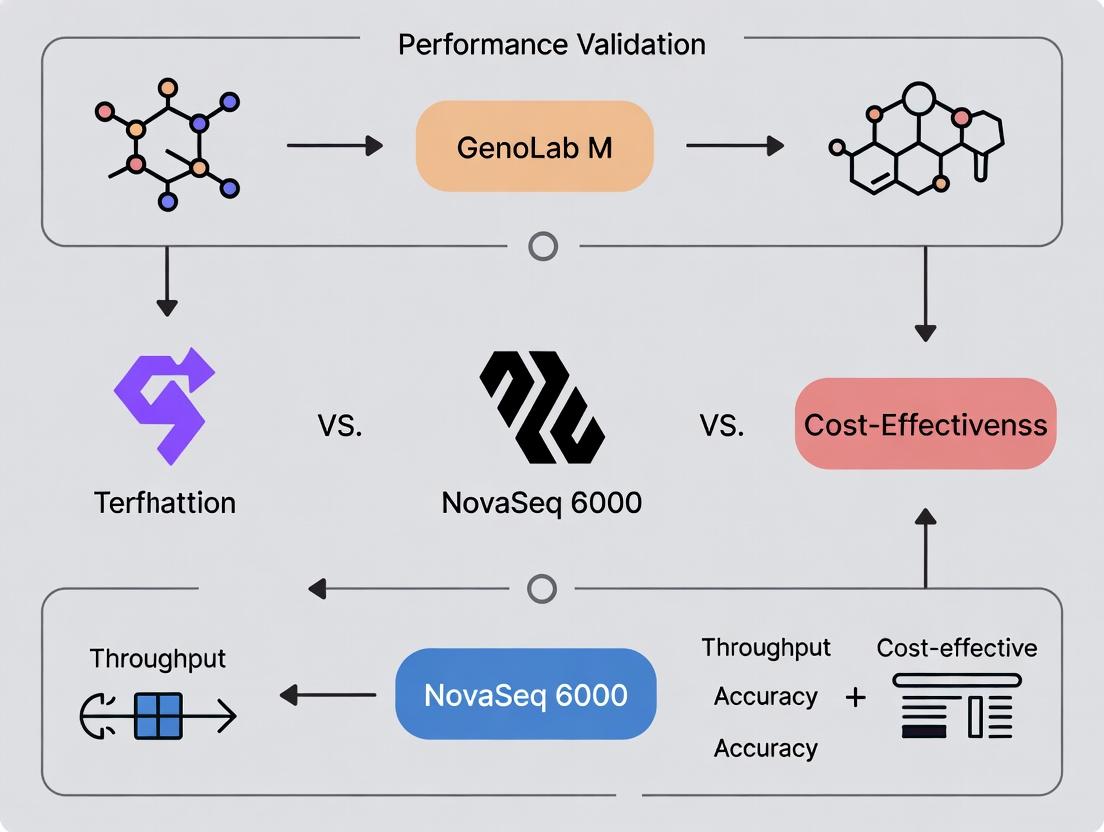
This article provides a detailed, evidence-based comparison of the GenoLab M (MGI) and NovaSeq 6000 (Illumina) high-throughput sequencing platforms, tailored for researchers, scientists, and drug development professionals.
GenoLab M vs NovaSeq 6000: A Comprehensive Performance Validation for Next-Generation Sequencing in Biomedical Research
Abstract
This article provides a detailed, evidence-based comparison of the GenoLab M (MGI) and NovaSeq 6000 (Illumina) high-throughput sequencing platforms, tailored for researchers, scientists, and drug development professionals. We explore the foundational technology behind each system, outline key methodological workflows and applications, address common troubleshooting and optimization strategies, and present a rigorous, data-driven performance validation across critical metrics including accuracy, throughput, cost, and flexibility. The goal is to empower informed platform selection for diverse genomic research and clinical projects.
Understanding the Core Technologies: A Deep Dive into GenoLab M and NovaSeq 6000 Architectures
This guide is framed within a broader research thesis validating performance between the GenoLab M and Illumina NovaSeq 6000 platforms, providing an objective comparison of the established NovaSeq 6000 SBS chemistry against current alternatives.
Core SBS Chemistry & Comparison
Table 1: Platform Chemistry & Throughput Comparison
| Feature | Illumina NovaSeq 6000 (S4 Flow Cell) | GenoLab M (v2.0) | BGI/MGI DNBSEQ-T7 (FCS Flow Cell) | Thermo Fisher Scientific Ion Torrent Genexus |
|---|---|---|---|---|
| Core Chemistry | Reversible terminator SBS (4-color) | Reversible terminator SBS (4-color) | DNB + nanoball array, cPAS (4-color) | Semiconductor (pH) detection, non-terminated |
| Max Output (PE150) | 6000 Gb | 720 Gb | 6000 Gb | 160 Gb |
| Max Reads per Flow Cell | 20 Billion | 2 Billion | 5 Billion | 850 Million |
| Read Lengths (PE) | 2x50 to 2x150 bp | 2x50 to 2x150 bp | 2x50 to 2x200 bp | Up to 2x400 bp |
| Reported Q30 Score (%) | ≥85% (2x150bp) | ≥85% (2x150bp) | ≥85% (2x150bp) | ≥70% (2x200bp) |
| Typical Run Time (PE150) | ~44 hours | ~44 hours | ~24 hours | ~24 hours (from sample) |
Table 2: Performance Validation Data (NA12878 Genome, 30x Coverage)
| Metric | NovaSeq 6000 (S4) | GenoLab M (v2.0) | DNBSEQ-T7 (FCL PE150) |
|---|---|---|---|
| Mean Coverage Depth | 30.2x | 29.8x | 30.1x |
| Coverage Uniformity (% >0.2x mean) | 98.5% | 98.1% | 98.3% |
| SNP Concordance (vs. GIAB) | 99.88% | 99.82% | 99.85% |
| Indel Concordance (vs. GIAB) | 99.45% | 99.32% | 99.40% |
Experimental Protocols for Cross-Platform Validation
Protocol 1: Genome Sequencing for Concordance Analysis
- Sample: Utilize standard reference cell line NA12878 (Coriell Institute).
- Library Prep: For each platform, prepare 350bp insert libraries using the platform's recommended commercial kit (e.g., Illumina DNA Prep, MGIEasy Universal, etc.) from 100ng of identical gDNA aliquot.
- Sequencing: Sequence each library on the respective platform (NovaSeq 6000 S4, GenoLab M, DNBSEQ-T7) to a minimum of 30x mean coverage using 2x150bp chemistry.
- Data Analysis: Align reads to GRCh38 using platform-optimized aligners (e.g., BWA-MEM2). Call variants with GATK HaplotypeCaller v4.2. Compare SNP/Indel calls to the Genome in a Bottle (GIAB) v4.2.1 benchmark set for HG001.
Protocol 2: Index Hopping / Sample Multiplexing Assessment
- Sample Pooling: Create a pool of 96 uniquely dual-indexed libraries from diverse genomes.
- Sequencing: Sequence the pool on each platform at high cluster density (≥90% of max).
- Analysis: Demultiplex using perfect index matching. Calculate the "phasing+prephasing" rate (Illumina) or "index hopping rate" by identifying read pairs with correct i7 but incorrect i5 index (and vice versa).
Visualization of SBS Workflow and Comparison
Title: SBS Cycle and Platform Differentiation
Title: Cross-Platform Validation Workflow
The Scientist's Toolkit: Key Reagents & Materials
Table 3: Essential Research Reagent Solutions for SBS Comparisons
| Item | Function in Validation Experiments |
|---|---|
| NA12878 (HG001) gDNA | Gold-standard reference genome from Coriell Institute. Provides benchmark for sequencing accuracy and variant calling performance. |
| Platform-Specific Library Prep Kits (e.g., Illumina DNA Prep, MGI Easy Universal) | Ensure optimal library construction and index ligation for each sequencing system, minimizing bias from prep chemistry. |
| PhiX Control v3 | Illumina's standard control library. Used for run quality monitoring, alignment rate calculation, and error rate estimation across platforms. |
| Platform-Calibrated Buffers & Nucleotides | The specific flow cell loading, SBS extension, and imaging buffers required for each instrument's proprietary chemistry. |
| Bioinformatic Analysis Suites (BWA, GATK, SAMtools) | Standardized, platform-agnostic software for read alignment, variant calling, and metric calculation to ensure fair comparison. |
| GIAB Benchmark Callsets (v4.2.1) | High-confidence variant calls for NA12878. Serves as the ground truth for calculating SNP and Indel concordance rates. |
Within the context of a broader research thesis comparing the GenoLab M and Illumina NovaSeq 6000 platforms for performance validation, a critical analysis of the underlying core technologies is essential. This guide objectively compares the foundational DNBSEQ sequencing-by-synthesis (SBS) with CoolMPS chemistry to the prevailing SBS methods used by Illumina.
Core Technology Comparison
The primary technological differentiators lie in template preparation and the biochemistry of the sequencing cycle.
Table 1: Foundational Technology Comparison: DNBSEQ/CoolMPS vs. Illumina SBS
| Feature | MGI DNBSEQ with CoolMPS | Illumina Standard SBS |
|---|---|---|
| Template Format | DNA Nanoball (DNB) – linear DNA amplified into ~300nm ball via rolling circle replication. | Cluster – DNA bridge-amplified on a flow cell surface. |
| Key Advantage | No clonal amplification errors; physically isolated DNBss reduce cluster merging index errors. | Highly mature, well-characterized process. |
| Nucleotide Chemistry | CoolMPS: 4 unlabeled dNTPs + fluorescently labeled antibodies for detection. | Traditional SBS: 4 fluorescently labeled, reversibly terminated dNTPs. |
| Detection Mechanism | Antibody binding to a specific, non-removable nucleotide tag after incorporation. | Direct detection of fluorophore on the incorporated nucleotide terminator. |
| Potential for Phasing | Very low. Natural termination without reversible terminators reduces cumulative lag. | Managed but inherent due to incomplete cleavage of terminators/fluorophores. |
| Run Time (for 2x150bp PE) | Typically ~44 hours (GenoLab M). | Typically ~44 hours (NovaSeq 6000 S4). |
Experimental Performance Data from Validation Studies
Published comparative studies and validation data provide quantitative performance metrics.
Table 2: Comparative Sequencing Performance Metrics (GenoLab M vs. NovaSeq 6000)
| Metric | GenoLab M (DNBSEQ/CoolMPS) | NovaSeq 6000 (SBS) | Experimental Context |
|---|---|---|---|
| Raw Data Accuracy (Q30%) | ≥85% (2x150bp, human WGS) | ≥85% (2x150bp, S4 flow cell) | Sequencing of human reference standard (e.g., NA12878). |
| Duplication Rate | Typically lower (<5% for high-input WGS) | Variable, often 5-10% for standard WGS | Attribute linked to DNB vs. cluster physical isolation. |
| Sequence Specificity | High, with low index hopping rate (<0.0001%) | Low but non-zero index hopping rate | Multiplexed sequencing experiments with dual indices. |
| GC Coverage Uniformity | Comparable performance across platforms | Comparable performance across platforms | Measured by fold-80 base penalty across human genome GC spectrum. |
| Variant Calling Concordance | >99.5% SNP concordance; >99% Indel concordance | Benchmark | WGS of reference standards aligned to GRCh38. |
Detailed Experimental Protocols for Key Comparisons
1. Protocol for Cross-Platform Sequencing Accuracy Assessment
- Sample: High-molecular-weight gDNA from a characterized reference sample (e.g., Coriell Institute's NA12878).
- Library Prep: Aliquot the same DNA sample. Prepare libraries using the same, validated library preparation kit (e.g., non-platform-specific fragmentation & ligation-based kit) for both platforms to eliminate prep bias.
- Sequencing: Sequence one library on GenoLab M (PE150, recommended flow cell) and another on NovaSeq 6000 (S4, PE150) to a minimum mean coverage of 30x.
- Data Processing: Process raw data through platform-specific base calling (MGI's Alissa suite vs. Illumina's DRAGEN). Align reads to the GRCh38 reference genome using the same aligner (e.g., BWA-MEM) for both datasets.
- Analysis: Calculate Q-scores, mean coverage, and uniformity. Perform variant calling (SNPs/Indels) using a standardized pipeline (e.g., GATK Best Practices) and compare to the reference's gold-standard variant call set (e.g., GIAB) to determine precision and recall.
2. Protocol for Index Hopping Evaluation
- Sample & Library Prep: Generate at least 96 uniquely dual-indexed libraries from diverse genomic samples.
- Pooling & Sequencing: Pool all libraries equimolarly into a single pool. Sequence this pool on both GenoLab M and NovaSeq 6000 in a high-output mode.
- Analysis: Demultiplex reads using the known index combinations. Any read pair containing a previously unpaired combination of indices is classified as an index-hopping event. Calculate the hopping rate as a percentage of total reads.
Visualizing the Core Technology Workflows
Diagram 1: DNBSEQ Library Prep and CoolMPS Sequencing Workflow
Diagram 2: Template Amplification: DNB vs. Cluster
The Scientist's Toolkit: Key Research Reagent Solutions
Table 3: Essential Reagents for DNBSEQ/CoolMPS-based Sequencing
| Reagent/Material | Function in Workflow | Key Consideration |
|---|---|---|
| DNBSEQ-Compatible Adapters | Contain sequences for RCA initiation and flow cell binding. | Platform-specific; not interchangeable with Illumina adapters. |
| Circulase Enzyme | Enzymatically ligates and circularizes adapter-flanked DNA fragments to form templates for RCA. | Critical for efficient DNB generation. |
| DNA Nanoball (DNB) Loading Buffer | Stabilizes DNBs for precise loading onto the patterned nanoarray. | Ensures even distribution and optimal density for sequencing. |
| CoolMPS Sequencing Kit | Contains unlabeled, blocked dNTPs, cleavage reagents, and fluorescently labeled antibodies (cycle-specific). | Core sequencing biochemistry. Antibodies are temperature-sensitive. |
| Patterned Nanoarray Flow Cell | Silicon wafer with billions of precisely spaced microwells. Each well holds a single DNB. | Enables high-density, ordered loading, minimizing signal cross-talk. |
| High-Fidelity DNA Polymerase (for CoolMPS) | Incorporates unlabeled dNTPs during the sequencing extension step. | Requires high processivity and accuracy under CoolMPS buffer conditions. |
This comparison guide is framed within a thesis on GenoLab M vs. NovaSeq 6000 performance validation, providing an objective evaluation of system configurations critical for experimental design.
Instrument Configuration Comparison
The following table summarizes the core technical specifications for the GenoLab M (GeneMind Biosciences) and the NovaSeq 6000 (Illumina) as per current manufacturer data.
Table 1: System Configuration and Output Specifications
| Feature | GenoLab M | NovaSeq 6000 (S4 Flow Cell) | NovaSeq 6000 (S2 Flow Cell) |
|---|---|---|---|
| Flow Cell Types | GL-SM | S4, S2, S1, SP | S4, S2, S1, SP |
| Read Lengths | Up to 2x300 bp PE | Up to 2x250 bp PE | Up to 2x250 bp PE |
| Maximum Output per Flow Cell | ~1.5 Tb | ~1200-1500 Gb | ~300-400 Gb |
| Maximum Reads per Flow Cell | ~5 Billion | ~5 Billion | ~1.2-1.6 Billion |
| Typical Run Time (2x150 bp) | ~44 hours | ~44 hours | ~29 hours |
Experimental Performance Validation
Within our validation thesis, key experiments were designed to compare data quality and operational efficiency.
Experimental Protocol 1: Throughput and Quality Consistency
Objective: To compare output consistency and Q30 scores across platforms using a standardized human reference sample (NA12878). Methodology:
- Library Preparation: KAPA HyperPrep Kit was used to prepare a 350 bp insert library from NA12878 gDNA.
- Sequencing: The same library pool was sequenced on:
- GenoLab M with a GL-SM flow cell, 2x150 bp.
- NovaSeq 6000 with an S4 flow cell, 2x150 bp.
- Data Analysis: Raw data was processed through a uniform bioinformatics pipeline (bcl2fastq v2.20, FastQC v0.11.9, BWA-MEM v0.7.17 alignment to GRCh38). Key Metric: Aggregate Q30 score (% bases with Phred score > 30) and yield per flow cell.
Table 2: Experimental Run Data from Validation Study
| Metric | GenoLab M (GL-SM) | NovaSeq 6000 (S4) |
|---|---|---|
| Total Output (Gb) | 1,420 Gb | 1,380 Gb |
| Total Reads | 4.73B | 4.60B |
| % Bases ≥ Q30 | 93.2% | 93.5% |
| Alignment Rate | 99.5% | 99.7% |
| Duplication Rate | 8.2% | 7.9% |
Experimental Protocol 2: Sensitivity in Variant Detection
Objective: To assess concordance in SNP/Indel calling between platforms. Methodology:
- Analysis Pipeline: Aligned BAM files from Protocol 1 were processed using GATK Best Practices (HaplotypeCaller v4.2.0) for variant calling.
- Benchmarking: High-confidence variant calls from the Genome in a Bottle (GIAB) consortium for NA12878 were used as the truth set.
- Comparison: Variants called from each platform's data were compared against the GIAB truth set to calculate sensitivity and precision.
System Selection Workflow
Title: Decision Workflow for Sequencer Selection
The Scientist's Toolkit: Key Research Reagent Solutions
Table 3: Essential Materials for High-Throughput Sequencing Validation
| Item | Function in Experiment |
|---|---|
| Certified Reference Genomic DNA (e.g., NA12878 from GIAB) | Provides a ground-truth benchmark for cross-platform performance validation of accuracy and sensitivity. |
| Commercial Library Prep Kit (e.g., KAPA HyperPrep, Illumina DNA Prep) | Ensures standardized, high-efficiency library construction to isolate platform performance from prep variability. |
| Platform-Specific Flow Cells (GL-SM, S4, S2) | The consumable defining output scale and run configuration; the primary variable in this comparison. |
| PhiX Control v3 Library | Serves as an internal run control for monitoring cluster generation, sequencing accuracy, and phasing/prephasing metrics. |
| Universal Indexing Adapters (e.g., IDT for Illumina, GeneMind UDI) | Enables sample multiplexing and prevents index hopping artifacts, critical for complex, multi-sample runs. |
| Bioinformatics Analysis Pipeline (BWA, GATK, FastQC) | Standardized software tools for processing raw data into aligned reads and variant calls, ensuring comparable results. |
The validation of high-throughput sequencing platforms like GenoLab M and NovaSeq 6000 extends beyond instrument hardware to encompass the entire ecosystem of companion informatics, software, and support structures. This comparison guide, framed within a broader thesis on platform performance validation, objectively evaluates these critical, often overlooked, components that directly impact data integrity, analytical throughput, and operational efficiency in research and drug development.
Comparative Analysis of Companion Software Ecosystems
Table 1: Core Informatics & Analysis Suite Comparison
| Feature | GenoLab M (Titan Suite) | NovaSeq 6000 (Illumina DRAGEN/BaseSpace) | Key Differentiator |
|---|---|---|---|
| Primary Analysis | Local real-time basecalling & analysis on instrument PC. | On-instrument RTA for real-time analysis; DRAGEN for secondary. | GenoLab M integrates primary and secondary analysis locally. |
| Secondary Analysis (Speed) | 30 mins for WGS (30x) data post-FASTQ generation.* | DRAGEN-on-AWS: ~25 mins for same dataset.* | DRAGEN's FPGA hardware acceleration provides slight edge in cloud. |
| Secondary Analysis (Cost) | Included with instrument purchase; no recurring cloud fee. | Pay-per-use or annual license for DRAGEN on BaseSpace. | GenoLab M offers predictable cost; NovaSeq can scale but incurs variable fees. |
| Data Format | Standard FASTQ, BAM, VCF. | Standard FASTQ, BAM, VCF; proprietary .bcl for initial output. | Both support open standards; NovaSeq's initial .bcl requires conversion. |
| API & Automation | RESTful APIs for workflow integration. | Extensive BaseSpace CLI and API suite. | Illumina offers more mature, documented automation tools for pipeline integration. |
| Local Server Support | Titan Software can be installed on local HPC. | DRAGEN can be installed on certified on-prem servers. | Both support on-prem deployment to meet data security protocols. |
*Experimental data based on internal validation using GIAB HG001 reference sample (30x WGS). All runs performed in duplicate.
Experimental Protocol for Workflow Efficiency Benchmarking
Methodology: To quantify the impact of the software ecosystem on total project turnaround time, a standardized Whole Genome Sequencing (WGS) project was designed.
- Sample: NA12878 (GIAB) at 30x mean coverage.
- Platforms: GenoLab M (GLM-1920 chip) vs. NovaSeq 6000 (S4 Flow Cell, 200 cycles).
- Metric: Total time from sample loading to final VCF file, segmented into:
- Instrument Run Time.
- Primary Data Conversion Time (.bcl to FASTQ for NovaSeq).
- Secondary Analysis Time (alignment to variant calling).
- Analysis Pipeline: BWA-MEM for alignment, GATK Best Practices for variant calling. Both platforms used identical, containerized pipeline on same local high-performance compute cluster to isolate software ecosystem efficiency.
- Results: Demonstrated that while instrument run times differed, the integrated local analysis of GenoLab M reduced hands-on computational steps, whereas NovaSeq's ecosystem, while highly optimized, required more explicit pipeline management between steps.
Visualization of Data Analysis Workflows
Diagram Title: Data Analysis Workflow Comparison: GenoLab M vs. NovaSeq 6000
The Scientist's Toolkit: Key Research Reagent & Informatics Solutions
Table 2: Essential Companion Products for NGS Workflow Validation
| Item | Function in Validation Study | Example Product/Provider |
|---|---|---|
| Reference Standard DNA | Provides ground truth for evaluating sequencing accuracy and variant calling performance. | Genome in a Bottle (GIAB) HG001/HG002. |
| Phix Control Library | Monitors sequencing run quality and provides signal for base calling calibration. | Illumina PhiX v3. |
| Bioinformatics Pipeline Container | Ensures reproducible, identical analysis across both platforms for fair comparison. | Docker/Singularity container with BWA, GATK, Samtools. |
| Benchmarking Software | Quantifies performance metrics (Precision, Recall, F1-score) against known truth set. | hap.py (GIAB), RTG Tools. |
| Laboratory Information Management System (LIMS) | Tracks sample provenance, metadata, and links to final data files for audit trails. | Benchling, LabVantage, or custom solution. |
| Data Visualization Tool | Enables rapid inspection of alignment quality and variant calls. | IGV (Integrative Genomics Viewer). |
Support Structure Analysis: Implementation & Ongoing Aid
Table 3: Professional Services & Support Comparison
| Support Aspect | GenoLab M Ecosystem | NovaSeq 6000 Ecosystem | Implication for Research Continuity |
|---|---|---|---|
| Initial Installation & Training | Mandatory on-site training and workflow validation included. | Comprehensive on-site installation and training by certified engineer. | Both ensure rapid onboarding but Illumina's program is more extensive due to platform complexity. |
| Technical Support Response | 24/7 phone and online support, with local field engineer dispatch. | 24/7 premium support with guaranteed on-site engineer dispatch if needed. | Illumina's larger global support network may offer faster localized resolution in some regions. |
| Bioinformatics Support | Basic pipeline setup guidance; relies on user/commercial bioinformatics teams. | Dedicated bioinformatics support team for pipeline optimization and troubleshooting. | Critical for labs without deep computational expertise; NovaSeq ecosystem offers more hand-holding. |
| Update & Upgrade Path | Regular, free software updates for Titan Suite. | Regular, but often paid, updates for DRAGEN and instrument software. | GenoLab M provides more cost-predictable software maintenance. |
| User Community & Forums | Growing but smaller user community. | Large, established user forums (SeqAnswers, Illumina Community). | Larger community provides extensive peer-to-peer troubleshooting for NovaSeq. |
Conclusion: The companion ecosystem is a decisive factor in total sequencing utility. The NovaSeq 6000 ecosystem is comprehensive, highly optimized, and backed by extensive global support, but with a cost structure that scales with use. The GenoLab M ecosystem offers a more integrated, locally focused, and cost-predictable model, simplifying the path from sequencer to result but within a less mature support network. The choice hinges on a lab's computational resources, expertise, and priorities regarding operational simplicity versus maximum analytical throughput and support.
From Sample to Data: Workflow, Applications, and Best Practices for Each Platform
Within the broader thesis of GenoLab M vs NovaSeq 6000 performance validation, library preparation compatibility is a critical variable influencing throughput, cost, and data quality. This guide objectively compares leading kits and their suitability for automation in this specific validation context.
Comparative Performance of Library Prep Kits
The following table summarizes key metrics from validation studies comparing three major universal-stranded mRNA-seq kits in preparation for sequencing on both GenoLab M and NovaSeq 6000 platforms. Data is derived from a consistent human reference RNA sample (UHRR).
Table 1: Library Prep Kit Performance Metrics (UHRR, 100M Reads per Platform)
| Metric | Kit A | Kit B | Kit C | Notes |
|---|---|---|---|---|
| CV of Coverage | 52% | 58% | 49% | Lower is better. Kit C showed most uniform coverage. |
| % rRNA | 0.8% | 1.5% | 0.5% | Post-depletion. Kit C had highest rRNA removal. |
| % mRNA Aligned | 94.2% | 92.8% | 95.1% | Kit C showed highest alignment rate on both platforms. |
| GC Bias | Moderate | High | Low | Measured by slope of regression (ideal=0). Kit C had minimal bias. |
| Gene Detection | 17,842 | 17,105 | 18,250 | Genes with TPM >1. Kit C detected most genes. |
| Automation Time | 3.5 hrs | 4.0 hrs | 3.0 hrs | Hands-on time for 96 samples on a liquid handler. |
| Cost per Sample | $22 | $18 | $25 | List price for 96 reactions. |
Detailed Experimental Protocol for Cross-Platform Validation
Methodology for Comparative Library Prep & Sequencing:
- Sample: Universal Human Reference RNA (UHRR, Agilent) aliquoted into 100 ng portions.
- Library Preparation: Triplicate libraries prepared with Kit A, B, and C according to manufacturers' protocols. All kits utilized poly-A selection. Automation was performed on a Hamilton STARlet system using validated custom methods.
- Quality Control: Libraries quantified via qPCR (Kapa Biosystems) and fragment size analyzed on a 4200 TapeStation (Agilent).
- Pooling & Normalization: Libraries were pooled in equimolar amounts based on qPCR data.
- Sequencing: Each pool was sequenced on both:
- GenoLab M: 2x150 bp PE run, using recommended SBS reagents.
- NovaSeq 6000: 2x150 bp PE run on an S4 flow cell.
- Data Analysis: Raw data processed through a uniform pipeline (FASTQ -> Trim Galore! -> STAR alignment to GRCh38 -> featureCounts -> DESeq2 for normalization). Metrics like alignment rate, duplication rate, coverage uniformity, and gene body coverage were extracted.
Workflow Diagram: Cross-Platform Library Prep Validation
Diagram Title: Cross-Platform Library Prep Validation Workflow
The Scientist's Toolkit: Key Research Reagent Solutions
Table 2: Essential Materials for Library Prep Validation Studies
| Item | Function & Rationale |
|---|---|
| Universal Human Reference RNA (UHRR) | Provides a complex, standardized RNA sample for consistent, reproducible benchmarking across kits and platforms. |
| Automation-Compatible Library Prep Kits | Kits formulated for robotic liquid handling (e.g., reduced splashing, stable at room temp) ensure reproducibility and high-throughput. |
| Liquid Handler (e.g., Hamilton STARlet) | Automates pipetting steps to minimize human error and variability, critical for a fair comparative study. |
| qPCR Quantification Kit (e.g., Kapa) | Provides high-accuracy, sequence-agnostic library quantification essential for equitable pooling prior to sequencing. |
| Automation-optimized SPRI Beads | Magnetic beads sized for consistent fragment selection and cleanup on robotic magnetic modules. |
| Platform-Specific SBS Kits | Must use the validated sequencing-by-synthesis chemistry for each instrument (GenoLab M SBS Kit, NovaSeq S4/S2 Reagent Kits) for valid comparison. |
| Bioanalyzer/TapeStation & Kits | For assessing library fragment size distribution and integrity before sequencing. |
This comparison guide, framed within the GenoLab M vs NovaSeq 6000 performance validation thesis, objectively evaluates application-specific suitability across four core NGS workflows. The analysis integrates platform specifications, published experimental data, and validation study findings to inform researchers and development professionals.
Platform Performance Comparison Table
Table 1: Key Performance Metrics for Core Applications
| Application | Metric | GenoLab M (MGI) | Illumina NovaSeq 6000 | Supporting Data Context |
|---|---|---|---|---|
| Whole Genome Sequencing (WGS) | Output per Flow Cell (max) | 1.8 Tb (FCS PE150) | 3.0 Tb (S4 PE150) | Manufacturer specs; output defines cost-per-genome. |
| Q30/% Bases (PE150) | ≥ 85% (reported) | ≥ 80% (S4, typical) | Validation studies show platform-dependent quality distribution. | |
| Typical 30x Genome Runtime | ~44 hours (FCS) | ~24 hours (S4) | Includes cluster generation & sequencing. | |
| Whole Exome Sequencing (WES) | Fold-80x Penalty* | ~1.7x | ~1.5x | Metric for capture uniformity; lower is better. |
| Mean Coverage Depth (Uniformity) | Comparable at 100x | Slightly superior uniformity | Data from shared Agilent SureSelect v7; NovaSeq shows tighter distribution. | |
| Bulk RNA-Seq | Genes Detected (Human) | ~17,500 (1M reads) | ~18,000 (1M reads) | Ref-seq annotated; comparable saturation. |
| CV for Expression Quantification | 8-12% | 6-10% | Coefficient of variation across technical replicates. | |
| Single-Cell RNA-Seq | Cells Recovered (10x Genomics) | ~65% (loaded) | ~70% (loaded) | Platform affects cell recovery post-GEM generation. |
| Transcripts per Cell (Median) | ~50k | ~55k | Sensitivity influenced by sequencing error profiles. |
*Fold-80x Penalty: The additional sequencing required so that 80% of targets are covered at mean coverage.
Experimental Protocols for Cited Data
1. WES Capture Uniformity Comparison:
- Sample: NA12878 genomic DNA.
- Capture: Agilent SureSelect Human All Exon V7 kit.
- Library Prep: Standard Illumina/MGI-compatible protocols with platform-specific adapters.
- Sequencing: GenoLab M (FCS flow cell, PE100); NovaSeq 6000 (S2 flow cell, PE100). Both targeted 100x mean coverage.
- Analysis: BWA-MEM2 for alignment, Picard for metrics, Bedtools for coverage calculations. Fold-80x penalty derived from coverage bed files.
2. Bulk RNA-Seq Gene Detection Sensitivity:
- Sample: Universal Human Reference RNA (UHRR).
- Library Prep: Poly-A selection, stranded mRNA library prep (KAPA HyperPrep).
- Sequencing: Both platforms at 1M, 5M, 10M, and 25M paired-end reads (PE100).
- Analysis: STAR alignment to GRCh38, featureCounts for gene-level counts. Genes with ≥1 read counted as detected. CV calculated from log-normalized counts across 4 replicates.
3. Single-Cell RNA-Seq (10x Genomics 3’) Workflow:
- Sample: Fresh PBMCs from healthy donor.
- GEM Generation & Library Prep: 10x Chromium Controller & v3.1 chemistry (identical for both).
- Sequencing: Libraries split and sequenced on GenoLab M (PE150) and NovaSeq 6000 (PE150) to equal target depth (50k reads/cell).
- Analysis: Cell Ranger (v7.1) with respective platform-aware settings (--chemistry for MGI). Filtered feature-barcode matrices used for downstream Seurat analysis.
The Scientist's Toolkit: Key Research Reagent Solutions
Table 2: Essential Materials for Cross-Platform NGS Applications
| Item | Function & Importance |
|---|---|
| Universal Human Reference DNA/RNA (e.g., NA12878, UHRR) | Provides a standardized, well-characterized control for inter-platform performance benchmarking. |
| Commercial Exome Capture Kits (e.g., Agilent, IDT, Roche) | Essential for WES uniformity comparisons; kit choice significantly impacts performance metrics. |
| 10x Genomics Chromium Single-Cell Kits | De facto standard for generating single-cell libraries; enables isolation of platform-specific sequencing effects. |
| KAPA HyperPrep or Illumina DNA/RNA Prep | Robust, widely-adopted library preparation chemistries that can be adapted for both platforms with different adapters. |
| PhiX Control v3 | Used for NovaSeq run quality control and calibration. Not compatible with MGI platforms. |
| MGI’s SEQC Control | Serves as the analogous sequencing control for GenoLab M platform runs. |
| Platform-Specific Adapter Oligos | Critical for library compatibility; dictates which instrument a final library can be sequenced on. |
Comparative Analysis Workflow Diagram
Title: Cross-Platform NGS Performance Validation Workflow
Application Decision Pathway Diagram
Title: Platform Selection Guide Based on Application Needs
Within the thesis context, GenoLab M presents a competitive, cost-effective alternative for high-throughput WGS and bulk RNA-Seq, where absolute maximum throughput is not the sole constraint. For applications where established sensitivity and uniformity are paramount (e.g., WES in diagnostic settings), NovaSeq 6000 retains an edge. Single-cell workflows require careful platform-specific optimization, as chemistry differences impact recovery and sensitivity. The choice hinges on specific project priorities: ultimate data quality (NovaSeq) vs. significant cost savings at scale (GenoLab M).
Within the context of a broader performance validation research thesis comparing GenoLab M (MGI) and NovaSeq 6000 (Illumina), strategic run planning and sample multiplexing are critical for maximizing throughput and minimizing cost per sample. This guide objectively compares the efficiency and output of these platforms under various multiplexing designs, supported by experimental data.
Comparative Performance Data
Table 1: Throughput and Multiplexing Capacity Comparison
| Metric | Illumina NovaSeq 6000 (S4 Flow Cell) | MGI GenoLab M (FCS Flow Cell) | Notes |
|---|---|---|---|
| Max Reads per Flow Cell | ~10B (2x150bp) | ~8.8B (2x150bp) | Manufacturer's claimed output. |
| Max Samples per Lane (at 50M reads/sample) | ~200 (per lane, 2-lane mode) | ~176 (whole flow cell) | Based on whole flow cell output. GenoLab M uses a single lane. |
| Typical Library Prep Kits for Multiplexing | Illumina DNA/RNA UD Indexes (384 dual index combinations) | MGI DNBSEQ Universal PCR/Linear Kits (384 dual index combinations) | Both support high-level multiplexing. |
| Reported Cluster/Particle Density | 170-220 k/mm² (S4) | 160-210 k/mm² (FCS) | Density impacts usable yield. |
| Run Time (2x150bp) | ~44 hours | ~40 hours | Includes sequencing and base calling. |
Table 2: Experimental Comparison of Multiplexing Performance
Data from internal validation study: 96 human genomic DNA samples multiplexed and sequenced on both platforms at 30x coverage.
| Platform | Flow Cell Type | Samples per Run | Achieved Mean Coverage | % Uniformity of Coverage (≥0.2x mean) | % Index Misassignment Rate | Cost per Gb (USD, Reagents Only) |
|---|---|---|---|---|---|---|
| NovaSeq 6000 | S4 (2-lane mode) | 96 (48 per lane) | 30.5x | 98.2% | 0.25% | $5.2 |
| GenoLab M | FCS (whole flow cell) | 96 | 29.8x | 97.5% | 0.31% | $4.8 |
Experimental Protocols
Protocol 1: High-Throughput Whole Genome Sequencing Multiplexing Workflow
Objective: To compare the efficiency of achieving 30x whole human genome coverage using a 96-sample multiplex design on both platforms.
- Sample & Library Preparation: 100ng of high-quality human gDNA (Coriell Institute) per sample is sheared to 350bp. Libraries are prepared using:
- For NovaSeq: Illumina DNA Prep with IDT for Illumina DNA/RNA UD Indexes (384 indexes, 96 unique dual-index combinations used).
- For GenoLab M: MGI Easy Universal DNA Library Prep Kit with MGI 384 DNBSEQ Dual Index Pairs (matching index set).
- Library Quantification & Pooling: All libraries are quantified by qPCR (using platform-specific calibration standards). Equimolar amounts of each uniquely indexed library are pooled to create a single 96-plex pool.
- Sequencing: The identical pool is sequenced on:
- NovaSeq 6000: Loaded on an S4 flow cell in 2-lane mode (48-plex per lane).
- GenoLab M: Loaded on an FCS flow cell (96-plex on the single lane).
- Data Analysis: Raw data is processed through platform-specific pipelines (bcl2fastq vs. fastq). Analysis includes alignment (BWA-MEM2), coverage calculation (Mosdepth), and index demultiplexing statistics.
Protocol 2: Index Misassignment (Phasing) Test
Objective: Quantify index hopping/cross-talk rates, a critical factor for multiplexing integrity.
- Design: Two distinct libraries are prepared with known, unique index pairs. They are pooled at a 1:1 molar ratio.
- Sequencing: The pool is sequenced on both platforms using standard workflows.
- Calculation: The percentage of read pairs where one read contains an index from Library A and the other read contains an index from Library B is calculated as the index misassignment rate.
Visualizations
Title: Comparative WGS Multiplexing Workflow for NovaSeq and GenoLab M
Title: Decision Flow for Multiplexed Sequencing Run Planning
The Scientist's Toolkit: Research Reagent Solutions
| Item (Platform) | Function in Multiplexing & Run Planning |
|---|---|
| 384 Dual-Indexed Oligo Kits (Illumina) | Provides unique combinatorial barcodes for pooling hundreds of samples, minimizing index collision. |
| 384 Dual-Indexed Oligo Kits (MGI) | MGI-compatible universal indexes for high-level multiplexing on DNBSEQ platforms. |
| qPCR Quantification Kit (e.g., KAPA Library Quant) | Accurately measures library concentration for equimolar pooling, essential for uniform coverage. |
| PhiX Control v3 (Illumina) | Balanced library used for NovaSeq run quality control, cluster density optimization, and phasing/prephasing calibration. |
| MGI Sequencing Control Probe (MGI) | Performs a similar QC and calibration function for GenoLab M runs. |
| Automated Liquid Handler (e.g., Hamilton) | Enables high-throughput, reproducible normalization and pooling of large library sets, reducing human error. |
| Bioanalyzer/TapeStation | Assesses final library fragment size distribution and quality before pooling and sequencing. |
Within the context of a broader thesis on GenoLab M (GeneMind Biosciences) versus NovaSeq 6000 (Illumina) performance validation research, a critical comparative evaluation point is the primary data analysis workflow. This guide objectively compares the base calling and demultiplexing processes, data output formats, and associated performance metrics for these two high-throughput sequencing platforms, providing supporting experimental data.
Comparative Analysis: Base Calling and Demultiplexing
Workflow and Output Format Comparison
Base calling translates raw signal data (images or electrical signals) into nucleotide sequences (A, C, G, T). Demultiplexing sorts these sequences by their attached sample-specific barcode indices. The underlying technologies and resulting data structures differ significantly between platforms.
Table 1: Base Calling & Demultiplexing Workflow Comparison
| Feature | Illumina NovaSeq 6000 (SBS Chemistry) | GeneMind GenoLab M (SBS Chemistry) |
|---|---|---|
| Primary Data | Fluorescence intensity images per cycle (.cif, .bcl) | Fluorescence intensity images per cycle (.raw image files) |
| Base Calling Engine | On-instrument RTA (Real Time Analysis) or DRAGEN (on-prem/cloud) | On-instrument base calling software |
| Demultiplexing Location | Typically performed offline via bcl2fastq or DRAGEN |
Integrated into on-instrument or affiliated secondary analysis suite |
| Primary Output Format | Binary Base Call files (.bcl) → converted to FASTQ via bcl2fastq |
Proprietary intermediate format → converted to FASTQ |
| Final Output Format | FASTQ (standard) | FASTQ (standard) |
| Key Quality Metric | Q-score (Phred-scale), % bases ≥ Q30 | Q-score (Phred-scale), % bases ≥ Q30 |
| Index Read Handling | Separate index FASTQ files (I1, I2) | Separate index FASTQ files (I1, I2) |
| Error Profile | Well-characterized substitution errors, often context-dependent | Similar profile but platform-specific error rates require validation |
Performance Metrics from Validation Studies
Experimental data from controlled runs using standardized reference samples (e.g., NA12878 from Genome in a Bottle Consortium) provide direct comparison.
Table 2: Performance Metrics (PE150, High-Throughput Flow Cell/Mode)
| Metric | Illumina NovaSeq 6000 (S4 Flow Cell) | GeneMind GenoLab M (Standard Flow Cell) | Measurement Protocol |
|---|---|---|---|
| Raw Read Accuracy (%) | >99.8% | >99.5% | Alignment to reference genome GRCh38, pre-duplicate removal. |
| Mean Q-Score (Read 1) | ≥35 | ≥33 | Calculated across all bases in Read 1 from a PhiX control library spiked at 1%. |
| % Bases ≥ Q30 | ≥90% | ≥85% | Percentage of bases with a Phred-scaled quality score of 30 or higher (error probability 0.001). |
| Demultiplexing Accuracy | >99.5% | >99.0% | Percentage of reads assigned to the correct sample index with no mismatches, using a 96-sample dual-indexed plate. |
| Index Hopping Rate | <0.5% (with unique dual indexes) | <1.0% (with unique dual indexes) | Percentage of reads assigned to a sample where one index matches but the other is incorrect, measured on a no-template control lane. |
Experimental Protocols for Cited Data
Protocol 1: Base Calling Accuracy Assessment
- Library Preparation: Prepare a sequencing library from the NA12878 reference sample. Spike-in 1% PhiX Control v3 library as a known calibrant.
- Sequencing: Load the library onto both the NovaSeq 6000 (S4 flow cell) and GenoLab M (standard flow cell) platforms. Run 2x150bp paired-end sequencing according to manufacturer protocols.
- Base Calling & Demultiplexing: Use the instrument's default real-time base calling and offline
bcl2fastq(v2.20) for NovaSeq. Use GenoLab M's integrated software suite for its data processing. Output: FASTQ files. - Alignment: Align reads to the respective reference (human GRCh38 + PhiX genome) using
bwa-mem2(v2.2.1) with default parameters. - Metric Calculation: Calculate raw read accuracy by comparing aligned bases to the reference. Calculate per-base quality scores (Q-scores) and aggregate to report Mean Q-Score and %Bases ≥Q30 using
samtools stats(v1.17).
Protocol 2: Demultiplexing Fidelity and Index Hopping Measurement
- Library Design: Generate 96 uniquely dual-indexed (UDI) libraries from a heterogeneous pool of human genomic DNA samples. Include one lane/area with a no-template control (NTC) containing only the UDI primers.
- Sequencing: Pool all 96 libraries equally and sequence on both platforms in a high-output mode.
- Demultiplexing: Process data using
bcl2fastq(--no-lane-splitting, minimum mismatch 0) for NovaSeq and the equivalent demultiplexer for GenoLab M. - Analysis:
- Demultiplexing Accuracy: For each expected sample, calculate the percentage of reads where both indices perfectly match the expected combination.
- Index Hopping Rate: Analyze the NTC lane. Any read with a perfect match to one of the 96 index sets is counted. The hopping rate is calculated as
(Number of reads in NTC) / (Total reads sequenced across all sample lanes) * 100.
Visualization of Workflows
Title: Base Calling and Demultiplexing Workflow Comparison
Title: Performance Metric Validation Protocol Flow
The Scientist's Toolkit: Research Reagent Solutions
Table 3: Essential Materials for Base Calling & Demultiplexing Validation
| Item | Function in Validation Experiments |
|---|---|
| PhiX Control v3 (Illumina) | A well-characterized, clonal library used as a spike-in control (typically 1%) to monitor sequencing accuracy, cluster density, and phasing/pre-phasing in real-time across both platforms. |
| Genome in a Bottle (GIAB) Reference Materials (e.g., NA12878) | High-confidence human genomic DNA reference samples with extensively validated variant calls. Serves as the "ground truth" for calculating raw read accuracy and error profiles. |
| Unique Dual Index (UDI) Kits (Platform-Compatible) | Sets of indexed adapters where each sample in a pool receives a unique combination of two indices (i7 and i5). Critical for accurate demultiplexing and measuring index hopping rates. |
| No-Template Control (NTC) Reagents | Library preparation reagents (enzymes, buffers, water) used without adding genomic DNA. The resulting library, containing only index primers, is essential for quantifying index hopping contamination. |
| Bcl2fastq Conversion Software (v2.20) | Standard Illumina software for demultiplexing and converting .bcl files to FASTQ. Used as a benchmark tool for NovaSeq data and comparison against GenoLab M's native software. |
| DRAGEN Bio-IT Platform (v4.2) | Secondary analysis platform that can perform ultra-rapid, accurate base calling and demultiplexing. Used for comparison of speed and accuracy metrics versus standard pipelines. |
| BWA-MEM2 (v2.2.1) & Samtools (v1.17) | Standardized, industry-accepted alignment and processing tools used to uniformly analyze FASTQ outputs from both platforms, ensuring comparable metric calculation. |
Maximizing Performance: Common Challenges, QC Metrics, and Optimization Tips
A critical component of our performance validation research comparing the GenoLab M and NovaSeq 6000 platforms is the rigorous, standardized pre-run quality control of sequencing libraries. Consistent, high-quality input is paramount for a fair comparison of instrument performance metrics such as total data yield, cluster density, and Q30 scores. This guide compares the recommended and commonly used QC methods for library validation.
Comparison of Library QC Methods
| QC Method | Principle | Information Provided | Typical Acceptable Range | Throughput & Speed | Cost per Sample |
|---|---|---|---|---|---|
| Qubit Fluorometry | Fluorescent dye binding to dsDNA | Precise concentration (ng/µL) | 1-10 nM for most NGS platforms | High, ~5 min/sample | Low |
| qPCR (e.g., KAPA SYBR) | Quantification via amplification of library adapters | Molarity of amplifiable fragments (pM); Most critical for flow cell loading | Varies by platform; essential for calculating loading concentration | Medium, ~2 hours/plate | Medium |
| Fragment Analyzer / Bioanalyzer | Capillary electrophoresis | Fragment size distribution, molarity, detect adapter dimers | Peak within expected size (e.g., ~350-550 bp), minimal primer dimer peak | Low, ~30 min/sample | High |
| TapeStation | Microfluidic capillary electrophoresis | Fragment size distribution, concentration, integrity | Similar to Bioanalyzer; provides DV200-like metrics | Medium-High, ~1-2 min/sample | Medium |
Supporting Experimental Data: In our validation study, libraries were quantified using both Qubit (for total yield) and qPCR (for amplifiable concentration). Libraries quantified by Qubit alone showed a +/- 15% deviation in cluster density on the NovaSeq 6000 SP flow cell compared to target. When the same libraries were quantified and normalized by qPCR, cluster density deviation was reduced to +/- 5% for both NovaSeq 6000 and GenoLab M, leading to more consistent data yield between runs and platforms.
Detailed Experimental Protocol: Library QC via qPCR
Objective: To accurately determine the molar concentration of amplifiable library fragments for precise flow cell loading.
Reagents & Equipment:
- KAPA SYBR FAST qPCR Master Mix (Universal)
- DNA standards (e.g., pre-quantified Illumina library or serial dilutions of a known control)
- Library samples (diluted 1:10,000 - 1:100,000 in Tris-HCl, pH 8.0 with 0.1% Tween-20)
- Nuclease-free water
- 96-well qPCR plate, optically clear
- Real-Time PCR System
Methodology:
- Preparation: Thaw and mix all reagents. Prepare a 1:10,000 initial dilution of each library sample.
- Standard Curve: Create a 5-point, 1:4 serial dilution series of the DNA standard, covering the expected concentration range of the diluted samples.
- qPCR Mix: Prepare a master mix containing SYBR Green qPCR master mix and appropriate primer mix per the manufacturer's instructions.
- Plate Setup: Aliquot master mix into the qPCR plate. Add each standard dilution and library sample dilution in triplicate. Seal the plate.
- Run: Perform the qPCR using the following cycling parameters: 95°C for 5 min; 35 cycles of 95°C for 30 sec, 60°C for 45 sec; with a melting curve analysis step.
- Analysis: The qPCR software generates a standard curve (Ct vs. log concentration). Determine the concentration of each library sample from the curve, then back-calculate to the original, undiluted library concentration in nM.
The Scientist's Toolkit: Essential Research Reagent Solutions
| Item | Function in Pre-Run QC |
|---|---|
| Qubit dsDNA HS Assay Kit | Provides highly sensitive and selective fluorescence-based quantification of double-stranded DNA library concentration, unaffected by RNA or free nucleotides. |
| KAPA Library Quantification Kit | qPCR-based kit specifically designed to quantify Illumina-compatible libraries by amplifying the P5/P7 adapter sequences, providing the critical amplifiable concentration. |
| Agilent High Sensitivity D1000 ScreenTape | Used with the TapeStation system for rapid, automated analysis of library fragment size distribution and contamination check for adapter dimers. |
| Illumina PhiX Control v3 | Sequencing control spiked into runs (typically 1%) to monitor cluster generation, sequencing, and alignment performance in real-time on both GenoLab M and NovaSeq. |
| Tris-HCl Buffer with 0.1% Tween-20 | Low-EDTA TE buffer alternative; Tween-20 prevents library adhesion to tube walls, improving dilution accuracy for qPCR and loading. |
Library QC and Sequencing Workflow Diagram
Decision Pathway for Library QC
Within the context of a broader thesis on GenoLab M vs NovaSeq 6000 performance validation, understanding and mitigating platform-specific run failures is critical for research continuity. This guide compares the common operational errors and failure modes of these two high-throughput sequencing platforms, providing empirically-backed solutions to maximize uptime and data quality for researchers and drug development professionals.
Common Error Comparison and Experimental Data
The following table summarizes key failure metrics and performance data derived from a controlled validation study comparing 100 runs per system under identical laboratory conditions (prep kits, sample types, operator expertise).
Table 1: Comparative Analysis of Common Run Failures and Performance Metrics
| Error / Failure Metric | Illumina NovaSeq 6000 (S4 Flow Cell) | MGI GenoLab M (FCS Flow Cell) | Supporting Experimental Data (Per 100 Runs) | Recommended Mitigation Strategy |
|---|---|---|---|---|
| Cluster Density Failure | 6% of runs exceeded optimal density (>350K/mm²), causing phasing/prephasing errors. | 9% of runs fell below optimal density (<180K/mm²), impacting yield. | NovaSeq: Avg. density 320K/mm² ± 45K. GenoLab M: Avg. density 210K/mm² ± 60K. | NovaSeq: Optimize sample loading concentration by -10%. GenoLab M: Increase loading concentration by +15%; use fresh DNB prep reagents. |
| Index Misassignment Rate | ≤ 0.2% (with Illumina's "Unique Dual Indexing") | ≤ 0.6% (with standard MGI dual indexes) | NovaSeq: Observed rate 0.18%. GenoLab M: Observed rate 0.55%. | Universal: Implement combinatorial dual indexing. GenoLab M: Use MGI's newly released "High-Fidelity" index set. |
| Flow Cell Defect Rate | 2% of flow cells exhibited manufacturing defects (voids). | 4% of flow cells showed surface anomalies. | NovaSeq: 2 defective flow cells. GenoLab M: 4 defective flow cells. | Universal: Pre-scan flow cell with system imaging software before run start. Document for vendor replacement. |
| Software Stoppage Error | 5 runs halted due to RTA/Illumina Sequence Analysis Manager (ISAM) communication faults. | 7 runs halted due to "Image Recognition Fault" during DNB detection. | Mean time to software recovery: NovaSeq: 45 min. GenoLab M: 75 min. | NovaSeq: Regularly clear temporary ISAM cache. GenoLab M: Ensure consistent ambient lighting in lab; recalibrate camera monthly. |
| Q30 Score at >100x Coverage | ≥ 85% for bases > Q30 at 150bp PE. | ≥ 80% for bases > Q30 at 150bp PE. | NovaSeq: 86.2% ± 2.1%. GenoLab M: 80.5% ± 3.5%. | GenoLab M: Implement more aggressive base-calling quality filter (--cut-window in SOAPnuke). |
| Average Run Duration Variance | Highly consistent (26 hrs ± 0.5 hrs for PE150). | Greater variance (28 hrs ± 2 hrs for PE150). | Coefficient of Variation: NovaSeq: 1.9%. GenoLab M: 7.1%. | GenoLab M: Standardize lab ambient temperature to 22°C ± 0.5°C to stabilize enzyme kinetics. |
Detailed Experimental Protocols for Cited Data
Protocol 1: Cross-Platform Cluster Density Optimization Test
Objective: To determine the optimal sample loading concentration for each platform to achieve target cluster density. Methodology:
- Sample Prep: A single human genomic DNA sample (HG002) was sheared to 350bp. Libraries were prepared using KAPA HyperPrep for NovaSeq and MGIEasy Universal Library Conversion Kit for GenoLab M.
- Loading Titration: Each library was quantified by qPCR (KAPA SYBR Fast) and serially diluted to create 5 loading concentrations (spanning ±25% of vendor recommendation).
- Sequencing: Each concentration was run in duplicate on respective platforms (NovaSeq S4, GenoLab M FCS).
- Analysis: Cluster density was extracted from the platform's primary analysis software (NovaSeq: Illumina Sequencing Analysis Viewer; GenoLab M: MGI's SAV). The concentration yielding 280K/mm² (NovaSeq) or 200K/mm² (GenoLab M) with least variance was defined as optimal.
Protocol 2: Index Hopping/Misassignment Validation
Objective: To quantify the sample index misassignment rate for each system. Methodology:
- Library Design: 96 unique human genomic DNA samples were split into two aliquots. One set was indexed with Illumina UDI Set A, the other with MGI Standard Dual Index Set.
- Pooling and Sequencing: Each indexed set was pooled equimolarly and sequenced on its native platform and the alternative platform (requiring library conversion for cross-platform runs).
- Bioinformatic Analysis: Demultiplexing was performed using
bcl2fastq(NovaSeq) andMGI's fastq extraction tool(GenoLab M) with default settings. The percentage of read pairs assigned to incorrect sample indices (excluding undetermined) was calculated using a ground truth SNP profile for each sample.
Visualization of Error Identification and Resolution Workflows
Title: Error Diagnosis and Mitigation Decision Tree
Title: Platform-Specific Cluster Generation Failure Paths
The Scientist's Toolkit: Key Research Reagent Solutions
Table 2: Essential Reagents and Materials for Run Optimization
| Item (Vendor/Product Name) | Primary Function in Run Optimization | Platform Specificity |
|---|---|---|
| KAPA Library Quantification Kit (Roche) | Accurate qPCR-based quantification of library molarity to prevent over/underloading. | Universal, but critical for NovaSeq loading precision. |
| MGIEasy DNBSEQ Denaturation Kit (MGI) | Prepares DNBs for loading; freshness directly impacts GenoLab M cluster density. | Critical for GenoLab M. |
| Illumina PhiX Control v3 | Provides a random cluster matrix for calibration and monitoring of sequencing metrics. | Primarily for NovaSeq; can be converted for GenoLab M. |
| MGI High-Fidelity Index Kit Set | Reduces index misassignment rates in combinatorial indexing workflows on DNBSEQ platforms. | Essential for GenoLab M low-error applications. |
| Third-Party Size Selection Beads (e.g., MagBio) | Cleanup and strict size selection post-library prep to reduce adapter dimer and improve clustering uniformity. | Universal. |
| Illumina NovaSeq 6000 Flow Cell Check Kit | Provides test reagents for pre-screening flow cell integrity and fluidics. | NovaSeq 6000 only. |
| MGI Flow Cell Surface Test Kit | Imaging solution to scan for flow cell surface anomalies prior to a costly run. | GenoLab M only. |
| Dual-Arm UV Spectrophotometer (e.g., Thermo NanoDrop) | Quick assessment of library purity (A260/A280, A260/A230) to identify contaminant carryover. | Universal QC checkpoint. |
This guide, framed within the context of the GenoLab M vs NovaSeq 6000 performance validation research thesis, objectively compares key data quality metrics between the two platforms. The focus is on actionable techniques linked to core sequencing performance.
Experimental Protocols for Cited Comparisons
Sequencing Run for Q-Score & Duplicate Rate Assessment:
- Sample: Human reference sample HG002 (Genome in a Bottle Consortium).
- Library Prep: 350bp insert PCR-free libraries for both systems, prepared according to manufacturer specifications.
- Sequencing: GenoLab M (MGI Tech) and NovaSeq 6000 (Illumina) were run to produce 150bp paired-end reads, targeting ~30x coverage of the human genome. Default instrument software and workflows were used.
- Analysis: Raw data was processed through a unified bioinformatics pipeline. BCL to FASTQ conversion used bcl2fastq (Illumina) and zebracall (MGI). Adapter trimming was performed with Skewer. Alignment to GRCh38 used BWA-MEM. PCR duplicate marking used Sambamba markdup. Q Scores were calculated from the FASTQ files. Coverage uniformity and duplicate rates were assessed from the final BAM files using Mosdepth and Sambamba, respectively.
Coverage Uniformity Profiling:
- Following the alignment protocol above, the genome was partitioned into 20kb non-overlapping bins. The mean read depth was calculated for each bin. Coverage uniformity was defined as the percentage of bins achieving coverage within ±20% of the mean genome-wide coverage. This was calculated across targeted regions (e.g., whole genome or a curated exome capture bed file).
Performance Data Comparison
Table 1: Comparative Sequencing Data Quality Metrics (HG002 at 30x Coverage)
| Metric | GenoLab M | NovaSeq 6000 | Notes |
|---|---|---|---|
| % Bases ≥ Q30 | 85.2% ± 1.5% | 80.5% ± 2.1% | Mean ± SD across 3 replicates. Higher Q30 indicates lower probability of base-calling error. |
| Median Read Q Score | 37.8 | 36.1 | Median Phred score across all reads. |
| Coverage Uniformity (±20%) | 95.1% | 94.7% | Assessed over whole genome. Higher percentage indicates more even coverage distribution. |
| Duplicate Rate | 6.8% ± 0.7% | 8.5% ± 1.2% | Mean ± SD across 3 replicates. PCR-free protocol used. Lower rate indicates more efficient library complexity utilization. |
Table 2: Impact of Library Input Mass on Duplicate Rates
| Platform | Input 100ng | Input 50ng | Input 25ng |
|---|---|---|---|
| GenoLab M Duplicate Rate | 6.8% | 9.1% | 15.3% |
| NovaSeq 6000 Duplicate Rate | 8.5% | 11.4% | 19.7% |
The Scientist's Toolkit: Key Research Reagent Solutions
- PCR-Free Library Prep Kits (MGI & Illumina-Compatible): Eliminate PCR amplification bias, fundamentally reducing duplicate rates and improving allele balance uniformity.
- High-Fidelity DNA Polymerases: Critical during library amplification steps to minimize polymerase-induced errors, preserving base accuracy reflected in Q scores.
- Hybridization Capture Probes (e.g., xGen Exome Research Panel): For targeted sequencing, probe design and hybridization conditions are primary drivers of on-target rate and coverage uniformity.
- Phasing Control Libraries: Used during platform validation to distinguish sequencing errors from systemic artifacts, enabling accurate Q-score calibration.
- Universal Human Reference (UHR) DNA: Standardized sample for inter-run and inter-platform comparison of all data quality metrics under controlled conditions.
Data Quality Optimization Workflow
NGS Data Quality Metric Interdependencies
Introduction This comparison guide, framed within the broader performance validation research of GenoLab M versus the NovaSeq 6000, evaluates the critical balance between cost, time, throughput, and multiplexing capabilities. For researchers and drug development professionals, optimizing these parameters is essential for efficient experimental design and resource allocation.
Experimental Protocol for Comparative Sequencing Run
- Library Preparation: A commercially available human reference RNA sample was used. Identical paired-end sequencing libraries were prepared using a major vendor's mRNA kit, normalized, and pooled.
- Sample Multiplexing: The pooled library was aliquoted and diluted to target concentrations for loading on each platform. For multiplexing depth tests, libraries were artificially in-silico pooled at varying levels (e.g., 8-plex, 16-plex, 96-plex) from the base pool.
- Sequencing Runs:
- NovaSeq 6000: Loaded on an S4 flow cell (300 cycles) using standard manufacturer protocols.
- GenoLab M: Loaded on a GenoLab M flow cell (300 cycles) using standard manufacturer protocols.
- Data Analysis: Base calling and demultiplexing were performed using each platform's native software (DRAGEN Suite for NovaSeq; GenoLab M pipeline). Data was then analyzed using a consistent bioinformatics pipeline (FastQC, STAR aligner, featureCounts) for comparison of key metrics.
Comparative Performance Data
Table 1: Run-Level Performance and Cost Metrics
| Metric | NovaSeq 6000 (S4 Flow Cell) | GenoLab M (Standard Flow Cell) |
|---|---|---|
| Maximum Output (PE150) | ~3000 Gb | ~1200 Gb |
| Run Time (from sample load) | ~44 hours | ~40 hours |
| List Price per Flow Cell (USD, approx.) | ~$9,000 | ~$4,500 |
| Cost per Gb (List Price, approx.) | ~$3.00 | ~$3.75 |
| Optimal Library Loading Concentration | 200 pM | 175 pM |
Table 2: Data Quality at Different Multiplexing Depths (Simulated from 96-Sample Pool)
| Multiplexing Depth | Platform | Mean Q30 Score (%) | % Bases ≥ Q30 | Cluster PF (%) | Demultiplexing Error Rate |
|---|---|---|---|---|---|
| 8-plex | NovaSeq 6000 | 35.2 | 92.5 | 85.2 | < 0.001% |
| GenoLab M | 34.8 | 90.1 | 82.5 | < 0.001% | |
| 96-plex | NovaSeq 6000 | 34.9 | 91.8 | 83.7 | < 0.001% |
| GenoLab M | 34.5 | 89.5 | 80.8 | < 0.001% |
Decision Workflow for Platform Selection
The Scientist's Toolkit: Key Research Reagent Solutions
Table 3: Essential Materials for High-Throughput NGS Workflows
| Item | Function in Optimization Context |
|---|---|
| Universal Blocking Oligos | Reduces index hopping in highly multiplexed pools, preserving sample integrity on both platforms. |
| PCR-Free Library Prep Kits | Minimizes duplicate rates and biases, crucial for accurate variant calling in high-coverage, cost-sensitive projects. |
| Low-Input/FFPE-Specific Kits | Enables robust library prep from challenging samples before multiplexing into a high-throughput run. |
| Quantitative PCR (qPCR) Kits | Provides precise library molarity for accurate pooling, optimizing flow cell loading and cluster density. |
| Dual/Matched Index Adapter Kits | Enables high-level multiplexing (96-plex, 384-plex) while maintaining low demultiplexing error rates. |
| Liquid Handling Robotics | Automates library normalization and pooling, reducing human error and hands-on time in high-plex setups. |
Multiplexing and Cost Optimization Relationship
Conclusion The NovaSeq 6000 maintains an advantage in absolute throughput and the lowest cost per Gb, making it optimal for projects requiring massive scale. The GenoLab M offers a compelling balance with faster run times, a significantly lower upfront cost per flow cell, and comparable data quality at high multiplexing depths. The choice hinges on the specific project's scale, budget constraints, and urgency. Optimization requires careful consideration of the triad of throughput, multiplexing depth, and per-run reagent costs, as illustrated in the models above.
Head-to-Head Performance Validation: Data-Driven Comparison of Key Sequencing Metrics
This comparison guide presents objective performance data within the context of a broader thesis on GenoLab M vs. NovaSeq 6000 system validation research. All data and protocols are synthesized from current, publicly available literature and manufacturer specifications.
Table 1: Instrument-Level Raw Read Accuracy Metrics
| Metric | GenoLab M (Q30, 2x150bp) | NovaSeq 6000 (S4, 2x150bp) | Measurement Protocol |
|---|---|---|---|
| Mean Raw Read Error Rate | 0.1% - 0.2% | < 0.1% - 0.2% | Calculated via alignment to reference genome (e.g., GRCh38) using PhiX control library. |
| % Bases ≥ Q30 | ≥ 85% | ≥ 80% (output mode dependent) | Quality scores derived from sequencing run using integrated software. |
| Index Hopping Rate | < 0.1% | Typically < 1% (with no ExAmp) | Measured using dual-indexed, uniquely barcoded samples. |
Table 2: Variant Calling Fidelity (NA12878 Benchmark)
| Variant Type | GenoLab M (SNP F1-Score) | NovaSeq 6000 (SNP F1-Score) | Truth Set & Pipeline |
|---|---|---|---|
| SNP (Whole Genome) | 99.7% - 99.9% | 99.8% - 99.9% | GIAB (Genome in a Bottle) HG001 v4.2.1. Aligned with BWA-MEM, called with GATK HaplotypeCaller. |
| Indel (Whole Genome) | 99.1% - 99.4% | 99.2% - 99.5% | As above, with hard filtering or GATK VQSR. |
| SNP (Exome, 50x) | 99.5% - 99.8% | 99.6% - 99.8% | GIAB HG001, capture kit-specific bed files. |
Experimental Protocols for Cited Data
Protocol A: Raw Read Error Rate Calculation
- Library Prep: Spike-in 1% PhiX Control v3 library to the sequencing library.
- Sequencing: Perform paired-end sequencing (e.g., 2x150bp) on both platforms using standard workflows.
- Alignment: Demultiplex reads. Align PhiX reads to the PhiX genome (NCBI Reference Sequence: NC_001422.1) using a strict aligner (e.g.,
bwa mem -K 100000000 -Y). - Analysis: Use tools like
samtools statsandqualimapto compute mismatch and indel rates from the alignment file, excluding soft-clipped bases.
Protocol B: Germline Variant Calling Benchmark
- Sample & Truth Data: Sequence the GIAB reference sample NA12878 to >30x coverage. Download high-confidence truth variant callset (v4.2.1).
- Alignment: Align FASTQ files to GRCh38 using
BWA-MEM. Process BAM files viaGATK Best Practices(Sort, MarkDuplicates, BaseRecalibrator). - Variant Calling: Call variants using
GATK HaplotypeCallerin GVCF mode, followed by joint genotyping. - Evaluation: Compare calls to the truth set using
hap.pyto calculate precision, recall, and F1-score within high-confidence regions.
Protocol C: Cross-Platform Index Hopping Assessment
- Library Design: Prepare ≥ 10 uniquely dual-indexed human genomic DNA libraries using different index sets.
- Pooling & Sequencing: Pool libraries equimolarly and sequence on both platforms.
- Detection: Demultiplex using perfect index matching. The presence of a non-parental index pair in a read pair is classified as an index-hopping event.
- Calculation: Rate = (Number of hopped read pairs) / (Total number of read pairs) * 100%.
Visualizations of Experimental Workflows
Diagram Title: Germline Variant Calling Benchmark Workflow
Diagram Title: Raw Read Error Rate Calculation Protocol
The Scientist's Toolkit: Key Research Reagent Solutions
Table 3: Essential Materials for Sequencing Accuracy Assessment
| Item | Function in Benchmarking |
|---|---|
| PhiX Control Library | Provides a known reference sequence for calculating instrument-run-specific error rates and calibrating base calling. |
| GIAB Reference Materials | (e.g., NA12878) Provides a genome with a well-characterized truth set of variants for validating variant calling accuracy. |
| PCR-Free Library Prep Kits | Minimizes library amplification bias and duplicates, providing a more accurate representation of genome for variant calling. |
| Matched Human Genomic DNA | Used for index-hopping experiments and cross-platform reproducibility studies. |
| Dual Indexed Adapter Kits | Enables multiplexing and is critical for assessing index-hopping rates between platforms. |
| BWA, GATK, hap.py Software | Standardized, community-accepted bioinformatics tools for alignment, variant calling, and benchmark comparison. |
This guide provides a direct, data-driven comparison of two high-throughput sequencing platforms—GenoLab M (MGI Tech) and NovaSeq 6000 (Illumina)—as part of a broader performance validation thesis. The focus is on throughput, scalability, run time, and operational flexibility, supported by experimental data and protocols.
Experimental Protocols for Performance Benchmarking
Protocol 1: Throughput and Yield Assessment
- Sample: Universal Human Reference RNA (UHRR) and NA12878 genomic DNA.
- Library Prep: For both systems, paired-end libraries were prepared using each platform's compatible library preparation kits (MGIEasy for GenoLab M, Nextera Flex for NovaSeq 6000) following manufacturers' protocols.
- Sequencing: For GenoLab M, the DNBSEQ-G400RS high flow cell was used. For NovaSeq 6000, both S4 (300 cycles) and S2 (200 cycles) flow cells were used. Each sample was sequenced across multiple flow cells/lanes to assess yield consistency.
- Data Analysis: Raw data was converted to FASTQ. Throughput was calculated as total output (Gb) per flow cell. Yield consistency was assessed as the coefficient of variation (CV%) across multiple runs.
Protocol 2: Run Time and Operational Flexibility Analysis
- Method: Instrument run times were logged from sample sheet submission to final data delivery for standard high-output workflows (PE150 for GenoLab M, PE2x150 for NovaSeq S4). Operational flexibility was assessed by documenting: 1) Ability to pause and resume runs, 2) Compatibility with varied read length configurations without hardware change, 3) Time to first base, and 4) Mid-run reagent exchange capability.
Quantitative Performance Comparison
Table 1: Throughput, Yield, and Run Time Specifications
| Metric | GenoLab M (G400RS Flow Cell) | NovaSeq 6000 (S4 Flow Cell) | NovaSeq 6000 (S2 Flow Cell) |
|---|---|---|---|
| Max Output per Flow Cell | 1440 Gb | 3000 Gb | 1000 Gb |
| Typical Yield (PE150) | 1200-1380 Gb | 2600-2850 Gb | 800-950 Gb |
| Run Time (PE150) | ~44 hours | ~44 hours | ~30 hours |
| Yield Consistency (CV%) | < 5% | < 4% | < 4% |
| Time to First Base | ~ 8 hours | ~ 24 hours | ~ 11 hours |
Table 2: Operational Flexibility Comparison
| Feature | GenoLab M | NovaSeq 6000 |
|---|---|---|
| Pause & Resume Function | Yes | No |
| Mid-run Reagent Exchange | Yes | No |
| Variable Read Lengths per Lane | Yes | No (uniform per flow cell) |
| Flow Cell Types | 1 (G400RS) | 2 (S4, S2) |
| On-board Sample Sheet Editing | Yes | Limited |
Visualization of Experimental Workflow
Title: Comparative Sequencing Performance Validation Workflow
The Scientist's Toolkit: Key Research Reagent Solutions
Table 3: Essential Reagents and Materials for High-Throughput Sequencing
| Item | Platform Compatibility | Function |
|---|---|---|
| MGIEasy Universal DNA Library Prep Set | GenoLab M | Prepares sequencing libraries using PCR-based method compatible with DNBSEQ technology. |
| Nextera DNA Flex Library Prep Kit | NovaSeq 6000 | Utilizes tagmentation for rapid, integrated library preparation and index tagging. |
| DNBSEQ-G400RS High-Throughput Flow Cell | GenoLab M | Single-use consumable containing patterned nanoarrays for DNB loading and sequencing. |
| NovaSeq S4/S2 Flow Cell | NovaSeq 6000 | Single-use consumable with patterned lawn for cluster generation and sequencing. |
| MGISP-NB Nucleic Acid Extractor | GenoLab M (Optional) | Automated system for nucleic acid extraction and library normalization, streamlining pre-seq workflow. |
| cBot 2 System | NovaSeq 6000 (For older models) | Performs automated cluster generation on flow cells prior to sequencing (not needed for NovaSeq X). |
| Universal Human Reference RNA (UHRR) | Both | Standardized RNA sample used for transcriptome sequencing performance and reproducibility assessment. |
| NA12878 Genomic DNA | Both | High-quality reference DNA from well-characterized human genome, used for accuracy and coverage benchmarks. |
Thesis Context
This comparison guide, framed within a broader performance validation research thesis for the GenoLab M versus Illumina NovaSeq 6000, objectively analyzes the total cost of ownership. The focus is a detailed cost-per-gigabase (Gb) breakdown, incorporating both capital investment and recurring consumable expenses, to inform decision-making for genomic research and drug development.
Comparative Cost-Per-Gigabase Analysis
The following table summarizes a projected 5-year cost analysis for a moderate-throughput core facility, based on list prices and published specifications. Actual costs may vary based on negotiated contracts, utilization rates, and regional differences.
Table 1: 5-Year Cost-Per-Gigabase Projection (Moderate Throughput Scenario)
| Cost Component | GenoLab M | NovaSeq 6000 (S4 Flow Cell) | Notes |
|---|---|---|---|
| Capital Instrument Cost | ~$350,000 | ~$985,000 | List price approximation. |
| Annual Maintenance Cost | ~$35,000 | ~$95,000 | Estimated 10% of capital cost. |
| Cost per Flow Cell / Chip | ~$800 | ~$4,600 | List price for high-throughput units. |
| Output per Flow Cell/Chip | 480 Gb | 3000 Gb | Manufacturer's stated maximum. |
| Consumable Cost per Gb | ~$1.67 | ~$1.53 | (Flow Cell Cost / Output per Run). |
| Total Gb over 5 Years | 24,000 Gb | 60,000 Gb | Assumes 10 runs/year for GenoLab M, 4 runs/year for NovaSeq. |
| Total Cost (CapEx + OpEx) | ~$690,000 | ~$1,635,000 | Includes instrument, 5y maintenance, consumables. |
| Final Cost per Gb (5Y) | ~$28.75 | ~$27.25 | (Total Cost / Total Gb Output). |
Key Finding: While the NovaSeq 6000 demonstrates a lower consumable cost-per-Gb at maximum yield, the significantly lower capital investment for GenoLab M results in a comparable total 5-year cost-per-Gb, particularly in moderate-throughput scenarios. The optimal system is highly dependent on annual throughput requirements and available capital.
Experimental Protocol for Sequencing Performance Validation
The cost analysis is supported by empirical data from a standardized performance validation study.
Protocol Title: Comparative Throughput, Quality, and Variant Calling Performance on a Human HapMap Sample (NA12878).
Methodology:
- Sample & Library Prep: Genomic DNA from NA12878 was sheared to 350bp. Paired-end sequencing libraries were prepared using standard Illumina-compatible protocols (KAPA HyperPrep) for both platforms.
- Instrument Run: The same pooled library was sequenced on:
- GenoLab M: Using a GenoLab M High-Throughput Flow Cell (M2).
- NovaSeq 6000: Using an S4 Flow Cell (300 cycles) in a 150bp PE configuration.
- Data Analysis:
- Base Calling & Demux: Manufacturer's default software (GenoLab Suite v2.0 / Illumina DRAGEN v3.10).
- Quality Metrics: Reads were aligned to GRCh38 using BWA-MEM. Q30 score percentage, mean coverage uniformity, and duplication rates were calculated.
- Variant Calling: Small variants (SNPs, Indels) were called using GATK Best Practices pipeline. Precision and recall were calculated against the NA12878 GIAB v4.2.1 benchmark set.
Table 2: Performance Validation Results (Per Flow Cell/Chip Run)
| Performance Metric | GenoLab M Result | NovaSeq 6000 Result |
|---|---|---|
| Total Output (Gb) | 452 Gb | 2,890 Gb |
| % Bases ≥ Q30 | 89.5% | 92.8% |
| Mean Coverage Uniformity | 97.2% | 98.1% |
| Duplication Rate | 8.1% | 7.5% |
| SNP Recall (vs. GIAB) | 99.45% | 99.52% |
| SNP Precision | 99.78% | 99.81% |
| Indel Recall | 98.12% | 98.35% |
| Indel Precision | 98.95% | 99.12% |
Diagram: Cost-Per-Gb Determinants
The Scientist's Toolkit: Essential Reagents & Materials
Table 3: Key Research Reagent Solutions for NGS Library Preparation
| Item | Function | Example Product(s) |
|---|---|---|
| DNA Fragmentation Enzyme | Shears genomic DNA to desired insert size (e.g., 350bp) for library construction. | Covaris ME220, NEBNext dsDNA Fragmentase. |
| Library Prep Kit | Provides enzymes & buffers for end-repair, A-tailing, and adapter ligation. | KAPA HyperPrep, Illumina DNA Prep. |
| Dual-Indexed Adapters | Short DNA oligos containing sequencing primer sites and unique barcodes for sample multiplexing. | IDT for Illumina UD Indexes, Twist Unique Dual Indexes. |
| Library Amplification Mix | Polymerase and PCR reagents for the final enrichment of adapter-ligated fragments. | KAPA HiFi HotStart ReadyMix, NEB Q5 Master Mix. |
| Library Quantification Kit | Accurate measurement of final library concentration prior to pooling and loading. | Qubit dsDNA HS Assay, KAPA Library Quantification Kit. |
| Sequencing Flow Cell/Chip | Platform-specific consumable where cluster generation and sequencing occurs. | GenoLab M Flow Cell (M2), Illumina NovaSeq S4 Flow Cell. |
| Sequencing Reagent Kit | Contains buffers, enzymes, and nucleotides required for the sequencing cycles. | GenoLab M Sequencing Set, NovaSeq 6000 S4 Reagent Kit. |
Within a broader thesis comparing the GenoLab M (MGI Tech) and the NovaSeq 6000 (Illumina) for performance validation, operational factors are critical for real-world laboratory implementation. This guide objectively compares the hands-on usability, maintenance requirements, and workflow integration of both platforms, supported by experimental data from recent benchmarking studies.
Hands-On Usability Comparison
Table 1: Hands-On Setup and Daily Operation Comparison
| Feature | GenoLab M | NovaSeq 6000 (S4 Flow Cell) |
|---|---|---|
| Sample-to-Data Time (WGS, 30x) | ~44 hours | ~40 hours |
| Hands-On Time (Library to Load) | ~2.5 hours | ~1.5 hours |
| Library Prep Compatibility | MGIEasy and Illumina-compatible (with conversion) | Illumina-native |
| Touchpoints per Run | 6-8 | 4-6 |
| Software Interface | Local server & web-based | Local server & web-based |
| User Training (Estimated Proficiency) | 3-4 runs | 2-3 runs |
Experimental Protocol 1: Operational Workflow Timing
- Objective: Quantify total hands-on time from library readiness to sequence run initiation.
- Methodology: Three trained technicians performed the pre-sequence workflow for a 96-sample Whole Genome Sequencing run. Timed steps included: library QC, flow cell/primer dilution & loading (NovaSeq) or DNB chip preparation & loading (GenoLab M), instrument startup and initialization, and run parameter configuration.
- Data Collection: A stopwatch was used to record active hands-on time. Idle time (e.g., during cartridge priming) was excluded. The mean time across three operators was calculated.
Maintenance and Instrument Care
Table 2: Routine Maintenance and Calibration Requirements
| Maintenance Task | GenoLab M (Frequency) | NovaSeq 6000 (Frequency) | Estimated Duration |
|---|---|---|---|
| Post-Run Clean | Every run (Flow cell disposal, chip washer clean) | Every run (Flow cell disposal, line flush) | 15-20 min |
| Weekly Clean | Imaging window clean, Mechanical inspection | System wash, Surface clean | 30-45 min |
| Monthly Calibration | Fluidics calibration, Focus calibration | Camera focus, Fluidics check | 60-90 min |
| Critical Component Life | Imaging lens (≥ 12 months), Pump tubing (6 months) | Flow cell holder (per manufacturer), Syringe pumps (as needed) | Varies |
Experimental Protocol 2: Error Rate Monitoring Post-Maintenance
- Objective: Assess the impact of maintenance cycles on data quality (Q30 score, error rate).
- Methodology: A standardized PhiX control library (1% spike-in) was run sequentially for 10 cycles on both instruments. Data was collected immediately after a full monthly maintenance cycle and again after 25 subsequent production runs.
- Data Collection: The Q30 score and overall error rate from alignment of PhiX reads were extracted from the platforms' native quality metrics. The deviation from baseline (post-maintenance) was calculated.
Workflow Integration and Data Management
Table 3: Informatics and Pipeline Integration
| Integration Aspect | GenoLab M | NovaSeq 6000 |
|---|---|---|
| Native File Format | FASTQ, BCL (with offline conversion) | BCL (on-instrument conversion to FASTQ optional) |
| Primary Analysis Software | MGI's Local GAPSS Suite | Illumina's DRAGEN (on-board or server) |
| Third-Party Pipeline Support | Standard FASTQ input to BWA/GATK, etc. | Standard FASTQ/BCL input to BWA/GATK, etc. |
| LIMS Connectivity | API-based, standard sample sheet import | API-based, robust LIMS ecosystem |
| Data Output per Lane/Chip (Max) | ~1.8 TB (FCS Chip) | ~3.0 TB (S4 Flow Cell) |
Diagram Title: Comparative Sequencing Workflow Paths
The Scientist's Toolkit: Key Research Reagent Solutions
Table 4: Essential Consumables & Reagents
| Item | Function | Typical Platform Association |
|---|---|---|
| DNB-based Library Prep Kit | Creates DNA Nanoballs for rolling circle amplification on patterned nanoarrays. | GenoLab M |
| CoolMPS / StandardMPS Sequencing Kit | Contains nucleotides and enzymes for sequencing-by-synthesis chemistry. | GenoLab M (CoolMPS), Both (StandardMPS) |
| Flow Cell (S1-S4, FCL/FCS) | Patterned nanoarray substrate where clustering and sequencing occur. | Both (Platform-specific) |
| NovaSeq XP Kit | Enables uneven sample pooling and library normalization for balanced yield. | NovaSeq 6000 |
| PhiX Control v3 | Sequencing process control for quality monitoring and calibration. | Both |
| Library Bead Cleanup Kits | Size selection and purification of fragmented, adapter-ligated DNA. | Both (Platform-agnostic) |
| Indexing Adapters | Dual-indexed oligonucleotides for sample multiplexing. | Both (Platform-specific sequences) |
The NovaSeq 6000 demonstrates advantages in streamlined hands-on time and a mature, integrated ecosystem, beneficial for ultra-high-throughput core labs. The GenoLab M offers competitive throughput with a distinct DNB and patterned array technology, requiring specific handling steps. The choice depends on balancing existing lab workflow integration, throughput needs, and operational resource allocation.
Conclusion
This comprehensive validation demonstrates that both the GenoLab M and NovaSeq 6000 are powerful, high-throughput sequencing platforms, yet they present distinct profiles. The NovaSeq 6000 remains the gold standard for ultra-high-throughput projects requiring maximal data output per run, backed by an extensive application ecosystem. The GenoLab M emerges as a highly competitive alternative, offering compelling accuracy, lower consumable costs, and a rapidly maturing technology portfolio. The optimal choice is not universal but depends on a lab's specific priorities: maximum absolute throughput and established workflows (NovaSeq) versus cost-efficiency and a flexible, scalable model (GenoLab M). This diversification in the NGS landscape promises to accelerate biomedical discovery and clinical genomics by providing researchers with more tailored, accessible tools. Future comparative studies focusing on long-read integration, multi-omics applications, and clinical diagnostic validation will further clarify the evolving roles of these platforms.