Fixation and Permeabilization for Intracellular Stem Cell Marker Analysis: A 2025 Guide for Robust Flow Cytometry
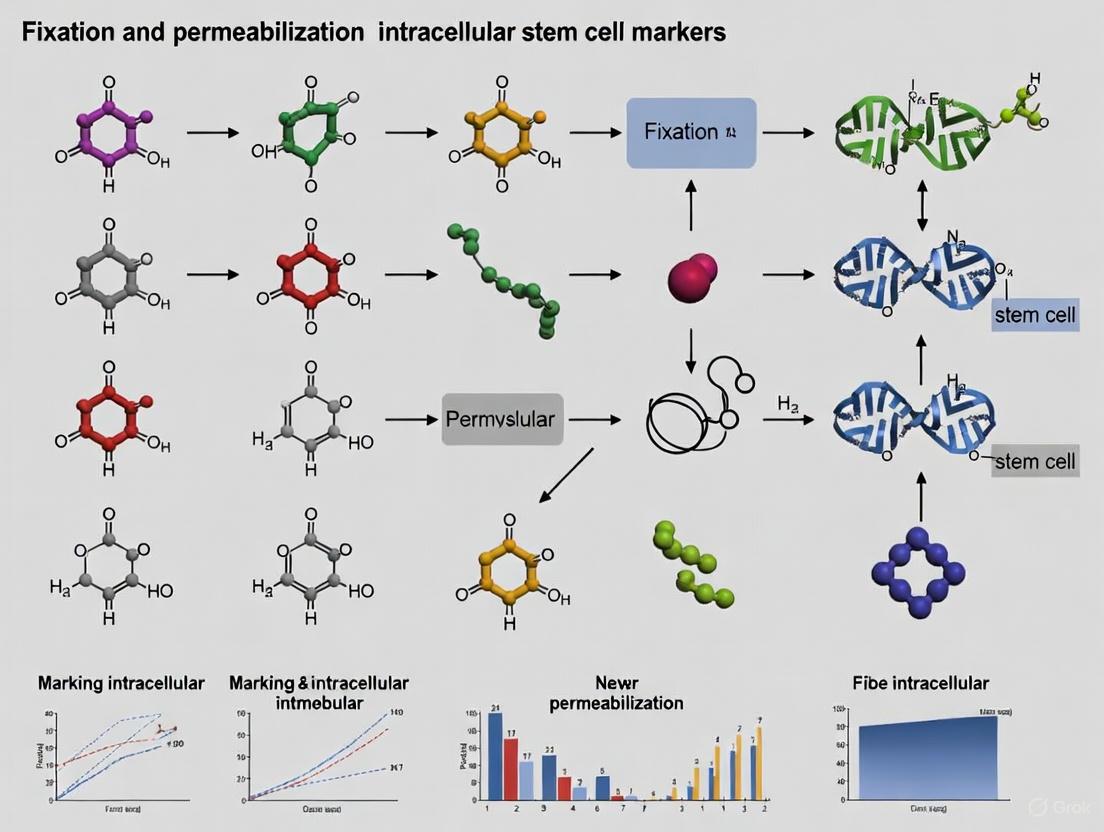
Accurate intracellular protein analysis in stem cells is crucial for advancing regenerative medicine, disease modeling, and drug development.
Fixation and Permeabilization for Intracellular Stem Cell Marker Analysis: A 2025 Guide for Robust Flow Cytometry
Abstract
Accurate intracellular protein analysis in stem cells is crucial for advancing regenerative medicine, disease modeling, and drug development. However, the required fixation and permeabilization (F&P) steps often compromise data quality by damaging fragile epitopes and fluorescent proteins. This article provides a comprehensive guide for researchers and drug development professionals, covering the foundational principles of F&P, detailed methodological protocols for stem cell applications, advanced troubleshooting strategies, and rigorous validation techniques. By synthesizing current best practices and emerging innovations like multi-pass flow cytometry, this resource aims to empower scientists to overcome long-standing technical barriers and generate reliable, high-quality intracellular data from precious stem cell samples.
Why Fixation and Permeabilization are Critical for Stem Cell Intracellular Analysis
In fixation, permeabilization, and intracellular stem cell marker research, a central, fundamental conflict exists: achieving sufficient intracellular access for antibodies while simultaneously preserving the structural integrity and antigenicity of the target epitope. Permeabilization methods that are too harsh can destroy or mask the very epitope you aim to detect, whereas overly gentle methods may prevent antibody entry, resulting in false negatives or weak signals. This technical support center provides targeted troubleshooting guides and FAQs to help you navigate this balance, ensuring reliable and reproducible results in your experiments.
The Scientist's Toolkit: Essential Research Reagents
The table below summarizes key reagents used in fixation and permeabilization protocols, along with their primary functions.
Table: Key Reagents for Fixation and Permeabilization
| Reagent | Function | Key Considerations |
|---|---|---|
| Formaldehyde/PFA [1] [2] | Cross-linking fixative; preserves cellular structure by creating covalent bonds between proteins. | Can mask epitopes; often requires antigen retrieval for unmasking [3]. |
| Methanol [2] | Precipitating fixative; dehydrates and precipitates proteins. | Can destroy some epitopes; also permeabilizes membranes, making separate permeabilization unnecessary [2]. |
| Triton X-100 [1] [2] | Non-ionic, harsh detergent; dissolves lipid membranes. | Ideal for nuclear antigen staining as it partially dissolves the nuclear membrane; can be too harsh for some cell surface or cytoplasmic epitopes [2]. |
| Saponin [2] | Mild detergent; creates pores in cholesterol-containing membranes without dissolving them. | Suitable for antigens on the cytoplasmic face of the plasma membrane and soluble cytoplasmic antigens; pores are reversible, so saponin must be present in all subsequent antibody buffers [2]. |
| Tween-20 [4] | Mild non-ionic detergent; used for washing and mild permeabilization. | Helps reduce background and can be used for gentle permeabilization to maintain membrane integrity [4]. |
| Proteinase K [3] | Proteolytic enzyme; used for enzymatic antigen retrieval. | Digests proteins to unmask epitopes cross-linked by formalin fixation [3]. |
| Sodium Citrate Buffer (pH 6.0) [3] [5] | Buffer for Heat-Induced Epitope Retrieval (HIER). | The slightly acidic pH is effective at unmasking a wide range of epitopes after heat application [3]. |
Optimized Experimental Protocols
Basic Flow Cytometry Protocol for Intracellular Antigens
This is a detailed protocol for detecting intracellular proteins in suspended cells via flow cytometry, a common technique in stem cell immunophenotyping [2].
- Sample Preparation: Harvest and wash cells to create a single-cell suspension. Centrifuge at ~200-500 x g for 5 minutes and resuspend in a cold suspension buffer (e.g., PBS with 0.5-10% FCS) [2] [6].
- Viability Staining (Optional but Recommended): Incubate cells with a viability dye (e.g., 7-AAD, DAPI) according to the manufacturer's instructions. This allows for the exclusion of dead cells, which are prone to nonspecific antibody binding [2].
- Fixation: Pellet cells and resuspend in a fixative.
- Permeabilization: Wash fixed cells twice with a suspension buffer. Resuspend the pellet in a permeabilization detergent and incubate for 10-15 minutes at room temperature.
- Blocking: Pellet cells and resuspend in a blocking buffer (e.g., 2-10% normal serum from the secondary antibody species, or a dedicated FcR blocking reagent) for 30-60 minutes at 4°C to prevent nonspecific antibody binding [2] [6].
- Intracellular Antibody Staining:
- Centrifuge and discard the supernatant.
- Resuspend cells in primary antibody diluted in an antibody dilution buffer (e.g., PBS with 0.5% BSA). If using Saponin for permeabilization, it must be included in all antibody and wash buffers.
- Incubate for 1 hour at room temperature or overnight at 4°C [1] [2].
- Wash cells twice with a wash buffer.
- If using an unconjugated primary antibody, resuspend cells in a fluorochrome-conjugated secondary antibody diluted in buffer. Incubate for 30 minutes at room temperature, protected from light [1].
- Wash cells twice.
- Data Acquisition: Resuspend the final cell pellet in PBS or staining buffer and analyze on a flow cytometer [1] [6].
Alternative Method: Selective Plasma Membrane Permeabilization by Freeze-Thawing
For specific applications like determining membrane protein topology, freeze-thawing offers a alternative to detergent-based methods [7].
- Principle: This technique uses cycles of freezing and thawing to permeabilize the plasma membrane selectively while leaving intracellular membranes (ER, Golgi, lysosomes, etc.) intact. This allows antibodies access to the cytosol but not to the lumen of intracellular compartments [7].
- Workflow: Cells are first subjected to freeze-thawing, then fixed, and subsequently processed for immunofluorescence staining. This method is considered inexpensive and avoids the use of toxic detergent permeabilization reagents [7].
Diagram: Freeze-Thaw Permeabilization Workflow
Troubleshooting Guides & FAQs
Frequently Asked Questions
Q: My staining is weak or absent, even though I know my protein is expressed. What should I do? A: This classic "epitope masking" issue can have several causes and solutions:
- Fixation Problem: Over-fixation with cross-linking fixatives like formalin can bury epitopes. Try decreasing fixation time or using a different fixative (e.g., methanol) [4].
- Antigen Retrieval: For formalin-fixed paraffin-embedded (FFPE) samples or over-fixed cells, implement an antigen retrieval step. This can be Heat-Induced Epitope Retrieval (HIER) using a sodium citrate buffer (pH 6.0) or EDTA (pH 8.0) under heat, or proteolytic-induced retrieval using an enzyme like Proteinase K [3] [4].
- Antibody Potency: Ensure your primary antibody is potent and has not degraded due to repeated freeze-thaw cycles or improper storage. Aliquot antibodies and avoid contamination [5].
Q: I am seeing high background staining. How can I improve my signal-to-noise ratio? A: High background is often due to non-specific antibody binding or endogenous activities.
- Blocking: Increase the concentration of your blocking serum (up to 10%) or extend the blocking incubation time. Ensure you are using a normal serum from the same species as your secondary antibody [4] [5].
- Antibody Concentration: Titrate your primary and secondary antibodies. Excessive concentration is a common cause of background [4] [5].
- Endogenous Enzymes: If using an enzymatic detection system (e.g., HRP), quench endogenous peroxidase activity with 3% H₂O₂. For alkaline phosphatase (AP), use levamisole [5].
- Washes: Increase the number and duration of washes after antibody incubations. Adding a mild detergent like 0.05% Tween-20 to your wash buffer can be effective [5].
Q: How do I choose between a harsh detergent (Triton X-100) and a mild one (Saponin) for permeabilization? A: The choice depends on the localization of your target antigen and the fragility of the epitope [2].
- Use Triton X-100: For robust, non-membrane-bound targets, especially nuclear antigens. Triton X-100 dissolves lipid membranes, providing strong access.
- Use Saponin: For antigens on the cytoplasmic face of the plasma membrane, soluble cytoplasmic antigens, or when you need to preserve delicate cellular structures. Saponin creates temporary pores and must be kept in all buffers during staining.
Q: I need to stain for both cell surface and intracellular markers in the same sample. What is the correct order? A: Always stain for cell surface markers first on live or lightly fixed cells. After completing the surface staining, then fix and permeabilize the cells before proceeding with the intracellular antibody incubation [2] [6]. Staining intracellular targets first is not possible without permeabilizing the cell, which would kill it.
Troubleshooting Flowchart
The following diagram outlines a logical path to diagnose and resolve common problems related to intracellular staining.
Diagram: Intracellular Staining Problem Diagnosis
Advanced Topic: Application in Stem Cell Research
The principles of fixation and permeabilization are critical in stem cell research, where accurately identifying and characterizing stem cell populations and their differentiated progeny relies on detecting specific intracellular transcription factors and markers (e.g., Nanog, Oct4, Sox2). Stem cells, whether embryonic, adult, or induced pluripotent (iPSCs), require particularly careful handling to preserve their state and viability during analysis [8].
Furthermore, international guidelines, such as those from the International Society for Stem Cell Research (ISSCR), emphasize the need for rigor, oversight, and transparency in all stem cell research. This includes ensuring the technical validity of foundational data generated through techniques like immunofluorescence and flow cytometry, which are wholly dependent on properly optimized fixation and permeabilization protocols [9].
FAQs: Core Concepts and Applications
Q1: What are the key signaling pathways that regulate stem cell behavior, and why are they important for therapy? The behavior of stem cells, including their self-renewal, differentiation, and migration, is collectively regulated by essential signaling pathways. These include the Hedgehog (Hh), Wnt, Hippo, transforming growth factor-beta (TGF-β), fibroblast growth factor (FGF), BMP, and Notch pathways [10]. These pathways often exhibit complex crosstalk, where modulation of one can influence others, providing multiple pharmacological entry points to fine-tune stem cell behavior for therapeutic purposes [10]. For instance, the Wnt pathway is crucial for tissue homeostasis and is considered a key regulator of stem cell function, while FGF signaling supports embryonic development, angiogenesis, and wound healing [10]. Understanding and pharmacologically modulating these pathways is key to enhancing stem cell efficacy in regenerative medicine and cancer treatment [10].
Q2: How do cytokines influence stem cell lineage commitment? Cytokines can play an instructive role in hematopoietic stem cell (HSC) commitment, directly instructing cell fate change in uncommitted stem and progenitor cells by activating lineage-determining transcription factors [11]. This challenges the purely stochastic model of lineage commitment and suggests a integrated process where cell fate depends on both external instructive signals and cell-intrinsically controlled sensitivity to these environmental cues [11]. For example, cytokine signaling can activate transcription factors like PU.1 or GATA-1, which in turn can regulate the expression of cytokine receptors, creating feedback loops that stabilize lineage commitment [11].
Q3: What are the main challenges in clinical stem cell therapy, and how can they be addressed? Despite significant promise, clinical stem cell therapy faces challenges such as immunological rejection, tumorigenesis, and inefficient tissue integration [12] [10]. Pharmacological strategies are emerging as powerful tools to overcome these barriers by enhancing stem cell survival, directing differentiation, and modulating the stem cell niche [10]. Small molecules can activate endogenous stem cells, reducing the need for transplantation while promoting in situ regeneration. Additionally, advancements in gene-editing technologies and biomaterials are further refining stem cell-based therapies, paving the way for safer, more effective, and personalized treatments [10].
Q4: What are the different types of stem cells used in research and therapy? Stem cells are classified based on their potency and source. The primary types are:
- Embryonic Stem Cells (ESCs): Derived from the inner cell mass of blastocysts, they are pluripotent, meaning they can differentiate into any cell type of the three embryonic germ layers [12] [10].
- Adult Stem Cells (ASCs): Found in specific niches of adult tissues (e.g., bone marrow, fat, skin), they are typically multipotent, with a more restricted differentiation potential limited to specific cell types relevant to their tissue of origin [12]. Hematopoietic Stem Cells (HSCs) and Mesenchymal Stem Cells (MSCs) are key examples [13] [10].
- Induced Pluripotent Stem Cells (iPSCs): Somatic cells that have been genetically reprogrammed to a pluripotent state, similar to ESCs [12].
- Perinatal Stem Cells: Derived from tissues associated with the prenatal and perinatal stages, such as the umbilical cord and amniotic fluid [12].
Experimental Protocols
Intracellular Staining for Flow Cytometry in Stem Cell Populations
This protocol is critical for analyzing the expression of intracellular transcription factors and signaling proteins in stem cells.
Key Reagents:
- Cell suspension (e.g., in vitro differentiated stem cells)
- Fixative (e.g., 4% Paraformaldehyde (PFA))
- Permeabilization solution (e.g., Methanol, Triton X-100, or Saponin)
- Suspension/Wash Buffer (PBS with 5-10% fetal calf serum)
- Fluorescently conjugated antibodies against intracellular targets
- Viability dye (e.g., 7-AAD, DAPI)
Detailed Steps:
- Sample Preparation: Harvest and wash your stem cell population to create a single-cell suspension. Determine total cell count and ensure viability is 90-95% [2].
- Viability Staining: Incubate cells with a viability dye in the dark at 4°C. Wash cells twice with wash buffer to remove excess dye [2]. This step is crucial for excluding dead cells, which are prone to nonspecific antibody binding.
- Cell Surface Staining (Optional): If analyzing both surface and intracellular markers, stain live cells with antibodies against surface markers before fixation. Wash cells afterward [14].
- Fixation: Pellet cells by centrifugation (~200 x g for 5 minutes at 4°C). Resuspend the pellet in ice-cold 4% PFA and incubate for 15-20 minutes on ice. This step cross-links proteins and preserves cellular structures [2] [14].
- Wash: Wash cells twice with suspension buffer to remove residual fixative [2].
- Permeabilization: The choice of permeabilization agent depends on the intracellular target.
- For most intracellular targets, including nuclear antigens: Resuspend cell pellet in ice-cold 90% methanol and incubate for 15 minutes on ice. Note: Methanol denatures protein-based fluorophores like PE and APC, so it should not be used if these fluorophores were used in prior surface staining [14] [15].
- For targets sensitive to alcohols or when using protein-based fluorophores: Resuspend cells in a solution of 0.1-0.3% Triton X-100 or 0.1% Saponin in PBS and incubate for 10-15 minutes at room temperature [2] [14]. Saponin permeabilization is reversible, so it must be included in all subsequent wash and antibody buffers.
- Wash: Wash cells twice with suspension buffer (or saponin-containing buffer if using saponin).
- Intracellular Antibody Staining: Resuspend the fixed and permeabilized cells in an appropriate buffer containing the fluorescently-labeled antibody against your intracellular target. Incubate in the dark for 30 minutes at 4°C [2].
- Final Wash: Wash cells twice to remove unbound antibody.
- Data Acquisition: Resuspend cells in wash buffer and analyze immediately on a flow cytometer.
Table 1: Comparison of common fixation and permeabilization methods for intracellular staining.
| Method | Fixative | Permeabilization Agent | Best For | Key Considerations |
|---|---|---|---|---|
| Aldehyde-Detergent | 4% PFA (Ice-cold) | 0.1-0.3% Triton X-100 | Most intracellular targets; preserves post-translational modifications (e.g., phosphorylation) [14]. | Compatible with protein-based fluorophores if done after surface staining. |
| Methanol | 90% Methanol (Ice-cold) | (Self-permeabilizing) | Accessing cytosolic, organelle, and nuclear targets; good for many phospho-proteins [14]. | Denatures protein-based fluorophores (PE, APC). Chill cells before adding methanol [15]. |
| Saponin-Based | 4% PFA (Ice-cold) | 0.1% Saponin | Mild permeabilization; ideal for labile epitopes and some cytoplasmic antigens [2] [14]. | Permeabilization is reversible; saponin must be present in all subsequent buffers. |
| Unfixed Saponin | None | 0.3% Saponin | When fixation denatures the target antigen; DNA content measurement [14]. | Light scatter properties are affected; not suitable for all cell types. |
The Scientist's Toolkit: Research Reagent Solutions
Table 2: Essential reagents and materials for stem cell research involving intracellular marker analysis.
| Item | Function | Example/Description |
|---|---|---|
| Flow Cytometry Antibodies | To detect specific cell surface and intracellular proteins (e.g., transcription factors, cytokines). | Antibodies against lineage markers (CD34, AC133), signaling proteins (phospho-STATs), and transcription factors (PU.1, GATA-1) [13]. |
| Fixatives | To preserve cell structure and immobilize intracellular proteins. | 4% Paraformaldehyde (PFA), 90% Methanol, 100% Acetone [2] [14]. |
| Permeabilization Detergents | To disrupt cell membranes, allowing antibodies to access intracellular targets. | Triton X-100, NP-40, Saponin, Tween 20 [2] [14]. |
| Viability Dyes | To distinguish live from dead cells during analysis, improving data quality. | 7-AAD, DAPI, TOPRO3 (for live/dead staining without fixation); fixable viability dyes (for use with fixed cells) [2] [15]. |
| Cytokines & Growth Factors | To direct stem cell expansion, maintenance, and differentiation in culture. | Stem Cell Factor (SCF), Flt-3 Ligand (FL), Thrombopoietin (Tpo), FGF-2, EGF, BMPs, TGF-β [13] [10]. |
| FcR Blocking Reagent | To prevent non-specific antibody binding to Fc receptors on cells. | Human IgG, Mouse anti-CD16/CD32, normal serum (e.g., goat serum) [2]. |
| Cell Separation Kits | To isolate pure populations of stem or progenitor cells from heterogeneous mixtures. | Immunomagnetic selection kits for markers like CD34+ or lineage depletion [13]. |
Troubleshooting Guides
Flow Cytometry Troubleshooting for Intracellular Staining
Table 3: Common problems and solutions in flow cytometry for intracellular stem cell markers.
| Problem | Possible Causes | Recommendations |
|---|---|---|
| Weak or No Signal | Inadequate fixation/permeabilization [15]. | Optimize fixation time and permeabilization reagent concentration for your specific target. Ensure methanol is ice-cold when added drop-wise to cells [14] [15]. |
| Low expression target paired with a dim fluorochrome [15]. | Use the brightest fluorochrome (e.g., PE) for the lowest density target. | |
| Laser/PMT settings on cytometer are incorrect [15]. | Ensure instrument settings match the excitation/emission spectra of your fluorochromes. | |
| High Background/ Non-specific Staining | Presence of dead cells [15]. | Use a viability dye to gate out dead cells. For fixed cells, use a fixable viability dye. |
| Too much antibody used [15]. | Titrate antibodies to find the optimal concentration. | |
| Non-specific Fc receptor binding [15]. | Block Fc receptors with normal serum, BSA, or a specific FcR blocking buffer prior to staining [2]. | |
| Signal Loss After Methanol Permeabilization | Denaturation of protein-based fluorophores. | If staining surface and intracellular markers, perform surface staining before methanol permeabilization, or use a milder detergent like saponin for permeabilization [14]. |
| Suboptimal Scatter Properties | Poorly fixed/permeabilized sample prep [15]. | Follow protocols for gentle handling and vortexing to ensure homogeneous permeabilization and avoid cell clumping [2] [15]. |
| Antibody Works in Other Apps But Not Flow | Antibody not validated for flow cytometry or incompatible with the fix/perm method. | Check manufacturer validation data. If not specified, perform a titration experiment to test antibody under your specific fix/perm conditions [15]. |
Signaling Pathway Diagrams
The following diagrams illustrate key signaling pathways that govern stem cell fate, integrating cytokine signals with transcription factor activity.
TGF-β/BMP Signaling Pathway
Cytokine-Transcription Factor Feedback Loop
Integrated Model of Stem Cell Lineage Commitment
Fixation and permeabilization (F&P) are indispensable technical procedures for the intracellular detection of stem cell markers, a cornerstone of research in pluripotency, differentiation, and reprogramming. These processes enable scientists to label and analyze key transcription factors like OCT4, SOX2, and NANOG, which constitute the core regulatory network governing pluripotency in embryonic stem cells (ESCs) and induced pluripotent stem cells (iPSCs) [16] [17]. However, the chemical treatments involved in F&P present a significant methodological challenge. They can alter fragile epitopes on cell surface proteins and damage the structure of fluorescent proteins (FPs) or chemically-sensitive fluorescent labels, leading to reduced measurement accuracy, compromised data quality, and potential false negatives [18]. This technical brief outlines common challenges and provides robust troubleshooting guides to ensure the reliable detection of stem cell markers, from core pluripotency factors to differentiation signals.
Frequently Asked Questions (FAQs) & Troubleshooting Guides
FAQ 1: How does F&P specifically impact the detection of core pluripotency transcription factors?
Answer: The core pluripotency transcription factors (TFs) OCT4, SOX2, and NANOG exhibit a dynamic spatial organization within the nucleus, often partitioning into condensates that are crucial for their function [17]. Standard F&P protocols can disrupt these delicate nuclear condensates and alter the natural landscape of TF-chromatin interactions.
- Problem: Poor signal or aberrant localization for OCT4, SOX2, or NANOG in immunofluorescence or flow cytometry after F&P.
- Solution:
- Optimize Fixation: Test different fixatives. Mild paraformaldehyde (PFA) concentrations (e.g., 2-4%) are often preferable over harsh cross-linking agents for preserving these protein structures.
- Titrate Permeabilization: Optimize the concentration and duration of permeabilization detergents (e.g., Triton X-100, Tween-20, or saponin) to ensure adequate antibody access without over-denaturing the epitopes.
- Validate with Controls: Always include a positive control (known pluripotent cells) and a negative control (differentiated cells where the TF is downregulated) to confirm protocol specificity.
FAQ 2: Can I simultaneously detect cell surface markers and intracellular stem cell markers on the same cell?
Answer: Yes, but it requires a carefully optimized protocol. A major challenge is that fixation and permeabilization, necessary for intracellular marker detection, can compromise the integrity of surface epitopes [18] [19].
- Problem: Loss of or diminished signal for cell surface markers (e.g., CD56, CD271, EpCAM) after performing intracellular staining for cytokeratin or transcription factors.
- Solution:
- Staining Order: Always perform surface marker staining first on live or lightly fixed cells, then proceed with fixation and permeabilization for intracellular staining.
- Simultaneous Staining Post-F&P: Recent studies show that a simultaneous staining method after fixation and permeabilization can be effective. This method involves fixing cells first, then performing permeabilization and staining for both surface and intracellular markers in one step. This approach has been shown to minimize cell loss from repeated washing and can even improve the fluorescence intensity for some surface markers like EpCAM compared to traditional serial staining [19].
- Protocol Comparison Table:
| Staining Method | Procedure Steps | Advantages | Disadvantages |
|---|---|---|---|
| Traditional Serial | Surface stain → Fix → Permeabilize → Intracellular stain | Established protocol, sequential control | Higher cell loss, potential surface epitope damage from F&P [19] |
| Simultaneous (Post-F&P) | Fix → Permeabilize → Simultaneous surface & intracellular stain | Reduced cell loss, improved signal for some markers [19] | Requires validation for specific surface marker combinations |
FAQ 3: My stem cell populations are heterogeneous. How can F&P affect the identification of specific subpopulations?
Answer: Stem cell populations, such as bone marrow-derived mesenchymal stromal cells (BMSCs), are inherently heterogeneous. The F&P process can introduce variability that obscures the identification of subpopulations with high differentiation potential, such as those marked by CD56 (NCAM1), which has been correlated with higher chondrogenic capacity [20].
- Problem: Inconsistent identification of stem cell subpopulations (e.g., CD56+ BMSCs) due to technical variability introduced by F&P.
- Solution:
- Standardize Protocols: Use a rigorously standardized F&P protocol across all experiments and donors to minimize technical noise.
- Multiparametric Analysis: Do not rely on a single marker. Use flow cytometry to measure multiple surface and intracellular markers simultaneously to build a robust signature for the subpopulation of interest.
- Functional Correlation: Always correlate marker expression post-F&P with a functional assay (e.g., chondrogenic or osteogenic differentiation) to confirm that the identified population retains the expected biological potential [20].
FAQ 4: Are there alternative techniques to overcome the limitations of standard F&P workflows?
Answer: Yes, innovative methodological approaches are being developed to bypass the destructive effects of F&P.
- Problem: F&P is destroying chemically-sensitive labels or altering the native state of proteins you wish to study.
- Solution:
- Optical Barcoding and Multi-Pass Acquisition: This novel flow cytometry approach uses laser particles to barcode individual cells. It allows for the measurement of chemically-fragile markers (like some surface proteins and FPs) on live cells before any F&P treatment. The same cells are then fixed, permeabilized, and stained for intracellular markers. The two datasets from the same cells are then joined computationally, preserving single-cell resolution and data integrity [18].
- Label-Free Detection and Machine Learning: For functional fate decisions (like division or death in cancer stem-like cells), brightfield time-lapse imaging combined with tailored deep learning algorithms can monitor cell fate without any labels or F&P, completely avoiding the issue [21].
Experimental Protocols & Workflows
This protocol is designed to minimize cell loss while maintaining the integrity of both surface and intracellular epitopes, suitable for detecting markers like CD45, EpCAM, and Pan-Cytokeratin (PanCK) in complex samples.
- Cell Preparation: Harvest and wash cells in a cold, protein-rich buffer (e.g., PBS with 1% BSA).
- Fixation: Resuspend the cell pellet in a fixative solution (e.g., 4% PFA). Incubate for 10-15 minutes at room temperature.
- Washing: Centrifuge and wash cells twice with a permeabilization wash buffer.
- Simultaneous Staining: Resuspend the fixed cell pellet in a permeabilization buffer (e.g., with saponin) containing a pre-mixed cocktail of fluorescently-conjugated antibodies against your target surface markers (e.g., EpCAM, CD45) and intracellular markers (e.g., PanCK).
- Incubation: Incubate for 30-60 minutes in the dark at room temperature.
- Final Wash: Wash cells twice with permeabilization wash buffer to remove unbound antibody.
- Resuspension and Analysis: Resuspend cells in a suitable flow cytometry buffer and analyze immediately.
Workflow Diagram: Multi-Pass Flow Cytometry to Overcome F&P Challenges
The following diagram illustrates the innovative multi-pass acquisition workflow that circumvents F&P-induced damage [18].
The Scientist's Toolkit: Essential Research Reagents & Materials
The following table details key reagents and materials used in advanced F&P workflows for stem cell research, as cited in the literature.
| Item | Function/Application | Example/Notes |
|---|---|---|
| Optical Barcodes | Uniquely labels live cells for multi-pass flow cytometry, enabling pre- and post-F&P analysis of the same cell [18]. | Laser particles [18]. |
| Paraformaldehyde (PFA) | Cross-linking fixative. Standard for preserving cellular structure. Concentration and time must be optimized for stem cell markers. | Typically 1-4%. Over-fixation can mask epitopes. |
| Saponin | Permeabilization agent. Creates pores in membranes by complexing with cholesterol, effective for intracellular antibody access. | Often used in staining buffers to maintain permeabilization during intracellular staining. |
| Anti-PanCK Antibody | Detects intracellular cytokeratin, an epithelial marker useful for identifying circulating tumor cells (CTCs) of epithelial origin after F&P [19]. | Critical for CTC detection in HCC where EpCAM may be lost [19]. |
| Anti-CD56 (NCAM1) | Surface marker used to identify subpopulations of BMSCs with enhanced chondrogenic capacity [20]. | Demonstrates the importance of surface marker preservation during F&P. |
| Seahorse XF Analyzer | Measures metabolic phenotype (glycolysis vs. oxidative phosphorylation) in live cells, a functional indicator of pluripotency state, without F&P [22]. | Used for functional validation alongside marker expression. |
The tables below summarize key quantitative findings from the search results regarding F&P performance and marker expression.
Table 1: Comparison of Staining Method Performance on Cell Recovery and Marker Detection [19]
| Metric | Traditional Serial Staining | Simultaneous Staining (Post-F&P) |
|---|---|---|
| Cell Recovery | Baseline (Higher cell loss) | Improved (Reduced wash steps) |
| EpCAM MFI | Baseline (e.g., 6264.00) | Significantly Higher (e.g., 7234.00) |
| PanCK Stain Index (SI) | No significant difference | No significant difference |
| CD45 Negativity Rate | Higher (e.g., 99.86%) | Slightly Lower (e.g., 98.96%) |
Table 2: Impact of Sample Preparation on Staining and Detection [19]
| Sample Preparation Method | PanCK Positivity | EpCAM Positivity | CD45 Negativity | "CTC" Detection Rate |
|---|---|---|---|---|
| Fresh Sample | Baseline | Baseline | Baseline | Baseline (e.g., 98.58%) |
| Cryopreserved Sample | No significant difference | No significant difference | Significantly Lower | Lower (Not Significant) |
| Fixed Unfrozen Sample | No significant difference | No significant difference | No significant difference | No significant difference |
Advanced Concepts: Pluripotency Networks and F&P Implications
Understanding the biological context is key to troubleshooting. The core pluripotency factors (OCT4, SOX2, NANOG) operate within a dynamic gene regulatory network (GRN) [16]. This network can exist in distinct states—pluripotent, differentiated, or oscillatory—which are stabilized not only by gene expression but also by epigenetic modifications [16]. F&P protocols must be gentle enough to preserve the physical manifestations of these states, such as the organization of TFs into nuclear condensates [17]. The diagram below conceptualizes this network and the critical points where F&P can cause artifacts.
In intracellular stem cell marker research, the accurate visualization of proteins, cytoskeletal components, and phosphorylation states is fundamentally dependent on properly preparing samples through fixation and permeabilization. These processes chemically preserve cellular architecture and render membranes permeable to antibody probes, enabling researchers to detect critical markers of stem cell identity, pluripotency, and differentiation status. Understanding the core principles behind these reagents is essential for generating reliable, reproducible data in drug development and basic research applications. This guide provides a comprehensive technical resource detailing the mechanisms, troubleshooting, and methodological protocols for effective cellular membrane processing.
Core Scientific Principles
The Mechanism of Cellular Fixation
Fixation is the chemical preservation of biological samples to maintain structural integrity and prevent degradation by inhibiting endogenous proteases. It stabilizes cellular architecture in a state as close to the native condition as possible, providing a critical "snapshot" of dynamic processes for analysis.
- Aldehyde-Based Fixatives (Formaldehyde, Glutaraldehyde): These reagents function by creating covalent cross-links, primarily between the lysine residues of proteins [23]. This cross-linking action hardens the sample and stabilizes soluble proteins effectively [23] [24]. A key consideration is that this process can sometimes mask epitopes (the specific parts of an antigen recognized by an antibody), potentially requiring an antigen retrieval step for successful immunodetection [23].
- Alcohol-Based Fixatives (Methanol, Ethanol, Acetone): These solvents act by dehydrating the sample, which causes protein denaturation and precipitation in situ [25] [23]. A significant practical advantage is that they simultaneously fix and permeabilize cells in a single step [25] [23]. However, this denaturation can alter the tertiary structure of some epitopes and may lead to the loss of soluble proteins [23] [24].
The Mechanism of Cellular Permeabilization
Permeabilization disrupts lipid bilayers to provide large antibody molecules access to intracellular and intraorganellar antigens. The choice of agent is critical and depends on the location of the target antigen and the need to preserve cellular structures or epitope integrity.
- Detergents:
- Non-Selective (Triton X-100, Tween-20): These non-ionic detergents dissolve lipids from cell membranes in a non-selective manner, effectively permeabilizing all cellular membranes, including the nuclear envelope [25] [23]. A noted disadvantage is that they may extract some cellular proteins along with the lipids [25].
- Selective (Saponin, Digitonin): These agents interact specifically with membrane cholesterol, selectively removing it and creating temporary pores in the membrane [25] [23]. This makes them ideal for applications where gentle permeabilization is needed or when targeting antigens within specific compartments, as they can be used to differentially permeabilize plasma and intracellular membranes based on cholesterol content [23].
- Organic Solvents (Methanol, Acetone): As previously mentioned, these solvents dissolve lipids from cell membranes, making them permeable [25]. Because they also coagulate proteins, they function as combined fixation and permeabilization agents [25].
The following diagram illustrates the sequential action of these reagents on a cell, from the native state to a fully prepared sample for intracellular staining.
Quantitative Impact on Cellular Integrity
Advanced techniques like Surface Plasmon Resonance (SPR) imaging allow for the quantitative assessment of how fixation and permeabilization impact single cells. The data below summarizes key changes in cellular properties during processing for immunofluorescence.
Table 1: Quantitative Impact of Fixation and Permeabilization on Single Cells (SPR Imaging Data) [26]
| Processing Step | Change in Cellular Mass Density | Impact on Membrane Integrity (Osmotic Response) |
|---|---|---|
| 4% PFA Fixation | Reduction by < 10% | Significantly destroyed (Loss of osmotic response) |
| Subsequent 1% Triton X-100 Permeabilization | Further reduction by ~20% | Severe destruction of membrane integrity |
Troubleshooting Guide and FAQs
Frequently Asked Questions
Q1: Why is my intracellular stain weak or absent, even though my antibody is validated for immunofluorescence?
- Inadequate Permeabilization: The most common cause. Increase the incubation time with the detergent or optimize its concentration. For cytoskeletal or organellar targets, switching from Triton X-100 to methanol permeabilization can be highly effective [24] [27].
- Epitope Masking by Fixation: Aldehyde cross-linking can hide the epitope. Try an antigen retrieval step (e.g., incubation in a pre-heated urea-based buffer at 95°C for 10 minutes) or test an alcohol-based fixation method [27].
- Target Not Present/Optimization Required: Verify protein expression in your cell line. Always perform an antibody titration experiment to find the optimal concentration, as too little primary antibody will yield no signal [27].
Q2: I am observing high background fluorescence. How can I resolve this?
- Non-Specific Antibody Binding: Improve blocking by using a different blocking agent (e.g., BSA or normal serum) or increase blocking time. Ensure secondary antibodies are specific and do not cross-react [28] [27].
- Excessive Antibody Concentration: Titrate your primary and secondary antibodies. Too high a concentration is a frequent source of background [28].
- Presence of Autofluorescence: Aldehyde fixatives can generate autofluorescent by-products. This can be quenched by treating fixed cells with a solution of 1% sodium borohydride (NaBH4) in PBS [27]. Alternatively, use fluorophores that emit in red-shifted channels (e.g., APC instead of FITC), where autofluorescence is minimal [28].
Q3: Can I stain for surface markers and intracellular markers simultaneously on the same cell?
Yes, but the workflow is critical. Surface marker staining should be performed before fixation and permeabilization whenever possible, as these processes can denature or mask surface epitopes [23] [29]. Note that some fluorophores (e.g., PE, APC) are damaged by methanol permeabilization and should only be added after the permeabilization step [23] [29]. A novel technique using optical barcoding allows for sequential analysis of the same cells, measuring fragile surface markers before fixation/permeabilization and intracellular markers after, then combining the data [30].
Q4: My cells are detaching from the coverslip during washes. What should I do?
- Improve Adherence: Coat coverslips with substrates like collagen or poly-L-lysine to enhance cell attachment.
- Gentler Handling: Reduce the number and force of washes. Perform all wash steps gently and ensure cells do not dry out at any point [27].
Troubleshooting Flowchart
This flowchart provides a systematic approach to diagnosing and resolving common issues encountered during sample preparation.
Detailed Experimental Protocols
Standard Protocol: Formaldehyde Fixation with Methanol Permeabilization
This is a widely used and robust protocol for detecting many intracellular targets, including phosphorylated proteins, in flow cytometry and immunofluorescence [29].
Solutions and Reagents:
- 1X Phosphate Buffered Saline (PBS)
- 4% Formaldehyde, Methanol-Free
- 100% Methanol (chilled on ice before use)
- Antibody Dilution Buffer (e.g., 0.5% BSA in PBS)
Methodology:
- Fixation: Pellet cells by centrifugation and resuspend in 100 µL of 4% formaldehyde per 1 million cells. Incubate for 15 minutes at room temperature.
- Wash: Centrifuge and remove the formaldehyde. Wash the cell pellet with excess 1X PBS.
- Permeabilization: Critical Step: While gently vortexing the pre-chilled cell pellet, add ice-cold 100% methanol drop-wise to achieve a final concentration of 90% methanol. Incubate for a minimum of 10 minutes on ice.
- Storage: At this point, cells can be stored at -20°C in 90% methanol for later analysis.
- Immunostaining: Wash cells with PBS to remove methanol. Resuspend in a diluted primary antibody solution and incubate for 1 hour at room temperature. Wash, then incubate with a fluorochrome-conjugated secondary antibody (if needed) for 30 minutes. Wash again, resuspend in PBS, and analyze [29].
Reagent Selection Guide for Stem Cell Research
The choice of fixative and permeabilization agent should be guided by the specific target antigen and the required preservation of cellular structures. The following table serves as a guide for selecting the appropriate reagents.
Table 2: Research Reagent Solutions Guide for Intracellular Staining
| Reagent | Mechanism of Action | Best For | Considerations for Stem Cell Research |
|---|---|---|---|
| Formaldehyde | Protein cross-linking | Preserving cell structure; soluble proteins; phospho-epitopes | Can mask some epitopes; may require antigen retrieval. |
| Methanol | Protein denaturation & lipid dissolution | Combined fixation/permeabilization; cytoskeletal targets | Can destroy epitopes and damage sensitive fluorophores (PE, APC). |
| Triton X-100 | Non-selective lipid dissolution | General intracellular access, including nuclear antigens | Can extract some proteins; may be too harsh for some membrane antigens. |
| Saponin | Selective cholesterol removal | Gentle, reversible permeabilization; labile surface antigen co-staining | Holes are temporary; must be included in all subsequent buffers. |
| Digitonin | Selective cholesterol removal | Differential permeabilization of organelles | Useful for studying compartment-specific markers in stem cells. |
The Scientist's Toolkit
Essential Materials and Reagents
A well-prepared toolkit is fundamental for successful intracellular staining experiments. Below is a list of core items every lab should have.
Table 3: Essential Research Reagent Solutions for Fixation and Permeabilization Workflows
| Item | Function | Example/Note |
|---|---|---|
| 4% Formaldehyde (Methanol-free) | Standard cross-linking fixative. | Preserves structure while minimizing permeabilization prior to detergent addition. |
| Ice-cold 100% Methanol | Denaturing fixative and permeabilizing agent. | Ideal for combined fix/perm; critical for many phospho-targets. |
| Triton X-100 | Non-ionic detergent for general permeabilization. | Use after formaldehyde fixation for robust access to intracellular spaces. |
| Saponin | Mild, cholesterol-specific permeabilization agent. | Essential for detecting labile surface markers alongside intracellular targets. |
| BSA or Normal Serum | Blocking agent to reduce non-specific antibody binding. | Included in antibody dilution and wash buffers. |
| Sodium Borohydride (NaBH4) | Quenches autofluorescence induced by aldehyde fixatives. | Prepare a 1% solution in PBS for treating fixed samples [27]. |
| Protease & Phosphatase Inhibitors | Preserves protein modifications during processing. | Include in fixative and wash buffers when working with phospho-specific antibodies [27]. |
Optimized F&P Protocols for Stem Cell Surface and Intracellular Staining
In stem cell research and drug development, the accurate visualization of intracellular markers is paramount. The initial steps of fixation and permeabilization are critical, as they preserve cellular architecture and allow antibodies access to intracellular targets. The choice of method is a significant trade-off that dictates which proteins you can detect, which fluorescent dyes you can use, and the ultimate validity of your data. This guide provides a detailed comparison of common reagents—Paraformaldehyde (PFA), Methanol, Triton X-100, and Saponin—to help you select and troubleshoot the optimal protocol for your research on stem cell markers.
FAQ: Addressing Common Experimental Challenges
What is the core difference between a fixative and a permeabilization agent?
Your experiment has two distinct goals, requiring two different types of reagents:
- Fixation "freezes" the cell in a life-like state, preserving a snapshot of the cellular components at the moment of fixation. Fixatives like PFA (a cross-linker) and Methanol (a precipitating agent) halt all degradation processes and prevent proteins from diffusing away [31].
- Permeabilization creates holes in the lipid membranes of the cell. This step is essential for allowing large antibody molecules to enter the cell and reach intracellular targets like transcription factors or cytoskeletal components. Agents like Triton X-100 and Saponin are detergents that perform this function [32] [33].
My stem cell markers are not staining properly. How does my choice of reagent affect the target epitope?
The chemical action of your chosen reagents can directly help or hinder antibody binding.
- PFA creates a network of cross-linked proteins. While excellent for preserving structure, this network can physically block or "mask" the specific epitope your antibody needs to bind, leading to a weak or false-negative signal [32] [31].
- Methanol denatures and precipitates proteins. This harsher action can destroy some epitopes, but for others—particularly those buried within the protein's structure—it can be beneficial by uncoiling the protein and exposing the epitope [24] [31].
- Detergents (Triton X-100 & Saponin): While primarily for permeabilization, their strength can also impact epitopes. Strong detergents like Triton X-100 can dissolve membranes and displace membrane-associated proteins, potentially washing away your target [32].
Troubleshooting Tip: If you suspect epitope masking, consult your antibody datasheet for a recommended protocol. For PFA fixation, you may need to optimize the fixation time or employ an antigen retrieval step.
I am planning a multiplexed experiment with surface and intracellular markers. What is the most critical step to preserve my surface stain?
Always stain your surface markers first on live, unfixed cells [31].
Harsh permeabilization agents, particularly Methanol and Triton X-100, can damage or completely strip surface proteins (like CD markers) from the cell membrane [34] [31]. By incubating your live cells with surface marker antibodies before any fixation or permeabilization, you "lock in" the signal. Subsequent harsh steps will not affect this pre-bound antibody complex.
Why did my PE-conjugated antibodies stop working after permeabilization?
This is a common and costly pitfall. The fluorescent dye you choose must be compatible with your permeabilization agent.
- Methanol is the main culprit. It irreversibly destroys protein-based fluorophores, including Phycoerythrin (PE), Allophycocyanin (APC), and all their tandem dyes (e.g., PE-Cy7, APC-Cy7) [34] [31].
- Solution: If your protocol requires methanol permeabilization, you must build your antibody panel using small-molecule dyes that are resistant to denaturation, such as FITC, Alexa Fluors, or Brilliant Violet dyes [31].
- PFA, Triton X-100, and Saponin are generally safe for all fluorescent dyes, though PFA can increase cellular autofluorescence [31].
My protocol is for a nuclear transcription factor (e.g., FoxP3). Why is Saponin not working?
Saponin is a mild, cholesterol-specific detergent. It creates temporary pores in the plasma membrane but is typically not strong enough to permeabilize the nuclear membrane [33] [31].
- For nuclear targets, you require a stronger, non-ionic detergent like Triton X-100, which dissolves all lipid bilayers, including the nuclear envelope, giving your antibodies access to nuclear proteins [31].
Quantitative Data Comparison
The tables below summarize the key characteristics and experimental conditions for the reagents discussed.
Table 1: Core Characteristics and Mechanisms of Fixation and Permeabilization Reagents
| Reagent | Primary Function | Mechanism of Action | Key Advantages | Major Disadvantages |
|---|---|---|---|---|
| Paraformaldehyde (PFA) | Fixative [32] | Cross-links proteins via amine groups [32] [33] | Excellent structural preservation; universal fixative; traps soluble proteins [24] [33] [31] | Can mask epitopes; requires a separate permeabilization step [32] [31] |
| Methanol | Fixative & Permeabilizer [33] | Dehydrates cells, precipitating and denaturing proteins [32] [33] | Single-step fix/perm; good for nuclear and phospho-antigens [34] [24] [31] | Denatures protein fluorophores (PE, APC); can destroy some epitopes [34] [24] [31] |
| Triton X-100 | Permeabilizer | Non-ionic detergent that solubilizes lipids & proteins [35] [32] | Strong; permeabilizes all membranes, including nuclear [31] | Can lyse cells; can strip surface markers and proteins [32] [33] |
| Saponin | Permeabilizer | Selective detergent that removes cholesterol [35] [32] | Mild; preserves membrane-associated proteins; reversible [32] [33] | Does not permeabilize nuclear membrane; effect is reversible [34] [31] |
Table 2: Experimental Protocols and Optimal Use Cases
| Reagent | Typical Working Concentration | Incubation Time & Temperature | Ideal For / Notes |
|---|---|---|---|
| PFA | 2% - 4% [36] [24] | 15-20 minutes at Room Temperature [24] [33] | Standard fixative for most applications, especially membrane proteins [33]. Must be followed by a permeabilization step. |
| Methanol | 90% - 100% (ice-cold) [34] [33] | 10-15 minutes on ice or at -20°C [34] [33] | Nuclear antigens, phospho-proteins (Phosflow) [34] [24]. Do not use with PE or APC dyes. |
| Triton X-100 | 0.1% - 0.3% [34] | 10-15 minutes at Room Temperature [34] [33] | Nuclear targets, transcription factors, robust permeabilization [31]. |
| Saponin | 0.1% - 0.5% [34] [36] | 10-30 minutes at Room Temperature [34] [36] | Cytoplasmic targets, cytokines. Must be included in all subsequent wash/antibody buffers as its effect is reversible [34] [31]. |
| Tween-20 | 0.1% - 0.2% [37] [36] | 10-30 minutes at Room Temperature [37] [36] | An alternative milder detergent; shown to be effective for intracellular RNA detection [36] [38]. |
Decision Workflow and Experimental Protocols
Guide to Selecting a Fixation and Permeabilization Strategy
The following diagram outlines a logical workflow to select the appropriate method based on your experimental goals, particularly in the context of stem cell marker research.
Diagram: Workflow for selecting fixation and permeabilization methods based on the intracellular target.
Detailed Protocols for Key Methods
PFA Fixation with Saponin Permeabilization (For Cytoplasmic Targets)
This protocol is ideal for staining cytoplasmic proteins like cytokines in stem cells [31].
- Fixation: Prepare a single-cell suspension. Wash cells in PBS and pellet by centrifugation. Resuspend the pellet in 100 µL of ice-cold 4% PFA. Gently vortex and incubate for 20 minutes at room temperature [34].
- Wash: Add PBS, pellet cells, and remove the supernatant to wash out excess PFA.
- Permeabilization: Resuspend cells in 100 µL of permeabilization buffer containing 0.1% Saponin and 0.5% BSA in PBS. Incubate for 10 minutes at room temperature [34].
- Staining: Proceed with intracellular antibody staining. Crucially, all subsequent wash and antibody dilution buffers must contain 0.1% Saponin to maintain permeability, as its effect is reversible [34] [31].
PFA Fixation with Triton X-100 Permeabilization (For Nuclear Targets)
Use this protocol for nuclear proteins like transcription factors, which are critical in stem cell pluripotency and differentiation research.
- Fixation: Follow the PFA fixation steps as in Protocol 1.
- Permeabilization: Resuspend the fixed cells in 100 µL of a cell-permeabilization buffer containing 0.1-0.3% Triton X-100 in PBS with 0.5% BSA. Incubate for 10 minutes at room temperature [34] [37].
- Wash: Wash the cells in PBS to remove the permeabilization buffer.
- Staining: Proceed with intracellular antibody staining using standard buffers [34].
Methanol Fixation and Permeabilization (For Phospho-Proteins/Nuclear Antigens)
This one-step method is the gold standard for many phospho-specific antibodies but requires careful dye selection.
- Preparation: Ensure your cell suspension is pre-chilled and your methanol is ice-cold.
- Fixation/Permeabilization: Remove PBS from the cell pellet and add 100 µL of 90% ice-cold methanol. Gently vortex to ensure the pellet is dispersed. Incubate for 15 minutes on ice [34].
- Wash: Wash cells in PBS to remove the methanol.
- Staining: Proceed with antibody staining. Remember that PE, APC, and related tandem dyes are not compatible with this method [34] [31].
The Scientist's Toolkit: Essential Research Reagent Solutions
Table 3: Key Reagents for Fixation and Permeabilization Experiments
| Reagent / Kit | Function / Description | Example Use Case |
|---|---|---|
| Paraformaldehyde (PFA) | A cross-linking fixative; provides the best overall cellular morphology. | The universal starting point for fixation in most intracellular staining protocols [24] [33]. |
| BD Cytofix/Cytoperm Buffer | A commercial kit combining fixation and permeabilization. | A standardized method for intracellular cytokine staining in flow cytometry, often used in immunology research [37]. |
| Triton X-100 | A strong, non-ionic detergent for total membrane permeabilization. | Essential for staining nuclear transcription factors (e.g., FoxP3, Nanog, Oct4) in stem cell populations [31]. |
| Saponin | A mild, cholesterol-seeking detergent for selective plasma membrane permeabilization. | Ideal for studying cytoplasmic proteins or when preserving membrane-associated protein complexes is important [35] [32]. |
| Digitonin | A mild detergent similar to saponin, also selective for cholesterol-rich membranes. | An alternative to saponin for gentle permeabilization of the plasma membrane [33]. |
| Tween-20 | A mild non-ionic detergent. | A viable alternative permeabilization agent, shown to be highly effective for intracellular RNA detection via flow cytometry [36] [38]. |
Experimental Protocols: The Core Sequential Staining Method
This foundational protocol is essential for research involving intracellular stem cell markers, as it preserves critical surface epitopes while allowing access to intracellular targets.
Sequential Staining Protocol (Surface Markers First)
Step 1: Cell Surface Staining
- Begin with a single-cell suspension (e.g., 1x10⁶ cells per tube) [39].
- Wash cells with cold flow cytometry staining buffer (e.g., 1x PBS with 0.5-1% BSA) and pellet by centrifugation (~200-300g for 5 minutes) [39].
- Resuspend the cell pellet in the appropriate volume of antibody cocktail containing fluorochrome-conjugated antibodies against your target cell surface markers (e.g., CD184/CXCR4 for definitive endoderm) [40].
- Incubate for 30 minutes at 4°C, protected from light.
- Wash cells with 2 mL of staining buffer to remove unbound antibody. Centrifuge and discard the supernatant [39].
Step 2: Fixation
- Resuspend the stained cell pellet in ~100 µL of ice-cold 4% Paraformaldehyde (PFA) [39].
- Gently vortex to ensure the pellet is fully dispersed and incubate for 20 minutes at room temperature [39].
- Add 2 mL of 1x PBS, centrifuge, and completely remove the supernatant into a PFA waste container [39].
- Optional Storage: Cells can be resuspended in 1x PBS and stored overnight at 4°C at this stage [39].
Step 3: Permeabilization The choice of permeabilization agent is critical and depends on the intracellular target:
- For transcription factors (e.g., Sox17, Nanog, FoxP3): Use a commercial buffer set like the BD Pharmingen Transcription Factor Buffer Set or ice-cold 90% methanol. Add ~100 µL to the pre-chilled cell pellet, gently vortex, and incubate for 15-30 minutes on ice [39] [40].
- For cytokines: Use a milder detergent-based buffer like BD Cytofix/Cytoperm [40].
- For phosphoproteins: Strong alcohol-based buffers like BD Phosflow Perm Buffer III are often required [40].
- Wash cells with 2 mL of permeabilization wash buffer or PBS to remove the agent. Centrifuge and discard the supernatant [39].
Step 4: Intracellular Staining
- Resuspend the fixed and permeabilized cells in ~100 µL of permeabilization buffer containing the fluorochrome-conjugated antibodies against your intracellular targets (e.g., anti-Sox17 for endoderm specification) [40].
- Incubate for 30-60 minutes at 4°C, protected from light.
- Wash cells with 2 mL of permeabilization buffer, centrifuge, and discard the supernatant.
- Resuspend the final cell pellet in 200-500 µL of flow cytometry staining buffer for acquisition on the flow cytometer.
The Scientist's Toolkit: Essential Research Reagents
The table below details key reagents for successful sequential staining, particularly in stem cell research.
| Reagent / Material | Function / Purpose | Examples & Key Considerations |
|---|---|---|
| Crosslinking Fixative | Stabilizes cellular structures and locks proteins in place via crosslinks. | 4% Paraformaldehyde (PFA) [39]. Preserves post-translational modifications like phosphorylation; ideal for intracellular signaling studies [39]. |
| Permeabilization Agents | Creates holes in membrane allowing antibody access to intracellular compartments. | Methanol: Provides strong permeabilization for nuclear/transcription factor targets (e.g., Sox17, FoxP3). Denatures protein fluorophores like PE/APC [39] [40].Detergents (Triton X-100, Saponin): Triton X-100 permeabilizes all membranes. Saponin is milder and reversible, requiring its presence in all wash/antibody buffers [39] [41]. |
| Commercial Buffer Kits | Provide optimized, standardized buffers for specific targets. | BD Cytofix/Cytoperm: Ideal for cytokines and many surface markers [40].BD Pharmingen Transcription Factor Buffer Set: Designed for nuclear targets and compatible with tandem dyes [40].BD Phosflow Perm Buffer III: Harsh alcohol-based buffer recommended for phosphoepitope detection [40]. |
| Protein Transport Inhibitors | Blocks protein secretion, allowing intracellular accumulation of cytokines. | BD GolgiStop (Monensin) or BD GolgiPlug (Brefeldin A). Essential for cytokine detection (e.g., IFN-γ, IL-2); choice depends on specific cytokine and species [40]. |
| Viability Dyes | Distinguishes live from dead cells to exclude false-positive events. | Use fixable viability dyes (e.g., Ghost Dyes). Avoid propidium iodide (PI), 7-AAD, or DAPI if fixation occurs before the viability stain, as they are unsuitable for use after fixation [41]. |
Workflow Visualization
The following diagram illustrates the critical path of the sequential staining protocol and key decision points.
Frequently Asked Questions & Troubleshooting Guides
FAQ: Core Concepts
Q1: Why is sequential staining necessary? Can't I just fix and permeabilize first? Staining surface markers on live cells before fixation is crucial because the fixation and permeabilization process can denature or mask the epitopes recognized by many surface marker antibodies (e.g., many CD markers) [39] [40]. The sequential approach guarantees the integrity of your surface staining while still enabling access to intracellular targets.
Q2: How do I choose the right permeabilization agent for my stem cell transcription factor? The location and nature of your target dictate the choice:
- Methanol: Recommended for nuclear transcription factors (e.g., Sox17, FoxA2, Nanog) as it disrupts nuclear membranes and protein-DNA complexes [40].
- Triton X-100: A good general-purpose detergent for most intracellular targets.
- Saponin: A milder, reversible agent that may be better for preserving delicate epitopes or when methanol damages the target [39] [41].
Q3: My intracellular signal is weak. What could be the cause? Weak signal can result from multiple factors:
- Insufficient Permeabilization: The antibody may not be accessing its target. Consider switching to a stronger agent like methanol for nuclear targets [40].
- Over-fixation: Excessive crosslinking from prolonged PFA fixation can hide epitopes. Ensure fixation times are optimized [39].
- Antibody Incompatibility: The antibody may not be validated for flow cytometry after the specific fix/perm method you are using. Always check manufacturer validation data [39] [41].
Troubleshooting Common Problems
Problem: Poor Resolution of Surface Marker Populations After Staining
- Potential Cause: Fixation and permeabilization have damaged the surface epitope.
- Solution:
- Validate Antibodies: Confirm that your surface antibodies are compatible with your chosen fix/perm protocol by checking datasheets or running a control experiment [39].
- Try Milder Permeabilization: If using methanol, switch to a milder detergent like saponin for the intracellular step [39].
- Stain on Live Cells: Ensure all surface staining is completed on live, unfixed cells before moving to the fixation step [39].
Problem: High Background in the Intracellular Channels
- Potential Cause: Non-specific antibody binding or insufficient washing after permeabilization.
- Solution:
- Include Permeabilization Buffer in Washes: When using saponin, which is reversible, you must include saponin (e.g., 0.1%) in all subsequent wash and antibody dilution buffers to maintain permeabilization and reduce background [39].
- Titrate Antibodies: The optimal antibody concentration may be different inside the cell. Titrate your intracellular antibodies in the final permeabilized state.
- Use a Blocking Step: Incubate cells with a blocking buffer (e.g., normal serum or BSA) after permeabilization and before adding intracellular antibodies.
Problem: Cell Loss or Clumping
- Potential Cause: Excessive centrifugation force, inadequate vortexing after fixation, or processing too few cells.
- Solution:
- Gentle Centrifugation: Use recommended forces (~200-300g) to pellet cells without damaging them [39].
- Thorough Resuspension: Always vortex samples gently but thoroughly after adding fixative or permeabilization agents to prevent clumping [39].
- Maintain Cell Count: Process at least 1x10⁶ cells per tube to minimize losses from adherence to tube walls [39].
Performance Data & Protocol Comparisons
Table: Comparison of Staining Method Performance
This table summarizes data from a systematic evaluation of staining methods, demonstrating that the simultaneous method can be a viable and efficient alternative in many cases [19].
| Staining Method | Protocol Steps | Key Findings | Best For |
|---|---|---|---|
| Sequential Staining (3-Step) | 1. Surface Stain → 2. Fix/Perm → 3. Intracellular Stain | Slightly higher cell loss from repeated washes. Lower EpCAM MFI in one study [19]. | Panels with surface markers sensitive to perm. Highest specificity. |
| Simultaneous Staining (2-Step) | 1. Fix/Perm → 2. Combined Surface & Intracellular Stain | Reduced cell loss. Higher EpCAM MFI. Comparable detection rates for CD45⁻/PanCK⁺ cells ("CTCs") [19]. | High-throughput screens. Panels with perm-resistant surface markers. |
Table: Impact of Sample Preparation on Staining Quality
The choice of how samples are prepared and stored can significantly impact your results, as shown in this comparison of HepG2 cell preparations [19].
| Sample Preparation | Cell Recovery | Staining Performance | Practical Considerations |
|---|---|---|---|
| Fresh Sample | Baseline | Optimal staining quality; reference standard. | Logistically challenging; requires immediate processing. |
| Fixed Unfrozen Sample | Comparable to Fresh (7-10% reduction) [19] | No significant difference in PanCK or EpCAM positivity vs. fresh [19]. | Ideal for short-term storage (24-48 hrs at 4°C). |
| Fixed Frozen Sample | Lower than Fixed Unfrozen | Slightly higher false-positive CD45 rate; otherwise comparable [19]. | Enables long-term storage for batch analysis. |
Troubleshooting Guide: Common Issues and Solutions
Problem: High Cell Loss During Staining
| Possible Cause | Recommendation | Underlying Principle |
|---|---|---|
| Over-vigorous mechanical handling | - Avoid high-speed centrifugation; use 300–500 × g. - Resuspend pellets by gentle flicking or using wide-bore pipette tips. - Filter cells through a 70-µm mesh post-staining. | Vigorous pipetting and high g-forces can shear or lyse rare cells, disproportionately reducing your target population. |
| Suboptimal fixation/permeabilization | - Use fresh, methanol-free formaldehyde (recommended: 4%). - For permeabilization, add ice-cold methanol drop-wise to cells while gently vortexing. - Validate protocol for your specific stem cell markers. | Harsh or improper fixation can damage cell structure, leading to fragility and loss during subsequent washes [42] [43]. |
| Inadequate blocking and antibody concentration | - Block cells with BSA, Fc receptor blocking reagent, or serum for 20–30 min on ice. - Titrate all antibodies to determine the optimal concentration. | High antibody concentrations can cause non-specific binding and cell clumping, while insufficient blocking increases background and loss during washing [42]. |
| Presence of dead cells | - Use a fixable viability dye (e.g., eFluor, 7-AAD) prior to fixation. - Gate out dead cells during analysis. | Dead cells stain non-specifically, stick to tubes and other cells, and lyse more easily, contributing to loss and high background. |
Problem: Weak or No Signal from Intracellular Stem Cell Markers
| Possible Cause | Recommendation | Underlying Principle |
|---|---|---|
| Insufficient antigen induction | Optimize treatment conditions (e.g., growth factors, small molecules) to ensure successful and measurable induction of the target protein. | The expression of many stem cell markers may be low or transient and require precise induction for detection. |
| Poor antibody penetration | Ensure the fixation and permeabilization method is appropriate for the target antigen. For nuclear targets, consider stronger permeabilization agents like Triton X-100. | Incomplete permeabilization prevents antibodies from accessing intracellular epitopes, especially in compact nuclear structures [43]. |
| Dim fluorochrome paired with low-abundance target | - Use the brightest fluorochrome (e.g., PE) for the lowest density target. - Use a dimmer fluorochrome (e.g., FITC) for high-density targets. - Consider signal amplification methods. | Rare populations often have low antigen density, requiring bright fluorochromes for clear detection above background noise [42]. |
| Antibody is not validated for flow cytometry | Check the product data sheet to confirm the antibody is validated for flow cytometry and intracellular staining. Contact technical support for testing history. | An antibody validated for other applications (e.g., western blot) may not recognize its epitope after fixation for flow cytometry. |
Frequently Asked Questions (FAQs)
Q1: How can I minimize cell loss when processing a very small number of rare stem cells (e.g., < 10,000 cells)?
Prioritize gentle handling and reduce procedural steps. Use low-binding microcentrifuge tubes, minimize wash steps by combining where possible, and reduce centrifugation speed and time. Concentrate your cells in a small final volume (e.g., 100 µL) for acquisition and consider adding carrier protein (e.g., BSA) to staining buffers. The most critical step is to use a flow cytometer equipped for low-pressure and low-volume sample acquisition.
Q2: My intracellular staining for a key transcription factor has high background. How can I improve the signal-to-noise ratio?
High background often stems from non-specific antibody binding or the presence of dead cells. Ensure thorough blocking with both BSA and an Fc receptor blocker. Titrate your primary antibody to find the concentration that provides the best signal with the least background. Incorporate a fixable viability dye to exclude dead cells from your analysis, as they bind antibodies non-specifically [42]. Additionally, increase the number and volume of wash steps after antibody incubations.
Q3: What is the best way to include controls for a simultaneous surface and intracellular staining experiment?
A comprehensive set of controls is essential for accurate data interpretation. You should include:
- Cells alone (unstained): For autofluorescence.
- Fluorescence Minus One (FMO) controls: To set gates for multicolor panels.
- Isotype controls: To assess non-specific antibody binding.
- Unstimulated/untreated control: For induced intracellular targets.
- Viability dye control: To gate out dead cells.
- Single-stained controls: For compensation.
Q4: Can I use cryopreserved cells for this protocol, or must they be fresh?
While fresh cells are generally preferred to maximize viability and antigen preservation, cryopreservation is often necessary for rare stem cell samples [42]. If using cryopreserved cells, it is critical to use a controlled-rate freezer or an isopropanol freezing container to achieve a cooling rate of -1°C/minute and store cells in liquid nitrogen for long-term stability [44]. Always validate that your staining profile for key markers is not adversely affected by the freeze-thaw process.
Experimental Workflow: Simultaneous Staining with Minimal Cell Loss
The following diagram illustrates the optimized protocol designed to maximize cell retention at every step.
The Scientist's Toolkit: Essential Reagents and Materials
| Item | Function | Key Considerations |
|---|---|---|
| Methanol-free Formaldehyde | Cross-linking fixative that preserves cellular structure and surface epitopes. | Recommended concentration is 4%. Methanol-free prevents loss of intracellular proteins [42]. |
| Ice-cold Methanol | A permeabilizing agent that allows antibodies to access the intracellular space. | Must be added drop-wise to gently vortexed cells on ice to prevent hypotonic shock [42]. |
| Fixable Viability Dye | Distinguishes live from dead cells, allowing dead cells to be excluded from analysis. | Essential for gating; must be used prior to fixation and be compatible with subsequent fixation steps [42]. |
| Fc Receptor Blocking Reagent | Blocks non-specific binding of antibodies to Fc receptors on immune cells. | Crucial for reducing background staining and improving signal-to-noise ratio [42]. |
| BSA (Bovine Serum Albumin) | Used as a blocking agent and as a stabilizer in staining buffers. | Helps prevent non-specific binding and can reduce cell loss by minimizing adhesion to tubes. |
| DMSO-containing Freezing Medium | Cryoprotectant for long-term storage of rare cell populations. | Use controlled-rate freezing for high viability. For sensitive cells, commercial media like CryoStor are recommended [44]. |
| Propidium Iodide (PI) / RNase | DNA staining solution for cell cycle analysis of fixed cells. | Requires RNase treatment to eliminate RNA binding. Can be used to assess DNA content and identify apoptotic cells [45]. |
Within the critical field of fixation permeabilization intracellular stem cell markers research, the accurate detection of labile targets such as phospho-proteins and fluorescent reporter proteins presents a significant technical challenge. These sensitive epitopes are crucial for decoding signaling pathways like TGF-β superfamily activity and tracking gene expression in live cells, but they are highly vulnerable to degradation and alteration by standard chemical treatments used in flow cytometry and immunofluorescence [46] [30]. The fixation and permeabilization steps, essential for intracellular staining, can destroy chemically sensitive fluorescent labels and alter fragile surface and intracellular targets, leading to compromised data quality and inaccurate results [30]. This guide provides targeted protocols and troubleshooting advice to overcome these specific obstacles, enabling robust and reproducible detection of these sensitive markers.
Frequently Asked Questions (FAQs)
Q1: Why does my phospho-protein signal appear weak or non-existent in flow cytometry?
A1: Weak phospho-protein signal typically stems from three main issues:
- Phosphatase Activity: Inadequate inhibition of endogenous phosphatases during sample preparation leads to rapid dephosphorylation. Always use fresh, chilled phosphatase inhibitors in your lysis buffer and keep samples on ice [47].
- Suboptimal Fixation/Permeabilization: Over-fixation can destroy epitopes, while under-permeabilization prevents antibody access. The timing and concentration of fixative and permeabilization reagents must be empirically optimized for your specific target [19].
- Antibody Specificity: Ensure you are using a phospho-specific antibody validated for flow cytometry. Cross-reactivity with the non-phosphorylated form of the protein can confound results [47].
Q2: My fluorescent protein (FP) signal diminishes dramatically after fixation and permeabilization. How can I preserve it?
A2: This is a common problem, as methanol and other harsh permeabilization reagents can denature fluorescent proteins. To overcome this:
- Use Mild Detergents: Opt for mild permeabilization detergents like Tween-20 or saponin over methanol or acetone [30].
- Employ a Multi-Pass/Barcoding Approach: A novel technique involves labeling cells with laser particles for optical barcoding. You can then analyze the intact fluorescent protein signal in live cells before fixation and permeabilization, and subsequently match this data to intracellular markers analyzed post-permeabilization. This bypasses the destructive effects of chemicals on the FPs entirely [30].
Q3: Can I simultaneously stain for cell surface markers and an intracellular phospho-protein?
A3: Yes, and a simultaneous staining protocol can be superior. A systematic evaluation for circulating tumor cell detection demonstrated that a 2-step method—first fixing cells, then simultaneously staining for surface and intracellular markers during permeabilization—resulted in comparable detection rates for intracellular cytokeratin and surface EpCAM while reducing cell loss compared to the traditional 3-step serial method [19]. This approach also yielded a higher mean fluorescence intensity for the surface marker EpCAM [19].
Detailed Troubleshooting Guides
Troubleshooting Guide for Phospho-Protein Detection
| Problem | Potential Cause | Recommended Solution |
|---|---|---|
| Weak or No Signal | Dephosphorylation by endogenous phosphatases | Add fresh phosphatase inhibitors to all buffers; keep samples on ice [47]. |
| Insufficient stimulation | Perform a time-course and dose-response experiment to find the optimal phosphorylation window [47]. | |
| Low abundance of target | Load more protein; use high-sensitivity detection substrates; consider phospho-protein enrichment via immunoprecipitation [47]. | |
| High Background | Non-specific antibody binding | Switch blocking reagent from non-fat milk (contains phospho-casein) to Bovine Serum Albumin (BSA) [47]. |
| Inadequate washing | Increase wash number and volume; avoid phosphate-buffered saline (PBS) and use Tris-based buffers (e.g., TBST) instead [47]. | |
| Signal in Negative Control | Non-specific antibody binding | Include a phosphatase-treated control to confirm signal specificity; the band should disappear [47]. |
| Inconsistent Results | Variable fixation/permeabilization | Standardize fixation time and temperature; use freshly prepared permeabilization reagents. |
Troubleshooting Guide for Fluorescent Reporter Proteins
| Problem | Potential Cause | Recommended Solution |
|---|---|---|
| Loss of Fluorescence Post-Fixation | Denaturation by harsh permeabilizers | Replace methanol/acetone with mild detergents (e.g., saponin, Tween-20). |
| Over-fixation with aldehydes | Titrate paraformaldehyde concentration to the minimum required (e.g., 0.5-2%) and reduce fixation time. | |
| Autofluorescence | Aldehyde-induced autofluorescence | Quench with sodium borohydride or glycine after fixation. |
| Poor Viability/Recovery | Toxicity of fixation | Ensure fixative is thoroughly washed out before permeabilization and analysis. |
Optimized Experimental Protocols
This protocol is adapted for sensitive mammalian embryo models, crucial for stem cell research.
- Key Applications: Immunofluorescence detection and quantification of phosphorylated SMAD proteins (key mediators of TGF-β, NODAL, and BMP signaling) combined with other transcription factors in pre-implantation human embryos.
- Workflow Summary:
- Sample Preparation: Fix human blastocysts following institutional ethical guidelines.
- Antigen Retrieval: Perform specific antigen retrieval steps for phosphorylated SMAD epitopes.
- Immunostaining: Incubate with primary antibodies against the phospho-protein of interest, followed by fluorescently-labeled secondary antibodies.
- Imaging & Quantification: Acquire z-stack images. Use the Fiji plugin StarDist for nuclear segmentation. Employ CellProfiler for nuclear tracking through the z-stack and quantification of fluorescence intensity.
The following diagram illustrates the core workflow and key analysis tools for this protocol:
This innovative protocol preserves sensitive fluorescent proteins and surface markers.
- Key Applications: Accurate measurement of methanol-sensitive antigens, intracellular fluorescent proteins, and various surface and intracellular markers without the compromises of conventional one-step flow cytometry.
- Workflow Summary:
- Optical Barcoding: Label live, intact cells with laser particles to give each cell a unique optical barcode.
- First Pass Acquisition: Analyze the cells on a flow cytometer to measure chemically-fragile targets like fluorescent proteins and sensitive surface markers.
- Fixation and Permeabilization: Process the same barcoded cells using standard chemical treatments.
- Second Pass Acquisition: Re-analyze the cells to measure intracellular markers (e.g., phospho-proteins).
- Data Alignment: Use the optical barcode to align the pre- and post-fixation data for each individual cell, creating a comprehensive dataset.
The multi-pass method is depicted in the following workflow:
This table summarizes data from a study evaluating different sample preparation methods for the detection of markers in a model system, showing that fixed unfrozen samples perform comparably to fresh samples.
| Sample Preparation Method | Cell Recovery | PanCK Positivity Rate | EpCAM Positivity Rate | CD45 Negativity Rate (HepG2) |
|---|---|---|---|---|
| Fresh Sample | Baseline Reference | No significant difference | 99.83% | Baseline Reference |
| Cryopreserved Sample | Not Reported | No significant difference | Not Reported | Lower (vs. Fresh) |
| Fixed Frozen Sample | Not Reported | No significant difference | 99.91% (Higher vs. Fresh) | Lower (vs. Fresh) |
| Fixed Unfrozen Sample | ~90-93% of Fresh | No significant difference | Not Reported | No significant difference (vs. Fresh) |
This table compares two advanced platforms for high-parameter single-cell analysis, which is relevant for complex staining panels involving phospho-proteins and other markers.
| Feature | Full Spectrum Flow Cytometry (FSFC) | Mass Cytometry (MC or CyTOF) |
|---|---|---|
| Signal Detected | Fluorescent Probes | Metal Isotopes |
| Demonstrated Markers | Up to 40 | Up to 43 |
| Sensitivity Limit | <40 molecules | 300–400 molecules |
| Cell Throughput | High (10,000–15,000 cells/s) | Low (~500 cells/s) |
| Cell Sorting | Yes | No |
| Autofluorescence | Yes (can be compensated) | No |
The Scientist's Toolkit: Research Reagent Solutions
| Reagent / Material | Function | Example & Notes |
|---|---|---|
| Phosphatase Inhibitors | Prevents dephosphorylation of phospho-epitopes during lysis and processing. | Add cocktails to lysis and storage buffers. Essential for preserving phospho-signals [47]. |
| Mild Permeabilization Detergents | Enables antibody access to intracellular targets while preserving protein integrity. | Saponin, Tween-20. Preferred over methanol for preserving fluorescent protein fluorescence [30]. |
| Phospho-Specific Antibodies | Binds specifically to the phosphorylated form of a protein, not the total protein. | Validate with phosphatase-treated controls to confirm specificity [47]. |
| Optical Barcodes / Laser Particles | Uniquely labels individual cells for tracking through multiple processing steps. | Enables multi-pass flow cytometry to separate analysis of fragile and intracellular targets [30]. |
| BSA (Bovine Serum Albumin) | Blocking agent to reduce non-specific antibody binding. | Preferred over milk for phospho-protein detection, as milk contains phospho-casein [47]. |
| Tris-Based Buffers (e.g., TBST) | Washing and dilution buffer for immunoassays. | Recommended over PBS for phospho-protein work, as phosphate in PBS can interfere with antibody binding [47]. |
Multi-pass flow cytometry represents a fundamental shift from conventional destructive processing methods. This innovative approach enables researchers to perform time-resolved single-cell analyses by optically barcoding individual cells and measuring them repeatedly across multiple experimental cycles. The core innovation lies in using laser particles (LPs) as permanent cellular identifiers, allowing the same cells to be tracked through successive measurements before and after stimulation or treatment [48].
Unlike conventional flow cytometry, which typically performs one-time measurements after destructive fixation and permeabilization, multi-pass cytometry maintains cell viability throughout the process. This enables longitudinal studies on the same cells, dramatically reducing the number of cells required for complex time-course experiments and eliminating sample-to-sample variability when tracking dynamic cellular processes [48].
The system utilizes near-infrared (NIR) laser particles (1.6-1.9 µm in diameter) made of InGaAsP microdiscs that emit lasing peaks between 1,150 and 1,550 nm. This leaves the entire visible and NIR-I wavelength ranges (700-900 nm) free for conventional fluorescence labeling, creating a parallel detection system for cellular barcodes and fluorescent markers [48].
Key Advantages Over Conventional Methods
Table 1: Quantitative Comparison of Multi-Pass vs. Conventional Flow Cytometry
| Parameter | Conventional Flow Cytometry | Multi-Pass Flow Cytometry |
|---|---|---|
| Maximum Markers per Cell | ~40 (with extensive optimization) | 32 markers demonstrated (10-13 per cycle) [48] |
| Temporal Resolution | Single timepoint (destructive) | Multiple timepoints on same cells [48] |
| Spectral Spillover | Significant challenge in high-parameter panels | Reduced through cyclic measurement approach [48] |
| Cell Tracking | Not possible for same cells | Enables tracking of individual cells across time [48] |
| Panel Design Complexity | Months-long optimization for high-parameter panels | Simplified by dividing markers across cycles [48] |
| Cell Requirement | High (separate samples for each condition/timepoint) | Reduced (same cells measured repeatedly) [48] |
| Barcoding Capacity | Tens of samples using intensity differences [48] | Millions of cells individually barcoded [48] |
Table 2: Performance Metrics of Laser Particle Barcoding
| Metric | Performance | Experimental Conditions |
|---|---|---|
| Barcoding Efficiency | ~70% of PBMCs tagged with ≥3 LPs [48] | 15 min mixing with PEI-silica-coated LPs |
| Cell Viability | 91.6% after LP tagging (vs 93.2% before) [48] | Human PBMCs, standard wash buffer |
| Viability Over Time | 89.1% after 5 hours at 4°C [48] | Storage in standard wash buffer |
| Phenotype Preservation | No significant differences in major immune markers [48] | CD45, CD14, CD3, CD20 expression |
| Signal Reduction | ~5% for cells with 3-5 LPs; ~15% for 10 LPs [48] | Using CD3-KromeOrange staining |
Experimental Protocols & Workflows
Laser Particle Barcoding Protocol
Materials Required:
- Laser particles (InGaAsP microdiscs, 1.6-1.9 µm diameter)
- Polyethylenimine (PEI) for silica coating
- Live human PBMCs or other cell types
- Centrifuge and standard wash buffer
- Biotinylated antibodies (for antibody-based tagging method)
Step-by-Step Procedure:
LP Preparation: Suspend LPs in compatible buffer. Six different compositions of bulk InₓGa₁₋ₓAsyP₁₋y epitaxial layers ensure lasing peaks between 1,150-1,550 nm [48].
Surface Functionalization: Coat semiconductor microdiscs with ~50 nm SiO₂ layer for stability and biocompatibility. Functionalize with PEI, a cationic polymer that binds to cell membranes [48].
Cell Tagging: Mix cells with excess LPs in solution (typically 15 minutes with centrifugation). For specific cell types, use antibody-based method through biotin-streptavidin coupling [48].
Efficiency Validation: Analyze barcoding efficiency by detecting cells with ≥3 LPs. Typically 70% of PBMCs achieve this threshold [48].
Viability Assessment: Confirm cell viability using membrane integrity dyes (e.g., 7-AAD, DAPI, TOPRO3) [2].
Multi-Pass Measurement Cycle
Multi-Pass Instrumentation and Cell Handling:
Fluidics System: Custom cell-collecting fluidic channel recovers cells in focused core stream (10-20 µm width) at flow cell exit. Uses 127-µm diameter needle connected to peristaltic pump controlling collection flow rate [48].
Optical Configuration: NIR pump laser (1,064 nm) stimulates LP emission, plus four fluorescence excitation lasers (405 nm, 488 nm, 561 nm, 638 nm). Lasing signal detected by line-scan spectrometer with 2,048-pixel InGaAs CCD [48].
Cell Collection Parameters: Sample input flow rate: 30 µl min⁻¹; sheath flow rate: 9 ml min⁻¹; collection flow rate: ~400 µl min⁻¹. Phosphate-buffered saline as sheath fluid, cells collected in serum-supplemented buffer [48].
Fluorophore Deactivation: After data acquisition, antibody-fluorophores are deactivated via photobleaching or antibody release from cells [48].
Sequential Staining: Cells are stained with subsequent antibody-fluorophore sets and reloaded into flow cytometer for next measurement cycle [48].
Troubleshooting Guides & FAQs
Common Experimental Challenges and Solutions
Table 3: Troubleshooting Multi-Pass Flow Cytometry
| Problem | Possible Causes | Recommended Solutions |
|---|---|---|
| Weak LP Barcoding | Insufficient LP concentration, suboptimal coating, short incubation | Increase LP:cell ratio, optimize PEI coating, extend incubation to 15 min [48] |
| Poor Cell Viability | Toxic LP coating, excessive centrifugation, buffer incompatibility | Test biocompatible coatings, optimize spin speeds (200-300 × g), use serum-supplemented buffers [48] [2] |
| Low Cell Recovery | Clogged collection system, improper flow rates, cell adhesion | Use 127-µm collection needle, maintain flow rates (30 µl/min sample, 9 ml/min sheath), pre-treat with BSA [48] |
| Spectral Overlap | Fluorophore combinations with excessive emission overlap | Implement spectral unmixing, use brighter fluorochromes for low-density targets [49] [50] |
| High Background | Dead cells, Fc receptor binding, incomplete washing | Use viability dyes, Fc receptor blocking, increase wash steps and volume [51] [50] |
| Signal Reduction | Fluorophore degradation, excessive deactivation, laser misalignment | Protect from light, optimize deactivation time, use calibration beads for alignment [48] [50] |
Frequently Asked Questions
Q: How does multi-pass cytometry compare to spectral flow cytometry for high-parameter applications?
A: While spectral cytometers measure the full visible light spectrum and deconvolute signals based on whole spectral patterns [49], multi-pass cytometry takes a different approach by dividing markers across multiple measurement cycles. This fundamentally reduces spectral overlap by requiring fewer simultaneous fluorophores per cycle, simplifying panel design and compensation [48].
Q: Can multi-pass cytometry be applied to stem cell research requiring intracellular marker analysis?
A: Yes, the methodology is particularly valuable for stem cell research where tracking differentiation trajectories in real-time is essential. The optical barcoding approach enables researchers to measure surface markers, followed by fixation/permeabilization and intracellular staining in subsequent cycles, creating a comprehensive profile of stem cell populations across timepoints [48] [52].
Q: What are the limitations on the number of measurement cycles possible?
A: Current demonstrations show 3 back-to-back cycles with minimal effects on cell viability and marker expression [48]. The practical limit depends on cell type robustness and the cumulative effects of processing. Progressive viability reduction (from 93.2% to 89.1% over 5 hours) suggests a window of 3-5 cycles for most applications [48].
Q: How does antibody internalization affect multi-pass measurements of surface markers?
A: For accurate surface marker measurement, prevent internalization by keeping cells on ice during processing and using sodium azide [50]. When measuring the same surface marker across multiple cycles, consider that some internalization may occur naturally, though the cationic LP tagging method predominantly maintains particles on the cell surface for most lymphoid cells [48].
Research Reagent Solutions
Table 4: Essential Reagents for Multi-Pass Flow Cytometry
| Reagent Category | Specific Products/Compositions | Function & Application Notes |
|---|---|---|
| Barcoding Particles | InGaAsP microdiscs (1.6-1.9 µm), PEI-silica coating [48] | Permanent optical barcodes; 6 compositions cover 1,150-1,550 nm range |
| Cell Viability Dyes | 7-AAD, DAPI, TOPRO3 (for live/dead discrimination) [2] | Membrane integrity assessment; choose non-overlapping emission with fluorophores |
| Fixation Reagents | 1-4% paraformaldehyde (methanol-free recommended) [53] [51] | Preserves intracellular structure; methanol-free prevents protein loss |
| Permeabilization Detergents | Triton X-100 (0.1-1%), Saponin (0.1-0.5%), Methanol (90%) [53] [54] [50] | Triton for nuclear antigens; Saponin for cytoplasmic targets; Methanol for phospho-markers |
| Blocking Reagents | FcR blocking buffer, 2-10% goat serum, human IgG [2] [51] | Reduces non-specific antibody binding; critical for intracellular staining |
| Antibody Dilution Buffer | 0.5% BSA in PBS, commercial antibody dilution buffers [53] | Maintains antibody stability; BSA prevents non-specific binding |
| Collection Buffer | PBS with 2% FBS, serum-supplemented buffers [48] | Maintains viability during cell collection; compatible with downstream staining |
Implementation in Stem Cell Research
The multi-pass approach is particularly transformative for stem cell research, where understanding temporal dynamics of differentiation is crucial. By enabling repeated measurement of the same stem cells, researchers can:
Track Differentiation Pathways: Monitor surface marker changes (like CD133, CD15, CD24, CD29) [52] on individual cells across differentiation timecourses without requiring destructive sampling.
Analyze Signaling Dynamics: Measure phosphorylation states and intracellular signaling proteins (using appropriate fixation/permeabilization methods) [54] in the same cells that have been previously characterized for surface markers.
Resolve Heterogeneous Populations: Address the common challenge of cellular heterogeneity in neural stem cell applications [52] by tracking subpopulation behaviors across multiple experimental conditions.
Optimize Differentiation Protocols: Use high-dimensional immunophenotyping (32-marker panels) [48] to comprehensively characterize stem cell derivatives while reducing spectral spillover through cyclic measurement approaches.
For stem cell applications requiring intracellular staining, the fixation and permeabilization steps can be incorporated into later measurement cycles. Crosslinking fixatives like PFA are often preferable for studying intracellular signaling as they preserve post-translational modifications such as phosphorylation [54]. The choice of permeabilization method should be guided by the subcellular localization of the target—harsher detergents like Triton X-100 or methanol for nuclear antigens, and milder detergents like saponin for cytoplasmic targets [54] [50].
This integrated approach enables researchers to build comprehensive profiles of stem cell populations, correlating surface marker expression with intracellular signaling states and functional responses—all while tracking the same cells throughout a differentiation protocol or drug treatment regimen.
Solving Common F&P Problems in Stem Cell Flow Cytometry
FAQs and Troubleshooting Guides
Why is my specific signal weak or absent?
Answer: Weak or absent specific staining is often related to issues with antibody access to the target epitope or problems with the detection system itself.
- Inadequate Antigen Retrieval: Epitopes in formalin-fixed, paraffin-embedded (FFPE) tissues can be masked by cross-links. Heat-induced epitope retrieval (HIER) is critical, with methods like microwave oven or pressure cooker often providing superior results compared to water baths [55].
- Primary Antibody Issues: The antibody may be too dilute, inactive due to improper storage or expiration, or not validated for the specific application (e.g., IHC on FFPE tissue) [56] [55]. Always run a positive control tissue.
- Insufficient Fixation or Permeabilization (for intracellular targets): For flow cytometry, the choice of fixative and permeabilization reagent must be compatible with the intracellular target. Inadequate permeabilization will prevent antibody access [57] [58].
- Over-fixation: Prolonged formalin fixation can over-mask epitopes, making them difficult to retrieve with standard protocols [56].
Recommended Protocol Adjustment: If you suspect inadequate antigen retrieval, re-optimize your HIER step. Test different retrieval buffers (e.g., Citrate pH 6.0 or Tris-EDTA pH 9.0) and consider using a pressure cooker for more efficient unmasking, especially for difficult targets [55] [56].
Experimental Protocol: Fixation and Permeabilization for Intracellular Staining
This DIY protocol is applicable for flow cytometry and provides a foundation for optimizing intracellular marker staining [57].
Fixation with 4% PFA:
- Prepare a single-cell suspension (1x10⁶ cells per tube).
- Wash cells in 1x PBS and pellet by centrifugation (~2-5 min at 200-300g).
- Resuspend the pellet in ~100 µL of ice-cold 4% Paraformaldehyde (PFA). Gently vortex and incubate for 20 minutes at room temperature.
- Wash with 1x PBS to remove excess fixative. Cells can be stored in PBS overnight at 4°C at this stage.
Permeabilization (Choose one method):
- Methanol: Add ~100 µL of 90% ice-cold methanol to the pre-chilled cell pellet. Gently vortex and incubate for 15 minutes on ice. Note: Methanol denatures protein-based fluorophores (e.g., PE, APC), so do not use if you have already stained surface markers with these conjugates. [57] [58]
- Triton X-100: Resuspend fixed cells in ~100 µL of permeabilization buffer (0.1-0.3% Triton X-100 in 0.5% BSA/PBS). Incubate for 10 minutes at room temperature.
- Saponin: Resuspend fixed cells in ~100 µL of permeabilization/wash buffer (0.1% saponin and 0.5% BSA in PBS). Incubate for 10 minutes at room temperature. Note: Saponin permeabilization is reversible, so this detergent must be included in all subsequent wash and antibody incubation buffers. [57]
Proceed with standard intracellular immunostaining steps.
How can I reduce high background staining?
Answer: High background, which obscures specific signal, is frequently caused by non-specific antibody binding or endogenous activity within the tissue.
- Excessive Primary Antibody Concentration: This is a very common cause. Too much antibody increases off-target binding [56] [58]. Perform a titration experiment to find the optimal dilution.
- Insufficient Blocking: Endogenous enzymes (peroxidases, phosphatases) or endogenous biotin (especially in kidney/liver) can cause background. Always include peroxidase quenching (e.g., 3% H₂O₂) and, if using a biotin-based detection system, an avidin/biotin block [5] [55].
- Secondary Antibody Cross-Reactivity: The secondary antibody may bind to immunoglobulins or Fc receptors in the tissue. Block with normal serum from the same species as the secondary antibody, and always include a control without the primary antibody to diagnose this issue [5] [55].
- Hydrophobic Interactions: Non-specific sticking of antibodies can be reduced by adding a mild detergent like 0.05% Tween-20 to wash and antibody dilution buffers [56].
- Tissue Drying: Allowing the tissue section to dry out at any point during staining causes irreversible, diffuse non-specific binding. Always perform incubations in a humidified chamber [56].
Recommended Protocol Adjustment: Systematically lower the concentration of your primary antibody. If background persists, increase the concentration of the blocking serum (e.g., up to 10%) and ensure all washing steps are thorough (e.g., 3x 5-minute washes with TBST) [5] [55].
Why am I losing cell surface epitopes after fixation/permeabilization?
Answer: The chemical treatments required for intracellular staining can damage or alter the conformation of surface proteins, preventing antibody binding.
- Fixative-Induced Epitope Masking: Aldehyde-based fixatives like PFA create cross-links that can physically block the antibody binding site on some surface proteins [58].
- Harsh Permeabilization Reagents: Methanol, in particular, is a denaturing solvent that can destroy the conformation of many surface epitopes, making them undetectable [57] [58].
- Incompatible Fluorophores: If performing surface and intracellular staining sequentially, note that protein-based fluorophores (e.g., PE, APC) are denatured and lose fluorescence upon methanol permeabilization [57].
Recommended Protocol Adjustment:
- Test first: Before your main experiment, test your surface marker antibody on a fixed and permeabilized sample versus a live, unfixed sample to check for compatibility [57].
- Use milder permeabilization: If methanol destroys your surface epitope, try a milder detergent like saponin for permeabilization [57].
- Employ a sequential staining strategy: Stain the surface markers on live cells first, then fix and permeabilize before staining for intracellular targets. Ensure the fluorophores used for surface staining are compatible with the subsequent permeabilization method [57].
Advanced Solution: Multi-Pass Flow Cytometry
For critical assays where harsh permeabilization (e.g., with methanol) destroys surface epitopes or fragile fluorescent proteins, a novel multi-pass flow cytometry approach can be the solution [59]. This technique uses optical cell barcoding to analyze the same cells multiple times.
Why are my results inconsistent from day to day?
Answer: Day-to-day variability often stems from minor, uncontrolled changes in reagent quality, protocol execution, or instrument calibration.
- Reagent Degradation or Variability: Reagents like formaldehyde can become acidic if stored improperly or past its expiration date, leading to tissue searing and poor staining [60]. Buffers (e.g., permeabilization buffers) should be prepared fresh [58].
- Inconsistent Antigen Retrieval: Small variations in heating time, temperature, or buffer pH during HIER can significantly impact staining consistency. Using a calibrated microwave or pressure cooker is recommended over water baths [55].
- Slide Stainer Issues: User errors, calibration inaccuracies, or software glitches in automated stainers can introduce variability. Maintain detailed process logs, perform regular calibration checks with test slides, and keep software updated [61].
- Variable Fixation Times: Inconsistent fixation times across samples is a major source of variability. Standardize fixation time and conditions for all samples [56].
How do I address nonspecific nuclear staining or artifacts?
Answer: Unwanted nuclear staining can be due to several factors related to sample preparation and fixation.
- Nuclear Bubbling: This soap-bubble-like artifact is caused by protein coagulation, often from poorly fixed samples exposed to high heat or a high pH fixative. It is irreversible once formed. To prevent it, avoid high-temperature oven drying for slides and ensure proper fixation [60].
- Over-Permeabilization: While necessary, excessive permeabilization can damage nuclear structures and increase non-specific background. Follow recommended concentrations and incubation times for permeabilization agents like Triton X-100 [57].
- Endogenous Fluorescence (Autofluorescence): Although not specific to the nucleus, autofluorescence can mimic nonspecific signal. It is common in FFPE sections and can be reduced by treating sections with autofluorescence quenchers like Sudan Black B or by using fluorophores that emit in the near-infrared range (e.g., Alexa Fluor 647), where tissue autofluorescence is minimal [5] [58].
Troubleshooting Guide at a Glance
The table below summarizes the top staining issues, their common causes, and recommended solutions.
| Problem | Primary Causes | Recommended Solutions |
|---|---|---|
| Poor Signal | Inadequate antigen retrieval [55] [56], Low/inactive antibody [55] [56], Insufficient permeabilization [57] [58] | Optimize HIER (buffer, method) [55], Titrate antibody; use positive control [56], Validate fix/perm protocol [57] |
| High Background | High antibody concentration [56] [58], Inadequate blocking [5] [55], Secondary cross-reactivity [5] [55] | Titrate down antibody [56], Block peroxidases & biotin [5] [55], Include no-primary control [55] |
| Loss of Surface Epitopes | Harsh permeabilization (MeOH) [57] [58], Fixative-induced masking [58] | Test surface post-perm [57], Use saponin [57], Sequential stain (surface first) [57] |
| Inconsistent Results | Variable retrieval [55], Degraded reagents [60] [58], Stainer variability [61] | Standardize HIER [55], Use fresh reagents [58], Maintain equipment [61] |
| Nuclear Artifacts | Nuclear bubbling (heat/pH) [60], Autofluorescence [5] | Lower slide drying temp [60], Use autofluorescence quenchers [5] |
The Scientist's Toolkit: Essential Research Reagents
The table below lists key reagents used in fixation, permeabilization, and staining protocols, along with their primary functions.
| Reagent | Function | Key Considerations |
|---|---|---|
| Formalin (Formaldehyde) | Cross-linking fixative that preserves tissue structure and proteins [60]. | pH is critical; acidic formalin causes artifacts. Storage and expiration matter [60]. |
| Methanol | Denaturing fixative and permeabilizing agent. Excellent for many nuclear and intracellular targets [57] [58]. | Denatures surface epitopes and protein fluorophores (PE, APC). Must be ice-cold [57] [58]. |
| Paraformaldehyde (PFA) | A purified, buffered form of formaldehyde. The standard fixative for flow cytometry and immunofluorescence [57]. | |
| Saponin | Mild detergent that permeabilizes cholesterol-containing membranes. Permeabilization is reversible [57]. | Must be present in all subsequent buffers after initial permeabilization [57]. |
| Triton X-100 | Non-ionic detergent for permeabilizing lipid membranes. Stronger than saponin [57]. | Can be used after PFA fixation. Good for cytosolic targets [57]. |
| Sodium Citrate / Tris-EDTA Buffer | Common buffers used for Heat-Induced Epitope Retrieval (HIER) to unmask antigens in FFPE tissue [55] [5]. | pH (6.0 vs 9.0) is target-dependent. Must be fresh for optimal results [55]. |
| Hydrogen Peroxide (H₂O₂) | Used to quench endogenous peroxidase activity, reducing background in HRP-based detection systems [5] [55]. | Standard concentration is 3% in water or methanol [5]. |
| Normal Serum | Used for blocking to reduce non-specific binding of secondary antibodies [5] [55]. | Should be from the same species as the secondary antibody [5]. |
Why are my protein-based fluorophores (like PE and APC) not working after intracellular staining?
The loss of fluorescence signal from protein-based fluorophores after intracellular staining is a direct result of methanol-induced denaturation. Methanol, a common permeabilization agent, disrupts the tertiary structure of fluorescent proteins such as R-phycoerythrin (PE) and allophycocyanin (APC). These fluorophores rely on their precise three-dimensional conformation to form chromophores and fluoresce. When methanol denatures them, this structure is permanently destroyed, leading to a complete or significant loss of detectable signal [62] [41]. This is a well-known limitation that requires careful experimental planning to circumvent.
How can I simultaneously stain surface and intracellular markers without damaging my fluorophores?
The key is to use a sequential staining protocol that performs all staining of methanol-sensitive markers before the permeabilization step. This workflow physically separates the steps involving fragile fluorophores from the destructive methanol treatment.
Table: Sequential Staining Protocol for Fluorophore Protection
| Step | Procedure | Key Consideration |
|---|---|---|
| 1 | Stain cell surface markers with all antibodies, including those conjugated to protein-based dyes (e.g., PE, APC). | Use live, unfixed cells. |
| 2 | Fix cells with a crosslinking fixative like 4% Paraformaldehyde (PFA). | Fixation preserves the surface staining. |
| 3 | Permeabilize cells using ice-cold methanol. | This step will denature any protein fluorophores added after. |
| 4 | Stain intracellular targets using antibodies conjugated to small molecule dyes (e.g., Alexa Fluor, DyLight, CF dyes). | These dyes are resistant to methanol. |
What are the best methanol-resistant fluorophores for intracellular panels?
When designing panels that require methanol permeabilization, you should select from a wide range of robust synthetic dyes. These are small organic molecules that are not proteins and their fluorescence is not dependent on a complex tertiary structure, making them inherently stable in methanol.
Table: Methanol-Compatible Fluorophores for Flow Cytometry
| Fluorophore | Typical Excitation Laser (nm) | Methanol Compatibility | Best Use Case |
|---|---|---|---|
| Alexa Fluor 488 | 488 | High | High-resolution detection of abundant targets. |
| Alexa Fluor 647 | 640/650 | High | Bright, low-background signal; excellent for dim targets. |
| CF Dyes (e.g., CF568) | Varies by dye | High | A broad family of bright, stable alternatives. |
| DyLight Dyes | Varies by dye | High | Strong resistance to photobleaching. |
| PE (R-Phycoerythrin) | 488 | Low | Use only before methanol permeabilization. |
| APC (Allophycocyanin) | 640 | Low | Use only before methanol permeabilization. |
Are there advanced techniques to completely avoid methanol damage?
Yes, innovative methodologies like multi-pass flow cytometry have been developed to entirely bypass the compromise between harsh permeabilization and signal integrity. This technique uses optical barcoding to analyze the same cells multiple times.
- Principle: Cells are labeled with unique laser particle barcodes. They are first run through the flow cytometer to measure all methanol-sensitive parameters (like surface markers stained with PE or APC) on live or gently fixed cells. The same cells are then recovered, fixed, and permeabilized with methanol for intracellular staining, and analyzed a second time. The data from both passes are merged using the barcode, providing a complete profile without subjecting fragile fluorophores to methanol [59].
What is a reliable protocol for sequential surface and intracellular staining?
The following detailed protocol is optimized for stem cell research, allowing for the detection of critical intracellular markers like transcription factors while preserving the signal from protein-based fluorophores.
Protocol: Sequential Staining for Surface and Intracellular Stem Cell Markers
Surface Staining (Live Cells)
- Prepare a single-cell suspension (e.g., from cultured stem cells or bone marrow). Use ~1x10^6 cells per test.
- Wash cells with PBS containing 0.5-1% BSA (FACS Buffer).
- Resuspend cell pellet in FACS Buffer containing antibodies against surface markers (e.g., CD34, CD90, CD49f) conjugated to protein-based fluorophores like PE or APC.
- Incubate for 30 minutes in the dark at 4°C.
- Wash twice with FACS Buffer to remove unbound antibody.
Fixation
- Resuspend the stained cell pellet in 100 µL of ice-cold 4% Paraformaldehyde (PFA).
- Incubate for 20 minutes at room temperature.
- Wash twice with PBS to remove residual PFA. Cells can be stored in PBS overnight at 4°C if needed.
Permeabilization
- Ensure the fixed cell pellet and methanol are pre-chilled on ice.
- Remove PBS and resuspend the pellet in 100 µL of 90% ice-cold methanol, vortexing gently.
- Incubate for 15 minutes on ice.
- Wash twice with PBS or FACS Buffer to thoroughly remove methanol.
Intracellular Staining
- Resuspend the fixed and permeabilized cells in FACS Buffer.
- Add antibodies against intracellular targets (e.g., transcription factors like Nanog, Oct-3/4, or phosphorylation markers) conjugated to methanol-resistant dyes (e.g., Alexa Fluor 488, Alexa Fluor 647).
- Incubate for 30-60 minutes in the dark at room temperature.
- Wash twice with FACS Buffer.
Data Acquisition
The Scientist's Toolkit: Essential Research Reagents
Table: Key Reagents for Methanol-Safe Intracellular Staining
| Item | Function | Consideration for Fluorophore Protection |
|---|---|---|
| 4% Paraformaldehyde (PFA) | Crosslinking fixative that locks proteins in place. | Preserves the structure and fluorescence of protein dyes stained prior to fixation. |
| Ice-Cold 100% Methanol | Strong permeabilizing agent; dissolves lipids in cell membranes. | Denatures protein-based fluorophores; use only after staining with PE/APC. |
| Saponin | Milder, reversible detergent for permeabilization. | May be less destructive to some epitopes, but is often insufficient for nuclear targets. |
| Triton X-100 | Non-ionic detergent for permeabilization. | Stronger than saponin; can be used after PFA fixation without denaturing pre-applied protein dyes. |
| Antibodies conjugated to Alexa Fluor, CF, or DyLight dyes | Detection of intracellular antigens. | Methanol-resistant; ideal for all intracellular staining steps following methanol treatment. |
| Antibodies conjugated to PE or APC | Detection of surface antigens. | Methanol-sensitive; must be used on live cells before methanol permeabilization. |
| Laser Particles (LPs) | Optical barcodes for multi-pass flow cytometry. | Enables advanced workflows that completely avoid methanol damage to sensitive fluorophores [59]. |
In multicolor flow cytometry experiments, the accurate detection of cell populations hinges on a critical principle: matching the brightness of a fluorophore to the abundance of the target antigen. Proper panel design ensures that dimly expressed markers are not missed and that highly expressed markers do not oversaturate the detector, thereby maximizing the resolution and quality of the data. This guide provides troubleshooting and best practices for this essential step, framed within the context of intracellular staining for stem cell research, where fixation and permeabilization add layers of complexity.
Core Principles and Data Presentation
The Fundamental Rule of Panel Design
The cornerstone of effective panel design is the strategic pairing of fluorophores and antigens. Always use the brightest fluorophore conjugates to detect low-abundance antigens and use dimmer fluorophore conjugates to detect high-abundance antigens [63]. This strategy ensures sufficient signal-to-noise ratio for rare targets and prevents signal spillover from overwhelming bright targets.
Quantifying Fluorophore Performance: The Stain Index
While brightness is often discussed in terms of a fluorophore's intrinsic properties, its practical performance is best measured by the Stain Index (SI). The SI provides a standardized metric that accounts for the separation between positive and negative cell populations and the spread of the negative population, making it superior to a simple signal-to-noise ratio for comparing antibody conjugates [64].
The formula for the Stain Index is:
[ \text{Stain Index (SI)} = \frac{\text{Median FI}{\text{positive}} - \text{Median FI}{\text{negative}}}{2 \times \text{SD}_{\text{negative}}} ]
Where FI is fluorescence intensity and SD is the standard deviation.
Table 1: Stain Index of Anti-CD4 Antibody Conjugates [64]
| Brightness Category | Fluorophore Conjugate | Excitation Max (nm) | Emission Max (nm) | Stain Index |
|---|---|---|---|---|
| High | APC | 645 | 660 | 200.31 |
| High | PE | 496, 565 | 575 | 158.46 |
| Medium | PE-Cy7 | 496, 565 | 774 | 53.70 |
| Medium | Alexa Fluor 488 | 495 | 519 | 91.72 |
| Low | Pacific Blue | 410 | 455 | 14.61 |
| Low | PerCP | 482 | 675 | 8.75 |
The Scientist's Toolkit: Essential Research Reagents
Table 2: Key Reagents for Intracellular Staining of Stem Cell Markers
| Item | Function | Example Application in Stem Cell Research |
|---|---|---|
| 4% Formaldehyde | Aldehyde-based crosslinking fixative; preserves cellular architecture and soluble proteins well. | Standard fixation for many intracellular targets; recommended prior to permeabilization for surface + intracellular staining [63] [24]. |
| Ice-Cold Methanol (90%) | Alcohol-based denaturing fixative and permeabilizing agent; can expose buried epitopes. | Can be optimal for certain cytoskeletal or structural proteins; requires careful drop-wise addition [63]. |
| Triton X-100 | Non-ionic detergent; non-selectively permeabilizes all lipid bilayers, including the nuclear membrane. | Common permeabilization agent used after aldehyde fixation to allow antibody access to intracellular antigens [23] [24]. |
| Saponin | Detergent that selectively permeabilizes cholesterol-rich membranes; may require inclusion in all subsequent buffers. | Useful for detecting intracellular antigens, particularly in organelles, while preserving some membrane structures [23]. |
| Fixable Viability Dye | Covalently bonds to amines in cells, allowing dead cells to be identified and gated out even after fixation/permeabilization. | Critical for excluding dead cells in fixed intracellular staining protocols to reduce non-specific background [63]. |
| Propidium Iodide (PI)/RNase Solution | Stains cellular DNA; used for cell cycle analysis. | Analyzing cell cycle distribution in stem cell populations undergoing differentiation or proliferation [63]. |
| Fc Receptor Blocking Reagent | Blocks non-specific binding of antibodies to Fc receptors on immune cells. | Reduces background staining in samples containing monocytes, macrophages, or other Fc receptor-expressing cells [63]. |
| Stem Cell Marker Antibodies | Fluorophore-conjugated antibodies targeting specific stem cell surface and intracellular proteins. | Identifying and characterizing stem cell populations (e.g., SSEA-4 for pluripotent stem cells [65]). |
Experimental Workflow and Visualization
The following diagram illustrates the logical decision-making process for designing a flow cytometry panel that accounts for antigen abundance, fluorophore brightness, and the specific requirements for intracellular staining of stem cell markers.
Troubleshooting Guides and FAQs
Frequently Asked Questions
Q1: I am trying to detect a low-abundance transcription factor in human iPSCs, but my signal is weak even with a bright fluorophore like PE. What could be wrong?
A: Weak signal for a low-abundance intracellular target can stem from several issues related to fixation and permeabilization:
- Suboptimal Permeabilization: The antibody may not be efficiently reaching its nuclear target. Ensure you are using a permeabilization agent capable of disrupting the nuclear membrane, such as Triton X-100 [23]. Saponin, which creates smaller pores, might be insufficient.
- Fixative Choice: Aldehyde-based fixatives like formaldehyde can sometimes cross-link and mask epitopes. For some targets, a methanol fixation (which both fixes and permeabilizes) can expose buried epitopes and improve signal [24]. Check antibody datasheets or test both protocols.
- Antibody Validation: Confirm that the primary antibody is validated for flow cytometry and specifically for use in fixed and permeabilized cells. An antibody that works for Western blot may not recognize the native epitope in this context [63].
Q2: After fixation and permeabilization, my background staining is very high across all channels. How can I reduce this?
A: High background is a common challenge in intracellular staining. Implement these steps:
- Block Fc Receptors: Off-target binding to Fc receptors on cells like monocytes is a major cause. Always block cells with BSA, normal serum, or a commercial Fc receptor blocking reagent prior to antibody staining [63].
- Titrate Antibodies: Using too much antibody is a primary cause of high background. Titrate every antibody conjugate to find the optimal concentration that provides the best stain index [63].
- Include a Viability Dye: Dead cells bind antibodies non-specifically. Use a fixable viability dye before fixation to label dead cells, allowing you to gate them out during analysis [63].
- Increase Washes: Perform additional wash steps (2-3) with a wash buffer that contains a low concentration of detergent (e.g., 0.1% Saponin or Tween-20) after antibody incubations to remove unbound antibody [63] [23].
Q3: My panel includes both surface and intracellular stem cell markers (e.g., CD133 and Nanog). What is the correct staining order?
A: The correct order is critical:
- Viability Stain: Start with a fixable viability dye on live cells.
- Surface Staining: Stain for surface markers (e.g., CD133) first on intact, unfixed cells. This preserves the conformation of surface epitopes that can be altered by fixation [23] [65].
- Fixation: Apply a crosslinking fixative like 4% formaldehyde to "lock" the surface antibodies in place and preserve the cell's internal structure.
- Permeabilization: Use a detergent like Triton X-100 or saponin to make holes in the membrane.
- Intracellular Staining: Now stain for intracellular targets (e.g., the nuclear protein Nanog). Ensure the permeabilization agent is present in all subsequent incubation and wash buffers if using saponin, as its effects are reversible [23].
Q4: I am using a tandem dye (like PE-Cy7) for an intracellular marker, and the signal seems dimmer than expected. What might be happening?
A: Tandem dyes are large, complex molecules where a donor fluorophore (like PE) transfers energy to an acceptor (like Cy7). They are particularly sensitive to harsh conditions.
- Fixation/Photobleaching: Prolonged exposure to formaldehyde or light can break the chemical bond between the donor and acceptor molecules, leading to reduced energy transfer and a dim signal in the tandem's channel (e.g., 780/60 nm for PE-Cy7), while increasing signal in the donor's channel (e.g., 585/42 nm for PE). This is known as "tandem degradation."
- Solution: Minimize the time cells are exposed to fixative. Keep stained samples in the dark as much as possible. For critical experiments, consider using a non-tandem dye (like APC or a brilliant violet polymer) for that specific marker.
Optimizing Antibody Validation for Fixed and Permeabilized Stem Cells
Troubleshooting Guides
Weak or No Signal Detection
Q: I am getting a weak or no fluorescence signal from my intracellular stem cell marker after fixation and permeabilization. What could be wrong?
| Problem | Possible Causes | Recommended Solutions |
|---|---|---|
| Weak/No Signal | Inadequate fixation/permeabilization [66] | - Ensure formaldehyde is methanol-free and used at 4% concentration [66]- For methanol permeabilization, chill cells on ice first, then add ice-cold methanol drop-wise while vortexing [66] |
| Low antigen expression level [66] [67] | - Pair low-density targets (e.g., CD25) with the brightest fluorochromes (e.g., PE) [66]- Use indirect detection methods for enhanced sensitivity [67]- Pre-treat cells to induce target expression if possible [67] | |
| Epitope damage or masking [66] [27] | - Test different fixatives; overfixation can mask epitopes [27]- Perform an antigen retrieval step (e.g., incubation in pre-heated urea buffer) [27] | |
| Suboptimal antibody concentration [67] | - Perform an antibody titration series to determine the optimal dilution for your specific cell type [67] | |
| Instrument configuration [66] [67] | - Verify the laser and filter settings on your flow cytometer are compatible with your fluorochrome [66] [67] |
High Background Fluorescence
Q: My samples have high background fluorescence, making it difficult to distinguish a specific signal. How can I resolve this?
| Problem | Possible Causes | Recommended Solutions |
|---|---|---|
| High Background | Non-specific antibody binding [66] [67] | - Block cells with BSA, Fc receptor blocking reagents, or normal serum prior to staining [66]- Use isotype controls to determine non-specific background levels [67] |
| Presence of dead cells [66] [67] | - Use a viability dye (e.g., PI, 7-AAD, or a fixable viability dye) to gate out dead cells during analysis [66] [67] | |
| Excessive antibody concentration [66] | - Titrate antibodies to use the minimum required concentration. CST recommends dilutions optimized for 10^5-10^6 cells [66] | |
| Incomplete washing [27] | - Increase the number, volume, or duration of wash steps between antibody incubations [66] [27]- Include gentle agitation during washes [27] | |
| Autofluorescence [66] | - Use fluorochromes that emit in red-shifted channels (e.g., APC over FITC) [66]- For aldehyde-induced autofluorescence, consider a quenching step with sodium borohydride (NaBH4) [27] |
Frequently Asked Questions (FAQs)
Q: Should I perform surface and intracellular staining simultaneously or sequentially?
A: You should always perform them sequentially. Stain surface antigens first on live or fixed cells, then after thorough washing, proceed with permeabilization and intracellular staining. Reagents used for permeabilization can damage surface epitopes and cause a loss of surface marker signal [67].
Q: What is the critical consideration when using tandem dyes (e.g., PE-Cy7) for intracellular targets?
A: Tandem dyes are not recommended for intracellular staining. Their large molecular size makes it difficult for them to efficiently penetrate cellular and nuclear membranes [66] [67]. Furthermore, tandem dyes can be degraded by prolonged exposure to fixatives, leading to unreliable signals [67].
Q: How can I validate that my antibody is specific for its intracellular target in stem cells?
A: A robust validation strategy includes using multiple controls [66] [68]:
- Unstained cells: To assess autofluorescence.
- Isotype controls: To gauge non-specific Fc-mediated binding.
- Specificity controls: Use CRISPR-Cas9 or other gene-editing techniques to create knockout cell lines, confirming the loss of signal validates antibody specificity [68].
- Biological controls: Use cell lines known to express or not express the target protein.
Q: My antibody works in Western Blot but not in flow cytometry after fixation/permeabilization. Why?
A: This is common. Western Blots use denatured proteins, while flow cytometry often requires the antibody to recognize a natively folded conformation of the protein. The fixation process can alter this native conformation, masking the epitope your antibody recognizes [27]. Try different fixatives, introduce an antigen retrieval step, or seek an antibody specifically validated for flow cytometry and immunofluorescence (IF/ICC) [66] [27].
Experimental Protocols
Standard Protocol for Consecutive Surface and Intracellular Staining
This protocol is adapted for human mesenchymal stem cells (MSCs), which are defined by specific surface markers (CD73, CD90, CD105) and absence of hematopoietic markers [69].
Reagents Needed:
- Fixative: 4% methanol-free formaldehyde in PBS [66].
- Permeabilization Buffer: Choose based on target:
- Staining Buffer: PBS with 1-5% serum or BSA.
- Fc Receptor Blocking Reagent
- Antibodies: Against surface markers (e.g., CD73, CD90, CD105) and intracellular targets (e.g., transcription factors, cytokines).
- Viability Dye: A fixable viability dye is recommended.
Procedure:
- Harvest & Wash: Harvest MSCs and wash with cold staining buffer.
- Block Fc Receptors: Resuspend cell pellet in Fc receptor blocking reagent. Incubate for 10-15 minutes on ice.
- Surface Staining: Add directly conjugated antibodies against surface markers (e.g., CD73, CD90, CD105). Incubate for 30 minutes in the dark on ice.
- Wash: Wash cells twice with ample cold staining buffer to remove unbound antibody.
- Fixation: Resuspend cell pellet in 4% methanol-free formaldehyde. Incubate for 20 minutes at room temperature.
- Wash: Wash cells twice with staining buffer.
- Permeabilization: Resuspend cell pellet in an appropriate permeabilization buffer. Incubate for 15-30 minutes.
- Intracellular Staining: Add antibody against the intracellular target directly diluted in permeabilization buffer. Incubate for 30-60 minutes in the dark.
- Final Washes: Wash cells twice with permeabilization buffer, then once with staining buffer.
- Resuspend & Analyze: Resuspend in staining buffer for immediate acquisition on the flow cytometer.
Workflow Diagram: Consecutive Staining for Intracellular Stem Cell Markers
The Scientist's Toolkit: Research Reagent Solutions
| Reagent / Material | Function & Rationale |
|---|---|
| Methanol-free Formaldehyde | Cross-linking fixative that preserves cellular structure. Methanol-free is critical to prevent premature permeabilization before cross-linking is complete, which can lead to loss of intracellular proteins [66]. |
| Ice-cold Methanol | A precipitating fixative and permeabilizer. Excellent for many nuclear targets and cell cycle analysis (e.g., with PI/RNase staining). Cells must be chilled before adding ice-cold methanol drop-wise to prevent hypotonic shock [66]. |
| Saponin | A mild detergent that selectively removes cholesterol from the plasma membrane, creating reversible pores. Ideal for staining labile cytoplasmic antigens and must be present in all subsequent antibody and wash steps [66] [67]. |
| Triton X-100 | A stronger, non-ionic detergent that dissolves lipid membranes. Provides more robust permeabilization, often necessary for nuclear targets. Its effects are irreversible [66] [67]. |
| Fc Receptor Blocker | Crucial for reducing background. Blocks Fc receptors on cells (especially immune cells) to prevent non-specific, non-antigenic binding of the antibody's Fc region [66] [67]. |
| Fixable Viability Dye | Allows for discrimination between live and dead cells during analysis. Dead cells bind antibodies non-specifically, increasing background. "Fixable" dyes withstand the fixation/permeabilization process [66]. |
| Bovine Serum Albumin (BSA) | A common blocking agent and buffer additive. Reduces non-specific hydrophobic and ionic interactions, lowering background staining [66]. |
FAQs on Stem Cell Cryopreservation
What are the main challenges with conventional cryoprotectants like DMSO?
Dimethyl sulfoxide (DMSO) is a widely used cryoprotectant that acts by lowering the freezing point and reducing ice formation. However, it presents significant challenges for sensitive stem cells:
- Cytotoxicity: DMSO is toxic to cells and necessitates thorough removal after thawing to avoid adverse effects on cell viability.
- Adverse Reactions: During transplantation, DMSO can cause nausea, vomiting, arrhythmias, neurotoxicity, and respiratory depression, posing serious clinical safety concerns.
- Osmotic Stress: The post-thaw removal process can induce osmotic stress, leading to additional cell damage and loss [70] [71].
Can stem cells survive long-term cryopreservation?
Yes, research confirms that stem cells can maintain their critical properties even after long-term storage. A study on Dental Pulp-derived Stem Cells (DPSCs) cryopreserved for up to 13 years showed:
- High Viability: Maintenance of cell viability and proliferative capacity.
- Stemness Retention: High expression of stem cell markers (CD73, CD90, CD105 >90%) and low expression of hematopoietic markers (CD34, CD45 <4%).
- Multipotency: Retained ability for osteogenic and adipogenic differentiation.
- Low Senescence: Absence of senescent cells up to passage 6 [72].
What techniques can reduce DMSO concentration while maintaining viability?
Hydrogel microencapsulation technology enables effective cryopreservation with significantly lower DMSO concentrations. Research demonstrates:
- Alginate-based hydrogel microcapsules allow reduction of DMSO concentration to 2.5% while sustaining cell viability above the 70% clinical threshold.
- This 3D culture method protects cells from cryoinjury without compromising stem cell phenotype, differentiation potential, or stemness gene expression.
- The technique facilitates long-term cryopreservation of mesenchymal stem cells (MSCs) and is suitable for immediate clinical application in cell transplantation [71].
How do cooling rates impact cell recovery after freezing?
Cooling rate is a critical factor determining cell recovery. A morphological study on frozen water-DMSO media revealed:
- Slow cooling (1°C/min): Promotes the formation of relatively large freeze-concentrated solution (FCS) channels, allowing for better cell accommodation and higher recovery rates (65% viability for C2C12 myoblasts).
- Rapid cooling (10-30°C/min): Results in fine ice crystals and narrower FCS channels, leading to decreased cell viability (54-59%).
- Optimal Practice: Slow cooling during the initial freezing phase improves recovery by facilitating ice crystal reorientation and creating larger spaces for cell accommodation [73].
Troubleshooting Guides
Poor Post-Thaw Viability
| Possible Cause | Solution |
|---|---|
| Overly rapid cooling rate | Implement a controlled-rate freezer or place vials in an isopropanol chamber at -80°C for 24h before LN₂ transfer. Aim for ~1°C/min [73]. |
| High DMSO cytotoxicity | Reduce DMSO concentration to 2.5-5% by employing hydrogel microencapsulation with alginate [71]. |
| Intracellular ice formation | Use membrane-targeted DNA frameworks (DFs). Chol24-DF protects cell membranes and inhibits intracellular ice growth [70]. |
Loss of Stemness or Differentiation Potential Post-Preservation
| Possible Cause | Solution |
|---|---|
| Cellular senescence induced by freezing | Use 3D hydrogel microcapsules, which enhance stemness gene expression. Check for senescence-associated β-galactosidase activity [71] [72]. |
| Inadequate cryoprotection | Switch to advanced cryoprotectants like cholesterol-functionalized DNA frameworks (Chol24-DF), which outperform DMSO in maintaining cellular functionality [70]. |
| Long-term storage damage | Ensure consistent temperature in liquid nitrogen storage. Viability and multipotency can be maintained for over a decade with stable conditions [72]. |
Low Cell Recovery After Thawing
| Possible Cause | Solution |
|---|---|
| Narrow FCS channels | Optimize initial cooling rate to ~1°C/min to form larger FCS channels for effective cell accommodation [73]. |
| Osmotic shock during CPA removal | For microencapsulated cells, use a microcapsule that can be transplanted directly, avoiding post-thaw DMSO removal steps [71]. |
| Inefficient cryoprotectant | Adopt novel nanomaterials like DNA frameworks, which show enhanced cryoprotective efficacy through targeted membrane binding and biodegradability [70]. |
Comparison of Advanced Cryopreservation Techniques
The table below summarizes novel technologies that address the limitations of conventional cryopreservation.
| Technique | Mechanism of Action | Key Advantages | Evidence of Efficacy |
|---|---|---|---|
| Membrane-targeted DNA Frameworks (DFs) [70] | Cholesterol-functionalized wireframe structures target and protect cell membrane; inhibit ice growth. | Programmable, biodegradable, membrane-targeted specificity, minimal cytotoxicity. | Outperformed DMSO in recovery of macrophage functionality (viability, metabolism, immune function); efficient post-thaw degradation. |
| Hydrogel Microencapsulation [71] | Alginate hydrogel creates 3D protective environment around each cell. | Enables low (2.5%) DMSO use; retains phenotype & differentiation potential; suitable for direct transplantation. | Sustained MSC viability >70% (clinical threshold); maintained proliferation and stemness gene expression after cryopreservation. |
| Optimized Slow Freezing [73] | Controlled slow cooling (~1°C/min) promotes large FCS channels for cell accommodation. | Simple to implement; avoids damage from rapid cooling; high consistency in recovery. | 65% cell recovery for C2C12 myoblasts at 1°C/min vs. 54% at 30°C/min; reduced variability in outcomes. |
Experimental Protocols
Protocol 1: Cryopreservation of Stem Cells Using Hydrogel Microencapsulation for Low-DMSO Preservation
This protocol enables a drastic reduction of DMSO concentration to 2.5%,
Materials:
- Sodium alginate solution (0.2 g in sterile water with 0.46 g mannitol)
- Core solution (0.68 g mannitol and 0.15 g hydroxypropyl methylcellulose in sterile water)
- Calcium chloride solution (6.0 g in 50 ml sterile water)
- High-voltage electrostatic coaxial spraying device
- Cell culture reagents: DMEM/F12, FBS, penicillin/streptomycin
Method:
- Prepare Cells: Harvest hUC-MSCs at 80-90% confluence using trypsin. Centrifuge and collect cell pellet [71].
- Prepare Core-Cell Mixture: On ice, mix the core solution with 0.1 mol/L NaOH and 5 mg/mL Type I collagen. Resuspend the cell pellet in this solution [71].
- Fabricate Microcapsules:
- Load the cell-core solution into a syringe connected to the inner channel of a coaxial needle.
- Load the sodium alginate shell solution into another syringe connected to the outer lumen.
- Use an infusion pump with flow rates of 25 μL/min (core) and 75 μL/min (shell).
- Apply a voltage of 6 kV for electrostatic spraying, allowing droplets to fall into a beaker of calcium chloride solution for instantaneous gelling [71].
- Cryopreserve: Resuspend the fabricated microcapsules in a cryomedium containing 2.5% (v/v) DMSO. Use controlled slow freezing at approximately 1°C/min before transfer to liquid nitrogen for storage [71] [73].
- Thaw and Use: Rapidly thaw microcapsules. They can be washed or potentially transplanted directly, mitigating osmotic stress during DMSO removal [71].
Protocol 2: Assessing Post-Thaw Viability, Phenotype, and Functionality
A comprehensive assessment is crucial for confirming stem cell quality after cryopreservation.
Materials:
- Flow cytometer with antibodies against CD73, CD90, CD105, CD34, CD45
- Cell Counting Kit-8 (CCK-8) or MTT assay for viability
- Osteogenic & adipogenic differentiation induction media
- Senescence-associated β-galactosidase staining kit
- RNA isolation kit and reagents for qPCR analysis of stemness genes (e.g., OCT4, SOX2, NANOG)
Method:
- Viability Assay:
- Immunophenotyping by Flow Cytometry:
- Harvest thawed cells, wash, and resuspend in FACS buffer.
- Incubate with antibodies for MSC positive markers (CD73, CD90, CD105) and negative markers (CD34, CD45).
- Analyze on a flow cytometer. Successful preservation shows >90% expression of positive markers and <4% for negative markers [72].
- Multilineage Differentiation Potential:
- Osteogenesis: Culture cells in osteogenic medium for 2-4 weeks. Confirm differentiation by Alizarin Red S staining for calcium deposits.
- Adipogenesis: Culture cells in adipogenic medium. Confirm differentiation by Oil Red O staining for lipid droplets [72].
- Senescence and Stemness Evaluation:
- Perform senescence-associated β-galactosidase staining. The absence of stained cells indicates low senescence.
- Analyze the expression of stemness-related genes via qPCR to ensure their profile is maintained compared to non-cryopreserved controls [72].
The Scientist's Toolkit: Key Research Reagent Solutions
| Reagent / Material | Function in Cryopreservation |
|---|---|
| Cholesterol-functionalized DNA Framework (Chol24-DF) [70] | A novel nano-engineered cryoprotectant that targets the cell membrane, inhibits ice crystal growth, and biodegrades post-thaw to reduce toxicity. |
| Alginate Hydrogel [71] | A natural biomaterial that forms a protective 3D microcapsule around cells, enabling cryopreservation with low DMSO concentrations and direct transplantation. |
| Dimethyl Sulfoxide (DMSO) [70] [71] | A conventional permeating CPA that prevents ice crystal damage but introduces toxicity concerns, necessitating careful removal post-thaw. |
| Methanol [74] [2] | A fixative and permeabilization agent compatible with most intracellular antigens; allows long-term storage of fixed samples at -20°C to -80°C. |
| Saponin [75] [74] [2] | A mild detergent for permeabilizing cell membranes for intracellular staining; does not alter surface antigen epitopes. |
| Paraformaldehyde (PFA) [2] | A crosslinking fixative that preserves cellular structure by stabilizing proteins, essential prior to permeabilization for intracellular marker analysis. |
| FcR Blocking Buffer [2] | Contains serum or specific antibodies to block Fc receptors, preventing non-specific antibody binding during flow cytometry. |
Experimental Workflow and Cryoprotection Pathways
Cryopreservation Strategy Decision Tree
Post-Thaw Quality Control Workflow
Benchmarking F&P Methods: Performance Metrics for Stem Cell Data Quality
Core Concepts and Calculations
What is the Stain Index and why is it a critical metric in flow cytometry?
The Stain Index (SI) is a quantitative measure that calculates how well a positive population can be resolved from a negative population. It is more robust than simply using the signal-to-background ratio because it accounts for the spread, or variance, of the negative population. A higher SI indicates better resolution and separation between positive and negative events. It is crucial for objectively determining the optimal concentration of an antibody during titration, ensuring reliable and reproducible data [76].
The formula for calculating the Stain Index is:
Stain Index (SI) = (Mean Positive - Mean Negative) / (2 × SD Negative)
- Mean Positive: The median fluorescence intensity (MFI) of the positive cell population.
- Mean Negative: The median fluorescence intensity (MFI) of the negative cell population.
- SD Negative: The standard deviation of the MFI of the negative cell population.
How does Signal-to-Noise Ratio differ from the Stain Index?
While both concepts relate to assay resolution, the Signal-to-Noise Ratio (SNR) is a broader term often used to describe the ratio of the desired specific signal to the background noise. In flow cytometry, this "noise" can arise from multiple sources, including autofluorescence from the cells themselves, non-specific antibody binding, or electronic noise from the instrument detectors. The Stain Index is a specific, standardized calculation for SNR that incorporates the variance of the negative population, making it particularly sensitive for detecting dimly expressed markers [76] [77].
What factors directly impact Cell Recovery Rates in intracellular staining protocols?
Cell recovery rate refers to the percentage of original cells that are successfully analyzed at the end of a staining protocol. Low recovery can skew data, especially if specific cell subsets are lost preferentially. Key factors affecting recovery during fixation and permeabilization for intracellular stem cell marker research include:
- Fixation Method and Duration: Over-fixation with cross-linking agents like paraformaldehyde (PFA) can make cells brittle and prone to loss during subsequent washing steps. A fixation time of 45-60 minutes is generally sufficient for most 3D structures like organoids [78].
- Permeabilization Stringency: Harsh permeabilization agents (e.g., high concentrations of Triton X-100) or prolonged incubation can damage cellular integrity [78].
- Physical Handling: Aggressive pipetting, vortexing, or inefficient centrifugation can lead to significant cell loss. Using wide-bore pipette tips when handling delicate samples like organoids is recommended to prevent shearing [78].
- Adherence to Labware: Cells can be lost by sticking to the walls of tubes. Pre-rinsing tubes with an anti-adherence solution can markedly improve recovery [78].
Table 1: Key Performance Metrics and Their Impact on Data Quality
| Metric | Definition | Optimal Value | Impact of Suboptimal Performance |
|---|---|---|---|
| Stain Index (SI) | (Mean Positive - Mean Negative) / (2 × SD Negative) | As high as possible; determined via titration [76] | Poor population resolution, high variability, underestimation of positive cells [76] |
| Signal-to-Noise Ratio | Ratio of specific signal to background noise | High, instrument-dependent [77] | Inability to distinguish true signal from background, false negatives/positives |
| Cell Recovery Rate | % of initial cells recovered for analysis | As high as possible; highly sample-dependent | Loss of rare populations, introduction of bias, reduced statistical power |
Troubleshooting Common Performance Issues
How do I troubleshoot a low Stain Index for my intracellular stem cell marker?
A low SI results from a weak positive signal, a high negative background, or both. Consider the following steps:
- Verify Antibody Titration: This is the most critical step. Using an antibody concentration that is too low will yield a weak signal, while an excess can cause non-specific binding and increase background. You must perform titration for each antibody, sample type, and protocol [76].
- Optimize Fixation and Permeabilization: Over-fixation with PFA can mask epitopes. If your signal is weak, consider incorporating an antigen retrieval step (e.g., heating samples in citrate buffer at 98°C for 20 minutes) to unmask cross-linked epitopes [78].
- Enhance Blocking: Use a blocking solution containing 5% serum from the same species as the secondary antibody (if used) and a permeabilization agent. Incubate for 1-72 hours to reduce non-specific background [78].
- Check Instrument Performance: Ensure the cytometer is properly calibrated. On spectral cytometers, leverage autofluorescence extraction features to minimize background noise [77].
My cell recovery is low after the permeabilization step. What can I do?
- Gentle Handling: Always use wide-bore or pre-rinsed pipette tips when handling cells after fixation. Avoid vortexing; instead, resuspend cells gently by pipetting or flicking the tube.
- Optimize Centrifugation: Use calibrated, low-speed centrifugation steps (e.g., 400 × g for 5 minutes) to pellet cells without causing excessive stress or clumping [76] [78].
- Use Anti-Adherence Reagents: Pre-rinse all tubes and tips with an Anti-Adherence Rinsing Solution to prevent cells from sticking to plastic surfaces [78].
- Review Permeabilization Protocol: Confirm the concentration and incubation time of your permeabilization agent (e.g., Triton X-100). Test a milder agent or shorter duration.
Why is the Signal-to-Noise Ratio poor on my spectral cytometer despite a well-designed panel?
Even with spectral unmixing, poor SNR can occur. Advanced causes and solutions include:
- Spillover Spreading: While spectral cytometry excels at unmixing overlapping fluorochromes, improper panel design can still lead to high spreading error, which degrades the SNR. Re-evaluate your fluorochrome assignment, ensuring bright markers are on dimly expressed antigens and vice-versa [77].
- Autofluorescence (AF) Handling: Spectral cytometers can extract AF, but improper use can increase the spread in negative populations. Tune the AF subtraction parameters carefully, as over-subtraction can artificially inflate noise for certain channels [77].
- Detector Sensitivity: Newer spectral cytometers have more sensitive detectors. If comparing data across instruments, the Stain Index and population resolution are highly dependent on the specific instrument's configuration [77].
Best Practices and Protocols
What is the definitive protocol for antibody titration to maximize Stain Index?
The following protocol is adapted from best practices in flow cytometry [76]:
Materials:
- Flow Staining Buffer (e.g., 1× PBS with BSA)
- V-bottom 96-well plates
- Multichannel pipette
- Centrifuge with plate adapters
- Antibody of interest
- Cell sample (e.g., PBMCs or relevant cell line)
Method:
- Determine the antibody stock concentration from the product sheet.
- Prepare an 8-12 point, 2-fold serial dilution of the antibody in a 96-well plate. For antibodies in mg/mL, a good starting point is 1000 ng/test in a final volume of 200 μL.
- Add 100 μL of cell suspension (e.g., 2 × 10^6 cells/mL) to each well. Include a negative control (no antibody) and a FMO (fluorescence minus one) control if needed.
- Incubate for 20 minutes at room temperature in the dark, following your standard staining protocol.
- Centrifuge the plate at 400 × g for 5 minutes, decant the supernatant, and blot on paper towels.
- Wash the cells twice by resuspending in 200 μL of staining buffer and repeating the centrifugation.
- Resuspend in an appropriate volume of buffer and acquire data on the flow cytometer.
- Analysis: For each dilution, calculate the Stain Index. Plot the SI against the antibody concentration. The optimal titer is the concentration that provides the highest SI, indicating the best separation, not necessarily the brightest signal [76].
Table 2: Essential Research Reagent Solutions for Intracellular Staining
| Reagent | Function | Example Protocol Specification |
|---|---|---|
| Paraformaldehyde (PFA) | Cross-linking fixative; preserves cellular morphology. | 4% solution; incubate for 45 minutes at room temperature [78]. |
| Triton X-100 | Detergent for permeabilizing cell membranes to allow antibody entry. | 0.1-1% (v/v) in Permeabilization Solution [78]. |
| TWEEN 20 | Non-ionic detergent used in wash buffers to reduce non-specific binding. | 0.05% (v/v) in Immunofluorescence (IF) Buffer [78]. |
| Bovine Serum Albumin (BSA) | Blocking agent to reduce non-specific antibody binding. | 0.1% (w/v) in IF Buffer [78]. |
| Normal Serum | Provides species-specific proteins for enhanced blocking. | 5% (v/v) in Permeabilization/Blocking Solution [78]. |
| Sodium Citrate Buffer | Used for antigen retrieval to unmask epitopes masked by fixation. | pH 6.0; heat samples to 98°C for 20 minutes [78]. |
| Anti-Adherence Rinsing Solution | Prevents cells and organoids from sticking to plasticware, improving recovery. | Pre-rinse all tubes and pipette tips before use [78]. |
| Gentle Cell Dissociation Reagent (GCDR) | Dissociates 3D cultures like Matrigel-embedded organoids without damaging cells. | Use cold reagent; incubate on ice with agitation for 20+ minutes [78]. |
Can you outline a standard workflow for high-recovery intracellular staining of delicate samples like organoids?
The following workflow diagram and protocol are designed for optimal recovery and staining of epithelial organoids, which are directly relevant to stem cell research [78].
Detailed Protocol for Organoid Staining [78]:
Recovery from Matrigel:
- Pre-rinse a 15 mL tube with Anti-Adherence Rinsing Solution.
- Add cold Gentle Cell Dissociation Reagent (GCDR) to the culture well.
- Use a pre-rinsed wide-bore pipette tip to gently triturate the Matrigel dome and transfer the fragments to the tube.
- Incubate on ice with agitation for 20-minute intervals, with gentle trituration in between, until the Matrigel is dissolved.
- Let organoids settle by gravity and aspirate the supernatant.
Fixation:
- Resuspend the organoid pellet in 1 mL of 4% PFA.
- Incubate with gentle rocking for 45 minutes at room temperature.
- Wash once with IF Buffer.
Antigen Retrieval (Optional but Recommended for Many Intracellular Stem Cell Markers):
- Aspirate PBS and add 1 mL of pre-warmed Citrate Buffer (pH 6.0).
- Incubate in a heating block at 98°C for 20 minutes.
- Let the tube cool in the heating block for 20 minutes.
Permeabilization and Blocking:
- Prepare a solution of Permeabilization Solution (e.g., 1% Triton X-100 in PBS) with 5% normal serum added.
- Aspirate the Citrate Buffer and add 1 mL of Permeabilization/Blocking Solution.
- Incubate at room temperature with agitation for 1 to 72 hours.
Staining:
- Proceed with primary and secondary antibody staining steps, using wide-bore tips for all handling and allowing organoids to settle by gravity between washes.
Advanced Topics and Technology Comparisons
How do I apply these performance metrics in mass cytometry (CyTOF) for pharmacodynamic biomarker studies?
Mass cytometry eliminates spectral overlap but introduces other considerations for SI and recovery [79].
- Panel Design for SNR: In mass cytometry, antibodies are conjugated to metal isotopes. Proper "isotope-antibody pairing" is critical. High-abundance markers should be paired with isotopes that have low background and high sensitivity, while rare markers may require the brightest available channels [79].
- Cell Recovery in CyTOF: The sample acquisition process in mass cytometry (nebulization and ionization) is inherently destructive, and overall cell recovery through the entire protocol is typically lower than in flow cytometry. Barcoding live cells with palladium isotopes before fixation allows multiple samples to be pooled and stained as one, dramatically reducing technical variability and pipetting losses, thereby providing a more accurate comparison of cell frequencies across samples [79].
Can these performance metrics be used in novel methods like cellular interaction mapping?
Yes. The "Interact-omics" framework uses high-parameter flow cytometry to identify physically interacting cells (PICs). In this context, the Signal-to-Noise Ratio is paramount. The method relies on accurately discriminating between single cells and PICs using parameters like the forward scatter area-to-height ratio (FSC ratio). A high SNR for this parameter is essential to correctly identify true cellular interactions over background "doublet" events that occur by random chance. Poor assay performance (low SNR) would lead to a high false discovery rate in interaction mapping [80].
The accurate detection of intracellular stem cell markers is fundamental to advancing research in developmental biology, regenerative medicine, and drug development. Fixation and permeabilization (F&P) processes create openings in cell membranes, allowing antibodies to access intracellular targets. These technical steps present researchers with a fundamental choice: using commercially available, standardized kits or preparing do-it-yourself (DIY) reagent formulations in-house. This technical support center document provides a comprehensive comparative analysis of these approaches, framed within the context of stem cell research, to guide researchers, scientists, and drug development professionals in selecting and optimizing their protocols.
The selection of F&P methods directly impacts data quality, as these processes stabilize cellular structures and enable antibody access to intracellular targets. However, they can also decrease fluorescence signal, alter surface epitopes, and change scatter properties, potentially compromising data interpretation. This guide addresses these technical challenges through evidence-based comparisons, detailed protocols, and targeted troubleshooting advice to support rigorous and reproducible research on stem cell populations.
Key Comparisons: Kits vs. DIY Formulations
Performance Characteristics and Applications
Table 1: Comparative analysis of fixation and permeabilization methods for intracellular staining
| Characteristic | Commercial Kits | DIY Formulations |
|---|---|---|
| Consistency & Standardization | High lot-to-lot consistency; standardized protocols [81] | Variable; depends on reagent quality and technical skill [31] |
| Optimization Flexibility | Limited to manufacturer's specifications | Highly flexible; concentrations and components can be adjusted [31] |
| Technical Expertise Required | Lower; designed for ease of use | Higher; requires understanding of chemical properties [31] |
| Cost Considerations | Higher per sample cost | Lower material cost but higher labor investment |
| Time Investment | Minimal preparation time | Significant preparation and quality control time |
| Documentation & Support | Comprehensive manufacturer documentation & technical support | Limited to published protocols; no dedicated support |
| Specificity for Targets | Often target-specific (e.g., FoxP3, cytokines) [81] | Can be customized for specific epitopes or stem cell markers |
| Impact on Surface Markers | Often optimized to preserve surface epitopes [81] | May require extensive optimization to minimize damage [81] |
| Fluorophore Compatibility | Tested with common fluorophores; compatibility data provided | Variable effects; requires empirical testing [31] |
Experimental Evidence from Comparative Studies
Independent comparisons demonstrate significant performance differences between F&P methods. One study evaluating five different buffers for intracellular staining of FoxP3 in T regulatory cells found substantial variation in resolution of critical populations [81]. The BD Pharmingen FoxP3 Buffer Set showed superior resolution of CD25+FoxP3+ populations compared to the BioLegend FoxP3 Fix/Perm Buffer Set, which displayed poor population resolution [81]. These findings were consistent with earlier research by Law et al. (2009), which also showed reduced CD25 staining with the BioLegend set [81].
Another critical consideration is the impact of alcohol-based methods on cell morphology. Research by Chow et al. (2005) demonstrated that high alcohol concentrations in DIY fix and perm processes cause major changes in scatter profiles (SSC/FSC) and CD3 staining intensity [81]. These alterations can dramatically impact data interpretation and highlight the importance of consistent staining methods throughout a research project.
Troubleshooting Guides
Common F&P Issues and Solutions
Table 2: Troubleshooting guide for fixation and permeabilization problems
| Problem | Potential Causes | Recommended Solutions |
|---|---|---|
| Weak or no intracellular signal | Inadequate permeabilization [82] | Use stronger permeabilization agents (Triton X-100 for nuclear targets) [31]; ensure constant contact with detergent [81] |
| Epitope masking by fixative [31] | Try methanol-based fixation for nuclear targets [31]; optimize fixation duration | |
| Antibody incompatible with F&P method [31] | Use methanol-resistant dyes (Alexa Fluors) with methanol protocols [31] | |
| Poor surface marker detection after F&P | Surface epitopes damaged by harsh perm [81] | Always stain surface markers before F&P [31]; use milder permeabilization (Saponin) |
| Fixative concentration too high [83] | Reduce formaldehyde concentration (0.5-1% instead of 4%) [83] | |
| High background fluorescence | Non-specific antibody binding [82] | Include Fc receptor blocking; [83] optimize antibody titrations [83] |
| Incomplete washing after F&P [82] | Increase wash steps and volumes; [83] use fresh detergents [82] | |
| Cell death during processing [83] | Use viability dyes; optimize processing time and temperatures [83] | |
| Loss of cell population in scatter | Alcohol concentration too high [81] | Reduce alcohol concentration; use cross-linking fixatives instead [81] |
| Over-fixation [83] | Reduce fixation time; do not exceed 30 minutes unless optimized [83] | |
| Poor tandem dye performance | Methanol exposure [31] | Avoid methanol with PE, APC, and tandem dyes; use small molecule dyes instead [31] |
| Extended fixation [81] | Minimize fixation time; treat compensation controls same as samples [83] |
Special Considerations for Stem Cell Research
Working with precious stem cell samples requires additional precautions. When studying intracellular markers in pluripotent stem cells or their differentiated progeny:
- Test F&P methods on expendable cultures before applying to valuable experimental samples
- Validate F&P protocols for specific stem cell markers (e.g., Nanog, OCT4, SOX2)
- Account for increased sensitivity of stem cells to permeabilization conditions
- Include appropriate controls for stem cell viability and pluripotency markers
Frequently Asked Questions (FAQs)
Q1: Should I choose a commercial kit or DIY formulation for detecting transcription factors in stem cells?
Commercial kits are generally recommended for nuclear targets like transcription factors due to their optimized formulations for nuclear membrane disruption. Studies show kits specifically designed for transcription factors (e.g., FoxP3 Buffer Set) provide superior resolution of nuclear targets compared to general-purpose DIY formulations [81]. For critical experiments with precious stem cell samples, the consistency of commercial kits often justifies the additional cost.
Q2: How does alcohol-based permeabilization affect fluorescent proteins in stem cell reporter lines?
Alcohol-based permeabilization, particularly methanol, is destructive to fluorescent proteins like GFP and RFP, as well as protein-based fluorophores including PE and APC [31] [59]. When working with stem cell reporter lines, use cross-linking fixatives (PFA) followed by detergent permeabilization. For simultaneous detection of intracellular antigens and fluorescent proteins, novel approaches like multi-pass flow cytometry may be necessary [59].
Q3: What is the optimal fixation time for preserving surface markers while allowing intracellular access?
Fixation should not exceed 30 minutes unless specifically optimized for longer durations [83]. Extended fixation can mask surface epitopes and increase autofluorescence. For delicate surface markers, test shorter fixation times (10-15 minutes) and lower formaldehyde concentrations (0.5-1%) [83]. Always stain surface markers before permeabilization when possible.
Q4: How do I reduce high background in intracellular stem cell staining?
Several strategies can reduce background: (1) Include Fc receptor blocking reagents; (2) Optimize antibody concentrations through titration; (3) Increase wash steps and volumes after F&P; (4) Use viability dyes to gate out dead cells; (5) Try alcohol permeabilization as an alternative to detergents if background persists [83].
Q5: Can I use the same F&P protocol for different types of stem cells?
While similar principles apply, F&P conditions may require optimization for different stem cell types (embryonic, induced pluripotent, tissue-specific). Cell size, membrane composition, and intracellular organization vary between stem cell populations. Test F&P protocols on each cell type and validate for your specific targets before beginning experiments.
Experimental Protocols
Standard Protocol for Simultaneous Surface and Intracellular Staining
This protocol, adapted from recent research, enables detection of both surface and intracellular markers with minimal cell loss [84]:
- Harvest and wash cells in PBS containing 1% BSA
- Stain surface markers with fluorochrome-conjugated antibodies for 20-30 minutes at 4°C
- Wash twice with PBS/1% BSA to remove unbound antibody
- Fix cells with 2-4% formaldehyde for 20 minutes at room temperature
- Wash twice with PBS/1% BSA
- Permeabilize cells with detergent (0.1% Triton X-100 for nuclear targets, 0.5% Saponin for cytoplasmic targets) for 15-30 minutes
- Stain intracellular markers with fluorochrome-conjugated antibodies for 30 minutes at room temperature
- Wash twice with permeabilization buffer
- Resuspend in PBS/1% BSA for flow cytometry analysis
Advanced Protocol for Sensitive Stem Cell Markers
For delicate intracellular epitopes or when working with fluorescent protein reporter lines:
- Stain surface markers on live cells as in steps 1-3 above
- Fix immediately with 4% PFA for 15 minutes at room temperature
- Wash twice with PBS/1% BSA
- Permeabilize with ice-cold methanol (if compatible with your antibodies) for 10 minutes on ice
- Wash twice with PBS/1% BSA
- Stain intracellular markers as in steps 7-9 above
Note: Methanol destroys PE, APC, and their tandem dyes - use only methanol-resistant fluorophores (FITC, Alexa Fluors, Brilliant Violets) with this protocol [31].
Signaling Pathways and Experimental Workflows
F&P Method Selection for Stem Cell Markers
This workflow provides a systematic approach for selecting appropriate fixation and permeabilization methods based on research goals, target localization, and experimental requirements.
The Scientist's Toolkit: Essential Research Reagents
Table 3: Key reagents for fixation and permeabilization protocols
| Reagent Category | Specific Examples | Primary Function | Considerations for Stem Cell Research |
|---|---|---|---|
| Cross-linking Fixatives | Paraformaldehyde (PFA), Formaldehyde | Preserves cellular structure by creating protein cross-links | Use methanol-free formaldehyde to prevent premature permeabilization [82] |
| Precipitating Fixatives | Methanol, Ethanol | Denatures and precipitates proteins; also permeabilizes | Destroys protein-based fluorophores (PE, APC) [31] |
| Mild Detergents | Saponin | Creates temporary holes in plasma membrane | Ideal for cytoplasmic targets; gentle on surface markers [31] |
| Strong Detergents | Triton X-100, NP-40 | Dissolves lipid membranes including nuclear envelope | Required for nuclear targets; can damage surface epitopes [31] |
| Commercial Kits | BD FoxP3 Buffer Set, Transcription Factor Buffer Sets | Optimized formulations for specific targets | Provide most consistent results for validated targets [81] |
| Alcohol-Resistant Fluorophores | Alexa Fluor dyes, Brilliant Violet dyes | Withstand harsh permeabilization conditions | Essential when using methanol permeabilization [31] |
| Viability Dyes | Fixable viability dyes | Distinguish live/dead cells after F&P | Use fixable dyes compatible with intracellular staining [83] |
| Fc Blocking Reagents | Human Fc Receptor Binding Inhibitor | Reduce non-specific antibody binding | Critical for reducing background in intracellular staining [83] |
The choice between commercial F&P kits and DIY formulations represents a balance between consistency and flexibility. Commercial kits offer standardized, optimized protocols that deliver reliable results for common applications and are particularly valuable for transcription factor detection [81]. DIY methods provide unlimited customization potential for unique research needs but require significant optimization and technical expertise [31].
For stem cell researchers, the decision should be guided by specific research goals, the precious nature of samples, and technical resources. When working with critical stem cell populations or multiplexed panels, commercial kits may provide more reproducible results. For novel targets or specialized applications, customized DIY approaches may be necessary. In all cases, rigorous validation and consistent application of chosen methods throughout a research project are essential for generating reliable, reproducible data that advances our understanding of stem cell biology and therapeutic potential.
Troubleshooting Guide: FAQs on Controls for Intracellular Staining
Q1: Why are biological controls considered more important than isotype controls for intracellular staining?
Biological controls, such as cells with a known negative or positive status for your marker, are superior for confirming staining specificity because they account for background caused by the fixation and permeabilization process itself. Isotype controls, optimized for surface staining, are less effective for intracellular work as they cannot fully replicate the complex non-specific binding introduced by permeabilization. A known negative cell population is the ideal control to set your gates and distinguish true positive signals [85] [86].
Q2: How do I use an FMO control, and when is it mandatory?
An FMO control is your sample stained with all antibodies in your panel except one. You use it to set the boundary between positive and negative cells for the missing fluorophore. It is mandatory when building a new multicolor panel, when identifying dimly expressed populations, or when the positive and negative populations are not well-separated. It accounts for fluorescence "spread" from other channels that an unstained control cannot [85] [86].
Q3: Fixation and permeabilization damaged my RNA for downstream assays. Are there gentler methods?
Yes, this is a known challenge. Research is ongoing to identify fixation and permeabilization methods with lower impact on biomolecules. One study comparing methods found that a protocol using 2% PFA followed by 0.2% Tween-20 resulted in lower transcriptomic loss compared to some commercial buffers, making it more suitable for assays combining intracellular proteomics with transcriptomics [37].
Q4: My staining is weak after fixation and permeabilization. What should I check?
First, verify that your fixation step does not damage the epitope you are targeting. Second, titrate your antibody after the full fixation/permeabilization workflow, as the optimal concentration may differ from surface staining. Non-optimal antibody concentration is a common cause of reduced sensitivity or increased background [86].
Experimental Data and Protocols
Table 1: Comparison of Staining Methods for Intracellular (PanCK) and Surface (EpCAM, CD45) Markers [19]
| Staining Method | PanCK Positivity | EpCAM Positivity | CD45 Negativity | Key Findings |
|---|---|---|---|---|
| Serial (3-Step) | Robust detection achieved | 99.86% | 99.86% | Traditional method; higher cell loss from repeated washes. |
| Simultaneous (2-Step) | Robust detection achieved | 99.86% | 98.96% | Recommended; lower cell loss, higher EpCAM MFI. |
Table 2: Impact of Sample Preparation on Cell Recovery and Staining [19]
| Sample Preparation | Cell Recovery | PanCK Positivity | EpCAM Positivity | CD45 Negativity |
|---|---|---|---|---|
| Fresh Sample | Baseline | Robust | 99.83% | 99.91% |
| Fixed Unfrozen | ~7-10% reduction | Comparable to fresh | Comparable to fresh | No significant difference from fresh |
| Fixed Frozen | Not specified | Comparable to fresh | 99.91% | Significantly lower |
Detailed Protocol: Simultaneous Surface and Intracellular Staining [19]
This protocol minimizes cell loss while enabling robust detection of both surface and intracellular markers.
- Fixation: Resuspend the cell pellet thoroughly in a fixation solution (e.g., BD Cytofix/Cytoperm Buffer) and incubate for 20 minutes at 4°C.
- Wash & Permeabilization: Wash the cells twice with a permeabilization wash buffer (e.g., 1x BD Perm/Wash Buffer) and pellet the cells.
- Simultaneous Staining: Resuspend the fixed and permeabilized cell pellet in a master mix containing antibodies against both your surface (e.g., EpCAM, CD45) and intracellular (e.g., Pan-Cytokeratin) markers.
- Incubation: Incubate according to your antibody manufacturer's recommendations, protected from light.
- Wash and Analyze: Wash the cells to remove unbound antibody and resuspend in an appropriate buffer for flow cytometry analysis.
The Scientist's Toolkit: Research Reagent Solutions
Table 3: Essential Reagents for Intracellular Staining and Validation [19] [85] [86]
| Reagent | Function | Example Products / Components |
|---|---|---|
| Fixation Buffer | Preserves cell structure and cross-links proteins to halt biological activity. | BD Cytofix Buffer, 2% Paraformaldehyde (PFA) in PBS |
| Permeabilization Buffer | Creates pores in the membrane, allowing intracellular antibody access. | BD Perm/Wash Buffer, 0.2% Tween-20 |
| Fc Blocking Reagent | Blocks Fc receptors to reduce non-specific antibody binding. | Human or Murine Fc Receptor Blocking Solution |
| Viability Dye | Distinguishes live from dead cells to exclude false positives from dead cell autofluorescence. | Propidium Iodide, 7-AAD, Fixable Viability Dyes |
| Compensation Beads | Uniform particles used with antibody conjugates to create single-color controls for accurate compensation. | Anti-Mouse/Rabbit Ig Compensation Beads |
| Oligonucleotide-Barcoded Antibodies | Enable combined protein detection (surface & intracellular) and transcriptomic analysis in single-cell multi-omics. | BD AbSeq Antibodies, BioLegend TotalSeq-B Antibodies |
Workflow Diagrams
Figure 1: Core Intracellular Staining Workflow
Figure 2: Control Selection Logic
Technical FAQs on Fixation, Permeabilization, and Intracellular Marker Analysis
Q1: My intracellular staining for stem cell markers (like transcription factors) shows high background. What could be the cause and how can I fix it?
High background noise is a common challenge when staining for intracellular proteins such as transcription factors. This issue frequently arises from suboptimal fixation and permeabilization conditions.
- Potential Cause: Inappropriate Permeabilization Buffer. Transcription factors like OCT4, SOX2, and NANOG are nuclear proteins. Methanol-based perm buffers (like BD Phosflow Perm Buffer III) are often more effective for nuclear targets because they disrupt the nuclear envelope, but they can also increase background for some surface markers [87].
- Recommended Action: For nuclear transcription factors, consider using a dedicated Foxp3/Transcription Factor Staining Buffer Set, which combines fixation and permeabilization in a single step optimized for nuclear antigens [88]. Ensure you include adequate protein (e.g., BSA or serum) in your staining buffer to block non-specific antibody binding and reduce background [88].
Q2: After fixation and permeabilization, my cell surface marker staining is destroyed. How can I preserve surface epitopes?
The chemical treatments for permeabilization can be harsh and often alter or destroy fragile cell surface proteins [18].
- Potential Cause: Harsh Permeabilization Reagents. Detergent-based buffers can damage surface protein epitopes. This is a particular problem for antigens like human CD16, CD19, CD56, and CD14 when using a harsh buffer like BD Phosflow Perm Buffer III [87].
- Recommended Action:
- Stain surface markers first: Always complete the staining for all cell surface markers before performing fixation and permeabilization for intracellular targets [88].
- Choose milder buffers: If surface marker integrity is critical, test a milder permeabilization buffer. Note that milder buffers may be less effective for nuclear or phospho-protein targets, so empirical optimization is required [87].
- Consider innovative methods: New techniques like multi-pass flow cytometry with optical barcoding allow for surface protein measurement prior to any destructive fixation and permeabilization steps, with data later adjoined to intracellular measurements [18].
Staining for phospho-proteins (Phosflow) is highly sensitive to protocol details and biological variability.
- Potential Cause: Low Basal Expression and Donor Variability. Phospho-protein signals can be low in resting cells and are often donor-dependent [87].
- Recommended Action:
- Use validated protocols: For pStat proteins, BD Biosciences recommends using Protocol III and BD Phosflow Perm Buffer III (a methanol-based buffer), as they have obtained brighter staining with this system compared to detergent-based buffers [87].
- Include proper controls: Always compare your stimulated sample against an unstimulated (basal level) control from the same source [87].
- Optimize stimulation: Ensure you are using the correct activator (e.g., specific cytokines or growth factors) and determine the optimal stimulation time (e.g., 5, 10, 15 minutes) for your specific cell system [87].
Troubleshooting Guides for Common Experimental Challenges
Problem: Poor Efficiency in Cardiomyocyte Differentiation from hPSCs
Observed Problem: Low or no beating areas observed by Day 8-15 of differentiation [89].
| Potential Cause | Recommended Action |
|---|---|
| Insufficient Confluency at start (Day 0). Cultures are less than 95% confluent. | Do not begin differentiation. It is critical that cells reach >95% confluency within 48 hours after seeding. Repeat seeding across a range of densities (e.g., 3.5-8.0 x 10^5 cells/well of a 12-well plate) to optimize for your specific hPSC line [89]. |
| Poor Quality of Starting hPSCs. Low expression of pluripotency markers (OCT3/4, TRA-1-60) or high spontaneous differentiation. | Assess pluripotency (morphology, marker expression >90%, trilineage potential). Start with high-quality hPSCs (<10% differentiated areas) from an earlier passage. Remove differentiated areas before passaging and do not let cultures exceed 70-80% confluency during maintenance [89]. |
| Suboptimal Cell Dissociation. hPSCs were not uniformly dissociated into a single-cell suspension. | Use a gentle dissociation reagent (e.g., Gentle Cell Dissociation Reagent) and follow recommended incubation times. The use of other reagents like Accutase or TrypLE may require further optimization [89]. |
Problem: Loss of RNA Integrity in Single-Cell Multi-Omics Experiments After Permeabilization
Observed Problem: Fixation and permeabilization for intracellular protein staining negatively impact transcriptome quality in single-cell RNA sequencing [90].
| Potential Cause | Recommended Action |
|---|---|
| Harsh Fixation/Permeabilization Methods. Standard protocols are designed for flow cytometry, not for preserving labile RNA. | Adopt a modified, minimal permeabilization method. One study found that fixation with 2% PFA followed by permeabilization with 0.2% Tween-20 resulted in lower transcriptomic loss compared to standard commercial kits [90]. |
| Incompatible Buffer Systems. Standard intracellular flow cytometry buffers are not RNase-free and degrade RNA. | Use buffer systems specifically validated for multi-omics. While a commercial BD Cytofix/Cytoperm Buffer is a standard for flow, the modified PFA/Tween-20 method was superior for transcriptomic preservation in the BD Rhapsody system [90]. |
Essential Experimental Protocols
Protocol A: Two-Step Staining for Intracellular Cytoplasmic Proteins (e.g., Cytokines)
This protocol is recommended for the detection of cytoplasmic proteins or secreted factors like cytokines in individual cells [88].
Materials:
- Intracellular Fixation & Permeabilization Buffer Set (Thermo Fisher, cat. no. 88-8824) [88]
- Flow Cytometry Staining Buffer
- Antibodies against target surface and intracellular antigens
- [Optional] Protein Transport Inhibitor (e.g., Brefeldin A) to accumulate cytokines
Procedure (in tubes):
- Prepare a single-cell suspension.
- [Optional] Stimulate cells (e.g., with PMA/Ionomycin for T cells) in the presence of a protein transport inhibitor for the final 4-18 hours.
- Stain cell surface markers in flow cytometry staining buffer. Wash.
- Fix cells: Resuspend cell pellet in 100 µL of IC Fixation Buffer. Incubate for 20-60 minutes at room temperature, protected from light.
- Permeabilize: Add 2 mL of 1X Permeabilization Buffer and centrifuge. Discard supernatant. Repeat this wash step.
- Stain intracellular antigens: Resuspend the cell pellet in 100 µL of 1X Permeabilization Buffer. Add fluorochrome-conjugated antibodies against your intracellular target(s). Incubate for 20-60 minutes at room temperature, protected from light.
- Wash cells: Add 2 mL of 1X Permeabilization Buffer and centrifuge. Discard supernatant. Repeat.
- Resuspend in flow cytometry staining buffer and analyze by flow cytometry [88].
Protocol B: One-Step Staining for Intracellular Nuclear Proteins (e.g., Transcription Factors)
This protocol combines fixation and permeabilization and is optimized for nuclear antigens like transcription factors (OCT4, NANOG) [88].
Materials:
- Foxp3/Transcription Factor Staining Buffer Set (Thermo Fisher, cat. no. 00-5523) [88]
- Flow Cytometry Staining Buffer
- Antibodies against target surface and nuclear antigens
Procedure (in tubes):
- Prepare a single-cell suspension.
- Stain cell surface markers in flow cytometry staining buffer. Wash.
- Fix and Permeabilize: Resuspend the cell pellet thoroughly in 1 mL of freshly prepared Foxp3 Fixation/Permeabilization working solution. Incubate for 30-60 minutes at 4°C, protected from light.
- Wash cells: Add 2 mL of 1X Permeabilization Buffer and centrifuge. Discard supernatant. Repeat.
- Stain intracellular nuclear antigens: Resuspend the cell pellet in 100 µL of 1X Permeabilization Buffer. Add fluorochrome-conjugated antibodies against your nuclear target(s). Incubate for 30-60 minutes at 4°C, protected from light.
- Wash cells: Add 2 mL of 1X Permeabilization Buffer and centrifuge. Discard supernatant.
- Resuspend in flow cytometry staining buffer and analyze by flow cytometry [88].
Signaling Pathways and Experimental Workflows
Workflow for Correlating Protein Detection with Functional Potency
This diagram illustrates the integrated experimental workflow to link intracellular marker analysis with functional potency assays.
The Scientist's Toolkit: Key Research Reagent Solutions
The following table details essential reagents used in fixation, permeabilization, and stem cell potency analysis, as cited in the technical literature.
| Reagent / Kit Name | Primary Function | Key Applications & Notes |
|---|---|---|
| Foxp3/Transcription Factor Staining Buffer Set [88] | Combined fixation/permeabilization in a single step. | Optimal for nuclear proteins and transcription factors (e.g., OCT4, NANOG). A one-step protocol [88]. |
| Intracellular Fixation & Permeabilization Buffer Set [88] | Two-step fixation followed by detergent-based permeabilization. | Ideal for cytoplasmic proteins and cytokines (e.g., analysis of secreted factors). Requires continuous presence of perm buffer during staining [88]. |
| BD Phosflow Perm Buffer III [87] | Methanol-based permeabilization buffer. | Recommended for phospho-proteins (e.g., pSTATs). Harsher, can disrupt surface epitopes but effective for nuclear and phospho-targets [87]. |
| Lumit Cytokine Immunoassays [91] | Homogeneous, luminescence-based cytokine detection. | Functional potency assay to measure cytokine secretion (e.g., from activated CAR-T cells). "No-wash" protocol for simplicity [91]. |
| HiBiT Target Cell Killing (TCK) Bioassays [91] | Measures target cell lysis by effector immune cells. | Functional potency assay for cell therapies (e.g., CAR-T). Gain-of-signal upon target cell killing provides high sensitivity [91]. |
| STEMdiff Cardiomyocyte Differentiation Kit [89] | Directed differentiation of hPSCs to cardiomyocytes. | Used to generate functional cell types for potency studies. Requires strict adherence to confluence and cell quality guidelines [89]. |
Frequently Asked Questions (FAQs)
FAQ 1: Does cell permeabilization for intracellular marker staining significantly damage RNA for subsequent transcriptomic analysis? Yes, standard permeabilization methods can negatively impact transcriptomic data. Fixation and permeabilization have been proven to negatively impact the detection of the whole transcriptome in single-cell assays. However, optimized methods can still recover a substantial portion of the transcriptomic signature—about 60% of the transcriptomic signature of cellular stimulation can be detected post-permeabilization. The key is using gentle, optimized protocols that balance epitope access with RNA preservation [37].
FAQ 2: What is the best permeabilization method to preserve RNA quality for multi-omics? No single method is universally best, as performance depends on the specific application. Research comparing BD Cytofix/Cytoperm Buffer (containing formaldehyde and saponin) against a paraformaldehyde/Tween-20 method found that the modified PFA/Tween-20 method caused lower transcriptomic loss and enabled more precise proteomic fingerprint detection. For nuclear or transcription factor targets, methanol-based permeabilization or kits containing stronger detergents like Triton-X may be necessary, though they can be harsher on RNA [37] [92].
FAQ 3: Can I simultaneously analyze intracellular proteins and transcriptome from the same single cell? Yes, novel technologies now enable this. The InTraSeq assay is specifically designed to gently permeabilize cell and nuclear membranes, allowing antibodies to enter for intracellular protein detection while preventing RNA leakage and degradation. This enables high-quality scRNA-seq data and intracellular protein data, including post-translational modifications, to be collected from the same cell [93].
FAQ 4: How does paraformaldehyde (PFA) fixation followed by permeabilization affect RNA sequencing outcomes? With proper protocol optimization, PFA fixation followed by permeabilization can yield usable transcriptomic data. FD-seq (Fixed Droplet RNA sequencing) is a demonstrated method for sequencing PFA-fixed, permeabilized single cells. This method uses a cross-link reversal step through heating (1-hour at 56°C) in lysis buffer, sometimes supplemented with proteinase K (40 U/mL), to successfully reverse PFA cross-links and recover RNA for sequencing [94].
Troubleshooting Guides
Problem: High RNA Degradation Post-Permeabilization
Potential Causes and Solutions:
- Cause: Over-fixation with cross-linking agents.
- Solution: Optimize fixation time and PFA concentration. For many applications, 2% PFA for 20 minutes at 4°C is sufficient. Test lower concentrations and shorter durations [37].
- Cause: Harsh or prolonged permeabilization.
- Cause: Incompatibility of permeabilization agent with RNA.
Problem: Poor Recovery of Intracellular Protein Signal with Preserved RNA
Potential Causes and Solutions:
- Cause: Epitope masking due to cross-linking.
- Solution: Incorporate an antigen retrieval step. For FD-seq, this involves a heat-mediated cross-link reversal step (e.g., 56°C for 1 hour) after droplet encapsulation [94].
- Cause: Inadequate permeabilization for larger antibodies or specific cellular compartments.
- Solution: For nuclear targets (e.g., transcription factors), use permeabilization kits specifically designed for nuclear membranes, which often contain methanol or Triton-X. Be aware this may trade off some RNA quality [92].
- Cause: Antibodies not suitable for fixed/permeabilized conditions.
- Solution: Use antibodies validated for immunostaining after fixation and permeabilization. Check manufacturer datasheets for recommended protocols [24].
Problem: Loss of Cell Population Heterogeneity in scRNA-seq Data After Processing
Potential Causes and Solutions:
- Cause: Selective loss of specific, sensitive cell types during the fixed/permeabilized protocol.
- Cause: Technical artifacts from the protocol being misinterpreted as biology.
- Solution: Always include a matched, unprocessed live cell control from the same sample. Process this control in parallel through the single-cell sequencing platform to distinguish true biological heterogeneity from technical noise [93].
Quantitative Data on Permeabilization Impact
The table below summarizes key findings from a study that quantitatively assessed the impact of fixation and permeabilization on single-cell multi-omics readouts using the BD Rhapsody system [37].
Table 1: Impact of Fixation and Permeabilization on Single-Cell Multi-Omics Output
| Experimental Group | Key Transcriptomic Finding | Key Proteomic/General Finding |
|---|---|---|
| Unstimulated + Fixation/Permeabilization (Method 1) | Qualified cell recovery on HiSeq: 95.6% (87 of 91 captured cells) | Fixation/permeabilization did not affect the general expression profile of unstimulated cells. |
| Stimulated + Fixation/Permeabilization (Method 1) | Qualified cell recovery on HiSeq: 94.9% (78 of 82 captured cells) | About 60% of the transcriptomic signature of the stimulation was detected. |
| Stimulated + Fixation/Permeabilization (Method 2) | N/A | Lower transcriptomic loss and more precise proteomic fingerprint detected compared to Method 1. |
Table 2: Comparison of Permeabilization Agents and Their Properties
| Permeabilization Agent | Mechanism | Best For | Considerations for RNA |
|---|---|---|---|
| Saponin | Creates small pores by complexing with cholesterol in membranes. | Cytoplasmic targets (e.g., cytokines); subsequent surface staining. | Generally milder; preferred for RNA preservation. Cells may need to be kept in saponin-containing buffer to maintain permeability [92] [96]. |
| Triton X-100 | Solubilizes lipid membranes, creating larger pores. | Robust permeabilization; some nuclear targets. | Can be harsher; concentration and time must be carefully optimized to minimize RNA degradation [37] [92]. |
| Methanol | Precipitates proteins and dissolves lipids. | Nuclear targets, transcription factors, phospho-proteins. | Can denature RNA and quench fluorescent proteins. Not the first choice if RNA integrity is the top priority [24] [92] [96]. |
| Tween-20 | Mild non-ionic detergent that solubilizes membranes. | A milder alternative for combined omics (as in Method 2). | Shown in one study to offer a better balance with lower transcriptomic loss when combined with PFA fixation [37]. |
Experimental Protocols
Protocol 1: Modified Fixation/Permeabilization for Lower Transcriptomic Loss
This protocol is adapted from a study that identified a method with lower impact on the transcriptome profile [37].
- Fixation: Resuspend the cell pellet thoroughly in 2% cold and freshly prepared paraformaldehyde (PFA) in phosphate-buffered saline (PBS). Incubate for 20 minutes at 4°C.
- Wash: Wash cells twice with PBS to remove excess PFA.
- Permeabilization: Resuspend the fixed cell pellet in 200 μL of Tween-20 at a concentration of 0.2%. Incubate for the optimized time (e.g., 10-15 minutes at room temperature).
- Wash: Wash cells twice with a suitable wash buffer (e.g., PBS with 0.1% BSA).
- Staining and Sequencing: Proceed with intracellular antibody staining followed by single-cell RNA sequencing library preparation on your chosen platform (e.g., BD Rhapsody).
Protocol 2: FD-seq for PFA-Fixed Single-Cell RNA Sequencing
This protocol is designed for sequencing PFA-fixed and permeabilized whole cells on a droplet-based platform [94].
- Fixation and Permeabilization: Fix cells with 4% PFA. Permeabilize with 0.1% Triton-X-100. (Intracellular staining can be performed at this stage).
- Single-Cell Encapsulation: Load the fixed, permeabilized, and stained single-cell suspension into a droplet microfluidic device (e.g., based on Drop-seq) along with uniquely barcoded beads.
- On-Droplet Cross-link Reversal and Lysis: Once single cells and beads are co-encapsulated in droplets, heat the emulsion to 56°C for 1 hour to reverse PFA cross-links. The standard Drop-seq lysis buffer is used, which can be supplemented with proteinase K at 40 U/mL for improved RNA yield.
- mRNA Capture: mRNA released from the lysed, uncross-linked cells is captured by the barcoded oligonucleotides on the beads.
- Library Construction: Follow standard downstream steps: break droplets, recover beads, perform reverse transcription, exonuclease I digestion, whole transcriptome amplification, tagmentation, and sequencing.
The Scientist's Toolkit: Key Research Reagent Solutions
Table 3: Essential Materials for Fixation, Permeabilization, and Multi-Omics
| Reagent / Kit | Function | Specific Example(s) |
|---|---|---|
| Aldehyde Fixatives | Crosslinks proteins to preserve cellular structure and immobilize antigens. | 4% Formaldehyde, 2% Paraformaldehyde (PFA) [37] [24]. |
| Methanol | Denaturing fixative and permeabilizing agent; precipitates proteins. | 100% Methanol, often pre-cooled, used for nuclear targets and phospho-proteins [24] [96]. |
| Mild Detergents | Permeabilizes cell membranes by creating pores, allowing antibody entry. | Saponin (in BD Cytofix/Cytoperm [37] [92]), Tween-20 (0.2%) [37]. |
| Strong Detergents | Provides more robust permeabilization, often needed for nuclear access. | Triton X-100 [37] [94], NP-40 [92]. |
| Commercial Kits | Integrated, optimized reagents for specific applications (e.g., cytokines, transcription factors). | BD Cytofix/Cytoperm Kit [37] [92], Foxp3/Transcription Factor Staining Buffer Set [92], FIX & PERM Cell Permeabilization Kit [95]. |
| Specialized Multi-omics Kits | Designed specifically for co-assaying intracellular proteins and transcriptome. | InTraSeq Assay Kit [93]. |
Workflow Visualization
Diagram 1: Permeabilization Method Decision Workflow
Diagram 2: FD-seq Fixed Cell Sequencing Workflow
Conclusion
Mastering fixation and permeabilization is not a one-size-fits-all endeavor but a critical, customizable step that directly determines the success of intracellular stem cell marker analysis. The key takeaways are the necessity of method matching to specific biological targets, the power of sequential staining and innovative barcoding workflows to overcome destructive processing, and the non-negotiable role of rigorous validation. As stem cell research advances toward clinical applications, future directions will be shaped by the development of gentler, more standardized F&P methods that preserve epitope integrity and cell viability, and the deeper integration of intracellular protein data with other omics layers. Embracing these optimized practices will be essential for unlocking deeper insights into stem cell biology and accelerating the development of reliable cell-based therapies.
References
- 1. Flow Cytometry, Triton X-100 Permeabilization Protocol [https://www.cellsignal.com/learn-and-support/protocols/protocol-flow-triton-x100?srsltid=AfmBOorzvHYnTtEXBptVL7hQGv82o50d_1Zxc_TRmVjws7DnXbk5WJ0G]
- 2. General procedure for detecting intracellular or extracellular proteins... [https://www.abcam.com/en-us/technical-resources/protocols/flow-cytometry-for-intracellular-and-extracellular-targets]
- 3. Four Steps to Better Immunohistochemistry: Antigen Retrieval [https://blog.cellsignal.com/better-immunohistochemistry-part-1-0]
- 4. Immunohistochemistry Troubleshooting Guide [https://www.enzo.com/note/immunohistochemistry-troubleshooting-guide/]
- 5. IHC Troubleshooting Guide [https://www.thermofisher.com/us/en/home/life-science/protein-biology/protein-biology-learning-center/protein-biology-resource-library/pierce-protein-methods/ihc-troubleshooting-guide.html]
- 6. Flow Cytometry Protocol for Cell Surface Markers [https://www.rndsystems.com/resources/protocols/flow-cytometry-protocol-staining-membrane-associated-proteins-suspended-cells]
- 7. Selective plasma membrane permeabilization by freeze-thawing and... [https://pubmed.ncbi.nlm.nih.gov/12667681/]
- 8. Stem cells: What they are and what they do [https://www.mayoclinic.org/tests-procedures/bone-marrow-transplant/in-depth/stem-cells/art-20048117]
- 9. Guidelines — International Society for Stem Cell Research [https://www.isscr.org/guidelines]
- 10. Pharmacological modulation of stem cells signaling pathway ... [https://stemcellres.biomedcentral.com/articles/10.1186/s13287-025-04438-8]
- 11. Integration of cytokine and transcription factor signals in ... [https://www.sciencedirect.com/science/article/abs/pii/S104453231100087X]
- 12. recent developments and future prospects in stem-cell therapy [https://pmc.ncbi.nlm.nih.gov/articles/PMC11634165/]
- 13. Stem Cell Research [https://www.rndsystems.com/resources/articles/stem-cell-research]
- 14. Intracellular Flow Cytometry Staining Protocol [https://www.ptglab.com/news/blog/intracellular-flow-cytometry-staining-protocol/?srsltid=AfmBOorx7ptGlt_CZ84T0bHwFVsd2T7Prpm2aEt-nKMHrGQb2eU0nAaG]
- 15. Flow Cytometry Troubleshooting Guide [https://www.cellsignal.com/learn-and-support/troubleshooting/flow-cytometry-troubleshooting-guide?srsltid=AfmBOopTv_juKtWLXq0WhysTpBR9eKZFcuzcpe9apF8-jRboR2hqN2Xw]
- 16. Pluripotency, Differentiation, and Reprogramming: A Gene ... [https://pmc.ncbi.nlm.nih.gov/articles/PMC4550282/]
- 17. The dynamical organization of the core pluripotency ... [https://www.frontiersin.org/journals/cell-and-developmental-biology/articles/10.3389/fcell.2023.1125015/full]
- 18. Overcoming fixation and permeabilization challenges in flow ... [https://pubmed.ncbi.nlm.nih.gov/39467031/]
- 19. A fixation-compatible protocol for intracellular and surface ... [https://www.nature.com/articles/s41598-025-23698-1]
- 20. Challenges Toward the Identification of Predictive Markers ... [https://pmc.ncbi.nlm.nih.gov/articles/PMC6344903/]
- 21. Machine learning-based detection of label-free cancer ... [https://www.nature.com/articles/s41598-022-21822-z]
- 22. Characterization of Stem Cell Derived Models [https://www.agilent.com/about/tektalk/en/Characterization-of-Stem-Cell-Derived-Models.html?srsltid=AfmBOoolJdMBSVS7-45FSMrFHUv52Chs3xUltaf8IHgkcwAzcihLjTVw]
- 23. Guide to Fixation and Permeabilization [https://fluorofinder.com/guide-to-fixation-and-permeabilization/]
- 24. Successful Immunofluorescence: Fixation & Permeabilization [https://blog.cellsignal.com/successful-immunofluorescence-fixation-and-permeabilization]
- 25. of Permeabilization cell membranes [https://pubmed.ncbi.nlm.nih.gov/20012820/]
- 26. Influence of Fixation and Permeabilization on the Mass ... [https://pmc.ncbi.nlm.nih.gov/articles/PMC6716545/]
- 27. ICC/IF Troubleshooting [https://www.antibodies.com/applications/immunofluorescence/immunofluorescence-troubleshooting]
- 28. Flow Cytometry Troubleshooting Guide [https://www.cellsignal.com/learn-and-support/troubleshooting/flow-cytometry-troubleshooting-guide?srsltid=AfmBOopbaqlfBanZtpKHBd7ppscJqI5bAKFOgHL2EC6PBuS22AdlekYD]
- 29. Flow Cytometry, Methanol Permeabilization Protocol [https://www.cellsignal.com/learn-and-support/protocols/protocol-flow-methanol-permeabilization?srsltid=AfmBOooE6yT0GV_7ffyUNrFIw5tSr-eX_TlJYpmftI9ZSq_lPR1BlW8M]
- 30. Overcoming fixation and permeabilization challenges in flow ... [https://pubmed.ncbi.nlm.nih.gov/39185194/]
- 31. Scientist's Guide to Fixation & Permeabilization [https://sauvebio.com/blog/scientists-guide-to-fixation-permeabilization/]
- 32. Deep Dive: Fixing and Permeabilizing for ... [https://blog.addgene.org/deep-dive-fixing-and-permeabilizing-for-immunofluorescence]
- 33. Fixation and Permeabilization in ICC/IF [https://www.novusbio.com/support/fixation-and-permeabilization-in-icc-if?srsltid=AfmBOorK0yxbYPPjN1dnMhH1oLCt8-z4q2IHjIdPHRUiZb65K8JRPoxg]
- 34. Intracellular Flow Cytometry Staining Protocol [https://www.ptglab.com/news/blog/intracellular-flow-cytometry-staining-protocol/?srsltid=AfmBOootnFuNyxTvsxP7FQyw8gISkd6FfQPxTrgFcdlMdOtmcSd22HZF]
- 35. Mild Fixation and Permeabilization Protocol for Preserving ... [https://www.sciencedirect.com/science/article/abs/pii/B9780123979254000067]
- 36. Assessment of Different Permeabilization Methods ... [https://pmc.ncbi.nlm.nih.gov/articles/PMC3895578/]
- 37. Assessing the Influence of Selected Permeabilization ... [https://pmc.ncbi.nlm.nih.gov/articles/PMC11843891/]
- 38. Assessment of Different Permeabilization Methods ... [https://www.ajmb.org/Article?id=140]
- 39. Intracellular Flow Cytometry Staining Protocol [https://www.ptglab.com/news/blog/intracellular-flow-cytometry-staining-protocol/?srsltid=AfmBOopzBtL5YF_2G_R2OQcP3TViPLjoaXtchFk0tA8Nf9sPMsYimXxM]
- 40. Intracellular Flow Cytometry | Intracellular Staining [https://www.bdbiosciences.com/en-us/learn/applications/multicolor-flow-cytometry/intracellular-flow-cytometry]
- 41. Staining Strategies for Intracellular Flow Cytometry [https://fluorofinder.com/staining-strategies-for-intracellular-flow-cytometry/]
- 42. Flow Cytometry Troubleshooting Guide [https://www.cellsignal.com/learn-and-support/troubleshooting/flow-cytometry-troubleshooting-guide?srsltid=AfmBOoqyoe_h4PQIkoJnXFOTyYAWdffz17Vy-aWXL2vMmdRAbmigqYz8]
- 43. Intracellular Staining for Flow Cytometry Protocol ... [https://www.creativebiolabs.net/intracellular-staining-for-flow-cytometry.htm]
- 44. Cryopreservation Basics: Protocols and Best Practices for Freezing... [https://www.stemcell.com/cryopreservation-basics-protocols-and-best-practices-for-freezing-cells]
- 45. Flow cytometry with PI staining | Abcam [https://www.abcam.com/en-us/technical-resources/protocols/flow-cytometry-with-propidium-iodide-staining]
- 46. Protocol for immunofluorescence detection and ... [https://www.sciencedirect.com/science/article/pii/S2666166725002552]
- 47. Tips for detecting phosphoproteins by western blot [https://www.ptglab.com/news/blog/tips-for-detecting-phosphoproteins-by-western-blot/?srsltid=AfmBOoqP1TeGBkPGH6nk7Qe6XcjBWNOuy9TJKIo0voEDHrWh4yVmYEwJ]
- 48. High-dimensional multi-pass flow cytometry via spectrally ... [https://pmc.ncbi.nlm.nih.gov/articles/PMC10963263/]
- 49. Blog Post - Seeing in Full Color – Selecting the Right ... [https://www.cerbaresearch.com/article/blog-post-seeing-in-full-color-selecting-the-right-reagents-and-instrumentation-for-your-flow-cytometry-assay/]
- 50. Flow Cytometry Troubleshooting Guide [https://www.novusbio.com/support/support-by-application/flow-cytometry/troubleshooting?srsltid=AfmBOorq3q6IcHYrADmADDm5OkFirukzwIlIK_mfGIhLUdU768mZPtC4]
- 51. Flow Cytometry Troubleshooting Guide [https://www.cellsignal.com/learn-and-support/troubleshooting/flow-cytometry-troubleshooting-guide?srsltid=AfmBOoo8Pa2mbatvoEApP9i8jqjsIvSlFvR7RrA-7h3hKMt95e5F_HYr]
- 52. Flow Cytometry Protocols for Surface and Intracellular Antigen ... [https://pmc.ncbi.nlm.nih.gov/articles/PMC4396953/]
- 53. Flow Cytometry, Triton X-100 Permeabilization Protocol [https://www.cellsignal.com/learn-and-support/protocols/protocol-flow-triton-x100?srsltid=AfmBOoqoRf6NYd9kRzOR4uv09SrZhKUNtB3kCQx5yDBTjcBGQxETqSqR]
- 54. Intracellular Flow Cytometry Staining Protocol [https://www.ptglab.com/news/blog/intracellular-flow-cytometry-staining-protocol/?srsltid=AfmBOorVAIgInazuvhuGOg-_RGMJzhMU0ybVYAIekypu1JJth-xFvi8k]
- 55. Immunohistochemistry (IHC) Troubleshooting Guide & the ... [https://www.cellsignal.com/learn-and-support/troubleshooting/ihc-troubleshooting-guide?srsltid=AfmBOornvsXilt3jZdl58x9fXI_gHRdzHFNsbg4FO6OPx-AfJKaHxVvW]
- 56. Ultimate IHC Troubleshooting Guide: Fix Weak Staining & ... [https://www.atlasantibodies.com/knowledge-hub/blog/the-ultimate-ihc-troubleshooting-guide-from-weak-staining-to-high-background/]
- 57. Intracellular Flow Cytometry Staining Protocol [https://www.ptglab.com/news/blog/intracellular-flow-cytometry-staining-protocol/?srsltid=AfmBOoqxhLwdax3zeGu-8OVUujoun2nz6weG7MiOYJpdyChO74THmaKD]
- 58. Flow Cytometry Troubleshooting Guide [https://www.cellsignal.com/learn-and-support/troubleshooting/flow-cytometry-troubleshooting-guide?srsltid=AfmBOooyRQiMC3m-5_76RH3iiQTBA7srahXiTsQKlMN1nVz6V94VIZfN]
- 59. Overcoming fixation and permeabilization challenges in ... [https://pmc.ncbi.nlm.nih.gov/articles/PMC11343140/]
- 60. H&E Basics Part 4: Troubleshooting H&E [https://www.leicabiosystems.com/us/knowledge-pathway/he-basics-part-4-troubleshooting-he/]
- 61. Top 5 Common Slide Stainer Errors and How to ... [https://www.celnovte.com/solution/top-5-common-slide-stainer-errors-and-how-to-troubleshoot-them/]
- 62. Intracellular Flow Cytometry Staining Protocol [https://www.ptglab.com/news/blog/intracellular-flow-cytometry-staining-protocol/?srsltid=AfmBOoqG7IR1XWSbpJfWaidmdkpel_dDm9qj9n0dpK1t6qGfyzW5Aca_]
- 63. Flow Cytometry Troubleshooting Guide [https://www.cellsignal.com/learn-and-support/troubleshooting/flow-cytometry-troubleshooting-guide?srsltid=AfmBOorL-yqmr4Eu8YPwn5yeWlsaiMJPfQp9yXwrRyhNylOh0EDbnB7T]
- 64. Flow Cytometry Panel Design: The Basics [https://www.thermofisher.com/us/en/home/references/newsletters-and-journals/bioprobes-journal-of-cell-biology-applications/bioprobes-71/bioprobes-71-flow-cytometry-panel-design.html]
- 65. Surface Marker & Intracellular Protein Detection Methods [https://www.revvity.co.jp/knowledgebase/surface-marker-and-intracellular-protein-detection]
- 66. Flow Cytometry Troubleshooting Guide [https://www.cellsignal.com/learn-and-support/troubleshooting/flow-cytometry-troubleshooting-guide?srsltid=AfmBOoqCMiW2tIl6RTsPCkQQjFh6hCRmJjuzO0y5rA5mzgFQ45qWdZs5]
- 67. Flow Cytometry Troubleshooting Guide [https://www.novusbio.com/support/support-by-application/flow-cytometry/troubleshooting?srsltid=AfmBOoqp5W_XoWuKTaN6L4cVjdm_I9P7odwjHf3DTNmeopgP1z--0zDg]
- 68. 5 Critical Insights You Need to Know About Antibody ... [https://precisionantibody.com/insights-about-antibody-characterization/]
- 69. Mesenchymal stem cells in treating human diseases [https://www.nature.com/articles/s41392-025-02313-9]
- 70. Membrane-targeted DNA frameworks with biodegradability ... [https://www.sciencedirect.com/science/article/abs/pii/S0167779925003130]
- 71. Hydrogel microcapsulation technology reduces the DMSO ... [https://pmc.ncbi.nlm.nih.gov/articles/PMC12639263/]
- 72. Viability of dental pulp derived stem cells after long-term ... [https://www.sciencedirect.com/science/article/pii/S0099239925005977]
- 73. The impact of initial cooling rates on cell preservation in ... [https://link.springer.com/article/10.1007/s44211-025-00815-8]
- 74. Flow Cytometry Perm Fixation Method [https://www.bosterbio.com/protocol-and-troubleshooting/flow-cytometry-optimization/perm-fixation-method?srsltid=AfmBOornoGTlRCvA6ZmMyowj-BPwC4DpquUVXq1DQGc6jsGwQWwPEhAH]
- 75. Introducing the Dish Soap Protocol: A Unified Approach for ... [https://pmc.ncbi.nlm.nih.gov/articles/PMC12447862/]
- 76. The Power of Reagent Titration in Flow Cytometry - PMC [https://pmc.ncbi.nlm.nih.gov/articles/PMC11506663/]
- 77. Beyond the Limits: How Is Spectral Flow Cytometry ... [https://pmc.ncbi.nlm.nih.gov/articles/PMC12248732/]
- 78. Performing ICC Staining of Epithelial Organoids [https://www.stemcell.com/performing-icc-staining-epithelial-organoids.html]
- 79. Frontiers | CyTOF® for the Masses [https://www.frontiersin.org/journals/immunology/articles/10.3389/fimmu.2022.815828/full]
- 80. Ultra-high-scale cytometry-based cellular interaction ... [https://www.nature.com/articles/s41592-025-02744-w]
- 81. Comparison of Different Fix/Permeabilization Buffers for use in ... [https://blog.td2inc.com/comparison-of-different-fix-permeabilization-buffers]
- 82. Flow Cytometry Troubleshooting Guide [https://www.cellsignal.com/learn-and-support/troubleshooting/flow-cytometry-troubleshooting-guide?srsltid=AfmBOoqpC3oSpWGZIAyD2IQrzcBI-rTTqk2t7xaSgFXKAKT_CDFQb4sX]
- 83. Flow Cytometry Troubleshooting Guide [https://www.bio-techne.com/applications/flow-cytometry/flow-cytometry-troubleshooting-guide]
- 84. A fixation -compatible protocol for intracellular and surface... [https://www.nature.com/articles/s41598-025-23698-1?error=cookies_not_supported&code=c3179da2-5996-4a02-bd13-a576cbbbea2c]
- 85. Tips on Flow Cytometry Controls - Abacus dx [https://www.abacusdx.com/life-science/tips-flow-cytometry-controls/]
- 86. Recommended controls for flow cytometry | Abcam [https://www.abcam.com/en-us/technical-resources/guides/flow-cytometry-guide/recommended-controls-for-flow-cytometry]
- 87. Intracellular Flow and Phosflow FAQ [https://www.bdbiosciences.com/en-fr/resources/protocols/intracellular-flow-faq.html]
- 88. Staining Intracellular Antigens for Flow Cytometry [https://www.thermofisher.com/us/en/home/references/protocols/cell-and-tissue-analysis/protocols/staining-intracellular-antigens-flow-cytometry.html]
- 89. Troubleshooting Guide for STEMdiff™ Cardiomyocyte Kits [https://www.stemcell.com/troubleshooting-guide-for-human-pluripotent-stem-cell-derived-cardiomyocytes.html]
- 90. Assessing the Influence of Selected Permeabilization ... [https://www.mdpi.com/2073-4468/14/1/15]
- 91. Potency and Functional Assays for Cell Therapy [https://www.promega.com/applications/cell-and-gene-therapy/cell-therapy/potency-and-functional-assays-cell-therapy/]
- 92. Gateway to the Cellular Kingdom: Cell Fixation and ... [https://bitesizebio.com/27792/gateway-to-the-cellular-kingdom-cell-fixation-and-permeabilization-techniques/]
- 93. How Can InTraSeq Combine Transcriptome ... - CST Blog [https://blog.cellsignal.com/does-intraseq-really-work]
- 94. High-throughput RNA sequencing of paraformaldehyde ... [https://www.nature.com/articles/s41467-021-25871-2]
- 95. FIX & PERM Cell Fixation & Permeabilization Kit [https://www.thermofisher.com/us/en/home/life-science/cell-analysis/flow-cytometry/sample-preparation-assays-for-flow-cytometry/fix-and-perm-cell-fixation-and-permeabilization-kit.html]
- 96. Flow Cytometry Perm Fixation Method [https://www.bosterbio.com/protocol-and-troubleshooting/flow-cytometry-optimization/perm-fixation-method?srsltid=AfmBOoqxEliCCFGeh7qWXFe6RAOZf00gTIzGdFG56rkrXClo4LJA7qZk]