Direct vs. Indirect Methods in Health Research: A Strategic Guide for Evidence Synthesis and HTA
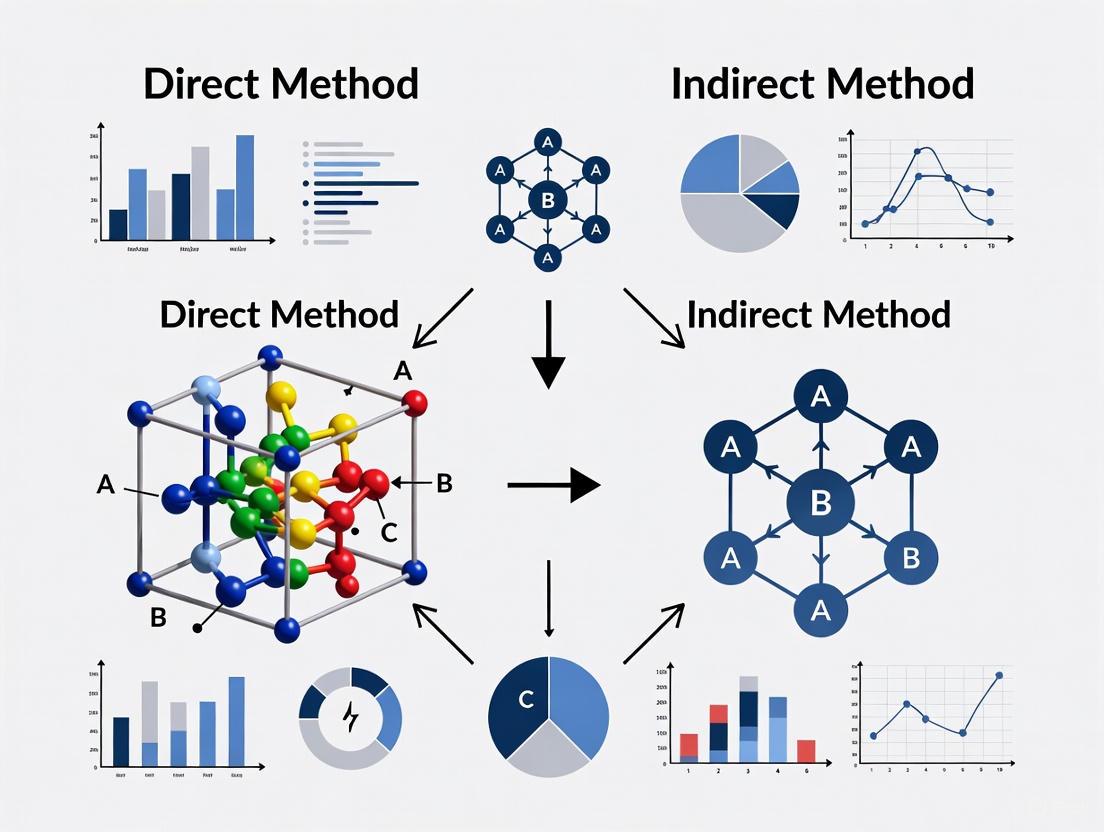
This article provides a comprehensive guide for researchers and drug development professionals on selecting and applying direct and indirect comparison methods for health technology assessment (HTA).
Direct vs. Indirect Methods in Health Research: A Strategic Guide for Evidence Synthesis and HTA
Abstract
This article provides a comprehensive guide for researchers and drug development professionals on selecting and applying direct and indirect comparison methods for health technology assessment (HTA). It covers foundational concepts, methodological execution, and troubleshooting, aligned with the latest EU HTA 2025 guidelines. Readers will gain practical insights into methods like Network Meta-Analysis (NMA), MAIC, and STC, learn to navigate common challenges like effect modifiers and population heterogeneity, and understand the criteria for robust methodological validation and acceptance by HTA bodies.
Understanding the Basics: What Are Direct and Indirect Comparison Methods?
Welcome to the HTA Research Support Center
This support center provides troubleshooting guides and FAQs for researchers, scientists, and drug development professionals conducting treatment comparisons for Health Technology Assessment (HTA). The content is framed within a broader thesis on direct versus indirect method keyword recommendation research, helping you navigate common methodological challenges.
Troubleshooting Guides
Guide 1: Selecting the Appropriate Treatment Comparison Method
Problem Statement: A researcher is unsure whether to use a direct or indirect method for comparing a new intervention against relevant comparators.
Diagnosis and Resolution:
- Step 1: Assess Available Evidence - Determine if head-to-head Randomized Controlled Trials (RCTs) exist for all treatments of interest. If they do, a direct comparison is feasible [1].
- Step 2: Evaluate Feasibility of Direct Comparison - If head-to-head RCTs are unavailable, unethical, or impractical (e.g., in rare diseases), an indirect treatment comparison (ITC) is necessary [1].
- Step 3: Select ITC Technique - Based on the evidence network and data availability, select an appropriate ITC method. The flowchart below outlines this decision pathway.
Guide 2: Addressing Heterogeneity Between Studies in an ITC
Problem Statement: Significant clinical or methodological differences exist between studies included in an indirect treatment comparison, potentially biasing results.
Diagnosis and Resolution:
- Step 1: Identify Sources of Heterogeneity - Systematically document differences in patient populations, study designs, interventions, and outcomes [1].
- Step 2: Assess Impact - Use statistical tests (e.g., I² statistic) and visual inspection (e.g., forest plots) to quantify heterogeneity [1].
- Step 3: Apply Adjustment Techniques - If heterogeneity is confirmed, consider population-adjusted methods like MAIC or Network Meta-Regression [1].
Frequently Asked Questions (FAQs)
Q1: What is the fundamental difference between direct and indirect treatment comparisons? A: Direct comparisons estimate treatment effects from studies that randomly assign patients to the interventions being compared (e.g., RCTs). Indirect comparisons estimate relative effects between treatments that have not been compared in head-to-head trials, using a common comparator to link them [1].
Q2: When is an indirect treatment comparison necessary? A: ITCs are necessary when a direct comparison is unavailable, unethical, unfeasible, or impractical. This often occurs in oncology, rare diseases, or when multiple comparators are relevant and comparing all directly in trials is not feasible [1].
Q3: Which ITC method should I use if I only have single-arm studies? A: When only single-arm studies are available (common in oncology), Matching-Adjusted Indirect Comparison (MAIC) or Simulated Treatment Comparison (STC) are appropriate techniques, as they can adjust for differences in patient characteristics between studies [1].
Q4: How do HTA bodies view indirect treatment comparisons? A: HTA agencies prefer direct evidence from RCTs but recognize the necessity of ITCs when direct evidence is lacking. They consider ITCs on a case-by-case basis, with acceptability depending on the methodology's rigor and the validity of underlying assumptions [1].
Q5: What are the main limitations of indirect treatment comparisons? A: Key limitations include the need for stronger assumptions (e.g., similarity assumption), potential for unmeasured confounding, sensitivity to between-study heterogeneity, and generally lower certainty of evidence compared to well-conducted direct comparisons [1].
Methodological Comparison Tables
| Method Type | Key Features | Data Requirements | Key Assumptions | Common Applications |
|---|---|---|---|---|
| Direct Comparison | Head-to-head comparison in randomized setting | RCTs directly comparing treatments of interest | Randomization ensures balance of known and unknown confounders | Gold standard when feasible; regulatory submissions |
| Indirect Comparison (Bucher Method) | Uses common comparator to link treatments | Aggregate data for A vs C and B vs C | Similarity between studies (no effect modifiers) | Simple connected networks; early technology assessments |
| Network Meta-Analysis | Simultaneous comparison of multiple treatments | Network of RCTs (connected evidence) | Consistency assumption (direct & indirect evidence agree) | HTA submissions comparing multiple treatments; clinical guidelines |
| Matching-Adjusted Indirect Comparison | Adjusts for population differences | Individual Patient Data (IPD) for one trial, AD for another | All effect modifiers are measured and included | Oncology; single-arm trials vs. comparator from RCT |
| ITC Technique | Frequency in Literature | IPD Requirement | Key Strengths | Key Limitations |
|---|---|---|---|---|
| Network Meta-Analysis (NMA) | 79.5% | No | Simultaneous multiple treatment comparisons; uses all available evidence | Requires connected network; relies on consistency assumption |
| Matching-Adjusted Indirect Comparison (MAIC) | 30.1% | Yes (partial) | Adjusts for cross-trial differences; handles single-arm studies | Depends on measured effect modifiers; reduced effective sample size |
| Simulated Treatment Comparison (STC) | 21.9% | Yes (partial) | Models outcomes for common comparator; flexible framework | Model-dependent; requires strong assumptions |
| Bucher Method | 23.3% | No | Simple to implement; transparent calculations | Limited to three treatments; no heterogeneity adjustment |
The Scientist's Toolkit: Research Reagent Solutions
Essential Methodological Approaches for Treatment Comparisons
| Item | Function/Application |
|---|---|
| Network Meta-Analysis | Statistical technique for comparing multiple treatments simultaneously using direct and indirect evidence within a connected network of trials [1]. |
| Matching-Adjusted Indirect Comparison | Population-adjusted method that re-weights individual patient data from one study to match the baseline characteristics of another study when IPD is available for only one trial [1]. |
| Bucher Method | Simple adjusted indirect comparison method for comparing two treatments via a common comparator in a connected network of three treatments [1]. |
| Simulated Treatment Comparison | Method that uses individual patient data to develop a model of the outcome for the common comparator and applies it to the target population when only aggregate data is available for the comparator [1]. |
| Systematic Literature Review | Foundation of any treatment comparison that ensures all relevant evidence is identified, selected, and synthesized in a comprehensive and reproducible manner [1]. |
Experimental Protocols
Protocol 1: Conducting a Network Meta-Analysis
Objective: To compare multiple interventions simultaneously by combining direct and indirect evidence.
Methodology:
- Develop Systematic Review Protocol - Define PICOS (Population, Intervention, Comparator, Outcomes, Study design) criteria [1].
- Conduct Comprehensive Literature Search - Search multiple databases (e.g., PubMed, Embase) and grey literature sources [1].
- Study Selection and Data Extraction - Use dual independent review for study selection and extract data using standardized forms [2].
- Assess Risk of Bias and Similarity - Evaluate study quality and assess transitivity assumption (that studies are sufficiently similar to be combined) [1].
- Perform Statistical Analysis -
- Use frequentist or Bayesian approaches
- Check for inconsistency between direct and indirect evidence
- Present results with league tables and rank probabilities
Protocol 2: Implementing Matching-Adjusted Indirect Comparison
Objective: To compare treatments when individual patient data is available for only one study.
Methodology:
- Identify Effect Modifiers - Identify and select prognostic variables and effect modifiers based on clinical knowledge [1].
- Estimate Weights - Calculate weights for each patient in the IPD study so that the weighted baseline characteristics match those reported in the aggregate data study [1].
- Assess Effective Sample Size - Evaluate the loss of effective sample size after weighting and its implications for precision [1].
- Compare Outcomes - Compare the outcomes of the re-weighted IPD population with the aggregate data from the comparator study [1].
- Conduct Sensitivity Analyses - Assess robustness of findings to different selections of effect modifiers and weighting approaches [1].
Evidence Network Visualization
In scientific research and drug development, a direct comparison is a head-to-head evaluation where two or more interventions are tested against each other simultaneously under controlled conditions. This approach provides the highest quality evidence for determining the relative effectiveness, safety, and value of competing therapies [3]. Unlike indirect methods that rely on proxy measures or comparisons across different study populations, direct comparisons yield unambiguous evidence about which intervention performs superiorly for specific clinical outcomes.
The alternative, indirect assessment, utilizes proxy measures that require reflection on or self-reporting of outcomes rather than direct demonstration of the measured phenomenon [4]. In clinical research, this typically involves comparing interventions through historical controls, network meta-analyses, or real-world evidence studies that attempt to bridge data from separate clinical trials. While sometimes necessary when head-to-head trials are unavailable, indirect methods introduce significant limitations for establishing causal relationships between interventions and outcomes.
The distinction between these approaches mirrors methodologies in other fields. In financial accounting, the direct method of cash flow statement preparation shows actual cash receipts and payments, providing clear visibility into transactions, while the indirect method starts with net income and adjusts for non-cash items, offering less transparency into specific cash movements [5] [6]. Similarly, in educational assessment, direct methods require students to demonstrate knowledge or skills, while indirect methods rely on self-reported perceptions of learning [4] [7].
The Scientific and Regulatory Case for Direct Comparisons
Why Head-to-Head Trials Represent the Gold Standard
Head-to-head randomized controlled trials (RCTs) constitute the most rigorous scientific approach for comparing competing interventions because their design minimizes biases that plague indirect comparisons. By randomly assigning participants to different treatment groups within the same study protocol, head-to-head trials ensure that population characteristics, measurement techniques, and study procedures remain consistent across comparison groups. This controlled environment enables researchers to attribute outcome differences directly to the interventions being studied rather than to confounding variables.
The regulatory and evidence-based medicine communities consistently prioritize head-to-head trial data when making formulary and treatment recommendations. As noted in gastroenterology research, "Head-to-head clinical trials are the highest quality of evidence to support comparative effectiveness" for positioning biologic therapies [8]. This preference stems from the superior internal validity of direct comparative studies, which provide the most reliable foundation for clinical decision-making and health technology assessments.
Documented Limitations of Indirect Comparison Methods
Indirect comparisons and real-world evidence (RWE), while valuable in certain contexts, present significant methodological challenges that limit their reliability for establishing comparative effectiveness:
Susceptibility to Unmeasured Confounding: Indirect comparisons struggle to account for variations in patient populations, treatment strategies, and endpoint assessments across different studies and time periods [8].
Inconsistent Correlation with Direct Measures: Research comparing indirect and direct assessment methods in pediatric physical activity found only "low-to-moderate correlations (range: -0.56 to 0.89)" between the two approaches, with indirect measures typically overestimating directly measured values by 72% [9].
Limited Strength Without Anchor Trials: Network meta-analyses rely heavily on the presence of at least one head-to-head comparison to inform the overall network. When no direct trials exist, "the strength of the network is somewhat limited" [8].
Table: Documented Limitations of Indirect Comparisons in Clinical Research
| Limitation | Impact on Evidence Quality | Empirical Support |
|---|---|---|
| Population Heterogeneity | Reduces generalizability and introduces selection bias | Clinical trial patients often don't represent real-world populations [8] |
| Measurement Inconsistency | Compromises validity of cross-trial comparisons | Indirect measures overestimate direct measurements by 72% [9] |
| Temporal Confounding | Fails to account for evolving standards of care | Trials spanning decades show different outcomes due to practice changes [8] |
| Analytical Complexity | Increases risk of methodological errors | Requires sophisticated statistical adjustments with inherent assumptions [8] |
Practical Challenges in Implementing Direct Comparisons
Barriers to Conducting Head-to-Head Trials
Despite their methodological superiority, several significant obstacles limit the widespread implementation of head-to-head trials in clinical research:
Dominance of Industry Sponsorship: A comprehensive analysis of head-to-head randomized trials revealed that "the literature of head-to-head RCTs is dominated by the industry," with 82.3% of randomized subjects included in industry-sponsored trials [10]. This sponsorship creates inherent conflicts of interest that can influence trial design and interpretation.
Systematic Favorability toward Sponsors: Industry-funded head-to-head comparisons "systematically yield favorable results for the sponsors," with sponsored trials being 2.8 times more likely to report "favorable" findings (OR 2.8; 95% CI: 1.6, 4.7) [10]. This bias is particularly pronounced in noninferiority trials, where 96.5% of industry-funded studies reported desirable "favorable" results for the sponsor's product.
Strategic Use of Noninferiority Designs: Industry-sponsored trials "used more frequently noninferiority/equivalence designs," which were strongly associated with "favorable" findings (OR 3.2; 95% CI: 1.5, 6.6) [10]. These designs potentially allow sponsors to demonstrate that their product is "not worse than" rather than superior to competitors, facilitating market entry without proving added clinical benefit.
Resource Intensiveness and Complexity: Head-to-head trials require larger sample sizes, longer durations, and more complex statistical designs than placebo-controlled studies, creating significant financial and logistical barriers for non-commercial researchers.
Therapeutic Areas with Limited Direct Evidence
The absence of head-to-head trials is particularly problematic in certain therapeutic areas. In Crohn's disease, for example, "there are currently no head-to-head phase 3 clinical trials of biologics," forcing clinicians to rely on potentially misleading indirect comparisons [8]. This evidence gap creates significant uncertainty for treatment positioning and clinical decision-making in routine practice.
Diagram Title: Industry Sponsorship Influence on Head-to-Head Trial Outcomes
Methodological Framework for Direct Comparisons
Essential Components of Valid Head-to-Head Designs
Implementing methodologically sound direct comparisons requires careful attention to several key design elements:
Appropriate Sample Sizing: Industry-sponsored head-to-head trials are typically "larger" than non-industry trials, enhancing their statistical power to detect true differences between interventions [10]. Adequate sample sizing ensures that trials can detect clinically meaningful differences with sufficient precision.
Proper Endpoint Selection: Direct comparisons should utilize clinically relevant, objectively measurable endpoints that reflect meaningful patient outcomes rather than surrogate markers. The choice between primary endpoints significantly influences trial interpretation and clinical applicability.
Randomization and Blinding Procedures: Maintaining rigorous randomization and blinding procedures remains essential for minimizing bias in treatment allocation and outcome assessment, even in comparative effectiveness research.
Predefined Statistical Analysis Plans: Given the heightened risk of sponsorship bias, pre-registered statistical analysis plans with clearly defined primary outcomes and analysis methods are crucial for maintaining methodological integrity.
Emerging Methodological Innovations
Recent methodological advances aim to enhance the feasibility and applicability of direct comparison evidence:
Real-World Data Emulation: Researchers are pioneering "Head-to-Head Comparisons using Real World Data" through emulation of target trials, which can "successfully deal with most of the biases that used to plague the use of observational data" [3]. This approach leverages high-quality real-world data to approximate head-to-head comparisons when randomized trials are impractical.
Adaptive Trial Designs: Bayesian adaptive designs and platform trials allow for more efficient evaluation of multiple interventions within a single master protocol, reducing the resources required for comprehensive direct comparisons.
Standardized Methodological Frameworks: Organizations like ISPOR have developed "a framework for consideration when relying on evidence generated from RWD (real world evidence, RWE)" to improve the methodological rigor of comparative effectiveness research [8].
Table: Key Research Reagent Solutions for Comparative Studies
| Reagent/Resource | Function in Comparative Research | Implementation Example |
|---|---|---|
| Real-World Data (RWD) Repositories | Provides regulatory-grade data for comparative analyses | Emulation of target trials for head-to-head comparisons [3] |
| Propensity Score Matching | Balances covariates in non-randomized comparisons | Used in nationwide registry-based cohort studies [8] |
| Network Meta-Analysis | Enables indirect treatment comparisons | Informs relative positioning when direct data is absent [8] |
| Standardized Outcome Measures | Ensures consistent endpoint assessment | Facilitates cross-trial comparisons and evidence synthesis |
Troubleshooting Guide: Addressing Common Direct Comparison Challenges
Frequently Asked Questions on Implementation
Q: How can researchers mitigate sponsorship bias when designing head-to-head trials?
A: Implementation of several safeguards can reduce sponsorship influence: (1) Establish independent steering committees with final authority over trial design and interpretation; (2) Pre-register statistical analysis plans before trial initiation; (3) Utilize independent endpoint adjudication committees; (4) Ensure data analysis is conducted by independent statisticians; (5) Secure contractual agreements guaranteeing publication rights regardless of outcome. These measures are particularly important given that "industry-sponsored comparative assessments systematically yield favorable results for the sponsors" [10].
Q: What methodological approaches can enhance the validity of real-world head-to-head comparisons?
A: When randomized trials are not feasible, researchers can improve real-world evidence through: (1) Emulation of target trials using real-world data, which helps "deal with most of the biases that used to plague the use of observational data" [3]; (2) Comprehensive propensity score matching that balances both measured and clinically relevant unmeasured confounders; (3) Utilization of active comparator designs that compare new interventions against current standard of care rather than placebo; (4) Implementation of new-user designs to avoid prevalent user bias; (5) Validation of outcome definitions within specific data sources.
Q: How should clinicians interpret head-to-head trials with noninferiority designs?
A: Noninferiority trials require careful scrutiny of several elements: (1) The predefined noninferiority margin must be clinically justified and methodologically sound; (2) The analysis should follow both per-protocol and intention-to-treat principles; (3) Readers should assess whether the comparator drug was administered optimally and whether the trial population reflects real-world practice; (4) Consider that "industry-funded noninferiority/equivalence trials" have exceptionally high rates (96.5%) of favorable results for sponsors [10]. When possible, consult independent methodological reviews of noninferiority trials.
Q: What strategies can address the absence of head-to-head trials in therapeutic areas like Crohn's disease?
A: In the absence of direct trials, clinicians and researchers can: (1) Critically evaluate real-world comparative effectiveness studies, paying particular attention to methodological quality and potential confounding; (2) Consider network meta-analyses while recognizing their limitations when no head-to-head trials anchor the network; (3) Support the development of clinician-initiated trials and registry-based comparative studies; (4) Advocate for funding mechanisms that enable independent head-to-head comparisons of established therapies; (5) Implement systematic data collection within clinical practice to support future comparative analyses [8].
Troubleshooting Experimental Design Issues
Diagram Title: Solutions for Missing Head-to-Head Evidence
The scientific community must prioritize direct comparisons through head-to-head trials as the gold standard for establishing comparative therapeutic effectiveness. While indirect methods and real-world evidence provide valuable complementary information, they cannot replace the methodological rigor of properly conducted direct comparisons. The current landscape, dominated by industry-sponsored trials with systematic favorability toward sponsors, necessitates increased investment in independent comparative effectiveness research.
Moving forward, researchers should leverage emerging methodologies like real-world data emulation and adaptive trial designs to make head-to-head comparisons more feasible and efficient. Simultaneously, the field must develop enhanced safeguards against sponsorship bias and promote transparency in trial design and reporting. Only through these concerted efforts can we ensure that clinicians, patients, and policymakers have access to the reliable comparative evidence needed to make informed treatment decisions.
In the evidence-based landscape of healthcare decision-making, direct head-to-head randomized controlled trials (RCTs) represent the gold standard for comparing the efficacy and safety of two or more treatments [1] [11]. However, ethical considerations, practical constraints, and the dynamic nature of treatment landscapes often make such direct comparisons unfeasible or unavailable [1] [12]. This evidence gap is particularly pronounced in oncology and rare diseases, where patient numbers may be low and comparing against inferior treatments or placebo is ethically problematic [1] [12].
Indirect Treatment Comparisons (ITCs) have emerged as a critical methodological framework that enables researchers and health technology assessment (HTA) bodies to compare interventions when direct evidence is lacking [13]. These statistical techniques allow for the estimation of relative treatment effects by leveraging a network of evidence across different studies, preserving the randomization of the originally assigned patient groups where possible [11] [14]. The use of ITCs has increased significantly in recent years, with numerous oncology and orphan drug submissions incorporating ITCs to support regulatory decisions and HTA recommendations [12].
Understanding ITC Fundamentals: FAQs
What justifies the use of an ITC instead of waiting for direct evidence?
ITCs are primarily justified when direct head-to-head evidence between treatments of interest is not available, would be unethical to collect, or is impractical to obtain within relevant decision-making timelines [1] [13]. This frequently occurs in situations where a new treatment has only been compared against placebo rather than active comparators, when multiple relevant comparators exist across different jurisdictions, or when patient populations are too small for adequately powered direct trials (as in rare diseases) [1] [12].
What are the main categories of ITC methods?
ITC methods can broadly be categorized into unadjusted and adjusted approaches:
- Naïve Comparisons: Directly compare study arms from different trials without adjustment (generally discouraged due to susceptibility to bias) [11]
- Adjusted Indirect Comparisons: Preserve randomization by comparing treatments via a common comparator [11] [14]
- Network Meta-Analysis (NMA): Simultaneously incorporates multiple treatments and comparisons in a connected evidence network [1]
- Population-Adjusted Methods: Adjust for differences in patient characteristics across studies (e.g., MAIC, STC) [1]
How do HTA agencies and regulators view ITC evidence?
ITCs are currently considered by HTA agencies on a case-by-case basis, with acceptability remaining variable [1]. However, their use in submissions does not appear to negatively impact recommendation outcomes compared to head-to-head trial evidence [15]. Authorities more frequently favor anchored or population-adjusted ITC techniques for their effectiveness in data adjustment and bias mitigation, while naïve comparisons are generally considered insufficiently robust for decision-making [15] [12].
What are the most common critiques of submitted ITCs?
Common critiques include unresolved heterogeneity in study designs included in the ITCs and failure to adjust for all potential prognostic or effect-modifying factors in population-adjusted methods [15]. The limited strength of inference from indirect comparisons compared to direct evidence is also a fundamental consideration [14].
ITC Methodologies: Technical Guide
Adjusted Indirect Comparison (Bucher Method)
The Bucher method, one of the foundational ITC techniques, enables comparison of two treatments (A and B) through a common comparator (C) [11]. This approach preserves the randomization of the original trials by comparing the treatment effect of A versus C with that of B versus C [11] [14].
Experimental Protocol:
- Identify two randomized trials with a common comparator
- Extract relative treatment effects for A vs. C and B vs. C
- Calculate indirect effect of A vs. B as the difference between the two direct effects
- Compute variance of the indirect effect as the sum of variances of the two direct effects
Workflow Diagram:
Network Meta-Analysis
Network Meta-Analysis extends the principles of indirect comparison to multiple treatments simultaneously, forming connected networks of evidence [1]. NMA can incorporate both direct and indirect evidence, reducing uncertainty through more efficient use of all available data [1] [11].
Experimental Protocol:
- Conduct systematic literature review to identify all relevant RCTs
- Map treatments and comparators to establish network connectivity
- Extract outcome data and assess trial characteristics and quality
- Choose statistical model (frequentist or Bayesian)
- Evaluate network consistency and heterogeneity
- Estimate relative treatment effects for all possible pairwise comparisons
Workflow Diagram:
Matching-Adjusted Indirect Comparison (MAIC)
MAIC is a population-adjusted method used when patient-level data (IPD) is available for one study but only aggregate data is available for the other [1]. This method weights patients from the IPD study to match the aggregate baseline characteristics of the comparator study.
Experimental Protocol:
- Obtain IPD for the index treatment trial
- Extract aggregate baseline characteristics from the comparator trial
- Estimate weights using method of moments or maximum entropy
- Apply weights to the IPD to create a balanced population
- Compare outcomes between the weighted IPD population and aggregate comparator
Troubleshooting Common ITC Challenges
How should I handle disconnected evidence networks?
Problem: Treatments of interest cannot be connected through common comparators in the available evidence base. Solution:
- Extend literature search to identify additional linking studies
- Consider multiple comparators that create connecting pathways
- Explore population-adjusted methods if studies have different comparators but similar populations
- If connection remains impossible, acknowledge this fundamental limitation
What if studies show significant clinical or methodological heterogeneity?
Problem: Included studies differ substantially in population characteristics, outcomes measurement, or methodological quality. Solution:
- Document sources of heterogeneity systematically
- Use random-effects models to account for between-study heterogeneity
- Conduct subgroup analysis or meta-regression to explore heterogeneity sources
- Consider population-adjusted methods (MAIC, STC) for addressing cross-trial differences
- Evaluate whether indirect comparison remains appropriate given the heterogeneity level
How can I validate ITC results when direct evidence becomes available?
Problem: Assessing reliability of ITC findings after direct head-to-head evidence emerges. Solution:
- Compare ITC results with subsequent direct evidence
- Evaluate whether confidence intervals overlap and point estimates are similar
- Document and analyze reasons for any discrepancies
- Use this validation to refine future ITC methodology selection
ITC Method Selection Guide
Table 1: ITC Method Applications and Data Requirements
| Method | Best Application Context | Data Requirements | Key Assumptions |
|---|---|---|---|
| Bucher Method [11] | Two treatments with a common comparator | Aggregate data for both trials | Similarity between trials in effect modifiers |
| Network Meta-Analysis [1] | Multiple treatments with connected evidence network | Aggregate data for all trials | Consistency between direct and indirect evidence |
| Matching-Adjusted Indirect Comparison (MAIC) [1] | Single-arm trials or different comparators with IPD for one study | IPD for index treatment, aggregate for comparator | All effect modifiers are measured and included |
| Simulated Treatment Comparison (STC) [1] | Different comparators with IPD for one study | IPD for index treatment, aggregate for comparator | Appropriate model specification for outcome prediction |
Table 2: Prevalence of ITC Methods in Recent Submissions
| ITC Method | Frequency in Literature [1] | Use in HTA Submissions [15] | Regulatory Acceptance Level |
|---|---|---|---|
| Network Meta-Analysis | 79.5% | 51% | High |
| Matching-Adjusted Indirect Comparison | 30.1% | 27% | Moderate to High |
| Naïve Comparison | Not reported | 17% | Low |
| Bucher Method | 23.3% | Not reported | Moderate |
The Scientist's Toolkit: Essential Research Reagents
Table 3: Key Methodological Components for ITC Analysis
| Component | Function | Implementation Examples |
|---|---|---|
| Systematic Review Protocol [1] | Ensumes comprehensive, unbiased evidence identification | PRISMA guidelines, predefined search strategy and inclusion criteria |
| Statistical Software Packages | Enables implementation of complex ITC methods | R (gemtc, pcnetmeta), SAS, WinBUGS/OpenBUGS |
| Quality Assessment Tools | Evaluates risk of bias in included studies | Cochrane Risk of Bias tool, ISPOR checklist for ITC quality |
| Consistency Evaluation Methods | Assesses agreement between direct and indirect evidence | Side-splitting approach, node-splitting, inconsistency factors |
Indirect Treatment Comparisons represent a sophisticated methodological framework that continues to evolve in response to the complex evidence needs of healthcare decision-making [1] [13]. While not replacing direct evidence, ITCs provide valuable insights for comparative effectiveness assessment when head-to-head trials are unavailable [12]. The appropriate application of these methods requires careful consideration of the evidence structure, potential effect modifiers, and underlying assumptions [1] [11].
As treatment landscapes grow increasingly complex, particularly in oncology and rare diseases, the strategic use of ITCs will remain essential for informing reimbursement decisions and clinical understanding [15] [12]. Future methodological developments will likely focus on enhancing population adjustment methods, standardizing quality assessment, and improving the transparency and interpretation of ITC results for healthcare decision-makers [1] [13].
Frequently Asked Questions (FAQs)
Q1: What is the fundamental difference between the direct and indirect methods in research?
The core difference lies in how comparisons are made. A direct method involves a head-to-head comparison, such as a clinical trial that directly compares two interventions (Drug A vs. Drug B) or a keyword recommendation system that suggests terms based on a direct analysis of a target dataset's abstract text against keyword definitions [16] [11]. In contrast, an indirect method compares two items through a common link. For example, it compares the efficacy of Drug A vs. Drug B by analyzing their independent comparisons against a common control (like a placebo) [11] [17]. Similarly, in keyword recommendation, an indirect method would suggest keywords for a target dataset based on the keywords assigned to other, similar existing datasets [16].
Q2: Why are the assumptions of Similarity, Homogeneity, and Consistency critical for indirect comparisons?
These assumptions are the foundation for ensuring the validity of indirect comparisons. If they are not met, the results can be misleading or biased [18].
- Similarity ensures that the studies being linked are comparable enough for the comparison to be meaningful [18].
- Homogeneity confirms that the data within each comparison group is consistent, reducing the risk that internal variability is skewing the result [19] [18].
- Consistency validates the indirect approach by checking that its results align with any available direct evidence for the same comparison [18].
Q3: I have both direct and indirect evidence for a comparison. Should I combine them?
Combining direct and indirect evidence should be done with extreme caution and only after formally assessing the consistency between the two [18]. Combining evidence that is in conflict can lead to an invalid and misleading overall result. It is essential to investigate the causes of any inconsistency before proceeding [18].
Q4: What is a "naïve" indirect comparison, and why is it not recommended?
A naïve indirect comparison directly compares results from two different studies without adjusting for the fact that they were conducted separately with different populations and conditions. This approach "breaks" the original randomization of the individual studies and is considered as unreliable as a simple observational comparison, as it is highly susceptible to confounding and bias [11] [18]. The accepted approach is an adjusted indirect comparison, which preserves the within-trial randomization by comparing the relative effects of each intervention against a common comparator [11] [17].
Troubleshooting Guides
Issue 1: Suspected Violation of the Similarity Assumption
Problem: The trials or datasets you are attempting to link indirectly have fundamental differences that may invalidate the comparison.
Solution: Investigate and Test for Similarity
Compare Trial/Dataset Characteristics: Create a table to systematically compare key characteristics across all studies. This is a primary method for assessing the similarity assumption [18].
Table: Key Characteristics for Similarity Assessment
Characteristic Trial Set A vs. C Trial Set B vs. C Patient Demographics (e.g., mean age) Disease Severity Concomitant Medications Trial Duration Outcome Definitions Use Statistical Techniques: If differences are found, employ sensitivity analysis, subgroup analysis, or meta-regression to investigate how these characteristics influence the indirect comparison result [18].
Issue 2: Handling Heterogeneity in Your Data
Problem: The data within a single group (e.g., all trials comparing Drug A and Placebo) shows high variability, violating the homogeneity assumption.
Solution: Assess and Address Heterogeneity
- Visual Inspection: Use forest plots to visually assess the variability (heterogeneity) in effect sizes across studies [20].
- Statistical Tests: Use formal statistical tests to quantify heterogeneity, such as the I² statistic or Cochran's Q test [18].
- Investigate Sources: If significant heterogeneity is found, do not ignore it. Use subgroup analysis or meta-regression to identify its potential causes, such as differences in drug dosage or patient subgroups [18].
- Model Selection: Consider using a random-effects model for your meta-analysis, which inherently accounts for some degree of heterogeneity between studies, as opposed to a fixed-effect model which assumes a single true effect size [18].
Issue 3: Inconsistency Between Direct and Indirect Evidence
Problem: The result from your indirect comparison conflicts with the result from a head-to-head (direct) comparison of the same two interventions.
Solution: Assess and Reconcile Inconsistency
- Formal Testing: Use proposed statistical methods to test for consistency between direct and indirect evidence [18].
- Prioritize and Investigate: Do not combine conflicting evidence. If a direct comparison is available from high-quality, well-designed randomized trials, it is generally considered the highest standard of evidence [18]. Scrutinize the direct evidence for potential biases (e.g., inadequate blinding, allocation concealment) that may exaggerate treatment effects [17]. Also, re-check the similarity and homogeneity assumptions in your indirect comparison.
- Report with Caution: Clearly report the inconsistency and urge caution in interpreting the results. State whether a result is derived from indirect evidence [18].
Protocol 1: Conducting an Adjusted Indirect Comparison
This protocol outlines the steps for comparing two interventions, A and B, via a common comparator C [11].
Objective: To estimate the relative efficacy of Intervention A versus Intervention B using adjusted indirect comparison.
Methodology:
- Identify Trial Sets: Systematically identify two sets of randomized controlled trials (RCTs):
- Set 1: RCTs comparing Intervention A vs. Common Comparator C.
- Set 2: RCTs comparing Intervention B vs. Common Comparator C.
- Calculate Relative Effects: For each trial set, calculate the pooled relative treatment effect (e.g., risk ratio, mean difference) and its variance against the common comparator C.
- Perform Indirect Comparison: The indirect estimate of A vs. B is calculated as the difference between the two pooled effects.
- For continuous data (e.g., blood glucose): (A - C) - (B - C)
- For binary data (e.g., response rate): (A / C) / (B / C)
- Calculate Variance: The variance of the indirect estimate (A vs. B) is the sum of the variances of the two direct comparisons (A vs. C and B vs. C). This leads to greater uncertainty than a direct head-to-head trial [11].
Table: Hypothetical Example of Adjusted Indirect Comparison (Continuous Data)
| Trial Set | Observed Change (vs. C) | Variance |
|---|---|---|
| A vs. C | -3.0 mmol/L | 1.0 |
| B vs. C | -2.0 mmol/L | 1.0 |
| Adjusted Indirect Comparison (A vs. B) | -1.0 mmol/L | 2.0 |
Protocol 2: Assessing Homogeneity of Variance
Objective: To test the assumption that variability is equal across groups, a requirement for many statistical tests like ANOVA [20] [21].
Methodology:
- Formulate Hypotheses:
- Null Hypothesis (H₀): Variances across all groups are equal (homogeneous).
- Alternative Hypothesis (H₁): At least one group's variance is different.
- Select a Statistical Test:
- Interpret Results: A resulting p-value below your significance level (e.g., 0.05) provides evidence to reject the null hypothesis, indicating heterogeneous variances. In this case, the standard ANOVA may not be appropriate, and alternative procedures (e.g., Welch's ANOVA, data transformation) should be considered.
Method Comparison & Visualization
Table: Comparison of Direct and Indirect Method Characteristics
| Feature | Direct Method | Indirect Method |
|---|---|---|
| Core Principle | Head-to-head comparison of A vs. B [11] | Comparison of A vs. B via a common link C [11] |
| Key Assumption | Proper randomization and blinding to minimize bias | Similarity, Homogeneity, Consistency [18] |
| Primary Advantage | Considered the highest quality evidence; avoids similarity assumption [18] | Can be performed when head-to-head trials are unavailable [11] |
| Primary Disadvantage | Expensive and time-consuming to conduct [11] | Increased statistical uncertainty; relies on untestable assumptions [11] [18] |
| Application in Keyword Research | Recommends keywords by matching a dataset's abstract directly to keyword definitions [16] | Recommends keywords based on terms assigned to similar existing datasets [16] |
Indirect Comparison Logic
Core Assumptions for Validity
The Scientist's Toolkit: Key Reagents & Materials
Table: Essential "Reagents" for Robust Research Comparisons
| Item | Function |
|---|---|
| Systematic Review Protocol | Ensures a comprehensive and unbiased identification of all relevant studies (trial sets), forming a reliable foundation for any comparison [18]. |
| Common Comparator (C) | The crucial "reagent" that links two interventions (A and B) in an indirect comparison. It must be a relevant and consistent standard (e.g., placebo, standard therapy) across trial sets [11]. |
| Statistical Software (e.g., R, Python) | Used to perform pooled meta-analyses, calculate indirect estimates and their confidence intervals, and run critical tests for homogeneity and consistency [18]. |
| Quality Assessment Tool (e.g., Cochrane RoB Tool) | A "calibration" tool to assess the methodological rigor of included trials, helping to identify potential biases that could skew results [18]. |
| Pre-specified Analysis Plan | A detailed protocol that defines all assumptions, statistical methods, and subgroup analyses before conducting the comparison, guarding against data dredging and spurious findings [18]. |
What is an Indirect Treatment Comparison and when is it necessary?
Answer: An Indirect Treatment Comparison (ITC) is a statistical methodology used to compare the efficacy or safety of multiple treatments when direct, head-to-head evidence from randomized controlled trials (RCTs) is unavailable or impractical to obtain [1] [22] [23]. These methods are essential in several scenarios:
- Lack of Direct Evidence: When two treatments of interest have never been directly compared in an RCT [1] [13].
- Ethical or Practical Constraints: In situations where conducting a direct RCT would be unethical (e.g., for life-threatening diseases) or impractical (e.g., for rare diseases with low patient numbers) [1] [23].
- Multiple Comparators: When multiple treatment options exist, and comparing all of them directly in trials would be prohibitively expensive or time-consuming [1] [22].
HTA agencies express a clear preference for RCTs, but ITCs provide valuable alternative evidence where direct comparative evidence is missing [1] [13] [23].
What is the fundamental difference between a 'naïve' comparison and an 'adjusted' ITC?
Answer: A 'naïve' comparison (or unadjusted comparison) directly compares study arms from different trials as if they were from the same RCT. This approach is generally avoided because it is highly susceptible to bias from confounding factors, particularly imbalances in effect-modifying patient characteristics between trials. The treatment effect may be significantly over- or under-estimated [1] [13].
In contrast, 'adjusted' ITC techniques are statistically rigorous methods designed to account for the lack of randomization between trials. They respect the randomization that occurred within each trial and aim to minimize bias by adjusting for differences in study populations and characteristics. All modern ITC techniques, including those discussed in this guide, are forms of adjusted indirect comparisons [1].
Core ITC Methods: From Foundational to Advanced
This section details the key ITC methodologies, ordered from foundational to more complex, population-adjusted techniques.
The Bucher Method
Answer: The Bucher method is a foundational adjusted indirect comparison technique for a simple three-treatment network where two interventions (B and C) have been compared to a common comparator (A) but not to each other [24] [22].
- Methodology: The indirect effect estimate for B vs. C is calculated as the difference between the direct effect of B vs. A and the direct effect of C vs. A. The variance of the indirect estimate is the sum of the variances of the two direct comparisons. For ratio measures like Odds Ratios or Hazard Ratios, calculations are performed on a logarithmic scale [24].
- Key Assumption: It relies on the transitivity assumption, meaning that the trials used for the direct comparisons (A vs. B and A vs. C) are sufficiently similar with respect to potential effect modifiers (e.g., patient characteristics, trial design) [24].
- Applicability: It is recommended for simple networks and produces results identical to a frequentist Network Meta-Analysis for the same three-treatment network [24].
Table: Summary of the Bucher Method
| Aspect | Description |
|---|---|
| Network Structure | Three treatments (A, B, C) with a common comparator A. |
| Input Data | Aggregate data (e.g., effect estimates and confidence intervals) from the direct comparisons A vs. B and A vs. C. |
| Output | An indirect effect estimate and confidence interval for the comparison B vs. C. |
| Key Strength | Simplicity and ease of use; provides a valid indirect estimate for a common scenario [24]. |
| Key Limitation | Limited to a simple three-treatment network and cannot incorporate direct evidence on B vs. C if it becomes available [22]. |
Network Meta-Analysis (NMA)
Answer: Network Meta-Analysis is an extension of the Bucher method that allows for the simultaneous comparison of multiple treatments (typically more than three) within a single, coherent statistical model. It integrates both direct and indirect evidence across an entire network of treatments [22] [23].
- Methodology: NMA uses all available direct and indirect evidence to estimate the relative effects between all treatments in the network. It can be conducted within frequentist or Bayesian statistical frameworks. A key output is the relative ranking of treatments for a given outcome [22].
- Key Assumption: NMA requires the consistency assumption, which is an extension of transitivity to more complex networks. This means that direct and indirect evidence on the same comparison are in agreement [22].
- Applicability: NMA is the most frequently described ITC technique and is suitable for connected networks of evidence where multiple treatments have been compared in various combinations [1] [23].
Table: Summary of Network Meta-Analysis (NMA)
| Aspect | Description |
|---|---|
| Network Structure | Complex networks with multiple treatments and both direct and indirect connections. |
| Input Data | Aggregate data from all available trials in the network. |
| Output | Relative effect estimates for all possible treatment pairings and often treatment rankings. |
| Key Strength | Maximizes the use of all available evidence; provides a comprehensive overview of a treatment landscape [1] [22]. |
| Key Limitation | Increased complexity; requires careful assessment of consistency and network geometry [22]. |
Population-Adjusted Indirect Comparisons (MAIC and STC)
Answer: When the transitivity assumption is violated due to differences in patient characteristics (effect modifiers) between trials, standard ITCs may be biased. Population-adjusted methods use Individual Patient Data (IPD) from one trial and aggregate data from another to adjust for these imbalances [25].
Matching-Adjusted Indirect Comparison (MAIC)
- Methodology: MAIC uses a method similar to propensity score weighting. IPD from one trial is re-weighted so that the distribution of its selected baseline characteristics matches the published summary characteristics of the other trial. The analysis is then performed on the weighted population [25] [23].
- Applicability: Particularly common in submissions for oncology and rare diseases, where single-arm studies are frequent [1] [23].
Simulated Treatment Comparison (STC)
- Methodology: STC uses regression modeling on the IPD to model the relationship between patient characteristics and the outcome. This model is then applied to the aggregate data population of the other trial to predict the treatment outcome [25].
- Applicability: Like MAIC, it is used when IPD is available for only one of the studies being compared [25].
A critical distinction is between anchored and unanchored comparisons. An anchored comparison uses a common comparator arm and is always preferred. An unanchored comparison, which lacks a common comparator, requires much stronger, often infeasible, assumptions and should be used with extreme caution [25].
Table: Comparison of MAIC and STC
| Aspect | Matching-Adjusted Indirect Comparison (MAIC) | Simulated Treatment Comparison (STC) |
|---|---|---|
| Core Methodology | Propensity score re-weighting of IPD. | Regression modeling on IPD, then prediction. |
| Data Requirement | IPD from one trial; aggregate data from the other. | IPD from one trial; aggregate data from the other. |
| Adjustment Mechanism | Creates a pseudo-population from the IPD that matches the aggregate trial's covariates. | Models the outcome conditional on covariates in the IPD and applies it to the aggregate population. |
| Key Strength | Does not require specifying an outcome model; focuses on balancing covariates. | Can potentially adjust for a wider range of effect modifiers if correctly specified. |
| Key Limitation | Can lead to reduced effective sample size and precision after weighting [25]. | Relies on correct specification of the outcome model, risking ecological bias [25]. |
The Researcher's Toolkit: ITC Method Selection and Reagents
How do I select the appropriate ITC method for my research?
Answer: The choice of ITC technique is critical and should be guided by the available evidence and the structure of your research question [1]. The following workflow provides a logical path for selecting the most appropriate method.
What are the essential "research reagents" for conducting a robust ITC?
Answer: Just as a laboratory experiment requires specific reagents, conducting a valid ITC depends on key methodological components.
Table: Essential "Research Reagents" for ITCs
| Research Reagent | Function and Importance |
|---|---|
| Systematic Literature Review | Forms the foundation by identifying all relevant evidence. Ensures the analysis is comprehensive and minimizes selection bias [1]. |
| Connected Evidence Network | The structure of available comparisons. A connected network (e.g., via a common comparator) is essential for anchored, bias-reduced comparisons [24] [25]. |
| Individual Patient Data (IPD) | The "gold standard" data for population-adjusted methods like MAIC and STC. Allows for detailed adjustment of patient-level covariates [25]. |
| Risk of Bias Assessment Tool | Critical for evaluating the internal validity of the included trials. The certainty of an ITC cannot exceed that of the input studies [24]. |
| Statistical Software (R, Stata, SAS) | Platforms with specialized packages (e.g., gemtc, BUGSnet for R) are necessary for performing complex analyses like NMA and MAIC [24]. |
Troubleshooting Common ITC Experimental Challenges
How do I assess the validity of the transitivity assumption?
Answer: Assessing transitivity is a qualitative process performed before the statistical analysis. It involves comparing the clinical and methodological characteristics of the included trials to ensure they are sufficiently similar [24].
- Protocol: Follow these steps:
- List Potential Effect Modifiers: Identify patient or trial characteristics (e.g., disease severity, age, prior lines of therapy, outcome definitions) that are known to influence the treatment effect.
- Compare Study Populations: Create a table comparing the summary statistics (means, proportions) for these characteristics across all trials.
- Compare Trial Designs: Assess differences in dosage, follow-up time, and randomization procedures.
- Expected Outcome: No major, systematic differences in key effect modifiers between the trials. The presence of statistical heterogeneity in pairwise meta-analyses may signal a violation of transitivity [24].
What should I do if my network has a closed loop and I suspect inconsistency?
Answer: Inconsistency occurs when direct and indirect evidence for the same treatment comparison disagree. It violates the key assumption of NMA.
- Protocol:
- Local Approaches: Use statistical tests, such as the Bucher method for a single closed loop, to check if the direct and indirect estimates are in agreement.
- Global Approaches: Employ statistical models that can detect inconsistency across the entire network (e.g., inconsistency models in NMA software).
- Investigate Sources: If inconsistency is found, explore clinical or methodological differences between the studies in the direct and indirect pathways that might explain the disagreement.
- Solution: If inconsistency is detected and explained, consider using network meta-regression or subgroup analysis to account for the effect modifier causing the inconsistency [22].
My MAIC analysis resulted in a very small effective sample size. What went wrong?
Answer: A large reduction in effective sample size (ESS) after weighting is a common issue in MAIC, indicating poor "population overlap."
- Problem: This occurs when the patient population in the IPD trial is very different from the aggregate trial's population. The weighting model assigns very high weights to a small number of patients who resemble the target population, making the estimate unstable and imprecise [25].
- Solutions:
- Re-evaluate Covariates: Ensure you are only weighting on true effect modifiers, not all available covariates.
- Check Overlap: Graphically explore the distribution of propensity scores before and after matching to assess overlap.
- Consider Alternatives: If ESS is too low, the results may be unreliable. Consider using STC or clearly acknowledging the high uncertainty in your conclusions.
How is the certainty of evidence from an ITC evaluated?
Answer: The certainty of evidence from an ITC should be formally graded using approaches like GRADE (Grading of Recommendations, Assessment, Development, and Evaluations). Key considerations specific to ITCs include [24]:
- Indirectness: The evidence is by definition indirect, which typically lowers the certainty rating.
- Intransitivity: If there are concerns about violations of the transitivity assumption, the certainty should be downgraded.
- Incoherence/Inconsistency: The presence of statistical inconsistency between direct and indirect evidence lowers certainty.
- Imprecision: The confidence intervals of the ITC estimate are often wider than those from direct comparisons, which may lead to downgrading for imprecision.
The final certainty of the indirect evidence cannot be higher than the lowest certainty of the two direct comparisons that contributed to it [24].
Executing the Analysis: A Practical Guide to Key Indirect Comparison Methodologies
Frequently Asked Questions (FAQs)
1. What is the core difference between Frequentist and Bayesian statistics?
The core difference lies in how they interpret "probability." Frequentist statistics view probability as the long-term frequency of an event occurring. For example, a Frequentist would say that if you flip a fair coin countless times, the probability of heads is 50% because it lands heads half the time. Bayesian statistics, however, treat probability as a measure of belief or plausibility in a proposition. A Bayesian would be comfortable stating there is a 50% chance a coin will land on heads on the next toss based on their current state of knowledge [26].
2. How do the approaches differ in incorporating prior knowledge or beliefs?
This is a major point of divergence. The Bayesian approach formally incorporates prior knowledge or existing beliefs into the analysis. You start with a "prior" probability, which is then updated with new experimental data to form a "posterior" probability [26]. The Frequentist approach typically does not formally incorporate prior beliefs. It relies solely on the data from the current experiment, operating under an initial assumption of no effect (the null hypothesis) [26].
3. In plain English, how does the reasoning differ?
Imagine you've misplaced your phone somewhere in your home and you press a button to make it beep [27].
- A Frequentist hears the beep and uses that data (the sound) to infer the area they should search.
- A Bayesian also hears the beep, but they combine this information with their prior knowledge of where they have misplaced their phone in the past to identify the best area to search [27].
4. When should I use a Frequentist approach for my experiments?
A Frequentist approach is often suitable when [26]:
- You have no strong prior knowledge or historical data on the subject.
- You need a straightforward, objective measure of statistical significance (like a p-value).
- You can collect a large sample size to ensure strong statistical power.
- Your research field or regulatory context traditionally relies on p-values and confidence intervals.
5. When is a Bayesian approach more beneficial?
A Bayesian approach is particularly powerful when [26]:
- You have valuable prior information from previous experiments, pilot studies, or literature that you want to incorporate.
- You are working with limited data, as the prior information can lead to more informed estimates.
- You want to make direct probability statements about your hypotheses (e.g., "There is an 85% probability that the new drug is better").
- Your experiment is part of an iterative process, and you want to continuously update your understanding as new data streams in.
6. Can you give an example of how both methods would work in an A/B test?
Suppose you are A/B testing a new website feature to improve user engagement [26].
- Frequentist: You would start with a null hypothesis (the new feature has no effect). After collecting data, you calculate a p-value. If the p-value is below a threshold (e.g., 0.05), you reject the null hypothesis and conclude there is a statistically significant difference.
- Bayesian: You would start with a prior belief about the feature's effectiveness (e.g., a 60% chance it improves engagement). As user interaction data comes in, you update this belief to a posterior probability (e.g., "Given the new data, there is now a 78% chance the feature improves engagement").
Troubleshooting Guide: Common Issues in Statistical Analysis
Problem 1: Inconclusive or Borderline Significant Results
Symptoms: Your p-value is hovering around the 0.05 significance level, making it difficult to draw a firm conclusion. Alternatively, your Bayesian posterior probability is around 50-60%, indicating high uncertainty.
Diagnosis and Solutions:
- Check Your Sample Size:
- Issue: The experiment may be underpowered.
- Action: Conduct a power analysis to determine if your sample size was sufficient to detect a meaningful effect. Plan to increase your sample size if necessary [26].
- Review Your Experimental Design:
- Issue: High variability in your measurements could be obscuring the true effect.
- Action: Use blocking, randomization, and controlled conditions to reduce unexplained variance. Ensure your measurement tools are precise [28].
- Consider a Different Approach:
- Action: If you have prior data, consider switching to or incorporating a Bayesian framework. This allows you to formally use the prior information to reduce uncertainty in your estimates [26].
Problem 2: Results Contradict Prior Knowledge or Established Theory
Symptoms: Your experiment shows a surprising effect that seems to defy logical explanation or previous findings.
Diagnosis and Solutions:
- Troubleshoot the Experiment Itself:
- Action: Systematically check your experimental setup. Were the appropriate controls in place and did they behave as expected? Could there be contamination, instrument miscalibration, or a software bug? Propose new control experiments to isolate the source of the unexpected result [28].
- Re-evaluate Your Assumptions:
- Check for Confounding Variables:
- Action: Identify factors you couldn't control but could measure. In your analysis, treat these factors as covariates to account for their potential influence [29].
Problem 3: Deciding Between Methods for a New, Complex Experiment
Symptoms: You are designing a novel experiment and are unsure whether a Frequentist or Bayesian framework is more appropriate.
Diagnosis and Solutions:
- Define Your Goal:
- If your goal is to test a specific null hypothesis and provide a strict "yes/no" answer about an effect's existence, a Frequentist approach is straightforward.
- If your goal is to quantify the evidence for a hypothesis and update your beliefs iteratively, a Bayesian approach is more natural [26].
- Assess Your Available Information:
- Action: Use the decision table in the next section to evaluate your context, data availability, and need for incorporating prior knowledge.
Comparison of Frameworks
The table below provides a structured comparison to help you choose the right statistical framework for your experimental analysis [26].
| Aspect | Frequentist Approach | Bayesian Approach |
|---|---|---|
| Definition of Probability | Long-term frequency of an event | Degree of belief or plausibility in a proposition |
| Incorporation of Prior Knowledge | Not formalized; relies only on current data | Formalized via "prior" probabilities |
| Output of Analysis | Point estimates, Confidence Intervals, p-values | Posterior distributions, Credible Intervals |
| Interpretation of Results | "If the null hypothesis were true, the probability of observing data this extreme is X (p-value)." | "The probability of our hypothesis being true, given the collected data, is X." |
| Ideal Use Case Context | Novel research with no prior data, traditional hypothesis testing, regulatory settings | Iterative optimization, incorporating historical data, making direct probability statements |
| Sample Size | Often requires larger sample sizes | Can provide insights with smaller sample sizes when prior information is strong |
Experimental Protocols and Workflows
Protocol 1: Conducting a Frequentist A/B Test
Aim: To determine if there is a statistically significant difference between two variants (A and B) using a Frequentist hypothesis test.
Methodology:
- Formulate Hypotheses:
- Null Hypothesis (H₀): There is no difference in the performance metric between variant A and B.
- Alternative Hypothesis (H₁): There is a difference in the performance metric between variant A and B.
- Design Experiment: Determine the primary metric (e.g., conversion rate), significance level (α, typically 0.05), and desired statistical power. Calculate the required sample size.
- Randomize and Execute: Randomly assign subjects to either variant A or B. Run the experiment until the required sample size is reached.
- Collect Data: Record the outcome metric for all subjects.
- Perform Statistical Test: Calculate a test statistic (e.g., t-statistic) and the corresponding p-value.
- Draw Conclusion: If p-value ≤ α, reject the null hypothesis and conclude a significant difference exists. If p-value > α, fail to reject the null hypothesis.
Protocol 2: Implementing a Bayesian Analysis
Aim: To update the belief about a parameter (e.g., conversion rate) by combining prior knowledge with new experimental data.
Methodology:
- Define Prior Probability: Quantify existing knowledge or belief about the parameter before the experiment as a probability distribution (the "Prior").
- Collect Data: Run the experiment and collect new data, just as in the Frequentist protocol.
- Apply Bayes' Theorem: Use the theorem to combine the prior distribution with the new data (the "Likelihood").
- Compute Posterior Probability: The result of Bayes' Theorem is the "Posterior" distribution, which represents your updated belief about the parameter.
- Interpret Results: Analyze the posterior distribution. You can calculate credible intervals (e.g., "There is a 95% probability the true value lies within this interval") and make direct probability statements.
The Scientist's Toolkit: Key Research Reagent Solutions
| Reagent / Tool | Function in Analysis |
|---|---|
| P-value | A Frequentist metric measuring the probability of observing the collected data (or more extreme) if the null hypothesis is true. Used as a criterion for statistical significance [26]. |
| Confidence Interval (CI) | A Frequentist range of values, derived from the sample data, that is likely to contain the true population parameter. A 95% CI means that if the experiment were repeated many times, 95% of such intervals would contain the true value. |
| Prior Distribution | The cornerstone of Bayesian analysis. It represents the researcher's belief about a parameter before observing the current data. It can be informative (based on past data) or uninformative (neutral) [26]. |
| Likelihood Function | Represents the probability of observing the collected data given different possible values of the parameter being estimated. It is a key component in both statistical frameworks. |
| Posterior Distribution | The Bayesian output representing the updated belief about the parameter after combining the prior distribution with the new data via Bayes' Theorem. It is the basis for all Bayesian inference [26]. |
| Credible Interval | The Bayesian counterpart to a confidence interval. It is a range of values from the posterior distribution within which the parameter has a specified probability (e.g., 95%) of lying. Its interpretation is more intuitive than a CI. |
Foundational Concepts: FAQs on Network Meta-Analysis
What is a Network Meta-Analysis and how does it differ from a standard meta-analysis?
A Network Meta-Analysis is an advanced statistical technique that allows for the simultaneous comparison of multiple treatments in a single, unified analysis by combining both direct and indirect evidence from a network of randomized controlled trials (RCTs). Direct evidence comes from head-to-head trials comparing two interventions directly (e.g., A vs. B). Indirect evidence is estimated for a treatment comparison (e.g., A vs. C) through a common comparator (e.g., trials of A vs. B and B vs. C). NMA synthesizes these to produce mixed treatment effect estimates for all comparisons within the network [30] [31]. This differs from a standard pairwise meta-analysis, which is limited to synthesizing evidence for only two interventions at a time [30].
What are the key assumptions underlying a valid NMA?
Two critical assumptions must be evaluated to ensure the validity of an NMA [30]:
- Transitivity: This is the core assumption that the available comparisons are similar in all important aspects other than the treatments being compared. Essentially, in a hypothetical RCT that included all treatments in the network, participants could be randomized to any of them. Violation (intransitivity) occurs if there are systematic differences in effect modifiers—clinical or methodological characteristics that can influence the treatment effect—between different sets of comparisons [30].
- Consistency (or Coherence): This refers to the statistical agreement between direct and indirect evidence for the same treatment comparison. When both direct and indirect evidence exist for a specific comparison (e.g., A vs. C), their effect estimates should be statistically compatible. Inconsistency arises when these estimates disagree beyond chance [32].
What are direct and indirect methods in the context of NMA evidence synthesis?
In NMA, the terms "direct" and "indirect" refer to types of evidence, not methods of keyword recommendation.
- Direct Evidence: The treatment effect estimate obtained exclusively from studies that make a head-to-head comparison of the interventions in question (e.g., trials directly comparing Treatment A to Treatment B) [30] [31].
- Indirect Evidence: The treatment effect estimate for a pair of treatments derived through one or more common comparators. For example, if A has been compared to C, and B has been compared to C, then an indirect estimate for A vs. B can be obtained by combining these two pieces of evidence [30] [31]. The NMA methodology itself is a framework for integrating these two types of evidence.
The NMA Troubleshooting Guide
This guide addresses common challenges encountered during the conduct and interpretation of Network Meta-Analyses.
Issue 1: Violation of the Transitivity Assumption
Problem: The transitivity assumption is suspected to be violated due to systematic differences in effect modifiers (e.g., patient age, disease severity, study design) across different treatment comparisons [30].
Diagnosis:
- Clinical Reasoning: Actively identify potential effect modifiers a priori during the protocol stage based on clinical knowledge and a review of the literature [30].
- Qualitative Synthesis: During study selection and data extraction, abstract data on potential effect modifiers. Then, compare the distribution of these modifiers across the different treatment comparisons. If substantial imbalances are found (e.g., all studies for comparison A vs. B are in a severe population, while all studies for B vs. C are in a mild population), intransitivity is suspected [30].
Solution: If intransitivity is suspected, the following actions can be taken:
- Refine the Network: Reconsider the scope of the review question or the treatments included. It may be necessary to exclude certain treatments or populations to create a more homogeneous network [30].
- Subgroup Analysis or Meta-Regression: Conduct these analyses to investigate whether the identified effect modifiers explain the observed differences in treatment effects. This can help adjust for the intransitivity [30].
Issue 2: Detection and Handling of Inconsistency
Problem: The direct and indirect evidence for a particular treatment comparison are in statistical disagreement, threatening the validity of the network estimates [32].
Diagnosis: Several statistical methods can be used to detect inconsistency [32] [33]:
- Global Methods: Such as the design-by-treatment interaction model, which provides an overall test for inconsistency anywhere in the network. This is a comprehensive approach that handles multi-arm trials effectively [32].
- Local Methods: Such as node-splitting, which separately estimates the treatment effect for a specific comparison using only direct evidence and only indirect evidence, and then tests for a difference between them [33].
Solution:
- Investigate Sources: If inconsistency is detected, explore clinical or methodological differences that might explain the disagreement. Check for differences in effect modifiers specific to the loops or comparisons where inconsistency was found [32].
- Model Choice: Use inconsistency models that account for the disagreement, or consider presenting direct and indirect estimates separately if the inconsistency cannot be resolved. Note that different parameterizations of models like node-splitting can yield different results, so the choice of method should be justified [33].
Issue 3: Poor Network Connectivity
Problem: The network of evidence is sparsely connected, with many treatments only connected through long indirect pathways or with isolated treatment "islands." This weakens the reliability of indirect estimates and mixed treatment effects.
Diagnosis:
- Visual Inspection: Create a network graph. A poorly connected network will have few connections between nodes, or some nodes will be far apart from others [30].
- Quantify Connectivity: Describe the number of studies and patients informing each direct comparison. Note which comparisons have no direct evidence and rely entirely on indirect estimation.
Solution:
- Broaden Literature Search: Ensure the search strategy was comprehensive enough to capture all relevant studies for the treatments of interest [30].
- Incorporate Common Comparators: The inclusion of placebo or standard care, if clinically relevant, can often improve network connectivity by serving as a common link between treatments [30].
- Interpret with Caution: Acknowledge the limitations of the evidence base and interpret indirect estimates from long pathways or sparse networks with great caution.
Experimental Protocols for Key NMA Workflows
Protocol 1: Evaluating Transitivity
Objective: To systematically assess whether the assumption of transitivity is likely to hold in the evidence network.
Materials:
- Included study data
- Table of study characteristics
Methodology:
- A Priori Identification: Before data analysis, based on clinical expertise and literature review, compile a list of potential effect modifiers (e.g., baseline risk, age, disease subtype, dose, study duration, risk of bias items) [30].
- Data Extraction: Systematically extract data on these potential effect modifiers from each included study.
- Structured Comparison: Create a table summarizing the distribution of each effect modifier across the different direct comparisons in the network (e.g., mean age of participants in A vs. B trials, A vs. C trials, and B vs. C trials).
- Clinical Judgment: Evaluate whether there are any important systematic differences in the distributions of these modifiers between the comparisons. The clinical relevance of any observed differences should be judged.
Protocol 2: Assessing Inconsistency using Node-Splitting
Objective: To evaluate local inconsistency between direct and indirect evidence for a specific treatment comparison.
Materials:
- Dataset prepared for NMA
- Statistical software capable of running node-splitting models (e.g., R, WinBUGS/OpenBUGS)
Methodology:
- Select Comparison: Identify a treatment comparison of interest for which both direct and indirect evidence exist.
- Model Specification: Implement a node-splitting model. This model effectively "splits" the evidence for the chosen treatment contrast into two parts:
- The direct estimate from studies that directly compare the two treatments.
- The indirect estimate derived from the rest of the network.
- Parameterization Choice: Choose a model parameterization. Note that different assumptions exist (e.g., inconsistency parameter assigned to one treatment, or split symmetrically), which can lead to slightly different results, particularly with multi-arm trials [33].
- Statistical Test: Compare the direct and indirect estimates. A statistically significant difference (e.g., p-value < 0.05) indicates the presence of local inconsistency for that comparison [33].
The following diagram illustrates the conceptual workflow for troubleshooting key issues in an NMA, from problem diagnosis to solution.
NMA Troubleshooting Workflow

The Scientist's Toolkit: Essential Reagents for NMA
The following table details key methodological components and their functions in conducting a robust Network Meta-Analysis.
Table 1: Key Methodological Components for Network Meta-Analysis
| Component/Tool | Function in NMA | Key Considerations |
|---|---|---|
| Network Graph [30] | A visual representation of the evidence network. Nodes represent treatments, and edges represent direct comparisons. | The size of nodes and thickness of edges can be made proportional to the number of participants or studies, providing an intuitive sense of the available evidence. |
| SUCRA (Surface Under the Cumulative Ranking) [30] [31] | A numerical summary that provides a single percentage value for each treatment, representing its relative ranking probability. A SUCRA of 100% means a treatment is always the best, 0% means it is always the worst. | While useful for ranking, SUCRA values should be interpreted alongside the actual estimated treatment effects and their confidence intervals. |
| League Table [30] | A matrix (table) that presents all pairwise treatment effect estimates and their confidence/credible intervals from the NMA. | Allows for a comprehensive comparison of all treatments against each other in a single, structured format. |
| Node-Splitting Model [33] | A statistical model used to detect local inconsistency by splitting the evidence for a specific comparison into its direct and indirect components. | Different statistical parameterizations exist (symmetrical vs. assigned to one treatment), which can yield slightly different results, especially with multi-arm trials. |
| Design-by-Treatment Interaction Model [32] | A global statistical model used to test for the presence of inconsistency anywhere in the network of evidence. | This is a comprehensive approach that successfully handles complexities introduced by multi-arm trials in the network. |
Advanced Visualization: Network Geometry and Evidence Flow
Understanding the structure of the evidence network is fundamental. The following diagram illustrates a hypothetical network and the concept of direct versus indirect evidence.
NMA Network Geometry

Core Concepts of PAIC
- What are Population-Adjusted Indirect Comparisons (PAICs)? PAICs are statistical techniques used to compare treatments that have not been studied head-to-head in a single trial. They adjust for differences in patient characteristics (effect modifiers) across studies to provide a more fair and unbiased comparison of treatment effects in a specific target population [25] [34].
- Anchored vs. Unanchored Comparisons: This is a critical distinction.
- Anchored Comparison: The analysis uses a common comparator treatment (e.g., a placebo or standard of care) that is included in all studies being compared. This setup only requires adjustment for effect-modifying covariates and is generally considered more reliable because it respects the within-trial randomization [25] [34].
- Unanchored Comparison: Used when there is no common comparator, such as when comparing single-arm trials. This approach must adjust for all prognostic and effect-modifying variables and relies on much stronger, often unverifiable, assumptions, making it more susceptible to bias [25] [35].
Frequently Asked Questions (FAQs)
When should I consider using a PAIC method? Consider PAIC when you need to compare treatments from different trials and there are known differences in patient characteristics (effect modifiers) between the trial populations that could distort the treatment effect. They are particularly common in submissions to Health Technology Assessment (HTA) agencies like NICE [25] [1].
Which PAIC method should I choose? The choice depends on your data availability and network structure. The table below summarizes the key methods:
| Method | Acronym | Primary Data Requirement | Key Principle | Best Use Case |
|---|---|---|---|---|
| Matching-Adjusted Indirect Comparison [25] [35] | MAIC | IPD for one trial; AgD for another | Propensity score reweighting: Weights the IPD to match the aggregate baseline characteristics of the other trial. | Anchored comparisons with a common comparator; disconnected networks (unanchored). |
| Simulated Treatment Comparison [25] [1] | STC | IPD for one trial; AgD for another | Regression adjustment: Uses IPD to build a model of the outcome, then predicts the counterfactual outcome in the other trial's population. | Anchored comparisons; requires strong assumptions for unanchored comparisons. |
| Multilevel Network Meta-Regression [36] [34] | ML-NMR | IPD from at least one trial and AgD from all trials in the network. | Multilevel modeling: Integrates IPD and AgD within a unified model to adjust for effect modifiers across an entire network. | Complex networks with multiple treatments; producing estimates for any target population. |
What are the most common pitfalls in performing a MAIC? A recent review in oncology highlighted several common issues [35]:
- Conducting unanchored analyses without adequate adjustment for prognostic factors.
- Failing to provide evidence for why a chosen variable is an effect modifier.
- Not reporting the distribution of the weights used in the analysis, which is crucial for assessing their stability.
- A significant reduction in effective sample size (on average ~45%) after weighting, which can impact precision.
Can an indirect comparison be more reliable than a direct head-to-head trial? In specific circumstances, yes. While direct comparisons from randomized controlled trials (RCTs) are the gold standard, they can sometimes be biased due to methodological issues like inadequate blinding or "optimism bias" favoring a new treatment. Some case studies have found that adjusted indirect comparisons provided less biased estimates than the available direct evidence [17]. However, this is not the norm and requires careful evaluation.
Troubleshooting Common PAIC Issues
Problem: Excessive Reduction in Effective Sample Size in MAIC
- Symptoms: Very high variance in the weights, a few patients with extremely large weights dominate the analysis, resulting in a wide confidence interval for the treatment effect.
- Solution:
- Diagnose: Always report the effective sample size (ESS) after weighting. A large drop from the original sample size is a red flag [35].
- Prevent: Carefully select effect modifiers for adjustment. Including too many covariates or covariates with large imbalances between trials can lead to extreme weights.
- Mitigate: Consider using weight truncation (setting a maximum weight) or exploring alternative methods like ML-NMR, which may be more efficient with the available data [34].
Problem: Unverifiable Assumptions in Unanchored Comparisons
- Symptoms: The analysis is performed without a common comparator, and the results are highly sensitive to the choice of covariates in the model.
- Solution:
- Prefer Anchored Designs: Always seek an anchored analysis if the network is connected. Unanchored comparisons should be a last resort [25].
- Transparency: Be completely transparent about all assumptions made. Pre-specify all prognostic and effect-modifying variables to be adjusted for.
- Sensitivity Analysis: Conduct extensive sensitivity analyses to see how the results change under different model specifications and assumptions about unobserved covariates [25] [34].
Problem: Discrepancies Between Different PAIC Methods
- Symptoms: A MAIC and an STC analysis on the same data produce meaningfully different results.
- Solution:
- Investigate Assumptions: Re-examine the assumptions of each method. MAIC relies on reweighting, while STC relies on correct regression model specification. Differences may arise if the model in STC is misspecified or if the weights in MAIC are unstable.
- Check for Aggregation Bias: If possible, use ML-NMR, which is specifically designed to avoid aggregation bias when integrating IPD and AgD [34].
- Clinical Judgment: Use clinical and methodological expertise to determine which set of assumptions is more plausible for your specific case.
Experimental Protocols & Workflows
Protocol 1: Conducting a Matching-Adjusted Indirect Comparison (MAIC) This protocol outlines the steps for a typical anchored MAIC where IPD is available for trial AB and only aggregate data is available for trial AC [25].
- Systematic Review & Trial Selection: Identify all relevant studies through a systematic review. The selection of trials for the ITC should be based on a pre-specified protocol [35].
- Identify Effect Modifiers: Identify a set of candidate effect modifiers (variables that influence the relative treatment effect) based on clinical knowledge and previous research. This is a critical assumption.
- Estimate Weights: Using the IPD from trial AB, fit a logistic regression model where the outcome is a dummy variable for being in the aggregate trial AC. The covariates are the identified effect modifiers. The estimated weights are the inverse of the predicted probabilities from this model.
- Assess Weight Distribution: Calculate the effective sample size (ESS) and check for extreme weights. Report this information [35].
- Validate Covariate Balance: Check that after weighting, the mean of the effect modifiers in the weighted IPD from AB matches the published means from AC.
- Estimate Adjusted Outcomes: Fit an outcome model (e.g., for survival, a weighted Cox model) to the IPD from AB using the estimated weights. From this model, obtain the re-weighted outcome for treatments A and B.
- Perform Indirect Comparison: Conduct the anchored indirect comparison using the formula:
Δ̂_BC(AC) = [g(Ȳ_C(AC)) - g(Ȳ_A(AC))] - [g(Ŷ_B(AC)) - g(Ŷ_A(AC))]whereg()is the appropriate link function (e.g., logit for binary data) [25].
Protocol 2: Undertaking a Simulated Treatment Comparison (STC) This protocol describes the STC process for the same scenario [25].
- Systematic Review & Trial Selection: (Same as Step 1 in MAIC).
- Develop an Outcome Model: Using the IPD from trial AB, develop a regression model for the outcome. This model should include the treatment, the effect modifiers, and the interactions between treatment and effect modifiers.
- Predict Counterfactual Outcome: Use the fitted model from Step 2 to predict the potential outcome
Y_Bfor the patients in the AC trial, as if they had received treatment B. This requires the aggregate data on the effect modifiers from the AC trial. - Calculate Adjusted Effect: The adjusted relative effect
Δ̂_BC(AC)can be calculated as an anchored comparison (as in MAIC) or, if unanchored, directly asg(Ȳ_C(AC)) - g(Ŷ_B(AC))[25].
The following workflow diagram illustrates the key decision points when selecting and applying a PAIC method:
PAIC Method Selection Workflow
The Scientist's Toolkit: Essential Reagents & Materials
The table below lists key methodological "reagents" necessary for conducting robust population-adjusted indirect comparisons.
| Research Reagent | Function in PAIC Analysis |
|---|---|
| Individual Patient Data (IPD) | The raw, patient-level data from a clinical trial. Serves as the foundational material for methods like MAIC and STC, enabling detailed modeling and adjustment [25]. |
| Aggregate Data (AgD) | Published summary-level data from a trial (e.g., mean outcomes, patient baseline characteristics). Used as the benchmark for adjustment in MAIC and as the source for the comparator arm in STC [25] [36]. |
| Effect Modifiers | Patient or study characteristics that influence the relative treatment effect (e.g., age, disease severity). Correctly identifying these is the primary target for adjustment in PAICs [25]. |
| Propensity Score Logistic Model | The statistical engine in MAIC. This model estimates weights to balance the distribution of effect modifiers between the IPD cohort and the aggregate trial population [25]. |
| Outcome Regression Model | The core component of STC. This model, built from IPD, describes the relationship between treatment, effect modifiers, and the clinical outcome, and is used for prediction [25]. |
| Systematic Literature Review | A protocol-driven method to identify all relevant evidence. It is crucial for ensuring the selection of trials for the ITC is unbiased and comprehensive [35]. |
Frequently Asked Questions
What is a Matching-Adjusted Indirect Comparison (MAIC) and when should I use it? MAIC is a statistical technique used to compare the effectiveness of different treatments evaluated in separate clinical trials when head-to-head trials are not available [37]. It is particularly useful when you have access to Individual Patient Data (IPD) from the trial of one treatment, but only Aggregate Data (AD) from the trial of another treatment [38] [39]. MAIC uses a propensity score weighting approach to reweight the IPD so that its baseline characteristics match those of the aggregate data population, allowing for a more balanced comparison [37] [40].
What is the difference between an "anchored" and "unanchored" MAIC? The type of MAIC you conduct depends on the availability of a common comparator.
- Anchored MAIC: Used when the trials being compared share a common comparator arm (e.g., both have a placebo or standard-of-care arm). This design is preferred as it respects randomization and can help detect residual bias [37].
- Unanchored MAIC: Used when there is no common comparator, such as when comparing two single-arm trials. This comparison is more uncertain as it relies on adjusting for all important prognostic variables and effect modifiers [37] [40].
What are the most critical assumptions of a MAIC? MAIC relies on three strong assumptions [41]:
- Exchangeability: All known and unknown factors that influence the outcome are accounted for. This is the "no unmeasured confounding" assumption.
- Positivity: All patients in the IPD have a non-zero probability of being included in the aggregate data trial population.
- Consistency: The treatment effect is consistent across the different trial populations.
My MAIC model won't converge. What could be the problem? Non-convergence is a common challenge, often linked to small sample sizes in the IPD or attempting to adjust for too many covariates simultaneously [41]. This can happen if the IPD and AD populations are too dissimilar, making it impossible to find weights that balance the characteristics.
Troubleshooting Common MAIC Problems
Problem: Extreme Weights and Poor Effective Sample Size (ESS)
- Error Message/Symptom: A small number of patients in the IPD are assigned very high weights (e.g., a weight of 50), while most other patients receive weights near zero. This results in a very low ESS, drastically increasing the uncertainty of your comparison [40].
- Possible Causes:
- Solution:
- Re-evaluate Covariates: Critically assess the variables included. Focus on known prognostic factors and suspected effect modifiers, and consider removing variables with extreme imbalances that are less critical [40].
- Check Distributions: Before weighting, visually compare the distributions of all covariates. If a variable in the IPD has no overlap with the AD (e.g., no patients in the IPD are within the age range of the AD), weighting will fail, and that variable may need to be excluded [40].
Problem: Poor Balance After Weighting
- Error Message/Symptom: After applying the MAIC weights, the weighted mean of the baseline characteristics in the IPD still does not match the AD population [40].
- Possible Causes:
- The model used to calculate the weights has failed, often due to the fundamental dissimilarity of the populations [40].
- Not all relevant effect modifiers have been identified and included.
- Solution:
- Systematically report the baseline characteristics of the IPD before and after weighting alongside the AD. This is a best practice for transparency and allows others to assess the balance [37].
- Follow an iterative process: if balance is not achieved, go back to the variable selection step (Step 1) and try a different set of covariates [40].
Problem: Handling Missing Data in the IPD
- Error Message/Symptom: Missing values in key covariates within your IPD can lead to biased estimates or exclusion of patients, further reducing your sample size [41].
- Possible Causes: Data not collected, measurement error, or patient dropout.
- Solution:
Problem: Concerns about Unmeasured Confounding
- Error Message/Symptom: Even after successful weighting, a concern remains that differences in unobserved variables could be driving the results.
- Possible Causes: Inherent limitation of any non-randomized comparison.
- Solution:
- Perform a Quantitative Bias Analysis (QBA). Calculate the E-value, which quantifies the minimum strength of association an unmeasured confounder would need to have to explain away the observed treatment effect [41].
- Use a bias plot to visually represent the potential impact of unmeasured confounding [41].
Experimental Protocol: Conducting a MAIC Analysis
The following workflow outlines the key steps for a robust MAIC, incorporating best practices and strategies to avoid common pitfalls.
MAIC Analysis Workflow
Step-by-Step Methodology:
- Compare Population Characteristics: Begin by listing all available baseline characteristics from both the IPD and AD trials. Create a table to visualize the differences. The goal is to identify which variables are likely prognostic factors or effect modifiers that must be adjusted for [40].
- Calculate and Diagnose Weights:
- Using the selected covariates, fit a propensity score model (e.g., using method of moments or logistic regression) to calculate weights for each patient in the IPD.
- Critical Check: Plot the distribution of weights. A healthy distribution has most weights close to 1. A distribution with many near-zero weights and a few very large weights indicates population dissimilarity and will lead to a low ESS. The ESS is calculated as (Σwᵢ)² / Σwᵢ² [40].
- Validate Covariate Balance: After applying the weights, create a table of baseline characteristics for the IPD before weighting, after weighting, and from the AD. The weighted IPD means should closely match the AD means. Significant residual imbalance suggests the weighting has failed [37] [40].
- Estimate the Adjusted Treatment Effect: Analyze the weighted IPD to estimate the treatment outcome. For time-to-event outcomes, use a weighted Cox model. For continuous outcomes, use a weighted linear regression. Always use "sandwich" or other robust variance estimators to account for the weighting [40].
- Perform Sensitivity and Bias Analyses: This is a crucial step for robust evidence. Pre-specify and conduct several sensitivity analyses [41]:
- QBA for Unmeasured Confounding: Calculate the E-value.
- QBA for Missing Data: Perform a tipping-point analysis if data is missing.
- Model Specification: Run the MAIC with different combinations of covariates to see if the conclusion changes.
Table: Key Components for a MAIC Analysis
| Research Reagent / Resource | Function / Explanation |
|---|---|
| Individual Patient Data (IPD) | The raw, patient-level data from one clinical trial, which is the foundation for the weighting procedure [38]. |
| Aggregate Data (AD) | The published summary-level data (e.g., means, proportions) from the comparator clinical trial [38]. |
| Prognostic Factors & Effect Modifiers | Pre-identified patient characteristics that influence the outcome (prognostic) or alter the treatment effect (effect modifiers). These are the variables adjusted for in the MAIC [37] [40]. |
| Propensity Score Weighting Algorithm | The statistical method (e.g., method of moments) used to calculate weights so the IPD matches the AD on selected covariates [37] [39]. |
| Effective Sample Size (ESS) | A metric that reflects the sample size of a hypothetical randomized trial that would yield an estimate with the same precision as the weighted MAIC estimate. A low ESS signals high uncertainty [40]. |
| Quantitative Bias Analysis (QBA) | A suite of methods, including the E-value, used to quantify the potential impact of unmeasured confounding or other biases on the study results [41]. |
| Statistical Software (e.g., R) | Software with packages dedicated to MAIC (e.g., the maic package in R) is essential for implementing the complex weighting and analysis [40]. |
Visualizing the Variable Selection Methodology
A transparent, pre-specified approach to selecting variables for the weighting model is essential to avoid data dredging and ensure reproducibility, especially with small sample sizes [41].
Variable Selection Methodology
Frequently Asked Questions (FAQs)
1. What is a Simulated Treatment Comparison (STC), and when should I use it? STC is a population-adjusted indirect treatment comparison method used in health technology assessment (HTA) [42]. It is typically employed when you have Individual Patient Data (IPD) for one treatment (e.g., from your own trial) but only aggregate-level data (e.g., published summary statistics) for a competitor's treatment [42]. STC uses outcome regression models to predict how the treatment with IPD would have performed in the competitor's trial population, allowing for an adjusted comparison [42] [43]. It is particularly useful in unanchored settings where there is no common comparator treatment between the studies [42] [43].
2. What are the key differences between the standard STC and simulation-based STCs? The "standard STC" method fits an outcome model using the IPD and then simply substitutes the mean covariate values from the aggregate data trial to predict the outcome, without simulation. However, this can result in bias if the model's link function is non-linear [44]. Simulation-based STCs (including newly proposed methodologies) use the fitted model to simulate patient profiles for the IPD trial in the other trial's population. These stochastic methods more clearly target marginal estimands and can resolve difficulties associated with the standard approach [44].
3. My STC model has high prediction errors. What should I check? A model with high residual error indicates its predictions are unreliable for comparison. You should [42]:
- Check Model Specification: Ensure the relationship between covariates and the outcome is correctly modeled (e.g., consider non-linear terms or alternative link functions).
- Validate Model Performance: Always evaluate the model on a held-out portion of your IPD to estimate its generalization error and avoid overfitting.
- Assess Covariate Balance: Confirm that the model is being asked to predict only within the range of the data it was trained on; extrapolating to covariate values outside this range is risky.
4. For survival outcomes, what models can I use beyond standard parametric distributions? For time-to-event data like overall survival (OS) or progression-free survival (PFS), you can fit covariate-adjusted Royston-Parmar spline models in addition to standard parametric models (e.g., Weibull, log-logistic) [43]. Spline models can better represent the early complexity of hazard functions and avoid the assumption of proportional hazards required by models like Cox regression. The best-fitting model is often selected using criteria like the Akaike Information Criterion (AIC) [43].
5. How does STC differ from a Matching-Adjusted Indirect Comparison (MAIC)? While both are population adjustment methods, MAIC re-weights the IPD so that the weighted average of its baseline characteristics matches the aggregate data population [43]. STC, in contrast, uses a regression model to predict outcomes for the aggregate data population [42]. A key difference is that STC can provide direct extrapolation of outcomes (e.g., for economic models), whereas MAIC cannot and relies on applying a hazard ratio to a separate survival model [43].
Troubleshooting Guides
Issue 1: Handling Non-Linear Relationships and Link Functions
Problem: The standard STC method is producing biased results, potentially due to a non-linear link function in the outcome model [44].
Solution: Implement a simulation-based STC approach.
- Fit Outcome Model: Using your IPD, fit a regression model:
g(E[Y]) = β₀ + β₁ * X, whereg()is the link function [42]. - Simulate Covariates: Instead of plugging in only the mean values, simulate multiple patient profiles (covariate vectors) that represent the population of the aggregate data trial. If the full distribution is unknown, use resampling techniques.
- Predict Outcomes: Use the fitted model to predict outcomes for each simulated patient profile.
- Calculate Marginal Estimand: Average the predicted outcomes across all simulated profiles to obtain the marginal expected outcome for treatment A in population B [44].
Issue 2: Implementing STC for Survival Outcomes without Proportional Hazards
Problem: You need to compare survival outcomes (e.g., OS, PFS) but the proportional hazards assumption is violated.
Solution: Use a flexible modeling approach for the survival data in your STC [43].
- Model Selection: Fit several parametric and semi-parametric models to the IPD. This should include:
- Standard parametric distributions (e.g., Weibull, Gamma, log-logistic).
- Royston-Parmar spline models with a limited number of knots (e.g., 1-3 knots) [43].
- Evaluate Fit: Compare the models using information criteria like the Akaike Information Criterion (AIC) and select the model with the best fit [43].
- Predict and Compare: Use the selected, covariate-adjusted model to predict the survival curve (e.g., via restricted mean survival time or hazard ratios at key timepoints) for the aggregate data population. Compare this prediction to the published Kaplan-Meier curve of the comparator treatment [43].
Issue 3: Ensuring All Effect Modifiers are Accounted For
Problem: The STC estimate may be biased because not all important effect-modifying or prognostic variables were adjusted for.
Solution: Adhere to best practices for variable selection and model building.
- Systematic Identification: Based on clinical expertise and literature review, identify all variables suspected to be prognostic or to modify the treatment effect.
- Adjust for Key Variables: In unanchored comparisons, it is crucial to adjust for all known effect modifiers and prognostic factors to reliably predict absolute outcomes [42]. For anchored comparisons, focus on effect modifiers and any prognostic variables that improve model fit [42].
- Sensitivity Analysis: Conduct sensitivity analyses by fitting multiple models with different combinations of covariates to see how stable your treatment effect estimate is.
Key Data and Methodologies
The following table summarizes results from an unanchored STC of Lenvatinib + Pembrolizumab (LEN+PEM) versus other treatments in advanced renal cell carcinoma, showcasing different outcome measures [43].
Table 1: Example STC Results for Survival Outcomes (LEN+PEM vs. Comparators)
| Comparator Treatment | Outcome Measure | Follow-up (Months) | Difference in RMST (Months) | 95% Confidence Interval |
|---|---|---|---|---|
| NIVO + IPI | Overall Survival (OS) | 64.8 | 6.90 | (1.95, 11.36) |
| NIVO + IPI | Progression-Free Survival (PFS) | 57.8 | 4.50 | (0.92, 8.26) |
| AVE + AXI | Overall Survival (OS) | 46.7 | 5.31 | (3.58, 7.28) |
| AVE + AXI | Progression-Free Survival (PFS) | 44.9 | 8.23 | (5.60, 10.57) |
| PEM + AXI | Overall Survival (OS) | 64.8 | 5.99 | (1.82, 9.42) |
| PEM + AXI | Progression-Free Survival (PFS) | 57.8 | 5.38 | (2.06, 9.09) |
| NIVO + CABO | Overall Survival (OS) | 53.0 | 11.59 | (8.41, 15.38) |
| NIVO + CABO | Progression-Free Survival (PFS) | 23.8 | 4.58 | (0.09, 9.44) |
Essential Reagent Solutions for STC Analysis
Table 2: Key Materials and Tools for Implementing STC
| Item Name | Function in STC Analysis |
|---|---|
| Individual Patient Data (IPD) | Serves as the foundation for building the outcome regression model for the index treatment. |
| Aggregate Data (AGD) | Provides summary statistics (e.g., means, proportions) of the comparator trial's population and outcomes, used as the target for prediction. |
| Statistical Software (R/Python) | Platform for data manipulation, model fitting, simulation, and calculation of treatment effects. |
| Royston-Parmar Spline Models | A flexible modeling tool for survival outcomes that does not rely on the proportional hazards assumption [43]. |
| Akaike Information Criterion (AIC) | A statistical criterion used for selecting the best-fitting model from a set of candidates [43]. |
Experimental Workflows and Visualizations
Frequently Asked Questions (FAQs)
Q1: What are the most common reasons for delays in the HTA review process? Delays most frequently occur due to incomplete evidence submissions and a lack of transparency in the methods used for assessment. HTA bodies emphasize that pre-specifying data sources and analytical plans is crucial for efficient review [45] [46]. Failure to clearly document the rationale for evidence source selection often requires time-consuming requests for clarification.
Q2: How can researchers ensure their HTA submissions meet transparency requirements? Researchers should adopt a proactive approach by:
- Documenting all evidence source selection criteria and search strategies before conducting assessments [46].
- Explicitly stating when and why non-peer-reviewed evidence is included [46].
- Maintaining a clear audit trail of all methodological decisions, including stakeholder input and how it influenced the assessment [45].
Q3: What is the difference between direct and indirect methods in the context of HTA? In assessment methodology, direct methods examine actual performance or outcomes—in HTA, this translates to using primary research data, clinical trial results, or real-world evidence that directly measures health outcomes [7]. Indirect methods examine perspectives or processes—in HTA, this includes stakeholder surveys, expert opinions, and analyses of the decision-making process itself [7] [9]. A robust HTA often integrates both.
Q4: Why is peer review often emphasized for evidence used in HTA? Peer review is considered a mechanism for judging data trustworthiness. While not always explicitly mandated, using peer-reviewed literature enhances the perceived legitimacy of the assessment and strengthens stakeholder trust in the resulting recommendations [46].
Table 1: Comparison of Direct and Indirect Evidence Assessment Methods
| Feature | Direct Assessment Methods | Indirect Assessment Methods |
|---|---|---|
| Definition | Examine actual student performance to determine learning outcomes [7]. | Examine perspectives on teaching and learning to glean insights into the learning process [7]. |
| HTA Analogy | Use of primary data that directly measures health outcomes (e.g., clinical trials, real-world evidence). | Use of perspectives on evidence and the process (e.g., stakeholder surveys, expert opinion on evidence quality). |
| Primary Purpose | To determine what was learned and the extent to which established goals were met [7]. | To understand the "how and why" of the learning process [7]. |
| HTA Application | To determine the clinical effectiveness and cost-effectiveness of a technology based on direct measurement. | To understand stakeholder values, preferences, and the contextual factors influencing decision-making. |
| Examples | "written assignments, performances, presentations... exams, standardized tests" [7]. | "student self-appraisals of learning, satisfaction surveys, peer review... focus groups" [7]. |
| HTA Examples | Clinical trial reports, analysis of registry data, economic models based on patient-level data. | Surveys of patient preferences, peer review of HTA dossiers, focus groups with clinicians [45] [46]. |
Table 2: Documented Use of Peer-Reviewed Evidence by HTA Organizations
| Aspect | Findings from HTA Organization Analysis |
|---|---|
| Explicit Requirement | Fewer than half (3 out of 11) of reviewed HTA organizations explicitly reference a requirement for peer-reviewed sources in their public methods documentation [46]. |
| Actual Usage | Despite the lack of formal requirements, peer-reviewed evidence is commonly used in published HTA reports [46]. |
| Transparency in Reporting | Documentation of the evidence-source selection strategy is often inconsistent across HTA reports, and the level of detail provided varies considerably by organization [46]. |
| Geographical Trend | More pronounced differences in evidence-source retrieval and selection are observed between US and non-US HTA organizations [46]. |
Experimental Protocols
Protocol 1: Developing a Stakeholder Engagement Plan for HTA Guideline Implementation
Objective: To establish a transparent and inclusive process for engaging stakeholders during the development and implementation of HTA guidelines, thereby building trust and fostering a culture of learning and improvement [45].
Materials:
- List of key stakeholder groups (patients, clinicians, payers, industry, policymakers)
- Communication platforms (e.g., email, dedicated web portal, public meeting facilities)
- Documentation system for tracking feedback
Methodology:
- Mapping: Identify all relevant stakeholder groups affected by the HTA guidelines [45].
- Planning: Develop a detailed engagement plan tailored to the HTA context and guideline objectives. The plan must define the mechanisms for engagement [45].
- Engaging: Conduct consultations as a minimum with end-users of the guideline and policymakers who will use the HTA outputs [45].
- Documenting: Transparently communicate the engagement process, all feedback received, and a clear rationale for how comments were addressed or incorporated [45].
- Iterating: Use ongoing monitoring to refine the engagement strategy, fostering continuous improvement [45].
Protocol 2: Implementing a Direct Method for Evaluating HTA Guideline Adherence
Objective: To directly assess the success of HTA guidelines by measuring adherence and the improvement in HTA quality with guideline use [45].
Materials:
- Published HTA guidelines
- A sample of completed HTA reports
- A standardized checklist based on the guideline's methodological and procedural requirements
Methodology:
- Define Metrics: Establish clear, measurable indicators of guideline success. These should focus on:
- Sample Selection: Randomly select a set of HTA reports published after the guideline implementation.
- Audit: Use the standardized checklist to audit each report against the guideline criteria. This is a direct method of assessment, examining the actual performance and content of the reports [7].
- Analyze: Quantify adherence rates and identify common areas of deviation.
- Feedback Loop: Report findings to the HTA body and guideline developers to inform future guideline updates and training needs.
The Scientist's Toolkit: Research Reagent Solutions
Table 3: Essential Materials for HTA Guideline Implementation and Evaluation
| Item | Function |
|---|---|
| Stakeholder Registry | A dynamic database for tracking all engaged groups, contact points, and communication histories, ensuring inclusive and documented engagement [45]. |
| Methodology Checklist | A standardized tool for directly assessing adherence to the HTA guideline's technical standards in areas like economic evaluation and evidence synthesis [45]. |
| Transparency Framework Template | A pre-defined structure for reporting the HTA process, including evidence source selection, decision rationales, and management of conflicts of interest [45] [46]. |
| Peer-Review Protocol | A set of procedures for organizing internal or external peer review of HTA dossiers and reports, serving as an indirect method for quality assurance [46]. |
Workflow and Relationship Diagrams
Diagram 1: HTA implementation workflow.
Diagram 2: Evidence source selection logic.
Overcoming Common Pitfalls: Ensuring Robustness in Your Indirect Comparisons
Identifying and Accounting for Effect Modifiers
Frequently Asked Questions (FAQs)
Q1: What is the fundamental difference between the direct and indirect keyword recommendation methods? The core difference lies in their source of information. The direct method recommends keywords by matching a dataset's metadata (like its abstract) directly to the definition sentences of terms in a controlled vocabulary [16]. In contrast, the indirect method recommends keywords based on those assigned to existing, similar datasets in the repository by calculating the similarity between their metadata [16].
Q2: When should I prefer the direct method over the indirect method? You should prefer the direct method when working with a new or niche domain where the existing metadata in your portal is sparse or poorly annotated [16]. Since it does not rely on pre-annotated datasets, its performance is independent of the quality of your historical metadata, making it robust in early-stage projects.
Q3: How does the quality of existing metadata act as an effect modifier on the indirect method's performance? The quality of existing metadata is a critical effect modifier for the indirect method. This method's effectiveness is directly modified by factors such as the number of available annotated datasets, the comprehensiveness of the keywords assigned to them, and the richness of their abstract texts [16]. If these quality factors are low, the performance of the indirect method will be poor, regardless of the strength of its underlying algorithm.
Q4: What are common evaluation pitfalls when comparing direct and indirect methods? A common pitfall is relying solely on direct keyword matching, which fails to account for semantic relationships like synonyms or hypernyms (e.g., evaluating "Angela Merkel" against "politician") [47]. This approach does not consider the human ability for concept formation and abstraction, leading to an inaccurate assessment of a method's true utility.
Q5: Why might my keyword recommendation system be performing poorly despite high algorithmic accuracy? Poor performance can often be traced to the effect of data quality rather than the algorithm itself. For the indirect method, this could be insufficient or low-quality existing metadata [16]. For the direct method, the issue could be vague or uninformative abstract texts in your datasets that fail to match the precise definitions in the controlled vocabulary.
Troubleshooting Guides
Issue: Poor Recommendation Performance of the Indirect Method
Symptoms:
- The system consistently recommends irrelevant or overly generic keywords.
- Recommendations are limited to a small subset of the vocabulary, missing more specific terms.
Diagnostic Steps:
- Audit Metadata Quality: Quantify the quality of your existing metadata. Create a summary table like the one below for a sample of your repository:
| Metric | Calculation Method | Observed Value in Your System | Target Threshold |
|---|---|---|---|
| Avg. Keywords per Dataset | Total Keywords / Total Datasets | ~3 keywords [16] | >5 keywords |
| % of Datasets with Sparse Annotation | (Number of datasets with <5 keywords / Total datasets) * 100 | ~25% [16] | <10% |
| Abstract Text Richness | Average word count of abstract texts | Varies | >150 words |
- Check for Data Skewness: Analyze the distribution of assigned keywords. If a few keywords are used excessively, it indicates a vocabulary coverage problem that will bias the indirect method.
Solutions:
- Immediate: Switch to the direct method for recommendation until the metadata quality is improved.
- Long-term: Initiate a metadata enrichment campaign to retroactively annotate existing datasets with more keywords, perhaps using the direct method to assist in this process.
Issue: Direct Method Failing to Recommend Specific Keywords
Symptoms:
- The system recommends keywords that are correct but too high-level in the vocabulary hierarchy.
- Specific technical terms in the abstract are not being mapped to the corresponding vocabulary keywords.
Diagnostic Steps:
- Analyze Abstract Content: Check if the dataset's abstract uses the specific terminology found in the definitions of the target keywords. The direct method relies on this lexical overlap.
- Review Vocabulary Definitions: Examine the definition sentences for the missing specific keywords. They might be poorly written or not comprehensive enough to match the language used in your domain's abstracts.
Solutions:
- Refine Abstracts: Encourage data providers to write more detailed and technically precise abstracts that incorporate standard domain terminology.
- Enhance Vocabulary: Work with vocabulary curators to expand keyword definitions with synonyms and related terms to improve the match probability [48].
Experimental Protocols for Method Evaluation
Protocol 1: Evaluating the Indirect Method Under Varying Metadata Quality
Objective: To quantify how the quality of existing metadata modifies the effect (performance) of the indirect keyword recommendation method.
Materials:
- A controlled vocabulary (e.g., GCMD Science Keywords with ~3000 terms) [16].
- A repository of scientific datasets with metadata (titles and abstracts).
- A set of test datasets held out from the repository.
Methodology:
- Create Quality Tiers: Stratify your repository datasets into tiers based on annotation quality (e.g., Tier A: >8 keywords, Tier B: 4-7 keywords, Tier C: <3 keywords).
- Subsample Training Sets: For each tier, create multiple training sets by randomly sampling a fixed number of datasets from that tier.
- Run Experiment: For each training set in each tier, train your indirect recommendation model. Evaluate its performance on a fixed, high-quality test set.
- Measure Performance: Use hierarchical evaluation metrics [16] that assign higher weight to correctly recommending specific, lower-level keywords. Record performance (Precision, Recall, F1-score) for each run.
Data Presentation: Table: Indirect Method Performance vs. Training Set Annotation Quality
| Training Set Quality Tier | Average Keywords per Dataset | Weighted Precision | Weighted Recall | Weighted F1-Score |
|---|---|---|---|---|
| High (Tier A) | >8 | 0.85 | 0.78 | 0.81 |
| Medium (Tier B) | 4-7 | 0.72 | 0.65 | 0.68 |
| Low (Tier C) | <3 | 0.45 | 0.38 | 0.41 |
Protocol 2: Comparing Direct and Indirect Method Performance
Objective: To provide a fair comparative analysis of direct and indirect keyword recommendation methods, accounting for the effect of metadata quality.
Materials: (Same as Protocol 1)
Methodology:
- Setup: Use the entire available repository. Define a test set of datasets that have been expertly and comprehensively annotated.
- Indirect Method: Train the model on all available training data and generate recommendations for the test set.
- Direct Method: For each test dataset, use its abstract text and the definition sentences of all vocabulary keywords to generate recommendations, without using any existing dataset annotations.
- Evaluation: Evaluate both methods against the expert annotations on the test set. Use both traditional metrics and the proposed hierarchical metrics [16].
Data Presentation: Table: Direct vs. Indirect Method Performance Comparison
| Recommendation Method | Weighted Precision | Weighted Recall | Weighted F1-Score | Dependency on Metadata Quality |
|---|---|---|---|---|
| Indirect Method | 0.88 | 0.76 | 0.82 [49] | High [16] |
| Direct Method | 0.79 | 0.71 | 0.75 | None (uses vocabulary definitions) [16] |
Method Workflow and Semantic Relationship Diagrams
Diagram: Direct vs. Indirect Method Workflows
Diagram: Metadata Quality as an Effect Modifier
Diagram: Semantic Relationships in Keyword Evaluation
The Scientist's Toolkit: Research Reagent Solutions
Table: Essential Components for a Keyword Recommendation Research Framework
| Item | Function in Research |
|---|---|
| Controlled Vocabulary (e.g., GCMD Science Keywords) | A structured, often hierarchical set of approved terms used for consistent dataset annotation. Serves as the source of truth for recommendations [16]. |
| Annotated Metadata Repository | A collection of existing datasets with their metadata (title, abstract) and assigned keywords from the controlled vocabulary. Acts as the training data for indirect methods [16]. |
| Hierarchical Evaluation Metric | A custom evaluation score that weights the correct recommendation of specific, lower-level keywords more heavily than broad, high-level ones, reflecting the higher cost of their manual selection [16]. |
| Semantic Graph Model | A computational model representing words and the semantic relationships between them (synonymy, hypernymy). Used to move beyond simple direct-matching in evaluation [47]. |
| Text Preprocessing Pipeline | A standardized workflow for processing text (abstracts, definitions), including tokenization, stop-word removal, and stemming/lemmatization, to prepare data for similarity calculations. |
Assessing and Improving Population Overlap
Troubleshooting Guide: Common Issues in Population Overlap Analysis
1. Problem: My keyword recommendation system performs poorly. How can I determine if the issue is with my data's population overlap?
- Explanation: Poor performance, such as low accuracy in recommending relevant keywords, can stem from low population overlap. This means the data you are testing on (Target Population) is statistically different from the data the model was built on (Reference Population). The model hasn't learned the patterns relevant to your new data.
- Solution:
- Calculate Overlap Metrics: Quantify the similarity between your Reference and Target populations. Common metrics are shown in the table below.
- Diagnose the Method: Determine if the problem affects a Direct method, an Indirect method, or both. The Indirect method, which relies on existing metadata, is particularly vulnerable to poor overlap as it depends on finding similar existing datasets [16].
2. Problem: The indirect recommendation method fails to provide any suggestions for my new dataset. What is wrong?
- Explanation: The Indirect method recommends keywords based on keywords assigned to similar existing metadata [16]. A failure to provide suggestions indicates that no sufficiently similar datasets were found in the existing metadata collection. This is a direct symptom of low population overlap between your new dataset and the collection of previously annotated datasets.
- Solution:
- Verify Metadata Quality: Check the quality and quantity of the existing metadata set used for recommendations. If it is poorly annotated or too small, the indirect method will be ineffective [16].
- Switch to a Direct Method: Implement a Direct recommendation method. This method uses the definition sentences of keywords from the controlled vocabulary and matches them to the abstract text of your target dataset, making it independent of the existing metadata population [16].
3. Problem: My system recommends only very generic, high-level keywords instead of specific, relevant ones.
- Explanation: This can occur when there is partial population overlap. The model recognizes broad categories but fails to understand the specific context of your new data. In hierarchical vocabularies, selecting specific keywords in lower layers is more difficult for data providers and models [16].
- Solution:
- Refine the Vocabulary: Ensure the controlled vocabulary has well-defined, specific terms.
- Enhance Data Description: Improve the quality of the abstract text or metadata description for the target dataset. A richer description provides more signals for the recommendation algorithm to match against specific keyword definitions [16].
Frequently Asked Questions (FAQs)
Q1: What is the fundamental difference between the Direct and Indirect keyword recommendation methods in the context of population overlap?
- A1: The core difference lies in their reliance on a reference population.
- The Indirect Method depends on a population of existing metadata. It finds datasets with similar metadata (e.g., abstract text) to your target and recommends the keywords those similar datasets use [16]. Its effectiveness is highly sensitive to the quality and overlap of this existing metadata population.
- The Direct Method depends on the population of keyword definitions. It bypasses existing metadata by directly comparing the target dataset's abstract to the pre-defined definition sentences of all keywords in the controlled vocabulary [16]. It is robust to poor overlap in the existing metadata population.
Q2: When should I prioritize the Direct Method over the Indirect Method?
- A2: Prioritize the Direct Method in these scenarios:
- When you are building a new system and have a small or non-existent collection of annotated metadata [16].
- When the quality of your existing metadata is poor (e.g., sparse or inaccurate keyword annotations) [16].
- When you need to recommend keywords for a dataset from a novel domain that is not well-represented in your existing collection.
Q3: How can I quantitatively assess the population overlap between my reference and target datasets?
- A3: You can adapt metrics from statistics and demography. The table below summarizes key metrics used in direct and indirect standardization, which are foundational concepts for handling population differences [50].
| Metric | Method | Description | Interpretation in Keyword Recommendation |
|---|---|---|---|
| Age-Standardized Rate | Direct [50] | Applies the age-specific rates of the study population to a standard population structure. | Measures the expected performance if the target population had the same structure as the reference. |
| Standardized Mortality Ratio (SMR) | Indirect [50] | The ratio of observed events in the study population to the number expected if it had the same rates as the standard population. | An SMR of 1 indicates perfect overlap. <1 or >1 indicates lower or higher risk/performance than expected. |
| Observed vs. Expected Events | Indirect [50] | The core calculation for SMR. SMR = Observed Deaths / Expected Deaths. |
The "expected" keywords are those the model would predict based on the reference population. |
Q4: Are there visual tools to help understand the workflow of these recommendation methods?
- A4: Yes. The following diagrams illustrate the logical workflows and data dependencies of the Direct and Indirect recommendation methods, highlighting where population overlap impacts the process.
Indirect Method Workflow
Direct Method Workflow
Experimental Protocol: Evaluating Method Robustness to Population Overlap
Objective: To systematically evaluate and compare the robustness of Direct and Indirect keyword recommendation methods when applied to target data with varying degrees of overlap with the reference population.
1. Materials and Reagents
| Research Reagent Solution | Function in Experiment |
|---|---|
| Annotated Metadata Repository | Serves as the high-quality Reference Population. It must contain datasets with rich metadata (abstracts) and accurately assigned keywords from a controlled vocabulary [16]. |
| Controlled Vocabulary | A structured list of authorized keywords, each with a definition sentence. For example, GCMD Science Keywords with ~3000 terms [16]. |
| Test Datasets (Target Populations) | A curated set of datasets divided into three groups: High, Medium, and Low Overlap with the Reference Population, based on metadata similarity and domain. |
| Text Processing Library | (e.g., spaCy, NLTK) For preprocessing text (tokenization, stop-word removal, stemming) from metadata abstracts and keyword definitions. |
| Similarity Calculation Algorithm | (e.g., TF-IDF Vectorizer, Sentence-BERT model) To compute the similarity between text documents (abstracts and definitions) [16]. |
2. Methodology
Step 1: Data Preparation and Splitting
- Divide the Annotated Metadata Repository into a Reference Population (e.g., 70%) and a hold-out Validation Population (e.g., 30%).
- From the Validation Population, create three Target Populations (High, Medium, Low Overlap) by sampling datasets based on their similarity to the Reference Population using a clustering algorithm (e.g., k-means on text embeddings).
Step 2: Model Training/Setup
- Indirect Model: Use the Reference Population as the searchable database. No "training" is required, but the population is fixed.
- Direct Model: Extract and preprocess the definition sentences for all keywords in the Controlled Vocabulary. This serves as the model's knowledge base.
Step 3: Recommendation Generation
- For each target dataset in the three Target Populations:
- Indirect Method: Find the top-K most similar datasets in the Reference Population based on abstract text similarity. Aggregate the keywords from these similar datasets and recommend the most frequent ones [16].
- Direct Method: Calculate the similarity between the target dataset's abstract and every keyword definition in the vocabulary. Recommend the top-K keywords with the highest similarity scores [16].
- For each target dataset in the three Target Populations:
Step 4: Performance Evaluation and Analysis
- For each method and target population, calculate standard information retrieval metrics (Precision, Recall, F1-Score) by comparing recommended keywords against the ground-truth keywords.
- Analyze the results in a structured table to compare performance across different overlap conditions.
3. Expected Results and Analysis
The following table summarizes the expected outcome of the experiment, demonstrating the comparative robustness of the two methods.
| Target Population Overlap | Expected Indirect Method Performance | Expected Direct Method Performance | Conclusion |
|---|---|---|---|
| High Overlap | High F1-Score. Reliably finds similar datasets and their relevant keywords. | Moderate to High F1-Score. Effective if abstract text is descriptive. | Both methods are viable with sufficient metadata quality and overlap [16]. |
| Medium Overlap | Declining F1-Score. Struggles to find high-quality similar datasets, leading to less relevant recommendations. | Stable, Moderate to High F1-Score. Performance is less dependent on the existing metadata population. | Direct method begins to show superior robustness [16]. |
| Low Overlap | Poor F1-Score. Fails to find similar datasets or recommends irrelevant keywords. | Stable, Moderate F1-Score. Continues to function based on the semantic match between abstract and keyword definitions. | Direct method is clearly more robust and should be preferred in low-overlap scenarios [16]. |
Handling Scenarios with Sparse Data or Single-Arm Trials
Frequently Asked Questions (FAQs)
Q1: What is the fundamental difference between a single-arm trial and a randomized controlled trial (RCT)?
A single-arm trial (SAT) is a study in which all enrolled patients receive the investigational treatment [51] [52]. There is no internal control group for comparison. In contrast, a randomized controlled trial (RCT) includes an internal control group (e.g., placebo or standard-of-care) where patients are randomly assigned to either the investigational treatment or the control arm [51]. This internal control is drawn from the same source population and is treated concurrently, providing a robust benchmark to assess the treatment's effect [51].
Q2: Under what necessary conditions is a single-arm trial considered appropriate?
SATs are generally considered appropriate under two necessary conditions [52]:
- Life-Threatening or Serious Conditions with No Efficacious Treatments: When the cancer is life-threatening and patients have no satisfactory treatment options, it may be unethical to assign them to a control group. This is often the case for patients who are relapsed or refractory after multiple prior therapies [52].
- Rare Cancers: For rare cancers, it can be difficult or impossible to enroll enough patients for a powered RCT. Small patient population sizes and a lack of established efficacious therapies as a control are significant barriers that make SATs a more feasible option [52].
Q3: What are the primary methodological challenges when using an external control group in a single-arm trial?
The main challenges involve ensuring the comparability of the trial group and the external control group. Key threats to validity include [51]:
- Selection Bias: Patients in a trial are often different from trial-eligible patients in an external data source. Differences in clinical characteristics, disease severity, and eligibility criteria can affect the risk of outcomes and confound the comparison [51].
- Information Bias: Outcome measures in a trial are often meticulously defined and ascertained. These may be defined or measured differently in an external data source (e.g., real-world data from electronic medical records or claims databases). Differences in the sensitivity and specificity of outcome identification can lead to biased inferences [51].
Q4: How does the concept of direct versus indirect assessment apply to clinical trial endpoints?
This framework helps evaluate the quality of evidence provided by different endpoints [4] [7]:
- Direct Assessment of Learning (Analogy): Direct evidence of a treatment's effect comes from tangible, objective demonstration of a clinical outcome. Examples include objective response rates (ORR) assessed by scan reviews, overall survival (OS), or scores from standardized, centrally reviewed assessments. This provides more compelling evidence of what was actually learned about the drug's efficacy [4] [7].
- Indirect Assessment of Learning (Analogy): Indirect evidence is composed of proxy signs that a treatment is probably effective. Examples include patient self-reports of improvement, treating physician assessments that are not blinded, or progression-free survival (PFS) where assessment schedules differ between the trial and external control. While valuable, this evidence is not as compelling as a direct, blinded demonstration [4].
Q5: What are "desirable conditions" that strengthen the evidence from a single-arm trial?
Beyond the necessary conditions, several desirable conditions help optimize the design and interpretation of SATs [52]:
- A well-understood natural history of the disease, which helps in defining the right population and interpreting changes in the disease course [52].
- A well-understood mechanism of action (MOA) of the drug, which is essential for identifying the right patient population (e.g., those with a specific biomarker) and selecting appropriate surrogate endpoints [52].
- The use of an objective and interpretable study endpoint, such as a durable response rate, that is less susceptible to assessment bias [52].
Troubleshooting Common Issues
Problem: High potential for selection bias when constructing an external control from Real-World Data (RWD).
- Issue: Patients in the single-arm trial and the external RWD source may differ significantly in baseline characteristics, leading to an "apples-to-oranges" comparison [51].
- Solution:
- Careful Data Source Selection: Choose a high-quality RWD source that captures detailed clinical information, not just administrative data. Disease registries or electronic health records from integrated health systems are often preferred [51].
- Apply Robust Statistical Methods: Use design and analysis techniques to balance the cohorts. Key methodologies include:
- Propensity Score Matching: This statistical method simulates randomization by matching each patient in the trial to one or more patients in the external control who have a similar probability (propensity) of having been in the trial based on their observed baseline characteristics [51].
- Inverse Probability of Treatment Weighting (IPTW): This method weights patients in the external control to create a pseudo-population that resembles the trial population in terms of key covariates [51].
Problem: Outcome measures differ between the trial and the external data source, leading to information bias.
- Issue: A clinical outcome like "progression" may be assessed with different frequency, techniques, or criteria in the controlled trial setting versus routine clinical practice captured in RWD [51].
- Solution:
- Fitness-for-Use Assessment: Before analysis, perform a rigorous validation study to understand how outcomes are captured in the RWD source and how they align with the trial's protocol definition [51].
- Sensitivity Analyses: Plan and conduct multiple analyses using different, plausible definitions of the outcome based on the available RWD. This tests the robustness of the primary findings to potential misclassification [51].
- Blinded Independent Central Review (BICR): For the trial data, using BICR for endpoints like radiological progression provides a more direct and objective assessment, making it a stronger benchmark for comparison [4] [52].
Problem: Uncertainty in interpreting long-term extension (LTE) studies of RCTs without a control arm.
- Issue: In long-term, open-label extensions of RCTs, all patients typically receive the investigational treatment, making it a single-arm study over the long term. Without a contemporaneous control, it is difficult to know if observed long-term safety events or survival outcomes are due to the drug or other factors [51].
- Solution:
- Use an External Control: Construct an external control group from a relevant historical clinical trial database or RWD source that includes similar patients who received the standard of care over a comparable follow-up period [51].
- Compare Incidence Rates: Calculate and compare the incidence rate of events (e.g., number of events per 100 person-years) between the LTE cohort and the external control, ensuring the comparison accounts for differences in follow-up time [51].
Experimental Protocols & Data
Protocol 1: Constructing an External Control from Real-World Data
Objective: To create a comparable control cohort for a single-arm trial using propensity score methodology.
Materials: Patient-level data from the single-arm trial; a curated real-world data source (e.g., a disease-specific registry or electronic health record database).
Methodology:
- Define Eligibility: Apply the key inclusion and exclusion criteria of the single-arm trial to the RWD source to create a pool of potential controls [51].
- Identify Prognostic Covariates: Select baseline variables known to influence the outcome (e.g., age, disease stage, number of prior therapies, key genomic markers) [51].
- Estimate Propensity Scores: Using a logistic regression model, estimate the probability (propensity score) for each patient (both in the trial and RWD pool) of being in the single-arm trial based on the selected covariates [51].
- Match Cohorts: Match each patient in the single-arm trial to one or more patients from the RWD pool with a similar propensity score (e.g., using a "nearest neighbor" algorithm within a specified caliper distance) [51].
- Assess Balance: After matching, check that the distributions of the baseline covariates are similar between the two groups. Standardized mean differences of less than 0.1 for key variables generally indicate good balance [51].
Quantitative Data on Single-Arm Trial Use in Regulatory Approvals
The table below summarizes the role of single-arm trials in regulatory approvals for anticancer drugs across different regions, demonstrating their significant historical use [52].
Table 1: Regulatory Approvals Based on Single-Arm Trials (Historical Examples)
| Regulatory Agency | Time Period | Percentage of Approvals Based on SATs | Specific Context |
|---|---|---|---|
| US FDA (AA) | 1992 - 2020 | 49% | Most (47%) were for oncology indications [52]. |
| EU EMA (CMA) | 2006 - 2016 | 34% | 20% for anticancer therapies (2014-2016) [52]. |
| China NMPA | 2018 - 2022 | 42% | Oncology drug approvals [52]. |
| Japan | 2006 - 2019 | 21% | Oncology drug approvals [52]. |
Table 2: Withdrawal Rates of Oncology Products Approved via SATs
| Data Source | Time Period | Withdrawal Rate | Notes |
|---|---|---|---|
| FDA AA Database | Jan 2017 - Apr 2023 | 13% | For AAs based on SATs [52]. |
| Literature Analysis | 2002 - 2021 | 9% | Among 116 FDA-approved oncology indications based on SATs [52]. |
Visualizations
Single-Arm Trial with External Control Workflow
Direct vs Indirect Assessment of Trial Endpoints
The Scientist's Toolkit: Research Reagent Solutions
Table 3: Essential Components for a Single-Arm Trial with External Controls
| Item / Solution | Function / Explanation |
|---|---|
| High-Quality Real-World Data (RWD) Source | A fit-for-purpose database (e.g., disease registry, linked EMR-claims data) that provides detailed clinical information to construct a relevant external control cohort [51]. |
| Propensity Score Methodology | A statistical technique used to adjust for confounding by creating a balanced comparison between the treatment and external control groups based on observed baseline covariates [51]. |
| Objective and Durable Endpoint | A clinical outcome, such as durable response rate, that is objectively measured, less susceptible to assessment bias, and can be reasonably benchmarked against historical data [52]. |
| Natural History Study Data | A comprehensive description of the disease course in the absence of effective treatment. This is crucial for interpreting the results of a single-arm trial and setting a historical benchmark [52]. |
| Predictive Biomarker Assay | A validated diagnostic test to identify the patient subpopulation most likely to respond to the investigational therapy, often based on a well-understood mechanism of action [52]. |
Strategies for Managing Missing Data and Complex Outcomes
Frequently Asked Questions (FAQs)
Q1: What are the main types of missing data I might encounter in my research? Missing data is typically categorized into three types based on the mechanism of missingness. Missing Completely at Random (MCAR) occurs when the probability of data being missing is unrelated to both the observed and unobserved data. Missing at Random (MAR) happens when the missingness depends on observed data but not on unobserved data. Missing Not at Random (MNAR) is when the missingness depends on unobserved data, even after accounting for observed data. Understanding these types is crucial for selecting the appropriate handling method [53].
Q2: When is it acceptable to use listwise deletion for missing data? Listwise deletion (complete case analysis) is only acceptable when the data can reasonably be assumed to be Missing Completely at Random (MCAR) and you have a sufficiently large sample size where the loss of statistical power is not a concern. If these conditions are not met, listwise deletion can produce biased parameter estimates [53].
Q3: What is multiple imputation and why is it often recommended? Multiple imputation is a sophisticated technique that replaces each missing value with a set of plausible values, creating multiple complete datasets. These datasets are analyzed separately, and the results are combined. This approach accounts for the uncertainty associated with imputing missing values and is generally more robust than single imputation methods like mean substitution or last observation carried forward (LOCF) [54].
Q4: How can I prevent missing data in my clinical trials? Prevention is the best strategy. This can be achieved by:
- Minimizing participant burden through streamlined data collection and user-friendly case-report forms.
- Providing comprehensive training for all study personnel.
- Conducting a pilot study to identify potential problems.
- Aggressively engaging participants at high risk of dropping out and recording reasons for withdrawal [53].
Q5: What makes a clinical trial "complex"? Clinical trials are considered complex due to factors across three areas:
- Protocol Complexity: Use of adaptive, basket, umbrella, or Bayesian designs that involve modifications based on interim data [55].
- Operational Complexity: Management of global studies, decentralized clinical trials (DCTs), and multiple vendor systems [55].
- Data Complexity: Increased volume and variety of data points from multiple sources, requiring robust data management and integration strategies [55].
Troubleshooting Guides
Problem 1: High Rate of Missing Data in Longitudinal Study
Symptoms: Progressive loss of participant follow-up, leading to incomplete data series over time.
Solution:
- Step 1: Diagnose the missing data mechanism. Use recorded withdrawal reasons and statistical tests to determine if data is MCAR, MAR, or MNAR [53].
- Step 2: If data is MAR, consider using multiple imputation or maximum likelihood methods, which are robust and provide less biased estimates [53] [54].
- Step 3: Avoid the Last Observation Carried Forward (LOCF) method. National Academy of Sciences recommends against its uncritical use as it can produce biased estimates by assuming the outcome remains unchanged after dropout [53].
- Step 4: For future studies, implement the preventative measures listed in FAQ #4 [53].
Problem 2: Failure to Accrue Patients in a Complex Clinical Trial
Symptoms: Low enrollment rates despite a seemingly eligible patient population.
Solution:
- Step 1: Apply an implementation science framework. View the trial itself as a complex intervention that needs to be effectively implemented [56].
- Step 2: Analyze contextual barriers at multiple levels (patient, provider, system) that may hinder enrollment [56].
- Step 3: Tailor the "adaptable periphery" of the trial. This includes strategies for patient identification, advertising, and site engagement without altering the core protocol [56].
- Step 4: Use a unified technology platform to reduce the burden on research sites caused by multiple disparate logins and systems, which can negatively impact enrollment [55].
Problem 3: Managing High-Volume, Multi-Source Data in a Trial
Symptoms: Challenges in data integration, interoperability, and identifying gaps or duplication from various sources (e.g., EHRs, wearables, site-reported outcomes).
Solution:
- Step 1: Prioritize a unified data management platform over disparate systems. This allows for real-time data visibility, faster build times, and easier integration [55].
- Step 2: Ensure the platform has strong interoperability with key data sources like Electronic Health Records (EHRs) [55].
- Step 3: Leverage the platform's analytics tools to quickly identify outliers and trends across the unified dataset for immediate action [55].
Experimental Protocols
Protocol 1: Handling Missing Data via Multiple Imputation
This protocol outlines a methodology for implementing multiple imputation to handle missing data in a research dataset.
Principle: Multiple imputation accounts for the uncertainty of imputed values by creating several complete datasets, analyzing them separately, and pooling the results [54].
Materials Required:
- Dataset with missing values.
- Statistical software with multiple imputation capabilities (e.g., R, Stata).
Workflow:
- Diagnose Missing Data Pattern: Identify the variables with missing data and explore patterns.
- Select Variables for Imputation Model: Include all variables that will be in the final analysis, plus any others that are predictive of missingness.
- Choose Imputation Algorithm: Use appropriate models (e.g., chained equations) that can handle the data structure (e.g., continuous, categorical, time-series) [54].
- Generate Multiple Datasets: Typically, 5-20 imputed datasets are created.
- Perform Analysis: Run the identical statistical analysis on each of the imputed datasets.
- Pool Results: Combine the parameter estimates and standard errors from all analyses using Rubin's rules to obtain final results.
Protocol 2: Indirect ELISA for Biomarker Detection
This protocol provides a core methodology for detecting a target protein (antigen) using an indirect detection approach, relevant for assessing complex biological outcomes.
Principle: An unlabeled primary antibody binds to the antigen immobilized on a plate. An enzyme-conjugated secondary antibody then binds to the primary, providing signal amplification for detection [57].
Research Reagent Solutions:
| Reagent | Function |
|---|---|
| Coating Buffer (e.g., Carbonate-based) | Provides optimal pH and ionic strength for adsorbing antigen to the microplate [57]. |
| Blocking Buffer (e.g., BSA, non-fat dry milk) | Covers unsaturated binding sites on the plate to prevent non-specific antibody binding and reduce background noise [57]. |
| Wash Buffer (e.g., PBST) | Removes unbound reagents and decreases non-specific signal through sequential washing steps [57]. |
| Primary Antibody | Binds specifically to the target antigen of interest [57]. |
| Enzyme-Conjugated Secondary Antibody | Binds to the primary antibody and, through reaction with a substrate, produces a measurable signal (e.g., color change) [57]. |
| Protease Inhibitor Cocktail | Prevents proteolytic degradation of protein samples during preparation [57]. |
Workflow:
- Antigen Coating: Dilute the antigen in a coating buffer and adsorb it to the wells of a microplate (2 hours at room temperature or 4°C overnight) [57].
- Blocking: Add a blocking buffer to cover any remaining protein-binding sites (1-2 hours at room temperature) [57].
- Primary Antibody Incubation: Add the specific primary antibody diluted in blocking buffer (2 hours at room temperature or 4°C overnight), then wash [57].
- Secondary Antibody Incubation: Add the enzyme-conjugated secondary antibody, which is specific to the host species of the primary antibody (2 hours at room temperature), then wash [57].
- Detection: Add an enzyme-specific substrate. The resulting color change or signal is measured and is proportional to the amount of antigen present [57].
Data Presentation Tables
Table 1: Comparison of Common Missing Data Handling Techniques
| Technique | Description | Appropriate Use Case | Key Limitations |
|---|---|---|---|
| Listwise Deletion | Removes any case with a missing value. | Data is MCAR and sample size is large. | Can introduce severe bias if data is not MCAR; reduces statistical power [53]. |
| Mean Substitution | Replaces missing values with the mean of the variable. | Generally not recommended. | Severely underestimates variance and distorts correlations; adds no new information [53]. |
| Last Observation Carried Forward (LOCF) | Replaces a missing value with the last available observation from the same subject. | Strongly discouraged by modern standards. | Assumes no change after dropout, which is often unrealistic; produces biased estimates [53]. |
| Multiple Imputation | Replaces missing values with multiple plausible values and combines results. | Data is MAR; preferred for most rigorous analyses. | Computationally intensive; requires careful specification of the imputation model [54]. |
| Maximum Likelihood | Uses all available data to estimate parameters without imputing values. | Data is MAR; common in structural equation modeling. | May require specialized software; model specification can be complex [53]. |
Table 2: Key Considerations for Managing Complex Clinical Trials
| Dimension of Complexity | Key Challenges | Mitigation Strategies |
|---|---|---|
| Protocol Complexity (Adaptive, Basket, Umbrella designs) [55] | Increased number of endpoints and procedures; need for interim analysis and potential modification. | Use flexible, scalable technology platforms; plan for adaptive strategies at the design stage [55]. |
| Operational Complexity (Global studies, DCTs) [55] | Managing multiple sites/countries; integrating new technologies (e.g., for DCTs); vendor management. | Work with partners offering unified platforms; standardize processes; provide robust training [55]. |
| Data Complexity (High volume, multi-source data) [55] | Data integration and interoperability; managing duplication and gaps; real-time analysis. | Implement a unified data management platform to consolidate data from a single source [55]. |
Conducting Sensitivity Analyses to Test Result Robustness
Core Concepts and Definitions
What is the primary purpose of a sensitivity analysis in causal mediation? Sensitivity analysis tests how sensitive your estimated direct and indirect effects are to violations of key assumptions, particularly the assumption of no unmeasured mediator-outcome confounding. It quantifies how much an unmeasured confounder would need to influence both the mediator and outcome to explain away your results [58] [59].
What is the critical limitation that necessitates sensitivity analysis for natural direct and indirect effects? Even if exposure is randomized, mediator-outcome confounders potentially affected by the exposure can make natural direct and indirect effects non-identifiable. This means these effects cannot be estimated from data alone, irrespective of whether data was collected on these confounders. Sensitivity analysis provides a way to examine plausible effect ranges despite this fundamental identification challenge [58].
How do "controlled direct effects" and "natural direct effects" differ in their assumptions and interpretation? Controlled direct effects (CDE) measure the effect of exposure on outcome after intervening to fix the mediator to a specific level for all individuals. Natural direct effects (NDE) measure the effect of exposure on outcome while allowing the mediator to naturally vary to the level it would have been under a specific exposure condition. Natural effects permit effect decomposition (direct + indirect = total) even with exposure-mediator interaction, while controlled effects require stronger assumptions for this decomposition [58] [59].
Implementation Guides
Recommended Sensitivity Analysis Techniques
Table 1: Sensitivity Analysis Techniques for Mediation Studies
| Technique | Best For | Key Requirements | Scale/Output |
|---|---|---|---|
| Sensitivity Analysis for Unmeasured Confounding [58] | Scenarios with potential mediator-outcome confounders, including exposure-induced confounding | Specification of sensitivity parameters quantifying confounder-mediator and confounder-outcome relationships | Difference scale, Risk ratio scale |
| R Mediation Package Sensitivity Analysis [59] | Models with exposure-mediator interaction | Correct specification of outcome and mediator models | Natural direct and indirect effects with sensitivity bounds |
| Doubly Robust Estimation for CDE [60] | Situations with unmeasured mediator-outcome confounders when an instrumental variable is available | Random exposure allocation and existence of instrumental variables directly related to mediator | Controlled direct effect with model selection consistency |
Step-by-Step: Implementing Sensitivity Analysis with the R Mediation Package
- Fit Outcome and Mediator Models: First, fit your statistical models for the mediator (
model_m) and outcome (model_y), ensuring to include any exposure-mediator interaction terms in the outcome model if present [59]. - Estimate Natural Effects: Use the
mediate()function with these models to obtain point estimates for the natural direct and indirect effects [59]. - Run Sensitivity Analysis: Apply the
medsens()function to themediate()output. This function performs simulations to examine the robustness of your findings to potential unmeasured M-Y confounders [59]. - Interpret Results: Use
summary()andplot()functions on the sensitivity analysis object. The output typically shows how the estimated effects change as the correlation between the error terms of the mediator and outcome models (rho) varies. An effect that remains significant across a wide range of rho values is considered robust [59].
Troubleshooting Common Scenarios
What should I do if my natural indirect effect is significant, but the sensitivity analysis suggests high sensitivity to unmeasured confounding? Your result is not robust. You should [58]:
- Clearly report the sensitivity of your findings in your results section.
- Discuss the strength and type of unmeasured confounder that would be needed to nullify your effect.
- Consider collecting additional data on potential confounders in future studies if possible.
- Interpret the indirect effect as suggestive rather than definitive evidence.
How do I choose between reporting natural direct effects versus controlled direct effects when my sensitivity analyses show different robustness? The choice depends on your research question:
- Use natural direct effects if your goal is to understand mechanisms and decompose the total effect into direct and indirect pathways, even in the presence of exposure-mediator interaction. Be transparent about sensitivity analysis results [59].
- Use controlled direct effects if your question is more policy-relevant, asking what would happen if you could intervene to set the mediator to a specific level for everyone. They require fewer assumptions but do not allow for clean effect decomposition when interaction is present [58] [59].
My analysis has an exposure-induced mediator-outcome confounder. Are standard sensitivity analysis techniques still valid? Standard techniques for settings without exposure-induced confounding may not be valid. You must use specialized sensitivity analysis techniques developed specifically for this scenario, such as those described in work on sensitivity analysis for direct and indirect effects in the presence of mediator-outcome confounders affected by the exposure [58].
Experimental Protocols & Workflows
Protocol: Assessing Robustness to Unmeasured Confounding
Objective: To quantify how unmeasured confounding of the mediator-outcome relationship affects inference about natural direct and indirect effects.
Methodology:
- Specify Sensitivity Parameters: Define parameters that capture the relationship between the hypothetical unmeasured confounder (U) and the mediator, and between U and the outcome. These can be risk ratios or coefficients [58].
- Vary Parameters Systematically: Calculate the direct and indirect effects across a plausible range of values for these sensitivity parameters [58].
- Identify the "Null Value": Determine the combination of sensitivity parameter values that would be required to reduce the indirect (or direct) effect to zero [58].
- Interpretation: Assess whether the strength of confounding needed to explain away the effect is plausible, given subject-matter knowledge.
Workflow for a Comprehensive Mediation Sensitivity Analysis
The following diagram illustrates the key decision points in a robust mediation sensitivity analysis workflow:
The Scientist's Toolkit
Table 2: Essential Reagents & Computational Tools for Causal Mediation Analysis
| Tool/Resource | Function | Key Features | Implementation |
|---|---|---|---|
| R 'mediation' Package [59] | Estimates causal mediation effects and conducts sensitivity analyses. | Handles various model types (linear, GLM, survival); allows for exposure-mediator interaction; includes built-in sensitivity analysis for unmeasured confounding. | R statistical software |
| SAS Causal Mediation Macro [59] | Regression-based estimation of controlled and natural direct/indirect effects. | Accommodates binary/continuous exposures/mediators; works with continuous, binary, count, and time-to-event outcomes; provides indirect effect significance tests. | SAS software |
| Sensitivity Parameters [58] | Quantify the potential influence of an unmeasured confounder. | Parameters represent the confounder-mediator and confounder-outcome relationships; can be specified on risk ratio or difference scales. | Theoretical framework |
| Doubly Robust Estimators [60] | Robust estimation of controlled direct effects with unmeasured confounding. | Provides consistency if either the propensity score model or the baseline outcome model is correctly specified; works with instrumental variables. | Advanced statistical coding |
Addressing Multiplicity in Outcomes and Subgroup Analyses
In both clinical research and information science, the challenge of drawing reliable conclusions from multiple comparisons is a central concern. This technical support guide addresses the statistical issue of multiplicity, which arises when researchers analyze multiple outcomes, conduct multiple subgroup analyses, or test multiple hypotheses within a single study. In the context of keyword recommendation research, we can draw an important parallel: direct methods for handling multiplicity rely on predefined statistical plans and adjustments, similar to how direct keyword recommendation methods utilize controlled vocabulary definitions. Conversely, indirect methods for multiplicity leverage existing data patterns and correlations, much like indirect keyword recommendation methods rely on patterns in existing metadata [16].
Multiplicity presents a serious threat to research validity because each additional comparison increases the probability of false positive findings. Without proper correction, a study with 20 subgroup analyses has approximately a 64% chance of producing at least one false positive result when using a standard 5% significance threshold [61]. This guide provides practical solutions for researchers navigating these complex methodological challenges.
Frequently Asked Questions
What is multiplicity and why does it matter in clinical trials?
Multiplicity occurs when researchers make multiple comparisons in a single study, such as analyzing multiple endpoints, treatment arms, or patient subgroups. This inflates the family-wise error rate (FWER) - the probability of obtaining at least one false positive result [61]. In drug development, unadjusted multiplicity has contributed to late-stage trial failures and irreproducible findings, with one large-scale replication project finding consistent results in only 26% of attempted replications [61].
When is adjustment for multiple testing necessary?
Statistical adjustments for multiplicity are essential in studies with [61] [62]:
- Multiple primary endpoints where success in any one outcome is considered sufficient
- Multiple treatment arms compared to a shared control
- Repeated measures analyzed at different time points
- Multiple subgroup analyses examining treatment effects across different patient populations
What's the difference between direct and indirect methods for handling multiplicity?
This distinction parallels approaches in keyword recommendation research [16]:
| Method Type | Definition | Application Context | Key Characteristics |
|---|---|---|---|
| Direct Methods | Pre-specified, structured adjustments based on hierarchical testing procedures | Confirmatory studies, primary endpoints | Strong control of Type I error; requires upfront planning; uses gatekeeping, hierarchical testing |
| Indirect Methods | Data-driven approaches that leverage correlations between outcomes | Exploratory studies, secondary endpoints | Utilizes existing data patterns; includes methods like Bonferroni, Holm, Hochberg |
How do I choose between different multiplicity adjustment methods?
Selection depends on your study design and objectives [61]:
What are the most common pitfalls in subgroup analysis?
The most frequent errors in subgroup analysis include [62]:
- Conducting too many subgroup comparisons without adjustment
- Interpreting P-values rather than effect sizes when comparing subgroups
- Failing to pre-specify subgroups before data collection
- Overinterpreting qualitative interactions without adequate statistical power
Proper subgroup analysis requires a test for interaction (also known as a test for heterogeneity) rather than comparing P-values across subgroups [62].
Troubleshooting Guides
Problem: Inflated False Positive Rates in Studies with Multiple Endpoints
Symptoms: Unexpected significant findings for secondary endpoints, inconsistent results across related outcomes, inability to replicate findings.
Solution:
- Pre-specify analysis plan before data collection [61]
- Distinguish between confirmatory and exploratory analyses - apply stricter adjustments to confirmatory analyses
- Implement hierarchical testing procedures that test primary endpoints first before proceeding to secondary ones
- Consider gatekeeping methods that control the overall family-wise error rate across multiple endpoints
Implementation Protocol:
Problem: Unreliable Subgroup Findings
Symptoms: Treatment effects that appear to vary across subgroups, contradictory findings in different patient populations, claims of personalized treatment effects without strong evidence.
Solution:
- Limit the number of subgroup analyses to clinically relevant hypotheses
- Use formal tests for interaction rather than comparing P-values across subgroups [62]
- Pre-specify subgroups in the statistical analysis plan before examining data
- Distinguish between quantitative and qualitative interactions using methods like the Gail-Simon test for qualitative interactions [62]
Experimental Protocol for Subgroup Analysis:
- Pre-specification Phase: Document all planned subgroup analyses before unblinding data
- Interaction Testing: For each pre-specified subgroup, conduct a formal test for interaction using the formula: Δθ = θ₁ - θ₂ where θ₁ and θ₂ are the treatment effects in each subgroup
- Multiple Testing Adjustment: Apply appropriate multiplicity corrections if testing multiple subgroups
- Interpretation: Evaluate whether any observed interactions are quantitative (effect size varies but direction consistent) or qualitative (effect direction differs across subgroups)
Problem: Inconsistent Application of Multiplicity Adjustments
Symptoms: Literature review shows only 62% of multi-arm trials that required adjustments actually implemented them [61], selective reporting of adjusted and unadjusted results, confusion about when adjustments are necessary.
Solution:
- Follow established guidelines such as ICH E9 for clinical trials [61]
- Use the pre-SPEC framework to ensure transparent pre-specification of analyses [61]
- Clearly document all planned comparisons and adjustments in study protocols
- Report adjustment methods consistently in publications, regardless of results
The Scientist's Toolkit: Research Reagent Solutions
Statistical Methods for Multiplicity Adjustment
| Method | Type | Application Context | Key Features |
|---|---|---|---|
| Bonferroni | Indirect | Multiple independent tests | Simple implementation; conservative with many tests |
| Holm Procedure | Indirect | Multiple comparisons | Less conservative than Bonferroni; sequentially rejective |
| Hochberg Method | Indirect | Multiple endpoints with positive dependence | More powerful than Holm when assumptions met |
| Gatekeeping | Direct | Multiple families of endpoints | Prespecified testing sequence; controls overall error |
| Hierarchical Testing | Direct | Ordered hypotheses | Tests primary endpoints first; logical testing sequence |
| Gail-Simon Test | Specialized | Qualitative interactions | Specifically tests for crossover interactions |
Implementation Tools and Software
R Packages:
multtest: Implements multiple testing procedures including Bonferroni, Holm, and HochberggMCP: Graphical approaches for multiple comparison proceduresmvtnorm: Multivariate normal and t distributions for correlated endpoints
SAS Procedures:
- PROC MULTTEST: Multiple testing procedures
- PROC POWER: Power calculations for multiple comparisons
Validation Requirements:
- Document software version and specific functions used
- Validate custom implementation with simulated data
- Report exact methods with references in publications
Key Recommendations for Practice
- Always pre-specify your multiplicity adjustment strategy before data collection [61]
- Distinguish clearly between confirmatory (requiring adjustment) and exploratory (hypothesis-generating) analyses
- Consider using direct methods (gatekeeping, hierarchical testing) for primary confirmatory analyses
- Report multiplicity adjustments transparently regardless of whether results remain significant after adjustment
- Remember that indirect methods like Bonferroni are conservative but valid, while direct methods can be more powerful when properly pre-specified
By implementing these structured approaches to addressing multiplicity, researchers can enhance the reliability and interpretability of their findings in both clinical research and methodological studies involving keyword recommendation systems.
Validating and Selecting Methods: A Comparative Framework for Decision-Making
In scientific research and evidence-based disciplines, a foundational challenge is determining the relative value of different types of evidence. This is especially critical in fields like clinical drug development and data science, where decisions have significant consequences. Two primary categories of evidence are direct evidence, derived from head-to-head comparisons, and indirect evidence, inferred through intermediary links or statistical models. This technical support guide explores the strengths, limitations, and appropriate applications of both approaches, with a specific focus on keyword recommendation research, to help you navigate methodological choices in your experiments.
The table below summarizes the core characteristics of direct and indirect evidence.
| Feature | Direct Evidence | Indirect Evidence |
|---|---|---|
| Core Definition | Comes from head-to-head comparisons of interventions or methods within a single, controlled study environment [11]. | Infers a relationship between two entities through a common comparator or a network of links [11]. |
| Key Principle | Maintains the original randomization of a single trial, minimizing confounding factors [11]. | Preserves randomization from the individual trials being linked, but introduces cross-trial assumptions [11]. |
| Theoretical Foundation | The gold standard for comparative studies (e.g., Randomized Controlled Trials) [11]. | Based on statistical methods that use links through one or more common comparators [11]. |
| Primary Advantage | Highest strength of inference; minimizes bias and confounding [11] [14]. | Enables comparisons when direct evidence is absent, too costly, or unethical to obtain [11] [63]. |
| Key Limitation | Can be expensive, time-consuming, and sometimes impractical to conduct [11]. | Increased statistical uncertainty; relies on the assumption that the compared study populations are similar [11] [14]. |
Troubleshooting Guides and FAQs
Common Experimental Challenges and Solutions
1. Problem: No head-to-head clinical trial data exists for the two drugs I need to compare.
- Solution: Employ an Adjusted Indirect Comparison. This method allows you to compare Drug A and Drug B by using their respective results against a common comparator (e.g., Drug C or a placebo). The difference between A and B is estimated by comparing the difference between A and C with the difference between B and C [11].
- Protocol:
- Identify two or more randomized controlled trials where your interventions of interest (A and B) have been compared to a similar common control (C).
- Extract the effect estimates (e.g., mean difference, relative risk) for A vs. C and for B vs. C from each trial.
- Statistically combine these estimates to infer the relative effect of A vs. B, preserving the original randomization of each trial [11] [14].
2. Problem: My keyword recommendation system is ineffective due to poor quality or sparse existing metadata.
- Solution: Switch from an Indirect Method to a Direct Method for keyword recommendation.
- Indirect Method: Recommends keywords based on terms used in similar existing datasets. Its effectiveness is highly dependent on the quality and quantity of pre-annotated metadata [16].
- Direct Method: Recommends keywords by analyzing the definition sentences of terms in a controlled vocabulary against the abstract text of your target dataset. This bypasses the need for high-quality existing metadata [16].
- Protocol for Direct Method in Keyword Recommendation:
- For a target dataset, obtain its descriptive abstract text.
- For each keyword in your controlled vocabulary (e.g., GCMD Science Keywords), retrieve its pre-defined definition sentence.
- Use a computational model (e.g., vector space model, neural network) to calculate the similarity between the dataset's abstract and each keyword's definition.
- Recommend the keywords with the highest similarity scores for data provider review [16].
3. Problem: An indirect comparison suggests a significant effect, but I am unsure how reliable it is.
- Solution: Critically assess the underlying assumptions and statistical uncertainty.
- Check Heterogeneity: Evaluate whether the patient populations, study designs, and definitions of outcomes in the linked trials are sufficiently similar. Violations of this similarity assumption can lead to biased results [11].
- Examine Uncertainty: Recognize that the statistical uncertainty (variance) in an indirect comparison is the sum of the variances of the two component comparisons. Consequently, confidence intervals will be wider, reflecting the lower strength of inference compared to a direct head-to-head trial [11].
Frequently Asked Questions (FAQs)
Q1: When is it acceptable to use a naïve direct comparison? A1: A naïve direct comparison (directly comparing results from the treatment arm of Trial A with the treatment arm of Trial B without a common link) is generally not recommended. It "breaks" the original randomization and is highly prone to confounding and bias, as differences may reflect variations in trial populations or conditions rather than true treatment effects [11]. It should be used only for exploratory purposes when no other options are possible [11].
Q2: What are the real-world cost and practicality benefits of indirect methods? A2: Indirect methods can be significantly faster, cheaper, and less burdensome. For example, establishing reference intervals in clinical labs using the indirect method (mining existing patient databases) avoids the massive costs and logistical challenges of recruiting and sampling healthy volunteers required by the direct method [64] [63]. It also reflects routine operating conditions [63].
Q3: In medication adherence research, how do direct and indirect measures compare? A3: Direct measures (e.g., drug metabolite levels in blood) and indirect measures (e.g., pill counts, self-report diaries) often show poor agreement. Indirect methods like pill counts and self-reports tend to overestimate adherence compared to direct biochemical verification. Furthermore, the reliability of self-report may decrease over the duration of a long trial [65].
Methodological Protocols and Workflows
Protocol 1: Conducting an Adjusted Indirect Comparison
Application: Comparing the efficacy of two interventions when no direct trial exists. Materials: Results from at least two RCTs with a common comparator.
Workflow:
- Define the Research Question: Clearly state the two interventions (A and B) to be compared.
- Systematic Literature Review: Identify all relevant RCTs where A has been compared to a common control C, and where B has been compared to the same common control C.
- Data Extraction: For each trial, extract the effect size (e.g., mean difference, log odds ratio) and its variance (e.g., standard error, confidence interval) for the comparison against C.
- Statistical Analysis: Calculate the indirect estimate for A vs. B. For a mean difference, the formula is:
(A - C) - (B - C) = A - B. The variance of this indirect estimate is the sum of the variances for (A-C) and (B-C) [11]. - Interpret Results: The point estimate represents the best indirect estimate of the effect of A relative to B. The confidence interval, which will be wider than in the individual trials, indicates the precision of this estimate [11].
Protocol 2: Implementing a Direct Method for Keyword Recommendation
Application: Annotating scientific datasets with keywords from a controlled vocabulary when existing metadata is poor. Materials: A target dataset with a descriptive abstract; a controlled vocabulary with keyword definitions.
Workflow:
- Preprocessing: Clean and preprocess the text from the target dataset's abstract and all keyword definitions (e.g., tokenization, stop-word removal, stemming).
- Text Representation: Convert the abstract and each keyword definition into a numerical vector using a model like TF-IDF or a pre-trained language model (e.g., BERT).
- Similarity Calculation: Compute the cosine similarity between the abstract's vector and the vector of each keyword definition.
- Ranking and Selection: Rank all keywords in the vocabulary based on their similarity scores. Present the top N keywords to the data provider for final selection [16].
Visual Workflows and Pathways
Diagram: Logical Workflow for Selecting an Evidence Comparison Method
The Scientist's Toolkit: Essential Reagents and Materials
This table details key solutions and their functions in the featured fields of research.
| Research Reagent / Solution | Function / Application |
|---|---|
| Common Comparator (e.g., Placebo) | Serves as the crucial linking agent in adjusted indirect treatment comparisons, allowing for the valid estimation of relative effects between two active interventions [11]. |
| Controlled Vocabulary (e.g., GCMD Science Keywords, MeSH) | A predefined and structured list of terms used to standardize keyword annotation for scientific data, enabling precise searching and classification [16]. |
| Biochemical Marker (e.g., Riboflavin, 6-OH-buspirone) | Incorporated into a study drug or used to measure its metabolite. Provides a direct, objective measure of medication adherence in clinical trials, validating self-reported data [65]. |
| Statistical Software (e.g., R, SAS) | Essential for performing complex meta-analyses and statistical calculations required for indirect comparisons, including mixed treatment comparisons and variance estimation [11] [64]. |
| Routine Pathology Database | A large repository of patient test results. Used in the indirect method for establishing reference intervals, providing vast amounts of data that are representative of real-world conditions [64] [63]. |
In health technology assessment (HTA) and drug development, indirect treatment comparisons (ITCs) are essential when head-to-head randomized controlled trials are unavailable, unethical, or impractical [1]. These methodologies provide valuable comparative evidence to inform clinical and reimbursement decisions. Among the various ITC techniques, Network Meta-Analysis (NMA), Matching-Adjusted Indirect Comparison (MAIC), and Simulated Treatment Comparison (STC) are prominently used, each with distinct applications, data requirements, and methodological considerations [1] [66]. This guide provides a technical comparison of these three key methods, focusing on their practical implementation within research and development workflows.
The table below summarizes the core characteristics, applications, and data needs of NMA, MAIC, and STC to guide method selection.
Table 1: Comparative Overview of NMA, MAIC, and STC
| Feature | Network Meta-Analysis (NMA) | Matching-Adjusted Indirect Comparison (MAIC) | Simulated Treatment Comparison (STC) |
|---|---|---|---|
| Core Principle | Simultaneously synthesizes evidence from a network of trials connected by a common comparator [1] [66]. | Re-weights Individual Patient Data (IPD) from one trial to match the aggregate baseline characteristics of another trial's population [25] [40]. | Uses a regression model from IPD to predict the counterfactual outcome in the aggregate data population [25] [43]. |
| Key Assumption | Constancy of relative treatment effects (similarity, homogeneity, consistency) across the network [66]. | Conditional constancy of effects, assuming all effect modifiers are identified and adjusted for [25]. | Conditional constancy of effects, correct specification of the outcome regression model [25] [43]. |
| Primary Application | Comparing multiple treatments simultaneously; treatment ranking [1] [66]. | Anchored: Pairwise comparison with a common comparator.Unanchored: Disconnected networks or single-arm studies [25] [40]. | Primarily used for unanchored comparisons where no common comparator exists [43]. |
| Data Requirements | Aggregate data (AD) from multiple trials (at least 2) [1] [66]. | IPD for at least one trial (the "index" trial) and AD for the other ("comparator") trial [25] [40]. | IPD for at least one trial (the "index" trial) and AD for the other ("comparator") trial [25] [43]. |
| Handling of Effect Modifiers | Assumes no imbalance in effect modifiers across trials. Limited adjustment via meta-regression if IPD is available for all trials [1] [25]. | Explicitly adjusts for observed effect modifiers by matching their marginal distributions [25]. | Explicitly adjusts for observed effect modifiers by including them in the outcome model [25] [43]. |
| Output | Relative treatment effects for all comparisons in the network (e.g., hazard ratios, odds ratios) [66]. | An estimated relative treatment effect (e.g., hazard ratio, mean difference) for the target population [40]. | An estimated relative treatment effect for the target population; can model survival over time [43]. |
| Common Framework | Frequentist or Bayesian [66]. | Frequentist (often with propensity score weighting) [66]. | Often Bayesian, especially for complex models like survival analysis [43] [66]. |
Experimental Protocols and Workflows
Protocol for Network Meta-Analysis (NMA)
NMA is the most established ITC technique, suitable when a connected network of evidence exists [1].
- Define the Research Question: Establish the PICO (Population, Intervention, Comparator, Outcomes) framework.
- Systematic Literature Review: Identify all relevant RCTs for the treatments of interest. The analysis is only feasible if the trials are connected, typically through a common comparator treatment (e.g., placebo or a standard of care) [1] [66].
- Extract Aggregate Data: From each trial, extract summary statistics for the outcomes and baseline characteristics.
- Assess Network Feasibility and Assumptions:
- Homogeneity: Check for variability in treatment effects within the same direct comparison.
- Similarity: Assess the distribution of potential effect modifiers across different trial populations.
- Consistency: Evaluate the agreement between direct and indirect evidence within closed loops of the network [66].
- Choose a Model: Select a fixed-effect or random-effects model, and decide on a Frequentist or Bayesian statistical framework. Bayesian frameworks are often preferred when data are sparse [66].
- Execute the Model and Synthesize Results: Estimate relative treatment effects for all pairwise comparisons in the network. Results are typically presented in league tables and forest plots [67].
- Evaluate Model Fit and Inconsistency: Use statistical measures (e.g., Deviance Information Criterion (DIC) in Bayesian analysis) and node-splitting to assess model fit and consistency [67] [66].
Protocol for Matching-Adjusted Indirect Comparison (MAIC)
MAIC is a population-adjusted method used when study populations differ, particularly in single-arm studies or disconnected networks [40].
- Identify Effect Modifiers and Prognostic Variables: In an unanchored MAIC (lacking a common comparator), all variables that are prognostic or effect modifiers must be identified and adjusted for. In an anchored MAIC, only effect modifiers require adjustment [25] [40].
- Compare Baseline Characteristics: Visually and statistically compare the distribution of key variables between the IPD trial and the aggregate data trial [40].
- Calculate Weights: Using the method of moments or entropy balancing, calculate weights for each patient in the IPD so that the weighted mean of their baseline characteristics matches the published means of the aggregate data trial [43] [40].
- Check Weight Distribution:
- Examine the distribution of weights. A high proportion of near-zero weights indicates poor overlap between trial populations.
- Calculate the Effective Sample Size (ESS). A low ESS signals a significant increase in uncertainty due to weighting [40].
- Assess Covariate Balance: Confirm that the weighted averages of the IPD trial's covariates now match the aggregate data of the comparator trial. If balance is not achieved, the weighting model may need revision [40].
- Analyze the Weighted Outcome: Fit a weighted model to the outcome data from the IPD trial. Use a "sandwich" estimator to calculate valid confidence intervals that account for the estimated weights [40].
- Conduct the Indirect Comparison:
Protocol for Simulated Treatment Comparison (STC)
STC uses regression to predict counterfactual outcomes, offering flexibility for complex outcomes like survival [43].
- Develop an Outcome Model: Using the IPD, fit a regression model for the outcome of interest. The model should include all prognostic and effect-modifying variables, as well as their interactions with the treatment indicator.
- Validate the Model: Assess the model's goodness-of-fit and predictive performance within the IPD.
- Predict Counterfactual Outcomes: Set the treatment indicator for all IPD patients to represent the competitor treatment. Use the fitted model to predict the outcome each patient would have achieved had they received the competitor treatment.
- Generate the Simulated Outcome: Aggregate the predicted outcomes (Ŷ_B) to form a summary measure for the competitor treatment, as if it had been applied to the IPD trial population.
- Conduct the Indirect Comparison: Compare the simulated outcome (ŶB) to the observed aggregate outcome from the competitor trial (ȲC). In an unanchored setting, this is a direct comparison:
Δ^BC = g(Ȳ_C) - g(Ŷ_B)[25]. - Account for Uncertainty: Use bootstrapping or Bayesian methods to propagate uncertainty from the regression model into the final treatment effect estimate [43].
Table 2: Key Research Reagent Solutions for Indirect Treatment Comparisons
| Tool/Resource | Function | Application Context |
|---|---|---|
| R Shiny Apps [67] | Provides a user-friendly interface for performing various ITCs (NMA, MAIC, STC), generating plots, and creating reports. | Standardizes the ITC process across research teams; useful for HTA submissions. |
| Individual Patient Data (IPD) [68] [25] | The raw data from clinical trials, enabling patient-level analysis and adjustment for covariates. | Essential for MAIC and STC; allows for more robust adjustments than aggregate data. |
| Aggregate Data (AD) [1] [25] | Published summary data from clinical trials (e.g., mean outcomes, hazard ratios, patient characteristics). | The fundamental data input for all ITC methods. For MAIC and STC, AD describes the comparator trial. |
| Propensity Score Weighting [25] [40] | A statistical method to create weights that balance the distribution of covariates between groups. | The core mechanism for patient matching in the MAIC methodology. |
| Royston-Parmar Spline Models [43] | Flexible parametric survival models that do not assume proportional hazards and can model complex hazard functions. | Particularly valuable in STC for oncology outcomes where hazards change over time. |
| Sandwich Estimators [40] | A variance estimation technique that accounts for the uncertainty introduced by using estimated weights. | Critical for calculating valid confidence intervals in weighted analyses like MAIC. |
Troubleshooting Guides and FAQs
FAQ 1: My MAIC analysis resulted in a very low Effective Sample Size (ESS). What does this mean and what should I do?
- Problem: A low ESS indicates that only a small subset of patients from your IPD trial is representative of the comparator trial's population after weighting. This drastically increases the uncertainty of your estimate and suggests poor population overlap [40].
- Solution:
- Re-specify the Model: Check if you are over-adjusting. Consider including only the most clinically important effect modifiers rather than all available covariates.
- Diagnose Overlap: Examine the distributions of key continuous variables (like age) in your IPD. If no patients in your IPD fall within the range of the comparator population, MAIC will fail, as it has no data to weight [40].
- Consider Alternative Methods: If poor overlap is unavoidable, consider using STC, which may be more robust in such scenarios, or clearly state the limitations of your analysis [43].
FAQ 2: When should I choose an unanchored comparison (MAIC or STC) over a standard NMA?
- Answer: Standard NMA should always be the first choice when a connected network of evidence exists [1] [66]. Unanchored comparisons (lacking a common comparator) should be reserved for specific, justified scenarios:
- Single-Arm Trials: Common in oncology and rare diseases where a control arm may be unethical or unfeasible [1].
- Disconnected Networks: When the control arms across trials are fundamentally different (e.g., different standard of care, use of rescue medications) and cannot be treated as a common comparator [43].
- Important Note: Unanchored comparisons make much stronger assumptions than anchored ones, as they require that all prognostic factors and effect modifiers have been identified and correctly adjusted for. Their results are therefore more uncertain [25].
FAQ 3: For survival outcomes, how do I decide between MAIC and STC?
- Answer: The choice depends on the research question and data structure.
- Choose MAIC if your goal is to produce a single, population-adjusted hazard ratio and the assumption of proportional hazards is reasonable [43].
- Choose STC if you need to model time-varying hazards, want to avoid the proportional hazards assumption, or require extrapolation of survival outcomes for economic modeling. STC can fit flexible parametric models (e.g., Royston-Parmar splines) that provide a better fit to complex survival data [43].
FAQ 4: What are the key reporting elements HTA bodies like NICE look for in an ITC submission?
- Answer: HTA bodies require transparency and methodological rigor. Key elements include [13] [66]:
- Clear Justification: Why the ITC was necessary and the specific method chosen.
- Assessment of Feasibility: For NMA, an assessment of network connectivity and transitivity (similarity). For MAIC/STC, a rationale for the selected effect modifiers.
- Model Diagnostics: For NMA, consistency checks; for MAIC, weight distributions and ESS; for STC, model fit statistics.
- Uncertainty Quantification: Appropriate confidence/credible intervals for all estimates.
- Sensitivity Analyses: Tests showing how robust the results are to different methodological choices or assumptions.
The landscape of Health Technology Assessment (HTA) in Europe is undergoing a transformative shift. For researchers and drug development professionals, understanding the specific acceptance criteria of major HTA bodies like the European Union HTA system and the UK's National Institute for Health and Care Excellence (NICE) has never been more critical. The implementation of the EU HTA Regulation (EU) 2021/2282, fully effective from January 2025, establishes new standardized procedures for Joint Clinical Assessments (JCAs) across member states [69] [70]. Simultaneously, NICE has introduced significant updates to its appraisal methods and pathways for 2025 [71]. These changes represent a pivotal development in how the clinical value of new medicines is evaluated, with profound implications for evidence generation strategies and market access planning. This technical guide examines the specific acceptance criteria for these bodies, with particular focus on the requirements for direct and indirect comparison methodologies that form the bedrock of HTA submissions.
Understanding the HTA Frameworks
EU HTA Regulation: A Unified System
The EU HTA Regulation creates a framework for collaboration at the European level, aiming to reduce duplication, improve efficiency, and foster convergence in HTA methodologies across member states [70]. The regulation introduces mandatory Joint Clinical Assessments (JCAs) for specific product categories according to a phased implementation timeline:
- January 2025: JCAs become mandatory for new oncology medicines and Advanced Therapy Medicinal Products (ATMPs) [69] [70]
- January 2028: Scope expands to include orphan medicinal products [69]
- January 2030: All new medicines authorized by the European Medicines Agency (EMA) will require JCAs [70]
It is crucial to understand that while JCAs provide a harmonized clinical assessment, decisions on pricing and reimbursement remain at the national level [70]. Member states must incorporate JCA findings into their national processes, though they retain sovereignty over final reimbursement decisions [72].
NICE 2025 Updates: Refined National Pathways
NICE has implemented several key updates to its appraisal methods for 2025:
Severity Modifier: The severity modifier, which adjusts cost-effectiveness thresholds for severe diseases, was reviewed in 2024 and confirmed to be working as intended with no immediate changes planned [71]. It considers both absolute QALY shortfalls (AS) and proportional QALY shortfalls (PS) [71].
Refined HST Criteria: The Highly Specialised Technologies (HST) route, designed for ultra-rare diseases (prevalence of ≤1:50,000 in England), received clarified criteria in April 2025 to improve routing decision efficiency [71]. The HST process permits a higher cost-effectiveness threshold (£100,000 per QALY, potentially up to £300,000 under exceptional circumstances) compared to standard appraisals [71] [73].
Relaunched ILAP: The UK's Innovative Licensing and Access Pathway (ILAP) was relaunched in January 2025 with more selective entry criteria, predictable timelines, and a single point of contact for engaging with the MHRA, NICE, and NHS [71].
Methodological Acceptance Criteria for Evidence Generation
Fundamental Requirements for Comparative Evidence
Both EU and NICE HTA bodies require robust comparative evidence against relevant standards of care. When direct head-to-head randomized controlled trials (RCTs) are unavailable—a common scenario in drug development—Indirect Treatment Comparisons (ITCs) become methodologically essential [69] [66]. The acceptance of such evidence depends on meeting specific methodological criteria.
Table 1: Core Methodological Requirements for Comparative Evidence
| Criterion | EU HTA Requirements | NICE Requirements |
|---|---|---|
| Evidence Synthesis Foundation | Must be based on rigorous clinical systematic literature review (SLR) [74] | Follows NICE Decision Support Unit (DSU) Technical Support Documents and Cochrane Handbook standards [74] |
| Pre-specification | Analytical methods must be pre-specified to avoid selective reporting [69] | Pre-specification expected, with justification for chosen analytical models [74] |
| Handling of Multiplicity | Must account for multiple testing across outcomes; pre-specification is crucial [69] | Requires demonstration that both fixed and random effects models were considered [74] |
| Subgroup Analyses | Meaningful subgroups must be pre-specified with clear rationale [69] | Subgroup analyses must be pre-specified and clinically justified [74] |
Direct Comparison Methodologies
Direct comparisons involve analyses of studies that directly compare the intervention of interest with relevant comparators within the same trial [69]. The EU HTA methodological guidelines emphasize:
- Meta-analysis approaches: Preference for random effects models unless a common treatment effect across studies can be justified [74]
- Handling sparse data: When random effects models perform poorly with limited studies, qualitative summary of results is preferred over unjustified fixed effects models [74]
- Reporting precision: Requirement for prediction intervals in random effects models to better communicate uncertainty [74]
Indirect Treatment Comparison (ITC) Methods
When direct evidence is unavailable, ITC methods are employed. The EU HTA guidelines recognize several established ITC approaches [69]:
- Bucher method: Adjusted indirect treatment comparison for simple networks with a common comparator
- Network Meta-Analysis (NMA): For comparing three or more interventions using direct and indirect evidence
- Population-adjusted methods: Including Matching Adjusted Indirect Comparisons (MAIC) and Simulated Treatment Comparisons (STC) when individual patient data (IPD) is available for at least one study
Table 2: Indirect Treatment Comparison Methods and Applications
| ITC Method | Data Requirements | Key Assumptions | Common Applications |
|---|---|---|---|
| Bucher Method | Aggregate data (AgD) from at least two studies sharing a common comparator | Similarity, homogeneity [74] [66] | Simple connected networks with no direct evidence |
| Network Meta-Analysis (NMA) | AgD from multiple studies forming connected evidence network | Similarity, homogeneity, consistency [69] [66] | Multiple treatment comparisons, treatment ranking |
| Matching Adjusted Indirect Comparison (MAIC) | IPD for one treatment, AgD for comparator | Conditional constancy of effects [69] [74] | Single-arm trials, population heterogeneity adjustment |
| Simulated Treatment Comparison (STC) | IPD for one treatment, AgD for comparator | Conditional constancy of effects [69] [74] | Single-arm trials, outcome model-based adjustment |
The selection of ITC methods requires careful consideration of the underlying assumptions, which HTA bodies rigorously scrutinize. The key assumptions include [74] [66]:
- Similarity: The studies being compared are sufficiently similar in their clinical and methodological characteristics
- Homogeneity: Treatment effects are similar across studies comparing the same interventions
- Consistency: Direct and indirect evidence are in agreement when both are available
For population-adjusted methods like MAIC and STC, the EU HTA guidelines recommend using a "shifted null hypothesis" test where the threshold for statistical significance is adjusted to account for potential biases introduced by the methodological approach [74].
Troubleshooting Common HTA Submission Challenges
FAQ: Addressing Methodological Issues
Q: What is the biggest challenge in preparing JCA dossiers under the new EU HTA Regulation? A: The narrow 3-month timeframe between final PICO scope confirmation and JCA submission deadline creates significant pressure for evidence synthesis [74]. This necessitates advanced preparation, including PICO simulations and proactive evidence generation strategies [75].
Q: How should researchers handle situations where RCTs are not feasible? A: In rare diseases or other settings where RCTs are not feasible, the guidelines emphasize using individual patient data (IPD) and appropriate ITC methods [69]. However, acceptance depends on comprehensive sensitivity analyses to quantify uncertainty and demonstrate robustness of findings [69].
Q: What are the common reasons for rejection of ITC evidence? A: ITC evidence often faces skepticism due to: (1) Insufficient overlap between patient populations in different studies; (2) Failure to account for all known effect modifiers; (3) Lack of pre-specification leading to concerns about selective reporting; and (4) Inadequate handling of unmeasured confounding in unanchored comparisons [69].
Q: How does NICE's approach to severity assessment impact evidence requirements? A: The severity modifier considers both absolute and proportional QALY shortfalls [71]. Manufacturers should tailor clinical endpoints to capture long-term outcomes, survival, and health-related quality of life (HRQoL) to robustly demonstrate disease severity and maximize the potential for a positive recommendation [71].
Experimental Protocols for Evidence Generation
Protocol 1: Systematic Literature Review for JCA Submissions
- Protocol Development: Pre-specify review methodology, including search strategy, inclusion/exclusion criteria, and data extraction forms
- PICO Simulation: Conduct PICO simulations using analogues and recent JCA trends to predict likely populations, interventions, comparators, and outcomes [75]
- Comprehensive Search: Execute searches across multiple databases (e.g., MEDLINE, Embase, Cochrane Central) with no date restrictions
- Dual Screening/Extraction: Implement dual independent study screening and data extraction with conflict resolution
- Quality Assessment: Evaluate risk of bias using appropriate tools (e.g., Cochrane RoB 2.0 for RCTs)
- Evidence Synthesis: Conduct pre-specified direct or indirect comparisons following methodological guidelines [74]
Protocol 2: Matching Adjusted Indirect Comparison (MAIC)
- IPD Preparation: Obtain and clean individual patient data from the index trial
- Effect Modifier Identification: Identify and justify potential effect modifiers based on clinical knowledge and prior research
- Aggregate Data Collection: Obtain published aggregate baseline characteristics from the comparator study
- Model Specification: Develop propensity score model to weight IPD to match aggregate population characteristics
- Balance Assessment: Evaluate achievement of balance in effect modifiers after weighting
- Outcome Analysis: Compare outcomes between weighted IPD and aggregate comparator data
- Sensitivity Analyses: Conduct extensive sensitivity analyses to assess robustness, including different effect modifier selections and weighting approaches [74]
Visualization of HTA Evidence Pathways
Figure 1: Decision Pathway for Direct and Indirect Comparison Methods in HTA Submissions
The Scientist's Toolkit: Essential Research Reagents
Table 3: Key Methodological Tools for HTA Evidence Generation
| Tool Category | Specific Tool/Technique | Function in HTA Submissions |
|---|---|---|
| Evidence Synthesis | Bayesian NMA frameworks (e.g., JAGS, Stan) | Enables complex network meta-analyses with sparse data [69] |
| Population Adjustment | MAIC with propensity score weighting | Adjusts for cross-trial differences when IPD is available for only one trial [69] [66] |
| Uncertainty Quantification | Prediction intervals for random effects models | Communicates uncertainty in treatment effects more accurately than confidence intervals alone [74] |
| Bias Assessment | Shifted null hypothesis testing | Accounts for potential biases in population-adjusted ITC methods [74] |
| Clinical Relevance | Minimum important difference (MID) thresholds | Establishes clinically meaningful effect sizes for outcomes [69] |
Navigating the acceptance criteria of EU and NICE HTA bodies requires meticulous attention to methodological rigor and strategic evidence generation. The implementation of the EU HTA Regulation establishes standardized requirements for direct and indirect comparisons, with particular emphasis on pre-specification, transparency, and comprehensive uncertainty quantification [69] [74]. Simultaneously, NICE's refined 2025 methods maintain rigorous standards while offering specialized pathways for severe diseases and rare conditions [71]. Success in this evolving landscape demands early engagement with HTA bodies, strategic alignment of clinical development programs with HTA requirements, and robust application of appropriate comparative methods. By adhering to these acceptance criteria and proactively addressing potential evidence gaps, researchers and drug developers can optimize the likelihood of positive HTA outcomes and ultimately accelerate patient access to innovative therapies.
Frequently Asked Questions (FAQs)
Q1: What is the core difference between statistical significance and clinical relevance? Statistical significance (often indicated by a p-value < 0.05) tells you the probability that the observed effect is due to chance. Clinical relevance assesses whether the observed effect size is meaningful or beneficial enough in a real-world patient care setting to warrant a change in practice. A result can be statistically significant but too small to be clinically useful, or clinically important but not statistically significant in a particular study.
Q2: How can a result be statistically significant but not clinically relevant? This often occurs in large studies where even a minuscule, trivial difference between groups can be detected as statistically significant. For example, a drug might reduce blood pressure by a statistically significant 1 mmHg, but this tiny change has no impact on patient outcomes and is not clinically relevant.
Q3: What are the key parameters to check for clinical relevance? Look beyond the p-value. Key parameters include:
- Effect Size: The magnitude of the difference (e.g., mean difference, hazard ratio, odds ratio).
- Confidence Intervals (CIs): The range of plausible values for the true effect. A narrow CI around a large effect suggests robust clinical relevance.
- Number Needed to Treat (NNT) or Harm (NNH): This translates the effect size into a tangible number of patients a clinician needs to treat for one to benefit (or be harmed).
- Patient-Reported Outcomes (PROs): Data on how patients feel and function.
Q4: Our experiment yielded a statistically significant result (p < 0.01) with a large effect size. How should we present this finding to demonstrate both its statistical and clinical importance? You should present all key metrics together. Report the p-value, the precise effect size (e.g., "a 15 mmHg reduction"), and its 95% confidence interval (e.g., "95% CI: 12 to 18 mmHg"). Calculate and report the NNT. Contextualize the effect size by comparing it to established minimally important clinical differences or standard of care effects.
Q5: What is the role of confidence intervals in interpreting clinical relevance? Confidence intervals provide more information than a p-value alone. A wide confidence interval that crosses the line of no effect (e.g., 1.0 for a risk ratio) indicates uncertainty, even if the p-value is significant. A narrow interval that lies entirely above a pre-defined minimum clinically important threshold provides strong evidence for clinical relevance.
Troubleshooting Guides
Issue 1: Results are statistically significant but the effect size is small.
| Step | Action | Rationale & Additional Checks |
|---|---|---|
| 1 | Check the Confidence Intervals | Examine the upper and lower bounds of the 95% CI. If the entire interval represents a trivial effect, the finding is likely not clinically relevant despite being statistically significant [76]. |
| 2 | Calculate the NNT | A very high NNT (e.g., >100) indicates that many patients must be treated for one to benefit, which may not be clinically worthwhile or cost-effective. |
| 3 | Consult Clinical Guidelines | Compare your effect size to the minimum clinically important difference (MCID) established in your field for the primary outcome. |
| 4 | Consider the Context | Evaluate the risks, costs, and burdens of the intervention. A small benefit might be relevant for a very safe, inexpensive treatment in a severe disease, but not for a risky, costly therapy. |
Issue 2: Results show a promising effect size but are not statistically significant (p > 0.05).
| Step | Action | Rationale & Additional Checks |
|---|---|---|
| 1 | Analyze the Confidence Intervals | Check if the 95% CI includes the null value and also encompasses a clinically relevant effect. This suggests the study was underpowered to detect it, not that the effect doesn't exist [76]. |
| 2 | Check for Type II Error | Was the sample size too small? Was there excessive variability in the data? A post-hoc power calculation can be informative but should be interpreted cautiously. |
| 3 | Re-effect Size and Consistency | Is the point estimate for the effect size large and consistent with prior research? This may justify a larger, more definitive study. |
| 4 | Review the Primary Endpoint | Ensure the statistical analysis plan was followed and that the non-significance is not due to a flawed analytical choice. |
Data Presentation
Table 1: Key Quantitative Metrics for Interpreting Trial Results
| Metric | Definition | Interpretation for Clinical Relevance | Example Value |
|---|---|---|---|
| P-value | Probability the observed result is due to chance alone. | Does not indicate the size or importance of an effect. A small p-value does not prove a large or meaningful effect. | p = 0.03 |
| Effect Size | Magnitude of the difference between groups. | The core of clinical relevance. Must be compared to a pre-defined MCID. | Hazard Ratio = 0.75 |
| 95% Confidence Interval (CI) | Range of values for the true effect size with 95% certainty. | If the entire CI is above the MCID, strong evidence for relevance. If it crosses the null value, result is inconclusive. | 95% CI: 0.60 to 0.90 |
| Number Needed to Treat (NNT) | Number of patients needed to treat for one to benefit. | Lower NNT indicates a larger, more efficient treatment effect. Context-dependent (e.g., NNT of 5 vs. 50). | NNT = 10 |
| Minimally Important Clinical Difference (MCID) | The smallest patient-perceived beneficial difference. | Serves as a benchmark. An effect size larger than the MCID suggests clinical relevance. | MCID = 10 points on a 100-point scale |
Experimental Protocols
Protocol: Framework for Interpreting Results in a Clinical Trial Report
1.0 Objective To provide a standardized methodology for systematically interpreting and reporting the clinical relevance and statistical significance of primary endpoint results.
2.0 Materials and Reagents
- Primary outcome dataset with full statistical analysis.
- Pre-specified statistical analysis plan (SAP).
- Published literature on MCID for the primary outcome.
- Statistical software (e.g., R, SAS, SPSS).
3.0 Procedure Step 3.1: Confirm Statistical Significance. Check the p-value for the primary endpoint against the pre-specified alpha (typically 0.05) as defined in the SAP. Step 3.2: Determine the Effect Size. Calculate the primary effect size measure (e.g., mean difference, risk ratio, hazard ratio) and its 95% confidence interval. Step 3.3: Calculate Derived Metrics. Compute the NNT (or NNH) from the absolute risk reduction. Step 3.4: Assess Clinical Relevance.
- 3.4.1 Compare the effect size and its confidence interval to the pre-defined MCID.
- 3.4.2 Contextualize the NNT considering treatment burden, cost, and disease severity.
- 3.4.3 Evaluate the consistency of the effect across key subgroups. Step 3.5: Synthesize and Report. Integrate findings from steps 3.1-3.4. Clearly state whether the results are statistically significant and whether the estimated effect is clinically relevant, acknowledging the role of uncertainty from the confidence intervals.
Mandatory Visualizations
Diagram 1: Result Interpretation Pathway
Diagram 2: Confidence Interval Interpretation
The Scientist's Toolkit: Research Reagent Solutions
Table 2: Essential Materials for Clinical Research Interpretation
| Item / Solution | Function / Explanation |
|---|---|
| Statistical Analysis Plan (SAP) | A pre-defined, detailed plan that specifies all intended statistical analyses, controlling for bias and data dredging. It is the blueprint for analysis. |
| Minimally Important Clinical Difference (MCID) | A pre-established, evidence-based threshold for the smallest beneficial effect patients would perceive. It is the benchmark for clinical relevance. |
| Confidence Interval Calculator | Software or formulas used to compute the range of plausible values for the true effect size, which is critical for assessing precision and relevance. |
| Number Needed to Treat (NNT) Formula | A derived metric (NNT = 1 / Absolute Risk Reduction) that translates a trial's results into a clinically intuitive measure of treatment efficiency. |
| Systematic Literature Review | A comprehensive summary of prior, similar research that provides context for interpreting the magnitude and novelty of the new findings. |
In clinical research, Indirect Treatment Comparisons (ITCs) are advanced statistical methodologies used to estimate the relative effects of two or more treatments when head-to-head randomized controlled trials (RCTs) are not available. This guide explores their practical application in oncology and rare diseases, where direct comparisons are often logistically or ethically challenging. You will find structured data, troubleshooting guides, and detailed protocols to support your research.
Key ITC Methodologies and Applications
The table below summarizes the primary ITC methodologies used in healthcare research, their applications, and trends based on recent data.
Table 1: Overview of Indirect Treatment Comparison (ITC) Methods
| ITC Method | Primary Use Case & Description | Data Requirements | Recent Trends & Acceptance |
|---|---|---|---|
| Network Meta-Analysis (NMA) | Compares multiple treatments simultaneously via a connected network of RCTs using a common comparator (e.g., placebo). | Aggregated Data (AgD) from all trials in the network [77]. | Most commonly used method (35% of oncology ITCs in 2024); highest acceptance rate (39%) by Health Technology Assessment (HTA) bodies [78] [77]. |
| Bucher Method | A simple indirect comparison for two treatments via a common comparator. | AgD from the two trials being connected [77]. | Use has decreased (0% in 2024 from 26% in 2020); moderate acceptance (43%) [78] [77]. |
| Matching-Adjusted Indirect Comparison (MAIC) | Adjusts for cross-trial differences in patient characteristics when IPD is available for only one trial. | Individual Patient Data (IPD) for one trial and AgD for the comparator trial [77]. | Consistent use (21-22% of oncology ITCs 2020-2024); acceptance rate of 33% [78] [77]. |
| Simulated Treatment Comparison (STC) | Uses regression models to adjust for cross-trial differences in patient-level effect modifiers. | IPD for one trial and AgD (including effect modifier distributions) for the comparator trial [77]. | Applied in complex scenarios with heterogeneous trial populations [77]. |
| Naïve Comparison | Unadjusted comparison of absolute outcomes from different trials (not recommended). | AgD from separate trials [77]. | Criticized for high bias; use has declined significantly in submissions to HTA agencies [78] [77]. |
Case Study 1: ITCs in Oncology
Oncology is a field where ITCs are frequently employed due to rapid drug development and the difficulty of conducting multi-arm trials.
Real-World Example: Advanced Melanoma
A 2025 study presented an updated indirect treatment comparison with 4-year follow-up data for first-line nivolumab plus relatlimab versus nivolumab plus ipilimumab in advanced melanoma [79]. This analysis provided crucial long-term efficacy data for healthcare decision-makers in the absence of a direct head-to-head trial.
Experimental Protocol: Conducting a Network Meta-Analysis in Oncology
Objective: To compare the relative efficacy of multiple immuno-oncology agents for a specific cancer type when no single RCT compares all relevant treatments.
Methodology:
- Define the Research Question: Formulate a clear PICO (Population, Intervention, Comparator, Outcome). Example: In patients with unresectable hepatocellular carcinoma (Population), what is the relative overall survival (Outcome) of Drug A vs. Drug B vs. Drug C (Interventions/Comparators)?
- Systematic Literature Review: Conduct a comprehensive search of electronic databases (e.g., PubMed, Embase, Cochrane Central) to identify all relevant RCTs. The search should be documented in detail.
- Study Selection and Data Extraction:
- Apply pre-defined inclusion/exclusion criteria to select studies.
- Extract Aggregated Data (AgD) on patient characteristics, trial design, and outcomes (e.g., Overall Survival (OS), Progression-Free Survival (PFS), Overall Response Rate (ORR)) into a standardized form.
- Assess Feasibility and Connect the Network: Ensure all treatments of interest are connected through a path of common comparators (e.g., all are compared to a standard chemotherapy regimen). Evaluate the transitivity assumption (that trials are sufficiently similar in their design and patient characteristics).
- Statistical Analysis:
- Use Bayesian or frequentist statistical models to synthesize the data.
- Model choice depends on the network structure and homogeneity of the included trials (e.g., fixed-effects vs. random-effects models).
- Outputs include relative effect estimates (e.g., Hazard Ratios for OS) and rankings for each treatment.
- Assess Heterogeneity and Inconsistency: Use statistical tests and visual inspection (e.g., net heat plots) to evaluate differences between direct and indirect evidence where available.
- Interpret and Report Results: Present findings with forest plots and league tables. Discuss limitations, including potential biases from trial differences and the strength of the evidence.
Troubleshooting Common ITC Issues in Oncology
FAQ 1: Our NMA shows significant heterogeneity between trials. What steps should we take?
- Problem: High heterogeneity can bias results and reduce confidence in the estimates.
- Solution:
- Confirm you have correctly identified all effect modifiers (e.g., disease stage, biomarker status, prior lines of therapy) during the study selection phase.
- Perform subgroup analysis or meta-regression to explore the impact of specific trial or patient characteristics on the treatment effects.
- If heterogeneity remains high and unexplainable, consider using a random-effects model and ensure your conclusions are appropriately cautious, highlighting this as a limitation.
FAQ 2: The HTA agency criticized our ITC due to a lack of data on a key comparator. How can this be addressed in future submissions?
- Problem: HTA bodies often cite "lack of data" and "heterogeneity" as major reasons for rejecting ITCs [77].
- Solution:
- Proactive Strategy: When designing the ITC, map the available evidence thoroughly early in the drug development process. Identify evidence gaps and consider conducting targeted trials or analyses to fill them.
- Methodological Rigor: Use the most advanced population-adjusted methods (like MAIC or STC) when patient-level data is available to account for differences in effect modifiers between trials [77].
- Transparent Reporting: Clearly document all limitations and conduct scenario analyses to show how the results might change under different assumptions.
Case Study 2: ITCs in Rare Diseases
Rare diseases present a unique challenge for comparative research due to small patient populations, making ITCs a valuable tool.
The Challenge of the Diagnostic Odyssey
In rare diseases, patients often endure a long "diagnostic odyssey," taking an average of five years to receive a correct diagnosis [80]. This delay, and the inherent scarcity of patients, makes the collection of robust clinical trial data exceptionally difficult. ITCs can synthesize the limited available evidence to inform treatment decisions.
Experimental Protocol: Applying MAIC for a Rare Disease
Objective: To compare the effectiveness of a new intervention for a rare disease against a competitor when both have only been tested in separate, single-arm trials or against different control groups.
Methodology:
- Obtain IPD: Secure Individual Patient Data (IPD) for the trial of the intervention of interest (e.g., the new drug).
- Access AgD: Obtain published Aggregated Data (AgD) for the comparator trial, including means and proportions for key patient baseline characteristics and outcomes.
- Identify Effect Modifiers: Select baseline characteristics that are prognostic for the outcome and are believed to modify the treatment effect. These are typically identified from clinical expertise and literature.
- Calculate Weights: Using the IPD, calculate weights for each patient in the intervention trial so that the weighted distribution of the effect modifiers matches the distribution reported in the comparator AgD. This is often done using methods like Entropy Balancing or Method of Moments.
- Fit Weighted Outcome Model: Fit a statistical model (e.g., a weighted regression for continuous outcomes or a weighted survival model for time-to-event data) to the IPD using the calculated weights.
- Compare Adjusted Outcomes: The outcome estimated from this weighted model is now adjusted for the differences in baseline characteristics and can be validly compared against the reported outcome from the comparator AgD.
- Assess Uncertainty: Use bootstrapping or other robust techniques to estimate confidence intervals for the adjusted treatment effect.
Troubleshooting Common ITC Issues in Rare Diseases
FAQ 3: The number of patients in our rare disease MAIC is very small. How does this impact the analysis?
- Problem: Small sample sizes increase the uncertainty of the results and can lead to unstable weight calculation, where a few patients receive extremely high weights.
- Solution:
- Use diagnostics to check for extreme weights and consider trimming them.
- The analysis will inherently have wide confidence intervals; this must be explicitly acknowledged and discussed as a limitation.
- Present the effective sample size (ESS) after weighting to quantify the loss of information. A small ESS underscores the fragility of the results.
FAQ 4: The HTA agency stated that our ITC was the only evidence but was not sufficient for reimbursement. How can we improve the perception of our evidence?
- Problem: Acceptance rates for ITCs by HTA agencies can be low (averaging 30%), as they are often considered supplementary to direct evidence [77].
- Solution:
- Triangulation of Evidence: Do not rely solely on the ITC. Use it as one piece of evidence alongside real-world data, natural history studies, and strong clinical rationale.
- Early Engagement: Engage with HTA agencies and payers early in the development process to discuss and align on the planned ITC methodology. This is a key recommendation from ISPOR task forces [77].
- Demonstrate Consistency: Show that the findings from the ITC are consistent across different patient subgroups and sensitivity analyses to build confidence in the results.
The Scientist's Toolkit: Key Research Reagent Solutions
Table 2: Essential Materials and Methods for ITC Research
| Item/Tool | Function in ITC Research | Application Notes |
|---|---|---|
| Individual Patient Data (IPD) | Enables application of population-adjusted methods (MAIC, STC) to account for cross-trial differences in patient characteristics [77]. | Gold standard for adjustment. Securing IPD often requires collaboration with trial sponsors. |
| Aggregated Data (AgD) | The foundation for standard ITC methods like NMA and Bucher analysis [77]. | Typically sourced from published literature and clinical trial registries. Quality and completeness are critical. |
| Systematic Review Software | To manage the process of identifying, selecting, and critically appraising relevant research for the ITC. | Tools like Covidence, Rayyan, or DistillerSR help streamline and document the review process. |
| Statistical Software (R, Python) | To perform complex statistical analyses for NMA, MAIC, and other ITC models. | R packages like gemtc, netmeta, and MAIC are specifically designed for these tasks. |
| PRISMA-NMA Checklist | A reporting guideline that ensures transparent and complete reporting of Network Meta-Analyses. | Using this checklist improves the quality, reproducibility, and credibility of your published work. |
Selecting the appropriate methodological approach is a critical first step in research design. The choice between direct and indirect methods fundamentally shapes how you collect data, the evidence you generate, and the conclusions you can draw. This guide provides a structured framework to help researchers, particularly in scientific and drug development fields, navigate this selection process and troubleshoot common experimental challenges.
- Direct Methods examine actual student performance or outcomes to determine what has been learned or achieved. These methods require participants to demonstrate their knowledge, skills, or behaviors, providing tangible and compelling evidence of learning or effect. Examples include scored research papers, thesis defenses, standardized test results, and performance in capstone projects or practical experiments [7] [4].
- Indirect Methods gather reflective data on the process of learning or the factors that influence it. Instead of a demonstration, these methods rely on perceptions, opinions, and self-reports. Examples include surveys asking participants to self-report what they have learned, focus groups, peer reviews, and analyses of alumni career satisfaction [7] [4].
The most robust assessment practices often utilize both direct and indirect methods to paint a comprehensive picture of results [4].
The Method Selection Decision Framework
The following diagram outlines a step-by-step process for selecting the most suitable research method. This workflow helps you define your needs and align them with the appropriate methodological approach.
How to Use This Framework
- Define Your Primary Research Question: Start with a clear, unambiguous question. A question like "Does compound X reduce tumor size in model Y?" leads toward a direct method. A question like "How do researchers perceive the usability of this new laboratory technique?" points toward an indirect method.
- Specify Measurement Objectives: Determine what evidence you need to answer your question. If you need objective, demonstrable proof of an outcome, you are specifying a direct measurement. If you need contextual data on opinions, processes, or underlying reasons, you are specifying an indirect measurement.
- Make the Key Decision: Use the diamond decision node in the flowchart to guide your choice. The central question, "What is the primary need?", forces a critical evaluation of whether you need to measure an outcome directly or understand the context surrounding it.
- Proceed with the Selected Method: Once the path is chosen, you can proceed with greater confidence to design your study, select specific tools (e.g., specific assays vs. survey instruments), and implement your data collection plan.
Frequently Asked Questions (FAQs) & Troubleshooting
General Methodology
Q1: What is the core difference between a direct and an indirect method? The core difference lies in the type of evidence collected. A direct method requires a demonstration or performance, yielding tangible evidence of an outcome (e.g., a scored exam, a successful experimental result). An indirect method relies on reflection or a proxy sign, providing evidence that an outcome was probably achieved or insights into why it was or wasn't (e.g., a self-reported survey, a course grade) [7] [4].
Q2: Can I use both direct and indirect methods in a single study? Yes. Using both methods is often a best practice. Direct methods can provide compelling evidence of what was learned or what occurred, while indirect methods can offer valuable context about how it occurred or how it was perceived, leading to a more complete and actionable understanding [4].
Troubleshooting Experimental Research
Even with a sound methodological framework, experiments can encounter problems. Here is a structured approach to troubleshooting [81]:
- 1. Identify the Problem: Clearly define the nature and scope of the issue. Is it related to design, data collection, analysis, or interpretation? Review your objectives, hypotheses, and methods against the actual outcomes [82] [81].
- 2. Research & Diagnose the Cause: Investigate potential factors. Use theoretical knowledge and analytical tools like root cause analysis to determine if the issue stems from random errors, systematic errors, measurement issues, or human error [82] [81].
- 3. Create & Implement a Solution: Based on your diagnosis, develop a corrective plan. This may involve redesigning the experiment, collecting more data, or adjusting your analysis. Evaluate the feasibility and impact of potential solutions before executing the best one [82] [81].
- 4. Document the Process & Learn: Meticulously record the problem, your diagnostic steps, and the implemented solution. This transparency is crucial for scientific integrity and allows you and others to learn from the experience, improving future research [81].
Experimental Protocols for Key Method Types
Protocol 1: Implementing a Direct Assessment Method
This protocol is suitable for directly measuring a specific, observable outcome, such as the efficacy of a new drug compound in an in vitro assay.
- Objective Definition: Precisely define the measurable outcome (e.g., "a 50% reduction in cell viability after 24-hour exposure").
- Tool Selection: Choose a tool that requires a demonstration of the outcome (e.g., a standardized cell viability assay like MTT).
- Data Collection: Execute the experiment, ensuring controlled conditions to minimize confounding variables.
- Performance Evaluation: Score or evaluate the results against a pre-defined rubric or metric (e.g., absorbance readings converted to percentage viability).
- Analysis: Analyze the direct measurements to draw conclusions about the compound's effect.
Protocol 2: Implementing an Indirect Assessment Method
This protocol is suitable for gathering contextual data, such as understanding barriers to adopting a new research technique in a lab.
- Objective Definition: Define the contextual insight needed (e.g., "identify the top three perceived usability challenges").
- Tool Selection: Choose a reflective tool (e.g., a Likert-scale survey with open-ended questions for lab personnel).
- Data Collection: Distribute the survey to the target group.
- Synthesis: Analyze the self-reported data for themes and patterns. Triangulate quantitative scores (e.g., average satisfaction) with qualitative feedback.
- Interpretation: Interpret the findings to understand the influencing factors and perceptions, which can inform future training or tool refinement.
The Scientist's Toolkit: Key Research Reagent Solutions
The following table details essential materials and their functions, which are critical for executing experiments, particularly those employing direct methods.
| Reagent/Material | Primary Function in Research |
|---|---|
| Licensure/Certification Exams | Standardized direct assessment tools to measure competency and knowledge against an external benchmark [4]. |
| Capstone Projects (Theses, Presentations) | A comprehensive direct method that requires students to integrate and demonstrate a wide range of skills and knowledge [4]. |
| Rubrics | Structured scoring guides used to ensure consistent, objective, and transparent evaluation of performance or work products, enhancing reliability in direct assessment [4]. |
| Validated Surveys | A key tool for indirect assessment, used to systematically collect self-reported data on perceptions, attitudes, and reflections [4]. |
| Focus Group Guides | A structured protocol for facilitating group discussions to gather rich, qualitative indirect evidence through shared experiences and opinions [4]. |
Conclusion
The choice between direct and indirect methods is not merely a statistical decision but a strategic one, profoundly impacting HTA submissions and market access. A robust approach requires a deep understanding of methodological assumptions, rigorous pre-specification, and transparent reporting aligned with evolving guidelines like the EU HTA 2025. As therapeutic landscapes grow more complex, future success will depend on the adept use of sophisticated ITC methods to generate reliable comparative evidence. Collaboration between health economists, statisticians, and clinicians will be paramount in navigating this complexity, ensuring that innovative treatments can demonstrate their value through methodologically sound and HTA-ready evidence syntheses.
References
- 1. Methods for Indirect Treatment Comparison: Results from a ... [https://pmc.ncbi.nlm.nih.gov/articles/PMC11036291/]
- 2. The Art of Troubleshooting for Customer Support ... [https://www.helpscout.com/helpu/art-of-troubleshooting-support/]
- 3. Understanding Head-to-Head Clinical Trials [https://cytel.com/perspectives/understanding-head-to-head-clinical-trials/]
- 4. Direct Versus Indirect Assessment of Student Learning [https://www.niu.edu/citl/resources/guides/direct-versus-indirect-assessment-of-student-learning.shtml]
- 5. Cash Flow: Pros and Cons Direct vs Indirect Method [https://www.enerpize.com/hub/direct-vs-indirect-cash-flow]
- 6. . Direct : The Best Cash Flow vs Indirect Method [https://www.venasolutions.com/blog/direct-vs-indirect-cash-flow-method]
- 7. Direct and Indirect Methods - Assessment - Lafayette College [https://assessment.lafayette.edu/about/understanding-assessment/direct-and-indirect-methods/]
- 8. In the absence of head-to-head trials, what do real world ... [https://www.sciencedirect.com/science/article/abs/pii/S152169181930023X]
- 9. A comparison of indirect versus direct measures for ... [https://pubmed.ncbi.nlm.nih.gov/18720173/]
- 10. Head-to-head randomized trials are mostly industry ... [https://pubmed.ncbi.nlm.nih.gov/25748073/]
- 11. Overview of methods for comparing the efficacies of drugs ... [https://pmc.ncbi.nlm.nih.gov/articles/PMC3895352/]
- 12. Indirect Treatment Comparisons in Healthcare Decision ... [https://pmc.ncbi.nlm.nih.gov/articles/PMC11782458/]
- 13. A Targeted Review of Worldwide Indirect Treatment ... [https://www.sciencedirect.com/science/article/pii/S1098301524024021]
- 14. The results of direct and indirect treatment comparisons in ... [https://www.sciencedirect.com/science/article/abs/pii/S0895435697000498]
- 15. A Review of the Use of Indirect Treatment Comparisons ... [https://www.ispor.org/heor-resources/presentations-database/presentation/euro2023-3785/132811]
- 16. An analysis and comparison of keyword recommendation ... [https://link.springer.com/article/10.1007/s00799-020-00279-3]
- 17. Adjusted indirect comparison may be less biased than ... [https://www.sciencedirect.com/science/article/abs/pii/S0895435607002181]
- 18. A Review of Reporting and Methodological Quality | PLOS One [https://journals.plos.org/plosone/article?id=10.1371/journal.pone.0011054]
- 19. Homogeneity and heterogeneity (statistics) [https://en.wikipedia.org/wiki/Homogeneity_and_heterogeneity_(statistics)]
- 20. Understanding Homogeneity In Research | CASP [https://casp-uk.net/news/homogeneity-in-research/]
- 21. Homogeneous [https://statisticsbyjim.com/glossary/homogeneous/]
- 22. Network meta-analysis: a technique to gather evidence ... [http://scielo.isciii.es/scielo.php?script=sci_arttext&pid=S1885-642X2017000100013]
- 23. Methods for Indirect Treatment Comparison: Results from a ... [https://www.mdpi.com/2001-6689/12/2/6]
- 24. Simple tool implementing Bucher's method for indirect ... [https://pmc.ncbi.nlm.nih.gov/articles/PMC12013566/]
- 25. Methods for Population-Adjusted Indirect Comparisons in ... [https://pmc.ncbi.nlm.nih.gov/articles/PMC5774635/]
- 26. Frequentist vs. Bayesian: Comparing Statistics Methods for ... [https://amplitude.com/blog/frequentist-vs-bayesian-statistics-methods]
- 27. Bayesian and frequentist reasoning in plain English [https://stats.stackexchange.com/questions/22/bayesian-and-frequentist-reasoning-in-plain-english]
- 28. Teaching troubleshooting skills to graduate students - PMC [https://pmc.ncbi.nlm.nih.gov/articles/PMC11407763/]
- 29. Frequently Asked Questions - The Experimental Design Hub [https://experimentaldesignhub.com/faq/]
- 30. Network Meta-Analysis: An Introduction for Clinicians - PMC [https://pmc.ncbi.nlm.nih.gov/articles/PMC5247317/]
- 31. Network meta-analysis: a powerful tool for clinicians ... [https://www.sciencedirect.com/science/article/pii/S0895435624002932]
- 32. Consistency and inconsistency in network meta-analysis [https://pmc.ncbi.nlm.nih.gov/articles/PMC4433772/]
- 33. Node-Splitting Generalized Linear Mixed Models for ... [https://www.sciencedirect.com/science/article/pii/S1098301516305812]
- 34. population-adjusted indirect comparisons [https://connectheor.com/population-adjusted-indirect-comparisons-in-health-technology-assessment/]
- 35. Matching-Adjusted Indirect Comparison Studies in Oncology [https://www.sciencedirect.com/science/article/pii/S2212109925000135]
- 36. Population-Adjusted Indirect Comparisons [https://remiro-azocar.com/publication/phillippo2025/]
- 37. A Critical Appraisal of Matching-Adjusted Indirect ... [https://pmc.ncbi.nlm.nih.gov/articles/PMC10271880/]
- 38. Matching-adjusted indirect comparisons: a new tool for ... [https://pubmed.ncbi.nlm.nih.gov/22999145/]
- 39. Table 1 Individual patient data indirect comparison methods [https://bmcmedresmethodol.biomedcentral.com/articles/10.1186/s12874-016-0146-y/tables/1]
- 40. Matching Adjusted Indirect Comparison (MAIC) [https://www.quantics.co.uk/blog/practical-steps-when-conducting-a-matching-adjusted-indirect-comparison-maic/]
- 41. Addressing challenges with Matching-Adjusted Indirect ... [https://bmcmedresmethodol.biomedcentral.com/articles/10.1186/s12874-025-02500-w]
- 42. What is a Simulated Treatment Comparison, and can it ... [https://www.quantics.co.uk/blog/what-is-a-simulated-treatment-comparison-and-can-it-help-my-hta-submission/]
- 43. Unanchored simulated treatment comparison on survival ... [https://bmcmedresmethodol.biomedcentral.com/articles/10.1186/s12874-025-02480-x]
- 44. How could the use of simulation be re-invigorated? [https://pubmed.ncbi.nlm.nih.gov/38104969/]
- 45. Good Practices for Health Technology Assessment Guideline ... [https://pmc.ncbi.nlm.nih.gov/articles/PMC11703621/]
- 46. Peer Review and Transparency in Evidence-Source ... [https://www.sciencedirect.com/science/article/pii/S1098301520300905]
- 47. Beyond the Failure of Direct-Matching in Keyword Evaluation [https://www.frontiersin.org/journals/artificial-intelligence/articles/10.3389/frai.2022.801564/full]
- 48. Title, abstract and keywords: a practical guide to maximize the ... [https://pmc.ncbi.nlm.nih.gov/articles/PMC11288685/]
- 49. The design of advertising text keyword recommendation for ... [https://www.sciencedirect.com/science/article/pii/S2772941924000383]
- 50. Easy Way to Learn Standardization : Direct and Indirect ... [https://pmc.ncbi.nlm.nih.gov/articles/PMC3406211/]
- 51. Methods for external control groups for single arm trials or ... [https://pmc.ncbi.nlm.nih.gov/articles/PMC7756307/]
- 52. Considerations for Single-Arm Trials to Support Accelerated ... [https://nejsds.nestat.org/journal/NEJSDS/article/85/text]
- 53. The prevention and handling of the missing data - PMC [https://pmc.ncbi.nlm.nih.gov/articles/PMC3668100/]
- 54. Practical Solutions for Missing Data and Imputation [https://ies.ed.gov/use-work/awards/practical-solutions-missing-data-and-imputation]
- 55. Complex Clinical Trials: Strategies for Success Amidst ... [https://www.medidata.com/en/life-science-resources/medidata-blog/complex-clinical-trials/]
- 56. Envisioning clinical trials as complex interventions - PMC [https://pmc.ncbi.nlm.nih.gov/articles/PMC9378578/]
- 57. Indirect and Direct ELISA [https://www.abcam.com/en-us/technical-resources/protocols/indirect-and-direct-elisa]
- 58. Sensitivity analysis for direct and indirect effects in the ... [https://pmc.ncbi.nlm.nih.gov/articles/PMC4287391/]
- 59. Causal Mediation [https://www.publichealth.columbia.edu/research/population-health-methods/causal-mediation]
- 60. Robust Estimation and Model Selection for the Controlled ... [https://arxiv.org/abs/2410.21832]
- 61. Multiplicity corrections in life sciences: challenges and ... [https://pmc.ncbi.nlm.nih.gov/articles/PMC12205177/]
- 62. Chapter 10 Subgroup analysis and multiple outcomes [https://bookdown.org/charlotte_micheloud93/Clinical_Biostatistics/subgroup-analysis-and-multiple-outcomes.html]
- 63. Indirect methods for reference interval determination – r... [https://www.degruyterbrill.com/document/doi/10.1515/cclm-2018-0073/html?lang=en&srsltid=AfmBOoqyjpsEYoK3IGVWmdoBWLEAHlHk9L15teBNS2TDsdiDJbnnq3st]
- 64. The indirect method in the establishment of reference ... [https://pmc.ncbi.nlm.nih.gov/articles/PMC9170722/]
- 65. Concordance of direct and indirect measures of medication ... [https://pmc.ncbi.nlm.nih.gov/articles/PMC4561011/]
- 66. Selection of indirect treatment comparisons for health ... [https://pmc.ncbi.nlm.nih.gov/articles/PMC11938225/]
- 67. An “R-Shiny” Interface Designed As a One-Stop Solution ... [https://www.ispor.org/heor-resources/presentations-database/presentation-cti/ispor-2025/poster-session-3/an-r-shiny-interface-designed-as-a-one-stop-solution-for-all-kinds-of-indirect-treatment-comparisons-according-to-nice-technical-support-documents-2-3-and-18]
- 68. A scoping review of indirect comparison methods and applications ... [https://bmcmedresmethodol.biomedcentral.com/articles/10.1186/s12874-016-0146-y]
- 69. EU HTA 2025 readiness: Key methodological updates and ... [https://www.cencora.com/resources/pharma/eu-hta-2025-key-methodological-updates-and-practical-tips-on-statistical-guidelines]
- 70. Health Technology Assessments in 2025: What changes ... [https://www.eurordis.org/what-happens-hta-2025/]
- 71. NICE 2025 Appraisal Reforms: Impact on HST & STA ... [https://remapconsulting.com/hta/nice-2025-appraisal-reforms-hst-sta-submissions/]
- 72. Paving the road for a successful EU HTA Reform ... [https://pmc.ncbi.nlm.nih.gov/articles/PMC12396001/]
- 73. Strategic approaches to achieving HTA approval for ... [https://remapconsulting.com/rare-diseases/strategic-approaches-to-achieving-hta-approval-for-orphan-drugs/]
- 74. Review of Guidelines for Direct & Indirect Comparisons ... [https://www.costellomedical.com/what-we-do/value-and-access/review-of-guidelines-for-direct-and-indirect-comparisons-for-jca/]
- 75. EU HTA Solutions [https://www.iqvia.com/solutions/real-world-evidence/health-economics-and-value/eu-hta-solutions]
- 76. Contrast requirements for WCAG 2.2 Level AA [https://www.makethingsaccessible.com/guides/contrast-requirements-for-wcag-2-2-level-aa/]
- 77. The Acceptance of Indirect Treatment Comparison ... [https://pmc.ncbi.nlm.nih.gov/articles/PMC10781913/]
- 78. Trends in Indirect Treatment Comparison (ITC) Methods ... [https://www.ispor.org/heor-resources/presentations-database/presentation-cti/ispor-2025/poster-session-1/trends-in-indirect-treatment-comparison-itc-methods-used-in-reimbursement-submissions-in-canada-and-the-us]
- 79. Bristol Myers Squibb to Present Data at ASCO® 2025 ... [https://news.bms.com/news/details/2025/Bristol-Myers-Squibb-to-Present-Data-at-ASCO-2025-Highlighting-Differentiated-Research-Platform-of-Oncology-Treatments-and-Innovative-Research-Pipeline/default.aspx]
- 80. Addressing Rare Diseases PCORI Funding Announcement [https://www.pcori.org/funding-opportunities/announcement/addressing-rare-diseases-pcori-funding-announcement-cycle-3-2025]
- 81. Troubleshooting Problems in Experimental Research [https://www.linkedin.com/advice/1/what-most-effective-ways-troubleshoot-problems-experimental]
- 82. 5 Steps to Follow for Troubleshooting Experiments [https://blog.edvotek.com/2022/06/21/5-steps-to-follow-for-troubleshooting-experiments/]