CD Marker Expression Across MSC Sources: A Comprehensive Guide for Research and Therapeutic Development
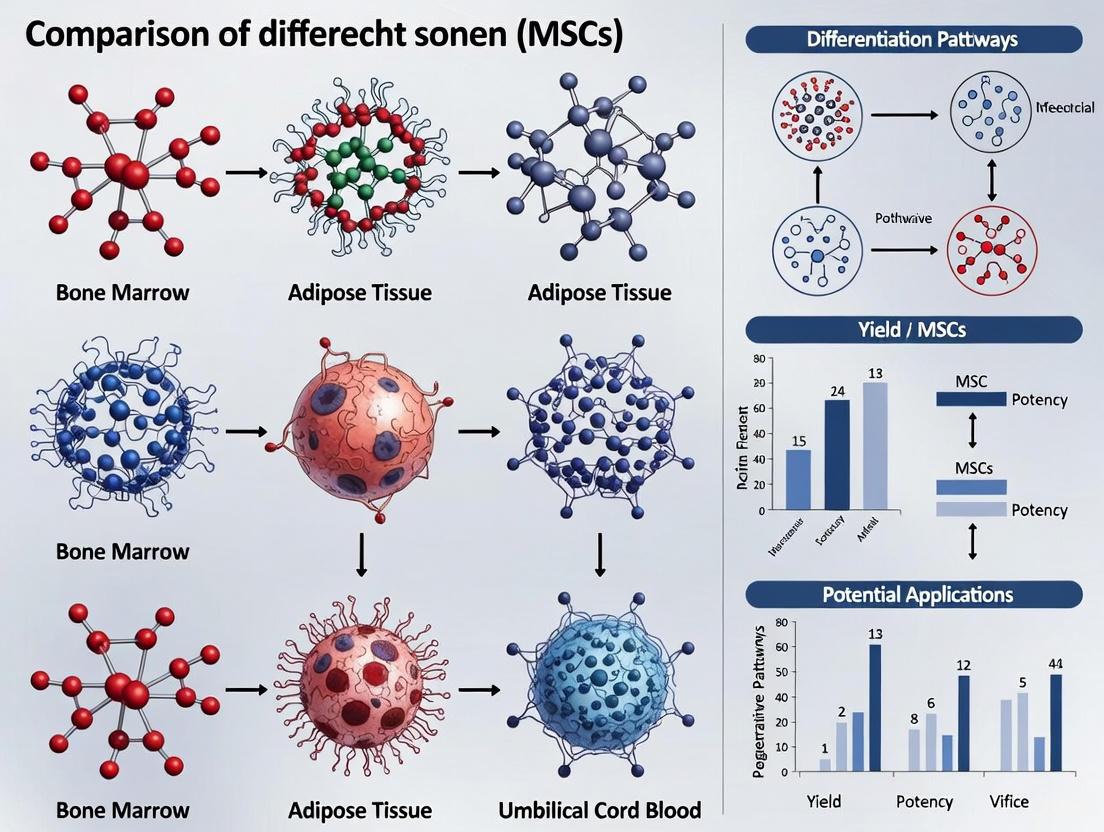
The therapeutic potential of mesenchymal stromal cells (MSCs) is significantly influenced by their source-specific biological properties, which are reflected in their cluster of differentiation (CD) marker profiles.
CD Marker Expression Across MSC Sources: A Comprehensive Guide for Research and Therapeutic Development
Abstract
The therapeutic potential of mesenchymal stromal cells (MSCs) is significantly influenced by their source-specific biological properties, which are reflected in their cluster of differentiation (CD) marker profiles. This article provides a systematic analysis of CD marker expression patterns in MSCs derived from bone marrow, adipose tissue, umbilical cord, dental pulp, and other tissues. It covers foundational principles, methodological approaches for characterization, strategies to address heterogeneity and manufacturing challenges, and comparative analyses of therapeutic potential. Aimed at researchers and drug development professionals, this review synthesizes current evidence to guide the selection of MSC sources for specific clinical applications, optimize manufacturing processes, and standardize characterization protocols to enhance the efficacy and safety of MSC-based therapies.
Defining MSC Identity: Core Markers and Source-Specific Variations
In the field of regenerative medicine, Mesenchymal Stromal Cells (MSCs) have emerged as a highly promising therapeutic tool due to their self-renewal capacity, multipotent differentiation potential, and immunomodulatory properties [1]. However, the initial lack of a universal definition for these cells hindered progress and made comparing study outcomes across different laboratories exceptionally difficult. To address this critical issue, the Mesenchymal and Tissue Stem Cell Committee of the International Society for Cellular Therapy (ISCT) established a set of minimal criteria in 2006 for defining human MSCs [2]. These criteria have since become the cornerstone of MSC research, providing a essential framework that fosters uniform characterization and facilitates data exchange among investigators worldwide [2]. This guide provides a detailed, data-driven comparison of how MSCs derived from different tissue sources measure against these benchmark ISCT standards.
The Three Pillars of the ISCT Minimal Criteria
The ISCT position statement defines three mandatory characteristics that a cell population must possess to be termed an MSC [2]:
- Plastic Adherence: The cells must adhere to plastic surfaces when maintained under standard culture conditions.
- Specific Surface Marker Expression: ≥95% of the cell population must express the surface markers CD105, CD73, and CD90. Furthermore, ≤2% of the population must lack expression of hematopoietic markers (CD45, CD34, CD14 or CD11b, CD79α or CD19, and HLA-DR).
- Tri-lineage Differentiation Potential: The cells must possess the capacity to differentiate into osteoblasts (bone), adipocytes (fat), and chondroblasts (cartilage) under standard in vitro inducing conditions.
While all qualified MSC populations meet the minimal criteria, significant functional and biological variations exist depending on the tissue of origin. The table below summarizes key comparative data from experimental studies.
Table 1: Comparative Analysis of MSC Biological Properties from Different Sources
| Source | Proliferation Rate & CFU-F Capacity | Osteogenic Potential | Adipogenic Potential | Immunomodulatory Capacity | Key Distinguishing Features |
|---|---|---|---|---|---|
| Bone Marrow (BM-MSC) | Reference standard [3]. | High potential; robust mineral matrix formation [3]. | High potential; abundant lipid droplet formation [3]. | Significantly inhibits T-cell proliferation; high secretion of IL-10 and TGF-β1 [3]. | Considered the "gold standard"; lower yield and invasive harvest [4]. |
| Adipose Tissue (A-MSC/ASC) | Similar growth rate and CFU-F efficiency to BM-MSCs [3]. | Shares similar high potential and gene profile with BM-MSCs [3]. | Shares similar high potential and gene profile with BM-MSCs [3]. | Comparable therapeutic properties to BM-MSCs [1]. | Easier to harvest in large quantities (500x more cells per gram than BM) [4]. |
| Dental Pulp (DPSC) | Proliferation rate significantly faster than BM-MSCs [5]. | Enhanced osteogenic differentiation capacity compared to BM-MSCs [5]. | Reduced adipogenic differentiation capacity compared to BM-MSCs [5]. | Not fully characterized in provided results. | Novel population with unique gene expression; isolated without harm to donor [5]. |
| Umbilical Cord (UC-MSC) | Higher proliferation capacity and longer lifespan than BM-MSCs [4]. | Demonstrated tri-lineage potential, though quantitative comparisons vary [6]. | Demonstrated tri-lineage potential, though quantitative comparisons vary [6]. | Lower immunogenicity; suitable for allogeneic transplant [1]. | Immune-privileged; express embryonic transcription factors (Oct-4, Sox-2) [6]. |
Surface Marker Expression Profiles
All MSC sources generally conform to the ISCT's marker criteria, but subtle differences in other markers can help distinguish their origin.
Table 2: Surface Marker Expression Profile Across MSC Sources
| Surface Marker | BM-MSC | Adipose MSC (ASC) | Peripheral Blood MSC | Umbilical Cord MSC |
|---|---|---|---|---|
| CD105 (SH2), CD73 (SH3), CD90 | Positive [4] | Positive [4] | Positive [4] | Positive [4] [6] |
| CD44, CD29 | Positive [4] | Positive [4] | Positive (CD44) [4] | Positive [6] |
| CD34, CD45, CD14 | Negative [4] | Negative (though some isolation methods show CD34+) [4] | Negative [4] | Negative [6] |
| CD106 (VCAM-1) | Positive [4] | Negative [4] | Information Missing | Information Missing |
| CD49d | Negative [4] | Positive [4] | Information Missing | Information Missing |
| STRO-1 | Variable Expression [4] | Variable Expression [4] | Information Missing | Information Missing |
Essential Experimental Protocols for MSC Characterization
Isolation and Culture of MSCs
The methodology for isolating MSCs varies by tissue source, but all rely on the fundamental principle of plastic adherence [7].
- Bone Marrow: Bone marrow aspirate is subjected to density gradient centrifugation (e.g., Ficoll-Hypaque) to collect the mononuclear cell (MNC) fraction. The MNCs are washed, seeded on a culture dish, and allowed to adhere. Non-adherent cells are removed during medium changes [3] [4].
- Adipose Tissue: Lipoaspirate is thoroughly washed and digested with collagenase. The digested tissue is centrifuged to separate the stromal vascular fraction (SVF), which is then resuspended and plated [4].
- Umbilical Cord: Two primary methods are used: (1) Explant culture, where the Wharton's Jelly is cut into small pieces and allowed to adhere, with cells migrating out from the tissue; or (2) Enzymatic digestion, where the tissue is digested with a collagenase/dispase mixture to release cells, which are then filtered and plated [6] [7].
- Dental Pulp: Extracted teeth are cracked open, and the pulp tissue is removed, minced, and digested with collagenase. The resulting cell suspension is plated [5].
Standard Culture Conditions: Cells are typically cultured in Dulbecco's Modified Eagle Medium (DMEM) or α-MEM, supplemented with 10% Fetal Bovine Serum (FBS) and 1% penicillin/streptomycin, and maintained at 37°C in a humidified incubator with 5% CO₂ [3] [8].
Flow Cytometry for Immunophenotyping
This is the standard method for verifying surface marker expression as per the ISCT criteria [9].
- Harvesting: Culture-adherent MSCs are detached using trypsin/EDTA.
- Staining: Approximately 0.5-1.0 x 10⁶ cells are aliquoted and incubated with fluorochrome-conjugated antibodies against CD73, CD90, CD105, CD34, CD45, CD14, CD19, and HLA-DR, along with appropriate isotype controls, for 20-30 minutes in the dark [3] [5].
- Analysis: The stained cells are washed, fixed, and analyzed using a flow cytometer. A population is considered positive if ≥95% of cells express the positive markers and ≤2% express the negative markers [2] [6].
In Vitro Tri-lineage Differentiation Assay
The following protocols are standardized for inducing differentiation, typically over 2-4 weeks, with media changes every 3-4 days [3] [5].
Adipogenic Differentiation:
Osteogenic Differentiation:
Chondrogenic Differentiation:
- Induction Method: A pelleted micromass culture system is often used. Cells are centrifuged to form a pellet and cultured in a specialized medium.
- Induction Medium: Serum-free medium supplemented with 1-10 ng/ml TGF-β (e.g., TGF-β1 or β3), 100 nM dexamethasone, 50 µM ascorbate-2-phosphate, and 1% ITS (Insulin-Transferrin-Selenium) premix [8].
- Detection: The cell pellet is fixed, paraffin-embedded, sectioned, and stained with Alcian Blue or Safranin O to visualize sulfated proteoglycans in the cartilage matrix [8] [9].
Visualization of MSC Characterization Workflow
The following diagram illustrates the logical pathway for characterizing MSCs according to ISCT criteria, from isolation through final qualification.
The Scientist's Toolkit: Key Research Reagents
Successful isolation and characterization of MSCs require a suite of specific reagents and tools. The table below details essential solutions and their functions.
Table 3: Essential Reagents for MSC Isolation and Characterization
| Reagent / Kit | Primary Function | Application Context |
|---|---|---|
| Collagenase Type I/II | Enzymatic digestion of extracellular matrix to release cells from tissue. | Isolation from adipose tissue, umbilical cord, dental pulp. |
| Ficoll-Paque / Density Gradient Medium | Separation of mononuclear cells (MNCs) from whole bone marrow or cord blood based on density. | Isolation of BM-MSCs and CB-MSCs. |
| Flow Cytometry Antibodies (CD73, CD90, CD105, CD34, CD45, CD14, CD19, HLA-DR) | Immunophenotyping of cell surface markers to confirm ISCT criteria. | Standard characterization for all MSC sources. |
| Tri-lineage Differentiation Kits | Pre-formulated media supplements for inducing osteogenic, adipogenic, and chondrogenic differentiation. | Standardized in vitro multipotency assay. |
| Oil Red O Staining Solution | Histochemical staining of neutral lipids and lipoproteins in adipocytes. | Adipogenic differentiation confirmation. |
| Alizarin Red S Staining Solution | Histochemical staining of calcium deposits in osteocytes. | Osteogenic differentiation confirmation. |
| Alcian Blue Staining Solution | Histochemical staining of acidic sulfated proteoglycans in chondrocytes. | Chondrogenic differentiation confirmation. |
The ISCT minimal criteria provide an indispensable foundation for defining MSCs, ensuring consistency and reliability across research and clinical applications. While MSCs from bone marrow and adipose tissue are the most extensively characterized and often show robust tri-lineage potential and immunomodulatory capacity, alternative sources like umbilical cord and dental pulp offer significant advantages, including less invasive harvesting, higher proliferation rates, and unique differentiation propensities [3] [4] [5]. The choice of MSC source is not one-size-fits-all; it should be strategically aligned with the specific requirements of the intended therapeutic or research application, guided by the comparative data and standardized protocols outlined in this guide.
The characterization of mesenchymal stromal cells (MSCs) for research and clinical applications relies on a dual-marker paradigm: positive expression of specific surface proteins and the critical absence of hematopoietic markers. This guide objectively compares the experimental data and significance of the negative marker criterion—the lack of CD45, CD34, CD14 or CD11b, CD79α or CD19, and HLA-DR—as defined by the International Society for Cellular Therapy (ISCT). We synthesize data from multiple studies to compare how adherence to this criterion varies across different MSC sources and provide detailed methodologies for its verification, providing researchers and drug development professionals with a foundational resource for cell identity and purity assessment.
The minimal criteria for defining human MSCs, established by the ISCT, serve as a global benchmark for the field. According to these criteria, MSCs must demonstrate:
- Adherence to plastic under standard culture conditions.
- Positive expression of specific cell surface markers (CD105, CD73, and CD90).
- Lack of expression of a panel of hematopoietic and lineage markers (CD45, CD34, CD14 or CD11b, CD79α or CD19, and HLA-DR) [10] [11].
- Tri-lineage differentiation potential in vitro (into osteoblasts, adipocytes, and chondrocytes).
The "hematopoietic marker exclusion" criterion is not merely a phenotypic curiosity; it is fundamental for verifying that a cell population is of mesenchymal, not hematopoietic, origin. This distinction is crucial for ensuring the purity of cell preparations, minimizing unwanted immune responses, and providing a baseline for comparing MSCs from different tissues or laboratories. The absence of these markers helps confirm the isolation of the intended stromal cell population and reduces the risk of contaminating cells influencing experimental or therapeutic outcomes [10] [12].
Experimental Protocols for Marker Analysis
Verifying the absence of hematopoietic markers is predominantly achieved through flow cytometry. The following provides a generalized experimental protocol for this analysis.
Cell Preparation and Staining
- Cell Harvesting: Culture MSCs until they reach 70-80% confluency. Harvest cells using a dissociation agent such as 0.25% trypsin/EDTA or TrypLE [13] [11].
- Washing: Centrifuge the cell suspension (e.g., at 1500 rpm for 5 minutes) and discard the supernatant. Resuspend the cell pellet in a flow cytometry staining buffer (e.g., D-PBS supplemented with 1-5% fetal bovine serum) to block non-specific binding [13] [12].
- Antibody Incubation: Incubate the cells with fluorochrome-conjugated antibodies against the target markers. A typical panel would include antibodies against CD45, CD34, CD14, CD19, and HLA-DR. Always include appropriate isotype-matched control antibodies to set negative populations and determine positive staining thresholds [11] [12]. The incubation is typically performed for 20-45 minutes at 4°C in the dark [13] [12].
- Washing and Analysis: After incubation, wash the cells to remove unbound antibody, then resuspend in an appropriate buffer for flow cytometry analysis [13].
Instrumentation and Gating Strategy
- Instrumentation: Analysis is performed using a flow cytometer (e.g., BD FACS Calibur or Accuri C6). The instrument should be calibrated using standard fluorescent beads [13] [11].
- Gating: The analytical workflow begins by gating on the cell population based on forward scatter (FSC, indicating cell size) and side scatter (SSC, indicating granularity) to exclude debris and dead cells. Subsequently, the gated population is analyzed for fluorescence in each channel corresponding to the hematopoietic markers. A threshold for positivity is set based on the isotype control, typically with ≤2% positive events considered negative for the marker [11].
The following diagram illustrates the core logical relationship and workflow for establishing MSC identity through marker expression, which underpins the experimental gating strategy.
Comparative Analysis of Hematopoietic Marker Expression Across Cell Types
While the ISCT criteria set a clear benchmark, experimental data reveals that the expression profiles of these "negative" markers can vary depending on the MSC tissue source and the presence of contaminating cell types like fibroblasts.
Key Hematopoietic Markers and Their Significance
Table 1: Function and significance of key negative markers in MSC characterization.
| Marker | Primary Cellular Expression | Significance of Absence in MSCs |
|---|---|---|
| CD45 | Pan-leukocyte marker; all hematopoietic cells except erythrocytes and platelets [14] | Confirms non-hematopoietic origin; excludes immune cell contaminants [10] [11] |
| CD34 | Hematopoietic stem and progenitor cells, endothelial cells [14] | Distinguishes MSCs from hematopoietic stem cells; though some native MSC sources (e.g., adipose) may express it [12] [15] |
| CD14 / CD11b | Monocytes, macrophages, granulocytes [14] [16] | Excludes cells of the myeloid lineage, particularly monocytes and macrophages [10] |
| CD79α / CD19 | B cells and their precursors [14] [16] | Excludes B lymphocyte contamination from the isolated cell population [10] |
| HLA-DR | MHC Class II; antigen-presenting cells (B cells, macrophages, dendritic cells), activated immune cells [16] | Indicates a non-activated, non-professional antigen-presenting cell state; its presence can suggest an activated or impure population [10] [11] |
Quantitative Comparison of Marker Absence Across Studies
Data from independent studies highlight the general consistency of hematopoietic marker exclusion in MSCs, while also noting occasional deviations.
Table 2: Summary of quantitative flow cytometry data for hematopoietic marker expression in MSCs from various sources. Data presented as negative for marker expression unless otherwise specified.
| MSC / Cell Source | CD45 | CD34 | CD14 / CD11b | CD19 / CD79α | HLA-DR | Study |
|---|---|---|---|---|---|---|
| Bone Marrow MSCs | Lack of expression confirmed [11] | Lack of expression confirmed [11] | Lack of expression confirmed [11] | Lack of expression confirmed [11] | Lack of expression confirmed [11] | [11] |
| Adipose MSCs | Lack of expression confirmed [11] | Lack of expression confirmed [11] | Lack of expression confirmed [11] | Lack of expression confirmed [11] | Lack of expression confirmed [11] | [11] |
| Wharton's Jelly MSCs | Lack of expression confirmed [13] | N/D | N/D | Low expression observed in some cells [13] | N/D | [13] |
| Spermatogonial Stem Cells | Low expression observed [13] | N/D | N/D | Expression observed [13] | N/D | [13] |
| Granulosa Cells | N/D | N/D | N/D | Expression observed [13] | N/D | [13] |
| Dermal Fibroblasts | Lack of expression confirmed [11] [12] | Lack of expression confirmed [11] | Lack of expression confirmed [11] | Lack of expression confirmed [11] | Lack of expression confirmed (unstimulated) [11] | [11] [12] |
Key Observations:
- Consistency in Major Sources: Bone marrow and adipose-derived MSCs, the most characterized sources, consistently show a lack of expression for all hematopoietic markers, aligning with ISCT criteria [11].
- Source-Specific Variations: MSCs from certain niches, such as Wharton's jelly, spermatogonial stem cells, and granulosa cells, have been reported to show low-level or positive expression for CD19 and CD45 in some studies, suggesting potential biological variation or culture-induced changes [13].
- Fibroblast Similarity: Dermal fibroblasts demonstrate a marker exclusion profile nearly identical to that of canonical MSCs, underscoring the phenotypic similarity between the two cell types and the need for functional assays to distinguish them [11] [17] [12].
The Scientist's Toolkit: Essential Reagents for Analysis
Table 3: Key research reagents for the flow cytometric analysis of hematopoietic marker exclusion in MSCs.
| Reagent / Material | Function / Application | Example from Literature |
|---|---|---|
| Fluorochrome-conjugated Antibodies | Specific detection of cell surface antigens (CD45, CD34, CD14, CD19, HLA-DR). | Anti-human CD14 FITC, CD19 PE, CD34 APC, CD45 PE, HLA-DR FITC [11] [12] |
| Flow Cytometry Staining Buffer | Provides a protein-rich solution to minimize non-specific antibody binding during cell staining. | D-PBS supplemented with 1% Fetal Bovine Serum [13] |
| Isotype Control Antibodies | Matched irrelevant antibodies used to establish background fluorescence and set positive/negative gates. | Included as a control in flow cytometry experiments [11] |
| Cell Dissociation Reagent | Enzymatic or non-enzymatic detachment of adherent MSCs from culture plastic for analysis. | 0.25% trypsin/EDTA or TrypLE [13] [11] |
| Flow Cytometer | Instrument for quantitative multi-parameter analysis of single cells in suspension. | BD FACS Calibur, Accuri C6 Flow Cytometer [13] [11] |
Discussion and Research Implications
The rigorous exclusion of hematopoietic markers remains a cornerstone of MSC characterization. However, researchers must be aware of the nuances. The consensus ISCT criteria provide an essential framework for comparing MSCs across laboratories, ensuring that cells designated as "MSCs" share a core, definable identity [10] [18]. This is critical for the reproducibility of research and the safety and efficacy of cell therapies.
The observed variations in marker expression, particularly from less conventional tissue sources, highlight that the ISCT criteria are a minimum standard. They do not preclude biological diversity within the MSC pool. Furthermore, the phenotypic overlap with fibroblasts presents an ongoing challenge, as fibroblasts also lack these hematopoietic markers [11] [17] [12]. This reinforces the principle that marker analysis must be one component of a broader characterization strategy that includes functional differentiation assays and, increasingly, the evaluation of novel functional biomarkers like cellular deformability [10].
For drug development professionals, adherence to these criteria is a key aspect of manufacturing control and regulatory compliance. Ensuring that cell products are free from hematopoietic contamination is a critical quality attribute. As the field progresses, integrating classical marker-based definitions with functional potency assays will be essential for advancing the next generation of predictable and effective MSC-based therapies [10] [15] [18].
Comparative Immunophenotyping of MSCs from Bone Marrow, Adipose Tissue, and Umbilical Cord
Mesenchymal stromal cells (MSCs) represent a cornerstone of regenerative medicine and cell-based therapies due to their multipotent differentiation capacity, immunomodulatory properties, and paracrine activity [19] [15]. While the International Society for Cellular Therapy (ISCT) has established minimal criteria for defining MSCs—including plastic adherence, specific surface antigen expression, and trilineage differentiation potential—growing evidence reveals that MSCs from different tissue sources exhibit significant functional and immunophenotypic differences [20] [21]. These differences are not captured by the standard CD73, CD90, and CD105 positive expression and CD45, CD34, CD14 or CD11b, CD79a or CD19, and HLA-DR negative expression profile [22] [23]. This comparative immunophenotyping guide provides a detailed analysis of the surface marker expression patterns of MSCs derived from bone marrow (BM-MSCs), adipose tissue (AT-MSCs), and umbilical cord (UC-MSCs, including Wharton's Jelly and cord blood), framing these differences within the broader thesis that the tissue source fundamentally shapes MSC identity and therapeutic potential. The data presented herein aims to inform researchers and drug development professionals in selecting the most appropriate MSC source for specific clinical applications.
The immunophenotype of MSCs extends far beyond the minimal ISCT criteria. Expression levels of both classical and non-classical markers vary significantly depending on the tissue of origin, influencing cell isolation strategies, functional properties, and ultimately, therapeutic efficacy.
Table 1: Classical and Non-Classical Marker Expression in MSCs from Different Sources
| CD Marker | Alternative Name | Bone Marrow (BM-MSCs) | Adipose Tissue (AT-MSCs) | Umbilical Cord (UC-MSCs) | Functional Significance |
|---|---|---|---|---|---|
| CD73 | NT5E | +++ (≥90%) [21] | +++ (≥90%) [21] | +++ (≥90%) [21] | Ecto-5'-nucleotidase; ISCT minimal criterion [15] |
| CD90 | Thy-1 | +++ (≥90%) [21] | +++ (≥90%) [21] | +++ (≥90%) [21] | Involved in cell-cell and cell-matrix interactions [15] |
| CD105 | Endoglin | +++ (≥90%) [21] | +++ (≥90%) [21] | +++ (≥90%) [21] | TGF-β receptor; ISCT minimal criterion [15] |
| CD44 | HCAM | +++ (≥90%) [21] | +++ (≥90%) [21] | +++ (≥90%) [21] | Receptor for hyaluronic acid [24] |
| CD29 | Integrin β1 | +++ (≥90%) [21] | +++ (≥90%) [21] | +++ (≥90%) [21] | Forms part of ECM-binding integrins [24] |
| CD271 | LNGFR, p75NTR | + (Reported as suitable marker) [23] | + (Reported as suitable marker) [23] | -/Low (Inadequate marker) [23] | Low-affinity nerve growth factor receptor; enrichment of multipotent cells [23] [15] |
| CD146 | MCAM | + (Variable) [21] | + (Variable) [21] | ++ (21.8%) [21] | Pericyte marker; involved in cell junction formation [15] [20] |
| CD34 | - | - (Negative) [21] | +/- (10.9%) [21] | - (Negative) [21] | Hematopoietic progenitor cell marker [25] |
| SSEA-4 | - | ++ (>50%) [21] | + (10.7%) [21] | ++ (>50%) [21] | Pluripotency-associated glycolipid antigen [21] |
| MSCA-1 | - | ++ (>90%) [21] | ++ (>90%) [21] | - (Negative) [21] | Mesenchymal stem cell antigen-1 [21] |
| HLA-DR | MHC Class II | - (<5-7%) [21] | - (<5-7%) [21] | - (<5-7%) [21] | Immunogenicity marker; low expression enables allogeneic use [25] |
Note: +++ indicates high expression; ++ indicates moderate expression; + indicates low or variable expression; - indicates negative expression. Percentages are provided where available from comparative studies.
The data reveals a complex landscape beyond the standard positive markers. For instance, CD271 is a valuable marker for prospectively isolating highly multipotent MSCs from bone marrow and adipose tissue but is not expressed on umbilical cord-derived MSCs [23]. Conversely, markers like SSEA-4 and MSCA-1 show dramatic source-dependent variation, with UC-MSCs being entirely negative for MSCA-1, a marker highly expressed on BM-MSCs and AT-MSCs [21]. This underscores the ontological differences between MSCs from perinatal (umbilical cord) and adult (bone marrow, adipose) tissues.
Functional Correlates of Immunophenotypic Differences
The distinct surface marker profiles of MSCs from different sources are linked to tangible differences in their functional behavior, including proliferation capacity, immunomodulatory potency, and secretome composition.
Table 2: Functional Characteristics Linked to MSC Source
| Functional Attribute | Bone Marrow (BM-MSCs) | Adipose Tissue (AT-MSCs) | Umbilical Cord (UC-MSCs) |
|---|---|---|---|
| Proliferation & Senescence | Lower proliferation rate (PDT: ~99 hrs), higher senescence markers (p53, p21, p16) [25] [21] | Intermediate proliferation rate (PDT: ~40 hrs) [21] | Highest proliferation rate (PDT: ~21 hrs), lowest senescence markers, longest culture maintenance [25] [21] |
| Immunomodulatory Potency | Most potent suppression of PBMC proliferation in both contact and transwell co-culture systems [21] | Intermediate immunomodulatory capacity [21] | Lower immunomodulatory capacity compared to BM-MSCs, especially in transwell systems [21] |
| Secretome Profile | Lower secretion of neurotrophic factors in some studies; secretome supports neuroregeneration [21] | Higher secretion of HGF and other neurotrophic factors; secretome supports neuroregeneration [21] | High secretion of angiogenic/neurotrophic factors (HGF, FGF-); potent neurotrophic secretome [21] |
| Trilineage Differentiation | Robust osteogenic, chondrogenic, and adipogenic potential [25] | Robust osteogenic, chondrogenic, and adipogenic potential [19] [25] | Osteogenic and chondrogenic potential; variable adipogenic potential reported [25] |
These functional differences have direct implications for therapeutic applications. The superior proliferative capacity and primitive nature of UC-MSCs make them ideal for applications requiring large-scale ex vivo expansion [25]. In contrast, the potent immunomodulatory activity of BM-MSCs may favor their use in treating autoimmune conditions or graft-versus-host disease [21]. The secretome data further suggests that AT-MSCs and UC-MSCs might be more suitable for disorders requiring robust neurotrophic or angiogenic support.
Standardized Experimental Workflow for Comparative Immunophenotyping
To ensure reliable and reproducible comparison of MSC immunophenotypes, a standardized experimental workflow is essential. The following diagram and protocol outline a consensus approach derived from the analyzed studies.
Figure 1: Experimental workflow for comparative immunophenotyping of MSCs.
Detailed Methodological Protocol
Cell Source and Isolation:
- Bone Marrow (BM-MSCs): Obtain from iliac crest aspirates of healthy donors. Isplicate mononuclear cells by density gradient centrifugation (e.g., Ficoll-Paque). Plate cells in basal medium [21].
- Adipose Tissue (AT-MSCs): Obtain from subcutaneous lipoaspirates. Wash tissue extensively with PBS and digest with 0.075% collagenase (Type I) for 1-1.5 hours at 37°C with agitation. Centrifuge to obtain the stromal vascular fraction (SVF), lyse erythrocytes, and plate the cells [15] [24].
- Umbilical Cord (UC-MSCs): From Wharton's jelly, dissect the cord, remove blood vessels, and mince the remaining tissue into explants. Culture explants to allow outgrowth of cells [21]. For umbilical cord blood, process via density gradient centrifugation.
Cell Culture and Expansion:
- Culture all MSC types in a consistent, standardized medium to avoid culture-induced phenotypic changes. Alpha-Modified Eagle Medium (α-MEM) or Dulbecco's Modified Eagle Medium (DMEM) supplemented with 10% Fetal Bovine Serum (FBS) or, for clinical-grade translation, 5-10% human platelet lysate (hPL) is recommended [26] [21].
- Maintain cells at 37°C in a humidified atmosphere with 5% CO₂.
- Expand cells until 70-80% confluence and passage using trypsin-EDTA. For comparative analysis, use cells at equivalent passage numbers (typically passages 4-6) [19] [21].
Flow Cytometry Analysis:
- Harvesting: Detach cells at ~80% confluence using a dissociation enzyme like trypsin-EDTA. Wash cells with PBS.
- Staining: Aliquot ~1x10⁵ cells per tube. Incubate cells with fluorochrome-conjugated antibodies (or corresponding isotype controls) for 20-30 minutes in the dark at 4°C. Use a validated antibody panel covering ISCT markers (CD73, CD90, CD105, CD45, CD34, HLA-DR) and investigational markers (CD271, CD146, SSEA-4, etc.).
- Acquisition: Analyze samples using a flow cytometer. Collect a minimum of 10,000 events per sample.
- Gating Strategy: First, gate the cell population based on forward and side scatter to exclude debris. Then, apply a viability dye (e.g., DAPI) to exclude dead cells. Finally, analyze the expression of target antigens on the viable cell population [22] [21].
The Scientist's Toolkit: Essential Reagents for MSC Immunophenotyping
Table 3: Key Research Reagent Solutions for MSC Characterization
| Reagent Category | Specific Product/Kit | Function in Experiment | Critical Notes |
|---|---|---|---|
| Culture Medium | Alpha-MEM (α-MEM) or DMEM | Basal nutrient medium for cell expansion | α-MEM may support higher MSC proliferation and sEV yields than DMEM [26]. |
| Serum Supplement | Fetal Bovine Serum (FBS) or Human Platelet Lysate (hPL) | Provides essential growth factors and adhesion proteins | hPL is a xeno-free alternative that often enhances proliferation and is preferred for clinical-grade manufacturing [26] [21]. |
| Dissociation Reagent | Trypsin-EDTA (0.25%) | Detaches adherent cells for passaging and analysis | Standardized trypsinization time and concentration are crucial to preserve surface epitopes [19]. |
| Digestion Enzyme | Collagenase (Type I) | Digests extracellular matrix in tissues (AT, DP) for initial cell isolation | Concentration and digestion time must be optimized to maximize cell yield and viability [19] [15]. |
| Flow Antibodies | Fluorochrome-conjugated anti-human CD73, CD90, CD105, CD45, CD34, CD271, etc. | Detection of surface markers via flow cytometry | Always titrate antibodies and include isotype-matched negative controls for accurate gating [15] [21]. |
| Buffers | Phosphate Buffered Saline (PBS), Flow Cytometry Staining Buffer | Washing and resuspending cells; provides ionic and protein support for staining | Staining buffer often contains BSA to block non-specific antibody binding. |
This comparative immunophenotyping guide demonstrates that BM-MSCs, AT-MSCs, and UC-MSCs, while adhering to the minimal ISCT criteria, possess distinct and functionally relevant molecular signatures. BM-MSCs are characterized by strong immunomodulatory activity and the expression of markers like CD271. AT-MSCs represent an abundant source with robust differentiation potential. UC-MSCs from perinatal tissue exhibit a more primitive phenotype, reflected in high proliferation rates and unique markers like SSEA-4. The selection of an MSC source for research or therapy should therefore be a deliberate decision based on the target pathology and the desired mechanistic action, rather than a matter of mere convenience. A deep understanding of these immunophenotypic differences, as outlined in this guide, is paramount for advancing the field of MSC-based therapeutics. Future work should focus on linking specific marker combinations to predictable in vivo functional outcomes.
While the International Society for Cellular Therapy (ISCT) has established minimum criteria for defining mesenchymal stem cells (MSCs) based on CD73, CD90, and CD105 expression, a broader set of non-classical markers provides deeper insight into MSC function, potency, and tissue-specific characteristics. CD44, CD146, CD166, and STRO-1 represent critical surface markers that correlate with enhanced stemness, migratory potential, and perivascular localization but are not uniformly expressed across all MSC sources. This guide objectively compares the expression and functional significance of these markers in MSCs derived from bone marrow (BM-MSCs), adipose tissue (AD-MSCs), umbilical cord (UC-MSCs), and placental tissue (PL-MSCs), providing researchers with experimental data and methodologies for refined cellular characterization.
The expression of non-classical markers varies significantly between MSC sources, reflecting their distinct biological niches and functional properties. Quantitative flow cytometry data reveal consistent patterns that can inform the selection of an appropriate MSC source for specific research or therapeutic applications.
Table 1: Expression Profiles of Non-Classical Markers Across MSC Sources
| MSC Source | CD44 | CD146 | CD166 | STRO-1 | Key Negative Markers |
|---|---|---|---|---|---|
| Bone Marrow (BM-MSC) | High (≥95%) [4] | 15.1% positive in skeletal studies [20] | 30.9% positive in skeletal studies [20] | 17.7% positive in skeletal studies [20] | CD45, CD34, CD14 [27] [28] |
| Adipose Tissue (AD-MSC) | High (≥95%) [4] | Positive [4] [29] | Positive [4] | Variable (Differences reported) [27] [4] | CD31, CD45 [4] |
| Umbilical Cord (UC-MSC) | High [4] [30] | Positive [30] | Positive [4] [30] | Positive [30] | CD45, CD34 [4] |
| Placenta (PL-MSC) | Information Missing | Positive [29] | Information Missing | Information Missing | CD14, CD45 [29] |
Table 2: Discriminatory Power of Markers for MSC Authentication vs. Fibroblasts
| Marker | Function/Role | Use in Differentiating MSCs from Fibroblasts |
|---|---|---|
| CD106 (VCAM-1) | Cell adhesion, hematopoietic stem cell niche maintenance | Highly specific for BM-MSCs; expression is low or absent in fibroblasts and AD-MSCs [4] [29]. |
| CD146 (MCAM) | Perivascular localization, marker for subendothelial cells | Positive in MSCs from BM, AD, UC, and Placenta; generally absent in fibroblasts [29]. |
| CD271 (NGFR) | Low-affinity nerve growth factor receptor | Identified as a highly specific marker for BM-MSCs [29]. |
| CD26 | Dipeptidyl peptidase IV | Previously suggested as fibroblast-specific, but one study found it not definitive for discrimination [29]. |
Functional Roles of Non-Classical Markers
These non-classical markers are not merely phenotypic indicators; they are active players in critical biological processes that underpin the therapeutic potential of MSCs.
CD44: The Hyaluronan Receptor
- Primary Function: Serves as the principal receptor for hyaluronic acid (HA), a major component of the extracellular matrix (ECM) [31]. This interaction is crucial for cell-cell and cell-ECM adhesion.
- Role in Homing and Migration: The CD44-HA axis is instrumental in cell migration and homing to sites of injury. Upon tissue damage, HA fragments are generated, which CD44 on MSCs can bind to, facilitating their directional migration through the tissue [31].
- Stemness Correlation: High expression of CD44 has been associated with the maintenance of "stemness" properties in various MSC-like cells, including those from Wharton's jelly and hair follicles [30].
CD146 (MCAM): A Perivascular Marker
- Localization and Identity: CD146 is a well-established marker for perivascular cells and is expressed by MSCs residing in a perivascular niche [27]. It helps identify a subset of MSCs with enhanced regenerative potential.
- Angiogenic Support: While MSCs themselves may not form blood vessels, CD146+ MSCs provide pro-angiogenic support by secreting growth factors like VEGF, thereby promoting vascularization in damaged tissues [27] [20].
- Role in Immunomodulation: Evidence suggests CD146 is involved in the immunomodulatory functions of MSCs, including their ability to suppress T-cell proliferation, which is vital for their therapeutic effect in inflammatory diseases [29].
CD166 (ALCAM): The Adhesion Mediator
- Function in Cell Adhesion: CD166, or Activated Leukocyte Cell Adhesion Molecule (ALCAM), mediates homophilic (CD166-CD166) and heterophilic interactions between neighboring cells and with the extracellular matrix [4] [30].
- Stem Cell Niche Maintenance: Through these adhesive interactions, CD166 is believed to play a key role in maintaining the stem cell niche architecture within the bone marrow and other tissues, regulating the balance between self-renewal and differentiation [4].
- Potential as an Osteogenic Indicator: High expression of CD166, particularly when combined with CD105, has been suggested to indicate a propensity for osteogenic (bone) differentiation [30].
STRO-1: A Primitive Progenitor Marker
- Marker for Primitive Populations: STRO-1 identifies a subset of MSCs that are considered more primitive and highly clonogenic [27] [20]. Isolating STRO-1+ cells can enrich for a population with increased proliferative and multi-lineage differentiation potential.
- Association with Osteogenesis: The STRO-1 antigen is frequently used to isolate MSCs with a strong osteogenic differentiation capacity, making it a valuable marker for bone tissue engineering applications [20] [30].
- Variable Expression: Its expression can be variable and is highly dependent on the tissue source and isolation method, which must be considered when using it as a selection marker [27] [4].
Experimental Protocols for Marker Analysis
A standardized flow cytometry protocol is essential for the consistent and accurate characterization of MSC surface markers.
Key Reagent Solutions
Table 3: Essential Research Reagents for MSC Surface Marker Characterization
| Reagent / Material | Function / Application | Example from Literature |
|---|---|---|
| Flow Cytometry Buffer (PBS + 1% FBS) | Provides an isotonic environment for antibody staining while reducing non-specific binding. | Used as a washing and antibody dilution buffer in cell surface marker analysis [29] [30]. |
| Fluorophore-conjugated Antibodies | Primary tools for detecting specific cell surface antigens via flow cytometry. | Studies use antibodies against CD44, CD90, CD105, CD106, CD146, CD166, and STRO-1 [29] [30]. |
| Trypsin/EDTA (0.25%) | A proteolytic enzyme solution used to detach adherent cells from culture plastic for analysis. | Standard method for harvesting subconfluent MSC cultures [29] [30]. |
| Platelet Lysate-Supplemented Media | A xeno-free culture medium used to expand MSCs while maintaining their differentiation potential and marker expression. | α-MEM supplemented with 5% platelet lysate was used for culturing MSCs prior to analysis [29]. |
Detailed Flow Cytometry Workflow
The following diagram outlines the core experimental workflow for analyzing MSC surface markers.
Title: MSC Surface Marker Analysis Workflow
Protocol Steps:
- Cell Preparation: Use subconfluent (≤80%) MSCs at passage 3-5 to ensure a consistent and undifferentiated phenotype [29] [30].
- Harvesting: Detach adherent cells using a standard solution of 0.25% trypsin/EDTA [30].
- Staining: Incubate approximately 1x10^5 cells per test with fluorophore-conjugated primary antibodies against target markers (e.g., CD44, CD146, CD166, STRO-1) and appropriate isotype controls. The incubation should be carried out for 45 minutes at 4°C in the dark to prevent photobleaching and minimize internalization [29] [30].
- Analysis: After washing, resuspend cells in buffer and analyze using a flow cytometer. A minimum of 10,000 events should be collected per sample. The identity of MSCs can be confirmed by a positivity ≥95% for classical markers (CD73, CD90, CD105) and negativity ≤2% for hematopoietic markers (CD45, CD34, CD14, HLA-DR) [28].
Implications for Research and Drug Development
The strategic application of non-classical marker analysis significantly advances MSC research and therapeutic development. Incorporating these markers into quality control (QC) protocols enables a more robust assessment of MSC batch potency and purity, moving beyond minimal criteria to functional prediction. Furthermore, leveraging markers like CD146 and STRO-1 allows for the isolation of specific subpopulations with enhanced therapeutic potential, paving the way for targeted and more effective cell therapies.
For drug development professionals, understanding the heterogeneous expression of these markers is critical for rational MSC source selection. Depending on the clinical application—such as osteogenesis (STRO-1), vascular repair (CD146), or immunomodulation—the optimal MSC source and its corresponding marker profile may differ substantially. This refined approach ensures that the cellular product is best suited for its intended therapeutic mechanism of action.
Impact of Donor Tissue Type and Species on Marker Expression Profiles
The characterization of cell surface markers, primarily the Cluster of Differentiation (CD) antigens, is fundamental for identifying, isolating, and validating mesenchymal stromal cells (MSCs) for research and therapeutic applications [32]. While minimal criteria define MSCs as a broad class, the precise expression profiles of these markers are not universal. Significant heterogeneity arises from the donor species and the specific tissue source from which MSCs are isolated [33] [34]. This variability poses a challenge for comparative biology and the translational application of findings from animal models to human therapies. This guide objectively compares experimental data from key studies to elucidate how species and tissue origin impact MSC marker expression profiles.
Comparative Marker Expression Across Species
The ISCT minimal criteria for human MSCs define a baseline phenotype, but studies across diverse species reveal significant deviations from this standard profile, highlighting the necessity for species-specific characterization.
Table 1: Comparison of MSC Surface Marker Expression Across Different Species
| Species | Tissue Source | Positive Markers | Negative Markers | Weak/Variable Markers | Reference |
|---|---|---|---|---|---|
| Human | Bone Marrow | CD44, CD73, CD90, CD105, CD166 | CD34, CD45 | - | [34] |
| Bovine | Adipose Tissue | CD44, CD73, CD90, CD105, CD166 | CD45 | - | [35] |
| Mouse | Bone Marrow | CD44, CD90, CD105 | CD34, CD45 | CD166 | [34] |
| Goat | Bone Marrow | CD44, CD166 | CD45 | CD34, CD90, CD105 | [34] |
| Sheep | Bone Marrow | CD44, CD166 | CD45 | CD34, CD90, CD105 | [34] |
| Chicken | Bone Marrow | CD29, CD44, CD73, CD90, CD105 | CD31, CD34, CD45 | - | [36] |
Key Findings from Cross-Species Analysis
- Conservation of Core Markers: Certain markers like CD44 show consistent positive expression across all species studied, including human, bovine, mouse, goat, sheep, and chicken [34] [35] [36].
- Species-Specific Discrepancies: Markers considered definitive for human MSCs, such as CD90 and CD105, were weakly or negatively expressed in goat and sheep bone marrow-derived MSCs [34].
- Avian Models: Chicken MSCs express a profile remarkably similar to the human standard, including CD73, CD90, and CD105, making them a potentially strong model for specific research applications [36].
Impact of Donor Breed and Age Within a Species
Beyond species-level differences, intrinsic donor factors such as breed and age introduce another layer of heterogeneity, which is critical for standardizing allogeneic MSC therapies.
Table 2: Effect of Breed and Age on Bovine Adipose-Derived MSC Characteristics
| Donor Characteristic | Impact on Proliferation | Impact on Differentiation | Impact on Immunophenotype | Reference |
|---|---|---|---|---|
| Breed (Holstein Friesian vs. Belgian Blue) | Not a primary focus of study | Osteogenic potential higher in Belgian Blue; Adipogenic potential affected by age interaction. | CD34+ percentage higher in calf Holstein Friesians; correlated with osteogenesis & proliferation. | [33] |
| Age (Fetal, Calf, Adult) | Fetal and calf MSCs showed higher proliferation capacity than adult MSCs. | Adipogenic potential higher in fetal and adult Holstein Friesians; Osteogenic potential not significantly affected. | No major age effect observed in the study. Breed was a stronger factor. | [33] |
Experimental Evidence in Animal Models
- Breed-Specific Effects: A study on bovine MSCs found that breed was a decisive factor for osteogenic potential, with Belgian Blue-derived MSCs outperforming those from Holstein Friesians [33]. Furthermore, the expression of CD34, a marker often associated with hematopoietic cells but also found on MSC subpopulations, was breed-dependent and functionally correlated with enhanced osteogenic differentiation and proliferation [33].
- Age-Related Variation: The proliferation capacity of MSCs is frequently linked to donor age. Studies on bovine MSCs confirmed that younger donors (fetal, calf) possess a superior proliferation capacity compared to adult donors [33]. However, the effect on differentiation potential is lineage-specific and not always linear, with adipogenic potential in bovine MSCs being high in both fetal and adult stages depending on the breed [33].
- Findings in Equine Models: Research on horses has demonstrated breed-associated differences in immunogenic marker expression. Significant differences in MHC class II antigen expression were observed between Thoroughbreds and Standardbreds, which has critical implications for immune recognition in allogeneic applications [37].
Experimental Protocols for MSC Characterization
To ensure the reliability and comparability of data on marker expression, standardized experimental protocols are essential. The following methodologies are commonly employed in the field.
Standard Isolation and Culture
- Bovine Adipose-Derived MSC Isolation: Adipose tissue is minced and digested enzymatically using a solution such as 1 mg/mL Liberase or 0.001% type I collagenase for several hours at 38.5°C [33] [35]. The digested tissue is filtered, centrifuged, and the cell pellet is resuspended in culture medium (e.g., DMEM supplemented with 10-30% FBS) and seeded in culture flasks. Plastic-adherent cells are expanded and passaged upon reaching 70-90% confluency [33] [38].
- Murine Bone Marrow-Derived MSC Isolation (Accelerated Protocol): Bone marrow is flushed from the hindlimbs of mice and plated at a high density. An accelerated culture method utilizes hypoxia (5% O₂) and supplementation with 10 ng/mL basic Fibroblast Growth Factor (bFGF). This combination synergistically enhances proliferation, reduces senescence, and maintains multipotency compared to standard normoxic culture [39].
Immunophenotyping by Flow Cytometry
Cultured MSCs are harvested and suspended in a buffer. Cells are incubated with fluorochrome-conjugated antibodies against specific CD markers (e.g., CD44, CD73, CD90, CD105, CD166, CD34, CD45). After incubation and washing, the cells are analyzed using a flow cytometer. The percentage of positive cells for each marker is determined relative to an isotype control [34] [35]. This protocol was used, for instance, to confirm that over 91% of bovine adipose-derived MSCs expressed CD73 [40].
Tri-Lineage Differentiation Assays
- Adipogenic Differentiation: MSCs are induced with a cocktail typically containing dexamethasone, indomethacin, insulin, and isobutylmethylxanthine (IBMX) or alternatives like rosiglitazone [33] [36] [38]. Differentiated cells are stained with Oil Red O to visualize lipid droplets after ~14-21 days.
- Osteogenic Differentiation: MSCs are induced with medium supplemented with ascorbic acid, dexamethasone, and β-glycerol phosphate. Mineralization is assessed after ~21 days using Alizarin Red S staining [34] [36].
- Chondrogenic Differentiation: Pelleted MSCs are cultured in a medium with TGF-β1 as a key inducer. The resulting micromasses are sectioned and stained with Toluidine Blue or Alcian Blue to detect sulfated glycosaminoglycans [36].
Signaling Pathways and Molecular Regulation
The characteristics of MSCs, including their marker expression and differentiation potential, are governed by complex signaling pathways. The following diagram illustrates the key pathways involved in maintaining MSC stemness and directing their fate, integrating factors like hypoxia and growth factor signaling.
The Scientist's Toolkit: Essential Research Reagents
The following table details key reagents and their functions as derived from the experimental protocols cited in this guide.
Table 3: Essential Reagents for MSC Isolation, Culture, and Characterization
| Reagent Category | Specific Example | Function in Experiment | Reference |
|---|---|---|---|
| Enzymatic Digestion | Liberase, Type I Collagenase | Breaks down extracellular matrix in tissue samples (e.g., adipose) to release individual cells for culture. | [33] [35] |
| Cell Culture Media | Dulbecco's Modified Eagle Medium (DMEM), Alpha-MEM | Serves as the basal nutrient medium for cell growth and expansion. | [33] [35] [39] |
| Growth Supplement | Fetal Bovine Serum (FBS) | Provides essential growth factors, hormones, and proteins to support MSC attachment and proliferation. | [33] [34] [35] |
| Lineage Induction | Basic FGF (bFGF) | Growth factor used to enhance MSC proliferation and maintain stemness in culture, particularly potent under hypoxia. | [39] |
| Lineage Induction | Dexamethasone, Insulin, Rosiglitazone, Indomethacin | Key components of adipogenic differentiation cocktails; activate master regulators like PPARγ. | [33] [36] [38] |
| Lineage Induction | Ascorbic Acid, β-Glycerol Phosphate | Key components of osteogenic differentiation cocktails; promote collagen synthesis and mineralization. | [34] [36] |
| Detection & Analysis | Fluorochrome-conjugated Antibodies (e.g., anti-CD44, CD73, CD90) | Used in flow cytometry for immunophenotyping MSC surface markers. | [33] [34] [35] |
| Detection & Analysis | Oil Red O, Alizarin Red S | Histochemical stains used to visualize and quantify lipid accumulation (adipogenesis) and calcium deposition (osteogenesis). | [34] [36] [38] |
The expression profiles of CD markers on MSCs are profoundly influenced by the donor's species and tissue source, as well as intrinsic factors like breed and age. Core markers such as CD44 are relatively consistent, but significant variations exist for others like CD34, CD90, and CD105. These differences underscore the impossibility of applying a single, rigid marker panel across all models and the critical need for thorough, context-specific characterization of MSC populations. Researchers must select their animal model and tissue source with clear scientific justification, as this choice will directly impact the experimental data and its translational relevance. Acknowledging and systematically accounting for this heterogeneity is essential for advancing robust, reproducible, and clinically meaningful MSC research.
Analytical Techniques and Functional Correlates of Marker Expression
Flow cytometry stands as a critical analytical technology in advanced therapeutic manufacturing, particularly for cell therapies utilizing mesenchymal stromal cells (MSCs). In Good Manufacturing Practice (GMP) environments, flow cytometry transitions from a research tool to a quality control (QC) necessity, ensuring that cell therapy products meet rigorous standards for identity, purity, and safety [41]. The manufacturing of cell therapy products requires testing at multiple stages, necessitating significant time and effort to ensure instrumentation and assays deliver accurate, reproducible results [41]. This drives the need for standardized methods that improve workflow efficiency while maintaining regulatory compliance.
The integration of flow cytometry into GMP environments addresses several critical challenges in cell therapy manufacturing. Proper documentation, accurate and reproducible results, and scaling up for global manufacturing represent significant hurdles that teams overcome by investing in automated flow cytometers, GMP-manufactured reagents, and compliant software [41]. These systems provide the traceability and standardization required for therapeutic applications, particularly as MSC therapies advance through clinical trials toward commercialization.
GMP Compliance Framework for Flow Cytometry
Regulatory Requirements and Quality Systems
Implementing flow cytometry in a GMP environment requires robust quality systems and adherence to specific regulatory standards. The 21 CFR Part 11 compliance mandates features such as password protection, electronic signatures, automatic record keeping, and audit trails in analytical software [41]. These functionalities ensure data integrity and traceability throughout the manufacturing process. Automated systems and software with built-in functional controls help achieve compliance with the functional aspects of 21 CFR Part 11, though limitations exist in what the tools can provide alone [41].
Flow cytometers intended for GMP use require proper qualification, including installation qualification (IQ) and operational qualification (OQ) performed by field service engineers [41]. This qualification assistance helps customers meet current Good Manufacturing Practice (cGMP) and Good Laboratory Practice (cGLP) standards. Additionally, the FDA classifies flow cytometry calibrators as Class II medical devices, defined as "polystyrene or other particles whose defined characteristics (e.g., number, size, scatter or fluorescence intensity) is used to standardize instrumentation or to quantify other particles or analytes measured by flow cytometers" [42]. These calibrators are not GMP-exempt and play a crucial role in maintaining assay standardization and instrument performance.
Standardization Across Manufacturing Sites
Ensuring consistent performance across global manufacturing sites presents a significant challenge in cell therapy production. Assay portability allows easy and efficient transfer of methods between facilities, supporting standardization of conditions for reproducibility [41]. Flow cytometry solutions that are standardized across instruments enable data comparison and consistency of results across manufacturing sites, allowing seamless tech transfers from research and development through to manufacturing [41].
Consistent reagent performance represents another critical factor in GMP compliance. Reagents manufactured according to GMP standards, including RUO (GMP) Reagents manufactured in accordance with Good Manufacturing Practices for devices under 21 CFR Part 820, provide lot-to-lot consistency that increases confidence in data safety for translating into clinical use [41]. Unit-sized preformulated and performance-optimized multicolor RUO/GMP panels are available to drive workflow efficiency and assay standardization, with custom multicolor panel solutions also offered for specific customer requirements [41].
Table: Key Elements of GMP-Compliant Flow Cytometry Systems
| System Component | GMP Requirements | Implementation Examples |
|---|---|---|
| Instrumentation | Operational qualification, calibration, maintenance tracking | BD FACSLyric with automated laser alignment, universal loader |
| Software | 21 CFR Part 11 compliance, audit trails, electronic signatures | BD FACSuite Application with password protection, automatic record keeping |
| Reagents | GMP manufacturing, lot consistency, documentation | BD Clinical Discovery Research Reagents, RUO/GMP panels |
| Sample Processing | Traceability, standardization, error reduction | BD FACSDuet Sample Preparation System with barcoding |
| Quality Control | Standard operating procedures, regular monitoring | Flow cytometry calibrators, polystyrene beads for quantification |
Standard ISCT Markers and Limitations
The International Society for Cell and Gene Therapy (ISCT) has established minimal criteria for defining MSCs, including plastic adherence, tri-lineage differentiation potential, and expression of specific surface markers: CD105, CD73, and CD90, while lacking expression of hematopoietic markers (CD45, CD34, CD14, CD19, and HLA-DR) [43] [15]. However, these classical markers present significant limitations for comprehensive characterization. Fibroblasts, frequently co-isolated as unwanted by-products from biopsies, share phenotypic expression of CD90, CD73, and CD105 with MSCs and can rapidly overgrow MSC cultures [43] [12]. This contamination presents a serious challenge for therapeutic applications, as transferring MSCs from cultures contaminated with fibroblasts could lead to tumor formation after transplantation [12].
The ISCT markers alone cannot differentiate between fibroblasts and MSCs [43], necessitating the identification of additional, more specific markers. Furthermore, CD34, declared by the ISCT as a negative surface marker in MSCs, has been shown to be expressed in native MSCs from certain sources like adipose tissue [12]. This variability in marker expression across different tissue sources and culture conditions underscores the need for expanded marker panels that provide more robust characterization and discrimination between cell types.
Tissue-Specific Marker Variations
MSCs derived from different anatomical sources exhibit variations in their surface marker profiles, reflecting their tissue-specific identities and functional capabilities. Research comparing MSCs from bone marrow, adipose tissue, Wharton's jelly, and placental tissue has identified source-specific marker combinations that can differentiate these cells from fibroblasts [12].
Table: Differential Marker Expression for Discrimination Between MSCs and Fibroblasts
| MSC Source | Markers with Higher Expression in MSCs vs. Fibroblasts | Key Identifying Markers |
|---|---|---|
| Adipose Tissue | CD79a, CD105, CD106, CD146, CD271 [12] [15] | CD36, CD163, CD271, CD200, CD273, CD274, CD146, CD248, CD140B [15] |
| Wharton's Jelly | CD14, CD56, CD105 [12] | Similar to BM-MSCs with variations in intensity |
| Bone Marrow | CD105, CD106, CD146 [12] | CD44, CD90, CD105, CD166 [34] |
| Placental Tissue | CD14, CD105, CD146 [12] | Similar to BM-MSCs with variations in intensity |
Cross-species comparisons further highlight marker expression variations. Goat and sheep MSCs strongly express CD44 and CD166, but weakly express CD34, CD45, CD105 and CD90 [34]. Human and mouse MSCs express CD44, CD166, CD105 and CD90, while being negative for CD34 and CD45 [34]. These differences underscore the importance of validating species-specific marker panels, particularly for preclinical studies.
Novel Marker Identification
Advanced transcriptomic and proteomic approaches have enabled the identification of novel markers that improve discrimination between MSCs and fibroblasts. ALCAM (CD166) has emerged as a particularly promising gene expression marker for human MSCs, showing reliable high gene expression levels in MSCs from different sources and under different culture conditions [43]. ALCAM expression can distinguish between several hMSC-lines and fibroblasts, with expression levels positively correlating with ENG (CD105), though demonstrating greater specificity for MSCs [43].
Beyond ALCAM, five additional genes (CLIC1, EDIL3, EPHA2, NECTIN2, and TMEM47) have been identified as possible biomarkers for accurate identification of MSCs [43]. Justified by considerations on expression level, reliability, and specificity, EDIL3 and TMEM47 gene expression can aid in distinguishing between hMSCs and fibroblasts, potentially replacing or supplementing traditional markers in improved hMSC characterization protocols [43].
Comprehensive transcriptomic and proteomic characterization of MSCs has provided unprecedented coverage of CD markers and membrane-associated proteins, contributing to a refined molecular description of MSC identity [44]. This extensive profiling reveals that differences between embryonic stem cell-derived MSCs (ESC-MSCs) and bone marrow-derived MSCs (BM-MSCs) are similar in magnitude to those reported for MSCs of different origin, suggesting ESC-MSCs may represent a viable alternative source for therapeutic applications [44].
Advanced Protocols and Panel Design
GMP-Compliant Experimental Workflow
Implementing robust, standardized protocols is essential for GMP-compliant immunophenotyping of MSCs. The following workflow diagram illustrates the key stages in this process:
GMP-Compliant Flow Cytometry Workflow
Sample Preparation and Staining
For MSC immunophenotyping, subconfluent cells (≤80%) at passage 3-6 are typically harvested using 0.25% trypsin, washed with PBS containing 1% penicillin/streptomycin, and incubated with fluorophore-conjugated monoclonal antibodies for 20 minutes in the dark [12]. Automated sample preparation systems, such as the BD FACSDuet Sample Preparation System, provide physical integration with the flow cytometer to deliver a complete end-to-end walkaway solution [41]. These systems offer significant benefits including on-board, automated antibody cocktail preparation, washing, centrifugation, and sample transfer that eliminates risk of errors due to manual pipetting [41].
Instrument Setup and Quality Control
Proper instrument standardization is critical for reproducible results across multiple sites and timepoints. Flow cytometer calibrators - polystyrene or other particles with defined characteristics (number, size, scatter, or fluorescence intensity) - are used to standardize instrumentation or to quantify other particles or analytes measured by flow cytometers [42]. Systems like the BD FACSLyric Flow Cytometer offer distinctive assay portability features that allow easy and efficient transfer of assays across sites, supporting standardization of conditions for global reproducibility [41]. Regular quality control including laser alignment, fluorescence compensation, and performance validation ensures consistent instrument operation.
Panel Design for MSC Characterization
Comprehensive immunophenotyping of MSCs requires carefully designed antibody panels that capture both classical and novel markers. While conventional clinical flow cytometry panels typically detect eight or fewer antigens [45], advanced research panels can measure 30 or more parameters simultaneously using spectral flow cytometry technology [45]. These expanded panels enable deeper characterization of cellular heterogeneity and functional states.
Table: Essential Marker Categories for MSC Immunophenotyping
| Marker Category | Key Markers | Purpose and Function |
|---|---|---|
| Classical Positive | CD73, CD90, CD105 [43] [15] | Adherence to ISCT minimal criteria for MSC definition |
| Classical Negative | CD45, CD34, CD14, CD19, HLA-DR [43] [15] | Exclusion of hematopoietic lineage cells |
| Novel Discrimination | ALCAM (CD166), CD106, CD146, CD271 [43] [12] [15] | Differentiation of MSCs from fibroblasts |
| Functional Markers | CD200, CD273, CD274, CD140B [15] | Immunomodulatory and functional capabilities |
| Tissue-Specific | CD36 (adipose), CD56 (Wharton's jelly) [12] [15] | Identification of tissue-specific MSC populations |
The development of high-parameter panels requires rigorous optimization, including antibody titration, careful fluorophore selection, and stability analyses [45]. As the number of fluorophores in a panel increases, so does the potential for data variability arising from non-biological factors, necessitating extensive validation to ensure that the panel accurately captures biological variation while minimizing technical variability [45].
Technological Solutions for GMP Compliance
Integrated Instrument-Reagent Systems
Complete workflow solutions that integrate instruments, reagents, and software provide significant advantages for GMP-compliant flow cytometry. The BD FACSLyric Flow Cytometer platform, for example, offers features specifically designed for regulatory environments, including upgradeable configurations, automated analysis using algorithms like the BD ElastiGate Autogating Algorithm, and reduced fluorescence compensation requirements (only every 60 days) [41]. These systems demonstrate exceptional resolution and improved separation to make dim and rare populations easier to resolve, which is particularly important for detecting subtle differences in MSC subpopulations.
The integration of automated sample preparation systems with flow cytometers provides additional standardization benefits. The BD FACSDuet Sample Preparation System adds traceability and automation to the preanalytical process, including carrier barcoding that supports ISO 15189-accredited labs with compliance through complete workflow traceability [41]. This automation significantly reduces operator hands-on time and eliminates risks of errors associated with manual pipetting, contributing to more reproducible results across operators and facilities.
Data Management and Regulatory Documentation
Software systems with 21 CFR Part 11-compliant features represent a critical component of GMP flow cytometry operations. The BD FACSuite Application used for acquisition and analysis helps support compliance with password protection, electronic signatures, automatic record keeping, and audit trails [41]. These digital systems maintain comprehensive records of instrument performance, reagent lots, and analysis parameters, facilitating complete traceability throughout the product lifecycle.
Global service and support networks ensure consistent operation of flow cytometry systems across manufacturing sites. With install bases of thousands of instruments worldwide and service engineers available across multiple continents, manufacturers can provide installation qualification, operational qualification, and technical service support to minimize instrument downtime [41]. This global support structure is particularly important for distributed manufacturing models common in cell therapy production, where standardized operations must be maintained across different geographical locations.
The Scientist's Toolkit: Essential Research Reagent Solutions
Table: Key Reagents and Materials for GMP-Compliant MSC Immunophenotyping
| Reagent/Material | Function | GMP Considerations |
|---|---|---|
| BD Clinical Discovery Research Reagents | Antibody conjugates for surface marker detection | Manufactured in GMP environment, lot-to-lot consistency [41] |
| BD Horizon Chroma Dried Panels | Custom multicolor panel solutions | Stable for 12-18 months at room temperature, standardized performance [41] |
| Flow Cytometry Calibrators | Instrument standardization and quantification | Defined characteristics for standardization, FDA Class II medical devices [42] |
| Viability Dyes (e.g., Ghost Dye) | Exclusion of non-viable cells from analysis | Consistent performance across experiments, minimal lot variation [45] |
| Cell Preparation Media | Sample processing and preservation | Serum-free, xeno-free formulations for clinical compatibility [12] [15] |
| Fixation Buffers | Sample stabilization for analysis | Standardized fixation protocols, compatibility with downstream analysis [45] |
Flow cytometry for immunophenotyping represents a critical technology in the development and manufacturing of MSC-based therapies, bridging the gap between research discovery and clinical application. The implementation of GMP-compliant practices, including standardized protocols, qualified instrumentation, and traceable reagents, ensures the reliability and reproducibility required for therapeutic applications. The identification of novel markers such as ALCAM (CD166), CD106, CD146, and CD271 provides enhanced discrimination between MSCs and contaminating fibroblasts, addressing a significant challenge in cell therapy production. As the field advances, integrated instrument-reagent systems with automated sample processing, electronic data capture, and global support networks will continue to improve the efficiency and standardization of MSC characterization, ultimately supporting the development of safe and effective cell therapies for patients.
Mesenchymal stromal cells (MSCs) represent a promising tool for regenerative medicine and therapeutic applications, yet their heterogeneity remains a significant challenge for clinical translation [1]. The International Society for Cell and Gene Therapy (ISCT) defines MSCs by a combination of plastic adherence, specific surface marker expression (CD73, CD90, CD105), and trilineage differentiation potential, but this broad definition encompasses subpopulations with varying functional capacities [46] [1]. Surface marker expression has emerged as a potential strategy for identifying MSC subpopulations with enhanced therapeutic properties. Among these markers, CD146 (melanoma cell adhesion molecule, MCAM) has gained attention as a candidate for distinguishing MSCs with superior functional potency, particularly in migration and colony-forming unit (CFU) potential [46] [47]. This guide provides an objective comparison of CD146-enriched (CD146Enr.) and CD146-depleted (CD146Depl.) MSC populations, synthesizing experimental data to inform research and development strategies.
CD146: From Molecular Structure to Biological Function
CD146 is a highly glycosylated transmembrane protein belonging to the immunoglobulin superfamily, featuring five distinct Ig-like domains in its extracellular section [48]. Initially identified as a melanoma cell adhesion molecule, CD146 is now recognized as a receptor for various ligands, including growth factors and extracellular matrix components like laminins [48] [49]. Its expression is detected in endothelial cells, pericytes, smooth muscle cells, and subsets of MSCs, but not in erythrocytes [48].
The biological roles of CD146 extend beyond mere cell adhesion. Through interactions with its ligands, CD146 is actively involved in numerous signaling pathways that regulate angiogenesis, cell migration, and immunomodulation [48]. In the context of MSCs, CD146 expression has been linked to perivascular localization, suggesting a potential role in niche maintenance and vascular remodeling [49]. The functional significance of CD146 is further highlighted by the existence of two membrane-bound isoforms generated through alternative splicing: a long form (CD146-l) with an extended cytoplasmic tail and a short form (CD146-s) with a truncated cytoplasmic domain, which may exhibit differential signaling capabilities [48].
Quantitative Comparison of CD146-Enriched vs. CD146-Depleted MSC Populations
Core Functional Potencies
Table 1: Comparative Functional Properties of CD146Enr. and CD146Depl. MSC Populations
| Functional Assay | CD146Enr. MSCs | CD146Depl. MSCs | Statistical Significance | References |
|---|---|---|---|---|
| Population Doubling Time | Slightly higher | Slightly lower | Not significant (p=0.63) | [46] [50] |
| Colony-Forming (CF) Potential | Significantly higher | Lower | Significant (p=0.004) | [46] [50] |
| Migratory Potential | Enhanced in all studies | Reduced | Consistent across 4 studies | [46] |
| Tri-lineage Differentiation | Highly variable | Highly variable | Inconsistent across studies | [46] |
| Immunomodulatory Capacity | Highly variable | Highly variable | Inconsistent across studies | [46] |
Table 2: CD146 Expression and Functional Attributes Across MSC Tissue Sources
| MSC Source | Reported CD146 Expression Profile | Source-Specific Functional Advantages | References |
|---|---|---|---|
| Bone Marrow (BM-MSCs) | Lower expression in some studies | Highest immunomodulatory activity in contact co-culture | [46] [21] |
| Adipose Tissue (AT-MSCs) | Variable expression | Favorable proliferation rate | [21] |
| Wharton's Jelly (WJ-MSCs) | Higher expression (21.8% ± 1.7%) | Highest proliferation rate, pronounced neurotrophic secretome | [21] |
| Dental Pulp (DP-MSCs) | CD146+ subset identified | Enhanced osteogenic differentiation in CD146+ population | [47] |
Experimental Protocols for Assessing CD146-Linked Potency
Isolation and Validation of CD146-Based Subpopulations
Magnetic-Activated Cell Sorting (MACS) Protocol:
- Cell Preparation: Harvest MSCs at 70-80% confluence using standard trypsinization procedures. Wash cells with buffer (PBS + 0.5% FBS + 2mM EDTA).
- CD146 Labeling: Incubate cell suspension with FcR Blocking Reagent and anti-CD146 MicroBeads (Miltenyi Biotec) for 15-30 minutes at 4°C.
- Magnetic Separation: Apply cell-bead complex to LS/LD columns placed in a magnetic field. Collect CD146-negative fraction as flow-through.
- Elution and Analysis: Remove column from magnetic field to elute CD146-positive fraction. Validate purity using flow cytometry with APC-conjugated anti-human CD146 antibodies [47].
Flow Cytometry Validation:
- Staining: Incubate sorted cells with fluorochrome-conjugated CD146 antibodies for 15 minutes at room temperature.
- Analysis: Assess percentage of CD146-positive cells using flow cytometer. Purity thresholds of >90% are typically required for subsequent functional comparisons [47].
Functional Assay Methodologies
Colony-Forming Unit (CFU) Assay:
- Cell Seeding: Plate sorted MSC subpopulations at low density (100-500 cells) in 10cm culture dishes.
- Culture Conditions: Maintain cells in growth medium (αMEM supplemented with 10% FBS) for 10-14 days without disturbance.
- Fixation and Staining: Remove medium, gently rinse with PBS, and fix colonies with 4% formaldehyde for 15 minutes. Stain with 0.5% crystal violet solution for 30 minutes.
- Quantification: Count colonies containing >50 cells manually or using automated colony counters. Calculate CFU efficiency: (number of colonies/number of cells seeded) × 100 [46].
Migration Assay (Transwell System):
- Apparatus Setup: Place transwell inserts (5-8μm pore size) in 24-well plates.
- Cell Preparation: Serum-starve sorted MSC subpopulations for 6-24 hours. Harvest and resuspend in serum-free medium.
- Assay Execution: Add cell suspension to upper chamber. Fill lower chamber with medium containing chemoattractant (e.g., 10-50ng/mL SDF-1α).
- Incubation and Analysis: Incubate for 6-24 hours at 37°C. Remove non-migrated cells from upper membrane surface. Fix and stain migrated cells on lower membrane surface. Count cells in multiple predetermined fields under microscope [21].
Population Doubling Time (PDT) Calculation:
- Cell Seeding: Plate sorted MSC subpopulations at known density in triplicate.
- Harvesting: Trypsinize and count cells at 70-80% confluence.
- Calculation: Use formula: PDT = (T × ln2) / ln(Nf/Ni), where T is culture time, Ni is initial cell number, and Nf is final cell number [46].
Signaling Pathways and Molecular Mechanisms
CD146 functions as a signaling receptor that influences MSC behavior through multiple molecular pathways. The diagram below illustrates key signaling networks associated with CD146 function in MSCs.
CD146-Mediated Signaling in MSC Function
CD146 engages in bidirectional signaling through multiple mechanisms. As a coreceptor for VEGFR2, CD146 enhances VEGF-responsive signaling pathways that promote angiogenic potential and cellular migration [48]. Additionally, CD146 serves as a receptor for laminin-411 and laminin-421 in the extracellular matrix, facilitating cytoskeletal reorganization and directional migration through activation of integrin-mediated pathways [48]. The interaction between CD146 and growth factors like Wnt5a, Netrin-1, FGF4, and VEGF-C further activates downstream signaling cascades including ERK, PI3K/Akt, and small GTPases, which collectively influence cell survival, proliferation, and metabolic activity [48]. The cytoplasmic domain of CD146 contains potential recognition sites for protein kinases C (PKC) and ERM (ezrin, radixin, moesin) binding, suggesting connections to cytoskeletal remodeling and microvilli formation that may directly enhance migratory capacity [48].
The Scientist's Toolkit: Essential Research Reagents
Table 3: Key Research Reagents for CD146 MSC Studies
| Reagent / Tool | Specific Example | Primary Function in CD146 Research | Experimental Context |
|---|---|---|---|
| CD146 MicroBeads | Miltenyi Biotec CD146 MicroBead Kit | Magnetic labeling and separation of CD146+ cells | MSC subpopulation isolation [47] |
| Anti-CD146 Antibodies | APC-conjugated anti-human CD146 (BioLegend) | Flow cytometry validation of CD146 expression | Purity assessment post-sorting [47] |
| Cell Proliferation Dye | Fluor 670 (eBioscience) | Tracking cell division and proliferation kinetics | Proliferation assays [47] |
| Transwell Inserts | Permeable supports (5-8μm pores) | Migration and invasion assessment | Migration potential quantification [21] |
| Clonogenic Media | αMEM with 10% FBS | Supporting colony formation and growth | CFU assay [46] |
| Recombinant SDF-1α | Chemoattractant protein | Creating chemotactic gradient for migration assays | Migration studies [21] |
The compilation of experimental evidence indicates that CD146 enriches for MSC subpopulations with enhanced colony-forming and migratory potential, although its association with other functional attributes like differentiation capacity and immunomodulation shows greater variability. The substantial heterogeneity observed across studies underscores the need for standardized protocols in MSC processing and CD146 characterization. From a therapeutic perspective, CD146 enrichment represents a promising strategy for obtaining MSC populations with potentially superior homing and engraftment capabilities, which could improve clinical outcomes in applications requiring targeted tissue regeneration. Future research directions should focus on elucidating the precise molecular mechanisms through which CD146 signaling influences MSC functional potency, and developing standardized biomarker panels that incorporate CD146 alongside other functionally relevant surface markers for more precise MSC subpopulation characterization.
The therapeutic application of Mesenchymal Stem/Stromal Cells (MSCs) in regenerative medicine relies heavily on understanding the relationship between their surface marker expression and differentiation capacity. MSCs are defined by the International Society for Cellular Therapy (ISCT) by their plastic adherence, specific surface marker expression, and multilineage differentiation potential into osteogenic, adipogenic, and chondrogenic lineages [51]. While minimal criteria establish baseline markers including CD73, CD90, and CD105 positivity alongside CD34, CD45, and HLA-DR negativity, research has identified numerous additional markers that exhibit strong correlations with specific differentiation pathways [51] [52]. This review synthesizes current experimental data to compare how marker expression across different MSC sources predicts lineage-specific differentiation potential, providing researchers with evidence-based guidance for cell selection in therapeutic development.
MSCs from different tissue sources exhibit distinct marker expression profiles that influence their differentiation predisposition. Bone marrow-derived MSCs (BMSCs) traditionally express CD73, CD90, CD105, CD146, and Stro-1, with CD271 considered an early marker of osteogenic capacity [52]. Adipose tissue-derived MSCs (AT-MSCs) share core markers but also prominently express CD13, CD29, and CD44 [51]. CD146+ cells demonstrate pericyte topography and are enriched in microfragmented adipose tissue, while CD34+ stem cells characterize adventitial stem cells from the perivascular niche [53].
Recent single-cell RNA sequencing analyses have further refined our understanding of BMSC heterogeneity, identifying distinct subpopulations with specific marker combinations. These subpopulations demonstrate varying commitments to osteogenic, adipogenic, and chondrogenic lineages, with transcriptomic signatures predicting differentiation efficiency [54]. The expression of markers such as Lamc1, Tln2, Hexb, and St3gal5 has been identified as particularly significant in late-stage differentiation processes, showing opposite expression trends between osteogenic and adipogenic lineages [54].
Table 1: Key Surface Markers and Their Correlations with Differentiation Potential
| Marker | Cellular Localization | Osteogenic Potential | Adipogenic Potential | Chondrogenic Potential | Associated MSC Sources |
|---|---|---|---|---|---|
| CD146+ | Perivascular/Pericytes | High [53] | Information Missing | Moderate [53] | BMSCs, AT-MSCs, MFAT [53] [52] |
| CD271+ | Inner perivascular wall | Moderate [53] | Information Missing | High [53] | BMSCs, AT-MSCs, MFAT [53] [52] |
| CD34+ | Perivascular/Adventitial | Lower [53] | Information Missing | Lower [53] | AT-MSCs, MFAT [53] |
| STRO-1+ | Bone marrow CFU-F | High [52] | Information Missing | Information Missing | BMSCs [52] |
| Lamc1 | Extracellular matrix | Promotes [54] | Inhibits [54] | Information Missing | BMSCs [54] |
Table 2: Differentiation Performance of Sorted Cell Populations from Microfragmented Adipose Tissue
| Cell Population | Osteogenic Performance | Chondrogenic Performance | Key Experimental Findings |
|---|---|---|---|
| CD146+ sorted cells | Highest calcium deposition [53] | Moderate proteoglycan formation [53] | Superior osteogenic differentiation compared to other subtypes [53] |
| CD271+ sorted cells | Moderate calcium deposition [53] | Highest proteoglycan formation [53] | Greatest chondrogenic potential for cartilage regeneration [53] |
| CD34+ sorted cells | Lower calcium deposition [53] | Lower proteoglycan formation [53] | Reduced differentiation capacity compared to other sorted populations [53] |
| Unsorted MFAT cells | Moderate calcium deposition [53] | High proteoglycan formation [53] | Represents heterogeneous population with combined effects [53] |
Osteogenic Differentiation Potential
The osteogenic differentiation capacity of MSCs shows strong correlation with specific marker combinations, with CD146+ cells demonstrating particularly high potential. In studies comparing sorted populations from microfragmented adipose tissue, CD146+ stem cells exhibited significantly higher calcium deposition compared to CD34+, CD271+, and unsorted stem cells [53]. This enhanced osteogenic performance aligns with the pericyte identity of CD146+ cells, which naturally contribute to bone formation and maintenance.
The molecular regulation of osteogenesis involves coordinated signaling pathways and transcription factors. Runt-related transcription factor 2 (Runx2) serves as the master regulator of osteoblast commitment, inducing expression of osteoblast-related markers including collagen I, alkaline phosphatase, and osteocalcin [52]. Wnt signaling pathway activation critically supports osteoblast formation, while bone morphogenetic proteins (BMPs), particularly BMP-2, BMP-4, and BMP-7, activate Smad signaling that promotes Runx2 expression [54] [52]. Recent research has identified Lamc1 (laminin subunit gamma 1) as a significant promoter of osteogenic differentiation while simultaneously inhibiting adipogenic differentiation in BMSCs [54].
Marker expression also influences functional cellular behaviors beyond differentiation capacity. BMSCs undergoing osteogenic commitment demonstrate enhanced migratory potential compared to adipogenic cells, attributed to differential expression of integrins such as Itgα1 and Itgα5, along with involvement of the Sdf1/Cxcr4 axis [55]. This migratory behavior has implications for regenerative applications where cellular homing to injury sites is required.
Osteogenic Signaling Pathway: Core transcription factors and marker influence in osteogenic differentiation.
Chondrogenic Differentiation Potential
Chondrogenic differentiation potential shows distinct marker correlations, with CD271+ stem cells demonstrating superior performance for cartilage formation. In comparative studies of sorted MFAT-derived cells, CD271+ populations produced significantly more proteoglycans—key extracellular matrix components of cartilage—compared to CD34+ and CD146+ stem cells [53]. This enhanced chondrogenic capacity positions CD271+ cells as promising candidates for cartilage regeneration therapies, particularly in osteoarthritis treatment.
The molecular regulation of chondrogenesis centers on SRY-related high-mobility-group (HMG) box transcription factor 9 (SOX9), which activates cartilage-specific genes including collagen types II, IX, and XI, and aggrecan [52]. Transforming growth factor-β (TGF-β) signaling promotes chondrogenic differentiation through SMAD2/3 activation, with specific TGF-β3 treatments inducing hyaline-like cartilage formation with minimal hypertrophy in induced pluripotent stem cell-derived MSCs (iMSCs) [56]. Gene regulatory network analyses have identified EGF, FGFR, FLT1, and HIFA as hub genes in chondrogenic differentiation of iMSCs [56].
Recent transcriptomic comparisons reveal that iMSCs produce cartilage with superior hyaline-like features and reduced hypertrophy compared to adult MSCs, highlighting how cell origin influences chondrogenic outcome [56]. The heterogeneity in chondrogenic potential among MSC subpopulations underscores the importance of marker-based selection for cartilage-specific applications.
Adipogenic Differentiation Potential
Adipogenic differentiation potential demonstrates inverse relationships with osteogenic markers, reflecting the balanced commitment between these lineages. While specific marker correlations for adipogenesis are less extensively documented in the provided literature, the transcription factor PPARγ serves as the master regulator of adipocyte differentiation, controlling expression of adipocyte-specific genes while simultaneously inhibiting osteogenesis [54].
Research has identified molecular factors that reciprocally regulate adipogenic and osteogenic differentiation. Lamc1 promotes osteogenic differentiation while inhibiting adipogenic formation, demonstrating the antagonistic relationship between these lineages [54]. This balance is clinically significant, as aging and pathological conditions like osteoporosis involve shifted BMSC commitment toward adipogenic lineages at the expense of osteogenesis, leading to increased bone marrow adiposity and fracture risk [55].
The extracellular matrix composition significantly influences adipogenic commitment, with specific components such as fibronectin promoting adipogenic differentiation while collagen supports osteogenic fate [54]. Integrin-mediated cell adhesion and signaling further modulates this balance, with certain integrins inhibiting adipogenic differentiation of BMSCs [54].
Impact of Donor Characteristics and Culture Conditions
Donor characteristics and culture conditions significantly influence marker expression and differentiation potential. AT-MSCs from type 2 diabetic donors demonstrated enhanced chondrogenic and pro-angiogenic potential compared to those from healthy donors under diabetic-mimicking culture conditions [57]. This finding challenges previous assumptions about diabetic cell dysfunction and supports autologous applications for diabetic patients.
Culture conditions and substrate properties additionally impact differentiation outcomes. Electroactive poly(vinylidene fluoride) substrates with permanent surface electrical charge distribution influenced hBMSC behavior, including proliferation, multipotency marker expression, and lineage-specific gene expression during osteogenic induction [58]. Similarly, acrylate-based substrates functionalized with gelatin or heparin induced spontaneous commitment of hBMMSCs toward specific lineages with corresponding loss of multipotency [59]. These findings highlight how culture environment and substrate properties must be considered alongside marker expression when predicting differentiation potential.
Table 3: Experimental Protocols for Assessing Differentiation Potential
| Differentiation Type | Induction Media Components | Key Assessment Methods | Timeframe |
|---|---|---|---|
| Osteogenic | α-MEM, 10% FBS, 50μg/mL ascorbic acid, 10mM β-glycerophosphate, 100nM dexamethasone [55] | Alizarin Red S staining (calcium deposition), qPCR for Runx2, Osterix, Osteocalcin [53] [52] | 14-21 days [54] |
| Chondrogenic | High-density pellet culture, TGF-β3 treatment [56] | Safranin-O staining (proteoglycans), pellet size measurement, qPCR for SOX9, Aggrecan, Collagen II [53] | 14-28 days [56] |
| Adipogenic | High glucose DMEM, 10% FBS, 1mM Dexamethasone, 0.5mM IBMX, 100mM indomethacin, 10μg/mL insulin [55] | Oil Red O staining (lipid droplets), qPCR for PPARγ, FABP4 [55] | 14-21 days [54] |
The Scientist's Toolkit: Essential Research Reagents
Table 4: Essential Research Reagents for MSC Differentiation Studies
| Reagent/Category | Specific Examples | Function/Application |
|---|---|---|
| Cell Sorting | CD34, CD146, CD271 Human MicroBead Kits (Miltenyi Biotech) [53] | Magnetic-activated cell sorting (MACS) for specific MSC subpopulations |
| Culture Media | α-MEM, DMEM, DMEM/F12 [57] [53] [55] | Basal media for MSC expansion and as base for differentiation media |
| Serum Supplements | Fetal Bovine Serum (FBS), Human Platelet Lysate (hPL) [57] [52] | Provides essential growth factors and adhesion factors |
| Osteogenic Inducers | Ascorbic acid, β-glycerophosphate, Dexamethasone [55] | Stimulates osteogenic differentiation and mineralization |
| Chondrogenic Inducers | TGF-β3, BMP family members [56] [52] | Promotes chondrogenic differentiation and cartilage matrix production |
| Adipogenic Inducers | Dexamethasone, IBMX, Indomethacin, Insulin [55] | Induces adipogenic differentiation and lipid accumulation |
| Staining Assays | Alizarin Red S, Safranin-O, Oil Red O [53] [55] | Histochemical detection of calcium, proteoglycans, and lipids |
| Molecular Analysis | qPCR primers for Runx2, SOX9, PPARγ, Osteocalcin, Aggrecan [53] [54] [55] | Gene expression analysis of lineage-specific markers |
The correlation between marker expression and differentiation potential in MSCs provides critical guidance for cell selection in regenerative medicine. CD146+ cells demonstrate superior osteogenic potential, CD271+ cells excel in chondrogenic applications, and unsorted populations may offer balanced multilineage capacity. Donor characteristics, tissue source, and culture conditions significantly influence these relationships, necessitating comprehensive characterization for therapeutic applications. Future research should further elucidate marker combinations predicting adipogenic potential and establish standardized protocols for clinical-grade cell sorting and differentiation. The strategic selection of MSC subpopulations based on marker expression will enhance the efficacy and reliability of cell-based therapies for orthopedic and regenerative applications.
RNA-Sequencing and Transcriptome Analysis for Deeper Characterization of MSC Populations
Mesenchymal stromal cells (MSCs) represent a heterogeneous population of multipotent progenitors with significant potential for regenerative medicine and cell therapy. According to the International Society for Cellular Therapy (ISCT), MSCs are defined by plastic adherence, specific surface marker expression (CD73, CD90, CD105), absence of hematopoietic markers, and trilineage differentiation potential [60] [61]. However, the conventional characterization methods mask considerable heterogeneity and functional differences between MSC populations derived from various tissue sources. RNA sequencing and transcriptome analysis have emerged as powerful tools to dissect this complexity, revealing that MSCs from different anatomical locations exhibit distinct transcriptional profiles and functional properties despite meeting the same minimal defining criteria [62] [63].
The transcriptional differences between MSC populations are not merely academic concerns but have direct implications for their clinical application. Studies demonstrate that MSCs from different sources show varying proliferation capacities, differentiation potential, and secretory profiles [61]. For instance, bone marrow-derived MSCs (BM-MSCs) have been considered the "gold standard," but MSCs from adipose tissue (AD-MSCs) offer advantages in yield and accessibility [64] [65]. Similarly, MSCs from perinatal tissues like umbilical cord (UC-MSCs) and cord blood (CB-MSCs) exhibit superior proliferative capacity compared to adult sources [60] [61]. This guide provides a comprehensive comparison of MSC populations using transcriptomic approaches, offering researchers objective data to select optimal MSC sources for specific applications.
Methodological Approaches: From Bulk to Single-Cell Resolution
Bulk RNA Sequencing and Analysis
Bulk RNA sequencing provides a population-average view of transcriptional activity and has been widely used to compare MSCs from different sources. The standard workflow begins with sample preparation and RNA extraction from MSC populations, ensuring RNA integrity numbers (RIN) ≥8 for high-quality libraries [62]. Following quality control, cDNA libraries are prepared using kits such as the Illumina TruSeq RNA library kit and sequenced on platforms like Illumina HiSeq with 100bp paired-end reads [62].
The subsequent bioinformatic analysis typically involves mapping reads to a reference genome (e.g., UCSC hg19) using aligners like TopHat, followed by normalization and quantification of gene expression as fragments per kilobase of transcript per million mapped reads (FPKM) [62]. Differential expression analysis identifies genes with significant expression differences (typically fold-change >2 with p-value ≤0.05), followed by functional enrichment analysis using tools such as DAVID for Gene Ontology (GO) and Kyoto Encyclopedia of Genes and Genomes (KEGG) pathway analysis [62].
Single-Cell RNA Sequencing (scRNA-seq)
Single-cell RNA sequencing has revolutionized MSC characterization by resolving cellular heterogeneity within populations. The experimental workflow begins with preparing single-cell suspensions from cultured MSCs, followed by cell capture and barcoding using platforms like the 10x Genomics Chromium system [65]. After reverse transcription and amplification, libraries are sequenced on Illumina systems (e.g., NovaSeq 6000), and data is processed through pipelines like Cell Ranger for alignment and quantification [65].
The analytical workflow for scRNA-seq data involves quality control to remove low-quality cells and doublets, normalization, and correction for batch effects and cell cycle variation [63] [65]. Unsupervised clustering and dimensionality reduction techniques (UMAP, t-SNE) identify distinct subpopulations, while differential expression analysis reveals marker genes for each cluster [63]. This approach has successfully identified functionally distinct MSC subpopulations, including pluripotent-like Muse cells and multipotent populations within bone marrow-derived MSCs [63].
High-Throughput Immunophenotyping
Complementing transcriptomic approaches, high-throughput immunophenotyping using flow cytometry panels with hundreds of antibodies provides comprehensive surface marker profiles. Studies have utilized panels of 242-246 monoclonal antibodies to characterize MSC surfaceomes, identifying both common and source-specific markers [60]. This integrated approach, combining transcriptomics and proteomics, offers the most complete characterization of MSC populations.
Comprehensive RNA sequencing studies have revealed significant transcriptomic differences between MSCs derived from various anatomical locations. A comparative study of bone marrow-derived MSCs (BMs), adipose tissue-derived MSCs (AMs), and tonsil-derived MSCs (TMs) identified distinct gene expression patterns, with AMs and TMs showing higher expression of genes encoding proteins involved in protein binding, growth factor, or cytokine activity in extracellular compartments compared to BMs [62]. Furthermore, TMs were particularly enriched for genes coding extracellular, protein-binding proteins compared with AMs [62].
Table 1: Transcriptomic Differences Between MSC Populations from Different Sources
| MSC Source | Key Transcriptomic Features | Enriched Pathways | Functional Implications |
|---|---|---|---|
| Bone Marrow (BM-MSC) | Lower expression of extracellular protein genes | Standard differentiation capacity | Considered "gold standard" but invasive collection |
| Adipose Tissue (AD-MSC) | Higher expression of growth factor/cytokine activity genes | Glycolysis, fructose metabolism, glycerolipid metabolism [64] | Enhanced metabolic flexibility, cardiogenic potential [64] |
| Tonsil (TM-MSC) | Highest enrichment of extracellular protein-binding genes | Galactose metabolism [64] | Alternative energy strategy during differentiation |
| Umbilical Cord (UC-MSC) | Superior proliferative capacity genes | Enhanced expansion pathways [61] | Higher proliferation, longer lifespan |
Surface Marker Expression Profiles
High-throughput immunophenotyping has identified consistent and differential surface marker expression across MSC sources. A study screening 246 antigens identified 18 markers strongly expressed across both BM-MSCs and CB-MSCs, including CD105, CD73, CD90, CD44, and CD29 [60]. Notably, angiotensin-converting enzyme (CD143) was identified as a marker exclusively expressed on MSC derived from adult tissue sources (BM-MSC) but absent in perinatal sources (CB-MSC, UC-MSC) [60].
Table 2: Surface Marker Expression Profiles Across MSC Sources
| Surface Marker | BM-MSC | AD-MSC | CB-MSC | PB-MSC | Biological Function |
|---|---|---|---|---|---|
| CD44 | + [61] | + [61] | + [60] | + [61] | Hyaluronic acid receptor, adhesion |
| CD73 (SH3) | + [61] | + [61] | + [60] | + [61] | Ecto-5'-nucleotidase |
| CD90 | + [61] | + [61] | + [60] | + [61] | Thy-1 cell adhesion |
| CD105 (SH2) | + [61] | + [61] | + [60] | + [61] | Endoglin, TGF-β receptor |
| CD34 | - [61] | Variable [60] [61] | - [60] | - [61] | Hematopoietic progenitor cell marker |
| CD45 | - [61] | - [61] | - [60] | - [61] | Leukocyte common antigen |
| CD143 (ACE) | + [60] | + [60] | - [60] | Not reported | Angiotensin-converting enzyme |
| CD106 (VCAM-1) | + [61] | - [61] | Not reported | Not reported | Vascular cell adhesion protein 1 |
| CD49d | - [61] | + [61] | Not reported | Not reported | Integrin alpha-4 |
Functional Heterogeneity Revealed by Single-Cell Analysis
Single-cell RNA sequencing has uncovered remarkable heterogeneity within seemingly homogeneous MSC populations. A study of 24,358 cultured human ADSCs from three donors revealed distinct subpopulations with varying lineage priming patterns [65]. Similarly, analysis of bone marrow-derived MSCs identified separate pluripotent-like SSEA-3(+) Muse cells (Muse-MSCs) and multipotent SSEA-3(-) MSCs (MSCs) with distinct transcriptional profiles [63].
Muse-MSCs exhibited higher expression levels of the p53 repressor MDM2; signal acceptance-related genes (EGF, VEGF, PDGF, WNT, TGFB, INHB, and CSF); ribosomal protein; and genes involved in glycolysis and oxidative phosphorylation [63]. In contrast, multipotent MSCs had higher expression levels of FGF and ANGPT; Rho family and caveola-related genes; amino acid and cofactor metabolism; MHC class I/II, and lysosomal enzyme genes [63]. These findings demonstrate how scRNA-seq can identify functionally distinct subpopulations that are critical for therapeutic applications.
Anatomical Site-Specific Variations in MSC Properties
Metabolic Adaptations During Differentiation
The anatomical origin of MSCs significantly influences their metabolic landscape during differentiation, as revealed by metabolomic profiling. A comparative study of AD-MSCs from peri-ovarian and peri-renal adipose tissue in rats demonstrated distinct metabolic adaptations during cardiomyocyte differentiation [64]. Peri-ovarian AD-MSCs exhibited broader metabolic reprogramming, with increased engagement of glycolysis, fructose metabolism, glycerolipid metabolism, and the TCA cycle, suggesting enhanced metabolic flexibility and energy efficiency [64]. In contrast, peri-renal AD-MSCs relied more on galactose metabolism, indicating an alternative energy strategy during differentiation [64].
Impact of Embryological Origin and Tissue Environment
The functional differences between MSCs from various anatomical sites reflect their distinct embryological origins and adaptation to specific tissue environments. Adipose tissue depots exhibit anatomical and functional heterogeneity, which influences the differentiation potential of resident MSCs [64]. For instance, peri-ovarian adipose tissue, associated with reproductive hormonal regulation, demonstrates high metabolic plasticity, while peri-renal adipose tissue, encasing the kidneys, is implicated in systemic lipid metabolism and hypertension [64]. These microenvironmental differences translate to divergent metabolic adaptations during differentiation of MSCs derived from these sources.
Experimental Protocols for MSC Transcriptome Analysis
Standardized RNA Sequencing Protocol
For bulk RNA sequencing of MSC populations, the following protocol provides reproducible results:
Cell Culture and Expansion: Grow MSCs from different sources to 80-90% confluence in appropriate media. For BM-MSCs, use low-glucose DMEM with 10% FBS; for AD-MSCs and TMs, use high-glucose DMEM with 10% FBS [62]. Use consistent passage numbers (e.g., passage 4-7) for comparative studies.
RNA Extraction: Extract total RNA using QIAzol lysis reagent followed by column purification with RNeasy mini kit [62]. Treat RNA with DNase I to remove genomic DNA contamination. Verify RNA concentration and integrity using an Agilent 2100 Bioanalyzer (RIN ≥8) [62].
Library Preparation and Sequencing: Prepare cDNA libraries with 1μg of total RNA using the Illumina TruSeq RNA library kit [62]. Amplify libraries via 15 cycles of PCR and sequence on an Illumina HiSeq platform with 100bp paired-end reads [62].
Bioinformatic Analysis:
Single-Cell RNA Sequencing Workflow
For single-cell analysis of MSC heterogeneity:
Single-Cell Suspension Preparation: Harvest MSCs at 50-60% confluence using TrypLE Express [65]. Centrifuge at 300×g for 5min, resuspend in HBSS with 0.04% BSA, filter through 40μm strainer, and adjust concentration to 1×10^6 cells/mL [65].
Single-Cell Capture and Library Preparation: Use the 10x Genomics Chromium platform for single-cell capture following manufacturer's protocol [65]. Prepare libraries using the Single Cell 3' Reagent Kit and sequence on Illumina NovaSeq 6000 with 150bp paired-end reads [65].
scRNA-seq Data Processing:
- Process raw data through Cell Ranger pipeline for alignment and gene-barcode matrix generation [65]
- Perform quality control to remove doublets and low-quality cells [63] [65]
- Normalize data, regress out cell cycle effects, and correct batch effects [65]
- Identify highly variable genes and perform dimensionality reduction (PCA, UMAP) [65]
- Cluster cells and identify cluster-specific markers [63]
Figure 1: Experimental workflow for MSC transcriptome analysis, from sample preparation to pathway analysis
Research Reagent Solutions for MSC Transcriptomics
Table 3: Essential Research Reagents for MSC Transcriptome Studies
| Reagent/Category | Specific Product Examples | Application in MSC Research |
|---|---|---|
| Cell Culture Media | Low-glucose DMEM (BM-MSC), High-glucose DMEM (AD-MSC, TM-MSC) [62] | Source-specific expansion maintaining differentiation potential |
| Dissociation Reagents | TrypLE Express [65], Collagenase type I [62] | Gentle cell detachment preserving surface markers |
| RNA Extraction Kits | QIAzol/RNeasy mini kit [62], Trizol [62] | High-quality RNA extraction for sequencing |
| Library Prep Kits | Illumina TruSeq RNA Library Kit [62], 10x Genomics Single Cell 3' Kit [65] | Library construction for bulk and single-cell RNA-seq |
| Sequencing Platforms | Illumina HiSeq 2000 [62], Illumina NovaSeq 6000 [65] | High-throughput sequencing |
| Analysis Software | Cell Ranger [65], Seurat [65], TopHat/Cufflinks [62] | Data processing and visualization |
| Flow Cytometry Panels | BD Lyoplate (242 antibodies) [60] | High-throughput surface marker validation |
Transcriptome analysis at both bulk and single-cell resolution has dramatically advanced our understanding of MSC biology, revealing substantial heterogeneity between and within MSC populations from different sources. These findings have important implications for both basic research and clinical applications. From a research perspective, the identification of source-specific markers and transcriptional profiles enables more precise characterization of MSC populations. For clinical applications, understanding these differences allows researchers to select the most appropriate MSC source for specific therapeutic purposes, whether for cardiac regeneration, immune modulation, or tissue repair.
The metabolic flexibility of peri-ovarian AD-MSCs may make them preferable for cardiovascular applications [64], while UC-MSCs with their superior proliferative capacity might be better suited for expansion-intensive applications [61]. Furthermore, the identification of subpopulations like Muse-MSCs within bulk MSC cultures opens possibilities for purified, potent cell populations for enhanced therapeutic efficacy [63]. As transcriptomic technologies continue to evolve, they will undoubtedly uncover further complexity within MSC populations, enabling increasingly precise and effective therapeutic applications.
Figure 2: Applications of transcriptome analysis in MSC research and therapy development
Mesenchymal stromal cells (MSCs) represent a cornerstone of regenerative medicine and immunotherapeutic research due to their multipotent differentiation capacity, immunomodulatory properties, and relative safety profile. Originally identified in bone marrow, MSCs have since been isolated from numerous tissues, including adipose tissue, umbilical cord, dental pulp, and placental tissues [1]. However, this diversity of sources introduces significant functional heterogeneity that profoundly impacts their therapeutic efficacy for specific applications. The International Society for Cell & Gene Therapy (ISCT) established minimal criteria defining MSCs by plastic adherence, tri-lineage differentiation potential, and expression of specific surface markers (CD73, CD90, CD105) while lacking hematopoietic markers [1] [66]. While these criteria provide a foundational definition, they are insufficient for predicting functional specificity for particular therapeutic applications.
The emerging paradigm in advanced MSC therapeutics involves selecting cell sources based on specific surface marker profiles that correlate with enhanced performance for targeted functions. CD markers beyond the classical definition—including CD146, CD271, CD106, and CD200—show variable expression across different tissue sources and demonstrate strong association with specific functional capacities [46] [15]. This comparative guide synthesizes current experimental evidence to establish correlations between marker expression patterns and functional outcomes, providing researchers with evidence-based criteria for selecting optimal MSC sources for immunomodulation versus tissue regeneration applications.
Quantitative Analysis of Surface Marker Distribution
Different MSC sources exhibit distinct surface marker signatures that transcend the basic ISCT criteria. A scoping review of MSC markers in the skeletal system revealed that while CD105 (82.9%), CD90 (75.0%), and CD73 (52.0%) remain the most commonly reported markers according to ISCT guidelines, several additional markers show significant source-dependent variation [20]. These include CD44 (42.1%), CD166 (30.9%), CD29 (27.6%), STRO-1 (17.7%), CD146 (15.1%), and CD271 (7.9%) [20]. This variability forms the basis for source selection based on marker profile.
Table 1: Marker Expression Profiles Across MSC Sources
| Surface Marker | Bone Marrow-MSCs | Adipose-MSCs | Wharton's Jelly-MSCs | Placental-MSCs | Functional Correlation |
|---|---|---|---|---|---|
| CD146 | High [46] | Variable [20] | Low/Negative [23] | Positive [12] | Migration, angiogenesis, perivascular niche [46] |
| CD271 | High [23] | Positive [23] | Low/Negative [23] | Information Missing | Primitive phenotype, bone marrow specificity [23] [12] |
| CD106 (VCAM-1) | High [12] | Low [12] | Information Missing | Information Missing | Immunomodulation, hematopoietic stem cell support [12] |
| CD34 | Negative [34] | Positive (native) [66] | Negative [23] | Information Missing | Proliferation potential, primitive population [66] |
| CD45 | Negative [34] | Negative [34] | Information Missing | Information Missing | Hematopoietic exclusion [1] |
Discriminatory Markers for Source Identification
Certain markers provide particularly strong discrimination between MSC sources. CD271 demonstrates remarkable specificity for bone marrow-derived MSCs, with minimal expression in umbilical cord blood or Wharton's jelly-derived cells [23]. This pattern establishes CD271 as a particularly valuable marker for identifying bone marrow-specific MSC populations. Similarly, CD146 shows highly variable expression patterns, with enriched populations (CD146Enr.) demonstrating enhanced migratory potential and colony-forming capacity compared to CD146-depleted populations [46]. Flow cytometric characterization studies have identified additional discriminatory marker combinations, suggesting that CD106, CD146, and CD79a can distinguish adipose-derived MSCs from fibroblasts, while CD14, CD56, and CD105 are discriminative for Wharton's jelly-derived MSCs [12].
Functional Correlations: Linking Markers to Therapeutic Applications
CD146-Enriched Populations for Tissue Regeneration
A 2025 systematic review and meta-analysis of CD146-enriched versus CD146-depleted MSC populations provides compelling evidence for functional differences associated with this marker [46]. The analysis, covering 29 in vitro studies, revealed that CD146-enriched populations displayed significantly higher colony-forming potential (1.29, 95% CI 0.41, 2.16, p = 0.004, n = 25 donors) [46]. This correlation suggests CD146 as a valuable marker for selecting MSCs with enhanced proliferative and clonogenic capacity—critical properties for tissue regeneration applications where rapid expansion and engraftment are required.
All four studies assessing migration in this systematic review reported enhanced migratory potential in CD146-enriched populations [46]. This functional characteristic is particularly valuable for therapeutic scenarios where MSC homing to injury sites is essential. The meta-analysis found population doubling time was only slightly higher in CD146-enriched MSCs without statistical significance (2.52 hours, 95% CI -7.69, 12.74, p = 0.63, n = 19 donors), indicating that the enhanced colony-forming capacity occurs without compromising proliferation kinetics [46]. These findings position CD146 as a premier selection marker for tissue regeneration applications requiring robust engraftment and site-directed migration.
Immunomodulatory-Associated Marker Profiles
The immunomodulatory capacity of MSCs represents their other major therapeutic application, with different marker profiles correlating with enhanced immune regulation. While the classical MSC markers (CD73, CD90, CD105) remain necessary for identification, additional markers provide discriminative power for immunomodulatory potency. Studies of clinical-grade adipose-derived MSCs have identified CD200, CD273, and CD274 as non-classical markers with immunoregulatory functions [15]. These markers exhibit variability across donor isolates but consistently correlate with immunomodulatory potential.
The tissue source itself significantly influences immunomodulatory capacity, with CD106 (VCAM-1) demonstrating particularly high expression in bone marrow-derived MSCs compared to adipose sources [12]. This marker has established roles in immunoregulation and hematopoietic stem cell support, making it a valuable indicator for MSCs destined for immunomodulatory applications. Furthermore, the discrimination between MSCs and fibroblasts—critical for ensuring therapeutic purity—can be achieved through markers including CD146 and CD271, which show minimal expression in fibroblast populations [12].
Experimental Approaches for Marker-Based Characterization
Standardized Flow Cytometry Protocols
Comprehensive immunophenotyping requires standardized flow cytometry protocols capable of detecting both classical and non-classical markers. The recommended methodology involves:
- Cell Preparation: Harvest subconfluent cells (≤80%) at passage 3-5 using 0.25% trypsin [12]. Passage number standardization is critical as marker expression can vary with extended culture.
- Antibody Staining: Incubate 1×10^5 cells with fluorophore-conjugated monoclonal antibodies for 20 minutes in the dark at 4°C using manufacturer-recommended quantities [12]. Multicolor panels enable efficient simultaneous marker assessment.
- Control Inclusion: Include unstained cells and isotype controls for accurate gating and background subtraction [67].
- Analysis: Acquire a minimum of 10,000 events using standardized gating strategies across all samples [67].
Multi-color flow cytometry panels should encompass both classical ISCT markers (CD73, CD90, CD105, CD45, CD34) and application-specific markers (CD146, CD271, CD106, CD200) to provide comprehensive characterization. This approach enables quality control while simultaneously assessing markers predictive of functional capacity.
Functional Assays Correlated with Marker Expression
Table 2: Standardized Functional Assays for MSC Characterization
| Functional Capacity | Assay Method | Duration | Readout Method | Correlation with Markers |
|---|---|---|---|---|
| Colony-Forming Potential | Seeding at clonal density (1-10 cells/cm²) | 10-14 days | Crystal violet staining, colony counting | CD146 enrichment [46] |
| Osteogenic Differentiation | DMEM + 10% FBS, 50 μg/ml ascorbic acid, 10 nM dexamethasone, 10 mM β-glycerol phosphate | 21 days | Alizarin Red S staining, quantification | Breed-dependent, CD34 correlation [66] |
| Adipogenic Differentiation | DMEM + 10% FBS, 50 μg/ml indomethacin, 100 nM dexamethasone | 21 days | Oil Red O staining, quantification | Age-dependent, CD271 correlation [23] |
| Migration Capacity | Transwell assay with serum gradient | 4-24 hours | Cells counted on membrane underside | CD146 enrichment [46] |
| Immunomodulation | Mixed lymphocyte reaction or T-cell suppression | 3-5 days | Flow cytometry for T-cell subsets | CD200, CD274 correlation [15] |
Donor and Source Considerations in Marker Expression
Impact of Donor Characteristics
Donor age significantly influences both marker expression and functional capacity of MSCs. Studies of bovine adipose-derived MSCs revealed that fetal and calf MSCs show higher proliferation capacity compared to adult sources, with a higher percentage capable of surpassing 30 population doublings [66]. The expression of CD34 in bovine MSCs correlates with both osteogenic differentiation and proliferation potential, demonstrating the functional significance of this marker despite its traditional classification as a negative hematopoietic marker [66].
Breed differences further impact MSC characteristics, with Holstein Friesian MSCs showing distinct differentiation capacities and CD34 expression compared to Belgian Blue breeds [66]. In human studies, the proportion of CD271+ cells in adipose-derived MSCs decreases with donor age, yet remains present across all age groups at higher frequencies than observed in bone marrow [23]. These findings emphasize that donor selection criteria should incorporate age and genetic background considerations when targeting specific marker profiles.
Tissue Source Determinants of Marker Expression
The tissue origin of MSCs represents the primary determinant of marker expression patterns. Bone marrow-derived MSCs demonstrate strong expression of CD271 and CD106, while adipose-derived MSCs show variable expression of CD34 in their native state [23] [66] [12]. Wharton's jelly and umbilical cord blood-derived MSCs typically lack CD271 expression, highlighting the tissue-specific nature of this marker [23].
Recent proteomic analyses further reveal fundamental differences between MSCs from different sources, with distinctive signaling pathways related to cell migration, adhesion, and Wnt signaling varying significantly between dental pulp stem cells, adipose-derived MSCs, and dermal fibroblasts [67]. These differences at the proteome level underscore that surface marker variations reflect fundamental functional differences between MSC populations from different tissue origins.
Research Reagent Solutions for MSC Characterization
Table 3: Essential Research Reagents for MSC Marker Characterization
| Reagent Category | Specific Products | Application | Key Considerations |
|---|---|---|---|
| Culture Media | α-MEM, DMEM/F12 [12] [67] | MSC expansion | Supplement with 5-10% platelet lysate or FBS for optimal growth |
| Dissociation Reagents | TrypLE Express Enzyme [67], Collagenase (Type I) [15] | Tissue digestion/cell passaging | Collagenase concentration (0.075%) critical for viable cell yield |
| Flow Cytometry Antibodies | CD73, CD90, CD105, CD44, CD34, CD45 [34] | Immunophenotyping | Include CD146-PE, CD271-FITC for extended characterization |
| Separation Reagents | Ficoll-Paque [34], Liberase [66] | Density gradient separation | Concentration and timing critical for MSC recovery |
| Differentiation Kits | OsteoMAX-XF, StemPro Adipogenesis [67] | Functional validation | Standardized kits ensure reproducible differentiation |
The strategic selection of MSC sources based on marker profiles represents an evolving paradigm in regenerative medicine and immunotherapeutics. Current evidence supports several key recommendations: (1) CD146-enriched populations from various sources demonstrate enhanced migration and colony-forming capacity ideal for tissue regeneration; (2) Bone marrow-derived MSCs with high CD271 and CD106 expression offer advantages for immunomodulatory applications; (3) Donor age and tissue source significantly impact marker expression and must be considered in therapeutic planning.
Future directions should focus on establishing standardized panels that extend beyond classical ISCT markers to include predictive markers like CD146, CD271, and CD200. Additionally, correlation of in vitro marker profiles with in vivo therapeutic outcomes will further refine selection criteria. As single-cell technologies advance, more precise subpopulation identification will enable increasingly targeted MSC applications, ultimately enhancing therapeutic efficacy across diverse clinical applications.
Experimental Workflow and Signaling Pathways
MSC Characterization Workflow
Marker-Function Correlation Network
Addressing Heterogeneity, Manufacturing, and Standardization Challenges
Strategies to Overcome Donor and Population Heterogeneity in MSC Products
The therapeutic potential of mesenchymal stromal cell (MSC)-based therapies is significantly hampered by the inherent heterogeneity of these products. This variability stems from multiple sources, including diverse tissue origins, donor-specific factors, and manufacturing inconsistencies, leading to unpredictable clinical outcomes [68] [69]. As MSCs advance through clinical trials for conditions ranging from graft-versus-host disease to orthopedic and autoimmune disorders, addressing this heterogeneity becomes imperative for developing consistent and effective cell-based medicines [70] [71]. This guide compares current strategies aimed at standardizing MSC products by focusing on marker-based characterization and purification approaches, providing researchers with experimental frameworks to enhance product consistency.
The heterogeneity of MSC products manifests at multiple levels, creating substantial challenges for clinical standardization.
Tissue Source Variability
MSCs can be isolated from numerous tissues, each conferring distinct functional characteristics. Bone marrow-derived MSCs (BM-MSCs) remain the most extensively characterized, often considered the "gold standard," but yield limited cell numbers [4]. Adipose tissue-derived MSCs (AD-MSCs) offer 500-fold higher yields per gram of tissue compared to bone marrow, while umbilical cord-derived MSCs (UC-MSCs) demonstrate superior proliferative capacity and lower immunogenicity [28] [4] [1]. These source-dependent variations extend to their immunomodulatory profiles, secretome compositions, and differentiation potentials [72].
Donor-Specific Factors
Donor-related characteristics significantly impact MSC functionality. Aging leads to MSC enlargement, telomere shortening, accumulation of DNA damage, and reduced osteogenic potential [69]. Studies comparing MSCs from adult and neonatal tissues reveal significant differences in their adipogenic and chondrogenic differentiation capacities [69] [4]. Furthermore, factors such as sex, body mass index, and underlying health conditions contribute to inter-individual variability in MSC phenotype and function [68].
Manufacturing-Induced Variability
Production processes introduce substantial heterogeneity through differences in isolation techniques, culture media composition, serum supplements, passaging methods, and cryopreservation protocols [68] [71]. Minor alterations in culture conditions can significantly alter MSC biological properties, complicating batch-to-batch consistency [71].
Table 1: Key Sources of Heterogeneity in MSC Products
| Heterogeneity Category | Specific Factors | Impact on MSC Products |
|---|---|---|
| Tissue Source | Bone marrow vs. adipose tissue vs. umbilical cord | Varying proliferation rates, differentiation potential, immunomodulatory properties, and secretome profiles [72] [4] |
| Donor Characteristics | Age, sex, health status, genetic background | Differences in cell morphology, senescence rates, differentiation potential, and therapeutic efficacy [68] [69] |
| Manufacturing Process | Isolation method, culture media, supplements, passage number | Altered surface marker expression, metabolic activity, and functional potency [68] [71] |
| Functional Heterogeneity | Clonal subpopulations, secretory profiles | Distinct immunomodulatory capacities, differentiation preferences, and tissue repair abilities [73] [74] |
Tissue Source Comparisons
Direct comparisons of MSCs from different sources reveal critical functional differences. In vitro studies demonstrate that BM-MSCs and AD-MSCs exhibit more potent inhibition of lymphocyte proliferation compared to UC-MSCs [72]. Conversely, UC-MSCs and AD-MSCs induce a higher regulatory T-cell/T helper 17 ratio, suggesting distinct immunomodulatory mechanisms [72]. Safety profiling also indicates tissue-specific concerns, with AT-MSCs and UC-MSCs showing higher pro-coagulant activity than BM-MSCs in vitro [72].
Marker-Based Subpopulation Characterization
Surface marker expression profiling enables identification of functionally distinct MSC subpopulations. CD146 has emerged as a particularly significant marker, with systematic reviews indicating that CD146-enriched (CD146Enr) populations demonstrate enhanced colony-forming potential and migratory capacity compared to CD146-depleted (CD146Depl) populations [74]. Other markers, including STRO-1, CD271, and SSEA-4, also identify subpopulations with varying differentiation potential and immunomodulatory capacities [74].
Table 2: Functional Properties of MSC Subpopulations Defined by Key Markers
| Marker | Enriched Population Properties | Experimental Evidence |
|---|---|---|
| CD146 | Enhanced colony-forming potential, increased migratory capacity, variable tri-lineage differentiation and immunomodulation results [74] | Meta-analysis of 29 in vitro studies showing significantly higher CFU potential (1.29, 95% CI 0.41, 2.16, p = 0.004) in CD146Enr populations [74] |
| CD39/CD73 | Enhanced immunosuppression through adenosine production; CD73 catalyzes AMP hydrolysis to adenosine [73] [1] | In vitro co-culture assays demonstrating T-cell proliferation inhibition via adenosine-mediated pathway activation (PKA, NF-κB, CREB, AKT, PI3K) [73] |
| TNFAIP6/TSG-6 | Potent anti-inflammatory activity, extracellular matrix remodeling [73] | Mouse MSC studies identifying TNFAIP6 as efficacy predictor for inflammation treatment; primarily cytoplasmic localization [73] |
| CD106 (VCAM-1) | Expressed in BM-MSCs but absent in AT-MSCs; role in hematopoietic stem cell support [4] | Flow cytometry analyses showing distinct expression patterns between tissue sources [4] |
Experimental Protocols for MSC Heterogeneity Assessment
Flow Cytometry and Fluorescence-Activated Cell Sorting (FACS)
Purpose: To identify, quantify, and isolate functionally distinct MSC subpopulations based on surface marker expression. Methodology:
- Cell Preparation: Harvest MSCs at 70-80% confluence using gentle detachment reagents to preserve surface epitopes [73].
- Antibody Staining: Resuspend cells in staining buffer and incubate with fluorochrome-conjugated antibodies against target markers (CD146, CD73, CD90, CD105, CD45, CD34, CD14, CD19, HLA-DR) for 20-30 minutes at 4°C [73] [74].
- Analysis and Sorting: Use a flow cytometer with appropriate laser and filter configurations. For sorting, collect populations based on predefined gating strategies with inclusion of appropriate isotype controls [73].
- Post-Sort Validation: Assess sorted population purity through re-analysis and functional characterization including colony-forming assays and differentiation potential [74].
Immunomodulatory Potency Assays
Purpose: To quantitatively evaluate the immunomodulatory capacity of MSC populations or subpopulations. Methodology:
- Lymphocyte Proliferation Assay:
- Isolate peripheral blood mononuclear cells (PBMCs) from healthy donors by density gradient centrifugation [72].
- Label PBMCs with cell proliferation dyes (e.g., CFSE) and activate with mitogens (e.g., phytohemagglutinin) or anti-CD3/CD28 antibodies [72].
- Co-culture with test MSCs at varying ratios (typically 1:10 to 1:100 MSC:PBMC) for 3-5 days [72].
- Analyze proliferation by flow cytometry through dye dilution in CD3+ T-cells [72].
- T-cell Polarization Assay:
- Co-culture MSCs with activated PBMCs or purified T-cells under Th1/Th17 polarizing conditions [72].
- After 5-6 days, collect supernatant for cytokine analysis (IFN-γ, IL-17, IL-10) by ELISA and analyze intracellular transcription factor expression (FoxP3, RORγt) by flow cytometry [72].
- Calculate Treg/Th17 ratios as an indicator of immunomodulatory potency [72].
Functional Characterization of CD146-Enriched Populations
Purpose: To systematically compare properties of CD146-enriched versus CD146-depleted MSC populations. Methodology:
- Cell Enrichment: Isolate CD146Enr and CD146Depl populations using FACS or magnetic-activated cell sorting (MACS) with anti-CD146 antibodies [74].
- Proliferation Assessment: Seed equal numbers of cells and calculate population doubling time over multiple passages using the formula: PDT = (t × log2) / (logNt - logN0), where t is culture time, N0 is initial cell number, and Nt is final cell number [74].
- Colony-Forming Unit Assay: Plate low density (10-100 cells/cm²), culture for 10-14 days, fix with methanol, stain with crystal violet, and count colonies >2mm diameter [74].
- Migration Assay: Use transwell systems with serum or specific chemokines as chemoattractants. Quantify migrated cells after 6-24 hours by staining and counting [74].
MSC Heterogeneity Assessment Workflow
The Scientist's Toolkit: Essential Research Reagents
Table 3: Key Research Reagent Solutions for MSC Heterogeneity Studies
| Reagent/Category | Specific Examples | Function and Application |
|---|---|---|
| Surface Marker Antibodies | Anti-CD146, Anti-CD73, Anti-CD90, Anti-CD105, Anti-CD45, Anti-CD34, Anti-CD14, Anti-CD19, Anti-HLA-DR | Identification and isolation of MSC subpopulations via flow cytometry and cell sorting [73] [74] |
| Cell Separation Systems | Fluorescence-activated cell sorters (FACS), Magnetic-activated cell sorting (MACS) kits | High-specificity isolation of MSC subpopulations based on surface marker expression [73] [74] |
| Cell Culture Media | Dulbecco's Modified Eagle Medium (DMEM), Alpha-MEM, MSC-specific serum-free media | Ex vivo expansion of MSCs; composition affects MSC phenotype and function [68] [72] |
| Functional Assay Kits | CFSE proliferation kits, Transwell migration plates, ELISA cytokine kits, Tri-lineage differentiation kits | Quantitative assessment of MSC functional properties including immunomodulation, migration, and differentiation potential [72] [74] |
Strategic Approaches to Reduce Heterogeneity
Marker-Based Population Purification
Purification of homogeneous MSC subpopulations through surface marker expression represents a promising strategy to reduce functional variability. The CD146-based enrichment approach demonstrates that specific subpopulations can be isolated with enhanced potential for particular therapeutic applications [74]. Similarly, markers including CD106, CD271, and SSEA-4 can identify subsets with distinct differentiation preferences or secretory profiles [74] [4]. The development of "marker signatures" rather than single markers may provide more robust correlation with specific functional outcomes [73].
Manufacturing Standardization and Pooling Strategies
Standardization of manufacturing processes is critical for reducing extrinsic heterogeneity. This includes implementing defined culture media without serum supplements, establishing standardized passaging protocols, and controlling critical quality attributes throughout expansion [68] [71]. MSC pooling from multiple donors has been proposed as an approach to average out donor-specific variations and create more consistent products with standardized potency [68].
Potency Assay Development
Advancements in potency assessment are essential for quantifying functional heterogeneity. Development of standardized immunomodulatory assays, such as T-cell suppression assays and cytokine secretion profiles, provides quantitative measures of MSC functionality [72] [71]. Implementation of reference MSC standards enables cross-comparison between batches and laboratories, facilitating quality control and product consistency [71].
CD39/CD73 Immunosuppressive Pathway
Overcoming donor and population heterogeneity in MSC products requires a multifaceted approach combining rigorous characterization, marker-based purification, and manufacturing standardization. The comparative analysis presented herein demonstrates that while CD146 enrichment shows promise for specific applications, no single marker strategy sufficiently addresses the complexity of MSC heterogeneity. Researchers must select characterization protocols and purification strategies based on their specific therapeutic objectives, whether targeting enhanced immunomodulation, improved migratory capacity, or specific differentiation potential. As the field advances, the implementation of standardized potency assays and reference materials will be crucial for translating marker-based stratification strategies into clinically effective and consistent MSC products.
The Role of Culture Conditions (e.g., Human Platelet Lysate vs. Fetal Bovine Serum) on Marker Stability
Within mesenchymal stromal cell (MSC) research, the characterization of cell products relies heavily on the stable expression of cluster of differentiation (CD) markers. These surface proteins define MSC identity, purity, and functional potential according to international standards. The stability of this immunophenotype is not inherent; it is profoundly influenced by culture conditions, with the choice of culture medium supplement being a critical variable. For decades, fetal bovine serum (FBS) has been the standard supplement. However, driven by regulatory requirements for clinical applications and scientific reproducibility, human platelet lysate (hPL) has emerged as a major xeno-free alternative. This guide provides a objective, data-driven comparison of how these two supplements impact the stability of classic and non-classical MSC markers, a subject of paramount importance for the standardization and efficacy of MSC-based therapies.
Comparative Analysis of FBS and hPL
Origin, Composition, and Rationale for Use
Table 1: Fundamental Characteristics of FBS and hPL
| Feature | Fetal Bovine Serum (FBS) | Human Platelet Lysate (hPL) |
|---|---|---|
| Source | Blood from bovine fetuses [75] | Human platelet concentrates from apheresis or buffy coats [76] |
| Key Components | Undefined mixture of growth factors, hormones, and adhesion proteins [75] | High concentrations of defined human growth factors (PDGF, TGF-β, bFGF, VEGF, IGF-1) [76] |
| Regulatory & Safety Profile | Risk of xenogenic immune reactions, zoonotic transmission, and ethical concerns [75] | Xeno-free, reduces immunogenicity risks, but requires pathogen testing [76] |
| Impact on Proliferation | Standard proliferation rate | Significantly increased proliferation and reduced doubling time [77] [78] |
| Cell Morphology | Flat, more spread-out cell morphology [78] | Elongated, spindle-shaped, fibroblast-like morphology [78] [76] |
Impact on Classical MSC Marker Expression
The International Society for Cellular Therapy (ISCT) defines MSCs by positive expression of CD73, CD90, and CD105 and negative expression of hematopoietic markers like CD34 and CD45. Research consistently demonstrates that culture supplements do not fundamentally alter this core immunophenotype.
- Stability of Positive Markers: Multiple studies confirm that MSCs expanded in both FBS and hPL maintain positive expression of CD73, CD90, and CD105, confirming their identity as MSCs regardless of the supplement used [78] [76]. The expression levels of these markers are largely comparable between conditions.
- Stability of Negative Markers: MSCs cultured in either FBS or hPL consistently lack expression of CD34 and CD45, upholding the purity criteria [76].
Influence on Non-Classical and Functional Marker Expression
While classical markers remain stable, the choice of supplement can influence the expression of other functionally relevant markers, potentially impacting the therapeutic profile of the cells.
Table 2: Expression of Non-Classical MSC Markers in FBS vs. hPL
| CD Marker | Proposed Function | Expression in FBS | Expression in hPL | Functional Implication |
|---|---|---|---|---|
| CD146 | Pericyte marker, migration, homing [15] | Lower / Variable | Significantly higher [79] | May enhance vascular interaction and engraftment potential. |
| CD200 | Immunomodulation [15] | Reported | Reported | May be influenced by donor and culture time rather than supplement. |
| CD273/274 (PD-L1/2) | Immunomodulation [15] | Reported | Reported | Potential role in T-cell suppression; requires further study. |
| CD106 (VCAM-1) | Hematopoietic stem cell niche | Higher in some studies | Lower in some studies | May affect interaction with immune cells. |
| Tissue Factor | Coagulation cascade | Lower | Higher in some contexts [80] | Critical for intravenous application; impacts hemocompatibility and embolism risk [80]. |
A study on articular chondroprogenitors found that cells grown in hPL had significantly higher values of CD146 compared to the FBS group [79]. Furthermore, extended flow cytometric screening of clinical-grade adipose-derived MSCs (AMSCs) grown in hPL identified a set of nine non-classical markers (CD36, CD163, CD271, CD200, CD273, CD274, CD146, CD248, CD140b) that could provide more robust release criteria and information on functional heterogeneity [15]. The expression of these markers varied among donors and cell passages, suggesting that supplement choice interacts with other variables to fine-tune the MSC surface profile.
Experimental Data and Methodologies
Key Experimental Workflows
The following diagram summarizes a standardized experimental workflow for comparing the effects of FBS and hPL on MSC marker stability.
Detailed Experimental Protocols
To ensure reproducibility, below are detailed methodologies for key experiments cited in this guide.
Protocol 1: Expansion and Proliferation Analysis of MSCs in hPL vs. FBS (Adapted from [81] [77])
- Cell Culture:
- Cell Seeding and Passaging:
- Thaw a single, well-characterized vial of MSCs (e.g., from bone marrow or adipose tissue).
- Seed cells at a density of 5,000 cells/cm² in T-flasks or multi-well plates.
- Incubate at 37°C with 5% CO₂.
- Monitor cells and change medium every 2-3 days.
- Once cells reach 80-90% confluence, harvest using trypsin/EDTA and count using trypan blue exclusion.
- Re-seed at the same density for subsequent passages.
- Proliferation Analysis:
- Population Doubling (PD): Calculate at each passage using the formula:
PD = log₂(N_harvest / N_seed). Cumulative PD is the sum of PDs across all passages. - Doubling Time (DT): Calculate based on the time between passages and the PD achieved.
- Population Doubling (PD): Calculate at each passage using the formula:
Protocol 2: Flow Cytometric Analysis of CD Marker Expression (Adapted from [80] [15])
- Cell Harvest: When MSCs from both FBS and hPL groups reach 70-80% confluence, harvest them using a non-enzymatic cell dissociation solution or trypsin/EDTA.
- Cell Staining:
- Wash the cells twice with cold PBS containing 1% BSA (staining buffer).
- Aliquot approximately 1-5 x 10⁵ cells per tube.
- Incubate cells with fluorochrome-conjugated antibodies (against target markers like CD73, CD90, CD105, CD34, CD45, CD146, etc.) or corresponding isotype controls for 30 minutes in the dark at 4°C.
- Wash cells twice with staining buffer to remove unbound antibody.
- Data Acquisition and Analysis:
- Resuspend cells in staining buffer and analyze immediately using a flow cytometer.
- Use isotype controls to set negative gates. Analyze a minimum of 10,000 events per sample.
- Report the percentage of positive cells and median fluorescence intensity (MFI) for each marker.
Mechanistic Insights: Signaling Pathways and Molecular Regulation
The differential effects of FBS and hPL on MSC marker stability and function are mediated by intricate signaling networks. hPL's rich growth factor content activates key pathways that drive proliferation and can modulate the cell surface proteome.
At the molecular level, global transcriptomic and epigenomic analyses reveal that the core identity of MSCs is largely stable despite different supplements. One pivotal study found that while gene expression profiles showed moderate, reversible changes, global DNA methylation patterns were not significantly different between MSCs cultured in HPL versus FBS [78]. This indicates that the supplements cause phenotypic modulation rather than selecting for or creating fundamentally different cell types. The gene expression differences observed were often related to extracellular matrix and cytoskeletal organization, aligning with the morphological changes seen [78]. Furthermore, the effects on proliferation and morphology were reversible upon switching supplements, underscoring the plasticity and stability of the fundamental MSC phenotype [78].
The Scientist's Toolkit: Essential Research Reagents
Table 3: Essential Reagents for MSC Culture and Marker Analysis
| Reagent | Function & Rationale | Example Application in FBS/hPL Studies |
|---|---|---|
| Basal Medium (α-MEM, DMEM) | Provides essential nutrients, vitamins, and salts for cell survival. | Serves as the base for both FBS and hPL supplementation [81] [79]. |
| Fetal Bovine Serum (FBS) | Traditional, undefined supplement supporting attachment and growth. | Used as the control group in comparative studies (typically at 10%) [77]. |
| Human Platelet Lysate (hPL) | Xeno-free supplement rich in human growth factors. | Tested as an experimental variable (typically at 5-10%, with heparin) [77] [76]. |
| Preservative-Free Heparin | Anticoagulant that prevents gelation of hPL-supplemented medium. | Crucial additive for hPL media to counteract plasma-derived fibrin formation [80] [76]. |
| Trypsin/EDTA | Proteolytic enzyme solution for detaching adherent cells during passaging. | Standardized harvesting of MSCs for counting and flow cytometry [81]. |
| Fluorochrome-Conjugated Antibodies | Tools for detecting specific CD markers on the cell surface via flow cytometry. | Used to validate classical (CD73, CD90, CD105) and non-classical (CD146, CD200) marker expression [80] [15]. |
| CCK-8/MTT Assay Kits | Colorimetric assays for measuring cell proliferation and metabolic activity. | Quantifying the enhanced proliferative effect of hPL compared to FBS [81] [82]. |
The choice between FBS and hPL is more than a simple medium optimization; it is a decision that influences the critical characteristics of MSC products. The consensus from current literature indicates that classical MSC marker profiles (CD73, CD90, CD105) remain stable across both culture conditions, ensuring that the fundamental identity of the cells is maintained. However, hPL consistently confers a proliferative advantage and can modulate the expression of non-classical, functionally relevant markers like CD146. These changes, driven by hPL's rich growth factor milieu, do not appear to stem from permanent epigenetic alterations but are rather reversible, phenotypic adaptations. For researchers and drug developers, this means that hPL is a robust, clinically relevant supplement that supports rapid cell expansion without compromising core MSC identity, though its impact on specific functional markers should be thoroughly characterized for each application.
Identifying Non-Classical Markers as Novel Release Criteria for GMP-Compliant Production
The clinical translation of Mesenchymal Stromal Cells (MSCs) represents a frontier in regenerative medicine, with over 246 active clinical trials exploring their therapeutic potential for conditions ranging from osteoarthritis to graft-versus-host disease [15]. Despite this burgeoning interest, a significant challenge remains in the basic characterization of the MSC product. The International Society for Cellular Therapy (ISCT) established minimal criteria defining MSCs by their expression of classical surface markers (CD90, CD73, CD105, and CD44) and absence of hematopoietic markers (CD45, CD34, CD14, CD19, and HLA-DR) [13]. However, these classical markers primarily serve for identification and do not adequately reflect functional potency, differentiation potential, or changes that may occur during manufacturing processes [15] [20].
This limitation has driven research toward identifying non-classical markers that can provide more robust release criteria and enhanced quality control for Good Manufacturing Practice (GMP)-compliant production. The biological source of MSCs—whether from adipose tissue, bone marrow, umbilical cord, or other tissues—introduces variability that may impact therapeutic outcomes [15]. Furthermore, manufacturing processes such as culture expansion in human platelet lysate (hPL) versus fetal bovine serum, cryopreservation methods, and administration protocols can significantly influence cell function [15]. This comparison guide objectively examines the emerging panel of non-classical markers, their expression across different MSC sources, and their validation as novel release criteria that surpass the limitations of classical markers alone.
Classical vs. Non-Classical Markers: A Comparative Analysis
The Established Framework of Classical MSC Markers
The ISCT criteria have provided a foundational framework for MSC identification across different tissue sources. A scoping review of MSC markers related to the skeletal system confirmed that CD105 (82.9%), CD90 (75.0%), and CD73 (52.0%) remain the most widely used characterization markers, followed by CD44 (42.1%), CD166 (30.9%), CD29 (27.6%), STRO-1 (17.7%), CD146 (15.1%), and CD271 (7.9%) in bone marrow and cartilage studies [20]. These markers consistently demonstrate adherence to the plastic surface and multi-lineage differentiation potential—the other key components of the ISCT definition. However, research indicates that these classical markers "do not represent true stemness epitopes" and offer limited information about functional potency or manufacturing consistency [20].
Emerging Non-Classical Markers for Enhanced Characterization
Recent research has identified nine non-classical markers that may potentially discriminate MSCs from other cell types and provide more nuanced quality control metrics: CD36, CD163, CD271, CD200, CD273, CD274, CD146, CD248, and CD140B [15] [83]. These markers exhibit variability in cell surface expression among different cell isolates from a diverse cohort of donors, including freshly prepared, previously frozen, or proliferative state MSCs, making them potentially informative for manufacturing processes [15]. Unlike classical markers that remain relatively stable across MSC populations, these non-classical markers show differential expression patterns that may correlate with functional properties, including immunomodulatory capacity, tissue-specific homing potential, and differentiation bias.
Table 1: Comparison of Classical and Non-Classical MSC Markers
| Marker Type | Specific Markers | Primary Function | Utility in GMP Production |
|---|---|---|---|
| Classical Markers | CD90, CD73, CD105, CD44 | Cell adhesion, ectoenzyme activity | Basic identification and definition |
| Negative Markers | CD45, CD34, CD14, CD19, HLA-DR | Hematopoietic lineage identification | Exclusion of contaminating cells |
| Non-Classical Markers | CD36, CD163, CD271, CD200, CD273, CD274 | Immunomodulation, migration, stemness | Potency indication, batch consistency |
| Tissue-Specific Markers | CD146, CD248, CD140B | Perivascular localization, tissue homing | Source identification, functional prediction |
Experimental Approaches for Marker Identification and Validation
Methodologies for Comprehensive Marker Screening
The identification and validation of non-classical markers require sophisticated methodological approaches that go beyond basic flow cytometry. Camilleri et al. utilized a multi-platform strategy including quantitative PCR, flow cytometry, and RNA-sequencing to characterize the surface marker transcriptome of clinical-grade adipose-derived MSCs (AMSCs) grown in hPL [15] [83]. This comprehensive approach allowed for both transcriptomic and proteomic validation of marker expression. The research analyzed 15 clinical-grade donors to establish expression patterns across a diverse population, enhancing the statistical significance of findings [83].
Flow cytometry analysis remains a cornerstone technique, with specific protocols requiring careful optimization. In studies comparing MSCs from different sources, cells were detached using 0.25% trypsin/EDTA, centrifuged, and resuspended in D-PBS-A containing 1% fetal bovine serum [13]. Primary antibody incubation was performed at 4°C for 45 minutes at a 1:100 ratio, followed by centrifugation and washing steps before secondary antibody application with Goat anti-mouse IgG-FITC and Goat anti-mouse IgM-FITC [13]. This protocol ensured consistent and reproducible results across different MSC isolations.
Cross-Source Comparison of MSC Marker Expression
Comparative studies have revealed significant differences in marker expression profiles across MSC sources. Research examining testis biopsies, ovary, hair follicle, and umbilical cord Wharton's jelly revealed that while all sources positively expressed common MSC-specific cell surface markers, variations in expression levels correlated with functional properties [13]. For instance, high expression of CD44 in spermatogonial stem cells (SSCs), hair follicle stem cells (HFSCs), granulosa cells (GCs), and Wharton's jelly-MSCs (WJ-MSCs) appeared to help maintain stemness properties [13]. Additionally, CD105+ SSCs, HFSCs, and WJ-MSCs revealed osteogenic potential, while high expression of CD90 in SSCs and HFSCs associated with higher growth and differentiation potential [13].
Table 2: Marker Expression Profiles Across Different MSC Sources
| MSC Source | Highly Expressed Classical Markers | Highly Expressed Non-Classical Markers | Functional Correlations |
|---|---|---|---|
| Adipose Tissue | CD90, CD73, CD105, CD44 | CD36, CD163, CD273, CD274 | Immunomodulatory capacity |
| Bone Marrow | CD90, CD73, CD105, CD166 | CD146, CD271, CD200 | Osteogenic differentiation |
| Umbilical Cord (Wharton's Jelly) | CD90, CD105, CD44 | CD106, CD146, CD166 | Rapid proliferation |
| Testis (Spermatogonial) | CD90, CD105, CD44, CD146 | CD19 (low levels) | Response to trans-membrane signals |
| Hair Follicle | CD90, CD105, CD44, Stro-1 | CD106, CD166 | Multilineage differentiation |
| Ovarian Follicle (Granulosa Cells) | CD44, Stro-1, CD106 | CD19 (low levels) | Trans-membrane signaling efficiency |
GMP-Compliant Manufacturing and Quality Control Implementation
Integration of Novel Markers into Release Criteria
The implementation of non-classical markers as release criteria requires careful consideration of GMP compliance and manufacturing consistency. In a study of clinical-grade AMSCs expanded in hPL, researchers established that these cells represent a homogeneous cell culture population according to classical markers, while non-classical markers provided additional layers of characterization [15]. This approach facilitates the development of more comprehensive release criteria that address both identity and potency—a key requirement for advanced therapy medicinal products (ATMPs).
The stability of starting materials represents another critical factor in GMP-compliant production. Research on leukapheresis products (LPs) for cell therapy manufacturing demonstrated that maintenance of cell composition and viability depends critically on storage conditions [84]. LPs remained stable for at least 25 hours at room temperature and 73 hours at cool temperature (2-8°C), with significant deterioration in monocyte populations observed after these timepoints [84]. Such stability data directly inform the establishment of validated hold times during manufacturing processes.
Inter-Center Validation and Standardization
A review of 364 productions of stromal vascular fraction (SVF) from two independent GMP-compliant manufacturing facilities highlighted both the challenges and opportunities in standardizing release criteria [85]. The study revealed significant differences in viability (89.33% ± 4.30% vs. 84.20% ± 5.96%), recovery yield, and cell subset distribution between centers, while microbiological quality was higher in one facility (95.71% vs. 74.15% sterile batches) [85]. These findings underscore the importance of establishing harmonized release acceptance criteria that account for processing method variations while maintaining product quality and safety.
Experimental Protocols for Marker Validation
Flow Cytometry Analysis Protocol
Comprehensive marker validation requires standardized protocols for flow cytometry analysis. The following methodology has been employed in multiple studies comparing MSC markers across different sources [13]:
Cell Preparation: Detach MSCs at 70-80% confluence using 0.25% trypsin/EDTA, centrifugate at 1500 rpm for 5 minutes, and resuspend in D-PBS-A containing 1% fetal bovine serum.
Antibody Staining: Incubate cells with 10 μL of primary antibody (1:100 ratio) at 4°C for 45 minutes. For non-classical marker screening, include antibodies against CD36, CD163, CD271, CD200, CD273, CD274, CD146, CD248, and CD140B.
Washing and Secondary Antibody: Centrifuge at 12000 rpm for 15 minutes, wash with flow cytometry washing buffer, then add secondary antibodies (Goat anti-mouse IgG-FITC and Goat anti-mouse IgM-FITC) and incubate at 4°C for 45 minutes in the dark.
Analysis: Analyze stained cells using a flow cytometry analyzer (e.g., BD FACS Calibur), including appropriate isotype controls and compensation standards.
RNA-Sequencing and Transcriptome Analysis
For comprehensive marker identification, RNA-sequencing provides unbiased transcriptome-wide data [15]:
RNA Isolation: Extract total RNA from clinical-grade MSCs using Trizol Reagent or miRNeasy Mini Kit according to manufacturer protocols.
cDNA Synthesis: Use the SuperScript III First-Strand Synthesis System to reverse transcribe RNA into cDNA.
Real-time PCR: Perform reactions with 10 ng cDNA per 10 μL with the QuantiTect SYBR Green PCR Kit, detecting using the CFX384 Real-Time System.
Data Analysis: Normalize gene expression levels to housekeeping genes (e.g., GAPDH) and quantify using the 2^(-ΔΔCt) method, with particular attention to surface marker transcripts.
Visualization of Marker Validation Workflow
The following diagram illustrates the comprehensive workflow for identifying and validating non-classical markers for GMP-compliant production:
Diagram 1: Comprehensive Workflow for Non-Classical Marker Validation. This diagram illustrates the multi-step process from initial cell isolation through to implementation in GMP release criteria, highlighting the integrated experimental methods used at each stage.
The Scientist's Toolkit: Essential Research Reagents
Table 3: Essential Research Reagents for MSC Marker Analysis
| Reagent Category | Specific Products | Application in Marker Studies |
|---|---|---|
| Cell Culture Media | DMEM/F12 with 20% FBS, CellGro GMP-grade media | MSC expansion under standardized conditions |
| Antibody Panels | Human MSC Marker Antibody Panel (R&D Systems), CD36, CD163, CD271, CD200, CD273, CD274 antibodies | Classical and non-classical marker detection |
| Cell Separation Systems | CD4/CD8-positive selection, CD14 magnetic sorting, Elutriation systems | MSC isolation and purification |
| Analysis Kits | QuantiTect SYBR Green PCR Kit, SuperScript III First-Strand Synthesis System, miRNeasy Mini Kit | RNA isolation and transcriptome analysis |
| Flow Cytometry Tools | BD FACS Calibur analyzer, Goat anti-mouse IgG-FITC, Goat anti-mouse IgM-FITC secondary antibodies | Protein-level marker validation |
The identification and validation of non-classical markers represents a critical advancement in the field of MSC-based therapeutics. While classical markers defined by ISCT continue to provide fundamental identification criteria, the addition of non-classical markers such as CD36, CD163, CD271, CD200, CD273, CD274, CD146, CD248, and CD140B offers enhanced characterization capabilities essential for GMP-compliant production [15] [83]. These markers exhibit donor-dependent variability and may correlate with functional potency, providing valuable information for manufacturing consistency and product quality assessment.
The integration of these novel markers into release criteria requires standardized methodologies and cross-center validation to ensure reproducible results. As the field advances, these enhanced characterization approaches will support the development of more potent and reliable MSC-based therapies, ultimately improving clinical outcomes across a spectrum of diseases. Further research is needed to establish definitive correlations between specific marker expression patterns and therapeutic efficacy, but the foundation for this enhanced characterization framework is now firmly established.
Mesenchymal stromal cells (MSCs) represent a cornerstone of regenerative medicine and cell-based therapies due to their multilineage differentiation potential and immunomodulatory properties. The characterization of MSC populations relies heavily on the expression of specific cluster of differentiation (CD) markers, as defined by the International Society for Cell & Gene Therapy (ISCT). These surface proteins, including positive markers like CD73, CD90, and CD105, and negative markers including CD34 and CD45, serve as critical quality controls for confirming MSC identity [86] [87]. However, emerging evidence indicates that these CD markers are not static; their expression dynamics can be significantly influenced by routine laboratory and bioprocessing procedures.
This guide objectively compares how cryopreservation, serial passaging, and cell expansion protocols impact CD marker profiles and functional characteristics of MSCs from different tissue sources. Understanding these dynamics is essential for researchers and drug development professionals to establish robust manufacturing protocols, ensure product consistency, and meet regulatory requirements for cell-based therapeutics.
Comparative Data Analysis of CD Marker Dynamics
Effects of Cryopreservation on CD Marker Expression
Cryopreservation enables the long-term storage of MSCs for "off-the-shelf" therapeutic applications, but its impact on cellular properties must be carefully evaluated. The following table summarizes key findings from comparative studies on cryopreservation effects.
Table 1: Impact of Cryopreservation on MSC CD Markers and Functionality
| Study Model | Storage Duration | Post-Thaw Viability | CD Marker Stability | Functional Changes |
|---|---|---|---|---|
| Human BM-MSCs [88] | Not specified (clinical data) | Comparable to fresh controls | No significant differences in most immunophenotypes (except CD14) | Paracrine molecule secretion comparable to fresh MSCs |
| Rat AD-MSCs [89] | Short-term at -80°C | >90% | Preserved expression of CD29 and CD90; low CD45 | Preserved trilineage potential, but reduced cardiomyogenic differentiation |
| Human ASCs [90] | 3-7 years (short-term) vs. ≥10 years (long-term) | ~79% (short-term) vs. ~78% (long-term) | CD29, CD90, CD105, CD44, CD73 >95%; CD31, CD34, CD45, CD146 <2% in all groups | Adipogenic potential intact; osteogenic potential slightly decreased in long-term storage |
A large-scale analysis of human bone marrow-derived MSCs (BM-MSCs) from 671 manufacturing cases concluded that the biochemical signatures, including most immunophenotypes, were comparable between freshly preserved and cryopreserved cells [88]. Similarly, a decade-long study on adipose-derived stem cells (ASCs) found that the expression of standard MSC surface markers (CD29, CD90, CD105, CD44, CD73) remained highly positive (above 95%) even after long-term freezing storage, while hematopoietic markers (CD31, CD34, CD45, CD146) were minimally expressed (below 2%) [90].
The choice of cryopreservation solution is critical. A 2024 study demonstrated that solutions containing 10% DMSO (NutriFreez and PHD10) better maintained post-thaw viability and recovery over 6 hours compared to those with 5% DMSO (CryoStor CS5), though all solutions preserved the characteristic MSC immunophenotype [91].
Table 2: Impact of Passage Number on MSC Phenotype and Functionality
| Cell Source | Passages Analyzed | Phenotypic Stability | Key Differentiation Findings | Secretome & Other Functions |
|---|---|---|---|---|
| Rat BM-MSCs [86] | P1 to P5 | Irregular profile; atypical phenotypes in P2, P4, P5 | Differentiation capacity showed an irregular profile | Cytokine secretion (VEGF, FGF2, TGF-β1) unmodified |
| Rat AT-MSCs [86] | P1 to P5 | Normal phenotype in all passages | Stable differentiation capacity in all passages | Cytokine secretion unmodified; ultrastructure unchanged |
| Human BM-MSCs [92] | P4 (early) vs. P40 (late) | P4: Higher CD90, TUJ1, Nestin. P40: Higher CD105 | P4 MSCs more efficient at generating dopaminergic-like cells | N/A |
Influence of Passage Number and Cell Expansion
Serial passaging is necessary to achieve sufficient cell numbers for therapy, but it can alter MSC characteristics. A 2024 study systematically compared rat BM-MSCs and adipose tissue-derived MSCs (AT-MSCs) over five culture passages (P1 to P5) [86]. BM-MSCs exhibited atypical phenotypes in passages two, four, and five, with an irregular differentiation capacity profile. In contrast, AT-MSCs maintained a normal phenotype and stable differentiation capacity throughout all five passages, suggesting they may be more resilient to expansion-induced changes [86].
Further supporting the impact of passaging, a study on dopaminergic differentiation found that early-passage (P4) human BM-MSCs expressed higher levels of the MSC marker CD90 and the neuronal markers TUJ1 and Nestin compared to later-passage (P40) cells. Consequently, P4 MSCs were more efficient at generating functional dopaminergic-like cells with superior electrophysiological properties [92].
Detailed Experimental Protocols
Protocol 1: Comparative Analysis of Fresh vs. Cryopreserved MSCs
This methodology is adapted from a large-scale 2023 study that leveraged a database of approximately 2300 stem cell manufacturing cases [88].
- Step 1: Data Collection and Preparation. Clinical-grade BM-MSCs were manufactured from bone marrow aspirates. The dataset included approximately 60 variables, including viability, population doubling time (PDT), immunophenotype (CD markers), and soluble paracrine molecules. For the final analysis, 671 cases with complete data were included after institutional review board approval [88].
- Step 2: Cell Preservation. Mononuclear cells (MNCs) isolated from BM aspirates were split into two groups:
- Freshly Preserved: MNCs were directly processed into culture systems.
- Cryo-preserved: MNCs were dispensed in storage vials, placed in a controlled-rate freezer for approximately 4 hours, and then transferred to liquid nitrogen storage until use [88].
- Step 3: Thawing and Culture. Cryopreserved MNCs were thawed in a 37°C water bath with gentle shaking, washed to remove cryoprotectant, and then plated for culture under the same conditions as the fresh group [88].
- Step 4: Biological Signature Analysis. Key quality parameters were assessed and compared between the two groups:
- Viability and Proliferation: Cell viability and Population Doubling Time (PDT) were measured at most passages.
- Immunophenotyping: The expression of CD markers was analyzed, likely via flow cytometry.
- Paracrine Function: The concentration of soluble paracrine molecules in the culture supernatant was quantified [88].
- Step 5: Data Analysis. Unsupervised analytical techniques, including principal component analysis (PCA) and circular clustering, were used to identify potential differences between the fresh and cryopreserved groups based on the analyzed parameters [88].
Protocol 2: Phenotypic and Functional Characterization Across Passages
This protocol is based on a 2024 study designed to analyze the effect of culture passage on the efficacy of MSCs [86].
- Step 1: MSC Isolation and Culture.
- BM-MSCs were harvested from the femur and tibia of Wistar rats by flushing the marrow cavities. The cell suspension was filtered, washed, and resuspended in culture medium (α-MEM supplemented with 15% FBS, antibiotics, glutamine, and FGF-2) [86].
- AT-MSCs were isolated from inguinal fat. The tissue was minced and digested in a collagenase type I solution, filtered, washed, and resuspended in the same culture medium as above [86].
- Cells from both sources were seeded in flasks. Non-adherent cells were removed after 3 days. Adherent cells (passage 0) were harvested at 80% confluence and reseeded to obtain passages 1 through 5 [86].
- Step 2: Phenotypic Characterization by Flow Cytometry. At each passage (P1-P5), BM-MSCs and AT-MSCs were characterized using flow cytometry with antibodies against key markers:
- Positive MSC Markers: CD90 and CD29 (acceptance criterion: >95% of the cell population).
- Negative MSC Markers: CD34 and CD45 (acceptance criterion: <5% of the cell population) [86].
- Step 3: Functional Characterization.
- Trilineage Differentiation: Cells from each passage were induced to differentiate into adipocytes, osteocytes, and chondrocytes using specific induction media. Differentiation was confirmed by staining with Oil Red O (lipids), Alizarin Red S (calcium), and Alcian Blue (glycosaminoglycans), respectively [86].
- Cytokine Secretion: The secretion of key cytokines (VEGF, FGF-2, and TGF-β1) was quantified in cell culture supernatants [86].
- Ultrastructural Analysis: The morphology of MSCs at different passages was examined using transmission electron microscopy [86].
The following workflow diagram illustrates the experimental design for characterizing MSCs across multiple passages:
Signaling Pathways and Molecular Mechanisms
Notch Signaling in MSC Immunomodulation
MSCs mediate their immunomodulatory effects partly through cell contact-dependent signaling pathways. One critical pathway is the Notch signaling pathway, particularly involving the ligand Jagged-1 expressed on MSCs.
- Mechanism of Action: The interaction between Jagged-1 on MSCs and Notch receptors on immune cells triggers a gamma-secretase-mediated release of the Notch intracellular domain (NICD). The NICD translocates to the nucleus and activates the transcription of genes involved in regulatory T cell (Treg) development and function [93].
- Functional Outcome: This Jagged-1/Notch signaling is required for the expansion of functional CD4+ CD25+ FoxP3+ Tregs by MSCs. It also contributes to the induction of tolerogenic dendritic cells (tDCs), which further promotes an immunosuppressive environment [93].
- In Vivo Validation: The critical role of this pathway was confirmed in a mouse model of allergic airway inflammation. Wild-type MSCs reduced pathology and increased Treg populations in the lung, whereas Jagged-1 knockdown MSCs failed to provide this protective effect [93].
The diagram below illustrates how MSCs use the Notch signaling pathway to modulate immune cell function:
The Scientist's Toolkit: Essential Research Reagents
The following table catalogues key reagents and their applications for studying CD marker dynamics in MSCs, as derived from the cited experimental protocols.
Table 3: Essential Reagents for MSC CD Marker and Functionality Research
| Reagent / Solution | Primary Function in Research | Example Application Context |
|---|---|---|
| Cryopreservation Solutions (e.g., NutriFreez, CryoStor, PHD10) [91] | Protect cells from ice crystal damage and osmotic stress during freezing; often contain DMSO. | Comparing post-thaw viability, recovery, and phenotype retention across different formulations [91]. |
| DMSO (Dimethyl Sulfoxide) [91] [90] | Permeating cryoprotectant that dehydrates cells and suppresses intracellular ice formation. | Standard component (5-10%) in cryopreservation protocols for MSCs [91] [90]. |
| Platelet Lysate (PLL) [94] | Xeno-free supplement for MSC culture medium, rich in growth factors. | Used as a serum replacement in GMP-compliant media to enhance proliferation, though it may affect stemness markers like CD146 [94]. |
| Collagenase Type I [86] [90] | Enzyme for tissue dissociation to isolate stromal vascular fraction (SVF). | Initial digestion of adipose tissue to isolate AD-MSCs [86] [90]. |
| Specific Induction Media [86] [89] [90] | Contain specific factors to direct MSC differentiation into target lineages. | Assessing multipotency (adiopgenic, osteogenic, chondrogenic) post-cryopreservation or passaging [86] [89] [90]. |
| Flow Cytometry Antibodies (e.g., CD29, CD44, CD73, CD90, CD105, CD34, CD45) [86] [90] | Identification and quantification of MSC surface markers for phenotypic characterization. | Essential for verifying MSC identity and purity according to ISCT criteria at different passages or post-thaw [86] [90]. |
| Recombinant Growth Factors (SHH, FGF-8, bFGF) [92] | Direct differentiation of MSCs into specialized cell lineages like dopaminergic neurons. | Used in studies investigating the impact of passage number on MSC differentiation potential [92]. |
| Gamma Secretase Inhibitor (GSI) [93] | Chemical inhibitor that blocks the proteolytic activation of Notch receptors. | Tool for investigating the role of Notch signaling in MSC-mediated immunomodulation [93]. |
Developing Standardized Protocols for Robust and Reproducible MSC Characterization
Mesenchymal stromal cells (MSCs) hold significant potential for various applications in regenerative medicine and tissue engineering due to their self-renewal, multi-lineage differentiation, and immunomodulatory properties [1] [66]. Despite decades of research, the field continues to grapple with a fundamental challenge: substantial heterogeneity in MSC populations, which leads to unpredictable experimental and therapeutic outcomes [46] [66]. This heterogeneity stems from multiple factors, including tissue source, donor characteristics (age, health status, and even breed in animal models), and critically, the lack of standardized methods for MSC isolation, expansion, and characterization [95] [66].
The International Society for Cell & Gene Therapy (ISCT) has established minimal criteria for defining MSCs, including plastic adherence, tri-lineage differentiation potential (osteogenic, adipogenic, and chondrogenic), and expression of specific surface markers (CD73, CD90, CD105) while lacking expression of hematopoietic markers (CD34, CD45, CD11b, CD19, HLA-DR) [1] [66]. However, these criteria encompass a wide range of cells with varying functional capacities. Research has revealed that MSC populations are not uniform but consist of subpopulations with distinct properties. For instance, the expression level of CD146 has been identified as a marker that may delineate MSC subpopulations with enhanced migratory potential, colony-forming efficiency, and possibly differential immunomodulatory capacity [46]. This article provides a comprehensive comparison of MSC characterization methods, focusing on CD marker expression across different sources and the development of robust, reproducible protocols to advance the field toward more reliable therapies.
Core Marker Expression and Functional Correlations
The ISCT's minimal criteria for MSC surface markers provide a foundation for identification, but a more detailed immunophenotypic analysis reveals significant biological variation with functional implications. The table below summarizes the expression patterns of key CD markers and their documented correlations with MSC functional properties.
Table 1: CD Marker Expression and Functional Correlations in MSCs
| CD Marker | Expression in MSCs | Reported Functional Correlation |
|---|---|---|
| CD73 | Positive (≥95%) [1] | Ecto-5'-nucleotidase activity; catalyzes AMP to adenosine [1] |
| CD90 | Positive (≥95%) [1] | Cell-cell and cell-ECM interactions; adhesion and migration [1] |
| CD105 | Positive (≥95%) [1] | Type I membrane glycoprotein; essential for migration and angiogenesis [1] |
| CD146 | Variable (subpopulation) [46] | Enhanced migration, colony-forming potential, and immunomodulation [46] |
| CD34 | Negative (≤2%)*, but variable [66] | *Variable expression reported in adipose-derived MSCs [66] |
| CD45 | Negative (≤2%) [1] | Hematopoietic lineage exclusion marker [1] |
| HLA-DR | Negative (≤2%) [1] | Exclusion marker for immunogenic activation [1] |
Impact of Donor and Source Variables on CD Marker Expression
The immunophenotype of MSCs is not static but is influenced by donor characteristics and tissue source. A recent study on bovine MSCs highlighted that donor breed can significantly affect immunophenotype; calf Holstein Friesian MSCs showed a higher percentage of CD34+ cells compared to calf Belgian Blue MSCs [66]. Furthermore, the expression of CD146 and other non-core markers can vary significantly between MSC populations, potentially influencing their functional characteristics [46]. This variability underscores the necessity of comprehensive immunophenotyping that goes beyond the minimal ISCT criteria when comparing MSCs from different sources or donors for specific applications.
Comparative Analysis of MSC Functional Properties
Proliferation and Clonogenic Capacity
Functional potency assays reveal critical differences between MSC populations that are not apparent from surface marker analysis alone. A systematic review and meta-analysis comparing CD146-enriched (CD146Enr) and CD146-depleted (CD146Depl) populations found that while their population doubling times (PDT) were not significantly different, CD146Enr MSCs displayed significantly higher colony-forming (CF) potential [46]. This suggests that CD146 enrichment may select for a more primitive or clonogenic subpopulation.
The culture conditions also profoundly impact proliferation. A comparative study found that adipose-derived MSCs (ADSCs) cultivated in serum-free media (SFM) exhibited a more stable population doubling time to later passages and could generate more cells in a shorter time compared to those cultured in fetal bovine serum (FBS) containing media [96]. This highlights the critical importance of medium standardization for manufacturing consistent cell products.
Differentiation Potential and Immunomodulatory Capacity
The functional heterogeneity of MSCs extends to their differentiation and immunomodulatory capacities, which are influenced by both intrinsic and extrinsic factors:
- Donor Age and Breed: Studies with bovine MSCs showed that adipogenic potential was higher for fetal and adult Holstein Friesian MSCs, while osteogenic potential was affected by breed, with Belgian Blue MSCs performing better [66].
- CD146 Expression: The systematic review on CD146 subpopulations reported that results for tri-lineage differentiation and immunomodulation were highly variable across studies, indicating that these functions may be regulated by multiple factors beyond a single marker [46].
- Culture Conditions: ADSCs cultivated in SFM showed lower immunogenicity than those cultivated in FBS-containing media, making them potentially safer for allogeneic applications [96].
Table 2: Comparative Functional Potency of MSCs from Different Sources and Conditions
| Functional Assay | CD146Enr vs. CD146Depl | Serum-Free vs. FBS Media | Impact of Donor Age/Breed |
|---|---|---|---|
| Proliferation (PDT) | No significant difference [46] | More stable PDT in SFM [96] | Varies significantly; generally higher in young donors [66] |
| Clonogenic Potential | Significantly higher in CD146Enr [46] | Not specifically reported | Not specifically reported |
| Osteogenesis | Highly variable across studies [46] | Not specifically reported | Breed-dependent effect observed [66] |
| Adipogenesis | Highly variable across studies [46] | Not specifically reported | Age-dependent effect observed [66] |
| Immunomodulation | Highly variable across studies [46] | Lower immunogenicity in SFM [96] | Not specifically reported |
| Migration | Enhanced in all 4 assessed studies [46] | Not specifically reported | Not specifically reported |
Standardized Experimental Protocols for MSC Characterization
Isolation and Culture Methodologies
Reproducible MSC characterization begins with standardized isolation and culture protocols. Different tissue sources require specific, optimized methods:
- Bone Marrow Aspirate: Processed via Ficoll gradient centrifugation or red blood cell lysis to isolate mononuclear cells, which are then plated in culture flasks [95]. Unattached cells are removed after 24-48 hours, and adherent cells are expanded with regular medium changes.
- Adipose Tissue: Minimized tissue is digested in a collagenase solution (e.g., 0.075% collagenase type I) at 37°C, centrifuged, filtered, and the stromal vascular fraction is plated [96] [66].
- Umbilical Cord (Wharton's Jelly): Two main approaches exist: explant culture, where cord pieces are placed directly on culture surfaces, or enzymatic digestion to liberate cells from the matrix [7].
Standardized culture conditions are equally critical. Research indicates that using serum-free media can reduce batch-to-batch variability and prevent the introduction of xenogenic antigens compared to fetal bovine serum [96]. Furthermore, the choice of basal medium, supplementation, and passaging techniques should be consistent within comparative studies.
Immunophenotyping by Flow Cytometry
A standardized eight-color EuroFlow approach has been developed for immunophenotyping hematopoietic cells, demonstrating the power of standardized panels [97]. For MSC characterization, the following protocol is recommended:
- Cell Preparation: Harvest MSCs at 70-80% confluence using a standardized detachment agent (e.g., TrypLE or accutase) to minimize protein damage [96].
- Antibody Staining: Resuspend ~1×10⁶ cells in 100 µL of buffer. Add pre-titrated antibodies against both positive (CD73, CD90, CD105) and negative (CD34, CD45, CD11b, CD19, HLA-DR) markers. CD146 can be included for subpopulation characterization [46] [96].
- Incubation and Analysis: Incubate for 30 minutes at 4°C in the dark, wash cells, and resuspend in buffer for flow cytometry analysis. Include appropriate isotype and unstained controls.
- Data Interpretation: The positive expression threshold is typically defined as fluorescence greater than 99% of the corresponding unstained control [96]. Data should report both the percentage of positive cells and median fluorescence intensity.
Figure 1: Standardized workflow for MSC immunophenotyping.
Functional Potency Assays
Immunopotency Assay (IPA)
To quantitatively measure MSC-mediated T cell suppression, a reproducible immunopotency assay has been developed [95]:
- T Cell Activation: Use peripheral blood mononuclear cells (PBMCs) from defined donors stimulated with anti-CD3 and anti-CD28 antibodies.
- Coculture: Plate MSCs at varying effector to target ratios (e.g., 1:1 to 1:10 MSC:PBMC) and add activated PBMCs.
- Readout: After 3-5 days, measure CD4+ T cell proliferation via 3H-thymidine incorporation or CFSE dilution by flow cytometry.
- Calculation: Calculate an IPA value representing the percentage suppression of T cell proliferation compared to controls without MSCs.
This assay has demonstrated significant variability in immunosuppressive capacity between different MSC products (IPA values ranging from 27% to 88%), highlighting the need for such functional validation [95].
Tri-lineage Differentiation Assays
Standardized protocols for differentiation are essential for comparing MSCs from different sources:
- Osteogenic Differentiation: Culture MSCs in medium supplemented with dexamethasone, ascorbate-2-phosphate, and β-glycerophosphate for 2-4 weeks. Assess mineralization by Alizarin Red S staining [66].
- Adipogenic Differentiation: Use induction cocktails containing dexamethasone, isobutylmethylxanthine, and indomethacin. Lipid accumulation is visualized after 2-3 weeks with Oil Red O staining [66].
- Chondrogenic Differentiation: Culture pelleted micromass in TGF-β3 supplemented medium for 3-4 weeks. Analyze proteoglycan deposition with Safranin O or Alcian Blue staining.
Essential Research Reagents and Materials
The consistent performance of characterization protocols depends on the quality and standardization of research reagents. The following table details essential materials for MSC characterization.
Table 3: Essential Research Reagents for MSC Characterization
| Reagent/Category | Specific Examples | Function/Application |
|---|---|---|
| Culture Media | Alpha-MEM, DMEM, LG-DMEM [95] [66] | Basal medium for MSC expansion |
| Serum/Supplements | Fetal Bovine Serum (FBS), Human Platelet Lysate [95], Serum-Free Media [96] | Provides growth factors and nutrients |
| Isolation Reagents | Ficoll separation medium, Collagenase Type I, Liberase [96] [95] [66] | Tissue dissociation and cell isolation |
| Characterization Antibodies | Anti-CD73, -CD90, -CD105, -CD34, -CD45, -CD146 [46] [96] | Immunophenotyping by flow cytometry |
| Differentiation Kits | Osteo-, Adipo-, Chondrogenic Induction Media [66] | Assessment of tri-lineage potential |
| Detection Assays | Alizarin Red S (osteogenesis), Oil Red O (adipogenesis), CFSE (proliferation) [66] | Visualization and quantification of differentiation |
The comparative analysis presented in this guide underscores a critical conclusion: robust and reproducible MSC characterization requires an integrated approach that moves beyond minimal identification criteria. The substantial heterogeneity in MSC populations, influenced by tissue source, donor characteristics, culture conditions, and marker expression profiles, necessitates comprehensive and standardized characterization protocols. The functional differences between CD146-enriched and depleted populations, the impact of culture media on immunogenicity and stability, and the effect of donor age and breed on differentiation potential all highlight that not all MSCs are equivalent for all applications.
To advance the field, researchers should adopt a multi-parameter characterization framework that includes:
- Detailed immunophenotyping beyond the minimal ISCT criteria, including markers like CD146 that identify functional subpopulations.
- Standardized functional potency assays, such as the immunopotency assay for T cell suppression, to quantitatively assess relevant biological functions.
- Consistent culture conditions, with a movement toward defined, serum-free media to reduce variability and enhance safety profiles.
- Rigorous documentation of donor characteristics and tissue source information to enable better correlation between donor variables and functional outcomes.
By implementing such standardized, comprehensive characterization protocols, the scientific community can reduce irreproducibility in MSC research, enable valid comparisons between studies, and ultimately develop more predictable and effective MSC-based therapies for human diseases.
Evaluating Functional Potency and Clinical Relevance Across Sources
The therapeutic application of mesenchymal stromal cells (MSCs) is significantly limited by their inherent heterogeneity. CD146 has been identified as a key surface marker for enriching MSC subpopulations with potentially enhanced functional properties. This comparison guide systematically evaluates in vitro studies to objectively compare the proliferation and colony-forming (CF) potential of CD146-enriched (CD146Enr.) and CD146-depleted (CD146Depl.) MSC populations. Quantitative synthesis reveals that while CD146Enr. populations demonstrate a statistically significant superior colony-forming capacity, differences in proliferation rates are less consistent across studies. The substantial methodological heterogeneity and conflicting findings highlighted in this analysis underscore the critical need for standardized protocols in the field.
Mesenchymal stromal cells (MSCs) are defined by their plastic adherence, specific surface marker expression (CD73, CD90, CD105), lack of hematopoietic markers, and trilineage differentiation potential [46] [98]. However, MSCs constitute a heterogeneous population, and this variability is a major obstacle to their predictable clinical success [46]. To address this challenge, research has focused on identifying subpopulations with distinct therapeutic profiles using specific surface markers, with CD146 emerging as a prominent candidate [46] [48].
CD146 (Melanoma Cell Adhesion Molecule, MCAM) is a cell adhesion molecule belonging to the immunoglobulin superfamily [48] [99]. It is expressed on various cell types, including vascular endothelium, smooth muscle cells, and pericytes, reflecting the perivascular niche of MSCs [48] [100]. Within heterogeneous MSC cultures, CD146 expression is not uniform, allowing for the isolation of CD146-enriched and CD146-depleted fractions, typically via fluorescence-activated cell sorting (FACS) or magnetic-activated cell sorting [46] [98] [101]. This guide systematically compares these two fractions, focusing on two fundamental in vitro properties: proliferation and colony-forming potential, which are crucial for ex vivo expansion and regenerative potential.
Quantitative Data Comparison
A meta-analysis of available studies provides a quantitative foundation for this comparison. The data summarized below highlight the central tendencies and statistical confidence for both proliferation and colony-forming potential.
Table 1: Meta-Analysis Results for Proliferation and Colony-Forming Potential
| Cellular Property | Comparison | Effect Size (95% CI) | P-value | Number of Donors (n) |
|---|---|---|---|---|
| Population Doubling Time (PDT) | CD146Enr. vs. CD146Depl. | +2.52 hours (-7.69, 12.74) | 0.63 | 19 [46] |
| Colony-Forming (CF) Potential | CD146Enr. vs. CD146Depl. | +1.29 (0.41, 2.16) | 0.004 | 25 [46] |
The meta-analysis demonstrates a clear distinction between the two properties. The colony-forming potential is significantly enhanced in CD146Enr. populations. In contrast, the difference in Population Doubling Time is minimal and not statistically significant, indicating high variability across individual studies.
Individual studies report findings that both align with and contradict the overall meta-analysis, reflecting the influence of MSC tissue source and experimental conditions.
Table 2: Key Findings from Individual Studies on Proliferation and CFU Potential
| MSC Tissue Source | Proliferation Finding (CD146Enr. vs. CD146Depl.) | Colony-Forming Finding (CD146Enr. vs. CD146Depl.) | Citation |
|---|---|---|---|
| Various (Systematic Review) | No significant difference in PDT | Significantly higher CF potential | [46] |
| Periodontal Ligament (hPDL-MSCs) | Higher proliferation, more cells in S-phase | Not explicitly reported | [98] |
| Bone Marrow (BM-MSCs) | CD146-/Low clones proliferated significantly faster | No difference in CFU-F number | [102] |
| Periapical Cyst (hPCy-MSCs) | CD146Low cells proliferated significantly faster | CD146Low cells had higher CFU-F capacity | [101] |
| iPSC-Derived (iMSCs) & Umbilical Cord | CD146+ iMSCs had superior proliferation | Not explicitly reported | [103] |
Detailed Experimental Protocols
To contextualize the data presented above, this section outlines the standard experimental methodologies employed in the cited literature for isolating MSC subpopulations and assessing their functional potential.
Protocol for Isolation of CD146Enr. and CD146Depl. Populations
The separation of MSC subpopulations is typically achieved using antibody-based sorting techniques.
- Cell Preparation: MSCs are harvested from donor tissue (e.g., bone marrow, periodontal ligament, dental pulp) and expanded in vitro for a limited number of passages (e.g., until passage 7) [98] [102]. Cells are detached using trypsin or accutase to create a single-cell suspension.
- Immunolabeling: The cell suspension is incubated with a fluorochrome-conjugated (for FACS) or magnetic bead-conjugated (for magnetic sorting) anti-human CD146 monoclonal antibody (e.g., clone P1H12) for approximately 30 minutes on ice or at room temperature [98] [102] [100].
- Sorting: Labeled cells are washed to remove unbound antibody and sorted.
- Fluorescence-Activated Cell Sorting (FACS): Cells are passed through a flow cytometer (e.g., BD ARIA II). CD146-positive (CD146Enr.) and CD146-negative (CD146Depl.) populations are gated based on their fluorescence intensity compared to unstained controls and collected into separate tubes [102].
- Magnetic-Activated Cell Sorting: The cell-antibody complex is passed through a magnetic column. CD146-expressing cells are retained in the column (CD146Enr.), while the depleted fraction (CD146Depl.) flows through. The enriched population is eluted after removing the column from the magnetic field [98] [101].
- Post-Sort Culture: Sorted populations are cultured separately in standard MSC growth medium (e.g., αMEM or DMEM supplemented with 10% FBS) for subsequent experiments [98].
Protocol for Assessing Colony-Forming Unit (CFU) Potential
The colony-forming unit-fibroblast (CFU-F) assay measures the clonogenic capacity of single MSCs.
- Seeding: Sorted CD146Enr. and CD146Depl. cells are seeded at a very low density (e.g., 8-100 cells/cm²) in culture plates and allowed to adhere [102] [100].
- Culture: Cells are cultured for 10-14 days with regular medium changes to allow for the formation of discrete colonies from single progenitor cells.
- Fixation and Staining: After the culture period, cells are washed, fixed with methanol, and stained with Giemsa or crystal violet to visualize the colonies.
- Quantification: Colonies containing more than 50 cells are counted as CFU-Fs. The colony-forming efficiency is calculated as the percentage of seeded cells that formed a colony [102].
Protocol for Assessing Proliferation and Population Doubling
Proliferation is commonly assessed by tracking population doublings over time or using DNA incorporation assays.
- Population Doubling Time (PDT): Sorted cells are seeded at a known density and passaged serially before reaching confluence. At each passage, the number of viable cells is counted. The Population Doubling Time can be calculated using the formula: PDT = (T * log(2)) / (log(N₂) - log(N₁)), where T is the culture time, and N₁ and N₂ are the cell numbers at the beginning and end of the culture period, respectively [102].
- EdU Incorporation Assay: Proliferating cells are identified by incubating them with 5-ethynyl-2’-deoxyuridine (EdU), a thymidine analog, for a set period (e.g., 3 days). The cells are then fixed, permeabilized, and treated with a fluorescent detection cocktail via a "click" reaction. The percentage of EdU-positive cells is quantified by flow cytometry, providing a direct measure of the proliferation rate within the population [102].
Signaling Pathways and Molecular Mechanisms
The functional differences between CD146Enr. and CD146Depl. MSCs are underpinned by distinct molecular signaling profiles. CD146 is not a passive marker but an active signaling receptor.
CD146's role extends beyond adhesion, acting as a receptor for various ligands including growth factors (e.g., VEGF, Wnts) and extracellular matrix components (e.g., Laminins) [48]. This engagement activates key signaling pathways like PI3K/AKT and MAPK, which are known regulators of cell survival, proliferation, and differentiation [48] [99]. The model illustrates how these signaling events downstream of CD146 can promote enhanced colony-forming potential and migration. The connection to proliferation is more complex, as evidenced by contradictory study results, suggesting that CD146 may play a context-dependent role that can sometimes be associated with a more differentiated, slower-cycling state.
The Scientist's Toolkit: Essential Research Reagents
Successful research in this field relies on a standardized set of reagents and tools for the isolation, culture, and functional assessment of MSC subpopulations.
Table 3: Key Research Reagent Solutions for CD146-Based MSC Studies
| Reagent / Tool | Specific Example | Primary Function in Research |
|---|---|---|
| Anti-CD146 Antibody | Clone P1H12 (PE-conjugated) [98] | Key reagent for identifying and isolating the CD146+ subpopulation via flow cytometry or magnetic sorting. |
| Cell Sorter | Fluorescence-Activated Cell Sorter (FACS, e.g., BD ARIA II) [102] | Gold-standard instrument for achieving high-purity separation of CD146Enr. and CD146Depl. cell populations. |
| Magnetic Cell Sorter | Magnetic-Activated Cell Sorting (MACS) System [98] [101] | High-throughput, non-optical alternative to FACS for isolating subpopulations using magnetic beads. |
| Culture Medium | αMEM or DMEM, supplemented with 17% FBS [102] [100] | Standardized medium for the expansion of MSCs and their sorted subpopulations post-isolation. |
| EdU Assay Kit | Click-iT EdU Kit (Molecular Probes) [102] | Tool for precisely quantifying the proportion of proliferating cells within a population over a defined period. |
| Tri-Lineage Differentiation Kits | StemPro Differentiation Kits (Thermo Fisher) [104] | Defined media supplements for inducing osteogenic, adipogenic, and chondrogenic differentiation to assess MSC functionality. |
The systematic comparison of CD146-enriched and CD146-depleted MSC populations reveals a consistent and significant enhancement of colony-forming potential in CD146Enr. fractions, supporting its use as a marker for enriching clonogenic progenitors. In contrast, the relationship between CD146 expression and proliferation is highly variable and appears to be dependent on the MSC tissue source and specific culture conditions. These findings underscore the critical importance of context—including the tissue of origin, donor variability, and inflammatory microenvironment—in determining the functional properties of MSC subpopulations [98]. For clinical translation, selecting a CD146-defined population should be guided by the target therapeutic outcome: CD146Enr. MSCs may be superior for applications requiring robust engraftment and homing, whereas the optimal choice for proliferative capacity must be empirically determined for each specific MSC source. Future research must prioritize standardized isolation and culture protocols to reduce heterogeneity and enable robust, reproducible comparisons across studies.
The therapeutic application of Mesenchymal Stem/Stromal Cells (MSCs) in autoimmune diseases represents a rapidly advancing frontier in regenerative medicine. These multipotent, non-hematopoietic stromal cells demonstrate remarkable immunomodulatory properties and trophic capabilities, making them promising candidates for treating inflammatory and autoimmune conditions [1] [105]. Initially valued for their differentiation potential, MSCs are now recognized primarily for their paracrine activity and immunomodulatory effects, which occur through direct cell-to-cell contact and secretion of bioactive molecules [106] [107]. The therapeutic promise of MSCs extends to numerous autoimmune conditions, including graft-versus-host disease (GVHD), experimental autoimmune encephalomyelitis (EAE), collagen-induced arthritis, colitis, and lupus [108] [105].
Despite this promise, the heterogeneity of MSC populations—influenced by tissue source, donor characteristics, and culture conditions—presents a significant challenge for clinical translation [46] [1]. This variability affects their immunomodulatory capacity and paracrine signaling profiles, potentially impacting therapeutic efficacy. Consequently, research has increasingly focused on identifying subpopulations with enhanced functionality, such as those expressing specific surface markers like CD146 [46]. This article systematically compares the immunomodulatory capacity and paracrine signaling properties of MSCs from different tissue sources, with particular emphasis on their performance in autoimmune disease models, to inform future research and therapeutic development.
MSCs are isolated from a diverse range of adult and perinatal tissues. Bone marrow-derived MSCs (BM-MSCs) were the first discovered and remain the most extensively studied [1]. They are characterized by high differentiation potential and strong immunomodulatory effects, though their isolation is relatively invasive [1] [67]. Adipose tissue-derived MSCs (AD-MSCs) are obtained through less invasive procedures and yield higher cell quantities, with some studies suggesting they may possess superior immunomodulatory properties compared to BM-MSCs [105]. Umbilical cord-derived MSCs (UC-MSCs) offer minimal risk of initiating an allogeneic immune response and demonstrate enhanced proliferation capacity with lower immunogenicity [1] [105].
Other sources include dental pulp stem cells (DPSCs), placental MSCs (P-MSCs), and periodontal ligament-derived MSCs (hPDL-MSCs), each with unique properties suited to specific applications [1] [109]. According to the International Society for Cellular Therapy (ISCT), MSCs must adhere to plastic under standard culture conditions; express CD73, CD90, and CD105 while lacking expression of hematopoietic markers (CD45, CD34, CD14 or CD11b, CD79α or CD19, and HLA-DR); and possess tri-lineage differentiation potential (osteogenic, chondrogenic, and adipogenic) [106] [1].
Table 1: Standard Characterization of Mesenchymal Stem/Stromal Cells
| Feature | Requirement/Signature | Biological Significance |
|---|---|---|
| Plastic Adherence | Required | Fundamental growth property in standard culture conditions [1] |
| Positive Markers | CD73, CD90, CD105 (≥95% expression) | CD73: catalyzes AMP to adenosine; CD90: cell-cell/matrix interactions; CD105: vascular hemostasis & angiogenesis [106] [1] |
| Negative Markers | CD45, CD34, CD14/CD11b, CD79α/CD19, HLA-DR (≤2% expression) | Exclusion of hematopoietic lineages (leukocytes, hematopoietic stem cells, monocytes/macrophages, B cells) and antigen-presenting cells [106] [1] |
| Tri-Lineage Differentiation | Osteogenic, Chondrogenic, Adipogenic | Functional verification of multipotency [1] |
Mechanisms of Immunomodulation
MSCs exert their immunomodulatory effects through two primary mechanisms: direct cell-to-cell contact and paracrine activity [109]. Cell contact-dependent mechanisms involve surface molecules such as programmed death-ligand 1 (PD-L1), vascular cell adhesion molecule-1 (VCAM-1), and intercellular adhesion molecule-1 (ICAM-1), which interact directly with immune cells to suppress their activation and proliferation [105]. Paracrine activity involves the secretion of a diverse array of soluble factors and extracellular vesicles (EVs) containing cytokines, growth factors, and signaling molecules [106] [107]. Key immunomodulatory molecules include indoleamine 2,3-dioxygenase (IDO), prostaglandin E2 (PGE2), transforming growth factor-β (TGF-β), hepatocyte growth factor (HGF), and tumor necrosis factor-inducible gene 6 protein (TSG-6) [105] [109].
The immunomodulatory functions of MSCs are not constitutive but are strongly potentiated by an inflammatory microenvironment. Pro-inflammatory cytokines such as interferon-gamma (IFN-γ), tumor necrosis factor-alpha (TNF-α), and interleukin-1 beta (IL-1β) can "license" or "prime" MSCs, enhancing their immunosuppressive capabilities [109]. This licensing effect involves the upregulation of key enzymes like IDO, which catalyzes the degradation of tryptophan, an essential amino acid for T-cell proliferation [105].
Source-Specific Comparisons of Immunomodulatory Potency
Different MSC sources exhibit variations in their immunomodulatory potency and mechanisms, influenced by their tissue of origin and niche-specific functions.
BM-MSCs are considered the "gold standard" with well-documented suppressive effects on T-cell proliferation and activation. They can induce regulatory T-cells (Tregs) and inhibit the differentiation of pro-inflammatory T helper 17 (Th17) cells [105]. Their immunomodulatory effects are significantly enhanced by inflammatory priming.
AD-MSCs demonstrate potent immunomodulatory capabilities, with some studies suggesting they may be more effective than BM-MSCs in suppressing immune responses [105]. They effectively switch activated M1-like inflammatory macrophages to an M2-like anti-inflammatory phenotype through PGE2 secretion and modulate B-cell functions by inhibiting caspase-3-mediated apoptosis and arresting B-cell cycle progression [105].
UC-MSCs are particularly promising for allogeneic transplantation due to their low immunogenicity and minimal risk of initiating an allogeneic immune response [105]. They exhibit strong immunomodulatory effects, and tracking studies reveal that infused UC-MSCs are rapidly phagocytosed by monocytes, which subsequently distribute these immunomodulatory effects throughout the body [105].
hPDL-MSCs demonstrate significant immunomodulatory potential, particularly in their interaction with CD4+ T lymphocytes. They effectively decrease CD4+ T cell proliferation and viability, with direct cell-to-cell contact proving more effective than paracrine mechanisms alone [109].
Table 2: Immunomodulatory Effects of MSCs from Different Sources on Immune Cells
| Immune Cell Target | Mechanism of Action | Comparative Efficacy by MSC Source |
|---|---|---|
| T Lymphocytes | - Inhibition of proliferation via IDO, PGE2 [105]- Induction of Tregs via Notch1/FOXP3 pathway [105]- Suppression of Th17 differentiation [105] | - BM-MSCs: Strong suppression, well-characterized [105]- AD-MSCs: Potent inhibition, possibly superior to BM-MSCs [105]- UC-MSCs: Effective suppression, low immunogenicity [105] |
| B Lymphocytes | - Inhibition of proliferation via cell cycle arrest (G0/G1) [105]- Modulation of differentiation [105] | - AD-MSCs: Documented effects on cell cycle and apoptosis [105] |
| Macrophages | - Phenotype switch from pro-inflammatory M1 to anti-inflammatory M2 [105] | - AD-MSCs: Effective polarization via PGE2 [105] |
| Dendritic Cells (DCs) | - Inhibition of maturation and antigen-presenting function [108] | - BM-MSCs: Well-documented suppressive effects [108] |
| Natural Killer (NK) Cells | - Suppression of proliferation and cytotoxicity [108] [105] | - BM-MSCs: Suppress granule polarization in NK cells [105] |
The MSC Secretome: Composition and Functional Significance
The MSC secretome comprises all molecules secreted by these cells, including soluble factors (cytokines, chemokines, growth factors) and extracellular vesicles (EVs) such as exosomes and microvesicles [107]. This complex mixture mediates the primary therapeutic effects of MSCs in tissue repair and immunomodulation through paracrine signaling rather than direct differentiation and replacement of damaged cells [107]. Key components of the secretome with immunomodulatory functions include IDO, PGE2, TGF-β1, HGF, TSG-6, and galectin-1 [105] [109].
The composition of the secretome is not static but is dynamically "personalized" according to the local microenvironmental cues, including inflammatory signals [107]. This plasticity allows MSCs to adapt their secretory profile to specific pathological conditions, making them versatile therapeutic agents. Furthermore, the secretome profile varies significantly depending on the MSC tissue source, which contributes to the functional differences observed between MSC types [67].
Source-Specific Secretome Profiles and Functional Implications
Proteomic analyses have revealed distinct protein expression signatures among MSCs from different sources, which correlate with their functional specialization and therapeutic potential.
AD-MSCs show a proteomic profile explicitly associated with angiogenesis and vascularization processes [67]. This makes them particularly suitable candidates for applications requiring enhanced blood vessel formation, such as in wound healing and ischemic conditions.
DPSCs exhibit upregulated signaling pathways related to cell migration, adhesion, and Wnt signaling compared to dermal fibroblasts and AD-MSCs [67]. These characteristics suggest DPSCs may be highly effective in scenarios requiring robust cellular recruitment and tissue integration.
BM-MSCs produce a diverse repertoire of trophic factors that support hematopoietic stem cell differentiation and modulate immune responses [1]. Their secretome includes factors like CSF-1, GM-CSF, G-CSF, IL-6, c-kit ligand, and IL-3, which facilitate the differentiation of hematopoietic stem cells into granulocytes, macrophages, and megakaryocytes [1].
Table 3: Paracrine Factor Secretion by MSCs from Different Sources
| Paracrine Factor | Function | Presence in MSC Source |
|---|---|---|
| Indoleamine 2,3-dioxygenase (IDO) | Tryptophan catabolism, inhibits T-cell proliferation, induces Tregs [105] [109] | BM-MSCs, AD-MSCs, hPDL-MSCs (Enhanced by priming) |
| Prostaglandin E2 (PGE2) | Macrophage polarization to M2 phenotype, inhibition of dendritic cell maturation [105] | AD-MSCs, BM-MSCs, hPDL-MSCs |
| Transforming Growth Factor-β1 (TGF-β1) | Induction of Tregs, inhibition of T-cell proliferation [105] | Multiple sources |
| Hepatocyte Growth Factor (HGF) | Inhibition of dendritic cell maturation, T-cell suppression [105] | Multiple sources |
| Extracellular Vesicles (EVs) | Carry proteins, mRNA, miRNA; mediate immunomodulatory signals [106] [107] | All sources (Content varies by source) |
| TNF-α-inducible gene 6 protein (TSG-6) | Anti-inflammatory, modulates TLR-4 signaling [109] | Multiple sources (Enhanced by priming) |
CD146 as a Marker for Enhanced MSC Subpopulations
CD146-Enriched MSCs: Characteristics and Functional Enhancement
The heterogeneity of MSC populations has prompted research into specific surface markers that can identify subpopulations with enhanced therapeutic properties. CD146 (Melanoma Cell Adhesion Molecule, MCAM) has emerged as a particularly promising marker for enriching MSCs with superior immunomodulatory and migratory capacities [46].
CD146 is a cell surface glycoprotein involved in cell-cell interactions and cell migration. Systematic reviews and meta-analyses of in vitro studies have demonstrated that MSC populations enriched in CD146-expressing cells (CD146Enr.) display significantly higher colony-forming potential and enhanced migratory capacity compared to CD146-depleted (CD146Depl.) populations [46]. While CD146Enr. MSCs showed only a slight, statistically non-significant increase in population doubling time, their robust colony-forming ability suggests enhanced proliferative potential in a subset of cells [46].
Beyond these fundamental cellular characteristics, CD146-enriched MSCs have demonstrated superior capabilities in various therapeutic contexts. They exhibit increased immunomodulatory behavior, cytokine secretion, and potential for adipogenic and osteogenic differentiation [46]. Perhaps most notably, upon transplantation, CD146-enriched MSC populations led to increased survival in muscular atrophic mouse models, suggesting enhanced in vivo efficacy [46].
Implications for Source-Specific Therapies
The expression level of CD146 varies among MSCs from different tissue sources, which may contribute to their distinct functional profiles. For instance, hPDL-MSCs have been documented to express CD146 along with other typical markers (CD29, CD90, CD105) while lacking hematopoietic markers (CD14, CD31, CD34, CD45) [109]. This variable expression across sources suggests that the benefits of CD146 enrichment may be more readily harnessed from certain MSC sources than others.
The isolation of CD146-enriched subpopulations represents a promising strategy for improving the therapeutic efficacy and predictability of MSC-based treatments, particularly for autoimmune conditions where robust immunomodulation and targeted migration are essential. This approach aligns with the broader trend in regenerative medicine toward developing more precise and potent cellular therapeutics through the identification and selection of functionally enhanced subpopulations.
Experimental Models and Methodologies for Evaluating MSC Efficacy
In Vitro Co-culture Models for Assessing Immunomodulation
To systematically evaluate the immunomodulatory capacities of MSCs from different sources, researchers employ various in vitro co-culture models that allow for the discrimination between paracrine and cell-contact-dependent mechanisms.
Indirect Co-culture Model (with insert): This system utilizes a permeable membrane (e.g., 0.4 μm pores) to physically separate MSCs from immune cells while allowing the free passage of soluble factors. This setup exclusively tests paracrine-mediated immunomodulation [109].
Direct Co-culture Model (without insert): Immune cells are added directly to adherent MSCs, permitting both full cell-to-cell contact and paracrine signaling. This model most closely mimics the in vivo scenario where MSCs and immune cells interact directly within tissues [109].
Direct Co-culture Model (with insert for cell attachment): A hybrid approach where MSCs are attached to the bottom side of a porous membrane and immune cells are added to the opposite side directly into the insert. This allows limited cell interaction through membrane pores while maintaining some physical separation [109].
Comparative studies using these models have demonstrated that direct cell contact generally produces more potent immunosuppressive effects. For instance, untreated hPDL-MSCs decreased CD4+ T lymphocyte proliferation and viability more effectively in direct co-culture models, with the direct co-culture without inserts showing a strikingly higher CD4+ T lymphocyte cell death rate [109].
In Vivo Models of Autoimmune Diseases
Preclinical studies utilizing animal models of autoimmune diseases have provided crucial evidence for the therapeutic potential of MSCs from different sources.
Experimental Autoimmune Encephalomyelitis (EAE): This model of multiple sclerosis has been used to demonstrate the efficacy of MSCs in suppressing neuroinflammation. MSCs modulate both innate and adaptive immune responses, reducing disease severity through mechanisms that may involve the induction of Tregs and suppression of Th17 cells [107].
Collagen-Induced Arthritis (CIA): As a model of rheumatoid arthritis, CIA has shown positive responses to MSC administration, with reduction in joint inflammation and destruction [108].
Graft-versus-Host Disease (GVHD): Both human and animal studies have demonstrated the ability of MSCs, particularly UC-MSCs, to mitigate the severity of GVHD following hematopoietic stem cell transplantation [105].
Colitis Models: Inflammatory bowel disease models have shown improvement following MSC administration, with demonstrated effects on reducing inflammation and promoting tissue repair [108].
Across these models, the therapeutic benefits of MSCs are primarily attributed to their immunomodulatory properties and paracrine activities rather than long-term engraftment and differentiation [107].
Signaling Pathways in MSC-Mediated Immunomodulation
The immunomodulatory functions of MSCs are regulated through complex signaling pathways that respond to inflammatory cues and mediate therapeutic effects. The following diagram illustrates key pathways involved in MSC licensing and their subsequent effects on immune cells:
MSC Immunomodulatory Pathway Activation
This diagram illustrates how pro-inflammatory cytokines (IFN-γ, TNF-α, IL-1β) in the tissue microenvironment license MSCs to enhance their immunomodulatory functions. Once licensed, MSCs upregulate multiple immunosuppressive mechanisms, including IDO expression, PGE2 synthesis, TGF-β secretion, and PD-L1/2 expression. These mediators collectively inhibit T-cell proliferation, induce regulatory T-cells (Tregs), inhibit pro-inflammatory Th17 cell differentiation, and promote macrophage polarization toward the anti-inflammatory M2 phenotype [105] [109].
The Scientist's Toolkit: Essential Research Reagents and Experimental Materials
The following table details key reagents and materials essential for studying MSC immunomodulation and paracrine signaling, based on methodologies cited in the literature:
Table 4: Essential Research Reagents for MSC Immunomodulation Studies
| Reagent/Material | Specific Example | Application in MSC Research |
|---|---|---|
| Cell Culture Medium | Dulbecco's Modified Eagle Medium (DMEM) with 4.5 g/L glucose and L-glutamine, supplemented with 10% FBS and antibiotics [109] | Basic MSC expansion and maintenance culture |
| MSC Priming Cytokines | Recombinant Human IFN-γ, TNF-α, IL-1β [109] | Licensing MSCs to enhance immunomodulatory capacity prior to experiments or administration |
| Flow Cytometry Antibodies | Anti-human CD73, CD90, CD105, CD146, CD45, CD34, CD14, CD19, HLA-DR [46] [109] | Verification of MSC phenotype and identification of subpopulations (e.g., CD146+ enrichment) |
| Co-culture Inserts | 0.4 μm porous membrane inserts (e.g., Transwell) [109] | Separation of MSCs and immune cells for paracrine-only studies |
| T-cell Activation Reagents | Mitogens (e.g., PHA), Anti-CD3/CD28 beads [109] | Activation of T-cells for functional suppression assays |
| ELISA/Kits | IDO activity assay, PGE2 ELISA, Cytokine Array Panels [109] | Quantification of immunomodulatory factor production |
| Extracellular Vesicle Isolation Kits | Ultracentrifugation reagents, Size-exclusion chromatography columns, Polymer-based precipitation kits [107] | Isolation of EVs from MSC conditioned medium for secretome studies |
| qPCR Assays | Primer/Probe sets for IDO1, PTGES (PGE2 synthase), CD274 (PD-L1), TGFB1 [109] | Assessment of immunomodulatory gene expression |
The immunomodulatory capacity and paracrine signaling of MSCs exhibit significant source-specific variations that influence their therapeutic efficacy in autoimmune disease models. BM-MSCs remain the most extensively characterized, while AD-MSCs and UC-MSCs show particular promise in specific therapeutic contexts. The emerging strategy of isolating functionally enhanced subpopulations based on markers like CD146 offers a promising approach to overcome MSC heterogeneity and improve clinical outcomes. Future research should focus on standardizing isolation and characterization protocols, identifying optimal MSC sources for specific autoimmune conditions, and developing engineered MSCs with enhanced immunomodulatory capabilities. As our understanding of MSC biology advances, these versatile cells continue to offer significant potential for transforming the treatment of autoimmune diseases through targeted immunomodulation and trophic support.
The therapeutic application of Mesenchymal Stem Cells (MSCs) in regenerative medicine and cellular therapy is fundamentally shaped by their heterogeneous composition. The in vivo engraftment efficiency and post-transplant survival of these cells are critical determinants of therapeutic success, varying significantly across different cellular subsets defined by specific surface marker expression. This guide systematically compares how distinct CD marker profiles identify MSC subpopulations with enhanced capabilities for survival, integration, and functional persistence following transplantation. Understanding these correlations enables more precise selection of cellular populations for specific therapeutic applications, moving beyond undifferentiated MSC mixtures toward targeted subpopulation-based therapies. The marker expression patterns on MSCs serve not merely for identification but as powerful predictors of therapeutic performance in vivo, influencing homing, niche integration, and long-term functional persistence.
Comparative Analysis of MSC Markers and Engraftment Potential
Key Surface Markers and Their Functional Correlations
Table 1: Functional Correlations of Key MSC Surface Markers with Engraftment and Survival
| Marker | Primary Tissue Source | In Vivo Survival/Engraftment Correlation | Therapeutic Functional Advantage |
|---|---|---|---|
| CD34+CD146+ | Adipose Tissue (ASCs) | Higher proliferation rate post-thaw; Retention of >85% viability after cryopreservation [110] [111] | Enhanced pro-angiogenesis; Promotes fat graft vascularization and retention [110] |
| CD271+ | Bone Marrow & Adipose Tissue | Homing to multiple tissues post-IV infusion; Persistence for up to 75 days [23] [112] | Enhanced clonogenic and differentiation potential; Immunosuppressive properties [23] |
| Sca1+ (Mouse Model) | Bone Marrow (Murine) | Capable of homing back to marrow post-IV infusion; Contributes to BM stroma formation [113] | Common progenitor for osteogenic and stromal cells; Supports hematopoiesis via KITL production [113] |
| CD264+ | Bone Marrow (Aging) | Comparable in vivo survival to CD264- cells despite aging phenotype [114] | Survival independent of colony-forming efficiency; Relevant for aged-donor therapies [114] |
Table 2: Quantitative In Vivo Performance Metrics of MSC Subpopulations
| MSC Subpopulation | Study Model | Persistence Duration | Key Quantitative Findings |
|---|---|---|---|
| CD34+CD146+ ASCs | In vitro functional assays | N/A | Displayed significantly higher proliferation rate than CD34+CD146- and CD34+ subsets [110] [111] |
| CD271+ AMSC | Immunodeficient mice (NOD/SCID, NOD/SCID/MPSVII) | Up to 75 days | Donor-derived cells observed in multiple tissues across various administration routes [112] |
| Sca1+ Progenitors | Murine ectopic bone-forming assay | N/A | Only population capable of homing to marrow post-IV infusion; Ablation decreased LSK cells and LT-HSCs [113] |
| CD264+ hBM-MSC | Immunodeficient NIH III mice | Comparable to CD264- | Survival independent of colony-forming efficiency despite elevated β-galactosidase and reduced differentiation [114] |
Marker Expression and Functional Hierarchy in the Hematopoietic Niche
Research utilizing murine models has elucidated a well-defined mesenchymal stromal progenitor hierarchy within the bone marrow microenvironment. This hierarchy is characterized by a developmental progression from primitive Sca1+ progenitors to intermediate CD146+ progenitors, and finally to mature CD166+ osteo-progenitors [113]. The Sca1+ population, identified as the most primitive, demonstrates unique capabilities in vivo, including the ability to home back to the bone marrow following intravenous infusion and the capacity to generate both CXCL12-producing stromal cells and osteogenic lineages. This positions them as a common progenitor for niche maintenance. In contrast, the more committed CD146+ and CD166+ progenitors primarily form bone upon transplantation [113]. This hierarchical relationship underscores that engraftment potential and differentiation capacity are intrinsically linked to a cell's position within the developmental continuum, with more primitive progenitors offering greater versatility for long-term niche support.
Figure 1: Mesenchymal Stromal Progenitor Hierarchy and Functional Differentiation Pathway. This diagram illustrates the developmental hierarchy from primitive Sca1+ progenitors to mature osteo-progenitors and their respective contributions to the hematopoietic niche.
Experimental Methodologies for Assessing Engraftment
Cell Sorting and Purification Protocols
The isolation of specific MSC subpopulations for engraftment studies requires precise fluorescence-activated cell sorting (FACS) techniques. For human adipose-derived MSC subsets, researchers typically stain primary cells with antibody cocktails against targets such as CD73-FITC, CD90-PerCP-Cy5.5, CD105-APC, CD146-PE-CF594, and CD34-BUV395 [110]. Viability assessment is crucial and is performed using Live/Dead Fixable Aqua Dead Cell Stain. To prevent cell aggregation during sorting, the sorting buffer can be supplemented with 50% Accumax and 25 mM HEPES buffer to maintain proper pH [110]. For murine bone marrow mesenchymal progenitors, the isolation protocol involves creating a single-cell suspension from crushed bone, followed by removal of hematopoietic and endothelial cells through selection of the CD45⁻Ter119⁻CD31⁻ fraction. This population is then subdivided based on expression of Sca1, CD146, and CD166 to isolate the distinct progenitor subsets [113].
In Vivo Transplantation Models and Tracking
Multiple immunodeficient mouse models serve as standard recipients for assessing human MSC engraftment, including NOD/SCID, nude/NOD/SCID, and NOD/SCID/MPSVII mice [112]. These models are particularly valuable as they permit the engraftment and tracking of human cells without rejection. Prior to cell administration, recipients typically receive sublethal irradiation (e.g., 300 rads TBI) to create niche space for donor cells. Researchers administer MSCs via various routes—intravenous, intraperitoneal, or subcutaneous—to evaluate homing efficiency to different tissues [112]. For tracking and identification post-transplantation, cells are often labeled beforehand through retroviral transduction with markers like enhanced green fluorescent protein (eGFP). Alternatively, the unique NOD/SCID/MPSVII mouse model allows for the identification of human cells using an enzyme reaction independent of exogenous transgenes [112]. Engraftment is quantified at multiple time points post-transplantation (up to 75 days in longer-term studies) using techniques such as DNA PCR for human-specific Alu repeat sequences or duplex quantitative PCR targeting human β-globin versus murine rapsyn [112].
Figure 2: Experimental Workflow for Assessing MSC Engraftment Potential. This diagram outlines the key methodological steps from cell isolation and labeling through in vivo administration and final analysis.
The Scientist's Toolkit: Essential Research Reagents
Table 3: Key Research Reagents for MSC Engraftment Studies
| Reagent/Category | Specific Examples | Research Application | Functional Role |
|---|---|---|---|
| Flow Cytometry Antibodies | CD73-FITC, CD90-PerCP-Cy5.5, CD105-APC, CD146-PE-CF594, CD34-BUV395, CD271-APC [110] [112] | Identification and purification of MSC subpopulations | Enable precise isolation of functionally distinct subsets via FACS |
| Viability Stains | Live/Dead Fixable Aqua Dead Cell Stain [110] | Assessment of cell viability post-thaw and post-transplantation | Distinguishes live from dead cells for quality control and analysis |
| Cell Labeling/Tracking | eGFP retroviral vectors, PKH26 Red Fluorescent Cell Linker Kit [112] [115] | In vivo cell tracking and localization | Facilitates identification of donor-derived cells in recipient tissues |
| Animal Models | NOD/SCID, NOD/SCID/MPSVII, nude/NOD/SCID mice [112] | In vivo engraftment and survival studies | Provide immunodeficient background for human cell acceptance |
| Serum-Free Media | StemMACS-MSC XF, MSC NutriStem XF, PLTMax hPL [116] | Clinical-grade MSC expansion | Defined formulations eliminating FBS variability and safety concerns |
| Molecular Analysis | Human Alu repeat PCR, duplex quantitative PCR (human β-globin/murine rapsyn) [112] | Quantification of human cell engraftment | Sensitive detection and quantification of human cells in murine tissues |
The correlation between specific CD marker expression and enhanced in vivo performance provides a compelling rationale for precision selection of MSC subpopulations for therapeutic applications. The evidence indicates that discrete populations—particularly the CD34+CD146+ adipose-derived and CD271+ bone marrow and adipose-derived MSCs—exhibit superior survival, proliferative capacity, and functional persistence post-transplantation. Furthermore, the identification of primitive Sca1+ progenitors in murine models highlights the importance of developmental hierarchy in engraftment capability. These findings advocate for a paradigm shift from heterogeneous MSC mixtures toward defined cellular products based on marker profiles aligned with specific therapeutic objectives. The strategic selection of MSC subpopulations based on their marker-defined properties will significantly advance the field of regenerative medicine by enabling more predictable engraftment and consistent therapeutic outcomes. Future research should focus on translating these findings into robust, GMP-compliant manufacturing processes for clinical-grade MSC subpopulations.
CD Markers as Predictors of Chondrogenic Potential and Hypertrophy in Cartilage Regeneration
The regeneration of durable, hyaline-like cartilage remains a formidable challenge in regenerative orthopedics. Current cell-based therapies, predominantly utilizing mesenchymal stem cells (MSCs) and chondrocytes, often result in the formation of biomechanically inferior fibrocartilage or tissues prone to hypertrophy, leading to suboptimal long-term functional outcomes [117] [118]. The identification of reliable biomarkers that can predict the chondrogenic potential and hypertrophic propensity of cell populations is therefore critical for advancing the field. Among the most promising biomarkers are cell surface cluster of differentiation (CD) markers, which enable the prospective isolation of chondroprogenitor subpopulations with enhanced capacity for cartilage regeneration and reduced tendency for terminal differentiation [119] [120]. This guide provides a comprehensive comparison of key CD markers, their predictive values across different cell sources, and the experimental methodologies essential for their evaluation, framing this discussion within the broader thesis that CD marker expression profiling is fundamental for optimizing MSC-based cartilage regeneration strategies.
Comparative Analysis of Key CD Markers
The chondrogenic potential and hypertrophic tendency of cell populations can be predicted through their surface marker expression profiles. The following tables provide a structured comparison of established and emerging CD markers.
Table 1: CD Markers as Positive Predictors of Chondrogenic Potential
| CD Marker | Alternative Name | Cell Sources Where Identified | Association with Chondrogenesis | Key Supporting Experimental Evidence |
|---|---|---|---|---|
| CD105 | Endoglin | Synovium-derived MSCs [119], Bone Marrow MSCs (ISCT criteria) [1] | Positive enrichment; CD105+ pellets showed better chondrogenic potential [119] | Significantly higher type II collagen gene expression, cartilage matrix formation, and GAG expression in CD105+ sorted cells vs. CD105- [119] |
| CD166 | ALCAM (Activated Leukocyte Cell Adhesion Molecule) | Synovium-derived MSCs [119], hiPSC-derived chondroprogenitors [120] | Positive enrichment; defines a progenitor population with high chondrogenic capacity [119] [120] | CD166+ sorted cell pellets demonstrated superior chondrogenic potential compared to negative fractions [119] |
| CD146 | MCAM (Melanoma Cell Adhesion Molecule) | hiPSC-derived chondroprogenitors [120], Mesenchymal Progenitors [120] | Identifies a chondroprogenitor subset with high matrix production potential [120] | A triple-positive (CD146+/CD166+/PDGFRβ+) population showed more homogenous matrix production (19.9 vs. 1.5 ng/ng sGAG/DNA) and higher chondrogenic gene expression [120] |
| CD73 | 5'-Nucleotidase | Bone Marrow MSCs (ISCT criteria) [1] | Defined marker for MSCs; role in lineage commitment [1] | Part of the minimal ISCT criteria for defining MSCs; functions in purinergic signaling [1] |
| CD90 | Thy-1 | Bone Marrow MSCs (ISCT criteria) [1] | Defined marker for MSCs; mediates cell-cell and cell-ECM interactions [1] | Part of the minimal ISCT criteria for defining MSCs; contributes to intercellular adhesion and migration [1] |
Table 2: CD Markers Associated with Hypertrophy and Other Lineages
| CD Marker | Alternative Name | Association & Cell Sources | Interpretation and Clinical Implication | Key Supporting Evidence |
|---|---|---|---|---|
| CD45 | PTPRC (Protein Tyrosine Phosphatase, Receptor Type C) | Pan-leukocyte marker [1] [120] | Negative selector; excludes hematopoietic lineage cells. | Used as a negative marker to purify hiPSC-derived chondroprogenitors (CD45-) [120]. Essential for defining MSCs per ISCT criteria (≤2% expression) [1]. |
| CD34 | Hematopoietic Progenitor Cell Antigen | Hematopoietic stem and endothelial cells [1] | Negative selector; excludes hematopoietic and endothelial lineages. | Defined as a negative marker (≤2% expression) in the ISCT criteria for MSCs [1]. |
| CD14 & CD11b | Myeloid Cell Markers | Monocytes and macrophages [1] | Negative selectors; exclude monocytic lineage cells. | Defined as negative markers (≤2% expression) in the ISCT criteria for MSCs [1]. |
| HLA-DR | MHC Class II Cell Surface Receptor | Antigen-Presenting Cells [1] | Negative selector when not activated; indicates immunogenic potential. | Defined as a negative marker (≤2% expression) in the ISCT criteria for MSCs, unless the cells are stimulated [1]. |
Experimental Protocols for Isolation and Validation
Standardized protocols are essential for the isolation of chondrogenic populations based on CD markers and for the subsequent validation of their regenerative potential.
Protocol 1: Isolation of Migratory Chondroprogenitors (MCPs)
MCPs are isolated based on their innate migratory capacity from cartilage explants, a method that enriches for a progenitor population with low hypertrophy [117] [121].
- Cartilage Harvesting: Obtain human tibiofemoral joints from surgical procedures under ethical approval and informed consent. Exclude joints with signs of infection or inflammation [121].
- Sample Processing: Wash cartilage slices in PBS. Under sterile conditions, harvest rectangular-shaped cartilage shavings (8mm x 10mm) from non-weight-bearing areas. Mince the cartilage into fragments of less than 1mm³ [121].
- Explant Culture and Migration: Place the minced cartilage explants in a culture plate with stromal medium (e.g., DMEM/F12 with 10% FBS, ascorbic acid, L-glutamine, and antibiotics). Do not coat the plate. Maintain cultures under standard (normoxic) or low-oxygen (hypoxic) conditions [117] [121].
- Cell Harvesting: After 10-12 days, harvest the cells that have migrated out from the explants. Further expand these Migratory Chondroprogenitors (MCPs) to the desired passage for experimentation [117] [121].
Protocol 2: Isolation of Fibronectin Adhesion-Assay Derived Chondroprogenitors (FAA-CPs)
This protocol isolates progenitors based on their rapid adhesion to fibronectin, mediated by integrins α5 (CD49e) and β1 (CD29) [121].
- Fibronectin Coating: Twelve hours prior to cell isolation, coat culture plates (e.g., 6-well plates) with a solution of fibronectin (10 µg/mL) in PBS containing 1 mM MgCl₂ and 1 mM CaCl₂. Seal and refrigerate overnight at 4°C [121].
- Chondrocyte Isolation: Harvest and mince cartilage as in Protocol 1. Subject the minced cartilage to sequential enzymatic digestion: first with 0.2% pronase for 3 hours, followed by 0.04% collagenase type II for 12 hours in a shaking water bath at 37°C to release chondrocytes [117] [121].
- Selective Adhesion: Seed the released chondrocytes onto the pre-coated fibronectin plates at a low density (e.g., 4000 cells/well). Incubate for exactly 20 minutes [117] [121].
- Progenitor Expansion: After incubation, gently remove the medium containing non-adherent cells. The remaining adherent cells are the FAA-CPs. Culture them in stromal medium, often supplemented with growth factors like FGF2, to expand the population [117].
Protocol 3: Fluorescence-Activated Cell Sorting (FACS) of Chondroprogenitors
For precise isolation of subpopulations based on specific CD marker combinations, FACS is the gold standard.
- Cell Preparation: Differentiate the chosen stem cell source (e.g., human iPSCs) toward the mesodermal lineage or expand primary cells like MSCs. Upon reaching the chondroprogenitor stage, dissociate the cells into a single-cell suspension [120].
- Antibody Staining: Resuspend the cells in FACS buffer (PBS with 1% FBS). Stain with fluorescently conjugated antibodies against target CD markers (e.g., CD146, CD166, PDGFRβ) and exclusion markers (e.g., CD45). Include appropriate isotype controls [120].
- Cell Sorting and Analysis: Use a FACS sorter (e.g., Aria-II) to isolate the target population. For instance, to isolate the chondroprogenitor population from hiPSCs, sort for cells that are triple-positive for CD146, CD166, and PDGFRβ, while being negative for CD45 [120].
- Validation: Culture the sorted cells and form chondrogenic pellets to validate their function. Superior chondrogenesis is confirmed by higher sulfated glycosaminoglycan (sGAG) content, stronger safranin-O staining, and increased expression of SOX9, COL2A1, and Aggrecan, with reduced hypertrophy markers (RUNX2, COL1A1, COL10A1) [117] [120].
The following workflow diagram illustrates the parallel paths for isolating and characterizing these distinct chondroprogenitor populations.
Signaling Pathways in Chondrogenesis and Hypertrophy
The chondrogenic differentiation of MSCs is tightly regulated by a complex interplay of signaling pathways. Understanding these pathways is essential, as they are often the downstream targets of CD marker-mediated signaling and dictate the balance between stable chondrogenesis and undesirable hypertrophy.
The Scientist's Toolkit: Essential Research Reagents
Successful research into CD markers and chondrogenesis relies on a suite of specialized reagents and tools.
Table 3: Essential Reagents for Chondroprogenitor Research
| Reagent / Tool Category | Specific Examples | Critical Function in Experimental Workflow |
|---|---|---|
| Enzymes for Tissue Dissociation | Pronase, Collagenase Type II [117] [121] | Sequential enzymatic digestion of cartilage matrix to release individual chondrocytes for subsequent progenitor isolation. |
| Extracellular Matrix Proteins | Fibronectin [121] | Coating substrate for the selective adhesion and isolation of Fibronectin Adhesion Assay-derived Chondroprogenitors (FAA-CPs). |
| Fluorescent Conjugated Antibodies | Anti-CD105, Anti-CD166, Anti-CD146, Anti-CD45, Anti-PDGFRβ [119] [120] | Staining cell surface markers for detection, analysis, and sorting of specific chondroprogenitor populations via Flow Cytometry/FACS. |
| Cell Culture Media & Supplements | DMEM/F12, Fetal Bovine Serum (FBS), Ascorbic Acid, L-Glutamine [117] [121] | Base medium for expanding and maintaining chondrocytes and chondroprogenitors. Ascorbic acid is crucial for collagen synthesis. |
| Chondrogenic Induction Factors | Transforming Growth Factor-Beta (TGF-β3) [117] [120] | Key growth factor added to pellet cultures to induce and promote the chondrogenic differentiation process. |
| Histological Stains | Safranin-O, Hematoxylin and Eosin (H&E), Alcian Blue [122] | Staining of cartilage pellet or tissue sections to visualize and semi-quantitatively assess proteoglycan/GAG content and overall morphology. |
| Biochemical Assay Kits | DMMB (Dimethylmethylene Blue) Assay, PicoGreen DNA Quantitation Assay [117] [120] | Quantitative measurement of sulfated Glycosaminoglycan (sGAG) content and DNA amount, allowing for normalized calculation of sGAG/DNA. |
The systematic comparison presented in this guide underscores the critical role of CD markers—including CD105, CD166, CD146, and PDGFRβ—as robust predictors of chondrogenic potential and low hypertrophic tendency. The direct comparative study between MCPs and FAA-CPs indicates that MCPs isolated under normoxia may possess superior intrinsic chondrogenic potential, characterized by higher GAG/DNA content, stronger staining for cartilage matrix, and a more favorable COL2A1/COL1A1 ratio [117]. The integration of specific CD marker-based sorting, as demonstrated with hiPSC-derived populations, significantly enhances the homogeneity and quality of engineered cartilage, reducing off-target differentiation [120]. Future research directions will likely focus on combining multiple markers for ultra-purification, investigating the functional roles these surface proteins play in chondrogenic signaling, and translating these isolation strategies into robust, clinically applicable manufacturing protocols for next-generation cartilage regeneration therapies.
This meta-analysis systematically evaluates clinical trial data to correlate mesenchymal stem cell (MSC) marker profiles with therapeutic efficacy in Crohn's Disease (CD) and Graft-versus-Host Disease (GVHD). The analysis reveals that despite differing MSC sources (adipose tissue, bone marrow, umbilical cord), consistent marker expression (CD73, CD90, CD105) underlies significant clinical efficacy across both conditions. MSCs demonstrate 57.9% combined remission in CD perianal fistulas and 13% overall response improvement in steroid-refractory acute GVHD, with their immunomodulatory potency primarily mediated through PGE2-dependent pathways and macrophage reprogramming.
Table 1: Core MSC Marker Profile and Corresponding Functions
| Marker | Presence Requirement | Primary Function | Role in Therapeutic Efficacy |
|---|---|---|---|
| CD73 | Positive | Ecto-5'-nucleotidase; generates adenosine [123] | Immunomodulation via adenosine signaling [123] |
| CD90 | Positive | Glycophosphatidylinositol-anchored protein [123] | Cell-cell and cell-matrix interactions [123] |
| CD105 | Positive | Endoglin; component of TGF-β receptor [123] | Modulation of TGF-β signaling [123] |
| CD34 | Negative | Hematopoietic progenitor cell marker [123] | Absence confirms non-hematopoietic, stromal origin [123] |
| CD45 | Negative | Pan-leukocyte marker [123] | Absence confirms non-hematopoietic origin [123] |
| CD11b | Negative | Myeloid cell marker [123] | Absence confirms non-myeloid origin [123] |
| HLA-DR | Negative | MHC Class II antigen [124] | Low immunogenicity; enables allogeneic use [124] |
Therapeutic Efficacy Outcomes
Efficacy in Crohn's Disease Perianal Fistulas
MSC-based therapies demonstrate significant efficacy for complex perianal fistulizing CD, with optimal effect reached after 6 months [125].
Table 2: Efficacy Outcomes for Crohn's Disease Perianal Fistulas
| Outcome Measure | 3-Month Rate (95% CI) | 6-Month Rate (95% CI) | 12-Month Rate (95% CI) | Placebo Comparison (RR, 95% CI) |
|---|---|---|---|---|
| Combined Remission | 36.2% (24.5–49.7) [125] | 57.9% (51.3–64.2) [125] | 52.0% (38.8–64.8) [125] | 1.5 (1.1–1.9) at 6 months [125] |
| Clinical Remission | - | - | 63% (53–74) [126] | 2.05 (1.41–3.00) [126] |
| Radiological Healing (MRI) | - | - | 56% (46–69) [126] | 1.95 (1.33–2.87) [126] |
| Clinical Response | - | - | 30% (18–48) [126] | - |
Source-Specific Efficacy: At 6 months, adipose-derived stem cells (ASCs) show 57.2% combined remission (95% CI 47.2–66.6) versus bone marrow-derived stem cells (BMSCs) at 55.7% (95% CI 26.4–81.5), with no statistical superiority between sources (RR=0.74; 95% CI 0.31–1.77) [125].
Long-Term Efficacy: The ADMIRE trial showed 49.5% combined remission for ASCs versus 34.3% for placebo at 6 months, though the difference decreased to 7.8% at 156 weeks, suggesting potential need for re-dosing [125].
Efficacy in Graft-versus-Host Disease
MSCs significantly improve outcomes in steroid-refractory acute GVHD when added to second-line therapy [127] [128].
Table 3: Efficacy Outcomes for Steroid-Refractory Acute GVHD
| Outcome Measure | MSC + Second-line Therapy | Second-line Therapy Alone | Risk Ratio/HR (95% CI) |
|---|---|---|---|
| Overall Response (Day 28) | - | - | 1.13 (1.03–1.23) [127] [128] |
| Complete Response | - | - | 1.43 (1.19–1.70) [127] [128] |
| Failure-Free Survival | - | - | HR 0.72 (0.54–0.95) [127] [128] |
| Chronic GVHD Incidence | - | - | HR 0.60 (0.42–0.86) [127] [128] |
| Overall Survival | No statistically significant benefit observed [127] [128] |
Multidrug-Resistant GVHD: In severe cases resistant to ≥2 treatment lines, MSC therapy achieved 57.1% overall response (50.0% complete response) in acute GVHD and 42.9% response in chronic GVHD [129].
Experimental Methodologies
Clinical Trial Design and Protocols
Crohn's Disease Fistula Trials:
- Administration: Local injection directly into fistula tract [125]
- Dosing: Typically 1.0–2.0×10⁶ cells/kg [125]
- Endpoint Assessment: Combined remission (clinical closure + absence of >2cm collections on MRI) at 3, 6, and 12 months [125]
- Cell Types: Allogeneic ASCs (darvadstrocel), BMSCs, stromal vascular fraction [125]
GVHD Trials:
- Administration: Intravenous infusion [127] [128]
- Dosing: 1.0–2.0×10⁶ cells/kg, typically once or twice weekly for 4-8 weeks [127] [129] [128]
- Endpoint Assessment: Overall response (CR+PR) at day 28, failure-free survival, chronic GVHD incidence [127] [128]
- Cell Types: Primarily allogeneic umbilical cord or bone marrow-derived [127] [128] [123]
In Vitro Potency and Immunomodulatory Assays
Mixed Lymphocyte Reaction (MLR):
- Purpose: Quantify MSC-mediated suppression of T-cell proliferation [124]
- Protocol: Co-culture irradiated MSCs with allogeneic splenocytes; measure [³H]thymidine incorporation [124]
- Key Findings: MSCs cause dose-dependent T-cell suppression; reversible with indomethacin, confirming PGE2 dependence [124]
Macrophage Reprogramming Assay:
- Purpose: Assess MSC ability to polarize macrophages to anti-inflammatory phenotype [124]
- Protocol: Direct co-culture of MSCs with bone marrow-derived macrophages; measure gene expression (Arginase I, TNF-α, IL-6, IL-1α, IL-1β) [124]
- Key Findings: MSCs significantly increase Arginase I (28.9-fold) and decrease pro-inflammatory cytokines [124]
Diagram 1: MSC Mechanism of Action: From Administration to Long-term Efficacy
Mechanisms of Action
Immunomodulatory Pathways
MSCs exert therapeutic effects through multiple immunomodulatory mechanisms, with key pathways illustrated below:
Diagram 2: Key Immunomodulatory Pathways of MSC Therapy
PGE2-Mediated Mechanisms:
- T-cell Suppression: MSC-secreted PGE2 directly inhibits naïve T lymphocyte proliferation in dose-dependent manner (p<0.0001) [124]
- Macrophage Reprogramming: PGE2 polarizes macrophages to anti-inflammatory phenotype with significantly increased Arginase I (28.9-fold, p=0.0004) and decreased TNF-α, IL-6, IL-1α, and IL-1β [124]
Efferocytosis Pathway:
- Apoptosis: MSCs undergo apoptosis within 5-9 days post-administration [124]
- Macrophage Engulfment: Apoptotic MSCs are cleared by macrophages via efferocytosis [124]
- Sustained Programming: This process induces long-term anti-inflammatory macrophage phenotype, explaining efficacy despite short MSC lifespan [124]
Cell Survival and Homing Dynamics
Bioluminescence Imaging Data:
- Day 0-5: Strong signal intensity at administration site [124]
- Day 5-9: Significant signal decline [124]
- Day 9+: No detectable live MSCs [124]
- Day 28: Weak signal from remnant dead cells [124]
Distribution Pattern: Intraperitoneally administered MSCs primarily remain in peritoneal cavity with no migration to small intestine, indicating paracrine rather than engraftment mechanisms [124].
The Scientist's Toolkit: Research Reagent Solutions
Table 4: Essential Research Reagents for MSC Potency and Characterization
| Reagent/Category | Specific Examples | Research Application | Functional Role |
|---|---|---|---|
| Flow Cytometry Antibodies | Anti-CD73, CD90, CD105, CD34, CD45, HLA-DR [124] [123] | MSC phenotyping and purity verification | Confirms identity per ISCT criteria [123] |
| Cell Culture Media | UltraGRO-Advanced with platelet lysate [129] | MSC expansion and maintenance | Serum-free culture system [129] |
| Differentiation Kits | Adipogenic, osteogenic, chondrogenic induction media [124] | Tri-lineage differentiation assessment | Confirms multipotent differentiation capacity [124] |
| PGE2 Detection | PGE2 enzyme immunoassay [124] | Quantification of immunomodulatory factor | Measures key mechanistic mediator [124] |
| Cyclooxygenase Inhibitor | Indomethacin [124] | Mechanism of action studies | Blocks PGE2 production to confirm pathway [124] |
| Bioluminescence/Fluorophores | Firefly luciferase, IVISense680 [124] | In vivo cell tracking | Visualizes homing and survival dynamics [124] |
Table 5: MSC Source Comparison: Characteristics and Clinical Applications
| Characteristic | Adipose-Derived (ASC) | Bone Marrow-Derived (BMSC) | Umbilical Cord (UC-MSC) |
|---|---|---|---|
| Marker Profile | CD73+, CD90+, CD105+, CD34- [125] [123] | CD73+, CD90+, CD105+, CD34- [125] [123] | CD73+, CD90+, CD105+, CD34- [129] [123] |
| Ease of Procurement | High (liposuction) | Moderate (bone marrow aspiration) | High (cord tissue) |
| Expansion Potential | High [125] | Moderate [125] | High [129] |
| Primary Clinical Use | CD perianal fistulas (approved) [125] | GVHD, CD fistulas [125] | GVHD (particularly steroid-refractory) [127] [129] [128] |
| Evidence Level | Phase III RCT (ADMIRE) [125] | Phase I/II studies [125] | Multiple RCTs for GVHD [127] [128] |
Allogeneic Dominance: 96% of GVHD clinical trials use allogeneic MSCs due to immediate availability and predictable potency, avoiding the several-week expansion required for autologous cells [123].
This meta-analysis establishes that consistent MSC marker profiles (CD73+/CD90+/CD105+/CD34-/CD45-/CD11b-/HLA-DR-) underlie significant therapeutic efficacy across both Crohn's perianal fistulas and steroid-refractory GVHD. The PGE2-dependent immunomodulation and efferocytosis-mediated macrophage reprogramming represent conserved mechanisms across disease applications. While source selection depends on clinical indication, all MSC types demonstrate capacity for tissue healing and inflammatory modulation through these shared pathways. Future research should focus on standardizing potency assays based on these marker profiles to predict clinical response and optimize dosing regimens.
Conclusion
The expression of CD markers provides critical insights into the functional heterogeneity of MSCs from different tissue sources, directly impacting their selection for specific therapeutic applications. While standard markers defined by the ISCT establish a foundational identity, non-classical markers like CD146 and CD166 offer a deeper understanding of subpopulation potency, migration, and differentiation capacity. Future efforts must focus on standardizing characterization protocols, validating novel surface markers as release criteria for GMP manufacturing, and conducting rigorous comparative clinical trials. Integrating transcriptomic and proteomic data with surface marker profiles will enable a more precise, predictive, and potent MSC-based product design, ultimately advancing the field of regenerative medicine and immune therapy towards more reliable and effective clinical outcomes.
References
- 1. Mesenchymal stem cells in treating human diseases [https://www.nature.com/articles/s41392-025-02313-9]
- 2. for defining multipotent mesenchymal stromal cells. Minimal criteria [https://pubmed.ncbi.nlm.nih.gov/16923606/]
- 3. Comparison of molecular profiles of human mesenchymal ... [https://pmc.ncbi.nlm.nih.gov/articles/PMC4687432/]
- 4. A comparison of adult and neonatal tissue-derived MSC | Cell ... [https://biosignaling.biomedcentral.com/articles/10.1186/1478-811X-9-12]
- 5. Comparison of phenotype and differentiation marker gene ... [https://pmc.ncbi.nlm.nih.gov/articles/PMC4144126/]
- 6. OBM Transplantation | Birth Tissue-Derived Mesenchymal... [https://www.lidsen.com/journals/transplantation/transplantation-04-02-112]
- 7. Validated methods for isolation and qualification of ... [https://translational-medicine.biomedcentral.com/articles/10.1186/s12967-025-06972-8]
- 8. Characterization of embryonic stem cell- differentiated fibroblasts as... [https://stemcellres.biomedcentral.com/articles/10.1186/s13287-018-1033-8]
- 9. Validation of a color deconvolution method to quantify MSC tri - lineage ... [https://pmc.ncbi.nlm.nih.gov/articles/PMC9608146/]
- 10. The Therapeutic Significance of Mesenchymal Stem Cell ... [https://pmc.ncbi.nlm.nih.gov/articles/PMC12523856/]
- 11. Fibroblasts and Mesenchymal Stromal/Stem Cells are ... [https://pmc.ncbi.nlm.nih.gov/articles/PMC4988914/]
- 12. Flow cytometric characterization of cell surface markers to ... [https://www.archivesofmedicalscience.com/Flow-cytometric-characterization-of-cell-surface-markers-to-differentiate-between,131088,0,2.html]
- 13. Comparison of Mesenchymal Stem Cell Markers in Multiple ... [https://pmc.ncbi.nlm.nih.gov/articles/PMC4249894/]
- 14. A Guide to Flow Cytometry Markers [https://www.bdbiosciences.com/en-sg/learn/science-thought-leadership/blogs/flow-cytometry-markers]
- 15. Identification and validation of multiple cell surface markers of ... [https://stemcellres.biomedcentral.com/articles/10.1186/s13287-016-0370-8]
- 16. Flow cytometry markers guide [https://www.abcam.com/en-us/knowledge-center/flow-cytometry/flow-cytometry-markers]
- 17. Mesenchymal stromal cells and fibroblasts [https://www.sciencedirect.com/science/article/abs/pii/S0065128120301331]
- 18. Mesenchymal stem cell perspective: cell biology to clinical ... [https://www.nature.com/articles/s41536-019-0083-6]
- 19. Comparative analysis of human Mesenchymal Stromal ... [https://pmc.ncbi.nlm.nih.gov/articles/PMC12616983/]
- 20. Cell surface markers for mesenchymal stem cells related to ... [https://www.sciencedirect.com/science/article/pii/S2405844023006710]
- 21. A Comparative Analysis of Multipotent Mesenchymal ... [https://www.nature.com/articles/s41598-020-61167-z]
- 22. Flow Cytometry Analysis of Mesenchymal Stem Cells [https://pmc.ncbi.nlm.nih.gov/articles/PMC12118590/]
- 23. CD271 as a marker to identify mesenchymal stem cells from ... [https://pmc.ncbi.nlm.nih.gov/articles/PMC4369502/]
- 24. Human Stromal (Mesenchymal) Stem Cells from Bone ... [https://link.springer.com/article/10.1007/s12015-012-9365-8]
- 25. Comparative Analysis of Human Mesenchymal Stem Cells ... [https://www.mdpi.com/1422-0067/14/9/17986]
- 26. Comparison of production methods for mesenchymal stem ... [https://www.nature.com/articles/s41598-025-21218-9]
- 27. Adult Mesenchymal Stem Cells and Cell Surface ... [https://pmc.ncbi.nlm.nih.gov/articles/PMC3178966/]
- 28. Mesenchymal stem cells: opening a new chapter in the ... [https://pmc.ncbi.nlm.nih.gov/articles/PMC12465317/]
- 29. Flow cytometric characterization of cell surface markers to differentiate... [https://pmc.ncbi.nlm.nih.gov/articles/PMC10507789/]
- 30. KoreaMed Synapse [https://synapse.koreamed.org/articles/1159103]
- 31. Human mesenchymal stem cells - current trends and future ... [https://pmc.ncbi.nlm.nih.gov/articles/PMC4413017/]
- 32. Concise review: the surface markers and identity of human ... [https://pubmed.ncbi.nlm.nih.gov/24578244/]
- 33. Donor age and breed determine mesenchymal stromal cell ... [https://pmc.ncbi.nlm.nih.gov/articles/PMC11871689/]
- 34. Characterization and Classification of Mesenchymal Stem ... [https://pmc.ncbi.nlm.nih.gov/articles/PMC5766460/]
- 35. Phenotypic and Functional Characterization of Bovine ... [https://pmc.ncbi.nlm.nih.gov/articles/PMC11083126/]
- 36. Chicken Mesenchymal Stem Cells and Their Applications [https://pmc.ncbi.nlm.nih.gov/articles/PMC8300106/]
- 37. Blood type and breed-associated differences in cell marker ... [https://journals.plos.org/plosone/article?id=10.1371/journal.pone.0225161]
- 38. Dynamically cultured, differentiated bovine adipose ... [https://www.nature.com/articles/s41467-024-53486-w]
- 39. A Novel Technique for Accelerated Culture of Murine ... [https://www.nature.com/articles/s41598-017-13477-y]
- 40. Bovine adipose tissue-derived mesenchymal stem cells ... [https://www.sciencedirect.com/science/article/abs/pii/S0093691X23004909]
- 41. GMP Manufacturing and Quality Control [https://www.bdbiosciences.com/en-us/solutions/drug-discovery-development/gmp-manufacturing-quality-control]
- 42. flow cytometry calibrator - Product Classification - FDA [https://www.accessdata.fda.gov/scripts/cdrh/cfdocs/cfpcd/classification.cfm?id=PDX]
- 43. ALCAM (CD166) as a gene expression marker for human ... [https://pmc.ncbi.nlm.nih.gov/articles/PMC7285916/]
- 44. Comprehensive transcriptomic and proteomic ... [https://www.nature.com/articles/srep21507]
- 45. Advanced immunophenotyping of lymphocyte and ... [https://www.frontiersin.org/journals/immunology/articles/10.3389/fimmu.2025.1577206/full]
- 46. Properties of MSC populations enriched in CD146 ... [https://pmc.ncbi.nlm.nih.gov/articles/PMC12500659/]
- 47. mesenchymal stem cells in improving premature ovarian failure [https://stemcellres.biomedcentral.com/articles/10.1186/s13287-022-02916-x]
- 48. CD146, from a melanoma cell adhesion molecule to ... [https://www.nature.com/articles/s41392-020-00259-8]
- 49. CD146 [https://en.wikipedia.org/wiki/CD146]
- 50. a systematic review and meta-analysis of in vitro studies [https://pubmed.ncbi.nlm.nih.gov/41064530/]
- 51. Adipogenesis, Osteogenesis, and Chondrogenesis of ... [https://www.frontiersin.org/journals/cell-and-developmental-biology/articles/10.3389/fcell.2020.00561/full]
- 52. New Insights into Osteogenic and Chondrogenic ... [https://pmc.ncbi.nlm.nih.gov/articles/PMC3676919/]
- 53. Chondrogenic and Osteogenic In Vitro Differentiation ... [https://pmc.ncbi.nlm.nih.gov/articles/PMC11856665/]
- 54. Lamc1 promotes osteogenic differentiation and inhibits ... [https://www.nature.com/articles/s41598-024-69629-4]
- 55. Comparison of Differences in Cell Migration during the ... [https://pmc.ncbi.nlm.nih.gov/articles/PMC12183369/]
- 56. Chondrogenic potential of mesenchymal progenitors from ... [https://www.sciencedirect.com/science/article/pii/S2352304225002193]
- 57. stromal cells from healthy and diabetic donors ... [https://pmc.ncbi.nlm.nih.gov/articles/PMC12574098/]
- 58. Osteogenic differentiation of human mesenchymal stem ... [https://www.sciencedirect.com/science/article/pii/S2405844024049119]
- 59. Maintenance of pluripotency and osteogenic differentiation ... [https://www.nature.com/articles/s41598-025-05640-7]
- 60. High-throughput immunophenotypic characterization of bone marrow... [https://stemcellres.biomedcentral.com/articles/10.1186/s13287-017-0755-3]
- 61. Different populations and sources of human mesenchymal stem cells... [https://pmc.ncbi.nlm.nih.gov/articles/PMC3117820/]
- 62. RNA sequencing reveals a transcriptomic portrait of human ... [https://pmc.ncbi.nlm.nih.gov/articles/PMC5719355/]
- 63. Single-cell RNA sequencing reveals different signatures of ... [https://www.sciencedirect.com/science/article/pii/S2589004222016674]
- 64. Frontiers | Comparative cardiomyocyte differentiation potential of rat... [https://www.frontiersin.org/journals/cell-and-developmental-biology/articles/10.3389/fcell.2025.1604605/full]
- 65. Single-cell RNA-seq of cultured human adipose-derived ... [https://www.nature.com/articles/sdata201931]
- 66. Donor age and breed determine mesenchymal stromal cell ... [https://stemcellres.biomedcentral.com/articles/10.1186/s13287-025-04236-2]
- 67. Proteomic Study Revealed a Distinction Between Human ... [https://link.springer.com/article/10.1007/s12015-025-10926-4]
- 68. The issue of heterogeneity of MSC-based advanced therapy medicinal... [https://pmc.ncbi.nlm.nih.gov/articles/PMC11310176/]
- 69. The heterogeneity of mesenchymal stem cells [https://pmc.ncbi.nlm.nih.gov/articles/PMC10734083/]
- 70. The issue of heterogeneity of MSC-based advanced ... [https://www.frontiersin.org/journals/cell-and-developmental-biology/articles/10.3389/fcell.2024.1400347/full]
- 71. Strategies to address mesenchymal stem/stromal cell ... [https://www.sciencedirect.com/science/article/abs/pii/S1742706121002270]
- 72. Comparison of Mesenchymal Stromal Cells From Different ... [https://pmc.ncbi.nlm.nih.gov/articles/PMC6454068/]
- 73. Unveiling heterogeneity in MSCs: exploring marker-based strategies ... [https://translational-medicine.biomedcentral.com/articles/10.1186/s12967-024-05294-5]
- 74. Properties of MSC populations enriched in CD146 ... [https://www.frontiersin.org/journals/bioengineering-and-biotechnology/articles/10.3389/fbioe.2025.1668681/full]
- 75. Evaluation of human platelet lysate versus fetal bovine ... [https://www.sciencedirect.com/science/article/abs/pii/S1465324913007779]
- 76. Human platelet lysate to substitute fetal bovine serum in ... [https://translational-medicine.biomedcentral.com/articles/10.1186/s12967-020-02489-4]
- 77. Systematic review and meta-analysis on the use of human ... [https://stemcellres.biomedcentral.com/articles/10.1186/s13287-022-02815-1]
- 78. Human Platelet Lysate versus Fetal Calf Serum [https://www.nature.com/articles/s41598-017-05207-1]
- 79. Comparison of Human Platelet Lysate versus Fetal Bovine ... [https://pmc.ncbi.nlm.nih.gov/articles/PMC8804717/]
- 80. Batch Effects during Human Bone Marrow Stromal Cell ... [https://pmc.ncbi.nlm.nih.gov/articles/PMC8946746/]
- 81. Comparative Analyses of Industrial Scale Human Platelet ... [https://pmc.ncbi.nlm.nih.gov/articles/PMC5725250/]
- 82. Evaluation of Human Platelet Lysate as an Alternative to ... [https://www.mdpi.com/2073-4409/13/10/847]
- 83. Identification and validation of multiple cell surface markers of... [https://pubmed.ncbi.nlm.nih.gov/27515308/]
- 84. Establishing a GMP - compliant process and... manufacturing [https://www.nature.com/articles/s41598-025-92736-9?error=cookies_not_supported]
- 85. (PDF) Inter-center comparison of good ... manufacturing [https://www.academia.edu/144864676/Inter_center_comparison_of_good_manufacturing_practices_compliant_stromal_vascular_fraction_and_proposal_for_release_acceptance_criteria_a_review_of_364_productions]
- 86. The Effect of Cell Culture Passage on the Efficacy of ... [https://pmc.ncbi.nlm.nih.gov/articles/PMC11084414/]
- 87. MSC surface markers (CD44, CD73, and CD90) can identify ... [https://biosignaling.biomedcentral.com/articles/10.1186/s12964-015-0124-8]
- 88. Comparative Analysis of Biological Signatures between ... [https://pmc.ncbi.nlm.nih.gov/articles/PMC10571833/]
- 89. Exploring the Potential Effects of Cryopreservation on ... [https://pmc.ncbi.nlm.nih.gov/articles/PMC11432599/]
- 90. Effects of Decade Long Freezing Storage on Adipose ... [https://www.nature.com/articles/s41598-018-26546-7]
- 91. Key quality parameter comparison of mesenchymal stem ... [https://www.frontiersin.org/journals/bioengineering-and-biotechnology/articles/10.3389/fbioe.2024.1412811/full]
- 92. Effects of Passage Number and Differentiation Protocol on the ... [https://pmc.ncbi.nlm.nih.gov/articles/PMC5877581/]
- 93. Jagged-1 is required for the expansion of CD 4+ CD 25+ FoxP3+... [https://stemcellres.biomedcentral.com/articles/10.1186/s13287-015-0021-5]
- 94. of Expression 146 and Regenerative Cytokines by Human... CD [https://pmc.ncbi.nlm.nih.gov/articles/PMC8035028/]
- 95. A Reproducible Immunopotency Assay to Measure ... [https://pmc.ncbi.nlm.nih.gov/articles/PMC4297551/]
- 96. Comparative analysis of mesenchymal stem cells ... [https://www.nature.com/articles/s41598-022-12467-z]
- 97. CD Maps—Dynamic Profiling of CD1–CD100 Surface ... [https://pmc.ncbi.nlm.nih.gov/articles/PMC6820661/]
- 98. Frontiers | Regulation and functional importance of human periodontal... [https://www.frontiersin.org/journals/cell-and-developmental-biology/articles/10.3389/fcell.2025.1532898/full]
- 99. CD146-Positive Tumors are Associated with Venous ... [https://www.scientificarchives.com/article/cd146positive-tumors-are-associated-with-venous-thromboembolism]
- 100. Cell-Surface Expression of Neuron-Glial Antigen 2 (NG2) and ... [https://pmc.ncbi.nlm.nih.gov/articles/PMC3761443/]
- 101. Influences Periapical Cyst CD ... 146 Expression Mesenchymal Stem [https://link.springer.com/article/10.1007/s12015-016-9674-4]
- 102. CD146 expression on mesenchymal stem cells is ... [https://pmc.ncbi.nlm.nih.gov/articles/PMC3916122/]
- 103. Therapeutic evaluation of iPSC-derived CD + 146 ... mesenchymal stem [https://stemcellres.biomedcentral.com/articles/10.1186/s13287-025-04695-7]
- 104. CD49f and CD146: A Possible Crosstalk Modulates ... [https://www.mdpi.com/2073-4409/13/1/55]
- 105. Mesenchymal Stem Cell Immunomodulation: Mechanisms ... [https://pmc.ncbi.nlm.nih.gov/articles/PMC7751844/]
- 106. Mesenchymal Stem/Stromal Cells and Their Paracrine Activity ... [https://pmc.ncbi.nlm.nih.gov/articles/PMC8875256/]
- 107. Mesenchymal stem cell secretome for regenerative medicine [https://www.sciencedirect.com/science/article/pii/S2090123224001814]
- 108. Mesenchymal stem cells as therapeutic agents of ... [https://www.sciencedirect.com/science/article/abs/pii/S0958166912000729]
- 109. Paracrine- and cell-contact-mediated immunomodulatory ... [https://stemcellres.biomedcentral.com/articles/10.1186/s13287-024-03759-4]
- 110. subsets of CD73+CD90+CD105+CD34+ human ASCs - PMC [https://pmc.ncbi.nlm.nih.gov/articles/PMC9837695/]
- 111. subsets of CD73+CD90+CD105+CD34+ human ASCs [https://pubmed.ncbi.nlm.nih.gov/36713792/]
- 112. In Vivo Distribution of Human Adipose-Derived ... [https://pmc.ncbi.nlm.nih.gov/articles/PMC4382309/]
- 113. Identification of a common mesenchymal stromal ... [https://www.nature.com/articles/ncomms13095]
- 114. Survival of aging CD264+ and CD264- populations of human bone marrow mesenchymal stem cells is independent of colony-forming efficiency - PubMed [https://pubmed.ncbi.nlm.nih.gov/31612990/]
- 115. Bone Marrow-Derived Mesenchymal Stromal Cells Promote ... [https://pmc.ncbi.nlm.nih.gov/articles/PMC4000239/]
- 116. Expansion and characterization of bone marrow derived ... [https://www.nature.com/articles/s41598-021-83088-1]
- 117. Migratory chondroprogenitors retain superior intrinsic chondrogenic ... [https://www.nature.com/articles/s41598-021-03082-5?error=cookies_not_supported&code=67e6c303-e295-47b6-91da-088ac5874eed]
- 118. Stem cell-based cartilage regeneration - PubMed Central - NIH [https://pmc.ncbi.nlm.nih.gov/articles/PMC12476812/]
- 119. of human synovium-derived cells sorted by... Chondrogenic potentials [https://pubmed.ncbi.nlm.nih.gov/23069852/]
- 120. Prospective isolation of chondroprogenitors from human iPSCs based... [https://stemcellres.biomedcentral.com/articles/10.1186/s13287-020-01597-8]
- 121. Isolation of Chondrocytes and Chondroprogenitors Using Fibronectin... [https://www.jove.com/t/67160/isolation-chondrocytes-chondroprogenitors-using-fibronectin-adhesion]
- 122. Modern experimental methods for assessing the ... [https://www.frontiersin.org/journals/bioengineering-and-biotechnology/articles/10.3389/fbioe.2025.1595116/full]
- 123. Current status of clinical trials assessing mesenchymal ... [https://stemcellres.biomedcentral.com/articles/10.1186/s13287-022-02751-0]
- 124. MSCs mediate long-term efficacy in a Crohn's disease ... [https://www.nature.com/articles/s41536-024-00347-1]
- 125. Efficacy of mesenchymal stem cell-based therapies in the ... [https://pmc.ncbi.nlm.nih.gov/articles/PMC11951560/]
- 126. Mesenchymal stem-cell therapy for perianal fistulas in... [https://pubmed.ncbi.nlm.nih.gov/31286287/]
- 127. A meta-analysis of randomized controlled trials [https://pubmed.ncbi.nlm.nih.gov/41262904/]
- 128. A meta-analysis of randomized controlled trials - PMC [https://pmc.ncbi.nlm.nih.gov/articles/PMC12623177/]
- 129. Efficacy and safety of mesenchymal stem cells treatment for ... [https://pmc.ncbi.nlm.nih.gov/articles/PMC8796067/]