Building the Future of Materials Science: A Guide to Data Infrastructure for Research and Development
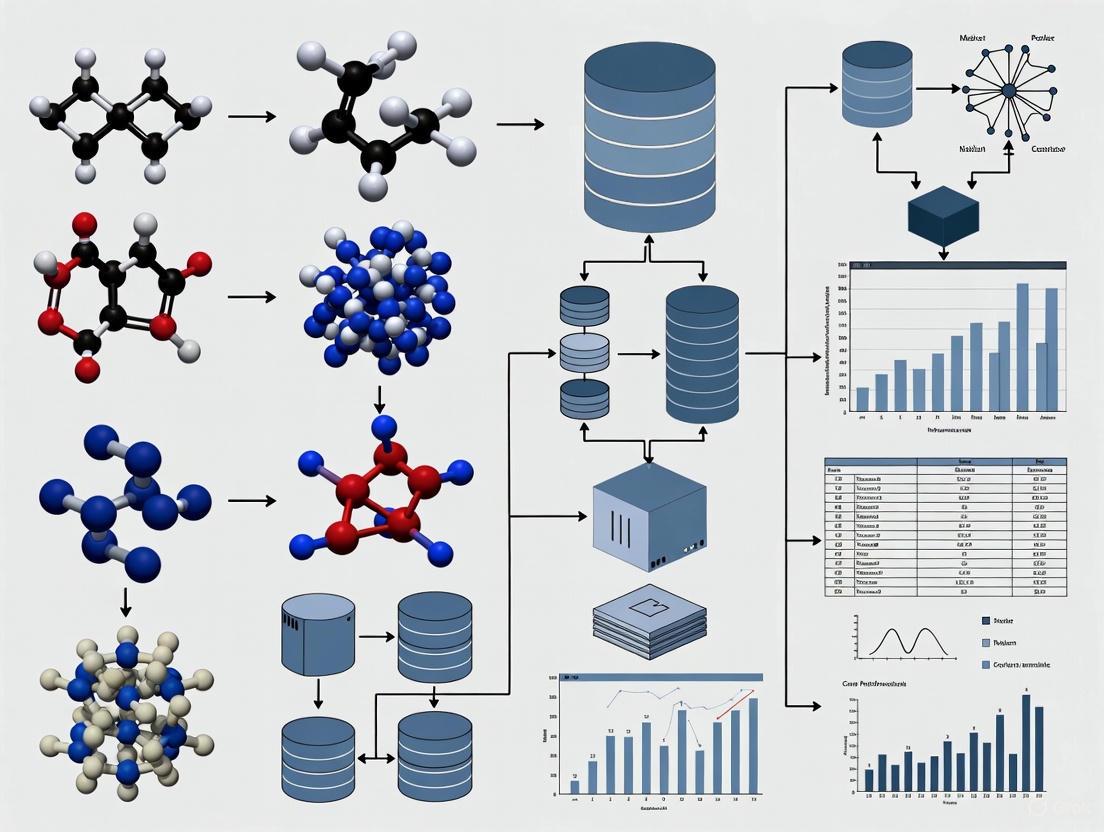
This article provides a comprehensive overview of the development, application, and challenges of modern materials data infrastructure.
Building the Future of Materials Science: A Guide to Data Infrastructure for Research and Development
Abstract
This article provides a comprehensive overview of the development, application, and challenges of modern materials data infrastructure. Aimed at researchers and development professionals, it explores the foundational principles of systems like HTEM-DB and Kadi4Mat, details methodological workflows for data collection and analysis, addresses key troubleshooting and optimization strategies for data heterogeneity and standards, and examines validation frameworks such as the JARVIS-Leaderboard. By synthesizing insights from academia, government, and industry, this guide serves as a roadmap for leveraging robust data infrastructure to accelerate innovation in materials science and its applications in fields like drug development.
The Pillars of Progress: Exploring the Core Concepts of Materials Data Infrastructure
Modern Materials Data Infrastructure (MDI) represents a fundamental shift from traditional, static data repositories towards a dynamic, interconnected ecosystem designed to accelerate innovation in materials science and engineering. The U.S. National Science Foundation identifies MDI as crucial for advancing materials discovery, enabling data to be used as input for modeling, as a medium for knowledge discovery, and as evidence for validating predictive theories [1]. This infrastructure encompasses the software, hardware, and data standards necessary to enable the discovery, access, and use of materials science and engineering data, going far beyond simple storage to become an active component of the research lifecycle itself [1].
The transformation toward this modern infrastructure is driven by three key factors: improvements in AI-driven solutions leveraged from other sectors, significant advancements in data infrastructures, and growing awareness of the need to keep pace with accelerating innovation cycles [2]. As the field of materials informatics continues to expand—projected to grow at a CAGR of 9.0% through 2035—the development of robust MDI has become not just advantageous but essential for maintaining competitive advantage in materials research and development [2].
Core Components of a Modern MDI
A modern Materials Data Infrastructure comprises several integrated components that work in concert to support the entire research data lifecycle. These elements transform raw data into actionable knowledge through systematic organization and accessibility.
Distributed Data Repositories
Unlike centralized archives, modern MDI employs a federated architecture of highly distributed repositories that house materials data generated by both experiments and calculations [1]. This distributed approach allows specialized communities to maintain control and quality over their respective data domains while ensuring interoperability through shared standards and protocols. The infrastructure should allow online access to materials data to provide information quickly and easily, supporting diverse research needs across institutional and geographical boundaries [1].
Community-Developed Standards
Interoperability represents a cornerstone of effective MDI, achieved through community-developed standards that provide the format, metadata, data types, criteria for data inclusion and retirement, and protocols necessary for seamless data transfer [1]. These standards encompass:
- Data Format Standards: Ensuring consistent structure and organization of materials data
- Metadata Schemas: Capturing essential experimental context and parameters
- Ontologies and Taxonomies: Enabling semantic interoperability across domains
- Data Quality Guidelines: Establishing criteria for data fitness for purpose
Data Integration and Workflow Tools
Modern MDI includes methods for capturing data, incorporating these methods into existing workflows, and developing and sharing workflows themselves [1]. This component focuses on the practical integration of infrastructure into daily research practices, including:
- Electronic Laboratory Notebooks (ELNs) and Laboratory Information Management Systems (LIMS) that serve as data capture points [2]
- Automated data pipelines that streamline the flow from instrumentation to repositories
- Workflow management systems that enable the reproduction and adaptation of analytical processes
- APIs and integration frameworks that connect disparate tools and systems
Table 1: Core Components of Modern Materials Data Infrastructure
| Component Category | Key Functions | Implementation Examples |
|---|---|---|
| Data Storage & Access | Distributed repository management, Data discovery, Access control | Online data portals, Federated search, Authentication systems |
| Standards & Interoperability | Data formatting, Metadata specification, Vocabulary control | Community-developed schemas, Open data formats, Materials ontologies |
| Research Tools & Integration | Data capture, Workflow management, Analysis integration | ELN/LIMS software, Computational workflows, API frameworks |
Quantitative Framework for MDI Assessment
Evaluating the effectiveness and maturity of Materials Data Infrastructure requires both quantitative metrics and qualitative assessment frameworks. The strategic value of MDI investments can be measured through their impact on research efficiency, data reuse potential, and acceleration of discovery cycles.
Performance Metrics for MDI Implementation
The table below outlines key quantitative indicators for assessing MDI performance across multiple dimensions, from data accessibility to research impact. These metrics help organizations track progress and identify areas for infrastructure improvement.
Table 2: Materials Data Infrastructure Assessment Metrics
| Metric Category | Specific Metrics | Target Values |
|---|---|---|
| Data Accessibility | Time to discover relevant datasets, Percentage of data with structured metadata, API response time | <5 minutes for discovery, >90% with metadata, <2 second API response |
| Data Quality | Compliance with community standards, Completeness of metadata, Error rates in datasets | >95% standards compliance, >85% metadata completeness, <1% error rate |
| Research Impact | Reduction in experiment repetition, Time to materials development, Data citation rates | >40% reduction in repetition, >50% faster development, Increasing citations |
| Interoperability | Number of integrated tools, Successful data exchanges, Cross-repository queries | >10 integrated tools, >95% successful exchange, Cross-repository capability |
Materials Informatics Market Context
The growing importance of MDI is reflected in market projections for materials informatics, which relies fundamentally on robust data infrastructure. The global market for external provision of materials informatics services is forecast to grow at 9.0% CAGR, reaching significant market value by 2034 [2]. This growth underscores the strategic importance of MDI as an enabling foundation for data-centric materials research approaches.
Experimental Protocols for MDI Implementation
Implementing an effective Materials Data Infrastructure requires systematic approaches to data capture, management, and sharing. The following protocols provide detailed methodologies for establishing MDI components within research organizations.
Protocol 1: Materials Data Capture and Metadata Annotation
Objective: To standardize the capture of experimental materials data with sufficient metadata to enable reuse and reproducibility.
Materials and Reagents:
- Electronic Laboratory Notebook (ELN) system with customized materials science templates
- Standardized metadata schema (e.g., MODA - Materials Omni Data Annotation)
- Unique identifier system for samples and experiments
- Automated data capture interfaces for instrumentation
Procedure:
- Sample Registration: Assign a unique, persistent identifier to each new material sample using the institutional identifier system. Record core sample characteristics including composition, synthesis method, and date of creation.
- Experimental Design Documentation: Using the ELN template, document the hypothesis, experimental objectives, and controlled variables before commencing experimentation.
- Instrumentation Setup: Configure automated data capture from analytical instruments where possible, ensuring instrument calibration data is recorded simultaneously.
- Metadata Annotation: Upon data generation, annotate datasets using the standardized metadata schema, capturing:
- Experimental conditions and parameters
- Instrument specifications and settings
- Data processing methods applied
- Personnel and institutional information
- Quality Validation: Perform automated quality checks on captured data using predefined validation rules for completeness and format compliance.
- Repository Submission: Submit validated data and metadata to the appropriate institutional or community repository, obtaining a persistent dataset identifier.
Troubleshooting Tips:
- If metadata completeness falls below 85%, review annotation interface design and provide additional researcher training
- For instrument integration challenges, implement intermediate data transformation scripts to convert proprietary formats to standard representations
- If data reuse rates remain low, conduct interviews with researchers to identify metadata gaps or usability issues
Protocol 2: Cross-Repository Data Federation and Integration
Objective: To enable seamless discovery and access to materials data across distributed repositories through standardized federation protocols.
Materials and Reagents:
- Repository federation middleware
- Common API specifications (e.g., Materials API - MAPI)
- Authentication and authorization infrastructure
- Distributed query optimization engine
Procedure:
- Repository Registration: Register each participating repository in the federation registry, specifying available data domains, access policies, and technical capabilities.
- Standard API Implementation: Implement common API specifications across all participating repositories, ensuring consistent response formats and error handling.
- Metadata Harmonization: Map repository-specific metadata schemas to a common core schema to enable cross-repository searching while preserving domain-specific extensions.
- Query Federation Setup: Configure the distributed query engine to decompose cross-repository queries into individual repository queries with appropriate optimization.
- Result Integration: Implement result aggregation and ranking algorithms to present unified results from multiple repositories.
- Access Control Integration: Establish trust relationships between identity providers and service providers to enable seamless authentication across repository boundaries.
Validation Methods:
- Execute test queries spanning multiple repositories and verify result completeness
- Measure response times for distributed versus local queries and optimize as needed
- Validate that access controls are properly enforced across federation boundaries
Visualization Framework for MDI
The following diagrams illustrate key relationships, workflows, and architectural patterns in modern Materials Data Infrastructure, created using DOT language with specified color palette and contrast requirements.
MDI Component Architecture
Materials Data Lifecycle Workflow
Essential Research Reagent Solutions
The implementation of modern Materials Data Infrastructure requires both technical components and human processes. The following table details key solutions and their functions in establishing effective MDI.
Table 3: Research Reagent Solutions for Materials Data Infrastructure
| Solution Category | Specific Tools/Components | Function in MDI |
|---|---|---|
| Data Management Platforms | ELN/LIMS with materials extensions, Repository software, Data governance tools | Capture experimental context, Manage data lifecycle, Enforce policies |
| Interoperability Standards | Community metadata schemas, Data exchange formats, Materials ontologies | Enable data integration, Facilitate cross-domain discovery, Support semantic reasoning |
| Analysis & AI Tools | Machine learning frameworks, Materials-specific algorithms, Visualization packages | Extract insights from data, Build predictive models, Enable interactive exploration |
| Integration Middleware | API gateways, Repository federation tools, Identity management systems | Connect disparate systems, Enable cross-repository search, Manage access control |
Modern Materials Data Infrastructure represents a transformative approach to managing the complex data ecosystems of contemporary materials research. By moving beyond simple repositories to create integrated, standards-based infrastructures that support the entire research lifecycle, organizations can significantly accelerate materials discovery and development. The implementation of such infrastructure requires careful attention to both technical components and cultural factors, including the development of shared standards, distributed repository architectures, and researcher-centered tools.
As the materials informatics field continues to evolve—projected to grow substantially in the coming years—the organizations that invest in robust, flexible MDI will be best positioned to leverage emerging opportunities in AI, automation, and data-driven discovery [2]. The protocols, metrics, and architectures outlined in this document provide a foundation for building this critical research infrastructure, enabling materials scientists to fully harness the power of their data for innovation.
Within the paradigm of the Materials Genome Initiative (MGI), the development of robust materials data infrastructures has become a cornerstone for accelerating discovery and innovation [3]. These infrastructures are essential for transitioning from traditional, siloed research methods to a data-driven, collaborative model that embraces the FAIR principles (Findable, Accessible, Interoperable, and Reusable) [4] [5]. This application note details the operational frameworks, experimental protocols, and practical implementations of two exemplary systems that exemplify this transition: Kadi4Mat, a generic virtual research environment, and the High-Throughput Experimental Materials Database (HTEM-DB), a specialized repository for combinatorial data. By examining these systems in action, we provide a blueprint for the research community on deploying infrastructures that effectively manage the entire research data lifecycle, from acquisition and analysis to publication and reuse.
Kadi4Mat: A Unified Virtual Research Environment
Kadi4Mat (Karlsruhe Data Infrastructure for Materials Sciences) is an open-source virtual research environment designed to support researchers throughout the entire research process [4] [5]. Its primary objective is to combine the features of an Electronic Lab Notebook (ELN) with those of a research data repository, creating a seamless workflow from data generation to publication.
The infrastructure is logically divided into two core components: the repository, which focuses on the management and exchange of data (especially "warm data" that is yet to be fully analysed), and the ELN, which facilitates the automated and documented execution of heterogeneous workflows for data analysis, visualization, and transformation [4] [5]. Kadi4Mat is architected as a web- and desktop-based system, offering both a graphical user interface and a programmatic API, thus catering to diverse user preferences and automation needs [4]. A key design philosophy is its generic nature, which, although originally developed for materials science, allows for adaptation to other research disciplines [4] [5].
HTEM-DB: A Domain-Specific Repository for Combinatorial Workflows
The High-Throughput Experimental Materials Database (HTEM-DB) is a public repository for inorganic thin-film materials data generated from combinatorial experiments at the National Renewable Energy Laboratory (NREL) [6] [7] [8]. It serves as the endpoint for a specialized Research Data Infrastructure (RDI), a suite of custom data tools that collect, process, and store experimental data and metadata [7] [8]. The goal of HTEM-DB and its underlying RDI is to establish a structured pipeline for high-throughput data, making valuable experimental data accessible for future data-driven studies, including machine learning [6] [8]. This system is a prime example of a domain-specific infrastructure built to support a particular class of experimental methods, thereby aggregating and preserving high-quality datasets for the broader research community.
Table 1: Comparative Overview of Kadi4Mat and HTEM-DB
| Feature | Kadi4Mat | HTEM-DB / NREL RDI |
|---|---|---|
| Primary Focus | Generic virtual research environment (VRE) combining ELN and repository [5] | Specialized repository for inorganic thin-film materials from combinatorial experiments [7] |
| Core Components | Repository component & ELN component with workflow automation [4] | Custom data tools forming a Research Data Infrastructure (RDI) [8] |
| Architecture | Web-based & desktop-based; GUI and API [4] | Integrated data tools pipeline connected to experimental instruments [7] |
| Key Application | Management and analysis of any research data; FAIR RDM [5] | Aggregation and sharing of high-throughput experimental data for machine learning [6] |
| Licensing | Open Source (Apache 2.0) [4] | Not Specified in Sources |
Application Notes & Experimental Protocols
Protocol 1: Executing a Reproducible Machine Learning Workflow in Kadi4Mat
The following protocol details the process of setting up and running a reproducible machine learning workflow for the virtual characterization of solid electrolyte interphases (SEI) within the Kadi4Mat environment, as demonstrated in associated research [5].
Research Reagent Solutions
Table 2: Essential Components for the ML Workflow in Kadi4Mat
| Item / Tool | Function in the Protocol |
|---|---|
| KadiStudio | A tool within the Kadi ecosystem for data organization, processing, and analysis [5]. |
| Variational AutoEncoder (VAE) | A neural network architecture used to learn descriptive, data-driven representations (latent space) of the SEI configurations [5]. |
| Property Regressor (prVAE) | An integrated component that trains the VAE's latent space to correlate with target physical properties of the SEI [5]. |
| Kinetic Monte Carlo (KMC) Simulation Data | Provides the physical and stochastic attributes of SEI configurations, serving as the foundational dataset for training [5]. |
| RDM-Assisted Workflows | Workflows that leverage the Research Data Management infrastructure to automatically create knowledge graphs linking data provenance [5]. |
Step-by-Step Procedure
Data Ingestion and Structuring:
- Initiate a new project in the Kadi4Mat ELN component using KadiStudio.
- Import the raw SEI configuration data generated from Kinetic Monte Carlo simulations into the project. This data includes physiochemical properties such as thickness, porosity, density, and volume fraction.
- Use Kadi4Mat's data management features to structure and annotate the dataset with relevant metadata, ensuring compliance with FAIR principles.
Workflow Design and Configuration:
- In the Kadi4Mat graphical node editor, define the machine learning workflow. The key steps are outlined in the diagram below.
- Add a data preprocessing node to clean and normalize the KMC simulation data.
- Configure the core model node, a Variational AutoEncoder with an integrated property regressor (prVAE). The objective is for the VAE to learn a compressed, data-driven representation (latent space) of the SEI structures, while the regressor ensures this representation is predictive of the target physical properties.
Model Training and Execution:
- Parameterize the workflow nodes, specifying hyperparameters for the prVAE (e.g., learning rate, latent space dimension).
- Initiate the workflow execution via Kadi4Mat's process manager. The system will handle the execution of the defined steps, potentially leveraging integrated computing infrastructure.
- The prVAE model is trained to minimize reconstruction loss of the SEI configurations and the error in predicting the physical properties from the latent space.
Analysis and Knowledge Graph Generation:
- Upon completion, the workflow outputs the trained model and analysis results back into the Kadi4Mat repository.
- Automatically, the RDM-assisted workflow generates a knowledge graph that records the provenance, linking the raw KMC data, the specific prVAE model architecture and hyperparameters, and the final results [5].
- Analyze the latent space of the trained VAE to investigate how the observable SEI characteristics affect the learned data-driven characteristics.
Protocol 2: Data Acquisition and Curation in the HTEM-DB Framework
This protocol describes the end-to-end process of generating, processing, and publishing high-throughput experimental materials data, as implemented by the Research Data Infrastructure (RDI) at the National Renewable Energy Laboratory (NREL) that feeds into the HTEM-DB [7] [8].
Research Reagent Solutions
Table 3: Essential Components for the HTEM-DB Data Pipeline
| Item / Tool | Function in the Protocol |
|---|---|
| Combinatorial Deposition System | A high-throughput instrument for synthesizing thin-film materials libraries with varied composition gradients [7]. |
| Characterization Tools (e.g., XRD, XRF) | Instruments (e.g., X-ray Diffraction, X-ray Fluorescence) used to rapidly characterize the structure and composition of the materials libraries [7]. |
| Custom Data Parsers | Software tools within the RDI that automatically extract and standardize raw data and metadata from experimental instruments [7] [8]. |
| HTEM-DB Repository | The public-facing endpoint repository that stores the processed, curated, and published datasets for community access [6] [7]. |
Step-by-Step Procedure
High-Throughput Experimentation:
- Utilize a combinatorial deposition system to synthesize a library of inorganic thin-film samples. This process systematically varies precursor concentrations or deposition parameters across a substrate to create a wide array of compositions in a single experiment.
- Employ high-throughput characterization tools, such as X-ray Diffraction (XRD) and X-ray Fluorescence (XRF), to rapidly collect structural and compositional data from the synthesized materials library.
Automated Data Collection and Processing:
- The custom RDI tools are integrated with the combinatorial and characterization instruments. Upon experiment completion, data parsers automatically collect the raw data output and associated experimental metadata.
- The RDI processes this data, which includes converting proprietary instrument formats into standardized, machine-readable data formats and performing initial calculations or data validation.
Data Curation and Internal Storage:
- Processed data and comprehensive metadata are stored in an internal, structured data store within the RDI. This step involves linking all related data files and their metadata to ensure data integrity and context.
- Researchers can access and perform preliminary analysis on this curated data internally before public release.
Publication to Public Repository:
- Once the data is verified and ready for public access, it is transferred from the internal RDI to the public HTEM-DB repository.
- The HTEM-DB serves as the permanent, public access point for the dataset, making it findable and accessible to the wider research community. This final step maximizes the data's usefulness for future machine learning and data-driven studies.
Technical Specifications and Data Outputs
The value of a research data infrastructure is ultimately demonstrated by the quality, scale, and accessibility of the data and analyses it supports. The following tables quantify the outputs of the JARVIS infrastructure (a comparable large-scale system) and the Kadi4Mat platform.
Table 4: Quantitative Data Output of the JARVIS Infrastructure (as of 2020) [3]
| JARVIS Component | Scope | Key Calculated Properties |
|---|---|---|
| JARVIS-DFT | ≈40,000 materials | ≈1 million properties including formation energies, bandgaps (GGA and meta-GGA), elastic constants, piezoelectric constants, dielectric constants, exfoliation energies, and spectroscopic limited maximum efficiency (SLME) [3]. |
| JARVIS-FF | ≈500 materials; ≈110 force-fields | Properties for force-field validation: bulk modulus, defect formation energies, and phonons [3]. |
| JARVIS-ML | ≈25 ML models | Models for predicting material properties such as formation energies, bandgaps, and dielectric constants using Classical Force-field Inspired Descriptors (CFID) [3]. |
Table 5: Application-Based Outputs from Kadi4Mat Use Cases
| Research Application | Implemented Workflow / Analysis | Key Outcome |
|---|---|---|
| ML-assisted Design of Experiments | Bayesian optimization workflow to guide the synthesis of solid-state electrolytes by varying precursor concentrations, sintering temperature, and holding time [5]. | Discovery of a sample with high ionic conductivity after fewer experimental iterations, demonstrating accelerated materials discovery [5]. |
| Enhancing Spectral Data Analysis | Machine learning (logistic regression) workflow to classify material components and identify key ions from Time-of-Flight Secondary Ion Mass Spectrometry (ToF-SIMS) data [5]. | Accurate prediction of new sample compositions, simplifying the analysis of complex characterization data [5]. |
The Critical Role of Metadata and FAIR Principles
The exponential growth of data in materials science presents both unprecedented opportunities and significant challenges for research and drug development. With global data creation expected to surpass 390 zettabytes by 2028, the scientific community faces a critical bottleneck in managing, sharing, and extracting value from complex materials data [9]. The FAIR Guiding Principles—Findable, Accessible, Interoperable, and Reusable—represent a transformative framework for enhancing data utility in materials database infrastructure development [9] [10].
Originally formalized in 2016 through a seminal publication in Scientific Data, these principles emerged from the need to optimize data reuse by both humans and computational systems [9] [11]. For materials researchers and drug development professionals, implementing FAIR principles addresses fundamental challenges in data fragmentation, reproducibility, and integration across multi-modal datasets encompassing genomic sequences, imaging data, and clinical trials [11]. This application note provides detailed protocols and frameworks for implementing FAIR principles within materials science research contexts, enabling robust data management practices that accelerate innovation.
Core Principles and Definitions
The FAIR Framework
The FAIR principles establish a comprehensive set of guidelines for scientific data management and stewardship, with particular emphasis on machine-actionability [10]. The core components are:
- Findable: Data and metadata should be easily discoverable by both humans and computers through assignment of persistent identifiers and rich, searchable metadata [9] [10].
- Accessible: Once identified, data should be retrievable using standardized, open protocols that support authentication and authorization where necessary [11] [10].
- Interoperable: Data must be structured using formal, accessible, shared languages and vocabularies to enable integration with other datasets and analytical tools [9] [10].
- Reusable: Data should be richly described with accurate attributes, clear usage licenses, and detailed provenance to enable replication and combination in new contexts [11] [10].
A key differentiator of FAIR principles is their focus on machine-actionability—the capacity of computational systems to autonomously find, access, interoperate, and reuse data with minimal human intervention [10]. This capability is increasingly critical as research datasets grow in scale and complexity beyond human processing capabilities.
Key Terminology
Table: Essential FAIR Implementation Terminology
| Term | Definition | Relevance to Materials Science |
|---|---|---|
| Machine-actionable | Capability of computational systems to operate on data with minimal human intervention [10] | Enables high-throughput screening and AI-driven materials discovery |
| Persistent Identifier | Globally unique and permanent identifier (e.g., DOI, Handle) for digital objects [10] | Ensures permanent access to materials characterization data and protocols |
| Metadata | Descriptive information about data, providing context and meaning [9] [10] | Critical for documenting experimental conditions, parameters, and methodologies |
| Provenance | Information about entities, activities, and people involved in producing data [10] | Tracks materials synthesis pathways and processing history for reproducibility |
| Interoperability | Ability of data or tools from different sources to integrate with minimal effort [10] | Enables cross-domain research integrating chemical, physical, and biological data |
Quantitative Framework for FAIR Implementation
FAIR Principles Specification
Table: Detailed FAIR Principles Breakdown with Implementation Metrics
| Principle | Component | Technical Specification | Implementation Metric |
|---|---|---|---|
| Findable | F1: Persistent Identifiers | Globally unique identifiers (DOI, UUID) assigned to all datasets [10] | 100% identifier assignment rate; 0% identifier decay |
| F2: Rich Metadata | Domain-specific metadata schemas with required and optional fields [9] | Minimum 15 descriptive elements per dataset | |
| F3: Identifier Inclusion | Metadata explicitly includes identifier of described data [10] | 100% metadata-record linkage verification | |
| F4: Searchable Resources | Registration in indexed, searchable repositories [10] | Indexing in ≥3 disciplinary search engines | |
| Accessible | A1: Retrievable Protocol | Standardized communications protocol (HTTP, FTP) [10] | Protocol availability ≥99.5%; maximum 2-second retrieval latency |
| A1.1: Open Protocol | Protocol open, free, universally implementable [10] | No proprietary barriers; documented API | |
| A1.2: Authentication | Authentication/authorization procedure where necessary [10] | Role-based access control with OAuth 2.0 compliance | |
| A2: Metadata Access | Metadata remains accessible even when data unavailable [10] | 100% metadata preservation independent of data status | |
| Interoperable | I1: Knowledge Representation | Formal, accessible, shared language for representation [10] | Use of RDF, JSON-LD, or domain-specific standardized formats |
| I2: FAIR Vocabularies | Vocabularies that follow FAIR principles [12] | ≥90% terms mapped to community-approved ontologies | |
| I3: Qualified References | Qualified references to other (meta)data [10] | Minimum contextual relationships documented per dataset | |
| Reusable | R1: Rich Attributes | Plurality of accurate, relevant attributes [10] | Minimum 10 provenance elements; complete methodology documentation |
| R1.1: Usage License | Clear, accessible data usage license [9] [10] | 100% license assignment; machine-readable license formatting | |
| R1.2: Detailed Provenance | Association with detailed provenance [10] | Complete workflow documentation from materials synthesis to characterization | |
| R1.3: Community Standards | Meeting domain-relevant community standards [10] | Compliance with ≥2 materials science metadata standards |
Implementation Metrics and Benchmarks
Recent studies indicate that systematic implementation of FAIR principles can reduce data discovery and processing time by up to 60%, while improving research reproducibility metrics by 45% [11]. The Oxford Drug Discovery Institute demonstrated that FAIR data implementation reduced gene evaluation time for Alzheimer's drug discovery from several weeks to just a few days [11]. Furthermore, researchers accessing FAIR genomic data from the UK Biobank and Mexico City Prospective Study achieved false positive rates of less than 1 in 50 subjects tested, highlighting the significant impact on data quality and reliability [11].
Experimental Protocols for FAIR Implementation
Protocol 1: FAIRification of Legacy Materials Data
Objective: Transform existing materials datasets into FAIR-compliant resources to enhance discoverability, interoperability, and reuse potential.
Materials and Equipment:
- Source materials datasets (structural, compositional, property data)
- Metadata extraction tools (OpenRefine, METS)
- Domain ontologies (ChEBI, NanoParticle Ontology, Materials Ontology)
- Repository platform (Dataverse, FigShare, institutional repository)
- Persistent identifier service (DataCite, EZID)
Procedure:
Data Inventory and Assessment
- Catalog all existing datasets with current format, size, and structure documentation
- Assess metadata completeness against domain-specific standards
- Identify gaps in documentation and provenance information
Identifier Assignment
- Assign persistent identifiers (DOIs) to each discrete dataset
- Ensure identifiers are embedded in both metadata and file headers
- Register identifiers with relevant disciplinary indexes
Metadata Enhancement
- Map existing metadata to community-standard schemas (e.g., Dublin Core, DataCite)
- Enrich with controlled vocabulary terms from domain ontologies
- Add experimental context, methodology, and instrument parameters
Format Standardization
- Convert proprietary formats to open, non-proprietary standards (e.g., CSV instead of Excel, CIF for crystallographic data)
- Ensure machine-readability through structured formatting
- Validate format compatibility with target analysis tools
Provenance Documentation
- Document data lineage from generation through processing stages
- Record all transformations, calculations, and normalization procedures
- Attribute contributions with ORCID identifiers where applicable
Repository Deposition
- Select appropriate disciplinary or general repository
- Upload datasets with complete metadata
- Set appropriate access controls and usage licenses
Validation and Testing
- Verify identifier resolution and metadata retrieval
- Test data access through API endpoints
- Validate interoperability with target analysis platforms
Troubleshooting:
- For heterogeneous data formats, implement intermediate conversion layers
- When domain ontologies are incomplete, extend with local terms mapped to upper-level ontologies
- For large datasets (>1TB), implement scalable storage with parallel access capabilities
Protocol 2: FAIR-Compliant Materials Research Workflow
Objective: Establish an end-to-end FAIR data management process for new materials research projects, from experimental design through data publication.
Materials and Equipment:
- Electronic Laboratory Notebook (ELN) system
- Sample tracking and management system
- Instrument data capture interfaces
- Metadata templates specific to materials characterization techniques
- Data repository with API access
Procedure:
Experimental Design Phase
- Pre-register study design with objectives and methodology
- Create project-specific metadata template incorporating domain standards
- Define data collection protocols with required metadata fields
Sample Preparation Documentation
- Record synthesis methods with complete parameter documentation
- Document precursor materials with source and purity information
- Assign unique sample identifiers linked to experimental conditions
Data Collection and Capture
- Configure instruments to output standardized metadata headers
- Implement automated metadata extraction where feasible
- Associate raw data with instrument calibration and configuration details
Processing and Analysis
- Record all data transformation steps with parameter documentation
- Maintain linkage between raw and processed data versions
- Document analysis algorithms with version and parameter information
Quality Assessment
- Implement automated quality control checks for data completeness
- Validate metadata against required schema elements
- Verify data integrity through checksum validation
Publication and Sharing
- Select appropriate access controls based on data sensitivity
- Apply machine-readable usage license (e.g., Creative Commons)
- Publish to designated repository with complete metadata
Preservation and Sustainability
- Migrate to preservation formats where necessary
- Establish refreshment schedule for storage media
- Monitor identifier persistence and repository stability
Validation:
- Conduct peer review of dataset completeness and documentation
- Test independent researcher ability to understand and reuse data
- Verify computational agent access and interpretation capabilities
Visualization of FAIR Implementation Workflow
FAIR Data Management Workflow: This diagram illustrates the integration of FAIR principles throughout the research data lifecycle, showing how specific FAIR components map to different stages of data management from planning through preservation.
Research Reagent Solutions for FAIR Implementation
Table: Essential Tools and Platforms for FAIR Materials Data Management
| Tool Category | Specific Solutions | Function | FAIR Compliance Features |
|---|---|---|---|
| Electronic Lab Notebooks | RSpace, LabArchives, eLABJournal | Experimental documentation and data capture | Metadata templates, protocol standardization, export to repositories |
| Metadata Management | CEDAR, ISA Framework, OMeta | Structured metadata creation and validation | Ontology integration, standards compliance, template management |
| Persistent Identifiers | DataCite, Crossref, ORCID | Unique identification of data, publications, and researchers | DOI minting, metadata persistence, resolution services |
| Data Repositories | FigShare, Dataverse, Zenodo, Materials Data Facility | Data publication, preservation, and access control | PID assignment, standardized APIs, metadata standards support |
| Ontology Services | BioPortal, OLS, EBI Ontology Lookup Service | Vocabulary management and semantic integration | SKOS/RDF formats, ontology mapping, API access |
| Workflow Management | SnakeMake, Nextflow, Taverna | Computational workflow documentation and execution | Provenance capture, parameter documentation, version control |
| Data Transformation | OpenRefine, Frictionless Data, Pandas | Data cleaning, format conversion, and structure normalization | Format standardization, metadata extraction, quality assessment |
Implementation Case Studies and Best Practices
Successful FAIR Implementation in Research Infrastructures
The AnaEE (Analysis and Experimentation on Ecosystems) Research Infrastructure demonstrates effective FAIR implementation through its focus on semantic interoperability in ecosystem studies [12]. By employing standardized vocabularies and structured metadata templates, AnaEE enables cross-site data integration and analysis, directly supporting the Interoperability and Reusability pillars of FAIR.
Similarly, DANS (Data Archiving and Networked Services) transitioned from a generic repository system (EASY) to discipline-specific "Data Stations" with custom metadata fields and controlled vocabularies [12]. This approach significantly improved metadata quality and interoperability while maintaining FAIR compliance through multiple export formats (DublinCore, DataCite, Schema.org) and Dataverse software implementation.
Best Practices for Materials Science
Early Integration: Incorporate FAIR considerations during experimental design rather than post-hoc implementation [9]. This includes selecting appropriate metadata standards, file formats, and repositories at project inception.
Structured Metadata: Utilize domain-specific metadata standards such as the Materials Metadata Curation Guide or Crystallographic Information Framework (CIF) to ensure consistency and interoperability [9] [10].
Provenance Documentation: Implement comprehensive tracking of materials synthesis parameters, processing conditions, and characterization methodologies to enable replication and validation [10].
Collaborative Stewardship: Engage data stewards with specialized knowledge in data governance and FAIR implementation to navigate technical and organizational challenges [9].
Tool Integration: Leverage computational workflows that automatically capture and structure metadata during data generation, reducing manual entry and improving compliance [13].
The implementation of FAIR principles within materials database infrastructure represents a paradigm shift in research data management, enabling unprecedented levels of data sharing, integration, and reuse. By adopting the protocols, tools, and best practices outlined in this application note, materials researchers and drug development professionals can significantly enhance the value and impact of their data assets. The systematic application of FAIR principles not only addresses immediate challenges in data discovery and interoperability but also establishes a robust foundation for future innovations in AI-driven materials discovery and development. As the research community continues to refine FAIR implementation frameworks, the potential for accelerated discovery and translational application across materials science and drug development will continue to expand.
The acceleration of materials discovery and drug development is critically dependent on the effective integration of experimental and computational data workflows. Fragmented data systems and manual curation processes represent a significant bottleneck, stalling scientific innovation despite soaring research budgets [14]. This challenge is a central focus of current national initiatives, such as the recently launched Genesis Mission, which aims to leverage artificial intelligence (AI) to transform scientific research. This executive order frames the integration of federal datasets, supercomputing resources, and research infrastructure as a national priority "comparable in urgency and ambition to the Manhattan Project" [15]. Concurrently, the commercial adoption of materials informatics (MI)—the application of data-centric approaches to materials science R&D—is accelerating, with the market for external MI services projected to grow at a compound annual growth rate (CAGR) of 9.0% through 2035 [2]. This application note provides detailed protocols for building unified data infrastructure, enabling researchers to overcome fragmentation and harness AI for scientific discovery.
Quantitative Landscape of Data-Driven Research
The transition to integrated, data-driven workflows is not merely a technical improvement but a strategic necessity for maintaining competitiveness. The tables below summarize the market trajectory and core advantages of adopting materials informatics.
Table 1: Market Outlook for External Materials Informatics (2025-2035) [2]
| Metric | Value & Forecast | Implication |
|---|---|---|
| Forecast Period | 2025 - 2035 | A decade of projected growth and adoption. |
| Market CAGR | 9.0% | Steady and significant expansion of the MI sector. |
| Projected Market Value | US$725 million by 2034 | Indicates a substantial and growing commercial field. |
Table 2: Strategic Advantages of Integrating Informatics into R&D [2]
| Advantage | Description | Impact on R&D Cycle |
|---|---|---|
| Enhanced Screening | Machine learning (ML) models can rapidly screen vast arrays of candidate materials or compounds based on existing data. | Drastically reduces the initial scoping and hypothesis generation phase. |
| Reduced Experiment Count | AI-driven design of experiments (DoE) pinpoints the most informative tests, minimizing redundant trials. | Shortens the development timeline and reduces resource consumption. |
| Discovery of Novel Relationships | ML algorithms can identify non-intuitive correlations and new materials or relationships hidden in complex, high-dimensional data. | Unlocks new scientific insights and innovation potential beyond human intuition. |
Protocol: Automated Extraction and Curation of Structured Data from Scientific Literature
A foundational step in building a materials database is the automated ingestion of structured information from existing, unstructured scientific literature. This protocol evaluates the use of Large Language Models (LLMs) for this task [16].
3.1. Experimental Principle This methodology assesses the capability of LLMs like GPT-3.5-Turbo, GPT-4, and GPT-4-Turbo to perform two critical information extraction (IE) tasks on materials science documents: Named Entity Recognition (NER) of materials and properties, and Relation Extraction (RE) between these entities. The performance is benchmarked against traditional BERT-based models and rule-based systems [16].
3.2. Research Reagent Solutions
- Source Corpora: SuperMat (focused on superconductor research) and MeasEval (a generic measurement evaluation corpus). These provide the unstructured text for analysis [16].
- Large Language Models (LLMs): GPT-3.5-Turbo, GPT-4, and GPT-4-Turbo. These are the primary tools for zero-shot and few-shot IE [16].
- Baseline Models: Specialized models based on the BERT architecture, fine-tuned on domain-specific data [16].
- Rule-Based Baseline: A system using hand-crafted rules for entity and relationship identification [16].
3.3. Step-by-Step Procedure
- Task Definition and Prompt Engineering:
- For NER, the LLM is instructed to identify and classify spans of text into entity classes such as "Material" and "Property". A property is typically a structured measurement (e.g., "critical temperature of 4 K"), while a material may be a chemical formula or a descriptive name [16].
- For RE, the LLM is tasked with identifying and classifying the relationships between the extracted entities (e.g., linking a specific critical temperature value to a specific superconductor material) [16].
- Develop and iteratively refine clear, unambiguous prompts for these tasks.
- Zero-Shot and Few-Shot Evaluation:
- Execute the prompts against the test corpora without providing any examples (zero-shot).
- If performance is suboptimal, provide the model with one to three annotated examples within the prompt (few-shot) to demonstrate the desired output.
- Model Fine-Tuning (For RE Task):
- For relationship extraction, fine-tune a model like GPT-3.5-Turbo on a dataset of annotated examples. This specialized training significantly enhances performance for complex domain-specific reasoning [16].
- Performance Benchmarking:
- Run the same IE tasks using the baseline BERT-based and rule-based models.
- Compare the precision, recall, and F1 scores of all approaches against a manually annotated gold-standard dataset.
- Structured Data Output:
- The final output of a successful extraction run is a structured dataset (e.g., in JSON or CSV format) listing entities and their relationships, ready for ingestion into a materials database.
3.4. Workflow Visualization The following diagram illustrates the logical flow and decision points in the information extraction protocol.
Protocol: Implementing a Closed-Loop AI Experimentation Platform
The integration of automated data extraction with AI-driven prediction and experimental validation creates a powerful, autonomous research workflow. This protocol outlines the steps for establishing such a platform, aligning with the vision of the Genesis Mission's "American Science and Security Platform" [14] [15].
4.1. Experimental Principle This protocol establishes a closed-loop system where computational models guide robotic laboratories to conduct high-throughput experiments. The results from these experiments are then automatically fed back to improve the AI models, creating a continuous, self-optimizing cycle for materials or drug discovery [14] [15].
4.2. Research Reagent Solutions
- AI Modeling Framework: A software platform for training and deploying domain-specific foundation models and other ML algorithms for prediction [15].
- Robotic Laboratory Systems: Automated systems for high-throughput synthesis, processing, and characterization of materials or compounds [14] [2].
- Data Integration Hub: A centralized, secure database (e.g., built on the "American Science and Security Platform" concept) that ingests data from literature, simulations, and experiments, enforcing standardized data schemas [15].
- High-Performance Computing (HPC) Resources: Supercomputers for training large AI models and running complex simulations [14] [15].
4.3. Step-by-Step Procedure
- Platform and Data Infrastructure Setup:
- Deploy and integrate the Data Integration Hub with HPC resources.
- Ingest initial datasets from published literature (using Protocol 3.1), internal historical data, and computational simulations (e.g., density functional theory calculations).
- Apply data standardization and curation processes to ensure quality and interoperability.
- Foundation Model Training and Hypothesis Generation:
- Train or fine-tune AI models on the integrated dataset to create predictive models for properties of interest (e.g., ionic conductivity, drug binding affinity).
- Use the trained models to screen vast virtual libraries of candidate materials or molecules.
- Generate a ranked list of the most promising candidates for experimental validation.
- Automated Experimental Validation:
- Translate the top candidate list into machine-readable instructions for robotic laboratory systems.
- Execute high-throughput synthesis and characterization protocols autonomously.
- Data Feedback and Model Retraining:
- Automatically stream the results from the robotic experiments back into the Data Integration Hub.
- Use this new, high-quality data to retrain and refine the AI models, improving their predictive accuracy for the next iteration.
- Iteration and Continuous Learning:
- Repeat the cycle of prediction, experimentation, and feedback until a target material or compound with the desired properties is identified and optimized.
4.4. Workflow Visualization The following diagram maps the integrated, closed-loop workflow, highlighting the synergy between computational and experimental components.
Table 3: Performance Evaluation of LLMs on Information Extraction Tasks [16]
| Task | Best Performing Model | Key Finding | Recommendation |
|---|---|---|---|
| Named Entity Recognition (NER) | Traditional BERT-based & Rule-Based | LLMs with zero-shot/few-shot prompting failed to outperform specialized baselines. Challenges with complex, domain-specific material definitions. | Use specialized, fine-tuned BERT models or rule-based systems for high-accuracy entity extraction. |
| Relation Extraction (RE) | Fine-tuned GPT-3.5-Turbo | A fine-tuned GPT-3.5-Turbo outperformed all models, including baselines. GPT-4 showed strong few-shot reasoning. | For complex relationship mapping, fine-tuned LLMs are superior. GPT-4 is effective for few-shot prototyping. |
The integration of experimental and computational data workflows is a cornerstone of next-generation scientific discovery. As evidenced by national initiatives and market trends, the strategic implementation of protocols for automated data extraction and closed-loop AI experimentation is critical for accelerating R&D cycles. The data shows that while LLMs possess remarkable relational reasoning capabilities, a hybrid approach leveraging the strengths of both specialized and general-purpose models is currently optimal. By adopting these detailed protocols, research institutions can build the robust database infrastructure necessary to power AI-driven breakthroughs in materials science and drug development.
From Data to Discovery: Methodologies and Real-World Applications
In the field of materials science, the development of robust database infrastructure is critical for accelerating discovery. Automated data curation transforms raw, unstructured information from diverse sources into clean, reliable, and FAIR (Findable, Accessible, Interoperable, and Reusable) datasets that power machine learning (ML) and data-driven research [17]. High-throughput (HT) experimental and computational workflows generate data at unprecedented scales, making manual curation methods impractical [18] [19]. This document outlines application notes and protocols for implementing automated data curation, drawing from best practices in high-throughput materials science.
The Automated Data Curation Workflow
Automated data curation is a continuous process that ensures long-term data quality and usability. The workflow can be broken down into several interconnected stages, as shown in the diagram below.
Diagram 1: Automated Data Curation Workflow. This flowchart outlines the key stages and their relationships in a robust, cyclical curation pipeline. The dashed line represents the essential feedback loop for continuous quality improvement.
Stage 1: Data Identification & Collection
This initial stage involves sourcing raw data from diverse origins and standardizing its initial format.
- Application Note: In high-throughput materials science, data streams are often generated directly by experimental instruments (e.g., combinatorial thin-film synthesis [18]) or computational workflows (e.g., AiiDA for ab-initio calculations [19]). The goal is to establish automated pipelines that collect this data with minimal manual intervention.
- Protocol:
- Connect to Data Sources: Use APIs or data capture pipelines to pull data from instruments, simulation outputs, or literature sources. For database construction from published literature, an AI-powered workflow can first retrieve relevant articles using LLM-based embeddings and clustering [20].
- Standardize Formats: Enforce consistent file types and resolutions early to prevent downstream pipeline failures. For image data, this may involve standardizing file formats; for tabular data, converting proprietary formats (e.g., .xlsx) to open formats (e.g., .csv) is recommended [21] [17].
Stage 2: Data Cleaning & Validation
This stage focuses on identifying and correcting errors and inconsistencies in the raw data.
- Application Note: Raw inputs often contain duplicates, corrupted files, or mislabeled data that can skew analysis and model training. In computer vision, this may involve detecting and removing near-duplicate images [21]. In computational materials science, automated workflows must check for convergence errors and numerical inaccuracies [19].
- Protocol:
- Profile Data: Perform statistical analysis to understand data distributions and identify anomalies, outliers, and missing values [22].
- Remove Duplicates: Use algorithms to detect and remove redundant or overly similar samples. Tools like LightlyOne can employ diversity selection strategies in an embedding space to ensure a representative and non-redundant dataset [21].
- Handle Errors & Missing Values: Implement rule-based or ML-based methods to correct mislabeled entries, impute missing data, or remove corrupted records.
Stage 3: Data Annotation & Enrichment
Here, raw data is labeled and augmented with additional context to make it usable for ML models.
- Application Note: For materials data, this can involve labeling experimental conditions, assigning property values extracted from text, or generating SMILES notations from chemical structure images using AI/ML models [20]. In vision-language models, curation ensures images are matched with precise, unbiased textual descriptions [21].
- Protocol:
- Automated Extraction: Use Natural Language Processing (NLP) and Large Language Models (LLMs) like GPT-4 to extract materials and their properties from scientific text with high accuracy [20].
- Image Mining: Employ AI/ML tools (e.g., Microsoft Azure's Document Intelligence and Custom Vision) to automatically generate SMILES from chemical structure images in publications [20].
- Establish Guidelines: Create clear, consistent labeling guidelines, even for automated processes, to ensure uniformity and quality.
Stage 4: Data Transformation & Integration
Data from multiple sources is converted into a consistent format and merged into a unified dataset.
- Application Note: A common challenge is harmonizing data from different sources, such as merging two object detection datasets with different labeling schemas or integrating experimental results with computational data [21] [18].
- Protocol:
- Normalize Data: Scale numerical values (e.g., pixel values, energy units) to a common range and unify annotation schemas [21].
- Merge Sources: Integrate multiple datasets by resolving schema conflicts and ensuring semantic consistency across merged data.
- Leverage Open Tools: Use open-source libraries to convert and validate annotation formats (e.g., COCO, YOLO) for interoperability [21].
Stage 5: Metadata Creation & Documentation
Context is added to the dataset to ensure it can be understood and reused.
- Application Note: Metadata is essential for reproducibility and reuse. For an image, this could be the capture device and conditions; for a computational dataset, it includes all input parameters and software versions [21] [19]. Standards like JSON or CVAT XML are often used [21].
- Protocol:
- Generate Metadata Automatically: Capture metadata at the point of data generation (e.g., from instrument logs, workflow provenance systems like AiiDA [19]).
- Create Documentation: Write README files and data dictionaries that explain acronyms, abbreviations, and the meaning of column fields in tabular data [17]. Document all quality control methods applied.
Stage 6: Storage, Publication & Sharing
The curated dataset is stored securely and made accessible to users.
- Application Note: The storage system must be efficient, scalable, and allow for quick retrieval, especially for large volumes of data like video or simulation outputs [21]. Publication should adhere to FAIR principles.
- Protocol:
- Choose Appropriate Storage: Use scalable cloud storage (AWS S3, Azure, GCS) or data warehouses that support large datasets [21].
- Define Access Rules: Implement role-based access controls and audit logging to ensure data security and compliance [22].
- Publish with Provenance: Use repositories that support persistent identifiers (DOIs) and record the data's origin and processing history [17].
Stage 7: Ongoing Maintenance & Monitoring
Data curation is a continuous process that requires regular updates and quality checks.
- Application Note: Models can suffer from "model drift" if the data is not updated to reflect new environments or conditions. Continuous integration of new data is crucial for maintaining model reliability [21].
- Protocol:
- Schedule Periodic Reviews: Regularly re-validate datasets, add new data, and re-annotate as necessary [21].
- Implement Version Control: Use versioning systems to track changes to the dataset over time, ensuring reproducibility and allowing for rollbacks if needed [22].
- Monitor Data Quality: Set up automated checks to monitor for quality degradation in incoming data streams.
Best Practices for AI-Ready Data Curation
For data to be effectively used in AI applications, especially for training machine learning models, specific quality standards must be met.
- Ensure Completeness and Non-Redundancy: Avoid publishing redundant files. All files should have a purpose, and large collections should be accompanied by scripts for subsetting and visualization [17].
- Document the AI/ML Pipeline: For datasets intended to train ML models, document the model used, its performance on the published dataset, and any related research papers in the metadata [17].
- Prioritize Open and Accessible Formats: Use non-proprietary, open data formats (e.g., CSV over Excel, LAS/LAZ for point cloud data) to ensure long-term usability and interoperability [17].
- Automate Rigorously, Oversight Humanely: Prioritize automation for routine tasks (e.g., data collection, basic cleaning) while preserving human oversight for complex decisions requiring domain expertise [22] [20].
The Scientist's Toolkit: Essential Reagents & Solutions
The following table details key tools and resources that form the backbone of a modern, automated data curation workflow in materials science.
Table 1: Key Research Reagent Solutions for Automated Data Curation
| Tool / Resource Name | Type / Category | Primary Function in Workflow |
|---|---|---|
| AiiDA [19] | Workflow Management Platform | Automates multi-step computational workflows (e.g., G0W0 calculations) and stores full data provenance to ensure reproducibility. |
| OpenAI GPT-4 / Embeddings [20] | Large Language Model (LLM) | Extracts structured materials property data from unstructured text in scientific literature and aids in document relevance filtering. |
| ChemDataExtractor [20] | Domain-Specific NLP Toolkit | Extracts chemical information from scientific text using named entity recognition (NER) and rule-based methods. |
| LightlyOne [21] | Data Curation Platform | Uses embeddings and selection strategies to automatically remove duplicates and select diverse, informative data samples for ML. |
| Airbyte [22] | Data Integration Platform | Collects and ingests data from a vast number of sources (600+ connectors) into a centralized system for curation. |
| VASP [19] | Ab-initio Simulation Software | Generates primary computational data (e.g., electron band structures) within high-throughput workflows. |
| Microsoft Azure Document Intelligence [20] | Computer Vision Service | Converts chemical structure images from publications into machine-readable SMILES notations. |
| DesignSafe Data Depot [17] | Data Repository & Tools | Provides a FAIR-compliant platform for publishing, preserving, and visualizing curated materials research data. |
Detailed Experimental Protocol: Automated Literature Mining for OPV Materials
This protocol details the AI-powered workflow for constructing an organic photovoltaic (OPV) materials database, as validated against a manually curated set of 503 papers [20].
Objective
To automatically construct a database of organic donor materials and their photovoltaic properties from published literature.
Equipment & Reagents
- Computational Environment: Standard computing environment or cloud services (e.g., Microsoft Azure).
- Software & APIs: Access to OpenAI's API (for GPT-4 and embeddings), Microsoft Azure's Document Intelligence and Custom Vision APIs.
Step-by-Step Procedure
Part A: Article Retrieval
- Initial Search: Perform a broad query of scientific publication databases (e.g., via Semantic Scholar, arXiv) using relevant keywords.
- Relevance Filtering: a. Generate text embeddings for each publication's abstract and/or full text using an LLM (e.g., OpenAI's text-embedding model). b. Cluster the embeddings to identify groups of semantically similar papers. c. Use direct LLM queries with structured prompts (e.g., "Does this paper report the performance of an organic photovoltaic device?") on clustered representatives or suspicious outliers to finalize the relevant article list.
Part B: Data Extraction via Text Mining
- Prompt Engineering: Design a precise prompt for the LLM (e.g., GPT-4 Turbo) to extract specific properties.
- Example Prompt Structure: "From the following text, extract the organic donor material's chemical structure, the acceptor material used, the power conversion efficiency (PCE), the open-circuit voltage (Voc), the short-circuit current (Jsc), and the fill factor (FF). Return the results in a structured JSON format."
- Batch Processing: Feed the full text of each relevant article into the LLM with the engineered prompt.
- Output Parsing: Collect the structured JSON outputs from the LLM and compile them into a master table.
Part C: Molecular Structure Extraction via Image Mining
- Identify Figures: Isolate figures and captions from the PDF of the publication.
- Classify Images: Use an image classification model (e.g., Azure Custom Vision) to identify figures that contain chemical structures.
- Extract SMILES: Process the chemical structure images through an image-to-SMILES tool (e.g., using Azure Document Intelligence) to generate machine-readable chemical representations.
Validation
- Compare the automatically extracted data against a pre-existing, manually curated benchmark dataset.
- Calculate accuracy metrics for each extracted property (e.g., PCE, Voc) to quantify performance against the manual standard [20].
The development of a robust materials database infrastructure hinges on the seamless flow of data from its point of origin to a findable, accessible, interoperable, and reusable (FAIR) state in dedicated repositories. Electronic Laboratory Notebooks (ELNs) and data repositories are not isolated systems; they form a synergistic workflow that is foundational to modern scientific research, particularly in materials science and drug development. This workflow is crucial for complying with evolving funding agency policies, such as the NIH 2025 Data Management and Sharing Policy, which mandates a robust plan for managing and sharing scientific data [23].
An ELN serves as the digital cradle for research data, capturing experiments, protocols, observations, and results in a structured and secure environment. It facilitates good data management practices, provides data security, supports auditing, and allows for collaboration [24]. The repository, in turn, acts as the long-term, public-facing archive for this curated data, ensuring its preservation, discovery, and reuse by the broader scientific community. The synergy between them transforms raw experimental records into FAIR digital assets [25] [23], directly supporting the goals of materials database infrastructure development.
Protocol: Implementing the ELN-to-Repository Workflow
The following section provides a detailed, step-by-step protocol for establishing and executing a synergistic workflow between an ELN and a data repository.
Stage 1: Pre-Experiment Planning and ELN Setup
Objective: To configure the ELN and establish project structures before data generation.
ELN Selection and Configuration:
- Select an ELN that aligns with your disciplinary needs (e.g., Kadi4Mat or Chemotion for materials science, Benchling for life sciences) and offers integration capabilities with institutional or public repositories [25] [26] [27]. Considerations should include data security, collaborative features, and metadata management tools [24].
- Define user groups and permissions within the ELN. Ensure the Principal Investigator (PI) has access to all project and notebook entries [24].
- Develop and import standardized templates for repetitive experiments (e.g., "TEM investigation," "sample preparation," "chemical synthesis") to ensure consistent data capture. The use of such structured templates is exemplified in workflows at the Karlsruhe Nano Micro Facility (KNMFi) [25].
Project Organization:
- Establish a new project within the ELN for your research initiative.
- Adhere to lab- or project-defined naming conventions for notebook entries and data files to ensure clarity and searchability [24].
- Create an initial notebook entry detailing the experimental hypothesis, objectives, and funding source information (e.g., NIH grant number) [25].
Stage 2: In-Experiment Data Capture and Management
Objective: To comprehensively document the experimental process and link all relevant data in real-time.
Documentation:
- Use the pre-defined template to document the protocol, materials used (linking to the lab's inventory management system if available), and instrument parameters.
- Record all observations directly into the ELN. For hands-free operation in lab environments, utilize voice input or dedicated tablets [24].
- Embed or link to raw data files (e.g., microscopy images, spectra) directly from the instrument output into the ELN entry. Automated metadata extraction tools can streamline this process for instruments like SEMs and TEMs [25].
Metadata and Provenance:
- Complete all relevant metadata fields within the ELN template, such as authorship, timestamps, and sample history. This structured metadata is critical for making data FAIR at the repository stage [23].
- The ELN will automatically maintain an audit trail and version history, providing a tamper-proof record of all changes and establishing data provenance [23].
Stage 3: Post-Experiment Curation and Repository Submission
Objective: To prepare and transfer curated data and metadata from the ELN to a suitable repository.
Data Curation and Analysis:
- Finalize the notebook entry with results, data analysis, and conclusions. Link to processed data files and visualizations.
- Use tags or keywords within the ELN to improve the searchability of the entry across the entire notebook [24].
Repository Preparation and Submission:
- Data Management and Sharing Plan (DMSP) Compliance: Review the DMSP required by your funding agency (e.g., NIH). The ELN's structured data capture will directly support the commitments outlined in this plan [23].
- Export and Archive: Use the ELN's export functionality to create a complete, archivable record of the experiment. Ensure the ELN allows export in open, non-proprietary formats (e.g., XML, CSV, PNG) to avoid vendor lock-in and ensure long-term accessibility [26].
- Submit to Repository: Transfer the finalized dataset, along with its rich metadata, to an institutional or public repository. Many modern ELNs can integrate with or provide streamlined workflows for submission to repositories like Dataverse or discipline-specific hubs like Chemotion Repository [23] [28]. For interdisciplinary work, solutions like ELNdataBridge can facilitate data exchange between different ELN systems prior to repository submission [28].
Figure 1: A high-level workflow diagram illustrating the synergistic data lifecycle between an Electronic Lab Notebook (ELN) and a data repository.
Application Note: A Materials Science Use Case
Title: Implementing a FAIR Data Workflow for a Multi-Technique Materials Characterization Study.
Background: A research group is investigating the microstructure of a novel high-entropy alloy using multiple techniques at a user facility. The goal is to create a comprehensive and linked dataset for publication and inclusion in a materials database.
Methods:
- ELN Setup: The group uses Kadi4Mat as their ELN, leveraging its materials science focus [25]. They utilize a set of "atomistic" templates developed for 'sample preparation general,' 'Focused Ion Beam and Scanning Electron Microscopy,' and 'Transmission Electron Microscopy' [25].
- Sample Tracking: A central record is created in Kadi4Mat for the alloy sample, assigning it a unique identifier.
- Process Documentation: For each step (e.g., FIB milling for TEM sample preparation, TEM investigation), a new record is created in the ELN using the corresponding template. Relevant metadata, including instrument parameters (from automated extraction where possible) and user observations, is recorded [25].
- Data Linking: All records—sample, preparation, experiments—are interlinked within the ELN, creating a knowledge graph that visually represents the process chain and relationships between the data [25].
- Repository Submission: Upon conclusion of the experiment, the interlinked set of records, along with all raw and processed data, is packaged and submitted from Kadi4Mat to a designated materials data repository, ensuring compliance with the FAIR principles.
Results and Discussion: This workflow ensured that all data generated from different instruments and by different researchers was consistently documented and intrinsically linked. The resulting dataset in the repository is not just a collection of files, but a structured, contextualized resource with rich metadata. This makes the data findable, understandable, and reusable for other researchers, thereby accelerating materials discovery and supporting the development of a comprehensive materials database infrastructure.
Table 1: Comparison of Selected ELN Platforms Relevant to Materials Science and Life Sciences
| ELN Platform | Primary Discipline Focus | Key Features | Interoperability & Repository Integration | |
|---|---|---|---|---|
| Kadi4Mat [25] | Materials Science | Template-driven records, process chain documentation, knowledge graph generation. | Open-source; part of a broader materials data infrastructure; API-based integration potential. | |
| Chemotion [28] | Chemistry / Materials Science | Chemical structure drawing, inventory management, repository connection. | Open-source; includes a dedicated repository (Chemotion Repository); supports data exchange via ELNdataBridge [28]. | |
| Herbie [28] | Materials Science | Ontology-driven webforms, semantic annotation, REST API. | Open-source; designed for interoperability; successfully integrated with Chemotion via API [28]. | |
| L7 | ESP [27] | Life Sciences | Unified platform with ELN, LIMS, and inventory; workflow orchestration. | Proprietary, integrated platform; emphasizes data contextualization within an enterprise ecosystem. |
| Benchling [27] | Biotechnology / Life Sciences | Molecular biology tools, real-time collaboration. | Proprietary; potential for data lock-in; integration capabilities may require significant configuration. |
Table 2: Common Data Repository Options and Their Alignment with the ELN Workflow
| Repository Type | Examples | Key Characteristics | Relevance to ELN Workflow |
|---|---|---|---|
| Institutional | Harvard Dataverse, University Repositories | Managed by a research institution; often general-purpose. | ELNs may have pre-built or configurable connections for streamlined data submission [24] [23]. |
| Discipline-Specific | Chemotion Repository [28], Protein Data Bank | Curated for a specific research domain; supports standardized metadata. | Highly synergistic; domain-specific ELNs (e.g., Chemotion) may offer direct submission pathways [28]. |
| General-Purpose / Public | Zenodo, Figshare | Broad scope; often assign Digital Object Identifiers (DOIs). | ELN data can be exported and packaged for submission, fulfilling DMSP requirements for public data sharing [23]. |
The Scientist's Toolkit: Essential Research Reagents and Solutions for Data Workflows
This toolkit outlines key "reagents" – the software and standards – essential for constructing a robust ELN-to-Repository workflow.
Table 3: Essential "Research Reagent Solutions" for the Digital Workflow
| Item | Function in the Workflow |
|---|---|
| Structured Templates (ELN) | Pre-defined forms within the ELN that standardize data entry, ensuring consistency and capturing essential metadata from the outset [25]. |
| API (Application Programming Interface) | Allows different software (e.g., an ELN and a repository) to communicate directly, enabling automation of data transfer and synchronization [28]. |
| Persistent Identifier (PID) | A long-lasting reference to a digital object, such as a DOI (Digital Object Identifier). Assigned by repositories to datasets, it ensures the data remains findable even if its web location changes. |
| RO-Crate | A community-standardized framework for packaging research data with their metadata. It is emerging as a potential standard for data exchange between ELNs and repositories [26] [28]. |
| ELNdataBridge | A server-based solution acting as an interoperability hub, facilitating data exchange between different, disparate ELN platforms (e.g., between Chemotion and Herbie) [28]. |
Figure 2: System architecture for ELN-Repository interoperability, including the role of bridging solutions like ELNdataBridge.
Implementing Analysis and Visualization Tools for Reproducible Research
Within the broader objective of developing a robust materials database infrastructure, the implementation of reliable analysis and visualization tools is paramount. The shift towards data-driven research in materials science necessitates infrastructure that not only stores data but also ensures its reproducible analysis and accurate communication [29] [30]. This protocol outlines detailed methodologies for establishing such tools, framed within the context of a high-throughput experimental materials research environment. The guidance is designed for researchers, scientists, and development professionals aiming to build infrastructures that support reproducible scientific discovery and data integrity.
Research Reagent Solutions: Essential Digital Tools
The following table details the key digital "reagents"—software tools and components—essential for constructing a reproducible data analysis and visualization workflow within a materials data infrastructure [30].
Table 1: Key Research Reagent Solutions for Reproducible Data Infrastructure.
| Item Name | Function & Purpose |
|---|---|
| Data Harvester | Automated software that monitors and copies data files from experimental instrument computers to a centralized repository, ensuring raw data is systematically collected [30]. |
| Laboratory Metadata Collector (LMC) | A tool for capturing critical contextual metadata (e.g., synthesis conditions, measurement parameters) that provides essential experimental context for data interpretation and reuse [30]. |
| Data Warehouse (DW) | A central storage system, often using a relational database like PostgreSQL, that archives raw digital files and associated metadata from numerous laboratory instruments, forming the primary data backbone [30]. |
| Extract, Transform, Load (ETL) Scripts | Custom code that processes raw data from the warehouse: extracting values, transforming them into structured formats, and loading them into an analysis-ready database [30]. |
| Open-Source Data Analysis Package (e.g., COMBIgor) | A software tool for loading, aggregating, and visualizing high-throughput materials data, promoting consistent analysis methods and custom visualization within the research community [30]. |
| Public Data Repository (e.g., HTEM-DB) | A web-accessible database that provides public access to processed experimental data, enabling data sharing, collaboration, and use in machine-learning studies [30]. |
Experimental Protocol: Data Infrastructure Implementation
Objective
To establish a Research Data Infrastructure (RDI) that automates the curation, processing, and dissemination of high-throughput experimental materials data, enabling reproducible data analysis and visualization [30].
Materials and Equipment
- Computer-controlled experimental instruments (e.g., combinatorial deposition chambers, spectrometers).
- Instrument control computers connected via a dedicated, firewall-isolated Research Data Network (RDN).
- Central server for hosting the Data Warehouse (DW) and databases.
- Software for data harvesting, ETL scripting (e.g., Python), and database management (e.g., PostgreSQL).
Step-by-Step Methodology
Network and Data Harvesting Setup
- Connect all research instrument computers to a specialized sub-network (RDN) to maintain security and reliable data transfer [30].
- Install and configure data harvesting software on the RDN. This software will continuously monitor designated directories on instrument computers for new or updated files [30].
- Configure the harvester to automatically copy all identified relevant data files (e.g., measurement outputs, log files) to the central Data Warehouse (DW) archives.
Metadata Collection
- Deploy the Laboratory Metadata Collector (LMC) tool on relevant systems.
- Design standardized templates within the LMC to capture critical metadata for each experiment type, including material synthesis parameters, processing conditions, and instrument calibration data [30].
- Ensure metadata is either added directly to the growing database (e.g., HTEM-DB) or stored in the DW with clear linkages to the corresponding raw data files.
Data Processing and Storage
- Develop and schedule custom ETL scripts to process data from the DW.
- Extract: ETL scripts identify and read data from specific high-throughput measurement folders in the DW, relying on standardized file-naming conventions [30].
- Transform: Scripts convert the raw data into structured, analysis-friendly formats, performing tasks like unit conversion, spatial data mapping for combinatorial samples, and data validation [30].
- Load: The processed data is inserted into the final database (e.g., HTEM-DB), which is optimized for querying, analysis, and visualization.
Data Access, Analysis, and Visualization
- Implement a web interface for the public database (HTEM-DB) to allow users to search, browse, and download datasets [30].
- Provide researchers with access to the analysis package (e.g., COMBIgor) for loading and visualizing data from the infrastructure [30].
- For all visualization, adhere to scientific best practices: using colorblind-friendly palettes, displaying error bars or confidence intervals to show uncertainty, and providing clear, labeled axes with units [31].
Workflow Visualization
The following diagram illustrates the integrated experimental and data workflow, from raw data generation to publication and machine learning, as implemented at the National Renewable Energy Laboratory (NREL) [30].
Data Visualization and Reproducibility Protocol
Objective
To generate publication-quality data visualizations that accurately represent the underlying data and adhere to principles of reproducibility, allowing other researchers to recreate the figures from the original data and code [31] [32].
Materials and Equipment
- Processed and validated dataset from the materials database.
- Data visualization software or programming library (e.g., Python with Matplotlib/Seaborn, COMBIgor, R).
- Access to the original analysis code and software version information.
Step-by-Step Methodology
Select an Appropriate Plot Type
- Relationship between continuous variables: Use scatter plots (for correlation/regression) or line plots (for trends over a continuous variable like time) [31].
- Comparing discrete categories: Use bar charts, ensuring the y-axis starts at zero to avoid misinterpretation [31] [33].
- Showing distributions: Use box plots or violin plots to display medians, quartiles, and the full distribution shape across experimental groups [31].
- Visualizing matrices or grid data: Use heatmaps with perceptually uniform colormaps (e.g., viridis) instead of rainbow colormaps [31].
Implement Best Practices for Visual Clarity
- Label all elements clearly: Axes must include descriptive labels and units (e.g., "Temperature (°C)"). Font sizes should be readable when figures are reduced for publication [31].
- Show uncertainty: Always include error bars or confidence intervals when presenting experimental data, specifying in the caption what they represent (e.g., standard deviation) [31].
- Use color purposefully: Employ colorblind-friendly palettes and ensure visualizations are interpretable in grayscale. Use color to enhance understanding, not decorate [31].
- Maintain consistent formatting: Use the same fonts, color schemes for data series, and layout styles across all figures in a publication [31].
Ensure Reproducibility
- Archive code and data: Preserve the complete, annotated code used to generate every visualization alongside the raw data [31] [32].
- Record software versions: Document the versions of all software and libraries used in the analysis and plotting process [31].
- Use high-quality export: Save final figures in vector formats (e.g., PDF, SVG) for publications to allow infinite scaling without quality loss [31].
Visualization Selection and Reporting Guidelines
The following table summarizes the primary types of data visualizations and their specific applications for reporting different kinds of research data, incorporating best practices for scientific communication [34] [31] [33].
Table 2: Guide to Selecting and Using Data Visualization Types.
| Visualization Type | Primary Use Case | Key Reporting Requirements |
|---|---|---|
| Bar Chart | Comparing discrete categories or groups (e.g., different experimental treatments) [31]. | Y-axis must start at zero. Report absolute and/or relative frequencies. Total number of observations (n) must be stated [33]. |
| Line Plot | Displaying trends over a continuous variable (e.g., time-series, spectroscopy data) [31]. | Connect points with lines only when intermediate values have meaning. Clearly label both axes with units. |
| Scatter Plot | Showing the relationship between two continuous variables (e.g., correlation studies) [31]. | Include correlation statistics or regression lines if applicable. Clearly identify any outliers. |
| Box Plot / Violin Plot | Visualizing and comparing distributions across multiple groups or experimental conditions [31]. | State what the box boundaries and whiskers represent (e.g., quartiles). Mention how outliers are defined. |
| Pie Chart | Showing proportions or percentages of categories within a whole [34] [33]. | Use only with a limited number of categories. Always include data labels or a legend with percentages or values. |
| Heatmap | Visualizing matrix data, correlation matrices, or spatial composition maps [31]. | Use a perceptually uniform and colorblind-friendly colormap (e.g., viridis). Include a color scale bar. |
Reproducibility Verification Workflow
A critical final step is to implement a process for evaluating the reproducibility of the visualizations themselves. The following diagram outlines a method for capturing and comparing visualizations to ensure they remain consistent over time, even as software libraries evolve [32].
The accelerating global demand for advanced energy storage solutions, particularly for electric vehicles (EVs) and grid storage, is a powerful driver for innovation in battery technology. The global lithium-ion battery market, valued at approximately $60 billion in 2024, is projected to grow to ~$182 billion by 2030 [35]. Widespread adoption hinges on key parameters such as cost, energy density, power density, cycle life, safety, and environmental impact, all of which present significant materials challenges [35]. The dominant battery technology, lithium-ion, faces substantial hurdles due to its dependence on expensive and strategically scarce metals like cobalt, nickel, and lithium. Roughly 75% of a lithium-ion battery's cost is from its materials, with the cathode alone contributing about half of that cost [35]. Furthermore, ethical concerns around cobalt mining and environmental hazards from lithium extraction create supply-chain vulnerabilities [35]. This case study details the application of an integrated, data-driven infrastructure to rapidly discover and develop next-generation, cobalt-free cathode materials, directly addressing these critical challenges.
Application Note: Discovery of a Cobalt-Free Layered Oxide Cathode
Defined Materials Challenge
The primary objective was to discover and optimize a high-performance, cobalt-free positive electrode (cathode) material for lithium-ion batteries to achieve:
- Reduced Cost: Elimination of cobalt, the most expensive critical metal in standard cathodes.
- Maintained Performance: Retention of high energy density comparable to commercial layered oxides like NMC 811.
- Enhanced Stability: Improved structural and interfacial stability to ensure safety and long cycle life.
This exploration focused on the family of Ni-rich, Co-free layered oxides (LiNi_{1-x-y}Mn_xA_yO_2), leveraging the high capacity of nickel and the cost-effectiveness of manganese and aluminum as stabilizing dopants [35].
Implemented Discovery Workflow
The discovery process employed a closed-loop, AI-guided high-throughput framework that integrated computational screening with automated experimental validation. This approach significantly condensed the development timeline from a typical decade to under two years. Figure 1 illustrates the core workflow, and the subsequent sections detail each stage.
Figure 1: AI-Guided Materials Discovery Workflow for Battery Cathodes. MOCU: Mean Objective Cost of Uncertainty [36].
Key Research Reagent Solutions
Table 1: Essential Materials and Software Tools for High-Throughput Battery Cathode Discovery.
| Research Reagent / Tool | Function / Role in Discovery | Key Characteristics |
|---|---|---|
| Transition Metal Precursors (e.g., Ni, Mn, Acetates/Nitrates) | Starting materials for solid-state or solution-based synthesis of cathode powders. | High purity (>99.9%), controlled particle size for reproducible reactions. |
| Lithium Hydroxide (LiOH) | Lithium source for lithiation of transition metal oxides. | Anhydrous and high-purity grade to prevent Li2CO3 formation on surfaces. |
| Combinatorial Inkjet Printer | Automated synthesis of composition-spread thin-film libraries. | Enables rapid creation of 100s of compositions on a single substrate [37]. |
| High-Throughput X-Ray Diffractometer (HT-XRD) | Rapid structural analysis of synthesized material libraries. | Identifies phase purity, crystal structure, and measures structural changes [38]. |
| Automated Electrochemical Test Station | Parallel measurement of capacity, voltage, and cycle life for 10s of cells. | Provides rapid performance feedback for machine learning models [38]. |
| Density Functional Theory (DFT) Codes | Computational prediction of voltage, stability, and Li+ diffusion barriers. | Used for initial virtual screening of candidate compositions [38]. |
| Machine Learning (ML) Platform | Regression and classification models to predict properties from composition. | Identifies structure-property relationships and guides experimentation [36]. |
Results and Performance Data
The implemented workflow successfully identified and validated LiNi_{0.9}Mn_{0.05}Al_{0.05}O_2 (NMA) as a leading cobalt-free cathode candidate [35]. The quantitative performance data for NMA in comparison to benchmark cathode materials is summarized in Table 2.
Table 2: Comparative Performance of Cobalt-Free NMA against Benchmark Cathode Materials [35].
| Cathode Material | Specific Capacity (mA h g^{-1}) |
Average Voltage (V vs. Li/Li^+) |
Energy Density (W h kg^{-1}) |
First-Cycle Coulombic Efficiency | Cycle Life (Capacity Retention after 200 cycles) |
|---|---|---|---|---|---|
LiCoO_2 (LCO) |
~150 | 3.9 | ~585 | ~95% | ~85% |
LiNi_{0.8}Mn_{0.1}Co_{0.1}O_2 (NMC 811) |
~200 | 3.8 | ~760 | ~88% | ~87% |
LiNi_{0.9}Mn_{0.05}Al_{0.05}O_2 (NMA - This Work) |
~220 | 3.7 | ~814 | >90% | >90% |
The data confirms that the NMA cathode delivers on the project's key objectives: it provides higher specific capacity and superior energy density compared to the industry-standard NMC 811, while simultaneously achieving excellent cycle life due to the stabilizing role of Al-dopants which suppress detrimental phase transitions and mitigate surface degradation [35].
Detailed Experimental Protocols
Protocol 1: AI-Guided Computational Screening and Optimal Experimental Design
This protocol uses machine learning to optimally select which material composition to synthesize and test next, maximizing the information gain per experiment [36].
- Objective: To minimize the number of experiments required to find the material with the lowest "cost" (e.g., lowest energy dissipation, highest capacity, or optimal combination of properties).
- Prerequisites: A pre-existing dataset of material compositions and their corresponding measured properties (even a small one is sufficient to start).
Step-by-Step Procedure:
- Uncertainty Quantification (MOCU): For all unexplored compositions in the search space, compute the Mean Objective Cost of Uncertainty (MOCU). This metric estimates how the uncertainty in the model's predictions for that composition impairs the ability to select the truly optimal material [36].
- Recommendation: Identify the unexplored composition with the highest MOCU. This is the composition where reducing uncertainty will have the greatest impact on achieving the final objective and is therefore recommended for the next experiment [36].
- Model Update: Once the experiment is completed and the property is measured, the new data point is added to the training set, and the machine learning model is retrained, reducing the overall model uncertainty.
Logical Relationship:
Figure 2: Optimal Experimental Design Logic using MOCU. The cycle iterates until a candidate meeting all target criteria is identified [36].
Protocol 2: High-Throughput Synthesis and Characterization of Cathode Material Libraries
This protocol describes the parallel synthesis and electrochemical testing of a composition-spread library to generate high-quality data for the AI model.
- Objective: To rapidly synthesize and characterize an array of cathode compositions in a parallel, automated fashion.
- Materials: See "Research Reagent Solutions" in Table 1.
Step-by-Step Procedure:
- Automated Library Fabrication:
- Utilize an automated liquid dispensing robot or inkjet printer to deposit precursor solutions onto a conductive substrate (e.g., platinum or aluminum).
- Create a gradient or discrete array of compositions (e.g., varying Ni:Mn:Al ratios) across the library.
- Dry the library and calcine it in a tube furnace under flowing oxygen. Use a rapid thermal annealing profile (e.g., 500°C for 1 hour, then 850°C for 2 hours) to form the crystalline layered oxide phase [38].
Structural Characterization:
- Use a high-throughput X-ray diffractometer (HT-XRD) equipped with a 2D detector to rapidly collect diffraction patterns from each distinct composition spot on the library.
- Automatically analyze patterns for phase identification, lattice parameters, and presence of impurities.
Electrochemical Screening:
- Integrate the entire cathode library as a working electrode in a custom-designed electrochemical cell with lithium metal counter and reference electrodes.
- Use a multi-channel potentiostat to perform cyclic voltammetry and galvanostatic charge-discharge cycling on all composition spots in parallel.
- Extract key performance metrics: initial charge/discharge capacity, coulombic efficiency, median voltage, and capacity retention over a defined number of cycles (e.g., 10-20 cycles) [38].
Workflow Visualization:
Figure 3: High-Throughput Experimental Workflow for Cathode Screening. This parallel process generates data for 10s-100s of compositions simultaneously [37] [38].
Navigating Challenges: Strategies for Optimizing Data Infrastructure
Overcoming Data Heterogeneity and Legacy System Integration
The development of modern materials database infrastructure is fundamentally challenged by the dual problems of data heterogeneity and legacy system integration. Materials science generates vast amounts of data from diverse sources—including experiments, simulations, and high-throughput calculations—resulting in information that varies widely in structure, format, and semantics [39]. Concurrently, critical research data often remains locked within aging legacy systems not designed for interoperable data exchange, creating significant bottlenecks in research workflows [40]. Successfully addressing these challenges is essential for creating FAIR (Findable, Accessible, Interoperable, and Reusable) materials data ecosystems that can accelerate innovation in materials design and drug development [39] [41]. This document provides detailed application notes and experimental protocols for overcoming these obstacles, framed within the context of materials database infrastructure development.
Understanding Data Heterogeneity in Materials Science
Materials research produces data across a spectrum of structural formats, each presenting distinct management challenges [42]:
- Structured Data: Characterized by well-defined schemas, this includes relational databases and tabular data from standardized measurements. While efficient for querying, its fixed structure limits adaptability to new data types.
- Semi-Structured Data: Utilizing formats like JSON and XML with tags and hierarchies but without rigid schemas, this category offers greater flexibility while maintaining some organizational structure, making it suitable for complex, nested materials data [39].
- Unstructured Data: Comprising images, free-form text, simulation logs, and multimedia, this data type lacks a pre-defined model and requires specialized tools for parsing and information extraction [42].
Quantitative Analysis of Heterogeneous Data in a National Platform
The Chinese National Materials Data Management and Service (NMDMS) platform exemplifies the scale and complexity of managing heterogeneous materials data. The table below summarizes the platform's data diversity, demonstrating the practical implementation of a system handling millions of heterogeneous data records [39].
Table 1: Data Diversity in the NMDMS Platform (as of 2022)
| Metric | Value | Significance |
|---|---|---|
| Total Data Records Published | 12,251,040 | Demonstrates massive scale of integrated materials data |
| Material Categories | 87 | Highlights diversity of material types covered |
| User-Defined Data Schemas | 1,912 | Indicates extensive customization for heterogeneous data structures |
| Projects Served | 45 | Reflects multi-project, collaborative usage |
| Platform Access Events | 908,875 | Shows substantial user engagement |
| Data Downloads | 2,403,208 | Evidence of active data reuse |
Experimental Protocols for Data Integration
Protocol 1: Implementing a Semi-Structured Data Model
This protocol outlines the procedure for implementing a "dynamic container" model, a user-friendly semi-structured approach used successfully by the NMDMS to manage heterogeneous scientific data [39].
Objective: To define, exchange, and store heterogeneous materials data without sacrificing interoperability.
Materials and Reagents:
- Computational environment with database system (e.g., PostgreSQL, MongoDB).
- Graphical schema designer tool.
- Data ingestion frameworks (e.g., Apache NiFi).
Procedure:
- Schema Design:
a. Utilize a graphical data schema designer with a "what-you-see-is-what-you-get" interface.
b. Define data attributes by dragging and dropping primitive data types:
string,number,range,choice,image,file. c. Organize data structure using composite data types:array,table,container,generator. d. Reuse standardized schema components (e.g., for material composition) via "data schema snippets" to maintain consistency.
Data Ingestion and Mapping: a. For personalized data, use discrete data submission modules to extract, transform, and load (ETL) source data (e.g., from Excel, CSV) into the defined schema. b. For standardized bulk data from calculation software or experimental devices, employ high-throughput data submission modules that automatically parse and map data to pre-designed standardized schemas. c. Validate data against the schema constraints during ingestion.
Storage and Exchange: a. Store the validated data in a document-based format (e.g., JSON, XML) that preserves the hierarchical structure defined in the schema. b. Implement APIs for data exchange that utilize the same semi-structured model.
Validation: Execute test queries at different granularity levels (full record, specific attributes) to verify data integrity and queryability.
Protocol 2: Cross-Format Data Quality Assurance
Ensuring data quality across heterogeneous formats is critical for reliable analysis. This protocol is adapted from rigorous quantitative research methodologies [43].
Objective: To ensure the accuracy, consistency, and reliability of integrated data from multiple sources and formats.
Materials and Reagents:
- Dataset for analysis.
- Statistical software (e.g., R, Python with pandas).
- Data validation tools (e.g., Great Expectations, Deequ) [42].
Procedure:
- Data Cleaning: a. Check for Duplications: Identify and remove identical copies of data, leaving only unique entries. b. Handle Missing Data: i. Distinguish between missing data (omitted but expected) and not relevant data (e.g., "not applicable"). ii. Perform a Missing Completely at Random (MCAR) test to analyze the pattern of missingness. iii. Based on the MCAR result and project requirements, set a threshold for inclusion/exclusion (e.g., retain participants with >50% data completeness). iv. For remaining missing data, apply appropriate imputation techniques (e.g., Mean Substitution, Expectation-Maximization algorithm) if justified. c. Check for Anomalies: Run descriptive statistics for all measures to identify values outside expected ranges (e.g., Likert scale scores beyond boundaries).
Data Transformation and Normalization: a. Summation to Constructs: For instrument data (e.g., PHQ-9), summate items according to the official user manual to create clinical constructs. b. Apply Normalization: Use techniques like min-max scaling or z-score standardization to make features comparable, especially when integrating data from different instruments or units [42]. c. Verify Psychometric Properties: For standardized instruments, calculate internal consistency reliability (e.g., Cronbach's alpha > 0.7) to ensure the items measure the underlying construct reliably in your sample [43].
Quality Reporting: a. Document all cleaning and transformation steps applied. b. Report both significant and non-significant findings to avoid selective reporting bias [44]. c. Acknowledge any limitations and potential biases introduced during the data processing stage.
The following workflow diagram visualizes the key stages of the data integration and quality assurance process.
Protocol for Legacy System Integration
Integrating legacy systems is often necessary to access valuable historical data without undertaking a costly and risky full migration [40].
Objective: To connect older, established systems (e.g., mainframes, legacy databases) with modern data platforms while maintaining core functionality and data integrity.
Materials and Reagents:
- Legacy system (e.g., IBM z/OS mainframe, Oracle Database, Hadoop HDFS).
- Modern data streaming platform (e.g., Apache Kafka, Confluent).
- Data transformation tools.
Procedure:
- Assessment: a. Evaluate the legacy system's data formats, access methods, and communication protocols. b. Identify data entities and their relationships within the legacy system. c. Outline dependencies, potential risks, and create an integration roadmap.
Planning and Tool Selection: a. Develop a clear plan with defined milestones, resource allocation, and collaboration guidelines. b. Select integration tools based on scalability and support for required data patterns (e.g., batch, real-time). Prefer tools that support modern data formats like Avro or JSON [40].
Data Mapping and Migration: a. Map legacy data fields to the target schema in the modern platform. b. Implement a robust data transformation layer to convert outdated or proprietary data formats into standardized ones (e.g., JSON, Avro, Parquet) [42] [40]. c. For high-volume systems, use a phased migration approach, starting with small deployments to detect and resolve issues early.
Development of Integration Layer: a. Implement a messaging system (e.g., using message queues like IBM MQ or RabbitMQ) or a data streaming pipeline to handle data flow [40]. b. Add necessary security layers (authentication, data encryption) to compensate for potential lacks in the legacy system.
Testing and Monitoring: a. Conduct rigorous testing in a structured environment to validate functionality and performance. b. After deployment, continuously monitor system performance and data flow. c. Document any custom integration solutions thoroughly for future maintenance.
The Researcher's Toolkit: Essential Solutions for Data Integration
The following table details key tools and technologies that form the essential "research reagents" for building integrated materials data infrastructures.
Table 2: Research Reagent Solutions for Data Integration
| Tool Category | Example Solutions | Primary Function |
|---|---|---|
| Semi-Structured Data Management | NMDMS Dynamic Container, MongoDB, JSON/XML parsers | Defines and manages flexible, hierarchical data schemas to accommodate heterogeneous data without a fixed structure [39]. |
| Data Validation & Quality | Great Expectations, Deequ, Custom Validation Frameworks | Performs cross-format data quality testing to ensure consistency, integrity, and usability of integrated data [42]. |
| Legacy System Integration | Apache Kafka, Confluent, IBM MQ, RabbitMQ | Connects legacy systems (mainframes, old databases) to modern platforms via reliable messaging and data streaming [40]. |
| Version Control & Provenance | AiiDA, lakeFS, DVC, MLflow | Tracks data lineage, model versions, and experimental pipelines, ensuring reproducibility and auditability across diverse data sources [42] [41]. |
| Metadata Management | DCAT-AP, ISO19115, Data Lake Catalogs | Extracts, standardizes, and manages metadata from heterogeneous sources into a central system for improved data discovery and governance [42]. |
| Unified Storage Abstraction | HDFS, Cloud Storage APIs, lakeFS | Provides a standard software interface for applications to interact with diverse underlying storage systems, simplifying data access [42]. |
Visualization of Integrated System Architecture
The final integrated system architecture, which combines the management of heterogeneous data with inputs from modernized legacy systems, is depicted below.
Addressing the Scalability and Computational Resource Bottleneck
The integration of artificial intelligence (AI) and machine learning (ML) into materials science has catalyzed the emergence of materials informatics, a data-centric approach for accelerating materials discovery and design [2]. However, this promise is constrained by a significant scalability and computational resource bottleneck. As the volume of materials data grows and algorithms become more complex, the demand for high-performance computing (HPC) resources intensifies, creating a critical challenge for widespread adoption [45]. This application note details structured protocols and strategic approaches to mitigate these constraints, enabling efficient research within modern computational limits. Framed within the broader context of materials database infrastructure development, these guidelines provide researchers with practical methodologies to optimize resource utilization while maintaining scientific rigor across diverse materials research applications from drug development to energy materials.
Quantitative Landscape of Computational Demand
The computational burden in materials informatics manifests differently across project types and scales. The tables below summarize key quantitative benchmarks and resource requirements identified from current market and research analyses.
Table 1: Computational Resource Requirements by Project Scale
| Project Scale | Typical Dataset Size | HPC Hours Required | Primary Computational Constraint | Cloud Cost Estimate (USD) |
|---|---|---|---|---|
| Pilot Study | 10 - 1,000 entries [45] | 100-500 | Memory bandwidth | $100 - $500 |
| Medium-Scale Research | 1,000 - 100,000 entries [45] | 500-5,000 | CPU/GPU availability | $500 - $5,000 |
| Enterprise Deployment | 100,000 - 1,000,000+ entries [45] | 5,000-50,000+ | Parallel processing limits | $5,000 - $50,000+ |
Table 2: Impact Analysis of Key Market Drivers and Restraints on Computational Resources
| Factor | Impact on Computational Resources | Timeline | Effect on Scalability |
|---|---|---|---|
| AI-driven cost and cycle-time compression [45] | Reduces experimental iterations; increases computational load | Medium term (2-4 years) | Positive - shrinks synthesis-to-characterization loops from months to days |
| Generative foundation models [45] | Significant HPC demand for training; reduces prediction costs | Medium term (2-4 years) | Mixed - high upfront costs with long-term efficiency gains |
| High up-front cloud HPC costs [45] | Limits access for SMEs and academia | Short term (≤ 2 years) | Negative - restricts resource availability |
| Autonomous experimentation [45] | Shifts resource allocation from human labor to computation | Medium term (2-4 years) | Positive - enables 24/7 operation with optimized resource use |
| Data scarcity and siloed databases [45] | Increases computational overhead for data augmentation | Long term (≥ 4 years) | Negative - amplifies bias and reduces model generalizability |
Experimental Protocols for Resource-Constrained Environments
Protocol for Data-Efficient Model Training with Limited Samples
Application: Materials property prediction with sparse datasets commonly encountered in novel material systems or expensive-to-acquire experimental data.
Principle: Leverage transfer learning and data augmentation techniques to maximize information extraction from limited samples while minimizing computational overhead [46].
Step-by-Step Methodology:
Data Preprocessing Phase (Estimated compute time: 2-8 hours)
- Apply descriptor standardization using Z-score normalization to features
- Implement synthetic data augmentation via Gaussian noise injection (5-15% variance) to expand training set
- Execute feature importance analysis using Random Forest regression to reduce dimensionality
- Partition data using stratified sampling (70-15-15 split for training-validation-test sets)
Model Initialization Phase (Estimated compute time: 1-4 hours)
- Initialize model with pre-trained weights from materials project databases where available
- Configure hybrid model architecture combining graph neural networks for structure-property relationships and traditional MLP for continuous features
- Set conservative learning rates (0.001-0.0001) with exponential decay scheduling
Training Loop with Active Learning (Estimated compute time: 4-48 hours)
- Implement k-fold cross-validation (k=5-10) with early stopping (patience=20-50 epochs)
- Deploy Bayesian optimization for hyperparameter tuning with focused search space
- Integrate uncertainty quantification to identify high-value candidates for experimental validation
- Apply gradient accumulation to simulate larger batch sizes within memory constraints
Validation Framework:
- Calculate mean absolute error (MAE) and root mean square error (RMSE) using 5-fold cross-validation
- Perform learning curve analysis to determine if additional data would improve performance
- Compare against baseline models (random forest, gradient boosting) to validate performance gains
Protocol for Multi-Fidelity Materials Data Integration
Application: Combining high-fidelity experimental data with lower-fidelity computational results to expand effective dataset size while managing computational costs.
Principle: Implement multi-fidelity modeling approaches that strategically allocate computational resources based on information gain [2].
Step-by-Step Methodology:
Data Tiering and Quality Assessment (Estimated compute time: 2-6 hours)
- Classify data sources into fidelity tiers: Tier 1 (experimental), Tier 2 (high-level computation), Tier 3 (rapid screening)
- Establish quality metrics for each tier based on reproducibility and uncertainty measures
- Create unified materials identifier mapping across different data sources
Multi-Fidelity Model Architecture (Estimated compute time: 6-24 hours)
- Implement autoregressive scheme where lower-fidelity data provides prior for higher-fidelity predictions
- Configure transfer learning between fidelity levels using shared latent space representations
- Allocate computational budget based on expected information gain (80% to high-value material spaces)
Resource-Aware Active Learning Loop (Estimated compute time: 4-12 hours per iteration)
- Deploy multi-objective acquisition function balancing information gain and computational cost
- Implement early stopping criteria for unpromising material candidates
- Prioritize experimental validation for candidates with high prediction uncertainty and promising properties
Validation Framework:
- Compute predictive log-likelihood on hold-out high-fidelity test set
- Assess resource utilization efficiency (compute hours per successful prediction)
- Compare against single-fidelity approaches to quantify performance gains per computational unit
Visualization of Computational Workflows
Diagram 1: Multi-fidelity materials informatics workflow showing the integration of different data quality tiers with resource management components.
Diagram 2: Decision framework for computational resource allocation based on project requirements and constraints.
Research Reagent Solutions: Computational Tools
Table 3: Essential Computational Tools and Infrastructure Components
| Tool Category | Specific Solutions | Function | Resource Considerations |
|---|---|---|---|
| Cloud HPC Platforms | AWS Batch, Google Cloud HPC Toolkit, Azure CycleCloud | Provides elastic scaling of computational resources | Pay-per-use model reduces upfront costs; ideal for variable workloads [45] |
| Materials Informatics Software | Citrine Informatics, Schrödinger Materials Science Suite, Ansys Granta MI | Domain-specific platforms for materials data management and analysis | SaaS model with tiered pricing; reduces internal infrastructure burden [45] |
| Data Management Systems | ELN/LIMS with cloud-native architecture | Centralized materials data repository with version control | Critical for breaking down data silos and improving model generalizability [2] [45] |
| Automated Experimentation | Kebotix, autonomous robotics platforms | Integration of AI-guided synthesis with high-throughput characterization | High capital investment but reduces long-term experimental costs [45] |
| Algorithm Libraries | TensorFlow Materials, PyTorch Geometric, MatDeepLearn | Pre-implemented ML models for materials science applications | Open-source options reduce costs; require specialized expertise for optimization [46] |
Strategic Implementation Framework
Hybrid Compute Architecture Deployment
Deploying a hybrid compute architecture represents a cornerstone strategy for balancing computational demands with budget constraints. This approach maintains sensitive data and routine workflows on-premises while leveraging cloud bursting capabilities for peak demands and specialized processing [45]. Implementation requires containerization of analysis workflows using Docker or Singularity to ensure consistency across environments. Establish clear data governance policies defining which data subsets can transfer to cloud environments, particularly important for proprietary materials data in drug development applications. Monitor transfer costs and implement compression strategies for large computational results, as data movement can become a hidden cost in hybrid architectures.
Algorithmic Efficiency Optimization
Beyond infrastructure solutions, algorithmic optimization delivers significant resource savings. Model compression techniques including pruning, quantization, and knowledge distillation can reduce inference costs by 60-80% with minimal accuracy loss for deployment scenarios [46]. Implement multi-fidelity modeling that strategically allocates computational resources, using fast approximate methods for screening followed by high-fidelity calculations only for promising candidates [2]. Transfer learning approaches leverage pre-trained models from larger materials databases, fine-tuning on domain-specific data to reduce training time and data requirements. These approaches particularly benefit research groups with limited access to supercomputing resources.
The scalability and computational resource bottlenecks in materials informatics represent significant but surmountable challenges. Through the implementation of the structured protocols, visualization workflows, and strategic frameworks outlined in this application note, researchers can systematically address these constraints while advancing materials database infrastructure. The integration of data-efficient algorithms, multi-fidelity approaches, and hybrid computational strategies enables meaningful research within practical resource boundaries. As the field evolves, continued development of resource-aware methodologies will be essential for democratizing materials informatics capabilities across the research community, ultimately accelerating materials discovery and development timelines across diverse applications including pharmaceutical development, energy storage, and sustainable materials.
Developing Robust Standards for Recycled Content and Material Provenance
The establishment of robust, verifiable standards for recycled content and material provenance is a critical enabler for a circular economy, providing the foundational trust and transparency required by industries, policymakers, and consumers. This protocol outlines the application of these standards within a advanced materials database infrastructure, detailing the methodologies for data collection, verification, and integration. The framework addresses the entire material lifecycle—from post-consumer collection to certified incorporation into new products—and is designed to support critical decision-making in research, drug development, and sustainable material sourcing. By implementing the detailed procedures for certification, data architecture, and analysis described herein, stakeholders can overcome prevalent market fragmentation and data inconsistency, thereby accelerating the transition toward a sustainable materials ecosystem [47] [48].
The effective operation of a circular economy hinges on precise, universally understood terminology. The following definitions form the lexicon for all subsequent protocols and data architecture.
- Recycled Content Standards: A verifiable, percentage-based rule mandating the use of recovered waste materials in new products to drive circularity and create reliable market demand for secondary materials [48].
- Material Provenance: The documented history of a material's origin, processing, and ownership throughout its lifecycle. In this context, it specifically certifies the chain of custody for recycled materials.
- Post-Consumer Recycled (PCR) Material: Material generated by households, commercial, and institutional facilities as a waste product that has fulfilled its intended purpose. A plastic bottle disposed of in a curbside bin is a quintessential example [48].
- Pre-Consumer Material: Material diverted from the waste stream during a manufacturing process. It excludes material that can be re-incorporated into the same process from which it originated [48].
- Materials Database Infrastructure: A structured repository for materials data, enabling the storage, retrieval, and analysis of material properties, provenance, and recyclability to inform design, procurement, and policy decisions [47] [49].
Current Landscape and Quantitative Needs Assessment
A data-driven understanding of the current system's gaps is a prerequisite for developing effective standards. The following data, compiled from U.S. Environmental Protection Agency (EPA) assessments and industry analysis, quantifies the scale of investment and system improvement required.
Table 1: U.S. Recycling System Investment Needs (Packaging Materials) [50]
| Cost Category | Education & Outreach Cost Estimate | Low-End Infrastructure Investment | High-End Infrastructure Investment | Rounded Total Investment Needed |
|---|---|---|---|---|
| Curbside Collection | $1,008,741,285 | $18,905,264,244 | $20,444,264,244 | $19.9B - $21.5B |
| Drop-Off Systems | $240,052,657 | $1,621,513,289 | $3,160,513,289 | $1.9B - $3.4B |
| Glass Separation | $0 | $2,970,952,670 | $2,982,785,526 | ~$2.9B |
| Totals | $6,243,969,710 | $111,846,745,675 | $127,272,244,245 | $118B - $133.5B |
The EPA estimates that a total investment of $36.5 to $43.4 billion is needed to modernize the U.S. recycling system for packaging and organic materials. This investment could increase the national recycling rate from 32% to 61%, surpassing the U.S. National Recycling Goal of 50% by 2030 [50].
Table 2: Plastic Packaging Supply-Demand Gap in the U.S. & Canada [51] [52]
| Metric | Value |
|---|---|
| Total Plastic Packaging to Landfill | 11.5 million metric tons/year |
| Current Recapture Rate | 18% |
| Current Supply of Recycled Plastics vs. Demand | Meets only 6% of demand |
This significant gap between supply and demand for recycled plastics underscores the critical importance of standards and database infrastructure to direct investment and optimize the recovery system [51].
Experimental Protocols for Certification and Data Verification
Protocol: Verification of Post-Consumer Recycled (PCR) Content
Objective: To provide a standardized methodology for the independent verification of the percentage of PCR content in a plastic product or packaging, ensuring compliance with standards such as ISO 14021:2016 [53] [48].
Materials and Reagents:
- Certified Reference Materials: Traceable standards for virgin and recycled polymer resins.
- Solvents & Reagents: High-purity solvents for polymer dissolution and precipitation (e.g., deuterated solvents for NMR).
- Analytical Standards: Isotopically-labeled internal standards for mass spectrometry.
Procedure:
- Chain of Custody Audit:
- Secure documentation from the recycling facility, including weighbridge tickets for incoming post-consumer bales and outgoing washed flakes or pellets.
- Verify mass balance records to track input, process losses, and output, ensuring the claimed volume of PCR material is physically accounted for.
- Confirm supplier certification (e.g., EuCertPlast) through audit reports [53].
Sample Preparation:
- Obtain a statistically representative sample of the final product from the production line.
- Using a microtome, prepare thin sections of the product. For spectroscopic analysis, produce a homogeneous powder via cryo-milling.
Analytical Techniques for Compositional Analysis:
- Fourier-Transform Infrared Spectroscopy (FTIR): Identify polymer type and screen for contaminants.
- Pyrolysis Gas Chromatography-Mass Spectrometry (Py-GC-MS):
- Weigh 0.1-0.5 mg of milled sample into a pyrolysis cup.
- Pyrolyze at 600°C under helium atmosphere.
- Separate and detect pyrolysis products via GC-MS.
- Identify marker compounds unique to PCR resin degradation not found in virgin material.
- Differential Scanning Calorimetry (DSC): Analyze thermal properties (melting point, crystallinity). A broader melting endotherm can indicate polymer degradation consistent with recycling history.
Tracer-Based Verification (if applicable):
- Utilize UV-induced fluorescence spectroscopy to detect tracer molecules added to the polymer resin during its first life.
- Quantify the concentration of tracers against a pre-established calibration curve to calculate the PCR percentage.
Data Analysis and Calculation:
- Integrate results from multiple analytical techniques.
- Calculate the PCR content percentage by mass using a mass balance model validated by the tracer or spectroscopic data.
- Issue a certificate of compliance for products meeting the threshold (e.g., for the UK Plastic Packaging Tax) [53].
Workflow: Material Certification and Database Integration
The following diagram illustrates the integrated workflow from material recovery to certified data entry in a materials database.
Database Architecture for Provenance Tracking
A well-designed materials database is the central nervous system for managing recycled content and provenance data. Its architecture must support complex queries on material properties, origin, and recyclability.
Logical Schema Design
The development of the database schema should follow a structured life cycle, from requirements gathering to implementation [54]. The core entities and their relationships are outlined below.
Data Collection and Management Protocol
Objective: To ensure the continuous and accurate flow of data from over 9,000 unique community recycling programs into a centralized national database, characterizing the acceptance of packaging types and materials [47].
Procedure:
- Direct Community Input:
Automated and Manual Research:
- Implement automated web scraping tools to capture local recycling program updates from municipal websites.
- Conduct manual research to verify material acceptance details and program specifics, ensuring data aligns with published guidelines [47].
Data Processing and Review:
- All collected data undergoes a routine review for accuracy by subject matter experts before publication.
- Data is categorized using detailed "Recycling Categories" that go beyond broad material groupings to specify the recyclability of individual items and packaging formats [47].
Publication and Access:
The Researcher's Toolkit
Table 3: Essential Research Reagents and Resources for Recycled Material Analysis
| Item | Function / Application |
|---|---|
| Certified Reference Materials | Calibrate analytical instruments (e.g., FTIR, GC-MS) for accurate identification and quantification of polymer types and additives. |
| Deuterated Solvents | Used as the solvent for Nuclear Magnetic Resonance (NMR) spectroscopy to determine polymer structure and detect degradation products. |
| Isotopic Tracers | Introduced into virgin polymer to create a unique "fingerprint," allowing for precise tracking and quantification of material through its lifecycle. |
| Polymer Degradation Markers | Specific chemical compounds (e.g., oxidation products) used as analytical standards to confirm and quantify the history of polymer recycling. |
| National Recycling Database | Provides critical, localized data on recycling program acceptance, essential for understanding the recyclability and end-of-life options for materials [47]. |
| Life Cycle Assessment (LCA) Software | Models the environmental impact of products using different allocation methods (e.g., Cut-off, Avoided Burden) for recycled content [48]. |
Analysis and Data Interpretation
Effective interpretation of data within the materials database requires an understanding of key performance indicators and regulatory contexts.
Table 4: Key Metrics for Assessing System Performance
| Metric | Calculation | Significance |
|---|---|---|
| Recycled Content Percentage | (Mass of PCR in product / Total mass of product) × 100 | The primary metric for compliance with standards and taxes (e.g., UK Plastic Packaging Tax) [53] [48]. |
| Material Capture Rate | (Mass of material recycled / Total mass of material generated) × 100 | Measures the effectiveness of local collection and sorting systems [50]. |
| Supply-Demand Gap | (Demand for recycled resin - Supply of recycled resin) / Demand for recycled resin | Highlights market failures and investment opportunities, currently at 94% for common plastics [51]. |
| System Investment Gap | Estimated need minus current committed funding | Quantifies the financial shortfall for modernizing infrastructure, estimated by the EPA at ~$40B [50]. |
Guidance for LCA Allocation: The choice of Life Cycle Assessment (LCA) allocation method profoundly influences the perceived environmental benefit of using recycled content. Researchers must select and clearly report their methodology [48]:
- Recycled Content (Cut-off) Approach: Assigns all burden of primary production to the first product life. The recycled material enters a new life cycle with zero burden, strongly incentivizing its use.
- Avoided Burden Approach: Credits the primary production system for supplying a material that avoids virgin production in a subsequent cycle. Complex to model but can represent system-wide benefits.
- Circular Footprint Formula (CFF): A standardized method (e.g., in EU PEF) that shares burdens and benefits between life cycles based on a market-based "A-factor." Recommended for comparative studies.
The accelerating integration of data science into physical sciences demands a transformative shift in research training. Framed within a broader thesis on materials database infrastructure development, this document provides application notes and protocols for cultivating data-savvy researchers. The paradigm of materials discovery is shifting from reliance on traditional trial-and-error to a data-driven approach, powered by high-throughput computation and open data platforms like the Materials Project, which has become an indispensable tool for over 600,000 researchers globally [55]. Similarly, the emerging field of Materials Informatics (MI) leverages big data analytics to significantly shorten development cycles in domains ranging from energy materials to pharmaceuticals [56]. This evolution necessitates a new workforce skilled in both domain knowledge and advanced data methodologies. The following sections provide a quantitative assessment of this landscape, detailed training protocols, experimental workflows, and essential tools to equip the next generation of scientists for this interdisciplinary frontier.
Quantitative Assessment of the Data-Driven Research Landscape
The growing importance of data-driven research is reflected in both market trends and the expanding capabilities of scientific databases. The following tables summarize key quantitative data for easy comparison and analysis.
Table 1: Global Market Context for Advanced Materials and Data-Driven R&D
| Market Segment | 2024 Estimated Value (US$) | 2030 Projected Value (US$) | Compound Annual Growth Rate (CAGR) | Primary Growth Driver |
|---|---|---|---|---|
| Construction Materials (Overall) | 1.7 Trillion [57] | 2.5 Trillion [57] | 6.9% [57] | Infrastructure Development, Sustainability |
| Construction Materials (Cement Segment) | N/A | N/A | 7.7% [57] | Urbanization, Green Building Practices |
| Materials Informatics | N/A | N/A | N/A | AI/ML, High-Performance Computing, Quantum Computing [56] |
Table 2: Key Metrics for Selected Materials Data Infrastructure Platforms
| Platform / Resource Name | Launch Year | User Base | Primary Function | Key Impact / Feature |
|---|---|---|---|---|
| The Materials Project | 2011 [55] | >600,000 researchers [55] | Open database of computed materials properties [55] | Accelerated materials design; Sustainable software ecosystem [55] |
| Open Quantum Materials Database (OQMD) | 2013 [55] | N/A | High-throughput DFT formation energies [55] | Assessment of DFT accuracy [55] |
| AFLOW | 2012 [55] | N/A | Automatic high-throughput materials discovery framework [55] | Standard for high-throughput calculations [55] |
| JARVIS | 2020 [55] | N/A | Data-driven materials design [55] | Integrates various computational simulations [55] |
| NTT DATA's MI Initiative | ~2022 (Innovation Center) [56] | N/A | Applied data analytics for materials & molecules development [56] | ~95% reduction in deodorant formulation development time [56] |
Detailed Training Protocol for Data-Savvy Research Methods
This protocol outlines a structured training module designed to equip researchers with foundational data science skills applicable to materials and drug development research.
Protocol: Foundational Data Literacy and Computational Skills
Objective: To impart core competencies in data management, programming, and the use of computational tools for materials informatics.
Primary Audience: Graduate students and early-career researchers in materials science, chemistry, and related fields.
Duration: This module is designed for a 12-week intensive course.
Materials and Software Requirements:
- Python Programming Environment: Installation of Python with key libraries (pymatgen, pandas, numpy, scikit-learn) [55].
- Citation Management Software: EndNote (available via institutional licenses) [58].
- High-Performance Computing (HPC) Access: Institutional access to HPC clusters for running simulations [56].
- Data Visualization Tools: Tableau or similar software for creating data visualizations [58].
Procedure:
Week 1-2: Data Management and Reproducibility
- Principles: Instruct on file naming conventions, version control (e.g., Git), and data typing to build a reproducible workflow [58].
- Hands-on Activity: Set up a project directory for a hypothetical research project, establishing a logical structure for raw data, code, and analysis outputs.
Week 3-4: Expert Searching and Literature Review
- Boolean Searching: Train researchers on using Boolean operators (AND, OR) for efficient and focused searching of library databases and other resources [58].
- Advanced Strategies: Introduce advanced techniques such as truncation, subject headings, and field code searches to achieve comprehensive and precise results [58].
- Platform Use: Demonstrate the use of AI-assisted search tools in platforms like Scopus and Web of Science to identify relevant literature and generate search strategies [58].
Week 5-6: Introduction to Materials Data Platforms
- The Materials Project: Provide a guided exploration of the Materials Project, demonstrating how to query computed material properties (e.g., formation energies, band structures) and use its open-source Python library, pymatgen, for materials analysis [55].
- Specialized Databases: Introduce databases for specific needs, such as SciFinder and Reaxys for chemical information [58].
Week 7-8: Data Analysis and Machine Learning Fundamentals
- Workflow Tools: Introduce workflow tools like Atomate2 for running high-throughput computational materials science simulations [55].
- ML Concepts: Provide a basic overview of machine learning concepts as applied to materials science, such as using graph neural networks for predicting material properties [55].
Week 9-10: Data Visualization and Color Theory
- Effective Visualization: Teach the principles of choosing the correct chart type and using color effectively to tell a clear data story [59] [60].
- Color Accessibility: Instruct on the use of color palettes that are accessible to individuals with color vision deficiencies (CVD), emphasizing the importance of contrast and the use of lightness in addition to hue [59] [60]. Tools like Viz Palette should be used to test color choices [59].
- Practical Session: A hands-on introduction to data visualization software like Tableau [58].
Week 11-12: Responsible Conduct of Research and AI
- Ethical Guidelines: Cover the history and regulations for the protection of human research participants where applicable [58].
- Generative AI: Conduct a workshop on the responsible use of Generative AI in research, discussing its limitations and appropriate applications for tasks like language comprehension and composition, while emphasizing the need to avoid hallucinated citations [58].
Troubleshooting:
- Data Quality: Inconsistent or poor-quality input data is a common source of error in MI. Stress the importance of data curation and validation against known experimental or computational results.
- Computational Resources: Complex simulations may exceed local computing capacity. Researchers should be trained to leverage institutional HPC resources [56].
Experimental Workflow for a Materials Informatics Study
The following diagram illustrates a generalized, iterative workflow for a data-driven materials discovery project, integrating computation, data analysis, and experimental validation.
The Scientist's Toolkit: Essential Research Reagent Solutions
This table details key computational and data resources essential for conducting modern, data-driven research in materials and drug development.
Table 3: Essential Digital Tools and Resources for Data-Savvy Research
| Item Name | Type (Software/ Database/Platform) | Primary Function in Research | Access / Reference |
|---|---|---|---|
| The Materials Project | Database & Software Ecosystem | Provides open access to computed properties of millions of materials, accelerating design and discovery [55]. | https://www.materialsproject.org/ [55] |
| pymatgen | Software Library | A robust, open-source Python library for materials analysis, supporting the Materials Project API and high-throughput computations [55]. | [55] |
| Atomate2 | Software Workflow | A modular, open-source library of computational materials science workflows for running and managing high-throughput atomistic simulations [55]. | [55] |
| EndNote | Software | A citation management tool that helps collect, organize, and cite research sources, and format bibliographies [58]. | Institutional License [58] |
| Covidence | Software Platform | Streamlines the screening and data extraction phases of systematic reviews or meta-analyses, improving efficiency and reducing human error [58]. | Subscription-based [58] |
| Viz Palette | Online Tool | Allows researchers to test and adjust color palettes for data visualizations to ensure they are accessible to audiences with color vision deficiencies [59]. | https://projects.susielu.com/viz-palette [59] |
| High-Performance Computing (HPC) | Computational Infrastructure | Provides the necessary processing power for large-scale simulations (e.g., DFT, molecular dynamics) and complex data analysis in MI projects [56]. | Institutional / Cloud-based |
| Generative AI Models | Computational Model | Experiments with proposing novel molecular structures with optimized properties, going beyond traditional design paradigms [56]. | Custom / Evolving Platforms |
Ensuring Excellence: Validation, Benchmarking, and Comparative Analysis
The Critical Need for Benchmarking in Materials Science
The development of robust materials database infrastructure is fundamentally dependent on rigorous, standardized benchmarking. Benchmarking provides the critical foundation for validating computational methods, experimental data, and informatics tools that populate and utilize these databases. Without it, infrastructure development risks becoming a collection of unverified data and non-reproducible methods, severely limiting its scientific utility and long-term adoption. The core function of benchmarking is to transform raw data into strategic insight, driving smarter decisions, sharper execution, and a culture of excellence in materials research and development [61].
The accelerating adoption of data-centric approaches, including machine learning and artificial intelligence (AI), in materials science underscores this need. As the industry transitions towards these advanced methodologies, benchmarking becomes indispensable for quantifying progress, validating discoveries, and ensuring that new algorithms and models can be reliably integrated into a shared research infrastructure [2] [62]. This document outlines the protocols and application notes for implementing effective benchmarking within the context of materials database infrastructure development.
Benchmarking Categories and Quantitative Frameworks
Types of Benchmarking in Materials Science
Benchmarking in materials science can be categorized into four primary types, each serving a distinct purpose in infrastructure development [61].
Table 1: Types of Benchmarking for Materials Science Infrastructure
| Benchmarking Type | Primary Focus | Data Type | Value for Infrastructure Development |
|---|---|---|---|
| Performance Benchmarking | Comparing quantitative metrics and Key Performance Indicators (KPIs) | Quantitative (Measures, KPIs) | Identifies performance gaps between methods; essential for validating data quality. |
| Practice Benchmarking | Comparing qualitative processes and methodologies | Qualitative (People, Processes, Technology) | Reveals how and why performance gaps occur; informs best practices for data curation. |
| Internal Benchmarking | Comparing metrics and practices across different units within the same organization | Quantitative & Qualitative | Establishes internal standards and consistency before external comparison. |
| External Benchmarking | Comparing an organization's metrics and practices to those of other organizations | Quantitative & Qualitative | Provides an objective understanding of the current state of the art; sets baselines and goals for improvement. |
Core Metrics for Autonomous Experimentation
For the critical area of self-driving labs (SDLs)—a key user and contributor of high-throughput data—benchmarking relies on two specific metrics. These metrics are vital for assessing the performance of autonomous systems that will generate data for the infrastructure [63].
1. Acceleration Factor (AF): This metric quantifies how much faster an active learning process is compared to a reference strategy (e.g., random sampling) in achieving a target performance. It is defined as:
- Formula:
AF = n_ref / n_AL - Variables:
n_refis the number of experiments needed by the reference campaign to achieve performancey_AF;n_ALis the number needed by the active learning campaign. - Interpretation: A median AF of 6 has been observed across SDL studies, with higher values often found in higher-dimensional problems [63].
2. Enhancement Factor (EF): This metric quantifies the improvement in performance after a given number of experiments. It is defined as:
- Formula:
EF = (y_AL - y_ref) / (y* - y_ref) - Variables:
y_ALis the performance of the active learning campaign afternexperiments;y_refis the performance of the reference campaign afternexperiments;y*is the maximum performance in the space. - Interpretation: EF values consistently peak at 10–20 experiments per dimension of the parameter space, providing a guideline for experimental campaign design [63].
Protocols for Benchmarking Computational and AI Methods
Workflow for Leaderboard-Based Benchmarking
Integrated benchmarking platforms, such as the JARVIS-Leaderboard, provide a community-driven framework for comparing diverse materials design methods. The following protocol details the workflow for contributing to and utilizing such a platform.
Protocol 1: Contributing to an Integrated Benchmarking Platform
Objective: To validate a new or existing computational method against standardized tasks and contribute the results to a community database, enriching the materials infrastructure with validated model performance data.
Materials/Software:
- Computational Resources: Access to sufficient HPC, cloud, or local computing power for the chosen task.
- Software: Relevant computational chemistry, AI/ML, or quantum simulation packages.
- Platform Access: An account on a benchmarking platform such as the JARVIS-Leaderboard [62].
Procedure:
- Select Benchmark Category: Choose the category that best fits your method from the following [62]:
- Artificial Intelligence (AI): For structure-to-property predictions, spectral analysis, or image-based classification.
- Electronic Structure (ES): For comparing DFT methods, software packages, pseudopotentials, and functionals.
- Force-Fields (FF): For evaluating classical interatomic potentials.
- Quantum Computation (QC): For benchmarking Hamiltonian simulations.
- Experiments (EXP): For inter-laboratory validation of experimental data.
- Choose a Task: Select an existing benchmark task (e.g., formation energy prediction, bandgap calculation) or propose a new one to the platform administrators.
- Execute Calculation: Run your model or code on the benchmark dataset. The platform typically provides dedicated scripts for this purpose.
- Prepare Submission: Package your contribution to include [62]:
- The output data in the specified format.
- The executable code/script used to generate the results.
- A metadata file with team name, contact information, software versions, and computational details.
- A link to a peer-reviewed article (if available, preferably with a DOI).
- Submit and Validate: Upload your contribution. The platform will automatically validate the submission format and run independent checks where possible before updating the public leaderboard.
- Analysis: Use the leaderboard rankings to compare your method's performance against the state-of-the-art, identifying strengths and weaknesses.
Protocol for Benchmarking Large Language Models (LLMs)
With the rise of LLMs in materials science, specialized benchmarks like MSQA are required to evaluate their domain-specific reasoning and knowledge.
Protocol 2: Evaluating LLMs on Graduate-Level Materials Science Reasoning
Objective: To quantitatively assess the capabilities of a Large Language Model (LLM) in understanding and reasoning about complex materials science concepts, thereby determining its suitability for tasks like data extraction or literature-based discovery.
Materials/Software:
- Model Access: API access to a proprietary LLM (e.g., GPT-4o, Gemini) or weights for an open-source model.
- Benchmark Dataset: The MSQA dataset, which contains 1,757 graduate-level materials science questions across seven sub-fields [64].
- Evaluation Framework: Code provided with the MSQA benchmark for consistent scoring.
Procedure:
- Dataset Partitioning: The MSQA dataset is divided into two evaluation modes:
- Long-Answer Mode: Requires detailed, multi-step explanations.
- Binary-Answer Mode: Comprises balanced True/False questions for efficient assessment.
- Question Preparation: Format the questions according to the benchmark's specifications, which are derived from materials science literature abstracts and summaries to ensure real-world relevance [64].
- Model Inference:
- For each question, prompt the LLM and collect its response.
- Ensure that no part of the test set is used in the model's training data to prevent data leakage.
- Response Evaluation:
- For binary-answer questions, automatically score the model's True/False output against the ground truth.
- For long-answer questions, use expert annotation or advanced LLM-as-a-judge prompting to evaluate the factual accuracy and reasoning quality of the explanations.
- Performance Calculation: Calculate the overall accuracy and sub-field-specific accuracy. Note that state-of-the-art proprietary LLMs can achieve up to 84.5% accuracy on this benchmark, while domain-specific fine-tuned models often underperform due to overfitting, highlighting a key area for infrastructure-focused model development [64].
Protocols for Benchmarking Experimental and SDL Workflows
Workflow for Self-Driving Lab Benchmarking
Benchmarking Self-Driving Labs (SDLs) is crucial for validating their data-generation efficiency before full integration into the research infrastructure.
Protocol 3: Quantifying the Performance of a Self-Driving Lab
Objective: To empirically determine the acceleration and enhancement factors of an SDL's active learning algorithm compared to a standard reference method for a specific materials optimization problem.
Materials:
- SDL Setup: An automated experimental setup capable of executing experiments based on algorithmic input.
- Algorithm: An active learning algorithm, such as Bayesian Optimization.
- Reference Method: A defined strategy for comparison, such as random sampling or Latin Hypercube Sampling (LHS).
Procedure:
- Campaign Definition:
- Define the parameter space (dimensionality d), which can include compositions, processing conditions, or synthesis variables.
- Define the scalar property
yto be maximized (or minimized), such as dielectric constant or tensile strength [63].
- Reference Campaign:
- Execute an experimental campaign using the reference method (e.g., random sampling).
- For each experiment
n, record the best performance observed so far,y_ref(n).
- Active Learning Campaign:
- Execute a separate campaign using the SDL's algorithm to select experiments.
- Similarly, record the best performance observed so far,
y_AL(n).
- Data Analysis:
- Calculate Acceleration Factor (AF): For a target performance value
y_AF, find the smallestnfor which each campaign achieved it. ComputeAF = n_ref / n_AL[63]. - Calculate Enhancement Factor (EF): After a set number of experiments
n, compute the improvement:EF = (y_AL(n) - y_ref(n)) / (y* - y_ref(n)). The peaky*can be estimated from the campaigns or literature [63]. - Contrast of Space: Calculate
C = (y* - median(y)) / (y* - median(y))to understand the inherent difficulty of the optimization problem.
- Calculate Acceleration Factor (AF): For a target performance value
- Reporting: Report the AF, EF, and contrast
Cto provide a complete picture of the SDL's performance. This quantified output is essential for deciding which SDL methodologies are reliable enough to feed data directly into the central infrastructure.
The Scientist's Toolkit: Key Reagents for Benchmarking
Table 2: Essential Research Reagents and Tools for Materials Benchmarking
| Item / Solution | Function / Role in Benchmarking | Application Notes |
|---|---|---|
| JARVIS-Leaderboard | An open-source, community-driven platform for benchmarking computational and experimental methods across multiple categories [62]. | The preferred tool for integrated benchmarking. Hosts 1281 contributions to 274 benchmarks, allowing direct method comparison. |
| MSQA Dataset | A benchmark of 1,757 graduate-level questions for evaluating the factual knowledge and complex reasoning of LLMs in materials science [64]. | Use to validate any LLM intended for materials science literature analysis, data extraction, or hypothesis generation. |
| MatBench | A leaderboard for supervised machine learning on materials property prediction tasks [62]. | A more specialized alternative for AI/ML model benchmarking, particularly focused on structure-property predictions from existing databases. |
| Bayesian Optimization Algorithm | A core algorithm for active learning in SDLs, used to intelligently select experiments that balance exploration and exploitation [63]. | The standard reference method for SDL campaigns. Multiple open-source software libraries (e.g., BoTorch, Ax) provide implementations. |
| Standardized Data Formats (e.g., CIF, POSCAR) | Common file formats for representing atomic structures, enabling reproducibility and comparison across different computational software. | Essential for ensuring that data generated by one method can be consumed and validated by another within the infrastructure. |
| High-Throughput Experimentation (HTE) | An automated experimental setup capable of rapidly synthesizing or processing many different material samples in parallel. | Provides the foundational hardware for generating large, consistent benchmarking datasets for experimental methods and SDLs. |
The accelerated design and characterization of materials is a rapidly evolving area of research, yet the field faces a significant reproducibility crisis, with over 70% of published research results reported as non-reproducible [62] [65]. Materials science encompasses diverse experimental and theoretical approaches spanning multiple length and time scales, creating substantial challenges for method validation and comparison [62]. The JARVIS-Leaderboard (Joint Automated Repository for Various Integrated Simulations) addresses these challenges by providing a large-scale, open-source, and community-driven benchmarking platform that enhances reproducibility and enables rigorous validation across multiple materials design methodologies [66] [62] [67].
Developed as part of the NIST-JARVIS infrastructure, this framework integrates diverse methodologies including artificial intelligence, electronic structure calculations, force fields, quantum computation, and experimental techniques [68] [69]. The platform's significance lies in its capacity to provide standardized evaluation processes for reproducible data-driven materials design, hosting over 1,281 contributions to 274 benchmarks using 152 methods with more than 8.7 million data points as of 2024 [66] [65]. This application note details the protocols for utilizing JARVIS-Leaderboard within materials database infrastructure development research.
Framework Architecture and Scope
JARVIS-Leaderboard employs a systematic architecture designed for extensibility and reproducibility. The platform is structured around five principal benchmarking domains, each addressing distinct methodological approaches in materials science [62] [65]:
- Artificial Intelligence (AI): Encompasses structure-to-property regression and classification from atomic structures (JARVIS-DFT 3D, QM9), atomistic images (STEM/STM), spectra, and scientific text. Methods include descriptor-based ML (CFID, MagPie, MatMiner), graph neural networks (ALIGNN, CGCNN, CHGNet, M3GNET), and large language models (ChemNLP, OPT, GPT, T5) [65].
- Electronic Structure (ES): Compares DFT with multiple functionals, many-body perturbation theory (GW₀, G₀W₀), quantum Monte Carlo, and tight-binding approaches. Properties benchmarked include formation energies, band gaps, elastic moduli, phonon/optical spectra, and dielectric constants [66] [65].
- Force Fields (FF): Evaluates both classical (LJ, EAM, REBO, AMBER, CHARMM) and machine learning force fields (DeepMD, SNAP, ALIGNN-FF, M3GNET) for predicting energies, forces, stress tensors, and mechanical properties [65].
- Quantum Computation (QC): Benchmarks quantum algorithms (VQE, VQD) on Wannier or DFT-derived Hamiltonians, measuring performance through eigenvalue error, circuit depth, and simulation fidelity [66] [65].
- Experiments (EXP): Establishes inter-laboratory round-robin measurements (e.g., CO₂ isotherms on ZSM-5, XRD, magnetometry) to quantify systematic baseline variability and enable cross-comparison with computational predictions [66] [65].
The framework further categorizes tasks into specialized sub-categories including SinglePropertyPrediction, SinglePropertyClassification, ImageClass, TextClass, MLFF, Spectra, and EigenSolver to accommodate diverse data modalities [70].
Figure 1: JARVIS-Leaderboard submission workflow illustrating the end-to-end contribution process from benchmark selection to publication.
Quantitative Benchmark Landscape
JARVIS-Leaderboard provides comprehensive quantitative benchmarking across multiple methodological categories and material properties. The following tables summarize the scope and performance metrics for representative benchmarks.
Table 1: Benchmark categories and contributions within JARVIS-Leaderboard
| Category | Sub-category | Number of Benchmarks | Number of Contributions | Example Dataset | Dataset Size |
|---|---|---|---|---|---|
| AI | SinglePropertyPrediction | 706 | 1034 | dft3dformationenergyperatom | 55,713 |
| AI | SinglePropertyClass | 21 | 1034 | dft3doptb88vdw_bandgap | 55,713 |
| AI | MLFF | 266 | 1034 | alignnffdb_energy | 307,111 |
| ES | SinglePropertyPrediction | 731 | 741 | dft3dbulk_modulus | 21 |
| FF | SinglePropertyPrediction | 282 | 282 | dft3dbulkmodulusJVASP816Al | 1 |
| QC | EigenSolver | 6 | 6 | dft3delectronbandsJVASP816Al_WTBH | 1 |
| EXP | Spectra | 18 | 25 | dft3dXRDJVASP19821_MgB2 | 1 |
Table 2: Representative benchmark results across methodological categories
| Category | Benchmark | Method | Metric | Score | Team |
|---|---|---|---|---|---|
| AI | dft3dformationenergyperatom | kgcnn_coGN | MAE | 0.0271 | kgcnn |
| AI | dft3doptb88vdw_bandgap | kgcnn_coGN | MAE | 0.1219 | kgcnn |
| AI | qm9stdjctc_LUMO | alignn_model | MAE | 0.0175 | ALIGNN |
| ES | dft3dbulkmodulusJVASP1002Si | vasp_scan | MAE | 0.669 | JARVIS |
| ES | dft3dbandgap | vasp_tbmbj | MAE | 0.4981 | JARVIS |
| ES | dft3depsx | vaspoptb88vdwlinopt | MAE | 1.4638 | JARVIS |
| QC | dft3delectronbandsJVASP816Al_WTBH | qiskitvqdSU2_c6 | MULTIMAE | 0.00296 | JARVIS |
| EXP | nistisodbco2RM8852 | 10.1007s10450-018-9958-x.Lab01 | MULTIMAE | 0.02129 | FACTlab |
Protocol: Contributing to Existing Benchmarks
Prerequisites and Setup
Researchers must first establish the necessary computational environment and access credentials [70]:
- GitHub Account Setup: Create a GitHub account if not already available. Familiarity with basic Git operations (forking, cloning, pull requests) is essential.
- Repository Forking: Navigate to the official JARVIS-Leaderboard repository (https://github.com/usnistgov/jarvis_leaderboard) and create a fork to your personal account using the "Fork" button.
- Environment Configuration:
- Clone your forked repository:
git clone https://github.com/USERNAME/jarvis_leaderboard - Create a Conda environment:
conda create --name leaderboard python=3.8 - Activate the environment:
source activate leaderboard(orconda activate leaderboard) - Install the package:
python setup.py develop
- Clone your forked repository:
Benchmark Selection and Data Acquisition
- Explore Existing Benchmarks: Examine available benchmarks through the JARVIS-Leaderboard website (https://pages.nist.gov/jarvis_leaderboard) or repository structure to identify relevant benchmarks for your method.
- Populate Benchmark Data: Use the provided script to download benchmark data: This command downloads the specific benchmark dataset, including predetermined training/validation/test splits [70].
Method Execution and Prediction Generation
- Train/Execute Method: Implement your method using the training/validation data as appropriate for your methodology. For AI methods, this typically involves model training; for computational methods, direct calculation on provided structures.
- Generate Predictions: Create a CSV file containing predictions for the test set with the exact IDs provided in the benchmark data. The file must follow the format:
Results Packaging and Submission
- Create Contribution Directory:
- Prepare Submission Files:
- Compress predictions:
zip AI-SinglePropertyPrediction-exfoliation_energy-dft_3d-test-mae.csv.zip AI-SinglePropertyPrediction-exfoliation_energy-dft_3d-test-mae.csv - Create
metadata.jsonwith required information (projecturl, modelname, team, description, computational resources, software versions, DOI) - Create
run.shscript to enable reproduction of results - Optional: Include Dockerfile for complete environment specification
- Compress predictions:
- Local Validation:
- Run
python jarvis_leaderboard/rebuild.pyto compile all data and calculate metrics - Execute
mkdocs serveto visually verify your contribution appears correctly
- Run
- Submission:
- Add changes:
git add jarvis_leaderboard/contributions/your_method_name - Commit:
git commit -m 'Adding your_method_name to jarvis_leaderboard' - Push:
git push origin main - Create a pull request from your fork to the source repository's develop branch [70]
- Add changes:
Protocol: Establishing New Benchmarks
Benchmark Creation Criteria
New benchmarks must meet specific quality standards to ensure scientific rigor and long-term utility [70]:
- Peer-Review Association: The dataset must be linked to a peer-reviewed article with a persistent DOI.
- Data Repository: Large datasets should be hosted in stable repositories (Figshare, Zenodo) with their own DOIs.
- Comprehensive Documentation: Complete methodological details must be provided for data generation.
- Appropriate Scope: Benchmarks should address scientifically meaningful tasks with sufficient data for meaningful evaluation.
Benchmark Implementation Procedure
- Create JSON Data File:
- Generate a
.json.zipfile containingtrain,val, andtestsplits with IDs and target values - Place in appropriate subcategory directory:
jarvis_leaderboard/benchmarks/AI/SinglePropertyPrediction/your_benchmark_name.json.zip
- Generate a
- Create Documentation:
- Add a markdown file (
your_benchmark_name.md) injarvis_leaderboard/docs/AI/SinglePropertyPrediction/ - Include benchmark description, data source, methodology, and evaluation metric details
- Add a markdown file (
- Validate Benchmark:
- Execute the rebuild process to ensure proper integration
- Verify website generation displays the new benchmark correctly
Reference Data Generation Standards
Table 3: Reference methodologies for benchmark data generation
| Method Category | Recommended Reference Methods | Validation Approach |
|---|---|---|
| EXP | Inter-laboratory consensus values | Statistical analysis of round-robin results |
| ES | High-accuracy methods (e.g., QMC, GW) | Comparison with experimental data |
| FF | Electronic structure methods | Direct comparison with ES results |
| QC | Classical numerical solutions | Comparison with analytical results |
| AI | Test set heldout data | Statistical significance testing |
Evaluation Metrics and Validation Protocols
JARVIS-Leaderboard employs standardized evaluation metrics appropriate for different task types [66] [70] [65]:
Regression Tasks:
- Primary Metric: Mean Absolute Error (MAE) = (\frac{1}{N}\sum{i=1}^N |yi - \hat{y}_i|)
- Supplementary Metrics: RMSE, MSE, Pearson correlation coefficient
- Difficulty Assessment: MAD/MAE ratio, where MAD is mean absolute deviation from mean
Classification Tasks:
- Primary Metrics: Accuracy, F1-score, precision, recall
- Dataset-specific balanced metrics for imbalanced classes
Multi-output Tasks:
- MULTIMAE: MAE sum of multiple entries or Euclidean distance for spectra/vector data
Text Generation Tasks:
- ROUGE metrics for abstract and text generation benchmarks
Quantum Computation Tasks:
- Eigenvalue error, quantum circuit fidelity, gate count efficiency
All metrics are automatically calculated during the continuous integration process, with results version-controlled and publicly accessible through the leaderboard website.
The Scientist's Toolkit: Essential Research Reagents
Table 4: Essential computational tools and resources for JARVIS-Leaderboard contributions
| Resource Category | Specific Tools/Methods | Primary Function | Access Method |
|---|---|---|---|
| AI/ML Frameworks | ALIGNN, CGCNN, M3GNET, CHGNet | Graph neural networks for materials property prediction | Python packages |
| Electronic Structure | VASP, Quantum ESPRESSO, GPAW, ABINIT | First-principles property calculations | Academic licenses |
| Force Fields | LAMMPS, DeepMD, AMP, Moment Tensor Potentials | Classical and ML molecular dynamics | Open source |
| Quantum Computation | Qiskit, Cirq, Pennylane | Quantum algorithm implementation | Python packages |
| Data Infrastructure | JARVIS-Tools, Matminer, AFLOW | Materials data extraction and featurization | Python packages |
| Benchmark Datasets | JARVIS-DFT, QM9, Materials Project, OQMD | Reference data for training and validation | Public APIs |
JARVIS-Leaderboard represents a transformative infrastructure for materials science methodology validation, addressing critical challenges in reproducibility and method comparison across computational and experimental paradigms. The platform's structured protocols for benchmark contribution and creation, coupled with rigorous evaluation metrics, provide researchers with a standardized framework for methodological validation. As the field of materials informatics continues to evolve, with market projections indicating significant growth and adoption across industrial sectors, platforms like JARVIS-Leaderboard will play an increasingly vital role in establishing methodological standards and accelerating materials discovery timelines from decades to years [2] [71].
The continuous expansion of benchmark categories, incorporation of emerging methodologies such as quantum machine learning and autonomous experimentation, and integration with broader materials database infrastructures position JARVIS-Leaderboard as a cornerstone resource for validating computational and experimental methods in materials science research and development.
Comparative Analysis of AI, Electronic Structure, and Force-Field Methods
The acceleration of materials and drug discovery is critically dependent on the development of robust computational methods. Traditional approaches, namely electronic structure calculations and classical force fields, have been complemented and, in some cases, superseded by artificial intelligence (AI)-driven models. This paradigm shift is underpinned by the development of sophisticated materials database infrastructures that provide the extensive, high-quality data necessary for training complex models. This analysis examines the capabilities, applications, and protocols for three methodological families—AI potentials, electronic structure methods, and force-fields—framed within the context of modern data-centric research.
Comparative Performance of Computational Methods
The table below summarizes the key performance metrics and application scopes of representative methods from each category, highlighting the trade-offs between accuracy and computational efficiency.
Table 1: Quantitative Comparison of Computational Methods for Materials Science
| Method Name | Type | Reported Accuracy (Forces) | System Scope | Key Strengths | Computational Cost |
|---|---|---|---|---|---|
| EMFF-2025 [72] | AI Potential (NNP) | MAE ~ ± 2 eV/Å [72] | C, H, N, O-based Energetic Materials | High accuracy for mechanical properties & decomposition; transfer learning [72] | High (but much lower than DFT) |
| GPTFF [73] | AI Potential (GNN) | MAE = 71 meV/Å [73] | Arbitrary Inorganic Materials | "Out-of-the-box" universality; trained on massive dataset [73] | Medium to High |
| OMol25/UMA [74] | AI Potential (NNP) | Near-DFT accuracy on benchmarks [74] | Broad molecular systems (biomolecules, electrolytes, metal complexes) | Trained on massive, high-quality (ωB97M-V) dataset [74] | Medium to High |
| DPmoire [75] | AI Potential (MLFF) | RMSE 0.007 - 0.014 eV/Å [75] | Moiré systems (e.g., MX2, M=Mo,W; X=S,Se,Te) | Tailored for complex twisted structures; automated workflow [75] | Medium |
| ABACUS [76] | Electronic Structure (DFT) | N/A (Base Quantum Method) | General purpose (Plane-wave, NAO) | Base quantum method; platform for various DFT functionals [76] | Very High |
| Alexandria (ACT) [77] | Physics-based Force Field | N/A (Trained on SAPT/QC data) | Organic molecules (gas & liquid phases) | Physics-based interpretability; evolutionary parameter training [77] | Low |
Detailed Methodologies and Protocols
Protocol for Developing a Specialized AI Potential (e.g., EMFF-2025 or DPmoire)
This protocol outlines the steps for constructing a machine learning force field (MLFF) for a specific class of materials, such as energetic materials or moiré systems, based on the strategies employed by EMFF-2025 and DPmoire [72] [75].
Dataset Curation and Initial Training
- Structure Generation: For moiré systems, generate training data from non-twisted bilayers (e.g., 2x2 supercells) with various in-plane shifts to create multiple stacking configurations [75]. For molecular systems, compile diverse molecular conformations.
- Reference Calculations: Perform structural relaxations and molecular dynamics (MD) simulations using Density Functional Theory (DFT). For high accuracy, employ a high-level functional (e.g., ωB97M-V) and a suitable basis set (e.g., def2-TZVPD), paying close attention to the accurate description of non-covalent interactions like van der Waals forces [74] [75].
- Data Collection: Extract energies, atomic forces, and stresses from the DFT trajectories to form the initial training dataset [75].
Model Training and Transfer Learning
- Base Model Training: Train an initial neural network potential (NNP), such as one based on the Deep Potential (DP) scheme, on the curated dataset [72].
- Transfer Learning: To extend the model's applicability to new material classes (e.g., new HEMs), incorporate a small amount of new training data from the target systems. Use an active learning framework like DP-GEN to efficiently sample new configurations, iteratively improving the model's robustness and generalizability [72].
Validation and Testing
- Test Set: Construct a separate test set using structures not included in training, such as large-angle moiré patterns or new molecular crystals, which have undergone ab initio relaxation [75].
- Benchmarking: Rigorously benchmark the MLFF's predictions for energy and forces against DFT results and, where available, experimental data for crystal structures, mechanical properties, and thermal decomposition behavior [72] [75].
The following workflow diagram illustrates the structured process for developing a specialized MLFF, integrating steps from dataset creation to model validation.
Protocol for "Out-of-the-Box" Universal AI Potential Application (e.g., GPTFF, UMA)
This protocol is for researchers aiming to immediately use a pre-trained universal potential for system property simulation without training a new model [73] [74].
Model Selection and Acquisition
- Identify Need: Choose a model that matches your system's composition (e.g., GPTFF for arbitrary inorganic materials, UMA for broad molecular systems including biomolecules and metal complexes) [73] [74].
- Download: Obtain the pre-trained model from a public repository such as HuggingFace or the official project pages [74].
System Setup and Simulation
- Input Preparation: Prepare the atomic configuration of the system (e.g., crystal structure, molecule) in a format compatible with the model (e.g., POSCAR, XYZ).
- Simulation Execution: Use the model within a supporting MD engine (e.g., LAMMPS, ASE) or the provided software interface to perform the desired computation, such as energy evaluation, geometry optimization, or molecular dynamics simulation [75].
Result Analysis and Validation
- Property Calculation: Analyze the simulation output to compute target properties (e.g., lattice constants, diffusion coefficients, phonon spectra).
- Sanity Checking: Where feasible, compare key results with limited DFT calculations or experimental data to ensure the model's predictions are physically reasonable for the specific system [74].
Protocol for Evolutionary Optimization of Physics-Based Force Fields (e.g., Alexandria ACT)
This protocol uses the Alexandria Chemistry Toolkit (ACT) to develop a physics-based force field from quantum chemical data, leveraging evolutionary algorithms [77].
Data and Model Foundation
- Quantum Chemical Data: Compile a training set of high-accuracy quantum chemical calculations. For non-bonded parameters, Symmetry-Adapted Perturbation Theory (SAPT) energy components of molecular dimers are highly recommended as they improve parameter transferability. For bonded parameters, use energies and forces from out-of-equilibrium molecular conformations [77].
- Define Functional Form: Select the mathematical form of the potential (e.g., 12-6 Lennard-Jones vs. 14-7 potential, charge equilibration method) [77].
Evolutionary Parameter Training
- Construct Genome: Represent the force field parameters as a "genome," where each parameter is a "gene" [77].
- Run Evolutionary Algorithm: Use the ACT's hybrid Genetic Algorithm (GA) and Monte Carlo (MCMC) workflow.
- Initialization: Create a population of random force field genomes.
- Fitness Evaluation: Calculate the fitness of each genome by how well it reproduces the quantum chemical training data (e.g., SAPT components) [77].
- Evolution: Iterate the population by applying crossover and mutation operations to create new offspring, selectively retaining genomes with higher fitness [77].
Validation and Condensed-Phase Testing
- Test Set Validation: Evaluate the optimized force field on a held-out set of dimers or molecules not used in training.
- Condensed-Phase Properties: Perform MD simulations (e.g., using OpenMM) to predict macroscopic properties like liquid density and vaporization enthalpy, comparing them against experimental data to assess real-world predictive power [77].
The diagram below illustrates the evolutionary optimization workflow for physics-based force fields, from data preparation to final validation.
The Scientist's Toolkit: Essential Research Reagents and Software
This section details key software tools, datasets, and computational resources that constitute the essential "reagents" for modern computational research in this domain.
Table 2: Key Research Reagent Solutions for Computational Materials and Drug Discovery
| Tool/Dataset Name | Type | Primary Function | Relevance to Research |
|---|---|---|---|
| OMol25 Dataset [74] | Quantum Chemical Dataset | Provides over 100M high-accuracy (ωB97M-V) calculations for biomolecules, electrolytes, and metal complexes. | A foundational resource for training and benchmarking broad-coverage AI potentials. |
| DPmoire [75] | Software Package | Automates the construction of MLFFs for moiré systems. | Enables accurate and efficient study of twisted 2D materials, bypassing prohibitive DFT costs. |
| Alexandria (ACT) [77] | Software Toolkit | Implements evolutionary algorithms for parameterizing physics-based force fields from scratch. | Allows systematic development of interpretable force fields using large quantum chemical databases. |
| ABACUS [76] | Electronic Structure Software | Performs DFT calculations using plane-wave or numerical atomic orbital basis sets. | Serves as a reliable source of training data for MLFFs and for final validation of model predictions. |
| Pre-trained UMA/eSEN [74] | AI Model | Off-the-shelf universal neural network potential for molecular systems. | Allows researchers to run simulations with DFT-level accuracy without training a model. |
| Deep Potential (DP) Generator [72] | Active Learning Framework | Manages iterative training data generation and model improvement. | Crucial for building accurate and transferable models via active learning and transfer learning. |
The comparative analysis reveals a synergistic ecosystem of computational methods. AI potentials offer a powerful balance between speed and accuracy, leveraging large-scale datasets and transfer learning for specific and general applications. Electronic structure methods remain the foundational source of accurate data and the benchmark for validation. Meanwhile, evolutionary optimization tools are revitalizing physics-based force fields, making them more competitive by systematically leveraging quantum chemical big data. The advancement of each method is intrinsically linked to the growth and sophistication of underlying materials database infrastructures, which provide the critical data foundation for training, validation, and continuous improvement. The future of accelerated discovery lies in the intelligent integration of these approaches within a cohesive data-driven framework.
Establishing Trust Through Inter-Laboratory Experimental Benchmarks
The accelerated design of new materials is a rapidly evolving area of research, yet a significant hurdle persists: lack of rigorous reproducibility and validation across many scientific fields. Materials science, in particular, encompasses a variety of experimental approaches that require careful benchmarking to ensure reliability and build trust in research findings [62]. The challenge of inter-laboratory replicability is crucial yet challenging, not only in materials science but also in related life science fields such as microbiome research [78]. Leveraging advanced materials to promote technological development requires understanding underlying molecular mechanisms using reproducible experimental systems. This document outlines detailed application notes and protocols for establishing reliable inter-laboratory experimental benchmarks, framed within the broader context of developing a robust materials database infrastructure.
The Critical Role of Benchmarking in Materials Science
Benchmarking efforts are extremely important for scientific development. Leaderboard efforts, such as the JARVIS-Leaderboard, have been developed to mitigate issues of reproducibility. This open-source, community-driven platform facilitates benchmarking and enhances reproducibility by allowing users to set up benchmarks with custom tasks and enables contributions in the form of dataset, code, and meta-data submissions [62]. Such platforms aim to provide a more comprehensive framework for materials benchmarking than previous works, which often lacked the flexibility to incorporate new tasks, were specialized towards a single modality, or offered only a limited set of properties.
The fundamental goal of inter-laboratory benchmarking is to establish metrology standards for materials research. Although this is a highly challenging task, projects such as the materials genome and FAIR initiatives have resulted in several well-curated datasets and benchmarks [62]. For deterministic methods, extensive benchmarking of different experimental protocols has led to increased reproducibility and precision in individual results and workflows. Such benchmarks allow a wide community to solve problems collectively and systematically.
Table 1: Key Challenges in Inter-Laboratory Experimental Benchmarking
| Challenge Category | Specific Issues | Potential Impact |
|---|---|---|
| Methodological Variability | Different protocols, equipment calibration, operator techniques | Introduces systematic errors and limits comparability |
| Data Infrastructure | Heterogeneous data formats, incomplete metadata, proprietary systems | Hinders data sharing, reuse, and integration across studies |
| Material & Reagent Sourcing | Batch-to-batch variations, supplier differences, purity levels | Affects experimental outcomes and reproducibility |
| Environmental Factors | Laboratory conditions (temperature, humidity, contamination) | Creates unnoticed variables affecting results |
| Analysis & Interpretation | Subjective data processing, different statistical methods | Leads to conflicting conclusions from similar datasets |
Infrastructure Requirements for Reliable Benchmarking
A robust research data infrastructure is fundamental to supporting inter-laboratory benchmarks. The concepts and current developments of research data infrastructures for materials science, such as Kadi4Mat (Karlsruhe Data Infrastructure for Materials Sciences), extend and combine the features of an electronic lab notebook (ELN) and a repository [79]. The objective of such infrastructures is to incorporate the possibility of structured data storage and data exchange with documented and reproducible data analysis and visualization, which finally leads to the publication of the data.
Similarly, the Research Data Infrastructure (RDI) at the National Renewable Energy Laboratory (NREL) provides a modern data management system comparable with a laboratory information management system (LIMS). The RDI is integrated into the laboratory workflow that catalogs experimental data from inorganic thin-film materials experiments [30]. For the past decade, the RDI has been collecting data from high-throughput experiments (HTEs) across a broad range of thin-film solid-state inorganic materials for various applications. Key components of such infrastructures include:
- Data Warehouse (DW): A centralized system for harvesting and storing all digital files generated during materials growth and characterization processes [30].
- Electronic Lab Notebook (ELN): Systems that go beyond simple replacement of paper-based lab notebooks to include aspects such as data analysis [79].
- Workflow Management: Generic concepts that describe well-defined sequences of sequential or parallel steps, which are processed as automatically as possible [79].
- Metadata Standards: Comprehensive collection of experimental context, including material synthesis conditions, chemical composition, structure, and properties [30].
Table 2: Essential Components of a Benchmarking Data Infrastructure
| Component | Primary Function | Implementation Examples |
|---|---|---|
| Data Repository | Stores raw and processed experimental data with versioning | HTEM-DB, Kadi4Mat Repository, Materials Project |
| Metadata Schema | Provides structured context for experimental data | Custom schemas for specific experimental types |
| Analysis Tools | Enable reproducible data processing and visualization | COMBIgor, Jupyter Notebooks, Galaxy |
| Protocol Documentation | Records detailed experimental methods and parameters | Electronic Lab Notebooks, Protocol repositories |
| Data Exchange Interfaces | Facilitate sharing between systems and laboratories | APIs, Standardized file formats, FAIR data principles |
Inter-Laboratory Study Protocol: A Case Study
In a global collaborative effort involving five laboratories, researchers recently tested their ability to replicate synthetic community assembly experiments to advance reproducibility in microbiome studies [78]. This study provides a valuable template for designing similar benchmarks in materials science.
Experimental Design and Methodology
The study compared fabricated ecosystems constructed using two different synthetic bacterial communities, the model grass Brachypodium distachyon, and sterile EcoFAB 2.0 devices [78]. All participating laboratories observed consistent inoculum-dependent changes in:
- Plant phenotype
- Root exudate composition
- Final bacterial community structure
Notably, Paraburkholderia sp. OAS925 was found to dramatically shift microbiome composition across all laboratories. Comparative genomics and exudate utilization linked the pH-dependent colonization ability of Paraburkholderia, which was further confirmed with motility assays.
Standardized Protocols and Best Practices
The study provides detailed protocols, benchmarking datasets, and best practices to help advance replicable science and inform future multi-laboratory reproducibility studies [78]. These standardized approaches are essential for generating comparable results across different research settings. The key success factors included:
- Standardized Materials: Use of identical synthetic bacterial communities and growth devices across all laboratories.
- Detailed Documentation: Comprehensive protocols covering all aspects of experimental setup and execution.
- Centralized Data Collection: Structured approach to collecting and comparing results from all participating labs.
- Joint Analysis: Collaborative interpretation of findings to identify consistent patterns and outliers.
Experimental Workflow for Inter-Laboratory Benchmarks
The following diagram illustrates a generalized workflow for conducting inter-laboratory benchmark studies in materials science:
Diagram 1: Inter-Laboratory Benchmarking Workflow
Essential Research Reagents and Materials
Standardized reference materials and reagents are fundamental to successful inter-laboratory benchmarking. The table below details key research reagent solutions essential for reproducible materials science experiments:
Table 3: Essential Research Reagent Solutions for Materials Benchmarking
| Reagent/Material | Function/Purpose | Specification Requirements |
|---|---|---|
| Reference Standard Materials | Calibration and validation of instruments and methods | Certified reference materials with documented purity and provenance |
| Synthetic Communities | Controlled experimental systems for microbiome studies | Defined composition with genomic verification [78] |
| Thin-Film Substrates | Standardized surfaces for deposition studies | Consistent dimensions (e.g., 50 × 50-mm), surface roughness, and crystallinity [30] |
| Characterization Standards | Calibration of analytical instruments | Materials with certified properties (e.g., particle size, surface area, composition) |
| Growth Media & Precursors | Reproducible synthesis of materials | Documented source, purity, lot number, and preparation protocols |
Data Management and Integration Framework
Effective data management is crucial for inter-laboratory studies. The following diagram illustrates how data flows from experimental instruments to a centralized repository and benchmarking database:
Diagram 2: Data Infrastructure for Benchmarking Studies
Implementation Protocol for Multi-Laboratory Studies
Pre-Study Preparation
Define Clear Benchmarking Objectives
- Identify specific materials properties or phenomena to be benchmarked
- Establish quantitative metrics for success and reproducibility
- Define acceptance criteria for inter-laboratory variability
Develop Standardized Protocols
- Create detailed, step-by-step experimental procedures
- Specify required equipment, calibration standards, and quality controls
- Document data collection formats and metadata requirements
Select and Characterize Reference Materials
- Source consistent batch of reference materials for all participants
- Perform preliminary characterization to verify material properties
- Establish proper storage and handling procedures
Study Execution
Laboratory Training and Certification
- Conduct training sessions for all participating laboratories
- Verify protocol implementation through pilot studies
- Certify laboratories for participation in the benchmark
Synchronized Data Collection
- Establish common timeline for experimental phases
- Implement standardized data recording formats
- Monitor data quality in real-time where possible
Centralized Data Management
- Collect raw and processed data in standardized formats
- Apply consistent metadata tagging across all datasets
- Perform initial data validation and quality checks
Data Analysis and Validation
Statistical Analysis of Inter-Laboratory Variability
- Calculate measures of central tendency and dispersion across laboratories
- Identify outliers and potential sources of systematic error
- Assess consistency of trends and patterns across different settings
Method Performance Assessment
- Evaluate robustness of experimental protocols
- Identify critical factors influencing reproducibility
- Recommend protocol refinements based on findings
Inter-laboratory experimental benchmarks represent a critical methodology for establishing trust in materials research findings. Through standardized protocols, robust data infrastructure, and collaborative validation studies, the materials science community can address the significant challenges of reproducibility that have hampered scientific progress. The case studies and frameworks presented in this document provide a foundation for designing and implementing effective benchmarking initiatives that will enhance the reliability of materials data and accelerate the development of new materials for technological applications. As research data infrastructures continue to evolve, incorporating features that specifically support inter-laboratory comparisons will be essential for advancing materials database infrastructure development and enabling truly reproducible materials research.
Conclusion
The development of sophisticated materials database infrastructure is no longer a supplementary support but a fundamental driver of innovation, directly impacting fields from energy to drug development. As synthesized from the four intents, success hinges on building integrated systems that embrace FAIR principles, automate curation, and are resilient to data heterogeneity. Crucially, the establishment of community-wide benchmarking platforms like JARVIS-Leaderboard is vital for validating methods and ensuring scientific reproducibility. Looking forward, the convergence of enhanced data tools, improved standards for material life cycles, and a trained workforce will be pivotal. For biomedical research, this evolving infrastructure promises to significantly accelerate the design of novel biomaterials, the discovery of excipients, and the optimization of drug delivery systems by providing reliable, validated, and interconnected materials data, ultimately shortening the path from lab bench to clinical application.
References
- 1. Facilitate Access to Materials Data [https://www.mgi.gov/strategic-goals/facilitate-access-materials-data]
- 2. Materials Informatics 2025-2035: Markets, Strategies, Players [https://www.idtechex.com/en/research-report/materials-informatics-2025/1096]
- 3. The joint automated repository for various integrated ... [https://www.nature.com/articles/s41524-020-00440-1]
- 4. Kadi4Mat: A Research Data Infrastructure for Materials Science [https://datascience.codata.org/articles/dsj-2021-008]
- 5. Kadi4Mat [https://kadi.iam.kit.edu/]
- 6. Research data infrastructure for high-throughput experimental ... [https://www.bohrium.com/paper-details/research-data-infrastructure-for-high-throughput-experimental-materials-science/813258572585500674-74943]
- 7. Research data infrastructure for high-throughput ... [https://pubmed.ncbi.nlm.nih.gov/34950901/]
- 8. Research Data Infrastructure for High-Throughput ... [https://arxiv.org/abs/2105.05160]
- 9. A Guide to the FAIR Principles [https://www.openscience.eu/article/infrastructure/guide-fair-principles]
- 10. FAIR principles for Research - Data Management for Research [https://guides.library.cmu.edu/researchdatamanagement/FAIR_principles]
- 11. FAIR data principles: What you need to know [https://tiledb.com/blog/fair-data-principles-explained]
- 12. Stories of practical implementation of the FAIR principles [https://fair-impact.eu/use-cases]
- 13. FAIR Principles Implementation in ML/AI [https://ijdc.net/index.php/ijdc/article/view/1085]
- 14. Fact Sheet: President Donald J. Trump Unveils the Genesis ... [https://www.whitehouse.gov/fact-sheets/2025/11/fact-sheet-president-donald-j-trump-unveils-the-genesis-missionto-accelerate-ai-for-scientific-discovery/]
- 15. Genesis Mission Seeks to Bolster Scientific Discovery ... [https://www.hklaw.com/en/insights/publications/2025/11/genesis-mission-seeks-to-bolster-scientific-discovery]
- 16. Mining experimental data from Materials Science literature ... [https://arxiv.org/html/2401.11052v2]
- 17. Best Practices for Data Curation and Publication [https://designsafe-ci.org/user-guide/curating/bestpractices/]
- 18. Descriptor Research data infrastructure for high-throughput ... [https://www.sciencedirect.com/science/article/pii/S266638992100235X]
- 19. Automated workflow for accurate high-throughput GW ... [https://www.nature.com/articles/s41524-025-01833-w]
- 20. AI-Powered Workflow for Constructing Organic Materials ... [https://pmc.ncbi.nlm.nih.gov/articles/PMC12572996/]
- 21. The How-To Guide to Data Curation in Machine Learning [https://www.lightly.ai/blog/data-curation]
- 22. What Is Data Curation: Examples, Tools, & Best Practices [https://airbyte.com/data-engineering-resources/data-curation]
- 23. How ELNs Help You Comply with the NIH 2025 Data Policy [https://www.lablynx.com/resources/articles/nih-data-compliance-eln/]
- 24. Electronic Lab Notebooks [https://datamanagement.hms.harvard.edu/collect-analyze/electronic-lab-notebooks]
- 25. Using ELN Functionality of Kadi4Mat (KadiWeb) in a Materials ... [https://datascience.codata.org/articles/10.5334/dsj-2024-050]
- 26. Ten simple rules for implementing electronic lab notebooks ... [https://pmc.ncbi.nlm.nih.gov/articles/PMC11189195/]
- 27. Best ELN for Life Sciences in 2025 [https://l7informatics.com/comparisons/best-eln-for-life-sciences-in-2025/]
- 28. ELNdataBridge: facilitating data exchange and collaboration ... [https://jcheminf.biomedcentral.com/articles/10.1186/s13321-025-01024-1]
- 29. Materials Data Infrastructure | TMS [https://www.tms.org/portal/portal/Publications/Studies/MDI/Materials_Data_Infrastructure.aspx]
- 30. Research data infrastructure for high-throughput ... [https://pmc.ncbi.nlm.nih.gov/articles/PMC8672147/]
- 31. Complete Guide to Scientific Data Visualization in 2025 [https://plotivy.app/blog/complete-guide-scientific-data-visualization/]
- 32. Reproducibility in Data Visualization - UCSC OSPO [https://ucsc-ospo.github.io/project/osre24/niu/repro-vis/]
- 33. Presenting data in tables and charts - PMC [https://pmc.ncbi.nlm.nih.gov/articles/PMC4008059/]
- 34. 7 Best Comparison Charts for Effective Data Visualization [https://ninjatables.com/types-of-comparison-charts/?srsltid=AfmBOoprSNcD7i2tjS4NyUcNyHSlGSJc5J9ANWSuZqHDakZnFQU_5vOK]
- 35. Accelerated Materials Discovery Through the Power ... [https://www.nae.edu/340918/Accelerated-Materials-Discovery-Through-the-Power-of-Artificial-Intelligence-for-Energy-Storage]
- 36. Optimal experimental design for materials discovery [https://www.sciencedirect.com/science/article/abs/pii/S0927025616306024]
- 37. Data-Driven Materials Discovery [https://matse.illinois.edu/research/data-driven-materials-discovery]
- 38. High throughput computational and experimental methods ... [https://pubs.rsc.org/en/content/articlelanding/2025/ta/d5ta00331h]
- 39. A repository for the publication and sharing of ... [https://www.nature.com/articles/s41597-022-01897-z]
- 40. Integrating Legacy Systems: How to Do It and What ... [https://www.confluent.io/learn/legacy-system-integration/]
- 41. Links to Large Computational Materials Databases [https://www.royce.ac.uk/programmes/digital-materials-foundry/computational-materials-databases/]
- 42. Heterogeneous Data: Use Cases, Tools & Best Practices [https://lakefs.io/blog/heterogeneous-data/]
- 43. Quantitative Data Quality Assurance, Analysis and Presentation [https://pmc.ncbi.nlm.nih.gov/articles/PMC12056448/]
- 44. Reporting Your Quantitative Research Findings [https://insightsopinion.com/quantitative-research/reporting-your-quantitative-research-findings-best-practices-and-guidelines]
- 45. Material Informatics Market Size, Share, 2025-2030 Outlook [https://www.mordorintelligence.com/industry-reports/material-informatics-market]
- 46. A survey of AI-supported materials informatics [https://www.sciencedirect.com/science/article/pii/S1574013725001212]
- 47. National Recycling Database | Powered by Community ... [https://recyclingpartnership.org/data/]
- 48. Recycled Content Standards → Term [https://lifestyle.sustainability-directory.com/term/recycled-content-standards/]
- 49. Material Database - an overview | ScienceDirect Topics [https://www.sciencedirect.com/topics/engineering/material-database]
- 50. U.S. Recycling Infrastructure Assessment and State Data ... [https://www.epa.gov/smm/us-recycling-infrastructure-assessment-and-state-data-collection-reports]
- 51. A Data Visualization Tool Identifying Opportunities to ... [https://www.closedlooppartners.com/research/us-and-canada-recycling-infrastructure-and-plastic-waste-map/]
- 52. Recycling Infrastructure and Plastic Waste Map — RRS [https://www.recycle.com/latest/recycling-infrastructure-plastic-waste-map]
- 53. myRecycledContent [https://www.recoup.org/myrecycledcontent/]
- 54. Chapter 13 Database Development Process [https://opentextbc.ca/dbdesign01/chapter/chapter-13-database-development-process/]
- 55. Accelerated data-driven materials science with the Materials Project | Nature Materials [https://www.nature.com/articles/s41563-025-02272-0]
- 56. Transforming Materials Development Through Data Analytics: | NTT DATA Group [https://www.nttdata.com/global/en/insights/focus/2025/060]
- 57. Construction Materials Industry Business Report 2025: Market to Reach $2.5 Trillion by 2030, Driven by Infrastructure Development, LEED-Certified Sustainability, and Digital Construction Tools [https://www.globenewswire.com/news-release/2025/09/11/3148636/0/en/Construction-Materials-Industry-Business-Report-2025-Market-to-Reach-2-5-Trillion-by-2030-Driven-by-Infrastructure-Development-LEED-Certified-Sustainability-and-Digital-Constructio.html]
- 58. Subject Guides: Savvy Researcher Boot Camp [https://libguides.auburn.edu/savvy_researcher/workshops]
- 59. Best Color Palettes for Scientific Figures and Data ... [https://www.simplifiedsciencepublishing.com/resources/best-color-palettes-for-scientific-figures-and-data-visualizations]
- 60. What to consider when choosing colors for data visualization [https://academy.datawrapper.de/article/140-what-to-consider-when-choosing-colors-for-data-visualization]
- 61. What are the Four Types of Benchmarking? [https://www.apqc.org/resources/blog/what-are-four-types-benchmarking]
- 62. JARVIS-Leaderboard: a large scale benchmark of ... [https://www.nature.com/articles/s41524-024-01259-w]
- 63. Benchmarking self-driving labs - RSC Publishing [https://pubs.rsc.org/en/content/articlehtml/2025/dd/d5dd00337g]
- 64. MSQA: Benchmarking LLMs on Graduate-Level Materials ... [https://arxiv.org/html/2505.23982v1]
- 65. JARVIS-Leaderboard: Materials Design Benchmark [https://www.emergentmind.com/topics/jarvis-leaderboard]
- 66. JARVIS-Leaderboard - NIST Pages [https://pages.nist.gov/jarvis_leaderboard/]
- 67. JARVIS-Leaderboard: A Large Scale Benchmark ... [https://www.nist.gov/news-events/news/2024/05/jarvis-leaderboard-large-scale-benchmark-materials-design-methods]
- 68. GitHub - usnistgov/jarvis_leaderboard: A large scale ... [https://github.com/usnistgov/jarvis_leaderboard]
- 69. JARVIS-Leaderboard: a large scale benchmark of ... [https://www.osti.gov/biblio/2346228]
- 70. Detailed Guide - JARVIS-Leaderboard - NIST Pages [https://pages.nist.gov/jarvis_leaderboard/guide/guide/]
- 71. Global Materials Informatics Market 2025-2035 [https://finance.yahoo.com/news/global-materials-informatics-market-2025-171800402.html]
- 72. EMFF-2025: a general neural network potential for ... [https://www.nature.com/articles/s41524-025-01809-w]
- 73. GPTFF: A high-accuracy out-of-the-box universal AI force ... [https://www.sciencedirect.com/science/article/pii/S2095927324006327]
- 74. Exploring Meta's Open Molecules 2025 (OMol25) & Universal ... [https://www.rowansci.com/blog/exploring-open-molecules-2025]
- 75. DPmoire: a tool for constructing accurate machine learning ... [https://www.nature.com/articles/s41524-025-01740-0]
- 76. An Electronic Structure Analysis Package for the AI Era [https://arxiv.org/html/2501.08697v4]
- 77. Evolutionary machine learning of physics-based force fields in ... [https://pubs.rsc.org/en/content/articlehtml/2025/dd/d5dd00178a]
- 78. Breaking the reproducibility barrier with standardized ... [https://pubmed.ncbi.nlm.nih.gov/40920748/]
- 79. Kadi4Mat: A Research Data Infrastructure for Materials Science [https://datascience.codata.org/articles/10.5334/dsj-2021-008]