Breaking the Species Barrier: Advanced Strategies for High-Resolution Microbiome Analysis in Biomedical Research
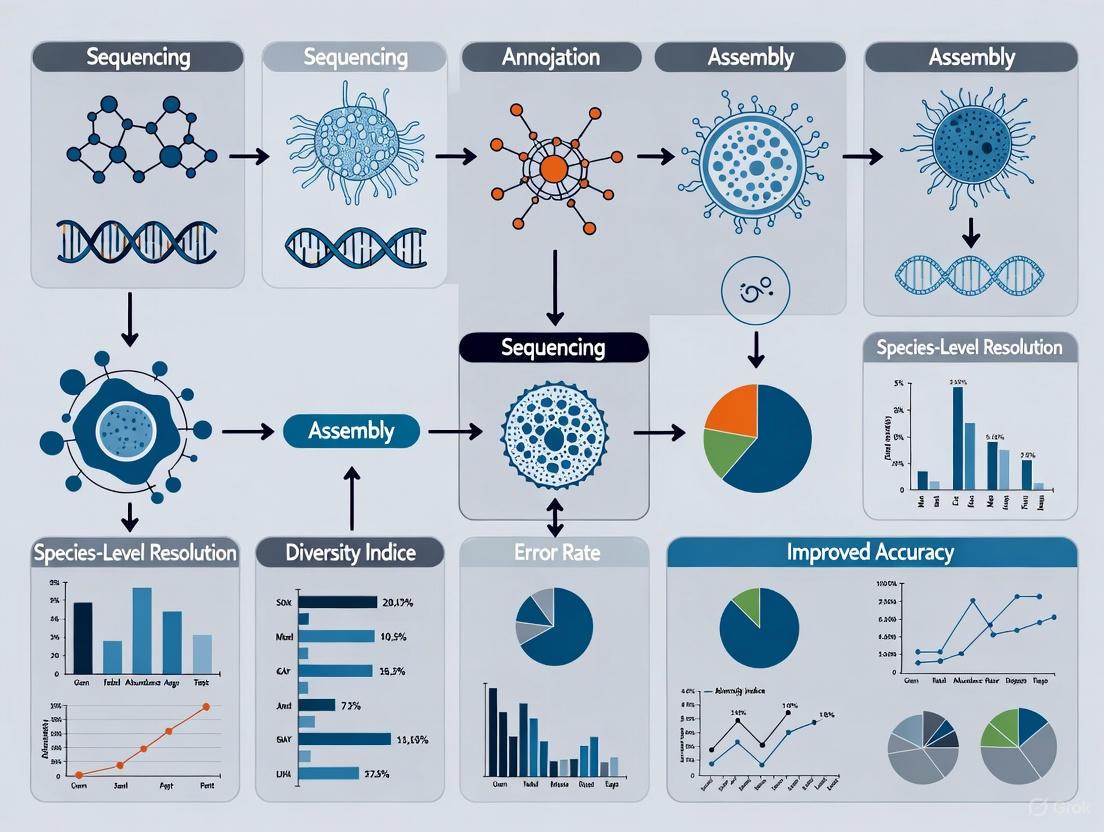
Achieving species-level resolution in microbiome data is a critical frontier for unlocking the full potential of microbiome research in drug discovery and therapeutic development.
Breaking the Species Barrier: Advanced Strategies for High-Resolution Microbiome Analysis in Biomedical Research
Abstract
Achieving species-level resolution in microbiome data is a critical frontier for unlocking the full potential of microbiome research in drug discovery and therapeutic development. This article synthesizes the latest methodological breakthroughs, from novel bioinformatics pipelines and machine learning calibration to long-read sequencing technologies, that are overcoming the traditional limitations of 16S rRNA amplicon sequencing. We provide a comprehensive framework for researchers and drug development professionals to navigate foundational concepts, implement advanced analytical techniques, troubleshoot common challenges, and validate findings against gold-standard metagenomic approaches, ultimately enabling more precise microbial biomarker discovery and targeted therapeutic interventions.
Why Species-Level Resolution Matters: From Therapeutic Imperatives to Technical Limitations
Technical Support Center
Frequently Asked Questions (FAQs)
FAQ 1: Why is strain-level resolution critical for microbiome research, and what are the consequences of overlooking it?
Overlooking strain resolution can lead to incomplete and misleading conclusions, hindering our understanding of microbial functions, interactions, and their impact on human health outcomes [1]. Strain-level variations are not just phylogenetic details; they have direct clinical consequences. For example, in the genus Bacteroides, different strains show vast differences in their accessory genes, which can comprise a significant portion of their genomes and are influenced by factors like bacteriophage activity [2]. Functionally, only 10% of Finnish infants in one study harbored Bifidobacterium longum subsp. infantis, a subspecies specialized in human milk metabolism, whereas Russian infants commonly maintained a different probiotic Bifidobacterium bifidum strain [2]. In a clinical trial, the specific strain of a probiotic Bifidobacterium can determine its success in engrafting and producing therapeutic effects [3].
FAQ 2: What are the primary methodological approaches for achieving strain-level resolution, and how do I choose?
The choice of method depends on your research goals, required resolution, and resources. The table below compares the key techniques.
| Method | Key Principle | Strengths | Limitations | Best Suited For |
|---|---|---|---|---|
| Shotgun Metagenomics [2] [1] | Sequencing all DNA in a sample; strain tracking via SNPs and gene content. | Untargeted; can discover novel strains and functions; high resolution. | Complex, resource-intensive, and slow; requires advanced bioinformatics [1]. | In-depth exploration of community structure and functional potential. |
| Optical Mapping (e.g., DynaMAP) [1] | Creating taxonomic barcodes based on the physical location of short nucleotide motifs on long DNA molecules. | Rapid results (<30 mins); no amplification or sequencing needed; high strain specificity. | Requires specialized equipment; newer technology with less established databases. | Rapid, high-throughput strain identification without sequencing. |
| PCR Assays [1] | Amplifying strain-specific DNA sequences. | High specificity and sensitivity. | Resource-intensive to design/validate; cost scales poorly for multiple targets [1]. | Detecting or quantifying a pre-defined, small set of target strains. |
| 16S rRNA Gene Sequencing [4] | Sequencing a single, hypervariable region of the 16S rRNA gene. | Low cost; high throughput; well-established. | Insufficient for strain-level resolution due to limited genetic information captured [1]. | Genus- or species-level community profiling. |
FAQ 3: How do I troubleshoot a failed experiment aimed at detecting strain-specific effects, such as in probiotic administration?
If your probiotic trial fails to show a strain-specific effect, systematically investigate these common points of failure using the workflow below.
FAQ 4: What are the key endpoints and design considerations for clinical trials involving strain-specific microbiome therapies?
Trials for live biotherapeutic products (LBPs) require a departure from traditional drug development. Key unique considerations include [5]:
- Engraftment as a Primary Endpoint: Success is measured by the therapeutic strain's ability to stably integrate into or replace the existing microbiome. This requires longitudinal sampling and strain-specific tracking.
- Safety Beyond Standard AEs: Monitor for long-term ecological disruption of the native microbiome and potential overgrowth, especially in patients who may already harbor the strain.
- Product-Specific Efficacy: Endpoints should be localized (e.g., metabolite production, reduction in specific pathogens, symptom improvement) rather than relying on systemic pharmacokinetics.
- Simplified Dosing: Microbiome-based products often do not follow traditional dose-response curves. Early trials may focus on single-dose regimens, with higher doses tested primarily for safety.
The Scientist's Toolkit: Research Reagent Solutions
This table details essential reagents and their functions for conducting strain-level research, as featured in the cited experiments.
| Research Reagent / Material | Function in Strain-Level Research | Key Consideration |
|---|---|---|
| Synthetic Bacterial Communities [6] | Defined mixtures of bacterial strains used in high-throughput screens to study drug metabolism and inter-strain interactions in a controlled setting. | Allows for the dissection of community effects from a bottom-up approach. Composition should be relevant to the research question. |
| UV-Killed Bacteria [3] | Used to isolate the immunomodulatory effects of bacterial surface components and MAMPs from effects due to bacterial replication or metabolism. | Crucial for determining if immune activation is contact-dependent and for identifying strain-specific surface properties. |
| Isolated Exopolysaccharide (EPS) [3] | Purified bacterial surface polysaccharides used to probe strain-specific immune responses mediated by this specific MAMP. | As shown with B. pseudolongum, EPS may not recapitulate the effects of whole bacteria, indicating other factors are at play [3]. |
| Fecalase Preparation [6] | A cell-free extract of fecal enzymes used to study microbial biochemical transformations of drugs or metabolites without the complexity of live communities. | Culture-independent; useful for initial metabolism screens but may miss multi-step processes requiring cofactors from live cells. |
| Gnotobiotic Mouse Models [6] | Animals with a completely defined microbiota (often germ-free colonized with specific strains) to isolate the in vivo effect of a single microbe or simple community. | The gold standard for establishing causal relationships between a strain and a host phenotype. Resource-intensive to maintain. |
Experimental Protocols & Data Analysis
Protocol 1: Assessing Strain-Specific Immune Modulation In Vitro
This protocol is adapted from studies demonstrating that different strains of Bifidobacterium pseudolongum elicit unique immune responses in innate immune cells [3].
- Bacterial Preparation: Grow the bacterial strains of interest to mid-log phase. Harvest cells and wash with PBS. Prepare two types of reagents:
- UV-Killed Bacteria: Irradiate the bacterial suspension with UV light to ensure cell death while preserving surface structures. Confirm killing by plating.
- Isolated Exopolysaccharide (EPS): Extract and purify EPS from the bacterial cultures using standard phenol-water or ethanol precipitation methods.
- Immune Cell Culture: Isolate and differentiate primary innate immune cells, such as bone marrow-derived dendritic cells (BMDCs) or peritoneal macrophages (MΦ).
- Stimulation: Treat the immune cells with:
- UV-killed bacteria (at a Multiplicity of Infection, MOI, to be optimized, e.g., 10:1)
- Isolated EPS (at a concentration to be optimized, e.g., 10-100 µg/mL)
- Appropriate controls (e.g., media alone, a known stimulant like LPS).
- Analysis (24-48 hours post-stimulation):
- Flow Cytometry: Analyze the expression of cell surface receptors (e.g., CD40, CD86, MHC class II) to assess cell activation.
- ELISA: Measure the concentration of cytokines (e.g., IL-6, TNF-α, IL-10) in the cell culture supernatant.
Quantitative Data from a Representative Experiment [3] The table below shows how different strains can produce quantitatively and qualitatively different immune responses.
| Treatment (on BMDCs) | CD86 Expression (Mean Fluorescence Intensity) | IL-6 Secretion (pg/mL) | IL-10 Secretion (pg/mL) |
|---|---|---|---|
| Media Control | Baseline | Low | Low |
| B. pseudolongum Strain A | 1,500 | 450 | 180 |
| B. pseudolongum Strain B | 3,200 | 850 | 300 |
Visualizing the Strain-Specific Immune Response Pathway The following diagram summarizes the key findings from the immune modulation study, illustrating the strain-specific pathways.
Protocol 2: Tracking Strain Engraftment and Ecological Impact In Vivo
This protocol is critical for trials of live biotherapeutic products (LBPs) and probiotics [3] [5].
- Animal Model Preparation: Subject mice to a broad-spectrum antibiotic regimen for 5-7 days to deplete the endogenous microbiota. Include untreated controls.
- Strain Administration: Orally gavage mice with a single dose or multiple doses of the live bacterial strain(s) of interest.
- Longitudinal Sampling: Collect fecal samples at regular intervals pre- and post-gavage (e.g., days 0, 1, 3, 7, 14).
- Sample Analysis:
- DNA Extraction: Perform microbial DNA extraction from all fecal samples.
- Strain-Level Profiling: Use a high-resolution method (e.g., shotgun metagenomics or optical mapping) to track the relative abundance of the administered strain over time. This confirms engraftment.
- Community Profiling: Use 16S rRNA sequencing to assess broader ecological changes in the gut microbiome composition (beta-diversity) in response to the introduced strain.
- Host Response: Terminally, collect intestinal tissues and/or blood serum. Analyze host gene expression via RNA sequencing and measure systemic immune markers.
Frequently Asked Questions
FAQ 1: Why can't 16S V3-V4 sequencing reliably distinguish between closely related bacterial species? The V3-V4 regions constitute only about 460 base pairs of the full 1,500 bp 16S rRNA gene, providing limited genetic information for differentiation [7]. This short region lacks sufficient variable sites to distinguish species that share highly similar 16S rRNA gene sequences, such as Escherichia and Shigella [4]. The inherent homology between sequences in these partial regions means some species remain indistinguishable regardless of bioinformatic methods used [8].
FAQ 2: What are the practical consequences of using a fixed similarity threshold for species classification? Fixed thresholds (typically 97-98.7%) inevitably cause misclassification because actual sequence divergence between species varies substantially [4]. Some species demonstrate differences below 97% similarity, while others share identical V3-V4 sequences despite being distinct species [4]. This results in both over-splitting (separating sequences from the same species) and over-merging (lumping different species together), distorting true microbial diversity metrics [9].
FAQ 3: Are there experimental approaches that can improve species-level resolution? Yes, full-length 16S rRNA sequencing using Oxford Nanopore or PacBio platforms provides enhanced species-level understanding by capturing all variable regions [10] [8]. Additionally, shotgun metagenomic sequencing enables accurate species-level identification and functional profiling by randomly sequencing all genetic material in a sample, though at higher cost and data storage requirements [8] [11].
Troubleshooting Guides
Issue 1: Low Species-Level Resolution in Taxonomic Profiles
Problem: Your analysis fails to resolve taxonomic classifications beyond genus level, or you suspect misclassification of closely related species.
Solution:
- Wet-Lab Considerations:
- Bioinformatic Improvements:
- Implement the ASVtax pipeline which applies flexible, species-specific classification thresholds rather than fixed cutoffs [4]
- Utilize the Emu bioinformatics pipeline specifically designed for Oxford Nanopore Technologies FL-16S reads to enhance classification accuracy [10]
- Apply machine learning calibration tools like TaxaCal to correct species-level abundance biases in 16S data using a two-tier correction strategy [11]
Validation: Include mock microbial communities with known composition to validate species-level classification performance in your specific experimental setup [7].
Issue 2: Inaccurate Diversity Metrics Due to Threshold Artifacts
Problem: Alpha and beta diversity metrics appear distorted, potentially due to over-splitting or over-merging of sequences.
Solution:
- Algorithm Selection:
- For high precision with Illumina data, consider DADA2 for Amplicon Sequence Variants (ASVs) which differentiates sequences varying by even a single base pair [7]
- For Operational Taxonomic Units (OTUs), UPARSE provides clusters with lower errors, though with potential over-merging [9]
- Benchmark multiple algorithms (DADA2, Deblur, UNOISE3, UPARSE) using mock communities to determine optimal performance for your specific samples [9]
- Parameter Optimization:
Experimental Design: Always include appropriate controls including negative (no template) controls and Zymo mock microbial community controls to calibrate experimental analysis parameters [7].
Comparative Performance Data
Table 1: Comparison of 16S rRNA Sequencing Approaches for Species-Level Resolution
| Sequencing Method | Target Region | Read Length | Species-Level Resolution | Primary Limitations |
|---|---|---|---|---|
| Illumina V3-V4 | ~460 bp | Short (~300 bp) | Limited to Genus Level [8] | Cannot distinguish closely related species; fixed threshold artifacts [4] |
| ONT FL-16S | Full-length (~1500 bp) | Long | Superior species-level resolution [10] | Higher error rate; requires specialized bioinformatics (Emu) [10] |
| Shotgun Metagenomics | Whole genome | Variable | High resolution with functional insights [8] | High cost; extensive data processing; host DNA contamination [8] [11] |
Table 2: Performance Characteristics of Bioinformatics Algorithms for 16S Data
| Algorithm | Method | Error Rate | Tendency | Best Application |
|---|---|---|---|---|
| DADA2 [9] | ASV (Denoising) | Low | Over-splitting [9] | High-resolution studies requiring single-nucleotide differentiation [7] |
| UPARSE [9] | OTU (Clustering) | Low | Over-merging [9] | Studies where genus-level classification is sufficient |
| Deblur [9] | ASV (Denoising) | Moderate | Balanced | Large-scale studies with consistent sequencing quality |
| Emu [10] | ONT-specific | Low (with correction) | Balanced | Oxford Nanopore long-read 16S data |
Experimental Protocols
Protocol 1: Species-Level Resolution Enhancement Using Flexible Thresholds
Purpose: To implement a dynamic threshold approach for improved species-level classification of V3-V4 16S rRNA data.
Materials:
- ASVtax pipeline and database [4]
- V3-V4 16S rRNA sequencing data
- High-performance computing resources
Procedure:
- Database Construction:
Threshold Determination:
Classification:
- Process your ASVs through the ASVtax pipeline using the established flexible thresholds
- Validate classification accuracy using mock community controls
Expected Results: Significant improvement in species-level classification accuracy and reduction in misclassification between closely related taxa.
Protocol 2: Machine Learning Calibration of 16S Species Profiles
Purpose: To calibrate species-level taxonomy profiles in 16S amplicon data to more closely resemble metagenomic whole-genome sequencing results.
Materials:
- TaxaCal algorithm [11]
- Paired 16S and WGS data (minimum 20 sample pairs for training) [11]
- R or Python environment
Procedure:
- Data Preparation:
- Obtain paired 16S and WGS data from the same samples
- Process both datasets through standardized taxonomic classification pipelines
- Normalize abundance data for comparative analysis
Model Training:
Application:
- Apply trained TaxaCal model to correct species-level abundances in 16S-only samples
- Validate calibrated profiles using holdout paired samples or mock communities
Expected Results: Bray-Curtis distances between calibrated 16S and WGS samples decrease significantly (from 0.54 to 0.46 in validation studies), with improved alpha diversity metrics alignment [11].
Experimental Workflow Visualization
Research Reagent Solutions
Table 3: Essential Research Materials for Overcoming V3-V4 Limitations
| Reagent/Resource | Function | Application Note |
|---|---|---|
| Zymo Mock Microbial Community [10] | Positive control for DNA extraction, PCR, and sequencing efficiency | Validates species-level classification performance in your specific experimental setup |
| HostZero DNA Extraction Kit [10] | Host DNA depletion for microbiome studies | Increases microbial DNA proportion (50-90%) in host-rich samples like tracheal aspirates |
| GreenGenes2 & SILVA Databases [7] | Taxonomic classification references | Use curated versions with standardized nomenclature for consistent classification |
| ONT R10.4.1 Flow Cells [10] | High-accuracy long-read sequencing | Provides ~99% read accuracy for full-length 16S sequencing |
| Emu Bioinformatics Pipeline [10] | Taxonomic classification of ONT FL-16S data | Specifically designed for long-read, error-prone sequences; uses curated database |
Frequently Asked Questions (FAQs) and Troubleshooting Guides
FAQ 1: What fundamentally limits 16S rRNA gene sequencing from achieving reliable species-level resolution?
The limitation stems from the genetic characteristics of the 16S rRNA gene and the technical constraints of common sequencing approaches.
- Genetic Conservation: The 16S rRNA gene is a highly conserved "housekeeping" gene, meaning its sequence is very similar across different species within the same genus. Short-read sequencing of only one or two hypervariable regions (e.g., V3-V4) lacks sufficient informative sites to distinguish between these closely related species [4] [12].
- Fixed Threshold Pitfalls: Traditional bioinformatics methods often use a fixed sequence similarity threshold (e.g., 97% for Operational Taxonomic Units - OTUs) to classify species. However, the actual 16S rRNA gene sequence divergence among species is not uniform; some species have identical 16S sequences (e.g., Escherichia and Shigella), while others show high intra-species variation, making a single fixed threshold unreliable for accurate species-level classification [4] [13].
Troubleshooting Guide: Overcoming 16S Limitations
| Challenge | Solution | Principle | Key Consideration |
|---|---|---|---|
| Short-Read Resolution | Use full-length 16S rRNA gene sequencing (e.g., PacBio, Nanopore) [4] [12]. | Provides the entire gene sequence, maximizing informative sites for discrimination. | Higher cost and longer sequencing time compared to partial gene sequencing [4]. |
| Primer Bias & Off-target Amplification | Employ micelle PCR (micPCR) for amplification [12]. | Compartmentalizes single DNA molecules to prevent chimera formation and PCR competition, providing more robust and accurate profiles. | Requires optimization of emulsion-based PCR protocols. |
| Fixed Threshold Misclassification | Implement flexible, species-specific classification thresholds [4]. | Uses dynamic similarity cutoffs tailored to the genetic variation of each specific species. | Requires a curated, high-quality reference database to define accurate thresholds. |
FAQ 2: How can I achieve species-level identification in samples dominated by host DNA, such as tissue or saliva?
Samples with high host content (>90% human DNA) present a major challenge because sequencing depth is wasted on host reads, drastically reducing microbial signal [14]. Solutions involve either depleting host DNA or using methods that selectively enrich for microbial sequences.
Troubleshooting Guide: Working with High-Host-Content Samples
| Challenge | Solution | Principle | Key Consideration |
|---|---|---|---|
| Low Microbial Signal | Use a reduced-representation metagenomic method like 2bRAD-M [14]. | Leverages higher restriction enzyme site density in microbial genomes vs. human genome to preferentially generate and sequence microbial tags. | Does not require prior host depletion; allows for concurrent host and microbiome analysis. |
| Host DNA Depletion | Apply pre-extraction methods (e.g., selective lysis) or post-extraction methods (e.g., methylation-based depletion) [14]. | Physically or enzymatically removes host DNA before or after extraction to increase the relative proportion of microbial DNA. | Can cause microbial DNA loss, may not work on frozen samples, and can skew microbial community representation [14]. |
| Low Biomass & Contamination | Include negative and positive controls in every experiment [15]. | Allows for identification and computational subtraction of contaminating DNA sequences introduced from reagents and the environment. | Critical for accurate detection in low-biomass samples where contamination can constitute most of the signal [15]. |
FAQ 3: What advanced analytical approaches can push resolution beyond the species level to strains and subspecies?
Strain and subspecies-level resolution is crucial as these can exhibit distinct functional characteristics and host interactions [16]. This typically requires moving beyond 16S rRNA sequencing to shotgun metagenomics and advanced computational tools.
- The Limitation of 16S: The 16S rRNA gene is generally insufficient for strain-level resolution because strains of the same species have identical or nearly identical 16S sequences [16].
- Shotgun Metagenomics: This method sequences all the DNA in a sample, allowing access to the entire genetic content of the microbial community, including genes beyond the 16S rRNA gene.
- The "Panhashome" Method: This is a sketching-based bioinformatics approach for rapid subspecies and species quantification from metagenomic data. It identifies genes that drive functional differences between subspecies within a species, known as Operational Subspecies Units (OSUs) [16].
Troubleshooting Guide: Achieving Subspecies Resolution
| Challenge | Solution | Principle | Key Consideration |
|---|---|---|---|
| Strain-Level Discrimination | Perform shotgun metagenomic sequencing and analyze with tools like panhashome [16]. | Identifies variations in gene content (the "pan-genome") between closely related strains to define subspecies. | Requires high-quality, deep sequencing data and sophisticated computational resources. |
| Lack of Reference Databases | Utilize comprehensive genomic catalogs like the HuMSub catalog [16]. | Provides a curated reference of human gut microbiota at the subspecies level for accurate annotation. | Existing databases are still being populated for various body sites and environments. |
| Clinical Diagnostic Speed | Adopt a full-length 16S micPCR/Nanopore workflow [12]. | Combines the accuracy of micPCR with the long reads of nanopore sequencing for rapid, species-level results (24hr turnaround). | While excellent for species-level ID, strain-level resolution may still require metagenomics. |
Experimental Protocols for Enhanced Resolution
Protocol 1: Full-Length 16S rRNA Gene Sequencing with micPCR and Nanopore
This protocol is adapted from [12] and is designed for rapid, species-level identification from clinical samples with high accuracy.
Key Research Reagent Solutions
| Item | Function | Specification |
|---|---|---|
| LongAmp Taq 2x MasterMix | Efficient amplification of long, full-length 16S rRNA gene amplicons. | New England Biolabs |
| 16S_V1-V9 Primers | Amplifies the nearly complete 16S rRNA gene. Include universal sequence tails for a two-step PCR [12]. | Forward: 5’-TTT CTG TTG GTG CTG ATA TTG CAG RGT TYG ATY MTG GCT CAG-3’ |
| Nanopore Barcodes | Allows for multiplexed sequencing of samples. | Part of the cDNA-PCR sequencing kit SQK-PCB114.24 (Oxford Nanopore Technologies) |
| Synechococcus DNA | Serves as an Internal Calibrator (IC) for absolute quantification of 16S rRNA gene copies. | ATCC 27264D-5 |
| Flongle Flow Cell | Provides a cost-effective and rapid sequencing platform for individual or small batches of samples. | Oxford Nanopore Technologies |
Detailed Workflow Diagram
The following diagram illustrates the optimized experimental workflow for full-length 16S sequencing.
Methodology Steps:
- DNA Extraction & Quantification: Extract DNA from the sample (e.g., using MagNA Pure 96 system). Quantify the total number of 16S rRNA gene copies using qPCR [12].
- Spike Internal Calibrator: Add a known quantity (e.g., 1,000 copies) of Synechococcus 16S rRNA gene to the DNA extract. This allows for absolute quantification and correction for background contamination [12].
- First micPCR Round:
- Primers: Use primers 16SV1-V9F and 16SV1-V9R.
- Reaction: Set up a micelle-based PCR using LongAmp Taq 2x MasterMix.
- Cycling Conditions: 95°C for 2 min; 25 cycles of (95°C for 15s, 55°C for 30s, 65°C for 75s); final extension at 65°C for 10 min [12].
- Amplicon Purification: Purify the resulting amplicons using AMPure XP beads at a 1:0.6 ratio [12].
- Second micPCR Round:
- Reaction: Use the purified amplicons as template, nanopore barcodes, and LongAmp Taq 2x MasterMix.
- Cycling Conditions: 95°C for 2 min; 25 cycles with a touch-down annealing (first 10 cycles: 15s at 95°C, 30s at 50-55°C, 75s at 65°C); final extension at 65°C for 10 min [12].
- Sequencing & Analysis: Pool barcoded libraries and load onto a Flongle Flow Cell for sequencing on a MinION device. Perform basecalling and analyze data using the Genome Detective platform or similar [12].
Protocol 2: 2bRAD-M for Host-Rich Microbiome Analysis
This protocol, based on [14], is designed for high-resolution microbiome profiling in samples with high host DNA content without the need for physical host depletion.
Detailed Workflow Diagram
The diagram below outlines the core steps of the 2bRAD-M method, from sample to analysis.
Methodology Explanation:
- Principle: The 2bRAD-M method exploits the fact that microbial genomes have a much higher density of genes, and therefore restriction enzyme sites, compared to the human genome. A type IIB restriction enzyme cuts genomic DNA at specific sites, generating short, uniform tags (e.g., 60-70 bp) that are representative of the entire genome [14].
- Selective Enrichment: Because microbial genomes generate far more of these tags per unit of DNA, sequencing these short tags effectively enriches for microbial sequences even when host DNA makes up over 99% of the sample [14].
- Bioinformatic Analysis: The sequenced tags are then mapped to an expanded reference database that includes genomes from GTDB and EnsemblFungi to achieve comprehensive taxonomic profiling at the species level [14].
Quantitative Data Comparison of Methodologies
The following table summarizes key performance metrics of different sequencing methods as benchmarked in recent studies, highlighting their capabilities for species-level resolution.
Table 1: Performance Benchmarking of Microbiome Sequencing Methods in High-Host-Content Conditions [14]
| Method | Target | Host DNA Context | Species-Level AUPR* | Species-Level L2 Similarity* | Key Advantage |
|---|---|---|---|---|---|
| 2bRAD-M | Genomic Tags | 90% | >93% | >93% | No host depletion needed; high resolution in HoC. |
| 2bRAD-M | Genomic Tags | 99% | High | High | Maintains performance in extreme HoC. |
| WMS | Whole Genome | 90% | High | High (but lower than 2bRAD-M at 99% HoC) | Considered gold standard; functional potential. |
| 16S (V4-V5) | Single Gene Region | 90% / 99% | Low | Low | Cost-effective; prone to off-target amplification in HoC. |
| Full-Length 16S (Nanopore) | Full 16S Gene | N/A | Matches WGS profiles [12] | N/A | Rapid turnaround (24h); excellent species discrimination. |
AUPR (Area Under the Precision-Recall Curve) and L2 Similarity are metrics for identification accuracy and abundance estimation fidelity, respectively. Higher values are better. [14]
Table 2: Thresholds for Taxonomic Classification in 16S rRNA Gene Analysis
| Taxonomic Level | Traditional Fixed Threshold | Modern Flexible Approach | Note |
|---|---|---|---|
| Species | 97% or 98.7% similarity | 80% to 100%, species-specific [4] | Flexible thresholds account for variable intra- and inter-species diversity. |
| Genus | 95% similarity | Clear thresholds for 98.38% of genera [4] | More reliable than species-level with fixed thresholds. |
| Subspecies (OSU) | Not applicable | Defined by panhashome gene content analysis [16] | Requires shotgun metagenomic data, not 16S rRNA sequencing. |
FAQs on Microbial Databases and the Tree of Life
Q1: How do newly discovered microorganisms, like Solarion, directly impact existing reference databases? The discovery of a new organism such as Solarion arienae necessitates a fundamental restructuring of our taxonomic frameworks [17]. This single-celled eukaryote did not fit into any known major lineages (supergroups) of eukaryotic life [18]. Its unique genetic and cellular makeup led researchers to establish both a new phylum (Caelestes) and a new eukaryotic supergroup (Disparia) to accommodate it [17]. For reference databases, this means they must be updated to include this new branch on the tree of life. Furthermore, the unique mitochondrial genes found in Solarion provide new reference points for understanding ancient evolutionary pathways, forcing databases to expand beyond just taxonomic names to include these novel genetic sequences [17] [19].
Q2: What is the specific genetic evidence from Solarion that informs our understanding of early mitochondrial evolution?
Solarion arienae contains a critical piece of genetic evidence: the secA gene within its mitochondrial DNA [18]. This gene is part of a protein translocation system and is a molecular relic from the ancient bacterial ancestor that evolved into mitochondria [19]. In the endosymbiotic event that created eukaryotes, an ancestral cell engulfed a bacterium, which later became the energy-producing mitochondrion [18]. Over billions of years, almost all eukaryotes lost the secA gene from their mitochondrial genomes. Solarion's retention of this gene provides direct genetic insight into the machinery of the proto-mitochondria, offering a "rare window" into the earliest stages of complex cellular evolution [17] [18].
Q3: Why is a fixed similarity threshold (e.g., 97-98.5%) problematic for species-level classification in microbiome studies? Using a fixed threshold for species-level classification, such as 97-98.5% similarity for the 16S rRNA gene, is a major source of misclassification because genetic divergence is not uniform across all microbial species [4]. This "one-size-fits-all" approach fails to account for the natural biological variation in evolutionary rates. For instance, some distinct species may share identical 16S sequences (e.g., Escherichia and Shigella), while other species exhibit substantial intraspecies diversity where different strains share less than 97% similarity [4]. Relying on a fixed threshold in these cases leads to false positives (lumping different species together) or false negatives (splitting one species into many) [4]. Advanced pipelines now establish flexible, species-specific thresholds that range from 80% to 100% to resolve these issues [4].
Q4: What are the key quality issues affecting microbial genome sequences in public databases? Public databases suffer from significant quality and completeness issues, which undermine the reliability of microbiome research. A survey of sequences derived from authenticated ATCC strains in two major databases (NCBI and Ensembl) revealed that most available genomes are incomplete drafts [20]. The table below summarizes the specific issues:
Table: Quality Issues with ATCC Strain Genomes in Public Databases
| Database | Total ATCC Genomes Surveyed | Incomplete Drafts (Contigs/Scaffolds) | Complete Genomes | Genomes with Plasmids |
|---|---|---|---|---|
| Microbial Genomes (NCBI) | 1,807 | 72.3% | 27.7% | 10.7% |
| Ensembl Bacteria | 715 | 72.9% | 27.1% | Data Not Available |
The primary challenges include a lack of complete, circularized chromosomes and plasmids, the use of non-authenticated or poorly characterized source cultures, and the application of non-standardized sequencing and assembly methods [20]. These factors contribute to inaccuracies in downstream analyses.
Q5: How can full-length 16S rRNA sequencing from PacBio be used to optimize a reference database for Illumina data? Full-length 16S rRNA sequencing data generated by PacBio's HiFi (high-fidelity) reads can be processed with denoising tools like DADA2 to generate highly accurate Amplicon Sequence Variants (ASVs) that provide single-nucleotide resolution [21] [8]. These full-length ASVs can then be assigned a taxonomy using a reference database (e.g., RDP) and used to construct a new, optimized, study-specific reference database [21]. When this custom database is used to classify shorter reads from Illumina (e.g., V3-V4 regions), it significantly increases classification accuracy and enhances the discovery of microbial biomarkers [21]. This method effectively translates the superior resolution of long-read sequencing to improve the analysis of more cost-effective, short-read data.
Troubleshooting Guide: Common Experimental Issues
Issue 1: Inability to Achieve Species-Level Resolution with V3-V4 16S rRNA Data
- Problem: Your 16S rRNA sequencing analysis, targeting the V3-V4 regions, is unable to reliably distinguish between closely related bacterial species, leading to ambiguous taxonomic assignments.
- Solution:
- Use a Flexible Threshold Pipeline: Implement a specialized bioinformatics pipeline, such as the
asvtaxtool, which uses dynamic, species-specific classification thresholds instead of a single fixed cutoff [4]. This accounts for the variable evolutionary rates of the 16S gene across different taxa. - Leverage a Custom Database: Construct or use a non-redundant ASV database that is specifically tailored to the V3-V4 regions and enriched with sequences from your target environment (e.g., the human gut) [4]. This improves coverage for hard-to-classify and uncultured organisms.
- Validate with Long-Read Data: If possible, use PacBio full-length 16S sequencing on a subset of samples to create a high-quality, study-specific reference database, which can then be used to train a classifier for your Illumina V3-V4 data [21].
- Use a Flexible Threshold Pipeline: Implement a specialized bioinformatics pipeline, such as the
Issue 2: Reference Database is Missing or Misclassifying a Novel Microbial Lineage
- Problem: Your metagenomic or phylogenetic analysis reveals a cluster of sequences that do not confidently map to any known taxonomic group in standard databases, suggesting a novel discovery.
- Solution:
- Conduct Deep Phylogenetic Analysis: Follow the methodology used for Solarion [17]. Combine microscopy, single-cell genomics, and phylogenetic analysis of multiple genes to determine the organism's evolutionary relationship to known lineages.
- Interrogate Environmental Databases: Search public environmental DNA (eDNA) databases to see if similar sequences have been detected elsewhere but not yet classified. Solarion was found to be both rare and widespread in marine sediments upon such a search [19].
- Update Your Reference Metadata: Use tools like the "Set Up Microbial Reference Database" function in bioinformatics suites (e.g., CLC Microbial Genomics Module) to incorporate new taxonomic metadata and custom sequences into your analytical workflow [22].
Issue 3: Low Quality or Incomplete Genomes in Public Databases are Affecting Analysis
- Problem: Your reference-based assembly or taxonomic profiling is yielding poor results due to the fragmented and incomplete nature of genomes in public repositories.
- Solution:
- Source Authenticated Materials: Whenever possible, use genomic data derived from authenticated, traceable biological materials, which ensures the identity and purity of the source culture [20].
- Prioritize Complete Genomes: Filter for complete, circularized genomes and chromosomes in your reference set, as these are of higher quality and allow for more accurate analysis, even though they are less common [20].
- Employ a Hybrid Assembly Workflow: For your own sequencing projects, use a standardized end-to-end workflow that combines long-read and short-read sequencing technologies to generate high-quality, complete genome assemblies, including plasmids [20].
Experimental Protocols & Workflows
Protocol 1: Methodology for Discovering and Characterizing a Novel Eukaryotic Microbe
This protocol is based on the groundbreaking study that discovered Solarion arienae and established the new supergroup Disparia [17] [18].
- Sample Collection & Cultivation: Collect environmental samples (e.g., marine water and sediment). Establish and maintain long-term laboratory cultures of microorganisms from these samples.
- Microscopy: Regularly observe cultures under a microscope. Note any unusual or previously overlooked morphological characteristics in the microbial community.
- Single-Cell Isolation: Isolate individual cells of interest using techniques such as micropipetting or cell sorting.
- Genome Sequencing & Assembly: Sequence the entire genome of the isolated organism using a combination of sequencing platforms to ensure high coverage and accuracy.
- Phylogenomic Analysis:
- Identify a set of highly conserved, universal marker genes from the sequenced genome.
- Build a phylogenetic tree including these genes from a broad representation of known eukaryotic supergroups.
- Statistically assess (e.g., with bootstrapping) where the new organism places on the tree. If it does not robustly cluster with any known supergroup, it may represent a new lineage.
- Mitochondrial Gene Analysis: Specifically assemble and annotate the mitochondrial genome. Search for and analyze the presence of rare, ancestral genes like
secAthat are typically lost in other eukaryotes. - Taxonomic Proposal: Based on the genetic distinctiveness and phylogenetic results, formally propose new taxonomic ranks (e.g., new phylum, new supergroup) as required.
Protocol 2: Workflow for Optimizing a 16S rRNA Reference Database Using PacBio Data
This methodology details how to use long-read sequencing to improve taxonomic classification for short-read studies [21].
- Sample Preparation & Sequencing:
- Extract microbial DNA from your sample set (e.g., oral or gut microbiome).
- Perform full-length 16S rRNA gene amplification and sequence on the PacBio platform to generate HiFi reads.
- On the same DNA samples, perform V3-V4 region amplification and sequence on the Illumina platform.
- PacBio Data Processing:
- Process the PacBio HiFi reads using the DADA2 pipeline to infer exact amplicon sequence variants (ASVs).
- Assign taxonomy to these full-length ASVs using a standard reference database (e.g., RDP or SILVA).
- Database Optimization:
- Use the confidently classified, full-length ASVs to construct a new, study-specific reference database.
- Optionally, trim the phylogenetic tree of this new database at various identity thresholds to reduce redundancy and computational demand.
- Classifier Training & Application:
- Train a taxonomic classifier (e.g., in QIIME2) on this optimized reference database.
- Use this trained classifier to assign taxonomy to the Illumina-derived V3-V4 reads.
- Validation:
- Compare the classification results (taxonomic richness, evenness, and resolution) against those obtained using standard, large databases.
- Use tools like LEfSe to assess the improvement in biomarker discovery efficiency.
The Scientist's Toolkit: Research Reagent Solutions
Table: Essential Materials and Tools for Advanced Microbiome Research
| Item | Function & Application |
|---|---|
| PacBio HiFi Reads | Provides highly accurate long-read sequencing data, ideal for generating full-length 16S rRNA sequences and resolving complex genomic regions [21] [8]. |
| DADA2 Algorithm | A key bioinformatics tool for processing sequencing data that models and corrects Illumina-sequenced amplicon errors, resolving amplicon sequence variants (ASVs) that differ by as little as one nucleotide [21]. |
| Authenticated Microbial Strains | Certified microbial cultures from repositories like ATCC provide traceable and reliable genomic material, which is crucial for generating high-quality reference genomes and validating findings [20]. |
| Flexible Threshold Pipeline (e.g., ASVtax) | A specialized bioinformatics tool that applies dynamic, species-specific identity thresholds for taxonomic classification, dramatically improving species-level resolution from V3-V4 16S data [4]. |
| Hybrid Assembly Workflow | A methodology that combines the high accuracy of short-read sequencing (Illumina) with the long-range continuity of long-read sequencing (PacBio/Oxford Nanopore) to produce complete, closed microbial genomes [20]. |
Next-Generation Pipelines and Technologies for Precision Microbiome Profiling
Welcome to the technical support center for advanced microbiome bioinformatics. This resource is dedicated to supporting researchers, scientists, and drug development professionals in implementing cutting-edge methods for improving species-level resolution in microbiome data research. The center focuses specifically on the ASVtax pipeline and the development of customized reference databases, which address critical limitations of traditional fixed-threshold taxonomic classification methods.
Traditional 16S rRNA gene sequencing, particularly of the V3-V4 hypervariable regions, has been largely confined to genus-level identification due to the use of fixed similarity thresholds (typically 98.5-98.7%) for species classification [23] [24]. This approach causes significant misclassification because optimal discrimination thresholds actually vary substantially among different bacterial species, ranging from 80% to 100% similarity [23]. The ASVtax pipeline implements flexible classification thresholds that are specific to individual taxonomic groups, significantly improving species-level identification accuracy for complex microbial communities like the human gut microbiome [23] [24].
Troubleshooting Guides
Common Pipeline Implementation Issues
Table 1: Frequent ASVtax Pipeline Errors and Solutions
| Error Description | Potential Causes | Recommended Solutions |
|---|---|---|
| Low classification rate for new ASVs | Insufficient database coverage of target microbiome; Overly stringent default thresholds | Supplement with study-specific sequences; Verify threshold parameters for target taxa |
| Inconsistent taxonomy across samples | Variable sequence quality; Incomplete reference data | Implement rigorous quality control; Standardize taxonomic nomenclature across databases |
| Over-assignment of rare taxa | Database contamination; Inappropriate threshold settings | Apply decontamination protocols; Validate with negative controls |
| Discrepancies between classification tools | Different algorithmic approaches; Inconsistent database versions | Use consensus classification approaches; Maintain consistent database versions |
Database Construction and Curation Problems
Table 2: Custom Database Development Issues
| Problem Area | Technical Challenges | Resolution Strategies |
|---|---|---|
| Database incompleteness | Limited reference sequences for target taxa; Gaps in understudied lineages | Integrate multiple sources (SILVA, NCBI, LPSN); Add study-specific sequences |
| Taxonomic inconsistencies | Conflicting nomenclature across sources; Deprecated classifications | Implement standardized curation pipelines; Use authoritative taxonomy sources |
| Sequence quality issues | Variable lengths; Ambiguity bases; Mislabeled sequences | Apply rigorous filtering (e.g., <2% ambiguity bases); Remove short sequences |
| Region-specific biases | Primer mismatches; Hypervariable region selection | Extract specific regions (e.g., V3-V4 positions 341-806) from full-length references |
Frequently Asked Questions (FAQs)
Q1: What are the specific advantages of ASVtax over traditional OTU-based methods?
ASVtax provides several key advantages: (1) It employs flexible species-level thresholds (80-100%) tailored to specific taxonomic groups rather than a fixed cutoff, resolving misclassification between closely related species; (2) It uses a specialized V3-V4 region database that integrates multiple authoritative sources and study-specific sequences; (3) It achieves single-nucleotide resolution through Amplicon Sequence Variants (ASVs) rather than Operational Taxonomic Units (OTUs) with arbitrary similarity thresholds [23] [24].
Q2: How does database size affect taxonomic resolution, and why are customized databases recommended?
Paradoxically, as database size increases, species-level taxonomic resolution can actually decrease due to rising interspecies sequence collisions [25]. Comprehensive databases contain more sequences from taxa not present in your study environment, potentially leading to false assignments. Customized databases tailored to specific taxonomic groups and geographic regions improve assignment accuracy by reducing irrelevant sequences, though they may initially increase unassigned sequences until enriched with relevant local barcodes [26].
Q3: What methods can improve taxonomic assignment when reference databases are incomplete?
When databases are incomplete: (1) Implement consensus taxonomy approaches like CONSTAX that combine multiple classifiers (RDP, UTAX, SINTAX) to improve assignment power [27]; (2) Add local barcode sequences specifically from your study region/taxa - even small additions (e.g., 116 new barcodes increasing database by 0.04%) can improve resolution for 0.6-1% of ASVs [26]; (3) Apply abundance-based reassignment methods that preserve rare taxa information during ambiguous taxon resolution [28].
Q4: How do we handle ambiguous taxa that are identified to different taxonomic resolutions?
Ambiguous taxa resolution requires careful strategies: (1) For site-level comparisons, retain children and delete parents to preserve richness; (2) For study-area scale analyses, reassign parents to common children to maintain abundance patterns; (3) Avoid methods that simply merge all children with parents, as this significantly reduces apparent richness and distorts ecological patterns [28]. The choice of method significantly impacts estimates of projected taxa richness, particularly for conservation applications.
Q5: What are the key considerations when selecting hypervariable regions for species-level identification?
For human gut microbiome studies targeting Firmicutes and Bacteroidetes, the V3-V4 regions have been recognized as the optimal compromise between resolution, cost, and throughput [23] [24]. While full-length 16S sequencing provides superior species-level identification, V3-V4 regions offer practical advantages including reduced costs, higher throughput, smaller sample requirements, and shorter sequencing times (approximately 2-3 times faster than full-length) [23].
Experimental Protocols & Methodologies
ASVtax Database Construction Protocol
The ASVtax pipeline employs a robust methodology for constructing specialized databases:
Primary Database Construction: Collect seed sequences from authoritative sources including:
- LPSN (List of Prokaryotic names with Standing in Nomenclature) - using "validly published" species with "correct name" status
- NCBI RefSeq database - curated 16S sequences from bacterial and archaeal type materials
- This yields approximately 38,815 trusted reference sequences representing 18,287 bacterial and archaeal species/subspecies [23] [24]
Database Expansion and Curation:
- Incorporate quality-filtered sequences from SILVA SSU database
- Remove short sequences (<1,200 bp for bacteria, <900 bp for archaea)
- Exclude low-quality sequences (>2% ambiguity bases)
- Extract V3-V4 region sequences (positions 341-806) consistently
- Supplement with 1,082 human gut samples to improve coverage of uncultured organisms [23]
Threshold Determination:
Custom Database Development for Specific Environments
Table 3: Research Reagent Solutions for Database Development
| Reagent/Resource | Function | Implementation Considerations |
|---|---|---|
| SILVA SSU Database | Comprehensive 16S rRNA reference | Filter for quality (length, ambiguity); Extract target regions |
| NCBI RefSeq | Curated type material sequences | Use for seed sequences; Ensure taxonomic validity |
| LPSN Database | Nomenclatural standardization | Resolve taxonomic conflicts; Apply standing nomenclature |
| UNITE Database (fungal ITS) | Fungal-specific reference | Essential for ITS-based fungal studies; Requires different formatting |
| Local Barcode Sequences | Gap-filling for under-represented taxa | Even small additions significantly improve resolution |
Workflow Visualization
ASVtax Database Construction and Analysis Workflow
Advanced Technical Reference
Taxonomic Classification Algorithms Comparison
Table 4: Classification Algorithm Performance Characteristics
| Classifier | Algorithm Type | Key Features | Optimal Use Cases |
|---|---|---|---|
| RDP Classifier | Naïve Bayesian | Identifies 8-mers with higher probability of belonging to specific taxa; Provides confidence estimates | General-purpose classification with probability thresholds |
| UTAX | k-mer similarity | Calculates word count scores; Estimates error rates through reference training | Large-scale analyses requiring speed and efficiency |
| SINTAX | k-mer similarity | Identifies top hit in reference; Provides bootstrap confidence for all ranks | Situations requiring confidence values at all taxonomic levels |
| CONSTAX (Consensus) | Hybrid approach | Combines multiple classifiers; Improves assignment power through consensus | Maximizing classification accuracy and coverage |
Impact of Database Customization on Assignment Metrics
Research demonstrates that database customization significantly affects taxonomic assignment outcomes:
General vs. Specialized Databases: Reducing a comprehensive COI database to taxon-specific subsets (e.g., removing irrelevant insect sequences for marine studies) initially increases unassigned sequences but correctly reclassifies previously misassigned sequences [26].
Local Barcode Enrichment: Adding a small number of locally sourced barcodes (116 sequences, +0.04% database size) improved resolution for 0.6-1% of ASVs in marine benthic invertebrate studies [26].
Threshold Optimization: Establishing flexible thresholds for 896 common human gut species significantly improved identification of new ASVs and revealed 23 new genera within Lachnospiraceae that were previously missed with fixed thresholds [23] [24].
This technical support resource will be continuously updated as new bioinformatics approaches and reference materials become available. Researchers are encouraged to implement these methodologies to advance species-level resolution in microbiome studies, particularly for drug development and clinical applications where precise taxonomic identification is critical.
Technical Support Center
Frequently Asked Questions (FAQs)
Q1: What is the primary function of TaxaCal? TaxaCal is a machine learning algorithm designed to calibrate species-level taxonomy profiles in 16S rRNA amplicon sequencing data. Its main purpose is to reduce profiling biases inherent in 16S data, making the results more comparable to the higher-resolution profiles obtained from whole-genome sequencing (WGS). This significantly improves cross-platform comparisons and enhances disease detection capabilities in 16S-based microbiome studies [29] [30].
Q2: Why is there a significant discrepancy between 16S and WGS data at the species level? The discrepancy arises from the inherent limitations of 16S sequencing. The technique has limited resolution at the species level and often struggles to distinguish between closely related species within the same genus due to the conservation of the 16S rRNA gene. Furthermore, biases can be introduced during PCR amplification due to primer design targeting specific variable regions [29] [31]. While overall community patterns are consistent at higher taxonomic levels (e.g., family, genus), the number and abundance of species detected exclusively by one method increase dramatically at the species level [29].
Q3: How much training data is needed for TaxaCal to be effective? Validation studies indicate that TaxaCal's performance stabilizes with a training set of as few as 20 paired 16S-WGS samples. While performance improves with more training pairs, this number provides a effective and practical benchmark for researchers to achieve significant calibration [29].
Q4: What are the specific output improvements I can expect after using TaxaCal? After calibration with TaxaCal, your 16S data will show much closer alignment with WGS data in several key metrics, as demonstrated in the table below [29].
Table 1: Improvements in 16S Data After TaxaCal Calibration
| Metric | Before Calibration | After Calibration |
|---|---|---|
| Beta Diversity (PCoA) | Significant distinction from WGS (PERMANOVA F = 34.33) | Much closer alignment with WGS (PERMANOVA F = 11.19) |
| Bray-Curtis Distance | Falls outside the intra-group range of WGS samples | Shrinks to within the intra-group range of WGS samples |
| Alpha Diversity (Shannon Index) | Significant deviation from WGS | Significant improvement, closely aligned with WGS |
| Species Abundance | Significant deviations (e.g., under-represented Bacteroides stercoris) | Abundances become more aligned with WGS profiles |
Q5: My microbiome samples have very high host DNA content (e.g., saliva, tissue). Are there other methods I should consider? For host-rich samples, a method called 2bRAD-M may be highly effective. It is a reduced-representation sequencing technique that preferentially generates microbial-derived tags without requiring prior host DNA depletion. In mock samples with >90% human DNA, 2bRAD-M achieved over 93% in performance metrics (AUPR and L2 similarity), outperforming 16S sequencing, especially in high-host-context conditions [14].
Troubleshooting Guides
Issue 1: Poor Species-Level Resolution in 16S Data
Problem: Your 16S amplicon sequencing data lacks the resolution to distinguish between closely related species, limiting your biological insights.
Solution: Implement a machine learning calibration tool like TaxaCal.
Step-by-Step Protocol:
- Obtain Paired Training Data: Secure a set of samples (recommended minimum n=20) from your study that have been sequenced using both 16S and WGS methods [29].
- Input Data Preparation: Format your 16S-derived species-level abundance profiles and the corresponding WGS-derived species-level profiles (the "ground truth") for the training samples.
- Execute the Two-Tier Calibration:
- Genus-Level Rough Correction: TaxaCal first constructs a linear regression model (using the least squares method) on the training pairs to perform a rough adjustment of microbial relative abundance at the genus level. This leverages the stronger consistency between 16S and WGS at this higher taxonomic level [29].
- Species-Level Refined Correction: After the genus-level adjustment, the profiles are further refined at the species level. This step uses a K-nearest neighbor (KNN) algorithm to select highly similar WGS samples from the training set to make the final, detailed species-level corrections [29].
- Apply the Model: Use the trained TaxaCal model to calibrate the species-level abundances of all other 16S samples in your dataset.
Visualization of Workflow: The following diagram illustrates the logical workflow and data flow of the TaxaCal calibration process.
Issue 2: Choosing the Right Machine Learning Model for Microbiome Data
Problem: You are unsure which machine learning model to use for analysis of your microbiome data, which is typically high-dimensional, sparse, and compositional [32] [31].
Solution: Select models based on proven performance and the specific task. The table below summarizes recommended models based on a multi-cohort CRC study and other microbiome research [32] [31].
Table 2: Machine Learning Model Selection Guide for Microbiome Data
| Task | Recommended Model(s) | Key Strengths & Notes |
|---|---|---|
| Disease Diagnosis / Classification | Random Forest (RF) | Often provides the most accurate performance estimates; robust with high-dimensional data [31]. |
| Identifying Predictive Biomarkers | Random Forest + Multivariate Feature Selection (e.g., Statistically Equivalent Signatures) | Effective in reducing classification error and identifying key microbial features [31]. |
| Model Interpretability & Biological Insight | Logistic Regression | Offers straightforward interpretation; coupled with visualization (e.g., ICE plots) for biological insights [31]. |
| Host Phenotype Prediction from Raw Data | Fully-Connected Neural Networks (FCNN) | Can achieve better classification accuracy over traditional methods [32]. |
| Phenotype Prediction using Phylogenetic Data | Convolutional Neural Networks (CNN) | Excell at summarizing local structure; use when data can be enriched with spatial/phylogenetic information [32]. |
The Scientist's Toolkit: Research Reagent Solutions
Table 3: Essential Materials and Tools for Microbiome Calibration Experiments
| Item | Function / Application |
|---|---|
| Paired 16S-WGS Samples | A set of samples processed with both sequencing methods. Serves as the ground truth for training the TaxaCal machine learning model [29]. |
| TaxaCal Algorithm | The core machine learning tool that executes the two-tier (genus and species-level) calibration of 16S amplicon data [29] [30]. |
| 2bRAD-M Protocol | A reduced-representation sequencing method for analyzing microbiomes in host-dominated samples (e.g., saliva, tissue) without prior host DNA depletion [14]. |
| Reference Databases (e.g., GTDB, Greengenes2) | Standardized taxonomic databases crucial for consistent and accurate profiling and cross-method comparisons [14] [33]. |
| QIIME2 Platform | A powerful, user-friendly bioinformatic platform for processing and analyzing 16S rRNA sequencing data [29] [33]. |
| MetaPhlAn4 & Bracken | Widely recognized bioinformatic tools for deriving taxonomic profiles from shotgun metagenomic (WMS) sequencing data [14]. |
Frequently Asked Questions (FAQs)
Q1: My full-length 16S sequencing results show unexpected low species diversity. What could be the cause? Low diversity can often stem from primer bias during library preparation. Ensure you are using validated, universal primers that cover a broad taxonomic range. The choice of primer pairs significantly influences the resulting microbial composition, and some specific taxa may not be amplified by certain primers [34]. Additionally, confirm that your DNA extraction method is appropriate for your sample type (e.g., soil, stool, water) to ensure efficient lysis of all microbial cells [35].
Q2: What is the recommended sequencing coverage for reliable species-level identification using full-length 16S amplicons? For targeted full-length 16S sequencing on Oxford Nanopore platforms, it is recommended to sequence your amplified library to 20x coverage per microbe [35]. For a 24-plex library, this typically involves sequencing on a MinION flow cell for approximately 24–72 hours using the high-accuracy (HAC) basecaller [35].
Q3: I am getting a high proportion of chimeric sequences in my data. How can I reduce this? Chimeras often form during PCR amplification. To minimize them, use a high-fidelity polymerase and optimize your PCR cycle numbers to avoid over-amplification. During bioinformatic processing, employ established denoising and chimera removal tools that are part of standard pipelines like DADA2 (within QIIME2) or DADA2 itself, which includes a rigorous chimera removal step [7] [36].
Q4: Should I use OTUs or ASVs for analyzing my full-length 16S data? Amplicon Sequence Variants (ASVs) are generally recommended for full-length 16S data. ASVs differentiate sequences that vary by only a single nucleotide, providing higher resolution than Operational Taxonomic Units (OTUs), which cluster sequences at a fixed identity threshold (e.g., 97%) [7]. This single-nucleotide resolution is ideal for leveraging the power of long reads to distinguish between closely related species [36].
Q5: My analysis pipeline struggles with the higher error rate of long-read data. What is the best way to handle this? Modern workflows address this in several ways. During sequencing, use the high-accuracy (HAC) basecaller in MinKNOW software [35]. For data analysis, use pipelines specifically designed for long-read data that incorporate sophisticated denoising algorithms. The wf-16s pipeline in EPI2ME, for example, is optimized for Nanopore 16S data and offers both rapid real-time and high-accuracy post-run analysis modes [35]. Furthermore, ensure you perform appropriate quality filtering and truncation of your reads based on quality scores [34].
Troubleshooting Guides
Issue: Poor Sequencing Yield on Nanopore Flow Cells
| Potential Cause | Recommended Action | Preventive Measures |
|---|---|---|
| Insufficient or degraded DNA library | Check library concentration and quality using a fluorometric method. | Use a recommended extraction kit for your sample type (e.g., ZymoBIOMICS for water, QIAGEN PowerMax for soil) [35]. |
| Flow cell pore blockage | Perform a flow cell wash using the Flow Cell Wash Kit to recover pores. | Properly purify and clean up your PCR amplicons before library preparation to remove contaminants. |
| Old or expired flow cell | Check the flow cell's quality control report and usage history. | Plan your sequencing runs to use flow cells within their recommended shelf life. |
Issue: Low Taxonomic Resolution Despite Full-Length Sequencing
| Potential Cause | Recommended Action | Preventive Measures |
|---|---|---|
| Using an outdated or limited reference database | Re-analyze your data with a comprehensive and updated database like SILVA or Greengenes2 [7]. | Regularly update your bioinformatic pipelines and reference databases to the latest versions. |
| Incorrect bioinformatic parameters | Test different truncation length parameters during quality filtering, as this is critical for optimal results [34]. | Use standardized, well-documented pipelines like QIIME2 with DADA2 for reproducible analysis [7]. |
| High microdiversity in the sample | Increase sequencing depth to better capture rare species and strain-level variants. | For highly complex samples like soil, consider deeper sequencing or complementary metagenomic approaches [37]. |
Issue: Inconsistent Results Between Replicates or Mock Communities
| Potential Cause | Recommended Action | Preventive Measures |
|---|---|---|
| Contamination during library prep | Include and analyze negative controls (no-template controls) to identify contaminant sequences. | Use a dedicated clean lab area for pre-PCR steps and employ decontamination tools like the decontam R package [38]. |
| PCR amplification bias | Use a mock microbial community of known composition to assess bias and error rates in your workflow [34]. | Standardize PCR conditions and use a high-fidelity polymerase with minimal bias. |
| Over-splitting (ASVs) or over-merging (OTUs) | Benchmark your chosen algorithm (e.g., DADA2 or UPARSE) against a complex mock community to understand its behavior [36]. | Select a clustering/denoising method based on your accuracy needs; DADA2 is precise but can over-split, while UPARSE is robust but may over-merge [36]. |
Experimental Protocols & Workflows
Detailed Protocol: Full-Length 16S rRNA Gene Sequencing with Oxford Nanopore Technology
This protocol is adapted from the ONT workflow for polymicrobial samples [35].
1. DNA Extraction:
- Sample Type-Specific Kits: Use a method appropriate for your sample to obtain high-quality, high-molecular-weight DNA.
- Environmental Water: ZymoBIOMICS DNA Miniprep Kit
- Soil: QIAGEN DNeasy PowerMax Soil Kit
- Stool: QIAmp PowerFecal DNA Kit or QIAGEN Genomic-tip 20/G
- Quality Control: Verify DNA integrity and quantity using gel electrophoresis and a fluorometric assay.
2. Library Preparation:
- Amplification and Barcoding: Use the 16S Barcoding Kit 24 to amplify the full ~1.5 kb 16S rRNA gene from extracted gDNA and attach sample-specific barcodes via PCR.
- Multiplexing: Pool up to 24 uniquely barcoded libraries into a single sequencing run.
- Adapter Ligation: Add the provided sequencing adapters to the pooled, barcoded amplicons.
3. Sequencing:
- Platform: Load the library onto a MinION or GridION sequencer using a MinION Flow Cell.
- Basecalling: Run the sequencer using the MinKNOW software with the high-accuracy (HAC) basecaller enabled.
- Run Time: Sequence for 24–72 hours to achieve the recommended ~20x coverage per microbe for a 24-plex library.
4. Analysis:
- Real-Time/Post-Run Analysis: Utilize the EPI2ME platform and its wf-16s workflow for taxonomic classification and abundance profiling [35].
- Alternative Pipelines: For more customized analysis, process raw FASTQ files through QIIME2 using the DADA2 plugin for denoising, chimera removal, and ASV table construction [7].
Quantitative Data for Experimental Planning
Table 1: Key Performance Metrics for Full-Length 16S Sequencing on Nanopore [35]
| Parameter | Recommended Value | Notes |
|---|---|---|
| Target Gene Length | ~1,500 bp | Full-length 16S rRNA gene (V1-V9). |
| Coverage per Microbe | 20x | Ensures high taxonomic resolution. |
| Sequencing Run Time | 24 - 72 hours | Duration depends on sample complexity and multiplex level. |
| Barcodes per Run | Up to 24 | Using the 16S Barcoding Kit 24. |
Table 2: Comparison of Common Clustering and Denoising Algorithms [36]
| Algorithm | Method | Key Characteristics | Best for |
|---|---|---|---|
| DADA2 | ASV (Denoising) | Consistent output, high resolution, but may over-split rRNA copies. | Studies requiring single-nucleotide resolution. |
| Deblur | ASV (Denoising) | Uses error profiles to correct sequences. | Rapid processing of large datasets. |
| UPARSE | OTU (Clustering) | Lower error rates, but may over-merge distinct species. | Robust, general-purpose analysis. |
| VSEARCH/DGC | OTU (Clustering) | Open-source alternative to UPARSE. | Users requiring a free clustering solution. |
The Scientist's Toolkit: Research Reagent Solutions
Table 3: Essential Materials for Full-Length 16S rRNA Gene Sequencing
| Item | Function | Example Products |
|---|---|---|
| Sample-specific DNA Extraction Kits | To obtain high-quality, inhibitor-free genomic DNA from complex samples. | ZymoBIOMICS DNA Miniprep Kit (water), QIAGEN DNeasy PowerMax Soil Kit (soil), QIAmp PowerFecal DNA Kit (stool) [35]. |
| Targeted PCR & Barcoding Kit | To amplify the full-length 16S gene and attach unique barcodes for sample multiplexing. | Oxford Nanopore 16S Barcoding Kit 24 [35]. |
| Long-Record Sequencing Kit | Prepares the amplicon library for loading onto the flow cell. | Ligation Sequencing Kit (SQK-LSK114). |
| Flow Cell | The consumable containing nanopores for sequencing. | MinION Flow Cell (R10.4.1). |
| Flow Cell Wash Kit | Allows washing and reusing flow cells, reducing cost per sample. | Flow Cell Wash Kit (EXP-WSH004) [35]. |
| Positive Control DNA | Validates the entire workflow from extraction to sequencing. | ZymoBIOMICS Microbial Community Standard. |
| Bioinformatic Tools | For processing raw data, denoising, chimera removal, and taxonomic assignment. | EPI2ME wf-16s, QIIME2, DADA2, phyloseq R package [35] [7] [38]. |
Frequently Asked Questions (FAQs)
Q1: What is strain-level deconvolution and why is it important for microbiome research?
Strain-level deconvolution refers to the computational process of determining the identities and relative proportions of different bacterial strains within a metagenomic sample. Bacterial strains under the same species can exhibit different biological properties due to genomic variations, making this level of analysis crucial for understanding the true dynamics of microbial communities. For example, some E. coli strains are pathogens causing severe diarrhea, while others are described as probiotics used in treating diarrhea. Pinpointing specific strains is therefore essential for both composition and functional analysis of microbiomes, as strain-level variations can determine pathogenicity, antibiotic resistance, impacts on drug metabolism, and the ability to utilize dietary components [39] [40].
Q2: How does StrainScan differ from other strain-level analysis tools?
StrainScan employs a novel hierarchical k-mer indexing structure that balances strain identification accuracy with computational complexity. Unlike tools that only report representative strains from clusters (e.g., StrainGE, StrainEst) or those that struggle with highly similar strains, StrainScan uses a two-step approach: first, it clusters highly similar strains and uses a Cluster Search Tree (CST) for fast cluster identification; second, it uses strain-specific k-mers to distinguish different strains within identified clusters. This allows for higher resolution, enabling StrainScan to differentiate between strains that other tools would group together. Benchmarks show StrainScan improves the F1 score by 20% in identifying multiple strains at the strain level compared to state-of-the-art tools [39].
Q3: My metagenomic samples have low sequencing depth (<5X). Can StrainScan still detect strains effectively?
Yes, but it requires parameter adjustment. For samples with sequencing depth between 1-5X, use the parameter -l 1. For super low depth samples (<1X), use -l 2. Additionally, when dealing with very low sequencing depth (e.g., <1X), you can use the parameter -b 1 to output the probability of detecting a strain rather than a definitive presence/absence call. The higher the probability, the more likely the strain is to be present [41].
Q4: What are the common reasons for StrainScan returning "No clusters can be detected!" and how can I troubleshoot this?
This warning typically appears when the sequencing depth of targeted strains is very low (e.g., <1X). To address this:
- Use the
-bparameter to output detection probabilities instead of definitive calls - Verify the quality and quantity of your input sequencing data
- Ensure your reference database is appropriate for your sample type
- Check that the k-mer size (default k=31) is suitable for your data—smaller k-mers may be more sensitive for low-depth samples but offer less specificity
- Consider increasing sequencing depth if consistently working with low-abundance strains [41]
Q5: How does StrainScan handle the presence of multiple highly similar strains in one sample?
StrainScan is specifically designed to address the challenge of multiple highly similar strains coexisting in a sample. Its hierarchical approach first identifies clusters of similar strains, then uses carefully chosen strain-specific k-mers and k-mers representing SNVs and structural variations to distinguish between strains within these clusters. This allows it to untangle strain mixtures even when strains share high sequence similarity, such as the case with C. acnes strains that have a Mash distance of approximately 0.0004 [39].
Troubleshooting Guides
Database Construction Issues
Problem: Database construction is too slow or requires excessive memory.
Solution: Use the memory-efficient mode during database construction with the -e 1 parameter. Additionally, you can use multiple threads with the -t parameter to speed up the process. For large strain collections with high redundancy, pre-process your strains using the StrainScan_subsample.py script to reduce redundancy through hierarchical clustering [41].
Problem: Want to use a custom clustering method instead of the default.
Solution: StrainScan allows use of custom clustering files generated by external methods like PopPunk. Use the -c parameter followed by your custom clustering file during database construction. The file format should have the first column as cluster ID, the second column as cluster size, and the last column as the prefix of reference genomes in the cluster [41].
Strain Identification Problems
Problem: StrainScan fails to identify known plasmids in my samples.
Solution: Use StrainScan's plasmid mode. For option 1 (identifying plasmids using contigs <100000 bp): use -p 1 -r <Ref_genome_Dir>. For option 2 (identifying plasmids or strains using provided reference genomes): use -p 2 -r <Ref_genome_Dir>. The reference genome directory should contain genomes of identified clusters or all strains used to build the database [41].
Problem: Suspecting novel strains not in my reference database.
Solution: Use the extraRegion mode with -e 1. This mode will search for possible strains and return strains with "extra regions" (different genes, SNVs, or structural variations) covered. If there's a novel strain not in the database, this mode can identify its closest relative and highlight regions similar to other strains for downstream analysis [41].
Performance and Accuracy Optimization
Problem: Poor accuracy when dealing with highly similar strains.
Solution: Adjust the -s parameter (minimumsnvnum), which controls the minimum number of SNVs during iterative matrix multiplication at Layer-2 identification. The default is 40, but increasing this value may improve specificity at the cost of potential false negatives. Additionally, consider using a larger k-mer size (via -k) for better specificity with highly similar strains [41].
Problem: Tool comparison shows inconsistent results for low-abundance strains. Solution: Recent benchmarking indicates that StrainScan may demonstrate low accuracy for low-abundance strains and scale poorly to large synthetic communities. For quantitative analysis of strain abundances in complex communities, consider complementary tools like StrainR2, which has shown higher accuracy for low-abundance strains in synthetic communities. The choice of tool should depend on your specific application—StrainScan for high-resolution identification of known strains, and tools like StrainR2 for quantitative abundance analysis in complex mixtures [40].
Experimental Protocols & Workflows
Standard StrainScan Workflow for Strain-Level Identification
Protocol Details:
- Database Construction:
- Input: Reference genomes in FASTA format
- Command:
python StrainScan_build.py -i <Input_genomes> -o <Database_Dir> - Optional parameters: Custom clustering file (
-c), k-mer size (-k, default=31), threads (-t)
Strain Identification:
- Input: Short reads (FASTQ, can be gzipped), paired-end supported
- Command:
python StrainScan.py -i <input_fastq> -j <input_fastq_2> -d <Database_Dir> -o <Output_Dir> - For low-depth samples: Use
-l 1(1-5X) or-l 2(<1X) - For probability output in low-depth samples: Use
-b 1
Output Interpretation:
- Primary output:
final_report.txtwith columns: StrainID, StrainName, ClusterID, RelativeAbundanceInsideCluster, Predicted_Depth (two methods), Coverage [41]
- Primary output:
Comparative Framework for Tool Selection
Table 1: Strain-Level Deconvolution Tool Characteristics
| Tool | Methodology | Strengths | Limitations | Best Use Cases |
|---|---|---|---|---|
| StrainScan | Hierarchical k-mer indexing with Cluster Search Tree | High resolution for distinguishing highly similar strains; 20% higher F1 score than alternatives [39] | Can scale poorly with large communities; lower accuracy for very low-abundance strains [40] | Targeted analysis of specific bacteria with known references; distinguishing highly similar strains |
| StrainR2 | Normalization of uniquely mapped reads with k-mer uniqueness factors | High accuracy for quantitative abundances; better performance for low-abundance strains; scalable [40] | Requires genome-sequenced constituents; less effective for undefined communities | Synthetic communities with known references; quantitative abundance measurements |
| StrainFacts | "Fuzzy" genotype approximation with gradient-based optimization | Scalable to tens of thousands of metagenomes; continuous genotype estimation [42] | Relaxed discreteness constraint; newer method with less validation | Large-scale biogeography and population genetic studies |
| MetaPhlAn 4 | Marker-based profiling | Fast profiling; standardized pipeline [40] | Cannot resolve strains without unique taxonomy IDs [40] | Species-level profiling and quick community assessment |
Research Reagent Solutions
Table 2: Essential Research Reagents and Resources for Strain-Level Analysis
| Resource Type | Specific Examples | Function/Purpose | Availability |
|---|---|---|---|
| Reference Databases | Pre-built StrainScan databases for S. aureus (1,627 strains) and L. crispatus (1,124 strains) [41] | Enable targeted strain identification without custom database construction | Publicly available via Google Drive/Baidu Netdisk |
| Analysis Pipelines | StrainScan, StrainR2, StrainFacts, asvtax (for 16S data) [41] [40] [42] | Provide specialized algorithms for different strain-level analysis scenarios | Open-source on GitHub and bioconda |
| Benchmarking Resources | Synthetic microbial communities with known composition [40] | Validation of tool performance and accuracy assessment | Custom construction required |
| Sequence Data Types | Short-read WGS, long-read Nanopore/PacBio [37] | Input data with different advantages for strain resolution | Platform-dependent |
Integration with Species-Level Resolution Research
The development of strain-level deconvolution tools represents a critical advancement in the broader context of improving species-level resolution in microbiome research. While traditional 16S rRNA sequencing (even with V3-V4 regions) typically only reaches genus-level identification [4], and species-level profiling tools like MetaPhlAn 4 cannot distinguish between strains [40], strain-level tools like StrainScan provide the necessary resolution to connect microbial identity to function.
The hierarchical approach used by StrainScan—moving from cluster-level to strain-level identification—parallels the taxonomic refinement needed across microbiome research. Just as the asvtax pipeline introduces flexible thresholds for 16S-based species identification [4], StrainScan's dynamic clustering and strain differentiation address the continuum of genetic diversity within bacterial species.
For researchers working to bridge species-level and strain-level resolution, we recommend:
- Using species-level profiling to identify taxa of interest
- Applying strain-level tools like StrainScan for targeted analysis of key species
- Validating findings with complementary methods when possible, especially for low-abundance strains
- Considering tool limitations and strengths when designing experiments and interpreting results
This integrated approach enables researchers to move beyond cataloging microbial diversity toward understanding the functional implications of fine-scale genetic variation in microbial communities.
Frequently Asked Questions (FAQs)
General Concepts
1. What is a niche-specific microbial reference database and why is it needed? A niche-specific microbial reference database is a customized collection of microbial genome sequences, often focusing on full-length or near-full-length 16S rRNA genes, derived from a particular environment such as the bovine upper respiratory tract or human gut [43]. It is needed because general public databases like Greengenes, SILVA, or RDP contain significant limitations including mislabeled sequences (0.2%-2.5%), high chimera rates (43% in GenBank), and taxonomic nomenclature inconsistencies that can lead to assignment errors [43]. These databases also contain thousands to millions of sequences, creating computational burdens and often leaving 10-20% of sequence reads unassigned in typical microbiome studies [43].
2. How does a niche-specific database improve species-level resolution? Niche-specific databases improve species-level resolution through several mechanisms: (1) They contain longer sequence reads (near-full-length 16S rRNA sequences) that provide more phylogenetic information compared to short hypervariable region sequences [43]; (2) They reduce the reference search space to environmentally relevant taxa, decreasing false positives from unrelated organisms [43]; (3) They enable detection of smaller, potentially important variations in microbial community structure that may have phenotypic or disease-related impacts [43].
3. What are the main challenges in constructing specialized reference libraries? The primary challenges include: (1) Disparate reference databases with different standards for specimen inclusion, data preparation, taxon labeling, and accessibility [44]; (2) Variable genome completeness, with most references represented as fragmented contigs rather than complete genomes [44]; (3) Taxonomic ambiguities, particularly at strain levels where universal identifiers are lacking [44]; (4) Computational resources required for processing and maintaining comprehensive databases [43]; (5) Ensuring proper ethical guidelines and data management following FAIR principles [45].
Technical Implementation
4. What are the key methodological steps in building a niche-specific database? The construction involves a multi-stage process:
- Sample Collection: Strategic sampling from the target environment using appropriate methods (e.g., deep nasopharyngeal swabs for respiratory studies) [43]
- DNA Extraction & Sequencing: Isolation of high-quality DNA followed by near-full-length 16S rRNA gene sequencing [43]
- Quality Filtering: Rigorous chimera checking and removal of low-quality sequences [43]
- Taxonomic Annotation: Careful taxonomic assignment using validated pipelines and nomenclature [43]
- Database Compilation: Assembling filtered sequences into a searchable reference resource [43]
- Validation: Testing database performance against public databases using samples from the target niche [43]
5. What sequencing strategies are optimal for building reference databases? Near-full-length 16S rRNA gene sequencing provides the highest quality references for database construction, as longer sequences (typically >1000 bp) contain more phylogenetic information across multiple variable regions compared to the short reads (150-500 bp) generated by popular bulk sequencing platforms [43]. While more expensive, this approach captures comprehensive sequence variation that enables better taxonomic assignment of shorter reads in subsequent studies.
6. How do I validate the performance of a custom database? Validation should compare the custom database's performance against standard public databases using metrics such as: (1) Percentage of unassigned reads (which decreases with niche-specific databases) [43]; (2) Taxonomic resolution at species and strain levels; (3) Computational efficiency and processing time; (4) Consistency with known biological expectations for the niche; (5) Reproducibility across technical and biological replicates [43].
Troubleshooting Guides
Common Experimental Issues and Solutions
Problem: High percentage of unassigned reads in analysis
- Potential Causes: Reference database lacks relevant taxa; poor sequence quality; high chimera rate; primer bias.
- Solutions:
- Develop or supplement with a niche-specific database containing longer sequences from the target environment [43]
- Implement stricter quality control but verify it doesn't exclude valid rare taxa
- Use multiple primer sets to reduce amplification bias
- Check for and remove chimeric sequences using updated algorithms
Problem: Inconsistent taxonomic assignment across different databases
- Potential Causes: Taxonomic nomenclature differences; variable reference contents; different classification algorithms.
- Solutions:
- Standardize taxonomy using a universal taxonomic system (e.g., NCBI taxIDs) [44]
- Develop a consensus approach combining multiple databases where possible
- Establish and consistently apply custom curation rules for taxonomic assignment
- Document all database versions and parameters for reproducibility
Problem: Low species-level resolution
- Potential Causes: Short read lengths; high sequence similarity among related species; database incompleteness.
- Solutions:
- Incorporate near-full-length references to enable better phylogenetic placement [43]
- Focus on informative variable regions with demonstrated taxonomic discrimination
- Utilize species-specific markers beyond the 16S rRNA gene when possible
- Implement machine learning approaches that consider multiple genomic features
Problem: Computational bottlenecks in database usage
- Potential Causes: Large database size; inefficient search algorithms; insufficient memory allocation.
- Solutions:
- Develop targeted subset databases for specific research questions
- Utilize compression and indexing strategies optimized for sequence searching
- Implement parallel processing and cloud-based solutions
- Consider k-mer based approaches for faster similarity searches
Quantitative Database Comparisons
Table 1: Comparison of Public Database Characteristics Relevant to Niche-Specific Applications
| Database | Sequence Types | Quality Control | Taxonomic Consistency | Primary Applications |
|---|---|---|---|---|
| Greengenes | Full-length, chimera-checked | Multiple curator system | Phylum-level nomenclature issues | General microbiome studies |
| SILVA | Aligned rRNA sequences | Alignment algorithm | 17% error rate vs. Greengenes | Broad phylogenetic analysis |
| RDP | 16S rRNA sequences | RDP classifier | Training set dependent | Educational and research use |
| GenBank | Mixed quality, submissions | Minimal automated | 43% chimeras identified | General reference, BLAST searches |
| Niche-Specific | Near-full-length from target environment | Customized for niche | Standardized to research focus | Targeted environmental studies |
Table 2: Performance Metrics of Niche-Specific vs. General Databases
| Performance Metric | General Databases | Niche-Specific Databases | Improvement |
|---|---|---|---|
| Unassigned Reads | 10-20% | Significantly reduced | >50% decrease |
| Species Detection | 80-95% of known species | Enhanced for target environment | Improved detection of rare taxa |
| Computational Load | High (thousands of species) | Reduced (hundreds of species) | >60% more efficient |
| Strain Resolution | Limited by short reads | Improved with longer references | Higher precision |
Experimental Protocols
Protocol 1: Construction of a Niche-Specific Reference Database
Background This protocol outlines the methodology for creating a specialized reference database, exemplified by the Bovine Upper Respiratory Tract (URT) database described in McDaneld et al. [43]. The approach focuses on obtaining high-quality, near-full-length 16S rRNA sequences from the target environment to improve taxonomic assignment of shorter reads in subsequent studies.
Materials
- Sample Collection Supplies: Sterile swabs (double-guarded uterine swabs for deep nasopharyngeal sampling), liquid Amies transport media, glycerol for cryopreservation [43]
- DNA Extraction Kits: Commercial kits suitable for bacterial lysis and inhibitor removal
- PCR Reagents: High-fidelity polymerase, semi-degenerate primers targeting 16S rRNA gene, dNTPs
- Sequencing Platform: Capable of generating near-full-length 16S rRNA sequences (>1000 bp)
- Computational Resources: Quality filtering software (chimera detection, sequence alignment), taxonomic classification pipeline, database management system
Procedure
- Strategic Sample Collection:
- Collect samples from the target niche using appropriate methods (e.g., deep nasopharyngeal swabs rotated against pharyngeal tissues for bovine URT) [43]
- Include diverse subjects to capture population variability (multiple breeds, environments, health statuses)
- Preserve samples immediately in appropriate transport media and store at -80°C with cryoprotectant (20% glycerol)
DNA Extraction and Quality Control:
- Process samples within 4 hours of collection when possible
- Use mechanical and enzymatic lysis appropriate for diverse bacterial cell walls
- Verify DNA quality and quantity using spectrophotometric and fluorometric methods
- Store extracted DNA at -80°C in aliquots to avoid freeze-thaw cycles
Library Preparation and Sequencing:
- Amplify near-full-length 16S rRNA gene using semi-degenerate primers
- Optimize PCR conditions to minimize amplification bias
- Use high-fidelity polymerase to reduce replication errors
- Perform bulk sequencing on platforms capable of long reads
Bioinformatic Processing:
- Conduct quality filtering to remove low-quality sequences and chimeras
- Cluster sequences at appropriate similarity thresholds (97% for OTUs or ASVs with single-nucleotide resolution)
- Align sequences using established alignment algorithms
- Assign taxonomy using consistent nomenclature with NCBI taxIDs
Database Assembly and Validation:
- Compile validated sequences into searchable database format
- Implement user-friendly interface for sequence querying
- Test database performance against public databases using samples from target niche
- Document all procedures and parameters for reproducibility
Troubleshooting Tips
- If database performance is suboptimal, consider adding more samples to increase diversity
- If computational processing is too slow, implement sequence indexing and compression
- If taxonomic assignment is inconsistent, verify taxonomy mapping and update nomenclature
Research Reagent Solutions
Table 3: Essential Materials for Niche-Specific Database Development
| Reagent/Category | Specific Examples | Function | Technical Considerations |
|---|---|---|---|
| Sample Collection | Double-guarded sterile swabs, Liquid Amies media, Glycerol | Maintain specimen integrity during transport and storage | Swab type should match anatomical site; transport time critical |
| DNA Extraction | Mechanical bead beating, Enzymatic lysis, Inhibitor removal resins | High-quality DNA from diverse bacterial species | Must handle Gram-positive and negative bacteria; remove PCR inhibitors |
| PCR Amplification | High-fidelity polymerase, Semi-degenerate primers, dNTPs | Amplify target genes with minimal bias | Primer selection critical for coverage; optimize cycling conditions |
| Sequencing | Long-read platforms (Pacific Biosciences, Oxford Nanopore) | Generate near-full-length 16S rRNA sequences | Balance read length with error rates; sufficient coverage needed |
| Bioinformatics | QIIME 2, MOTHUR, DADA2, USEARCH | Process sequences, detect chimeras, assign taxonomy | Pipeline selection affects results; parameters must be documented |
Workflow Visualization
Database Development Workflow: This diagram illustrates the three-phase process for constructing niche-specific microbial reference databases, from sample collection through validation and deployment.
Resolution Enhancement Strategy: This diagram shows how niche-specific databases address the primary causes of low species-level resolution in microbiome studies.
Overcoming Analytical Challenges: Best Practices for Data Quality and Interpretation
Frequently Asked Questions (FAQs)
General Primer Selection Questions
Q1: Why is primer selection so critical for species-level resolution in microbiome studies?
Primer selection directly determines which variable regions of the 16S rRNA gene are sequenced, which in turn dictates how precisely you can identify bacterial species. Different variable regions have different capabilities for distinguishing between closely related species. Relying on a single, short region often provides limited resolution, as many distinct bacteria may share identical or nearly identical sequences in that particular segment [46]. Combining data from multiple variable regions significantly expands the effective sequenced length, leading to a substantial improvement in species-level classification accuracy [47] [46].
Q2: What is the fundamental difference between single-region and multi-region sequencing approaches?
The table below summarizes the core differences:
| Feature | Single-Region Sequencing | Multi-Region Sequencing (e.g., SMURF) |
|---|---|---|
| Amplicon Length | Short (e.g., 1-2 variable regions) | Long (de facto length is the sum of all amplified regions) |
| Species-Level Resolution | Inherently limited [46] | High; enables near full-length 16S rRNA gene identification [46] |
| Primer Universality | Depends on the chosen primer pair; may miss some taxa [46] | High; combining primers averages bias and increases coverage [46] |
| Wet-Lab Protocol | Standard, simple library prep [46] | Standard, simple library prep for each region independently [46] |
| Data Complexity | Lower | Higher; requires specialized computational tools for integration [46] |
| Suitability for Fragmented DNA | Good | Excellent; relies on short, independent amplicons [46] |
Q3: Are there specific primer sets or kits recommended for high-resolution studies?
Yes, commercially available kits are designed for this purpose. The xGen 16S Amplicon Panel v2 kit, for example, is designed to amplify all nine variable regions of the 16S rRNA gene using short-read sequencing platforms [47]. When used with its complementary bioinformatics pipeline (SNAPP-py3), it has been demonstrated to achieve accurate species-level resolution [47]. Furthermore, research into the Short MUltiple Regions Framework (SMURF) shows that using a custom set of six primer pairs spanning ~1200 bp of the 16S rRNA gene can yield a ~100-fold improvement in resolution compared to a single region [46].
Body Site-Specific Optimization
Q4: How does the optimal choice of variable regions differ across body sites?
The best variable region(s) can depend on the specific bacterial communities present at different body sites. Research indicates that some primer sets are better suited for specific environments. For instance, the V1V2 primer set has been shown to be more effective for studying the urinary microbiota compared to the V4 region, which may underestimate species richness [48]. The table below provides general guidance:
| Body Site | Primer Selection Considerations | Recommended Approach |
|---|---|---|
| Gut / Stool | High microbial diversity; requires fine discrimination. | Multi-region approach (e.g., V1-V3, V3-V5, V4 combined) is highly beneficial for species-level profiling [46]. |
| Skin | Lower biomass; potential for host DNA contamination. | Primers with high universality and low host DNA amplification bias (e.g., V1V2, V3V4) [48]. |
| Oral Cavity | Highly diverse and distinct communities. | Multi-region sequencing is advantageous for capturing full diversity and achieving species-level resolution [49]. |
| Vaginal | Often dominated by a few Lactobacillus species. | Regions that effectively differentiate between closely related Lactobacillus species are key [49]. |
| Urine | Very low biomass; high contamination risk. | Primers like V1V2 are recommended; stringent controls and "urogenital"-specific nomenclature are critical [48]. |
Q5: Does the sample collection method influence primer selection and data interpretation?
Absolutely. The sample collection method can significantly impact the microbial profile obtained, and this must be considered when designing your study and interpreting results, regardless of the primers chosen. For example, concurrent stool samples and rectal swabs from the same individual can show substantial differences in microbial composition at the species level [47]. Furthermore, sample collection methods for low-biomass sites like the skin or urine require protocols proven to reduce contamination, as the risk of amplifying contaminant DNA is high [48]. Therefore, the primer strategy should be chosen in the context of a standardized and appropriate collection protocol.
Troubleshooting Experimental Issues
Q6: My sequencing results show low library yield or high levels of adapter dimers. What could be wrong?
This is a common issue in library preparation. The table below outlines potential causes and solutions:
| Problem | Potential Cause | Corrective Action |
|---|---|---|
| Low Library Yield | Poor input DNA quality/contamination [50] | Re-purify input sample; check purity ratios (260/280 ~1.8, 260/230 >1.8). |
| Inaccurate DNA quantification [50] | Use fluorometric methods (Qubit) over UV absorbance for template quantification. | |
| Overly aggressive purification or size selection [50] | Optimize bead-based cleanup ratios to avoid discarding target fragments. | |
| High Adapter Dimers | Suboptimal adapter ligation conditions [50] | Titrate adapter-to-insert molar ratio; ensure fresh ligase and optimal reaction temperature. |
| Inefficient cleanup post-ligation [50] | Use validated bead cleanup protocols with correct bead-to-sample ratios to remove short fragments. | |
| Low Species Resolution | Suboptimal primer choice for the body site [48] | Switch to a primer set with better performance for your target community (e.g., V1V2 for urine) or adopt a multi-region approach [46]. |
| PCR overamplification [50] | Reduce the number of PCR cycles to minimize bias and duplication. |
Q7: I am getting inconsistent results between technical replicates. How can I improve reproducibility?
Inconsistency can stem from various points in the workflow. To improve reproducibility:
- Standardize DNA Extraction: Use the same DNA isolation kit and protocol across all samples, as different kits can yield varying DNA concentrations and taxa compositions [48].
- Prevent Contamination: For low-biomass samples (urine, skin), implement stringent contamination controls. This includes using personal protective equipment, sterile collection materials, and decontaminated work environments [48].
- Use Master Mixes: Prepare PCR master mixes to reduce pipetting error and variation between samples [50].
- Include Controls: Always include positive controls (mock communities with known compositions) and negative controls (no-template blanks) in every run to monitor performance and background contamination [47].
The Scientist's Toolkit: Essential Research Reagents and Materials
| Item | Function / Application in Microbiome Research |
|---|---|
| xGen 16S Amplicon Panel v2 | A sequencing kit designed to amplify all 9 variable regions of the 16S rRNA gene for high-resolution profiling on short-read platforms [47]. |
| SNAPP-py3 Pipeline | A specialized bioinformatics pipeline for analyzing sequencing data generated with the xGen amplicon panel, enabling species-level classification [47]. |
| Mock Communities (e.g., ZymoBIOMICS) | Controls containing known mixtures of bacterial cells or DNA. Used to validate DNA extraction, sequencing accuracy, and bioinformatic pipeline performance [47]. |
| DNA Stabilization Buffers (e.g., AssayAssure, OMNIgene·GUT) | Preservatives that maintain microbial composition at room temperature when immediate freezing at -80°C is not feasible [48]. |
| Fluorometric Quantification Kits (e.g., Qubit) | Essential for accurate measurement of DNA concentration without interference from common contaminants, crucial for normalizing input DNA for library prep [50]. |
Experimental Workflow for Multi-Region Sequencing
The following diagram illustrates the integrated wet-lab and computational workflow for a high-resolution, multi-region 16S rRNA sequencing study.
Detailed Experimental Protocol: Assessing Multi-Region Sequencing Accuracy
This protocol is adapted from methodologies used to validate sequencing kits and computational frameworks for species-level resolution [47] [46].
Objective: To evaluate the accuracy and reproducibility of a multi-region 16S rRNA sequencing approach for species-level microbial profiling.
Materials:
- xGen 16S Amplicon Panel v2 kit (Integrated DNA Technologies) or a custom set of primer pairs targeting multiple variable regions.
- Illumina MiSeq or similar short-read sequencing platform.
- ZymoBIOMICS Microbial Community Standard (or similar mock community with known composition).
- DNA extraction kits (e.g., DNeasy PowerSoil Pro Kit).
- Fluorometric DNA quantification kit.
- Bioinformatics pipeline: SNAPP-py3 or SMURF.
Methodology:
- Sample Preparation:
- Include both mock cell controls (for extraction control) and mock DNA controls (for sequencing control).
- Incorporate technical replicates (within-run and between-run) to assess reproducibility.
- For body site comparisons, include paired samples from the same participant (e.g., stool and rectal swabs collected concurrently) [47].
DNA Extraction and QC:
- Extract DNA from all samples using a standardized, validated kit.
- Quantify DNA using a fluorometric method (e.g., Qubit).
- Check DNA purity via spectrophotometry (260/280 and 260/230 ratios).
Library Preparation and Sequencing:
- Follow the manufacturer's instructions for the xGen 16S Amplicon Panel. This involves a multiplexed PCR amplification step using primers that tile across the entire 16S rRNA gene.
- Alternatively, for a SMURF-based approach, perform independent PCR amplifications for each selected variable region primer pair. Pool the resulting amplicons equimolarly for library construction [46].
- Sequence the final library on an Illumina MiSeq platform with a minimum of 20,000 reads per sample.
Bioinformatic and Statistical Analysis:
- Process the raw sequencing data through the SNAPP-py3 pipeline or a SMURF-based computational framework.
- For Accuracy Assessment: Compare the observed relative abundances of each species in the mock control to the theoretical abundances provided by the manufacturer. Calculate precision and sensitivity (F-score) for detecting the expected species [47].
- For Reproducibility Assessment: Use distance-based intraclass correlation coefficients to statistically compare beta diversity measures between technical replicates [47].
- For Body Site Comparison: Use paired statistical tests (e.g., Wilcoxon rank sum) to compare alpha and beta diversity between different sample types (e.g., stool vs. swab) [47].
Expected Outcome: This protocol should yield highly reproducible results across technical replicates and demonstrate a significant improvement in species-level resolution and classification accuracy compared to single-region sequencing, particularly when analyzing complex mock communities and real-world biological samples [47] [46].
Frequently Asked Questions
What are the primary computational bottlenecks in microbiome analysis? The main bottlenecks include the extensive memory (RAM) required for assembling genomes from complex metagenomic samples, the high CPU usage during taxonomic classification and phylogenetic analysis, and the substantial storage needs for raw sequencing data and intermediate files generated during processing [51].
How can I reduce computational load without significantly compromising species-level resolution? Utilizing long-read sequencing technologies, like nanopore sequencing, for full-length 16S rRNA gene analysis can reduce computational complexity associated with short-read assembly. Furthermore, employing efficient taxonomic assignment algorithms like Emu, which is designed for long-read data, maintains high species-level resolution while managing processing demands [52].
My samples have high host DNA contamination. What methods can help without increasing sequencing costs excessively? The 2bRAD-M method is designed for this scenario. It is a reduced-representation sequencing approach that leverages differences in restriction enzyme site density between microbial and human genomes, preferentially generating microbial-derived tags. This efficiently enriches microbial signals in host-dominated samples (e.g., >90% human DNA) without requiring deep, expensive sequencing [14].
Are there specific tools that help with quantitative profiling in large-scale studies? For absolute quantification, incorporating internal spike-in controls (like ZymoBIOMICS Spike-in Controls) during DNA extraction and library preparation is crucial. For data analysis, the Emu software has been validated for providing robust genus and species-level resolution from full-length 16S data, facilitating quantitative microbial profiling across many samples [52].
What computing resources are typically needed for a study with hundreds of samples? For data of this scale, personal computers often become insufficient. Leveraging high-performance computing (HPC) resources, containerized software (e.g., Docker), and platforms like Galaxy or QIIME 2 can make the analysis of large datasets feasible and reproducible [53].
Troubleshooting Guides
Issue 1: Inaccurate Estimation of Low-Abundance Taxa
Problem: The analysis consistently fails to detect or accurately quantify low-abundance species in a microbial community.
Solutions:
- Experimental Protocol: To enhance detection, optimize the amount of DNA used as input during library preparation. Testing a range from 0.1 ng to 5.0 ng can help find the optimal level that maximizes signal without introducing excessive PCR bias [52].
- Computational Protocol: Adjust the abundance thresholds in your bioinformatic classifier. For tools like Emu, this may involve modifying the minimum read coverage or posterior probability cutoffs for taxonomic assignment. Supplementing standard reference databases (e.g., RefSeq) with specialized collections like GTDB and EnsemblFungi can also improve the detection of rare taxa [14].
Issue 2: Poor Differentiation of Closely Related Species
Problem: The taxonomic profile shows poor resolution at the species level, often confusing species within the same genus.
Solutions:
- Experimental Protocol: Switch from short-read sequencing of partial 16S rRNA gene regions to long-read sequencing of the full-length 16S rRNA gene (V1-V9). The additional sequence information greatly improves discriminatory power at the species level [52].
- Computational Protocol: Ensure you are using an analytical tool designed for long-read data. Emu, for instance, has demonstrated good performance in providing species-level resolution from full-length 16S sequences generated by nanopore technology [52].
Issue 3: Skewed Microbial Community Profiles in Host-Rich Samples
Problem: Samples with over 90% host DNA yield microbial profiles with high false-positive rates and inaccurate abundance estimates.
Solutions:
- Experimental Protocol: Employ the 2bRAD-M library preparation method. This technique uses type IIB restriction enzymes to generate uniform, short tags from microbial genomes, which are naturally enriched due to their higher gene density compared to the host genome. This occurs prior to sequencing, making it highly efficient for host-rich samples [14].
- Computational Protocol: For 2bRAD-M data, use the dedicated pipeline that maps the short tags to a custom database. Benchmarking against mock communities has shown that this method achieves high accuracy (AUPR >93%) and abundance similarity (L2 similarity) even with 99% host DNA [14].
Issue 4: Handling Large Datasets on Limited Computing Infrastructure
Problem: Analysis workflows run too slowly or crash due to memory limitations when processing hundreds of samples.
Solutions:
- Computational Protocol:
- Utilize HPC Resources: For large-scale data, use high-performance computing clusters for data-intensive steps like sequence alignment and taxonomic classification [53].
- Implement Containerization: Use software containers (e.g., Docker) to package all tool dependencies, ensuring reproducibility and simplifying setup on different systems [53].
- Leverage Graphical Interfaces: For analysts less comfortable with the command line, using the QIIME 2 interface through Galaxy provides a more accessible and managed computational environment [53].
Experimental Protocols for High-Resolution Profiling
Protocol 1: Full-Length 16S rRNA Gene Sequencing with Nanopore Technology
This protocol is optimized for achieving species-level resolution with manageable computational demands [52].
- DNA Extraction: Use a kit such as the QIAamp PowerFecal Pro DNA Kit. Include a spike-in control (e.g., ZymoBIOMICS Spike-in Control I) at a fixed percentage (e.g., 10%) of the total DNA input to enable absolute quantification [52].
- 16S rRNA Gene Amplification:
- Primers: Use primers that target the nearly full-length 16S rRNA gene (V1-V9 regions).
- PCR Conditions: Test varying total DNA inputs (e.g., 0.1 ng, 1.0 ng, 5 ng) and PCR cycles (e.g., 25 or 35) to optimize for your specific sample type and biomass.
- Library Preparation & Sequencing: Perform end-repair, dA-tailing, and adapter ligation following the Oxford Nanopore protocol (e.g., SQK-LSK109). Sequence on a MinION flow cell (R9.4) [52].
- Bioinformatic Analysis:
- Basecalling & QC: Use Guppy for basecalling. Filter reads for a q-score ≥ 9 and a length between 1,000 bp and 1,800 bp.
- Taxonomic Classification: Analyze the output FASTQ file with the Emu algorithm to obtain species-level abundance profiles [52].
Protocol 2: 2bRAD-M for Microbiome Analysis in Host-Rich Samples
This protocol is designed for high-host-context samples like saliva or tissue, reducing sequencing and computational burdens [14].
- DNA Digestion: Digest total DNA (which includes host and microbial DNA) with a type IIB restriction enzyme (e.g., BsaXI). This enzyme cuts at specific sites on both sides, generating short, uniform tags (~33-36 bp). Microbial genomes, with their higher density of genes and restriction sites, produce disproportionately more tags than the human genome [14].
- Library Preparation: Ligate adapters to the digested tags and amplify the library by PCR. This step enriches the microbial tags for sequencing.
- Sequencing: Sequence the library on an Illumina platform. The short read length is sufficient for the unique tags.
- Bioinformatic Analysis:
- Reference Database: Use an expanded 2bRAD-M tag database that includes genomes from GTDB and EnsemblFungi.
- Taxonomic Profiling: Map the sequenced tags against this custom database to generate taxonomic profiles. This method has shown high concordance with Whole Metagenomic Shot sequencing (WMS) profiles but with a fraction of the sequencing effort [14].
Performance Comparison of Methodologies
The table below summarizes key quantitative data from benchmarking studies, comparing the performance of different sequencing and analysis methods.
Table 1: Performance Metrics of Microbiome Profiling Methods
| Method | Target | Host DNA Context | Species-Level Resolution | Key Performance Metrics | Computational / Sequencing Demand |
|---|---|---|---|---|---|
| Full-Length 16S (Nanopore) with Emu [52] | 16S rRNA gene (V1-V9) | Low to Medium | Good | High concordance with culture methods; robust quantification with spike-ins. | Moderate (long-read assembly, but targeted approach reduces data complexity) |
| 2bRAD-M [14] | Genomic restriction tags | Very High (90-99%) | High | AUPR >93%, High L2 similarity in mock communities with 90% host DNA. | Low (short reads, reduced representation requires less sequencing) |
| Short-Read 16S (V4-V5) [14] | 16S rRNA gene region | High | Limited | Lower AUPR and L2 similarity; pronounced false positives in high host DNA. | Low |
| Whole Metagenomic Shotgun (WMS) [14] | Entire genome | High | Very High | High AUPR, but can show abundance bias in very high host DNA (99%). | Very High (requires deep sequencing for adequate microbial coverage) |
The Scientist's Toolkit: Research Reagent Solutions
Table 2: Essential Research Reagents and Materials
| Item | Function | Example Use Case |
|---|---|---|
| Mock Community Standards (e.g., ZymoBIOMICS) | Composed of known strains at defined ratios; used for validating and benchmarking experimental and computational methods. | Validating the accuracy of the full-length 16S sequencing protocol and the Emu classifier [52]. |
| Spike-in Controls (e.g., ZymoBIOMICS Spike-in Control I) | Added to the sample in a known concentration before DNA extraction; enables the conversion of relative abundance data to absolute microbial counts. | Quantitative microbial profiling across samples with varying microbial loads (e.g., stool vs. skin) [52]. |
| Type IIB Restriction Enzyme (e.g., BsaXI) | Cuts genomic DNA at specific sites to generate short, uniform tags. Essential for the 2bRAD-M protocol. | Enriching for microbial DNA in host-rich samples like saliva or tissue biopsies prior to sequencing [14]. |
| Expanded Reference Databases (e.g., GTDB, EnsemblFungi) | Curated collections of microbial genomes; improved database size and quality directly enhance taxonomic classification accuracy and the detection of novel taxa. | Improving the annotation capabilities and taxonomic coverage of the 2bRAD-M method [14]. |
Workflow and Pathway Visualizations
High-Level Workflow for Resolving Host-Rich Microbiomes
Troubleshooting Guide: Common Challenges and Solutions
A significant challenge in microbiome research is that a vast portion of the microbial world remains unexplored due to the inability to culture many microorganisms in the laboratory. It is estimated that less than 2% of environmental bacteria can be cultured using standard techniques, a phenomenon often referred to as "the great plate count anomaly" [54] [55]. This gap severely limits our understanding of microbial diversity, function, and their potential applications in drug development and other fields. This guide provides researchers with strategies to overcome these limitations, enhancing species-level resolution in microbiome studies.
FAQs: Understanding the Uncultured Microbial Majority
1. What does "uncultured microorganism" mean, and why does it matter for my research? An "uncultured microorganism" is one that has been detected via molecular methods (like sequencing) but has not yet been grown or isolated in a laboratory culture [54]. This matters because our public culture collections are heavily biased toward fast-growing copiotrophs, while many abundant environmental microbes are slow-growing oligotrophs [55]. Relying solely on cultured organisms means your research might be missing the majority of microbial diversity, leading to incomplete or biased data.
2. What are the primary reasons some bacteria are unculturable? Several factors contribute to microbial unculturability:
- Unknown Growth Requirements: The organism may depend on specific nutrients, signaling molecules, or cofactors not present in standard media [54].
- Dependence on Other Microbes (Syntrophy): Some bacteria have evolved to rely on other species in a community for essential nutrients, a relationship disrupted during isolation [54]. For example, Bacteroides forsythus requires N-acetyl muramic acid from other bacteria [54].
- Disrupted Signaling Networks: Bacterial cytokines, like Resuscitation-Promoting Factor (Rpf), are crucial for growth stimulation in natural environments but are absent in artificial culture [54].
- Adaptation to Oligotrophy: Many environmental microbes are adapted to extremely low-nutrient conditions and may be inhibited by standard nutrient-rich media [55].
3. How can I detect and identify an uncultured microorganism? The primary method is culture-independent metagenomics, which involves sequencing all the genetic material from an environmental sample [56]. Key steps include:
- 16S rRNA Gene Sequencing: Amplifying and sequencing the 16S ribosomal RNA gene from a sample to identify the phylogenetic makeup of the microbial community [54].
- Shotgun Metagenomics: Randomly shearing all DNA from a sample, sequencing the fragments, and reconstructing them to understand both the organisms present and their functional potential [56].
- Bioinformatic Analysis: Comparing the obtained sequences to genomic databases to identify known relatives and highlight novel, uncultured lineages [56] [57].
4. My metagenomic data shows a novel microorganism. What are my options for characterizing it? Even without traditional culture, you have several powerful options:
- Metagenome-Assembled Genomes (MAGs): Use advanced binning algorithms to assemble high-quality draft genomes from complex metagenomic data, allowing you to predict the organism's metabolic capabilities [55].
- Single-Cell Genomics: Isolate and sequence the genome from an individual microbial cell, bypassing the need for cultivation [51].
- Multi-Omics Integration: Combine metagenomics with metatranscriptomics, metaproteomics, and metabolomics to link genetic potential with actual activity and function in the community [58] [59].
Troubleshooting Guides
Problem: Failure to Isate a Target Microbe from an Environmental Sample
Potential Causes and Solutions:
- Cause: Inadequate culture conditions.
- Solution: Mimic the natural environment. Use dilution-to-extinction cultivation in low-nutrient media based on the sample's native chemistry (e.g., sterilized lake water or defined artificial media with micromolar carbon concentrations) [55]. This reduces competition from fast-growing species.
- Cause: Lack of essential growth factors or signaling molecules.
- Cause: The microbe has specific, unknown nutritional requirements.
Problem: A Microbe is Genetically Characterized but Lacks a Formal Species Name
Potential Causes and Solutions:
- Cause: The microbe is novel and does not fit into an officially described taxon according to the International Code of Nomenclature of Prokaryotes (ICNP).
- Solution: While a formal name may not yet be assigned, you can still work with and reference the organism using its Genome Taxonomy Database (GTDB) classification or its Metagenome-Assembled Genome (MAG) identifier [55]. Physiological data from your experiments can later contribute to a formal species description.
Problem: Metagenomic Data has Low Resolution for Closely Related Strains
Potential Causes and Solutions:
- Cause: Use of short-read sequencing that fragments complex genomic regions.
- Solution: Integrate long-read sequencing technologies (e.g., Oxford Nanopore, PacBio) to resolve repetitive elements and structural variations, enabling complete genome assembly and better strain-level discrimination [51].
- Cause: Inadequate reference databases.
- Solution: Utilize specialized databases like the Human Gastrointestinal Bacteria Culture Collection (HBC) and continuously updated resources like GTDB to improve the classification of sequences from underrepresented groups [51].
Detailed Experimental Protocols
Protocol 1: Dilution-to-Extinction Cultivation for Oligotrophic Microbes
This protocol is designed to isolate slow-growing microbes that are typically outcompeted in standard plates [55].
Key Materials:
- Filter-sterilized environmental water from the sampling site or defined oligotrophic media (e.g., med2/med3 from [55])
- 96-deep-well plates
- Liquid handling robot (optional, for high-throughput application)
Methodology:
- Sample Preparation: Filter the environmental sample to remove large particles and eukaryotes.
- Serial Dilution: Perform a series of dilutions in the chosen low-nutrient medium. The goal is to achieve a statistical distribution of approximately one bacterial cell per well [55].
- Inoculation and Incubation: Dispense the diluted sample into the wells of 96-deep-well plates. Incubate at a temperature matching the sample's natural environment for an extended period (6-8 weeks).
- Growth Screening: Monitor growth turbidimetrically or via flow cytometry. Positive wells will contain a pure culture if the dilution was sufficient.
- Purity Confirmation: Verify axenic status by 16S rRNA gene sequencing of the culture.
Protocol 2: Molecular Identification of Uncultured Microbes via 16S rRNA Gene Cloning
This foundational protocol identifies the composition of a mixed microbial community without cultivation [54].
Key Materials:
- DNA extraction kit suitable for environmental samples
- Primers for 16S rRNA gene amplification (e.g., 27F and 1492R)
- PCR purification kit
- Cloning vector and competent E. coli
Methodology:
- DNA Extraction: Directly extract total genomic DNA from the environmental sample (e.g., soil, water, clinical specimen).
- PCR Amplification: Amplify the 16S rRNA gene using universal bacterial primers.
- Cloning: Ligate the PCR products into a plasmid vector and transform into an E. coli host to create a library of 16S rDNA clones.
- Sequencing and Analysis: Sequence the inserted DNA from multiple clones. Compare the resulting sequences to public databases (e.g., SILVA, Greengenes) using BLAST or align them to construct a phylogenetic tree for identification.
Workflow Visualization
Diagram 1: An integrated strategy for characterizing uncultured and novel microorganisms, combining direct molecular analysis with informed cultivation attempts to fill database gaps.
The Scientist's Toolkit: Research Reagent Solutions
Table 1: Essential reagents and materials for studying uncultured microorganisms.
| Reagent/Material | Function/Application | Key Considerations |
|---|---|---|
| Defined Oligotrophic Media [55] | Cultivation of slow-growing, nutrient-sensitive microbes. | Mimics natural substrate concentrations (µM range); avoids inhibition from rich media. |
| Resuscitation-Promoting Factor (Rpf) [57] | A bacterial cytokine that stimulates growth and resuscitation from dormancy. | Can be added as a purified protein or via culture supernatants from microbes like Micrococcus luteus. |
| Universal 16S rRNA Primers [54] | PCR amplification of a phylogenetic marker gene from complex samples. | Allows for initial community profiling and identification of novel phylogenetic lineages. |
| Cloning Vectors & Host Strains [54] | Creation of 16S rRNA gene or metagenomic libraries for sequencing. | Enables separation and identification of individual sequences from a mixture. |
| Metagenomic Library [57] | A collection of cloned DNA fragments from an environment, hosted in E. coli. | Allows for functional screening (e.g., for novel enzymes or antimicrobial compounds) without cultivation. |
| Bacterial Artificial Chromosomes (BACs) [56] | Vectors for cloning large DNA fragments (100-200 kb). | Facilitates the assembly of complete gene clusters from metagenomic samples. |
Core Concepts and Standards
What are the established standards for defining a high-quality MAG?
The Minimum Information about a Metagenome-Assembled Genome (MIMAG) standard, established by the Genomic Standards Consortium, provides a widely recognized framework for classifying MAG quality [60] [61]. This standard outlines specific thresholds for genome completeness, contamination, and the presence of key genetic elements to categorize MAGs into different quality tiers [62].
Table: MIMAG Quality Standards for Bacterial and Archaeal MAGs
| Quality Category | Completeness | Contamination | tRNA Genes | rRNA Genes |
|---|---|---|---|---|
| High-quality draft | >90% | <5% | ≥18 tRNA genes | 5S, 16S, 23S rRNA genes present |
| Medium-quality draft | ≥50% | <10% | Not required | Not required |
| Low-quality draft | <50% | <10% | Not required | Not required |
The MIMAG standard emphasizes that high-quality MAGs should contain a full complement of rRNA genes (5S, 16S, 23S) in addition to meeting the completeness and contamination thresholds [61]. These standards facilitate more robust comparative genomic analyses and improve the reproducibility of metagenomic studies [60].
Why is species-level resolution important in microbiome research, and how do MAGs contribute?
Species-level identification is crucial because different species within the same genus can exhibit substantial variations in pathogenic potential, metabolic functions, and ecological roles [4]. MAGs enable researchers to access genomic information from uncultivated microorganisms, revealing novel species and functional capabilities that would otherwise remain unknown [60] [63].
Achieving species-level resolution allows for:
- Precise Disease Association: Linking specific pathogens to disease states rather than entire genera [4]
- Functional Insights: Understanding strain-specific metabolic pathways and their implications for host health [63]
- Ecological Interpretation: Discerning the precise roles of community members in complex ecosystems [63]
Troubleshooting Common MAG Issues
How can I improve the quality of my MAGs when working with complex communities?
Complex microbial communities like activated sludge or soil present significant challenges for MAG recovery due to high species richness and evenness [64]. When facing poor MAG quality from such environments, consider these strategies:
- Co-assembly Approaches: Assemble multiple related metagenomic samples together rather than individually. Research has shown that co-assembly can increase the proportion of high-quality MAGs by approximately 60-80% compared to single-sample assemblies [64].
- Multi-platform Sequencing: Combine short-read (Illumina) and long-read (PacBio, Nanopore) technologies. Long reads help span repetitive regions and improve assembly continuity, while short reads provide accuracy for error correction [63].
- Differential Coverage Binning: Utilize abundance patterns across multiple samples to distinguish between closely related organisms. Tools like MetaBAT2 leverage this information to improve binning accuracy [64] [63].
- Hybrid Binning Strategies: Combine results from multiple binning algorithms (e.g., MetaBAT2, MaxBin, CONCOCT) using tools like DAS Tool to maximize recovery of complete genomes [63].
Table: Comparison of MAG Recovery Strategies for Complex Communities
| Strategy | Advantages | Limitations | Typical Improvement |
|---|---|---|---|
| Single-sample assembly | Simpler computation, avoids cross-sample contamination | Lower MAG quality, misses low-abundance species | Baseline (94-273 MAGs per sample) |
| Multi-sample co-assembly | Higher quality MAGs, recovers more medium-quality genomes | Computationally intensive, requires multiple related samples | 14-18% increase in high-quality MAGs [64] |
| Hybrid binning | Maximizes genome recovery, combines complementary signals | More complex workflow, requires running multiple tools | Higher recall and accuracy in diverse datasets [63] |
| Long-read integration | Better assembly continuity, resolves repetitive regions | Higher cost, additional computational requirements | Improved contiguity, especially for complex regions [63] |
What should I do when my MAGs show high contamination estimates?
High contamination levels (>10%) indicate that your bins likely contain sequences from multiple organisms [62]. Address this issue through:
- Bin Refinement Tools: Use MetaWRAP or Anvi'o to identify and remove contaminant contigs based on sequence composition, coverage, and taxonomic assignment [63].
- Marker Gene Analysis: Check for multiple copies of single-copy marker genes using CheckM, which suggests contamination when these genes appear more than once in a bin [62].
- Taxonomic Consistency Checks: Verify that all contigs within a bin show consistent taxonomic signatures using tools like GUNC [65].
- Adjust Binning Parameters: If using coverage-based binning, ensure you have sufficient sample replication to accurately distinguish population abundances [64].
Why are my MAGs missing rRNA genes, and how can I recover them?
The absence of rRNA genes is common in MAGs due to:
- Assembly Difficulties: rRNA genes contain highly conserved repetitive regions that challenge assembly algorithms [60]
- Fragmentation: These genes may be located on small contigs that get filtered out during binning [61]
- Natural Variation: Some organisms have fewer rRNA operons than others [60]
To improve rRNA gene recovery:
- Use the Original Assembly: Tools like MAGqual scan the entire metagenomic assembly—not just the binned contigs—to identify rRNA genes that may have been excluded during binning [60].
- Hybrid Assembly: Combine short and long reads, as long-read technologies better resolve repetitive rRNA regions [63].
- Targeted Reconstruction: Employ tools like Bakta or CheckM that specifically search for and annotate rRNA genes in your bins [60] [62].
Methodologies and Protocols
What is the standard workflow for MAG quality assessment?
The following workflow provides a comprehensive approach for assessing MAG quality according to MIMAG standards:
Detailed Protocol:
Completeness and Contamination Assessment with CheckM
rRNA and tRNA Gene Detection with Bakta
Quality Classification
How can I visualize and compare quality metrics across multiple MAGs?
Integrated pipelines like MAGFlow with BIgMAG provide comprehensive visualization of MAG quality metrics [65]:
- Run MAGFlow to generate quality assessments using multiple tools (BUSCO, CheckM2, GUNC, QUAST) and taxonomic annotation with GTDB-Tk2 [65]
- Launch BIgMAG, a Python-Dash application that concatenates outcomes from all tools [65]
- Explore the interactive dashboard to:
- Compare quality metrics across different MAGs or binning methods
- Identify outliers in completeness, contamination, or taxonomic assignment
- Cluster MAGs based on multiple quality parameters [65]
This approach enables researchers to quickly assess large MAG collections and identify the highest-quality genomes for downstream analysis [65].
Research Reagent Solutions
Table: Essential Tools and Databases for MAG Quality Assessment
| Tool/Database | Primary Function | Application in MAG QC | Key Features |
|---|---|---|---|
| CheckM/CheckM2 [60] [62] | Completeness & contamination estimation | Uses lineage-specific marker genes to estimate genome quality | Domain-specific marker sets, contamination detection |
| Bakta [60] | rRNA/tRNA gene detection | Identifies presence of rRNA and tRNA genes in MAGs | Rapid annotation, comprehensive feature detection |
| GTDB-Tk [65] | Taxonomic classification | Places MAGs in standardized taxonomic framework | Genome-based taxonomy, consistent nomenclature |
| BUSCO [65] | Assembly quality assessment | Evaluates presence of universal single-copy orthologs | Eukaryotic and prokaryotic benchmark sets |
| MAGqual [60] | Automated MIMAG compliance | End-to-end quality assessment pipeline | Snakemake-based, integrates multiple tools |
| MAGFlow/BIgMAG [65] | Quality metrics integration & visualization | Combines multiple quality metrics in interactive dashboard | Nextflow pipeline, Dash visualization |
Advanced Applications
How can MAG quality standards enhance species-level identification in microbiome studies?
High-quality MAGs directly improve species-level resolution by providing complete genomic context for taxonomic assignment:
- Marker Gene Context: Complete rRNA operons in high-quality MAGs enable more accurate phylogenetic placement compared to short 16S fragments [66]
- Average Nucleotide Identity (ANI): Closed genomes allow precise species demarcation using ANI calculations against reference databases [61]
- Functional Potential: Complete gene complements reveal species-specific metabolic capabilities that distinguish closely related taxa [63]
Research demonstrates that using full rRNA operons from high-quality MAGs improves species classification accuracy to 0.999 compared to 0.937 with 16S rRNA alone [66]. This enhanced resolution is particularly valuable for distinguishing closely related species with different functional roles or pathogenic potential in clinical and environmental samples [4] [12].
Frequently Asked Questions (FAQs)
PCR bias in microbiome studies arises from multiple sources, leading to skewed representations of the true microbial community. Key sources include:
- Non-Primer-Mismatch (NPM) Bias: Occurs during mid-to-late PCR cycles where templates amplify at different efficiencies, potentially skewing relative abundances by a factor of 4 or more [67].
- Primer-Template Mismatches: Especially critical in the first few PCR cycles, single nucleotide mismatches can lead to up to 10-fold preferential amplification [67].
- PCR Cycle Number: Higher cycle numbers (e.g., >30 cycles) can increase artifacts and reduce library complexity. One study recommends 25 cycles as optimal for limiting contaminants [68].
- Template-Specific Factors: GC content, secondary structures, and amplicon length all contribute to differential amplification efficiencies [69].
Q2: How does sequencing platform choice affect taxonomic profiling accuracy?
Different sequencing approaches introduce specific biases, as revealed by multicenter comparisons:
- Metagenomic vs. Metabarcoding: Metagenomic profiling (MGP) detects bacterial genera that may be missed by partial-length metabarcoding approaches [70].
- 16S rRNA Region Selection: Analyses of different hypervariable regions (e.g., V3-V4 vs. full-length 16S) yield different taxonomic profiles [71] [70].
- Bioinformatics Pipeline: The database and algorithms used for taxonomic assignment have a major impact, sometimes greater than the wet-lab protocol itself [70].
Q3: What controls should I include to monitor and correct for technical biases?
Implementing appropriate controls throughout your workflow is essential for identifying and correcting technical artifacts:
- Mock Communities: Use defined mixtures of microorganisms or their DNA with known composition to quantify protocol-specific biases [72].
- Negative Controls: Include extraction blanks (e.g., buffers without sample) and PCR blanks to identify contamination sources [72].
- Positive Controls: Process standardized reference materials alongside experimental samples to monitor batch effects [68].
- Calibration Samples: Create pooled aliquots of study samples amplified across a range of PCR cycles to model and correct for amplification biases [67].
Q4: How does DNA extraction method influence microbiome results?
DNA extraction methodology significantly impacts observed community composition:
- Cell Lysis Method: Bead-beating is superior to enzymatic lysis alone for breaking tough cell walls of certain Gram-positive bacteria [68] [72].
- Kit Selection: Different commercial kits yield varying DNA recovery efficiencies across bacterial taxa [73] [70].
- Standardization: Using the same extraction kit and lot across all samples minimizes introduced variability [73].
Troubleshooting Guides
Problem: Inconsistent Results Between Technical Replicates
| Possible Cause | Diagnostic Steps | Solution |
|---|---|---|
| Inconsistent bead-beating | Check for homogeneity of lysate; compare diversity metrics between replicates | Standardize bead-beating time and intensity; use consistent bead types/sizes [68] |
| PCR stochasticity | Assess variability in low-template samples; run calibration curve | Increase template DNA input; reduce PCR cycles; use technical replicates [67] |
| Cross-contamination | Check negative controls for amplification; review workflow | Implement unidirectional workflow; use UV irradiation; include contamination controls [72] |
Problem: Underrepresentation of Gram-Positive Bacteria
| Possible Cause | Diagnostic Steps | Solution |
|---|---|---|
| Inefficient cell lysis | Compare mechanical vs. enzymatic lysis; check DNA yield | Implement rigorous bead-beating with zirconia/silica beads [68] |
| Inhibitors in sample | Check PCR efficiency with spike-ins; assess DNA purity | Add purification steps; dilute template; use inhibitor-resistant polymerases [68] |
Problem: Discrepancies Between Expected and Observed Community Composition
| Possible Cause | Diagnostic Steps | Solution |
|---|---|---|
| PCR amplification bias | Sequence mock communities; run calibration experiment | Apply computational correction models; optimize cycle number [67] [71] |
| Primer bias | Compare different primer sets; check for mismatches | Use updated primer sets; validate with mock communities [70] |
| Bioinformatic errors | Re-analyze data with different databases/pipelines | Use standardized pipelines; benchmark with known communities [70] |
Experimental Protocols
Protocol 1: Calibration Experiment for PCR Bias Measurement and Correction
This protocol enables quantification and correction of PCR NPM-bias without mock communities [67].
Materials Needed
- DNA extracts from all study samples
- PCR reagents (polymerase, buffers, dNTPs)
- 16S rRNA gene primers
- Equipment for library preparation and sequencing
Procedure
- Pool Creation: Combine equal aliquots of extracted DNA from each study sample into a single pooled calibration sample.
- Aliquot Amplification: Divide the pooled sample into multiple aliquots and amplify each for a different number of PCR cycles (e.g., 15, 20, 25, 30, 35 cycles).
- Library Preparation and Sequencing: Prepare sequencing libraries from each cycle number aliquot using standardized methods.
- Data Analysis:
- Model the data using log-ratio linear models to estimate taxon-specific amplification efficiencies
- Apply the model to correct biases in experimental samples
Protocol 2: Reference-Based Bias Correction Using Mock Communities
This approach uses mock communities with known composition to correct biases across different sequencing platforms and 16S rRNA regions [71].
Materials Needed
- Mock community with known composition (commercial or custom)
- ddPCR system with species-specific assays
- Study samples for parallel processing
- Next-generation sequencing platform
Procedure
Quantitative Calibration:
- Use droplet digital PCR (ddPCR) with specific primer-probe assays to accurately quantify initial bacterial ratios in mock communities
- Validate assay specificity for target species
Parallel Processing:
- Process mock communities and study samples simultaneously through DNA extraction, library preparation, and sequencing
- Include multiple 16S rRNA regions if comparing across platforms
Bias Modeling:
- Calculate PCR efficiencies for each taxon by comparing observed (sequencing) to expected (ddPCR) abundances in mock communities
- Develop correction factors based on these efficiencies
Application to Study Samples:
- Apply correction model to experimental samples
- Validate with partial references (∼40% of species can achieve comparable correction to complete references)
Data Presentation Tables
Table 1: Optimal Experimental Parameters for Reducing PCR and Sequencing Biases
| Parameter | Recommended Specification | Effect on Bias | Reference |
|---|---|---|---|
| PCR Cycle Number | 25 cycles | Limits contaminant detection in negative controls | [68] |
| Input DNA | ~125 pg | Reduces artifacts while maintaining library complexity | [68] |
| Cell Lysis | Mechanical bead-beating with zirconia/silica beads | Improves recovery of Gram-positive bacteria | [68] |
| Primer Design | Unique dual indices | Reduces risk of misassigned reads during demultiplexing | [72] |
| Reference Materials | Mock communities + negative controls | Enables quantification and correction of technical biases | [72] |
Table 2: Impact of PCR Bias on Ecological Metrics
| Diversity Metric | Sensitivity to PCR Bias | Recommendations | Reference |
|---|---|---|---|
| Richness (α-diversity) | Highly sensitive | Use bias-resistant metrics; interpret with caution | [69] |
| Shannon Diversity | Sensitive | Report alongside bias-insensitive metrics | [69] |
| Weighted UniFrac | Sensitive | Consider technical variability in interpretation | [69] |
| Perturbation-invariant metrics | Resistant | Prioritize for community comparisons | [69] |
The Scientist's Toolkit: Research Reagent Solutions
Essential Materials for Bias-Reduced Microbiome Profiling
| Item | Function | Specific Recommendations |
|---|---|---|
| Mock Communities | Quantify technical biases; validate protocols | ZymoBIOMICS Microbial Community Standard; in-house defined communities [68] [71] |
| Stabilization Solutions | Preserve sample integrity during storage/transport | OMNIgene·GUT, Zymo DNA/RNA Shield for room temperature storage [68] |
| Bead-Beating Kits | Mechanical cell lysis for robust DNA extraction | Kits containing zirconia/silica beads (0.1mm) + glass beads (2.7mm) [68] |
| Inhibition-Resistant Polymerases | Improve amplification efficiency | Polymerases optimized for complex samples [68] |
| Dual-Indexed Primers | Reduce sample cross-talk | Unique dual sequencing indices for each sample [72] |
Benchmarking Performance and Clinical Translation: From Validation to Therapeutic Applications
Frequently Asked Questions
FAQ 1: When should I choose 16S rRNA amplicon sequencing over shotgun metagenomics for my microbiome study?
16S sequencing is a cost-effective method ideal for studies that require profiling the taxonomic composition of bacterial communities across a large number of samples, especially when the research question is focused on community-level differences (e.g., alpha and beta diversity) rather than functional potential [74]. It requires a relatively low number of sequenced reads (∼50,000) per sample to maximize the identification of rare taxa and is generally cheaper than shotgun metagenomic sequencing [74]. However, it has limited taxonomic resolution (often only to the genus level), cannot profile non-bacterial members of the community (like archaea, eukaryotes, and viruses), and does not directly provide information on functional capacity [74] [75]. Its reliance on PCR amplification can also introduce artifacts and biases [74].
FAQ 2: Why can't I achieve reliable species-level identification with my 16S rRNA amplicon data?
The 16S rRNA gene is highly conserved, and short amplicon sequences (e.g., from the V3-V4 region) often do not contain enough nucleotide variability to resolve differences between closely related species [74] [4]. A fixed similarity threshold (e.g., 97% or 98.5%) for species-level classification is often inadequate because the actual 16S sequence divergence between species can vary widely [4]. Furthermore, traditional reference databases may have incomplete coverage of intra-species diversity, which limits classification accuracy [76] [4]. For specific environments like the human vagina, selecting optimal variable regions (e.g., V1-V3) and bioinformatic pipelines can improve species-level resolution [77].
FAQ 3: What are the primary advantages of shotgun metagenomics, and when is it worth the higher cost?
Shotgun metagenomics provides superior taxonomic resolution, often enabling species-level and sometimes even strain-level identification [74] [78]. Crucially, it allows for functional profiling by sequencing all the genes in a sample, revealing the metabolic potential of the microbial community [75] [79]. It can also profile all domains of life (bacteria, archaea, eukaryotes) and viruses from a single dataset, as it does not rely on a single marker gene [75]. It is worth the higher cost when the research objectives require understanding the functional capabilities of the microbiome, identifying specific genes or pathways, or achieving high taxonomic resolution [78] [79]. However, it requires deeper sequencing (more reads per sample) to detect low-abundance taxa, which increases the cost [74] [78].
FAQ 4: My shotgun metagenomic sequencing yielded low library yield. What could be the cause?
Low library yield in shotgun metagenomics can stem from several issues in the preparation workflow [50]:
- Poor Input Quality: Degraded DNA or contaminants (e.g., residual phenol, salts) can inhibit enzymatic reactions downstream.
- Quantification Errors: Overestimating input DNA concentration using absorbance methods (like NanoDrop) can lead to suboptimal reaction conditions.
- Fragmentation Inefficiency: Over- or under-fragmentation of DNA can reduce the efficiency of adapter ligation.
- Suboptimal Adapter Ligation: Poor ligase performance, incorrect adapter-to-insert molar ratios, or suboptimal reaction conditions can drastically reduce yield.
- Overly Aggressive Purification: Over-drying magnetic beads or using incorrect bead-to-sample ratios during cleanup steps can lead to significant sample loss [50].
FAQ 5: How do long-read sequencing technologies address the limitations of short-read methods?
Long-read sequencing technologies, such as those from Pacific Biosciences (PacBio) and Oxford Nanopore (ONT), generate reads that are thousands of bases long [80]. This allows for the sequencing of the entire 16S rRNA gene or even full microbial genomes from metagenomic samples. Full-length 16S sequencing provides much higher taxonomic resolution by capturing all variable regions, facilitating species-level identification [4]. In metagenomics, long reads greatly improve the ability to assemble complete genomes from complex microbial communities (creating Metagenome-Assembled Genomes, or MAGs), which is challenging with short reads alone [75] [80]. They are also particularly powerful for resolving repetitive genomic regions and detecting structural variants [80].
Troubleshooting Guides
Problem: Low Taxonomic Resolution in 16S Amplicon Studies
- Symptoms: Inability to distinguish between closely related species; inconsistent results between different bioinformatics pipelines.
- Root Causes: Suboptimal choice of 16S variable region; use of a fixed, rigid classification threshold; reliance on outdated or incomplete reference databases.
- Solutions:
- Select an Optimal Variable Region: For specific niches, some variable regions perform better. For instance, the V1-V3 region has been shown to provide high species-level resolution for the vaginal microbiota [77].
- Use Flexible Classification Thresholds: Implement dynamic, species-specific classification thresholds instead of a fixed cutoff (e.g., 97-99%) to reduce misclassification [4].
- Leverage Advanced Bioinformatics Pipelines: Use denoising algorithms like DADA2, which produces Amplicon Sequence Variants (ASVs) for single-nucleotide resolution, and ensure they are paired with a comprehensive, curated reference database [36] [4].
Problem: Discrepancies in Taxa Detection Between 16S and Shotgun Sequencing
- Symptoms: Shotgun sequencing detects a larger number of genera, particularly less abundant ones, that are missed by 16S sequencing [78].
- Root Causes: Shotgun sequencing has a higher power to identify less abundant taxa when sufficient sequencing depth is achieved. The PCR amplification step in 16S sequencing can introduce bias, and primer mismatches can lead to under-representation of certain taxa [74] [78].
- Solutions:
- Ensure Adequate Sequencing Depth for Shotgun Metagenomics: For complex samples like adult gut microbiomes, aim for high sequencing depth (e.g., >500,000 reads per sample) to adequately capture low-abundance members [78].
- Benchmark with Mock Communities: Use defined mock communities of known composition to assess the detection limits and biases of your chosen sequencing and bioinformatics workflow [36].
- Validate Findings: For key low-abundance taxa identified only by shotgun sequencing, consider using complementary techniques (e.g., qPCR) for confirmation.
Problem: Over-splitting or Over-merging of 16S Sequences into OTUs/ASVs
- Symptoms: The same bacterial strain is incorrectly split into multiple ASVs (over-splitting), or distinct strains are incorrectly merged into a single Operational Taxonomic Unit (OTU - over-merging).
- Root Causes: This is a known challenge in 16S data processing. Denoising algorithms (ASV methods) can over-split sequences from genuine intra-genomic 16S variants, while clustering algorithms (OTU methods) can over-merge biologically distinct sequences at a fixed similarity cutoff [36].
- Solutions:
- Select an Appropriate Algorithm: Be aware of the trade-offs. In a benchmarking study, ASV algorithms like DADA2 showed consistent output but suffered from over-splitting, whereas OTU algorithms like UPARSE achieved clusters with lower errors but with more over-merging [36].
- Adjust Parameters: For OTU clustering, consider using a higher similarity cutoff (e.g., 99%) for environments where species-level resolution is critical.
- Use Long-Read Sequencing: For critical applications, using full-length 16S rRNA gene sequencing can help resolve ambiguities caused by short amplicons [4].
Performance Comparison Data
Table 1: Comparison of Key Features of Microbiome Sequencing Platforms
| Feature | 16S rRNA Amplicon Sequencing | Shotgun Metagenomic Sequencing | Long-Read Sequencing (for 16S or Metagenomics) |
|---|---|---|---|
| Taxonomic Resolution | Genus-level, limited species-level [74] [4] | Species-level and strain-level possible [74] [78] | Highest resolution; species-level with full-length 16S, strain-level with MAGs [75] [4] |
| Functional Profiling | Indirect prediction only (e.g., PICRUSt) [75] | Direct assessment of functional genes [75] [79] | Direct assessment, improved gene assembly [75] [80] |
| Non-Bacterial Profiling | Limited to bacteria and archaea [74] | Comprehensive (bacteria, archaea, eukaryotes, viruses) [75] | Comprehensive (bacteria, archaea, eukaryotes, viruses) [80] |
| Relative Cost | Low [74] | High [74] | High, but decreasing |
| Optimal Sequencing Depth | ~50,000 reads/sample [74] | >500,000 reads/sample for complex samples [78] | Varies by application (e.g., 10-20x coverage for assembly) |
| Primary Limitation | Limited resolution, PCR bias, no functional data [74] | High cost, computationally intensive, database dependent [74] | Higher error rates (historically), cost, specialized bioinformatics required [80] |
Table 2: Detection Performance of 16S vs. Shotgun Sequencing in a Chicken Gut Microbiome Study [78]
| Metric | 16S Sequencing | Shotgun Metagenomic Sequencing |
|---|---|---|
| Statistically significant genera differences (Crop vs. Caeca) | 108 | 256 |
| Genera detected exclusively by one method | 4 genera (not detected by shotgun) | 152 genera (not detected by 16S) |
| Correlation of genus abundances | Average Pearson's r = 0.69 (across common genera) | Average Pearson's r = 0.69 (across common genera) |
| Key Insight | Missed many less abundant but biologically meaningful taxa. | Detected a wider range of taxa, including rare genera, which helped better discriminate experimental conditions. |
Detailed Experimental Protocols
Protocol 1: Establishing an Optimal 16S rRNA Gene Amplicon Pipeline for Species-Level Identification
This protocol is adapted from studies focused on improving species-level resolution for human gut and vaginal microbiota [77] [4].
Database Construction:
- Source Seed Sequences: Download trusted 16S rRNA gene reference sequences from authoritative databases like LPSN (List of Prokaryotic names with Standing in Nomenclature) and the NCBI RefSeq database for bacterial and archaeal type materials [4].
- Integrate Sample Data: Supplement the reference database with 16S rRNA sequences from your specific sample type (e.g., 1,082 human gut samples) to improve coverage of uncultured and under-represented microorganisms [4].
- Extract Target Region: In silico extract the sequences of your target amplicon region (e.g., V3-V4, V1-V3) from the full-length references to create a specialized database [77] [4].
Determine Flexible Classification Thresholds:
- Calculate pairwise sequence similarities within and between species for your target amplicon region.
- Establish flexible, species-specific classification thresholds instead of a single fixed cutoff (e.g., 98.5%). This helps account for the variable evolutionary rates of the 16S gene across different taxa [4].
Computational Evaluation and Validation:
- Perform in silico PCR amplification on the reference sequences using various primer sets.
- Classify the resulting amplicons using different combinations of algorithms (e.g., BLAST+, VSEARCH, Sklearn) and reference databases (e.g., SILVA, Greengenes2) to determine the pipeline with the highest accuracy [77].
- Validate the optimal pipeline using mock communities constructed from known bacterial strains, comparing the results to full-length 16S sequencing data [77] [36].
Protocol 2: Benchmarking Shotgun Metagenomic Sequencing Depth for Microbiome Studies
This protocol is based on comparative analyses of 16S and shotgun sequencing data, particularly in pediatric and animal model cohorts [74] [78].
Sample Selection and Sequencing:
Bioinformatic Processing:
- 16S Data: Process raw sequences through a standardized pipeline (e.g., QIIME2 with DADA2 for ASV calling). Assign taxonomy using a consistent reference database [74] [36].
- Shotgun Data: Perform quality control and host read removal. Assign taxonomy using a profiling tool like MetaPhlAn or by mapping to a curated genome database [78] [79].
Downsampling Analysis:
Performance Comparison:
- Rarefaction Curves: Plot rarefaction curves of genera count versus sequencing depth for shotgun data to identify the point of diminishing returns [78].
- Differential Abundance: Compare the ability of 16S and downsampled shotgun data to identify statistically significant genera between sample groups (e.g., different disease states or treatments) using tools like DESeq2 [78].
- Correlation Analysis: Calculate the correlation of relative genus abundances between the full-depth shotgun data and the downsampled data (or 16S data) to assess quantification accuracy [78].
Sequencing Platform Selection Workflow
The following diagram outlines a decision-making process for selecting the appropriate sequencing method based on research goals and constraints.
Species-Level Identification Pipeline
This workflow illustrates a optimized pipeline for achieving high species-level resolution from 16S rRNA gene amplicon data, incorporating insights from recent methodologies [77] [4].
The Scientist's Toolkit
Table 3: Key Research Reagent Solutions for Microbiome Sequencing
| Item | Function / Application |
|---|---|
| DADA2 Algorithm [36] | A denoising algorithm for 16S rRNA data that models and corrects sequencing errors, producing high-resolution Amplicon Sequence Variants (ASVs). |
| MetaPhlAn [79] | A computational tool for profiling the taxonomic composition of microbial communities from shotgun metagenomic data using clade-specific marker genes. |
| SILVA / Greengenes2 Database [77] | Curated databases of high-quality ribosomal RNA gene sequences used as references for taxonomic classification in 16S amplicon studies. |
| PacBio HiFi Reads [80] [4] | Highly accurate long-read sequencing technology suitable for full-length 16S rRNA sequencing and metagenome assembly, providing superior resolution. |
| Mockrobiota Community [36] | Defined mock microbial communities with known composition, used as a positive control to benchmark and validate sequencing and bioinformatics pipelines. |
| QIIME 2 Platform [77] | A powerful, extensible, and decentralized microbiome analysis platform with plugins for nearly all aspects of 16S and shotgun data analysis. |
| V1-V3 16S rRNA Primers [77] | Primer sets targeting the V1-V3 hypervariable regions, which have been shown to provide high species-level resolution for certain microbiota (e.g., vaginal). |
Frequently Asked Questions (FAQs) for Microbiome Researchers
FAQ 1: What are the primary technical bottlenecks in achieving species-level resolution with 16S rRNA gene sequencing, and how can they be overcome?
Answer: The main bottlenecks are the use of short-read sequencing of hypervariable regions (e.g., V3-V4) and the application of fixed, arbitrary classification thresholds, which lack the discriminative power to differentiate between closely related species [4] [81]. Furthermore, traditional databases often have inconsistent nomenclature and insufficient diversity, failing to capture the full spectrum of subspecies-level heterogeneity [4].
Solutions and Recommended Protocols:
- Adopt Full-Length Sequencing: Transition from short-read (e.g., Illumina V3-V4) to long-read, full-length 16S rRNA gene sequencing (V1-V9) using platforms like Oxford Nanopore Technologies (ONT) with R10.4.1 chemistry. This provides more genetic information for discrimination [12] [82].
- Implement Flexible Thresholds: Move beyond fixed 97-99% similarity thresholds for Operational Taxonomic Units (OTUs). Use pipelines like
asvtaxthat apply dynamic, species-specific classification thresholds, which can range from 80% to 100% based on the specific bacterium [4]. - Use Curated Databases: Employ specialized, non-redundant Amplicon Sequence Variant (ASV) databases that are regularly updated and tailored to your specific niche (e.g., human gut) to improve coverage, especially for anaerobes and uncultured organisms [4].
FAQ 2: How much does species-level identification truly improve diagnostic accuracy, and is it quantifiable?
Answer: Yes, the improvement is significant and quantifiable. Studies directly comparing short-read with full-length methods demonstrate that species-level resolution identifies more specific disease biomarkers and enhances the predictive power of diagnostic models.
Quantitative Data from Recent Studies:
| Study / Application | Method 1 (Genus-Level) | Method 2 (Species-Level) | Improvement in Diagnostic Accuracy |
|---|---|---|---|
| Colorectal Cancer Biomarker Discovery [82] | Illumina (V3-V4) | ONT (V1-V9 full-length 16S) | Identified specific pathogens (e.g., Fusobacterium nucleatum, Parvimonas micra) missed by genus-level analysis. Machine learning model AUC reached 0.87 using 14 species. |
| Peri-implantitis Diagnosis [83] | Standard Short-Read 16S | Full-Length 16S + Metatranscriptomics | Integrating species-level taxonomy with functional data achieved a predictive accuracy (AUC) of 0.85 for diagnosing peri-implantitis. |
| Global Method Variability [84] | Non-Standardized Methods | WHO International Reference Reagents | Standardization reduced false positive rates (from up to 41% to near zero) and improved species identification accuracy (from as low as 63% to 100%). |
FAQ 3: Our lab's microbiome results are inconsistent with published literature. What steps can we take to improve reproducibility?
Answer: Inconsistencies often stem from a lack of standardization across the entire workflow, from sample collection to bioinformatic analysis. A landmark MHRA-led study involving 23 international labs found dramatic variations in results even when analyzing identical samples [84].
Troubleshooting Guide for Reproducibility:
| Problem Area | Common Issue | Evidence-Based Solution |
|---|---|---|
| Wet-Lab Protocols | Non-standardized sample collection, storage, and DNA extraction methods. | Implement and adhere to standardized protocols. Use sterile collection tools, control for timing relative to food/medication, and ensure proper storage (e.g., freezing) to preserve DNA integrity [85]. |
| Sequencing & Analysis | Use of different variable regions, bioinformatic tools, and database versions. | Use WHO International DNA Gut Reference Reagents to benchmark lab performance [84]. For 16S studies, standardize on full-length sequencing where possible. In bioinformatics, specify and fix the versions of databases (e.g., SILVA) and analysis tools, as minor updates can significantly alter results [84]. |
| Contamination Control | Inaccurate detection in low-biomass samples due to background contaminating DNA. | Process Negative Extraction Control (NEC) samples simultaneously with your samples. Use absolute quantification methods, such as micelle PCR (micPCR) with an internal calibrator, to subtract contaminating DNA signals [12]. |
FAQ 4: How can we transition from associative findings to causative mechanistic insights in microbiome-disease relationships?
Answer: Moving beyond taxonomy to functional analysis is key. Species-level profiling identifies "who is there," but integrating this with other 'omics' technologies reveals "what they are doing" functionally, which is often the direct cause of host effects.
Recommended Multi-Omics Integration Protocol:
- Species-Level Profiling: Start with full-length 16S sequencing to establish a high-resolution taxonomic profile of the community [82] [83].
- Metatranscriptomics: Isolate total RNA from the same sample to analyze the collectively expressed genes. This identifies active metabolic pathways.
- Data Integration: Correlate the abundance of specific species with the activity of disease-associated enzymatic pathways (e.g., amino acid metabolism in peri-implantitis [83] or virulence genes). This combined approach provides a system-level understanding and reveals highly specific diagnostic biomarkers and therapeutic targets [83].
Experimental Protocols for Key Methodologies
Protocol 1: Full-Length 16S rRNA Gene Sequencing with Nanopore Technology
This protocol is adapted from a clinical diagnostics study that reduced time-to-results to 24 hours [12].
Workflow Diagram: Full-Length 16S Sequencing with Nanopore
Key Steps:
- Primers: Use primers 16SV1-V9F (5’-TTT CTG TTG GTG CTG ATA TTG CAG RGT TYG ATY MTG GCT CAG-3’) and 16SV1-V9R (5’-ACT TGC CTG TCG CTC TAT CTT CCG GYT ACC TTG TTA CGA CTT-3’) which include universal tails [12].
- micPCR Setup: Perform the first round of PCR using LongAmp Taq 2x MasterMix in an emulsion format to prevent chimera formation and PCR competition. Cycling Conditions: 95°C for 2 min; 25 cycles of 95°C for 15s, 55°C for 30s, 65°C for 75s; final extension at 65°C for 10 min [12].
- Library Preparation: Purify amplicons with AMPure XP beads. Perform a second PCR with nanopore barcodes using a touch-up cycling protocol.
- Sequencing: Load the barcoded library onto a Flongle Flow Cell for sequencing on a MinION device.
- Bioinformatic Analysis: Use the Genome Detective platform or tools like Emu [82] for taxonomic assignment against updated databases (e.g., SILVA or specialized default databases).
Protocol 2: Establishing a Quality-Control Framework Using International Standards
This protocol ensures your lab's results are accurate and comparable to global studies [84].
Workflow Diagram: Microbiome QC Framework
Key Steps:
- Acquire Standards: Obtain the WHO International DNA Gut Reference Reagents (available at www.nibsc.org) [84].
- Co-Processing: Include the reference reagents as a control in every sequencing run, processing it identically to your test samples.
- Benchmark Performance: After analysis, compare your lab's results for the reference reagent to its known bacterial composition. Calculate:
- Species Identification Accuracy: Percentage of known species correctly identified.
- False Positive Rate: Percentage of species reported that are not actually present.
- Method Optimization: If your results do not meet the minimum quality criteria (e.g., >90% accuracy, <5% false positives), systematically adjust your wet-lab and bioinformatic protocols. Re-test until your methods are validated against the gold standard.
The Scientist's Toolkit: Essential Research Reagent Solutions
| Item | Function / Application | Key Consideration |
|---|---|---|
| WHO International DNA Gut Reference Reagents [84] | Gold-standard quality control for validating entire microbiome workflow accuracy. | Essential for labs transitioning research to clinical applications to ensure diagnostic-grade results. |
| Full-Length 16S rRNA Primers (V1-V9) [12] | Amplifying the entire 16S gene for maximum taxonomic resolution with long-read sequencers. | Superior to V3-V4 primers for species-level discrimination of complex communities like the gut. |
| micPCR (micelle PCR) Reagents [12] | Emulsion-based PCR that minimizes chimeras and biases, enabling absolute quantification of bacteria. | Critical for accurate analysis of low-biomass clinical samples (e.g., tissue, CSF) by controlling for contamination. |
| Ribo-Zero Plus rRNA Depletion Kit [86] | Removes ribosomal RNA prior to metatranscriptomic sequencing, enriching for messenger RNA. | Enables functional insights by allowing profiling of the active gene expression profile of the microbiome. |
| Curated ASV Database (e.g., from [4]) | A specialized reference database for precise taxonomic assignment of ASVs. | Databases enriched with human-gut specific sequences significantly improve identification of anaerobes and novel species. |
| ONT Flongle Flow Cell [12] | A low-cost, rapid-turnaround flow cell for Oxford Nanopore sequencers. | Ideal for routine, single-sample diagnostics due to its 24-hour turnaround time and cost-effectiveness. |
Frequently Asked Questions (FAQs)
Q1: What is the primary bottleneck in achieving species-level resolution from 16S rRNA data, and what are the modern solutions? The primary bottleneck is the limited discriminatory power of traditional 16S rRNA gene sequencing, especially when using only the V3-V4 regions, and the use of fixed, arbitrary similarity thresholds for classification (e.g., 97% for species). This often leads to misclassification because the genetic divergence between species is not uniform across the bacterial tree of life [4].
Modern solutions focus on two areas:
- Improved Bioinformatics Pipelines: Implementing flexible, species-specific classification thresholds instead of a fixed cutoff. For example, one study established dynamic thresholds for 15,735 species, which resolved misclassifications and reduced false negatives [4].
- Advanced Sequencing Markers: Moving beyond the 16S rRNA gene to sequence the entire rRNA operon (which includes 16S, 23S, and 5S rRNA genes). This approach provides a much richer information content and has been quantitatively demonstrated to achieve significantly higher species-level classification accuracy compared to using the 16S gene alone [66].
Q2: How can microbiome research directly influence oncology drug development? Microbiome research has revealed that a patient's gut microbiome composition can significantly influence the efficacy of immuno-oncology drugs, particularly Immune Checkpoint Inhibitors (ICIs) [87]. Specific gut microbes, such as Akkermansia muciniphila and Faecalibacterium prausnitzii, are associated with improved treatment responses. They enhance antitumor immunity by modulating the immune system, for instance by activating dendritic cells and boosting effector T-cell activity [87]. This insight is being leveraged in clinical trials using interventions like Fecal Microbiota Transplantation (FMT) to convert non-responders into responders [88] [87]. Furthermore, companies are developing defined consortia of live bacteria as novel therapeutic candidates, such as Microbiotica's MB097, which is designed to improve ICI response rates [88].
Q3: What is a Live Biotherapeutic Product (LBP), and how is it different from a traditional probiotic? While both contain live microorganisms, the key difference lies in their intended use and regulatory pathway.
- Traditional Probiotics are often marketed as dietary supplements or foods (e.g., yogurt) to generally support health and are not intended to treat or prevent a specific disease [89].
- Live Biotherapeutic Products (LBPs) are defined by regulatory bodies like the FDA as a biological product that: (i) contains live organisms (e.g., bacteria), (ii) is used for the prevention, treatment, or cure of a disease or condition in humans, and (iii) is not a vaccine [89]. LBPs are developed as drugs and require rigorous clinical trials to demonstrate safety and efficacy for a specific medical condition, such as Ulcerative Colitis or as an adjunct in oncology [88] [89].
Q4: What are the key technical challenges in delivering Live Biotherapeutic Products, and what are the bioinspired solutions? A major challenge is ensuring that sufficient viable bacteria reach the intended site of action in the gut, as they must survive manufacturing, storage, and the harsh environment of the upper gastrointestinal tract (e.g., oxygen, low pH) [90].
Bioinspired delivery solutions take cues from nature and include [90]:
- Bacterial Spore-Formation: Mimicking the natural ability of some bacteria to form durable, dormant spores that are highly resistant to environmental stress.
- Biofilm-Inspired Coatings: Using materials that emulate the protective matrix of bacterial biofilms to shield the live bacteria.
- Bacterial Membrane-Inspired Encapsulation: Designing synthetic capsules that replicate the protective functions of bacterial membranes.
Troubleshooting Guides
Issue: Low Species-Level Classification Accuracy in 16S rRNA Amplicon Studies
Problem: Your 16S rRNA (V3-V4) sequencing data fails to provide species-level taxonomic assignments, or the results are inconsistent with expected biological outcomes.
Step-by-Step Diagnostic and Resolution Protocol:
Diagnose Database and Threshold Issues:
- Symptoms: High proportion of unclassified taxa at the species level, or classifications that conflict with known biology.
- Action: Move beyond universal fixed thresholds. Utilize specialized databases and pipelines that apply dynamic, species-specific similarity thresholds. For example, the
asvtaxpipeline uses a database with flexible thresholds for 896 common human gut species, which has been shown to improve classification precision [4].
Validate with a Superior Genetic Marker:
- Symptoms: Even with optimized bioinformatics, the V3-V4 regions may lack the necessary resolution for your specific research question.
- Action: If feasible, validate your findings by sequencing the full-length rRNA operon on a long-read platform (e.g., PacBio, Nanopore). Quantitative studies show the rRNA operon provides significantly higher accuracy for species-level classification and community analysis compared to the 16S rRNA gene or its V3-V4 regions [66].
Compare Marker Performance: The table below summarizes the quantitative performance of different genetic markers for species-level classification, based on a comparative study [66].
Table 1: Comparative Accuracy of Genetic Markers for Species-Level Classification
| Genetic Marker | Average Accuracy (BLAST) | Average Accuracy (k-mer) | Key Advantage |
|---|---|---|---|
| Full rRNA Operon | 0.999 | 0.999 | Highest resolution for species-level classification [66]. |
| 23S rRNA Gene | 0.985 | 0.975 | Better than 16S, but lower than full operon [66]. |
| Full 16S rRNA Gene | 0.937 | 0.919 | Standard approach, but limited species resolution [66]. |
| 16S V3-V4 Regions | 0.702 | 0.706 | Cost-effective but poor species-level accuracy [66]. |
The following workflow diagram illustrates the recommended steps for improving species-level resolution, from amplicon sequencing to final classification.
Issue: Translating Microbiome Discovery into a Defined Live Biotherapeutic Product
Problem: Your research has identified a microbial signature or a consortium of bacteria associated with a therapeutic benefit. The next challenge is to develop this finding into a standardized, manufacturable LBP.
Step-by-Step Development Protocol:
From Correlation to Causation:
- Action: Move beyond observational data by isolating and culturing the candidate bacterial strains. Use gnotobiotic mouse models (mice with no native microbiota) to rigorously test the causal effect of the defined consortium on the disease phenotype [88]. Microbiotica's founding work, which identified six specific bacteria to treat C. difficile infection, is a classic example of this approach [88].
Establish a Robust Culture Collection and Genomic Blueprint:
- Action: Build a comprehensive, well-characterized culture collection. Supplement this with a proprietary Reference Genome Database for all your strains. This platform is critical for precise quality control, biomarker discovery, and understanding the mechanism of action [88].
Address Formulation and Delivery:
- Action: Develop a delivery system that maintains bacterial viability and function. Investigate bioinspired encapsulation technologies (e.g., spores, biofilm-mimicking coatings) to protect the bacteria from oxygen and stomach acid [90]. The choice of delivery system is a critical component of the therapeutic profile.
Design Clinically Relevant Assays:
- Action: Implement human cell-based biology assays to elucidate the LBP's mechanism of action (e.g., impact on immune cell activation, epithelial barrier integrity) [88]. Use in vivo models to confirm therapeutic efficacy before progressing to clinical trials.
Table 2: Key Research Reagent Solutions for LBP Development
| Reagent / Material | Function in Development | Example Application |
|---|---|---|
| Gnotobiotic Mouse Models | To establish causal relationships and test efficacy of bacterial consortia in a controlled, germ-free environment. | Validating the therapeutic effect of a defined bacterial mixture before human trials [88]. |
| Proprietary Genome Database | Serves as a genomic blueprint for precise strain identification, quality control, and biomarker discovery. | Differentiating between closely related strains and ensuring batch-to-batch consistency of the LBP [88]. |
| Bioinspired Encapsulation Materials | To protect live bacteria from manufacturing, storage, and gastrointestinal stresses, ensuring delivery to the target site. | Using biofilm-inspired hydrogels or spore-based systems to enhance bacterial survival and colonization [90]. |
| Humanized Microbiome Models | Mice colonized with human gut microbiota to test LBP candidates in a more physiologically relevant context. | Evaluating LBP efficacy and host-microbe interactions in a model that mirrors the human ecosystem [88]. |
The pathway from initial discovery to a developed LBP candidate involves multiple stages, as shown in the following workflow.
FAQs: Navigating High-Resolution Microbiome Research
Q1: What is the core difference between species-level and strain-level resolution, and why does it matter for biomarker discovery? Strains are genetic variants within a bacterial species that can exhibit vastly different biological properties. While species-level analysis can tell you if Escherichia coli is present, strain-level resolution can distinguish between a harmless commensal strain and a pathogenic strain that produces a genotoxin like colibactin, which is linked to colorectal cancer development [39] [91]. High-resolution data is crucial because these subtle genetic differences can determine microbial function, including virulence, antibiotic resistance, and metabolic capabilities, leading to more precise and actionable biomarkers [92] [39].
Q2: My case-control study found significant microbial biomarkers, but they don't replicate in other cohorts. What are the common sources of this bias? Low replicability often stems from batch effects and confounding factors introduced during study design and data processing. Technical variations (e.g., different DNA extraction kits, sequencing centers) and biological confounders (e.g., diet, medication, geography) can profoundly influence microbiome composition [93] [94] [95]. One meta-analysis in Parkinson's disease found that the differences between studies were greater than the differences between patient and control groups, obscuring true biological signals [94]. Adhering to reporting standards like the STORMS checklist and using statistical methods that correct for batch effects can significantly improve reproducibility [95].
Q3: Short-read sequencing is standard, but what specific advantages do long-read technologies like HiFi sequencing offer for biomarker discovery? Short-read sequencing often struggles to resolve highly similar genomic regions. HiFi (High-Fidelity) long-read sequencing provides:
- Full-length 16S rRNA gene sequencing: Allows for exact taxonomic classification down to the species or strain level.
- Metagenome-Assembled Genomes (MAGs): Enables high-quality reconstruction of complete microbial genomes directly from complex samples, revealing strain-level variation and linking genes to their host taxa.
- Precise functional profiling: Accurately identifies functional genes, such as those involved in antibiotic resistance or metabolite production, by providing uninterrupted sequence context [96]. Researchers are using these advantages for projects ranging from inflammatory bowel disease (IBD) to characterizing the "sexome" for forensic applications [96].
Q4: When integrating microbiome data with metabolomics, what are the best practices for handling the compositional nature of the data? Microbiome data is compositional, meaning that the abundance of one taxon is not independent of others. Standard correlation analyses can produce spurious results. Best practices include:
- Appropriate Data Transformation: Use compositional data-aware transformations like the centered log-ratio (CLR) or isometric log-ratio (ILR) before applying standard statistical models [97].
- Employing Designed Methods: Use statistical tools and models specifically designed for compositional data, such as Dirichlet regression or analysis using balances derived from the ILR transformation [97].
- Leveraging Benchmarked Methods: A recent systematic benchmark of integrative strategies recommends specific methods for different goals, such as sPLS (sparse Partial Least Squares) for feature selection and Procrustes analysis for testing global associations, after proper CLR transformation [97].
Troubleshooting Guides
Issue: Inability to Distinguish Co-occurring Strains in a Sample
Problem: Your metagenomic analysis suggests a single, dominant species, but you suspect multiple, highly similar strains are present, each with potentially different clinical implications.
Solution:
- Confirm with Higher-Resolution Sequencing: If using 16S rRNA amplicon sequencing, switch to shotgun metagenomic sequencing. For even greater resolution, consider HiFi long-read metagenomics to obtain full-length genes and genomes [96].
- Implement a Strain-Level Analysis Tool: Use specialized computational tools designed for strain-level deconvolution.
- StrainScan: A k-mer-based tool that uses a novel cluster search tree to identify multiple strains, even those with high similarity, from short-read data. It has been shown to improve the F1 score by 20% in identifying multiple strains compared to previous tools [39].
- Other tools mentioned in the literature include StrainGE, StrainEst, and Sigma [92] [39].
- Validate Findings: Use culture-based techniques (if feasible) or PCR assays designed for strain-specific genetic markers to confirm computational predictions.
Issue: Poor Classification Performance of a Microbial Signature
Problem: A machine learning model trained on your microbiome biomarkers shows high accuracy on your dataset but performs poorly on an external validation dataset.
Solution:
- Check for Data Integration Artifacts: Ensure that the raw data from both cohorts has been processed through the exact same bioinformatics pipeline (e.g., same version of QIIME 2, same reference database) to minimize technical variation [13].
- Re-evaluate Feature Selection: Your biomarkers may be overfitted to your initial cohort. Use network-based algorithms like NetMoss, which can be more robust to batch effects across studies by identifying differentially connected taxa within microbial networks [94].
- Improve Model Interpretability and Robustness:
- Employ Ensemble Methods: Use algorithms like Random Forests (RF) or Gradient-Boosting Decision Trees (GBDTs), which can handle high-dimensional data and capture complex interactions [93].
- Apply Interpretability Tools: Use methods like SHAP (SHapley Additive exPlanations) to understand which features are driving the predictions in the different cohorts, which can reveal confounding factors [93].
- Utilize AI-Generated Synthetic Data: Emerging Generative AI models, like Variational Autoencoders (VAEs), can be used to generate diverse in silico microbial communities to test the robustness of your biomarker identification algorithm before wet-lab validation [93].
Experimental Protocols for High-Resolution Biomarker Discovery
Protocol 1: Strain-Resolved Metagenomic Analysis via Short Reads
Objective: To identify and quantify individual bacterial strains from shotgun metagenomic short-read data.
Methodology:
- DNA Extraction & Sequencing: Perform high-quality DNA extraction using a kit validated for mechanical lysis (to ensure robust Gram-positive bacteria recovery). Conduct whole-metagenome shotgun sequencing on an Illumina platform to generate paired-end short reads [13] [92].
- Quality Control & Host Read Filtering: Use tools like FastQC and Trimmomatic for adapter removal and quality trimming. Align reads to the host genome (e.g., human GRCh38) using BWA or Bowtie2 and remove aligning reads to isolate microbial reads [92].
- Strain-Level Profiling with StrainScan:
- Input: Pre-processed microbial reads (FASTQ) and a customized database of reference strain genomes (FASTA) for your bacteria of interest.
- Process: StrainScan employs a two-step hierarchical method. First, it uses a Cluster Search Tree (CST) to quickly pinpoint which cluster of highly similar strains is present in the sample. Second, it uses strain-specific k-mers to distinguish between strains within the identified cluster [39].
- Output: A list of identified strains and their relative abundances.
- Downstream Analysis: Perform association testing between strain abundance and clinical metadata to identify strain-level biomarkers.
Protocol 2: Multi-Omics Integration of Microbiome and Metabolome Data
Objective: To identify significant associations between microbial taxa and metabolic features in a cohort study.
Methodology:
- Data Generation:
- Microbiome: Generate species-level or strain-level abundance profiles from 16S or metagenomic sequencing, as described in Protocol 1.
- Metabolome: Perform untargeted metabolomics on the same biological samples (e.g., fecal, serum) using LC-MS.
- Data Preprocessing:
- Microbiome Data: Apply a centered log-ratio (CLR) transformation to the taxonomic abundance table to address compositionality [97].
- Metabolome Data: Log-transform and normalize (e.g., using Pareto scaling) the peak intensity table.
- Integration and Association Analysis: Based on a recent benchmark [97], the following strategies are recommended:
- For Global Association: Test if the overall structure of the microbiome is associated with the overall metabolome profile using MMiRKAT or a Mantel test.
- For Feature Selection: Apply sparse Partial Least Squares (sPLS) regression to identify the most relevant associated features across the two datasets while handling multicollinearity.
- Validation: Confirm key microbe-metabolite links through targeted experiments, such as in vitro culture of the identified bacterium with the linked metabolite.
Key Data and Method Comparisons
Table 1: Benchmarking of Strain-Level Resolution Tools for Short-Read Data [39]
| Tool | Strategy | Key Strength | Limitation |
|---|---|---|---|
| StrainScan | Hierarchical k-mer indexing (CST) | High accuracy in identifying multiple, highly similar strains within a sample. | Requires a predefined set of reference genomes. |
| StrainGE | K-mer-based clustering | Can untangle strain mixtures and report a representative strain. | Lower resolution; clusters strains with 90% k-mer Jaccard similarity. |
| StrainEst | Average Nucleotide Identity (ANI) | Clusters strains based on 99.4% ANI. | Only reports a representative strain per cluster, missing fine-scale diversity. |
| Krakenuniq | K-mer-based taxonomic assignment | Fast taxonomic profiling. | Low resolution for strain-level identification when reference strains are highly similar. |
Table 2: Performance of Selected Integrative Methods for Microbiome-Metabolome Analysis [97]
| Research Goal | Recommended Method | Brief Rationale |
|---|---|---|
| Global Association | MMiRKAT | Powerful for detecting overall association between entire datasets while controlling for confounders. |
| Data Summarization | sPLS | Identifies latent components that maximize covariance between omic layers and selects relevant features. |
| Feature Selection | sPLS | Effectively identifies a sparse set of stable, non-redundant microbe-metabolite associations. |
Research Reagent Solutions
Table 3: Essential Materials for High-Resolution Microbiome Studies
| Item | Function | Example & Note |
|---|---|---|
| Stool DNA Kit | Extraction of high-quality, high-molecular-weight DNA from complex samples. | Kits with mechanical lysis steps (e.g., bead beating) are crucial for breaking tough cell walls and accessing the full microbial diversity. |
| HiFi SMRTbell Kit | Preparation of libraries for PacBio HiFi long-read sequencing. | Essential for generating the long, accurate reads needed for strain-resolution and high-quality MAGs [96]. |
| Bioinformatics Pipelines | Processing raw sequencing data into actionable biological information. | QIIME 2 [13] for 16S data; HUMAnN 4 [96] for metagenomic functional profiling; StrainScan [39] for strain-level composition. |
| Reference Databases | Taxonomic and functional annotation of sequencing data. | FOAM (for functional annotation); dbCAN (for carbohydrate-active enzymes); curated strain genome databases for targeted analysis [92]. |
Visualizing Workflows and Relationships
High-Resolution Biomarker Discovery Workflow
Clinical Impact of Strain-Level Resolution
Frequently Asked Questions (FAQs)
Q1: What is the core economic trade-off between 16S rRNA sequencing and shotgun metagenomics for achieving species-level resolution?
The primary trade-off lies between cost and resolution. 16S rRNA sequencing is a more affordable technique but often fails to provide reliable taxonomic classification at the species level [8]. In contrast, Whole Genome Sequencing (WGS) via shotgun metagenomics allows for superior species-level identification and functional insights but comes at a significantly higher cost—typically 15-20 times more expensive than short-read 16S sequencing [8].
Experimental Protocol: 16S rRNA Gene Sequencing (e.g., Illumina MiSeq)
- DNA Extraction: Isolate genomic DNA from your sample (e.g., stool, soil, saliva) using a kit designed for microbial cells.
- PCR Amplification: Amplify hypervariable regions of the 16S rRNA gene (e.g., V3-V4) using universal primer sets.
- Library Preparation: Prepare sequencing libraries from the amplified PCR products.
- Sequencing: Run the libraries on a high-throughput platform like the Illumina MiSeq to generate paired-end reads (e.g., 2x250 bp).
- Bioinformatic Analysis: Process sequences using a pipeline (e.g., QIIME 2) for demultiplexing, quality filtering, chimera removal, clustering into Operational Taxonomic Units (OTUs) or amplicon sequence variants (ASVs), and taxonomic assignment against a reference database (e.g., SILVA or Greengenes).
Experimental Protocol: Shotgun Metagenomic Sequencing (Illumina)
- DNA Extraction & Quality Control: Isolate high-quality, high-molecular-weight genomic DNA. Verify integrity and purity.
- Library Preparation (No PCR Amplification): Fragment the DNA and ligate sequencing adapters without a target-specific amplification step to reduce bias.
- High-Throughput Sequencing: Sequence the library on an Illumina platform (e.g., NovaSeq) to generate a large volume of short reads (e.g., 5-10 Giga base pairs per sample for moderate coverage) [8].
- Bioinformatic Analysis:
- Quality Control & Host Read Removal: Trim adapters and filter low-quality reads. Remove reads aligning to the host genome (if applicable).
- Taxonomic Profiling: Assign reads to taxonomic units using tools like Kraken2 or MetaPhlAn.
- Functional Profiling: Assemble reads into contigs and predict genes to analyze metabolic pathways using tools like HUMAnN2 or MG-RAST.
Q2: Are there hybrid strategies that balance cost and resolution for large-scale studies?
Yes, a tiered or hybrid approach is often economically prudent. This involves using lower-resolution, cost-effective methods (like 16S sequencing) for initial screening or large cohort studies, and then applying high-resolution shotgun metagenomics or full-length 16S sequencing on a critical subset of samples for in-depth, species-level analysis [8] [97]. Another promising strategy is the combination of short-read and long-read sequencing technologies to improve assembly performance for low-abundance species without the prohibitive cost of using long-read sequencing exclusively [8].
Q3: My 16S rRNA data shows high variability between replicates. Is this a technical artifact?
High variability can stem from both biological and technical factors. Key technical issues to troubleshoot include:
- Primer Bias: The choice of primers targeting different hypervariable regions can under-represent certain taxonomic groups [8].
- DNA Extraction Method: Inefficient lysis of certain microbial cells can lead to biased community representation.
- Sequencing Depth: Insufficient sequencing reads per sample may fail to capture the true diversity, especially for rare species.
- Bioinformatic Pipeline: The choice of processing software and algorithms can introduce variability in the final taxonomic profile [8].
Standardizing your wet-lab protocols and using validated bioinformatic workflows are crucial for minimizing technical noise.
Q4: How can I functionally validate a species-metabolite link identified in my integrative analysis?
After identifying a correlation through statistical integration of microbiome and metabolome data [97], validation requires moving beyond sequencing. Key experimental protocols include:
- Microbial Culturing: Isolate the specific bacterial species of interest.
- In Vitro Assays: Culture the isolated bacterium with relevant substrates and use techniques like Liquid Chromatography-Mass Spectrometry (LC-MS) to confirm the production of the suspected metabolite [59].
- Gnotobiotic Mouse Models: Colonize germ-free mice with the specific bacterium and measure the production of the target metabolite in vivo, providing causal evidence [59].
Quantitative Data Comparison
The table below summarizes the key characteristics of different sequencing approaches to aid in cost-benefit analysis.
Table 1: Comparative Analysis of Microbiome Sequencing Techniques
| Feature | 16S rRNA Sequencing (Short-read, e.g., Illumina) | Full-Length 16S Sequencing (Long-read, e.g., PacBio) | Shotgun Metagenomics (WGS) |
|---|---|---|---|
| Taxonomic Resolution | Genus level (species-level is unreliable) [8] | Species and sometimes strain level [8] | Species and strain level; enables reconstruction of microbial genomes [8] |
| Functional Insight | Limited to inferred function from taxonomy | Limited to inferred function from taxonomy | Direct profiling of functional genes and metabolic pathways [8] |
| Ability to Detect AMR/Virulence Genes | No | No | Yes [8] [59] |
| Relative Cost | Low | Medium | High (15-20x 16S) [8] |
| Primary Technical Bias | PCR amplification bias, choice of hypervariable region | Reduced PCR bias, but higher per-base error rate | Library preparation bias; host DNA contamination can be an issue [59] |
| Best For | Large-scale biodiversity studies, initial cohort screening | High-resolution taxonomic profiling when WGS is too costly | In-depth analysis requiring species ID, functional potential, and resistance profiling [59] |
Research Reagent Solutions
Table 2: Essential Materials for Microbiome Metagenomic Studies
| Item | Function | Example Kits/Products |
|---|---|---|
| DNA Extraction Kit | To isolate high-quality, inhibitor-free microbial genomic DNA from complex samples. | DNeasy PowerSoil Pro Kit (QIAGEN), MagAttract PowerMicrobiome DNA Kit (QIAGEN) |
| 16S rRNA PCR Primers | To amplify specific hypervariable regions of the 16S gene for amplicon sequencing. | 341F/805R (for V3-V4 region) |
| Library Prep Kit | To prepare sequencing libraries from either PCR amplicons or fragmented genomic DNA. | Nextera XT DNA Library Prep Kit (Illumina), SQK-LSK114 Ligation Sequencing Kit (Oxford Nanopore) |
| Positive Control (Mock Community) | A defined mix of microbial genomes used to assess technical performance, bias, and error rates in the entire workflow. | ZymoBIOMICS Microbial Community Standards |
| Host DNA Depletion Kit | To enrich for microbial DNA in samples with high host content (e.g., blood, tissue) by removing host nucleic acids. | NEBNext Microbiome DNA Enrichment Kit |
| Metabolomics Platform | To profile small molecules and enable integrative multi-omics analysis with metagenomic data. | LC-MS (Liquid Chromatography-Mass Spectrometry) [59] [97] |
Experimental Workflow Visualization
The following diagram illustrates a recommended tiered strategy for designing a robust and cost-effective microbiome study.
Diagram 1: A cost-effective tiered strategy for microbiome study design.
Conclusion
The pursuit of species-level resolution in microbiome research is transitioning from a technical challenge to a clinical necessity, driven by innovations in bioinformatics, sequencing technologies, and machine learning. The integration of flexible classification pipelines, full-length gene sequencing, and sophisticated calibration algorithms is enabling researchers to move beyond genus-level approximations toward precise strain-level characterization. This enhanced resolution is already opening new frontiers in therapeutic development, from targeted live biotherapeutics and microbiome-based cancer diagnostics to personalized interventions for metabolic and neurological disorders. As reference databases expand and analytical methods mature, high-resolution microbiome profiling will become an indispensable component of precision medicine, fundamentally transforming how we understand host-microbe interactions and develop novel therapeutics. Future efforts must focus on standardizing methodologies, improving computational efficiency, and validating clinical applications to fully realize the potential of precision microbiomics in biomedical research and patient care.
References
- 1. Exploring the importance of strain-level variations in ... [https://www.perseusbiomics.com/blog/the-importance-of-strain-level-variations]
- 2. Genomic variation and strain-specific functional adaptation ... [https://pmc.ncbi.nlm.nih.gov/articles/PMC6384140/]
- 3. Strain-specific alterations in gut microbiome and host ... [https://www.nature.com/articles/s41598-023-27706-0]
- 4. A species-level identification pipeline for human gut ... [https://www.frontiersin.org/journals/microbiology/articles/10.3389/fmicb.2025.1553124/full]
- 5. Designing Effective Clinical Trials for Microbiome-Based ... [https://www.sgs.com/en/news/2025/01/designing-effective-clinical-trials-for-microbiome-based-products]
- 6. How to Determine the Role of the Microbiome in Drug ... [https://pmc.ncbi.nlm.nih.gov/articles/PMC7333656/]
- 7. 16S rRNA Methodology and Analysis Guide [https://cores.emory.edu/eicc/_includes/documents/sections/resources/16s_methodology_2024-01-24.html]
- 8. Current progresses and challenges for microbiome ... [https://pmc.ncbi.nlm.nih.gov/articles/PMC11024239/]
- 9. The unresolved struggle of 16S rRNA amplicon sequencing [https://pmc.ncbi.nlm.nih.gov/articles/PMC12076876/]
- 10. Evaluation of V3–V4 and FL-16S rRNA amplicon ... [https://pmc.ncbi.nlm.nih.gov/articles/PMC12379586/]
- 11. enhancing species-level profiling accuracy of 16S amplicon data [https://bmcbioinformatics.biomedcentral.com/articles/10.1186/s12859-025-06156-7]
- 12. Rapid and reliable species-level identification from clinical ... [https://www.nature.com/articles/s41598-025-14071-3]
- 13. A guide to human microbiome research: study design ... [https://pmc.ncbi.nlm.nih.gov/articles/PMC7469990/]
- 14. High-resolution microbiome analysis of host-rich samples ... [https://www.nature.com/articles/s41522-025-00851-2]
- 15. Optimizing methods and dodging pitfalls in microbiome research [https://microbiomejournal.biomedcentral.com/articles/10.1186/s40168-017-0267-5]
- 16. Subspecies of the human gut microbiota carry implicit ... [https://www.sciencedirect.com/science/article/pii/S1931312825002872]
- 17. New clues to origins of complex life revealed by MSU ... [https://www.msstate.edu/newsroom/article/2025/11/new-clues-origins-complex-life-revealed-msu-biologist-nature-journal]
- 18. Newly Discovered Organism Could Represent a Whole ... [https://www.sciencealert.com/newly-discovered-organism-could-represent-a-whole-new-branch-in-the-tree-of-life]
- 19. “Living Fossil” Discovered by Accident Could Reshape ... [https://nautil.us/living-fossil-discovered-by-accident-could-reshape-tree-of-life-1249132/]
- 20. Microbial Genome Databases [https://www.atcc.org/resources/application-notes/microbial-genome-databases]
- 21. Optimizing microbiome reference databases with PacBio ... [https://pmc.ncbi.nlm.nih.gov/articles/PMC11625778/]
- 22. Set Up Microbial Reference Database [https://resources.qiagenbioinformatics.com/manuals/clcmgm/253/index.php?manual=Set_Up_Microbial_Reference_Database.html]
- 23. A species-level identification pipeline for human gut ... [https://pmc.ncbi.nlm.nih.gov/articles/PMC11985812/]
- 24. A Species-level Identification Pipeline for Human Gut ... [https://www.frontiersin.org/journals/microbiology/articles/10.3389/fmicb.2025.1553124/abstract]
- 25. Database size positively correlates with the loss of species ... [https://journals.plos.org/ploscompbiol/article?id=10.1371/journal.pcbi.1012343]
- 26. Be positive: customized reference databases and new, local ... [https://pmc.ncbi.nlm.nih.gov/articles/PMC9835706/]
- 27. CONSTAX: a tool for improved taxonomic resolution of ... [https://bmcbioinformatics.biomedcentral.com/articles/10.1186/s12859-017-1952-x]
- 28. Resolving taxonomic ambiguities: effects on rarity, projected ... [https://pmc.ncbi.nlm.nih.gov/articles/PMC6550328/]
- 29. TaxaCal: enhancing species-level profiling accuracy of ... [https://pmc.ncbi.nlm.nih.gov/articles/PMC12107961/]
- 30. TaxaCal: enhancing species-level profiling accuracy of ... [https://pubmed.ncbi.nlm.nih.gov/40419960/]
- 31. Machine learning approaches in microbiome research [https://pmc.ncbi.nlm.nih.gov/articles/PMC10556866/]
- 32. Machine learning and deep learning applications in ... [https://www.nature.com/articles/s43705-022-00182-9]
- 33. TaxaCal: enhancing species-level profiling accuracy of ... [https://www.semanticscholar.org/paper/TaxaCal%3A-enhancing-species-level-profiling-accuracy-Shen-Fan/effd3916b884da2569643742b15046f5922ea947]
- 34. Primer, Pipelines, Parameters: Issues in 16S rRNA Gene ... [https://pmc.ncbi.nlm.nih.gov/articles/PMC8544895/]
- 35. Workflow overview: 16S sequencing [https://nanoporetech.com/resource-centre/workflow-16s-sequencing]
- 36. The unresolved struggle of 16S rRNA amplicon sequencing [https://environmentalmicrobiome.biomedcentral.com/articles/10.1186/s40793-025-00705-6]
- 37. Genome-resolved long-read sequencing expands known ... [https://www.nature.com/articles/s41564-025-02062-z]
- 38. Tools for microbiome anlaysis - Sudarshan [https://microsud.github.io/Tools-Microbiome-Analysis/]
- 39. High-resolution strain-level microbiome composition analysis ... [https://microbiomejournal.biomedcentral.com/articles/10.1186/s40168-023-01615-w]
- 40. StrainR2 accurately deconvolutes strain-level abundances ... [https://pmc.ncbi.nlm.nih.gov/articles/PMC12377904/]
- 41. liaoherui/StrainScan: High-resolution strain ... [https://github.com/liaoherui/StrainScan]
- 42. Scalable Microbial Strain Inference in Metagenomic Data ... [https://www.frontiersin.org/journals/bioinformatics/articles/10.3389/fbinf.2022.867386/full]
- 43. Classification of 16S rRNA reads is improved using a niche -specific... [https://pmc.ncbi.nlm.nih.gov/articles/PMC7357769/]
- 44. Improving the usability and comprehensiveness of microbial databases [https://bmcbiol.biomedcentral.com/articles/10.1186/s12915-020-0756-z]
- 45. Microbiome ethics, guiding principles for microbiome research ... [https://environmentalmicrobiome.biomedcentral.com/articles/10.1186/s40793-022-00444-y]
- 46. Combining 16S rRNA gene variable regions enables high ... [https://microbiomejournal.biomedcentral.com/articles/10.1186/s40168-017-0396-x]
- 47. Using short-read 16S rRNA sequencing of multiple ... [https://pmc.ncbi.nlm.nih.gov/articles/PMC11118338/]
- 48. Best Practice Guidelines for Collecting Microbiome ... [https://www.sciencedirect.com/science/article/abs/pii/S2405456924002657]
- 49. The Human Microbiome Project strategy for comprehensive ... [https://pmc.ncbi.nlm.nih.gov/articles/PMC3574278/]
- 50. How to Troubleshoot Sequencing Preparation Errors (NGS ... [https://www.cd-genomics.com/resource-sequencing-preparation-troubleshooting.html]
- 51. Enhanced metagenomic strategies for elucidating the ... [https://www.frontiersin.org/journals/microbiology/articles/10.3389/fmicb.2025.1626002/full]
- 52. Quantitative profiling of bacterial communities via full ... [https://pmc.ncbi.nlm.nih.gov/articles/PMC12581304/]
- 53. BTEP: Leveraging High-Performance Computing Resources ... [https://bioinformatics.ccr.cancer.gov/btep/classes/leveraging-highperformance-computing-resources-and-using-qiime-2-to-advance-your-microbiome-projects]
- 54. Unculturable bacteria—the uncharacterized organisms that ... [https://pmc.ncbi.nlm.nih.gov/articles/PMC1279316/]
- 55. Bringing the uncultivated microbial majority of freshwater ... [https://www.nature.com/articles/s41467-025-63266-9]
- 56. 7.16A: Detecting Uncultured Microorganisms [https://bio.libretexts.org/Bookshelves/Microbiology/Microbiology_(Boundless)/07%3A_Microbial_Genetics/7.16%3A_Environmental_Genomics/7.16A%3A_Detecting_Uncultured_Microorganisms]
- 57. The Uncultured Microorganisms: Novel Technologies and ... [https://www.frontiersin.org/journals/microbiology/articles/10.3389/fmicb.2021.756287/full]
- 58. Recent strategies and methodological advances for ... [https://link.springer.com/article/10.1007/s00203-025-04570-2]
- 59. Gut microbiome metagenomics in clinical practice [https://pmc.ncbi.nlm.nih.gov/articles/PMC12562794/]
- 60. MAGqual: a stand-alone pipeline to assess the quality of ... [https://microbiomejournal.biomedcentral.com/articles/10.1186/s40168-024-01949-z]
- 61. Minimum information about a single amplified genome ... [https://www.nature.com/articles/nbt.3893]
- 62. QC of metagenome bins - GitHub Pages [https://cloud-span.github.io/nerc-metagenomics05-binning/02-binning_quality/index.html]
- 63. A Comprehensive Guide of Metagenome-Assembled ... [https://www.cd-genomics.com/resource-comprehensive-guide-metagenome-assembled-genomes.html]
- 64. Recovery of High Quality Metagenome-Assembled Genomes ... [https://pmc.ncbi.nlm.nih.gov/articles/PMC9230771/]
- 65. Metagenome quality metrics and taxonomical annotation ... [https://pubmed.ncbi.nlm.nih.gov/39360247/]
- 66. rRNA operon improves species-level classification of ... [https://pmc.ncbi.nlm.nih.gov/articles/PMC11537084/]
- 67. Measuring and mitigating PCR bias in microbiota datasets [https://pmc.ncbi.nlm.nih.gov/articles/PMC8284789/]
- 68. Reducing bias in microbiome research: Comparing ... [https://www.frontiersin.org/journals/microbiology/articles/10.3389/fmicb.2023.1094800/full]
- 69. PCR Bias Impacts Microbiome Ecological Analyses - PubMed [https://pubmed.ncbi.nlm.nih.gov/40766442/]
- 70. Multicenter evaluation of gut microbiome profiling by next- ... [https://www.nature.com/articles/s41598-023-46062-7]
- 71. Development of reference-based model for improved ... [https://www.sciencedirect.com/science/article/pii/S0963996925007185]
- 72. A blueprint for contemporary studies of microbiomes [https://microbiomejournal.biomedcentral.com/articles/10.1186/s40168-025-02091-0]
- 73. Identifying biases and their potential solutions in human ... [https://microbiomejournal.biomedcentral.com/articles/10.1186/s40168-021-01059-0]
- 74. Comparative Analysis of 16S rRNA Gene and ... [https://pmc.ncbi.nlm.nih.gov/articles/PMC8320171/]
- 75. Genome-resolved metagenomics: a game changer for ... [https://www.nature.com/articles/s12276-024-01262-7]
- 76. Performance and Application of 16S rRNA Gene Cycle ... [https://pmc.ncbi.nlm.nih.gov/articles/PMC7484979/]
- 77. Species-level resolution for the vaginal microbiota with short ... [https://pmc.ncbi.nlm.nih.gov/articles/PMC10878104/]
- 78. Comparison between 16S rRNA and shotgun sequencing ... [https://www.nature.com/articles/s41598-021-82726-y]
- 79. Metagenomics: a path to understanding the gut microbiome [https://pmc.ncbi.nlm.nih.gov/articles/PMC8295064/]
- 80. A Hitchhiker's Guide to long-read genomic analysis - PMC [https://pmc.ncbi.nlm.nih.gov/articles/PMC12047252/]
- 81. Tools for Analysis of the Microbiome - PMC [https://pmc.ncbi.nlm.nih.gov/articles/PMC7598837/]
- 82. Nanopore full length 16S rRNA gene sequencing ... [https://pubmed.ncbi.nlm.nih.gov/40691262/]
- 83. Integrative microbiome- and metatranscriptome-based ... [https://www.nature.com/articles/s41522-025-00807-6]
- 84. MHRA-led study reveals major inconsistencies in global ... [https://www.gov.uk/government/news/mhra-led-study-reveals-major-inconsistencies-in-global-microbiome-research]
- 85. Navigating microbiome variability: implications for research ... [https://pmc.ncbi.nlm.nih.gov/articles/PMC12018463/]
- 86. Human Microbiome Analysis | Profile microbial ... [https://www.illumina.com/areas-of-interest/microbiology/human-microbiome-analysis.html]
- 87. The microbiome as a therapeutic co-driver in melanoma ... [https://www.frontiersin.org/journals/medicine/articles/10.3389/fmed.2025.1673880/full]
- 88. Microbiotica: CASE STUDY - Wellcome Sanger Institute Blog [https://sangerinstitute.blog/2024/12/01/microbiotica-case-study/]
- 89. Recent developments in the probiotics as live biotherapeutic ... [https://pmc.ncbi.nlm.nih.gov/articles/PMC9548122/]
- 90. Bioinspired approaches to encapsulate and deliver ... [https://www.sciencedirect.com/science/article/pii/S0169409X25001486]
- 91. Current progress in microbiome biomarker discovery [https://blog.dnagenotek.com/microbiome/current-progress-in-microbiome-biomarker-discovery]
- 92. High-Resolution Characterization of the Human Microbiome [https://pmc.ncbi.nlm.nih.gov/articles/PMC5164958/]
- 93. Exploring the frontier of microbiome biomarker discovery ... [https://pmc.ncbi.nlm.nih.gov/articles/PMC11601805/]
- 94. Microbial biomarker discovery in Parkinson's disease ... [https://www.nature.com/articles/s41531-024-00802-2]
- 95. Reporting guidelines for human microbiome research [https://www.nature.com/articles/s41591-021-01552-x]
- 96. 2025 Microbiome SMRT Grant Awardees [https://www.pacb.com/blog/2025-microbiome-smrt-grant-awardees/]
- 97. A systematic benchmark of integrative strategies for ... [https://www.nature.com/articles/s42003-025-08515-9]