Beyond the Genome: Why Protein Expression Analysis is Non-Negotiable for Validating CRISPR Knockouts
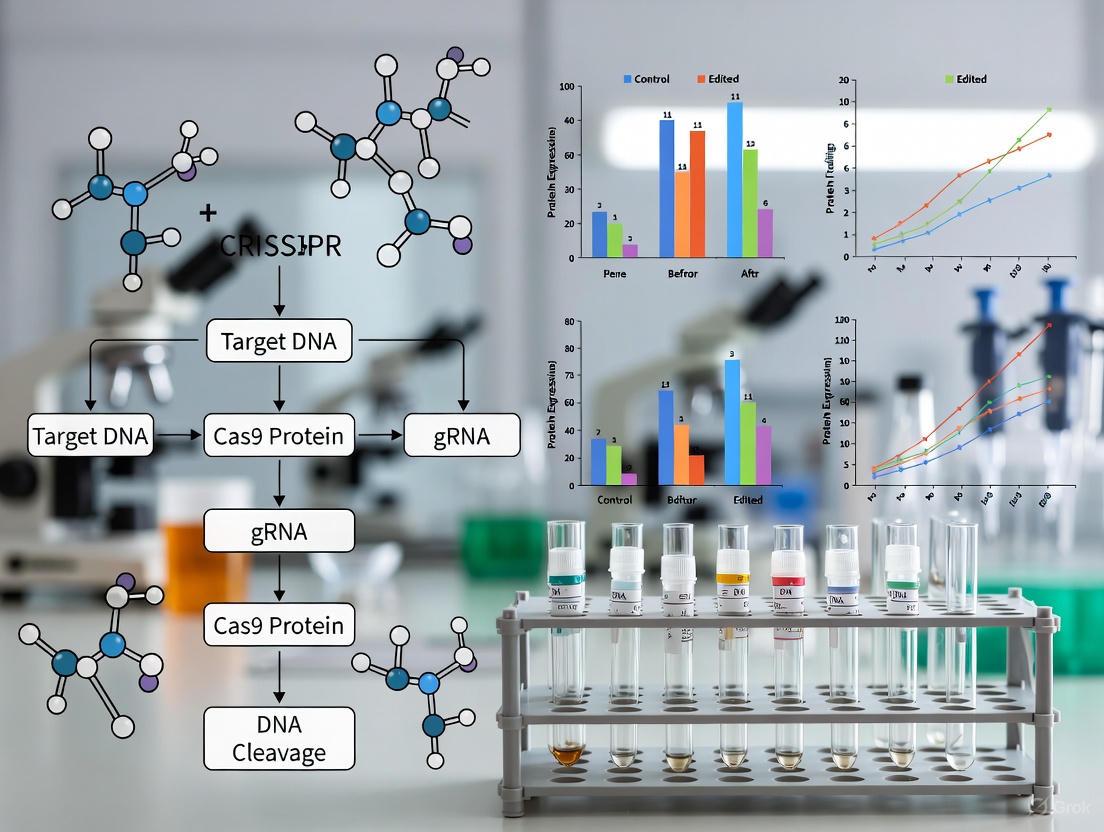
This article provides a comprehensive guide for researchers and drug development professionals on the critical importance of protein expression analysis in validating CRISPR-Cas9 knockouts.
Beyond the Genome: Why Protein Expression Analysis is Non-Negotiable for Validating CRISPR Knockouts
Abstract
This article provides a comprehensive guide for researchers and drug development professionals on the critical importance of protein expression analysis in validating CRISPR-Cas9 knockouts. While genomic methods like Sanger sequencing can confirm the presence of insertions or deletions (indels), they are insufficient for confirming functional gene knockout. This resource covers foundational principles, detailed methodological protocols for key protein assays, common troubleshooting scenarios, and a comparative analysis of validation techniques. It emphasizes the necessity of a multi-faceted validation strategy to avoid false positives and ensure reliable experimental outcomes, drawing on the latest research and case studies to outline a robust framework for confirming knockout success at the protein level.
From DNA to Protein: The Critical Gap in CRISPR Knockout Validation
In CRISPR genome editing, confirming that the DNA sequence at the target locus has been altered is a fundamental first step. However, a wealth of evidence demonstrates that this genotypic confirmation is not sufficient to guarantee a functional knockout. Relying solely on DNA-level analysis can lead to false positives, where edited cells show predicted frameshift mutations but still express the target protein or functional variants, ultimately compromising experimental conclusions. This guide compares the limitations of genotypic analysis with the necessary protein-level validation techniques, providing a framework for robust CRISPR knockout confirmation.
The Critical Gap: From DNA Change to Protein Expression
DNA sequencing methods, including Sanger sequencing and next-generation sequencing (NGS), are designed to identify insertions or deletions (indels) at the CRISPR target site. The core assumption is that a frameshift mutation will lead to a premature stop codon and the production of a truncated, non-functional protein. However, biological systems are complex, and this assumption often fails.
The table below summarizes the key limitations of relying exclusively on genotypic confirmation.
Table 1: Limitations of Genotypic Confirmation in CRISPR Knockouts
| Limitation | Underlying Reason | Consequence |
|---|---|---|
| Unexpected Transcript Processing [1] [2] | Alternative splicing or exon skipping can produce in-frame mRNAs that bypass the edited exon. | A functional protein, potentially with altered activity, is expressed despite a DNA-level frameshift. |
| Translation Re-initiation [1] | Use of a downstream alternative start codon (AUG) can produce an N-terminal truncated protein. | A shortened, but potentially partially functional, protein isoform is expressed. |
| Non-Specific Antibodies [2] | Antibodies used in Western blot may detect non-specific proteins or truncated fragments. | False-positive protein signal is detected, misleadingly suggesting a failed knockout. |
| Genetic Compensation [2] | Organisms may upregulate homologous genes or pathways to compensate for the lost gene. | A clear protein knockout is observed, but no expected phenotypic change occurs. |
| Inefficient Nonsense-Mediated Decay (NMD) [2] | The cellular mRNA surveillance pathway may fail to degrade mRNAs with premature stop codons. | The mutant mRNA persists and is translated into a truncated protein. |
The diagram below illustrates these potential outcomes following a CRISPR-induced frameshift mutation.
Protein-Level Validation: Essential Methods & Data
To overcome the limitations of DNA-level analysis, direct assessment of protein expression is required. The following table compares the primary methods used for protein-level validation, highlighting that even these techniques have varying strengths and weaknesses.
Table 2: Comparison of Protein-Level Validation Methods for CRISPR Knockouts
| Method | Principle | Key Advantages | Key Limitations | Typical Data Output |
|---|---|---|---|---|
| Western Blot [3] [4] [2] | Immunodetection of target protein separated by gel electrophoresis. | Semi-quantitative; can detect protein size changes (truncations). | Antibody specificity is critical; may not be fully quantitative; difficult for large transmembrane proteins [5]. | Gel image showing presence/absence and size of protein band. |
| Mass Spectrometry [4] | Isotopic labeling and quantification of proteins based on mass-to-charge ratio. | Highly specific and quantitative; can detect specific protein fragments. | High cost; complex data analysis; requires specialized expertise. | Spectra and quantitative values for peptide abundance. |
| Flow Cytometry [3] | Antibody-based detection and quantification of surface proteins via fluorescence in single cells. | High-throughput; quantitative; provides data on a per-cell basis. | Generally limited to surface proteins; requires specific antibodies. | Histograms or scatter plots showing fluorescence intensity. |
| Immunocytochemistry (ICC) [3] [6] | Antibody-based staining and fluorescence imaging of proteins in fixed cells. | Provides spatial (subcellular) localization information. | Semi-quantitative; results can be influenced by fixation and permeability. | Fluorescence microscopy images. |
| ELISA [5] | Antibody-based colorimetric or fluorescent detection of a protein in a plate-based assay. | Highly quantitative; high sensitivity; suitable for high-throughput. | Requires high-quality, specific antibodies; may not detect size variants. | Numerical concentration values based on a standard curve. |
Quantitative Evidence Highlighting Method Discrepancies
The choice of validation method can significantly impact the experimental results. A 2024 systematic study comparing protein quantification methods for a transmembrane protein, Na, K-ATPase (NKA), revealed substantial overestimation by conventional methods.
Table 3: Overestimation of Transmembrane Protein Concentration by Conventional Methods (Adapted from [5])
| Quantification Method | Mechanism of Detection | Reported Result for NKA Concentration | Application in Subsequent Functional Assay |
|---|---|---|---|
| Lowry Assay | Reduction of copper ions by peptide bonds. | Significant overestimation | High data variability |
| BCA Assay | Reduction of copper ions in an alkaline medium (biuret reaction). | Significant overestimation | High data variability |
| Coomassie (Bradford) Assay | Binding of dye to proteins, sensitive to certain amino acids. | Significant overestimation | High data variability |
| Indirect ELISA | Antigen-antibody binding with secondary detection. | Accurate baseline (used for comparison) | Low data variability |
This data underscores that for challenging targets like transmembrane proteins, methods like Western Blot (which relies on similar protein concentration inputs) can yield misleading results if the initial quantification is flawed. The study concluded that reactions prepared using concentrations from their targeted ELISA showed consistently low variation, unlike those based on the conventional methods [5].
Experimental Protocols for Robust Knockout Validation
A robust validation workflow integrates both genotypic and phenotypic confirmation. Below are detailed protocols for key experiments.
Protocol 1: Genotypic Analysis using Sanger Sequencing and ICE Deconvolution
This protocol uses inexpensive Sanger sequencing paired with specialized software for a quantitative assessment of editing efficiency [7].
- Genomic DNA Extraction: Extract gDNA from both edited and control (wild-type) cell populations using a commercial kit.
- PCR Amplification: Design primers flanking the CRISPR target site (amplicon size ~500-800 bp). Perform PCR amplification using high-fidelity polymerase.
- Sanger Sequencing: Purify the PCR product and submit for Sanger sequencing with one of the PCR primers.
- Data Analysis with ICE:
- Upload the Sanger sequencing (.ab1) files from the edited and control samples to the ICE tool (Synthego).
- Input the gRNA target sequence (excluding the PAM) and select the correct nuclease (e.g., SpCas9).
- The software deconvolutes the mixed sequencing trace and provides key metrics:
- Indel Percentage: The overall editing efficiency.
- Knockout Score: The proportion of cells with a frameshift or large (21+ bp) indel, predicting a functional knockout.
- R² Value: A measure of confidence in the model fit.
Protocol 2: Protein-Level Validation by Western Blot
Western blotting remains the most common method for confirming the absence of a protein [3] [4].
- Protein Lysate Preparation: Lyse cells in RIPA buffer supplemented with protease inhibitors. Determine protein concentration using a BCA or Bradford assay, acknowledging its potential limitations for certain protein classes [5].
- Gel Electrophoresis: Load 20-40 µg of total protein per lane on a SDS-PAGE gel. Include a positive control (wild-type lysate) and a molecular weight marker.
- Membrane Transfer: Transfer separated proteins from the gel to a PVDF membrane.
- Immunoblotting:
- Blocking: Incubate membrane in 5% non-fat milk in TBST for 1 hour.
- Primary Antibody: Incubate with a validated antibody against the target protein in blocking solution overnight at 4°C.
- Washing: Wash membrane 3x for 5 minutes with TBST.
- Secondary Antibody: Incubate with an HRP-conjugated species-specific secondary antibody for 1 hour at room temperature.
- Washing: Repeat washing steps.
- Detection: Develop the blot using enhanced chemiluminescence (ECL) substrate and image with a CCD camera system.
Critical Consideration: Antibody validation is paramount. The Human Protein Atlas uses a multi-pillar approach for enhanced validation, with the gold standard being genetic validation (CRISPR or siRNA knockout), where the antibody signal should be absent or dramatically reduced in knockout cells [6].
Protocol 3: High-Throughput Phenotypic Validation by Flow Cytometry
For surface proteins, flow cytometry provides quantitative, single-cell data [3].
- Cell Harvesting: Gently dissociate adherent cells without damaging surface proteins.
- Staining:
- Resuspend ~10^6 cells in FACS buffer (PBS + 1% FBS).
- Add a fluorophore-conjugated antibody against the target surface protein. Include an isotype control.
- Incubate for 30 minutes on ice, protected from light.
- Wash cells twice with FACS buffer to remove unbound antibody.
- Analysis: Resuspend cells in FACS buffer and analyze on a flow cytometer. Compare the fluorescence intensity of the edited population to the wild-type control. A successful knockout will show a loss of the antibody-derived signal.
The Scientist's Toolkit: Key Research Reagents
The following reagents are essential for successfully executing the validation workflows described above.
Table 4: Essential Reagents for CRISPR Knockout Validation
| Reagent / Solution | Function in Validation | Example Use-Case |
|---|---|---|
| gRNA & Nuclease | Creates the double-strand break at the target genomic locus. | Transfection/electroporation into target cells to initiate editing [1]. |
| Genomic DNA Isolation Kit | Purifies high-quality gDNA for PCR amplification prior to sequencing. | Preparing template for genotypic analysis by Sanger sequencing or NGS [7]. |
| High-Fidelity PCR Master Mix | Amplifies the target genomic region with minimal errors. | Generating amplicons for sequencing or T7EI assay [8]. |
| T7 Endonuclease I (T7EI) | Detects heteroduplex mismatches caused by indels. | Quick, gel-based assessment of editing efficiency (Alt-R Genome Editing Detection Kit) [3] [8]. |
| Validated Primary Antibody | Binds specifically to the target protein for detection. | Detecting protein presence/absence in Western Blot or flow cytometry; requires application-specific validation [6] [2]. |
| HRP-Conjugated Secondary Antibody | Binds to the primary antibody and produces a chemiluminescent signal. | Enabling detection of the target protein on a Western blot [3]. |
| Cell Lysis Buffer (e.g., RIPA) | Lyse cells and solubilize proteins for downstream analysis. | Extracting total protein for Western Blotting [3]. |
| Protease Inhibitor Cocktail | Prevents proteolytic degradation of the target protein during extraction. | Added to lysis buffer to maintain protein integrity [3]. |
The Integrated Workflow: From DNA to Phenotype
A conclusive CRISPR knockout validation requires a multi-faceted approach. The following workflow integrates the discussed methods to ensure reliable results.
In summary, genotypic confirmation is a necessary but insufficient step in validating a CRISPR knockout. The complexity of cellular biology means that DNA sequence changes do not always translate to the intended functional protein knockout. A rigorous validation strategy must integrate DNA, RNA, protein, and ultimately, phenotypic analysis to ensure the reliability of experimental results in research and drug development.
CRISPR/Cas9 gene editing has revolutionized functional genomics, yet a significant pitfall occurs when high INDEL frequencies fail to produce the expected protein knockout. This case study examines a documented instance where sgRNA targeting exon 2 of the ACE2 gene generated 80% INDEL efficiency but retained full ACE2 protein expression, highlighting the critical necessity of protein-level validation in CRISPR experiments. We compare multiple validation methodologies and demonstrate how integrated multi-omics approaches provide comprehensive knockout verification essential for reliable research outcomes and drug development applications.
The ACE2 exon 2 editing case exemplifies a fundamental challenge in CRISPR-Cas9 research: genomic DNA alterations do not necessarily translate to functional protein knockout. In this documented instance, researchers observed 80% insertion-deletion (INDEL) efficiency in edited cell pools yet detected retained ACE2 protein expression via Western blot analysis [9]. This disconnect stems from in-frame mutations that preserve the reading frame or generate alternatively spliced variants that evade nonsense-mediated decay, ultimately producing functional protein despite DNA-level edits.
For researchers and drug development professionals, such false positive knockouts can compromise years of research, leading to erroneous conclusions about gene function and therapeutic targets. This guide systematically compares the experimental approaches and validation methodologies that can identify such pitfalls, providing a framework for robust CRISPR knockout verification.
Case Study Analysis: ACE2 Exon 2 Editing Failure
Experimental Setup and Unexpected Results
In a comprehensive study using human pluripotent stem cells (hPSCs) with an optimized inducible Cas9 (iCas9) system, researchers targeted exon 2 of the ACE2 gene with a predicted high-efficiency sgRNA. Despite rigorous optimization achieving stable INDEL efficiencies of 82-93% for single-gene knockouts in their system, the ACE2 exon 2 targeting yielded surprising results [9].
Table 1: ACE2 Exon 2 Editing Outcomes
| Parameter | Result | Detection Method |
|---|---|---|
| INDEL Frequency | 80% | ICE Analysis of Sanger Sequencing |
| Protein Expression | Retained | Western Blot |
| sgRNA Classification | Ineffective | Integrated Genotypic/Proteonic Analysis |
| Predicted Outcome | Knockout | Benchling Algorithm |
| Actual Outcome | Functional Protein | Experimental Validation |
The quantitative data revealed a critical disconnect: while DNA-level analysis suggested successful editing in the majority of cells, protein analysis confirmed the sgRNA failed to achieve its functional objective. This case underscores how INDEL percentages alone provide insufficient evidence of successful knockout, particularly for therapeutic development programs where functional consequences matter most [9].
Molecular Mechanisms Behind the Discrepancy
The retention of ACE2 protein expression despite high INDEL rates can be explained by several molecular mechanisms:
- In-Frame Mutations: INDELs that insert or delete nucleotides in multiples of three preserve the original reading frame, allowing production of a full-length, potentially functional protein with minor amino acid changes [9].
- Alternative Translation Initiation: Mutations that create early stop codons near the original start site may still permit translation initiation from downstream alternative start codons, producing N-terminal truncated proteins that retain functionality [1].
- Exon Skipping: CRISPR-induced mutations can alter splicing patterns, causing exclusion of the targeted exon while maintaining the reading frame in the mature transcript [1].
- Alternative Splicing Variants: Cells may compensate for genomic edits by upregulating naturally occurring alternative splice variants that bypass the edited region [1].
Comparative Validation Methodologies
Protein Detection Techniques
Table 2: Protein Analysis Methods for Knockout Validation
| Method | Detection Principle | Advantages | Limitations | ACE2 Case Applicability |
|---|---|---|---|---|
| Western Blot | Protein separation & antibody detection | Semi-quantitative, widely accessible | Cannot detect specific activity | Would identify retained protein [10] [9] |
| Flow Cytometry | Fluorescent antibody cell sorting | Quantitative, single-cell resolution | Requires surface protein target | Suitable for cell surface proteins [10] |
| Immunocytochemistry | Antibody staining & microscopy | Spatial protein distribution | Semi-quantitative | Cellular localization data [10] |
| ELISA | Antibody-based plate assay | Highly quantitative, high-throughput | Requires specific antibodies | Sensitive quantification [10] |
| Mass Spectrometry | Proteomic analysis | Unbiased, global protein profiling | Technically demanding | Detect truncated variants [4] |
DNA and RNA-Level Analysis Techniques
Beyond protein detection, comprehensive validation requires multi-level assessment:
- PCR Sequencing: Standard approach for verifying INDELs but insufficient alone, as demonstrated in the ACE2 case [4] [11].
- TIDE Assay: Tracking of Indels by Decomposition provides quantitative assessment of editing efficiency from Sanger sequencing data [9].
- ICE Analysis: Inference of CRISPR Edits algorithm offers sensitive quantification of editing efficiency comparable to TIDE [9].
- RNA Sequencing: Identifies transcriptional changes, alternative splicing, and fusion events not detectable at DNA level [1].
- Quantitative RT-PCR: Measures changes in transcript abundance but cannot confirm functional protein knockout [1].
Experimental Protocols for Comprehensive Validation
Integrated Workflow for Knockout Confirmation
The following workflow diagram illustrates a comprehensive validation approach that would have identified the ACE2 sgRNA ineffectiveness early in the experimental process:
Detailed Western Blot Protocol
Based on the methodologies used in the ACE2 case study and other cited resources, the following optimized Western blot protocol provides reliable protein detection:
Sample Preparation:
- Harvest cells 3-7 days post-transfection to allow turnover of pre-existing protein [10]
- Use appropriate lysis buffer (RIPA or NP-40 based) with protease inhibitors [1]
- Quantify protein concentration using BCA or Bradford assay
- Load 20-30μg total protein per lane alongside molecular weight markers
Gel Electrophoresis and Transfer:
- Use 4-12% Bis-Tris gradient gels for optimal resolution of different protein sizes
- Transfer to PVDF membrane using wet or semi-dry transfer systems
- Include positive and negative controls on each gel [10]
Antibody Incubation:
- Block membrane with 5% non-fat milk or BSA in TBST for 1 hour
- Incubate with primary antibody in blocking buffer overnight at 4°C
- Include loading controls (GAPDH, β-actin, tubulin) for normalization
- Use species-appropriate HRP-conjugated secondary antibodies (1:2000-1:5000)
- Develop with ECL substrate and image using chemiluminescence detection
Troubleshooting:
- If signal is too weak, optimize antibody concentration and increase exposure time
- If background is high, increase wash stringency and optimize blocking conditions
- Always validate antibodies in wild-type cells and include knockout positive controls when available [10]
Advanced RNA-seq Analysis for CRISPR Validation
RNA sequencing provides unparalleled insight into unexpected transcriptional consequences of CRISPR editing:
Library Preparation and Sequencing:
- Isolate high-quality RNA (RIN > 8) 48-72 hours post-editing
- Prepare stranded mRNA-seq libraries with unique dual indexes
- Sequence to depth of 30-50 million reads per sample with 150bp paired-end reads
Bioinformatic Analysis:
- Perform de novo transcript assembly using Trinity to identify novel isoforms [1]
- Map reads to reference genome using splice-aware aligners (STAR, HISAT2)
- Identify differentially expressed genes and alternative splicing events
- Search for interchromosomal fusions and large deletions using split-read evidence [1]
- Validate findings with PCR and Sanger sequencing of aberrant transcripts
Research Reagent Solutions
Table 3: Essential Reagents for CRISPR Knockout Validation
| Reagent/Category | Specific Examples | Function & Application | Considerations |
|---|---|---|---|
| CRISPR Delivery | Synthego CRISPR Gene Knockout Kits [11] | Pre-complexed RNPs for efficient editing | Reduces off-target effects vs. plasmids [12] |
| Antibodies | ACE2-specific antibodies; loading control antibodies | Protein detection via Western blot, flow cytometry | Requires validation in specific cell types [10] |
| Validation Kits | TIDE/ICE analysis tools [9] | Quantify INDEL efficiency from sequencing | Computational resources needed |
| Cell Culture | Matrigel, PGM1 Medium [9] | Maintain pluripotency during editing | Cell type-specific requirements |
| Transfection | Lipofectamine CRISPRMAX [11] | Deliver CRISPR components to cells | Optimize for cell viability [12] |
| Sequencing | Quick Extract DNA solution [11] | Rapid DNA extraction for PCR validation | Fast protocol for high-throughput screening |
Discussion and Best Practices
The ACE2 exon 2 case study provides a compelling argument for multi-level validation in CRISPR screening. Based on this and similar findings, we recommend the following best practices:
Implement Early Protein Screening: Incorporate Western blot analysis at preliminary stages of sgRNA validation, not just as a final confirmation step [10] [9].
Utilize Multiple sgRNAs: Target different exons with at least two independent sgRNAs to reduce false negatives from ineffective sgRNAs [9].
Employ RNP Delivery: Use ribonucleoprotein complexes instead of plasmid-based delivery to reduce off-target effects and potential DNA integration [12].
Combine DNA and RNA Analysis: Use ICE or TIDE analysis for INDEL quantification alongside RNA-seq to detect transcript-level anomalies [9] [1].
Include Comprehensive Controls: Always include wild-type controls, empty vector controls, and when possible, validated knockout positive controls [10].
For drug development applications, these validation steps are particularly crucial, as decisions about target prioritization and therapeutic strategy depend on accurate functional genetic data. The additional time and resources invested in comprehensive validation pale in comparison to the costs of pursuing targets based on misleading genetic evidence.
The case of ACE2 exon 2 editing with 80% INDELs but retained protein expression serves as a critical lesson in CRISPR functional genomics. It underscores the necessity of moving beyond DNA-centric validation to implement integrated multi-omics approaches that directly assess functional protein knockout. By adopting the comparative methodologies and experimental protocols outlined here, researchers can avoid the costly pitfall of ineffective sgRNAs and generate more reliable, reproducible data for both basic research and therapeutic development.
Understanding Nonsense-Mediated Decay (NMD) and Its Inconsistencies in Protein Knockdown
Nonsense-mediated mRNA decay (NMD) serves as a critical RNA surveillance mechanism across eukaryotes, degrading mRNAs containing premature termination codons (PTCs) to prevent accumulation of truncated proteins. While CRISPR/Cas9 gene knockout strategies frequently rely on NMD to eliminate mutant transcripts, this pathway demonstrates significant inconsistencies in protein knockdown efficacy. This review synthesizes current understanding of NMD mechanisms, examines experimental data quantifying its variable efficiency, and presents methodological frameworks for researchers to properly validate CRISPR knockouts through protein expression analysis. Evidence indicates NMD suppresses protein accumulation up to eightfold more effectively than mRNA levels alone, yet multiple factors—including PTC position, cellular stress, and alternative degradation pathways—contribute to unpredictable outcomes that complicate experimental interpretation in drug development research.
Nonsense-mediated mRNA decay represents an evolutionarily conserved quality control pathway that detects and eliminates mRNAs containing premature translation-termination codons, thereby preventing production of potentially deleterious truncated proteins [13] [14]. First identified in mammalian cells and yeast simultaneously in 1979, NMD has since been recognized as a crucial regulator of gene expression with implications for approximately one-third of disease-causing mutations that introduce PTCs through nonsense mutations, frameshifts, or splicing errors [14] [15]. Beyond its quality control function, NMD also regulates normal physiological processes including stem cell maintenance, T-cell maturation, apoptosis, and adult tissue regeneration [14].
The core NMD machinery consists of trans-acting factors including up-frameshift proteins (UPF1, UPF2, UPF3A/B) and nonsense-mediated mRNA decay-associated PI3K-related kinases (SMG1-7) [14] [15]. UPF1, an ATP-dependent RNA helicase, serves as the central regulator that undergoes phosphorylation-dephosphorylation cycles essential for NMD function [14]. SMG1 phosphorylates UPF1, while SMG5, SMG6, and SMG7 facilitate dephosphorylation and recruit degradation machinery [16]. Eukaryotic release factors (eRF1 and eRF3) also participate in recognizing termination events and initiating the NMD response [14].
Table 1: Core NMD Machinery Components
| Component | Function | Role in NMD |
|---|---|---|
| UPF1 | ATP-dependent RNA helicase | Central regulator; bridges EJC and termination complex; recruits degradation machinery |
| UPF2/UPF3 | EJC-associated factors | Link UPF1 to exon-exon junctions; enhance UPF1 activation |
| SMG1 | PI3K-related kinase | Phosphorylates UPF1 to activate NMD |
| SMG5/SMG7 | Phosphatase adaptors | Recruit protein phosphatase 2A to dephosphorylate UPF1 for recycling |
| SMG6 | Endonuclease | Cleaves NMD targets in proximity to PTC |
| eRF1/eRF3 | Release factors | Recognize termination codons and mediate translation termination |
Established Models of NMD Activation
The Exon Junction Complex (EJC) Model
In mammalian cells, the predominant mechanism for PTC recognition involves the exon junction complex, a multi-protein complex deposited 20-24 nucleotides upstream of exon-exon junctions during pre-mRNA splicing [14] [16]. According to the EJC model, NMD is typically triggered when a PTC is located more than 50-55 nucleotides upstream of the final exon-exon junction [14]. During the pioneer round of translation, the ribosome displaces EJCs as it traverses the mRNA. If a premature stop codon is encountered, EJCs downstream of the PTC remain bound and recruit NMD factors through UPF2 and UPF3 interactions with UPF1, leading to phosphorylation of UPF1 by SMG1 and subsequent mRNA degradation [16] [15].
The EJC model explains why PTCs in later exons often escape NMD, as stop codons downstream of the final EJC typically evade detection [15]. This spatial relationship between PTC position and exon boundaries represents a critical determinant of NMD efficacy, with significant implications for CRISPR/Cas9 experimental design where targeting different exons may yield substantially different protein knockdown outcomes [1].
EJC-Independent and Alternative Mechanisms
Despite the well-established EJC model, multiple EJC-independent mechanisms exist across eukaryotes. The "faux 3'UTR" model proposes that the distance between the stop codon and the poly(A) tail represents an evolutionarily conserved NMD trigger [13] [14]. When this distance is abnormally long, delayed interaction between the terminating ribosome and the poly(A) binding protein (PABPC1) promotes premature termination and NMD activation [14]. In this model, UPF1 and PABPC1 compete to bind eRF3; UPF1 binding targets the mRNA for degradation, while PABPC1 binding allows normal translation [14].
Additional alternative mechanisms include UPF1 association with elongating ribosomes on all translating mRNAs [14], yeast mechanisms involving the SMG7 ortholog EBs1 without other SMGs and UPFs [14], and Trypanosoma brucei mechanisms utilizing only UPF1 and UPF2 while bypassing UPF3 [14]. These diverse pathways highlight the complexity of NMD activation and suggest that multiple mechanisms may coexist rather than operating exclusively [16].
Quantitative Analysis of NMD Efficacy in Protein Suppression
Recent investigations using sophisticated reporter systems have quantified the relationship between NMD-mediated mRNA reduction and corresponding protein suppression. Udy and Bradley (2021) developed a luciferase-based reporter stably integrated into the AAVS1 safe harbor locus in human cells, enabling precise measurement of both mRNA and protein levels from NMD-sensitive transcripts [17] [18]. Their findings demonstrated that NMD suppresses proteins encoded by NMD-sensitive transcripts by up to eightfold more than the corresponding mRNA itself [17]. This disproportionate suppression indicates that NMD limits truncated protein accumulation through mechanisms beyond simple mRNA degradation.
Table 2: Quantitative Protein vs. mRNA Suppression by NMD
| Study System | mRNA Reduction | Protein Reduction | Fold Difference | Experimental Method |
|---|---|---|---|---|
| Luciferase reporter (Udy & Bradley, 2021) | Variable | Up to 8x greater than mRNA | 8x | Dual-luciferase reporters in AAVS1 safe harbor locus |
| Endogenous targets (Multiple studies) | 20-35% of normal levels remain | Often undetectable | Variable | Western blot, proteomic analysis |
| CRISPR knockouts (Multiple studies) | 70-90% reduction common | Inconsistent correlation | Highly variable | RNA-seq + Western comparison |
Several factors contribute to this enhanced protein suppression. First, NMD-sensitive transcripts that escape complete degradation may still be translationally repressed [17]. Second, even when translation occurs, the resulting truncated peptides are often rapidly degraded by the proteasome, with UPF1 playing a role in this process [16]. Third, NMD targets transcripts during the pioneer round of translation, limiting productive translation cycles [17] [18]. These findings have profound implications for CRISPR-based studies, where mRNA quantification alone may substantially overestimate the functional knockout efficiency.
PTC Position and Sequence Context
The location of the premature termination codon represents a primary determinant of NMD efficacy. PTCs located upstream of the final exon-exon junction typically trigger robust NMD, while those in the last exon or within 50-55 nucleotides of the final exon junction often evade detection [14] [15]. Similarly, PTCs near the start codon can sometimes evade NMD through downstream in-frame stop codons that allow ribosomes to bypass the premature termination event [15]. Exon length and the distance between the PTC and the normal stop codon also influence NMD efficiency, with longer exons and greater distances associated with reduced NMD efficacy [15].
Cellular Stress and Physiological Conditions
Environmental stresses significantly impact NMD activity, potentially contributing to inconsistent protein knockdown across experimental conditions. Methylmercury-induced oxidative stress and thapsigargin-induced ER stress suppress NMD, as evidenced by upregulated NMD-sensitive mRNAs and decreased UPF1 phosphorylation [19]. This suppression involves multiple mechanisms, including phospho-eIF2α-mediated translation repression, mTOR suppression-induced inhibition of cap-dependent translation, and downregulation of NMD components (UPF1, SMG7, and eIF4A3) [19]. Such stress-induced NMD suppression may stabilize otherwise degraded transcripts, leading to unexpected protein expression in CRISPR-edited cells under suboptimal culture conditions.
Alternative Splicing and Transcript Complexity
Approximately 95% of multi-exon genes in mammalian cells undergo alternative splicing, generating diverse mRNA isoforms with varying susceptibility to NMD [14]. Alternative splicing within the 3' untranslated region can introduce or eliminate PTCs, dynamically regulating transcript stability through NMD [15]. In CRISPR experiments, unintended splicing alterations in response to gene editing may produce unexpected transcript isoforms that escape NMD, complicating protein knockdown validation [1]. This is particularly relevant for genes with multiple splice variants, where knockout strategies must account for all significant isoforms.
Experimental Approaches for Validating CRISPR Knockouts
Multi-Level Assessment of Knockout Efficiency
Comprehensive validation of CRISPR-mediated gene knockout requires integrated molecular analyses at DNA, RNA, and protein levels. DNA sequencing confirms intended genetic modifications but fails to detect transcript-level adaptations [1]. RNA sequencing reveals splicing changes, alternative isoform expression, and NMD evasion, while quantitative protein analysis ultimately confirms functional knockout [1]. This multi-level approach is essential, as demonstrated by cases where edited cell pools exhibited 80% INDEL efficiency by DNA analysis yet retained target protein expression due to ineffective sgRNAs or NMD evasion [9].
RNA-Sequencing Methodologies for NMD Assessment
Advanced RNA-sequencing techniques provide powerful tools for identifying unexpected transcriptional changes in CRISPR-modified cells. Trinity analysis of RNA-seq data enables de novo transcript assembly, revealing CRISPR-induced anomalies such as exon skipping, chromosomal truncations, inter-chromosomal fusions, and unintentional modification of neighboring genes [1]. These transcriptional alterations often escape detection by standard DNA amplification and Sanger sequencing of the target site. RNA-seq further facilitates identification of PTC-containing transcripts that evade NMD through specific sequence features or structural modifications, providing insight into inconsistent protein knockdown results [1].
Reporter Systems for NMD Efficiency Quantification
Dedicated reporter systems represent valuable tools for quantifying NMD efficiency in specific cellular contexts. Luciferase-based reporters with PTCs introduced at defined positions enable precise measurement of both mRNA and protein suppression [17] [18]. Stable integration into "safe harbor" loci such as AAVS1 eliminates confounding variables from random genomic integration and transient transfection [17]. Inducible promoter systems (e.g., Tet-On) provide temporal control over reporter expression, facilitating measurements of mRNA and protein stability without pharmacological transcription inhibitors that introduce pleiotropic effects [17]. Such reporters allow researchers to assess cell-type-specific NMD efficiency and identify conditions that compromise NMD activity.
Essential Research Reagents and Methodologies
Table 3: Research Reagent Solutions for NMD Studies
| Reagent/Method | Application | Key Features | Considerations |
|---|---|---|---|
| Dual-luciferase NMD reporters | Quantifying NMD efficiency | High dynamic range; simultaneous mRNA/protein measurement | Requires stable integration for optimal results |
| AAVS1 safe harbor targeting | Controlled transgene expression | Minimizes positional effects; consistent expression | Requires specialized targeting constructs |
| Inducible promoter systems | Temporal control of expression | Enables kinetic studies; avoids transcription inhibitors | Doxycycline or other inducers needed |
| RNA-seq with Trinity analysis | Comprehensive transcript characterization | Identifies unexpected splicing events; de novo assembly | Requires sufficient sequencing depth |
| UPF1 phosphorylation antibodies | Assessing NMD activity | Indicator of active NMD pathway | Context-dependent phosphorylation patterns |
| sgRNA design algorithms | Predicting cleavage efficiency | Benchling most accurate per comparative studies [9] | Experimental validation still required |
| Proteasome inhibitors | Detecting truncated proteins | Reveals NMD-independent protein degradation | May cause cellular stress |
Nonsense-mediated mRNA decay serves as a sophisticated cellular surveillance mechanism with profound implications for CRISPR-based gene knockout methodologies. While NMD typically suppresses protein levels more effectively than mRNA levels, substantial inconsistencies arise from PTC position, cellular stress conditions, transcript complexity, and alternative degradation pathways. These variables necessitate comprehensive experimental validation incorporating DNA, RNA, and protein-level analyses to confirm successful knockout. The research tools and methodologies outlined herein provide a framework for researchers to account for NMD inconsistencies, thereby enhancing the reliability of functional gene studies in basic research and drug development applications. As CRISPR technologies continue to advance, understanding NMD complexities will remain essential for accurate interpretation of genetic manipulation outcomes.
Transcriptional adaptation is a recently discovered form of genetic compensation wherein the decay of mutant mRNA itself triggers the upregulation of functionally related genes, primarily paralogs, independent of protein loss [20]. This phenomenon represents a significant challenge in CRISPR-Cas9-mediated knockout studies, as it can mask true phenotypic outcomes and lead to misinterpretation of gene function. Unlike traditional genetic redundancy, which stems from pre-existing genomic architecture, transcriptional adaptation is actively induced by the genetic perturbation itself, potentially explaining why some knockout models fail to display expected phenotypes observed in knockdown approaches [21] [22].
The implications extend across model organisms, including zebrafish, mice, and human cell lines, with growing evidence suggesting it plays a role in human genetic disorders [20]. For researchers, drug developers, and scientists relying on CRISPR technology, recognizing and accounting for this phenomenon is crucial for accurate gene function annotation and target validation in therapeutic development.
Molecular Mechanisms of Phenotype Masking
Core Mechanism: From mRNA Decay to Genetic Compensation
Transcriptional adaptation initiates when mutant mRNAs containing premature termination codons (PTCs) undergo nonsense-mediated mRNA decay (NMD). Rather than merely eliminating defective transcripts, this decay process generates signals that actively modulate gene expression [20]. Critically, this response operates upstream of protein function—the triggering event is the mutant mRNA or its degradation, not the loss of the encoded protein [21]. This explains why compensation occurs in mutant alleles but not necessarily in protein-based knockdown approaches like morpholinos or RNAi.
The molecular mediators linking mRNA decay to transcriptional activation remain partially characterized, but current evidence suggests degraded transcripts or their byproducts may influence chromatin status or activate specific transcription factors. The functional outcome is the preferential upregulation of genes with sequence similarity, particularly paralogs, which can compensate for the lost gene's function despite potential structural differences [20] [22].
Alternative Mechanisms of Knockout Escape
Beyond transcriptional adaptation, several additional mechanisms allow functional protein production despite CRISPR targeting, further complicating phenotype interpretation:
Translation Reinitiation: Following introduction of a premature stop codon, translation may reinitiate at downstream alternative start codons, producing N-terminal truncated proteins that retain partial or complete function [1] [23]. These truncated isoforms can maintain sufficient activity to rescue knockout phenotypes.
Alternative Splicing: CRISPR-induced mutations can alter splicing patterns, leading to exon skipping or intron retention [1] [23]. When these splicing changes preserve the reading frame (with indels in multiples of three), they generate in-frame transcripts that yield internally deleted but potentially functional proteins. Studies systematically examining knockout cell lines have detected such altered mRNA splicing in a significant proportion of cases [23].
Failure of Nonsense-Mediated Decay: Some PTC-containing transcripts escape NMD surveillance, particularly when the stop codon is located in specific genomic contexts or final exons [1]. These transcripts undergo translation to produce truncated proteins that may maintain functionality, especially if critical domains remain intact.
Table 1: Documented Cases of Knockout Escaping through Alternative Mechanisms
| Gene | Organism/Cell | Mechanism | Functional Impact | Reference |
|---|---|---|---|---|
| CK2α′ | Human cell lines | N-terminal truncated protein | Maintained low kinase activity | [23] |
| BUB1 | Human cell lines | Exon skipping, residual protein (3-30%) | Intact mitotic checkpoint | [23] |
| EpCAM | HT29 cells | Exon 2 skipping (in-frame) | Maintained drug sensitivity | [23] |
| TOP1 | HAP1 cells | Altered splicing | Retained DNA relaxation activity | [23] |
| CDC14A/B | Human cell lines | Exon skipping (in-frame) | Potential functional phosphatase | [23] |
Experimental Evidence and Prevalence
Systematic Studies Revealing Widespread Compensation
Multiple systematic analyses have quantified the prevalence of phenotypic masking in knockout models. A collaborative assessment of 193 HAP1 cell lines with 136 genetically validated knockouts employed quantitative transcriptomics and proteomics, detecting residual proteins in approximately one-third of knockout cells at levels ranging from low to original [23]. Importantly, this is likely an underestimate due to detection limitations, as functional assays in cases like NGLY1 knockout revealed approximately 60% retained enzymatic activity without detectable protein [23].
Another study focusing on 13 HAP1 cell lines with frameshifting indels identified altered mRNA splicing in 6 cell lines and residual proteins in 4 cell lines [23]. Functional analysis confirmed that truncated proteins like TOP1 maintained DNA relaxation capability despite the CRISPR-induced mutations. In zebrafish models, studies of seven mutant lines found alternative splicing occurring in six lines, resulting in in-frame transcripts in three of them [23].
Discrepancies Between Knockout and Knockdown Phenotypes
The contrast between genetic knockout (complete gene disruption) and knockdown (transient reduction of gene expression) provides compelling evidence for adaptation mechanisms. Numerous examples across model systems demonstrate these discrepancies:
- egfl7: Knockdown in zebrafish causes severe vascular defects, while most mutants show minimal or no vascular abnormalities due to emilin3a upregulation [21].
- Tet1: siRNA depletion in mouse embryonic stem cells reduces 5hmC levels and causes loss of undifferentiated morphology, whereas Tet1 mutants maintain stem cell morphology potentially through Tet2 compensation [21].
- Cyclin D: Knockdown of individual isoforms inhibits proliferation, but single knockout mice develop minimal defects due to compensatory upregulation of other Cyclin D genes [21].
Table 2: Comparative Phenotypes in Knockout vs. Knockdown Approaches
| Gene | Model System | Knockout Phenotype | Knockdown Phenotype | Proposed Mechanism |
|---|---|---|---|---|
| egfl7 | Zebrafish | Minor or no vascular defects | Severe vascular defects | emilin3a upregulation [21] |
| Tet1 | Mouse embryonic stem cells | Normal morphology, slight 5hmC decrease | Loss of undifferentiated morphology, significant 5hmC reduction | Tet2 compensation [21] |
| Cyclin D family | Various cell lines, mice | Minimal defects in single knockouts | Inhibited proliferation | Cross-compensation within family [21] |
| HDAC1 | Human and mouse cell lines | Normal proliferation | Reduced proliferation | HDAC2 upregulation [21] |
| Kindlin-2 | Mouse embryonic fibroblasts | Normal focal adhesion formation | Decreased integrin activation, impaired adhesion | Kindlin-1 upregulation [21] |
Methodologies for Comprehensive Knockout Validation
Protein-Level Validation Techniques
Western Blotting represents a fundamental protein detection method, but requires specific considerations for knockout validation [10]. Antibodies targeting both N-terminal and C-terminal epitopes are essential, as truncated proteins may be missed with single-epitope detection. Quantitative analysis through densitometry provides semi-quantitative residual protein estimation. However, limitations include potential lack of antibody specificity and limited sensitivity for low-abundance proteins [10] [4].
Mass Spectrometry-Based Proteomics offers superior sensitivity and specificity for detecting residual truncated proteins [4]. This approach enables simultaneous discovery and analysis of protein modifications, providing unambiguous evidence of knockout efficiency. Modern quantitative proteomics can detect low-level protein expression beyond the capability of Western blotting, with the additional advantage of identifying unexpected protein isoforms [4].
Immunocytochemistry and Flow Cytometry provide spatial information about protein expression and distribution at single-cell resolution [10]. These techniques are particularly valuable for detecting mosaic expression patterns in heterogeneous cell populations and for assessing subcellular localization of potential truncated proteins.
Transcript-Level Analysis Methods
RNA Sequencing comprehensively characterizes transcriptional consequences of CRISPR editing beyond target verification [1]. Deep RNA-seq can identify aberrant splicing events, fusion transcripts, and compensatory gene expression changes that would be missed by DNA-level analysis alone. The Trinity tool enables de novo transcript assembly, proving valuable for characterizing non-canonical transcripts resulting from CRISPR edits [1].
Quantitative RT-PCR offers a targeted approach for verifying specific splicing variants or measuring expression of potential compensatory genes [1]. This method is particularly useful for validating hypotheses generated from RNA-seq data and for time-course experiments tracking adaptation dynamics.
Functional Validation Assays
Cellular Fitness (CelFi) Assay monitors changes in out-of-frame indel profiles over time to assess functional gene essentiality [24]. This method transfects cells with RNPs targeting the gene of interest, then tracks indel proportions at days 3, 7, 14, and 21 post-transfection. Depletion of out-of-frame indels indicates negative selection against functional knockouts, suggesting gene essentiality. The fitness ratio (OoF indels at day 21 ÷ OoF indels at day 3) quantifies this selective pressure [24].
Genetic Interaction Scoring identifies synthetic lethal relationships through combinatorial CRISPR screening [25]. Methods like Gemini-Sensitive and zdLFC compare observed versus expected double mutant fitness to detect genetic interactions, revealing compensatory pathways that maintain cellular viability despite gene loss [25].
The Scientist's Toolkit: Essential Research Reagents and Solutions
Table 3: Key Reagents and Methods for Validating CRISPR Knockouts
| Reagent/Method | Primary Function | Key Considerations | Applications in Compensation Studies |
|---|---|---|---|
| Cas9 RNP complexes | Gene editing delivery | Minimizes off-target effects, enables precise control | Used in CelFi assay to monitor fitness effects [24] |
| Anti-V5/FLAG antibodies | Immunoprecipitation | Effective for eCLIP with suboptimal native antibodies | Identify Cas9-RNA interactions [26] |
| NMD inhibitors (e.g., cycloheximide) | Block nonsense-mediated decay | Experimental manipulation of NMD pathway | Test transcriptional adaptation dependence on mRNA decay [20] |
| Trinity software | De novo transcript assembly | Identifies unannotated transcripts from RNA-seq data | Characterize aberrant transcripts in knockouts [1] |
| Gemini-Sensitive scoring | Genetic interaction analysis | Available as R package with comprehensive documentation | Detect synthetic lethality in combinatorial screens [25] |
| Multiplexed proteomics | Protein quantification and identification | Superior sensitivity over Western blotting | Detect truncated protein isoforms [4] |
Discussion and Future Perspectives
Transcriptional adaptation and related compensatory mechanisms represent both a challenge and opportunity for genetic research. The documented prevalence of these phenomena necessitates rigorous validation strategies that extend beyond DNA sequencing to include transcriptomic, proteomic, and functional analyses. Researchers must be particularly cautious when interpreting null phenotypes in knockout models, as the absence of expected phenotypes may reflect biological compensation rather than true gene dispensability.
For drug development professionals, these mechanisms have profound implications. When studying therapeutic targets, incomplete knockout could lead to underestimation of target essentiality or misinterpretation of mechanism of action. Conversely, understanding and harnessing transcriptional adaptation could inform therapeutic strategies for monogenic disorders by promoting natural compensatory pathways [23].
Future research should focus on elucidating the precise molecular signals linking mutant mRNA decay to transcriptional activation, developing standardized validation pipelines that account for compensation, and creating computational tools that predict susceptibility to transcriptional adaptation based on gene family characteristics and genomic context. As CRISPR technologies evolve toward clinical applications, recognizing and addressing these hidden genetic backup systems will be essential for accurate gene function annotation and successful therapeutic development.
In CRISPR-Cas9 genome editing, achieving complete gene knockout requires rigorous validation at the protein level, as DNA and RNA-level analyses often fail to confirm functional gene disruption. While genomic PCR and Sanger sequencing can identify intended mutations, they cannot verify the consequent absence of the target protein—the definitive indicator of successful knockout. This guide examines protein expression analysis as the gold standard for knockout validation, comparing it with alternative methodologies and presenting experimental data that demonstrates why protein-level confirmation is indispensable for reliable research outcomes and reproducible science.
Why Protein-Level Validation is the Uncompromising Standard
Genetic knockouts aim to completely disrupt the function of a target gene, which ultimately depends on the elimination of its protein product. DNA-level analyses, such as PCR and T7E1 mismatch assays, detect alterations in the gene sequence but cannot confirm whether these edits effectively prevent protein synthesis or function. Research shows that even with high indel rates observed in DNA sequencing, protein expression may persist due to in-frame mutations or alternative translation start sites [9] [27].
The critical limitation of DNA-level validation was strikingly demonstrated in a study targeting exon 2 of the ACE2 gene, where edited cell pools exhibited 80% INDELs (Insertions and Deletions) by DNA analysis yet retained detectable ACE2 protein expression [9]. This discrepancy reveals how DNA-based methods can overestimate knockout efficiency, potentially leading to false conclusions in functional studies. Protein analysis serves as the definitive checkpoint because it directly measures the functional outcome of gene editing—the actual presence or absence of the protein product.
Comparative Analysis of CRISPR Knockout Validation Methods
Methodologies and Their Limitations
Researchers employ multiple techniques to validate CRISPR knockouts, each with distinct advantages and limitations:
Table 1: Comparison of CRISPR Knockout Validation Methods
| Method | Detection Target | Key Advantages | Key Limitations | Reported Accuracy/Issues |
|---|---|---|---|---|
| Western Blot | Protein | Directly measures protein depletion; semi-quantitative | Limited sensitivity for low-abundance proteins; requires specific antibodies | Considered gold standard when optimized [4] [10] |
| Mass Spectrometry | Protein | High specificity; label-free quantification; can detect modifications | Expensive equipment; complex data analysis | Identifies isotopic labeling of proteins [4] |
| T7E1 Assay | DNA sequence heteroduplexes | Low cost; technically simple | Poor dynamic range; requires heteroduplex formation | Underestimates high efficiency edits (>30%); 22% average detection vs 68% by NGS [27] |
| TIDE Assay | DNA indels | More accurate than T7E1; digital readout | Still indirect protein inference | Similar editing efficiency to NGS for pools; miscalls alleles in clones [27] |
| NGS | DNA sequence | High sensitivity; detects all mutation types | Costly; does not measure protein outcome | Highest accuracy for DNA edits; 70%+ detection for effective sgRNAs [27] |
| RNA-seq | Transcriptome | Detects unexpected transcriptional changes | Does not confirm protein loss | Identifies exon skipping, fusion events, large deletions [1] |
Quantitative Performance Comparison
Studies directly comparing validation methods reveal significant performance differences:
Table 2: Quantitative Comparison of Editing Efficiency Detection by Different Methods
| sgRNA | T7E1 Detection Rate | NGS Detection Rate | Discrepancy Factor |
|---|---|---|---|
| M2 | 28% | 92% | 3.3x |
| M6 | 28% | 40% | 1.4x |
| H3 | <5% | ~10% | >2x |
| M1/M5 | ~10% | >90% | >9x |
Data adapted from Sci Rep 8, 888 (2018) [27]
The T7E1 assay consistently underestimates editing efficiency, particularly with highly active sgRNAs. For example, sgRNAs M1 and M5 showed only ~10% activity by T7E1 but exceeded 90% when measured by NGS [27]. This demonstrates how reliance on mismatch assays can lead researchers to discard effectively edited cells or misinterpret their results.
Experimental Workflows for Definitive Knockout Validation
Integrated Multi-Level Validation Protocol
Establishing a successful knockout requires a hierarchical validation approach that progresses from DNA to protein level confirmation.
Detailed Protein Validation Methodologies
Western Blot Protocol
Western blotting remains the most widely accessible protein validation method, with these critical optimization steps:
- Sample Collection Timing: Harvest proteins 3-7 days post-transfection for transient edits, or after clonal selection for stable lines [10]
- Antibody Validation: Use validated, specific antibodies with appropriate positive and negative controls
- Loading Controls: Include housekeeping proteins (GAPDH, β-actin, tubulin) for normalization
- Optimization Steps: Perform antibody titrations, include lysate from wild-type cells as positive control, and use knockout cells as negative control when available [10]
Advanced Proteomics via Mass Spectrometry
Mass spectrometry provides a highly sensitive, antibody-independent approach for protein detection and quantification:
- Sample Preparation: Digest proteins with trypsin, then label with tandem mass tags (TMT) or use label-free quantification [4]
- Data Acquisition: Use liquid chromatography coupled to tandem mass spectrometry (LC-MS/MS)
- Analysis: Compare protein abundance between edited and control cells, with statistical significance testing
- Advantages: Can detect partial knockdowns, identify unexpected protein modifications, and validate multiple targets simultaneously [4]
CelFi Cellular Fitness Assay
The recently developed CelFi assay provides functional validation by monitoring out-of-frame (OoF) indels over time:
- Procedure: Transfert cells with RNPs, collect genomic DNA at days 3, 7, 14, and 21 post-transfection [24]
- Measurement: Use targeted deep sequencing to track OoF indel proportions
- Interpretation: Decreasing OoF indels indicate negative selection against knockout cells; stable OoF indels suggest successful knockout without fitness cost [24]
- Correlation: Shows strong agreement with DepMap Chronos scores for gene essentiality [24]
Essential Research Reagents and Tools
Table 3: Research Reagent Solutions for Knockout Validation
| Reagent/Tool | Function | Implementation Examples |
|---|---|---|
| Validated Antibodies | Detect target protein in Western blot, ICC | Species-specific, epitope-validated antibodies [10] |
| Proteomics Kits | Sample preparation for mass spectrometry | Isotopic labeling kits for protein quantification [4] |
| NGS Platforms | Comprehensive mutation profiling | Illumina MiSeq for targeted sequencing [27] |
| CRISPR Analysis Software | Edit efficiency quantification | ICE, TIDE, CRIS.py for indel analysis [24] [27] |
| Cell Fitness Assay Reagents | Functional validation | RNPs for CelFi assay; sequencing primers [24] |
| Positive Control sgRNAs | Benchmark editing efficiency | Target essential genes (ribosomal proteins) [28] |
Case Study: The Critical Need for Protein Validation
A comprehensive study optimizing gene knockout in human pluripotent stem cells (hPSCs) revealed a critical example of why protein-level validation is essential. Researchers targeted exon 2 of the ACE2 gene with CRISPR-Cas9 and achieved 80% INDEL efficiency in the edited cell pool as measured by DNA analysis. However, Western blot analysis revealed that ACE2 protein expression was maintained despite the high editing efficiency [9].
This case demonstrates how DNA-level validation alone can be misleading. The persistence of protein expression could result from in-frame mutations that preserve the reading frame, the use of alternative translation start sites, or expression from unedited alleles in a polyclonal population. Without protein-level confirmation, researchers might have incorrectly assumed successful knockout based on the DNA evidence alone.
The gold standard for defining a successful CRISPR knockout requires demonstrating absent protein expression through methods such as Western blot or mass spectrometry. While DNA and RNA-level analyses provide valuable preliminary data, they cannot confirm the functional outcome of gene editing at the protein level. The research community must adopt a multi-tiered validation approach that progresses from initial DNA confirmation to definitive protein analysis, particularly for critical experiments where knockout efficacy directly impacts conclusions.
As CRISPR technologies evolve toward more sophisticated applications—including therapeutic development and functional genomics—the implementation of rigorous protein-level validation becomes increasingly essential for scientific accuracy and reproducibility. Researchers should prioritize antibody validation, proper controls, and quantitative assessment when designing knockout validation pipelines to ensure that observed phenotypic changes genuinely result from target gene disruption rather than incomplete editing.
A Practical Guide to Protein-Based Assays for Knockout Confirmation
In the field of functional genomics and drug development, CRISPR/Cas9 technology has become indispensable for generating gene knockouts (KOs) to study loss-of-function. However, a successful knockout is definitively confirmed not by a change in DNA sequence, but by the absence of the target protein. Within this critical validation step, Western blotting maintains its status as the gold standard for directly detecting protein depletion, providing an essential layer of confirmation that DNA-level analyses cannot.
The Indispensable Role of Western Blotting in CRISPR Knockout Validation
While DNA sequencing (e.g., Sanger sequencing) can confirm that a genetic alteration has occurred at the target site, it cannot guarantee that the intended protein has been eliminated. Relying solely on genotyping can lead to false positives, where a confirmed frameshift mutation still results in functional protein expression due to various biological resilience mechanisms [2] [1]. Western blotting closes this validation gap by directly measuring the presence or absence of the protein product itself.
This is crucial because studies show that even with high INDEL (insertion/deletion) efficiencies of 80% or more at the DNA level, target protein expression can persist [9] [2]. For instance, one study reported a specific case where an sgRNA targeting exon 2 of the ACE2 gene achieved 80% INDELs, yet the edited cell pool retained ACE2 protein expression [9]. This disconnect underscores why protein-level validation is non-negotiable in rigorous CRISPR research.
Comparative Analysis of CRISPR Validation Methods
The following table summarizes the core techniques used to validate a CRISPR knockout, highlighting the unique and complementary role of Western blotting.
Table 1: Key Techniques for Validating CRISPR/Cas9 Gene Knockouts
| Method | Target Molecule | Key Function in Validation | Key Limitations |
|---|---|---|---|
| Western Blotting | Protein | Directly detects and semi-quantifies the depletion of the target protein; considered the gold standard for protein-level confirmation [29]. | Cannot detect protein function or activity; may miss truncated fragments depending on the antibody used [2]. |
| Sanger Sequencing | DNA | Confirms the precise nucleotide sequence change and identifies frameshift mutations at the targeted locus [9]. | Does not provide information on protein expression or the functional consequence of the mutation [1]. |
| RNA-Sequencing (RNA-Seq) | RNA | Identifies broad, unanticipated transcriptional changes, including exon skipping, fusion events, and impacts on splicing [1]. | Does not directly measure protein levels; correlation between mRNA depletion and protein loss can be inconsistent [2]. |
Experimental Workflow for Validating CRISPR Knockouts
A robust validation protocol requires an integrated approach, combining DNA, RNA, and protein-level analyses to build a comprehensive picture of the knockout's effects. The workflow below outlines this multi-layered validation process.
Optimized Western Blot Protocol for CRISPR Knockout Validation
The following detailed methodology is adapted from optimized protocols used in recent CRISPR validation studies [9] [1].
- Protein Extraction: Lyse cells using RIPA or NP-40 buffer (e.g., 50 mM Tris HCL pH 7.6, 150 mM NaCl, 1% NP-40, 5 mM NaF) supplemented with a protease inhibitor cocktail. Clear the lysate by centrifugation at 12,000 x g for 15 minutes at 4°C [1].
- Gel Electrophoresis: Load 20-30 μg of quantified protein per lane onto a 4-12% Bis-Tris polyacrylamide gel. Separate proteins via gel electrophoresis at 120-150 V for 1-2 hours using MOPS or MES running buffer [9].
- Protein Transfer: Transfer proteins from the gel to a PVDF or nitrocellulose membrane using a wet or semi-dry blotting system. Semi-dry transfer is often preferred for its speed and efficiency [30] [31].
- Blocking and Antibody Incubation:
- Block the membrane with 5% non-fat dry milk in TBST (Tris-Buffered Saline with 0.1% Tween-20) for 1 hour at room temperature.
- Incubate with the primary antibody (diluted in blocking buffer or BSA) specific to your target protein overnight at 4°C.
- Wash the membrane 3 times for 5 minutes each with TBST.
- Incubate with an HRP (horseradish peroxidase)-conjugated secondary antibody for 1 hour at room temperature. Follow with 3 additional TBST washes.
- Detection and Imaging: Develop the blot using a enhanced chemiluminescence (ECL) substrate and image with a chemiluminescent imager. For accurate quantification, fluorescent secondary antibodies and fluorescent imagers are increasingly used due to their wider dynamic range and multiplexing capabilities [30] [31].
The Scientist's Toolkit: Essential Reagent Solutions
A successful Western blot experiment depends on the quality and specificity of its core reagents. The following table details key materials and their functions.
Table 2: Essential Reagents for Western Blot Validation of CRISPR Knockouts
| Reagent / Material | Critical Function | Selection & Validation Consideration |
|---|---|---|
| Primary Antibody | Specifically binds to the target protein for detection. | Use high-quality, highly specific antibodies validated for knockout applications to avoid non-specific bands and false negatives [2] [32]. |
| Cell Lysis Buffer | Extracts soluble proteins from cultured cells or tissues. | NP-40 or RIPA buffers are common. Must be compatible with downstream electrophoresis and contain protease inhibitors [1]. |
| Chemiluminescent/Fluorescent Substrate | Generates a detectable signal for HRP or fluorescent labels. | ECL is standard; fluorescent substrates enable multiplexing and more quantitative analysis [31] [32]. |
| Loading Control Antibody | Detects a constitutively expressed protein (e.g., GAPDH, Actin) to normalize protein loading across lanes. | Essential for ensuring that the absence of a band is due to true knockout and not unequal loading or failed transfer [29]. |
Troubleshooting Persistent Protein Expression
A common challenge in CRISPR validation is observing protein expression even after confirming a frameshift mutation by sequencing. The diagram below maps the potential causes and investigative pathways for this issue.
In the rigorous process of validating CRISPR knockouts, Western blotting remains an irreplaceable technique. It provides the definitive proof of concept—the actual depletion of the target protein—that is required for high-confidence functional studies. By integrating Western blotting with DNA and RNA-level analyses within an optimized experimental workflow, researchers and drug developers can ensure the reliability of their knockout models, thereby solidifying the foundation for downstream mechanistic investigations and therapeutic discovery.
In CRISPR/Cas9-mediated gene knockout research, confirming successful gene disruption at the DNA level is only the first step. Ultimately, functional knockout is demonstrated by the loss of target protein expression, making flow cytometry an indispensable tool for direct quantification of knockout efficiency at the single-cell level. While DNA-level validation methods like Sanger sequencing, T7E1 assays, and next-generation sequencing provide crucial information about insertion and deletion (indel) frequencies, they cannot confirm whether these genetic alterations successfully prevent protein translation or detect the presence of ineffective single-guide RNAs (sgRNAs) that yield high indel rates but fail to ablate protein expression [9]. This limitation underscores the necessity of incorporating protein-level validation through flow cytometry to fully characterize CRISPR knockout outcomes. This guide objectively compares flow cytometry with alternative validation methodologies, providing researchers with experimental data and protocols to implement robust knockout verification in their CRISPR workflows.
Comparative Analysis of CRISPR Validation Methods
Table 1: Comparison of Key CRISPR Knockout Validation Techniques
| Method | Detection Principle | Readout | Throughput | Cost | Key Advantages | Key Limitations |
|---|---|---|---|---|---|---|
| Flow Cytometry | Fluorescent antibody binding to surface proteins | Protein expression loss | High | Medium | Direct protein quantification, single-cell resolution, high throughput | Requires surface protein target, limited to immunogenic markers |
| Image Cytometry | Microscopy + computational analysis | Protein expression & localization | Medium | High | Visual confirmation, spatial context, label-free potential | Lower throughput, more complex analysis |
| getPCR [33] | qPCR with mismatch-sensitive primers | Indel frequency | Medium | Low | Rapid, cost-effective, does not require protein target | Indirect protein inference, potential PCR bias |
| Sanger Sequencing + ICE Analysis [9] [34] | DNA sequencing + computational decomposition | Indel sequences | Low | Low-Medium | Detailed sequence information, widely accessible | Cannot confirm protein loss, may miss large deletions |
| Single-Cell DNA Sequencing [35] [36] | Targeted next-generation sequencing | Genotype at single-cell resolution | Low | High | Direct genotype-phenotype linking, detects complex edits | Technically challenging, expensive, lower throughput |
Table 2: Quantitative Performance Comparison of Validation Methods
| Method | Detection Sensitivity | Time to Result | Multiplexing Capacity | Required Equipment |
|---|---|---|---|---|
| Flow Cytometry | High (rare cell detection) [37] | 4 days post-transfection [37] | High (10+ parameters) | Flow cytometer |
| Image Cytometry | High (single-cell resolution) [38] | Varies (includes imaging time) | Medium (morphology + markers) | High-content imager |
| getPCR [33] | Medium (dependent on primer design) | 1-2 days | Low (limited multiplexing) | Real-time PCR system |
| Western Blot [9] | Medium (population average) | 2-3 days | Low (limited targets) | Gel electrophoresis system |
| CRAFTseq [36] | High (single-cell resolution) | 5-7 days (library prep + sequencing) | High (DNA+RNA+protein) | Sequencing platform |
Experimental Protocols for Flow Cytometry-Based Knockout Validation
L1CAM-Based Knockout Efficiency Assay
The L1CAM assay provides a rapid flow cytometry-based method for quantifying genome editing efficiency in just four days post-transfection [37]. This approach exploits the X-chromosomal location of the L1CAM gene, which encodes a cell surface protein readily detectable with specific antibodies.
Protocol Steps:
- Day 1: Cell Transfection - Seed appropriate human cell lines (e.g., neuroblastoma SK-N-BE(2)) and transfect with CRISPR/Cas9 constructs targeting exons encoding the L1CAM extracellular domain [37].
- Day 2-3: Recovery and Expression - Allow cells to recover and express Cas9 nuclease. For inducible systems, add doxycycline to activate Cas9 expression [9].
- Day 4: Staining and Analysis - Harvest cells and stain with fluorescently-labeled anti-L1CAM antibodies. Include isotype controls for background determination.
- Flow Cytometry Acquisition - Analyze stained cells using standard flow cytometers. Gate on viable cells and measure L1CAM fluorescence intensity.
- Efficiency Calculation - Calculate knockout efficiency as the percentage of L1CAM-negative cells in CRISPR-treated samples versus control samples [37].
Integrated Workflow for Comprehensive Knockout Validation
Diagram 1: CRISPR Knockout Validation Workflow
This integrated approach combines DNA-level and protein-level validation to ensure accurate confirmation of gene knockout. Researchers first verify indel formation at the DNA level, then progress to flow cytometry to confirm loss of protein expression, addressing the critical limitation of DNA-only methods that can miss ineffective sgRNAs [9].
Multi-Omic Single-Cell Validation (CRAFTseq)
For the highest resolution validation, CRAFTseq enables simultaneous detection of CRISPR edits alongside transcriptomic and proteomic consequences in individual cells [36].
Protocol Overview:
- Cell Editing and Preparation - Perform CRISPR editing on target cells using RNP electroporation or other delivery methods.
- Multi-Omic Library Preparation - Implement the CRAFTseq workflow which combines:
- Targeted genomic DNA amplification of edited loci
- Whole transcriptome sequencing (RNA-seq)
- Antibody-derived tag (ADT) sequencing for surface protein detection
- Flow cytometry-based cell hashing for sample multiplexing [36]
- Single-Cell Analysis - Use computational methods to correlate specific genomic edits with downstream molecular phenotypes at single-cell resolution.
Research Reagent Solutions for Knockout Validation
Table 3: Essential Reagents and Tools for CRISPR Knockout Validation
| Reagent/Tool | Function | Example Applications | Key Considerations |
|---|---|---|---|
| Anti-L1CAM Antibodies [37] | Detect L1CAM surface protein loss | Quantify editing efficiency in various human cell lines | X-chromosomal gene enables rapid detection in male cell lines |
| Modified sgRNAs [39] | Enhanced editing efficiency | Improve knockout rates in hard-to-edit cells (e.g., CD34+ HSPCs) | Chemical modifications (2'-O-methyl-3'-thiophosphonoacetate) improve stability |
| Alt-R Electroporation Enhancer [39] | Increase editing efficiency | Boost HDR and indel formation in primary cells | Short ssODN without genome homology reduces integration risk |
| ICE Analysis Software [9] [34] | Deconvolute Sanger sequencing data | Estimate indel frequencies from edited cell pools | Correlates with but does not replace protein-level validation |
| CRISPR-Cas9 Plasmids (PX458, PX459) [37] [34] | Deliver editing components | Transfect cell lines with fluorescent reporters (GFP) | Enable tracking of transfected cells |
| CRAFTseq Reagents [36] | Multi-omic single-cell analysis | Link genotypes to molecular phenotypes in primary cells | Requires specialized library prep and bioinformatics analysis |
Advanced Applications and Integration Strategies
Single-Cell Resolution for Complex Editing Outcomes
Diagram 2: Multi-Omic Single-Cell Analysis
Advanced single-cell technologies like CRAFTseq enable researchers to simultaneously detect CRISPR-induced mutations while measuring their functional consequences through transcriptomic and proteomic profiling [36]. This approach is particularly valuable for identifying heterogeneous editing outcomes within a cell population and connecting specific genomic alterations to their molecular phenotypes. The method has demonstrated capability to identify genotype-dependent outcomes even in complex primary cells like human CD4+ T cells, revealing subtle effects that would be masked in bulk analyses [36].
Addressing the Ineffective sgRNA Challenge
A critical finding in CRISPR validation research demonstrates that high indel frequencies measured by DNA-based methods do not always correlate with functional protein knockout. One study identified an sgRNA targeting exon 2 of ACE2 that generated 80% indels but failed to eliminate ACE2 protein expression [9]. This underscores the essential role of protein-level validation techniques like flow cytometry or Western blotting to complement DNA-based efficiency measurements. The integration of these methods provides a safety net against such ineffective sgRNAs, ensuring accurate interpretation of knockout experiments.
Image Cytometry as a Complementary Approach
While flow cytometry offers high-throughput single-cell analysis, image cytometry provides complementary advantages for certain applications. This technique images cells directly in their culture environment, preserving morphological context and spatial information that is lost during flow cytometry sample preparation [38]. Image cytometry systems like the scanR platform can quantify fluorescence intensity and localization while maintaining the ability to track individual cells over time, making them particularly valuable for kinetic studies of protein loss following CRISPR editing [38].
In the realm of cell biology and molecular research, particularly in the critical task of validating CRISPR-mediated gene knockouts, confirming the loss of target protein expression and understanding the subsequent cellular adaptations are paramount. Immunocytochemistry (ICC) and Immunofluorescence (IF) are two powerful antibody-based techniques at the forefront of this protein visualization and validation process. While the terms are often used interchangeably, they represent distinct concepts. Immunocytochemistry (ICC) is an application-specific technique used for the immunostaining of cultured cells, including cell lines, smears, or aspirates, to detect cell-associated antigens [40] [41]. In contrast, Immunofluorescence (IF) is a detection method that utilizes fluorophore-labeled antibodies to visualize target biomolecules; this method can be applied to both cell samples (where it overlaps with ICC) and tissue samples (where it is used in Immunohistochemistry, IHC) [41] [42]. Essentially, ICC defines the sample type (cells), while IF defines the detection mode (fluorescence).
For researchers validating CRISPR knockouts, these techniques provide semi-quantitative data on protein abundance, distribution, and subcellular localization, offering visual confirmation of successful gene editing and potential compensatory changes in related cellular structures [40]. This guide provides a detailed, objective comparison of ICC and the IF method to equip scientists with the knowledge to select and optimize the right approach for their protein expression analysis research.
A Head-to-Head Comparison: ICC and IF
The following table summarizes the core distinctions and similarities between the ICC technique and the IF detection method, providing a clear framework for experimental design.
Table 1: Core Comparison of Immunocytochemistry (ICC) and Immunofluorescence (IF)
| Aspect | Immunocytochemistry (ICC) | Immunofluorescence (IF) |
|---|---|---|
| Definition | A technique for visualizing antigens in cultured cells [40] [43]. | A detection method using fluorophores to localize antigens; can be applied to cells or tissues [41] [42]. |
| Sample Type | Cultured cell lines, primary cells, smears, swabs [40] [44]. | Can be used on the same cell samples as ICC, or on tissue sections (IHC) [41] [45]. |
| Primary Goal | Determine protein expression and subcellular localization within intact cells [46]. | Visualize the distribution and localization of biomolecules with high specificity and resolution [47] [42]. |
| Detection Modality | Can be chromogenic (e.g., HRP with DAB) or fluorescent (i.e., IF) [40] [44]. | Exclusively fluorescent (fluorophore-conjugated antibodies) [40] [42]. |
| Key Consideration | Requires optimization of cell culture, fixation, and permeabilization to preserve cell morphology [43] [48]. | Susceptible to photobleaching and autofluorescence; requires specific handling to preserve signal [42]. |
Synergy in CRISPR Knockout Validation
In the context of validating CRISPR knockouts, ICC and IF are not mutually exclusive but are often used synergistically. A typical workflow involves using an ICC experimental setup—culturing and preparing the genetically modified cells—and then employing the IF detection method to visualize the outcome. The power of fluorescence detection allows for:
- Confirming Protein Loss: The absence of a fluorescent signal for the target protein in knockout cells, compared to a clear signal in control cells, provides direct visual evidence of successful knockout.
- Assessing Localization Changes: In experiments where a complete knockout is not achieved, or where related proteins are studied, IF can reveal shifts in the subcellular localization of proteins, hinting at functional adaptations.
- Multiplexing: Multiple proteins can be visualized simultaneously in the same sample using different fluorophores. This is crucial for assessing the expression of the knockout target alongside a housekeeping protein (as a loading control) or another protein in the same pathway to probe for compensatory mechanisms [45] [47].
The following diagram illustrates the logical decision-making process for applying these techniques in a CRISPR validation pipeline.
Experimental Protocols for Knockout Validation
A robust and reproducible protocol is the foundation of reliable data. The following section details a standard protocol for ICC using the indirect immunofluorescence method, which is favored for its sensitivity and signal amplification properties [45] [48].
Detailed ICC/IF Protocol (Indirect Method)
This protocol is designed for adherent cells cultured on coverslips or in multi-well plates [43] [46].
Stage 1: Sample Preparation and Fixation
- Cell Seeding and Culture: Plate cells onto a sterile, coated (e.g., with poly-L-lysine) coverslip placed in a culture dish. Allow cells to adhere and grow to 70-80% confluency [43] [46].
- Fixation: This step preserves cell morphology and inactivates enzymes.
- Cross-linking Fixatives (Recommended for most targets): Incubate with 4% Paraformaldehyde (PFA) in PBS for 10-20 minutes at room temperature. This preserves cellular structure well but requires a subsequent permeabilization step [48] [46].
- Organic Solvents: Incubate with ice-cold methanol or acetone for 5-10 minutes. These fixatives simultaneously permeabilize the cells, so a separate permeabilization step is often unnecessary. However, they may destroy some delicate structures and are not suitable for all membrane proteins [43] [48].
- Wash: Wash cells three times with sterile PBS to remove residual fixative [46].
Stage 2: Permeabilization (Required for intracellular targets after PFA fixation)
- Treatment: Cover cells with a permeabilization solution, such as 0.1-0.2% Triton X-100 or 0.2-0.5% Saponin in PBS. Incubate for 2-5 minutes at room temperature [48] [46].
- Note: Triton X-100 is a harsh detergent and is unsuitable for preserving membrane-associated antigens. For these targets, milder detergents like Saponin or Digitonin are preferred [46].
- Wash: Wash cells three times with PBS [43].
Stage 3: Blocking
- Purpose: To prevent non-specific binding of antibodies to reactive sites in the sample, thereby reducing background noise [48].
- Procedure: Incubate cells with a blocking buffer for 1-2 hours at room temperature. Common blocking agents include 2-10% Bovine Serum Albumin (BSA) or 5-10% normal serum from the same species as the secondary antibody [45] [46].
Stage 4: Antibody Incubation
- Primary Antibody Reaction: Incubate cells with the primary antibody specific to your target protein (or a control IgG for knockouts), diluted in blocking buffer or PBS. A typical incubation is for 1-2 hours at room temperature or overnight at 4°C for enhanced specificity [43] [46].
- Wash: Wash three times with PBS (or a wash buffer like PBS-Tween) to remove unbound primary antibody.
- Secondary Antibody Reaction: Incubate cells with a fluorophore-conjugated secondary antibody (e.g., Alexa Fluor dyes) raised against the host species of the primary antibody. This should be diluted in blocking buffer or PBS and incubated for 1 hour at room temperature, protected from light [48] [46].
- Wash: Wash three times with PBS, protected from light, to remove unbound secondary antibody.
Stage 5: Counterstaining and Mounting
- Counterstaining: To visualize cellular structures, incubate with a nuclear stain like DAPI (1 µg/mL for 30 minutes) to label all nuclei [43] [46].
- Final Wash: Perform a final series of washes with PBS.
- Mounting: Mount the coverslip onto a glass slide using a water-soluble, anti-fade mounting medium to preserve fluorescence [48] [46].
Stage 6: Imaging and Analysis
- Image the slides using a fluorescence or confocal microscope. For knockout validation, capture identical exposure settings for both control and experimental samples to allow for a direct comparison of signal intensity and localization.
The workflow for this protocol is summarized in the diagram below.
Choosing a Detection Method Based on Target Abundance
The choice of detection strategy should be informed by the abundance of your target protein, which is a critical consideration when validating a knockout where the target signal may be absent or very weak. The table below outlines optimal methods based on protein abundance.
Table 2: Detection Method Selection Guide Based on Target Abundance
| Target Abundance | Recommended Method | Key Advantage | Example Application |
|---|---|---|---|
| High | Directly conjugated primary antibodies [48] [47] | Simple, fast workflow; minimizes non-specific background [48]. | Staining structural proteins like Tubulin in control cells [48]. |
| Medium | Indirect method with labeled secondary antibodies [48] [47] | Strong signal amplification; high flexibility with many available reagents [45] [48]. | Localizing organelle-specific proteins (Golgi, Mitochondria) [48] [47]. |
| Low | Signal amplification (e.g., Tyramide - TSA) [48] [47] | Exceptional sensitivity for detecting low-abundance or poorly recognized antigens [48]. | Validating loss of low-expression receptors or signaling proteins in knockouts [47]. |
The Scientist's Toolkit: Essential Reagents and Materials
Successful execution of ICC/IF experiments relies on a set of core reagents. The following table lists these essential items and their functions.
Table 3: Essential Research Reagent Solutions for ICC/IF
| Item | Function / Purpose | Examples / Notes |
|---|---|---|
| Cells & Substrates | Biological sample and growth surface. | Adherent cell lines; glass coverslips; poly-L-lysine for enhanced adhesion [43] [46]. |
| Fixatives | Preserve cellular architecture and immobilize antigens. | 4% Paraformaldehyde (PFA); Methanol; Acetone. Choice depends on antigen and antibody [45] [46]. |
| Permeabilization Agents | Allow antibody access to intracellular epitopes. | Triton X-100 (harsh); Saponin, Tween-20 (milder). Required after cross-linking fixatives [48] [46]. |
| Blocking Agents | Reduce non-specific antibody binding to minimize background. | Bovine Serum Albumin (BSA); serum from secondary antibody host species (e.g., Goat Serum) [45] [46]. |
| Antibodies | Specifically bind to the target antigen (primary) and enable detection (secondary). | Validate primary antibodies for ICC/IF use. Use species-matched, highly cross-adsorbed secondary antibodies conjugated to bright fluorophores (e.g., Alexa Fluor dyes) [48] [47]. |
| Counterstains | Label cellular compartments for spatial context. | DAPI, Hoechst (nuclei); Phalloidin (F-actin) [43] [48]. |
| Mounting Medium | Preserve samples for microscopy and reduce photobleaching. | Use anti-fade mounting media (e.g., ProLong Gold) for fluorescence [48]. |
| Microscope | Visualize and capture the fluorescent signal. | Epifluorescence, confocal, or super-resolution microscope [42]. |
Immunocytochemistry and Immunofluorescence are indispensable, complementary techniques in the modern molecular biologist's toolkit, especially for the direct visual validation of CRISPR-Cas9 knockout experiments. ICC provides the foundational framework for preparing and treating cellular samples, while IF offers a highly sensitive and multiplexable detection system to confirm protein loss and analyze consequent phenotypic changes.
The strategic selection between direct and indirect methods, coupled with an understanding of how to overcome challenges like low antigen abundance or high background, is critical for generating publication-quality, reliable data. As fluorescence microscopy continues to advance with brighter dyes, more sophisticated super-resolution techniques, and automated analysis platforms, the applications of ICC and IF in quantitative protein localization and functional analysis will only expand, solidifying their role in driving discovery in basic research and drug development.
While CRISPR/Cas9 technology has revolutionized functional genomics by enabling precise genome edits, confirming that these genetic perturbations produce the intended effects at the protein level remains crucial. Protein abundance is controlled through complex transcriptional, translational, and post-translational mechanisms, meaning mRNA levels often correlate poorly with actual protein expression [49]. Mass spectrometry (MS)-based proteomics provides the necessary toolset to directly quantify the functional molecules within cells—proteins—offering a systems-level view of how genetic perturbations remodel the proteome and affect biological pathways.
This guide compares the primary mass spectrometry approaches used for validating CRISPR knockouts, detailing their experimental protocols, performance characteristics, and applications in drug discovery research. By moving beyond genetic confirmation to direct protein measurement, researchers can avoid erroneous biological conclusions and gain deeper insights into the true molecular consequences of gene editing.
Comparing Mass Spectrometry Approaches for Knockout Validation
The selection of an appropriate mass spectrometry strategy depends on the research objective, whether for hypothesis-free discovery of proteome-wide changes or targeted validation of specific proteins of interest. The table below compares the fundamental characteristics of discovery versus targeted proteomics approaches.
Table 1: Comparison of Discovery vs. Targeted Proteomics Approaches
| Feature | Discovery Proteomics | Targeted Proteomics |
|---|---|---|
| Primary Objective | Unbiased identification and quantification of thousands of proteins [50] | Precise, sensitive quantification of predefined proteins [50] |
| Typical Acquisition Modes | Data-Dependent Acquisition (DDA), Data-Independent Acquisition (DIA) [51] [50] | Selected Reaction Monitoring (SRM), Parallel Reaction Monitoring (PRM) [51] |
| Quantitation Type | Relative quantitation (label-free or label-based) [50] | Absolute or relative quantitation [51] [50] |
| Throughput | High-throughput for broad profiling [52] | High sensitivity for specific targets |
| Ideal Application | Systems-level analysis of knockout effects, pathway identification, biomarker discovery [49] | Validation of specific knockout targets, biomarker verification, clinical assay development [51] |
The following workflow diagram illustrates the general process for a bottom-up proteomics experiment, from sample preparation to data analysis, which forms the foundation for both discovery and targeted methods.
Experimental Protocols: From Cell Pellet to Proteomic Data
Sample Preparation for Proteomics
Robust sample preparation is critical for reproducible results. A typical protocol involves:
- Protein Extraction: Lyse cells or tissue in an appropriate buffer (e.g., RIPA buffer with protease and phosphatase inhibitors) to fully solubilize proteins. The efficiency of this step directly impacts proteome coverage [53].
- Protein Digestion: Denature and reduce disulfide bonds (e.g., with DTT), alkylate cysteine residues (e.g., with iodoacetamide), and digest proteins into peptides using a sequence-specific protease like trypsin [53] [50].
- Peptide Cleanup: Desalt the resulting peptide mixture using solid-phase extraction (e.g., C18 cartridges) to remove contaminants that interfere with LC-MS analysis [50].
For complex samples or to enhance coverage, additional fractionation via high-pH reverse-phase chromatography or SCX can be performed offline [50].
Data Acquisition: DDA, DIA, and Targeted Methods
Discovery Mode (DDA/DIA):
- Data-Dependent Acquisition (DDA): The mass spectrometer first performs a full MS1 scan, then selects the most abundant precursor ions for fragmentation (MS2). This method prioritizes high-abundance peptides but can suffer from stochastic sampling and missing low-abundance species [51] [50].
- Data-Independent Acquisition (DIA): Also known as SWATH-MS, this method fragments all ions within sequential, predefined m/z windows. It provides more comprehensive and reproducible data, as all peptides are systematically fragmented, allowing retrospective analysis without re-running samples [51] [50].
Targeted Mode (SRM/PRM):
- Selected Reaction Monitoring (SRM): Performed on a triple quadrupole mass spectrometer, SRM specifically monitors predefined precursor and fragment ion pairs (transitions). This offers high sensitivity, specificity, and precision for quantifying specific proteins across many samples [51].
- Parallel Reaction Monitoring (PRM): Conducted on high-resolution instruments (e.g., Orbitrap), PRM monitors all fragment ions of a predefined precursor in parallel. This provides high specificity and allows post-acquisition confirmation of the target peptide [51].
Quantitative Strategies and Data Analysis
Label-Free Quantification (LFQ): Peptide intensities or spectral counts are compared across separately analyzed samples. Algorithms like MaxLFQ integrate and normalize these signals to calculate protein abundance changes. LFQ is ideal for large cohort studies with no theoretical sample number limit [50].
Isobaric Labeling (e.g., TMT, iTRAQ): Peptides from different samples are labeled with stable isotope tags, pooled, and analyzed in a single run. The reporter ions released during fragmentation provide relative quantitation. This multiplexing increases throughput and reduces missing values but can be subject to ratio compression due to co-isolated interfering ions [54] [49] [50].
Data Processing: Raw data is processed through a standardized pipeline: feature detection, peptide-to-protein inference, false discovery rate (FDR) control (typically ≤1%), normalization, and imputation of missing values [54] [50]. Downstream bioinformatics includes differential expression analysis (using tools like Limma or MSstats), functional enrichment analysis (e.g., Gene Ontology), and pathway mapping [50].
The Scientist's Toolkit: Essential Reagents and Software
Successful proteomics relies on a suite of specialized reagents and computational tools. The table below lists key solutions required for a typical CRISPR knockout validation workflow.
Table 2: Essential Research Reagent Solutions for Proteomics
| Item | Function | Example Use Case |
|---|---|---|
| CRISPR gRNA/Cas9 | Induces targeted double-strand breaks for gene knockout [55] | Generating the genetic perturbation to be studied. |
| Trypsin/Lys-C | Protease for digesting proteins into peptides for MS analysis [50] | Sample preparation for bottom-up proteomics. |
| TMT or iTRAQ Reagents | Isobaric chemical tags for multiplexed quantitative proteomics [49] [50] | Comparing proteomes from up to 16 conditions in a single run. |
| SILAC or SILAM Kits | Metabolic labeling with stable isotopes for quantitative proteomics [51] | In-vivo or cell culture labeling for accurate quantitation. |
| LC-MS Grade Solvents | High-purity solvents for chromatographic separation and MS ionization | Mobile phase for liquid chromatography to prevent instrument contamination. |
| Database Search Software | Identifies proteins by matching MS/MS spectra to theoretical databases [50] | Protein identification and false discovery rate (FDR) control post-acquisition. |
Performance Comparison: Data Quality and Applications
The performance characteristics of different MS approaches directly influence their suitability for various stages of CRISPR knockout validation. The table below summarizes key metrics and applications.
Table 3: Performance and Application Comparison of Proteomics Methods
| Method | Sensitivity / Proteome Coverage | Quantitative Reproducibility | Primary Application in Knockout Validation |
|---|---|---|---|
| DDA | Identifies thousands of proteins; can miss lower-abundance species [50] | Moderate; can have missing values across runs [51] | Initial, broad profiling of knockout effects and pathway analysis [49] |
| DIA | High, reproducible coverage; less biased against low-abundance proteins [51] | High; fewer missing values due to comprehensive data recording [51] [50] | Gold standard for discovery, creating deep proteomic maps of knockout cells |
| SRM/PRM | High sensitivity for predefined targets, but limited in breadth [51] | Excellent precision and accuracy for targeted assays [51] | Validating specific protein knockdown and verifying candidate biomarkers |
The following diagram outlines a typical integrated strategy, combining CRISPR knockout generation with subsequent proteomic analysis to achieve a systems-level view.
Case Study: Large-Scale Proteomic Analysis of Gene Knockouts
A landmark study demonstrating the power of MS-based proteomics analyzed the proteome effects of 3,308 individual gene knockouts in S. pombe yeast using a TMT multiplexing workflow [49]. This systems-level approach quantified nearly 3,000 proteins and revealed that:
- Knockout of specific genes, particularly those involved in RNA binding and protein glycosylation, caused extensive proteome remodeling, with hundreds of proteins showing altered expression [49].
- Extensive proteome changes were often linked to reduced cellular fitness, suggesting the cell activates compensatory expression programs to ensure survival [49].
- Co-expression analysis of protein abundance across knockout strains successfully recapitulated known protein complexes and pathways, and provided functional annotations for previously uncharacterized proteins [49].
This study underscores that proteomic profiling delivers a direct, functional readout of knockout effects that is complementary to genomic and transcriptomic data, enabling a more holistic understanding of gene function and regulatory networks.
In the rigorous process of validating CRISPR knockouts, confirming the absence of the target protein at the phenotypic level is a critical final step. The reliability of this confirmation hinges on a foundational yet frequently overlooked technical parameter: the timing of cell harvest following transfection. Choosing an incorrect harvest window can lead to false negatives, where functional protein persists despite successful genomic editing, or to the complete loss of valuable samples due to cellular stress. This guide objectively compares the performance of different temporal strategies and delivery methods, providing a data-driven framework to optimize this crucial step in your CRISPR workflow.
Temporal Harvest Windows: A Quantitative Comparison
The optimal harvest time is not a single value but is influenced by the gene delivery method and the desired experimental outcome. The table below summarizes key performance data for different temporal strategies.
Table 1: Comparison of Post-Transfection Harvest Timing Strategies
| Transfection / Delivery Method | Recommended Harvest Window for Protein Analysis | Key Supporting Experimental Data & Rationale | Primary Advantage | Primary Limitation |
|---|---|---|---|---|
| Standard Transient Transfection | 24 - 96 hours post-transfection [56] | Harvest is recommended within this window as nuclease activity degrades the transfected genetic material over time, and cellular division dilutes its presence [56]. | Simplicity and high level of protein expression due to high copy number of transfected genetic material [56]. | High variability; expression is temporary and not suitable for long-term studies [56]. |
| Inducible Cas9 Systems | ~72 hours post-induction & sgRNA delivery [9] | In an optimized iCas9 system, high INDEL efficiency (82-93%) was achieved, making ~72 hours a valid starting point for initial protein knockdown checks [9]. | Tunable nuclease expression; enables high editing efficiency and reduces off-target effects [9]. | Requires generation of specialized cell lines; timing of induction and analysis requires optimization. |
| Stable Cell Line Generation | Post-clonal expansion (typically 2-3 weeks post-transfection) [56] | Following transfection, a 2-3 week selection period is required to isolate stably transfected colonies before protein expression can be characterized [56]. | Permanent genetic alteration; supports long-term gene expression and studies; lower experimental noise over time [56]. | Labor-intensive process; low copy number of integrated DNA can result in lower protein expression levels [56]. |
Detailed Experimental Protocols for Harvest Timing Optimization
Protocol 1: Time-Course Analysis for Transient Transfection
This protocol is designed to empirically determine the peak of protein knockdown following transient transfection of CRISPR components.
- Experimental Setup: Following transfection with your Cas9-sgRNA construct, prepare cell culture plates for harvest at multiple time points (e.g., 24, 48, 72, and 96 hours).
- Cell Harvesting: At each time point, wash the cells with cold PBS and lyse them directly in the culture dish using an appropriate lysis buffer (e.g., RIPA buffer supplemented with protease inhibitors).
- Protein Quantification: Clear the lysates by centrifugation and determine the protein concentration of the supernatant using a standard assay like BCA or Bradford.
- Protein Expression Analysis:
- Western Blotting: Separate equal amounts of protein by SDS-PAGE, transfer to a membrane, and probe with antibodies against your target protein and a loading control (e.g., GAPDH, Actin) [4] [57].
- Mass Spectrometry: For a more quantitative and unbiased approach, use isotopic labeling (e.g., SILAC) or label-free methods. Mix lysates from different time points with a common control, digest with trypsin, and analyze by LC-MS/MS to quantify protein abundance dynamically [58] [4].
- Data Interpretation: The optimal harvest time is identified as the point where the target protein signal is minimized and remains low in subsequent time points, indicating successful and stable knockout.
Protocol 2: Validating Knockout in Stable Cell Lines
This protocol is for confirming protein absence in clonally derived stable cell lines.
- Selection and Expansion: After transfection and antibiotic selection (typically 2-3 weeks), isolate single-cell clones and expand them for genotypic and phenotypic analysis [56].
- Genotypic Validation: Confirm the edit at the DNA level by extracting genomic DNA, PCR-amplifying the target region, and performing Sanger sequencing. Analyze the chromatograms with algorithms like ICE (Inference of CRISPR Edits) or TIDE (Tracking of Indels by Decomposition) to determine INDEL efficiency [9] [4].
- Protein Harvest and Analysis:
- Once clonal lines with desired mutations are identified, harvest cells for protein analysis as described in Protocol 1.
- Critical Consideration: It is essential to confirm the lack of protein expression via Western blot or mass spectrometry, even after confirming genomic edits. Some sgRNAs can induce high INDEL rates but fail to eliminate protein expression—these are termed "ineffective sgRNAs" [9]. For instance, one study identified an sgRNA targeting ACE2 that achieved 80% INDELs but the edited cell pool retained ACE2 protein expression [9].
Visualizing Workflows and Validation Cascades
Diagram 1: Post-Transfection Protein Validation Workflow
This diagram illustrates the critical decision points in the experimental timeline for harvesting cells after CRISPR transfection to validate knockout at the protein level.
Diagram 2: Multi-Level CRISPR Knockout Validation Cascade
Successful knockout validation requires confirmation at multiple biological levels. This cascade shows the relationship between genomic, proteomic, and functional analyses.
The Scientist's Toolkit: Essential Reagents for Validation
A successful knockout validation experiment relies on key reagents and instruments. The following table details these essential components.
Table 2: Key Research Reagent Solutions for Post-Transfection Analysis
| Item / Reagent | Critical Function | Application Notes |
|---|---|---|
| Lipid-Based Transfection Reagents | Coat negatively charged nucleic acids, facilitating cellular uptake by neutralizing charge and enhancing fusion with the lipid bilayer [59]. | Essential for delivering CRISPR machinery (plasmid, sgRNA). Optimal reagents exhibit high efficiency and low toxicity, but require empirical testing for each cell type [57]. |
| SILAC (Stable Isotope Labeling with Amino Acids in Cell Culture) Media | Enables precise, multiplexed quantitative proteomics. Incorporates stable heavy isotopes of amino acids (e.g., 13C6-Arg, 13C6,15N2-Lys) into the entire proteome during cell culture [58]. | Allows mixing of control and experimental samples early in the workflow, drastically reducing technical variation during subcellular fractionation and protein processing for LC-MS/MS [58]. |
| LC-MS/MS System | The core platform for unbiased protein identification and quantification. Combines liquid chromatography for peptide separation with tandem mass spectrometry for sequencing and quantifying peptides [58] [60]. | Provides a comprehensive and definitive method for confirming the absence of a target protein and monitoring global proteomic changes in knockout lines. |
| ICE & TIDE Software | Bioinformatics algorithms that deconvolute Sanger sequencing chromatograms from edited cell populations. Precisely quantify the spectrum and frequency of Insertions/Deletions (INDELs) [9] [4]. | Provides a rapid and quantitative assessment of editing efficiency at the genomic level before moving to time-consuming protein analysis. Benchling was found to provide accurate predictions in one evaluation [9]. |
The timing of cell harvest for protein analysis is a decisive factor in the accurate validation of CRISPR knockouts. Data demonstrates that transient transfection demands a narrow 24-96 hour window for initial protein knockdown checks, while stable cell line generation requires a prolonged timeline of several weeks for clonal isolation and expansion. The most robust validation strategy employs a multi-level cascade, initiating with rapid genomic INDEL quantification tools like ICE, and culminating in definitive proteomic confirmation via Western blot or mass spectrometry. By adopting this structured, data-driven approach and integrating the optimized protocols and reagents detailed herein, researchers can significantly enhance the efficiency, reliability, and reproducibility of their CRISPR knockout experiments.
In CRISPR-Cas9 genome editing research, validating successful gene knockout at the protein level is a critical step. Protein assays provide the definitive evidence that a gene has been functionally disrupted, but their accuracy hinges on the implementation of proper experimental controls. Without appropriate controls, researchers cannot distinguish specific editing effects from non-specific artifacts, potentially compromising experimental conclusions. This guide examines three essential control types—untransfected, wild-type, and off-target controls—within the context of protein assay validation for CRISPR knockouts. We explore their distinct roles, provide comparative data on their performance across different protein assessment methods, and detail protocols for their effective implementation to ensure the generation of robust, reliable, and interpretable data.
The Role of Critical Controls in Protein Assay Validation
Untransfected Controls
Function: Untransfected controls consist of the original, unmodified cell line that has not undergone any transfection or editing procedure. They serve as the foundational baseline for the experiment.
- Purpose in Protein Assays: They establish the baseline level of the target protein's expression in its native state. More importantly, they control for non-specific effects of the transfection process itself, such as cellular stress or toxicity, which could independently alter protein expression or cell viability. When performing assays like Western blot, ELISA, or flow cytometry, the untransfected control confirms that any observed reduction in protein expression is due to the CRISPR knockout and not a secondary consequence of the experimental procedure [61].
Wild-Type Controls
Function: Wild-type controls are cells that have been subjected to the transfection process but with a non-targeting control construct (e.g., an empty vector or a plasmid targeting a "safe harbor" locus like the AAVS1 site) [24].
- Purpose in Protein Assays: This control is crucial for isolating the effect of the CRISPR machinery on the specific protein of interest. It accounts for any changes in protein expression or cellular state that result from the general presence of Cas9 and the transfection reagents. In functional protein assays, such as binding or enzymatic activity tests, the wild-type control ensures that the observed functional loss is due to the knockout of the target gene and not a global, non-specific effect of the editing system. Disruption of safe harbor sites like AAVS1 typically has no identified adverse effects on cells, making it an ideal comparator [24].
Off-Target Controls
Function: Off-target controls are designed to identify and account for unintended CRISPR-Cas9 activity at genomic sites with sequence similarity to the intended target.
- Purpose in Protein Assays: Even with a successful on-target knockout, off-target editing can lead to unintended phenotypic consequences, potentially confounding the results of downstream protein assays. Techniques like DISCOVER-Seq leverage the cell's natural DNA repair machinery by using chromatin immunoprecipitation for MRE11 (a DNA repair protein) followed by sequencing to identify off-target sites in situ with low false-positive rates [62]. Monitoring these sites, either via targeted DNA sequencing or by assessing the expression of proteins encoded in these genomic regions, is essential for attributing observed phenotypic changes specifically to the on-target knockout.
Table 1: Summary of Critical Controls in CRISPR Protein Validation
| Control Type | Composition | Primary Function in Protein Analysis | Data Interpretation |
|---|---|---|---|
| Untransfected | Parental, unedited cell line | Baseline protein expression; controls for transfection stress | Target protein loss in KO vs. this control confirms editing. |
| Wild-Type | Cells with non-targeting CRISPR construct | Controls for non-specific effects of Cas9/transfection | Validates that functional loss is specific to the target gene. |
| Off-Target | Cells monitored for unintended edits | Identifies confounding effects from off-target activity | Ensures protein/phenotype changes are due to on-target KO. |
Comparative Performance of Protein Assays with Controls
Selecting the appropriate protein assay is critical, as each method has unique strengths and limitations in sensitivity, specificity, and suitability for different protein types. This is particularly relevant when studying transmembrane proteins, which can be challenging to quantify accurately.
A 2024 study systematically compared common protein quantification methods against a newly developed ELISA for the transmembrane protein Na, K-ATPase (NKA). The results demonstrated that conventional colorimetric assays significantly overestimated NKA concentration compared to the specific ELISA. This overestimation is attributed to the samples containing a heterogeneous mix of proteins, and the conventional methods detecting all proteins present rather than the specific target [5].
Furthermore, when the protein concentrations determined by the different methods were applied to functional in vitro assays, the data variation was consistently lower when using concentrations derived from the specific ELISA. This highlights how the choice of protein assay, combined with proper controls, directly impacts the robustness of downstream functional analyses [5].
Table 2: Comparison of Protein Quantification and Detection Methods
| Method | Principle | Advantages | Limitations | Best Suited Control Context |
|---|---|---|---|---|
| ELISA | Antigen-antibody binding with colorimetric detection [5]. | High specificity for target protein; sensitive; low variability in downstream assays [5]. | Requires high-quality antibodies; can be expensive. | Gold standard for quantifying specific protein loss in wild-type vs. KO. |
| Western Blot | Protein separation by size, detection via antibodies. | Confirms protein size and presence; semi-quantitative. | Labor-intensive; less quantitative than ELISA [61]. | Ideal for untransfected controls to confirm absence of protein. |
| Bradford/BCA Assay | Colorimetric response to total protein concentration [63] [64]. | Inexpensive; rapid; good for measuring total protein load. | Overestimates target protein in mixed samples; sensitive to interferents [5]. | Useful for normalizing total protein across samples prior to specific analysis. |
| Flow Cytometry/FACS | Antibody-based detection in single-cell suspension. | Quantifies protein expression at single-cell level; can sort populations [61]. | Requires cell suspension; complex instrumentation. | Excellent for detecting heterogeneous knockout efficiency in a cell pool. |
Experimental Protocols for Control Implementation
Protocol 1: Validating Knockouts with CelFi and Wild-Type Controls
The Cellular Fitness (CelFi) assay is a robust method for validating gene essentiality by monitoring the persistence of out-of-frame indels over time, using a wild-type control (e.g., AAVS1-targeting) as a benchmark [24].
- Cell Transfection: Transiently transfect your cell line with RNP complexes (Cas9 protein + sgRNA) targeting both your gene of interest and a wild-type control locus (e.g., AAVS1).
- Genomic DNA (gDNA) Harvesting: Collect gDNA from the pool of transfected cells at multiple time points post-transfection (e.g., days 3, 7, 14, and 21).
- Targeted Deep Sequencing: Amplify the target regions from the harvested gDNA and perform deep sequencing.
- Indel Analysis: Use a bioinformatics tool (e.g., CRIS.py) to categorize the sequencing reads into in-frame, out-of-frame (OoF), and 0-bp indels.
- Fitness Ratio Calculation: For each target, calculate the fitness ratio as (Percentage of OoF indels at Day 21) / (Percentage of OoF indels at Day 3).
- Interpretation: A fitness ratio of ~1 for the wild-type (AAVS1) control indicates no selective growth disadvantage. A fitness ratio of <1 for the gene of interest indicates that cells with knockout indels are being lost over time, confirming the gene is essential for cellular fitness [24].
Protocol 2: Detecting Off-Target Sites with DISCOVER-Seq
DISCOVER-Seq is an unbiased method for identifying off-target CRISPR activity directly in edited cells, providing a map for creating off-target controls [62].
- Genome Editing & Crosslinking: Perform CRISPR editing on your cells (≥ 5x10^6 cells). At the optimal time post-editing (e.g., 2-6 hours for RNP), crosslink the cells to fix protein-DNA interactions.
- Chromatin Immunoprecipitation (ChIP): Lyse the cells and shear the chromatin. Immunoprecipitate the DNA using an antibody against the DNA repair protein MRE11.
- Library Prep and Sequencing: De-crosslink the immunoprecipitated DNA, purify it, and prepare a next-generation sequencing library.
- Bioinformatic Analysis: Use the BLENDER pipeline to analyze the sequencing data, identifying peaks of MRE11 binding that correspond to Cas9-induced double-strand breaks, both on-target and off-target.
- Establishing Off-Target Controls: The top off-target sites identified by DISCOVER-Seq should then be monitored in subsequent experiments via targeted amplicon sequencing or checked for alterations in the proteins they encode to rule out confounding effects [62].
The following diagram illustrates the core workflow of the DISCOVER-Seq method.
The Scientist's Toolkit: Essential Research Reagents
Table 3: Key Reagents for CRISPR Control Experiments
| Reagent / Tool | Function | Example Application |
|---|---|---|
| Anti-MRE11 Antibody | Enables ChIP-seq for unbiased off-target discovery via DISCOVER-Seq [62]. | Immunoprecipitating DNA bound by DNA repair machinery to locate Cas9 cuts. |
| AAVS1 Targeting gRNA | A well-characterized, safe-harbor wild-type control [24]. | Controls for non-specific effects of the CRISPR-Cas9 machinery and transfection. |
| BLENDER Pipeline | Custom, open-source bioinformatics software [62]. | Analyzes ChIP-seq data from DISCOVER-Seq to call genome-wide off-target sites. |
| CRIS.py Software | Bioinformatics tool for analyzing indel profiles from sequencing data [24]. | Categorizes indels as in-frame or out-of-frame for the CelFi cellular fitness assay. |
| NGS Platforms | Provides deep sequencing capabilities for high-sensitivity detection. | Used in DISCOVER-Seq for ChIP library sequencing and in CelFi for targeted amplicon sequencing. |
Troubleshooting Failed Knockouts and Optimizing Protein Loss
In CRISPR/Cas9 gene editing experiments, the observation of high insertion/deletion (INDEL) frequencies in DNA sequencing data is typically indicative of successful gene knockout. However, researchers frequently encounter a perplexing scenario where high INDEL rates do not correlate with the expected loss of protein expression. This discrepancy presents a significant challenge in validating true functional knockouts and can lead to misinterpretation of experimental results. Within the broader context of CRISPR knockout validation research, understanding the mechanisms behind persistent protein expression despite genetic modification is crucial for ensuring experimental accuracy and reliability. This guide systematically explores the underlying causes of this phenomenon and provides actionable troubleshooting methodologies to distinguish between truly successful knockouts and technical artifacts.
Decoding the Discrepancy: Why Protein Persists Despite High INDELs
The presence of high INDEL frequencies with concomitant protein expression stems from several biological and technical mechanisms that can maintain functional protein levels despite genetic alteration.
Ineffective sgRNA and Reading Frame Resilience: Not all sgRNAs that generate high INDEL rates effectively disrupt protein function. A study optimizing knockout approaches in human pluripotent stem cells (hPSCs) demonstrated this starkly: one sgRNA targeting exon 2 of ACE2 produced a cell pool with 80% INDELs, yet ACE2 protein expression was fully retained. This highlights that INDEL frequency alone is an insufficient metric for judging knockout success [9]. Furthermore, insertions or deletions whose lengths are multiples of three base pairs may not disrupt the reading frame, resulting in in-frame mutations that produce partially functional or full-length proteins with minor amino acid changes or insertions/deletions [2].
Alternative Translation and Splicing Mechanisms: Cells can activate compensatory mechanisms that bypass the intended gene disruption. Alternative splicing can cause an exon carrying the indel to be skipped during mRNA processing, generating a new, functional mRNA transcript that avoids the mutated sequence [2]. Additionally, the use of alternative transcription start sites downstream of the indel or translation initiation at alternative start codons can produce N-terminally truncated but still functional protein variants [2].
Limitations in Detection Reagents and Methods: The persistence of protein expression may be apparent rather than real. Antibody specificity is a critical factor; if an antibody binds to an epitope encoded by a region upstream of the indel, it may detect a truncated protein product. Furthermore, experimental operational errors, such as cross-contamination of cell cultures or mistakes in Western blot sample handling, can create false positive signals [2].
Truncated Protein Stability: Frameshift mutations often introduce premature termination codons (PTCs), leading to the production of truncated proteins. Depending on the location of the indel, this truncated peptide may retain stability and the epitope recognized by the antibody used for detection, yielding a positive signal on a Western blot, albeit at a different molecular weight [2].
Troubleshooting Flowchart: A Systematic Diagnostic Guide
The following flowchart provides a step-by-step diagnostic pathway to identify the cause of persistent protein expression in your CRISPR/Cas9 experiments.
Experimental Protocols for Validation
Verifying INDELs and Reading Frame
Protocol 1: High-Resolution Melt Analysis (HRMA) for Indel Screening [65]
HRMA is a rapid, post-PCR method for detecting sequence variations, including indels, without requiring sequencing.
- Primer Design: Design primers flanking the CRISPR target site using software like Primer3. Amplicon size should ideally be 90-150 base pairs for optimal sensitivity. Primers should be placed 20-50 bp away from the expected cut site.
- gDNA Extraction: Isolate genomic DNA. Protocols can be adapted to use minimal tissue, such as a single mosquito leg, demonstrating the method's sensitivity.
- PCR Amplification: Perform PCR in the presence of a fluorescent double-stranded DNA binding dye.
- High-Resolution Melting: Run the melting curve program on a real-time PCR instrument with temperature ramp control. Precise temperature increments (e.g., 0.2°C) are used to denature the DNA.
- Analysis: Compare the melt curve shape of edited samples to wild-type controls. The presence of indels alters the DNA sequence, which changes the melting temperature (Tm) and curve profile, allowing for genotype discrimination.
Protocol 2: Sanger Sequencing and Frame Analysis
- PCR and Sequencing: Amplify the target region from genomic DNA of single-cell clones and submit for Sanger sequencing.
- Sequence Alignment: Use tools like ICE (Inference of CRISPR Edits) or TIDE (Tracking of Indels by Decomposition) to quantitatively analyze the chromatograms and determine the precise sequence of indels [9].
- Frame Determination: Translate the sequenced allele in all three reading frames and compare it to the wild-type amino acid sequence. Determine if the indel length is a multiple of three (in-frame) or not (frameshift).
Confirming Protein Absence
Protocol 3: Western Blot with Truncation Detection
- Protein Extraction and Gel Electrophoresis: Prepare protein lysates from validated single-cell clones and control cells. Separate proteins via SDS-PAGE.
- Immunoblotting: Transfer proteins to a membrane and probe with a validated antibody.
- Key Analysis: Scrutinize the blot not just for presence/absence of a band, but for a shift in molecular weight. A lower molecular weight band indicates a truncated protein, confirming the frameshift but suggesting the truncated protein is stable. The absence of any signal confirms a complete knockout. Using an antibody that binds to a C-terminal epitope is more likely to fail to detect a truncated protein.
Protocol 4: RT-PCR to Detect Alternative Transcripts [2]
- RNA Extraction: Isolate total RNA from edited cells and treat with DNase.
- cDNA Synthesis: Reverse transcribe the RNA into cDNA using a reverse transcriptase enzyme.
- PCR Amplification: Design primers that span multiple exons, particularly the one targeted by the sgRNA. This can help detect larger transcript variants.
- Gel Analysis: Resolve the PCR products on an agarose gel. Bands of unexpected sizes (larger or smaller than the wild-type product) may indicate alternative splicing events or the use of alternative transcription start sites. These products should be sequenced for confirmation.
Comparative Analysis of Key Methodologies
To select the most appropriate validation technique, researchers must consider the throughput, cost, and informational depth of each method. The table below provides a structured comparison of primary genotyping and protein validation methods.
Table 1: Comparison of Genotyping and Protein Validation Methods
| Method | Throughput | Key Advantage | Key Limitation | Best Used For |
|---|---|---|---|---|
| Sanger Sequencing | Low to Medium | Directly reveals exact DNA sequence and reading frame [9] | Lower throughput and higher cost than screening methods | Validating single-cell clones; determining precise indel sequence |
| HRMA | High (96-well format) | Rapid, inexpensive screening; does not require sacrificing animals [65] | Does not identify the specific sequence change | Rapidly screening large populations of organisms or clones for the presence of any indel |
| PACE Genotyping | High | Cost-effective for large populations; works with crude lysates [66] | Requires prior knowledge of the exact edit for probe design | High-throughput screening in agricultural or large-scale cell culture settings |
| Western Blot | Low | Confirms functional knockout at protein level; can detect truncations | Cannot explain why protein is expressed if detected | Essential final validation step for all knockout experiments |
| RT-PCR | Medium | Detects alternative mRNA transcripts that bypass the knockout [2] | RNA can be more unstable and technically challenging to work with | Troubleshooting persistent protein expression when DNA sequence confirms a frameshift |
Furthermore, the selection of an appropriate sgRNA is paramount. Research indicates that in silico prediction tools can vary in accuracy. One systematic evaluation found that the Benchling algorithm provided the most accurate predictions for sgRNA cleavage activity, which can help pre-emptively avoid ineffective sgRNAs that contribute to the protein persistence problem [9].
Table 2: Comparison of sgRNA Design Tools
| Tool | Key Feature | Reported Performance |
|---|---|---|
| CCTop | Used for design and off-target prediction [9] | Commonly used, but performance relative to others not specified in the study. |
| Benchling | Integrated platform for sgRNA design and analysis | Provided the most accurate predictions of cleavage activity in an independent evaluation [9]. |
| ICE Analysis | Algorithm for analyzing Sanger sequencing data from edited pools [9] | Used for validation, not design; accurately quantifies editing efficiency from chromatograms. |
The Scientist's Toolkit: Essential Research Reagents
Successful troubleshooting requires a set of reliable tools and reagents. The following table details key solutions for validating CRISPR knockouts.
Table 3: Research Reagent Solutions for Knockout Validation
| Item | Function | Critical Consideration |
|---|---|---|
| Chemically Modified sgRNA | Enhances stability and editing efficiency within cells [9]. | Modifications (e.g., 2'-O-methyl-3'-thiophosphonoacetate) at 5' and 3' ends reduce degradation. |
| Inducible Cas9 Cell Line | Allows controlled temporal expression of Cas9 nuclease (e.g., via doxycycline) [9]. | Minimizes cellular toxicity and enables synchronization of editing events, improving consistency. |
| C-terminal Validated Antibodies | Detects full-length protein; fails to bind to truncated fragments. | Crucial for distinguishing between full-length and truncated proteins in Western blot. |
| High-Sensitivity DNA Ladders | Accurate sizing of PCR products for detecting larger deletions or alternative transcripts. | Essential for identifying size variations in gel-based assays like RT-PCR. |
| Fluorescent dsDNA Binding Dyes | Enables HRMA by fluorescing only when bound to double-stranded DNA [65]. | The fluorescence drops as the DNA denatures (melts), generating the melt curve. |
The disconnect between high INDEL frequencies and persistent protein expression is a common hurdle in CRISPR/Cas9 workflows. Overcoming it requires moving beyond simple INDEL quantification and adopting a multi-faceted validation strategy that includes reading frame analysis, protein-level detection with Western blot, and investigation of alternative splicing. By systematically applying the troubleshooting flowchart and experimental protocols outlined in this guide—from careful sgRNA selection using tools like Benchling to rigorous protein validation with C-terminal antibodies—researchers can confidently distinguish between incomplete knockouts and functional gene knockouts, thereby ensuring the reliability of their experimental outcomes in drug development and basic research.
Single-guide RNA (sgRNA) design is arguably the most critical determinant of success in CRISPR-Cas9 genome editing experiments. While computational algorithms have been developed to predict sgRNA efficacy, their performance varies significantly, making objective comparisons essential for reliable experimental outcomes. Within the broader context of validating CRISPR knockouts with protein expression analysis, selecting the optimal sgRNA design tool becomes paramount, as even sgRNAs with high INDEL frequencies can fail to eliminate protein expression. This review provides a comparative analysis of sgRNA design algorithms, with a specific focus on Benchling's performance against other tools, and presents integrated experimental workflows that combine computational prediction with empirical protein validation to ensure complete functional gene knockout.
Algorithm Performance Comparison
Independent evaluations have objectively compared the predictive accuracy of widely used sgRNA scoring algorithms. In a systematic study utilizing an optimized doxycycline-inducible spCas9 system in human pluripotent stem cells (hPSCs), researchers precisely evaluated three widely used gRNA scoring algorithms integrated with Western blotting to rapidly identify ineffective sgRNAs. Among the tested algorithms, Benchling provided the most accurate predictions for sgRNA efficacy [9] [67].
Notably, this research identified a critical case where an ineffective sgRNA targeting exon 2 of ACE2 produced 80% INDELs in the edited cell pool but retained full ACE2 protein expression [9]. This finding underscores the essential limitation of relying solely on INDEL frequency as a success metric and highlights the necessity of protein-level validation within the sgRNA optimization workflow.
Table 1: Key Findings from Experimental Benchmarking of sgRNA Design Tools
| Evaluation Metric | Benchling | Other Algorithms (CCTop, etc.) | Experimental Context |
|---|---|---|---|
| Prediction Accuracy | Most accurate predictions [9] [67] | Variable and less accurate performance | hPSC-iCas9 knockout system [9] |
| Protein Knockout Validation | Identified ineffective sgRNAs (e.g., ACE2 exon 2) | Not specifically assessed | Western blot confirmation after editing [9] |
| Essential Gene Screening (VBC Score) | Not directly tested | Vienna Bioactivity (VBC) scores showed strong guide depletion [68] | Genome-wide lethality screens in cancer cell lines [68] |
| Library Size Efficiency | Not directly tested | Top 3 VBC guides performed equivalently to larger libraries [68] | Minimal genome-wide library design [68] |
Beyond individual sgRNA design, benchmark comparisons of genome-wide CRISPR knockout libraries have revealed important trends for large-scale screening efforts. A 2025 study showed that libraries designed using Vienna Bioactivity (VBC) scores, which correlate negatively with log-fold changes of guides targeting essential genes, enable the creation of minimal genome-wide libraries that preserve sensitivity while reducing library size by 50% [68]. Furthermore, dual-targeting libraries, where two sgRNAs target the same gene, demonstrated stronger depletion of essential genes, though with a potential modest fitness cost even in non-essential genes, possibly due to increased DNA damage response[cite:3].
Experimental Protocols for sgRNA Validation
Protocol 1: Rapid sgRNA Efficacy Screening in hPSCs
This protocol leverages a doxycycline-inducible Cas9 (iCas9) system for high-efficiency editing [9].
- Cell Line Preparation: Utilize hPSCs with spCas9 stably integrated into the AAVS1 safe harbor locus under a doxycycline-inducible promoter.
- sgRNA Design and Delivery:
- Design sgRNAs using Benchling and other algorithms for comparison.
- Employ chemically synthesized and modified (CSM) sgRNAs with 2'-O-methyl-3'-thiophosphonoacetate modifications at both 5' and 3' ends to enhance intracellular stability.
- Deliver sgRNAs via nucleofection using optimized parameters: 5μg sgRNA for 8×10^5 cells, program CA137 on a Lonza 4D-Nucleofector.
- Repeat Transfection: Perform a second nucleofection 3 days after the first to boost editing efficiency.
- INDEL Efficiency Analysis: Assess editing efficiency 5-7 days post-nucleofection using:
- ICE Analysis: Use the Inference of CRISPR Edits (ICE) tool (Synthego) with Sanger sequencing data.
- TIDE Analysis: Employ Tracking of Indels by Decomposition as a complementary method.
- T7EI Assay: Perform T7 Endonuclease I mismatch cleavage assay as a validation method.
Protocol 2: Protein-Level Validation of Knockouts
This critical follow-up protocol identifies ineffective sgRNAs that generate INDELs but fail to ablate protein expression.
- Cell Pool Generation: Create edited cell pools using the above protocol without single-cell cloning.
- Protein Extraction: Harvest cells for protein extraction 7-14 days post-editing.
- Western Blotting:
- Separate proteins via SDS-PAGE and transfer to membranes.
- Probe with antibodies against the target protein (e.g., ACE2).
- Use housekeeping proteins (e.g., GAPDH, β-actin) as loading controls.
- Data Interpretation: Correlate INDEL percentage (from ICE analysis) with protein reduction. An ineffective sgRNA is identified when high INDEL rates (>80%) correspond with persistent protein expression.
Protocol 3: Cleavage Assay for Rapid Editing Validation
A simplified method for validating CRISPR-mediated gene editing in mouse embryos, adaptable to other systems [69].
- RNP Complex Formation: Pre-complex Cas9 protein with fluorescently labeled sgRNA.
- Electroporation: Introduce RNP complexes into target cells/embryos.
- Post-Editing Incubation: Culture embryos/cells to allow editing to occur.
- Secondary Cleavage Assay:
- Extract genomic DNA from a sample of edited embryos/cells.
- Incubate the DNA with fresh RNP complexes targeting the original site.
- Successful initial editing modifies the target site, making it resistant to cleavage by the fresh RNP complex.
- Analysis: Assess cleavage resistance via gel electrophoresis – reduced cleavage indicates successful initial editing.
Integrated Workflow for sgRNA Optimization and Validation
The following workflow integrates computational design with experimental validation to ensure complete functional knockout:
The Scientist's Toolkit: Essential Research Reagents
Table 2: Key Reagents for sgRNA Optimization and Validation Studies
| Reagent / Tool | Function | Specific Example / Note |
|---|---|---|
| Inducible Cas9 Cell Line | Enables controlled Cas9 expression; improves editing efficiency | hPSCs with doxycycline-inducible spCas9 in AAVS1 locus [9] |
| Chemically Modified sgRNA | Enhances sgRNA stability; increases editing efficiency | 2'-O-methyl-3'-thiophosphonoacetate modifications [9] |
| Nucleofection System | Efficient delivery of RNP complexes into hard-to-transfect cells | 4D-Nucleofector (Lonza) with optimized program [9] |
| ICE Analysis Tool | Analyzes Sanger sequencing data to quantify INDEL efficiency | Web-based tool from Synthego [9] |
| VBC Scoring Algorithm | Predicts sgRNA efficacy for library design; correlates with essential gene depletion [68] | Used in minimal library design (e.g., Vienna library) [68] |
| Dual-targeting sgRNA Library | Enhances knockout confidence through simultaneous targeting with two sgRNAs | Shows stronger essential gene depletion but potential DNA damage response [68] |
Future Directions
The field of sgRNA optimization is increasingly incorporating artificial intelligence and machine learning approaches. As noted in a 2025 review, deep learning tools are projected to become leading methods for predicting CRISPR on-target and off-target activity, though current accuracy remains limited by available training data [70]. Companies like Cassidy Bio are now developing AI-driven genomic foundation models that integrate proprietary wet-lab data with machine learning to predict optimal guide, enzyme, and delivery combinations, aiming to replace trial-and-error with scalable, clinically reliable genome-editing solutions [67].
Benchling has demonstrated superior performance in predicting sgRNA efficacy compared to other algorithms in experimental validations. However, even the most accurate computational tools cannot fully predict which sgRNAs will achieve complete protein ablation, as evidenced by the identification of ineffective sgRNAs that generate high INDEL rates but fail to eliminate target protein expression. Therefore, a robust sgRNA optimization pipeline must integrate computational design with experimental validation, including mandatory protein expression analysis, to ensure complete functional knockout. The combination of algorithm-guided sgRNA design, optimized editing protocols in advanced model systems, and rigorous protein-level validation represents the current gold standard for generating high-quality knockout models in CRISPR-based research.
Addressing Low Transfection Efficiency in Difficult Cell Lines (e.g., hPSCs)
In CRISPR/Cas9-mediated functional genomics research, successful validation of gene knockouts is a cornerstone of reliable data interpretation. However, this process is critically dependent on initial transfection efficiency, which remains a significant technical hurdle, particularly in difficult-to-transfect cell lines such as human pluripotent stem cells (hPSCs). These cells, including both embryonic and induced pluripotent stem cells, represent invaluable models for studying human development, disease mechanisms, and therapeutic discovery, yet their compact nucleoplasmic ratio, highly condensed chromatin structure, and precise regulatory networks maintaining pluripotency create substantial barriers to efficient transfection [71]. The challenge is further compounded by the necessity to maintain cell viability and pluripotency throughout the genetic engineering process.
Within the specific context of validating CRISPR knockouts with protein expression analysis, low transfection efficiency directly jeopardizes experimental outcomes and conclusions. When editing efficiency is suboptimal, the resulting heterogeneous cell population contains a mixture of edited and unedited cells, making it difficult to distinguish genuine biological effects from background noise. This becomes particularly problematic for protein-level validation, where even successfully edited cells may exhibit residual protein expression due to various biological mechanisms [2]. Consequently, optimizing transfection protocols is not merely a technical concern but a fundamental prerequisite for generating meaningful, interpretable data in knockout validation studies. This guide systematically compares current transfection methodologies, presents optimized experimental protocols with supporting data, and provides a framework for researchers to enhance transfection efficiency in challenging cell systems.
Comparative Analysis of Transfection and Gene-Editing Delivery Methods
The delivery of genetic material into hPSCs has been revolutionized by multiple technological approaches, each with distinct advantages and limitations. Understanding these differences is crucial for selecting the appropriate method based on experimental requirements, including desired efficiency, cytotoxicity, and downstream applications.
Table 1: Comparison of Major Transfection and Delivery Methods for hPSCs
| Method | Key Features | Reported Efficiency in hPSCs | Advantages | Disadvantages |
|---|---|---|---|---|
| Electroporation | Uses electrical pulses to create transient pores in cell membrane [71] | Stable INDELs: 82–93% (optimized iCas9 system) [9] | High efficiency for multiple formats (RNP, mRNA); applicable to various nucleic acid types | Requires specialized equipment; parameter optimization needed for each cell type |
| Lentiviral Delivery | Viral vector system for stable integration | N/A | Sustained, long-term expression; high transduction efficiency | Potential insertional mutagenesis; immunogenicity concerns; limited payload capacity |
| PiggyBac Transposon System | Non-viral, transposon-based genomic integration [72] | Up to 80% prime editing efficiency across multiple cell lines [72] | Large cargo capacity (~20 kb); sustained expression without viral elements; can be excised | Requires co-delivery of transposase; potential for genomic disruption |
| Lipid-Based Transfection | Chemical complexation with nucleic acids | Variable; often low in hPSCs [71] | Easy to use; suitable for high-throughput screening; low immunogenicity | Often low efficiency in hPSCs; serum sensitivity; cytotoxicity concerns |
| Ribonucleoprotein (RNP) Complexes | Direct delivery of preassembled Cas9-gRNA complexes [73] | Higher efficiency than plasmid co-transfection in hPSCs [73] | Rapid degradation reduces off-target effects; no vector integration; immediate activity | Requires recombinant protein production; potentially higher cost |
Beyond these established methods, novel engineering approaches are emerging to address persistent challenges. The XPRESSO (expedited persistent and robust engineering of stem cells with sleeping beauty for overexpression) system, a modular "anti-silencing" transposon vector, has been developed specifically to combat epigenetic silencing in hPSCs, enabling rapid generation of stable lines with robust continuous transgene expression in both undifferentiated and differentiated cells [74]. Similarly, the piggyBac transposon system facilitates sustained transgene expression while circumventing immunogenicity concerns associated with conventional viral delivery systems [72].
Table 2: Quantitative Performance of Optimized Editing Systems in hPSCs
| Editing System | Optimization Strategy | Cell Type | Efficiency Outcomes | Reference |
|---|---|---|---|---|
| iCas9 (Inducible Cas9) | Cell tolerance, transfection method, sgRNA stability, nucleofection frequency, cell-to-sgRNA ratio | hPSCs | 82–93% INDELs for single-gene KO; >80% for double-gene KO; 37.5% for large deletions [9] | [9] |
| Prime Editing | piggyBac transposon integration, CAG promoter, lentiviral epegRNAs | hPSCs (primed & naïve) | Up to 50% editing efficiency [72] | [72] |
| CRISPR-GPT | AI-guided experimental design and execution | A549 lung cancer cells | ~80% editing efficiency on first attempt by novices [75] | [75] |
| ATF4 Knockout | Two-vector lentiviral system | HEK293T cells | 52.2 ± 19.0% increase in membrane protein production [76] | [76] |
Experimental Protocols for High-Efficiency Transfection in hPSCs
Optimized Electroporation Protocol for Inducible Cas9 System
The following protocol, adapted from successful implementation in hPSCs, details the critical parameters for achieving high-efficiency editing in difficult-to-transfect cells [9]:
Materials:
- hPSCs with stable integration of doxycycline-inducible spCas9 (hPSCs-iCas9)
- Chemically synthesized and modified sgRNA (2'-O-methyl-3'-thiophosphonoacetate modifications at both ends)
- 4D-Nucleofector X Kit (Lonza)
- Doxycycline
- Stem cell culture medium (e.g., mTeSR or StemFlex)
Procedure:
- Cell Preparation: Culture hPSCs-iCas9 to 80-90% confluency. Pre-treat with doxycycline (concentration to be optimized) for 24 hours to induce Cas9 expression.
- Cell Dissociation: Dissociate cells using 0.5 mM EDTA (avoiding enzymatic dissociation when possible to maintain cell surface integrity).
- sgRNA Complex Formation: Resuspend cell pellet in nucleofection buffer. Use chemically modified sgRNAs to enhance stability within cells.
- Electroporation Parameters: Electroporate using the CA137 program on Lonza 4D-Nucleofector. For multiple gene knockouts, co-electroporate with two or three sgRNAs at the same weight ratio to a fixed total amount of 5 μg.
- Post-Transfection Recovery: Immediately transfer cells to pre-warmed culture medium. Consider repeated nucleofection 3 days after the first procedure for enhanced efficiency.
- Validation: Assess editing efficiency 72-96 hours post-transfection using T7E1 assay, Sanger sequencing with ICE analysis, or next-generation sequencing.
Key Optimization Parameters:
- Cell Tolerance: Determine maximum cell density without compromising viability (typically 8 × 10^5 cells per nucleofection).
- Cell-to-sgRNA Ratio: Optimize for each sgRNA (e.g., 5 μg sgRNA for 8 × 10^5 cells).
- sgRNA Stability: Implement chemical modifications to reduce degradation.
Prime Editing Optimization Using piggyBac Transposon System
For precise editing requiring minimal off-target effects, prime editing with stable genomic integration offers significant advantages [72]:
Materials:
- piggyBac transposon vectors encoding PEmax and MLH1dn
- hyPBase transposase plasmid
- Lentiviral vectors for epegRNA expression
- Appropriate selection antibiotics
Procedure:
- Stable Cell Line Generation: Co-transfect hPSCs with piggyBac transposon vectors containing prime editor components and hyPBase transposase using optimized electroporation.
- Single-Cell Cloning: Isolate single-cell clones and expand for 14 days to ensure stable integration.
- Clone Selection: Screen clones for robust expression of prime editor components using fluorescence markers (e.g., mCherry) or antibiotic resistance.
- epegRNA Delivery: Transduce selected clones with lentiviruses encoding epegRNAs designed with optimized PBS and RTT lengths.
- Editing Validation: Assess prime editing efficiency after 10-14 days using next-generation sequencing to detect precise edits.
Critical Considerations:
- Use CAG promoter instead of CMV for more robust expression in hPSCs.
- Implement epegRNA designs with engineered motifs that enhance editing efficiency.
- Maintain cells for extended periods (up to 14 days) post-transduction to allow editing stabilization.
Visualization of Experimental Workflows and Key Pathways
Workflow for Validating CRISPR Knockouts with Protein Analysis
Addressing Persistent Protein Expression Post-CRISPR Editing
The Scientist's Toolkit: Essential Research Reagent Solutions
Table 3: Essential Research Reagents for Optimized hPSC Transfection
| Reagent Category | Specific Product/Technology | Function & Application | Key Considerations |
|---|---|---|---|
| Nucleofection Systems | 4D-Nucleofector (Lonza) with X Kit | Electroporation specifically optimized for sensitive cells like hPSCs | Program CA137 recommended for hPSCs; requires optimization of cell density and DNA amount |
| Enhanced Transfection Reagents | Novel cationic lipid/polymer composites | Serum-compatible formulations for chemical transfection | Enable transfection in complete medium; integrate endosomal escape enhancers |
| Modified Nucleic Acids | 2'-O-methyl-3'-thiophosphonoacetate modified sgRNAs [9] | Enhanced stability and reduced degradation in cells | Chemical modifications at both 5' and 3' ends significantly improve editing efficiency |
| Endosomal Escape Enhancers | Chloroquine; Novel ionizable lipids (e.g., DLin-MC3-DMA) | Disrupt endosomal membranes to enhance nucleic acid release into cytoplasm | Critical for mRNA/siRNA delivery; reduces lysosomal degradation |
| Stable Integration Systems | piggyBac transposon system [72] | Non-viral genomic integration for sustained transgene expression | Large cargo capacity (~20 kb); compatible with hPSCs; allows future excision |
| Cell Culture Supplements | Y-27632 (ROCK inhibitor) [77] | Enhances cell survival after dissociation and transfection | Critical for maintaining hPSC viability after electroporation; use in pre- and post-transfection media |
| Validation Tools | T7 Endonuclease I assay; ICE Analysis [9] | Detection and quantification of editing efficiency | ICE provides more accurate INDEL quantification than T7E1; NGS is gold standard |
| Anti-Silencing Systems | XPRESSO vector system [74] | Modular "anti-silencing" transposon for persistent transgene expression | Specifically designed to counteract epigenetic silencing in hPSCs |
Achieving high transfection efficiency in difficult cell lines like hPSCs requires a multifaceted approach that integrates method selection, parameter optimization, and rigorous validation. The comparative data presented in this guide demonstrates that electroporation-based methods, particularly when using preassembled RNP complexes and optimized sgRNA designs, consistently yield the highest editing efficiencies in hPSCs, with reported INDEL rates exceeding 80% in optimized systems [9]. The critical importance of these technical optimizations becomes fully apparent during protein-level validation of CRISPR knockouts, where inefficient editing can lead to misleading results and erroneous conclusions.
For researchers engaged in CRISPR knockout validation, the implementation of systematic optimization protocols—addressing cell tolerance, nucleic acid delivery format, and exposure parameters—is fundamental to generating reliable, interpretable data. Furthermore, understanding the biological mechanisms that can perpetuate protein expression despite successful genetic editing, including alternative splicing and genetic compensation, is essential for accurate data interpretation [2]. By adopting the optimized methodologies and reagent systems outlined in this guide, researchers can significantly enhance transfection efficiency in challenging cell models, thereby strengthening the foundation of protein-level validation in functional genomics research.
Utilizing Inducible Cas9 Systems and RNP Complexes for Enhanced Editing
The pursuit of precise and efficient genome editing has led to the development of advanced CRISPR-Cas9 delivery strategies, primarily focusing on inducible Cas9 systems and ribonucleoprotein (RNP) complexes. These technologies address critical limitations of constitutive CRISPR systems, particularly off-target effects and prolonged nuclease activity that can complicate experimental outcomes. For researchers validating CRISPR knockouts with protein expression analysis, the choice of editing platform fundamentally influences the reliability of functional genetics data. Inducible Cas9 systems provide temporal control over nuclease expression through external inducers such as doxycycline, enabling precise timing of editing events and reduction of basal Cas9 activity. Simultaneously, RNP complexes, consisting of preassembled Cas9 protein and guide RNA, offer a transient delivery method that minimizes off-target effects while accelerating editing kinetics. Understanding the performance characteristics, advantages, and limitations of these systems is essential for designing rigorous knockout validation experiments where protein-level confirmation is paramount.
Technology Comparison: Performance and Applications
Quantitative Comparison of Editing Platforms
The table below summarizes the key performance metrics of inducible Cas9 systems and RNP delivery methods, providing researchers with objective data for platform selection.
Table 1: Performance Comparison of Inducible Cas9 Systems and RNP Complexes
| Editing Platform | Editing Efficiency | Off-Target Effects | Key Advantages | Validated Applications |
|---|---|---|---|---|
| Doxycycline-Inducible Cas9 | 82-93% INDELs for single-gene knockout; >80% for double-gene knockout [9] | Variable; highly dependent on optimization [9] | Tunable expression; suitable for difficult-to-transfect cells (e.g., hPSCs); enables temporal studies [9] | Functional studies in hPSCs; double/triple gene knockouts; disease modeling [9] |
| Dual Conditional Cas9 (Inducible + Destabilization Domain) | Controllable, with significantly reduced baseline leakage [78] | Markedly reduced compared to constitutive and single inducible systems [78] | Tight temporal control; minimal background activity; rapid protein degradation post-editing [78] | Systematic gene function analysis; studies requiring precise temporal inactivation [78] |
| Cas9 RNP Complexes | Up to 50% HDR efficiency in CHO-K1 cells using TILD-CRISPR method [79] | Lower off-targets due to transient activity; no foreign DNA integration [79] [80] | Rapid editing; high specificity; applicable to diverse cell types; reduced immunogenicity [79] | Clinical applications; difficult-to-transfect primary cells; rapid knockout screens [79] |
| Cas12a (Cpf1) RNP Complexes | Higher editing frequency than Cas9 at tested rice PDS locus [80] | Different off-target profile than Cas9; requires TTTV PAM [80] | Creates staggered ends; uses a single RNA molecule; suitable for AT-rich regions [80] | Editing in AT-rich genomic contexts; applications requiring staggered-end DSBs [80] |
Experimental Workflow for Protein-Centric Knockout Validation
A critical consideration often overlooked in CRISPR experimentation is the disconnect between genomic editing efficiency and protein ablation. Researchers have documented cases where cell pools showed 80% INDELs (insertions and deletions) at the DNA level yet retained target protein expression, underscoring the necessity of direct protein validation [9]. The following workflow ensures comprehensive knockout confirmation:
- Design and Delivery: Utilize algorithmic tools (e.g., Benchling, CCTop) for sgRNA design and select the appropriate delivery method (e.g., nucleofection for RNP complexes in hPSCs, lentiviral transduction for inducible systems) [9].
- Genomic Validation: Confirm edits initially by PCR amplification of the target locus, followed by Sanger sequencing and analysis with tools like ICE (Inference of CRISPR Edits) or TIDE (Tracking of Indels by Decomposition) to calculate INDEL efficiency [9].
- Protein-Level Verification: Perform Western blot analysis to confirm complete ablation of the target protein. This step is non-negotiable for functional knockout studies, as frame-preserving indels or unexpected transcript variants can maintain protein function [9].
- Advanced Characterization: For heterogeneous cell populations, employ flow cytometry to detect protein loss at the single-cell level, identifying subpopulations where editing may not have occurred. In cases of complex edits or multiple alleles, single-cell DNA sequencing (e.g., Tapestri platform) can resolve zygosity and reveal structural variations missed by bulk sequencing [35].
- Transcriptomic Analysis: Implement RNA-seq to uncover unintended transcriptional consequences, such as exon skipping, inter-chromosomal fusion events, or the activation of compensatory pathways [1].
Diagram 1: Knockout Validation Workflow (55 characters)
Detailed Experimental Protocols
Protocol for Optimized Inducible Cas9 Knockout in hPSCs
This protocol, adapted from successful implementation in human pluripotent stem cells (hPSCs), achieves stable INDEL efficiencies of 82-93% for single-gene knockouts [9].
Key Reagents:
- hPSCs-iCas9 cell line (doxycycline-inducible spCas9 expressed from AAVS1 locus)
- Chemically synthesized and modified sgRNA (CSM-sgRNA with 2’-O-methyl-3'-thiophosphonoacetate modifications)
- P3 Primary Cell 4D-Nucleofector X Kit (Lonza)
- Doxycycline
Procedure:
- Culture and Passage: Maintain hPSCs-iCas9 cells in Pluripotency Growth Master 1 (PGM1) Medium on Matrigel-coated plates. Passage at 80-90% confluency using 0.5 mM EDTA [9].
- Induction and Nucleofection: Dissociate cells with EDTA and pellet by centrifugation. Pre-induce Cas9 expression with doxycycline (concentration as optimized for your cell line). Combine 5 μg of CSM-sgRNA with nucleofection buffer and electroporate into 8 × 10^5 cell pellets using program CA137 on a Lonza 4D-Nucleofector [9].
- Repeat Nucleofection: To enhance editing efficiency, perform a second nucleofection 3 days after the first using identical conditions [9].
- Recovery and Analysis: Allow cells to recover for 3-5 days post-editing. Harvest for genomic DNA extraction. Amplify the target locus by PCR and analyze Sanger sequencing chromatograms using the ICE algorithm to determine INDEL percentage [9].
- Essential Protein Validation: Confirm knockout at the protein level by Western blotting. This critical step identifies ineffective sgRNAs that generate high INDEL rates but fail to ablate protein expression [9].
Protocol for RNP Delivery via Cationic Cyclodextrin Polymer
This protocol utilizes a modified cationic hyper-branched cyclodextrin-based polymer (Ppoly) for efficient RNP delivery, achieving high knock-in efficiency with minimal cytotoxicity [79].
Key Reagents:
- Purified Cas9 protein and in vitro-transcribed sgRNA
- Cationic hyper-branched cyclodextrin-based polymer (Ppoly)
- Linearized dsDNA donor template with 1000-bp homology arms (for knock-in)
Procedure:
- RNP-Ppoly Complex Formation: Combine purified Cas9 protein and sgRNA at optimal molar ratio to form RNP complexes. Incubate with Ppoly polymer to allow complex formation via electrostatic interactions. Characterization should show encapsulation efficiency >90% and cell viability >80% post-transfection [79].
- Cell Transfection: Deliver RNP/Ppoly complexes to target cells (e.g., CHO-K1, HEK293, or primary cells). For the TILD-CRISPR method, co-deliver with linearized dsDNA donor [79].
- Validation of Editing: After 72-96 hours, assess editing efficiency. For knock-in, this system achieved 50% integration efficiency in CHO-K1 cells, significantly outperforming some commercial reagents (e.g., CRISPRMAX at 14%) [79].
- Specificity Assessment: Perform off-target analysis using methods like UNCOVERseq to confirm the reduced off-target profile characteristic of RNP delivery [79] [81].
Technology Selection Guide
The diagram below illustrates the key decision factors for choosing between inducible Cas9 and RNP delivery methods, helping researchers select the optimal system for their specific experimental needs.
Diagram 2: Editing Platform Selection Guide (48 characters)
Essential Reagents and Tools for Implementation
Table 2: Research Reagent Solutions for CRISPR Validation Experiments
| Reagent/Tool Category | Specific Examples | Function and Application Notes |
|---|---|---|
| sgRNA Design Tools | Benchling, CCTop, CEL-I assay [9] [1] | Benchling provided the most accurate cleavage efficiency predictions in comparative analysis [9]. |
| Inducible Cell Lines | hPSCs-iCas9 (AAVS1-integrated) [9], Dual conditional H9-Cas9 (H9 ESCs) [78] | Provide controlled Cas9 expression; essential for temporal studies and reducing basal activity. |
| Specialized sgRNA | Chemically synthesized modified (CSM) sgRNA [9] | 2’-O-methyl-3'-thiophosphonoacetate modifications enhance stability and editing efficiency. |
| Analysis Algorithms | ICE (Inference of CRISPR Edits), TIDE (Tracking of Indels by Decomposition) [9] | Quantify INDEL efficiency from Sanger sequencing data; ICE validated against single-clone genotyping [9]. |
| Protein Validation Antibodies | Target-specific antibodies for Western blot, Flow cytometry-validated antibodies [82] | Critical for confirming protein ablation; flow cytometry enables single-cell resolution in mixed populations [9] [82]. |
| Advanced Sequencing | Tapestri platform for single-cell DNA sequencing [35], RNA-seq [1] | Resolves complex editing patterns and zygosity; identifies transcript-level anomalies from editing. |
The strategic selection between inducible Cas9 systems and RNP complexes fundamentally shapes the success and interpretation of CRISPR knockout experiments, particularly when conclusive protein ablation data is required. Inducible systems offer unparalleled temporal control for dynamic biological studies in stem cells and disease models, while RNP delivery provides exceptional specificity and reduced off-target effects crucial for therapeutic applications and primary cell editing. Beyond the initial editing step, a comprehensive validation pipeline integrating DNA, RNA, and protein-level analyses is indispensable. This multi-layered approach, utilizing the reagents and protocols detailed in this guide, ensures that researchers can confidently establish genuine loss-of-function models, thereby producing more reliable and interpretable data in functional genomics and drug development research.
In the rigorous world of protein expression analysis, particularly in the validation of CRISPR-mediated gene knockouts, the specificity of antibodies stands as a critical gatekeeper for data accuracy. A false negative result—where a protein is incorrectly reported as absent—can derail research trajectories, leading to invalid conclusions and wasted resources. Such pitfalls are especially prevalent in CRISPR knockout validation, where the core assumption is that a successful genomic edit will lead to the loss of the target protein. However, without confirmed antibody specificity, persistent protein detection signals may be misinterpreted as failed knockouts, when in fact the antibody is binding to off-target proteins. This guide objectively compares the primary methods for validating antibody specificity, providing experimental data and protocols to empower researchers to identify and mitigate this major source of experimental error.
The Critical Link Between Antibody Specificity and CRISPR Knockout Validation
The fundamental goal of a CRISPR knockout experiment is to disrupt the expression of a specific protein. Validation of this knockout therefore requires demonstrating the protein's absence, a task almost exclusively reliant on antibody-based methods like Western blotting or immunofluorescence. The integrity of this conclusion is entirely dependent on the antibody's specificity.
The Core Problem: Nonspecific Antibodies
A nonspecific antibody binds to epitopes on proteins other than the intended target. In the context of a CRISPR knockout, this can manifest in two damaging ways:
- False Positives: The antibody binds to an off-target protein, creating a signal that is misinterpreted as the persistent presence of the target protein. This can lead a researcher to incorrectly conclude that the CRISPR knockout was unsuccessful [83].
- False Negatives: While less intuitive, nonspecificity can also contribute to false negatives. For instance, if an antibody is validated only with an overexpression system, it might fail to detect the lower, endogenous levels of a protein in a knockout cell line that still expresses a truncated or modified isoform. A lack of signal could be misattributed to a complete knockout when the antibody has simply failed to bind the altered target [29].
Alarmingly, one study noted that nearly 50% of antibodies submitted to the Human Leucocyte Differentiation Antigen Workshops failed to function as intended, highlighting the pervasiveness of this problem [84]. Furthermore, lot-to-lot variability in commercial antibodies is a well-documented issue, where different lots of the same antibody can produce starkly different staining patterns, rendering reproductions unreliable [83].
The CRISPR-Specific Challenge: Incomplete Knockout and Isoforms
CRISPR/Cas9 generates knockout cells by introducing insertion/deletion mutations (indels) that disrupt the reading frame of a gene. However, biological complexity can undermine this approach:
- Alternative Isoforms: If the guide RNA is designed to target an exon that is not present in all protein-coding isoforms, one or more of those isoforms may still be expressed and functional after the "knockout" [29].
- Truncated Proteins: Cells can sometimes bypass disruptive indels through alternative start sites or exon skipping, leading to the expression of a truncated protein that may lack the epitope recognized by the antibody [29] [85].
In these scenarios, an antibody that is not rigorously validated for the specific context of the knockout may fail to detect the remaining protein or isoform, creating a false negative for the intended full-length target. The diagram below illustrates this validation cascade and its potential failure points.
Comparative Analysis of Antibody Validation Strategies
No single method is sufficient to confirm antibody specificity. A combination of strategies, tailored to the biological question and application, is required for rigorous validation. The table below compares the core validation strategies, their methodological basis, and key performance indicators.
Table 1: Comparison of Core Antibody Validation Strategies
| Validation Strategy | Core Principle | Key Experimental Controls/Methods | Strength of Specificity Confirmation | Key Limitations |
|---|---|---|---|---|
| Genetic Knockout/Knockdown [86] [87] | Demonstrates loss of signal in cells where the target gene is disrupted. | CRISPR KO cells, siRNA knockdown, knockout mice. | High - Directly links antibody signal to the presence of the target gene. | Not feasible for essential genes; cell viability issues; potential compensatory isoforms [87]. |
| Orthogonal Validation [86] | Correlates antibody-based protein measurement with an antibody-independent method. | MS-based proteomics, transcriptomics (RNA-Seq). | Very High - Provides independent, non-antibody-based confirmation. | Requires specialized equipment (MS); mRNA-protein correlation can be imperfect [86]. |
| Multiple Antibody [87] | Uses ≥2 antibodies against different epitopes on the same target to generate comparable data. | Immunoprecipitation + Western blot with different antibodies; parallel staining. | High - High confidence if multiple independent antibodies yield congruent results. | Requires multiple, well-validated antibodies; concordance does not guarantee specificity. |
| Recombinant Expression [87] | Confirms antibody binding to the expressed target protein in a surrogate system. | Target protein transfection; use of fusion tags (e.g., GFP, HA). | Medium - Confirms antibody can bind the target. | Does not confirm specificity in an endogenous, complex sample context. |
| Binary & Ranged [87] | Tests antibody in biologically relevant positive/negative systems and across expression levels. | Cell lines/tissues with known high/low target expression; agonist/antagonist treatment. | Medium - Confirms expected binding patterns in relevant biological models. | Relies on prior knowledge of expression patterns; may not identify all off-target binding. |
Quantitative Performance of Validation Methods
The choice of validation strategy significantly impacts the reliability of the data. Large-scale systematic studies have quantified the performance of these methods.
Table 2: Quantitative Outcomes from Large-Scale Validation Efforts
| Study Focus | Validation Method Applied | Sample Size (Antibodies) | Key Quantitative Finding | Implication for False Negatives |
|---|---|---|---|---|
| Orthogonal Validation with Proteomics [86] | Correlation of Western blot signal with MS-based proteomics across cell lines. | 53 antibodies (towards 51 targets) | 46 antibodies (87%) passed validation (Pearson correlation >0.5). | 7 antibodies (13%) would produce unreliable data, high risk of false negatives/positives. |
| Orthogonal Validation with Transcriptomics [86] | Correlation of Western blot signal with RNA-seq data across cell lines. | 53 antibodies (towards 51 targets) | 39 antibodies (74%) passed validation (Pearson correlation >0.5). | Highlights that mRNA-based correlation, while useful, has higher noise and fails to validate some proteomics-confirmed antibodies. |
| Genetic Knockdown [86] | siRNA-mediated knockdown in a cell line with low expression variability. | 14 antibodies (with <5fold RNA change) | Confirmed specificity for antibodies that failed transcriptomics-based validation due to low variability. | Essential for validating targets with stable expression, preventing false negatives from other methods. |
Experimental Protocols for Key Validation Methods
To ensure reproducible and reliable results in CRISPR knockout validation, the following detailed protocols for the most powerful validation strategies are provided.
Protocol: Genetic Knockout Validation Using CRISPR
This protocol uses CRISPR-generated knockout cell lines to provide the most direct evidence of antibody specificity in the relevant experimental system [29] [87].
Materials:
- CRISPR-Cas9 System: Plasmids for expressing Cas9 and target-specific guide RNAs (gRNAs).
- Target Cell Line: The cell line used for your knockout experiment.
- Antibodies: The antibody to be validated and a loading control antibody (e.g., anti-GAPDH).
- Lysis Buffer: RIPA buffer or similar, supplemented with protease inhibitors.
- Genomic DNA Extraction Kit: For genotyping edited cells.
Method:
- gRNA Design: Design gRNAs to target an early exon common to all prominent isoforms of your target gene to maximize the chance of a complete knockout [29].
- Generate Knockout Pool: Transfect or transduce your target cells with the CRISPR-Cas9/gRNA constructs. Select with an appropriate antibiotic (e.g., puromycin) for 3-5 days to generate a pooled, edited cell population [88].
- Clonal Isolation: Use limiting dilution or single-cell sorting to isolate individual clones from the pooled population. Expand these clones for analysis [29].
- Genotype Analysis: Extract genomic DNA from expanded clones. Use PCR to amplify the targeted genomic region and sequence it (e.g., via Sanger sequencing) to identify clones with frameshift indels in both alleles. Bioinformatics tools like Synthego's ICE can analyze the sequencing data to quantify editing efficiency [29].
- Protein Analysis (Western Blot):
- Prepare lysates from the wild-type (control) and genetically validated knockout clones.
- Run SDS-PAGE and transfer to a membrane.
- Probe the membrane with the antibody being validated.
- Expected Outcome for a Specific Antibody: A strong signal in the wild-type lysate and a dramatic reduction or complete loss of signal in the knockout clone lysates at the expected molecular weight.
- False Negative Risk: If a signal persists, it may indicate an untargeted protein isoform or off-target antibody binding. If no signal is present in the wild-type, the antibody may be non-functional [29] [87].
Protocol: Orthogonal Validation Using MS-Correlated Western Blot
This method cross-references antibody-based detection with mass spectrometry (MS), an antibody-independent technique, providing a high level of confidence [86].
Materials:
- Cell Line Panel: A set of 3-5 cell lines with known, variable expression of your target protein, as determined by RNA-seq or proteomics databases.
- Lysis Buffer: Compatible with both Western blot and MS sample preparation.
- Mass Spectrometer with LC-MS/MS capabilities.
- Software: For quantitative analysis of both Western blot band intensity and MS protein abundance.
Method:
- Sample Preparation: Grow the panel of cell lines and prepare lysates for both Western blot and MS analysis from the same passage of cells.
- Western Blot Analysis:
- Run the lysates on an SDS-PAGE gel, transfer, and probe with the target antibody.
- Quantify the band intensity of the target protein (at the correct molecular weight) for each cell line using imaging software.
- Mass Spectrometry Analysis:
- Digest the lysates with trypsin.
- Analyze the peptides using a targeted (e.g., Parallel Reaction Monitoring - PRM) or untargeted (e.g., TMT-based) MS method.
- Quantify the relative abundance of the target protein across the cell line panel.
- Correlation Analysis:
- Plot the quantified Western blot band intensities against the quantified MS protein abundances for each cell line.
- Calculate the Pearson correlation coefficient.
- Validation Threshold: A strong positive correlation (e.g., R > 0.7 or 0.8) validates the antibody's specificity and its ability to accurately report relative protein levels across samples, crucial for confirming knockdown efficiency [86].
The Scientist's Toolkit: Essential Reagents for Robust Validation
A successful antibody validation workflow requires a suite of carefully selected reagents and tools. The following table details the essential components.
Table 3: Research Reagent Solutions for Antibody Validation
| Reagent / Tool | Function in Validation | Key Considerations |
|---|---|---|
| Validated Knockout Cell Lines | Provides the definitive negative control for antibody specificity tests. | Can be generated in-house via CRISPR or sourced from commercial providers (e.g., Horizon Discovery). |
| Cell Line Panels | Enables orthogonal and ranged validation strategies by providing samples with variable target expression. | Select cell lines with expression data available from public databases (e.g., Human Protein Atlas, CCLE) [86]. |
| Mass Spectrometry | Serves as the gold-standard, antibody-independent method for orthogonal validation of protein abundance. | Access to core facilities is common; targeted MS (PRM) offers higher sensitivity and reproducibility [86]. |
| CRISPR-GPT AI Tool | Assists in designing optimal gRNAs for creating knockout controls, considering isoforms and minimizing off-target effects [89]. | Helps place gRNAs in exons common to all isoforms, reducing the risk of persistent protein expression [29] [89]. |
| Multiple Antibodies | Allows for the multiple antibody validation strategy, increasing confidence when results are congruent. | Source antibodies that target different, non-overlapping epitopes on the same protein [87]. |
| Positive Control Lysate | Confirms the antibody is functional and can detect its target under the assay conditions. | Can be from a cell line known to express the target at high levels or from a recombinant overexpression system [90] [87]. |
In the critical application of validating CRISPR knockouts, assuming antibody specificity is a perilous gamble. The evidence clearly shows that a significant proportion of commercially available antibodies lack sufficient specificity, making them a major source of false negatives and misleading data. The path to reliable conclusions requires a systematic, multi-faceted validation approach. Relying on genetic knockouts as a negative control and employing orthogonal methods like mass spectrometry represents the most robust strategy. By integrating these rigorous validation protocols and tools into their workflow, researchers can transform antibody validation from a potential source of error into a cornerstone of reproducible, high-confidence protein analysis.
Pooled CRISPR knockout (KO) screens have become a cornerstone of functional genomics, enabling the unbiased identification of genes essential for cellular processes like survival, growth, and signaling [24]. While projects like the Cancer Dependency Map (DepMap) systematically catalog gene essentiality across hundreds of cell lines, a significant challenge remains: confidently validating putative hits before embarking on costly follow-up experiments [24] [91]. False positives and negatives arise from various confounding factors, including off-target effects, gene copy number variation, and variable single guide RNA (sgRNA) activity [24].
Traditional cellular fitness assays, which measure viability over time, often lack the granularity to directly link a growth phenotype to the specific genetic perturbation introduced. To address this gap, researchers have developed the Cellular Fitness (CelFi) assay, a robust method that leverages next-generation sequencing to quantitatively link a gene's functional knockout to its impact on cellular fitness [24] [91]. This guide provides a detailed comparison of the CelFi assay against traditional validation methods, equipping researchers with the data and protocols needed to implement this technique effectively.
How the CelFi Assay Works: From Gene Editing to Phenotypic Readout
The CelFi assay is a CRISPR-based method designed to measure the effect of a genetic perturbation on cellular fitness by directly editing a gene of interest and tracking the resulting indel profiles over time [24]. Its straightforward process can be broken down into key steps, as illustrated below.
Core Principles and Workflow
The assay begins by transiently transfecting cells with ribonucleoprotein (RNP) complexes composed of the Cas9 protein complexed with an sgRNA targeting the gene of interest [24]. The RNP complex binds and cleaves the target gene, creating a double-strand break (DSB). The cell's endogenous repair machinery, predominantly error-prone non-homologous end joining (NHEJ), then repairs the break, resulting in small insertions or deletions (indels) at the target site [24].
This process generates a mixed population of cells containing a combination of wild-type alleles and alleles with different indel types. These are categorized as [24]:
- Out-of-frame (OoF) indels: Typically result in a loss-of-function (knockout) and are the primary tracking metric for fitness.
- In-frame indels: May produce partially or fully functional proteins.
- 0-bp indels (wild-type): Represent unsuccessful editing or perfect repair.
If knocking out the target gene confers a growth disadvantage (e.g., the gene is essential for survival), cells carrying OoF indels will be progressively depleted from the population over time. Conversely, if the knockout provides a growth advantage, OoF indels will be enriched [24]. To quantify this, genomic DNA is harvested at multiple time points (e.g., days 3, 7, 14, and 21 post-transfection) and the target locus is deep-sequenced. The sequence data is analyzed using tools like CRIS.py to categorize indels and track the percentage of OoF indels over time [24].
Key Experimental Applications
The CelFi assay is versatile and can be applied to several critical research scenarios [24]:
- Hit Validation: Confirming genes identified in primary pooled CRISPR screens.
- Identifying False Positives/Negatives: The assay has uncovered false negatives like SLC25A19, which showed a fitness defect not detected in the original screen, and false positives like OTOP1, where knockout had little fitness impact despite a low Chronos score [91].
- Evaluating Cell-Type Specific Vulnerabilities: Determining if a gene's essentiality is universal or restricted to a particular cellular context.
- Mechanism-of-Action Studies: The assay can be adapted for use under drug treatment conditions to study genetic interactions and drug mechanisms [91].
Comparative Analysis: CelFi vs. Alternative Validation Methods
Selecting the right validation method depends on the project's goals, scale, and required resolution. The table below summarizes the core characteristics of CelFi alongside other common techniques.
Table 1: Key Characteristics of CRISPR Validation Methods
| Method | Readout | Throughput | Cost | Key Advantage | Key Limitation |
|---|---|---|---|---|---|
| CelFi Assay | NGS-based indel tracking over time | Medium | Medium | Directly links fitness defect to specific editing outcome; robust to copy number variation [24] [91] | Requires multiple time points and NGS |
| T7 Endonuclease I (T7EI) | Gel electrophoresis of cleaved heteroduplex DNA | High | Low | Simple, fast, and inexpensive; requires only standard lab equipment [92] | Semi-quantitative; cannot identify specific mutations [93] [92] |
| TIDE/ICE | Decomposition of Sanger sequencing traces | Medium | Low | More quantitative than T7EI; provides indel sequence information [93] [92] | Accuracy depends on sequencing quality; lower sensitivity than NGS [93] |
| Next-Generation Sequencing (NGS) | Direct sequencing of the target locus | High (post-processing) | High | Highly sensitive; identifies all mutations at single-base resolution [92] | Higher cost and complex data analysis; does not directly measure fitness |
Beyond these core characteristics, the unique value of the CelFi assay becomes clear when its performance is directly compared to gold-standard datasets. In a landmark validation study, researchers applied the CelFi assay to a panel of genes with known essentiality scores from the DepMap project.
Table 2: CelFi Validation Against DepMap Chronos Scores in Nalm6 Cells
| Target Gene | DepMap Chronos Score | CelFi Fitness Ratio (Day21/Day3) | Interpretation |
|---|---|---|---|
| AAVS1 (Control) | ~0 (Non-essential) | ~1.0 | No fitness defect, as expected [24] |
| MPC1 | >0 (Non-essential) | ~1.0 | Correctly validated as non-essential [24] |
| NUP54 | -0.998 (Essential) | ~0.4 | Strong fitness defect confirmed [24] |
| RAN | -2.66 (Highly Essential) | ~0.1 | Very strong fitness defect confirmed [24] |
The data shows a clear correlation: more negative Chronos scores (indicating higher essentiality) correspond to lower CelFi fitness ratios. A fitness ratio of 1 indicates no change in OoF indels over time, while a ratio less than 1 signifies a decrease and a fitness cost [24]. This demonstrates the CelFi assay's ability to quantitatively recapitulate known genetic dependencies.
Detailed Experimental Protocol for the CelFi Assay
Step-by-Step Workflow
- sgRNA Design and RNP Complex Formation: Design sgRNAs against the exon of your target gene. Complex purified Cas9 protein with synthetic sgRNA to form the RNP complex [24].
- Cell Transfection: Transiently transfect the target cells with the pre-formed RNP complexes. The study by Loughran et al. used electroporation for this delivery [24] [91].
- Time-Course Cell Culture: Passage the transfected pool of cells, maintaining them in culture for up to 21 days. Ensure sufficient cell numbers are maintained at each passage to avoid bottleneck effects.
- Genomic DNA Harvesting: Harvest a representative sample of cells (e.g., ~1x10^6 cells) at each predetermined time point (e.g., days 3, 7, 14, and 21). Isolve genomic DNA using a standard purification kit.
- Targeted Amplicon Sequencing: Design primers flanking the sgRNA target site. Amplify the target locus from the harvested gDNA and prepare sequencing libraries. Pool barcoded libraries and sequence on an NGS platform to achieve high coverage (e.g., >5000x read depth per sample) [24] [91].
- Bioinformatic Analysis:
- Demultiplex sequencing reads by sample and time point.
- Align reads to the reference genome sequence.
- Categorize indels using a tool like CRIS.py into "in-frame," "out-of-frame," and "0-bp" bins [24].
- Calculate the percentage of reads containing OoF indels at each time point.
- Compute the Fitness Ratio as (OoF % at Day 21) / (OoF % at Day 3).
The Scientist's Toolkit: Essential Reagents and Materials
Table 3: Key Research Reagent Solutions for the CelFi Assay
| Item | Function / Description | Example / Note |
|---|---|---|
| Cas9 Nuclease | Engineered enzyme that creates a double-strand break at the DNA target site. | High-purity, recombinant protein (e.g., SpCas9) [24]. |
| Synthetic sgRNA | Guides the Cas9 protein to the specific genomic locus to be edited. | Chemically synthesized, HPLC-purified [24]. |
| RNP Complex | The pre-formed complex of Cas9 and sgRNA delivered to cells. | Transient delivery method reduces off-target risks [24]. |
| Electroporation System | Method for delivering RNP complexes into cells. | Preferred for high efficiency in hard-to-transfect cells [24]. |
| gDNA Extraction Kit | For isolating high-quality genomic DNA from cell samples at multiple time points. | Critical for high-performance PCR and sequencing. |
| NGS Library Prep Kit | For preparing sequencing libraries from amplified target loci. | Should be compatible with your sequencing platform. |
| Analysis Software (CRIS.py) | Bioinformatics tool for decomposing sequencing reads and categorizing indels. | A modified version was used in the original study [24]. |
The CelFi assay represents a significant advancement in the functional validation of CRISPR screening hits. By directly coupling the persistence of a specific genetic lesion—the out-of-frame indel—to a growth phenotype, it provides a robust, quantitative, and mechanistically clear readout of gene essentiality. Its demonstrated correlation with DepMap dependency scores and its ability to identify both false positives and false negatives make it a reliable tool for prioritizing genes for downstream investment [24] [91].
For researchers embarking on functional genomics studies, integrating the CelFi assay into the post-screening workflow, as depicted in the strategy below, ensures that resources are focused on the most promising candidate genes.
As the field moves toward more complex applications, such as testing genetic dependencies under drug pressure or in specialized cellular models, the CelFi assay is well-positioned to become an indispensable component of the CRISPR validation toolkit. Its simplicity and reliance on widely available NGS technology make it accessible to most molecular biology labs, promising to enhance the rigor and reproducibility of functional genetic research.
Building a Robust Validation Framework: Integrating Genomic and Proteomic Data
The use of CRISPR-Cas9 to knockout or knockdown genes has revolutionized functional genomics, providing a powerful tool for understanding the specific role of genes in disease development [1]. However, the journey from introducing CRISPR components into cells to confidently confirming a successful knockout is fraught with potential pitfalls. The genetic modifications introduced by CRISPR-Cas9 can cause many unanticipated changes to the transcriptome and proteome that are not detectable by DNA-level analysis alone [1]. Relying on a single validation method creates a significant risk of false positives and overlooked off-target effects, potentially compromising entire research streams and drug development pipelines.
This guide establishes a clear validation hierarchy for CRISPR knockout experiments, positioning protein expression analysis as the critical, confirmatory step within a comprehensive multi-method strategy. For researchers, scientists, and drug development professionals, adopting this tiered approach is not merely a best practice but a necessity for generating robust, reproducible, and translatable data. We will objectively compare the performance of available CRISPR analysis methods, provide supporting experimental data, and detail the protocols that place protein analysis at the apex of the validation pyramid.
The Validation Pyramid: A Tiered Approach to Confirmation
A robust CRISPR validation strategy ascends from foundational genetic tests to functional phenotypic confirmation. The following diagram illustrates this hierarchical relationship, with each tier providing a different category of evidence.
Tier 1: Genetic Analysis (Foundation)
This initial tier focuses on confirming that the intended genetic modification has occurred at the DNA level.
- Purpose: To detect insertions or deletions (indels) at the Cas9 cut site and provide an initial estimate of editing efficiency.
- Key Insight: While this is a necessary first step, it is insufficient alone, as it cannot reveal if the genetic change leads to the desired transcriptional or translational outcome [1].
Tier 2: Transcript Analysis (Intermediate)
This tier assesses the functional consequences of the DNA-level changes on the messenger RNA.
- Purpose: To verify the reduction or absence of the target gene's mRNA and identify unexpected transcriptional anomalies like exon skipping, inter-chromosomal fusions, or the unintentional modification of neighboring genes [1].
- Key Insight: RNA-sequencing (RNA-seq) can identify numerous CRISPR-based changes not detected by PCR amplification and Sanger sequencing of the DNA target site [1].
Tier 3: Protein Analysis (Apex)
This tier provides the most direct and functionally relevant confirmation of a successful knockout.
- Purpose: To directly measure the abundance of the protein product of the target gene, providing the ultimate proof of a loss-of-function mutation.
- Key Insight: The absence of a protein, or the detection of a truncated form, is the most reliable indicator of a successful knockout, as it confirms the genetic lesion has translated to the functional level.
Tier 4: Phenotypic Validation (Corroboration)
This final tier connects the molecular change to a measurable biological outcome.
- Purpose: To confirm that the knockout produces the expected cellular or physiological phenotype (e.g., altered growth, changes in signaling pathway activity, modified differentiation capacity).
- Key Insight: A combination of all four tiers provides the most comprehensive and defensible validation for critical experiments.
Comparative Analysis of CRISPR Validation Methods
No single CRISPR analysis method is perfect for every scenario. The choice depends on the required detail, available budget, and throughput needs. The table below summarizes the core characteristics of the most common methods.
Table 1: Comparison of Primary CRISPR Analysis Methods
| Method | Principle | Data Output | Key Strengths | Key Limitations | Best Use Case |
|---|---|---|---|---|---|
| T7E1 Assay [94] | Cleavage of mismatched DNA heteroduplexes. | Gel electrophoresis bands; non-quantitative efficiency estimate. | Fast, inexpensive, no sequencing required. | Not quantitative; no sequence-level data. | Initial guide RNA screening and optimization. |
| TIDE (Tracking of Indels by Decomposition) [94] | Decomposition of Sanger sequencing chromatograms. | Indel spectrum and efficiency (R² value). | More quantitative than T7E1; uses accessible Sanger sequencing. | Poor with complex indels or large insertions; limited sensitivity for rare edits. | Low-cost, sequence-level analysis of bulk edited populations. |
| ICE (Inference of CRISPR Edits) [94] | Algorithmic analysis of Sanger sequencing data. | Indel spectrum, efficiency (ICE score), and knockout score. | User-friendly; detects a wider range of edits than TIDE; highly correlated with NGS. | Still relies on Sanger sequencing depth. | Standard for most labs needing robust, accessible quantification of editing outcomes. |
| Next-Generation Sequencing (NGS) [94] | Deep, targeted sequencing of the edited locus. | Comprehensive spectrum of all indels; highly quantitative. | Gold standard for sensitivity and detail; detects all mutation types. | Expensive; complex data analysis requiring bioinformatics. | Critical experiments requiring the highest sensitivity and comprehensive mutation profiling. |
| RNA-seq [1] | Sequencing of the transcriptome. | mRNA expression levels; identification of aberrant transcripts. | Detects functional mRNA changes and unexpected transcriptomic consequences. | Does not directly measure functional protein levels. | Identifying transcript-level effects and unexpected splicing or fusion events. |
Supporting data from a comparative platform (PEREGGRN) that evaluates predictions of genetic perturbation effects highlights the importance of method selection. This research found that the performance of expression forecasting methods can vary significantly, and it is uncommon for such methods to outperform simple baselines, underscoring the need for empirical validation [95].
The Apex Validator: Experimental Protocols for Protein Expression Analysis
While genetic and transcriptomic analyses are crucial, the definitive confirmation of a gene knockout is the demonstration of absent or severely depleted protein expression. Western blotting is the most widely employed method for this final validation step.
Detailed Western Blot Protocol for CRISPR Knockout Validation
The following workflow outlines the key steps for using Western blotting to validate a CRISPR/Cas9-mediated knockout, with critical checkpoints to ensure reliable results.
Key Methodological Details:
- Sample Preparation: Cells are lysed using a suitable buffer, such as NP-40 buffer (e.g., 50 nM Tris HCL pH 7.6, 150 mM NaCl, 1% NP-40, 5 mM NaF) [1]. It is critical to include both wild-type (non-edited) cells and a no-primary-antibody control to assess background signal.
- Protein Quantification and Loading: Accurate quantification of protein lysates is essential. Equal total protein amounts (e.g., 20-30 µg) must be loaded for both control and knockout samples to allow for a direct comparison.
- Controls: The inclusion of a loading control (e.g., GAPDH, Actin, Tubulin) is non-negotiable. It verifies equal loading across lanes and ensures that the absence of the target protein signal is a true result of the knockout and not due to technical error.
- Antibody Validation: The primary antibody used for detection must be well-validated for specificity. A knockout cell line serves as an ideal negative control for antibody validation. The expected result is a complete absence of the signal in the knockout lane, with a clear signal in the wild-type control lane.
The Scientist's Toolkit: Key Research Reagent Solutions
Successful execution of the validation hierarchy depends on high-quality reagents. The following table details essential materials and their functions.
Table 2: Essential Research Reagents for CRISPR Validation
| Category | Item | Critical Function |
|---|---|---|
| Cell Culture | Validated Cell Lines | Provides a consistent and authentic biological context for the knockout experiment. |
| CRISPR Delivery | Cas9 Nuclease & gRNA Vectors | Enables targeted DNA cleavage. Specificity is paramount to minimize off-target effects. |
| Genetic Analysis | PCR Reagents, Sanger Sequencing Services, NGS Kits | Amplifies and sequences the target locus to identify initial indels. |
| Transcript Analysis | RNA Isolation Kits, Reverse Transcription Kits, qPCR Reagents, RNA-seq Library Prep Kits | Quantifies mRNA levels and identifies aberrant transcripts. |
| Protein Analysis | Lysis Buffers (e.g., NP-40), Protein Assays, SDS-PAGE Gels, Membranes (PVDF/Nitrocellulose), Validated Primary Antibodies, HRP-conjugated Secondary Antibodies, Chemiluminescent Substrate | Enables direct detection and quantification of the target protein, serving as the definitive confirmation of knockout. |
A hierarchical validation strategy for CRISPR knockouts is fundamental to rigorous science. While DNA-level methods like ICE and NGS are excellent for quantifying editing efficiency and characterizing the spectrum of indels, and RNA-seq is invaluable for detecting off-target transcriptional effects, these methods cannot confirm the functional outcome at the protein level. Protein analysis, most definitively via Western blot, sits at the apex of this validation pyramid. It provides the direct evidence that the genetic disruption has successfully ablated the production of the functional gene product. For researchers and drug developers, integrating this multi-tiered approach—from DNA to RNA to protein to phenotype—is the most robust path to validating CRISPR knockouts, ensuring that subsequent experimental conclusions and therapeutic development efforts are built upon a solid and reliable foundation.
In CRISPR/Cas9-mediated functional knockout studies, accurately assessing editing efficiency is paramount to drawing reliable biological conclusions. While genotypic validation confirms that the genetic code has been altered, functional knockout assessment verifies that the intended biological consequence—the loss of functional protein—has been achieved. Within this framework, real-time quantitative polymerase chain reaction (qPCR) and T7 Endonuclease I (T7E1) assays have emerged as accessible, frequently employed techniques. However, a growing body of evidence reveals significant limitations in both methods for definitively confirming functional knockouts. This analysis objectively compares the performance of qPCR and T7E1 assays against more robust protein-level validation methods, providing researchers and drug development professionals with the experimental data necessary to select appropriate confirmation strategies within a comprehensive CRISPR knockout validation workflow.
Fundamental Principles and Technical Limitations
Core Mechanistic Flaws of qPCR in Knockout Assessment
The qPCR assay quantifies mRNA transcript levels through amplification of cDNA, operating under the assumption that reduced mRNA levels directly correlate with successful protein knockout. This foundational principle creates a fundamental disconnect when applied to CRISPR knockout validation, as the technology directly targets and modifies genomic DNA, not the transcriptome [96].
Several intrinsic technical limitations undermine qPCR's reliability for this application. A significant challenge is that not all frameshift mutations or early stop codons trigger nonsense-mediated mRNA decay (NMD), the cellular mechanism that degrades aberrant transcripts. Consequently, even successfully knocked-out genes may continue to produce mRNA that is detectable by qPCR, leading to false-negative conclusions about editing efficiency [96]. Furthermore, the presence of compensatory mechanisms can complicate interpretation; in some documented cases, knockout of a target gene triggers upregulation of homologous genes, which qPCR might misinterpret as incomplete knockout [96].
Primer design presents another critical vulnerability. Standard qPCR primers typically amplify regions distant from the Cas9 cut site. If small insertions or deletions (indels) preserve the primer-binding regions, the assay will still generate amplification products, creating false-positive signals that suggest intact mRNA expression despite successful functional knockout [96].
Inherent Constraints of the T7E1 Assay
The T7E1 assay indirectly detects mutations by identifying structural mismatches in heteroduplex DNA formed when wild-type and mutant DNA strands hybridize. The T7 Endonuclease I enzyme cleaves these heteroduplexes at mismatch sites, and the cleavage products are visualized via gel electrophoresis [97] [27].
A primary limitation of this method is its semi-quantitative nature. While it can indicate the presence of editing, its accuracy in quantifying the precise percentage of edited cells is poor, especially in complex, mosaic cell populations [27]. The assay's dynamic range is notably constrained, with sensitivity dropping significantly for indel detection below 1-2% allele frequency and becoming unreliable when editing efficiency exceeds 30% [27].
The enzyme's cleavage efficiency is highly variable and depends on the type and context of the mismatch. It generally cleaves larger indels more efficiently than single-base substitutions, introducing a detection bias that can severely underestimate editing efficiency for certain mutation types [98] [27]. This bias was quantified in a direct comparison, which found that T7E1 cleavage detection rates for small (1-10 bp) indels ranged from only 30-50% compared to sequencing-based methods [96].
Comparative Performance and Experimental Data
Head-to-Head Method Comparison
The table below summarizes the direct comparison of key performance metrics between qPCR, T7E1, and next-generation sequencing (NGS) as a reference standard.
Table 1: Direct Comparison of qPCR and T7E1 Assay Performance Metrics
| Performance Metric | qPCR Assay | T7E1 Assay | NGS (Reference) |
|---|---|---|---|
| Primary Detection Target | mRNA expression levels | DNA heteroduplex formation | DNA sequence alteration |
| Quantitative Capability | Quantitative for mRNA | Semi-quantitative | Fully quantitative |
| Reported Detection Sensitivity | Not directly applicable | 1-2% allele frequency (limited) [27] | <0.1% allele frequency |
| Dynamic Range for Editing | Limited by mRNA stability | Limited (saturates ~30%) [27] | Full dynamic range (0-100%) |
| Detection Bias | Favors transcripts without NMD | Favors larger indels [98] | Unbiased |
| Accuracy vs. Protein Knockout | Low (due to post-transcriptional regulation) | Moderate (direct DNA detection) | High |
Case Study: Discrepancies Between T7E1 and Sequencing
A landmark study directly compared editing efficiency estimates from T7E1 assays with targeted next-generation sequencing (NGS) for 19 distinct sgRNAs in mammalian cells [27]. The findings revealed substantial inaccuracies in the T7E1 method. For instance, sgRNAs that T7E1 indicated had ~28% activity were shown by NGS to have actual efficiencies of 40% and 92%, respectively [27]. This demonstrates that T7E1 can both underestimate high-efficiency editing and fail to distinguish between moderately and highly active guides. The study concluded that T7E1-derived estimates "most often do not accurately reflect the activity observed in edited cells" [27].
Methodologies and Protocols
Detailed T7E1 Assay Protocol
The following protocol is adapted from standardized methods used in comparative studies [97] [27].
- PCR Amplification: Amplify a 250-800 bp region surrounding the CRISPR target site from purified genomic DNA using high-fidelity DNA polymerase.
- DNA Heteroduplex Formation: Purify the PCR product. Then, denature and reanneal it using a thermal cycler program: 95°C for 5 minutes, then cool from 95°C to 25°C at a rate of -0.5°C per second, and finally hold at 25°C. This process encourages heteroduplex formation between wild-type and mutant DNA strands.
- T7E1 Digestion: Prepare a reaction mixture containing:
- 8 μL of the reannealed PCR product
- 1 μL of NEBuffer 2 (or manufacturer-specified buffer)
- 1 μL of T7 Endonuclease I enzyme (e.g., M0302, New England Biolabs)
- Incubate the mixture at 37°C for 30 minutes.
- Analysis: Separate the digestion products by agarose gel electrophoresis (1-2% gel). Visualize the DNA bands using ethidium bromide or GelRed stain and image the gel.
- Efficiency Calculation: Use densitometry software to measure the band intensities. The indel frequency can be estimated using the formula [27]:
- % Indel = (1 - √(1 - (b + c)/(a + b + c))) × 100
- Where
ais the intensity of the undigested PCR product band, andbandcare the intensities of the cleavage product bands.
Recommended Protein-Based Validation Workflow
To overcome the limitations of genotypic assays, a robust protein-level validation workflow is recommended, as genotypic changes do not guarantee functional knockout [99].
Diagram 1: Protein Validation Workflow. This diagram outlines a multi-technique approach for confirming protein knockout at the single-cell clone level, which is critical for functional validation.
- Western Blot: This is considered a gold standard for confirming the absence of the target protein. It involves separating proteins by gel electrophoresis, transferring them to a membrane, and probing with a target-specific antibody. A successful knockout shows a complete loss of the signal at the expected molecular weight, as demonstrated in validation studies [100] [99].
- Immunofluorescence/Immunocytochemistry (IF/ICC): These techniques provide spatial context, confirming the loss of protein at the single-cell level while allowing visualization of subcellular localization. The absence of staining in knockout cells, compared to a clear signal in control cells, validates antibody specificity and knockout success [100].
- Flow Cytometry: This method is ideal for rapidly quantifying the proportion of cells that have lost protein expression in a mixed population. It is particularly useful for cell surface proteins and can be coupled with cell sorting to isolate pure knockout populations for downstream experiments [99].
- Mass Spectrometry (Proteomics): This approach offers an unbiased, comprehensive method for verifying the absence of the target protein without relying on antibodies. It can simultaneously detect potential compensatory changes in related proteins within the same pathway, providing a systems-level view of the knockout's effects [4].
Alternative and Superior Validation Methods
For conclusive functional knockout assessment, protein-level and direct sequencing methods are strongly recommended over qPCR and T7E1.
Table 2: Superior Methods for Validating CRISPR Knockouts
| Method | Principle | Key Advantage | Best Use Case |
|---|---|---|---|
| Western Blot [100] [99] | Immunodetection of target protein after gel separation | Direct confirmation of protein loss; considered a gold standard | Definitive validation of complete protein knockout in clonal lines |
| Immunofluorescence/ICC [100] [99] | Antibody-based detection of protein in fixed, permeabilized cells | Visual confirmation at single-cell level; reveals localization | Validating knockouts in heterogeneous populations and for subcellularly localized proteins |
| Next-Generation Sequencing (NGS) [96] [27] | High-throughput sequencing of the target locus | Unbiased, quantitative data on all mutation types and frequencies | Most accurate measurement of genomic editing efficiency and characterizing complex edits |
| TIDE/ICE Analysis [97] [27] | Computational decomposition of Sanger sequencing chromatograms | More quantitative than T7E1; uses standard lab equipment | Cost-effective alternative to NGS for efficient and quantitative genotyping |
The Scientist's Toolkit: Essential Research Reagents
Table 3: Key Research Reagent Solutions for Knockout Validation
| Reagent / Tool | Function in Validation | Example Application |
|---|---|---|
| Validated Knockout Cell Line [101] | Provides a definitive negative control for antibody specificity | Used in Western blot or ICC to confirm loss of signal in test samples [100] |
| CRISPR-Cas9 Knockout Model [100] | Engineered cell line with ablated target gene expression | Serves as a robust negative control for verifying antibody specificity |
| Invitrogen Antibodies (Advanced Verification) [100] | Target-specific antibodies verified using knockout cell lines | Ensures reliable detection of target protein in Western blot, ICC, and Flow Cytometry |
| Silencer Select siRNA [100] | Validated siRNA for knocking down target mRNA | Used as an alternative positive control for demonstrating antibody specificity via reduced signal |
| Droplet Digital PCR (ddPCR) [97] | Absolute quantification of DNA editing events without standard curves | Highly precise measurement of edit frequencies, useful for discriminating between HDR and NHEJ products |
This comparative analysis demonstrates that while qPCR and T7E1 assays offer initial, rapid readouts of CRISPR editing, they possess profound limitations for confirming functional knockouts. The qPCR assay is fundamentally mismatched to the task, as it measures mRNA levels, which often poorly correlate with functional protein knockout due to mechanisms like incomplete NMD and transcriptional adaptation [96]. The T7E1 assay, though directly detecting DNA alterations, is only semi-quantitative, possesses a low dynamic range, and exhibits significant sequence-dependent cleavage biases, leading to potentially misleading efficiency estimates [98] [27].
For research and drug development requiring high confidence, validation strategies must evolve to incorporate direct protein-level analysis such as Western blot or immunofluorescence, complemented by accurate genotyping methods like NGS or TIDE/ICE. Integrating these robust techniques into a standardized workflow, as outlined in this guide, is essential for generating reliable, reproducible data and making valid biological conclusions from CRISPR knockout studies.
The development of CRISPR/Cas9 technology has revolutionized the ability to create precise gene knockouts (KO), but validating successful gene editing requires a multi-method approach combining genomic and protein-level analyses [102]. In CRISPR-based genome engineering, researchers primarily employ two strategies for gene knockout: disrupting a gene to completely abolish protein expression or deleting specific regions of a protein to remove functional domains [102]. Both approaches ultimately aim to confirm loss of protein function, creating an critical need for methodologies that correlate genomic editing data with protein expression results. This validation is particularly crucial in pharmaceutical and biotechnological research, where the global protein expression technology market is projected to grow from USD 3.05 billion in 2025 to USD 5.58 billion by 2034, driven largely by demand for biologics including monoclonal antibodies and therapeutic enzymes [103].
INDEL (insertion-deletion) analysis tools like ICE and TIDE provide initial quantification of editing efficiency by detecting sequence alterations in the targeted genomic region [7] [102]. However, these genomic methods cannot directly confirm the consequent reduction or complete loss of protein expression. Western blot analysis serves as the gold standard for protein-level validation, directly measuring the presence and quantity of the target protein. The synergy between these methods forms a comprehensive validation framework essential for confirming successful CRISPR knockouts, particularly in critical applications like drug development where functional protein knockout must be unequivocally demonstrated before proceeding to preclinical and clinical stages.
Comparative Analysis of ICE and TIDE Platforms
INDEL analysis tools provide critical quantitative data on CRISPR editing efficiency by detecting sequence alterations resulting from non-homologous end joining (NHEJ) repair. The following comparison examines two prominent platforms for this analysis.
Table 1: Platform Comparison - ICE vs. TIDE for CRISPR INDEL Analysis
| Feature | ICE (Inference of CRISPR Edits) | TIDE (Tracking of Indels by Decomposition) |
|---|---|---|
| Input Data | Sanger sequencing traces from edited and control samples [7] | Sanger sequencing chromatograms [7] |
| Primary Output | Indel percentage, Knockout Score (frameshift or 21+ bp indels), Model Fit (R²) [7] | Indel frequency and spectrum [7] |
| Editing Efficiency Metric | Indel Percentage (editing efficiency) [7] | INDEL frequency [7] |
| Key Differentiating Features | Analyzes complex edits from multiple gRNAs; Supports SpCas9, hfCas12Max, Cas12a, MAD7; Batch processing for hundreds of samples [7] | Decomposition method for INDEL tracing; Standard single-guide analysis [7] |
| CRISPR Application Range | Knockouts and knock-ins; Multiple gRNA experiments [7] | Primarily standard knockout experiments [7] |
| Quality Assessment | Model Fit (R²) indicates confidence in ICE score [7] | Quality metrics based on decomposition fit [7] |
Experimental Protocol for INDEL Analysis Using ICE
The ICE protocol provides a streamlined workflow for CRISPR analysis:
- Sample Preparation: Extract genomic DNA from CRISPR-edited cells and control cells. Design PCR primers flanking the target site and amplify the region of interest. Purify PCR products for Sanger sequencing [7].
- Data Upload: Navigate to the ICE analysis tool and upload the Sanger sequencing files (.ab1 or .fasta) for both edited and control samples. For knockout analysis, provide the gRNA target sequence (excluding PAM sequence) and select the appropriate nuclease (SpCas9, hfCas12Max, Cas12a, or MAD7) from the dropdown menu [7].
- Analysis Execution: Initiate analysis without parameter optimization. The software automatically aligns sequences, identifies mutations, and quantifies editing efficiency. For high-throughput needs, use the batch analysis mode to process hundreds of samples simultaneously [7].
- Results Interpretation: Review the analysis dashboard showing sample status indicators (green check for success, yellow for minor errors, red for processing failures). Key metrics to examine include:
- Indel Percentage: The overall editing efficiency (percentage of non-wild type sequence) [7].
- Knockout Score: The proportion of cells with frameshift or 21+ bp indels likely to cause functional gene knockout [7].
- R² Value: The model fit score indicating confidence in the ICE results (higher values indicate more reliable data) [7].
Table 2: ICE Analysis Output Interpretation Guide
| Result Metric | Optimal Range | Interpretation | Implication for Western Blot |
|---|---|---|---|
| Indel Percentage | >70% | High editing efficiency | High likelihood of observable protein reduction |
| Knockout Score | >60% | High frequency of frameshift mutations | Strong potential for complete protein knockout |
| R² Value | >0.9 | High confidence in indel detection | Reliable prediction of protein-level effects |
| Indel Percentage | 30-70% | Moderate editing efficiency | Partial protein reduction likely |
| Knockout Score | 30-60% | Moderate frameshift frequency | Possible incomplete protein knockout |
| R² Value | 0.7-0.9 | Moderate confidence | Correlations with Western may be less precise |
Western Blot Methodology for CRISPR Knockout Validation
Western blot analysis provides the critical protein-level validation necessary to confirm that genomic edits detected by ICE or TIDE translate to actual protein reduction or knockout. The protocol must be rigorously optimized to detect potential partial reductions and validate complete knockouts.
Experimental Protocol for Western Blot Validation
- Sample Preparation: Lyse CRISPR-edited and control cells using RIPA buffer supplemented with protease and phosphatase inhibitors. Quantify protein concentration using BCA assay and normalize samples to equal concentrations [7].
- Gel Electrophoresis: Load 20-30μg of protein per lane on 4-12% Bis-Tris polyacrylamide gels. Include appropriate molecular weight markers and controls (untreated, non-targeting guide). Run at constant voltage (120-150V) until separation is complete.
- Protein Transfer: Transfer proteins to PVDF membranes using wet or semi-dry transfer systems. Confirm transfer efficiency with Ponceau S staining.
- Immunoblotting: Block membranes with 5% non-fat milk or BSA for 1 hour. Incubate with primary antibody against target protein overnight at 4°C. Include loading control antibodies (GAPDH, β-actin, or tubulin) for normalization. The next day, incubate with appropriate HRP-conjugated secondary antibodies for 1 hour at room temperature.
- Detection and Quantification: Develop blots using enhanced chemiluminescence substrate and image with digital imaging system. Quantify band intensities using image analysis software (ImageJ or similar). Normalize target protein signals to loading controls and calculate percentage reduction compared to control samples.
Table 3: Essential Research Reagent Solutions for CRISPR Validation Workflow
| Reagent/Category | Specific Examples | Function in Workflow | Considerations for CRISPR Validation |
|---|---|---|---|
| CRISPR Nucleases | SpCas9, hfCas12Max, Cas12a, MAD7 [7] | Induces double-strand breaks at target sites | Choice affects PAM requirement and editing efficiency |
| gRNA Design | Target-specific guides | Directs nuclease to genomic target | Early coding region targeting maximizes frameshift probability [102] |
| Cell Culture Systems | Mammalian expression systems (CHO, HEK293) [103] | Host for CRISPR editing and protein production | Mammalian systems ensure proper post-translational modifications [103] |
| Protein Detection | Target-specific primary antibodies | Binds to protein of interest in Western blot | Validate antibodies for specific isoforms and ensure target epitope outside deleted regions |
| Validation Controls | Loading control antibodies (GAPDH, β-actin) | Normalizes protein loading variations | Essential for quantitative comparison between edited and control samples |
| Analysis Tools | ICE software, TIDE software, ImageJ | Quantifies INDEL frequency and protein expression | Correlation between computational and experimental data |
Integrated Workflow: Correlating Genomic and Protein Data
The synergy between INDEL analysis and Western blotting emerges when data from both methods are systematically correlated to validate CRISPR knockouts. This integrated approach provides a comprehensive understanding of editing outcomes from DNA to protein level.
Data Correlation Framework and Interpretation
The relationship between INDEL data from ICE analysis and protein reduction from Western blotting follows predictable patterns but requires careful interpretation:
High INDEL with High Protein Reduction: Consistent results where high editing efficiency (≥70%) correlates with significant protein reduction (≥80%) validate successful knockout. Frameshift-dominated profiles (high Knockout Score) typically show strongest correlation [7] [102].
Discordant Results - High INDEL with Low Protein Reduction: This discrepancy suggests in-frame mutations that maintain the reading frame despite INDELs, non-functional protein domains being targeted, or incomplete protein turnover. Investigation should include verification of antibody target epitope location relative to edited region [102].
Low INDEL with Significant Protein Reduction: May indicate highly efficient frameshift mutations despite lower overall editing, or potential off-target effects on protein stability or expression. Guide redesign or alternative validation methods may be necessary.
The synergy between ICE/TIDE INDEL analysis and Western blot validation represents a robust framework for confirming CRISPR knockouts in pharmaceutical and basic research. While ICE provides comprehensive quantification of editing efficiency and predicts functional outcomes through its Knockout Score, Western blotting delivers the essential protein-level confirmation required for high-confidence validation [7] [102]. This multi-modal approach is particularly crucial in drug development pipelines, where the biological consequences of gene knockout must be unequivocally demonstrated before progressing to functional assays and preclinical studies.
The strategic integration of these methods addresses the fundamental challenge in CRISPR validation: establishing a direct link between genomic alterations and functional protein knockout. As CRISPR applications expand toward personalized medicine and complex disease modeling, the correlation framework presented here provides researchers with a standardized methodology for validating gene edits across diverse biological contexts. This approach ultimately strengthens the reliability of CRISPR-based functional studies and accelerates the translation of genetic discoveries into therapeutic applications.
When to Use NGS and Sanger Sequencing Alongside Protein Assays
In CRISPR-Cas9 knock-out research, confirming that a genetic edit has occurred is only the first step; comprehensive validation requires a multi-layered approach that assesses the outcome at the DNA, RNA, and protein levels. Selecting the appropriate sequencing technology—either next-generation sequencing (NGS) or Sanger sequencing—is a critical decision that impacts the depth, scope, and reliability of genomic validation. When integrated with protein expression analysis, these tools provide a complete picture of the knock-out's efficacy and functional consequences. This guide objectively compares the performance of NGS and Sanger sequencing and details how they are used alongside protein assays to deliver robust validation of CRISPR knock-outs.
Sequencing Technologies at a Glance: NGS vs. Sanger
The choice between Sanger and NGS sequencing is not a matter of which is superior, but rather which is best suited to the specific experimental question. The table below summarizes their key characteristics.
Table 1: Key Technical and Performance Characteristics of Sanger and NGS
| Feature | Sanger Sequencing | Next-Generation Sequencing (NGS) |
|---|---|---|
| Fundamental Method | Chain termination with dideoxynucleotides (ddNTPs) and capillary electrophoresis [104] [105]. | Massively parallel sequencing (e.g., Sequencing by Synthesis) of millions to billions of fragments simultaneously [104] [106]. |
| Typical Read Length | Long, contiguous reads (500–1000 base pairs) [105]. | Shorter reads (50–300 bp, platform-dependent) [105]. |
| Throughput | Low to medium; sequences one DNA fragment per reaction [106]. | Extremely high; sequences millions of fragments per run [104] [106]. |
| Variant Detection Sensitivity | Low sensitivity; limit of detection ~15–20% allele frequency [106]. Effectively identifies homozygous or biallelic edits. | High sensitivity; can detect variants present at frequencies as low as 1–5% [106] [107]. Crucial for detecting mixed populations and heterogenous editing. |
| Optimal Number of Targets | Cost-effective for 1–20 targeted regions [106]. | Highly efficient for tens to thousands of genes or regions [106] [108]. |
| Primary Role in CRISPR Validation | Gold standard for confirming intended edits in clonal cell lines and validating specific variants identified by NGS [57] [108] [105]. | Unbiased discovery of on-target efficacy, off-target effects, and complex unexpected edits (e.g., exon skipping, chromosomal rearrangements) [109] [24]. |
| Quantitative Capability | Not quantitative; chromatograms with overlapping peaks become uninterpretable with complex mixtures [108]. | Yes; provides quantitative data on variant allele frequencies [108]. |
| Data Analysis | Simple; requires basic sequence alignment software [105]. | Complex; requires sophisticated bioinformatics pipelines for read alignment and variant calling [105]. |
Integrated Workflows for CRISPR Knockout Validation
A robust CRISPR validation strategy leverages the strengths of both Sanger and NGS at different stages, culminating in functional confirmation at the protein level. The following workflows outline two common, multi-layered validation pathways.
Workflow 1: Sanger Sequencing with Protein Analysis
This streamlined workflow is ideal for validating a single gene knock-out in a clonal cell line.
Experimental Protocols:
- Sanger Sequencing of Target Locus: Following single-cell isolation and expansion of clonal populations, genomic DNA is extracted. The target genomic region is amplified by PCR using gene-specific primers. The PCR product is then purified and sequenced using the chain-termination method with fluorescently labeled ddNTPs and capillary electrophoresis [104] [4]. The resulting chromatograms are analyzed for the presence of insertions or deletions (indels) around the Cas9 cut site. A clean, homozygous indel pattern confirms a biallelic edit [57].
- Protein Analysis via Western Blot: Total protein is lysed from the validated clonal cells. Proteins are separated by gel electrophoresis, transferred to a membrane, and probed with an antibody specific to the target protein. The complete absence of the protein band, compared to a wild-type control and a loading control (e.g., GAPDH or Actin), provides functional confirmation of a successful knock-out at the proteomic level [57] [4].
Workflow 2: NGS with Protein Analysis
This comprehensive workflow is essential for screening multiple clones, assessing complex edits, or validating hits from pooled CRISPR screens.
Experimental Protocols:
- Targeted NGS (Amplicon-Seq): Genomic DNA is used as a template to amplify the on-target site(s) and potential off-target sites using a multiplex PCR approach. Amplicons are ligated with unique barcode adapters to allow sample pooling (multiplexing) and sequenced on an NGS platform like Illumina MiSeq [107] [24]. This generates millions of short reads for each target.
- Bioinformatic Analysis for CRISPR Edits: The raw NGS reads (FASTQ files) are processed through a specialized bioinformatics pipeline. Reads are demultiplexed, aligned to the reference genome, and analyzed for indels using tools like CRIS.py [24]. The output provides quantitative data on editing efficiency (percentage of reads with indels) and the spectrum of specific mutations present. This deep sequencing can also reveal complex, unexpected transcriptional changes, such as exon skipping or inter-chromosomal fusion events, that Sanger sequencing might miss [109].
- Protein Analysis via Mass Spectrometry: This method offers a higher-throughput and more quantitative alternative to Western Blot. Proteins from knock-out and control cells are digested into peptides, which are analyzed by liquid chromatography coupled with tandem mass spectrometry (LC-MS/MS). This not only confirms the loss of the target protein through absolute or relative quantification but can also screen for unintended global proteomic changes resulting from the knock-out, providing a deeper layer of functional validation [4].
Decision Framework: Selecting the Right Tool
The choice between these integrated workflows depends on the research goals, sample number, and required depth of characterization.
Table 2: Guidelines for Selecting a Validation Workflow
| Scenario | Recommended Primary Sequencing Method | Rationale and Supporting Protein Assay |
|---|---|---|
| Initial clonal screening for a single-gene knockout | Sanger Sequencing | Fast, cost-effective, and highly accurate for confirming the sequence of a defined locus in a limited number of clones. Pair with Western Blot for direct confirmation of protein loss [57] [106]. |
| Validating hits from a pooled CRISPR screen | NGS | Essential for quantitatively measuring the depletion or enrichment of specific guide RNAs and their corresponding indels in a complex pool [24]. Proteomics can confirm fitness effects at the protein level. |
| Detecting low-frequency off-target edits or heterogeneous editing | NGS | The high depth of coverage (e.g., 1000x) enables sensitive detection of rare variants (1-5% frequency) invisible to Sanger [106] [107]. |
| Investigating unexpected phenotypic outcomes | NGS (RNA-Seq) | RNA-sequencing can identify complex, unintended transcriptional alterations like exon skipping, fusion genes, or strong downstream expression changes that are not detectable by DNA sequencing alone [109]. |
| Final confirmation of a clonal knock-out for publication | Both | Use NGS for a comprehensive, unbiased record of the exact on-target edit. Use Sanger as a gold-standard confirmatory step. Conclusively demonstrate protein loss with Western Blot or mass spectrometry [57] [4]. |
Essential Research Reagent Solutions
The following table details key materials required for the experiments described in this guide.
Table 3: Key Reagents for CRISPR Knockout Validation
| Research Reagent | Function in Validation Workflow |
|---|---|
| Cell Line Genomic DNA Kits | High-quality DNA extraction is the critical first step for both Sanger and NGS sequencing. |
| PCR Reagents & Target-Specific Primers | Amplifies the genomic region of interest for subsequent sequencing analysis. |
| Sanger Sequencing Kits | Provide the fluorescent dye-terminators and enzymes required for the chain-termination sequencing reaction [104]. |
| Targeted NGS Library Prep Kits | Facilitate the preparation of sequencing libraries, including steps for amplicon generation, barcoding, and purification [24]. |
| Antibodies for Target Protein | Essential for Western Blot and Immunohistochemistry to specifically detect the presence or absence of the target protein [57]. |
| Proteomics Kits (e.g., for LC-MS/MS) | Include reagents for protein extraction, digestion, and isotopic labeling for quantitative mass spectrometry analysis [4]. |
| Bioinformatics Software (e.g., CRIS.py) | Specialized tools for analyzing NGS data to characterize indel profiles, quantify editing efficiency, and assess cellular fitness [24]. |
Validating a CRISPR knockout is a multi-faceted process that extends far beyond initial DNA modification. Sanger sequencing remains the unrivaled method for fast, accurate confirmation of targeted edits in clonal lines. In contrast, NGS provides a powerful, high-resolution lens for quantitative assessment, off-target detection, and discovery of complex genomic outcomes. By strategically combining these DNA-level analyses with direct protein assays like Western Blot or mass spectrometry, researchers can build an incontrovertible case for a successful and specific gene knock-out, ensuring the reliability of their functional studies in drug development and basic research.
The ability to perform robust and validated double-gene knockouts in human pluripotent stem cells (hPSCs) is foundational for advancing human disease modeling, drug discovery, and the functional analysis of genetic interactions. While CRISPR/Cas9 technology has made gene editing accessible, a significant challenge remains: ensuring that edits at the DNA level successfully and completely abolish target protein expression. Ineffective single-guide RNAs (sgRNAs) can produce high insertion-deletion (INDEL) rates yet fail to knock out the protein, leading to false positives and invalid experimental conclusions [9].
This case study details an integrated validation strategy for a double-gene knockout in hPSCs, moving beyond genomic analysis to confirm loss of function at the protein level. We demonstrate this approach by simultaneously knocking out the TAZ and POMC genes, comparing the performance of our optimized system against a standard protocol. Furthermore, we objectively evaluate key reagent solutions—including sgRNA design tools and Cas9 delivery systems—to provide a reliable framework for researchers requiring stringent validation of their hPSC models.
Experimental Design and Workflow
Our experimental design centers on a dual-validation pipeline that couples high-efficiency editing with multi-layered confirmation, from the genome to the proteome. The core of this strategy is an optimized inducible Cas9 (iCas9) system expressed in a hPSC line, which allows for tunable nuclease expression [9].
The workflow for generating and validating the double-gene knockout hPSC line is summarized in the diagram below, illustrating the key steps from sgRNA design to final multi-level validation.
Materials and Methods
Research Reagent Solutions
Critical reagents and tools used in this study are listed in the table below, which serves as a guide for selecting essential materials for CRISPR-Cas9 editing in hPSCs.
Table 1: Key Research Reagent Solutions for CRISPR-Cas9 Editing in hPSCs
| Reagent/Tool | Function/Description | Example Source/Product |
|---|---|---|
| ArciTect CRISPR-Cas9 System | Pre-complexed ribonucleoprotein (RNP) for high-efficiency editing with reduced off-target effects. | STEMCELL Technologies [110] |
| Inducible Cas9 (iCas9) hPSC Line | hPSC line with doxycycline-inducible SpCas9 for controlled nuclease expression. | Generated in-house per [9] |
| Chemically Modified sgRNA | sgRNA with 2'-O-methyl-3'-thiophosphonoacetate modifications for enhanced stability. | Custom synthesis (e.g., GenScript) [9] |
| CCTop Algorithm | Online tool for sgRNA design and off-target prediction. | CCTop [9] |
| Benchling Algorithm | Online tool for predicting sgRNA cleavage efficiency. | Benchling [9] |
| Single-Cell Plating Medium | Culture medium (e.g., mTeSR Plus supplemented with CloneR) to enhance survival of single hPSCs after editing. | STEMCELL Technologies [110] |
| Dual-Selection Donor Vectors | HDR templates with GFP-2A-DRG and RFP-2A-DRG cassettes for enriching homozygous knockouts. | Constructed in-house per [111] |
Detailed Experimental Protocols
sgRNA Design and Preparation
- Design: Two sgRNAs each for the TAZ and POMC genes were designed using the CCTop algorithm to minimize off-target effects [9]. The top two predicted sgRNAs per gene from Benchling (identified as the most accurate predictor in our validation) were selected [9].
- Synthesis: sgRNAs were chemically synthesized with 2'-O-methyl-3'-thiophosphonoacetate modifications on both 5' and 3' ends to enhance intracellular stability and editing efficiency [9]. Alternatively, sgRNAs can be generated by in vitro transcription (IVT) [112].
Cell Culture and Nucleofection
- Cell Line: The previously established hPSC-iCas9 line was maintained in Pluripotency Growth Master 1 (PGM1) medium on Matrigel-coated plates and passaged using 0.5 mM EDTA [9].
- Nucleofection: For a single well of a 24-well plate, 8 × 10^5 cells were nucleofected using a Lonza 4D-Nucleofector (Program CA-137) with 5 µg of a complex containing:
- ArciTect Cas9 Nuclease (10 pmol)
- A total of 5 µg of the four modified sgRNAs ( targeting TAZ and POMC)
- (For dual-selection) 200-500 ng of each donor vector [111]
- Post-Nucleofection Recovery: Cells were plated in Single-Cell Plating Medium (mTeSR Plus supplemented with CloneR) to enhance the survival and clonal expansion of edited cells [110].
Selection and Enrichment of Knockout Cells
To circumvent the tedious process of screening hundreds of single clones, we employed a dual-selection strategy [111].
- Antibiotic Selection: Forty-eight hours post-nucleofection, cells were selected with the appropriate antibiotic (e.g., Puromycin, 0.5 µg/mL) for 5-7 days.
- Fluorescence-Activated Cell Sorting (FACS): Drug-resistant cells were dissociated and sorted for double-positive GFP and RFP expression, indicating successful editing of both alleles of the target gene. This step dramatically enriches the population for homozygous knockouts [111].
Multi-Level Validation
- Genomic Validation (INDEL Analysis): Genomic DNA was extracted from the edited cell pool 72 hours post-nucleofection. The target loci were PCR-amplified and subjected to Sanger sequencing. The resulting chromatograms were analyzed using the ICE (Inference of CRISPR Edits) or TIDE (Tracking of Indels by Decomposition) algorithms to calculate INDEL efficiency [9].
- Protein-Level Validation (Western Blot/Immunofluorescence): The edited cell pool was expanded, and protein lysates were analyzed by Western blotting for TAZ and POMC expression. This is a critical step to confirm that frameshift mutations introduced by INDELs successfully lead to loss of protein. Immunofluorescence was also performed to confirm the loss of protein at a single-cell level and to assess pluripotency markers (NANOG, OCT4, SSEA4) [9] [111].
- Functional Validation: To confirm the loss of gene function, a mitochondrial stress test (Seahorse XF Analyzer) was performed on hPSC-derived cardiomyocytes (hPSC-CMs) from the TAZ-KO line, as TAZ deficiency is known to cause mitochondrial dysfunction [9]. For the POMC-KO line, the cells were differentiated into endodermal, mesodermal, and ectodermal organoids, and the expression of germlayer-specific markers was quantified by qPCR to assess the functional impact of the knockout on differentiation [111].
Results and Data Comparison
Knockout Efficiency: Optimized vs. Standard Protocol
We directly compared the performance of our optimized iCas9 protocol, which uses modified sgRNAs and refined nucleofection parameters, against a standard plasmid-based Cas9/sgRNA protocol. The results, detailed in the table below, demonstrate the superior efficiency of the optimized system.
Table 2: Comparison of Knockout Efficiency Between Standard and Optimized Protocols
| Editing Protocol | Single-Gene KO Efficiency (INDEL %) | Double-Gene KO Efficiency (INDEL %) | Homozygous KO Efficiency (Large Deletion) | Key Features |
|---|---|---|---|---|
| Standard Plasmid-Based [9] | Highly variable (20-60%) | Not consistently reported | Low | - Plasmid transfection- Antibiotic selection- Extensive single-clone screening |
| Optimized iCas9 System [9] | 82-93% | >80% | Up to 37.5% | - Doxycycline-inducible Cas9- Chemically modified sgRNAs- Optimized cell-to-sgRNA ratio |
| Dual-Selection Enrichment [111] | N/A (enrichment-based) | ~4.5-19.9% of cellsdouble-positive after FACS | Effectively enriched to near purity | - HDR with fluorescent reporters- Antibiotic + FACS selection- Avoids single-clone picking |
Benchmarking sgRNA Design Algorithms
A critical factor in achieving high knockout efficiency is the selection of highly active sgRNAs. We used our optimized system to evaluate the prediction accuracy of three widely used sgRNA scoring algorithms by comparing their predicted scores with the experimentally measured INDEL efficiencies. The results showed that Benchling provided the most accurate predictions, making it the preferred tool for in silico sgRNA design in our workflow [9].
The Critical Role of Protein-Level Validation
A key finding of this study, which underscores the need for integrated validation, was the identification of an ineffective sgRNA targeting exon 2 of the ACE2 gene. Despite the edited cell pool showing a high INDEL rate of 80% at the genomic level, Western blot analysis revealed that ACE2 protein expression was retained [9]. This discrepancy between DNA and protein-level data highlights the risk of relying solely on INDEL analysis and confirms that protein-level verification is an indispensable step in validating any gene knockout.
Discussion
This case study establishes a robust framework for generating and validating double-gene knockouts in hPSCs. The data clearly demonstrate that an optimized iCas9 system coupled with chemically modified sgRNAs can achieve remarkably high editing efficiencies for both single and double knockouts, surpassing the variable performance of standard protocols [9].
The implementation of a dual-selection strategy addresses one of the most time-consuming aspects of working with hPSCs: the screening of homozygous clones. By enriching for double-allele edited cells through FACS, this method drastically reduces workload and accelerates the timeline from nucleofection to a validated cell line [111].
Most importantly, our findings mandate a paradigm shift in validation standards. The discovery of an sgRNA that produced high INDEL rates but failed to ablate protein expression is a cautionary tale. It strongly argues for the incorporation of protein analysis (Western Blot or Immunofluorescence) as a mandatory step in the knockout validation pipeline. For knockouts of silent genes that are not expressed in hPSCs, recent advances using CRISPR activation (CRISPRa) can be employed to transiently induce their expression in the stem cell state, allowing for functional validation prior to differentiation [113].
In conclusion, this integrated approach—combining an optimized editing system, efficient enrichment strategies, and multi-layered validation from DNA to protein—provides a reliable path to generating high-quality double-gene knockout hPSC lines for robust disease modeling and drug development.
In the rapidly advancing field of CRISPR-based therapeutics, the transition from research to clinical application demands rigorous validation standards. While genomic analyses confirm the presence of genetic edits, protein expression analysis provides the definitive functional readout essential for therapeutic development. Discrepancies between genotype and phenotype can derail clinical programs, making protein-level validation not merely a supplementary check but a critical component of the development pipeline. This guide examines the essential role of protein validation in CRISPR therapeutic development, comparing the performance of various protein analysis methods and providing actionable experimental frameworks for researchers and drug development professionals.
The Critical Need for Protein Validation in CRISPR Therapeutics
The fundamental goal of most CRISPR-based therapeutic approaches is to alter protein expression or function—whether through knockout, knockdown, or correction. However, multiple studies demonstrate that successful genomic editing does not guarantee the desired protein-level outcome.
A particularly illustrative example comes from an optimized gene knockout system in human pluripotent stem cells, where researchers encountered a critical discrepancy: a guide RNA targeting exon 2 of ACE2 achieved 80% INDEL (insertion/deletion) efficiency at the genomic level yet failed to eliminate ACE2 protein expression [9]. This case highlights how relying solely on DNA-based metrics can provide a false positive for knockout efficiency, potentially compromising therapeutic efficacy and safety assessment.
Protein validation becomes indispensable for several reasons:
- Confirmation of functional knockout: Absence of the target protein provides the most direct evidence of successful functional knockout [10].
- Detection of truncated isoforms: Alternative splicing, alternative start sites, and exon skipping can lead to truncated protein isoforms that retain functionality despite frameshift mutations [29].
- Assessment of therapeutic potency: For therapies aiming to reduce pathogenic protein levels, quantitative protein measurement directly correlates with therapeutic potency [114].
- Safety profiling: Unintended protein expression changes (both on-target and off-target) can have safety implications requiring comprehensive characterization [115].
Recent clinical developments further underscore this imperative. Intellia Therapeutics' Phase 3 pause for a CRISPR-Cas therapy for transthyretin amyloidosis following a serious adverse event highlights the safety considerations in this field, even as other programs like Fate Therapeutics' FT819 demonstrate promising clinical outcomes in lupus[evaluation:10].
Comparative Analysis of Protein Validation Methods
No single protein analysis method provides a complete picture; each offers distinct advantages and limitations. The selection depends on factors including throughput requirements, sensitivity, specificity, quantitative capabilities, and resource constraints. The table below summarizes the key characteristics of major protein analysis techniques used in CRISPR validation:
Table 1: Comparison of Major Protein Analysis Methods for CRISPR Validation
| Method | Key Principle | Throughput | Sensitivity | Quantitative Capability | Key Applications in CRISPR Validation |
|---|---|---|---|---|---|
| Western Blot [4] [10] [57] | Protein separation by size, antibody detection | Low to medium | Moderate (nanogram range) | Semi-quantitative | Confirm protein knockout, detect truncated isoforms, assess size changes |
| Mass Spectrometry [4] [116] [57] | Mass-to-charge ratio measurement of peptides | Medium to high | High (femtomole to attomole) | Fully quantitative | Comprehensive proteome profiling, confirm knockout, detect off-target effects |
| Flow Cytometry [10] | Antibody-based detection in single cell suspension | High | High (depending on antibody) | Semi-quantitative | Analyze heterogeneous cell populations, assess editing efficiency in mixed pools |
| Immunocytochemistry/ Immunohistochemistry [10] [57] | Antibody-based detection in cellular/tissue context | Low to medium | Moderate to high | Semi-quantitative | Spatial protein distribution, subcellular localization, analysis in complex tissues |
| ELISA [10] [114] | Antibody-based capture and detection in plate format | High | High (picogram to femtogram) | Fully quantitative | Precise quantification of specific proteins in complex samples, high-throughput screening |
| LC-MS/MS [114] | Chromatographic separation with tandem mass spectrometry | Medium to high | Very high (zeptomole range) | Fully quantitative | Absolute quantification of therapeutic proteins in biological fluids, pharmacokinetic studies |
Performance Considerations for Therapeutic Applications
For clinical development, additional performance characteristics become critical:
Table 2: Method Performance for Therapeutic Development Applications
| Method | Regulatory Acceptance | Multiplexing Capability | Time to Results | Sample Requirements | Cost Considerations |
|---|---|---|---|---|---|
| Western Blot | Established, but primarily for characterization | Low (typically single analyte) | 1-2 days | Moderate (microgram protein) | Low to moderate |
| Mass Spectrometry | Increasing for biotherapeutics | High (thousands of proteins) | Hours to days | Low (microgram to nanogram) | High (instrumentation, expertise) |
| Flow Cytometry | Established for cell therapies | High (10+ parameters) | Hours | Low (thousands of cells) | Moderate to high |
| Immunocytochemistry/IHC | Established for diagnostics | Moderate (4-8 plex with automation) | Days | Low (single cells to tissue sections) | Moderate |
| ELISA | Well-established for biomarkers | Low to medium (limited multiplexing) | Hours | Low (microliter volumes) | Low to moderate |
| LC-MS/MS | Established for pharmacokinetics | Medium (dozens of proteins) | Minutes per sample | Very low (microliter volumes) | High |
Essential Methodologies for Protein Validation
Western Blot Protocol for CRISPR Knockout Validation
Western blotting remains a cornerstone technique for initial protein validation after CRISPR editing due to its ability to confirm protein absence and detect potential truncated isoforms [10] [57].
Sample Preparation
- Harvest cells 3-7 days post-editing to allow for protein turnover [10]
- Include both wild-type and unedited controls
- Prepare whole cell lysates using RIPA buffer with protease inhibitors
- Quantify total protein using Bradford or BCA assay [114]
Electrophoresis and Transfer
- Load 20-50 μg total protein per lane on 4-20% gradient gels
- Include molecular weight standards
- Transfer to PVDF membranes using standard protocols
Detection and Analysis
- Block with 5% non-fat milk or BSA in TBST
- Probe with validated primary antibodies against target protein
- Include loading controls (GAPDH, actin, or tubulin)
- Use HRP-conjugated secondary antibodies with ECL detection
- Analyze for complete absence of band (full knockout) or size shifts (truncated forms)
Troubleshooting Notes:
- Persistent protein detection may indicate inefficient knockout or alternative isoforms [29]
- Optimize antibody validation using known positive and negative controls
- Consider temporal factors—some proteins have long half-lives requiring extended time for turnover [10]
Mass Spectrometry-Based Proteomics for Comprehensive Validation
Mass spectrometry offers unparalleled specificity for confirming protein knockout and monitoring system-wide proteomic changes [4] [116].
Bottom-Up Proteomics Workflow:
Experimental Protocol:
- Protein Preparation:
- Extract proteins from CRISPR-edited and control cells
- Reduce, alkylate, and digest with trypsin
- Desalt peptides using C18 columns
Liquid Chromatography Separation:
- Use nanoflow LC systems with C18 columns
- Implement 60-120 minute gradients for complex samples
Mass Spectrometry Analysis:
- Utilize data-dependent acquisition on high-resolution instruments
- Include technical replicates for quantitative accuracy
Data Analysis:
- Search data against appropriate protein databases
- Use label-free or isobaric labeling (TMT, SILAC) for quantification
- Apply statistical thresholds (fold-change >2, p-value <0.05) for significance
Advantages for Therapeutic Development:
- Unbiased detection: Can identify unexpected protein expression changes [116]
- Absolute quantification: Using AQUA or QconCAT strategies [114]
- Post-translational modification monitoring: Phosphorylation, glycosylation changes [116]
- Multiplexing capacity: Analyze thousands of proteins simultaneously [116]
The Scientist's Toolkit: Essential Research Reagents
Table 3: Key Research Reagents for Protein Validation of CRISPR Edits
| Reagent/Category | Specific Examples | Function in Validation Workflow | Selection Considerations |
|---|---|---|---|
| Validation Antibodies | Anti-target protein, loading control antibodies | Detect presence/absence of target protein; normalize samples | Validate specificity using knockout controls; confirm species reactivity |
| CRISPR Editing Components | sgRNAs, Cas9 expression systems, transfection reagents | Create knockout cell lines for validation | Use chemically modified sgRNAs for enhanced stability [9] |
| Cell Culture Materials | Cell lines, culture media, transfection-optimized media | Maintain edited cells and appropriate controls | Select relevant cell models; include isogenic controls |
| Protein Analysis Kits | BCA/Bradford protein assays, ECL substrates, proteomics sample prep kits | Quantify and process protein samples | Match detection method sensitivity to expected protein abundance |
| Mass Spectrometry Standards | Retention time standards, quantified peptide standards, isobaric labeling kits | Instrument calibration and quantitative accuracy | Use stable isotope-labeled versions of target peptides for absolute quantification [114] |
| Data Analysis Software | Proteome Discoverer, MaxQuant, ICE Analysis, Image Lab | Process and interpret protein validation data | Ensure compatibility with instrumentation and appropriate statistical frameworks |
Integrated Validation Workflow for Therapeutic Development
A comprehensive protein validation strategy for CRISPR-based therapeutics requires a tiered approach that progresses from initial confirmation to comprehensive characterization:
Phase 1: Initial Confirmation (1-2 weeks)
- Western blot to confirm protein knockout or reduction
- Flow cytometry for surface proteins in mixed populations
- Rapid assessment to prioritize clones for expansion
Phase 2: Quantitative Analysis (1-2 weeks)
- ELISA for precise quantification of target protein reduction
- qPCR to correlate protein and transcript levels
- Assessment of dose-response relationships for therapeutic candidates
Phase 3: Comprehensive Characterization (2-4 weeks)
- Mass spectrometry-based proteomics for system-wide analysis
- Assessment of potential compensatory pathway activation
- Evaluation of off-target protein expression changes
Phase 4: Functional Validation (timeline varies)
- Assessment of downstream phenotypic consequences
- Mechanism-of-action studies
- Efficacy assessment in relevant disease models
Case Studies: Protein Validation in Action
Case Study 1: Overcoming Ineffective sgRNAs
As highlighted in the Nature study, researchers encountered a scenario where an sgRNA targeting ACE2 generated 80% INDEL efficiency but retained protein expression [9]. This finding underscores the necessity of protein-level validation regardless of high genomic editing efficiency. The resolution involved:
- Redesigning sgRNAs to target exons present in all protein isoforms
- Selecting early exons to increase probability of introducing premature stop codins
- Implementing Western blot validation prior to clonal expansion
Case Study 2: Clinical Translation with Comprehensive Proteomics
In the development of GLP-1 receptor agonists, proteomic analysis of semaglutide effects revealed unexpected protein modulations beyond the primary metabolic targets, including proteins associated with substance use disorder and depression [116]. This demonstrates how comprehensive protein analysis can:
- Identify novel mechanisms of action
- Reveal potential secondary therapeutic applications
- Inform clinical monitoring strategies
The field of protein validation for CRISPR therapeutics continues to evolve with several emerging trends:
Spatial Proteomics: Technologies like the Phenocycler Fusion and Lunaphore COMET platforms enable protein expression analysis in tissue context, maintaining spatial architecture [116].
High-Throughput Automation: Automated platforms like Gilson Pipetmax liquid handling robots enable screening of hundreds of conditions [117], accelerating optimization of editing conditions.
Benchtop Protein Sequencing: Instruments like Quantum-Si's Platinum Pro make protein sequencing more accessible, potentially complementing mass spectrometry for validation [116].
Large-Scale Proteomics: Population-scale studies like the U.K. Biobank Pharma Proteomics Project are establishing normative protein ranges and genetic associations [116].
In conclusion, protein validation represents a non-negotiable requirement for responsible development of CRISPR-based therapeutics. The integration of orthogonal protein analysis methods throughout the development pipeline—from initial discovery through clinical application—provides the comprehensive characterization necessary to ensure therapeutic efficacy, safety, and regulatory success. As CRISPR medicine continues its rapid advancement, robust protein validation strategies will increasingly differentiate promising investigational therapies from those achieving meaningful clinical outcomes.
Conclusion
Validating CRISPR knockouts demands a holistic approach that moves beyond simple genomic confirmation to definitive protein-level analysis. As demonstrated by recent studies, even highly efficient editing with INDEL rates exceeding 80% can fail to ablate protein function, underscoring the non-negotiable role of techniques like Western blot and flow cytometry. A robust validation framework integrates sgRNA design optimization, multiple delivery methods, and a combination of DNA, RNA, and protein-level analyses to confirm true functional knockout. For the field to advance, particularly in preclinical drug discovery and therapeutic development, establishing standardized, multi-tiered validation protocols is paramount. Future directions will likely see increased integration of high-throughput proteomics and automated cellular fitness assays, further solidifying the link between genetic editing and its functional protein-level consequences to ensure scientific rigor and reproducibility.
References
- 1. Techniques for Validating CRISPR Changes Using RNA ... [https://pmc.ncbi.nlm.nih.gov/articles/PMC12027141/]
- 2. Why is there protein expression after the CRISPR/Cas9 ... [https://www.genuinbiotech.com/post/why-is-there-protein-expression-after-the-crispr-cas9-gene-editing-experiment-produces-a-transcode-m]
- 3. TALEN and CRISPR Validation Tools [https://www.thermofisher.com/us/en/home/life-science/genome-editing/crispr-validation.html]
- 4. How to Validate a CRISPR Knockout [https://biognosys.com/how-to-validate-crispr-knockout/]
- 5. Evaluating the efficacy of protein quantification methods on ... [https://pmc.ncbi.nlm.nih.gov/articles/PMC11614547/]
- 6. The human proteome - Methods summary [https://www.proteinatlas.org/humanproteome/tissue/method/antibody+validation]
- 7. How To Use ICE: A Detailed Guide for Analyzing CRISPR ... [https://www.synthego.com/guide/how-to-use-crispr/ice-analysis-guide/]
- 8. How to confirm CRISPR gene editing success | IDT [https://sg.idtdna.com/pages/technology/crispr/crispr-genome-editing/crispr-detection]
- 9. Optimization of gene knockout approaches and sgRNA ... [https://www.nature.com/articles/s41598-025-24184-4]
- 10. Protein Analysis of Knockouts Tips and Tricks [https://www.synthego.com/resources/protein-analysis-knockouts/]
- 11. Genome Edited (KO) Cell Line Generation – PCR Validation [https://www.protocols.io/view/genome-edited-ko-cell-line-generation-pcr-validati-hbpcb2mix.html]
- 12. 5 Reasons Why Ribonucleoproteins Are a Better ... [https://www.synthego.com/blog/crispr-plasmid-pitfalls/]
- 13. Nonsense-mediated mRNA decay (NMD) mechanisms [https://www.nature.com/articles/nsmb.1550]
- 14. Nonsense-Mediated mRNA Decay: Mechanisms and Recent ... [https://pmc.ncbi.nlm.nih.gov/articles/PMC12384388/]
- 15. Nonsense-mediated decay [https://en.wikipedia.org/wiki/Nonsense-mediated_decay]
- 16. Nonsense-mediated mRNA decay, a simplified view of a ... [https://pmc.ncbi.nlm.nih.gov/articles/PMC10761751/]
- 17. Nonsense-mediated mRNA decay uses complementary ... [https://pmc.ncbi.nlm.nih.gov/articles/PMC8711849/]
- 18. Nonsense-mediated mRNA decay uses complementary ... [https://www.life-science-alliance.org/content/5/3/e202101217]
- 19. Environmental stresses suppress nonsense-mediated ... [https://www.nature.com/articles/s41598-018-38015-2]
- 20. Transcriptional adaptation: where mRNA decay meets ... [https://www.sciencedirect.com/science/article/pii/S0959437X25000619]
- 21. Genetic compensation: A phenomenon in search of mechanisms [https://pmc.ncbi.nlm.nih.gov/articles/PMC5509088/]
- 22. Genetics in Light of Transcriptional Adaptation - PMC [https://pmc.ncbi.nlm.nih.gov/articles/PMC7612536/]
- 23. Escaping from CRISPR–Cas-mediated knockout [https://cmbl.biomedcentral.com/articles/10.1186/s11658-024-00565-x]
- 24. Rapid and robust validation of pooled CRISPR knockout ... [https://www.nature.com/articles/s41598-025-96095-3]
- 25. Benchmarking genetic interaction scoring methods for ... [https://pmc.ncbi.nlm.nih.gov/articles/PMC12464814/]
- 26. Crosstalk between CRISPR-Cas9 and the human ... [https://www.nature.com/articles/s41467-022-28719-5]
- 27. A Survey of Validation Strategies for CRISPR-Cas9 Editing [https://www.nature.com/articles/s41598-018-19441-8]
- 28. Research Techniques Made Simple: CRISPR Genetic ... [https://pmc.ncbi.nlm.nih.gov/articles/PMC8525197/]
- 29. Irregular Protein Expression After CRISPR Edits [https://www.synthego.com/blog/crispr-irregular-protein-expression/]
- 30. Western Blotting Market Size & Trends Analysis 2025-2030 ... [https://www.globenewswire.com/news-release/2025/01/27/3015489/28124/en/Western-Blotting-Market-Size-Trends-Analysis-2025-2030-By-Product-By-Application-End-Use-Region-and-Key-Segments.html]
- 31. Western Blotting Market Trends & Analysis 2025 to 2035 [https://www.futuremarketinsights.com/reports/western-blotting-market]
- 32. Top Western Blot Reagents Companies & How to Compare ... [https://www.linkedin.com/pulse/top-western-blot-reagents-companies-how-compare-8s5we/]
- 33. A qPCR method for genome editing efficiency ... [https://www.nature.com/articles/s41598-019-55463-6]
- 34. Streamlined Generation of CRISPR/Cas9-Mediated Single- ... [https://pmc.ncbi.nlm.nih.gov/articles/PMC11091971/]
- 35. Precise measurement of CRISPR genome editing ... [https://www.sciencedirect.com/science/article/pii/S2329050125000440]
- 36. Precisely defining disease variant effects in CRISPR-edited ... [https://www.nature.com/articles/s41586-025-09313-3]
- 37. Flow cytometry-based quantification of genome editing ... [https://pmc.ncbi.nlm.nih.gov/articles/PMC10635454/]
- 38. Flow vs. Image Cytometry: Comparing Techniques to ... [https://evidentscientific.com/en/insights/flow-vs-image-cytometry-comparing-techniques-to-evaluate-large-cell-populations]
- 39. Increasing CRISPR Efficiency and Measuring Its Specificity ... [https://pmc.ncbi.nlm.nih.gov/articles/PMC7251314/]
- 40. ICC vs IHC vs IF ? Do You Know The Difference? [https://www.bio-techne.com/applications/imaging/immunohistochemistry/icc-ihc-if]
- 41. What is the difference Immunocytochemistry (ICC) and ... [https://www.sinobiological.com/category/if-icc-faq-difference-between-icc-and-if]
- 42. Immunofluorescence [https://en.wikipedia.org/wiki/Immunofluorescence]
- 43. The principle and method of Immunocytochemistry (IC) [https://www.mblbio.com/bio/g/support/method/immunocytochemistry.html]
- 44. ICC vs IHC vs IF – Do You Know The Difference? [https://www.novusbio.com/support/icc-ihc-if?srsltid=AfmBOoqIeZjFvLiZZqjWxf51Fuj-lUNsIJXUzGSQoSd8ZYQChI-lwlHl]
- 45. An introduction to Performing Immunofluorescence Staining [https://pmc.ncbi.nlm.nih.gov/articles/PMC6918834/]
- 46. Immunocytochemistry protocol [https://www.abcam.com/en-us/technical-resources/protocols/icc-protocol]
- 47. Immunofluorescence Imaging | Thermo Fisher Scientific - US [https://www.thermofisher.com/us/en/home/life-science/cell-analysis/cellular-imaging/immunofluorescence.html]
- 48. A Practical Guide to Immunocytochemistry [https://www.thermofisher.com/us/en/home/references/newsletters-and-journals/bioprobes-journal-of-cell-biology-applications/bioprobes-issues-2011/bioprobes-66-october-2011/guide-to-immunocytochemistry.html]
- 49. Proteome effects of genome-wide single gene perturbations [https://www.nature.com/articles/s41467-022-33814-8]
- 50. MS Proteomics Data Preprocessing: Overview & Tools [https://bigomics.ch/blog/how-to-process-raw-mass-spectrometry-data-top-tools-for-proteomics-data/]
- 51. Application of Targeted Mass Spectrometry in Bottom-Up ... [https://pmc.ncbi.nlm.nih.gov/articles/PMC6089676/]
- 52. Traditional protein analysis methods - Mass spectrometry ... [https://www.nautilus.bio/blog/traditional-means-to-study-proteins-mass-spectrometry/]
- 53. Protein identification and expression analysis using mass ... [https://pubmed.ncbi.nlm.nih.gov/16603360/]
- 54. Optimizing differential expression analysis for proteomics ... [https://www.nature.com/articles/s41467-024-47899-w]
- 55. CRISPR 101: Validating Your Genome Edit [https://blog.addgene.org/crispr-101-validating-your-genome-edit]
- 56. Types of Transfection | Thermo Fisher Scientific - US [https://www.thermofisher.com/us/en/home/references/gibco-cell-culture-basics/transfection-basics/types-of-transfection.html]
- 57. Generating and validating CRISPR-Cas9 knock-out cell lines [https://www.abcam.com/en-us/stories/articles/crispr-cas9-knockout-cell-lines]
- 58. Time Series Proteome Profiling - PMC [https://pmc.ncbi.nlm.nih.gov/articles/PMC4151876/]
- 59. Overview of Transfection Methods [https://www.promega.com/resources/guides/cell-biology/transfection/]
- 60. Time-resolved proteomic analyses of senescence highlight ... [https://www.life-science-alliance.org/content/6/9/e202302127]
- 61. A Guide to Studying Wild-Type and Mutant Proteins [https://www.ptglab.com/news/blog/a-guide-to-studying-wild-type-and-mutant-proteins/?srsltid=AfmBOopDy_hQvGZzFzXuj6gNSkkODT123rpwo5KtkpeBJJdp_sninO0V]
- 62. CRISPR off-target detection with DISCOVER-Seq - PMC [https://pmc.ncbi.nlm.nih.gov/articles/PMC7305837/]
- 63. Protein Assay Data Analysis [https://www.thermofisher.com/us/en/home/life-science/protein-biology/protein-biology-learning-center/protein-biology-resource-library/pierce-protein-methods/protein-assay-data-analysis.html]
- 64. Quantifying Protein Concentrations Using Smartphone ... [https://pmc.ncbi.nlm.nih.gov/articles/PMC8412147/]
- 65. A protocol for indel detection following CRISPR/Cas9 ... [https://pmc.ncbi.nlm.nih.gov/articles/PMC9272899/]
- 66. Transforming CRISPR Gene Editing Workflows [https://3crbio.com/blog/crispr-workflows-for-edit-screening/]
- 67. CMN Weekly (21 November 2025) [https://crisprmedicinenews.com/news/cmn-weekly-21-november-2025-your-weekly-crispr-medicine-news/]
- 68. A benchmark comparison of CRISPRn guide-RNA design ... [https://bmcgenomics.biomedcentral.com/articles/10.1186/s12864-025-11386-3]
- 69. A simple validation and screening method for CRISPR/Cas9 ... [https://journals.plos.org/plosone/article?id=10.1371/journal.pone.0312722]
- 70. Review Advancing CRISPR with deep learning [https://www.sciencedirect.com/science/article/pii/S2162253125002458]
- 71. Improve Transfection in Difficult Cell Lines [https://www.bocsci.com/resources/proven-strategies-to-improve-transfection-efficiency-in-difficult-cell-lines.html?srsltid=AfmBOortjXd-1ewux4VgDV-ZFJ8lYbTiNDnPox3BpRpWl7UcFP8BpZMJ]
- 72. Systematic optimization of prime editing for enhanced ... [https://www.frontiersin.org/journals/cell-and-developmental-biology/articles/10.3389/fcell.2025.1589034/full]
- 73. Advances and optimization strategies in prime editing of ... [https://www.sciencedirect.com/science/article/abs/pii/S0167779925002562]
- 74. Rapid genetic engineering of human pluripotent stem cells ... [https://www.sciencedirect.com/science/article/pii/S2213671125002073]
- 75. CRISPR-GPT — The Future of Bioengineering [https://ersgenomics.com/crispr-gpt-the-future-of-bioengineering/]
- 76. Enhanced membrane protein production in HEK293T cells via ... [https://pmc.ncbi.nlm.nih.gov/articles/PMC12450088/]
- 77. Protocol to rapidly verify silent gene reporter in human ... [https://pmc.ncbi.nlm.nih.gov/articles/PMC12596206/]
- 78. A dual conditional CRISPR-Cas9 system to activate gene ... [https://pmc.ncbi.nlm.nih.gov/articles/PMC9112054/]
- 79. Efficient Delivery of CRISPR-Cas9 RNP Complexes with ... [https://pmc.ncbi.nlm.nih.gov/articles/PMC12608112/]
- 80. Comparison of CRISPR-Cas9/Cas12a Ribonucleoprotein ... [https://thericejournal.springeropen.com/articles/10.1186/s12284-019-0365-z]
- 81. CMN Weekly (18 July 2025) - Your Weekly CRISPR ... [https://crisprmedicinenews.com/news/cmn-weekly-18-july-2025-your-weekly-crispr-medicine-news/]
- 82. When should I use flow cytometry vs western blot? - CST Blog [https://blog.cellsignal.com/when-should-i-use-flow-cytometry-for-signaling-instead-of-western-blot]
- 83. Antibody validation - PMC [https://pmc.ncbi.nlm.nih.gov/articles/PMC3891910/]
- 84. | McGovern Medical School Antibody Specificity [https://med.uth.edu/imm/service-centers/flow-cytometry-services/protocols-and-guidelines/antibody-specificity/]
- 85. A simple method using CRISPR-Cas9 to knock-out genes ... [https://www.nature.com/articles/s41598-020-79303-0]
- 86. Enhanced validation of antibodies for research applications [https://www.nature.com/articles/s41467-018-06642-y]
- 87. Tools to Confirm Antibody Specificity | Validation - CST Blog [https://blog.cellsignal.com/tools-to-confirm-antibody-specificity]
- 88. CRISPR/Cas9-mediated gene knockout is insensitive to ... [https://pmc.ncbi.nlm.nih.gov/articles/PMC5714203/]
- 89. AI-powered CRISPR could lead to faster gene therapies ... [https://med.stanford.edu/news/all-news/2025/09/ai-crispr-gene-therapy.html]
- 90. Best Practices for Validating for Western Blotting Antibodies [https://www.licorbio.com/blog/how-to-validate-antibodies]
- 91. CelFi Assay Tracks Indels to Validate CRISPR Knockout ... [https://crisprmedicinenews.com/news/celfi-assay-tracks-indels-to-validate-crispr-knockout-screens/]
- 92. Validating CRISPR/Cas9-mediated Gene Editing [https://www.sigmaaldrich.com/US/en/technical-documents/technical-article/genomics/advanced-gene-editing/validating-crispr-cas9-mediated-gene-editing?srsltid=AfmBOopmu8Jw6VRYKjn1q2eYIAzTiHwj4qZQWm5tdBU_B-9ZTiljAlkq]
- 93. Comparative Analysis of Methods for Assessing On-Target ... [https://www.mdpi.com/2409-9279/8/2/23]
- 94. How to Pick the Best CRISPR Data Analysis Method for ... [https://www.synthego.com/guide/how-to-use-crispr/analysis-methods/]
- 95. A comparison of computational methods for expression ... [https://genomebiology.biomedcentral.com/articles/10.1186/s13059-025-03840-y]
- 96. Limitations of qPCR detection in evaluating CRISPR/Cas9 ... [https://www.genuinbiotech.com/post/limitations-of-qpcr-detection-in-evaluating-crispr-cas9-gene-knockout-efficiency]
- 97. Comparative Analysis of Methods for Assessing On-Target ... [https://pmc.ncbi.nlm.nih.gov/articles/PMC11932317/]
- 98. Comparison of T7E1 and Surveyor Mismatch Cleavage ... [https://pmc.ncbi.nlm.nih.gov/articles/PMC4349094/]
- 99. of Protein Tips and Tricks Analysis Knockouts [https://www.synthego.com/resources/protein-analysis-knockouts]
- 100. and Knockdown Antibody Knockout Validation [https://www.thermofisher.com/de/en/home/life-science/antibodies/invitrogen-antibody-validation/knockout-knockdown-antibody-validation.html]
- 101. Protocol: Build Stable KO Cell Lines | Ubigene CRISPR Knockout [https://www.ubigene.us/application/crispr-ko-workflow.html]
- 102. Two CRISPR/Cas9 Gene Knockout Methods [https://www.zeclinics.com/blog/two-crispr-gene-knockout-methods]
- 103. Protein Expression Technology Market Strengthens USD ... [https://www.biospace.com/press-releases/protein-expression-technology-market-strengthens-usd-5-58-billion-by-2034]
- 104. New to Sanger and NGS Technology [https://www.thermofisher.com/us/en/home/life-science/sequencing/sequencing-learning-center/sequencing-basics/sanger-next-generation-technology.html]
- 105. Next-Generation Sequencers vs. Sanger ... [https://www.labx.com/resources/next-generation-sequencers-vs-sanger-sequencers-key-differences/5597]
- 106. NGS vs Sanger Sequencing [https://www.illumina.com/science/technology/next-generation-sequencing/beginners/advantages/ngs-vs-sanger.html]
- 107. Multi-Laboratory Comparison of Next-Generation to Sanger ... [https://pmc.ncbi.nlm.nih.gov/articles/PMC7411816/]
- 108. NGS, qPCR, or Sanger Sequencing: An Assay Selection ... [https://blog.genewiz.com/ngs-qpcr-or-sanger-sequencing-an-assay-selection-guide]
- 109. Techniques for Validating CRISPR Changes Using RNA ... [https://pubmed.ncbi.nlm.nih.gov/40282329/]
- 110. Genome Editing of Human Pluripotent Stem Cells Using ... [https://www.stemcell.com/human-pluripotent-stem-cell-genome-editing-using-the-arcitect-crispr-cas9-system.html]
- 111. Dual‐Selection Strategy for Generating Knock‐Out Lines of ... [https://pmc.ncbi.nlm.nih.gov/articles/PMC11742967/]
- 112. Comprehensive protocols for CRISPR/Cas9-based gene ... [https://pmc.ncbi.nlm.nih.gov/articles/PMC4988528/]
- 113. Leveraging CRISPR activation for rapid assessment of ... [https://www.sciencedirect.com/science/article/pii/S2213671125001031]
- 114. Quantitative analysis of therapeutic proteins in biological fluids [https://pmc.ncbi.nlm.nih.gov/articles/PMC10003146/]
- 115. CMN Weekly (31 October 2025) [https://crisprmedicinenews.com/news/cmn-weekly-31-october-2025-your-weekly-crispr-medicine-news/]
- 116. 2025 Proteomics Breakthroughs [https://www.genengnews.com/topics/drug-discovery/2025-proteomics-breakthroughs/]
- 117. High‐Throughput Pipeline for Protein Expression and ... [https://pmc.ncbi.nlm.nih.gov/articles/PMC12306927/]