Base Editing: Principles, Clinical Applications, and Future Directions in Precision Medicine
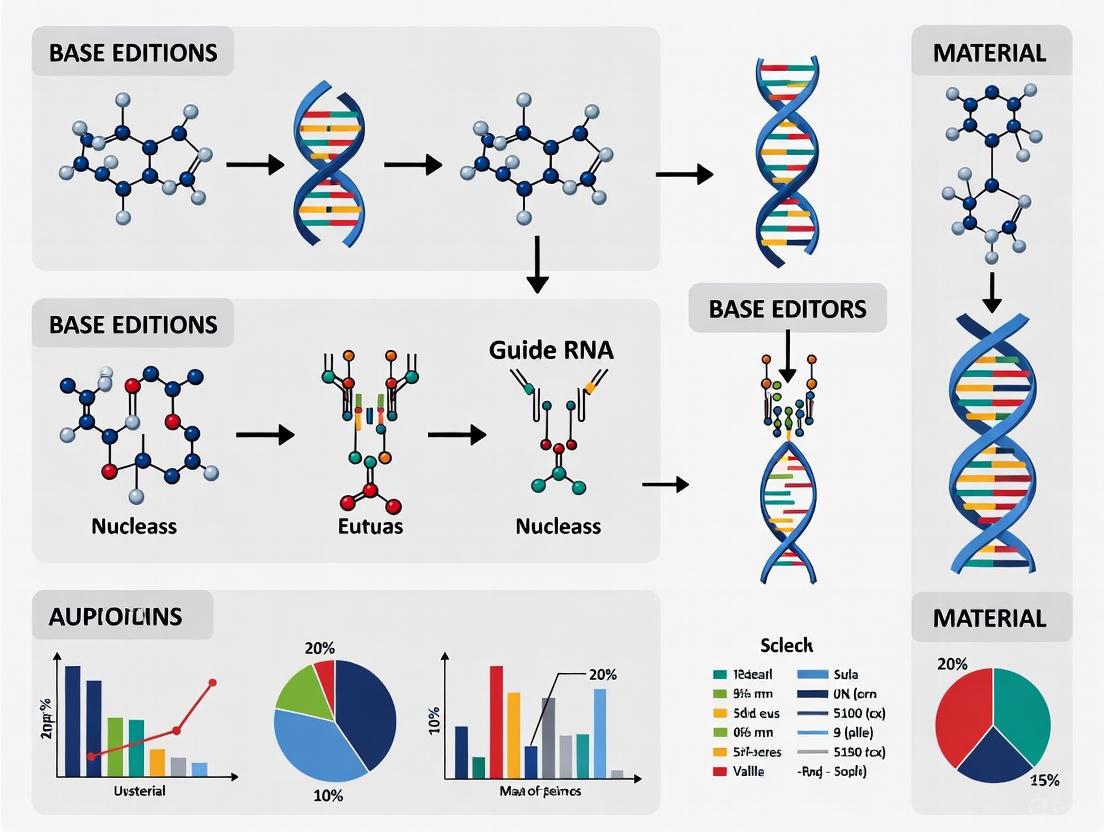
This article provides a comprehensive overview of CRISPR-based base editing, a revolutionary technology enabling precise single-nucleotide changes without double-strand DNA breaks.
Base Editing: Principles, Clinical Applications, and Future Directions in Precision Medicine
Abstract
This article provides a comprehensive overview of CRISPR-based base editing, a revolutionary technology enabling precise single-nucleotide changes without double-strand DNA breaks. Tailored for researchers, scientists, and drug development professionals, it covers the foundational mechanisms of cytosine and adenine base editors, their diverse methodological applications in research and therapy, current challenges and optimization strategies, and a comparative analysis with other editing platforms. The content synthesizes the latest advances, including AI-driven editor engineering and clinical trial updates, offering a critical resource for leveraging base editing in biomedical innovation.
The Core Machinery of Base Editing: From Deaminases to Precision Tools
The advent of Clustered Regularly Interspaced Short Palindromic Repeats (CRISPR)-Cas9 systems marked a revolutionary moment in molecular biology, providing researchers with an unprecedented ability to manipulate genomic sequences. However, the reliance of conventional CRISPR-Cas9 on generating double-strand breaks (DSBs) to facilitate editing presents significant limitations, including unpredictable editing outcomes from error-prone non-homologous end joining (NHEJ) repair, such as insertions and deletions (indels), and potential genomic rearrangements that raise safety concerns for therapeutic applications [1] [2]. The field is now undergoing a fundamental paradigm shift from this "cut-and-paste" nuclease model toward a more precise "search-and-replace" approach grounded in chemical conversion. This new generation of tools, exemplified by base editing and prime editing, enables direct, irreversible chemical conversion of a single DNA base into another without requiring DSBs, thereby enhancing both the precision and safety profile of genome editing [1] [3]. This application note details the principles, protocols, and key reagents underpinning this shift, providing a practical framework for its implementation in research and therapeutic development.
Quantitative Comparison of Genome Editing Technologies
The transition to chemical conversion methods is driven by their superior performance on key metrics compared to traditional nuclease-dependent editors. The table below summarizes the core characteristics of these technologies.
Table 1: Comparative Analysis of Major Genome Editing Technologies
| Editing Technology | Core Mechanism | Primary Editing Outcome(s) | DSB Formation? | Key Advantages | Key Limitations |
|---|---|---|---|---|---|
| CRISPR-Cas9 Nuclease | DSB induction followed by cellular repair (NHEJ/HDR) [2] | Indels (via NHEJ); precise edits (via HDR with donor template) | Yes [1] | Simplicity; effective for gene knock-outs | High frequency of indels and complex byproducts; low HDR efficiency in many therapeutically relevant cells [2] |
| Cytosine Base Editor (CBE) | Chemical deamination of C to U, leading to C•G to T•A conversion [4] [5] | C→T (or G→A on opposite strand) | No [1] | High efficiency and precision for transition mutations; low indel rate | Requires specific PAM sequence; potential for bystander edits within the activity window [4] |
| Adenine Base Editor (ABE) | Chemical deamination of A to I, leading to A•T to G•C conversion [4] [5] | A→G (or T→C on opposite strand) | No [1] | High efficiency and precision for transition mutations; very low indel rate [4] | Requires specific PAM sequence; limited to A-to-G conversions |
| Prime Editor (PE) | Reverse transcription of edited sequence from a pegRNA template at a nicked site [1] [2] | All 12 possible base-to-base conversions, small insertions, and deletions | No [1] | Unprecedented versatility without DSBs; no requirement for donor DNA | Efficiency can be variable and cell-type dependent; larger construct size poses delivery challenges |
The global market analysis for base editing reflects the growing adoption of these precise tools. The market is projected to grow from USD 258.9 million in 2025 to approximately USD 915.4 million by 2035, representing a compound annual growth rate (CAGR) of 13.5% [6]. This growth is largely driven by the drug discovery and development segment, which accounts for 52% of market demand, underscoring the therapeutic promise of these technologies [6].
Table 2: Base Editing Market Outlook by Country (2025-2035)
| Country | Forecasted CAGR (%) | Primary Growth Drivers |
|---|---|---|
| China | 18.2 | Substantial government investment in biotechnology and precision medicine [6] |
| India | 16.8 | Expanding biotechnology sector and rising research funding [6] |
| Germany | 15.5 | Strong technological innovation and clinical translation focus [6] |
| United States | 11.4 | Leading clinical translation, strong venture capital, and supportive regulatory environment [6] |
Principles and Molecular Mechanisms of Chemical Conversion
3.1 Base Editing Mechanism Base editors are sophisticated fusion proteins that couple a catalytically impaired Cas protein (either a nickase, nCas9, or deactivated Cas9, dCas9) with a nucleotide-modifying enzyme. The system is guided to a specific genomic locus by a guide RNA (gRNA). Upon binding, the Cas protein locally unwinds the DNA, exposing a single-stranded DNA bubble. The deaminase enzyme then acts on a specific base within a defined "editing window" – typically nucleotides 4-8 for CBEs and 4-7 for ABEs, counting from the end of the protospacer adjacent to the Protospacer Adjacent Motif (PAM) sequence [4] [5].
- Cytosine Base Editors (CBEs): These editors fuse a cytidine deaminase (e.g., rat APOBEC1) to nCas9. The deaminase converts cytosine (C) within the editing window into uracil (U). The cell's DNA replication machinery then interprets U as thymine (T), resulting in a C•G to T•A base pair conversion. To prevent the cell's base excision repair pathway from reversing this change, CBEs also include a uracil glycosylase inhibitor (UGI) [4] [5].
- Adenine Base Editors (ABEs): Since no natural DNA adenine deaminases were known, ABEs were created through directed evolution of a bacterial tRNA deaminase (TadA). The engineered TadA deaminates adenine (A) to inosine (I). The cellular machinery interprets inosine as guanosine (G), leading to an A•T to G•C conversion [4] [5].
The following diagram illustrates the fundamental workflow and components of a base editing system.
3.2 Prime Editing Mechanism Prime editing represents a further leap in precision, functioning as a "search-and-replace" editor that can install all 12 possible base-to-base changes, as well as small insertions and deletions, without DSBs [1] [2]. The system consists of two core components:
- Prime Editor Protein: A fusion of nCas9 with an engineered reverse transcriptase (RT).
- Prime Editing Guide RNA (pegRNA): A specialized guide that both specifies the target site and contains a template for the new desired DNA sequence.
The prime editor nicks the target DNA strand and uses the pegRNA's template to reverse-transcribe the edited DNA sequence directly into the genome. The resulting DNA flap structure is then resolved by cellular enzymes to permanently incorporate the change [2].
Detailed Experimental Protocols
Protocol 1: Introducing a Point Mutation using a Cytosine Base Editor (CBE)
This protocol outlines the steps to achieve a C•G to T•A conversion in human cell lines, based on the methodology from Komor et al. and subsequent optimizations [4] [7].
1. gRNA Design and Cloning:
- Design: Identify the target C within the genomic locus. Ensure it lies within positions 4-8 of the protospacer (relative to the 5' end) and that the target site is adjacent to a compatible PAM (e.g., NGG for SpCas9). Use in silico tools to minimize off-target potential and check for multiple C's in the editing window to avoid bystander edits.
- Cloning: Clone the synthesized oligonucleotide duplex encoding the gRNA spacer sequence into the appropriate CBE plasmid backbone (e.g., BE4, BE4max) using a restriction enzyme-based method or Gibson assembly.
2. Cell Transfection:
- Cell Seeding: Seed HEK293T or other relevant human cells (e.g., HAP1, MCF10A) in a 24-well plate to reach 70-80% confluency at the time of transfection.
- Transfection Complex Formation: For each well, prepare a transfection mix containing 500 ng of the CBE plasmid and 250 ng of the gRNA plasmid (if using a dual-vector system) or 750 ng of a single plasmid expressing both. Use a suitable transfection reagent (e.g., Lipofectamine 3000) according to the manufacturer's protocol.
- Transfection: Add the complex dropwise to the cells.
3. Post-Transfection Culture and Analysis:
- Incubation: Culture the transfected cells for 72-96 hours to allow for editing and protein turnover.
- Harvesting and Genomic DNA (gDNA) Extraction: Harvest cells and extract gDNA using a commercial kit.
- Analysis: Amplify the target locus by PCR and analyze editing efficiency using Sanger sequencing (followed by decomposition tools like BEAT or EditR) or next-generation sequencing (NGS) for a quantitative and unbiased assessment.
Protocol 2: Functional Interrogation of DNA Damage Response (DDR) Variants using a CBE Screening Platform
This protocol, adapted from the high-throughput screen performed by [7], describes how to identify functional variants in DDR genes.
1. Library Design and Lentivirus Production:
- sgRNA Library Design: Design a library of sgRNAs tiling across the coding sequences of your target DDR genes. Include controls: non-targeting sgRNAs (negative controls), sgRNAs targeting essential genes to create stop codons (iSTOP, positive controls), and sgRNAs with no cytosines in the editing window (empty-window controls).
- Lentiviral Production: Package the pooled sgRNA library into lentiviral particles by co-transfecting HEK293T cells with the library plasmid and packaging plasmids (psPAX2, pMD2.G).
2. Cell Line Engineering and Screening:
- Generate BE3-Expressing Cells: Stably transduce your cell line of interest (e.g., MCF10A) with a BE3-expressing construct and select with puromycin to create a polyclonal population (e.g., MCF10A-BE3).
- Library Transduction: Transduce the MCF10A-BE3 cells with the sgRNA lentiviral library at a low Multiplicity of Infection (MOI ~0.3) to ensure most cells receive only one sgRNA. Include puromycin selection for 3-5 days to eliminate untransduced cells.
- Sample Collection and DNA Damage Challenge: Harvest a portion of cells at Day 0 (T0) for baseline gDNA. Split the remaining population and culture for ~18 days. At a defined point (e.g., Day 10), treat one group with a DNA-damaging agent (e.g., ionizing radiation, cisplatin) relevant to your DDR pathway of interest, while maintaining a control untreated group.
3. Next-Generation Sequencing and Data Analysis:
- gDNA Extraction and PCR Amplification: Harvest cells at the endpoint (T18). Extract gDNA from T0 and T18 samples. Amplify the integrated sgRNA sequences by PCR, adding Illumina adapter sequences and sample barcodes.
- NGS and Enrichment Analysis: Perform NGS on the amplified products. For each sgRNA, calculate the log2-fold change (LFC) in abundance between T18 and T0. sgRNAs that are significantly depleted in the treated group compared to the control are enriched for variants that confer sensitivity to the DNA damage, indicating loss-of-function.
The Scientist's Toolkit: Essential Research Reagents
Successful implementation of base editing requires a suite of specialized reagents and tools. The following table details key components for setting up base editing experiments.
Table 3: Key Research Reagent Solutions for Base Editing
| Reagent / Solution | Function / Description | Example Products / Notes |
|---|---|---|
| Base Editor Plasmids | Mammalian expression vectors encoding the fusion protein (e.g., nCas9-deaminase-UGI). | BE4 (CBE), ABE7.10 (ABE), BE4max & ABEmax (codon-optimized for higher efficiency) [4] |
| gRNA Expression Vectors | Plasmids for expressing the sequence-specific gRNA. | Can be on a separate plasmid or combined with the editor in a single plasmid. |
| Delivery Tools | Methods for introducing editor machinery into cells. | Lipofection reagents (e.g., Lipofectamine 3000), Electroporation (e.g., Neon System), Lentiviral particles (for hard-to-transfect cells) |
| Targeted NGS Panel | Custom amplicon-based sequencing to quantitatively assess on-target editing efficiency and byproducts. | Illumina MiSeq; crucial for detecting low-frequency indels and bystander edits [4] |
| Cytosine Base Editor (CBE) | A ready-to-use, high-fidelity base editor complex. | Synthego's AccuBase CBE (available in Research-grade and GMP-grade) [5] |
| Cell Line Engineering Service | Outsourced generation of stable, clonal cell lines with integrated edits. | Useful for creating isogenic cell lines for functional studies post-editing. |
The shift from nuclease-based cutting to chemical conversion with base and prime editors represents a fundamental maturation of the gene-editing field. These technologies offer a more predictable, efficient, and safer path to precise genome modification, directly addressing the limitations of DSB-dependent methods. As evidenced by their rapid progression into clinical trials—such as the successful treatment of relapsed T-cell leukemia and the FDA-approved trial for chronic granulomatous disease—the therapeutic potential is immense [1]. For researchers and drug developers, mastering the principles, protocols, and reagent options outlined in this application note is critical for leveraging these powerful tools to model diseases, validate drug targets, and ultimately, develop the next generation of genetic therapeutics.
Base editing represents a paradigm shift in genetic engineering, enabling the precise conversion of a single DNA base into another without inducing double-stranded DNA breaks (DSBs). This technology is particularly valuable for correcting point mutations, which account for a significant portion of known pathogenic genetic variants [8] [5]. Its core components are a catalytically impaired Cas9 variant (dCas9 or nCas9), a deaminase enzyme, and a guide RNA (gRNA) [5]. This article deconstructs these core components, provides quantitative comparisons and detailed protocols, and visualizes the key relationships and workflows.
Core Component Architecture
The functionality of a base editor hinges on the synergistic operation of its three core parts.
Catalytically Impaired Cas9 Variants: dCas9 and nCas9
The CRISPR-Cas9 system's programmable DNA-binding capability is harnessed in base editors, but its DNA-cleaving function is disabled to avoid DSBs. Two primary variants are used:
- dead Cas9 (dCas9): This variant contains double mutations (e.g., Asp10Ala and His840Ala in SpCas9) that completely abolish both nuclease domains, rendering it capable of binding DNA but not cutting it [5] [9]. It acts as a precise DNA-targeting scaffold.
- Cas9 nickase (nCas9): This variant carries a single mutation (e.g., Asp10Ala) that inactivates only one nuclease domain (RuvC). It retains the ability to nick the non-edited DNA strand [5] [9]. The nick enhances editing efficiency by encouraging cellular repair mechanisms to use the edited strand as a template [9].
The choice of Cas9 variant is a critical design consideration, as it influences editing efficiency and product purity. nCas9 is the most commonly used variant in modern base editors because the introduced nick significantly improves editing efficiency without significantly increasing indel rates [9].
Deaminase Enzymes: The Catalytic Engine
The deaminase enzyme is the functional core of the base editor, responsible for catalyzing the chemical conversion of one base to another. These enzymes are fused to the dCas9/nCas9 protein and act on single-stranded DNA exposed when Cas9 binds and unwinds the target DNA [5].
- Cytidine Deaminases (for CBEs): Enzymes like rat APOBEC1 (rAPOBEC1) or human APOBEC3A (A3A) catalyze the deamination of cytidine (C) to uridine (U) in DNA [5] [9]. The cell then interprets U as thymine (T) during replication, effecting a C•G to T•A conversion. To prevent the cell's base excision repair from reversing this change, CBEs are often fused with a uracil glycosylase inhibitor (UGI) [5] [9].
- Adenine Deaminases (for ABEs): No natural enzyme deaminates adenine in DNA. ABEs use an engineered E. coli tRNA adenosine deaminase (TadA) that forms a heterodimer. This engineered enzyme deaminates adenine (A) to inosine (I), which is read as guanine (G) by polymerases, resulting in an A•T to G•C conversion [5].
Table 1: Major Base Editor Systems and Their Deaminase Components
| Base Editor Type | Base Conversion | Deaminase Engine | Key Components & Notes |
|---|---|---|---|
| Cytosine Base Editor (CBE) | C•G → T•A | Cytidine deaminase (e.g., APOBEC1) [9] | Often includes UGI to preserve the U intermediate [5]. |
| Adenine Base Editor (ABE) | A•T → G•C | Engineered adenosine deaminase (TadA) [5] | Uses an engineered heterodimer of TadA [5]. |
Recent advancements use AI-guided structural clustering to discover novel, compact deaminases with higher activity and reduced off-target effects, enhancing their suitability for therapeutic delivery [10].
Guide RNA (gRNA): The Targeting System
The gRNA is a ~100 nt RNA that directs the Cas9-deaminase fusion protein to the specific genomic locus of interest. Its spacer sequence is complementary to the target DNA sequence [5]. For base editing, the gRNA must position the target base within a specific "editing window"—a narrow range of nucleotides (typically positions 4-10, counting from the PAM-distal end) where the deaminase has access to the single-stranded DNA [5]. The sequence and secondary structure of the gRNA are critical for efficiency. Engineered gRNAs with stabilized hairpins in their constant regions (e.g., GOLD-gRNA) can dramatically increase editing efficiency by preventing gRNA misfolding [11].
Quantitative Data and Component Evolution
The performance of base editors is quantified by their editing efficiency (the proportion of reads with at least one edit in the editing window) and bystander edit rates (the frequency of edits at specific positions within the window) [12]. The following table chronicles the evolution of cytosine base editors, demonstrating how component optimization has led to significant efficiency gains.
Table 2: Evolution and Optimization of Cytosine Base Editors (CBE) [9]
| Editor Name | Cas9 Variant | Deaminase | Key Optimizations | Reported Max Efficiency | Impact of Optimization |
|---|---|---|---|---|---|
| CBE1 | dCas9 | rAPOBEC1 | Original fusion | 0.8% - 7.7% | Baseline efficiency [9] |
| CBE2 | dCas9 | rAPOBEC1 | Addition of one UGI | ~20% | 3x efficiency increase; reduced indels [9] |
| CBE3 | nCas9 | rAPOBEC1 | Nickase activity + one UGI | ~37% | 2-6x increase over CBE2 [9] |
| CBE4 | nCas9 | rAPOBEC1 | Two UGIs, extended linkers | 15% - 90% | 50% improvement over CBE3 [9] |
| CBE4max | nCas9 | rAPOBEC1 | Codon optimization, bipartite NLS | Up to 89% | 1.8-9x increase, especially at low-dosage sites [9] |
| evoFERNY-BE4max | nCas9 | evoFERNY | Novel deaminase from protein evolution | ~70% at GC-rich sites | High activity at GC-rich sequences [9] |
| TadCBE | nCas9 | Engineered TadA | Deaminase engineered for cytidine | ~51-60% (avg.) | Smaller size, lower RNA off-targets [9] |
Experimental Protocol: Delivering a CBE for Gene Knockout in Bacteria
This protocol details the application of a CBE for creating a gene knockout via a premature stop codon in phytopathogenic bacteria, based on the system developed by [13].
Materials and Reagents
- Plasmid System: A broad-host-range plasmid (e.g., pHM1) containing [13]:
- CBERecAp Expression Cassette: The CBE fusion gene (nCas9-CDA1-UGI) under the control of a strong, constitutive promoter (e.g., RecA promoter).
- gRNA Cloning Site: A site for inserting the spacer sequence, typically under a synthetic J23119 promoter.
- Selection Marker: An antibiotic resistance gene (e.g., for kanamycin).
- Counter-Selection Marker: The sacB gene, which confers sucrose sensitivity for plasmid eviction.
- Bacterial Strain: The target bacterial strain (e.g., Xanthomonas oryzae PXO99A).
- Oligonucleotides: Designed complementary oligonucleotides for the gRNA spacer sequence targeting the gene of interest (e.g., suxC).
- Culture Media: Nutrient Broth (NB) media, NB agar plates with appropriate antibiotic, and minimal media with sucrose as the sole carbon source for phenotypic screening.
Step-by-Step Procedure
gRNA Cloning:
- Design a 20 nt spacer sequence targeting the gene of interest, ensuring the target base(s) for creating a stop codon fall within the editing window (e.g., positions 4-10 from the PAM).
- Order and anneal the complementary oligonucleotides and clone them into the BsmBI-digested gRNA plasmid vector using T4 DNA ligase [13].
- Transform the ligation product into E. coli DH10β, culture, and extract plasmid DNA. Confirm correct insertion by analytical digest and Sanger sequencing.
Delivery into Target Bacteria:
- Introduce the confirmed plasmid into the target bacterial strain (e.g., Xanthomonas oryzae) via electroporation [13].
- Plate the transformation on solid NB media containing the appropriate antibiotic and incubate until single colonies form.
Screening for Edited Clones:
- Pick several single colonies and culture them in liquid media.
- Harvest genomic DNA from the cultures.
- PCR-amplify the target genomic region and subject the amplicons to Sanger sequencing.
- Quantitative Analysis: Use a bioinformatics tool like EditR (https://baseeditr.com/) to deconvolute the Sanger sequencing chromatograms and quantify the base editing efficiency [14]. EditR requires only the Sanger sequencing file and the gRNA protospacer sequence to calculate the percentage of C-to-T conversion.
Plasmid Eviction and Isolation of Pure Mutant:
- Once editing is confirmed, culture the positive clones in media without antibiotic selection to allow for plasmid loss.
- Plate the culture on NB agar containing 10% sucrose. The sacB gene makes cells expressing the plasmid sensitive to sucrose, so only cells that have lost the plasmid will grow [13].
- Screen sucrose-resistant colonies for antibiotic sensitivity to confirm plasmid loss.
- Validate the pure, plasmid-free edited sequence by sequencing the target locus.
Phenotypic Validation:
- Test the edited, plasmid-free clones for the expected phenotype (e.g., inability to grow on minimal media with sucrose as the sole carbon source for a suxC knockout) [13].
The workflow for this protocol is summarized in the following diagram:
Logical and Structural Relationships
The functional mechanism of a base editor involves a precise sequence of molecular events. The following diagram illustrates the logical relationship between the core components and the resulting biological outcome, using a CBE as an example.
The Scientist's Toolkit: Research Reagent Solutions
Table 3: Essential Reagents for Base Editing Research
| Reagent / Solution | Function / Description | Example Use-Case |
|---|---|---|
| CBE & ABE Plasmid Kits | Ready-to-use plasmids encoding optimized base editors (e.g., BE4max, ABE8e). | Simplifies transfection/transduction in mammalian cells [9]. |
| GMP-grade Base Editor RNP | Research- or Good Manufacturing Practice (GMP)-grade Ribonucleoprotein (RNP) complexes of base editor protein and gRNA. | For therapeutic development; offers high precision and reduced off-target effects [5]. |
| EditR Analysis Tool | A free, online bioinformatics tool for quantifying base editing efficiency from Sanger sequencing data [14]. | Rapid, cost-effective quantification of editing outcomes without NGS [14]. |
| BE-dataHIVE Database | A centralized SQL database with over 460,000 gRNA target combinations, enriched with features for machine learning [12]. | In-silico gRNA design and prediction of editing efficiency and bystander mutations [12]. |
| Stabilized gRNA (e.g., GOLD-gRNA) | Chemically synthesized gRNAs with stable hairpins and optimized chemical modifications (e.g., phosphorothioate bonds, 2'OMe). | Dramatically improves editing efficiency at refractory target sites [11]. |
| Broad-Host-Range Vectors (e.g., pHM1) | Plasmid vectors with origins of replication (e.g., pSa ori) that function in diverse bacterial species [13]. | Enables base editing applications in non-model bacteria, including phytopathogens [13]. |
Cytosine Base Editors (CBEs) represent a groundbreaking class of precision genome editing tools that enable direct, irreversible conversion of cytosine (C) to thymine (T) within DNA without inducing double-strand breaks. The core catalytic component driving this conversion is APOBEC1 (Apolipoprotein B mRNA editing enzyme, catalytic polypeptide 1), a cytidine deaminase initially identified for its physiological role in RNA editing [15] [16]. APOBEC1 functions naturally as part of a RNA editing complex that deaminates a specific cytosine (C6666) to uracil in the transcript of human Apolipoprotein B, a major component in lipid transport [15]. This C-to-U editing creates a stop codon, ultimately yielding a shorter protein isoform [16].
The engineering of APOBEC1 for DNA editing has harnessed this deamination capability and redirected it toward genomic targets. When fused to a catalytically impaired Cas9 variant, APOBEC1 gains the ability to access single-stranded DNA exposed during the CRISPR targeting process and catalyze the deamination of cytosine to uracil [5] [17]. This U•G mismatch is then resolved through cellular repair processes and DNA replication to produce a stable C•G to T•A base pair substitution [5]. The development of APOBEC1-driven CBEs has thus created a powerful tool for modeling genetic diseases and developing therapeutic interventions for conditions caused by point mutations.
The Molecular Mechanism of APOBEC1-driven C•G to T•A Conversion
The conversion of C•G to T•A by APOBEC1-based CBEs is a multi-step process that leverages both engineered molecular components and endogenous cellular machinery. The following diagram illustrates the complete pathway and key cellular repair factors involved.
Key Complex Components and Their Functions
The CBE molecular machinery consists of several engineered components that work in concert to achieve precise base editing:
Catalytically Impaired Cas9: Typically a Cas9 nickase (nCas9) that cuts only the DNA strand containing the guanine base. This single-strand break positions the cellular repair machinery to utilize the U-containing strand as a template, thereby enhancing editing efficiency [5] [17].
APOBEC1 Deaminase: The core catalytic engine that performs the chemical conversion of cytosine to uracil within a defined "editing window" of approximately nucleotides 4-8 in the protospacer region [5] [17]. APOBEC1 demonstrates a preference for cytosines in specific sequence contexts, particularly with a thymine directly upstream and avoidance of adenines [15].
Uracil Glycosylase Inhibitor (UGI): A critical component that prevents the premature removal of uracil by endogenous uracil-DNA glycosylase (UNG) [5] [17]. Without UGI, UNG would excise the uracil base, initiating base excision repair that could lead to undesired outcomes such as indels or reversion to the original cytosine [18].
The coordinated activity of these components creates a U•G mismatch adjacent to a single-strand nick, which cellular repair pathways then resolve into a permanent T•A base pair.
Quantitative Performance Data of APOBEC1-CBEs
The editing efficiency, product purity, and specificity of APOBEC1-CBEs have been quantitatively assessed across various experimental systems. The following table summarizes key performance metrics reported in recent studies.
Table 1: Performance Metrics of APOBEC1-Based Cytosine Base Editors
| Parameter | Reported Efficiency | Experimental Context | Factors Influencing Outcome |
|---|---|---|---|
| C•G to T•A Conversion | 30-98% [18] [17] | Mammalian cell lines (HEK293T, K562) | Target sequence context, chromatin accessibility, CBE delivery method |
| Bystander Editing | Variable (position-dependent) [18] | Multi-cytosine editing windows | Relative position within editing window, sequence preferences |
| Indel Formation | 1.1% (BE3) [17] | Comparison to Cas9 nuclease | UGI inhibition of UNG, Gam protein fusion (BE4-Gam) |
| Product Purity | 2.3-fold improvement with BE4 vs BE3 [17] | Engineered CBE generations | Additional UGI copy, optimized linkers |
| Off-Target RNA Editing | Detectable [19] | Transcriptome-wide analyses | Endogenous APOBEC1 RNA-editing activity |
| Mutation Signature | Preference for TC context [15] | Bacterial and vertebrate cell models | Innate sequence specificity of APOBEC1 deaminase |
The development of fourth-generation base editors (BE4) has significantly improved product purity by reducing undesirable byproducts. BE4 incorporates a second UGI copy and extended linkers between protein domains, resulting in a 2.3-fold decrease in C→G or C→A byproducts and a similar reduction in indel formation compared to BE3 [17]. Further engineering led to BE4max and AncBE4max through optimization of nuclear localization signals and codon usage, achieving a 4.2-6-fold improvement in editing efficiency [17].
DNA Repair Mechanisms Governing Editing Outcomes
Cellular processing of the U•G mismatch intermediate determines the final editing outcome. Recent genetic screens have identified key DNA repair factors that influence this process.
Table 2: DNA Repair Factors Shaping CBE Outcomes
| DNA Repair Factor | Role in CBE Processing | Impact on Editing Outcomes |
|---|---|---|
| Uracil-DNA Glycosylase (UNG) | Excises uracil to create abasic site | Decreases C•G to T•A; Increases C•G to G•C [18] |
| MutSα (MSH2/MSH6) | Mismatch repair recognition complex | Facilitates C•G to T•A outcome [18] |
| RFWD3 | E3 ubiquitin ligase | Mediates C•G to G•C via translesion synthesis [18] |
| XPF (ERCC4) | 3'-flap endonuclease | Repairs intermediate back to original C•G [18] |
| LIG3 | DNA ligase | Involved in repair back to original C•G [18] |
The balance between these competing repair pathways ultimately determines the efficiency and fidelity of base editing. Mismatch repair factors, particularly the MutSα complex (MSH2/MSH6), facilitate the desired C•G to T•A conversion by recognizing the U•G mismatch and directing repair toward the nicked strand [18]. Conversely, RFWD3, an E3 ubiquitin ligase, promotes an alternative pathway that leads to C•G to G•C transversions through translesion synthesis [18]. Understanding these mechanisms enables researchers to optimize editing conditions by modulating repair pathways.
Experimental Protocol: Measuring CBE Activity with Fluorescent Reporters
This protocol describes a robust method for quantifying APOBEC1-CBE activity using stably integrated fluorescent reporters in mammalian cells, based on recently published screening approaches [18].
Reagent Preparation
- Cell Line: CRISPRi-expressing K562 cells with doxycycline-inducible rA1-SaBE4(ΔUGI) construct [18]
- Reporter Construct: Lentiviral vector containing either:
- Base Editor: rA1-SaBE4(ΔUGI) with Rattus norvegicus APOBEC1 deaminase domain [18]
- Controls: Include cells expressing catalytically dead editor and untreated controls
Experimental Workflow
The following diagram outlines the key steps in the fluorescent reporter assay for quantifying CBE activity.
Data Analysis and Interpretation
- Flow Cytometry Analysis: Gate on live cells and quantify the percentage of GFP-positive cells. In a typical experiment, C•G to T•A editing efficiencies of 13.2 ± 0.4% have been reported with this system [18].
- Sequence Validation: Sort GFP-positive and negative populations, amplify the target region by PCR, and perform Sanger or next-generation sequencing to confirm the specific base substitution and assess bystander editing.
- Normalization: Normalize editing efficiency to control samples to account for background fluorescence and non-specific effects.
This protocol provides a quantitative framework for comparing different CBE architectures, optimizing delivery methods, and evaluating the impact of DNA repair modulators on editing outcomes.
The Scientist's Toolkit: Essential Research Reagents
Table 3: Essential Research Reagents for APOBEC1-CBE Studies
| Reagent Category | Specific Examples | Function & Application Notes |
|---|---|---|
| APOBEC1-CBE Plasmids | BE3, BE4, BE4max, AncBE4max [17] | Backbone vectors for CBE expression; contain nCas9-APOBEC1-UGI fusions |
| Deaminase Variants | rA1 (rat APOBEC1), eA3A, RrA3F [18] | Engineered deaminases with different sequence preferences and editing windows |
| Cell Line Models | DT40 GFP reporter, K562 BFP-GFP reporter [15] [18] | Stably integrated reporters for quantifying CBE activity and mutator phenotypes |
| Reporter Systems | BFP-to-GFP (C•G to T•A), Non-fluorescent to GFP (C•G to G•C) [18] | Fluorescent reporters enable FACS-based quantification of editing efficiency |
| DNA Repair Modulators | UNG inhibitors, MLH1/MSH2 knockdown constructs [18] | Tools to manipulate DNA repair pathways and bias editing outcomes |
| Delivery Vehicles | Lentiviral vectors, PiggyBac transposons, RNP complexes [18] [17] | Methods for introducing CBEs into target cells with varying persistence |
Applications in Biomedical Research and Therapeutic Development
APOBEC1-CBEs have enabled numerous advances in basic research and therapeutic development:
- Disease Modeling: Introduction of specific point mutations associated with genetic disorders into cell lines or animal models to study disease mechanisms [20].
- Functional Genomics: Precfficient knock-out of gene function by introducing premature stop codons without the genomic instability associated with double-strand breaks [20].
- Therapeutic Correction: Potential for correcting disease-causing point mutations, with applications demonstrated in genetic disorders like sickle cell anemia and various metabolic diseases [5].
- Cancer Research: Study of oncogenic mutations and exploration of CBE-enabled therapies, including the enhancement of CAR-T cell therapies through precise gene editing [20].
The high precision and reduced indel formation of APOBEC1-CBEs compared to conventional CRISPR-Cas9 nucleases make them particularly valuable for therapeutic applications where minimizing genotoxic risks is paramount.
Troubleshooting and Technical Considerations
When implementing APOBEC1-CBE protocols, researchers should be aware of several technical considerations:
- Sequence Context Optimization: APOBEC1 exhibits preference for cytosines in specific sequence contexts (particularly TC motifs) [15]. Design gRNAs to position target cytosines within favorable contexts when possible.
- Bystander Editing: When multiple cytosines fall within the editing window, non-target cytosines may undergo editing [18]. Carefully design targets to minimize bystander effects or use evolved CBE variants with narrower editing windows.
- Off-Target Effects: Monitor both DNA and RNA off-target editing [19]. Use high-fidelity Cas9 domains and consider RNP delivery to reduce off-target activity.
- Repair Pathway Modulation: Knocking down specific DNA repair factors (e.g., UNG, RFWD3) can bias outcomes toward desired products [18].
The continued refinement of APOBEC1-CBEs through protein engineering and improved understanding of DNA repair mechanisms will further enhance their precision and expand their applications in research and therapy.
Adenine Base Editors (ABEs) represent a groundbreaking class of precision genome editing tools designed to directly convert adenine (A) to guanine (G) in genomic DNA, resulting in an A•T to G•C base pair substitution without inducing double-strand breaks (DSBs) [5]. This technology addresses a critical gap in the genome editing toolbox, as approximately 60% of known pathogenic human genetic variants are caused by single nucleotide variations (SNVs), a significant portion of which require A•T to G•C correction [21]. The development of ABEs is particularly significant within the broader context of base editing principles as they, alongside Cytosine Base Editors (CBEs), can theoretically correct ∼95% of pathogenic transition mutations cataloged in ClinVar, dramatically expanding the therapeutic potential of gene editing for monogenic disorders [22].
Unlike cytosine base editing, which builds upon naturally occurring cytidine deaminases, the creation of ABEs presented a unique bioengineering challenge: no natural DNA adenine deaminase enzyme exists [17] [5]. Researchers therefore pioneered a synthetic biology approach, engineering a DNA-acting adenine deaminase from a related RNA-editing enzyme. This foundational innovation enabled a powerful new editing modality that operates with high precision and minimal byproducts, establishing ABEs as a cornerstone of modern precision genome editing.
The Engineering and Evolution of TadA
The core catalytic component of ABEs is an engineered transfer RNA-specific adenosine deaminase (TadA) derived from E. coli. The creation of a DNA-active adenine deaminase required extensive protein engineering to fundamentally alter the substrate specificity of the native TadA enzyme, which naturally acts on tRNA [5].
Key Stages in TadA Development
The evolution of TadA represents a landmark achievement in protein engineering and can be summarized in the following critical stages:
- Initial Directed Evolution: The first-generation ABE (ABE7.10) was created through seven rounds of molecular evolution, resulting in an engineered TadA monomer that functions as a heterodimer with the wild-type TadA. This version achieved an average editing efficiency of 53% with an editing window at protospacer positions A4-A7 [17] [5].
- Enhanced Efficiency with ABE8e: Using phage-assisted continuous evolution (PACE), researchers developed the highly processive TadA-8e variant. ABE8e (which incorporates TadA-8e) edits ~590-fold faster than the deaminase from ABE7.10, significantly increasing on-target efficiency and expanding the editable window [21] [17]. This high activity, however, was initially associated with increased DNA and RNA off-target effects [21].
- Refinement for Specificity: Subsequent efforts focused on improving specificity. For instance, introducing N108Q and L145T substitutions created ABE9, which exhibits a narrowed editing window of 1-2 nucleotides, effectively eliminating bystander editing and minimizing off-target effects [23].
Table 1: Evolution of Engineered TadA in Adenine Base Editors
| ABE Variant | Key TadA Component | Editing Efficiency | Editing Window | Key Characteristics |
|---|---|---|---|---|
| ABE7.10 | Engineered TadA heterodimer | ~53% (average) | A4-A7 | First functional ABE; minimal indel formation [17] [5] |
| ABE8e | TadA-8e (V106W) | Up to 98-99% | A3-A11 (wider window) | ~590x faster editing rate; high processivity [21] [17] |
| sABE8e | Split TadA-8e | Comparable to ABE8e | A3-A11 | Rapamycin-inducible; drastically reduced off-target effects [21] |
| hyABE | TadA-8e + Rad51DBD | 43.0-94.6% (median 80.5%) | A2-A15 (expanded) | Hyperactive editor; superior efficiency near PAM [23] |
| ABE9 | Engineered TadA (N108Q, L145T) | High | 1-2 nucleotides (narrowed) | Reduced bystander & off-target edits on DNA and RNA [23] |
The Molecular Mechanism of A•T to G•C Conversion
The ABE system functions as a complex of multiple protein components guided to a specific genomic locus by a guide RNA (gRNA). The core mechanism involves a precise series of steps that result in a permanent, high-fidelity base change [5].
Step-by-Step Mechanism
The A•T to G•C conversion is achieved through the following mechanism:
- Targeting and DNA Strand Separation: A gRNA directs the ABE complex, which consists of a Cas9 nickase (nCas9) fused to an engineered TadA deaminase, to the target genomic locus. Upon binding, nCas9 unwinds the DNA double helix, exposing a single-stranded DNA region within an R-loop [5] [22].
- Adenine Deamination: The engineered TadA deaminase acts on a specific adenine (A) base within the exposed single-stranded DNA "editing window." TadA catalyzes the hydrolytic deamination of adenine, removing an amino group (-NH₂) and converting it to hypoxanthine (which forms the nucleoside inosine, I) [17] [5].
- DNA Nicking and Cellular Repair: The nCas9 domain introduces a nick in the non-edited DNA strand. This nick directs cellular repair machinery to use the edited strand, which now contains inosine, as the preferred template [17].
- DNA Replication and Permanent Base Change: During DNA replication or repair, inosine (I) is recognized and paired with cytosine (C) by the cellular machinery. In the subsequent round of replication, the original C on the complementary strand is replaced with a G, finalizing the conversion from an A•T base pair to a G•C base pair [17] [5].
Diagram 1: ABE A-to-G Editing Mechanism. The process involves DNA targeting, adenine deamination, strand nicking, and permanent base conversion.
Advanced ABE Systems and Applications
Controllable and Dual Base Editors
Recent innovations have focused on improving the safety and versatility of ABE systems. Split ABE systems (sABE8e) address the significant challenge of off-target editing by dividing the TadA-8e deaminase into two inactive fragments that dimerize only in the presence of a rapamycin analog [21]. This inducible system maintains high on-target efficiency (0.20–83.00%) comparable to ABE8e while drastically reducing both DNA and RNA off-target effects, enhancing the safety profile for potential therapeutic applications [21].
Dual base editors represent another frontier, combining the functions of adenine and cytosine deaminases into a single protein. Variants like eA&C-BEmax and hyA&C-BEmax incorporate TadA-8e to enable simultaneous A-to-G and C-to-T conversions, which is valuable for disease modeling and correcting complex genetic mutations [21] [23]. About 203 known pathogenic mutations containing G-to-A and T-to-C mutations within editing windows could be potentially corrected by such dual base editors [23].
Table 2: Performance Comparison of Advanced ABE Systems
| Base Editor | Primary Editing Type(s) | Key Feature | Reported Efficiency | Target Window | Indel Frequency |
|---|---|---|---|---|---|
| sABE8e | A-to-G | Rapamycin-inducible; reduced off-targets | 0.20% - 83.00% (on-target) | A3-A11 | Significantly lower than ABE8e [21] |
| hyABE | A-to-G | Rad51DBD fusion; hyperactive near PAM | 43.0% - 94.6% (median 80.5%) | A2-A15 (expanded) | Very low, comparable to ABE8e [23] |
| eA&C-BEmax | A-to-G & C-to-T | Simultaneous A/C editing | 1.2-fold improvement in simultaneous A/C conversion vs A&C-BEmax [23] | Dependent on deaminase windows | Not specified |
| hyA&C-BEmax | A-to-G & C-to-T | TadA-8e + Rad51DBD fusion | 1.5-fold improvement in simultaneous A/C conversion vs A&C-BEmax [23] | Dependent on deaminase windows | Not specified |
Applications in Research and Therapy
ABEs have demonstrated significant potential across multiple domains. In therapeutic development, ABEs are currently in clinical trials for treating hemoglobinopathies (sickle cell disease and transfusion-dependent beta thalassemia), glycogen storage disease type 1a, alpha-1 antitrypsin deficiency, and heterozygous familial hypercholesterolemia [24]. In crop improvement, ABEs have been successfully applied to create novel germplasm with enhanced herbicide resistance, disease resistance, and improved grain quality in major crops like rice, wheat, and maize [25]. For disease modeling, ABEs enable the highly efficient installation of pathogenic point mutations in zygotes for organisms like zebrafish, allowing for the precise mirroring of human genetic syndromes [23].
Experimental Protocols
Protocol 1: On-Target Editing Efficiency Analysis with hyABE
This protocol describes the use of the hyperactive hyABE editor for efficient A-to-G conversion, particularly at positions proximal to the PAM [23].
Research Reagent Solutions
| Item | Function / Description |
|---|---|
| hyABE Plasmid | ABE8e with Rad51DBD fused between TadA-8e and Cas9n [23] |
| HEK293T Cells | Common human cell line for efficiency testing [23] |
| Target-specific sgRNA | Guides hyABE to the endogenous target locus [23] |
| High-Throughput Sequencing (HTS) | For quantitative analysis of editing outcomes [23] |
Methodology
- Cell Culture and Transfection: Culture HEK293T cells and co-transfect with the hyABE expression plasmid and a plasmid encoding the target-specific sgRNA [23].
- Genomic DNA Extraction: Harvest cells 72 hours post-transfection and extract genomic DNA using a standard kit [23].
- PCR Amplification: Design primers flanking the target site and perform PCR to amplify the region of interest [23].
- Editing Analysis: Analyze the PCR amplicons via high-throughput sequencing (HTS). Use bioinformatic tools to quantify A-to-G conversion efficiency at each adenine position within the protospacer and calculate the percentage of reads containing the desired edit [23].
Troubleshooting Note: hyABE demonstrates 1.2 to 7-fold higher editing efficiency than ABE8e at positions A10-A15 (near the PAM). If efficiency is low at distal sites (A2-A9), consider using the standard ABE8e editor [23].
Protocol 2: Controlled Editing with Inducible sABE8e
This protocol utilizes the rapamycin-inducible sABE8e system for applications requiring precise temporal control and minimized off-target effects [21].
Research Reagent Solutions
| Item | Function / Description |
|---|---|
| sABE8e Plasmids | Plasmids encoding the split TadA-8e fragments (TadA-8eN-FRB and TadA-8eC-FKBP12) [21] |
| Rapamycin | Small molecule inducer for dimerization [21] |
| HEK293T Cells | Standard mammalian cell line for testing [21] |
| HTS Platform | For assessing on-target efficiency and RNA/DNA off-targets [21] |
Methodology
- System Reconstitution: Co-transfect HEK293T cells with the two sABE8e plasmid constructs (e.g., ABE8e ×1 variant with split site at Asn37-Asn38) and the sgRNA plasmid [21].
- Induction of Editing: Add rapamycin to the culture medium to induce dimerization of the split TadA-8e fragments and activate the editor. A no-rapamycin control is essential for assessing background activity [21].
- Efficiency and Specificity Assessment: After 3 days, extract genomic DNA and RNA. Use HTS of PCR amplicons to measure on-target A-to-G efficiency. To assess off-target effects, perform RNA-seq to quantify RNA mutations and use methods like GUIDE-seq or targeted sequencing to detect DNA off-targets [21].
- Data Interpretation: sABE8e achieves editing efficiencies of 0.20–83.00% across 14 endogenous sites upon induction, with minimal background activity and significantly reduced indel formation (∼1.2%) compared to ABE8e [21].
The Scientist's Toolkit: Essential Reagents for ABE Work
Table 3: Key Research Reagent Solutions for ABE Experiments
| Reagent / Tool | Function / Description | Example Use Case |
|---|---|---|
| ABE Plasmid Variants | Engineered editor expression (e.g., ABE8e, hyABE, sABE8e) | Choosing the optimal editor for efficiency (hyABE) vs. specificity (sABE8e) [21] [23] |
| sgRNA Expression Construct | Targets the editor to the specific genomic locus | Must be designed so the target adenine is within the editor's activity window [5] |
| Cell Line (e.g., HEK293T) | Model system for testing editor performance | Standardized platform for comparing editing efficiency across ABE variants [21] [23] |
| Rapamycin | Small-molecule inducer for dimerization of split systems | Controlling the timing of editing activity in sABE8e experiments [21] |
| High-Throughput Sequencer | Quantifying editing efficiency and off-target effects | Essential for robust, quantitative analysis of A-to-G conversion rates [21] [23] |
| Rad51DBD Fusion Construct | Enhances activity, especially near PAM | Component of the hyperactive hyABE editor [23] |
The AID/APOBEC family of cytidine deaminases represents a remarkable biological system that has been repurposed for precise genome engineering. These enzymes, central to adaptive immunity and viral defense, catalyze the hydrolytic deamination of cytidine to uridine in single-stranded DNA (ssDNA) or RNA [26]. This seemingly simple chemical transformation underlies critical biological processes including antibody maturation, via Activation-Induced Cytidine Deaminase (AID), and mRNA editing, via APOBEC1 [26] [27]. The foundational biochemistry of these enzymes involves a conserved zinc-coordination motif (H-X-E-X23-28-P-C-X-C) within their active site, where a water molecule activates the cytidine base for deamination [26]. This inherent ability to precisely rewrite genetic information has positioned AID/APOBEC enzymes as the natural blueprint for developing advanced genome editing tools, particularly base editors, which now enable the correction of pathogenic point mutations without inducing double-stranded DNA breaks [28] [29].
Biological Foundations and Molecular Mechanisms
The AID/APOBEC enzyme family exhibits a characteristic structure, typically featuring a central β-sheet surrounded by α-helices, with the catalytic center positioned near a surface cavity of negative electrostatic potential [26]. Loop 7 has been identified as the principal determinant of sequence specificity, with additional contributions from loops 1, 3, and 5, which collectively facilitate DNA binding and target selection [26]. Different family members demonstrate distinct sequence preferences; for instance, APOBEC3G favors CCC motifs, while APOBEC3A preferentially edits cytosines within TC contexts [26]. This inherent sequence specificity, combined with their natural activity on single-stranded nucleic acids, makes them ideal starting points for protein engineering efforts aimed at expanding or narrowing their targeting scope for therapeutic applications.
Table 1: Natural AID/APOBEC Deaminases and Their Biological Functions
| Enzyme | Primary Substrate | Sequence Preference | Biological Function |
|---|---|---|---|
| AID | ssDNA | WRC (W=A/T, R=A/G) | Somatic hypermutation (SHM) and class-switch recombination (CSR) in antibodies [26] |
| APOBEC1 | mRNA / ssDNA | Not Specified in Context | mRNA editing of apolipoprotein B [26] |
| APOBEC3A (A3A) | ssDNA / RNA | TC | Innate antiviral defense [28] [26] |
| APOBEC3G (A3G) | ssDNA | CCC | Restricts HIV-1 infection and retroelement retrotransposition [26] |
Engineering Deaminases for Advanced Base Editing
The transition from natural deaminase biology to engineered genome editing tools has required systematic optimization to overcome inherent limitations such as sequence context dependency, off-target editing, and bystander activity.
First-Generation Base Editors
The foundational innovation was the fusion of a cytidine deaminase to a catalytically impaired Cas9 (dCas9 or nCas9), creating a complex that could be programmed with a guide RNA to target specific genomic loci. The first-generation cytosine base editor (CBE), CBE1, fused rat APOBEC1 (rAPOBEC1) to dCas9 but demonstrated low editing efficiency (0.8–7.7%) in human cells [9]. Subsequent iterations incorporated a uracil DNA glycosylase inhibitor (UGI) to prevent uracil excision repair (creating CBE2) and a nickase Cas9 (nCas9) to improve efficiency (creating CBE3), ultimately achieving rates up to 37% [9]. Further optimization of nuclear localization signals (NLS) and codon optimization led to CBE4max, which boosted editing efficiency to 89% in some cell types [9].
AI-Driven and Structure-Guided Engineering
Recent advances have employed sophisticated computational and structural biology approaches to engineer superior deaminases. Researchers have used AlphaFold2-mediated structural engineering to develop "Professional APOBECs" (ProAPOBECs) with greatly expanded C-to-U editing capability beyond the native UC preference, now effectively targeting GC, CC, AC, and UC motifs [28]. A key strategy involved stabilizing the PUF RNA-binding domain by integrating a missing Leucine-Proline (LP) peptide into its fourth repeat, resulting in the CU-REWIRE4.0 system. This modification enhanced protein stability and increased editing efficiency at a specific site in EGFP mRNA from 69.7% to 82.3% [28].
To address the challenge of bystander editing (unintended editing of adjacent bases), a structure-guided approach integrated an oligonucleotide-binding module from the human Pumilio1 protein into the deaminase active center. This created the TadA-NW1 variant, which, when conjugated to Cas9, achieved robust A-to-G editing within a dramatically narrowed 4-nucleotide window compared to the 10-bp window of its predecessor, ABE8e [29]. In a cystic fibrosis cell model, ABE-NW1 outperformed existing editors by accurately correcting the CFTR W1282X mutation with minimal bystander editing [29].
Table 2: Engineered Base Editing Systems and Their Properties
| Editor Name | Core Components | Key Improvement | Therapeutic Proof-of-Concept |
|---|---|---|---|
| CBE4max [9] | rAPOBEC1, nCas9, 2xUGI | Codon optimization & NLS; Efficiency up to 89% | Not Specified |
| ProAPOBEC (in CU-REWIRE) [28] | Engineered APOBEC, ePUF10 | AI-expanded sequence context (GC, CC, AC, UC) | Lowered cholesterol in mice via Pcsk9 editing; Corrected Mef2c in autism model |
| ABE8e [30] [29] | Evolved TadA, nCas9 | High activity, broad (10-bp) editing window | Treatment of infant with CPS1 deficiency (personalized therapy) [30] |
| ABE-NW1 [29] | TadA-NW1, nCas9 | Narrowed (4-nt) editing window; Reduced bystanders | Precise correction of CFTR W1282X in lung epithelial cells |
Application Notes: Protocol for In Vivo RNA Base Editing with CU-REWIRE
The following protocol details the application of the CU-REWIRE system with ProAPOBECs for in vivo RNA base editing, as demonstrated in mouse models [28].
Experimental Workflow
The diagram below outlines the key stages of this protocol.
Materials and Reagents
- Plasmid Construct: ProAPOBEC-ePUF10 fusion gene (e.g., CU-REWIRE4.0) cloned into an AAV expression vector with a suitable promoter (e.g., synapsin for neuronal expression) [28].
- AAV Serotype: Select appropriate serotype for target tissue (e.g., AAV-PHP.eB for brain, AAV8 for liver) [28].
- Cell Lines: HEK293T cells for AAV production; Target-specific cell lines (e.g., HepG2) for in vitro validation.
- Animal Model: C57BL/6 mice for Pcsk9 editing; Disease model mice (e.g., Mef2c-autism model) for therapeutic correction [28].
- Key Reagents: Transfection reagent (e.g., PEI), Purification columns, qPCR reagents, RNA extraction kit, Reverse transcription kit, PCR reagents, HTS library prep kit, Cholesterol assay kit, Behavioral assay equipment.
Step-by-Step Procedure
Editor Design and In Vitro Validation
- Target Selection: Identify the target cytidine within the mRNA of interest (e.g., C832 in mouse Pcsk9 mRNA). Ensure the target is within the defined editing window of the PUF binding site (predominantly the second position downstream) [28].
- PUF Engineering: Design the 8- or 10-repeat ePUF10 protein with repeat motifs programmed to bind the 8-10 nucleotide sequence immediately upstream of the target cytidine [28].
- Molecular Cloning: Fuse the engineered PUF domain to the N-terminus of your selected ProAPOBEC variant using a standard linker (e.g., GSG). Clone the final ProAPOBEC-ePUF10 construct into a mammalian expression plasmid [28].
- Cell Culture Transfection: Transfect the plasmid into an appropriate cell line (e.g., HEK293T) expressing a reporter or endogenous target mRNA.
- Efficiency Validation: Extract total RNA 48-72 hours post-transfection. Perform RT-PCR and analyze editing efficiency via mRNA sequencing (mRNA-seq). Aim for >80% efficiency with CU-REWIRE4.0 [28].
AAV Production and Purification
- Vector Packaging: Co-transfect HEK293T cells with the AAV ProAPOBEC-ePUF10 vector plasmid, AAV Rep/Cap plasmid (for chosen serotype), and Adenovirus helper plasmid using standard protocols (e.g., PEI precipitation) [28].
- Virus Harvest and Purification: Collect cells and supernatant 72 hours post-transfection. Lyse cells via freeze-thaw. Purify AAV vectors from the lysate using iodixanol gradient ultracentrifugation or affinity chromatography.
- Titration: Determine the genomic titer (vector genomes/mL, vg/mL) of the purified AAV by qPCR.
In Vivo Delivery and Analysis
- Animal Injection: Administer AAV vectors to adult mice (e.g., 6-8 weeks old) via systemic injection (e.g., retro-orbital, 1x10^11 - 1x10^12 vg/mouse) for liver targeting, or intracerebroventricular injection for brain targeting [28].
- Tissue Collection: Sacrifice animals 2-4 weeks post-injection. Collect target tissues (liver, brain) and snap-freeze for molecular analysis.
- RNA Editing Analysis: Isolve total RNA from homogenized tissue. Perform RT-PCR on the target region and assess C-to-U editing efficiency by HTS of the resulting amplicons. Calculate the percentage of reads containing the U base at the target position.
- Off-Target Assessment: Conduct RNA-seq on treated and control samples with at least 50X coverage. Bioinformatically identify potential off-target edits, particularly focusing on regions with sequence homology to the target. Note that off-targets are largely attributed to basal APOBEC activity and are typically not found within 20-nt downstream of ePUF10-binding sequences [28].
- Phenotypic Rescue Assessment:
- For Pcsk9 Editing: Measure plasma cholesterol levels using a standard enzymatic assay. Expect a significant reduction compared to control animals [28].
- For Neurological Disease Models: Subject animals to a battery of behavioral tests relevant to the disease phenotype (e.g., social interaction, repetitive behavior assays for autism models). A significant alleviation of disease-associated phenotypes is indicative of successful functional correction [28].
The Scientist's Toolkit: Essential Reagents for Deaminase Research
Table 3: Key Research Reagent Solutions for APOBEC/AID-Based Genome Engineering
| Reagent / Tool | Function / Description | Example Use Case |
|---|---|---|
| CBE4max Plasmid [9] | Optimized CBE with rAPOBEC1, nCas9, 2xUGI, bpNLS | High-efficiency C-to-T editing in mammalian cells |
| ABE8e Plasmid [30] [29] | Evolved adenine base editor with high activity | A-to-G editing for therapeutic correction (e.g., CPS1 mutation) |
| ABE-NW1 Variant [29] | Engineered ABE with narrowed editing window (TadA-NW1) | Precise therapeutic editing where bystander activity is a concern |
| ProAPOBEC-ePUF10 Construct [28] | AI-engineered cytidine deaminase fused to engineered PUF domain | Flexible, gRNA-free RNA base editing in vivo |
| SGE (Saturation Genome Editing) Library [31] | Pooled variant library for functional screening | High-throughput analysis of variant effects in native genomic context |
| Alkaline Cleavage & NGS Assays [32] | Biochemical assays for AID/APOBEC activity | Measuring deaminase activity and screening for inhibitors |
The strategic harnessing of AID/APOBEC deaminase biology has fundamentally advanced the field of genome engineering. The progression from foundational biochemistry to sophisticated, AI-engineered systems like ProAPOBEC and TadA-NW1 demonstrates a powerful paradigm: deep understanding of natural protein structure and function enables the rational design of transformative therapeutic tools. These editors now offer unprecedented precision, capable of correcting disease-causing mutations in the brain and liver with high efficiency and minimized off-target effects [28] [29]. The recent successful application of a personalized base editing therapy for a rare genetic disease marks a pivotal moment, translating a decade of rapid innovation into clinical reality [30]. Future efforts will likely focus on further refining specificity, expanding the scope of editable bases and genomic contexts, and solving the enduring challenge of safe and efficient in vivo delivery. The natural blueprint provided by the AID/APOBEC family continues to guide the evolution of genome engineering, promising a new era of genetic medicine.
From Bench to Bedside: Research and Therapeutic Applications of Base Editing
Functional genomics relies on advanced technologies to elucidate gene function and validate therapeutic targets. Within this domain, directed evolution and rapid protein degradation represent two powerful, complementary approaches for interrogating and manipulating protein function. Directed evolution mimics natural selection in a laboratory setting to engineer proteins with enhanced stability, novel functions, or altered specificity, bypassing the need for complete mechanistic understanding [33]. Concurrently, rapid protein degradation systems, while not the focus of the searched literature, provide acute, post-translational control over protein levels, enabling the study of loss-of-function phenotypes and essential gene validation. This application note details protocols for deploying these technologies, framed within the broader principles and utility of modern base editing tools, which allow for precise single-nucleotide changes in genomic DNA without causing double-strand breaks [34] [5] [30]. The integration of these methods accelerates target discovery and validation in drug development pipelines.
The Directed Evolution Workflow: A Technical Protocol
Directed evolution is an iterative, two-step process that harnesses Darwinian principles to optimize protein sequences for desired traits [33]. The cycle consists of (1) generating genetic diversity to create a library of protein variants, and (2) applying a high-throughput screen or selection to identify improved variants.
Library Creation Methods
The quality of a directed evolution campaign is fundamentally constrained by the diversity of the initial library [33]. The table below compares the primary methods for generating genetic diversity.
Table 1: Methods for Generating Genetic Diversity in Directed Evolution
| Method | Principle | Key Features | Typical Mutational Load | Advantages | Limitations |
|---|---|---|---|---|---|
| Error-Prone PCR (epPCR) [33] | Uses low-fidelity PCR conditions to introduce random point mutations. | - Requires Taq polymerase (no proofreading)- Manganese ions (Mn²⁺) to reduce fidelity- Unbalanced dNTP concentrations | 1-5 mutations/kb | Simple, fast, and applicable to any gene. | Mutational bias (favors transitions); only accesses ~5-6 of 19 possible amino acids per position. |
| DNA Shuffling [33] | Fragments from homologous genes are reassembled via primer-free PCR. | - Recombines beneficial mutations from multiple parents- Uses DNaseI for fragmentation | N/A (recombination) | Mimics natural recombination; can combine beneficial mutations. | Requires high sequence homology (>70-75%); crossover frequency is not uniform. |
| Site-Saturation Mutagenesis [33] | Targets specific residues to create all 19 possible amino acid substitutions. | - Focused on "hotspot" residues- Uses degenerate codons | Comprehensive at target codon(s) | Unbiased exploration of key positions; creates smaller, higher-quality libraries. | Requires prior knowledge of important residues (e.g., from structure or initial epPCR). |
High-Throughput Screening and Selection
Identifying improved variants from a library is the critical bottleneck. The choice between screening and selection is paramount [33].
- Selection: Directly links the desired protein function to host organism survival or replication. It can handle vast library sizes (up to 10^10-10^11 variants) but is difficult to design and provides limited quantitative data on performance gradients [33].
- Screening: Involves assessing individual clones for the desired property. While lower in throughput (typically 10^3-10^4 variants), it provides rich, quantitative data. Common platforms include:
A successful campaign often employs multiple diversification methods sequentially: an initial round of epPCR to find beneficial mutations, followed by DNA shuffling to combine them, and finally site-saturation mutagenesis to optimize key hotspots [33].
Base Editing Principles and Connections to Protein Engineering
Base editing technologies provide a precise and efficient means to create single-nucleotide changes, which can be leveraged for both functional genomics and the fine-tuning of engineered proteins.
Core Systems and Mechanisms
Base editors are fusion proteins that typically combine a catalytically impaired Cas protein (dCas9 or nCas9) with a deaminase enzyme, guided to a specific genomic locus by a gRNA [5]. The primary systems are:
- Cytosine Base Editors (CBEs): Convert a C•G base pair to T•A. A cytidine deaminase (e.g., rAPOBEC1) catalyzes the deamination of cytosine (C) to uracil (U) on the single-stranded DNA within the R-loop. The cell's replication machinery then reads U as T. The inclusion of uracil glycosylase inhibitor (UGI) proteins is critical to prevent base excision repair from reversing the edit [9] [5].
- Adenine Base Editors (ABEs): Convert an A•T base pair to G•C. An engineered tRNA adenosine deaminase (TadA) catalyzes the deamination of adenine (A) to inosine (I), which is read as guanine (G) during DNA replication [5] [30].
Table 2: Quantitative Profile of Major Base Editor Systems
| Base Editor System | Key Components | Base Conversion | Reported Editing Efficiency | Primary Applications |
|---|---|---|---|---|
| CBE (BE3) [9] | nCas9, rAPOBEC1, UGI | C•G to T•A | Up to 37% in human cells | Introducing stop codons, disrupting splice sites. |
| CBE4max [9] | nCas9, optimized rAPOBEC1, dual UGI, bpNLS | C•G to T•A | 15-90% (avg. ~50% improvement over BE3) | High-efficiency correction of pathogenic T-to-C mutations. |
| ABE7.10 [5] | nCas9, engineered TadA heterodimer | A•T to G•C | ~50% efficiency on average | Correcting pathogenic A-to-G mutations. |
| ABE8e [30] | nCas9, evolved TadA variant (e.g., TadA-8e) | A•T to G•C | Highly efficient; used in clinical application | Therapeutic correction of point mutations, as in the personalized CPS1 treatment [30]. |
Optimizing Base Editing Efficiency
Several factors influence the success of a base editing experiment, and optimization is often required:
- Editing Window: The deaminase acts on a narrow window of bases (typically positions 4-8 within the protospacer), making the precise positioning of the gRNA critical [5].
- PAM Compatibility: The Cas9 variant's PAM requirement initially restricted targetable sites. Engineered variants like SpG (NGN PAM) and SpRY (NAN and NGN PAMs) have dramatically expanded the targeting scope [30].
- Off-Target Effects: Early ABEs had residual RNA-editing activity. The introduction of mutations like V106W in the deaminase subunit significantly reduced RNA off-target editing while preserving DNA on-target efficiency, a critical safety improvement for therapeutic applications [30].
Integrated Protocol for Target Validation via Base Editing and Functional Assays
This protocol outlines the use of base editing to create a specific genetic variant in a disease-relevant cell line, followed by functional validation that can include directed evolution of a therapeutic protein or a degradation-based assay.
Stage 1: Designing and Delivering the Base Editor
- Target Selection and gRNA Design: Identify the target adenine or cytosine within a gene of interest (GOI). Design gRNAs to position the target base within the editor's activity window (typically bases 4-8). Select a Cas9 variant (e.g., SpCas9-NGG, SpG-NGN, SpRY-NNN) based on the PAM sites available near your target [30].
- Editor Selection: Choose the appropriate base editor based on the desired conversion:
- For A-to-G, use an ABE (e.g., ABE8e).
- For C-to-T, use a CBE (e.g., BE4max).
- For enhanced specificity, use editors with reduced off-target profiles (e.g., ABE8e-V106W) [30].
- Delivery: Co-transfect the base editor plasmid (or deliver as ribonucleoprotein complex) and the sgRNA plasmid into your target cell line using a method appropriate for the cell type (e.g., lipofection, electroporation).
Stage 2: Validation of Editing and Phenotypic Screening
- Genomic DNA Extraction and Sequencing: 72 hours post-transfection, harvest cells and extract genomic DNA. Amplify the target region by PCR and subject it to Sanger or next-generation sequencing to quantify editing efficiency and assess bystander edits [30].
- Clonal Isolation and Expansion: If a clonal population is required, single-cell sort the transfected population and expand individual clones. Screen clones by sequencing to identify those with the desired homozygous or heterozygous edit.
- Functional Assay:
- For Directed Evolution: Use the edited cell line as a background to screen a library of a therapeutic protein (e.g., an antibody). The edited genomic context (e.g., a specific patient-mimicking mutation) can serve as a more disease-relevant screening environment.
- For Rapid Protein Degradation (Functional Genomic Validation): In a separate experiment, if the GOI is amenable to degradation tags (e.g., dTAG, HaloPROTAC), introduce the degrader to the edited and control cell lines. A marked difference in phenotype upon degradation between the edited (variant) and wild-type cells validates the functional importance of the edited site or confirms the variant's pathogenicity.
The Scientist's Toolkit: Essential Research Reagents
Table 3: Key Reagents for Base Editing, Directed Evolution, and Functional Genomics
| Reagent / Tool | Function | Example / Note |
|---|---|---|
| Base Editor Plasmids | Core machinery for precise nucleotide conversion. | ABE8e for A-to-G; BE4max for C-to-T. Available from Addgene [30]. |
| Modified Cas9 Variants | Enables targeting of a broader range of genomic sites. | SpG (NGN PAM) and SpRY (near PAM-less) greatly expand targetability [30]. |
| Deaminase Enzymes | Catalyzes the chemical conversion of the target base. | rAPOBEC1 (for CBE); engineered TadA (for ABE). Evolved versions (e.g., evoFERNY, TadA-8e) offer higher activity or altered specificity [9]. |
| Uracil Glycosylase Inhibitor (UGI) | Prevents repair of the U:G intermediate in CBE, boosting efficiency. | Standard component of optimized CBE systems like BE4max [9]. |
| Error-Prone PCR Kit | Generates random mutagenesis libraries for directed evolution. | Kits available from suppliers like NEB; allows control over mutation rate [33]. |
| DNA Shuffling Reagents | Recombines beneficial mutations from multiple gene parents. | Requires DNaseI for fragmentation and a polymerase for reassembly [33]. |
| High-Throughput Screening Platform | Identifies improved variants from a library. | Microtiter plate readers for fluorescence/absorbance; FACS for cell-surface binding assays [33]. |
Pathogenic point mutations represent a substantial cause of genetic disorders, accounting for over 58% of human disease-causing genetic variations [29]. Base editing technology has emerged as a groundbreaking therapeutic approach that enables precise correction of these mutations without introducing double-stranded DNA breaks (DSBs) or requiring donor DNA templates [35] [29]. This Application Note examines the principles, applications, and protocols of base editing for correcting pathogenic point mutations, providing researchers and drug development professionals with practical frameworks for therapeutic development.
The evolution from early gene editing technologies like ZFNs and TALENs to CRISPR-Cas systems has transformed biomedical research, but the inability to make precise single-base changes limited therapeutic applications [9]. Base editing addresses this limitation by fusing deaminase enzymes with catalytically impaired Cas proteins, enabling direct chemical conversion of one DNA base to another [34] [30]. This technical advancement has created new possibilities for treating genetic diseases through precise genome correction.
Technical Principles of Base Editing Systems
Base editors function through a core complex consisting of a guide RNA (gRNA), a Cas protein variant (typically nCas9 with single-strand nicking activity), and a deaminase enzyme [9]. The gRNA directs this complex to specific DNA sequences, where the deaminase catalyzes base conversion on the single-stranded DNA exposed by Cas binding [34]. Different deaminases and Cas variants enable diverse editing outcomes, with several distinct base editor classes now developed:
Table 1: Major Base Editor Classes and Their Editing Functions
| Base Editor Class | Core Components | Base Conversion | Primary Repair Pathway |
|---|---|---|---|
| Cytosine Base Editors (CBEs) | nCas9 + cytidine deaminase (e.g., rAPOBEC1, A3A) | C•G to T•A | Base excision repair |
| Adenine Base Editors (ABEs) | nCas9 + engineered adenine deaminase (e.g., TadA) | A•T to G•C | Base excision repair |
| Dual Base Editors (DBEs) | nCas9 + multiple deaminases | C->T and A->G simultaneously | Multiple pathways |
| Glycosylase Base Editors (GBEs) | nCas9 + cytidine deaminase + uracil DNA glycosylase | C•G to G•C transversions | Base excision repair |
Recent engineering efforts have significantly improved base editing precision and safety. For ABE systems, the incorporation of the V106W mutation in the TadA deaminase domain has reduced RNA off-target editing to background levels while maintaining DNA editing efficiency [30]. Furthermore, the development of TadA-NW1 through structure-guided protein engineering has narrowed the editing window from 10 nucleotides in ABE8e to just 4 nucleotides, substantially reducing bystander edits at non-target adenines within the protospacer [29].
Figure 1: Base Editor Complex Mechanism. The core base editor complex consists of guide RNA (gRNA), nickase Cas9 (nCas9), deaminase enzyme, and uracil glycosylase inhibitor (UGI) components working in concert to enable precise base conversion.
Therapeutic Applications and Clinical Validation
Clinical Case Study: Personalized Base Editing Treatment
The therapeutic potential of base editing was recently demonstrated through the world's first personalized CRISPR treatment for a rare genetic disease [30]. An infant ("Baby KJ") diagnosed with a lethal metabolic disorder caused by a C→T mutation in his CPS1 gene received a customized adenine base editor treatment. The research team developed this therapy within seven months by creating cellular and mouse model systems, testing base editing variants, and conducting safety assessments.
The final therapeutic editor, designated NGC-ABE8e-V106W, incorporated multiple technological advances: ABE8e for high-efficiency A-to-G editing, V106W mutation to minimize RNA off-target effects, and an engineered Cas9 variant with NGC PAM preference for precise targeting [30]. This case established that patient-specific in vivo gene editing could be rapidly developed for rare genetic mutations, potentially creating a framework for addressing numerous genetic disorders.
Mitochondrial DNA Correction
Base editing applications have expanded beyond nuclear DNA to include mitochondrial DNA (mtDNA) mutations, which cause maternally inherited diseases, cancer, and aging-related conditions [36]. The DddA-derived cytosine base editor (DdCBE) system uses transcription activator-like effectors (TALEs) fused to a split interbacterial toxin deaminase (DddA) to enable TC>TT conversions in mitochondrial DNA.
Recent research demonstrated successful correction of the pathogenic m.4291T>C mutation in patient-derived fibroblasts, which restored mitochondrial membrane potential [36]. Optimization of delivery methods revealed that mRNA-mediated mitochondrial base editing via lipid nanoparticles (LNPs) increased efficiency and cellular viability compared to DNA-mediated approaches, providing a promising pathway for clinical translation of mitochondrial therapies.
Cancer Mutation Correction
The potential of base editing extends to cancer treatment through correction of both germline predisposition mutations and somatic driver mutations [37]. Systematic analysis indicates that endogenous RNA editing approaches could correct approximately one-fifth of germline single nucleotide variants in cancer predisposition genes, potentially reducing cancer risk development later in life.
For somatic mutations, endogenous ADAR-based editing has the potential to correct at least one driver mutation in over one-third of cancer samples analyzed [37]. This approach leverages natural ADAR enzymes highly expressed in most cancer types, using relatively small oligonucleotide payloads (30-40 nucleotides) to redirect native editing machinery toward therapeutic targets.
Table 2: Quantitative Analysis of Correctable Pathogenic Mutations
| Disease Category | Mutations Analyzed | Correctable by Base Editing | Primary Editing Approach |
|---|---|---|---|
| All Human Genetic Diseases | >58% of pathogenic variants are SNVs | >50% of known pathogenic variants | CBEs or ABEs depending on mutation |
| Cancer Predisposition Genes | 2,820 pathogenic SNVs in 40 genes | ~20% (1/5) of germline mutations | Endogenous ADAR recruitment |
| Somatic Cancer Drivers | PCAWG dataset (578 samples) | >33% (1/3) of samples have at least one correctable driver | RNA editing with small oligonucleotides |
| Cystic Fibrosis | CFTR W1282X mutation | Precisely correctable with ABE-NW1 | ABE with narrowed editing window |
Experimental Protocols
Base Editor Selection and Design Workflow
Figure 2: Base Editor Design Workflow. Stepwise protocol for selecting and designing base editors for therapeutic application, highlighting critical validation steps for safety assessment.
Mitochondrial Base Editing Protocol
Objective: Correct pathogenic mitochondrial DNA mutations in patient-derived cells using DdCBE system.
Materials and Reagents:
- DdCBE plasmids (left and right TALE-DddA halves) or mRNA
- Patient-derived fibroblasts or induced pluripotent stem cells
- Lipid nanoparticles (LNPs) for delivery
- Culture media appropriate for cell type
- Antibiotic selection markers (if using plasmid system)
- Mitochondrial membrane potential dye (e.g., TMRM)
- ATP assay kit
Procedure:
- Cell Preparation: Culture patient-derived fibroblasts to 70-80% confluence in appropriate growth medium.
- Editor Delivery:
- For mRNA delivery: Complex DdCBE mRNA with LNPs according to manufacturer's protocol.
- For plasmid delivery: Transfect cells with both left and right TALE-DddA halves using preferred transfection method.
- Incubation: Maintain transfected cells for 72-96 hours to allow editing and protein turnover.
- Validation:
- Extract mitochondrial DNA using mitochondrial isolation kit.
- Amplify target region by PCR and sequence to assess editing efficiency.
- Measure mitochondrial function via ATP production assay and membrane potential staining.
- Specificity Assessment: Perform whole genome sequencing to identify potential off-target edits in nuclear and mitochondrial DNA.
Troubleshooting Notes:
- If efficiency is low, optimize LNP:RNA ratio or transfection conditions.
- If cell viability decreases, switch to mRNA delivery which demonstrates higher viability than plasmid DNA [36].
- Include appropriate controls: wild-type cells, untreated mutant cells, and empty vector transfection.
In Vivo Therapeutic Base Editing Protocol
Objective: Administer base editor therapeutics to correct pathogenic point mutations in animal models or human patients.
Materials and Reagents:
- Purified base editor protein or encoding mRNA
- Guide RNA targeting pathogenic mutation
- Lipid nanoparticles (LNPs) for in vivo delivery
- Sterile saline for formulation
- Animal model of genetic disease
- Clinical-grade purification materials
Procedure:
- Therapeutic Formulation:
- For mRNA delivery: Complex base editor mRNA and sgRNA with LNPs at optimized ratios.
- For protein delivery: Formulate ribonucleoprotein (RNP) complexes with purified base editor protein and sgRNA.
- Dose Determination: Conduct dose-ranging studies in animal models to establish therapeutic window.
- Administration:
- For liver-targeted diseases: Administer via intravenous injection.
- Adjust route based on target tissue (e.g., intratracheal for lung diseases).
- Efficacy Assessment:
- Monitor disease biomarkers in blood or tissue samples.
- Perform targeted deep sequencing of edited tissue to quantify correction efficiency.
- Assess functional improvement through disease-relevant phenotypic assays.
- Safety Validation:
- Perform whole genome sequencing to assess off-target editing.
- Monitor standard clinical pathology parameters.
- Assess immune responses to editing components.
Critical Steps:
- For the personalized base editing therapy successfully used in humans [30], the team employed a comprehensive safety assessment including off-target analysis, bystander editing evaluation, and immunological profiling before administration.
- Select base editor variants with minimized off-target potential (e.g., ABE8e-V106W) for enhanced safety profile.
The Scientist's Toolkit: Research Reagent Solutions
Table 3: Essential Reagents for Base Editing Research and Therapeutic Development
| Reagent Category | Specific Examples | Function/Purpose | Therapeutic Considerations |
|---|---|---|---|
| Base Editor Systems | ABE8e, ABE-NW1, BE4max, DdCBE | Catalyze specific base conversions | Narrow editing windows (e.g., ABE-NW1) reduce bystander edits; V106W mutation decreases RNA off-targets |
| Cas Variants | SpG, SpRY, nCas9(D10A) | DNA targeting with varying PAM preferences | SpG recognizes NGN PAMs; SpRY is near-PAMless; engineered variants with specific PAM preferences enhance targeting |
| Delivery Systems | Lipid nanoparticles (LNPs), AAV vectors, Electroporation | Facilitate cellular uptake of editors | mRNA delivery improves viability; LNPs currently most advanced for in vivo delivery |
| Validation Tools | Targeted amplicon sequencing, Whole genome sequencing, ATP assays | Assess editing efficiency and functional outcomes | Amplicon sequencing quantifies efficiency; functional assays confirm physiological correction |
| Cell Models | Patient-derived fibroblasts, Liver organoids, iPSCs | Model disease and test editors | Patient-derived cells enable personalized therapeutic development |
Base editing technologies have demonstrated remarkable therapeutic potential for correcting pathogenic point mutations across diverse genetic diseases. The recent successful application of a personalized base editing treatment for a rare metabolic disorder highlights the transition from theoretical concept to clinical reality [30]. Current research focuses on enhancing editing precision through narrowed editing windows, reducing bystander edits, and improving delivery efficiency.
Future developments will likely address existing challenges including PAM sequence constraints, limited base conversion types, off-target effects, and efficiency variation across genomic contexts [9]. The emergence of AI-assisted design tools like CRISPR-GPT may further accelerate therapeutic development by facilitating experimental design and optimization [38]. As base editing technologies continue to evolve, they hold promise for creating effective treatments for the thousands of genetic disorders currently without therapeutic options.
The liver, as a central organ for protein synthesis, has become a primary target for novel in vivo therapies aimed at treating monogenic diseases. This is particularly true for hereditary transthyretin amyloidosis (hATTR) and hereditary angioedema (HAE), two conditions where targeting hepatic gene expression offers a transformative therapeutic strategy. hATTR is caused by the aggregation and extracellular deposition of amyloid transthyretin (TTR) fibrils, with the liver responsible for producing over 95% of circulating TTR [39]. Similarly, HAE is typically caused by a deficiency of the protease inhibitor C1 esterase inhibitor (C1INH), and the liver is the primary site of both C1INH and prekallikrein production [40]. The convergence of advanced genomic technologies—including antisense oligonucleotides (ASOs), small interfering RNAs (siRNAs), and CRISPR-based gene editing—with sophisticated delivery systems such as N-acetylgalactosamine (GalNAc) conjugates and lipid nanoparticles (LNPs) has enabled the development of highly specific liver-directed treatments that are now showing remarkable success in clinical trials.
Hereditary Transthyretin Amyloidosis (hATTR) Therapeutics
Disease Mechanism and Therapeutic Strategy
hATTR is a progressive, debilitating disease caused by the deposition of misfolded TTR protein as amyloid fibrils in various organs and tissues, including the heart, nerves, and gastrointestinal system [39]. These deposits lead to the clinical manifestations of the disease, which include polyneuropathy and cardiomyopathy. TTR is predominantly synthesized and secreted by the liver, circulating normally as a homotetramer. Disease occurs when TTR tetramers dissociate into monomers that misfold and aggregate into amyloid fibrils. The fundamental therapeutic strategy for hATTR is therefore to reduce the production of TTR at its source, the hepatocyte [39].
Clinical Agents and Trial Data
Multiple liver-targeted agents reducing TTR production have advanced through clinical development, with several already approved and others in late-stage trials. Table 1 summarizes the key characteristics of these therapeutics.
Table 1: Liver-Targeted Therapeutics for hATTR in Clinical Use or Trials
| Mechanism | Drug Name | Formulation / Conjugate | Administration Route | Dose | Indication(s) | Development Phase |
|---|---|---|---|---|---|---|
| ASO | Inotersen | Unconjugated | Subcutaneous (SC) | 284 mg weekly | ATTRv-PN | Approved [39] |
| ASO | Eplontersen | GalNAc | Subcutaneous (SC) | 45 mg every 4 weeks | ATTRv-PN, ATTR-CM | Phase 3 [39] |
| siRNA | Patisiran | LNP | Intravenous (IV) Infusion | 0.3 mg/kg every 3 weeks | ATTRv-PN | Approved [39] |
| siRNA | Vutrisiran | GalNAc | Subcutaneous (SC) | 25 mg every 3 months | ATTRv-PN, ATTR-CM | Approved; Phase 3 for CM [39] |
| CRISPR-Cas9 Gene Editing | NTLA-2001 | LNP | Intravenous (IV) Infusion | Up to 1 mg/kg (single dose) | ATTRv-PN, ATTR-CM | Phase 1 [39] |
These agents demonstrate the clinical application of distinct gene silencing principles. ASOs like inotersen and eplontersen cause RNase H1-mediated degradation of TTR mRNA. SiRNAs, including patisiran and vutrisiran, lead to Ago2-mediated mRNA degradation. The most advanced approach, NTLA-2001, is a CRISPR/Cas9-based therapy designed to introduce nonsense mutations into the TTR gene, aiming for a permanent reduction in TTR expression with a single treatment [39].
Experimental Protocol: In Vivo Evaluation of hATTR Gene Silencers
Objective: To evaluate the efficacy and specificity of a GalNAc-conjugated siRNA (e.g., Vutrisiran) in reducing hepatic TTR synthesis in a murine model of hATTR.
Materials:
- Animal Model: Transgenic mice expressing human mutant TTR (e.g., TTR-V30M).
- Therapeutic Agent: GalNAc-conjugated siRNA targeting human TTR mRNA.
- Control: GalNAc-conjugated non-targeting siRNA.
- Key Reagents: ELISA kits for human TTR protein, RNA extraction kits, RT-PCR reagents, tissue collection supplies.
Methodology:
- Dosing Regimen: Administer the GalNAc-conjugated TTR-siRNA or control siRNA to mice via subcutaneous injection. A common regimen is a single dose of 1-5 mg/kg.
- Sample Collection: At predetermined time points (e.g., days 7, 14, 28, and 56 post-injection), collect blood via retro-orbital or terminal bleed. At the endpoint, harvest tissues (liver, heart, nerve).
- Efficacy Assessment:
- Plasma TTR Quantification: Measure circulating human TTR protein levels in serum using a specific ELISA. Expect a >80% reduction in TTR levels in the treatment group versus control [39].
- Hepatic TTR mRNA Analysis: Extract total RNA from liver tissue. Perform RT-qPCR to quantify human TTR mRNA levels, normalized to a housekeeping gene (e.g., GAPDH). This confirms mRNA degradation.
- Specificity and Safety Assessment:
- Off-Target Analysis: Perform RNA-Seq on liver samples to assess transcriptome-wide changes and confirm the specificity of the gene silencing.
- Histopathological Examination: Process heart and nerve tissues for histological staining (e.g., with Congo Red) to visualize and quantify amyloid deposition.
Hereditary Angioedema (HAE) Therapeutics
Disease Mechanism and Therapeutic Strategy
HAE is characterized by recurrent, painful episodes of angioedema without urticaria. It is most commonly caused by a deficiency or dysfunction of the C1 inhibitor (C1INH) protein. This absence of C1INH activity leads to uncontrolled activation of the plasma kallikrein system, resulting in the overproduction of the vasoactive peptide bradykinin, which is the primary mediator of the swelling attacks [40] [41]. As the liver is the primary production site for both C1INH and its substrate, prekallikrein, it represents a critical therapeutic node for HAE.
Clinical Agents and Trial Data
The therapeutic strategy for HAE has expanded from protein replacement to include novel prophylactic therapies that target the disease at the hepatic genetic level. Table 2 outlines the key investigational agents.
Table 2: Investigational Liver-Targeted Therapies for HAE in Clinical Trials
| Mechanism | Drug Name | Target | Formulation / Conjugate | Administration Route | Development Phase |
|---|---|---|---|---|---|
| Antisense Oligonucleotide (ASO) | Donidalorsen | Prekallikrein (KLKB1) mRNA | GalNAc | Subcutaneous (SC) | Phase 3 [40] |
| siRNA | ADX-324 | Prekallikrein (KLKB1) mRNA | GalNAc | Subcutaneous (SC) | Investigational (Phase not specified) [40] |
| Gene Therapy | BMN 331 | SERPING1 Gene (encodes C1INH) | AAV5 Vector | Intravenous (IV) | Phase 1/2 [40] |
| CRISPR-Cas9 Gene Editing | NTLA-2002 | KLKB1 Gene (encodes prekallikrein) | LNP (presumed) | Not Specified | Phase 1/2 [40] |
These agents employ diverse mechanisms to achieve long-term prophylaxis. Donidalorsen, an investigational GalNAc-conjugated ASO, binds to prekallikrein mRNA in the liver, leading to its degradation and thereby reducing the substrate available for bradykinin production. Phase 2 data demonstrated a significant reduction in HAE attack rate compared to placebo [40]. BMN 331 represents a gene therapy approach; it is an AAV5-based vector designed to deliver a functional copy of the SERPING1 gene to hepatocytes, enabling patients to produce their own functional C1INH [40]. The most precise approach, NTLA-2002, is an in vivo CRISPR/Cas9-based therapy designed to permanently knock out the prekallikrein-coding KLKB1 gene in hepatocytes [40].
Experimental Protocol: In Vivo Knockdown of Prekallikrein with GalNAc-ASO
Objective: To assess the pharmacokinetic and pharmacodynamic profile of a GalNAc-ASO (e.g., Donidalorsen) targeting prekallikrein in a preclinical model.
Materials:
- Animal Model: Wild-type mice or non-human primates.
- Therapeutic Agent: GalNAc-conjugated ASO targeting prekallikrein (KLKB1) mRNA.
- Control: GalNAc-conjugated scrambled ASO.
- Key Reagents: Kits for plasma prekallikrein antigen and activity assays, RNA extraction kits, RT-PCR reagents.
Methodology:
- Dosing and Sampling: Administer a single subcutaneous dose of the GalNAc-ASO. Collect serial blood samples at hours 0, 1, 4, 8, 24 and then weekly for up to 3 months to monitor drug concentration (using LC-MS) and pharmacodynamic effects.
- Pharmacodynamic Analysis:
- Plasma Prekallikrein Levels: Measure plasma prekallikrein protein concentration using an immunoassay (e.g., ELISA).
- Plasma Prekallikrein Activity: Assess functional prekallikrein activity using a chromogenic substrate assay.
- Hepatic KLKB1 mRNA Quantification: At the endpoint, extract liver RNA and perform RT-qPCR to confirm target mRNA degradation.
- Functional Efficacy (in HAE models): In a separate study using a bradykinin-mediated vascular permeability model, challenge treated and control animals with a bradykinin agonist and quantify extravasation to demonstrate reduced functional response.
The Scientist's Toolkit: Essential Research Reagents
The development and evaluation of liver-targeted therapies rely on a standardized set of research tools and reagents. The following table details key components of the experimental toolkit.
Table 3: Essential Research Reagents for Liver-Targeted Therapy Development
| Reagent / Solution | Function & Application | Examples & Notes |
|---|---|---|
| GalNAc Conjugate | Facilitates receptor-mediated uptake by hepatocytes via the asialoglycoprotein receptor (ASGPR). Used for targeted delivery of ASOs and siRNAs. | Triantennary N-acetylgalactosamine moiety; conjugated to the 3' end of oligonucleotides [40] [39]. |
| Lipid Nanoparticles (LNPs) | Synthetic delivery system encapsulating nucleic acids (siRNA, CRISPR machinery) for hepatic delivery; often recruit apolipoprotein E for LDL receptor-mediated uptake. | Used in patisiran and NTLA-2001 formulations [39]. |
| AAV Vectors | Viral delivery system for gene therapy; provides long-term transgene expression. Serotype determines tropism (e.g., AAV5 for hepatocytes). | BMN 331 uses an AAV5 vector to deliver the SERPING1 gene [40]. |
| CRISPR-Cas9 System | Genome editing tool that introduces double-strand breaks for gene knockout (e.g., KLKB1, TTR). | NTLA-2002 (for HAE) and NTLA-2001 (for hATTR) are in vivo CRISPR therapies [40] [39]. |
| Base Editors / Prime Editors | Advanced genome editing tools that enable precise single-nucleotide changes without double-strand breaks, reducing unintended mutations. | Potential future application for correcting point mutations; prime editors can perform all 12 base-to-base conversions [42] [29]. |
Visualizing Key Biological Pathways and Workflows
hATTR Pathogenesis and Liver-Targeted Therapeutic Strategies
The following diagram illustrates the pathogenesis of hATTR and the points of intervention for liver-directed therapies.
HAE Pathogenesis and Liver-Targeted Therapeutic Strategies
This diagram outlines the central role of the liver in HAE pathology and the mechanisms of novel investigational therapies.
The clinical progress of liver-targeted therapies for hATTR and HAE marks a pivotal shift in the treatment of genetic disorders. The success of RNA silencers like patisiran and vutrisiran for hATTR and the advanced clinical development of agents like donidalorsen for HAE validate the liver as a highly accessible and effective target for in vivo genomic medicines. The emergence of one-time, curative treatments such as CRISPR-based gene editing (NTLA-2001, NTLA-2002) and gene therapy (BMN 331) further underscores the rapid evolution of this field. These strategies, enabled by sophisticated delivery technologies like GalNAc conjugation and LNPs, are moving the treatment paradigm from chronic symptom management to potential definitive cures. As these technologies continue to mature, their principles and applications are poised to be extended to a broad spectrum of other liver-expressed diseases, solidifying the central role of precise genomic medicine in the future of therapeutics.
Ex vivo cell engineering represents a cornerstone of modern regenerative medicine and immunotherapy, wherein a patient's own cells are harvested, genetically modified outside the body, and then reinfused to treat disease. This approach has revolutionized cancer treatment through chimeric antigen receptor (CAR)-T cell therapies and is now expanding into autoimmune diseases and genetic disorders. Unlike in vivo approaches that engineer cells inside the body, ex vivo methods provide greater control over the manufacturing process, enabling precise quality control and characterization of the final therapeutic product. The field is increasingly leveraging advanced genome editing technologies, including base editing systems, to create more potent and durable cellular therapies while maintaining stringent safety profiles essential for clinical translation.
Quantitative Analysis of Ex Vivo CAR-NK Cell Manufacturing
The manufacturing process for ex vivo engineered cells can be quantitatively assessed across multiple parameters. The following tables summarize key quantitative data from CAR-NK cell production protocols, providing researchers with benchmarks for process optimization.
Table 1: Cell Yield and Purity Metrics in CAR-NK Manufacturing
| Manufacturing Stage | Target Purity | Expected Yield | Key Quality Metrics |
|---|---|---|---|
| PBMC Isolation | N/A | Varies by blood volume | Minimal RBC/platelet contamination |
| NK Cell Isolation | >90% NK cells [43] | Varies by starting material | High viability (>95%) |
| Transduction | N/A | Variable efficiency | CAR expression confirmed via flow cytometry |
| G-Rex Expansion | Maintained >90% | High expansion fold [43] | >90% viability, functionality in assays |
Table 2: Cytokine Concentrations for NK Cell Expansion
| Cytokine | Function | Recommended Concentration [43] |
|---|---|---|
| Recombinant IL-2 | Promotes T and NK cell proliferation and activity | 200–500 IU/mL |
| Recombinant IL-15 | Enhances NK cell survival and cytotoxic function | 5 ng/mL |
| Recombinant IL-21 | Potentiates NK cell maturation and antitumor activity | 25 ng/mL |
Experimental Protocol: Ex Vivo Manufacturing of CAR-NK Cells from Human Peripheral Blood
This section provides a detailed step-by-step methodology for the isolation, genetic modification, and expansion of primary NK cells from human peripheral blood, incorporating critical steps for ensuring cell quality and potency [43].
Isolation of Peripheral Blood Mononuclear Cells (PBMCs)
Objective: To isolate a pure population of PBMCs from whole blood or buffy coat as the starting material for NK cell purification. Materials:
- Human peripheral blood or buffy coat (preferably collected within 24 hours)
- Ficoll–Paque (density: 1.077 g/mL)
- Phosphate-buffered saline (PBS) without calcium and magnesium
- RBC lysis buffer
- Conical centrifuge tubes (15 mL, 50 mL)
- Tabletop centrifuge with swinging-bucket rotor
Procedure:
- Dilution: Dilute whole blood with sterile PBS at a 1:1 ratio (e.g., 10 mL blood + 10 mL PBS). For buffy coat, dilute with sterile PBS at a 1:2 or 1:3 ratio depending on viscosity [43].
- Density Gradient Centrifugation:
- Gently add 15 mL of Ficoll-Paque to a 50 mL conical tube.
- Slowly layer the diluted blood or buffy coat on top of the Ficoll-Paque gradient without disturbing the interface.
- Add sterile PBS to bring the final volume to 50 mL.
- Centrifuge at 800× g for 20 minutes at room temperature with medium acceleration and no brakes [43].
- PBMC Collection:
- After centrifugation, four layers will be visible. Carefully aspirate and discard the top plasma layer.
- Using a sterile pipette, harvest the cloudy PBMC layer at the plasma/Ficoll interface and transfer to a new tube.
- Wash the PBMCs by resuspending in 20 mL of PBS and centrifuging at 300× g for 10 minutes. Repeat this wash step twice more.
- Critical Step: If the cell pellet shows red discoloration indicating RBC contamination, lyse RBCs by adding 10x volume of RBC lysis buffer, incubate for 5 minutes at room temperature, and wash once with 20 mL PBS [43].
- Resuspension and Counting: Resuspend the final PBMC pellet in complete RPMI media (RPMI 1640 + 1% Pen/Strep + 1% glutamine + 10% heat-inactivated FBS). Count cells and assess viability using an automated cell counter or Trypan Blue exclusion.
Purification of NK Cells
Objective: To isolate a highly pure population of NK cells from PBMCs using immunomagnetic bead-based selection. Materials:
- MACS buffer (PBS + 0.5% BSA + 2 mM EDTA)
- CD3 microbeads (for depletion)
- CD56 microbeads (for positive selection)
- MACS magnetic separator and columns
- NK cell expansion media: NKMACs media supplemented with cytokines [43]
Procedure:
- Depletion of CD3+ T Cells:
- Resuspend PBMC pellet in MACS buffer (80 µL per 10^7 cells).
- Add 20 µL of CD3 microbeads per 10^7 cells, mix well, and incubate for 15 minutes at 4°C.
- Wash cells by adding 1-2 mL of MACS buffer and centrifuge at 300× g for 10 minutes.
- While washing, place an LS column in the MACS separator and rinse with 3 mL of MACS buffer.
- Resuspend cell pellet in 500 µL of MACS buffer and apply cell suspension to the column.
- Collect flow-through containing unlabeled cells (CD3- fraction). Wash column 3 times with 3 mL of MACS buffer, collecting the total flow-through as the CD3- fraction.
- Positive Selection of CD56+ NK Cells:
- Centrifuge the CD3- flow-through at 300× g for 10 minutes.
- Resuspend cell pellet in MACS buffer (80 µL per 10^7 cells).
- Add 20 µL of CD56 microbeads per 10^7 cells, mix well, and incubate for 15 minutes at 4°C.
- Wash cells and apply to a new LS column as described in Step 1.
- After the column washes, remove it from the separator and place it on a collection tube.
- Pipette 5 mL of MACS buffer onto the column and immediately flush out the magnetically labeled CD56+ NK cells using the plunger.
- Assessment: Centrifuge the purified NK cells, resuspend in NK expansion media, and count. Critical Step: Assess purity by flow cytometry; the population should be >90% CD56+ CD3- for optimal results [43].
Lentiviral Transduction for CAR Expression
Objective: To efficiently introduce the CAR gene into purified NK cells using lentiviral vectors. Materials:
- Lentiviral vector carrying the desired CAR gene
- Retronectin
- Non-tissue culture coated 24-well plates
- Recombinant IL-2 (200–500 IU/mL)
- Centrifuge with plate-spinning capability
Procedure:
- Viral Coating:
- Dilute Retronectin to 20 µg/mL in PBS.
- Add 0.5 mL of the solution to each well of a non-tissue culture coated 24-well plate.
- Incubate overnight at 4°C or for 2 hours at room temperature.
- Before use, aspirate the Retronectin solution and block the plate with 2% BSA in PBS for 30 minutes at room temperature. Aspirate the blocking solution and wash once with PBS.
- Transduction:
- Resuspend purified NK cells in NK expansion media containing IL-2 (200–500 IU/mL) at a concentration of 1-2 × 10^6 cells/mL.
- Add the cell suspension (0.5-1 mL per well) to the Retronectin-coated plates.
- Add the appropriate volume of lentiviral vector (optimized based on MOI and titer) directly to the cell suspension.
- Centrifuge the plate at 800-1000 × g for 30-60 minutes at 32°C to facilitate viral contact (spinoculation).
- Incubate the plate at 37°C, 5% CO2 for 24 hours.
- Post-Transduction:
- After 24 hours, carefully transfer the cell suspension to a sterile tube and centrifuge at 300× g for 10 minutes.
- Resuspend the cell pellet in fresh NK expansion media with cytokines to remove free viral particles.
- Transfer cells to a new tissue culture treated plate or, preferably, directly to a G-Rex vessel for expansion.
G-Rex-Based Expansion of CAR-NK Cells
Objective: To achieve robust ex vivo expansion of transduced CAR-NK cells while maintaining high viability and functionality. Materials:
- G-Rex 6-well plate (or other formats based on scale)
- NK expansion media: NKMACs media supplemented with IL-2 (200–500 IU/mL), IL-15 (5 ng/mL), and IL-21 (25 ng/mL) [43]
- Incubator (37°C, 5% CO2)
Procedure:
- Initiating Culture:
- Resuspend transduced NK cells in pre-warmed NK expansion media at a density of 0.5-1 × 10^6 cells/mL.
- Seed the cell suspension into the G-Rex vessel. The gas-permeable membrane at the base allows for efficient gas exchange, supporting high-density culture [43].
- Place the G-Rex in a 37°C, 5% CO2 incubator.
- Feeding and Monitoring:
- Monitor cell density and viability every 2-3 days.
- When the media color indicates acidification (typically yellow), or based on cell density, perform a half-media change by carefully removing approximately half of the spent media and replacing it with an equal volume of fresh, pre-warmed NK expansion media with cytokines.
- Critical Step: Avoid disturbing the cell layer at the bottom of the G-Rex during feeding.
- Harvest:
- The expansion culture typically runs for 10-14 days.
- Harvest cells by gently pipetting to resuspend the cell layer. Transfer the cell suspension to a centrifuge tube.
- Centrifuge at 300× g for 10 minutes and resuspend in appropriate media for downstream applications (e.g., cryopreservation or functional assays).
- Final Product Assessment:
- Count cells and assess viability (target >90%).
- Confirm CAR expression by flow cytometry.
- Evaluate functionality via cytotoxicity assays against target cells expressing the relevant antigen.
Visualizing the Ex Vivo CAR-NK Cell Manufacturing Workflow
The following diagram illustrates the complete workflow for manufacturing CAR-NK cells, from blood draw to final therapeutic product.
The Scientist's Toolkit: Essential Reagents for Ex Vivo Cell Engineering
Successful ex vivo cell engineering relies on a carefully selected suite of reagents and equipment. The following table catalogues the core materials required for the protocols described in this application note.
Table 3: Essential Research Reagents and Materials for Ex Vivo Cell Engineering
| Category / Item | Function / Application | Specific Example / Vendor |
|---|---|---|
| Cell Isolation | ||
| Ficoll-Paque | Density gradient medium for PBMC isolation [43] | Cytiva (density: 1.077 g/mL) |
| CD3/CD56 Microbeads | Immunomagnetic selection for high-purity NK cell isolation [43] | Miltenyi Biotec |
| MACS Separator & Columns | Magnetic separation platform for labeled cells [43] | Miltenyi Biotec |
| Genetic Modification | ||
| Lentiviral Vector | Stable delivery of CAR transgene into NK cells [43] | Custom or commercial preparations |
| Retronectin | Enhances viral transduction efficiency by co-localizing vectors and cells [43] | Takara Bio |
| Cell Culture & Expansion | ||
| G-Rex System | Gas-permeable platform for high-density cell expansion [43] | Wilson Wolf |
| Recombinant IL-2 | T and NK cell proliferation and activation [43] | Miltenyi Biotec (200-500 IU/mL) |
| Recombinant IL-15 | Enhances NK cell survival and cytotoxic function [43] | Miltenyi Biotec (5 ng/mL) |
| Recombinant IL-21 | Potentiates NK cell maturation [43] | Miltenyi Biotec (25 ng/mL) |
| Analysis & QC | ||
| Flow Cytometer | Assessment of cell purity, CAR expression, and phenotype | Various (e.g., BD, Beckman) |
| Automated Cell Counter | Accurate cell counting and viability assessment [43] | Countess 3 FL (Thermo Fisher) |
The detailed protocol outlined herein provides a robust framework for the ex vivo engineering of CAR-NK cells, a platform with significant therapeutic potential. The process, from isolation through expansion, emphasizes the critical importance of cell purity, controlled genetic modification, and optimized culture conditions to generate a potent cellular product. As the field advances, integrating next-generation technologies like base editing into such ex vivo workflows will further enhance the precision, safety, and efficacy of next-generation cell therapies, solidifying their role in treating a broadening spectrum of human diseases.
Base editing represents a significant leap forward in precision genome engineering, enabling direct, irreversible conversion of one target DNA base into another without requiring double-strand breaks (DSBs) or donor DNA templates [44]. This technology is particularly valuable for agricultural and biomanufacturing applications, where it facilitates the development of improved crop varieties and the optimization of microbial strains for industrial processes. Derived from CRISPR/Cas systems, base editors are chimeric proteins composed of a DNA-targeting module and a catalytic deaminase domain [44]. The core innovation lies in their ability to make precise single-nucleotide changes, which often determine important agronomic traits in crops and influence metabolic pathway efficiency in industrial microorganisms [44] [9]. For researchers and drug development professionals, base editing offers a versatile toolkit for precise genetic manipulation that avoids the pitfalls of traditional CRISPR/Cas9 editing, including reduced indel formation and higher efficiency compared to homology-directed repair (HDR) in many cell types [2].
Base Editing Systems: Mechanisms and Toolkits
Core Architecture of Base Editors
Base editors function through a modular design consisting of three essential components: a catalytically impaired Cas protein (typically a nickase, nCas9, that cuts only one DNA strand), a nucleotide deaminase enzyme, and a guide RNA (sgRNA) for target specificity [44] [9]. The system operates by unwinding the DNA double helix at the target site, creating a single-stranded DNA R-loop that serves as a substrate for the deaminase enzyme. This architecture allows for precise chemical conversion of nucleotides within a defined "editing window" [44].
The following diagram illustrates the fundamental mechanism of adenine base editing, which converts adenosine (A) to inosine (I), ultimately resulting in an A•T to G•C base pair change. This process exemplifies how base editors achieve precise genome editing without double-strand breaks.
Types of Base Editing Systems
Current base editing platforms can be broadly categorized based on their deaminase enzymes and the specific nucleotide conversions they facilitate. The table below summarizes the major classes of DNA base editors and their key characteristics.
Table 1: Major Classes of DNA Base Editors
| Editor Type | Core Components | Base Conversion | Catalytic Window | Primary Applications |
|---|---|---|---|---|
| Cytosine Base Editors (CBEs) | nCas9 + Cytidine deaminase (e.g., rAPOBEC1) + UGI | C•G to T•A | Positions 3-10 from PAM [44] | Gene knockouts, introduction of premature stop codons, trait enhancement |
| Adenine Base Editors (ABEs) | nCas9 + Engineered adenosine deaminase (e.g., TadA) | A•T to G•C | Positions 4-9 from PAM [44] | Correction of pathogenic SNPs, fine-tuning gene expression, metabolic engineering |
| Dual Base Editors | nCas9 + Cytidine & adenosine deaminases | C→T & A→G simultaneously | Varies by construct | Complex trait engineering, multiple pathway optimizations |
| Glycosylase Base Editors (GBEs) | nCas9 + Cytidine deaminase + UDG | C•G to G•C | Varies by construct | Transversion mutations, expanded editing possibilities |
The development of these editors has followed an iterative optimization path. First-generation CBEs (BE1) demonstrated modest editing efficiency (0.8-7.7%) [9], while subsequent versions incorporated uracil DNA glycosylase inhibitor (UGI) to prevent unwanted base excision repair (BE2), and Cas9 nickase to improve efficiency (BE3) [44] [9]. Modern variants like BE4max incorporate dual UGIs, extended linkers, and optimized nuclear localization signals, achieving efficiencies up to 89% in some systems [9].
Application Notes: Engineering Improved Crops
Herbicide Tolerance
Base editing has successfully engineered herbicide tolerance in staple crops, providing farmers with effective weed management solutions. Researchers have used ABE systems to introduce specific A•T to G•C mutations in acetolactate synthase (ALS) genes, creating enzymes resistant to imidazolinone and sulfonylurea herbicides while maintaining native enzymatic function [9]. This approach mimics naturally occurring resistance mutations but achieves them in a targeted manner without introducing foreign DNA.
Disease Resistance
Precise base editing has enabled the development of disease-resistant crop varieties through multiple mechanisms. In rice, researchers have used CBE systems to introduce single-nucleotide changes in the OsSWEET14 promoter region, disrupting transcription factor binding sites utilized by bacterial blight pathogens [9]. This strategy creates broad-spectrum resistance without compromising plant growth or yield. Similarly, base editing has been employed to modify susceptibility genes in tomatoes to confer resistance to powdery mildew [45].
Quality and Nutritional Traits
Base editing technologies have been harnessed to improve nutritional profiles and post-harvest characteristics of crops:
- Reduced Acrylamide Formation: CBEs have been used to disrupt genes involved in asparagine and reducing sugar biosynthesis in potatoes, resulting in up to 80% reduction in acrylamide—a potential carcinogen—when the potatoes are fried [46].
- Non-Browning Produce: Both CBEs and ABEs have successfully targeted polyphenol oxidase (PPO) genes in fruits including apples, bananas, and avocados [46]. Introducing premature stop codons via C•G to T•A conversions reduces enzymatic browning, extending shelf life and reducing food waste.
- Biofortification: Base editors have modified metabolic pathway genes to enhance provitamin A accumulation in cassava and increase iron content in pearl millet [9].
Environmental Resilience
Base editing has created crops better adapted to challenging environmental conditions. In soybeans, precise A•T to G•C conversions in fatty acid desaturase genes have improved cold tolerance, enabling cultivation in broader geographical ranges [45]. Similarly, editing of flowering time genes in cowpeas has produced synchronized flowering and modified plant architecture, enabling mechanized harvest and improving yield stability [46].
Application Notes: Engineering Microbial Strains for Biomanufacturing
Microbiome Engineering for Sustainable Agriculture
Base editing technologies enable precise manipulation of plant-associated microorganisms for improved crop productivity. Plant-growth-promoting rhizobacteria (PGPR) can be engineered using base editors to enhance their beneficial traits without introducing foreign DNA, potentially easing regulatory pathways [47] [48]. ABE systems have been used to modify regulatory genes in Pseudomonas species to increase production of antifungal compounds like 2,4-diacetylphloroglucinol (DAPG) and pyoluteorin, providing more effective biological control of soil-borne pathogens [48].
Optimizing Microbial Cell Factories
Base editing presents distinct advantages for engineering industrial microorganisms for biomanufacturing:
- Metabolic Pathway Optimization: CBEs and ABEs enable precise fine-tuning of enzymatic activity in metabolic pathways. Single-nucleotide changes can adjust substrate specificity, reduce allosteric inhibition, or optimize cofactor utilization in species like Bacillus subtilis and Escherichia coli [48].
- Antibiotic Production Enhancement: Base editors have been deployed in Streptomyces species to modify regulatory genes and antibiotic biosynthesis clusters, increasing yields of clinically important compounds without the genomic instability often associated with conventional genetic engineering approaches [48].
- Stress Tolerance Improvement: Industrial bioprocesses often expose microorganisms to various stresses. Base editing has been used to introduce protective mutations in stress response regulators, enhancing microbial resilience to ethanol, organic acids, and osmotic stress in production environments [48].
Experimental Protocols
Protocol: Base Editing in Rice Protoplasts
This protocol outlines a standardized approach for evaluating base editing efficiency in rice protoplasts, adapted from established methods [44] [9].
Materials:
- Rice cultivar Nipponbare seeds
- Base editor plasmid (e.g., pnCas9-PBE or pABE8e)
- Guide RNA expression vector
- Enzyme solution: 1.5% Cellulase R-10, 0.75% Macerozyme R-10, 0.6M mannitol, 10mM MES (pH 5.7), 10mM CaCl₂, 5mM β-mercaptoethanol
- W5 solution: 154mM NaCl, 125mM CaCl₂, 5mM KCl, 2mM MES (pH 5.7)
- MMg solution: 0.6M mannitol, 15mM MgCl₂, 4mM MES (pH 5.7)
- PEG solution: 40% PEG4000, 0.6M mannitol, 0.1M CaCl₂
Procedure:
- Plant Material Preparation: Sterilize rice seeds and germinate in dark conditions for 10-14 days. Collect etiolated shoots and cut into 0.5-1mm segments.
- Protoplast Isolation: Incubate tissue segments in enzyme solution for 6 hours at 25°C with gentle shaking (40rpm). Filter through 35μm nylon mesh and centrifuge at 100×g for 5 minutes.
- Transfection: Resuspend protoplasts in MMg solution at density of 2×10⁶ cells/mL. Add 10μg base editor plasmid and 10μg sgRNA plasmid to 200μL protoplast suspension. Add equal volume PEG solution, mix gently, and incubate for 15 minutes at room temperature.
- Culture and Analysis: Wash transfected protoplasts with W5 solution, culture in appropriate medium for 48 hours at 25°C. Harvest cells for genomic DNA extraction and editing efficiency analysis.
Editing Efficiency Assessment:
- Extract genomic DNA using standard CTAB method
- Amplify target region by PCR (typically 300-500bp amplicon)
- Sequence PCR products using Sanger or next-generation sequencing
- Calculate editing efficiency as percentage of sequenced reads containing desired base conversion
Protocol: Base Editing in Pseudomonas fluorescens
This protocol describes base editing in beneficial rhizobacteria for enhancement of biocontrol properties [48].
Materials:
- Pseudomonas fluorescens strain of interest
- Base editor plasmid with broad-host-range replicon (e.g., pSEVA series)
- LB and King's B media
- Electrocompetent cell preparation buffer: 300mM sucrose, 1mM HEPES (pH 7.0)
- Recovery medium: SOC or LB with 300mM sucrose
Procedure:
- Strain Preparation: Grow P. fluorescens overnight in LB medium at 28°C. Subculture 1:100 in fresh medium and grow to OD₆₀₀ ≈ 0.6.
- Electrocompetent Cell Preparation: Chill culture on ice for 15 minutes, pellet cells at 5000×g for 10 minutes at 4°C. Wash three times with ice-cold electroporation buffer. Resuspend in small volume of buffer to concentrate 100×.
- Electroporation: Mix 50μL competent cells with 100-500ng base editor plasmid. Transfer to pre-chilled 2mm electroporation cuvette. Electroporate at 2.5kV, 25μF, 200Ω.
- Recovery and Selection: Immediately add 1mL recovery medium, incubate at 28°C for 2 hours with shaking. Plate on selective media and incubate at 28°C for 36-48 hours.
- Screening: Pick individual colonies, culture in selective medium, and verify editing by colony PCR and sequencing.
Research Reagent Solutions
The following table provides essential research reagents for implementing base editing in agricultural and biomanufacturing applications.
Table 2: Essential Research Reagents for Base Editing Applications
| Reagent Category | Specific Examples | Function | Considerations for Application |
|---|---|---|---|
| Base Editor Plasmids | pnCas9-PBE, pABE8e, Target-AID, BE4max | Encodes base editor fusion protein | Choose based on desired conversion type; consider plant codon optimization |
| Guide RNA Vectors | pU6-sgRNA, pOsU3-sgRNA, pJsU3-sgRNA | Directs targeting to specific genomic loci | Select appropriate promoter for host organism; verify PAM compatibility |
| Delivery Systems | Gold nanoparticles, Agrobacterium strains (e.g., EHA105, LBA4404), PEG-mediated transformation, Electroporation equipment | Introduces editing components into cells | Optimize for specific host; consider transient vs stable expression |
| Selection Markers | Hygromycin resistance, Kanamycin resistance, BASTA resistance, Fluorescent proteins (GFP, RFP) | Enriches for successfully transformed cells/ tissues | Choose based on host sensitivity; consider excision systems for marker-free edits |
| Editing Verification Tools | Sanger sequencing primers, NGS library prep kits, T7E1 mismatch detection assay, RFLP analysis reagents | Confirms presence and efficiency of desired edits | Use multiple methods for validation; include off-target assessment |
Critical Experimental Considerations and Troubleshooting
Optimizing Editing Efficiency
Successful base editing requires careful optimization of several parameters:
- Guide RNA Design: Position the target nucleotide within the optimal activity window (typically positions 4-9 for ABEs, 3-10 for CBEs, counting from PAM-distal end) [44]. Avoid targets with extensive secondary structure in the sgRNA.
- PAM Compatibility: Select Cas variants matching the PAM sequences near your target. Engineered Cas9 variants like SpG (NGN PAMs) and SpRY (NAN and NGN PAMs) significantly expand targeting range [30].
- Expression Optimization: Ensure strong, constitutive expression of both base editor and sgRNA. For plants, use promoters like OsUbi for editors and OsU3/U6 for sgRNAs [9].
- Delivery Method: Different delivery approaches yield varying efficiencies. Gold nanoparticle-mediated delivery has shown promise in monocots like maize, while Agrobacterium remains effective for dicots [45].
Addressing Technical Challenges
Common challenges in base editing applications include:
- Bystander Edits: Multiple editable bases within the activity window can lead to unintended conversions. Strategies to minimize this include using optimized sgRNAs that position only the desired base in optimal window context and employing high-precision base editor variants [30].
- Off-Target Effects: While base editors generally show fewer off-target effects than nuclease-based editors, potential RNA off-target activity exists. Use ABE8e-V106W and other high-fidelity variants with reduced RNA editing activity for sensitive applications [30].
- Sequence Context Effects: Editing efficiency varies based on local sequence context. APOBEC-based CBEs prefer TC contexts, while evolved deaminases like evoFERNY perform better in GC-rich regions [9].
The following workflow diagram illustrates a comprehensive approach to developing base-edited crops, from initial design through to molecular confirmation and phenotypic validation.
Base editing technologies have established themselves as powerful tools for precision genetic improvement in both crops and industrial microorganisms. The applications outlined in this document—from herbicide-resistant crops to optimized microbial cell factories—demonstrate the remarkable versatility of these systems. For researchers and drug development professionals, base editing offers a precision engineering platform that can accelerate the development of improved agricultural products and biomanufacturing strains.
Future developments in base editing will likely focus on expanding targeting scope through novel Cas variants with relaxed PAM requirements, improving editing precision to minimize bystander edits, and developing specialized editors for organellar genomes [9] [45]. The recent development of database resources like BE-dataHIVE, which collates over 460,000 gRNA target combinations, will further enable predictive editing outcome modeling and machine learning approaches to optimize editing strategies [12]. As base editing continues to evolve, it will play an increasingly important role in addressing global challenges in food security, sustainable agriculture, and innovative biomanufacturing.
Navigating Challenges and Enhancing Precision in Base Editing Systems
Base editing technologies represent a significant advancement in precision genome editing by enabling direct chemical conversion of a single DNA base without inducing double-strand breaks. However, a fundamental limitation of these tools is the phenomenon of "bystander edits"—unintended base conversions that occur within the activity window of the editor, typically a narrow region of single-stranded DNA exposed by the Cas9 complex. These bystander mutations can confound experimental results and pose significant safety risks in therapeutic contexts by introducing aberrant and potentially deleterious genetic changes. This application note examines the protein engineering strategies being employed to refine base editor activity and construct editors with narrower, more precise editing windows, thereby minimizing bystander effects while maintaining high on-target efficiency.
Technical Background: The Bystander Edit Challenge
Bystander edits arise from the intrinsic properties of current base editing systems. The editing window of first-generation base editors, such as BE3 and ABE7.10, typically spans ~4-8 nucleotides within the protospacer region farthest from the Protospacer Adjacent Motif (PAM) sequence [49] [5]. Within this window, the tethered deaminase enzyme can act not only on the intended target base but also on other bases of the same type (cytosine for CBEs, adenine for ABEs) that are accessible within the single-stranded DNA R-loop [9].
The primary molecular components influencing this activity window are:
- Deaminase Enzyme: The natural processivity and catalytic efficiency of the deaminase (e.g., rAPOBEC1 for CBEs, evolved TadA for ABEs) largely determine the initial breadth of editing [9].
- Cas9 Architecture: The spatial orientation of the deaminase relative to the single-stranded DNA bubble is dictated by the Cas9 structure and the location of the fusion point [50] [49].
- Linker Composition: The length and flexibility of the peptide linker connecting the deaminase to Cas9 influence the range of nucleotides the deaminase can access [50].
Protein Engineering Strategies for Narrower Windows
Protein engineering has emerged as a powerful approach to constrain deaminase activity and redefine the editing window. The following table summarizes the primary strategies and their mechanisms of action.
Table 1: Protein Engineering Strategies to Minimize Bystander Editing
| Strategy | Mechanism of Action | Key Outcome | Example Editors |
|---|---|---|---|
| Circular Permutation (CP) of Cas9 [49] | Re-engineering the Cas9 amino acid sequence to create a new N-terminus, repositioning the fused deaminase domain within the R-loop. | Alters the spatial relationship between deaminase and DNA, shifting and narrowing the editing window. | CP-CBEs, CP-ABEs |
| Targeted Domain Insertion/Replacement [50] | Replacing a dispensable internal Cas9 segment (e.g., residues 1242–1263 in SpCas9) with the deaminase, rather than using an N- or C-terminal fusion. | Creates a more rigid spatial lock, reducing the deaminase's range of motion and narrowing the activity profile. | SpCas9-TadA internal fusions |
| Linker Engineering [50] [49] | Systematically varying the length and rigidity of the peptide linker between the deaminase and Cas9. | Shorter, less flexible linkers restrict the physical reach of the deaminase, tightening the editing window. | BE variants with optimized linkers |
| Deaminase Engineering [9] [49] | Using directed evolution or rational design to create deaminase mutants with altered processivity or intrinsicly narrower activity. | Reduces the enzyme's tendency to act on multiple adjacent substrates, lowering bystander edits. | evoAPOBEC1, evoFERNY, TadA-8e variants |
The following diagram illustrates the logical workflow for selecting and applying these strategies to address a bystander editing problem.
Experimental Protocols & Data Analysis
Protocol: Evaluating Bystander Editing in Developed Base Editors
This protocol outlines a standard method for quantifying the efficiency and specificity of newly engineered base editors, specifically measuring on-target versus bystander editing rates.
Principle: Next-generation sequencing (NGS) of target loci amplified from edited cells provides a high-resolution, quantitative profile of all base conversions within the protospacer region.
Workflow:
Key Materials:
- Cells: HEK293T cells or other relevant cell line.
- Base Editor Construct: Plasmid encoding the engineered base editor (e.g., CP-CBE, ABE8e).
- gRNA Construct: Plasmid expressing sgRNA targeting the genomic locus of interest.
- Reagents: Transfection reagent, genomic DNA extraction kit, PCR master mix, NGS library preparation kit.
- Equipment: Thermal cycler, NGS platform (e.g., Illumina MiSeq), bioinformatics computing resources.
Data Analysis: For each target site, calculate:
- On-Target Editing Efficiency (%) = (Number of reads with desired base conversion / Total aligned reads) × 100
- Bystander Editing Frequency (%) = (Number of reads with undesired base conversion within window / Total aligned reads) × 100
- Product Purity (%) = (On-Target Editing Efficiency / (On-Target Editing Efficiency + Σ Bystander Frequencies)) × 100
Quantitative Comparison of Engineered Editors
The table below summarizes performance data for selected engineered base editors, highlighting their success in reducing bystander edits.
Table 2: Performance Metrics of Base Editors Engineered for Reduced Bystander Editing
| Base Editor | Engineering Strategy | Reported Editing Window (nt) | On-Target Efficiency | Bystander Frequency | Key Application Note |
|---|---|---|---|---|---|
| BE4max [9] | NLS & Codon Optimization | ~4-8 | Up to 89% | Context-dependent, can be high | General-purpose CBE; high efficiency but broad window. |
| ABE8e [50] [49] | Directed Evolution of TadA | ~4-8 | Very High | Reduced vs. ABE7.10 | High-activity ABE; evolved deaminase with improved kinetics. |
| CP-CBE/ABE [49] | Circular Permutation of Cas9 | Can be shifted to ~2-5 | Maintained | Significantly Reduced | Alters window position, useful for targets with proximal PAMs. |
| Internally-Fused ABE [50] | Internal Domain Replacement | Modulated via linker design | Comparable to ABE8e | Reduced | Replaces Cas9 residues 1242-1263; compact architecture. |
| evoFERNY-BE4max [9] | Deaminase Engineering (Ancestral) | Not specified | ~70% at GC-rich sites | Lower than BE4max | Improved activity at GC-rich contexts; narrower intrinsic activity. |
The Scientist's Toolkit: Essential Research Reagents
Table 3: Key Research Reagent Solutions for Bystander Edit Research
| Reagent / Material | Function in Protocol | Example & Notes |
|---|---|---|
| Cytosine Base Editor (CBE) | Enables C•G to T•A conversions; test platform for engineering. | BE4max [9]: A standard, high-efficiency CBE used as a benchmark for new variants. |
| Adenine Base Editor (ABE) | Enables A•T to G•C conversions; test platform for engineering. | ABE8e [50] [49]: An evolved, high-activity ABE with improved kinetics. |
| Circularly Permuted Cas9 (CP-Cas9) | Protein scaffold for repositioning deaminase domain to narrow editing window. | CP-CBE/CP-ABE [49]: Key engineered scaffold for shifting the editing profile. |
| Evolved Deaminase Variants | Provides narrower intrinsic activity or altered sequence context preference. | evoAPOBEC1, evoFERNY [9]: Engineered cytidine deaminases with enhanced properties. |
| Uracil Glycosylase Inhibitor (UGI) | Suppresses uracil excision repair to increase C-to-T editing yield in CBEs. | BE3/BE4 [9]: Standard component fused to C-terminus of CBEs. |
| Nickase Cas9 (nCas9) | Catalytic core of most base editors; creates single-strand break to bias repair. | SpnCas9(D10A) [9] [5]: The most widely used nickase variant. |
| gRNA Expression Plasmid | Delivers the targeting component for the base editor complex. | U6-promoter driven sgRNA plasmid: Standard for mammalian expression. |
| NGS Library Prep Kit | Prepares amplified target DNA for high-throughput sequencing. | Illumina DNA Prep Kit: Enables accurate quantification of editing outcomes. |
Application Note
Base editing technologies, including cytosine base editors (CBEs) and adenine base editors (ABEs), represent a significant advancement in precision genome editing by enabling direct, irreversible conversion of a single DNA base without inducing double-strand breaks [51] [9]. Despite their proven potential, editing efficiency remains a fundamental obstacle hindering the broader application of base editors in functional genomics and therapeutic development [51]. Traditional optimization strategies have primarily focused on enhancing deaminase activity, refining linker regions, incorporating single-stranded DNA-binding proteins, and modifying nuclear localization signals [51] [9]. While high-fidelity Cas9 variants such as SpCas9-HF1 and Sniper2L have been developed to minimize off-target effects, these improvements often come at the cost of reduced on-target editing efficiency, creating a critical efficacy-safety trade-off that limits therapeutic applications [52] [53]. This application note details a novel AI-guided approach using the Protein Mutational Effect Predictor (ProMEP) to engineer a high-performance Cas9 variant that simultaneously enhances editing efficiency while maintaining specificity, providing a universal improvement strategy for diverse gene editing tools [51].
ProMEP: An AI-Driven Platform for Protein Engineering
ProMEP (Protein Mutational Effect Predictor) is a multimodal artificial intelligence method that enables zero-shot prediction of mutation effects by simultaneously learning sequence and structure contexts from 160 million proteins [51] [54]. Unlike protein language models that utilize only sequence data, ProMEP employs a customized protein point cloud to extract structural information at atomic resolution and applies a rotation- and translation-equivariant structure embedding module to simulate interactions among spatially adjacent amino acids [51]. The model takes the sequence and structure of a wild-type protein as input and generates an L × 20 matrix depicting the probability distribution of 20 amino acids at various positions within the protein. The fitness score of a protein variant is interpreted as the probability difference between the mutated sequence and the wild-type sequence, enabling identification of protein variants with high fitness scores to guide protein engineering [51].
Development and Validation of AI-Enhanced Cas9 Variants
AI-Guided Engineering Workflow
The engineering of high-efficiency Cas9 variants followed a systematic workflow initiated with virtual single-point saturation mutagenesis of the Cas9 protein, generating a library of 25,992 single mutants [51]. ProMEP calculated fitness scores for all mutants and ranked them accordingly, with enrichment analysis revealing significant enrichment of X-to-K mutants in the top 5% of predictions (p-value < 0.0001; two-sided T-test) [51]. Researchers selected 18 candidate point mutations through a hybrid approach combining fitness score thresholds with mutation-type quotas and experimentally validated them using the AncBE4max editor as a prototype [51].
Table 1: Top Performing ProMEP-Predicted Cas9 Single Mutations
| Mutation | Fitness Score | Editing Efficiency | Key Characteristics |
|---|---|---|---|
| G1218R | High | Significantly enhanced | Improved DNA interaction |
| G1218K | High | Significantly enhanced | Lysine substitution |
| C80K | High | Significantly enhanced | N-terminal domain modification |
Combinatorial Mutant Development
Based on the performance of single mutants, researchers used ProMEP to predict beneficial combinations of multiple mutations, culminating in the development of AncBE4max-AI-8.3, a high-performance variant incorporating eight mutations [51]. This AI-designed variant demonstrated a 2-3-fold increase in average editing efficiency compared to the original AncBE4max editor across multiple target sites [51]. The enhanced Cas9 variant was subsequently introduced into various base editing systems, including CGBE, YEE-BE4max, ABE-max, and ABE-8e, consistently improving their editing performance [51]. The same strategy also substantially enhanced the efficiencies of high-fidelity base editors (HF-BEs), demonstrating the broad applicability of this AI-guided engineering approach [51].
Table 2: Performance Comparison of AI-Engineered Base Editors
| Base Editor | Editing Efficiency | Fold Improvement | Application Scope |
|---|---|---|---|
| AncBE4max-AI-8.3 | 2-3× increase | 2-3× | C-to-T conversions |
| AI-CGBE | Significantly enhanced | Not specified | C-to-G conversions |
| AI-ABE | Significantly enhanced | Not specified | A-to-G conversions |
| AI-HF-BEs | Substantially enhanced | Not specified | High-fidelity editing |
Experimental Protocol: Validation of AI-Designed Cas9 Variants
Cell Culture and Transfection
- Cell Lines: HEK293T cells, seven cancer cell lines, and human embryonic stem cells (hESCs) [51]
- Culture Conditions: Maintain cells in appropriate medium (DMEM for HEK293T) supplemented with 10% FBS and 1% penicillin-streptomycin at 37°C with 5% CO₂
- Transfection: Co-transfect AI-designed Cas9 variant plasmids (e.g., AncBE4max-AI-8.3) with corresponding sgRNA plasmids targeting endogenous loci using preferred transfection reagent
- Control: Include wild-type AncBE4max editor as control
Fluorescence-Activated Cell Sorting (FACS)
- Transfection Marker: Use mCherry fluorescence as marker for successful transfection
- Sorting Parameters: Enrich mCherry-positive cells (top 15%) via flow cytometry approximately 48 hours post-transfection
- Cell Collection: Collect sorted cells for genomic DNA extraction
Genomic DNA Extraction and Next-Generation Sequencing
- DNA Extraction: Extract genomic DNA using commercial kit (e.g., DNeasy Blood & Tissue Kit)
- PCR Amplification: Amplify target regions using locus-specific primers
- Sequencing: Perform next-generation sequencing on amplified products
- Analysis: Quantify editing efficiency by calculating percentage of sequencing reads with intended base conversions
Specificity Assessment
- Off-Target Analysis: Evaluate potential off-target effects using targeted amplicon sequencing or genome-wide methods (e.g., GUIDE-seq) [52] [55]
- Structural Variation Screening: Assess large structural variations including chromosomal translocations and megabase-scale deletions using CAST-Seq or LAM-HTGTS [55]
Research Reagent Solutions
Table 3: Essential Research Reagents for AI-Guided Cas9 Engineering
| Reagent / Tool | Function | Application Context |
|---|---|---|
| ProMEP AI Platform | Predicts mutation effects from sequence and structure | In silico protein engineering |
| AncBE4max Editor | Base editor prototype for testing mutations | Experimental validation platform |
| Lipid Nanoparticles (LNPs) | Delivery vehicle for in vivo editing | Therapeutic delivery [56] |
| Adeno-associated Viruses (AAVs) | Viral delivery vector for Cas9 components | In vitro and in vivo delivery [57] |
| hfCas12Max Nuclease | High-fidelity Cas12 variant with broad PAM recognition | Alternative nuclease for specialized applications [57] |
| GUIDE-seq | Genome-wide identification of double-strand breaks | Off-target assessment [52] |
| CAST-Seq | Detection of structural variations and chromosomal rearrangements | Safety profiling [55] |
Visual Workflows
AI-Cas9 Engineering Workflow
Experimental Validation Protocol
Discussion and Future Perspectives
The integration of AI-guided protein design through ProMEP represents a paradigm shift in Cas9 engineering, successfully addressing the traditional trade-off between editing efficiency and specificity [51]. The development of AncBE4max-AI-8.3 demonstrates that AI models can serve as highly effective protein engineering tools, providing universal improvement strategies for diverse gene editing systems [51]. This approach offers significant advantages over traditional directed evolution methods, which are often labor-intensive and inefficient [51]. The stable enhancement in editing efficiency observed across seven cancer cell lines and human embryonic stem cells underscores the robustness of this AI-guided engineering approach and its potential for both basic research and therapeutic applications [51]. As CRISPR-based therapies continue to advance through clinical trials—with recent successes in treating hereditary transthyretin amyloidosis (hATTR), hereditary angioedema (HAE), and the first personalized in vivo CRISPR treatment for CPS1 deficiency—the availability of high-efficiency, specific Cas9 variants becomes increasingly critical for therapeutic development [56]. Future directions should focus on expanding the application of AI-guided engineering to other CRISPR systems, optimizing delivery methodologies, and conducting comprehensive safety assessments to ensure the translational potential of these enhanced genome editing tools.
Base editing technologies represent a significant advancement in precision genome editing by enabling direct, irreversible chemical conversion of one DNA base pair to another without inducing double-stranded DNA breaks. While cytosine base editors (CBEs) enable C•G to T•A transitions and adenine base editors (ABEs) facilitate A•T to G•C transitions, these editors are inherently limited to installing transition mutations [58]. A substantial proportion of disease-associated pathogenic single-nucleotide variants (SNVs) are transversion mutations, which involve the exchange of a purine for a pyrimidine or vice versa [58]. The development of C•G-to-G•C transversion base editors (CGBEs) and other transversion editors has therefore emerged as a critical frontier in expanding the therapeutic and research applications of precision genome editing. This application note details the principles, development, and optimization of these expanded genome editing tools, with a focus on their experimental protocols and implementation.
The Technical Challenge of Transversions and PAM Limitations
Installing transversion mutations presents a distinct biochemical challenge compared to transitions. Early approaches leveraged the observation that CBE editing byproducts, including C•G-to-G•C transversions, could be promoted by inhibiting cellular uracil DNA N-glycosylase (UNG) or by omitting the uracil glycosylase inhibitor (UGI) domain [58]. These transversion byproducts result from the processing of an abasic intermediate generated by UNG-catalyzed excision of deaminated target cytosines [58].
Furthermore, the targeting scope of all CRISPR-Cas-derived editors is constrained by the requirement for a specific protospacer adjacent motif (PAM) sequence near the target site. The widely used S. pyogenes Cas9, for instance, requires an NGG PAM, which can limit access to otherwise editable genomic loci [30]. Overcoming these dual challenges—enabling efficient transversion and expanding PAM compatibility—is essential for realizing the full potential of base editing.
Development and Optimization of C•G-to-G•C Base Editors (CGBEs)
Engineering Strategies and Editor Architectures
The development of programmable CGBEs has focused on enhancing the natural DNA repair pathways that lead to C•G-to-G•C transversions. Initial CGBEs were derived from CBE architectures lacking the UGI domain [58]. Subsequent engineering efforts have explored fusion proteins containing deaminases and Cas proteins linked to various DNA repair components to steer outcomes toward desired transversions [58].
Key engineering strategies include:
- Glycosylase Fusion: Fusion of uracil-excising enzymes, such as the UNG orthologue from Mycobacterium smegmatis (UdgX), to the base editor scaffold to modulate the processing of deaminated cytosines [58].
- Architecture Optimization: Testing fusion protein orientations, including N-terminus, C-terminus, and internal fusions (e.g., AXC architecture with the repair protein between the deaminase and Cas9), with the AXC architecture often showing superior performance [58].
- Machine Learning-Guided Development: Characterization of engineered CGBEs on thousands of genomically integrated target sites to generate large datasets. These datasets train machine learning models (e.g., CGBE-Hive) that can accurately predict editing efficiency, purity, and bystander edits, enabling the rational selection of optimal CGBE variants and guide RNAs (gRNAs) for a given target [58].
Table 1: Engineered CGBE Variants and Their Components
| Editor Variant | Base Scaffold | Key Fusion/Modification | Primary Editing Outcome | Notable Features |
|---|---|---|---|---|
| BE4B (AC) | APOBEC1–Cas9n | Lacks UGI domain | C•G-to-G•C | First-generation CGBE scaffold [58] |
| AC–UdgX | BE4B | C-terminal UdgX fusion | C•G-to-G•C | Moderately improved product purity [58] |
| AXC | APOBEC1–Cas9n | Internal UdgX fusion | C•G-to-G•C | Improved efficiency and purity over N- or C-terminal fusions [58] |
Quantitative Performance of CGBEs
The suite of CGBEs developed has demonstrated promising efficiency and precision in experimental models. These editors enable the correction of disease-related transversion SNVs with high precision (>90% mean precision) and varying efficiencies [58].
Table 2: CGBE Performance in Model Systems
| Experimental Model | Target Gene | Highest Editing Efficiency | Key Outcome | Source |
|---|---|---|---|---|
| HEK293T Cells | RNF2 | 72% (Purity with AC-UdgX) | Significant improvement in C•G-to-G•C product purity [58] | [58] |
| Mouse ESCs | Comprehensive Library (10,638 sites) | N/A | Machine learning model (CGBE-Hive) trained; accurate prediction (R=0.90) of outcomes [58] | [58] |
| Mammalian Cells | 546 Disease SNVs | Mean 14% (up to 70%) | Correction with >90% mean precision (96% mean) [58] | [58] |
| Zebrafish Embryos | ctnnb1 | 73% (Single embryo) | Endogenous activation of Wnt signaling; mimicking oncogenic mutation [59] | [59] |
Expanding PAM Compatibility for Broader Targeting
Engineered Cas9 Variants
To overcome the limitations imposed by PAM requirements, significant effort has been invested in engineering Cas9 variants with altered PAM specificities. These engineered variants dramatically increase the number of targetable sites in the genome.
Key advances include:
- SpG Cas9: Engineered to recognize relaxed NGN PAMs, significantly expanding the targeting scope compared to the wild-type NGG PAM [30].
- SpRY Cas9: A nearly PAM-less variant capable of effectively targeting both NAN and NGN PAMs, with lower but still detectable activity on NCN and NTN PAMs. This variant essentially allows targeting of almost any genomic sequence [30].
- NGC-Specific Cas9: Engineered variants that narrow PAM preferences to specific sequences (e.g., NGC) can improve specificity and reduce off-target editing by minimizing genome search times [30].
The combination of these PAM-flexible Cas variants with advanced base editors like ABE8e was pivotal in the world's first personalized CRISPR treatment, enabling the targeting of a previously inaccessible disease-causing mutation [30].
Application in Disease Modeling and Therapy
The convergence of transversion editing and PAM expansion technologies has enabled novel therapeutic and research applications. A prominent example is the rapid development of a personalized base editing therapy for an infant with a rare metabolic disease caused by a CPS1 mutation [30]. The final therapeutic editor, NGC-ABE8e-V106W, combined multiple advances:
- ABE8e for high-efficiency A•G editing.
- V106W mutation to minimize RNA off-target editing.
- An NGC-specific Cas9 variant to optimally target the mutation site [30].
This case highlights the modular and combinatorial nature of modern editor development.
Essential Protocols and Research Reagent Solutions
Protocol: Assessing Base Editing Efficiency in Cell Culture
This protocol outlines a standard method for evaluating the performance of CGBEs or other base editors in mammalian cells, utilizing the EditR tool for analysis [14].
- gRNA Cloning: Design and clone the sgRNA targeting the locus of interest into an appropriate expression vector (e.g., pENTR221-U6). Confirm plasmid identity by Sanger sequencing and restriction digest [14].
- Cell Transfection: Culture mammalian cells (e.g., HEK293T, HCT116) according to standard protocols. Co-transfect cells with plasmids encoding the base editor (e.g., pCMV-BE3 for CBE) and the sgRNA expression vector. A GFP-expressing plasmid can be included to qualitatively assess transfection efficiency [14].
- Genomic DNA Extraction: Harvest cells 72 hours post-transfection. Isolate genomic DNA using a commercial kit.
- PCR Amplification: Design primers to amplify a 300-400 bp region surrounding the target site. Perform high-fidelity PCR and purify the amplicons.
- Sanger Sequencing and Analysis: Submit purified PCR products for Sanger sequencing. Analyze the resulting chromatogram files using the EditR online tool or desktop application, providing the sgRNA protospacer sequence to quantify base editing efficiency and identify bystander edits [14].
Protocol: Enriching Base-Edited Cells with CGBE/ABE-PRSS
The CGBE/ABE-Puromycin-Resistance Screening System (CGBE/ABE-PRSS) provides a universal method for efficiently enriching cells that have undergone C-to-G or A-to-G base editing, improving editing efficiency by up to 59.6% [60].
- Vector Construction: Clone the puromycin-resistance gene into a vector downstream of a promoter (e.g., CMV, CAG, or EF1α). Introduce a premature stop codon (TAG or TAA) within the 5' coding sequence of the resistance gene at the position corresponding to the desired base edit.
- System Delivery: Co-transfect the target cells with three components:
- Plasmid encoding the CGBE or ABE.
- Plasmid encoding the sgRNA designed to correct the premature stop codon in the PRSS vector.
- The CGBE/ABE-PRSS vector itself.
- Puromycin Selection: Begin puromycin treatment 48-72 hours post-transfection. The corrected puromycin resistance gene will allow only successfully base-edited cells to survive and proliferate.
- Validation: Harvest genomic DNA from the enriched cell population and sequence the endogenous target loci to quantify the final base editing efficiency.
The Scientist's Toolkit: Key Research Reagents
Table 3: Essential Reagents for Transversion and PAM Editing Research
| Reagent / Tool Name | Function / Description | Example Application |
|---|---|---|
| BE4-gam | A second-generation cytosine base editor fused to the gam protein. | Used for high-efficiency C-to-T editing with reduced INDEL formation; basis for CGBE development [59]. |
| CGBE/ABE-PRSS Vector | A universal antibiotic resistance screening system. | Efficient enrichment of C-to-G or A-to-G base-edited cells in culture [60]. |
| EditR | A web-based/desktop tool for quantifying base editing from Sanger sequencing. | Rapid, cost-effective analysis of base editing efficiency and outcomes without NGS [14]. |
| SpG & SpRY Cas9 | Engineered Cas9 variants with relaxed PAM requirements (NGN and NAN/GN, respectively). | Enables base editing at genomic sites inaccessible to wild-type SpCas9 [30]. |
| BE-dataHIVE | A comprehensive SQL database of >460,000 gRNA target combinations. | Provides a feature-rich dataset for training machine learning models to predict editing outcomes [12]. |
The strategic expansion of the base editing toolbox through the development of CGBEs and editors with broad PAM compatibility has fundamentally advanced the field of precision genome editing. These tools now enable researchers to model a wider array of genetic diseases and have opened direct therapeutic pathways for conditions caused by transversion mutations and those previously deemed "untargetable." Future progress will hinge on the continued refinement of editing precision, the development of ever-more sophisticated delivery systems, and the creation of comprehensive predictive models to guide clinical application. The integration of these advanced tools into a single, streamlined workflow—from target selection and editor prediction to experimental validation and cell enrichment—empowers researchers and drug developers to tackle genetic challenges with unprecedented precision and efficiency.
The CRISPR-Cas system has revolutionized genetic engineering by enabling precise genome modifications across diverse biological systems. However, a significant challenge impeding its therapeutic and research applications is the occurrence of off-target effects—unintended genetic modifications at sites with sequence similarity to the intended target. These effects stem primarily from the innate biochemical properties of CRISPR systems, which can tolerate mismatches between the guide RNA (gRNA) and genomic DNA, particularly in the PAM-distal region [61]. The persistence of active Cas9-gRNA complexes in cells can lead to prolonged cleavage activity at off-target sites, compounding this problem [62]. For therapeutic applications where single-nucleotide specificity is often required—especially for correcting heterozygous dominant mutations—this promiscuity presents a substantial barrier to clinical translation [61].
Addressing off-target effects requires a multi-faceted approach spanning gRNA engineering, Cas protein optimization, and chemical modification strategies. This Application Note provides a comprehensive overview of evidence-based methods for enhancing CRISPR specificity, with detailed protocols for implementation in preclinical research. The strategies discussed herein are particularly relevant for base editing applications where precision is paramount for achieving desired phenotypic outcomes without introducing deleterious mutations [9].
Understanding the Molecular Basis of Off-Target Effects
The gRNA Seed Sequence and Mismatch Tolerance
The concept of the "seed sequence" is fundamental to understanding CRISPR specificity. This region, typically encompassing 8-14 nucleotides proximal to the Protospacer Adjacent Motif (PAM), exhibits reduced tolerance for mismatches compared to the distal region [61]. Early studies by Jinek et al. demonstrated that while up to six mismatches in the PAM-distal region may not disrupt DNA cleavage, single mismatches in the PAM-proximal region often abolish Cas9 activity [61].
However, subsequent research has revealed more complex positional effects. A meta-analysis of six specificity profiling studies showed that mismatch sensitivity varies significantly by position, with certain locations within the seed sequence displaying higher tolerance than others [61]. For example, a rG:dT mismatch has been identified as the most tolerated mismatch type across many target sites [61]. This positional and sequence-dependent variation underscores the challenge of predicting off-target activity based solely on sequence complementarity and highlights the need for empirical validation.
Table 1: Position-Dependent Mismatch Tolerance in gRNA:DNA Hybrids
| gRNA Region | Nucleotide Positions | Mismatch Tolerance | Impact on Cleavage Efficiency |
|---|---|---|---|
| PAM-proximal (Seed) | 1-10 | Low | Single mismatches often reduce or abolish cleavage |
| Intermediate | 11-15 | Moderate | Variable effects depending on mismatch type |
| PAM-distal | 16-20 | High | Multiple mismatches may be tolerated |
RNA Off-Target Editing in Base Editors
Beyond DNA off-target effects, base editing systems present unique challenges related to RNA editing. Adenine Base Editors (ABEs), originally developed from RNA deaminases, were found to retain low levels of RNA-editing activity even after engineering for DNA substrate preference [30]. This promiscuity can cause widespread transcriptome alterations independent of Cas9 targeting, posing significant safety concerns for therapeutic applications [30].
The unintended RNA editing activity stems from the evolutionary origin of the deaminase domains. For ABEs, the engineered TadA deaminase variants were derived from the RNA-editing enzyme TadA, explaining their residual affinity for RNA substrates [30]. Similarly, cytosine base editors (CBEs) based on the APOBEC family of deaminases may also exhibit RNA off-target activity, though to a lesser extent than early ABE versions [9].
Strategic Approaches to Enhance Specificity
gRNA Engineering and Design Optimization
Position-Specific Chemical Modifications
Incorporating strategic chemical modifications into gRNAs represents a powerful approach for enhancing specificity. Research has demonstrated that incorporating 2′-O-methyl-3′-phosphonoacetate (MP) modifications at specific positions within the gRNA guide sequence can dramatically reduce off-target cleavage activities while maintaining high on-target efficiency [62].
The MP modification, when placed at specific sites in the ribose-phosphate backbone of gRNAs, appears to increase the energy penalty for mismatched hybridization, effectively raising the threshold for Cas9 binding and cleavage [62]. This approach has shown particular promise in clinically relevant genes, where off-target reduction of an order-of-magnitude or greater has been observed without compromising on-target activity [62].
gRNA Design Considerations
Beyond chemical modifications, strategic gRNA design significantly impacts specificity. Several approaches have demonstrated utility:
- Truncated gRNAs: Shortening the gRNA complementarity region by 2-3 nucleotides at the 5' end can reduce off-target effects while sometimes maintaining on-target activity [62].
- Extended gRNAs: Adding extra complementary nucleotides at the gRNA 5' end may improve specificity in certain contexts [62].
- SNP-targeting gRNAs: For allele-specific editing, positioning the single-nucleotide polymorphism (SNP) within the seed region of the gRNA can enhance discrimination between target and non-target alleles [61].
High-Fidelity Cas Variants and Base Editor Engineering
Specificity-Enhanced Cas9 Variants
Protein engineering approaches have yielded high-fidelity Cas9 variants with improved discrimination against off-target sites. These variants typically contain mutations that destabilize Cas9 binding to DNA except when the gRNA exhibits perfect complementarity [61]. While these high-fidelity variants often show reduced on-target efficiency compared to wild-type SpCas9, this limitation can frequently be offset by optimized delivery strategies or combinatorial approaches with gRNA modifications [61].
Deaminase Engineering to Minimize RNA Off-Targets
For base editing systems, protein engineering has successfully addressed RNA off-target concerns. In the case of ABEs, introducing a V106W mutation into the TadA deaminase domain dramatically reduced RNA editing activity to background levels while maintaining DNA editing efficiency [30]. This variant also exhibited reduced off-target DNA editing and lower on-target indel formation, representing a comprehensive improvement in editing precision [30].
Similar engineering approaches have been applied to cytosine base editors. For example, evolution of the deaminase domain using phage-assisted continuous evolution (PACE) has generated variants with improved editing precision and reduced off-target effects [9]. The engineered evoFERNY and evoAPOBEC1 deaminases show enhanced specificity while maintaining high on-target efficiency, particularly at GC-rich targets [9].
Table 2: Engineered Deaminases for Enhanced Specificity in Base Editing
| Deaminase Variant | Base Editor Type | Key Mutations | Specificity Improvements |
|---|---|---|---|
| ABE8e-V106W | Adenine Base Editor | V106W | Reduces RNA off-target editing to background levels |
| evoAPOBEC1 | Cytosine Base Editor | H122L, D124N | Enhanced editing at GC-rich sites with reduced off-target effects |
| evoFERNY | Cytosine Base Editor | H102P, D104N | Higher activity at GC-rich sites with improved specificity |
| TadA-CD | Cytosine Base Editor | Multiple (from phage evolution) | Strong deoxycytidine deamination with reduced indel formation |
PAM Engineering for Expanded Targeting Specificity
The Protospacer Adjacent Motif (PAM) requirement traditionally constrained targeting scope, but engineered Cas variants now offer both expanded and restricted PAM preferences to enhance specificity:
Near-PAMless Cas Variants
Engineered SpG and SpRY Cas9 variants significantly expand targeting scope by recognizing NG and NRN PAM sequences respectively (where R is A or G) [30]. While this expanded recognition might initially seem to increase off-target potential, these variants enable optimal gRNA selection for specificity rather than being constrained by PAM availability [30].
Restricted PAM Cas Variants
Conversely, Cas9 variants with narrowed PAM preferences can enhance specificity by reducing the genome-wide search space. Using machine learning approaches, researchers have developed Cas9 mutants with preferences for specific PAM sequences like NGC [30]. These restricted PAM variants decrease off-target risk while maintaining high on-target activity at compatible sites.
Experimental Protocols for Specificity Validation
Protocol: Assessing On-Target and Off-Target Activity Using Deep Sequencing
This protocol describes a comprehensive approach for quantifying genome editing specificity in human cells, adapted from established methods with modifications to enhance accuracy and reproducibility [62].
Materials Required
- Target cell line (e.g., K562, HEK293T, or iPSCs)
- Recombinant Cas9 protein or expression plasmid
- Synthetic sgRNA (unmodified or chemically modified)
- Nucleofection system (e.g., Lonza 4D-Nucleofector)
- DNA extraction kit (e.g., QIAamp DNA Mini Kit)
- PCR reagents and gene-specific primers
- High-fidelity DNA polymerase (e.g., Q5 Hot-Start Master Mix)
- Next-generation sequencing platform
Procedure
Design and Synthesis of gRNAs
- Design gRNAs targeting genes of interest using established algorithms
- Incorporate MP modifications at positions 5-7 and 16-18 of the guide sequence for specificity-enhanced variants [62]
- Synthesize sgRNAs using solid-phase synthesis with 2′-O-thionocarbamate-protected nucleoside phosphoramidites [62]
Cell Transfection
Genomic DNA Extraction and Amplification
- Extract genomic DNA using commercial kits according to manufacturer's instructions
- Amplify on-target and potential off-target loci using two-stage PCR approach:
Sequencing and Data Analysis
- Sequence pooled amplicons using appropriate NGS platform (e.g., Illumina)
- Process raw sequencing data to quantify indel frequencies:
- Align sequences to reference genome
- Calculate editing efficiency as percentage of reads containing indels
- Compute specificity ratio as (on-target efficiency) / (off-target efficiency)
Troubleshooting Notes
- Low editing efficiency: Optimize Cas9:gRNA ratio or try different gRNA designs
- High variation between replicates: Ensure consistent cell passage number and nucleofection conditions
- Excessive off-target activity: Implement additional gRNA modifications or switch to high-fidelity Cas variants
Protocol: Specificity Profiling Using Biochemical DNA Cleavage Assays
This in vitro approach provides a rapid method for preliminary specificity assessment before cell-based experiments [62].
Materials Required
- Recombinant Cas9 protein (commercial source)
- Synthetic sgRNAs (unmodified and modified)
- Linearized DNA targets containing on-target and off-target sequences
- Agarose gel electrophoresis system or TapeStation analysis platform
Procedure
DNA Substrate Preparation
- Generate linear DNA fragments (2.8 kb recommended) containing putative on-target and off-target sequences by PCR amplification [62]
- Purify amplicons using standard methods and quantify concentration
In Vitro Cleavage Reaction
- Assemble 10 μL reactions containing:
- 25 fmoles linear DNA template
- 100 nM sgRNA
- 60 nM recombinant Cas9 protein
- 50 mM Tris-HCl, pH 7.5
- 140 mM KCl, 10 mM NaCl, 0.8 mM MgCl₂, 0.2 mM spermine [62]
- Incubate at 37°C for 1 hour
- Assemble 10 μL reactions containing:
Reaction Termination and Analysis
The Scientist's Toolkit: Essential Reagents for Specificity Enhancement
Table 3: Research Reagent Solutions for Improving CRISPR Specificity
| Reagent Category | Specific Examples | Function and Application |
|---|---|---|
| Chemically Modified gRNAs | MP-modified sgRNAs | Backbone modifications that reduce off-target cleavage while maintaining on-target activity [62] |
| High-Fidelity Cas Variants | SpCas9-HF1, eSpCas9(1.1) | Engineered Cas9 proteins with enhanced mismatch discrimination [61] |
| Specificity-Enhanced Base Editors | ABE8e-V106W, evoAPOBEC1-BE4max | Deaminase variants that minimize RNA and DNA off-target editing [9] [30] |
| PAM-Engineered Cas Variants | SpG, SpRY, NGC-specific Cas9 | Variants with expanded or restricted PAM preferences for optimal target site selection [30] |
| Delivery Tools | Cas9 ribonucleoprotein (RNP) complexes | Transient delivery format that reduces off-target effects by limiting exposure time [62] |
| Specificity Validation Assays | GUIDE-seq, CIRCLE-seq | Comprehensive methods for genome-wide off-target profiling [61] |
Workflow and Decision Pathways
The following diagram illustrates a systematic approach for selecting and implementing specificity-enhancement strategies based on experimental goals:
Systematic Approach to CRISPR Specificity Enhancement
Mitigating off-target effects remains a critical challenge in CRISPR-based genome editing, particularly for therapeutic applications where precision is paramount. The strategies outlined in this Application Note—including gRNA chemical modifications, high-fidelity Cas variants, deaminase engineering, and optimized delivery methods—provide researchers with a comprehensive toolkit for enhancing specificity. Implementation of these approaches, coupled with rigorous validation using the described protocols, will advance the development of safer, more precise genome editing technologies for both basic research and clinical applications.
As the field continues to evolve, emerging approaches such as machine learning-guided protein design and advanced modification chemistries promise to further enhance our ability to achieve single-nucleotide specificity across diverse genomic contexts [63] [30]. By systematically applying these strategies and validation methods, researchers can harness the full potential of CRISPR technologies while minimizing unintended consequences.
The promise of therapeutic in vivo gene editing is to treat the root causes of genetic diseases by directly correcting pathogenic mutations within a patient's body [64]. Base editors, which enable precise single-nucleotide changes without creating double-strand breaks, are particularly well-suited for this therapeutic approach [64]. However, a central challenge in realizing this potential is the efficient and safe delivery of editing agents to target cells in vivo, a process complicated by the substantial size of the molecular constructs involved [65]. This application note details the primary delivery strategies—viral, non-viral, and hybrid systems—and provides structured protocols to overcome these packaging limitations, framed within the broader context of base editing principles and applications research.
Delivery Vehicle Analysis and Comparison
The cargo for in vivo base editing typically consists of a Cas protein (or a variant thereof) and a guide RNA (sgRNA). This cargo can be delivered in three primary forms: as a DNA plasmid, as mRNA (for Cas) plus the sgRNA, or as a pre-assembled Ribonucleoprotein (RNP) complex [65]. The choice of cargo directly influences the selection of an appropriate delivery vehicle, as each vehicle has distinct payload capacities and functional characteristics.
Table 1: Comparison of In Vivo Base Editing Delivery Vehicles
| Delivery Vehicle | Mechanism of Delivery | Max Payload Capacity | Key Advantages | Key Limitations |
|---|---|---|---|---|
| Adeno-associated Virus (AAV) | Viral transduction; delivers genetic cargo (e.g., coding DNA for BE) [64]. | ~4.7 kb [65] | Mild immune response; high transduction efficiency for certain tissues; non-integrating [64] [65]. | Severe size limitation; potential for pre-existing immunity; long-term persistence may increase off-target risk [65]. |
| Lipid Nanoparticle (LNP) | Encapsulates and protects cargo; fuses with cell membrane to deliver mRNA, RNP, or DNA [64] [65]. | High (can deliver large mRNAs or proteins) [65] | Transient expression reduces off-target risks; can deliver all cargo types; minimal safety concerns vs. viral methods [64] [65]. | Endosomal entrapment and degradation can limit efficiency; potential for acute inflammatory reactions [65]. |
| Virus-like Particle (VLP) | Engineered viral capsid delivering pre-assembled protein/RNP cargo; non-replicative [64] [65]. | Moderate (limited by capsid volume) [65] | Transient, high-level activity; reduces off-target and immune risks; combines tissue targeting of viral vectors with safety of non-viral [64] [65]. | Complex manufacturing and scalability challenges; cargo size constraints; stability issues [65]. |
Protocols for Overcoming Packaging Limitations
Protocol 1: AAV Delivery with Dual-Vector Trans-Splicing System
This protocol addresses the ~4.7 kb payload limit of AAVs by splitting a large base editor coding sequence into two separate AAV vectors that recombine inside the target cell.
- Primary Application: Delivery of oversized base editors (e.g., BE4max, ~5.2 kb) to tissues amenable to AAV transduction, such as liver or muscle [64] [65].
- Workflow:
- Design Split Intein Constructs: Divide the base editor gene (e.g., nCas9-deaminase-UGI) into N-terminal and C-terminal segments. Fuse these segments to split intein genes that mediate protein trans-splicing.
- Package into Separate AAVs: Clone the N-intein construct into one AAV vector and the C-intein construct into a second AAV vector. Each vector must also contain the same sgRNA expression cassette.
- Produce and Purify AAVs: Generate high-titer, serotyped AAV stocks (e.g., AAV8 for liver targeting) using a standard HEK293T cell production system.
- Co-administer In Vivo: Systemically co-inject both AAV vectors into the animal model at matched titers (e.g., 1x10^12 vg each per mouse via tail vein).
- Validate Editing: Assess base editing efficiency in target tissues via deep sequencing of PCR-amplified genomic DNA 2-4 weeks post-injection.
Protocol 2: Lipid Nanoparticle (LNP) Mediated mRNA Delivery
This protocol utilizes LNPs to deliver base editor mRNA and sgRNA, enabling transient but highly efficient editing without viral vectors.
- Primary Application: High-efficiency, transient base editing in the liver, with potential for other tissues using novel SORT (Selective Organ Targeting) LNPs [65].
- Workflow:
- Produce Cargo: Synthesize 5'-capped and polyadenylated base editor mRNA and a modified sgRNA in vitro.
- Formulate LNPs: Prepare an ionizable lipid mixture (e.g., DLin-MC3-DMA), cholesterol, a helper phospholipid, and a PEG-lipid in ethanol. Combine this with an aqueous phase containing the base editor mRNA and sgRNA at a defined ratio using a microfluidic mixer.
- Characterize and Purify: Dialyze the formed LNPs against PBS to remove ethanol, then concentrate them. Determine particle size (PDI < 0.2 is ideal), encapsulation efficiency (>80%), and concentration.
- Administer In Vivo: Inject LNPs intravenously into the animal model at a dose of 0.5-1.0 mg mRNA per kg body weight.
- Analyze Outcome: Harvest tissues 3-7 days post-injection. Analyze editing efficiency via next-generation sequencing and assess potential off-target edits using GUIDE-seq or related methods.
Protocol 3: Virus-like Particle (VLP) Delivery of Ribonucleoprotein (RNP)
This protocol uses VLPs to deliver pre-assembled base editor RNP complexes, combining the efficiency of viral transduction with the transient activity and safety of RNP delivery.
- Primary Application: Cell-type-specific base editing where minimal off-target effects and transient activity are critical, such as in editing neuronal progenitors or hematopoietic stem cells [64] [65].
- Workflow:
- Produce Base Editor RNP: Purify the nCas9-deaminase fusion protein and synthesize sgRNA. Pre-assemble the RNP complex in vitro by incubating at room temperature.
- Package RNP into VLPs: Co-transfect HEK293T cells with: (a) a Gag-Pol plasmid for retroviral core formation, (b) a VSV-G envelope plasmid for broad tropism, and (c) a plasmid expressing a fusion protein that binds the RNP complex. The RNP is loaded during VLP budding.
- Harvest and Concentrate VLPs: Collect cell culture supernatant 48-72 hours post-transfection. Concentrate VLPs via ultracentrifugation and resuspend in an appropriate buffer.
- Titer and Quality Control: Determine functional titer via a reporter cell assay. Confirm the presence of the base editor protein in VLPs via western blotting.
- Administer and Validate: Inject VLPs directly into the target tissue or systemically. Measure editing efficiency and persistence in the days following administration.
The Scientist's Toolkit: Research Reagent Solutions
Table 2: Essential Reagents for In Vivo Base Editing Delivery
| Reagent / Material | Function / Application | Key Considerations |
|---|---|---|
| AAV Serotype Library (e.g., AAV8, AAV9, AAV-PHP.eB) | Determines tissue tropism and transduction efficiency for viral delivery [64]. | Different serotypes show preferential targeting (e.g., AAV8 for liver, AAV9 for heart/CNS). Screening is essential. |
| Ionizable Cationic Lipids (e.g., DLin-MC3-DMA, SM-102) | Key component of LNPs for encapsulating and delivering anionic nucleic acid cargo (mRNA, sgRNA) [65]. | The chemical structure of the lipid dictates efficiency, biodegradability, and potential toxicity. |
| Selective Organ Targeting (SORT) Molecules | Added to LNP formulations to redirect particles from the liver (default) to specific organs like lungs, spleen, or specific cell types [65]. | Enables expansion of LNP applications beyond hepatocyte targeting. |
| Split Intein Systems (e.g., Npu DnaE) | Facilitates the reconstitution of a full-length, functional protein from two fragments delivered by separate AAV vectors [65]. | Critical for overcoming the AAV payload limit; splicing efficiency varies between intein systems. |
| VSV-G Envelope Glycoprotein | A common pseudotyping envelope for Lentiviral vectors and VLPs that confers broad tropism and enhances particle stability [65]. | Can induce a strong immune response; may not be ideal for all applications. |
| Uracil Glycosylase Inhibitor (UGI) | A protein component fused to Cytosine Base Editors (CBEs) that improves editing efficiency by blocking uracil excision repair [9]. | Essential for high-efficiency C-to-T editing; its gene size must be accounted for in vector design. |
The following diagrams, generated using Graphviz DOT language, illustrate the logical relationships and workflows of the delivery strategies described in this document. The color palette and contrast ratios have been selected to meet WCAG 2 AA accessibility guidelines [66] [67].
Diagram 1: AAV Dual-Vector Trans-Splicing Strategy
Diagram 2: LNP-mRNA Delivery and Expression Workflow
Diagram 3: VLP Production and RNP Delivery Workflow
Benchmarking Base Editors: Efficacy, Safety, and Placement in the Genome Editing Landscape
Within the broader context of base editing principles and applications, this document provides a detailed comparative analysis of base editing and traditional CRISPR-Cas9 nuclease editing. The focus is on editing outcomes and genotoxic profiles, critical considerations for therapeutic development. CRISPR-Cas9 nucleases function by creating double-strand breaks (DSBs) in DNA, which are then repaired by cellular mechanisms. In contrast, base editing achieves precise single-nucleotide changes without requiring DSBs, instead using a catalytically impaired Cas protein fused to a deaminase enzyme to directly convert one base into another [68]. This fundamental difference in mechanism underlies their distinct safety and outcome profiles, which are explored herein through quantitative data, experimental protocols, and molecular workflows.
Quantitative Comparison of Editing Outcomes and Genotoxicity
The following tables summarize key comparative data on the editing outcomes, genotoxicity, and technical specifications of these two technologies.
Table 1: Comparative Analysis of Editing Outcomes and Genotoxicity
| Parameter | Traditional CRISPR-Cas9 Nuclease | Cytosine Base Editor (CBE) | Adenine Base Editor (ABE) |
|---|---|---|---|
| Primary Editing Outcome | DSB followed by NHEJ (indels) or HDR (precise edit) [69] | C→T (or G→A) conversion without DSB [68] | A→G (or T→C) conversion without DSB [68] |
| Typical Editing Efficiency (HDR/Base Conversion) | HDR typically low efficiency (<10% in many cell types) [8] | High efficiency C-to-T conversion; CBE4max achieved up to 89% in human cells [9] | High efficiency A-to-G conversion; similar high efficiencies to CBEs reported [68] |
| On-Target Genotoxicity: INDELs | High; inherent to error-prone NHEJ pathway [70] [8] | Low; significantly reduced compared to Cas9 nuclease [68] | Low; significantly reduced compared to Cas9 nuclease [68] |
| On-Target Genotoxicity: Structural Variations | High risk of large deletions, chromosomal translocations, and rearrangements [55] | Minimal risk; no DSB to initiate catastrophic repair [68] | Minimal risk; no DSB to initiate catastrophic repair [68] |
| Off-Target Editing (DNA) | Off-target DSBs at sites with sequence similarity to guide RNA [70] | Off-target deamination possible; can be reduced with high-fidelity deaminases [9] [68] | Off-target deamination possible; can be reduced with high-fidelity deaminases [68] |
| Other Off-Target Effects | N/A | Off-target RNA editing observed in early CBEs; mitigated by engineered deaminases (e.g., ProAPOBECs) [71] | Minimal off-target RNA editing reported [68] |
Table 2: Technical and Application-Based Comparison
| Parameter | Traditional CRISPR-Cas9 Nuclease | Base Editors (CBEs & ABEs) |
|---|---|---|
| Key Molecular Event | Double-strand break (DSB) [69] | Chemical deamination (e.g., Cytosine to Uracil) [68] |
| Cellular Repair Pathway Hijacked | NHEJ (dominant) or HDR [69] | Mismatch Repair (biased towards edited strand) [68] |
| Dependency on Cell Cycle/Dividing Cells | HDR is highly dependent on cell cycle; NHEJ is not [8] | Effective in both dividing and non-dividing cells [8] |
| Therapeutic Application Example | Exa-cel (Casgevy): Disrupts BCL11A enhancer for sickle cell disease and β-thalassemia [55] [56] | Verve Therapeutics' Program: In vivo base editing of PCSK9 for hypercholesterolemia [68] |
| Primary Genotoxicity Concerns in Therapies | Chromosomal rearrangements and large deletions; potential disruption of tumor suppressor genes [55] | Off-target DNA and RNA editing; bystander edits within the editing window [68] |
| Reported Clinical Safety Events | Severe liver toxicity event in a Phase 3 trial of nexigeban ziclumeran (investigation ongoing) [72] | No major clinical safety events publicly reported to date (as of 2025) [72] [56] |
Mechanisms of Action and Associated Genotoxicity
The fundamental difference in the mechanisms of action between traditional CRISPR-Cas9 and base editors is the primary determinant of their genotoxic risk. The following diagrams illustrate these pathways and highlight key points where genotoxicity can arise.
Diagram 1: Mechanism and genotoxicity of CRISPR-Cas9 vs. base editing.
Experimental Protocols for Assessing Genotoxicity
A critical component of developing any genome editing therapeutic is the rigorous assessment of genotoxicity. The following protocols detail standardized methods for evaluating on-target and off-target effects.
Protocol 1: Comprehensive On-Target Analysis for Structural Variations
This protocol is designed to detect large-scale unintended on-target modifications induced by CRISPR-Cas9 nuclease editing, which are often missed by standard short-read sequencing [55].
1. Cell Culture and Transfection:
- Culture relevant cell lines (e.g., HEK293T, primary human T-cells, or HSPCs) under standard conditions.
- Transfect cells with plasmids encoding SpCas9 and target-specific sgRNA (e.g., targeting the BCL11A enhancer) using an appropriate method (lipofection, electroporation). Include a non-treated control.
- Optional for HDR enhancement studies: Co-transfect with a donor DNA template and treat with DNA-PKcs inhibitors (e.g., AZD7648) or other HDR-enhancing molecules to assess their impact on genomic integrity [55].
2. Genomic DNA Extraction:
- Harvest cells 72 hours post-transfection.
- Extract high-molecular-weight genomic DNA using a silica-column or magnetic bead-based kit. Assess DNA quality and quantity via spectrophotometry and agarose gel electrophoresis.
3. Long-Range PCR and Sequencing:
- Design primer pairs flanking the on-target cut site with an expected product size of 10-20 kb.
- Perform long-range PCR using a high-fidelity DNA polymerase.
- Purify PCR products and analyze them by Sanger sequencing or next-generation sequencing (NGS) to detect large deletions.
4. Structural Variation Analysis (CAST-Seq or LAM-HTGTS):
- Utilize specialized assays like CAST-Seq (Circularization for Amplification and Sequencing of Translocations) or LAM-HTGTS (Linear Amplification-Mediated High-Throughput Genome-Wide Translocation Sequencing) [55].
- These methods are designed to genome-widely identify large deletions, chromosomal truncations, and translocations between the on-target site and off-target genomic loci.
- Follow manufacturer's or published protocols for library preparation and sequencing [55].
5. Data Analysis:
- Process NGS data using bioinformatic pipelines specific to the chosen assay (e.g., CAST-Seq pipeline) to call structural variations (SVs).
- Quantify the frequency of kilobase- to megabase-scale deletions, chromosomal arm losses, and translocations. Compare the SV profile of edited cells to non-treated controls.
Protocol 2: Genome-Wide Off-Target Analysis
This protocol assesses unintended editing at off-target sites across the genome, a requirement for regulatory approval of therapeutic gene editors [55] [70].
1. In silico Off-Target Prediction:
- Use computational tools (e.g., Cas-OFFinder) to predict potential off-target sites based on sequence similarity to the sgRNA, allowing for mismatches and bulges.
2. Cell-Based Off-Target Screening (DISCOVER-Seq or AutoDISCO):
- Employ DISCOVER-Seq (Discovery of In Situ Cas Off-Targets by Sequencing) or its refined version AutoDISCO, which uses the recruitment of DNA repair proteins (e.g., MRE11) to Cas9-induced DSBs to identify off-target sites in a cell-based setting [72].
- This method requires minimal patient tissue and integrates well with therapeutic workflows.
3. Guide-Seq / HTGTS:
- Alternatively, use Guide-seq (for in vitro studies) or High-Throughput Genome-Wide Translocation Sequencing (HTGTS) to empirically identify off-target sites [55].
4. Library Preparation and Sequencing:
- Generate sequencing libraries from the DNA of cells subjected to the chosen off-target screening method.
- Perform deep sequencing on an Illumina platform to ensure sufficient coverage.
5. Data Analysis and Validation:
- Align sequencing reads to the reference genome and identify significant off-target sites using the appropriate software (e.g., AutoDISCO analysis pipeline).
- Validate top-ranked off-target sites by targeted amplicon sequencing in independent samples to confirm editing frequencies.
The Scientist's Toolkit: Essential Research Reagents
The following table lists key reagents and tools essential for conducting research in genome editing, particularly for the protocols described above.
Table 3: Key Research Reagent Solutions for Genome Editing and Genotoxicity Assessment
| Reagent / Tool Name | Function / Description | Application Context |
|---|---|---|
| SpCas9 (Streptococcus pyogenes Cas9) | The standard nuclease that induces DSBs at genomic targets specified by the sgRNA and flanked by a 5'-NGG PAM [69]. | Creating gene knockouts via NHEJ; initiating HDR for precise edits. |
| BE4max (Cytosine Base Editor) | An optimized 4th-generation CBE fusion protein (nCas9-cytidine deaminase-2xUGI) for high-efficiency C-to-T editing [9]. | Introducing precise C-to-T (or G-to-A) point mutations without DSBs. |
| ABE8e (Adenine Base Editor) | An evolved, high-efficiency ABE fusion protein (nCas9-engineered TadA) for A-to-G editing [68]. | Introducing precise A-to-G (or T-to-C) point mutations without DSBs. |
| Lipid Nanoparticles (LNPs) | Non-viral delivery vehicles for encapsulating and delivering mRNA encoding editors and sgRNA in vivo [56]. | Therapeutic in vivo delivery (e.g., to the liver); allows for potential re-dosing. |
| Adeno-Associated Virus (AAV) | A viral delivery vector with low immunogenicity used for in vivo delivery of editor constructs [8]. | Therapeutic in vivo delivery, though packaging capacity is limited. |
| CAST-Seq Assay Kit | A commercial kit (or established protocol) for detecting structural variations and chromosomal translocations [55]. | Assessing on-target genotoxicity (large deletions/translocations) for nuclease editors. |
| AutoDISCO Workflow | A refined, scalable CRISPR-Cas-based tool for detecting off-target genome edits using minimal patient tissue [72]. | Identifying and quantifying off-target edits in a clinically relevant workflow. |
| DNA-PKcs Inhibitor (e.g., AZD7648) | A small molecule inhibitor of a key NHEJ pathway protein, used to enhance HDR efficiency [55]. | Studying the impact of HDR enhancement on genotoxicity (can exacerbate SVs). |
The choice between traditional CRISPR-Cas9 nuclease editing and base editing is fundamentally a trade-off between the type of genetic modification required and the genotoxic risk profile that is acceptable for a given application. Base editing offers a superior safety profile for precise single-base corrections, largely because it avoids the DSBs that lead to the complex structural variations associated with Cas9 nucleases. Consequently, base editing is increasingly becoming the preferred technology for therapeutic applications where precise point mutation correction is the goal, such as in Verve Therapeutics' program for hypercholesterolemia. However, for applications that require complete gene knockout, traditional CRISPR-Cas9 nuclease remains highly effective. A thorough and rigorous genotoxicity assessment, using the specialized protocols outlined in this document, remains a non-negotiable prerequisite for the clinical translation of any genome-editing therapy.
The advent of CRISPR-Cas9 technology marked a transformative moment in genetic engineering, yet its reliance on double-strand breaks (DSBs) introduced significant limitations, including unintended mutations, chromosomal rearrangements, and cellular stress responses [42]. To overcome these challenges, two revolutionary precision editing technologies have emerged: base editing and prime editing. These DSB-free editing platforms represent a paradigm shift toward greater precision and safety in genetic manipulation. Base editing, introduced in 2016, enables direct chemical conversion of one DNA base into another without breaking the DNA backbone [73] [74]. Prime editing, developed in 2019, offers even greater versatility by performing precise insertions, deletions, and all base-to-base conversions through a "search-and-replace" mechanism [42] [73]. For researchers and drug development professionals, understanding the nuanced trade-offs between these technologies is critical for selecting the optimal approach for specific therapeutic or research applications. This application note provides a comprehensive technical comparison of these platforms, including structured experimental protocols to guide their implementation in preclinical research.
Base Editing Architecture and Mechanism
Base editors achieve precise nucleotide conversions through fusion proteins that combine a catalytically impaired Cas nuclease (nickase) with a deaminase enzyme. The system operates without creating double-strand breaks, instead using chemical deamination to directly convert one base to another [73] [74]. Cytosine base editors (CBEs) convert cytosine (C) to thymine (T) through a C•G to T•A transition, while adenine base editors (ABEs) convert adenine (A) to guanine (G) through an A•T to G•C transition [42] [73]. These editors function within a defined "editing window" of approximately 4-5 nucleotides in the spacer region adjacent to the protospacer adjacent motif (PAM) site [42]. The editing process begins with the base editor complex binding to the target DNA sequence guided by a single guide RNA (sgRNA). The deaminase enzyme then acts on the specific nucleotide within the editing window, creating an intermediate base that cellular repair machinery resolves into a permanent base change [73] [74].
Prime Editing Architecture and Mechanism
Prime editing employs a more complex but versatile architecture consisting of a Cas9 nickase (H840A) fused to an engineered reverse transcriptase (RT) and programmed with a specialized prime editing guide RNA (pegRNA) [42] [73]. The pegRNA serves dual functions: targeting the complex to the desired genomic locus via a spacer sequence and encoding the desired edit within its reverse transcriptase template (RTT) region [73]. The prime editing mechanism involves multiple coordinated steps: (1) the PE complex binds to the target DNA and the Cas9 nickase nicks the non-target strand; (2) the released 3' end hybridizes to the primer binding site (PBS) of the pegRNA; (3) the reverse transcriptase extends the DNA using the RTT template; (4) cellular machinery resolves the resulting DNA flap structure to incorporate the edit; and (5) in some systems, an additional sgRNA directs nicking of the non-edited strand to promote permanent integration of the edit [42] [73]. This sophisticated mechanism enables prime editing to perform all 12 possible base-to-base conversions, plus small insertions and deletions, without requiring donor DNA templates or creating double-strand breaks [73].
Table 1: Core Components of Base Editing and Prime Editing Systems
| Component | Base Editing | Prime Editing |
|---|---|---|
| Core Enzyme | Cas nickase-deaminase fusion | Cas nickase-reverse transcriptase fusion |
| Guide RNA | Standard sgRNA (∼100 nt) | pegRNA (120-190 nt) |
| Additional Elements | - | Optional nicking sgRNA (PE3/PE3b) |
| Key Mechanism | Chemical deamination | Reverse transcription |
| Template Source | None required | Encoded in pegRNA |
Visualizing Prime Editing Mechanism
The following diagram illustrates the key molecular mechanism of prime editing:
Figure 1: Prime Editing Mechanism. The prime editor (nCas9-reverse transcriptase fusion) complexed with pegRNA binds target DNA, nicks one strand, and uses reverse transcription to create an edited strand that cellular machinery incorporates.
Comparative Analysis: Scope, Precision, and Efficiency
Editing Scope and Versatility
The fundamental distinction between base editing and prime editing lies in their scope of editable mutations. Base editors are specialized for specific transition mutations—CBEs for C•G to T•A conversions and ABEs for A•T to G•C conversions [73] [74]. While newer variants have expanded these capabilities to include some transversions, base editors remain fundamentally limited in the types of changes they can introduce [42]. In contrast, prime editing offers remarkable versatility, capable of performing all 12 possible base substitutions (transitions and transversions), as well as small insertions (typically up to 44 bp), deletions (typically up to 80 bp), and combinations thereof [42] [73]. This comprehensive editing scope means prime editing can theoretically address approximately 90% of known pathogenic genetic variants [42].
The targeting scope of each technology is influenced by PAM requirements. Traditional SpCas9-based editors require an NGG PAM sequence adjacent to the target site, which can limit targeting density in genomic regions of interest. However, engineered Cas variants like SpCas9-NG and others with altered PAM specificities are being incorporated into both platforms to expand their targeting range [75]. Prime editing demonstrates a particular advantage for installing mutations in GC-rich regions where base editor efficiency may be compromised due to sequence context effects [42].
Editing Precision and Specificity
Both technologies offer substantially improved precision compared to traditional CRISPR-Cas9 nuclease approaches, but they exhibit different specificity profiles. Base editors can suffer from "bystander editing," where additional bases within the editing window are unintentionally modified along with the target base [42]. For example, a CBE might convert multiple cytosines within the editing window when only a single C-to-T change is desired. The confined editing window (4-5 nucleotides) helps restrict but does not eliminate this issue [42]. Base editors have also demonstrated potential for off-target editing at both DNA and RNA levels, primarily due to the deaminase activity of APOBEC and TadA enzymes used in these editors [42].
Prime editing generally exhibits higher precision with minimal bystander effects because the exact edit is specified by the pegRNA template [42] [73]. However, prime editing efficiency can be influenced by cellular mismatch repair (MMR) pathways that may reverse edits before they become permanent [42]. Advanced prime editor versions (PE4, PE5) address this limitation by incorporating MMR inhibition strategies, such as dominant-negative MLH1 (MLH1dn), to enhance editing persistence [42]. Off-target effects with prime editing are significantly reduced compared to base editing, though comprehensive studies are ongoing [42].
Editing Efficiency and Optimization
Editing efficiency varies considerably between the two platforms and depends on multiple factors including target sequence, cell type, delivery method, and editor version. Base editors typically achieve higher editing efficiencies (often 30-70% in optimized conditions) compared to earlier prime editing systems [42] [76]. The compact architecture of base editors also facilitates delivery, particularly for in vivo applications where viral vector packaging constraints present significant challenges [76].
Prime editing efficiency has improved substantially through successive generations. The initial PE1 system demonstrated modest efficiency of 10-20% in HEK293T cells, while optimized versions like PE2 achieved 20-40%, and PE3/PE3b systems reached 30-50% [42]. Recent innovations including PE4, PE5, PE6, and PE7 systems have pushed efficiencies further to 50-95% through MMR suppression, engineered reverse transcriptases, and pegRNA stabilization strategies [42]. The development of engineered pegRNAs (epegRNAs) with structural motifs that reduce degradation has been particularly important for enhancing prime editing efficiency [42]. A 2025 innovation called proPE (prime editing with prolonged editing window) further addresses efficiency limitations by using a second non-cleaving sgRNA to target the reverse transcriptase template near the edit site, achieving up to 6.2-fold improvement for low-performing edits [77].
Table 2: Efficiency and Specificity Comparison of Editing Platforms
| Parameter | Base Editing | Prime Editing |
|---|---|---|
| Typical Editing Efficiency | 30-70% | 10-50% (early systems), 50-95% (advanced systems) |
| Bystander Editing | Yes, within editing window | Minimal |
| Indel Formation | Very low | Low |
| Key Limitations | Restricted to specific base changes, sequence context dependence | Complex pegRNA design, MMR reversal, large size |
| Optimization Strategies | Editing window engineering, deaminase optimization | pegRNA design, MMR inhibition, RT engineering |
Experimental Protocols
Base Editing Experimental Protocol
Materials Required:
- Base editor plasmid (ABE8e, BE4max, or other variants)
- Target-specific sgRNA plasmid or synthetic sgRNA
- Delivery system (lipofection, electroporation, viral vectors, or LNPs)
- Genomic DNA extraction kit
- PCR reagents and sequencing primers
- Next-generation sequencing platform for analysis
Procedure:
- sgRNA Design and Preparation: Design sgRNA with target sequence adjacent to appropriate PAM (NGG for SpCas9-based editors). The target base should be positioned within the editing window (typically positions 4-8 from PAM). Synthesize sgRNA as DNA expression plasmid or chemically modified synthetic RNA.
Editor Delivery: Co-deliver base editor and sgRNA to target cells. For plasmid-based delivery, transfect cells at 70-80% confluence using appropriate transfection reagent. For RNP delivery, pre-complex base editor protein with sgRNA (molar ratio 1:2-1:5) for 15-30 minutes at room temperature before delivery via electroporation or lipid nanoparticles (LNPs) [75].
Incubation and Analysis: Incubate cells for 48-72 hours to allow editing and expression. Harvest cells and extract genomic DNA using standard protocols. Amplify target region by PCR and analyze editing efficiency by next-generation sequencing. For therapeutic applications, assess off-target editing by whole-genome sequencing or targeted analysis of predicted off-target sites.
Optimization Notes:
- Test multiple sgRNAs targeting the same site to identify most efficient variant.
- For difficult-to-edit sites, consider base editor variants with different editing windows or deaminase activity.
- For in vivo applications, optimize delivery using AAV vectors (split-intein systems for large editors) or LNPs [76] [75].
Prime Editing Experimental Protocol
Materials Required:
- Prime editor plasmid (PE2, PEmax, or other variants)
- pegRNA plasmid or synthetic pegRNA
- Optional nicking sgRNA for PE3 system
- Delivery system
- Genomic DNA extraction kit
- PCR and sequencing reagents
Procedure:
- pegRNA Design: Design pegRNA with (a) spacer sequence (20 nt) targeting desired locus, (b) primer binding site (PBS, 10-15 nt) complementary to nicked DNA flank, and (c) reverse transcriptase template (RTT, 25-40 nt) encoding desired edit with appropriate homology. Use computational tools to optimize PBS length (typically 8-15 nt) and avoid secondary structures. For challenging targets, consider engineered pegRNAs (epegRNAs) with stability-enhancing motifs [42].
Editor Delivery: Co-deliver prime editor and pegRNA to target cells. For PE3 system, include nicking sgRNA plasmid or synthetic RNA. For RNP delivery, complex prime editor protein with pegRNA at 1:3-1:6 molar ratio. Recent studies show enhanced efficiency using LNPs optimized for RNP delivery, with SM102 lipid formulation demonstrating particularly high efficiency [75].
Analysis and Validation: Incubate cells for 72-96 hours to allow editing. Prime editing kinetics are generally slower than base editing. Extract genomic DNA and amplify target region. Analyze by next-generation sequencing. For complex edits, clone PCR products and sequence multiple clones to verify precise edit incorporation.
Optimization Notes:
- Test multiple pegRNAs with varying PBS lengths and RTT designs.
- For low-efficiency edits, implement PE3/PE3b system with nicking sgRNA.
- Consider PE4/PE5 systems with MMR inhibition for edits prone to reversal.
- For in vivo applications, proPE system may enhance efficiency for challenging targets [77].
The Scientist's Toolkit: Essential Research Reagents
Table 3: Key Research Reagents for Precision Genome Editing
| Reagent Category | Specific Examples | Function & Application Notes |
|---|---|---|
| Base Editor Systems | ABE8e, BE4max, Target-AID | Engineered editor proteins with optimized deaminase activity and editing windows |
| Prime Editor Systems | PE2, PEmax, PE6, PE7 | Nickase-RT fusions with enhanced stability and processivity |
| Guide RNA Formats | sgRNA (BE), pegRNA (PE), epegRNA (PE) | Synthetic RNA or DNA templates for editor targeting; epegRNAs enhance stability |
| Delivery Vehicles | AAV (serotypes 2, 6, 9), LNPs (SM102), Electroporation | Vectors for cellular delivery; split-intein AAV for large editors; LNPs for RNP delivery |
| Efficiency Enhancers | MLH1dn (PE4/5), Nuclear localization signals | MMR inhibition to prevent edit reversal; enhanced nuclear import |
| Analysis Tools | Next-gen sequencing, PEAR reporter, TIDE analysis | Quantification of editing efficiency and specificity |
Advanced Applications and Future Directions
Therapeutic Applications and Case Studies
Both base editing and prime editing show remarkable promise for therapeutic development. Base editing has demonstrated success in numerous preclinical models, including restoration of dystrophin in Duchenne muscular dystrophy models, extended survival in tyrosinemia type I and Hutchinson-Gilford progeria models, and cognitive improvement in neurodegenerative disease models [76]. The higher efficiency of base editing makes it particularly attractive for applications where specific single-nucleotide changes are required and delivery constraints are significant.
Prime editing has enabled more sophisticated therapeutic strategies, including a recently developed disease-agnostic approach called PERT (Prime Editing-mediated Readthrough of premature termination codons) [78] [79]. This innovative strategy uses prime editing to install engineered suppressor tRNAs that allow readthrough of premature stop codons, potentially treating multiple genetic diseases caused by nonsense mutations with a single editing agent [78] [79]. In proof-of-concept studies, PERT restored protein function in cell models of Batten disease, Tay-Sachs disease, and Niemann-Pick disease type C1, and alleviated disease pathology in a mouse model of Hurler syndrome [78].
Delivery Optimization Strategies
Effective delivery remains a critical challenge for both platforms, particularly for therapeutic applications. Base editors and prime editors exceed the packaging capacity of standard AAV vectors (∼4.7 kb), necessitating sophisticated delivery solutions. Dual-AAV approaches using split-intein systems have shown success for both platforms, allowing reconstitution of full-length editors in target cells [76] [75]. Lipid nanoparticles (LNPs) have emerged as a promising non-viral alternative, particularly for RNP delivery. Recent optimization of LNP formulations using ionizable lipids like SM102 has enhanced editing efficiency by 300-fold compared to naked RNP delivery for both base editing and prime editing [75].
The following diagram illustrates an optimized LNP-mediated delivery workflow for precision editors:
Figure 2: Optimized LNP Delivery Workflow. Editor RNP complexes are encapsulated in lipid nanoparticles with optimized formulations for efficient delivery and precise genome editing in target cells.
Emerging Trends and Future Outlook
The precision editing field continues to evolve rapidly, with several emerging trends shaping its future direction. Editor miniaturization is progressing through the development of compact Cas proteins (Cas12f, CasMINI) that enable more efficient viral delivery [42]. Specificity enhancements include engineering of high-fidelity deaminases for base editors and optimizing reverse transcriptase fidelity for prime editors [42]. Hybrid approaches that combine strengths of both platforms are also emerging, such as using prime editing to install suppressor tRNAs for broad therapeutic application [79].
The future clinical translation of these technologies will depend on addressing remaining challenges in delivery efficiency, editing specificity, and manufacturing scalability. As these precision editors advance toward clinical application, they hold tremendous promise for addressing the vast landscape of genetic diseases through one-time, curative treatments.
The advent of CRISPR-dependent base editing has ushered in a new era of precision gene therapy, particularly for rare monogenic disorders. These technologies, which include cytosine base editors (CBEs) and adenine base editors (ABEs), enable the direct correction of point mutations without creating double-stranded DNA breaks (DSBs), thereby presenting a safer profile compared to conventional CRISPR-Cas9 nuclease approaches [22]. Base editors can theoretically correct approximately 95% of pathogenic transition mutations cataloged in ClinVar, highlighting their immense therapeutic potential [22]. However, their translation from bench to bedside necessitates rigorous assessment of three critical safety parameters: immunogenicity, off-target profiles, and long-term stability of the edit. This document provides detailed application notes and standardized protocols to enable researchers to systematically evaluate these parameters, ensuring the development of safe and effective base editing therapies.
The following tables consolidate key quantitative metrics essential for the clinical safety assessment of base editing therapies.
Table 1: Key Quantitative Metrics for Base Editing Safety Analysis
| Safety Parameter | Metric | Typical Experimental Output | Reporting Standard |
|---|---|---|---|
| Editing Efficiency | Efficiency Rate (R-eff) | Percentage of reads with ≥1 edit in window (e.g., 4-8 in BE3) [14] [12] | Report as %; include window coordinates |
| Bystander Activity | Bystander Edit Rate (R-bystander) | Percentage of reads edited at a specific position (i) [12] | Report as % per position in window |
| Off-Target Activity | Off-Target Score | Indel percentage or variant frequency at predicted off-target sites [80] | Compare to on-target efficiency |
| On-target Specificity | Product Purity / Outcome Rate (R-outcome) | Percentage of reads with the desired base change at target position [12] | Report as % of total reads |
Table 2: Computational Models for Predicting Base Editing Outcomes and Safety
| Model Name | Primary Function | Key Inputs | Relevance to Safety |
|---|---|---|---|
| EditR [14] | Quantifies base editing efficiency from Sanger data | Sanger sequencing file (.ab1), gRNA sequence | Low-cost efficiency & bystander analysis |
| BE-dataHIVE [12] | Database for machine learning | >460,000 gRNA targets, energy terms, melting temps | Training data for off-target prediction models |
| Graph-CRISPR [80] | Predicts editing efficiency (on-target) | sgRNA sequence, RNA secondary structure features | Improved sgRNA design for higher specificity |
| ICE (Synthego) [81] | Analyzes CRISPR edits (indels) from Sanger data | Sanger sequencing file, gRNA sequence | Validation of editing outcomes and efficiency |
Experimental Protocols for Safety Assessment
Protocol 1: Analysis of On-Target Editing Efficiency and Bystander Mutations using Sanger Sequencing and the EditR Tool
This protocol provides a cost-effective method for initial quantification of base editing efficiency and identification of bystander edits within the activity window using Sanger sequencing [14].
I. Materials and Reagents
- Edited Cell Pool Genomic DNA: Extract gDNA from base-edited cells 72 hours post-transfection using a commercial kit.
- PCR Reagents: High-fidelity DNA polymerase (e.g., AccuPrime Taq DNA Polymerase, High Fidelity), 10x buffer, dNTPs, nuclease-free water.
- PCR Primers: Design primers to generate a 300-400 bp amplicon with the target site off-center.
- Sanger Sequencing: Purified PCR product, sequencing primer.
- Software: EditR web tool (baseEditR.com) or desktop application [14].
II. Step-by-Step Procedure
- Amplify Target Locus: Perform PCR on 50-100 ng of gDNA using high-fidelity polymerase to minimize PCR errors.
- Purify Amplicon: Clean the PCR product using a gel extraction or PCR purification kit.
- Sanger Sequencing: Submit the purified amplicon for Sanger sequencing with an appropriate primer.
- Analyze with EditR:
- Access the EditR web tool.
- Upload the Sanger sequencing file (.ab1) from the edited sample.
- Input the 20-nucleotide gRNA protospacer sequence (without the PAM).
- Run the analysis.
III. Data Analysis and Interpretation
- EditR will output the overall editing efficiency (percentage of edited sequences) [14].
- The tool provides detailed information on the position, type, and frequency of base changes within the editing window, allowing for the identification of unwanted bystander mutations [14].
- A high frequency of non-target base changes at adjacent cytidines or adenines indicates significant bystander activity, which may compromise product safety and efficacy.
Protocol 2: Comprehensive Off-Target Analysis using NEXT-GEN SEQUENCING (NGS)
This protocol describes a method for genome-wide identification and quantification of off-target effects, which is critical for a complete safety profile.
I. Materials and Reagents
- Edited Cell Pool Genomic DNA: High-quality, high-molecular-weight gDNA.
- NGS Library Prep Kit: Commercial kit for whole-genome sequencing (WGS) or targeted amplicon sequencing.
- PCR Reagents for library amplification.
- Bioinformatics Tools: Access to computational resources and software for NGS data analysis (e.g., BE-dataHIVE for context, Graph-CRISPR for prediction) [12] [80].
II. Step-by-Step Procedure
- In Silico Off-Target Prediction:
- Library Preparation and Sequencing:
- For a targeted approach: Design primers to amplify the top 50-100 predicted off-target sites. Prepare an amplicon sequencing library.
- For a unbiased approach: Prepare a whole-genome sequencing (WGS) library.
- Sequence the libraries on an appropriate NGS platform to achieve high coverage (>1000x for targeted; >30x for WGS).
- Bioinformatic Analysis:
- Align sequencing reads to the reference genome.
- Use variant calling algorithms to identify single-nucleotide variants (SNVs) and small insertions/deletions (indels) that are significantly enriched in the edited sample compared to a non-edited control.
- Filter out common genetic variants using population databases (e.g., gnomAD).
III. Data Analysis and Interpretation
- Quantify off-target editing efficiency at each identified site using the formulas for efficiency rate or bystander edit rate (see Table 1) [12].
- Compare the frequency of variants in treated vs. control samples. A significant increase in specific SNVs at predicted off-target sites confirms off-target activity.
- The ratio of on-target to off-target efficiency is a key metric for therapeutic safety.
Workflow Diagram: Integrated Safety Analysis Pathway
The following diagram outlines the logical workflow for a comprehensive clinical safety analysis of a base editing therapeutic, from design to final safety validation.
Pathway Diagram: Immune Recognition of CRISPR Components
A key safety concern is immunogenicity. The diagram below illustrates the potential cellular signaling pathways involved in immune activation against CRISPR-base editor components.
The Scientist's Toolkit: Research Reagent Solutions
The following table details essential materials and tools required for the experiments described in these protocols.
Table 3: Key Research Reagents and Tools for Base Editing Safety Analysis
| Item Name | Function / Application | Example / Specification |
|---|---|---|
| Base Editor Plasmid | Expression vector for the base editor protein (e.g., CBE, ABE). | pCMV-BE3 (Addgene #73021) [14] |
| gRNA Expression Plasmid | Vector for expressing the guide RNA targeting the genomic locus of interest. | pENTR221-U6 vector [14] |
| High-Fidelity Polymerase | Accurate amplification of the target locus for sequencing. | AccuPrime Taq DNA Polymerase, High Fidelity [14] |
| EditR Software | Web-based tool for quantifying base editing efficiency from Sanger traces. | baseEditR.com [14] |
| BE-dataHIVE Database | Curated database for training ML models to predict editing outcomes. | https://be-datahive.com/ [12] |
| Graph-CRISPR Model | Graph neural network model for predicting on-target editing efficiency. | https://github.com/MoonLBH/Graph-CRISPR [80] |
| ICE (Synthego) | Web tool for analyzing CRISPR knockout/knock-in efficiency from Sanger data. | Synthego ICE Tool [81] |
| NGS Platform | Platform for deep sequencing to detect off-target edits and quantify outcomes. | Illumina, PacBio, or other next-gen sequencers |
The advent of base editing technologies has revolutionized functional genomics and therapeutic development by enabling precise single-nucleotide changes without requiring double-strand DNA breaks. However, a critical consideration for both research and clinical applications is that editing efficiency varies substantially across different cell types, influenced by intrinsic cellular properties such as DNA repair mechanisms, chromatin accessibility, and cell cycle status. Understanding and controlling for these variations is paramount when comparing genetic variants across cellular models or developing cell-based therapies. This application note systematically examines the factors influencing base editing efficiency across a spectrum of biologically relevant human cell types, including induced pluripotent stem cells (iPSCs), their differentiated neuronal and cardiac progeny, and primary immune cells. We provide standardized protocols and analytical frameworks to enable researchers to accurately quantify and compare editing outcomes, thereby improving experimental reproducibility and the validity of functional conclusions drawn from edited cell models.
The fundamental principle underlying cell-type-specific editing variations lies in differential DNA repair pathway activity. Unlike dividing cells, postmitotic cells such as neurons and cardiomyocytes lack certain cell cycle-dependent repair mechanisms, leading to altered patterns of CRISPR repair outcomes [82]. Furthermore, delivery efficiency, nuclear envelope dynamics, and expression levels of key DNA repair enzymes all contribute to the observed disparities in editing efficiency. By characterizing these differences and optimizing protocols accordingly, researchers can significantly enhance the precision and efficiency of genome editing across diverse experimental systems.
Quantitative Comparison of Editing Efficiencies Across Cell Types
Key Determinants of Cell-Type-Specific Editing Outcomes
Editing efficiency across cell types is governed by a complex interplay of cellular and molecular factors. In dividing cells such as iPSCs and activated T cells, the predominance of microhomology-mediated end joining (MMEJ) and other resection-dependent pathways often results in a broader distribution of indel types following Cas9-mediated editing. Conversely, in postmitotic cells including neurons and cardiomyocytes, non-homologous end joining (NHEJ) predominates, yielding predominantly small indels and a higher frequency of unedited outcomes [82]. Beyond repair pathway utilization, the kinetics of editing diverge significantly; while editing in dividing cells typically plateaus within days, indel accumulation in neurons continues for up to two weeks post-transduction due to their extended DSB resolution timeline [82]. Additionally, the chromatin state and transcriptional activity at target loci can influence Cas9 binding and editing efficiency, creating further variation across cell types with distinct epigenetic landscapes.
Comparative Efficiency Metrics Across Cell Types
Table 1: Base Editing Efficiencies Across Human Cell Types
| Cell Type | Proliferation Status | Editing System | Efficiency Range | Key Characteristics | Primary Applications |
|---|---|---|---|---|---|
| iPSCs | Dividing | AAVS1-iABE8e | Very High (Homogeneous) [83] | Homogeneous editor expression; minimal clonal variation | Disease modeling; isogenic pair generation; multiplexed editing |
| iPSC-Derived Neurons | Postmitotic | VLP-delivered Base Editor | Comparable to iPSCs (Sometimes higher) [82] | Extended editing timeline (up to 2 weeks); NHEJ-dominated repair | Neurological disease modeling; functional neurogenomics |
| iPSC-Derived Cardiomyocytes | Postmitotic | VLP-delivered Base Editor | Prolonged accumulation [82] | Similar extended kinetics to neurons | Cardiac disease modeling; cardiotoxicity screening |
| Primary Human T Cells | Non-dividing (Resting) | Electroporated BE3/BE4 | Moderate (Reduced in multiplexing) [84] | Challenging delivery; reduced multiplex efficiency | Allogeneic CAR-T development; immune checkpoint disruption |
| Primary Human T Cells | Dividing (Activated) | Electroporated BE3/BE4 | High (Up to 80% protein knockout) [84] | Amenable to electroporation; efficient protein knockout | Therapeutic immune cell engineering |
The data compiled in Table 1 reveals several critical patterns. First, proliferation status represents a fundamental determinant of editing efficiency, with dividing cells generally enabling more robust editing outcomes than their non-dividing counterparts. Second, the delivery method significantly impacts efficiency, particularly in challenging primary and postmitotic cells. For instance, virus-like particles (VLPs) have demonstrated remarkable efficiency (up to 97%) in delivering base editors to human neurons, which are notoriously resistant to standard transfection methods [82]. Third, multiplex editing presents unique challenges, with efficiency reductions observed in primary T cells when targeting multiple genes simultaneously [84]. Understanding these patterns enables researchers to select appropriate cell models and optimize experimental designs for their specific applications.
Experimental Protocols for Assessing Editing Efficiency
Protocol 1: Establishing an Inducible Base Editing System in iPSCs
The generation of iPSCs with homogeneous, inducible base editor expression represents a powerful platform for efficient disease modeling and functional genomics. The following protocol enables rapid, inducible gene editing with minimal need for single-cell cloning:
- Step 1: Vector Design and Preparation - Clone the ABE8e adenine base editor sequence into the pAAVS1-iABE8e-PuroR plasmid using Gibson assembly. The editor should be under a doxycycline-inducible promoter and targeted to the AAVS1 safe harbor locus to ensure homogeneous expression and minimize integration effects [83].
- Step 2: iPSC Electroporation and Selection - Electroporate 1×10^6 iPSCs with 4 µg of pAAVS1-iABE8e-PuroR donor plasmid and 2 µg each of pZT-AAVS1-R1 and pZT-AAVS1-L1 plasmids using a single pulse of 1300V for 30ms. After 48 hours, initiate puromycin selection with progressively increasing concentrations (0.25 µg/ml for 2 days, 0.5 µg/ml for 5 days, then 1 µg/ml for 7 days) [83].
- Step 3: Validation of Integration - Perform junction PCR using primers spanning the integration site to confirm correct AAVS1 locus targeting. Cryopreserve validated polyclonal populations for future experiments.
- Step 4: Inducible Editing Workflow - To edit genes of interest, treat AAVS1-iABE8e iPSCs with doxycycline (1-2 µg/ml) to induce ABE8e expression and concurrently deliver gene-specific sgRNAs via lentiviral transduction or transfection. Culture for 7-14 days before analysis [83].
This system enables high-efficiency multiplexed editing, with demonstrated capability to create homozygous mutations at four independent genomic loci simultaneously in AAVS1-iABE8e iPSCs, a significant advantage over conventional methods [83]. The inducible nature provides temporal control, allowing researchers to edit genes at specific differentiation timepoints to study lineage-specific functions.
Protocol 2: Efficient Base Editing in Primary Human T Cells
Primary T cells present unique challenges for genome editing due to their resistance to standard transfection methods and sensitivity to DNA damage. This optimized protocol maximizes editing efficiency while minimizing cytotoxicity:
- Step 1: T Cell Activation and Culture - Isolate PBMCs from healthy donor blood and activate CD3+ T cells using anti-CD3/CD28 beads in media supplemented with IL-2 (100 U/ml) for 48-72 hours prior to editing [84].
- Step 2: sgRNA Design Strategy - Design sgRNAs to disrupt gene function through splice-site disruption rather than premature stop codon introduction. Target splice donor (GT:CA) or acceptor (AG:TC) sites, as this approach demonstrates higher protein knockout efficiency (up to 80% for B2M) and reduced likelihood of translational bypass compared to stop codon introduction [84].
- Step 3: Base Editor Delivery - For multiplex editing, co-deliver chemically modified sgRNA oligonucleotides (at higher concentrations than single edits) with BE4 mRNA via electroporation. Note that BE3 and BE4 protein expression is significantly lower than wild-type Cas9 at 24 hours post-electroporation, necessitating potential dose optimization [84].
- Step 4: Efficiency Quantification - Assess editing efficiency 72-96 hours post-electroporation using a combination of methods:
- Genetic level: Sanger sequencing with EditR analysis or targeted amplicon sequencing (AmpSeq) to quantify C-to-T conversion rates [84].
- Protein level: Flow cytometry to measure loss of target cell surface proteins (e.g., CD3 for TCR disruption, B2M for MHC I knockout) [84].
- Specificity assessment: Next-generation sequencing to measure indel frequencies and exclude off-target effects.
This protocol has demonstrated highly efficient multiplex gene disruption in primary human T cells (simultaneously targeting TRAC, B2M, and PDCD1) with significantly reduced translocation frequency compared to nuclease-based editing, highlighting its utility for generating allogeneic CAR-T cells with enhanced safety profiles [84].
Protocol 3: Editing and Analysis in iPSC-Derived Neurons
The postmitotic nature of neurons necessitates specialized delivery methods and extended timelines for editing assessment. This protocol leverages VLP technology for efficient editor delivery to human neurons:
- Step 1: Neuronal Differentiation - Differentiate human iPSCs into cortical-like excitatory neurons using established protocols, with purity confirmed by immunocytochemistry (>95% NeuN-positive by differentiation day 4, >99% Ki67-negative by day 7) [82].
- Step 2: VLP Production and Delivery - Produce VSVG-pseudotyped HIV VLPs or VSVG/BRL-co-pseudotyped FMLV VLPs containing Cas9 ribonucleoprotein complexes. Optimize pseudotype and nuclear localization sequences for maximal neuronal transduction efficiency (up to 97% achievable) [82].
- Step 3: Extended Timecourse Analysis - Unlike dividing cells, analyze editing outcomes in neurons over an extended timeframe (up to 16 days post-transduction), as indel accumulation continues for weeks rather than days in postmitotic cells [82].
- Step 4: Repair Pathway Characterization - Characterize neuronal repair outcomes recognizing the predominance of NHEJ-like small indels versus the MMEJ-associated larger deletions typical in dividing cells. The ratio of insertions to deletions is significantly higher in neurons across multiple sgRNA targets [82].
This approach has revealed that base editing in neurons can be comparably efficient to iPSCs, and sometimes even more efficient within just three days post-transduction, despite the slower accumulation of Cas9-induced indels [82].
Visualization of Experimental Workflows and Cellular Repair Mechanisms
Diagram 1: Experimental Workflow for Cell-Type-Specific Base Editing. This diagram illustrates the relationship between cell type selection, appropriate delivery methods, and expected editing outcomes with associated timelines.
The Scientist's Toolkit: Essential Reagents and Methods
Table 2: Key Research Reagent Solutions for Base Editing Applications
| Reagent Category | Specific Examples | Function & Application Notes | Optimal Cell Type Applications |
|---|---|---|---|
| Base Editor Systems | ABE8e, BE4max, evoFERNY-BE4max [9] | Programmable single-base editing; optimized variants offer improved efficiency and specificity | iPSCs (ABE8e); challenging targets (evoFERNY-BE4max) |
| Delivery Tools | Virus-like Particles (VLPs) [82] | Protein cargo delivery with high transduction efficiency and safety profile | Neurons, cardiomyocytes, other hard-to-transfect cells |
| Delivery Tools | Electroporation Systems | Physical delivery of editors and guides to susceptible cells | T cells, iPSCs, other primary cells |
| Efficiency Quantification | Targeted Amplicon Sequencing (AmpSeq) [85] | Gold standard for precise quantification of editing efficiency and outcome distribution | All cell types; essential for heterogeneous populations |
| Efficiency Quantification | EditR [84] | Sanger sequencing analysis tool for rapid editing efficiency assessment | Initial screening and optimization |
| Efficiency Quantification | Flow Cytometry | Protein-level knockout validation via surface marker loss | Immune cells (CD3, B2M, PD-1); engineered lines |
| Control Elements | AAVS1 Safe Harbor Locus [83] | Genomic site for predictable transgene expression with minimal functional disruption | iPSC engineering; inducible system integration |
| Inducible Systems | Doxycycline-inducible Promoters [83] | Temporal control of editor expression for timed editing during differentiation | iPSC differentiation studies; essential gene editing |
Advanced Considerations for Optimizing Cell-Type-Specific Editing
Addressing Unique Challenges Across Cellular Models
Different cell types present distinct challenges for achieving high-efficiency base editing. In iPSCs, a key consideration is maintaining pluripotency and genomic integrity during the editing process. The use of inducible systems integrated into safe harbor loci like AAVS1 addresses these concerns by enabling homogeneous editor expression without the need for prolonged culture and extensive single-cell cloning [83]. For primary T cells, a significant challenge lies in the reduced multiplex editing efficiency observed when targeting multiple genes simultaneously. This can be mitigated by optimizing the ratio of editor to guide RNAs and using enhanced base editor variants like BE4, which demonstrates improved efficiency over BE3 in these primary cells [84]. In neurons and other postmitotic cells, the extended timeline for indel accumulation necessitates careful experimental planning, with analysis timepoints set weeks rather than days after editor delivery [82].
Method Selection for Accurate Efficiency Quantification
The accurate quantification of editing efficiency requires method selection appropriate for both the cell type and application. For heterogeneous cell populations, such as those resulting from transient editing approaches, targeted amplicon sequencing (AmpSeq) provides the highest sensitivity and accuracy, detecting edits at frequencies below 0.1% [85]. When AmpSeq is impractical due to cost or throughput constraints, PCR-capillary electrophoresis/IDAA and droplet digital PCR (ddPCR) methods show strong correlation with sequencing data and offer improved accuracy over traditional methods like T7E1 assays or restriction fragment length polymorphism [85]. For rapid screening during optimization, Sanger sequencing coupled with computational tools like EditR or ICE provides a cost-effective alternative, though with reduced sensitivity for low-frequency edits [84]. Protein-level validation via flow cytometry remains essential for functional assessment, particularly when splice-site editing strategies are employed, as genetic edits don't always correlate perfectly with phenotypic outcomes [84].
The systematic evaluation of base editing efficiency across cell types reveals both challenges and opportunities for advancing functional genomics and therapeutic development. The protocols and analytical frameworks presented here provide researchers with standardized approaches to account for cell-type-specific variations in DNA repair mechanisms, editor delivery efficiency, and editing kinetics. By implementing these optimized workflows and quantification methods, scientists can more accurately compare genetic variants across cellular models, improve the reproducibility of editing outcomes, and accelerate the development of precision therapies. As base editing technologies continue to evolve, ongoing characterization of their performance across diverse cell types will remain essential for realizing their full potential in both basic research and clinical applications.
The advent of base editing technologies has revolutionized the potential for treating genetic disorders by enabling precise, single-nucleotide alterations without creating double-strand DNA breaks [5] [1]. Functional validation through phenotypic rescue in disease models serves as a critical step in translating these genetic corrections into therapeutic outcomes. This process involves demonstrating that correcting a pathogenic genetic variant leads to the reversal of disease-associated phenotypes in model systems, thereby providing direct evidence of both efficacy and biological mechanism [86]. For researchers and drug development professionals, robust protocols for assessing phenotypic rescue are indispensable for advancing base-edited therapies toward clinical applications, particularly as the first base editing clinical trials have already shown remarkable success in treating conditions like T-cell leukemia and are expanding to other genetic disorders [1].
Principles of Base Editing and Experimental Design
Core Components of Base Editing Systems
Base editors are sophisticated molecular machines composed of three essential components that work in concert to achieve precise genetic alterations. Understanding these components is fundamental to designing effective phenotypic rescue experiments.
- Catalytically Impaired Cas9 Variant: Base editors utilize either dead Cas9 (dCas9), which binds DNA but lacks all nuclease activity, or Cas9 nickase (nCas9), which cuts only a single DNA strand. This modification is crucial as it prevents double-strand breaks, thereby significantly reducing unwanted insertions, deletions, and chromosomal rearrangements compared to traditional CRISPR-Cas9 systems [5].
- Deaminase Enzyme: This enzyme performs the core chemical conversion of one DNA base to another. Cytidine deaminases (e.g., APOBEC1) are used in Cytosine Base Editors (CBEs) to convert cytosine (C) to thymine (T), while engineered adenine deaminases (e.g., TadA) are used in Adenine Base Editors (ABEs) to convert adenine (A) to guanine (G) [5]. These enzymes are fused directly to the Cas9 variant.
- Guide RNA (gRNA): The gRNA directs the base editor complex to the specific genomic target site. Design requirements for base editing gRNAs are particularly stringent, as the target nucleotide must be positioned within a specific "editing window" (typically positions 4-8 within the protospacer) for efficient deamination [5].
The following diagram illustrates the structural and functional relationship of these core components and their mechanism of action.
Strategic Planning for Validation
Designing a phenotypic rescue experiment requires careful consideration of the disease model, the expected phenotypic outcomes, and the technical approach for delivering the base editor.
- Disease Model Selection: The choice of model organism (e.g., C. elegans, zebrafish, mouse, or human patient-derived cells) should be driven by how accurately it recapitulates key aspects of the human disease [86]. The model must exhibit a measurable disease phenotype that can be quantified before and after base editing.
- Defining Readouts: Identify robust, quantitative, and clinically relevant phenotypic assays. These can range from molecular and biochemical readouts to cellular and organism-level functional assessments.
- Editor Delivery: Determine the most efficient method for delivering the base editing machinery (e.g., viral vectors, electroporation of ribonucleoprotein complexes) into the target cells or tissue of your chosen model system.
The experimental workflow for a typical phenotypic rescue study is multi-staged, progressing from molecular confirmation to functional assessment, as outlined below.
Protocols for Disease Modeling and Phenotypic Assessment
Protocol: Base Editor Delivery and Validation in Cell Models
This protocol details the process for correcting a genetic variant in a patient-derived cell model and confirming the edit at the molecular level.
- Materials: Patient-derived fibroblasts or iPSCs; appropriate base editor plasmid (ABE or CBE) or preassembled ribonucleoprotein complex; transfection reagent (e.g., lipofectamine) or electroporator; culture media; lysis buffer for genomic DNA extraction; PCR reagents; Sanger sequencing service or next-generation sequencing platform.
- Procedure:
- Cell Culture: Maintain patient-derived cells in optimal growth conditions. For transfection, plate cells to reach 60-80% confluency at the time of delivery.
- gRNA Design: Design and validate a gRNA that positions the target nucleotide within the editing window of the base editor and meets PAM sequence requirements.
- Editor Delivery: For plasmid delivery, transfect cells with a mixture of the base editor plasmid and gRNA plasmid using a lipid-based transfection reagent. For RNP delivery, pre-complex the purified base editor protein with synthetic gRNA and introduce via electroporation for higher efficiency and reduced off-target effects.
- Harvest Genomic DNA: 48-72 hours post-delivery, harvest cells and extract genomic DNA using a commercial kit.
- Editing Efficiency Analysis: Amplify the target genomic region by PCR and submit the product for Sanger sequencing. Analyze the resulting chromatograms for the presence of overlapping peaks or use next-generation sequencing for a quantitative assessment of editing efficiency and purity.
Protocol: Quantitative Assessment of Molecular and Functional Rescue
Once successful base editing is confirmed, subsequent protocols are used to quantify the reversal of disease phenotypes at multiple biological levels.
Molecular Phenotype Assay (e.g., Protein Expression by Western Blot):
- Materials: RIPA lysis buffer; BCA protein assay kit; SDS-PAGE gel; nitrocellulose/PVDF membrane; primary and HRP-conjugated secondary antibodies; ECL detection reagent.
- Procedure: Lyse edited cells and quantify total protein. Separate equal protein amounts by SDS-PAGE and transfer to a membrane. Probe with an antibody against the protein of interest and a loading control (e.g., GAPDH). Use densitometry to quantify band intensity and normalize to the control. Compare protein levels in base-edited cells to untreated patient cells and wild-type controls [86].
Functional Phenotype Assay (e.g., Metabolic Rescue in iPSC-Derived Hepatocytes):
- Materials: Differentiated hepatocytes from patient iPSCs; substrate for the deficient metabolic enzyme; LC-MS/MS system for metabolite detection.
- Procedure: Culture base-edited and control hepatocytes in a multi-well plate. Incubate with a defined concentration of the metabolic substrate. Collect culture supernatant at specific time points. Analyze metabolite concentrations using LC-MS/MS. Calculate the metabolic flux or substrate conversion rate as a measure of restored enzymatic function [87].
Analytical Frameworks and Data Interpretation
The quantitative data generated from phenotypic assays must be rigorously analyzed to conclusively demonstrate rescue. The following table provides examples of expected outcomes for a hypothetical metabolic disorder.
Table 1: Expected Quantitative Outcomes for Phenotypic Rescue of a Metabolic Disorder
| Phenotypic Level | Assay Type | Untreated Patient Cells | Base-Edited Cells | Wild-Type Control |
|---|---|---|---|---|
| Genetic | Editing Efficiency (%) | 0% | >80% (Targeted) | 100% (Reference) |
| Molecular | Protein Expression (Relative Units) | 10 ± 3 | 85 ± 10 | 100 ± 5 |
| Biochemical | Metabolite Concentration (nM) | 1500 ± 200 | 250 ± 50 | 200 ± 30 |
| Cellular | ATP Production (Relative Luminescence) | 0.5 ± 0.1 | 1.8 ± 0.3 | 2.0 ± 0.2 |
To further validate the pathogenicity of a variant and the efficacy of its correction, a comprehensive analysis incorporating data from multiple replicates and controls is essential. The framework below guides this analytical process.
Research Reagent Solutions
Successful execution of phenotypic rescue experiments relies on a suite of high-quality, well-characterized reagents. The following table catalogs essential materials and their critical functions in base editing workflows.
Table 2: Essential Research Reagents for Base Editing and Phenotypic Validation
| Reagent Category | Specific Example | Function in Experimental Workflow |
|---|---|---|
| Base Editor Plasmids | BE4max (CBE), ABE8e (ABE) | Encodes the base editor machinery for delivery into cells. High-efficiency versions are critical for achieving high correction rates [5]. |
| Guide RNA Components | Synthetic sgRNA, U6 gRNA expression plasmid | Provides targeting specificity to the genomic locus of interest. Synthetic sgRNAs are preferred for RNP delivery due to high purity and reduced immune responses [5]. |
| Delivery Tools | Lentiviral particles, Electroporation systems | Enables efficient transduction of hard-to-transfect cells (e.g., primary cells, iPSCs). Electroporation of RNP complexes offers high efficiency with reduced off-target effects. |
| Validation Kits | Sanger Sequencing Kit, NGS Library Prep Kit | Confirms on-target editing efficiency and assesses potential off-target effects. NGS provides a quantitative and comprehensive analysis [87]. |
| Cell Culture Models | Patient-derived iPSCs, Engineered cell lines | Provides a disease-relevant context for evaluating phenotypic rescue. iPSCs can be differentiated into affected cell types for physiologically relevant assays [86]. |
| Phenotypic Assay Kits | ATP Assay Kit (Luminescence), Western Blot Reagents | Quantifies functional recovery post-editing (e.g., cellular viability, metabolic activity, protein expression). Provides the key data for demonstrating rescue. |
The functional validation of base editing outcomes through phenotypic rescue is a cornerstone of therapeutic development. The protocols and analytical frameworks outlined herein provide a structured approach for researchers to robustly demonstrate the reversal of disease phenotypes, thereby generating the critical evidence needed to advance base-edited therapies. As the field progresses, with an estimated market growth to $681.2 million by 2033, the standardization of these validation methodologies will be paramount for ensuring the efficacy and safety of new treatments for genetic diseases [88]. The integration of precise base editing with rigorous functional assessment paves the way for a new era of personalized genomic medicine.
Conclusion
Base editing has firmly established itself as a cornerstone of precision genome engineering, offering a unique combination of high efficiency and minimized genotoxicity compared to nuclease-dependent methods. The technology is rapidly maturing, as evidenced by its successful transition into clinical trials for liver-mediated diseases and its powerful applications in functional genomics and directed protein evolution. Future progress hinges on overcoming persistent challenges in delivery, specificity, and the scope of editable mutations. The integration of AI-driven protein design, as demonstrated by novel high-efficiency Cas9 variants and deaminases with refined editing windows, promises to accelerate this development. As the first base-edited therapies advance through clinical evaluation, the continued convergence of protein engineering, computational biology, and delivery technology will unlock the full potential of base editing to correct a vast spectrum of genetic diseases and redefine therapeutic possibilities.
References
- 1. David Liu Wins 2025 Breakthrough Prize for Base Editing and ... [https://www.the-scientist.com/david-liu-wins-2025-breakthrough-prize-for-base-editing-and-prime-editing-72888]
- 2. cutting-edge applications of base editing and prime editing in ... [https://translational-medicine.biomedcentral.com/articles/10.1186/s12967-024-05957-3]
- 3. Recent advances in therapeutic gene-editing technologies [https://www.sciencedirect.com/science/article/pii/S152500162500200X]
- 4. Base editing: a brief review and a practical example - PMC [https://pmc.ncbi.nlm.nih.gov/articles/PMC8038524/]
- 5. CRISPR Base Editing Explained | ABE & CBE in Gene ... [https://www.synthego.com/crispr-base-editing-guide/]
- 6. Market | Global Market Analysis Report - 2035 Base Editing [https://www.futuremarketinsights.com/reports/base-editing-market]
- 7. Functional interrogation of DNA damage response variants ... [https://pmc.ncbi.nlm.nih.gov/articles/PMC8018281/]
- 8. CRISPR-Cas9 DNA Base-Editing and Prime-Editing - PMC [https://pmc.ncbi.nlm.nih.gov/articles/PMC7503568/]
- 9. Advances and Applications of Plant Base Editing Technologies [https://pmc.ncbi.nlm.nih.gov/articles/PMC12524351/]
- 10. Discovery of deaminase functions by structure-based ... [https://www.sciencedirect.com/science/article/pii/S0092867423005937]
- 11. Improved gRNA secondary structures allow editing of ... [https://www.nature.com/articles/s41467-022-28137-7]
- 12. Be-dataHIVE: a base editing database - BMC Bioinformatics [https://bmcbioinformatics.biomedcentral.com/articles/10.1186/s12859-024-05898-0]
- 13. Efficient CRISPR-Cas9 based cytosine base editors for ... [https://www.nature.com/articles/s42003-023-04451-8]
- 14. A Method to Quantify Base Editing from Sanger Sequencing [https://pmc.ncbi.nlm.nih.gov/articles/PMC6694769/]
- 15. The RNA editing enzyme APOBEC1 induces somatic ... [https://pmc.ncbi.nlm.nih.gov/articles/PMC4144122/]
- 16. APOBEC1 [https://en.wikipedia.org/wiki/APOBEC1]
- 17. CRISPR 101: Cytosine and Adenine Base Editors [https://blog.addgene.org/single-base-editing-with-crispr]
- 18. Elucidating the genetic mechanisms governing cytosine ... [https://pmc.ncbi.nlm.nih.gov/articles/PMC12092667/]
- 19. Functions and consequences of AID/APOBEC-mediated ... [https://www.nature.com/articles/s41576-022-00459-8]
- 20. CRISPR/Cas9 technology in tumor research and drug ... [https://www.frontiersin.org/journals/pharmacology/articles/10.3389/fphar.2025.1552741/full]
- 21. A series of precise and controllable base editors with split ... [https://pmc.ncbi.nlm.nih.gov/articles/PMC12408220/]
- 22. CRISPR-dependent base editing as a therapeutic strategy ... [https://www.frontiersin.org/journals/genome-editing/articles/10.3389/fgeed.2025.1553590/full]
- 23. Improving adenine and dual base editors through ... [https://www.nature.com/articles/s41467-023-36887-1]
- 24. Charting the development and engineering of CRISPR ... [https://www.sciencedirect.com/science/article/abs/pii/S2451945625001643]
- 25. Advances and Applications of Plant Base Editing ... [https://www.mdpi.com/1422-0067/26/19/9452]
- 26. The Functions and Malfunctions of AID/APOBEC Family ... [https://pmc.ncbi.nlm.nih.gov/articles/PMC5528147/]
- 27. AID/APOBEC: an expanding repertoire of targets and ... [https://www.sciencedirect.com/science/article/pii/S0968000425000489]
- 28. Effective in vivo RNA base editing via engineered cytidine ... [https://www.nature.com/articles/s41467-025-64748-6]
- 29. A streamlined base editor engineering strategy to reduce ... [https://www.nature.com/articles/s41467-025-63609-6]
- 30. The Advances Behind The World's First Personalized ... [https://blog.addgene.org/base-editing-advances-behind-personalized-crispr]
- 31. Protocol for the functional evaluation of genetic variants ... [https://www.sciencedirect.com/science/article/pii/S2666166725001169]
- 32. Biochemical assays for AID/APOBECs and the ... [https://pubmed.ncbi.nlm.nih.gov/40250953/]
- 33. A Technical Guide to Directed Evolution for Enhancing ... [https://www.ranomics.com/a-technical-guide-to-directed-evolution-for-enhancing-protein-stability-and-function]
- 34. Plant base editing: a decade of progress and future ... [https://www.sciencedirect.com/science/article/pii/S2662173825002103]
- 35. Advancing gene editing therapeutics: Clinical trials and ... [https://www.sciencedirect.com/science/article/pii/S2162253125002203]
- 36. Correction of pathogenic mitochondrial DNA in patient-derived ... [https://journals.plos.org/plosbiology/article?id=10.1371/journal.pbio.3003207]
- 37. A systematic evaluation of the therapeutic potential of ... [https://pmc.ncbi.nlm.nih.gov/articles/PMC12053386/]
- 38. CRISPR-GPT for Agentic Automation of Gene- editing Experiments [https://arxiv.org/html/2404.18021v2]
- 39. Liver‐directed drugs for transthyretin‐mediated amyloidosis [https://pmc.ncbi.nlm.nih.gov/articles/PMC10100204/]
- 40. Clinical Progress in Hepatic Targeting for Novel ... [https://pubmed.ncbi.nlm.nih.gov/38142864/]
- 41. Reviewing clinical considerations and guideline ... [https://pubmed.ncbi.nlm.nih.gov/35079346/]
- 42. Emerging trends in prime editing for precision genome ... [https://pmc.ncbi.nlm.nih.gov/articles/PMC12322275/]
- 43. A Scalable Protocol for Ex Vivo Production of CAR ... [https://pmc.ncbi.nlm.nih.gov/articles/PMC12452403/]
- 44. Base editing in crops: current advances, limitations and ... [https://pmc.ncbi.nlm.nih.gov/articles/PMC6920333/]
- 45. Recent advances of CRISPR-based genome editing for ... [https://www.frontiersin.org/journals/plant-science/articles/10.3389/fpls.2024.1478398/full]
- 46. CRISPR in Agriculture: 2024 in Review [https://innovativegenomics.org/news/crispr-in-agriculture-2024/]
- 47. Microbiome engineering and plant biostimulants for sustainable crop ... [https://link.springer.com/article/10.1007/s44187-022-00009-5]
- 48. Biofertilizers and Biocontrol Agents for Agriculture : How to Identify and... [https://pmc.ncbi.nlm.nih.gov/articles/PMC8069042/]
- 49. Protein Engineering Technologies for Development of Next ... [https://pmc.ncbi.nlm.nih.gov/articles/PMC10715798/]
- 50. Structural and functional insights into internal domain ... [https://www.nature.com/articles/s41598-025-25367-9]
- 51. AI-guided Cas9 engineering provides an effective strategy ... [https://pmc.ncbi.nlm.nih.gov/articles/PMC12583830/]
- 52. High-fidelity CRISPR-Cas9 variants with undetectable ... [https://pmc.ncbi.nlm.nih.gov/articles/PMC4851738/]
- 53. Sniper2L is a high-fidelity Cas9 variant with high activity [https://www.nature.com/articles/s41589-023-01279-5]
- 54. Introducing ProMEP: A new AI tool for protein engineering [https://www.linkedin.com/posts/cell-research_ai-proteinengineering-biotech-activity-7239301607820046336-maMN]
- 55. The hidden risks of CRISPR/Cas: structural variations and ... [https://www.nature.com/articles/s41467-025-62606-z]
- 56. CRISPR Clinical Trials: A 2025 Update [https://innovativegenomics.org/news/crispr-clinical-trials-2025/]
- 57. How to Choose the Right Cas Variant for Every CRISPR ... [https://www.synthego.com/guide/how-to-use-crispr/cas-nuclease-variants/]
- 58. Development of a set of C•G-to-G•C transversion base editors ... [https://pmc.ncbi.nlm.nih.gov/articles/PMC8985520/]
- 59. Precise base editing for the in vivo study of developmental ... [https://pmc.ncbi.nlm.nih.gov/articles/PMC7932688/]
- 60. Development of a universal antibiotic resistance screening ... [https://www.sciencedirect.com/science/article/pii/S014181302402590X]
- 61. Increasing the Specificity of the CRISPR-Cas System ... [https://pmc.ncbi.nlm.nih.gov/articles/PMC7938333/]
- 62. Improving CRISPR–Cas specificity with chemical ... [https://pmc.ncbi.nlm.nih.gov/articles/PMC5778453/]
- 63. Challenges and Opportunities in the Application of CRISPR ... [https://pmc.ncbi.nlm.nih.gov/articles/PMC12503735/]
- 64. Therapeutic in vivo delivery of gene editing agents - PMC [https://pmc.ncbi.nlm.nih.gov/articles/PMC9454337/]
- 65. CRISPR Delivery Methods: Cargo, Vehicles, and Challenges [https://www.synthego.com/blog/delivery-crispr-cas9/]
- 66. Color contrast - Accessibility - MDN Web Docs - Mozilla [https://developer.mozilla.org/en-US/docs/Web/Accessibility/Guides/Understanding_WCAG/Perceivable/Color_contrast]
- 67. Elements must meet minimum color contrast ratio thresholds [https://dequeuniversity.com/rules/axe/4.8/color-contrast]
- 68. Explainer: What Are Base Editors and How Do They Work? [https://crisprmedicinenews.com/news/explainer-what-are-base-editors-and-how-do-they-work/]
- 69. Mechanism and Applications of CRISPR/Cas-9-Mediated ... [https://pmc.ncbi.nlm.nih.gov/articles/PMC8388126/]
- 70. CRISPR Gene Therapy: Applications, Limitations, and ... [https://pmc.ncbi.nlm.nih.gov/articles/PMC7427626/]
- 71. Engineered deaminases enable precise RNA base editing [https://crisprmedicinenews.com/news/engineered-deaminases-enable-precise-rna-base-editing/]
- 72. CMN Weekly (31 October 2025) [https://crisprmedicinenews.com/news/cmn-weekly-31-october-2025-your-weekly-crispr-medicine-news/]
- 73. Prime Editing as a Precision Gene Editing Tool [https://www.synthego.com/guide/crispr-methods/prime-editing/]
- 74. The Next Big Thing in CRISPR: Base Editing Prime ... [https://synapse.patsnap.com/article/the-next-big-thing-in-crispr-base-editing-prime-editing-compared]
- 75. Safer and efficient base editing and prime editing via ... [https://www.nature.com/articles/s41551-024-01296-2]
- 76. In vivo precision base editing to rescue mouse models of ... [https://www.sciencedirect.com/science/article/pii/S2162253125001763]
- 77. ProPE expands the prime editing window and enhances ... [https://www.nature.com/articles/s41929-025-01406-6]
- 78. Single prime editing system could potentially treat multiple ... [https://www.broadinstitute.org/news/single-prime-editing-system-could-potentially-treat-multiple-genetic-diseases]
- 79. Prime editing-installed suppressor tRNAs for disease ... [https://www.nature.com/articles/s41586-025-09732-2]
- 80. Graph-CRISPR: a gene editing efficiency prediction model ... [https://pmc.ncbi.nlm.nih.gov/articles/PMC12354951/]
- 81. How To Use ICE: A Detailed Guide for Analyzing CRISPR ... [https://www.synthego.com/guide/how-to-use-crispr/ice-analysis-guide/]
- 82. Characterizing and controlling CRISPR repair outcomes in ... [https://www.nature.com/articles/s41467-025-66058-3]
- 83. Efficient gene editing in induced pluripotent stem cells ... [https://pmc.ncbi.nlm.nih.gov/articles/PMC10713686/]
- 84. Highly efficient multiplex human T cell engineering without ... [https://pmc.ncbi.nlm.nih.gov/articles/PMC6864045/]
- 85. Comprehensive benchmarking of genome editing ... [https://pmc.ncbi.nlm.nih.gov/articles/PMC12144422/]
- 86. Phenotypic screening models for rapid diagnosis of genetic ... [https://www.sciencedirect.com/science/article/pii/S009829972200098X]
- 87. functional validation of genetic variants - PMC - PubMed Central [https://pmc.ncbi.nlm.nih.gov/articles/PMC5959958/]
- 88. Market Analysis Base -2033 by Products & Services... Editing 2025 [https://finance.yahoo.com/news/editing-market-analysis-2025-2033-111200793.html]