Autonomous Laboratory Robotics: A Scientist's Guide to Self-Driving Labs and Accelerated Discovery
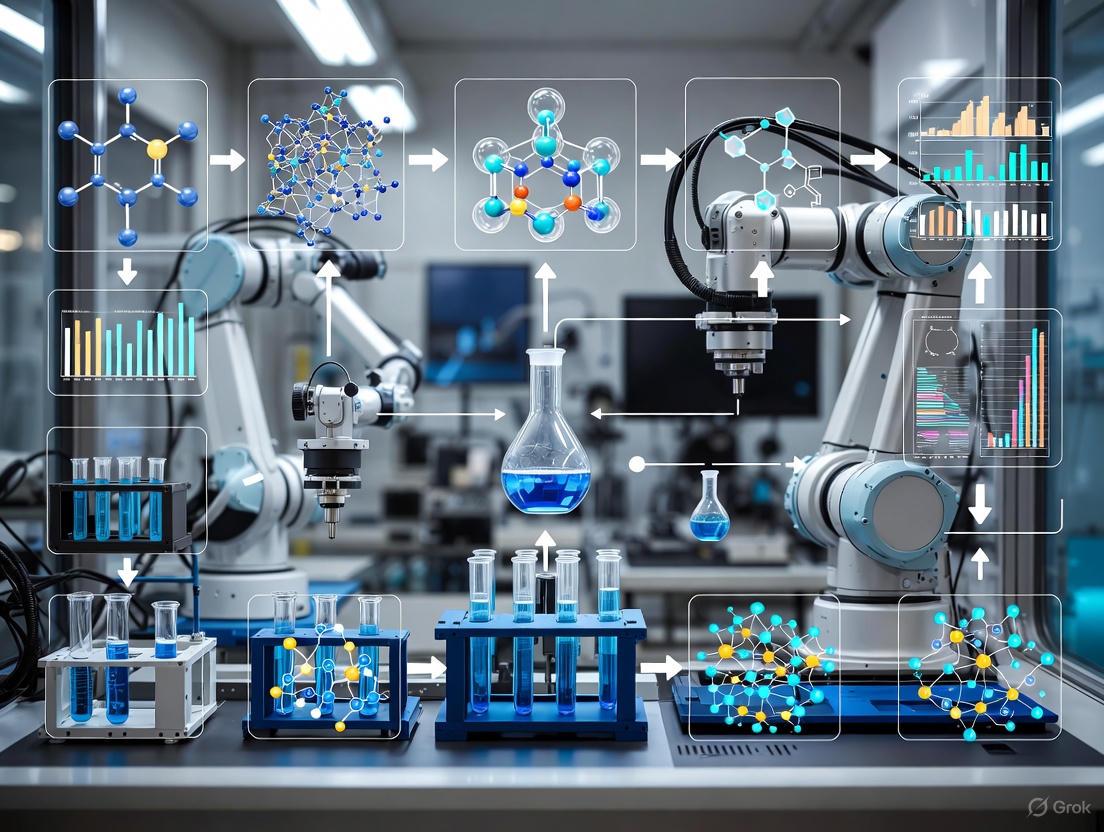
This overview explores the transformative field of autonomous laboratory robotics, a paradigm shift integrating AI, robotics, and data science to accelerate scientific discovery.
Autonomous Laboratory Robotics: A Scientist's Guide to Self-Driving Labs and Accelerated Discovery
Abstract
This overview explores the transformative field of autonomous laboratory robotics, a paradigm shift integrating AI, robotics, and data science to accelerate scientific discovery. Tailored for researchers and drug development professionals, it covers the foundational principles of self-driving labs, from their core objectives of enhancing reproducibility and throughput to the practical implementation of the Design-Make-Test-Analyze (DMTA) cycle. The article delves into real-world applications in materials science and drug discovery, provides a strategic framework for troubleshooting common automation challenges, and offers a comparative analysis of performance validation. By synthesizing the latest research and case studies, this guide serves as a critical resource for scientists looking to navigate, implement, and optimize autonomous systems in their research workflows.
The Foundations of Self-Driving Labs: From Automation to Autonomous Discovery
The contemporary scientific landscape is undergoing a profound transformation, moving from static, human-directed laboratory processes toward dynamic, intelligent, and self-directed systems. Autonomous laboratories represent the pinnacle of this evolution, integrating advanced robotics, artificial intelligence, and data science to create research environments where systems can not only execute predefined tasks but also independently propose hypotheses, design experiments, and iteratively refine scientific understanding. This shift is fundamentally redefining the roles of researchers and technicians, transitioning them from manual executors to strategic overseers of complex scientific workflows. The core distinction lies in the capability for independent decision-making; where simple automation follows rigid, programmed instructions, autonomous laboratories leverage AI to adapt, learn, and optimize in response to experimental data in real-time [1].
This evolution is critical for addressing the increasing complexity of modern scientific challenges, particularly in fields like genomics and drug discovery, where the volume and multidimensionality of data exceed human analytical capacity. The integration of AI enables a more holistic approach to research, facilitating the identification of subtle, cross-disciplinary patterns that might otherwise remain obscured within isolated datasets. This technical guide examines the architectural components, operational workflows, and practical implementations of autonomous laboratories, providing a foundational overview for scientists and drug development professionals engaged in the digital transformation of research [1].
The Architectural Framework of an Autonomous Laboratory
An autonomous laboratory is built upon a tightly integrated stack of hardware and software components that work in concert to enable closed-loop, goal-directed research. The architecture can be deconstructed into three foundational layers: the physical automation infrastructure, the data management and visualization platform, and the AI-driven intelligence core.
Physical Automation and Robotic Infrastructure
The physical layer consists of the robotic systems and laboratory hardware that perform manual tasks. This includes collaborative robotic arms, automated base platforms for mobility, and specialized laboratory tables designed for stability and modularity. For instance, modern laboratory tables offer configurable work surface tiers, integrated utility connections, and substantial weight capacity (e.g., up to 226 kg per shelf) to support a diverse array of instruments and consumables within a hands-free automated infrastructure [2]. This hardware is centralized and managed by a scheduling and control system, such as Cellario software, which ensures all networked devices are optimally configured and synchronized to execute complex workflows without manual intervention [2]. The principle of modularity is paramount, allowing the laboratory to be reconfigured and expanded to meet evolving scientific needs without requiring a complete infrastructure overhaul.
Data Management and Visualization Platforms
The middle layer handles the immense streams of multimodal data generated by laboratory instruments. Effective data management is the central nervous system of an autonomous lab. Platforms like Foxglove provide a unified environment for visualizing, debugging, and managing this data, offering over 20 customizable panels for interactive 2D/3D visualizations of live and recorded data [3]. These systems support a range of data formats (e.g., ROS 1, ROS 2, MCAP, Protobuf) and enable efficient data storage, indexing, and retrieval via cloud or on-premises solutions. This capability allows researchers to triage issues, debug robotic behavior, and optimize prototypes by providing a comprehensive, real-time view of all experimental operations, thus closing the loop between data acquisition and analysis [3].
AI and Machine Intelligence Core
At the highest layer resides the AI core, which provides the cognitive functions for the laboratory. This encompasses machine learning models for tasks such as predicting therapeutic targets, simulating molecular interactions, and classifying genetic variants. This layer is evolving from performing static data analysis to enabling Generative Lab Intelligence (GLI), where AI systems actively participate in the scientific method by proposing novel hypotheses and designing experimental pathways [1]. Techniques like reinforcement learning are crucial here, allowing systems to learn optimal policies for achieving research goals through continuous interaction with the experimental environment. This represents the ultimate leap from automation to autonomy.
Table 1: Core Architectural Layers of an Autonomous Laboratory
| Layer | Key Components | Primary Function | Example Technologies |
|---|---|---|---|
| Physical Infrastructure | Robotic arms, mobile base platforms, modular laboratory tables, integrated devices | Execute physical tasks: liquid handling, sample movement, instrument operation | Nucleus automation infrastructure [2], Kinova robotic arms [4] |
| Data & Visualization | Data streaming platforms, visualization software, data lakes, analysis tools | Ingest, manage, visualize, and analyze multimodal data for debugging and insight | Foxglove [3], CellarioOS [2] |
| AI & Intelligence | Machine learning models, generative AI, reinforcement learning, simulation environments | Generate hypotheses, design experiments, interpret results, optimize workflows | Generative Lab Intelligence (GLI) [1], AlphaFold, multi-omics AI platforms [1] |
Operational Workflow: The Lifecycle of an Autonomous Experiment
The operational logic of an autonomous laboratory can be conceptualized as a recursive, closed-loop cycle. This workflow enables the system to function as an active research collaborator rather than a passive tool.
Hypothesis Generation and Experimental Planning
The cycle begins with a human researcher providing a high-level goal. The AI system, often leveraging generative models, then proposes one or more testable hypotheses and designs a detailed, executable experimental plan. For example, in drug discovery, an AI could propose a novel therapeutic target and design a series of compound screening assays to validate its hypothesis [1]. The planning algorithm must account for resource constraints, instrument availability, and the potential for parallelization to maximize throughput.
Robotic Execution and Data Acquisition
The structured experimental plan is dispatched to a scheduling engine, such as CellarioScheduler, which dynamically coordinates the fleet of laboratory robots and instruments [2]. This stage involves the physical execution of the experiment—whether it's PCR setup, cell staining, or high-throughput sequencing. Advanced algorithms, similar to those developed for manufacturing, are used to organize multiple robots in time and space, ensuring they work both alone and in teams without collision, thereby optimizing the assembly process of scientific workflows [5]. The robotic systems execute the precise physical tasks, following the established protocols.
Data Analysis, Learning, and Iteration
Upon completion of the physical experiment, instruments generate raw data, which is immediately ingested by the data management platform. The AI analysis layer then processes this data, interpreting the results to validate or refute the initial hypothesis. Crucially, the system learns from this outcome, updating its internal models and using this new knowledge to inform the next cycle. The AI decides whether the goal has been met or if the experiment needs to be refined and repeated, thus closing the loop and beginning a new iteration. This creates a continuous, adaptive learning process that progressively converges on a solution.
Practical Implementation and Experimental Protocols
Case Study: Automated High-Throughput Genome Sequencing
A representative example of an autonomous laboratory in action is an end-to-end automated system for Whole Genome Sequencing (WGS) library preparation. The goal is to convert a large number of DNA samples into sequenced libraries with minimal human intervention.
- High-Level Goal: "Prepare and sequence 384 WGS libraries from raw DNA samples with maximum efficiency and consistency."
- AI-Generated Plan: The AI designs a workflow that parallelizes sub-processes (e.g., fragmentation, amplification, purification) across multiple work cells, optimizing the schedule to minimize idle time for robots and instruments.
- Robotic Execution: A modular system, potentially using Nucleus automated infrastructure, performs all liquid handling and plate transfers. A central collaborative robot arm shuttles samples between stations for DNA extraction, QC, PCR setup, and final library normalization [2].
- Data and Iteration: After sequencing, the AI analyzes the quality metrics (e.g., read depth, coverage uniformity). If any samples fail QC, the AI can trace the failure to a specific process and adjust the protocol for future runs, such as modifying incubation times or reagent volumes.
Table 2: Key Research Reagent Solutions in an Automated Genomics Lab
| Reagent / Material | Function in Automated Workflow | Consideration for Autonomy |
|---|---|---|
| DNA Extraction Beads | Magnetic bead-based purification of nucleic acids | Must be compatible with robotic liquid handlers and stable at room temperature for deck storage. |
| Fragmentation Enzymes | Enzymatically shears DNA to desired size for sequencing | Requires precise, robotic-controlled incubation times and temperatures. |
| PCR Master Mix | Amplifies adapter-ligated DNA fragments | Pre-aliquoted into microplates for stability and to reduce robotic pipetting steps. |
| Indexing Adapters | Adds unique barcodes to each sample for multiplexing | Critical for sample tracking; barcode information must be digitally linked to the robot's scheduling software. |
| QC Assay Kits | (e.g., Fluorometric) Assesses library quality and quantity | Results must be digitally parsed by the AI to automatically pass/fail samples before proceeding. |
Enabling Technologies and Algorithmic Foundations
The functionality of autonomous labs relies on specialized algorithms. For complex tasks requiring multiple robots, assembly algorithms compute how to break down a product into subassemblies that can be built in parallel and then combined, directing robots to work collaboratively and mapping efficient paths to avoid interference [5]. Furthermore, robust simulation environments are essential for testing and training AI models without consuming physical resources. These simulators allow researchers to prototype new algorithms, optimize workflows, and even create educational tools, providing a safe sandbox for innovation before deployment on physical hardware [5].
Future Trajectory and Challenges
The future development of autonomous laboratories will be guided by several key trends and challenges. A major focus is on achieving robust multi-omics integration, where AI systems seamlessly correlate data from genomics, transcriptomics, proteomics, and epigenomics to build comprehensive models of biological systems [1]. Furthermore, the concept of In-Space Servicing, Assembly, and Manufacturing (ISAM) being pioneered in space robotics—where systems must operate with complete autonomy in unpredictable environments—directly informs the need for terrestrial labs to become more resilient and self-sufficient [6].
However, significant hurdles remain. Regulatory frameworks from bodies like the FDA and EMA are still adapting to approve AI-driven diagnostics and drug discovery tools, particularly those that learn and evolve over time [1]. Data quality and standardization are another critical challenge; AI models are only as good as their training data, necessitating strict data governance and initiatives like the Global Alliance for Genomics and Health (GA4GH) to develop universal data-sharing standards [1]. Finally, the human factor is paramount. Successful implementation requires training laboratory professionals in new skills like bioinformatics and data science, fostering a culture of continuous learning and interdisciplinary collaboration between computer scientists, biologists, and clinicians [1].
The integration of artificial intelligence (AI) and robotics is fundamentally transforming the scientific research landscape, giving rise to autonomous laboratories [7] [8]. These self-driving labs (SDLs) represent a paradigm shift from traditional manual experimentation to a highly automated, data-driven approach [9]. This transformation is guided by three core objectives: radically accelerating the pace of discovery, enhancing experimental reproducibility, and democratizing access to advanced research capabilities [7] [9] [8]. By leveraging robotic systems that operate with minimal human intervention, autonomous laboratories can conduct high-throughput, data-driven experimentation, freeing researchers from repetitive tasks and enabling more sophisticated scientific inquiry [8]. This technical guide explores the implementation frameworks, experimental protocols, and resource requirements for realizing these core objectives within chemical, materials, and life sciences research.
Core Objectives and Technical Implementation
Accelerating the Pace of Discovery
The acceleration of research cycles is achieved through closed-loop operation, where AI-driven systems autonomously design, execute, and analyze experiments. This approach can compress discovery timelines from years to days.
- AI-Driven Closed-Loop Optimization: A prime example is an autonomous platform for nanomaterial synthesis, which integrates a Generative Pre-trained Transformer (GPT) model for method retrieval and an A* algorithm for closed-loop optimization. This system optimized multi-target Au nanorods across 735 experiments and Au nanospheres/Ag nanocubes in just 50 experiments, demonstrating a significant reduction in optimization cycles compared to manual approaches [10].
- High-Throughput Experimentation: Robotic platforms enable parallel experimentation at unprecedented scales. For instance, the BEAR (Bayesian experimental autonomous researcher) DEN system conducts thousands of experiments to identify materials with optimal properties, such as the most efficient material for absorbing energy, a process reminiscent of Edisonian methods but exponentially faster [9].
- Efficient Search Algorithms: The choice of optimization algorithm critically impacts search efficiency. In nanoparticle synthesis, the A* algorithm demonstrated superior performance, requiring significantly fewer iterations to reach optimization targets compared to Bayesian methods like Optuna and Olympus [10].
Table 1: Performance Metrics of an Autonomous Nanomaterial Synthesis Platform [10]
| Nanomaterial Target | Number of Experiments | Key Result | Comparative Algorithm Efficiency |
|---|---|---|---|
| Au Nanorods (LSPR 600-900 nm) | 735 | Comprehensive parameter optimization | A* algorithm outperformed Optuna and Olympus |
| Au Nanospheres / Ag Nanocubes | 50 | Successful parameter optimization | A* algorithm required significantly fewer iterations |
| Reproducibility Metrics | Deviation (Identical Parameters) | ||
| Characteristic LSPR Peak (Au NRs) | ≤ 1.1 nm | ||
| FWHM (Au NRs) | ≤ 2.9 nm |
Enhancing Experimental Reproducibility
Reproducibility is a fundamental challenge in scientific research, which autonomous laboratories address through standardization, automation, and precise data tracking.
- Standardization of Processes: Robotic systems execute protocols with unwavering consistency, eliminating variability introduced by human researchers. As emphasized by researchers, the primary metric for success is reproducibility: "It’s that if we were able to get this result, you could get the same result using a similarly configured lab" [9]. This is analogous to standardized processes in franchise models like Taco Bell, where operations continue seamlessly despite changes in personnel [9].
- Precision and Data Integrity: Automated systems deliver exceptional precision in repetitive tasks. In the synthesis of Au nanorods, reproducibility tests showed deviations in the characteristic longitudinal surface plasmon resonance (LSPR) peak and full width at half maxima (FWHM) of under 1.1 nm and 2.9 nm, respectively, when using identical parameters [10]. This level of precision is difficult to achieve consistently through manual manipulation.
- Integrated Data Logging: Autonomous platforms inherently create a complete digital record of all experimental parameters, environmental conditions, and outcomes for every experiment conducted. This comprehensive data trail ensures full traceability and facilitates the debugging of failed experiments or the replication of successful ones [10] [8].
Democratizing Research Access
Democratizing automation involves making advanced research tools accessible to a broader community of scientists, beyond only well-funded institutions and corporations.
- Open-Source Hardware and Modular Systems: The development of open-source hardware, such as the FLUID robot for material synthesis, and modular, commercially accessible automation platforms lowers the financial and technical barriers to entry [7] [10] [8]. These systems are designed to be reconfigurable and adaptable to different research needs and budgets.
- Lowering Financial Barriers: Traditional high-end automation requires investments in the millions of dollars [8]. Democratization efforts focus on creating lower-cost alternatives through open-source designs, digital fabrication (e.g., 3D printing), and modular systems that smaller research groups can acquire and operate [7] [9] [8].
- Collaborative Research Networks: Large-scale initiatives, such as the NSF-funded $2 million grant for a collaborative ecosystem to discover semiconductor nanomaterials, are establishing blueprints for SDL networks. These networks connect researchers across institutions, allowing for shared access to autonomous platforms and distributed expertise [11].
Detailed Experimental Protocol: Autonomous Nanomaterial Synthesis
The following protocol details the operation of an autonomous platform for nanomaterial synthesis and optimization, which embodies the three core objectives [10].
The platform integrates three main modules: a literature mining module (GPT and Ada embedding models), an automated experimental module (commercial PAL DHR system), and an A* algorithm optimization module. The workflow is a closed loop.
Step-by-Step Methodology
Literature Mining and Initial Method Generation:
- Input: A research goal (e.g., "synthesize Au nanorods with LSPR ~800 nm").
- Process: The literature mining module, powered by GPT and Ada embedding models, processes a database of scientific papers (e.g., crawled from Web of Science) to retrieve and summarize relevant synthesis methods and parameters [10].
- Output: A proposed experimental procedure.
Script Editing and Experimental Setup:
- Process: The researcher reviews the generated procedure and either edits an existing automation script (mth or pzm files) or creates a new one to define the robotic operations (liquid handling, mixing, heating, etc.) [10].
- Hardware Preparation: The PAL DHR robotic platform is prepared, which includes Z-axis robotic arms, agitators, a centrifuge module, a UV-vis spectrometer, and solution modules [10].
Automated Execution and Characterization:
- Synthesis: The robotic system executes the script, performing all liquid handling, mixing, reaction, and purification steps autonomously.
- Characterization: The system transfers the synthesized nanoparticle sample to an integrated UV-vis spectrometer for immediate optical characterization [10].
- Data Output: The system generates a file containing the detailed synthesis parameters and the corresponding UV-vis spectral data.
AI-Driven Analysis and Parameter Update:
- Process: The output file is automatically uploaded to a specified location where the A* optimization module reads the data.
- Algorithm Execution: The A* algorithm, a heuristic search method effective in discrete parameter spaces, evaluates the result against the target. It then calculates and proposes a new set of synthesis parameters to better meet the goal [10].
- Loop: These updated parameters are fed back into the automated experimental module, and the cycle repeats.
Termination:
- The closed-loop cycle continues until the synthesized material meets the predefined target criteria (e.g., LSPR peak position, narrow FWHM). The researcher is only required for initial setup and script editing, with all subsequent iterations running autonomously [10].
Research Reagent Solutions
Table 2: Key Reagents and Hardware for Autonomous Nanomaterial Synthesis [10]
| Item | Function / Description | Role in Autonomous Workflow |
|---|---|---|
| Metal Salt Precursors | (e.g., HAuCl₄ for Au NPs). Source of metal ions for nanoparticle formation. | Stored in the solution module; robotically dispensed with high precision. |
| Reducing Agents | (e.g., NaBH₄, Ascorbic Acid). Initiates reduction of metal ions to form nanoparticles. | Stored in the solution module; added at specific times and volumes by the robotic arm. |
| Shape-Directing Agents | (e.g., CTAB for Au nanorods). Directs crystal growth to achieve specific morphologies. | Critical parameter optimized by the A* algorithm. |
| PAL DHR Robotic System | Commercial automated synthesis platform with robotic arms, agitators, and a centrifuge. | Core hardware for executing all physical experimental steps. |
| Integrated UV-vis Spectrometer | In-line optical characterization instrument. | Provides immediate feedback on synthesis success (LSPR peak); data for the AI loop. |
Implementation Framework for Autonomous Laboratories
Architectural Components
Building a functional autonomous laboratory requires the tight integration of several technological components.
Hardware Layer (Robotics and Instruments): This includes robotic arms for liquid handling and material transport, automated instruments for synthesis and analysis (e.g., reactors, UV-vis spectrometers, plate readers), and modular systems that can be reconfigured for different tasks [10] [8]. Examples include the Chemputer for synthetic chemistry and mobile robots like Kuka for instrument operation [8].
AI and Intelligence Layer (Decision Making): This is the "brain" of the autonomous lab. It includes:
- Optimization Algorithms: Such as the A* algorithm [10], Bayesian optimization (e.g., BEAR) [9], and others for efficiently navigating parameter spaces.
- Large Language Models (LLMs): Such as GPT, used for mining scientific literature, generating initial methods, and interacting with researchers in natural language [10] [8].
Data and Integration Layer (Connectivity): A robust software infrastructure is required to manage the flow of information. This layer connects the AI brain to the robotic body, ensuring that experimental data is seamlessly passed to the AI for analysis and that the AI's decisions are translated into actionable commands for the robots [10] [8].
The Evolving Role of the Scientist
In the autonomous laboratory, the role of the human researcher evolves from manual executor to strategic director. Scientists focus on higher-level tasks such as formulating research problems, designing the overall experimental strategy, interpreting complex results that may require deep domain knowledge, and forming novel hypotheses [7] [12] [8]. This model is best described as collaborative intelligence, where humans and machines co-create knowledge, each leveraging their distinct strengths [7]. This shift also necessitates new training and education paradigms, emphasizing multidisciplinary skills in data science, robotics, and AI, alongside deep scientific expertise [12].
Autonomous laboratory robotics is poised to redefine scientific research by concretely addressing the triple objectives of acceleration, reproducibility, and democratization. The technical frameworks and protocols outlined in this guide, from AI-driven closed-loop optimization to modular, open-source hardware, provide a roadmap for implementation. As these technologies mature and become more accessible, they promise to usher in an era of collaborative intelligence, amplifying human insight and enabling a more efficient, reproducible, and inclusive scientific enterprise.
The Design-Make-Test-Analyze (DMTA) cycle represents the fundamental iterative process driving modern scientific discovery, particularly in drug development and materials science. This closed-loop workflow has evolved from a human-directed process to a fully autonomous operation through the integration of artificial intelligence (AI), robotics, and data science. Self-driving laboratories (SDLs) embody this transformation, where AI serves as the lab's "brain" – planning experimental conditions, predicting outcomes, and deciding subsequent experiments – while robotic hardware acts as the "hands," physically executing reactions, measurements, and data collection [13]. This creates a continuous feedback loop where data from each experiment immediately informs the next investigative step, enabling 24/7 operation and dramatically accelerating the pace of discovery compared to traditional manual methods [13].
The significance of autonomous DMTA cycles extends beyond mere acceleration; it represents a paradigm shift in how scientific research is conducted. In pharmaceutical research, this approach promises to substantially lower costs while exponentially increasing throughput and data quality [13]. For researchers and drug development professionals, understanding the components, workflows, and implementation strategies of autonomous DMTA systems has become essential for maintaining competitive advantage in an increasingly digital and automated research landscape. This technical guide deconstructs the core components, AI methodologies, and implementation frameworks that enable fully autonomous experimentation within modern scientific research environments.
Core Components of the Autonomous DMTA Cycle
The Four-Phase Workflow
The autonomous DMTA cycle consists of four tightly integrated phases that form a continuous, closed-loop system:
Design: In this initial phase, AI systems generate novel molecular structures or experimental conditions based on predefined objectives and historical data. This involves generative models that propose candidates optimized for multiple properties simultaneously, such as potency, selectivity, and developability [13] [14]. The design phase has evolved from manual literature searches and chemical intuition to computer-assisted synthesis planning (CASP) and AI-powered platforms that generate innovative ideas for synthetic route design [15].
Make: The designed molecules are synthesized using automated laboratory equipment. This phase encompasses synthesis planning, sourcing materials, reaction setup, monitoring, purification, characterization, and documentation [15]. Automated synthesis platforms including robotic liquid handlers, automated reactors, and purification systems execute the physical construction of target compounds with minimal human intervention [13]. The transition from manual, labor-intensive synthesis to automated workflows has significantly reduced what was traditionally the most costly and lengthy part of the DMTA cycle [15].
Test: Newly synthesized compounds undergo biological or physicochemical testing through automated assay systems. This involves high-throughput screening platforms that evaluate designed molecules for target properties such as binding affinity, physiological activity, or other key performance indicators [13]. Modern testing platforms generate complex datasets that require advanced analytical methods, including computer vision algorithms for interpreting microscope images or spectrometer outputs [13].
Analyze: Experimental results are processed by machine learning algorithms to extract meaningful patterns and relationships. This phase employs statistical analysis and predictive modeling to inform the next design iteration [13] [16]. The analysis must handle complex, multi-dimensional datasets and translate them into actionable insights for the subsequent design phase. At organizations like AstraZeneca, cloud-native modeling platforms such as the Predictive Insight Platform (PIP) provide the computational infrastructure for these analytical workloads [16].
The following diagram illustrates the continuous, closed-loop workflow of an autonomous DMTA cycle and the key technologies enabling each phase:
Enabling Technologies and Infrastructure
The implementation of autonomous DMTA cycles requires sophisticated integration of hardware and software components. The laboratory automation infrastructure forms the physical foundation, comprising robotic liquid handlers, automated reactors and synthesizers, high-throughput screening instrumentation, and automated purification and characterization systems [13]. These components must be seamlessly connected through an orchestration layer that transforms discrete instruments into a coherent autonomous scientist [13].
The data architecture represents another critical component, with FAIR (Findable, Accessible, Interoperable, Reusable) data principles being essential for building robust predictive models and enabling interconnected workflows [15]. Centralized platforms like Torx provide comprehensive information delivery mechanisms that enhance visibility throughout projects, enabling all team members to input on design prioritization in real-time [17]. For large organizations with legacy systems, web-based platforms can be fully integrated to provide single, streamlined solutions for information delivery while maintaining data integrity and ensuring internal and external connections [17].
Cloud computing infrastructure has become fundamental to modern autonomous DMTA implementation, enabling the scalable computational resources required for AI-driven experimentation. Cloud-native modeling platforms, such as AstraZeneca's Predictive Insight Platform (PIP), provide the necessary architecture for molecular predictive modeling, supporting the entire DMTA cycle through specialized services and infrastructure [16]. This technical foundation allows organizations to manage the vast amounts of data generated by autonomous laboratories and apply sophisticated AI algorithms to accelerate discovery timelines.
AI and Machine Learning: The Cognitive Core
Decision Algorithms for Experimental Optimization
The autonomous functionality of self-driving laboratories is powered by sophisticated AI algorithms that make real-time decisions about experimental directions. The most prominent approach is Bayesian optimization (BO), which uses surrogate models (often Gaussian Processes or neural networks) trained on existing experimental data to predict target outcomes such as reaction yield, biological activity, or solubility [13]. The BO algorithm selects new experimental conditions to test through an acquisition function that balances exploration of uncertain regions with exploitation of known promising areas [13].
Recent advances have led to the development of specialized Bayesian experiment planners like Bayesian Back-End (BayBE), which can integrate custom experimental parameters, handle multiple objectives, and apply transfer learning to leverage past data [13]. For multi-objective optimization challenges – common in drug discovery where researchers must balance potency, efficacy, and developability – multi-objective Bayesian optimization (MOBO) approaches have demonstrated significant utility. For instance, LabGenius' EVA platform uses MOBO to autonomously design therapeutic antibodies optimized for multiple properties simultaneously, capable of designing, producing, and testing up to 2,300 antibody variants in just six weeks [13].
Alternative AI strategies include evolutionary algorithms, reinforcement learning, and active learning frameworks, each with particular strengths depending on the experimental context [13] [14]. Evolutionary algorithms mimic natural selection to evolve promising candidates over generations, while reinforcement learning uses reward-based systems to guide exploration of chemical space. The Variational AI team has demonstrated how active learning using generative foundation models can find extremely potent compounds for novel targets with data on only 500 molecules, dramatically accelerating the hit-to-lead and lead optimization process [14].
Machine Learning Model Architectures
The machine learning backbone of autonomous DMTA systems employs diverse model architectures tailored to specific tasks:
Predictive Models: Graph neural networks (GNNs) have shown remarkable performance for molecular property prediction by directly learning from molecular structures [15]. For instance, researchers at Roche have successfully established GNNs capable of predicting C–H functionalisation reactions, a valuable capability for synthetic planning [15]. Random forest regressors operating on extended connectivity fingerprints continue to achieve competitive performance for small molecule potency prediction, serving as robust baselines for QSAR modeling [14].
Generative Models: Deep generative models such as variational autoencoders (VAEs), generative adversarial networks (GANs), and transformer-based architectures can propose novel molecular structures with desired properties [13]. These models learn the underlying distribution of chemical space and can generate new candidates optimized for multiple objectives simultaneously. Variational AI's Enki represents a generative foundation model pretrained on millions of potency data points across hundreds of targets, enabling effective optimization for novel targets with limited initial data [14].
Planning Models: Monte Carlo Tree Search (MCTS) and A* Search algorithms enable multi-step synthesis planning by chaining individual reactions into complete routes [15]. These approaches address the combinatorial challenge of retrosynthetic analysis that often overwhelms human comprehension, systematically exploring possible synthetic pathways to identify feasible routes to target molecules.
The following diagram illustrates the AI decision engine that forms the cognitive core of a self-driving laboratory:
Implementation and Integration Frameworks
Successful implementation of AI-driven DMTA cycles requires sophisticated computational infrastructure. AstraZeneca's Predictive Insight Platform (PIP) exemplifies a cloud-native modeling platform specifically designed for molecular predictive modeling throughout the DMTA cycle [16]. Such platforms provide the necessary architecture, integration patterns, and services to support the entire drug discovery workflow, from initial design to final candidate selection.
A critical advancement in AI integration is the development of more natural user interfaces that lower barriers for scientific researchers. The advent of agentic Large Language Models (LLMs) is reducing the complexity of interacting with sophisticated models, potentially enabling chemists to work through synthesis steps via conversational interfaces ("ChatGPT for Chemists") [15]. These approaches could be directly incorporated into design processes, as demonstrated by Roche's workflow that highlights the impact of synthetic accessibility assessment in the design process [15].
Laboratory Automation: The Physical Infrastructure
Hardware Components for Autonomous Experimentation
The physical implementation of self-driving laboratories requires specialized automation equipment that can execute experiments with minimal human intervention:
Table: Core Hardware Components for Autonomous Experimentation
| Component Category | Specific Technologies | Function | Application Examples |
|---|---|---|---|
| Robotic Liquid Handlers | Automated pipetting systems, microplate handlers | Precise transfer of liquid volumes; high-density plate replication and reformatting | Dispensing reagents for high-throughput screening; setting up reaction mixtures [13] |
| Automated Reactors & Synthesizers | Flow chemistry systems, automated parallel reactors | Conduct chemical reactions under controlled conditions; enable continuous processing | Multi-step organic synthesis; reaction condition screening [13] |
| High-Throughput Screening Instrumentation | Plate readers, automated microscopes, HPLC systems | Rapid biological or physicochemical testing of compounds | Measuring binding affinity; evaluating cellular responses; analyzing compound purity [13] |
| Automated Purification Systems | Flash chromatography systems, prep-HPLC, CPC | Purify synthesized compounds without manual intervention | Isolation of target molecules from reaction mixtures [13] [15] |
| Characterization Equipment | NMR, MS, LC-MS systems with automated sampling | Determine structural identity and purity of compounds | Confirm structure of synthesized molecules; assess sample quality [13] [15] |
Integration and Control Systems
The individual hardware components must be seamlessly integrated through a central control system that serves as the orchestration layer for the entire autonomous laboratory [13]. This automation stack transforms a collection of robots and instruments into a coherent autonomous scientist by enabling AI algorithms to interface with physical equipment – issuing commands such as "dispense 10 µL of reagent A to well 5" or "heat reactor 3 to 100°C for 10 minutes" and reading back data like "absorbance at 450 nm" or "product yield %" [13].
Leading research groups have demonstrated such integrated setups across various domains, proving the generalizability and power of the approach. Applications range from synthesizing nanoparticles and polymers to optimizing drug formulations and enzyme designs – essentially, any measurable and automatable process can be accelerated through self-driving laboratory principles [13]. The integration extends beyond physical execution to encompass data flow, with automated documentation systems capturing experimental parameters and outcomes in standardized formats to ensure FAIR data principles and enable model retraining [15].
Experimental Protocols and Case Studies
Quantitative Performance Benchmarks
Autonomous DMTA systems have demonstrated remarkable performance improvements across multiple domains. The following table summarizes quantitative results from documented case studies:
Table: Performance Metrics of Autonomous DMTA Implementation
| Application Domain | Traditional Approach | Autonomous DMTA Results | Key Metrics |
|---|---|---|---|
| Therapeutic Antibody Optimization | Manual design and testing | AI-driven platform designed, produced, and tested 2,300 variants in 6 weeks [13] | Time reduction: ~5-10x; Throughput: ~2,300 variants [13] |
| Small Molecule Lead Optimization | Multiple years, millions of dollars | Identified extremely potent compounds with data on only 500 molecules [14] | Cost reduction: Significant; Cycle acceleration: ~5 rounds to identify candidates [14] |
| Materials Discovery | Sequential manual experimentation | Identified optimal material candidates 10x faster; often found best solution on first try after training [13] | Speed improvement: 10x; Data utilization: 10x more data feeding AI [13] |
| Enzyme Engineering | Iterative manual optimization | Improved enzyme activity by 26x through autonomous optimization [13] | Performance gain: 26x activity improvement [13] |
Detailed Experimental Protocol: AI-Driven Molecule Optimization
The following protocol outlines a typical autonomous DMTA workflow for small molecule optimization, based on documented case studies [14]:
Initialization Phase
- Objective Definition: Clearly define optimization objectives, typically as weighted combinations of target properties (e.g., pIC50 – 3*(1-QED) for potency and drug-likeness) [14].
- Baseline Data Collection: Assemble existing relevant data or generate initial dataset (e.g., 100 randomly selected molecules) for model priming [14].
- Model Configuration: Select and configure appropriate AI models – Bayesian optimization for single-objective tasks, multi-objective Bayesian optimization (MOBO) for competing objectives, or generative models for novel chemical space exploration [13] [14].
Active Learning Cycle
- Design
- Fine-tune predictive models on available experimental data
- Generate candidate molecules maximizing expected improvement or other acquisition functions
- Apply synthesizability filters using retrosynthetic analysis tools
- Select final candidate set (typically 100 molecules per cycle) for synthesis [14]
Make
- Execute synthesis planning using Computer-Assisted Synthesis Planning (CASP) tools
- Source required building blocks from physical or virtual catalogs (e.g., Enamine MADE collection) [15]
- Perform automated synthesis using robotic liquid handlers and reactors
- Conduct purification via automated flash chromatography or prep-HPLC systems
- Verify compound identity and purity through automated LC-MS and NMR characterization [13] [15]
Test
- Configure high-throughput screening assays for target properties (e.g., binding affinity, cellular activity)
- Execute automated biological testing using plate readers and liquid handling systems
- Collect raw data and process into structured formats for analysis [13]
Analyze
- Process experimental results to calculate key performance metrics
- Update machine learning models with new data
- Evaluate cycle performance and adjust strategy if needed
- Prepare for next iteration by selecting most informative experiments [14]
Termination Criteria
- Achievement of target compound profile
- Diminishing returns from successive cycles
- Exhaustion of resource allocation
- Successful identification of clinical candidate [14]
Case Study: Kinase Inhibitor Optimization
A comprehensive benchmark study demonstrated the effectiveness of autonomous DMTA cycles for kinase inhibitor optimization [14]. The study compared Variational AI's Enki generative model against state-of-the-art baselines (REINVENT and Graph GA) across three kinase targets (FGFR1, AURKA, EGFR). The autonomous system was initialized with just 100 randomly selected molecules, then proceeded through five rounds of active learning, with 100 molecules designed and evaluated in each cycle.
The results showed that Enki-produced molecules significantly outperformed other methods, with large or very large effect sizes (Cohen's d > 0.8) in most comparisons [14]. Importantly, the best Enki-optimized molecules surpassed any compounds found in a ~2 million molecule high-throughput screening library, demonstrating the ability of autonomous DMTA to explore chemical spaces beyond conventional screening collections. Additionally, retrosynthetic analysis confirmed that 90% of the Enki-optimized molecules were predicted to be synthesizable in fewer than ten steps, addressing practical implementation concerns [14].
Implementation Guide: The Scientist's Toolkit
Essential Research Reagents and Materials
Successful implementation of autonomous DMTA cycles requires careful selection of research reagents and materials that enable automated workflows:
Table: Essential Research Reagents and Materials for Autonomous DMTA
| Category | Specific Materials | Function in Autonomous Workflow |
|---|---|---|
| Chemical Building Blocks | Enamine MADE collection, eMolecules, Chemspace, Sigma-Aldrich | Provide diverse starting materials for automated synthesis; virtual catalogs expand accessible chemical space [15] |
| Pre-weighted Building Blocks | Custom library services from commercial vendors | Eliminate labor-intensive weighing, dissolution, and reformatting; enable cherry-picking for specific projects [15] |
| Specialized Reagents | Unnatural amino acids, fluorinated building blocks, diverse boronic acids and halides | Enable specific chemical transformations and access to underrepresented chemical space [15] |
| Catalyst Systems | Pre-formulated catalyst kits for high-throughput experimentation | Facilitate rapid reaction screening and optimization without manual preparation [15] |
| Assay Reagents | Cell lines, protein targets, fluorescence markers, buffer components | Enable high-throughput biological testing with minimal manual intervention [13] |
Implementation Considerations
Implementing autonomous DMTA workflows presents several technical and organizational challenges that must be addressed for success:
Data Management and Quality
- Establish FAIR data principles across all experimental workflows [15]
- Implement automated data capture systems to ensure comprehensive experimental documentation
- Develop standardized data models to enable interoperability between different instruments and software platforms
- Curate high-quality datasets for model training, including both positive and negative results [15]
Integration Challenges
- Address interoperability between legacy systems and new automation platforms
- Develop robust API frameworks for connecting AI planning systems with laboratory execution systems
- Implement middleware solutions that can translate high-level experimental designs into equipment-specific commands [13]
- Establish data pipelines that can process heterogeneous data types from different instruments
Team Structure and Skills
- Foster multidisciplinary teams combining domain expertise with data science and engineering capabilities
- Develop training programs to upskill experimental scientists in data science and AI fundamentals
- Create collaborative workflows that maintain human oversight while leveraging autonomous capabilities [17]
- Establish clear protocols for human-in-the-loop decision points in otherwise autonomous cycles
Infrastructure Requirements
- Ensure reliable laboratory infrastructure with minimal downtime for automated systems
- Implement robust scheduling systems for shared instrumentation in core facilities
- Develop maintenance protocols to ensure consistent performance of automated equipment
- Establish computational infrastructure capable of handling data-intensive AI workloads, potentially through cloud-native solutions [16]
For organizations of different scales, implementation strategies will vary significantly. Small biotech companies may opt for completely outsourced IT solutions that host both the DMTA platform and back-end systems [17]. Large multinational pharmaceutical companies will likely focus on integrating autonomous systems into legacy infrastructure, providing streamlined solutions for information delivery while maintaining data integrity [17]. Mid-sized organizations can exploit flexible platforms that align with specific corporate requirements while maintaining an easy end-user experience [17].
The autonomous DMTA cycle represents a fundamental transformation in scientific research methodology, enabled by the convergence of artificial intelligence, robotics, and data science. This closed-loop workflow accelerates discovery timelines, reduces costs, and enhances exploration of complex experimental spaces that would be intractable through manual approaches. The integration of AI decision engines with automated laboratory infrastructure creates self-improving systems that effectively learn how to experiment more efficiently over time.
The future of autonomous experimentation will likely see increased integration of generative AI models capable of proposing novel research directions beyond human intuition. Advances in computer-assisted synthesis planning will continue to close the "evaluation gap" between theoretical proposals and executable protocols [15]. The development of more natural human-machine interfaces, potentially through agentic LLMs as "chemical ChatBots," will further lower barriers for scientific researchers [15]. As these technologies mature, we can anticipate the emergence of fully integrated, data-driven research environments where autonomous DMTA cycles become the standard approach for exploratory science across multiple domains.
For research organizations, successful adoption of autonomous DMTA methodologies will require both technological investment and cultural adaptation. The scientists of the future will need to combine deep domain expertise with data literacy and computational thinking. Organizations that effectively navigate this transition will be positioned to leverage autonomous experimentation for accelerated discovery, potentially transforming research and development from a cost center into a strategic advantage in the competitive landscape of scientific innovation.
The modern scientific laboratory is undergoing a profound transformation, evolving from a environment characterized by manual processes into an intricate, interconnected data factory [18]. This revolution is powered by the convergence of robotics, artificial intelligence (AI), and sophisticated data management systems, creating a new paradigm for autonomous research. For researchers, scientists, and drug development professionals, this integration is not merely about efficiency; it is becoming essential for maintaining competitive advantage, accelerating the pace of discovery, and tackling problems of unprecedented complexity [18] [19]. This technical guide explores the core technologies driving this change, their practical implementations, and the measurable impacts they are having on scientific research, particularly within the life sciences.
The traditional model of drug discovery—notorious for its lengthy timelines, high costs, and high failure rates—is being fundamentally disrupted. The integration of AI with laboratory automation is creating closed-loop, "self-driving" labs that can generate and test hypotheses with minimal human intervention [20]. This shift is underpinned by a reimagining of data as the central, fluid asset in the research lifecycle, necessitating robust strategies for its generation, capture, and analysis [18]. The following sections provide a detailed examination of the key enabling technologies, their synergies, and the practical frameworks for their implementation.
Core Technologies and Their Synergistic Integration
The autonomous laboratory is built upon a foundation of three interdependent technological pillars: robotics and automation, artificial intelligence and machine learning, and unified data management. Their convergence creates a system where intelligent decision-making directly controls physical experimentation, generating high-quality data that, in turn, refines the AI models.
Robotics and Automation: The Physical Engine
Robotics provides the physical means to execute experiments with superhuman precision, endurance, and throughput. The role of robotics has moved far beyond simple sample conveyance to the complex, autonomous execution of entire workflows [18].
- Robotic Arms and Liquid Handlers: Highly dexterous robotic arms, equipped with advanced sensors and end-effectors, can mimic the subtle manipulation skills of a human scientist, performing complex tasks like micro-pipetting, plating, and operating manual instruments. These systems eliminate human variability and are central to high-throughput screening (HTS) automation, enabling the execution of tens of thousands of assays per day [18] [20].
- Autonomous Mobile Robots (AMRs): These robots are responsible for logistics within the lab, transporting plates, reagents, and samples between different analytical stations or storage units. This ensures seamless continuity and workflow integration across the lab floor, connecting islands of automation into a cohesive whole [18].
- Modular and Flexible Systems: A key advancement is the design of modular systems, such as the Autonomous Lab (ANL), where devices for culturing, preprocessing, and analysis are installed on movable carts. This allows the laboratory configuration to be easily modified or expanded to suit specific experimental needs, providing the versatility required for diverse research applications [21].
The primary benefits of laboratory robotics are increased reproducibility, 24/7 operational capability, and the liberation of highly skilled scientists from repetitive and error-prone manual tasks [18] [19].
Artificial Intelligence and Machine Learning: The Cognitive Center
AI and machine learning (ML) serve as the cognitive core of the autonomous lab, transforming vast datasets into actionable insights and decisions.
- AI in Drug Discovery: AI algorithms are revolutionizing early-stage drug discovery. They are used for target identification by mining omics datasets and scientific literature, for virtual screening to predict compound-target interactions, and for generative design to create novel molecules with desired properties [22] [20]. Tools like AlphaFold have dramatically accelerated structural biology by predicting protein structures with near-experimental accuracy [22].
- Closed-Loop Experimentation: AI-powered systems can analyze experimental results in real-time and use optimization algorithms, such as Bayesian optimization, to propose the next set of experimental conditions. This creates a closed-loop "design-make-test-analyze" (DMTA) cycle where the system autonomously navigates a complex experimental space to find an optimal solution, such as ideal medium conditions for maximizing metabolite production in a microbial strain [21] [20].
- The Critical Role of Edge AI: Relying solely on cloud computing for data analysis from automated instruments introduces latency and a dependency on internet connectivity. Edge AI involves deploying high-performance computing resources locally within the lab. This enables immediate AI-driven feedback to robotic systems, allowing for real-time protocol adjustments and ensuring operational resilience even during network outages. It also enhances security for sensitive research data by allowing local processing before any data is sent to the cloud [18].
Data Management and IoT: The Central Nervous System
The value of robotics and AI is contingent on the quality, accessibility, and structure of the data that fuels them. A unified data strategy is the nervous system that connects all components of the autonomous lab.
- The Centrality of Data: In the laboratory of the future, data is the primary asset. A significant problem in traditional labs is the fragmentation of data across disparate systems (e.g., proprietary instrument files, spreadsheets, electronic lab notebooks). The modern solution involves treating data as a central, fluid component, where every instrument, robot, and sensor automatically feeds standardized, metadata-rich data into a consolidated cloud or hybrid repository [18].
- Laboratory Information Management Systems (LIMS) and IoT: A robust LIMS is critical for standardizing data formats and managing the flow of information. The Internet of Things (IoT) complements this by embedding sensors in everything from incubators and refrigerators to air quality monitors. These sensors provide a continuous stream of contextual data on environmental conditions, asset location (via RFID/BLE tags), and equipment health, enabling predictive maintenance and rigorous experimental validation [18] [19].
- The Shift to Data-Centric Ecosystems: The evolution is moving beyond simply digitizing paper processes with an Electronic Lab Notebook (ELN) toward a fundamental rethinking of workflows. This involves embracing standardization to enable end-to-end digitalization across the R&D lifecycle, fostering a "right-first-time" approach that improves speed, agility, and quality [19].
The synergy of these technologies is visualized in the following autonomous research loop, which illustrates the continuous cycle of data generation, analysis, and action.
Quantitative Frameworks for Assessing Autonomous Performance
As laboratories become more autonomous, quantifying the level and performance of this autonomy is crucial for system design, benchmarking, and regulatory acceptance. A proposed framework based on task requirements moves beyond simple high-level classifications to provide a quantitative assessment [23].
Key Metrics for Autonomy
This framework distinguishes between the level of autonomy (the existence of a requisite capability) and the degree of autonomy (how well that capability performs). It is founded on three core metrics derived from robot task characteristics [23]:
- Requisite Capability Set: The set of core functions the system must perform to accomplish a task.
- Reliability: The probability that the system will perform its required functions under stated conditions for a specified period. This is a measure of the system's integrity and availability.
- Responsiveness: The system's ability to complete tasks within required time constraints, reflecting its operational efficiency.
Application to an Autonomous Lab Experiment
The following table applies this framework to a generalized autonomous laboratory experiment, breaking down the task and quantifying performance.
Table: Quantitative Autonomy Assessment for an Autonomous Laboratory Experiment
| Task Characteristic | Description & Metric | Quantitative Measure |
|---|---|---|
| Overall Task | Optimize culture conditions for a metabolite in E. coli using a closed-loop system. | N/A |
| Requisite Capability | 1. Liquid Handling: Precise dispensing of media components.2. Environmental Control: Maintain culture temperature and agitation.3. Analytical Sampling: Automated sampling and quenching.4. Data Analysis: LC-MS/MS analysis of metabolite concentration.5. Decision-Making: Bayesian optimization to propose next experiment. | Binary (Yes/No) for capability existence. |
| Reliability | Integrity: Probability of a full cycle (culture to analysis) completing without critical error.Availability: System uptime for continuous operation. | e.g., Integrity = 98%, Availability = 95% |
| Responsiveness | Cycle Time: Mean time to complete one full "design-make-test-analyze" cycle.Decision Latency: Time from data acquisition to new experiment proposal. | e.g., Cycle Time = 6 hours, Decision Latency < 1 min |
This framework provides a more nuanced and measurable understanding of autonomous performance than a simple label of "fully autonomous," supporting system improvement and trustworthy deployment [23].
Experimental Protocols and Methodologies
To illustrate the practical application of these converging technologies, this section details a real-world case study of an autonomous system used for bioproduction optimization.
Case Study: Autonomous Optimization of Microbial Metabolite Production
This protocol is based on a study that developed an Autonomous Lab (ANL) to optimize medium conditions for a recombinant E. coli strain overproducing glutamic acid [21].
1. Hypothesis: The growth and productivity of a genetically modified E. coli strain are suboptimal under standard medium conditions and can be significantly improved by systematically varying the concentrations of key nutrients and cofactors.
2. Autonomous System Configuration (The ANL): The hardware is configured as a modular system integrating the following key components, orchestrated by a central software controller [21]:
- Transfer Robot: For moving plates between modules.
- Liquid Handler: For preparing and dispensing medium variants.
- Incubator: For culturing E. coli strains.
- Centrifuge: For cell harvesting.
- Microplate Reader: For measuring optical density (cell growth).
- LC-MS/MS System: For quantifying glutamic acid concentration.
3. Experimental Workflow: The entire process forms a closed loop, as depicted in the workflow diagram below.
4. Detailed Methodology:
- Step 1: Initialization. An initial dataset of medium compositions and corresponding cell growth and glutamic acid yield is input into the Bayesian optimization algorithm [21].
- Step 2: Proposal. The algorithm analyzes the current data and proposes a new set of medium conditions (e.g., concentrations of CaCl₂, MgSO₄, CoCl₂, ZnSO₄) predicted to maximize the objective (growth or production) [21].
- Step 3: Execution.
- The liquid handler automatically prepares the proposed medium variant in a culture plate.
- The strain is inoculated, and the plate is moved to the incubator.
- After a defined period, the culture is sampled.
- Cells are pelleted via centrifugation, and supernatant is analyzed for glutamic acid concentration via LC-MS/MS. Cell density is measured via a microplate reader [21].
- Step 4: Analysis & Iteration. The new results are automatically fed back into the data management system. The Bayesian optimization algorithm updates its model and proposes the next best experiment, repeating the cycle until convergence on an optimum is achieved [21].
5. Key Outcome: The ANL successfully identified optimized medium conditions that improved both the cell growth rate and maximum cell density, demonstrating the power of closed-loop autonomous experimentation to navigate complex experimental spaces more efficiently than traditional manual approaches [21].
The Scientist's Toolkit: Essential Reagents and Materials
The following table details key reagents used in the featured autonomous bioproduction experiment and their critical functions [21].
Table: Essential Research Reagents for Microbial Bioproduction Optimization
| Reagent/Material | Function in the Experiment |
|---|---|
| M9 Minimal Medium | A defined base medium containing only essential nutrients and metal ions. It allows for precise control over components and avoids background interference when measuring microbial metabolite production. |
| Carbon Source (e.g., Glucose) | Provides the essential energy and carbon backbone for microbial growth and the synthesis of the target metabolite, glutamic acid. |
| Trace Elements (CoCl₂, ZnSO₄, etc.) | Act as cofactors for enzymes in central metabolism and the biosynthetic pathway for glutamic acid. Their optimization is critical for maximizing enzymatic activity and flux. |
| Salts (CaCl₂, MgSO₄) | Mg²⁺ is a critical cofactor for many enzymatic reactions. Ca²⁺ can play roles in cell signaling and membrane stability. Concentrations also directly impact osmotic pressure. |
| Vitamin Precursors (e.g., Thiamine) | Essential for the synthesis of coenzymes required for metabolic function. |
| Recombinant E. coli Strain | The engineered production host, containing enhanced metabolic pathways for the overproduction of glutamic acid. |
Measurable Impacts and Future Outlook
The integration of robotics, AI, and data management is delivering tangible, transformative outcomes across the research and development landscape.
Quantitative Benefits in Drug Discovery and Biotechnology
The adoption of these technologies is directly addressing the core inefficiencies of traditional research pipelines.
Table: Measurable Impacts of AI and Automation in Research
| Impact Area | Traditional Timeline/Cost | With AI/Automation | Example |
|---|---|---|---|
| Hit Identification | Months to years, high cost per compound screened. | Achieved in days or less; AI virtual screening drastically reduces the number of compounds needing physical testing. | Atomwise identified two drug candidates for Ebola in less than a day [22]. |
| Preclinical Drug Development | ~3-6 years, costing hundreds of millions [22]. | Timeline compressed to 12-18 months for preclinical candidate selection. | Insilico Medicine designed a novel drug candidate for idiopathic pulmonary fibrosis and reached Phase II trials in under 3 years [22] [20]. |
| Laboratory Efficiency | Manual, error-prone processes; significant time spent on repetitive tasks. | 60% reduction in human errors; over 50% increase in sample processing speed reported by a biotech startup [19]. | Automated sample intake with QR code logging eliminated manual data entry errors [19]. |
Challenges and Strategic Considerations
Despite the clear benefits, widespread adoption faces several significant hurdles that organizations must strategically navigate [19] [24]:
- High Implementation Costs: The initial investment in automation, robotics, and advanced computing is substantial, creating a barrier for smaller labs [19].
- Data Integration and Quality: AI models are only as good as the data they are trained on. Incomplete, biased, or non-standardized data can lead to flawed predictions. Integrating new systems with legacy instruments remains a complex challenge [22] [20] [24].
- Workforce and Cultural Readiness: Successful deployment requires a workforce skilled in both domain science and data science. Resistance to change and a lack of adequate training can hinder adoption [19] [24].
- Cybersecurity and Regulatory Compliance: As labs become more digitized and connected, they face increased vulnerability to cyber threats. Furthermore, regulatory frameworks for AI-driven discoveries are still evolving, requiring careful navigation [22] [19] [24].
The Future: The Age of Autonomous Discovery
The trajectory points toward fully autonomous discovery laboratories. These "self-driving labs" will feature AI systems that not only propose hypotheses but also physically execute and analyze complex experiments through integrated robotics in a continuous, closed-loop manner [21] [20]. This paradigm shift—from automated to autonomous—promises 24/7 innovation, systematically exploring chemical and biological spaces with an efficiency and scale unattainable by humans alone. The laboratory of the future is not just automated; it is anticipatory, data-centric, and relentlessly driven by intelligent, self-improving systems [18] [19]. For the scientific community, embracing this convergence is no longer a choice but a necessity to unlock the next frontier of discovery.
Implementing Autonomous Workflows: Methods and Real-World Applications
The evolution of fully autonomous laboratories represents a paradigm shift in scientific research, particularly in drug discovery and materials science. Self-driving laboratories (SDLs) combine automated experimental hardware with computational experiment planning to create systems capable of designing, executing, and adapting experiments with minimal human intervention [25]. The intrinsic complexity created by their multitude of components demands an effective orchestration platform to ensure correct operation of diverse experimental setups [25]. Existing orchestration frameworks have historically been limited by being either tailored to specific setups or not implemented for real-world synthesis applications [25].
Orchestration software serves as the central nervous system of autonomous laboratories, coordinating communication, data exchange, and instruction management among modular laboratory components. By treating the entire laboratory as an integrated system, platforms like ChemOS 2.0 enable researchers to move beyond simple automation toward truly intelligent experimentation [25]. This transformation is accelerating research timelines while improving reproducibility—two critical challenges where traditional drug development has consistently struggled [12]. The implementation of these systems marks a practical shift in drug discovery from theoretical promises to tangible progress, where automation saves time, data systems connect seamlessly, and biology better reflects human complexity [26].
Core Architecture of ChemOS 2.0
System Design Principles
ChemOS 2.0 was specifically designed to address the limitations of previous orchestration frameworks through a modular architecture that efficiently coordinates laboratory operations. The system combines ab-initio calculations, experimental orchestration, and statistical algorithms to guide closed-loop operations in chemical and materials research [25]. This architecture treats the laboratory as an "operating system" where various components—both physical and computational—interoperate seamlessly [25].
A key innovation in ChemOS 2.0 is its approach to modularity, which allows diverse laboratory components to communicate through standardized interfaces. This design enables researchers to integrate new instruments and analytical tools without requiring extensive reconfiguration of existing workflows. The platform manages the entire experiment lifecycle, from initial design through execution and data analysis, creating a continuous loop where results inform subsequent experimental choices [25].
Technical Components and Data Flow
The technical implementation of ChemOS 2.0 encompasses several interconnected layers that handle different aspects of laboratory operations:
- Communication Layer: Manages standardized messaging between instruments, robots, and computational resources, ensuring that experimental parameters and results are transmitted accurately across the system.
- Data Exchange Framework: Handles the transformation and routing of experimental data between instruments, databases, and analysis tools, maintaining data integrity throughout the process.
- Instruction Management System: Translates high-level experimental designs into specific commands for individual laboratory components, coordinating timing and dependencies between different steps.
- Experiment Planning Engine: Incorporates AI and statistical algorithms to design new experiments based on previous results, optimizing the research trajectory toward desired outcomes.
This architectural approach enables ChemOS 2.0 to function as a unified control system for SDLs, coordinating the activities of robotic platforms, analytical instruments, and computational resources through a single interface [25].
ChemOS 2.0 in Practice: Experimental Protocol
Case Study: Organic Laser Molecule Discovery
To demonstrate its capabilities, ChemOS 2.0 was implemented in a case study focused on discovering novel organic laser molecules [25]. This application showcases the platform's ability to accelerate materials research through integrated planning, execution, and analysis. The experimental workflow followed a structured, iterative process that exemplifies the power of autonomous laboratory systems.
Table: Experimental Stages in Organic Laser Molecule Discovery
| Stage | Key Activities | ChemOS 2.0 Functionality |
|---|---|---|
| Molecular Design | Virtual screening of candidate structures | Ab-initio calculations and molecular modeling |
| Experiment Planning | Selection of synthesis priorities | Statistical algorithms for experiment selection |
| Automated Synthesis | Robotic execution of chemical reactions | Orchestration of robotic fluid handling systems |
| Characterization | Optical and spectroscopic analysis | Coordination of analytical instruments |
| Data Analysis | Performance evaluation of candidates | AI-driven analysis of structure-property relationships |
| Iteration | Design of subsequent experiments | Closed-loop experimental optimization |
Detailed Methodological Workflow
The specific methodology for the organic laser molecule discovery followed a precise sequence, with ChemOS 2.0 managing transitions between phases:
Initialization Phase: Researchers defined the target parameters for organic laser molecules, including optical properties, stability requirements, and synthesis constraints. ChemOS 2.0 translated these requirements into computational screening criteria.
Computational Screening: The platform executed ab-initio calculations to predict molecular properties of candidate structures, prioritizing the most promising candidates for experimental synthesis [25].
Experimental Orchestration: For each selected candidate, ChemOS 2.0:
- Generated detailed synthetic protocols
- Scheduled time on appropriate robotic synthesis platforms
- Prepared instructions for liquid handling systems
- Coordinated the delivery of necessary reagents
Automated Synthesis: Robotic systems executed the synthetic procedures under ChemOS 2.0's supervision, with the platform monitoring progress and handling exceptions.
Integrated Characterization: Upon synthesis completion, ChemOS 2.0 directed the transfer of samples to analytical instruments for optical characterization, including absorption/emission spectra and quantum yield measurements.
Data Integration and Analysis: Characterization data was automatically incorporated into the platform's database, where AI algorithms analyzed structure-property relationships.
Closed-Loop Optimization: Based on the analysis results, ChemOS 2.0's statistical algorithms designed the next set of experiments, refining molecular structures to improve performance [25].
This workflow continued iteratively until molecules meeting the target criteria were identified and validated, demonstrating significantly accelerated discovery compared to traditional approaches.
Diagram: ChemOS 2.0 Closed-Loop Workflow for Organic Laser Molecule Discovery
The Laboratory Robotics Ecosystem
Market Context and Growth Drivers
The development of orchestration platforms like ChemOS 2.0 occurs within a expanding global laboratory robotics market, which provides the hardware infrastructure necessary for autonomous laboratories. Understanding this ecosystem is essential for contextualizing the adoption and impact of orchestration software.
Table: Laboratory Robotics Market Size and Projections
| Year | Market Size (USD Billion) | Compound Annual Growth Rate (CAGR) |
|---|---|---|
| 2024 | 2.67 | - |
| 2025 | 2.93 | 10.0% |
| 2029 | 4.24 | 9.7% |
Source: Laboratory Robotics Market Report 2025 [27]
This market growth is driven by several key factors:
- Increasing research and clinical trials: The total number of industry-initiated clinical trials reached 411 in 2022, up 4.3% from 394 trials in 2021 [27]. This growth creates demand for automated solutions that can enhance efficiency and reduce human error.
- Demand for personalized medicine: The shift toward targeted therapies requires more complex experimental approaches that benefit from automated, high-throughput systems [27].
- Shortage of skilled laboratory personnel: Automation helps address workforce limitations while maintaining research productivity [27].
- Focus on data integrity and reproducibility: Robotic systems provide greater consistency in experimental execution, enhancing the reliability of research results [26].
Key Robotic Platforms and Integration Capabilities
Orchestration software interacts with diverse robotic platforms to create integrated experimental environments. Major companies in the laboratory robotics market include Tecan, Thermo Fisher Scientific, Hamilton Robotics, Chemspeed Technologies, and Biosero [27] [28]. These platforms provide the physical automation capabilities that ChemOS and similar systems orchestrate.
Recent advancements in robotic systems focus on flexibility and interoperability. For example, SPT Labtech's firefly+ platform combines pipetting, dispensing, mixing, and thermocycling within a single compact unit, while its collaboration with Agilent Technologies enables automated target enrichment protocols for genomic sequencing [26]. Similarly, mo:re's MO:BOT platform automates 3D cell culture processes to improve reproducibility and reduce the need for animal models [26]. These specialized robotic systems represent the execution layer that orchestration platforms like ChemOS control and coordinate.
Essential Research Reagents and Materials
The implementation of autonomous laboratories requires carefully standardized reagents and materials to ensure experimental consistency and reproducibility. The following table details key research solutions used in platforms like ChemOS and their specific functions within automated workflows.
Table: Research Reagent Solutions for Autonomous Laboratories
| Reagent/Material | Function in Autonomous Workflows | Application Examples |
|---|---|---|
| Agilent SureSelect Max DNA Library Prep Kits | Automated target enrichment protocols for genomic sequencing | Oncology research, precision medicine [26] |
| 3D Cell Culture Matrices | Standardized scaffolds for organoid and tissue model development | Human-relevant disease modeling, toxicity testing [26] |
| Specialized Protein Expression Media | High-yield production of challenging protein targets | Membrane protein studies, structural biology [26] |
| Multi-Omics Preparation Kits | Automated nucleic acid and protein extraction from limited samples | Biomarker discovery, molecular profiling [26] |
| High-Throughput Screening Compound Libraries | Optimized for robotic liquid handling and storage | Drug discovery, phenotypic screening [26] |
These specialized reagents are formulated specifically for automated systems, with considerations for stability, viscosity, and compatibility with robotic fluid handling systems. Their standardization is critical for ensuring that experiments are reproducible across different batches and locations, a fundamental requirement for autonomous laboratories generating large datasets for AI analysis [26].
Implementation Framework
Data Management Requirements
Effective implementation of laboratory orchestration software requires robust data management infrastructure. As noted by experts at Cenevo, many organizations struggle with "fragmented, siloed data and inconsistent metadata" that create barriers to implementing effective AI and automation systems [26]. Successful implementation requires:
- Structured Metadata Standards: Consistent experimental metadata is essential for AI algorithms to identify meaningful patterns across experiments.
- Data Integration Platforms: Systems like Labguru and Mosaic help laboratories connect data, instruments, and processes so AI can be applied to well-structured information [26].
- Traceability Systems: Comprehensive experimental tracking that captures every condition and state, providing quality data for AI models to learn from [26].
Sonrai Analytics emphasizes transparency as central to building confidence in AI, with workflows that are "completely open, using trusted and tested tools so clients can verify exactly what goes in and what comes out" [26]. This approach requires careful attention to data provenance and processing documentation.
Integration Strategy
Implementing orchestration software follows two complementary approaches identified by Cenevo: "inside-out" embedding of intelligent tools directly into existing scientific software, and "outside-in" enabling of customers to surface data cleanly into corporate data lakes and AI models [26]. Successful integration typically involves:
- Workflow Mapping: Identifying and documenting existing experimental processes that will be automated.
- Instrument Interfacing: Establishing standardized communication protocols between the orchestration platform and laboratory equipment.
- Middleware Configuration: Implementing software bridges where direct integration isn't possible.
- Validation Protocols: Establishing procedures to verify that automated workflows produce equivalent or superior results to manual methods.
Diagram: Data Integration and Workflow Optimization in Autonomous Laboratories
Future Directions and Challenges
Emerging Capabilities
The future development of orchestration platforms for autonomous laboratories is evolving toward increasingly sophisticated capabilities:
- Foundation Models for Scientific Data: Companies like Sonrai are applying foundation models to extract features from complex imaging data, using large-scale AI models trained on thousands of histopathology and multiplex imaging slides to identify new biomarkers [26].
- Bipedal Humanoid Robotic Assistants: Systems like Insilico Medicine's bipedal humanoid robot can operate equipment traditionally handled by humans, performing tasks such as data acquisition, experiment tracking, reagent handling, and lab supervision [27]. These systems enable truly autonomous research environments where AI and robotics collaborate seamlessly.
- Mobile Autonomous Laboratories: Purdue University's research extends the concept beyond stationary laboratories to autonomous mobile laboratories—self-driving medical vehicles equipped with diagnostic systems that can bring advanced experimentation and care to remote settings [29].
Implementation Challenges
Despite significant progress, several challenges remain for widespread adoption of laboratory orchestration systems:
- Data Quality and Quantity: As emphasized by experts at the Falling Walls Science Summit, effectively enabling AI in life sciences requires both substantial data quantities and high quality. "The bigger your database, the better you will be able to diagnose patients, the better you will be able to develop the next possible drug," noted Cord Dohrmann from Evotec, while also stressing the need for "high-quality, well-organized data to ensure strong and reliable algorithms" [12].
- Workflow Flexibility: Ola Engkvist from AstraZeneca highlighted that "robots are very good at repetitive tasks, but if it's not fully predictive what you're going to do, you need a lot of flexibility" [12]. AI systems must become more reliable and robust to handle complex, unpredictable scenarios in life science research.
- Human-Robot Collaboration: The role of humans is evolving in automation-driven labs. As robotics and AI take over routine tasks, human responsibilities shift "from execution toward problem-solving and creativity" [12]. This transformation requires combining scientific expertise with technological know-how and necessitates reimagined training and education approaches.
- Interoperability and Collaboration: Industry experts emphasize that collaboration is essential for progress. As Rob Harkness from Biosero noted, "We need to get away from everyone doing things on their own and working in silos. Working together, that is the way" [12]. Harmonizing processes and connecting systems enables progress on a broader scale.
Orchestration software like ChemOS 2.0 represents a fundamental transformation in how scientific research is conducted, moving from isolated automated instruments to fully integrated autonomous laboratories. By treating the laboratory as an operating system, these platforms coordinate complex interactions between AI-guided experimental planning, robotic execution, and data analysis. The case study on organic laser molecule discovery demonstrates how this integrated approach can accelerate materials research through continuous, closed-loop operation [25].
The successful implementation of these systems requires attention to both technical and human factors. Technically, robust data management, standardized reagents, and interoperable robotic systems form the foundation. From a human perspective, researchers' roles are evolving toward more creative and analytical functions as automation handles routine experimental tasks [12]. As the technology continues to mature, increased collaboration across organizations and disciplines will be essential to overcome current limitations and realize the full potential of autonomous laboratories to accelerate scientific discovery across multiple domains, from materials science to drug development and personalized medicine.
The integration of artificial intelligence (AI) and machine learning (ML) with laboratory robotics is fundamentally transforming the landscape of chemical and materials research, establishing a fifth paradigm in scientific discovery [8]. This shift enables the rise of autonomous laboratories capable of conducting high-throughput, data-driven experimentation with minimal human intervention [8]. By combining AI-driven decision-making with robotic execution, these systems are overcoming traditional limitations in experimental design and analysis, particularly in fields such as drug discovery and materials science where research cycles have historically been lengthy and resource-intensive [8] [30]. The core advancement lies in creating closed-loop systems where AI algorithms not only plan experiments but also adaptively analyze results and refine subsequent experimental designs in real-time, accelerating the path from hypothesis to validated conclusion.
This technical guide examines the methodologies, implementations, and practical considerations for implementing AI and ML integration from experiment planning through adaptive analysis within the context of autonomous laboratory systems. We explore how these technologies are reshaping research workflows, enabling scientists to tackle problems of unprecedented complexity while improving reproducibility, efficiency, and safety [8] [31].
Adaptive Design of Experiments: Core Principles and Methodologies
Limitations of Traditional DoE
Traditional Design of Experiments (DoE) approaches face significant challenges in complex research environments. Expert-driven design is labor-intensive and time-consuming, while single-factor analysis frequently misses critical interaction effects between variables [32]. Most notably, conventional DoE methods are often exhaustive in nature, focusing primarily on covering the design space rather than efficiently achieving specific performance goals [32]. This can result in substantial experimental waste, with researchers conducting numerous experiments that provide limited progress toward optimal solutions.
AI-Driven Adaptive DoE Framework
Adaptive DoE, guided by machine learning, represents a paradigm shift from traditional approaches. Rather than executing a fixed experimental plan, these systems employ an iterative closed-loop process where each experiment's results inform subsequent design choices [33]. This approach focuses experimental effort specifically on regions of the parameter space most likely to yield successful outcomes or provide maximal information gain [32].
Core methodological components include:
- Active Learning Strategies: Algorithms that select the most informative experiments based on current model uncertainty and potential performance improvement [33]
- Bayesian Optimization: Probabilistic methods that balance exploration of unknown parameter regions with exploitation of promising areas [33]
- Deep Active Learning (DeepAL): Combines deep neural networks with active learning principles, incorporating diversity metrics alongside uncertainty measures to improve generalization while reducing experiments [33]
- Multi-Objective Optimization: Simultaneously optimizes for multiple, potentially competing objectives common in real-world applications
Quantitative Performance Advantages
The performance advantages of adaptive DoE compared to traditional approaches are substantial, as demonstrated in both research and industrial settings:
Table 1: Performance Metrics of Adaptive DoE Versus Traditional Methods
| Metric | Traditional DoE | Adaptive DoE | Improvement |
|---|---|---|---|
| Experimental workload | Baseline | Reduced by 50-80% | [32] |
| Time to optimal solution | Exhaustive search | Focused iteration | 60% better performance [33] |
| Resource utilization | Fixed allocation | Dynamic optimization | Significant cost savings [32] |
| Parameter space coverage | Broad but shallow | Targeted and deep | More efficient exploration [33] |
Technical Implementation: Workflows and Architectures
Core Adaptive Experimentation Workflow
The following diagram illustrates the continuous cycle of AI-guided experimental design and analysis that forms the foundation of autonomous laboratory systems:
This workflow demonstrates the iterative refinement process central to adaptive experimentation. The system begins with broad experimental objectives, then progressively focuses experimental effort based on accumulated knowledge, continuously balancing the exploration of uncertain regions with exploitation of promising areas [33] [32].
Deep Active Learning Integration
For complex experimental spaces, Deep Active Learning (DeepAL) provides enhanced uncertainty estimation and sample selection. The following diagram details the DeepAL integration within the adaptive experimentation workflow:
DeepAL enhances traditional active learning by incorporating diversity metrics alongside uncertainty measures when selecting subsequent experiments [33]. This approach prevents the system from oversampling similar regions of the parameter space and promotes more comprehensive exploration, leading to faster generalization and model improvement [33]. Empirical evaluations demonstrate that this DeepAL approach combined with Bayesian neural networks achieves approximately 60% better performance compared to other active learning methods [33].
The Scientist's Toolkit: Essential Research Reagents and Solutions
Successful implementation of AI-driven experimental design requires both computational and physical laboratory components. The following table details key resources essential for establishing adaptive experimentation capabilities:
Table 2: Essential Research Reagents and Solutions for AI-Driven Experimentation
| Category | Specific Tools/Solutions | Function/Role in Adaptive Experimentation |
|---|---|---|
| AI/ML Algorithms | Bayesian Neural Networks [33], Deep Active Learning [33], Bayesian Optimization | Core reasoning engines for experimental design and uncertainty quantification |
| Robotic Platforms | Modular systems (e.g., Chemputer [8]), Mobile manipulators (e.g., Kuka [8]), Collaborative robots (cobots) [31] [34] | Physical execution of experiments with precision and reproducibility |
| Control Software | Chemical Description Language (XDL) [8], ROS-based platforms [34], Custom control systems | Translation of experimental designs into robotic actions |
| Data Management | Digital Twin technology [34] [35], Laboratory Information Management Systems (LIMS) | Virtual modeling and data tracking for experimental optimization |
| Specialized AI Models | ChemBERTa-2, MolFormer, CrysGNN [8], AtomGPT, ChemDM [8] | Domain-specific reasoning for chemical and materials research |
The integration of these components creates a seamless pipeline from computational design to physical execution. Modular robotic systems like the Chemputer enable flexible automation of synthetic workflows, while digital twin technology allows for virtual testing and optimization before physical execution [8] [34] [35]. The specialized AI models provide domain-aware reasoning capabilities essential for meaningful experimental design in scientific domains [8].
Implementation Considerations and Best Practices
Technical and Operational Requirements
Implementing AI-driven adaptive experimentation requires addressing several technical and operational considerations:
- Data Quality and Management: Adaptive systems require structured, high-quality data for effective learning. Implementation of standardized data capture protocols and metadata standards is essential [8]
- Robotic System Integration: Successful implementation requires seamless communication between AI planning systems and robotic execution platforms, often utilizing API-based architectures [8] [34]
- Model Validation and Verification: Continuous assessment of model predictions against ground truth experimental results is critical for maintaining system reliability [8]
- Infrastructure Requirements: Adaptive experimentation systems typically require substantial computational resources for model training and simulation, alongside robotic laboratory infrastructure [8]
Addressing Implementation Challenges
Several challenges commonly arise when implementing AI-driven experimentation systems:
- Initial Investment: Establishing autonomous laboratory capabilities requires significant upfront investment in robotics, AI systems, and specialized infrastructure [8] [30]
- Integration Complexity: Incorporating robotic systems into existing laboratory environments, particularly legacy facilities, often requires substantial redesign and employee retraining [30]
- Workflow Adaptation: Successful implementation requires reengineering traditional experimental workflows to leverage AI capabilities effectively [8]
- Skill Gap Mitigation: The current workforce often lacks expertise in both robotics and AI, necessitating targeted education and training programs [35]
Future Directions and Emerging Capabilities
The field of AI-driven experimentation continues to evolve rapidly, with several emerging trends shaping its future development:
- Enhanced Human-AI Collaboration: Movement toward collaborative intelligence models where humans and AI systems each contribute distinct strengths to the research process [8]
- Democratization of Automation: Development of more accessible automation solutions through open-source hardware, modular systems, and digital fabrication, making capabilities available to smaller research groups [8]
- Advanced Reasoning Capabilities: Evolution beyond pattern recognition toward systems capable of genuine hypothesis generation and scientific reasoning [8]
- Expanded Application Domains: Application of adaptive experimentation approaches to increasingly complex research areas including personalized medicine formulation and multi-step synthetic pathway optimization [31] [30]
Rather than replacing human researchers, the most successful implementations follow a collaborative intelligence model where humans and machines co-create knowledge, each contributing distinct strengths [8]. Human researchers provide creativity, mechanistic understanding, and strategic direction, while AI systems excel at pattern recognition, high-dimensional optimization, and repetitive tasks [8]. This collaborative approach amplifies human insight while leveraging computational capabilities, ultimately redefining scientific practice for the 21st century.
The development of novel inorganic materials is a cornerstone of technological advancement, yet the traditional research pipeline is often protracted, typically spanning 10 to 20 years from discovery to deployment [36]. The A-Lab (Autonomous Laboratory) represents a transformative paradigm in materials science, engineered to drastically accelerate this timeline. This fully autonomous, integrated platform synergizes artificial intelligence (AI) with advanced robotics to execute the solid-state synthesis of inorganic powders with minimal human intervention [37]. By closing the loop between computational prediction, robotic experimentation, and AI-driven learning, the A-Lab has demonstrated the capability to realize novel, computationally predicted materials in a matter of days, marking a significant leap toward self-driving laboratories for accelerated materials innovation [37] [38].
System Architecture and Operational Workflow
The A-Lab's operational framework is a continuous, closed-loop cycle that integrates computational design, physical synthesis, and intelligent analysis. The platform functions as a cohesive system where each component's output informs the subsequent stage, enabling autonomous decision-making and iterative optimization.
Workflow Diagram
The following diagram illustrates the integrated, cyclical workflow of the A-Lab system.
Core Workflow Stages
Target Identification: The process initiates with the selection of target materials predicted to be stable using large-scale ab initio phase-stability data from the Materials Project and Google DeepMind [37] [38]. For this study, 58 novel, air-stable inorganic compounds were selected as targets, with 52 having no prior reported synthesis [37].
AI-Driven Synthesis Planning: For each target, the A-Lab generates initial synthesis recipes using machine learning models. This involves:
- Precursor Selection: A natural-language processing model assesses "similarity" to known materials by analyzing a vast database of literature syntheses, mimicking a human chemist's approach of reasoning by analogy [37].
- Temperature Proposal: A second ML model, trained on heating data from the literature, proposes an appropriate synthesis temperature [37].
Robotic Execution: The A-Lab physically realizes the planned experiments using an integrated robotic system comprising three key stations [37]:
- Sample Preparation: Precursor powders are dispensed and mixed by a robotic system before being transferred into alumina crucibles.
- Heating: A robotic arm loads the crucibles into one of four box furnaces for heating.
- Characterization Prep: After cooling, another robotic arm transfers the samples to a station where they are ground into a fine powder for analysis.
Automated Analysis and Learning:
- Phase Identification: The synthesis products are characterized by X-ray diffraction (XRD). The diffraction patterns are analyzed by probabilistic ML models trained on experimental structures, with phases confirmed by automated Rietveld refinement [37].
- Active Learning: If the initial recipe yields less than 50% of the target material, the closed-loop autonomy is activated. The A-Lab employs the ARROWS3 algorithm, which uses active learning grounded in thermodynamics to propose improved follow-up recipes. This algorithm leverages a growing database of observed pairwise solid-state reactions to avoid intermediates with low driving forces and prioritize more favorable reaction pathways [37].
Experimental Outcomes and Quantitative Performance
Over 17 days of continuous operation, the A-Lab conducted a high-throughput campaign to synthesize the 58 target materials. The performance data provides a robust validation of the autonomous discovery approach.
Synthesis Success Metrics
Table 1: Summary of A-Lab Experimental Outcomes Over 17 Days
| Performance Metric | Value | Details |
|---|---|---|
| Total Target Materials | 58 | Primarily oxides and phosphates; 33 elements, 41 structural prototypes [37]. |
| Successfully Synthesized | 41 | Target obtained as the majority phase [37]. |
| Overall Success Rate | 71% | Demonstrated feasibility of autonomous discovery at scale [37]. |
| Potential Success Rate | 78% | With improvements to computational techniques [37]. |
| Synthesis Route | 35/41 | Compounds obtained using initial literature-inspired ML recipes [37]. |
| Active Learning Success | 6/41 | Compounds required optimization via the ARROWS3 active learning loop [37]. |
Analysis of Failed Syntheses
The 17 unsuccessful targets provide critical insight into the remaining challenges for autonomous materials synthesis. The failure modes were categorized as follows [37]:
- Slow Reaction Kinetics: The most prevalent issue, affecting 11 targets, involved reaction steps with low driving forces (<50 meV per atom), hindering completion within the tested conditions.
- Precursor Volatility: The loss of volatile precursor components during heating disrupted the intended reaction stoichiometry.
- Amorphization: Some reactions resulted in non-crystalline products, which are not detectable by XRD.
- Computational Inaccuracy: In some cases, the initial stability predictions from density functional theory (DFT) were inaccurate, meaning the target was not actually stable under the experimental conditions.
The Scientist's Toolkit: Key Technologies and Reagents
The A-Lab's success is underpinned by a suite of specialized computational and physical components. The table below details the essential "research reagents" – both digital and material – that form the core of its operational infrastructure.
Table 2: Essential Research Reagents and Technologies in the A-Lab
| Item Name / Technology | Type | Function in the Workflow |
|---|---|---|
| Materials Project Database | Computational Data | Provides large-scale ab initio phase-stability data for the identification of novel, theoretically stable target materials [37]. |
| Literature-Trained ML Models | Artificial Intelligence | Proposes initial synthesis precursors and temperatures based on historical data and analogy [37]. |
| Robotic Arms & Furnaces | Hardware | Automates the physical tasks of powder handling, mixing, and high-temperature solid-state reactions [37]. |
| X-ray Diffractometer (XRD) | Analytical Instrumentation | Provides primary data for characterizing the crystalline phases present in the synthesized powder samples [37]. |
| ARROWS3 Algorithm | Software Algorithm | The active learning core that optimizes failed synthesis routes using thermodynamic data and observed reactions [37]. |
| Inorganic Precursor Powders | Chemical Reagent | Source of chemical elements for solid-state reactions; selected from a broad inventory to achieve target compositions [37]. |
| Alumina Crucibles | Laboratory Consumable | Containment vessels for powder samples during high-temperature heating in box furnaces [37]. |
Technical Protocols and Methodologies
Protocol: Autonomous Synthesis and Optimization of a Novel Inorganic Powder
This protocol details the specific operational sequence for a single target material within the A-Lab.
Target Input: A specific compound, for example, CaFe₂P₂O₉, is input into the system. The target is predicted to be stable and air-stable based on DFT calculations from the Materials Project [37].
Initial Recipe Generation:
- The NLP model queries its database and identifies known compounds similar to the target (e.g., other iron phosphates or calcium phosphates).
- Based on the highest similarity scores, a set of solid precursors (e.g., CaO, Fe₂O₃, NH₄H₂PO₄) is selected.
- The temperature model proposes an initial heating temperature and duration (e.g., 1000°C for 12 hours) [37].
Robotic Synthesis Execution:
- Precursors are robotically dispensed by mass into a mixing vial.
- The powder blend is milled to ensure homogeneity and reactivity.
- The mixed powder is transferred to an alumina crucible.
- A robotic arm loads the crucible into a pre-heated box furnace and the reaction proceeds [37].
Product Characterization:
- After cooling, the sample is robotically retrieved, ground into a fine powder, and mounted on the XRD stage.
- An XRD pattern is collected and automatically analyzed by a convolutional neural network.
- The ML model identifies the present crystalline phases and estimates their weight fractions via automated Rietveld refinement [37].
Decision and Iteration:
- If target yield >50%: The experiment is logged as a success. The recipe and outcome are stored in the database.
- If target yield <50%: The ARROWS3 active learning algorithm is triggered. It analyzes the reaction pathway:
- It identifies the formed intermediate phases (e.g., FePO₄ and Ca₃(PO₄)₂).
- It calculates the small driving force (8 meV per atom) from these intermediates to the target.
- It proposes a new precursor set designed to avoid these intermediates and instead form a more reactive intermediate (e.g., CaFe₃P₃O₁₃), which has a larger driving force (77 meV per atom) to form the target with an additional precursor [37].
- Steps 3-5 are repeated with the new recipe until success is achieved or all candidate recipes are exhausted.
Protocol: ML-Driven Analysis of X-ray Diffraction Data
The accurate, automated interpretation of XRD data is critical for the A-Lab's autonomy.
Data Acquisition: An XRD pattern is collected from the synthesized powder sample.
Pattern Analysis: A probabilistic ML model, trained on experimental structures from the Inorganic Crystal Structure Database (ICSD), analyzes the pattern to identify potential matching phases [37].
Pattern Simulation: For novel target materials with no experimental reports, the reference diffraction pattern is simulated from the computed structure in the Materials Project, with corrections applied to reduce known DFT errors [37].
Quantification: The identified phases are confirmed, and their precise weight fractions are determined through automated Rietveld refinement, providing a quantitative outcome to guide subsequent experimentation [37].
The A-Lab serves as a powerful case study validating the integration of AI, robotics, and data science to create a new paradigm for materials discovery. Its demonstrated success in synthesizing a wide array of novel inorganic compounds underscores the potential of self-driving laboratories to accelerate research cycles from years to days. The key enablers of this success are the cohesive integration of computational screening, literature-trained AI for experimental planning, robust robotic hardware for execution, and sophisticated active learning for optimization.
Looking forward, the evolution of autonomous laboratories will focus on enhancing intelligence and generalization. This includes developing more advanced AI foundation models trained across diverse chemical domains, creating standardized hardware interfaces for modular reconfiguration, and implementing robust fault-detection and recovery systems [38]. Furthermore, the emergence of large language models (LLMs) as coordinating "brains" for multi-agent laboratory systems promises to further expand the scope and complexity of autonomous research campaigns [38]. As these technologies mature, the role of the scientist will evolve from manual executor to strategic director, leveraging autonomous platforms to explore vast chemical spaces with unprecedented speed and efficiency.
The field of pharmaceutical development and biomedical research is undergoing a profound transformation driven by the integration of artificial intelligence (AI) and robotic automation. Autonomous laboratories represent the frontier of this evolution, moving beyond simple mechanization to create intelligent systems capable of designing, executing, and adapting experiments with minimal human intervention [12]. These self-driving laboratories (SDLs) combine robotics, AI, and data science to accelerate the entire research lifecycle, from hypothesis generation to experimental execution and analysis [39]. The core innovation lies in closed-loop workflows where AI not only controls robotic hardware but also makes strategic decisions about which experiments to perform next based on real-time results [10].
This paradigm shift addresses critical challenges in traditional research, including the slow pace of discovery, irreproducibility of results, and the immense costs associated with drug development [12] [39]. In pharmaceutical environments, where regulatory compliance and precision are paramount, autonomous systems offer unprecedented levels of consistency, data quality, and operational efficiency [30]. The global life science automation and robotics market reflects this transition, with significant segments now dedicated to AI-driven autonomous systems that are projected to show considerable growth as laboratories increasingly adopt self-optimizing, decision-based workflows [40].
Key Applications in Pharmaceutical Development
Autonomous Drug Discovery and High-Throughput Screening
The application of autonomous robotics in drug discovery has revolutionized the initial phases of pharmaceutical development. AI-driven systems can now autonomously synthesize new molecules and rapidly screen vast libraries of compounds, dramatically reducing the time and cost associated with identifying potential drug candidates [30].
AI-Optimized Molecular Synthesis: Systems like ChemOS demonstrate how orchestration software can democratize autonomous discovery by integrating machine learning algorithms with automated instrumentation [39]. These platforms enable Bayesian optimization of discrete and continuous variables for automated synthesis and characterization, as evidenced by the optimization of stereoselective Suzuki–Miyaura coupling reactions [39].
High-Throughput Screening (HTS): Robotic liquid handlers, automated plate readers, and microfluidic assay screening platforms have replaced manual processes, reducing cycle times while enhancing experimental reproducibility [40]. The integration of cloud-based data systems and machine learning models has further improved decision-making in compound screening.
Table 1: Performance Metrics of Autonomous Drug Discovery Platforms
| Platform/System | Application | Key Performance Metrics | Reference |
|---|---|---|---|
| ChemOS | Small molecule optimization | Autonomous synthesis and characterization via Bayesian optimization | [39] |
| AutoLabs | Chemical experimentation | Reduced quantitative errors in chemical amounts (nRMSE) by >85% in complex tasks | [41] |
| AI-Driven HTS Platforms | Compound screening | Increased throughput while reducing errors and enhancing reproducibility | [40] |
Automated Bioprocessing and Biomanufacturing
The manufacturing of biologics, including vaccines, mRNA therapies, and cell and gene therapies, presents unique challenges that autonomous robotics is particularly well-suited to address. Automated bioprocessing enhances sterility, operational continuity, batch consistency, and regulatory traceability across both upstream and downstream operations [40].
Closed-Loop Control Systems: Good Manufacturing Practice (GMP) facilities increasingly utilize robotic systems equipped with AI for anomaly detection, predictive maintenance, quality monitoring, and closed-loop control systems that regulate parameters based on live sensor data [40]. These systems can monitor bioreactors, control filtration processes, and manage quality control with minimal human intervention.
Sterile Fill-Finish Operations: Robotics play a crucial role in maintaining sterility during the filling and closing stages of drug manufacturing. Companies like Steriline offer robotic solutions for filling, capping, and sealing vials and syringes in controlled environments where limiting human involvement is crucial for maintaining hygiene standards [42].
Personalized Medicine and Formulation
Robotics enables a significant shift toward personalized medicine by facilitating the creation of treatments tailored to individual patient needs. By analyzing patient biomarkers, robotic systems can assist in formulating customized drug dosages and treatments, marking a fundamental transformation in patient care approaches [30].
The flexibility of modern robotic systems allows for rapid reconfiguration between production batches, making it economically feasible to manufacture smaller lots of patient-specific medications. This capability is particularly valuable for advanced therapies like chimeric antigen receptor (CAR)-T cells and other personalized cellular treatments that require precise manipulation of patient-derived materials.
Transformative Applications in Biomedical Research
Advanced Cell Culture and Organoid Development
Biomedical research has been transformed by automated systems capable of handling complex cell culture workflows, particularly the development of organoids—three-dimensional cell systems that mimic organs in the human body. The CellXpress.AI system at UCLA represents a state-of-the-art example, fully automating the steps for growing cells and tissue in culture [43].
This system addresses the significant challenge of growing organoids in the lab, which traditionally takes months and involves daily, labor-intensive tasks. The automated platform performs the full range of handling liquids, incubating cells, capturing images, and analyzing data, with robotic components working precisely and autonomously while AI manages steps, watches over cultures, analyzes images, and processes numerical data [43].
A key advantage of these systems is their ability to maintain consistency in cell culture processes. As Robert Damoiseaux of UCLA notes, "Whenever you put a human being in front of a system, it's going to be slightly different because people have slightly different techniques. We're taking all of these variables out so your end product is uniform" [43].
Nanomaterial Synthesis and Optimization
Autonomous experimentation has proven particularly valuable in nanomaterials research, where properties depend critically on synthesis parameters. Researchers have developed an automated experimental system for nanomaterial synthesis that integrates AI decision modules with automated experiments [10].
This platform employs a Generative Pre-trained Transformer (GPT) model to retrieve methods and parameters from scientific literature and implements an A* algorithm-centered closed-loop optimization process. The system has successfully optimized diverse nanomaterials (Au, Ag, Cu₂O, PdCu) with controlled types, morphologies, and sizes, demonstrating both efficiency and repeatability [10].
In one application, the platform comprehensively optimized synthesis parameters for multi-target Au nanorods with longitudinal surface plasmon resonance peaks under 600-900 nm across 735 experiments. Reproducibility tests showed deviations in characteristic peaks and full width at half maxima of Au nanorods under identical parameters were ≤1.1 nm and ≤2.9 nm, respectively—significantly better than typical manual processes [10].
Integrated Research Workflows
Autonomous laboratories excel at integrating multiple experimental steps into seamless workflows. The PAL DHR system exemplifies this approach, featuring robotic arms, agitators, a centrifuge module, fast wash module, UV-vis characterization, and solution handling in a single platform [10]. This integration enables continuous experimentation where synthesis, processing, and characterization occur in an closed-loop manner without human intervention.
Diagram 1: The Design-Make-Test-Analyze (DMTA) cycle, a fundamental framework for autonomous laboratories that enables continuous, AI-driven optimization of experimental campaigns [39].
Technical Architecture of Autonomous Laboratory Systems
Multi-Agent AI Architectures
Advanced autonomous laboratories increasingly employ sophisticated multi-agent AI architectures to manage complex experimental workflows. The AutoLabs system exemplifies this approach, implementing a self-correcting, multi-agent architecture designed to autonomously translate natural-language instructions into executable protocols for high-throughput liquid handlers [41].
This system engages users in dialogue, decomposes experimental goals into discrete tasks for specialized agents, performs tool-assisted stoichiometric calculations, and iteratively self-corrects its output before generating a hardware-ready file. The architecture consists of a supervisor agent orchestrating workflow among specialized sub-agents [41]:
- Understand and Refine Agent: Comprehends and refines experimental procedures, verifying understanding with the user and seeking clarification for ambiguities.
- Chemical Calculations Agent: Performs precise stoichiometric calculations using specialized tools implemented as Python functions.
- Vial Arrangement Agent: Organizes chemicals into vials to optimize experimental workflow.
- Processing Steps Agent: Identifies necessary processing operations including heating, stirring, and delays.
- Final Steps Agent: Organizes and sequences procedural steps based on specified formatting requirements.
Diagram 2: Multi-agent AI architecture for autonomous laboratories, showing how a supervisor agent orchestrates specialized sub-agents to decompose and execute complex experimental tasks [41].
Experimental Protocols and Methodologies
Autonomous Nanomaterial Synthesis Protocol
The automated nanomaterial synthesis platform demonstrates a comprehensive approach to autonomous experimentation [10]:
Literature Mining Module: GPT and Ada embedding models search and process academic literature to generate practical nanoparticle synthesis methods. The module includes paper compression, parsing, index construction, and querying to extract relevant knowledge.
Script Generation: Based on experimental steps generated by the GPT model, users manually edit scripts or directly call existing method files to initiate hardware operations.
Automated Execution: The PAL DHR system performs liquid handling, mixing, reaction incubation, and transfer to characterization modules using coordinated robotic arms.
Characterization and Feedback: UV-vis spectroscopy characterizes samples, with files containing synthesis parameters and spectroscopic data uploaded for algorithm processing.
AI-Driven Optimization: The A* algorithm processes results to generate updated synthesis parameters, creating a closed-loop optimization system. This heuristic algorithm efficiently navigates the discrete parameter space of nanomaterial synthesis.
Self-Correcting Chemical Experimentation Protocol
The AutoLabs system implements a sophisticated protocol for chemical experimentation with built-in error correction [41]:
Natural Language Interpretation: The system engages users in dialogue to clarify experimental goals and constraints.
Task Decomposition: The supervisor agent decomposes the overall goal into discrete tasks分配给 appropriate specialized agents.
Stoichiometric Calculation: The chemical calculations agent employs tool-calling capabilities to perform precise calculations using specialized Python functions for volume, mole, concentration, and solution preparation computations.
Protocol Validation: The multi-agent system self-validates the generated protocol through iterative correction before generating final output.
Hardware File Generation: The system outputs XML hardware files ready for execution on target robotic platforms, specifically configured for Unchained Labs' Big Kahuna high-throughput liquid handler.
The Scientist's Toolkit: Essential Research Reagents and Materials
Table 2: Key Research Reagent Solutions for Autonomous Nanomaterial Synthesis
| Reagent/Material | Function | Application Example | Considerations for Automation |
|---|---|---|---|
| Metal Salt Precursors (HAuCl₄, AgNO₃) | Source of metal ions for nanoparticle formation | Synthesis of Au and Ag nanoparticles | Stability, solubility, and precise concentration control essential for reproducibility |
| Reducing Agents (NaBH₄, Ascorbic Acid) | Convert metal ions to neutral atoms for nucleation and growth | Controlling reduction kinetics in nanomaterial synthesis | Reactivity, solution stability, and addition rate critical for morphology control |
| Shape-Directing Surfactants (CTAB) | Preferential binding to crystal facets to control morphology | Anisotropic structures like nanorods and nanocubes | Concentration-dependent behavior requires precise dosing and temperature control |
| Seeding Solutions | Provide nucleation sites for controlled growth | Seed-mediated growth of nanorods | Preparation consistency vital for batch-to-batch reproducibility |
| Functional Ligands (PEG-Thiol, DNA) | Surface modification for stability and targeting | Bioconjugation for biomedical applications | Coupling chemistry compatibility with automated purification steps |
Quantitative Performance and Impact Assessment
Efficiency and Reproducibility Metrics
Autonomous laboratory systems demonstrate significant advantages in both efficiency and reproducibility compared to manual approaches. In systematic evaluations of the AutoLabs system, agent reasoning capacity was identified as the most critical factor for success, reducing quantitative errors in chemical amounts (nRMSE) by over 85% in complex tasks [41]. When combined with multi-agent architecture and iterative self-correction, the system achieved near-expert procedural accuracy with an F1-score of 0.89 on challenging multi-step syntheses [41].
In nanomaterial synthesis, the automated platform demonstrated remarkable reproducibility, with deviations in characteristic UV-vis peak and full width at half maxima of Au nanorods under identical parameters not exceeding 1.1 nm and 2.9 nm, respectively [10]. This level of precision significantly surpasses typical manual processes and enables more reliable structure-property relationships.
Table 3: Performance Comparison of Optimization Algorithms in Autonomous Experimentation
| Algorithm | Search Efficiency | Parameter Space Navigation | Experimental Iterations Required | Best For |
|---|---|---|---|---|
| A* Algorithm | High | Discrete space | ~50 for Au NSs/Ag NCs | Well-defined discrete parameters |
| Bayesian Optimization | Medium | Continuous space | Varies by dimensionality | High-dimensional continuous spaces |
| Genetic Algorithms | Medium | Mixed space | Multiple generations | Multi-objective optimization |
| Phoenics | Medium-High | Continuous space | Application-dependent | Multi-fidelity experimentation |
Economic and Operational Impact
The implementation of autonomous robotics in pharmaceutical development delivers substantial economic benefits. Studies indicate that robotics adoption can cut operational costs by up to 30%, reduce defects by more than a quarter, and boost production capacity without adding labor costs [44]. In pharmaceutical manufacturing specifically, robotic systems enable 24/7 operation, significantly reducing cycle times while maximizing resource utilization [42].
The long-term return on investment extends beyond direct cost savings to include accelerated time-to-market for new therapies. Automated systems fast-track data collection and reduce manual workloads for researchers, increasing the overall efficiency of R&D efforts [30]. This acceleration is particularly valuable in pharmaceutical development, where each day of delay can represent significant opportunity costs.
Implementation Challenges and Future Directions
Technical and Integration Challenges
Despite the promising capabilities of autonomous laboratory systems, several challenges remain in their widespread implementation:
Hardware Integration Complexity: One of the main challenges is integration complexity, especially in legacy facilities. Significant redesign and employee retraining are often required to accommodate new automation systems [30]. Few instrument manufacturers design their products with self-driving laboratories in mind, creating compatibility issues [39].
Data Quality and Availability: Effective AI operation requires both substantial data quantity and quality. As emphasized by experts, "The bigger your database, the better you will be able to diagnose patients, the better you will be able to develop the next possible drug" [12]. However, acquiring substantial datasets for training AI models can be challenging and costly [10].
Handling Heterogeneous Systems: Challenges in motor function are largely related to handling heterogeneous systems, such as dispensing solids or performing extractions [39]. Adapting experimental procedures designed for human experimenters is not as simple as transferring those same actions to an automated system.
The Evolving Role of Researchers
As robotics and AI take over routine experimental tasks, the role of human researchers is evolving from executors to orchestrators of research. Human responsibilities are shifting from execution toward problem-solving and creativity [12]. This transformation requires combining scientific expertise with technological know-how, necessitating completely reimagined training and education approaches to provide employees with multidisciplinary training [12].
The most successful implementations create collaborative environments where humans and automated systems complement each other's strengths. As Robert Damoiseaux notes, "AI doesn't ask good questions. It's not very inventive" [43]. The future of pharmaceutical research lies in leveraging human creativity and strategic thinking alongside the precision, efficiency, and reproducibility of autonomous systems.
Future Outlook
The future trajectory of autonomous laboratories points toward increasingly integrated and intelligent systems. Key developments will include:
More Sophisticated AI Architectures: Continued advancement in multi-agent systems with enhanced reasoning capabilities and self-correction mechanisms [41].
Standardized Data Frameworks: Development of standardized data formats and repositories to facilitate data sharing and reproducibility across the research community [39].
Remote and Distributed Experimentation: Growth of geographically distributed meta-laboratories enabling remote experimentation and collaboration across institutions [39] [43].
Democratization of Automation: Emerging companies are developing modular, cheaper, and scalable automation solutions aimed at democratizing lab automation for small and mid-sized research institutions [40].
As these trends converge, autonomous laboratory robotics will become increasingly central to pharmaceutical development and biomedical research, ultimately accelerating the pace of discovery and therapeutic development for human health.
Navigating Challenges: A Strategic Guide to Troubleshooting and Optimization
Autonomous laboratories represent a paradigm shift in scientific research, leveraging robotics, artificial intelligence (AI), and data science to accelerate discovery. These systems operate by closing the "predict-make-measure" loop, where AI plans experiments, robotics execute them, and analytical instruments characterize the results, with the data feeding back to refine subsequent cycles [45]. Platforms like the A-Lab have demonstrated this potential, successfully synthesizing 41 novel inorganic materials over 17 days of continuous operation [37]. However, the path to full autonomy is fraught with specific, recurring failure modes that can compromise system performance and scientific output. For researchers and drug development professionals embarking on this transformation, understanding these pitfalls is critical. This technical guide provides an in-depth analysis of three core failure domains—integration complexity, data management, and kinetic barriers—offering structured data, diagnostic methodologies, and mitigation strategies to enhance the reliability and success of autonomous research platforms.
Failure Mode 1: System Integration Complexity
The integration of disparate hardware and software into a cohesive, automated workflow is a primary source of failure in autonomous laboratories. This complexity often manifests as operational downtime, experimental errors, and an inability to scale.
Quantitative Analysis of Integration Challenges
Table 1: Common Integration Failure Points and Their Impacts
| Failure Point | Technical Manifestation | Impact on Workflow | Reported Prevalence |
|---|---|---|---|
| Incompatible Hardware Interfaces | Lack of standardized gripping points, plate sizes, or sample container formats [46]. | Prevents robotic arms from seamlessly loading/unloading samples across instruments from different manufacturers, halting end-to-end automation. | A significant challenge in legacy laboratories using a mix of devices [47]. |
| Proprietary Software & Data Formats | Inability of Laboratory Information Management Systems (LIMS) to parse or ingest data from instruments that use vendor-locked file formats [46]. | Creates data silos, breaks digital workflows, and requires manual data transformation, compromising traceability and integrity. | A major obstacle to enterprise-level automation [46]. |
| Lack of Unified Communication Protocols | Absence of standard protocols like SiLA (Standardization in Lab Automation) or AnIML (Analytical Information Markup Language) [46]. | Prevents instruments from communicating method parameters and results dynamically, making multi-tech workflows error-prone. | Cited as a requirement for true, end-to-end automation [46]. |
Experimental Protocol for Diagnosing Integration Failure
Objective: To systematically stress-test the integration robustness of an autonomous laboratory workflow. Methodology:
- Workflow Mapping: Diagram the entire experimental workflow, from sample registration to final data reporting, identifying every hardware handoff and software data exchange.
- Fault Injection Testing: Introduce controlled disruptions at key integration points. Examples include:
- Hardware: Simulate a misaligned sample plate on a deck stacker.
- Software: Temporarily alter the output data format of a key instrument (e.g., a chromatograph) to a non-standard structure.
- Network: Induce minor latency in the communication between the robotic scheduler and the LIMS.
- System Response Monitoring: Record the system's ability to (a) detect the error, (b) fail safely without damaging equipment or samples, and (c) provide a clear, actionable error message to the operator.
- Metric Collection: Quantify the Mean Time To Repair (MTTR) for each induced fault and the frequency of total workflow collapse versus localized stoppage.
Mitigation Strategies
- Adopt Modular, Scalable Systems: Prioritize automation components with open Application Programming Interfaces (APIs) and adherence to physical and data standards [47]. A modular approach allows for gradual integration and future-proofing.
- Implement a Unified Digital Backbone: A cloud-based LIMS that acts as a central orchestrator can manage sample metadata, instrument methods, and result data, providing a single source of truth [48].
- Utilize Digital Twin Technology: Before physical implementation, simulate the entire automated workflow in a digital twin. This allows for the identification of integration bottlenecks, scheduling conflicts, and physical layout issues before they cause real-world failures [48].
Failure Mode 2: Data Management and Quality
The performance of AI and machine learning (ML) models in an autonomous lab is entirely contingent on the quality, quantity, and structure of the data they are trained on. Failures in data management represent a critical, yet often overlooked, point of failure.
Quantitative Analysis of Data-Related Failures
Table 2: Data-Related Failure Modes in Machine Learning Pipelines
| ML Pipeline Stage | Common Failure Mode | Effect on Model/Experiment | Reference |
|---|---|---|---|
| Collect Data | Non-standardized, fragmented, and poorly reproducible experimental data [45]. | Leads to poor model generalizability and unreliable predictions, embodying the "garbage in, garbage out" principle. | [45] |
| Validate Data | Inadequate metadata capture (e.g., sample life-cycle, instrument parameters, environmental conditions) [46]. | Renders data irreproducible and unfit for regulatory compliance (e.g., GLP/GMP) or future model training. | [46] |
| Train Model | Model trained on a limited dataset that doesn't represent the full operational design space [49]. | Results in model performance degradation and unsafe decisions when faced with new, unseen scenarios. | [49] |
Experimental Protocol for Data Quality Validation
Objective: To establish the fitness-for-purpose of a dataset intended for training an ML model for experimental planning. Methodology:
- ALCOA+ Principle Audit: Assess data against the ALCOA+ framework (Attributable, Legible, Contemporaneous, Original, Accurate, + Complete, Consistent, Enduring, Available) [46]. This is a foundational step for regulated environments.
- Metadata Completeness Check: Verify that each data point is linked to a comprehensive set of metadata, including but not limited to: precursor batch numbers, exact weighing masses, heating ramp rates, ambient humidity, and instrument calibration logs.
- Anomaly Detection: Apply unsupervised ML models (e.g., Isolation Forest) to the compiled dataset to identify and flag outliers that may represent experimental errors or rare physical phenomena.
- Benchmarking Model Performance: Train a standard ML model (e.g., a random forest) on the curated dataset and benchmark its prediction accuracy for a known outcome against a model trained on a "gold standard" dataset from a high-throughput automated platform [45].
Visualization of Data Management Workflow
Title: Closed-loop data lifecycle in an autonomous laboratory.
Mitigation Strategies
- Implement Rigorous Data Governance: Before scaling AI, establish a unified, cloud-enabled data infrastructure that enforces standardized data capture formats and comprehensive metadata schemas from the point of generation [46].
- Apply ML FMEA: Adopt a Process Failure Mode and Effects Analysis (PFMEA) framework specifically for the machine learning pipeline. This structured method helps teams preemptively identify and mitigate risks related to data collection, validation, and model training [49].
- Leverage Knowledge Graphs: Structure extracted data into knowledge graphs using Large Language Models (LLMs). This provides a rich, semantically connected representation of chemical data that enhances AI's reasoning and planning capabilities [45].
Failure Mode 3: Kinetic Barriers in Solid-State Synthesis
For autonomous labs focused on inorganic powder synthesis, kinetic barriers represent a fundamental physical-chemical failure mode that can prevent the formation of target materials, even when they are thermodynamically stable.
Quantitative Analysis of Kinetic Failures
The A-Lab's operation provides concrete data on this failure mode. Of the 17 targets it failed to synthesize, 11 were hindered by sluggish reaction kinetics, often correlated with reaction steps having low driving forces (computed to be <50 meV per atom) [37]. This demonstrates that thermodynamic stability is a necessary but not sufficient condition for successful synthesis.
Table 3: Research Reagent Solutions for Overcoming Kinetic Barriers
| Reagent / Material | Function in Synthesis | Rationale for Overcoming Kinetic Barriers |
|---|---|---|
| High-Purity Precursor Oxides/Carbonates | Primary reactants for solid-state reactions. | Minimizes inactive impurity phases that can physically block diffusion pathways between reacting species. |
| Milling Media (e.g., Zirconia Balls) | Used in mechanical milling steps. | Reduces particle size and increases surface area, thereby shortening diffusion distances and freshening reactant surfaces. |
| Flux Agent (e.g., Molten Salts) | Provides a liquid medium for reaction at elevated temperatures. | Dramatically enhances ion diffusion rates compared to solid-solid reactions, facilitating crystal growth. |
| Dopants / Mineralizers | Added in small, catalytic quantities. | Can disrupt crystalline lattices or form low-temperature eutectics, effectively lowering the activation energy for nucleation. |
Experimental Protocol for Diagnosing Kinetic Limitations
Objective: To determine whether a failed synthesis attempt is due to kinetic limitations or an incorrect thermodynamic prediction. Methodology:
- Post-Synthesis Phase Analysis: Use X-ray diffraction (XRD) to identify the crystalline phases present in the product. The A-Lab used probabilistic ML models to analyze XRD patterns, followed by automated Rietveld refinement to quantify phase fractions [37].
- Intermediate Phase Identification: Analyze the XRD data for the presence of stable intermediate phases. The A-Lab built a database of observed pairwise reactions to map common kinetic pathways [37].
- Driving Force Calculation: Using formation energies from sources like the Materials Project, calculate the decomposition energy (driving force) for the reaction from the observed intermediates to the final target material. Reactions with very low driving forces (<50 meV/atom) are kinetically sluggish [37].
- Targeted Re-synthesis: Based on the analysis, propose a new recipe. This could involve:
- Precursor Selection: Choosing alternative precursors that react through intermediates with a higher driving force to form the target.
- Temperature/Time Adjustment: Increasing thermal budget to overcome activation barriers.
- Mechanical Activation: Introducing additional milling steps to maintain microstructural reactivity.
Visualization of Kinetic Failure Analysis
Title: Diagnostic workflow for kinetic synthesis failures.
Mitigation Strategies
- Active Learning with Thermodynamic Guidance: Implement algorithms like ARROWS3, which use computed reaction energies to actively avoid synthesis pathways that lead to low-driving-force intermediates, instead prioritizing routes with thermodynamically favorable steps [37].
- Build a Reaction Database: Maintain a lab-specific database of observed pairwise solid-state reactions. This knowledge allows the system to infer full reaction pathways from initial products and preemptively avoid known kinetic traps [37].
- Explore Alternative Synthesis Routes: If solid-state kinetics persistently fail, the autonomous system should be programmed to consider alternative methods, such as sol-gel or precursor decomposition, which can offer lower energy pathways to the target phase.
The integration of autonomous laboratories is a multifaceted engineering and scientific challenge. Success hinges on proactively addressing the core failure modes of integration complexity, data management, and kinetic barriers. As summarized in the protocols and visualizations, a systematic approach—combining robust hardware/software architecture, rigorous data governance, and active learning guided by physical chemistry—is essential. The trends are clear: the future of accelerated discovery lies in smart, connected systems that seamlessly blend computational prediction with robotic execution [48] [50]. By recognizing and designing mitigations for these common failure modes, researchers and drug development professionals can more effectively harness the transformative power of autonomous robotics, turning potential bottlenecks into reliable, high-throughput discovery engines.
In the context of autonomous laboratory robotics, the traditional model of reactive troubleshooting—waiting for a system failure to occur before intervening—is fundamentally inadequate. Modern research, particularly in high-throughput domains like drug development and organoid experimentation, depends on the continuous, uninterrupted operation of Self-Driving Laboratories (SDLs) [29]. These facilities integrate AI-guided experimentation with robotics to execute tasks and uncover new scientific principles, where downtime directly translates to halted experiments, lost data, and significant financial cost [29]. Proactive troubleshooting represents an essential strategic shift, focusing on anticipating, preventing, and resolving potential issues before they can impact critical research operations. This guide outlines a step-by-step, data-driven strategy to implement such a proactive regime, thereby minimizing downtime and maximizing research efficacy for scientists and drug development professionals.
Core Principles of Proactive Troubleshooting
Proactive troubleshooting is founded on the continuous monitoring, maintenance, and updating of systems to prevent issues before they impact users or business operations [51]. In an autonomous laboratory, this philosophy extends beyond IT infrastructure to encompass the robotic systems, sensors, and experimental protocols themselves.
The key distinction between proactive and reactive models is one of prevention versus correction. Reactive support only steps in after an issue has occurred, leading to unexpected downtime and disruptions [51]. A proactive approach, conversely, allows teams to resolve issues before users are even aware of them [51]. This is achieved through two primary mechanisms, which can be directly mapped to robotic systems:
- Intention-Based Proactivity: The system understands the human's current experimental goals and acts to help achieve them, such as a robot pre-emptively preparing a specific reagent for the next step in a documented protocol [52].
- Prediction-Based Proactivity: The system foresees possible future undesirable situations based on temporal predictions and acts to avoid them, such as flagging a gradual decrease in a robotic arm's positioning accuracy before it causes a failed experiment [52].
An integrated system that combines both intention recognition and temporal predictions can consider a broader variety of aspects required for true proactivity [52].
A Step-by-Step Strategy for Implementation
Phase 1: Foundation – Comprehensive Asset Inventory and Management
The foundation of effective proactive maintenance is a complete understanding of all assets [53].
- Action: Create a detailed digital inventory of all robotic components, laboratory hardware, and control software. This goes beyond a simple list to include specifications, work history, operational importance, and anticipated lifespan [53].
- Scientific Context: For an SDL, this inventory must include not just the robots but also the analytical instruments, environmental sensors, and sample handlers. Documenting the "work history" of a cell culture robot, for instance, includes its past protocols, maintenance logs, and any prior calibration drifts.
Phase 2: System Integration – Implementing a Centralized Management Platform
Outdated methods like spreadsheets are insufficient for tracking assets and work orders [53]. A centralized platform is critical.
- Action: Implement a Computerized Maintenance Management System (CMMS) or a specialized Remote Monitoring and Management (RMM) tool [51] [53]. This system should centralize asset data, work orders, and preventive maintenance schedules.
- Scientific Context: A CMMS organizes operations by providing real-time information and streamlined work order management [53]. It can schedule preventive maintenance for an automated liquid handler, track the usage of a specific pipette tip head, and automatically generate a work order for its replacement before its expected end-of-life.
Phase 3: Data Acquisition – Establishing Continuous Monitoring and Alerting
You cannot fix what you cannot measure. Continuous monitoring provides the data needed for predictive insights.
- Action: Deploy monitoring tools to track the health and performance of all critical endpoints in real-time [51]. Configure alerts for key performance indicators (KPIs) such as CPU/memory usage of control computers, robotic actuator error rates, sensor drift, or deviations from expected environmental conditions (e.g., temperature in a bioreactor) [51] [53].
- Scientific Context: Real-time alerts allow IT and lab managers to catch early signs of trouble, such as a CPU spike during an AI-driven image analysis task or a gradual increase in the failure rate of an automated patch-clamping system, enabling faster intervention [51].
Phase 4: Analysis and Prediction – Leveraging Data for Forecasting
Informed decision-making lies at the heart of effective maintenance management, and data serves as its cornerstone [53].
- Action: Use the centralized management platform to generate reports on historical maintenance data, inventory usage patterns, downtime incidents, and root cause analyses [53]. Systematically analyze this data to identify operational trends and anticipate maintenance needs.
- Scientific Context: By analyzing the data from an automated electrophoresis station, a manager might discover that the laser source degrades after 1,000 runs. This allows for proactive replacement scheduling at 950 runs, preventing failed protein analyses during a critical experiment.
Phase 5: Automated Action – Enforcing Patch Management and Automated Remediation
Automation is the engine of proactive maintenance, freeing human resources for more complex tasks.
- Action: Automate the patching of operating systems and scientific applications to close security gaps and prevent compatibility issues [51]. Furthermore, use scripting and automation platforms to perform routine fixes, such as clearing temporary data from an instrument's cache, restarting services, or deploying configuration updates across multiple endpoints [51].
- Scientific Context: Automated patching ensures the control software for a high-throughput screening robot is consistently updated, reducing vulnerability windows [51]. A script could be deployed to automatically recalibrate a plate reader against a standard curve at the beginning of each day, ensuring data quality without scientist intervention.
The following workflow diagram summarizes the continuous cycle of this proactive troubleshooting strategy:
Quantitative Benefits of a Proactive Strategy
The implementation of a proactive strategy yields measurable benefits that are critical for research continuity and efficiency. The following table summarizes the key advantages:
Table: Quantitative Benefits of Proactive IT Maintenance in Research Environments
| Benefit | Impact on Research Operations | Primary Effect |
|---|---|---|
| Reduced Downtime & Fewer Support Tickets [51] | Prevents disruption of long-term, time-sensitive experiments (e.g., cell culture, kinetic assays). | Increased experimental throughput and data integrity. |
| Stronger Endpoint Security [51] | Protects sensitive experimental data and intellectual property from cyber threats. | Ensures data confidentiality and compliance with regulatory standards. |
| Greater IT & Lab Team Efficiency [51] | Frees scientists and technicians from routine IT troubleshooting to focus on experimental design and analysis. | Optimizes use of skilled human resources. |
| Improved User Satisfaction [51] | Provides researchers with a consistent, reliable laboratory environment. | Enhances productivity and trust in core research facilities. |
| Easier Compliance [53] | Maintains detailed logs for audits (e.g., FDA, HIPAA) by providing visibility into system health and patch status. | Reduces risk of regulatory penalties and ensures data validity. |
The Scientist's Toolkit: Essential Research Reagent Solutions
For autonomous laboratories, the "tools" extend beyond software to include critical physical and digital components. The following table details key solutions and their functions in maintaining a proactive research environment.
Table: Key Research Reagent Solutions for Autonomous Laboratory Maintenance
| Solution / Material | Function in Proactive Maintenance |
|---|---|
| Computerized Maintenance Management System (CMMS) [53] | Centralizes asset data, work orders, and preventive maintenance schedules; generates reports for data-driven decision-making. |
| Remote Monitoring & Management (RMM) Tool [51] | Tracks health and performance of endpoints (robots, instruments) in real-time; allows remote intervention and script execution. |
| Automated Patch Management Solution [51] | Ensures operating systems and scientific control software are consistently updated, reducing security and compatibility risks. |
| Scripting and Automation Platform [51] | Performs routine fixes and maintenance tasks without manual intervention (e.g., clearing disk space, restarting services). |
| Calibration Standards & Reagents | Used in automated scripts to proactively verify the accuracy and performance of analytical instruments (e.g., spectrophotometers, pH meters). |
| Critical Spare Parts Inventory [53] | Anticipates requirements for work orders; minimizes delays in repairs by having essential components (e.g., motors, sensors) on hand. |
For research scientists and drug development professionals, the reliability of autonomous laboratory systems is non-negotiable. The transition from a reactive to a proactive troubleshooting model, as outlined in this guide, is a strategic imperative to safeguard research investments and accelerate discovery. By establishing a robust foundation of asset management, integrating centralized monitoring systems, and leveraging data for predictive insights and automation, laboratories can achieve unprecedented levels of operational stability. This proactive approach ensures that Self-Driving Laboratories can function not just as tools, but as reliable, collaborative partners in the scientific process, capable of conducting diverse experiments with minimal human intervention and maximizing research output [29].
The integration of active learning and sophisticated algorithmic planning is revolutionizing scientific discovery, particularly within autonomous laboratories. These methodologies address the fundamental challenge of navigating vast, complex experimental spaces—such as drug combination screenings—where traditional exhaustive approaches are prohibitively costly and time-consuming. By framing experimentation as an iterative, data-driven optimization loop, these strategies enable robotic systems to autonomously decide which experiments to perform next, dramatically accelerating the pace of research in fields like materials science and drug development. This technical guide delves into the core principles, proven protocols, and essential tools that underpin this transformative approach, providing researchers with a roadmap for implementation.
Modern scientific discovery is increasingly constrained by the sheer scale of combinatorial possibilities. In drug discovery, for instance, screening for synergistic drug combinations involves navigating a space where synergy is a rare phenomenon, occurring in only about 1.47% to 3.55% of drug pairs [54]. Conducting an exhaustive search through traditional methods is often infeasible for a typical biological laboratory due to the immense time and financial resources required [54]. Autonomous laboratories, powered by artificial intelligence (AI) and robotics, present a solution. Central to this automation is active learning, a machine learning paradigm that strategically selects the most informative data points to be measured next, thereby optimizing the experimental learning process [38]. This closed-loop cycle, which integrates algorithmic experiment planning, robotic execution, and data analysis, minimizes downtime and turns processes that once took months of trial and error into routine high-throughput workflows [38]. The following sections provide a detailed examination of how this is achieved in practice.
Core Principles of Active Learning and Algorithmic Planning
The Active Learning Cycle
At its core, active learning is an iterative process designed to maximize knowledge gain while minimizing the number of experiments. It operates on the principle of an exploration-exploitation trade-off, dynamically choosing between testing uncertain regions of the experimental space (exploration) and refining knowledge around promising leads (exploitation) [54]. This cycle typically involves:
- Initial Model Training: An AI model is pre-trained on any available existing data or prior knowledge.
- Informed Query Selection: The algorithm selects the next batch of experiments based on a predefined acquisition function, which identifies data points that are most likely to reduce model uncertainty or improve performance.
- Robotic Experimentation: Automated robotic systems execute the selected experiments with minimal human intervention.
- Data Integration and Model Update: The new experimental results are fed back into the model, refining its predictions and closing the loop [38] [54].
Algorithmic Experiment Planning in Robotic Systems
In parallel, algorithmic planning for robotic coordination is crucial for the physical execution of these experiments. Research in multi-robot path planning (MRPP) focuses on routing multiple robots from start to goal configurations efficiently while avoiding collisions in shared spaces [55]. Scalable methods with provable guarantees are essential for applications in warehouse-style environments, such as organized laboratory floors. Advanced algorithms can generate efficient plans for hundreds of robots, laying out assembly stations and assigning specific tasks to prevent interference and ensure a smooth workflow [5]. This capability for highly parallelized operations is a key enabler for the rapid experimentation required by active learning frameworks [5].
Experimental Protocols and Quantitative Performance
A Protocol for Synergistic Drug Combination Discovery
The following methodology outlines the implementation of an active learning framework for identifying synergistic drug pairs, a process that has demonstrated significant efficiency improvements over random screening [54].
1. Problem Formulation and Data Preparation:
- Objective: Identify drug pairs with a Loewe synergy score > 10 [54].
- Data Inputs:
- Molecular Features: Encode drug molecules using numerical representations such as Morgan fingerprints or MAP4 fingerprints [54].
- Cellular Features: Incorporate gene expression profiles of the target cell lines from databases like GDSC (Genomics of Drug Sensitivity in Cancer). Research indicates that as few as 10 relevant genes can be sufficient for modeling inhibition [54].
- AI Model Selection: Employ a multi-layer perceptron (MLP) neural network. Benchmarking shows that while molecular encoding has a limited impact, the inclusion of cellular environment features significantly enhances prediction quality [54].
2. Active Learning Loop Configuration:
- Pre-training: Initialize the model on a public dataset (e.g., Oneil or ALMANAC) [54].
- Acquisition Function: Apply selection criteria that balance exploration and exploitation, such as uncertainty sampling or expected improvement.
- Batch Sequencing: Divide the total experimental campaign into
ksequential batches. Critical Parameter: Use a small batch size, as this has been observed to yield a higher synergy discovery rate [54]. - Iterative Refinement: After each batch of wet-lab measurements, use the newly acquired data to update and refine the model parameters.
3. Performance Validation:
- Metric: Use the precision-recall area under curve (PR-AUC) score to quantify the detection of synergistic drug pairs [54].
- Benchmarking: Compare the performance against random selection or other baseline AI models to validate efficiency gains.
Quantitative Efficacy of Active Learning
The application of the above protocol delivers substantial quantitative benefits, as demonstrated in simulated experimental campaigns.
Table 1: Performance Comparison of Active Learning vs. Random Screening in Drug Discovery
| Screening Strategy | Total Measurements | Synergistic Pairs Found | Efficiency Savings |
|---|---|---|---|
| Random Screening | 8,253 | 300 | Baseline |
| Active Learning | 1,488 | 300 | 82% in time and materials [54] |
| Active Learning | 10% of combinatorial space | 60% of synergistic pairs | High yield ratio [54] |
This data demonstrates that active learning can discover a majority of synergistic combinations while exploring only a small fraction of the total search space, leading to massive savings in resources [54].
The Autonomous Laboratory Toolkit
Implementing active learning requires a suite of integrated hardware and software components that form the backbone of the autonomous laboratory.
Key Research Reagent Solutions and Materials
Table 2: Essential Components of an Autonomous Laboratory Workflow
| Item / Component | Function / Application |
|---|---|
| Morgan Fingerprints | A numerical representation of molecular structure used as input features for AI models predicting drug properties [54]. |
| Gene Expression Profiles | Genomic data from target cell lines (e.g., from GDSC database) that provide crucial cellular context, significantly improving synergy predictions [54]. |
| Multi-Layer Perceptron (MLP) | A class of artificial neural network used as the core AI algorithm for predicting synergy scores from drug and cell features [54]. |
| Mobile Robots (AMRs) | Autonomous Mobile Robots responsible for transporting samples, reagents, and materials between different analytical stations on the lab floor [18] [38]. |
| Robotic Arms | Highly dexterous automations equipped with sensors and end-effectors to perform complex tasks like micropipetting and operating manual instruments [18]. |
| Edge AI Computing | Local, high-performance computing resources that enable low-latency, real-time AI inference for immediate feedback to robotic systems, ensuring operational resilience during cloud outages [18]. |
Workflow Visualization
The logical relationship and data flow between these components can be visualized in the following architecture diagram of an autonomous laboratory:
Autonomous Laboratory Closed Loop
The specific active learning cycle that drives the AI Planner is detailed below:
Active Learning Cycle
Implementation Guide and Future Outlook
Successfully deploying an active learning system requires careful planning. Lab leaders should begin by auditing data integrity and standardizing data formats across all instruments to ensure high-quality inputs [18]. The next step is identifying automation bottlenecks, focusing robotics investment on the most repetitive, time-consuming, and error-prone tasks [18]. Furthermore, investing in Edge compute capabilities is imperative to bring high-performance processing on-premises, enabling the low-latency AI inference required for real-time control without reliance on constant cloud connectivity [18].
Looking ahead, future advancements will focus on overcoming current constraints. Key areas include developing more generalized AI models through foundation models and transfer learning to adapt to new scientific problems beyond their initial training domain [38]. Enhancing robustness through better error detection and fault recovery mechanisms will make autonomous systems more resilient to unexpected experimental failures [38]. Finally, the creation of standardized hardware interfaces and modular robotic systems, including the use of flexible humanoid robots for general lab tasks, will be crucial for building reconfigurable platforms that can accommodate diverse experimental requirements [18] [38].
The integration of active learning and algorithmic experiment planning represents a fundamental shift in the scientific method. By transforming experimentation from a linear, manual process into a dynamic, self-optimizing loop, these technologies empower researchers to navigate immense combinatorial spaces with unprecedented efficiency. As demonstrated in drug discovery, this approach can achieve in a fraction of the time and cost what was previously unthinkable for most labs. While challenges in generalization and hardware integration remain, the continued evolution of autonomous laboratories promises to dramatically accelerate the pace of innovation across chemistry, materials science, and biomedicine.
The integration of autonomous robotics within scientific laboratories represents a paradigm shift in research and development, particularly in the pharmaceutical sector. These systems promise to revolutionize drug discovery, enhance precision in experimentation, and accelerate time-to-market for new therapies. The global market for pharmaceutical robots, valued at approximately $215 million in 2024, is projected to soar to nearly $460 million by 2033, reflecting a compound annual growth rate of just under 9% [30]. This growth is fueled by the transition to "Pharma 4.0," a vision that integrates IoT, big data analytics, machine learning, and AI into pharmaceutical manufacturing and R&D [56]. However, the path to integration is fraught with significant implementation barriers related to cost, workforce skills, and regulatory compliance. This guide provides a detailed analysis of these challenges and offers evidence-based strategies for scientists and drug development professionals to navigate this complex landscape successfully.
Cost Analysis and Financial Justification
Understanding the full financial scope of implementing autonomous robotics is the first critical step for any laboratory. Costs extend far beyond the initial purchase price of the equipment and require careful long-term planning.
Initial Acquisition and Integration Costs
Robot costs in 2025 vary dramatically based on type, complexity, and intended application. A basic collaborative robot (cobot) starts around $25,000, while full industrial automation systems can reach $500,000 or more. Advanced humanoid AI robots and specialized research platforms can command prices from $150,000 to over $1,000,000 [57] [58]. The following table provides a detailed breakdown of initial costs by robot type.
Table 1: Initial Robot Acquisition and Integration Costs by Type
| Robot Type | Base Price Range (Robot Only) | Total System Cost (Including Integration) | Popular Models/Examples | Key Cost Drivers |
|---|---|---|---|---|
| Collaborative Robots (Cobots) | $25,000 - $75,000 | $40,000 - $150,000 | Standard Bots RO1, Universal Robots UR5e, ABB GoFa [57] [58] | Built-in safety features, intuitive programming, deployment speed [57] |
| Industrial Robots | $50,000 - $200,000+ | $150,000 - $500,000+ | ABB IRB 6700, FANUC M-710iC [57] [58] | Payload capacity, reach, precision requirements, need for safety enclosures [57] |
| AI-Powered Service Robots | $30,000 - $200,000+ | $50,000 - $300,000+ | Relay Robotics Relay+, Boston Dynamics Spot [57] | AI software licensing, vision systems, autonomous navigation capabilities [57] |
| Mobile Robots & AGVs | $25,000 - $150,000 | $50,000 - $200,000+ | Locus Robotics, Fetch Robotics [57] [58] | Navigation technology (laser vs. vision), payload, fleet management software [57] |
| Humanoid Robots | $150,000 - $1,000,000+ | N/A (Often R&D) | Tesla Optimus, Boston Dynamics Atlas [57] [58] | Complex mechanics, advanced AI, limited production volumes [57] |
Beyond the base price, system integration is a major cost component. This includes mounting, safety systems, conveyor links, and network compatibility, which can sometimes double the initial robot cost [57]. Facility modifications, such as power upgrades, compressed air systems, and safety fencing, can add another $10,000 to $50,000 to the total project cost [57].
Ongoing Operational and Hidden Costs
Laboratories must budget for significant ongoing costs beyond the initial investment. These "hidden" expenses can add 50-100% to the total investment over the system's lifespan [57].
Table 2: Ongoing Operational and Hidden Costs
| Cost Category | Estimated Annual Cost | Details and Considerations |
|---|---|---|
| Maintenance & Service | $3,000 - $6,000+ (for a $60k robot) [58] | Includes preventive maintenance every 6-12 months, replacement parts (belts, seals, motors), and remote diagnostics [58]. |
| Training & Re-skilling | $1,200 - $7,500+ [58] | Costs vary for remote vs. on-site training and the number of staff. Complex systems may require ~$10,000 per operator for a week of training [57] [58]. |
| Support Contracts | 10-15% of robot's purchase price [57] | Annual fees for software updates, remote diagnostics, and priority support. |
| Cybersecurity & IT | Varies, +10-15% for compliance in regulated industries [58] | Includes secure remote access, data backup, network segmentation, and compliance software [57] [58]. |
| Downtime & Debugging | $1,000 - $10,000 per minute in lost production (potential) [57] | Integration delays and partial downtime during configuration and testing can be costly [58]. |
Return on Investment (ROI) and Value Considerations
Despite high upfront costs, a well-executed automation strategy can deliver substantial ROI. Robot investments typically break even within 18 to 30 months through reduced labor costs, improved quality, and increased output [57]. Beyond direct labor replacement, which can save $40,000 to $60,000 annually per shift, robots provide significant value through:
- Productivity Gains: 15-30% throughput increases from eliminated breaks and consistent cycle times [57].
- Quality Improvements: 20-50% reduction in scrap rates through enhanced precision and repeatability [57].
- Enhanced Safety: Reduced workplace injuries and associated costs, including potential reductions in insurance premiums [57].
- Operational Scalability: Ability to operate lights-out shifts, effectively doubling production capacity without proportional labor increases [57].
In pharmaceutical applications, these benefits translate to faster drug discovery, reduced contamination risks, and comprehensive traceability for regulatory compliance [30].
Bridging the Automation Skills Gap
The rapid advancement of laboratory robotics has created a significant disconnect between existing workforce capabilities and the skills needed to implement and manage these systems effectively.
Understanding the Skills Gap
Surveys indicate that 49% of pharmaceutical industry professionals report that a shortage of specific skills and talent is the top hindrance to their company's digital transformation [56]. Similarly, 44% of life-science R&D organizations cite a lack of skills as a major barrier to AI and machine learning adoption [56]. This gap is multidimensional:
- Technical Skills Deficit: Lack of expertise in data science, machine learning, NLP, and cloud computing among traditionally trained lab personnel [56].
- Domain Knowledge Shortfall: Data scientists often lack deep pharmaceutical knowledge regarding biology, chemistry, and clinical protocols, making it difficult to apply AI correctly [56].
- Translational Skills Gap: Shortage of "AI translators" who can bridge the communication divide between biotech specialists and technology experts [56].
- Continuous Learning Challenge: The rapid evolution of AI technology requires ongoing education, which many corporate training programs have struggled to provide [56].
Strategic Approaches to Workforce Development
Addressing the skills gap requires a multi-pronged strategy that combines recruitment, training, and cultural transformation.
Table 3: Strategies for Bridging the AI and Robotics Skills Gap
| Strategy | Implementation Examples | Reported Outcomes |
|---|---|---|
| Reskilling Existing Employees | Internal training programs on AI fundamentals, data literacy, and robotics operation [56]. | Reskilled teams showed a 25% boost in retention and 15% efficiency gains at roughly half the cost of hiring new talent [56]. |
| Targeted Hiring | Recruiting "AI translators" with hybrid expertise in both life sciences and data analytics [56]. | Approximately 70% of pharma hiring managers report difficulty finding candidates with both pharmaceutical knowledge and AI skills [56]. |
| Academic & Industry Partnerships | Collaborations with universities and technical schools to develop specialized curricula; internships and apprenticeships [35]. | Provides pipeline of qualified talent and access to cutting-edge research. The ARM Institute's Apprenticeship Program focuses on robotics careers in manufacturing [35]. |
| Large-Scale Corporate Training | Johnson & Johnson trained 56,000 employees in AI skills; Bayer partnered with IMD Business School to upskill over 12,000 managers globally [56]. | Bayer achieved an 83% completion rate in its manager upskilling program, embedding AI literacy across the organization [56]. |
| STEM Education Initiatives | iRobot's STEM Outreach program partners with schools to offer robotics and coding resources, curriculum materials, and workshops [35]. | Builds future talent pipeline by engaging students early through hands-on activities and competitions like FIRST Robotics [35]. |
Experimental Protocol: Implementing a Reskilling Program
For laboratories embarking on workforce transformation, the following methodology provides a structured approach:
Skills Assessment Phase (Weeks 1-2)
- Conduct a comprehensive audit of current staff capabilities across technical, analytical, and domain-specific competencies.
- Identify critical gaps between current capabilities and the requirements for operating and maintaining the planned robotic systems.
Program Development Phase (Weeks 3-6)
- Develop customized training modules addressing identified skill gaps. Essential modules should include:
- Robotic System Operations: Hands-on training with the specific robotics platforms being implemented.
- Data Analytics and AI Fundamentals: Interpreting outputs from AI-driven systems.
- Troubleshooting and Maintenance: Basic diagnostic procedures and preventive maintenance protocols.
- Combine delivery methods: online courses for theory, hands-on workshops for practical skills, and mentorship programs for ongoing support.
- Develop customized training modules addressing identified skill gaps. Essential modules should include:
Implementation Phase (Weeks 7-12)
- Roll out training in cohorts to maintain laboratory operations.
- Establish clear certification standards for different competency levels.
- Implement a "train-the-trainer" model to build internal training capacity.
Evaluation and Iteration Phase (Ongoing)
- Assess program effectiveness through practical skills testing and productivity metrics.
- Gather participant feedback for continuous program improvement.
- Establish a continuous learning plan to address evolving technologies.
Leading organizations have found that reskilling existing employees is particularly effective because it preserves valuable domain knowledge while building new technical capabilities [56].
Navigating the Regulatory Landscape
The regulatory environment for autonomous laboratory robotics is evolving rapidly, with new standards and frameworks emerging to ensure safety and efficacy while promoting innovation.
Key Regulatory Standards and Updates
Laboratory robotics, particularly in regulated industries like pharmaceuticals, must comply with a complex framework of quality and safety standards:
ANSI/A3 R15.06-2025: This newly revised American National Standard for Industrial Robots and Robot Systems represents the most significant advancement in industrial robot safety requirements in over a decade. Key enhancements include [59]:
- Clarified functional safety requirements for improved usability and compliance.
- Integrated guidance for collaborative robot applications, consolidating ISO/TS 15066.
- New content on end-effectors and manual load/unload procedures.
- Updated robot classifications with corresponding safety functions and test methodologies.
- Cybersecurity guidance incorporated as part of safety planning and implementation.
Good Manufacturing Practice (GMP) Compliance: In pharmaceutical manufacturing, FDA's drug GMPs (21 CFR 211.22) mandate a human Quality Control Unit to "approve or reject" each batch, creating ambiguity about whether an AI system could ever serve this role formally [60]. This can restrict fully automated quality control even when vision AI may detect defects more reliably than humans.
International Standards: The R15.06 standard is the U.S. national adoption of ISO 10218 Parts 1 and 2, facilitating global alignment on robot safety requirements [59].
Regulatory Challenges and Solutions
A significant regulatory challenge lies in the fact that many existing rules were designed for human-centric operations and create barriers to AI-powered automation:
Human Operator Presumption: Many OSHA construction safety rules (e.g., 29 CFR §1926.1427(a)) require that equipment operators be "trained, certified/licensed, and evaluated" as humans, with no mechanism to certify an AI-driven system [60]. Similar issues exist in pharmaceutical GMP and other regulated environments.
Competent Person Requirements: Regulations across industries often mandate a "competent person" on site to identify hazards and make safety decisions. While AI vision systems can monitor sites 24/7, it's unclear whether they can satisfy rules explicitly requiring human oversight [60].
Cybersecurity Emergence: As robots become more connected, cybersecurity is becoming an integral part of safety compliance. The updated R15.06 standard now includes cybersecurity guidance as part of safety planning [59].
To navigate these challenges, laboratories should:
- Engage Early with Regulators: Pursue pre-submission meetings with relevant agencies (FDA, OSHA) to discuss innovative applications of robotics and clarify compliance pathways.
- Implement Robust Documentation: Maintain comprehensive validation records, change control documentation, and audit trails to demonstrate consistent performance and reliability.
- Adopt a Performance-Based Approach: Where possible, demonstrate that robotic systems achieve equivalent or superior safety outcomes compared to human-operated processes, rather than seeking literal compliance with human-centric rules.
- Participate in Standard Development: Join industry consortia and standards development organizations to stay informed of regulatory updates and contribute to the evolution of appropriate frameworks.
Experimental Protocol: Regulatory Compliance Validation
For laboratories implementing autonomous systems in regulated environments, the following validation methodology ensures compliance:
Requirements Traceability Matrix
- Create a comprehensive matrix linking user requirements to design specifications, test protocols, and acceptance criteria.
- Document how the system addresses relevant regulatory standards (e.g., ANSI/A3 R15.06-2025, 21 CFR Part 211).
Installation Qualification (IQ)
- Verify that equipment is installed correctly according to manufacturer specifications and facility requirements.
- Document environmental conditions, utility connections, and network configurations.
- Confirm that cybersecurity measures are implemented as specified.
Operational Qualification (OQ)
- Test system performance across intended operating ranges.
- Verify safety functions, including collaborative operation features and emergency stops.
- Validate human-robot interaction protocols and risk mitigation measures.
Performance Qualification (PQ)
- Demonstrate that the system consistently performs its intended functions under actual operating conditions.
- Execute repeated test runs using representative materials and processes.
- Document performance metrics, including accuracy, precision, repeatability, and reliability.
This validation framework provides the documented evidence required for regulatory submissions and inspections, while also ensuring system safety and performance.
Integrated Implementation Framework
Successful implementation of autonomous laboratory robotics requires a holistic approach that simultaneously addresses cost, skills, and regulatory considerations. The following workflow visualization illustrates the integrated implementation framework, synthesizing the key elements discussed in this guide.
Implementation Workflow for Autonomous Lab Robotics
The Scientist's Toolkit: Essential Research Reagent Solutions
The transition to autonomous laboratory robotics requires both hardware and "knowledge reagents" - essential resources that facilitate successful implementation. The following table details key solutions for overcoming implementation barriers.
Table 4: Research Reagent Solutions for Implementation Barriers
| Solution Category | Specific Examples | Function & Application |
|---|---|---|
| Financial Modeling Tools | ROI calculators, TCO analysis templates, business case frameworks [57] | Quantify financial viability, project breakeven points, and build justification for investment. |
| Training Platforms | Vendor-specific certification, online AI/data science courses, hands-on simulation training [35] [56] | Build workforce capabilities in robotics operation, programming, and AI integration. |
| Regulatory Guidance | ANSI/A3 R15.06-2025 standard, FDA guidance on AI/ML in manufacturing, ISO 10218 [59] [60] | Ensure compliance with safety requirements and quality standards in regulated environments. |
| Implementation Partners | System integrators, automation consultants, validation specialists [57] [30] | Provide specialized expertise for complex deployments and regulatory compliance. |
| Technical Documentation | Validation protocols (IQ/OQ/PQ), standard operating procedures, risk assessments [30] [59] | Document system performance, ensure reproducibility, and demonstrate regulatory compliance. |
| Cybersecurity Frameworks | Network segmentation protocols, data encryption standards, access control systems [57] [58] | Protect sensitive research data and ensure system integrity in connected environments. |
The implementation of autonomous robotics in laboratory environments presents significant challenges related to cost, skills, and regulation. However, these barriers can be successfully overcome through strategic planning and execution. Laboratories must approach robotics implementation as a transformational initiative rather than a simple equipment purchase, addressing financial, human capital, and compliance requirements in an integrated manner. By adopting the frameworks and protocols outlined in this guide, scientists and drug development professionals can harness the full potential of autonomous robotics to accelerate discovery, enhance precision, and maintain competitive advantage in the evolving landscape of scientific research. The future laboratory is not merely automated but anticipatory, leveraging AI-driven systems to propose novel experiments and optimize research pathways - ultimately amplifying human creativity and scientific intuition rather than replacing it.
Validating Performance: Comparative Analysis and Market Landscape
The integration of autonomous laboratory robotics represents a paradigm shift in scientific research, moving beyond traditional human-centered trial-and-error workflows. These systems, often called self-driving labs (SDLs), combine artificial intelligence (AI), robotics, and high-throughput experimentation to accelerate scientific discovery [61]. This technical guide provides an in-depth analysis of the quantifiable improvements in throughput, operational efficiency, and experimental reproducibility offered by autonomous robotics platforms. For researchers and drug development professionals, understanding these metrics is crucial for evaluating implementation feasibility and projecting return on investment in automation technologies. The transition to autonomous experimentation not only accelerates research cycles but also establishes new standards of reliability and data integrity across chemical, materials, and biological disciplines [8].
Performance Metrics Framework for Autonomous Laboratories
Defining Key Quantitative Metrics
Evaluating the performance of self-driving labs requires a standardized framework that transcends individual experimental setups. While specific throughput numbers vary between platforms, consistent metrics enable meaningful comparison across different systems and applications [62].
Table 1: Core Performance Metrics for Self-Driving Labs (SDLs)
| Metric | Definition | Reporting Standards | Exemplary Values |
|---|---|---|---|
| Degree of Autonomy | Level of human intervention required for operation | Classified as piecewise, semi-closed-loop, or closed-loop | Closed-loop operation [62] |
| Operational Lifetime | Total time a platform can conduct experiments | Reported as demonstrated/theoretical and assisted/unassisted | 700 samples (demonstrated, unassisted) [62] |
| Throughput | Experiment execution rate | Reported as both demonstrated and theoretical (samples/hour) | 30-33 samples per hour [62] |
| Experimental Precision | Reproducibility of experimental platform | Measured via unbiased sequential replication | Alternating random conditions [62] |
| Material Usage | Quantity of materials consumed per experiment | Total active quantity, with breakdown of hazardous/high-value materials | 0.06 to 0.2 mL per sample [62] |
| Accessible Parameter Space | Range of experimentally accessible conditions | Qualitative and quantitative description of demonstrated/theoretical range | 1.6 × 10¹¹ possible conditions [62] |
| Optimization Efficiency | Performance of experiment selection algorithms | Benchmarking against random sampling and state-of-the-art methods | Comparison of grid-search, SNOBFIT, CMA-ES, Nelder-Meade, and human benchmarking [62] |
Autonomy Classification System
The capability of an autonomous laboratory is fundamentally defined by its degree of independence from human operators. This classification system provides a structured approach to categorizing automation levels:
- Piecewise Systems: Feature complete separation between platform and algorithm, requiring human transfer of data and experimental conditions between phases [62].
- Semi-Closed-Loop Systems: Maintain direct communication between physical platform and experiment-selection algorithm but require human intervention for specific steps such as measurement collection or system reset [62].
- Closed-Loop Systems: Operate without human interference throughout the entire experimental cycle, including conduction, resetting, data collection, analysis, and experiment selection [62].
- Self-Motivated Systems: Represent the future frontier where systems autonomously define and pursue novel scientific objectives without user direction [62].
Quantitative Impact Analysis
Throughput and Operational Efficiency
Autonomous laboratories demonstrate orders-of-magnitude improvements in experimental throughput compared to manual approaches. These gains stem from continuous operation, parallel processing, and the elimination of human physical limitations.
Operational Lifetime Considerations: Operational lifetime must be evaluated through multiple dimensions to accurately assess platform capabilities. Demonstrated unassisted lifetime refers to continuous operation without human intervention, typically constrained by consumable resources or precursor stability [62]. Demonstrated assisted lifetime extends this metric to include periodic human maintenance, such as precursor replenishment or system cleaning, which can extend operational duration significantly—in some cases to approximately one month of continuous operation [62].
Material Efficiency Gains: Microfluidic and nanoscale synthesis platforms exemplify the material efficiency achievable through automation. Reported usage of 0.06 to 0.2 mL per sample represents a substantial reduction compared to traditional batch processes, particularly valuable when working with expensive or hazardous compounds [62]. This precision in material handling directly translates to cost reduction and minimized waste streams in research and development pipelines.
Reproducibility and Data Quality
The transition from manual to autonomous experimentation introduces transformative improvements in reproducibility through standardized protocols and reduced human-induced variability.
Protocol Standardization: Liquid-handling robots increase experimental reproducibility by executing precisely defined protocols without deviation [63]. Systems like PyLabRobot provide hardware-agnostic programming interfaces that ensure consistent execution across different platforms and institutions, addressing a critical challenge in scientific reproducibility [63].
Precision Measurement: Experimental precision in autonomous systems is quantitatively evaluated through sequential replication of test conditions under similar parameters [62]. This approach eliminates cognitive biases that can influence human researchers during experimental replication, yielding more accurate assessments of system performance and result reliability.
Case Study: Autonomous Optimization of Bioproduction
Experimental Design and Implementation
A recent implementation of an Autonomous Lab (ANL) system for biotechnology experimentation demonstrates the practical application and measurable benefits of autonomous robotics [21]. The system was deployed to optimize medium conditions for a recombinant Escherichia coli strain engineered to overproduce glutamic acid, a valuable compound with applications in food, agriculture, and pharmaceuticals [21].
System Architecture: The ANL incorporated a modular design with all devices installed on movable carts with stoppers, functioning as independent modules positioned within reach of a transfer robot's arm (PF400, Brooks) [21]. This configuration included:
- Plate hotels for sample storage
- Microplate reader (SpectraMax iD3, Molecular Devices) for absorbance measurements
- Centrifuge (HiG, BioNex) for sample processing
- Incubator (STX44-HR, LiCONiC) for controlled cell culture
- Liquid handler (OT-2, Opentrons Labworks) for precise reagent handling
- LC-MS/MS system (Nexera XR, LCMS-8060NX, Shimadzu) for analytical characterization [21]
Experimental Workflow: The autonomous system executed a complete closed-loop workflow encompassing culturing, preprocessing, measurement, and analysis phases. Bayesian optimization algorithms guided experimental parameter selection based on previous results, continuously refining medium composition toward optimal growth and production conditions [21].
Diagram 1: Autonomous Lab Closed-Loop Workflow. This diagram illustrates the continuous operation of an autonomous laboratory system, from initial experiment setup through iterative optimization using Bayesian methods [21].
Quantitative Outcomes and Performance Metrics
The ANL system demonstrated significant improvements in both operational efficiency and experimental outcomes through autonomous optimization of medium components.
Optimization Results: The system successfully identified key medium components (CaCl₂, MgSO₄, CoCl₂, and ZnSO₄) that significantly influenced cell growth and glutamic acid production [21]. Through iterative Bayesian optimization, the platform:
- Improved cell growth rates by identifying optimal concentrations of trace elements
- Discovered non-intuitive relationships between component concentrations and productivity
- Demonstrated the ability to navigate a complex four-dimensional parameter space efficiently [21]
System Performance Data: The modular ANL platform demonstrated flexibility in device configuration and protocol adaptation, supporting multiple culture conditions in parallel with continuous operation limited primarily by consumable availability [21]. The integration of a liquid handling robot (Opentrons OT-2) enabled precise reagent delivery with minimal volume consumption, contributing to significant material efficiency gains throughout the optimization process [21].
Implementation Considerations
Technical Requirements and Specifications
Deploying autonomous laboratory systems requires careful consideration of both physical infrastructure and computational resources.
Hardware Infrastructure: Robust automation infrastructure forms the foundation of reliable autonomous experimentation. Laboratory tables specifically designed for automation provide essential stability with weight capacities up to 226kg (498.2lb) per shelf, accommodating various instrumentation while maintaining vibrational isolation [2]. Standardized dimensions (e.g., 800×1000mm or 1000×1000mm) with multiple height options facilitate integration into diverse laboratory environments while ensuring proper ergonomics for robotic access [2].
Software and Control Systems: Effective autonomous experimentation depends on sophisticated software ecosystems that unify device control, experiment scheduling, and data management. Platforms like Cellario provide whole lab workflow automation, enabling smooth scheduling and walkaway operation while ensuring optimal configuration of all networked devices [2]. Open-source alternatives such as PyLabRobot offer hardware-agnostic interfaces for programming diverse liquid-handling robots through a universal Python interface, promoting method sharing and collaborative development [63].
The Scientist's Toolkit: Essential Research Reagents and Materials
Table 2: Key Research Reagent Solutions for Autonomous Bioproduction Optimization
| Reagent/Material | Function in Experimental System | Application Specifics |
|---|---|---|
| M9 Minimal Medium | Base medium containing only metal ions and essential nutrients | Enables precise quantification of glutamic acid without background interference [21] |
| Trace Elements (H₃BO₃, (NH₄)₆Mo₇O₂₄, MnCl₂, CoCl₂, FeSO₄, CuSO₄, ZnSO₄) | Cofactors for enzymatic reactions in metabolic pathways | Optimized concentrations significantly impact cell growth and production yields [21] |
| Flavin Adenine Dinucleotide (FAD) | Redox cofactor for enzymatic reactions | Supports metabolic functions in glutamic acid biosynthesis pathway [21] |
| Recombinant E. coli Strain | Engineered host for glutamic acid overproduction | Contains enhanced metabolic pathway for target molecule synthesis [21] |
| LC-MS/MS Calibration Standards | Quantitative analytical reference materials | Enables precise measurement of glutamic acid concentration in culture media [21] |
Autonomous laboratory robotics deliver quantifiable and substantial improvements in research throughput, operational efficiency, and experimental reproducibility. Documented performance metrics demonstrate throughput gains of 30-33 samples per hour with material consumption as low as 0.06mL per sample [62]. Case studies in bioproduction optimization validate these benefits in practical research scenarios, showing successful navigation of complex experimental parameter spaces beyond practical human capability [21]. As these technologies continue to evolve toward higher levels of autonomy and more sophisticated AI-guided decision-making, their potential to transform research methodologies across chemical, materials, and biological disciplines continues to expand. The implementation frameworks, performance metrics, and experimental validation presented in this guide provide researchers with critical benchmarks for evaluating and adopting autonomous laboratory technologies in their own research programs.
The integration of autonomous systems into laboratory robotics represents a paradigm shift in drug discovery and life science research. This analysis examines the success rates, operational frameworks, and practical challenges of large-scale autonomous campaigns based on current implementations. Evidence from deployed systems indicates that autonomous labs significantly enhance research velocity and data reproducibility while reducing human error in repetitive tasks. However, achieving these benefits requires sophisticated integration of robotics, artificial intelligence, and data infrastructure, alongside a fundamental shift in the role of human researchers from manual executors to system orchestrators and strategic problem-solvers. This report provides a comprehensive technical guide for scientists and drug development professionals seeking to implement autonomous campaigns, including quantitative performance metrics, detailed experimental protocols, and practical implementation frameworks.
Quantitative Analysis of Autonomous Campaign Performance
The performance of autonomous systems in laboratory settings is measured through multiple dimensions, including market adoption, operational efficiency, and return on investment. The following tables synthesize key quantitative metrics from current implementations.
Table 1: Market Adoption and Growth Metrics for Autonomous Laboratory Systems
| Metric | Current Value (2024-2025) | Projection/Future Trend | Data Source |
|---|---|---|---|
| Global Agentic AI Market | $5.25 billion (2024) | $199.05 billion by 2034 [64] | Globe Newswire |
| Enterprise Adoption Rate | 79% of organizations | 96% planning expansion in 2025 [64] | Multimodal |
| Full Implementation Rate | 34% of organizations | N/A [64] | Digital Commerce 360 |
| North America Market Share | 46% global share | Leading position maintained [64] | Globe Newswire |
| Asia Pacific Growth | Strong presence | Highest CAGR during forecast [65] | Towards Healthcare |
Table 2: Performance and Return on Investment Metrics
| Performance Indicator | Reported Improvement | Context & Application | Data Source |
|---|---|---|---|
| Average ROI | 171% (192% for U.S. firms) | Agentic AI deployments [64] | Multimodal |
| Operational Cost Reduction | Up to 70-80% | Autonomous workflow execution [64] | Landbase |
| Early-Stage Cost Reduction | 30% | Initial implementation phases [64] | McKinsey |
| Productivity Gains | 20-60% | Across various applications [64] | McKinsey |
| Process Efficiency | 90% reduction in manual labor | Cellares' Cell Shuttle for cell therapy [65] | Cellares |
| Output Capacity | 10x more therapies | Cellares' Cell Shuttle platform [65] | Cellares |
Table 3: Technical Implementation and System Architecture Trends
| System Aspect | Current Trend/Dominance | Explanation | Data Source |
|---|---|---|---|
| System Architecture | Multi-agent systems (66.4%) | Coordination of specialized agents vs. single-agent solutions [64] | Market.us |
| Robot Type | Autonomous robots | Lead market due to independent operation [65] | Towards Healthcare |
| Deployment Model | Ready-to-deploy agents (58.5%) | Shift from custom development to turnkey solutions [64] | Market.us |
| Component Focus | Hardware segment | Largest market share; foundation of automation [65] | Towards Healthcare |
| Software Segment | Fastest growing CAGR | Driven by AI, workflow scheduling, and data analysis [65] | Towards Healthcare |
Experimental Protocols for Autonomous Campaigns
Protocol: Autonomous Data Collection via Imitation Learning
A critical protocol examined in recent research involves using Imitation Learning (IL) as a bootstrapping mechanism for autonomous data collection. This approach aims to reduce the extensive human supervision required by pure IL methods and the complex environment design needed for Reinforcement Learning (RL).
- Objective: To enable a robot to acquire new skills autonomously by combining initial human demonstrations with self-supervised interaction, minimizing both human supervision and specialized environment design [66].
- Initialization Phase: Collect a seed dataset (ξ ∈ 𝒟) of human demonstrations. Each demonstration consists of state-action transitions: {(s₀, a₀), ..., (sT, aT)}. This provides the initial policy π with fundamental task understanding [66].
- Autonomous Learning Loop:
- Policy Execution: Deploy the current policy π in the laboratory environment to autonomously collect new experience trajectories.
- Success Identification: Apply a success detector (f: 𝒮 → {0,1}) to identify trajectories that successfully complete the target task or demonstrate improvement.
- Data Augmentation: Add successful rollouts to the training dataset 𝒟.
- Policy Retraining: Update the policy π on the augmented dataset to incorporate newly acquired knowledge.
- Iteration: Repeat the cycle to progressively refine policy performance and expand the autonomous dataset [66].
- Environmental Requirements: Despite the reduced design claims, this protocol still requires instrumentation for reset mechanisms to return the system to an initial state and a reliable success detector for evaluating outcomes, which presents significant implementation challenges for complex tasks [66].
Protocol: AI-Integrated Robotic Screening for Drug Discovery
This protocol leverages the combination of robotic hardware and AI analytics to accelerate the drug discovery process, particularly for high-throughput screening.
- Objective: To rapidly identify and validate potential drug candidates by automating laboratory workflows and utilizing AI for data analysis and decision-making [65] [12].
- System Setup:
- Robotic Platform: Integration of traditional robotic arms (e.g., FANUC SCARA models) or collaborative robots (e.g., ABB's SWIFTI CRB 1300) for tasks like liquid handling, pipetting, and sample preparation [65].
- AI Integration: Implementation of AI-powered software for target identification, compound screening, and optimization. AI algorithms analyze complex biological data to predict molecular interactions and optimize experimental parameters [65].
- Cloud Connectivity: Linking the robotic system to cloud-based platforms for real-time data analysis, collaboration, and remote monitoring [67].
- Workflow Execution:
- Experiment Design: AI systems design experimental protocols based on research goals and historical data.
- Automated Preparation: Robotic systems prepare assay plates, compound dilutions, and cell cultures with minimal human intervention.
- High-Throughput Screening: Automated systems conduct thousands of parallel experiments, with sensors collecting data on compound efficacy and toxicity.
- Real-Time Analysis: AI algorithms process incoming data, adapting experimental parameters or identifying promising candidates for further investigation.
- Decision & Iteration: The system prioritizes hits, suggests follow-up experiments, and may automatically initiate the next round of testing [65] [12].
- Output: The system generates validated lead compounds with associated efficacy data, significantly compressing the traditional discovery timeline. For example, AI-integrated systems can improve target identification and reduce trial-and-error in experiments [65].
Visualization of Autonomous Campaign Workflows
Autonomous Laboratory Campaign Workflow
The following diagram illustrates the core closed-loop workflow of a large-scale autonomous campaign in a drug discovery setting, highlighting the integration of AI-driven decision-making with robotic execution.
System Architecture for Autonomous Data Collection
This diagram details the technical architecture and data flow for an autonomous Imitation Learning system, showcasing the interaction between initial human input, policy execution, and model refinement.
The Scientist's Toolkit: Essential Research Reagents and Materials
Successful implementation of autonomous campaigns requires both physical components and digital infrastructure. This table details the essential elements of an autonomous laboratory system.
Table 4: Essential Components for Autonomous Laboratory Campaigns
| Component | Category | Function & Importance | Example Specifications |
|---|---|---|---|
| Collaborative Robots (Cobots) | Hardware | Perform laboratory tasks safely alongside humans; offer flexibility for dynamic research environments [65]. | ABB SWIFTI CRB 1300 (11kg capacity) [65]. |
| Traditional Robotic Arms | Hardware | Automate repetitive tasks (liquid handling, pipetting) with high precision and stability in structured environments [65]. | FANUC SCARA series (e.g., SR-3iA/U) [65]. |
| AI-Powered Software Platform | Software | Manages workflow scheduling, data analysis, and process optimization; enables adaptive learning and decision-making [65] [67]. | Integrated with Laboratory Information Management Systems (LIMS) [67]. |
| Automated Workstations | Hardware | Provide integrated platforms for specific processes (e.g., cell therapy production), dramatically increasing throughput [65]. | Cellares Cell Shuttle [65]. |
| Success Detection System | Software/Algorithm | Identifies successful task completion or experimental outcomes; critical for autonomous evaluation and learning [66]. | Can be scripted, learned, or human-labeled (f: 𝒮 → {0,1}) [66]. |
| Reset Mechanism | Hardware/Software | Returns the laboratory environment to a initial state after experiment completion; enables continuous autonomous operation [66]. | Can be a backward policy (π_b), physical reset, or human intervention [66]. |
| Cloud Integration Layer | Software/Infrastructure | Enables real-time data analysis, remote monitoring, and collaboration across global research teams [67]. | Cloud-based data analysis platforms [67]. |
| Multi-Agent Orchestration | Software Architecture | Coordinates multiple specialized AI agents (e.g., for strategy, research, execution) to handle complex workflows [64]. | GTM-1 Omni platform architecture [64]. |
Critical Lessons from Large-Scale Implementations
Success Factors and Performance Drivers
- Strategic Integration of AI and Robotics: The most successful autonomous campaigns seamlessly combine robotic precision with AI's decision-making flexibility. AI enhances robots by enabling them to handle non-predictive, complex scenarios, moving beyond simple repetitive tasks [12]. This integration is crucial for identifying promising drug candidates faster and optimizing laboratory workflows in real-time, leading to significantly shortened development timelines and increased success rates [65].
- Data Quality and Infrastructure as a Foundation: The performance of autonomous systems is directly dependent on the quality and quantity of available data. High-quality, well-organized data is a prerequisite for building reliable algorithms, while large databases enhance diagnostic and development capabilities [12]. Successful organizations follow resource allocation models like the 10/20/70 rule, investing 10% on algorithms, 20% on data infrastructure, and 70% on people and processes [68].
- Multi-Agent Architectures for Complex Workflows: Dominant implementations (66.4% of the market) utilize coordinated multi-agent systems rather than single-agent solutions [64]. These architectures employ specialized agents for strategy, research, and execution working in concert, enabling handling of sophisticated, multi-step laboratory workflows that no single agent could manage effectively.
Implementation Challenges and Mitigation Strategies
- Environmental Design Costs Remain Substantial: Autonomous Imitation Learning methods, once hoped to minimize environment design, still require significant instrumentation, including reset mechanisms and success detectors [66]. In practice, the total human effort required plateaus rather than disappearing, creating a fundamental bottleneck for scaling autonomous data collection to complex real-world tasks [66].
- Technical Complexity and Maintenance Barriers: Robotic systems involve intricate hardware and software integration that can be difficult to adapt to evolving research needs [65]. Unexpected downtime due to technical issues can delay experiments, while sourcing replacement parts and ensuring regulatory compliance adds time and cost [65]. These challenges particularly deter smaller laboratories and pharmaceutical companies with limited resources.
- Human-Robot Collaboration Redefines Roles: Successful implementation requires a fundamental shift in human roles from manual executors to system orchestrators and problem-solvers [12]. This transformation demands multidisciplinary training and education programs to equip scientists with the skills needed to operate in automation-driven research environments [12]. Companies addressing this challenge are investing in upskilling programs, with 64% of organizations expanding AI training initiatives [64].
Large-scale autonomous campaigns in laboratory robotics demonstrate compelling performance benefits, including substantial ROI, significant cost reductions, and enhanced research productivity. However, their successful implementation requires careful attention to system architecture, data infrastructure, and human resource development. The field is evolving toward increasingly sophisticated multi-agent systems and AI-integrated platforms capable of autonomous decision-making. Future advancements will likely focus on overcoming the persistent challenges of environment design, technical complexity, and seamless human-AI collaboration. For research organizations, the strategic adoption of autonomous systems, beginning with well-scoped pilot programs and gradually expanding to enterprise-wide implementations, offers a pathway to accelerated discovery and maintained competitive advantage in the rapidly evolving landscape of drug development and life science research.
The scientific laboratory, a cornerstone of research and development, is undergoing a profound transformation. The integration of artificial intelligence (AI), robotics, and advanced data analytics is paving the way for autonomous laboratories (self-driving labs or SDLs), which promise to redefine the pace and nature of scientific discovery. This shift represents a move away from traditional, manual operations that have long been the standard in research environments. For researchers, scientists, and drug development professionals, understanding the distinctions, capabilities, and implications of these two paradigms is crucial for navigating the future of research. This analysis provides an in-depth, technical comparison of autonomous labs versus traditional manual operations, framed within the broader context of laboratory robotics.
Defining the Paradigms
Traditional Manual Operations
Traditional manual laboratory operations rely on human researchers to conceptualize, design, prepare, execute, and analyze experiments. This approach is characterized by direct human manipulation of instruments and samples, manual recording of data (often in paper lab notebooks), and iterative, experience-driven hypothesis testing. Key tasks such as pipetting, sample preparation, and equipment monitoring are performed by skilled technicians and scientists. While this method benefits from human intuition and adaptability, it is inherently constrained by human limitations, including working hours, susceptibility to error, and variability in technique [69] [70].
Autonomous Laboratories
Autonomous laboratories are integrated systems where AI-guided experimentation works synergistically with laboratory automation and robotics [29] [70]. In an SDL, AI algorithms are used to design experiments from a plain language prompt, robotic systems execute the physical tasks, and the resulting data is automatically collected and analyzed. The AI then learns from the outcomes to propose and execute refined experiments in a closed-loop system with minimal human intervention [21] [70]. This paradigm shifts the human role from manual executor to creative director and problem-solver, enabling experiments to proceed 24/7 and accelerating the discovery process dramatically [12] [70].
Quantitative Comparative Analysis
The fundamental differences between these two approaches can be quantified across several key performance metrics, as summarized in the table below.
Table 1: Quantitative Comparison of Manual and Autonomous Laboratory Operations
| Performance Metric | Traditional Manual Operations | Autonomous Laboratories | Data Source/Context |
|---|---|---|---|
| Operational Hours | ~8-10 hours/day, limited by human shifts | 24 hours/day, 7 days/week continuous operation | [70] |
| Data Recording Error Potential | Considerable risk of human transcription error | Automated, centralized data collection eliminates transcription errors | [71] [69] |
| Experimental Reproducibility | Lower due to human technique variability | High; procedures are reproducible at the push of a button | [70] |
| Drug Discovery Timeline | Conventional timelines (e.g., several years) | Can bring medicines to market ~500 days faster | [70] |
| Experimental Throughput | Limited by human speed and endurance | A robot can prepare 200 microtitre plates per day; wash 120 hair samples in 24 hours | [70] |
| Patient Selection Accuracy (in research contexts) | Prone to incomplete selection (e.g., 32 "false negative" patients missed in one study) | Accurate application of inclusion/exclusion criteria against full patient population | [71] |
Detailed Methodologies: A Case Study in Bioproduction
To illustrate the practical implementation of an autonomous lab, we examine the development and operation of the Autonomous Lab (ANL) for optimizing medium conditions for a recombinant E. coli strain engineered to overproduce glutamic acid [21]. This case study provides a clear template for the workflow of an SDL.
Experimental Protocol for Autonomous Medium Optimization
1. System Configuration (Hardware): The ANL was built as a modular system to ensure versatility and scalability. Key hardware modules installed on movable carts included [21]:
- Transfer Robot (PF400, Brooks): For transporting samples and labware between modules.
- Liquid Handler (OT-2, Opentrons LabWorks): For precise liquid dispensing and reagent addition.
- Incubator (STX44-HR, LiCONiC): For controlled cell culturing.
- Centrifuge (HiG, BioNex): For sample separation.
- Microplate Reader (SpectraMax iD3, Molecular Devices): For measuring optical density (cell growth).
- LC-MS/MS System (Nexera XR, LCMS-8060NX, Shimadzu): For quantifying glutamic acid concentration.
2. Initial Investigation and Variable Selection: The experiment used a minimal M9 medium as a base. The ANL's initial task was to investigate the impact of various medium components, including basic M9 salts (Na₂HPO₄, KH₂PO₄, NH₄Cl, NaCl, CaCl₂, MgSO₄) and trace elements (H₃BO₃, CoCl₂, ZnSO₄, etc.), on cell growth and glutamic acid production [21].
3. The Autonomous Closed-Loop Workflow: The core of the experiment was a Bayesian optimization algorithm that managed a closed-loop process, which can be visualized in the following workflow.
Diagram 1: Autonomous Lab Closed-Loop
4. Outcome: The ANL successfully identified optimized medium conditions, specifically adjusting the concentrations of CaCl₂, MgSO₄, CoCl₂, and ZnSO₄, which led to an improvement in both the cell growth rate and the maximum cell density [21]. This demonstrated the system's ability to not only execute complex protocols but also to intelligently navigate a multi-dimensional experimental space to find an optimal solution.
The Scientist's Toolkit: Research Reagent Solutions
The following table details key reagents and materials used in the ANL case study, highlighting their critical functions in the experimental process [21].
Table 2: Essential Research Reagents and Materials for Medium Optimization
| Reagent/Material | Function in the Experiment |
|---|---|
| M9 Minimal Medium | Serves as a defined base medium, allowing for precise control over nutrient composition and accurate measurement of microbially produced glutamic acid without background interference. |
| Basic Salts (Na₂HPO₄, KH₂PO₄, NH₄Cl, NaCl) | Provide essential inorganic ions for maintaining osmotic pressure, pH, and serving as sources of nitrogen, phosphorus, and sodium for cellular functions. |
| Divalent Cations (CaCl₂, MgSO₄) | Act as crucial cofactors for enzymatic activity and are involved in stabilizing cell membranes and nucleic acids. |
| Trace Elements (CoCl₂, ZnSO₄, etc.) | Required in minute quantities as cofactors for specific enzymes in metabolic pathways, including those related to the target product's biosynthesis. |
| Glucose | Serves as the primary carbon and energy source for the recombinant E. coli strain. |
| Thiamine | An essential vitamin (B1) that functions as a coenzyme in carbohydrate metabolism. |
Functional Architecture of an Autonomous Lab
The efficiency of an autonomous lab hinges on the seamless interaction between its cybernetic (AI/software) and physical (robotics/hardware) components. The logical relationship between these systems creates the foundation for autonomous discovery, as shown in the diagram below.
Diagram 2: Autonomous Lab System Architecture
Discussion and Future Outlook
The comparative analysis reveals that autonomous labs offer significant advantages in speed, data integrity, reproducibility, and resource utilization. They address critical bottlenecks in drug discovery, material science, and biotechnology by operating continuously and leveraging AI to efficiently navigate complex experimental landscapes [21] [70]. Companies like ABB are advancing this field with collaborative robots (cobots) like the GoFa, which are cleanroom certified and offer high precision for tasks such as powder dispensing and pipetting, further enhancing lab efficiency and precision [72].
The role of the human scientist is not eliminated but is instead elevated. As routine tasks are automated, researchers can focus on higher-level strategic thinking, experimental design, and creative problem-solving [12] [70]. The future will demand a workforce skilled in both scientific domains and technological integration.
While challenges remain—including high initial setup costs, the need for robust safety protocols, and the current limitations of AI in generating fundamentally novel concepts—the trajectory is clear [70]. The integration of cloud-based lab services (e.g., Emerald Cloud Lab, Strateos) is already democratizing access to automation [70]. As noted by experts, the goal is a synergistic ecosystem where "technology is developed together with scientific and process experts" to unlock new frontiers in research and development [72].
The global lab automation market is undergoing a significant transformation, evolving from simple mechanization to sophisticated, intelligent systems that integrate robotics, artificial intelligence (AI), and data science. The market, valued at an estimated USD 6.36 billion in 2025, is projected to grow at a compound annual growth rate (CAGR) of 7.2% to 9.4%, reaching between USD 9.01 billion and USD 16 billion by 2030-2035 [73] [74]. This growth is fueled by the convergence of advanced technologies that enable fully autonomous labs, capable of designing, executing, and analyzing experiments with minimal human intervention. For researchers and drug development professionals, this shift represents a fundamental change in scientific discovery—a move toward more predictive, reproducible, and high-throughput science. This whitepaper provides an in-depth analysis of the key vendors, emerging technological solutions, and practical implementation frameworks defining the future of autonomous laboratory robotics.
Market Landscape and Key Segments
The lab automation market is characterized by dynamic growth across various segments, including hardware, software, and different levels of automation scope. The following tables summarize key quantitative data for easy comparison of market size, growth, and segment distribution.
Table 1: Global Lab Automation Market Size and Projections
| Metric | 2024/2025 Value | 2030/2035 Projected Value | CAGR (Compound Annual Growth Rate) |
|---|---|---|---|
| Overall Market Size | USD 5.97 billion (2024) [74] / USD 6.5 billion (2025) [73] | USD 9.01 billion (2030) [74] / USD 16 billion (2035) [73] | 7.2% (2025-2030) [74] / 9.4% (2025-2035) [73] |
| AI-Driven Lab Automation Market | Not Specified | Not Specified | 7.2% - 8.0% (2025-2034) [75] |
| Robotic Arms Segment | Not Specified | Not Specified | 8.8% [76] |
| Software (SDMS) Segment | Not Specified | Not Specified | 10.2% [76] |
Table 2: Market Share Distribution by Segment (2024)
| Segment | Leading Sub-Segment | Market Share / Remark | Fastest-Growing Sub-Segment | CAGR |
|---|---|---|---|---|
| Equipment Type | Automated Liquid Handlers | 32% market share [76] | Robotic Arms | 8.8% [76] |
| Software Type | Laboratory Information Management Systems (LIMS) | 38% market share [76] | Scientific Data Management Systems (SDMS) | 10.2% [76] |
| Automation Type | Modular Automation Systems | 50.2% market share [75] | Total Lab Automation (TLA) Systems | 7.4% [75] |
| Application | Drug Discovery & Development | 43.5% market share [75] | Clinical Diagnostics | 7.1% [75] |
| End User | Pharmaceuticals & Biotechnology Companies | 48.5% market share [75] | CROs/CDMOs | 7.3% [75] |
| Process Type | Continuous Flow Processing | 68.4% market share [75] | Discrete Processing | 7.2% [75] |
Table 3: Regional Market Analysis
| Region | Market Share (2024) | Growth Driver |
|---|---|---|
| North America | 41% [76] to 52.4% [75] | Strong R&D environment, substantial government healthcare investment, early uptake of AI predictive maintenance [76] [75]. |
| Europe | Second largest market [76] | EU IVDR transition forcing laboratories to modernize data capture and traceability [76]. |
| Asia Pacific | Not Specified | Fastest growing region (CAGR 8.0%) [75]. |
Leading Vendors and Core Technologies
The vendor landscape for lab automation is diverse, comprising established industry giants and specialized players, all driving innovation toward more intelligent and connected systems.
Key Industry Players
Prominent companies leading the market include Abbott, Beckman Coulter, PerkinElmer, Roche Diagnostics, and Siemens Healthineers [73]. These vendors provide a wide array of solutions, from standalone automated instruments to fully integrated total laboratory automation (TLA) islands. Other significant players like Anton Paar, ERWEKA, and Pall Corporation focus on specific niches such as material characterization or filtration processes [73]. It is noteworthy that more than 55% of the market is captured by small players, indicating a vibrant ecosystem for specialized innovation [73].
Focus on Pre-Analytical Automation
A dominant trend observed among manufacturers is the focus on the pre-analytical stage. More than 90% of lab automation system manufacturers are targeting pre-analytical instruments [73]. Within this segment, Automated Liquid Handling Systems (ALHS) and Automated Storage and Retrieval Systems (ASRS) are being widely adopted by pharma and biotech companies to streamline sample preparation, reduce human error, and enhance traceability [73].
The Central Role of Software and Data
Automation hardware is increasingly directed and optimized by sophisticated software layers.
- Laboratory Information Management Systems (LIMS) act as the operational backbone, managing sample accessioning, instrument scheduling, and regulatory reporting [76]. Modern cloud-based LIMS enable real-time data access from any location and facilitate collaboration across global research hubs [48].
- Scientific Data Management Systems (SDMS) represent the fastest-growing software segment, addressing the explosion of complex multi-omics, imaging, and high-content screening data [76]. They provide automated metadata capture and versioning, which is crucial for research reproducibility and regulatory compliance.
- Digital Twin Technology, a standout innovation, allows labs to create a virtual model of physical workflows. This enables the simulation and optimization of processes before execution, helping to identify inefficiencies and predict equipment failures without disrupting real-world operations [48].
Emerging Technologies and Workflow Integration
The next wave of lab automation is defined by technologies that bring together robotics, AI, and the Internet of Things (IoT) to create adaptive, self-optimizing research environments.
AI and Machine Learning
AI is transitioning from an assistive tool to a core component embedded in every aspect of lab operations. Its applications are multifaceted:
- Intelligent Data Analysis: AI algorithms process and analyze large datasets, performing tasks like baseline correction and peak integration that are slow and prone to human bias [46].
- Predictive Maintenance: By monitoring thousands of data points from instruments, AI can spot anomalies hours before failure, reducing unscheduled stoppages by up to 30% and extending asset life by 15-20% [76].
- Workflow Optimization: AI-powered systems can dynamically optimize workflows by predicting sample priority and intelligently routing them through the available analytical instruments, drastically reducing turnaround times [48].
Advanced Robotics and Collaborative Systems
Robotics in labs has evolved far beyond basic task automation.
- Collaborative Robots (Cobots): Unlike traditional industrial robots, cobots are designed to work safely alongside lab technicians. They handle hazardous materials, assist in repetitive tasks like sample preparation and centrifugation, and can be quickly reprogrammed for new protocols, offering a new level of flexibility [48].
- Precision Liquid Handlers: The latest generation of robotic liquid handlers deliver microfluidic precision, capable of adjusting pipetting conditions in real-time based on sample viscosity and temperature. This ensures high accuracy even with complex samples [48].
The Internet of Medical Things (IoMT) and Connectivity
The integration of IoMT is creating smart, connected labs. IoT sensors are being embedded in lab equipment to enable real-time environmental monitoring of sample storage conditions, automated instrument calibration, and live equipment tracking [77] [48]. This connectivity provides a seamless data stream into LIMS, ensuring full traceability from sample to result and creating a foundation for data-driven decision-making.
The Scientist's Toolkit: Essential Research Reagent Solutions
The successful operation of an automated lab relies on a suite of reliable reagents and consumables. The following table details key materials essential for automated workflows.
Table 4: Key Research Reagent Solutions for Automated Workflows
| Reagent/Consumable | Function in Automated Workflows |
|---|---|
| Bar-Coded Tubes & Microplates | Enables seamless sample tracking and traceability via integration with Automated Storage and Retrieval Systems (ASRS) and LIMS [73] [76]. |
| "Smart" Consumables | IoMT-connected consumables that can communicate with instruments to automate processes and confirm proper loading/usage [77]. |
| Reagent Lots | Standardized, high-quality lots are critical for reproducible assay execution. Automated systems can verify lot identifiers from exported result files [78]. |
| Assay Kits | Pre-optimized kits for specific applications (e.g., NGS library prep, ELISA) ensure consistency and simplify programming of complex, multi-step automated protocols [46]. |
| Calibration Standards | Essential for maintaining analytical accuracy. Automated systems can be scheduled for regular calibration using these standards to ensure data integrity [48]. |
Experimental Protocol for Automated System Verification
Implementing a new automated system or validating a new reagent lot requires a rigorous comparison against a reference method. The following protocol, based on established methodologies for quantitative verification, ensures objective and data-driven conclusions [78].
Protocol: Method Comparison and Verification Study
1. Objective: To verify the performance of a new candidate instrument or reagent lot by comparing its results to those from an established comparative (reference) method.
2. Pre-Experimental Planning in a Validation Manager:
- Define Instruments and Reagents: Create candidate and comparative instruments/reagent lots within the software settings [78].
- Build Comparison Pairs: Formally define what is being compared (e.g., Instrument A vs. Instrument B, or Old Lot vs. New Lot) [78].
- Select Analytes: Choose all methods (analytes) to be verified within the study [78].
- Define Analysis Rules:
- Replicates: Specify if calculations will use the average of replicated measurements or the first/latest result [78].
- Comparison Method: Select
Bland-Altman differenceif evaluating the bias of a new method against a non-reference method. Choosedirect comparisonif the comparative method can be considered a true reference [78].
- Set Acceptance Goals: Before data collection, define numerical goals for key parameters like mean difference or bias. This ensures objectivity [78].
3. Sample Selection and Measurement:
- Select a panel of patient samples that covers the entire analytical measuring range of the assay.
- Run all samples on both the candidate and comparative systems, ideally in a single sequence to minimize drift.
- If assessing precision, perform replicated measurements on each sample.
4. Data Analysis and Acceptance: The validation software will automatically generate a report based on the imported results and pre-set goals. Key parameters to review include [78]:
- Mean Difference: The average difference between the two methods; suitable for estimating constant bias.
- Bias (as a function of concentration): Estimated using linear regression; provides the best estimation of bias when it varies with concentration.
- Sample-Specific Differences: Examines the difference for each sample individually; useful for studies with a small number of samples.
- Precision (%CV): If replicates were used, the software will report the standard deviation or %CV for each sample.
The system will automatically flag any results falling outside the pre-defined goals, allowing the scientist to quickly focus on areas requiring attention and make a objective pass/fail decision.
Visualizing the Integrated Autonomous Lab Workflow
The core of a modern autonomous lab is the seamless, data-driven interaction between its physical and digital components. The diagram below illustrates this integrated workflow.
Diagram 1: Autonomous Lab Data Flow. This diagram illustrates the integrated workflow of a modern autonomous laboratory, showing how samples and data flow seamlessly from introduction through analysis and reporting, with continuous optimization via a digital twin.
Future Outlook and Strategic Directions
The trajectory of lab automation points toward increasingly intelligent and autonomous systems. Key future trends that will shape the coming decade include:
- Self-Driving Labs: These are labs where AI systems take on the role of designing, executing, and analyzing experiments with minimal human intervention. While not yet widespread, this is a clear focus for leading industry players and research institutions, promising to dramatically accelerate discovery cycles [75] [12].
- AI for Multimodal Analysis: As labs generate increasingly complex data from diverse techniques (e.g., mass spectrometry, genomics, imaging), AI will become essential for data fusion and extracting meaningful patterns from these combined datasets [46].
- Sustainability: Automation is becoming a key driver of green lab initiatives. AI-optimized energy usage, precision dispensing to minimize reagent waste, and the use of eco-friendly consumables are being integrated into the value proposition of new automation solutions [77] [48].
- Democratization through Modularity: The high cost of TLA islands is being addressed with more flexible, modular, and scalable systems. This allows mid-sized and smaller labs to incrementally adopt automation, starting with high-impact areas like automated liquid handling [74] [75].
In conclusion, the lab automation market is evolving at an unprecedented pace, driven by the powerful convergence of robotics, AI, and data science. For scientists and drug development professionals, successfully navigating this landscape requires a strategic approach that prioritizes interoperability, data integrity, and the upskilling of human talent to work synergistically with autonomous systems. The future belongs to labs that can effectively integrate these technologies to create a seamless, efficient, and discovery-driven environment.
Conclusion
Autonomous laboratory robotics represents a fundamental shift in the scientific method, moving from manual, linear processes to AI-driven, iterative discovery cycles. The synthesis of insights from this overview confirms that self-driving labs demonstrably accelerate research, improve data quality and reproducibility, and enable the exploration of complex experimental spaces intractable by conventional means. For biomedical and clinical research, the implications are profound, promising to drastically shorten drug discovery timelines, personalize medicine through high-throughput biomarker testing, and unlock novel therapeutic modalities. The future will see greater integration of mobile robots, more sophisticated AI capable of generating novel hypotheses, and the rise of geographically distributed 'meta-laboratories.' To fully realize this potential, the scientific community must address the evolving skills gap and develop new regulatory frameworks tailored to AI-orchestrated research, paving the way for an era of unprecedented scientific innovation.
References
- 1. The Future of AI in Laboratories: A Shift Toward ... [https://www.qodeca.com/insights/article/the-future-of-ai-in-laboratories/]
- 2. Laboratory Tables for Optimal Lab Automation [https://highresbio.com/hardware/automated-infrastructure/laboratory-tables]
- 3. Visualization and observability for robotics developers. [https://foxglove.dev/product]
- 4. Researchers Build an Autonomous Wheelchair with a Robotic ... [https://news.northeastern.edu/2025/11/05/autonomous-wheelchair-robot-arm-research/]
- 5. Algorithm optimizes robot teamwork for efficient manufacturing ... [https://news.stanford.edu/stories/2025/09/algorithm-organizing-autonomous-robots-manufacturing-production]
- 6. Space Robotics at the Edge of the Unknown [https://viterbischool.usc.edu/news/2025/10/space-robotics-at-the-edge-of-the-unknown/]
- 7. democratizing automation and the evolution towards true AI ... [https://pubs.rsc.org/en/content/articlelanding/2025/sc/d5sc03183d]
- 8. democratizing automation and the evolution towards true AI ... [https://pmc.ncbi.nlm.nih.gov/articles/PMC12337156/]
- 9. Accelerating Progress with Self-Driving Labs [https://www.bu.edu/eng/2025/10/30/accelerating-progress-with-self-driving-labs/]
- 10. A chemical autonomous robotic platform for end-to-end synthesis of nanoparticles | Nature Communications [https://www.nature.com/articles/s41467-025-62994-2]
- 11. $2M NSF Grant for Self-Driving Labs Will Accelerate Discovery [https://engr.ncsu.edu/news/2025/09/25/2m-nsf-grant-for-self-driving-labs-will-accelerate-discovery/]
- 12. The Rise of Autonomous Labs in Life Science [https://www.sartorius.com/en/company/newsroom/blog/the-rise-of-autonomous-labs-in-life-science-1771962]
- 13. Self-Driving Laboratories in Drug Discovery: AI and Automati [https://www.linkedin.com/pulse/self-driving-laboratories-drug-discovery-ai-automation-nagesh-nama-lvube]
- 14. How to drug a novel target in 500 molecules [https://variational.ai/use-case/how-to-drug-a-novel-target-in-500-molecules/]
- 15. Accelerating compound synthesis in drug discovery [https://pmc.ncbi.nlm.nih.gov/articles/PMC12560346/]
- 16. Augmenting DMTA using predictive AI modelling at ... [https://www.sciencedirect.com/science/article/pii/S1359644624000709]
- 17. DMTA cycle efficiency: A universal challenge in drug ... [https://www.massbio.org/news/member-news/dmta-cycle-efficiency-a-universal-challenge-in-drug-discovery/]
- 18. The Data-Driven Revolution: What the Lab of the Future ... [https://www.autonomous.ai/ourblog/the-data-driven-revolution-what-the-lab-of-the-future-looks-like]
- 19. how technology is transforming scientific discovery in 2026 [https://www.scispot.com/blog/the-lab-of-the-future-unveiled-how-technology-is-transforming-scientific-discovery]
- 20. How AI and Automation Are Changing Drug Discovery [https://bellbrooklabs.com/how-ai-and-automation-are-changing-drug-discovery/?srsltid=AfmBOookldigelI9E1WLDEPmPWn8b9p_X8BPDeeKQFtcaHDV-dtp_mB9]
- 21. Development of the autonomous lab system to support ... [https://www.nature.com/articles/s41598-025-89069-y]
- 22. Transformative Role of Artificial Intelligence in Drug ... [https://pmc.ncbi.nlm.nih.gov/articles/PMC12406033/]
- 23. A Quantitative Autonomy Quantification Framework for ... [https://arxiv.org/html/2311.01939v2]
- 24. AI trends 2025: Adoption barriers and updated predictions [https://www.deloitte.com/us/en/services/consulting/blogs/ai-adoption-challenges-ai-trends.html]
- 25. Orchestration architecture for chemical self-driving ... [https://www.chemspeed.com/news/chemos2-an-orchestration-architecture-for-chemical-self-driving-laboratories/]
- 26. Inside ELRIG's Drug Discovery 2025 [https://www.drugtargetreview.com/article/190237/inside-elrigs-drug-discovery-2025/]
- 27. Laboratory Robotics Market Report 2025 [https://www.researchandmarkets.com/reports/6174375/laboratory-robotics-market-report?srsltid=AfmBOorBRTAtUk7buMY0-ulA6Cjffl2lagI0LT6jhPwZEGaEAYU1b1c1]
- 28. Laboratory Robotics Market Report 2025 (Global Edition) [https://www.cognitivemarketresearch.com/laboratory-robotics-market-report]
- 29. Autonomous Smart Laboratories : Center for AI and Robotic ... [https://engineering.purdue.edu/IE/Research/CARE/Autonomous%20Smart%20Laboratories]
- 30. The Impact of Robots on the Pharmaceutical Industry for ... [https://qpsag.com/robots-pharmaceutical-2025/]
- 31. How pharmaceutical robots are being used in 2025 [https://standardbots.com/blog/pharmaceutical-robots]
- 32. Machine Learning for Adaptive Experimental Design [https://intellegens.com/machine-learning-for-guided-design-of-experiments-white-paper/]
- 33. Adaptive design of experiments guided by an active ... [https://www.sciencedirect.com/science/article/pii/S2212827124009703]
- 34. Robotic Trends in 2025: Innovations Transforming Industries | Robotnik ® [https://robotnik.eu/robotic-trends-in-2025-innovations-transforming-industries/]
- 35. The Robotics Trends to Watch in 2025 [https://durolabs.co/blog/robotics-trends/]
- 36. Autonomous Materials Synthesis Laboratories: Integrating ... [https://chemrxiv.org/engage/chemrxiv/article-details/688b6f49fc5f0acb521303cc]
- 37. An autonomous laboratory for the accelerated synthesis of ... [https://www.nature.com/articles/s41586-023-06734-w]
- 38. Artificial intelligence-driven autonomous laboratory for ... [https://www.oaepublish.com/articles/cs.2025.66]
- 39. Challenges and Perspectives on Establishing a Self-Driving Lab [https://pmc.ncbi.nlm.nih.gov/articles/PMC9454899/]
- 40. Life Science Automation and Robotics Market Size, Report ... [https://www.precedenceresearch.com/life-science-automation-and-robotics-market]
- 41. AutoLabs: Cognitive Multi-Agent Systems with Self ... [https://arxiv.org/html/2509.25651v1]
- 42. Top Robotics Applications in Pharma Manufacturing in 2025 [https://www.pharmanow.live/knowledge-hub/market-trends/top-6-robotics-applications-in-pharmaceutical-manufacturing]
- 43. State-of-the-art AI and robotics device arrives at ... [https://newsroom.ucla.edu/releases/state-of-the-art-ai-and-robotics-device-arrives-at-ucla-creating-major-opportunities-for-biomedical-researchers]
- 44. How Robotics Applications Are Transforming Healthcare ... [https://www.roboticstomorrow.com/story/2025/08/how-robotics-applications-are-transforming-healthcare-and-manufacturing-efficiency/25338/]
- 45. Autonomous laboratories in China: an embodied intelligence ... [https://pubs.rsc.org/en/content/articlehtml/2025/dd/d5dd00072f]
- 46. The Future of Analytical Labs: Data, Automation, and AI [https://www.labmanager.com/the-future-of-analytical-labs-data-automation-and-ai-34418]
- 47. The Present and Future of Automation in Analytical ... [https://www.chromatographyonline.com/view/the-present-and-future-of-automation-in-analytical-laboratories]
- 48. Innovations at SLAS 2025: Future of Lab Automation [https://www.lablynx.com/resources/articles/innovations-unveiled-at-slas-2025-the-future-of-lab-automation/]
- 49. The ML FMEA: An Introduction - Torc ... [https://torc.ai/knowledge-center/publications/the-ml-fmea-an-introduction/]
- 50. McKinsey technology trends outlook 2025 [https://www.mckinsey.com/capabilities/tech-and-ai/our-insights/the-top-trends-in-tech]
- 51. Proactive IT Maintenance: Benefits & Tools for 2025 [https://www.splashtop.com/blog/proactive-it-maintenance]
- 52. Two ways to make your robot proactive - PubMed Central [https://pmc.ncbi.nlm.nih.gov/articles/PMC9420872/]
- 53. 10 Best Maintenance Practices for 2025 | Proactive ... [https://www.mapcon.com/blog/2025/02/10-best-maintenance-practices-for-2025-or-proactive-maintenance-management]
- 54. A guide for active learning in synergistic drug discovery [https://www.nature.com/articles/s41598-025-85600-3]
- 55. From Theory to Practice: Advancing Multi-Robot Path ... [https://arxiv.org/abs/2506.09914]
- 56. Pharma's AI Skills Gap: A 2025 Data-Driven Analysis [https://intuitionlabs.ai/articles/pharma-ai-skills-gap]
- 57. How much do robots cost? 2025 price breakdown [https://standardbots.com/blog/how-much-do-robots-cost]
- 58. Robot machine price: How much do they cost in 2025 [https://standardbots.com/blog/robot-machine-price-how-much-do-they-cost]
- 59. A3 publishes ANSI/A3 R15.06-2025, American National ... [https://www.robotics247.com/article/a3_publishes_ansi_a3_r15.06_2025_american_national_standard_for_industrial_robots_and_robot_systems_safety_requirements]
- 60. Regulatory Reform for AI and Autonomy [https://www.thefai.org/posts/regulatory-reform-for-ai-and-autonomy]
- 61. Autonomous catalysis research with human–AI–robot collaboration | Nature Catalysis [https://www.nature.com/articles/s41929-025-01430-6]
- 62. Performance metrics to unleash the power of self-driving ... [https://pmc.ncbi.nlm.nih.gov/articles/PMC10866889/]
- 63. PyLabRobot: An open-source, hardware-agnostic interface ... [https://www.sciencedirect.com/science/article/pii/S2666998623001709]
- 64. 39 Agentic AI Statistics Every GTM Leader Should Know in ... [https://www.landbase.com/blog/agentic-ai-statistics]
- 65. Robotics in Drug Discovery Market Emerging Trends by 2034 [https://www.towardshealthcare.com/insights/robotics-in-drug-discovery-market-sizing]
- 66. So You Think You Can Scale Up Autonomous Robot Data ... [https://arxiv.org/html/2411.01813v1]
- 67. Robotics in Drug Discovery Market Trends and Growth ... [https://www.globenewswire.com/news-release/2025/10/17/3168754/0/en/Robotics-in-Drug-Discovery-Market-Trends-and-Growth-Outlook-by-Towards-Healthcare.html]
- 68. AI Marketing Strategies for Maximum ROI in 2025 [https://www.singlegrain.com/digital-marketing-strategy/ai-marketing-strategies-for-maximum-roi-in-2025-the-data-driven-playbook-for-cmos/]
- 69. Manual Vs. Automated Lab Monitoring [https://www.pharmaceuticalonline.com/doc/manual-vs-automated-lab-monitoring-0002]
- 70. Is your lab up next for automation? [https://www.rdworldonline.com/self-driving-cars-are-hitting-the-streets-is-your-lab-up-next-for-automation/]
- 71. Comparison of Manual Versus Automated Data Collection ... [https://pmc.ncbi.nlm.nih.gov/articles/PMC3644815/]
- 72. ABB's robotics ecosystem: advancing lab efficiency in drug ... [https://www.drugtargetreview.com/article/157301/abbs-robotics-ecosystem-advancing-lab-efficiency-in-drug-discovery/]
- 73. Lab Automation Market Report 2025-2035 [https://www.businesswire.com/news/home/20250929897316/en/Lab-Automation-Market-Report-2025-2035-90-of-Manufacturers-Target-Pre-analytical-Instruments-with-ALHS-AAS-Widely-Adopted-by-Pharma-Biotech---ResearchAndMarkets.com]
- 74. Lab Automation: Transforming Modern Laboratories in 2025 [https://www.marketsandmarkets.com/blog/HC/lab-automation-systems-complete-guide]
- 75. AI-driven Lab Automation Market Size, Report by 2034 [https://www.precedenceresearch.com/ai-driven-lab-automation-market]
- 76. Total Lab Automation Market Size, Research Report [https://www.mordorintelligence.com/industry-reports/global-total-lab-automation-market-industry]
- 77. Top lab trends for 2025 | LabLeaders [https://diagnostics.roche.com/global/en/article-listing/lab-leaders/article/top-lab-trends-2025.html]
- 78. A step by step guide to quantitative comparisons in ... [https://finbiosoft.com/a-step-by-step-guide-to-quantitative-comparisons-in-validation-manager/]