Advanced FACS Strategies for Stem Cell Isolation: From Foundational Markers to Clinical Validation
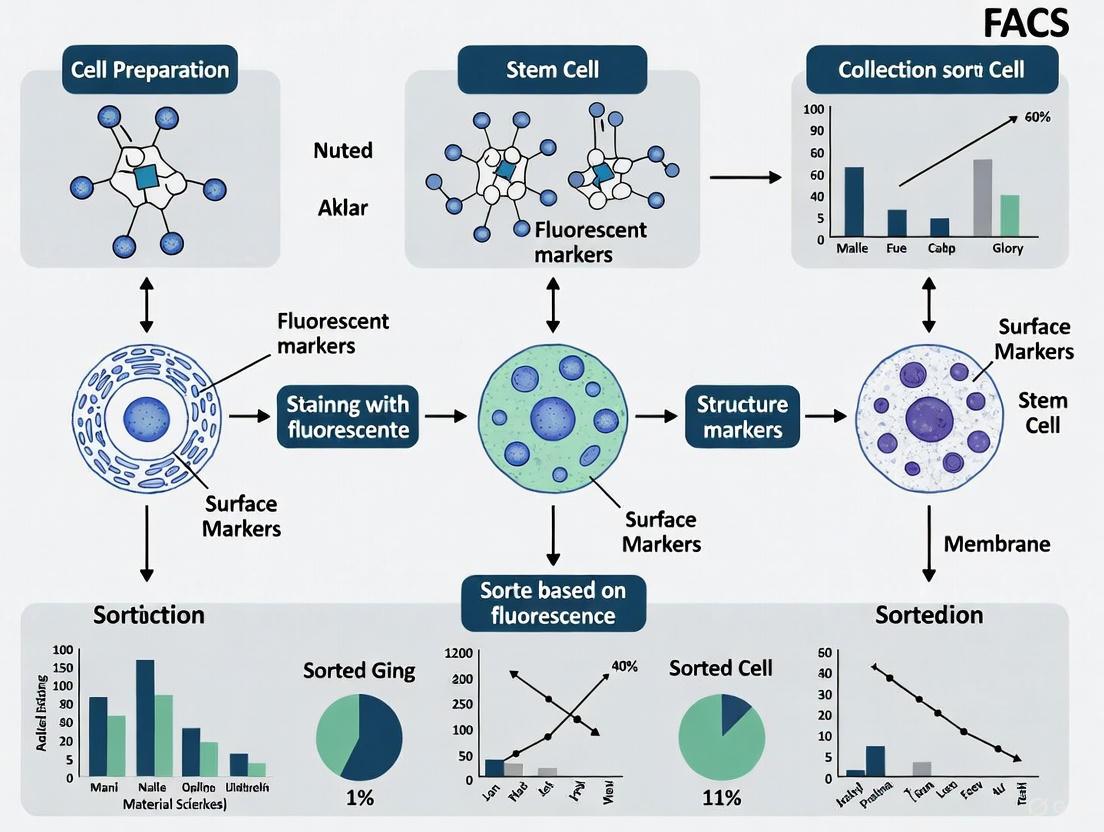
This article provides a comprehensive guide for researchers and drug development professionals on the identification and isolation of stem cells using Fluorescence-Activated Cell Sorting (FACS).
Advanced FACS Strategies for Stem Cell Isolation: From Foundational Markers to Clinical Validation
Abstract
This article provides a comprehensive guide for researchers and drug development professionals on the identification and isolation of stem cells using Fluorescence-Activated Cell Sorting (FACS). It covers the foundational principles of stem cell biology and marker selection, detailed protocols for isolating key stem cell types like HSCs and MSCs, advanced troubleshooting and optimization techniques to enhance purity and viability, and rigorous methods for assay validation and technology comparison. By integrating current best practices and emerging spectral cytometry applications, this resource aims to bridge the gap between research and clinical translation, ensuring reproducible and high-quality stem cell isolation for therapeutic and diagnostic applications.
Understanding Stem Cell Biology and FACS Marker Selection
The hematopoietic system represents a paradigm of cellular hierarchy, with long-term hematopoietic stem cells (LT-HSCs) at its apex, ensuring life-long blood production. This hierarchical organization poses significant challenges for the precise identification and isolation of pure stem cell populations, necessitating advanced technological approaches. Fluorescence-activated cell sorting (FACS) has emerged as a cornerstone technology that bridges surface marker expression with functional and molecular properties of stem cells [1]. This technical guide provides an in-depth examination of the hematopoietic hierarchy, detailed methodologies for prospective isolation of stem cell populations, and advanced analytical frameworks for understanding this complex biological system. Within the broader context of identifying and isolating stem cells using FACS research, we present comprehensive protocols, marker panels, and computational tools that enable researchers to dissect the heterogeneity of the stem cell compartment with unprecedented resolution.
The human hematopoietic system is a highly regenerative organ that produces approximately one trillion cells daily to maintain oxygen supply, wound healing, and immune functions [1]. This remarkable output is orchestrated by a strict cellular hierarchy with LT-HSCs at the apex, responsible for maintaining homeostasis through their unique capabilities for self-renewal and multilineage differentiation [1]. Through a stepwise differentiation process, LT-HSCs give rise to various multipotent progenitor (MPP) populations, which successively lose their multilineage potential and become restricted to distinct lineages while the stem cell pool is maintained [1].
The prospective separation of defined hematopoietic stem and progenitor cell (HSPC) populations based on phenotypic cell surface markers, known as clusters of differentiation (CD), marked a significant advancement in the field [1]. The development of FACS-based isolation techniques has dramatically improved our ability to identify and isolate human HSCs through refined cell surface characterization, enabling researchers to link molecular and functional properties of single cells [1]. However, unlike the murine hematopoietic system where HSC isolation is well-established, the prospective isolation of bona fide human HSCs requires further refinement due to the inherent heterogeneity of the human HSC compartment [1].
Hierarchical Organization of Hematopoietic Stem and Progenitor Cells
The Differentiation Cascade
Hematopoietic differentiation follows a structured pathway from the most primitive stem cells to fully committed progenitors. At the pinnacle of this hierarchy reside the LT-HSCs, defined by their ability to be serially transplantable into myeloablated recipients and their multilineage and long-term reconstitution potential [1]. These cells give rise to short-term HSCs (ST-HSCs) and subsequently to MPPs, which maintain multipotency but have limited self-renewal capacity.
Recent single-cell proteo-transcriptomic sequencing of FACS-enriched bone marrow HSPCs from healthy donors has revealed four major differentiation trajectories that remain consistent upon aging, with an early branching point into megakaryocyte-erythroid progenitors [2]. This analysis demonstrates that young donors exhibit more productive differentiation from HSPCs to committed progenitors across all lineages, highlighting age-related functional changes within the hierarchy.
Definitive Surface Markers for Human HSPC Subpopulations
The identification of specific surface markers has been instrumental in defining distinct compartments within the hematopoietic hierarchy. While human HSPCs express CD34, the vast majority of CD34+ cells are not stem cells with life-long reconstitution ability but have undergone lineage-restricting initial differentiation [1]. The table below summarizes key markers for identifying human HSPC subpopulations.
Table 1: Surface Marker Expression Defining Human Hematopoietic Stem and Progenitor Cell Populations
| Cell Population | Surface Marker Profile | Functional Characteristics |
|---|---|---|
| LT-HSC | lin⁻CD34⁺CD38⁻CD45RA⁻CD90⁺CD49f⁺ | Serial transplantability, multilineage long-term reconstitution [1] |
| ST-HSC | lin⁻CD34⁺CD38⁻CD45RA⁻CD90⁻ | Short-term reconstitution, limited self-renewal |
| MPP | lin⁻CD34⁺CD38⁻CD45RA⁻CD90⁻ | Multilineage potential, no self-renewal |
| LMPP | lin⁻CD34⁺CD38⁺CD45RA⁺ | Lymphoid-primed multipotent progenitor |
| CMP | lin⁻CD34⁺CD38⁺CD45RA⁻CD123⁺ | Common myeloid progenitor |
| GMP | lin⁻CD34⁺CD38⁺CD45RA⁺CD123⁺ | Granulocyte-macrophage progenitor |
| MEP | lin⁻CD34⁺CD38⁺CD45RA⁻CD123⁻ | Megakaryocyte-erythrocyte progenitor |
The expression of CD90 (Thy1) and CD49f has been particularly valuable for further isolating HSCs from the CD34⁺CD38⁻ compartment [1]. Studies have demonstrated that CD49f-expressing CD34⁺CD38⁻lin⁻ cells show a sevenfold increased engraftment in transplanted NSG mice, confirming their functional stem cell capacity [1].
Visualizing the Hematopoietic Hierarchy
The diagram below represents the hierarchical organization of the hematopoietic system from LT-HSCs to committed progenitors, illustrating the major differentiation pathways and key surface markers defining each population.
FACS-Based Isolation of Human Hematopoietic Stem Cells
Critical Considerations for Experimental Design
The prospective purification of human HSPC subpopulations requires careful experimental planning. This protocol typically utilizes mobilized CD34⁺ cells from leukapheresis products (mob LPs) of donors treated with granulocyte colony-stimulating factor (G-CSF) [1]. These samples represent the main source for allogeneic transplantation due to easier sample collection and an enriched number of CD34⁺ HSPCs compared to bone marrow aspirations [1]. Additionally, hematopoietic stem cell transplantations performed with mobilized peripheral blood samples show identical overall survival rates in clinical settings but decreased relapse incidents compared to bone marrow transplantations [1].
The workflow for HSPC isolation typically involves multiple stages: (1) isolation of nucleated cells from fresh or frozen mobilized leukapheresis products, (2) CD34⁺ cell purification via magnetic cell separation (MACS), and (3) antibody staining for prospective FACS isolation of human HSCs, which can be further processed for subsequent analyses [1]. This multi-step approach ensures the highest purity of rare stem cell populations.
Comprehensive FACS Protocol for LT-HSC Isolation
The isolation of LT-HSCs requires a rigorous multi-parameter sorting strategy. The following protocol outlines the key steps for obtaining high-purity LT-HSCs from human mobilized peripheral blood:
Sample Preparation: Isolate mononuclear cells from fresh or frozen mob LPs using density gradient centrifugation with Ficoll-Paque or similar media [3]. For frozen samples, thaw quickly at 37°C and dilute dropwise in pre-warmed medium containing DNase I (10-50 μg/mL) to prevent cell clumping.
CD34⁺ Enrichment: Perform positive selection of CD34⁺ cells using magnetic cell separation (MACS) with clinical-grade CD34 MicroBead Kit UltraPure according to manufacturer's instructions [1]. This pre-enrichment step significantly improves the efficiency of subsequent FACS sorting by reducing the number of non-target cells.
Antibody Staining: Resuspend the CD34⁺ enriched cells in FACS buffer (PBS with 1-2% FBS or BSA) containing Fc receptor blocking reagent. Add the antibody cocktail for LT-HSC identification and incubate for 20-30 minutes at 4°C in the dark. The essential antibody panel should include:
- Anti-CD34 (clone 8G12)
- Anti-CD38 (clone HB7)
- Anti-CD45RA (clone HI100)
- Anti-CD90 (clone 5E10)
- Anti-CD49f (clone GoH3)
- Lineage cocktail (anti-CD2, CD3, CD14, CD16, CD19, CD56, CD235a)
- Viability dye (e.g., Fixable Viability Dye) [1]
FACS Sorting: Set up the cell sorter (e.g., FACSAria III) with appropriate laser and filter configurations for the fluorochromes used. Create a sequential gating strategy to identify live, single cells that are lineage-negative, CD34⁺, CD38⁻, CD45RA⁻, CD90⁺, and CD49f⁺. Sort these cells directly into collection tubes containing culture medium or buffer appropriate for downstream applications.
Quality Control: Assess sorted cell purity by reanalyzing a small aliquot of sorted cells. Determine cell viability using trypan blue exclusion or automated cell counters. For functional assays, culture sorted cells in semisolid media for colony-forming unit (CFU) assays or inject into immunodeficient mice for engraftment studies.
Table 2: Essential Research Reagents for FACS-Based HSPC Isolation
| Reagent Category | Specific Products | Function in Protocol |
|---|---|---|
| Magnetic Separation Kits | CD34 MicroBead Kit UltraPure human (Miltenyi) | Initial enrichment of CD34⁺ cells from heterogeneous samples [1] |
| Antibody Clones | Anti-Human CD34 [8G12], CD38 [HB7], CD45RA [HI100], CD90 [5E10], CD49f [GoH3] | Specific detection of surface markers defining HSPC subpopulations [1] |
| Viability Stains | Fixable Viability Dye eBioscience | Exclusion of dead cells during sorting to improve purity and functionality |
| Cell Sorting Instruments | FACSAria III Cell Sorter | High-speed cell sorting with multi-parameter capability [1] |
| Density Gradient Media | Ficoll-Paque, Lymphoprep, Percoll | Separation of mononuclear cells from whole blood or mob LPs [3] |
| Compensation Beads | UltraComp eBeads, BD CS&T Research Beads | Instrument calibration and compensation for spectral overlap [1] |
Gating Strategy for LT-HSC Identification
The identification of LT-HSCs requires a meticulous sequential gating approach to eliminate non-target cells and progressively narrow down to the population of interest. The following workflow visualization outlines the key steps in the FACS gating strategy for LT-HSC isolation:
Advanced Technologies in Stem Cell Separation and Analysis
Comparison of Stem Cell Separation Methods
While FACS represents a powerful tool for stem cell isolation, several other technologies offer complementary approaches with distinct advantages and limitations. The table below provides a comparative analysis of major stem cell separation methods.
Table 3: Comparative Analysis of Stem Cell Separation Technologies
| Method | Principles | Advantages | Limitations | Purity/ Yield |
|---|---|---|---|---|
| FACS | Fluorophore-tagged antibodies + fluidics + electrostatic deflection | Multi-parameter sorting, single-cell resolution, high purity (≥95%) [4] | Expensive equipment, requires trained personnel, limited throughput (~10⁷ cells/hour) [4] | High purity, moderate yield |
| MACS | Antibody-coated magnetic beads + magnetic field | Simpler than FACS, faster processing (~10¹¹ cells/hour), ease of use [4] [3] | Interference from magnetic beads, lower purity (~75%), limited to few parameters simultaneously [4] | Moderate purity, high yield |
| Density Gradient Centrifugation | Separation based on cellular density in a medium gradient | Large processing quantity, easy scaling, inexpensive [4] [3] | Low purity, more heterogeneous output, based solely on physical parameters [4] | Low purity, high yield |
| Dielectrophoresis (DEP) | Intrinsic electrophysical properties in non-uniform electric field | Label-free, can concentrate cells during isolation [4] | Limited resolution, contamination with unwanted cells, not marker-specific [4] | Low-moderate purity, variable yield |
| Microfluidic Systems | Lab-on-a-chip platforms using various physical principles | Label-free options, miniaturization, automation, small reagent volumes [4] [3] | Variable purity and recovery rates, developing technology [4] | Variable based on specific approach |
Computational Analysis of High-Dimensional Cytometry Data
Advanced computational tools have become essential for analyzing the high-dimensional data generated by modern cytometry technologies. Mass cytometry (CyTOF) allows simultaneous detection of up to 40 cellular markers on millions of single cells, creating unprecedented opportunities for resolving complex cellular hierarchies [5] [6]. Several computational frameworks have been developed to extract meaningful biological insights from these massive datasets:
Clustering-Based Techniques: Algorithms such as SPADE, FlowSOM, and Phenograph enable the identification of cell populations within high-dimensional data by grouping cells with similar expression profiles [5] [6]. These methods allow analysis of datasets consisting of millions of cells but provide aggregate information on generated cell clusters at the expense of local data structure.
Dimensionality Reduction Techniques: Methods including t-SNE (implemented in viSNE), PCA, and Diffusion maps transform high-dimensional data into two or three dimensions while preserving local structure, allowing analysis at the single-cell level [6]. However, these methods face scalability challenges with large datasets, often requiring downsampling that can obscure rare cell populations.
Hierarchical Stochastic Neighbor Embedding (HSNE): Recently introduced for mass cytometry data analysis, HSNE constructs a hierarchy of non-linear similarities that can be interactively explored with a stepwise increase in detail up to the single-cell level [6]. This approach eliminates the need for downsampling and enables identification of rare cell populations that might otherwise be missed.
Integrated Analysis Workflows: Tools like Cytofast provide workflows for quantitative analysis of flow and mass cytometry data, enabling visualization of cluster phenotypes, abundance per sample, and statistical comparisons between experimental conditions [5]. These packages facilitate the discovery of cell populations associated with diseases or physiological states.
Single-Cell Multi-Omics Approaches
The integration of single-cell transcriptomics with protein expression analysis represents a cutting-edge approach for unraveling hematopoietic hierarchy. Recent studies have employed combined Transcriptomic/AbSeq approaches to simultaneously quantify the expression of hundreds of genes at mRNA level and dozens of antigens at the protein level in thousands of single cells [2]. This multi-omics strategy has revealed continuous changes in gene expression of HSPC-related genes (DLK1, ADGRG6) and provided a roadmap of gene expression at the earliest branching points of hematopoietic differentiation [2].
These advanced analytical approaches have identified novel markers and functional properties of HSPC subpopulations. For example, CD273/PD-L2 has been found to be highly expressed in a subfraction of immature multipotent HSPCs with enhanced quiescence, with functional experiments confirming its immune-modulatory role in regulating T-cell activation and cytokine release [2]. Such discoveries highlight how integrated analytical frameworks can reveal previously unrecognized biological properties of stem cell compartments.
Technical Considerations and Troubleshooting
Optimization of FACS Experiments
Successful isolation of rare stem cell populations requires careful optimization of multiple parameters. For high-dimensional FACS experiments, it becomes increasingly critical to set the right parameters, accurately compensate for the overlapping emission spectra of different fluorochromes within one staining mixture, and carefully analyze the acquired data [1]. Key considerations include:
Panel Design: Carefully select fluorochrome-antibody combinations based on antigen density and fluorochrome brightness. Use brilliant violet and brilliant ultraviolet dyes for low-abundance markers and common fluorochromes (FITC, PE) for highly expressed markers.
Compensation Controls: Include single-stained controls for each fluorochrome in the panel using compensation beads or cells with known antigen expression.
Sorting Mode: For rare populations like LT-HSCs, use purity mode with lower nozzle size (70-85μm) to achieve highest purity, accepting potentially lower recovery rates.
Collection Conditions: Sort cells into collection tubes containing appropriate media with high protein content (e.g., with 20-50% FBS) to maintain cell viability during the extended sorting process for rare populations.
Pre-enrichment Strategies for Rare Cells
Isolating rare cell types by FACS alone can be time-consuming, expensive, and result in low cell recovery. Researchers can pre-enrich their samples for target cells using immunomagnetic cell separation to reduce sort time and improve purity and recovery [3]. This approach is particularly valuable for rare populations such as LT-HSCs, which may represent less than 0.01% of nucleated cells in mobilized peripheral blood.
The pre-enrichment strategy typically involves initial density gradient centrifugation to isolate mononuclear cells, followed by magnetic enrichment of CD34⁺ cells before the final FACS sort for the specific subpopulation of interest. This multi-step approach significantly reduces the number of cells that need to be processed by the sorter, decreasing sort time and improving post-sort viability.
Future Directions and Concluding Remarks
The field of stem cell isolation and characterization continues to evolve with emerging technologies that offer new capabilities. Aptamer-based cell separation represents a promising alternative to antibody-based approaches, utilizing single-stranded RNA or DNA oligonucleotides that form structures capable of binding to highly specific targets [3]. These aptamers have high affinity and specificity toward their targets, lack immunogenicity, and can be labeled with fluorochromes or magnetic particles to facilitate cell separation [3].
Microfluidic technologies continue to advance, with platforms incorporating acoustophoresis, aqueous two-phase systems, biomimetic microfluidics, cell affinity chromatography, and deterministic lateral displacement offering label-free alternatives for cell separation [3]. These "lab-on-a-chip" devices require smaller volumes of samples and reagents, offer portability, and show particular promise as field-based diagnostic tools.
In conclusion, the hierarchical organization of stem cell compartments represents a complex biological system that requires sophisticated technological approaches for its dissection. FACS-based methodologies provide powerful tools for linking surface marker expression with functional and molecular properties of stem cells, enabling researchers to isolate and characterize rare populations with high precision. As single-cell multi-omics technologies continue to advance and computational methods for data analysis become increasingly sophisticated, our understanding of hematopoietic hierarchy will continue to deepen, opening new avenues for therapeutic manipulation of stem cells in regenerative medicine and disease treatment.
The prospective isolation of pure stem cell populations is a foundational requirement for both advanced research and clinical applications in regenerative medicine. The identity and function of stem cells are defined by their unique surface markers, which serve as a molecular "fingerprint" distinguishing them from other cell types. Fluorescence-activated cell sorting (FACS) has emerged as the gold standard technique for isolating these rare cell populations based on their surface antigen profiles, enabling researchers to bridge the gap between marker expression and understanding of functional and molecular properties [1]. The existing heterogeneity within stem cell compartments poses significant challenges in understanding their physiology, making reproducible isolation protocols based on well-defined surface markers essential for scientific progress [1].
This technical guide provides a comprehensive overview of the key surface markers defining hematopoietic and mesenchymal stem cell lineages, with particular emphasis on their application within FACS-based research and isolation protocols. We present detailed methodologies, marker validation techniques, and practical considerations for researchers seeking to isolate these therapeutically valuable cell populations with high purity and viability.
Hematopoietic Stem Cell (HSC) Surface Markers and Isolation
Marker Definition and Hierarchical Organization
The human hematopoietic system is hierarchically organized, with hematopoietic stem cells (HSCs) residing at the apex, responsible for maintaining homeostasis by ensuring a life-long supply of blood cells [1]. These highly potent but rare cells are defined by their dual capabilities of self-renewal and multilineage reconstitution potential [1]. The prospective separation of defined hematopoietic stem and progenitor cell (HSPC) populations based on phenotypic cell surface markers, known as clusters of differentiation (CD), marked a significant advancement in the field [1].
Table 1: Key Surface Markers for Human Hematopoietic Stem Cell Identification and Isolation
| Marker | Expression | Functional Significance | References |
|---|---|---|---|
| CD34 | Positive on HSCs and progenitors | Primary enrichment marker; approximately 0.2-3% of nucleated bone marrow cells | [1] |
| CD38 | Negative on true HSCs | Exclusion marker; CD34+CD38- population enriches for stem cell potential | [1] |
| CD45RA | Negative on LT-HSCs | Exclusion marker; distinguishes HSCs from multipotent progenitors | [1] |
| CD90 (Thy1) | Positive on LT-HSCs | Further refinement of HSC population from CD34+CD38- compartment | [1] |
| CD49f | Positive on most primitive HSCs | CD34+CD38-Lin-CD45RA-CD90+CD49f+ defines LT-HSCs with enhanced engraftment potential | [1] |
| Lineage (Lin) markers | Negative on HSCs | Panel including CD2, CD3, CD14, CD16, CD19, CD56, CD235a excludes committed blood cells | [1] |
True long-term repopulating HSCs (LT-HSCs) can be defined as lin-CD34+CD38-CD45RA-CD90+CD49f+ using fluorescence-conjugated monoclonal antibodies in FACS [1]. This combination provides the highest purity for prospective isolation of human HSCs with long-term reconstitution capacity. Importantly, the vast majority of CD34+ cells are not stem cells with life-long reconstitution ability but have undergone lineage-restricting initial differentiation, necessitating these additional surface markers for further refinement [1].
Advanced HSC Isolation Protocol
The following detailed protocol facilitates the enrichment of rare HSCs for downstream analysis and enables researchers to improve understanding of heterogeneity within the HSC compartment [1]:
Sample Preparation and Pre-enrichment
- Begin with mobilized CD34+ cells from leukapheresis products (mob LPs) of donors treated with granulocyte colony-stimulating factor (G-CSF). These samples represent the main source for allogeneic transplantation due to easier collection and enriched CD34+ HSPCs compared to bone marrow aspirations [1].
- Isolate nucleated cells from fresh or frozen mob LPs using density gradient centrifugation with media such as Ficoll-Paque or Lymphoprep [3].
- Perform CD34+ cell purification via magnetic cell separation (MACS) as a pre-enrichment step to reduce sort time and improve purity and recovery [1] [3]. Pre-enrichment is particularly valuable when isolating rare cell types by FACS to maximize yield and minimize instrument time [3].
Antibody Staining and FACS Isolation
- Prepare a single-cell suspension at a concentration of 1×10^7 cells/mL in a FACS-compatible buffer containing PBS and possibly serum albumin.
- Add fluorophore-conjugated monoclonal antibodies against the target markers: anti-CD34, anti-CD38, anti-CD45RA, anti-CD90, anti-CD49f, and a lineage cocktail (typically including anti-CD2, CD3, CD14, CD16, CD19, CD56, and CD235a) [1].
- Include a fixable viability dye to exclude dead cells during sorting, as this significantly improves post-sort viability and downstream applications.
- Incubate according to manufacturer recommendations, then wash cells to remove unbound antibody.
- Resuspend in sorting buffer with DNase to prevent clumping and pass through a cell strainer to ensure a single-cell suspension.
- Sort on a high-speed sorter such as a FACSAria III, using a 100μm nozzle and appropriate pressures to maintain cell viability [1].
Critical Gating Strategy
- First, exclude debris based on forward scatter (FSC) and side scatter (SSC) characteristics.
- Next, exclude doublets using FSC-W versus FSC-H and SSC-W versus SSC-H plots.
- Eliminate dead cells using the viability dye channel.
- Progressively gate for lineage-negative, CD34-positive, CD38-negative, CD45RA-negative, CD90-positive, and finally CD49f-positive populations [1].
- Collect sorted LT-HSCs into collection tubes containing appropriate culture medium or buffer for downstream applications.
Figure 1: Sequential Gating Strategy for Isolation of Long-Term Hematopoietic Stem Cells (LT-HSCs)
Mesenchymal Stem Cell (MSC) Surface Markers and Isolation
International Society for Cellular Therapy (ISCT) Standards
Mesenchymal stem cells (MSCs), particularly those derived from dental tissues, have gained significant attention in regenerative medicine due to their multipotency, high proliferative capacity, and accessibility [7]. According to the International Society for Cellular Therapy (ISCT), human MSCs must express specific surface markers while lacking expression of hematopoietic markers [7].
Table 2: Standard Surface Markers for Mesenchymal Stem Cell Identification
| Marker Category | Specific Markers | Expression Profile | Functional Significance |
|---|---|---|---|
| Positive Markers | CD73, CD90, CD105 | >95% Expression | Definitive positive markers for MSCs as per ISCT criteria [7] |
| Negative Markers | CD34, CD45, CD11b, CD19, HLA-DR | <2% Expression | Exclusion of hematopoietic lineages [7] |
| Immunomodulatory Markers | PD-L1, IDO, TGF-β1, HLA-G | Variable expression | Critical for immunosuppressive function and therapeutic efficacy [7] |
| Dental MSC Markers | Various combinations of above | Tissue-specific variations | Maintain core MSC phenotype with tissue-specific modifications [7] |
The immunomodulatory properties of MSCs enable them to interact with immune cells—including T cells, B cells, natural killer cells, and macrophages—often leading to beneficial immunosuppression that reduces inflammation and promotes tissue regeneration [7]. These properties make them particularly valuable for therapeutic applications.
Dental Stem Cell Markers and Heterogeneity
Dental stem cells represent a specialized subset of MSCs that originate from craniofacial neural crest cells during embryonic development [7]. These include:
- Dental pulp stem cells (DPSCs): Found in dental pulp tissue
- Stem cells from human exfoliated deciduous teeth (SHED): Derived from baby teeth
- Periodontal ligament stem cells (PDLSCs): Located in the periodontal ligament
- Stem cells from the apical papilla (SCAP): Reside in the developing tooth root
- Gingival mesenchymal stem cells (GMSCs): Found in gingival tissue [7]
Despite their tissue-specific origins, dental stem cells maintain the core MSC phenotype defined by the ISCT while exhibiting some tissue-specific variations in marker expression profiles. A significant challenge in working with these cells is the heterogeneity of stem cell populations derived from dental tissues, which can affect the consistency and efficacy of therapeutic outcomes [7].
Technical Considerations for FACS-Based Stem Cell Isolation
FACS Versus Alternative Isolation Methods
While multiple techniques exist for stem cell separation, FACS offers distinct advantages for research requiring high purity and multiple parameter isolation:
Table 3: Comparison of Stem Cell Separation Technologies
| Method | Advantages | Disadvantages | Purity | Throughput |
|---|---|---|---|---|
| FACS | Multi-parameter sorting, single-cell resolution, high purity | Expensive equipment, technical expertise required, slower | 95% or higher [4] | ~10^7 cells/hour [4] |
| MACS | Simpler protocol, higher throughput, lower cost | Limited to fewer parameters, beads may interfere | ~75% [4] | ~10^11 cells/hour [4] |
| Density Gradient Centrifugation | Simple, scalable, no special equipment | Low purity, heterogeneity in output | Variable, generally low [3] [4] | High |
| Pre-plating/Adhesion | Utilizes natural adhesion properties, simple | Low purity, heterogeneous output | Low to moderate [4] | Medium |
FACS provides several unique capabilities not available with other methods, including the ability to sort single cells, isolate cells based on intracellular markers (e.g., GFP), isolate cells based on surface marker expression levels, and sort complex cell types with multiple markers at higher purity [3]. These features make it particularly valuable for stem cell research where population purity is critical for downstream applications.
Panel Design and Experimental Optimization
Fluorochrome Selection and Compensation Modern flow cytometers can operate with up to 60 detection channels simultaneously using spectral flow cytometry [1]. This capability makes panel design increasingly critical, with particular attention to:
- Spectral overlap: Carefully select fluorochrome combinations to minimize spillover between channels
- Antibody titration: Optimize antibody concentrations to maximize signal-to-noise ratio
- Compensation controls: Use proper compensation beads and single-stained controls
- Brilliant stain buffers: Utilize specialized buffers for polymer-based fluorochromes when working with complex panels [1]
Gating Strategy and Data Analysis In flow cytometry, gates are value limits that allow researchers to analyze a subset of data from the larger data set [3]. An optimal gating strategy is essential for ensuring accurate results:
- Begin with light scatter gates to exclude debris and dead cells
- Use doublet discrimination gates (FSC-H vs FSC-W) to ensure single-cell analysis
- Implement fluorescence minus one (FMO) controls to properly set positive/negative boundaries
- Use sequential gating strategies to progressively refine the target population [3]
Figure 2: Key Signaling Pathways Regulating Stem Cell Pluripotency and Differentiation
Research Reagent Solutions for Stem Cell Isolation
Table 4: Essential Research Reagents for Stem Cell Isolation and Characterization
| Reagent Category | Specific Examples | Application | Manufacturer Examples |
|---|---|---|---|
| Fluorochrome-conjugated Antibodies | Anti-human CD34, CD38, CD45RA, CD90, CD49f | Primary staining for FACS isolation | BD Biosciences, Thermo Fisher Scientific, BioLegend [1] |
| Magnetic Separation Kits | CD34 MicroBead Kit UltraPure human | Pre-enrichment prior to FACS | Miltenyi Biotec [1] |
| Cell Sorting Instruments | FACSAria III | High-speed cell sorting | BD Biosciences [1] |
| Density Gradient Media | Ficoll-Paque, Lymphoprep, Percoll | Initial cell separation | Various manufacturers [3] |
| Viability Stains | Fixable Viability Dye | Exclusion of dead cells | Thermo Fisher Scientific [1] |
| Cell Sorting Buffers | autoMACS Rinsing Solution, FACS buffers | Maintaining cell viability during sorting | Miltenyi Biotec, various manufacturers [1] |
| Data Analysis Software | FlowJo, FACSDiva | Experimental setup and data analysis | BD Biosciences [1] |
Leading players in research flow cytometry include companies like BD Biosciences, Miltenyi Biotec, Sony Biotechnology, and Beckman Coulter [8]. These firms offer instruments ranging from benchtop analyzers to high-throughput systems. The ecosystem also involves software providers for data analysis, such as FlowJo and Cytobank [8].
The precise identification and isolation of stem cells through their surface markers remains a cornerstone of regenerative medicine and translational stem cell research. The continued refinement of FACS technologies, including the advent of spectral flow cytometry and increased parameter capabilities, promises even greater precision in stem cell isolation [8]. By 2025, research flow cytometry is expected to become more automated, with AI-driven data analysis enhancing accuracy, and spectral flow cytometry enabling even more detailed cellular profiling, supporting complex multi-parameter studies [8].
The standardization of methodologies and marker panels across different research groups will be essential for improving reproducibility and accelerating clinical translation. While challenges remain, including high instrument costs and the need for specialized training, the ongoing advancements in stem cell separation technologies will continue to drive innovation in both basic research and clinical applications of stem cell-based therapies [4] [8].
Principles of Fluorescence-Activated Cell Sorting (FACS) for Stem Cell Enrichment
Fluorescence-Activated Cell Sorting (FACS) represents a sophisticated implementation of flow cytometry that enables researchers to identify, analyze, and physically isolate specific stem cell populations from heterogeneous mixtures based on their fluorescent and light-scattering properties [9]. This technology has revolutionized stem cell research by providing a high-throughput platform for the quantitative analysis of rare stem cell populations at single-cell resolution [9]. The unique capabilities of FACS are particularly valuable for investigating stem cell biology, as stem cells possess distinctive characteristics including self-renewal capacity and multipotency—the ability to differentiate into multiple specialized cell types [9]. Modern FACS instruments can simultaneously detect up to 60 parameters, allowing for exceptionally detailed immunophenotyping of complex stem cell populations [9].
The application of FACS in stem cell research bridges the critical gap between surface marker expression and understanding functional and molecular properties [1]. For researchers working within the context of stem cell isolation and characterization, FACS provides an indispensable tool for prospectively separating defined stem and progenitor cell populations based on phenotypic cell surface markers known as clusters of differentiation (CD) [1]. This capability is fundamental to advancing both basic stem cell biology and therapeutic applications in regenerative medicine, as the isolation of pure stem cell populations is a prerequisite for many downstream analyses and clinical applications.
Fundamental Principles of FACS Technology
Core System Components
The FACS instrumentation consists of several integrated systems that work in concert to accomplish cell sorting. The fluidics system generates a laminar flow that hydrodynamically focuses the cell suspension into a single-cell stream, precisely directing cells through the interrogation point [9]. The optical system incorporates lasers of specific wavelengths that illuminate the individual cells as they pass through the detection point, along with a series of mirrors, filters, and photomultiplier tubes that detect the resulting light signals [9]. These signals include both scattered light (forward scatter indicating cell size and side scatter indicating cell granularity) and fluorescence emissions from labeled antibodies or dyes [9]. The electronics system converts these detected light signals into digital data for analysis, while the sorting mechanism utilizes electrostatic deflection to separate target cells from non-target populations [9].
The sorting process itself involves the vibration of the flow cell to break the fluid stream into precisely sized droplets, most of which contain no cells. When a target cell is detected based on predetermined parameters, an electrical charge is applied to the droplet containing that cell as it breaks off from the stream. These charged droplets are then deflected by an electrostatic field into collection tubes, while uncharged droplets (containing unwanted cells) continue to the waste reservoir [10]. This process occurs at remarkable speeds, with modern instruments capable of analyzing up to 10,000 cells per second and sorting them into collection tubes based on multiple parameters simultaneously [9].
Fluorescence Detection and Multiparameter Analysis
The detection of fluorescence is central to FACS technology. Fluorochrome-conjugated antibodies bind specifically to cellular antigens, either on the cell surface or intracellularly, and emit characteristic wavelengths of light when excited by the appropriate lasers [9]. The emitted fluorescence signals provide quantitative information about the expression levels of target molecules on individual cells. The versatility of FACS stems from its ability to simultaneously detect multiple fluorochromes with minimal spectral overlap, enabling complex immunophenotyping panels [9]. Advanced instrumentation incorporates multiple lasers (e.g., violet, blue, red, yellow-green) and numerous detection channels to expand the multiparameter capabilities, with spectral flow cytometers now capable of resolving up to 60 parameters simultaneously [9] [1].
Table 1: Key FACS System Components and Their Functions
| System Component | Subcomponent | Function |
|---|---|---|
| Fluidics System | Sample Introduction | Introduces cell suspension into instrument |
| Sheath Fluid | Creates hydrodynamic focusing for single-cell stream | |
| Optical System | Lasers | Excite fluorochromes attached to cells |
| Optical Filters | Separate specific wavelength ranges | |
| Detectors (PMTs) | Convert light signals to electrical signals | |
| Electronics System | Analog-to-Digital Converters | Digitize detector signals for analysis |
| Computer System | Processes and stores data | |
| Sorting System | Droplet Generator | Creates uniformly sized droplets containing cells |
| Charge Plates | Apply electrical charge to target droplets | |
| Deflection Plates | Electrostatically deflect charged droplets |
Stem Cell Identification and Marker Strategies
Stem Cell Surface Antigens
The identification and isolation of stem cells via FACS relies heavily on the detection of specific surface markers that define particular stem cell populations. These markers, typically designated as Cluster of Differentiation (CD) antigens, provide the molecular signatures that distinguish stem cells from more differentiated progeny [1]. Different stem cell types express distinct combinations of these surface antigens, enabling their selective identification and isolation. For example, human hematopoietic stem cells (HSCs) are characterized by the CD34+CD38-CD45RA-CD90+CD49f+ immunophenotype, while mesenchymal stem cells (MSCs) typically express CD73, CD90, and CD105 while lacking expression of hematopoietic markers such as CD14, CD19, CD34, CD45, and HLA-DR [1] [11].
The strategy for stem cell identification often involves a combination of positive selection for markers associated with stemness and negative selection against markers of differentiation. This approach enables the enrichment of rare stem cell populations that may constitute only a small fraction of the total cell population. For instance, in human mobilized peripheral blood, true long-term repopulating HSCs (LT-HSCs) are exceptionally rare, typically representing only a minute subset of the CD34+ population [1]. Through progressive refinement of surface marker combinations, researchers have achieved increasingly pure populations of functionally defined stem cells, with the CD34+CD38- population demonstrating homogeneous formation of blast colonies while lacking differentiation marker expression [1].
Marker Panels for Specific Stem Cell Types
Different stem cell populations require customized marker panels for optimal identification and isolation. Hematopoietic stem cells represent one of the most thoroughly characterized populations, with well-established marker combinations that enable discrimination between long-term HSCs (LT-HSCs), short-term HSCs (ST-HSCs), and multipotent progenitors (MPPs) [1]. The progressive loss of certain markers and acquisition of others correlates with functional changes in self-renewal capacity and lineage potential. Similarly, mesenchymal stem cells from various tissue sources (bone marrow, adipose tissue, umbilical cord) share a common immunophenotypic profile despite their different anatomical origins [11].
Table 2: Characteristic Surface Markers for Major Stem Cell Types
| Stem Cell Type | Positive Markers | Negative Markers | Tissue Sources |
|---|---|---|---|
| Hematopoietic Stem Cells | CD34, CD90 (Thy1), CD49f, CD133, c-Kit | CD38, CD45RA, Lineage markers (CD2, CD3, CD14, CD16, CD19, CD56, CD235a) | Bone Marrow, Mobilized Peripheral Blood, Umbilical Cord Blood [1] |
| Mesenchymal Stem Cells | CD73, CD90, CD105 | CD14, CD19, CD34, CD45, HLA-DR | Bone Marrow, Adipose Tissue, Perinatal Tissue, Dental Pulp [11] |
| Neural Crest Stem Cells | p75, SOX10, HNK-1 | - | Neural Tube, Peripheral Nervous System [9] |
| Embryonic Stem Cells | SSEA-3, SSEA-4, TRA-1-60, TRA-1-81 | - | Inner Cell Mass of Blastocyst [9] |
Experimental Protocol for Stem Cell Enrichment
Sample Preparation and Processing
The initial step in FACS-based stem cell enrichment involves the preparation of a high-quality single-cell suspension. For hematopoietic stem cells from mobilized peripheral blood, this begins with the isolation of mononuclear cells using density gradient centrifugation (e.g., Ficoll-Paque) [1]. The resulting cell population is then subjected to erythrocyte lysis to remove contaminating red blood cells. Subsequent steps may involve pre-enrichment strategies to reduce sample complexity, such as magnetic-activated cell sorting (MACS) for CD34+ selection, which significantly enhances the efficiency of downstream FACS procedures by enriching the target population [1] [10]. For tissue-derived stem cells such as MSCs, enzymatic digestion (e.g., with collagenase) is typically required to dissociate the tissue and liberate individual cells while preserving surface antigen integrity [11].
Critical to successful sample preparation is the maintenance of cell viability and surface epitopes throughout the process. Cells must be kept in appropriate buffer systems (e.g., PBS supplemented with serum or protein to prevent non-specific binding) and maintained at cold temperatures to minimize internalization of surface antigens and degradation of cellular components [1]. The inclusion of viability dyes during later staining steps enables the discrimination and exclusion of dead cells during analysis and sorting, which is crucial for obtaining functional stem cell populations and preventing artifactural results due to non-specific antibody binding to dead cells [1].
Antibody Staining and Panel Design
The design of fluorescent antibody panels requires careful consideration of multiple factors, including the relative abundance of target antigens, the brightness of fluorochromes, and the spectral overlap between different detection channels. The general principle is to pair bright fluorochromes with dimly expressed antigens and vice versa [12]. For stem cell markers, which are often expressed at low levels, bright fluorochromes such as PE and APC are typically recommended. Additionally, compensation controls must be included to account for spectral overlap between fluorochromes, using either compensation beads or stained control cells [1].
The staining protocol itself involves incubating the single-cell suspension with optimally titrated antibody concentrations for a specified duration, typically 20-30 minutes on ice in the dark to prevent fluorochrome degradation [1]. For intracellular antigen detection, cells must first be fixed and permeabilized before antibody staining. Following incubation, unbound antibody is removed by washing with buffer, and the cells are resuspended in an appropriate sorting buffer that maintains cellular integrity and is compatible with the FACS instrument. The final cell concentration is adjusted to optimize sorting efficiency, typically ranging from 5-20 × 10^6 cells/mL [1].
Gating Strategy and Data Analysis
The analysis of FACS data employs a sequential gating strategy to progressively refine the population of interest. The initial gate typically utilizes forward scatter (FSC) versus side scatter (SSC) to exclude debris and identify the population of intact cells based on size and granularity characteristics [12]. Subsequent gating steps include discrimination of single cells from doublets or aggregates using FSC-area versus FSC-height or -width parameters, followed by selection of viable cells based on viability dye exclusion [1]. For stem cell isolation, the next critical step involves negative selection against lineage-committed cells using a cocktail of antibodies against differentiation markers (e.g., CD2, CD3, CD14, CD16, CD19, CD56, CD235a for hematopoietic lineages), which effectively enriches for primitive progenitor populations [1].
The final gating steps employ positive selection for specific stem cell markers, typically displayed as two-dimensional scatter plots showing the expression of two markers simultaneously [12]. For example, identification of LT-HSCs involves gating on CD34+CD38- cells, followed by selection of CD45RA-CD90+CD49f+ populations [1]. The quantitative data derived from FACS analysis includes both the percentage of target cells within the parental population and the absolute cell numbers, both critical parameters for downstream applications. Modern FACS data analysis software facilitates complex multiparameter analyses and can display data in various formats, including histograms for single-parameter visualization and density plots or contour plots for two-parameter displays [12].
Research Reagent Solutions
The successful implementation of FACS-based stem cell enrichment requires a comprehensive set of research-grade reagents specifically validated for cell sorting applications. These include antibodies against stem cell markers, viability dyes, buffer systems, and calibration standards that ensure reproducible and reliable results [1]. The selection of appropriate fluorochrome conjugates is particularly critical, as their brightness and spectral characteristics directly impact the resolution of distinct cell populations. Manufacturers now provide extensive catalogs of pre-conjugated antibodies specifically validated for FACS applications, with comprehensive documentation of their performance characteristics [1].
Table 3: Essential Reagents for FACS-Based Stem Cell Isolation
| Reagent Category | Specific Examples | Function and Application |
|---|---|---|
| Surface Antibodies | Anti-human CD34, CD38, CD45RA, CD90, CD49f, Lineage Cocktail | Identification of specific stem cell populations based on surface antigen expression [1] |
| Viability Dyes | Fixable Viability Dye eFluor, Propidium Iodide, 7-AAD | Discrimination of live/dead cells to ensure sorting of viable populations [1] |
| Buffer Systems | FACS Buffer (PBS + FBS + EDTA), AutoMACS Rinsing Solution | Maintain cell viability and prevent clumping during sorting process [1] |
| Calibration Beads | BD CS&T Research Beads, UltraComp eBeads, BD Accudrop Beads | Instrument calibration, compensation setup, and sort verification [1] |
| Collection Media | FBS-supplemented media, Freezing media | Maintain viability and function of sorted cells for downstream applications [1] |
Advanced Applications and Future Perspectives
Stem Cell-Derived Organoids and Complex Systems
FACS technology has found increasingly sophisticated applications in the emerging field of organoid research, where it facilitates the analysis of complex three-dimensional structures derived from stem cells [9]. Organoids, which mimic the architectural and functional characteristics of real organs, present unique challenges for analysis due to their structural complexity. FACS enables researchers to dissect this complexity by quantifying the proportions of different cell types within organoids and assessing marker expression patterns at single-cell resolution [9]. Recent advances have demonstrated the utility of FACS for monitoring stem cell differentiation within organoid systems, evaluating the effects of pharmacological agents on stem cell compartments, and isolating specific cell populations from dissociated organoids for downstream molecular analyses [9].
The integration of FACS with organoid technology represents a powerful approach for developmental biology, disease modeling, and drug screening applications. For instance, FACS analysis of intestinal organoids enables the quantification of different epithelial cell lineages (stem cells, Paneth cells, enterocytes, goblet cells) in response to various signaling cues or pathogenic insults [9]. Similarly, cerebral organoids can be dissected using FACS to isolate specific neuronal populations for transcriptomic or functional analyses. These applications highlight the versatility of FACS beyond conventional two-dimensional cell cultures and its growing importance in understanding stem cell behavior within more physiologically relevant contexts.
Emerging Technological Innovations
The field of FACS technology continues to evolve rapidly, with several cutting-edge innovations enhancing its capabilities for stem cell research. Spectral flow cytometry represents a significant advancement that acquires the full emission spectrum of each fluorochrome, rather than measuring discrete wavelength ranges through traditional bandpass filters [9] [1]. This approach facilitates the use of larger fluorochrome panels with significant spectral overlap, dramatically expanding the multiparameter capabilities for detailed stem cell immunophenotyping. The increased resolution provided by spectral cytometry enables more precise discrimination of stem cell subpopulations with similar but distinct marker expression profiles [9].
Imaging flow cytometry (IFC) represents another transformative innovation that combines the high-throughput capabilities of conventional flow cytometry with morphological analysis through single-cell imaging [9]. This technology enables the visualization of subcellular localization of markers, assessment of cell morphology, and analysis of complex cellular events—all at high speeds [9]. For stem cell research, IFC provides unique insights into asymmetric cell division, intracellular signaling events, and morphological changes associated with differentiation. Additionally, acoustic-based cell sorting technologies are emerging as a gentler alternative to traditional droplet-based sorting, potentially better preserving the viability and function of sensitive stem cell populations [9]. These technological advances, coupled with improvements in data analysis algorithms and automation, continue to expand the applications of FACS in stem cell research and clinical translation.
Fluorescence-Activated Cell Sorting has established itself as an indispensable technology in stem cell research, providing unparalleled capabilities for the identification, analysis, and isolation of rare stem cell populations from complex heterogeneous mixtures. The principles of FACS technology—combining fluidics, optics, electronics, and electrostatic sorting—enable researchers to conduct multiparameter analyses at single-cell resolution and physically isolate pure populations of stem cells for downstream applications [9]. The continuous technological advancements in instrumentation, fluorochrome development, and analytical methods continue to enhance the utility of FACS for unraveling the complexities of stem cell biology [9].
As the field progresses, the integration of FACS with other cutting-edge technologies such as single-cell omics, organoid culture systems, and computational biology promises to further accelerate discoveries in stem cell research [9]. The ongoing refinement of standardized protocols and marker panels for specific stem cell types will enhance reproducibility across different laboratories and facilitate the translation of basic research findings into clinical applications [1] [11]. Despite certain limitations, including the requirement for single-cell suspensions and the technical complexity of instrumentation, FACS remains a cornerstone technology that will continue to drive advancements in our understanding of stem cell physiology and their therapeutic implementation in regenerative medicine.
The isolation of pure stem cell populations is a cornerstone of regenerative medicine, basic developmental biology, and drug discovery research. Fluorescence-activated cell sorting (FACS) has emerged as a powerful and robust method for the direct isolation of highly enriched stem cell populations from complex tissue digests based on cell surface antigens [13]. However, the inherent heterogeneity of biological samples presents a significant challenge. Navigating the complexities of marker panel design—strategically selecting positive antigens that define the target population and negative exclusion markers that remove contaminating cells—is therefore critical to achieving the purity required for meaningful experimental and clinical outcomes. This technical guide provides a structured framework for researchers and drug development professionals to design effective FACS strategies for stem cell isolation, complete with quantitative data and detailed protocols.
Core Antigen Panels for Stem Cell Isolation
Distinct stem cell populations are identified by unique combinations of cell surface markers. The tables below summarize canonical marker panels for isolating specific stem cell types, as validated in peer-reviewed studies.
Table 1: Murine Skeletal Muscle Satellite Cell Isolation Panels This table compares three established surface marker schemes for isolating satellite cells from mouse skeletal muscle, demonstrating their functional equivalence [13].
| Positive Selection Markers | Population Identified | Pax7-zsGreen Positivity | Coverage of Total Pax7+ Pool |
|---|---|---|---|
| β1-integrin (CD29) & CXCR4 (CD184) | [Sca1⁻ CD31⁻ CD45⁻ Mac1⁻ Ter119⁻] β1-integrin⁺ CXCR4⁺ | 89–90% | 90–93% |
| α7-integrin & CD34 | [Sca1⁻ CD31⁻ CD45⁻ Mac1⁻ Ter119⁻] α7-integrin⁺ CD34⁺ | 89–90% | 90–93% |
| VCam1 (CD106) | [Sca1⁻ CD31⁻ CD45⁻ Mac1⁻ Ter119⁻] VCam1⁺ | 89–90% | 90–93% |
Table 2: Human Embryonic Stem Cell (hESC) Derived Neural Cell Markers This table outlines surface antigens present at different stages of neural differentiation from hESCs, providing a framework for isolating specific neural subpopulations [14].
| Developmental Stage | Surface Antigens | Representative Markers |
|---|---|---|
| Immature Pluripotent Stem Cells | SSEA-3, SSEA-4, TRA-1-60, TRA-1-81 | SSEA-4, TRA-1-81 [14] |
| Neural Stem/Precursor Cells | CD133, SSEA-1 (CD15), A2B5, FORSE-1, CD29, CD146, p75 (CD271) | CD133, SSEA-1 (CD15), A2B5 [14] |
| Differentiated Neurons | NCAM (CD56), CD24 | NCAM (CD56) [14] |
The Critical Role of Exclusion Markers
Exclusion markers, or "lineage depletion" panels, are used to remove hematopoietic, endothelial, and other non-target stromal cells that can contaminate and confound downstream analysis. Their consistent application is essential for achieving high purity.
A standard exclusion cocktail for isolating stem cells from murine tissues, such as skeletal muscle, includes antibodies against the following markers [13]:
- CD45: Pan-leukocyte marker, excludes all hematopoietic cells.
- CD11b (Mac1): Excludes macrophages and granulocytes.
- Ter119: Excludes erythroid cells.
- CD31: Excludes endothelial cells.
- Sca1 (Ly6A/E): Excludes fibroadipogenic progenitors and some hematopoietic subsets.
The resulting population for sorting is typically defined as Lineage-negative (Lin⁻), which refers to cells that do not express these exclusion markers, and is then further refined by adding positive selection markers [13].
Detailed Experimental Protocol for FACS Staining
The following step-by-step protocol for staining cell surface markers is optimized for stem cell isolation and can be adapted for various cell types [15].
Materials and Reagents
- Flow Cytometry Staining Buffer: Phosphate-buffered saline (PBS) supplemented with 0.5–2% fetal bovine serum (FBS) or bovine serum albumin (BSA) [15].
- Fc Receptor Blocking Reagent: Purified anti-CD16/32 antibodies or host species IgG to reduce non-specific antibody binding [16].
- Antibodies: Titrated, fluorochrome-conjugated antibodies against target and exclusion markers.
- Viability Dye: Propidium iodide (PI) or a fixable viability dye to exclude dead cells [13].
- Isotonic Lysing Buffer: If working with whole blood [15].
Step-by-Step Procedure
Sample Preparation:
- Generate a single-cell suspension from tissue using enzymatic digestion (e.g., 0.2% collagenase type II) and mechanical trituration [13].
- Filter the suspension through a 70 μm cell strainer to remove clumps [13].
- Count cells and aliquot up to 1 x 10⁶ cells per 100 μL of staining buffer into a FACS tube [15].
Fc Receptor Blocking:
- Incubate cells with an Fc receptor blocking reagent for 15 minutes at room temperature to minimize non-specific binding. Do not wash after this step [15].
Antibody Staining:
- Add pre-titrated, fluorochrome-conjugated primary antibodies against both positive selection and exclusion markers.
- Vortex gently and incubate for 30 minutes at 2–8°C in the dark [15].
- Note: Antibody-binding kinetics are temperature-dependent. Staining on ice may require longer incubation times [16].
Washing:
- Add 2 mL of staining buffer to the tube and centrifuge at 350–500 x g for 5 minutes.
- Decant the supernatant and resuspend the cell pellet. Repeat this wash step twice to remove unbound antibody [15].
Viability Staining:
- Resuspend the cell pellet in staining buffer containing a viability dye like PI and incubate for 5–10 minutes immediately before analysis or sorting [13].
FACS Analysis and Sorting:
The Scientist's Toolkit: Essential Research Reagents
Table 3: Key Reagents for FACS-Based Stem Cell Isolation
| Reagent / Tool | Function / Application | Example Use |
|---|---|---|
| Collagenase/Dispase | Enzymatic digestion of tissues to release mononuclear cells. | Releasing myofiber-associated cells from skeletal muscle [13]. |
| FcR Blocking Antibodies | Block non-specific binding to Fc receptors on immune cells. | Critical step before antibody staining to reduce background [15]. |
| Viability Dyes (PI, Calcein) | Distinguish live from dead cells during flow analysis. | Used to exclude dead (PI-positive) cells from the sorted population [13]. |
| Fluorochrome-Conjugated Antibodies | Tag specific cell surface antigens for detection and sorting. | Antibodies against CD34, CD45, etc., are the core of FACS panels [13]. |
| Calibration Beads (MESF/ABC) | Convert fluorescence intensity to absolute molecule counts. | Quantitative flow cytometry for biomarker quantification [17]. |
| CD34+ Enumeration Kit | Standardized clinical enumeration of hematopoietic stem cells. | Dosing determination for transplantation [17]. |
Visualizing the Workflow: From Tissue to Pure Population
The following diagram illustrates the logical progression and gating strategy for isolating a pure stem cell population.
Diagram 1: Sequential Gating Strategy for Stem Cell Isolation. This workflow demonstrates the stepwise exclusion of unwanted cell types to achieve a final purified population.
The precision of stem cell isolation via FACS is fundamentally dependent on a meticulously designed marker panel. By combining well-validated positive selection antigens with a comprehensive exclusion marker cocktail, researchers can achieve populations of over 90% purity, as demonstrated in skeletal muscle and neural differentiation models [13] [14]. The standardized protocols and quantitative frameworks provided here offer a reliable pathway for obtaining well-defined cell populations, thereby enhancing experimental reproducibility and paving the way for robust scientific discovery and the advancement of cell-based therapies. As the field progresses, the integration of quantitative flow cytometry and the discovery of novel surface markers will further refine our ability to dissect cellular heterogeneity with unprecedented clarity.
The efficacy of fluorescence-activated cell sorting (FACS) in stem cell research is fundamentally governed by the biological source of the starting sample. Different anatomical niches yield cells with distinct molecular signatures, directly influencing the selection of markers for identification and isolation. This technical guide examines how stem cell marker expression varies between three critical sample sources—bone marrow (BM), mobilized peripheral blood (MPB), and perinatal tissues—within the context of FACS-based research. Understanding these disparities is paramount for designing robust experimental protocols for identifying and isolating stem cells, ultimately impacting the success of downstream applications in regenerative medicine and drug development [18] [19].
The principle of FACS relies on labeling cell surface and intracellular markers with fluorescently-conjugated antibodies; when cells from different sources inherently express different levels of these markers, the sorting strategy must be tailored accordingly [18]. This review synthesizes current data, provides comparative analysis, and offers detailed methodologies to guide researchers in navigating the complexities introduced by sample source variability.
Sample Source Characteristics and Key Markers
Stem and progenitor cells reside in diverse microenvironments, which shape their phenotypic profiles. The table below summarizes the core characteristics and key markers of the primary sample sources discussed in this guide.
Table 1: Key Stem Cell Sources and Their Marker Profiles
| Sample Source | Primary Stem/Progenitor Cell Types | Key Marker Expression | Notes and Considerations |
|---|---|---|---|
| Bone Marrow (BM) | Hematopoietic Stem Cells (HSCs), Mesenchymal Stromal Cells (MSCs) | HSCs: CD34+, CD45+, CD90+, CD38-MSCs: CD90+, CD73+, CD105+, CD44+, CD45-, CD34- [20] | The gold standard source for HSCs and MSCs. Marker stability can be affected by sample hemodilution and anticoagulant choice [21] [22]. |
| Mobilized Peripheral Blood (MPB) | Hematopoietic Stem/Progenitor Cells (HSPCs) | CD34+, CD45+, CD90+, CD38- [18] | A mobilized counterpart to BM-HSCs, often collected for transplants. The profile is similar to BM but with a typically lower frequency of CD34+ cells without mobilization. |
| Perinatal Tissues | Mesenchymal Stromal Cells (MSCs), Hematopoietic Stem Cells (HSCs), Amniotic Epithelial Cells (AECs) | Cord Blood HSCs: CD34+, CD45+Wharton's Jelly MSCs: CD90+, CD73+, CD105+, CD44+, CD45-, CD34-Amniotic Membrane: HLA-ABC+ (AMSC), SSEA-4+ (AEC) [19] | An ethically attractive, readily available source with less exposure to environmental damage. Includes a variety of stem cell types from different tissue components (e.g., amniotic fluid, membrane, chorion) [19]. |
Technical Considerations for Sample Processing
The pre-analytical phase is critical, as variations can significantly alter marker expression and the outcome of FACS experiments.
Impact of Pre-Analytical Variables
Standardizing sample handling is essential for reproducible marker expression data. Key variables identified by the EuroFlow consortium include [21]:
- Anticoagulant: The use of K₂EDTA or K₃EDTA versus sodium heparin can influence cell populations and marker detection. For instance, monocytes are represented at higher percentages in EDTA-anticoagulated samples, while heparin is recommended for granulocyte antigen preservation.
- Sample Age: Storage of samples for 24 hours at room temperature (RT) is associated with increased debris and cell doublets. Furthermore, the Median Fluorescence Intensity (MFI) of markers like CD19 and CD45 on mature B- and T-cells can be detrimentally affected, though leukemic blasts and plasma cells are more stable.
- Staining-to-Acquisition Delay: Stained cells should ideally be acquired immediately. A delay of up to 3 hours is a well-balanced boundary for most applications.
- Buffer pH: The pH of washing buffers (e.g., PBS with BSA) should be maintained within a range of 7.2 to 7.8 to ensure consistent antibody-epitope binding and fluorochrome emission.
Bone Marrow-Specific Processing: Mitigating Hemodilution
A major pre-analytical challenge specific to bone marrow aspirates is hemodilution (contamination with peripheral blood), which leads to an underestimation of disease burden or target cell frequency [22]. The Bone Marrow Particle Cell (BMPL) Enrichment Assay is a functional method to overcome this.
Protocol: BMPL Enrichment for Flow Cytometry [22]
- Aspiration: Collect approximately 3-5 mL of bone marrow aspirate.
- Particle Isolation: Transfer the aspirate to a tube and allow it to stand upright for a few seconds. Bone marrow particles will settle or can be identified as visible specks.
- Harvesting: Using a pipette, carefully collect the particles, which are rich in stromal and hematopoietic elements and less diluted by peripheral blood.
- Processing: Proceed with standard enzymatic dissociation or mechanical disruption to create a single-cell suspension for staining. Studies have validated that assessment of BMPL-enriched samples attenuates the overestimation of MRD-negative results caused by hemodilution in traditional aspirates, providing a more accurate representation of the bone marrow microenvironment [22].
Experimental Protocols for FACS-Based Stem Cell Isolation
General FACS Workflow for Stem Cell Isolation
The following diagram illustrates the core steps in a FACS-based stem cell isolation protocol, which must be tailored to the specific sample source.
Protocol 1: Isolation of Neural and Glioma Stem Cells from Fresh Tissue Using EGF Ligand
This protocol is an example of a ligand-based FACS strategy, which can be an alternative to antibody-based sorting for certain receptors [23].
A. Sample Preparation and Dissociation
- Tissue Handling: Process fresh human germinal matrix or glioblastoma samples immediately post-resection.
- Dissociation: Mince tissue finely with razors and digest using Papain enzyme solution (2 mg/ml in PIPES-buffered saline) with DNase I (20 U/ml) for 45-60 minutes at 37°C.
- Single-Cell Suspension: Triturate digested tissue, filter through a 40 μm cell strainer, and resuspend in HBSS with 1% BSA.
B. Staining and FACS Gating
- Staining Cocktail: Incubate cells with EGF ligand-AF647 conjugated and a lineage marker cocktail (e.g., PE-conjugated CD24, CD34, CD45) for 30 minutes on ice.
- Viability Stain: Add DAPI prior to sorting to exclude dead cells.
- FACS Gating Strategy:
- Gate on single cells using FSC-A vs. FSC-H.
- Exclude DAPI+ dead cells.
- Exclude lineage-positive (Lin+) cells.
- Sort the Lin-/EGF-AF647+ population. This EGFR+ population encompasses all sphere-forming cells with stem cell properties.
Protocol 2: Immunophenotyping of Plasma Cells in Bone Marrow for MRD
This protocol is critical in multiple myeloma research for monitoring minimal residual disease (MRD) [24] [22].
A. Sample Preparation
- Bone Marrow Aspirate: Collect BM in K₂EDTA tubes. Process within 24 hours, preferably using the BMPL enrichment method [22].
- Cell Counting: Determine nucleated cell count.
B. Staining Panel and Procedure
- Staining Panel: Use an 8-color panel including: CD19, CD27, CD38, CD45, CD56, CD117, CD138, and cytoplasmic kappa (κ) and lambda (λ) light chains [24] [22].
- Cell Surface Staining: Incubate ~1x10⁶ cells with antibody cocktail for 30 minutes in the dark at RT.
- Cytoplasmic Staining: For intracellular κ and λ, fix and permeabilize cells after surface staining using a commercial kit (e.g., Fix & Perm) before adding the antibodies.
- Acquisition: Acquire a minimum of 5x10⁵ events per sample on the flow cytometer.
C. Data Analysis and MRD Definition
- Normal Plasma Cells (nPCs): Identify as CD138+CD38+CD45+CD27+CD56-/dimCD19+/- with polyclonal κ and λ expression.
- Abnormal Plasma Cells (aPCs): Typically CD138+CD38+CD27-/dimCD56+/-CD45-CD19- with monoclonal restriction of κ or λ [22].
- MRD Negativity: Defined as the detection of <50 abnormal plasma cells among the collected nucleated cells [22].
The Scientist's Toolkit: Essential Reagents for FACS
Successful FACS experimentation relies on a suite of critical reagents. The following table details essential solutions and their functions for sample preparation and staining.
Table 2: Key Research Reagent Solutions for FACS
| Reagent Category | Specific Examples | Function & Importance |
|---|---|---|
| Anticoagulants | K₂/K₃ EDTA, Sodium Heparin [21] | Prevent sample coagulation. Choice affects cell distribution and marker expression (e.g., EDTA for lymphocytes, heparin for granulocytes). |
| Dissociation Reagents | Papain, Collagenase, DNase I [23] | Break down tissue extracellular matrix to create single-cell suspensions. DNase I prevents cell clumping by digesting free DNA. |
| Staining Buffers | PBS with 0.5-1% BSA or FBS [18] [21] | Provides an isotonic environment for antibody staining while blocking non-specific binding sites to reduce background noise. |
| Viability Dyes | DAPI, 7-AAD, Propidium Iodide (PI) [18] | Distinguish live from dead cells during FACS gating, critical for ensuring the sorted population's integrity and functionality. |
| Fixation & Permeabilization Buffers | Paraformaldehyde (PFA), Saponin, Triton X-100 [18] | PFA fixes cells to preserve structure. Permeabilization reagents allow antibodies access to intracellular targets (e.g., cytokines, transcription factors). |
| Fluorochrome-Conjugated Antibodies | FITC, PE, APC, and their tandems (e.g., PE-Cy7) [18] | Tag specific cell markers for detection and sorting. Multicolor panels require careful fluorochrome selection to minimize spectral overlap. |
| Compensation Beads | Anti-mouse/rat Ig κ/negative control compensation beads [18] | Critical for correcting fluorescence spillover between channels in multicolor experiments, ensuring accurate signal measurement. |
Visualization of Treg Cell Heterogeneity and Differentiation
Single-cell RNA sequencing (scRNA-seq) has revealed unprecedented heterogeneity within stem and progenitor cell populations, informing better FACS panel design. For instance, a study of human FOXP3+ regulatory T (Treg) cells from blood and bone marrow identified distinct subsets and their differentiation relationships.
This map, derived from scRNA-seq data, shows Treg cells separating into naïve and activated/effector stages, with the latter further resolving into specialized subsets like the highly suppressive FOXP3hi and highly proliferative MKI67hi populations [25]. Trajectory analysis assembled these subsets into two distinct differentiation paths (I and II), ending with the FOXP3hi and MKI67hi subsets, respectively. These subsets exhibited disparate functional programs: the FOXP3hi subset had high fatty acid oxidation, while the MKI67hi subset was characterized by high glycolysis and TCR signaling [25]. Such insights are critical for designing FACS strategies to isolate specific functional subpopulations from heterogeneous samples.
The source of biological material—be it bone marrow, mobilized peripheral blood, or perinatal tissue—profoundly impacts the expression profile of markers used to identify and isolate stem cells via FACS. Bone marrow remains a cornerstone but requires meticulous handling to overcome pre-analytical challenges like hemodilution. Mobilized peripheral blood offers a less invasive source for hematopoietic progenitors, while perinatal tissues present an abundant and potent source of diverse stem cell types with unique marker profiles. A one-size-fits-all approach is ineffective; successful isolation hinges on tailored protocols that account for source-specific biology. As single-cell technologies continue to reveal deeper layers of cellular heterogeneity, FACS protocols must evolve in parallel, leveraging more precise markers and standardized methods to ensure reproducibility and drive advancements in research and cell-based therapies.
Step-by-Step FACS Protocols for Isolating Specific Stem Cell Populations
The prospective isolation of human long-term hematopoietic stem cells (LT-HSCs) represents a fundamental challenge in stem cell biology and regenerative medicine. The hematopoietic system is hierarchically organized, with LT-HSCs at the apex, responsible for maintaining a life-long supply of blood cells [1]. These cells are defined by their unique ability to self-renew and sustain multilineage reconstitution upon transplantation [26]. The isolation of a pure LT-HSC population is crucial for advancing our understanding of basic stem cell physiology, developing novel cell and gene therapies, and investigating malignant transformation in hematologic disorders.
For decades, researchers have relied on fluorescence-activated cell sorting (FACS) to bridge the gap between surface marker expression and functional stem cell properties. While the CD34 antigen has long been recognized as a marker for human hematopoietic stem and progenitor cells (HSPCs), it is now well-established that the vast majority of CD34+ cells are not true stem cells with life-long reconstitution ability but have undergone lineage-restricting initial differentiation [1] [27]. This recognition has driven the search for additional surface markers to further refine and enrich the LT-HSC population, culminating in the identification of the lin-CD34+CD38-CD45RA-CD90+CD49f+ phenotype as the current gold standard for human LT-HSC isolation [1] [28] [2].
Marker Rationale and Quantitative Enrichment
The Evolving Phenotype of Human LT-HSCs
The journey to define the human LT-HSC phenotype has involved systematic evaluation of multiple surface markers across different research groups. The current consensus phenotype has evolved through successive refinements:
- CD34+: Enriches for hematopoietic stem and progenitor cells but includes predominantly lineage-committed progenectors (0.2-3% of nucleated bone marrow cells) [1] [27]
- CD38-: Further enriches for primitive cells within the CD34+ compartment [28]
- CD45RA-: Excludes lymphoid-primed multipotent progenitors [28]
- CD90+ (Thy1): Significantly improves isolation of HSCs from the CD34+CD38- compartment [29] [1]
- CD49f+: Provides final enrichment, with CD49f+ CD34+CD38-lin- cells showing a sevenfold increased engraftment in transplanted NSG mice [1]
Comparative Enrichment Strategies
Multiple HSC enrichment strategies have been proposed, each with varying degrees of purity and practical applicability. A systematic side-by-side comparison of these phenotypes reveals significant differences in their enrichment capabilities [29].
Table 1: Comparison of HSC Enrichment Strategies from CD34+ Cells
| Phenotype | Frequency in CD34+ Compartment | Fold Reduction from CD34+ | Key Advantages |
|---|---|---|---|
| CD133+ | 42% (±2.8%) | 2.4-fold | Good yield of primitive cells |
| CD38low/– | 16.5% (±5.2%) | 5.8-fold | Enriched for primitive functions |
| CD90+ | 7.5% (±4.7%) | 12.5-fold | Highest depletion of lineage-committed progenitors |
| CD90+CD49f+ | <2% | >50-fold | Maximum functional engraftment potential |
Recent single-cell RNA sequencing studies have confirmed that the CD90+ cell fraction demonstrates nearly complete depletion of transcriptionally lineage-committed progenitor cells compared to alternative selection strategies [29] [2]. This purification is particularly valuable for gene therapy applications, where CD90+ cell selection results in approximately 30-fold fewer target cells while maintaining engraftment potential, ultimately leading to up to 3-fold higher levels of genetically modified blood cells in vivo [29].
Materials and Equipment
The Researcher's Toolkit: Essential Reagents
Successful isolation of LT-HSCs requires carefully selected reagents and proper handling techniques. The following table details key reagents and their specific functions in the isolation protocol [1] [27].
Table 2: Essential Research Reagents for LT-HSC Isolation
| Reagent Category | Specific Examples | Function in Protocol |
|---|---|---|
| Lineage Depletion Cocktail | Anti-CD2, CD3, CD5, CD10, CD14, CD16, CD19, CD56, CD235a | Negative selection to remove committed lineage-positive cells |
| Primary HSPC Markers | Anti-CD34, CD38, CD45RA | Identification of primitive hematopoietic progenitor compartment |
| HSC Enrichment Markers | Anti-CD90, CD49f | Further refinement to isolate long-term repopulating stem cells |
| Viability Stain | Fixable Viability Dye eFluor 506 | Exclusion of dead cells during sorting |
| Magnetic Separation | CD34 MicroBead Kit UltraPure human | Initial enrichment of CD34+ cells from leukapheresis products |
| Critical Buffers | MACS Washing Buffer, Horizon Brilliant Stain Buffer | Maintain cell viability and reduce non-specific antibody binding |
Critical Technical Considerations:
- Use only polypropylene (PP) tubes throughout the entire procedure, as HSCs tend to stick to polystyrene (PS) surfaces [27]
- Maintain consistent temperature control (2-8°C) for MACS washing buffer and other critical reagents
- Use pre-titrated antibodies to ensure optimal staining indices and minimize non-specific binding
Step-by-Step Experimental Protocol
Sample Preparation and CD34+ Enrichment
This protocol utilizes mobilized peripheral blood (mPB) from leukapheresis products after granulocyte colony-stimulating factor (G-CSF) administration, which represents the main source for allogeneic transplantation due to easier sample collection and enriched CD34+ HSPCs compared to bone marrow aspirations [1] [27].
PBMC Isolation from Leukapheresis Product
- Dilute leukapheresis products with PBS (1×) at ratios of 1:1 or 1:2
- Layer diluted cell suspension over room temperature Pancoll (3 mL)
- Centrifuge at 400× g for 30 minutes at room temperature without brake
- Isolate PBMCs from the interphase between plasma and Pancoll layer
- Wash isolated PBMCs twice with 5-7 mL PBS (1×) for 10 minutes at 200× g, 20°C
- Resuspend washed mononuclear cells in MACS washing buffer
Magnetic Enrichment of CD34+ Cells
- Resuspend PBMC pellet in 300 μL MACS washing buffer per 10^8 cells
- Add 100 μL FcR Blocking Reagent and 100 μL CD34 MicroBeads per 10^8 cells
- Mix well and incubate for 30 minutes at 4°C
- Wash cells with 1-2 mL MACS washing buffer per 10^8 cells
- Centrifuge at 300× g for 10 minutes at 4°C
- Resuspend cell pellet in 500 μL MACS washing buffer per 10^8 cells
- Apply cell suspension to pre-prepared LS Column placed in magnetic field
- Wash column 3× with 3 mL MACS washing buffer
- Remove column from magnetic field and elute CD34+ cells
Antibody Staining and FACS Gating Strategy
The following workflow outlines the complete process from sample preparation to final cell sorting:
Antibody Staining Protocol
- Resuspend magnetically enriched CD34+ cells in staining buffer
- Add Fc receptor blocking reagent to reduce non-specific binding
- Prepare master mix of fluorochrome-conjugated antibodies:
- Lineage cocktail: CD2, CD3, CD5, CD10, CD14, CD16, CD19, CD56, CD235a
- CD34, CD38, CD45RA, CD90, CD49f
- Incubate for 30 minutes at 4°C in the dark
- Wash cells twice with staining buffer
- Resuspend in staining buffer containing viability dye
- Filter through 35-70 μm cell strainer before sorting
Flow Cytometry Instrument Setup
- Use a high-speed sorter (e.g., FACSAria III) with 5-laser configuration
- Perform daily quality control using CS&T or similar calibration beads
- Set up appropriate fluorescence compensation using single-stained controls
- Establish sorting parameters using 100 μm nozzle with low pressure (20 psi)
- Collect sorted cells into collection tubes containing culture media
Critical Gating Strategy and Controls
The identification of true LT-HSCs requires a sequential gating strategy that progressively eliminates lineage-committed cells while preserving the primitive stem cell population.
Initial Gating
- Exclude debris based on FSC-A/SSC-A characteristics
- Select single cells using FSC-H/FSC-A gate
- Exclude dead cells using viability dye
Lineage Negative Selection
- Gate on lineage marker-negative population
- This step removes committed lymphoid, myeloid, and erythroid cells
CD34+CD38- Gate
- Select CD34+ cells with low CD38 expression
- CD38 negativity identifies primitive hematopoietic cells
CD45RA- Gate
- Exclude CD45RA+ cells which represent lymphoid-primed progenitors
- This step is critical for removing MPPs with limited self-renewal capacity
CD90+CD49f+ Final Selection
- Select CD90+ cells within the previously gated population
- Further refine by selecting CD49f+ cells
- This population contains the highest concentration of LT-HSCs
Essential Controls:
- Include fluorescence-minus-one (FMO) controls for each fluorochrome to establish proper gating boundaries
- Use isotype controls to assess non-specific antibody binding
- Validate sorting efficiency using post-sort purity analysis
Validation and Functional Assessment
In Vivo Transplantation Assays
The definitive validation of LT-HSC function requires in vivo transplantation assays using immunodeficient mouse models [26]. The current gold standard utilizes IL-2Rγ-deficient NOD/SCID mice (NSG or NOG), which demonstrate robust engraftment levels for over 20 weeks post-transplantation [26].
Transplantation Protocol
- Irradiate recipient mice with sublethal dose (200-300 cGy)
- Inject sorted LT-HSC cells via tail vein or facial vein injection
- Include carrier cells for radioprotection if cell numbers are limited
- Monitor peripheral blood engraftment at 4, 8, 12, and 16 weeks
- Analyze bone marrow engraftment and multilineage potential at 16-24 weeks
Engraftment Analysis
- Assess human cell chimerism using anti-human CD45 antibodies
- Evaluate multilineage differentiation potential (myeloid, B-cell, T-cell)
- Perform secondary transplantation to assess self-renewal capacity
- The frequency of true LT-HSCs in the lin-CD34+CD38-CD45RA-CD90+CD49f+ population is approximately 1 in 10 cells as demonstrated by limiting dilution transplantation assays [28]
Molecular Validation
Recent advances in single-cell technologies have enabled deep molecular characterization of isolated LT-HSCs. Single-cell RNA sequencing of the lin-CD34+CD38-CD45RA-CD90+CD49f+ population reveals distinctive molecular signatures [2]:
- High expression of canonical HSC genes: HLF, HOPX, PROM1, CRHBP, MLLT3
- Low expression of cell cycle-related genes, consistent with relative quiescence
- Distinctive clustering separate from multipotent progenitors in UMAP projections
- Enrichment of molecular signatures associated with long-term repopulating capacity
Technical Considerations and Troubleshooting
Optimization of Critical Steps
Successful isolation of LT-HSCs requires attention to several technical nuances:
- Cell Viability: Maintain strict temperature control and process samples rapidly to preserve viability
- Antibody Titration: Pre-titrate all antibodies to determine optimal staining concentrations
- Sorting Parameters: Use low pressure and large nozzle size (100 μm) to minimize shear stress
- Collection Media: Use protein-rich collection media (e.g., with 2% FBS) to maintain cell viability during sorting
Common Challenges and Solutions
Table 3: Troubleshooting Guide for LT-HSC Isolation
| Problem | Potential Cause | Solution |
|---|---|---|
| Low post-sort viability | Excessive shear stress during sorting | Increase nozzle size to 100 μm, reduce pressure |
| Poor enrichment in transplantation | Incomplete lineage depletion | Optimize lineage cocktail composition and concentration |
| Low recovery of target population | Cell adherence to plastic surfaces | Use polypropylene tubes throughout procedure |
| High background staining | Inadequate Fc receptor blocking | Increase concentration of Fc block, extend incubation time |
The isolation of human LT-HSCs using the lin-CD34+CD38-CD45RA-CD90+CD49f+ phenotype represents the current state-of-the-art in hematopoietic stem cell purification. This protocol enables researchers to obtain a highly enriched population of cells capable of long-term multilineage reconstitution, with purities approaching 10% as demonstrated by single-cell transplantation assays [28] [2]. The availability of this refined isolation procedure opens new avenues for investigating the molecular regulation of human HSCs, developing improved gene therapy approaches, and understanding the pathological mechanisms in hematologic malignancies. As single-cell technologies continue to evolve, further refinement of the human HSC phenotype is anticipated, building upon the foundation established by the protocol detailed in this technical guide.
Isolation of Mesenchymal Stromal Cells (MSCs) from Bone Marrow and Adipose Tissue
Mesenchymal Stromal Cells (MSCs) have emerged as a cornerstone of regenerative medicine and tissue engineering due to their multipotent differentiation potential, immunomodulatory properties, and ability to secrete bioactive factors that promote tissue repair [30]. The isolation of MSCs from various tissue sources is a critical first step for research and clinical applications. This technical guide provides an in-depth analysis of validated methods for isolating MSCs from two principal sources—bone marrow and adipose tissue—framed within the context of fluorescence-activated cell sorting (FACS) research. The standardized isolation and characterization of MSCs are paramount for ensuring experimental reproducibility and therapeutic efficacy, particularly as these cells transition toward clinical applications [11]. This whitepaper details core methodologies, quantitative comparisons, and technical protocols tailored for researchers, scientists, and drug development professionals engaged in stem cell research.
MSCs can be isolated from virtually all tissues in the body, with bone marrow and adipose tissue representing the most extensively characterized and clinically relevant sources [11] [31]. While bone marrow-derived MSCs (BM-MSCs) were the first to be discovered and have the longest history of investigation, adipose tissue-derived MSCs (ASCs) offer distinct advantages, including less invasive harvesting procedures and significantly higher cell yields from collected tissue [30]. Other sources include umbilical cord tissue, dental pulp, and perinatal tissues, each with unique isolation considerations [11].
The fundamental principle underlying most MSC isolation protocols is their selective adherence to plastic culture surfaces, a property first identified by Friedenstein and colleagues [32] [11]. This physical characteristic enables the separation of MSCs from non-adherent hematopoietic cells in the initial isolates from both bone marrow and adipose tissue. Following initial adherence-based selection, MSCs can be further purified and characterized using surface marker expression profiles through techniques such as FACS or magnetic-activated cell sorting (MACS) [33] [9].
Table 1: Core Characteristics of MSCs from Different Sources
| Feature | Bone Marrow MSCs (BM-MSCs) | Adipose Tissue MSCs (ASCs) |
|---|---|---|
| Tissue Accessibility | Invasive harvest (bone marrow aspiration) [30] | Minimal invasive harvest (liposuction) [30] |
| Relative MSC Yield | Low frequency (0.001%-0.01% of nucleated cells) [34] | High frequency (up to 500x more than bone marrow) [30] |
| Key Positive Markers | CD44, CD90, CD73, CD105 [34] [11] | CD29, CD90, CD73, CD105 [32] [33] |
| Key Negative Markers | CD45, CD31 [34] | CD34, HLA-DR [31] |
| Primary Isolation Method | Density centrifugation & plastic adherence [34] [35] | Enzymatic digestion & plastic adherence [32] |
| Differentiation Potential | Osteogenic, chondrogenic, adipogenic [34] | Osteogenic, chondrogenic, adipogenic [32] [31] |
Isolation Methodologies: Detailed Protocols
Bone Marrow-Derived MSC (BM-MSC) Isolation
The isolation of BM-MSCs requires careful technique to maximize the recovery of these rare cells from a complex cellular mixture. The following protocol, adapted from published methodologies, has been standardized for reliability and high success rates [34] [35].
Reagents and Materials:
- Complete α-MEM medium (supplemented with 15% FBS and 1% PSN antibiotic mixture) [34]
- Phosphate-buffered saline (PBS)
- 0.25% trypsin-EDTA
- Cell strainers (70 µm)
- Sterile surgical instruments (forceps, scissors)
- Syringes (5-10 mL) with 23-25 gauge needles [34] [35]
Step-by-Step Protocol:
Tissue Harvesting: Euthanize mouse by cervical dislocation following approved ethical guidelines. Soak the entire body in 70% ethanol for 2 minutes for sterilization. Dissect skin and muscles to expose tibias, femurs, and humeri. Remove all soft tissues completely and transfer clean bones to a culture dish with complete α-MEM medium on ice. Process samples within 30 minutes of animal death to ensure cell viability [34].
Bone Marrow Flushing: Hold bone with forceps and excise both ends just below the marrow cavity using microdissecting scissors. Flush the marrow cavity repeatedly using a 23-gauge needle attached to a 5 mL syringe filled with complete α-MEM medium until the bone appears pale, indicating complete marrow removal [34] [35].
Initial Plating and Culture: Remove bone pieces from the dish, leaving the flushed-out marrow mass in the culture medium. Incubate the dish at 37°C in a 5% CO2 incubator for 5 days without disturbance to allow MSC adherence [34].
Cell Passaging: After 5 days, initial spindle-shaped MSCs should be visible. Wash cells with PBS twice to remove residual medium and non-adherent cells. Digest adherent cells with 2.5 mL of 0.25% trypsin for exactly 2 minutes at 37°C. Neutralize trypsin with 7.5 mL complete α-MEM medium, collect cells by centrifugation at 800×g for 5 minutes, and resuspend in a new flask at a 1:3 split ratio [34].
Cell Purification: Passage cells every 4-6 days. Cells at Passage 3 typically contain fewer macrophages, blood cells, and fat droplets, making them suitable for most experiments [34].
Troubleshooting Common Issues:
- Few harvested cells: Ensure complete bone marrow cavity flushing until bones appear pale [34].
- Microbial contamination: Wash bones thoroughly with PBS containing antibiotics and avoid bones touching the skin during dissection [34].
- Cells not detaching with trypsin: Always wash cells with PBS prior to trypsinization to remove residual serum [34].
Adipose-Derived MSC (ASC) Isolation
Adipose tissue represents a highly efficient source of MSCs, with the stromal vascular fraction (SVF) obtained through enzymatic digestion serving as the starting material for ASC isolation [32].
Reagents and Materials:
- α-MEM medium supplemented with 10% FBS and 1% penicillin/streptomycin [32]
- Type I collagenase solution (0.01%-0.1%) [32]
- PBS
- 70 µm cell strainers
- 50 mL conical tubes
Step-by-Step Protocol:
Tissue Collection and Processing: Harvest adipose tissue from inguinal fat pads or other depots. Mince the tissue thoroughly into approximately 1 mm³ pieces using sterile scissors or scalpels [32].
Enzymatic Digestion: Incubate minced tissue with 0.01% type I collagenase for 30 minutes at 37°C in a rotary incubator with constant agitation. This process breaks down the extracellular matrix to release the cellular components from the adipose tissue [32].
Stromal Vascular Fraction (SVF) Isolation: Centrifuge the digested tissue at 1000×g for 5 minutes to pellet the SVF, which contains the ASCs along with other cell types. The mature adipocytes will float to the top due to their lipid content and can be discarded [32].
Plating and Expansion: Resuspend the SVF pellet in complete growth medium and plate in culture flasks. Incubate at appropriate conditions (37°C for human cells, 28°C for reptile species) with 5% CO2. Change medium after 24 hours to remove non-adherent cells, then every 3-4 days thereafter [32] [31].
Cell Passaging: When cultures reach 80-90% confluence (typically 5-10 days), passage cells using standard trypsinization protocols. ASCs usually expand more rapidly than BM-MSCs and can be maintained for multiple passages [32].
Advanced Purification: FACS and MACS
While plastic adherence provides an initial enrichment of MSCs, advanced purification techniques using FACS or MACS enable isolation of highly homogeneous MSC populations based on specific surface marker profiles [32] [33] [9].
FACS Protocol for MSC Isolation:
Cell Preparation: Harvest adherent cells at Passage 1-3 using 0.2% EDTA or mild trypsinization to preserve surface epitopes. Centrifuge at 400×g for 5 minutes and resuspend in FACS buffer (PBS + 1% FBS) [32].
Fc Receptor Blocking: Incubate cells with anti-rat Fc block (1 µg/mL in PBS) for 10-15 minutes to prevent non-specific antibody binding [32].
Antibody Staining: Add fluorochrome-conjugated antibodies against MSC markers. Common combinations include:
Cell Sorting: Process cells through a FACS instrument (e.g., FACSAria II) equipped with an 85 µm nozzle. Use low sort rate and pressure of 45 lbf/in² (3.1 bar) to maximize cell viability. Exclude non-viable cells using propidium iodide staining [32].
Post-Sort Recovery: Collect sorted CD29+/CD90+ cells in growth medium containing 10% FBS. Allow cells to recover for approximately 15 minutes after sorting before plating for expansion [32].
MACS as an Alternative: Magnetic-activated cell sorting provides a gentler, higher-throughput alternative to FACS. Anti-CD105 VHH antibodies conjugated to magnetic beads have successfully isolated ASCs from mixed cultures with over 85% recovery rates [33]. This method is particularly valuable when sophisticated FACS equipment is unavailable or when processing large cell numbers for clinical applications.
MSC Characterization and Qualification
According to international standards set by the International Society for Cell and Tissue Transplantation, MSCs must meet three key criteria: (1) adherence to plastic under standard culture conditions; (2) specific surface marker expression profile; and (3) tri-lineage differentiation potential into osteoblasts, adipocytes, and chondrocytes [11].
Immunophenotyping by Flow Cytometry
Flow cytometric analysis is the gold standard for confirming MSC immunophenotype. The table below summarizes the characteristic marker profile of MSCs from different species:
Table 2: MSC Surface Marker Profile Across Species
| Marker | Human MSCs | Mouse MSCs | Rat MSCs | Reptile MSCs |
|---|---|---|---|---|
| Positive Markers | CD73, CD90, CD105 [11] | CD44, CD90 [34] | CD29, CD90 [32] | CD44, CD73, CD90, CD105 [31] |
| Negative Markers | CD34, CD45, HLA-DR [11] | CD45, CD31 [34] | CD45 (presumed) [32] | CD34, HLA-DRA [31] |
| Key Functions | Mesenchymal lineage, adhesion, signaling [9] | Homing, adhesion [34] | Adhesion, signaling [32] | Conserved MSC functions [31] |
Proper FACS panel design must include both positive and negative selection markers to ensure population purity. Multicolor flow cytometry panels enable simultaneous assessment of multiple markers, providing a comprehensive immunophenotypic signature [36] [9]. Recent advances in imaging flow cytometry further enhance characterization by combining quantitative analysis with morphological assessment [9].
Differentiation Assays
Functional validation of MSC multipotency requires demonstration of tri-lineage differentiation potential using specific induction media and staining protocols:
Adipogenic Differentiation: Culture MSCs in adipogenic induction medium (typically containing insulin, indomethacin, and dexamethasone) for 14-21 days. Confirm adipogenesis by Oil Red O staining of intracellular lipid droplets [32].
Osteogenic Differentiation: Culture MSCs in osteogenic medium (containing β-glycerophosphate, ascorbic acid, and dexamethasone) for 21-28 days. Visualize mineralization by Alizarin Red S staining of calcium deposits [34] [32].
Chondrogenic Differentiation: Pellet cultures in chondrogenic medium (with TGF-β and ascorbic acid) for 21-28 days. Assess cartilage matrix production by Alcian blue or toluidine blue staining of proteoglycans [31].
The Scientist's Toolkit: Essential Research Reagents
Table 3: Key Reagent Solutions for MSC Isolation and Culture
| Reagent/Category | Specific Examples | Function/Purpose |
|---|---|---|
| Basal Media | α-MEM, RPMI 1640 [34] [35] | Nutrient foundation for cell growth |
| Serum Supplements | Fetal Bovine Serum (FBS), qualified, heat-inactivated [34] | Provides essential growth factors |
| Antibiotic Mixtures | Penicillin-Streptomycin-Neomycin (PSN) [34] | Prevents microbial contamination |
| Digestion Enzymes | Type I Collagenase [32], 0.25% Trypsin-EDTA [34] | Tissue dissociation and cell passaging |
| FACS Antibodies | APC-CD29, FITC-CD90 [32] | Cell surface marker detection |
| Magnetic Beads | Anti-CD105 VHH-magnetic beads [33] | MSC isolation by MACS |
| Cell Strainers | 70 µm sterile cell strainers [35] | Removal of tissue aggregates |
| Staining Kits | Propidium iodide, Trypan blue [32] | Viability assessment |
Critical Considerations for Research and Clinical Applications
When designing MSC isolation protocols for research or clinical applications, several factors warrant careful consideration:
Source Selection: The choice between bone marrow and adipose tissue depends on research objectives, desired cell yield, and ethical considerations. While ASCs offer higher yields and easier access, BM-MSCs remain the gold standard for certain applications, particularly in hematopoietic research [30].
Species-Specific Variations: Significant interspecies differences in MSC marker expression and behavior necessitate protocol optimization. For example, mouse BM-MSCs are particularly challenging to isolate due to low frequency and heterogeneity compared to human MSCs [34]. Cross-reactivity of antibodies must be verified when working with non-human species [32] [31].
Impact of Purification on Function: Enrichment for specific MSC subpopulations may alter functional properties. CD29+/CD90+ selection in rat MSCs, for instance, significantly reduced both osteogenic and adipogenic differentiation capacity compared to unsorted cells, highlighting the importance of population heterogeneity for optimal differentiation potential [32].
Standardization and Quality Control: As MSC research progresses toward clinical applications, standardized protocols and rigorous quality control become essential. Adherence to established guidelines for isolation, characterization, and reporting ensures experimental reproducibility and therapeutic consistency [11].
The isolation of MSCs from bone marrow and adipose tissue represents a fundamental technique with broad applications in regenerative medicine, tissue engineering, and drug development. While the core principle of plastic adherence remains consistent across protocols, methodological refinements continue to enhance the efficiency, purity, and functionality of isolated cells. The integration of FACS and MACS technologies enables precise isolation of MSC subpopulations, facilitating more reproducible research outcomes and potentially more predictable clinical results. As the field advances, standardized protocols and comprehensive characterization will be essential for translating MSC-based therapies from bench to bedside. Researchers must carefully consider source selection, species-specific variations, and the functional impact of purification strategies when designing experiments involving MSC isolation and application.
The integrity of biological specimens is a cornerstone of reproducible research, particularly in stem cell biology. The handling and processing methods applied from the moment of collection fundamentally influence the quality and reliability of downstream analytical data. For researchers focused on identifying and isolating stem cells using Fluorescence-Activated Cell Sorting (FACS), the choice between fresh, frozen, and archived specimens presents significant technical challenges and trade-offs. This guide provides an in-depth technical examination of workflows for these specimen types, offering detailed protocols and data-driven recommendations to optimize experimental outcomes in stem cell research and drug development.
Specimen Types: Characteristics and Implications for Stem Cell Research
The processing pathway for a biological sample directly dictates its molecular preservation quality, which in turn influences the selection of appropriate analytical techniques. The table below summarizes the core characteristics, advantages, and limitations of the three primary specimen types used in research.
Table 1: Comparative Analysis of Specimen Types for Stem Cell Research
| Specimen Type | Key Characteristics | Optimal Downstream Applications | Major Considerations for FACS/Stem Cells |
|---|---|---|---|
| Fresh | High molecular integrity; native cell viability and surface epitopes [37] | Functional assays (e.g., transplantation, culture), high-resolution flow cytometry, metabolomics [37] [38] | Requires immediate processing; logistically challenging; essential for assays requiring live, functional cells. |
| Frozen (Fresh Frozen, FF) | Preserves nucleic acids and proteins well; halts biological degradation [39] [40] | Bulk transcriptomics, genome sequencing, proteomics [40] [41] | Cell viability is lost; some antigenicity for flow cytometry may be compromised; ideal for banking. |
| Archived (Formalin-Fixed Paraffin-Embedded, FFPE) | Morphology excellently preserved; highly fragmented and cross-linked nucleic acids [39] [40] [41] | Histopathology, immunohistochemistry, targeted sequencing where FF is unavailable [40] [41] | Not suitable for cell isolation; high levels of RNA fragmentation [40]; DNA suitable for WGS with optimized protocols [41]. |
Workflow Challenges and Optimization Strategies
Fresh Specimens: Maximizing Viability for FACS
Working with fresh specimens is paramount for stem cell isolation where viability and function are non-negotiable. The primary challenge is the rapid degradation of cells and biomolecules post-collection.
- Critical Factor: Time and Temperature. For hematopoietic stem cell (HSC) isolation from mouse bone marrow, it is crucial to maintain samples at an ice-cold temperature (0°C–4°C) throughout the dissection and single-cell suspension preparation process to preserve cell viability and surface markers [37].
- Pre-Enrichment Strategies: Given the low frequency of HSCs in bone marrow, a pre-enrichment step is often necessary to reduce sorting time and improve final purity. A 2024 study systematically compared strategies and found that while Lineage depletion is the fastest, c-Kit or Sca-1 selection provides the highest enrichment [38]. The choice depends on the downstream application; for instance, c-Kit enrichment was identified as optimal for subsequent metabolomic analysis of HSCs [38].
The workflow below outlines the key steps for processing fresh specimens for stem cell isolation:
Frozen Specimens: Preserving Molecular Integrity
Fresh frozen (FF) specimens represent a compromise, sacrificing cellular viability for superior preservation of macromolecules like DNA and RNA. They are considered the "gold standard" for genomic studies [41].
- RNA Integrity: FF tissue is considered ideal for gene expression analysis [39]. In a canine mammary tumor study, RNA from FF samples showed higher target gene expression compared to FFPE specimens, a difference attributed to the degradation and modification caused by formalin fixation and storage time [39].
- Transcriptomic Profiling: A 2018 study demonstrated that standard poly(A)-based RNA sequencing of archived FFPE samples is a reliable and cost-effective alternative for measuring mRNA-seq on FF samples [40]. While FF samples processed with ribosomal-depletion protocols provide uniform coverage across transcripts, FFPE samples processed with the same protocol require 2-3 times the sequencing depth to achieve similar gene detection levels. For FFPE, the poly(A) protocol, despite its 3'-end bias, yielded high correlation (coefficient ~0.9) with matched FF samples [40].
Archived (FFPE) Specimens: Leveraging Clinical Repositories
FFPE samples are the most abundant resource in clinical pathology, but they are also the most technically challenging for molecular work. Their use in stem cell research is generally indirect, such as in characterizing the tissue microenvironment of a stem cell niche.
- DNA and RNA Quality: DNA from FFPE specimens is fragmented and cross-linked, leading to lower yields of double-stranded DNA and nonuniform sequencing coverage [41]. This results in a lower fraction of regions reaching the desired sequencing depth compared to FF [41].
- Optimization is Key: The viability of WGS from FFPE specimens for clinical decision-making has been demonstrated, with one study detecting 98% of clinically actionable variants from FFPE samples [41]. A critical finding was that somatic copy-number alteration (CNA) detection was significantly improved with a lower reverse crosslinking temperature (80°C or 65°C) during DNA extraction [41]. This highlights that protocol adjustments can mitigate some limitations of FFPE material.
Table 2: Performance of RNA-Seq Protocols on FFPE vs. FF Specimens [40]
| Protocol | Specimen Type | 3'-End Bias | Exonic Read Fraction | Total Reads Needed for ~11,000 Genes | Gene Expression Correlation\n(FF vs. FFPE) |
|---|---|---|---|---|---|
| mRNA-seq\n(Poly(A) Selection) | FF | Low | High | ~26-42 million | High (~0.9) |
| FFPE | High | Moderate | ~26-42 million | ||
| RiboZero\n(Ribosomal Depletion) | FF | Low | Low | ~70+ million | Variable (Lower) |
| FFPE | Low | Very Low | ~70+ million |
Technical Protocols for Stem Cell Workflows
This protocol is adapted for a specific, HSC-enriched niche and highlights the precision required for fresh tissue dissection.
- Before You Begin: Prepare all buffers (e.g., FACS buffer: PBS with 0.1% Propidium Iodide). Check antibody dilutions and ensure flow cytometer is calibrated.
- Dissection and Single-Cell Suspension:
- Euthanize 8–12-week-old C57BL/6 mice following institutional guidelines.
- Create a skin incision along the lateral face and carefully expose and remove the mandible.
- Isolate the alveolar bone region between the molar and incisor areas.
- Crush the alveolar bone using a mortar and pestle in ice-cold PBS.
- Filter the resulting suspension through a 70-μm cell strainer to obtain a single-cell suspension.
- Flow Cytometry and FACS:
- Pre-enrich the bone marrow cells using a lineage depletion kit or by magnetic selection for c-Kit+ cells [38].
- Stain the enriched cell population with a cocktail of antibodies for HSC identification. A typical panel includes:
- BV510 anti-mouse CD45.2
- Biotin-conjugated lineage antibodies (CD4, CD8, B220, TER-119, Gr-1, CD127) followed by Streptavidin APC-eFluor 780
- APC anti-mouse c-Kit
- PE anti-mouse Sca-1
- PE/Cy7 anti-mouse CD150
- FITC anti-mouse CD34
- Include a viability dye like Propidium Iodide (PI) to exclude dead cells.
- Sort the population defined as Lineage⁻, CD45.2⁺, c-Kit⁺, Sca-1⁺, CD150⁺, CD34⁻/lo (which represents long-term HSCs) using a calibrated cell sorter.
The following diagram illustrates the complex gating strategy used to identify this highly purified HSC population:
This protocol underscores the transition from research-grade to clinically applicable stem cell processing, emphasizing the use of animal-free components.
- Isolation of FPMSCs: Infrapatellar fat pad (IFP) tissue is digested with 0.1% collagenase in serum-free media for 2 hours at 37°C. The digested tissue is centrifuged, washed, filtered, and resuspended in culture media.
- GMP-Compliant Culture: Isolated FPMSCs are cultured in animal component-free media, such as MSC-Brew GMP Medium, which has been shown to enhance proliferation rates and colony-forming unit potential compared to standard media [42].
- Characterization and Release Testing:
- Proliferation: Calculate population doubling time over multiple passages.
- Potency: Perform colony-forming unit (CFU) assays by seeding at low density (e.g., 20-500 cells/dish) and staining colonies after 10 days.
- Purity and Identity: Confirm MSC surface marker expression (CD73+, CD90+, CD105+, CD45-) using flow cytometry.
- Safety: Test for sterility (e.g., BacT/Alert), endotoxin, and mycoplasma.
- Cryopreservation and Stability: Cryopreserve cells in defined, animal-free cryopreservation solutions. Validate post-thaw viability (>95% is achievable) and sterility after extended storage (e.g., up to 180 days) [42].
The Scientist's Toolkit: Essential Research Reagents
Table 3: Key Reagents for Stem Cell Isolation and Characterization
| Reagent / Material | Function | Example from Protocols |
|---|---|---|
| Collagenase | Enzymatic digestion of tissue to release cells. | 0.1% collagenase for dissociation of infrapatellar fat pad [42]. |
| Animal Component-Free Media | GMP-compliant cell culture; eliminates batch variability and contamination risks from serum. | MSC-Brew GMP Medium, MesenCult-ACF Plus Medium [42]. |
| Lineage Depletion Cocktail | Magnetic removal of differentiated hematopoietic cells to pre-enrich for stem cells. | Cocktail of biotinylated antibodies against CD4, CD8, B220, TER-119, Gr-1, CD127 [37] [38]. |
| Fluorochrome-Conjugated Antibodies | Tagging cell surface markers for identification and sorting via FACS. | Antibodies against c-Kit, Sca-1, CD150, CD34, CD45 [37]. |
| Viability Dye | Distinguishing live from dead cells during flow cytometry to ensure sort purity. | Propidium Iodide (PI) [37]. |
| Defined Cryopreservation Medium | Long-term storage of cells while maintaining high post-thaw viability and function. | Media containing DMSO, optimized for clinical-grade cell products [42]. |
Future Perspectives: Automation and AI in the Lab
The field of laboratory diagnostics and research is rapidly evolving to address workflow challenges through integration of automation and artificial intelligence (AI). Experts predict these trends will dominate in 2025 and beyond [43].
- Automation: Automation systems are being widely adopted to handle manual, repetitive tasks like aliquoting and pre-analytical steps. This not only alleviates reliance on staff amidst workforce shortages but also improves quality, reliability, and turnaround time [43]. Systems like the UriVerse for urine samples automate decapping, labeling, aliquoting, and recapping [44], and integrated flow cytometry systems like the BD FACSDuet/BD FACSLyric reduce hands-on time and errors in high-volume labs [45].
- Artificial Intelligence: AI is poised to revolutionize labs by reducing time-consuming tasks and enhancing diagnostics. Applications include:
- AI-powered biomarkers that identify subtle, previously undetectable patterns in pathology images [43].
- AI in laboratory billing to automate coding, manage payer contracts, and predict denials [43].
- Reflex testing suggestions where AI will recommend follow-up tests based on initial results, shortening the diagnostic journey [43].
The selection of a specimen processing workflow is a critical determinant of success in stem cell research. Fresh specimens are indispensable for functional assays requiring live cells, frozen specimens provide a robust resource for molecular profiling, and archived FFPE specimens offer unparalleled access to clinically annotated tissues for correlative studies. By understanding the specific challenges associated with each specimen type and implementing the optimized, detailed protocols outlined in this guide—from the precise dissection of the alveolar bone marrow niche to the establishment of GMP-compliant MSC expansion—researchers can significantly enhance the precision, efficiency, and translational impact of their work in stem cell biology and drug development.
In the pursuit of identifying and isolating pure stem cell populations using Fluorescence-Activated Cell Sorting (FACS), the power of the instrument is fundamentally constrained by the quality of the sample presented to it. The journey to robust, reproducible, and meaningful data begins long before the sample is run, rooted in the meticulous preparation of a single-cell suspension. For FACS research aimed at stem cell isolation, where target populations are often rare and their surface markers delicate, foundational steps like viability staining, Fc receptor blocking, and gentle cell handling are not merely suggestions—they are critical prerequisites. Without a well-prepared sample, even the most advanced cytometer cannot compensate, leading to data that is noisy, inconsistent, and ultimately uninterpretable. This guide details the core principles and actionable protocols to navigate these challenges, ensuring every FACS experiment for stem cell research begins with a solid foundation [46].
The Cornerstones of Sample Preparation for Stem Cell FACS
The primary objective of sample preparation for FACS is to create a monodispersed, viable cell suspension that accurately reflects the biological state of the stem cells, allowing for precise antibody staining and unambiguous sorting. Three pillars support this objective [46]:
Viability Staining: Dead and dying cells are a primary source of background noise and non-specific binding in flow cytometry. Their compromised membranes allow antibodies and fluorescent dyes to bind indiscriminately, which can obscure the true signal of rare stem cell populations and lead to false-positive sorting events. Incorporating a viability dye is therefore essential for identifying and excluding these cells during data analysis [46] [16].
Fc Receptor Blocking: Many cell types, including those from the hematopoietic lineage (a common source of stem cells), express Fc receptors on their surface. These receptors can bind to the Fc region of antibodies used for staining, leading to non-specific immunofluorescent staining that is entirely independent of the target antigen. This false signal can be misinterpreted as marker expression. Blocking these receptors is a critical, yet often overlooked, step to ensure staining specificity [15] [16].
Gentle Cell Handling: The process of creating a single-cell suspension from tissues or culture must be optimized to maximize both cell viability and the integrity of surface markers. Harsh mechanical or enzymatic disaggregation can damage the very epitopes that antibodies are designed to recognize, particularly for sensitive stem cell markers. Furthermore, clumps of cells can obstruct the instrument's fluidics, cause aborts during sorting, and lead to inaccurate data collection [46].
Detailed Experimental Protocols
The following protocols have been optimized for staining cell surface markers, the primary method for identifying and isolating stem cells via FACS.
Protocol A: Standard Staining for Cell Surface Markers
This protocol is designed for staining suspended cells, such as those from blood, bone marrow, or dissociated tissues [15] [16].
Materials Required
- Flow Cytometry Staining Buffer: Phosphate-buffered saline (PBS) supplemented with 0.5%-2% bovine serum albumin (BSA) or fetal calf serum (FCS). The protein helps reduce non-specific background staining [15] [16].
- Fc Receptor Blocking Reagent: Such as purified anti-CD16/32/64 antibodies or serum from the same species as the fluorochrome-conjugated antibody's host species [15] [16].
- Fluorochrome-conjugated Primary Antibodies specific for your stem cell markers of interest.
- Viability Dye: Such as propidium iodide (PI), 7-AAD, or a fixable viability dye (FVD) [46] [16].
- FACS Tubes: 5 mL round-bottom polystyrene tubes.
- Centrifuge and vortex.
Procedure
- Harvest and Wash: Create a single-cell suspension. For tissues, this may require gentle mechanical and enzymatic disaggregation. Centrifuge the suspension at 350–500 x g for 5 minutes and wash the cells three times in staining buffer to remove serum components and debris [15].
- Aliquot Cells: Resuspend the cell pellet in staining buffer and aliquot up to (1 \times 10^6) cells in 100 µL into a FACS tube [15].
- Fc Receptor Blocking: Add FcR blocking reagent (e.g., 1 µg IgG per (10^6) cells). Incubate for 15 minutes at room temperature. Note: Do not wash out the blocking reagent [15] [16].
- Surface Marker Staining: Add directly conjugated primary antibodies at the vendor-suggested or a pre-titrated concentration. Vortex gently and incubate for 30 minutes at 2–8°C in the dark [15] [16].
- Wash: Add 2 mL of staining buffer to the tube. Centrifuge at 350–500 x g for 5 minutes and decant the supernatant. Repeat this wash step two times to ensure removal of unbound antibody [15].
- Viability Staining: Resuspend the cell pellet in 100 µL of PBS and add the viability dye at the vendor-recommended concentration. If using a fixable viability dye, follow the specific protocol, which may occur before surface staining [16].
- Resuspend and Analyze: Resuspend the final cell pellet in 200–400 µL of staining buffer for immediate analysis on the flow cytometer [15].
Protocol B: Staining for Intracellular Markers (e.g., Transcription Factors)
This two-step protocol is used when analyzing intracellular or nuclear proteins in addition to surface markers, which can be useful for characterizing stem cell potency and state. It requires fixation and permeabilization [47].
Materials Required
- Intracellular Fixation Buffer
- Permeabilization Buffer (1X working solution)
- Antibodies for surface and intracellular targets.
Procedure
- Surface Stain First: Complete steps 1-5 of Protocol A (cell surface staining), including washes. Do not add a viability dye at this stage if it is not compatible with fixation.
- Fix Cells: After the last wash, discard the supernatant and resuspend the cell pellet in 100 µL of residual buffer. Add 100 µL of Intracellular Fixation Buffer, vortex, and incubate for 20-60 minutes at room temperature in the dark [47].
- Permeabilize: Add 2 mL of 1X Permeabilization Buffer and centrifuge (400–600 x g for 5 minutes). Discard the supernatant. Repeat this step once [47].
- Intracellular Staining: Resuspend the cell pellet in 100 µL of Permeabilization Buffer. Add the directly conjugated antibody against the intracellular antigen (e.g., a transcription factor) and incubate for 20-60 minutes at room temperature in the dark [47].
- Wash: Add 2 mL of Permeabilization Buffer, centrifuge, and discard the supernatant. Repeat this wash step [47].
- Resuspend: Resuspend the cells in an appropriate volume of Flow Cytometry Staining Buffer for analysis [47].
Quantitative Data and Reagent Specifications
Table 1: Viability Dyes for FACS
| Dye | Mechanism | Compatible with Fixation? | Primary Use |
|---|---|---|---|
| Propidium Iodide (PI) | Intercalates into DNA of membrane-compromised cells | No | Exclusion dye for immediate analysis [16] |
| 7-AAD | Binds to GC regions of DNA in dead cells | No | Exclusion dye for immediate analysis [46] |
| Fixable Viability Dyes (FVD) | Covalently binds to amine groups on dead cells | Yes | Best for fixed or intracellular staining protocols [47] |
Table 2: Fc Receptor Blocking Strategies
| Reagent | Mechanism | Example Application |
|---|---|---|
| Purified Anti-FcR Antibodies (e.g., anti-CD16/32) | Directly blocks Fc receptors on the cell surface | Standard for mouse and human cells; highly specific [16] |
| Normal Serum | Provides excess IgG to compete for FcR binding | Use serum from the host species of the staining antibodies [16] |
The Scientist's Toolkit: Essential Research Reagent Solutions
| Item | Function | Technical Note |
|---|---|---|
| Flow Cytometry Staining Buffer (PBS/BSA) | Provides an isotonic environment and reduces non-specific antibody binding | The 0.5-2% BSA/FCS concentration is critical for blocking non-specific sites [15] [16] |
| FcR Blocking Reagent | Prevents non-specific antibody binding via Fc receptors, reducing background | A critical step for hematopoietic cells; should be performed immediately before surface staining [15] [16] |
| Fixable Viability Dyes (FVD) | Allows for permanent identification of dead cells during analysis, even after fixation | Essential for intracellular staining protocols where cell permeability is altered [47] |
| Permeabilization Buffer | Creates pores in the cell membrane to allow antibody access to internal antigens | Must be present in all steps during intracellular staining to maintain antibody access [47] |
Workflow and Signaling Diagrams
Diagram 1: Stem Cell FACS Prep Workflow
Diagram 2: Fc Receptor Blocking Mechanism
In stem cell FACS research, where the goal is the precise identification and isolation of critical cell populations, the integrity of the final sorted sample is directly and irrevocably dependent on the initial preparation steps. A rigorous approach to sample preparation—incorporating viability staining to eliminate dead cell noise, Fc receptor blocking to ensure staining specificity, and gentle cell handling to preserve epitope integrity—is what separates successful, reproducible experiments from inconclusive ones. By standardizing these protocols and understanding the underlying principles, researchers can lay the strongest possible foundation for their FACS data, ensuring that their findings are accurate, reliable, and truly reflective of the biology they seek to understand.
The efficacy of downstream applications in stem cell research, from functional assays to transplantation, is fundamentally governed by the initial purity of the isolated cell population. Fluorescence-Activated Cell Sorting (FACS) has emerged as the gold standard for cell isolation, capable of yielding populations with over 95% purity [48]. This technical guide delves into the critical link between purity and functional outcomes, providing researchers with established and emerging methodologies to ensure that isolated stem cells perform as expected in subsequent sophisticated assays and clinical applications. The document is framed within the context of advancing FACS-based research to achieve reliable and reproducible results in stem cell biology and therapy.
The Critical Role of Purity Assessment in Stem Cell Workflows
For stem cell research, the isolation process does not end with sorting; it merely sets the stage for all subsequent experiments. The purity of the sorted population is a paramount quality control checkpoint that directly influences the interpretation and success of downstream functional analyses.
The requirement for rigorous purity assessment is formally recognized in clinical guidelines. Organizations such as the European Federation for Immunogenetics (EFI) and the American Society for Histocompatibility and Immunogenetics (ASHI) mandate that the purity of sorted cell populations must be documented and accounted for in the final analysis of results, particularly in sensitive applications like chimerism analysis following allogeneic hematopoietic cell transplantation [49]. Contamination by non-target cells can drastically reduce the sensitivity and reliability of lineage-specific analyses, leading to inaccurate conclusions about stem cell function, disease progression, or treatment efficacy [49].
Flow cytometry serves as the primary method for this vital purity assessment. The process involves staining the sorted cells with fluorescently-conjugated antibodies against specific lineage markers, followed by analysis to determine the proportion of target cells within the gated population [49] [9]. To ensure accuracy, it is crucial to gate out cellular debris and dead cells during analysis, as they do not contribute to functional downstream DNA-based or cell culture assays [49].
Quantitative Purity Standards and Their Impact on Key Applications
The required purity threshold can vary depending on the specific downstream application. However, for most demanding research and clinical purposes, high purity is non-negotiable.
Table 1: Purity Standards and Functional Impacts in Downstream Applications
| Downstream Application | Recommended Purity Standard | Impact of Low Purity/Contamination |
|---|---|---|
| Transplantation & Engraftment Studies | >95% [48] | Poor engraftment, skewed lineage reconstitution, potential graft failure [49]. |
| Single-Cell Multi-Omic Analysis | >90% for high-content analysis [50] | Loss of sequencing resolution, inaccurate representation of rare cell transcriptomes/proteomes. |
| Functional CAR-T Cell Potency Assays | High purity critical for predicting persistence [51] | Inaccurate potency measurements, inability to predict long-term therapeutic success. |
| Stem Cell-Derived Organoid Generation | High purity ensures reproducible structure [9] | Increased organoid heterogeneity, flawed disease modeling, unreliable drug screening. |
| Lineage-Specific Chimerism Analysis | Must be documented per EFI/ASHI standards [49] | Decreased assay sensitivity, false-negative results, misclassification of chimerism status. |
The data underscores that high-purity isolation is not merely a technical preference but a foundational requirement for generating valid, reproducible, and clinically meaningful data. For instance, in transplantation, the use of purified hematopoietic stem cells (HSCs) is being enhanced by novel priming strategies. Recent research has shown that transiently priming HSCs with FLI-1 modified mRNA can significantly boost their expansion and regenerative potential post-transplantation, an effect that can only be accurately quantified if the starting cell population is pure [52].
Detailed Experimental Protocols for Validation and Functional Linking
Protocol: Purity Assessment by Flow Cytometry
This protocol is adapted from established guidelines for validating sorted cell populations [49].
- Sample Preparation: After cell separation via FACS, aliquot approximately 100 µL of the enriched cells (at a concentration of 1x10^6 to 1x10^7 cells/mL) into two separate 5 mL FACS tubes.
- Staining:
- Add the appropriate fluorescently-conjugated monoclonal antibody (typically 5-20 µL per test) to the first tube. For example, use anti-CD34 for hematopoietic stem cells or anti-CD73 for mesenchymal stem cells [9] [11].
- To the second tube, add an equivalent amount of a matching fluorescently-conjugated isotype control antibody.
- To either tube, add a viability dye like propidium iodide (PI) or 7-AAD to exclude dead cells from the final analysis.
- Incubation and Washing: Incubate the tubes on ice or at 2-8°C for 30 minutes in the dark. Wash the cells with 1 mL of PBS, resuspend the pellet in 100-500 µL of PBS or FACS sheath fluid, and if necessary, fix with 1% paraformaldehyde for later analysis.
- Flow Cytometry Acquisition and Gating:
- Create a dot plot of Forward Scatter (FSC) vs. Side Scatter (SSC) and draw a gate around the leukocyte population, excluding debris and red blood cells in the bottom left corner.
- Create a second dot plot of FSC vs. the viability dye (e.g., PI) and gate to exclude dead cells that are positive for the viability marker.
- From this viable cell gate, collect 10,000 to 50,000 events and determine the percentage of cells positive for the specific lineage marker.
- Purity Calculation: The sample purity is defined as the percentage of cells positive for the relevant antibody in the final gated live cell population.
Protocol: Linking HSC Purity to In Vivo Transplantation Assays
The gold-standard functional assay for HSCs is transplantation into conditioned recipient models. The following workflow integrates purity assessment directly into this functional test.
Diagram 1: HSC Transplantation Workflow. This workflow integrates critical purity checks and optional priming steps to ensure successful functional outcomes in transplantation assays.
Protocol: Functional Potency Assay for CAR-T Cells
Moving beyond surface markers, functional assays are critical for predicting the in vivo performance of therapeutic cells. The following assay assesses T cell stemness and serial killing ability, which are linked to persistence.
Diagram 2: CAR-T Cell Potency Assay. This functional workflow uses FACS to isolate key subpopulations and assesses critical predictive metrics for cell therapy success.
The Scientist's Toolkit: Essential Research Reagent Solutions
Table 2: Key Reagents for Stem Cell Isolation and Functional Assays
| Reagent / Material | Function in Workflow | Specific Examples / Notes |
|---|---|---|
| Fluorochrome-conjugated Antibodies | Labeling specific cell surface and intracellular markers for FACS identification and sorting. | Anti-CD34 (HSCs), Anti-CD73 (MSCs), Anti-CD45 (pan-leukocyte) [49] [9]. |
| Viability Dyes | Distinguishing live from dead cells during flow analysis to ensure accurate purity assessment and sorting. | Propidium Iodide (PI), 7-AAD [49]. |
| Isotype Control Antibodies | Differentiating specific antibody binding from non-specific background fluorescence in flow cytometry. | Essential for setting appropriate gating boundaries [49]. |
| Cell Isolation Kits | Providing optimized antibody cocktails and protocols for the positive or negative selection of specific cell types. | EasySep, RoboSep kits [49]. |
| Lysosomal Inhibitors | Research tools for investigating and modulating cellular aging pathways in stem cells. | Vacuolar ATPase inhibitors used to reverse lysosomal hyperactivation in aged HSCs [53]. |
| FLI-1 Modified mRNA | A research-grade reagent for transiently priming hematopoietic stem cells to enhance their regenerative potential. | Used to activate quiescent HSCs, improving expansion and engraftment in transplants [52]. |
Emerging Technologies and Future Perspectives
The field of cell isolation is rapidly evolving, with new technologies poised to provide even deeper insights into stem cell biology and function. Several key trends are shaping the future:
- AI-Enhanced Cell Sorting: Artificial intelligence is transforming FACS from a static to a dynamic process. AI-driven adaptive gating systems now continuously refine sorting parameters in real-time to compensate for sample variability, dramatically improving reproducibility. Furthermore, predictive state analysis using machine learning algorithms can identify and isolate rare cellular subpopulations based on high-dimensional data, beyond the limits of traditional markers [50].
- Functional Sorting with CRISPR: Emerging approaches are shifting the paradigm from sorting based on surface markers to sorting based on cellular function. CRISPR-Activated Cell Sorting involves using CRISPR to activate reporter genes linked to endogenous cellular functions, allowing for the isolation of cells based on their functional state, such as neuronal activation or cancer stem cell pathways [50].
- Spatial Context Integration: A major limitation of traditional FACS is the loss of spatial information. Newer technologies like spatial transcriptomics-integrated laser capture microdissection and spatial barcoding allow for the isolation of cells or sequencing of RNA while preserving their original tissue architectural context. This is invaluable for understanding stem cell behavior within their native niche, such as in the tumor microenvironment or during development [50].
These advancements, combined with a rigorous focus on purity and validation, are paving the way for more precise, functional, and clinically impactful stem cell research.
Solving Common FACS Challenges and Enhancing Resolution in Stem Cell Sorting
Optimizing Antibody Titration and Staining Conditions for Maximum Signal-to-Noise
In the field of stem cell research, particularly when using fluorescence-activated cell sorting (FACS) to identify and isolate rare stem cell populations, achieving an optimal signal-to-noise ratio (S/N) is paramount. The accuracy of this isolation directly impacts downstream applications, from transcriptome analysis to functional stem cell assays [23]. For researchers focusing on neural, glioma, or intestinal stem cells, the challenges are multifaceted: target antigens may be expressed at low levels, the stem cells themselves may be rare within a heterogeneous tissue sample, and non-specific antibody binding can obscure critical populations [23] [54]. This technical guide provides a detailed, evidence-based framework for optimizing antibody titration and staining conditions, with a specific focus on maximizing the S/N in FACS protocols designed for stem cell isolation. Proper optimization is not merely a procedural step but a fundamental requirement for ensuring that the isolated cells are indeed the stem cells of interest, enabling reliable and reproducible research into their biology during aging, disease, and development [54].
The Science of Signal and Noise
Defining Signal-to-Noise in FACS
In FACS, the "signal" is the specific fluorescence emitted from fluorophore-conjugated antibodies bound to their target epitopes on the cell surface or intracellularly. The "noise," or background, comprises several factors: non-specific antibody binding, cellular autofluorescence, and spectral spillover from other fluorophores in the panel [18] [55]. A high S/N ratio results in a clear, distinct positive population that is easily discriminated from negative cells, which is especially critical when isolating stem cell populations that often express markers at low or variable levels [56].
Consequences of Poor Optimization
Failure to optimize staining conditions can lead to misinterpretation of data and the loss of precious samples. Key issues include:
- Misidentification of Cell Populations: Poorly resolved staining can lead to incorrect gating, potentially resulting in the isolation of a contaminated cell population or the failure to capture the target stem cells altogether [54].
- Loss of Rare Cells: For rare cell types like stem cells, a weak signal or high background can render the population indistinguishable from noise, making isolation impossible [23].
- Compromised Downstream Data: Transcriptomic, functional, or transplantation studies performed on poorly isolated cells will yield ambiguous and irreproducible results, wasting significant time and resources [23] [54].
Core Optimization Methodologies
Antibody Titration: The Foundation of Specific Staining
Antibody titration is the most critical step in optimizing S/N. Using an antibody at an inappropriate concentration is a primary cause of high background or weak signal [55].
Protocol: Determining Optimal Antibody Concentration
- Prepare a Dilution Series: Create a series of doubling dilutions of the antibody in a suitable staining buffer (e.g., PBS with 1% BSA). A typical range might span from 1:50 to 1:800, depending on the manufacturer's recommendation [57].
- Stain Test Cells: Aliquot a fixed number of cells (e.g., 1 x 10^6) from a sample known to express the target antigen (a positive control) and one that does not (a negative control). Add each antibody dilution to the cell aliquots.
- Incubate, Wash, and Acquire Data: Follow standard staining protocols for your cell type, including incubation times, washing, and resuspension in buffer containing a viability dye like DAPI [23] [18].
- Calculate Staining Index: For each dilution, analyze the positive and negative populations. The optimal dilution is determined by calculating the Staining Index (SI):
SI = (Median Fluorescence Intensity (MFI) of Positive Population - MFI of Negative Population) / (2 × Standard Deviation of the Negative Population)The dilution that yields the highest SI represents the best balance between strong signal and low background [57].
Table 1: Example Data from an Antibody Titration Experiment
| Antibody Dilution | MFI (Positive) | MFI (Negative) | Std Dev (Negative) | Staining Index |
|---|---|---|---|---|
| 1:50 | 18,500 | 1,050 | 180 | 48.5 |
| 1:100 | 15,000 | 980 | 150 | 46.8 |
| 1:200 | 11,000 | 920 | 120 | 42.0 |
| 1:400 | 6,500 | 890 | 110 | 25.5 |
| 1:800 | 3,200 | 850 | 100 | 11.8 |
Checkerboard Titration for Multi-Parameter Optimization
For assays like intracellular staining or when co-optimizing multiple reagents, a checkerboard titration is highly effective. This method systematically tests different concentrations of two variables simultaneously, such as antibody concentration and sample concentration or fixation/permeabilization times [58].
Protocol: Checkerboard Titration Setup
- Define Variables: Select the two parameters to optimize (e.g., detection antibody concentration and antigen concentration).
- Prepare Dilutions: Create a series of dilutions for each parameter. For instance, in an 8-row by 12-column plate, rows A-H can contain serial dilutions of the sample/antigen, while columns 1-12 contain serial dilutions of the detection antibody [58].
- Execute the Assay: Perform the staining protocol, ensuring all other conditions are constant across the plate.
- Analyze Results: The optimal condition is identified by the well that provides the strongest specific signal with the lowest background, effectively mapping the S/N landscape across the two-dimensional parameter space [58].
Optimizing Staining Conditions: The Role of Time
While antibody concentration is crucial, the incubation time is an often-overlooked factor that can dramatically improve S/N, especially in high-parameter panels [56].
Extended Incubation Times: Standard 30-minute incubations are sufficient for many high-affinity antibodies and abundant antigens. However, for low-abundance targets or low-affinity antibodies, extending the incubation time to several hours or even overnight (16-20 hours) can significantly improve sensitivity and resolution [56].
- Mechanism: Antibody binding is a reversible reaction that reaches equilibrium over time. Extended incubations allow this equilibrium to be achieved, resulting in more stable and reproducible mean fluorescence intensities (MFIs) between experiments [56].
- Benefits for Stem Cell Isolation: This is particularly useful for resolving complex populations like intestinal stem cells (ISCs) and enteroblasts (EBs) in Drosophila, where subtle differences in marker expression are critical for accurate isolation [54]. Extended staining can also improve the detection of internalized proteins, such as chemokine receptors, by allowing antibodies access to both surface and intracellular pools after fixation and permeabilization [56].
- Practical Consideration: Overnight staining often allows for a 10-fold reduction in antibody usage to achieve the same MFI as a short incubation, making it a cost-effective strategy for expensive antibodies [56].
Table 2: Impact of Extended Antibody Incubation on Staining Quality
| Staining Condition | Incubation Time | Antibody Used | Resulting MFI | Population Resolution | Inter-Experiment Variability |
|---|---|---|---|---|---|
| Standard | 30 min | 1 µg | 15,000 | Moderate | High |
| Overnight (16 hr) | 16 hr | 1 µg | 45,000 | Excellent | Low |
| Overnight, Titrated | 16 hr | 0.1 µg | 16,000 | Excellent | Very Low |
Implementing an Optimized FACS Workflow for Stem Cells
The following workflow and diagram integrate the optimization strategies above into a practical guide for isolating stem cells.
Detailed Workflow Steps
- Sample Preparation & Dissociation: Generate a single-cell suspension from tissue (e.g., human germinal matrix, glioblastoma, or Drosophila midgut) using enzymatic digestion (e.g., papain) appropriate for the tissue type [23] [54]. The goal is to maximize cell viability while preserving cell surface epitopes.
- Blocking: Incubate cells with an Fc receptor blocker to prevent non-specific antibody binding, a common source of background noise [18].
- Antibody Staining: Incubate cells with pre-titrated, fluorophore-conjugated antibodies. Use the optimized concentration and duration (e.g., overnight at 4°C for high S/N). For multicolor panels, ensure fluorophores are compatible and spectrally spaced [18] [56] [59].
- Washing: Perform thorough washes with a buffer like PBS/BSA to remove unbound antibody. This is a critical yet simple step to minimize background [55].
- Viability Staining: Resuspend the cell pellet in a sorting buffer containing a viability dye (e.g., DAPI). This allows for the exclusion of dead cells during FACS, which are a primary source of non-specific staining [23] [18].
- FACS Sorting & Validation: Sort cells based on the optimized parameters. Validate the sorted population's purity and function through sphere-forming assays, transplantation, or transcriptome analysis [23] [54].
The Scientist's Toolkit: Essential Reagents for Optimized FACS
Table 3: Key Research Reagent Solutions for FACS-based Stem Cell Isolation
| Reagent / Material | Function / Purpose | Example from Literature |
|---|---|---|
| Viability Dyes (e.g., DAPI, 7-AAD) | Distinguishes live from dead cells; dead cells bind dye non-specifically and contribute to background. | Used in human neural stem cell isolation to gate out dead cells [23]. |
| Fc Receptor Blocking Reagent | Prevents antibodies from binding non-specifically to Fc receptors on immune cells. | A critical step for clean staining of immune cell-contaminated samples like glioblastoma [18]. |
| Sorting Buffer (PBS with BSA/EDTA) | Maintains cell stability and prevents clumping during the sometimes lengthy sorting process. | Essential for maintaining cell viability during the FACS of dissociated Drosophila midgut cells [54]. |
| Fluorescence-Minus-One (FMO) Controls | Controls for spectral spillover and aid in accurate gating for multicolor panels. | Recommended for establishing correct gates for complex populations like regulatory T cells [56]. |
| Validated Antibodies | Antibodies that have been rigorously tested for specificity, sensitivity, and performance in flow cytometry. | Crucial for reproducibility; providers like Cell Signaling Technology and Miltenyi Biotec perform application-specific validation [57] [59]. |
| Magnetic Cell Separation Kits | For pre-enrichment of target populations prior to FACS, reducing sort time and increasing purity of rare stem cells. | Pre-enriching for EGF-bound cells could streamline subsequent FACS isolation of neural stem cells [23] [60]. |
Advanced Considerations for Stem Cell Research
Stem-Cell Specific Challenges and Solutions
- Rarity and Low Antigen Density: Stem cells are often rare and express key markers at low levels. Combining extended incubation times with bright fluorophores conjugated to well-validated, high-affinity antibodies is essential [56].
- Dynamic Marker Expression: Stem cell marker expression can change with age, environment, or disease. The marker CD133, for instance, does not capture all glioma stem cells [23]. Therefore, optimization should be performed for each specific biological context (e.g., young vs. aged Drosophila midguts) [54].
- Functional Validation: Optimization for FACS is not an end in itself. The ultimate validation of a stem cell isolation protocol is functional. Sorted populations must be tested for their capacity for self-renewal (e.g., sphere-forming assays), multilineage differentiation, and in vivo tumor initiation in the case of cancer stem cells [23].
Logical Framework for Optimization
The following diagram outlines the decision-making process for troubleshooting and optimizing staining conditions to achieve a high S/N ratio.
The precise isolation of stem cells via FACS is a cornerstone of modern biological research. This process is entirely dependent on the quality of the staining procedure, which is governed by the principles of antibody titration and condition optimization. By methodically implementing the protocols outlined in this guide—including antibody titration, checkerboard assays, and extended incubation times—researchers can achieve the high signal-to-noise ratio necessary to accurately identify and isolate pure stem cell populations. This rigor ensures that subsequent molecular and functional analyses are built upon a reliable foundation, ultimately accelerating our understanding of stem cell biology in health, aging, and disease.
Strategies to Minimize Non-Specific Binding and High Background Staining
In the field of stem cell research, the precise identification and isolation of rare cellular subpopulations using fluorescence-activated cell sorting (FACS) is paramount. Stem cells, including hematopoietic, mesenchymal, and neural crest stem cells, are often present in extremely low frequencies within heterogeneous tissues [36] [9]. In this context, high background staining and non-specific binding pose significant challenges, as they can obscure the detection of critical surface markers, lead to misinterpretation of data, and ultimately result in the collection of impure cell populations. Such impurities can severely compromise downstream applications, including functional assays, cell culture, and cellular therapies [36]. Therefore, implementing robust strategies to maximize signal-to-noise ratio is not merely an optimization step but a fundamental requirement for obtaining reliable and reproducible results in stem cell research and drug development. This guide provides a comprehensive framework for researchers to identify, troubleshoot, and minimize the principal causes of background staining in FACS experiments.
Non-specific background staining in flow cytometry arises from several distinct mechanisms. A thorough understanding of these sources is the first step in developing an effective mitigation strategy.
Fc Receptor-Mediated Binding
Fc receptors (FcRs) are surface proteins expressed primarily on immune cells, such as monocytes, macrophages, and dendritic cells. Their biological function is to bind the constant region (Fc) of antibodies. In a flow cytometry context, this means that any antibody used in the staining panel—regardless of its antigen specificity—can bind non-specifically to FcR-expressing cells [61] [62]. This interaction is of particular concern when working with hematopoietic cells or stem cells derived from the stromal vascular fraction, which may contain FcR-positive populations [63]. The affinity of this binding varies; for instance, the low-affinity Fc receptors CD16 and CD32 have dissociation constants around 10⁻⁶ molar, while the high-affinity receptor CD64 can more readily bind monomeric IgG [62].
Non-Specific Antibody Interactions
Beyond FcR binding, antibodies can interact with cells through other non-specific mechanisms. These include:
- Electrostatic interactions: Highly charged fluorophores, such as FITC with a high fluorochrome-to-protein (F/P) ratio, can bind non-specifically to cytoplasmic components, especially during intracellular staining [61].
- Hydrophobic interactions: Certain dyes or antibody regions may associate with lipid membranes or intracellular components.
- Cross-reactivity: An antibody may bind to an epitope that is similar, but not identical, to its intended target, leading to off-target staining [61].
Fluorophore-Specific Interactions
Some fluorochromes themselves can bind directly to specific cellular receptors or structures, independent of the antibody they are conjugated to. Notable examples include:
- R-Phycoerythrin (PE) can bind to mouse Fcγ-RII (CD16) and Fcγ-RIII (CD32) [61].
- Cyanine dyes (e.g., Cy5, PE-Cy5, APC-Cy7) have been reported to bind to Fc receptors, including human CD64 (Fcγ-RI) [61].
- PE and APC can be recognized as antigens by a very small subset of B cells and gamma-delta T cells [61].
- PE-Cy5.5 has been shown to bind with high specificity to mouse CD205 on dendritic cells [61].
Cellular and Sample-Derived Factors
- Dead Cells: Dead or dying cells are notoriously "sticky" and readily bind antibodies and viability dyes non-specifically, primarily due to the exposure of intracellular components [61] [64].
- Autofluorescence: Cells can exhibit inherent fluorescence, often caused by molecules like lipofuscin, collagen, or riboflavins, which is detectable across multiple channels and increases background [65].
- Extracellular Matrix: The disaggregation of solid tissues for stem cell isolation can release cellular content and matrix proteins that non-specifically bind antibodies [61] [36].
Optimized Experimental Protocols
The following protocols incorporate best practices and blocking strategies to minimize non-specific binding for various staining applications.
Comprehensive Surface Staining Protocol
This protocol is optimized for high-parameter flow cytometry and is suitable for immunophenotyping stem cell populations [62].
Materials:
- FACS Buffer: Phosphate-buffered saline (PBS) supplemented with 2% fetal bovine serum (FBS) or bovine serum albumin (BSA) [16].
- Blocking Sera: Normal serum from the host species of the staining antibodies (e.g., rat and mouse serum for common mouse/rat antibodies) [62].
- Fc Block: Purified antibody against Fc receptors (e.g., anti-CD16/32 for mouse cells) [61] [66].
- Brilliant Stain Buffer (BSB) or BSB Plus: Essential for preventing dye-dye interactions between polymer-based "Brilliant" dyes [62] [64].
- Tandem Stabilizer: Helps preserve the integrity of tandem fluorophores (e.g., PE-Cy7) [62].
Procedure:
- Prepare Cells: Harvest and wash cells. Aliquot 100 µL of single-cell suspension (containing 10⁵ to 10⁶ cells) into a V-bottom 96-well plate [16].
- Blocking Step: Resuspend the cell pellet in 20 µL of a pre-prepared blocking solution. A recommended formulation is provided in Table 1. Incubate for 15 minutes at room temperature in the dark [62].
- Surface Staining: Without washing, add 100 µL of the surface staining master mix directly to the cells. The master mix should contain pre-titrated antibodies diluted in FACS buffer supplemented with Brilliant Stain Buffer (up to 30% v/v) and tandem stabilizer [62].
- Incubation: Incubate for 30-60 minutes at 2-8°C (or on ice) in the dark [16].
- Washing: Wash cells twice with 200 µL of FACS buffer by centrifuging at 300-600 × g for 5 minutes [16].
- Resuspension and Acquisition: Resuspend the final pellet in FACS buffer containing tandem stabilizer (1:1000 dilution) and proceed to flow cytometry analysis [62].
Table 1: Recommended Blocking Solution Formulation for Surface Staining
| Reagent | Dilution Factor | Volume for 1 mL Mix |
|---|---|---|
| Mouse Serum | 3.3 | 300 µL |
| Rat Serum | 3.3 | 300 µL |
| Tandem Stabilizer | 1000 | 1 µL |
| Sodium Azide (10%)* | 100 | 10 µL |
| FACS Buffer | To final volume | 389 µL |
*Sodium azide can be omitted for short-term assays [62].
Intracellular Staining Protocol
Staining for intracellular markers (e.g., transcription factors like in pluripotent stem cells) or cytokines requires permeabilization, which dramatically increases non-specific binding. An additional blocking step is crucial [62] [66].
Procedure:
- Complete Surface Staining: Follow the protocol above (steps 1-5) for surface markers.
- Fix and Permeabilize: Use a commercial fixation/permeabilization kit (e.g., BD Cytofix/Cytoperm) according to the manufacturer's instructions [66].
- Intracellular Blocking: After permeabilization, resuspend the cell pellet in a blocking solution. This can be the same serum-based solution used for surface staining or a protein-based blocker like BSA or casein diluted in the permeabilization wash buffer [62] [65].
- Intracellular Staining: Add the pre-titrated antibody cocktail for intracellular targets, diluted in permeabilization buffer. Incubate for 30-60 minutes in the dark.
- Washing and Acquisition: Wash cells twice with permeabilization wash buffer, resuspend in FACS buffer, and acquire on the cytometer [66].
The following workflow diagram summarizes the key decision points and steps for minimizing background in both surface and intracellular staining protocols.
The Scientist's Toolkit: Essential Reagents for Background Reduction
Success in FACS staining relies on a suite of specific reagents, each designed to address a particular source of noise. The following table catalogs the key solutions for optimizing stem cell staining.
Table 2: Research Reagent Solutions for Background Reduction
| Reagent / Solution | Primary Function | Application Context in Stem Cell Research |
|---|---|---|
| Fc Block (anti-CD16/32) | Blocks FcγRII/III on mouse cells to prevent antibody binding via Fc portion. | Essential for staining hematopoietic stem cells (HSCs) and immune cells in stromal vascular fractions [61] [66]. |
| Normal Sera | Provides a source of non-specific immunoglobulins to saturate Fc receptors. | Used as a broad-specificity block; species should match the host of the staining antibodies [62] [16]. |
| Brilliant Stain Buffer (BSB) | Prevents polymer dye-dye interactions that cause fluorescence artifacts. | Critical for high-parameter panels using BD Horizon Brilliant dyes to phenotype complex stem cell populations [62] [64]. |
| Tandem Dye Stabilizer | Protects susceptible tandem dyes (e.g., PE-Cy7) from degradation. | Maintains signal integrity in multi-color panels for rare stem cell isolation; used in storage and sample buffers [62]. |
| Fab Fragment Blocking | Uses antibody fragments lacking the Fc region to block without introducing new Fc domains. | Highly specific blocking for difficult samples; allows species-on-species staining [65]. |
| Fixable Viability Dyes | Distinguishes live from dead cells prior to fixation, enabling their exclusion during analysis. | Crucial for tissue-derived stem cells (e.g., MSCs, neural crest cells) where viability post-digestion can be variable [61] [64]. |
| Autofluorescence Quenchers | Chemically reduces inherent tissue/cell fluorescence (e.g., from lipofuscin). | Improves signal detection in stem cells from older donors or certain tissues like adipose [65]. |
| Biotin Blocking System | Blocks endogenous biotin to prevent non-specific streptavidin binding. | Necessary for intracellular staining when using biotinylated antibodies, as cells contain metabolic biotin [61]. |
Quantitative Considerations and Controls
Antibody Titration
Using an excessive amount of antibody is a common cause of high background. Antibody titration is a non-negotiable step for optimizing the signal-to-noise ratio. The goal is to find the concentration that provides the best separation between the positive and negative populations, not the highest possible signal [16] [64]. A titration experiment should be performed for every new antibody and cell type combination.
Critical Controls for Data Interpretation
Appropriate controls are required to distinguish specific signal from background accurately [61].
- FMO Controls: Fluorescence-minus-one controls contain all antibodies in the panel except one. They are used to set gates for markers where positive and negative populations are not well separated and to identify spreading error due to spectral overlap [61].
- Isotype Controls: These antibodies have the same isotype as the primary antibody but no specificity for the target. Their use has become more debated, as they do not account for specific antibody affinity or fluorophore properties. FMO controls are generally preferred for gating [66].
- Unstained & Viability Controls: Unstained cells are essential for setting autofluorescence baselines. A viability dye control is mandatory for accurately gating out dead cells [64].
- Internal Negative Control: When a sample contains a population of cells known not to express the antigen of interest, this internal population serves as the most biologically relevant negative control [61].
Table 3: Performance Comparison of Cell Sorting Methods for Stem Cell Enrichment
| Parameter | Fluorescence-Activated Cell Sorting (FACS) | Magnetic-Activated Cell Sorting (MACS) |
|---|---|---|
| Cell Loss | High (~70% loss reported in one study) [63] | Low (7-9% loss reported) [63] |
| Processing Speed | Slower for large cell numbers; sequential sample processing [63] | Faster for single samples; can process multiple samples in parallel [63] |
| Multiparameter Capability | High (can sort based on multiple markers simultaneously) [63] [9] | Low (typically limited to 1-2 markers per column) [63] |
| Purity/Accuracy | High purity, accurate across all cell mixture proportions [63] | May require optimization (higher reagent concentrations) for accuracy at high target cell proportions [63] |
| Ideal Use Case | Isolation of rare stem cells defined by complex, multi-marker phenotypes [36] [9] | Rapid, high-yield enrichment of cells defined by a single, well-characterized marker [63] |
Stem-Cell Specific Considerations and Advanced Techniques
Stem cell research often involves working with rare populations from solid tissues, which presents unique challenges.
- Tissue Digestion: The process of creating a single-cell suspension from tissues like bone marrow, adipose, or neural tissue can be harsh, increasing cell death and autofluorescence. Using a standardized, gentle digestion protocol is critical [36].
- Rare Population Analysis: For extremely rare cells like cancer stem cells or quiescent HSCs, the impact of any background event is magnified. Implementing all blocking strategies and using high-fidelity instruments (e.g., cell sorters with index sorting capability) is essential [36] [9].
- Signal Amplification: For weakly expressed markers, consider signal amplification techniques like Tyramide Signal Amplification (TSA), which can enhance sensitivity by up to 200-fold [65]. However, this requires careful optimization to avoid increased background.
- Imaging Flow Cytometry: This technology combines the high-throughput of flow cytometry with visual confirmation, allowing researchers to distinguish true surface staining from internalized antibody or non-specific binding based on subcellular localization [9].
Minimizing non-specific binding and background staining is a systematic process that requires attention to detail at every stage, from experimental design and reagent selection to the execution of staining protocols and data analysis. For stem cell researchers, where the target cells are often rare and precious, a rigorous approach to background reduction is not optional—it is the foundation of reliable data and successful downstream applications. By understanding the sources of noise, implementing the recommended blocking strategies and protocols, and using the appropriate controls, researchers can significantly improve the resolution and quality of their FACS data, thereby accelerating discoveries in stem cell biology and therapeutic development.
In the pursuit of identifying and isolating pure stem cell populations using fluorescence-activated cell sorting (FACS), researchers are continually challenged by spectral overlap. This technical guide delves into two critical solutions to this problem: Brilliant Stain Buffers and tandem dyes. By examining their mechanisms, applications, and practical protocols, this paper provides a comprehensive framework for enhancing the resolution and reliability of multicolor flow cytometry panels. The content is specifically framed within the context of FACS-based stem cell research, offering scientists and drug development professionals the tools to achieve higher precision in their experimental outcomes.
The isolation of rare stem cell populations, such as mouse skeletal stem cells (mSSCs) or hematopoietic stem cells (HSCs), requires high-resolution multicolor flow cytometry. These cells are defined by complex combinations of surface markers, often requiring panels of eight or more fluorochrome-conjugated antibodies for accurate identification [67] [68]. A significant technical hurdle in such experiments is spectral overlap—where the emission spectrum of one fluorochrome spills into the detection channel of another. This phenomenon can lead to compromised data, false positives, and reduced purity in sorted populations, ultimately affecting downstream functional assays. This guide addresses two pivotal technologies designed to manage this overlap: Brilliant Stain Buffers for polymer dye interactions and tandem dyes for expanding the usable spectrum.
Brilliant Stain Buffers: Mitigating Polymer Dye Interactions
The Problem with Polymer Dyes
BD Horizon Brilliant polymer dyes (e.g., Brilliant Violet 421, Brilliant Violet 605) are renowned for their high fluorescence intensity, making them ideal for detecting antigens expressed at low levels on stem cells. However, when multiple Brilliant dyes are used in the same panel, they can undergo non-specific interactions, leading to fluorescence resonance energy transfer (FRET) between dyes that are not intended to be pairs. This results in aberrant fluorescence patterns and can make populations appear undercompensated, misrepresenting the true biology of rare stem cell subsets [69] [70].
Mechanism of Brilliant Stain Buffer
Brilliant Stain Buffer (BSB) is a specialized solution designed to mitigate these interactions. It contains components that competitively bind to the sites on polymer dyes responsible for this non-specific interaction. By saturating these sites, the buffer prevents the dyes from associating with each other, thereby restoring the expected and specific fluorescent staining patterns [69]. The buffer is compatible with traditional fluorochromes (e.g., FITC, PE) and should be used anytime two or more Brilliant dyes are combined in a single panel [69].
Key Protocols and Usage
The use of BSB is integrated directly into the staining protocol. The standard recommendation is to add 50 μL of Brilliant Stain Buffer to each tube or well before adding the antibody cocktail, regardless of the final staining volume or cell number [69]. The buffer is also crucial for preparing antibody cocktails in advance.
Table 1: Brilliant Stain Buffer Usage in Cocktail Preparation
| Cocktail Component | Volume per Test (μL) for a 5-Color Panel |
|---|---|
| Brilliant Stain Buffer | 50 |
| Brilliant Violet Reagent 1 | 5 |
| Brilliant Violet Reagent 2 | 5 |
| Other Reagent 3 | 5 |
| Other Reagent 4 | 5 |
| Other Reagent 5 | 20 |
| Total Volume | 90 |
Note: Cocktails containing more than one Brilliant dye are best used within 24 hours when stored at 4°C [69].
Tandem Dyes: Expanding the Spectral Palette
Principles and Construction
Tandem dyes are complex fluorochromes composed of two covalently linked molecules: a donor (e.g., R-Phycoerythrin (PE) or Allophycocyanin (APC)) and an acceptor (e.g., Cy7, Cy5.5) [71] [72]. They function on the principle of Förster Resonance Energy Transfer (FRET). The donor molecule is excited by a laser and, instead of emitting its characteristic light, transfers energy to the nearby acceptor molecule, which then fluoresces at its own, longer wavelength [71]. This process creates a very large Stokes shift, allowing a single laser (e.g., the 488nm blue laser for PE) to excite a dye that emits in the far-red or near-infrared spectrum, dramatically expanding the number of parameters that can be analyzed simultaneously [71] [73].
Diagram 1: FRET mechanism in tandem dyes. The donor absorbs laser light and transfers energy to the acceptor via FRET, which then emits light at a longer wavelength.
Inherent Challenges and Limitations
Despite their utility, tandem dyes present unique challenges that researchers must carefully manage:
- Lot-to-Lot Variability: The efficiency of the FRET process can differ with each conjugation batch, leading to variations in spectral profiles between different lots of the same antibody [72].
- Degradation and Uncoupling: The covalent bond linking the donor and acceptor is susceptible to degradation. Factors such as light exposure, freeze-thaw cycles, fixation, and permeabilization can break this bond [71]. This uncoupling leads to increased emission from the donor molecule and a loss of signal from the acceptor, causing false-positive signals in the donor channel and compromising data integrity [71] [72].
- Storage and Handling: Tandem dye-conjugated antibodies must never be frozen. They should be stored at 4°C in the dark, and prolonged exposure to light during experiments must be avoided [71].
Table 2: Tandem Dye Stability and Handling Guidelines
| Factor | Impact on Tandem Dyes | Recommended Practice |
|---|---|---|
| Light | Photobleaching and degradation | Store in dark; protect from light during use |
| Temperature | Denaturation upon freezing | Store at 4°C; NEVER freeze |
| Fixation/Permeabilization | Can accelerate uncoupling | Use mild, optimized protocols; minimize duration |
| Shelf Life | Less stable than individual dyes | Use fresh reagents; check expiration dates |
Practical Application: A Workflow for Stem Cell Isolation
The following workflow integrates the use of Brilliant Stain Buffers and tandem dyes in the context of isolating mouse skeletal stem cells.
Sample Preparation and Staining
- Bone Digestion: Isolate cells from mouse femora and tibiae via mechanical flushing and enzymatic digestion to liberate the skeletal lineage cells from the tough bone matrix [67].
- Staining Setup: Aliquot cells into tubes. For panels using Brilliant polymer dyes, add 50 μL of Brilliant Stain Buffer to each tube [69].
- Antibody Incubation: Prepare the antibody cocktail in the presence of Brilliant Stain Buffer. Add the cocktail to the cells and incubate for 30 minutes at 2–8°C, protected from light [69] [70].
- Washing and Analysis: Wash cells twice with a stain/wash buffer, then resuspend in a suitable buffer for flow cytometric analysis or sorting [69].
Diagram 2: Stem cell staining and sorting workflow. The protocol highlights critical steps for managing dye interactions and tandem dye stability.
Gating Strategy for Mouse Skeletal Stem Cells
The identification of mSSCs relies on a complex gating scheme to exclude non-target cells and progressively isolate the population of interest [67]:
- Lineage Exclusion: Gate on CD45⁻TER119⁻TIE2⁻ cells to exclude hematopoietic cells, erythrocytes, and endothelial cells.
- Skeletal Enrichment: Select ITGAV+ (CD51+) cells to enrich for skeletal lineage cells.
- Stem Cell Isolation: Finally, isolate the mSSCs as CD200+CD105⁻ cells and the bone, cartilage, stromal progenitors (mBCSPs) as CD200⁻CD105+ cells from the parent population.
The Scientist's Toolkit: Essential Reagents for High-Parameter FACS
Table 3: Key Research Reagent Solutions for Stem Cell FACS
| Reagent | Function | Application Note |
|---|---|---|
| Brilliant Stain Buffer | Prevents non-specific interactions between Brilliant polymer dyes | Essential for any panel with ≥2 Brilliant Violet dyes; use a fixed volume per test [69] [70]. |
| Super Bright Complete Staining Buffer | Alternative buffer to reduce background for Super Bright, BV, and BUV dyes | Add 5 μL per sample directly to cells or antibody cocktail [70]. |
| Anti-CD16/32 (Fc Block) | Blocks non-specific Fc receptor-mediated antibody binding | Critical for staining immune cells like monocytes and macrophages to reduce background [70] [68]. |
| Fluorescence-Minus-One (FMO) Controls | Controls for accurate gating in multicolor panels | Contains all antibodies except one; essential for defining positive populations for dim markers [68]. |
| Compensation Beads | Uniform particles for setting compensation | Provide a high, consistent signal for calculating spillover; more reproducible than using rare primary cells [69] [68]. |
| Fixable Viability Dye | Distinguishes live/dead cells | Must be added before fixation; crucial for excluding dead cells which exhibit high autofluorescence and nonspecific binding [70]. |
The successful isolation of stem cells via FACS is a cornerstone of modern regenerative and skeletal biology. Effectively managing spectral overlap is not merely a technical detail but a prerequisite for generating meaningful, reproducible data. By understanding the chemistry and proper implementation of Brilliant Stain Buffers and tandem dyes, researchers can design robust, high-parameter panels. This guide provides a foundational protocol and toolkit, empowering scientists to push the boundaries of stem cell research, from basic lineage tracing to the development of novel therapeutic strategies.
For researchers identifying and isolating stem cells using fluorescence-activated cell sorting (FACS), the analysis of rare populations presents distinct technical challenges. Rare stem cells can be easily obscured by analytical noise, making rigorous gating strategies to exclude dead cells and doublets not merely beneficial but essential for data integrity. Effective gating ensures that subsequent molecular and functional analyses—from transcriptional profiling to transplantation assays—are performed on a pure, viable population of interest. This guide details a sequential gating approach, provides optimized protocols for hematopoietic stem cell (HSC) isolation, and establishes best practices to achieve the highest data quality in rare event analysis.
The Critical Sequential Gating Workflow
A robust gating strategy employs a sequential, hierarchical approach to progressively refine the population of interest. The following workflow provides a visual roadmap for this process, which is detailed in the subsequent sections.
Core Gating Steps for Rare Event Analysis
Initial Gating and Doublet Exclusion
The first steps focus on removing artifacts and ensuring the analysis is based on single, intact cells.
- Time Gating: Acquired events are plotted against time to identify and exclude periods of fluidic instability, such as those caused by clogs, bubbles, or air aspiration, which can generate spurious events and lead to inaccurate population counts [74].
- Debris Exclusion: A plot of Forward Scatter-Area (FSC-A) vs Side Scatter-Area (SSC-A) is used to gate the primary cell population based on size and granularity, effectively excluding subcellular debris which has low FSC and SSC values [75].
- Doublet Discrimination: The most critical step for accurate single-cell analysis. Doublets (two cells stuck together) can be misinterpreted as a single, larger cell, introducing significant variability and false phenotypes.
- Method: Plot FSC-A versus FSC-Height (FSC-H). Single cells will form a tight, diagonal linear population, while doublets will deviate from this line due to their larger total signal area (FSC-A) but similar peak height (FSC-H) [75] [76].
- Alternative Method: For additional stringency, FSC-Width (FSC-W) can be plotted against FSC-H. Doublets typically produce a wider signal pulse, leading to higher FSC-W values [75].
Viable Cell Identification
Dead cells are a primary source of nonspecific antibody binding, which can create false positive signals that obscure a rare, true positive population.
- Viability Staining: Using a viability dye is the most reliable method for dead cell exclusion.
- Membrane-Impermeant Dyes (e.g., DAPI, PI, 7-AAD): These dyes bind to nucleic acids but are excluded from live cells with intact membranes. They are ideal for viability assessment in non-permeabilized cell preparations [75] [74].
- Fixable Viability Dyes: These dyes covalently bind to amines in dead cells and remain stable after fixation and permeabilization. This makes them essential for intracellular staining protocols or when samples must be fixed prior to analysis [74].
- Gating Strategy: Plot the viability dye signal against FSC-A. The dead cell population will be distinctly positive for the dye, allowing for their direct exclusion via gating [75]. A combined approach using both FSC/SSC characteristics and a viability dye is recommended to maximize the exclusion of non-viable events [74].
Population-Specific Gating for Stem Cells
Once the analysis is focused on single, viable cells, fluorescence-conjugated antibodies are used to identify the target stem cell population.
- Lineage Exclusion (Lin-): A cocktail of biotinylated antibodies against mature lineage markers (e.g., CD4, CD8, B220, Gr-1, TER-119) is used, followed by a streptavidin-conjugated fluorophore. Hematopoietic stem cells are negative for these markers [37].
- Stem Cell Marker Identification: The lineage-negative population is then assessed for key stem cell markers.
- Utilizing FMO Controls: For rare or dimly expressed markers, Fluorescence Minus One (FMO) controls are indispensable for accurate gate placement. An FMO control contains all antibodies in the panel except one, revealing the background fluorescence and spillover spread in that channel. This prevents misinterpretation of spread signal as a true positive population [75] [76].
Essential Reagents and Experimental Protocols
Research Reagent Solutions
Table 1: Key reagents for isolating murine hematopoietic stem cells via FACS.
| Reagent Type | Specific Examples | Function in Protocol |
|---|---|---|
| Lineage Depletion Cocktail | Biotinylated anti-CD4, CD8, B220, TER-119, Gr-1, CD127 [37] | Labels mature hematopoietic lineages for exclusion. |
| Stem Cell Marker Antibodies | APC anti-c-Kit, PE anti-Sca-1, PE/Cy7 anti-CD150, FITC anti-CD34 [37] | Identifies the immunophenotype of the target stem cell population. |
| Viability Dye | DAPI, Propidium Iodide (PI), 7-AAD, or Fixable Viability Dyes [75] [74] | Distinguishes and facilitates exclusion of dead cells. |
| Secondary Reagent | Streptavidin APC-eFluor 780 [37] | Detects the biotinylated lineage antibody cocktail. |
Detailed Protocol: Isolation of HSCs from Mouse Alveolar Bone Marrow
This protocol, adapted from a recent detailed method, enables the isolation of a highly enriched HSC population from a specific bone marrow niche [37].
Tissue Dissection and Cell Suspension Preparation:
- Euthanize an 8-12-week-old C57BL/6 mouse following institutional guidelines.
- Perform a precise anatomical dissection of the mandible to expose and isolate the alveolar bone marrow (al-BM) region.
- Place the intact mandible in ice-cold PBS to preserve cell viability.
- Gently crush the alveolar bone using a mortar and pestle to release the marrow.
- Pass the resulting cell suspension through a 70-μm cell strainer to obtain a single-cell suspension. Keep samples on ice throughout the process.
Cell Staining for Flow Cytometry:
- Resuspend the single-cell suspension in a suitable FACS buffer.
- Feeder Blocking: Incubate cells with an anti-CD16/32 antibody (Fc block) to reduce nonspecific antibody binding.
- Lineage Cocktail Staining: Incubate cells with a pre-titrated biotin-conjugated lineage antibody cocktail.
- Viability Staining: Add a fixable viability dye to the staining mix.
- Surface Marker Staining: Add fluorochrome-conjugated antibodies against stem cell markers (c-Kit, Sca-1, CD150, CD34) and the secondary streptavidin reagent.
- Incubate in the dark for 20-30 minutes on ice, then wash cells to remove unbound antibody.
Flow Cytometry Data Acquisition and Analysis:
- Instrument Setup: Warm up the flow cytometer lasers for at least 30 minutes. Run performance validation beads (e.g., CS&T beads) and calibrate the fluidics system.
- Controls: Include unstained cells and single-stained compensation controls for every fluorochrome used.
- Gating and Sorting: Apply the sequential gating strategy to identify the target population. For cell sorting, perform a drop-delay calibration to ensure purity and viability.
Best Practices for High-Quality Data
Generating reliable, reproducible data in rare event analysis requires attention to detail beyond the gating strategy itself [77] [76].
- Optimize Panel Design: Carefully consider antigen density, fluorochrome brightness, and instrument configuration to minimize spectral overlap. Place bright fluorochromes on dimly expressed markers and dim fluorochromes on highly expressed markers.
- Implement Automated Compensation: Use single-stain controls to calculate a compensation matrix automatically. Ensure controls are at least as bright as the experimental sample and have identical backgrounds to negative populations [76].
- Monitor Instrument QC: Establish experiment-specific quality control using a Levey-Jennings plot to track instrument performance (e.g., using a standardized bead) over time. This helps identify and troubleshoot instrument drift before sample collection [76].
- Avoid Outdated Controls: Move away from isotype controls for determining positivity, as they are poorly matched for non-specific binding and can lead to erroneous conclusions. Rely instead on FMO controls, biological controls, and internal negative populations [76].
Data Presentation: Viability Dyes and Markers
Table 2: Comparison of common viability dyes used in flow cytometry.
| Viability Dye | Principle | Best Use Case | Key Consideration |
|---|---|---|---|
| DAPI / PI / 7-AAD | Binds nucleic acids in membrane-compromised cells. | Viability assessment in non-permeabilized cells. | Cannot be used with permeabilization protocols [74]. |
| Fixable Viability Dyes | Covalently binds amine groups in dead cells. | Intracellular staining protocols; fixed samples. | Stable after fixation/permeabilization; available for many laser lines [74]. |
| Syto16 | Enters and stains live, metabolically active cells. | Identifying live cells (positive stain). | Less common than dead-cell exclusion dyes [74]. |
This technical guide outlines critical protocols for managing pre-analytical variables in fluorescence-activated cell sorting (FACS) within stem cell research. Focusing on cell viability, clumping, and antigen integrity, we provide actionable strategies to enhance data reproducibility and cell recovery quality for downstream applications.
Core Pre-Analytical Challenges in Stem Cell FACS
The pre-analytical phase—encompassing sample collection, processing, and preparation—is the most significant source of variability in FACS outcomes. For rare stem cell populations, minor inefficiencies at this stage can lead to substantial data loss or misinterpretation. The primary challenges are:
- Cell Viability Loss: Triggered by apoptosis and necrosis due to suboptimal handling, temperature shifts, or prolonged processing times. Dead cells increase background noise via autofluorescence and nonspecific antibody binding, compromising sorting purity.
- Cell Clumping: Caused by DNA release from damaged cells and adhesive surface proteins on stem cells. Aggregates clog the flow cytometer's fluidics, cause aborted sorting events, and yield non-representative data.
- Antigen Loss: Resulting from proteolytic degradation or epitope masking due to enzymatic over-digestion or inappropriate fixatives. This leads to false-negative results and inaccurate phenotyping of critical stem cell markers.
Quantitative Impact of Pre-Analytical Variables
The table below summarizes key quantitative findings on how pre-analytical variables affect experimental outcomes.
Table 1: Quantitative Data on Pre-Analytical Variable Management
| Variable | Experimental Finding | Impact/Outcome | Source |
|---|---|---|---|
| Post-Thaw Resting | 1-hour vs. overnight resting showed no significant difference in metabolic protein staining intensity (e.g., CPT1a). | Maintains antigen integrity and enables cell recovery without altering metabolic state. | [78] |
| Cell Storage | Refrigerated nucleated erythroblasts showed 62.4% viability after 14 days, dropping to 39.4% after 28 days. | Long-term storage increases cell death, leading to nonspecific clumping; a 14-day limit is recommended. | [79] |
| High-Throughput Pipeline | A standardized 28-color protocol processed 3,357 samples with minimal batch effect. | Stringent standardization mitigates technical variation in large immunophenotyping studies. | [80] |
| Sample Purity | HLA-G+ cell isolation attempts were limited by low purity and maternal cell contamination. | Highlights the critical need for optimized isolation techniques when working with rare cell populations. | [81] |
Detailed Experimental Protocols for Variable Mitigation
Protocol for Preserving Cell Viability and Antigen Integrity
This protocol is adapted from methods used for metabolic profiling of antigen-specific T cells and high-throughput immunophenotyping [78] [80].
1. Sample Collection and Initial Handling:
- Tissue Dissociation: For solid tissues like adipose or umbilical cord, use a validated enzymatic cocktail (e.g., collagenase, trypsin) tailored to the tissue type. Titrate enzyme concentration and incubation time to balance yield and viability. For enzymatic digestion of umbilical cord, a precise combination and timing of collagenase, hyaluronidase, and trypsin is required [82] [83].
- Initial Suspension: Resuspend the cell pellet in a protein-rich buffer such as PBS containing 2-10% FBS or BSA to stabilize cells and block nonspecific binding sites.
2. Post-Dissociation and Post-Thaw Recovery:
- Crucial Resting Phase: After enzymatic dissociation or thawing from cryopreservation, incubate cells in complete culture medium supplemented with DNase I (e.g., 50-100 U/mL) for a minimum of 1 hour at 37°C. This step is vital to digest free DNA released from dead cells, which is a primary cause of clumping [78].
- Viability Assessment: Before proceeding, assess viability using trypan blue or an automated cell counter. Proceed only if viability exceeds a predetermined threshold (typically >80-90% for sensitive FACS applications).
3. Staining Procedure for Optimal Antigen Detection:
- Viability Dye Staining: Use a fixable viability dye (e.g., Zombie dyes, LIVE/DEAD fixable stains) prior to surface or intracellular staining to gate out dead cells during analysis.
- Surface Staining: Titrate all antibodies to determine the optimal signal-to-noise ratio. Incubate cells with antibody cocktails in the dark at 4°C for 20-30 minutes to minimize antigen internalization and degradation.
- Intracellular Staining (if required): Use a commercial fixation/permeabilization kit according to the manufacturer's instructions. Ensure the fixative is compatible with the target antigens; over-fixation can destroy epitopes.
4. Pre-Sort Processing:
- Filtration: Pass the stained, single-cell suspension through a sterile, pre-wetted 35-70 μm cell strainer immediately before loading onto the sorter to remove any residual aggregates.
- Buffer for Sorting: Collect and sort cells into tubes containing a protective medium, such as collection medium with high serum content or a specialized cell stabilization buffer.
Workflow for High-Throughput FACS Studies
The diagram below illustrates a robust, high-content pipeline designed for large-scale immunophenotyping studies, emphasizing quality control to minimize technical variation [80].
The Scientist's Toolkit: Essential Reagents & Materials
Table 2: Key Research Reagent Solutions for Pre-Analytical Control
| Item | Function/Application | Specific Example/Benefit |
|---|---|---|
| DNase I | Enzymatic degradation of free DNA in solution post-thaw or post-digestion. | Critical for reducing cell clumping and maintaining a single-cell suspension [78]. |
| Fixable Viability Dyes | Distinguishes live from dead cells prior to fixation/permeabilization. | Allows for exclusion of dead cells during analysis, reducing background and false positives. |
| HLA-G Antibody | Specific marker for isolating rare cell populations like extravillous trophoblasts. | Enables targeted isolation of fetal trophoblasts from maternal cervical samples [81]. |
| CRISPR/Cas9 System | Genome editing for creating defined cell models or enhancing cell therapy products. | Used to generate erythroid progenitor cells (PBDEP-4) with knocked-out blood group antigens for research [84] [79]. |
| Magnetic-Activated Cell Sorting (MACS) | Labeling technology for cell separation. | Serves as a pre-enrichment step prior to FACS to improve yield and purity of rare stem cells [83] [81]. |
Strategic Considerations for Complex Workflows
- Rare Cell Isolation: When targeting very rare populations (e.g., <0.1%), consider a tandem isolation approach. Use a rapid, bulk separation method like MACS for initial enrichment, followed by high-precision FACS for final purification. This significantly improves purity and recovery rates [81].
- Instrument Standardization: For longitudinal or multi-center studies, implement rigorous daily instrument calibration using standardized fluorescent beads. This controls for laser drift and PMT variability, a key factor in the success of large cohort studies [80].
- Cryopreservation Best Practices: While some cell types tolerate cryopreservation well, always validate post-thaw viability and marker expression for your specific stem cell population. Controlled-rate freezing and the use of specialized cryoprotectant media are essential.
By systematically implementing these protocols and strategic considerations, researchers can significantly enhance the reliability, reproducibility, and overall success of FACS-based stem cell isolation and characterization.
Ensuring Reproducibility: From Assay Validation to Emerging Technologies
Establishing Rigorous Validation Frameworks for Qualitative and Semi-Quantitative Assays
Flow cytometry (FC) and Fluorescence-Activated Cell Sorting (FACS) have become indispensable tools in stem cell research, enabling the identification, characterization, and isolation of rare stem cell populations from heterogeneous mixtures with unparalleled precision [9]. These technologies provide rapid, multi-parameter analysis at single-cell resolution, which is crucial for understanding stem cell properties such as self-renewal capacity, multipotency, and differentiation potential [9]. However, the full potential of FACS can only be realized through the implementation of rigorous validation frameworks that ensure data credibility, reproducibility, and analytical robustness, particularly when transitioning research findings to clinical applications.
The establishment of such frameworks is especially critical in stem cell research, where the accurate identification and isolation of specific populations directly impacts downstream experimental outcomes and therapeutic applications. Validation protocols must be carefully designed to address both qualitative assessments (e.g., presence or absence of specific markers) and semi-quantitative measurements (e.g., relative expression levels of pluripotency factors) [85]. This technical guide provides comprehensive methodologies for establishing validation frameworks tailored to FACS-based stem cell research, with specific considerations for the unique challenges presented by various stem cell types and their characteristic markers.
Core Principles of Flow Cytometry Validation
Fit-for-Purpose Validation Approach
Analytical method validation for flow cytometry must follow a fit-for-purpose approach, where the extent and parameters of validation are determined by the intended use of the assay [85]. This principle recognizes that different research and clinical contexts demand different levels of evidence for method validity. The International Society for Cell & Gene Therapy (ISCT) has established minimum criteria for defining mesenchymal stromal cells (MSCs), including plastic adherence, specific surface antigen expression (CD73+, CD90+, CD105+, CD34-, CD45-, CD11b- or CD14-, CD19- or CD79α-, HLA-DR-), and tri-lineage differentiation potential [82]. These consensus standards provide a foundation for validation activities but must be supplemented with additional controls and characterization specific to the research context.
Four distinct validation protocols have been recognized for flow cytometry applications, each appropriate for different research and clinical settings. Table 1 summarizes the key characteristics and applications of each validation type.
Table 1: Flow Cytometry Validation Protocols for Different Research Contexts
| Validation Type | Recommended Context | Key Parameters | Typical Applications in Stem Cell Research |
|---|---|---|---|
| Limited Validation | Basic research, non-regulated laboratories | Precision, sensitivity, specificity | Initial characterization of novel stem cell markers |
| Fit-for-Purpose Biopharma Validation | Drug development, preclinical research | Precision, sensitivity, specificity, linearity, robustness | Pharmacodynamic biomarker assessment in animal models |
| Moderate Clinical Risk LDT Validation | Clinical laboratory-developed tests | Rigorous precision, reference range determination, interference testing | Clinical stem cell product characterization |
| Transfer Validation | Method transfer between facilities | Comparative precision, reproducibility | Multicenter stem cell research studies |
Key Validation Parameters
Regardless of the validation protocol selected, several core parameters must be addressed to ensure method reliability. Precision, which includes both repeatability (within-run) and intermediate precision (between-run, between-operator, between-instrument), should be demonstrated with a minimum of five replicates across at least three independent experiments [85]. Sensitivity must be established through limit of detection (LOD) and limit of quantitation (LOQ) studies, particularly crucial for detecting rare stem cell populations. Specificity validation confirms that the assay accurately detects the intended target without interference from similar markers or cellular autofluorescence.
For stem cell applications, additional validation considerations include assessment of sample stability over time, as stem cell surface markers may be susceptible to degradation during processing delays [85]. Furthermore, instrument performance qualification must be regularly performed using standardized calibration particles, with particular attention to laser alignment, fluorescence sensitivity, and spectral compensation in polychromatic panels.
Validation Frameworks for Stem Cell Applications
Stem Cell Marker Validation
The identification and isolation of stem cells relies heavily on the detection of specific surface and intracellular markers, which must be rigorously validated for each cell type and experimental system. Embryonic stem cells typically express pluripotency markers such as OCT4, SOX2, and NANOG, while mesenchymal stem cells demonstrate a characteristic immunophenotypic profile defined by international standards [9] [82]. Hematopoietic stem cells are identified through markers including CD34, CD38, and CD45RA, with precise combinations varying with developmental stage and tissue source.
Validation of stem cell markers requires a multi-faceted approach. First, antibody specificity must be confirmed through isotype controls, compensation controls, and verification using alternative methodologies such as immunofluorescence or Western blotting [12]. Second, the dynamic range of detection should be established for each marker, as stem cell populations often exhibit heterogeneous expression patterns. Third, the stability of marker expression under various processing conditions (e.g., enzymatic digestion, mechanical dissociation, cryopreservation) must be characterized to ensure reproducible results.
For complex stem cell populations, such as those found in organoid cultures, validation should include spatial confirmation of marker expression patterns when possible. Imaging flow cytometry provides a powerful tool for this purpose, combining the statistical power of conventional flow cytometry with morphological information [9]. This technology enables verification that detected markers localize to appropriate cellular compartments (e.g., surface, cytoplasmic, or nuclear regions).
Spectral Flow Cytometry for High-Parameter Stem Cell Analysis
Recent advances in spectral flow cytometry have significantly enhanced our ability to perform high-dimensional stem cell characterization within a single assay [86]. Unlike conventional flow cytometry, which measures only peak emissions, spectral cytometry captures the full emission spectrum of each fluorochrome, enabling more precise unmixing of signals from dyes with overlapping emissions. This technology is particularly valuable for stem cell research, where comprehensive phenotyping often requires simultaneous assessment of multiple markers using limited cellular material.
The validation of spectral panels requires additional considerations beyond conventional flow cytometry. Panel design must account for fluorochrome compatibility and minimize spectral overlap, while still capturing the necessary biological information [86]. Validation should include verification of unmixing accuracy, especially for rare populations, and assessment of autofluorescence subtraction algorithms. The latter is particularly important for stem cells isolated from certain tissues, which may exhibit substantial intrinsic fluorescence.
Spectral flow cytometry has demonstrated particular utility in minimal residual disease (MRD) detection in hematologic malignancies, with validated panels achieving sensitivities below 0.02% in acute myeloid leukemia and 0.001% in acute B-lymphoblastic leukemia [86]. These approaches are increasingly being adapted to normal stem cell characterization, enabling unprecedented resolution of developmental hierarchies and differentiation states.
Experimental Protocols and Methodologies
Sample Preparation and Processing
Proper sample preparation is fundamental to successful stem cell analysis by FACS. The protocol varies depending on the tissue source but shares common critical steps:
- Tissue Dissociation: Enzymatic digestion (e.g., collagenase, trypsin) or mechanical dissociation appropriate for the specific tissue type. For umbilical cord-derived MSCs, enzymatic digestion followed by explant culture has been widely validated [82].
- Single-Cell Suspension: Creation of a monodisperse cell suspension through filtration (70-100μm mesh) to eliminate aggregates and debris.
- Viability Assessment: Use of viability dyes (e.g., propidium iodide, DAPI, fixable viability dyes) to exclude dead cells from analysis and sorting.
- Cell Staining: Optimization of antibody titers, incubation time, temperature, and wash steps. For intracellular markers (e.g., transcription factors), appropriate fixation and permeabilization procedures must be validated.
- Reference Controls: Inclusion of biological controls (positive and negative cell populations), isotype controls, and fluorescence minus one (FMO) controls to establish gating boundaries.
For rare stem cell populations, additional enrichment steps such as density gradient centrifugation or magnetic-activated cell sorting (MACS) may be necessary prior to FACS analysis to improve detection sensitivity.
Gating Strategy and Data Analysis
A systematic gating strategy is essential for accurate stem cell identification and quantification. The following hierarchical approach is recommended:
- Light Scatter Gates: Forward scatter (FSC) vs. side scatter (SSC) to identify intact cells and exclude debris and dead cells [12].
- Singlets Gate: FSC-H vs. FSC-A to exclude cell doublets and aggregates.
- Viability Gate: Exclusion of dead cells using viability dyes.
- Lineage Exclusion Gates: Sequential gating to exclude hematopoietic (CD45+), endothelial (CD31+), and other lineage-committed cells.
- Target Population Gates: Identification of stem cell populations using positive selection markers (e.g., CD34+, CD73+, CD90+).
Data analysis should include both histogram overlays to compare expression levels and scatter plots to resolve complex populations [12]. For semi-quantitative assays, relative fluorescence intensity (RFI) should be calculated as the ratio between the fluorescence intensity of the target and the isotype control, enabling comparisons across different samples and experiments.
Visualization of Validation Workflows
Comprehensive Validation Workflow
The following diagram illustrates the complete validation framework for stem cell FACS assays, integrating both qualitative and semi-quantitative approaches:
Validation Workflow for Stem Cell FACS Assays
Stem Cell Characterization Pipeline
The following workflow details the experimental process for stem cell isolation and characterization, highlighting critical validation points:
Stem Cell Isolation and Characterization Workflow
Research Reagent Solutions and Essential Materials
Successful implementation of validation frameworks requires carefully selected reagents and materials. The following table details essential components for stem cell FACS applications:
Table 2: Essential Research Reagents for Stem Cell FACS Validation
| Reagent Category | Specific Examples | Function in Validation | Technical Considerations |
|---|---|---|---|
| Viability Dyes | Propidium iodide, DAPI, Fixable viability dyes (e.g., Zombie dyes) | Exclusion of dead cells from analysis | Fixable dyes allow intracellular staining after viability assessment |
| Surface Marker Antibodies | CD73, CD90, CD105, CD34, CD45, CD44, CD29 | Identification of stem cell populations | Titration required for optimal signal-to-noise |
| Intracellular Antibodies | OCT4, SOX2, NANOG, Ki-67 | Assessment of pluripotency and proliferation | Requires fixation/permeabilization steps |
| Isotype Controls | Mouse IgG1, IgG2a, IgG2b | Determination of non-specific binding | Must match host species and conjugation of primary antibodies |
| Compensation Beads | Anti-mouse/rat/reactive beads | Spectral overlap correction | Critical for polychromatic panels |
| Calibration Standards | Rainbow beads, UV beads | Instrument performance tracking | Daily QC ensures consistent sensitivity |
| Cell Separation Media | Ficoll-Paque, Percoll | Stem cell enrichment prior to FACS | Density gradient centrifugation |
| Enzymatic Dissociation | Collagenase, Trypsin-EDTA, Accutase | Tissue dissociation to single cells | Optimization of time/temperature to preserve epitopes |
| Buffer Systems | PBS/BSA, FBS blocking buffers | Reduction of non-specific binding | Serum from same species prevents cross-reactivity |
Advanced Applications in Stem Cell Research
Organoid Analysis and Complex Systems
Flow cytometry has become an essential tool for analyzing stem cell-derived organoids, which mimic the structure and function of real organs in three-dimensional cultures [9]. The validation of FACS methods for organoid analysis presents unique challenges, primarily related to the efficient dissociation of these structures into single-cell suspensions while preserving cell surface markers and viability. Enzymatic digestion protocols must be rigorously optimized and validated for each organoid type, with particular attention to the recovery of rare progenitor populations.
For organoid characterization, multi-parameter panels should include markers for multiple cell types expected within the organoid, enabling quantitative assessment of cellular heterogeneity. Validation should demonstrate that the dissociation process does not selectively lose specific subpopulations and that marker expression profiles correlate with spatial information obtained through complementary techniques such as immunohistochemistry.
Emerging Technologies and Future Directions
Spectral flow cytometry represents a significant advancement for stem cell research, enabling unprecedented deep phenotyping with more than 30 parameters simultaneously [86]. This technology facilitates the identification of novel stem cell subpopulations and more precise characterization of differentiation states. Validation of spectral panels requires additional considerations, including verification of unmixing accuracy and assessment of autofluorescence subtraction algorithms.
Other emerging technologies include imaging flow cytometry, which combines the statistical power of conventional flow cytometry with morphological information [9]. This enables validation of marker localization within cells and provides spatial context to expression data. Additionally, mass cytometry (CyTOF) uses metal-conjugated antibodies instead of fluorophores, completely eliminating spectral overlap and enabling extremely high-parameter analysis, though at the loss of cell viability and recovery for downstream functional assays.
The continued evolution of flow cytometry technologies will likely focus on increasing parameter capacity while improving ease of use and data analysis workflows. For stem cell researchers, these advances will enable increasingly sophisticated validation approaches and deeper understanding of stem cell biology.
Rigorous validation frameworks are essential for generating reliable, reproducible data in stem cell FACS research. By implementing fit-for-purpose validation protocols that address both qualitative and semi-quantitative aspects of stem cell analysis, researchers can ensure the credibility of their findings and facilitate translation to clinical applications. The integration of advanced technologies such as spectral flow cytometry and imaging flow cytometry, coupled with comprehensive experimental controls and standardized analytical approaches, will continue to enhance our ability to unravel the complexities of stem cell populations and their therapeutic potential.
Flow cytometry stands as an indispensable tool in stem cell research, providing the high-throughput, multi-parameter analysis necessary to identify, characterize, and isolate rare stem cell populations from heterogeneous mixtures. The technology's capacity for rapid single-cell analysis enables researchers to decipher complex cellular phenotypes based on light scattering and fluorescence emission patterns [9]. As the field advances toward more sophisticated applications—including the clinical translation of induced pluripotent stem cell (iPSC)-derived therapies—the demand for deeper phenotypic characterization has intensified [87]. This push for greater analytical depth has catalyzed the evolution from conventional flow cytometry (CFC) to spectral flow cytometry (SFC), a transformative shift that significantly expands our ability to resolve complex stem cell populations and their derived lineages with unprecedented clarity [88] [86].
This technical guide provides a comprehensive comparative analysis of these two technological approaches, specifically contextualized for stem cell profiling and fluorescence-activated cell sorting (FACS) research. We will examine the fundamental principles, technical capabilities, and practical implementation considerations for both conventional and spectral cytometry, with particular emphasis on their application in identifying and isolating stem cells for therapeutic development and basic research.
Fundamental Technological Principles
Conventional Flow Cytometry: Discrete Detection with Optical Filters
Conventional flow cytometry operates on a principle of discrete fluorescence detection through sophisticated optical filtering systems. When fluorophores bound to cellular markers are excited by lasers, they emit light across a broad spectrum of wavelengths. The conventional cytometer addresses the challenge of overlapping emission spectra using a system of dichroic mirrors and bandpass filters that direct specific wavelength ranges to designated detectors [89] [90]. Each detector, typically a photomultiplier tube (PMT), is assigned to measure a narrow portion of the emission spectrum approximating the peak emission of a specific fluorophore [88].
This approach creates a "one detector–one fluorophore" relationship, where the instrument can only resolve as many fluorescent parameters as it has detectors [89]. A significant limitation of this system is fluorescence spillover, where emission from one fluorophore is detected in the channel of another [90]. This necessitates mathematical compensation to subtract overlapping signals, a process that becomes increasingly complex and imperfect as panel size grows [89] [91]. The optical system of a conventional cytometer is physically complex, often containing numerous optical filters and detectors, which increases instrument cost and limits flexibility [88].
Spectral Flow Cytometry: Full-Spectrum Acquisition and Unmixing
Spectral flow cytometry fundamentally reimagines fluorescence detection by capturing the entire emission spectrum across a wide range of wavelengths for each cell [89] [86]. Instead of using filters to direct specific wavelength bands to individual detectors, spectral cytometers employ a prism or diffraction grating to scatter the emitted light across an array of highly sensitive detectors [88]. Modern spectral instruments typically feature 32-64 detectors, collectively measuring the complete fluorescent "fingerprint" of each cell [88].
Rather than compensation, spectral cytometry utilizes mathematical unmixing algorithms to deconvolve the contributions of individual fluorophores from the composite spectrum [89] [90]. This process relies on reference spectra obtained from single-stain controls and applies principles of principal component analysis and least squares unmixing to resolve individual signals [89]. This holistic approach allows SFC to distinguish fluorophores with highly overlapping emissions, provided their full spectral signatures are distinct [86] [90]. Additionally, SFC can computationally separate cellular autofluorescence from specific fluorescence signals, significantly improving resolution for dimly expressed markers [86] [92].
Technical Comparison Table
Table 1: Direct comparison of technical specifications between conventional and spectral flow cytometry
| Feature | Conventional Flow Cytometry | Spectral Flow Cytometry |
|---|---|---|
| Detection Principle | Discrete wavelength bands using optical filters [89] | Full spectrum acquisition using prism/grating [88] |
| Signal Resolution | Compensation (spillover subtraction) [90] | Mathematical unmixing [89] [90] |
| Typical Maximum Parameters | 15-30 colors [89] [91] | 40+ colors [88] [86] [92] |
| Detector:Fluorophore Ratio | ~1:1 [92] | More detectors than fluorophores [92] |
| Autofluorescence Handling | Contributes to background noise [86] | Can be profiled and extracted [86] [92] |
| Fluorophore Flexibility | Limited by fixed filter configuration [88] | Flexible; independent of optical filters [88] |
| Resolution of Similar Fluorophores | Limited [92] | Enhanced using full spectral signature [92] |
| Instrument Complexity | High (complex optical filter systems) [88] | Lower (reduced filter requirements) [88] |
| Panel Design Complexity | Increases exponentially with parameters [91] | More scalable but requires spectral knowledge [90] |
Application in Stem Cell Research
Stem Cell Characterization and Isolation
Flow cytometry is fundamental for identifying and isolating stem cells based on their unique surface marker expression patterns. Each stem cell type possesses distinctive immunophenotypic signatures: human embryonic stem cells (hESCs) typically express markers like SSEA-3, SSEA-4, TRA-1-60, and TRA-1-81; mesenchymal stem cells (MSCs) display CD73, CD90, and CD105 while lacking hematopoietic markers; and hematopoietic stem cells (HSCs) are identified by CD34 expression, often in combination with CD38 absence and CD45 dim expression [9]. The capacity to simultaneously measure multiple markers is crucial for definitively identifying these rare populations within complex tissues.
The transition to spectral flow cytometry has dramatically enhanced these capabilities. For researchers working with induced pluripotent stem cells (iPSCs), spectral cytometry enables comprehensive characterization of pluripotency markers alongside novel surface antigens identified through proteomic studies [9]. Similarly, for stem cell-derived organoids, spectral cytometry allows for detailed analysis of cellular heterogeneity within these complex three-dimensional structures, providing unprecedented resolution of differentiation patterns and lineage specification [9]. The technology's ability to resolve markers with similar emission spectra is particularly valuable for distinguishing closely related progenitor populations during differentiation processes.
Advancing Therapeutic Development
The enhanced multiplexing capacity of spectral flow cytometry aligns perfectly with the growing complexity of stem cell-based therapies. As clinical trials progress—with over 115 global clinical trials involving PSC-derived products reported as of 2025—rigorous characterization of therapeutic cell products becomes increasingly critical [87]. Spectral cytometry supports this need by enabling comprehensive identity, potency, and safety testing in a single assay, potentially reducing the cell numbers required for thorough characterization [86].
For cell therapy manufacturing, spectral cytometry facilitates monitoring of differentiation protocols, verification of final product composition, and detection of potentially contaminating or undifferentiated cells that could pose tumorigenic risks [87] [9]. The technology's capacity for deep immunophenotyping is particularly valuable for assessing the quality of iPSC-derived therapies, such as dopaminergic neurons for Parkinson's disease or retinal cells for ophthalmological conditions, which are currently in clinical trials [87]. Furthermore, the ability to profile autofluorescence and subtract it from specific signals improves the sensitivity for detecting low-abundance markers, potentially identifying critical quality attributes that would otherwise be obscured by cellular autofluorescence [86].
Experimental Design and Methodologies
Panel Design Strategies
Effective panel design for stem cell profiling requires careful consideration of marker expression levels, fluorophore brightness, and potential co-expression patterns. The table below outlines essential research reagents and their strategic application:
Table 2: Research reagent solutions for spectral flow cytometry panel design
| Reagent Type | Function | Strategic Application in Stem Cell Profiling |
|---|---|---|
| Bright Fluorophores (e.g., PE, APC) [89] [90] | High signal intensity | Pair with dimly expressed markers (e.g., novel surface antigens) |
| Dim Fluorophores (e.g., FITC, Alexa Fluor 488) [89] [90] | Lower signal intensity | Assign to highly expressed markers (e.g., common lineage markers) |
| Tandem Dyes (e.g., PE-Cy7, APC-Cy7) [88] [90] | Expanded color range | Use with caution due to potential batch-to-batch variability |
| Viability Dyes | Exclusion of non-viable cells | Critical for accurate assessment of stem cell populations |
| Cell Barcoding Reagents | Sample multiplexing | Enable processing of multiple conditions simultaneously |
| Similarity Index Tools [90] | Quantify spectral overlap | Guide fluorophore pairing decisions during panel design |
When designing panels, always assign the brightest fluorophores to the most dimly expressed markers, as this maximizes the signal-to-noise ratio for challenging targets [89] [90]. For markers that are co-expressed on the same cells, select fluorophores with distinct spectral signatures and low similarity indices to facilitate clean unmixing [90]. Tools like Cytek's similarity index, which ranges from 0 (completely distinct) to 1 (identical), provide quantitative guidance for these decisions [90].
Reference Control Methodologies
Both conventional and spectral flow cytometry require appropriate reference controls for accurate data interpretation, though their application differs:
Single-Stain Controls: Essential for both compensation (conventional) and unmixing (spectral). For spectral cytometry, reference controls establish the unique fluorescent fingerprint for each fluorophore [90]. Use the same antibody batch and conjugation for controls and experimental samples, as tandem dyes particularly can vary between batches [90].
Beads vs. Cells: Compensation beads provide strong, consistent signals but may not perfectly replicate the spectral properties of stained cells [90]. For critical markers, especially those with low expression, cell-based controls are preferable as they more accurately represent the experimental context.
Unstained Controls: Necessary for determining background autofluorescence and setting negative populations. For spectral cytometry with autofluorescence extraction, include unstained controls for each tissue type examined, as autofluorescence signatures vary between cell sources [90].
Full Spectrum Validation: When establishing a new spectral panel, initially run both bead and cell controls for key fluorophores to identify any discrepancies in spectral signatures that might affect unmixing accuracy [90].
Instrumentation and Implementation Considerations
Commercial Platform Landscape
The instrumentation landscape for flow cytometry has expanded significantly with the adoption of spectral technology. Major manufacturers now offer sophisticated spectral analyzers and sorters with varying capabilities:
- Cytek Aurora: Offers 3-5 laser configurations with up to 64 detection channels, supporting panels of up to 40 colors [88] [92].
- BD FACSymphony A5 SE Cell Analyzer: Features five fixed-alignment lasers and 48 detectors, supporting both spectral unmixing and conventional compensation workflows [88] [92].
- Sony ID7000: Equipped with up to seven lasers and capable of resolving over 40 fluorescent parameters [91].
- BD FACSDiscover S8 Cell Sorter: Combines spectral flow cytometry with real-time image analysis, enabling sorting decisions based on morphological features alongside immunophenotyping [92].
When selecting an instrument for stem cell applications, consider the laser configuration relative to your fluorophore panel, detection sensitivity for rare populations, and integration with sorting capabilities if physical isolation is required. The reduced optical complexity of spectral systems can lower manufacturing costs while increasing analytical power, making sophisticated stem cell profiling more accessible [88].
Implementation in Research and Clinical Settings
Implementing spectral flow cytometry requires addressing several practical considerations. Panel validation demands rigorous testing with appropriate controls to ensure accurate unmixing, particularly for novel fluorophore combinations [86]. Data management becomes increasingly important as the dimensionality of datasets grows; a 40-parameter experiment generates substantially more complex data than conventional 10-15 color panels [86].
In clinical translation settings, spectral cytometry shows particular promise for comprehensive characterization of stem cell therapies. The technology enables detailed monitoring of CAR-T cell products and other advanced therapies, with research identifying specific phenotypic signatures associated with therapeutic efficacy [86]. For minimal residual disease (MRD) detection in hematologic malignancies, spectral panels incorporating 20+ markers have demonstrated sensitivity below 0.02%, highlighting the technology's analytical power [86].
As stem cell research progresses toward clinical applications, spectral cytometry provides the necessary resolution to ensure product safety and efficacy. The technology's capacity to resolve complex populations in limited samples—such as bone marrow aspirates or pediatric biopsies—makes it particularly valuable for translational work where sample material is often precious [86].
The evolution from conventional to spectral flow cytometry represents a paradigm shift in stem cell profiling capabilities. While conventional cytometry remains effective for targeted panels of moderate complexity, spectral cytometry provides unprecedented analytical depth through full-spectrum acquisition and mathematical unmixing. This advanced approach enables researchers to resolve stem cell populations with greater precision, characterize complex differentiation patterns more comprehensively, and isolate rare subsets with improved purity.
For the stem cell research community, adopting spectral methodologies means confronting more complex panel design considerations while gaining access to substantially expanded analytical power. As the field advances toward increasingly sophisticated applications—including complex organoid models, iPSC-derived therapeutics, and multi-lineage differentiation protocols—spectral flow cytometry offers the necessary technological platform to decipher the resulting cellular complexity. By understanding both the fundamental principles and practical implementation strategies outlined in this analysis, researchers can effectively leverage these advanced cytometric approaches to accelerate stem cell research and therapeutic development.
Implementing a robust quality control (QC) system is fundamental to the success of fluorescence-activated cell sorting (FACS) in stem cell research. High-dimensional flow cytometry has revolutionized single-cell profiling, allowing for unprecedented deep phenotyping and precise characterization of stem cell populations [93]. For researchers isolating rare stem cells, such as hematopoietic stem cells (HSCs) from specialized niches like mouse alveolar bone marrow, rigorous QC ensures that the identified populations are biologically accurate and reproducible [37]. The integrity of this data directly impacts downstream applications, from basic research to clinical translation in regenerative medicine and drug development.
This guide provides a comprehensive framework for establishing QC protocols that monitor the three critical pillars of FACS: instrument performance, reagent quality, and data analysis. By adhering to these standards, researchers can minimize technical variability, enhance detection sensitivity for rare populations, and generate reliable, publication-quality data.
Monitoring Instrument Performance
Daily, standardized monitoring of the flow cytometer is non-negotiable for generating high-quality data. Proper QC ensures that the instrument is calibrated to detect subtle phenotypic differences, which is crucial for identifying and isolating stem cells with high precision.
Daily Quality Control Procedures
Optical Alignment and Standardization: Proper alignment of the sample stream with the laser(s) and optical detectors is critical to obtain accurate and reproducible results [94]. This is performed using alignment microspheres (beads) with a uniform signal. The goal is to obtain the "brightest and tightest" signal with maximum intensity and minimal variation (low coefficient of variation, CV) [94]. Daily standardization verifies that the same cell populations are measured in the same location on the histogram day after day. This involves running stabilized beads with known fluorescence and light scatter characteristics and adjusting detector voltages to place each parameter into pre-established target channels [94].
Laser Power and Fluidics Check: Lasers should be warmed up for at least 30 minutes before data acquisition begins [37]. The fluidics system should be checked for proper flow and absence of clogs, as inconsistencies can affect the core stream and cell analysis.
Key Performance Parameters and Their Targets
Routine tracking of performance parameters allows for the early detection of instrument drift. The following table summarizes the key parameters, their measurement methods, and target values essential for stem cell workflows.
Table 1: Key Instrument Performance Parameters for QC Monitoring
| Parameter | Measurement Method | Target Value / Acceptable Range | Frequency | Relevance to Stem Cell Research |
|---|---|---|---|---|
| Optical Alignment | Alignment microspheres | Peak channel within pre-established range; "brightest and tightest" signal [94] | Daily | Ensures sensitivity to detect dim markers on rare stem cells |
| Laser Power | Instrument diagnostics | Stable output as per manufacturer specs [37] | Daily (pre-warm 30 min) | Prevents false negatives in fluorescence detection |
| Fluidics Stability | Check for clogs, stream consistency | Stable flow rate and drop formation for sorters | Daily | Critical for single-cell dispensing and sort purity |
| Detector Linearity | Rainbow beads with varying intensity | Correlation coefficient (r²) ≥ 0.99 [94] | After major maintenance or bi-annually | Ensures accurate quantification of antigen density |
| Carryover | Running high-positive sample followed by blank | ≤ 0.01% (critical for rare event analysis) [94] | Periodically and if using multi-well samplers | Prevents contamination between samples during high-throughput screening |
Instrument Validation for Multi-Instrument Laboratories
For labs using multiple instruments for the same study, cross-instrument validation is vital. This is best accomplished by running the same set of three biological samples (including one with a target population near the lower limit of detection) in parallel on all instruments. The results are considered comparable if the numbers of target cells detected have a coefficient of variation (CV) of ≤10% (extendable to 30% at levels near the limit of detection) and antigen expression patterns are consistent [94].
Quality Assurance for Reagents and Staining
The quality and consistency of reagents are paramount, especially when tracking subtle changes in stem cell populations over time or between experimental cohorts.
Antibody Titration and Validation
Antibody titration is a critical optimization step to minimize nonspecific binding, increase signal detection, and reduce spillover spreading [95]. Using a saturating concentration can lead to increased spreading error, making it difficult to detect dim signals in other detectors. A separating concentration, determined by calculating the stain index (SI) across a series of antibody dilutions, provides optimal separation between positive and negative populations while conserving antibody [95].
Table 2: Key Research Reagent Solutions for Stem Cell FACS
| Reagent Type | Specific Examples | Function in Stem Cell FACS | Key Quality Considerations |
|---|---|---|---|
| Lineage Depletion Cocktail | Biotin-conjugated antibodies against CD4, CD8, B220, Gr-1, TER-119 [37] | Enriches for rare stem cell populations by removing mature hematopoietic lineages | Lot-to-lot consistency; minimal cross-reactivity |
| HSC Phenotyping Panel | Anti-c-Kit, Sca-1, CD150, CD34, CD45 [37] | Identifies and characterizes murine hematopoietic stem cells | High sensitivity for dim antigens; validated clone specificity |
| Viability Dye | Propidium Iodide (PI), LIVE/DEAD Fixable Stains | Excludes dead cells that nonspecifically bind antibodies [95] | Compatibility with fixation; bright, stable signal |
| Compensation Beads | Anti-Mouse/Rat Igκ Beads | Used to create single-color controls for accurate compensation | Low background; high binding capacity |
| Analyte Specific Reagents (ASRs) | FDA-classified ASR antibodies | For laboratories developing clinical assays or LDTs [96] | Manufactured under 21 CFR Part 820 (GMP); ISO 13485 certification [96] |
Fluorophore Selection and Panel Design
Panel design is an iterative process that requires careful pairing of fluorophores with antibodies to minimize spectral overlap.
- Brightness and Antigen Abundance: Pair bright fluorophores (e.g., PE, Brilliant Violet 421) with antibodies for low-abundance targets (e.g., some cytokine receptors). Use dimmer fluorophores (e.g., FITC) with antibodies for highly expressed antigens (e.g., CD45) [95].
- Spectral Overlap: Use tools like a spillover spread matrix to visualize the spreading error of each fluorophore into other channels. Minimize the use of fluorophores with high spreading error (e.g., PE-Cy7) in panels where they can obscure dim signals [95].
- Co-expressed Markers: Use fluorophores that are spectrally distinct for markers that are co-expressed on the same cell population [95].
Utilizing Analyte Specific Reagents (ASRs)
For translational research with a path to clinical application, using Analyte Specific Reagents (ASRs) is a best practice. ASRs are antibodies manufactured under FDA's Good Manufacturing Practices (21 CFR Part 820), ensuring a higher level of lot-to-lot consistency and quality control compared to Research Use Only (RUO) reagents [96]. This consistency reduces test failures, the need for recalibration, and ensures that observed biological changes are real and not an artifact of reagent variability.
Quality Control in Data Acquisition and Analysis
Robust QC extends to the data itself, through careful application of controls and analytical validation, which is especially critical for rare event analysis like stem cell identification.
Essential Experimental Controls
- Viability Controls: A fluorescent viability dye must be included in every panel to exclude dead cells. Dead cells are "sticky" and can nonspecifically bind antibodies, drastically affecting population statistics and leading to inaccurate conclusions [95].
- Fluorescence Minus One (FMO) Controls: FMO controls, which contain all antibodies in the panel except the one of interest, are required for setting gates correctly, especially for dim markers or those expressed on a continuum. They account for the spread of signal from all other fluorophores into the channel being gated [95].
- Compensation Controls: Single-stained controls (cells or beads) are necessary to calculate the spillover matrix and correct for spectral overlap between fluorochromes [37].
- Unstained Controls: Cells that have not been stained with any fluorescent antibody are used to measure cellular autofluorescence and set negative populations.
Gating Strategies for Stem Cell Populations
A logical, sequential gating strategy is required to accurately identify rare stem cells. The following workflow diagram illustrates a standard approach for isolating murine hematopoietic stem cells, incorporating key QC steps.
Diagram: Gating Strategy for Murine Hematopoietic Stem Cells (HSCs)
Validation of Rare Event Detection
For stem cell research, validating the detection of rare populations is a key part of analytical QC. This involves:
- Limit of Detection (LOD) and Limit of Quantification (LOQ): Establishing the lowest concentration of target cells that can be reliably detected and quantified. For example, standardized flow MRD assays in clinical settings achieve a sensitivity of 0.01% to 0.001% [94]. Similar principles apply to research-based stem cell assays.
- Specificity: Confirming that the gated population is indeed the target stem cell, often through functional assays like transplantation [37].
- Carryover Testing: Testing should be performed to ensure sample carryover does not exceed specifications, which is crucial for rare event analysis. This can be done by running a high-positive sample followed by a blank or low-positive sample [94].
Experimental Protocol: QC-Centric HSC Isolation
This detailed protocol for isolating HSCs from mouse alveolar bone marrow integrates the QC principles discussed in previous sections [37].
Pre-Experiment Preparation (Timing: 1-2 hours)
- Buffer and Reagent Preparation: Prepare and filter all required buffers (e.g., FACS buffer: PBS with 0.1% Propidium Iodide). Check antibody expiration dates and optimal dilutions.
- Instrument QC: Warm up the flow cytometer lasers for at least 30 minutes. Run performance validation using CS&T beads. Check fluidics and, if sorting, calibrate the drop delay.
- Control Preparation: Prepare compensation controls (single-stained beads or cells) and an unstained cell control.
- Documentation: Label all tubes clearly and prepare documentation sheets.
Alveolar Bone Marrow Cell Isolation (Timing: 1 hour)
- Dissection: Euthanize an 8-12-week-old C57BL/6 mouse following institutional guidelines. Make a skin incision along the lateral face to expose masticatory muscles. Carefully remove the muscles to expose the mandible.
- Mandible Extraction: Locate the temporomandibular joint, detach it, and extract the intact mandible. Keep samples on ice at all times (0°C–4°C) to preserve cell viability.
- Alveolar Bone Isolation: Identify the alveolar region between the molar and incisor areas. Isolate the alveolar bone using fine scissors.
- Single-Cell Suspension: Crush the isolated alveolar bone using a mortar and pestle in ice-cold PBS. Filter the cell suspension through a 70-μm cell strainer. Centrifuge and resuspend the cell pellet in FACS buffer.
Staining and Data Acquisition with QC Integration
- Viability and Lineage Staining: Resuspend cells in FACS buffer containing a viability dye (e.g., PI) and a biotinylated lineage antibody cocktail (CD4, CD8, B220, TER-119, Gr-1, CD127). Incubate in the dark for 30 minutes on ice.
- Wash and Secondary Staining: Wash cells with FACS buffer to remove unbound antibody. Resuspend in buffer containing streptavidin conjugate (e.g., APC-eFluor 780) and directly conjugated antibodies against c-Kit, Sca-1, CD150, CD34, and CD45.2. Incubate in the dark for 30 minutes on ice.
- Wash and Resuspend: Wash cells twice and resuspend in FACS buffer for acquisition. Keep samples on ice and protected from light.
- Data Acquisition with Controls:
- First, acquire the unstained and single-stained compensation controls to set up the instrument and calculate compensation.
- Using the FMO controls, establish the gating boundaries for each marker.
- Finally, acquire the fully stained experimental samples, collecting a sufficient number of events (e.g., 10-20 million events) to adequately capture the rare HSC population.
Data Analysis and Validation
- Apply Gating Strategy: Follow the sequential gating strategy outlined in Section 4.2 to identify the Lineage-negative, c-Kit+, Sca-1+ (LSK), CD150+, CD34- HSC population.
- Back-calculating Percentages: When gating within a parent population, remember to back-calculate the frequency relative to the total live cells. For example, if 30.1% of total cells are neutrophils, and 14.5% of neutrophils express a marker, then 4.36% (30.1 x 0.145) of the total sample are marker-positive neutrophils [97].
- Functional Validation: For definitive validation, sorted HSCs should be tested in a functional assay, such as a transplantation assay, to confirm their ability to reconstitute the hematopoietic system in recipient mice [37].
Measurable residual disease (MRD) refers to the small population of malignant cells that persist in patients during or after treatment, even when conventional morphological assessment confirms complete remission (CR) [98] [99]. These residual cells, often existing at frequencies as low as 1 in 10,000 to 1 in 1,000,000 normal cells, are recognized as the primary source of disease recurrence [98] [100]. Over the past decade, MRD has emerged as a critical tool for detecting and monitoring hematologic malignancies, offering significantly greater sensitivity than traditional methods such as radiographic scans or morphologic assessment of bone marrow samples [98].
The clinical significance of MRD detection lies in its powerful prognostic value across numerous hematologic cancers. MRD status reflects the cumulative effect of tumor biology and treatment efficacy, with MRD positivity consistently signaling higher relapse risk and worse survival outcomes [98]. For instance, in acute myeloid leukemia (AML), adult and pediatric patients who achieve CR show dramatically different 5-year overall survival rates based on MRD status—68% if MRD-negative versus 34% if MRD-positive [98]. This prognostic significance extends across acute lymphoblastic leukemia (ALL), chronic lymphocytic leukemia (CLL), and multiple myeloma, making MRD assessment fundamental to modern risk-adapted treatment strategies [98] [101].
Technical Platforms for MRD Detection
Multiparametric Flow Cytometry (MFC)
Multiparametric flow cytometry enables MRD detection by identifying cells with aberrant immunophenotypes using fluorescently-labeled antibodies against surface and intracellular proteins [100] [101]. MFC-based approaches typically utilize two complementary strategies: the Leukemia-Associated Immunophenotype (LAIP) method, which tracks patient-specific aberrant marker combinations identified at diagnosis, and the "Different-from-Normal" (DfN) approach, which identifies phenotypic abnormalities against background normal maturation patterns without a diagnostic sample [101].
The major advantages of MFC include its broad applicability (>90% for AML, >99% for ALL and multiple myeloma), relatively short turnaround time (24-48 hours), and ability to discriminate between living and dead cells [102] [101]. Current sensitivity ranges from 10⁻³ to 10⁻⁵, depending on the number of cells acquired and panel design [102] [100]. Standardization efforts by consortia like EuroFlow have established harmonized protocols for various malignancies, with recommended acquisition of 3-20 million cells depending on the disease context [98] [101].
Molecular Methods
Molecular techniques detect MRD through cancer-specific genetic alterations, offering potentially superior sensitivity and specificity in defined contexts.
PCR-based methods: These include reverse-transcriptase PCR (RT-PCR) for fusion transcripts (e.g., PML-RARA, BCR-ABL1) and allele-specific oligonucleotide PCR (ASO-PCR) for patient-specific immunoglobulin or T-cell receptor gene rearrangements [99]. RT-PCR has become the standard for diseases with conserved genetic markers like acute promyelocytic leukemia and chronic myeloid leukemia, where it guides therapy decisions and eligibility for treatment-free remission [98].
Next-generation sequencing (NGS): NGS-based methods enable highly sensitive detection (10⁻⁵ to 10⁻⁶) of clonal mutations or gene rearrangements without requiring patient-specific assay design [99] [103]. These approaches include IgH/TCR sequencing for lymphoid malignancies and error-corrected NGS for mutation tracking in AML [98] [103]. Emerging technologies like PhasED-Seq (Phase-enabled Error-Corrected Sequencing) further enhance sensitivity for circulating tumor DNA detection in lymphomas [104].
Digital droplet PCR (ddPCR): This method provides absolute quantification of specific mutations with high sensitivity (10⁻⁴ to 10⁻⁵) without standard curves, though it targets limited mutations simultaneously [98].
Table 1: Comparison of Major MRD Detection Technologies
| Method | Sensitivity | Applicability | Key Advantages | Key Limitations |
|---|---|---|---|---|
| Multiparametric Flow Cytometry | 10⁻³ to 10⁻⁵ [102] [101] | 90-99% across hematologic malignancies [101] | Rapid turnaround, no prior target needed, viable cell analysis [100] [101] | Susceptible to hemodilution, antigenic shifts, requires expertise [102] [100] |
| RT-PCR | 10⁻⁴ to 10⁻⁶ [99] | Disease-specific (e.g., ~100% for APL, CML) [98] | Highly standardized for specific diseases, clinical guidelines established [98] | Limited to diseases with conserved genetic markers [99] |
| NGS | 10⁻⁵ to 10⁻⁶ [99] [103] | 70-90% depending on disease and panel [103] | Comprehensive mutation profiling, no patient-specific reagents needed [103] | Higher cost, complex bioinformatics, longer turnaround [99] |
| ddPCR | 10⁻⁴ to 10⁻⁵ [98] | Mutation-specific | Absolute quantification, high precision for known mutations [98] | Limited multiplexing capability, targets only known mutations [98] |
Validation of MRD Panels: Key Parameters and Methodologies
Analytical Validation Framework
Robust validation of MRD assays requires demonstration of multiple analytical performance characteristics through standardized experimental protocols.
Sensitivity and Limit of Detection: The Lower Limit of Detection (LLoD) represents the smallest number of abnormal cells distinguishable from background noise, while the Lower Limit of Quantification (LLoQ) defines the lowest level measurable with acceptable precision [102] [100]. For example, to detect MRD at 0.01% (10⁻⁴) with an LLoD of 50 cells and LLoQ of 0.01%, acquisition of at least 500,000 cells is required [100]. EuroFlow recommendations specify acquiring 4-20 million cells to achieve sensitivities of 10⁻⁵ to 10⁻⁶ in B-ALL and multiple myeloma [100] [101].
Linearity and Dynamic Range: Assays must demonstrate linear quantification across the clinically relevant range (typically 10⁻² to 10⁻⁵ or lower). This is established through dilution series of known positive samples into normal bone marrow mononuclear cells, with correlation coefficients >0.98 considered acceptable [102].
Precision and Reproducibility: Intra-assay, inter-assay, and inter-operator precision should be validated using replicates at multiple MRD levels (e.g., high-positive, low-positive, near-LLoQ). Coefficients of variation <20-25% at the LLoQ are generally acceptable [102].
Specificity: Specificity validation confirms minimal false positives in MRD-negative samples. Testing 20-30 normal bone marrow samples from healthy donors or patients in long-term remission establishes the expected background and defines the "limit of blank" (LOB) [102].
Pre-analytical Considerations
Sample Quality and Hemodilution: Bone marrow aspirates (typically <5 mL) from the first pull are essential to minimize peripheral blood dilution (hemodilution), which can cause false-negative results [102]. Hemodilution assessment methods include evaluating mast cell populations (CD117hi ≤0.002% suggests contamination), mature neutrophil proportions (>90% indicates hemodilution), or calculating bone marrow purity using formulas requiring matched peripheral blood [102].
Sample Transport and Processing: Samples should be processed within 72 hours using anticoagulants like EDTA or heparin, with validation of marker stability under chosen conditions [102]. Two main processing approaches are used: stain-lyse-wash (SLW) for clearer separation of positive/negative events, and lyse-wash-stain-wash (LWSW) for higher reproducibility and cell concentration [102].
Disease-Specific Validation Requirements
Table 2: Disease-Specific MRD Panel Requirements and Thresholds
| Disease | Recommended Sensitivity | Key Markers | MRD Positivity Threshold | Sample Requirements |
|---|---|---|---|---|
| AML | 10⁻³ to 10⁻⁵ [102] [101] | CD34, CD117, CD45, CD13, CD33, HLA-DR, CD7, CD56 [102] [101] | ≥10⁻³ [101] | 3×10⁶ cells, first-pull BM [101] |
| B-ALL | 10⁻⁴ to 10⁻⁵ [101] | CD34, CD19, CD10, CD20, CD38, CD45, CD22, CD81 [100] [101] | ≥10⁻⁴ [101] | 4×10⁶ cells, BM [101] |
| T-ALL | 10⁻⁴ to 10⁻⁵ [101] | CD2, CD3, CD5, CD7, CD4, CD8, CD34, CD45, CD99, CD1a [101] | ≥10⁻⁴ [101] | 4×10⁶ cells, BM or PB [101] |
| CLL | 10⁻⁴ to 10⁻⁵ [101] | CD19, CD20, CD5, CD79b, CD43, CD81, CD200, CD23 [101] | ≥10⁻⁴ [101] | 3×10⁶ cells, PB or BM [101] |
| Multiple Myeloma | 10⁻⁵ to 10⁻⁶ [101] | CD138, CD38, CD45, CD56, CD19, CD27, CD28, cy κ/λ [100] [101] | ≥10⁻⁵ [101] | 5-20×10⁶ cells, BM [101] |
MRD Panel Validation Workflow
The following diagram illustrates the comprehensive workflow for validating MRD detection panels, integrating both technical and biological considerations:
The Scientist's Toolkit: Essential Research Reagent Solutions
Table 3: Key Research Reagent Solutions for MRD Panel Development
| Reagent Category | Specific Examples | Function in MRD Detection | Technical Considerations |
|---|---|---|---|
| Backbone Antibody Panels | CD45, CD34, CD19, CD38, CD3, CD117 [102] [100] [101] | Define hematopoietic lineages and identify primitive populations | EuroFlow standardized 8-10 color panels recommended; spectral flow cytometry enables larger panels (15+ colors) [102] [100] |
| Disease-Specific Antibody Panels | B-ALL: CD10, CD20, CD58, CD81, CD73AML: CD13, CD33, CD15, CD7, CD56, CD123MM: CD138, CD56, CD19, CD27, cy κ/λ [100] [101] | Detect leukemia-associated immunophenotypes (LAIPs) and aberrant marker expression | Panel design must account for antigenic shifts during treatment; include multiple aberrancy markers [100] [101] |
| Viability and Sample Quality Markers | 7-AAD, DAPI, Fixable Viability Dyes [102] | Distinguish living from dead cells, assess sample quality | Critical for samples >72 hours old; fixable dyes preferred for extended processing [102] |
| Lysis Solutions | Ammonium Chloride (NH₄Cl), Commercial Lysing Reagents (BD FACS Lyse, Beckman Coulter Versalyse) [102] | Remove red blood cells while preserving white blood cell morphology and antigenicity | NH₄Cl preserves light scatter properties; commercial reagents may include low-concentration fixatives [102] |
| Standardization and Quality Control Materials | Normal Donor BM/PB, Cultured Cell Lines, Stabilized Biological Controls [102] | Instrument calibration, inter-laboratory standardization, assay validation | EuroFlow provides standardized protocols and reference samples for cross-lab comparability [98] [102] |
| NGS Target Capture Panels | CD Genomics Hema-Tumor Panel (481 genes), AML MRD Panel (32 genes) [103] | Comprehensive mutation profiling for MRD monitoring by NGS | Dual-omics DNA+RNA approach detects SNVs, Indels, CNVs, and fusions; requires 10⁻⁵ sensitivity [103] |
Experimental Protocols for MRD Assay Validation
Protocol 1: Establishing Analytical Sensitivity and Limit of Detection
Purpose: To determine the lowest level of MRD that can be reliably detected by the assay.
Materials:
- Known positive diagnostic sample or cell line with characterized immunophenotype
- Normal bone marrow mononuclear cells (BMMCs) from healthy donors
- Complete antibody panel
- Flow cytometer with minimum 8-color capability
- Statistical analysis software
Procedure:
- Prepare serial dilutions of positive cells in normal BMMCs across the expected detection range (e.g., 10⁻², 10⁻³, 10⁻⁴, 10⁻⁵)
- Stain 100μL of each dilution with the optimized antibody panel according to established protocols (SLW or LWSW)
- Acquire minimum 500,000 events per dilution on flow cytometer, ensuring instrument performance is optimized
- Repeat experiment across 3 separate days with 3 replicates per dilution to assess variability
- Analyze data to determine:
Protocol 2: Longitudinal MRD Monitoring in Patient Samples
Purpose: To validate MRD detection in serial patient samples and correlate with clinical outcomes.
Materials:
- Patient bone marrow samples at diagnosis, during treatment, and during follow-up
- Matched peripheral blood samples (for hemodilution assessment)
- Standardized MFC or NGS MRD panel
- Clinical outcome data (relapse, progression-free survival, overall survival)
Procedure:
- Process diagnosis sample to establish disease-specific LAIP or genetic profile
- Collect and process follow-up samples at standardized timepoints (post-induction, post-consolidation, every 3-6 months during remission)
- For MFC: Acquire minimum 3-5×10⁶ nucleated cells per sample using standardized gating strategies
- For NGS: Isolve DNA/RNA, perform library preparation and sequencing to minimum 100,000x coverage
- Quantify MRD levels using established analysis pipelines
- Assess sample quality using hemodilution indicators (mast cells, neutrophil percentage)
- Correlate MRD levels with clinical outcomes using statistical methods (Cox regression, Kaplan-Meier analysis) [98] [101]
Data Analysis and Clinical Interpretation
Analytical Considerations for MRD Data
Gating Strategies and Rare Event Detection: Analysis of MFC-MRD data requires systematic gating approaches focusing on identification of aberrant populations. The EuroFlow methodology recommends sequential Boolean gating to isolate populations with LAIP characteristics, using reference normal bone marrow maturation patterns for comparison [100] [101]. Computational tools and machine learning algorithms are increasingly employed for automated population identification, with transformer-based neural networks showing particular promise for rare event detection [100].
Quantification and Reporting: MRD levels should be reported as a percentage of nucleated cells with confidence intervals based on Poisson statistics. For example, detection of 20 MRD cells in 500,000 acquired events represents 0.004% (4×10⁻⁵) with 95% CI of 0.0024-0.0061% [102]. Reports should include information on assay sensitivity, number of cells analyzed, and sample quality indicators.
Clinical Correlation and Threshold Determination
Prognostic Cut-off Values: Disease-specific MRD thresholds have been established through large clinical studies correlating MRD levels with clinical outcomes:
- AML: MRD positivity defined as ≥0.1% (10⁻³) by MFC is associated with significantly increased relapse risk (3-year relapse rate ~70% vs ~30% for MRD-negative) [98] [101]
- ALL: MRD ≥0.01% (10⁻⁴) after induction is the strongest predictor of relapse, with hazard ratios for relapse of 0.23-0.28 for MRD-negative patients across pediatric and adult ALL [98]
- Multiple Myeloma: MRD negativity at 10⁻⁵ sensitivity is associated with significantly improved PFS (HR 0.33) and OS (HR 0.45) [98] [105]
Kinetic Monitoring: The trajectory of MRD clearance often provides more prognostic information than single timepoint assessment. Early clearance (after 1-2 cycles of therapy) typically predicts superior outcomes compared to persistent or converting MRD positivity [98].
Emerging Technologies and Future Directions
Advanced Flow Cytometry Platforms: Spectral flow cytometry represents a significant technological advancement, capturing full emission spectra rather than using predefined filter-based detection. This enables larger antibody panels (up to 40+ parameters) with improved resolution and reduced autofluorescence [100]. Recent studies demonstrate that single-tube 19-color spectral panels can match the performance of 5-tube conventional MFC assays in AML MRD detection while identifying novel aberrant patterns [100].
Ultra-Sensitive Molecular Detection: PhasED-Seq (Phase-Enabled Error-Corrected Sequencing) and related technologies enable ctDNA detection at parts-per-million sensitivity, significantly surpassing conventional NGS approaches [104]. In diffuse large B-cell lymphoma, end-of-treatment ctDNA MRD assessment by PhasED-Seq provides prognostic information beyond standard imaging, enabling improved risk stratification [104].
Computational and AI-Driven Analysis: Machine learning algorithms are transforming MRD data interpretation through automated population identification and anomaly detection. Recent implementations using transformer-based neural networks demonstrate superior performance in identifying rare aberrant populations compared to conventional analysis approaches [100].
The following diagram illustrates the integration of these advanced technologies into next-generation MRD monitoring:
The validation of MRD panels represents a critical bridge between technological innovation and clinical application in hematologic malignancies. As MRD assessment evolves from prognostic biomarker to potential therapeutic guide, rigorous analytical and clinical validation remains paramount. Standardized approaches developed by international consortia like EuroFlow and ELN provide frameworks for assay development, while emerging technologies promise enhanced sensitivity and multidimensional disease monitoring.
The successful translation of MRD detection into clinical practice requires integration of multiple components: robust analytical methods, appropriate sample handling, disease-specific validation, and correlation with clinical outcomes. As clinical trials increasingly incorporate MRD-driven treatment strategies, validated MRD panels will continue to shape personalized approaches to hematologic malignancy management, ultimately improving patient outcomes through early intervention and risk-adapted therapy.
In the field of regenerative medicine, the therapeutic promise of stem cells is fundamentally dependent on the ability to reliably characterize and isolate populations with defined biological capacities. The central challenge lies in bridging the gap between cellular phenotype—the physical characteristics expressed through surface and intracellular markers—and functional potency—the measurable biological activity that predicts clinical effectiveness [106]. Flow cytometry stands as an indispensable technology in this endeavor, offering rapid, multi-parameter analysis of individual cells within heterogeneous populations [9]. When coupled with fluorescence-activated cell sorting (FACS), researchers can not only identify but also physically isolate even rare stem cell populations based on phenotypic signatures for further functional validation [9]. This technical guide, framed within broader thesis research on FACS-based stem cell isolation, provides a comprehensive framework for benchmarking stem cell purity and potency by establishing robust correlations between phenotypic markers and functional capacity, thereby enabling more reproducible research and predictable therapeutic outcomes.
Stem Cell Heterogeneity and the Basis for Correlation Studies
Stem cells, by their nature, often exist as heterogeneous populations rather than uniform entities. Mesenchymal stem cells (MSCs), for instance, comprise multiple subpopulations with distinct phenotypic and functional characteristics [107]. This heterogeneity manifests in variations in differentiation potential, proliferative capacity, cytokine secretion profiles, and ultimately, therapeutic efficacy [107]. A stem cell's potency—its biological activity linked to relevant biological properties and ideally its clinical mechanism of action—is the critical quality attribute that must be measured and controlled [106]. However, potency testing for cellular therapies faces significant complexities, including limited product quantity for testing, time constraints due to product stability, and substantial lot-to-lot variability [106]. These challenges underscore the necessity of identifying surrogate phenotypic markers that can predict functional capacity, enabling faster quality control and more consistent manufacturing of stem cell-based therapeutics.
Quantitative Correlation of Phenotypic Markers with Functional Outcomes
Extensive research has documented associations between specific cell surface markers and the functional capacities of various stem cell populations. The tables below summarize key correlations established in the scientific literature, providing a reference for designing FACS-based isolation strategies targeted to specific therapeutic applications.
Table 1: Correlations Between Phenotypic Markers and Therapeutic Functional Capacities in MSC Subpopulations
| Phenotypic Marker | Tissue Source | Correlated Functional Capacity | Therapeutic Efficacy Demonstrated |
|---|---|---|---|
| CD146+ [107] | Human Bone Marrow [107] | Enhanced osteogenic differentiation; Expression of higher osteo-related genes [107] | Enhanced bone regeneration in irradiated or fractured mouse models [107] |
| CD271+ [107] | Human Synovial Membrane [107] | Greater chondrogenic potential; Expression of higher chondrogenic genes [107] | Enhanced repair of cartilage defects in rat models [107] |
| CD105+ [107] | Human Umbilical Cord Blood [107] | Enhanced myogenic differentiation potential [107] | Reduced infarct size and improved cardiac function in models [107] |
| Stro-1+ [107] | Human Bone Marrow [107] | Promotion of angiogenesis; Expression of high levels of pro-angiogenic factors [107] | Improved myocardial contractility and increased vascular density in rat models [107] |
| CXCR4+ [107] | Bone Marrow [107] | Enhanced migration and engraftment to injured tissues [107] | Promoted left ventricular function recovery and improved renal function in models [107] |
Table 2: Minimal Phenotypic Criteria for Human Mesenchymal Stem Cells (MSCs) as per International Society for Cellular Therapy (ISCT) [107]
| Criteria Category | Requirement | Typical Assay |
|---|---|---|
| Surface Marker Expression (Positive) | Must express CD105, CD73, and CD90 | Flow Cytometry [107] |
| Surface Marker Expression (Negative) | Must lack expression of CD45, CD34, CD14/CD11b, CD79α/CD19, and HLA-DR | Flow Cytometry [107] |
| Functional Capacity (In Vitro) | Must differentiate into osteoblasts, adipocytes, and chondrocytes under standard in vitro conditions | Tri-lineage Differentiation Assay [107] |
Experimental Workflow for Correlating Phenotype with Function
Establishing a robust correlation requires an integrated experimental approach that moves from population analysis to single-cell resolution and functional validation. The following workflow provides a systematic methodology for linking phenotypic signatures to functional stem cell capacity.
Detailed Methodologies for Key Experimental Procedures
Sample Preparation and Flow Cytometric Analysis
The foundation of reliable correlation begins with proper sample preparation and analysis. For tissue-derived stem cells like MSCs, mononuclear cells must first be isolated using density gradient centrifugation (e.g., Ficoll Hypaque solution at d=1.077) [108]. Cells are then cultured in appropriate media, with careful consideration given to serum supplements that can influence phenotype and function; fetal bovine serum (FBS) has been conventional, but human platelet lysate (HPL) is increasingly used for safety and may enhance proliferation rates [108]. For flow cytometric analysis, cells are detached using trypsin/EDTA, washed, and resuspended in phosphate-buffered saline (PBS). Cell suspensions are incubated with fluorochrome-conjugated antibodies against target antigens (e.g., CD90-FITC, CD105-PE, CD45-PerCP) for 30 minutes at room temperature in the dark [108]. After washing and fixation with 4% paraformaldehyde, samples are analyzed using a flow cytometer equipped with appropriate lasers and detectors. Proper isotype controls must be included to account for non-specific binding, and fluorescence minus one (FMO) controls are recommended for establishing positive/negative boundaries in multicolor panels [9].
Fluorescence-Activated Cell Sorting (FACS) of Subpopulations
For isolation of phenotypically defined subpopulations, the antibody staining process is similar to analytical flow cytometry but must be performed under strictly sterile conditions if cells are to be used for subsequent functional assays. Critical parameters for FACS include nozzle size (typically 70-100μm to maintain cell viability), sheath pressure, and sort mode (purity vs. yield) [9]. The sorted populations should be collected into media containing serum or other protective agents to maintain viability. Post-sort analysis of a small aliquot of the collected cells is essential to validate sort purity, which should typically exceed 90% for meaningful functional correlation studies [9].
Functional Potency Assays for Validation
Sorted subpopulations must be subjected to rigorous functional testing to establish meaningful correlations with phenotype. The International Society for Cellular Therapy (ISCT) has established tri-lineage differentiation as a minimal functional criterion for MSCs [107]. The specific methodologies are as follows:
- Osteogenic Differentiation: At 50-80% confluence, culture cells for 14-21 days in differentiation medium containing dexamethasone (0.1 μM), β-glycerolphosphate (2-10 mM), and ascorbate-2-phosphate (50-200 μM) [107] [108]. Confirm differentiation by calcium deposition detected through von Kossa or Alizarin Red staining [108].
- Adipogenic Differentiation: Culture cells for 14-21 days in medium containing dexamethasone (1 μM), isobutylmethylxanthine (0.5 mM), and indomethacin (60-200 μM) [108]. Assess intracellular lipid accumulation through Oil Red O or Nile Red staining [108].
- Chondrogenic Differentiation: Pellet 2.5×10^5 to 5×10^5 cells and culture for 21-28 days in serum-free medium with TGF-β1 (10 ng/mL), dexamethasone (0.1 μM), ascorbate-2-phosphate (50-200 μM), and proline (350 μM) [108]. Evaluate sulfated glycosaminoglycan content through Alcian Blue or Toluidine Blue staining of paraffin-embedded sections [108].
Beyond differentiation, potency can be further characterized through:
- Proliferation Assays: Population doubling time, CFU-F (colony-forming unit fibroblast) efficiency [108].
- Secretory Profile Analysis: ELISA or multiplex arrays to quantify secretion of paracrine factors (e.g., IL-6, IL-8, VEGF) [108].
- Gene Expression Profiling: qRT-PCR or microarray analysis of pluripotency markers (OCT4, NANOG) or lineage-specific genes (RUNX2, PPARγ, SOX9) [106].
The Scientist's Toolkit: Essential Research Reagent Solutions
Table 3: Key Research Reagents for Stem Cell Phenotype-Function Correlation Studies
| Reagent/Category | Specific Examples | Function & Application |
|---|---|---|
| Culture Media Supplements | Fetal Bovine Serum (FBS), Human Platelet Lysate (HPL) [108] | Provides essential growth factors and adhesion molecules for cell expansion. HPL can replace FBS for clinical applications, potentially increasing proliferation rates [108]. |
| Fluorochrome-Conjugated Antibodies | CD90-FITC, CD105-PE, CD45-PerCP [108] | Enables immunophenotyping by flow cytometry and target population isolation via FACS. Critical for defining positive and negative marker profiles [107]. |
| Dissociation Reagents | Trypsin/EDTA (0.05%) [108] | Generates single-cell suspensions from adherent cultures, a prerequisite for both flow cytometric analysis and cell sorting. |
| Density Gradient Media | Ficoll Hypaque (d=1.077) [108] | Isolates mononuclear cells from complex tissue samples like bone marrow prior to culture or direct analysis. |
| Differentiation Inducers | Dexamethasone, β-glycerolphosphate, TGF-β1, IBMX [108] | Directs stem cell differentiation along specific lineages (osteogenic, chondrogenic, adipogenic) for functional potency assessment. |
| Analysis Kits | ELISA/multiplex arrays, Alizarin Red, Oil Red O [108] | Quantifies functional outputs such as cytokine secretion or matrix production following differentiation. |
Advanced Techniques and Future Directions in Potency Assessment
As the field advances, so too do the methodologies for assessing stem cell potency. Imaging flow cytometry represents a powerful evolution, combining the high-throughput capabilities of conventional flow cytometry with the morphological detail of microscopy [9]. This technology enables the characterization of cells based not only on light scatter and fluorescence but also on subcellular localization of signals, providing deeper insights into heterogeneous populations [9]. Furthermore, molecular profiling techniques are emerging as crucial tools for comprehensive potency assessment. Gene expression profiling using microarray technology and microRNA analysis show significant potential for classifying stem cells and predicting their functional capacity by monitoring changes in cells during differentiation and in response to stimuli [106]. These advanced profiling methods can distinguish between different types of stem cells and leukocytes, offering a more nuanced understanding of the molecular mechanisms underlying stem cell function [106]. The integration of these sophisticated analytical approaches with traditional phenotypic and functional analysis promises to yield more predictive correlations and ultimately, more reliable stem cell-based therapeutics.
The rigorous benchmarking of stem cell purity and potency through correlation of phenotypic markers with functional capacity is not merely an academic exercise but a fundamental requirement for advancing regenerative medicine from research to clinical application. Flow cytometry and FACS provide the technological foundation for this endeavor, enabling the identification and isolation of stem cell subpopulations with defined characteristics [9]. By implementing the integrated workflow of phenotypic analysis, sorting, and functional validation outlined in this guide, researchers can establish predictive correlations that enhance experimental reproducibility, enable quality control for cellular therapeutics, and ultimately contribute to more reliable and effective stem cell-based treatments. As the field progresses, the adoption of standardized protocols and the incorporation of advanced technologies like imaging flow cytometry and molecular profiling will further strengthen our ability to link what we see on the surface of a stem cell to what it is capable of doing therapeutically.
Conclusion
The precise identification and isolation of stem cells via FACS is a cornerstone of modern regenerative medicine and drug development. Mastering the interplay between foundational biology, optimized methodology, rigorous troubleshooting, and robust validation is paramount for generating reproducible and clinically relevant data. The advent of high-parameter spectral cytometry and standardized validation frameworks is pushing the boundaries of resolution and reliability. Future directions will likely focus on further integrating these advanced cytometric technologies with functional genomics and single-cell analyses to deconstruct stem cell heterogeneity fully, ultimately accelerating the development of personalized cell-based therapies and diagnostics.
References
- 1. FACS-Based Assessment of Human Hematopoietic Stem ... [https://pmc.ncbi.nlm.nih.gov/articles/PMC12429214/]
- 2. Continuous map of early hematopoietic stem cell ... [https://www.nature.com/articles/s41467-025-57096-y]
- 3. Cell Separation and Cell Isolation Methods [https://www.stemcell.com/cell-separation/methods]
- 4. Stem Cell Separation Technologies - PMC [https://pmc.ncbi.nlm.nih.gov/articles/PMC3596831/]
- 5. Cytofast: A workflow for visual and quantitative analysis of ... [https://pmc.ncbi.nlm.nih.gov/articles/PMC6226576/]
- 6. Visual analysis of mass cytometry data by hierarchical ... [https://www.nature.com/articles/s41467-017-01689-9]
- 7. Illuminates Dental Flow : a Systematic Review... Cytometry Stem Cells [https://link.springer.com/article/10.1007/s12015-025-10883-y]
- 8. in the Real World: 5 Uses You'll Actually... Research Flow Cytometry [https://www.linkedin.com/pulse/research-flow-cytometry-real-world-5-uses-youll-pcoje/]
- 9. Flow Cytometry: a versatile tool for stem cell research [https://www.sciencedirect.com/science/article/abs/pii/S0006291X25017498]
- 10. FACS & MACS: The Technology Researchers Need to Sort ... [https://www.bostonind.com/blog/facs-and-macs-the-technology-researchers-need-to-sort-cells?srsltid=AfmBOoo7xo1SmaV_LYBXCGNmx0pV6jFzaW0aMhZVy-3Og--P7nT75u81]
- 11. Validated methods for isolation and qualification of ... [https://pubmed.ncbi.nlm.nih.gov/40898279/]
- 12. How to Interpret Flow Cytometry Data [https://www.fortislife.com/resources/antibody-resources/how-to-interpret-flow-cytometry-data]
- 13. Established cell surface markers efficiently isolate highly overlapping populations of skeletal muscle satellite cells by fluorescence-activated cell sorting | Skeletal Muscle | Full Text [https://skeletalmusclejournal.biomedcentral.com/articles/10.1186/s13395-016-0106-6]
- 14. Markers and Methods for Cell Sorting of Human Embryonic ... [https://pmc.ncbi.nlm.nih.gov/articles/PMC2238728/]
- 15. Flow Cytometry Protocol for Cell Surface Markers (FACS Protocol): R&D Systems [https://www.rndsystems.com/resources/protocols/flow-cytometry-protocol-staining-membrane-associated-proteins-suspended-cells]
- 16. Protocol for FACS Staining and Considerations for Gating [https://www.stemcell.com/protocol-for-facs-staining.html]
- 17. Quantitative Flow Cytometry: Applications & Benefits [https://kcasbio.com/blogs/understanding-quantitative-flow-cytometry/]
- 18. Fluorescence-activated cell sorting: An overview | Abcam [https://www.abcam.com/en-us/knowledge-center/flow-cytometry/fluorescence-activated-cell-sorting-overview]
- 19. Current Status and Future Prospects of Perinatal Stem Cells [https://pmc.ncbi.nlm.nih.gov/articles/PMC7822425/]
- 20. Comparative characteristics of mesenchymal stem cells ... [https://www.sciencedirect.com/science/article/pii/S0301472X05003644]
- 21. Impact of Pre-Analytical and Analytical Variables Associated ... [https://pmc.ncbi.nlm.nih.gov/articles/PMC8833630/]
- 22. Flow Cytometric Analysis of Bone Marrow Particle Cells for ... [https://pmc.ncbi.nlm.nih.gov/articles/PMC9563644/]
- 23. -based FACS of Neural and Glioma Isolation Populations... Stem Cell [https://bio-protocol.org/en/bpdetail?id=2659&type=0]
- 24. Accuracy of Bone Marrow Flow Cytometry Analysis in ... [https://pubmed.ncbi.nlm.nih.gov/26796980/]
- 25. Single-cell transcriptomic analysis reveals disparate ... [https://www.nature.com/articles/s41467-021-24213-6]
- 26. Hematopoietic Stem and Progenitor Cells (HSPCs) [https://www.stemcell.com/hematopoietic-stem-and-progenitor-cells-lp.html]
- 27. FACS-Based Assessment of Human Hematopoietic Stem ... [https://www.mdpi.com/1422-0067/26/17/8381]
- 28. CD34+CD38−CD90+CD45RA− hematopoietic stem cell ... [https://www.nature.com/articles/bcj201135]
- 29. Purification of Human CD34+CD90+ HSCs Reduces ... [https://pmc.ncbi.nlm.nih.gov/articles/PMC7424231/]
- 30. Same or not the same? Comparison of adipose -derived... tissue [https://pubmed.ncbi.nlm.nih.gov/22468918/]
- 31. Mesenchymal stromal cell isolation from pond slider ... [https://www.frontiersin.org/journals/veterinary-science/articles/10.3389/fvets.2025.1546091/full]
- 32. Isolation of adipose and bone marrow mesenchymal stem ... [https://pmc.ncbi.nlm.nih.gov/articles/PMC4555348/]
- 33. Isolation of adipose derived mesenchymal stem cells by ... [https://www.sciencedirect.com/science/article/pii/S0717345823000258]
- 34. An improved protocol for isolation and culture of mesenchymal ... [https://pmc.ncbi.nlm.nih.gov/articles/PMC5982388/]
- 35. Mouse Bone Marrow Cell Isolation Protocol [https://www.thermofisher.com/us/en/home/life-science/cell-analysis/cell-analysis-learning-center/immunology-at-work/immunology-protocols/mouse-bone-marrow-cell-isolation.html]
- 36. Cytometry in Stem Cell Research and Therapy - PMC [https://pmc.ncbi.nlm.nih.gov/articles/PMC4293101/]
- 37. Protocol for the isolation and characterization of mouse ... [https://pmc.ncbi.nlm.nih.gov/articles/PMC12173640/]
- 38. Optimization of pre-enrichment strategies for mouse ... [https://www.sciencedirect.com/science/article/pii/S0301472X24004478]
- 39. A Comparison of Fresh vs. Formalin-Fixed... Frozen [https://pubmed.ncbi.nlm.nih.gov/27187374/]
- 40. mRNA-seq whole transcriptome profiling of fresh versus... frozen [https://bmcgenomics.biomedcentral.com/articles/10.1186/s12864-018-4761-3]
- 41. Clinical whole-genome sequencing from routine formalin-fixed... [https://www.nature.com/articles/gim2017241?error=cookies_not_supported&code=bf7d5532-0265-4324-8cff-2910b7b6f650]
- 42. Optimizing mesenchymal stem cell therapy: from isolation to ... [https://bmcmolcellbiol.biomedcentral.com/articles/10.1186/s12860-025-00539-7]
- 43. Experts See 17 Laboratory Trends Dominating 2025 [https://clpmag.com/diagnostic-technologies/experts-see-17-laboratory-trends-dominating-2025/]
- 44. New Automated System Transforms Urine Specimen ... [https://www.clinicallab.com/new-automated-system-transforms-urine-specimen-processing-in-clinical-labs-28377]
- 45. Workflow improvement and financial gain after integration ... [https://www.sciencedirect.com/science/article/abs/pii/S0022175924001522]
- 46. Sample Preparation Tips for Accurate Flow Cytometry ... [https://www.labx.com/resources/sample-preparation-tips-for-accurate-flow-cytometry-results/5521]
- 47. Staining Intracellular Antigens for Flow Cytometry [https://www.thermofisher.com/us/en/home/references/protocols/cell-and-tissue-analysis/protocols/staining-intracellular-antigens-flow-cytometry.html]
- 48. Fluorescence-Activated Cell Sorting (FACS) [https://cellcarta.com/fluorescence-activated-cell-sorting-facs/]
- 49. Purity Assessment by Flow Cytometry for Lineage-Specific ... [https://www.stemcell.com/purity-assessment-by-flow-cytometry-lineage-specific-chimerism-analysis-lp.html]
- 50. Cell Isolation Methods 2025: Single-Cell Technologies Guide [https://semionics.com/cell-isolation-methods-2025-guide/]
- 51. Development of cell-based functional assays to predict ... [https://www.labcorp.com/development-cell-based-functional-assays-predict-car-t-cell-potency-and-persistence]
- 52. FLIpping the Switch: Boosting Stem Cell Numbers for ... [https://news.weill.cornell.edu/news/2025/03/flipping-the-switch-boosting-stem-cell-numbers-for-therapies]
- 53. Mount Sinai Scientists Reverse Aging in Blood Stem Cells ... [https://www.mountsinai.org/about/newsroom/2025/mount-sinai-scientists-reverse-aging-in-blood-stem-cells-by-targeting-lysosomal-dysfunction]
- 54. Isolating Intestinal Stem from Adult Drosophila Midguts by Cells ... FACS [https://www.jove.com/t/52223/isolating-intestinal-stem-cells-from-adult-drosophila-midguts-facs-to]
- 55. How to Troubleshoot Background Staining : Primary Antibody ... [https://www.celnovte.com/news/how-to-troubleshoot-background-staining-primary-antibody-titration-washing-tricks/]
- 56. Do more with Less: Improving High Parameter Cytometry Through... [https://pmc.ncbi.nlm.nih.gov/articles/PMC9827877/]
- 57. for Antibody | Cell Signaling Technology Validation Flow Cytometry [https://www.cellsignal.com/about-us/our-approach-process/antibody-validation-flow-cytometry]
- 58. ELISA Assays with Checkerboard Optimize Techniques Titration [https://www.bosterbio.com/blog/post/how-to-use-checkerboard-titration-to-optimize-your-elisa-immunoassays]
- 59. of Validation for Antibodies - FluoroFinder Flow Cytometry [https://fluorofinder.com/antibody-validation/]
- 60. Magnetic Cell Separation | Cell Technology Isolation [https://www.stemcell.com/cell-separation/magnetic-cell-isolation]
- 61. Flow Cytometry (FACS) Recommendations for Background ... [https://www.sinobiological.com/category/fcm-facs-background-control]
- 62. Optimization of the Blocking and Signal Preservation ... [https://pmc.ncbi.nlm.nih.gov/articles/PMC12462741/]
- 63. Considerations for high-yield, high-throughput cell ... [https://www.nature.com/articles/s41598-018-36698-1]
- 64. 7 Tips for Optimizing Your Flow Cytometry Experiments [https://www.bdbiosciences.com/en-us/learn/science-thought-leadership/blogs/optimizing-tips-flow-cytometry-experiments]
- 65. Amplification and Background Reduction Techniques [https://fluorofinder.com/amplification-and-background-reduction-techniques/]
- 66. Flow Cytometry Protocols [https://www.bdbiosciences.com/en-us/resources/protocols/flow-cytometry]
- 67. Isolation and functional assessment of mouse skeletal stem ... [https://pmc.ncbi.nlm.nih.gov/articles/PMC6530903/]
- 68. Flow Cytometry of Mouse Hematopoietic Stem Cells [https://www.stemcell.com/flow-cytometry-methods-for-identifying-mouse-hematopoietic-stem-and-progenitor-cells.html]
- 69. BD Horizon™ Brilliant Stain Buffer [https://www.bdbiosciences.com/en-us/products/reagents/flow-cytometry-reagents/research-reagents/buffers-and-supporting-reagents-ruo/brilliant-stain-buffer.563794]
- 70. Staining Cell Surface Targets for Flow Cytometry [https://www.thermofisher.com/us/en/home/references/protocols/cell-and-tissue-analysis/protocols/staining-cell-surface-targets-flow-cytometry.html]
- 71. FAQs - Tandem Dye Conjugated Antibodies [https://www.bio-techne.com/reagents/antibodies/conjugated-primary-antibodies/tandem-dye-conjugated-antibodies-faqs]
- 72. Tandem Dyes [https://fluorofinder.com/tandem-dyes-3/]
- 73. Novel PE and APC tandems: Additional near‐infrared ... [https://pmc.ncbi.nlm.nih.gov/articles/PMC9790705/]
- 74. The standard initial sequential gating strategy in clinical ... [https://www.cytometry.org/web/q_view.php?id=354&filter=Interpretation%20and%20Clinical%20Application]
- 75. Flow Cytometry Gating: A Comprehensive Guide [https://www.assaygenie.com/blog/flow-cytometry-gating-a-comprehensive-guide-07edab/?srsltid=AfmBOord9J2jA549d8yCMPJZM8W6iuJjDC_TTFUFQg32pS7TcoHCAj1K]
- 76. 5 Best Practices For Accurate Flow Cytometry Results [https://expertcytometry.com/best-practices-for-accurate-flow-cytometry-results/]
- 77. High-dimensional flow cytometry best practices [https://www.bdbiosciences.com/en-eu/learn/science-thought-leadership/blogs/high-dimensional-flow-cytometry-best-practices]
- 78. Metabolic profiling of antigen-specific CD8+ T cells by spectral ... [https://pmc.ncbi.nlm.nih.gov/articles/PMC12570331/]
- 79. Genome-edited peripheral blood stem cell-derived erythroid ... [https://pmc.ncbi.nlm.nih.gov/articles/PMC12399939/]
- 80. A robust pipeline for high-content, high-throughput ... [https://www.sciencedirect.com/science/article/pii/S2667237523002837]
- 81. Cervical EVT isolation for non-invasive fetal HLA typing in ... [https://www.frontiersin.org/journals/immunology/articles/10.3389/fimmu.2025.1575086/full]
- 82. Validated methods for isolation and qualification of ... [https://pmc.ncbi.nlm.nih.gov/articles/PMC12403454/]
- 83. Stem Cell Isolation Techniques - Danaher Life Sciences [https://lifesciences.danaher.com/us/en/library/stem-cell-isolation-techniques.html]
- 84. Systematic discovery of CRISPR-boosted CAR T cell ... [https://www.nature.com/articles/s41586-025-09507-9]
- 85. Flow Cytometry Method Validation Protocols [https://pubmed.ncbi.nlm.nih.gov/37606503/]
- 86. Beyond the Limits: How Is Spectral Flow Cytometry ... [https://www.mdpi.com/2073-4409/14/13/997]
- 87. Current Landscape of FDA Stem Cell Approvals and Trials ... [https://www.reprocell.com/blog/current-landscape-of-fda-stem-cell-approvals-and-trials-2023-2025]
- 88. Spectral Flow Cytometry: The Current State and Future of ... [https://pmc.ncbi.nlm.nih.gov/articles/PMC12193525/]
- 89. Conventional Flow Cytometry VS. Spectral Flow Cytometry [https://www.novusbio.com/antibody-news/conventional-flow-cytometry-vs-spectral-flow-cytometry?srsltid=AfmBOoqMq2T2eGSfX5GMgv1gr55XFfoxtBTBKD48XIxYwE21XkdqIXSM]
- 90. Antibodies 101: Conventional vs Spectral Flow Cytometry [https://blog.addgene.org/antibodies-101-conventional-vs-spectral-flow-cytometry]
- 91. Mapping Cell Phenomics with Multiparametric Flow ... [https://pmc.ncbi.nlm.nih.gov/articles/PMC9590532/]
- 92. Spectral Flow Cytometry [https://www.bdbiosciences.com/en-us/learn/applications/multicolor-flow-cytometry/spectral-flow-cytometry]
- 93. Beyond the Limits: How Is Spectral Flow Cytometry ... [https://pmc.ncbi.nlm.nih.gov/articles/PMC12248732/]
- 94. Flow Cytometry Quality Requirements for Monitoring of ... [https://pmc.ncbi.nlm.nih.gov/articles/PMC5404813/]
- 95. Best Practices for Multiparametric Flow Cytometry [https://www.thermofisher.com/us/en/home/references/newsletters-and-journals/bioprobes-journal-of-cell-biology-applications/bioprobes-79/best-practices-multiparametric-flow-cytometry.html]
- 96. How Analyte Specific Reagents Support Quality in ... [https://www.clinicallab.com/how-analyte-specific-reagents-support-quality-in-research-and-diagnostic-labs-28399]
- 97. Data analysis in flow cytometry [https://www.abcam.com/en-us/technical-resources/guides/flow-cytometry-guide/data-analysis-in-flow-cytometry]
- 98. Measurable residual disease in hematologic malignancies [https://pmc.ncbi.nlm.nih.gov/articles/PMC12257026/]
- 99. Minimal residual disease monitoring: the new standard for ... [https://smw.ch/index.php/smw/article/download/1811/2506?inline=1]
- 100. The Power of Flow Cytometry in MRD Detection in Oncology [https://www.cerbaresearch.com/article/blog-post-finding-a-needle-in-a-haystack-the-power-of-flow-cytometry-in-mrd-detection-in-oncology/]
- 101. Multiparametric Flow Cytometry for MRD Monitoring in ... [https://pmc.ncbi.nlm.nih.gov/articles/PMC8470441/]
- 102. Technical Aspects of Flow Cytometry-based Measurable ... [https://pmc.ncbi.nlm.nih.gov/articles/PMC8701786/]
- 103. Hematologic Malignancies Panel [https://www.cd-genomics.com/diseasepanel/hematologic-malignancies-panel.html]
- 104. Foresight Diagnostics and Partners to Present Independent ... [https://foresight-dx.com/press_releases/foresight-diagnostics-and-partners-to-present-independent-validation-data-for-its-clarity-mrd-assay-at-the-2025-european-hematology-association-eha-congress-and-international-conference-on/]
- 105. MRD Remains a Mixed Bag in Blood Cancer Care [https://www.oncologynewscentral.com/hematologic-malignancies/mrd-remains-a-mixed-bag-in-blood-cancer-care]
- 106. Potency analysis of cellular therapies: the emerging role of ... [https://pmc.ncbi.nlm.nih.gov/articles/PMC1891278/]
- 107. Mesenchymal stem cell subpopulations: phenotype, property ... [https://pmc.ncbi.nlm.nih.gov/articles/PMC11108490/]
- 108. Phenotypical and functional characteristics of mesenchymal ... [https://stemcellres.biomedcentral.com/articles/10.1186/scrt97]