A Primer of Evolution: Nature's Endless Experiment
From the smallest microbe to the most complex animal, the forces of evolution are constantly at work.
Introduction: The Unseen Force That Shapes Life
Imagine a laboratory where experiments run for millions of years, testing countless variations until perfect solutions emerge. This laboratory is Earth, and the process is evolution—the fundamental force that has shaped every living organism on our planet. From the dazzling diversity of tropical birds to the remarkable adaptation of bacteria to extreme environments, evolution explains how life changes over time.
Though Charles Darwin first introduced the concept of natural selection over 160 years ago, scientists continue to make startling discoveries about how evolution works 7 . Today, researchers are not just observing evolution but actively experimenting with it, unlocking secrets about life's past while engineering biological solutions for our future.
Experimental Approach
Scientists now actively experiment with evolutionary processes in laboratory settings, moving beyond mere observation.
Molecular Insights
Modern tools allow us to study evolution at the molecular level, revealing conserved genetic toolkits across species.
The Engine of Evolution: Key Concepts and Theories
Natural Selection
At its core, evolution by natural selection relies on three simple principles: variation, inheritance, and selection.
Organisms within a population vary in their characteristics, many of these variations are heritable, and certain traits confer advantages that make individuals more likely to survive and reproduce 7 .
Genetic Inheritance
The foundation of modern evolutionary understanding rests on Gregor Mendel's discovery of the fundamental laws of heredity in 1865 7 .
This showed how traits are passed from parents to offspring through discrete units we now call genes, providing the raw material upon which natural selection acts.
Evolutionary Forces Beyond Natural Selection
-
Genetic driftRandom changes
-
Gene flowTransfer between populations
-
MutationSource of variation
-
Horizontal gene transferCommon in bacteria
Laboratory Evolution: Replaying Life's Tape
The Long-Term Experimental Evolution Project
In 1988, evolutionary biologist Richard Lenski began what would become one of the most famous experiments in evolutionary biology: the long-term evolution experiment with E. coli bacteria . This simple yet profound experiment started with twelve identical populations of bacteria that were allowed to evolve under controlled laboratory conditions.
Methodology
Foundation
Twelve genetically identical populations of E. coli were established
Daily routine
Each day, a sample of each population was transferred to fresh growth medium
Continuous monitoring
Populations were regularly frozen, creating a "frozen fossil record"
Analysis
Samples from different generations could be revived and compared 3
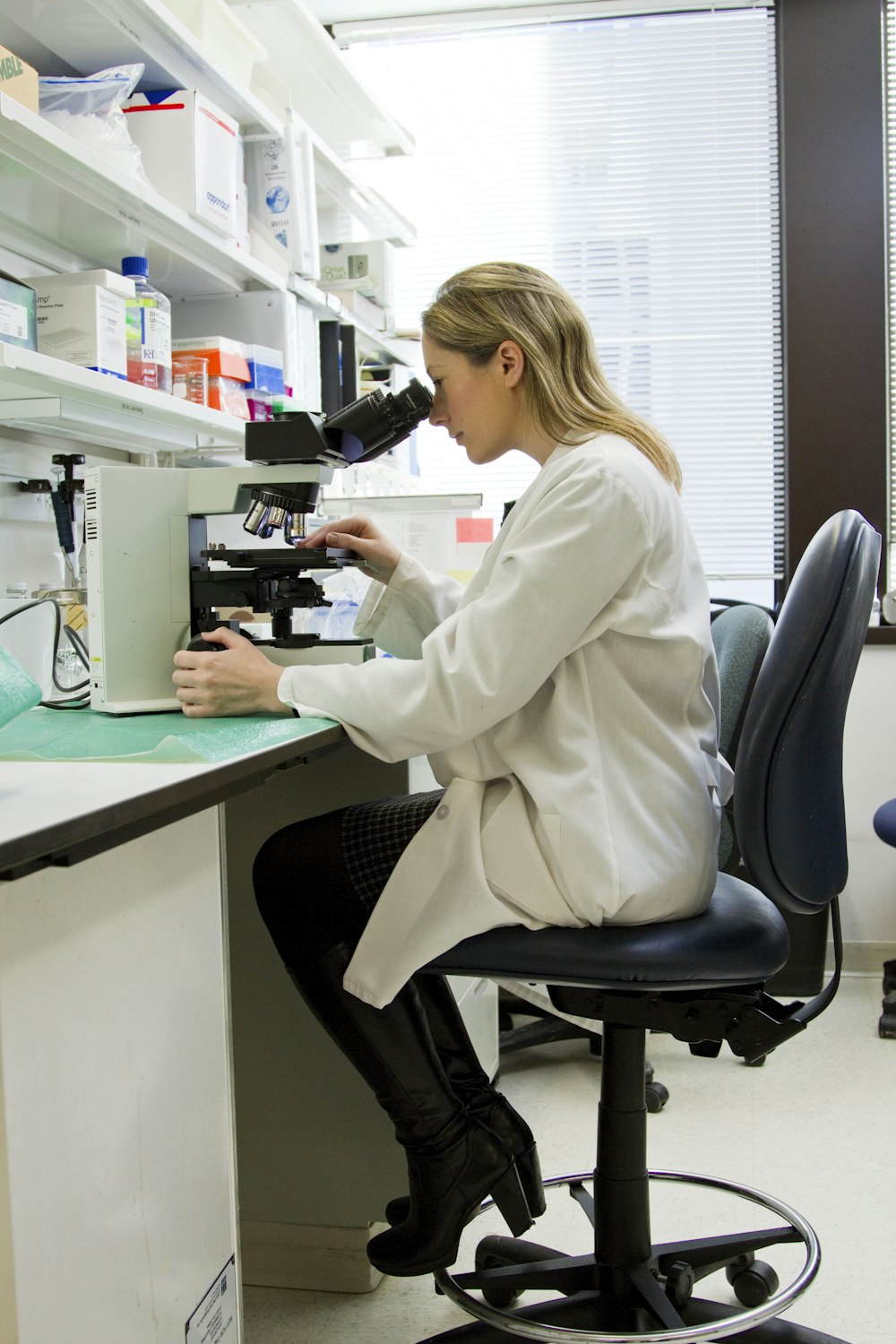
Laboratory evolution experiments allow scientists to observe evolutionary processes in real-time.
A Landmark Discovery: Citrate Metabolism
One of the most dramatic moments in the experiment occurred after approximately 31,500 generations, when one population evolved the ability to metabolize citrate—a nutrient that E. coli normally cannot use in the presence of oxygen . This was a landmark observation because it demonstrated the emergence of a fundamentally new trait, something once thought to occur only over immense timescales.
Experimental Insight
The evolution of citrate metabolism showed how complex traits can evolve through simple, incremental steps rather than requiring sudden, dramatic changes.
Results and Analysis
| Generation | Significant Observation | Scientific Importance |
|---|---|---|
| ~2,000 | First signs of adaptation to laboratory environment | Demonstrated rapid evolutionary change |
| ~6,000 | Emergence of first stable polymorphisms | Showed how multiple types can coexist |
| ~10,000 | Mutation rate increased in some populations | Revealed evolution of evolvability |
| ~31,500 | Evolution of citrate metabolism | Documented origin of novel trait |
| ~50,000 | Further refinement of citrate users | Showed ongoing optimization after innovation |
Experimental Insights
- Adaptation can be remarkably predictable: Across replicate populations, similar genetic solutions often evolved independently 3 .
- Evolution never stops: Even after 60,000+ generations, the bacteria continue to adapt to their environment .
- Complex traits can evolve through simple steps: The ability to metabolize citrate required multiple genetic changes that accumulated gradually .
Types of Mutations Observed
| Mutation Type | Frequency | Example |
|---|---|---|
| Point mutations | Very common | Metabolic enzymes |
| Insertions/Deletions | Common | Regulatory regions |
| Gene duplications | Occasional | Transport proteins |
| Genomic rearrangements | Rare | Promoter changes |
The Modern Evolutionary Toolkit: Techniques and Technologies
Contemporary evolutionary biology employs an array of sophisticated tools that have transformed our ability to study evolution:
Evolve and Resequence (E&R)
E&R represents a powerful modern approach that combines experimental evolution with whole-genome sequencing . Researchers track genetic changes across generations by sequencing populations before and after experimental evolution, allowing them to identify precisely which mutations are responsible for adaptation.
Directed Evolution
In directed evolution, scientists harness evolutionary principles to design biomolecules with useful properties 4 . This process involves creating genetic diversity, selecting variants with desired properties, amplifying successful variants, and repeating the cycle until optimal performance is achieved.
Directed evolution has been used to engineer enzymes for industrial processes, therapeutic proteins, and biosensors 4 .
Research Reagent Solutions in Experimental Evolution
| Tool/Reagent | Function | Application Example |
|---|---|---|
| Error-prone PCR | Introduces random mutations during DNA amplification | Generating diverse protein variants for directed evolution 4 |
| DNA shuffling | Recombines genes from different sources | Creating chimeric proteins with novel functions 4 |
| Barcoded transposons | Tracks individual lineages in evolving populations | Monitoring evolutionary dynamics in microbial populations 3 |
| CRISPR-Cas systems | Enables targeted genome editing | Testing evolutionary hypotheses by introducing specific mutations 9 |
| Fluorescence-activated cell sorting (FACS) | High-throughput screening based on optical properties | Isolating microbial variants with desired traits from large libraries 4 |
The Power of Modern Tools
Today's evolutionary biologists have unprecedented capabilities to observe, measure, and manipulate evolutionary processes, providing insights that were unimaginable just decades ago.
Evolution in the Wild: Beyond the Laboratory
While controlled experiments provide crucial insights, evolution operates with full complexity in natural environments:

Rapid Adaptation in Guppies
Research on wild guppies has demonstrated that remarkable adaptations can occur within just a few generations . When guppies were transplanted between different pools in Trinidad, their life history traits evolved rapidly in response to predation pressure, demonstrating natural selection in action.

Climate Change and Hybridization
Recently, biologists documented an extraordinary natural hybrid between a green jay and a blue jay—species separated by millions of years of evolution 1 . As climate change alters species' ranges, previously separated species are coming into contact, creating new opportunities for hybridization and evolutionary innovation 1 .
Evolution in Real Time
Human activities are now driving evolutionary changes at unprecedented rates, from antibiotic resistance in bacteria to adaptations in species responding to climate change.
Conclusion: The Never-Ending Story
Evolution is not merely a historical process but an ongoing force that continues to shape life on Earth. From the constant arms race between pathogens and their hosts to the gradual adaptation of species to a changing climate, evolution continues all around us.
The same principles that explain how life diversified over billions of years also help us understand why bacteria become antibiotic-resistant, how viruses like SARS-CoV-2 evolve new variants, and what we might expect as species respond to human-driven environmental changes 3 9 .
As scientists develop increasingly sophisticated tools to observe and manipulate evolutionary processes, we stand to gain not only a deeper understanding of life's history but also powerful approaches to addressing challenges in medicine, agriculture, and conservation. The endless experiment continues, and we are now both its subjects and its students.
Historical Process
Evolution explains the diversity of life over billions of years
Ongoing Force
Evolution continues to shape life in response to changing environments
Future Applications
Evolutionary principles help address modern challenges in medicine and conservation