Reproducibility vs Replicability in Science: A Clear Guide for Researchers and Drug Developers
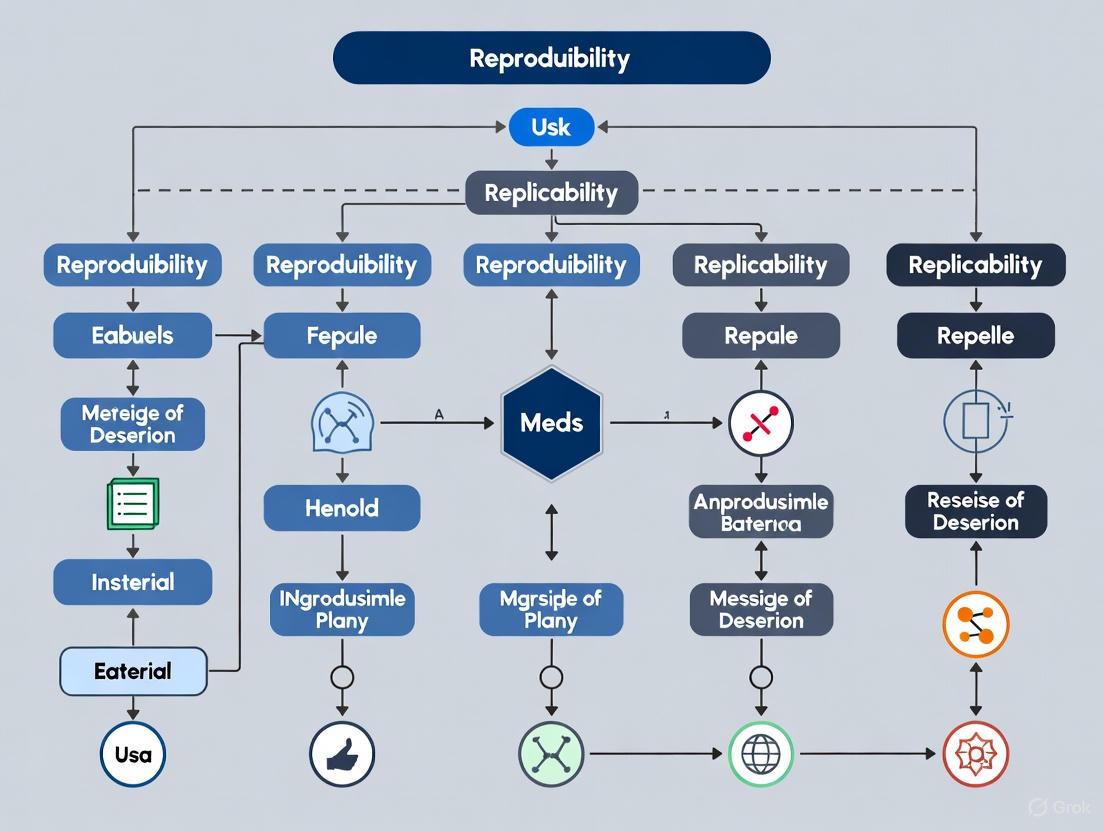
This article clarifies the critical distinction between reproducibility (obtaining consistent results using the same data and code) and replicability (obtaining consistent results across studies with new data) in scientific research.
Reproducibility vs Replicability in Science: A Clear Guide for Researchers and Drug Developers
Abstract
This article clarifies the critical distinction between reproducibility (obtaining consistent results using the same data and code) and replicability (obtaining consistent results across studies with new data) in scientific research. Tailored for researchers, scientists, and drug development professionals, it explores the historical context and terminology confusion, provides actionable methodologies for implementing rigorous practices, analyzes the causes and costs of the reproducibility crisis, and offers frameworks for validating research through synthesis. The guide concludes with essential takeaways for enhancing research transparency and reliability in biomedical and clinical fields.
Defining the Pillars: Unraveling Reproducibility and Replicability in Modern Science
The terms "reproducibility" and "replicability" represent distinct but interconnected concepts in the scientific method, though their definitions have historically caused confusion across different disciplines. A 2019 National Academies of Sciences, Engineering, and Medicine (NASEM) report specifically addressed this terminology problem to establish clearer standards for scientific research. This whitepaper adopts the precise framework advanced by NASEM, defining reproducibility as "obtaining consistent computational results using the same input data, computational steps, methods, code, and conditions of analysis" and replicability as "obtaining consistent results across studies aimed at answering the same scientific question, each of which has obtained its own data" [1] [2] [3]. The essential distinction is that reproducibility involves the same data and code, while replicability requires new data collection [3].
These concepts are fundamental to building a cumulative body of reliable scientific knowledge. When scientific results are frequently cited in textbooks and inform policy or health decisions, the stakes for validity are exceptionally high [1]. This guide provides researchers, scientists, and drug development professionals with a technical framework for understanding and implementing these core principles, complete with methodologies, visualizations, and practical toolkits to enhance research rigor.
Core Concepts and Terminology
Distinguishing Between Reproducibility and Replicability
The terminology in this field has been characterized by inconsistent usage across scientific communities. As identified by Barba (2018), there are three predominant patterns of usage for these terms [2]:
- Category A: The terms "reproducibility" and "replicability" are used with no distinction between them.
- Category B1: "Reproducibility" refers to using the original researcher's data and computer codes to regenerate results, while "replicability" refers to a researcher collecting new data to arrive at the same scientific findings.
- Category B2: "Reproducibility" refers to independent researchers arriving at the same results using their own data and methods, while "replicability" refers to a different team arriving at the same results using the original author's artifacts.
The National Academies report deliberately selected the B1 definitions to bring clarity to the field, establishing a consistent framework that researchers across disciplines can adopt [2]. This framework aligns with the definitions used by Wellcome Open Research, which further introduces a third related term: repeatability, defined as when "the original researchers perform the same analysis on the same dataset and consistently produce the same findings" [4].
Conceptual Relationship
The relationship between these verification processes in scientific research can be visualized as a progression of independent confirmation:
This conceptual framework illustrates how scientific findings gain credibility through increasingly independent verification processes. It's important to note that a successful replication does not guarantee that the original scientific results were correct, nor does a single failed replication conclusively refute the original claims [5]. Multiple factors can contribute to non-replicability, including the discovery of unknown effects, inherent variability in systems, inability to control complex variables, or simply chance [5].
The Reproducibility and Replicability Landscape: Quantitative Evidence
Evidence from Large-Scale Assessments
Several systematic efforts have assessed the rates of reproducibility and replicability across scientific fields. The following table summarizes key findings from major replication initiatives:
Table 1: Replication Rates Across Scientific Disciplines
| Field | Replication Rate | Assessment Methodology | Source |
|---|---|---|---|
| Psychology | 36-39% | Replication of 100 experimental and correlational studies | Open Science Collaboration (2015) [5] |
| Biomedical Science (Preclinical Cancer Research) | 11-20% | Replication of landmark findings | Begley & Ellis (2012) [5] |
| Economics | 61% | Replication of 18 studies from top journals | Camerer et al. (2016) [6] |
| Social Sciences | 62% | Replication of 21 systematic social science experiments | Camerer et al. (2018) [5] |
A 2016 survey published in Nature provided additional context, reporting that more than 70% of researchers have attempted and failed to reproduce other scientists' experiments, and more than half have been unable to reproduce their own [6]. The same survey found that 52% of researchers believe there is a significant 'crisis' of reproducibility in science [6].
Contemporary Researcher Perspectives
A 2025 survey of 452 professors from universities across the USA and India provides insight into current researcher perspectives on these issues [6]. The findings reveal both national and disciplinary gaps in attention to reproducibility and transparency in science, aggravated by incentive misalignment and resource constraints.
Table 2: Researcher Perspectives on Reproducibility and Replicability (2025 Survey)
| Survey Dimension | Key Findings | Regional/Domain Variations |
|---|---|---|
| Familiarity with Concepts | Varying levels of familiarity with reproducibility crisis and open science practices | Differences observed between USA and India researchers, and between social science and engineering disciplines [6] |
| Institutional Factors | Misaligned incentives and resource constraints identified as significant barriers | Compound inequalities identified that haven't been fully appreciated by open science community [6] |
| Confidence in Published Literature | Mixed confidence in work published within their fields | Cultural and disciplinary differences affect perceived reliability of research [6] |
| Proposed Solutions | Need for culturally-centered solutions | Definitions of culture should include both regional and domain-specific elements [6] |
Methodological Approaches and Experimental Protocols
Computational Reproducibility Verification Protocol
For computational reproducibility, the following methodological protocol ensures that results can be consistently regenerated:
Objective: To verify that the same computational results can be obtained using the same input data, code, and conditions of analysis.
Materials and Reagents:
- Original dataset(s) with complete metadata
- Analysis code (preferably version-controlled)
- Computational environment specifications
- Documentation of all analytical steps
Procedure:
- Data Acquisition: Obtain the original research data from repositories or supplementary materials.
- Environment Setup: Recreate the computational environment using containerization (Docker, Singularity) or virtual environments.
- Code Execution: Run the analysis code in the recreated environment.
- Result Comparison: Compare the obtained results with the originally reported results.
- Discrepancy Documentation: Note any variations and attempt to identify their sources.
Validation Metrics: Bitwise agreement can sometimes be expected for computational reproducibility, though some numerical precision variations may be acceptable depending on the field standards [5].
Experimental Replicability Assessment Protocol
For experimental replicability, a different approach is required:
Objective: To determine whether consistent results can be obtained across studies aimed at answering the same scientific question using new data.
Materials and Reagents:
- Detailed experimental protocol from original study
- Necessary laboratory equipment and reagents
- Appropriate sample size calculations for statistical power
Procedure:
- Protocol Review: Carefully study the original methods and materials.
- Power Analysis: Conduct sample size calculations to ensure adequate statistical power.
- Independent Data Collection: Execute the experimental procedure without reliance on original data.
- Analysis Implementation: Apply similar analytical methods to the new dataset.
- Consistency Assessment: Evaluate consistency between original and new results using appropriate statistical measures.
Validation Metrics: Unlike reproducibility, replicability does not expect identical results but rather consistent results accounting for uncertainty. Assessment should consider both proximity (closeness of effect sizes) and uncertainty (variability in measures) [5].
Statistical Framework for Assessing Replicability
The National Academies report emphasizes that determining replication requires more than simply checking for repeated statistical significance [5]. A restrictive and unreliable approach would accept replication only when the results in both studies have attained "statistical significance" at a selected threshold [5]. Rather, in determining replication, it is important to consider the distributions of observations and to examine how similar these distributions are, including summary measures such as proportions, means, standard deviations (uncertainties), and additional metrics tailored to the subject matter [5].
The relationship between statistical measures in replication studies can be visualized as follows:
Research Reagent Solutions and Essential Materials
Implementing reproducible and replicable research requires specific tools and practices. The following table details key solutions across the research workflow:
Table 3: Essential Research Reagent Solutions for Reproducible and Replicable Science
| Solution Category | Specific Tools/Practices | Function | Implementation Examples |
|---|---|---|---|
| Data Management | Data management plans; File naming conventions; Metadata standards | Ensures data organization, preservation, and reusable structure | FAIR Principles (Findable, Accessible, Interoperable, Reusable) [3] |
| Computational Environment | Containerization (Docker); Virtual environments; Workflow systems | Preserves exact computational conditions for reproducibility | Version-controlled container specifications; Jupyter notebooks with kernel specifications |
| Code and Analysis | Version control (Git); Open source software; Scripted analyses | Documents analytical steps precisely for verification | Public code repositories (GitHub, GitLab); R/Python scripts with comprehensive commenting |
| Protocol Documentation | Electronic lab notebooks; Detailed methods sections; Protocol sharing platforms | Enables exact repetition of experimental procedures | Protocols.io; Detailed materials and methods in publications; Step-by-step protocols |
| Statistical Practices | Preregistration; Power analysis; Appropriate statistical methods | Reduces flexibility in analysis and selective reporting | Open Science Framework preregistration; Sample size calculations before data collection |
Implications for Scientific Fields
Discipline-Specific Considerations
The challenges and solutions for reproducibility and replicability vary across scientific domains. In biomedical research, concerns have focused on preclinical studies and clinical trials, with emphasis on randomized experiments with masking, proper sizing and power of experiments, and trial registration [2]. In psychology and social sciences, attention has centered on questionable research practices such as p-hacking and HARKing (hypothesizing after results are known) [6]. Computational fields have led the reproducible research movement, emphasizing sharing of data and code so results can be reproduced [2].
The emergence of new digital methods across disciplines, including topic modeling, network analysis, knowledge graphs, and various visualizations, has created new challenges for reproducibility and verifiability [7]. These methods create a need for thorough documentation and publication of different layers of digital research: digital and digitized collections, descriptive metadata, the software used for analysis and visualizations, and the various settings and configurations [7].
Institutional and Funding Agency Responses
Major research funders have implemented policies to address these challenges. The National Science Foundation (NSF) has reaffirmed its commitment to advancing reproducibility and replicability in science, encouraging proposals that address [8]:
- Advancing the science of reproducibility and replicability: Understanding current practices, ways to measure reproducibility and replicability, and reasons why studies may fail to replicate.
- Research infrastructure: Developing cyberinfrastructure tools that enable reproducible and replicable practices across scientific communities.
- Educational efforts: Enabling training to identify and encourage best practices for reproducibility and replicability.
Academic institutions, journals, conference organizers, funders of research, and policymakers all play roles in improving reproducibility and replicability, though this responsibility begins with researchers themselves, who should operate with "the highest standards of integrity, care, and methodological excellence" [1].
The distinction between reproducibility as computational verification and replicability as independent confirmation provides a crucial framework for assessing scientific validity. While the National Academies report does not necessarily agree with characterizations of a "crisis" in science, it unequivocally states that improvements are needed—including more transparency of code and data, more rigorous training in statistics and computational skills, and cultural shifts that reward reproducible and replicable practices [1].
For researchers, scientists, and drug development professionals, embracing these concepts requires both technical solutions and cultural changes. Making work reproducible offers additional benefits to authors themselves, including potentially greater impact through higher citation rates, facilitated collaboration, and more efficient peer review [4]. By implementing the protocols, tools, and frameworks outlined in this whitepaper, the scientific community can strengthen the foundation of reliable knowledge that informs future discovery and application.
The pursuit of scientific knowledge has always been inextricably linked to the tools and methodologies available for investigation. From Robert Boyle's 17th-century air pump to today's sophisticated computational models, the evolution of experimental science reveals a continuous thread: the quest for reliable, verifiable knowledge. This journey is framed by an ongoing dialogue between reproducibility (obtaining consistent results using the same data and methods) and replicability (obtaining consistent results across studies asking the same scientific question) [9]. Boyle's air pump, the expensive centerpiece of the new Royal Society of London, created a vacuum chamber for experimentation on air's nature and its effects [10]. His work, documented in New Experiments Physico-Mechanical (1660), insisted on the importance of sensory experience and witnessed experimentation, establishing a foundation for verification that would echo through centuries [10]. Today, we stand in the midst of a computational revolution equally transformative, where data-intensive research and artificial intelligence are reshaping the scientific landscape, presenting new challenges and opportunities for ensuring the robustness of scientific findings [11] [12] [13].
This article traces this historical arc, examining how the core principles of scientific demonstration and verification established in the 17th century have adapted to the rise of computation. We will explore how modern frameworks for reproducibility and replicability address the complexities of computational science, and provide a practical guide to the methodologies and tools that underpin rigorous, data-driven research today [2] [9].
Boyle’s Air Pump and the Foundation of Experimental Verification
In the mid-17th century, Robert Boyle, with the assistance of Robert Hooke, engineered the first air pump, establishing a new paradigm for experimental natural philosophy [10]. This device was not merely a tool but a platform for creating a new space for scientific inquiry—the vacuum chamber—which allowed for systematic experimentation on the properties and effects of air [10]. The air pump was the expensive centerpiece of the Royal Society of London, symbolizing a commitment to experimental evidence over pure reason [10].
Boyle’s methodology, as detailed in his 1660 work New Experiments Physico-Mechanical, Touching the Spring of the Air and Its Effects, was groundbreaking in its insistence on witnessing and sensory experience [10]. His writings provided painstakingly detailed accounts of his experiments, allowing those who were not present to understand and, in principle, verify his work [10]. This practice laid the groundwork for the modern concept of methodological transparency. However, the demonstrations were performed for a small audience of like-minded natural philosophers, and the ability to independently verify results was limited to those with access to similar sophisticated and costly apparatus [10].
Table: The Evolution of Scientific Demonstration from Boyle to the 19th Century
| Era | Primary Instrument | Audience | Purpose | Mode of Verification |
|---|---|---|---|---|
| Mid-17th Century (Boyle) | Air Pump / Vacuum Chamber | Small group of natural philosophers | Experimental natural philosophy | Witnessing, detailed written accounts |
| 19th Century | Improved Air Pumps (e.g., Franklin Educational Co.) | Large public audiences | Education and spectacle | Public demonstration of predictable results |
By the 19th century, the role of the air pump had evolved from a tool for primary research to an instrument for public education and spectacle [10]. At events like the 1851 Great Exhibition in London, manufacturers exhibited air pumps alongside other instruments like Leyden jars and magic lanterns for thrilling public displays [10]. Scientists like Humphry Davy and Michael Faraday cultivated their skills as entertainers, enchanting crowds while demonstrating scientific principles [10]. The air pump was now used to show predictable results, such as the silencing of a bell in a vacuum, for an audience's entertainment rather than to test new knowledge [10]. This shift marked a democratization of scientific witnessing, extending the sensory experience of science to broader audiences, yet the core principle of verification through demonstration remained central [10].
Defining the Framework: Reproducibility vs. Replicability
As science has grown in complexity and scope, the need for precise terminology to describe the verification of scientific findings has become paramount. The terms "reproducibility" and "replicability" are often used interchangeably in common parlance, but within the scientific community, particularly in the context of modern computational research, they have distinct and critical meanings. The National Academies of Sciences, Engineering, and Medicine provide clear, authoritative definitions to resolve this confusion [9].
Reproducibility refers to obtaining consistent computational results using the same input data, computational steps, methods, code, and conditions of analysis. It is fundamentally about verifying that the same analytical process, applied to the same data, yields the same result. Reproducibility is a cornerstone of computational science, as it allows other researchers to verify the building blocks of a study before attempting to extend its findings [9].
Replicability refers to obtaining consistent results across studies that are aimed at answering the same scientific question, each of which has obtained its own data. Replication involves new data collection and the application of similar, but not identical, methods. A successful replication does not guarantee the original result was universally correct, nor does a single failure conclusively refute it. Instead, replication tests the robustness and generalizability of a scientific inference [9].
The confusion surrounding these terms is long-standing. As noted by the National Academies, different scientific disciplines and institutions have used these words in inconsistent or even contradictory ways [2]. For instance, in computer science, "reproducibility" often relates to the availability of data and code to regenerate results, while "replicability" might refer to a different team achieving the same results with their own artifacts [2]. The framework adopted here provides a consistent standard for discussion.
Table: Key Definitions in Scientific Verification
| Term | Core Question | Required Components | Primary Goal |
|---|---|---|---|
| Reproducibility | Can I obtain the same results from the same data and code? | Original data, software, code, computational environment | Verification of the computational analysis |
| Replicability | Do I obtain consistent results when I ask the same question with new data? | New data, independent study, similar methods | Validation of the scientific claim's generality |
Failures in reproducibility often stem from a lack of transparency in reporting data, code, and computational workflow [9]. In contrast, failures in replicability can arise from both helpful and unhelpful sources. Helpful sources include inherent but uncharacterized uncertainties in the system being studied, which can lead to the discovery of new phenomena [9]. Unhelpful sources include shortcomings in study design, conduct, or communication, often driven by perverse incentives, sloppiness, or bias, which reduce the efficiency of scientific progress [9].
The Computational Revolution in Science
The latter part of the 20th century and the beginning of the 21st have witnessed a profound shift in scientific practice, driven by the explosion of computational power and data availability. This "computational revolution" has transformed fields as diverse as astronomy, genetics, geoscience, and social science [2]. The democratization of data and computation has created entirely new ways to conduct research, enabling scientists to tackle problems of a scale and complexity that were previously impossible [2].
A key driver of this revolution is the shift to a data-centric research model. In the past, scientists in wet labs generated the data, and computational researchers played a supporting role in analysis [12]. Today, computational researchers are increasingly taking leadership roles, leveraging the vast amounts of publicly available data to drive discovery independently [12]. The challenge has moved from data generation to data analysis and interpretation [12]. This is exemplified by initiatives like the COBRE Center for Computational Biology of Human Disease at Brown University, which aims to help researchers convert massive datasets into useful information, a task that now confronts even those working primarily in wet labs or clinics [11].
Underpinning this revolution is the advent of accelerated computing. Unlike the mainframe and desktop eras that preceded it, accelerated computing relies on specialized hardware, such as graphical processing units (GPUs), to speed up the execution of specific tasks [13]. These GPUs, housed in massive data centers and used in parallel, provide the computational power required for complex artificial intelligence (AI), machine learning, and real-time data analytics [13]. The public introduction of models like ChatGPT was a striking demonstration of this power, but the implications extend to every sector, from drug discovery to climate modeling [13].
However, this new power is not without cost. The infrastructure of the computational revolution is energy-intensive, with large data centers consuming significant electricity [13]. This has prompted concerns about environmental impact and grid management. Yet, the relevant tradeoff is the social cost of not leveraging this technology—the delays in drug discoveries, the inferior climate models, and the foregone economic growth and productivity gains [13]. The policy challenge, therefore, is not to pause progress but to optimize AI for energy efficiency and to use AI itself to create a smarter, more efficient power grid [13].
Modern Computational Protocols and Reproducible Workflows
The rise of computational science has necessitated the development of rigorous protocols and platforms to ensure that research remains transparent, reproducible, and collaborative. Unlike the methods section of a traditional scientific paper, which is often insufficient to convey the complexity of a computational analysis, modern reproducible research requires the sharing of a complete digital compendium of data, code, and environment specifications [9].
Key Strategies for Integrating Computation and Experimentation
The integration of experimental data with computational methods is now a cornerstone of fields like structural biology and drug discovery. This integration can be achieved through several distinct strategies, each with its own advantages [14]:
- Independent Approach: Computational and experimental protocols are performed separately, and their results are compared post-hoc. This approach can reveal "unexpected" conformations but may struggle to sample rare biological events [14].
- Guided Simulation (Restrained) Approach: Experimental data are incorporated as external energy terms ("restraints") that directly guide the computational sampling of molecular conformations during the simulation. This efficiently limits the conformational space explored but requires deeper computational expertise to implement [14].
- Search and Select (Reweighting) Approach: A large pool of molecular conformations is first generated computationally. The experimental data are then used to filter and select the conformations that best match the data. This allows for easy integration of multiple data sources but requires that the initial pool contains the correct conformations [14].
- Guided Docking: Experimental data are used to define binding sites and assist in predicting the structure of biomolecular complexes, either during the sampling of binding poses or the scoring of their quality [14].
The following diagram illustrates the logical workflow of these core strategies.
Essential Tools and Platforms for Reproducible Research
The practical implementation of these strategies relies on a robust toolkit. The following table details key computational reagents and platforms essential for modern, reproducible scientific research.
Table: Key Research Reagent Solutions in Computational Science
| Tool/Reagent | Category | Primary Function | Example Use Case |
|---|---|---|---|
| ColabFold [15] | Structure Prediction | Fast and accurate protein structure prediction using deep learning. | Predicting 3D structures of monomeric proteins and protein complexes from amino acid sequences. |
| Rosetta [15] | Software Suite | A comprehensive platform for macromolecular modeling, docking, and design. | Antibody structure prediction (RosettaAntibody) and docking to antigens (SnugDock). |
| HADDOCK [15] | Docking Server | Integrative modeling of biomolecular complexes guided by experimental data. | Determining the 3D structure of a protein-protein complex using NMR or cross-linking data. |
| AutoDock Suite [15] | Docking & Screening | Computational docking and virtual screening of ligand libraries against protein targets. | Identifying potential drug candidates by predicting how small molecules bind to a target protein. |
| ClusPro [15] | Docking Server | Performing rigid-body docking and clustering of protein-protein complexes. | Generating initial models of how two proteins might interact. |
| CryoDRGN [15] | Cryo-EM Analysis | A machine learning approach to reconstruct heterogeneous ensembles from cryo-EM data. | Uncovering continuous conformational changes and structural heterogeneity in macromolecular complexes. |
| protocols.io [16] | Protocol Platform | A platform for creating, sharing, and preserving updated research protocols with version control. | Sharing detailed, step-by-step computational workflows beyond abbreviated journal methods sections. |
| GPUs (Graphical Processing Units) [13] | Hardware | Specialized hardware that accelerates parallel computations, essential for training AI models. | Dramatically speeding up molecular dynamics simulations or deep learning-based structure prediction. |
Platforms like protocols.io directly address the reproducibility crisis by providing a structured environment for documenting methods. This facilitates collaboration and allows researchers to preserve and update their protocols with built-in version control, ensuring that the exact steps used in an experiment are known and reproducible [16]. As noted by a user from UCSF, this versioning "is especially powerful so that we can identify the exact version of a protocol used in an experiment, which increases reproducibility" [16].
The journey from Boyle's air pump to the modern computational revolution reveals a continuous evolution in the practice of science, yet a remarkable consistency in its core ideals. Boyle’s insistence on detailed documentation and witnessed experimentation finds its modern equivalent in the push for transparent data and code sharing [10] [9]. The 19th-century public demonstrations, which made scientific phenomena accessible to a broader audience, parallel today's efforts to democratize data and computational tools, moving research from exclusive, expensive endeavors to more collaborative and open practices [10] [11].
The computational revolution, powered by accelerated computing and AI, has introduced unprecedented capabilities for discovery [13]. However, it has also heightened the critical importance of the distinction between reproducibility and replicability [9]. Ensuring computational reproducibility—by sharing data, code, and workflows—is the necessary first step in building a reliable foundation for scientific knowledge. It is the modern implementation of Boyle's detailed record-keeping. Replicability, the process of confirming findings through independent studies and new data, remains the ultimate test of a scientific claim's validity and generalizability.
As we continue to navigate this data-centric world, the lessons of history are clear. The tools have changed, from brass pumps to GPU clusters, but the principles of rigor, transparency, and skepticism remain the bedrock of scientific progress. By embracing the frameworks, protocols, and tools designed to uphold these principles, researchers can ensure that the computational revolution delivers on its promise to advance human knowledge and address the complex challenges of our time.
The validity of scientific discovery rests upon a foundational principle: the ability to confirm results through independent verification. This process, however, is severely complicated by a pervasive issue known as terminology chaos, where key terms—most notably "reproducibility" and "replicability"—are defined and used in conflicting ways across different scientific disciplines. This inconsistency is not merely semantic; it directly impacts how research is conducted, evaluated, and trusted. Within the context of a broader thesis on scientific rigor, this terminology confusion creates significant obstacles for collaboration, peer review, and the assessment of research quality, ultimately muddying our understanding of what constitutes a verified scientific finding [1] [17].
The challenge is amplified when research spans traditional disciplinary boundaries, as is increasingly common. A computational biologist, a clinical trialist, and a meta-analyst may all use the words "reproducible" and "replicable" while intending fundamentally different concepts. This guide provides an in-depth examination of the origins and extent of this terminology chaos, presents a structured comparison of prevailing definitions, and offers concrete methodologies and tools to foster greater clarity and consistency in scientific communication.
The State of Terminology Chaos
The Core of the Confusion
At the heart of the terminology chaos is a fundamental reversal in how "reproducibility" and "replicability" are defined across scientific traditions. This is not a matter of minor variations but of directly opposing interpretations [17].
Claerbout Terminology (Computational Sciences): Pioneered by geophysicist Jon Claerbout, this tradition equates reproducibility with the exact recalculation of results using the same data and the same code. It is often seen as a minimal, almost mechanical standard. In contrast, replicability (or "reproduction") in this context refers to the more substantial achievement of reimplementing a method from its description to obtain consistent results with a new dataset [17].
ACM Terminology (Experimental & Metrology Sciences): The Association for Computing Machinery (ACM) and international standards bodies like the International Vocabulary of Metrology define the terms almost inversely. Here, replicability refers to a different team obtaining consistent results using the same experimental setup and methods. Reproducibility represents the highest standard, where a different team, using a completely independent experimental setup (different methods, tools, etc.), confirms the original findings [17].
This divergence means that a computational scientist declaring a study "reproducible" and an analytical chemist describing an experiment's "reproducibility" are often referring to different levels of scientific validation, leading to potential miscommunication and misplaced confidence.
Quantitative Evidence of the Problem
A 2025 survey of 452 professors across universities in the USA and India highlights how terminology confusion and associated practices vary by national and disciplinary culture [18].
Table 1: Cultural and Disciplinary Gaps in Reproducibility and Transparency (Survey Findings)
| Aspect | Findings from the Survey |
|---|---|
| Familiarity with "Crisis" | Varying levels of familiarity with concerns about reproducibility, with significant gaps in attention aggravated by incentive misalignment and resource constraints. |
| Confidence in Literature | Researchers reported differing levels of confidence in work published within their own fields. |
| Institutional Factors | Key factors contributing to (non-)reproducibility included a lack of training, institutional barriers, and the availability of resources. |
| Recommended Solution | Solutions must be culturally-centered, where definitions of culture include both regional and domain-specific elements. |
The survey concluded that a one-size-fits-all approach is ineffective, and that enhancing scientific integrity requires solutions that are sensitive to both regional and disciplinary contexts [18].
A Structured Comparison of Conflicting Definitions
To navigate the terminology chaos, it is essential to have a clear, side-by-side comparison of the major definitional frameworks. The following table synthesizes the key terminologies discussed in the literature.
Table 2: Comparison of Major Definitional Frameworks for Reproducibility and Replicability
| Terminology Framework | Repeatability | Replicability | Reproducibility |
|---|---|---|---|
| Claerbout (Computational) | (Not explicitly defined) | Writing new software based on the method description to obtain similar results on (potentially) new data. | Running the same software on the same input data to obtain the same results. [17] |
| ACM & Metrology Standards | Same team, same experimental setup. | Different team, same experimental setup. | Different team, different experimental setup. [17] |
| Goodman et al. Lexicon | (Focused on different aspects) | Results Reproducibility: Obtain the same results from an independent study with closely matched procedures. | Methods Reproducibility: Provide sufficient detail for procedures and data to be exactly repeated. [17] |
| Analytical Chemistry | Within-run precision (same operator, setup, short period). | (Often used interchangeably with reproducibility) | Between-run precision (different operators, laboratories, equipment, over time). [17] |
The Goodman Lexicon: A Potential Path Forward
In response to the confusion, Goodman, Fanelli, and Ioannidis proposed a new lexicon designed to sidestep the ambiguous common-language meanings of "reproduce" and "replicate." Their framework defines three distinct levels [17]:
- Methods Reproducibility: The provision of sufficient detail about procedures and data so that the same procedures could be exactly repeated.
- Results Reproducibility: The attainment of the same results from an independent study with procedures as closely matched to the original study as possible.
- Inferential Reproducibility: The drawing of qualitatively similar conclusions from either an independent replication of a study or a reanalysis of the original study.
This approach reframes the discussion around the specific aspect of the research process being evaluated, offering a more precise and less contentious vocabulary.
Experimental Protocols for Assessing Terminology and Inconsistency
Protocol 1: Hierarchical Terminology Technique (HTT) for Terminology Mapping
The Hierarchical Terminology Technique (HTT) is a qualitative content analysis process developed to address terminology inconsistency in research fields. It structures a hierarchy of terms to expose the relationships between them, thereby improving clarity and consistency of use [19].
Objective: To systematically identify, analyze, and present the terminology of a research field to expose inconsistencies and structure a clear hierarchy of terms and their relationships.
Materials and Reagents:
- Primary Literature Corpus: A representative sample of research papers, review articles, and seminal texts from the field under study.
- Qualitative Data Analysis Software: Tools like NVivo or ATLAS.ti can facilitate coding, but the process can be managed with spreadsheets.
- HTT-Specific Codebook: A structured document for defining terms and recording their relationships (e.g., "is a type of," "is a part of," "is a property of").
Methodology:
- Terminology Identification: Systematically review the literature corpus to extract key terms and their definitions. Record the source and context of each definition.
- Terminology Analysis: a. Coding: Code each instance of a term's use and its associated definition. b. Comparison: Compare all definitions for a given term to identify conflicts, overlaps, and nuances. c. Relationship Mapping: For each term, determine its relationship to other terms in the field (e.g., Is "replicability" a broader category than "reproducibility," or are they distinct concepts?).
- Hierarchy Construction: Build a visual hierarchy (a tree diagram or a concept map) that positions terms according to their relationships. This exposes the scope of the research field and clarifies how terms should logically interact.
- Validation: Present the derived hierarchy to domain experts for feedback and refinement to ensure it accurately reflects the conceptual structure of the field.
Workflow Diagram: The following diagram illustrates the HTT methodology as a sequential workflow.
Protocol 2: Quantitative Assessment of Inconsistency in Meta-Analysis
In evidence synthesis, "inconsistency" refers to heterogeneity—the degree of variation in effect sizes across primary studies included in a meta-analysis. Traditional measures like I² and Cochran's Q have limitations, particularly with few studies or studies with very precise estimates. The following protocol outlines the use of two new indices based on Decision Thresholds (DTs) [20].
Objective: To quantitatively assess the inconsistency of effect sizes in a meta-analysis using Decision Thresholds (DTs) via the Decision Inconsistency (DI) and Across-Studies Inconsistency (ASI) indices.
Materials and Reagents:
- Dataset: A dataset containing the effect size and variance for each primary study in the meta-analysis.
- Statistical Software: R statistical environment with the
metaincpackage (https://metainc.med.up.pt/) or access to the companion web tool. - Defined Decision Thresholds (DTs): Pre-specified effect size values that demarcate boundaries between interpretation categories (e.g., trivial, small, moderate, and large effects).
Methodology:
- Model Fitting: Perform a Bayesian or frequentist random-effects meta-analysis on the dataset to obtain the posterior distributions (or best linear unbiased predictions) of the effect size for each primary study.
- Categorization by DT: For each sample from the posterior distribution of each study's effect size, assign it to an interpretation category based on the pre-defined DTs.
- Index Calculation: a. Decision Inconsistency (DI) Index: Calculate the percentage of studies for which at least one of their posterior effect size samples falls into a different interpretation category than the study's mean effect size. A DI ≥ 50% suggests important overall inconsistency. b. Across-Studies Inconsistency (ASI) Index: For each pair of studies, calculate the percentage of interpretation categories that are unique to one study or the other. Average this across all study pairs. An ASI ≥ 25% suggests important between-studies inconsistency.
- Sensitivity Analysis: Assess the impact of uncertainty in the DTs and the model on the DI and ASI values.
Workflow Diagram: The process for calculating and interpreting the DI and ASI indices is shown below.
The Scientist's Toolkit: Essential Reagents for Terminology and Inconsistency Research
Table 3: Key Research Reagent Solutions for Terminology and Inconsistency Analysis
| Item / Reagent | Function / Purpose | Example / Specification |
|---|---|---|
| Literature Corpus | Serves as the primary source data for identifying terms, definitions, and their usage patterns. | A systematically gathered collection of PDFs from key journals and conference proceedings in the target field. |
| Qualitative Analysis Software | Facilitates the coding and organization of textual data, allowing for efficient analysis of terms and their relationships. | NVivo, ATLAS.ti, or even a structured spreadsheet (e.g., Excel or Google Sheets). |
| HTT Codebook | Provides a standardized structure for defining terms and mapping their hierarchical relationships, ensuring analytical consistency. | A document with fields for Term, Definition, Source, Related Terms, and Relationship Type. |
| R Statistical Environment | The computational engine for performing meta-analysis and calculating quantitative inconsistency indices. | R version 4.0.0 or higher. |
metainc R Package |
A specialized software tool for computing the Decision Inconsistency (DI) and Across-Studies Inconsistency (ASI) indices. | Available via the comprehensive R archive network (CRAN) or from the project's repository. |
| Web Tool for DI/ASI | Provides a user-friendly interface for researchers to compute the DI and ASI indices without requiring deep programming knowledge. | Accessible at https://metainc.med.up.pt/. |
| Decision Thresholds (DTs) | Act as pre-defined benchmarks to contextualize effect sizes, enabling the assessment of clinical or practical inconsistency beyond statistical heterogeneity. | e.g., Thresholds for "small," "moderate," and "large" effect sizes, determined a priori through expert consensus or literature review. |
Visualization and Reporting Standards
Principles for Effective Visual Communication
When creating diagrams and figures to illustrate terminology hierarchies or analytical results, adherence to established data visualization principles is crucial for effective communication [21].
- Use Position and Length over Area and Angle: Bar charts are generally superior to pie charts for comparing quantities, as the human brain is better at judging linear distances than areas or angles [21].
- Include Zero in Bar Plots: When using bar plots to represent quantities, the bar must start at zero to avoid visually distorting the differences between values [21].
- Do Not Distort Quantities: Ensure that visual cues like the area of circles (bubbles) are proportional to the quantities they represent. Using radius instead of area can misleadingly exaggerate differences [21].
- Show the Data: Instead of relying solely on summary statistics like dynamite plots, use plots that show the underlying data distribution, such as jittered points with alpha blending, boxplots, or histograms [21].
- Ease Comparisons: When comparing groups, use common axes for plots and align them to facilitate direct visual comparison [21].
Adherence to Color and Contrast Guidelines
All diagrams, including those generated with Graphviz, must comply with accessibility standards to be legible to all users, including those with color vision deficiencies. The Web Content Accessibility Guidelines (WCAG) require a minimum contrast ratio of 4.5:1 for normal text and 3:1 for large-scale text against the background [22]. The color palette specified for this document has been tested for effective contrast combinations.
Table 4: Color Palette and Application for Scientific Diagrams
| Color Name | HEX Code | Recommended Use | Contrast against White (~21:1) | Contrast against #F1F3F4 |
|---|---|---|---|---|
| Blue | #4285F4 |
Primary nodes, positive flows | Pass | Pass |
| Red | #EA4335 |
Warning nodes, negative flows, termination points | Pass | Pass |
| Yellow | #FBBC05 |
Highlight nodes, cautionary elements | Pass (Best for large text) | Pass (Best for large text) |
| Green | #34A853 |
Success nodes, completion states, data inputs | Pass | Pass |
| Dark Gray | #5F6368 |
Text, borders, and lines | Pass | Pass |
| Off-White | #F1F3F4 |
Diagram background | N/A | N/A |
| White | #FFFFFF |
Node fill, text background | N/A | Pass (Text on it) |
| Near Black | #202124 |
Primary text color | Pass | Pass |
Scientific research has undergone a fundamental transformation from an activity mainly undertaken by individuals operating in a few locations to a complex global enterprise involving large teams and complex organizations. This evolution, characterized by three key driving forces—data abundance, computational power, and publication pressures—has introduced significant challenges to research reproducibility and replicability. Within the context of scientific research, reproducibility (obtaining consistent results using the original data and methods) and replicability (obtaining consistent results using new data or methodologies to verify findings) remain central to the development of reliable knowledge [2]. This paper examines how these driving forces interact within the specific context of drug development and biomedical research, where the stakes for reproducible and replicable findings are exceptionally high.
Quantitative Analysis of Evolving Research Practices
The scale and scope of scientific research have expanded dramatically. The following table summarizes key quantitative shifts that define the modern research environment.
Table 1: The Evolving Scale of Scientific Research
| Aspect of Research | Historical Context (17th Century) | Modern Context (2016) | Quantitative Change |
|---|---|---|---|
| Research Output | Individual scientists communicating via letters | 2,295,000+ scientific/engineering articles published annually [2] | Massive increase in volume and specialization |
| Scientific Fields | A few emerging major disciplines | 230+ distinct fields and subfields [2] | High degree of specialization and interdisciplinarity |
| Data & Computation | Limited, manually analyzed data | Explosion of large datasets and widely available computing resources [2] | Shift to data-intensive and computationally driven science |
The Three Driving Forces
Data Abundance and Availability
The recent explosion in data availability has transformed research disciplines. Fields such as genetics, public health, and social science now routinely mine large databases and social media streams to identify patterns that were previously undetectable [2]. This data-rich environment enables powerful new forms of inquiry but also introduces challenges for reproducibility. The management, curation, and sharing of these massive datasets are non-trivial tasks, and without proper protocols, the ability to reproduce analyses diminishes significantly.
Computational Power and New Methodologies
The democratization of data and computation has created entirely new ways to conduct research. Large-scale computation allows researchers in fields from astronomy to drug discovery to run massive simulations of complex systems, offering insights into past events and predictions for future ones [2]. Earth scientists, for instance, use these simulations to model climate change, while biomedical researchers model protein folding and drug interactions. This reliance on complex computational workflows, often involving custom code, introduces a new vulnerability: minor mistakes in code can lead to serious errors in interpretation and reported results, a concern that launched the "reproducible research movement" in the 1990s [2].
Publication Pressures and Institutional Incentives
An increased pressure to publish new scientific discoveries in prestigious, high-impact journals is felt worldwide by researchers at all career stages [2]. This pressure is particularly acute for early-career researchers seeking academic tenure and grant funding. Traditional tenure decisions and grant competitions often give added weight to publications in prestigious journals, creating incentives for researchers to overstate the importance of their results and increasing the risk of bias—either conscious or unconscious—in data collection, analysis, and reporting [2]. These incentives can favor the publication of novel, positive results over negative or confirmatory results, which is detrimental to a balanced scientific discourse.
Experimental Protocols for Reproducible Research
To counter the threats to validity and robustness in this new environment, the scientific community, particularly in biomedicine, has developed rigorous experimental protocols. The following methodology outlines a standardized approach for a pre-clinical drug efficacy study designed for maximum reproducibility and replicability.
Detailed Experimental Methodology
1. Hypothesis and Pre-registration:
- Objective: To evaluate the efficacy of a novel compound (Drug X) on a specific disease model.
- Pre-registration: The complete experimental design, including primary and secondary endpoints, sample size justification, and statistical analysis plan, is registered on a public repository (e.g., Open Science Framework, ClinicalTrials.gov for clinical studies) before commencing the experiment.
2. Experimental Design:
- Type: Randomized, controlled experiment.
- Blinding (Masking): Both the researchers administering the treatment and assessing the outcomes, as well as the data analysts, are blinded to the group allocations (treatment vs. control) to prevent conscious or unconscious bias.
- Control Group: A vehicle control group is included to account for any effects of the administration method.
3. Sample Sizing and Power:
- Power Analysis: The sample size per group is determined using a statistical power analysis (e.g., 80% power, α = 0.05) based on a pre-specified, biologically relevant effect size derived from pilot data or previous literature. This ensures the experiment is adequately sized to detect a true effect.
4. Data Collection and Management:
- Standardized Protocols: All procedures (e.g., drug administration, sample collection) follow a detailed, written Standard Operating Procedure (SOP).
- Electronic Lab Notebook: All raw data, including any outliers or unexpected observations, is recorded in real-time using an electronic lab notebook with an immutable audit trail.
- Data Dictionary: A comprehensive data dictionary is created to define all variables, units, and measurement techniques.
5. Computational Analysis:
- Version Control: All analysis code (e.g., R, Python scripts) is managed using a version control system (e.g., Git).
- Containerization: The computational environment (operating system, software versions, library dependencies) is captured using a container platform (e.g., Docker, Singularity) to ensure the analysis can be executed identically in the future.
- Research Compendium: A complete digital compendium, containing the raw data, code, and environment specifications, is prepared for public sharing upon manuscript submission.
Visualizing the Research Workflow and Challenges
The following diagrams, generated using Graphviz, illustrate the core concepts and workflows described in this paper.
Diagram 1: Interaction of driving forces and mitigation strategies in modern research.
Diagram 2: Workflow for a reproducible and replicable research study.
The Scientist's Toolkit: Essential Reagents for Robust Research
The following table details key solutions, both methodological and technical, that are essential for conducting research that is resilient to the challenges posed by the modern research environment.
Table 2: Research Reagent Solutions for Reproducible Science
| Tool Category | Specific Solution / Reagent | Function / Purpose |
|---|---|---|
| Methodological Framework | Pre-registration of Studies | Mitigates publication bias and HARKing (Hypothesizing After the Results are Known) by specifying the research plan before data collection. |
| Methodological Framework | Blinding (Masking) & Randomization | Reduces conscious and unconscious bias during data collection and outcome assessment, ensuring the validity of results [2]. |
| Methodological Framework | Statistical Power Analysis | Determines the appropriate sample size before an experiment begins, reducing the likelihood of false negatives and underpowered studies. |
| Data & Code Management | Electronic Lab Notebooks (ELN) | Provides a secure, time-stamped, and immutable record of all raw data and experimental procedures. |
| Data & Code Management | Version Control Systems (e.g., Git) | Tracks all changes to analysis code, facilitating collaboration and allowing the recreation of any past analytical state. |
| Data & Code Management | Containerization (e.g., Docker) | Captures the complete computational environment (OS, software, libraries) to guarantee that analyses can be run identically in the future [2]. |
| Data & Code Management | Digital Research Compendium | A complete package of data, code, and documentation that allows other researchers to reproduce the reported results exactly. |
Reproducibility and replicability form the bedrock of the scientific method, serving as essential mechanisms for verifying research findings and ensuring the self-correcting nature of scientific progress. While these terms are often used interchangeably in casual discourse, understanding their precise definitions and distinct roles is critical for researchers, particularly in fields like drug development where scientific claims have direct implications for human health and therapeutic innovation.
According to the National Academies of Sciences, Engineering, and Medicine, reproducibility refers to "obtaining consistent results using the same data and code as the original study," often termed computational reproducibility [1]. In contrast, replicability means "obtaining consistent results across studies aimed at answering the same scientific question using new data or other new computational methods" [1]. This terminology, however, varies across disciplines, with some fields reversing these definitions [2] [17]. The Claerbout terminology, for instance, defines reproducing as running the same software on the same input data, while replicating involves writing new software based on methodological descriptions [17].
This semantic confusion underscores the importance of precise terminology when examining how these processes contribute to science's self-correcting nature. As this technical guide will demonstrate, both concepts play complementary but distinct roles in validating scientific claims, identifying errors, and building a reliable body of knowledge that can confidently inform drug development and other critical research domains.
The Theoretical Framework: How Science Self-Corrects
The fundamental principle underlying all scientific progress is that knowledge accumulates through continuous validation and refinement. The self-correcting nature of science depends on the community's ability to verify, challenge, and extend reported findings. In this framework, reproducibility and replicability serve as crucial checkpoints at different stages of knowledge validation.
The Epistemological Roles
Philosophically, science advances through a process of conjecture and refutation, where reproducibility and replicability provide the mechanisms for critical assessment [23]. Direct replications primarily serve to assess the reliability of an experiment by evaluating its precision and the presence of random error, while conceptual replications assess the validity of an experiment by evaluating its accuracy and systematic uncertainties [23]. This distinction is crucial for understanding how different types of replication efforts contribute to scientific progress.
When a result proves non-reproducible, it typically indicates issues with the original analysis, code, or data handling. When a result proves non-replicable, it may indicate limitations in the original methods, undisclosed analytical flexibility, context-dependent effects, or in rare cases, fundamental flaws in the underlying theory [5]. This process of identifying and investigating discrepancies drives scientific refinement, as noted by the National Academies report: "The goal of science is not to compare or replicate [studies], but to understand the overall effect of a group of studies and the body of knowledge that emerges from them" [1].
The Knowledge Building Cycle
The relationship between reproducibility, replicability, and scientific progress can be visualized as an iterative cycle where each stage provides distinct forms of validation:
Figure 1: The Self-Correcting Scientific Process - This diagram illustrates how reproducibility and replicability interact in an iterative cycle of knowledge validation and refinement.
Quantitative Evidence: Assessing the State of Reproducibility and Replicability
Empirical assessments of reproducibility and replicability rates across scientific disciplines provide critical insight into the health of the research ecosystem. Large-scale replication efforts and researcher surveys reveal substantial challenges across multiple fields.
Large-Scale Replication Projects
Several systematic efforts to assess replicability have been conducted over the past decade, with sobering results:
Table 1: Replication Rates Across Scientific Disciplines
| Field | Replication Rate | Study/Project | Key Findings |
|---|---|---|---|
| Psychology | 36-39% | Open Science Collaboration (2015) [24] | Only 36% of replications had statistically significant results; 39% subjectively successful [5] [24] |
| Economics | 61% | Camerer et al. (2018) [5] | 61% of replications successful, but effect sizes averaged 66% of original [5] |
| Cancer Biology | 11-25% | Begley & Ellis (2012) [5] | Amgen and Bayer Healthcare reported 11-25% replication rates in preclinical studies [5] [24] |
| Social Sciences | 62% | Camerer et al. (2018) [5] | Average replication rate of 62% across social science experiments [5] |
Researcher Perspectives and Practices
A 2025 survey of 452 professors from universities across the USA and India provides insight into current researcher perspectives and practices regarding reproducibility and replicability [6]:
Table 2: Researcher Perspectives on Reproducibility and Replicability (2025 Survey)
| Survey Category | USA Researchers | India Researchers | Overall Findings |
|---|---|---|---|
| Familiarity with "reproducibility crisis" | High in social sciences | Variable across disciplines | Significant disciplinary and national gaps in awareness [6] |
| Confidence in field's published literature | Mixed | Mixed | Varies by discipline and methodology [6] |
| Institutional support for reproducible practices | Limited | Resource-constrained | Misaligned incentives and resource limitations major barriers [6] |
| Data/sharing practices | Increasing but not mainstream | Emerging | Transparency practices not yet widespread [6] |
This survey highlights how issues of scientific integrity are deeply social and contextual, with significant variations across disciplines and national research cultures [6]. The findings underscore the need for culturally-centered solutions that address both regional and domain-specific factors.
Methodological Protocols: Ensuring Reproducibility and Replicability
Implementing robust methodological practices is essential for enhancing reproducibility and replicability. The following protocols provide frameworks for different aspects of the research lifecycle.
Computational Reproducibility Protocol
For research involving computational analysis, the following workflow ensures reproducibility:
Figure 2: Computational Reproducibility Workflow - This protocol outlines key steps and practices for ensuring computational analyses can be reproduced.
The reproducible research method requires that "scientific results should be documented in such a way that their deduction is fully transparent" [25]. This requires detailed description of methods, making full datasets and code accessible, and designing workflows as sequences of smaller, automated steps [25]. Tools like R Markdown, Jupyter notebooks, and the Open Science Framework facilitate this documentation [25].
Direct vs. Conceptual Replication Protocols
Different replication designs serve distinct epistemic functions in assessing reliability and validity:
Table 3: Replication Typologies and Methodological Requirements
| Replication Type | Primary Function | Methodological Requirements | Assessment Criteria |
|---|---|---|---|
| Direct Replication | Assess reliability/precision by evaluating random error [23] | Same methods, similar equipment, identical procedures as original study [24] [23] | Proximity of results within margins of statistical uncertainty [5] |
| Systematic Replication | Evaluate robustness across minor variations | Intentional changes to specific parameters while maintaining core methods [24] | Consistency of directional effects and significance patterns |
| Conceptual Replication | Assess validity/accuracy by evaluating systematic error [23] | Different procedures testing same underlying hypothesis or construct [24] [23] | Convergence of conclusions despite methodological differences |
Determining replication success requires careful consideration of multiple criteria beyond simple statistical significance. The National Academies report emphasizes that "a restrictive and unreliable approach would accept replication only when the results in both studies have attained 'statistical significance'" [5]. Instead, researchers should "consider the distributions of observations and to examine how similar these distributions are," including summary measures and subject-matter specific metrics [5].
Conducting reproducible and replicable research requires both conceptual understanding and practical tools. The following toolkit outlines essential resources and their functions in supporting robust science.
Table 4: Research Reagent Solutions for Reproducible Science
| Tool Category | Specific Solutions | Function in Research Process | Implementation Considerations |
|---|---|---|---|
| Version Control Systems | Git, SVN, Mercurial | Track changes to code, manuscripts, and documentation | Create reproducible workflows; enable collaboration; maintain history |
| Computational Environment Tools | Docker, Singularity, Conda | Containerize computational environments | Ensure consistency across systems; capture dependency versions |
| Data & Code Repositories | OSF, Zenodo, Dataverse | Preserve and share research artifacts | Assign persistent identifiers; use standard formats; provide metadata |
| Electronic Lab Notebooks | Benchling, RSpace, eLabJournal | Document protocols and experimental details | Implement structured templates; ensure integration with other systems |
| Workflow Management Systems | Nextflow, Snakemake, Galaxy | Automate multi-step computational analyses | Create reproducible, scalable, and portable data analysis pipelines |
| Statistical Analysis Tools | R, Python, Julia | Implement transparent statistical analyses | Use scripted analyses; avoid point-and-click; document random seeds |
These tools collectively address what Goodman et al. (2016) term "methods reproducibility" (providing sufficient detail about procedures and data), "results reproducibility" (obtaining the same results from an independent study), and "inferential reproducibility" (drawing the same conclusions from either replication or reanalysis) [17].
Case Study: The Hubble Constant Controversy
The ongoing controversy surrounding measurements of the Hubble constant (H₀) provides an instructive case study of how reproducibility and replicability function in a mature scientific field with strong methodological standards.
Astronomers currently face a significant discrepancy in measurements of the Hubble constant, which quantifies the rate of expansion of the universe. Three major experimental approaches have yielded inconsistent results:
- Cosmic Distance Ladder measurements using Cepheid variable stars and supernovae
- Cosmic Microwave Background measurements from the Planck satellite
- Gravitational Lensing measurements using time-delay distances
This discordance represents a localized replicability failure in a field with normally strong replicability standards [23]. In response, astronomers have employed both direct replications (assessing reliability through precision) and conceptual replications (assessing validity through accuracy) to identify the source of the discrepancy [23].
The Hubble constant case illustrates how the epistemic functions of replication map onto different types of experimental error. Direct replications serve to assess statistical uncertainty/random error, while conceptual replications serve to assess systematic uncertainty [23]. This case demonstrates how a well-functioning scientific community responds to replicability challenges through methodological refinement and continued investigation.
Reproducibility and replicability are not merely abstract scientific ideals but practical necessities for the self-correcting nature of science. They function as complementary processes that together validate scientific claims, identify errors and biases, and build a reliable body of knowledge. As the National Academies report emphasizes, while there may not be a full-blown "crisis" in science, there is certainly no time for complacency [1].
For researchers in drug development and other applied sciences, embracing reproducibility and replicability is particularly crucial. The transition from basic research to clinical applications depends on the reliability of preliminary findings. Enhancing these practices requires addressing not only methodological factors but also the incentive structures and cultural norms that shape scientific behavior [1] [6].
Ultimately, the collective responsibility for improving reproducibility and replicability lies with all stakeholders in the scientific ecosystem—researchers, institutions, funders, journals, and publishers. By working to align incentives with best practices, supporting appropriate training and education, and developing more robust methodological standards, the scientific community can strengthen its self-correcting mechanisms and accelerate the accumulation of reliable knowledge.
Implementing Rigor: Practical Strategies for Reproducible and Replicable Research
The evolving practices of modern science, characterized by an explosion in data volume and computational analysis, have brought issues of reproducibility and replicability to the forefront of scientific discourse [2]. In this context, a Research Compendium emerges as a practical and powerful solution for making computational research reproducible. A research compendium is a collection of all digital parts of a research project, created in such a way that reproducing all results is straightforward [26].
Understanding the distinction between reproducibility and replicability is crucial, though terminology varies across disciplines [2]. For this guide, we adopt the following operational definitions:
Reproducibility refers to reanalyzing the existing data using the same research methods and yielding the same results, demonstrating that the original analysis was conducted fairly and correctly [27]. This involves using the original author's digital artifacts (data and code) to regenerate the results [2].
Replicability (sometimes called repeatability) refers to reconducting the entire research process using the same methods but new data, and still yielding the same results, demonstrating that the original results are reliable [27]. This involves independent researchers collecting new data to arrive at the same scientific findings [2].
The research compendium primarily addresses reproducibility by providing all digital components needed to verify and build upon existing analyses. This is particularly critical in fields like drug development, where computational analyses inform costly clinical decisions.
The Anatomy of a Research Compendium
Core Components and Structure
A research compendium combines all elements of a project, allowing others to reproduce your work, and should be the final product of your research project [26]. Three principles guide its construction [26]:
- Conventional Organization: Files should be organized in a conventional folder structure
- Clear Separation: Data, methods, and output should be clearly separated
- Environment Specification: The computational environment should be specified
Table 1: Core Components of a Research Compendium
| Component Type | Description | Examples |
|---|---|---|
| Read-only | Raw data and metadata that should not be modified | data_raw/, datapackage.json, CITATION file |
| Human-generated | Code, documentation, and manuscripts created by researchers | Analysis scripts (clean_data.R), paper (paper.Rmd), README.md |
| Project-generated | Outputs created by executing the code | Clean data (data_clean/), figures (figures/), other results |
Basic vs. Executable Compendia
The implementation of a research compendium can range from basic to fully executable:
Basic Compendium follows the three core principles with a simple structure [26]:
Executable Compendium contains all digital parts plus complete information on how to obtain results [26]:
The following diagram illustrates the logical relationships and workflow between these components:
Creating a Research Compendium: Methodologies and Protocols
Step-by-Step Creation Protocol
Creating a research compendium involves a systematic approach that can be integrated throughout the research lifecycle [26]:
- Design Phase: Plan folder structure early in the research process
- Implementation Phase: Create directory structure (main directory and subdirectories)
- Development Phase: Add all files needed for reproduction
- Validation Phase: Have a peer check the compendium for functionality
- Publication Phase: Publish the compendium on appropriate platforms
For drug development professionals, this process ensures that computational analyses supporting regulatory decisions can be independently verified.
Computational Environment Specification
A critical challenge in computational reproducibility is reconstructing the software environment. The R package rang provides a solution by generating declarative descriptions to reconstruct computational environments at specific time points [28]. The reconstruction process addresses four key components [28]:
- Component A: Operating system
- Component B: System components (e.g., libxml2)
- Component C: Exact R version
- Component D: Specific versions of installed R packages
The basic protocol for using rang involves two main functions [28]:
This approach has been tested for R code as old as 2001, significantly extending the reproducibility horizon compared to solutions dependent on limited-time archival services [28].
Implementation Toolkit for Researchers
Essential Research Reagent Solutions
Table 2: Essential Tools for Creating Reproducible Research Compendia
| Tool/Category | Function | Implementation Examples |
|---|---|---|
| Version Control | Track changes to code and documentation | Git, GitHub, GitLab |
| Environment Management | Specify and recreate software environments | Docker, Rocker images, rang package [28] |
| Automation Tools | Automate analysis workflows | Make, Snakemake, targets (R package) |
| Documentation | Provide human-readable guidance | README.md, LICENSE, CITATION files |
| Data Management | Organize and describe data | datapackage.json, codebook.Rmd |
| Publication Platforms | Share and archive compendia | Zenodo, OSF, GitHub (with Binder integration) |
Publishing and Review Protocols
Research compendia can be published through several channels [26]:
- Versioning platforms (GitHub, GitLab) often with Binder integration for executable environments
- Research archives (Zenodo, Open Science Framework) for long-term preservation
- Supplementary materials of journal publications
The AGILE conference exemplifies how reproducibility reviews can be integrated into scientific evaluation [29]. Their protocol includes:
- Reviewer Assignment through shared spreadsheets
- Package Access via shared cloud folders
- Author Communication using standardized templates
- Scope Limitation to prevent excessive reviewer burden
- Report Publication on platforms like OSF or ResearchEquals
This structured approach ensures that reproducibility assessments are consistent and comprehensive.
Impact on Scientific Practice
Applications Across Research Contexts
Research compendia serve multiple functions in the scientific ecosystem [26]:
- Peer Review Enhancement: Enable thorough verification of analyses
- Research Understanding: Provide complete context for interpreting results
- Teaching Resources: Serve as exemplars for computational methods
- Reproducibility Studies: Support formal reproducibility assessments
In drug development, where computational analyses increasingly inform regulatory decisions, research compendia provide traceability and verification mechanisms that enhance decision quality and patient safety.
Quantitative Assessment of Adoption
The 2025 AGILE conference reproducibility review provides insights into current adoption practices [29]. Analysis of 23 full papers revealed:
Table 3: Reproducibility Section Implementation in AGILE 2025 Submissions
| Submission Type | Total Submissions | With Data & Software Availability Section | Implementation Rate |
|---|---|---|---|
| Full Paper | 23 | 22 | 95.7% |
Word frequency analysis of these submissions highlighted key methodological focus areas, with "data" (884 occurrences), "model" (679), "spatial" (571), and "analysis" (400) appearing most frequently across all papers [29].
Visualizing the Research Compendium Ecosystem
The following diagram maps the relationships between compendium components, tools, and outcomes in the reproducible research ecosystem:
The research compendium represents a practical implementation of reproducibility principles in modern computational science. By systematically organizing data, code, and environment specifications, it addresses the fundamental challenge of verifying and building upon existing research. For drug development professionals and researchers across domains, adopting the research compendium framework enhances the reliability and credibility of computational findings, ultimately accelerating scientific progress through more transparent and verifiable research practices.
As computational methods continue to evolve in complexity and importance, the research compendium provides a foundational framework for ensuring that today's findings remain accessible, verifiable, and useful for future scientific advancement.
The evolving practices of modern science, characterized by large, global teams and data-intensive computational analyses, have placed issues of reproducibility and replicability at the forefront of scientific discourse [2]. While these terms are often used interchangeably, a critical distinction exists within the context of crafting transparent methodologies. Reproducibility is achieved when the same data is reanalyzed using the same research methods and yields the same results, verifying the computational and analytical fairness of the original study. Replicability is demonstrated when an entire research process is reconducted, using the same methods but new data, and still yields the same results, providing evidence for the reliability of the original findings [27]. This guide focuses on the creation of protocols that serve as the foundational bridge between these two concepts, providing the detailed blueprint necessary for both reproducibility and, ultimately, successful replication.
The significance of this endeavor is underscored by what has been termed the "replication crisis," where findings from many fields, including psychology and medicine, prove impossible to replicate [27]. Factors contributing to this crisis include unclear definitions, poor description of methods, lack of transparency in discussion, and unclear presentation of raw data [27]. Consequently, a well-crafted protocol is not merely an administrative requirement; it is a critical scientific instrument that enhances the reliability of results, allows researchers to check the quality of work, and increases the chance that the results are valid and not suffering from research bias [27]. By framing methodology within the clear definitions of reproducibility and replicability, this guide provides a pathway for researchers to improve the verifiability and rigor of their scientific claims.
Core Principles of a Transparent Protocol
Defining Key Terminology and Scope
A transparent protocol must first establish a clear and consistent lexicon to avoid ambiguity. The terminology adopted should be explicitly defined for the context of the study. As noted by the National Academies, conflicting and inconsistent terms have flourished across disciplines, which complicates assessments of reproducibility and replicability [2]. For the purpose of this guide, we align with the following core definitions, which are essential for setting the scope and expectations of any protocol:
- Methods Reproducibility: The complete and transparent reporting of information required for another researcher to repeat protocols and methods exactly [30].
- Results Reproducibility: The independent attempt to reproduce the same or nearly identical results with the same protocols under slightly different conditions [30].
- Rigor: The strict application of the scientific method to ensure an unbiased experimental design, analysis, interpretation, and reporting of results [30].
- Computational Reproducibility: The verification by an independent party that reported results can be reproduced using the same data and following the same computational procedures [31].
The Seven Key Elements of a Transparent Methodology
Crafting a protocol that enables independent replication requires meticulous attention to detail across several domains. The Transparency and Openness Promotion (TOP) Guidelines provide a robust framework, outlining key research practices that should be addressed [31]. The following table summarizes these core elements, which form the backbone of a transparent methodology section.
Table 1: Essential Elements for a Transparent Methodology, based on TOP Guidelines
| Element | Description | Key Considerations for Protocol Crafting |
|---|---|---|
| Study Registration | Documenting the study design and plan in a public registry before research begins. | Specifies the primary and secondary outcomes, helping to mitigate publication bias and post-hoc hypothesis switching. |
| Study Protocol | A detailed, step-by-step description of the procedures to be followed. | Should be so comprehensive that a researcher unfamiliar with the project could repeat the study exactly. |
| Analysis Plan | A pre-specified plan for how the collected data will be analyzed. | Includes clear definitions of primary and secondary endpoints, statistical methods, and criteria for handling missing data. |
| Materials Transparency | Complete disclosure of all research reagents, organisms, and equipment. | Provides unique identifiers for biological reagents (e.g., cell lines, antibodies), software versions, and custom code. |
| Data Transparency | Clear policies on the availability of raw and processed data. | Data should be deposited in a trusted, FAIR (Findable, Accessible, Interoperable, Reusable) aligned repository. |
| Analytic Code Transparency | Availability of the code used for data processing and analysis. | Code should be commented, version-controlled, and shared in a repository with a persistent identifier. |
| Reporting Transparency | Adherence to a relevant reporting guideline for the study design. | Uses checklists (e.g., CONSORT for trials, ARRIVE for animal research) to ensure all critical details are reported. |
A Practical Workflow for Protocol Development
The process of developing a transparent protocol can be visualized as a sequential workflow that emphasizes verification and documentation at each stage. This logical flow ensures that considerations of transparency are integrated into the research design from the very beginning, rather than being an afterthought.
Implementing the Workflow: From Preregistration to Reporting
The diagram above outlines the critical path for creating a verifiable protocol. Each stage has specific outputs that contribute to the overall goal of independent replication.
- Preregister Study: The first formal step is to publicly register the study's design, hypotheses, and primary variables in a repository like ClinicalTrials.gov or the Open Science Framework. This practice "time-stamps" the research plan, protecting against charges of HARKing (Hypothesizing After the Results are Known) and mitigating publication bias by declaring the study's intent regardless of the outcome [31].
- Draft Detailed Protocol: This is the core of the transparent methodology. The protocol should be a standalone document that describes, in exhaustive detail, the procedures to be followed. This includes, but is not limited to: participant/sample inclusion and exclusion criteria, randomization and blinding procedures, a complete description of all interventions and measurements, and the data collection process. The principle is that someone with nothing to do with your research should be able to repeat what you did based solely on your explanation [27].
- Preregister Analysis Plan: Before data collection begins, a detailed statistical analysis plan (SAP) should be finalized and filed. This plan specifies the statistical tests that will be used for each hypothesis, how covariates will be handled, the criteria for data exclusions or transformations, and the approach for correcting for multiple comparisons. This prevents "p-hacking," where researchers try various analytical paths until a statistically significant result is found [30].
- Document Materials & Code: For a protocol to be actionable, it must unambiguously identify all research reagents and tools. This involves providing unique, persistent identifiers where possible (e.g., RRIDs for antibodies, model organism strain details, chemical catalog numbers) [31]. Furthermore, any custom code, scripts, or software used for data generation or instrument control should be documented and versioned.
- Execute Study: While conducting the research, it is crucial to adhere to the preregistered protocol and analysis plan. Any deviations that occur during the study must be meticulously documented, with a clear rationale provided. This honesty in reporting is a hallmark of scientific rigor [30].
- Report with Transparency: The final manuscript should explicitly link back to the preregistered documents and provide a clear, transparent account of the work. The methods section should be thorough, and the results should include all analyses, regardless of the outcome. Many journals now support the inclusion of a "Transparency" section that details the location of the protocol, data, and code [31].
The Researcher's Toolkit: Essential Materials and Reagents
A transparent protocol depends on the unambiguous identification of all materials used. The lack of complete and transparent reporting of information required for another researcher to repeat protocols is a major barrier to reproducibility [30]. The following table provides a template for documenting key research reagents, which is a core component of the TOP Guidelines' "Materials Transparency" practice [31].
Table 2: Research Reagent Solutions: Essential Materials for Replication
| Reagent/Material | Function in Experiment | Transparency Requirements | Example |
|---|---|---|---|
| Biological Reagents | Core components for in vitro or in vivo studies. | Provide species, source, catalog number, lot number, and unique identifier (e.g., RRID). | "Anti-beta-Actin antibody, Mouse Monoclonal [AC-15], RRID:AB_262011, Sigma-Aldrich A1978, Lot# 12345." |
| Cell Lines | Model systems for disease mechanisms or drug screening. | State species, tissue/organ of origin, cell type, name, and authentication method. Report mycoplasma testing status. | "HEK 293T cells (human embryonic kidney, epithelial, ATCC CRL-3216), authenticated by STR profiling." |
| Chemical Compounds | Active pharmaceutical ingredients, probes, or buffers. | Specify supplier, catalog number, purity, and solvent used for reconstitution. | "Imatinib mesylate, >99% purity, Selleckchem S2475, dissolved in DMSO to a 10 mM stock concentration." |
| Software & Algorithms | Data analysis, statistical testing, and visualization. | Provide name, version, source, and specific functions or settings used. | "Data were analyzed using a two-tailed unpaired t-test in GraphPad Prism version 9.3.0." |
| Custom Code | Automating analysis, processing unique data formats. | Code should be commented, shared in a repository (e.g., GitHub), and cited with a DOI. | "Analysis code (v1.1) is available at [Repository URL] and was used for image segmentation as described in the protocol." |
Verification and Reporting: Ensuring Computational Reproducibility
The final stage of a transparent research lifecycle involves independent verification and clear reporting. The TOP Guidelines distinguish between two key verification practices that journals and funders are increasingly adopting [31].
Verification Practices and Study Types
Table 3: Verification Practices and Study Types to Assess Replicability
| Practice/Study Type | Definition | Role in Ensuring Replicability |
|---|---|---|
| Results Transparency | An independent party verifies that results have not been reported selectively by checking that the final report matches the preregistered protocol and analysis plan. | Addresses publication bias and selective outcome reporting, ensuring that all pre-specified outcomes are disclosed. |
| Computational Reproducibility | An independent party verifies that the reported results can be reproduced using the same data and the same computational procedures (code). | Confirms the accuracy and fairness of the data analysis, a cornerstone of methods reproducibility. |
| Replication Study | A study that repeats the original study procedures in a new sample to provide diagnostic evidence about the prior claims. | Directly tests the replicability of the original findings by collecting new data. |
| Registered Report | A study protocol and analysis plan are peer-reviewed and pre-accepted by a journal before the research is undertaken. | Shifts emphasis from the novelty of results to the soundness of the methodology, mitigating publication bias. |
Data Visualization and Reporting Standards
Accurately visualizing results is a critical component of transparent reporting. Research has shown that bar graphs of continuous data can be misleading, as they hide the underlying data distribution [30]. Instead, researchers should use more informative plots:
- Superior Data Visualization: Replace bar graphs for continuous data with scatterplots that show individual data points, box plots, or violin plots that illustrate the data distribution. This allows readers to better assess the variability and true effect size [30].
- Clear and Unambiguous Language: Avoid vague language in the methodology. For example, instead of "The results were compared with a t test," write "The results were compared with an unpaired t test" [27]. Precise description shows confidence in the research and its results.
- Address Limitations and Deviations: No study is perfect. Transparently discussing the limitations of the work and any deviations from the preregistered protocol in the discussion or conclusion section is essential for an accurate interpretation of the results and for guiding future replication attempts [27].
The credibility of scientific research is fundamentally anchored on the principle that findings should be verifiable. Within this context, reproducibility and replicability are related but distinct concepts that are critical for assessing research validity [27] [32]. The reproducibility crisis, where a significant proportion of scientific studies from fields like psychology and medicine prove impossible to reproduce, underscores the urgent need for robust research data and artifact management [27] [32]. This guide details how structured version control and comprehensive documentation serve as foundational practices to enhance reproducibility and replicability, thereby strengthening the integrity of the scientific record.
Defining the Key Concepts
- Reproducibility is achieved when the same research team can reanalyze the existing data using the same research methods and yield the same results. This demonstrates that the original analysis was conducted fairly and correctly [27].
- Replicability (also called repeatability) is achieved when a different research team can reconduct the entire research process, using the same methods but collecting new data, and still yield the same results. This provides stronger evidence that the original results are reliable and not artifacts of a unique experimental setup [27] [32].
In essence, reproducibility is a minimum necessary condition that verifies the analysis, while replicability tests the reliability and generalizability of the findings themselves [27]. Version control and detailed documentation are the technical pillars that support both aims.
The Role of Version Control in Research Integrity
Version control is "the management of changes to documents, computer programs, large web sites, and other collections of information" [33]. It acts as the lab notebook for the digital world, providing a complete historical record of a project's evolution [33]. For researchers, this offers several critical benefits:
- Nothing is Ever Lost: Unless deliberately removed, every committed version of a file is saved, allowing researchers to go back in time to see exactly what was done on a particular day [33].
- Provenance and Audit Trail: It documents the origin of data, how it has been transformed, and its current state, which is essential for provenance tracking [34].
- Collaboration Without Conflict: It enables multiple researchers to work on the same project simultaneously without overwriting each other's contributions, with the system managing and highlighting any conflicting changes [33] [35].
- Error Recovery and Rollback: If a mistake is made or a faulty feature is introduced, the project can be reverted to a known stable state at any time [35].
Quantitative Standards for Version Control Practices
Adhering to specific, quantifiable practices for version control significantly enhances its effectiveness in ensuring research integrity. The following table summarizes key operational standards:
Table 1: Quantitative Standards for Version Control Practices
| Practice | Quantitative Standard | Primary Benefit |
|---|---|---|
| Commit Frequency | Small, focused commits rather than infrequent, monolithic ones [35]. | Enables precise pinpointing of introduced errors; simplifies rollbacks [35]. |
| Commit Message Length | Short summary line under 50 characters; body for context if needed [35]. | Creates a clear, searchable version history for future maintainers [35]. |
| Branch Merging Frequency | Aim to merge into the main branch daily or several times per week [35]. | Minimizes divergence and complex merge conflicts [35]. |
| File Version Recovery | Varies by platform (e.g., Dropbox: 365 days; Harvard OneDrive/SharePoint: 30 days for all versions, latest kept indefinitely) [34]. | Ensves availability of previous versions for audit and recovery [34]. |
Best Practices for Version Controlling Research Artifacts
Commit Early and Often with Descriptive Messages
A cardinal rule in version control is to make small, frequent commits. This practice provides a granular timeline of changes, making it drastically easier to identify when and where a specific change was made or a bug was introduced [35]. Each commit should be accompanied by a descriptive message that follows a conventional structure:
- Short Summary Line: A concise description (under 50 characters) of the change, e.g., "Fix incorrect normalization factor in RNA-seq pipeline."
- Body (for non-trivial commits): A longer explanation providing the reason for the change, its context, and its significance. This is invaluable for future researchers, including your future self [35].
- Issue References: Link to relevant project management or issue tracking tickets (e.g., GitHub Issues, JIRA) to maintain a clear trail of accountability [35].
Adopt a Disciplined Branching and Merging Strategy
Branching allows researchers to diverge from the main codebase to work on new features, fixes, or experiments without destabilizing the primary version. A clear strategy is essential for collaboration. Common models include:
- GitHub Flow: A simple model well-suited for continuous deployment and academic projects. Researchers create a feature branch off the main branch for each new effort (e.g., a new analysis). Once the work is complete and tested, it is merged back into the main branch via a pull request [35].
- Git Flow: A more structured model with multiple long-running branches (e.g.,
main,develop), often used in larger, release-driven software environments [35].
Regardless of the model, merging should be formalized through Pull Requests (PRs) or Merge Requests. These facilitate code review, where other team members can examine the changes, provide feedback, and ensure quality before integration [35]. Automated testing should be triggered for every branch to confirm that merges will not break the existing analysis pipeline [35].
Implementing Document Version Control
For documents that are not plain text (e.g., Word documents, spreadsheets), formal version control can be maintained manually or via platform features.
Table 2: Document Version Control Numbering and Logging
| Version | Date | Author | Rationale |
|---|---|---|---|
0.1 |
2025-03-01 | A. Smith | First draft of experimental protocol. |
0.2 |
2025-03-15 | A. Smith, B. Jones | Incorporated feedback from lab head. |
1.0 |
2025-04-01 | B. Jones | Final version approved for study initiation. |
1.1 |
2025-04-20 | A. Smith | Updated reagent lot numbers in Section 3.2. |
- Version Numbering: Start with
0.1for the first draft and increment (0.2,0.3) for subsequent edits. Upon formal approval, the version becomes1.0. Minor changes after that lead to1.1,1.2, while major revisions justify a whole number increment (e.g.,2.0) [36]. - Version Control Table: Include a table at the front of the document to log the version number, date, author, and a brief summary of changes for each iteration [36]. This provides an immediate, human-readable audit trail.
- Leveraging Platform Features: Cloud-based platforms like Google Drive, Microsoft Teams/OneDrive, and Dropbox have built-in version history that automatically saves past versions, often with the ability to name significant milestones [34] [36].
Diagram 1: Document version control workflow, showing the lifecycle from draft to approved versions and subsequent updates.
Comprehensive Documentation for Research Artifacts
Beyond tracking changes, the artifacts themselves must be documented with the explicit goal of enabling other researchers to understand and use them without direct assistance [37].
Principles for Sharing Research Artifacts
- Completeness: Ensure all necessary components for experiment validation are included: datasets, code, configurations, experiment setup tools, system images (e.g., Docker), and relevant publications [37].
- Clarity and Conciseness: Assume little background on the specific technologies used. Instructions should be clear and concise to maximize re-use [37].
- Use Common Formats: Share artifacts in well-known, open formats to lower the learning curve. If proprietary formats are unavoidable, point to tools for accessing the data [37].
- Provide a Reproducible Environment: When feasible, use containerization systems like Docker to provide a self-contained, reproducible environment that encapsulates operating system, software, and dependencies [37].
The Criticality of Evaluation Code
Research papers have space constraints that often prevent the full explanation of experimental subtleties. Including the exact code used for setup, data collection, reformatting, and analysis is extremely helpful [37]. This evaluation code, along with a description of its role in the pipeline, closes the gap between the high-level description in a manuscript and the practical implementation.
The Researcher's Toolkit for Version Control and Documentation
A range of software tools and platforms exists to implement these best practices effectively. The choice of tool often depends on the specific needs of the project and the collaboration model.
Table 3: Essential Tools for Research Artifact Management
| Tool/Platform | Primary Function | Key Features for Research |
|---|---|---|
| Git [33] [34] | Distributed Version Control System | Tracks changes to plain-text files (code, CSV, scripts); enables branching and merging. |
| GitHub [33] [34] | Git Repository Hosting | Web interface for Git; pull requests for code review; issue tracking; extensive open-source community. |
| GitLab [33] [34] | Git Repository Hosting | Open source; built-in Continuous Integration (CI); free private repositories; great for reproducibility [33]. |
| Open Science Framework (OSF) [34] | Project Management | Connects and version-controls files across multiple storage providers (Google Drive, Dropbox, GitHub); designed for the entire research lifecycle [34]. |
| Docker [37] | Containerization | Packages software and dependencies into a standardized unit, ensuring a reproducible computational environment [37]. |
| Google Drive / Microsoft OneDrive [34] | Cloud File Storage & Sharing | Built-in version history for documents; facilitates real-time collaboration on files. |
Diagram 2: Logical relationship between different tools in a research artifact management ecosystem, showing how they can be integrated.
Integrating rigorous version control and comprehensive documentation is not merely a technical exercise but a fundamental component of responsible scientific practice. By systematically tracking changes to code, data, and documents, and by providing clear, complete descriptions of research artifacts, scientists directly address the challenges of the reproducibility crisis. These practices create a transparent, auditable, and stable foundation upon which both reproducibility (the verification of one's own analysis) and replicability (the independent validation of one's findings by others) can be reliably built. Ultimately, adopting these best practices enhances the reliability, trustworthiness, and collective value of scientific research.
The modern scientific landscape is characterized by an explosion of data volume and complexity, creating both unprecedented opportunities and significant challenges for research verification. Within this context, the FAIR principles (Findable, Accessible, Interoperable, and Reusable) have emerged as a critical framework for addressing the persistent challenges in scientific reproducibility and replicability. These related but distinct concepts form the bedrock of reliable scientific inquiry, yet confusion in their definitions has complicated cross-disciplinary research efforts. Reproducibility typically refers to the ability to recompute results reliably using the same original data and analytical methods, while replicability generally involves reconducting the entire research process, including collecting new data, to arrive at the same scientific findings [2] [27].
This terminology confusion is more than academic—it directly impacts how research is conducted, verified, and trusted across disciplines. As Barba (2018) identified, scientific communities use these terms in contradictory ways, with some fields (B1 usage) defining "reproducibility" as recomputing with original artifacts and "replicability" as verifying with new data, while others (B2 usage) apply the exact opposite definitions [2]. This inconsistency creates significant barriers to scientific progress, particularly as research becomes increasingly computational and data-intensive. The FAIR principles directly address these challenges by providing a standardized approach to data management that supports both reproducibility and replicability, regardless of disciplinary conventions.
The transformation of scientific practice from individual endeavors to global, team-based collaborations has further heightened the importance of robust data management. Where 17th-century scientists communicated through letters, modern research involves thousands of collaborators worldwide, with over 2.29 million scientific articles published annually [2]. This scale, combined with pressures to publish in high-impact journals and intense competition for funding, creates incentives that can inadvertently compromise research transparency. FAIR principles serve as an antidote to these pressures by embedding rigor, transparency, and accessibility into the very structure of data management practices.
The FAIR Principles Demystified: A Technical Examination
The FAIR principles were originally developed by Wilkinson et al. in 2016 through a seminal paper titled "FAIR Guiding Principles for scientific data management and stewardship" published in Scientific Data [38]. The primary objective was to enhance "the ability of machines to automatically find and use the data, in addition to supporting its reuse by individuals" [39]. This machine-actionable focus distinguishes FAIR from simply making data available—it ensures data is structured and described in ways that enable computational systems to process it with minimal human intervention.
The four pillars of FAIR encompass specific technical requirements that build upon one another to create a comprehensive data management framework. Findability establishes the foundation through persistent identifiers and rich metadata, enabling both humans and machines to discover relevant datasets. Accessibility builds upon this foundation by ensuring that once located, data can be retrieved using standardized protocols, with clear authentication and authorization where necessary. Interoperability addresses the challenge of data integration by requiring formal, accessible languages and vocabularies for knowledge representation. Finally, Reusability represents the ultimate goal, ensuring data is sufficiently well-described to be used in new contexts and for new research questions [39] [40].
Table 1: The Core Components of FAIR Principles
| Principle | Core Requirements | Technical Implementation Examples |
|---|---|---|
| Findable | - Globally unique, persistent identifiers- Rich, machine-readable metadata- Registration in searchable resources | - Digital Object Identifiers (DOIs)- Schema.org metadata- Data repository indexing |
| Accessible | - Retrievable via standardized protocol- Authentication/authorization clarity- Metadata persistence even if data unavailable | - RESTful APIs- OAuth 2.0 authentication- Persistent metadata records |
| Interoperable | - Formal, accessible knowledge representation- FAIR-compliant vocabularies- Qualified references to other metadata | - Ontologies (EDAM, OBO Foundry)- Controlled vocabularies- RDF data models |
| Reusable | - Plurality of accurate, relevant attributes- Clear usage licenses- Detailed provenance- Domain-relevant community standards | - Data provenance (PROV-O)- Creative Commons licenses- Minimal information standards (MIAME) |
A critical distinction often overlooked in FAIR implementation is that FAIR data is not necessarily open data [40] [38]. While open data focuses on making data freely available without restrictions, FAIR emphasizes machine-actionability and structured access, which can include restricted data with proper authentication and authorization protocols. For example, sensitive clinical trial data protected for patient privacy reasons can still be FAIR if it possesses rich metadata, clear access protocols, and standardized formats that enable authorized computational systems to process it effectively [40].
The Reproducibility Crisis: How FAIR Principles Provide a Path Forward
The reproducibility crisis affecting numerous scientific fields represents both a challenge to scientific integrity and a significant economic burden. In the European Union alone, the lack of FAIR data is estimated to cost €10.2 billion annually, with potential for further losses of €16 billion each year [39]. These staggering figures highlight the tangible economic impact of poor data management practices beyond their scientific consequences.
Multiple factors contribute to this crisis, including inadequate documentation, incomplete metadata, inconsistent data formats, publication bias favoring novel positive results over negative or confirmatory findings, and insufficient methodological transparency [39] [2] [27]. FAIR principles address these challenges systematically by ensuring data traceability, methodological clarity, and analytical transparency. The implementation of rich metadata and detailed provenance documentation allows researchers to understand exactly how data was generated, processed, and analyzed, enabling exact reproduction of computational results [40].
The connection between FAIR implementation and replicability is equally crucial. When data is structured according to FAIR principles, with standardized vocabularies, formal knowledge representation, and clear usage licenses, it becomes feasible for independent research teams to integrate existing datasets with new data collections to test whether original findings hold across different contexts and populations [40] [38]. This process of replication forms the foundation of cumulative scientific progress, where findings are continually verified, refined, or challenged through independent investigation.
FAIR Principles Addressing Reproducibility Crisis
FAIR Implementation Framework: Methodologies and Best Practices
Assessment and Calibration Framework
Implementing FAIR principles requires systematic assessment and calibration of existing data practices. A 2024 study introduced a comprehensive framework for calibrating reporting guidelines against FAIR principles, employing the "Best fit" framework synthesis approach [41]. This methodology involves systematically reviewing and synthesizing existing frameworks to identify best practices and gaps, then developing defined workflows to align reporting guidelines with FAIR principles.
The calibration process occurs through three structured stages:
Identification of Reporting Guideline and FAIR Assessment Tool: Researchers systematically search for and evaluate existing reporting guidelines using tools like AGREE II for quality assessment, simultaneously selecting appropriate FAIR assessment metrics such as the Research Data Alliance (RDA) FAIR Data Maturity Model, which describes 41 data and metadata indicators with detailed evaluation criteria [41].
Thematizing and Mapping: The selected guideline is decomposed into key components (title, abstract, methods, results, etc.), while FAIR metrics are broken down into the four core principles. All elements from both frameworks are listed with descriptions and assessment methods.
FAIR Calibration: This crucial stage involves systematic mapping of commonalities and complementarities between FAIR principles and the reporting guideline. Expert workshops evaluate alignment and develop new components to incorporate non-aligning elements, followed by consensus-building review sessions to validate findings [41].
Practical Implementation Strategies
Successful FAIR implementation extends beyond theoretical frameworks to practical, actionable strategies across research workflows. The "Scientist's Toolkit" below outlines essential components for establishing FAIR-compliant research practices.
Table 2: The Scientist's Toolkit for FAIR Implementation
| Tool Category | Specific Solutions | FAIR Application & Function |
|---|---|---|
| Identifiers & Metadata | Digital Object Identifiers (DOIs), UUIDs | Provide persistent, globally unique identifiers for datasets (Findable) |
| Metadata Standards | Schema.org, DataCite, Dublin Core | Standardize machine-readable metadata descriptions (Findable, Reusable) |
| Data Repositories | Domain-specific repositories (e.g., GenBank), Zenodo | Register datasets in searchable resources with rich metadata (Findable, Accessible) |
| Access Protocols | RESTful APIs, OAuth 2.0 | Enable standardized data retrieval with authentication (Accessible) |
| Vocabularies & Ontologies | EDAM, OBO Foundry ontologies, MeSH | Implement formal knowledge representation languages (Interoperable) |
| Provenance Tools | PROV-O, Research Object Crates | Document data lineage and processing history (Reusable) |
| Licensing Frameworks | Creative Commons, Open Data Commons | Clarify usage rights and restrictions (Reusable) |
Implementation best practices emphasize embedding FAIR principles throughout the research lifecycle rather than as a post-hoc compliance activity. For example, researchers at the University of Sheffield have demonstrated successful FAIR implementation across diverse disciplines: in biosciences, sharing research data and code enabled addressing wider research questions; in psychology, robust data management planning proved essential for effective data sharing; and in computer science, developing open software packages with FAIR principles facilitated broader adoption and collaboration [42].
FAIR in Action: Case Studies and Experimental Protocols
Clinical Trials with AI Components: A FAIR Calibration Case Study
A practical implementation of the FAIR calibration framework is demonstrated through work with the Consolidated Standards of Reporting Trials-Artificial Intelligence extension (CONSORT-AI) guideline [41]. This use case applied the three-stage calibration process to enhance FAIR compliance in clinical trials involving AI interventions:
Experimental Protocol: The calibration identified specific alignment opportunities between CONSORT-AI items and RDA FAIR indicators. For instance, Item 23 of CONSORT-AI smoothly aligned with Findability indicators (F101M, F102M, F301M, F303M, F401M) in the RDA FAIR Maturity Model, emphasizing the importance of making data and metadata easily discoverable [41]. Similarly, Item 25 of CONSORT-AI ("State whether and how the AI intervention and/or its code can be accessed...") was enriched by adding sub-items detailing access conditions (restricted, open, closed), access protocol information, and authentication/authorization requirements.
Methodology: The calibration process involved iterative expert workshops with diverse specialists in guidelines and FAIR principles within machine learning and research software contexts. These workshops enabled collaborative evaluation of guideline components and consensus-building for integrated solutions. The methodology maintained transparency through meticulous documentation of discussions, decisions, and rationales for component inclusion or exclusion.
Outcomes: The calibrated guideline successfully bridged traditional reporting standards with FAIR metrics, creating a more robust framework for clinical trials involving AI components. The process also revealed items that didn't align with FAIR principles (such as randomization elements in CONSORT-AI), demonstrating that calibration complements rather than replaces domain-specific reporting requirements [41].
Ecosystem Studies: Semantic Interoperability Implementation
The Analysis and Experimentation on Ecosystems (AnaEE) Research Infrastructure provides another compelling case study of FAIR implementation focused on semantic interoperability in ecosystem studies [43]. This initiative addressed the critical challenge of integrating diverse datasets across experimental facilities studying ecosystems and biodiversity.
Experimental Protocol: The implementation focused on transitioning from generic repository systems to discipline-specific repositories called "Data Stations," each curated with relevant communities, custom metadata fields, and discipline-specific controlled vocabularies. The protocol involved mapping data to multiple export formats (DublinCore, DataCite, Schema.org) to enhance cross-system compatibility.
Methodology: The approach replaced a generic FEDORA-based system (EASY) with Dataverse software configured as four specialized Data Stations. Each station incorporated domain-specific ontologies and vocabularies while maintaining the ability to export metadata in standardized formats recognizable across computational systems.
Outcomes: The implementation significantly improved metadata quality and interoperability, making ecosystem data more Findable through specialized repositories and more Interoperable through standardized vocabularies and export formats. This enabled researchers to integrate diverse datasets across the research infrastructure, supporting more comprehensive ecosystem analysis and modeling [43].
Challenges in FAIR Implementation: Strategic and Technical Considerations
Despite the clear benefits, FAIR implementation presents significant challenges that organizations must address strategically. These obstacles span technical, cultural, and operational dimensions requiring coordinated solutions.
Table 3: FAIR Implementation Challenges and Strategic Implications
| Implementation Challenge | Manifestation in Research Environments | Strategic Implications |
|---|---|---|
| Fragmented Legacy Infrastructure | Multiple LIMS, ELNs, proprietary databases with incompatible formats [39] [40] | Prevents cross-study insights and advanced modeling, undermining data monetization |
| Non-Standard Metadata & Vocabulary Misalignment | Free-text entries, custom labels, institution-specific terminologies [39] [40] | Renders data unsearchable and non-integrable, incompatible with regulatory traceability |
| Ambiguous Data Ownership & Governance Gaps | Unclear responsibility for metadata rules, access controls, quality validation [40] | Creates compliance and audit risks in regulated environments |
| Insufficient Planning for Long-Term Data Stewardship | Lack of dedicated roles for data archiving, versioning, re-validation [39] [40] | Erodes initial FAIR gains over time, jeopardizing long-term reusability |
| High Initial Costs Without Clear ROI Models | Substantial investment in semantic tools, integration middleware, training [40] | Inhibits stakeholder buy-in and sustained funding without demonstrable return |
Cultural and incentive barriers present additional significant challenges, as the scientific community traditionally emphasizes publishing research outcomes over sharing raw data [39]. This mindset, coupled with limited recognition and incentives for data sharing, can discourage researchers from implementing FAIR practices. Additionally, concerns about data security, confidentiality, and intellectual property can pose barriers to implementing FAIR data and open data sharing, particularly in industry settings [39].
Strategic responses to these challenges include developing automated FAIRification pipelines to replace manual curation processes, establishing clear data governance frameworks with defined stewardship roles, embedding FAIR requirements into digital lab transformation roadmaps, and demonstrating ROI through case studies highlighting reduced assay duplication, faster regulatory submissions, and AI-readiness [40].
Future Directions: Evolving FAIR Assessment and Implementation
The FAIR assessment landscape continues to evolve, with ongoing development of more sophisticated evaluation tools and metrics. A 2024 analysis identified 20 relevant FAIR assessment tools and 1,180 relevant metrics, highlighting both the growing maturity of this ecosystem and the challenges created by different assessment techniques, diverse research product focuses, and discipline-specific implementations [44]. This diversity inevitably leads to different assessment approaches, creating challenges for standardized FAIRness evaluation across domains.
Key developments in FAIR assessment include:
- Identification of gaps at both metric and tool levels, limiting comprehensive FAIRness evaluation [44]
- Discrepancies in metrics with 345 metrics showing differences between their declared intent and actual aspects assessed [44]
- Variety in assessment technologies, though most utilize linked data solutions [44]
- Domain-specific adaptations with tailored implementations emerging across fields from social sciences to life sciences [43]
The integration of FAIR principles with machine learning and artificial intelligence represents another significant frontier. The Skills4EOSC initiative conducted a Delphi Study gathering expert consensus on implementing FAIR principles in ML/AI model development, resulting in Top 10 practices for making machine learning outputs more FAIR [45]. These practices address the unique challenges of ML/AI contexts, where reproducibility and transparency are particularly challenging yet increasingly crucial as these technologies permeate scientific research.
Future directions also include greater integration of FAIR with complementary frameworks like the CARE principles (Collective Benefit, Authority to Control, Responsibility, and Ethics), which focus on Indigenous data sovereignty and governance [38]. This integration recognizes that technical excellence in data management must be coupled with ethical considerations, particularly when working with data from Indigenous communities and other historically marginalized populations.
The implementation of FAIR principles represents a fundamental shift in scientific practice, transforming how research data is managed, shared, and utilized across the global scientific ecosystem. When properly implemented, FAIR principles directly address key challenges in reproducibility and replicability by ensuring data is transparently described, readily accessible to authorized users, technically compatible across systems, and sufficiently contextualized for reuse in new investigations.
The journey toward FAIR compliance requires substantial investment in technical infrastructure, personnel training, and cultural change within research organizations. However, the benefits—accelerated discovery through data reuse, enhanced collaboration across institutional boundaries, improved research quality and reliability, and more efficient use of research funding—substantially outweigh these initial costs. Organizations that successfully embed FAIR principles into their research workflows position themselves as leaders in an increasingly data-driven scientific landscape, capable of leveraging their data assets for maximum scientific and societal impact.
As FAIR implementation matures, the focus is shifting from basic compliance to strategic integration with other critical frameworks including open science initiatives, regulatory requirements, and ethical data practices. This evolution ensures that FAIR principles will continue to serve as a cornerstone of rigorous, transparent, and collaborative scientific research across all disciplines, strengthening the foundation of scientific progress for years to come.
The escalating complexity of data-intensive research, particularly in fields like drug development, has placed computational reproducibility and replicability at the forefront of scientific discourse. While reproducibility entails obtaining consistent results with the same data and code, replicability involves confirming findings with new data. This whitepaper provides an in-depth technical analysis of three foundational tools that address these pillars: Jupyter Notebooks, R Markdown, and the Open Science Framework (OSF). We detail their architectures, present quantitative comparisons, and provide explicit protocols for their application to foster transparent, reproducible, and collaborative scientific research.
In computational science, reproducibility is defined as obtaining consistent computational results using the same input data, computational steps, methods, code, and conditions of analysis [46]. Replicability, in contrast, refers to affirming a study's findings through the execution of a new, independent study, often with new data [46] [47]. The distinction is critical; reproducibility is the minimum standard for verifying a scientific claim, while replicability tests its broader validity. The crisis of confidence in many scientific fields, fueled by findings that fail to hold up in subsequent investigations, is often traceable to a failure in reproducibility. With research increasingly reliant on complex computational pipelines, the tools used to create and share analyses become paramount. This guide examines how Jupyter Notebooks, R Markdown, and OSF provide a technological foundation to combat these issues.
Jupyter Notebooks
Jupyter Notebook is a web-based, interactive computing environment. Its core components are [48] [49]:
- The Notebook Web Application: An interface for writing and running code interactively and authoring notebook documents.
- Kernels: Separate processes that run user code in various programming languages (e.g., Python, R, Julia) and return output. The default kernel runs Python.
- Notebook Documents (
.ipynbfiles): Self-contained documents that represent all content visible in the web application, including code, narrative text, equations, and rich media outputs [48]. These files use a JSON-based format.
A key feature is its cell-based structure, primarily using code cells for executable code and markdown cells for documentation [50]. This interleaving of code and narrative facilitates literate programming and exploratory data analysis.
R Markdown
R Markdown is a framework for creating dynamic documents with R. It is built upon the knitr package and supports a wide range of output formats including HTML, PDF, Word, and presentations [51]. The core concept involves writing a plain text file with a .Rmd extension that interweaves markdown syntax for narrative with code chunks for executable R code. When the document is rendered (or "knit"), the R code is executed and its output is embedded into the final document. Unlike Jupyter's cell-by-cell execution, R Markdown typically executes code in a pre-determined sequence within a shared R environment, which can help prevent errors related to execution order [51]. It also natively supports other languages like Python, SQL, and Bash through designated code chunks [51].
Open Science Framework (OSF)
The Open Science Framework (OSF) is an open-source, web-based platform designed to manage and share the entire research lifecycle [46]. It is not a computational tool but a project management and collaboration platform that integrates with computational tools. OSF's key features include [46]:
- Project Registration: Creating a public, time-stamped "snapshot" of a research project.
- Version Control for Files: Automatically tracking file versions.
- Granular Permissions: Setting read/write/admin permissions for collaborators.
- Wiki Functionality: For project documentation.
- Integrations with External Tools: Seamlessly connecting with storage providers (Google Drive, Box), code repositories (GitHub, GitLab), and Dataverse repositories.
Table 1: Core Feature Comparison of Jupyter, R Markdown, and OSF
| Feature | Jupyter Notebooks | R Markdown | Open Science Framework (OSF) |
|---|---|---|---|
| Primary Use Case | Interactive, exploratory analysis & literate programming [52] | Dynamic report generation & reproducible statistical analysis [51] | Research project management, collaboration, & sharing [46] |
| Core File Format | .ipynb (JSON-based) [49] |
.Rmd (Plain text markdown) |
Projects & components (Web-based) |
| Execution Model | Cell-by-cell, stateful kernel [48] | Chunk-by-chunk or full render in a shared R session [51] | Not applicable (Project management) |
| Multi-Language Support | Excellent (Via language-specific kernels) [51] [48] | Excellent (Native R, plus Python, SQL, Bash via chunks) [51] | Not applicable |
| Output/Sharing | Export to HTML, PDF, LaTeX; can be shared as .ipynb files [51] |
Render to HTML, PDF, Word, presentations, books [51] | Public/private project pages with DOI generation, integrates with repositories [46] |
| Version Control | Challenging (JSON diffs are complex) [51] | Excellent (Plain text source is Git-friendly) [51] | Built-in version control for files [46] |
Quantifying Reproducibility: Metrics and Protocols
The Similarity-Based Reproducibility Index (SRI) for Jupyter
A significant challenge with notebooks has been the lack of a standard metric to assess reproducibility. Recent research proposes a Similarity-based Reproducibility Index (SRI) to move beyond a binary pass/fail assessment [50]. The SRI provides a quantitative score between 0 and 1 by applying similarity metrics specific to different output types when comparing a rerun notebook to its original.
Protocol 1: Implementing SRI for Jupyter Notebooks
Parse Cell Outputs: Extract all code cell outputs from both the original and rerun notebooks. Key output types include [50]:
stream outputs: Plain text, typically fromprintstatements.display_data outputs: Rich media like images (image/png).execute_result outputs: Objects displayed at the end of a cell without a print statement.error outputs: Results from failed execution.
Apply Type-Specific Similarity Metrics:
- For
int/float: Score is 1 if identical. Forfloat, a tolerance (e.g., 1e-09) is used for insignificant differences [50]. - For
list/tuple: Treated as ordered sequences for comparison. - For
streamtext: String similarity metrics are applied. - For
display_dataimages: Image similarity metrics are applied.
- For
Calculate Cell-Wise and Notebook-Wise Scores: Each code cell generating an output receives a score. These are aggregated (e.g., averaged) into an overall notebook SRI.
Generate JSON Report: The final SRI for a notebook is a JSON structure containing the notebook names, cell execution IDs, cell-wise scores, and the overall reproducibility score [50].
Table 2: SRI Scoring for Different Output Types [50]
| Output Type | Comparison Method | Tolerance/Notes |
|---|---|---|
Integer (int) |
Exact match | Score = 1 if identical, 0 otherwise. |
Float (float) |
Absolute & relative difference | A tolerance (e.g., 1e-09) is used; score=1 if difference is within tolerance. |
Text (stream) |
String similarity | Metrics like Levenshtein distance can be applied. |
Image (display_data) |
Image similarity | Metrics like Structural Similarity Index (SSIM). |
| List/Tuple | Sequence comparison | Handled as ordered, iterable sequences. |
A Protocol for Reproducible Medical Research with R
Based on a review of coding practices within a large cohort study, the following protocol provides actionable steps for researchers, particularly in medicine and drug development, to enhance reproducibility [47].
Protocol 2: Reproducible Coding Protocol for Medical Research
Prioritize and Plan for Reproducibility: Allocate dedicated time and resources. Recognize that reproducible practices enhance efficiency, reduce errors, and increase the impact and reusability of code [47].
Implement Peer Code Review: Use a checklist to facilitate structured review. This improves code quality, identifies bugs, and fosters collaboration and knowledge sharing within teams [47].
- Checklist Items: Is the code well-structured with headings? Are variable names clear and consistent? Is there a
ReadMefile? Are the software and package versions documented?
- Checklist Items: Is the code well-structured with headings? Are variable names clear and consistent? Is there a
Write Comprehensible Code:
- Structure: Use clear headings and a
ReadMefile explaining the workflow, datasets, and analytical steps [47]. - Efficiency: Use functions and loops to avoid repetitive code, making the logic clearer and the code easier to maintain [47].
- Documentation: Use comments to explain the "why," not just the "what." Provide a data dictionary for variables.
- Structure: Use clear headings and a
Report Decisions Transparently: Annotate the code to document all key analytical decisions, such as cohort selection criteria, handling of missing data, and outlier exclusion. This makes the analytical workflow transparent [47].
Share Code and Data via an Open Repository: When possible, share the complete code and de-identified data via an institutional or open repository (e.g., Zenodo) to maximize accessibility and reproducibility [47].
Integrated Workflow for Modern Science
The true power of these tools is realized when they are integrated into a cohesive workflow that spans from initial exploration to final published output.
Research Workflow Integration
This workflow diagram illustrates how the tools complement each other:
- Exploration & Analysis: Jupyter Notebooks are ideal for initial, interactive data exploration and analysis [52].
- Report Generation: The final, refined analysis is documented in an R Markdown report or a clean Jupyter Notebook, which is rendered into a publication-ready format (HTML, PDF) [51].
- Version Control & Collaboration: The plain-text source files (
.Rmd, scripts) are committed to a Git repository (e.g., on GitHub), enabling version control and collaboration [46]. - Project Management & Archiving: The Git repository is connected to an OSF project. The final rendered report, data, and other materials are stored on OSF. The project can then be registered on OSF to create a time-stamped public snapshot [46].
- Executable Publication: For broader dissemination, notebooks and markdown files can be compiled into an interactive, executable website using next-generation tools like Jupyter Book 2.0, which supports live computation via JupyterHub/Binder [53].
Essential Research Reagents and Tools
Table 3: Key Software Tools for a Reproducible Computational Environment
| Tool / "Reagent" | Function / Purpose |
|---|---|
| Anaconda | A Python/R distribution that simplifies package and environment management, ensuring consistent dependencies for reproducibility [49]. |
| IRKernel | Allows the R programming language to be used as a kernel within Jupyter Notebooks [51]. |
| Knitr | The R package engine that executes code and combines it with markdown text to create dynamic reports from R Markdown (.Rmd) files [51]. |
| Git & GitHub | A version control system (Git) and web platform (GitHub) for tracking changes to code, facilitating collaboration, and linking to OSF projects [46]. |
| Jupyter Book | A tool for building publication-quality books, documentation, and articles from Jupyter Notebook and markdown files, enabling executable publications [53]. |
| MyST Markdown | An extensible markdown language that is the core document engine for Jupyter Book 2, enabling rich scientific markup [53]. |
| Quarto | A multi-language, open-source scientific and technical publishing system that is an outgrowth of R Markdown, supporting both Python and R [46]. |
The pursuit of robust and replicable science in the computational age demands more than just good intentions; it requires the deliberate adoption of tools and practices designed for transparency. Jupyter Notebooks offer an unparalleled environment for interactive exploration, R Markdown provides a powerful and flexible framework for creating dynamic statistical reports, and the Open Science Framework delivers the necessary infrastructure for managing, collaborating on, and sharing the entire research project. When integrated into a coherent workflow, these tools empower researchers and drug development professionals to not only accelerate their own discovery process but also to build a more solid, trustworthy, and cumulative foundation of scientific knowledge.
Navigating the Reproducibility Crisis: Identifying Pitfalls and Implementing Solutions
The credibility of the scientific enterprise is built upon the reliability of its findings. However, over the past decade, numerous fields have grappled with a so-called "replication crisis," an accumulation of published results that other researchers have been unable to reproduce [24]. To understand the scope and nature of this problem, it is essential to first establish a precise vocabulary. The terms reproducibility and replicability are often used interchangeably, but drawing a distinction is critical for diagnosing and addressing the issues at hand [2] [9].
- Reproducibility refers to obtaining consistent results when the original data and computational methods are reanalyzed. It is a check on the transparency and correctness of the original analysis [9] [27].
- Replicability refers to obtaining consistent results across studies that address the same scientific question but each collect new data. It is a test of the validity and generalizability of a scientific finding [9] [54].
This article frames the problem of irreproducibility within this precise terminology, presenting quantitative evidence of its prevalence, analyzing the underlying causes, and outlining a path forward for researchers, particularly those in drug development and biomedical research.
Quantifying the Problem: Alarming Data Across Disciplines
Systematic efforts to assess the scale of irreproducibility reveal an alarming pattern across multiple scientific domains. The following tables summarize key quantitative findings from large-scale replication projects and internal reviews.
Table 1: Large-Scale Replication Project Findings
| Field of Study | Replication Rate | Scope of Assessment | Source/Project |
|---|---|---|---|
| Psychology | 36% - 47% | 100 studies published in 2008 | Open Science Collaboration [24] |
| Psychology (AI-predicted) | ~40% | 40,000 articles published over 20 years | Uzzi et al. Machine-Learning Model [54] |
| Preclinical Cancer Biology (Pharmacology) | 11% - 25% | ~50 landmark studies from academic labs | Begley & Ellis (Amgen), Prinz et al. (Bayer) [55] |
| Preclinical Research (Women's Health, Cardiovascular) | 65% (Irreproducibility) | 67 internal target validation projects | Prinz et al. (Bayer HealthCare) [55] |
| Economics, Social Science | Varies widely; 17% - 82% of papers sharing code are reproducible | Reviews of papers sharing code and data | Various Reviews [47] |
Table 2: Internal Industry Reports on Irreproducibility in Drug Discovery
| Company/Report | Findings on Irreproducibility | Implications Cited |
|---|---|---|
| Bayer HealthCare | In ~65% of projects, in-house findings did not match published literature. Major reasons: biological reagents (36%), study design (27%), data analysis (24%), lab protocols (11%) [55]. | Contributes to disconnect between research funding and new drug approvals; hampers target validation [55]. |
| Amgen | Scientists could not reproduce 47 of 53 (89%) landmark preclinical cancer studies [55]. | Major contributory factor to lack of efficiency and productivity in drug development [55]. |
Experimental Protocols for Assessing Reproducibility and Replicability
The Workflow of a Replication Study
Assessing the replicability of a prior finding requires a rigorous, multi-stage methodology. The workflow below outlines the key phases, from identifying a target study to interpreting the new results.
Methodologies for Computational Reproducibility
For computational research, reproducibility is a prerequisite for replicability. Key practices include [47]:
- Code Review: Systematic examination of analytical code by peers to ensure it is well-structured, well-documented, and adheres to coding standards. A code review checklist includes checks for clear structure, efficient code, and transparent reporting of decisions.
- Containerization: Packaging code and its entire computational environment (e.g., using Docker) to ensure it runs identically on any other system, overcoming issues with software versions and dependencies.
- Dynamic Documentation: Using tools like R Markdown or Jupyter Notebooks to interweave code, results, and narrative text, ensuring the analytical workflow is transparent from raw data to final results.
The Scientist's Toolkit: Essential Materials for Reproducible Research
The failure to replicate often stems from issues with fundamental research materials. The following table details key reagents and resources, their functions, and common pitfalls contributing to irreproducibility.
Table 3: Research Reagent Solutions and Pitfalls
| Reagent/Resource | Function in Research | Common Pitfalls Leading to Irreproducibility |
|---|---|---|
| Validated Antibodies | Precisely bind to and detect specific target proteins. | Lack of validation for specific applications (e.g., Western Blot vs. IHC) leads to off-target binding and false results [55]. |
| Authenticated Cell Lines | Provide a consistent and biologically relevant model system. | Cell lines become cross-contaminated or misidentified (e.g., with HeLa cells), invalidating disease models [55]. |
| Stable Animal Models | Model human disease pathophysiology in a complex organism. | Poorly characterized genetic drift, unstable phenotypes, and insufficient reporting of housing conditions introduce uncontrolled variability [55]. |
| Well-Documented Code & Data | Enable computational reproducibility and reanalysis. | Code is written for personal use only, lacks structure/comments, and data is not shared or is poorly annotated [47]. |
| Pre-Registered Protocol | Publicly documents hypothesis, methods, and analysis plan before experimentation. | Reduces "researcher degrees of freedom" and publication bias by committing to a plan, preventing p-hacking and HARKing (Hypothesizing After the Results are Known) [54]. |
Visualizing the Pathways to Robust and Irreproducible Science
The following diagram maps the logical relationships between research practices, their immediate consequences, and their ultimate outcomes in terms of research reliability. It illustrates the divergent paths toward self-correcting science or a perpetuated crisis.
The quantitative evidence leaves little doubt: irreproducibility and non-replicability are pervasive problems with significant costs, especially in fields like drug development where they contribute to inefficiency and high attrition rates [55]. Addressing this crisis requires a multi-faceted approach that moves beyond mere awareness to structural change.
- Cultural and Incentive Shifts: The scientific culture must shift to reward quality, rigor, and transparency over quantity and novelty. This includes recognizing the value of replication studies and negative results [54].
- Adoption of Open Science Practices: Widespread adoption of preregistration, open data, open code, and detailed reporting is no longer optional but necessary for validating research [47] [54].
- Improved Training and Infrastructure: Researchers need better training in robust statistical methods, experimental design, and modern computational tools. Institutions and funders must invest in infrastructure for data sharing, code review, and long-term archiving [9].
Quantifying the problem is the first step. The ongoing work to implement solutions, while challenging, is essential for restoring trust and ensuring the long-term health of the scientific ecosystem.
The "publish or perish" paradigm describes the intense pressure within academia to frequently publish research in order to secure career advancement, funding, and institutional prestige [56]. This environment, while designed to incentivize research productivity, has created systemic barriers to scientific progress by promoting quantity over quality, encouraging questionable research practices, and directly undermining the fundamental scientific principles of reproducibility and replicability.
This paper examines how these perverse incentives operate within the broader context of the reproducibility crisis in science. For researchers in high-stakes fields like drug development, where the consequences of unreliable research are particularly severe, understanding these interconnected issues is critical for reforming research practices and evaluation systems.
Defining the Framework: Reproducibility vs. Replicability
A clear understanding of the relationship between publication pressures and research reliability requires precise terminology. The National Academies of Sciences, Engineering, and Medicine provide the following critical definitions to distinguish between key concepts [2] [57]:
- Reproducibility refers to obtaining consistent results using the same input data, computational steps, methods, code, and conditions of analysis. It is synonymous with "computational reproducibility" and involves verifying that the original analysis can be re-run successfully.
- Replicability refers to obtaining consistent results across studies that aim to answer the same scientific question, each of which has obtained its own data. It tests whether the fundamental finding holds true in a new experimental context.
The following diagram illustrates the typical workflow for assessing research claims and how the "publish or perish" culture creates barriers within this process.
The Evolving Scientific Landscape and Intensifying Pressures
Scientific practice has transformed from an activity undertaken by individuals to a global enterprise involving complex teams and organizations [2]. In 2016 alone, over 2,295,000 scientific and engineering research articles were published worldwide, with research now divided across more than 230 distinct fields and subfields [2]. This expansion has intensified competition for recognition and resources.
Concurrently, commercial publishers have capitalized on the centrality of publishing to scientific enterprise. By the mid-2010s, an estimated 50-70% of articles in natural and social sciences were published by just four large commercial firms [58]. These publishers have leveraged the academic prestige economy—where reputation hinges on publications in high-impact journals—to generate substantial profits, often by relying on the unpaid labor of researcher-reviewers [58].
Quantitative Evidence of Problematic Outcomes
The pressure to publish has manifested in several quantifiable trends that threaten scientific integrity. The table below summarizes key problematic outcomes supported by research.
Table 1: Quantitative Evidence of Problems Linked to "Publish or Perish" Culture
| Problem Area | Quantitative Evidence | Source |
|---|---|---|
| Publication Volume & Citations | Only 45% of articles in 4,500 top scientific journals are cited within first 5 years; only 42% receive more than one citation. 5-25% of citations are author self-citations. | [59] |
| Unethical Practices | Increase in salami slicing, plagiarism, duplicate publication, and fraud. Retractions are costly for journals and damage scientific reputation. | [59] |
| Commercial Concentration | 50% of natural science and 70% of social science articles published by four commercial firms (Springer Nature, Elsevier, Wiley-Blackwell, Taylor & Francis). | [58] |
| Gender Disparity | Women publish less frequently than men, and their work receives fewer citations even when published in higher-impact factor journals. | [56] |
How Perverse Incentives Undermine Reproducibility and Replicability
The "publish or perish" culture creates specific, systemic barriers that directly compromise the reproducibility and replicability of scientific research.
Methodological Barriers to Reproducibility
Reproducibility requires complete transparency of data, code, and computational methods [57]. However, the pressure to produce novel, positive results rapidly creates several disincentives for such transparency:
- Selective Reporting: Researchers may consciously or unconsciously analyze data in multiple ways and report only the analyses that yield statistically significant or compelling results [2].
- Insufficient Methodological Detail: The methods sections of traditional publications are often inadequate to convey the necessary information for others to reproduce complex computational results [57].
- Data and Code Hoarding: Researchers may withhold data or code to maintain a competitive advantage for future publications or due to concerns about errors being discovered [2].
Direct assessments of computational reproducibility are rare, but systematic efforts to reproduce results across various fields have failed in more than half of attempts, primarily due to insufficient detail on digital artifacts like data, code, and computational workflow [57].
Systemic Barriers to Replicability
Replicability requires that independent researchers can conduct new studies that confirm or extend original findings. The current incentive system actively discourages such activities:
- Novelty Bias: Prestigious journals preferentially publish novel, positive findings, creating a "replication deficit" where crucial confirmatory research is undervalued [2] [58].
- Career Disincentives: Early-career researchers are advised against spending time on replication studies, which are typically viewed as less innovative and less likely to advance their careers [56] [2].
- Resource Constraints: Replication studies often struggle to secure funding, as grant review panels similarly prioritize proposed research that promises breakthrough discoveries [2].
A failure to replicate does not necessarily mean the original research was flawed; it may indicate undiscovered complexity or inherent variability in the system [57]. However, when the scientific ecosystem systematically discourages replication attempts, the self-correcting mechanism of science is severely weakened.
Consequences for Research Integrity and Scientific Progress
The perverse incentives of the "publish or perish" system have far-reaching consequences that extend beyond individual studies to affect entire research fields and public trust.
Erosion of Research Quality and Rise of Misconduct
The pressure to publish has been cited as a cause of poor work being submitted to academic journals and as a contributing factor to the broader replication crisis [56]. This environment can lead to:
- Questionable Research Practices: These include p-hacking (collecting or selecting data until statistically significant results are found), HARKing (hypothesizing after results are known), and selective outcome reporting [2].
- Outright Fraud: Fabrication and falsification of data represent the most severe breaches of scientific integrity, with documented cases corrupting the scientific literature and potentially leading to real-world harm, particularly in fields like medicine and drug development [59].
- Salami Slicing: The practice of dividing a single research study into the "least publishable units" to maximize publication count, which fragments the scientific record and obscures the complete research picture [59].
The following table details key methodological resources and practices that researchers can adopt to combat reproducibility issues exacerbated by publication pressures.
Table 2: Research Reagent Solutions for Enhancing Reproducibility and Replicability
| Tool/Resource | Primary Function | Role in Mitigating Reproducibility Crisis |
|---|---|---|
| Open Data Repositories | Secure storage and sharing of research datasets. | Enables validation of original findings and allows data to be re-analyzed for new insights. |
| Version Control Systems (e.g., Git) | Tracks changes to code and computational workflows over time. | Ensures computational methods are documented and reproducible by other researchers. |
| Electronic Lab Notebooks | Digital documentation of experimental procedures and results. | Improves transparency and completeness of methodological reporting. |
| Pre-registration Platforms | Public registration of research hypotheses and analysis plans before data collection. | Distinguishes confirmatory from exploratory research, reducing questionable research practices. |
| Containerization (e.g., Docker) | Packages code and its dependencies into a standardized unit for software execution. | Preserves the computational environment needed to reproduce results, addressing "dependency hell." |
Impact on Scientific Fields and Society
The cumulative effect of these practices is particularly damaging in high-stakes fields:
- Drug Development: Irreproducible preclinical research contributes to astronomical failure rates in clinical trials, wasting resources and delaying effective treatments for patients [2].
- Academic Morale: Prominent scientists like Peter Higgs have stated that the current climate would likely prevent them from pursuing their groundbreaking work, as they would be deemed "unproductive enough" [56].
- Public Trust: Highly publicized failures to replicate prominent findings, particularly in psychology and medicine, have eroded public confidence in science as a reliable source of knowledge [2].
Experimental Protocols for Assessing Reproducibility and Replicability
To systematically address these challenges, researchers can implement specific methodological protocols designed to assess and enhance the reliability of their work.
Direct Assessment of Computational Reproducibility
Objective: To determine if consistent results can be obtained using the original data, code, and computational environment.
Methodology:
- Artifact Acquisition: Obtain the complete set of digital artifacts from the original study, including:
- Raw input data (or scripts to generate it)
- Preprocessing scripts and code for all analytical steps
- Intermediate results for non-deterministic processes
- Documentation of the computational environment (OS, hardware, library dependencies) [57]
- Environment Reconstruction: Recreate the computational environment, using containerization tools (e.g., Docker, Singularity) to capture specific software versions and dependencies.
- Execution and Comparison: Re-run the analytical workflow and compare the outputs to the original results. Success is typically measured by:
- Bitwise Reproducibility: Obtaining identical numeric values (where feasible).
- Acceptable Range of Variation: Obtaining results within a pre-specified, scientifically justified range of variation for systems with inherent stochasticity [57].
Framework for Assessing Replicability
Objective: To determine if consistent results are obtained when an independent study addresses the same scientific question with new data collection.
Methodology:
- Protocol Design: Design a new study that:
- Tests the same core hypothesis as the original work.
- Uses independently collected data, which may involve different subjects, samples, or materials.
- Follows the original methodological description as closely as possible, while allowing for necessary adaptations to the new context [57].
- Pre-registration: Publicly register the research hypotheses, experimental design, and analysis plan before conducting the study to prevent outcome switching and p-hacking.
- Analysis and Comparison: Analyze the new data and compare the results to the original findings. Assessment should:
- Go beyond simple statistical significance (p-values) and consider effect sizes, confidence intervals, and the degree of overlap in result distributions [57].
- Account for uncertainty in both the original and new studies.
- Evaluate whether any differences in results can be explained by identified variations in methodology or context.
The "publish or perish" culture, with its emphasis on quantity, speed, and novelty, has created a system of perverse incentives that directly undermines the reproducibility and replicability of scientific research. These systemic barriers compromise the integrity of the scientific record, waste resources, and erode public trust.
Addressing this crisis requires a fundamental re-evaluation of how scholarly contributions are assessed. Promising reforms include:
- Rewarding Quality over Quantity: Institutions and funders are beginning to implement policies that value rigorous, transparent research over mere publication counts [60].
- Embracing Alternative Metrics: Article-level metrics that track data sharing, code availability, and post-publication discussion can incentivize practices that enhance reproducibility.
- Supporting Replication: Dedicating funding and journal space for rigorous replication studies validates their essential role in the scientific ecosystem.
For researchers in drug development and other applied sciences, championing these reforms is not merely an academic exercise but a professional imperative to ensure that scientific progress translates into genuine societal benefit.
The credibility of scientific research is anchored in the principles of reproducibility and replicability. As defined by the National Academies of Sciences, Engineering, and Medicine, reproducibility means obtaining consistent results using the same input data, computational steps, methods, code, and conditions of analysis. Replicability means obtaining consistent results across studies aimed at answering the same scientific question, each of which has obtained its own data [9]. These concepts form the bedrock of the scientific method, yet they are currently undermined by widespread methodological pitfalls.
A staggering 65% of researchers have tried and failed to reproduce their own research, creating what many term a "reproducibility crisis" [61]. In the United States alone, research that cannot be reproduced wastes an estimated $28 billion in research funding annually [61]. This crisis is particularly acute in drug development and biomedical research, where these failures can delay treatments, misdirect resources, and erode public trust.
This whitepaper examines three pervasive questionable research practices (QRPs)—P-hacking, HARKing, and cherry-picking—that directly contribute to this crisis. These practices, often driven by a "publish or perish" culture that prioritizes novel, statistically significant results, distort the scientific record and create a literature filled with false positives and irreproducible findings [62] [61]. Understanding their mechanisms, consequences, and mitigations is crucial for researchers, scientists, and drug development professionals committed to restoring rigor and reliability to scientific research.
Defining the Problem: A Trio of Questionable Research Practices
HARKing (Hypothesizing After the Results are Known)
HARKing occurs when a researcher analyzes data, observes a statistically significant result, constructs a hypothesis based on that result, and then presents the result and hypothesis as if the study had been designed a priori to test that specific hypothesis [62] [63]. The problematic element is not the post hoc hypothesis generation itself—which can be a source of scientific serendipity—but the misrepresentation of its origin.
- Why it is a QRP: In any study comparing a large number of variables between groups, some variables may be statistically significantly different by chance alone (a false positive or Type I error). HARKing capitalizes on this chance occurrence and presents it as a predicted outcome, thereby dramatically increasing the risk of false claims entering the scientific literature [62]. A survey found that 43% of researchers have engaged in HARKing at least once in their career [61].
- Illustrative Example: A researcher compares antidepressant responders and non-responders on a host of demographic and clinical variables. Finding that body mass index (BMI) is higher in non-responders, they construct a post hoc explanation involving gut microbiota and inflammatory mechanisms. The resulting paper is written as if this was the initial hypothesis, failing to acknowledge the exploratory nature of the finding [62].
Cherry-Picking
Cherry-picking is the selective presentation of evidence that supports a researcher's hypothesis while concealing unfavorable or contradictory evidence [62]. This practice presents a distorted, overly optimistic picture of the research findings.
- Why it is a QRP: It deceives readers and reviewers by omitting crucial information about the study's outcomes. For instance, in a clinical trial, a drug might be superior to placebo on one rating scale but not on another, or show efficacy but not improve quality of life. Reporting only the favorable outcomes misrepresents the true effect of the intervention [62].
- Impact on Evidence Synthesis: Cherry-picking has a profound impact on meta-analyses and systematic reviews. As demonstrated by Mayo-Wilson et al., selectively including certain study outcomes can drastically alter conclusions about the efficacy of drugs like gabapentin for neuropathic pain or quetiapine for bipolar depression [62].
P-Hacking
P-hacking describes the practice of relentlessly analyzing data in different ways—such as by including or excluding covariates, experimenting with different cutoffs, or studying different subgroups—with the sole intent of obtaining a statistically significant result (typically a p-value < 0.05) [62] [63]. The analysis ceases not when the question is answered, but when a desired result is achieved.
- Why it is a QRP: P-hacking is a form of data manipulation that intentionally exploits flexibility in data analysis to produce a false positive. It directly increases the likelihood of Type I errors. A 2015 text-mining study indicated that p-hacking is widespread throughout scientific literature [61].
- Common Techniques: Methods of p-hacking include checking for statistical significance partway through data collection to decide whether to collect more data, excluding outliers based on the outcome of the analysis, and rounding p-values (e.g., presenting 0.052 as <0.05) [61].
Relationship to Other QRPs
HARKing, cherry-picking, and p-hacking often occur alongside related practices like fishing expeditions (indiscriminately testing associations between variables without specific hypotheses) and data dredging/data mining (extensively testing relationships across a large number of variables in a dataset) [62] [63]. While data mining can be legitimate when acknowledged as an exploratory, hypothesis-generating exercise (e.g., in "big data" analyses or anticancer drug discovery), it becomes a QRP when its results are presented as confirmatory [62].
Quantitative Scope of the Problem
The following table summarizes key quantitative data that illustrates the prevalence and impact of these QRPs and the broader reproducibility crisis.
Table 1: Quantitative Evidence of the Reproducibility Crisis and QRPs
| Metric | Estimated Prevalence/Impact | Field/Context | Source |
|---|---|---|---|
| Research irreproducibility | 65% of researchers have failed to reproduce their own work | General Science | [61] |
| Annual wasted research funding (US) | $28 billion | General Science | [61] |
| HARKing prevalence | 43% of researchers admitted to doing it at least once | General Science | [61] |
| Positive results in literature | ~85% (despite low statistical power) | Published Literature | [61] |
| Reproducibility of cancer biology experiments | Fewer than 50% | Pre-clinical Cancer Research | [61] |
| P-hacking evidence | Widespread, as per text-mining studies | Published Literature | [61] |
Consequences for Scientific Progress and Drug Development
The pervasiveness of QRPs has severe downstream consequences, particularly in high-stakes fields like drug development.
- Erosion of Trust and Wasted Resources: The failure to replicate findings undermines the foundation of scientific self-correction. It leads to a massive waste of financial resources and researcher time as labs pursue dead ends based on unreliable published findings [61].
- Failures in Pre-clinical Research: Fields like cancer and Alzheimer's disease research have been notably hampered by irreproducible pre-clinical studies. For example, the "Reproducibility Project: Cancer Biology" found that fewer than half of the experiments from high-impact papers were reproducible [61]. This failure at the foundational stage directly impedes the development of effective therapies.
- Ethical Violations: QRPs violate an ethical duty to research participants. Patients and volunteers who participate in clinical studies assume risk with the understanding that they are contributing to scientific knowledge. When results are selectively reported or manipulated, and negative results are relegated to the "file drawer," this contribution is betrayed [61].
- Impediment to Reliable Knowledge Synthesis: Cherry-picking and HARKing make it nearly impossible to conduct accurate meta-analyses or systematic reviews, which are critical for evidence-based medicine and guiding future research directions [62].
Methodological Safeguards and Best Practices
Addressing these pitfalls requires a multi-faceted approach involving individual researchers, institutions, journals, and funders. The following workflow diagram outlines a robust research process designed to mitigate QRPs, from initial planning to final publication.
Diagram 1: A QRP-Resistant Research Workflow
Detailed Experimental Protocols for Mitigation
The workflow in Diagram 1 is supported by concrete, actionable protocols.
Protocol 1: Study Pre-registration
- Objective: To lock in hypotheses, primary outcomes, and analysis plans before data collection begins, preventing HARKing and p-hacking.
- Methodology: Before observing any data, researchers must submit their research question, primary and secondary hypotheses, clearly defined primary and secondary outcome variables, sample size justification (power analysis), and a detailed statistical analysis plan (SAP) to a publicly accessible registry such as the Open Science Framework (OSF) or ClinicalTrials.gov (for clinical trials) [62].
- Outcome Measurement: Fidelity is measured by comparing the final published manuscript to the pre-registered protocol. Any deviations must be explicitly acknowledged and justified in the paper.
Protocol 2: Blind Data Analysis
- Objective: To reduce conscious and unconscious bias during data analysis, a key driver of p-hacking.
- Methodology: The data analysis is performed on a dataset where the outcome variable is hidden, replaced with a placeholder, or the groups are coded in a way that obscures their identity (e.g., Group A vs. Group B). The final analytical models and choices are finalized while "blind" to the actual results. Only after the analysis code is finalized is the true outcome variable unmasked and the analysis run.
- Outcome Measurement: The analysis script is timestamped and archived before the unmasking occurs, providing a verifiable record of the blind analysis.
Protocol 3: The "Push-Button" Reproducibility Check
- Objective: To ensure computational reproducibility, a prerequisite for replicability.
- Methodology: All data (within ethical and legal limits) and the complete code used for data cleaning, transformation, and analysis (e.g., R, Python, or SAS scripts) are deposited in a trusted, open repository. An independent researcher should be able to download the data and code and run it to reproduce the exact results (tables, figures, and statistical tests) reported in the manuscript [9] [64].
- Outcome Measurement: Successful execution of the code on the provided data to generate the manuscript's key results without errors or manual intervention.
Adopting the following tools and practices is essential for conducting research that is transparent, reproducible, and resistant to QRPs.
Table 2: Essential Reagents and Tools for Reproducible Research
| Tool/Reagent Category | Specific Example(s) | Function in Promoting Rigor |
|---|---|---|
| Pre-registration Platforms | Open Science Framework (OSF), ClinicalTrials.gov | Locks in hypotheses and analysis plans to combat HARKing and p-hacking. |
| Reporting Guidelines | CONSORT (for trials), STROBE (for observational studies), ARRIVE (for animal research) | Provides checklists to ensure complete and transparent reporting of all critical study details, countering cherry-picking [65] [66]. |
| Data & Code Repositories | Zenodo, Figshare, GitHub (with DOI) | Archives and shares data and analysis code, enabling reproducibility checks and reuse [9]. |
| Statistical Analysis Tools | R, Python, JASP | Offers open-source, script-based analysis, creating a permanent record of all analytical steps and reducing "point-and-click" p-hacking. |
| Laboratory Reagent Management | Standard Operating Procedures (SOPs), quality-controlled antibody validation | Ensures consistency and reliability of experimental reagents and protocols, a key source of irreproducibility in pre-clinical research [61]. |
The methodological pitfalls of P-hacking, HARKing, and cherry-picking are not merely academic concerns; they represent a fundamental threat to the integrity of the scientific record, particularly in fields like drug development where the stakes for human health are immense. These QRPs directly contribute to the widespread crisis of non-reproducibility and non-replicability, wasting billions of dollars and eroding public trust.
Overcoming this crisis requires a systemic shift. It necessitates moving away from a culture that rewards only novel, positive results toward one that values transparency, rigor, and reproducibility. As outlined in this whitepaper, the tools and methodologies to achieve this shift are available. Widespread adoption of pre-registration, blind analysis, open data and code, and adherence to reporting guidelines, as mandated by an increasing number of journals and funders, provides a clear path forward. For researchers, scientists, and drug development professionals, embracing these practices is no longer optional but an essential professional responsibility to ensure that scientific research remains a reliable and self-correcting enterprise.
In scientific research, the terms reproducibility and replicability are foundational, yet their definitions often vary across disciplines. For the purpose of this guide, we adopt the following distinctions [27]:
- Reproducibility refers to reanalyzing the existing data using the same research methods to yield the same results, demonstrating that the original analysis was conducted fairly and correctly.
- Replicability (or repeatability) refers to reconducting the entire research process, including collecting new data, using the same methods, and still arriving at the same results, demonstrating the reliability of the original findings [2].
The inability to achieve either is often termed the "reproducibility crisis," which is particularly acute in biomedical research. It is estimated that irreproducible research costs $28 billion annually in the U.S., with approximately $350 million to over $1 billion of that wasted specifically due to poorly characterized antibodies [67] [68]. Technical hurdles—specifically surrounding reagents, antibodies, and computational workflows—represent a significant and underappreciated source of error that frustrates both reproducibility and replicability, wasting invaluable resources and hampering scientific progress [69] [70].
The Antibody Reproducibility Crisis
Antibodies are among the most critical reagents in biomedical research, used to identify, quantify, and localize proteins. However, they are also a major source of irreproducibility. A primary issue is that many antibodies either do not recognize their intended target or are unselective, binding to multiple unrelated targets [67]. This problem is compounded by several factors.
Core Challenges and Economic Impact
The table below summarizes the primary drivers and consequences of the antibody crisis.
Table 1: Challenges and Impact of the Antibody Reproducibility Crisis
| Challenge Category | Specific Issue | Impact on Research |
|---|---|---|
| Reagent Quality | Non-selective antibodies; lot-to-lot variability; lack of renewable technologies (e.g., recombinant antibodies) | False positives/negatives; wasted experiments; misleading conclusions [67] |
| Validation Practices | Insufficient validation by end-users; perceived lack of time, cost, and necessity | Inability to confirm antibody performance in a specific application [67] |
| Economic & Ethical Cost | ~$1B annually wasted in the US on poorly performing antibodies; waste of animals and patient-derived samples | Delays in scientific progress and drug development; misallocation of resources [67] [68] |
The Five Pillars of Antibody Validation
To ensure antibody specificity, a consensus framework of validation strategies, known as the "5 pillars," has been established. These are complementary approaches, and confidence increases with each additional pillar utilized [67].
Table 2: The Five Pillars of Antibody Validation
| Pillar | Methodology | Key Applications | Strengths | Caveats |
|---|---|---|---|---|
| 1. Genetic Strategies | Knockout (e.g., CRISPR-Cas9) or knockdown (e.g., siRNA) of the target gene to confirm loss of signal. | Cell culture, engineered tissues. | Considered the optimal negative control; high confidence in specificity. | Not feasible for all targets (e.g., essential genes); can be resource-intensive [67]. |
| 2. Orthogonal Strategies | Comparison of antibody staining to an antibody-independent method (e.g., targeted mass spectroscopy, RNA expression). | Immunohistochemistry (IHC), especially on human tissue. | Useful where genetic strategies are not possible. | RNA expression does not always correlate with protein expression [67]. |
| 3. Independent Antibodies | Comparison of staining patterns using antibodies targeting different epitopes of the same antigen. | All imaging applications (IHC, immunofluorescence). | Provides supportive evidence for selectivity. | Epitope information is often not disclosed by vendors [67]. |
| 4. Tagged Protein Expression | Heterologous expression of the target with a tag (e.g., FLAG, HA); compare antibody signal to tag signal. | Cell culture, protein assays. | Confirms antibody can recognize the target. | Overexpression may not reflect endogenous conditions [67]. |
| 5. Immunocapture with Mass Spec | Immunoprecipitation followed by mass spectrometry to identify captured proteins. | IP, co-IP, pull-down assays. | Directly identifies binding partners. | Difficult to distinguish direct binding from interaction partners [67]. |
Experimental Protocol: Genetic Validation (Knockout) for Immunofluorescence
This protocol outlines the gold-standard genetic strategy for validating an antibody for immunofluorescence.
1. Experimental Design:
- Generate a minimum of two cell lines: a wild-type (WT) control and a clonal knockout (KO) line where the target gene has been deleted using CRISPR-Cas9.
- Include a positive control target (e.g., a housekeeping protein) to ensure staining procedure works.
2. Materials and Reagents:
- The Scientist's Toolkit for Genetic Validation:
- CRISPR-Cas9 System: For precise gene knockout.
- Validated Guide RNAs: Target-specific for the gene of interest.
- Cell Culture Reagents: Appropriate media, sera, and antibiotics.
- Antibody of Interest: The antibody being validated.
- Positive Control Antibody: An antibody against a protein confirmed to be expressed in the cell line.
- Secondary Antibodies: Fluorescently conjugated, highly cross-adsorbed.
- Fixation/Permeabilization Buffer: (e.g., 4% PFA, 0.1% Triton X-100).
- Microscope with Camera: For image acquisition and analysis.
3. Procedure:
- Cell Line Generation: Transfect cells with CRISPR-Cas9 and guide RNA constructs. Single-cell clone, expand, and sequence-confirm successful knockout.
- Cell Seeding: Seed WT and KO cells onto glass coverslips in a multi-well plate and culture until ~70% confluent.
- Fixation and Permeabilization: Aspirate media; wash cells with PBS. Fix with 4% PFA for 15 minutes at room temperature. Wash; permeabilize with 0.1% Triton X-100 for 10 minutes.
- Immunostaining: Block with 5% BSA for 1 hour. Incubate with primary antibody (diluted in blocking buffer) for 1-2 hours at room temperature or overnight at 4°C. Wash thoroughly. Incubate with fluorescent secondary antibody for 1 hour in the dark. Wash thoroughly.
- Mounting and Imaging: Mount coverslips with a DAPI-containing mounting medium. Image WT and KO cells using identical microscope and camera settings.
4. Data Analysis:
- A validated antibody will show a specific signal in WT cells that is absent in the KO cells.
- Signal from the positive control antibody should be present in both WT and KO cells.
- Persistent signal in the KO line indicates non-specific binding, and the antibody is unsuitable for this application.
Visualizing the Antibody Validation Workflow
The following diagram illustrates the decision-making pathway for antibody validation, incorporating the five pillars.
Technical Bias and Reagent Variability
Beyond antibodies, broader technical biases and reagent variability create systemic errors that are often consistent and therefore harder to identify than other forms of bias [69].
Technical bias arises from artefacts of equipment, reagents, and laboratory methods, and it often overlaps with other biases [69]. Key sources include:
- Reagent Lot-to-Lot Variation: Different batches of antibodies, chemicals, or cell culture media can produce drastically different outcomes, a problem exacerbated by purchasing small batches for novel research [69].
- Inadequate Standardization: The "artisanal" nature of academia, where individual labs develop and perfect their own procedures without sufficient documentation, means that other groups may perform "apparently tiny thing[s] differently" which can make "all the difference" in sensitive biological processes [69].
- Algorithmic and Computational Bias: In machine learning and data analysis, bias often stems from deficiencies in the training data (e.g., lack of diversity) rather than the algorithm itself, leading to skewed or erroneous results when applied to new data [69].
A clear example of technical bias is found in RNA sequencing analysis, where common tools detect longer RNA sequences more readily than shorter ones, leading to overestimation of their contribution and consistent false positives for genes with longer sequences. This bias could not be eliminated by traditional statistical normalization and requires specific correction steps [69].
Challenges in Computational Workflows
The rise of computation and data-intensive science has introduced a new set of hurdles for reproducibility and replicability. The challenges are both technical and human-focused.
Common Technical and Implementation Hurdles
The table below summarizes frequent obstacles encountered when setting up and using automated computational workflows.
Table 3: Challenges in Implementing Computational Workflows
| Challenge Category | Specific Examples | Potential Consequences |
|---|---|---|
| Technical Hurdles | Software incompatibility; difficult data migration from legacy systems; lack of real-time error monitoring [71] [72]. | Disrupted data flow; data loss; undetected errors causing significant disruption [71]. |
| Process Definition | Unclear or undefined workflow steps; difficulty in mapping complex processes [71]. | Automation performs wrong tasks; misses crucial steps; introduces inefficiencies [71]. |
| Customization & Scalability | Rigid templates that don't fit business needs; inability to handle larger volumes of work [71]. | Reduced efficiency; creation of bottlenecks that stifle future growth [71]. |
| Human Resistance | Fear of job loss; anxiety over new technologies; lack of understanding of benefits [71] [72]. | Slowed adoption; undermines effectiveness of new workflows [71]. |
A Protocol for Robust Computational Analysis
To enhance the reproducibility of computational analyses, the following protocol is recommended.
1. Pre-processing and Experimental Design:
- Define the Workflow: Before writing any code, map out the entire data analysis pipeline visually, identifying all inputs, steps, and outputs.
- Document Data Provenance: Record the origin and all processing steps of raw data.
- Use Version Control: Initialize a Git repository for the project from the start.
2. Data Management and Tooling:
- The Scientist's Toolkit for Computational Reproducibility:
- Version Control System (e.g., Git): Tracks all changes to code and documentation.
- Scripting Language (e.g., R, Python): For transparent and repeatable data analysis.
- Containerization (e.g., Docker, Singularity): Packages the complete computational environment (OS, software, code) to guarantee consistency.
- Workflow Management System (e.g., Nextflow, Snakemake): Orchestrates multi-step computational workflows.
- Project Template: A pre-organized directory structure for data, code, and results.
- Environment Isolation: Use virtual environments (e.g., Conda) or containerization to manage software dependencies.
3. Implementation and Execution:
- Write Modular Code: Create small, well-documented scripts for each step of the analysis.
- Automate the Pipeline: Use a workflow management system to execute the entire pipeline from start to finish.
- Test Code and Outputs: Implement unit tests for functions and sanity checks for intermediate outputs.
4. Documentation and Sharing:
- Create a README: Document the project title, purpose, how to run the analysis, and software requirements.
- Archive with Data: Upon publication, share the complete compendium, including data, code, and environment specification (e.g., as a Docker image) on a public repository like Zenodo.
Visualizing a Reproducible Computational Pipeline
The following diagram outlines the key stages and outputs for creating a reproducible computational workflow.
Emerging Solutions and Future Directions
Addressing these deep-rooted technical challenges requires a multi-faceted approach involving technological innovation, shifts in practice, and cultural change.
- Open Science and Data Sharing: Initiatives promoting open access to data, code, and methods are crucial. The "reproducible research movement" champions the expectation that data and code will be openly shared so results can be reproduced [2].
- Computational Reagent Design: Computational and AI-driven approaches are emerging as a "third generation" of antibody discovery, enabling the targeted design of antibodies with good developability profiles, potentially reducing the reliance on variable biological systems [73].
- Cultural and Incentive Shifts: There is a growing recognition that adoption of rigorous practices, while effortful upfront, enhances research impact and productivity in the long run [69]. Funders and journals are increasingly mandating stricter guidelines for rigor and transparency [2] [70].
- Community-Led Initiatives: Efforts like the Only Good Antibodies (OGA) initiative and the NC3Rs work to raise awareness, validate reagents, and promote the use of renewable, well-characterized antibodies to improve reproducibility and reduce animal use [68].
Technical hurdles related to reagents, antibodies, and computational workflows are not merely operational annoyances; they are fundamental threats to the integrity of scientific research, directly impacting both reproducibility and replicability. Overcoming these challenges is not solely a technical problem but a behavioral and cultural one. It requires a concerted effort from all stakeholders—researchers, institutions, manufacturers, funders, and publishers—to prioritize and reward rigorous practices. By adopting standardized validation frameworks, implementing robust computational protocols, and embracing open science, the research community can mitigate these technical hurdles and build a more efficient, reliable, and reproducible scientific enterprise.
The drug development process represents one of the most critical and financially intensive endeavors in modern science, with the translation of basic research into clinical applications requiring enormous investment. However, this process is currently undermined by a fundamental crisis in research reliability, framed by the critical concepts of reproducibility—obtaining consistent results using the same input data, computational steps, methods, and code—and replicability—obtaining consistent results across studies aimed at answering the same scientific question, each of which has obtained its own data [57]. This terminology, while sometimes used interchangeably, describes distinct validation processes essential for scientific progress [2] [27].
When research lacks reproducibility and replicability, the consequences extend beyond academic discourse into substantial economic losses and critical delays in delivering life-saving treatments to patients. This whitepaper examines the profound economic impact of this crisis, detailing how billions of research dollars are wasted annually while drug development timelines expand unnecessarily. By examining the specific failure points in the research lifecycle and presenting structured methodologies for improvement, we provide a technical framework for enhancing research reliability within pharmaceutical development.
Defining the Framework: Reproducibility Versus Replicability
In scientific research, precise terminology is crucial for diagnosing and addressing systemic challenges. The National Academies of Sciences, Engineering, and Medicine provides clear, distinct definitions that frame our understanding of research reliability [57]:
Reproducibility refers to "obtaining consistent results using the same input data; computational steps, methods, and code; and conditions of analysis." This is synonymous with "computational reproducibility" and focuses on verifying that the original analysis was conducted fairly and correctly using the same digital artifacts [57] [27].
Replicability refers to "obtaining consistent results across studies aimed at answering the same scientific question, each of which has obtained its own data." This process involves reconducting the entire analysis, including collecting new data, to test the reliability and generalizability of original findings [57] [27].
These concepts represent different validation stages in the scientific process. Reproducibility serves as a fundamental verification step—if the same data and methods cannot produce the same results, the original analysis may contain errors or insufficient documentation. Replicability represents a more rigorous test of scientific truth, examining whether findings hold across different contexts, populations, and timeframes [2]. The relationship between these concepts can be visualized through the following research validation workflow:
Figure 1: Research Validation Workflow showing the pathway from original study to validated knowledge through reproduction and replication checks.
The Economic Toll: Quantifying Waste in Drug Development
Macroeconomic Impact of Irreproducible Research
The failure to produce reliable, replicable research inflicts substantial costs throughout the drug development pipeline. While comprehensive figures specific to drug development are limited, available data reveals alarming economic inefficiencies:
Table 1: Economic Impact of Non-Replicable Research in Biomedical Sciences
| Impact Category | Estimated Financial Cost | Key Contributing Factors |
|---|---|---|
| Preclinical Research Waste | Approximately $28 billion annually spent on irreproducible preclinical studies [57] | Poorly described methods, unavailable data/code, biological variability, inadequate statistical power |
| Clinical Trial Inefficiencies | Failed clinical trials cost pharmaceutical companies an average of $20-$40 million per terminated Phase II trial and $100-$200 million per terminated Phase III trial | Advancement of compounds based on irreproducible preclinical data, inadequate target validation |
| Biosimilar Development Delays | 5-8 year timeframe to bring biosimilars to market, with potential to cut this timeframe in half through streamlined processes [74] | "Outdated and burdensome approval process," complex switching study requirements for biosimilars |
| Drug Development Timeline | 10-15 years from discovery to market approval for new drugs | Repeated validation studies required due to unreliable initial findings, regulatory requirements for additional confirmation |
Biosimilars: A Case Study in Regulatory and Economic Burden
The development of biosimilars—generic versions of complex biological drugs—exemplifies how regulatory burdens and reproducibility challenges create economic inefficiencies. Biological products represent only 5% of U.S. prescriptions but account for 51% of total drug spending [74]. Despite FDA approval of 76 biosimilars, their market share remains below 20% [74]. The FDA has acknowledged that reforms "will take the five-to-eight year timeframe to bring a biosimilar to market and cut it in half" [74], highlighting the dramatic potential for efficiency improvements through regulatory streamlining focused on reproducibility standards.
Biosimilars cost approximately half the price of their branded counterparts, and their market entry drives down brand-name drug prices by an additional 25%, generating substantial consumer savings [74]. Indeed, biosimilar generics saved $20 billion in U.S. healthcare costs in 2024 alone [74], demonstrating the enormous economic impact of efficient development pathways for follow-on biologics.
Methodological Foundations: Experimental Protocols for Reliable Research
Computational Reproducibility Protocol
Ensuring computational reproducibility requires systematic methodology for documenting and sharing research artifacts. The National Academies recommend that researchers provide [57]:
Complete Data Documentation: The input data used in the study either in extension (e.g., a text file) or in intension (e.g., a script to generate the data), as well as intermediate results and output data for steps that are nondeterministic.
Methodological Transparency: A detailed description of the study methods (ideally in executable form) together with its computational steps and associated parameters.
Computational Environment Specification: Information about the computational environment where the study was originally executed, such as operating system, hardware architecture, and library dependencies.
This protocol ensures that other researchers can precisely recreate the computational conditions that produced the original results, enabling proper validation before proceeding to costly replication studies with new data collection.
Direct Versus Indirect Reproducibility Assessment
Assessment of reproducibility falls into two distinct methodological categories [57]:
Direct Assessment: Regenerating computationally consistent results through re-execution of the original analysis. This approach is resource-intensive but provides definitive evidence of reproducibility.
Indirect Assessment: Evaluating the transparency and availability of information necessary to allow reproducibility without actually performing the reproduction. This serves as a proxy measure for reproducibility potential.
Direct assessments remain rare compared to indirect assessments due to their substantial time and resource requirements. Systematic efforts to reproduce computational results across various fields have failed in more than 50% of attempts, "mainly due to insufficient detail on digital artifacts, such as data, code, and computational workflow" [57].
Experimental Replication Framework
Unlike reproducibility assessment, expectations about replicability are more nuanced. "A successful replication does not guarantee that the original scientific results of a study were correct, nor does a single failed replication conclusively refute the original claims" [57]. Methodological considerations for replication studies include:
Uncertainty Quantification: Identifying and characterizing sources of uncertainty in results, whether from random processes in the system under study, limits to scientific understanding, or measurement precision limitations.
Appropriate Statistical Comparison: Avoiding restrictive approaches that accept replication only when both studies achieve "statistical significance." Instead, replication assessment should examine similarity of distributions using summary measures (proportions, means, standard deviations) and subject-matter-specific metrics.
Contextual Factors Documentation: Detailed recording of laboratory conditions, reagent characteristics, and procedural variations that might explain divergent findings between original and replication studies.
The Scientist's Toolkit: Essential Research Reagents and Materials
Reliable research requires carefully documented and quality-controlled research materials. The following table details essential reagents and their functions in reproducible biomedical research:
Table 2: Research Reagent Solutions for Reproducible Drug Discovery
| Research Reagent | Function in Experimental Process | Critical Documentation for Reproducibility |
|---|---|---|
| Cell Line Models | In vitro screening for compound efficacy and toxicity | Authentication method (STR profiling), passage number, culture conditions, mycoplasma testing results |
| Animal Models | In vivo assessment of compound efficacy, pharmacokinetics, and toxicity | Species/strain, genetic background, housing conditions, age, sex, randomization procedures |
| Primary Antibodies | Target protein detection and quantification in biochemical assays | Vendor, catalog number, lot number, host species, clonality, dilution, validation evidence |
| Chemical Compounds/Inhibitors | Pharmacological manipulation of biological targets | Vendor, catalog number, lot number, purity, solubility information, storage conditions |
| Clinical Biospecimens | Translation of findings to human biology and disease | Collection procedures, storage conditions, patient demographics, IRB approval status |
| qPCR Assays | Gene expression quantification for target engagement | Primer sequences, amplification efficiency, normalization method, RNA quality metrics |
Visualization Framework for Research Reliability
Research Reliability Pathway
The pathway from initial discovery to validated scientific knowledge involves multiple reliability checkpoints that can be visualized as follows:
Figure 2: Research Reliability Pathway illustrating the essential stages for transforming initial findings into validated knowledge.
Drug Development Pipeline with Reliability Checkpoints
The drug development process incorporates specific reproducibility and replicability assessments at each stage to minimize economic waste:
Figure 3: Drug Development Pipeline showing critical reproducibility and replication checkpoints to minimize economic waste.
The crisis of reproducibility and replicability in biomedical research represents both a scientific and economic emergency. With approximately $28 billion annually wasted on irreproducible preclinical research [57] and development timelines extended by years due to unreliable findings, the current system represents an unsustainable model for drug development.
Addressing this crisis requires multifaceted solutions: enhanced training in rigorous research methods, development of standardized reproducibility checklists, implementation of computational reproducibility protocols as outlined by the National Academies [57], regulatory reforms to streamline approval processes for biosimilars [74], and cultural shifts within research institutions to reward transparency rather than solely novel findings.
By embracing the frameworks and methodologies presented in this technical guide, researchers, institutions, and pharmaceutical companies can substantially reduce economic waste, accelerate therapeutic development, and restore confidence in the scientific enterprise that forms the foundation of drug development.
Beyond a Single Study: Validating Findings Through Replication and Synthesis
In modern scientific research, particularly in fields with high stakes such as drug development, the concepts of reproducibility and replicability form a crucial framework for validating scientific claims. While often used interchangeably in everyday discourse, these terms represent distinct aspects of verification in the scientific process. According to the National Academies of Sciences, Engineering, and Medicine, reproducibility refers to "obtaining consistent results using the same input data; computational steps, methods, and code; and conditions of analysis," while replicability means "obtaining consistent results across studies aimed at answering the same scientific question, each of which has obtained its own data" [57] [9].
This distinction is fundamental for understanding replication success. Reproducibility involves reanalyzing the existing data to verify the computational integrity of previous findings, whereas replicability requires collecting new data to test whether similar results can be obtained [27] [57]. Within this framework, assessing whether a replication has "succeeded" is far from straightforward. The crisis of confidence that has emerged across various scientific disciplines—including psychology, economics, and medicine—has highlighted the limitations of relying solely on statistical significance for evaluating replication success [75] [27].
Traditional approaches that depend merely on p-value thresholds have proven inadequate for capturing the nuances of replication outcomes. As research has shown, whether a replication attempt is classified as successful can depend heavily on the specific quantitative measure being used [75]. This technical guide examines advanced methodologies for assessing replication success, moving beyond simple statistical significance to provide researchers and drug development professionals with a more sophisticated toolkit for verification in scientific research.
Quantitative Measures of Replication Success
Multiple frequentist and Bayesian measures have been developed to evaluate replication success more comprehensively than traditional significance testing alone. Simulation studies have compared these methods with respect to their ability to draw correct inferences when the underlying truth is known, while accounting for real-world complications like publication bias [75].
Frequentist Approaches
Frequentist methods extend beyond simple significance testing to provide more nuanced assessments of replication success:
Small Telescopes Approach: Developed by Simonsohn, this method assesses whether the replication effect size is significantly smaller than an effect size that would have given the original study a statistical power level of 33% [75]. It tests whether the replication effect is meaningfully smaller than what could have been detected in the original study.
Prediction Intervals: This approach accounts for uncertainty in both the original and replication studies by creating a prediction interval based on the original effect estimate. A successful replication occurs when the replication effect estimate falls within this interval [76].
Equivalence Testing: Particularly valuable for replicating null results, equivalence testing sets a predefined range for the "null region" and tests whether effects fall within this range of practical equivalence to zero [76]. This method formally distinguishes between absence of evidence and evidence of absence.
Bayesian Approaches
Bayesian methods offer alternative frameworks for evaluating replication success:
Bayes Factors (BF): These provide a continuous measure of evidence for one hypothesis versus another, typically comparing the null hypothesis (no effect) to an alternative hypothesis [75] [76]. The replication BF specifically quantifies the evidence for replication success given the original study's results.
Bayesian Meta-Analysis: This approach combines evidence from both original and replication studies using Bayesian methods, providing a unified assessment of the effect while incorporating prior knowledge [75].
Sceptical p-value: This method calculates the probability of observing the replication data under a "skeptical" prior that reflects doubt about the original finding [75].
Comparative Performance
Research comparing these metrics has revealed important patterns in their performance. Bayesian metrics generally slightly outperform frequentist metrics across various scenarios [75]. Meta-analytic approaches (both frequentist and Bayesian) also tend to outperform metrics that evaluate single studies, except in situations with extreme publication bias, where this pattern reverses [75].
The following table summarizes the key metrics and their operational criteria for determining replication success:
Table 1: Quantitative Measures of Replication Success
| Metric | Description | Replication Success Criteria |
|---|---|---|
| Significance | Traditional NHST approach | Both original and replication studies show positive effect sizes; replication study statistically significant [75] |
| Small Telescopes | Assesses if replication effect is meaningfully smaller than detectable by original study | Replication effect size not significantly smaller than effect size that would give original study 33% power [75] |
| Classical Meta-Analysis | Combines evidence from both studies using fixed-effects meta-analysis | Both original and meta-analysis have positive effect size; meta-analysis statistically significant [75] |
| Bayes Factors | Compares evidence for alternative vs. null hypothesis | Both studies have positive effect size; replication BF exceeds threshold [75] |
| Replication BF | Specifically quantifies replication evidence given original result | Replication BF exceeds threshold, given original study was significant [75] |
| Bayesian Meta-Analysis | Bayesian framework for combining evidence | Both original and meta-analysis have positive effect size; meta-analysis BF exceeds threshold [75] |
| Sceptical p-value | Evaluates replication under skeptical prior | Original study has positive effect size; sceptical p-value significant [75] |
Experimental Protocols for Assessing Replication
Protocol Design for Replication Studies
Well-designed replication studies require meticulous planning and transparent reporting. The National Academies recommend that researchers "include a clear, specific, and complete description of how the reported results were reached" [9]. This includes:
- Comprehensive Methodology: Detailed descriptions of all methods, instruments, materials, procedures, measurements, and other variables involved in the study [9].
- Data Analysis Transparency: Clear description of data analysis procedures and decisions for inclusion or exclusion of data [27].
- Uncertainty Quantification: Discussion of the uncertainty of measurements, results, and inferences [57] [9].
For computational research, additional information is needed, including input data, detailed computational methods (ideally in executable form), and information about the computational environment [57].
Workflow for Replication Assessment
The following diagram illustrates the systematic workflow for designing and evaluating replication studies:
Statistical Analysis Workflow
For analyzing replication results, particularly for null findings, the following statistical workflow is recommended:
The Scientist's Toolkit: Essential Materials and Reagents
Table 2: Research Reagent Solutions for Replication Studies
| Tool/Resource | Function/Purpose | Application Context |
|---|---|---|
| Statistical Software (R, Python, Stan) | Implementation of multiple replication success metrics (Bayes factors, equivalence tests, meta-analyses) | All replication studies for quantitative assessment [75] [76] |
| Data & Code Repositories | Ensure computational reproducibility by sharing original data, code, and computational environment details | Required for reproducible research; enables verification of original findings [57] |
| Graphic Protocol Tools | Create clearly documented, step-by-step visual protocols to ensure methodological consistency | Experimental replication studies where precise methodology is crucial [77] |
| Prediction Interval Calculators | Determine expected range of replication effects based on original study uncertainty | Planning replication studies and assessing compatibility of results [76] |
| Bayes Factor Calculators | Quantify evidence for alternative versus null hypotheses given observed data | Bayesian assessment of replication success for both significant and null findings [75] [76] |
Advanced Considerations in Replication Science
The Challenge of Publication Bias
Publication bias—the tendency for studies with significant results to be more likely published than those with non-significant results—significantly impacts replication assessment [75]. This bias persists because "journals mostly seem to accept studies that are novel, good, and statistically significant" [75]. This selective publication creates a distorted literature that overestimates true effect sizes and subsequently leads to lower replication success rates [75]. Bayesian methods have demonstrated slightly better performance than frequentist methods in scenarios with publication bias [75].
Interpreting "Null Results" in Replication
A critical advancement in replication science is the improved interpretation of null results. The misconception that statistically non-significant results (p > 0.05) indicate evidence for absence of effect remains widespread [76]. However, null results can occur even when effects exist, particularly in underpowered studies.
The Reproducibility Project: Cancer Biology highlighted challenges in interpreting null results when they defined "replication success" for null findings as non-significant results in both original and replication studies [76]. This approach has logical problems: if the original study had low power, a non-significant result is inconclusive, and "replication success" can be achieved simply by conducting an underpowered replication [76].
Proper assessment of null result replications requires specialized approaches:
Table 3: Methods for Assessing Replication of Null Findings
| Method | Approach | Interpretation |
|---|---|---|
| Equivalence Testing | Tests whether effect sizes fall within a pre-specified range of practical equivalence to zero | Provides evidence of absence rather than just absence of evidence [76] |
| Bayes Factors | Quantifies evidence for null hypothesis relative to alternative hypothesis | Provides continuous measure of support for null hypothesis over alternative [76] |
| Power Analysis | Assesses the original study's ability to detect plausible effect sizes | Contextualizes the interpretability of original null results [76] |
| Meta-Analytic Combination | Combines evidence from original and replication studies | Increases power to detect true effects if they exist [75] [76] |
Uncertainty Quantification
A consistent theme across replication research is the importance of properly quantifying and reporting uncertainty. The National Academies emphasize that "reporting of uncertainty in scientific results is a central tenet of the scientific process," and scientists must "convey the appropriate degree of uncertainty to accompany original claims" [57]. This includes acknowledging that scientific claims earn "a higher or lower likelihood of being true depending on the results of confirmatory research" rather than delivering absolute truth [57].
Assessing replication success requires moving beyond simple statistical significance to embrace a multifaceted approach that incorporates both frequentist and Bayesian methods. Within the broader framework of reproducibility and replicability, successful replication depends on transparent methodologies, appropriate statistical measures, and honest acknowledgment of uncertainty.
The various metrics available—from small telescopes and equivalence tests to Bayes factors and skeptical p-values—each contribute different perspectives on replication success. Research suggests that Bayesian metrics and meta-analytic approaches generally perform well, though the optimal approach may depend on specific context and the presence of publication bias [75].
For researchers and drug development professionals, adopting these advanced methods for assessing replication will strengthen scientific inference and improve the efficiency of scientific progress. By implementing these sophisticated approaches, the scientific community can address the replication crisis and build a more robust foundation of scientific knowledge.
The discourse on the reliability of scientific findings is fundamentally anchored in the precise definitions of reproducibility and replicability. While these terms are often used interchangeably in public discourse, the scientific community draws critical distinctions between them. Reproducibility refers to the ability to verify research findings by reanalyzing the same dataset using the same analytical methods and software to obtain the same results [78] [27]. It is a minimum necessary condition that demonstrates the analysis was conducted fairly and correctly, and its primary focus is on the transparency and availability of the original research components [27].
In contrast, replicability (sometimes termed repeatability) refers to testing the validity of a scientific claim by collecting new data and employing independent methodology, while still aiming to answer the same underlying research question [78] [27]. A successful replication provides strong evidence for the reliability and generalizability of the original results, showing they were not a product of chance or unique to a specific sample [27]. The confusion between these terms is a significant obstacle, with different scientific disciplines sometimes adopting opposing definitions [2]. This whitepaper adopts the definitions provided by leading experts such as Professor Brian Nosek, which are increasingly forming a consensus [78].
Non-replicability, therefore, arises when a replicability study fails to confirm the original findings. The "replication crisis" gained prominence after high-profile projects, such as one by the Center for Open Science, which successfully replicated only 46% of 53 cancer research studies [79]. However, characterizing this as a "crisis" is debated; some experts argue it reflects science's self-corrective nature, though systemic issues require addressing [78] [79]. This paper moves beyond merely diagnosing a problem and provides a structured framework for researchers to classify, investigate, and learn from discrepancies, thereby strengthening the foundation of scientific research, particularly in high-stakes fields like drug development.
Discrepancies leading to non-replicability can be categorized as either "unhelpful" or "helpful." Unhelpful discrepancies stem from flaws in the research process, while helpful discrepancies reveal new, contextualizing knowledge.
Table: Taxonomy of Discrepancies in Scientific Replication
| Category | Source of Discrepancy | Nature of the Issue | Impact on Replicability |
|---|---|---|---|
| Unhelpful Sources | Methodological Opaqueness [27] | Inadequate description of methods, materials, or data analysis. | Prevents accurate reconstruction of the experiment. |
| Research Bias & Selective Reporting [2] [79] | Publication bias, P-hacking, or pressure to report only positive results. | Distorts the literature; makes findings appear more robust than they are. | |
| Analytical Errors & Flexibility [2] | Undisclosed flexibility in data analysis or statistical mistakes. | Undermines the validity of the reported conclusions. | |
| Data & Code Inaccessibility [2] | Failure to share raw data, code, and detailed protocols. | Hinders reproducibility, which is a precursor to replicability. | |
| Helpful Sources | Biological & System Variability [78] | Inherent and uncontrolled variability in biological systems or materials. | Reveals the boundaries and contingencies of the original finding. |
| Contextual Dependencies [78] | Unknown or unappreciated differences in environmental or technical context. | Drives discovery by uncovering critical influencing factors. | |
| Emergent Property Discovery | The replication attempt itself reveals a new variable or interaction. | Expands scientific understanding beyond the original claim. |
Unhelpful sources are systemic and procedural failures that introduce noise, bias, or error, ultimately undermining the scientific record.
- Methodological Opaqueness: A primary unhelpful source is the lack of a clear, transparent methodology. When a methodology section is too vague for an independent team to follow, replication becomes impossible [27]. This includes poor description of reagents, equipment settings, or participant characteristics.
- Research Bias and Incentive Structures: The current scientific ecosystem, with its pressure to publish novel, positive results in high-impact journals, creates misaligned incentives [2] [79]. This can lead to selective reporting, where negative or null results are filed away, creating a distorted published literature. As Professor Podzorov notes, an overreliance on "scientometrics" can fuel a publish-or-perish culture that prioritizes career advancement over robust, verifiable findings [78].
- Analytical Flexibility and Errors: The complexity of modern data analysis allows for many analytical choices. When these choices are not pre-registered or fully disclosed, researchers may engage in "p-hacking"—unconsciously or consciously trying different analyses until a statistically significant result is found [2]. A replication attempt using a different, equally justifiable analytical path may then fail.
Not all failures to replicate indicate a false original finding. Helpful discrepancies arise from scientifically meaningful differences and are engines for discovery.
- Biological Variability and System Complexity: As Professor Mummery points out, a lack of reproducibility can "help identify parameters requiring essential control or it can tell us something about intrinsic (say biological) variability we might not understand" [78]. For example, cell lines can drift over time, and animal models can vary between facilities. A failure to replicate can pinpoint previously unknown sources of critical variation.
- Contextual Dependencies: Some scientific findings are true only under a specific, and perhaps unknown, set of conditions. A replication attempt that alters a seemingly minor contextual factor (e.g., water source, technician expertise, time of year) may fail, thereby revealing that the original finding is context-dependent. This "helps identify parameters requiring essential control" and refines the understanding of a phenomenon [78].
Experimental Protocols for Investigating Discrepancy
When a replication attempt fails, a systematic investigative protocol is required to diagnose the source. The following workflow provides a roadmap for this process.
The Replication Failure Investigation Workflow
This protocol is designed to move from verification to diagnosis, distinguishing unhelpful from helpful sources.
Step 1: Reproducibility Check. Before investigating the new data, the first step is to attempt to reproduce the original study's results. This involves obtaining the original dataset and analysis code and running it to see if the same results are generated [78] [27]. A failure at this stage points directly to an unhelpful source, such as a coding error, undisclosed analytical step, or unavailable data.
Step 2: Methodological Audit. If the results are reproducible, the next step is a line-by-line audit of the experimental protocols. This involves direct communication with the original authors to clarify ambiguities and a detailed comparison of lab notebooks. Discrepancies here often reveal unhelpful sources like insufficiently documented procedures or unrecognized technical nuances.
Step 3: Reagent and Model Validation. A critical step in biological and drug development research is to validate all key research reagents and biological models [78]. This includes checking cell lines for contamination and misidentification, validating antibody specificity, and verifying the genetic background of animal models. Differences here can be a primary source of helpful discrepancy, revealing that a finding is model-specific.
Step 4: Controlled Variation Study. If the previous steps yield no clear unhelpful sources, the investigation should shift to deliberately introducing variations. This involves designing experiments that systematically alter one potential contextual variable at a time (e.g., cell culture media serum lot, animal age, equipment manufacturer). A finding that is robust to these variations is strong; one that fails under specific conditions reveals a helpful contextual dependency [78].
The Scientist's Toolkit: Key Research Reagent Solutions
In replication studies, particularly in biology and drug development, the validation of key reagents is paramount. The following table details essential materials and their functions, where inconsistency often drives discrepancy.
Table: Essential Research Reagents and Their Functions in Replication Studies
| Reagent/Material | Critical Function | Common Source of Discrepancy |
|---|---|---|
| Cell Lines | Model system for in vitro studies. | Genetic drift, misidentification, microbial contamination. |
| Antibodies | Detection and quantification of specific proteins. | Lot-to-lot variability, non-specific binding, improper validation. |
| Chemical Inhibitors/Compounds | Modulate specific biological pathways. | Purity, stability, solubility, off-target effects at high concentrations. |
| Animal Models | Model system for in vivo studies. | Genetic background, microbiome, housing conditions, age. |
| Cell Culture Media | Provides nutrients and environment for cell growth. | Serum lot variability, pH, composition changes. |
| Critical Assay Kits | Measure specific biochemical activities. | Protocol deviations, reagent stability, calibration standards. |
Quantitative Landscape of Replicability
Empirical efforts to measure the scale of non-replicability provide a quantitative context for this issue. While a "crisis" is debated, the data clearly indicate a substantial problem.
Table: Empirical Studies on Replication Rates in Scientific Research
| Field of Study | Replication Study | Key Finding | Implication |
|---|---|---|---|
| Cancer Biology | Center for Open Science (2021) [79] | 46% of 53 studies were successfully replicated. | Highlights significant challenges in a high-stakes, highly complex field. |
| Psychology | Open Science Collaboration (2015) [2] | 36% of replications found significant results (vs. 97% of originals). | Prompted widespread introspection and reform in the field's practices. |
| General Biomedical Science | Meta-analysis (2024) [79] | Up to 1 in 7 studies may contain partially faked results. | Suggests scientific fraud, while likely rare, is a non-trivial factor. |
There is no single "correct" replication rate. As Brian Nosek states, "we should expect high levels of reproducibility for findings that are translated into government policy, but we could tolerate lower reproducibility for more exploratory research" [79]. However, a suggested target for reliable, applied research is an 80-90% replication rate [79].
Understanding non-replicability requires moving beyond a simple binary of "true" or "false" findings. A disciplined approach that classifies discrepancies as either unhelpful or helpful allows the scientific community to more effectively self-correct and advance. Addressing unhelpful sources requires systemic change: fostering a culture of transparency, reworking incentives to reward robust science over flashy results, and adopting practices like pre-registration and detailed reporting [78] [79].
Conversely, learning from helpful sources requires an intellectual shift. It demands that we view a carefully conducted replication failure not as a threat, but as a vital source of new knowledge about the complexity and contingency of biological systems. For researchers in drug development, where the translation of basic science to human therapies is fraught with failure, this framework is particularly valuable. It provides a structured way to dissect why a promising preclinical result fails to translate, guiding future research toward more robust and reliable therapeutic candidates. By embracing this nuanced view, the scientific community can transform the challenge of non-replicability into an opportunity for deeper, more reliable discovery.
In the evolving practice of modern science, the concepts of reproducibility and replicability have become central to assessing the reliability of research findings. While these terms are often used interchangeably across disciplines, they represent distinct concepts in research verification. Reproducibility generally refers to the ability to obtain consistent results using the same data and analytical methods as the original study, while replicability refers to obtaining consistent results across studies aimed at answering the same scientific question but using new data or methods [2].
Within this context, meta-analysis emerges as a powerful statistical microscope that transcends the limitations of individual studies. By quantitatively synthesizing results from multiple independent investigations on the same research question, meta-analysis provides a framework for assessing the replicability of scientific findings across different laboratories, populations, and methodological approaches. This statistical synthesis method transforms individual study outcomes into a comprehensive, numerical understanding of scientific evidence, offering insights that might be hidden in single research projects [80].
The growing importance of meta-analysis coincides with fundamental changes in scientific practice. Research has evolved from an activity undertaken by individuals to a collaborative enterprise involving complex organizations and thousands of researchers worldwide [2]. With over 2.29 million scientific and engineering articles published annually and more than 230 distinct fields and subfields, the specialized literature has become so voluminous that researchers increasingly rely on sophisticated synthesis methods like meta-analysis to apprehend important developments in their fields [2].
Fundamental Concepts and Definitions
Systematic Reviews vs. Meta-Analysis
A critical distinction in evidence synthesis lies between systematic reviews and meta-analysis, terms often erroneously used interchangeably [81]. Understanding this difference is essential for proper research methodology.
Table 1: Comparison of Systematic Reviews and Meta-Analysis
| Feature | Systematic Review | Meta-Analysis |
|---|---|---|
| Definition | Comprehensive, qualitative synthesis of studies | Statistical combination of results from multiple studies |
| Purpose | Answer a specific research question through synthesis | Calculate overall effect sizes |
| Method | Qualitative or narrative synthesis | Quantitative synthesis |
| Scope | Broader, includes various study types | Focuses on studies with compatible outcomes |
| Tools Needed | Literature search and critical appraisal tools | Advanced statistical software (e.g., R, STATA) |
| Outcome | Evidence table, synthesis of findings | Effect size, confidence intervals |
A systematic review aims to synthesize evidence on a specific topic through a structured, comprehensive, and reproducible analysis of the literature [81]. This process involves developing a focused research question, searching systematically for evidence, appraising studies critically, and synthesizing findings qualitatively. When data from a systematic review are pooled statistically, this becomes a meta-analysis [81]. This combination results in a quantitative synthesis of a comprehensive list of studies, allowing for a holistic understanding of the evidence through statistical evaluation.
The Reproducibility-Replicability Framework in Evidence Synthesis
The terminology surrounding verification research has been characterized by inconsistency across scientific disciplines [2]. Some fields use "replication" to cover all concerns, while different communities have adopted opposing definitions for reproducibility and replicability. In computational sciences, reproducibility is often associated with transparency and the provision of complete digital compendia of data and code to regenerate results [2]. In contrast, replicability may refer to situations where a researcher collects new data to arrive at the same scientific findings as a previous study [2].
Meta-analysis occupies a unique position in this framework by directly addressing replicability—the consistency of findings across independently conducted studies. By statistically combining results from multiple investigations, meta-analysis provides a formal assessment of whether scientific findings hold across different research contexts, methodologies, and populations. This approach helps distinguish genuine effects from those that might be artifacts of specific methodological choices or analytical approaches in individual studies.
The Meta-Analysis Workflow: A Step-by-Step Methodology
Conducting a rigorous meta-analysis requires meticulous attention to methodology at every stage. The process involves a sequence of interrelated steps, each contributing to the validity and reliability of the final synthesis.
Diagram 1: Meta-Analysis Workflow
Defining the Research Question and Eligibility Criteria
The initial step involves formulating a precise research question, typically using the PICO framework (Population, Intervention or Exposure, Comparator or Control, and Outcome) [81]. This framework defines the scope of the review and ensures the research question is specific, focused, feasible, and meaningful [80]. For example, a research question might take the form: "In [population of interest], does [intervention/exposure] compared with [comparator/control] lead to better or worse [outcome(s) of interest]?" [81].
Once the research question is defined, researchers establish explicit eligibility (inclusion and exclusion) criteria to guide the study selection process [81]. These criteria should align with the review's objectives and specify the types of studies, participants, interventions, comparisons, and outcomes to be included. The decision on which studies to include ultimately depends on the research question and availability of existing literature [81].
Developing a Comprehensive Search Strategy
A thorough search strategy is fundamental to minimizing selection bias and ensuring the meta-analysis captures all relevant evidence. This typically involves searching multiple databases (at least three) with strategies tailored to each database's specific indexing terms and search features [81]. Commonly used databases include CENTRAL, MEDLINE, and Embase, with platforms like Ovid, PubMed, and Web of Science providing access [81].
The search strategy development involves:
- Identifying Key Concepts: Compiling relevant terms for the most important PICO elements, typically focusing on Population and Intervention [81].
- Expanding Search Terms: Identifying synonyms, alternate spellings, acronyms, and related terms using Boolean operators ("OR" within concepts, "AND" between concepts) [81].
- Utilizing Database Features: Employing database-specific controlled vocabularies (e.g., MeSH terms in MEDLINE, Emtree terms in Embase) alongside keywords [81].
- Refining Search Strategy: Running preliminary searches, reviewing results, and adjusting terms or filters to balance comprehensiveness and relevance [81].
Collaboration with a professional librarian is strongly encouraged to design and execute a thorough and effective search [81].
Screening Studies and Data Extraction
The screening process should be conducted in duplicate by independent reviewers to minimize bias and increase reproducibility [81]. This process begins with removing duplicate records, followed by title and abstract screening, and finally full-text assessment of potentially eligible studies [81]. Reviewers typically conduct a pilot screening exercise to calibrate their understanding of eligibility criteria before proceeding to independent screening.
At the full-text screening stage, reviewers document specific reasons for excluding each article, with conflicts resolved through discussion, consensus, or consultation with a third reviewer [81]. The inter-rater reliability should be measured at both title/abstract and full-text screening stages, typically using Cohen's kappa (κ) coefficients [81].
Data extraction should also be performed in duplicate using a structured template to ensure consistency and reliability [81]. Data extracted from each study generally include author, year of publication, study design, sample size, population demographics, interventions, comparators, and outcomes [81]. Additional specific data points may vary based on the research question.
Assessing Study Quality and Risk of Bias
Critical appraisal of included studies is essential for interpreting meta-analysis findings. Not all studies are created equal—varying methodological rigor can significantly influence results [80]. Quality assessment evaluates factors such as research methodology, sample size, potential biases, and relevance to the research question [80].
Various tools exist for assessing risk of bias in primary studies, such as the Cochrane Risk of Bias tool for randomized trials. Additionally, the AMSTAR 2 (Assessment of Multiple Systematic Reviews 2) tool is used to evaluate the methodological quality of systematic reviews, identifying critical weaknesses that might affect overall confidence in results [82].
Table 2: Key Tools for Assessing Methodological Quality in Evidence Synthesis
| Tool Name | Application | Key Domains Assessed |
|---|---|---|
| AMSTAR 2 | Methodological quality of systematic reviews | Protocol registration, comprehensive search, study selection, data extraction, risk of bias assessment, appropriate synthesis methods |
| Cochrane RoB 2 | Risk of bias in randomized trials | Randomization process, deviations from intended interventions, missing outcome data, outcome measurement, selective reporting |
| ROBINS-I | Risk of bias in non-randomized studies | Confounding, participant selection, intervention classification, deviations from intended interventions, missing data, outcome measurement, selective reporting |
| PRISMA 2020 | Reporting quality of systematic reviews | Title, abstract, introduction, methods, results, discussion, funding |
Statistical Synthesis and Analysis
The core of meta-analysis involves statistical techniques to combine results from individual studies. This process includes:
- Calculating Effect Sizes: Converting study results to a common metric (e.g., odds ratio, risk ratio, standardized mean difference) to allow comparison and combination [80].
- Weighting Studies: Assigning weights to individual studies, typically based on precision (inverse variance), so that more precise studies contribute more to the overall estimate [80].
- Choosing a Statistical Model: Deciding between fixed-effect (assuming a single true effect size) or random-effects (assuming effect sizes vary across studies) models based on understanding of heterogeneity [80].
- Assessing Heterogeneity: Evaluating statistical heterogeneity using measures like I², Q-statistic, and tau² to quantify the proportion of total variation due to between-study differences [80].
- Investigating Sources of Heterogeneity: Using subgroup analysis, meta-regression, or other techniques to explore reasons for variation in effect sizes across studies [80].
Advanced meta-analytic approaches have been developed to address specific research contexts, including multilevel, multivariate, dose-response, longitudinal, network, and individual participant data (IPD) models [83].
Advanced Visualization in Meta-Analysis
Data visualization is crucial for effectively communicating complex meta-analytic findings. While traditional plots like forest plots and funnel plots remain valuable, advanced visualization techniques can enhance interpretation and reveal patterns not immediately apparent in numerical outputs [84] [83].
Table 3: Advanced Visualization Techniques for Meta-Analysis
| Plot Type | Purpose | Key Applications |
|---|---|---|
| Rainforest Plot | Enhanced forest plot combining effect sizes, confidence intervals, and study weights with subgroup analyses | Detailed representation of study contributions and subgroup trends |
| GOSH Plot | Visualizes heterogeneity by presenting all possible subsets of study effect sizes | Identifying patterns, outliers, and clusters within subsets of studies |
| CUMSUM Plot | Tracks cumulative effect size estimate as studies are sequentially added | Identifying trends over time and stability in effect sizes |
| Fuzzy Number Plot | Represents data with inherent uncertainty using intervals or ranges for effect sizes | Scenarios with ambiguous or imprecise data |
| Net-Heat Plot | Visualizes contribution of individual studies to network meta-analysis results | Pinpointing areas of potential bias or inconsistency in network meta-analysis |
| Evidence Gap Map | Grid-based visualization of study characteristics and evidence distribution | Identifying knowledge gaps, research priorities, and methodological patterns |
Diagram 2: Visualization Techniques
Interactive visualization tools have created opportunities to engage with meta-analytic data in real-time, uncovering intricate patterns and customizing views for tailored insights [84]. Shiny apps allow users to interact with data by adjusting parameters and instantly visualizing changes through user-friendly interfaces, while D3.js enables highly customizable visualizations with features like filtering and zooming for complex datasets [84].
The Scientist's Toolkit: Essential Reagents for Meta-Analysis
Table 4: Essential Research Reagent Solutions for Meta-Analysis
| Tool Category | Specific Tools | Function and Application |
|---|---|---|
| Reference Management | Covidence, Rayyan | Streamline study screening process, manage references, facilitate duplicate independent review |
| Statistical Software | R (meta, metafor packages), STATA, Comprehensive Meta-Analysis (CMA) | Perform statistical synthesis, calculate effect sizes, generate forest and funnel plots |
| Quality Assessment | AMSTAR 2, Cochrane RoB tools, ROBINS-I | Evaluate methodological quality and risk of bias in included studies |
| Reporting Guidelines | PRISMA 2020, PRISMA-S, SWiM | Ensure transparent and complete reporting of systematic review and meta-analysis methods and findings |
| Search Platforms | Ovid, PubMed, Web of Science, CENTRAL | Access multiple bibliographic databases and execute comprehensive literature searches |
| Registration Platforms | PROSPERO, Open Science Framework (OSF) | Pre-register systematic review protocols to minimize bias and duplicate effort |
Challenges, Limitations, and Methodological Considerations
Despite their power, meta-analyses face several significant challenges that researchers must acknowledge and address:
Publication Bias and Selective Reporting
Publication bias occurs when studies with positive or statistically significant results are more likely to be published than those with negative or non-significant findings [80]. This can lead to overestimation of effect sizes and skewed conclusions in meta-analysis [80]. Statistical methods like funnel plots, Egger's test, and trim-and-fill analysis can help detect and potentially adjust for publication bias, though prevention through comprehensive search strategies (including unpublished literature) is preferable.
Relatedly, selective reporting within studies (e.g., reporting only some outcomes or analyses based on results) can similarly distort meta-analytic findings. Prospective study registration and protocols have been promoted to address this issue.
Heterogeneity and Methodological Diversity
Heterogeneity refers to variability in study characteristics, methodologies, and participants across included studies [80]. These differences—in population characteristics, research methodologies, measurement techniques, and contextual factors—can make direct comparisons challenging [80]. While statistical measures like I² help quantify heterogeneity, understanding its sources through subgroup analysis and meta-regression is crucial for appropriate interpretation.
The 2024 study evaluating nutrition systematic reviews found critical methodological weaknesses in SRs informing the Dietary Guidelines for Americans, highlighting how limitations in primary studies can propagate through the evidence synthesis ecosystem [82].
Data Quality and Accessibility Challenges
Recent studies reveal concerning rates of data inaccessibility in scientific research. A comprehensive analysis found that declared and actual public data availability stood at just 8% and 2% respectively across numerous studies, with success in privately obtaining data from authors ranging between 0% and 37% [85]. This creates significant challenges for meta-analysis, whose quality directly reflects the available studies [80].
The FAIR Data Principles (Findable, Accessible, Interoperable, and Reusable) have been proposed as guidelines to enhance data management and sharing practices [86]. However, implementation remains challenging, with studies showing low rates of compliance with data availability statements [85].
Meta-analysis represents more than just a statistical method—it is a powerful approach to assessing the replicability of scientific findings across independent studies. By quantitatively synthesizing evidence, meta-analysis helps distinguish robust, replicable effects from those that may be contingent on specific methodological approaches or contexts. In an era of increasing research volume and complexity, meta-analysis provides a critical tool for research integration and validation.
As scientific research continues to evolve, meta-analyses are becoming more sophisticated—incorporating diverse data sources, employing advanced statistical techniques, and addressing increasingly complex research questions [80]. The integration of novel visualization methods, artificial intelligence tools, and adherence to FAIR data principles promises to further enhance the transparency, utility, and impact of meta-analytic synthesis in advancing scientific knowledge.
When conducted with methodological rigor, transparency, and attention to potential biases, meta-analysis serves as both a synthesis tool and a formal assessment of scientific replicability, contributing substantially to the cumulative growth of reliable knowledge across diverse scientific domains.
In contemporary scientific discourse, particularly within biomedicine, the terms "reproducibility" and "replicability" are often used interchangeably, creating significant confusion. For the purpose of this technical guide, we adopt the precise definitions established by the National Academies of Sciences, Engineering, and Medicine [57] [87]. Reproducibility refers to obtaining consistent results using the same input data, computational steps, methods, code, and conditions of analysis. It is synonymous with "computational reproducibility" and involves reusing the original author's artifacts. In contrast, replicability means obtaining consistent results across studies aimed at answering the same scientific question, each of which has obtained its own data [5] [57]. A replication study therefore involves new data collection to test for consistency with previous results.
This distinction is crucial for understanding the challenges in preclinical research. A study may be reproducible—one can regenerate the same results from the same data—yet not be replicable—the same experimental question, approached with new data, may yield different results. The so-called "replication crisis" in biomedicine is primarily concerned with the latter: the disquieting frequency with which independent efforts fail to confirm previously published scientific findings [88] [89] [90]. This guide examines the evidence for this phenomenon, analyzes its causes through specific case studies, and outlines successful methodological frameworks for improving the reliability of preclinical research.
The State of Replicability in Preclinical Research
Quantitative evidence from large-scale, systematic replication projects provides a sobering assessment of replicability in cancer biology and related fields. The following table summarizes key findings from major replication initiatives.
Table 1: Summary of Large-Scale Replication Efforts in Preclinical Research
| Replication Project | Field | Original Study Sample | Replication Success Rate | Key Findings |
|---|---|---|---|---|
| Reproducibility Project: Cancer Biology (RPCB) [89] [90] | Cancer Biology | 50 experiments from 23 high-impact papers (2010-2012) | 40% (for positive effects, using multiple binary criteria) | Median effect size in replications was 85% smaller than the original; 92% of replication effect sizes were smaller than the original. |
| Amgen [89] [90] | Cancer Biology | 53 "landmark" studies | 11% | The low success rate highlighted widespread challenges in replicating preclinical research for drug development. |
| Bayer [90] | Preclinical (various) | Internal validation efforts | ~25% | In-house efforts to validate published findings prior to drug development frequently failed. |
The Reproducibility Project: Cancer Biology (RPCB) offers the most detailed public evidence. This project aimed to repeat 193 experiments from 53 high-impact papers but encountered substantial practical barriers, ultimately completing only 50 experiments from 23 papers [89] [90]. The outcomes were assessed using multiple methods, revealing that even when effects were replicated, their magnitude was often dramatically smaller. This discrepancy indicates that original studies may have overestimated effect sizes, a phenomenon known to increase the rate of false positives and misdirect research resources.
Case Study: The Reproducibility Project: Cancer Biology (RPCB)
Methodology and Workflow of a Large-Scale Replication Effort
The RPCB employed a rigorous, two-stage peer-review process to ensure the quality of its replication attempts. The workflow, detailed below, was designed to maximize transparency and minimize arbitrary analytical choices.
Diagram 1: RPCB replication workflow
This structured approach involved:
- Selection of original studies: High-impact papers from 2010-2012 were selected.
- Registered Report: The replication team prepared a detailed protocol describing the experimental design, methods, and planned analysis before conducting the experiments [89].
- Peer Review (Stage 1): This protocol was peer-reviewed, often with input from the original authors, and had to be accepted for publication before experimental work began. This step prevented post-hoc rationalizations of results.
- Conducting Experiments: Labs conducted the experiments according to the approved protocol.
- Replication Study: The results were written up and submitted for a second-stage peer review to ensure adherence to the registered protocol.
- Publication: The final Replication Study was published, regardless of the outcome [89].
Key Challenges and Barriers to Replication
The RPCB's efforts were hampered by several significant barriers that illuminate the root causes of non-replicability [89] [90]:
- Insufficient Methodological Detail: None of the 193 original experiments were described in sufficient detail to design a replication protocol without additional information. This forced the replication team to spend considerable time reverse-engineering methods.
- Lack of Data and Reagents: For 68% of the experiments, the original authors could not or did not provide the necessary underlying data (e.g., key descriptive or inferential statistics) upon request. Furthermore, obtaining necessary reagents from original authors was often difficult or impossible.
- Uncooperative Original Authors: For nearly one-third (32%) of the experiments, the original authors were "not at all helpful" or did not respond to requests for information and materials.
- Protocol Modifications: Two-thirds of the replication protocols required modifications during the experimental phase, indicating that even with detailed planning, unforeseen complexities in biological systems are common.
Analysis of Factors Contributing to Replication Failures
Replication failures in biomedicine are rarely attributable to a single cause. Instead, they arise from a complex interplay of methodological, statistical, and cultural factors.
Methodological and Reporting Deficiencies
The primary methodological issue is the lack of transparent and complete reporting of experimental conditions, analytical steps, and data [88] [89]. Without this information, replication is effectively impossible. Furthermore, biological systems are inherently variable. Factors such as the metabolic or immunological state of animal models, cell line authenticity, and minor differences in laboratory environmental conditions can significantly influence experimental outcomes [88]. If these factors are not adequately documented, controlled for, or reported, they introduce unrecognized variability that prevents successful replication.
Statistical and Analytical Flaws
The reliance on binary thresholds like statistical significance (p < 0.05) is a major contributor to non-replicability [5] [88]. This practice is restrictive and unreliable for assessing replication, as it ignores the continuous nature of evidence and the importance of effect sizes [5]. As noted by the National Academies, a more revealing approach is to "consider the distributions of observations and to examine how similar these distributions are," including summary measures like proportions, means, standard deviations, and subject-matter-specific metrics [5]. Other common flaws include low statistical power, which reduces the likelihood that a study will detect a true effect, and flexibility in data analysis (e.g., p-hacking), where researchers unconsciously or consciously try various analytical approaches until a statistically significant result is obtained [88].
Cultural and Incentive Structures
The scientific ecosystem often prioritizes novelty over verification. Career advancement, funding, and publication in high-impact journals are frequently tied to the production of new, exciting, and positive results [2] [90]. This creates a perverse incentive to avoid time-consuming replication studies and to present exploratory findings as if they were confirmatory. The pressure to publish can lead to suboptimal research practices, such as selective reporting of successful experiments and analyses while neglecting null or contradictory results [2].
The Scientist's Toolkit: Essential Reagents and Materials
Robust and replicable research depends on the quality and documentation of fundamental research tools. The following table details key reagent solutions and their critical functions in preclinical biomedical research.
Table 2: Key Research Reagent Solutions for Preclinical Studies
| Reagent / Material | Function in Research | Considerations for Replicability |
|---|---|---|
| Validated Cell Lines | In vitro models for studying cellular mechanisms and drug responses. | Authentication (e.g., STR profiling) and regular mycoplasma testing are essential to prevent misidentification and contamination, which are major sources of irreproducible results. |
| Characterized Animal Models | In vivo models for studying disease pathophysiology and therapeutic efficacy. | Detailed documentation of species, strain, sex, genetic background, age, and housing conditions is critical, as these factors can profoundly influence outcomes. |
| Antibodies | Key tools for detecting, quantifying, and localizing specific proteins (e.g., via Western blot, IHC). | Requires validation for specificity and application in the specific experimental context. Lot-to-lot variability must be assessed. |
| Chemical Inhibitors/Compounds | Used to probe biological pathways and as candidate therapeutic agents. | Documentation of source, purity, batch number, solvent, and storage conditions is necessary. Dose-response curves are preferable to single doses. |
| Critical Plasmids & Viral Vectors | For genetic manipulation (e.g., overexpression, knockdown, gene editing) in cells or organisms. | Sequence verification and detailed transduction/transfection protocols (e.g., MOI, selection methods) must be provided and followed. |
Pathways to Success: Improving Replicability
The replication crisis has spurred a "credibility revolution," leading to positive structural, procedural, and community changes [91]. The following diagram outlines a multi-faceted approach to improving replicability, integrating solutions across different levels of the research ecosystem.
Diagram 2: Pathways for improving replicability
Adopting Robust Research Practices
- Preregistration: Submitting a time-stamped research plan (hypotheses, methods, analysis plan) to a public registry before beginning experimentation. This distinguishes confirmatory from exploratory research and prevents p-hacking and HARKing (Hypothesizing After the Results are Known) [89].
- Increased Transparency: Sharing data, code, and detailed materials and methods as a routine part of publication is fundamental for both reproducibility and replicability [57] [87]. This includes negative and null results to combat publication bias.
- Improved Statistical Analysis: Moving beyond dichotomous p-values to focus on effect sizes, confidence intervals, and Bayesian methods provides a more nuanced and reliable interpretation of results [5].
Structural and Cultural Reforms
- Educational Integration: Embedding open scholarship and reproducibility training into undergraduate and graduate curricula creates a new generation of scientists who value and practice rigorous research [91].
- Incentive Realignment: Funders, institutions, and journals must develop reward structures that recognize activities like conducting replication studies, sharing data, and practicing rigorous methods, not just publishing novel, positive results in high-impact journals [91].
- Collaborative Efforts: Initiatives like the Collaborative Replications and Education Project (CREP) integrate replication into coursework, simultaneously educating students and contributing to meta-scientific knowledge [91].
The "replication crisis" in preclinical biomedicine is not a sign of a broken system, but rather the symptom of a self-correcting and evolving one. The failure to replicate many high-profile findings has served as a powerful catalyst for a broader "credibility revolution" [91]. By clearly distinguishing between reproducibility (same data/code) and replicability (new data), the scientific community can better diagnose and address the specific weaknesses in research practices.
As demonstrated by the Reproducibility Project: Cancer Biology, the challenges are significant, stemming from a combination of incomplete reporting, biological complexity, statistical flaws, and misaligned incentives. However, the path forward is clear. A multi-stakeholder commitment to rigorous methods—including preregistration, transparency, and robust statistical analysis—coupled with structural reforms in education and incentives, provides a strong foundation for enhancing the replicability of preclinical research. For researchers and drug development professionals, adopting these practices is not merely an academic exercise; it is essential for building a more efficient, reliable, and ultimately successful biomedical research enterprise that can deliver on its promise of improving human health.
In the contemporary research landscape, the ability to evaluate scientific claims rigorously is paramount, particularly for professionals in fields like drug development where decisions have significant societal and health implications. This evaluation requires a clear understanding of two distinct but related concepts: reproducibility and replicability. According to the National Academies of Sciences, Engineering, and Medicine, reproducibility refers to "obtaining consistent computational results using the same input data, computational steps, methods, code, and conditions of analysis" [9]. In contrast, replicability means "obtaining consistent results across studies aimed at answering the same scientific question, each of which has obtained its own data" [9]. This terminological distinction is crucial; reproducibility involves reusing the original data and code to verify computational results, while replicability involves collecting new data to test whether the same findings emerge independently. The confusion between these terms has been a significant obstacle in scientific discourse, with different disciplines historically using the terms interchangeably or with opposing meanings [2].
The evolving practices of science have introduced new challenges for these verification processes. Research has transformed from an activity undertaken by individuals to a global enterprise involving large teams and complex organizations. In 2016 alone, over 2,295,000 scientific and engineering research articles were published worldwide [2]. This volume, combined with increased specialization, the explosion of available data, and widespread use of computation, has created an environment where the careful assessment of scientific claims is both more difficult and more essential than ever. Furthermore, pressures to publish in high-impact journals and intense competition for funding can create incentives for researchers to overstate results or engage in practices that inadvertently introduce bias [2]. This whitepaper provides researchers, scientists, and drug development professionals with a framework for applying confidence grading to scientific claims through the lens of replicability and reproducibility, enabling more informed evaluation of research validity.
A Framework for Confidence Grading
Confidence grading represents a systematic approach to assessing the reliability of scientific findings. This process moves beyond binary assessments ("replicated" or "not replicated") to a more nuanced evaluation that considers the cumulative evidence supporting a claim, the rigor of the methodology, and the transparency of the reporting. The framework presented here incorporates elements from metrology—the science of measurement—which defines reproducibility as "measurement precision under reproducibility conditions of measurement," where conditions may include different locations, operators, or measuring systems [92]. This quantitative foundation allows for more sophisticated assessment of the degree of reproducibility, not just binary success/failure determinations.
Key Dimensions for Evaluation
When grading confidence in scientific claims, several interrelated dimensions require consideration:
- Methodological Transparency: The completeness of descriptions of research materials, procedures, data collection methods, and analysis plans. Transparent methodology enables both reproducibility and replicability attempts.
- Computational Reproducibility: The ability to regenerate published results using the original data and code [93]. This represents a foundational level of verification.
- Result Replicability: The consistency of findings when studies are repeated with new data collection [27]. Successful replication across different contexts strengthens confidence.
- Uncertainty Characterization: The extent to which studies acknowledge and quantify sources of variability, error, and statistical uncertainty.
- Evidence Convergence: Whether multiple lines of evidence from different approaches, methods, or research groups point toward similar conclusions.
The following table summarizes these confidence dimensions and their indicators:
Table 1: Dimensions of Confidence Grading in Scientific Research
| Dimension | High Confidence Indicators | Low Confidence Indicators |
|---|---|---|
| Methodological Transparency | Detailed protocols; Shared data and code; Pre-registration | Vague methods description; Data/code unavailable; Selective reporting |
| Computational Reproducibility | Bitwise reproduction possible; Code well-documented; Environment specified | Results cannot be regenerated; Code errors; Missing dependencies |
| Result Replicability | Consistent effects across similar studies; Successful independent replication | Inconsistent results across attempts; Failure to replicate with similar methods |
| Uncertainty Characterization | Confidence intervals reported; Limitations discussed; Effect sizes contextualized | Uncertainty unquantified; Limitations unacknowledged; Overstated claims |
| Evidence Convergence | Multiple methodological approaches; Consistent findings across labs | Isolated finding; Contradictory evidence from other approaches |
Quantitative Assessment of Reproducibility
A significant advancement in confidence grading comes from quantitative frameworks that move beyond binary reproducibility/replicability assessments. The QRA++ (Quantified Reproducibility Assessment) framework, grounded in metrological principles, provides continuous-valued degree of reproducibility assessments at multiple levels of granularity [92]. This approach recognizes that reproducibility exists on a spectrum rather than as a simple yes/no proposition and utilizes directly comparable measures across different studies.
The QRA++ Framework
The QRA++ framework conceptualizes reproducibility assessment as a function of measurement precision across varying conditions. From a metrology perspective, repeatability represents "measurement precision under a set of repeatability conditions of measurement," while reproducibility represents "measurement precision under reproducibility conditions of measurement" [92]. In practical terms for scientific research, this means that reproducibility should be assessed based on the precision of results across multiple comparable experiments, not just between an original study and a single replication attempt.
This framework incorporates several critical advances:
- Multi-level Assessment: Evaluates reproducibility at the level of individual scores, system rankings, and experimental conclusions.
- Similarity-Grounded Expectations: Bases reproducibility expectations on the degree of similarity between experiments across defined properties.
- Comparative Measures: Uses standardized measures that enable comparison across different reproducibility assessments.
Table 2: QRA++ Assessment Levels and Metrics
| Assessment Level | Description | Example Metrics |
|---|---|---|
| Score-Level | Degree of similarity between quantitative results from comparable experiments | Coefficient of variation; Absolute difference; Standardized effect size differences |
| Ranking-Level | Consistency in system/condition rankings across experimental repetitions | Rank correlation coefficients; Top-k overlap; Ranking stability measures |
| Conclusion-Level | Consistency in inferences drawn from comparable experiments | Agreement on significance directions; Effect direction consistency; Binary decision alignment |
Experimental Properties Affecting Reproducibility
The QRA++ framework emphasizes that expectations about reproducibility should be grounded in the similarity of experiment properties. Research has identified numerous properties that influence reproducibility, including for natural language processing tasks: test dataset, metric implementation, run-time environment, total evaluated items, evaluation mode (objective vs. subjective), and many properties specific to human evaluations such as number of evaluators, evaluator expertise, and rating instrument type [92]. Understanding which properties are consistent versus varied between experiments provides crucial context for interpreting reproducibility results.
The following DOT script defines the relationship between experiment properties and reproducibility outcomes:
Diagram 1: Property Similarity Impact on Confidence
Experimental Protocols for Replication Studies
Well-designed replication studies are essential for confidence grading. The protocol for conducting such studies must be rigorous, transparent, and designed to provide meaningful evidence about the reliability of original findings. The following sections outline key methodological considerations.
Pre-Replication Analysis
Before undertaking a replication attempt, researchers should conduct a thorough analysis of the original study:
- Power Analysis: Determine the sample size needed to detect the originally reported effect with adequate statistical power. Many fields suffer from underpowered studies, which reduce the likelihood of successful replication even when the original effect was genuine.
- Methodological Review: Identify all critical methodological details that must be reproduced and those that might reasonably vary. Contact original authors for clarification on any ambiguous aspects of methods.
- Pre-registration: Document the replication hypothesis, methods, and analysis plan before conducting the study to prevent flexible analysis and selective reporting [31]. Platforms like the Open Science Framework facilitate this process.
Tiered Replication Approach
A tiered approach to replication recognizes that not all replication attempts need to be exact duplicates. Different replication designs test different aspects of reliability:
- Direct Replication: Seeks to duplicate the original methods as closely as possible to test whether the original findings can be reproduced under similar conditions.
- Conceptual Replication: Uses different methods to test the same underlying hypothesis, providing evidence about the generalizability of findings across different operationalizations.
- Systematic Replication: Systematically varies specific methodological features to identify boundary conditions of the effect and understand which aspects of methodology are crucial for observing the phenomenon.
Table 3: Replication Types and Their Methodological Features
| Replication Type | Data Collection | Experimental Procedures | Analysis Methods | Research Context |
|---|---|---|---|---|
| Direct Replication | New data, identical sourcing | As identical as possible to original | Identical to original | Similar population and setting |
| Conceptual Replication | New data, different measures | Different operationalizations | May vary if testing same hypothesis | Different populations or contexts |
| Systematic Replication | New data with controlled variations | Systematic variation of key aspects | May include additional analyses | Multiple contexts to test boundaries |
Documentation and Transparency
Comprehensive documentation is essential for both reproducibility and replicability assessments. Following standards such as the TOP (Transparency and Openness Promotion) Guidelines enhances confidence in research findings. The TOP Framework includes standards across multiple transparency dimensions [31]:
- Study Registration: Documenting study plans before conducting research.
- Data Transparency: Clearly stating data availability and sharing data in trusted repositories.
- Analytic Code Transparency: Sharing code used for analysis.
- Materials Transparency: Making research materials available.
- Study Protocol: Documenting detailed study procedures.
- Analysis Plan: Pre-specifying analytical approaches.
- Reporting Transparency: Adhering to appropriate reporting guidelines.
The following DOT script visualizes the replication study workflow:
Diagram 2: Replication Study Workflow
The Scientist's Toolkit: Essential Materials and Reagents
Implementing rigorous confidence grading requires specific tools and approaches. The following table details key resources for enhancing reproducibility and replicability assessments:
Table 4: Research Reagent Solutions for Confidence Grading
| Tool Category | Specific Tools/Approaches | Function | Implementation Considerations |
|---|---|---|---|
| Study Registration | ClinicalTrials.gov; OSF Registries | Documents study plans before research begins | Timing is critical; should occur before data collection |
| Data Transparency | Figshare; Dryad; Domain-specific repositories | Preserves research data in accessible formats | Use persistent identifiers; include rich metadata |
| Analytic Code Transparency | GitHub; GitLab; Code Ocean | Shares analysis code for verification | Document dependencies; include usage examples |
| Materials Transparency | Protocols.io; LabArchives; OSF Materials | Shares research materials and protocols | Provide sufficient detail for independent replication |
| Computational Reproducibility | Docker; Singularity; Renku | Captures computational environment | Balance reproducibility with computational burden |
| Reporting Guidelines | CONSORT; PRISMA; ARRIVE | Standardizes research reporting | Select guideline appropriate for research design |
| Reproducibility Assessment | QRA++ framework; Statistical similarity measures | Quantifies degree of reproducibility | Apply consistently across multiple levels of analysis |
Confidence Grading Protocol
Implementing a systematic confidence grading protocol enables consistent evaluation of scientific claims. The following steps provide a structured approach:
Evidence Inventory
Begin by cataloging all available evidence relevant to the claim:
- Primary Evidence: Identify the original study or studies making the claim of interest.
- Direct Replication Evidence: Locate any direct replication attempts.
- Conceptual Replication Evidence: Identify studies testing similar hypotheses with different methods.
- Related Evidence: Consider evidence from related research domains that might inform the claim.
Transparency Assessment
Evaluate the transparency of the primary evidence using the TOP Guidelines framework [31]. Score each transparency dimension:
- Study Registration: Was the study registered before being conducted?
- Data Transparency: Are the data available in a trusted repository?
- Analytic Code Transparency: Is the analysis code accessible?
- Materials Transparency: Are research materials available?
- Design and Analysis Transparency: Are the study protocol and analysis plan clearly described and available?
Reproducibility Assessment
For computational claims, attempt to assess reproducibility:
- Artifact Availability: Determine whether data and code are available.
- Computational Verification: If possible, attempt to reproduce computational results using provided materials.
- Reproducibility Degree: Apply quantitative assessments like QRA++ where multiple comparable experiments exist [92].
Replicability Assessment
Evaluate the replicability of the findings:
- Replication Existence: Determine whether direct replication attempts exist.
- Replication Consistency: Assess whether replication attempts yield consistent results.
- Effect Size Stability: Examine whether effect sizes remain stable across replication attempts.
- Boundary Conditions: Identify any methodological or contextual factors that affect the reproducibility of findings.
Confidence Synthesis
Integrate the assessments into an overall confidence grade:
- High Confidence: Claims supported by pre-registered studies with high transparency, successful computational reproducibility, and consistent replication across multiple independent attempts.
- Medium Confidence: Claims with partial transparency evidence, some successful replications but with variability, and reasonable effect size stability.
- Low Confidence: Claims with minimal transparency, failed replication attempts, or substantial variability across studies.
The following DOT script illustrates the confidence grading decision process:
Diagram 3: Confidence Grading Decision Process
Confidence grading represents a necessary evolution in how the scientific community evaluates research claims. By moving beyond binary thinking about replication success or failure, and instead adopting a nuanced, multi-dimensional assessment framework, researchers can make more informed judgments about which findings are ready to build upon, which require further verification, and which should be treated with skepticism. The approaches outlined here—grounding assessments in clear terminology, utilizing quantitative reproducibility measures, implementing rigorous replication protocols, and systematically synthesizing evidence—provide a pathway toward more efficient self-correction in science. For drug development professionals and other researchers whose work has significant real-world consequences, adopting these confidence grading practices represents not just a methodological improvement, but an ethical imperative. As scientific research continues to increase in volume and complexity, such systematic approaches to evaluating evidence will become increasingly essential for separating robust findings from those that cannot withstand rigorous scrutiny.
Conclusion
The distinction between reproducibility and replicability is not merely semantic but fundamental to scientific progress. For researchers and drug development professionals, embracing transparent, rigorous practices is no longer optional but essential for building trustworthy scientific knowledge. Moving forward, the biomedical research community must collectively address systemic incentives, enhance training in robust methodologies, and fully integrate open science principles. By prioritizing both computational reproducibility and independent replicability, we can accelerate the translation of reliable discoveries into effective clinical applications, ultimately strengthening public trust in science and improving health outcomes. The future of impactful research depends on a shared commitment to these pillars of scientific integrity.
References
- 1. Reproducibility and Replicability in Research [https://www.nationalacademies.org/news/reproducibility-and-replicability-in-research]
- 2. Understanding Reproducibility and Replicability - NCBI - NIH [https://www.ncbi.nlm.nih.gov/books/NBK547546/]
- 3. Reproducibility and Replicability - Research Data Management [https://guides.temple.edu/c.php?g=933711&p=10294532]
- 4. The importance of reproducibility in open research [https://blog.wellcomeopenresearch.org/2025/01/15/the-importance-of-reproducibility-in-open-research/]
- 5. Replicability - Reproducibility and Replicability in Science [https://www.ncbi.nlm.nih.gov/books/NBK547524/]
- 6. Reproducibility and replicability in research: What 452 ... [https://pmc.ncbi.nlm.nih.gov/articles/PMC11940819/]
- 7. Reproducibility, verifiability, and computational historical ... [https://link.springer.com/article/10.1007/s42803-023-00068-9]
- 8. Reproducibility and Replicability in Science [https://www.nsf.gov/funding/opportunities/dcl-reproducibility-replicability-science]
- 9. New Report Examines Reproducibility and Replicability in ... [https://www.nationalacademies.org/news/2019/05/new-report-examines-reproducibility-and-replicability-in-science-recommends-ways-to-improve-transparency-and-rigor-in-research]
- 10. Pumped Up [https://www.sciencehistory.org/stories/magazine/pumped-up/]
- 11. Researchers Prepare for a Computational Revolution [https://impact-magazine.brown.edu/2023-issue/computational-revolution]
- 12. The evolution of computational research in a data-centric ... [https://www.sciencedirect.com/science/article/pii/S0092867424008390]
- 13. Accelerated Computing, Artificial Intelligence and the ... [https://www.rstreet.org/commentary/accelerated-computing-artificial-intelligence-and-the-computational-revolution/]
- 14. Combining Experimental Data and Computational Methods for ... [https://pmc.ncbi.nlm.nih.gov/articles/PMC7594097/]
- 15. Computational structure prediction protocols [https://www.nature.com/collections/ijbhaiajfa]
- 16. Bring structure to your research - protocols.io [https://www.protocols.io/]
- 17. Reproducibility vs. Replicability: A Brief History of a ... [https://www.frontiersin.org/journals/neuroinformatics/articles/10.3389/fninf.2017.00076/full]
- 18. What 452 professors think in Universities across the USA and ... [https://journals.plos.org/plosone/article?id=10.1371/journal.pone.0319334]
- 19. a method to address terminology inconsistency [https://link.springer.com/article/10.1007/s11135-010-9328-6]
- 20. Quantitative assessment of inconsistency in meta-analysis ... [https://www.sciencedirect.com/science/article/abs/pii/S0895435625000587]
- 21. Chapter 11 Data visualization principles [https://rafalab.dfci.harvard.edu/dsbook/data-visualization-principles.html]
- 22. Text has minimum contrast[proposed] | ACT Rule | WAI [https://www.w3.org/WAI/standards-guidelines/act/rules/afw4f7/proposed/]
- 23. When “replicability” is more than just “reliability” [https://www.sciencedirect.com/science/article/abs/pii/S0039368124001122]
- 24. Replication crisis [https://en.wikipedia.org/wiki/Replication_crisis]
- 25. Reproducibility [https://en.wikipedia.org/wiki/Reproducibility]
- 26. - The Turing Way Research Compendia [https://book.the-turing-way.org/reproducible-research/compendia]
- 27. Reproducibility vs Replicability | Difference & Examples [https://www.scribbr.com/methodology/reproducibility-repeatability-replicability/]
- 28. rang: Reconstructing reproducible R computational environments [https://journals.plos.org/plosone/article?id=10.1371/journal.pone.0286761]
- 29. Reproducibility Review AGILE 2025 [https://reproducible-agile.github.io/reviews-2025/]
- 30. Improving transparency and scientific rigor in academic ... [https://pmc.ncbi.nlm.nih.gov/articles/PMC6346653/]
- 31. TOP Guidelines [https://www.cos.io/initiatives/top-guidelines]
- 32. Repeatability vs. Reproducibility | Technology Networks [https://www.technologynetworks.com/informatics/articles/repeatability-vs-reproducibility-317157]
- 33. Research Data Management: Version Control [https://guides.nyu.edu/data_management/version-control]
- 34. Version Control | Data Management [https://datamanagement.hms.harvard.edu/collect-analyze/version-control]
- 35. Best practices for version control to enhance development ... [https://www.harness.io/harness-devops-academy/version-control-system-best-practices]
- 36. Document version control made easy (with examples) [https://rebelsguidetopm.com/how-to-do-document-version-control/]
- 37. ITI/releasing-research-artifacts: Best Practice ... [https://github.com/ITI/releasing-research-artifacts]
- 38. FAIR data principles: What you need to know [https://tiledb.com/blog/fair-data-principles-explained]
- 39. Applying FAIR Principles to Lab Data: Six Challenges You ... [https://bioit.semaphoresolutions.com/applying-fair-principles-to-lab-data/]
- 40. FAIR Data Principles: Benefits, Challenges & FAQs [https://zontal.io/fair-data-principles/]
- 41. a proposed method of calibrating reporting guidelines with ... [https://pmc.ncbi.nlm.nih.gov/articles/PMC11488973/]
- 42. FAIR case studies: good practice on FAIR data and software [https://sheffield.ac.uk/openresearch/faircasestudies]
- 43. Stories of practical implementation of the FAIR principles [https://fair-impact.eu/use-cases]
- 44. The FAIR Assessment Conundrum: Reflections on Tools and ... [https://datascience.codata.org/articles/10.5334/dsj-2024-033]
- 45. FAIR Principles Implementation in ML/AI [https://ijdc.net/index.php/ijdc/article/view/1085]
- 46. Research Data Management : Open Science and Open Data [https://guides.lib.virginia.edu/RDM/open-science-and-data]
- 47. Improving reproducibility of data analysis and code in medical ... [https://pmc.ncbi.nlm.nih.gov/articles/PMC12496075/]
- 48. Jupyter notebooks - Research Data Management [https://guides.nyu.edu/data_management/jupyter-notebooks]
- 49. How to Use Jupyter Notebook: A Beginner's Tutorial [https://www.dataquest.io/blog/jupyter-notebook-tutorial/]
- 50. Similarity-Based Assessment of Computational ... [https://arxiv.org/html/2509.23645v1]
- 51. Jupyter and R Markdown Notebooks with R - Pass4sure [https://www.pass4sure.com/blog/jupyter-and-r-markdown-notebooks-with-r-a-comprehensive-guide-to-interactive-reproducible-data-science/]
- 52. How to Use Exploratory Notebooks [Best Practices] [https://neptune.ai/blog/using-exploratory-notebooks]
- 53. Jupyter Book 2.0 – A Next-Generation tool for sharing ... [https://cfp.scipy.org/scipy2025/talk/NYPUVH/]
- 54. 'An Existential Crisis' for Science - Institute for Policy Research [https://www.ipr.northwestern.edu/news/2024/an-existential-crisis-for-science.html]
- 55. Irreproducibility in Preclinical Biomedical Research [https://www.sciencedirect.com/science/article/abs/pii/S0165614715002515]
- 56. Publish or perish [https://en.wikipedia.org/wiki/Publish_or_perish]
- 57. Summary - Reproducibility and Replicability in Science - NCBI [https://www.ncbi.nlm.nih.gov/books/NBK547531/]
- 58. The misalignment of incentives in academic publishing and ... [https://pmc.ncbi.nlm.nih.gov/articles/PMC11804702/]
- 59. Publish or perish: Where are we heading? - PMC [https://pmc.ncbi.nlm.nih.gov/articles/PMC3999612/]
- 60. Publish or Perish Culture and its Importance [https://paperpal.com/blog/researcher/publish-or-perish-understanding-the-importance-of-scholarly-publications-in-academia]
- 61. Reproducibility: The science communities' ticking ... [https://frontlinegenomics.com/reproducibility-the-science-communities-ticking-timebomb-can-we-still-trust-published-research/]
- 62. HARKing, Cherry-Picking, P-Hacking, Fishing Expeditions ... [https://www.psychiatrist.com/jcp/harking-cherry-picking-p-hacking-fishing-expeditions-and-data-dredging-and-mining-as-questionable-research-practices/]
- 63. HARKing, Cherry-Picking, P-Hacking, Fishing Expeditions, ... [https://pubmed.ncbi.nlm.nih.gov/33999541/]
- 64. Reproducibility, Replicability, and Reliability [https://hdsr.mitpress.mit.edu/pub/hn51kn68]
- 65. Common Pitfalls In The Research Process - StatPearls - NCBI [https://www.ncbi.nlm.nih.gov/books/NBK568780/]
- 66. A Very Short List of Common Pitfalls in Research Design, ... [https://journals.stfm.org/primer/2022/van-smeden-2022-0059/]
- 67. Improving the integrity and reproducibility of research that ... [https://pmc.ncbi.nlm.nih.gov/articles/PMC10936606/]
- 68. Improving the reproducibility of research using antibodies [https://nc3rs.org.uk/news/improving-reproducibility-research-using-antibodies]
- 69. Technical bias and the reproducibility crisis [https://pmc.ncbi.nlm.nih.gov/articles/PMC7857423/]
- 70. The challenges of reproducibility in life science research [https://www.malvernpanalytical.com/en/learn/knowledge-center/insights/the-challenges-of-reproducibility-in-life-science-research]
- 71. Common Challenges When Setting Up Automated ... [https://blog.eskuad.com/common-challenges-when-setting-up-automated-workflows-and-how-to-overcome-them]
- 72. Common challenges in implementing workflow automation ... [https://www.tinycommand.com/blogs/common-challenges-in-implementing-workflow-automation-and-how-to-avoid-them]
- 73. Computational Antibody Discovery: State of the Art [https://www.antibodysociety.org/computational-antibody-discovery-state-of-the-art/]
- 74. FDA to speed up generic drug approvals as Trump targets ... [https://www.cnbc.com/2025/10/29/fda-to-speed-up-generic-drug-approvals-as-trump-targets-drug-costs.html]
- 75. How best to quantify replication success? A simulation ... [https://pmc.ncbi.nlm.nih.gov/articles/PMC8131945/]
- 76. Replication of “null results” – Absence of evidence or ... [https://elifesciences.org/reviewed-preprints/92311]
- 77. Graphic Protocols [https://www.biorender.com/features/graphic-protocols]
- 78. Reproducibility and transparency: what's going on and how ... [https://www.nature.com/articles/s41467-024-54614-2]
- 79. Amid White House claims of a research 'replication crisis ... [https://cen.acs.org/research-integrity/reproducibility/Amid-White-House-claims-research/103/web/2025/06]
- 80. What is Meta Analysis in Research? (2025) [https://paperguide.ai/blog/meta-analysis-in-research/?ref=paperguide.ai]
- 81. Writing a Systematic Review and Meta-analysis: A Step-by ... [https://pmc.ncbi.nlm.nih.gov/articles/PMC12402582/]
- 82. Reliability and reproducibility of systematic reviews ... [https://pmc.ncbi.nlm.nih.gov/articles/PMC11747194/]
- 83. Visualization toolkits for enriching meta-analyses through ... [https://pmc.ncbi.nlm.nih.gov/articles/PMC12631147/]
- 84. Visualizing-meta-analysis-advanced-plots-and-interactive- ... [https://www.enago.com/academy/visualizing-meta-analysis-advanced-plots-and-interactive-tools/]
- 85. FAIR Data: What It Is and How We Can Support Its Principles [https://www.csescienceeditor.org/article/fair-data-what-it-is/]
- 86. FAIR Principles [https://www.go-fair.org/fair-principles/]
- 87. New Report Examines Reproducibility and Replicability in ... [https://www.nationalacademies.org/news/new-report-examines-reproducibility-and-replicability-in-science-recommends-ways-to-improve-transparency-and-rigor-in-research]
- 88. The Replication Crisis in Biomedicine [https://www.news-medical.net/health/The-Replication-Crisis-in-Biomedicine.aspx]
- 89. What have we learned? - PMC [https://pmc.ncbi.nlm.nih.gov/articles/PMC8651282/]
- 90. Investigating the replicability of preclinical cancer biology [https://elifesciences.org/articles/71601]
- 91. The replication crisis has led to positive structural ... [https://www.nature.com/articles/s44271-023-00003-2]
- 92. QRA++: Quantified Reproducibility Assessment for Four ... [https://arxiv.org/html/2505.17043v1]
- 93. Assessing Reproducibility · GitBook [http://www.practicereproducibleresearch.org/core-chapters/2-assessment.html]