Closed-Loop Materials Discovery: The AI-Powered Automated Labs Revolutionizing Research
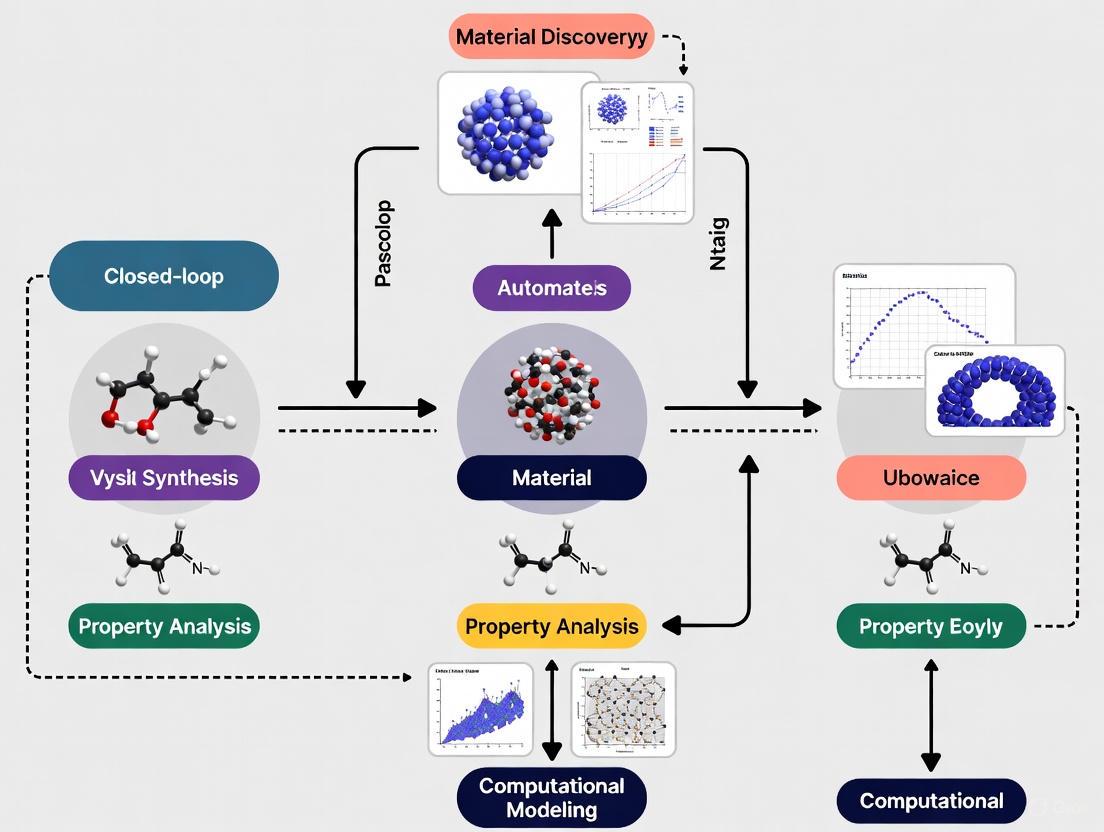
This article explores the paradigm shift in materials science and drug development driven by closed-loop discovery systems.
Closed-Loop Materials Discovery: The AI-Powered Automated Labs Revolutionizing Research
Abstract
This article explores the paradigm shift in materials science and drug development driven by closed-loop discovery systems. We examine the foundational technologies—from AI and robotics to FAIR data principles—that enable these self-driving laboratories. The content provides a methodological guide for implementing autonomous workflows, addresses key optimization and troubleshooting challenges, and validates the approach through comparative case studies demonstrating accelerated timelines from discovery to application. Tailored for researchers, scientists, and drug development professionals, this resource offers actionable insights for integrating automation into the research lifecycle.
The Core Technologies Powering Autonomous Materials Discovery
The process of materials discovery has traditionally been a slow, labor-intensive endeavor, characterized by manual experimentation, intuitive design, and lengthy cycles between synthesis and analysis. The closed-loop discovery paradigm represents a fundamental shift from this manual approach to an autonomous, intelligent, and accelerated research methodology. This paradigm integrates artificial intelligence (AI), robotics, and high-throughput experimentation into a seamless workflow where each experiment informs the next in real-time, dramatically compressing the timeline from years to days. At its core, closed-loop discovery creates a self-driving laboratory where machine learning algorithms preside over decision-making processes, controlling robotic equipment for synthesis and characterization, and using experimental results to plan subsequent investigations autonomously [1]. This transformative approach is poised to revolutionize how scientists discover new materials for applications ranging from clean energy and electronics to pharmaceuticals and sustainable chemicals.
The significance of this paradigm is underscored by quantitative demonstrations of its efficiency. Recent benchmarks indicate that fully-automated closed-loop frameworks driven by sequential learning can accelerate materials discovery by 10-25x (representing a 90-95% reduction in design time) compared to traditional approaches [2]. Furthermore, specific implementations have achieved record-breaking results, such as the discovery of a catalyst material that delivered a 9.3-fold improvement in power density per dollar over pure palladium for fuel cells [3]. These advances are not merely about speed; they also substantially reduce resource consumption and waste generation, advancing more sustainable research practices [4].
Core Architecture of a Closed-Loop System
The architecture of a closed-loop discovery system represents a fundamental reengineering of the scientific method for autonomous operation. These systems integrate three critical components: AI-driven decision-making, robotic experimentation, and real-time characterization into a continuous, iterative workflow. The AI component serves as the "brain" of the operation, employing sophisticated machine learning models to select optimal experiments. The robotic systems function as the "hands," executing physical tasks such as materials synthesis and preparation. Finally, characterization instruments act as the "senses," measuring material properties and feeding data back to the AI system [3] [1].
This architectural framework operates through a tightly integrated cycle with four key phases:
- Design Phase: Machine learning models, typically based on Bayesian optimization or related active learning strategies, propose candidate materials or synthesis conditions predicted to advance specific research goals [5] [1].
- Make Phase: Robotic systems automatically synthesize proposed candidates using techniques such as combinatorial sputtering, flow chemistry, or automated liquid handling [6] [7] [4].
- Test Phase: High-throughput characterization systems rapidly measure desired properties, employing techniques including automated electrochemical testing, electron microscopy, or custom biochemical assays [6] [3].
- Learn Phase: Results are automatically analyzed and fed back to update the AI models, which then refine their understanding and design improved subsequent experiments [3] [1].
This create-measure-learn cycle continues autonomously, with each iteration enhancing the system's knowledge and focusing investigation on increasingly promising regions of the experimental space. The resulting system exemplifies a new era of robot science that enables science-over-the-network, reducing the economic impact of scientists being physically separated from their labs [1].
Workflow Visualization
The following diagram illustrates the core operational workflow of a closed-loop discovery system:
Closed-Loop Discovery Workflow
Key Algorithmic Engines: Bayesian Optimization and Active Learning
The intellectual core of any closed-loop discovery system resides in its algorithmic engines for experimental planning. While various machine learning approaches can be employed, Bayesian optimization (BO) has emerged as a particularly powerful framework for guiding autonomous materials discovery. Bayesian optimization efficiently navigates complex experimental spaces by balancing exploration (probing uncertain regions) and exploitation (refining promising candidates) [5] [1]. As one researcher explains, "Bayesian optimization is like Netflix recommending the next movie to watch based on your viewing history, except instead it recommends the next experiment to do" [3].
The fundamental BO process involves maintaining a probabilistic model, typically a Gaussian process, that predicts the objective function (e.g., material performance) and its uncertainty across the parameter space. An acquisition function then uses these predictions to quantify the utility of performing an experiment at any given point. Common acquisition functions include Expected Improvement (EI), Upper Confidence Bound (UCB), and Probability of Improvement (PI) [5]. However, standard BO approaches are often limited to single-objective optimization and can struggle with the complex, multi-faceted goals typical of real materials discovery campaigns.
Recent algorithmic advances have substantially expanded these capabilities. The Bayesian Algorithm Execution (BAX) framework enables researchers to target specific experimental goals through straightforward user-defined filtering algorithms, which are automatically translated into intelligent data collection strategies [5]. This approach allows systems to target specific regions of interest rather than simply finding global optima. Similarly, the CAMEO algorithm implements a materials-specific active learning campaign that combines the joint objectives of maximizing knowledge of phase maps while hunting for materials with extreme properties [1]. These sophisticated algorithms can incorporate physical knowledge (e.g., Gibbs phase rule) and prior experimental data to focus searches on regions where significant property changes are likely, such as phase boundaries [1].
Algorithmic Framework Visualization
The following diagram illustrates the decision-making process of a Bayesian optimization algorithm within a closed-loop system:
Bayesian Optimization Loop
Implementation Frameworks and Experimental Methodologies
The theoretical framework of closed-loop discovery is implemented through specific software and hardware architectures that enable autonomous experimentation. One notable software platform is NIMO (NIMS orchestration system), an orchestration software designed to support autonomous closed-loop exploration and made publicly available on GitHub [6]. NIMO incorporates Bayesian optimization methods specifically designed for composition-spread films, enabling the selection of promising composition-spread films and identifying which elements should be compositionally graded. This implementation includes specialized functions like "nimo.selection" in "COMBI" mode for managing combinatorial experiments [6].
Another sophisticated platform is CRESt (Copilot for Real-world Experimental Scientists), which advances beyond standard Bayesian optimization by incorporating information from diverse sources including scientific literature, chemical compositions, microstructural images, and human feedback [3]. CRESt uses multimodal data to create knowledge embeddings of material recipes before experimentation, then performs principal component analysis to identify a reduced search space that captures most performance variability. Bayesian optimization in this refined space, augmented by newly acquired experimental data and human feedback, provides a significant boost in active learning efficiency [3].
From a hardware perspective, two primary experimental methodologies have emerged for autonomous materials discovery:
High-Throughput Combinatorial Experimentation
This approach utilizes combinatorial techniques to fabricate large numbers of compounds with varying compositions on a single substrate. For example, in one implementation, composition-spread films are deposited using combinatorial sputtering, followed by photoresist-free device fabrication via laser patterning and simultaneous measurement using customized multichannel probes [6]. This methodology enables the efficient exploration of complex multi-element systems, such as the optimization of five-element alloy systems consisting of three 3d ferromagnetic elements (Fe, Co, Ni) and two 5d heavy elements (Ta, W, or Ir) to maximize the anomalous Hall effect [6].
Continuous Flow Platforms
An alternative methodology employs continuous flow reactors where chemical mixtures are varied dynamically and monitored in real-time. Recent advances have shifted from steady-state flow experiments to dynamic flow experiments, where chemical mixtures are continuously varied through the system and monitored in real-time [4]. This "streaming-data" approach allows systems to capture data every half-second throughout reactions, transforming materials discovery from a series of snapshots to a continuous movie of reaction dynamics. This intensifies data collection by at least 10x compared to previous methods and enables machine learning algorithms to make smarter, faster decisions [4].
Research Reagent Solutions
The following table details essential materials and reagents commonly used in closed-loop materials discovery experiments:
Table 1: Key Research Reagent Solutions for Closed-Loop Discovery
| Reagent Category | Specific Examples | Function in Experiments |
|---|---|---|
| 3d Ferromagnetic Elements | Fe (Iron), Co (Cobalt), Ni (Nickel) | Primary ferromagnetic components for magnetic materials discovery [6] |
| 5d Heavy Elements | Ta (Tantalum), W (Tungsten), Ir (Iridium) | Additives to enhance spin-orbit coupling in Hall effect studies [6] |
| Catalyst Precursors | Palladium, Platinum, Multielement catalysts | Electrode materials for fuel cell optimization [3] |
| Phase-Change Materials | Ge–Sb–Te (Germanium-Antimony-Tellurium) | Base system for phase-change memory material discovery [1] |
| Flow Chemistry Solvents | Various organic solvents | Reaction medium for continuous flow synthesis platforms [7] [4] |
Case Studies in Autonomous Materials Discovery
Case Study 1: Accelerated Discovery of Phase-Change Memory Materials
The CAMEO (closed-loop autonomous system for materials exploration and optimization) algorithm was implemented at a synchrotron beamline to accelerate the discovery of phase-change memory materials within the Ge-Sb-Te ternary system [1]. The research goal was to identify compositions with the largest difference in optical bandgap (ΔEg) between amorphous and crystalline states, which correlates with optical contrast for photonic switching devices. The methodology integrated high-throughput synthesis of composition spreads with real-time X-ray diffraction for structural characterization and ellipsometry for optical property measurement.
CAMEO employed a unique active learning strategy that combined phase mapping with property optimization. The algorithm used Bayesian graph-based predictions combined with risk minimization-based decision making, ensuring that each measurement maximized phase map knowledge while simultaneously hunting for optimal properties [1]. This physics-informed approach recognized that property extrema often occur at phase boundaries, allowing it to focus searches on these scientifically strategic regions. The implementation featured a human-in-the-loop component where human experts could provide guidance while machine learning presided over decision making.
This closed-loop discovery campaign resulted in the identification of a novel epitaxial nanocomposite phase-change material at a phase boundary between the distorted face-centered cubic Ge-Sb-Te structure and a phase-coexisting region of GST and Sb-Te [1]. The discovered material demonstrated optical contrast superior to the well-known Ge₂Sb₂Te₅ (GST225) compound, and devices fabricated from this material significantly outperformed GST225-based devices. This discovery was achieved with a reported 10-fold reduction in required experiments compared to conventional approaches, with each autonomous cycle taking merely seconds to minutes [1].
Case Study 2: Autonomous Optimization of the Anomalous Hall Effect
Researchers demonstrated an autonomous closed-loop exploration of composition-spread films to enhance the anomalous Hall effect (AHE) in a five-element alloy system [6]. The experimental goal was to maximize the anomalous Hall resistivity (ρ_yxA) in a system comprising three 3d ferromagnetic elements (Fe, Co, Ni) and two 5d heavy elements selected from Ta, W, or Ir. The closed-loop system integrated combinatorial sputtering deposition, laser patterning for device fabrication, and simultaneous AHE measurement using a customized multichannel probe.
The methodology employed Bayesian optimization specifically designed for composition-spread films, implemented within the NIMO orchestration system [6]. This specialized algorithm could select which elements to compositionally grade and identify promising composition ranges. The autonomous system required minimal human intervention—only for sample transfer between instruments—with all other processes including recipe generation, data analysis, and experimental planning operating automatically.
Through this autonomous exploration, the system discovered an optimal composition of Fe₄₄.₉Co₂₇.₉Ni₁₂.₁Ta₃.₃Ir₁₁.₇ in amorphous thin film form, which achieved a maximum anomalous Hall resistivity of 10.9 µΩ cm [6]. This performance is comparable to Fe-Sn, which exhibits one of the largest anomalous Hall resistivities among room-temperature-deposited magnetic thin films. The successful optimization demonstrated the efficacy of closed-loop approaches for navigating complex multi-element parameter spaces and identifying optimal compositions with minimal human intervention.
Quantitative Performance Comparison
The following table compares the performance metrics reported in recent closed-loop materials discovery studies:
Table 2: Performance Metrics of Closed-Loop Discovery Systems
| Study Focus | Acceleration Factor | Key Performance Metric | Experimental Throughput |
|---|---|---|---|
| General Framework [2] | 10-25x acceleration | 90-95% reduction in design time | Not specified |
| Phase-Change Memory [1] | 10x reduction in experiments | Discovered novel nanocomposite | Cycles: seconds to minutes |
| Fuel Cell Catalysts [3] | 9.3x improvement in power density/$ | Record power density in fuel cell | 3,500 tests over 3 months |
| Dynamic Flow System [4] | 10x more data collection | Identification on first try after training | Continuous real-time monitoring |
| Anomalous Hall Effect [6] | Not specified | 10.9 µΩ cm Hall resistivity | ≈1-2h synthesis, 0.2h measurement |
Future Directions and Implementation Challenges
As closed-loop discovery matures, several emerging trends and future directions are shaping its development. There is growing emphasis on multimodal learning systems that incorporate diverse data types including scientific literature, experimental results, imaging data, and structural analysis [3]. The CRESt platform exemplifies this direction, using literature knowledge to create preliminary embeddings of material recipes before any experimentation occurs [3]. Similarly, there is increasing interest in explainable AI approaches that improve model transparency and physical interpretability, building trust in autonomous systems among scientists [8].
Significant progress is being made in addressing reproducibility challenges through integrated monitoring systems. For instance, some platforms now couple computer vision and vision language models with domain knowledge to automatically detect experimental anomalies and suggest corrections [3]. These systems can identify issues such as millimeter-sized deviations in sample shape or pipette misplacements, enabling more consistent experimental outcomes. Furthermore, the development of standardized data formats and open-access datasets including negative results is crucial for advancing the field and improving model generalizability [8].
Despite rapid progress, several challenges remain for widespread adoption. Current systems still face limitations in model generalizability across different materials systems and experimental conditions [8]. The integration of physical knowledge with data-driven models represents a promising approach to address this limitation. Additionally, as closed-loop systems become more complex, ensuring robust system integration and developing effective human-AI collaboration frameworks becomes increasingly important [1]. Most implementations still require some human intervention for complex troubleshooting, indicating that fully autonomous labs remain an aspirational goal rather than an immediate reality [3]. Nevertheless, the accelerating pace of innovation in closed-loop discovery systems continues to transform them from specialized research tools into powerful, general-purpose platforms for scientific advancement.
The discovery of novel materials is a fundamental driver of industrial innovation, yet its traditional pace is slow, often relying on serendipitous discoveries. The closed-loop material discovery process represents a transformative approach, seamlessly integrating artificial intelligence (AI) with high-throughput experimentation to create an iterative, self-improving system. This paradigm leverages a variety of machine learning (ML) engines—from deep learning to Bayesian optimization—to rapidly explore vast chemical spaces, predict promising candidates, and refine models based on experimental outcomes. By framing this process within the context of accelerated electrochemical materials discovery, such as for energy storage, generation, and chemical production, we see its critical role in overcoming material bottlenecks related to cost, durability, and scalability that currently limit the progress of sustainable technologies [9]. The core of this closed-loop system is the continuous feedback between computational prediction and experimental validation, which actively addresses the common machine learning challenge of poor performance on out-of-distribution data, thereby significantly accelerating the intentional discovery of new functional materials [10].
Core AI and ML Engines in Material Discovery
Deep Learning and Representation Learning
Deep learning architectures, particularly graph neural networks (GNNs), have become a cornerstone for molecular and material property prediction. These models excel because they can naturally represent atomic structures as attributed graphs where nodes correspond to atoms and edges to bonds. Advanced GNNs utilize hierarchical message passing and multilevel interaction schemes to aggregate information from atom-wise, pair-wise, and many-body interactions, thereby capturing complex quantum mechanical effects essential for accurate property prediction [11]. For instance, models like GEM-2 efficiently model full-range many-body interactions using axial attention mechanisms, reducing computational complexity while boosting accuracy [11].
Representation learning from stoichiometry (RooSt) is another powerful approach that predicts material properties using only chemical composition, without requiring structural information. This is particularly valuable in early discovery stages where crystal structures may be unknown. RooSt enables greater predictive sensitivity across diverse material spaces, facilitating the identification of novel compounds [10]. Furthermore, geometric graph contrastive learning (GeomGCL) aligns two-dimensional (2D) and three-dimensional (3D) molecular representations, encouraging robustness to input modalities and addressing data scarcity challenges [11].
Generative Artificial Intelligence (GenAI)
Generative AI models have emerged as a transformative tool for designing structurally diverse, chemically valid, and functionally relevant molecules and materials. Key architectures include:
- Variational Autoencoders (VAEs): Encode input data into a lower-dimensional latent representation and reconstruct it from sampled points, ensuring a smooth latent space for realistic data generation. GraphVAEs are particularly valuable for molecular generation, enabling efficient exploration and interpolation in continuous chemical space [12].
- Generative Adversarial Networks (GANs): Employ two competing networks—a generator creating synthetic data and a discriminator distinguishing real from generated data—in an iterative training process that progressively improves output quality [12].
- Transformer-based Models: Originally developed for natural language processing (NLP), these models process data with long-range dependencies using self-attention mechanisms. In molecular design, they operate on textual representations like SMILES or SELFIES, learning subtle dependencies in structural data [11] [12].
- Diffusion Models: Generate data by progressively adding noise to a clean sample and learning to reverse this process through denoising. Denoising Diffusion Probabilistic Models (DDPMs) have demonstrated exceptional performance in high-quality molecular generation [12].
Bayesian Optimization and Active Learning
Bayesian optimization (BO) is a powerful strategy for navigating high-dimensional chemical or latent spaces, particularly when dealing with expensive-to-evaluate objective functions such as docking simulations or quantum chemical calculations. BO develops a probabilistic model of the objective function, typically using Gaussian processes, to make informed decisions about which candidate molecules to evaluate next. In generative models, BO often operates in the latent space of architectures like VAEs, proposing latent vectors that are likely to decode into desirable molecular structures [12].
Active learning is closely related to BO and is fundamental to the closed-loop discovery process. It iteratively selects the most informative data points to be added to the training set, focusing experimental resources on materials that are both predicted to have high performance and are sufficiently distinct from known materials. This approach maximizes the efficiency of the discovery process by prioritizing experiments that will most improve the model [10].
Reinforcement Learning
Reinforcement learning (RL) frames molecular design as a sequential decision-making process where an agent learns to navigate chemical space by taking actions (e.g., adding atoms or bonds) and receiving rewards based on the resulting molecular properties. The Graph Convolutional Policy Network (GCPN) uses RL to sequentially add atoms and bonds, constructing novel molecules with targeted properties [12]. RL approaches can be enhanced by multi-objective reward functions that simultaneously optimize for multiple characteristics such as binding affinity, synthetic accessibility, and drug-likeness.
Table 1: Key AI/ML Engines and Their Applications in Material Discovery
| ML Engine | Primary Function | Typical Architectures/Variants | Application in Material Discovery |
|---|---|---|---|
| Deep Learning | Property prediction from structure | GNNs, RooSt, CNNs, GeomGCL | Predicting Tc of superconductors, electronic properties, stability [11] [10] |
| Generative AI | De novo molecular design | VAEs, GANs, Transformers, Diffusion Models | Generating novel drug candidates, electrolytes, catalyst materials [12] |
| Bayesian Optimization | Global optimization of black-box functions | Gaussian Processes, Tree-structured Parzen Estimators | Optimizing molecular structures for target properties in latent space [12] |
| Reinforcement Learning | Sequential decision making in chemical space | GCPN, MolDQN, GraphAF | Optimizing synthetic pathways, multi-property molecular design [12] |
The Closed-Loop Workflow: Integration of Methods
The true power of these AI and ML engines is realized when they are integrated into a cohesive, automated workflow. The closed-loop process connects computational prediction, experimental synthesis, and characterization with model refinement in a continuous cycle.
The following diagram illustrates the core workflow of a closed-loop material discovery system, showing how different AI/ML engines integrate with experimental processes:
This workflow demonstrates how the system becomes more intelligent with each iteration. As experimental data—both positive and negative results—are fed back into the ML models, their predictive accuracy for previously unexplored regions of chemical space improves dramatically. In a landmark study on superconducting materials, this closed-loop approach more than doubled the success rate for superconductor discovery compared to initial predictions [10].
Quantitative Performance and Benchmarking
To effectively evaluate and compare different AI/ML approaches, standardized benchmarking on established datasets is crucial. The performance of property prediction models is typically assessed using metrics such as mean absolute error (MAE), root mean square error (RMSE), and coefficient of determination (R²).
Table 2: Performance Benchmarks of AI/ML Models on Standard Material Datasets
| Model/Architecture | Dataset | Key Properties Predicted | Reported Performance | Reference |
|---|---|---|---|---|
| GEM-2 | PCQM4Mv2 | Molecular properties | ~7.5% improvement in MAE vs. prior methods | [11] |
| MGCN | QM9 | Atomization energy, frontier orbital energies, etc. | MAE below chemical accuracy | [11] |
| Mol-TDL | Polymer datasets | Polymer density, refractive index | Enhanced R² and reduced RMSE vs. traditional GNNs | [11] |
| RooSt | SuperCon, MP, OQMD | Superconducting transition temperature (Tₕ) | Doubled success rate in experimental validation after closed-loop cycles | [10] |
| GaUDI | Organic electronic molecules | Electronic properties | 100% validity in generated structures for single/multi-objective optimization | [12] |
Beyond these quantitative metrics, the ultimate validation of these models comes from experimental confirmation of their predictions. In the closed-loop superconducting materials discovery project, the iterative process led to the discovery of a previously unreported superconductor in the Zr-In-Ni system, re-discovery of five superconductors unknown in the training datasets, and identification of two additional phase diagrams of interest [10].
Experimental Protocols and Methodologies
High-Throughput Computational Screening Protocol
A typical workflow for high-throughput computational screening of materials involves the following detailed methodology [9]:
- Data Curation and Featurization: Compile initial training data from existing materials databases (e.g., SuperCon for superconductors, QM9 for molecular properties). Represent each material using feature vectors derived from composition and/or structure. Magpie features are commonly used for compositional representations, while graph-based representations are used for structured data [10].
- Model Training and Validation: Train an ensemble of ML models (e.g., RooSt for composition, GNNs for structures) using supervised learning. Employ Leave-One-Cluster-Out Cross-Validation (LOCO-CV) to assess model performance on chemically distinct materials, simulating real-world discovery scenarios [10].
- Candidate Prediction and Filtering: Apply trained models to large candidate databases (e.g., Materials Project, OQMD). Filter predictions based on:
- Predicted property values (e.g., high Tₕ for superconductors).
- Stability metrics (e.g., energy above hull < 0.05 eV/atom).
- Distance in feature space from known materials to ensure exploration of novel chemistries [10].
- Prioritization for Experimental Validation: Rank filtered candidates using multi-factorial prioritization that considers synthetic feasibility, safety, and potential for doping or modification [10].
Closed-Loop Experimental Validation Protocol
The experimental arm of the closed-loop process follows this methodology [10]:
- Synthesis Planning: For each prioritized candidate, explore nearby compositions and similar structures to account for sensitivity to stoichiometry and processing conditions. Consider isostructural compounds with promising band structures.
- High-Throughput Synthesis: Utilize automated synthesis platforms capable of parallel processing of multiple compositions. Techniques may include solid-state reaction, thin-film deposition, or solution-based synthesis depending on the material system.
- Structural Characterization: Employ powder X-ray diffraction (XRD) to verify phase formation and purity. Compare experimental patterns with computational predictions where available.
- Property Measurement: Conduct temperature-dependent AC magnetic susceptibility measurements to screen for superconductivity (perfect diamagnetism below Tₕ). For other material properties, relevant high-throughput characterization techniques (e.g., electrochemical testing for battery materials) are employed.
- Data Integration: Format experimental results (both positive and negative) consistently for feedback into the computational models. This includes precise synthesis conditions, characterization data, and measured properties.
Generative Molecular Design Protocol
For generative AI-driven molecular design, a representative protocol based on reinforcement learning includes [12]:
- Environment Setup: Define the chemical space and action space (e.g., available atoms, bonds, functional groups).
- Agent Training: Initialize the RL agent (e.g., GCPN) and train through multiple episodes where:
- The agent starts with a simple molecular fragment.
- At each step, the agent selects an action (add atom, form bond, etc.) based on its current policy.
- The episode terminates when a valid molecule is formed or a maximum step count is reached.
- The agent receives a reward based on the properties of the final molecule.
- Reward Shaping: Design multi-objective reward functions that incorporate target properties (e.g., binding affinity, solubility, synthetic accessibility). Potential-based reward shaping can improve learning efficiency.
- Validation and Iteration: Validate generated molecules using independent property predictors or docking simulations. Iterate the training process with refined reward functions based on validation results.
The Scientist's Toolkit: Essential Research Reagents and Materials
The experimental validation of AI-predicted materials requires specific reagents, instrumentation, and computational resources. The following table details key components of the research toolkit for closed-loop material discovery.
Table 3: Essential Research Reagents and Materials for Closed-Loop Discovery
| Tool/Reagent | Specification/Function | Application Example |
|---|---|---|
| Precursor Materials | High-purity elements (e.g., Zr, In, Ni powders >99.9% purity) | Synthesis of predicted ternary compounds (e.g., Zr-In-Ni system) [10] |
| Computational Databases | SuperCon, Materials Project (MP), Open Quantum Materials Database (OQMD) | Sources of training data and candidate materials for screening [10] |
| High-Throughput Synthesis Platform | Automated solid-state reactor or sputtering system | Parallel synthesis of multiple candidate compositions [9] |
| Powder X-ray Diffractometer | Phase identification and purity assessment | Verification of successful synthesis of target compounds [10] |
| Physical Property Measurement System | AC magnetic susceptibility measurement | Screening for superconductivity (diamagnetic response below Tₕ) [10] |
| Generative AI Software | GCPN, GraphAF, GaUDI frameworks | De novo molecular design with targeted properties [12] |
| Bayesian Optimization Library | Gaussian Process implementation with acquisition functions | Optimization in latent chemical space for multi-property design [12] |
The integration of AI and machine learning engines—from deep learning to Bayesian optimization—into a closed-loop material discovery framework represents a paradigm shift in how we approach the development of new functional materials. This synergistic combination of computational prediction and experimental validation creates an accelerated, iterative process that actively learns from both successes and failures. As these technologies continue to mature, addressing challenges related to data quality, model interpretability, and reliable out-of-distribution prediction, they hold the potential to dramatically shorten the timeline from conceptual design to realized material, ultimately accelerating the development of technologies critical for addressing global challenges in energy, sustainability, and healthcare.
Robotic Automation and High-Throughput Experimentation
High-Throughput Experimentation (HTE) represents a paradigm shift in materials and drug discovery, moving away from traditional sequential experimentation toward massively parallel testing and synthesis. When integrated with robotic automation and artificial intelligence, HTE forms the core of self-driving laboratories (SDLs)—closed-loop systems that autonomously propose, execute, and analyze experiments to accelerate discovery. These systems are revolutionizing the development of advanced materials, from energy storage solutions to pharmaceutical compounds, by reducing discovery timelines from years to days while significantly cutting costs and resource consumption [13].
The fundamental principle of closed-loop material discovery involves creating an iterative, autonomous cycle where computational models propose candidate materials, robotic systems synthesize and test them, and machine learning algorithms analyze the results to inform the next round of experiments. This creates a continuous feedback loop that rapidly converges toward optimal solutions. Current advancements in 2025 focus on evolving these systems from isolated, lab-centric tools into shared, community-driven experimental platforms that leverage collective intelligence across institutions [14].
Current State of Robotic Automation in HTE
Key Technological Trends
The field of laboratory automation is undergoing rapid transformation, with several key trends emerging in 2025:
Modular System Integration: Laboratories are moving away from isolated "islands of automation" toward integrated systems connected through modular software architectures with well-defined APIs. This approach allows scientists to automate entire workflows seamlessly and reduces friction in data exchange between different instruments and platforms [15].
Advanced Motion Control: Magnetic levitation decks and vehicles have emerged as a transformative technology for material handling. These systems use contactless magnetic fields to move labware and reagents between stations without mechanical rails, reducing maintenance downtime and enabling dynamic rerouting to avoid workflow bottlenecks [15].
Specialized AI Copilots: The initial enthusiasm for generic generative AI in research settings has evolved toward specialized "copilots"—AI assistants focused on specific domains such as experiment design or software configuration. These systems help scientists encode complex processes into executable protocols while leaving scientific reasoning to human experts [15].
Scientist-Coder Hybrids: A new breed of researchers who can both design experiments and write code is emerging. With robust APIs and user-friendly programming libraries, scientists can now directly automate their workflows without depending on specialized software teams, significantly shortening the feedback loop from hypothesis to results [15].
Enabling Technologies
Table 1: Key Enabling Technologies for Modern HTE
| Technology | Function | Impact |
|---|---|---|
| Continuous Flow Reactors | Enable continuous variation of chemical mixtures through microfluidic systems | Allows real-time monitoring and data collection every 0.5 seconds versus hourly measurements [16] |
| Self-Driving Laboratories (SDLs) | Combine robotics, AI, and autonomous experimentation | Can conduct over 25,000 experiments with minimal human oversight [14] |
| Bayesian Optimization Algorithms | Guide experimental decision-making in autonomous systems | Demonstrated ability to discover materials with unprecedented properties (e.g., doubling energy absorption benchmarks) [14] |
| Retrieval-Augmented Generation (RAG) | Helps users navigate experimental datasets and propose new experiments | Makes research more accessible through natural language interfaces [14] |
Experimental Methodologies and Protocols
Dynamic Flow Experimentation for Inorganic Materials Synthesis
Traditional self-driving labs utilizing continuous flow reactors have relied on steady-state flow experiments, where reactions proceed to completion before characterization. A groundbreaking advancement in 2025 is the implementation of dynamic flow experiments that continuously vary chemical mixtures and monitor them in real-time.
Protocol: Dynamic Flow-Driven Materials Discovery
System Setup: Implement a continuous flow microreactor system with in-line spectroscopic characterization (e.g., UV-Vis, fluorescence). The system should include precisely controlled syringe pumps for reagent delivery, a temperature-controlled reaction microchannel, and real-time monitoring capabilities [16].
Precursor Formulation: Prepare precursor solutions with systematically varied compositions. For quantum dot synthesis, this may include cadmium and selenium precursors with different ligand concentrations and reaction modifiers.
Dynamic Flow Configuration: Program the fluidic system to continuously vary reactant ratios and flow rates according to a predefined experimental space, rather than operating at fixed steady-state conditions.
Real-Time Characterization: Implement in-line monitoring to capture material properties at regular intervals (e.g., every 0.5 seconds). For nanocrystal synthesis, this typically includes absorbance and photoluminescence spectra to determine particle size and quality.
Data Streaming and Machine Learning: Feed characterization data continuously to machine learning algorithms that map transient reaction conditions to steady-state equivalents, enabling the system to make predictive decisions about promising parameter spaces.
Autonomous Optimization: The machine learning algorithm uses acquired data to refine its model and select subsequent experimental conditions that maximize the probability of discovering materials with target properties [16].
This approach has demonstrated at least an order-of-magnitude improvement in data acquisition efficiency compared to state-of-the-art steady-state systems, while simultaneously reducing chemical consumption and experimental time [16].
Integrated Computational-Experimental Workflows
The most powerful HTE implementations combine computational screening with experimental validation in a tightly coupled loop:
Protocol: Closed-Loop Material Discovery
Computational Prescreening: Use density functional theory (DFT) and machine learning models to screen thousands of potential material compositions in silico, identifying the most promising candidates for experimental testing [17].
Automated Synthesis: Transfer top candidate compositions to robotic synthesis platforms. For battery materials, this may include automated pipetting systems that prepare precise stoichiometric ratios of precursor materials.
High-Throughput Characterization: Implement parallel testing capabilities for critical performance metrics. In electrochemical materials discovery, this includes automated systems for measuring energy density, cycle life, and safety parameters.
Data Integration and Model Refinement: Feed experimental results back into computational models to refine their predictive accuracy, creating a virtuous cycle of improvement with each iteration.
Studies show that over 80% of current high-throughput research focuses on catalytic materials, revealing significant opportunities for expanding these methodologies to other material classes such as ionomers, membranes, and electrolytes [17].
Quantitative Performance Metrics
The implementation of robotic automation and HTE has yielded dramatic improvements in research efficiency across multiple domains.
Table 2: Performance Metrics of High-Throughput Experimentation Systems
| Metric Category | Traditional Methods | HTE with Automation | Improvement |
|---|---|---|---|
| Data Acquisition Efficiency | Single data points per experiment | 20+ data points per experiment (every 0.5s) | 10x increase [16] |
| Materials Discovery Timeline | Months to years | Days to weeks | 70% reduction [13] |
| Experimental Costs | Baseline | 50% reduction | Half the cost [13] |
| Chemical Consumption | Baseline | Significantly reduced | Less waste [16] |
| Energy Absorption Discovery | 26 J/g (previous benchmark) | 55 J/g (new benchmark) | Double the performance [14] |
Implementation Framework
Essential Research Reagent Solutions
Successful implementation of HTE requires carefully selected reagents and materials that enable automated, parallel experimentation.
Table 3: Essential Research Reagents for HTE in Materials Discovery
| Reagent/Material | Function | Application Example |
|---|---|---|
| FCF Brilliant Blue | Model compound for method validation | Spectroscopic standardization and protocol development [18] |
| CdSe Precursor Solutions | Quantum dot synthesis | Nanocrystal optimization using dynamic flow reactors [16] |
| Lithium-Ion Battery Cathode Materials | Energy storage research | High-throughput screening of Ni-Mn-Co ratios for optimal performance [13] |
| Agilent SureSelect Max DNA Library Prep Kits | Automated genomic workflows | Target enrichment protocols for sequencing applications [19] |
| 3D Cell Culture Matrices | Biological relevance enhancement | Automated organoid production for drug screening [19] |
System Architecture and Workflow
The following diagram illustrates the core closed-loop workflow of a modern self-driving laboratory:
Data Management and AI Integration
Effective data management is critical for HTE success. Modern systems must address:
- Metadata Capture: Comprehensive recording of all experimental conditions and instrument states to provide context for AI models [19].
- FAIR Data Practices: Ensuring data is Findable, Accessible, Interoperable, and Reusable across research communities [14].
- Specialized AI Tools: Implementation of domain-specific AI assistants that help researchers navigate experimental datasets, ask technical questions, and propose new experiments through techniques like retrieval-augmented generation [14].
Leading organizations are converging on unified data platforms rather than maintaining disparate departmental systems, enabling consistent data models and streamlined governance while still allowing specialization through robust APIs [15].
Future Directions and Community Adoption
The next evolution of HTE and robotic automation focuses on transforming these systems from isolated resources into community-driven platforms. Initiatives like the AI Materials Science Ecosystem (AIMS-EC) aim to create open, cloud-based portals that couple science-ready large language models with experimental data streams, enabling broader collaboration [14].
The integration of human expertise with autonomous systems remains crucial. As noted by researchers, "Self-driving labs can operate autonomously, but when people contribute their knowledge and intuition, their potential increases dramatically" [14]. This human-AI collaboration represents the most promising path forward for accelerating materials discovery while maintaining scientific rigor and creativity.
The future will also see increased emphasis on sustainable research practices, with HTE systems designed to minimize chemical consumption, reduce waste generation, and optimize energy usage throughout the discovery process [16]. As these technologies become more accessible and community-driven, they hold the potential to democratize materials discovery and accelerate solutions to global challenges in energy, healthcare, and sustainability.
In modern materials science and drug development, the closed-loop discovery process represents a paradigm shift towards autonomous, AI-driven research. These systems integrate robotics, artificial intelligence, and high-throughput experimentation to dramatically accelerate the design and synthesis of novel materials [8]. Central to the success of this innovative framework is the effective management of the vast, complex data generated throughout the research lifecycle. The FAIR data principles—Findable, Accessible, Interoperable, and Reusable—provide the essential foundation that enables these autonomous laboratories to function efficiently and scale effectively [20]. This technical guide examines the critical intersection of FAIR data principles with specialized data platforms, framing their role within the context of accelerating closed-loop material discovery for research scientists and drug development professionals.
The FAIR Data Principles in Scientific Research
The FAIR principles establish a systematic framework for scientific data management and stewardship, specifically designed to optimize data reuse by both computational systems and human researchers [20]. In the context of closed-loop material discovery, where automated systems must rapidly access and interpret diverse datasets, adherence to these principles transitions from best practice to operational necessity.
The Four Principles Explained
- Findable: Data and metadata must be easily locatable by humans and computer systems through persistent identifiers and rich, searchable descriptions. This typically involves assigning Digital Object Identifiers (DOIs) and registering data in indexed repositories [20].
- Accessible: Data should be retrievable using standardized, open protocols. Importantly, FAIR emphasizes "accessible under well-defined conditions," which may include appropriate authentication and authorization rather than complete open access, thus protecting intellectual property and patient privacy [20].
- Interoperable: Data must be structured using shared languages and standardized vocabularies to enable integration across diverse platforms and applications. This is particularly crucial when combining data from multiple sources such as genomic research, clinical trials, and materials characterization [20].
- Reusable: Data must be thoroughly described with clear usage licenses and detailed provenance information, meeting domain-specific community standards to ensure reliable replication and repurposing in new research contexts [20].
Distinguishing FAIR from Open Data
A critical conceptual distinction exists between FAIR data and open data, particularly relevant for pharmaceutical and biotech industries balancing collaboration with proprietary interests:
Table: FAIR Data vs. Open Data
| Aspect | FAIR Data | Open Data |
|---|---|---|
| Accessibility | Can be open or restricted based on use case | Always freely accessible to all |
| Primary Focus | Machine-readability and reusable data integration | Unrestricted sharing and transparency |
| Metadata Requirements | Rich metadata and documentation are mandatory | Metadata is beneficial but not strictly required |
| Licensing | Varies—can include access restrictions for proprietary data | Typically utilizes permissive licenses (e.g., Creative Commons) |
| Primary Application | Structured data integration in R&D workflows | Democratizing access to large public datasets |
While open data initiatives have accelerated research in areas like public health emergencies by providing unrestricted access to crucial datasets, FAIR principles offer a more nuanced approach suitable for proprietary research environments where data protection remains essential [20].
FAIR Data in Closed-Loop Material Discovery
Closed-loop material discovery systems represent the cutting edge of autonomous research, combining computational prediction, robotic experimentation, and AI-driven decision-making in integrated workflows. The effectiveness of these systems depends fundamentally on their ability to leverage high-quality, well-structured data at every process stage.
Recent advancements in autonomous laboratories demonstrate the transformative potential of integrated AI and robotics systems:
- The A-Lab: An autonomous laboratory for solid-state synthesis of inorganic powders that successfully realized 41 novel compounds from 58 targets over 17 days of continuous operation. The system uses computations, historical data, machine learning, and active learning to plan and interpret experiments performed entirely by robotics [21].
- Self-Driving PVD System: Researchers at the University of Chicago Pritzker School of Molecular Engineering developed an automated system that grows thin metal films for electronics using robotics and AI. The system "automates the entire loop—running experiments, measuring the results and then feeding those results back into a machine-learning model that guides the next attempt" [22].
- CAMEO Algorithm: The Closed-Loop Autonomous System for Materials Exploration and Optimization implements active learning to guide synchrotron beamline experiments, accelerating both phase mapping and property optimization with each cycle taking seconds to minutes [1].
Quantitative Acceleration from Automated Frameworks
Benchmarking studies demonstrate the significant efficiency gains enabled by closed-loop frameworks driven by sequential learning:
Table: Closed-Loop Framework Performance Benchmarks
| Metric | Traditional Approaches | Closed-Loop Framework | Improvement |
|---|---|---|---|
| Design Time | Baseline | 10-25x acceleration | 90-95% reduction |
| Researcher Productivity | Baseline | Significant improvement | Not quantified |
| Project Costs | Baseline | Overall reduction | Not quantified |
| Experiment Iteration Time | Days for manual PVD synthesis [22] | Dozens of runs in days [22] | Weeks of work reduced to days |
| Target Achievement | Months of manual optimization | Average of 2.3 attempts for optical properties [22] | Orders of magnitude faster |
The Citrine collaboration with Carnegie Mellon University, MIT, and Julia Computing demonstrated that fully automated closed-loop frameworks driven by sequential learning can accelerate materials discovery by 10-25x compared to traditional approaches [2].
Experimental Protocols in Closed-Loop Systems
Physical Vapor Deposition (PVD) Automation
The self-driving PVD system developed at UChicago PME exemplifies the integration of FAIR principles within an automated materials synthesis workflow:
- Sample Handling: Robotic system assembles and handles samples for each PVD process step [22]
- Calibration Layer: System creates a thin calibration layer before each experiment to account for unpredictable variables like substrate differences or trace gases, systematically capturing variations that would otherwise introduce noise in training data [22]
- ML-Guided Optimization: Machine learning algorithm predicts parameters needed for specific thin film properties, synthesizes and analyzes the product, then tweaks parameters iteratively [22]
- Result Validation: The system successfully grew silver films with specific optical properties, hitting desired targets in an average of 2.3 attempts and exploring full experimental conditions in dozens of runs versus weeks of manual work [22]
Autonomous Solid-State Synthesis (A-Lab Protocol)
The A-Lab implements a comprehensive autonomous workflow for inorganic powder synthesis:
- Target Identification: Compounds screened using large-scale ab initio phase-stability data from Materials Project and Google DeepMind, considering only air-stable targets [21]
- Recipe Generation: Initial synthesis recipes proposed by natural-language models trained on historical literature data, assessing target similarity through natural-language processing [21]
- Temperature Optimization: Synthesis temperature proposed by secondary ML model trained on heating data from literature [21]
- Robotic Execution:
- Station 1: Precursor powders dispensed, mixed, and transferred to alumina crucibles
- Station 2: Robotic arm loads crucibles into one of four box furnaces for heating
- Station 3: After cooling, samples ground into fine powder and characterized by XRD [21]
- Phase Analysis: XRD patterns analyzed by probabilistic ML models trained on experimental structures from ICSD, with patterns for novel targets simulated from computed structures and corrected for DFT errors [21]
- Active Learning: Failed recipes trigger ARROWS³ algorithm that integrates ab initio computed reaction energies with observed outcomes to predict improved solid-state reaction pathways [21]
CAMEO Bayesian Active Learning
The Closed-Loop Autonomous System for Materials Exploration and Optimization implements a specialized approach for functional materials discovery:
- Algorithm Core: Bayesian active learning techniques balance exploration of unknown functions with exploitation of prior knowledge to identify optima [1]
- Phase Mapping: Subsequent measurements driven by Bayesian graph-based predictions combined with risk minimization-based decision making [1]
- Human-in-the-Loop: Embodiment of human-machine interaction where human expertise contributes within each cycle, with live visualization of data analysis and decision making providing interpretability [1]
- Application Example: Successful discovery of novel epitaxial nanocomposite phase-change memory material in Ge-Sb-Te ternary system with optical contrast superior to well-known Ge₂Sb₂Te₅ [1]
Visualization of Closed-Loop Workflows
Generalized Closed-Loop Materials Discovery Workflow
FAIR Data Integration in Research Workflow
Essential Research Tools and Platforms
Research Reagent Solutions for Automated Discovery
Table: Key Research Resources for Closed-Loop Materials Discovery
| Resource Category | Specific Examples | Function in Workflow |
|---|---|---|
| Computational Databases | Materials Project [21], Google DeepMind stability data [21] | Provides ab initio phase-stability data for target identification and validation |
| Synthesis Robotics | Automated powder handling systems [21], Robotic arms for furnace loading [21] | Executes physical synthesis experiments with minimal human intervention |
| Characterization Instruments | X-ray diffraction (XRD) [21], Scanning ellipsometry [1] | Provides structural and property data for synthesized materials |
| Machine Learning Algorithms | Natural language processing for literature [21], Bayesian optimization [1], Probabilistic phase analysis [21] | Interprets data, plans experiments, and identifies optimal synthesis pathways |
| Data Management Platforms | Specialized bioinformatics services [20], FAIR data curation platforms [20] | Ensures data interoperability, reusability, and compliance with regulatory standards |
The integration of FAIR data principles with specialized platforms creates the essential foundation enabling the revolutionary potential of closed-loop material discovery systems. These autonomous laboratories—demonstrating 10-25x acceleration in discovery timelines and successfully synthesizing dozens of novel compounds through continuous operation—represent the future of materials and pharmaceutical research [2] [21]. The implementation of robust data management strategies adhering to FAIR principles ensures that the vast quantities of data generated by these systems remain findable, accessible, interoperable, and reusable, thereby maximizing research investment and enabling cumulative scientific progress. As these technologies continue to evolve, the organizations that strategically implement integrated FAIR data frameworks will maintain a decisive competitive advantage in the rapidly advancing landscape of AI-driven scientific discovery.
The integration of computational modeling and Digital Twins is revolutionizing material discovery and drug development by creating a closed-loop, automated research environment. These enablers facilitate the rapid exploration of chemical and biological spaces, predict material performance and drug efficacy with high precision, and systematically optimize development protocols. By bridging multiscale data with physical experiments through continuous feedback, they dramatically accelerate the transition from initial discovery to deployed therapeutic solutions, offering unprecedented efficiency and insight in pharmaceutical research.
The traditional paradigms of material discovery and drug development are characterized by high costs, extensive timelines, and significant attrition rates. The emergence of sophisticated computational methods and the novel framework of Digital Twins (DTs) are poised to disrupt these paradigms. Computational modeling provides the foundational tools for in-silico analysis and prediction, while Digital Twins offer a dynamic, virtual representation of a physical entity or process that evolves throughout its lifecycle. In the context of closed-loop material discovery, these technologies work in concert: computational models simulate and predict behaviors at various scales, and Digital Twins integrate these models with real-world data from experiments and sensors, enabling continuous validation, refinement, and autonomous guidance of the research process [23] [24]. This synergy creates a powerful engine for innovation, allowing researchers to explore vast design spaces virtually, identify the most promising candidates for synthesis, and validate complex process-structure-property relationships with greater speed and accuracy than ever before.
Core Computational Methods and Workflows
Computational methods form the backbone of modern in-silico discovery, enabling researchers to model, simulate, and optimize complex biological and material systems across multiple scales.
Key Computational Techniques
Table 1: Core Computational Methods in Drug and Material Discovery
| Method Category | Key Techniques | Primary Application | Key Advantage |
|---|---|---|---|
| Biomolecular Simulation [25] | Molecular Dynamics (MD), Quantum Mechanics/Molecular Mechanics (QM/MM), Monte Carlo (MC) | Elucidating drug action mechanisms, identifying binding sites, calculating binding free energies. | Provides atomic-level insight into structural dynamics and thermodynamic properties. |
| Structure-Based Drug Design [25] | Molecular Docking, Homology Modeling | Predicting interaction patterns between a target protein and small molecule ligands. | Leverages 3D structural information for rational drug design. |
| Ligand-Based Drug Design [25] | Pharmacophore Modeling, Quantitative Structure-Activity Relationship (QSAR) | Designing novel drug candidates based on known active compounds. | Effective when the 3D structure of the target is unavailable. |
| Virtual Screening [26] [25] | High-Throughput Docking, Pharmacophore Screening | Rapidly searching ultra-large libraries (billions of compounds) for hit identification. | Dramatically reduces the experimental cost and time of lead discovery. |
| AI & Machine Learning [27] [28] | Deep Learning (e.g., CNNs, RNNs), Sparrow Search Algorithm, Active Learning | Predicting ligand properties, accelerating virtual screening, de novo molecular generation. | Learns complex patterns from large datasets to make rapid, accurate predictions. |
Experimental Protocol: An Integrated Virtual Screening Workflow
A typical protocol for ultra-large virtual screening, a cornerstone of computational drug discovery, involves a multi-step, iterative process [26]:
- Target Preparation: Obtain or predict the high-resolution 3D structure of the target protein (e.g., via cryo-EM, X-ray crystallography, or homology modeling). Prepare the structure by adding hydrogen atoms, assigning protonation states, and defining binding sites.
- Library Curation: Select a gigascale chemical library for screening (e.g., ZINC20, Enamine REAL). These on-demand libraries can contain billions of synthesizable compounds.
- Iterative Screening:
- Step 1 (Fast Filtering): Employ rapid, low-resolution methods like 2D fingerprint similarity or pharmacophore searches to reduce the library size from billions to millions.
- Step 2 (Molecular Docking): Perform molecular docking on the reduced set to predict binding poses and scores for millions of compounds.
- Step 3 (Advanced Scoring & ML): Apply more computationally expensive methods like free-energy perturbation or machine learning models trained on docking results to re-score and rank the top thousands of hits. This active learning loop iteratively improves the selection of candidates.
- Hit Validation: The top-ranked compounds (typically a few hundred) are synthesized or acquired and subjected to in vitro biochemical assays to confirm biological activity.
Digital Twins: The Bridge to a Closed-Loop Discovery Process
Digital Twins represent a transformative leap beyond standalone simulations. A Digital Twin is a high-fidelity, dynamic, in-silico representation of a unique physical twin—be it a specific material sample, a drug candidate, or a manufacturing process—that is continuously updated with data from its physical counterpart throughout its lifecycle [23] [24].
The Architecture of a Material Digital Twin
For materials, the Digital Twin must capture both its form and function across scales [24]. The form is the material's hierarchical structure, from atomic arrangement to microstructural features, often captured using frameworks like n-point spatial correlations. The function is the material's response to external stimuli (e.g., stress, temperature), captured by homogenization and localization models that link structure to properties. The Digital Twin is not static; it evolves by assimilating new data from experiments (e.g., microscopy, mechanical testing) and physics-based simulations, refining its predictive models to more accurately mirror the physical twin's past, present, and future states.
Workflow: The Digital Twin in a Closed Loop
The power of the Digital Twin is fully realized within a closed-loop material discovery setup, where it acts as the central decision-making engine.
The Scientist's Toolkit: Essential Research Reagent Solutions
The effective implementation of computational modeling and Digital Twins relies on a suite of software tools, data resources, and computational platforms.
Table 2: Essential Research Reagents for Computational Discovery
| Category | Item | Function |
|---|---|---|
| Software & Platforms | Molecular Dynamics Software (e.g., GROMACS, NAMD) [25] | Simulates the physical movements of atoms and molecules over time. |
| Docking & Virtual Screening Suites (e.g., AutoDock, Schrödinger) [26] [25] | Predicts how small molecules bind to a target protein and screens large libraries. | |
| AI/ML Libraries (e.g., PyTorch, TensorFlow) [28] | Provides frameworks for building and training custom machine learning models for property prediction. | |
| Data Resources | Protein Data Bank (PDB) [25] | Repository for 3D structural data of proteins and nucleic acids, essential for structure-based design. |
| Ultralarge Chemical Libraries (e.g., ZINC20, Enamine REAL) [26] | Provides access to billions of purchasable or synthesizable compounds for virtual screening. | |
| Computational Infrastructure | High-Performance Computing (HPC) [28] | Provides the parallel processing power required for large-scale simulations and AI model training. |
| GPU Accelerators [26] | Dramatically speeds up computationally intensive tasks like MD simulations and deep learning. |
Quantitative Data Analysis and Model Validation
The reliability of computational predictions is paramount. Model validation ensures that in-silico outputs are trustworthy and can guide real-world decisions.
Criteria for Model Evaluation
Evaluating computational models involves balancing multiple criteria [29]:
- Descriptive Adequacy (Goodness-of-Fit): Measures how well the model fits a specific set of observed data (e.g., using Sum of Squared Errors).
- Complexity: Reflects the model's flexibility, which can lead to overfitting—where a model learns noise in the training data instead of the underlying pattern, harming its predictive power.
- Generalizability: The most critical criterion, it assesses how well the model predicts new, unseen data. It represents a trade-off between goodness-of-fit and complexity.
Model Selection Methods
Formal methods have been developed to estimate generalizability by penalizing model complexity [29]:
- Akaike Information Criterion (AIC): An estimate of the information loss when a model is used to represent the true data-generating process. The model with the lowest AIC is preferred.
- Bayesian Information Criterion (BIC): Similar to AIC but with a stronger penalty for model complexity, often favoring simpler models.
Table 3: Quantitative Metrics for Model Validation
| Metric | Formula / Principle | Interpretation |
|---|---|---|
| Akaike Information Criterion (AIC) [29] | AIC = 2k - 2ln(L) (where k is parameters, L is max likelihood) | Lower AIC indicates better model, balancing fit and parsimony. |
| Bayesian Information Criterion (BIC) [29] | BIC = k ln(n) - 2ln(L) (where n is sample size) | Stronger complexity penalty than AIC; lower BIC is better. |
| Root Mean Squared Error (RMSE) [28] | RMSE = √(Σ(Pᵢ - Oᵢ)²/n) | Lower RMSE indicates higher predictive accuracy. |
| Contrast Ratio (for Visualizations) [30] | (L₁ + 0.05) / (L₂ + 0.05) (L is relative luminance) | WCAG AA requires ≥ 4.5:1 for normal text [30]. |
Building and Implementing Your Closed-Loop Workflow
The Predict-Make-Test-Analyze (PMTA) cycle represents a transformative, closed-loop paradigm for accelerating discovery in fields ranging from medicinal chemistry to materials science. This iterative process leverages computational prediction, automated synthesis and testing, and intelligent data analysis to dramatically reduce the time and cost associated with traditional research and development. By architecting a seamless, integrated workflow, researchers can transition from a linear, human-paced sequence of experiments to a rapid, data-rich cycle of continuous learning and optimization. This technical guide details the core components, methodologies, and infrastructure required to implement an effective PMTA cycle, framed within the context of automated material discovery research.
Core Components of the PMTA Cycle
The PMTA cycle is built upon four interconnected pillars. Each component must be robust and capable of integration with the others to create a truly closed-loop system.
Predict: This initial phase uses computational models to propose new candidate molecules or materials with desired properties. Modern approaches heavily leverage Artificial Intelligence (AI) and machine learning (ML). Techniques include computer-assisted synthesis planning (CASP), which uses retrosynthetic analysis and reaction condition prediction to design feasible synthetic routes [31]. For materials science, high-throughput computational screening, often using density functional theory (DFT), is used to scan vast chemical spaces [17]. The output is a set of candidate structures with high predicted performance and a plan for their synthesis.
Make: The "Make" phase involves the physical synthesis of the predicted candidates. To achieve the required speed and reliability, this stage is highly automated. In medicinal chemistry, this often involves automated flow synthesis platforms, where reagents are pumped through reaction tubes or microfluidic chips, allowing for precise control of reaction parameters and seamless integration with purification systems like HPLC [7]. In materials science, high-throughput combinatorial methods are employed to create libraries of material samples, such as thin-film libraries, on a single substrate [32]. The key is the co-location of a wide array of building blocks and automated systems to remove delays in sourcing and manual handling [31] [33].
Test: This phase involves the high-throughput experimental evaluation of the synthesized candidates for the target properties. In drug discovery, this could mean biochemical assays to determine a compound's potency (e.g., IC50). These assays have been adapted to run in flow-based systems, complementing the flow chemistry in the "Make" phase and providing rich, rapid data sets [7]. For electrochemical materials, high-throughput testing might involve automated characterization of properties like catalytic activity or ionic conductivity across a combinatorial library [17]. The throughput of this stage must match the output of the "Make" phase to prevent bottlenecks.
Analyze: Here, the experimental data from the "Test" phase is processed and used to refine the predictive models, thus "closing the loop." This involves rigorous quantitative data analysis, including statistical analysis and machine learning, to extract meaningful structure-activity or structure-property relationships [34]. The creation of a Research Data Infrastructure (RDI) is crucial for the automated curation, storage, and management of the resulting experimental data and metadata, ensuring it is Findable, Accessible, Interoperable, and Reusable (FAIR) [32]. The insights gained directly inform the next "Predict" cycle, leading to the design of more promising candidates.
The following workflow diagram illustrates the integrated, cyclical nature of this process.
Quantitative Performance Metrics
A well-architected PMTA cycle delivers transformative gains in speed and efficiency. The table below summarizes key quantitative metrics reported from implemented systems.
Table 1: Reported Performance Metrics of Integrated PMTA Systems
| Metric | Traditional Workflow | Integrated PMTA Cycle | Context |
|---|---|---|---|
| Cycle Time | "Weeks" [7] | "Less than 24 hours" for 14 compounds [7] | Medicinal Chemistry: Synthesis to assay |
| Synthesis Scale | Flask/round-bottom flask (10s-100s mL) | Microfluidic (μL volumes, <1mm tubing) [7] | Reaction volume |
| Automated Reagent Capacity | N/A | ~300 reagents [7] | Enumerating large chemical spaces |
| Data Point Sampling | Single endpoint measurement | "Rapidly sampled read out" providing "rich data set" [7] | Biochemical assay resolution |
Detailed Experimental Protocols
Implementing a PMTA cycle requires robust, reproducible experimental protocols. Below are detailed methodologies for two critical phases: automated synthesis and biochemical testing.
Protocol: Automated Flow Synthesis and Purification of Small Molecules
This protocol is adapted from integrated "Make" platforms used in medicinal chemistry [7].
Principle: To automatically synthesize and purify target molecules from a digital design using a continuous flow chemistry platform coupled with in-line purification.
Materials and Reagents:
- Reagent Deck: Automated carousel or liquid handler stocked with building blocks (e.g., carboxylic acids, amines, boronic acids, halides), catalysts, solvents, and reagents.
- Synthesis Platform: Commercial flow chemistry system with modules for pumping, mixing, and heated/cooled reactor coils (tube-based, with variable internal volume).
- Purification System: In-line High-Performance Liquid Chromatography (HPLC) system with an Evaporative Light-Scattering Detector (ELSD) or Mass Spectrometry (MS) for detection.
- Dilution Assembly: A system for post-purification dilution to prepare samples for assay.
Procedure:
- Platform Setup: The "Predict" phase outputs a list of target molecules and a reaction sequence. The automated reagent deck is loaded with the required starting materials and solvents.
- Reagent Delivery: The liquid handler precisely aspirates and loads the specified reagents into the injection loops or directly into the solvent streams of the flow synthesis system.
- Flow Synthesis: Reagents are pumped at defined flow rates into a mixing point and then through a temperature-controlled reactor coil. The residence time in the reactor is determined by the flow rate and the coil volume. For multi-step syntheses, reagent streams can be introduced sequentially at different points along the flow path.
- In-line Analysis and Purification: The reaction mixture is directly injected into the HPLC system. The ELSD detector identifies the peak corresponding to the desired product.
- Heart-Cutting: At the apex of the target HPLC peak, a fraction collector or valve is triggered to isolate the product ("heart-cutting"), ensuring the highest purity and concentration.
- Automated Dilution: The purified product stream is mixed with a diluent stream (e.g., assay buffer) at a controlled ratio to achieve the required concentration for biological testing.
- Output: The diluted, assay-ready sample is collected in a formatted plate for direct transfer to the "Test" phase.
Protocol: Flow-Based Biochemical Assay for Kinase Inhibition
This protocol details the "Test" component for determining inhibitory activity (IC50) in a continuous flow environment [7].
Principle: To measure the dose-response (IC50) of a synthesized compound against a kinase target (e.g., ABL1 kinase) by monitoring the inhibition of a biochemical reaction in a capillary flow system.
Materials and Reagents:
- Assay Platform: A nano-HPLC pump capable of generating precise, low-flow-rate gradients at high pressure.
- Reaction Capillary: Fused silica capillary tubing (e.g., 75 μm internal diameter).
- Assay Reagents: Purified kinase enzyme, fluorescently-labeled peptide substrate, ATP, and detection reagents.
- Detector: A fluorometer or other suitable detector with a flow cell.
Procedure:
- Gradient Formation: The nano-HPLC pump generates a gradient of the test compound. The compound is serially diluted in the capillary by mixing a concentrated stream of the compound with a buffer stream.
- Reagent Mixing: The compound gradient stream is merged with streams containing the enzyme, substrate, and ATP to initiate the kinase reaction.
- Incubation: The combined mixture flows through a reaction capillary of a specific length and internal volume, which serves as an incubation loop. The flow rate determines the reaction time.
- Detection: The reaction mixture passes through the detector, which measures the product formation (e.g., fluorescence). The signal is recorded as a continuous trace.
- Data Acquisition: The detector samples the signal at a high frequency at a single point in the flow path. As the compound concentration gradient passes through, the system records a full dose-response curve, with the inflection point corresponding to the IC50 value.
- Data Output: The rich, continuous data set is processed by analysis software to extract the IC50 value, which is then fed into the "Analyze" phase.
The following architecture diagram shows how these protocols are integrated into a full, automated platform.
The Scientist's Toolkit: Essential Research Reagents and Materials
The successful operation of a PMTA cycle depends on a carefully curated toolkit of chemical and software resources.
Table 2: Essential Research Reagent Solutions for the PMTA Cycle
| Tool Category | Specific Item / Solution | Function / Explanation |
|---|---|---|
| Chemical Building Blocks | Enamine REAL Space, eMolecules, Sigma-Aldrich [31] [33] | Provides rapid access to a vast virtual and physical catalog of diverse starting materials (e.g., acids, amines, boronic esters) for automated synthesis. |
| Pre-validated Chemistry Kits | Suzuki-Miyaura Screening Plates, Buchwald-Hartwig Kits [31] | Pre-formatted sets of catalysts, ligands, and bases for high-throughput reaction scouting and optimization, reducing setup time. |
| Flow Synthesis Hardware | Vapourtec, Uniqsis, Chemtrix [7] | Commercial flow chemistry systems offering modular pumps, reactors, and temperature controls for robust and flexible "Make" automation. |
| Automated Purification | In-line Prep-HPLC with ELSD/MS [7] | Provides real-time purification and quantitation of synthesized compounds, essential for delivering high-quality, assay-ready material. |
| Data Management Software | Research Data Infrastructure (RDI) [32] | Custom or commercial software for automated curation, storage, and management of experimental data and metadata according to FAIR principles. |
| AI Synthesis Planning | AI-powered CASP Platforms [31] | Software that uses machine learning for retrosynthetic analysis and reaction condition prediction, generating viable routes for novel molecules. |
Architecting a robust Predict-Make-Test-Analyze cycle is a cornerstone of next-generation discovery research. The integration of AI-driven prediction, highly automated physical platforms, and a FAIR data infrastructure creates a powerful, self-improving system that drastically accelerates the pace of innovation. While challenges remain in chemistry scope, assay integration, and data standardization, the proven reductions in cycle time and the ability to explore vast chemical spaces make this closed-loop approach indispensable for the future of drug and material discovery. As these technologies mature and become more accessible, they will empower researchers to tackle increasingly complex challenges with unprecedented speed and precision.
The discovery of advanced materials is a critical driver of innovation across industries, from pharmaceuticals to renewable energy. However, the traditional process of materials discovery is often slow and serendipitous, creating bottlenecks in research and development. This case study examines a transformative approach to this challenge: the implementation of a fully autonomous experimental platform that dramatically accelerates the search for optimal polymer blends. Developed by researchers at MIT, this closed-loop system represents a paradigm shift in materials science, combining sophisticated algorithms with robotic automation to navigate the complex landscape of polymer combinations with unprecedented efficiency [35].
Polymer blends are particularly valuable for materials scientists because instead of developing entirely new polymers from scratch—a time-consuming and costly process—researchers can mix existing polymers to achieve desired properties. However, this approach presents its own challenges. The number of potential polymer combinations is practically limitless, and polymers interact in complex, non-linear ways that make the properties of new blends difficult to predict [35] [36]. This complexity has traditionally made identifying optimal blends a thorny problem requiring extensive trial-and-error experimentation.
The MIT platform addresses these challenges through a closed-loop workflow that integrates computational design with physical experimentation. By autonomously identifying, mixing, and testing up to 700 new polymer blends daily, the system enables rapid exploration of a combinatorial space that would be prohibitive to investigate through manual methods [35] [37]. This case study examines the technical architecture, experimental protocols, and significant findings of this innovative approach, framing it within the broader context of autonomous materials discovery research.
Technical Architecture of the Autonomous System
The autonomous discovery platform operates through a tightly integrated workflow that combines computational design with robotic experimentation. The system functions as a continuous loop, with each iteration informing the next through a sophisticated feedback mechanism. This closed-loop architecture enables the platform to efficiently navigate the vast design space of potential polymer blends while progressively refining its search based on experimental outcomes [35].
At the heart of the system is a powerful algorithm that explores the extensive range of potential polymer combinations and selects promising candidates for testing. These selections are fed to a robotic system that automatically mixes the chemical components and tests each blend's properties. The experimental results are then returned to the algorithm, which analyzes the data and determines which experiments to conduct next. This process repeats continuously until the system identifies polymer blends that meet the user's specified targets [35] [37].
A key innovation of this platform is its ability to balance exploration of new regions of the chemical space with exploitation of promising areas already identified. This balance is crucial for efficient discovery, as it prevents the system from either becoming stuck in local optima or conducting random, undirected searches [35]. The integration of computational and experimental components within a single automated framework creates a discovery engine that operates with minimal human intervention, requiring manual involvement only for refilling and replacing chemicals [37].
Computational Framework: The Genetic Algorithm
The computational core of the platform utilizes a genetically-inspired algorithm to navigate the complex polymer blend search space. Unlike machine learning approaches that struggled to make accurate predictions across the astronomically large space of possibilities, the genetic algorithm employs biologically-inspired operations including selection, mutation, and crossover to iteratively improve potential solutions [35] [36].
The system encodes the composition of each polymer blend into a digital representation analogous to a biological chromosome. Through successive generations of experimentation, the algorithm applies evolutionary pressure to improve these digital chromosomes, selecting the best-performing blends as "parents" for subsequent iterations [35]. The researchers modified standard genetic algorithms to better suit the materials discovery context, including implementing constraints such as limiting the number of polymers that could be included in any single blend to maintain discovery efficiency [35].
This algorithmic approach proved particularly valuable because it considers the full formulation space simultaneously, enabling the discovery of synergistic interactions between components that might be overlooked by more conventional approaches. As Senior Researcher Connor Coley noted, "If you consider the full formulation space, you can potentially find new or better properties. Using a different approach, you could easily overlook the underperforming components that happen to be the important parts of the best blend" [36] [37].
Robotic Platform and Automation Infrastructure
The physical implementation of the platform centers on a robotic system that translates digital designs into physical experiments. This automated infrastructure handles the precise mixing of chemical components and testing of each blend's properties without human intervention [35]. Building this robotic platform presented numerous engineering challenges that needed to be addressed to ensure reliable operation, including developing a technique to evenly heat polymers and optimizing the speed at which the pipette tip moves during liquid handling operations [35] [37].
The platform processes experiments in batches of 96 polymer blends at a time, enabling high-throughput screening of candidate materials [35]. This scale of parallel experimentation is crucial for efficiently exploring the vast combinatorial space of polymer blends. As Coley emphasized, "In autonomous discovery platforms, we emphasize algorithmic innovations, but there are many detailed and subtle aspects of the procedure you have to validate before you can trust the information coming out of it" [35], highlighting the importance of both algorithmic and physical implementation details in creating a reliable discovery system.
Table 1: Key Performance Metrics of the Autonomous Discovery Platform
| Performance Metric | Specification | Significance |
|---|---|---|
| Throughput | Up to 700 blends per day | Enables exploration of large combinatorial spaces infeasible with manual methods |
| Batch Size | 96 blends per batch | Allows parallel experimentation while maintaining individual blend integrity |
| Human Intervention | Only for refilling/replacing chemicals | Dramatically reduces researcher time required for experimentation |
| Optimization Approach | Balanced exploration vs. exploitation | Prevents convergence on local optima while efficiently searching promising regions |
Experimental Design and Methodologies
Research Objectives and Application Focus
The experimental validation of the platform focused on a particularly challenging materials problem: enhancing the thermal stability of enzymes through optimization of random heteropolymer blends (RHPBs). This application was selected because of the technological urgency of improving protein and enzyme stability, with implications for pharmaceutical development, industrial catalysis, and biotechnology [35] [37]. Random heteropolymers, created by mixing two or more polymers with different structural features, have shown particular promise for high-temperature enzymatic catalysis, but identifying optimal combinations has proven difficult due to the complex nature of segment-level interactions [35].
The primary performance metric used in the experiments was Retained Enzymatic Activity (REA), which quantifies how stable an enzyme remains after being mixed with polymer blends and exposed to high temperatures [35] [36]. This metric provides a direct measure of the functional preservation of biological molecules under thermal stress, with higher values indicating better stabilization performance. The selection of this specific objective demonstrates how autonomous discovery platforms can be targeted toward practical applications with significant industrial and scientific relevance.
Workflow Visualization
The following diagram illustrates the continuous, iterative process of the closed-loop autonomous discovery system:
Diagram 1: Closed-Loop Polymer Discovery Workflow. This diagram illustrates the continuous, iterative process of the autonomous discovery system, showing how algorithmic design and experimental validation inform each other.
Experimental Protocol and Procedures
The experimental protocol begins with the genetic algorithm selecting an initial set of 96 polymer blends based on the specified target properties. These digital designs are transmitted to the robotic platform, which automatically prepares the blends using precise liquid handling systems. The platform employs advanced pipetting techniques with optimized movement speeds to ensure consistent mixing and minimal cross-contamination between samples [35] [37].
After preparation, the platform subjects each polymer-enzyme combination to elevated temperatures and measures the retained enzymatic activity. This measurement process is fully automated, with the system handling both the thermal stress application and subsequent activity assessment. The resulting performance data for all 96 blends is then returned to the algorithm, which analyzes the results and generates a new set of blend candidates for the next iteration [35].
This experimental cycle continues until the system identifies blends that meet the pre-defined performance thresholds or until a specified number of iterations is completed. The entire process operates autonomously, with the system making decisions about which experiments to conduct next based solely on the incoming experimental data. This autonomy enables the continuous operation that allows the platform to test up to 700 blends per day, a throughput impossible to achieve with manual experimentation [36] [37].
Research Reagent Solutions and Materials
Table 2: Essential Research Reagents and Materials for Autonomous Polymer Discovery
| Reagent/Material | Function in Experimental Process | Application Context |
|---|---|---|
| Random Heteropolymers | Base components for creating blend combinations | Provide structural diversity for emergent properties |
| Enzyme Solutions | Biological target for stabilization testing | Model system for protein thermal stability applications |
| Buffer Solutions | Maintain consistent pH for enzymatic assays | Ensure biological relevance of stability measurements |
| Chemical Libraries | Diverse polymer constituents for blending | Enable exploration of large combinatorial spaces |
Key Research Findings and Performance Analysis
Experimental Results and Blend Performance
The autonomous platform demonstrated remarkable efficacy in identifying high-performing polymer blends during experimental validation. The system autonomously identified hundreds of blends that outperformed their constituent polymers, with the best overall blend achieving an 18% improvement in Retained Enzymatic Activity (73% REA) compared to any of its individual components [35] [36]. This significant performance enhancement provides compelling evidence for the presence of synergistic interactions in polymer blends that are difficult to predict through conventional means.
A particularly noteworthy finding was that the best-performing blends did not necessarily incorporate the best individual components [35] [37]. This counterintuitive result underscores the value of the platform's comprehensive search approach, which considers the full formulation space rather than focusing only on high-performing individual polymers. As Lead Researcher Guangqi Wu observed, "This indicates that, instead of developing new polymers, we could sometimes blend existing polymers to design new materials that perform even better than individual polymers do" [36], suggesting a more efficient pathway to materials improvement through optimized blending rather than de novo polymer development.
The research also revealed significant correlations between segment-level interactions in the random heteropolymer blends and their overall performance in stabilizing enzymes at high temperatures [36]. These findings provide valuable insights into the structural features that contribute to effective protein stabilization, offering guidance for future materials design beyond the immediate experimental context.
Comparative Performance Analysis
Table 3: Performance Comparison of Discovery Approaches
| Discovery Approach | Throughput (Blends/Day) | Best Performance (REA) | Key Advantage | Human Intervention Required |
|---|---|---|---|---|
| Traditional Manual Methods | Limited (varies significantly) | Not systematically quantified | Researcher intuition | Continuous |
| Autonomous Closed-Loop Platform | ~700 blends | 73% (18% improvement over components) | Comprehensive space exploration | Only for reagent replenishment |
| Machine Learning Prediction Only | Computational: high; Experimental: low | Limited by prediction accuracy | Rapid virtual screening | Required for experimental validation |
Implications for Materials Discovery Research
Advancement of Closed-Loop Methodologies
The MIT polymer discovery platform represents a significant advancement in the broader field of closed-loop materials discovery, joining other innovative approaches such as those developed for superconducting materials [38] and general chemical discovery [39]. What distinguishes this work is its specific application to the complex challenge of polymer blends, where combinatorial complexity presents particularly difficult challenges for conventional discovery approaches.
The demonstrated success of coupling genetic algorithms with robotic experimentation provides a blueprint for similar applications across materials science. As noted in a review of high-throughput methods for electrochemical materials discovery, most current studies utilize computational methods like density functional theory and machine learning rather than integrated experimental approaches [17]. The MIT platform helps address this imbalance, showing how tight integration of computation and experimentation can accelerate discovery in domains where accurate prediction remains challenging.
The critical role of experimental feedback in improving the performance of discovery algorithms is a key insight with broad applicability. In the superconducting materials domain, researchers demonstrated that incorporating experimental feedback could more than double success rates for superconductor discovery [38]. Similarly, the MIT platform shows how experimental results refine the search process, enabling more efficient navigation of complex materials spaces.
Future Applications and Research Directions
While the current validation focused on polymers for protein stabilization, the platform architecture is flexible and could be adapted to numerous other applications. The researchers specifically note potential applications in developing improved battery electrolytes, more cost-effective solar panels, and tailored nanoparticles for safer drug delivery [35] [37]. Each of these domains would benefit from the rapid exploration of polymer blend spaces enabled by the autonomous platform.
Future research directions include using the accumulating experimental data to further refine the efficiency of the genetic algorithm and developing new computational approaches to streamline the operations of the autonomous liquid handler [35]. As Professor Ting Xu of UC Berkeley, who was not involved in the research, noted, "Being a platform technology and given the rapid advancement in machine learning and AI for material science, one can envision the possibility for this team to further enhance random heteropolymer performances or to optimize design based on end needs and usages" [35], highlighting the potential for continued advancement of the technology.
The platform also demonstrates how autonomous discovery methodologies can help address the imbalance in global materials research capacity. As noted in the review of high-throughput electrochemical discovery, "high throughput electrochemical material discovery research is only being conducted in a handful of countries, revealing the global opportunity to collaborate and share resources and data for further acceleration of material discovery" [17]. Systems like the MIT platform could help democratize access to advanced materials discovery capabilities by automating processes that traditionally required significant specialized expertise and infrastructure.
This case study has examined how autonomous robotics and AI-driven algorithms are transforming polymer blend discovery through closed-loop methodologies. The MIT platform demonstrates that by integrating genetic algorithms with robotic experimentation, researchers can efficiently navigate vast combinatorial spaces to identify synergistic polymer blends that outperform their individual components. The system's ability to test up to 700 blends daily with minimal human intervention represents a paradigm shift in materials research efficiency.
The findings from this research have broader implications for closed-loop material discovery processes, highlighting the critical importance of experimental feedback in refining computational search strategies. The discovery that optimal blends often incorporate individually underperforming components underscores the value of approaches that consider the full formulation space rather than focusing only on high-performing individual elements.
As autonomous discovery platforms continue to evolve, they hold the potential to dramatically accelerate materials development across numerous application domains, from energy storage to pharmaceutical delivery. The integration of artificial intelligence with robotic experimentation represents not merely an incremental improvement in research efficiency, but a fundamental transformation in how materials discovery is conducted—shifting from serendipitous finding to systematic, intentional discovery guided by intelligent algorithms and enabled by automated experimentation.
The discovery and development of advanced alloys, particularly multi-principal element alloys (MPEAs) comprising five or more elements, represent a frontier in materials science with transformative potential for aerospace, energy, and automotive applications [40] [41]. However, the compositional space for such alloys is astronomically large; for instance, quinaries derived from 50 potential elements yield over two million possible combinations, creating an almost unlimited and mostly unexplored search space [40]. Traditional one-sample-at-a-time research methodologies are utterly inadequate for navigating this complexity, often requiring decades to transition materials from ideation to market [42] [43].
This case study examines the integration of combinatorial high-throughput experimentation (HTE) within an automated, closed-loop material discovery framework specifically for five-element MPEAs. By synthesizing and characterizing thousands of samples in parallel and employing intelligent, adaptive algorithms to guide subsequent experimentation, this approach fundamentally transforms materials discovery from a serendipitous process into a data-driven, accelerated pipeline [42] [40]. We demonstrate how this paradigm not only rapidly identifies novel compositions with targeted properties but also generates the high-quality, multidimensional datasets necessary to fuel machine learning and computational models, thereby creating a virtuous cycle of continuous materials innovation.
Combinatorial Synthesis of Five-Element Alloy Libraries
The foundation of high-throughput alloy discovery is the efficient fabrication of materials libraries that comprehensively sample a designated compositional space. Thin-film deposition techniques, particularly combinatorial magnetron sputtering, have emerged as powerful tools for this purpose [40] [43].
Fabrication of Composition-Spread Libraries
Combinatorial synthesis enables the creation of discrete sample arrays or continuous composition gradients across a single substrate in a single experimental run. For five-element systems, this is typically achieved through co-deposition from multiple elemental targets or via the wedge-type multilayer deposition method [40].
- Discrete Sample Arrays: Using automated masking systems, substrates can be patterned with arrays of discrete samples (e.g., 5x5 or 10x10 matrices of 5 mm specimens). This allows for the creation of up to 100 distinct compositions on a single wafer, each with a specific, pre-determined stoichiometry [43].
- Continuous Composition Gradients: By controlling the orientation and deposition parameters of multiple sputter sources, continuous composition gradients can be fabricated. These "composition spreads" allow for the mapping of property landscapes across entire ternary, quaternary, or higher-order phase diagrams from a single deposition experiment [40].
A key enabling technology for this approach is the use of advanced combinatorial deposition systems, such as those offered by AJA International, which feature in-situ tiltable magnetron sources, motorized substrate holders with integrated masking, and compatibility with high-temperature heating and cryogenic cooling. This allows for precise control over film composition and microstructure under a wide range of simulated processing conditions [43].
Table 1: Key Features of a Combinatorial Deposition System for Alloy Research
| Feature | Description | Function in Alloy Discovery |
|---|---|---|
| Magnetron Sputtering Sources | Multiple, in-situ tiltable guns | Enables co-deposition of different elements and creation of compositional gradients. |
| Combinatorial Substrate Holder | Motorized X/Y stage with automated masking | Allows deposition of discrete sample arrays or gradient films on a single substrate. |
| Power Supply Configurations | DC, RF, Pulsed DC, HiPIMS | Provides flexibility for sputtering different materials and controlling film morphology. |
| In-Situ Analytical Capabilities | RHEED, ellipsometry, OES | Enables real-time monitoring of film growth and initial characterization. |
Library Processing and Conditioning
Following deposition, the amorphous or multilayer precursor structures often require a post-deposition annealing step at scientifically determined temperatures to facilitate interdiffusion and the formation of stable or metastable phases [40]. The ability to perform this annealing in situ, or in a high-throughput manner ex situ, is critical for exploring the linkage between processing parameters and final alloy structure. The resulting materials libraries are thus ready for high-throughput characterization to determine their compositional, structural, and functional properties.
High-Throughput Characterization and Data Acquisition
Rapid and automated property measurement is the critical second pillar of combinatorial materials science. After synthesizing a materials library, a suite of high-throughput characterization techniques is employed to collect multidimensional data on its constituents.
Structural and Compositional Analysis
- X-ray Diffraction (XRD): Automated, micro-XRD systems can rapidly scan across a materials library, identifying the crystal structure and phase constitution of each sample spot. This allows for the construction of structural phase diagrams.
- X-ray Fluorescence (XRF) or Energy-Dispersive X-Ray Spectroscopy (EDS): These techniques provide quantitative compositional analysis, verifying the elemental makeup of each sample in the library.
- Electron Microscopy: Automated SEM/TEM can be used for detailed microstructural analysis of selected samples, providing insights into grain size, phase distribution, and defects.
Functional Property Screening
Depending on the target application, various high-throughput functional tests are applied. For mechanical properties, nanoindentation mapping can provide measures of hardness and modulus across the entire library [41]. For energy applications, such as hydrogen storage, automated electrochemical or volumetric screening systems can measure properties like hydrogen affinity and storage capacity [44]. Other properties, such as electrical resistivity, magnetic susceptibility, or catalytic activity, can similarly be mapped using customized high-throughput setups [40].
This comprehensive characterization generates a rich, multidimensional dataset that links composition and processing to structure and properties—a cornerstone for the data-driven optimization that follows.
Bayesian Multi-Objective Optimization for Closed-Loop Discovery
The true power of the combinatorial HTE framework is unlocked when integrated with an active learning loop, where data from characterization is used to intelligently select the next set of experiments. For optimizing five-element alloys, which often have multiple competing target properties (e.g., high strength, low density, and high corrosion resistance), Bayesian Multi-Objective Optimization is a particularly powerful approach [42].
The Active Learning Cycle
The closed-loop discovery process, as detailed by Fehrmann et al., follows a rigorous, iterative protocol [42]:
Diagram 1: Closed-loop active learning cycle for accelerated alloy discovery.
Key Algorithms and Their Application
- Surrogate Modeling: A probabilistic model, typically a Gaussian Process, is trained on all data acquired so far. This model acts as a surrogate for the expensive (in terms of time or resources) experimental process, predicting the properties of unexplored compositions and quantifying the uncertainty of its predictions [42].
- Multi-Objective Acquisition Functions: The selection of the next experiments is guided by an acquisition function that balances the exploration of uncertain regions of the composition space with the exploitation of areas predicted to have high performance. For multiple objectives, the Expected Hypervolume Improvement (qEHVI) has demonstrated superior performance. The qEHVI acquisition function aims to maximize the hypervolume of the Pareto front, which represents the set of optimal trade-offs between competing objectives [42].
Table 2: Comparison of Multi-Objective Bayesian Optimization Acquisition Functions
| Acquisition Function | Key Principle | Advantages | Suitability for Alloy Discovery |
|---|---|---|---|
| qEHVI | Maximizes the hypervolume dominated by the Pareto front relative to a reference point. | Finds well-distributed Pareto fronts; supports parallel experiments. | Highly suitable; efficient for 2-3 objectives with limited budget [42]. |
| qNEHVI | Noisy variant of qEHVI that accounts for observation uncertainty. | Robust to experimental noise and measurement error. | Preferred for noisy experimental data [42]. |
| parEGO | Scalarizes multiple objectives into a single objective using random weights. | Simpler and computationally lighter. | Performance can be inferior to qEHVI; less efficient [42]. |
This AI-guided approach has proven exceptionally sample-efficient. For instance, in Aluminium alloy optimization problems, the qEHVI acquisition function was able to identify the global Pareto front with only a 70-75 evaluation budget, achieving over 90% of the maximum achievable hypervolume [42]. When applied to MPEAs, this translates to a drastic reduction in the number of synthesis and characterization cycles needed to discover high-performing compositions.
Case Study Implementation: Workflow for MPEA Optimization
This section synthesizes the aforementioned components into a concrete, actionable workflow for optimizing a five-element MPEA, for example, within the Al-Co-Cr-Cu-Fe-Ni system [41].
Experimental Workflow and Protocol
The end-to-end process, from initial design to final validation, is illustrated below.
Diagram 2: End-to-end workflow for optimizing five-element MPEAs.
Step-by-Step Detailed Protocol:
- Objective Definition: Clearly define the multi-objective optimization goals. For example: Maximize Vickers Hardness (HV), maximize specific strength, and ensure a single-phase solid solution structure.
- Initial Library Fabrication:
- Substrate Preparation: Clean a 4-inch or 6-inch wafer substrate (e.g., Si, SiO2) and load it into the combinatorial deposition system.
- Combinatorial Deposition: Using a system like the AJA combinatorial tool, configure the masking system for a 10x10 discrete array. Employ co-sputtering from five independent elemental targets (e.g., Al, Co, Cr, Fe, Ni) with computer-controlled power settings to achieve a wide spread of compositions across the library.
- Post-Annealing: Anneal the entire library in a high-throughput furnace at a predetermined temperature (e.g., 900°C - 1200°C) for 1-2 hours under an inert atmosphere to promote homogenization and phase formation.
- High-Throughput Characterization:
- Composition: Verify composition of each sample spot using automated EDS.
- Structure: Perform automated XRD mapping to identify crystal structures and phases for each composition.
- Properties: Perform nanoindentation mapping to obtain hardness and modulus values for all 100 samples.
- Data Management: Compile all data (composition, processing parameters, structure, properties) into a centralized, structured database.
- Bayesian Optimization Loop:
- Train a Gaussian Process surrogate model on the current dataset.
- Using the qEHVI acquisition function, calculate the next set of 10-20 compositions that are expected to provide the maximum improvement towards the multi-objective Pareto front.
- The output is a list of recommended compositions for the next library.
- Iteration: Return to Step 2 to fabricate a new, focused materials library based on the Bayesian optimization recommendations. Repeat the cycle until the Pareto front converges or the evaluation budget is exhausted.
- Validation: Select the top-performing alloy compositions from the final Pareto front. Synthesize these as bulk samples using arc-melting or other bulk techniques for traditional, rigorous validation testing to confirm the properties predicted by the high-throughput screening.
The Scientist's Toolkit: Essential Research Reagents and Materials
Table 3: Key Materials and Equipment for Combinatorial Alloy Discovery
| Item | Function/Description | Example/Specification |
|---|---|---|
| High-Purity Sputtering Targets | Source of the elements for the MPEA. | Al, Co, Cr, Fe, Ni (99.95%+ purity). |
| Combinatorial Deposition System | Core platform for library synthesis. | AJA International system with multiple magnetrons, combinatorial substrate holder, and automated masking [43]. |
| Inert Gas Supply | Sputtering process gas and atmosphere for annealing. | High-purity Argon (Ar) and Nitrogen (N2). |
| Substrate Wafers | Base for thin-film materials libraries. | Si, SiO2, or Al2O3 wafers (100-200 mm diameter). |
| High-Throughput Annealing Furnace | For heat-treating libraries to achieve equilibrium phases. | Tube furnace with inert gas capability and rapid heating. |
| Automated Characterization Tools | For rapid, parallel data collection. | Automated XRD, SEM/EDS, and Nanoindentation systems. |
Results and Discussion
The outlined framework has repeatedly proven its efficacy in accelerating the discovery of novel multi-principal element alloys. For instance, the NSGAN framework (Non-dominant Sorting Optimization-based Generative Adversarial Networks), which integrates multi-objective genetic algorithms with machine learning, has been successfully applied to generatively design MPEAs with tailored mechanical properties [41]. In another study, a machine learning-driven genetic algorithm was used to discover lightweight BCC MPEAs for hydrogen storage, identifying promising compositions like Cr~0.09~Mg~0.73~Ti~0.18~ with a predicted gravimetric capacity of 4.25 wt%, outperforming many conventional alloys [44].
The success of this closed-loop approach hinges on several factors. First, the quality and scale of the initial data are crucial for training effective surrogate models; large, high-quality datasets like the alexandria database are invaluable resources for the community [45]. Second, the choice of acquisition function is critical, with qEHVI providing a robust balance between performance and computational cost for multi-objective problems [42]. Finally, the entire process benefits immensely from interoperability and automation, where synthesis, characterization, and data analysis platforms are seamlessly integrated to minimize manual intervention and maximize throughput [19].
This case study demonstrates that the integration of combinatorial high-throughput experimentation with Bayesian multi-objective optimization creates a powerful, closed-loop framework for the accelerated discovery and optimization of complex five-element alloys. This paradigm shifts materials research from a slow, sequential, and intuition-driven process to a rapid, parallel, and data-driven endeavor. By autonomously guiding the exploration of vast compositional spaces, this approach not only slashes the time and cost associated with developing new materials but also enhances the probability of discovering novel alloys with exceptional and unexpected combinations of properties. As these methodologies mature and become more widely adopted, they stand to fundamentally accelerate innovation across critical technological sectors, from lightweight transportation to sustainable energy.
The Design-Make-Test-Analyze (DMTA) cycle serves as the fundamental iterative engine driving small-molecule drug discovery and optimization. This process involves designing new compound ideas, synthesizing them, testing their biological and physicochemical properties, and analyzing the resulting data to inform the next design iteration. In contemporary pharmaceutical research, the efficiency of this cycle is paramount, as the time required to complete each iteration directly correlates with overall project productivity and the speed at which viable clinical candidates can be identified [46]. The traditional DMTA process, however, has been hampered by fragmented workflows, data silos, and heavy reliance on manual operations, creating significant bottlenecks that slow innovation and increase development costs [47] [48].
The paradigm is now shifting toward a fully closed-loop material discovery process, where artificial intelligence (AI), automation, and digitalization converge to create a seamless, self-optimizing system. This modern "AI-digital-physical" DMTA cycle represents a transformative approach where AI applications and scientific software work in concert with scientists and their physical experiments to continuously inform and improve laboratory processes [47]. This technical guide explores the core components, methodologies, and enabling technologies required to implement such a streamlined, automated DMTA framework within pharmaceutical R&D, contextualized within broader research into autonomous material discovery systems.
Core Components of an Automated DMTA Framework
The Design Phase: AI-Driven Compound Generation
The initial Design phase has evolved from a reliance solely on medicinal chemists' intuition to a sophisticated, data-driven process augmented by computational intelligence. Modern design workflows integrate multiple AI-based approaches:
Predictive Modeling for Property Optimization: Platforms like AstraZeneca's Predictive Insight Platform (PIP) utilize cloud-native infrastructure to build models that predict key molecular properties such as potency, selectivity, and pharmacokinetics early in the design process. This enables virtual screening of compound libraries before synthesis is attempted, significantly improving the quality of candidates selected for making [49].
Computer-Assisted Synthesis Planning (CASP): AI-powered retrosynthetic tools have evolved from early rule-based systems to advanced machine learning (ML) models that propose viable synthetic routes. These systems employ algorithms like Monte Carlo Tree Search and A* Search to chain individual retrosynthetic steps into complete routes [31]. The integration of condition prediction alongside route planning further enhances the practical applicability of these tools.
Generative AI for Novel Chemical Space Exploration: Generative models can propose new molecular structures with desired properties, enabling exploration of regions in chemical space that might not be intuitive to human designers. These approaches are particularly valuable for designing compounds against complex targets requiring intricate chemical structures [8].
Synthetic Accessibility Assessment: Tools that evaluate the synthetic feasibility of proposed designs are crucial for maintaining DMTA velocity. Forward-looking synthetic planning systems incorporate this assessment directly into the design process, preventing designs that would be difficult or time-consuming to synthesize from progressing to the Make phase [31].
The Make Phase: Automated and Data-Rich Synthesis
The Make phase, encompassing synthesis planning, reaction execution, purification, and characterization, has traditionally represented the most costly and lengthy portion of the DMTA cycle, particularly for complex molecules requiring multi-step syntheses [31]. Automation and digitalization are transforming this phase through several key approaches:
High-Throughput Experimentation (HTE): Automated workstations enable the parallel setup and execution of numerous reaction conditions, dramatically accelerating reaction optimization and scope exploration. These systems are particularly valuable for challenging transformations such as C–H functionalization and cross-coupling reactions like the Suzuki–Miyaura reaction [31].
Integrated Synthesis Platforms: End-to-end automated synthesis systems, such as those enabled by Green Button Go Orchestrator, connect liquid handlers, automated purification systems, and analytical platforms. These systems can operate 24/7 with minimal human intervention, significantly increasing synthesis throughput [50].
FAIR Data Generation: Implementing Findable, Accessible, Interoperable, and Reusable (FAIR) data principles throughout the synthesis process ensures that all experimental data—including reaction parameters, outcomes, and characterization results—is captured in structured, machine-readable formats. This data richness is crucial for building robust predictive models that improve over time [31].
Building Block Sourcing and Management: Advanced Chemical Inventory Management Systems with real-time tracking capabilities integrate with vendor catalogs and virtual building block collections (e.g., Enamine MADE), enabling rapid identification and sourcing of starting materials. Some vendors offer pre-weighted building blocks, eliminating labor-intensive in-house weighing and reformatting [31].
The Test Phase: High-Throughput Biological and Physicochemical Profiling
In the Test phase, synthesized compounds undergo comprehensive biological and physicochemical evaluation to assess their potential as drug candidates. Streamlining this phase requires:
Automated Screening Platforms: Integrated systems like Genedata Screener automate data processing and analysis for high-throughput screening (HTS) and Hit-to-Lead activities. These platforms enable rapid, standardized analysis of biological activity data, ensuring consistent quality and reducing manual effort [51].
Multi-Modal Data Integration: Combining data from diverse sources—including biological activity, toxicity, and pharmacokinetic profiles—into unified analysis frameworks provides a more comprehensive view of compound performance. Overcoming the challenge of disparate data formats and storage systems is essential for effective data integration [48].
Real-Time Data Accessibility: Ensuring that assay results are immediately accessible to the entire project team prevents delays in decision-making. When the biology team works in isolation, with results stored in separate systems, the design team may continue producing suboptimal compounds, wasting valuable resources [48].
The Analyze Phase: Data Integration and SAR Modeling
The Analyze phase represents the critical synthesis point where data from all previous stages converges to inform subsequent design iterations. Key aspects include:
Structure-Activity Relationship (SAR) Modeling: Advanced analytics identify patterns and trends relating chemical structure to biological activity, guiding the optimization of subsequent compound designs. AI/ML models excel at detecting complex, non-linear relationships that may elude human observation [49].
Collaborative Decision-Making Platforms: Web-based platforms like Torx provide comprehensive information delivery to all team members, enabling real-time review and input throughout the DMTA cycle. This enhanced visibility helps prevent duplicated effort and ensures resource allocation aligns with current priorities [46].
Predictive Model Refinement: As new experimental data becomes available, predictive models are continuously updated and refined, improving their accuracy and reliability for future design cycles. This creates a virtuous cycle where each iteration enhances the intelligence of the system [49].
Quantitative Impact of DMTA Streamlining
Table 1: Quantitative Benefits of DMTA Automation and Integration
| Improvement Area | Traditional Performance | Automated/Digitalized Performance | Key Enabling Technologies |
|---|---|---|---|
| Cycle Time | Months per cycle [50] | 1-2 weeks per cycle [50] | Integrated automation platforms, AI-driven design |
| Data Preparation for Modeling | Up to 80% of project time [47] | Reduced to near zero [47] | FAIR data principles, automated data capture |
| Synthesis Efficiency | Manual, sequential reactions | Mass production of molecules [50] | High-throughput experimentation, robotic synthesis |
| Decision-Making | Delayed, meeting-dependent | Real-time, data-driven [46] | Collaborative platforms (e.g., Torx), integrated analytics |
| Operational Capacity | Limited to working hours | 24/7 unattended operation [50] | Robotic arms, automated prep systems, scheduling software |
Implementation Protocols for Closed-Loop DMTA
Protocol: Bayesian Optimization for Autonomous Experimental Design
This protocol adapts methodologies from materials science [6] for pharmaceutical compound optimization, particularly useful for multi-parameter problems like solvent selection, catalyst screening, or reaction condition optimization.
Objective: To autonomously guide experimental iterations toward optimal compound properties (e.g., yield, potency, selectivity) with minimal human intervention.
Materials and Instrumentation:
- Automated synthesis workcell (e.g., liquid handlers, reaction blocks)
- Online or at-line analytical equipment (e.g., UPLC-MS, HPLC)
- Computing infrastructure running Bayesian optimization software (e.g., PHYSBO, GPyOpt, Optuna)
Procedure:
- Define Search Space: Identify the parameters to be optimized (e.g., temperature, concentration, reagent equivalents) and their feasible ranges.
- Initialize with Design of Experiments (DoE): Conduct an initial set of experiments (e.g., Latin Hypercube Sample) to build a preliminary data set.
- Model Building: Use a Gaussian Process (GP) to build a surrogate model that predicts the objective function (e.g., reaction yield) across the parameter space, incorporating all prior experimental results.
- Acquisition Function Maximization: Apply an acquisition function (e.g., Expected Improvement) to the GP model to identify the most promising experimental conditions to run next. This balances exploration (sampling uncertain regions) and exploitation (sampling near known high performers).
- Automated Execution: The selected conditions are automatically translated into instructions for the automated synthesis and analysis workcell.
- Data Integration and Iteration: Results from the executed experiments are automatically fed back into the dataset. Steps 3-5 are repeated until a performance threshold is met or the iteration budget is exhausted.
Pharmaceutical Application Note: This closed-loop approach is highly effective for optimizing complex, multi-step reaction conditions or formulation compositions, where human intuition may struggle to navigate high-dimensional spaces efficiently.
Protocol: Fully Integrated AI-Guided Synthesis and Purification
This protocol outlines a workflow for a closed-loop make-test cycle for parallel synthesis, based on industry case studies [50].
Objective: To automate the synthesis, purification, and analysis of compound libraries based on AI-prioritized designs.
Materials and Instrumentation:
- Green Button Go Scheduler and Orchestrator software (or equivalent)
- Automated liquid handling stations for reaction setup
- Analytical LC-MS (e.g., Waters MassLynx)
- Automated purification system (e.g., preparative HPLC, Waters FractionLynx)
- AI/ML platform for real-time result evaluation
Procedure:
- Workflow Trigger: The system receives a list of compounds to synthesize from the design platform.
- Automated Synthesis: The orchestrator software directs liquid handlers to prepare reaction plates according to predefined or AI-suggested protocols.
- Reaction Monitoring: An aliquot from each reaction is automatically transferred to the analytical LC-MS for reaction completion analysis.
- AI-Driven Decision Point: The AI tool evaluates the LC-MS results in real-time.
- If the reaction is successful and the desired product is detected, the system automatically proceeds to the next step.
- If the reaction is incomplete or failed, the system can either flag it for review or, if predefined rules exist, trigger a re-reaction attempt with modified conditions.
- Automated Purification: The orchestrator commands the purification system to purify the crude reaction mixtures. The AI tool can suggest specific purification methods and gradient conditions.
- Final Analysis and Reporting: Purified compounds are automatically analyzed (e.g., UPLC-MS for purity and identity), and the data (structure, yield, purity) is uploaded to the corporate database, completing the "Make" phase and making the compounds ready for the "Test" phase.
Visualization of Workflows
Diagram 1: Traditional vs. Automated DMTA Cycle
Diagram 2: Detailed Closed-Loop Bayesian Optimization
The Scientist's Toolkit: Essential Research Reagents and Solutions
Table 2: Key Research Reagent Solutions for Automated DMTA Implementation
| Category | Item/Platform | Primary Function | Relevance to Closed-Loop DMTA |
|---|---|---|---|
| Informatics & AI Platforms | Predictive Insight Platform (PIP) [49] | Cloud-native modeling platform for molecular property prediction | Enables AI-driven compound design and prioritization |
| Computer-Assisted Synthesis Planning (CASP) Tools [31] | AI-powered retrosynthetic analysis and route prediction | Accelerates and de-risks the synthesis planning process | |
| Large Language Models (LLMs) / "Chemical ChatBots" [31] | Natural language interface for accessing chemical data and models | Lowers barriers for chemists to interact with complex AI tools | |
| Automation & Orchestration | Green Button Go Orchestrator [50] | End-to-end workflow orchestration across lab instruments | Connects disparate automation hardware and software |
| NIMS Orchestration System (NIMO) [6] | Orchestration software for autonomous closed-loop exploration | Manages the entire autonomous experimentation cycle | |
| Chemical Resources | MADE (MAke-on-DEmand) Building Blocks [31] | Vast virtual catalogue of synthesizable building blocks | Drastically expands accessible chemical space for design |
| Pre-weighted Building Block Services [31] | Cherry-picked, pre-dissolved building blocks | Eliminates manual weighing/reformatting, enables direct synthesis | |
| Data Management & Collaboration | Torx Platform [46] | Web-based collaborative information delivery platform | Breaks down data silos, ensures team-wide visibility and alignment |
| FAIR Data Infrastructure [31] | Principles for Findable, Accessible, Interoperable, Reusable data | Ensures data quality and machine-readability for AI/ML applications |
The streamlining of the pharmaceutical DMTA cycle through AI, automation, and digitalization represents a fundamental shift in how drug discovery is conducted. The transition from fragmented, manual processes to integrated, data-driven, closed-loop systems demonstrably accelerates the pace of innovation, reduces costs, and enhances the quality of clinical candidates [47] [50]. The core of this transformation lies in creating a seamless flow of machine-readable data that connects all stages of the cycle, enabling collaboration not only between scientists but also between scientists and machines, and ultimately between machines themselves [47].
Future advancements will likely focus on increasing the autonomy and intelligence of these systems. This includes the wider adoption of "self-driving" laboratories where AI agents plan and execute complex experimental campaigns with minimal human intervention [6] [8]. The development of more sophisticated generative AI models capable of proposing novel synthetic pathways and predicting complex outcomes will further compress the design and make phases [8]. Furthermore, the embrace of FAIR data principles and the systematic capture of both positive and negative experimental results will be crucial for building the robust, high-quality datasets needed to power the next generation of predictive models [31]. As these technologies mature, the DMTA cycle will evolve from a sequential process into a highly parallel, adaptive, and continuously learning engine for pharmaceutical innovation.
The process of materials discovery is undergoing a profound transformation, shifting from traditional trial-and-error methods towards fully autonomous, data-driven workflows. A closed-loop material discovery process integrates artificial intelligence, high-performance computing, and automated experimentation into a unified system that can autonomously propose, synthesize, and characterize new materials with minimal human intervention. This paradigm leverages AI-driven automation to accelerate the discovery timeline by orders of magnitude while systematically exploring vast compositional spaces that would be intractable through manual approaches. The core of this methodology lies in creating a continuous cycle where machine learning algorithms analyze experimental data to propose promising candidate materials, robotic systems execute synthesis and characterization, and the resulting data feeds back to refine the computational models [8]. This review provides a comprehensive technical examination of the software and hardware platforms enabling this revolutionary approach to materials research, with specific focus on their implementation in functional materials discovery.
Software Platforms for Autonomous Materials Discovery
Optimization and Orchestration Frameworks
Specialized software frameworks form the computational backbone of autonomous materials discovery, enabling the Bayesian optimization and experiment orchestration required for closed-loop operation.
NIMS Orchestration System (NIMO) is an open-source software platform specifically designed to support autonomous closed-loop exploration in materials science. Implemented in Python and publicly available on GitHub, NIMO provides specialized functionality for combinatorial experimentation through its "COMBI" mode. This system automates the entire experimental cycle, from generating input recipe files for deposition systems to analyzing measurement results and calculating target properties such as anomalous Hall resistivity (ρ*yxA). The platform incorporates Bayesian optimization methods specifically designed for composition-spread films, enabling the selection of promising composition-spread films and identifying which elements should be compositionally graded. This capability addresses a critical limitation of conventional Bayesian optimization packages like GPyOpt and Optuna, which lack specialized functionality for combinatorial experimentation [6].
PHYSBO (Optimization Tools for PHYSics Based on Bayesian Optimization) is a Python library integrated within the NIMO ecosystem that implements Gaussian process regression for selecting experimental conditions with the highest acquisition function values. The algorithm employs a sophisticated five-step process for composition-spread film optimization: (1) selection of the composition with the highest acquisition function value; (2) specification of two elements for compositional gradient with evaluation of L evenly-spaced mixing ratios; (3) scoring of the composition-spread film by averaging the L acquisition function values; (4) repetition for all possible element pairs; and (5) proposal of the optimal element pair and their L mixing ratios for experimental implementation [6].
Table 1: Key Software Platforms for Autonomous Materials Discovery
| Platform Name | Primary Function | Specialized Capabilities | Implementation |
|---|---|---|---|
| NIMO (NIMS Orchestration System) | Experiment orchestration | COMBI mode for composition-spread films, automated input generation, data analysis | Python, publicly available on GitHub |
| PHYSBO | Bayesian optimization | Gaussian process regression, acquisition function optimization, composition-spread film scoring | Python library integrated with NIMO |
| Materials Informatics Platforms | Data integration and prediction | Data curation, property prediction, high-throughput screening, design optimization | Web-based platforms with ML algorithms |
Machine Learning and Data Analytics Tools
Materials informatics platforms represent a remarkable fusion of data science, machine learning, and materials science principles. These platforms enable researchers to predict, analyze, and understand material properties, compositions, and performance at unprecedented levels by synergizing experimental data with computational methodologies. Key capabilities include sophisticated data integration and curation mechanisms, property prediction algorithms, and high-throughput screening functionalities wrapped in intuitive interfaces. These tools substantially reduce the time and financial burdens traditionally associated with experimental methods by narrowing the search for suitable materials and creating more targeted, efficient research paths [52].
Machine Learning Interpolated Potentials (MLIPs) have emerged as a significant breakthrough in the last decade for atomistic simulations. Given density functional theory (DFT) simulations of key reference systems, machine learning tools can interpolate the potential field between them. For instance, such a model might start with an exact simulation of a perfect crystal and an exact simulation of the immediate neighborhood of a defect, and use an MLIP to examine defect-driven distortions of the electric field potential. This approach provides the accuracy of ab initio methods at a fraction of the computational cost, enabling large-scale simulations that were previously computationally intractable [53].
Generative neural networks represent the cutting edge of computational materials design. Given a set of desirable properties and a training set of materials that have those properties, a generative neural network attempts to find new materials that "belong" in the training set. An evaluation tool, such as a simulator, tests the proposed materials and provides feedback to the generation tool, which in turn refines its model to produce better candidates. Such generated candidate materials can then be evaluated with the same simulation tools as "real" materials to decide which are worth actually synthesizing [53].
Hardware Infrastructure for AI-Driven Experimentation
High-Performance Computing Systems
The computational demands of autonomous materials discovery require specialized hardware infrastructure capable of handling both high-fidelity simulations and AI workloads.
The Lux AI supercomputer at Oak Ridge National Laboratory (ORNL), powered by AMD and deploying in early 2026, represents the first US AI factory for science. Based on AMD EPYC CPUs (codenamed Turin) and AMD Instinct MI355X GPUs with AMD Pensando Pollara Network Cards, Lux is specifically engineered to expand US Department of Energy AI leadership and accelerate breakthroughs across energy, materials, medicine, and advanced manufacturing. A key differentiator is its AI-factory model delivered on-premises with cloud services, hosting AI capabilities using open-source orchestration and microservices. The AMD AI Enterprise Suite underpins this infrastructure, enabling elastic, multi-tenant AI workflows and supporting heterogeneous clusters so researchers can integrate diverse resources without re-architecting their software [54].
The Discovery supercomputer, the next-generation system at ORNL, deepens collaboration between the DOE, ORNL, HPE, and AMD to advance US AI and scientific research at massive scale. Discovery will be powered by next-generation AMD EPYC CPUs (codenamed "Venice") and AMD Instinct MI430X Series GPUs, engineered specifically for sovereign AI and scientific computing. Together, these systems facilitate the training, simulation, and deployment of AI models on domestically built infrastructure, safeguarding data and competitiveness while accelerating AI-enabled science [54].
Table 2: High-Performance Computing Systems for Materials Discovery
| System Name | Location | Key Hardware Components | Specialized Capabilities | Deployment Timeline |
|---|---|---|---|---|
| Lux AI Supercomputer | Oak Ridge National Laboratory | AMD EPYC Turin CPUs, AMD Instinct MI355X GPUs | AI-factory model with cloud-native services, open-source orchestration | Early 2026 |
| Discovery Supercomputer | Oak Ridge National Laboratory | AMD EPYC Venice CPUs, AMD Instinct MI430X GPUs | Sovereign AI infrastructure, extreme-scale computation | Next-generation |
| COMBAT System | NIMS | Combinatorial sputtering, laser patterning, multichannel probing | Composition-spread film fabrication, high-throughput characterization | Operational |
Autonomous Experimental Systems
COMBAT (Cluster-type Combinatorial Sputtering System for the Anomalous Hall Effect) represents a comprehensive hardware platform for high-throughput combinatorial experimentation. This integrated system combines three specialized components: (1) combinatorial sputtering for deposition of composition-spread films; (2) laser patterning for photoresist-free facile device fabrication; and (3) a customized multichannel probe for simultaneous anomalous Hall effect measurement of multiple devices. In a typical implementation, the deposition of five-element alloy composition-spread films takes approximately 1-2 hours, device fabrication by laser patterning takes approximately 1.5 hours, and simultaneous AHE measurement takes approximately 0.2 hours. This tight integration enables rapid iteration through experimental cycles with minimal human intervention [6].
Autonomous laboratories represent the physical manifestation of closed-loop discovery, incorporating robotic synthesis and characterization systems capable of operating with minimal human intervention. These labs enable self-driving discovery and optimization through real-time feedback and adaptive experimentation. The key advancement lies in the development of field-deployable robotics that can execute complex experimental protocols while maintaining rigorous reproducibility standards. In the most advanced implementations, the only points of human intervention in the closed-loop exploration are the transfer of samples between specialized systems, with the entire experimental planning, execution, and analysis process automated [8].
Experimental Protocols and Workflows
Bayesian Optimization for Composition-Spread Films
The experimental workflow for autonomous exploration of composition-spread films implements a sophisticated Bayesian optimization strategy specifically designed for combinatorial experimentation:
Initial Candidate Generation: The search space is defined using a five-element alloy system consisting of three room-temperature 3d ferromagnetic elements (Fe, Co, Ni) and two 5d heavy elements (Ta, W, Ir). Candidate compositions are generated with Fe, Co, and Ni constrained to 10-70 at.% in increments of 5 at.%, with their total amount ranging from 70-95 at.%. Heavy metals are set to 1-29 at.% in increments of 1 at.%, with their total amount comprising the remaining 5-30 at.%. This generates a total of 18,594 candidate compositions stored in the "candidates.csv" file [6].
Composition Selection and Grading: The PHYSBO package selects the composition with the highest acquisition function value using Gaussian process regression. For composition-spread films, two elements are selected for compositional grading, limited to pairs of 3d-3d or 5d-5d elements to ensure uniform film thickness. For these L compositions with different mixing ratios, acquisition function values are evaluated, and a score for the composition-spread film is defined by averaging the L acquisition function values [6].
Experimental Implementation: The composition-spread films are deposited on thermally oxidized Si (SiO2/Si) substrates at room temperature using combinatorial sputtering. The combination of elements to be compositionally graded is limited to pairs of 3d-3d or 5d-5d elements because combinations of 3d-5d elements do not produce flat films due to large differences in density and molar mass [6].
Characterization and Analysis: Device fabrication is performed using laser patterning without photoresist, creating 13 devices per film in approximately 1.5 hours. Simultaneous AHE measurement of all 13 devices is conducted using a customized multichannel probe, requiring approximately 0.2 hours. The anomalous Hall resistivity (ρ*yxA) is automatically calculated from raw measurement data [6].
Data Integration and Loop Closure: Candidate compositions within the implemented composition range are removed from "candidates.csv," and actual compositions with objective function values are added. This operation is automatically performed using the COMBAT mode for the "nimo.analysis_output" function in the NIMO package, closing the loop and preparing for the next iteration [6].
Autonomous Materials Discovery Workflow - This diagram illustrates the closed-loop process for autonomous exploration of composition-spread films, from initial search space definition through iterative optimization until target material properties are achieved.
Target-Driven Materials Discovery
In a validation study demonstrating this closed-loop approach, researchers optimized the composition of a five-element alloy system to maximize the anomalous Hall effect. The methodology achieved a maximum anomalous Hall resistivity of 10.9 µΩ cm in Fe44.9Co27.9Ni12.1Ta3.3Ir11.7 amorphous thin film on thermally oxidized Si substrates deposited at room temperature. This performance exceeded the target of 10 µΩ cm, comparable to Fe–Sn which exhibits one of the largest anomalous Hall resistivity values as room-temperature-deposited magnetic thin films. The entire process, from deposition through measurement and analysis, was executed as a fully automated closed-loop system with human intervention required only for sample transfer between specialized instruments [6].
Integrated Software-Hardware Architecture
The convergence of specialized software and hardware platforms creates a powerful ecosystem for autonomous materials discovery. This integration follows several key architectural motifs:
AI-Augmented Simulations: Emerging workflows interweave FP64-heavy modeling and simulation with low-precision inference for embedded surrogate models and real-time orchestration. This demands nodes capable of both high-throughput FP64 computations and efficient AI inference/training, as well as cluster-wide orchestration models that can launch and steer simulations at scale. AMD continues to invest in native, IEEE-compliant FP64 arithmetic with high performance, as many high-consequence simulations require full double precision due to wide dynamic ranges, ill-conditioned systems, and chaotic dynamics [54].
Acceleration via Surrogates and Mixed Precision: AI surrogates can replace or coarsen expensive computational kernels, while mixed/reduced-precision datatypes accelerate throughput. These surrogates speed parameter sweeps, sensitivity studies, and uncertainty propagation, freeing FP64 computations for the specific components that require the highest-fidelity solutions. This approach maintains accuracy while dramatically reducing computational costs [54].
Digital Twins and Inverse Design: Digital twins create virtual representations that tightly couple live data to computational models, enabling predictive control and rapid what-if exploration. Inverse design uses generative models and optimization algorithms to navigate vast parameter spaces, accelerating the discovery of materials, devices, and processes with tailored properties. These approaches enable researchers to explore materials spaces far beyond the reach of traditional methods [54].
Integrated Software-Hardware Architecture - This diagram shows the relationship between software platforms (NIMO, PHYSBO) and hardware infrastructure (HPC systems, COMBAT platform) in a closed-loop materials discovery system.
Essential Research Reagent Solutions
Table 3: Key Research Reagents and Materials for Combinatorial Thin-Film Experiments
| Material/Reagent | Function/Purpose | Specifications/Composition | Application Context |
|---|---|---|---|
| Fe-Co-Ni-Ta-W-Ir Target Materials | Source elements for five-element alloy system | High-purity (≥99.95%) sputtering targets | Composition-spread film fabrication for AHE optimization |
| Thermally Oxidized Si Substrates | Support substrate for thin-film deposition | SiO2/Si substrates, amorphous surface | Room-temperature deposition for direct practical application |
| Photoresist-Free Patterning Materials | Laser patterning without chemical resists | Direct-write laser ablation system | Facile device fabrication minimizing chemical processing |
| Multichannel Probe Contacts | Simultaneous electrical measurement | Customized probe with 13 independent channels | High-throughput anomalous Hall effect characterization |
The integration of specialized software platforms like NIMO and PHYSBO with advanced hardware infrastructure including the Lux and Discovery supercomputers and COMBAT experimental systems represents a transformative development in materials discovery methodology. These tools enable fully autonomous closed-loop exploration of complex materials spaces, dramatically accelerating the identification of novel materials with tailored functional properties. As these platforms continue to evolve through improved machine learning algorithms, enhanced automation, and tighter integration between computational and experimental components, they promise to reshape the materials research landscape, enabling systematic exploration of compositional spaces that have previously remained largely inaccessible to conventional approaches. The implementation of these platforms within a broader thesis on closed-loop material discovery process automated setup research provides a robust framework for addressing some of the most challenging materials design problems in fields ranging from energy storage and conversion to electronic devices and beyond.
Overcoming Implementation Hurdles and Maximizing System Performance
Navigating Data Scarcity and the 'Negative Data' Gap
In the realm of advanced materials and drug discovery, the closed-loop discovery process represents a paradigm shift toward autonomous, iterative experimentation. This system integrates materials synthesis, property measurement, and machine-learning-driven selection of subsequent experimental conditions into a continuous, automated cycle [6]. However, the efficacy of such systems is fundamentally constrained by a critical challenge: data scarcity and the systematic absence of negative data—experimental results that indicate failure or lack of desired properties [55].
The "negative data gap" arises from a well-documented publication bias, where scientific journals and researchers traditionally favor positive results, leaving valuable information about unsuccessful experiments buried in laboratory notebooks [55]. For artificial intelligence and machine learning models, this creates a fundamental problem: models trained primarily on successful outcomes lack the crucial context of failure patterns necessary to establish robust predictive capabilities and proper decision boundaries [55]. This data imbalance significantly impedes the acceleration of discovery in both materials science and pharmaceutical research.
Quantifying the Data Scarcity Problem
The table below summarizes the key dimensions and impacts of the data scarcity and negative data gap challenge across research domains.
Table 1: Dimensions of the Data Scarcity and Negative Data Challenge
| Dimension | Impact on Discovery Processes | Quantitative Evidence |
|---|---|---|
| Publication Bias | Creates fundamental gaps in AI training data; models learn only from success patterns without failure context [55]. | Most public datasets and publications focus almost exclusively on positive results [55]. |
| Experimental Costs | Limits volume of available training data; pharmaceutical R&D operates with relatively limited datasets compared to other industries [55]. | Drug discovery datasets are constrained by time, cost, and complexity of experimental validation [55]. |
| Material Development Timeline | Slows pace of innovation; traditional materials development can take 20+ years to reach commercial maturity [56]. | Average time for novel materials to reach commercial maturity is currently 20 years [56]. |
| Clinical Translation | Contributes to high failure rates when moving from preclinical to clinical stages [57]. | Nearly 95% failure rate for drugs between Phase 1 and BLA (Biologics License Application) [57]. |
Case Study: Closed-Loop Exploration of Composition-Spread Films
Experimental Protocol and Workflow
A recent groundbreaking study demonstrated a fully autonomous closed-loop system for exploring composition-spread films to enhance the anomalous Hall effect (AHE) [6]. The methodology provides an exemplary model for addressing data scarcity through integrated experimentation and machine learning.
Table 2: Key Research Reagent Solutions for Autonomous Materials Discovery
| Reagent/Equipment | Function in Experimental Workflow | Specifications/Composition |
|---|---|---|
| Five-Element Alloy System | Target materials for optimization of anomalous Hall effect [6]. | 3d ferromagnetic elements (Fe, Co, Ni) + 5d heavy elements (Ta, W, Ir) [6]. |
| Thermally Oxidized Si Substrates | Amorphous surface for thin-film deposition [6]. | SiO₂/Si substrates, deposition at room temperature [6]. |
| Combinatorial Sputtering System | High-throughput deposition of composition-spread films [6]. | Enables fabrication of multiple compounds with varying compositions on a single substrate [6]. |
| Laser Patterning System | Photoresist-free device fabrication for efficient measurement [6]. | Creates 13 devices per substrate in approximately 1.5 hours [6]. |
| Customized Multichannel Probe | Simultaneous AHE measurement of multiple devices [6]. | Measures 13 devices in approximately 0.2 hours [6]. |
| NIMO Orchestration System | Python-based software controlling autonomous closed-loop exploration [6]. | Publicly available on GitHub; integrates Bayesian optimization and experimental control [6]. |
The experimental workflow followed a tightly integrated, automated process:
- Deposition: Composition-spread films were deposited using combinatorial sputtering (1-2 hours) [6].
- Device Fabrication: Laser patterning created 13 devices without photoresist (1.5 hours) [6].
- Measurement: A customized multichannel probe simultaneously measured the anomalous Hall effect of all 13 devices (0.2 hours) [6].
- Analysis & Decision: Automated Python programs analyzed results and implemented Bayesian optimization to select next experimental conditions [6].
This autonomous system minimized human intervention to only sample transfer between systems, demonstrating a practical framework for rapid, data-rich experimentation [6].
Bayesian Optimization for Combinatorial Experiments
The research team developed a specialized Bayesian optimization method specifically designed for composition-spread films, addressing a critical gap in conventional machine learning packages [6]. The algorithm, implemented using the PHYSBO (optimization tools for PHYSics based on Bayesian Optimization) library, employs a sophisticated five-step process for selecting subsequent candidate compositions [6]:
- Selects the composition with the highest acquisition function value using Gaussian process regression.
- Specifies two elements for composition gradient, preparing L evenly spaced compositions.
- Defines a score for the composition-spread film by averaging the L acquisition function values.
- Repeats the process for all possible element pairs.
- Proposes the element pair achieving the highest score with their L composition variations [6].
This approach enabled the optimization of a five-element alloy system, resulting in the discovery of Fe₄₄.₉Co₂₇.₉Ni₁₂.₁Ta₃.₃Ir₁₁.₇ amorphous thin film with a maximum anomalous Hall resistivity of 10.9 µΩ cm—achieved through fully autonomous exploration [6].
Methodological Framework for Addressing Data Scarcity
Synthetic Data Generation: The MatWheel Framework
For extreme data-scarce scenarios, synthetic data generation presents a promising solution. The MatWheel framework addresses data scarcity by training material property prediction models using synthetic data generated by conditional generative models [58]. Experimental results demonstrate that in fully-supervised and semi-supervised learning scenarios, synthetic data can achieve performance "close to or exceeding that of real samples" in material property prediction tasks [58].
Synthetic Data Generation Flow
Systematic Negative Data Capture
Forward-thinking organizations are implementing systematic approaches to negative data capture, recognizing its value as a competitive advantage [55]. Comprehensive failure documentation creates balanced training datasets that enable AI models to understand not just what works, but which structural features or experimental conditions consistently lead to problems [55].
The AIDDISON software exemplifies this approach, leveraging over 30 years of experimental data—including both successful and failed experiments—to make more accurate predictions about ADMET properties, synthesizability, and drug-like characteristics [55]. This comprehensive dataset enables more nuanced predictions with better-calibrated confidence intervals [55].
Laboratory Automation for Data Generation
Laboratory automation addresses data scarcity at its source by generating comprehensive, high-quality datasets—including negative data—through reproducible, systematic experimentation [55]. Automated systems provide two key advantages: reproducibility (eliminating human variability to ensure negative results reflect genuine properties rather than experimental artifacts) and scale (enabling researchers to test broader chemical space more systematically) [55].
Table 3: Automation Systems for Enhanced Data Generation
| Automation System | Primary Function | Data Generation Impact |
|---|---|---|
| MO:BOT Platform [19] | Standardizes 3D cell culture for improved reproducibility | Provides consistent, human-derived tissue models for more predictive data |
| eProtein Discovery System [19] | Unites protein design, expression, and purification | Enables parallel screening of 192 construct/condition combinations |
| Combinatorial Sputtering [6] | Deposits composition-spread thin films | Generates multiple compound variations in a single experiment |
| Veya Liquid Handler [19] | Walk-up automation for accessible experimentation | Replaces human variation with stable system for trustworthy data |
Integrated Workflow for Closed-Loop Discovery
The integration of comprehensive data strategies with autonomous experimentation creates a powerful framework for accelerated discovery. The following diagram illustrates how these elements connect in a fully closed-loop system.
Closed Loop Discovery Workflow
This integrated workflow enables continuous system improvement, where each iteration enhances the predictive models and guides more informative subsequent experiments. The incorporation of both positive and negative data creates a virtuous cycle of improvement, with each experiment—whether successful or not—contributing valuable information to guide future discovery efforts [6] [55].
The path to more effective closed-loop discovery requires a fundamental shift in how the scientific community thinks about failure. Rather than viewing negative results as setbacks to be minimized or hidden, researchers must recognize them as valuable training data that can prevent future failures and guide more successful research strategies [55]. The integration of comprehensive experimental data—both positive and negative—with advanced automation points toward a transformative future for materials and drug discovery. Autonomous systems that continuously update their understanding based on all experimental outcomes, actively design experiments to fill knowledge gaps, and optimize strategies in real-time based on accumulating evidence represent the next frontier in accelerated discovery [55]. Organizations that successfully implement these comprehensive approaches to data generation and utilization will be best positioned to harness the full power of artificial intelligence in the service of scientific advancement and human health.
In the realm of automated, closed-loop materials discovery, the selection of algorithms that intelligently balance exploration and exploitation is a critical determinant of success. These frameworks aim to accelerate the identification and optimization of novel materials by automating the cycle of hypothesis generation, experimentation, and analysis [59]. The core challenge lies in navigating vast, complex design spaces with limited experimental resources. An overemphasis on exploitation may quickly converge to a locally optimal material but miss potentially superior candidates elsewhere in the design space. Conversely, excessive exploration wastes resources on unpromising regions, slowing down the discovery process. This article provides an in-depth technical guide to the algorithms that manage this trade-off, detailing their methodologies, performance, and practical implementation within closed-loop materials discovery pipelines.
Core Algorithmic Frameworks for Balancing the Trade-Off
Bayesian Optimization and its Extensions
Bayesian Optimization (BO) is a cornerstone of sequential design strategies for global optimization of expensive-to-evaluate black-box functions [5]. Its efficacy in balancing exploration and exploitation makes it particularly suited for materials discovery where each experiment or computation, such as a Density Functional Theory (DFT) calculation, is resource-intensive.
- Gaussian Processes: BO typically uses a Gaussian Process (GP) as a probabilistic surrogate model to approximate the underlying unknown function mapping material descriptors to properties of interest. The GP provides not only a prediction of the property but also a measure of uncertainty (variance) at any point in the design space.
- Acquisition Functions: The balance between exploration and exploitation is governed by an acquisition function. Common functions include:
- Upper Confidence Bound (UCB): ( \alpha_{UCB}(x) = \mu(x) + \kappa\sigma(x) ), where ( \mu(x) ) is the mean prediction, ( \sigma(x) ) is the uncertainty, and ( \kappa ) is a parameter that controls the trade-off.
- Expected Improvement (EI): Measures the expected improvement over the current best observation.
- Probability of Improvement (PI): Measures the probability that a new point will be better than the current best.
For multi-property optimization, where a single optimal candidate may not exist, the goal shifts to finding the Pareto front. Acquisition functions like Expected Hypervolume Improvement (EHVI) are designed for this purpose, guiding the search toward a set of non-dominated solutions that represent optimal trade-offs among multiple properties [5].
Bayesian Algorithm Execution (BAX)
To address more complex, non-optimization goals such as finding specific subsets of the design space that meet user-defined criteria, the Bayesian Algorithm Execution (BAX) framework has been developed [5]. Instead of maximizing a simple property, BAX aims to reconstruct the output of an arbitrary algorithm that defines the target subset.
- InfoBAX: This strategy selects design points that are expected to provide the most information about the algorithm's output. It uses mutual information between the data and the algorithm's output as its core metric.
- MeanBAX: This method uses the mean of the posterior distribution to estimate the algorithm's output and selects points based on this estimation.
- SwitchBAX: A parameter-free strategy that dynamically switches between InfoBAX and MeanBAX based on their performance, ensuring robustness across different data regimes [5].
Evolutionary Monte Carlo Tree Search (Evo-MCTS)
Recently, frameworks integrating Large Language Models (LLMs) with structured search have shown promise in scientific domains. The Evo-MCTS framework combines evolutionary search with Monte Carlo Tree Search for interpretable algorithm discovery [60].
- Reflective Code Synthesis: Leverages LLM domain knowledge to generate and refine algorithms based on performance analysis.
- Multi-Scale Evolutionary Operations: Employs operations like Parent Crossover, Sibling Crossover, and Point Mutation on structured code representations to explore the algorithmic space [60].
- Interpretable Pathways: The tree structure of MCTS provides a clear, human-interpretable trail of the algorithmic evolution, which is crucial for scientific validation.
Quantitative Performance Comparison of Algorithms
The performance of different algorithms can be quantitatively evaluated based on their efficiency in navigating design spaces and the quality of their discoveries. The following table summarizes key performance metrics from recent studies in materials discovery and related scientific computing domains.
Table 1: Performance Comparison of Algorithm Selection Strategies
| Algorithm/Framework | Primary Strategy | Reported Speedup/Improvement | Key Application Context |
|---|---|---|---|
| Closed-Loop Framework (Automation, Runtime Improvement & Sequential Learning) | Bayesian Optimization | ~10x acceleration (over 90% time reduction) in hypothesis evaluation [59] | Electrocatalyst discovery (DFT workflows) |
| Closed-Loop with ML Surrogatization | Surrogate model replacement of expensive simulations | ~15-20x acceleration (over 95% time reduction) in design time [59] | Electrocatalyst discovery (DFT workflows) |
| Evo-MCTS Framework | LLM-guided Evolutionary Search | 20.2% improvement over domain-specific methods; 59.1% over other LLM-based frameworks [60] | Gravitational-wave detection algorithms |
| SwitchBAX | Dynamic switching between InfoBAX and MeanBAX | Significantly more efficient than state-of-the-art approaches for subset finding goals [5] | TiO2 nanoparticle synthesis; Magnetic materials characterization |
Table 2: Breakdown of Acceleration Sources in a Closed-Loop Computational Workflow
| Source of Acceleration | Contribution to Speedup | Description |
|---|---|---|
| Task Automation | Contributes to ~10x overall speedup [59] | Automated structure generation, job management, and data parsing. |
| Calculation Runtime Improvements | Contributes to ~10x overall speedup [59] | Informed calculator settings and better initial structure guesses for DFT. |
| Sequential Learning-Driven Search | Contributes to ~10x overall speedup [59] | Efficient design space exploration vs. random search. |
| Machine Learning Surrogatization | Additional ~2x beyond the ~10x speedup [59] | Replacing expensive DFT calculations with fast ML model predictions. |
Experimental Protocols for Algorithm Evaluation
Implementing and evaluating these algorithms requires rigorous, standardized protocols. Below are detailed methodologies for benchmarking algorithm performance in a materials discovery context.
Benchmarking Sequential Learning Efficiency
Objective: To quantify the efficiency gain from using a sequential learning (SL) algorithm compared to a random or one-shot design of experiments.
Protocol:
- Define Design Space: Select a well-bounded materials design space (e.g., a set of Single-Atom Alloys (SAAs) for electrocatalysis) [59].
- Identify Performance Metric: Choose a relevant target property (e.g., adsorption energy of a key reaction intermediate).
- Establish Ground Truth: Generate a full dataset of the target property for the entire design space using high-fidelity methods (e.g., DFT) or use a known simulated function.
- Run SL Simulation: Simulate a closed-loop workflow: a. Start with a small initial dataset (e.g., 5-10 data points). b. Train the surrogate model (e.g., Gaussian Process) on the current data. c. Use the acquisition function (e.g., EI, UCB) to select the next batch of candidates for "evaluation." d. "Evaluate" these candidates by adding their ground truth values to the dataset. e. Repeat steps b-d for a fixed number of iterations or until a performance target is found.
- Run Control Experiment: Perform a random search for the same number of total experiments.
- Metric Tracking: Plot the cumulative best performance discovered versus the number of experiments performed. The SL method is more efficient if it discovers the same quality solution with fewer experiments [59].
Evaluating Bayesian Algorithm Execution (BAX)
Objective: To assess the performance of BAX strategies (InfoBAX, MeanBAX, SwitchBAX) in identifying a user-defined target subset of the design space.
Protocol:
- Algorithm Definition: The user defines an experimental goal by writing a filtering algorithm. This algorithm would return the target subset of the design space if the underlying property function were fully known. Example: "Find all synthesis conditions that produce TiO2 nanoparticles with a size between 10nm and 20nm and a bandgap greater than 3.2 eV" [5].
- Sequential Data Collection: Starting from an initial dataset, the BAX strategy is used to select subsequent experiments.
- InfoBAX: Selects points that maximize the information gain about the algorithm's output.
- MeanBAX: Uses the posterior mean to estimate the algorithm's output and selects points accordingly.
- SwitchBAX: Dynamically chooses between InfoBAX and MeanBAX.
- Performance Evaluation: The efficiency is measured by the number of experiments required to identify the true target subset with a certain accuracy (e.g., F1-score) compared to other baseline methods like uncertainty sampling [5].
Visualization of Core Workflows and Algorithmic Relationships
Understanding the logical flow of closed-loop discovery and the specific decision processes within algorithms is crucial. The following diagrams, generated with Graphviz, illustrate these concepts.
Closed-Loop Materials Discovery Workflow
Diagram 1: High-level closed-loop discovery workflow, showing the iterative cycle of proposal, evaluation, and model updating.
Exploration vs. Exploitation in Bayesian Optimization
Diagram 2: The Bayesian Optimization loop, highlighting how the acquisition function balances exploring high-uncertainty regions and exploiting high-prediction regions.
The Scientist's Toolkit: Essential Research Reagents and Solutions
The practical implementation of a closed-loop discovery system relies on a combination of software tools, data, and physical resources. The following table details key components.
Table 3: Essential Tools and Resources for Closed-Loop Materials Discovery
| Tool/Resource Name | Type | Function in the Workflow |
|---|---|---|
| Density Functional Theory (DFT) | Computational Method | Provides high-fidelity evaluation of material properties (e.g., adsorption energies, formation energies) for initial data generation and validation [59]. |
| Gaussian Process (GP) Models | Statistical Model | Serves as a probabilistic surrogate model to predict material properties and quantify uncertainty, which is essential for guiding the search [5]. |
| Acquisition Function (e.g., EI, UCB) | Algorithmic Component | Quantifies the utility of evaluating a candidate, formally balancing the exploration-exploitation trade-off to recommend the next experiment [5]. |
| Sequential Learning Agent | Software Component | The core "brain" that integrates the surrogate model and acquisition function to autonomously select the most informative experiments from the design space [59]. |
| Automation Framework (e.g., AutoCat) | Software Pipeline | Automates tasks such as structure generation, job management, and data parsing, which is a primary source of acceleration in closed-loop workflows [59]. |
| Materials Property Dataset | Data | A curated set of known material structures and their corresponding properties, used for initializing models and benchmarking algorithms [61]. |
The strategic selection of algorithms to balance exploration and exploitation is fundamental to the success of automated closed-loop materials discovery. As evidenced by the quantitative data, frameworks that integrate Bayesian Optimization, advanced strategies like BAX for complex goals, and emerging paradigms like Evo-MCTS can accelerate the discovery process by over an order of magnitude. The choice of algorithm is not one-size-fits-all; it must be tailored to the specific experimental goal, whether it is finding a global optimum, mapping a Pareto front, or identifying a specific target subset of materials. By leveraging the detailed experimental protocols and visualization tools provided, researchers can effectively implement and benchmark these powerful strategies, thereby pushing the boundaries of accelerated materials innovation.
Ensuring Robustness and Reproducibility in Automated Systems
In the field of closed-loop material discovery, the advent of self-driving labs (SDLs) has revolutionized the pace and scale of research. These systems, which integrate robotics, artificial intelligence (AI), and autonomous experimentation, are capable of conducting thousands of experiments with minimal human oversight [62] [14]. However, their transformative potential is contingent upon solving the twin challenges of robustness and reproducibility. Robustness ensures that automated systems can function reliably under varying conditions and recover from errors, while reproducibility guarantees that experimental results can be consistently replicated by other researchers, a cornerstone of the scientific method. This technical guide details the methodologies and protocols essential for achieving these goals within automated material discovery setups, providing a framework for researchers and drug development professionals to build trustworthy and efficient systems.
Core Principles of Robust System Design
Designing a robust automated system requires a multi-faceted approach that anticipates and mitigates potential points of failure.
System Modularity and Standardization: A robust SDL is not a monolithic entity but a modular system. Adopting a philosophy similar to Douglas Densmore's DAMP Lab, which processes thousands of tests using standardized processes, is critical [62]. This "Taco Bell model" ensures that workflows are not dependent on any single individual. When a student graduates or a postdoc leaves, the lab does not grind to a halt; standardized protocols and modular hardware components ensure continuity and ease of maintenance [62].
Real-Time Monitoring and Error Correction: Proactive error detection is vital for uninterrupted operation. The CRESt platform developed at MIT exemplifies this principle by employing computer vision and vision language models to monitor experiments [3]. The system can detect issues such as millimeter-sized deviations in a sample's shape or a misplaced pipette. It then hypothesizes sources of irreproducibility and suggests corrective actions to human researchers, thereby closing the loop on error management and maintaining experimental integrity [3].
Redundancy and Graceful Degradation: Critical components within an automated workflow should have redundancies. This could involve backup robotic arms, alternative liquid handling systems, or fail-safe mechanisms for high-temperature processes. Furthermore, the system should be designed for graceful degradation, meaning that a failure in one module does not cause a complete system collapse but allows for partial functionality or a safe shutdown.
Frameworks for Ensuring Experimental Reproducibility
Reproducibility is the bedrock of scientific credibility. In automated systems, it must be engineered into every stage of the experimental process.
Comprehensive Metadata Capture: Every experiment must be documented with rich, structured metadata that goes beyond final results. This includes precise details on material precursors, environmental conditions (temperature, humidity), instrument calibration data, software versions, and any deviations from the standard protocol. As emphasized by researchers at Boston University, this level of detail is crucial for others to replicate the findings accurately [62] [14].
The FAIR Data Principles: Adhering to the FAIR (Findable, Accessible, Interoperable, and Reusable) data practices is a powerful strategy for enhancing reproducibility [14]. Making datasets publicly available through institutional repositories, as done by the KABLab at BU, allows other research teams to validate results, conduct secondary analyses, and build upon previous work, thereby accelerating the collective scientific enterprise [14].
Community-Driven Protocols and Open Science: Evolving SDLs from isolated, lab-centric tools into shared, community-driven platforms is a profound shift that bolsters reproducibility [14]. When labs like Keith Brown's at BU open their experimental platforms to external users, they create a framework for independent verification of results. This collaborative approach, inspired by cloud computing, taps into the collective knowledge of the broader materials science community to validate and refine experimental outcomes [14].
Quantitative Data and Performance Metrics
The performance of robust and reproducible automated systems can be quantified through specific metrics and outcomes, as demonstrated by several pioneering labs.
Table 1: Performance Metrics of Automated Material Discovery Systems
| System / Platform | Key Experiment | Throughput | Key Performance Improvement | Reference |
|---|---|---|---|---|
| BEAR (KABLab, BU) | Discovery of energy-absorbing materials | >25,000 experiments | 75.2% energy absorption (record efficiency) | [14] |
| BEAR DEN (KABLab, BU) | Polymer network electrodeposition | High-throughput | Doubled energy absorption benchmark (26 J/g to 55 J/g) | [62] [14] |
| CRESt (MIT) | Fuel cell catalyst discovery | 900+ chemistries, 3,500 tests | 9.3-fold improvement in power density per dollar | [3] |
| DAMP Lab (BU) | COVID-19 testing | ~6,000 tests per day | High-fidelity reproducibility for diagnostics | [62] |
Table 2: Analysis of Reproducibility Challenges and Mitigation Strategies
| Challenge | Impact on Reproducibility | Proposed Mitigation Strategy | Example |
|---|---|---|---|
| Subtle Process Variations | Material properties can be altered by minor changes in mixing or processing. | Automated vision systems for real-time monitoring and correction. | CRESt's use of computer vision [3]. |
| Human Dependency | Experimental knowledge can be lost with personnel changes. | Standardized processes and protocols (the "Taco Bell model"). | Densmore's DAMP Lab [62]. |
| Insufficient Metadata | Inability to precisely replicate experimental conditions. | Adherence to FAIR data principles and comprehensive data logging. | BU's public dataset through its libraries [14]. |
Detailed Experimental Protocols
To illustrate the practical application of these principles, below are detailed protocols for key experiments cited in this guide.
Protocol 1: High-Throughput Screening of Energy-Absorbing Materials
This protocol is based on the methodology of the BEAR system at Boston University's KABLab [62] [14].
- Objective: To autonomously discover material structures with maximal mechanical energy absorption.
- Materials: See the "Research Reagent Solutions" table for essential items.
- Workflow:
- Design of Experiment (DoE): The Bayesian experimental autonomous researcher (BEAR) algorithm selects the next material composition or structure to test based on previous experimental results, aiming to maximize the energy absorption objective function.
- Automated Fabrication: A robotic system, often using additive manufacturing, fabricates the material sample according to the specified design parameters.
- Mechanical Testing: The fabricated sample is subjected to a standardized compression or impact test.
- Data Acquisition: Sensors measure the force-displacement curve during testing.
- Analysis: The energy absorption is calculated by computing the area under the force-displacement curve.
- Feedback Loop: The result is fed back into the BEAR algorithm, which updates its internal model and proposes the next experiment. This closed loop continues until a performance threshold is met or a set number of iterations are completed.
- Output: A dataset of material designs and their corresponding energy absorption performance, culminating in the identification of optimal structures.
Diagram 1: Closed-loop material discovery workflow.
Protocol 2: Reproducible Fuel Cell Catalyst Discovery
This protocol is derived from the operation of the CRESt platform at MIT [3].
- Objective: To discover a multi-element catalyst that delivers high power density in a direct formate fuel cell while minimizing the use of precious metals.
- Materials: See the "Research Reagent Solutions" table for essential items.
- Workflow:
- Multimodal Input: The system incorporates diverse information sources, including scientific literature on element behavior, chemical composition databases, and prior experimental results.
- Recipe Formulation: An AI model, guided by active learning and Bayesian optimization in a reduced search space, proposes a catalyst recipe comprising up to eight precursor elements.
- Robotic Synthesis: A liquid-handling robot prepares the catalyst mixture. A carbothermal shock system or other automated synthesis equipment is used for rapid material creation.
- Automated Characterization & Testing: The synthesized catalyst is automatically transferred to an electrochemical workstation for performance testing. Characterization equipment, such as an electron microscope, analyzes the material's structure.
- Vision-Based Monitoring: Cameras continuously monitor the synthesis and testing processes. Vision language models analyze the video feed to detect anomalies (e.g., spills, misalignments) and suggest corrections.
- Data Integration and Feedback: All data—performance metrics, characterization images, and literature insights—are fed into a large language model to augment the system's knowledge base. This refines the search space for the next experiment.
- Output: A discovered catalyst recipe that meets the target performance criteria, validated through repeated automated tests.
The Scientist's Toolkit: Research Reagent Solutions
The following table details key materials and instruments essential for operating a robust and reproducible self-driving lab for material discovery.
Table 3: Essential Research Reagents and Equipment for Automated Material Discovery
| Item Name | Function / Role in the Workflow | Specific Example from Research |
|---|---|---|
| Liquid-Handling Robot | Precisely dispenses liquid precursors for consistent sample synthesis. | Used in the CRESt platform for catalyst preparation [3]. |
| Additive Manufacturing System | Enables robotic fabrication of material samples with complex geometries. | Used in the KABLab's BEAR system for creating energy-absorbing structures [62]. |
| Automated Electrochemical Workstation | Conducts high-throughput performance tests on energy materials. | Used by CRESt for testing fuel cell catalyst performance [3]. |
| Bayesian Optimization Software | AI algorithm that selects the most informative next experiment. | Core to the BEAR system and CRESt platform for guiding discovery [62] [3]. |
| Computer Vision System | Monitors experiments in real-time to detect and correct errors. | Implemented in CRESt to ensure procedural consistency and reproducibility [3]. |
| Polymer Precursors | Base materials for synthesizing polymers with tunable properties. | Studied in Joerg Werner's work on polymer networks using the BEAR DEN [62]. |
| Palladium & Other Precious Metals | Key elements for catalytic activity in fuel cells and other applications. | Base material which CRESt sought to optimize and reduce usage of [3]. |
System Architecture and Information Flow
A modern, reproducible automated lab integrates physical robotics with sophisticated digital planning and analysis tools. The architecture ensures that data flows seamlessly from planning to execution to analysis, creating a tight feedback loop that is fully documented.
Diagram 2: SDL system architecture with monitoring.
The pursuit of novel materials and drug compounds is undergoing a paradigm shift, moving from traditional, linear processes to integrated, autonomous systems. A closed-loop material discovery process represents this evolution: an automated setup where computational design, physical synthesis, and testing are interconnected via artificial intelligence, creating a continuous cycle of hypothesis, experimentation, and learning. This approach promises to drastically accelerate the development timeline, reduce costs, and explore chemical spaces more efficiently than ever before [63]. However, the seamless integration of digital planning with physical robotic execution presents significant multidisciplinary challenges. This technical guide examines these integration challenges, explores solutions grounded in current research, and provides detailed methodologies for researchers and drug development professionals aiming to implement such advanced systems.
Core Technical Integration Challenges
Data Interoperability and Standardization
A primary obstacle in creating a functional closed-loop system is the lack of standardized data formats across the discovery pipeline. Digital planning tools often output data in diverse, proprietary formats, while robotic execution systems require specific, structured commands and inputs.
- Challenge Description: The data generated from in silico design (e.g., molecular structures from generative models) and the operational parameters for physical synthesis (e.g., temperature, concentration, reaction time) exist in separate domains. Without a unified data schema, the translation from a digital design to a physical synthesis protocol becomes a manual, error-prone bottleneck [8].
- Proposed Solution: The implementation of open-access data standards and ontologies is critical. For instance, tools originally developed for organic molecules are being adapted for complex materials with structural or kinetic constraints, necessitating robust data frameworks that can capture this complexity [8]. A central data repository that includes not only successful experiments but also negative data is essential for training more accurate and generalizable AI models [8].
AI and Physical System Synchronization
Bridging the gap between a digital AI's decision-making and the physical world's unpredictability requires sophisticated synchronization.
- Challenge Description: An AI model might propose a novel material with optimal predicted properties. However, the physical synthesis of this material may be infeasible, dangerous, or low-yielding with current laboratory capabilities. This disconnect can lead to failed experiments and wasted resources [63].
- Proposed Solution: Hybrid approaches that combine physical knowledge with data-driven models are emerging. This includes using AI that incorporates constraints from chemical rules and synthetic feasibility into its design process [8]. Furthermore, explainable AI (XAI) improves model trust and provides scientific insight, allowing scientists to understand the AI's reasoning and identify potential physical-world conflicts before execution [8].
Real-Time Feedback and Adaptive Control
For a loop to be truly "closed," the system must adapt based on experimental outcomes without human intervention.
- Challenge Description: Traditional discovery involves analysis after an experiment is complete. In a closed-loop system, the physical execution platform must provide real-time feedback on the experiment's progress (e.g., via in-situ characterization), and the digital planner must be able to interpret this data and adapt its subsequent plans immediately [8].
- Proposed Solution: Autonomous laboratories capable of real-time feedback and adaptive experimentation are at the forefront of addressing this challenge. AI advances in situ characterization, automating tasks like spectral interpretation and defect identification, which provides the immediate data needed for adaptive control [8]. Microfluidics-assisted chemical synthesis and biological testing enable rapid, small-scale experiments that generate this feedback data quickly [63].
Table 1: Summary of Core Integration Challenges and Proposed Solutions
| Challenge | Key Technical Hurdle | Proposed Solutions & Enabling Technologies |
|---|---|---|
| Data Interoperability | Non-standardized data formats across digital and physical systems. | Open-access data standards; Centralized repositories including negative data; Semantic data ontologies. |
| AI-Physical Synchronization | Digital designs are physically infeasible or unsafe to synthesize. | Hybrid AI models incorporating physical knowledge; Explainable AI (XAI); Synthesis planning algorithms. |
| Real-Time Feedback | Inability to analyze results and adapt experiments in real-time. | Autonomous labs; In-situ characterization (e.g., automated spectral analysis); Microfluidics-assisted testing. |
Quantitative Analysis of System Performance
Evaluating the success of an integrated system requires quantitative metrics that measure its efficiency and effectiveness compared to traditional methods.
- Throughput and Acceleration: AI-driven approaches can enable the rapid prediction of material properties and the design of novel compounds, often matching the accuracy of high-fidelity ab initio methods at a fraction of the computational cost [8]. In drug discovery, the integration of automated liquid handling systems has revolutionized high-throughput screening (HTS), allowing for the processing of thousands of compounds in a fraction of the time required by manual methods [64].
- Resource Optimization: Automated systems minimize human workload and optimize resource utilization. For example, automated liquid handling not only increases efficiency but also minimizes reagent consumption, reducing costs and environmental impact [64]. This is crucial in fields like pharmaceuticals, where the average cost of development can exceed $2.8 billion [65].
- Success Rate Improvement: The ultimate goal is to improve the probability of success. AI can help recognize hit and lead compounds and provide quicker validation of the drug target, addressing a field where nine out of ten therapeutic molecules fail in Phase II clinical trials [65].
Table 2: Performance Metrics for Closed-Loop Discovery Systems
| Performance Metric | Traditional Workflow | Integrated Closed-Loop System | Key Enabling Factor |
|---|---|---|---|
| Compound Screening Rate | Manual processing: days/weeks for large libraries. | Automated HTS: thousands of compounds per day. | Robotic liquid handling; AI-powered virtual screening [64]. |
| Property Prediction Cost | Computationally expensive ab initio methods. | Machine-learning force fields at a fraction of the cost. | ML-based force fields; Generative models [8]. |
| Data Reproducibility | Prone to human variability in manual steps. | Enhanced reproducibility via automated, standardized protocols. | Automated liquid handling; Reduced human intervention [64]. |
Detailed Experimental Protocols for Key Processes
Protocol 1: High-Throughput Screening of Ion Channel Modulators
This protocol is critical in drug discovery for neurological and cardiovascular diseases and exemplifies the integration of automated physical execution with digital data analysis [64].
1. Objective: To identify novel compounds that modulate the activity of a specific ion channel target.
2. Research Reagent Solutions & Essential Materials: Table 3: Research Reagent Solutions for Ion Channel Screening
| Item | Function |
|---|---|
| Cell Line (e.g., HEK293) expressing target ion channel. | Biological system for expressing the ion channel of interest. |
| Compound Library. | A diverse collection of small molecules for screening. |
| Ion-Specific Dyes or Flux Assay Kits. | To detect changes in ion concentration (e.g., K+, Na+, Ca2+) within or outside the cells. |
| Automated Liquid Handling System. | For precise, high-throughput dispensing of cells, compounds, and reagents. |
| Ion Channel Reader (ICR) with AAS detection. | To perform highly sensitive and quantitative ion flux measurements [64]. |
| Data Analysis Software with ML algorithms. | To process HTS data, identify "hits," and prioritize compounds for further testing. |
3. Methodology:
- Step 1: Assay Plate Preparation. Using an automated liquid handler, seed cells expressing the target ion channel into 384-well microplates. Incubate under optimal conditions for cell adherence and growth.
- Step 2: Compound Addition. The liquid handler dispenses nanoliter to microliter volumes of compounds from the library into the assay plates. Include control wells (e.g., positive control with a known modulator, negative control with buffer only).
- Step 3: Ion Flux Measurement. Transfer plates to the Ion Channel Reader (ICR). The ICR, integrated with the liquid handler, will add the ion-specific dye or assay buffer and immediately initiate readings. The Atomic Absorption Spectroscopy (AAS) system quantitatively measures ion flux changes over time.
- Step 4: Data Acquisition and Analysis. The ICR software collects raw flux data. This data is then fed into an analysis pipeline where machine learning algorithms normalize the signals, compare compound responses to controls, and rank compounds based on their modulatory activity (efficacy and potency). "Hits" are automatically flagged.
- Step 5: Feedback to Digital Planner. The list of confirmed hits and their dose-response data is returned to the central digital platform. This data can be used to refine quantitative structure-activity relationship (QSAR) models or to guide generative AI in designing the next generation of compounds for screening, thus closing the loop.
Protocol 2: AI-Driven Synthesis and Characterization of a Novel Material
This protocol outlines a closed-loop process for inorganic solid-state material discovery [8].
1. Objective: To autonomously synthesize and characterize a novel material with targeted electronic properties.
2. Research Reagent Solutions & Essential Materials: Table 4: Essential Materials for Autonomous Material Synthesis
| Item | Function |
|---|---|
| Precursor Chemicals (e.g., metal salts, oxides). | Raw materials for solid-state synthesis. |
| Automated Robotic Synthesis Platform. | For precise weighing, mixing, and grinding of precursors. |
| High-Temperature Furnace with robotic loading. | For calcination and sintering of material samples. |
| X-ray Diffractometer (XRD). | For rapid crystal structure and phase characterization. |
| In-situ Spectroscopic Probe (e.g., Raman). | To monitor reaction progress and phase formation in real-time. |
3. Methodology:
- Step 1: Digital Design. A generative AI model or an inverse-design algorithm proposes a candidate material composition and predicted crystal structure based on target properties (e.g., bandgap, conductivity).
- Step 2: Automated Synthesis. The digital recipe (precursor identities, molar ratios, mixing instructions) is sent to the robotic synthesis platform. The robot weighs and mixes the precursors, then loads the mixture into a crucible for the furnace. Synthesis parameters (ramp rate, temperature, dwell time) are automatically set.
- Step 3: In-situ Characterization. During the synthesis, an in-situ Raman probe monitors the sample, providing real-time data on phase formation. This data is streamed to the AI controller.
- Step 4: Ex-situ Analysis and Data Integration. After synthesis, the robot transfers the sample to an XRD for definitive phase identification. The XRD spectrum and key metrics (e.g., crystallinity, phase purity) are automatically analyzed and stored.
- Step 5: Model Refinement and New Hypothesis. The experimental results (successful synthesis or failure) are fed back into the generative model. The model updates its internal parameters to better reflect the realities of the synthesis process, and the loop begins again with a new, informed design.
System Visualization and Workflow Diagrams
The following diagrams, created using Graphviz DOT language, illustrate the logical relationships and workflows of a closed-loop discovery system. The color palette adheres to the specified guidelines, with text contrast explicitly set for readability.
Closed-Loop Discovery Workflow
Integrated System Data Flow
The accelerating complexity of materials science, particularly in the context of closed-loop discovery processes, demands a paradigm shift beyond siloed experimentation. Effective multi-lab collaboration, leveraging federated data strategies and agentic workflows, is now a critical enabler for rapid scientific advancement. This guide details the technical frameworks, infrastructure components, and experimental protocols that allow distributed research teams to integrate computational, experimental, and data analysis efforts seamlessly. By adopting these strategies, research organizations can overcome traditional barriers of data silos and resource heterogeneity, thereby fully realizing the potential of autonomous discovery pipelines where intelligent systems can propose, execute, and analyze experiments with minimal human intervention [66] [67].
Technical Foundations of Federated Collaboration
The transition to collaborative, automated science is underpinned by several core technical concepts that move beyond traditional, centralized research models.
Agentic Workflows: In contrast to predefined, static task-DAGs (Directed Acyclic Graphs), agentic workflows are dynamic graphs of actions. Here, autonomous, stateful agents—programs that perform tasks semi-independently on behalf of a client or another agent—cooperate through message passing. This structure enables systems to react adaptively to new data and experimental outcomes, a necessity for closed-loop discovery. An agent encapsulates its own behavior and local state, and can be deliberative (making decisions based on internal models) or reactive (responding to environmental changes) [68] [66]. In a materials discovery context, a deliberative agent might analyze characterization data and decide on the next synthesis parameter, while a reactive service agent would execute the synthesis on a specific instrument.
FAIR Data Principles: For data to be effectively shared and reused by both humans and autonomous agents across institutional boundaries, it must be Findable, Accessible, Interoperable, and Reusable [67]. This involves using ontology-driven data-entry screens, immutable audit trails for provenance, and storage of raw data with standardized metadata sidecars (e.g., JSON files). FAIR compliance ensures that data from one lab's high-throughput spectrometer can be automatically discovered and correctly interpreted by an AI model in another lab, closing the loop efficiently.
Federated Learning (FL) and Beyond: FL is a collaborative learning paradigm where a global machine learning model is trained across multiple decentralized devices or data sources without exchanging the raw data. This preserves privacy and security. However, standard FL can be limited by requirements for identical data structures across sites and potential vulnerability to malicious participants [69] [70]. Advanced approaches now incorporate reputation-based mechanisms and blockchain technology for incentives and security, while other models use confidential computing within data clean rooms to enable secure analysis of raw data without exposing it [69] [71].
Infrastructure and Platform Solutions
Deploying the aforementioned strategies requires robust software infrastructure. The table below summarizes key platforms and frameworks enabling federated collaboration.
Table 1: Platforms for Federated Data and Workflow Management
| Platform/Framework | Primary Function | Key Features | Applicability to Closed-Loop Materials Discovery |
|---|---|---|---|
| Academy [68] | Middleware for agentic workflows across federated resources | Asynchronous execution, support for heterogeneous & dynamic resources, high-throughput data flows. | Deploys deliberative and service agents across HPC, instruments, and data repos for end-to-end automation. |
| SEARS [67] | FAIR platform for multi-lab materials experiments | Ontology-driven data capture, versioning, REST API & Python SDK, real-time multi-lab collaboration. | Provides the data backbone for closed-loop optimization; APIs allow AI models to query data and propose new experiments. |
| NVIDIA FLARE [70] | SDK for federated learning | Supports server-client, cyclic, and peer-to-peer architectures; integrates with domain-specific tools like MONAI. | Enables training predictive models on data from multiple labs without sharing sensitive raw data. |
| Confidential Computing & Data Clean Rooms [71] | Secure data collaboration framework | Hardware-based encryption during analysis, granular governance, and control for data owners. | Allows secure analysis of sensitive or proprietary materials data from multiple sources, enabling broader collaboration. |
Specialist Tools and Research Reagents
The integration of physical laboratory equipment with digital platforms is fundamental to a functioning closed-loop system. The following table details key components of a "Scientist's Toolkit" for automated, collaborative materials research.
Table 2: Research Reagent Solutions for Automated Materials Discovery
| Item / Component | Function in Experimental Workflow |
|---|---|
| Physical Vapor Deposition (PVD) System | The core synthesis method for creating ultra-thin metal films; vaporizes a material which then condenses on a substrate [22]. |
| Robotic Sample Handling | Automates the transport and preparation of samples between different process stations (e.g., from synthesis to characterization), ensuring throughput and reproducibility [22] [72]. |
| High-Throughput Characterization Tools | Instruments (e.g., spectrometers, electron microscopes) that rapidly measure key material properties (optical, electrical, structural) to provide feedback for the AI controller [72] [67]. |
| Machine Learning Model | The "brain" of the operation; predicts synthesis parameters, analyzes results, and decides on the next experiment to achieve a target material property [22] [8]. |
| Cloud-Native Data Platform (e.g., SEARS) | Serves as the central nervous system; captures, versions, and exposes all experimental data and metadata via APIs for real-time, multi-lab access and analysis [67]. |
Implementation and Experimental Protocols
Implementing a successful federated collaboration involves careful planning and execution. The following workflow diagram and corresponding protocol outline the process for a closed-loop materials discovery experiment.
Diagram 1: Closed-Loop Material Discovery Workflow
Detailed Experimental Protocol: Self-Driving Thin Film Synthesis
This protocol, derived from a University of Chicago case study, details the steps for an autonomous loop to discover thin film synthesis parameters [22].
Goal Definition and System Initialization:
- Input: Define the target material property (e.g., a specific optical absorption peak for a silver film).
- Setup: Ensure the robotic PVD system is calibrated. The machine learning model is initialized, either with a prior dataset or from scratch.
Proposal of Experimental Conditions:
- The AI agent (deliberative agent) analyzes the current state of knowledge and uses its model to predict the first set of synthesis parameters (e.g., temperature, deposition time, precursor composition). In a multi-lab context, this agent could be part of the Academy framework, querying a shared SEARS database for prior knowledge [68] [22] [67].
Automated Synthesis and In-Situ Calibration:
- A robotic service agent executes the synthesis recipe.
- Critical Step: To account for unpredictable chamber conditions, the system first deposits a very thin "calibration layer." This layer is measured to quantify hidden variables (e.g., trace gases), and this data is fed back to the AI model to refine its predictions for the actual synthesis run, enhancing reproducibility [22].
High-Throughput Characterization:
FAIR Data Ingestion and Provenance Tracking:
- All experimental data—input parameters, calibration data, and characterization results—are automatically uploaded to a FAIR platform like SEARS. The platform records all metadata, including instrument settings, timestamps, and operator (agent) ID, creating an immutable audit trail [67].
Data Analysis and Model Update:
Iterative Loop Closure:
- The updated AI model proposes the next best experiment. The loop (steps 2-6) continues until the target material property is achieved within a specified tolerance. In the UChicago test, this took an average of 2.3 attempts per target, exploring the full experimental parameter space in a few dozen runs—a process that would take a human weeks [22].
Best Practices for Multi-Lab Coordination
- Dynamic Incentive and Reputation Management: In federated learning scenarios, use a reputation-based system with smart contracts to incentivize high-quality participation and deter malicious actors. This involves dynamically updating participant reputations based on data quality and computational contributions, with rewards allocated fairly via optimal contract design [69].
- Embrace Lightweight, Cloud-Native Platforms: Opt for self-hostable, open-source platforms like SEARS that provide the flexibility needed for diverse experimental protocols without creating data silos. This lowers the barrier to entry for collaborative research [67].
- Plan for Heterogeneity from the Start: Assume that data structures, compute resources, and access protocols will differ across labs. Middleware like Academy is designed specifically to handle this federated, heterogeneous environment, allowing agents to run on everything from HPC clusters to experimental instruments [68].
The future of accelerated materials discovery lies in seamlessly connected, intelligent, and automated research ecosystems. By implementing the strategies outlined in this guide—deploying agentic workflow middleware, establishing FAIR data platforms, and adopting secure federated learning techniques—research organizations can transform multi-lab collaboration from a logistical challenge into a powerful engine for innovation. This foundational infrastructure is not merely a convenience but a prerequisite for achieving truly autonomous closed-loop discovery, where federated agents continuously and collaboratively drive the scientific process from hypothesis to validated material.
Measuring Impact: Performance Benchmarks and Real-World Efficacy
The traditional timeline for material discovery, often spanning decades from conception to deployment, represents a significant bottleneck in technological innovation [73]. This extended process is characterized by laborious, sequential cycles of hypothesis, synthesis, and testing. The emergence of closed-loop material discovery processes, which integrate artificial intelligence (AI), robotics, and high-throughput experimentation, is radically compressing these timelines. By leveraging autonomous systems, researchers can now navigate the vast chemical space with unprecedented efficiency, transforming a process that once took decades into one that can be achieved in days [6] [73]. This whitepaper provides a technical examination of the methodologies and quantitative evidence behind this dramatic acceleration, with a specific focus on applications in advanced materials and drug development.
Quantitative Evidence of Acceleration
The acceleration facilitated by closed-loop systems can be quantified by comparing the key performance metrics of traditional and accelerated workflows. The data, synthesized in the table below, highlights the dramatic reduction in experimental iteration times and the increase in throughput.
Table 1: Quantitative Comparison of Traditional vs. Accelerated Material Discovery Workflows
| Metric | Traditional Workflow | Accelerated Closed-Loop Workflow | Acceleration Factor |
|---|---|---|---|
| Single Experiment Cycle Duration | Weeks to months [73] | 2.7 hours (e.g., deposition, patterning, measurement) [6] | ~50x to >500x faster |
| Key Bottleneck | Human-dependent synthesis and analysis [73] | Automated sample transfer and measurement [6] | - |
| Primary Optimization Method | Trial-and-error, manual intuition [73] | Bayesian optimization for combinatorial spaces [6] | - |
| Representative Outcome | Long development timelines (e.g., 20 years) [73] | Discovery of high-performance film (Fe44.9Co27.9Ni12.1Ta3.3Ir11.7) in a closed-loop run [6] | - |
The data from a seminal study on autonomous exploration of composition-spread films provides a concrete example. A single cycle, comprising combinatorial sputtering deposition (1-2 hours), laser patterning (1.5 hours), and simultaneous anomalous Hall effect (AHE) measurement (0.2 hours), can be completed in approximately 2.7 to 3.7 hours [6]. This high-throughput approach allows for multiple experimental cycles to be performed within a single day, a task that is insurmountable with traditional methods.
Beyond materials science, the principle of acceleration extends to other research domains. In software development, for instance, reducing build wait times directly translates to higher iteration frequency and faster time-to-market, with quantified savings of hundreds of thousands of dollars annually [74]. This underscores the universal value of acceleration in research and development-intensive fields.
Experimental Protocols for Closed-Loop Discovery
The dramatic timeline reduction is enabled by robust, automated experimental protocols. This section details the core methodologies for a representative closed-loop experiment in materials science.
Bayesian Optimization for Combinatorial Spaces
A key innovation is a bespoke Bayesian optimization method designed for composition-spread films, implemented using the PHYSBO library [6]. Standard optimization packages are unsuitable as they cannot select which elements to grade compositionally.
Table 2: Algorithm for Combinatorial Bayesian Optimization
| Step | Action | Description |
|---|---|---|
| 1 | Select Top Candidate | Choose the composition with the highest acquisition function value via Gaussian process regression. |
| 2 | Evaluate Element Pairs | For all possible pairs of elements, create L compositions with evenly spaced mixing ratios, keeping other elements fixed. |
| 3 | Calculate Film Score | Average the acquisition function values for the L compositions to score the composition-spread film for that element pair. |
| 4 | Propose Experiment | Select the element pair with the highest score and propose an experiment with the L specific compositions. |
This algorithm is executed within the NIMS orchestration system (NIMO), which manages the autonomous closed-loop exploration [6]. The "nimo.selection" function in "COMBI" mode outputs proposals, while "nimo.analysisoutput" and "nimo.preparationinput" functions handle the updating of candidate data and the generation of recipe files for the deposition system, respectively.
High-Throughput Synthesis and Characterization
The experimental workflow for validating the optimization algorithm involved a five-element alloy system (Fe, Co, Ni, and two from Ta, W, Ir) to maximize anomalous Hall resistivity (({\rho }_{yx}^{A})) [6].
- Combinatorial Sputtering Deposition: Composition-spread films were deposited on SiO2/Si substrates at room temperature. The composition gradient was applied to a pair of either 3d-3d or 5d-5d elements to ensure uniform film thickness.
- Automated Device Fabrication: A photoresist-free laser patterning system was used to fabricate 13 devices on the film in approximately 1.5 hours.
- High-Speed Property Measurement: A customized multichannel probe performed simultaneous AHE measurements on all 13 devices at room temperature in about 0.2 hours. The anomalous Hall resistivity (({\rho }_{yx}^{A})) was automatically calculated from the raw data.
This integrated protocol, with minimal human intervention required only for sample transfer between systems, enabled the discovery of an Fe44.9Co27.9Ni12.1Ta3.3Ir11.7 amorphous thin film with a high ({\rho }_{yx}^{A}) of 10.9 µΩ cm [6].
Workflow Visualization of a Closed-Loop System
The following diagram illustrates the logical flow and interaction between computational and experimental components in a fully autonomous closed-loop discovery system.
The Scientist's Toolkit: Essential Research Reagents & Materials
The experimental realization of accelerated discovery relies on a suite of specialized materials and software tools.
Table 3: Key Research Reagent Solutions for Closed-Loop Material Discovery
| Item Name / Category | Function in the Workflow | Specific Example / Specification |
|---|---|---|
| 3d Ferromagnetic Elements | Core ferromagnetic components of the alloy system influencing the anomalous Hall effect. | Fe (Iron), Co (Cobalt), Ni (Nickel); 10-70 at.% [6] |
| 5d Heavy Metal Elements | Additives to enhance spin-orbit coupling, crucial for increasing the anomalous Hall effect. | Ta (Tantalum), W (Tungsten), Ir (Iridium); 1-29 at.% [6] |
| Substrate | Base material for the deposition of thin-film samples. | Thermally oxidized Si (SiO2/Si) [6] |
| Orchestration Software | Core software platform to manage and execute the autonomous closed-loop cycle without human intervention. | NIMO (NIMS orchestration system) [6] |
| Optimization Engine | Python library for implementing the Bayesian optimization algorithm tailored for physics problems. | PHYSBO (optimization tools for PHYSics based on Bayesian Optimization) [6] |
| AI for Procedure Prediction | Converts textual chemical equations into explicit, executable sequences of experimental actions. | Smiles2Actions model [75] |
The quantitative data and detailed methodologies presented herein unequivocally demonstrate that closed-loop material discovery processes can reduce development timelines from decades to days. This acceleration is not theoretical but is being actively realized in laboratories through the integration of specialized Bayesian optimization, high-throughput combinatorial experiments, and full automation. As these technologies mature and become more widely adopted, they hold the promise of rapidly delivering new materials and molecules critical for addressing global challenges in energy, sustainability, healthcare, and beyond.
Benchmarking AI Proposals Against Experimental Validation
The integration of Artificial Intelligence (AI) into scientific discovery, particularly within closed-loop material discovery processes, presents a paradigm shift in research methodology. However, this acceleration necessitates equally robust frameworks for validating AI-generated proposals. Current AI benchmarking practices suffer from systemic flaws including data contamination, selective reporting, and inadequate data quality control, which can compromise their scientific integrity [76]. In high-stakes fields like materials science and drug development, where experimental validation is resource-intensive, relying on flawed benchmarks can lead to significant wasted resources and misguided research directions. This whitepaper establishes a rigorous technical framework for benchmarking AI proposals against experimental validation within automated, closed-loop research systems, ensuring that computational progress translates to genuine scientific advancement.
The Pitfalls of Current AI Benchmarking
Traditional benchmarks used to evaluate AI models are increasingly revealing critical vulnerabilities that make them unreliable as sole indicators of real-world performance.
- Data Contamination: Public benchmarks frequently leak into or are deliberately incorporated into the training data of large models. This leads to test-set memorization rather than genuine generalization. For instance, retrieval-based audits have found over 45% overlap on question-answering benchmarks, and GPT-4 can infer masked answers on the MMLU benchmark in 57% of cases—far exceeding chance [76].
- Strategic Cherry-Picking: Model creators may engage in selective reporting, highlighting performance on favorable task subsets to create an illusion of across-the-board prowess. This prevents a comprehensive, unbiased view of the AI's true capabilities [76].
- Benchmark Fragmentation and Stagnation: The ecosystem suffers from severe heterogeneity with custom tokenizers, scoring rules, and ad-hoc scripts, making results difficult to reproduce and compare. Furthermore, most benchmarks are static, with performance gains increasingly reflecting task memorization rather than evolving capability [76].
Table 1: Systemic Flaws in Current AI Benchmarking Practices
| Flaw | Impact on AI Evaluation | Consequence for Scientific Discovery |
|---|---|---|
| Data Contamination | Inflated performance scores due to test-set memorization | Misleading signals on AI model utility for novel problem-solving |
| Selective Reporting | Illusion of broad competence obscures true strengths/weaknesses | Misallocation of experimental resources towards false leads |
| Test Data Bias | Unrepresentative benchmarks produce fundamentally misleading evaluations | Inability to generalize AI proposals to real-world laboratory conditions |
| Lack of Proctoring | No safeguards against fine-tuning on test sets or exploiting unlimited submissions | Erosion of trust and an uneven playing field in research |
Foundational Methodologies for Closed-Loop Validation
The cornerstone of reliable AI-driven discovery is the closed-loop autonomous system, which integrates AI-powered proposal generation with physical (or high-fidelity simulated) experimentation. Two exemplary implementations are the CAMEO and APEX platforms.
The CAMEO Methodology for Materials Exploration
The Closed-Loop Autonomous System for Materials Exploration and Optimization (CAMEO) operates on the principle of Bayesian active learning to accelerate the interconnected tasks of phase mapping and property optimization [1]. Its algorithm is designed to minimize the number of experiments required to discover and optimize functional materials.
- Algorithmic Core: CAMEO uses a materials-specific active-learning campaign that combines the joint objectives of maximizing knowledge of the phase map, P(x), with hunting for materials x* that correspond to property F(x) extrema. The next experiment is selected by solving: x∗ = argmaxₓ[g(F(x), P(x))] [1] where g is a function that exploits the mutual information between phase mapping and property optimization.
- Physics-Informed Search: Unlike generic Bayesian optimization, CAMEO incorporates materials science knowledge, such as the dependence of functional properties on specific structural phases or phase boundaries. This allows it to target its search in regions where significant property changes are most likely to occur, drastically improving efficiency [1].
- Human-in-the-Loop Integration: The system embodies human-machine interaction, where live visualization of data analysis and decision-making (including uncertainty quantification) is provided for the human expert. The human can contribute expertise within each cycle, elevating the capabilities of both human and machine [1].
The APEX Framework for High-Throughput Property Calculation
APEX (Alloy Property Explorer) is an open-source, cloud-native platform designed for high-throughput materials property calculations using atomistic simulations, serving as an "engine" for AI model validation [77].
- Workflow Orchestration: APEX workflows are orchestrated using Dflow, a Python-based framework built on the cloud-native Argo workflow engine. It uses Kubernetes to manage Docker containers, which decouple computing from scheduling logic. This ensures workflows are reproducible, resilient, and can harness diverse computational resources [77].
- Structured Job Execution: The platform supports three predefined job types:
- Relaxation: For structural optimization of initial atomistic configurations.
- Property: For calculating specific material properties from pre-optimized structures.
- Joint: A combined end-to-end process from relaxation to property calculation [77].
- Concurrent Property Evaluation: Multiple property sub-workflows are executed concurrently and separately. This allows for independent retrieval of results from calculations that finish first, without waiting for more time-consuming jobs (e.g., DFT calculations) to complete, optimizing for speed and efficiency [77].
Diagram 1: APEX cloud-native computational workflow.
The Scientist's Toolkit: Essential Research Reagents & Platforms
For researchers implementing closed-loop validation systems, a suite of software platforms and algorithmic strategies is essential. The following table details key "research reagents" in this computational toolkit.
Table 2: Essential Tools for Closed-Loop AI Validation Systems
| Tool/Platform | Primary Function | Role in Validation |
|---|---|---|
| CAMEO Algorithm | Bayesian active learning for experiment selection [1] | Guides the discovery loop by prioritizing experiments that maximize knowledge gain and property optimization. |
| APEX Platform | High-throughput materials property calculation [77] | Serves as a computational "engine" to generate massive, standardized property datasets for validating AI predictions. |
| Dflow with Argo/Kubernetes | Scientific workflow orchestration [77] | Manages complex, containerized simulation workflows across heterogeneous computing resources, ensuring reproducibility and resilience. |
| PeerBench Concept | Community-governed, proctored AI evaluation [76] | Provides a blueprint for a unified, live benchmarking framework to prevent data contamination and strategic cherry-picking. |
| A-Lab System | Autonomous synthesis and characterization [78] | A fully integrated robotic platform that executes the physical synthesis and analysis of materials proposed by AI, closing the experimental loop. |
Experimental Protocols for Cross-Validation
To definitively benchmark an AI model's proposals, a multi-stage validation protocol is required, moving from simulation to physical realization.
Protocol 1: Computational Validation via APEX
Objective: To validate AI-predicted material properties using high-throughput, cloud-native atomistic simulations.
- Input Preparation: Provide APEX with JSON files defining global settings and the AI-proposed material's atomistic structural configuration [77].
- Workflow Selection: Initiate a "joint" workflow that first performs structural relaxation ("relaxation" workflow) to find the ground-state configuration, followed by targeted property calculations ("property" workflow) [77].
- Execution & Monitoring: Submit the job via APEX's web UI or terminal. The system automatically manages task distribution across HPC or cloud resources, with on-the-fly process monitoring.
- Data Collection & Comparison: Upon workflow completion, automatically stored results in a NoSQL database. Compare the APEX-calculated properties (e.g., formation energy, elastic constants, diffusion barriers) against the AI model's predictions to quantify accuracy [77].
Protocol 2: Physical Validation via Autonomous Synthesis (A-Lab)
Objective: To physically synthesize and characterize materials proposed by an AI model, validating their existence and functional properties.
- Precursor Selection: An AI planner, informed by a database of known solid-state reactions and probabilistic deep learning models, selects precursor compounds for the target material [78].
- Robotic Synthesis: Robotic systems in the A-Lab weigh, mix, and pelletize precursor powders, which are then heated in furnaces under controlled atmospheres to synthesize the proposed material [78].
- Automated Characterization: The synthesized sample is transferred to an X-ray diffractometer (XRD). Machine-learned interpretation of diffraction spectra, including multi-phase analysis, is used to identify the resulting phases and their proportions [78].
- AI-Guided Analysis & Iteration: If the target phase is not pure, the system uses the characterization data to propose a modified synthesis recipe (e.g., adjusting precursor ratios or heating profile), initiating the next iteration of the closed loop until success or a termination condition is met [78].
Diagram 2: Physical validation loop for AI-proposed materials.
A Unified Framework for Trustworthy Evaluation
Building on the identified pitfalls and proven methodologies, a paradigm shift towards a more rigorous benchmarking regime is required. The ideal framework should be Unified, operating under a common governance framework with standardized interfaces; Live, incorporating fresh, unpublished data items to prevent memorization; and Proctored, with safeguards to ensure fairness and prevent gaming, much like high-stakes human examinations [76].
The integration of platforms like CAMEO and APEX within such a framework, coupled with physical validators like the A-Lab, creates a powerful ecosystem for scientific progress. This multi-layered validation strategy ensures that AI proposals are not merely optimized for obsolete or contaminated benchmarks but are rigorously tested against computational and experimental reality, thereby accelerating genuine discovery in materials science and drug development.
The process of scientific discovery, particularly in fields like materials science and drug development, is undergoing a fundamental transformation. The traditional approach, characterized by sequential, human-led experimentation, is increasingly being complemented—and in some cases replaced—by autonomous discovery workflows. These closed-loop systems integrate artificial intelligence, robotics, and high-throughput experimentation to accelerate the journey from hypothesis to result. This whitepaper provides a comparative analysis of these two paradigms, framing the discussion within the context of automated, closed-loop material discovery research. For researchers and scientists, understanding the capabilities, limitations, and optimal applications of each approach is crucial for designing future research strategies that are both efficient and effective. The global shift is significant; by 2026, 40% of enterprise applications are projected to include autonomous agents, up from less than 5% today [79]. This analysis draws on recent advancements to delineate the operational, technical, and practical distinctions between autonomous and traditional methodologies.
Core Conceptual Differences
The distinction between autonomous and traditional discovery workflows extends beyond mere automation. It represents a fundamental shift in decision-making logic, operational structure, and the role of human researchers.
Traditional Workflows are characterized by their rule-based, deterministic nature. They follow predefined, linear sequences where each step has a specific predecessor and successor. Decisions are made based on predefined conditions and "if-then" logic triggers [80]. This makes them highly predictable and reliable for processes where all possible variables and paths can be mapped in advance. In a traditional materials discovery setting, this might involve a researcher manually synthesizing a sample based on a fixed recipe, characterizing it, analyzing the data, and then using their intuition to decide on the next experiment. This process is sequential, slow, and heavily reliant on the researcher's expertise and availability.
Autonomous Workflows, in contrast, are driven by intelligent, adaptive agents. These systems are goal-oriented; instead of following a fixed script, they perceive their environment through data, reason about the best course of action to achieve a goal, and act autonomously [80] [79]. They leverage machine learning models for real-time predictions and Bayesian optimization to guide the exploration of experimental spaces. A key differentiator is their use of multi-layered memory, which allows them to learn from past experiments, build context, and refine their strategies over time [80]. This enables a truly closed-loop process where AI plans experiments, robotic systems execute synthesis and testing, and the results are fed back to the AI to plan the next cycle with minimal human intervention [3] [6].
Table 1: Fundamental Characteristics of Autonomous vs. Traditional Workflows
| Aspect | Traditional Workflows | Autonomous Workflows |
|---|---|---|
| Decision-Making Logic | Predefined conditions & "if-then" rules [80] | Real-time predictions & model-based reasoning [80] |
| Operational Nature | Sequential, deterministic, rule-based [80] | Adaptive, goal-oriented, probabilistic [80] |
| Key Strength | Predictability, reliability, and auditability [80] | Adaptability, efficiency in exploring vast parameter spaces [3] |
| Learning Capability | None; static processes | Continuous learning from data and experience [80] [79] |
| Human Role | Direct conductor of each experiment | Strategist, goal-setter, and overseer [3] |
| Typical Architecture | Linear or Directed Acyclic Graph (DAG) [81] | Multi-agent systems or intelligent orchestration [81] |
Quantitative Performance Comparison
The theoretical advantages of autonomous workflows are borne out by quantitative metrics from real-world implementations. Studies indicate that AI-powered analytics can process data up to five times faster than traditional methods, leading to a significant increase in revenue generation in industrial applications [82]. Furthermore, a staggering 61% of companies that have adopted AI-powered analytics have reported notable improvements in their revenue streams [82].
In direct experimental settings, the acceleration is even more pronounced. Companies implementing autonomous agents have reported a 70-90% reduction in manual work, a 50-80% faster process completion for complex workflows, and error rate reductions of up to 80% compared to manual operations [79]. A specific example from materials discovery is the CRESt (Copilot for Real-world Experimental Scientists) platform developed at MIT. Researchers used this autonomous system to explore over 900 chemistries and conduct 3,500 electrochemical tests in just three months, leading to the discovery of a catalyst material that delivered a record power density in a fuel cell [3]. This scale and speed of experimentation are virtually impossible to achieve with traditional, human-led workflows.
Table 2: Experimental Throughput and Output Comparison
| Metric | Traditional Workflow | Autonomous Workflow | Source |
|---|---|---|---|
| Data Processing Speed | Baseline | Up to 5x faster | [82] |
| Experimental Cycles (e.g., materials discovery) | Manual pace, limited by human capacity | 100s of cycles autonomously (e.g., 900 chemistries) | [3] |
| Error Rate | Baseline | Up to 80% reduction | [79] |
| Operational Efficiency | High manual oversight | 70-90% reduction in manual work | [79] |
| Impact on Discovery Outcomes | Incremental improvements | Record-breaking material performance (9.3-fold improvement) | [3] |
Detailed Experimental Protocols
Protocol for Autonomous Closed-Loop Material Discovery
The following protocol is synthesized from high-throughput, computational, and autonomous experimentation methodologies [17] [3] [6].
Problem Formulation & Goal Definition: Define the primary objective in quantifiable terms (e.g., "maximize anomalous Hall resistivity" or "minimize overpotential for a specific electrochemical reaction"). Define the boundaries of the search space, such as the chemical elements to be explored and their allowable compositional ranges [6].
Setup of Autonomous Orchestration System: Implement orchestration software (e.g., NIMO) to manage the closed-loop process [6]. This software integrates the AI planner, robotic controls, and data analysis modules. Configure a high-throughput combinatorial synthesis system (e.g., combinatorial sputtering for thin films) capable of creating libraries of samples with graded compositions on a single substrate [6].
Integration of Robotic Characterization: Link automated characterization tools to the workflow. This may include:
AI-Driven Experimental Iteration:
- Initial Proposal: The AI (e.g., using Bayesian Optimization in a tool like PHYSBO) selects the first set of experimental conditions, often from a vast candidate list, or proposes a composition-spread film [6].
- Robotic Execution: The robotic systems execute the synthesis and characterization steps as planned [3].
- Data Analysis & Feedback: Automated scripts analyze the raw measurement data (e.g., calculating anomalous Hall resistivity from voltage-current curves) [6]. The results are fed back into the AI model.
- Next-Best-Experiment Planning: The AI updates its model with the new data and uses an acquisition function to propose the "next-best-experiment" to optimize the goal. This step incorporates not only experimental data but also knowledge from scientific literature and human feedback, using multimodal models [3].
- Loop Closure: Steps 4a-4d are repeated autonomously for dozens or hundreds of cycles.
Validation & Human Analysis: The final promising materials identified by the autonomous system are validated through traditional, rigorous testing. Researchers then analyze the data and the AI-suggested descriptors to gain scientific insights [83].
Protocol for Traditional Hypothesis-Driven Material Discovery
Literature Review & Hypothesis Generation: The researcher conducts a manual review of existing scientific literature to identify a promising research direction or a chemical family. A hypothesis is formed based on expert intuition and established rules of thumb (e.g., tolerance factors in crystallography) [83].
Manual Experimental Design: The researcher designs a specific set of experiments, often one at a time, based on their knowledge and the initial hypothesis. The number of experiments is constrained by time, cost, and material resources.
Manual Synthesis & Processing: A researcher or technician performs material synthesis in a lab (e.g., solid-state reaction, sol-gel process). Parameters are carefully controlled but the process is slow and not easily parallelized.
Sequential Characterization: The synthesized sample is transferred to various characterization tools (e.g., XRD, SEM, electrical property measurement) for analysis. This process involves significant queue time and manual operation of instruments.
Data Analysis & Interpretation: The researcher manually collects, processes, and interprets the data from the characterization tools. This requires deep domain expertise and is time-consuming.
Iterative Refinement: Based on the results and the researcher's refined intuition, a new hypothesis is formed, and the cycle (steps 2-5) is repeated. This process is inherently slow, making the exploration of large compositional spaces impractical.
Workflow Visualization
The fundamental difference between the sequential nature of traditional workflows and the dynamic, AI-driven loop of autonomous systems is illustrated in the following diagrams.
Title: Traditional Linear Discovery Workflow
Title: Autonomous Closed-Loop Discovery Workflow
The Scientist's Toolkit: Research Reagent Solutions
The implementation of autonomous discovery workflows requires a suite of specialized "reagents"—both computational and physical—that form the essential infrastructure for closed-loop research.
Table 3: Essential Tools for Autonomous Discovery Workflows
| Tool Category | Example Solutions | Function in Workflow |
|---|---|---|
| AI & Orchestration Software | NIMO (NIMS Orchestration System) [6], CRESt [3], PHYSBO [6] | Core intelligence; manages the closed-loop process, plans experiments, and analyzes results. |
| High-Throughput Synthesis Systems | Combinatorial Sputtering Systems [6], Carbothermal Shock Synthesizers [3] | Rapidly fabricates libraries of material samples with varying compositions in a single run. |
| Automated Characterization & Testing | Automated Electrochemical Workstations [3], Multichannel Probes [6], Automated Electron Microscopy [3] | Performs high-speed, parallel measurement of functional properties and structural analysis. |
| Robotic Sample Handling | Liquid-Handling Robots [3], Laser Patterning Systems [6] | Transfers, prepares, and processes samples between synthesis and characterization steps without human intervention. |
| Data Analysis & ML Models | Dirichlet-based Gaussian Process Models [83], Random Forest Analysis [6] | Discovers hidden descriptors from data, predicts material properties, and provides interpretable insights. |
The comparative analysis reveals that autonomous and traditional discovery workflows are not merely substitutes but are often complementary paradigms suited for distinct challenges. Traditional workflows remain robust and sufficient for problems with well-defined parameters, limited search spaces, and when deep, intuitive human reasoning is paramount. In contrast, autonomous workflows excel in navigating high-dimensional, complex problems where the path to a solution is non-obvious and the experimental space is vast. Their ability to run continuously and integrate multimodal feedback—experimental data, literature, and human input—positions them as a transformative force for accelerating discovery [3].
The future of scientific discovery lies not in a binary choice but in hybrid models that leverage the reliability of structured workflows for execution and the adaptive intelligence of AI agents for planning and dynamic decision-making [80] [81]. This synergistic approach, as exemplified by platforms like CRESt and Arahi.ai, combines the best of both worlds: the exploratory power and speed of autonomy with the control and trust of established scientific methods. For researchers and drug development professionals, embracing this evolving toolkit will be key to solving the most pressing and complex challenges in science and technology.
The integration of high-throughput methodologies and artificial intelligence (AI) into materials discovery processes marks a paradigm shift towards unprecedented cost and resource efficiency. This whitepaper analyzes the economic impact of these technologies, framed within the context of closed-loop material discovery. By synthesizing data from recent research, we demonstrate that automated setups, combining computational screening, AI-driven synthesis planning, and autonomous experimentation, significantly accelerate the research cycle while reducing material consumption, personnel hours, and computational expenses. The analysis provides a technical guide for researchers and drug development professionals, detailing quantitative gains, experimental protocols for implementation, and the essential toolkit required to harness these efficiency gains.
The traditional materials discovery pipeline is often linear, sequential, and resource-intensive, characterized by high rates of failure and long development cycles. The closed-loop material discovery process represents a transformative alternative. In this framework, high-throughput computational and experimental methods are integrated with AI and machine learning (ML) to create a cyclical, self-optimizing system [17]. This process typically involves: automated computational screening to identify candidate materials, AI-guided synthesis and characterization, robotic experimentation, and ML models that learn from experimental outcomes to refine the next cycle of hypotheses and experiments [8]. This section establishes the core thesis that this automation and integration directly translate into significant and quantifiable gains in cost and resource efficiency, which are critical for the rapid development of advanced materials, including those for electrochemical systems and pharmaceutical applications.
Quantitative Analysis of Efficiency Gains
The adoption of high-throughput and AI-driven methods yields substantial efficiency improvements across key research metrics. The data below summarize these gains based on current literature.
Table 1: Comparative Efficiency of Discovery Methodologies
| Metric | Traditional Discovery | High-Throughput & AI-Driven Discovery | Efficiency Gain & Notes |
|---|---|---|---|
| Throughput Rate | Manual synthesis & testing | Parallelized, robotic synthesis and testing [8] | >10x increase in compounds tested per unit time [17] |
| Computational Resource Use | Standard ab initio calculations (e.g., DFT) | Machine-learning force fields and models [8] | Fraction of the computational cost while maintaining accuracy [8] |
| Personnel Resource Allocation | Hands-on experimentation by highly trained scientists | Scientists focus on system design, data interpretation, and exception handling [83] | More strategic use of expert time, scaling beyond manual limits |
| Data Utilization | Reliance on positive results; negative data often unreported | AI models learn from all data, including negative results [8] | Reduces redundant experiments; uses data more comprehensively |
| Cycle Time | Months to years for a single discovery-validation cycle | Closed-loop systems enable real-time feedback and adaptive experimentation [8] | Radical compression of the discovery loop from years to days or weeks |
Table 2: Economic Impact of Specific AI and Automation Technologies
| Technology | Functional Role | Economic Impact |
|---|---|---|
| Generative AI Models | Proposes new material structures and synthesis routes [8] | Reduces cost of initial candidate design and minimizes dead-end synthesis paths. |
| Autonomous Laboratories | Self-driving experimentation with real-time feedback [8] | Lowers labor costs; optimizes consumption of valuable reagents and substrates. |
| Machine-Learning Force Fields | Provides accuracy of ab initio methods at lower computational cost [8] | Direct reduction in cloud/CPU computing expenses for large-scale simulations. |
| Explainable AI (XAI) | Improves model trust and provides scientific insight [8] | Mitigates risk of pursuing incorrect AI-generated hypotheses, saving resources. |
Experimental Protocols for Closed-Loop Material Discovery
Implementing a closed-loop discovery process requires a structured, automated workflow. The following protocols detail the key experimental methodologies.
Protocol 1: High-Throughput Computational Screening and Descriptor Identification
This protocol accelerates the initial identification of promising candidate materials by leveraging computational power and AI to reduce the experimental search space [17] [83].
- Define Target Property: Clearly articulate the material property of interest (e.g., low hole reorganization energy for organic semiconductors, identification of topological semimetals) [84] [83].
- Curate Primary Feature Set: Compile a database of candidate materials with readily available atomistic or structural primary features (PFs). These may include electron affinity, electronegativity, valence electron count, and characteristic crystallographic distances [83].
- Train Machine Learning Model: Employ a supervised learning model, such as a Dirichlet-based Gaussian-process model with a chemistry-aware kernel, to learn the relationship between the PFs and the target property [83].
- Identify Emergent Descriptors: The ML model will uncover one or more emergent descriptors—combinations of PFs—that are predictive of the target property. For example, the "tolerance factor" (a ratio of structural distances) combined with hypervalency concepts has been identified as a descriptor for topological materials [83].
- Virtual Screening: Use the trained model and discovered descriptors to screen vast materials databases (e.g., the Inorganic Crystal Structure Database) virtually, ranking candidates by their predicted performance [83].
Protocol 2: Autonomous Synthesis and Characterization Workflow
This protocol outlines the experimental core of the closed-loop process, where AI guides robotic systems to synthesize and characterize top candidates from the computational screen [8].
- Synthesis Planning: Input the list of top virtual candidates into an AI system for synthesis planning. The AI recommends potential synthesis routes and parameters based on literature data and known chemical rules [8].
- Robotic Synthesis Execution: Utilize an autonomous laboratory setup where robotic arms and automated systems execute the synthesis protocols. This can include solid-state reactions, solution-based processing, or thin-film deposition, performed in parallel [8].
- In-Line/On-Line Characterization: Integrate automated characterization tools (e.g., X-ray diffraction, Raman spectroscopy) to analyze the synthesized materials immediately after production. The data is fed directly into a central database [8].
- Property Testing: Automatically transfer samples to testing stations to measure the target functional properties (e.g., electrochemical activity, electronic transport, catalytic performance) [17].
- Data Aggregation: All synthesis parameters, characterization data, and performance metrics are automatically logged in a structured, machine-readable format, including "negative" data from failed syntheses or poor performers [8].
Protocol 3: AI-Driven Analysis and Loop Closure
This protocol completes the loop by using the experimental results to refine the AI models and generate new, improved hypotheses for the next discovery cycle [8] [84].
- Model Retraining: Update the initial ML model (from Protocol 1) with the new experimental data. This includes both successful and unsuccessful outcomes, which helps the model learn the boundaries of its predictive capability [8].
- Sequential Learning: Employ a sequential learning process where the AI prioritizes the next round of experiments based on the updated model. This can target regions of the chemical space with high uncertainty (for exploration) or high predicted performance (for exploitation) [84].
- Hypothesis Generation: Use generative models to propose novel material compositions or structures that the updated model predicts will have the desired properties, potentially venturing into uncharted chemical spaces [8].
- Iterate: The newly generated hypotheses are fed back into Protocol 2, closing the loop and beginning the next cycle of autonomous synthesis and testing.
Workflow Visualization of the Closed-Loop Discovery Process
The following diagram, generated using Graphviz DOT language, illustrates the logical flow and iterative nature of the integrated closed-loop material discovery process.
AI-Driven Closed-Loop Material Discovery Workflow
The Scientist's Toolkit: Research Reagent Solutions
This section details the key computational and experimental resources essential for establishing a closed-loop material discovery pipeline.
Table 3: Essential Research Reagents and Tools for Closed-Loop Discovery
| Item | Function in the Discovery Process |
|---|---|
| High-Throughput Computational Scripts (e.g., Python-based) | Automates high-throughput density functional theory (DFT) calculations and data extraction from materials databases for initial screening [17]. |
| Machine Learning Frameworks (e.g., TensorFlow, PyTorch) | Provides the core environment for building and training Gaussian process models, neural networks, and generative models for property prediction and inverse design [8] [83]. |
| Curated Experimental Materials Database | A structured repository (e.g., ICSD) containing primary features and, crucially, expert-labeled property data, which serves as the foundational training set for ML models [83]. |
| Automated Synthesis Robotics | Robotic arms, liquid handlers, and automated solid-handling systems that execute synthesis protocols in parallel, drastically increasing throughput and reproducibility [8]. |
| In-Line Analytical Instruments | Instruments like automated XRD, spectrophotometers, and chromatographs integrated directly into the synthesis line for immediate characterization of reaction products [8]. |
| AI-Powered Synthesis Planning Software | Software that uses reaction databases and AI to suggest feasible synthesis routes and conditions for a target material, reducing expert pre-screening time [8]. |
The closed-loop discovery process represents a transformative approach to scientific research, integrating automation, artificial intelligence (AI), and high-throughput experimentation into a continuous, self-optimizing system. This paradigm leverages machine learning to select each subsequent experiment based on prior results, dramatically accelerating the pace of discovery while reducing human intervention and resource consumption. While the fundamental approach is universal, its implementation reveals distinct success stories across the diverse domains of national security and biomedicine. In national security, closed-loop systems are pioneering the development of advanced materials with tailored properties for critical applications. Simultaneously, in biomedicine, these systems are automating complex, data-driven research processes to unravel biological mechanisms and identify therapeutic targets. This article explores these groundbreaking applications through detailed technical examination of their methodologies, protocols, and outputs, providing a framework for researchers seeking to implement autonomous discovery within their own laboratories.
National Security: Autonomous Discovery of Advanced Functional Materials
Case Study: High-Throughput Optimization of the Anomalous Hall Effect
A landmark achievement in closed-loop materials discovery is the autonomous optimization of composition-spread films for the anomalous Hall effect (AHE), a phenomenon that produces a transverse voltage in magnetic materials and is crucial for developing various sensing devices [6]. Researchers demonstrated a fully automated system that identified a high-performance five-element alloy composition to maximize the anomalous Hall resistivity (({\rho}_{{yx}}^{A})), a key performance metric.
Experimental Objective: Maximize the anomalous Hall resistivity (({\rho}_{{yx}}^{A})) in a five-element alloy system at room temperature, targeting values exceeding 10 µΩ cm to match state-of-the-art materials [6].
Search Space: The system explored alloys comprising three 3d ferromagnetic elements (Fe, Co, Ni) and two 5d heavy elements selected from Ta, W, or Ir. The compositional ranges were defined as follows [6]:
- Fe, Co, Ni: 10–70 at.% each (in 5 at.% increments), with their combined concentration between 70–95 at.%.
- Heavy Metals (two of Ta, W, Ir): 1–29 at.% each (in 1 at.% increments), with their combined concentration making up the remaining 5–30 at.%. This defined a vast search space of 18,594 candidate compositions [6].
Table 1: Key Performance Data from AHE Optimization Campaign
| Cycle/Material Description | Maximum Anomalous Hall Resistivity (({\rho}_{{yx}}^{A})) | Optimal Composition | Substrate & Deposition Temperature |
|---|---|---|---|
| Achieved Result | 10.9 µΩ cm | Fe~44.9~Co~27.9~Ni~12.1~Ta~3.3~Ir~11.7~ | SiO~2~/Si, Room Temperature |
| Performance Target | >10 µΩ cm | (Fe–Sn reference material) | (For practical application readiness) |
Detailed Experimental Protocol
The closed-loop cycle for the AHE optimization consisted of three major automated steps, with minimal human intervention only for sample transfer between systems [6].
Combinatorial Sputtering Deposition: The process began with the fabrication of composition-spread films using a combinatorial sputtering system. An input recipe file, automatically generated by a Python program within the NIMO orchestration software, controlled the deposition. In each cycle, a compositional gradient was applied to a pair of selected elements (either 3d-3d or 5d-5d pairs to ensure film flatness), creating a library of different compositions on a single substrate. This deposition step took approximately 1–2 hours per cycle [6].
Laser Patterning for Device Fabrication: The deposited composition-spread film was then transferred to a laser patterning system. This step employed a photoresist-free method to fabricate 13 devices on the film substrate, a process requiring about 1.5 hours. This facilitated subsequent electrical measurement [6].
Simultaneous AHE Measurement: The patterned sample was transferred to a customized multichannel probe station for simultaneous AHE measurement of all 13 devices at room temperature (300 K). This high-throughput characterization step was completed in approximately 0.2 hours. The raw measurement data was automatically analyzed by another Python program to calculate the target objective function, the anomalous Hall resistivity (({\rho}_{{yx}}^{A})) [6].
The Closed-Loop Workflow and Bayesian Optimization Engine
The automation and decision-making core of this process was managed by the NIMS orchestration system (NIMO). The key differentiator of this system was a bespoke Bayesian optimization method, specifically designed for combinatorial experiments and implemented using the PHYSBO library [6]. This engine executed a sophisticated selection process to propose the most promising experimental conditions for each subsequent cycle.
Diagram 1: Closed-loop AHE optimization workflow.
The Bayesian optimization algorithm followed a specific sequence to select which elements to grade and their compositions [6]:
- Initial Proposal: The composition with the highest value from an acquisition function (based on Gaussian process regression) was selected.
- Element Pair Scoring: For all possible pairs of elements (e.g., Ni/Co as shown in a study example), the algorithm calculated a "score" for creating a composition-spread film. This score was the average of the acquisition function values for L evenly spaced mixing ratios of the two elements, while keeping other elements fixed.
- Final Selection: The element pair with the highest score was chosen for the next combinatorial experiment, and the L compositions were proposed for fabrication.
This closed-loop process, integrating automated physical operations with intelligent computational planning, successfully discovered a novel amorphous thin film (Fe~44.9~Co~27.9~Ni~12.1~Ta~3.3~Ir~11.7~) with a high anomalous Hall resistivity of 10.9 µΩ cm, meeting the target performance goal [6].
Research Reagent Solutions for Combinatorial Material Discovery
Table 2: Essential Materials for High-Throughput Materials Discovery
| Material/Reagent | Function in the Experimental Process |
|---|---|
| 3d Ferromagnetic Elements (Fe, Co, Ni) | Base ferromagnetic components forming the core of the alloy system. |
| 5d Heavy Elements (Ta, W, Ir) | Adding these elements influences spin-orbit coupling, crucial for enhancing the AHE. |
| SiO~2~/Si Substrate | Provides an amorphous, thermally oxidized surface for room-temperature deposition, aiding practical application. |
| Sputtering Targets | High-purity metal targets used in the combinatorial sputtering system to deposit the thin-film alloys. |
Biomedicine: End-to-End Automation of Dry Lab Research
Case Study: The BioResearcher System for Automated Biomedical Investigation
In biomedicine, the "BioResearcher" system represents a pioneering end-to-end automated platform for conducting dry lab (computational) biomedical research. It is designed to address the overwhelming complexity and multidisciplinary nature of modern biology, which requires expertise in biology, data science, programming, and statistics [85]. BioResearcher takes a high-level research objective and autonomously performs a comprehensive investigation.
System Objective: To fully automate the dry lab research process—from literature survey and experimental design to code execution and derivation of conclusions—based on a user-provided research question [85].
Architecture and Workflow: BioResearcher employs a modular multi-agent architecture, where specialized software agents collaborate to complete the research task. The overall workflow can be broken down into the following stages, executed by different modules [85]:
Diagram 2: BioResearcher multi-agent automated system.
- Search and Literature Processing: The Search module uses specialized agents to retrieve relevant scientific literature and datasets from databases like PubMed. The Literature Processing module then standardizes these papers into structured experimental reports and provides analyses, minimizing irrelevant information and extracting key logical dependencies [85].
- Experimental Design: Using a hierarchical learning approach and Retrieval-Augmented Generation (RAG), the Experimental Design module digests the analyzed literature to learn about relevant headings, outlines, and experimental details. It then generates a comprehensive, executable dry lab protocol specifying datasets, methodologies, and analytical standards [85].
- Programming and Execution: The Programming module writes the necessary code (e.g., in R or Python) to implement the designed protocol. It executes the code to perform bioinformatics analyses, such as differential gene expression or immune infiltration analysis, and derives results [85].
- Quality Control: An integral LLM-based reviewer agent provides in-process feedback on the generated protocols and outputs, enabling the system to refine its own work and ensure alignment with the research objectives and quality standards [85].
Performance and Evaluation
BioResearcher was tested on eight novel research objectives composed by senior researchers. The system achieved an average execution success rate of 63.07% [85]. The generated experimental protocols were evaluated across five quality metrics—completeness, level of detail, correctness, logical soundness, and structural soundness—and were found to outperform protocols generated by typical agent systems by an average of 22.0% [85]. This demonstrates a significant advancement in the ability to automate complex, logically structured biomedical research.
Research Reagent Solutions for Automated Dry Lab Research
Table 3: Essential "Reagents" for Automated Computational Biomedicine
| Tool / Data Type | Function in the Research Process |
|---|---|
| Public Genomic Datasets (e.g., from TCGA, GEO) | Provide the primary biological data (e.g., RNA-seq, clinical data) for in silico analysis and hypothesis testing. |
| Bioinformatics Software/Libraries (e.g., R, Python with Bioconductor, SciPy) | Essential toolsets for performing statistical analyses, data mining, and generating visualizations. |
| Scientific Literature Corpora (e.g., PubMed) | Serve as the foundational knowledge base for informing experimental design and contextualizing findings. |
| LLM-based Reviewer Agent | Provides automated quality control, checking generated protocols and outputs for logical soundness and completeness. |
Discussion: Comparative Analysis and Future Directions
The closed-loop methodologies in national security and biomedicine share a common foundation of integrating AI with experimentation but are tailored to their specific domain constraints. The materials science application emphasizes physical automation and high-throughput combinatorial synthesis, dealing with continuous variables (composition) in a tightly controlled physical environment [6]. In contrast, the biomedical application emphasizes logical automation and information synthesis, handling complex, discrete logical tasks and the integration of heterogeneous, pre-existing data [85]. Both, however, successfully address their field's unique challenges: the vastness of compositional space in materials science, and the multidisciplinary, data-intensive nature of biomedicine.
Future directions for these technologies point toward greater integration and capability. In materials science, the focus is on expanding into more complex material systems and directly integrating with ab initio calculations and techno-economic analysis for more sustainable discovery [17] [8]. In biomedicine, the next frontier is extending automation from dry lab to wet lab experiments, physically executing laboratory protocols to fully close the loop between hypothesis generation and experimental validation [85] [86]. The convergence of these approaches—physical and logical—will ultimately lead to the fully autonomous research laboratory, dramatically accelerating the pace of scientific discovery for both national security and human health.
Conclusion
Closed-loop materials discovery represents a fundamental transformation of the research landscape, effectively collapsing the traditional 20-year development timeline into a highly efficient, data-driven process. The convergence of AI planning and robotic execution, underpinned by robust data management, has proven its ability to not only accelerate discovery but also uncover novel materials and compounds that conventional methods might miss. For biomedical and clinical research, this paradigm promises a faster path to personalized therapeutics, advanced drug delivery systems, and biomaterials. Future progress hinges on developing more generalizable AI models, creating richer datasets that include negative results, and establishing standardized platforms for seamless collaboration. As these systems evolve from automated tools to truly agentic partners, they are poised to become indispensable allies in tackling humanity's most pressing scientific challenges.
References
- 1. On-the-fly closed-loop materials discovery via Bayesian ... [https://www.nature.com/articles/s41467-020-19597-w]
- 2. Closed-Loop Frameworks for Material Discovery [https://citrine.io/closed-loop-fully-automated-frameworks-for-accelerating-materials-discovery/]
- 3. AI system learns from many types of scientific information ... [https://news.mit.edu/2025/ai-system-learns-many-types-scientific-information-and-runs-experiments-discovering-new-materials-0925]
- 4. This AI-powered lab runs itself—and discovers new ... [https://www.sciencedaily.com/releases/2025/07/250714052105.htm]
- 5. Targeted materials discovery using Bayesian algorithm ... [https://www.nature.com/articles/s41524-024-01326-2]
- 6. Autonomous closed-loop exploration of composition ... [https://www.nature.com/articles/s41524-025-01828-7]
- 7. Closing the Loop: Developing an Integrated Design, Make ... [https://pmc.ncbi.nlm.nih.gov/articles/PMC6580368/]
- 8. Advancing materials discovery through artificial intelligence [https://www.sciencedirect.com/science/article/pii/S2352940725003981]
- 9. High throughput computational and experimental methods for... [https://pubs.rsc.org/en/content/articlehtml/2025/ta/d5ta00331h]
- 10. - Closed superconducting loop materials discovery [https://www.nature.com/articles/s41524-023-01131-3?error=cookies_not_supported&code=f6dfbd5a-f0cb-4595-b736-a09a3e167336]
- 11. Molecular and Material Property Prediction [https://www.emergentmind.com/topics/molecular-and-material-property-prediction]
- 12. Generative artificial intelligence based models optimization ... [https://jcheminf.biomedcentral.com/articles/10.1186/s13321-025-01059-4]
- 13. High-Throughput Labs: The Future of Testing and Innovation [https://www.monolithai.com/blog/high-throughput-labs-future-of-testing]
- 14. Reimagining the Future of Materials Discovery [https://www.bu.edu/hic/2025/10/14/reimagining-the-future-of-materials-discovery-from-automation-to-collaboration/]
- 15. The Ins and Outs of Lab Automation in 2025 - Telescope [https://blog.ganymede.bio/the-ins-and-outs-of-lab-automation-in-2025/]
- 16. Researchers Hit 'Fast Forward' on Materials Discovery with ... [https://news.ncsu.edu/2025/07/fast-forward-for-self-driving-labs/]
- 17. High throughput computational and experimental methods ... [https://pubs.rsc.org/en/content/articlelanding/2025/ta/d5ta00331h]
- 18. A Quick Comparison of Experimental Results [https://www.chemedx.org/blog/quick-comparison-experimental-results]
- 19. Inside ELRIG's Drug Discovery 2025 [https://www.drugtargetreview.com/article/190237/inside-elrigs-drug-discovery-2025/]
- 20. Understanding FAIR vs Open Data in Life Sciences [https://ranchobiosciences.com/2025/01/unlocking-data-potential-understanding-fair-vs-open-data-in-life-sciences/]
- 21. An autonomous laboratory for the accelerated synthesis of ... [https://www.nature.com/articles/s41586-023-06734-w]
- 22. Fully automated lab system learns to grow materials on its own [https://news.uchicago.edu/story/fully-automated-lab-system-learns-grow-materials-its-own]
- 23. Transformative roles of digital twins from drug discovery to ... [https://www.sciencedirect.com/science/article/pii/S2590156725000945]
- 24. Digital Twins for Materials [https://www.frontiersin.org/journals/materials/articles/10.3389/fmats.2022.818535/full]
- 25. A Review on Applications of Computational Methods in Drug ... [https://pmc.ncbi.nlm.nih.gov/articles/PMC7144386/]
- 26. Computational approaches streamlining drug discovery [https://www.nature.com/articles/s41586-023-05905-z]
- 27. Application of computational methods in the drug discovery ... [https://www.sciencedirect.com/science/article/pii/S2211383525005179]
- 28. Advanced Computational Methods for Modeling, Prediction ... [https://pmc.ncbi.nlm.nih.gov/articles/PMC11279266/]
- 29. Evaluation and Comparison of Computational Models - PMC [https://pmc.ncbi.nlm.nih.gov/articles/PMC2704205/]
- 30. Contrast Checker [https://webaim.org/resources/contrastchecker/]
- 31. Accelerating compound synthesis in drug discovery [https://pmc.ncbi.nlm.nih.gov/articles/PMC12560346/]
- 32. Descriptor Research data infrastructure for high-throughput ... [https://www.sciencedirect.com/science/article/pii/S266638992100235X]
- 33. The Design-Make-Test-Analyze Cycle Needs a Tune-up for ... [https://www.linkedin.com/pulse/design-make-test-analyze-cycle-needs-tune-up-ai-driven-eric-sigel]
- 34. Quantitative Data Analysis. A Complete Guide [2025] [https://www.6sigma.us/six-sigma-in-focus/quantitative-data-analysis/]
- 35. New system dramatically speeds the search for polymer ... [https://news.mit.edu/2025/new-system-dramatically-speeds-polymer-materials-search-0728]
- 36. MIT System Autonomously Optimizes Polymer Blends [https://www.plasticstoday.com/materials-research/mit-robot-discovers-polymer-blends-autonomously]
- 37. New system dramatically speeds the search for polymer ... [https://www.medicaldesignandoutsourcing.com/new-system-dramatically-speeds-the-search-for-polymer-materials/]
- 38. Closed-loop superconducting materials discovery [https://www.nature.com/articles/s41524-023-01131-3]
- 39. Closed-Loop Transfer: How AI is Transforming Chemical ... [https://theaiinsider.tech/2024/08/31/closed-loop-transfer-how-ai-is-transforming-chemical-discovery-and-material-development/]
- 40. Discovery of new materials using combinatorial synthesis ... [https://www.nature.com/articles/s41524-019-0205-0]
- 41. Multi-objective Optimization -Oriented Generative Adversarial Design ... [https://link.springer.com/article/10.1007/s40192-024-00354-6]
- 42. Accelerated Development of Multi-component Alloys in Discrete... [https://arxiv.org/html/2401.06106v2]
- 43. Combinatorial Chemistry - AJA International [https://www.ajaint.com/applications-combinatorial-chemistry]
- 44. of lightweight BCC multi-principal Design with... element alloys [https://pubs.rsc.org/en/content/articlelanding/2025/ta/d5ta06903c]
- 45. Improving machine-learning models in materials science ... [https://www.sciencedirect.com/science/article/pii/S2542529324002360]
- 46. DMTA cycle efficiency: A universal challenge in drug ... [https://www.massbio.org/news/member-news/dmta-cycle-efficiency-a-universal-challenge-in-drug-discovery/]
- 47. Redefining Pharmaceutical R&D Through AI and the ... [https://www.acdlabs.com/resource/redefining-pharmaceutical-rd-through-ai-and-the-digitalized-physical-dmta-cycle/]
- 48. Data flow in the DMTA cycle [https://chemaxon.com/blog/data-flow-in-the-dmta-cycle]
- 49. Augmenting DMTA using predictive AI modelling at ... [https://www.sciencedirect.com/science/article/pii/S1359644624000709]
- 50. Speed up the DMTA cycle with AI-powered lab automation [https://biosero.com/solutions/speed-up-dmta-cycle/]
- 51. Accelerating the DMTA Cycle: Merck's Automated Data ... [https://www.genedata.com/resources/learn/details/webinar/accelerating-the-dmta-cycle-mercks-automated-data-workflow-with-genedata-screener]
- 52. The Role of Materials Informatics Platforms in Accelerating Materials ... [https://www.materials.zone/blog/the-role-of-materials-informatics-platforms-in-accelerating-materials-discovery]
- 53. Machine Learning Tools Accelerate Materials Discovery [https://semiengineering.com/machine-learning-tools-accelerate-materials-discovery/]
- 54. Through AI: A New Era of Scientific Computing Discovery [https://www.amd.com/en/blogs/2025/discovery-through-ai--a-new-era-of-scientific-computing.html]
- 55. Why Negative Data is Critical for AI-Driven Drug Discovery [https://www.digitalchemistry.ai/resources/white-papers/the-hidden-value-of-failure-why-negative-data-is-critical-for-ai-driven-drug-discovery/]
- 56. Data-driven approaches to materials and process challenges [https://bulletin.ceramics.org/article/data-driven-approaches-to-materials-and-process-challenges-a-new-tool-for-the-materials-science-field/]
- 57. The AI drug revolution needs a revolution [https://www.nature.com/articles/s44386-025-00013-6]
- 58. MatWheel: Addressing Data Scarcity in Materials Science ... [https://arxiv.org/abs/2504.09152]
- 59. By how much can closed-loop frameworks accelerate ... [https://pubs.rsc.org/en/content/articlehtml/2023/dd/d2dd00133k]
- 60. A Case Study in Gravitational-Wave Detection [https://arxiv.org/html/2508.03661v3]
- 61. Data mining-aided materials discovery and optimization [https://www.sciencedirect.com/science/article/pii/S2352847817300618]
- 62. Accelerating Progress with Self-Driving Labs [https://www.bu.edu/eng/2025/10/30/accelerating-progress-with-self-driving-labs/]
- 63. Automating drug discovery [https://www.nature.com/articles/nrd.2017.232]
- 64. The Future of Automated Drug Discovery [https://www.aurorabiomed.com/the-future-of-automated-drug-discovery/?srsltid=AfmBOookbB-nsmrZXIRa4Hdt0-Uu93AkcTnjq74zs6mC3H_4ULOWrnw2]
- 65. Artificial intelligence in drug discovery and development - PMC [https://pmc.ncbi.nlm.nih.gov/articles/PMC7577280/]
- 66. Agentic Discovery: Closing the Loop with Cooperative Agents [https://arxiv.org/html/2510.13081v1]
- 67. SEARS: a lightweight FAIR platform for multi-lab materials ... [https://pubs.rsc.org/en/content/articlehtml/2025/dd/d5dd00175g]
- 68. Empowering Scientific Workflows with Federated Agents [https://arxiv.org/html/2505.05428v1]
- 69. Managing Federated Learning on Decentralized ... [https://www.sciencedirect.com/science/article/pii/S2096720925001307]
- 70. NVIDIA Brings Collaborative AI to Healthcare and Beyond [https://blogs.nvidia.com/blog/federated-learning-ai-nvidia-flare/]
- 71. Healthcare data collaboration: Beyond federated learning [https://www.decentriq.com/article/healthcare-data-collaboration-beyond-federated-learning]
- 72. How AI and Automation are Speeding Up Science and ... [https://newscenter.lbl.gov/2025/09/04/how-berkeley-lab-is-using-ai-and-automation-to-speed-up-science-and-discovery/]
- 73. Artificial Intelligence and Generative Models for Materials ... [https://arxiv.org/html/2508.03278v1]
- 74. What's the Value of Development Acceleration ? - Incredibuild [https://www.incredibuild.com/blog/measuring-the-value-of-development-acceleration]
- 75. Inferring experimental procedures from text-based ... [https://www.nature.com/articles/s41467-021-22951-1]
- 76. Benchmarking is Broken - Don't Let AI be its Own Judge [https://arxiv.org/html/2510.07575v1]
- 77. APEX: an automated cloud-native material property explorer [https://www.nature.com/articles/s41524-025-01580-y]
- 78. Autonomous experimentation for accelerated materials ... [https://ceder.berkeley.edu/research-areas/autonomous-experimentation-for-accelerated-materials-discovery/]
- 79. Autonomous Agents for Smarter AI Workflows [https://kanerika.com/blogs/autonomous-agents/]
- 80. AI Agent Workflows vs Traditional Workflows [https://arahi.ai/blog/ai-agent-workflows-vs-traditional-workflows-comprehensive-guide-2025]
- 81. The (R)evolution of Scientific Workflows in the Agentic AI Era [https://arxiv.org/html/2509.09915v1]
- 82. AI vs Traditional Methods: A Comparative Analysis of ... [https://superagi.com/ai-vs-traditional-methods-a-comparative-analysis-of-revenue-analytics-in-different-industries/]
- 83. Materials Expert-Artificial Intelligence for materials discovery [https://www.nature.com/articles/s43246-025-00928-7]
- 84. Materials Discovery With Quantum-Enhanced Machine ... [https://arxiv.org/abs/2503.09517]
- 85. Automating Biomedical Research via LLMs [https://arxiv.org/html/2412.09429v1]
- 86. Automation in the Life Science Research Laboratory - PMC [https://pmc.ncbi.nlm.nih.gov/articles/PMC7691657/]