Benchmarking 16S rRNA Reference Databases: A Comprehensive Guide to Accuracy, Selection, and Application in Biomedical Research
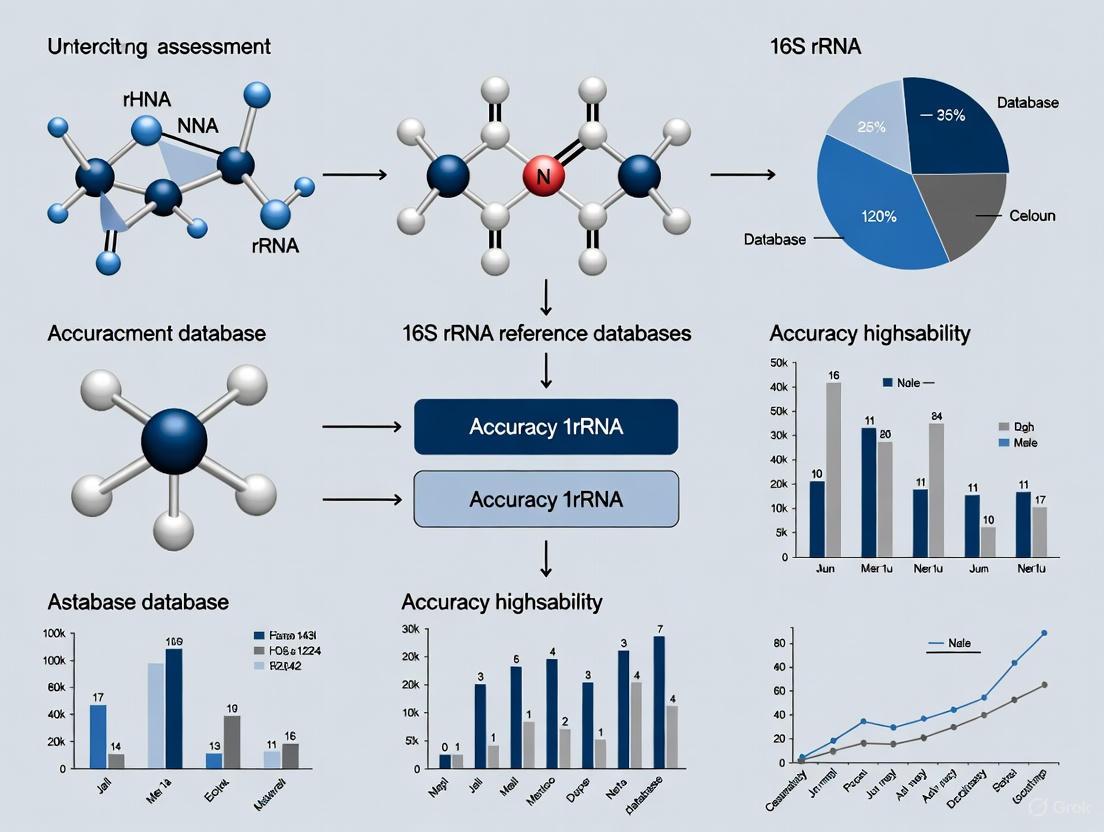
Accurate taxonomic classification is the cornerstone of reliable microbiome research, yet the selection of a 16S rRNA reference database significantly influences results, from alpha diversity metrics to species-level identification.
Benchmarking 16S rRNA Reference Databases: A Comprehensive Guide to Accuracy, Selection, and Application in Biomedical Research
Abstract
Accurate taxonomic classification is the cornerstone of reliable microbiome research, yet the selection of a 16S rRNA reference database significantly influences results, from alpha diversity metrics to species-level identification. This article provides a comprehensive assessment of major databases—including SILVA, Greengenes, RDP, GTDB, and emerging curated options like MIMt—evaluating their performance against benchmarks like known mock communities and type strain sequences. We explore how database choice interacts with sequencing technologies (Illumina, PacBio, Oxford Nanopore) and analytical pipelines, and provide evidence-based strategies for database selection and troubleshooting to optimize accuracy for specific research contexts, from clinical diagnostics to environmental microbiology. This guide empowers researchers to make informed methodological choices, enhancing the reliability and reproducibility of their microbiome studies.
The Critical Role of 16S rRNA Databases: Understanding Foundations and Sources of Variation
Taxonomic profiling through 16S ribosomal RNA (rRNA) gene sequencing represents a foundational approach in microbial ecology, enabling researchers to decipher the composition of complex bacterial communities from environments ranging from the human gut to soil and aquatic systems [1]. The accuracy of these analyses is not merely a technical concern but a fundamental prerequisite for drawing valid biological conclusions about microbial ecology, host-microbe interactions, and dysbiosis in disease states. While numerous factors influence 16S rRNA analysis outcomes—including primer selection, sequencing platform, and bioinformatics pipelines—the choice of reference database constitutes perhaps the most critical decision point [2] [3]. Different databases employ distinct curation philosophies, update frequencies, and taxonomic frameworks, which collectively exert substantial influence on taxonomic assignments, diversity estimates, and ultimately, the biological interpretations derived from microbiome datasets. This guide synthesizes empirical evidence from comparative studies to objectively evaluate the performance of major 16S rRNA reference databases, providing researchers with evidence-based recommendations for database selection in their specific research contexts.
Major 16S rRNA Reference Databases: Characteristics and Curational Approaches
The landscape of 16S rRNA reference databases is populated by both longstanding standards and newly emerging alternatives. Each database exhibits unique characteristics stemming from their curation methodologies, update frequencies, and underlying taxonomies.
Table 1: Key Characteristics of Major 16S rRNA Reference Databases
| Database | Latest Version & Update Status | Curational Approach | Primary Strengths | Notable Limitations |
|---|---|---|---|---|
| Greengenes | Release 13_8 (2013); Largely static [2] [4] | Automated de novo tree construction of quality-filtered sequences [4] | Historical standard; Default in QIIME pipeline [2] | No updates since 2013; Poor species-level annotation (<15% of sequences) [4] |
| SILVA | Release 138.2 (2020); Previously regularly updated [5] [4] | Manually curated; Follows Bergey's taxonomy and LPSN [4] | Comprehensive coverage across Bacteria, Archaea, and Eukarya [4] | Many sequences identified as "uncultured" without species information [4] |
| EzBioCloud | Regularly updated [2] | Designed for species-level identification; Includes genomes and type strains [2] | High accuracy at species level; Quality-controlled sequences [2] | Smaller sequence count (~63,000) than SILVA [2] |
| RDP | Last update 2016 [4] | Naïve Bayesian Classifier; Bergey's taxonomy [4] | Well-established with consistent classification algorithm [6] | Many sequences annotated as "uncultured" or "unidentified" [4] |
| MIMt/MIMt2.0 | 2024; Updated twice annually [4] | Precise species-level identification; NCBI Taxonomy integration [4] | Minimal redundancy; Complete taxonomy up to species level for all entries [4] | Smaller size (47,001 sequences) due to stringent quality controls [4] |
The databases listed above employ fundamentally different approaches to sequence inclusion and taxonomic annotation. Greengenes, while historically significant, suffers from outdated content due to its lack of recent updates [2]. SILVA provides broad taxonomic coverage but includes substantial numbers of sequences without species-level identification [4]. In contrast, newer databases like EzBioCloud and MIMt prioritize sequence quality and complete taxonomic annotation, even at the cost of smaller overall size [2] [4]. The MIMt database specifically excludes sequences not identified at the species level or with vague taxonomic descriptions, ensuring higher reliability for species-level assignment [4].
Experimental Approaches for Database Benchmarking
To objectively evaluate database performance, researchers have employed standardized benchmarking methodologies, primarily utilizing mock microbial communities with known composition. These controlled experimental designs allow for precise quantification of accuracy metrics by comparing computational results against expected outcomes.
Mock Community Designs
Mock communities represent artificial mixtures of microbial strains with predefined compositions, serving as ground truth references for benchmarking. Studies have employed various mock community designs:
- Human Gut, Ocean, and Soil Simulated Communities: In silico datasets simulating the most abundant genera from these environments, with samples containing either 100 or 500 species per community at similar relative abundances to avoid taxon-specific biases [1].
- Nine-Species Dairy Community: A defined community of nine bacterial species commonly found in milk and dairy products, with DNA pooled either before (gDNA) or after (PCR amplicon) the PCR step to evaluate different bias sources [7].
- 59-Strain Uniform Community: A community of 59 bacterial strains with uniform abundance, used specifically for validating biases and sequencing errors [2].
Accuracy Metrics and Statistical Evaluation
Benchmarking studies employ standardized metrics to quantify database performance:
- Recall (Sensitivity): The proportion of actually present taxa that are correctly identified [1].
- Precision: The proportion of identified taxa that are truly present, with low false-positive rates [1].
- F-score: The harmonic mean of precision and recall, providing a balanced assessment [1].
- Alpha Diversity Indices: Metrics including Chao1 (richness), Simpson's evenness, and Shannon's diversity, compared against expected values [2].
- Distance Metrics: Bray-Curtis dissimilarity and weighted Unifrac distance between observed and expected compositions [7].
These metrics are calculated at different taxonomic levels (species, genus, family) to provide comprehensive performance assessment across taxonomic ranks.
Standardized Bioinformatics Pipelines
To ensure fair comparisons, benchmarking studies typically process sequences through standardized analysis pipelines:
- Quality Filtering and Denoising: Using tools like DADA2 for amplicon sequence variant (ASV) inference or VSEARCH for OTU clustering [7] [8].
- Taxonomic Assignment: Applying identical classification parameters (e.g., confidence thresholds) across databases [2].
- Diversity Analysis: Calculating alpha and beta diversity metrics using consistent methodologies [3].
The following diagram illustrates a typical experimental workflow for database benchmarking:
Comparative Performance Analysis of Reference Databases
Empirical evaluations using mock communities have revealed substantial differences in database performance, with significant implications for taxonomic assignment accuracy and diversity estimation.
Genus and Species-Level Taxonomic Assignment
Comparative studies consistently demonstrate that database selection dramatically affects taxonomic assignment accuracy:
Table 2: Database Performance in Taxonomic Assignment Accuracy
| Database | Genus-Level Recall | Genus-Level Precision | Species-Level Performance | Remarks |
|---|---|---|---|---|
| EzBioCloud | ~90% (40/44 genera correctly identified) [2] | High (low false-positive rate) [2] | Correctly identified ~40 species; best species-level performance [2] | Outperformed Greengenes and SILVA in mock community evaluation [2] |
| SILVA | ~79% (35/44 genera correctly identified) [2] | Moderate (~20% false-positive rate) [2] | Correctly identified ~35 species; moderate species-level performance [2] | Tends to over-predict genera present [2] |
| Greengenes | ~68% (30/44 genera correctly identified) [2] | Low (high false-positive rate) [2] | Poor species-level performance [2] | Fails to detect many genera; outdated taxonomy [2] |
| MIMt | High (exact quantification not provided) [4] | High (less redundancy) [4] | Excellent due to complete species-level annotation [4] | Smaller database but higher precision [4] |
The performance disparities stem from fundamental differences in database construction. EzBioCloud's superior performance, particularly at the species level, reflects its careful curation and inclusion of high-quality sequences from genome assemblies [2]. In contrast, Greengenes shows limitations due to its outdated taxonomy and lack of recent updates [2]. SILVA provides reasonable genus-level recall but introduces substantial false positives, potentially inflating diversity estimates [2]. The recently developed MIMt database demonstrates that smaller, more carefully curated databases can outperform larger but more redundant alternatives [4].
Impact on Diversity Estimates and Community Structure
Beyond taxonomic assignment, database choice significantly influences alpha and beta diversity measures, which are fundamental to ecological interpretation:
- Alpha Diversity Inflation: Greengenes and SILVA tend to overestimate sample richness and underestimate evenness compared to EzBioCloud when analyzing uniform mock communities [2]. This inflation arises from database redundancy and inconsistent taxonomic annotation.
- Effect Size Magnitude: The DNA sequencing method and analysis pipeline have demonstrated effect sizes of 0.88 (Bray-Curtis) and 0.32 (weighted Unifrac) on diversity metrics, independent of mock community type [7]. These effects are comparable to or greater than many biological variables of interest.
- Compositional Dissimilarity: Different 16S rRNA variable regions combined with database choice can produce compositional dissimilarities up to 40% between samples analyzed with the same pipeline [1], potentially obscuring true biological signals.
Interaction with 16S rRNA Variable Region Selection
The performance of reference databases is further modulated by the specific variable region targeted for sequencing:
- Region-Specific Bias: Different variable regions show distinct taxonomic biases. The V1-V2 region performs poorly for classifying Proteobacteria, while V3-V5 struggles with Actinobacteria [9]. These biases interact with database coverage to compound classification inaccuracies.
- Reference Sequence Availability: The percentage of reference sequences matching primers for V1-V2 is dramatically lower (30.3%) than for V3-V4 (90%), V4 (90.9%), and V4-V5 (87.8%) [1]. This disproportionately affects databases with limited sequence representation.
- Resolution Power: Full-length 16S rRNA gene sequencing provides significantly better taxonomic resolution than any single variable region, with the V4 region performing particularly poorly for species-level discrimination [9]. When targeting sub-regions, V1-V2 demonstrates the highest resolving power for respiratory microbiota [3].
The following diagram illustrates the relationship between database characteristics and analytical outcomes:
Integrated Analysis Tools and Computational Considerations
The computational framework surrounding reference databases significantly impacts analysis efficiency, with different tools offering varying trade-offs between accuracy and resource requirements.
Classification Tools and Performance
- QIIME 2: Demonstrates the highest recall and F-scores at genus and family levels in benchmark studies but requires substantial computational resources (CPU time and memory usage almost 2 and 30 times higher than MAPseq, respectively) [1].
- Kraken 2 with Bracken: Provides exceptionally fast classification (up to 300 times faster than QIIME 2) while maintaining high accuracy, with lower memory requirements (100x less RAM) [10].
- DADA2 with Greengenes: When combined with Ion Torrent PGM sequencing, this pipeline provided the most accurate representation of mock community phylogeny and taxonomy in dairy microbiome studies [7].
Database and Tool Selection Guidelines
Based on empirical evidence, researchers can optimize their database and tool selection according to specific research goals:
- For Maximum Species-Level Accuracy: EzBioCloud or MIMt databases provide superior species-level discrimination due to their careful curation and complete taxonomic annotation [2] [4].
- For Computational Efficiency: Kraken 2 with Bracken offers exceptional speed and reasonable accuracy with minimal computational resources [10].
- For General Genus-Level Analysis: SILVA provides reasonable genus-level recall, though with elevated false-positive rates [2].
- When Using Full-Length 16S Sequencing: MIMt or EzBioCloud are preferable as full-length sequencing reveals the limitations of less curated databases [9].
- For Legacy Comparisons: When comparing with historical datasets, maintaining the original database used (despite its limitations) may be necessary for consistency.
Table 3: Key Research Reagents and Computational Resources for 16S rRNA Analysis
| Resource Category | Specific Tools/Databases | Primary Function | Considerations for Use |
|---|---|---|---|
| Reference Databases | SILVA, Greengenes, EzBioCloud, MIMt, RDP | Taxonomic classification of 16S rRNA sequences | Selection should balance accuracy, completeness, and research objectives [2] [4] |
| Bioinformatic Pipelines | QIIME 2, mothur, DADA2, Kraken 2 | Processing raw sequences and taxonomic assignment | Kraken 2 offers speed advantage; QIIME 2 provides comprehensive ecosystem [1] [10] |
| Mock Communities | ZymoBIOMICS, in silico simulations | Method validation and benchmarking | Essential for validating wet-lab and computational methods [7] [3] |
| Primer Sets | V1-V2, V3-V4, V4, V4-V5 specific primers | Targeting hypervariable regions | Region selection dramatically affects outcomes; V1-V2 recommended for respiratory samples [1] [3] |
| Analysis Tools | Bracken, Deblur, VSEARCH | Abundance estimation, denoising, chimera detection | Bracken enables accurate abundance estimation from Kraken outputs [10] |
The selection of appropriate 16S rRNA reference databases represents a critical decision point in microbiome research with far-reaching implications for data interpretation. Empirical evidence demonstrates that database choice directly influences taxonomic assignment accuracy, diversity estimates, and ultimately, biological conclusions. While larger databases like SILVA provide broad coverage, smaller, more carefully curated databases like EzBioCloud and MIMt frequently deliver superior accuracy, particularly at the species level. Researchers should align database selection with their specific research questions, considering trade-offs between comprehensiveness and precision. As the field progresses toward full-length 16S rRNA sequencing and strain-level discrimination, the importance of high-quality, non-redundant reference databases will only intensify. Future database development should prioritize accurate taxonomic annotation, reduced redundancy, and regular updates to keep pace with rapidly evolving microbial taxonomy.
This guide provides an objective comparison of four major reference databases used for the taxonomic classification of 16S ribosomal RNA (rRNA) gene sequences in microbial ecology: SILVA, Greengenes, RDP, and GTDB. The accurate identification of microorganisms is a critical first step in metagenomic analyses, and the choice of database significantly influences the interpretation of microbial community composition, with downstream effects on biological conclusions [11]. The table below summarizes the core attributes of each database.
Table 1: Core Characteristics of Major 16S rRNA Reference Databases
| Database | Primary Taxonomic Scope | Status & Last Update | Key Taxonomy Basis | Notable Features |
|---|---|---|---|---|
| SILVA [12] | Bacteria, Archaea, Eukarya | Actively updated (July 2024) | Bergey's Taxonomy; List of Prokaryotic Names with Standing in Nomenclature (LPSN) | Includes aligned SSU & LSU rRNA sequences; offers non-redundant datasets (Ref NR) [12] [11]. |
| Greengenes [11] | Bacteria, Archaea | Not updated for ~10 years | De novo tree construction | One of the historical standards; a high percentage of sequences lack species-level annotation [11]. |
| RDP [11] | Bacteria, Archaea, Fungi (LSU) | Not updated since September 2016 | Bergey's Taxonomy | Uses a Naïve Bayesian Classifier; many sequences are annotated as 'uncultured' [11]. |
| GTDB [13] [11] | Bacteria, Archaea | Actively updated (Release April 2025) | Standardized taxonomy based on genome phylogeny | Genome-based, reducing mislabeling; contains significant redundancy and uses non-standard species definitions [13] [11]. |
Experimental Performance and Accuracy Assessment
Independent studies consistently demonstrate that the choice of reference database leads to significantly different taxonomic profiles, affecting the observed frequency, richness, and distribution of microbial taxa.
Quantitative Comparison of Classification Outcomes
A 2024 study by Pereira Domingues et al. evaluated how database choice affects the monitoring of bacterial genera potentially related to diseases (BGPRDs) in marine environments. Their findings highlight that the resulting ecological narrative is directly dependent on the database used [14].
Table 2: Database-Dependent Variation in Bioindicator Frequency in Marine Environments
| Database | Dois Rios Beach (Low Impact) | Abraão Beach (Medium Impact) | Guanabara Bay (High Impact) |
|---|---|---|---|
| SILVA | 3.6% | 9.3% | 5.8% |
| RDP | 1.0% | 1.8% | 4.7% |
| Greengenes v13.8 | 3.4% | 6.8% | 7.3% |
| Greengenes2 | 2.1% | 7.7% | 6.5% |
Note: Values represent the average frequency of BGPRDs in the microbial community. The database indicating the highest impact level for each site is highlighted in bold, showing the lack of a consistent conclusion across databases [14].
The study further revealed a lack of congruence in the specific bioindicators identified. For example, in the highly-impacted Guanabara Bay, the dominant BGPRD was classified as Arcobacter using Greengenes2 and RDP, but as Synechococcus and Alteromonas with Greengenes v13.8 and SILVA, respectively [14].
Evaluating Taxonomic Accuracy and Completeness
The development of the MIMt database in 2024 provided a novel benchmark for evaluating existing databases. The study constructed a compact, precisely-identified database to test the performance of SILVA, GTDB, Greengenes, and RDP [11].
Table 3: Performance Benchmark Against the MIMt Standard
| Database | Relative Size & Redundancy | Species-Level Annotation | Key Identified Shortcomings |
|---|---|---|---|
| SILVA | Large; lower redundancy in Ref NR sets | Poor (many 'uncultured') | Initially designed for sequence storage, not identification; taxonomy biases [11]. |
| GTDB | Large; high redundancy | Good | Non-standard species definitions inflate counts; redundancy can skew diversity estimates [11]. |
| Greengenes | Large | Poor (<15% at species level) | Outdated; many sequences lack genus and family-level annotation [11]. |
| RDP | Large | Poor (many 'unidentified') | Outdated; high proportion of uninformative annotations [11]. |
| MIMt (Benchmark) | 20-500x smaller; minimal redundancy | Excellent (100% at species level) | Developed for precise identification; excludes uncultured/unidentified sequences [11]. |
The benchmark concluded that despite being vastly smaller, MIMt outperformed the established databases in taxonomic accuracy and completeness, enabling significantly improved species-level identification by avoiding the issues of redundancy and missing annotations [11].
Detailed Experimental Protocols for Database Evaluation
To ensure reproducibility and provide a framework for future testing, below are the detailed methodologies from two key cited studies.
Protocol 1: Methodology for Database Comparison Using a Synthetic Rumen Standard
A 2020 study by Fenton et al. employed a synthetic sequencing standard to assess database classification accuracy in a rumen microbiome context [15].
- Reference Standard Creation: Full-length 16S rRNA gene sequences from 13 bacterial and 3 archaeal species representative of the rumen microbiome, along with nine 18S rRNA protozoal sequences, were synthesized based on GenBank records [15].
- Sequencing and Processing: The standard was pooled and sequenced in triplicate. Sequences were processed and classified using the DADA2 pipeline within QIIME2 [15].
- Database Comparison: Four different reference training sets were used for taxonomic assignment: RDP, SILVA, GTDB, and a custom RefSeq+RDP database. The classified outputs for each synthetic sequence were compared to their known identity [15].
- Stringency Assessment: Two different bootstrap confidence thresholds (50 and 80) were applied to evaluate the effect of classification stringency on accuracy [15].
Database Evaluation via Synthetic Standard Workflow
Protocol 2: Methodology for Environmental Bioindicator Analysis
The 2025 study by Pereira Domingues et al. evaluated database influence on environmental monitoring using real-world samples [14].
- Sample Collection and Sequencing: Environmental samples were collected from three marine sites with varying levels of anthropogenic impact along the coast of Rio de Janeiro, Brazil. The V4 region of the 16S rRNA gene was sequenced on an Illumina MiSeq platform [14].
- Bioinformatic Processing: Sequences were processed using the DADA2 pipeline to infer amplicon sequence variants (ASVs). The resulting ASVs were classified taxonomically using the RDP, SILVA, Greengenes v13.8, and Greengenes2 databases with a consistent bootstrap threshold [14].
- Data Analysis: The frequency, richness, and diversity of Bacterial Genera Potentially Related to Diseases (BGPRDs) were calculated for each sample based on the classifications from each database. Statistical analyses (e.g., Kruskal-Wallis test) were performed to determine if the differences observed between databases were significant [14].
Table 4: Key Reagents, Software, and Databases for 16S rRNA Analysis
| Item Name | Function / Application | Relevant Context |
|---|---|---|
| Synthetic Sequencing Standard | A defined mix of known microbial sequences used as a positive control to benchmark and validate bioinformatic pipelines and database accuracy. | Used in Fenton et al. (2020) to compare database performance with a known ground truth [15]. |
| DADA2 (via QIIME2) | A bioinformatic pipeline for modeling and correcting Illumina-sequenced amplicon errors to resolve amplicon sequence variants (ASVs). | Used as the standard processing tool in both cited experimental protocols [15] [14]. |
| RNAmmer | A software tool that uses Hidden Markov Models to predict rRNA genes in genomic sequences. | Used in the construction of the MIMt database to extract 16S sequences from genomes [11]. |
| NCBI Taxonomy Database & Taxdump | A central, authoritative repository of taxonomic information that provides stable unique identifiers (taxids) for organisms. | Used by MIMt to assign and validate complete taxonomic lineages for its sequences [11]. |
| ARB Software Package | A graphically-oriented integrated environment for sequence handling, alignment, and phylogenetic analysis. | Used by the SILVA database for its curation process and data is distributed in ARB format [12]. |
| GTDB-Tk | A software toolkit for assigning standardized taxonomic classifications to bacterial and archaeal genomes based on the GTDB taxonomy. | The primary tool for applying the GTDB taxonomy to new genomes or metagenome-assembled genomes (MAGs) [16]. |
Technical Specifications and Data Access
Understanding the scale and data composition of each database is crucial for selecting the appropriate resource.
Table 5: Technical Specifications and Current Statistics
| Database | Representative Dataset/Version | Sequence Count (Aligned) | Taxonomic Coverage |
|---|---|---|---|
| SILVA [12] | SSU Ref NR 99 (Release 138.2) | 510,495 | Covers all three domains of life (Bacteria, Archaea, Eukarya). |
| GTDB [13] | Release 10-RS226 (April 2025) | 732,475 genomes (not 16S specific) | 27,326 Bacterial and 2,079 Archaeal genera; 136,646 Bacterial and 6,968 Archaeal species. |
| MIMt [11] | 2024 Release | 47,001 | Precisely identified bacterial and archaeal species. |
The evidence shows that the landscape of 16S rRNA reference databases is divided between older, now-static databases (Greengenes, RDP) and actively maintained modern resources (SILVA, GTDB). The choice of database is not neutral and directly shapes research outcomes [11] [14].
For researchers aiming to achieve the most accurate and reproducible results, the following is recommended:
- Prioritize Active Projects: Favor SILVA and GTDB, as their ongoing curation addresses the rapid pace of discovery in microbial taxonomy [12] [13] [11].
- Validate with Standards: Where possible, use a synthetic or defined community standard relevant to your study ecosystem (e.g., rumen, marine) to benchmark your chosen pipeline and database, as their performance can vary [15].
- Report Clearly: Explicitly state the database, version, and classification algorithms used, including any confidence thresholds. This is essential for comparability between studies [15] [14].
- Consider Diversity Indices: If absolute taxonomic identification is confounded by database bias, alpha diversity indices of groups of interest (e.g., BGPRDs) may provide a more robust, database-consistent metric for environmental comparisons [14].
The accuracy of microbial community analysis using 16S rRNA gene sequencing is fundamentally constrained by the quality of reference databases. Despite technological advances in sequencing, the reliability of taxonomic assignments remains hampered by three persistent database pitfalls: redundancy, incomplete taxonomy, and sequence mislabeling. These issues propagate through analyses, potentially compromising biological interpretations in fields ranging from clinical diagnostics to environmental microbiology. This guide objectively compares the performance of major 16S rRNA reference databases, presenting experimental data that reveals how these pitfalls impact taxonomic assignment accuracy and how researchers can mitigate them through informed database selection.
Database Pitfalls: Definitions and Consequences
Redundancy
Redundancy occurs when databases contain multiple, highly similar or identical sequences with varying taxonomic labels. This inflation increases computational burden while providing minimal informational benefit. More critically, it can distort abundance estimates and diversity metrics during taxonomic assignment [4]. The recently developed MIMt database specifically addresses this issue by maintaining only one 16S rRNA sequence per species, creating a database 20 to 500 times smaller than conventional options while reportedly improving accuracy [4].
Incomplete Taxonomy
Many sequences in reference databases lack species-level identifications or are annotated with uninformative placeholder terms such as "uncultured bacterium" or "unidentified." This limitation severely restricts the resolution of microbiome studies, particularly for attempts to identify biomarkers at the species level. Analyses indicate that less than 15% of sequences in the Greengenes database have species-level taxonomy assigned, while the RDP database contains many sequences annotated only as 'uncultured' or 'unidentified' [4] [2]. The EzBioCloud database was specifically designed for species-level identification and has demonstrated superior performance in mock community validation for this taxonomic rank [2].
Mislabeling and Annotation Conflicts
Mislabeling represents the most insidious pitfall, where sequences are assigned incorrect taxonomic labels based on erroneous or outdated classifications. A systematic evaluation found 249,490 identical sequences with conflicting annotations between SILVA and Greengenes databases, including 7,804 conflicts at the phylum level, indicating an annotation error rate of approximately 17% [17]. A separate blinded test estimated the annotation error rate of the RDP database at around 10% [17]. These conflicts arise because taxonomy annotations in most databases are predictions from sequence rather than authoritative assignments based on studied type strains [17].
Comparative Performance Analysis of Major Databases
Database Characteristics and Update Status
Table 1: Key Characteristics of Major 16S rRNA Reference Databases
| Database | Latest Update Status | Taxonomic Coverage | Curated Sequences | Species-Level Annotations |
|---|---|---|---|---|
| Greengenes | Not updated since 2013 [2] | Bacteria, Archaea | Limited [4] | <15% of sequences [4] |
| RDP | Not updated since 2016 [4] | Bacteria, Archaea, Fungi | Limited [4] | Mostly "uncultured" or "unidentified" [4] |
| SILVA | Not updated since 2020 [4] | Bacteria, Archaea, Eukarya | Manually curated [4] | Many only to strain level [2] |
| EzBioCloud | Actively maintained [2] | Bacteria, Archaea, Eukarya | Designed for species ID [2] | High percentage [2] |
| GTDB | Actively maintained [4] | Bacteria, Archaea | Genome-based taxonomy [18] | High, but uses non-standard definitions [4] |
| MIMt | Updated twice yearly [4] | Bacteria, Archaea | All sequences curated to species level [4] | 100% of sequences [4] |
Quantitative Performance Metrics from Experimental Studies
Table 2: Performance Metrics of Databases in Taxonomic Assignment Accuracy
| Database | Genus-Level Recall | Species-Level Recall | False Positive Rate | Computational Efficiency |
|---|---|---|---|---|
| SILVA | High (similar to actual genus count) [2] | Moderate (~35 species correctly identified) [2] | High (~20% incorrect predictions) [2] | Moderate [1] |
| Greengenes | Low (only 30/44 genera found) [2] | Poor (only a few correct species) [2] | High [2] | High [1] |
| EzBioCloud | Highest (>40 true positive genera) [2] | Highest (~40 species correctly identified) [2] | Lowest [2] | High (smaller database size) [2] |
| QIIME 2 (with SILVA) | 67.0-68.3% (human gut, soil) [1] | N/A | Low (high precision) [1] | Low (high CPU and memory usage) [1] |
| MAPseq (with SILVA) | Highest number of expected genera [1] | N/A | Lowest (miscall rates <2%) [1] | High (30x less memory than QIIME 2) [1] |
Experimental Protocols for Database Validation
Mock Community Validation Methodology
Mock communities with known composition provide the gold standard for evaluating database accuracy. The following protocol has been used in multiple benchmark studies:
Community Design: Create in silico or physical mock communities comprising known bacterial strains with uniform abundance distribution. One referenced study used 59 bacterial strains with uniform abundance [2].
Sample Processing: Extract DNA from the mock community and sequence target regions (e.g., V3-V4 hypervariable region) using Illumina platforms [2].
Data Preprocessing:
Taxonomic Assignment:
Accuracy Calculation:
- Compare assigned taxonomies to expected compositions
- Calculate precision, recall, and F-scores at genus and species levels
- Compute true positives (TP), false positives (FP), and false negatives (FN) [2]
In Silico Benchmarking Approach
Computational simulations allow controlled evaluation of database performance:
Dataset Generation: Simulate 16S rRNA sequences representative of genera from specific environments (human gut, ocean, soil) with known taxonomic distributions [1].
Sequence Variation: Introduce random mutations (e.g., 2% of positions) to simulate natural variation and sequencing errors [1].
Tool and Database Testing: Process simulated sequences through multiple taxonomic classifiers (QIIME, QIIME 2, mothur, MAPseq) paired with different reference databases [1].
Performance Evaluation:
- Calculate recall and precision at genus and family levels
- Measure distance estimates between observed and simulated samples
- Compare computational requirements (CPU time, memory usage) [1]
Analysis Workflow and Database Selection Impact
The following diagram illustrates how database pitfalls affect the taxonomic analysis workflow and ultimately impact results:
Table 3: Key Research Reagent Solutions for 16S rRNA Database Evaluation
| Reagent/Resource | Function | Application Notes |
|---|---|---|
| Mock Communities | Validation standard for database accuracy | Composed of known bacterial strains with even abundance; essential for calculating precision/recall metrics [2] |
| Reference Genomic DNA | Positive controls for specific pathogens | Purchasable from repositories like ATCC and Biological Resource Center, NITE; used in simulation experiments [19] |
| Universal 16S Primers | Amplification of target regions | Selection affects database performance; V4-V5 region recommended for marine environments [18] |
| Bioinformatics Pipelines | Taxonomic classification and analysis | QIIME 2, mothur, MAPseq show different performance characteristics; choice affects database effectiveness [1] |
| Curated Databases | Reference for taxonomic assignment | MIMt, EzBioCloud provide less redundancy; SILVA, GTDB offer different curation approaches [4] [2] |
| Sequence Processing Tools | Quality control and chimera removal | DADA2, VSEARCH, cutadapt essential for preprocessing before database assignment [2] [18] |
The performance of 16S rRNA reference databases varies significantly in addressing the core pitfalls of redundancy, incomplete taxonomy, and mislabeling. Experimental evidence demonstrates that newer, actively-maintained databases with rigorous curation (such as EzBioCloud and MIMt) generally outperform legacy databases in species-level identification and annotation accuracy. Database selection should be guided by research objectives: while SILVA may provide higher recall for community profiling, specialized databases offer advantages for species-level discrimination. Researchers should validate database performance using mock communities relevant to their study systems and consider computational trade-offs between comprehensive databases and more targeted, curated alternatives. As microbial taxonomy continues to evolve with genomic insights, the development of standardized, non-redundant, and accurately annotated reference databases remains critical for advancing microbiome research.
In the field of microbiome research, the accurate determination of taxonomic composition is fundamental to drawing meaningful ecological and clinical conclusions. However, technical variations in 16S rRNA gene sequencing protocols—including primer selection, sequencing platforms, and bioinformatic pipelines—can significantly alter observed microbial profiles, potentially leading to erroneous interpretations [20]. Within this context, mock microbial communities with known compositions have emerged as an indispensable tool for method validation and benchmarking. These controlled standards, composed of precise mixtures of microbial cells or DNA from identified species, enable researchers to objectively assess the performance of their entire analytical workflow, from DNA extraction to taxonomic classification [20].
The necessity for such controls is underscored by comparative studies demonstrating that specific bacterial taxa can be underrepresented or completely missed when using suboptimal primer combinations or outdated reference databases [20]. Furthermore, the increasing adoption of third-generation sequencing technologies capable of generating full-length 16S rRNA sequences necessitates re-evaluation of traditional benchmarking approaches [21] [22]. This guide systematically compares the experimental applications of mock communities across different sequencing platforms and bioinformatic approaches, providing researchers with a framework for rigorous validation of their 16S rRNA sequencing methodologies.
Experimental Protocols: Benchmarking with Mock Communities
Sample Preparation and Sequencing
The initial critical step in mock community benchmarking involves selecting an appropriate reference standard. Commercially available mock communities (e.g., ZymoBIOMICS) provide well-characterized compositions of multiple bacterial and fungal species, offering a ground truth for validation [3] [20]. The experimental workflow proceeds through several standardized stages:
DNA Extraction: Process mock community samples using the same DNA extraction kit applied to experimental samples. For soil samples, the Quick-DNA Fecal/Soil Microbe Microprep kit has been documented in protocols [21]. Consistent application across both mock and experimental samples is essential to control for extraction bias.
Library Preparation and Sequencing:
- Illumina Platform (Short-Read): Amplify target hypervariable regions (e.g., V3-V4, V1-V2) using platform-specific primers. Studies have utilized primers 341F-785R for V3-V4 and 27F-338R for V1-V2 regions [20]. Sequence on Illumina platforms such as MiSeq, following manufacturer protocols.
- PacBio Platform (Long-Read): Amplify the full-length 16S rRNA gene using primers such as 27F and 1492R [21]. Prepare libraries using the SMRTbell Prep Kit and sequence on the Sequel IIe system with appropriate run times to generate Circular Consensus Sequencing (CCS) reads for high accuracy [21].
- Oxford Nanopore Technology (ONT) Platform (Long-Read): Similarly amplify the full-length 16S rRNA gene. Prepare libraries using the Native Barcoding Kit and sequence on MinION flow cells (e.g., R10.4.1), which have demonstrated improved basecalling accuracy [21] [22].
Bioinformatic Analysis and Taxonomic Assignment
Following sequencing, process raw data through standardized bioinformatic pipelines:
- Quality Filtering and Denoising: For Illumina data, use DADA2 to infer amplicon sequence variants (ASVs) [22]. For ONT data, employ specialized tools such as Emu, which is designed to handle ONT's characteristic error profile [22].
- Taxonomic Assignment: Assign taxonomy to the resulting ASVs or zero-radius OTUs (zOTUs) using various reference databases and classifiers. Commonly used databases include SILVA, Greengenes, RDP, GTDB, and specialized databases like MIMt [4] [23]. Classifiers such as QIIME2, mothur, SINTAX, and IDTAXA should be evaluated for their accuracy in matching expected mock community compositions [23].
The following diagram illustrates the complete experimental workflow for mock community benchmarking:
Comparative Database Performance with Mock Communities
The choice of reference database significantly impacts taxonomic assignment accuracy. Studies have systematically evaluated database performance using mock communities and curated sequences to determine their strengths and limitations. The table below summarizes key characteristics and performance metrics of commonly used 16S rRNA reference databases:
Table 1: Performance Comparison of 16S rRNA Reference Databases
| Database | Size (Sequences) | Key Features | Update Status | Strengths | Limitations |
|---|---|---|---|---|---|
| MIMt [4] | 47,001 | All sequences identified to species level; minimal redundancy | Updated twice yearly | Highest taxonomic accuracy; less redundancy; precise species-level identification | Smaller size (20-500x smaller than others) |
| MIMt2.0 [4] | 32,086 | Manually curated sequences from RefSeq Targeted loci | Updated twice yearly | High-quality curated sequences; improved reliability | Limited to curated RefSeq sequences |
| SILVA [4] [20] | ~2.7 million (SSU Ref NR) | Manually curated; covers Bacteria, Archaea, Eukaryota | Not updated since 2020 | Broad taxonomic coverage; manual curation | Many "uncultured" sequences; outdated |
| Greengenes2 [4] [20] | Not specified | De novo tree-based taxonomy | Not updated for 10+ years | Historical standard; phylogenetic approach | Outdated; incomplete species annotations |
| RDP [4] [20] | ~3.3 million | Bacterial/archaeal SSU & fungal LSU | Not updated since 2016 | Complete taxonomy for many sequences | Many "uncultured"/"unidentified" taxa |
| GTDB [24] [4] | ~100,000 (extracted from genomes) | Genome-based taxonomy; modern phylogenetic framework | Regularly updated | Standardized genome-based taxonomy | High redundancy; non-standard nomenclature |
Database Performance Insights
Evaluation of these databases using mock communities and curated sequences reveals critical performance differentiators:
- Taxonomic Resolution: MIMt demonstrates superior species-level identification due to its complete species annotation and reduced redundancy [4]. In contrast, databases like SILVA and Greengenes contain substantial proportions of sequences from "uncultured" or "unidentified" organisms, limiting their resolution at the species level [4].
- Classifier-Database Interactions: Research indicates that classifier performance is significantly affected by the choice of reference database [23]. For instance, using RDP sequences as a training dataset, SINTAX and SPINGO classifiers provided the highest accuracy for full-length 16S rRNA sequences [23].
- Impact of Database Structure: The Emu classifier's default database, while identifying more species than SILVA in Nanopore sequencing, may overconfidently assign unknown sequences to the closest match due to its database structure [22].
Key Performance Metrics for Technology Evaluation
When benchmarking sequencing technologies and bioinformatic pipelines against mock communities, specific quantitative metrics provide objective performance assessment:
Table 2: Key Performance Metrics for Mock Community Validation
| Metric Category | Specific Metric | Description | Interpretation |
|---|---|---|---|
| Taxonomic Accuracy | Species/Genus Detection Rate | Proportion of expected taxa correctly identified | Higher rates indicate better sensitivity and specificity |
| False Positive Rate | Proportion of reported taxa not in the mock community | Lower rates indicate better specificity | |
| Abundance Correlation | Relative Abundance Correlation (R²) | Correlation between expected and observed abundances | Values closer to 1.0 indicate more quantitative accuracy |
| Resolution Power | Species-Level Resolution | Percentage of assignments reaching species level | Higher percentages indicate finer taxonomic resolution |
| Technical Variation | Index of Dissimilarity (Bray-Curtis) | Measure of beta-diversity between replicates | Lower values indicate better technical reproducibility |
Application of Performance Metrics
Comparative studies applying these metrics to mock communities have yielded significant insights:
- Sequencing Platform Comparison: A 2025 study comparing Illumina, PacBio, and ONT platforms found that PacBio and ONT provided comparable bacterial diversity assessments from soil samples, with PacBio showing slightly better detection of low-abundance taxa [21]. Despite ONT's higher inherent error rate, its results closely matched PacBio's, suggesting errors may not significantly impact the interpretation of well-represented taxa when using appropriate analysis tools like Emu [21] [22].
- Primer Region Impact: Research on respiratory samples demonstrated that different 16S rRNA hypervariable regions (V1-V2, V3-V4, V5-V7, V7-V9) yield significantly different taxonomic profiles from the same mock community [3]. The V1-V2 region showed the highest resolving power (AUC: 0.736) for respiratory microbiota, highlighting the importance of region selection based on sample type [3].
- Database Performance: Evaluations using curated full-length 16S rRNA sequences have shown that database choice dramatically affects classification accuracy. MIMt, despite being significantly smaller, outperformed larger databases in taxonomic accuracy and species-level identification due to its complete annotation and reduced redundancy [4].
Table 3: Essential Research Reagents and Resources for Mock Community Studies
| Category | Specific Product/Resource | Application/Function |
|---|---|---|
| Reference Materials | ZymoBIOMICS Microbial Community Standard | Mock community with known composition for pipeline validation [3] [20] |
| DNA Extraction Kits | Quick-DNA Fecal/Soil Microbe Microprep Kit | DNA extraction from complex samples like soil [21] |
| Sequencing Kits | SMRTbell Prep Kit 3.0 (PacBio) | Library preparation for full-length 16S sequencing [21] |
| Native Barcoding Kit 96 (Oxford Nanopore) | Library preparation for multiplexed ONT sequencing [21] | |
| Bioinformatic Tools | DADA2 | Amplicon Sequence Variant (ASV) inference for Illumina data [22] |
| Emu | Taxonomic profiling for noisy long reads (ONT) [22] | |
| QIIME2, mothur | Integrated pipelines for microbiome analysis [23] [20] | |
| Reference Databases | MIMt/MIMt2.0 | Curated databases for accurate species-level identification [4] |
| SILVA, GTDB | Comprehensive databases for broad taxonomic coverage [4] |
Based on comprehensive benchmarking studies using mock communities, several best practices emerge for optimizing 16S rRNA sequencing workflows:
- Implement Mock Communities as Routine Controls: Include mock community standards in every sequencing run to control for technical variability and validate entire workflows from DNA extraction to taxonomic assignment [20].
- Match Hypervariable Regions to Research Questions: Select 16S rRNA regions based on the specific ecosystem studied. For respiratory samples, V1-V2 shows superior resolution, while full-length sequencing provides the highest taxonomic depth for comprehensive community analysis [3] [22].
- Leverage Long-Read Technologies for Species-Level Resolution: When species-level discrimination is critical, utilize PacBio or the latest ONT chemistry (R10.4.1) with optimized bioinformatic tools like Emu to overcome traditional limitations in taxonomic resolution [21] [22].
- Select Databases Strategically: Prioritize databases with complete taxonomic annotation, minimal redundancy, and regular updates (e.g., MIMt, GTDB) for the most accurate species-level identification, particularly when studying complex environmental samples [24] [4].
- Validate Classifier-Database Combinations: Systematically test different classifier and database combinations using mock communities to identify optimal pairings for specific research contexts, as performance varies significantly across these combinations [23].
The consistent application of mock community benchmarking represents a critical quality control standard that elevates the rigor, reproducibility, and biological relevance of microbiome research across diverse fields from clinical diagnostics to environmental ecology.
From Theory to Practice: Database Selection and Integration with Analysis Pipelines
The accuracy of microbial community analysis using 16S rRNA gene sequencing is fundamentally constrained by the synergistic relationship between sequencing technologies and the reference databases used for taxonomic assignment. While the debate between short-read (e.g., Illumina) and long-read (e.g., Oxford Nanopore Technologies [ONT], PacBio) platforms often focuses on read length and accuracy, the selection of an appropriate reference database is an equally critical determinant of taxonomic resolution [25] [4]. Reference databases serve as the foundational genomic libraries against which sequenced reads are compared, and their quality, completeness, and redundancy directly impact the fidelity of microbial identification [4].
The inherent limitations of commonly used databases—including sequence redundancy, incomplete taxonomic annotation, and the presence of mislabeled sequences—pose significant challenges for precise species-level classification [4]. This is particularly problematic in clinical and environmental microbiology, where distinguishing between closely related species can have profound implications for diagnosing pathogens or understanding ecosystem function. The development of new, curated databases like MIMt aims to mitigate these issues by reducing redundancy and ensuring all sequences are identified to the species level, thereby enhancing taxonomic accuracy [4].
This guide provides an objective comparison of how different sequencing platforms perform when paired with various reference databases, summarizing experimental data on their performance characteristics to inform researchers in selecting optimal workflows for their specific applications.
Comparative Analysis of Sequencing Platforms
The choice between short-read and long-read sequencing technologies involves balancing multiple factors, including read length, accuracy, cost, and throughput. The table below summarizes the core characteristics of these platforms based on current literature.
Table 1: Key characteristics of short-read and long-read sequencing platforms for 16S rRNA analysis.
| Feature | Short-Read (e.g., Illumina) | Long-Read (e.g., Oxford Nanopore, PacBio) |
|---|---|---|
| Typical Read Length | 50-600 bases [26] [27] | Thousands to tens of kilobases [26] [27] |
| Primary 16S Target | Single or multiple hypervariable regions (e.g., V3-V4) [28] [29] | Full-length 16S gene (~1,500 bp) [30] [28] [29] |
| Base-Calling Accuracy | >99.9% [26] [28] | Historically 90-95%, now often >99% with recent chemistry [30] [28] [27] |
| Taxonomic Resolution | Genus-level, sometimes species-level [31] [28] | Species-level and strain-level resolution [31] [28] [27] |
| Best Suited For | High-throughput microbial surveys, genus-level profiling [28] | Applications requiring species-level resolution, strain tracking, and genome assembly [28] [27] |
Experimental Evidence and Performance Validation
Controlled studies consistently demonstrate that the longer reads generated by platforms like ONT provide superior taxonomic discrimination. One clinical study evaluating 153 bacterial isolates found that long-read ONT sequencing of the full-length 16S rRNA gene achieved a higher taxonomic resolution at the genus level (P < 0.01) compared to Sanger sequencing of the first ~500 bp [30]. When species-level identification was achieved by both methods, concordance was 91% [30].
In respiratory microbiome research, a comparative analysis of Illumina and ONT revealed that while Illumina captured greater species richness in complex samples, ONT provided improved resolution for dominant bacterial species [28]. This makes long-read sequencing particularly advantageous for identifying pathogens in clinical samples. Another diagnostic study reported a higher positivity rate for clinically relevant pathogens using ONT (72%) compared to Sanger sequencing (59%) in culture-negative samples, with ONT also detecting more polymicrobial infections [32].
For the PacBio platform, the use of HiFi reads enables full-length 16S sequencing with high accuracy, which has been shown to provide the highest discriminating power for microbiome taxonomic classification, outperforming short-read methods [33].
The performance of any sequencing experiment is contingent upon the quality of the reference database used for taxonomic assignment. Databases vary significantly in size, curation practices, and freedom from redundancy.
Table 2: Comparison of popular 16S rRNA reference databases for taxonomic classification.
| Database | Size (Number of Sequences) | Curation & Update Status | Key Features and Shortcomings |
|---|---|---|---|
| MIMt | 47,001 [4] | Updated twice yearly; all sequences identified to species level [4] | Less redundancy; high taxonomic accuracy; designed specifically for precise species-level identification [4] |
| SILVA | Very Large (Not specified, but much larger than MIMt) [4] | Manually curated; not updated since 2020 [4] | Contains sequences from all three domains of life; many sequences identified as "uncultured" [4] |
| Greengenes2 | Very Large (Not specified) [4] | Not updated for ~10 years [4] | A historical standard, but a large proportion of sequences lack species-level taxonomy [4] |
| RDP | Very Large (Not specified) [4] | Not updated since 2016 [4] | Based on Bergey's taxonomy; many sequences annotated as "uncultured" or "unidentified" [4] |
| GTDB | Very Large (Not specified) [4] | Kept up-to-date [4] | Provides standardized taxonomy based on genome phylogeny; contains significant redundancy [4] |
The Impact of Database Selection on Taxonomic Assignment
Database choice directly influences results. One evaluation showed that despite being 20 to 500 times smaller than established databases, the curated MIMt database outperformed them in completeness and taxonomic accuracy, enabling more precise assignments at lower taxonomic ranks [4]. This is largely because MIMt excludes sequences not identified at the species level or with vague taxonomic descriptions, reducing the potential for erroneous identifications that can lead to incorrect ecological conclusions [4].
Furthermore, specialized databases can be constructed for specific environments. For example, building a targeted database for seafloor sediment samples (AQUAeD-DB) resulted in a substantially stronger correlation between Illumina and Nanopore read assignments compared to using a standard database [25]. This highlights the utility of customized reference sets for improving analysis in underexplored habitats.
Matching Databases to Sequencing Technologies and Research Goals
The combination of sequencing platform and reference database must be aligned with the primary objective of the study. The following workflow diagram outlines the decision-making process for selecting an appropriate pipeline.
Application-Oriented Workflow Configurations
For Maximum Taxonomic Resolution in Clinical Diagnostics: A combination of full-length 16S sequencing via ONT or PacBio with a curated, non-redundant database like MIMt is optimal. This pipeline leverages the superior discriminatory power of long reads and the high annotation quality of a purpose-built database to achieve reliable species-level identification, which is crucial for pathogen detection [30] [32] [4].
For Large-Scale Ecological Surveys: When the goal is to characterize community structure (alpha and beta diversity) across a large number of samples at the genus level, short-read sequencing (Illumina) of hypervariable regions paired with a broad-coverage database like SILVA or Greengenes remains a cost-effective and high-throughput option [28]. This approach trades off some species-level resolution for a greater breadth of sampling.
For Exploring Poorly Characterized Environments: In studies of habitats like specific soil types or marine sediments, building a custom, environmentally targeted reference database can dramatically improve results, regardless of the sequencing platform. This approach, which can use Illumina data to reconstruct reference sequences for unmatched amplicons, helps mitigate database biases and improves the classification of novel taxa [25].
Essential Reagents and Tools for 16S rRNA Sequencing Workflows
A successful 16S rRNA sequencing experiment depends on a suite of carefully selected reagents and kits. The following table details key solutions used in the experimental protocols cited in this guide.
Table 3: Key research reagent solutions for 16S rRNA sequencing workflows.
| Reagent / Kit Name | Manufacturer / Source | Primary Function in Workflow |
|---|---|---|
| 16S Barcoding Kit 1-24 (SQK-16S024) | Oxford Nanopore Technologies (ONT) | Library preparation for full-length 16S rRNA gene sequencing on Nanopore platforms [30]. |
| QIAseq 16S/ITS Region Panel | Qiagen | Targeted amplification and library preparation for Illumina sequencing of hypervariable regions (e.g., V3-V4) [28]. |
| Quick-DNA Fungal/Bacterial Miniprep Kit | Zymo Research | DNA extraction from bacterial cultures and samples, providing high-purity DNA suitable for long-read sequencing [30]. |
| Sputum DNA Isolation Kit | Norgen Biotek | Optimized DNA extraction from challenging respiratory samples like sputum [28]. |
| PrepMan Ultra Sample Preparation Reagent | Applied Biosystems (Thermo Fisher) | Rapid boil-prep DNA extraction for PCR, commonly used for Sanger sequencing but can interfere with ONT sequencing [30]. |
| SmartGene Identification App & 16S Centroid DB | SmartGene AG | An integrated software and curated database platform for automated analysis and taxonomic classification of 16S rRNA sequencing data [30]. |
The integration of sequencing technology and bioinformatics resources is pivotal for accurate microbiome analysis. Long-read sequencing platforms from ONT and PacBio demonstrably enhance species-level resolution by sequencing the full-length 16S rRNA gene, while short-read Illumina platforms remain robust for high-throughput, genus-level profiling. The critical, and often underappreciated, factor is that the taxonomic resolution afforded by either platform can only be fully realized when paired with a high-quality, well-curated reference database. Databases with minimal redundancy and complete species-level annotation, such as MIMt, significantly improve identification accuracy compared to larger but less curated alternatives. Future advancements will likely involve the creation of more specialized databases for specific environments and the continued reduction of costs for long-read sequencing, making high-resolution microbial community analysis accessible to an ever-broader range of scientific inquiries.
Taxonomic profiling through 16S ribosomal RNA (rRNA) gene sequencing has become a foundational technique for deciphering the composition of complex microbial ecosystems, with applications spanning from human health diagnostics to environmental monitoring [10] [1]. The accuracy of these analyses depends critically on the interplay between bioinformatics pipelines and the reference databases they query. Different tools employ distinct algorithmic approaches for classification—from k-mer matching to alignment-based methods and Bayesian classifiers—each interacting with reference data in unique ways that significantly impact results [10] [1]. This comparison guide examines three widely used tools—QIIME 2, Kraken 2, and mothur—focusing on their performance characteristics, computational demands, and classification accuracy when paired with standard reference databases. Understanding these relationships is essential for researchers making informed decisions about their analytical workflows, particularly within the broader context of accuracy assessment in 16S rRNA reference database research.
Tool-Specific Classification Mechanisms and Database Interactions
QIIME 2's Naïve Bayes Classifier
QIIME 2 employs a naïve Bayes classifier as its default method for taxonomic assignment, which uses a supervised learning approach based on extracted sequence features [10] [1]. This classifier requires training on reference databases that have been converted into QIIME-compatible formats (.qza files), a process that involves considerable computational resources [10]. The algorithm works by calculating the probability that a query sequence belongs to a particular taxonomic group based on the k-mer composition of the reference sequences. While this method has demonstrated high recall (sensitivity) in benchmark studies, it is notably resource-intensive, requiring substantially more CPU time and memory compared to alternative tools [1]. QIIME 2's framework supports various reference databases, including SILVA, Greengenes, and RDP, though each requires specific preprocessing to optimize performance.
Kraken 2's k-mer Matching Algorithm
Kraken 2 utilizes an alignment-free k-mer matching algorithm that creates a comprehensive database of k-mers (subsequences of length k) and their lowest common ancestor (LCA) taxonomic assignments [10]. This approach allows for exceptionally fast classification, as it reduces the sequence assignment problem to database lookups rather than computationally expensive alignments. When a k-mer is found in multiple species, Kraken 2 assigns it to the LCA of those species. The recent implementation of 16S rRNA database support in Kraken 2 enables direct comparison with traditional 16S analysis tools [10]. For abundance estimation, Kraken 2 is typically paired with Bracken, which uses Bayesian reconstruction to re-distribute reads classified at higher taxonomic levels down to species or genus level, providing more accurate abundance profiles [10].
Mothur's RDP Classifier Implementation
Mothur incorporates a reimplementation of the naïve Bayesian RDP classifier, which calculates the probability of taxonomic assignment based on the frequency of 8-base oligonucleotides within reference sequences [1] [34]. This method provides confidence estimates for classifications, allowing users to set threshold values for acceptable assignments. Mothur's approach tends to be more conservative in taxonomic assignments, particularly for less abundant organisms, and has been shown to generate a larger number of operational taxonomic units (OTUs) compared to QIIME when analyzing the same dataset [35] [34]. The tool supports multiple reference databases and includes extensive preprocessing capabilities for quality control and sequence normalization.
Comparative Workflow Diagrams
The following diagrams illustrate the fundamental classification workflows for each tool, highlighting their distinct approaches to processing 16S rRNA sequences and interacting with reference databases.
Diagram 1: Comparative classification workflows of QIIME 2, Kraken 2, and Mothur, highlighting their distinct approaches to processing 16S rRNA sequences and interacting with reference databases.
Performance Benchmarks: Speed, Accuracy, and Computational Efficiency
Experimental Protocol for Comparative Assessment
Benchmarking studies have employed standardized methodologies to evaluate the performance of taxonomic classification tools. The protocol typically involves:
Dataset Preparation: Using simulated 16S rRNA reads generated from bacterial communities with known composition, typically representing human gut, ocean, and soil environments [10] [1]. These datasets include species from the most abundant genera found in each environment, with sequences mutated at 2% of positions to simulate natural variation [1].
Database Standardization: Tools are evaluated against the same version of reference databases (Greengenes, SILVA, RDP) to ensure comparability. Databases are preprocessed according to each tool's specific requirements [10].
Evaluation Metrics: Performance is assessed based on:
- Recall/Sensitivity: The proportion of correctly identified expected genera.
- Precision: The proportion of correctly assigned sequences among all positive assignments.
- F-score: The harmonic mean of precision and recall.
- Computational Efficiency: CPU time, memory usage, and storage requirements.
- Distance Metrics: Measures of dissimilarity between observed and expected taxonomic profiles [1].
Analysis Conditions: Testing is performed using default parameters for each classifier across multiple 16S rRNA variable regions (V1-V2, V3-V4, V4, V4-V5) to account for region-specific performance variations [1].
Quantitative Performance Comparison
Table 1: Comparative performance metrics of QIIME 2, Kraken 2, and Mothur based on benchmark studies using simulated 16S rRNA datasets from human gut, ocean, and soil environments.
| Performance Metric | QIIME 2 | Kraken 2 | Mothur |
|---|---|---|---|
| Genus-Level Recall (%) | 67.0-79.5 [1] | Higher than QIIME 2 [10] | Lower than QIIME 2 [1] |
| Genus-Level Precision | Lower than MAPseq [1] | Higher precision than QIIME [10] | Lower than QIIME 2 [1] |
| Computational Speed | Slowest (baseline) [1] | 100× faster database generation,300× faster classification [10] | Faster than QIIME 2 [1] |
| Memory Usage | Highest (up to 30× more than MAPseq) [1] | 100× less RAM than QIIME 2 [10] | Lower than QIIME 2 [1] |
| False Positive Rate | 0.28% (QIIME 1) [10] | Lowest false positive rate (0%) [10] | Not specified |
Table 2: Database compatibility and performance variations across different 16S rRNA variable regions based on benchmark studies.
| Reference Database | QIIME 2 | Kraken 2 | Mothur | Notes |
|---|---|---|---|---|
| SILVA | Supported(Higher recall for gut/soil) [1] | Supported(Optimal accuracy) [10] | Supported(Preferred for rumen microbiota) [35] | Higher recall than Greengenes in 5/9 comparisons [1] |
| Greengenes | Supported(Higher recall for ocean) [1] | Supported(Fast processing) [10] | Supported(Higher richness detection) [35] | Phylogenetically coherent taxonomy in GG2 [36] |
| RDP | Not compatible [10] | Supported [10] | Supported (Native) [1] | No longer regularly maintained [36] |
| V4 Region Performance | Good classification accuracy [35] | Excellent classification accuracy [10] | Higher OTU clustering [35] | Most balanced performance across regions |
| V1-V2 Region Issues | Low reference sequence coverage [1] | Reduced classification efficiency [10] | Low reference sequence coverage [1] | 30% fewer reference sequences [1] |
Impact of Reference Database Selection on Taxonomic Classification
Database-Specific Performance Variations
The choice of reference database significantly influences taxonomic classification outcomes, with different databases exhibiting particular strengths depending on the study environment:
SILVA Database: Generally provides higher recall (sensitivity) compared to Greengenes in most environments, particularly for human gut and soil microbiomes [1]. However, SILVA's species-level classifications are considered less reliable due to inconsistent curation practices, making it more suitable for genus-level assignments [36].
Greengenes Database: Demonstrates superior performance for specific environments like ocean microbiomes and shows advantages in phylogenetically coherent taxonomy, especially in the newer Greengenes2 implementation [1] [36]. However, studies on rumen microbiota found that Greengenes resulted in greater variability between tools compared to SILVA [35].
RDP Database: While comprehensive, the RDP database is no longer regularly maintained, raising concerns about its long-term utility for contemporary studies [36]. Additionally, RDP does not provide taxonomic names below the genus level, limiting resolution for species-specific analyses [1].
Environmental and Regional Considerations
The optimal database-tool combination varies significantly based on the sample type and targeted 16S rRNA region:
Human Microbiome Studies: For human stool samples, SILVA 138.1 is often recommended due to its comprehensive coverage of human-associated taxa, though Greengenes2 presents advantages for integrating metagenomic and 16S data [37] [36].
Specialized Environments: Rumen microbiota studies have found that SILVA produces more consistent results between QIIME and mothur, whereas Greengenes leads to significant differences in less abundant microorganisms [35].
Variable Region Impact: The choice of 16S rRNA variable region significantly affects classification accuracy, with the V1-V2 region exhibiting particularly poor performance due to truncated references in databases, resulting in up to 40% variation between samples analyzed with the same pipeline [1].
Table 3: Key research reagents and computational resources for 16S rRNA analysis workflows.
| Resource Category | Specific Tools/Databases | Function/Purpose | Considerations |
|---|---|---|---|
| Reference Databases | SILVA, Greengenes, RDP | Taxonomic reference for sequence classification | SILVA: Broad coverage but inconsistent species labelsGreengenes: Phylogenetically coherent taxonomyRDP: No longer regularly maintained [36] |
| Classification Tools | QIIME 2, Kraken 2, Mothur | Taxonomic assignment of 16S rRNA sequences | Kraken 2: Exceptional speed, lower resource useQIIME 2: High accuracy, resource-intensiveMothur: Conservative assignments, higher OTU counts [10] [35] |
| Abundance Estimation | Bracken | Bayesian abundance estimation from Kraken output | Re-distributes reads from higher to lower taxonomic levels based on genomic content [10] |
| Quality Control | Illumina MiSeq, Nanopore | Sequencing platform for generating 16S rRNA data | Illumina: Lower error rates, shorter readsNanopore: Longer reads, higher error rates requires customized databases [25] |
| Validation Tools | Smartgene, METASEED | Independent validation of taxonomic assignments | Useful for verifying pipeline accuracy, particularly in clinical settings [38] |
The interplay between bioinformatics tools and reference databases fundamentally shapes the accuracy and efficiency of 16S rRNA analysis. Based on comprehensive benchmarking studies:
Kraken 2 with Bracken provides an optimal solution for projects requiring high speed and computational efficiency, offering classification up to 300 times faster than QIIME 2 with 100-fold reduction in RAM usage while maintaining superior accuracy [10].
QIIME 2 remains the preferred choice for maximizing classification recall (sensitivity), particularly when paired with the SILVA database for human gut and soil microbiomes, despite its substantial computational demands [1].
Mothur generates more conservative taxonomic assignments, typically identifying a larger number of OTUs but with potentially lower recall compared to QIIME 2, showing particular utility in specialized environments like rumen microbiota [35] [34].
Database selection should be guided by the specific study environment, with SILVA generally providing better recall for human-associated microbiomes, while Greengenes shows advantages in certain environmental samples and offers phylogenetically coherent taxonomy in its newest iteration [1] [36].
The optimal pipeline configuration ultimately depends on the specific research objectives, with trade-offs existing between computational efficiency, classification sensitivity, and technical resources. Researchers should align their tool and database selections with their specific accuracy priorities, computational resources, and sample types to ensure biologically meaningful results.
Within microbial ecology and genomics, the accurate taxonomic classification of 16S rRNA gene sequences is a foundational step for understanding microbial community composition. While much research focuses on the classification accuracy of different reference databases and analysis tools, the computational efficiency and workload of these bioinformatics pipelines are critical, yet often overlooked, factors. The choice of a database-tool combination can significantly impact the computational resources required, from processing time to memory footprint, influencing the feasibility and cost of large-scale microbiome studies [2] [1]. This guide objectively compares the performance and computational workload of various popular database and tool combinations, providing researchers and drug development professionals with data to make informed decisions that balance both accuracy and efficiency.
Performance and Workload Comparison Tables
Computational Performance of Taxonomic Assignment Tools
Independent evaluations of taxonomic classifiers reveal significant differences in their demand on computational resources. When benchmarked using simulated 16S rRNA datasets, the tools showed the following performance characteristics [1]:
Table 1: Computational Performance of 16S rRNA Taxonomic Classification Tools
| Tool | CPU Time (Relative to MAPseq) | Memory Usage (Relative to MAPseq) | Key Performance Characteristics |
|---|---|---|---|
| MAPseq | 1x (Baseline) | 1x (Baseline) | Highest precision; lowest miscall rate (<2%); fastest and most memory-efficient [1]. |
| mothur | ~1.5x | ~15x | Implements a naïve Bayesian RDP classifier; moderate computational demand [1]. |
| QIIME | ~1.7x | ~25x | Uses UCLUST method; higher computational cost than MAPseq and mothur [1]. |
| QIIME 2 | ~2x | ~30x | Highest recall and F-scores; most computationally expensive, requiring nearly double the CPU time and 30 times the memory of MAPseq [1]. |
Accuracy and Characteristics of 16S rRNA Reference Databases
The choice of reference database also influences the analysis, affecting not only accuracy but also the computational workload indirectly through the size and redundancy of the database.
Table 2: Comparison of 16S rRNA Reference Database Characteristics
| Database | Key Characteristics | Impact on Workload & Accuracy |
|---|---|---|
| EzBioCloud | Designed for species-level ID; contains ~63,000 high-quality sequences from genome assemblies [2]. | Performed with high accuracy in mock tests; lower redundancy may reduce computational overhead [2]. |
| SILVA | Contains ~190,000 sequences; taxonomy based on phylogenies and manual curation; covers Bacteria, Archaea, Eukarya [2] [4]. | Generally yields higher recall but larger size may increase memory and processing time [1]. |
| Greengenes | Popular but not updated since 2013; contains ~99,000 sequences [2] [4]. | Lower species-level accuracy due to outdated content and missing novel sequences [2]. |
| MIMt | Newer, compact database (47,001 sequences); minimal redundancy; all sequences identified to species level [4]. | Small size and lack of redundancy likely lead to faster processing; shown to outperform larger databases in species-level accuracy [4]. |
Experimental Protocols for Benchmarking
To ensure that the performance data cited is reproducible and the comparisons are valid, understanding the underlying experimental methodology is essential. The following protocols are synthesized from the benchmark studies referenced in this guide.
Protocol 1: Benchmarking Taxonomic Classifiers with Simulated Data
This protocol is adapted from a study that compared MAPseq, mothur, QIIME, and QIIME 2 [1].
Dataset Simulation:
- Community Selection: Generate in-silico simulated datasets representative of specific biomes (e.g., human gut, ocean, soil) by selecting a diverse set of abundant genera from public metagenomes.
- Sequence Generation: Extract or simulate 16S rRNA gene sequences for these communities. To mimic real-world sequencing errors, randomly mutate a defined percentage (e.g., 2%) of the nucleotide positions in each sequence.
- Region Targeting: Use in-silico PCR to trim full-length sequences to specific hypervariable regions (e.g., V4, V3-V4) using common primer sequences.
Tool Execution & Data Analysis:
- Consistent Environment: Run all software tools (MAPseq, mothur, QIIME, QIIME 2) on identical hardware or virtual machines to ensure direct comparability.
- Reference Databases: Execute the default taxonomic classifier of each tool against multiple reference databases (e.g., SILVA, Greengenes).
- Metric Collection:
- Performance Metrics: Record CPU time and peak memory usage for each tool-database combination during the classification step.
- Accuracy Metrics: Calculate recall (sensitivity), precision, and F-score by comparing the tool's assignments against the known, simulated taxonomy. Measure the statistical distance between the observed and expected community compositions.
Protocol 2: Evaluating Database Accuracy with Mock Communities
This protocol is based on a study that evaluated the accuracy of Greengenes, SILVA, and EzBioCloud databases [2].
Mock Community Preparation:
- Obtain public mock community data from sequence archives where the exact composition and abundance of bacterial strains are known.
- Perform standard bioinformatics preprocessing: quality filtering of raw reads, merging of paired-end reads, and chimera removal.
Taxonomic Assignment and Analysis:
- OTU Clustering: Cluster the processed reads into Operational Taxonomic Units (OTUs) using different methods (e.g., open, closed, de novo) in combination with the databases under evaluation.
- Taxonomy Assignment: Assign taxonomy to the representative sequences from each OTU cluster using a consistent algorithm (e.g., UCLUST in QIIME) with each reference database.
- Accuracy Assessment:
- Calculate the number of true positives (TP), false positives (FP), and false negatives (FN) at both genus and species levels by comparing results to the known mock composition.
- Calculate alpha diversity indices (e.g., Chao1, Simpson's evenness) to evaluate how well each database reproduces the expected evenness of the mock community.
Workflow Visualization
The following diagram illustrates the logical sequence and decision points in a robust benchmarking experiment for database-tool combinations, as described in the experimental protocols.
Diagram 1: Workflow for benchmarking database and tool combinations, showing the parallel paths for simulated and mock community data.
The Scientist's Toolkit: Essential Research Reagents & Materials
This table details key computational "reagents" and resources essential for conducting a performance comparison of 16S rRNA database-tool combinations.
Table 3: Essential Reagents and Resources for 16S rRNA Benchmarking
| Item Name | Function/Description | Example Sources / Types |
|---|---|---|
| Reference Databases | Curated collections of 16S rRNA sequences with taxonomic lineages used for classification. | Greengenes, SILVA, EzBioCloud, MIMt, RDP [2] [4] [1]. |
| Taxonomic Classification Tools | Software packages that assign taxonomic labels to query sequences by comparing them against a reference database. | QIIME/QIIME 2, mothur, MAPseq [1]. |
| Mock Community Datasets | Publicly available sequencing data from samples of known microbial composition. Used as a ground truth for accuracy testing. | European Nucleotide Archive (e.g., PRJEB6244) [2]. |
| Benchmarking Tools & Scripts | Software to automate tool execution, resource monitoring, and metric collection. | Custom scripts (Bash, Python) for logging CPU time (e.g., /usr/bin/time) and memory usage [39] [40]. |
| Computational Environment | Standardized hardware/cloud instance and operating system to ensure consistent, reproducible performance measurements. | High-performance computing (HPC) cluster or cloud virtual machine with controlled CPU, memory, and storage [39]. |
| Millewanin G | Millewanin G, CAS:874303-33-0, MF:C25H26O7, MW:438.5 g/mol | Chemical Reagent |
| 3,5-Dihydroxybenzoic Acid | 3,5-Dihydroxybenzoic Acid, CAS:99-10-5, MF:C7H6O4, MW:154.12 g/mol | Chemical Reagent |
The accuracy of 16S rRNA gene sequencing in characterizing microbial communities is fundamentally dependent on the reference database used for taxonomic assignment. While the laboratory workflow from DNA extraction to sequencing is critical, bioinformatic interpretation of the resulting data relies on databases of known bacterial sequences. Different research applications—particularly clinical diagnostics versus environmental monitoring—present distinct challenges that necessitate tailored database selection strategies. This case study objectively compares database performance across these two fields, demonstrating that optimized selection significantly improves taxonomic resolution and data reliability.
The 16S rRNA gene, approximately 1,550 base pairs long, contains nine hypervariable regions (V1-V9) flanked by conserved sequences [41]. This genetic structure provides the foundation for bacterial identification and phylogenetic analysis. However, researchers must navigate critical choices regarding which variable regions to sequence and which reference databases provide the most accurate taxonomic assignments for their specific sample types [3].
Comparative Analysis of Database Requirements
Fundamental Differences in Application Goals
The optimal database strategy differs significantly between clinical and environmental applications due to fundamental differences in their primary objectives, taxonomic scope, and accuracy requirements.
Table 1: Core Differences Between Clinical and Environmental 16S rRNA Sequencing Applications
| Parameter | Clinical Samples | Environmental Samples |
|---|---|---|
| Primary Goal | Pathogen identification; guiding treatment decisions | Biodiversity assessment; ecological function understanding |
| Taxonomic Focus | Narrow (specific pathogenic genera/species) | Broad (diverse, often uncultured taxa) |
| Key Challenge | Species- and strain-level resolution for pathogens | Detecting vast uncultivated microbial diversity |
| Reference Standard | Culture + MALDI-TOF MS [42] | Often no complete reference standard available |
| Critical Requirement | High accuracy for specific clinical taxa | Comprehensive coverage of diverse phyla |
Clinical microbiology prioritizes precise identification of known pathogens from sterile and non-sterile sites to guide antimicrobial therapy [42]. In contrast, environmental studies seek to characterize complex, diverse communities where many taxa may be previously uncharacterized [25].
Performance Comparison of Reference Databases
Experimental data from recent studies reveals how database performance varies significantly between these two domains. The following table synthesizes key performance metrics from published evaluations.
Table 2: Database Performance Comparison in Clinical vs. Environmental Contexts
| Database | Clinical Sample Performance | Environmental Sample Performance | Key Limitations |
|---|---|---|---|
| General Databases (e.g., GenBank, SILVA) | Good for common pathogens; variable for rare/atypical species [43] | Moderate; misses novel/environmental lineages [25] | Uneven curation; incomplete for environmental taxa |
| Specialized Clinical Databases | Excellent for pathogenic species identification [42] | Poor; lacks environmental sequence diversity | Narrow taxonomic scope |
| Targeted Environmental Databases (e.g., AQUAeD-DB) | Not applicable/untested | Superior for specific habitats (e.g., seafloor) [25] | Habitat-specific; limited generalizability |
| Ribosome Database Project (RDP) | Moderate genus-level identification [9] | Moderate for common phyla | Decreasing accuracy at species level |
Experimental Protocols for Database Evaluation
Clinical Validation Protocol
Objective: To evaluate database performance in identifying known pathogens from clinical specimens, using cultural methods and MALDI-TOF MS as reference standards [42].
Sample Collection and Processing:
- Sample Types: Collect diverse clinical specimens including drainage fluids, blood, tissue, and synovial fluid [42].
- DNA Extraction: Use standardized kits (e.g., Invitrogen PureLink Genomic DNA Kit) with enzymatic lysis (lysozyme, 20 mg/mL, 37°C for 30 minutes) and proteinase K digestion [44].
- Library Preparation: Amplify the V3 hypervariable region using universal primers (e.g., 8F and 805R) [44]. Use 28 PCR cycles with annealing at 55°C [44].
- Sequencing: Utilize Ion PGM Platform (Thermo Fisher Scientific) for sequencing [42].
- Bioinformatic Analysis: Process raw data through quality filtering. Classify sequences against multiple databases (e.g., GenBank, SILVA, specialized clinical databases).
- Validation: Compare NGS identifications with conventional culture results and MALDI-TOF MS identifications from the same samples [42].
Key Metrics: Calculate sensitivity, specificity, and concordance rates for genus and species-level identification compared to culture results.
Environmental Validation Protocol
Objective: To assess database comprehensiveness for environmental microbiota using a targeted database construction approach [25].
Sample Collection and Processing:
- Sample Types: Collect environmental samples (e.g., seafloor sediments, soil, water) [25].
- Multi-Platform Sequencing:
- Illumina Sequencing: Amplify V3-V4 regions for initial community profiling.
- Oxford Nanopore Technologies (ONT): Perform full-length 16S sequencing using primers targeting V1-V9 regions.
- Targeted Database Construction:
- Map Illumina amplicons to existing databases (e.g., SILVA) to include known sequences.
- Reconstruct unmatched amplicons into full-length sequences using METASEED and Barrnap methodologies [25].
- Include high-quality short-read sequences for remaining unclassified taxa.
- Cluster resulting sequences at 95% identity to reduce redundancy [25].
- Performance Assessment: Compare taxonomic assignments from the custom database versus general databases using both Illumina and Nanopore data.
Key Metrics: Measure alpha diversity indices, correlation between sequencing platforms, and detection rates for low-abundance taxa.
Results and Discussion
Clinical Database Performance
Recent clinical studies demonstrate that 16S NGS significantly enhances pathogen detection compared to culture methods, particularly in challenging scenarios. In a comprehensive analysis of 123 clinical samples, 16S NGS demonstrated diagnostic utility in over 60% of confirmed infections, either by confirming culture results (21%) or providing enhanced detection (40%) [42]. This enhanced sensitivity is particularly valuable for patients who have received antibiotic therapy before sampling, as 16S NGS maintains its detection capability despite antimicrobial pressure that diminishes cultural yield [42].
The critical limitation in clinical databases involves inconsistent species-level resolution. While full-length 16S sequencing provides the best taxonomic discrimination, most clinical platforms sequence limited hypervariable regions. Research shows that the V1-V2 region provides the highest sensitivity and specificity for identifying respiratory bacterial taxa from sputum samples, with a significant area under the curve (AUC) of 0.736 compared to other region combinations [3]. This region-specific performance varies significantly across bacterial taxa, necessitating careful primer selection for particular clinical syndromes.
Environmental Database Performance
Environmental samples present the opposite challenge: instead of seeking precise identification of known pathogens, researchers must capture immense diversity of uncultivated taxa. General databases frequently fail to represent the full taxonomic breadth present in complex environmental communities like seafloor sediments [25].
The implementation of targeted reference databases dramatically improves environmental analysis. In a recent study, researchers created AQUAeD-DB, a specialized database containing 14,545 16S sequences clustered at 95% identity from seafloor sediments [25]. This environmentally targeted database showed a median correlation coefficient of 0.50 between Illumina and Nanopore read assignments, substantially outperforming standard databases which showed markedly weaker correlation [25]. This approach enables recognition of both high and low abundance taxa that serve as key environmental indicators.
Impact of Sequencing Technology
The evolution of sequencing technologies directly influences database optimization strategies. Full-length 16S gene sequencing provides superior taxonomic resolution compared to partial gene approaches. In silico experiments demonstrate that while the V4 region fails to classify 56% of sequences at the species level, full-length V1-V9 sequences correctly classify nearly all sequences to their species of origin [9].
Different hypervariable regions show distinct taxonomic biases. The V1-V2 region performs poorly for Proteobacteria, while V3-V5 struggles with Actinobacteria [9]. These biases significantly impact database performance, as regions with limited variability may lack the phylogenetic signal needed to distinguish between closely related environmental taxa or clinically relevant pathogens.
The Scientist's Toolkit: Essential Research Reagents and Materials
Table 3: Essential Research Reagents and Materials for 16S rRNA Studies
| Category | Specific Product/Kit | Application Function |
|---|---|---|
| DNA Extraction | Invitrogen PureLink Genomic DNA Kit [44] | Efficient lysis and purification of genomic DNA from diverse sample types |
| PCR Amplification | Takara Taq Hot-Start Kit [44] | High-fidelity amplification of 16S rRNA gene regions with reduced nonspecific products |
| Universal Primers | 8F (5'-AGAGTTTGATCCTGGCTCAG-3') and 805R (5'-GACTACCAGGGTATCTAATCC-3') [44] | Target conserved regions flanking V1-V4 hypervariable segments (~800 bp product) |
| Cloning Kit | TOPO TA Cloning Kit for Sequencing [44] | Preparation of PCR amplicons for Sanger sequencing; enables single-sequence analysis |
| Sequencing Platforms | Ion PGM System [42] | Clinical NGS of partial 16S regions (e.g., V3); rapid turnaround |
| Sequencing Platforms | PacBio CCS [9] | Full-length 16S sequencing; enables high-resolution taxonomic assignment |
| Reference Databases | SILVA, GreenGenes [9] [25] | Curated general databases for broad taxonomic classification |
| Reference Databases | AQUAeD-DB [25] | Habitat-specific database for environmental samples (e.g., marine sediments) |
| Analysis Tools | RDP Classifier [9] | Taxonomic assignment algorithm with statistical confidence measures |
| 6-Amino-5-azacytidine | 6-Amino-5-azacytidine, CAS:105331-00-8, MF:C8H13N5O5, MW:259.22 g/mol | Chemical Reagent |
| Montelukast-d6 | Montelukast-d6, MF:C35H36ClNO3S, MW:592.2 g/mol | Chemical Reagent |
Optimizing 16S rRNA reference database selection requires a nuanced approach that aligns with specific research objectives and sample characteristics. For clinical applications, specialized databases focusing on pathogenic species and utilizing appropriate hypervariable regions (particularly V1-V2) provide the most reliable identification. For environmental studies, custom databases tailored to specific habitats dramatically improve detection of relevant taxa and ecological interpretation.
The increasing availability of full-length 16S sequencing through third-generation platforms will continue to enhance taxonomic resolution, potentially bridging the gap between these currently divergent approaches. Future developments should focus on expanding curated reference sequences for both clinical pathogens and environmental taxa, ultimately improving the accuracy and reproducibility of microbial community analyses across all research domains.
Solving Common Challenges and Implementing Best Practices for Accuracy
The accuracy of species-level taxonomic classification is a foundational requirement in microbial ecology, clinical diagnostics, and drug development research. For decades, the 16S rRNA gene has served as the "gold standard" molecular marker for bacterial identification and phylogenetic analysis due to its essential function, presence in nearly all bacterial species, and well-characterized structure of conserved and variable regions [43]. However, standard short-read sequencing approaches that target specific hypervariable regions (e.g., V4) often fail to provide the necessary resolution to distinguish between closely related bacterial species, leading to low-resolution assignments that stall more advanced research and development efforts [9].
The challenge of low-resolution assignments stems from two primary sources: technological limitations of sequencing platforms and inherent limitations of reference databases. While technological advances now permit high-throughput, full-length 16S gene sequencing, the selection of an appropriate reference database remains critical for accurate bioinformatic classification. Different databases vary significantly in size, curation quality, update frequency, and freedom from taxonomic errors, all of which directly impact classification accuracy, particularly at the species level [2] [4]. This guide provides a comparative performance analysis of major 16S rRNA reference databases, supported by experimental data, to help researchers select the optimal bioinformatic tools for overcoming species-level identification challenges.
Database Performance Comparison: A Quantitative Analysis
Experimental Protocol for Database Benchmarking
To objectively evaluate database performance, researchers typically employ a mock community approach. This controlled methodology involves:
- Sample Preparation: Creating a DNA mock community comprising a defined, known mixture of bacterial strains. A published example includes a community of 59 strains with uniform abundance [2].
- Sequencing: Performing 16S rRNA gene amplification and sequencing on this sample. For comprehensive evaluation, data can be generated from multiple sequencing platforms (e.g., Illumina for short-reads, PacBio or Oxford Nanopore for long-reads).
- Bioinformatic Processing: Processing the raw sequence data through a standardized pipeline, which includes:
- Quality Filtering & Trimming: Removing low-quality sequences and adapter sequences using tools like cutadapt [2].
- Chimera Removal: Identifying and removing chimeric sequences artifactually formed during PCR amplification using tools like VSEARCH with a reference database such as the SILVA gold database [2].
- Clustering: Grouping sequences into Operational Taxonomic Units (OTUs) using open, closed, and de novo reference methods [2].
- Taxonomic Assignment: Assigning taxonomy to the representative sequences from each OTU using a standard classifier (e.g., UCLUST within the QIIME pipeline) against the databases under evaluation [2].
- Accuracy Assessment: Comparing the taxonomic assignments against the known composition of the mock community. Key performance metrics are calculated, including:
- True Positives (TP): Correctly identified genera or species.
- False Positives (FP): Genera or species reported that are not actually in the mock community.
- False Negatives (FN): Actual members of the mock community that were not identified.
- Alpha Diversity Indices (e.g., Chao1, Shannon): To evaluate how well each database reproduces the expected richness and evenness of the known community [2].
Comparative Performance of Major Databases
The following tables summarize the key characteristics and performance data of widely used and newly developed 16S rRNA reference databases, based on independent benchmarking studies.
Table 1: Key Characteristics and Comparative Performance of 16S rRNA Reference Databases
| Database | Update Status | Approx. Number of Sequences | Primary Strength | Primary Weakness | Species-Level Identification Accuracy |
|---|---|---|---|---|---|
| EzBioCloud | Current | ~63,000 | High accuracy and curation for species-level ID [2] | Smaller overall size | High (~40 TP, lower FP/FN in mock tests) [2] |
| SILVA | Not updated since 2020 | ~190,000 | Broad coverage across all domains of life [2] [4] | High number of false positives; many "uncultured" entries [2] [4] | Medium (~35 TP, high FP in mock tests) [2] |
| Greengenes | Not updated since 2013 | ~99,000 | Historical default for QIIME pipeline [2] | Outdated taxonomy; poor species-level annotation [2] [4] | Low (Few correct species identified) [2] |
| MIMt | Current (Twice yearly) | ~47,000 | Less redundancy, high accuracy, all entries identified to species [4] | Smaller size due to strict curation | Outperforms GG, RDP, SILVA, GTDB in accuracy [4] |
| GTDB | Current | Very Large | Standardized genome-based taxonomy [4] | High redundancy; non-standard species naming [4] | Varies (Potentially inflated by redundancy) [4] |
Table 2: Analysis of Database-Generated Alpha Diversity Metrics from a 59-Strain Mock Community (based on [2])
| Database | Clustering Method | Richness (Observed OTUs) | Simpson's Evenness Index | Biological Reasonableness of Results |
|---|---|---|---|---|
| EzBioCloud | Closed Reference | Closer to true value (60) | Higher | High (More accurate reflection of true community) |
| SILVA | Closed Reference | Overestimated | Lower | Medium (Overestimates richness, underestimates evenness) |
| Greengenes | Closed Reference | Underestimated | Lower | Low (Fails to capture true diversity) |
Visualizing the Experimental Workflow and Taxonomic Challenge
The following diagrams illustrate the core experimental protocol for database benchmarking and the conceptual hierarchy of taxonomic resolution provided by different sequencing approaches.
Database Benchmarking Workflow
Hierarchy of 16S rRNA Taxonomic Resolution
The Scientist's Toolkit: Essential Research Reagents & Materials
Table 3: Key Reagents and Computational Tools for 16S rRNA Database Evaluation
| Item / Reagent | Function / Application in Evaluation |
|---|---|
| DNA Mock Community | A defined mix of genomic DNA from known bacterial strains. Serves as the ground truth control for evaluating database classification accuracy [2]. |
| 16S rRNA PCR Primers | Oligonucleotides designed to amplify specific hypervariable regions (e.g., V3-V4) or the full-length 16S rRNA gene. Choice of primer set directly impacts taxonomic resolution [9]. |
| QIIME 2 Pipeline | A comprehensive, modular bioinformatic platform for processing and analyzing microbiome sequencing data from raw sequences to taxonomic assignment and diversity analysis [2]. |
| UCLUST Classifier | An algorithm for rapidly comparing DNA sequences against a reference database. Commonly used within QIIME for performing the taxonomic assignment step [2]. |
| VSEARCH | A versatile open-source tool for processing sequence data. Used for tasks like chimera detection and removal, which is critical for data quality before database assignment [2]. |
| RNAmmer | A software tool based on Hidden Markov Models (HMMs) used for predicting and extracting ribosomal RNA genes from whole genome sequences, as used in the construction of the MIMt database [4]. |
| Vitamin K5 | Vitamin K5, CAS:130-24-5, MF:C11H11NO, MW:173.21 g/mol |
| Agomelatine-d4 | Agomelatine-d4, MF:C15H17NO2, MW:247.32 g/mol |
Discussion and Strategic Recommendations
The experimental data clearly demonstrates that the choice of a 16S rRNA reference database is a critical determinant in the success of species-level identification. Relying on outdated or poorly curated databases like Greengenes, which has not been updated since 2013, or even SILVA, which contains a high proportion of uncultured entries, inevitably leads to low-resolution assignments, false positives, and an inaccurate representation of microbial community structure [2] [4].
For researchers requiring high species-level accuracy, the evidence points towards using modern, curated databases. EzBioCloud has been shown to provide superior accuracy in mock community studies, correctly identifying more true positive species while minimizing false assignments, despite its smaller size [2]. Similarly, the newer MIMt database addresses the redundancy problem head-on by providing a compact, non-redundant dataset where every sequence is identified to the species level, resulting in higher taxonomic accuracy [4].
Furthermore, the limitation of short-read sequencing is a significant factor in low-resolution assignments. As evidenced by in silico experiments, sequencing only a single hypervariable region like V4 fails to confidently discriminate between a large proportion of species, whereas using the full-length 16S gene dramatically improves classification accuracy [9]. The advent of long-read sequencing technologies (PacBio, Oxford Nanopore) makes this feasible. An emerging, powerful strategy is to leverage the intragenomic copy variation (ICV) of the 16S gene. By treating distinct 16S sequences from the same genome not as noise but as informative strain-level markers, researchers can push resolution beyond the species level [9]. For optimal results, this approach requires a high-quality reference database built from whole genomes, such as MIMt or GTDB.
In conclusion, overcoming the challenge of low-resolution assignments requires an integrated strategy: adopt long-read, full-length 16S sequencing, select a modern, well-curated reference database, and develop analytical frameworks that leverage intragenomic variation. This multi-pronged approach will provide the precision necessary for advanced applications in clinical diagnostics, drug development, and microbial ecology.
Taxonomic assignment through 16S ribosomal RNA (rRNA) gene sequencing represents a foundational step in microbiome research, enabling researchers to decipher the microbial composition of environments ranging from the human gut to ocean sediments and soil ecosystems [1]. The accuracy of this taxonomic profiling, however, depends critically on the reference databases used for sequence comparison. While universal databases like SILVA, Greengenes, and RDP have served as longstanding resources for this purpose, a growing body of evidence indicates that these general-purpose databases often fail to capture the full diversity of specialized environments, particularly for underexplored habitats [25].
The limitations of standard databases are multifaceted. Many contain significant redundancy, incomplete taxonomic annotations, or sequences labeled only as "uncultured" or "unidentified" taxa, which severely restricts species-level identification [4]. Furthermore, universal databases may lack representation of environment-specific lineages, leading to erroneous interpretations of community composition and potentially overlooking key microbial indicators in ecological studies [25]. These shortcomings have prompted the development of customized, environmentally-targeted databases that offer improved taxonomic resolution and accuracy for specific habitats and research questions.
Comparative Performance of Major 16S rRNA Databases
Database Characteristics and Limitations
Each major 16S rRNA reference database exhibits distinct characteristics, curation methodologies, and limitations that significantly impact their performance in taxonomic assignments.
Table 1: Characteristics and Limitations of Major 16S rRNA Reference Databases
| Database | Update Status | Key Features | Major Limitations |
|---|---|---|---|
| SILVA | Regularly updated [12] | Comprehensive quality-checked aligned rRNA sequences; covers Bacteria, Archaea, Eukarya; manually curated [4] [12] | Majority of sequences not resolved to species level (only ~16% have exact species names) [45] |
| Greengenes | Not updated since 2013 [45] | Chimera-checked 16S rRNA gene database; de novo tree-based taxonomy [4] | Limited species annotation (<11% with exact species names); outdated taxonomy [45] |
| RDP | Not updated since 2016 [4] | High percentage of sequences with species-level annotation (~95%) [45] | Contains many "uncultured" or "unidentified" taxa [4] |
| GTDB | Maintained until now [4] | Standardized taxonomy based on genome phylogeny [4] | Contains significant redundancy; uses non-standard taxonomic definitions [4] |
| MIMt | Updated twice yearly [4] | All sequences precisely identified at species level; minimal redundancy [4] | Smaller in size (47,001 sequences) compared to traditional databases [4] |
Performance Metrics in Taxonomic Assignment
Independent benchmarking studies have revealed substantial differences in how databases and analytical tools perform across various environments and taxonomic levels.
Table 2: Performance Comparison of Classification Tools and Databases Based on Benchmarking Studies
| Tool/Database Combination | Recall at Genus Level | Precision | Computational Performance | Optimal Use Case |
|---|---|---|---|---|
| QIIME 2 with SILVA | 67.0% (human gut), 68.3% (soil) [1] | Moderate | Highest computational expense (CPU time and memory almost 2× and 30× higher than MAPseq) [1] | When maximum recall is prioritized over computational efficiency [1] |
| QIIME 2 with Greengenes | 79.5% (ocean) [1] | Moderate | Same high computational demands as with SILVA [1] | Ocean microbiome studies [1] |
| MAPseq with SILVA | Lower than QIIME 2 [1] | Highest (miscall rates <2%) [1] | Most efficient (lowest CPU and memory requirements) [1] | When precision and computational efficiency are prioritized [1] |
| SINTAX/SPINGO with RDP | High for full-length 16S [23] | High for full-length 16S [23] | Not specified | Full-length 16S rRNA sequence analysis [23] |
The performance of taxonomic classifiers is notably affected by the variable sub-region of the 16S rRNA gene being targeted. Research has demonstrated that assignment results for different 16S rRNA variable sub-regions can vary by up to 40% between samples analyzed with the same pipeline [1]. Furthermore, some sub-regions like V1-V2 suffer from dramatically fewer reference sequences available in databases (30.3% match rate compared to 90% for V3-V4 and V4 regions), raising caution about their use for complex and diverse samples [1].
The Case for Customization: Environmentally-Targeted Databases
Limitations of Universal Databases in Specialized Environments
General-purpose databases frequently prove inadequate for studying specialized ecosystems due to several fundamental limitations. These databases often suffer from annotation inconsistencies, where the same sequences may have different taxonomic labels across databases, creating confusion and reducing assignment accuracy [46]. Additionally, universal databases disproportionately represent clinically or commercially significant microorganisms, creating substantial gaps in coverage for environmental lineages [25]. The problem of "overfitting" to well-characterized taxa can cause misclassification of novel environmental sequences, forcing them into potentially incorrect taxonomic groups [25].
The development of third-generation sequencing technologies, which enable full-length 16S rRNA sequencing, has further exacerbated these limitations. While full-length sequences theoretically provide greater taxonomic resolution, standard databases often lack the curated species-level annotations necessary to leverage this advantage [23] [45]. This has created a critical gap between sequencing capabilities and analytical resources, particularly for environmental applications.
Implementation Framework for Custom Databases
The creation of environmentally-targeted databases follows a systematic methodology that maximizes habitat-specific taxonomic coverage while maintaining data quality.
This workflow illustrates the iterative process of building a targeted database, specifically designed to capture both known and novel diversity in environmental samples. The AQUAeD-DB implementation for seafloor sediments exemplifies this approach, resulting in a database containing 14,545 16S sequences clustered at 95% identity that significantly improved assignment accuracy for both Illumina and Nanopore reads compared to standard databases [25].
Case Studies: Success Stories of Targeted Databases
MIMt: Reducing Redundancy, Improving Species-Level Identification
The MIMt database represents a significant advancement in database curation by specifically addressing the redundancy and annotation issues plaguing traditional databases. Through rigorous filtering and manual curation, MIMt encompasses 47,001 bacterial and archaeal 16S rRNA sequences, all precisely identified at the species level [4]. Despite being 20 to 500 times smaller than existing databases, MIMt outperforms them in completeness and taxonomic accuracy, enabling more precise assignments at lower taxonomic ranks [4].
The MIMt development strategy involved extracting 16S rRNA sequences from all representative bacterial and archaeal genomes in NCBI using RNAmmer 1.2, followed by comprehensive taxonomic annotation using the NCBI Taxonomy database [4]. A key innovation in MIMt was the removal of sequences from uncultured or unidentified organisms and those not identified to species level, ensuring high-quality annotations. The database's performance demonstrates that carefully curated, smaller databases can outperform larger but more redundant resources, particularly for species-level identification.
16S-ITGDB: Database Integration for Enhanced Coverage
The 16S-ITGDB (Integrated Database) project took a different approach by integrating and curating sequences from RDP, SILVA, and Greengenes to create a comprehensive resource with improved species-level classification [45]. This integration addressed the critical limitation that each major database contains unique taxonomies not found in the others, forcing researchers to choose a single reference and potentially miss relevant taxonomic diversity.
The integration process involved both sequence-based and taxonomy-based approaches. For sequence-based integration, the algorithm collected all sequences from the three source databases while removing redundancies through clustering at 99% similarity [45]. The taxonomy-based integration first merged taxonomic systems from the different databases, then incorporated representative sequences. This hybrid approach resulted in a database with improved taxonomic resolution at the species level while maintaining comprehensive coverage across bacterial and archaeal lineages.
AQUAeD-DB: Targeting Underexplored Habitats
The AQUAeD-DB project specifically addressed the challenges of studying seafloor sediment microbiomes using Oxford Nanopore Technologies (ONT) sequencing [25]. Recognizing that the higher error rate of ONT sequencing necessitated higher-quality reference databases, and that standard databases lacked comprehensive coverage of seafloor taxa, researchers developed a targeted database using samples from the Norwegian coast.
The implementation followed the workflow detailed in Section 3.2, resulting in a database that provided substantially stronger correlation (median correlation coefficient: 0.50) between Illumina and Nanopore read assignments compared to standard databases [25]. This improvement was particularly notable for both high and low abundance taxa, which are often key indicators in environmental studies. The success of AQUAeD-DB underscores the necessity of targeted databases for environmental analysis, especially for ONT-based studies in underexplored habitats.
Experimental Protocols for Database Benchmarking
Standardized Evaluation Framework
To objectively assess the performance of custom databases against traditional resources, researchers should implement a standardized benchmarking protocol utilizing well-characterized mock communities. These mock communities should contain known compositions of bacterial species at defined relative abundances, enabling quantitative assessment of database accuracy, recall, and precision [1].
The experimental workflow begins with DNA extraction from the mock community sample, followed by PCR amplification of target 16S rRNA regions using environment-appropriate primers [1] [47]. The amplified products undergo sequencing using both short-read (Illumina) and long-read (Nanopore or PacBio) platforms to assess platform-specific performance [25]. Bioinformatic analysis then processes the raw sequences through identical pipelines, varying only the reference database used for taxonomic assignment [1]. The resulting taxonomic profiles are compared against the expected composition to calculate performance metrics including recall, precision, F-scores, and computational efficiency [1].
Key Metrics for Database Performance Assessment
Table 3: Essential Metrics for Database Performance Evaluation
| Performance Category | Specific Metrics | Calculation Method | Interpretation |
|---|---|---|---|
| Taxonomic Accuracy | Recall (Sensitivity) | Proportion of expected taxa correctly identified [1] | Measures completeness of detection; higher indicates better coverage |
| Taxonomic Accuracy | Precision | Proportion of assigned taxa that are correct [1] | Measures false positive rate; higher indicates greater reliability |
| Taxonomic Accuracy | F-score | Harmonic mean of precision and recall [1] | Balanced measure of overall accuracy |
| Computational Efficiency | CPU Time | Total processing time from raw sequences to assignments [1] | Lower values indicate greater efficiency |
| Computational Efficiency | Memory Usage | Peak RAM utilization during analysis [1] | Critical for large-scale studies |
| Taxonomic Resolution | Species-Level Assignments | Percentage of sequences classified to species level [4] | Higher values indicate better resolution |
Table 4: Research Reagent Solutions for Database Development and Evaluation
| Resource Category | Specific Tools/Databases | Primary Function | Application Context |
|---|---|---|---|
| Reference Databases | SILVA, Greengenes, RDP [1] [4] | Foundation for database development and expansion | Provide initial taxonomic framework for custom databases |
| Sequence Analysis | RNAmmer 1.2 [4] | 16S rRNA gene prediction in genomic sequences | Essential for extracting 16S sequences from genomes |
| Quality Control | VecScreen [46] | Vector sequence detection and removal | Critical for ensuring sequence purity |
| Taxonomic Annotation | NCBI Taxonomy Database [4] | Standardized taxonomic nomenclature | Provides consistent taxonomic framework |
| Clustering Tools | CD-HIT, UCLUST [45] | Sequence redundancy reduction | Creates non-redundant database versions |
| Mock Communities | ZymoBIOMICS Standards [47] | Database validation and benchmarking | Gold standard for performance assessment |
The development of environmentally-targeted 16S rRNA databases represents a paradigm shift in microbial ecology, moving away from one-size-fits-all reference resources toward specialized, habitat-specific databases. Evidence from multiple studies consistently demonstrates that customized databases significantly improve taxonomic assignment accuracy, enhance species-level resolution, and provide more reliable ecological interpretations [4] [25]. The performance advantages are particularly pronounced for underexplored habitats and when using third-generation sequencing technologies that generate full-length 16S rRNA sequences [23].
Future developments in database customization will likely involve more sophisticated integration of genomic and metagenomic data, enabling automated updating of reference databases with novel environmental sequences. Additionally, as computational resources continue to expand, the trade-off between database comprehensiveness and computational efficiency will become less restrictive, permitting the use of larger, more comprehensive customized databases. The establishment of standardized frameworks for database curation, benchmarking, and validation will be essential for ensuring reproducibility and comparability across studies. Through continued refinement of environmentally-targeted databases, researchers can unlock deeper insights into microbial diversity, function, and ecology across the breadth of Earth's ecosystems.
The accuracy of taxonomic classification in metagenomic studies is fundamentally constrained by the quality and composition of the 16S rRNA reference database used. Commonly used databases such as Greengenes, SILVA, RDP, and GTDB, while extensive, are hampered by issues including significant redundancy, incomplete taxonomic annotation (especially at the species level), and the presence of mislabeled sequences [4] [2]. These limitations can lead to erroneous ecological interpretations and hinder the precise microbial identification required in clinical and drug development contexts.
In response, newer, more curated databases have emerged. This guide provides an objective comparison of two such approaches: MIMt, a general-purpose database designed for maximal taxonomic accuracy, and AQUAeD-DB, an environmentally targeted database optimized for specific habitats like the seafloor. We evaluate their performance against conventional databases, summarize supporting experimental data, and detail the methodologies used for their validation.
MIMt: A Curated Database for Species-Level Accuracy
The MIMt database was constructed to address the widespread issue of redundant and poorly annotated sequences in general-purpose databases [4] [48]. Its design philosophy prioritizes precision and completeness of taxonomic information over sheer sequence volume.
- Construction Methodology: MIMt was built by downloading all representative and reference genomes for bacteria and archaea from the NCBI FTP site. For each genome, the precise location of 16S rRNA sequences was identified using RNAmmer 1.2, which employs Hidden Markov Models (HMMs) for accuracy. The corresponding sequences were extracted, and taxonomy was assigned using the NCBI Taxonomy database, with each taxon linked to a unique numerical identifier (taxid). A key curation step was the removal of all sequences from uncultured, unidentified organisms, or those not fully identified to the species level [4].
- MIMt2.0: A subsequent version, MIMt2.0, was created with additional manual curation. It incorporates sequences from the RefSeq Targeted Loci project and is supplemented with RNAmmer-predicted sequences from RefSeq complete genomes for missing species. All sequences in MIMt2.0 are manually curated at all taxonomic levels by RefSeq [4].
AQUAeD-DB: An Environmentally Targeted Database
AQUAeD-DB was developed to overcome the limitations of standard databases for analyzing samples from underexplored habitats, specifically seafloor sediments [25] [49]. Its design is intrinsically habitat-specific and data-driven.
- Construction Methodology: The construction of AQUAeD-DB begins with Illumina short-read data from environmental samples. The process involves multiple stages:
- Mapping and Recruitment: Amplicon sequences are first mapped to the SILVA database, and any matches are added to the new database.
- Reconstruction of Unmatched Sequences: Amplicons that do not map to SILVA are reconstructed into full-length or near-full-length 16S sequences using METASEED and Barrnap methodologies, leveraging both amplicon and metagenome data.
- Inclusion of Short Reads: If reconstruction fails, the short-read sequences themselves are included in the database. The final database contains 14,545 16S sequences clustered at 95% identity [25].
The following diagram illustrates the core workflows for constructing these two databases.
Comparative Performance Evaluation
Key Performance Metrics and Experimental Data
The performance of MIMt and AQUAeD-DB has been evaluated against established databases using different metrics. The table below summarizes key specifications and published performance data.
Table 1: Database Specifications and Performance Comparison
| Database | Total Sequences | Key Design Feature | Primary Use Case | Reported Performance Advantage |
|---|---|---|---|---|
| MIMt | 47,001 (MIMt)32,086 (MIMt2.0) | Less redundancy; all sequences identified to species level [4] | General microbial identification | Outperformed Greengenes, RDP, SILVA, and GTDB in completeness and taxonomic accuracy despite smaller size [4] [48]. |
| AQUAeD-DB | 14,545 (clustered at 95% ID) | Environmentally targeted; data-driven construction [25] | Seafloor sediment analysis | Provided consistent taxonomic assignments between Illumina and Nanopore data (median correlation: 0.50), unlike a standard database [25]. |
| SILVA | ~190,000 [2] | Manually curated; covers Bacteria, Archaea, Eukarya [2] | General purpose | Often results in a high number of false-positive identifications [2]. |
| Greengenes | ~99,000 [2] | De novo tree construction; default in QIIME [2] | General purpose | Predicts fewer true positive genera and has poor species-level annotation [2]. |
| EzBioCloud | ~63,000 [2] | Designed for species-level ID [2] | General purpose | Shows high accuracy in mock community tests, with more true positives and fewer false positives at genus and species levels [2]. |
Analysis of Supporting Experiments
MIMt Evaluation: MIMt was benchmarked against Greengenes, RDP, SILVA, and GTDB. The evaluation assessed sequence distribution and the accuracy of taxonomic assignments. The results demonstrated that MIMt, despite being 20 to 500 times smaller than these databases, provided more precise assignments at lower taxonomic ranks, significantly improving species-level identification [4]. This suggests that reducing redundancy and ensuring complete species-level annotation can outweigh the benefits of a larger but noisier sequence collection.
AQUAeD-DB Evaluation: The performance of AQUAeD-DB was tested by using it to predict the ecological state of seafloor samples (based on a macroinvertebrate index) from 16S rRNA data. When used with a stabilized LASSO regression model for feature selection, AQUAeD-DB enabled predictions with a Pearson correlation of 0.98 for Illumina and 0.95 for Nanopore data against the observed ecological index. This performance was superior to results obtained using a standard database and established Nanopore sequencing as a feasible alternative to Illumina for environmental monitoring [49].
Detailed Experimental Protocols
To ensure reproducibility, this section outlines the key experimental methodologies cited in the performance evaluations.
Protocol: Evaluating Databases with Mock Communities
This protocol, derived from a study evaluating Greengenes, SILVA, and EzBioCloud, is the type of methodology used to validate database accuracy [2].
- Mock Community Data Acquisition: Obtain public mock community data where the microbial composition is known. For example, data from the European Nucleotide Archive (accession: PRJEB6244) comprising 59 uniformly abundant strains [2].
- Sequence Pre-processing: Remove Illumina adapter sequences using tools like cutadapt. Merge paired-end reads and filter based on Phred quality score. Apply length filters to remove artifacts and perform reference-based chimera checking with VSEARCH and a reference dataset like the Silva gold database [2].
- OTU Clustering and Taxonomy Assignment: Cluster the quality-filtered reads into Operational Taxonomic Units (OTUs) using open, closed, and de novo reference methods. Assign taxonomy to the representative sequences of each OTU using the databases under evaluation (e.g., with UCLUST in QIIME) [2].
- Accuracy Assessment: Compare the taxonomic assignments against the known composition of the mock community. Calculate standard metrics such as:
- True Positives (TP): Correctly identified taxa.
- False Positives (FP): Incorrectly identified taxa.
- False Negatives (FN): Taxa present in the community but not identified.
- Alpha Diversity: Calculate indices (e.g., Chao1, Simpson) to evaluate how well each database reproduces the expected richness and evenness of the sample [2].
Protocol: Building an Environmentally Targeted Database
This protocol details the process for creating a database like AQUAeD-DB [25].
- Initial Data Collection and Mapping: Sequence environmental samples from the target habitat (e.g., seafloor sediment) using Illumina. Process the raw sequences and map the resulting amplicon sequence variants (ASVs) or reads to a comprehensive standard database (e.g., SILVA).
- Sequence Recruitment and Reconstruction: Add all sequences that successfully map to the standard database into the new targeted database. For sequences that do not map, attempt to reconstruct them into longer 16S sequences using tools like METASEED (which uses metagenomic data) and Barrnap (for rRNA prediction).
- Final Assembly and Clustering: If reconstruction is not possible, include the high-quality short-read sequences themselves. Cluster the final, non-redundant set of sequences at a specific identity threshold (e.g., 95%) to create the finished database.
The workflow for this environmental database construction and validation is summarized below.
The Scientist's Toolkit: Essential Research Reagents and Materials
The following table lists key software tools and resources essential for conducting database evaluations and constructing targeted databases as described in this guide.
Table 2: Essential Research Reagents and Computational Tools
| Tool/Resource | Function | Application in Database Research |
|---|---|---|
| RNAmmer 1.2 | Predicts ribosomal RNA genes in genomic sequences using Hidden Markov Models (HMMs) [4]. | Used in MIMt construction to accurately identify and extract 16S rRNA sequences from whole genomes. |
| NCBI Taxonomy Database | A reference taxonomy that provides consistent nomenclature and classification for organisms [4]. | Provides the standardized taxonomic hierarchy and identifiers for annotating sequences in MIMt. |
| METASEED | A tool for reconstructing full-length rRNA genes from metagenomic data. | Used in AQUAeD-DB construction to build full-length 16S sequences from amplicons that fail to map to standard databases. |
| Barrnap | A lightweight tool to predict ribosomal RNA genes in DNA sequences. | Complements METASEED in the reconstruction of rRNA genes for targeted databases. |
| VSEARCH | A versatile open-source tool for processing and analyzing microbiomic sequence data. | Used for reference-based chimera detection and OTU clustering in mock community evaluation protocols [2]. |
| UCLUST | An algorithm for clustering sequences into Operational Taxonomic Units (OTUs) based on sequence identity. | Employed in QIIME for assigning taxonomy to OTU representative sequences against a reference database [2]. |
| SILVA Database | A comprehensive, curated resource for ribosomal RNA data. | Serves as a standard for comparison and as an initial mapping target in the construction of environmentally targeted databases [25] [2]. |
| 2'-Deoxy-2'-fluorocytidine | 2'-Deoxy-2'-fluorocytidine, CAS:10212-20-1, MF:C9H12FN3O4, MW:245.21 g/mol | Chemical Reagent |
The emergence of curated databases like MIMt and AQUAeD-DB reflects a strategic shift in metagenomics from prioritizing database size to emphasizing data quality, taxonomic precision, and ecological relevance.
- For broad-spectrum analyses where high-resolution, species-level identification is the goal, MIMt offers a compelling alternative to traditional databases by minimizing redundancy and ensuring annotations are complete and accurate.
- For studies focused on specific, underexplored environments like the seafloor, a targeted, data-driven database like AQUAeD-DB can dramatically improve taxonomic assignment and the power of downstream ecological predictions.
The choice of a 16S rRNA reference database is a critical methodological decision that directly influences research outcomes. Researchers and drug development professionals should carefully consider the trade-offs between comprehensiveness and curation, and may find that these newer, specialized databases provide superior performance for their specific applications.
In the pursuit of accurate taxonomic profiling of microbial communities through 16S rRNA gene sequencing, researchers increasingly focus on benchmarking different reference databases. However, a fundamental source of bias occurs even before bioinformatic analysis: the initial selection of PCR primer pairs targeting different variable regions of the 16S rRNA gene. This primer choice systematically and dramatically alters the resulting microbial composition profile, potentially leading to erroneous biological conclusions. This guide objectively compares the performance of commonly used primer sets, providing experimental data that underscores how variable region selection can skew perceived community structure and diversity.
Experimental Evidence: How Primers Shape Community Profiles
Multiple controlled studies have demonstrated that the choice of 16S rRNA variable regions targeted for amplification significantly influences the observed microbial composition, sometimes failing to detect specific taxa entirely.
Comparative Performance of Primer Pairs
Table 1: Taxonomic profiles generated by different primer pairs from subgingival plaque (Kumar et al., 2011) [50].
| Target Region | Most Abundant Genera Detected | Notably Missed Taxa |
|---|---|---|
| V1-V3 | Prevotella, Fusobacterium, Streptococcus, Granulicatella, Bacteroides, Porphyromonas, Treponema | - |
| V4-V6 | Streptococcus, Treponema, Prevotella, Eubacterium, Porphyromonas, Campylobacter, Enterococcus | Fusobacterium |
| V7-V9 | Veillonella, Streptococcus, Eubacterium, Enterococcus, Treponema, Catonella, Selenomonas | Selenomonas, TM7, Mycoplasma |
Table 2: Primer-dependent detection of phyla in human gut samples (Wesolowski-Andersen et al., 2021) [20].
| Primer Pair (Target Region) | Performance Characteristics |
|---|---|
| 515F-806R (V4) | One of the most commonly used primer sets; provides a reasonable community overview but with limited taxonomic resolution for some taxa [20] [9]. |
| 515F-944R (V4-V5) | Failed to detect the phylum Bacteroidetes in human gut samples [20]. |
| 27F-534R (V1-V3) | Poor at classifying sequences belonging to the phylum Proteobacteria [20]. |
| 341F-785R (V3-V4) | Performed poorly at classifying sequences belonging to the phylum Actinobacteria [20]. |
Impact on Diversity Metrics and Cross-Study Comparability
The bias introduced by primer selection extends beyond simple presence/absence detection. In a analysis of human stool samples, microbial profiles clustered primarily by primer pair rather than by donor, indicating that the methodological choice outweighed the biological signal in the data [20]. These differences were more pronounced at finer taxonomic resolutions (e.g., genus level) compared to broader classifications (e.g., phylum level) [20]. Furthermore, different variable regions capture different levels of phylogenetic information. One in-silico experiment demonstrated that the V4 region performed worst, with 56% of amplicons failing to achieve species-level classification, whereas full-length sequencing successfully classified nearly all sequences [9].
Detailed Methodologies for Key Experiments
To ensure reproducibility and provide context for the data, the experimental protocols from the cited studies are summarized below.
Protocol 1: Evaluating Primer Bias in Subgingival Plaque
This methodology was used to generate the data in Table 1 [50].
- Sample Collection: Subgingival plaque was collected and pooled from four deep sites (≥6 mm attachment loss, ≥5 mm probing depth) in 10 current smokers with chronic periodontitis. Plaque was collected using sterile endodontic paper points.
- DNA Isolation: Bacterial DNA was isolated using a Qiagen DNA MiniAmp kit following the tissue protocol after separating bacteria from paper points via vortexing with phosphate-buffered saline (PBS).
- Primer Selection & Amplification: Four primer pairs were selected to generate 400–500 bp products from contiguous regions (V1–V3, V4–V6, V7–V9). Universality was assessed against a curated database of 1,800 nearly full-length 16S sequences.
- Pyrosequencing & Analysis: Multiplexed bacterial tag-encoded FLX amplicon pyrosequencing (bTEFAP) was performed on the Titanium platform. Sequences were denoised, checked for chimeras, and clustered into species-level OTUs (97% similarity). Taxonomic assignment was performed via BLASTn alignment against the Greengenes database.
Protocol 2: Systematic Comparison of Primers and Bioinformatics Pipelines
This methodology was used to generate the data in Table 2 [20].
- Sample Types: The study utilized both human stool samples and artificial mock communities of increasing complexity.
- Primer Pairs: Seven commonly used primer pairs targeting different variable regions (V1-V2, V1-V3, V3-V4, V4, V4-V5, V6-V8, V7-V9) were evaluated.
- Sequencing: Amplicon libraries were prepared and sequenced on an Illumina MiSeq platform.
- Bioinformatic Processing: The influence of different clustering methods (OTUs, zOTUs, ASVs) and reference databases (Greengenes, RDP, Silva, GRD, LTP) on taxonomic assignment was systematically investigated.
Experimental Workflow: From Primer Selection to Community Analysis
The following diagram illustrates the key decision points in a 16S rRNA sequencing study that can introduce bias, from initial design to final interpretation.
The Scientist's Toolkit: Essential Research Reagents & Materials
Table 3: Key reagents, tools, and databases essential for 16S rRNA bias evaluation studies.
| Item | Function/Description | Example Products/Catalogs |
|---|---|---|
| Standardized Mock Communities | Complex artificial microbial mixtures with known composition; essential for controlled bias evaluation and pipeline validation [20]. | BEI Resources Mock Communities, ZymoBIOMICS Microbial Community Standards |
| Broad-Range Universal Primers | Primer sets targeting different 16S variable regions; the subject of comparison for amplification bias [50] [20]. | 27F-338R (V1-V2), 341F-785R (V3-V4), 515F-806R (V4), 1115F-1492R (V7-V9) |
| High-Fidelity DNA Polymerase | Enzyme for PCR amplification; reduces introduction of polymerase errors during amplification, preserving true biological sequences [50]. | GoTaq Green Master Mix, Phusion High-Fidelity DNA Polymerase |
| Curated 16S Reference Databases | Databases used for taxonomic assignment; choice influences classification accuracy and nomenclature [4] [20]. | SILVA, Greengenes, RDP, GTDB, MIMt |
| Bioinformatic Pipelines | Software suites for processing raw sequence data into taxonomic counts; settings and algorithms impact results [50] [20]. | QIIME/QIIME2, mothur, DADA2 |
The experimental data clearly demonstrates that primer selection is not a neutral decision but a critical determinant of microbial community fingerprints. To mitigate this often-overlooked source of bias, researchers should:
- Select Primers Based on Target Taxa: No single variable region is universally optimal. Preliminary literature review or pilot studies should inform primer choice based on the taxa of interest [50] [20].
- Use Mock Communities: Include mock communities of known composition in sequencing runs to empirically validate the performance of the chosen primer set and bioinformatic pipeline [20].
- Consider Full-Length Sequencing: Where feasible, leverage third-generation sequencing platforms to sequence the entire 16S rRNA gene, as it provides superior taxonomic resolution compared to any single variable region [9].
- Maintain Methodological Consistency: When comparing samples or conducting longitudinal studies, use the same primer pair and library preparation protocol throughout to avoid technical bias.
- Report Methodology in Detail: Publications should explicitly state the primer sequences, target variable regions, and database used to ensure proper interpretation and reproducibility.
Empirical Performance Benchmarking: A Comparative Analysis of Leading Databases
Taxonomic identification of microorganisms through 16S ribosomal RNA (rRNA) gene sequencing represents a foundational methodology in microbial ecology, clinical diagnostics, and drug development research. The accuracy and resolution of this identification are fundamentally governed by the choice of reference database, which serves as the taxonomic framework against which unknown sequences are classified. Researchers navigating the landscape of available databases face significant challenges in selecting optimal resources for their specific applications, particularly when targeting different taxonomic levels from phylum to species. This comparison guide provides an objective, data-driven evaluation of leading 16S rRNA reference databases, assessing their completeness and accuracy across taxonomic ranks to inform evidence-based selection within the broader context of accuracy assessment in 16S rRNA research.
The 16S rRNA reference databases commonly used in microbial taxonomy differ substantially in their curation approaches, update frequency, taxonomic scope, and underlying philosophies. These differences directly impact their performance in taxonomic classification tasks.
Table 1: Fundamental Characteristics of Major 16S rRNA Reference Databases
| Database | Latest Version | Update Status | Taxonomic Scope | Curation Approach | Key Features |
|---|---|---|---|---|---|
| EzBioCloud | 2018 | Not updated since 2018 | Bacteria, Archaea, Eukarya | Designed for species-level identification | Contains 16S sequences from genome assemblies; covers validly published names, Candidatus, potential species, and uncultured microbes [2] |
| SILVA | SIVA 138.1 | Not updated since 2020 | Bacteria, Archaea, Eukarya | Manually curated; follows Bergey's taxonomy and LPSN | Contains non-redundant dataset (Ref NR 99); many sequences identified as "uncultured" [11] |
| Greengenes | gg_2013 | Not updated since 2013 | Bacteria, Archaea | Automated de novo tree construction | Default database in QIIME; many sequences lack species-level annotation [2] [11] |
| RDP | 2016 | Not updated since 2016 | Bacteria, Archaea, Fungi | Naïve Bayesian Classifier; Bergey's taxonomy | Contains small subunit rRNA sequences; many sequences annotated as "uncultured" or "unidentified" [11] |
| GTDB | R07-RS207 | Actively maintained | Bacteria, Archaea | Standardized taxonomy based on genome phylogeny | Genome-based taxonomy; contains some non-standard species definitions [11] |
| MIMt | 2024 | Updated twice yearly | Bacteria, Archaea | Complete taxonomy from NCBI; all sequences identified to species level | No redundancy; all sequences have complete taxonomic information from phylum to species [11] |
The databases also vary significantly in their size and redundancy levels. For instance, SILVA contains approximately 190,000 sequences, Greengenes has about 99,000 sequences, while EzBioCloud contains only 63,000 sequences despite its strong performance in benchmarking studies [2]. The newer MIMt database is notably compact with only 47,001 sequences, specifically designed to eliminate redundancy and missing taxonomic information that plagues larger databases [11].
Experimental Protocols for Database Benchmarking
Mock Community Validation Approach
The most robust method for evaluating database performance utilizes mock microbial communities—artificial samples containing known compositions of bacterial strains at defined abundances. One widely cited experimental protocol extracted mock community data from the European Nucleotide Archive (accession: PRJEB6244), which contained 59 bacterial strains with uniform abundance distribution [2].
The methodological workflow proceeded through several critical stages:
Sample Processing: Six samples sequenced using V3/V4 primers were selected for analysis. Illumina adapter sequences were removed using cutadapt (version 1.1.6), followed by merging of paired-end reads using CASPER. Quality filtering based on Phred scores was applied, retaining only reads between 350-550 bp. Chimeric sequences were detected and removed using VSEARCH with the Silva gold database [2].
Taxonomic Assignment: The remaining reads were clustered into operational taxonomic units (OTUs) using open, closed, and de novo reference methods with the databases being evaluated. Representative sequences from each OTU cluster were assigned taxonomy using UCLUST within the QIIME pipeline (version 1.9.1) under default parameters [2].
Accuracy Assessment: Researchers calculated standard classification metrics including true positives (TP), false positives (FP), and false negatives (FN) at both genus and species levels. Additionally, they evaluated how well each database reproduced expected diversity metrics including Chao1, Simpson's evenness, and Shannon's diversity indices, with the expectation that accurate databases would return values closer to the known richness of 60 strains with high evenness [2].
In Silico Simulation Methodology
An alternative approach employs in silico simulated datasets representing microbial communities from specific environments such as human gut, ocean, and soil. One comprehensive benchmarking study created simulated communities with either 100 or 500 species representing the most abundant genera in each environment, with similar relative abundance per genus to avoid taxon-specific biases [1].
The simulation introduced realistic variation by randomly mutating 2% of positions in each 16S rRNA sequence retrieved from databases. Researchers then evaluated classification performance by calculating recall (sensitivity) and precision at genus and family levels, arguing that these ranks provide the best compromise between classification accuracy and resolution given the limitations of 16S rRNA for species-level assignment [1].
Figure 1: Experimental Workflow for Database Benchmarking Using Mock Communities
Comparative Performance at Different Taxonomic Levels
Genus-Level Identification Accuracy
Genus-level classification represents a critical threshold in microbial community analysis, balancing taxonomic resolution with technical feasibility. Evaluation using mock community data revealed substantial differences in database performance at this level.
Table 2: Genus-Level Classification Performance Across Databases
| Database | True Positives (TP) | False Positives (FP) | False Negatives (FN) | Key Observations |
|---|---|---|---|---|
| EzBioCloud | >40 genera (out of 44) | Lowest FP rate | Lowest FN rate | Most successful database; optimal balance of sensitivity and specificity [2] |
| SILVA | ~35 genera | Highest FP rate (~20% of predictions) | Moderate FN rate | Sufficient genus detection but many incorrect assignments [2] |
| Greengenes | ~30 genera (out of 44) | High FP rate | High FN rate | Missed many known genera; poor performance due to outdated content [2] |
| MIMt | Not specified | Low FP rate | Low FN rate | Outperformed larger databases despite smaller size; less redundancy improved accuracy [11] |
The number of sequences in each database directly influenced genus-level performance. Larger databases like SILVA with 190,000 sequences demonstrated higher probabilities of misassigning genera to incorrect taxonomic groups, while smaller, more curated databases like EzBioCloud (63,000 sequences) provided more reliable assignments despite their reduced scope [2].
Species-Level Identification Accuracy
Species-level identification presents significant challenges for 16S rRNA-based taxonomy due to high sequence conservation among closely related species. Performance comparisons revealed marked degradation in accuracy across all databases at this taxonomic level, though with substantial variation in magnitude.
Table 3: Species-Level Classification Performance Across Databases
| Database | True Positives (TP) | False Positives (FP) | Key Limitations |
|---|---|---|---|
| EzBioCloud | ~40 species | Increased FP compared to genus level | Maintained best performance despite challenges [2] |
| SILVA | ~25 species (from 35 genera) | High FP rate | Many genera detected but failed to identify correct species; contains sequences with only strain information [2] |
| Greengenes | Very few species | High FP rate | Severely limited by missing species-level taxonomic information [2] |
| MIMt | Highest species-level accuracy | Lowest FP rate | Complete species-level annotation and lack of redundancy enabled superior performance [11] |
The degradation in species-level accuracy for SILVA and Greengenes stems from fundamental limitations in these databases. Greengenes lacks comprehensive species-level annotations, with less than 15% of sequences having species taxonomy assigned. SILVA contains numerous sequences with only strain information without species designation, making reliable species-level assignment problematic [2] [11].
Diversity Estimation and Richness Assessment
Beyond taxonomic assignment accuracy, databases vary in their ability to reproduce expected community diversity metrics. Using mock community data with known uniform abundance distribution, researchers evaluated how each database affected alpha diversity indices including observed richness, Chao1, and Simpson's evenness.
EzBioCloud demonstrated the most biologically reasonable diversity estimates, with richness values closest to the expected 59 strains and the highest Simpson's evenness index. In contrast, both SILVA and Greengenes overestimated sample richness while underestimating evenness, potentially leading to erroneous ecological interpretations [2]. This performance disparity highlights how database construction affects not only taxonomic identification but also downstream ecological analyses.
Impact of Analysis Pipeline and Classification Algorithms
Database performance is modulated by the computational tools and algorithms used for taxonomic assignment. Different classification methods show varying performance when paired with specific databases.
One comprehensive benchmarking study evaluated seven classifiers (QIIME2, mothur, SINTAX, SPINGO, RDP, IDTAXA, and Kraken2) with different reference databases for full-length 16S rRNA sequences. The results demonstrated that classifier performance was significantly affected by the training dataset used, with SINTAX and SPINGO providing the highest accuracy when trained with RDP sequences [23].
The interaction between databases and classifiers further complicated pipeline optimization. QIIME2 generally provided the best recall and F-scores at genus and family levels when combined with appropriate databases, though with substantially higher computational requirements (CPU time and memory usage almost 2 and 30 times higher than MAPseq, respectively) [1]. This highlights the important balance between classification accuracy and computational efficiency in large-scale studies.
Table 4: Key Experimental Resources for 16S rRNA Database Benchmarking
| Resource Category | Specific Tools | Application Purpose | Performance Considerations |
|---|---|---|---|
| Reference Databases | EzBioCloud, SILVA, Greengenes, RDP, GTDB, MIMt | Taxonomic classification reference | Varying accuracy at different taxonomic levels; trade-offs between comprehensiveness and precision [2] [11] |
| Bioinformatic Pipelines | QIIME, QIIME2, mothur, MAPseq | Data processing and taxonomic assignment | Different computational efficiency and classification algorithms; QIIME2 shows highest recall but greater resource demands [1] |
| Classification Algorithms | UCLUST, RDP Classifier, SINTAX, SPINGO | Taxonomic assignment from sequences | Performance depends on reference database; SINTAX and SPINGO recommended for full-length 16S with RDP [23] |
| Validation Standards | Mock communities, in silico simulated datasets | Method validation and benchmarking | Mock communities based on known strains provide most realistic assessment [2] [1] |
| Sequencing Technologies | Illumina, Oxford Nanopore, Sanger | 16S rRNA gene sequencing | Long-read technologies (Nanopore) enable full-length sequencing but have higher error rates [32] [25] |
This comprehensive comparison reveals that database selection represents a critical methodological decision with profound impacts on taxonomic classification outcomes in 16S rRNA studies. Based on empirical evidence:
For species-level identification, EzBioCloud demonstrates superior performance despite its smaller size, while the newly developed MIMt database shows exceptional promise due to its complete species annotation and minimal redundancy [2] [11].
For genus-level profiling, SILVA provides reasonable coverage but researchers should be cautious of its higher false positive rates. EzBioCloud offers the optimal balance between sensitivity and specificity [2].
For long-term studies, the update status of databases must be considered. Greengenes' stagnation since 2013 severely limits its utility for contemporary studies, while MIMt's twice-yearly update schedule addresses this critical limitation [2] [11].
For computationally intensive projects, the combination of database and classifier should be carefully considered. QIIME2 provides highest recall but requires substantial resources, whereas MAPseq offers excellent precision with significantly lower computational demands [1].
The optimal database choice ultimately depends on specific research objectives, target taxonomic levels, and available computational resources. As the field progresses toward standardized benchmarking practices, researchers should prioritize empirical performance data over historical popularity when selecting reference databases for 16S rRNA-based taxonomic studies.
In the field of microbial ecology, the accurate interpretation of community structures from complex environments—such as dam-regulated river systems—is highly dependent on the choice of 16S rRNA reference database. Different databases exhibit substantial variations in taxonomic completeness, sequence curation, and annotation accuracy, leading to potentially divergent biological conclusions. Within the context of a broader thesis on accuracy assessment of different 16S rRNA reference databases, this guide provides an objective comparison of database performance, supported by experimental data, to inform researchers, scientists, and drug development professionals in their analytical choices.
The 16S ribosomal RNA (rRNA) gene is the cornerstone of microbial identification and diversity studies in metagenomics [4]. However, the taxonomic accuracy and resolution of these studies are fundamentally constrained by the quality and composition of the reference database used [4]. Commonly used databases have significant limitations, including high redundancy, incomplete taxonomic annotations (especially at the species level), and the presence of mislabeled sequences [4].
Table 1: Key Features of Major 16S rRNA Reference Databases
| Database | Latest Version | Sequence Count | Primary Distinguishing Feature | Notable Limitation |
|---|---|---|---|---|
| MIMt | 2024 | 47,001 | All sequences identified at species level; less redundancy [4]. | Smaller overall size compared to others [4]. |
| MIMt2.0 | 2024 | 32,086 | Manually curated sequences from RefSeq Targeted loci [4]. | Lacks sequences from some species not yet curated [4]. |
| SILVA | SIVA 138.1 (2020) | ~2.7 million (Ref NR 99) | Manually curated; covers Bacteria, Archaea, and Eukarya [4]. | Many sequences identified as "uncultured" [4]. |
| Greengenes2 | 2023 (v202.0) | N/A | Designed for use with QIIME2 [4]. | Historical database; many sequences lack species-level annotation [4]. |
| RDP | 2016 (v11.5) | ~3.3 million | Bacterial and archaeal SSU rRNA sequences [4]. | Not updated since 2016; many "unidentified" taxa [4]. |
| GTDB | R214 (2024) | N/A | Standardized taxonomy based on genome phylogeny [4]. | High redundancy; uses non-standard species definitions [4]. |
Experimental Protocols for Database Comparison
To objectively evaluate the performance of different databases, standardized benchmarking experiments are essential. The following methodology, adapted from current research, outlines a robust protocol for comparative analysis.
Sample Collection and DNA Extraction
- Sample Types: Studies typically utilize a combination of environmental samples (e.g., from distinct soil types or water sources) and a commercial mock community with a known, defined composition [21] [51]. Using a mock community is critical as it provides a ground truth for evaluating accuracy.
- Biological Replication: Including multiple independent biological replicates (e.g., three per sample type) is necessary to minimize random variation and ensure the reliability of diversity estimates [21].
- DNA Extraction: DNA is extracted using specialized kits, such as the Quick-DNA Fecal/Soil Microbe Microprep kit, following the manufacturer's protocol [21]. The extracted DNA must be quantified and its quality assessed via fluorometry and agarose gel electrophoresis [21].
16S rRNA Gene Amplification and Sequencing
- Primer Selection: Universal primers are used to amplify target regions of the 16S rRNA gene. Studies may compare full-length gene sequencing (enabled by PacBio and Oxford Nanopore platforms) with sequencing of hypervariable regions (e.g., V4 or V3-V4, common with Illumina) [21] [52].
- PCR Amplification: The PCR reaction uses ~30 cycles with standardized conditions for denaturation, annealing, and extension [21] [52].
- Library Preparation and Sequencing: Equimolar concentrations of amplicons from each sample are pooled for library preparation. Sequencing is performed on multiple platforms (e.g., PacBio Sequel IIe, Illumina MiSeq, and Oxford Nanopore MinION) to enable cross-platform comparison [21] [51].
Bioinformatic Processing and Taxonomic Assignment
- Data Normalization: To ensure a fair comparison, sequencing depth (the number of reads per sample) is normalized across all platforms and analyses [21].
- Taxonomic Classification: The same set of high-quality sequencing reads is processed through identical bioinformatic pipelines, with the only variable being the reference database used for taxonomic assignment (MIMt, SILVA, Greengenes2, etc.) [4].
- Metrics for Evaluation: Performance is assessed using:
- Alpha Diversity: Estimates within-sample microbial diversity (e.g., Shannon index).
- Beta Diversity: Measures between-sample microbial community differences.
- Taxonomic Resolution: The percentage of reads assigned to the species level.
- Accuracy: For mock communities, the accuracy of identification against the known composition is measured [4].
The following diagram illustrates the logical workflow of a typical database comparison study:
Quantitative Comparison of Database Performance
Direct comparisons reveal significant discrepancies in how databases handle taxonomic classification. A study evaluating the novel MIMt database against established alternatives demonstrated clear performance differences [4].
Table 2: Comparative Performance Metrics of 16S rRNA Databases
| Performance Metric | MIMt / MIMt2.0 | SILVA | Greengenes2 | RDP | GTDB |
|---|---|---|---|---|---|
| Species-Level Identification | High (All sequences identified) | Low (Many "uncultured") | Low (<15% with species taxonomy) | Low (Many "unidentified") | High (Most identified) |
| Redundancy | Low | Moderate (Ref NR 99 available) | Information Missing | High | High |
| Database Size | Small (47,001 / 32,086 sequences) | Very Large (~2.7M in Ref NR 99) | Information Missing | Very Large (~3.3M sequences) | Information Missing |
| Curational Standard | High (MIMt2.0 manually curated) | High (Manually curated) | Information Missing | Automated | Automated |
| Impact on Community Interpretation | More accurate and reliable species-level classification [4]. | Potential for erroneous interpretation due to uncultured sequences [4]. | Gaps in annotation can lead to incomplete community profiles [4]. | Outdated and contains many unidentified taxa [4]. | Non-standard definitions may inflate species counts [4]. |
The compact but non-redundant design of MIMt, where all sequences are precisely identified at the species level, was shown to outperform larger, more redundant databases in taxonomic accuracy and completeness of annotation [4]. Despite being 20 to 500 times smaller than SILVA or RDP, MIMt provided superior species-level identification [4].
Impact of Database Choice on Ecological Interpretation: A Case Study from Dam-Affected Rivers
The choice of database is not merely a technicality; it directly influences ecological conclusions. Research on rivers affected by cascade dams illustrates this dependency clearly.
Ecological Context and Sampling
Dams disrupt river continuity, altering hydrological dynamics and the distribution of aquatic organisms [53]. Studies of these ecosystems often rely on bacterioplankton and macroinvertebrates as bioindicators to assess ecological health [53] [51]. For example, one study on the Shaying River Basin in China collected freshwater samples from 21 sites associated with seven dams, spanning upstream, midstream, and downstream regions [51]. Another study on the Hanjiang River established 12 sampling sites to explore macroinvertebrate communities [53].
Divergent Community Profiles
The use of different databases can lead to varying interpretations of the same environmental sample:
- Taxonomic Composition: Databases with poor species-level resolution may fail to detect subtle shifts in key indicator taxa. For instance, in dam-affected reaches, sensitive taxa like Ephemeroptera, Plecoptera, and Trichoptera (EPT) decrease, while tolerant taxa like Gastropoda and Oligochaeta increase [53]. A lower-resolution database might cluster these ecologically distinct groups, obscuring the environmental impact.
- Functional Inference: The functional profile of a community is often inferred from its taxonomy. An inaccurate taxonomic assignment due to a poor-quality database can therefore lead to incorrect predictions about ecosystem functions, such as nutrient cycling [51]. Research has shown that environmental variables significantly influence bacterioplankton functional groups, and these relationships can be misrepresented if the underlying taxonomy is flawed [51].
The Scientist's Toolkit: Essential Research Reagents and Materials
Table 3: Key Reagent Solutions for 16S rRNA-Based Community Analysis
| Item | Function | Example Product / Method |
|---|---|---|
| DNA Extraction Kit | Isolates microbial genomic DNA from complex samples. | Quick-DNA Fecal/Soil Microbe Microprep Kit (Zymo Research) [21]. |
| PCR Primers | Amplify target 16S rRNA gene regions for sequencing. | 27F/1492R for full-length; 338F/806R for V3-V4 region [21] [51]. |
| Sequencing Standards | Validate entire workflow and assess accuracy. | ZymoBIOMICS Gut Microbiome Standard (Zymo Research) [21] [52]. |
| Reference Databases | Provide reference sequences for taxonomic classification. | MIMt, SILVA, Greengenes2, RDP, GTDB [4]. |
| Bioinformatic Tools | Process raw sequence data and perform taxonomic assignment. | QIIME2, UPARSE, RipSeq, Pathogenomix custom tools [51] [52]. |
The selection of a 16S rRNA reference database is a critical methodological decision that quantitatively and qualitatively affects the interpretation of microbial community structure. Evidence shows that smaller, non-redundant databases with complete species-level annotation, such as MIMt, can achieve higher taxonomic accuracy than larger, more redundant databases. In applied ecological research, such as assessing the impact of cascade dams on riverine ecosystems, the database choice can influence the detection of key bioindicators and the subsequent functional inferences. Therefore, researchers must carefully select a database that aligns with their specific research goals, prioritizing annotation quality and curational standards over sheer size to ensure biologically accurate conclusions.
Accurate taxonomic classification is a foundational step in microbiome research, and the selection of a 16S rRNA reference database directly influences the sensitivity, specificity, and false discovery rates of microbial community analyses. These performance metrics determine a database's ability to correctly identify true positives, reject true negatives, and minimize erroneous classifications. As microbiome science increasingly demands species- and strain-level resolution, particularly in clinical and pharmaceutical applications, rigorous evaluation of database performance using controlled benchmarks has become essential. This guide objectively compares the performance of widely used 16S rRNA reference databases based on experimental data from mock community studies and validation experiments, providing researchers with evidence-based criteria for selection.
Database Performance Comparison
Quantitative Performance Metrics
Experimental data from mock community studies, where the taxonomic composition is known beforehand, provide the most reliable assessment of database performance. The table below summarizes key performance metrics for major databases derived from such controlled evaluations.
Table 1: Comparative Performance Metrics of 16S rRNA Reference Databases
| Database | Last Major Update | True Positives (Genus Level) | False Positives (Genus Level) | Species-Level Identification Capability | Key Strengths | Notable Limitations |
|---|---|---|---|---|---|---|
| EzBioCloud | Actively maintained | ~40 out of 44 genera [2] | Low [2] | High [2] | High accuracy at species level; low false-positive rate [2] | Smaller size (~63,000 sequences) [2] |
| SILVA | 2020 [11] | ~35 genera [2] | High (~20% of predictions) [2] | Moderate (many sequences lack species info) [2] [11] | Broad taxonomic coverage; manual curation [11] | High false-positive rate; many "uncultured" sequences [2] [11] |
| Greengenes | 2013 [2] [11] | ~30 out of 44 genera [2] | High [2] | Very Low ( <15% with species annotation) [11] | Historical standard; default in QIIME [2] | Outdated taxonomy; poor species-level resolution [2] [11] |
| MIMt | Semi-annually [11] | Information missing | Information missing | High (curated for species-level ID) [11] | Minimal redundancy; complete species-level taxonomy [11] | Newer, less established database [11] |
Impact on Diversity Analysis
Beyond individual taxonomic assignments, database choice significantly influences overall diversity metrics. Studies demonstrate that EzBioCloud provides more biologically reasonable alpha diversity estimates, with richness values closer to the known number of strains in a mock community and higher Simpson's evenness compared to other databases [2]. In contrast, SILVA and Greengenes tend to overestimate sample richness and underestimate evenness, which can lead to misinterpretation of microbial community structure [2]. This bias is partly attributable to the number and curation of sequences within each database; larger databases with uncurated or redundant sequences increase the probability of sequences being incorrectly assigned to the wrong genus [2].
Experimental Protocols for Database Validation
Mock Community Benchmarking
The most robust method for evaluating database performance involves using a mock microbial community with a defined composition.
Table 2: Key Research Reagent Solutions for Mock Community Experiments
| Reagent/Material | Function in Experimental Protocol |
|---|---|
| ZymoBIOMICS Gut Microbiome Standard (D6331) | A commercially available mock community used as a positive control and for benchmarking; contains known ratios of bacterial species [54]. |
| Quick-DNA Fecal/Soil Microbe Microprep Kit | Used for standardized DNA extraction from complex samples, ensuring reproducible nucleic acid recovery [54]. |
| QIAseq 16S/ITS Region Panel | A system for targeted amplification of 16S rRNA regions, incorporating unique molecular identifiers for library preparation [28]. |
| ONT 16S Barcoding Kit (SQK-16S114.24) | A comprehensive kit for preparing full-length 16S rRNA sequencing libraries for Oxford Nanopore platforms [28]. |
| Pathogenomix PRIME Database | A curated 16S rRNA database containing 48,139 sequences, used for clinical sequence analysis and validation [55]. |
Protocol Steps:
Sample Preparation: The defined mock community (e.g., a panel of 59 uniformly abundant strains [2] or the ZymoBIOMICS standard [54]) is processed. This control community serves as the ground truth for all subsequent evaluations.
DNA Extraction & Sequencing: Genomic DNA is extracted using a standardized kit (e.g., Zymo Research series kits) to minimize bias [54]. The full-length 16S rRNA gene or specific hypervariable regions (e.g., V3–V4) are then amplified and sequenced using one or multiple platforms (Illumina, PacBio, ONT) [54] [28].
Bioinformatic Processing: Raw sequences are processed through a standardized pipeline, which includes quality filtering, chimera removal, and clustering into Operational Taxonomic Units (OTUs) or Amplicon Sequence Variants (ASVs) [2].
Taxonomic Assignment: The resulting OTUs/ASVs are assigned taxonomy using the databases under evaluation (e.g., EzBioCloud, SILVA, Greengenes) under identical parameters [2].
Metric Calculation: The assignments are compared against the known composition of the mock community. Key performance metrics are calculated [2]:
- Sensitivity (True Positive Rate): Proportion of actual community members correctly identified. Calculated as TP / (TP + FN).
- Specificity (True Negative Rate): Proportion of non-community members correctly excluded. However, in community profiling, False Positives (FP) are a more direct metric, indicating incorrect assignments.
- False Discovery Rate (FDR): Proportion of identified taxa that are incorrect. Calculated as FP / (FP + TP).
Workflow for Database Validation
The following diagram illustrates the logical flow of the experimental validation protocol.
Discussion and Research Implications
The experimental data clearly demonstrates that database selection creates a significant trade-off between sensitivity (ability to detect true taxa) and the false discovery rate (propensity to generate incorrect assignments). EzBioCloud, while smaller, provides high accuracy and lower FDR, making it suitable for studies where specificity is critical [2]. In contrast, SILVA's broader coverage may increase sensitivity for detecting rare taxa but at the cost of a higher FDR [2]. The outdated Greengenes database consistently underperforms, with low sensitivity and poor species-level resolution, limiting its utility in modern research requiring high taxonomic precision [2] [11].
For researchers, these findings emphasize that database choice is not neutral. In clinical and drug development contexts, where misidentifying a pathogen or a beneficial strain could have significant consequences, selecting a database with high specificity and proven accuracy at the species level (such as EzBioCloud or the newer MIMt) is paramount. Furthermore, the consistent updating of a database is critical, as taxonomy is constantly evolving. Researchers should prioritize actively maintained databases to ensure identifications reflect current scientific knowledge [11].
Rigorous assessment of sensitivity, specificity, and false discovery rates reveals substantial differences in performance among 16S rRNA reference databases. Validation against mock communities remains the gold standard for this evaluation. Evidence shows that EzBioCloud excels in accuracy and low false discovery rates, while newer, curated databases like MIMt offer promising alternatives with less redundancy. In contrast, older databases like Greengenes suffer from outdated taxonomy and poor resolution. For research and drug development requiring high confidence in taxonomic assignments, particularly at the species level, selecting a modern, accurately curated, and actively maintained database is a critical determinant of reliable and reproducible results.
The accurate identification and quantification of microbial communities is a cornerstone of modern microbiology, with profound implications for human health, environmental science, and drug development. For decades, 16S ribosomal RNA (rRNA) gene sequencing has served as the primary workhorse for microbial community profiling due to its cost-effectiveness and standardized protocols [56] [4]. However, this method faces significant challenges in achieving species-level resolution and accurate taxonomic assignment, limitations primarily stemming from the reference databases used for analysis [4].
These databases often suffer from incomplete annotation, taxonomic inconsistencies, and high sequence redundancy, which can lead to erroneous ecological interpretations [4]. As the field moves toward more precise microbial characterization, whole-genome sequencing (WGS) and shotgun metagenomics have emerged as gold-standard methods for comprehensive genomic analysis, offering superior resolution for species identification and enabling functional profiling [57] [58]. This guide objectively compares the performance of various 16S rRNA reference databases and analysis methods against these genomic standards, providing researchers with a framework for validating methodological approaches in microbiome studies.
Comparative Performance of Major 16S rRNA Reference Databases
The choice of reference database significantly influences taxonomic assignment accuracy in 16S rRNA analysis. Major databases differ substantially in their size, curation practices, and taxonomic frameworks, leading to variations in performance.
Table 1: Characteristics of Major 16S rRNA Reference Databases
| Database | Size (Number of Sequences) | Curation Status | Primary Taxonomic Framework | Key Strengths | Major Limitations |
|---|---|---|---|---|---|
| MIMt | 47,001 | Updated twice yearly | NCBI Taxonomy | Less redundancy, high species-level accuracy, complete species-level taxonomy | Smaller overall size [4] |
| SILVA | Very Large (~millions) | Not updated since 2020 | Bergey's Taxonomy | Manually curated, covers multiple domains of life | Many "uncultured" sequences, biased distribution [4] |
| Greengenes2 | Large | Recently updated | Automatic de novo tree | Historical standard, QIIME2 integration | Many sequences lack species-level annotation [4] |
| RDP | Large | Not updated since 2016 | Bergey's Taxonomy | Bacterial/archaeal SSU, fungal LSU | Many "uncultured"/"unidentified" taxa [4] |
| GTDB | Large | Currently updated | Genome-based phylogeny | Standardized taxonomy, species-level identification | High redundancy, non-standard species definitions [4] |
Benchmarking studies reveal critical performance disparities among these databases. When evaluated for taxonomic assignment accuracy, the MIMt database, despite being 20 to 500 times smaller than conventional databases, demonstrated superior performance in completeness and taxonomic accuracy at lower taxonomic ranks [4]. This highlights that database size alone does not guarantee accuracy; quality and curation are paramount. The use of mock microbial communities (such as the 235-strain community detailed in PRJNA975486) has been instrumental in providing a known ground truth for objective benchmarking, revealing that database choice directly impacts observed microbial composition and diversity metrics [59].
Experimental Validation Frameworks and Protocols
Validation Using Whole Genome Sequencing as a Reference
Whole Genome Sequencing (WGS) provides the highest resolution for bacterial species identification through calculations of Average Nucleotide Identity (ANI), with a ≥96% threshold widely accepted for delineating species boundaries [58]. This method serves as a robust gold standard for validating 16S-based identification.
Table 2: Key Experimental Protocols for Method Validation
| Experiment Purpose | Sample Type | Gold Standard Method | Key Validation Metric | Reported Performance |
|---|---|---|---|---|
| Aeromonas species identification [58] | 90 Aeromonas isolates from clinical, animal, food, and water sources | WGS with ANI (Ion Torrent S5 platform) | Species-level concordance with ANI | 12.2% discrepancy in MALDI-TOF MS results corrected by WGS |
| Clinical WGS validation [57] | Coriell cell lines and research embryos | Genome-in-a-Bottle reference materials (e.g., NA12878) | Accuracy, Sensitivity, Specificity | >99.9% accuracy for aneuploidy, 99.99% for genetic variants |
| 16S-23S rRNA region analysis [47] | 28 clinical samples (heart valve, fluid) and a mock community | Culture and 16S Sanger Sequencing | Sensitivity of species identification | 80% sensitivity for de novo assembly + BLAST analysis |
Experimental Protocol: Validating 16S rRNA Assignments with WGS
- Sample Preparation and DNA Extraction: Isolate bacterial strains from the environment or clinical samples. Extract high-quality genomic DNA using standardized kits (e.g., DNeasy Blood and Tissue Kit, PureLink Genomic DNA Mini Kit) [47]. Assess DNA integrity, purity, and concentration via agarose gel electrophoresis, spectrophotometry (NanoDrop), and fluorometry (Qibit) [58].
- Parallel Sequencing:
- 16S rRNA Gene Sequencing: Amplify the 16S rRNA gene (full-length or V3-V4 region) using primers like 27F and 515R. Perform sequencing on platforms such as Illumina MiSeq [56] [47].
- Whole Genome Sequencing: Prepare libraries (e.g., Ion Xpress Plus Fragment Library Kit) and sequence on platforms like Ion Torrent S5 or Illumina to achieve sufficient coverage (e.g., 30x) [58] [60].
- Bioinformatic Analysis:
- 16S Analysis: Process sequences through a pipeline (e.g., QIIME). Pick Operational Taxonomic Units (OTUs) or Amplicon Sequence Variants (ASVs) and assign taxonomy against 16S databases (SILVA, Greengenes, MIMt) [56] [4].
- WGS Analysis: Assemble genomes de novo using tools like CLC Genomics Workbench. Calculate Average Nucleotide Identity (ANI) using established methods [58].
- Validation and Comparison: Compare the species identification from the 16S rRNA analysis with the species designation from the WGS-based ANI (where ≥96% ANI defines a species). Quantify discrepancies and calculate concordance rates [58].
Validation Using Mock Communities with Known Composition
An alternative validation strategy employs synthetic mock communities with predefined compositions. These provide a controlled ground truth for benchmarking.
Experimental Protocol: Mock Community Benchmarking
- Mock Community Selection: Utilize a commercially available, complex mock community (e.g., ZymoBIOMICS Microbial Community DNA Standard) or a custom-designed community like the 235-strain, 197-species resource (PRJNA975486) [59] [47].
- Sequencing and Analysis: Subject the mock community DNA to standard 16S rRNA sequencing workflows. Analyze the resulting data using different pipelines (e.g., DADA2, DEBLUR, UPARSE) and reference databases [59].
- Performance Evaluation: Compare the taxa identified and their relative abundances in the analysis output to the known composition of the mock community. Measure error rates, over-splitting (for ASV methods), and over-merging (for OTU methods) to evaluate the resolution and accuracy of each method [59].
Visualizing Validation Workflows
The following diagram illustrates the logical workflow for validating 16S rRNA analysis against gold-standard genomic methods:
The Scientist's Toolkit: Essential Reagents and Materials
Table 3: Key Research Reagent Solutions for Validation Experiments
| Item Name | Function/Application | Example Use Case |
|---|---|---|
| ZymoBIOMICS Microbial Community DNA Standard | Mock community with known composition for pipeline benchmarking | Validating 16S rRNA analysis pipelines and database accuracy [47] |
| DNeasy Blood & Tissue Kit (Qiagen) | DNA extraction and purification from clinical and complex samples | Preparing template DNA from patient samples for 16S-23S rRNA sequencing [47] |
| PureLink Genomic DNA Mini Kit (Thermo Fisher) | DNA extraction and purification | Parallel DNA extraction for NGS of the 16S-23S rRNA region [47] |
| Ion Xpress Plus Fragment Library Kit (Thermo Fisher) | Preparation of sequencing libraries for NGS | Constructing DNA libraries for WGS on Ion Torrent platform [58] |
| Genome-in-a-Bottle Reference Materials | Reference standards with well-characterized genomes | Analytical validation of clinical WGS tests (e.g., NA12878) [57] [60] |
The validation of 16S rRNA analysis methods against gold-standard genomic approaches is not merely a technical exercise but a fundamental requirement for ensuring data integrity in microbiome research. The evidence demonstrates that while 16S rRNA sequencing remains a powerful tool for microbial ecology, its accuracy is profoundly influenced by the choice of reference database and bioinformatic pipeline.
The emergence of curated, non-redundant databases like MIMt shows that data quality can trump sheer volume for species-level identification. Furthermore, validation frameworks utilizing WGS-based ANI analysis and complex mock communities provide robust mechanisms for benchmarking performance. For researchers and drug development professionals, adhering to these validation paradigms is crucial for generating reliable, reproducible data that can accurately inform our understanding of microbial systems in health and disease.
Conclusion
The accuracy of 16S rRNA-based microbiome studies is inextricably linked to the choice of reference database, with significant variations observed in taxonomic resolution, completeness, and freedom from bias among available options. No single database is universally superior; rather, selection must be guided by the specific research question, sample type, and required taxonomic resolution. The emergence of curated, less-redundant databases like MIMt and environmentally-targeted databases demonstrates a promising path toward improved accuracy. Future directions should focus on standardized benchmarking practices, the development of disease-specific curated databases for clinical applications, and enhanced integration of long-read sequencing data. By adopting the rigorous assessment and selection frameworks outlined here, researchers can significantly enhance the reliability, reproducibility, and biological relevance of their microbiome findings, ultimately accelerating discoveries in human health and disease.
References
- 1. Benchmarking taxonomic assignments based on 16S rRNA ... [https://pmc.ncbi.nlm.nih.gov/articles/PMC5967554/]
- 2. Evaluation of 16S rRNA Databases for Taxonomic ... [https://pmc.ncbi.nlm.nih.gov/articles/PMC6440677/]
- 3. Determining the most accurate 16S rRNA hypervariable ... [https://www.nature.com/articles/s41598-023-30764-z]
- 4. MIMt: a curated 16S rRNA reference database with less ... [https://environmentalmicrobiome.biomedcentral.com/articles/10.1186/s40793-024-00634-w]
- 5. a database for 16S rRNA microbiome data with phenotypic ... [https://pubmed.ncbi.nlm.nih.gov/41171140/?utm_source=FeedFetcher&utm_medium=rss&utm_campaign=None&utm_content=0mD0ZGBNaEmXrlnAZPyxijQE_H48iOVCr8Cy90E3Upq&fc=None&ff=20251104030757&v=2.18.0.post22+67771e2]
- 6. Accurate taxonomy assignments from 16S rRNA ... [https://pmc.ncbi.nlm.nih.gov/articles/PMC2566877/]
- 7. Impact of DNA Sequencing and Analysis Methods on 16S ... [https://pmc.ncbi.nlm.nih.gov/articles/PMC6193606/]
- 8. 16S rRNA and Metagenomic Datasets of Gastrointestinal ... [https://www.nature.com/articles/s41597-025-05555-y]
- 9. Evaluation of 16S rRNA gene sequencing for species and ... [https://www.nature.com/articles/s41467-019-13036-1]
- 10. Ultrafast and accurate 16S rRNA microbial ... - Microbiome [https://microbiomejournal.biomedcentral.com/articles/10.1186/s40168-020-00900-2]
- 11. MIMt: a curated 16S rRNA reference database with less ... [https://pmc.ncbi.nlm.nih.gov/articles/PMC11550520/]
- 12. SILVA: Silva [https://www.arb-silva.de/]
- 13. GTDB - Genome Taxonomy Database [https://gtdb.ecogenomic.org/]
- 14. Understanding the implicit effects of 16S rRNA gene ... [https://www.sciencedirect.com/science/article/abs/pii/S0166445X2500116X]
- 15. Synthetic Sequencing Standards: A Guide to Database ... [https://pmc.ncbi.nlm.nih.gov/articles/PMC7752867/]
- 16. Ecogenomics/GTDBTk: GTDB-Tk [https://github.com/Ecogenomics/GTDBTk]
- 17. Taxonomy annotation and guide tree errors in 16S rRNA ... [https://pmc.ncbi.nlm.nih.gov/articles/PMC6003391/]
- 18. Full-length 16S rRNA gene sequencing combined with ... [https://annalsmicrobiology.biomedcentral.com/articles/10.1186/s13213-024-01767-6]
- 19. A systematic algorithm using 16S ribosomal RNA for ... [https://www.nature.com/articles/s41598-025-14841-z]
- 20. Primer, Pipelines, Parameters: Issues in 16S rRNA Gene ... [https://pmc.ncbi.nlm.nih.gov/articles/PMC8544895/]
- 21. Comparative evaluation of sequencing platforms [https://pmc.ncbi.nlm.nih.gov/articles/PMC12365774/]
- 22. Nanopore full length 16S rRNA gene sequencing ... [https://www.nature.com/articles/s41598-025-10999-8]
- 23. To compare the performance of prokaryotic taxonomy ... [https://www.sciencedirect.com/science/article/pii/S0010482522002086]
- 24. Creating unity: linking 16S rRNA gene sequence ... [https://pmc.ncbi.nlm.nih.gov/articles/PMC12570451/]
- 25. A Targeted Reference Database for Improved Analysis of ... [https://pubmed.ncbi.nlm.nih.gov/40852940/]
- 26. Short-Read Sequencing vs. Long- ... [https://www.zymoresearch.com/blogs/blog/short-read-vs-long-read-sequencing?srsltid=AfmBOor9xbMJ3UX3ah7qXifbPidjJ7BHDLfZfQ8rBIxsscACBDdWB05Q]
- 27. Long-read vs short-read sequencing in microbiome research [https://blog.microbiomeinsights.com/long-read-vs-short-read-sequencing-in-microbiome-research]
- 28. Comparative analysis of illumina and oxford nanopore ... [https://www.nature.com/articles/s41598-025-18768-3]
- 29. Comparative analysis of full-length 16s ribosomal RNA ... [https://www.frontiersin.org/journals/genetics/articles/10.3389/fgene.2023.1213829/full]
- 30. Evaluation of long-read 16S rRNA next-generation ... [https://pmc.ncbi.nlm.nih.gov/articles/PMC12077174/]
- 31. Comparison of a long-read amplicon sequencing approach ... [https://pubmed.ncbi.nlm.nih.gov/40949997/]
- 32. Next Generation Sequencing Improves Diagnostic 16S ... [https://pmc.ncbi.nlm.nih.gov/articles/PMC12418051/]
- 33. Long-read sequencing myths: debunked. Part 5 [https://www.pacb.com/blog/long-read-sequencing-myths-debunked-part-5-microbiology/]
- 34. Comparison of Mothur and QIIME for the Analysis ... [https://pmc.ncbi.nlm.nih.gov/articles/PMC6300507/]
- 35. Comparison of Mothur and QIIME for the Analysis ... [https://www.frontiersin.org/journals/microbiology/articles/10.3389/fmicb.2018.03010/full]
- 36. Best sequence database for classifying 16s v4 ... [https://forum.qiime2.org/t/best-sequence-database-for-classifying-16s-v4-sequences-of-human-stool-samples/28332]
- 37. Database With Best Accuracy at Genus Level for Human ... [https://forum.qiime2.org/t/database-with-best-accuracy-at-genus-level-for-human-microbiome/31188]
- 38. Optimization of 16S RNA Sequencing and Evaluation ... [https://pubmed.ncbi.nlm.nih.gov/40941662/]
- 39. Best practices for database benchmarking [https://aerospike.com/blog/best-practices-for-database-benchmarking/]
- 40. What tools are used for database benchmarking? [https://milvus.io/ai-quick-reference/what-tools-are-used-for-database-benchmarking]
- 41. Impact of 16S rRNA Gene Sequence Analysis for ... [https://pmc.ncbi.nlm.nih.gov/articles/PMC523561/]
- 42. Performance of 16S rRNA Gene Next-Generation ... [https://www.mdpi.com/2075-4418/14/13/1318]
- 43. Performance and Application of 16S rRNA Gene Cycle ... [https://pmc.ncbi.nlm.nih.gov/articles/PMC7484979/]
- 44. Comparison of 16S ribosomal RNA gene sequence analysis ... [https://jphcs.biomedcentral.com/articles/10.1186/s40780-017-0074-y]
- 45. 16S-ITGDB: An Integrated Database for Improving Species ... [https://www.frontiersin.org/journals/bioinformatics/articles/10.3389/fbinf.2022.905489/full]
- 46. 16S rRNA Database Annotation Comparison Help Document [https://www.ncbi.nlm.nih.gov/genomes/static/16S_comparison_help.html]
- 47. A Comparison of Three Different Bioinformatics Analyses ... [https://www.frontiersin.org/journals/microbiology/articles/10.3389/fmicb.2019.00620/full]
- 48. MIMt - A new 16S database for quick and accurate ... [https://www.biopolis.pt/en/news-and-events/mimt-a-new-16s-database-for-quick-and-accurate-classification-of-microbiome-samples/]
- 49. Prediction of seafloor ecological state using 16S nanopore ... [https://www.sciencedirect.com/science/article/pii/S0025326X25009646?dgcid=rss_sd_all]
- 50. Target Region Is a Critical Determinant of... | PLOS One Selection [https://journals.plos.org/plosone/article?id=10.1371/journal.pone.0020956]
- 51. Cascade dams altered taxonomic and functional ... [https://www.frontiersin.org/journals/microbiology/articles/10.3389/fmicb.2023.1291464/full]
- 52. 16S rRNA gene and rpoB Nanopore Sequencing for ... [https://www.medrxiv.org/content/10.1101/2025.09.30.25336965v1.full-text]
- 53. Community Structural and Functional Features of Benthic ... [https://www.mdpi.com/1424-2818/16/12/772]
- 54. Comparative evaluation of sequencing platforms: Pacific ... [https://www.frontiersin.org/journals/microbiology/articles/10.3389/fmicb.2025.1633360/full]
- 55. 16S Ribosomal RNA Gene PCR and Sequencing ... [https://wwwnc.cdc.gov/eid/article/31/13/24-1101_article]
- 56. Benchmarking of 16S rRNA gene databases using known ... [https://pmc.ncbi.nlm.nih.gov/articles/PMC8131573/]
- 57. Best practices for the analytical validation of clinical whole ... [https://www.nature.com/articles/s41525-020-00154-9]
- 58. comparative performance of WGS and MALDI-TOF MS in ... [https://www.frontiersin.org/journals/bacteriology/articles/10.3389/fbrio.2025.1708292/full]
- 59. Unlocking Reliable 16S rRNA Analysis: A Benchmarking Gold ... [https://communities.springernature.com/posts/unlocking-reliable-16s-rrna-analysis-a-benchmarking-gold-standard-ground-truth]
- 60. The first clinical validation of whole-genome screening on ... [https://www.sciencedirect.com/science/article/pii/S2666334124000011]